



Pink hair color looks best when it has somewhere to go. A flat, all-over pink can be fun for about ten minutes; then the eye starts to miss the depth at the root, the brighter ribbons around the face, the little shifts from rose to blush to peach that make the shade move when you turn your head. Soft dimensional color fixes that. It gives pink a place to breathe.
I keep coming back to this because pink is one of those shades that can turn costume-y fast if the formula is too even. Put it over a beige blonde, leave a shadow root, tuck a few warmer pieces into the mid-lengths, and the whole head reads richer. You still get the pink. You just get texture too.
That’s the version worth asking for if you want something pretty in bright light and believable in normal life. A good pink balayage doesn’t shout from the root line. It glows. And that glow depends on placement, not just pigment.
Why Soft Pink Shades Feel More Wearable Than Flat Pink
Grow-out is gentler: A root shadow buys you a softer line at the scalp, which matters a lot once the first inch starts growing in and the pink begins to fade.
The color looks richer in motion: Beige, gold, mauve, and blush pieces moving through the same head of hair keep the shade from reading like one note under office lights or sunlight.
You can dial the intensity up or down: The same pink family can look almost whisper-soft on a level 10 blonde or deeper and moodier on a brunette base.
It suits more cuts: Layers, waves, shags, lobs, and long curls all show off ribbons and melts better than a single block of color.
Maintenance is easier to shape: You can refresh just the ends, gloss the mid-lengths, or retone face-framing pieces instead of redoing the whole head every time.
1. Rose Gold Melt
A rose gold melt is the shade I recommend when someone wants pink hair color but doesn’t want the result to feel sugary or loud. The gold keeps it grounded. The rose keeps it interesting. Together, they make the hair look like it belongs to the cut instead of sitting on top of it.
Why It Works
On a level 8 to 9 blonde, rose gold reads soft because the warm gold base catches light before the pink does. That little delay matters. It keeps the color from collapsing into a single flat pastel, especially on longer hair where movement can disappear fast.
Ask for a darker root zone and brighter mid-lengths through the front. The melt should be visible, not stripey. If the ends are the lightest part, the whole style looks lifted instead of heavy.
- Best on beige blondes and warm light brunettes
- Usually toned with a peach-rose gloss
- Looks especially good in loose waves
- Grows out cleaner than a solid pastel
Tip: Keep the front pieces a half-tone lighter than the back so the face doesn’t disappear into the blend.
2. Dusty Pink Balayage
Dusty pink balayage is the shade that behaves like a quiet person with good shoes. It doesn’t need to be loud to get noticed. The muted pigment gives the pink a velvet look, especially when the highlight pattern stays airy instead of packed tight.
The trick here is restraint. You want pale rose ribbons floating over beige or cool blonde, not a dense layer of candy color. On shoulder-length cuts, the movement is gorgeous because every bend in the hair shows a slightly different version of the pink.
This works well if you wear your hair down most days and want the color to look polished even when it’s not freshly styled. Dusty pink also softens brass better than a bright bubblegum tone, so it’s forgiving when the gloss starts to fade. Not perfect. Just easier.
3. Strawberry Blonde with Pink Ribbons
Why does strawberry blonde with pink ribbons look so believable? Because the pink is already sharing the stage with copper and gold. That warmth makes the pink feel like a cousin of the base color, not a sudden interruption.
How to Use It
This idea works best when the pink is threaded in fine ribbons rather than broad blocks. Think thin placement around the temples, through the crown, and a few brighter pieces near the ends. The goal is to make the color flicker when the hair moves.
If your starting point is a warm blonde or a light copper brunette, this shade gives you softness without needing a full bleach-out. It’s also one of the better pink options for layered lobs, because the ribbons catch at different lengths and keep the finish from going flat.
Ask for a strawberry glaze with rose-pink panels, not a full pink overlay. That small wording shift changes everything.
4. Blush Money Piece
I’ve seen a lot of pink money pieces go wrong because the front is too saturated. The fix is not more pink. It’s a lighter blush tone with enough beige in it to stay sheer against the face.
A blush money piece gives you that little hit of color right where the hairline curves around the cheekbones. On a soft wave or a loose blowout, it looks airy instead of harsh. If the rest of the hair stays neutral blonde, the front pieces become the whole story.
Use this when you want a pink accent without committing to full-head color. It’s also smart if your haircut has curtain bangs or long layers. Those pieces move a lot, and that movement makes the pink look expensive rather than obvious.
- Works well with beige blonde bases
- Needs a bright but diluted toner
- Looks best when the root area stays natural
- Refresh every 4 to 6 weeks
One thing I’d avoid: a fully opaque pink money piece. It can look heavy fast.
5. Mauve Shadow Root
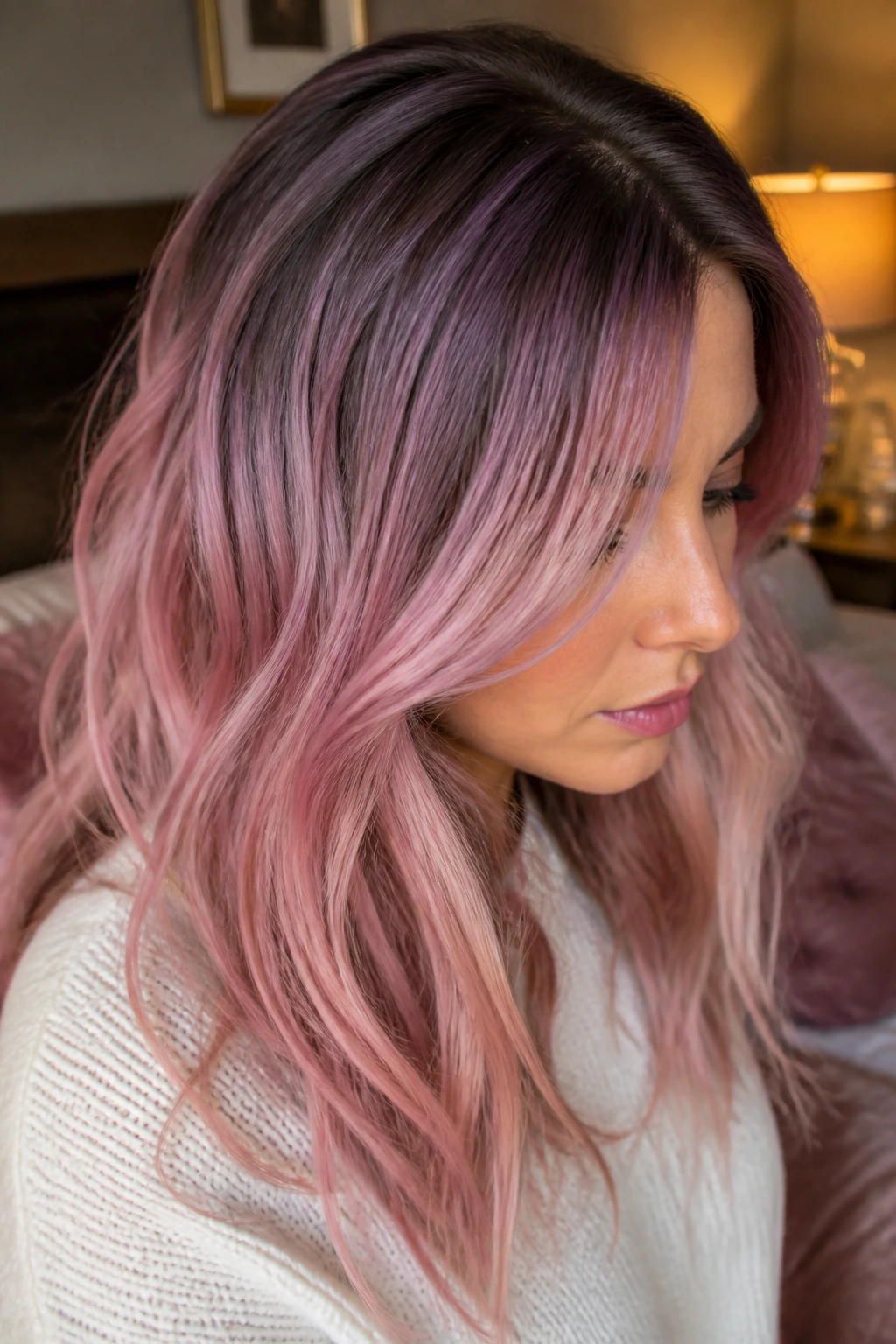
Mauve shadow roots are the reason brunette clients don’t have to sit out the pink conversation. The mauve at the root gives you a soft bridge into the lighter pink mid-lengths, so the whole head feels blended instead of bleached and then painted.
This shade is cooler than rose gold and deeper than pastel pink. That middle ground is what makes it useful. It works with a medium brunette base, especially when the stylist keeps the root a shade or two deeper than the soft pink through the ends. The contrast should whisper, not yell.
What you get is a smoky pink that feels grown-up without going dark. On wavy hair, the root shadow disappears into the bend and the mauve catches the outer layer. That’s the part people notice first.
6. Cotton Candy Ends
Cotton candy ends sound playful because they are, but they only work when the top half of the hair stays calm. If the roots are left beige, brunette, or pale blonde, the ends can hold all the sweetness without making the whole head look sugary.
The best version of this shade starts with dimension near the scalp and then concentrates the pink on the last four to six inches. That keeps the style light. Long layers help a lot, because the ends separate and you can actually see the color shift rather than one pink block sitting under the haircut.
Use this if you like movement and don’t mind a bolder finish on the lower half of the head. It’s one of the easiest ways to try pink hair color without abandoning your natural base completely. And if you tie your hair back, the pink peeks out in the most useful way.
7. Pink Champagne Blonde
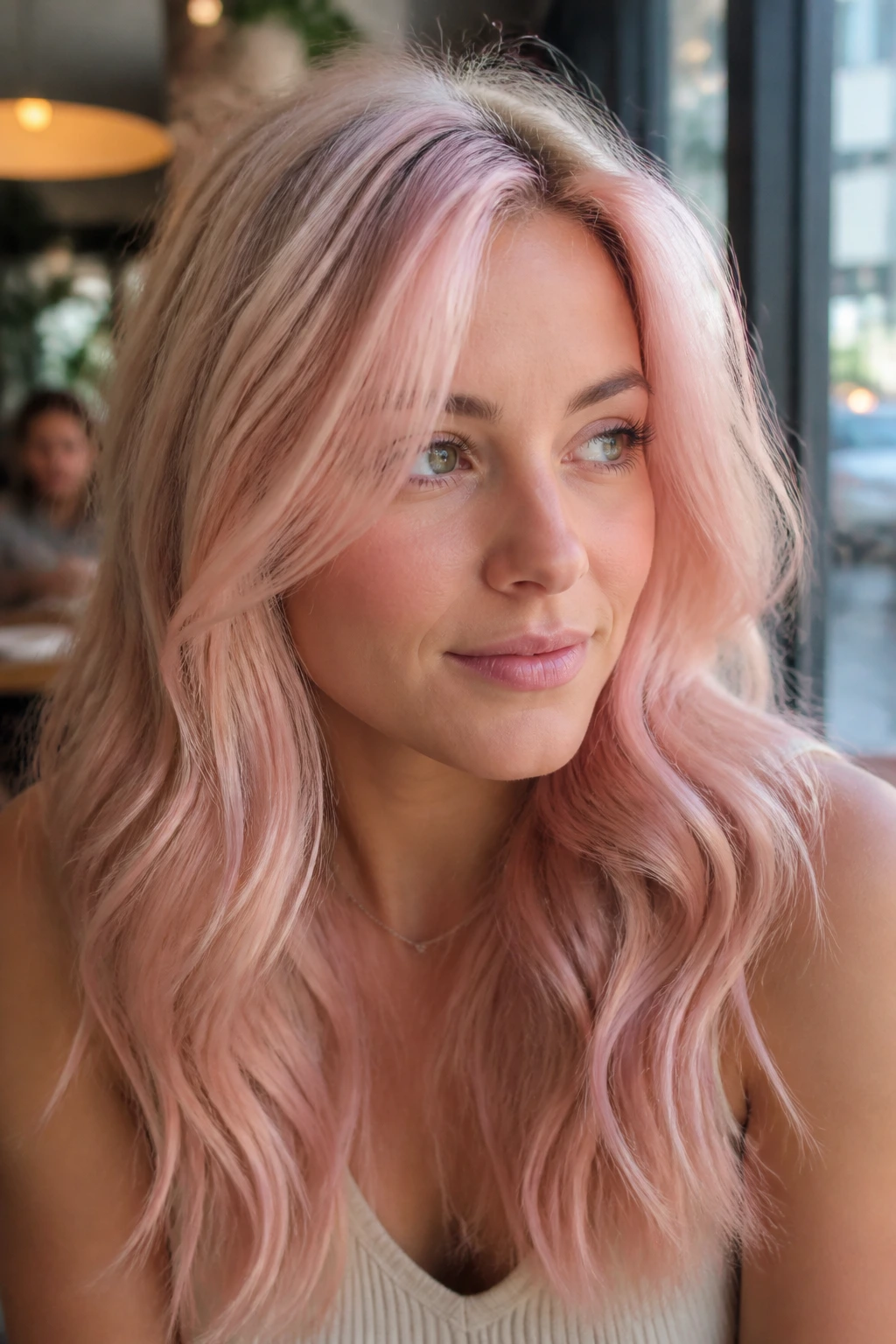
Pink champagne blonde is what happens when pink gets filtered through bubbles and beige. It’s delicate, reflective, and much easier to wear than a true pastel. The champagne base keeps the blonde side of the color alive, while the pink glaze just nudges it warmer.
What Makes It Different
Unlike a saturated pink dye, this version depends on translucence. The hair should still look blonde first, pink second. That’s why it works so well on level 9 or 10 blondes that already have a soft, creamy tone.
Ask for a sheer pink toner, not a heavy direct dye. You want the kind of finish that looks different in daylight and indoor lighting. That shifting quality is what makes it feel dimensional.
If you love airy waves, this shade is a favorite. The bends catch the lighter champagne pieces, then the pink glows in the troughs. It’s a small trick, but it changes the whole mood.
8. Smoky Rose Brunette
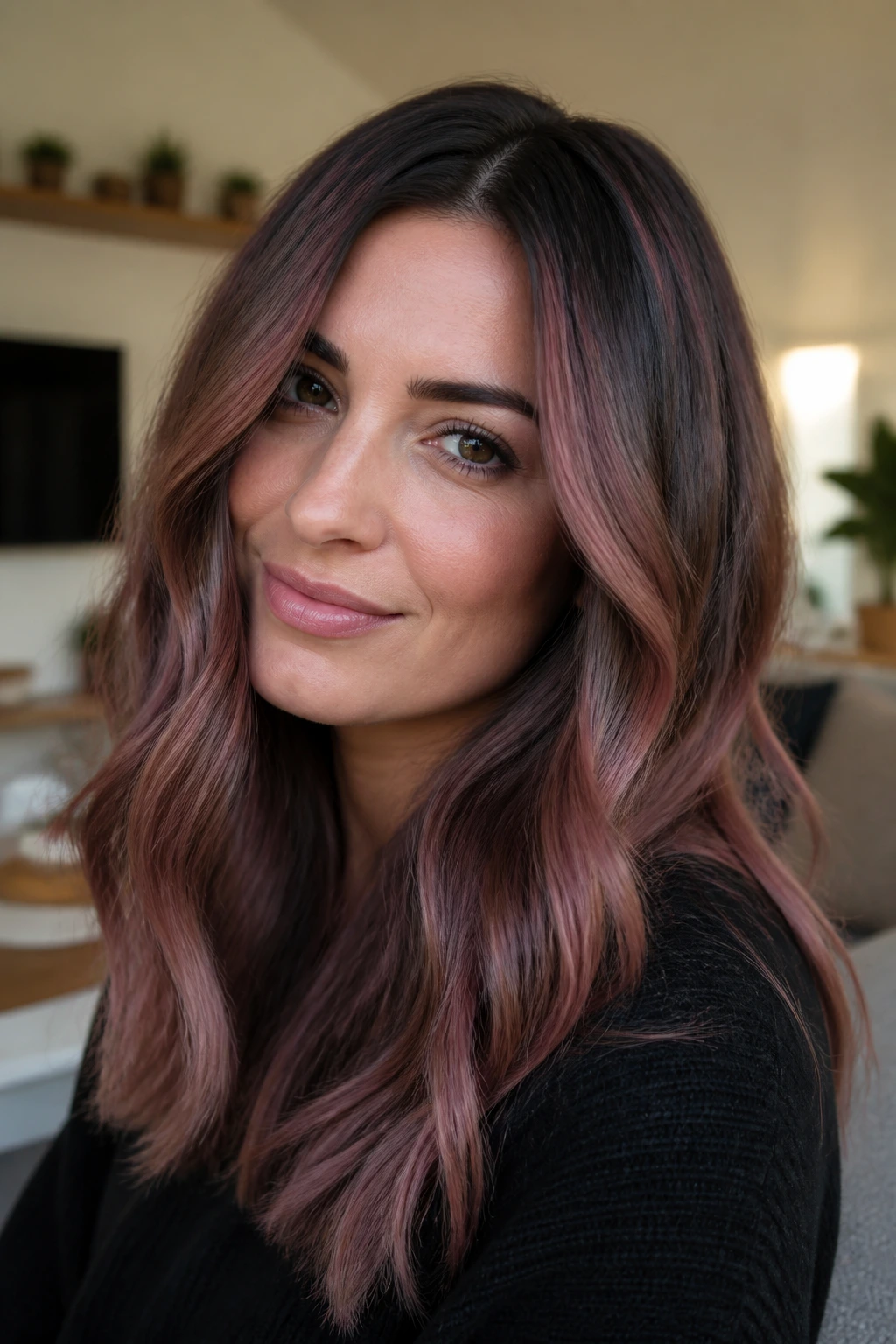
Smoky rose brunette is for people who want pink hair color without bleaching the life out of a dark base. The brunette depth stays visible, which keeps the shade from turning chalky or washed out. Then the rose pieces sit on top like a soft filter.
You can do this with hand-painted ribbons, a soft veil through the mid-lengths, or just a few brighter pieces around the face. The cool smoke in the formula matters. It stops the pink from looking coppery or orange when the light hits it.
This is one of my favorite options for long hair because the brown anchors the ends. On curly or coily hair, it looks even better; the shape already gives you dimension, so the rose only has to echo it.
9. Petal Pink Face Frame
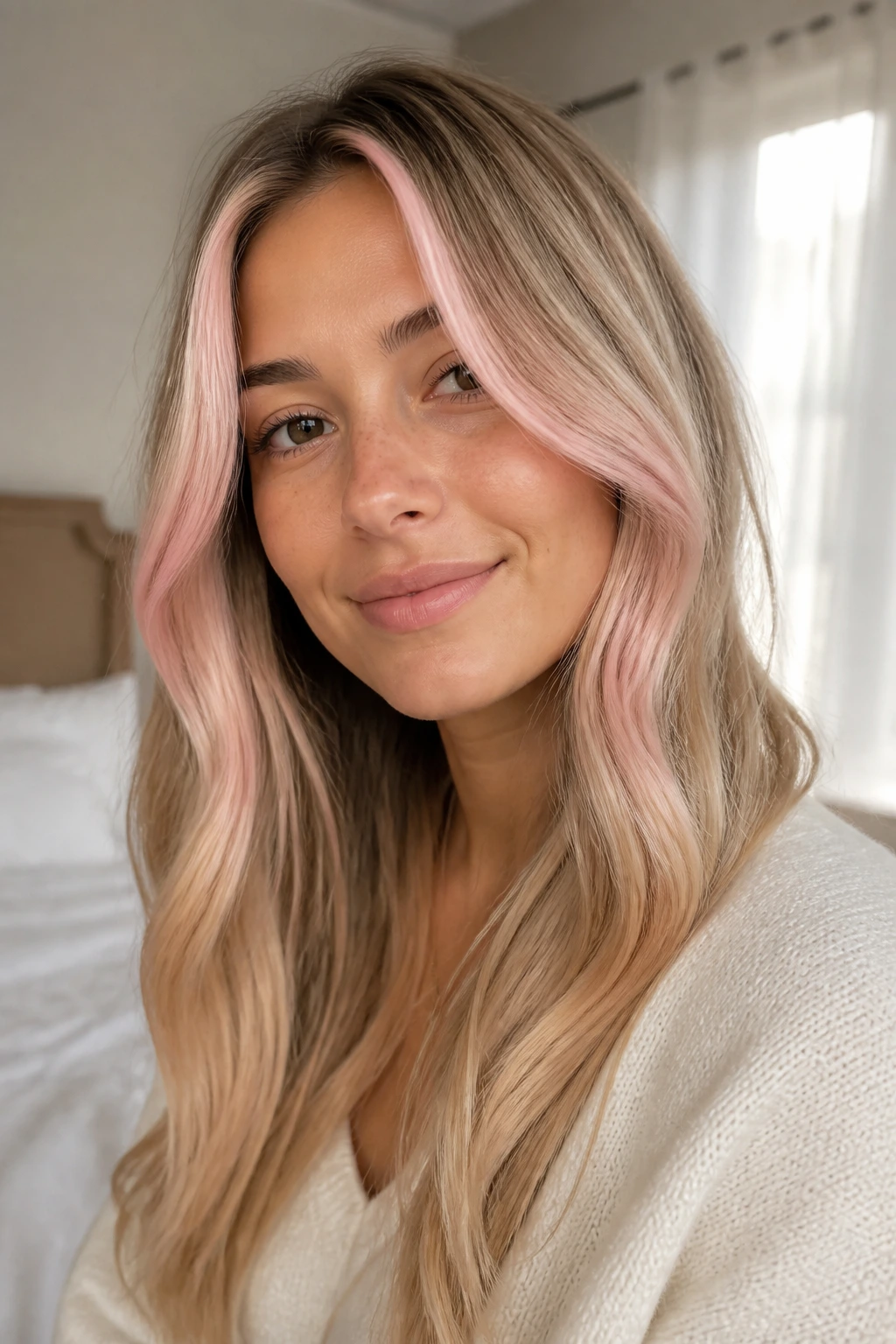
A petal pink face frame is tiny in concept and huge in effect. Two pale pink ribbons around the face can make the whole haircut feel lighter, especially if the rest of the hair stays soft beige or neutral blonde.
Why does it work so well? Because your eye goes to the front first. If those pieces are translucent and slightly cooler than the rest of the color, the face gets a soft halo instead of a hard stripe. That’s the whole trick.
How to Ask for It
Tell your colorist you want face-framing pieces that are pink but still see-through. Mention curtain bangs, if you wear them, because those pieces can take a little more saturation without feeling heavy.
This idea is a good fit for bob lengths, layered shags, and long cuts with movement around the cheekbones. It gives you the fun part of pink without needing to redo every panel in the back.
10. Coral-Pink Copper Blend
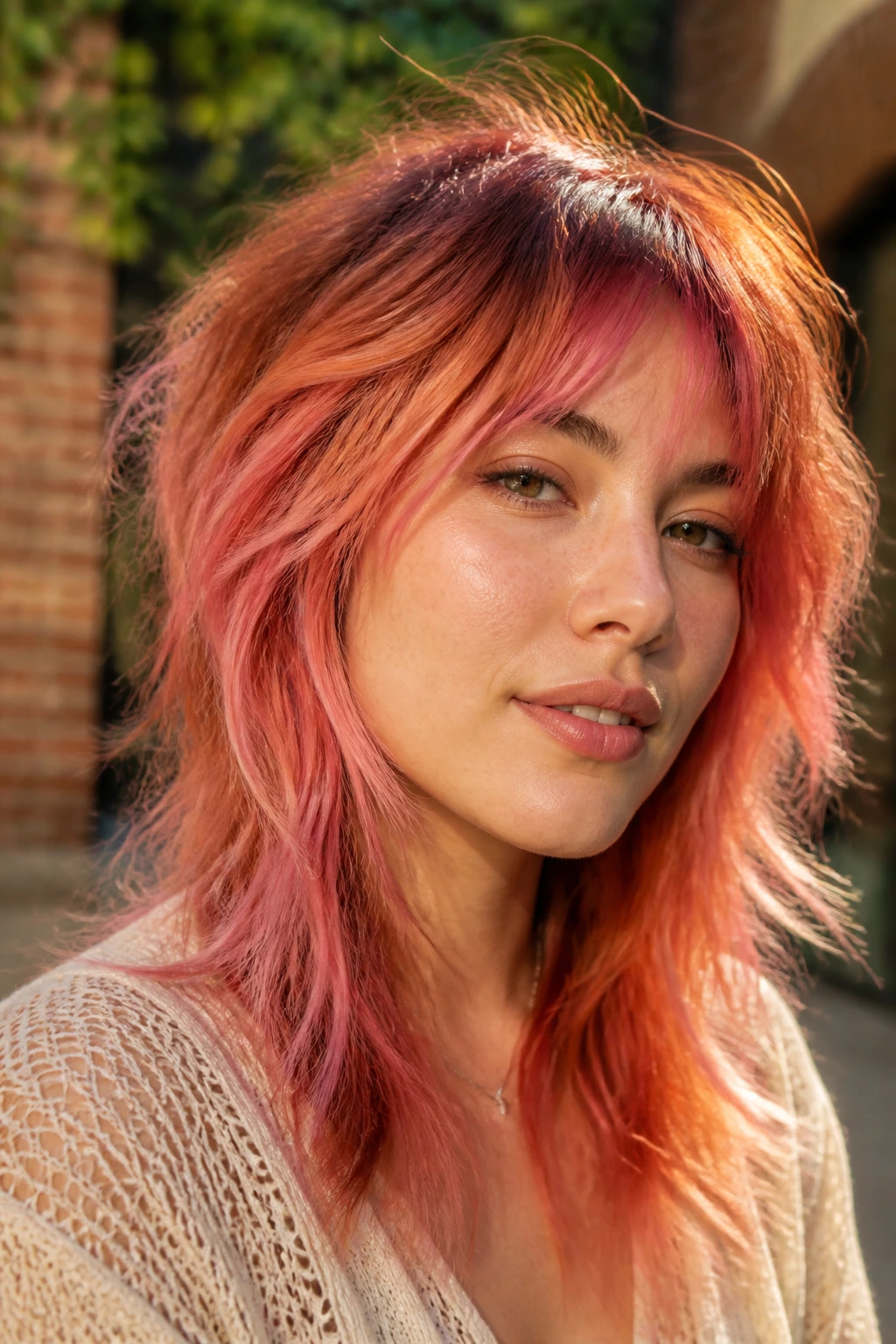
Coral-pink copper is warmer, brighter, and a little sunnier than the dusty shades, which is exactly why it has its place here. It’s pink hair color for people who know they look good in gold jewelry, terracotta, or warm peach makeup and want the hair to play along.
The copper base keeps the shade lively. Coral softens the edge. If the formula is too pink and not warm enough, it can start to look frosty on warm skin. This version avoids that problem by leaning into the warmth on purpose.
A good coral-pink blend looks especially nice on layered shags and medium-length cuts because the movement exposes the copper underneath. It also fades in a useful way. The coral softens first, leaving a peachy blush rather than a strange gray-pink.
11. Berry Beige Dimension
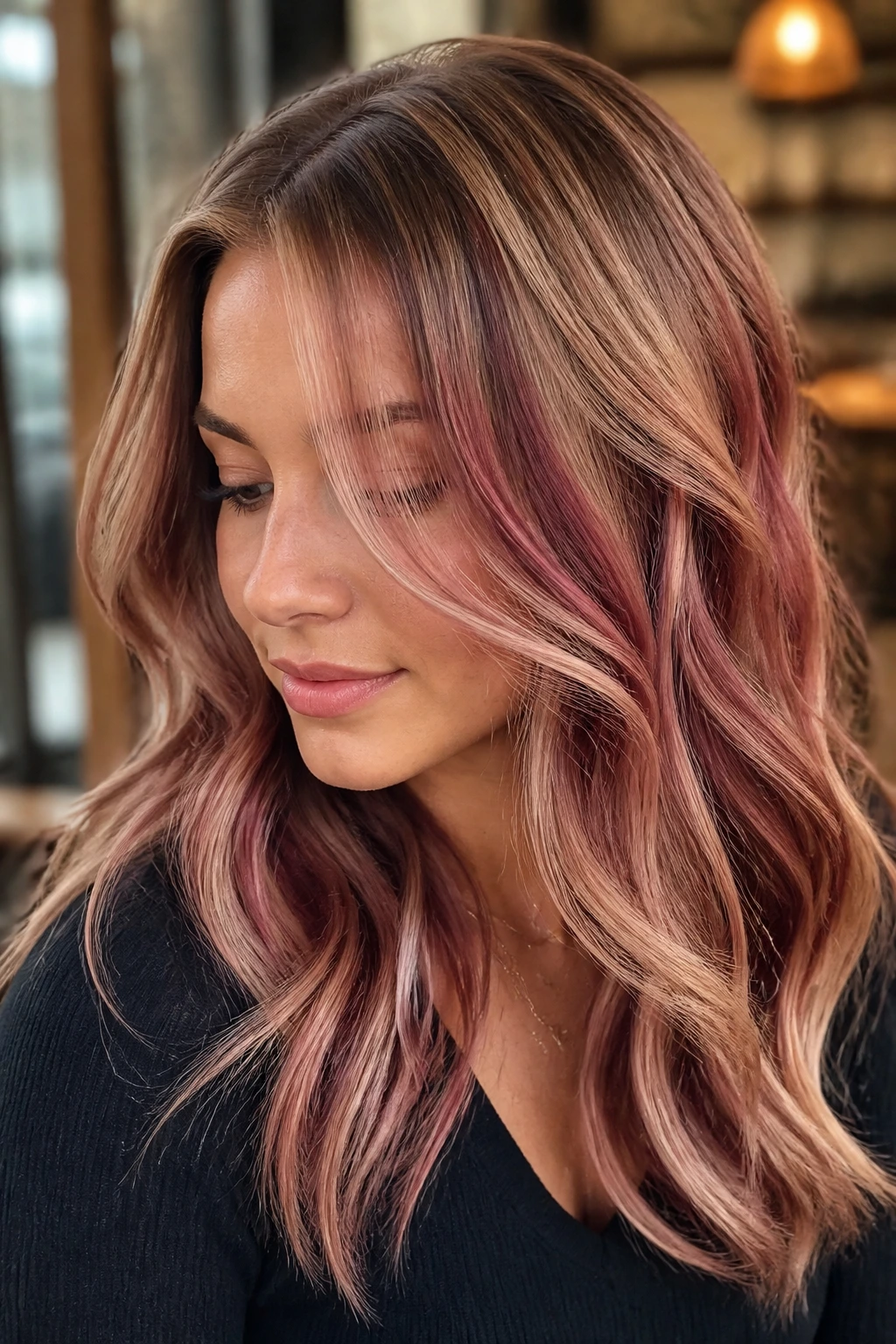
Berry beige is the shade for people who like contrast but hate loudness. Beige highlights keep the hair light, while berry lowlights slip in enough pigment to stop the color from going flat. It’s a smart way to do soft dimensional color on a blonding base that needs depth.
The berry shouldn’t sit everywhere. A few lowlights under the surface and a touch around the crown are enough. That hidden placement makes the color feel richer when you move, but you still get a calm-looking surface from the beige.
This one is especially good for finer hair because the lowlights can create the illusion of thickness. And if your hair tends to feel stringy in bright pink tones, berry beige fixes that fast.
12. Pastel Pink Tip-Outs
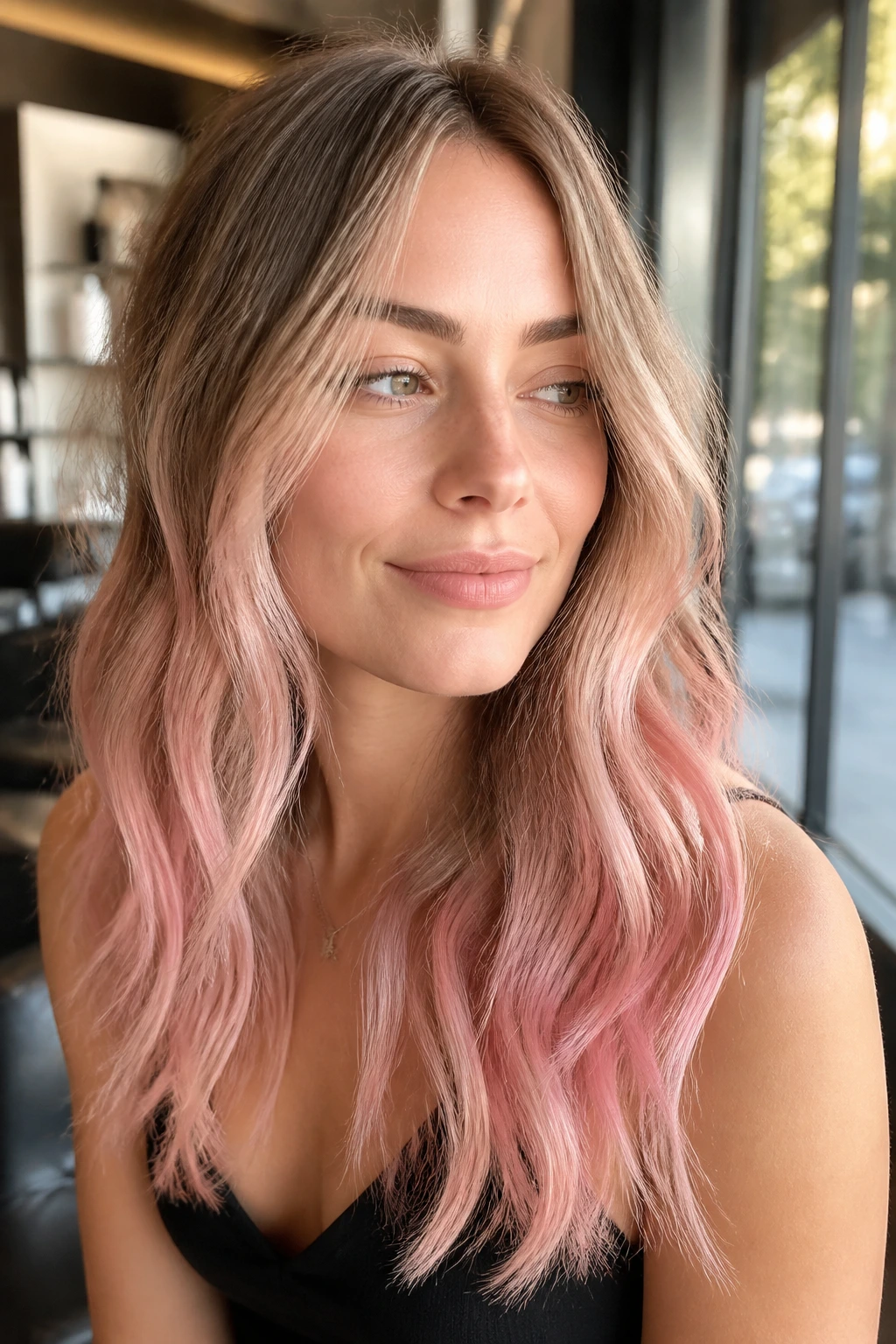
Pastel pink tip-outs are the easiest way to keep the root area clean while still getting that soft pink moment. The top stays neutral, the mid-lengths carry the light, and the very ends pick up the color like they were dipped in watercolor.
Use this on long layers or textured cuts. The shape matters, because the ends need to separate a bit to show the color changes. On one-length hair, the effect can feel a little blunt. On layers, it looks intentional and airy.
This is a clever choice if you want pink that shows up when you curl your hair but isn’t front and center every day. Tie it in a low ponytail, and the ends still peek out. That’s the kind of detail that makes a style feel lived in.
13. Opal Pink Gloss
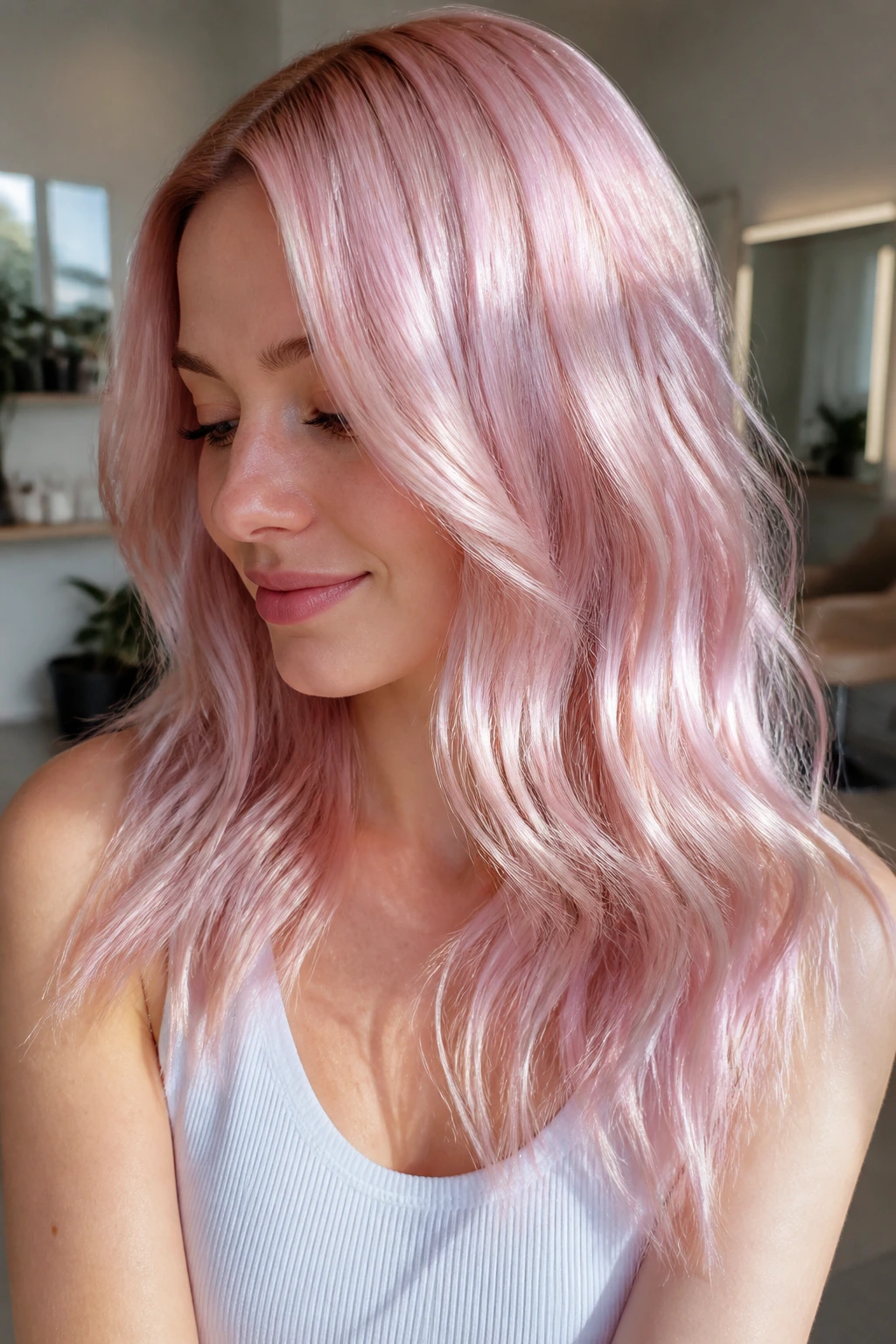
Opal pink is less a single shade than a soft reflection. It shifts between blush, pearl, and a tiny bit of lilac depending on the light, which is why it reads so pretty on very pale blonde hair.
The Light-Ring Effect
The key here is transparency. Opal pink works because it never fully covers the base; it sits over it like a filter. That means the haircut, the wave pattern, and even the texture of the hair all stay visible underneath.
This is a strong choice for someone who wants a polished finish and is willing to maintain it with gloss appointments. On damaged hair, the effect can get muddy fast, so healthy, well-conditioned strands make a big difference.
Wear it loose if you can. Opal pink in a soft wave has a little bit of shimmer that straight hair doesn’t always show as well.
14. Ballet Slipper Balayage
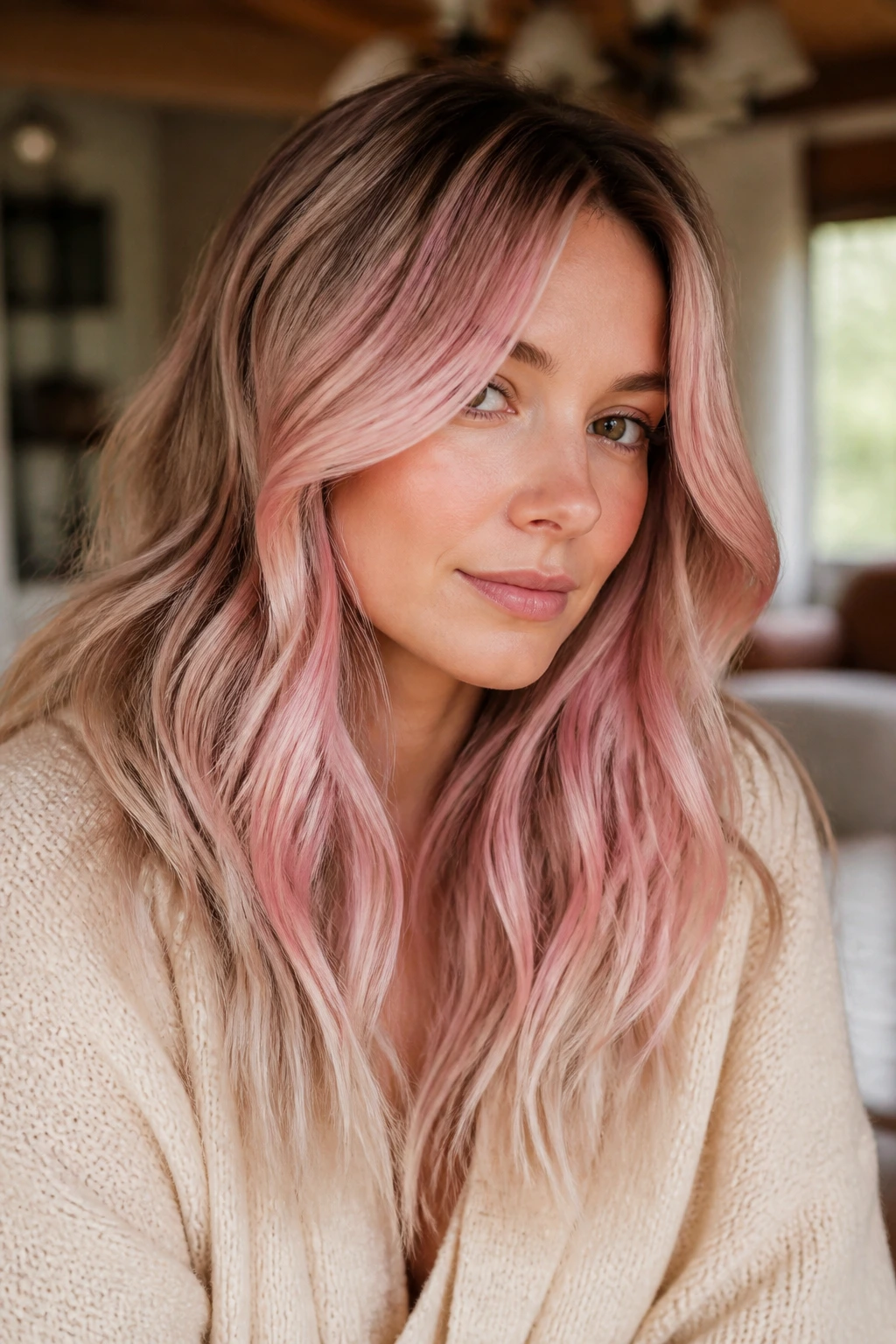
Ballet slipper balayage is the softest version of pink balayage I’d put into the conversation. It’s delicate enough that people may not name it as pink at first glance, and that’s part of the appeal. The color reads as airy blush until the light catches it.
This is a smart option for anyone nervous about maintenance. Because the pink is feathered through the hair rather than stacked in dense panels, the fade is forgiving. It starts blush, then drifts toward beige blonde, which is a far better exit than a hard line of pale dye.
On medium to long layers, the movement is lovely. The pink doesn’t sit still; it seems to slide with the shape of the haircut. That is what soft dimensional color should do.
15. Raspberry Ribbon Highlights
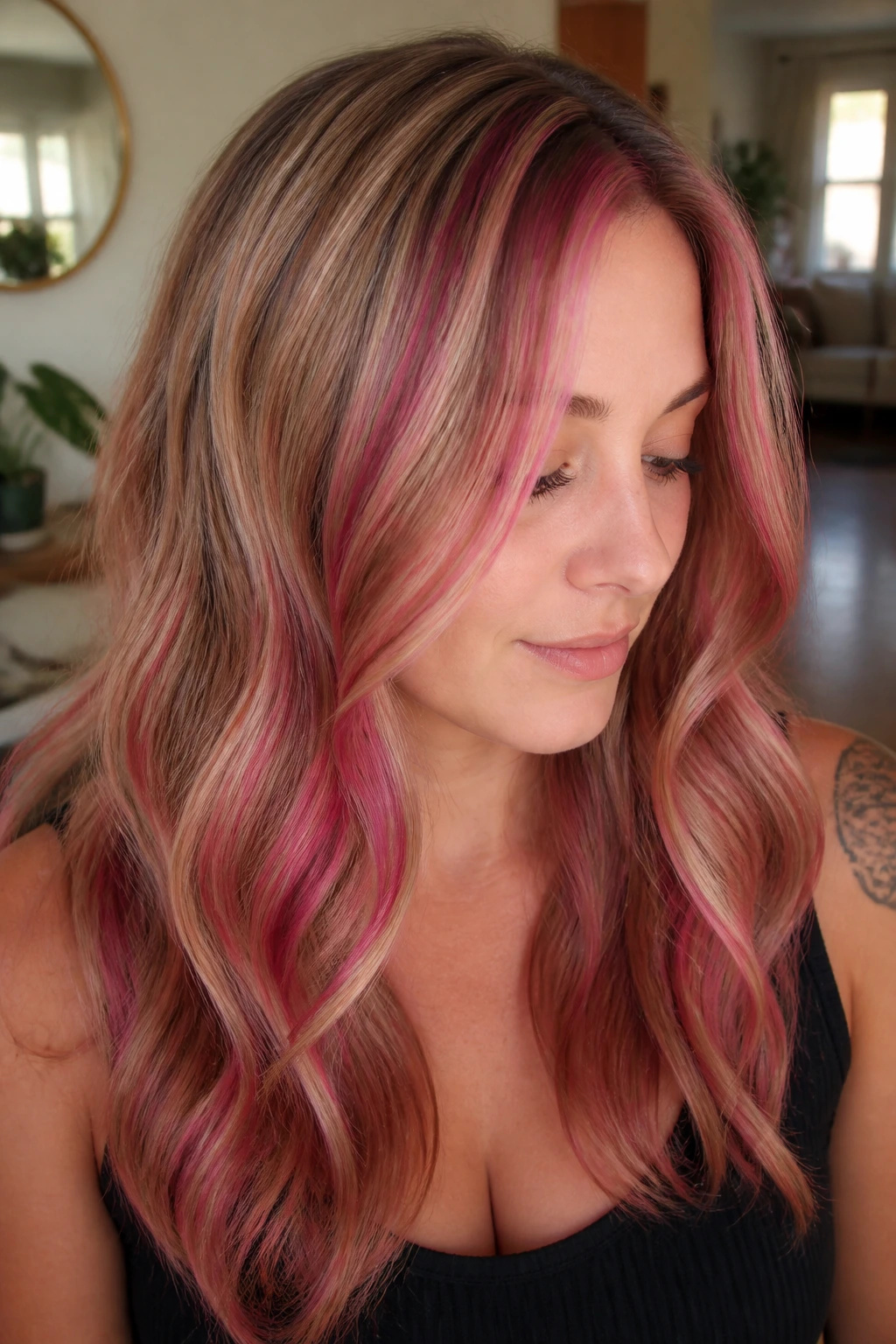
Raspberry ribbon highlights are a touch richer and more saturated than blush or rose gold, but they stay soft because the placement is narrow. Think thin ribbons through a beige blonde base or tucked into a brunette melt.
Unlike chunky pink streaks, ribbons let the darker hair sit between the brighter pieces. That contrast is what keeps the look dimensional. It also gives the color a bit of drama without pushing it into neon territory.
This version suits people who want pink to be visible from across the room but not loud enough to flatten the haircut. The raspberry tones pop on curls, bends, and textured ends, which makes them one of the more photogenic pink options without being fussy.
16. Antique Rose Underlayer
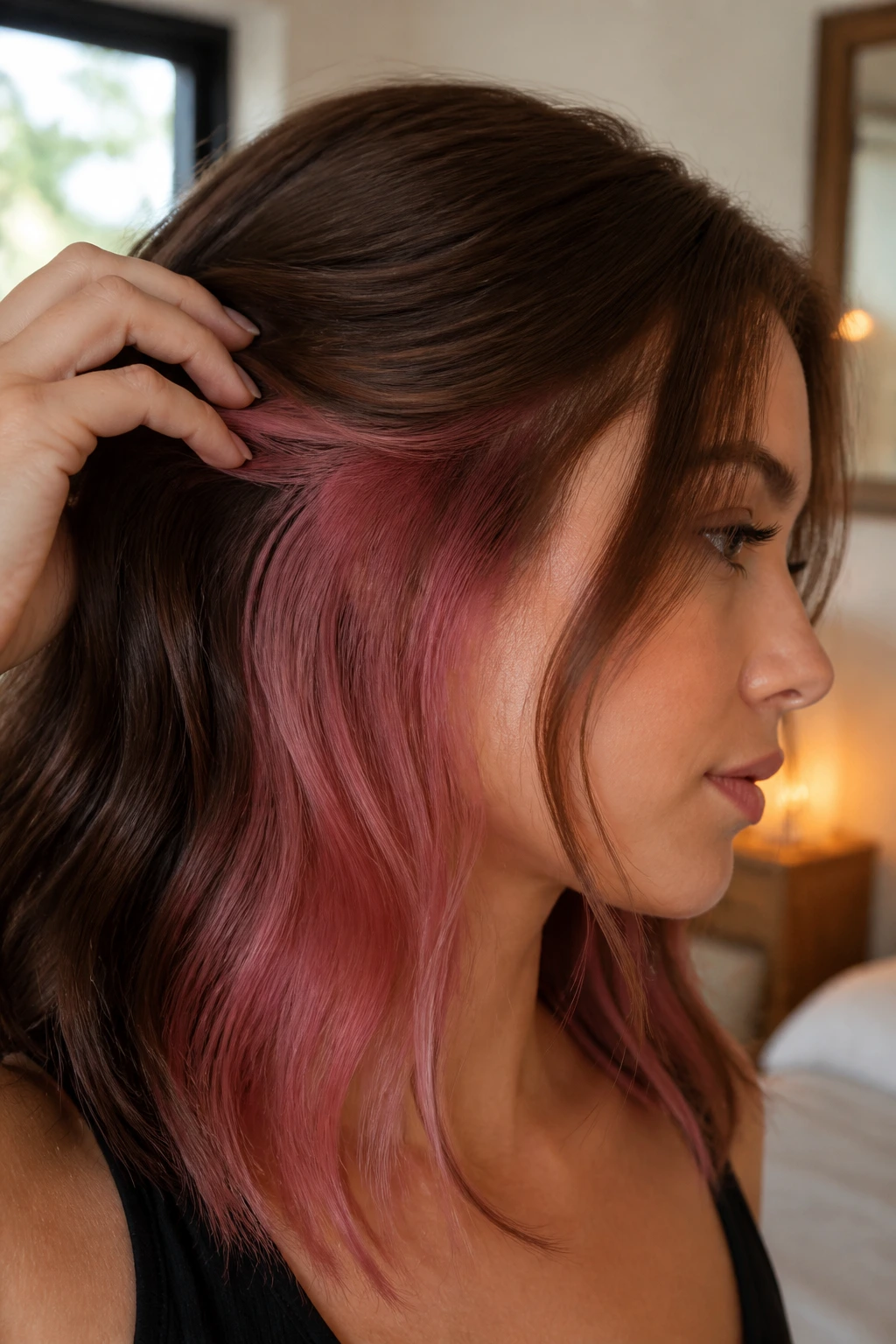
An antique rose underlayer is one of those colors that makes sense the minute the top layer of hair moves. The outside stays calm, maybe beige or brunette, while the hidden rose peeks through underneath. It feels private in the best way.
How It Works
The underlayer carries most of the pigment, so you get a stronger pink moment without painting the whole head. That keeps the top surface clean and makes regrowth less obvious. The top veil of hair protects the color visually, which is useful if you need to keep things toned down at work.
This is especially pretty in layered cuts where the ends separate and show flashes of color. If you tuck your hair behind one ear or pull it into a half-up twist, the rose shows up just enough.
I like this choice for anyone who wants pink but not all-day pink. There’s a difference, and it matters.
17. Peachy Pink Peach-Blonde
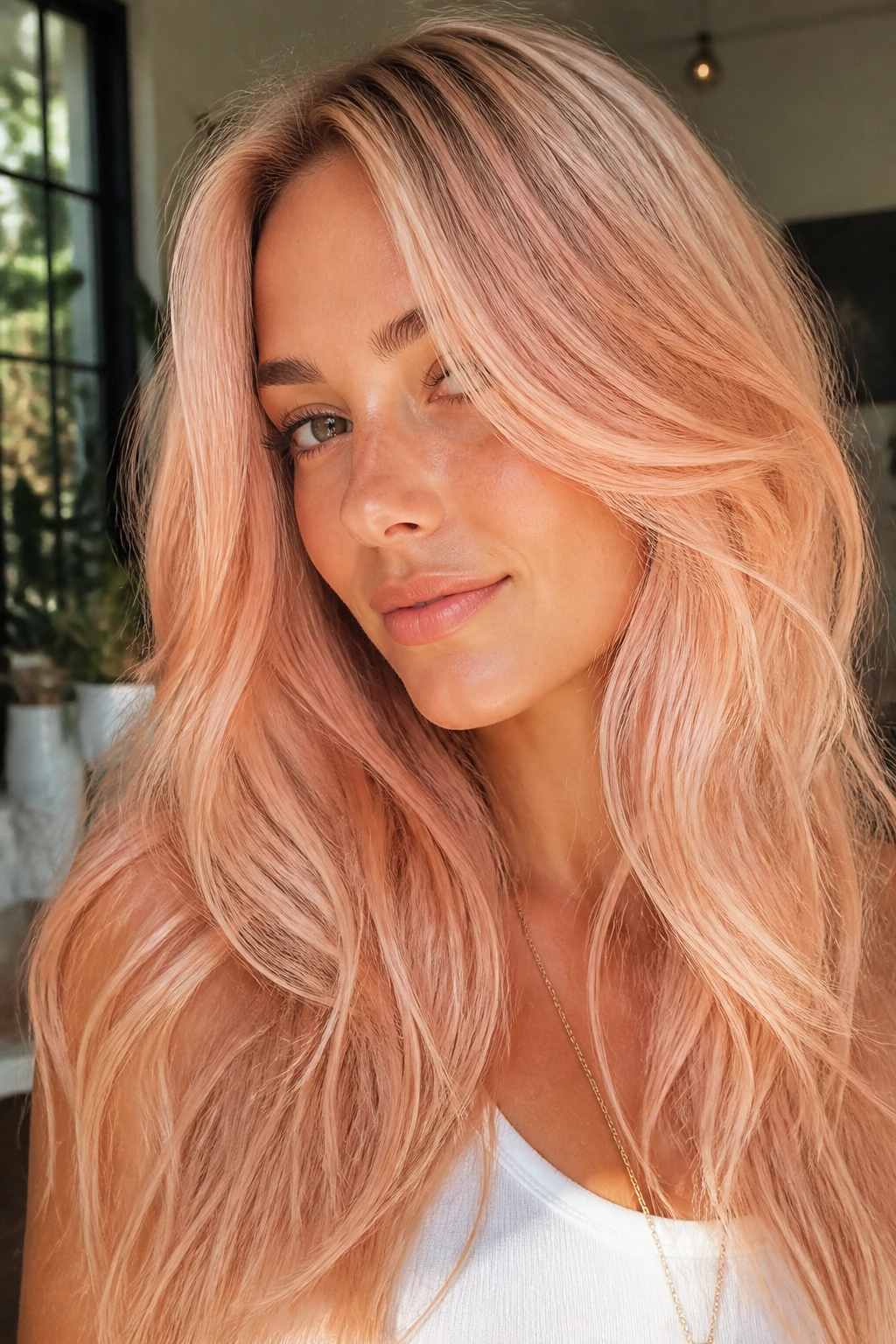
Peachy pink peach-blonde lands right between warm blonde and blush. It’s warmer than dusty pink and softer than straight copper, which is why it feels so wearable on golden skin and warm eye colors.
The pink here should be subtle enough that the blonde still leads. If the peach takes over, the dimension disappears. A pale peach-pink glaze over a bright blonde base usually does the job, especially if there are lighter ribbons left out around the face.
This shade is a good reminder that pink doesn’t have to be cool. Warm pink can look sunlit, and on layered cuts it gives the ends a little glow that stands up well in both daylight and soft indoor lighting.
18. Pearl Pink Babylights
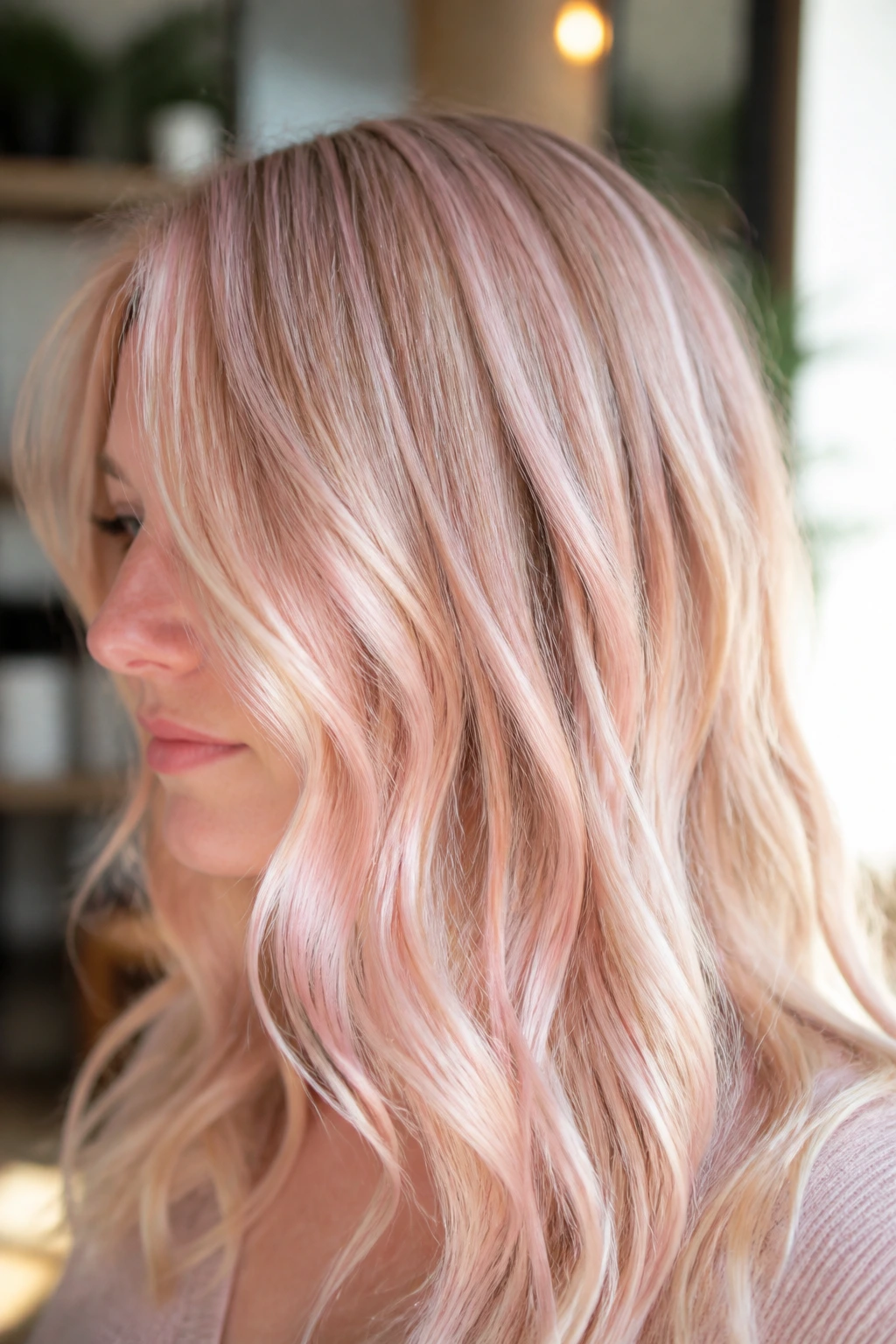
Pearl pink babylights are tiny, fine highlights with just enough pink tone to feel intentional. They work because the pieces are so small. Instead of seeing one pink stripe, your eye sees a shimmer across the hair.
Why Tiny Placement Matters
Babylights are useful when you want softness first and color second. The fine weaving gives you a cloud of pink rather than a block of dye, which is exactly what you want for dimensional hair. It’s also one of the easiest ways to keep the hair looking expensive, if I’m being blunt.
This technique is strongest on pale blonde or highlighted brunette bases. The smaller the section, the more natural the transition between pink and blonde. And because the pieces are thin, the grow-out tends to blur instead of show.
If your hair is fine, this style can create more visible texture without feeling busy. That’s a rare trick, and worth keeping.
19. Cherry Blossom Melt
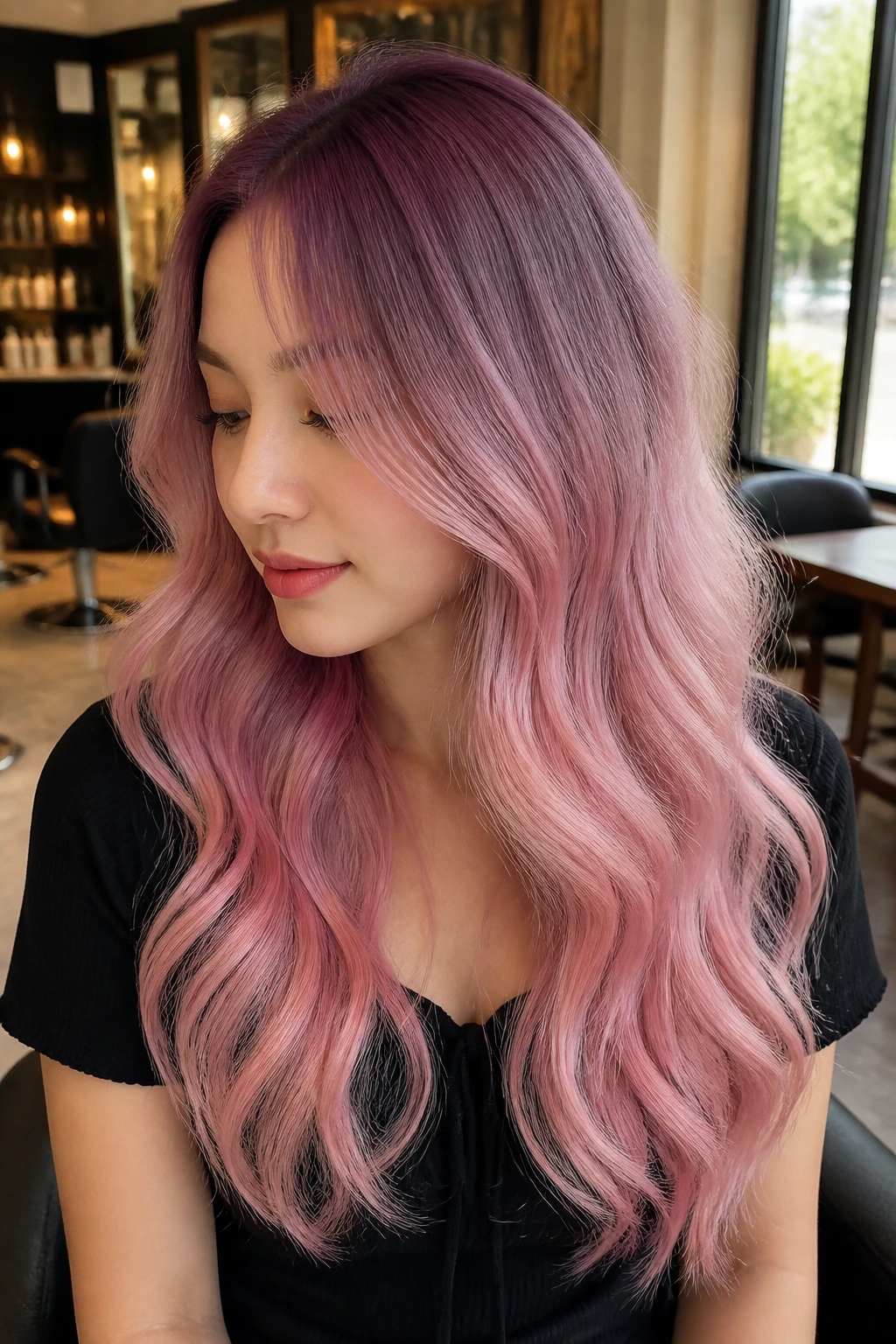
Cherry blossom hair is not the same as bubblegum hair, and the melt is the reason. The color usually starts softer at the root, moves into a pale blush through the mid-lengths, and gets a touch brighter at the ends. The whole thing feels like a gradient instead of a solid.
What Makes It Soft
The root area has to stay muted. If the color begins too hot at the scalp, the style loses the cherry blossom feel and becomes a loud pink block. A good melt keeps the brightness lower on the head and lets the lightest pieces live where the hair moves most.
This shade works well with curls and waves because the bend in the hair helps the gradient show. Straight hair can wear it too, but the softness really comes alive when the ends kick around a bit.
Ask for a melt, not a full dye job. That one word saves a lot of trouble.
20. Magenta Dust on Dark Brunette
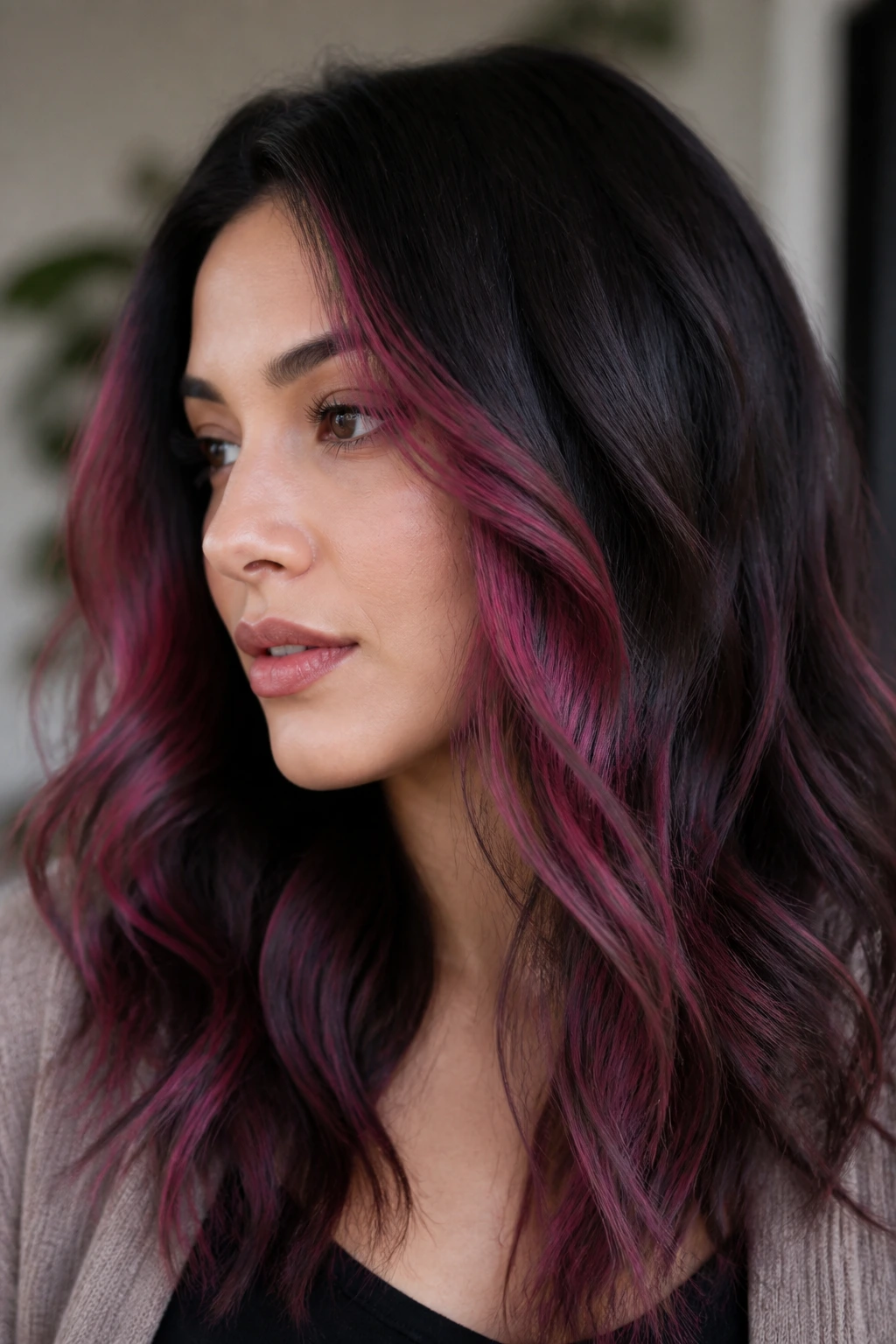
Magenta dust on dark brunette is the answer when someone says, “I want pink, but I’m not bleaching my whole head.” Good. Don’t. This shade gives dark hair a pink cast instead of trying to turn it pastel, and that restraint is what makes it look polished.
The pigment should be smoky and sheer enough that the brunette still reads underneath it. Think of it as a tinted filter over the surface, with brighter magenta only in selected ribbons or the front panels. On dark hair, that selective placement matters more than the exact tone.
This is a strong choice for thicker hair because the depth at the root keeps the overall shape from looking puffy. You get color and shadow at the same time. That’s the sweet spot.
21. Sunset Rose Ombré
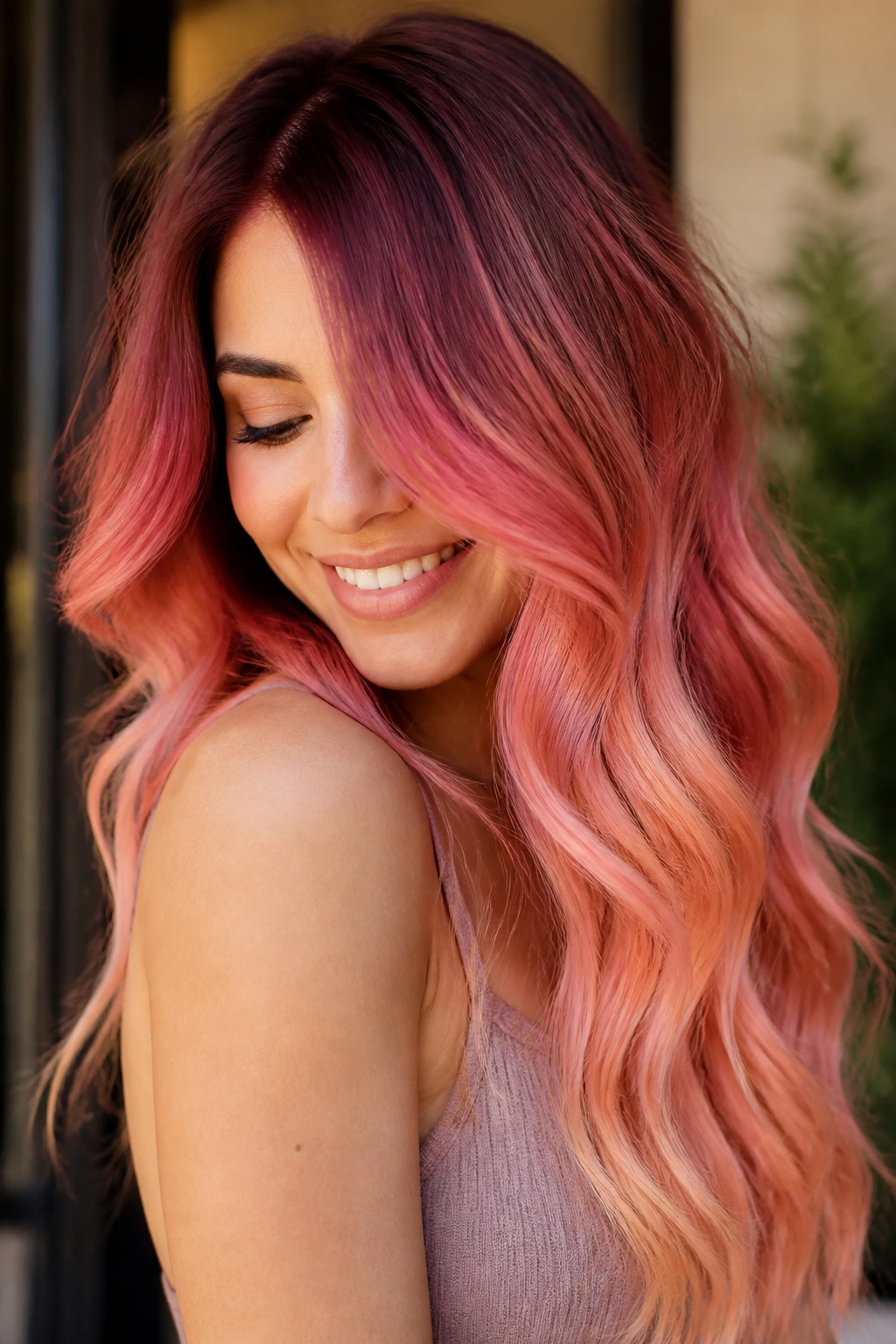
Sunset rose ombré blends pink with coral, blush, and a little peach so the ends feel warm and luminous rather than heavy. The roots stay deeper, the mid-lengths get softer, and the ends carry the brightest tone. It’s the sort of pink that makes sense in motion.
The gradient matters here. If the ombré line is too abrupt, the color loses the dreamy effect and starts looking patched. Keep the transition long and feathered, especially if the haircut is layered. That gives the whole style room to breathe.
This is one of the better choices for long hair because the length gives the color space to develop. On short cuts, it can feel compressed. On long waves, it feels like the color is moving.
22. Soft Pink Peekaboo Panels
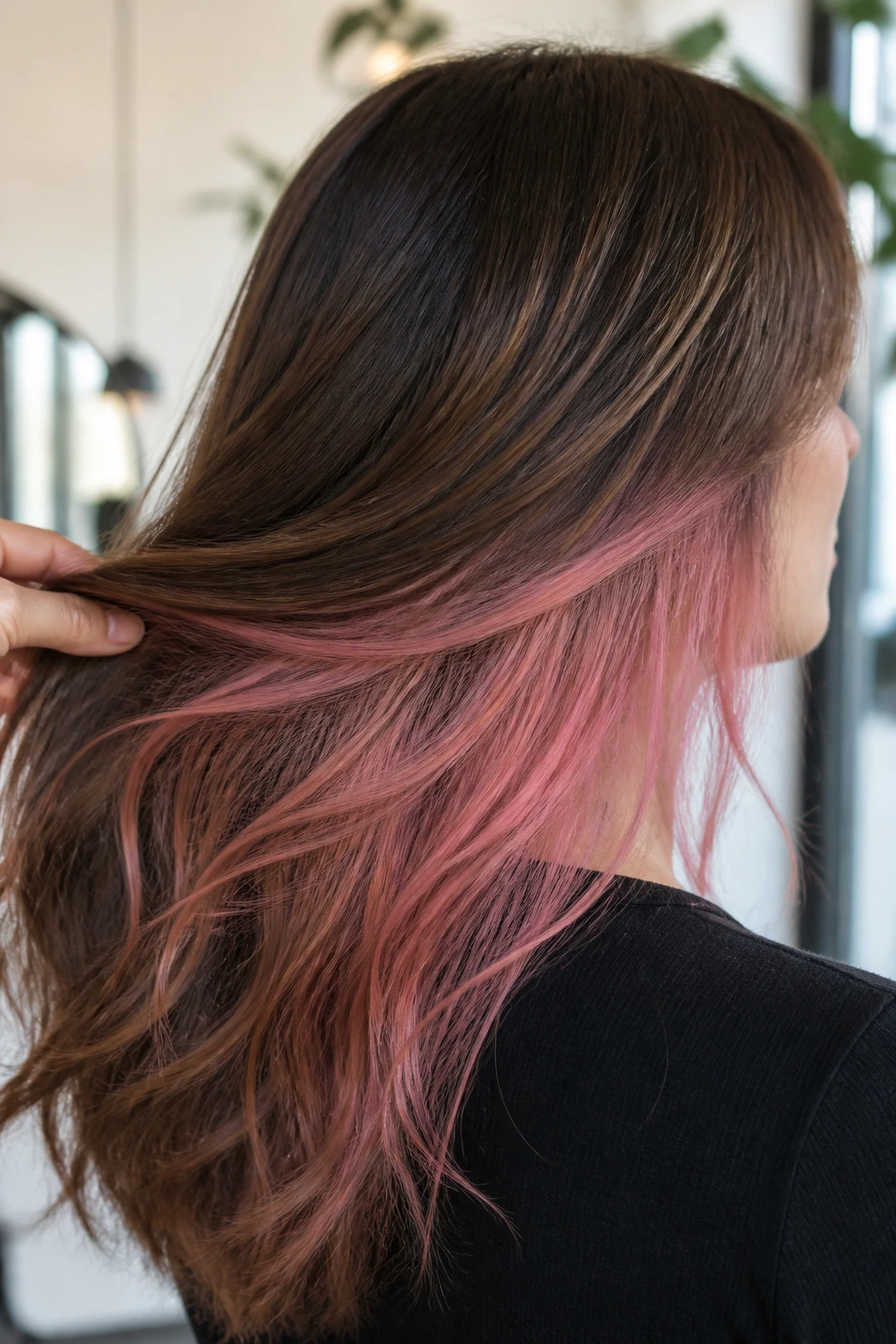
Soft pink peekaboo panels are the most flexible idea in the bunch, which is probably why stylists keep reaching for them. You keep the outer layer calm, then place pink underneath so the color shows when the hair flips, moves, or gets pinned up. It’s a quiet way to wear pink hair color without making the whole head pink.
The panels can be thin and whisper-soft, or broader if you want more visibility. Either way, the hidden placement protects the color a little longer and gives you a built-in reset button. Wear it straight for subtlety. Curl it, and the pink comes forward.
If you need a lower-commitment pink that still feels intentional, this is a smart place to start. It gives you dimension without forcing the shade to stay in view all day.
Why Pink Dimension Reads Richer Than a Flat Dye
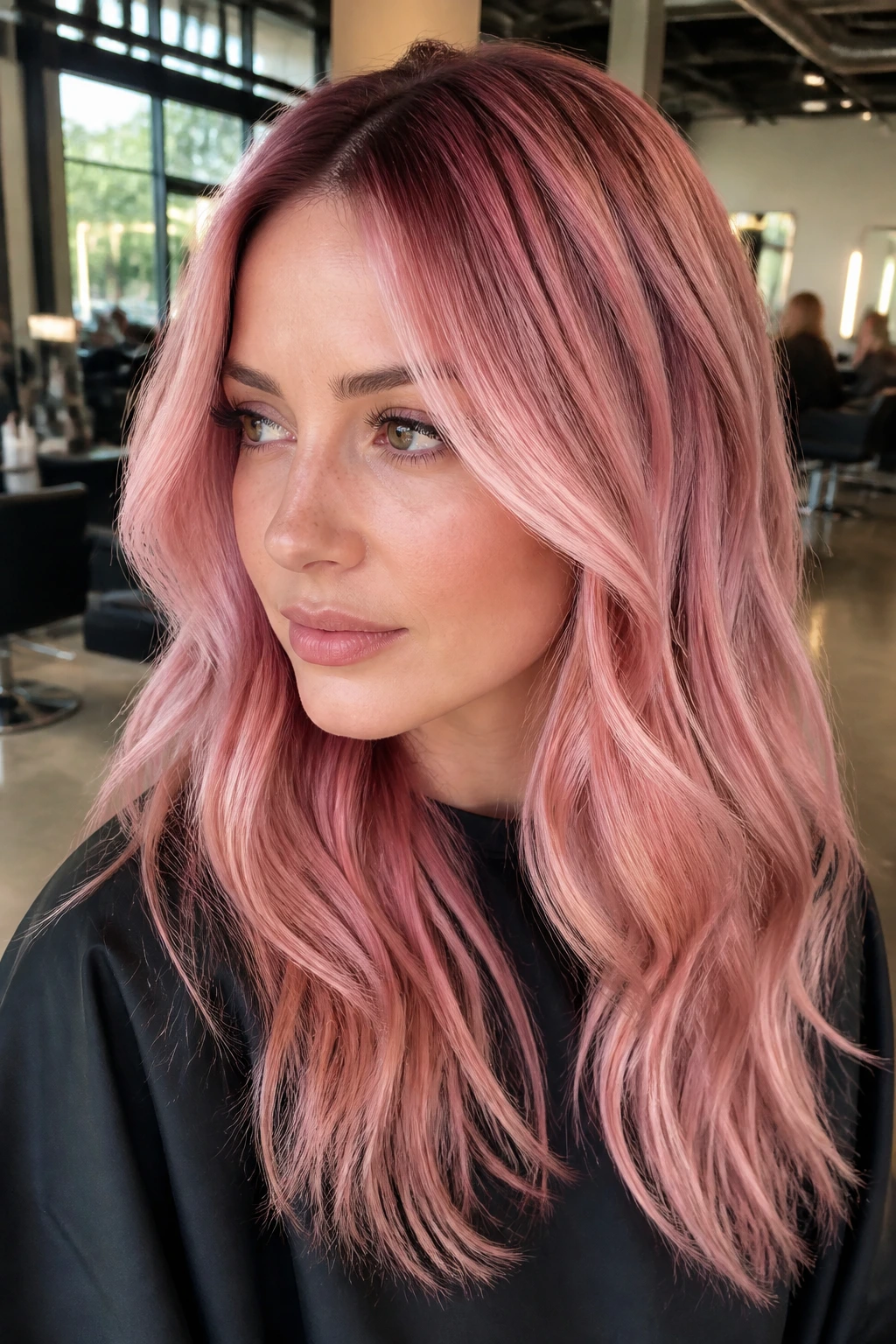
Pink hair lives or dies by light. A solid, single-process pink can look bold in the chair and flat a week later, especially if the base underneath is too even or too warm. Dimension fixes that by giving the eye something to follow: a shadow root, a lighter face frame, a ribbon of beige, a dusty mid-tone through the crown.
That’s also why placement matters more than most people expect. A pink balayage built on a pale blonde base will always feel softer than the same pigment dumped over a warm, medium blonde. The first one lets the light through. The second one blocks it. Subtle difference. Big result.
I also think pink needs texture. Waves, bends, and layered cuts help the color show its different notes. Straight hair can look chic, sure, but it tends to flatten the transitions unless the placement is extremely deliberate. If you want the color to look expensive, movement helps more than extra pigment.
Essential Tools for Pink Highlights, Balayage, and Gloss Work
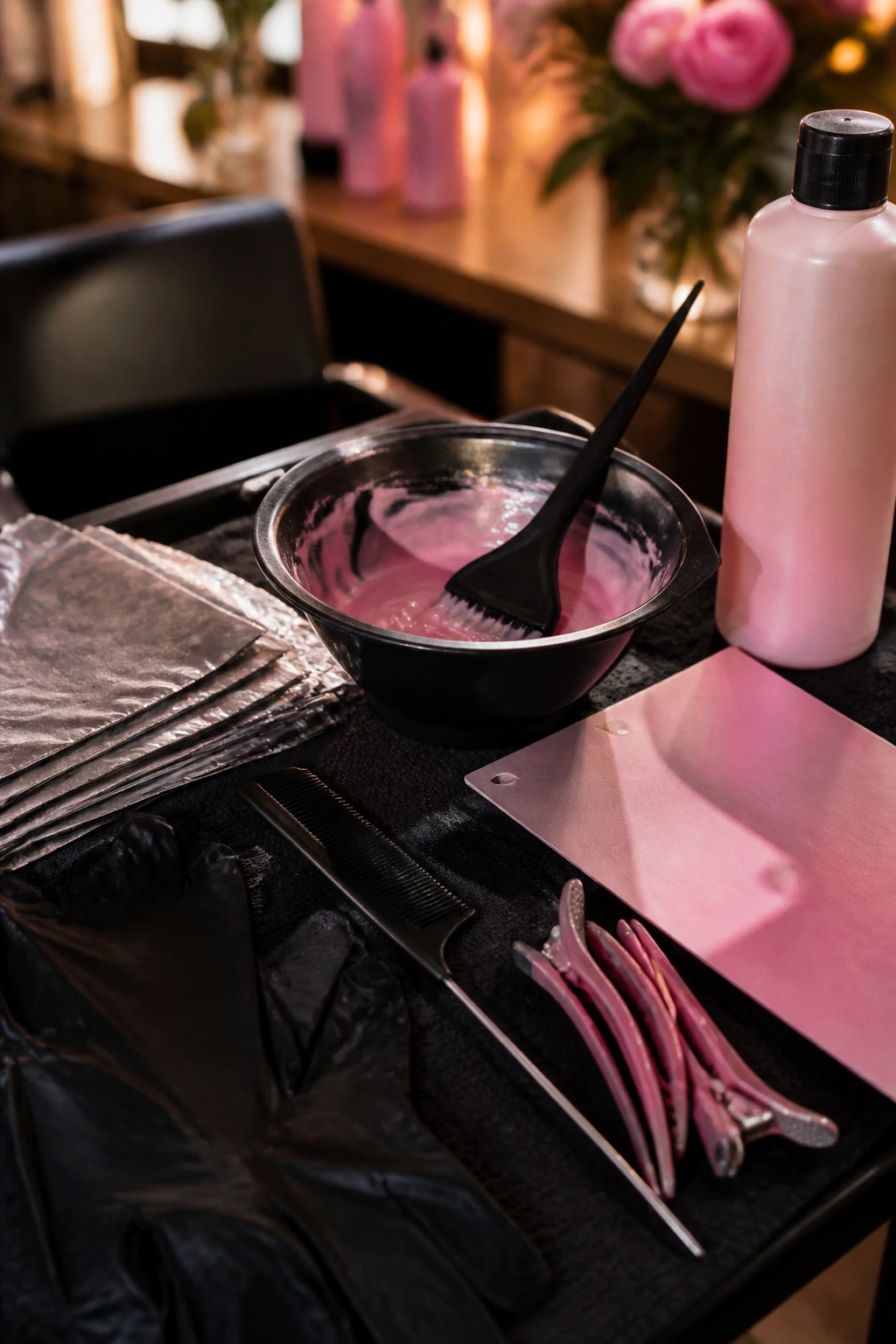
- Color bowl and tint brush: Needed for glosses, direct dyes, and small section work; a narrow brush gives cleaner placement around the hairline.
- Foils or meche sheets: Useful when you want brighter pink ribbons to stay separate from the surrounding blonde.
- Sectioning clips: Good clips keep the crown from slipping while you paint or tone.
- Tail comb: Helps with fine weaving for babylights and narrow face-framing pieces.
- Gloves: Pink dye stains everything. Everything.
- Balayage board or paddle: Optional, but helpful if you’re sweeping color through longer lengths at home.
- Color-safe shampoo and conditioner: Choose gentle formulas; harsh cleansers strip soft pink faster than you’d think.
- Deep conditioning mask: Useful for pre-lightened hair that needs slip before and after toning.
- Heat protectant: Pink fades faster on hair that gets blasted with a hot tool every day.
- Microfiber towel or old T-shirt: Rough bath towels can rough up the cuticle and make pink bleed faster.
Smart Booking and Pre-Color Prep for Pink Hair
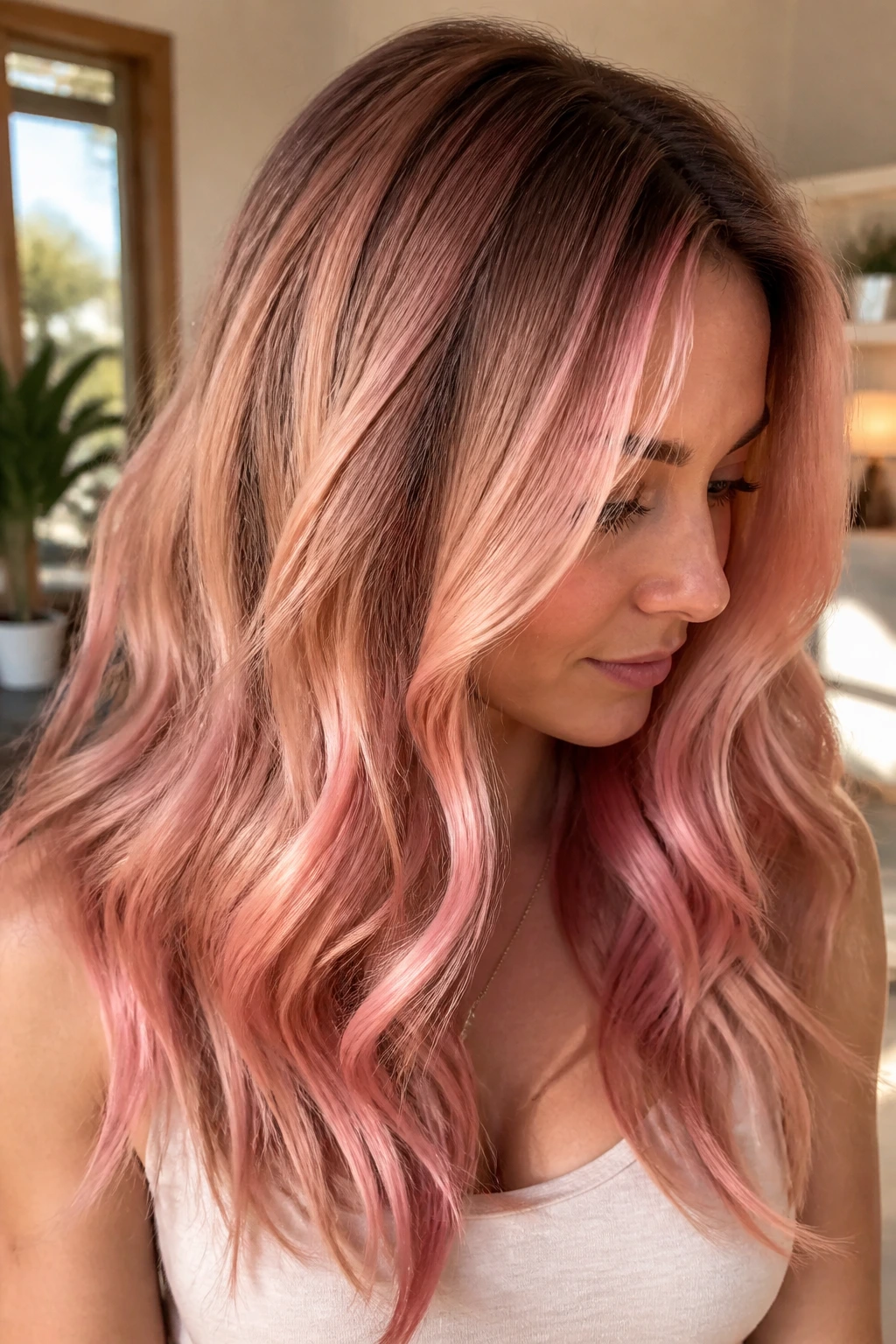
Bring photos, but bring good photos. Same shade, similar lighting, similar starting base. A filtered pink on a platinum wig does not help your medium brunette decide whether she wants rose gold or mauve. What matters is the level underneath, because pink behaves differently on level 7 than it does on level 10.
Tell your colorist what you want the pink to do, not only what you want it to look like. Do you want a softer grow-out? A brighter face frame? A hidden panel? A gloss that fades to beige? Those goals change the formula and the placement. One photo cannot do that work alone.
Hair history matters too. Box dye, dark permanent color, henna, heavy heat styling, and porosity all affect how pink grabs. If your ends are thirsty, they’ll drink pigment fast and may look darker there. A test strand saves grief. So does honest conversation about how often you’re willing to retone.
How to Wear Soft Pink Hair So the Dimension Shows
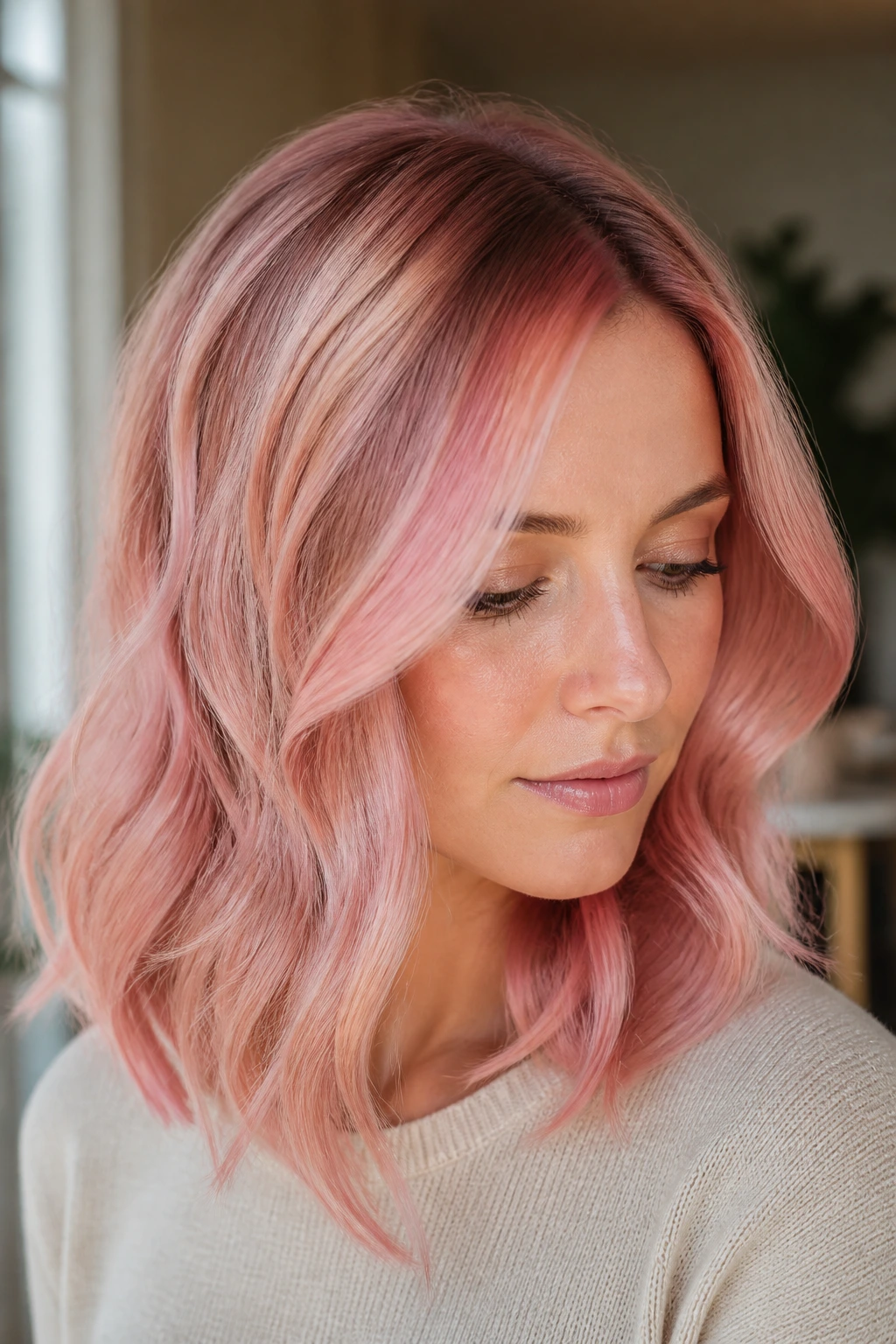
Presentation: Loose waves, a soft bend with a 1.25-inch iron, or a brushed-out curl pattern show pink ribbons better than pin-straight hair. If you want the color to feel soft, avoid over-sprayed curls that freeze the movement.
Accompaniments: Cream, taupe, soft gray, faded denim, and warm white tend to flatter pink hair without competing with it. For makeup, a rosy blush and neutral lip keep the whole look calm; a bright lip can work, but it starts to change the tone fast.
Portions: If you want a whisper of pink, ask for a partial balayage or a few face-framing pieces. If you want more visibility, build from a full-head gloss plus brighter ends instead of one solid layer. That keeps the depth intact.
Lighting: Pink shifts a lot in daylight, warm indoor light, and flash photography. A soft gloss can look nearly beige indoors and blush-pink outdoors, which is exactly why the shade feels dimensional instead of painted on.
Small Tweaks That Keep Pink From Going Flat
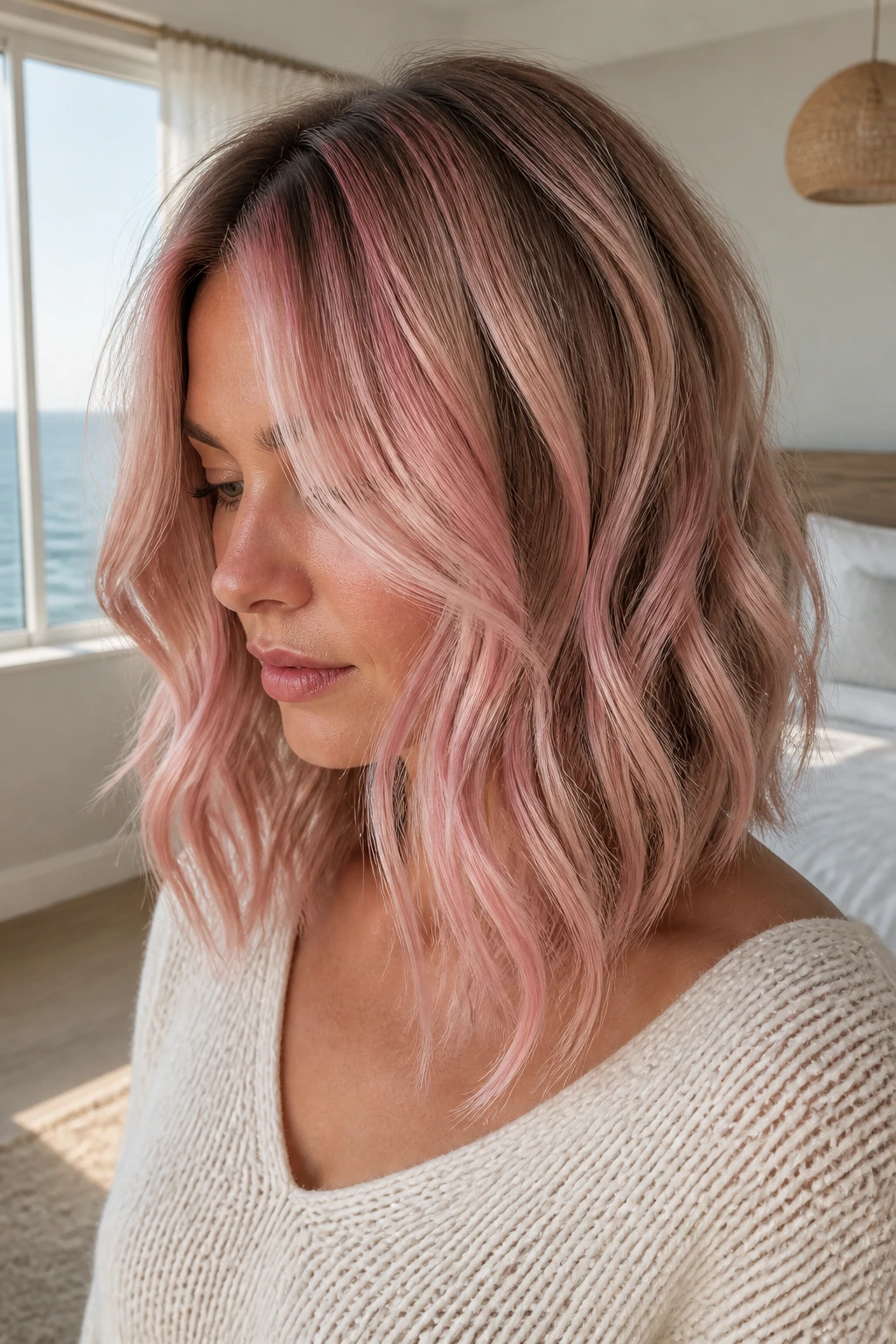
Color Enhancement: A clear or slightly tinted gloss every 4 to 6 weeks keeps the surface shiny and prevents the ends from looking chalky. If your pink skews warm, ask for a rose-beige gloss; if it runs too orange, a cooler mauve gloss helps.
Customization: More beige in the mix makes the shade quieter. More coral makes it warmer and more sunlit. More mauve pushes it into smoky territory. Small shifts matter here. Pink is sensitive.
Serving Suggestions: Air-dried waves, a half-up twist, or a claw clip with a few front pieces left out all show the color off without needing a full styling session. A tiny bit of shine serum on the mid-lengths is enough.
Make-It-Yours: For curls and coils, use color placement that follows the curl pattern instead of slicing through it. For fine hair, keep ribbons thin so the hair doesn’t look busy. For brunettes, let the pink live in the lighter surfaces and around the face, where it catches easiest.
Common Mistakes That Make Pink Hair Look Muddy
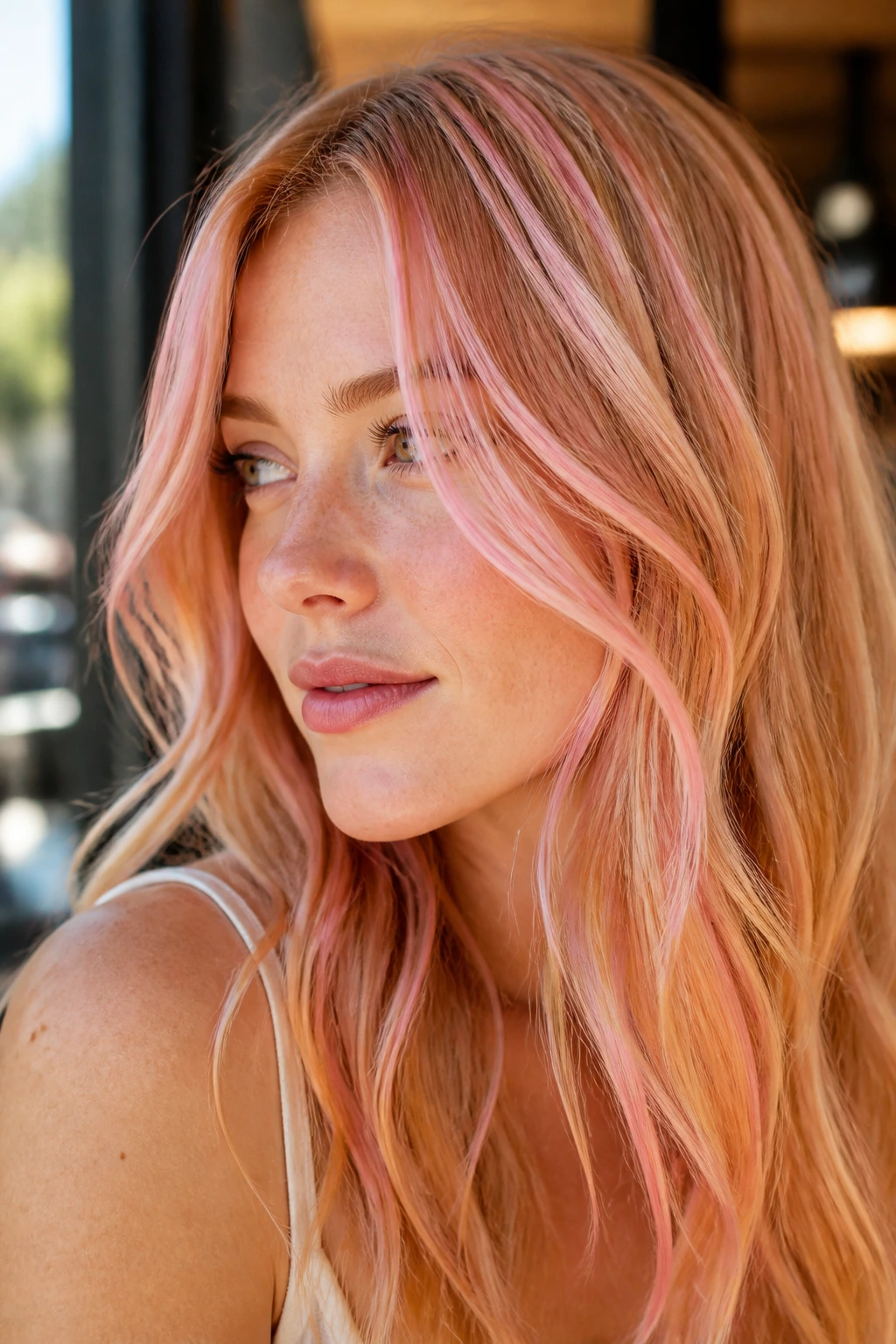
The first mistake is chasing pink on hair that’s too dark or too warm for the formula. The result usually looks beige-brown with a hint of salmon, which is not the same thing. Fix it by lifting or lightening enough to give the pink a clear base to sit on.
The second mistake is over-toning the blonde before the pink goes on. Hair that’s pushed too icy can make pastel pink look chalky, not soft. A little warmth underneath is often your friend.
Too many people also wash pink hair with hot water and harsh shampoo, then act surprised when it fades fast. Pink pigment sits loosely on the strand. Cool water, gentle cleanser, and a wash schedule with some restraint make a real difference.
Finally, don’t ignore porosity. The driest ends grab pigment first and can go darker than the rest of the head. Equalize the hair with conditioning and let your stylist adjust the formula at the ends.
Variations and Adaptations to Try Next
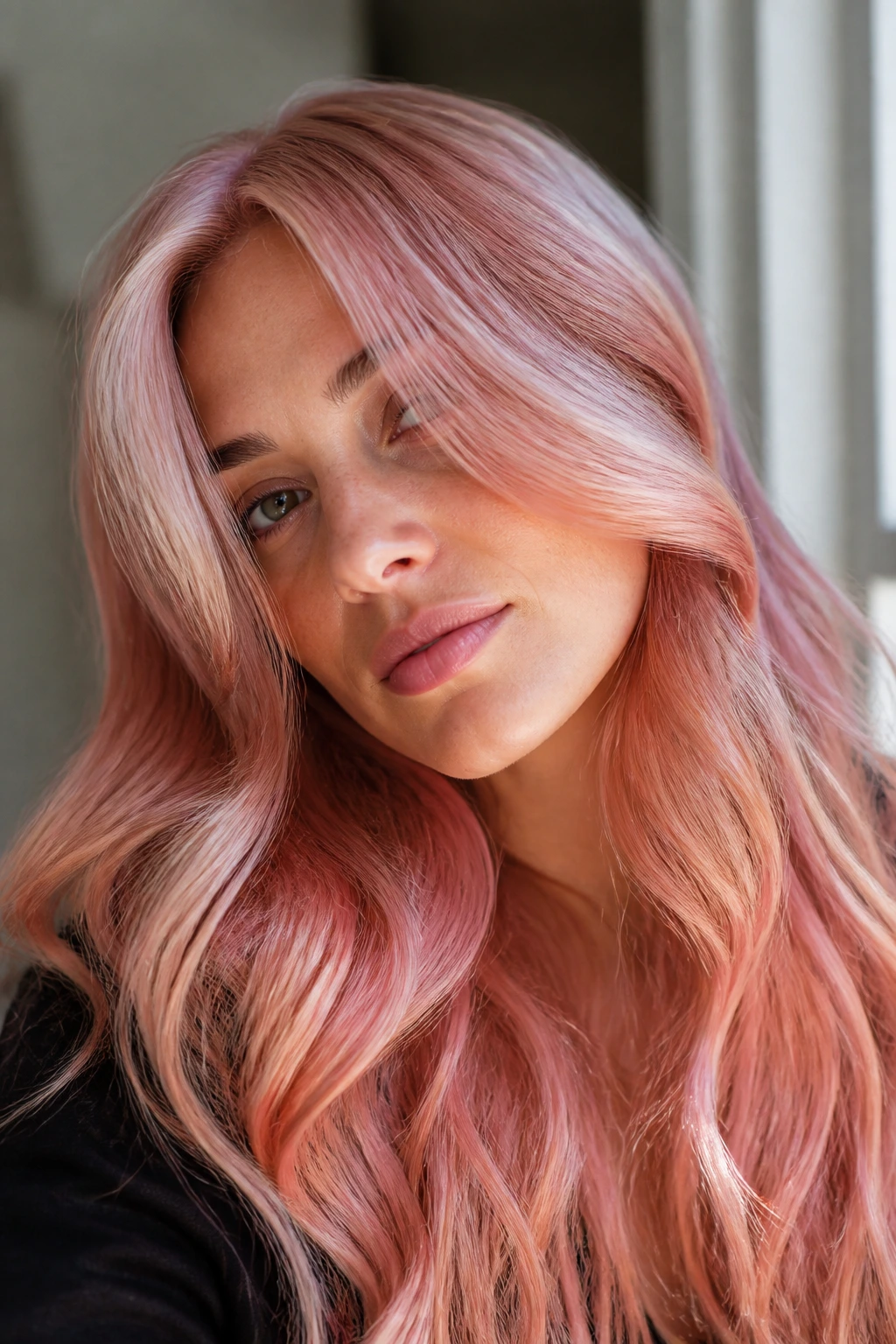
Rosé Veil: This is the softest, most translucent version. Ask for a beige blonde base with a very sheer pink gloss; the pink should read more like warmth than color.
Smoky Mauve Brunette: If you start with darker hair, lean cool and smoky instead of bright. The brunette stays visible, and the mauve keeps the finish from looking flat.
Coral Blossom Melt: Warm it up with peach and coral ribbons through the ends. This suits golden skin tones and layered cuts that need a brighter finish.
Hidden Peekaboo Pink: Keep the exterior calm and tuck the pink underneath. It’s ideal if you need a color that can hide at work and show up in motion.
Pearl Baby Pink: Go lighter, softer, and glossier. This one works best on very pale blonde hair that can carry a translucent pastel without going foggy.
Keeping Pink Hair Fresh Between Appointments
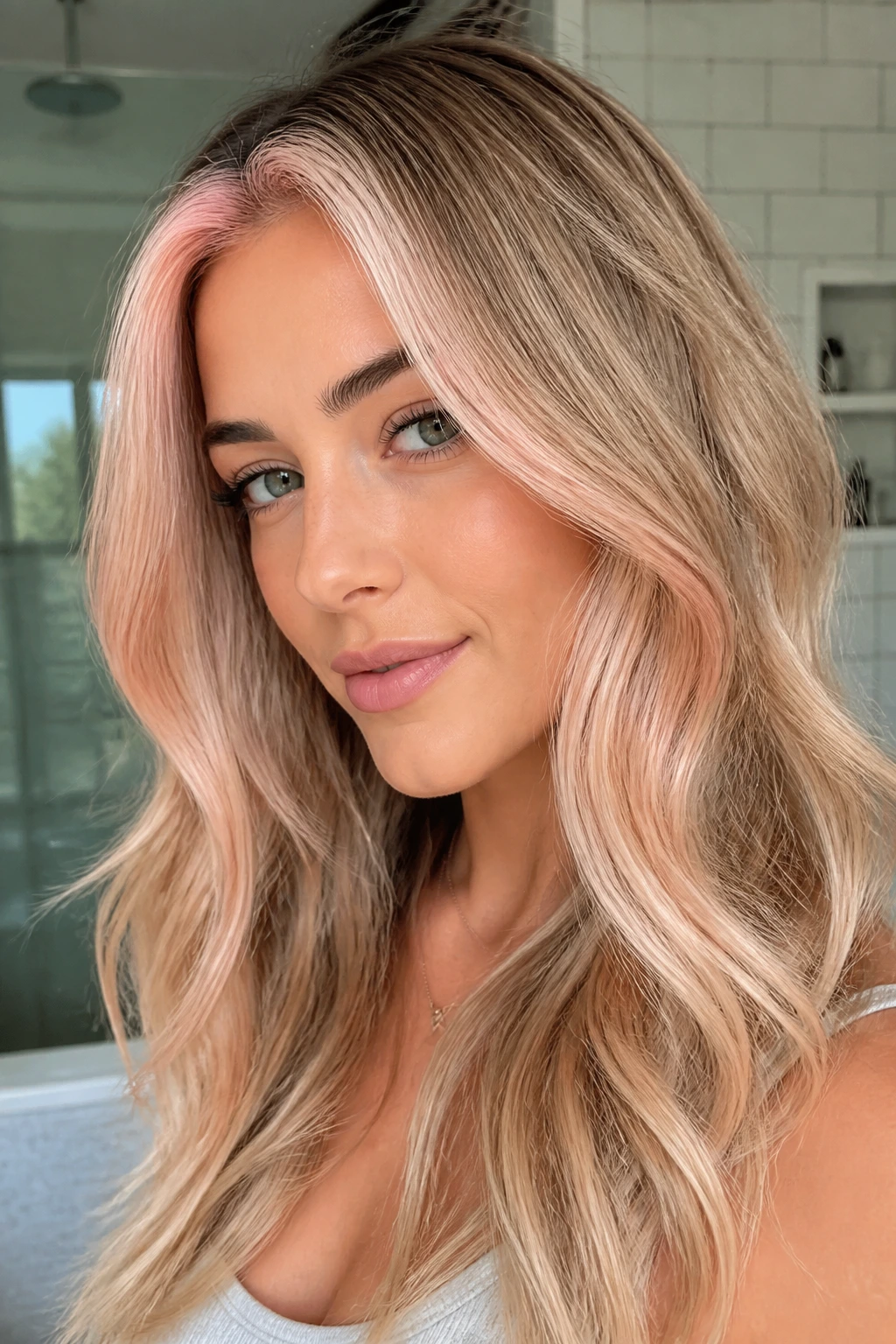
Most soft pink tones fade faster than blondes do, and that’s normal. Direct dye may start to soften after a few washes; a demi gloss can last several weeks longer, especially if you’re gentle with shampoo and heat. Plan on a refresh every 4 to 8 weeks depending on how saturated the pink is and how porous your hair runs.
Wash less often if you can. Two or three washes a week is easier on pink than daily shampooing, and cool or lukewarm water helps the cuticle stay shut. Use a sulfate-free shampoo, but don’t overcleanse the hair with heavy purple products unless your stylist told you to; purple can mute pink in a hurry.
Sleep on a silk or satin pillowcase if your hair tangles easily. It won’t stop fading on its own, but it does keep the cuticle a little smoother, which means less roughness and less color loss from friction. If you use hot tools, spray heat protectant from mid-lengths to ends every single time. Pink on dry, hot hair disappears faster than you’d expect.
Swimming needs a little planning. Wet the hair with clean water first, add a leave-in or a light conditioner, then rinse as soon as you’re out. Chlorine can blunt pink down to a tired peach if you leave it in too long.
Frequently Asked Questions
How light does my hair need to be for soft pink to show?
A pastel or blush pink usually needs a pale blonde base, around level 9 or 10, to look clean. If your hair is darker, a rose gold, mauve, or coral pink can still work because those shades carry more depth.
Will pink hair work on dark brown hair without bleach?
Yes, but it won’t look pastel. On dark brown hair, pink usually reads as a sheen, a smoky tint, or a faint magenta cast in the light. That can be beautiful, but it’s a different effect from a light pink balayage.
How often should I refresh soft pink hair color?
Most soft pink shades need a gloss or color refresh every 4 to 8 weeks. If you wash often, use hot tools daily, or have porous ends, expect to refresh sooner.
Can pink hair still look professional?
Absolutely, if the placement is controlled. A rose gold melt, a mauve shadow root, or a hidden underlayer keeps the look polished instead of loud, especially when the top layers stay muted.
What if my pink turns peach or beige too fast?
That usually means the pigment is fading or the base is too warm. A slightly cooler gloss, less shampooing, and cooler rinse water can bring back the pink edge without starting over.
Is balayage better than all-over pink for this look?
For soft dimensional color, yes, most of the time. Balayage keeps light and shadow in the same head, which gives pink a better shape and makes grow-out less obvious.
Can I do this at home?
A simple pink gloss or a few peekaboo panels can be done at home if your hair is already light enough and you’re careful with sectioning. Full pink balayage, root smudging, or any major lightening is safer in a salon chair.
Should I use purple shampoo on pink hair?
Usually not unless your stylist specifically tells you to. Purple shampoo can fight brass, but it can also mute pink or make it look dusty in a way you didn’t want.
The Shade That Still Feels Like You
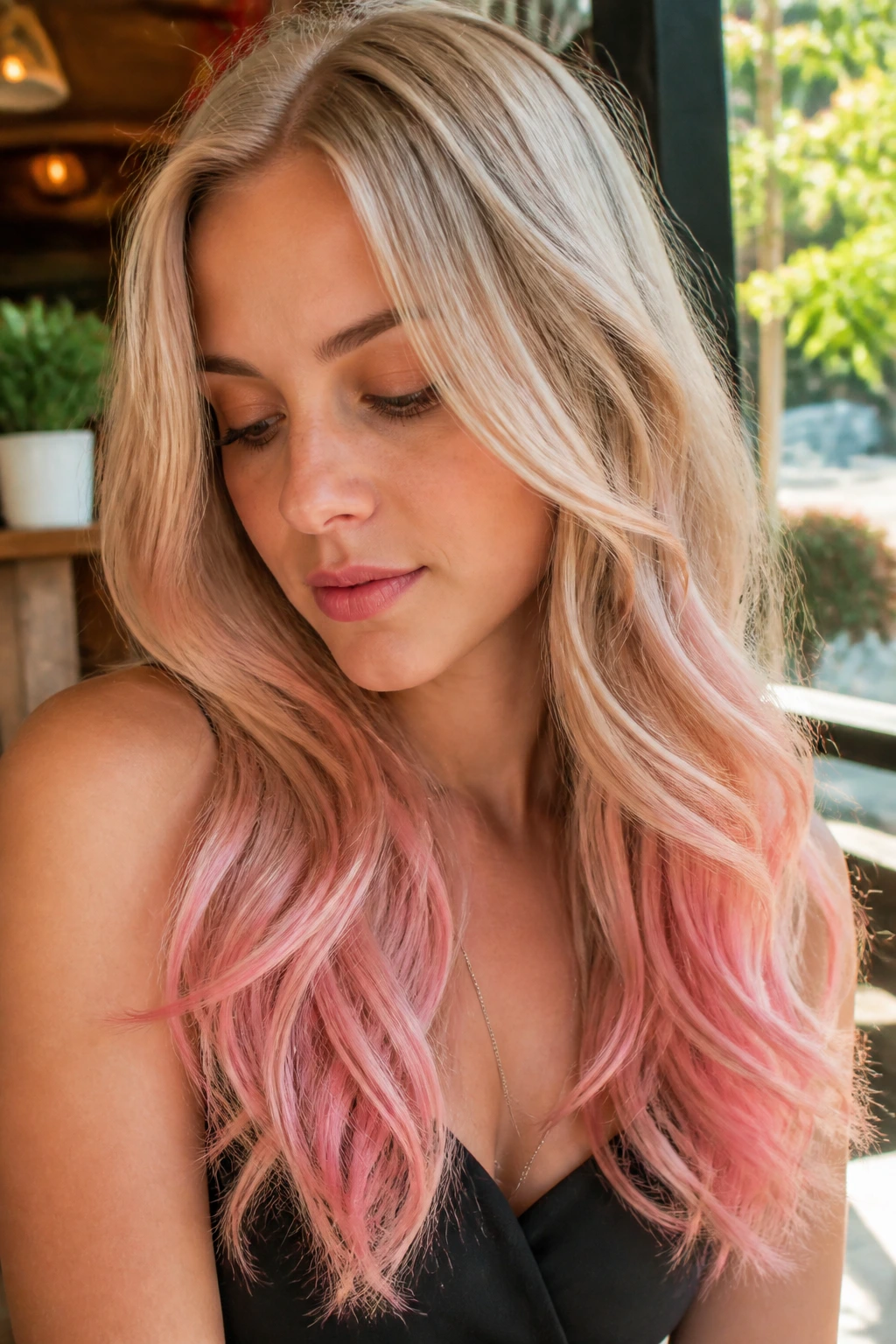
Pink hair doesn’t have to mean one solid block of cotton candy. The better version has depth, movement, and a little restraint at the root, which is why it keeps looking good long after the appointment chair. That’s the real appeal of soft dimensional pink: it can be playful in the light and calm in everyday life.
If you want the shade to last, ask for placement, not just pigment. That one choice changes everything.
