



Men’s long hair haircuts live or die on shape. Leave the ends all the same length and the whole thing can slump into a curtain that eats your face. Cut too much out of the sides and you lose the one thing long hair gives you: movement that actually looks deliberate.
The tricky part is that long hair behaves differently once it gets past the ears. Weight pulls it flat. Cowlicks show up in places you never noticed at shorter lengths. Thick hair can balloon at the temples, while fine hair can look wispy at the ends even when there’s plenty of it. A good cut works with that behavior instead of fighting it.
That’s why the strongest long haircut ideas for men are not just “grow it longer.” They’re shapes. Some keep the outline soft and flowing. Some clean up the sides and let the top stay loose. Some are built for waves, some for straight hair, and a few are doing honest work for curls, locs, or twists. The right one changes how your hair falls when it’s freshly washed, how it looks after a windy day, and how much effort you want to spend in front of the mirror.
Why These Long-Hair Cuts Work Better Than a Random Trim
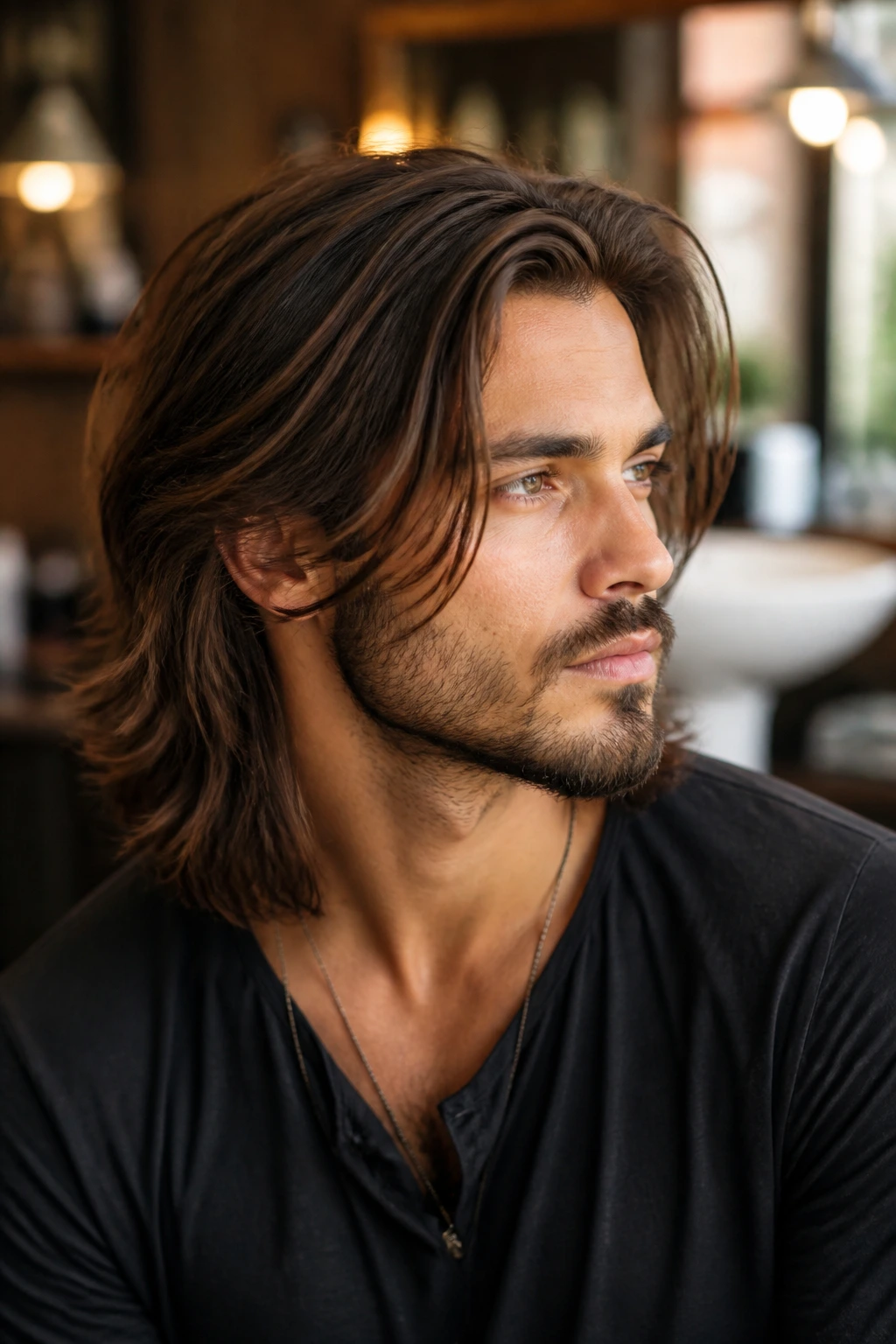
- Shape beats length: A long cut needs a clear outline around the jaw, neck, or collarbone, or it starts to look accidental.
- Texture gets room: The best men’s long hair haircuts leave enough internal movement that waves and curls can do their job instead of puffing sideways.
- Grow-out matters: Several of these cuts still look decent after 6 to 10 weeks, which is the difference between a style and a burden.
- Face framing is doing real work: A few inches around the cheekbones can make a long face look shorter or a square face look less blocky.
- You can scale the polish: Most of these styles can look neat, rough, or somewhere in between depending on how you dry and finish them.
- Barber-chair language becomes easier: Once you know the shape you want, you can talk in landmarks—eyebrow, jaw, collarbone, nape—rather than waving your hands around.
1. Shoulder-Length Layers

A shoulder-length layered cut is the safest place to start if you want movement without a lot of drama. The ends skim the shoulders, the interior is cut with enough layering to stop the bulk from sitting like a shelf, and the whole shape usually feels lighter than it looks on the hanger.
Why It Works
The clean part is the weight removal. Thick hair hits the shoulders and starts flipping outward; a few well-placed layers stop that from turning into a mushroom shape. On straight hair, the layers keep the ends from looking like one heavy block. On wavy hair, they help the bend show up instead of getting buried.
- What to ask for: Hair that lands at or just below the shoulders, with internal layers that start around the cheekbone or jaw.
- Best for: Thick straight hair, loose waves, and men who want length without tying it up every day.
- Watch out for: Too many short layers near the crown. That’s how you get a puffed top and flat ends.
How to wear it: Let it air-dry halfway, then rake in a light cream and tuck one side behind the ear. It should look like the hair belongs there, not like it was forced into position.
2. The Bro Flow
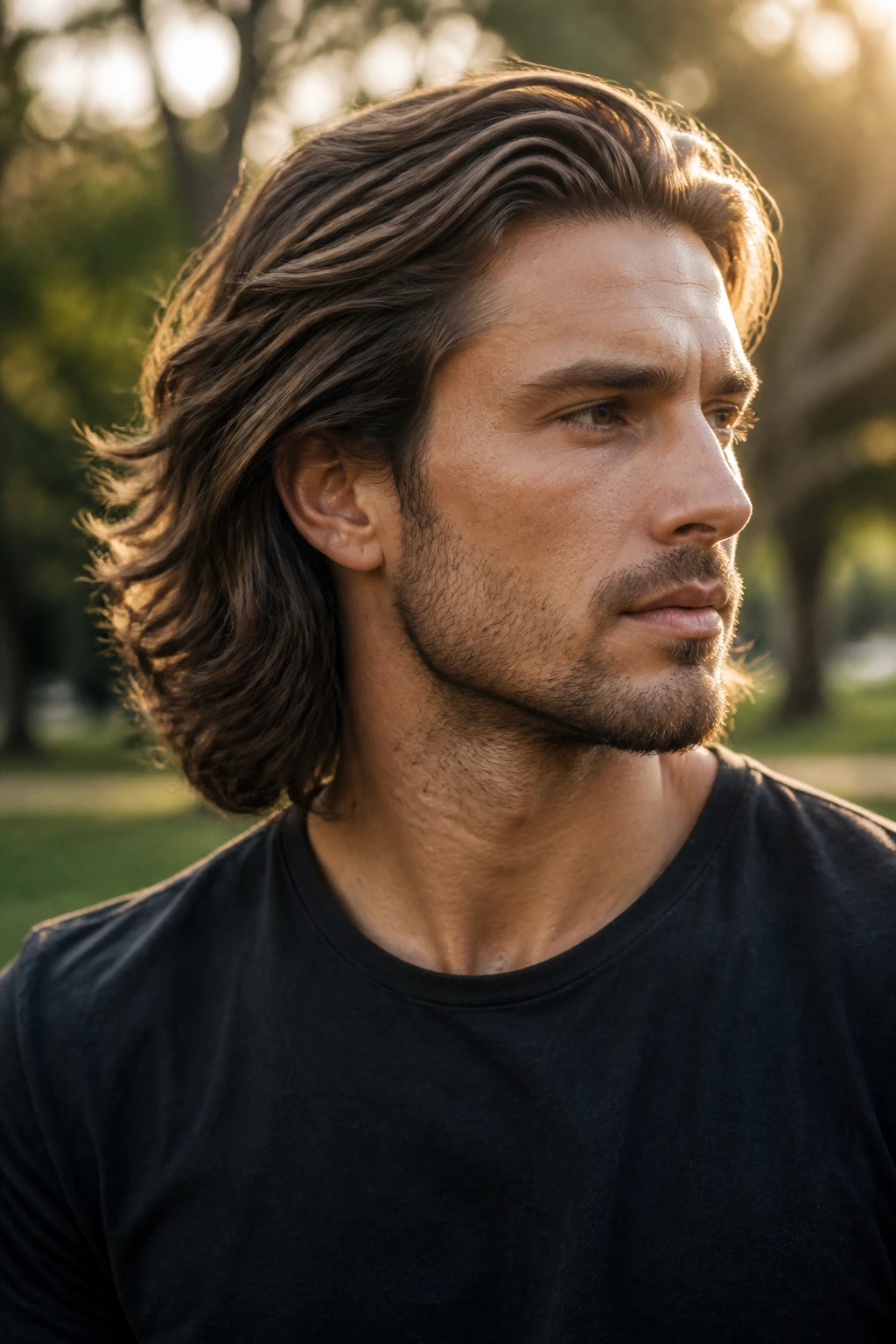
The bro flow is basically hair that has enough length to sweep back from the face and enough softness to move when you turn your head. It’s the haircut equivalent of leaving the door open a crack instead of slamming it shut.
This one works because it respects the natural fall of the hairline. The front is long enough to push back, but not so long that it collapses in the middle of your forehead. If your hair has a little wave, even better. The shape takes on a loose, athletic look that doesn’t need much product.
I like this cut most on men who hate feeling over-styled. A sea-salt spray or a light matte cream is usually enough. Too much pomade and the whole thing goes stiff, which defeats the point.
3. Curtain Cut for Men’s Long Hair

A curtain cut is all about the center part and the soft split that falls away from the forehead. The front usually sits around the nose, cheek, or upper lip depending on how bold you want it, and the sides stay long enough to blend instead of spike out.
How It Sits
The shape relies on weight, not a hard edge. If the front is too short, the curtains won’t actually curtain; they’ll just flop. If the sides are too thick, the whole cut widens at the temples and starts looking square. The sweet spot is a clean middle part with enough length to break around the cheekbones.
Best use case
- Straight or lightly wavy hair
- Narrow to medium face shapes
- Men who want a long haircut that still shows their forehead
If you wear glasses, this cut can be excellent. The hair frames the frames. That sounds obvious, but it’s one of the few long styles that actually makes glasses look more intentional instead of competing with them.
4. Wolf Cut for Long Hair
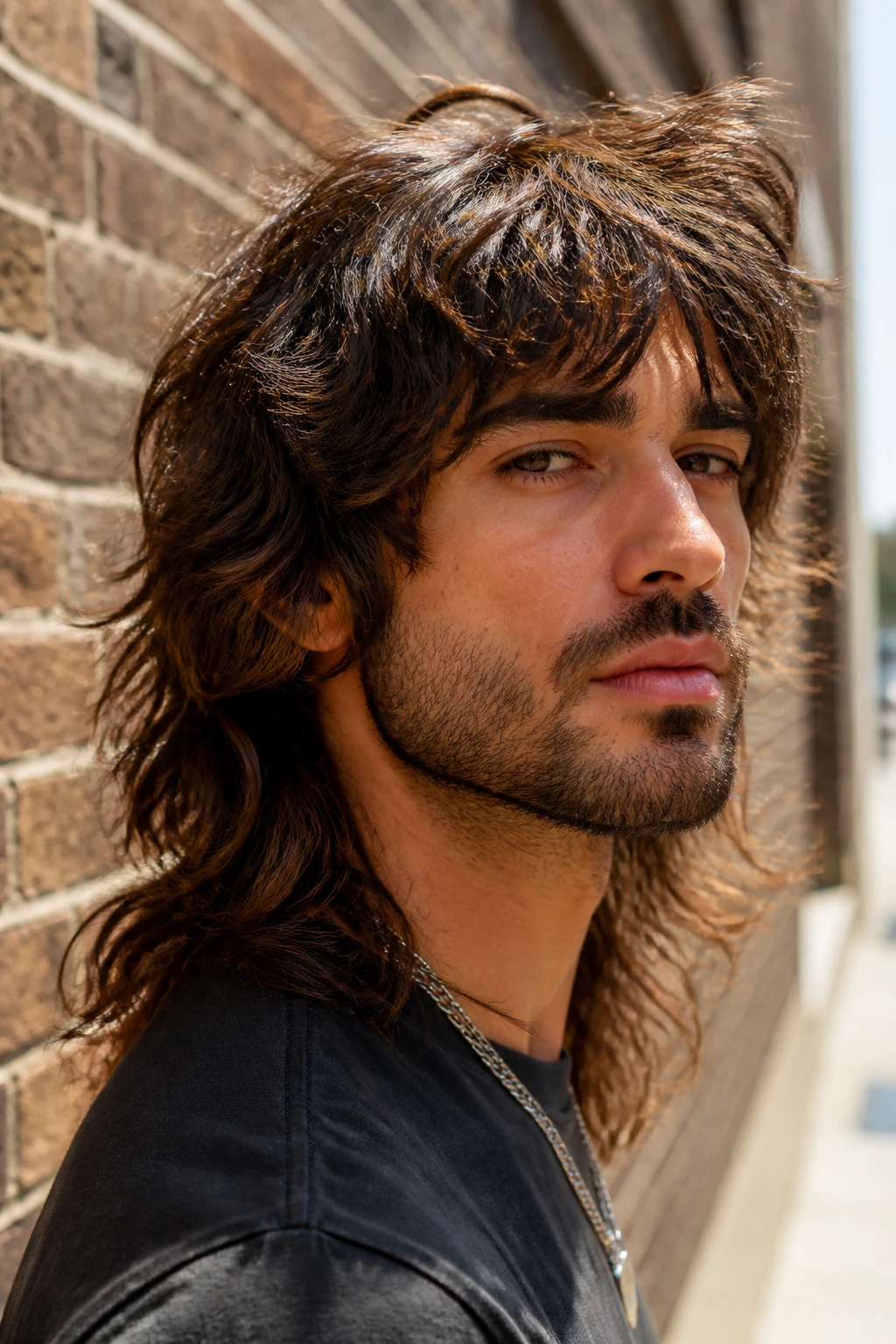
The wolf cut is the loudest one in the room, and I mean that in a good way. Choppy layers, a little mess at the crown, and more length in the back give it a rough edge that works especially well when your hair has natural texture.
What Makes It Different
The wolf cut sits between a shag and a mullet. The top is broken up with short-to-medium layers, while the back hangs longer and looser. That contrast is the whole point. On thick hair, it cuts down the heaviness. On wavy hair, it makes the movement look planned instead of accidental.
- Best on: Thick, wavy, or slightly curly hair.
- Ask for: Internal layers, not just surface texture.
- Skip it if: You want a tidy outline every morning with no effort.
This cut can look incredible or chaotic, and the difference is usually one thing: the neckline. Keep the nape tidy. If the bottom gets fuzzy and the top is already choppy, the style starts to look like you slept in a parking lot.
5. Long Hair With a Heavy Textured Fringe

A heavy fringe changes the whole mood of long hair. Instead of pushing everything back or splitting it down the center, the front falls forward and gives the face a frame with some weight to it. It can be soft, jagged, or almost eye-grazing.
This is one of the better long haircuts for men with taller foreheads or a hairline that has started to retreat a little. The fringe softens the upper face and gives you control over where the eye lands. Texture matters here. A blunt, straight fringe on thick hair can feel severe. A piecey one, cut with point-cutting or a razor, moves better and avoids that helmet look.
The trick is keeping the back and sides from getting too heavy. If the fringe is carrying all the visual interest, the rest of the cut needs to support it, not bully it.
6. Tapered Sides and Length on Top
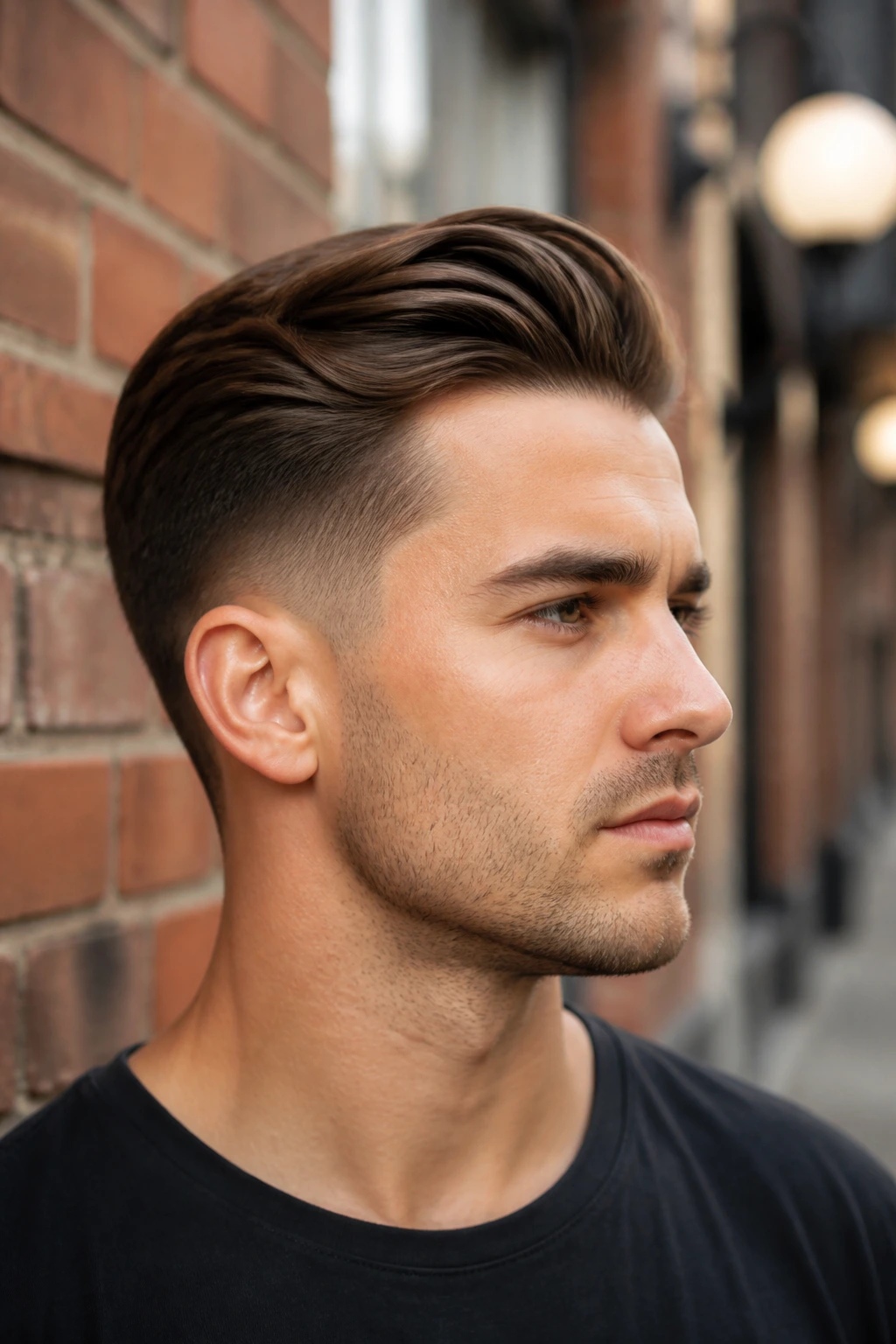
This is the cut for men who want long hair but still want a clean edge around the ears and neckline. The sides are tapered close enough to stop the bulk, while the top stays long enough to sweep back, part, or tie up.
The reason it works is simple: long hair gets unruly at the sides first. Cleaning up the lower half of the head creates breathing room. You can wear the top loose and still avoid the “triangle” shape that shows up when everything grows out at the same pace.
Best for
- Men with thick or coarse hair
- Oval, square, or round faces
- Anyone who wants a long style with easier maintenance
It’s also one of the most practical choices if you move between settings. The hair can look relaxed on a day off and still pass for neat if you work the top back with a small amount of cream.
7. The Man Bun Cut With Extra Face-Framing Length
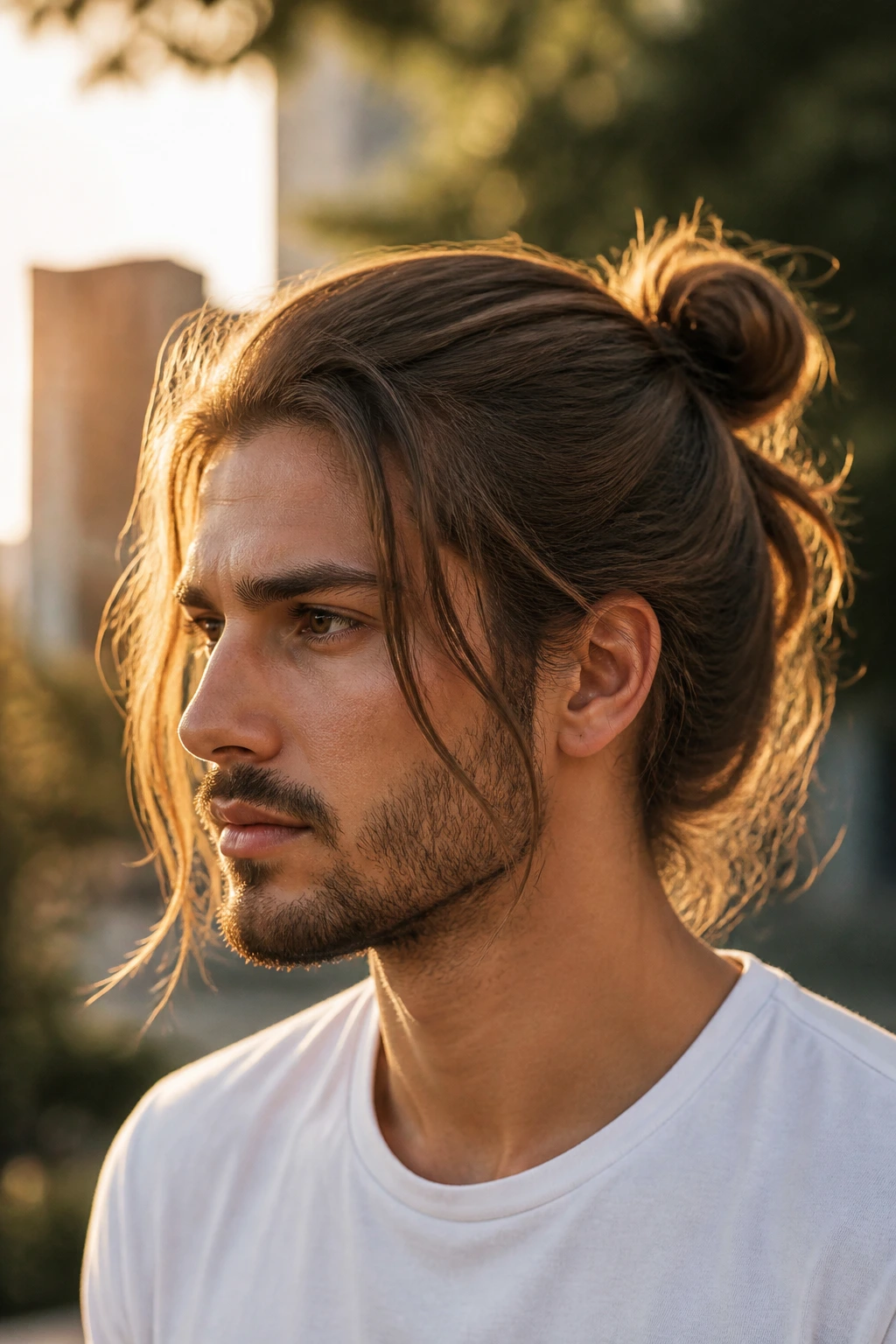
A good man-bun cut is not just “long enough to tie up.” The front and sides need to be shaped so the hair looks decent both up and down. That usually means a little graduation around the temples and enough length in front to avoid a bald-looking pull when the bun is up.
What to ask for
Tell the barber you want the hair long enough to tie back without the sides puffing out, and you want some loose length around the front to keep the style from looking severe. If you already tie your hair up often, this matters. A lot.
The best versions keep a few inches around the face so the bun doesn’t look like a raw reset button. That loose framing also makes the hair more forgiving on days when the tie comes out and the whole thing falls forward with a bit of shape instead of a flat crease.
8. Half-Up, Half-Down With a Clean Nape
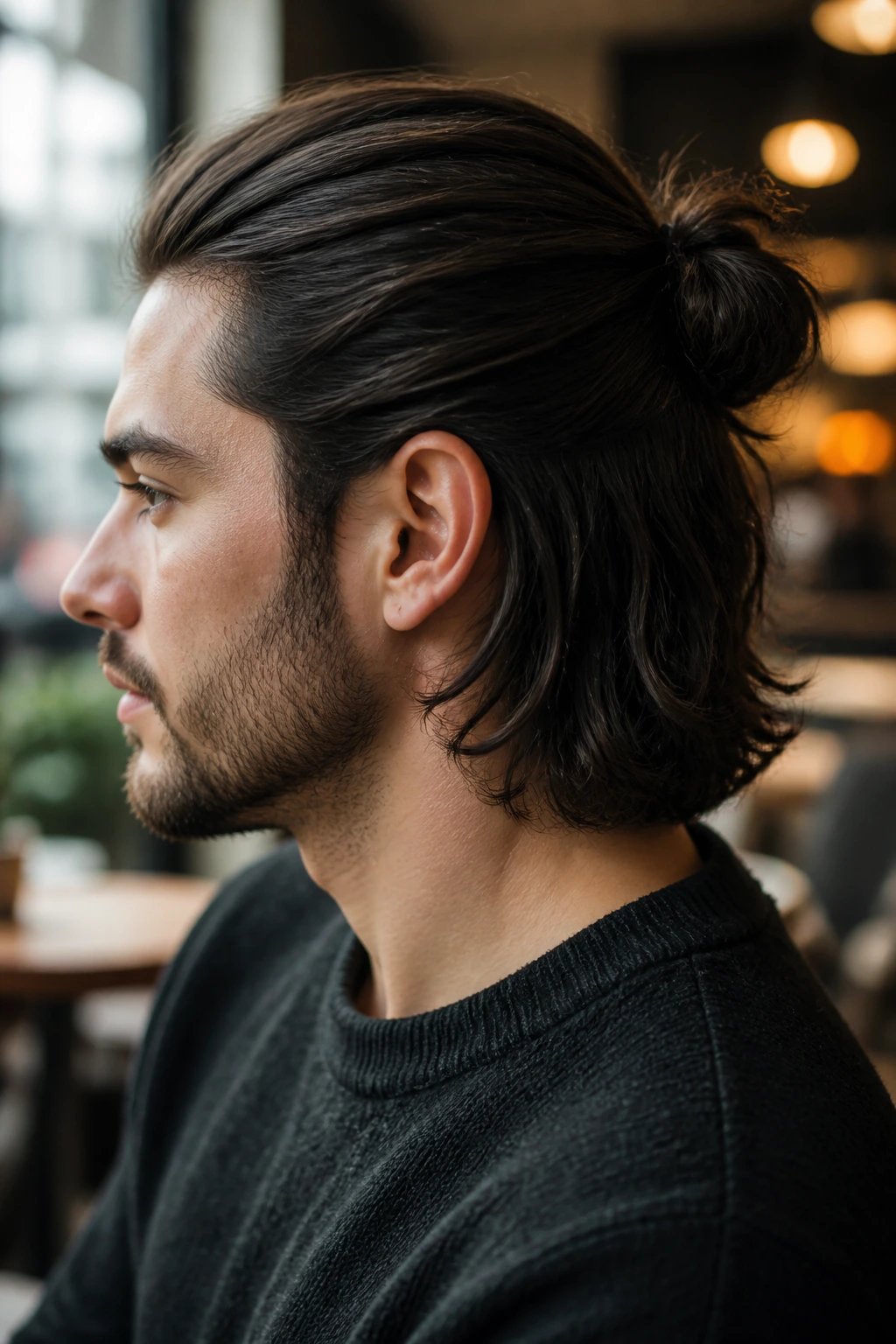
Half-up, half-down hair is underrated because it solves a real problem: you get the face-clear practicality of a tied section and the movement of loose length underneath. It works best when the cut is balanced enough that the lower hair doesn’t flare out like a fan.
The nape should stay tidy. That’s the part people forget. If the lower section is too bulky at the neck, the style reads as messy in a bad way. With some layering and a clean neckline, though, this cut looks relaxed without falling apart.
It’s a good middle ground for men who are growing their hair out but are not ready to commit to a permanent bun. The upper section gives structure. The rest keeps the length visible.
9. Slicked-Back Length With Tucked Sides
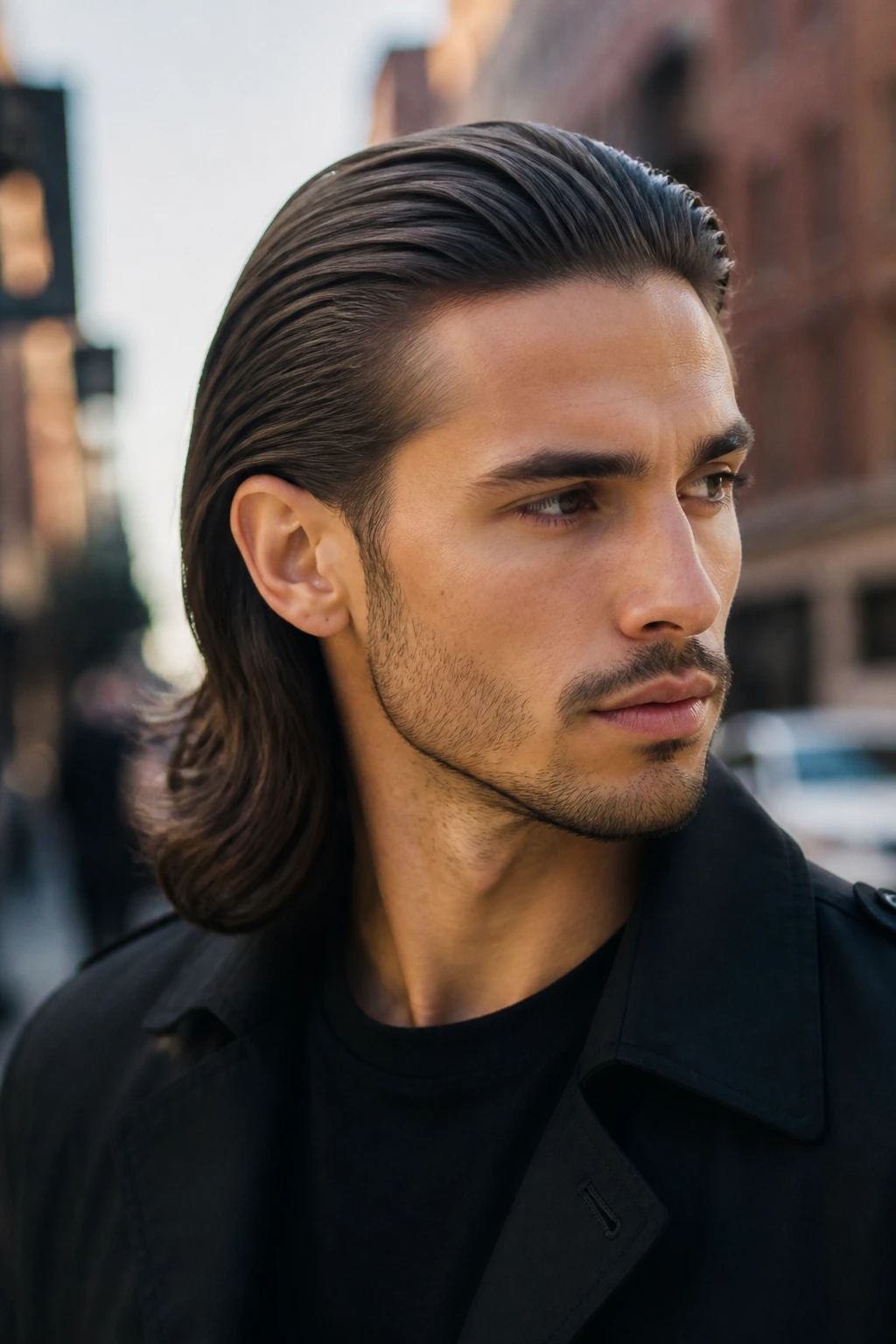
This is the long-hair answer for men who want polish without going short. Hair gets swept back from the forehead, the sides are tucked neatly behind the ears or cut to sit close enough to stay in place, and the overall look is controlled without being hard.
The key is not to drown it in product. A slicked-back long style needs enough hold to keep the front in place, but if you load on heavy gel, the ends separate into strings and the style gets greasy fast. A medium-hold cream or light pomade usually does better, especially on hair that already has a bit of natural bend.
The effect
The face opens up. The jawline shows more. And the long length still stays visible, which is why this cut works better than just chopping it shorter for “cleanliness.”
10. Long Hair With a Low Taper Fade
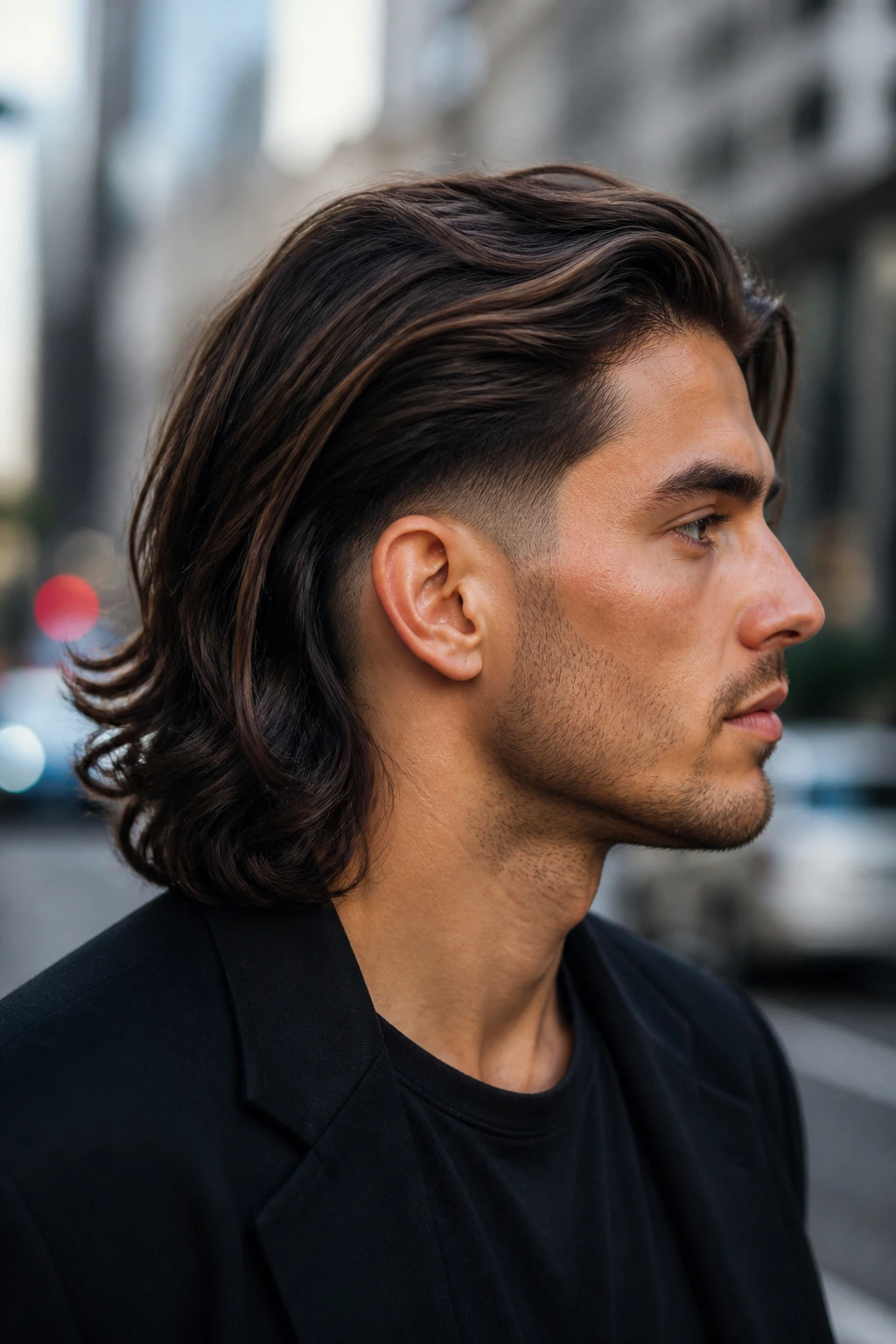
A low taper fade is one of the smartest ways to wear long hair without letting the sides dominate the head. The fade starts low around the ear and neckline, while the top and back keep their length. It’s clean, but it doesn’t steal the whole show.
This cut is good when you want contrast, not shock value. The taper keeps the perimeter sharp, which helps the long top look fuller by comparison. On thick hair, that contrast can make the style feel a lot lighter. On fine hair, it can create a stronger outline, but the fade should stay subtle or you’ll lose too much visual mass.
If you like putting the hair behind your ears, this is one of the nicer options because the fade clears space instead of fighting it.
11. Shag Layers That Move in Every Direction
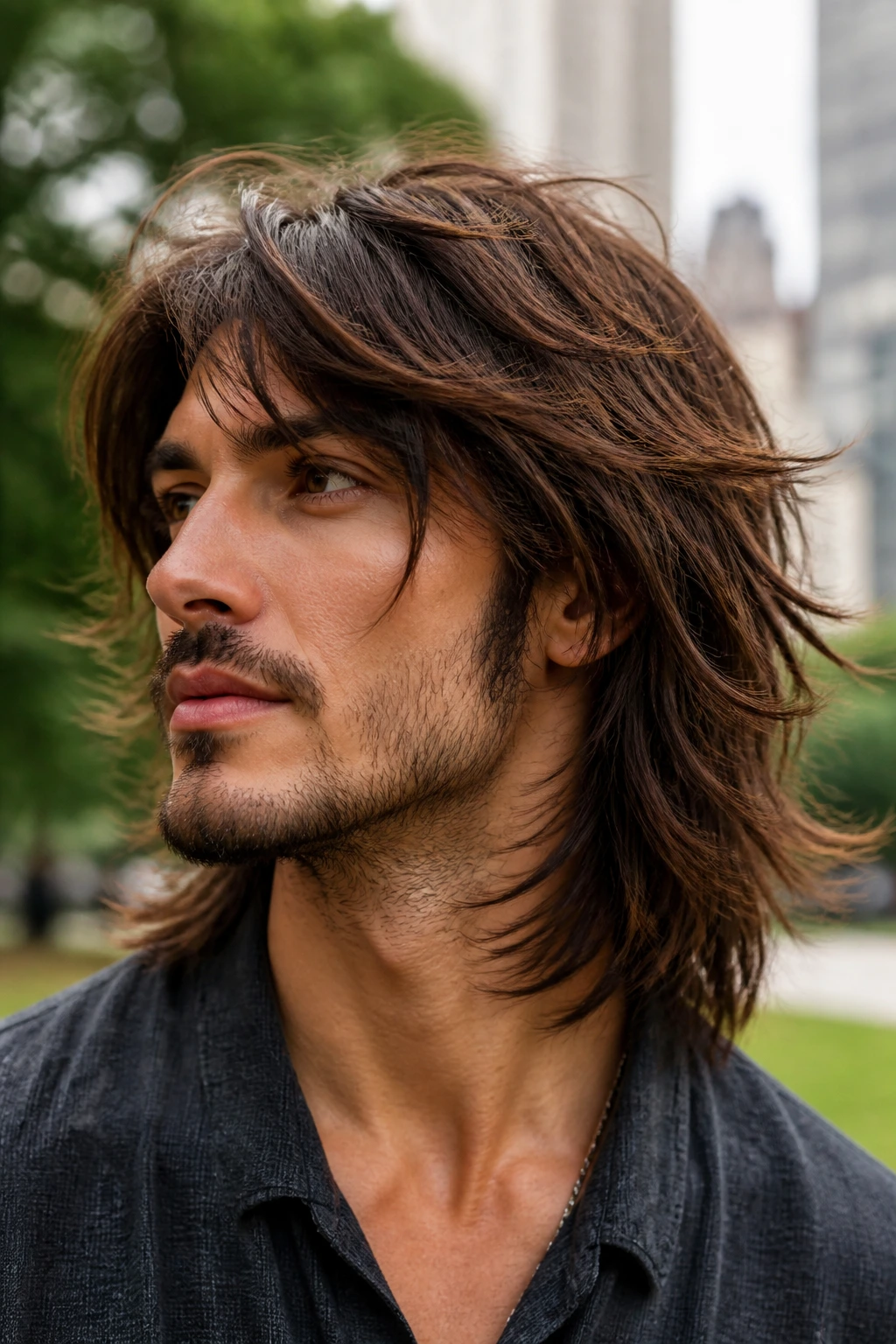
The shag is messy on purpose, which is why it works so well on long hair. Layers are cut through the interior, usually with some roughness around the crown and face, so the hair doesn’t sit in one flat sheet. It moves. A lot.
The best shags are not all the same. Some lean softer and feathered. Others lean rough and almost rock-band ragged. But the common thread is the same: weight is removed where it would otherwise build up. That makes the hair swing around the face instead of hanging as one heavy curtain.
Quick shape notes
- Crown layers help lift.
- Face-framing pieces stop the cut from becoming boxy.
- A little texture at the ends keeps it from feeling too tidy.
If you’ve got thick hair and always end up with a triangular silhouette, the shag is worth a real look.
12. Surfer-Length Hair With a Sun-Soft Finish

Surfer-length hair is the style that looks easiest and is often the least easy to get right. The shape needs enough internal cut to avoid bulk, but not so much that the hair loses its soft, wind-tossed fall. It works best on hair that already bends a little.
What you’re really looking for here is control without obvious structure. The ends should feel soft, not chopped. The layers should be long enough that the hair still hangs in loose ribbons. If the cut gets too aggressive, the whole thing starts looking feathered in a dated way.
This style is a good match for men who want their hair to feel like hair, not an architecture project. A little leave-in conditioner, a wide-tooth comb, and air-drying do most of the work.
13. Long Undercut With Disconnected Sides
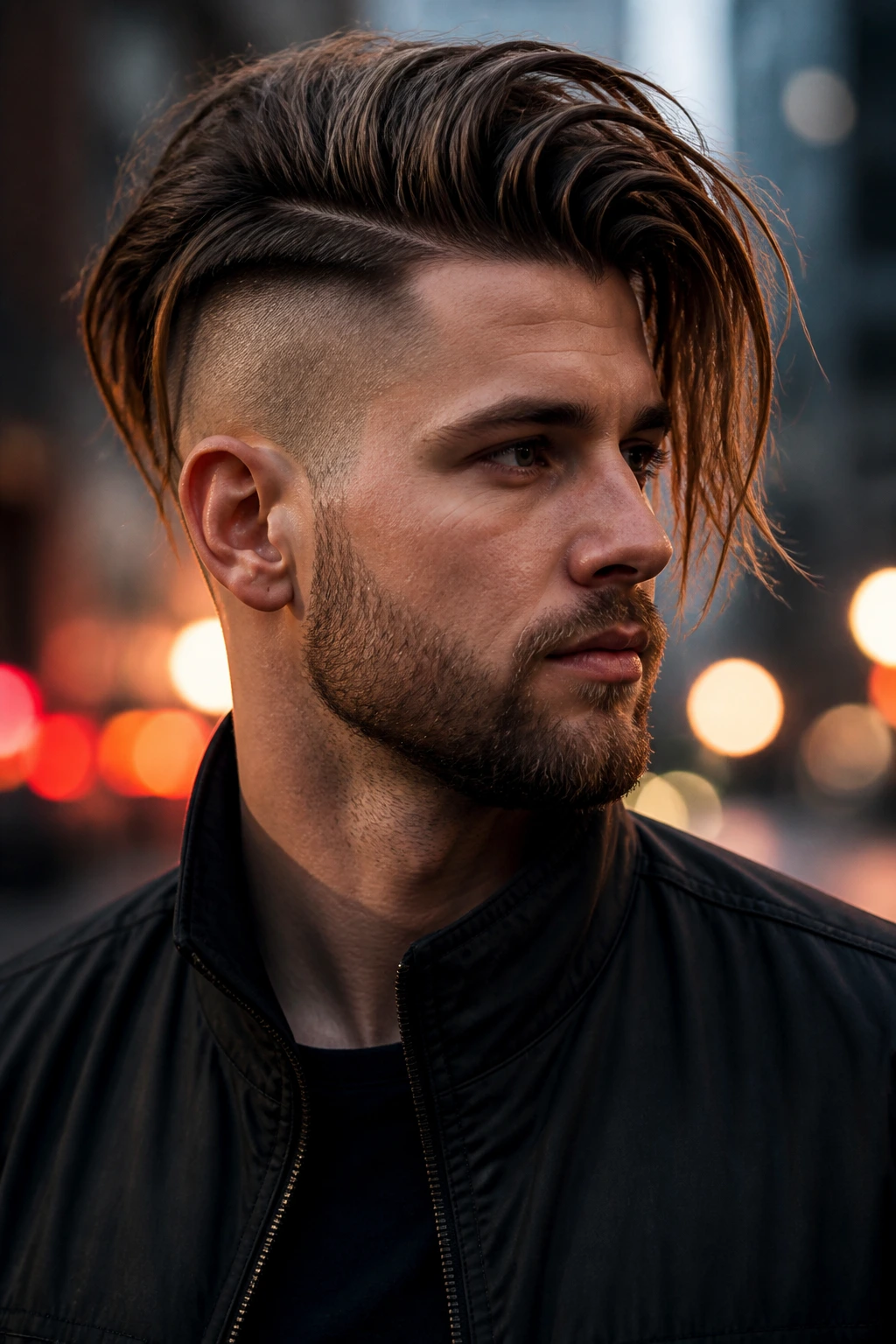
A long undercut is a bold choice because the contrast is impossible to ignore. The top stays long. The sides are cut much shorter. There’s a clear break between them, and that disconnect is the whole point.
It works best when the top has enough density to carry the style. If the hair is fine and sparse, the contrast can make the top look thinner than it is. On thick hair, though, the undercut can be a lifesaver. It takes a huge amount of bulk off the sides and lets the top sit with more movement.
This cut also has a real grow-out issue. Once the short sides start catching up, the shape loses its edge. So if you like the look, be ready to maintain it. Not forever. Just enough to keep the top from swallowing the whole cut.
14. Rounded Curls Cut to Keep Their Shape
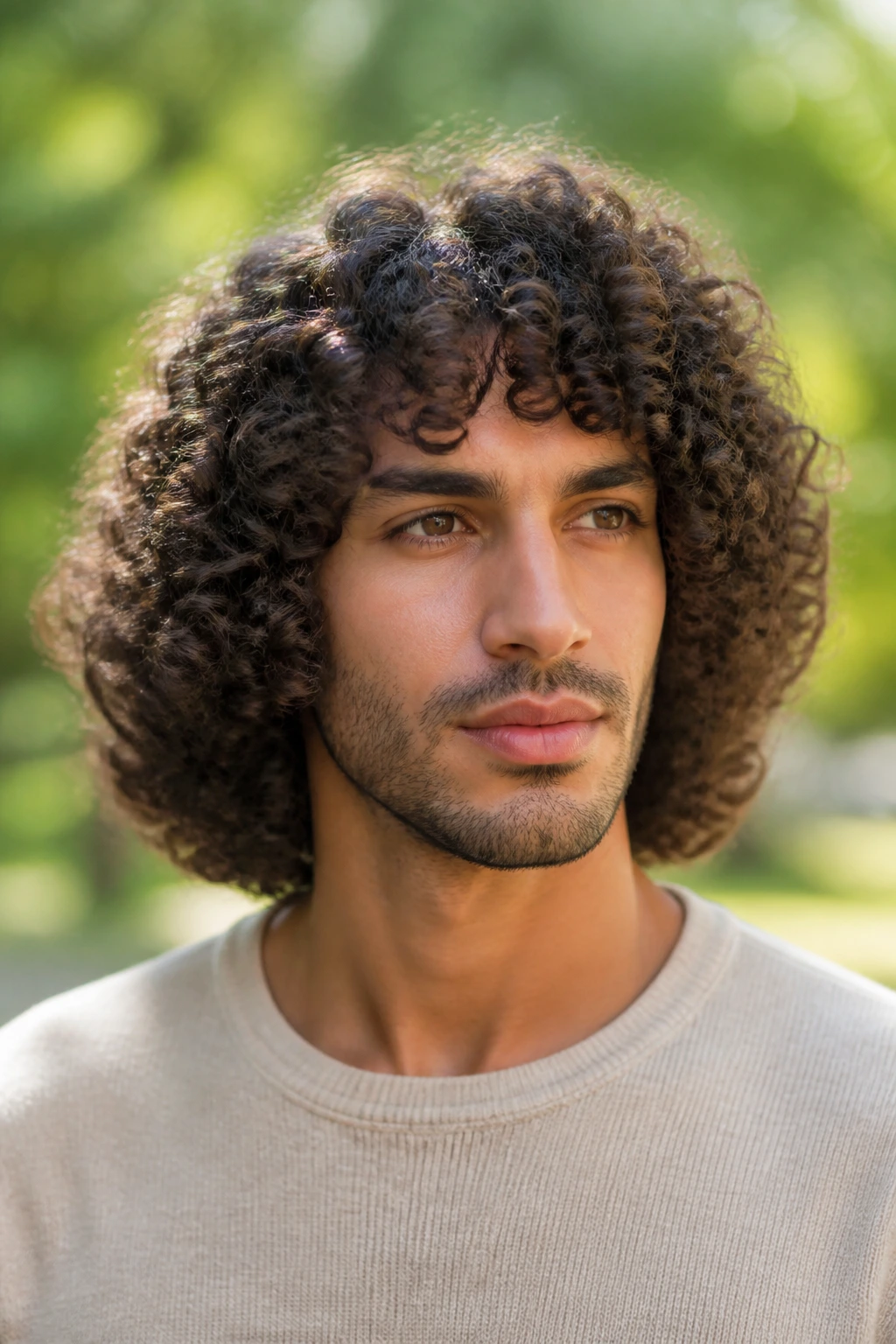
Curly long hair does not want to be treated like straight hair with extra volume. That’s where people go wrong. A rounded cut respects the curl pattern and keeps the silhouette from turning triangular or flat at the top.
The goal is to shape the outside of the cut so the curls fall into a soft halo rather than a puffed-out pyramid. That often means trimming curl by curl or working in sections so the barber can see how the hair springs back once it dries. Wet curls lie. Dry curls tell the truth.
What helps
- Leave length where the curls need weight.
- Remove bulk from the interior, not just the ends.
- Keep the outline rounded around the jaw and ears.
A good curly long cut should make the hair look easier, not shorter. There’s a difference.
15. Side-Parted Long Hair With a Quiet Sweep
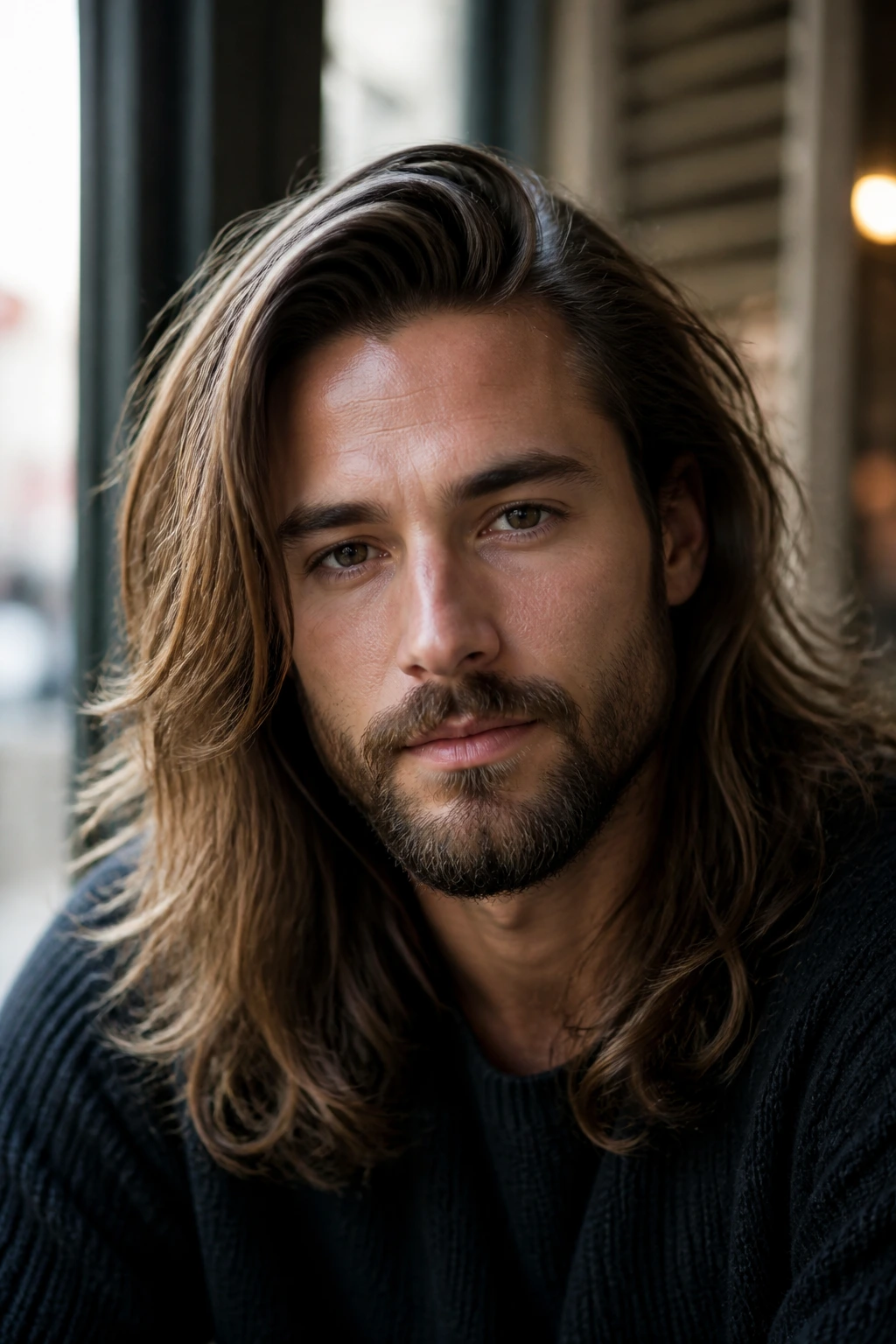
A side part on long hair is one of the easiest ways to make the style feel a little more grown-up without killing the movement. The part gives direction. The length gives softness. Together, they keep the hair from drifting into the middle of the face.
This cut is especially useful if your hair naturally falls one way anyway. Fighting the natural part is a waste of time. Work with it. A side sweep can make a long face feel less stretched, and it can take some of the width out of a rounder face if the hair stays close at the sides.
The part itself does not have to be carved in like a business haircut. A loose side part, especially on damp hair with a bit of cream, usually looks better than a hard line.
16. Mullet-Inspired Long Hair With Edge

The modern mullet on long hair has more shape than the old joke version. The front and sides stay shorter and more controlled, while the back keeps more length. Done well, it looks sharp and a little defiant. Done badly, it looks like you forgot to finish the haircut.
Why it works
The mullet-inspired cut gives the face a frame without making the whole head heavy. That’s useful for men with thick hair or strong natural texture. It also keeps the back long enough to tie, tuck, or leave loose, while the front can stay lighter and easier to manage.
It is not the most conservative choice. Fine. Not every cut has to be polite. If you want a long style that has personality and still leaves room for tailoring, this one does it.
17. Blunt Ends for Thick, Straight Hair
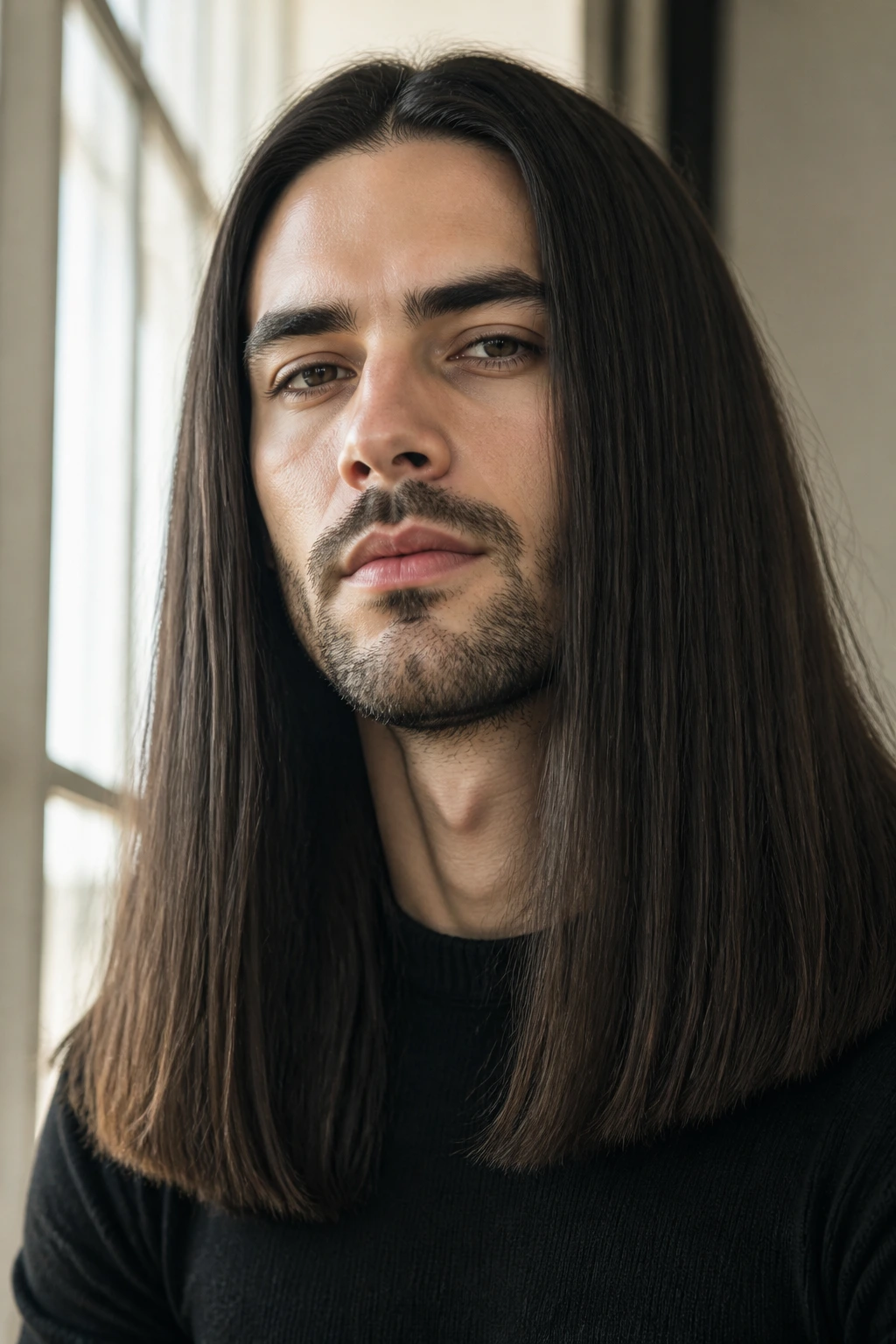
Blunt ends are a strong move on straight hair because they make the length look dense and deliberate. There’s no soft feathering at the bottom, no wispy finish, no false lightness. The line is there, and it means business.
This cut works best when the hair is healthy. Split ends show up fast on blunt shapes because the line makes damage easier to spot. That’s the trade-off. You get weight and fullness, but you have to keep the ends in better shape than you would with a heavily layered cut.
It’s a particularly good option if your hair is thick enough that layers make it flare out. A blunt perimeter keeps the silhouette controlled. That’s the whole trick.
18. Face-Framing Layers Around the Jaw

Face-framing layers are one of the easiest ways to make long hair feel tailored. The hair at the front is cut to land around the jaw, cheekbone, or chin, while the rest of the length stays intact. The effect is subtle until you see how much it changes the face.
This cut can soften a square jaw, add shape to a long face, or stop very straight hair from hanging like a panel. It also helps when you wear your hair down most of the time and need something to happen around the front. Just something. Otherwise the whole cut can look like it’s waiting for a decision.
Best use
Ask for the shortest face-framing piece to hit where you want attention first—cheekbone for lift, jaw for balance, chin for softness. That single choice changes the whole read of the style.
19. Samurai Knot Cut With Tidy Sides
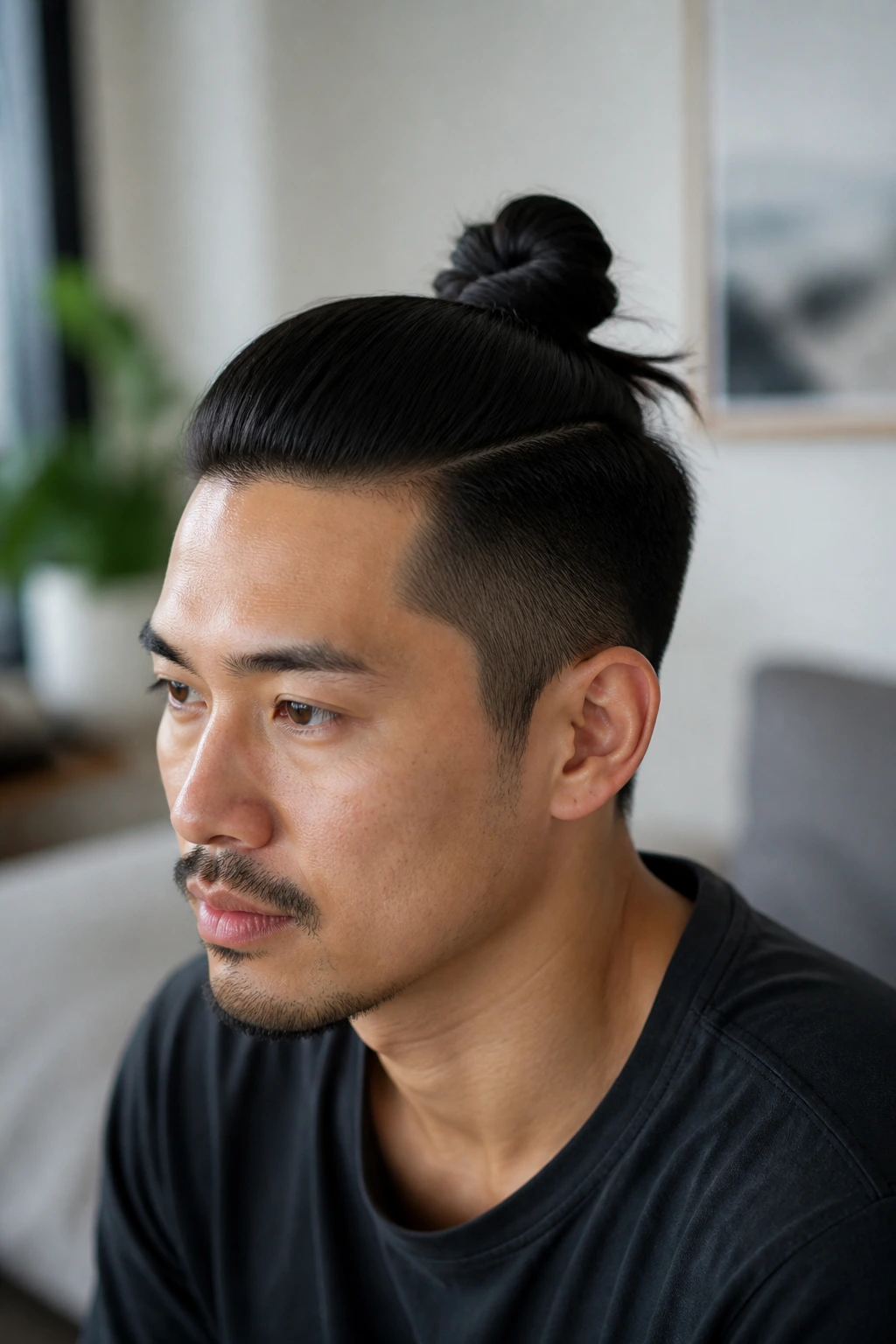
The samurai knot look needs more than just long hair and a tie. The sides and back should be shaped so the knot sits cleanly without a halo of fuzz around the ears and neck. A little taper makes a big difference.
This is a useful option if you frequently wear your hair up but still want it to look good when it’s down. The top length should be generous enough to tie back with some volume, and the loose hair should still frame the face rather than hanging in limp strands. If the cut is too flat at the crown, the knot looks tight and severe. If there’s too much bulk at the sides, it starts looking unfinished.
I’d choose this one for men who like practical hair but want more presence than a plain bun gives them.
20. Long Hair With a Mid Fade and Loose Crown
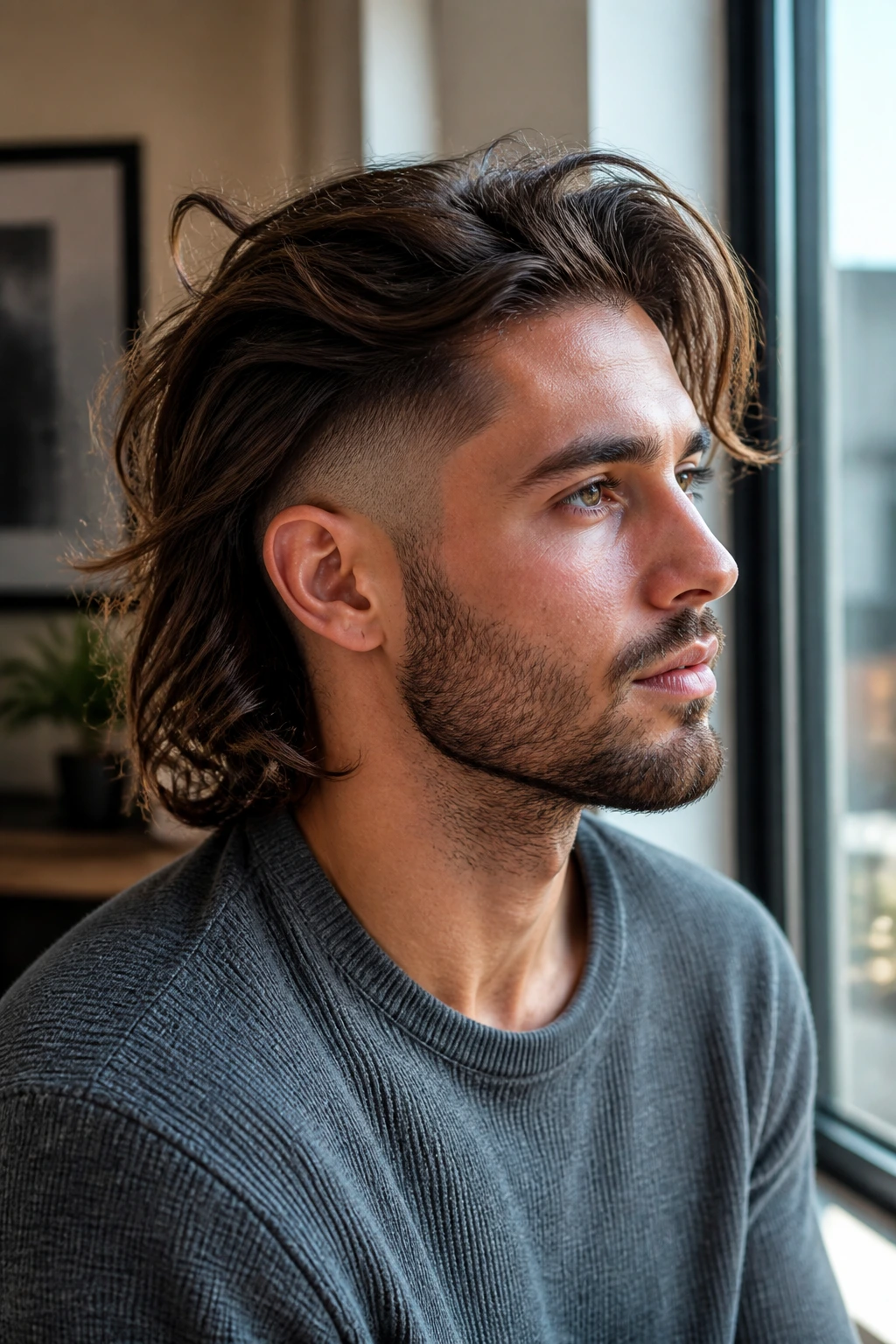
A mid fade brings a clearer edge than a low taper without going all the way to full contrast. The fade line sits higher around the temples, which opens the face and makes the crown hair look longer by comparison. It’s a stronger silhouette.
The loose crown is the part that keeps this style from turning into a hard military shape. You want some relaxed movement on top so the fade feels like a frame, not a cage. That balance matters a lot if your hair is thick, because the fade removes weight where it tends to expand most.
This style has a clean, modern shape and still gives you room to wear the top swept back, parted, or a little messy. That flexibility is the point.
21. Chin-Length Bob for Straight or Wavy Hair
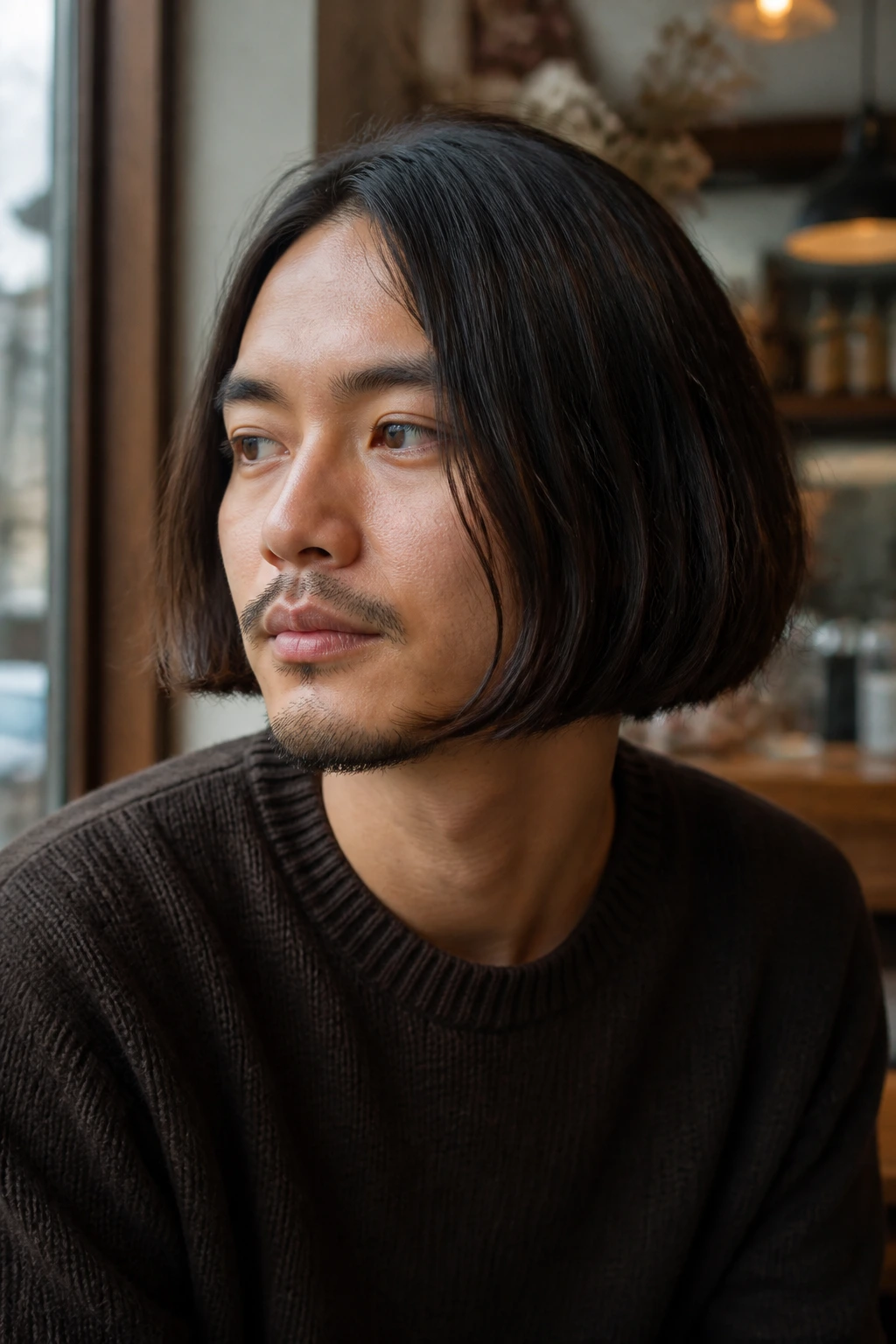
A chin-length bob on a man is sharper than people expect. The ends sit at the jawline, which gives the face a neat boundary and makes the hair look deliberate even when it’s worn loose. Straight hair gets a clean line. Wavy hair gets a soft bend that keeps the shape from feeling rigid.
What to know
This cut relies on symmetry more than most long styles. The line around the chin has to fall evenly, or the whole thing looks lopsided. If your hair kicks up at one side, the barber should account for that when they cut it. That’s a real issue with waves and strong growth patterns.
It’s a strong choice if you want long hair but do not want the usual surfer or bun aesthetic. It feels cleaner, more architectural, and a little less expected.
22. V-Shape Layers Down the Back

The V-shape is one of the classic long-hair outlines because it reduces bulk without sacrificing the full-length look. The sides taper gradually and the back narrows into a point instead of a straight line. That gives the hair a sense of direction when it hangs.
The shape is especially handy for men with thick hair. A blunt back can get wide fast. The V keeps the overall weight from spreading out too much. It also looks good when the hair is tied back, because the shape still shows underneath the tie.
This cut is less about face framing and more about keeping the back from feeling like a solid wall of hair. That difference matters.
23. Razor-Textured Length for Airy Movement

Razor texture can make long hair feel lighter and more fluid, especially if the hair is straight or only slightly wavy. The razor takes off soft, irregular pieces at the ends and through the interior, which stops the cut from feeling too blocky.
The payoff is movement. Lots of it. The risk is frizz, especially on coarse or very dry hair. So this is not the cut to choose if your hair already tends to split apart in humidity. But on the right head, it gives a soft, lived-in look that behaves better than blunt ends when you want some separation.
How it reads
- Straight hair gets swing.
- Wavy hair gets more piecey texture.
- Thick hair loses some of the visual weight that can make long cuts feel heavy.
24. Locs Kept Long With a Sharp Lineup
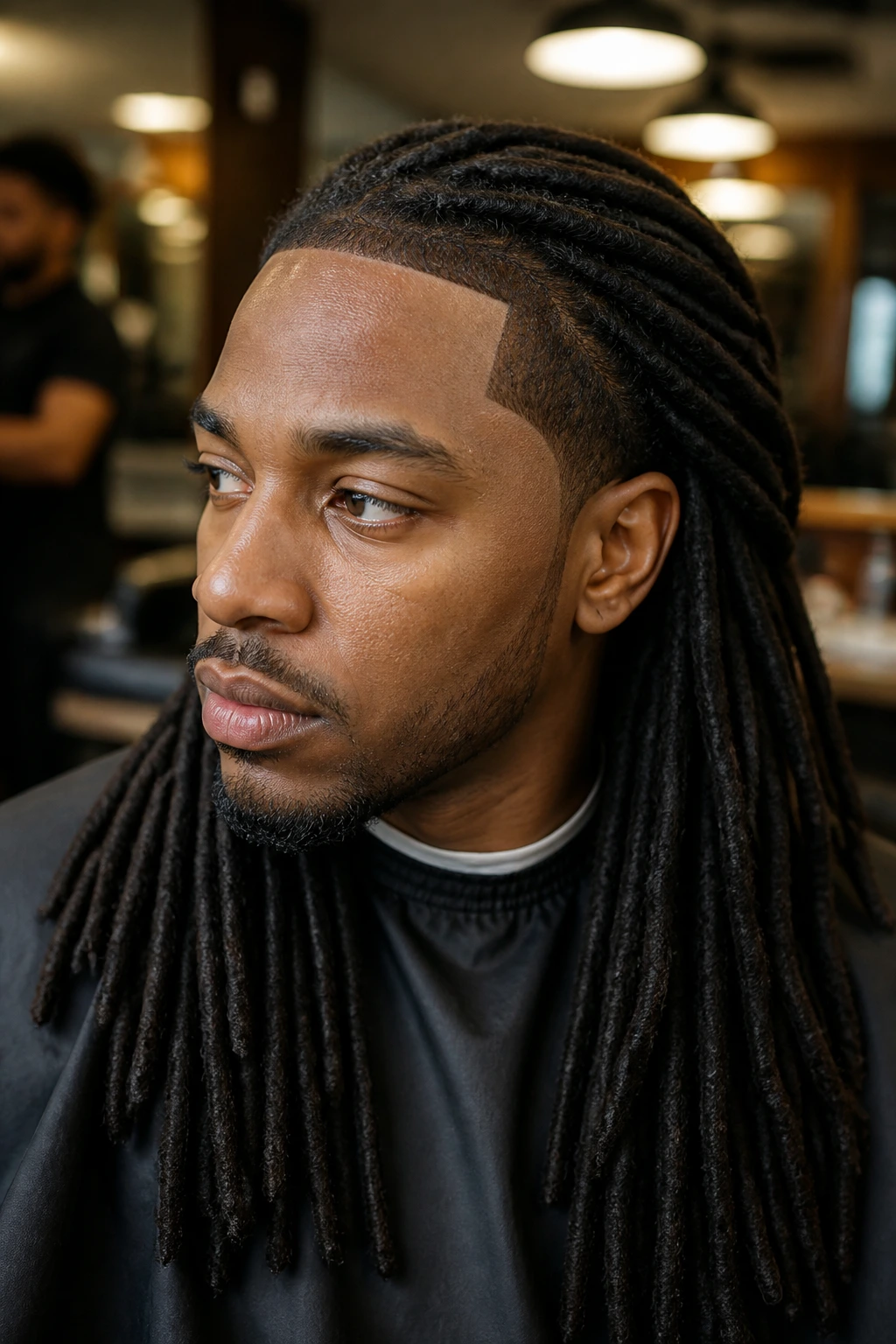
Long locs can look incredibly clean when the edges are handled well. The lineup around the hairline, temples, and nape should be crisp enough to balance the length of the locs themselves. Without that contrast, the style can drift into visual clutter.
The best part about long locs is the shape they create as they fall. They already have a built-in structure, so the haircut work is really about framing and maintenance. A taper at the sides or a clean neckline helps the locs read as intentional, not just long.
This is one of the few long styles where precision at the edges makes the whole look feel sharper without touching the main length much at all. That’s a good deal.
25. Long Twists With a Clean Temple Taper
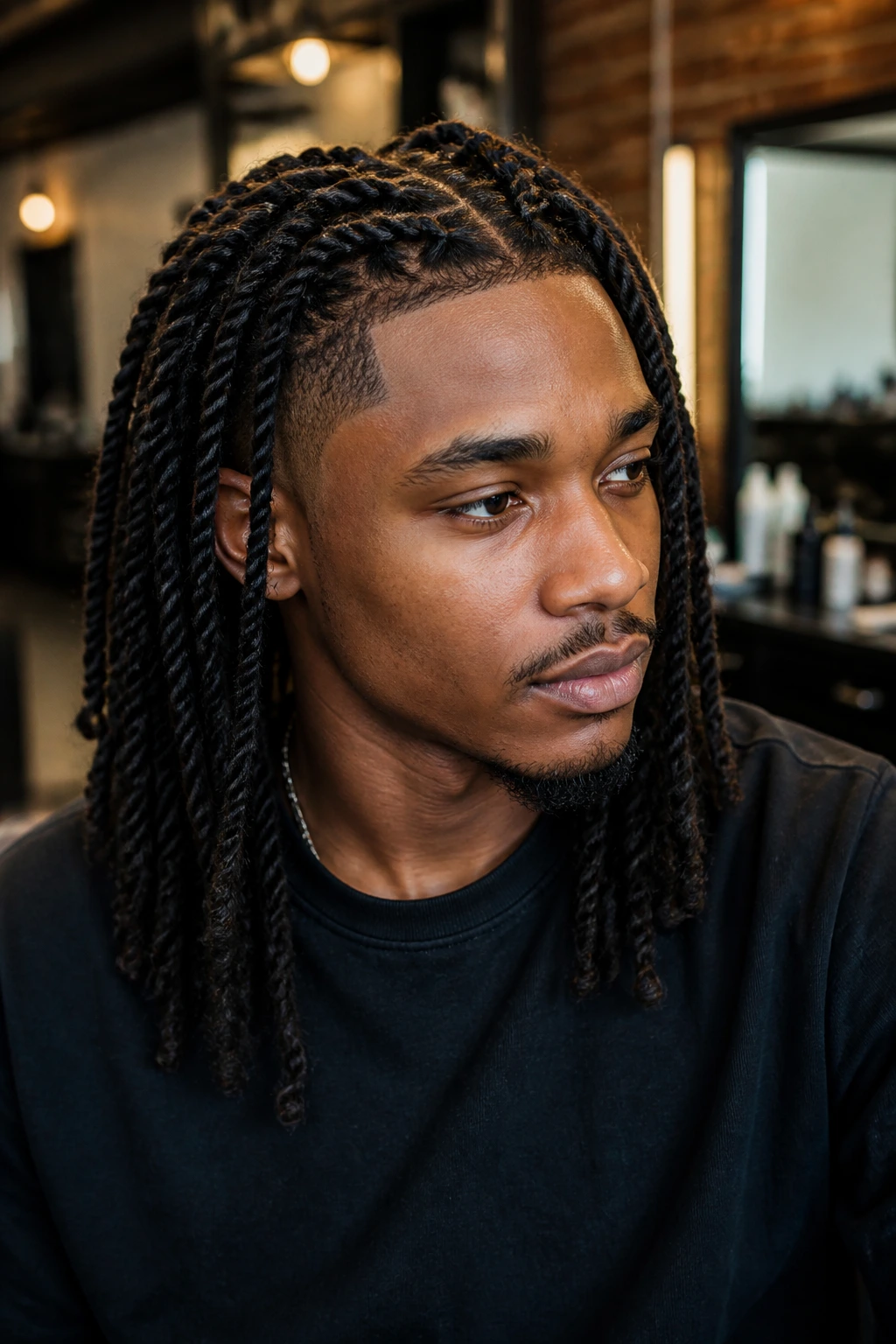
Long twists bring a different kind of shape than loose hair. They’re more controlled, more segmented, and easier to manage when the temples and nape are tapered cleanly. The taper stops the style from looking bulky around the ears, which is where a lot of bulk tends to show up first.
Why people choose it
Twists let you keep length while reducing daily fuss. They hang neatly, they can be tied back, and they give texture without needing product every morning. A temple taper keeps the outline fresh and avoids the puffed look that can happen when the sides are left too wide.
It’s a strong option if you want length with a bit of structure and do not want to fight your hair every day. That’s the honest appeal.
26. Braided Length With a Subtle Fade
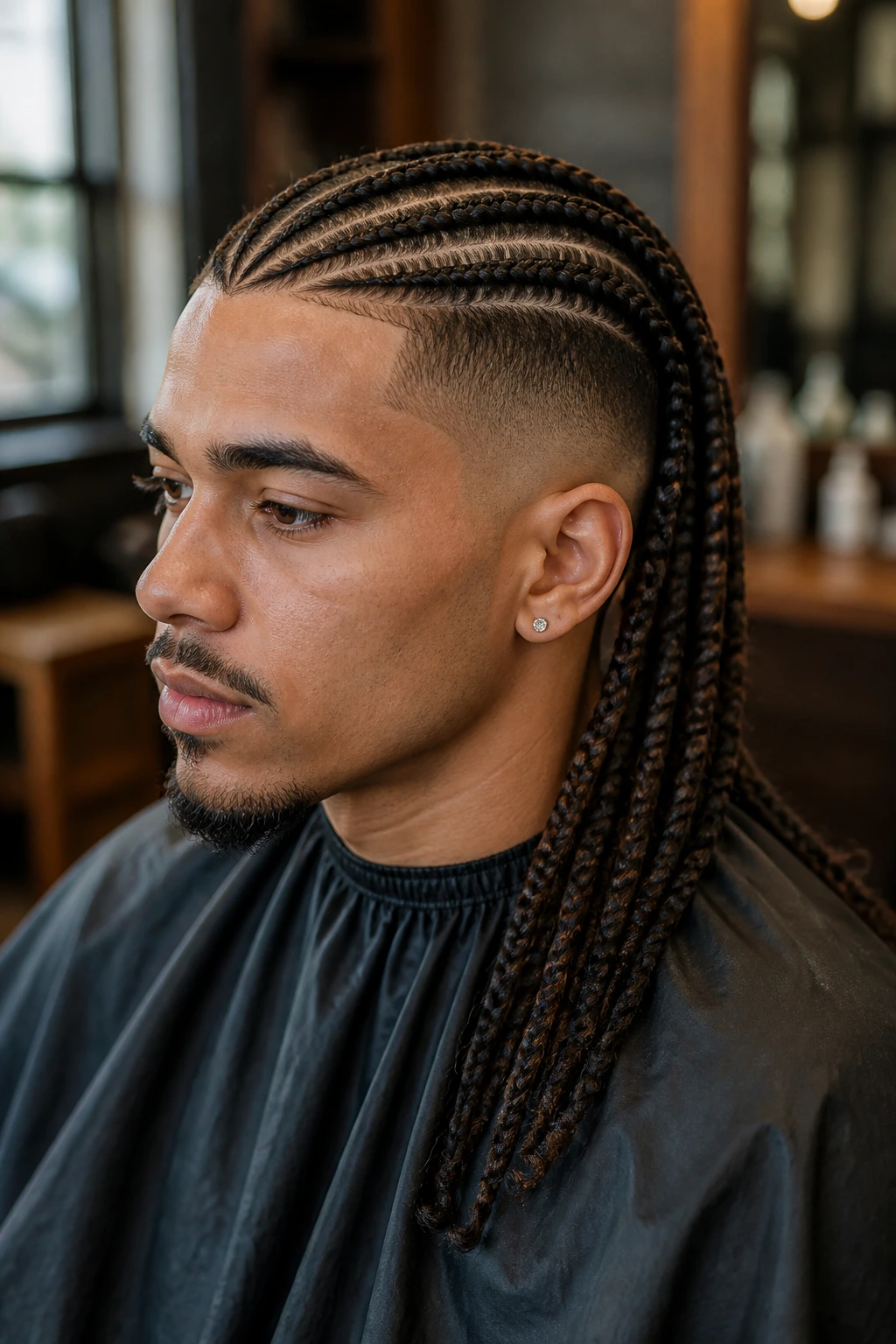
Braids and a subtle fade make sense together because the fade gives the braids a clean base. Whether you’re wearing cornrows, box braids, or another braided pattern, the clean sides keep the whole style from looking overloaded.
The fade should stay subtle. If it climbs too high, the braids can look detached from the head in a way that feels harsh instead of sharp. A low or mid fade usually keeps the balance right. It’s a style built on contrast, but not too much contrast.
This is also a good choice if you need a protective style that still looks neat around the perimeter. The braid pattern does the visual work. The fade just clears the stage.
27. Grow-Out Shape-Up for Men Transitioning Past Short Hair
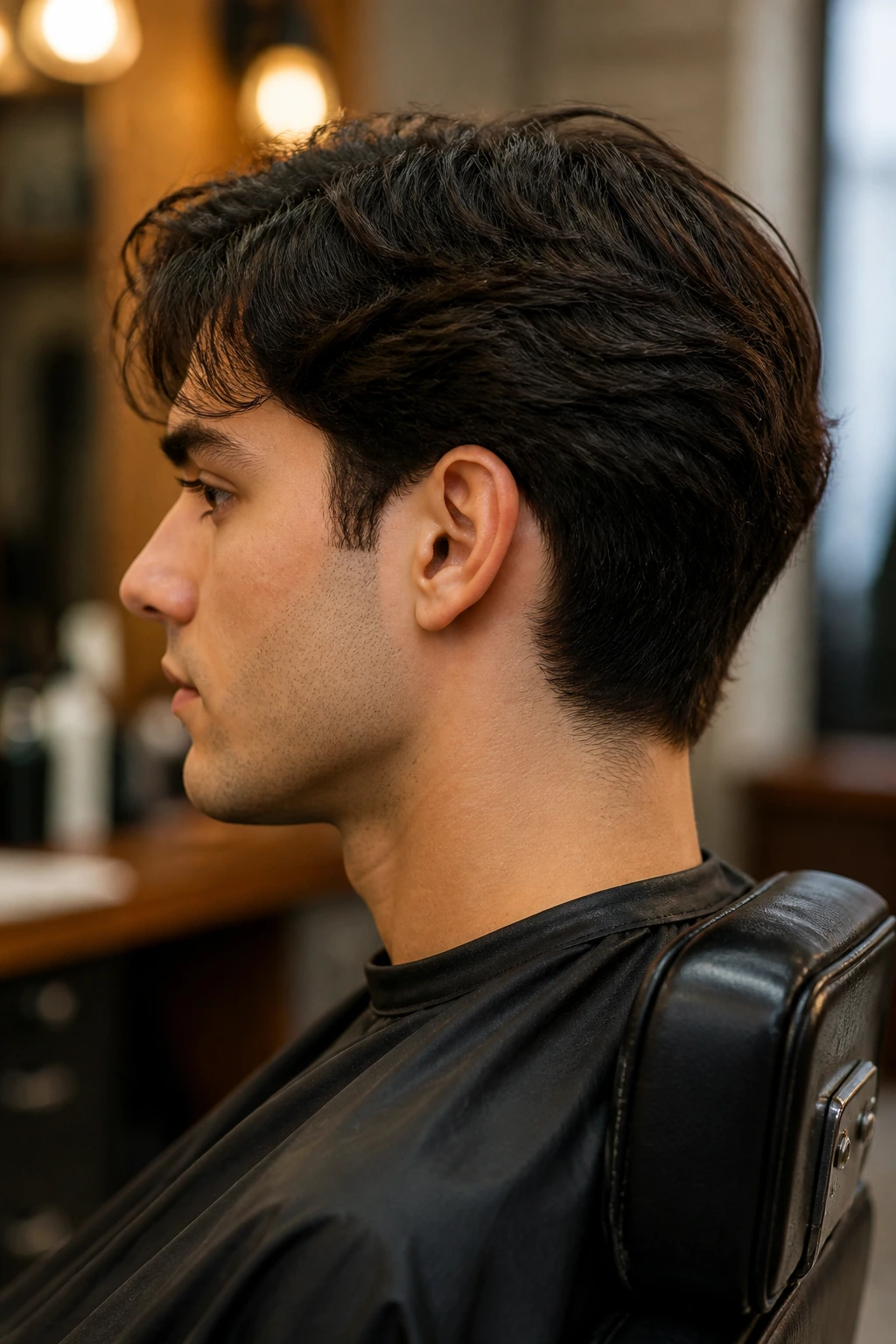
Not every long haircut idea has to be a dramatic new shape. Sometimes the best move is a clean grow-out cut that keeps the hair from looking like an accident on the way to something else. A shape-up trims the neckline, cleans the ears, and removes the dead weight from the ends while protecting the length you’ve already earned.
That matters more than people think. Grow-out stages are where a lot of men quit. The hair gets puffy at the temples, the nape gets fuzzy, and the overall silhouette loses purpose. A smart shape-up gives the hair one more month of dignity, sometimes two.
If you’re moving from short hair into longer territory, this is the transition cut to ask for. It keeps the process looking intentional while the length fills in.
Why Shape Matters More Than Raw Length
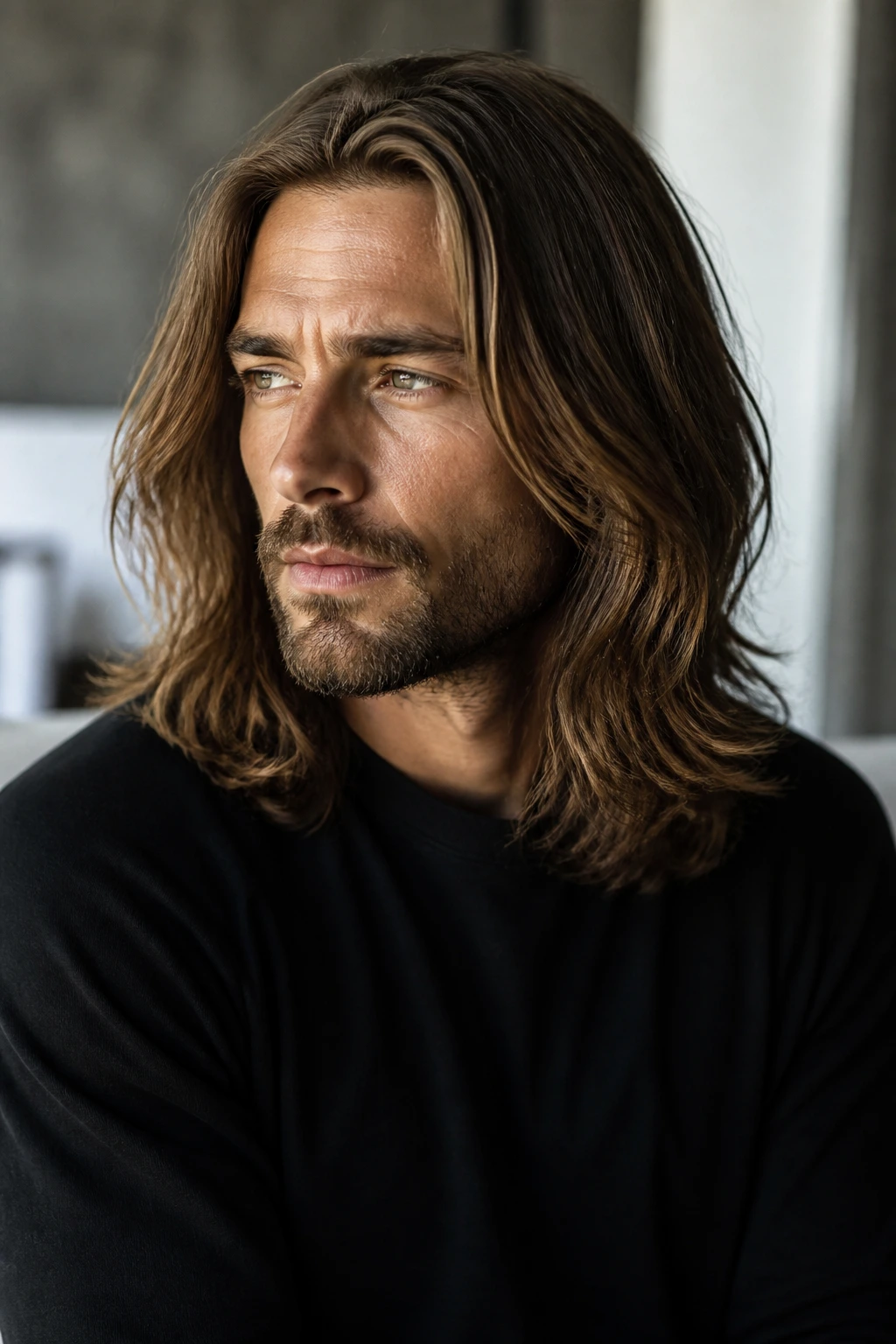
Long hair on men gets judged fast, and most of the judgment comes down to shape, not length itself. Two heads of hair can be the same actual measurement and look wildly different because one has a clean outline while the other has spread out at the sides like it’s trying to escape the skull.
Weight is the hidden factor. As hair gets longer, it pulls down at the ends and pushes out at the sides. That means a cut that looked balanced at chin length can look wide at shoulder length. Layers help, but they’re not magic. They just move the weight around so the silhouette keeps some breathing room.
The other thing people miss is how much the neckline changes the read of the style. A tidy nape makes long hair look deliberate. A fuzzy nape makes it look like nobody cared. That tiny strip of hair at the back of the neck matters more than most men want to admit.
Essential Tools for Men’s Long Haircuts
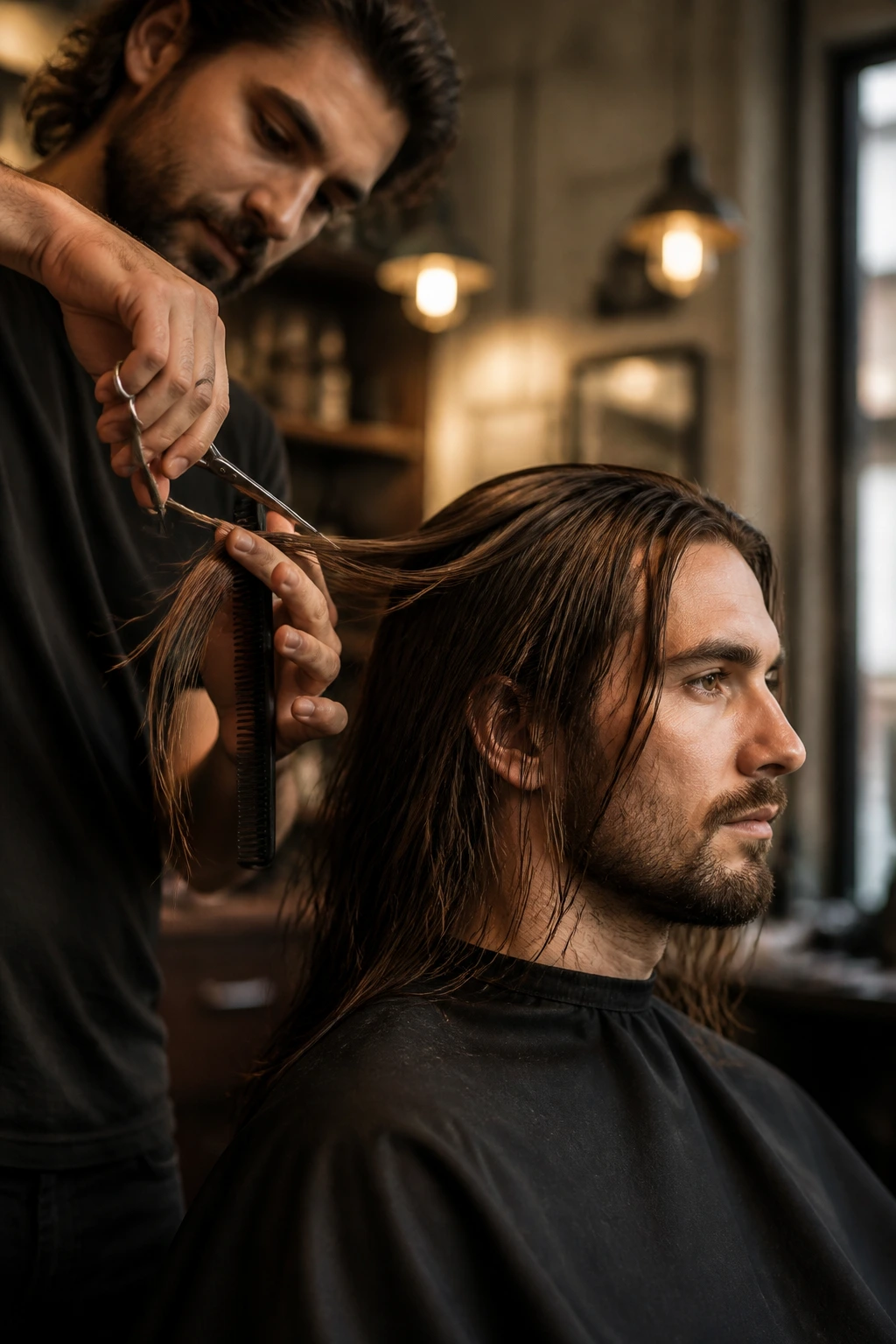
- Sharp barber shears: Long hair needs clean cutting, not blunt chewing at the ends.
- Texturizing shears: Useful for removing bulk from thick hair without taking off too much length.
- Clippers with guards: Helpful for tapers, fades, and neckline cleanup.
- Wide-tooth comb: Better than a fine comb for detangling waves and curls without pulling.
- Sectioning clips: Useful if you’re trimming at home or blow-drying in parts.
- Spray bottle: A little water helps reveal how the hair falls before you cut.
- Blow dryer with nozzle or diffuser: The nozzle controls straight and wavy hair; the diffuser helps curls keep shape.
- Light cream, paste, or serum: Pick one based on how much hold you actually need. Heavy product on long hair gets greasy fast.
- Hand mirror: Essential for checking the back and neckline, because the nape lies to you in a front mirror.
- Microfiber towel or old T-shirt: Rough towels create frizz, especially on wavy and curly hair.
How to Ask for the Cut You Actually Want
Bring a photo. Not one photo. Three is better. Hair photos are useful because they show shape, not just vibes, and shape is what matters. You want to point to the part you care about: the front, the sides, the back, the neckline. Saying “like this” while tapping the cheekbone in the picture saves a lot of bad guesses.
Use landmarks. Tell the barber where you want the length to hit when the hair is dry: nose, chin, jaw, collarbone, shoulder. Wet hair stretches; dry hair shrinks. If the barber only looks at wet length, you can wind up with a cut that sits shorter than expected once it dries.
Say how you wear it. Tucked behind the ears? Pushed back? Tied up most days? Down and loose? That changes where the weight should sit. A cut for a man who wears a bun four days a week should not be shaped the same way as one for a guy who lets it fall around his face every day.
And mention your weak spots. Cowlicks, a flat crown, a stubborn part, a frizzy temple zone—those details are not annoyances, they’re the map.
Styling Long Hair Without Flattening It
After the shower: Blot the hair with a T-shirt or microfiber towel instead of rubbing it. Long hair frizzes fastest when the cuticle gets roughed up, and rubbing is the fastest way to do that.
Product choice: Use less than you think. A dime-sized amount of cream can cover a surprising amount of long hair once your hands warm it up. If the ends look greasy by noon, you used too much.
Drying method: Air-drying is fine for loose waves and straighter hair, but if your crown collapses, use a blow dryer with the nozzle pointed down the shaft. That keeps the cuticle smoother and stops the top from puffing.
Finish: Put product mostly through the mid-lengths and ends. The roots need far less. If you load the scalp, the whole cut can go limp and stringy before lunch.
A small trick: push the front in the opposite direction while drying, then let it fall back. It creates lift without making the style look like it was styled for a photo shoot.
Trim Schedule and Maintenance Between Haircuts

Long hair is forgiving in one sense and ruthless in another. It can go a while before looking truly bad, but once the ends split or the neckline turns fuzzy, the whole style loses shape fast. A good rule is a light cleanup every 8 to 12 weeks if you want to keep the outline steady. If you wear fades, undercuts, or tight tapers with long length on top, the sides may need touching up sooner.
The ends need attention even when you are growing the hair out. Dusting off half an inch every few months keeps the length looking thick instead of thin and straggly. That’s especially true for blunt cuts, where split ends show faster.
At home, don’t wash long hair like it’s a crew cut. Focus shampoo on the scalp, let the rinse pull the suds through the length, and use conditioner where the ends get dry first. If your hair gets tangled at the nape, loosen it before bed. A satin pillowcase helps more than people expect. So does braiding or tying the hair loosely if it tangles overnight.
Common Mistakes That Make Long Hair Look Untidy
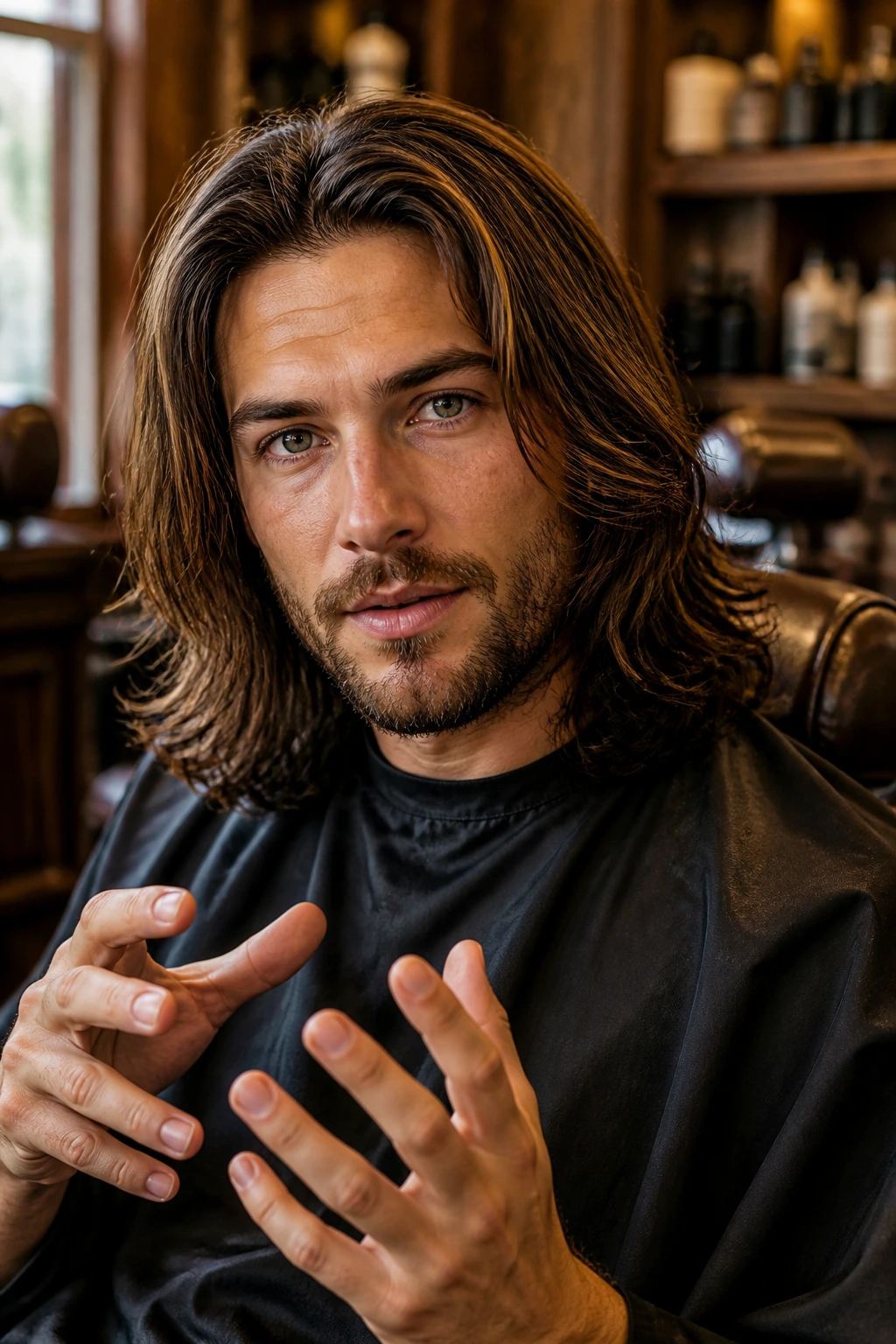
Cutting too many short layers near the crown: That creates a puff at the top and leaves the ends thin. The fix is to keep the crown controlled and move most of the shaping into the mid-lengths.
Letting the neckline grow wild: Long hair with a fuzzy nape looks unfinished, even if the top is beautiful. Clean the neckline regularly or ask for a soft taper that grows out neatly.
Using heavy product to force shape: Thick wax or oily pomade can make long hair separate into greasy strings. Use lighter creams, sprays, or a tiny bit of paste, then add more only if needed.
Ignoring the dry shape: Hair that looks fine wet can sit completely differently once it dries. Long hair should be checked dry, especially around the face and crown. If the barber never glances at the dry result, that’s a warning sign.
Over-fading the sides: A high or aggressive fade can make long top hair feel disconnected and top-heavy. Unless that contrast is the point, keep the taper lower and more gradual.
Skipping end care: Split ends travel. Once they start, the ends look thin and ragged fast. Trim them before they turn into a bigger problem.
Variations and Adaptations to Try
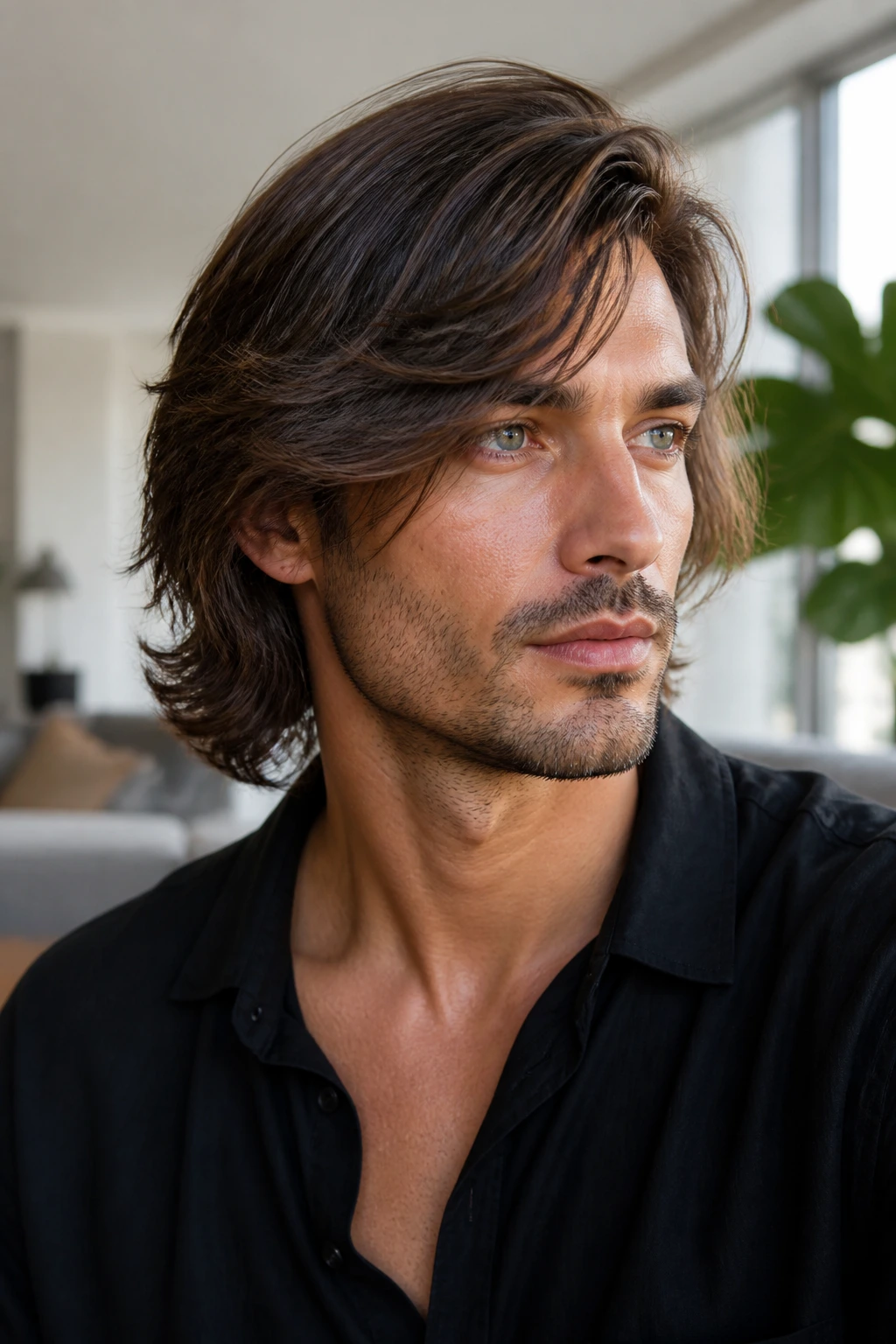
Straight-Hair Clean Sweep: Keep the outline blunt or softly layered, then rely on a side part or center part for shape. Straight hair shows every line you cut, so this version works best when the perimeter is tidy and the ends are healthy.
Wavy Undone Shape: Ask for longer layers and a softer perimeter so the hair bends instead of bulking out. This version looks best with a small amount of cream scrunched through damp hair and left to dry with some movement.
Curly Halo Cut: Let the curls be the shape. The cut should round out the silhouette and remove bulk from inside the mass, not chop it into short, springy layers that end up frizzing outward.
Coily Length With a Sharp Edge: Keep the length, but use a crisp lineup at the hairline and nape. That contrast makes the style feel intentional and keeps the outline clean even when the texture is full.
Office-Neat Long Hair: Choose a low taper, a side part, or slick-back shape. These versions keep the length but reduce the visual noise around the ears and neck, which helps if you need the hair to read a bit more polished.
Grow-Out Rescue Cut: If you’re between short and long, ask for a shape-up with dusting at the ends and cleanup at the perimeter. It buys you another stretch of growth without looking like you gave up halfway through.
Frequently Asked Questions

Which long haircut works best for fine hair?
A blunt perimeter, a low taper, or a curtain cut usually gives fine hair the most visual weight. Too many short layers can make it look thinner than it is. Keep the ends fuller and use light products so the hair doesn’t collapse.
How often should men with long hair get trims?
Most long styles need a cleanup every 8 to 12 weeks, even if you’re growing them out. If you wear a fade, undercut, or sharp neckline, that part may need attention closer to 4 to 6 weeks.
Can I have long hair if my hairline is receding?
Yes, but the shape matters. A center part, a soft fringe, or face-framing layers can reduce the focus on the temples. Avoid pulling the hair straight back too tightly if it makes the hairline look harsher.
Should long hair be layered or blunt?
Thick hair often does better with layers because it sheds weight and moves more naturally. Straight, dense hair can look fuller with blunt ends. Fine hair usually needs a careful middle ground so it doesn’t turn wispy.
What’s the easiest long haircut to maintain?
A shoulder-length layered cut or a bro flow tends to be the easiest. Both can grow out for a while without falling apart, and both usually need only light product and a decent neckline cleanup.
Do fades look good with long hair?
Yes, if the fade is low or mid and the top has enough length to balance it. A fade can keep long hair from bulking up at the sides, but a high fade can make the top look disconnected unless that contrast is the point.
How do I stop long hair from puffing out at the sides?
Ask for internal layering or a taper around the ears and temples. Then dry the hair downward or backward, not out to the sides. Product alone will not fix a bad shape.
Can I tie long hair up without ruining the cut?
A good long cut should still look decent in a bun, knot, or half-up style. Make sure the front and sides have enough shape to fall naturally when the tie comes out, and avoid keeping the same tight spot every day or the hair will start breaking there.
Keeping the Length Intentional
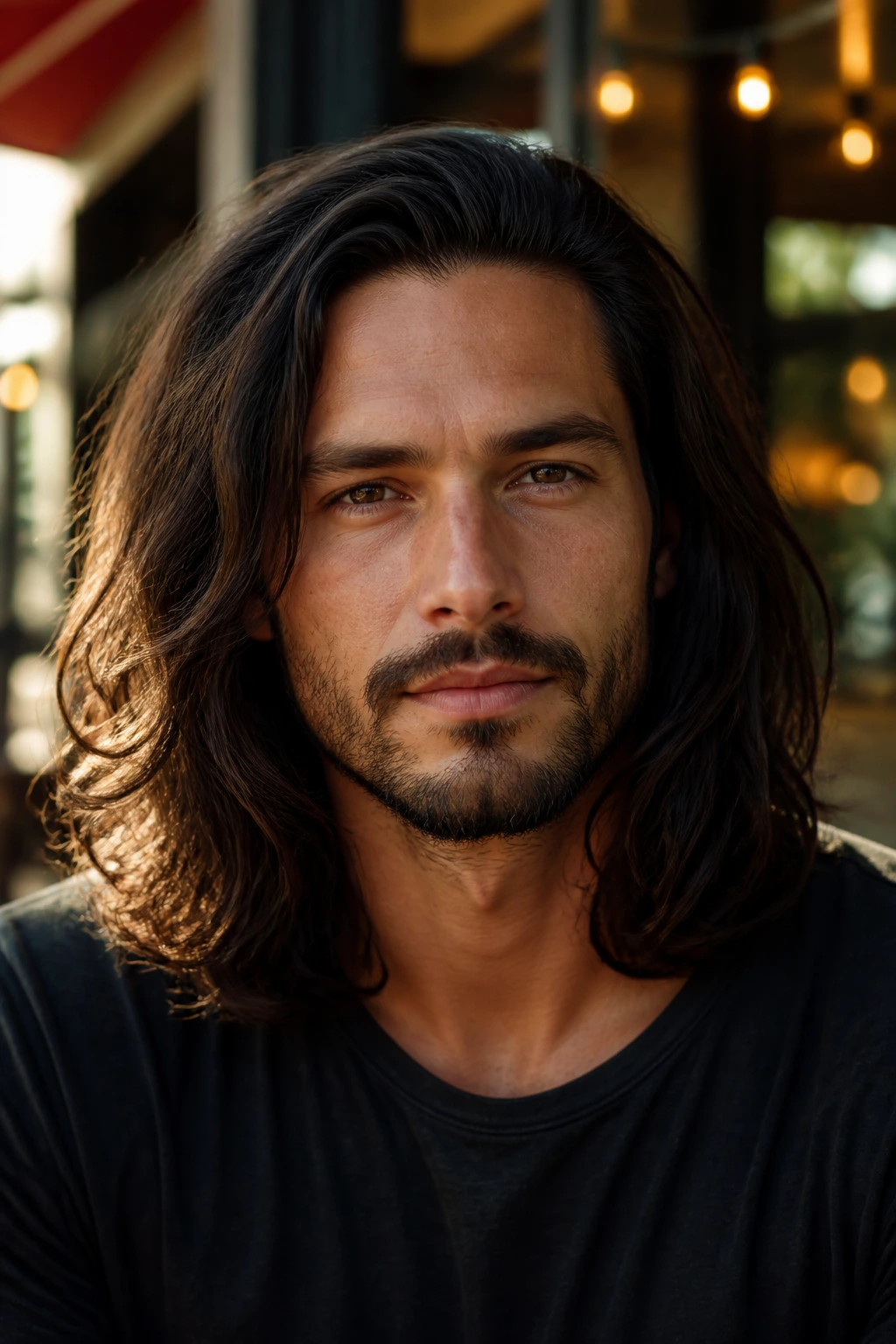
Long hair looks best when it has a reason to exist. Not a speech about identity. A shape. A clear outline, a clean neckline, a front section that knows where it wants to fall. That’s what separates a good long cut from hair that has merely been left alone.
If you pick one of these men’s hairstyles for long hair, the real win is not the first day out of the chair. It’s the third week, the sixth week, the windy day, the humid afternoon, the moment you have to tuck it back and it still behaves. That’s the test worth caring about.
