



A clean cut can carry color farther than most people think. The best hair color ideas for men are rarely the loudest ones; a buzz cut in platinum, a crop in ash brown, or a fade in blue-black can change the whole mood of a face without changing the haircut at all.
What people call “bold” usually just means “too far from the base color.” That is the trap. The smarter move is to treat the haircut, beard, skin tone, and grow-out pattern as one decision, because a shade that looks sharp under salon lights can turn patchy by week three if the roots are wrong or the toner is off.
Short hair makes color read fast. Longer hair gives room for melt, highlight placement, shadow roots, and all the little moves that keep the result from looking painted on. That mix — low-key browns, icy blondes, bruised violets, denim blues, copper, silver, and a few colors that are not shy at all — is where the good ideas live.
Why These Shades Stand Out on Men’s Hair
-
Short hair shows color immediately: A buzz cut, crop, or fade gives you instant payoff, which is why platinum, silver, blue-black, and slate gray look so clean on men’s hair.
-
Grow-out matters more than the photo: Ash brown, mushroom brown, root melts, and gray blending age better than flat one-tone dye because the regrowth line stays softer.
-
Texture changes the whole read: Waves catch caramel and copper in broken streaks, curls make burgundy and cherry cola look deeper, and straight hair shows every panel of a split dye with no mercy.
-
Some shades cover a bad haircut; others expose it: Light blond and bright fashion colors make uneven lines obvious, while darker glosses and smoky tones can make a basic cut look intentional.
-
There’s a color for every maintenance budget: You can pick demi-permanent brown, a low-lift gloss, full bleach and toner, or a vivid semi-permanent shade, depending on how much upkeep you want to sign up for.
-
Gray does not have to be hidden: Silver blends, smoky brown, slate gray, and salt-and-pepper cleanups often look sharper than a heavy-handed cover job.
Matching Hair Color Ideas for Men to Your Starting Shade
If your hair is already dark brown or black, the safest wins are the shades that sit close to your base: ash brown, blue-black, smoky gray, burgundy, copper, and chestnut. Those colors change the mood without forcing a harsh bleach job, and that matters because dark hair tends to show damage faster once you start lifting it.
Light brown and blond hair open a different lane. Sand blond, honey blond, caramel highlights, rose gold, peach blond, and lavender all sit in that lighter zone where color can stay visible without having to fight the base every time you wash it. The trick is tone, not loudness. A beige blond looks expensive. A yellow blond looks accidental.
Gray hair is its own thing. It takes dye quickly, can go hollow or flat if you use the wrong formula, and often looks better when you blend it than when you hide it. Silver, slate, ash brown, and smoky gray are the shades that let gray behave instead of shout.
1. Platinum Buzz Cut
A platinum buzz cut is all edge and no clutter. The short length keeps the lift even, and the color does not get lost in texture, which is why this look feels sharper than platinum on longer hair.
It also puts the face front and center. If the fade is clean and the hairline is lined up, the whole cut reads deliberate instead of overprocessed. The only catch: platinum on a buzz still needs purple shampoo and toner to keep yellow from creeping back in after a few washes.
2. Icy Silver Crop
An icy silver crop sits a little softer than platinum because the gray cast keeps it from screaming bleach. That makes it a smart move if you want something bright but not blinding.
Why the Crop Helps
The crop gives silver a tidy surface to sit on. On messy, longer hair, cool tones can get lost in shadows; on a tight crop, they land cleanly and look expensive rather than frosted. Keep the top textured, not flat. A matte paste is better than a shiny gel here.
3. Ash Brown Taper
Ash brown is one of those shades people ignore because it sounds plain, which is a mistake. In person, it strips out the orange warmth that makes many brown dyes look cheap after a week or two.
- Best on: dark blond, light brown, or medium brown bases that pull warm.
- Finish: cool, smoky, and low-glare under daylight.
- Upkeep: a demi-permanent gloss every few weeks keeps the tone from drifting red.
If your beard is dark, ash brown gives the whole look a calmer balance than a warmer brown would.
4. Mushroom Brown Fade
Mushroom brown lives in the thin space between taupe, smoke, and earthy brown. It sounds dull on paper, but on hair it has a dry, modern edge that looks especially good on fades and short textured tops.
This shade is strongest when the haircut has some shape. A blunt crop or a skin fade makes the muted color read on purpose. On long, fluffy hair, it can disappear a little too fast unless there’s enough texture to break up the surface.
5. Espresso Black Crew Cut
Black hair color can look flat if it has no shine or depth, but a crisp espresso black crew cut avoids that problem because the cut does half the work. The close length keeps the color even, and the deep tone gives the whole head more visual weight.
The move works best when the beard is already dark, or when you want a strong contrast with lighter skin. If your natural hair is medium brown, ask for a blue-black or deep brown-black instead of a harsh inky black; it reads cleaner and grows out with less drama.
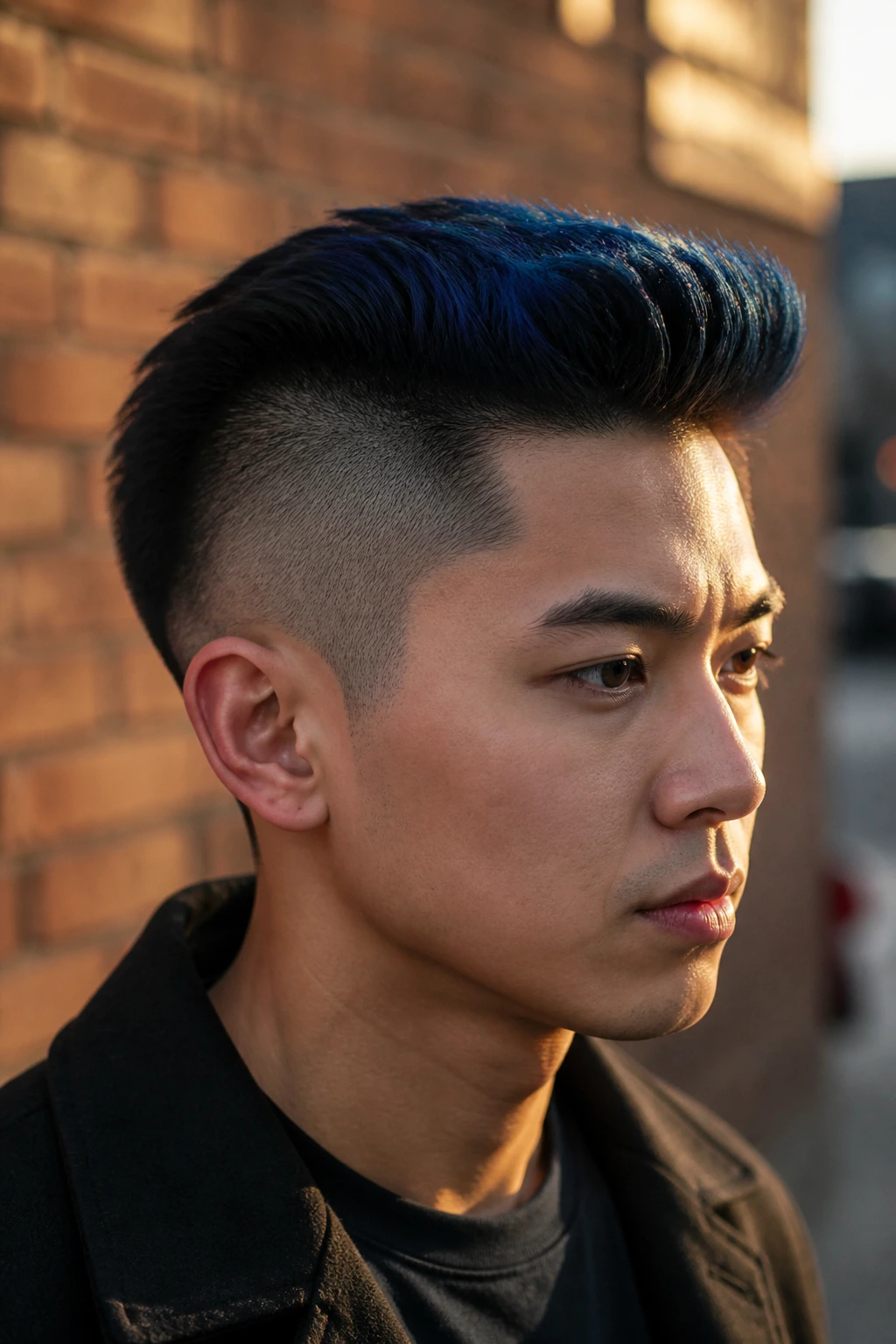
6. Blue-Black Undercut
Want color that reads dark until daylight hits it? Blue-black does that job.
The blue undertone shows up at the edges, around the crown, and wherever the light grabs the cut, which makes it one of the best choices for an undercut or a tight fade. It is also a useful shade if you want something more interesting than plain black without crossing into obvious fashion color territory.
7. Smoky Gray Blend
If the first thing you notice is gray around the temples, blending that gray into a smoky finish can look cleaner than covering every strand. The result is less “dyed” and more “well kept.”
This is the shade for men who are tired of fighting their hairline. It softens the transition between natural gray and darker sections, and it tends to look best when the sides are neat and the top has a little length. Too much shine makes it look artificial. A dry, satin finish is better.
8. Copper Penny Quiff
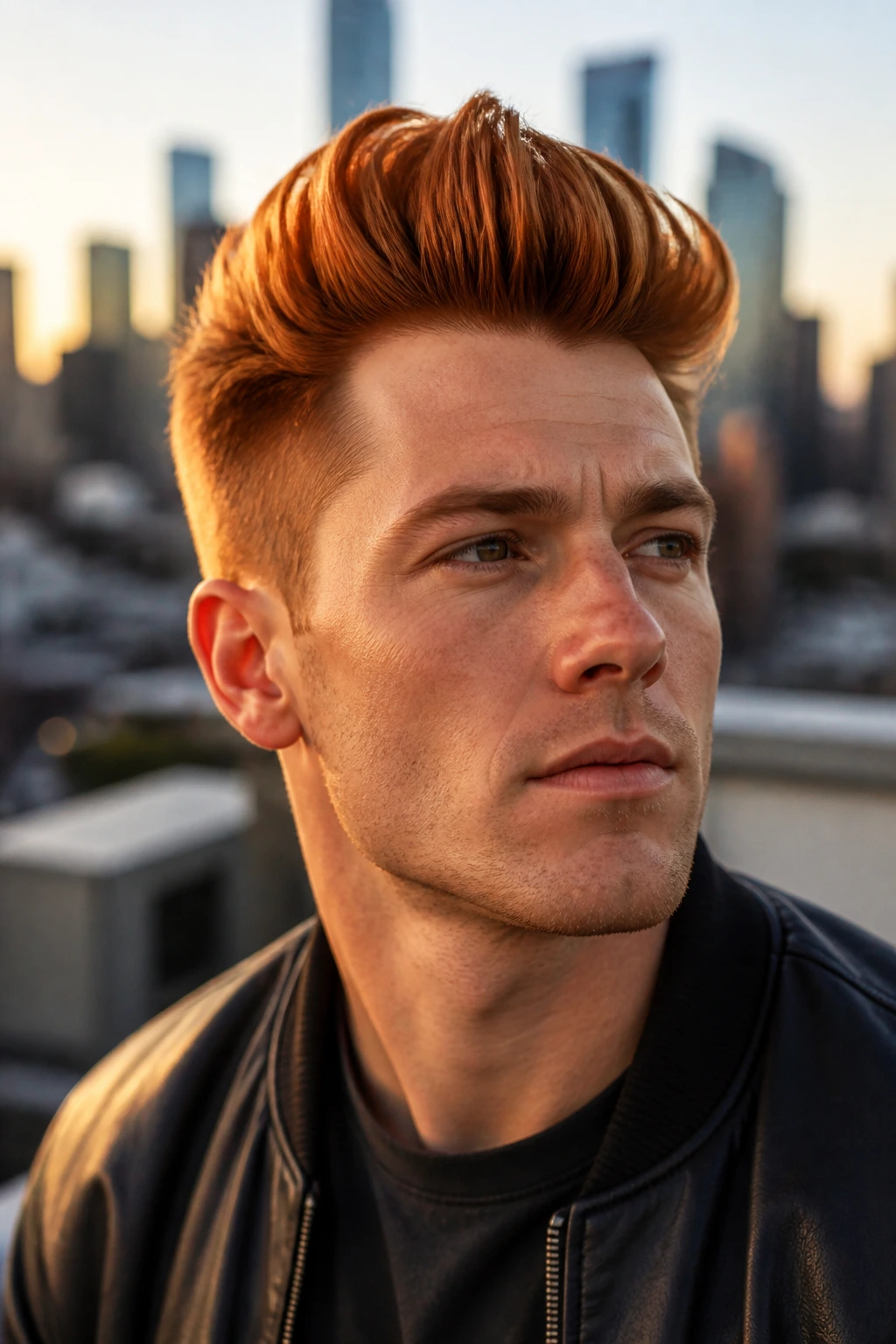
Copper is the color that wakes up brown hair without turning it into a red costume. On a quiff, it gets extra lift from the shape, so the warm tone sits right where the eye lands first.
The best version has a clean, bright copper core with a slightly deeper root. That keeps the grow-out from looking blunt. I also prefer copper on hair that has some body, because flat hair can make the shade look one-dimensional fast.
9. Warm Chestnut Waves
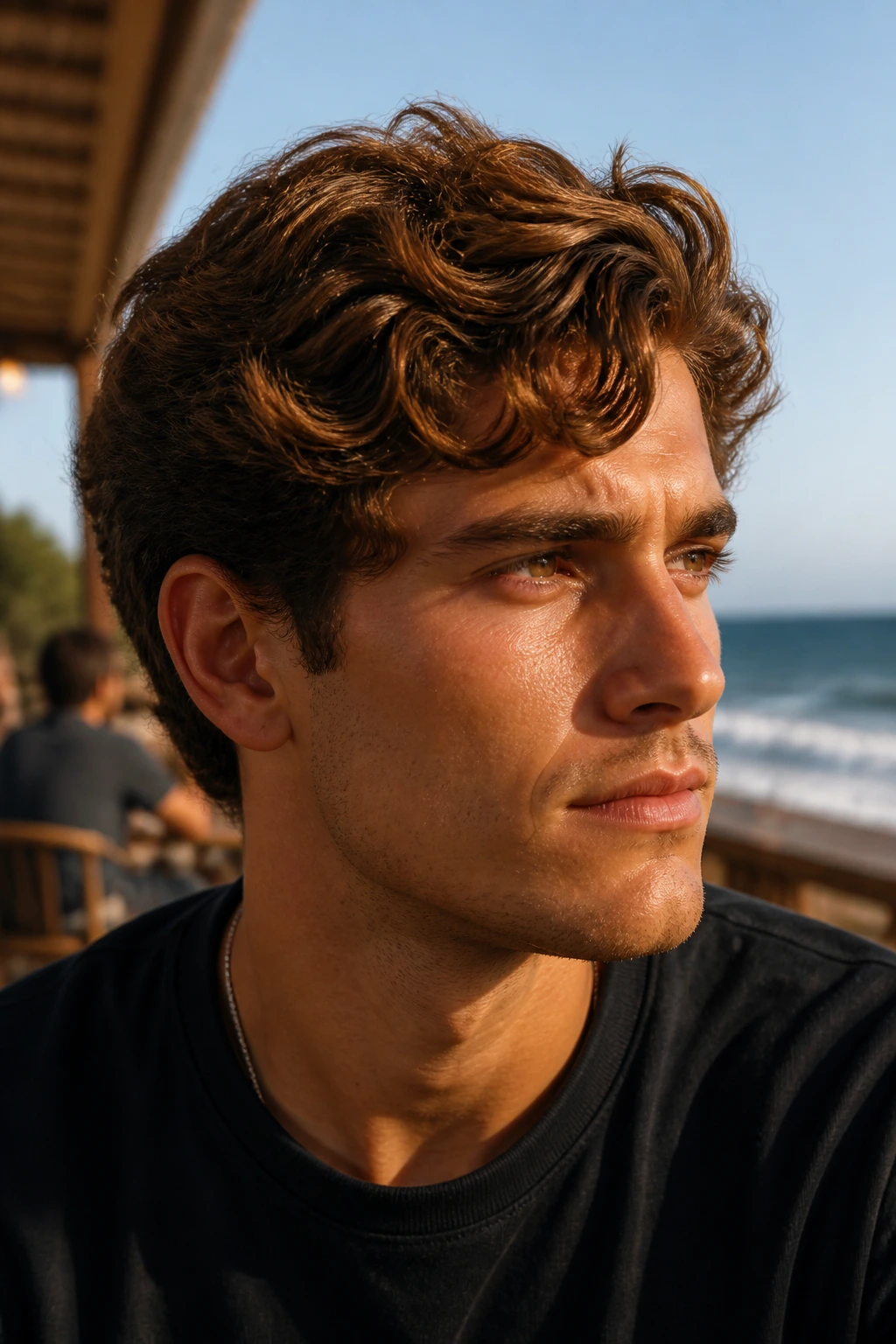
Chestnut is brown with a little fire in it, and that warmth shows especially well on waves. The bends in the hair pick up the color unevenly, which is the whole point.
- Why it works: it adds depth without going red.
- Who it suits: guys who want richer brown but not a dramatic shift.
- Best styling move: a loose blow-dry or cream styler that keeps the wave pattern visible.
If you keep a beard, chestnut can bridge the gap between dark facial hair and a lighter top better than a flat brown will.
10. Auburn Side Part
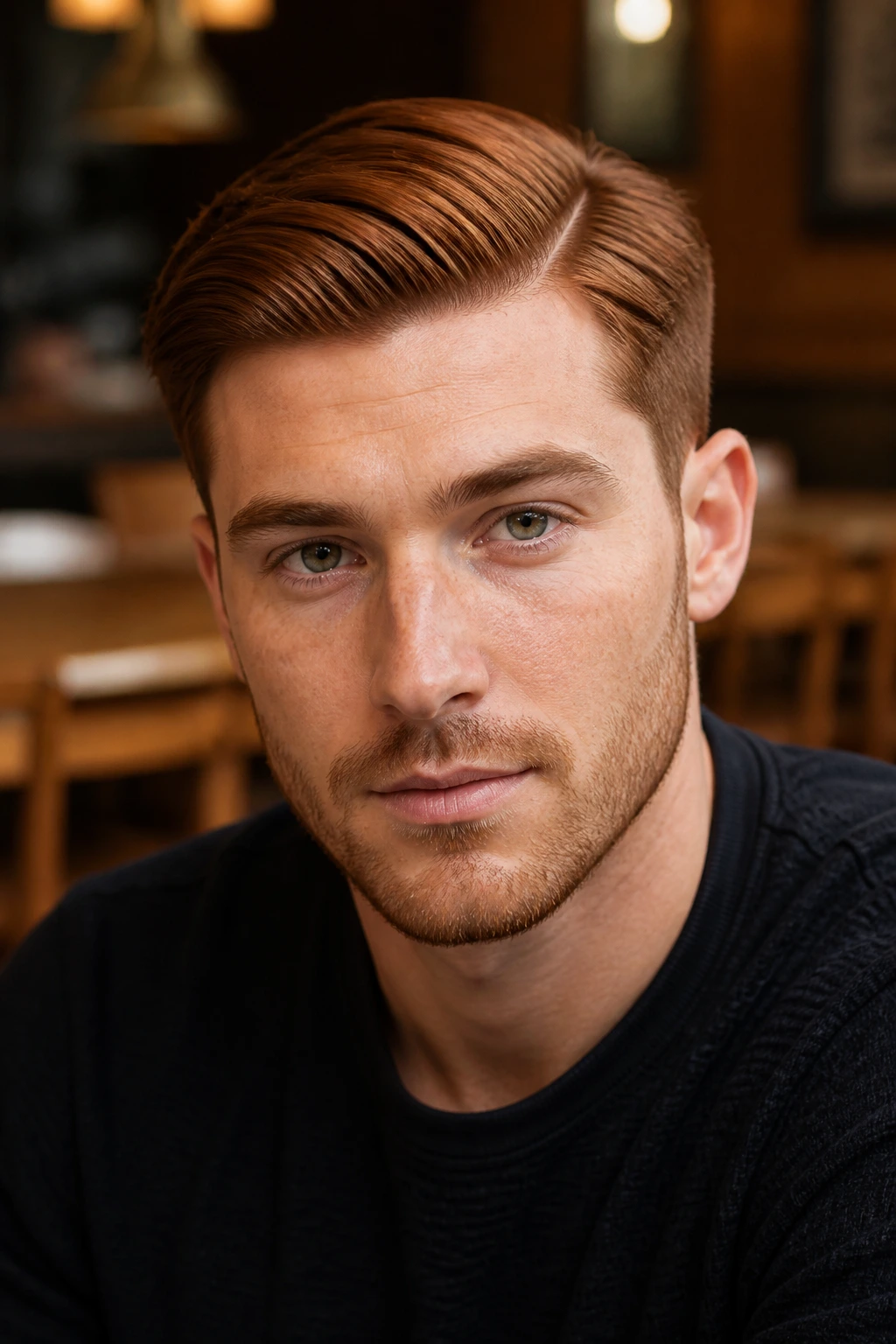
Auburn is the middle ground between brown and red, and that middle ground matters. It keeps the color from looking costume-like, which is a risk with brighter reds on men’s hair.
A side part gives auburn something to lean on. The clean division lets the warmth show in a controlled way, almost like the color is following the shape instead of fighting it. On medium-length hair, this shade has a quiet old-school polish that still feels current.
11. Burgundy Fade
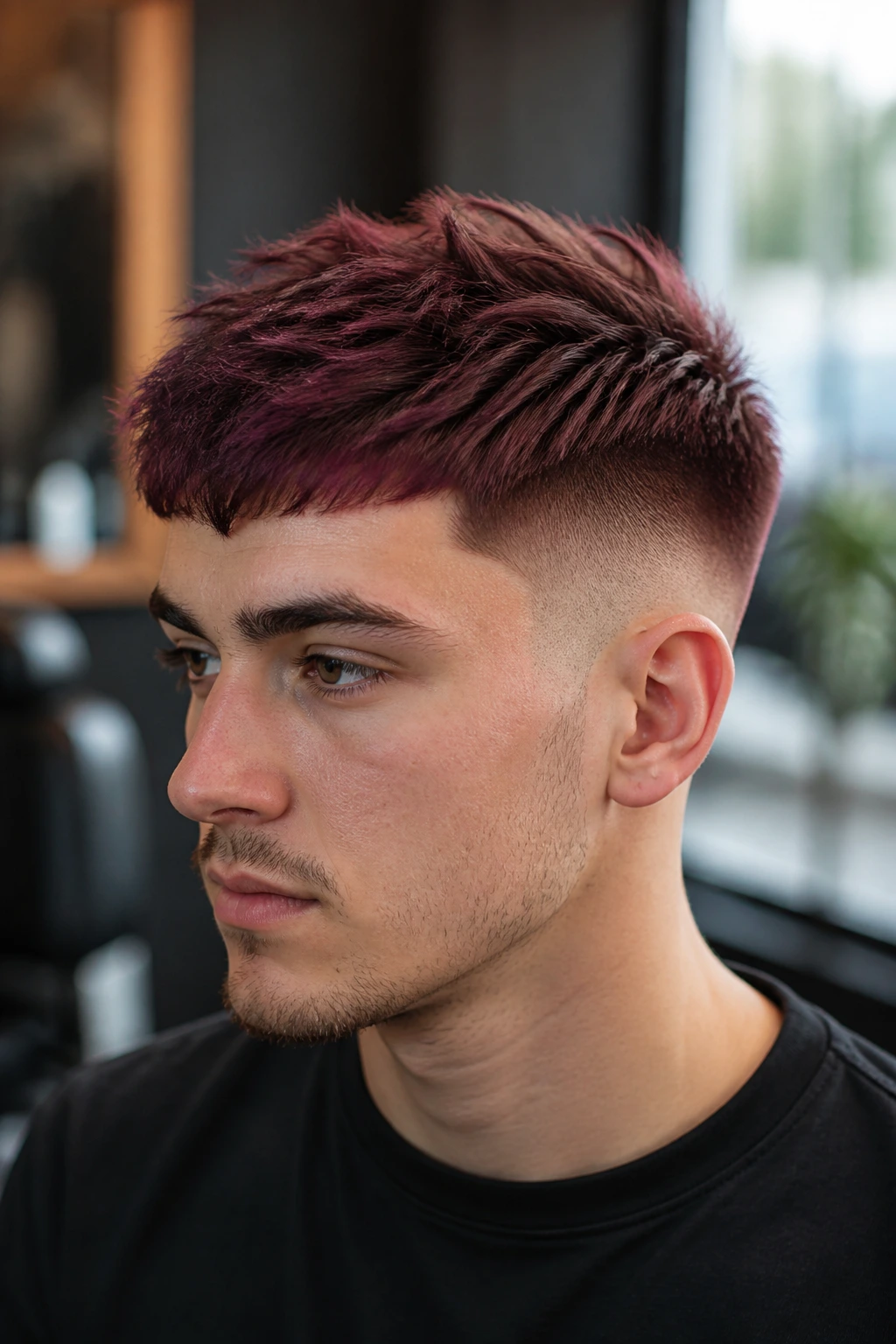
Burgundy is deep enough to feel grown-up and rich enough to catch light at the right angles. The fade helps a lot here, because the darker sides keep the color from taking over the whole head.
This shade looks best when the top has some texture. On straight, flat hair, burgundy can drift toward maroon helmet territory if the cut is too solid. Keep the top broken up with a matte paste, and the color starts looking layered instead of loud.
12. Cherry Cola Curls
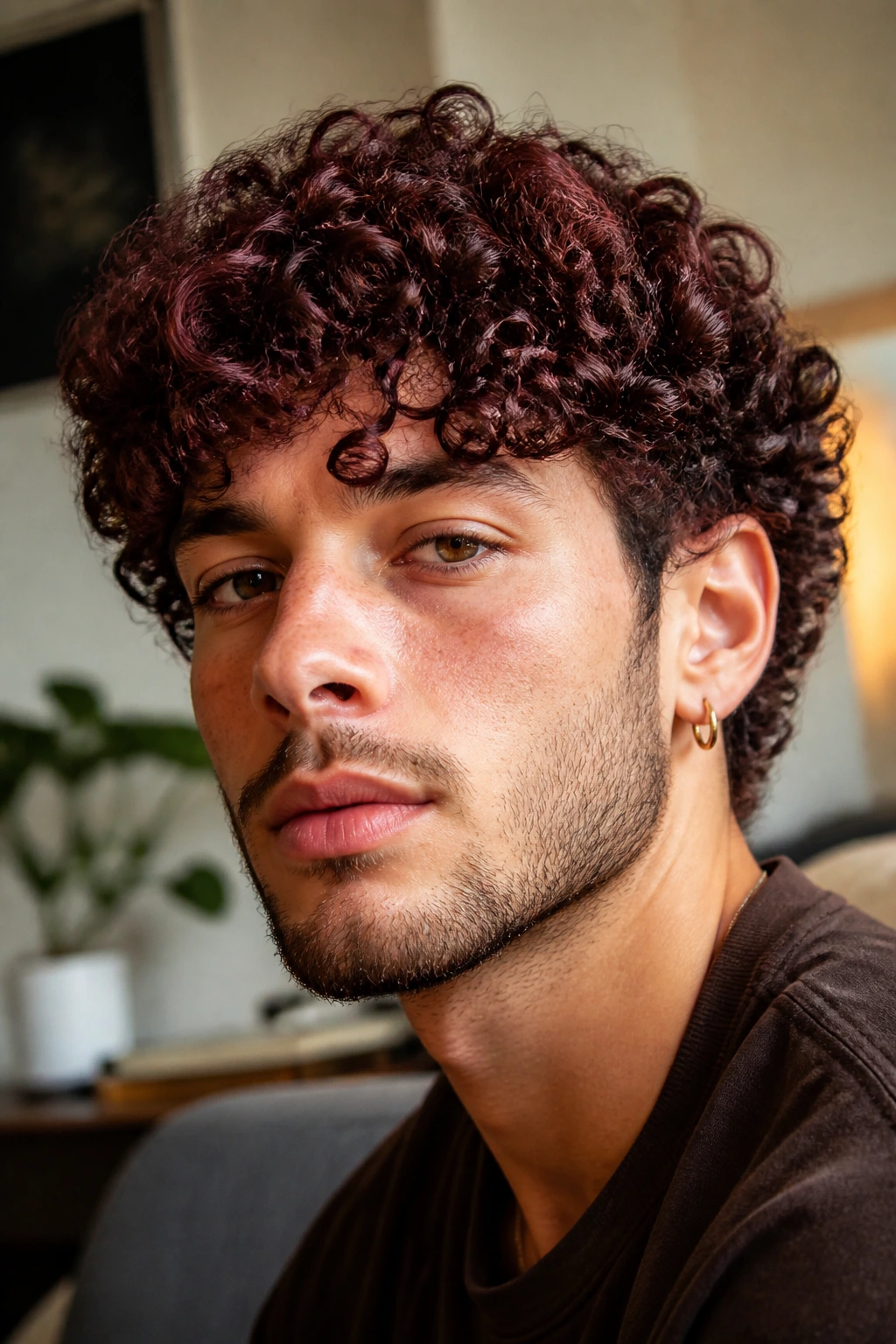
Why does cherry cola look better on curls than on straight hair? Because curls break the color into shadows and shine, which gives the red-violet tone more depth than it gets on a flat surface.
The shade works especially well if you want something dark enough for everyday wear but rich enough to show movement. Hydration matters here. Dry curls make the red look dull, so a leave-in conditioner and a soft curl cream do more than people expect.
13. Plum Wine Fringe
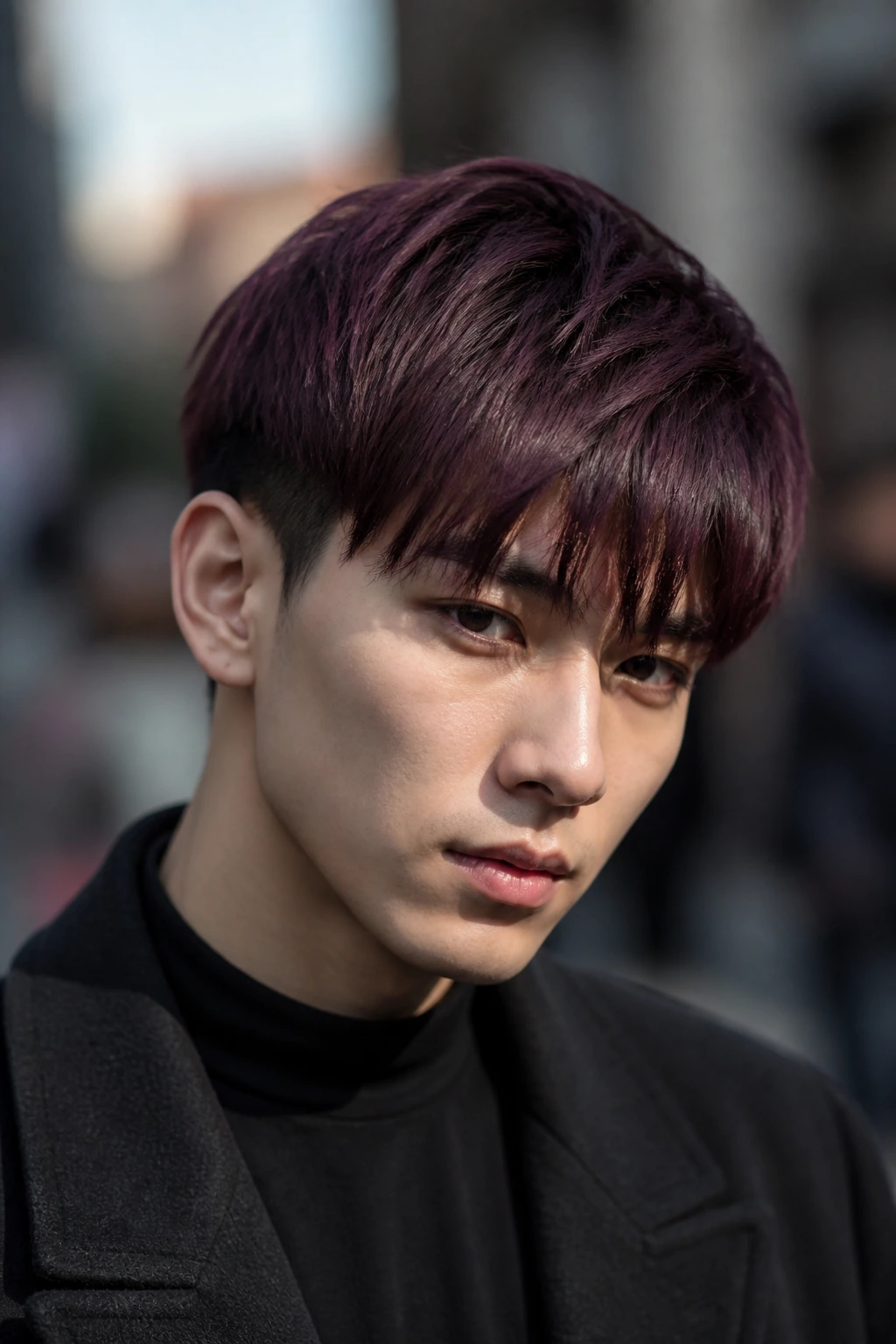
Purple-brown is one of the easiest ways to look styled without going neon. Plum wine sits in that lane, especially when it lands on a fringe that hangs a little longer over the forehead.
This color is strongest when the haircut has clean edges. A messy neckline or grown-out sides can make the plum read accidental, while a neat cut makes it feel intentional. If you want something dark, moody, and a bit different without lighting up the whole room, this is a strong option.
14. Rose Gold Textured Crop
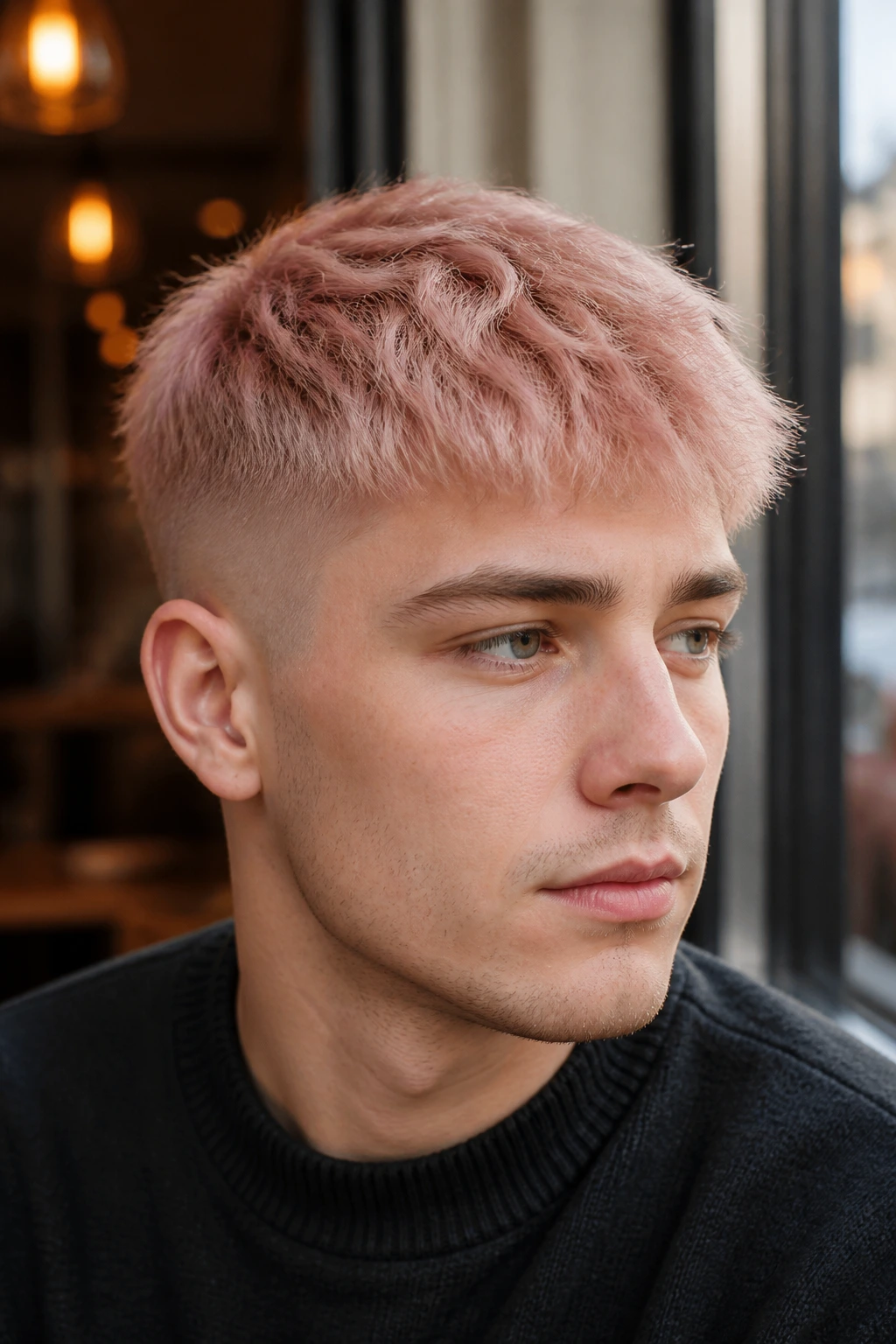
Rose gold is softer than people think. It is less pink than you expect and more peachy-metallic, which is why it can look good on a textured crop instead of only on longer hair.
The key is a pale base. Without it, rose gold turns muddy fast. On hair that’s been lightened properly, the shade gives a soft warm sheen that sits somewhere between blond and copper. It fades nicely too, usually sliding toward peach or beige rather than an ugly orange.
15. Sand Blonde Brush-Up
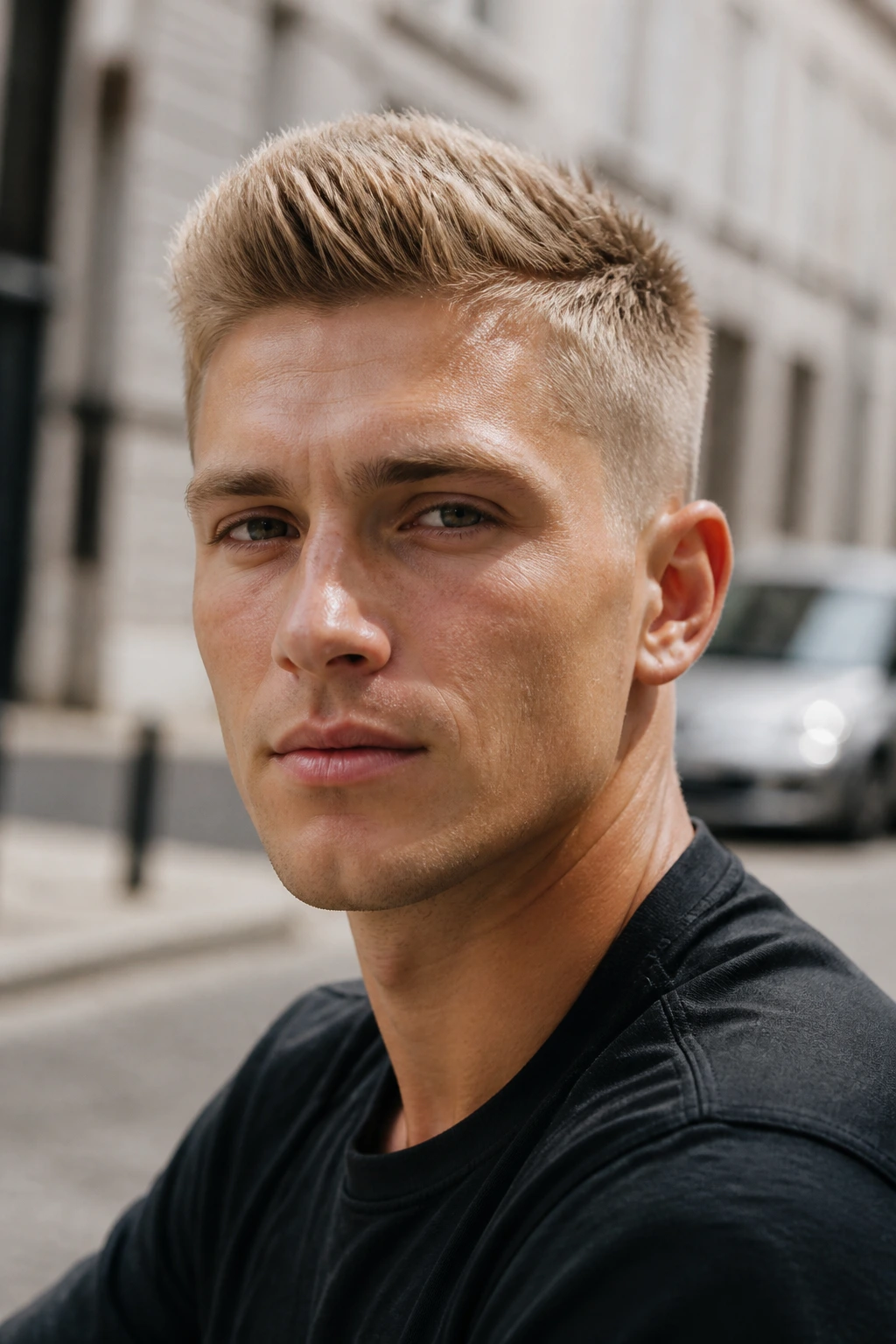
Think beige, not yellow. Sand blond gets the whole blond thing right by keeping the tone dry and neutral instead of brassy.
- Best cut pairing: brush-up crops, short quiffs, and textured fades.
- Why it lasts: a sandy tone hides minor grow-out better than a bright blond.
- What to avoid: heavy yellow toner or over-shiny styling products, both of which can make the color look cheap.
If you want blond but do not want the beachy, overprocessed look, sand blond is the calmer answer.
16. Honey Blonde Curtains
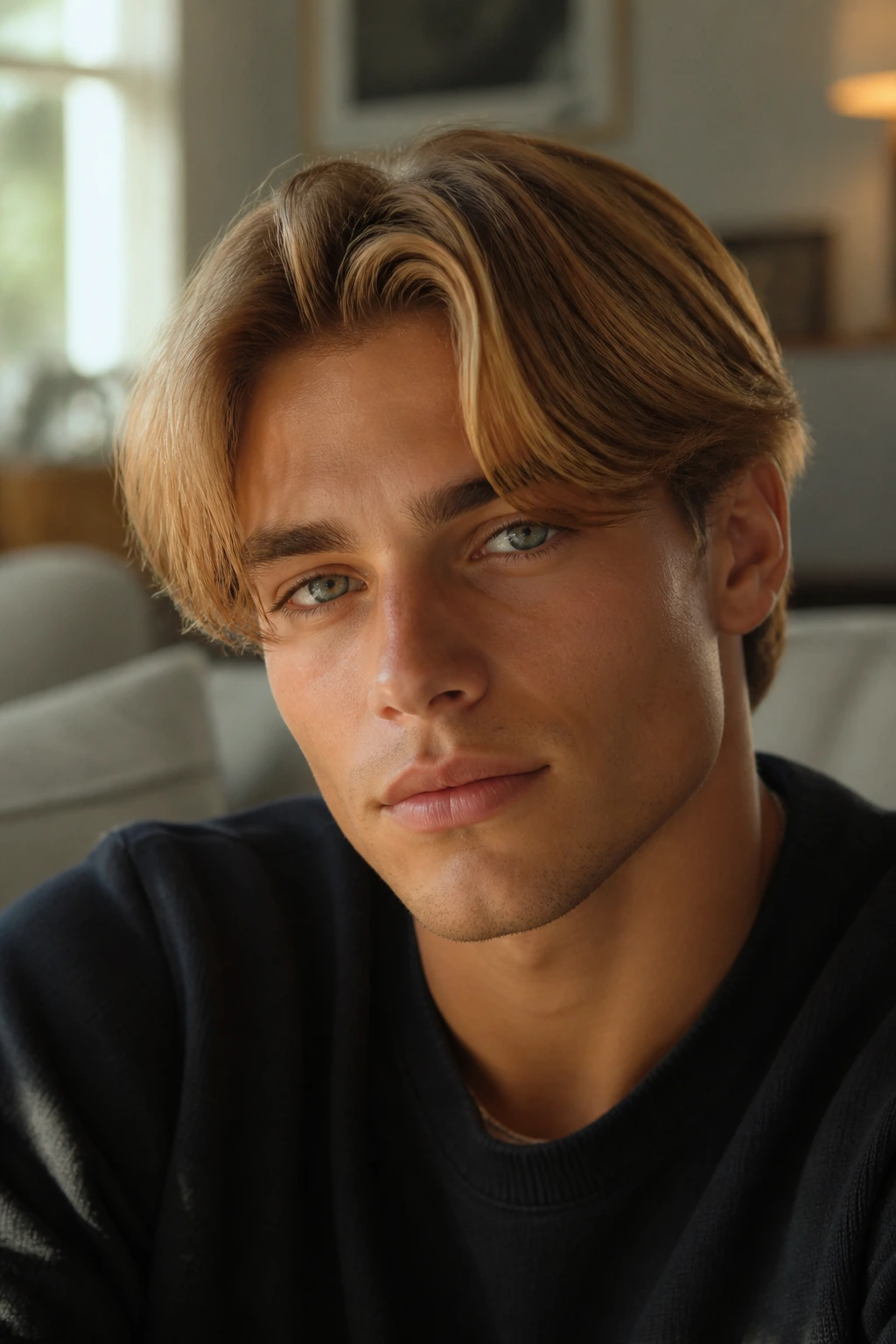
A center part changes the whole read of honey blond. Instead of looking like a bleach job, the color starts to feel softer and more natural, especially when the length falls into loose curtains.
Honey blond has warmth, but it needs control. Too much yellow pushes it into costume territory. The good version has a soft gold tone that sits nicely near the cheekbones and around the front, where the hair moves first.
17. Caramel Highlights on Dark Hair
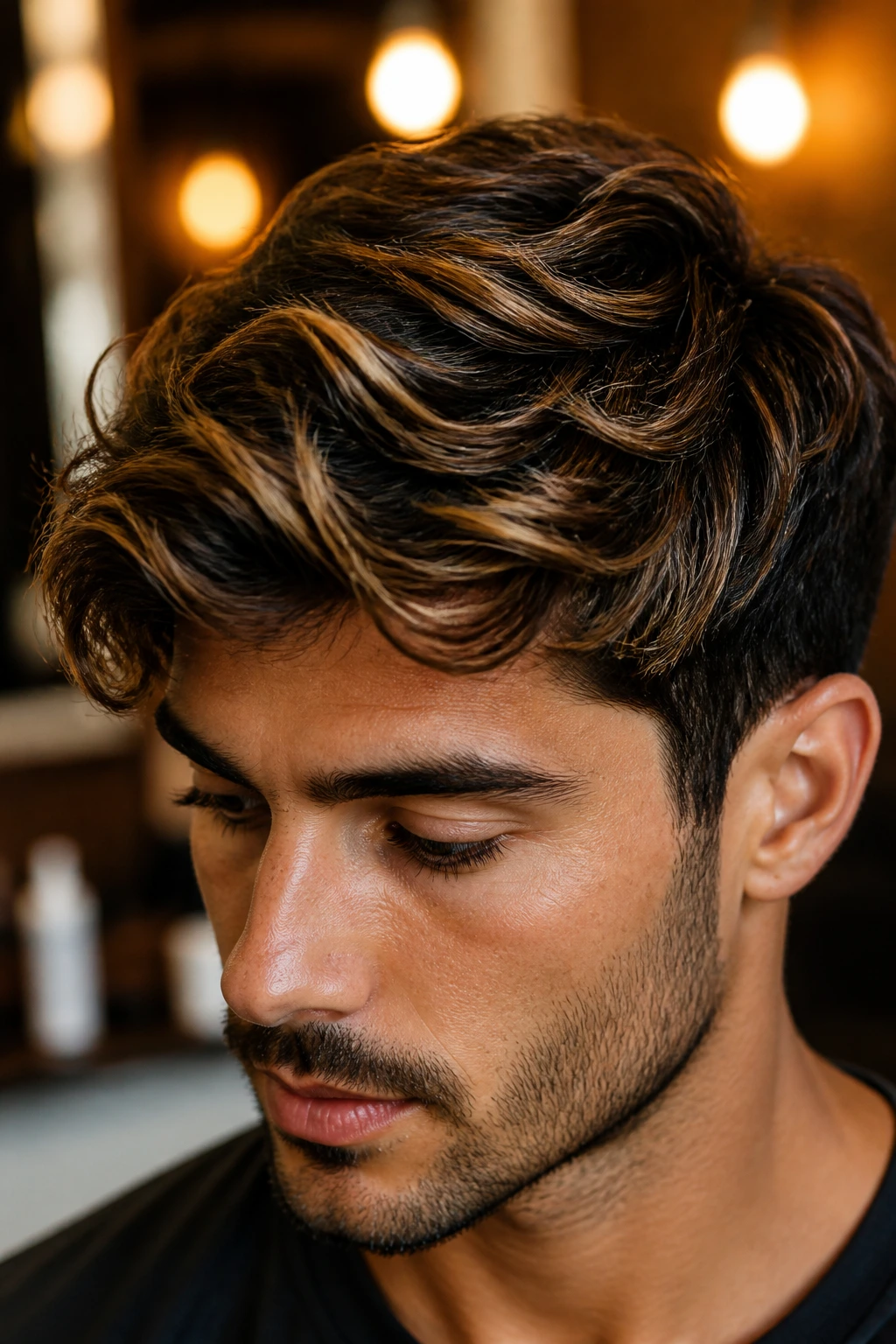
Caramel highlights are what I recommend when someone wants change without losing their natural base. A few warmer ribbons through dark hair add movement, depth, and a little lift around the face.
Why Highlights Beat Full Color
Full blond on dark hair can be a big maintenance job. Caramel ribbons let the darker base stay in charge, which means the grow-out is gentler and the contrast is easier to live with. They’re especially useful on waves, because the lighter strands catch the bends in the hair and break up the shape in a good way.
18. Frosted Tips Revival
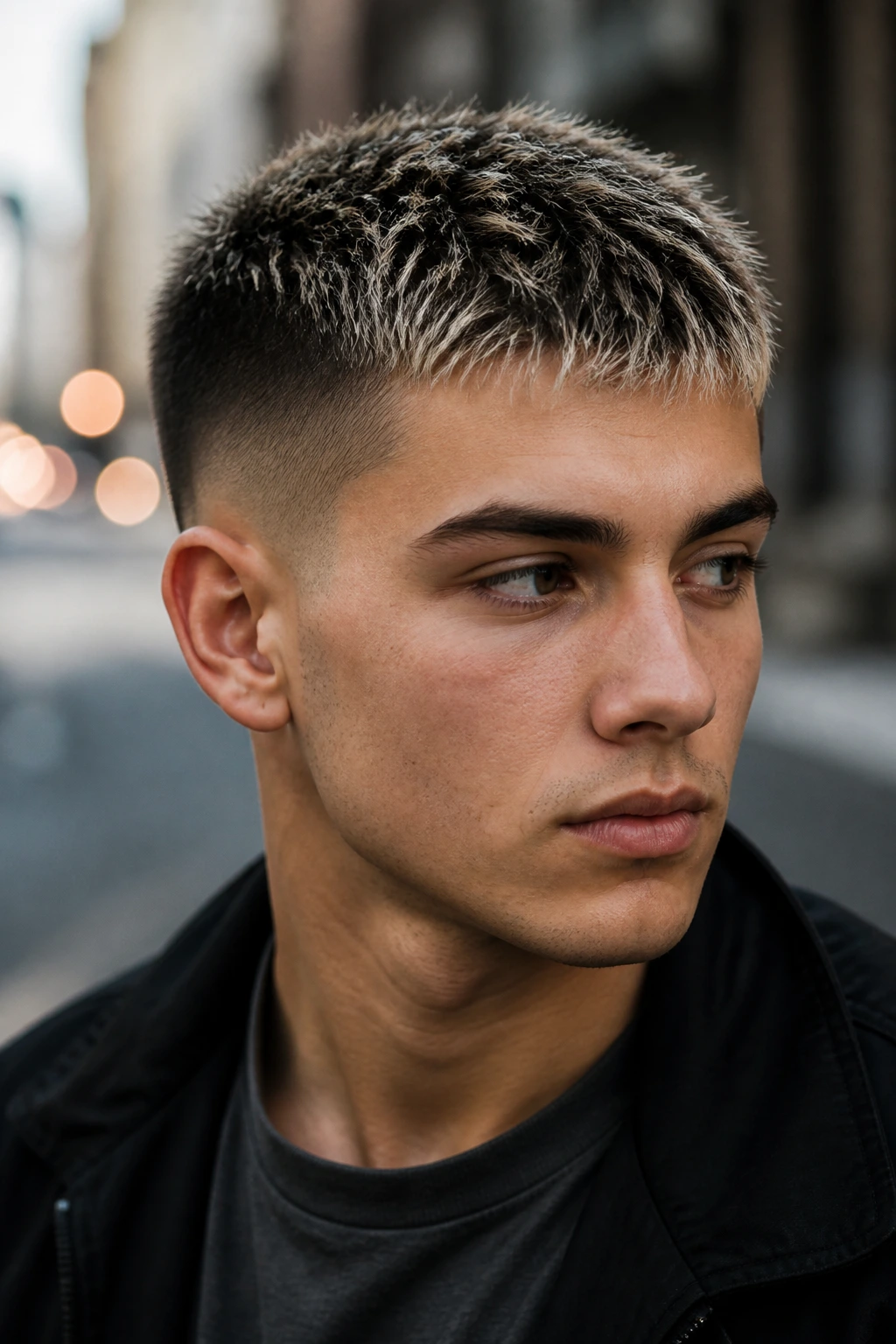
Frosted tips only look dated when they’re chunky and random. Trim them down, keep the cut sharp, and the effect becomes cleaner than people expect.
The trick is restraint. You want narrow, controlled tips, not the thick striped look from old photos. Short spikes, textured crops, and loose curls all handle this better than heavy, long layers. If the top is too dense, the light ends can look disconnected, so keep the shape lean.
19. Sun-Kissed Balayage on Wavy Hair
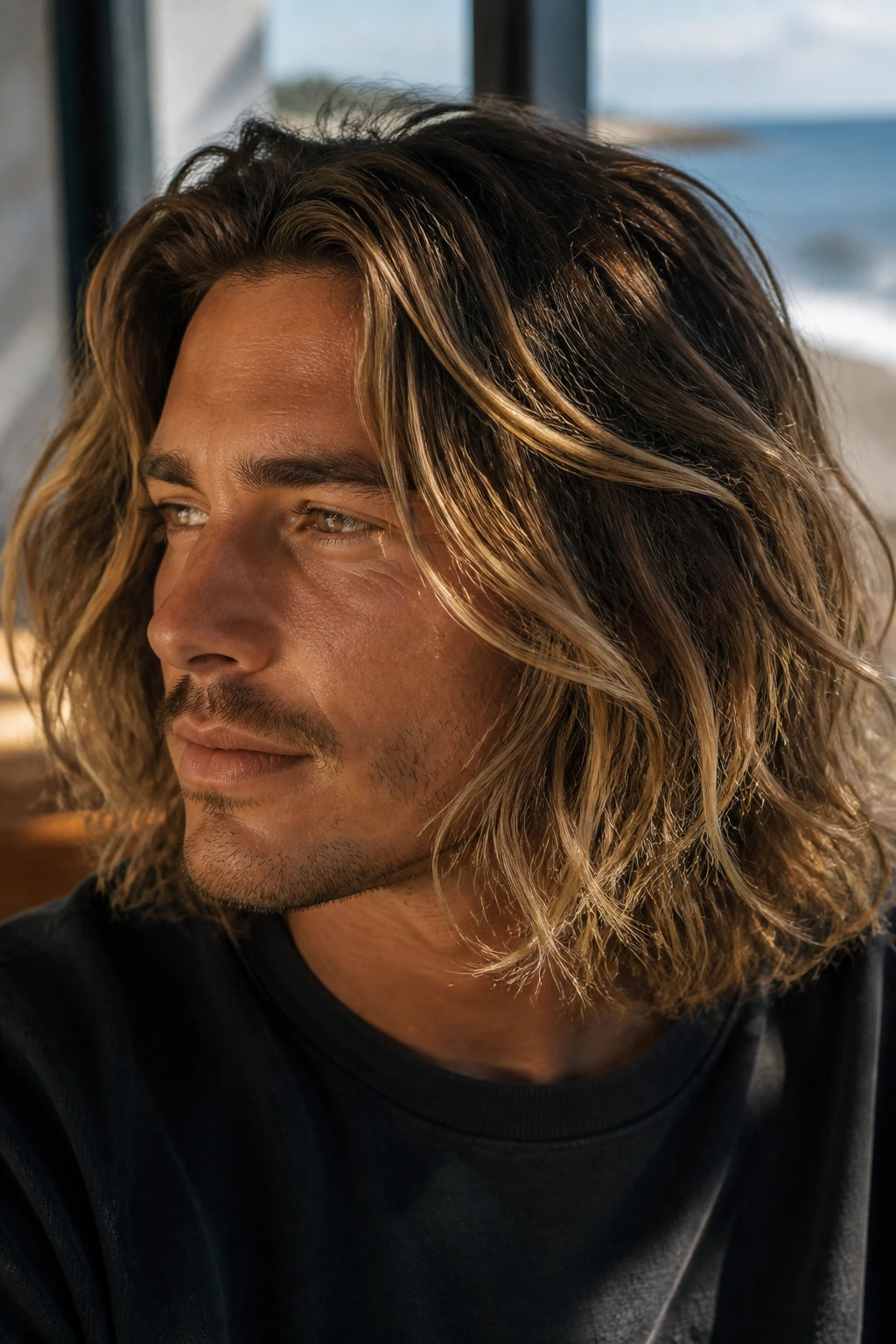
This is the color move for men who want people to notice texture before they notice dye. Balayage places lighter ribbons where the hair naturally bends, so the highlights feel built into the cut.
Wavy hair gives this look its best shape because the lighter bits flick in and out as the hair moves. The result is less “highlighted” and more layered. A sea-salt spray or light cream styler helps the waves show the color without making the finish crunchy.
20. Dark Root Melt to Blonde
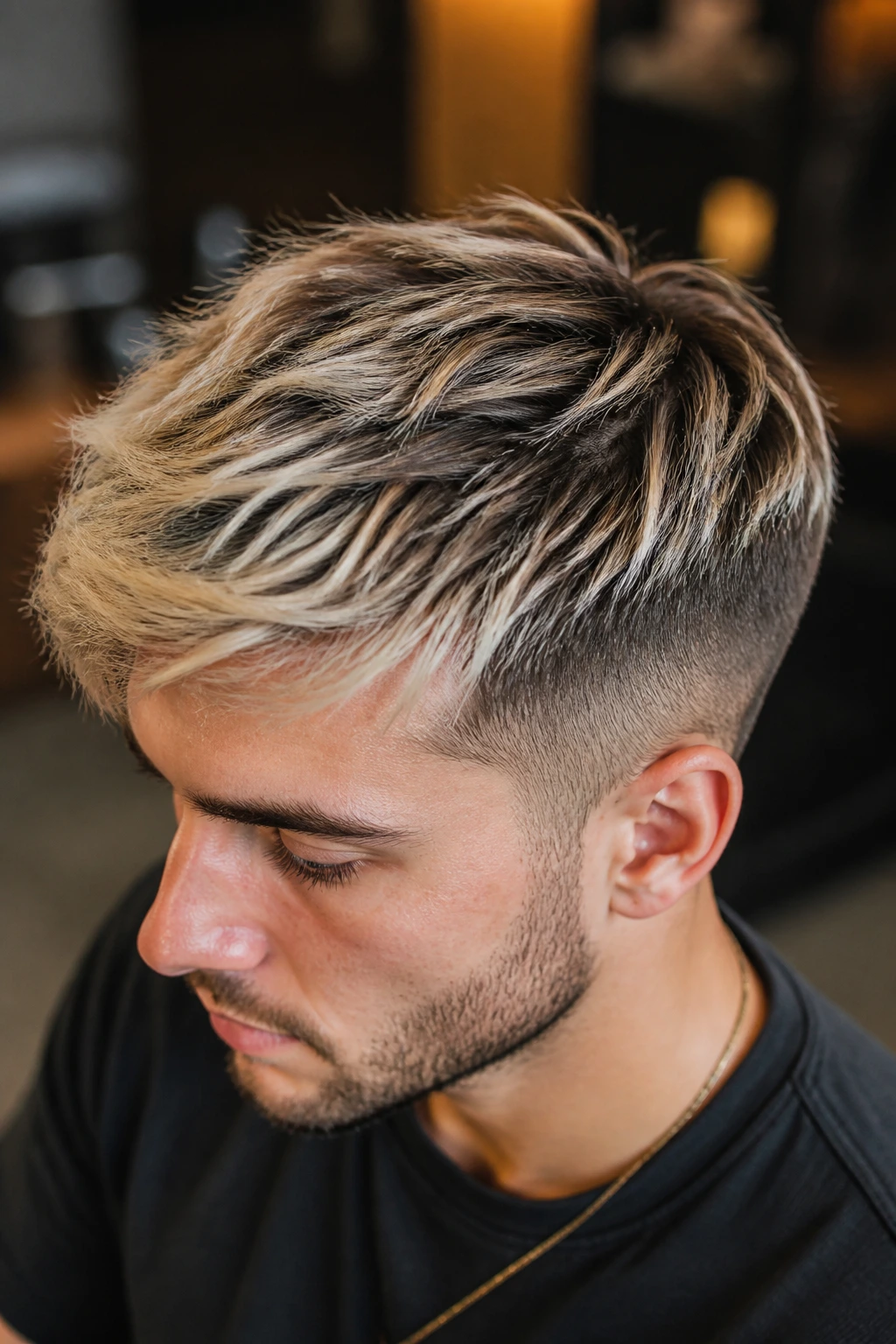
If you want blond without a harsh grow-out line, keep the root darker on purpose. That is what makes a root melt work: the shade shifts gradually instead of stopping at a hard line.
This is a smart choice for anyone who does not want to sit in a salon chair every few weeks. The darker root gives the blond somewhere to start, and it also makes the lighter lengths look brighter by comparison. On short hair, the transition can be tight; on longer hair, it can stretch out and look softer.
21. Face-Framing Money Piece
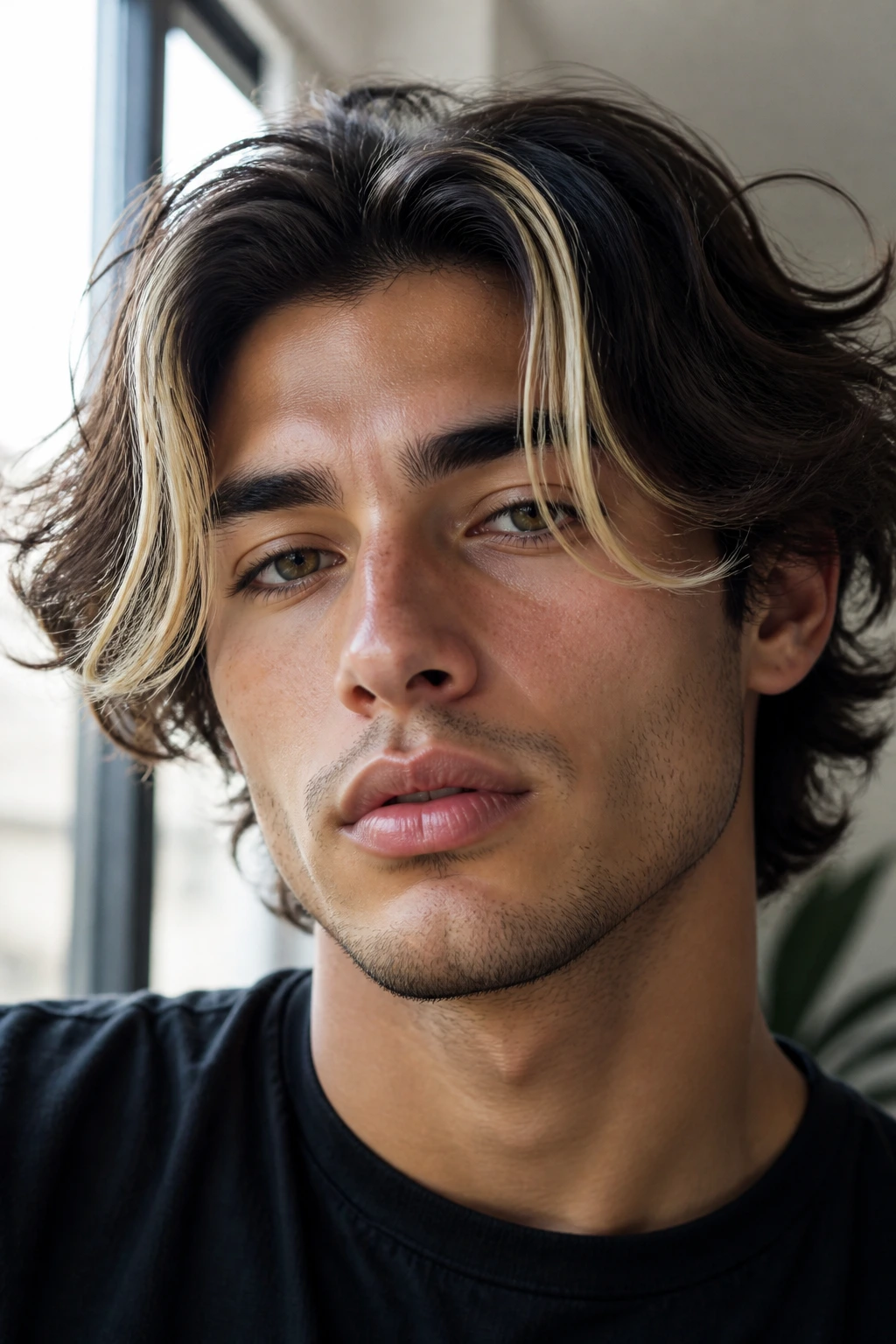
A money piece is the fastest way to pull attention toward the face without changing the whole head. Two lighter streaks at the front do the job by catching the eye first.
- Best on: medium-length cuts, curtains, and textured fringes.
- What it adds: brightness near the eyes and cheekbones.
- Why it stays useful: you can keep the back darker, which lowers upkeep.
If you want a change that shows up in photos, under daylight, and in a mirror without a full color commitment, this is one of the smartest options.
22. Hidden Underdye
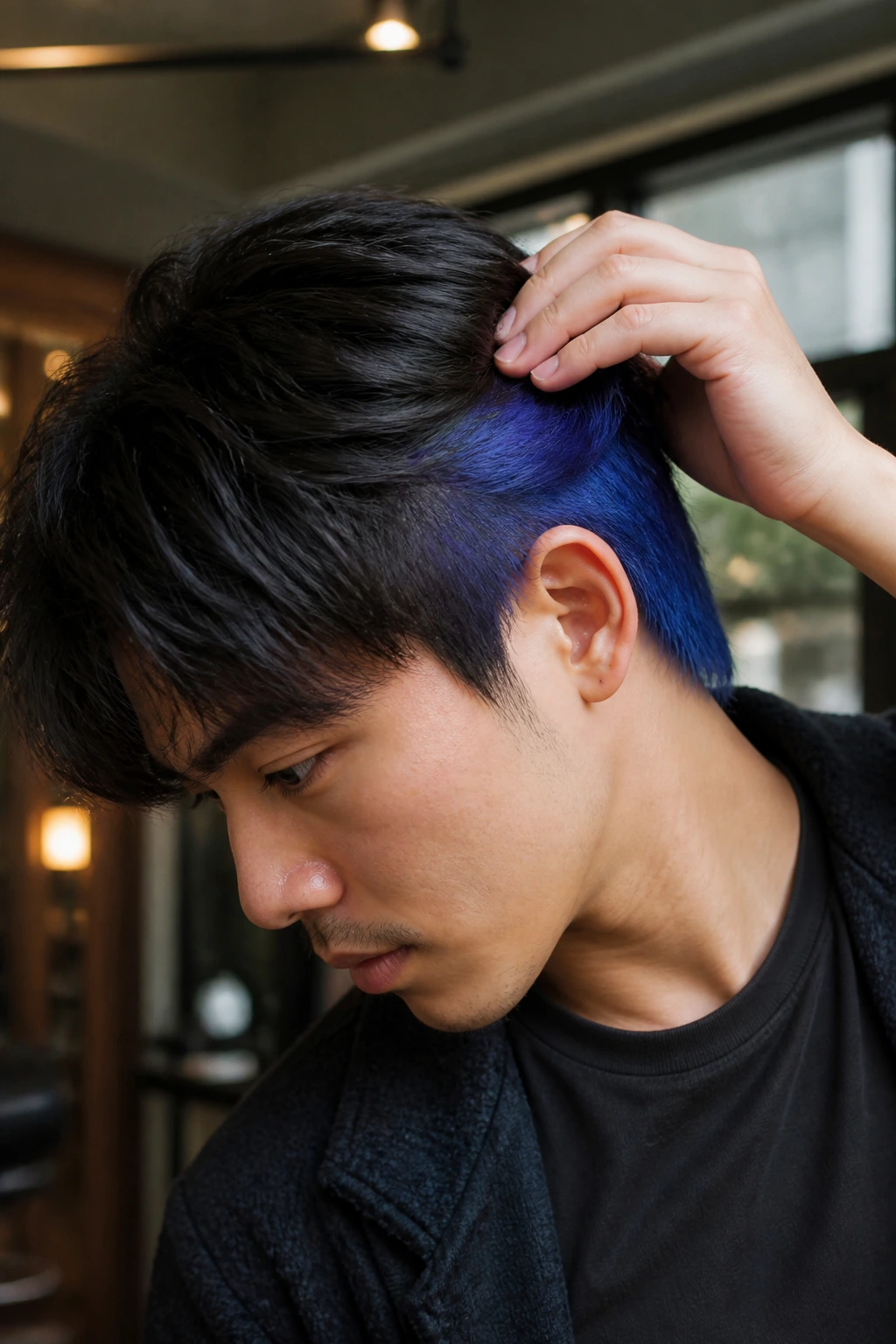
The best part of an underdye is the first glimpse when you move your head. The top stays dark or natural, and a bright color underneath flashes out only when the hair shifts.
That makes it a good fit for men who want color but need to keep the top layer cleaner for work or family life. Cobalt, red, mint, and lavender all work here, but the placement matters more than the shade. On layered cuts, locs, or braids, the hidden panel can show in a way that feels deliberate instead of loud.
23. Split Dye Panel
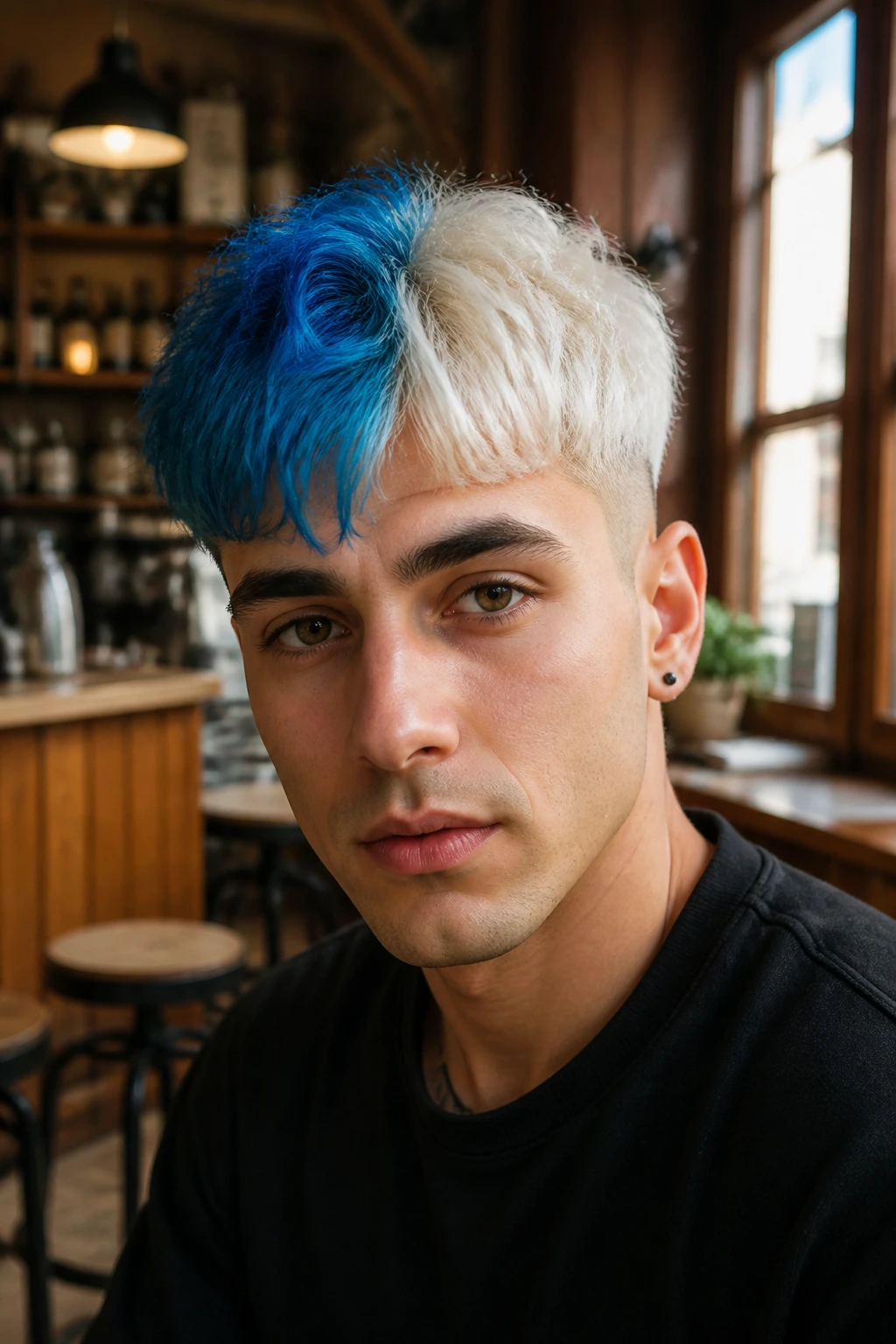
Why choose one color when two can share the job? A split dye takes that idea seriously, dividing the head into two contrasting halves.
This look needs a precise cut, or at least very deliberate parting, because an uneven split looks like a mistake. When it’s clean, though, the result is sharp and graphic. It works best if you want the color itself to be the focal point, not the haircut around it. That means fewer details elsewhere. Keep the shape simple.
24. Electric Blue Crop
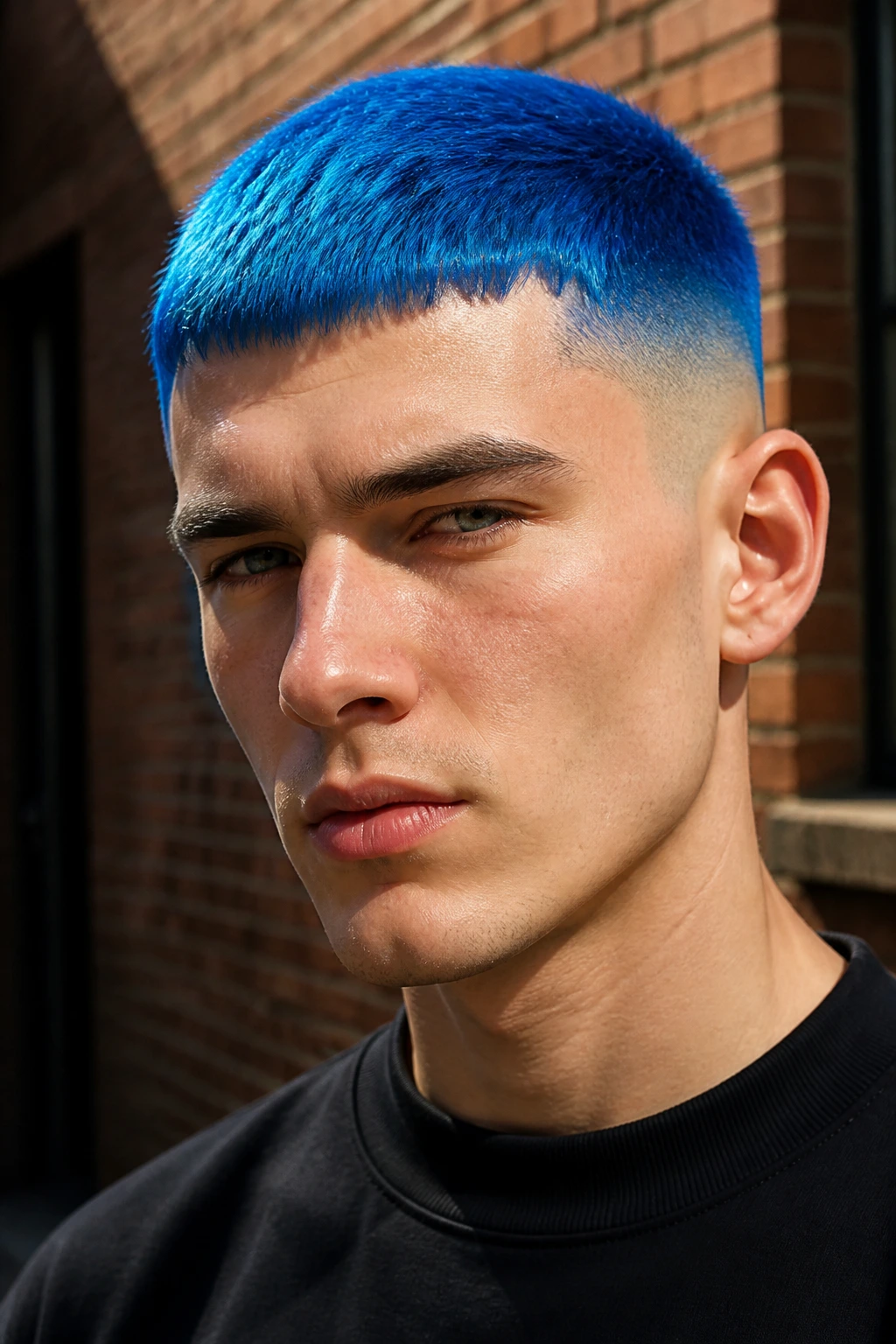
Electric blue is loud, yes, but on a tight crop it reads cleaner than on long hair. The short length keeps the color from feeling overly busy.
The biggest reason this shade works is visibility. Blue is a strong color, and the crop gives it a solid canvas. If the base is pale enough, electric blue stays bright for a while before it softens to denim. If the cut is faded on the sides, the blue has even more contrast to work with.
25. Cobalt Blue Twist
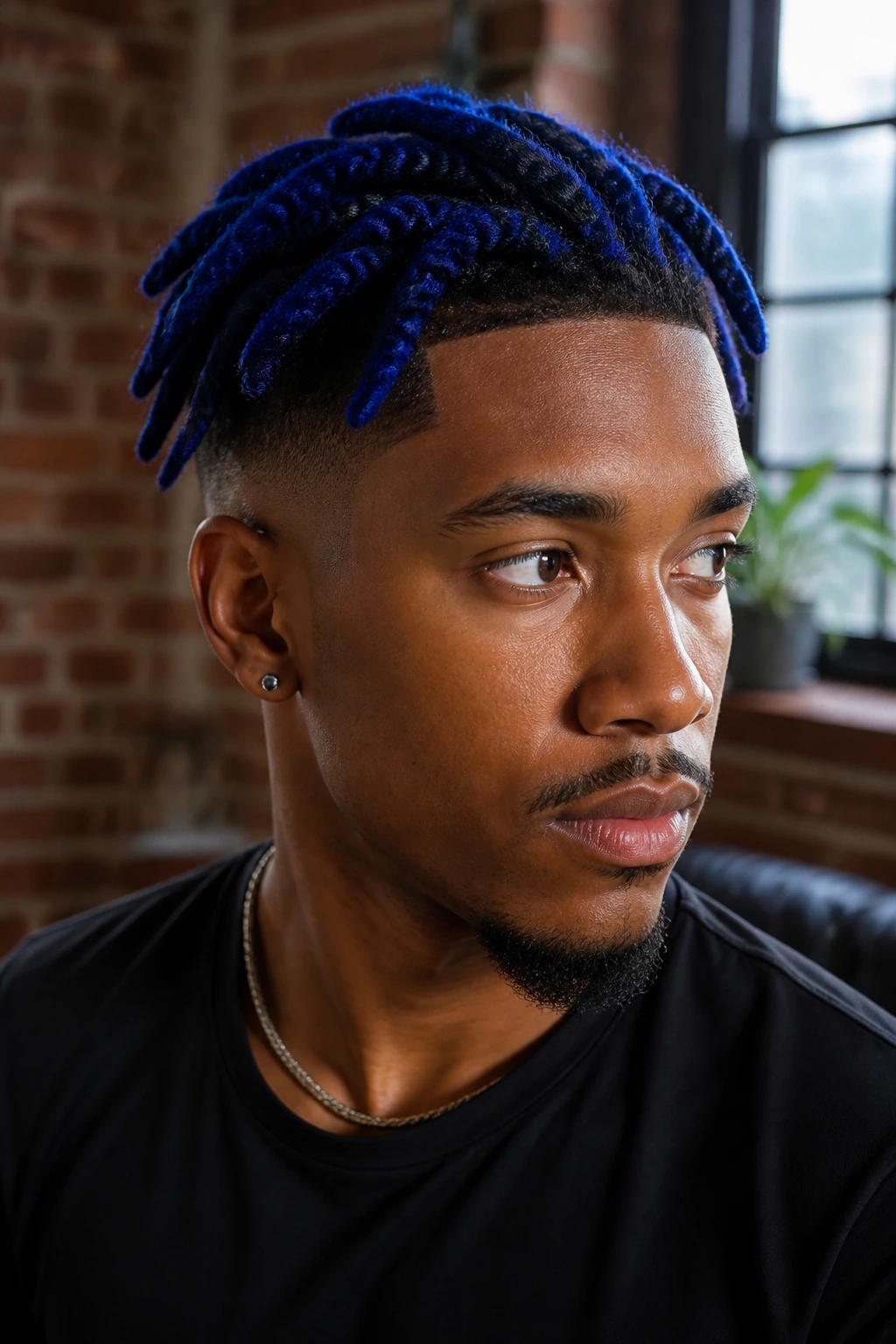
Cobalt is the richer cousin of electric blue. It has depth, almost like ink, so it feels less playful and a little more tailored.
Why Cobalt Feels Richer
The darker blue sits better on medium-length hair, twists, braids, and textured tops because the shape creates shadow. That shadow keeps the color from looking flat. If electric blue is a shout, cobalt is a low, confident voice. It is still a statement. It just wears a jacket while doing it.
26. Teal Fade
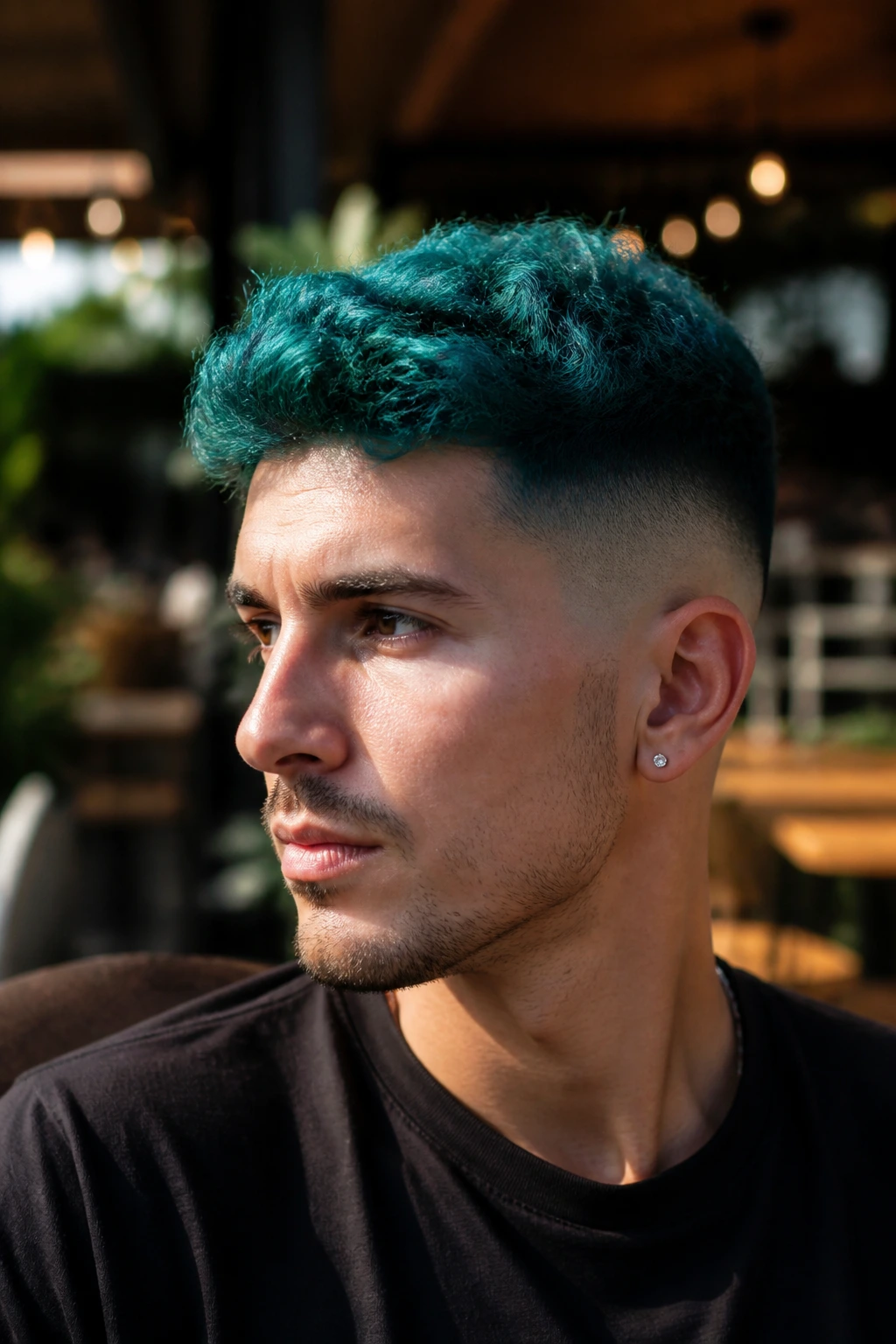
Teal is the sweet spot between blue and green when you want something vivid but not cartoonish. The fade helps the color transition from the sides into the top, which keeps it from looking pasted on.
This shade looks especially good when the haircut has movement. Curls, waves, twists, and textured tops all make teal shift as you turn your head. It can lean oceanic or darker, almost jewel-like, depending on how light the base is.
27. Forest Green Undercut
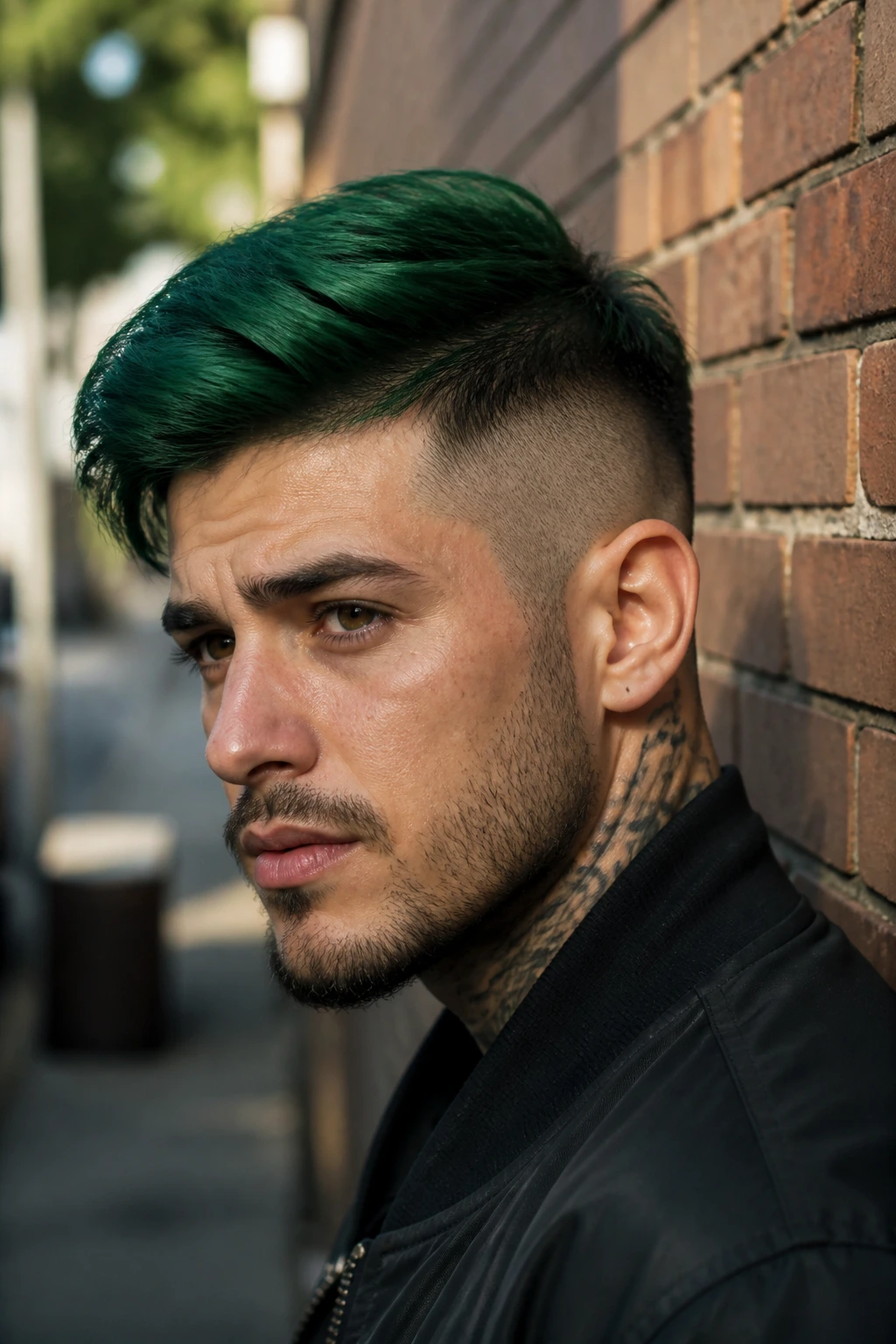
Deep green is strange in the best way because it sits near black in dim light, then opens up when light hits it. That makes forest green one of the easiest bold colors to wear without feeling neon.
The undercut keeps the sides controlled so the green can sit on top without getting noisy. It is a strong choice if you want a darker fashion color rather than a bright one. Pair it with a neat neckline and it stays sharp instead of looking holiday-coded.
28. Mint Green Buzz
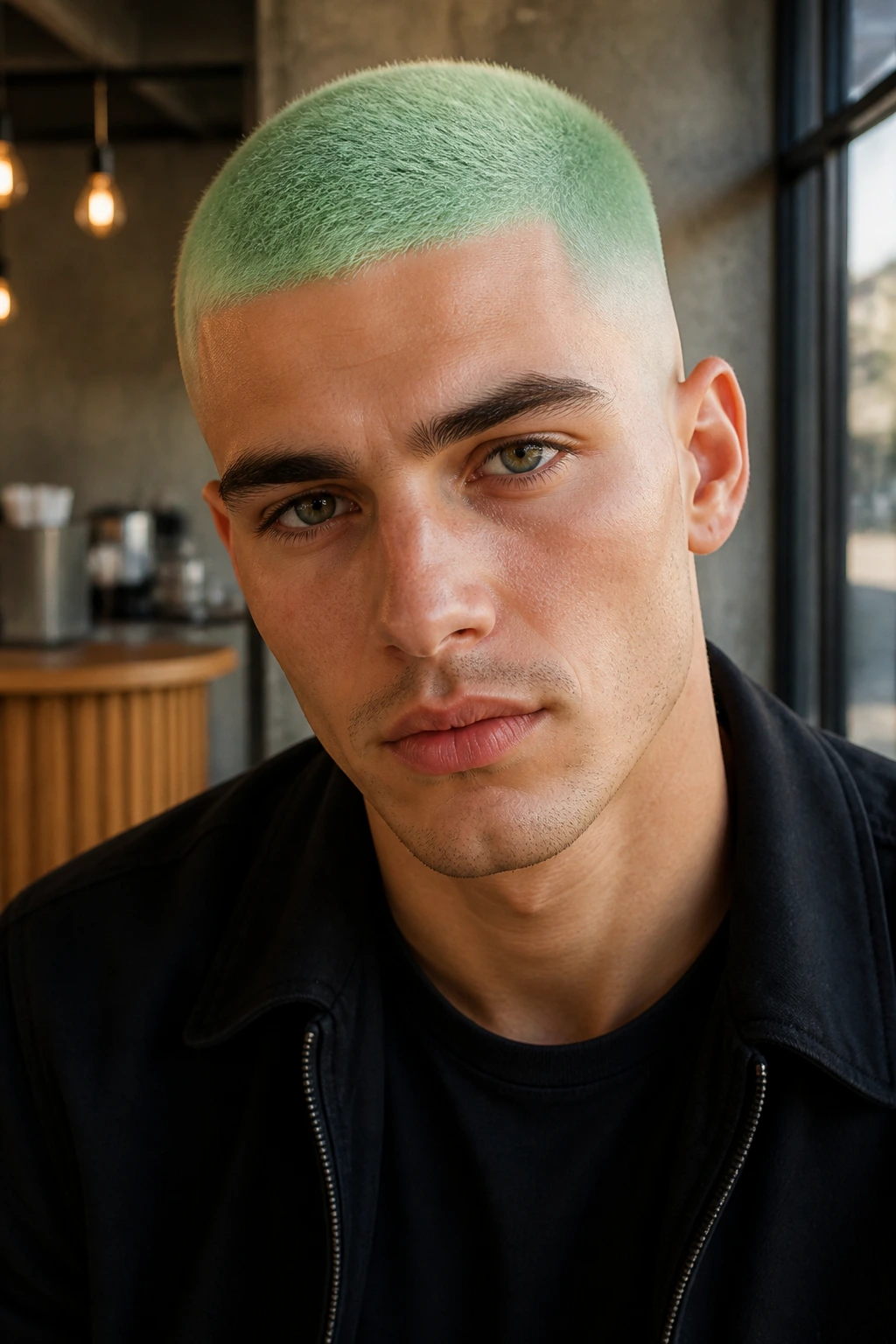
Mint green only looks clean when the base is light enough to keep it from turning swampy. On a buzz cut, though, the color can feel fresh, modern, and a little strange in a good way.
This is not the shade for somebody who wants subtlety. It is for men who like the idea of a pale color that still has an edge. Because the cut is short, the fade-out is easier to manage than it would be on longer hair, which matters with any pastel green.
29. Lavender Crop
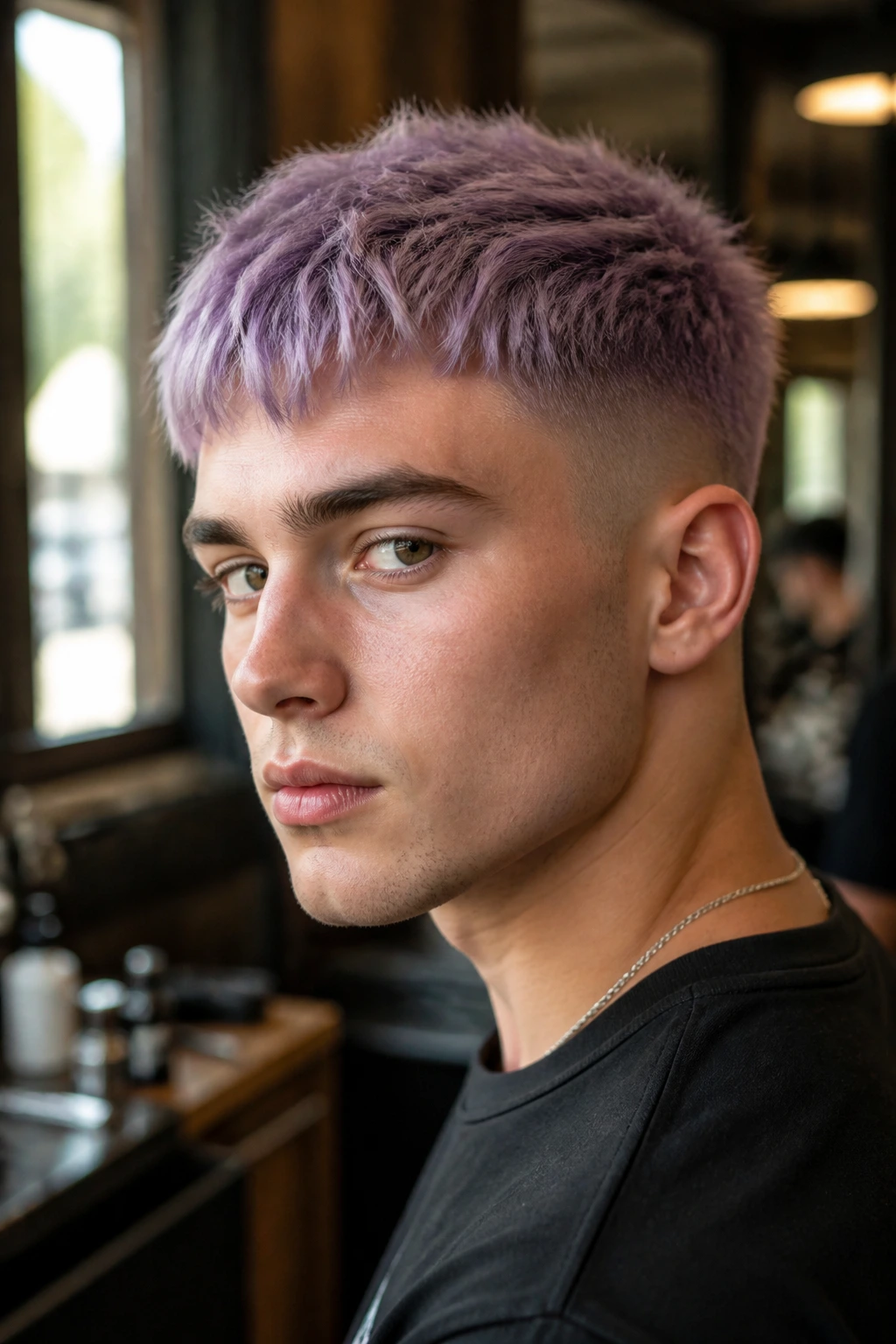
If blue is too cold and pink is too sweet, lavender lands in the middle. On a crop, it looks soft at first glance and then shows a little more personality the longer you look.
- Best cut: short textured crop or fringe.
- Best finish: matte or low-shine, never greasy.
- Maintenance note: keep yellow tones under control, or the lavender slides toward dull beige.
Lavender works because it does not fight the haircut. The short shape keeps it tidy, and the color does the rest.
30. Lilac Smoke
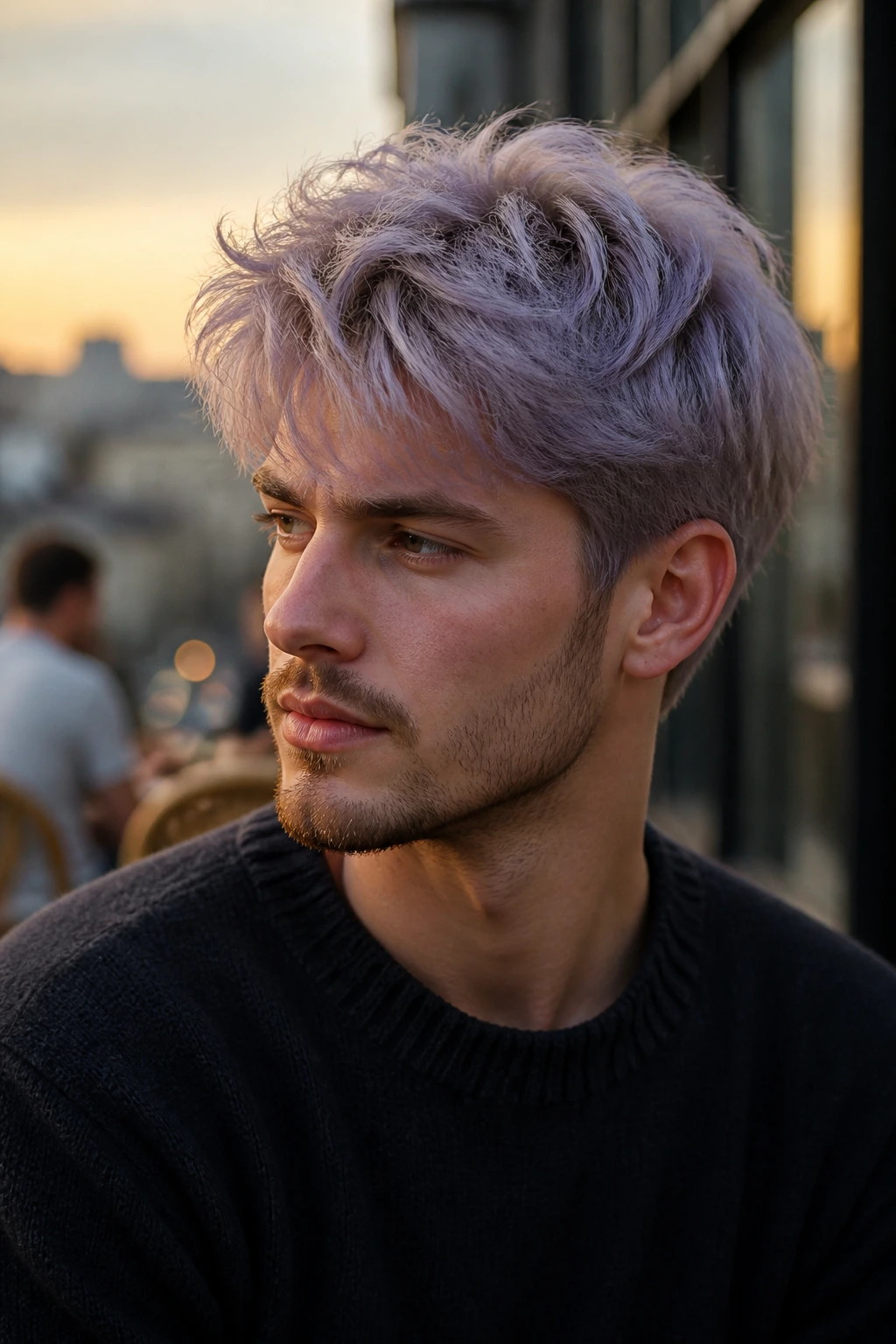
Dusty purple is the smarter version of lavender for guys who want color without neon. Lilac smoke has more gray in it, which makes it easier to wear with darker clothes and sharper cuts.
It suits hair that has a little length on top, because the softer shade needs room to breathe. On a long fringe or textured layers, the color shifts between silver, violet, and smoke depending on the light. That movement is the whole appeal.
31. Silver Lavender
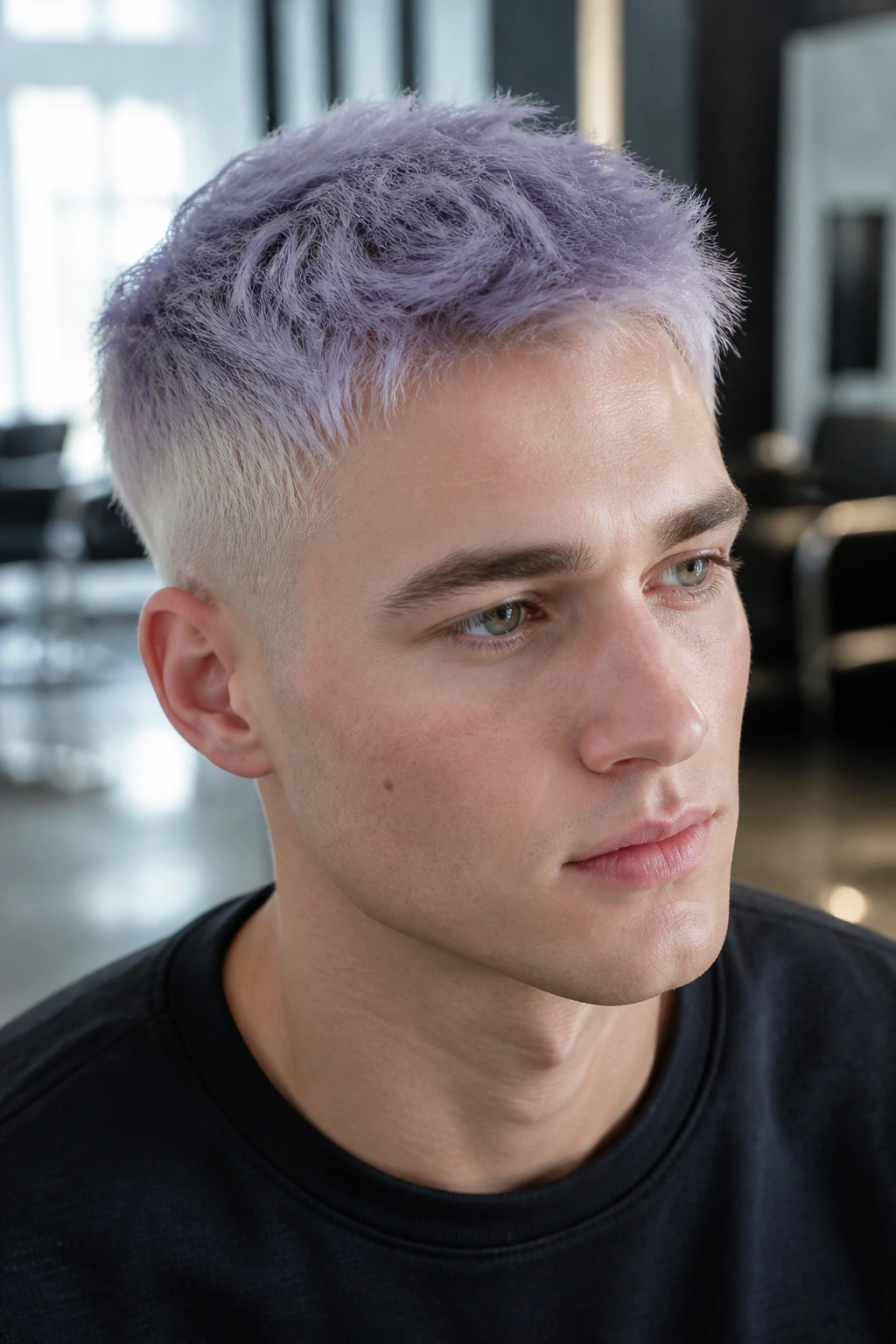
What happens when silver and violet stop fighting and start sharing the same cut? You get silver lavender, a metallic color that looks cooler than plain pastel and less harsh than pure silver.
This shade is best when the cut is crisp and the surface is even. It reads especially well on hair that has been lifted to a pale blond base first, because the lavender sits on top of the silver instead of sinking into it. The effect is subtle from far away and more interesting up close.
32. Peach Blonde
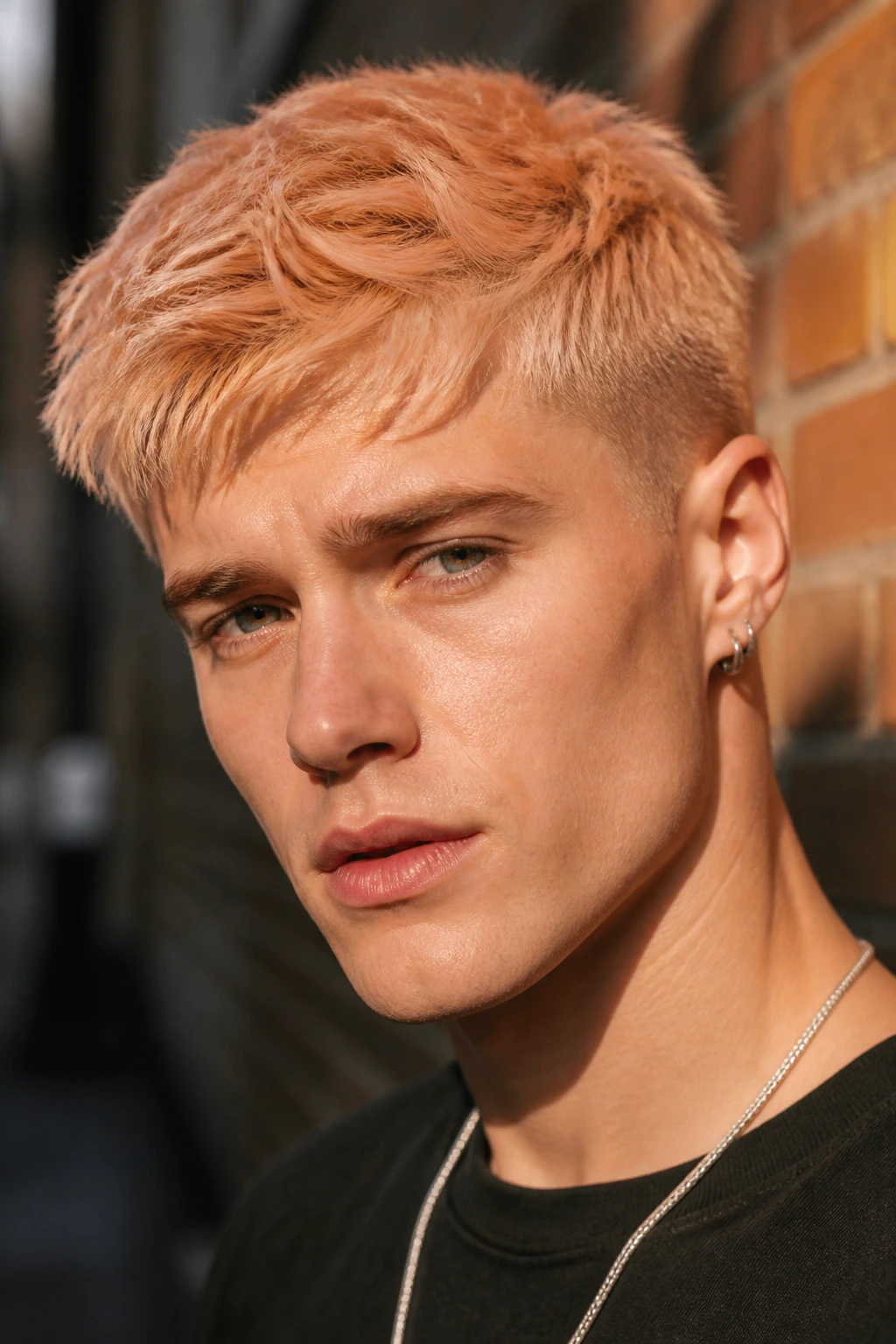
Peach is warmer than pink and friendlier than copper. That’s why it works so well as a blond variation for men who want something softer than bright red but less expected than beige blond.
The tone is strongest on light bases and short, textured cuts. Too much length can make it look washed out if the color fades unevenly. Keep the shape neat, and the peach takes on a soft glow that sits nicely against both warm and cool skin.
33. Fire Ombré
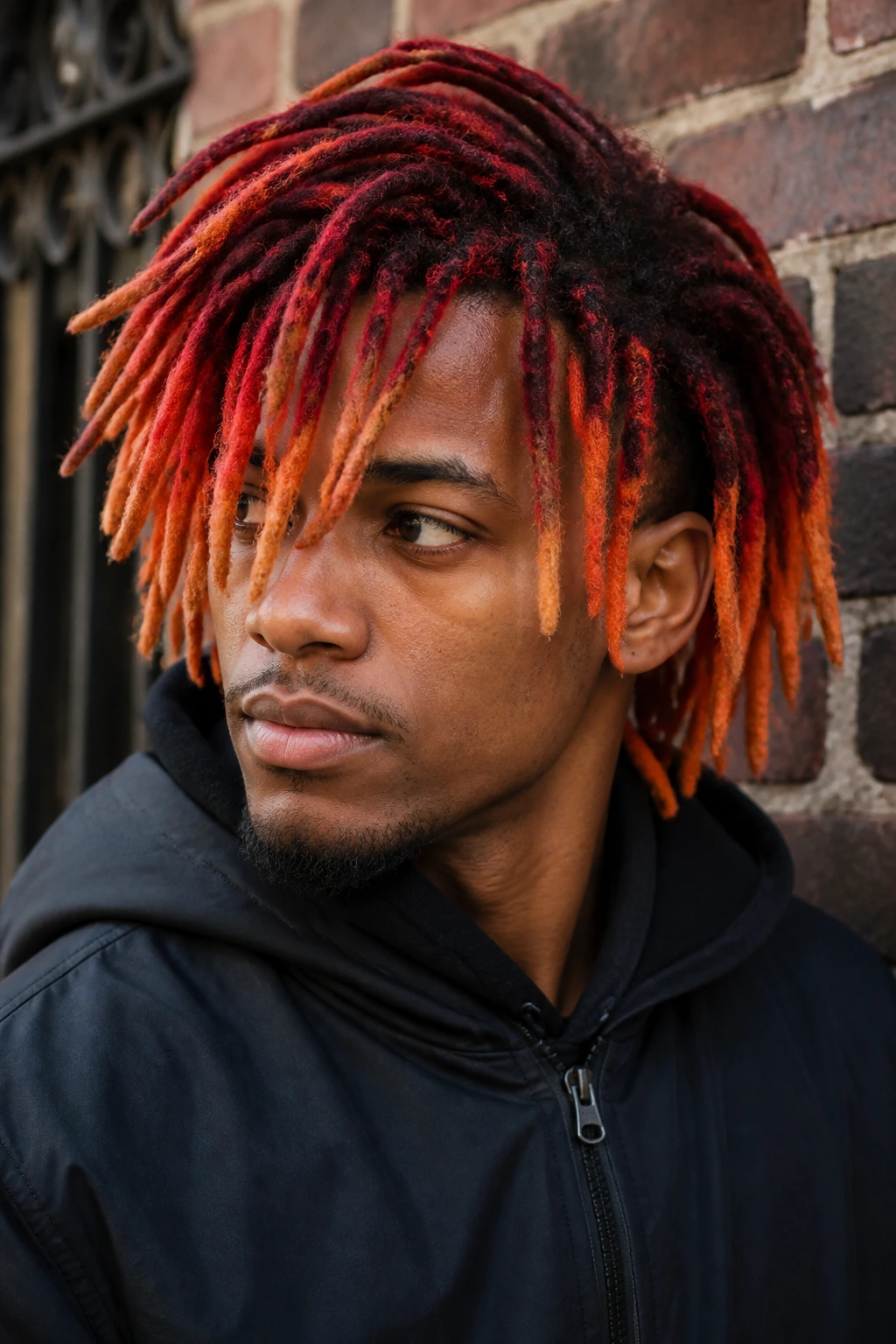
A red-to-orange fade makes the most sense on longer tops, locs, or twists, because the gradient needs room to show. On short hair, the shift can disappear before it does anything interesting.
The darker root gives the color a place to start, then the mid-lengths move into red and the ends into orange or copper. That kind of transition needs careful placement, but when it’s done right, it has motion built into it. Every turn of the head shows a different strip of color.
34. Golden Brown Gloss
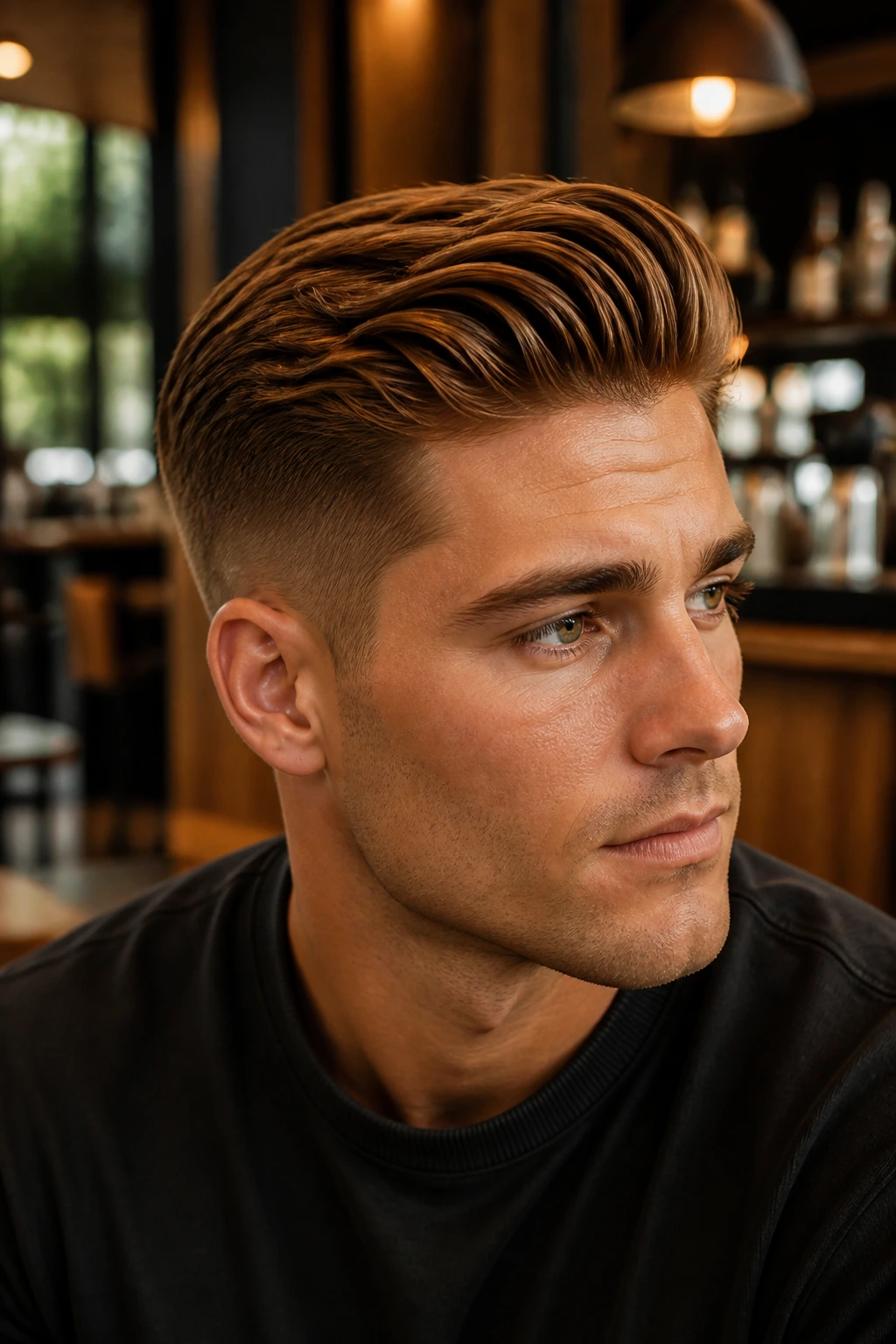
Not every color needs bleach. A golden brown gloss deepens brown hair, adds warmth, and gives the surface a cleaner shine without changing the haircut’s base identity.
- Good for: men who want richer brown, not a dramatic color shift.
- Maintenance: can be refreshed every few weeks without a full color process.
- Best use: paired with a neat fade, side part, or brushed-back top.
This is the shade I’d hand to someone who wants polish more than drama.
35. Slate Gray Fade
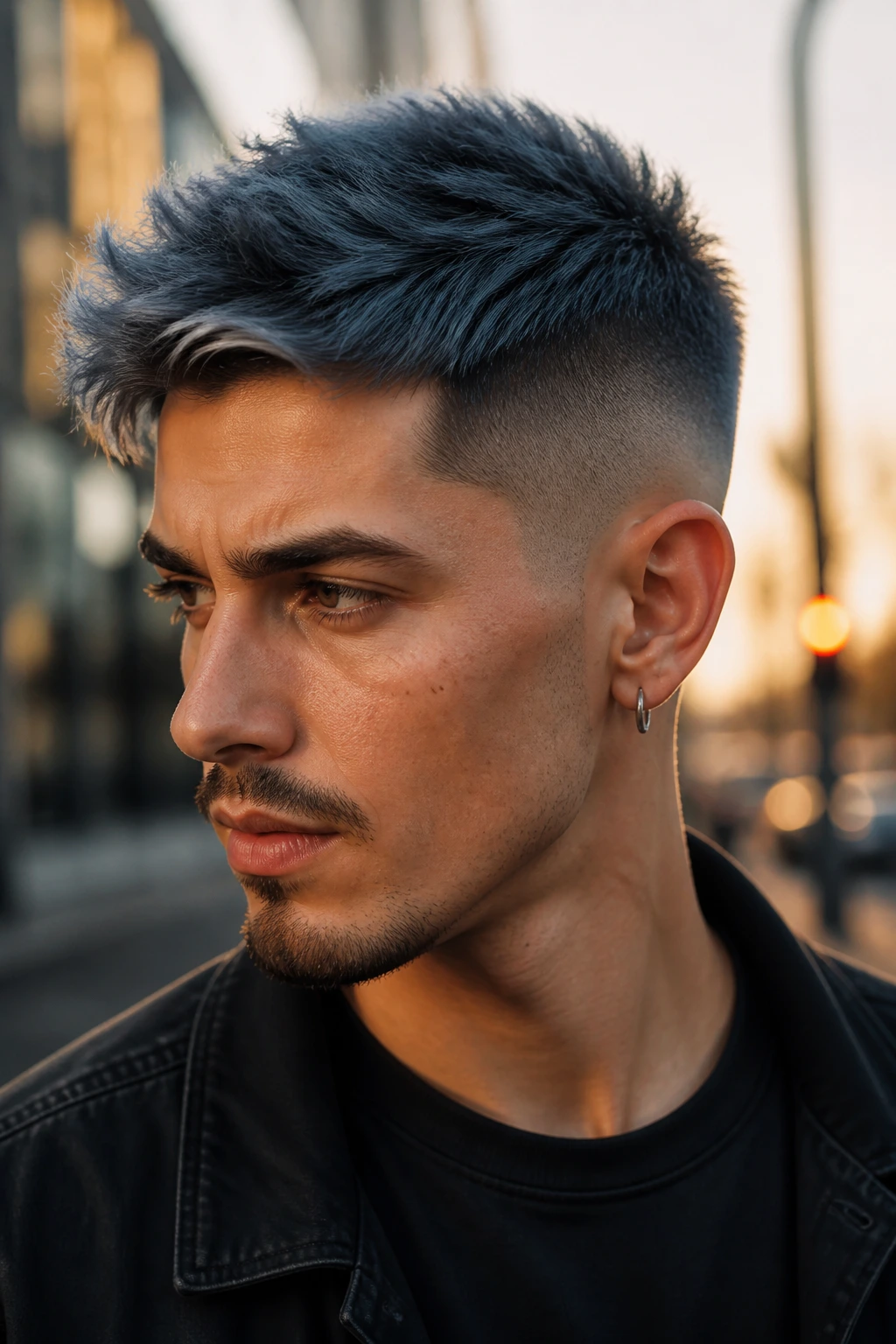
Slate gray is the cooler cousin of silver, with a hint of blue that keeps it from looking flat. On a fade, that cool tone gets framed by the darker sides, and the whole cut reads sharp instead of washed out.
It is a nice option if you like the idea of gray but want something more controlled than a bright metallic silver. Slate is especially good on short hair where the texture is tight and the finish can stay matte. If the crown has some natural movement, even better. The color catches just enough light to stay interesting.
Picking the Right Formula for the Shade You Want
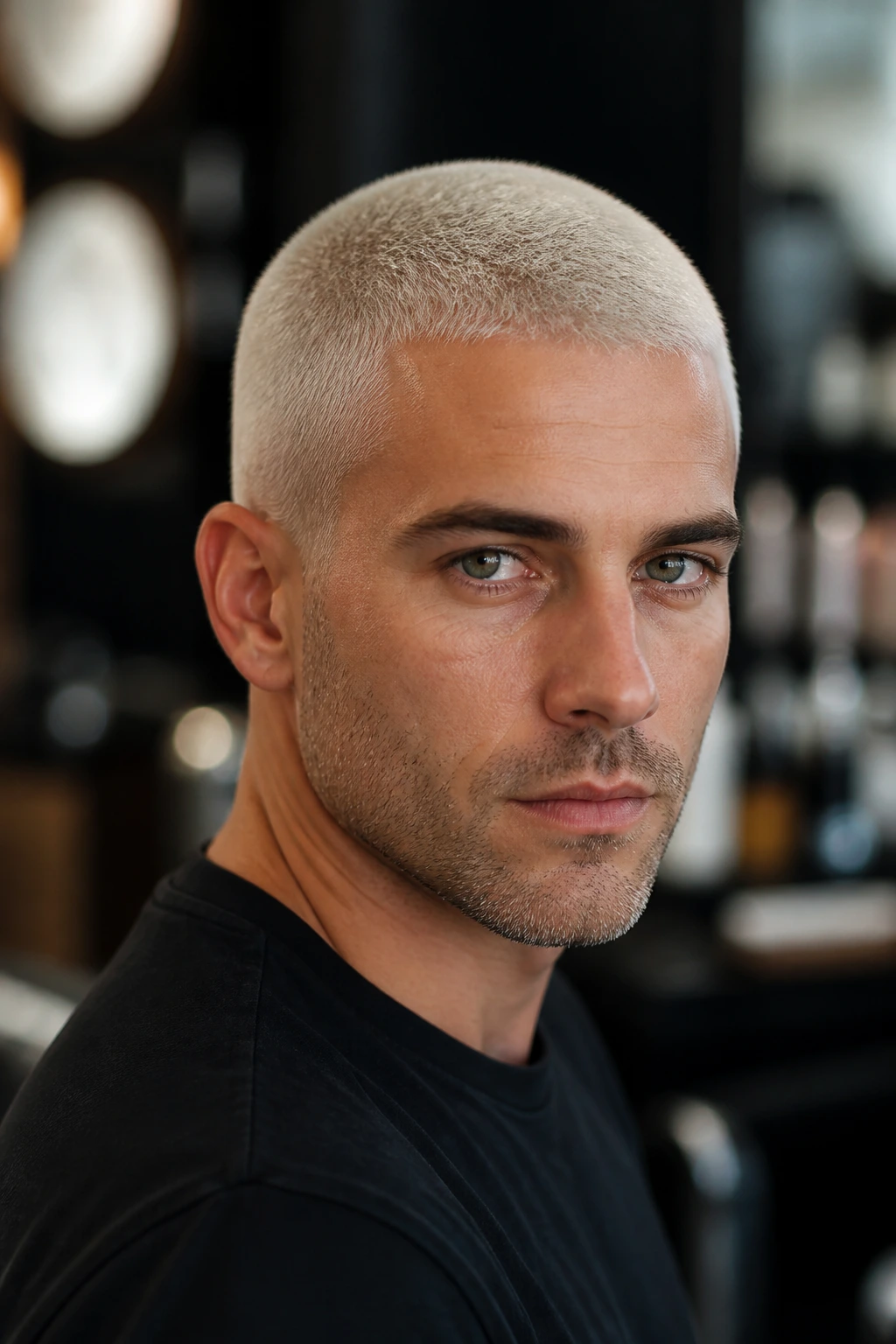
A good shade can still miss if the formula is wrong. Demi-permanent color is the sweet spot for ash brown, chestnut, blue-black, smoky gray, and golden glosses because it adds tone without locking you into a harsh grow-out line. Semi-permanent color makes more sense for vivid blue, teal, mint, lavender, and rose gold, since those shades are supposed to fade and shift.
Bleach plus toner is the route for platinum, silver lavender, mint green, and anything pale enough to need a very light base. That work is not the same as a standard dye job, and it should be treated that way. If you skip the toner, the color usually looks yellow, muddy, or flat.
Highlights, balayage, money pieces, and root melts are built on placement, not just pigment. That is why they look more natural than a full-head dye in many men’s haircuts. The color follows the shape instead of replacing it.
How to Wear These Colors So the Cut Does the Heavy Lifting
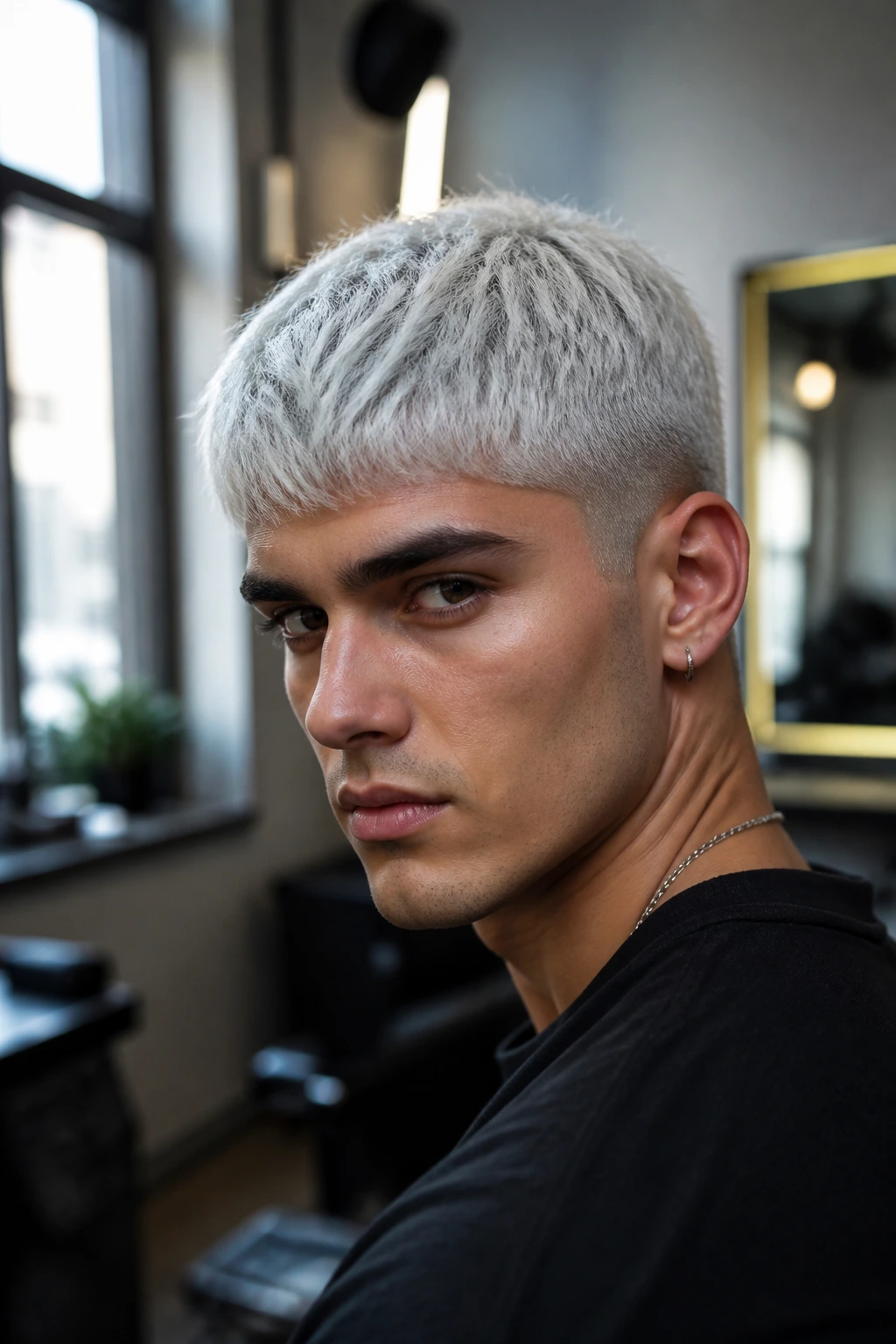
Best Cut Pairing: Tight fades and buzz cuts make platinum, silver, slate gray, and blue-black look clean. Medium-length crops, curtains, and wavy tops give room for chestnut, auburn, balayage, and money-piece streaks. If the haircut is busy, the color can feel messy.
Styling Finish: Matte clay, dry paste, and low-shine cream keep cool tones and smoky shades from looking greasy. A soft gloss finish helps copper, burgundy, and golden brown look richer. Heavy wet gel can flatten almost every color on this list.
Commitment Level: If you want low maintenance, stick with ash brown, mushroom brown, gray blending, or a brown gloss. If you want a bigger shift, step into platinum, silver, lavender, teal, or split dye. That choice matters more than people admit.
Beard Pairing: A dark beard under light hair creates strong contrast, which can be sharp if the line-up is neat and awkward if it is not. Warm tones like chestnut, auburn, copper, and golden brown help tie the face together better than a cool blond sometimes can.
Common Color Mistakes That Age the Cut Fast
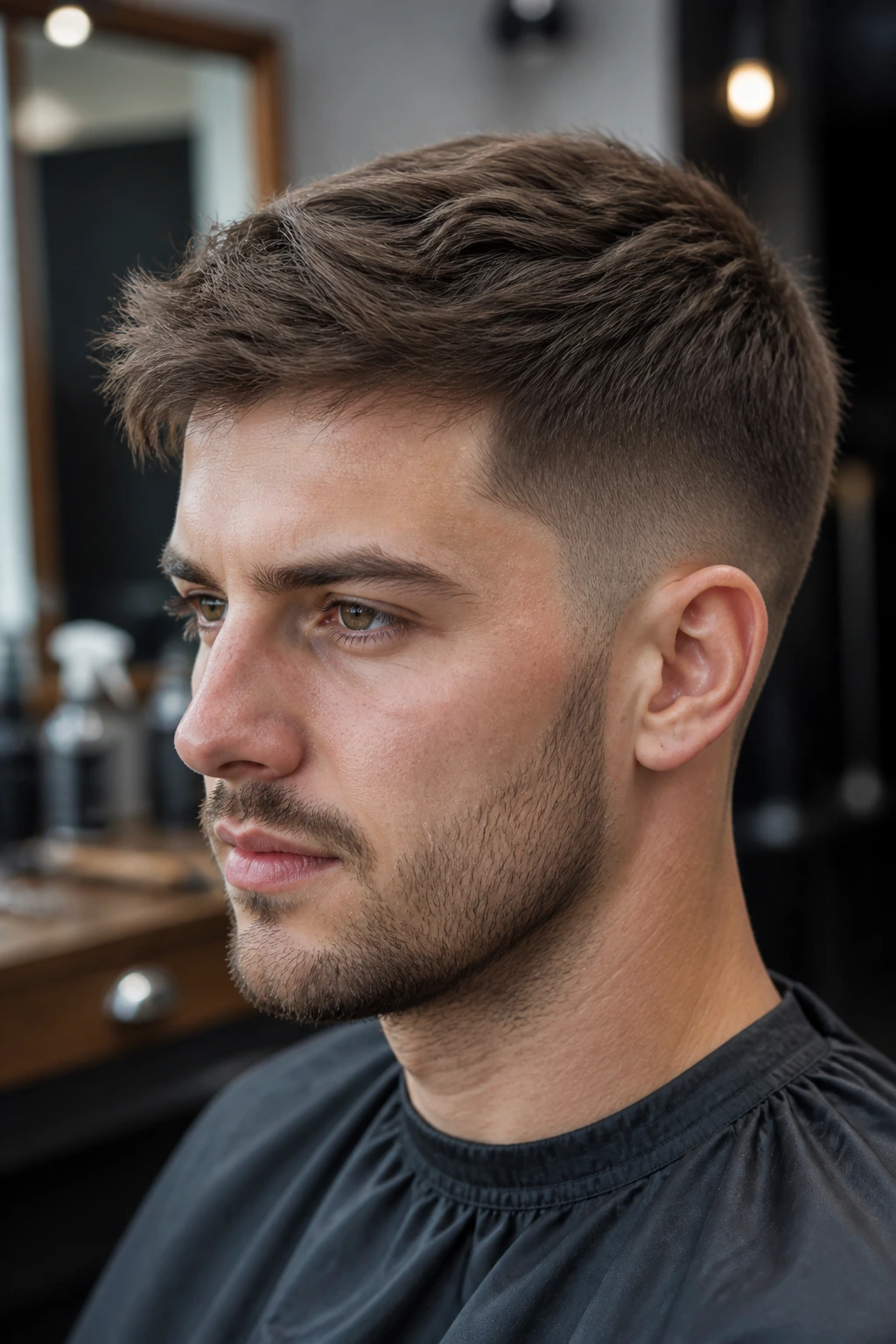
The first mistake is choosing the photo instead of the base. A platinum crop on light brown hair is one thing; the same crop on dark hair without proper lift is another entirely. If the starting level is wrong, the result turns orange or muddy before the first week is over.
Another one: skipping toner on blond, silver, and pastel shades. The hair may look pale right after the appointment, but brass creeps in fast if the tone is not locked down. The fix is simple. Use the right toner, then keep the brass under control with the right shampoo instead of washing it harder.
People also overdo the contrast with their beard. A bright blond top and a jet-black beard can look harsh if the haircut is soft or the beard is patchy. Either keep the beard shaped cleanly or choose a shade that lives closer to your facial hair.
Then there is the bleach panic. Lifting too much in one day is how hair gets gummy, stretchy, or brittle at the ends. Safer lifting in stages beats trying to get platinum in one brutal session. Patience sounds boring, but it saves the cut.
Ways to Adapt the Same Shade for Different Hair Types
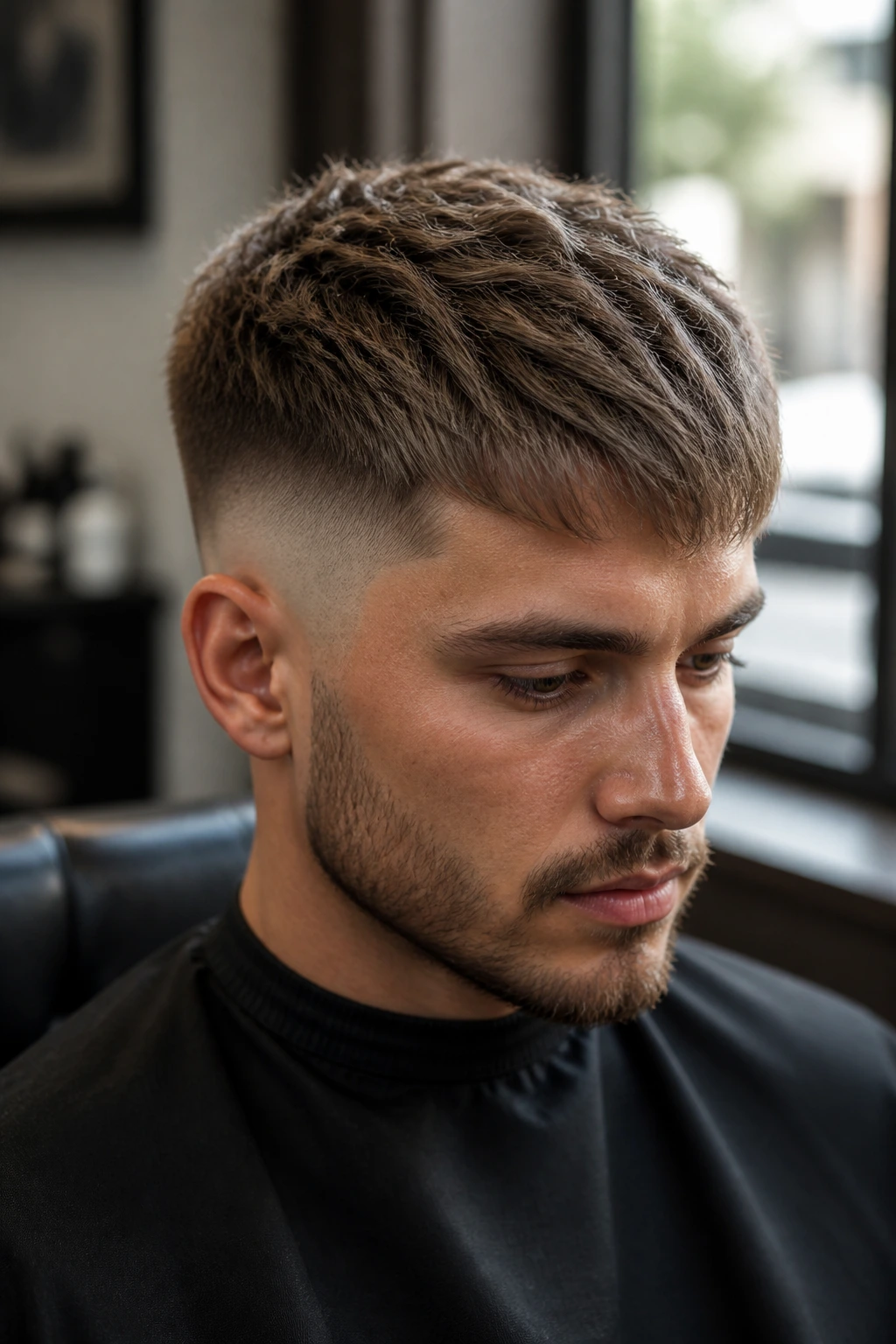
The Low-Commitment Gloss: If you want a color idea without long-term upkeep, choose a gloss version of brown, copper, or gray. The result lasts shorter, but the fade-out is softer and the hair feels less stressed.
The Buzzed Color Pop: For short hair, bright shades need less surface area to read well. Platinum, silver, mint, or slate gray all look cleaner on a buzz than they do on a shaggy top that can blur the edges.
The Hidden Panel Trick: If you want color without showing it all day, keep the vivid shade underneath. Blue, purple, or red panels under a darker top layer give you movement without forcing the whole haircut to shout.
The Beard-Linked Palette: Match the warmth or coolness of your hair to your beard instead of treating them like separate projects. Chestnut, auburn, and copper connect easily to brown facial hair; ash, silver, and blue-black work better if the beard is already cool or very dark.
The Soft Root Shadow: For blond, lavender, or silver looks, a slightly darker root keeps the grow-out line from snapping in half. It also makes the lighter ends look brighter by comparison.
Tools and Products Worth Having on Hand
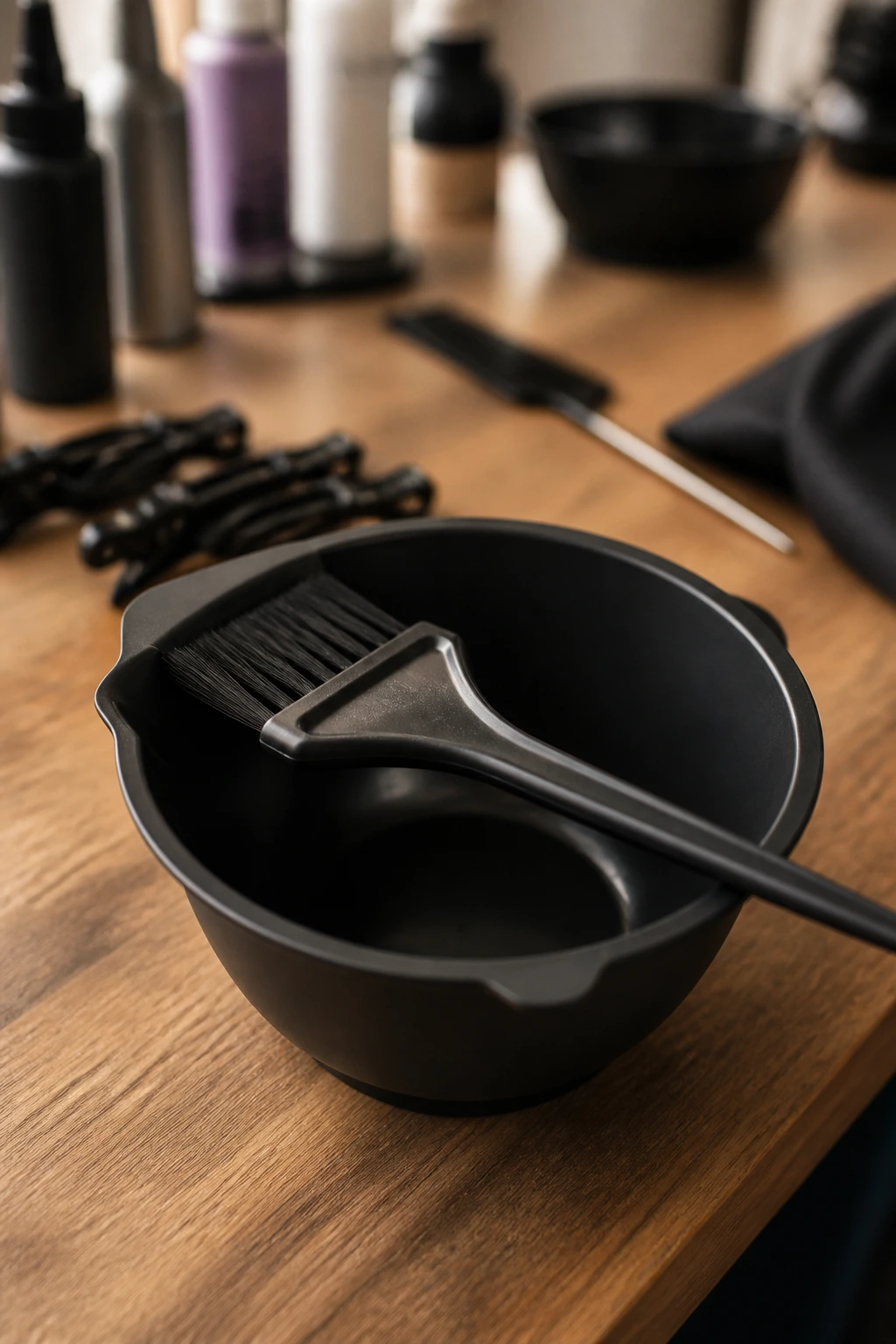
- Tint bowl, non-metallic: Keeps bleach, toner, or color mix from reacting with metal.
- Tint brush: Gives cleaner placement than fingers or a coarse comb.
- Sectioning clips: Worth it for highlights, money pieces, underdyes, and split-dye work.
- Gloves: Bleach and vivid dyes stain skin fast.
- Applicator bottle: Handy for all-over demi-permanent color and root melts.
- Rat-tail comb: Helps draw clean part lines and isolate panels.
- Color-safe shampoo: Keeps pigment from fading out in a week.
- Purple shampoo: Useful for blond, silver, and icy shades that pull yellow.
- Bond-building treatment: Helps hair feel less fried after bleaching or heavy toning.
- Deep conditioner: Good insurance for any color that involved lightening.
- Heat protectant: Needed if you blow-dry the top to show off texture.
- Cape or old towel: Dye finds clothing faster than you’d expect.
Keeping Men’s Hair Color Looking Sharp Between Touch-Ups
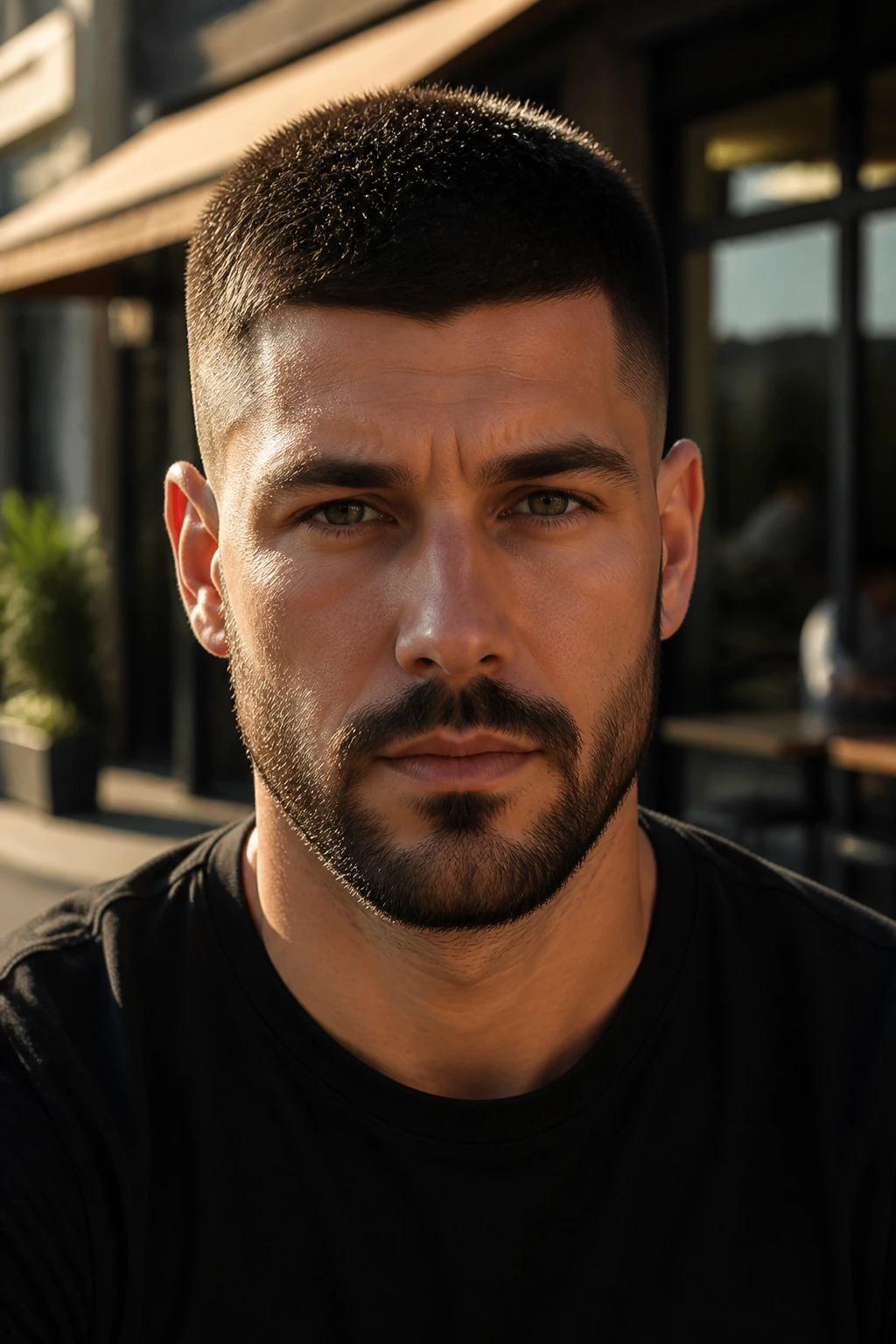
Color does not stay put on its own. Most demi-permanent browns, copper tones, and smoky shades hold up for a few weeks before they start softening. Vivid colors fade sooner, especially if you wash often or use hot water. Short hair usually needs a touch-up every 3 to 5 weeks if you want the shape and shade to stay crisp; longer hair can stretch farther, but the color still needs care.
Wash less often if you can. Two or three shampoo days a week is easier on color than daily washing, and cooler water helps keep the cuticle closed so pigment does not rush out. Use a color-safe shampoo, then follow with conditioner on the mids and ends. If the shade is blond, silver, or pastel, a purple shampoo once a week keeps yellow from creeping in.
Bleached hair needs a little respect. A weekly bond-building treatment or deep conditioner keeps the ends from turning dry and puffy, which can make even a good color look tired. If the haircut is short, the maintenance is mostly about tone. If the haircut is longer, the maintenance is about tone and moisture both.
Questions People Ask Before They Dye It
Which hair color is easiest to maintain for men?
Ash brown, mushroom brown, blue-black, gray blending, and golden brown gloss are among the easiest because they stay close to the natural base. They grow out with less visual noise and usually do not need constant toner.
What color works best on dark hair without bleach?
Blue-black, burgundy, chestnut, copper, auburn, and smoky brown tones can show well on dark hair with little or no lightening. They change the tone of the hair instead of forcing it into a new level.
Will gray blending cover all of my gray hair?
Not always, and that is the point. Gray blending softens the contrast so the gray mixes into the overall look rather than standing out as a hard line. If you want full coverage, ask for a darker opaque formula instead.
What happens if the color turns brassy?
Brassy blond usually means the toner has faded or the lift was not clean enough. Purple shampoo can slow the problem for blond and silver shades, but orange brass sometimes needs a fresh toner or a salon correction.
Can I color short hair at home?
Yes, but the shorter the cut, the less room there is to hide uneven application. That makes precision more important, not less. All-over dark shades and glosses are easier at home than platinum, pastel, or split-dye work.
Should my beard match my hair color?
Not exactly. A perfect match can look flat, while a little contrast gives the face shape. The better approach is to keep the warmth or coolness in the same family so the beard and hair look like they belong together.
How long does vivid color like blue or green last?
It depends on the base, porosity, shampoo routine, and how often the hair is washed, but bright semi-permanent shades usually start softening after a few washes and fade over the next few weeks. The cleaner the care routine, the longer the color stays readable.
What if I want color but work in a conservative setting?
Ash brown, blue-black, gray blending, root melts, and subtle caramel highlights are the quietest paths. They still change the haircut, but the change shows up as depth and tone rather than a loud color block.
The Shade That Still Feels Like You
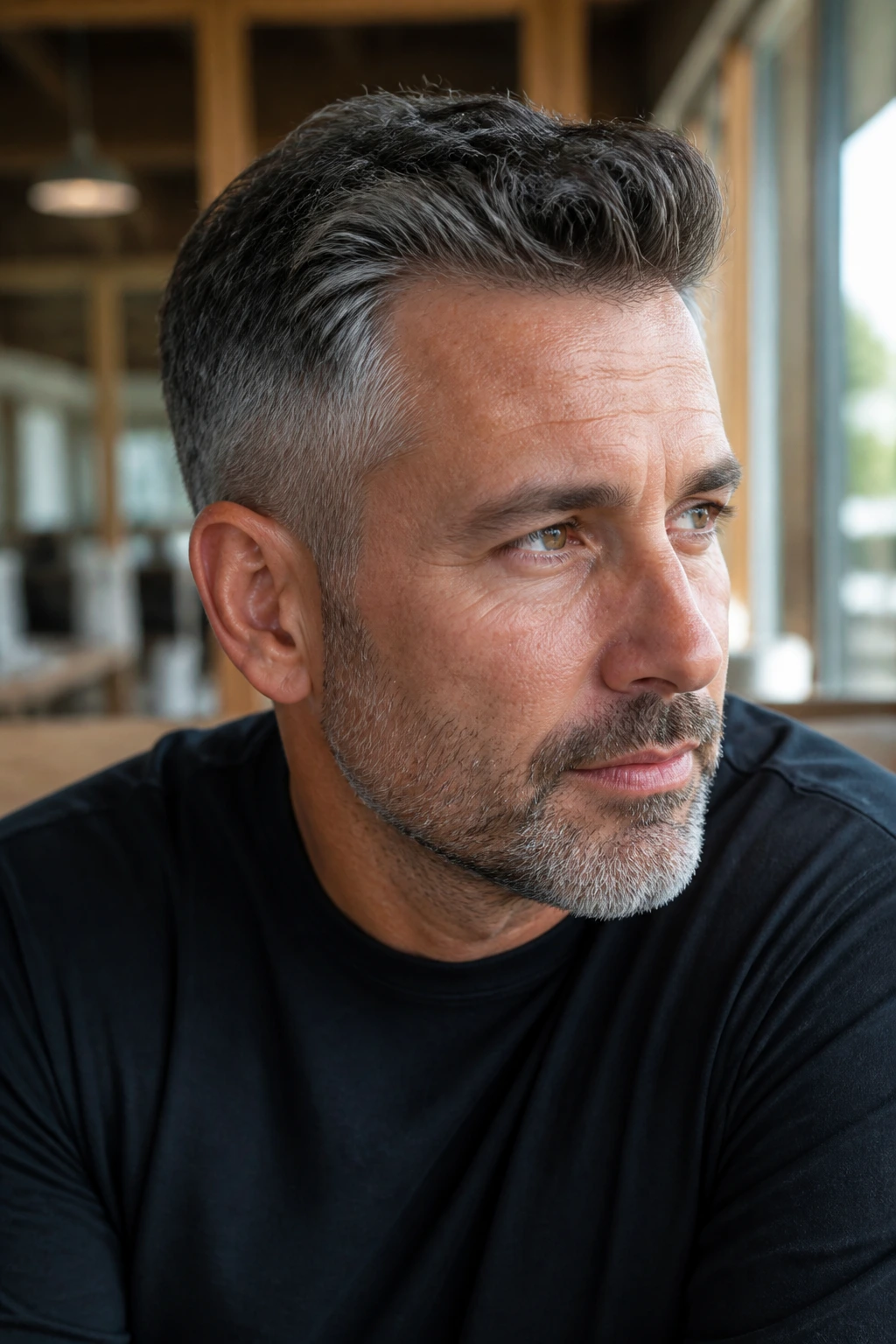
The strongest hair color choices for men do not shout over the haircut. They sharpen it. A good shade adds a little shadow under the lights, a little depth at the crown, and a little more purpose around the face without turning the whole style into a costume.
That is why the quiet colors matter as much as the loud ones. Ash brown, mushroom brown, blue-black, silver blend, and golden gloss can be more satisfying to live with than a bright dye job because they keep paying off every time you catch your reflection. And when you do want the louder move — platinum, copper, teal, lavender, split dye — it lands harder because the base has already been chosen with some care.
Pick the shade that fits the cut you actually wear, not the one you only like in photos. That is where the good ones are hiding.
