



Frizzy hair can look like a problem until the cut gives it a border. Men’s hairstyles for frizzy hair work best when they stop trying to force every strand flat and start giving the texture a shape to live in.
That’s the part a lot of people miss. The frizz itself isn’t the enemy; it’s the mismatch between the haircut and the hair’s natural lift. A blunt top, too much bulk at the sides, or a style that depends on perfect smoothness will puff out fast, especially once humidity, sweat, or a bad pillowcase gets involved. The right cut changes the whole equation. It gives rough hair a plan.
I’ve always liked haircuts that make texture look intentional instead of apologetic. A good barber can do a lot with point cutting, tapering, internal weight removal, and a little restraint. Too much thinning, though, and the hair starts to fray in a way that looks even less controlled. The sweet spot is shape, not stripping. Shape first. Products second.
Why These Styles Work Better Than Fighting the Texture
-
They use the hair’s natural lift: Frizzy hair already wants height, so the best cuts stop trying to crush it down and instead channel it into a clean silhouette.
-
They keep the sides honest: Shorter, tapered sides cut down the width that makes frizz look bigger than it is, especially around the temples and ears.
-
They leave room for movement: Texture reads as style when the top has a little separation. A dead-flat finish usually looks stiff, not neat.
-
They work with imperfect weather: These cuts still look like a haircut when the air gets damp, which is more than can be said for slick styles that rely on a perfect finish.
-
They don’t need a sink full of product: Most of them need a dime-sized amount of cream, clay, or paste, not a helmet of wax.
-
They give you options: Short, medium, long, curly, coarse, or wavy—there’s a version here that lets the hair do some of the work instead of making you fight it every morning.
How to Read Your Hair Before You Pick a Style
Frizzy hair is not one thing. Some men have coarse straight strands that puff the second they dry. Others have waves that split into different directions. Then there’s the hair that bends, coils, and expands all at once. If you choose the wrong style for the wrong texture, you spend your mornings repairing the haircut instead of wearing it.
Density changes the whole shape
Thick hair can handle more length on top, because the bulk gives it weight. Fine hair with frizz needs a different approach. Leave too much length on thin, rough hair and it starts to separate in ugly little wisps. Keep it tighter, cleaner, and more controlled.
Cowlicks and crown swirls matter
A strong crown swirl can push a quiff, crop, or slick-back off course. Don’t ignore it. A good barber will cut with the grain at the crown, not against it, and that tiny choice decides whether the top sits down or sticks out like a stubborn brush.
Length is your friend or your enemy
Short hair hides frizz by removing the space for it to spread. Medium length lets you shape it. Longer hair turns frizz into movement, which can look great if the layers are right and a little disastrous if they are not. That’s why the same head of hair can suit a crop one month and a bro flow the next.
1. Buzz Cut With a Crisp Line-Up
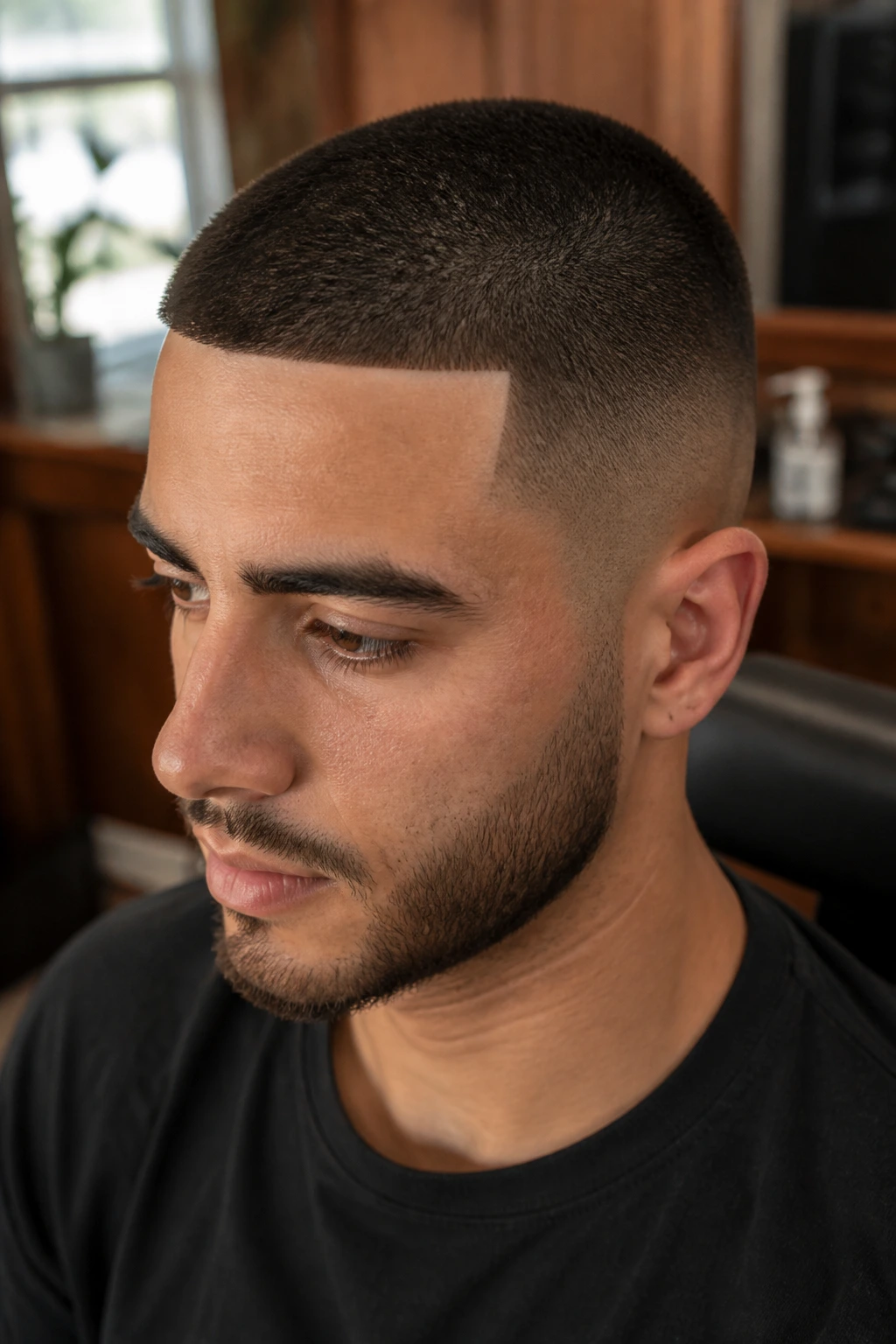
The buzz cut is the blunt answer to a hair problem that hates blunt answers, and that is why it works. When the top is taken down to a #1, #2, or #3 guard, there is less length for frizz to swell into, which means the hair reads as clean texture instead of a puffed-out cloud. Add a sharp line-up at the forehead and temples, and the whole style suddenly looks deliberate.
I like this cut for men whose hair gets bigger as the day goes on. It never looks overstyled, which is the point. You wash it, dry it, maybe rub in a touch of matte scalp moisturizer if your head gets dry, and you’re done. No brush battle. No twenty-minute mirror routine.
The catch is simple. A buzz cut exposes your head shape, your hairline, and every bump around the crown. If those are a little uneven, a softer taper at the edges usually looks better than a hard, military clip. Keep it tidy, not severe.
2. Crew Cut With a Low Taper
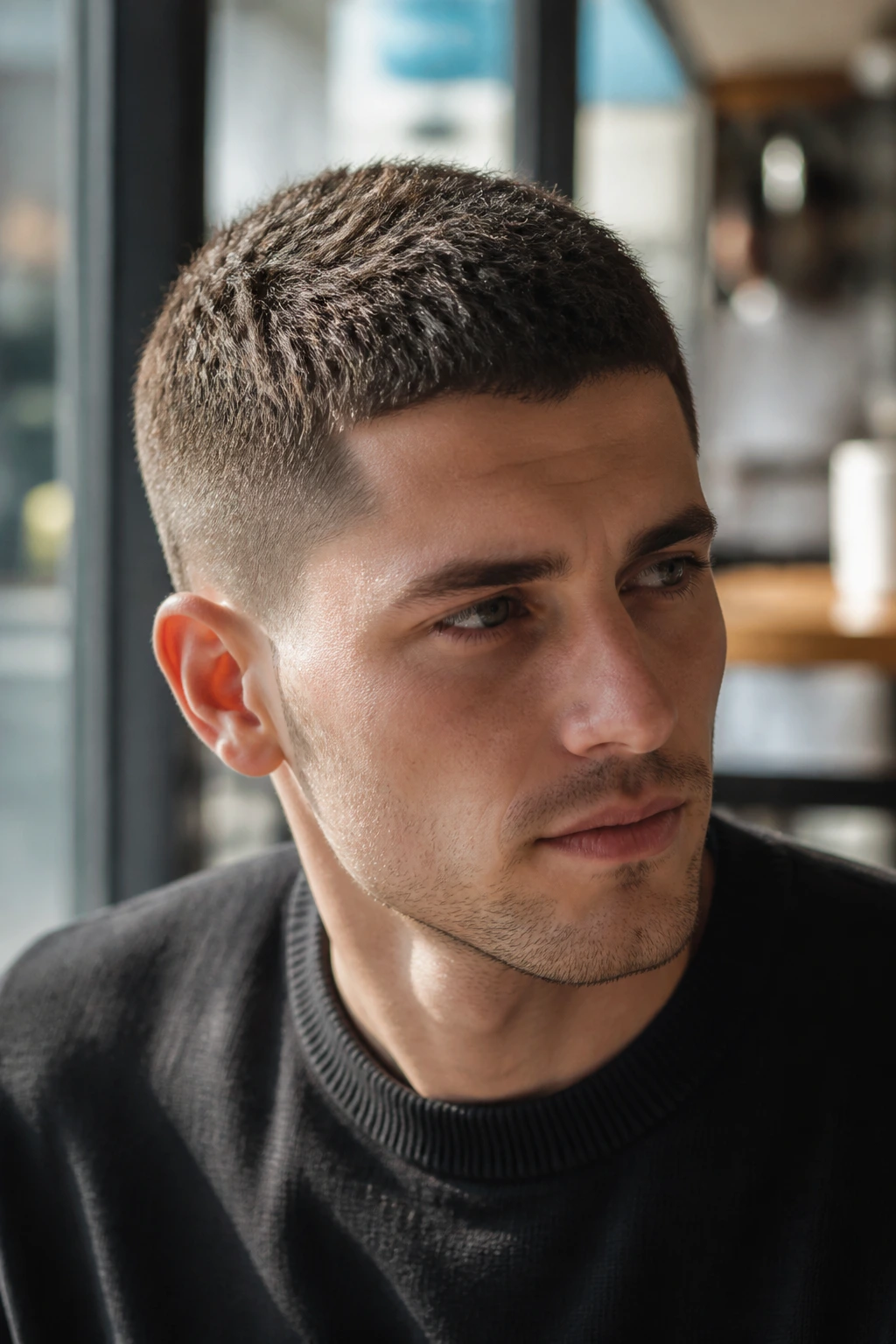
Why does the crew cut keep showing up in barber chairs? Because it gives frizzy hair just enough top length to move without letting it explode. The low taper on the sides keeps the shape tight around the ears and neck, while the top stays short enough that rough texture settles into a neat, athletic profile.
This is the haircut I’d point to for guys who want something clean but not bare. You can comb the top forward, nudge it to one side, or leave it slightly tousled with a matte paste. If your hair stands up after washing, a crew cut has enough structure to keep that lift from turning into chaos.
Ask for about 1 to 1.5 inches on top if your hair is coarse, a low taper around the ears, and softer blending at the crown. That little bit of length is what keeps the style from looking like a flat helmet.
3. Textured Crop With a Choppy Fringe
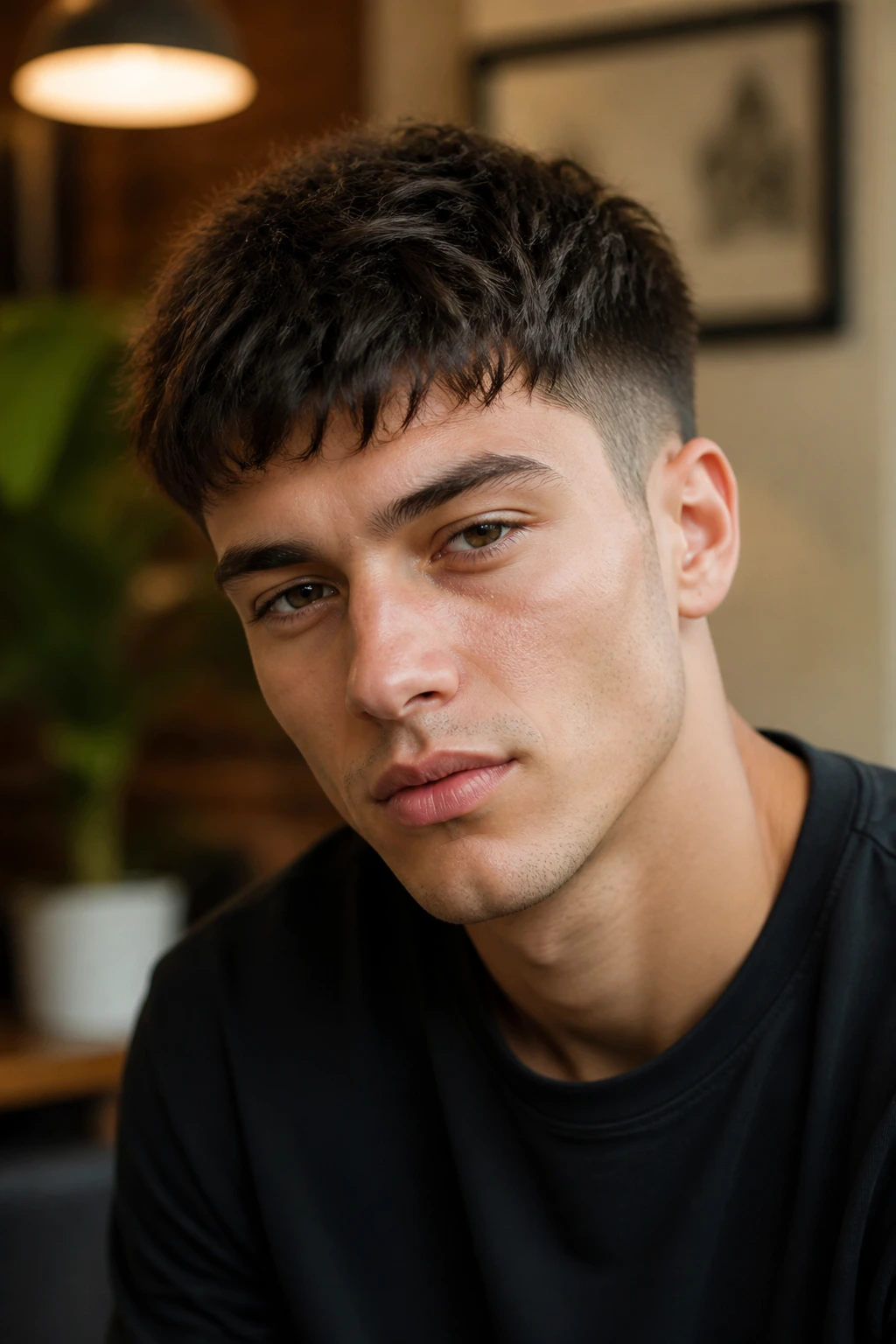
A textured crop is one of the best answers for hair that expands in humid air. The choppy fringe breaks up the outline in front, and the short, uneven top gives the hair somewhere to go besides straight up. Done well, it looks rough in a controlled way. That’s the whole trick.
I’m partial to this cut because it keeps the styling simple. Towel-dry until the hair is damp, work in a small amount of matte clay, and push the front forward with your fingers. You are not trying to make every strand obey. You’re trying to keep the shape compact and the ends separated enough that the frizz reads as texture.
What to ask for
- Top left around 1.5 to 2 inches
- Fringe cut in a broken, choppy line
- Sides tapered low, not faded too high
- Point cutting or texture cutting, not a blunt shelf
If your barber starts talking about thinning the top aggressively, slow that down. Too much thinning on frizzy hair can make the ends look wispy instead of textured.
4. French Crop With a Heavy Front
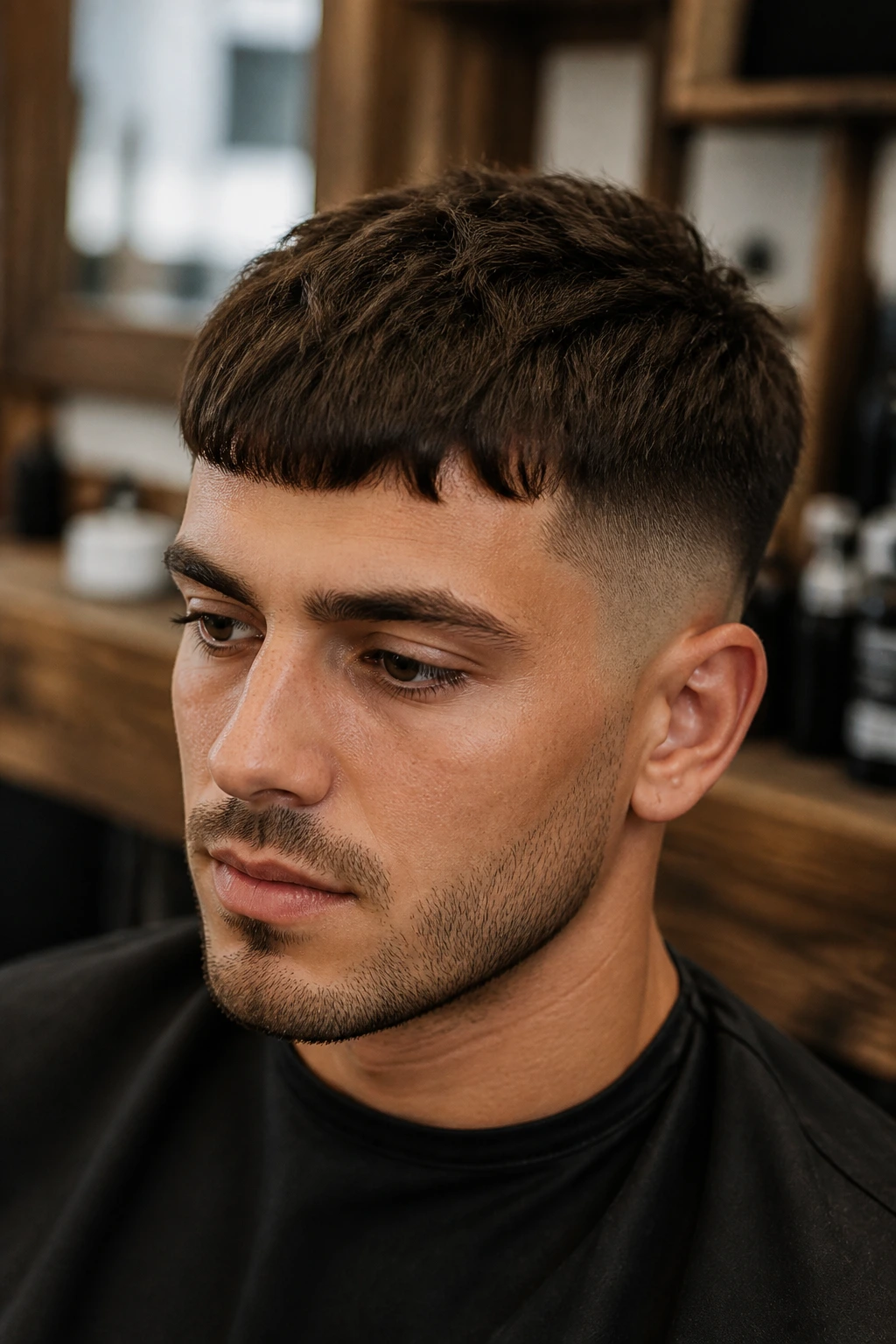
A French crop does something useful that a lot of men’s cuts forget to do: it puts weight at the front. That heavy fringe sits down over the forehead and keeps frizzy hair from springing up in the worst possible spot. The sides stay short, the front stays full, and the overall shape looks sharper than the hair feels.
It’s especially good if your hairline is a little uneven or your fringe tends to stand up the second it dries. The front can be worn straight, pushed slightly to one side, or left a little messy. I would not load it with heavy shine. A dry matte finish looks better here because it keeps the top from separating into greasy strands.
If your hair is thick, keep the crop tight at the nape and temples. If it’s finer but still frizzy, leave just enough length in the fringe to create that forward weight. The cut should look like it settled on its own.
5. Caesar Cut With a Short Fringe
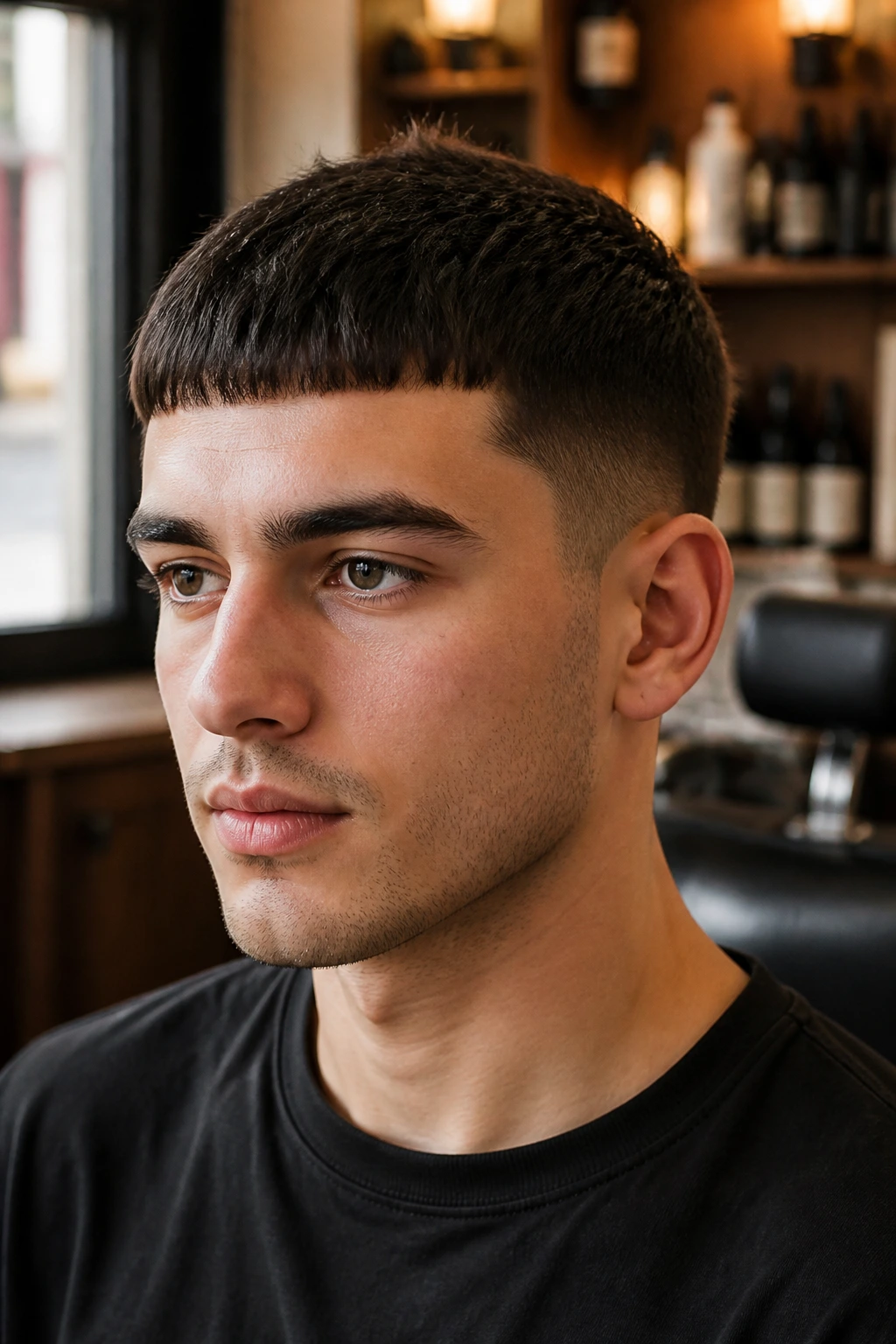
A Caesar cut is the no-nonsense version of a short crop, and it has a strange talent for making difficult hair behave. The fringe is short, straight, and close to the forehead, which means frizz has less room to flare out. It’s also forgiving if your hairline is receding or if your front hair likes to kick up in random directions.
There’s a nice bluntness to this style. It feels crisp, almost architectural. You want the top clipped short enough that the texture still shows but not so short that the ends poke in every direction. A little matte cream or light paste is enough. Anything sticky or glossy tends to make the short pieces clump in ugly little spikes.
This is one of my favorite low-maintenance options for coarse hair because it doesn’t ask for daily negotiation. It needs a trim every few weeks to keep the line clean, and that’s about it.
6. Ivy League Side Part

The Ivy League is what happens when a crew cut gets a little manners. The top is left longer, usually around 2 to 3 inches, and the side part gives frizzy hair a direction to follow. That direction matters. Rough hair looks calmer when it has a lane.
This cut works well if you need something that can survive a workday, a dinner, and a little wind without turning into a mess. The top can be combed over neatly or styled with fingers for a looser finish. A light cream or low-shine pomade is the right move here; heavy wax turns the top greasy and makes the frizz stand out more.
Best for this style
- Wavy or coarse straight hair
- Men who need a clean office look
- Hair that puffs on the sides more than the top
If your crown swirls hard, ask the barber to leave a touch more length there so the part lies naturally instead of fighting the head shape.
7. Comb Over With Natural Lift
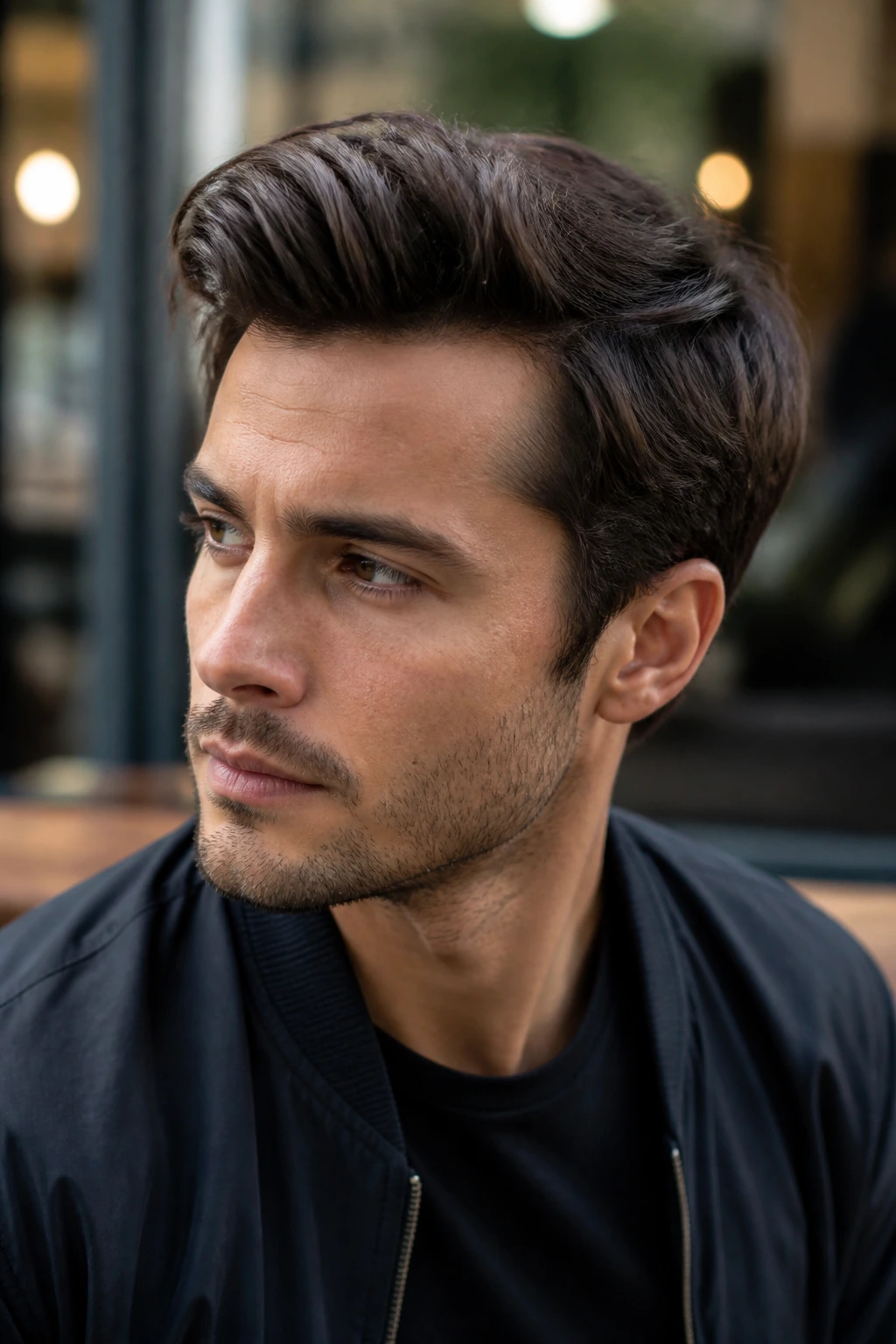
A comb over gets a bad reputation when people plaster it down like wallpaper. A better version keeps the lift and skips the stiffness. That matters for frizzy hair, because the hair already has some built-in volume. You do not need to erase it. You need to aim it.
This cut usually works best with a low or mid taper on the sides and 3 inches or so on top. Blow-dry the top in the direction you want it to go, then finish with a light paste. The comb should guide the hair, not drag every strand into submission. If the hair is rough, a soft side part with some separation looks better than a hard, shiny line.
I prefer this style on thicker hair. It gives enough mass for the comb over to hold shape, and the texture keeps it from looking too polished. That little bit of mess is doing real work.
8. Messy Quiff With Tapered Sides
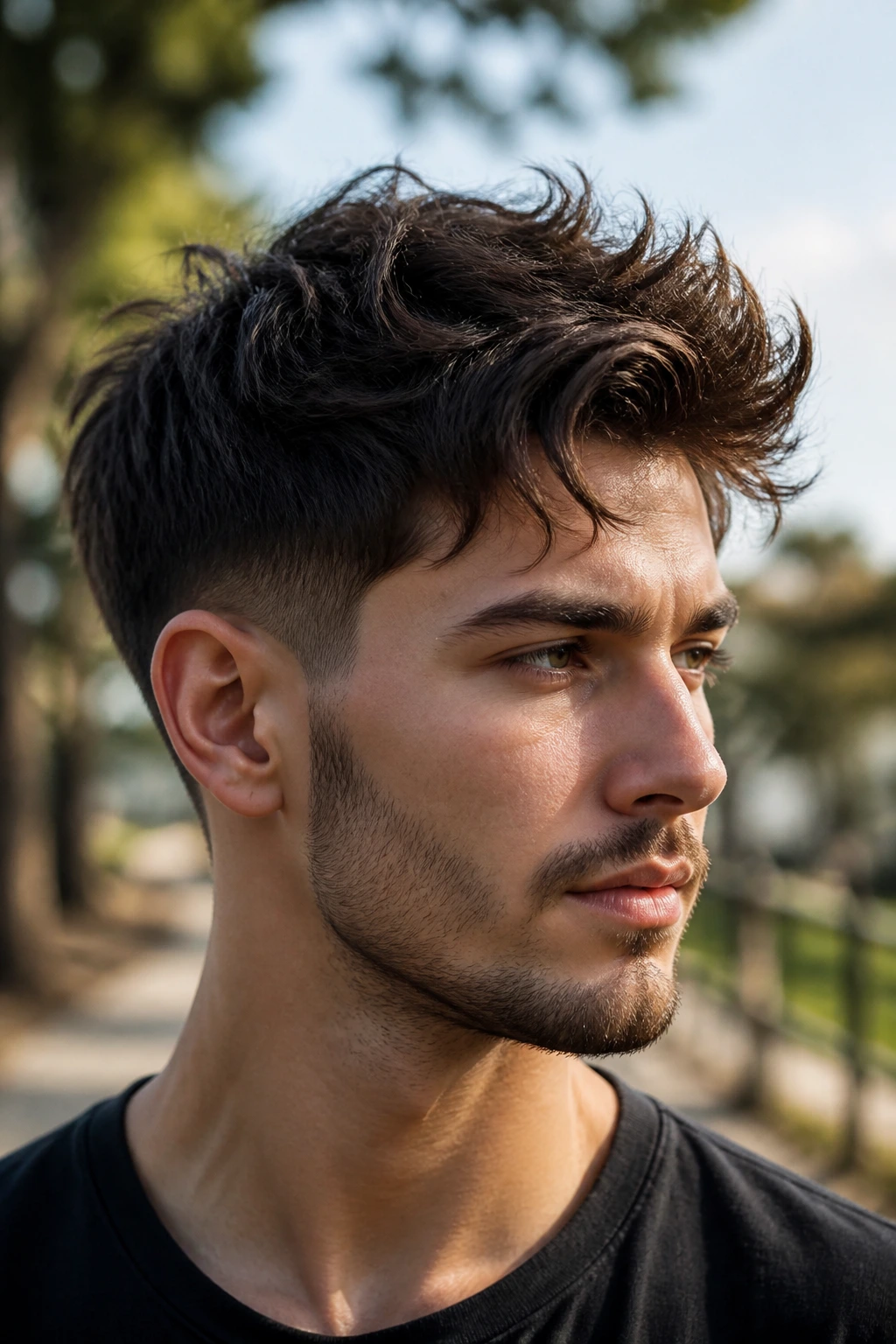
Can frizzy hair do a quiff without turning into a puffball? Yes, if the sides are tighter and the top is controlled before it dries. The quiff is about direction more than perfection. You lift the front, push it slightly back, and keep the silhouette airy rather than rigid.
Ask for enough length on top to get your fingers or brush through it—usually 3 to 4 inches if the hair is coarse. Blow-dry with a vent brush or your fingers, aiming the front up and back, then lock in the shape with a matte paste or low-shine cream. The goal is lift with separation, not a glossy crest.
This style looks especially good when it’s a little imperfect. If the front falls a bit to the side, fine. If the top has visible strands instead of one solid helmet, even better. A quiff should look like hair that was styled, not carved.
9. Slick Back With a Low Taper
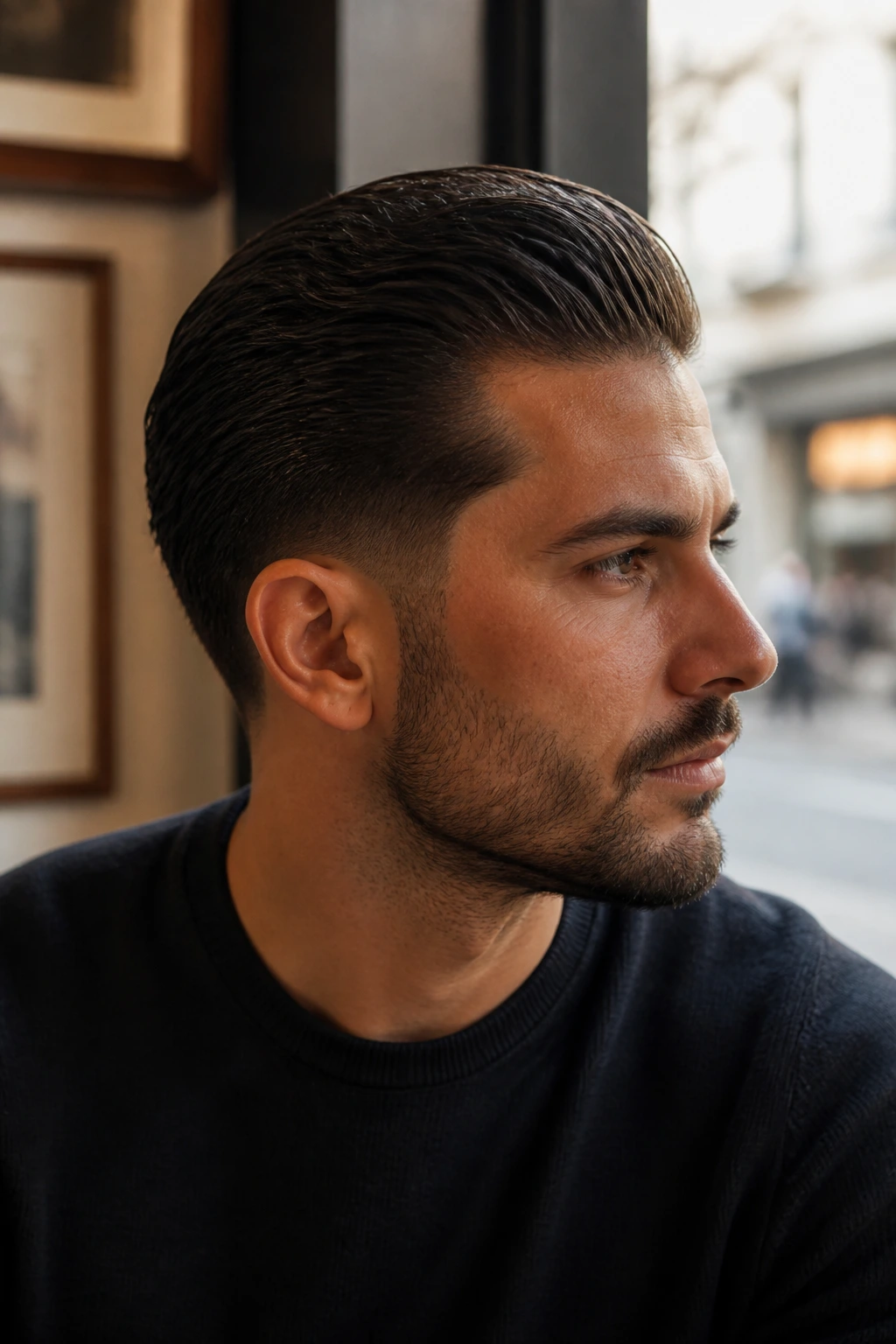
A slick back is the most demanding style on this list, and I still think it earns a place here because the right version can tame thick, frizzy hair better than almost anything else. The key is a low taper and a product that gives hold without turning the hair into a wet sheet. That means grooming cream, light pomade, or a medium-hold gel used sparingly.
This style works best when the top has enough length to lie back cleanly—usually at least 4 inches, sometimes more if your hair has a lot of lift. Blow-dry it backward first. Don’t skip that part. If you let frizzy hair air-dry in random directions and then try to slick it back, you’re already losing.
Keep the finish softer than you think. A little separation at the top looks cleaner than a plastic shine. And if your hairline is receding, this cut can look sharp or harsh depending on the edge-up, so ask for a natural front unless you want a crisp, deliberate line.
10. Curtain Cut With a Loose Middle Part
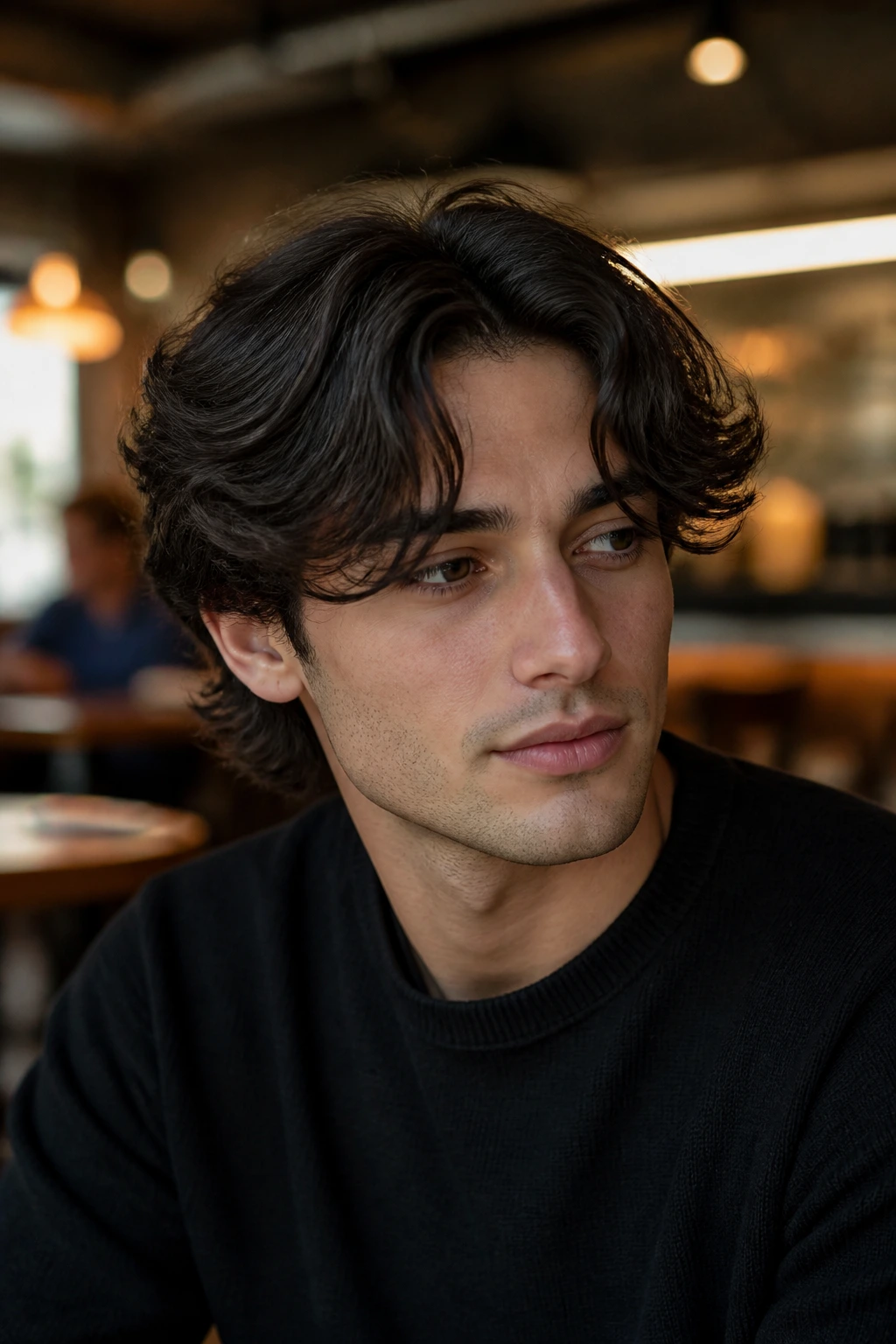
The curtain cut has a lived-in feel that works nicely with wave and frizz, because it doesn’t demand perfect symmetry. The hair falls away from the center, grazes the temples, and leaves the face framed rather than pinned down. Frizz can actually help here. It adds lift to the parted section so the style doesn’t collapse flat.
You want medium length on top—enough to drape, not so much that it hangs in your eyes all day. A leave-in conditioner or light cream before air-drying keeps the ends from fraying. If your hair gets puffy at the sides, keep the perimeter cleaner around the ears and let the movement happen in front.
This style is one of the few that looks better when it’s not overworked. Finger-comb it. Twist the front slightly as it dries. Step away from the heavy gel. The charm here is that the hair looks like it has its own idea, just a more cooperative one.
11. Bro Flow With Long Layers
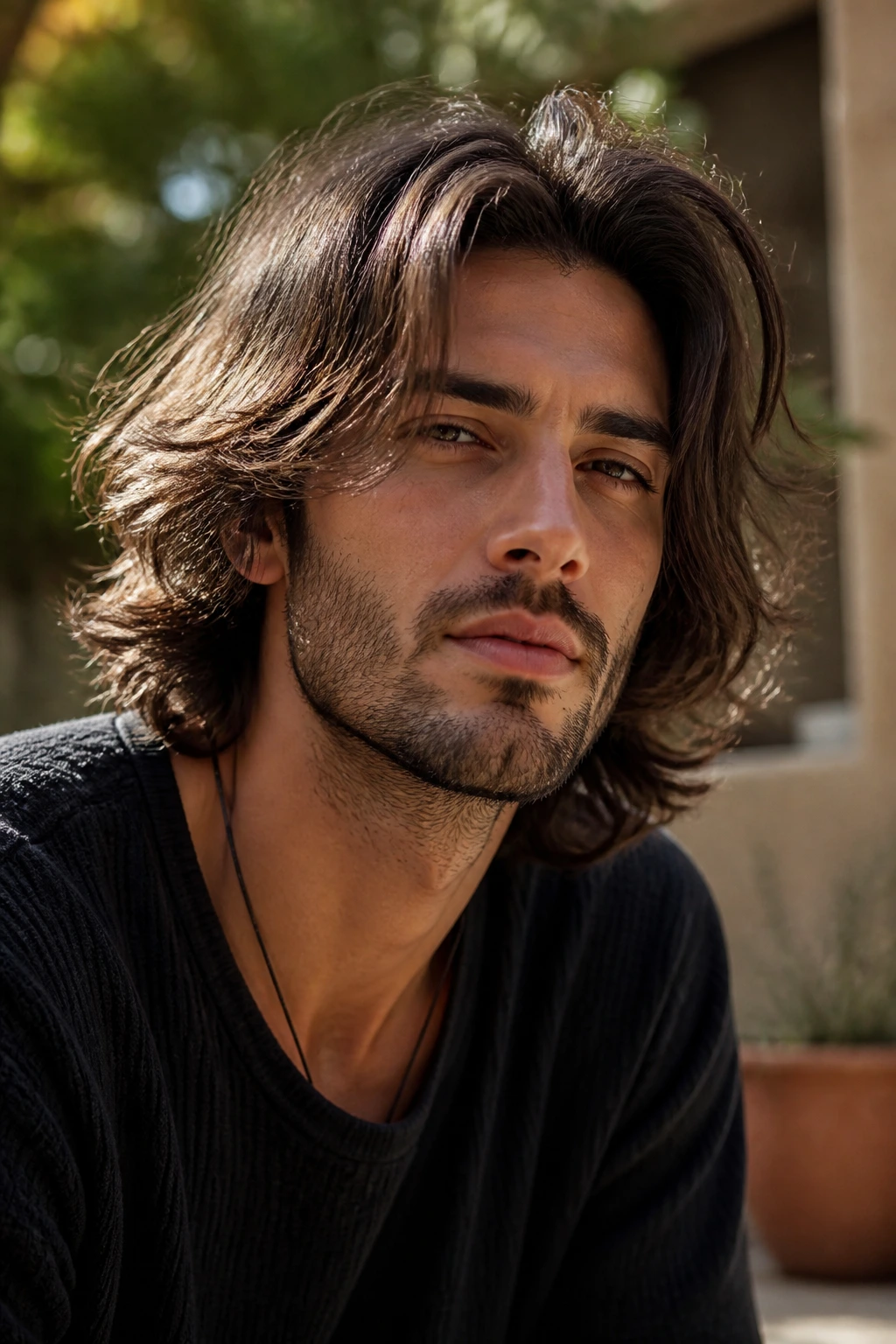
Bro flow sounds casual, but it only works when the layers are placed with care. The length helps frizzy hair settle under its own weight, and the layers keep it from turning into one big puffy mass. A good bro flow moves. It falls back, brushes the ears, and keeps a bit of shape even when the wind catches it.
This is the style for men who are done pretending their hair wants to be short. If your hair is medium to long and rough by nature, shoulder-skimming layers can look better than any short cut because the weight keeps the silhouette from exploding. A light leave-in, a touch of hair oil on the ends, and a quick scrunch with a microfiber towel are usually enough.
I’d ask for soft layers, not choppy ones, unless you want more edge. The cut should reduce bulk without making the ends look thin and ragged. When it’s right, the hair falls in a way that feels relaxed rather than accidental.
12. Layered Shag With Airy Ends
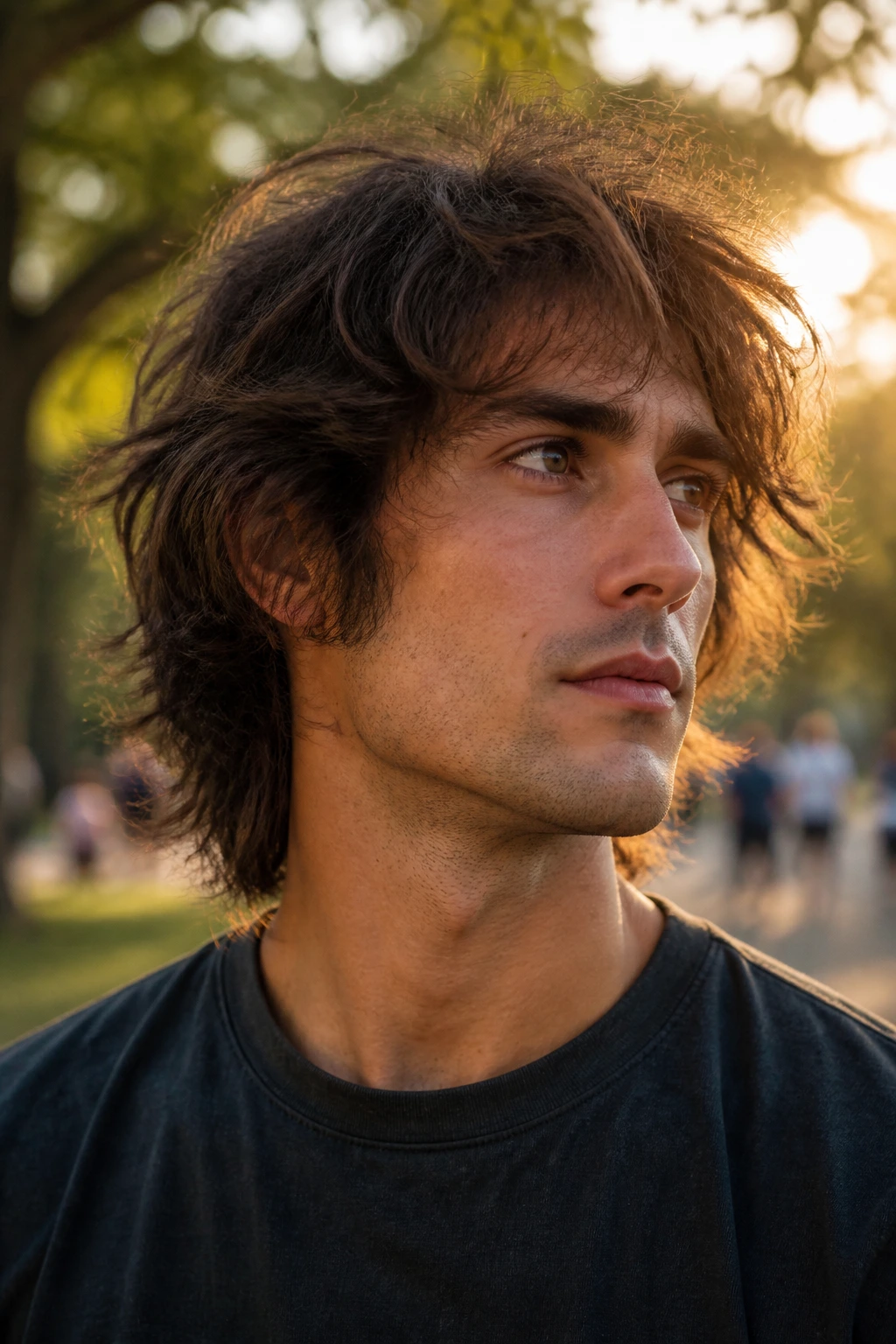
The shag is built for texture, and frizzy hair has texture to spare. That’s why this cut works so well. The layers break up the weight, the ends move around instead of sitting as one block, and the whole style looks better the more natural it gets.
This is a good choice if your hair sits somewhere between wavy and rough, or if you want shape without a strict part. Ask your barber or stylist for broken layers through the crown and around the sides, with the longest pieces left soft around the neck and jaw. Razor work can help, but too much can leave frayed ends, so don’t overdo it.
Styling note
- Use a light cream or mousse on damp hair
- Scrunch, then air-dry or diffuse on low heat
- Avoid brushing it dry unless you want extra puff
A shag is not tidy. That’s the point. It should look like the hair was allowed to breathe, not forced into a box.
13. Modern Mullet With Tapered Temples
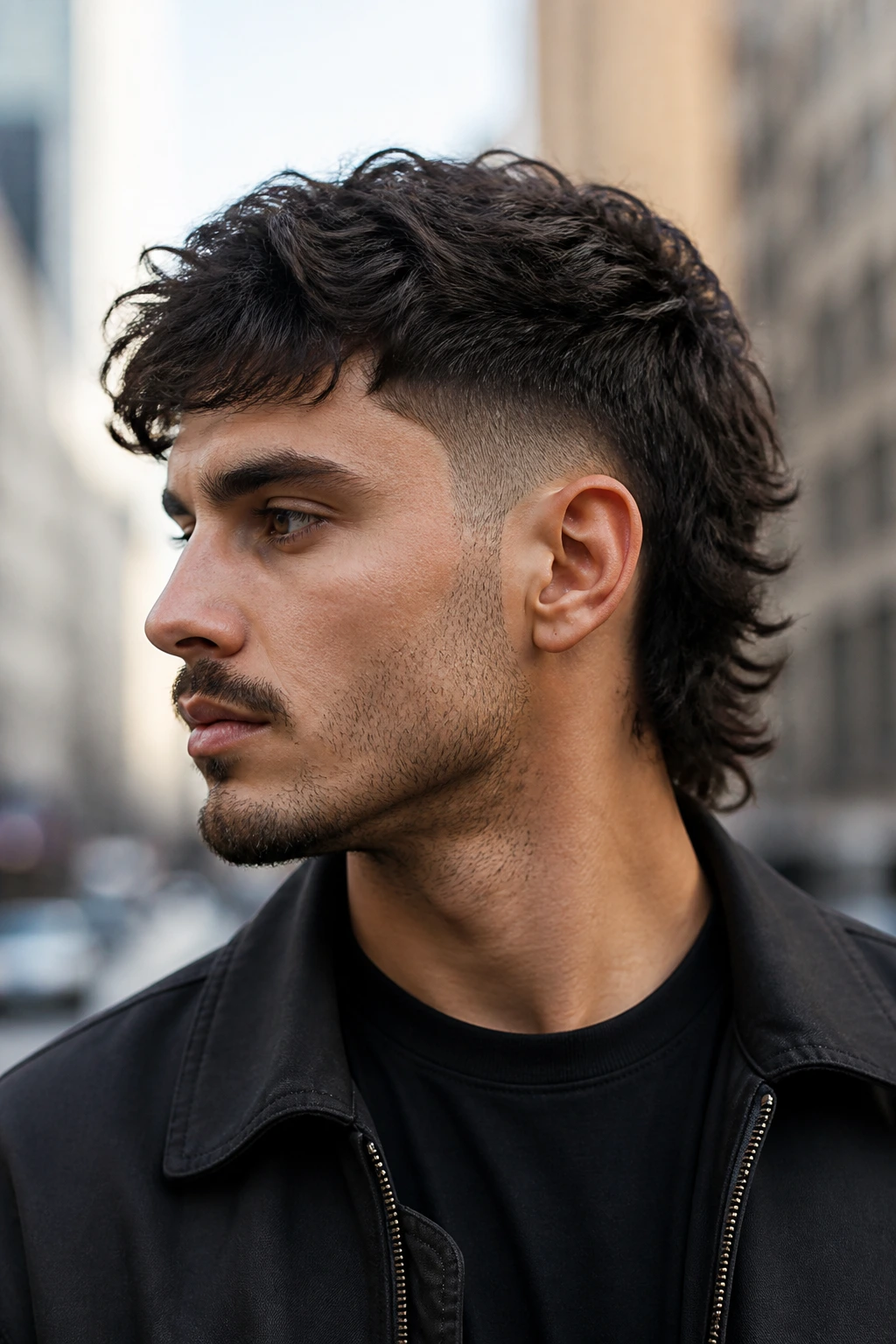
The modern mullet lives or dies on the details. Frizzy hair gives the back natural movement, which is useful, but the front and temples still need control or the whole cut looks accidental. A tapered temple area keeps the sides neat while the back length adds character.
This cut works best when the top has enough texture to sit forward slightly and the back has enough length to show some flow. You do not want a harsh disconnect unless you’re going for a louder version. A softer transition around the crown usually makes the style wearable, even outside a concert venue.
If your hair has a lot of body, this cut can look better than a standard medium-length style because the texture becomes part of the shape. A little sea-salt spray can help the top and back move, but don’t turn the whole head into a dry mess. The trick is controlled mess, not dry chaos.
14. Curly Fringe With a Skin Fade
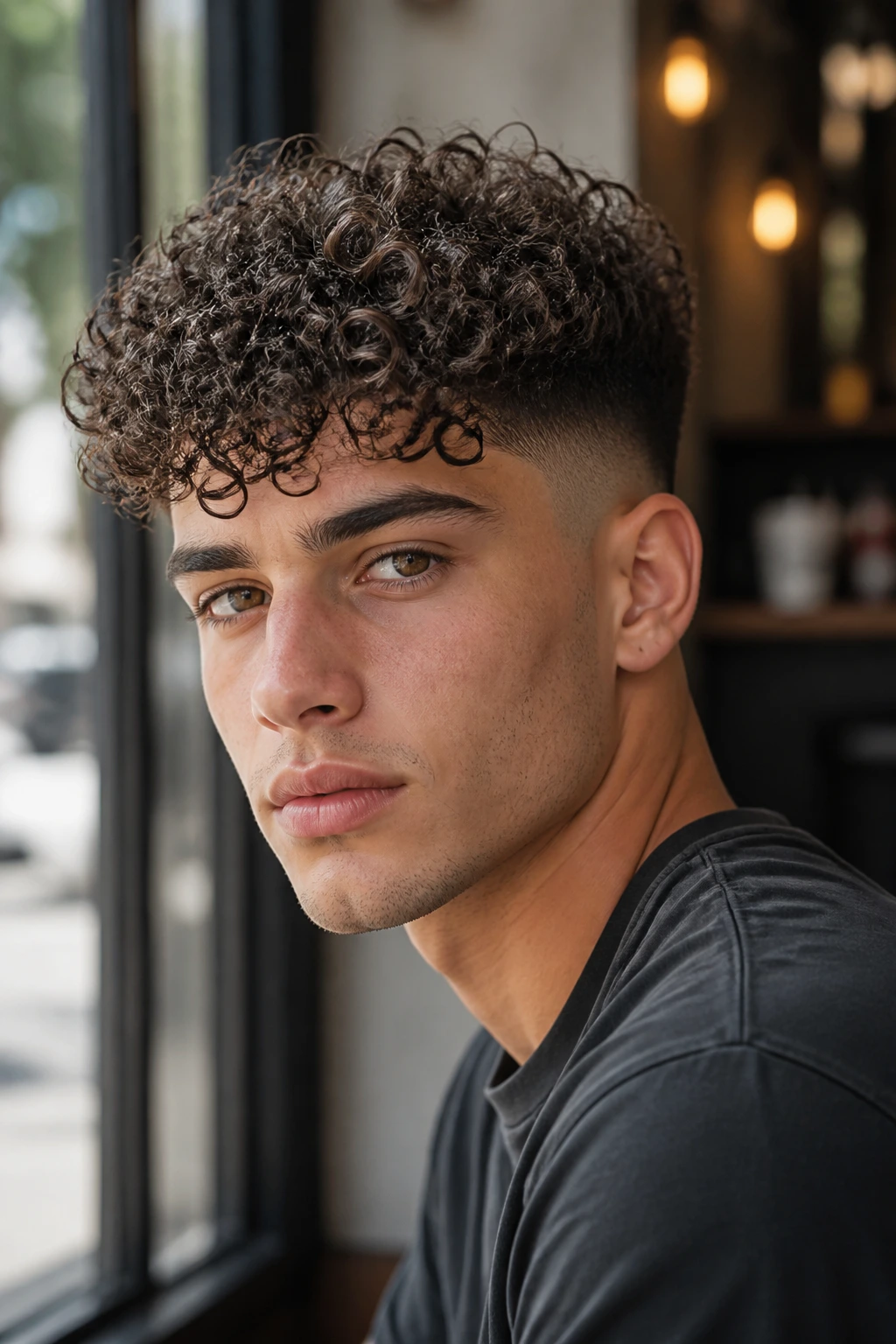
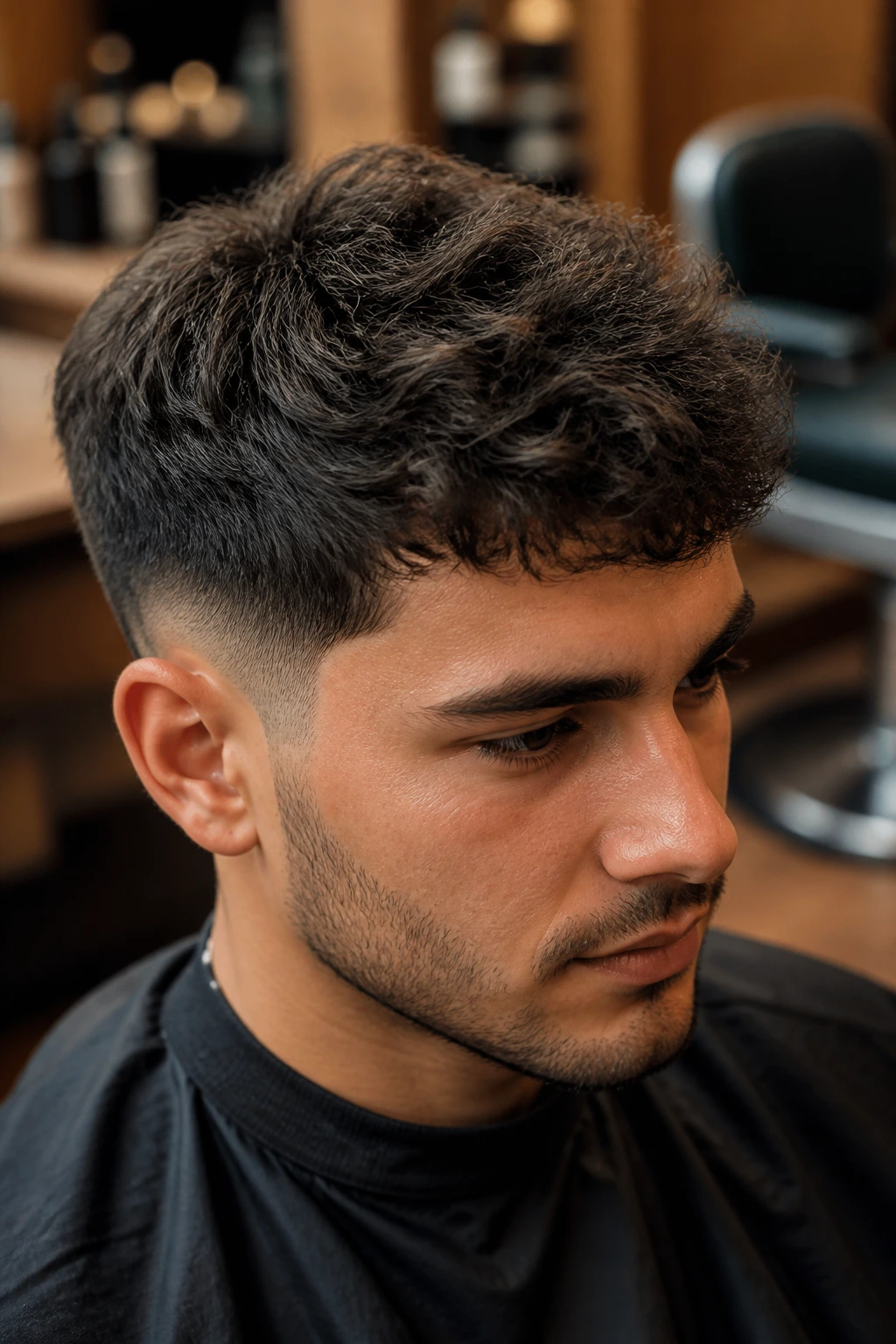
A curly fringe is a smart move when frizz comes with bend or coil. The front falls forward, which takes pressure off the crown, and the skin fade clears out the sides so the fringe becomes the focus. That contrast makes the hair look shaped, not puffy.
The fringe should be long enough to curl or wave naturally, but not so long that it hangs in the eyes all day. A curl cream or leave-in balm works better than a heavy gel here. If the front is left too dry, the curls separate into fuzzy strands; if it’s overloaded, they go limp and stringy. Neither is flattering.
I like this cut for men who want texture to be the point. It doesn’t hide the hair. It frames it. And when it’s done right, the fringe gives the face a little softness without looking soft in a weak way.
15. High and Tight With Natural Texture
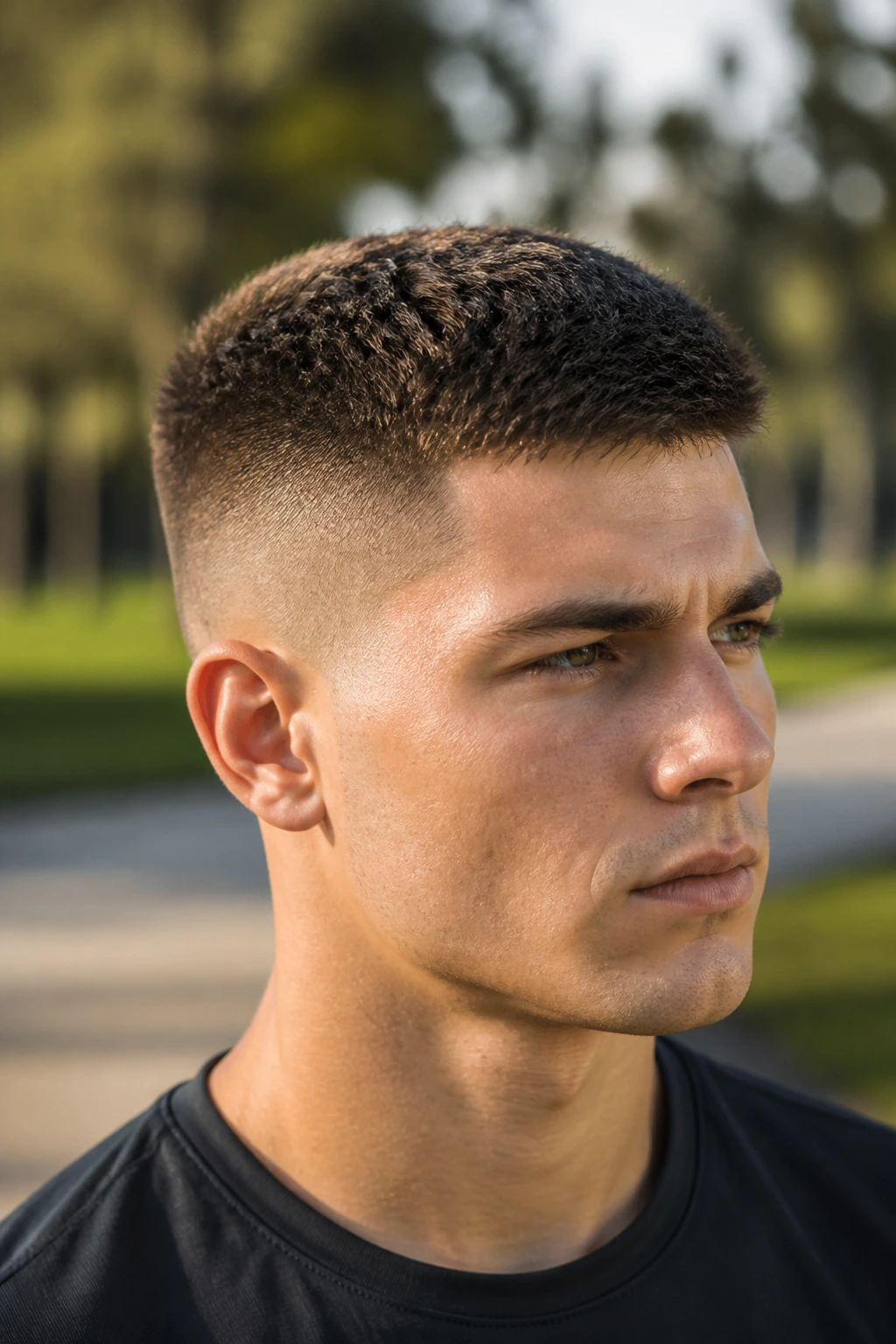
The high and tight is almost the minimalist version of the crew cut, and it’s good for the same reason a good t-shirt is good: there’s nowhere for the texture to wander. The sides are short and sharp, the top is just long enough to show some hair pattern, and frizz stays on a short leash.
This style is a strong fit if you want low effort and a clear outline. It also works well for men whose hair gets wider at the temples. Keeping the sides tight pulls the shape inward and makes the top feel intentional instead of bulky.
Don’t ask for a top that’s too long unless you want to style it daily. A little product and a quick finger comb are enough. If you go too heavy with shine, the shorter top can look greasy. Matte finishes look cleaner here and hold up better when the day gets warm.
16. Tapered Afro With Sharp Edges
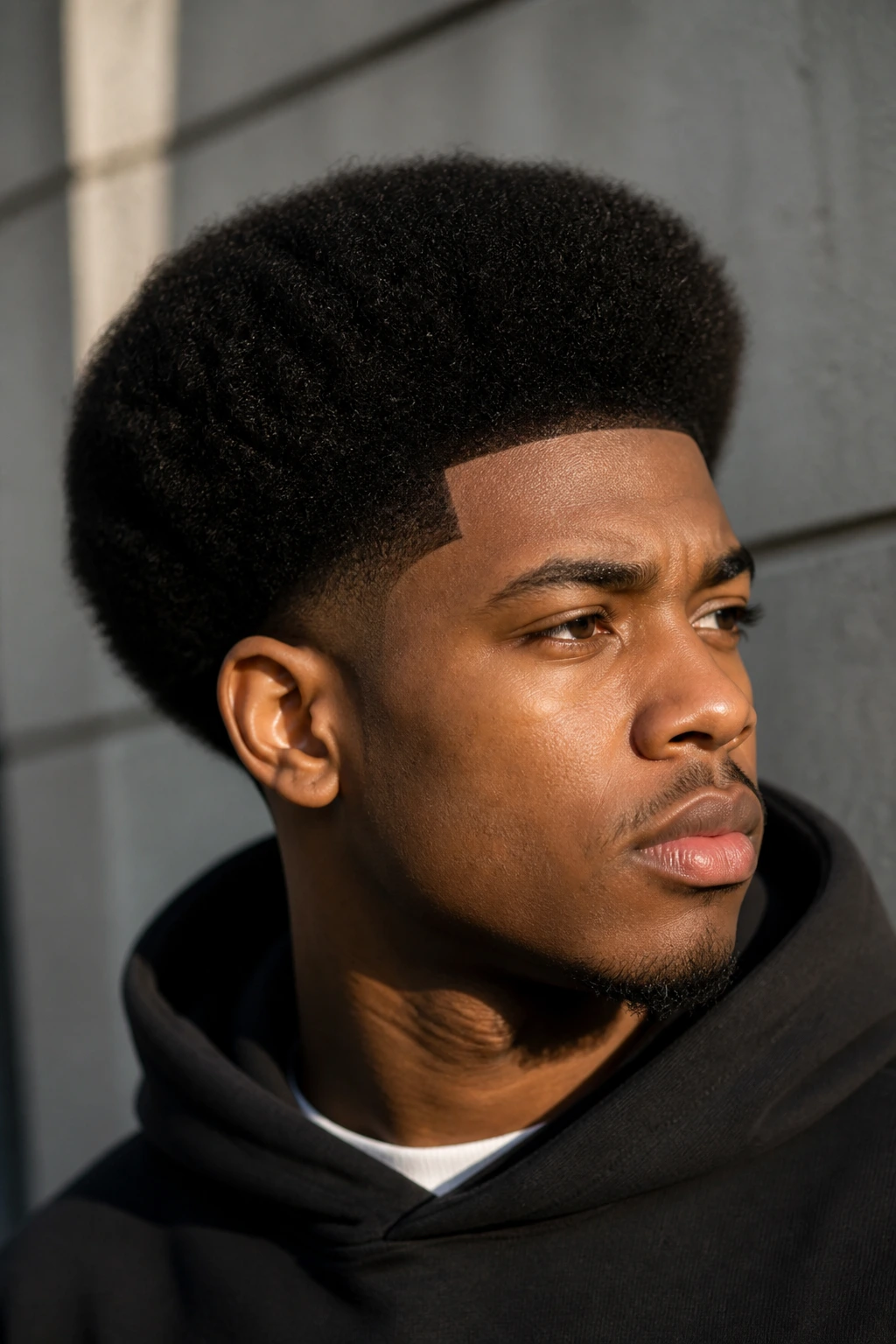
For coily or tight-frizz hair, a tapered afro is one of the most honest styles you can wear. It respects the natural shape and cleans up the outline so the hair looks full without looking wild. The taper at the sides and nape takes away bulk where it usually gets fuzzy first, while the top keeps its round shape.
This is a haircut that benefits from regular shaping. A barber who understands curl pattern will cut the perimeter with the hair’s spring in mind, not against it. That means less surprise shrinkage and a better silhouette once the hair dries. A leave-in conditioner and a little scalp oil can keep the top from feeling dry, which matters more than people think.
What I like most is that the cut does not pretend the texture should be something else. It gives it edges. That’s enough.
17. Short Twists With a Temple Fade
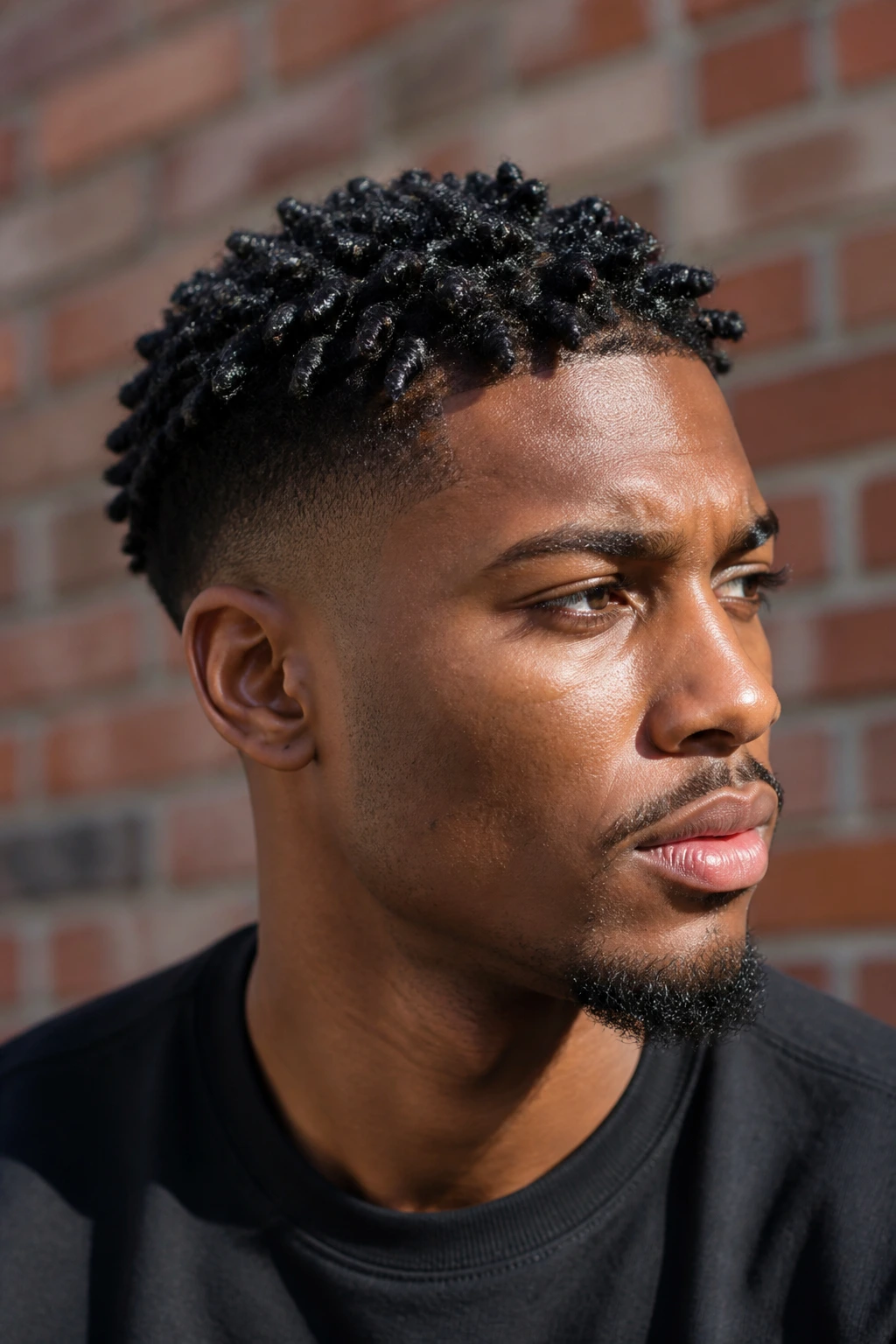
Short twists are a good answer if your hair has enough texture to hold itself into sections. They turn frizz into pattern, which is one of the nicest possible upgrades. Add a temple fade, and the shape gets cleaner around the face without losing the natural look on top.
You’ll want the hair moisturized before twisting so the strands cooperate instead of fraying. A curl cream or twisting butter helps, but use only enough to keep the hair flexible. Too much product makes the twists heavy and dull. The style also needs a maintenance rhythm; if you leave it too long, the roots start to fuzz and the whole thing loses its crispness.
This is one of those styles that can look polished without looking stiff. That balance is rare. And when the fade is fresh, the contrast between the clean temples and the textured top is hard to beat.
18. Two-Block Cut With a Textured Top
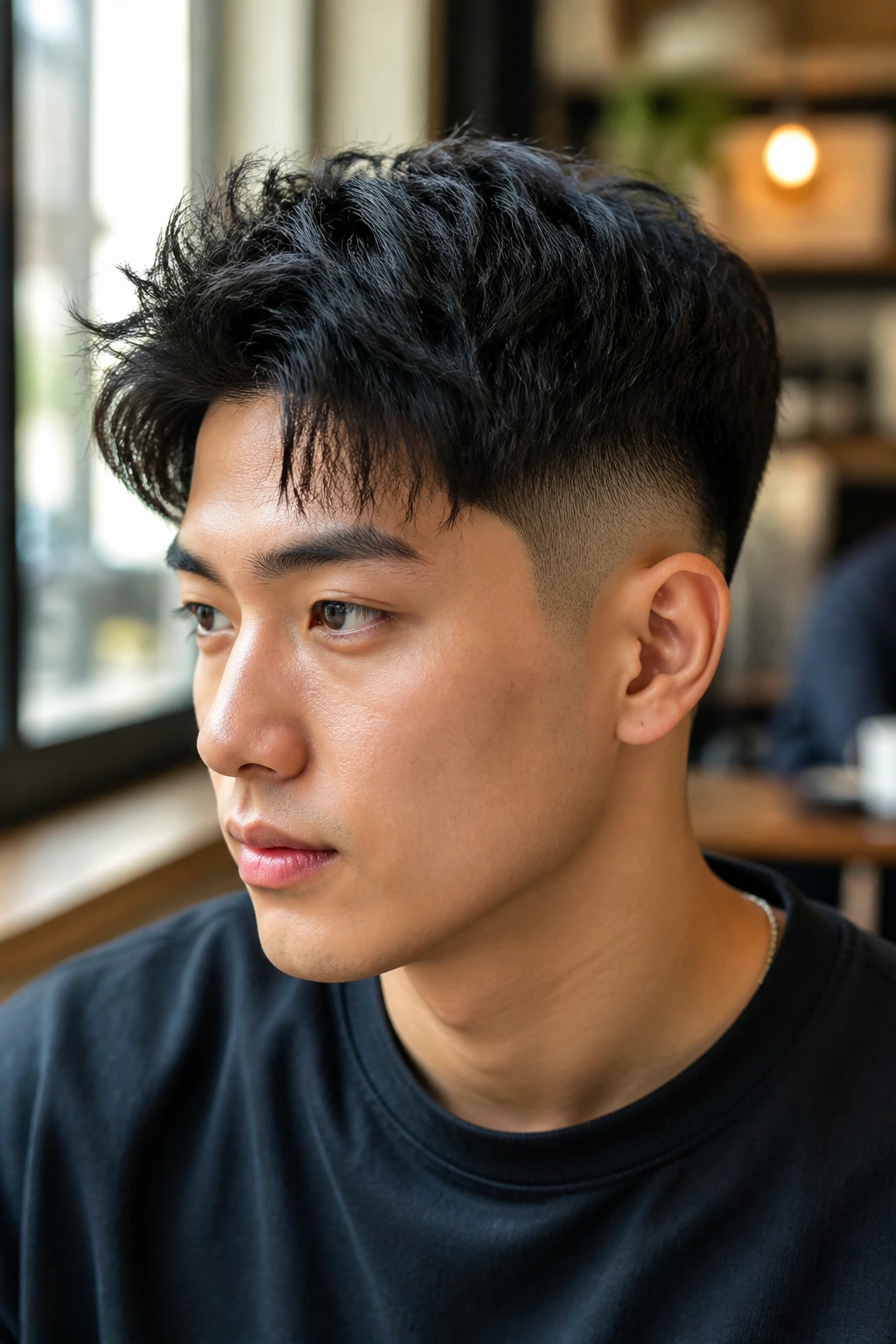
The two-block cut keeps the sides and back shorter while leaving the top longer and more free, which is useful if your hair is thick and expands the second it dries. The disconnect gives shape fast. You get a cleaner perimeter without forcing the top to sit flat against your head.
This style is especially good when you want some length on top but don’t want the bulk that usually comes with it. The top can be worn forward, brushed aside, or left a little messy. A light cream or texture spray is usually enough. Heavy wax tends to make the longer top separate in clumps, which is a bad look here.
The two-block works because it handles rough hair with a clear split: controlled sides, expressive top. That’s it. Simple, and effective.
19. Side-Swept Medium Layers
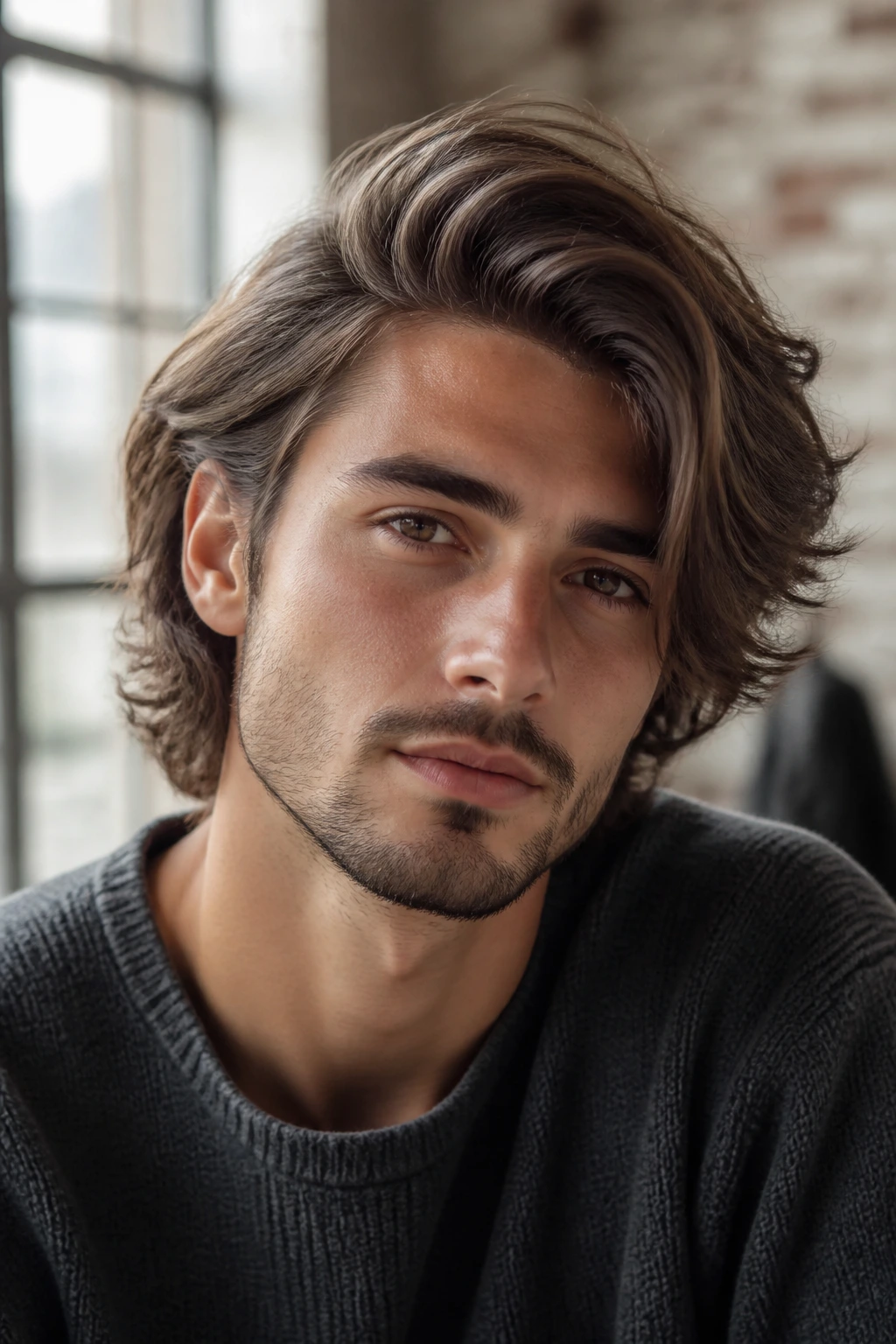
A side-swept cut gives frizzy hair direction, and direction is half the battle. When the hair is medium length and layered, sweeping it to one side keeps the shape moving away from the face while the layers stop the top from ballooning into a single block.
This is a nice option if you want something less formal than a side part and less casual than a full shag. The hair can be blown mostly to one side, then finished with a cream or paste that holds the sweep but leaves some touchable texture. If the ends are too blunt, the style becomes puffy. If the layers are too aggressive, it gets wispy. The middle ground is the sweet spot.
I like this for guys who want a haircut that changes mood depending on how much time they put into it. On lazy days, it’s relaxed. On better days, it can be shaped with a comb and a little heat.
20. Brush-Up Fade With Matte Volume
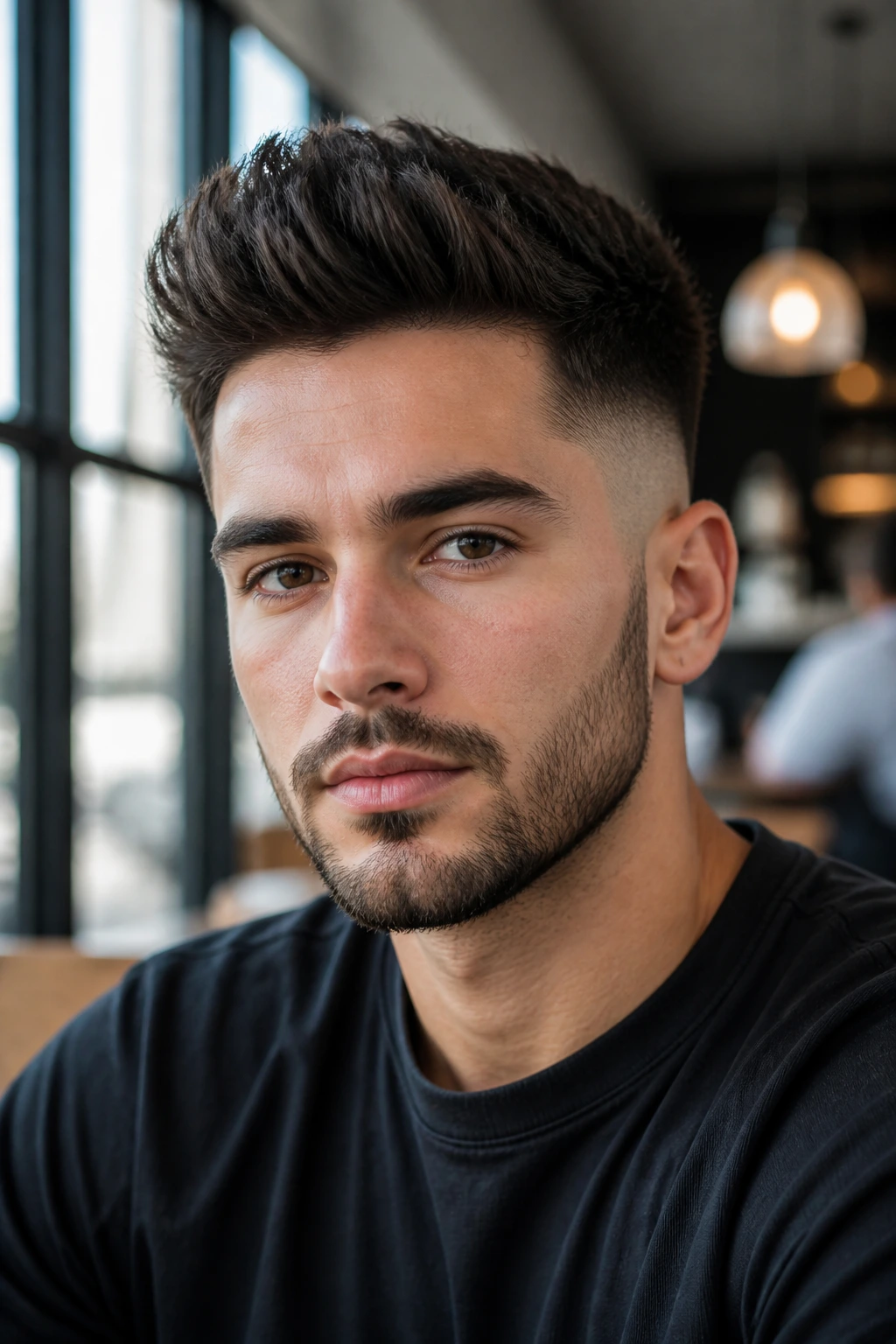
The brush-up fade is basically a quiff’s more vertical cousin. The front is lifted rather than slicked back, which gives frizzy hair a chance to use its built-in volume instead of fighting it. The fade on the sides keeps the top from looking too wide.
This style works best on hair that has enough strength to stand with a little help. A blow dryer and vent brush do most of the heavy lifting. Aim the front upward, not straight back, and finish with a matte paste or lightweight clay. A shiny product can make the lifted section collapse faster than you want.
It’s a good choice if you like a bit of attitude without going full pompadour. The shape is clean, the texture is visible, and the cut still looks decent when the product wears down a little.
21. Classic Pompadour With a Low Fade
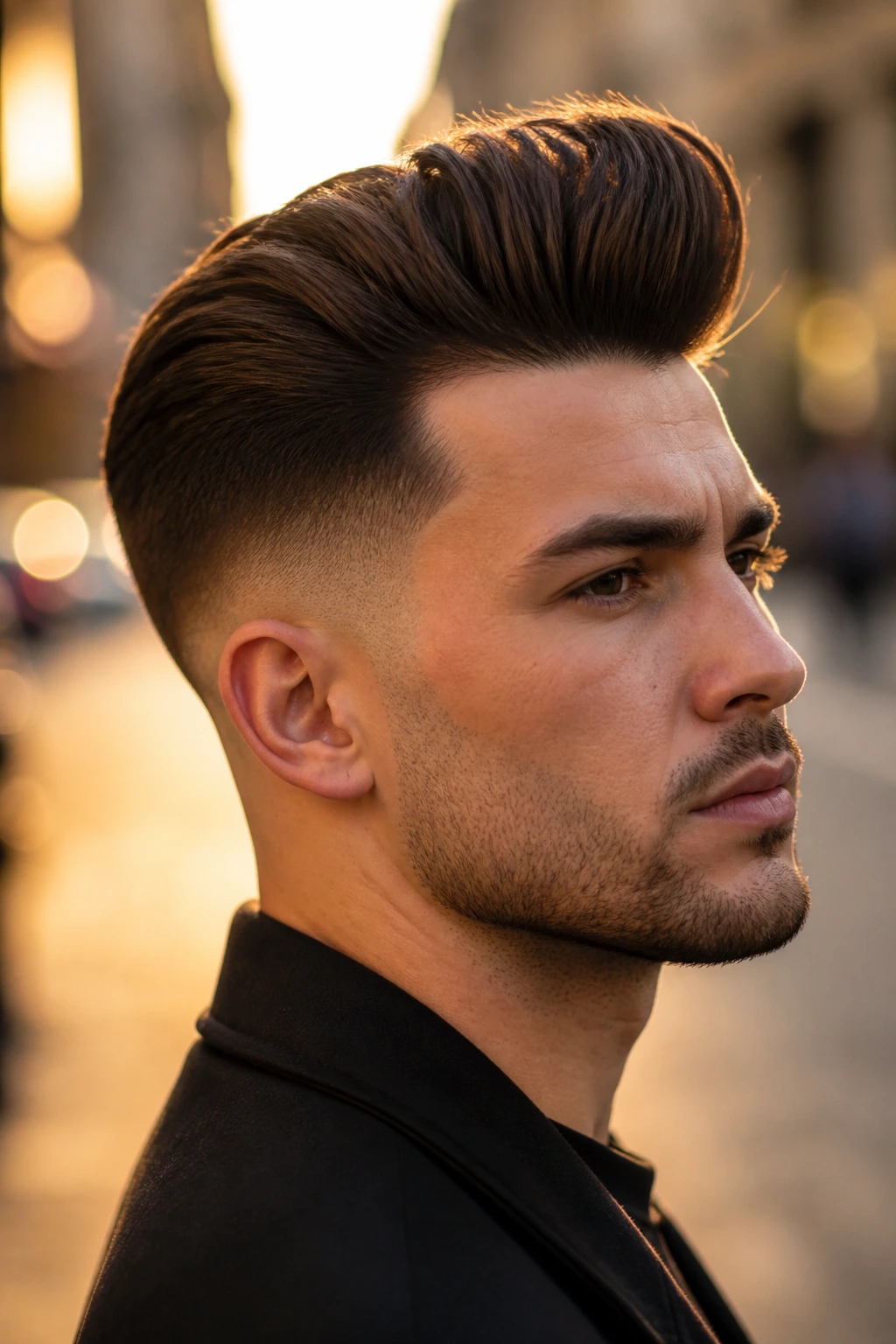
A pompadour sounds fancier than it is. The real work is in the height at the front and the control through the sides. On frizzy hair, that front volume can look fantastic if the top is properly layered and the sides are tight enough to keep the overall shape from getting too wide.
You will need some length on top—usually 4 inches or more—and you’ll need to blow-dry with tension. Brush the hair up and back, then lock it with a medium-hold product. If the hair is rough, prep it with a heat protectant and a little pre-styler. Skip the heavy grease. The pompadour wants structure, not shine that looks like cooking oil.
This cut is a little more work than the others, but it pays off. When it sits right, the shape looks strong from the front and controlled from the side. That profile is the whole point.
22. Undercut With Loose Length
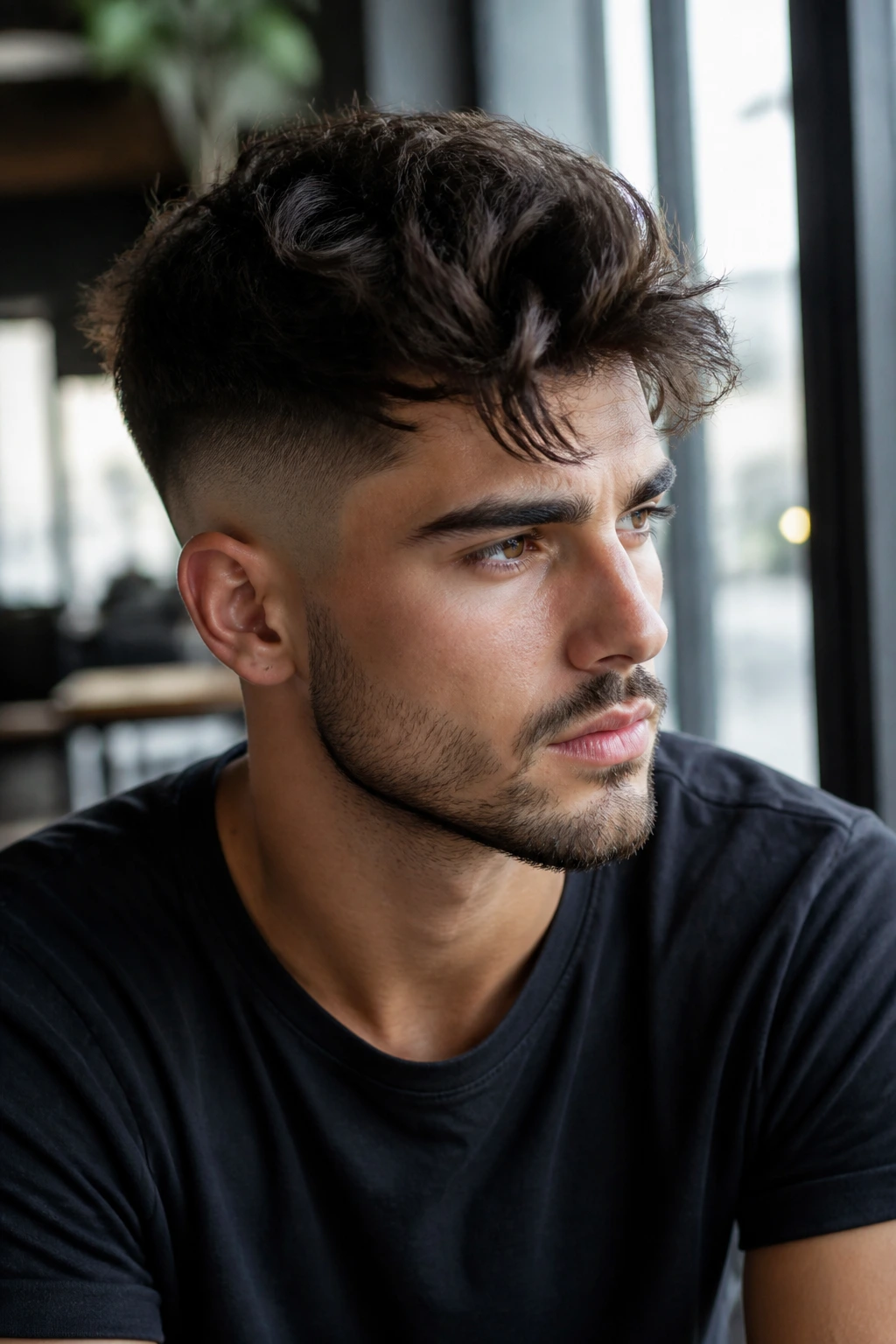
The undercut gives frizzy hair a sharp contrast to play against: short sides, longer top, no apology. It works best when the top is left loose instead of over-slicked. That way the texture stays visible and the style doesn’t look like it’s trying too hard to be formal.
This is a strong option if your hair is thick and resists flattening. The short sides take away the bulk that usually makes the head look wider, while the top can be pushed back, swept over, or left messy. If you go too dramatic with the disconnect, the cut can feel harsh, so a little blending around the temples often wears better.
I like this style when a man wants a haircut with obvious structure but still wants room to play with shape. It’s a useful middle ground between neat and rebellious.
23. Wolf Cut With Broken Layers
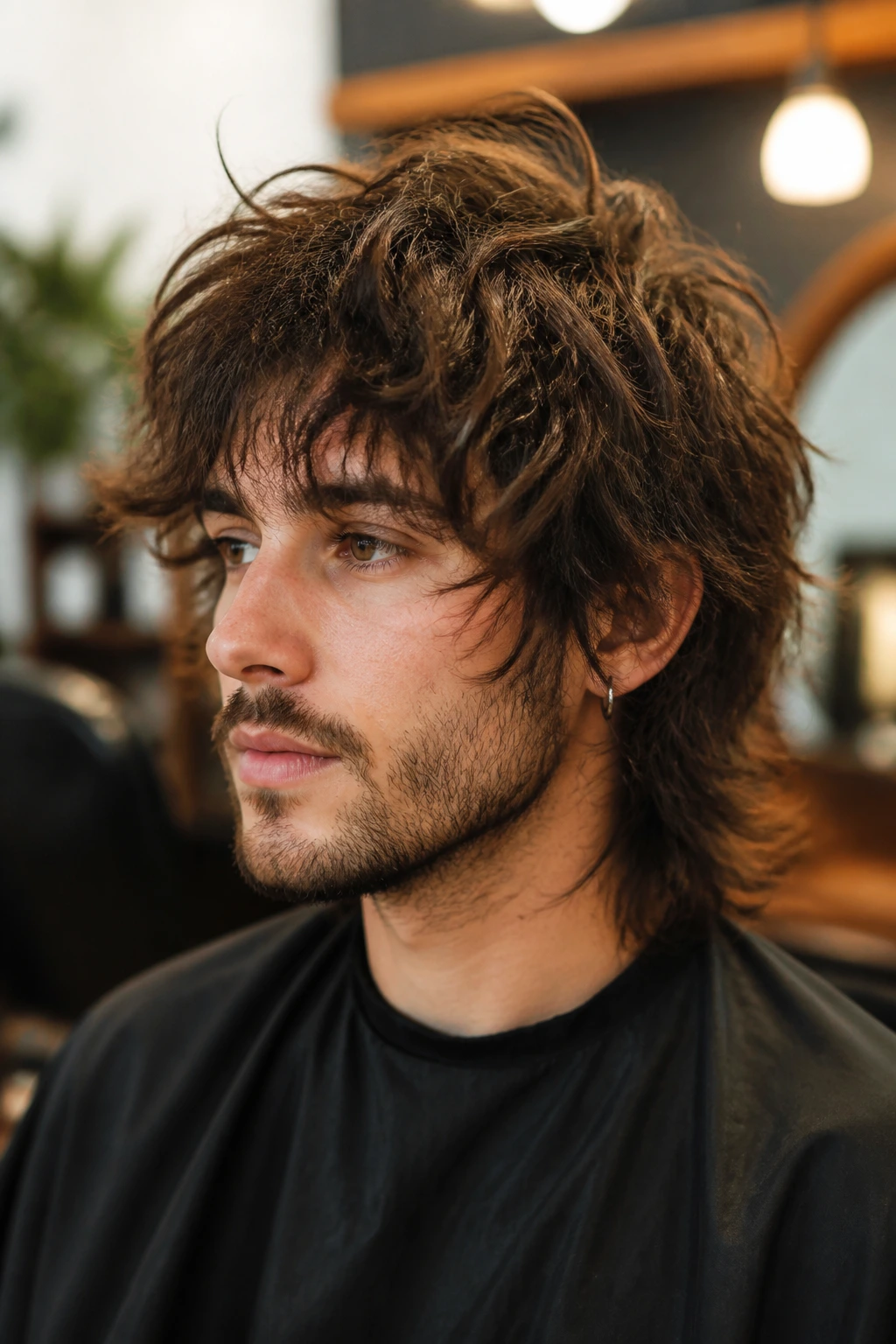
The wolf cut is basically layered disorder with a plan. For frizzy hair, that can be a gift. The broken layers keep the top from sitting like a block, and the longer pieces around the crown and back let the texture fall in pieces instead of one puffed mass.
This cut works best when you are comfortable with movement. It is not a strict shape, and it shouldn’t be. Use a little leave-in conditioner on damp hair, scrunch it, and let it dry with air or a diffuser on low heat. A brush through dry hair will often blow the shape apart, so finger styling is safer.
The wolf cut looks especially good when the hair has some natural bend. Straight frizz can still wear it, but the texture needs a bit of body to keep the layers from looking stringy. If the layers are placed well, though, the result is lively rather than messy.
24. Long Surfer Layers With a Center Part
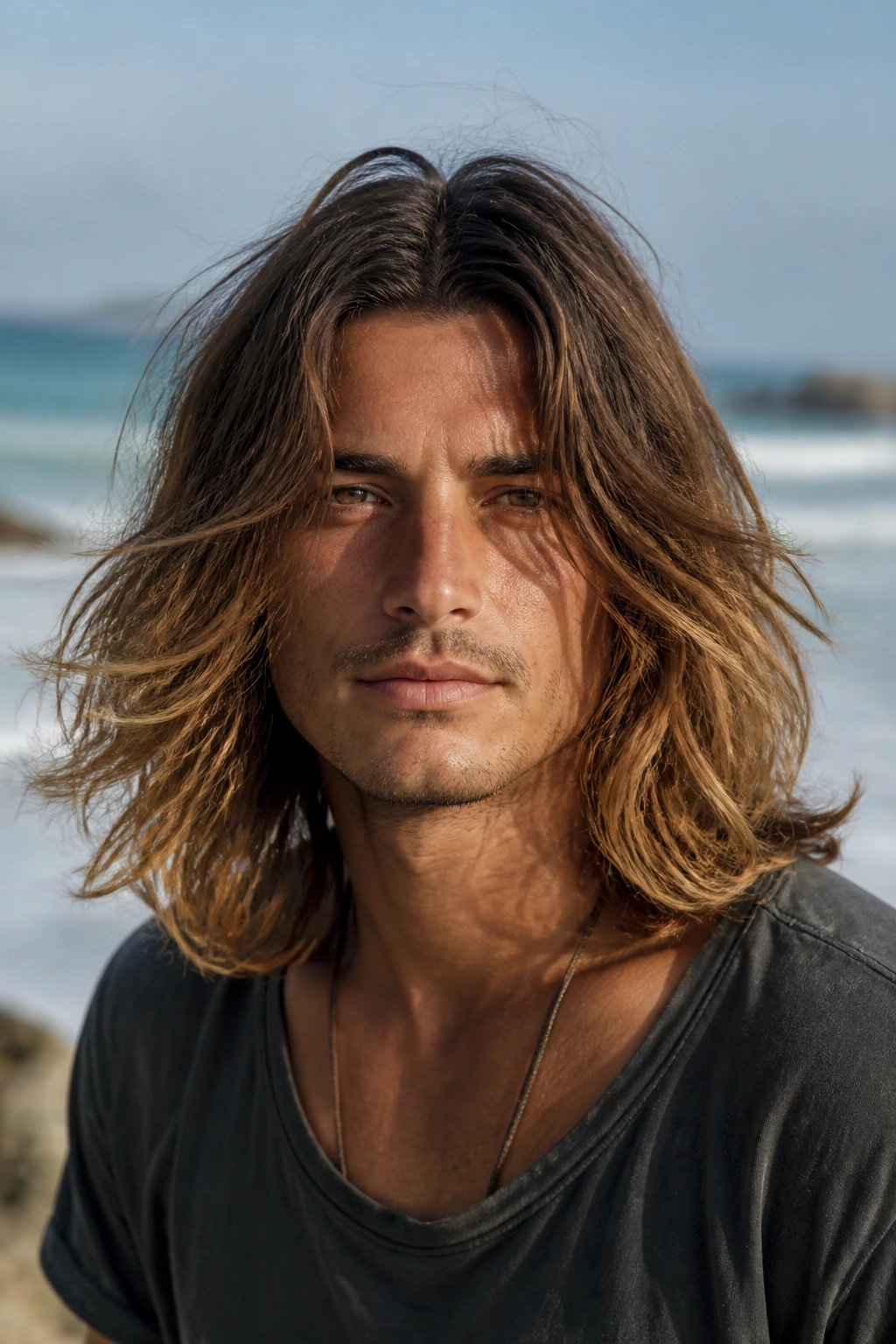
Long surfer layers are for the guy who wants the texture to be the style. The center part creates symmetry, while the layers stop long frizzy hair from becoming a heavy curtain. A little roughness is part of the appeal here. In fact, too much smoothness would look wrong.
This cut is best when the hair is past the ears and has enough weight to move. It can be air-dried with leave-in conditioner, then broken up with a small amount of cream or oil at the ends. The center part does not need to be a ruler-straight line. If it shifts a little through the day, that’s fine.
What makes this style work is restraint. Don’t over-comb it. Don’t chase perfection. Let the layers fall where they want, and the frizz becomes part of the shape instead of a problem to correct.
25. Burst Fade Mohawk With a Curved Shape
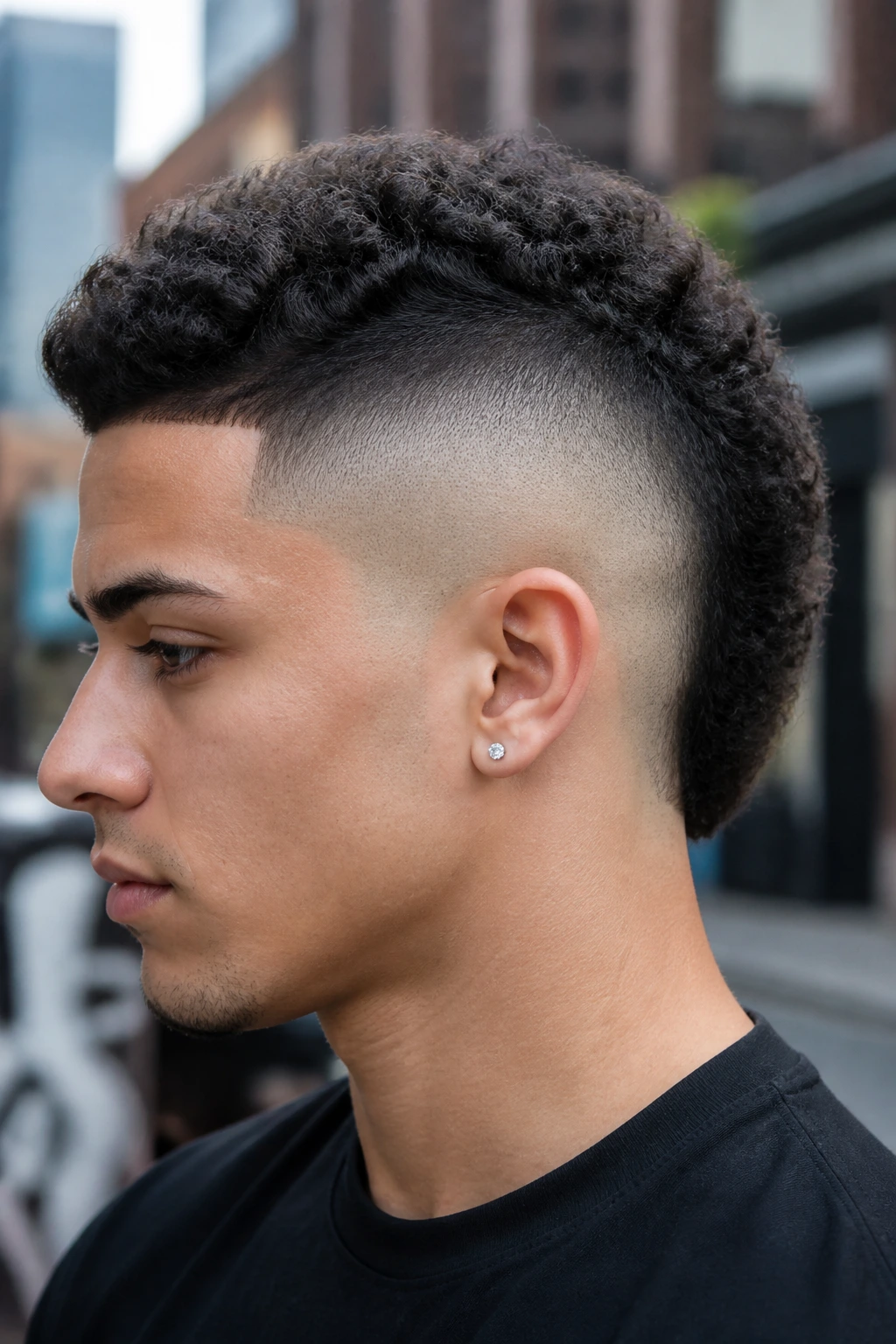
A burst fade mohawk is a sharper, louder option, but it earns its place because frizzy hair often has the exact lift this cut wants. The fade curves around the ears, the top runs longer down the center, and the whole shape creates a strong line from front to back.
This is one of the best cuts if you want movement on top without a wide silhouette. The sides are tight enough to keep the bulk controlled, while the ridge in the middle can be styled upward with matte paste or left a little wild. If your hair is coarse, that middle strip will hold form well. If it’s softer, use a blow dryer to give it some backbone first.
A burst fade mohawk is not subtle. That’s fine. It works because the shape is clear, and clear shapes are a frizzy head’s best friend.
How to Brief Your Barber Without Guessing
A good haircut starts before the clippers come out. If you walk in and say “make it better,” you’re handing your barber a guessing game. Frizzy hair needs clearer instructions: how much length you want on top, where the bulk should come off, and whether you want the haircut to look clean or textured.
Say the numbers. If you want a buzz, say #1, #2, or #3. If you want a crop, say how much top length you want—1.5 inches, 2 inches, 3 inches. Point to the crown if it kicks up. Point to the temples if they puff out. That sounds basic, but it saves everyone time.
The other part is texture control. Ask for point cutting, texturizing, or layering when you want movement. Ask them not to over-thin the top unless your hair is very dense and heavy. On frizzy hair, too much thinning can leave the ends fuzzy in the wrong way. A little weight is often better than a lot of feathering.
Styling Moves That Keep the Shape Alive
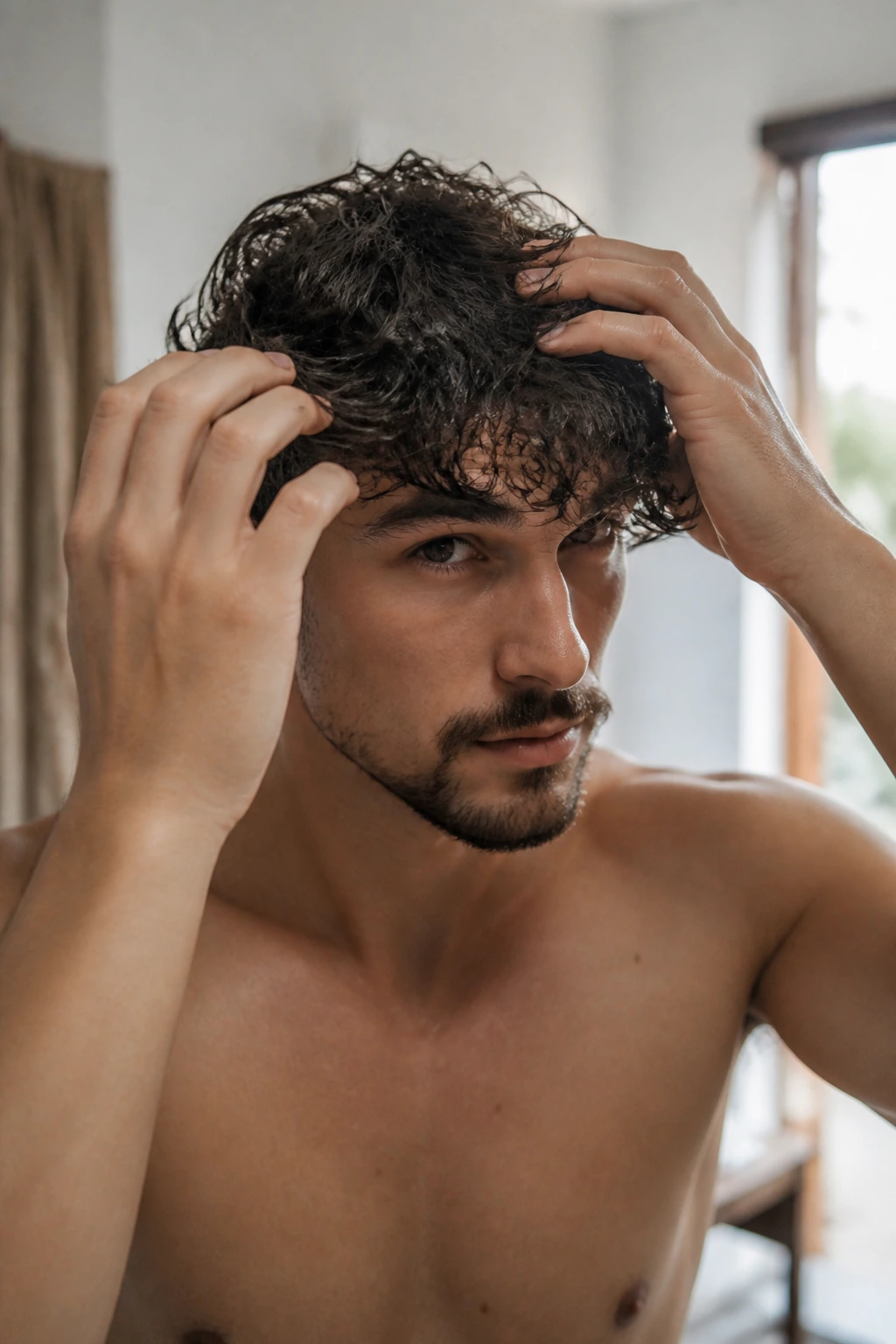
The haircut matters, but so does what happens after the shower. Frizzy hair usually looks worse when it’s scrubbed dry with a rough towel, combed while screaming hot, and coated with the wrong product. That routine makes the cut look like it lost a fight.
Start with damp hair, not dripping hair. Squeeze it with a microfiber towel or an old cotton T-shirt, then add product while the strands still have some slip. Creams and curl balms calm the puff. Matte clays and pastes help hold shape on crops, quiffs, and side parts. Gels work when you want a harder finish, but a little goes a long way.
Heat helps more than people think, but only if you use it well. A blow dryer with a nozzle or diffuser can set the direction before frizz has a chance to go rogue. Finish with cool air for a few seconds if you want the style to hold longer. That tiny last step makes more difference than it should.
Essential Tools and Products for Frizzy Hair
-
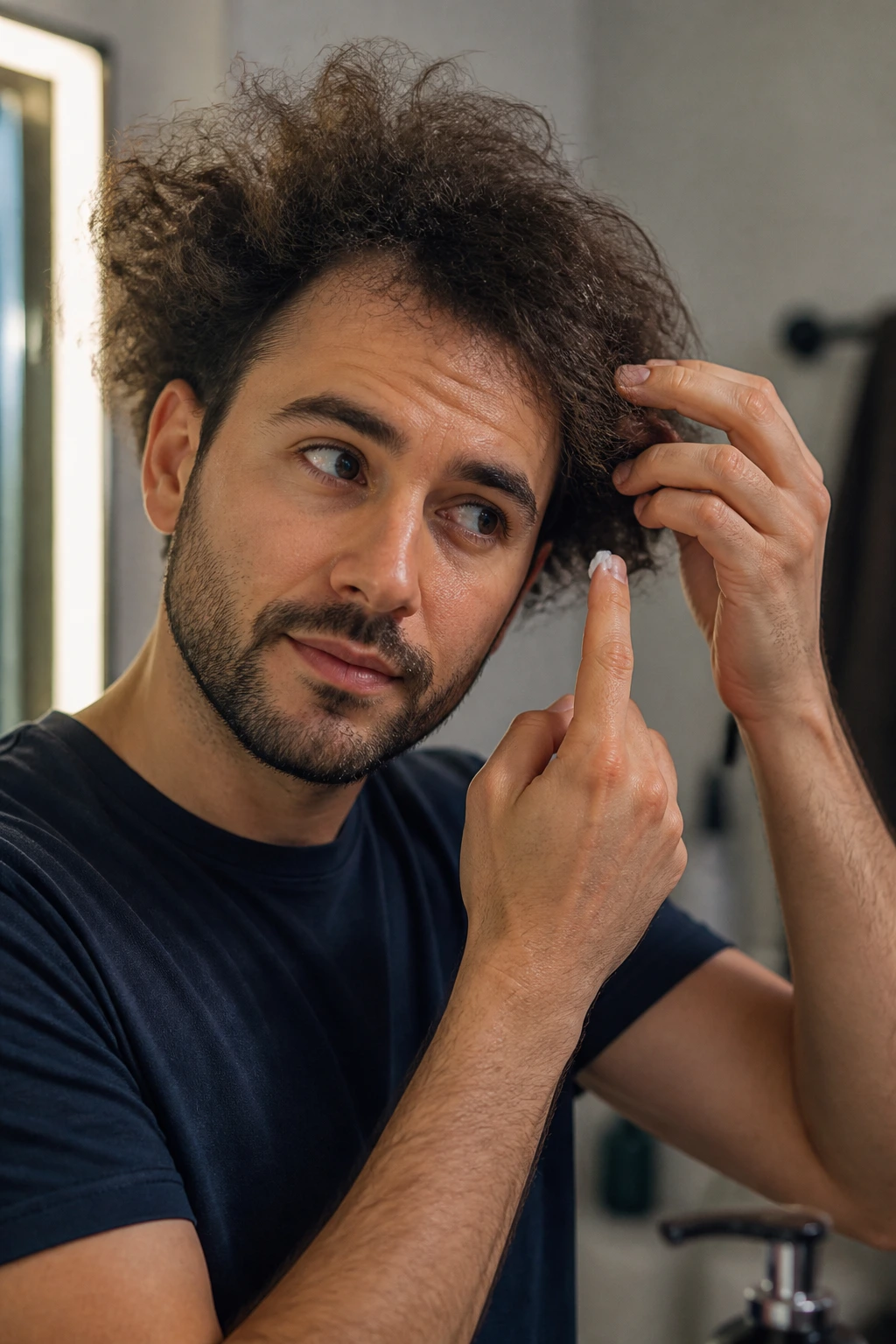
Blow dryer with a nozzle attachment: Directs airflow so the hair dries in the shape you want instead of scattering in every direction.
-
Diffuser: Best for curls, coils, or wavy frizz that needs lift without being blasted apart.
-
Microfiber towel or cotton T-shirt: Cuts down on roughness after washing and helps keep the cuticle calmer.
-
Wide-tooth comb: Useful for detangling wet hair without pulling the texture into a fuzz halo.
-
Vent brush or round brush: Good for quiffs, pompadours, and brush-up styles that need controlled lift.
-
Matte clay or paste: Helps hold crops, side parts, and short textured styles without too much shine.
-
Curl cream or leave-in conditioner: Works well on curtain cuts, bro flow, shags, and any style where softness matters more than hard hold.
-
Light pomade or grooming cream: Better for slick backs, side parts, and Ivy League cuts that need a cleaner finish.
-
Heat protectant spray: Worth using if you blow-dry often; it keeps the hair from getting rougher with repeated heat.
-
Satin pillowcase: Not flashy, but it helps a lot if you wake up with flattened sides and a frizzed-up crown.
How to Keep the Cut Looking Good Between Appointments
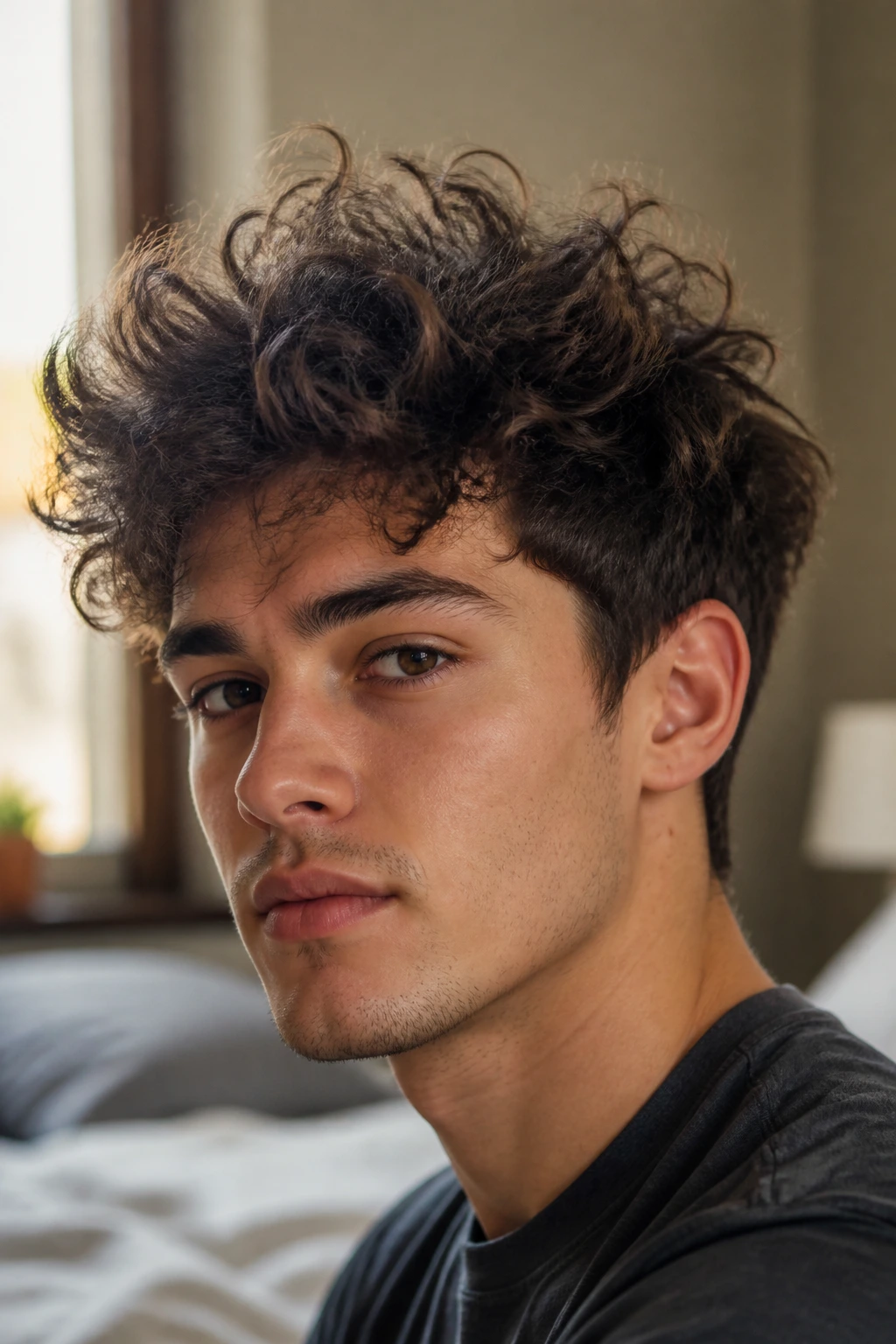
Short cuts with tapers or fades usually need a cleanup every 2 to 4 weeks if you want them to stay sharp. Medium layered styles can stretch to 5 or 6 weeks. Longer hair is more forgiving, though the ends still need shaping before they turn into a fuzzy triangle.
Wash less often than you think if your scalp allows it. Overwashing can strip the hair and make frizz louder. A lot of men do better with 2 to 4 washes a week, then a rinse or refresh with water on the other days. If the hair is curly or coily, a leave-in conditioner after washing helps the style stay soft instead of brittle.
At night, don’t sleep on a dry, rough pillowcase and expect the shape to survive. A satin pillowcase or bonnet can keep the top from getting shredded while you sleep. In the morning, a quick mist of water and a pea-sized amount of product is usually enough to wake the cut back up.
Common Mistakes That Make Frizz Bigger
-
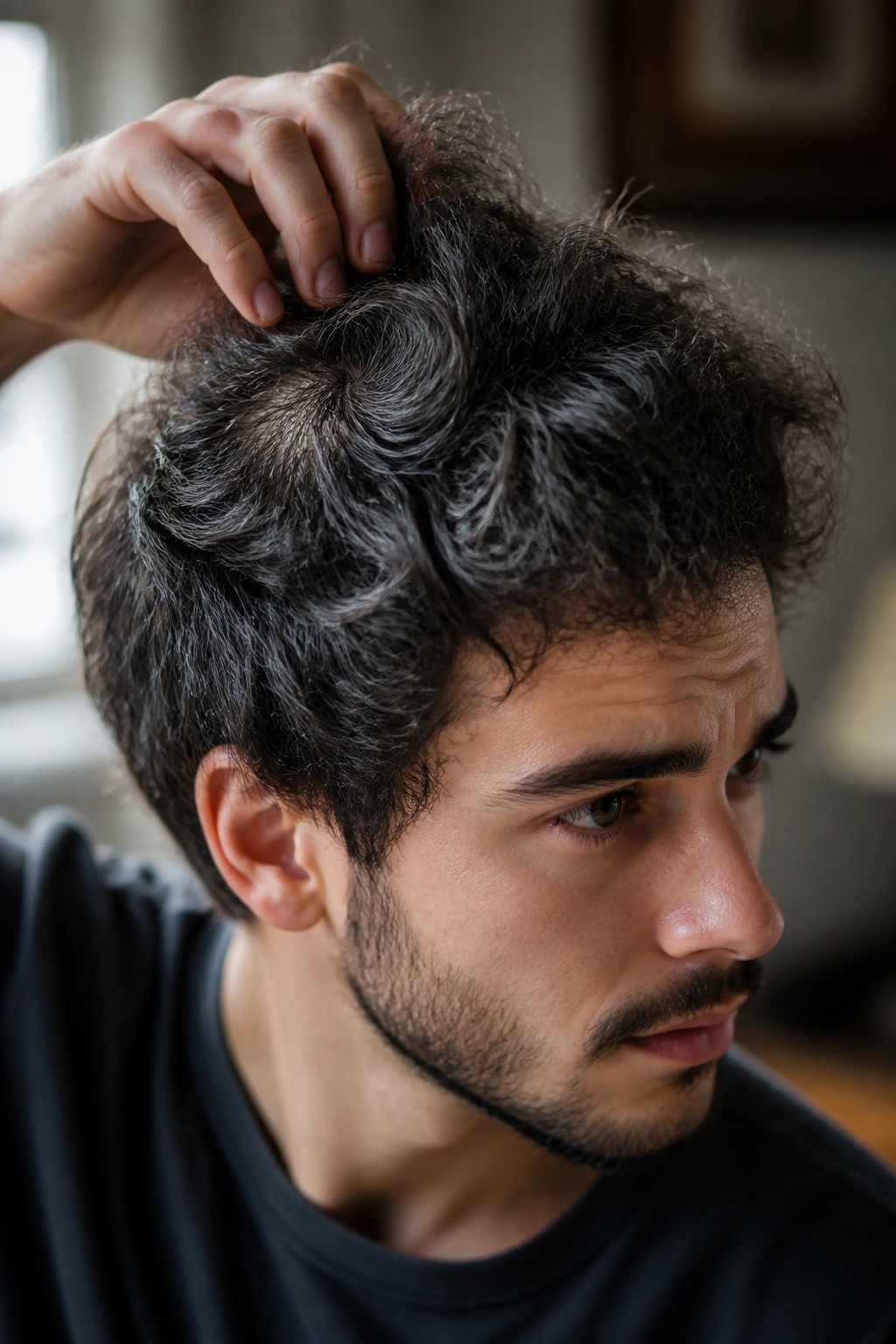
Cutting the top too blunt: A heavy, blunt top on rough hair often looks boxy and puffs out at the corners. Ask for texture or layering where the style needs movement.
-
Using too much heavy product: Wax and grease can make frizzy hair look dirty before noon. Start with less than you think you need and build only if the hair still flares.
-
Blasting it dry with no direction: If you rough-dry in every direction, the hair sets in chaos. Aim the airflow where you want the style to sit.
-
Thinning the top too much: Over-thinning can leave ends wispy and frayed. On coarse hair, weight is often your friend.
-
Ignoring the crown: A stubborn swirl at the crown can ruin a quiff, crop, or slick-back. Cut and style with that pattern, not against it.
-
Skipping the sides: Frizz looks bigger when the sides are too long or too wide. A controlled taper or fade makes the whole haircut look cleaner.
Variations and Adaptations to Try

-
The Office Version: Keep the sides tapered, the top shorter, and the finish matte. Ivy League cuts, comb overs, and neat crew cuts land well here because they read as tidy without needing a perfect blow-dry.
-
The Humidity-Proof Version: Shorten the top a little and lean on crops, buzzes, or low fades. These styles keep the silhouette compact, which matters when the weather has other plans.
-
The Curly-Texture Version: If your frizz comes with curl or coil, use fringe cuts, tapered afros, twists, or shaggy layers. Curl cream and a diffuser will usually do more good than hard-hold product.
-
The Low-Maintenance Version: Buzz cuts, high and tights, and crew cuts are the easiest to live with. They need fewer products, fewer styling decisions, and fewer mirror checks.
-
The Long-Hair Version: Bro flow, surfer layers, curtains, and wolf cuts let the texture move. They need layering and a little leave-in moisture so the ends don’t split into a dry cloud.
-
The Sharp-Edge Version: Burst fade mohawks, modern mullets, and undercuts give rough hair a clean frame. If you like contrast, these are the styles that give it to you fast.
Frequently Asked Questions
What haircut is best for men with frizzy hair?
The best cut is the one that matches your length tolerance and your morning routine. If you want easy, a buzz, crew cut, or textured crop makes life simpler. If you want more style and movement, a curtain cut, bro flow, or shag gives the frizz somewhere useful to go.
Should I keep frizzy hair short or grow it out?
Short hair is easier to control, but longer hair can actually look better if it’s layered well. The mistake is letting it grow without shape. If you want length, ask for layers and shape at the sides so the hair doesn’t expand into a triangle.
What product works best for frizzy hair on men?
For short styles, matte clay or paste usually wins. For medium and longer hair, leave-in conditioner, curl cream, or light grooming cream works better. Heavy wax tends to make frizz look drier and more obvious, not smoother.
Can I slick back frizzy hair every day?
You can, but it usually works best if your hair is thick enough and long enough to lie back without fighting. Blow-dry first, use a light product, and keep the finish softer than a shiny helmet. If the hair keeps splitting, a side part or comb over may wear better.
How often should I get a trim?
Short fades and clean line-ups usually need attention every 2 to 4 weeks. Medium styles can go 5 to 6 weeks. Longer layered looks can stretch a little farther, but the ends should still be shaped before they turn ragged.
What if my hair puffs up after I wash it?
That usually means the hair is drying without enough moisture or direction. Squeeze it gently, add leave-in or cream while damp, and dry it in the shape you want. Rough towel drying and high heat make the puff worse.
Is thinning shears work on frizzy hair?
Sometimes, but not always. On dense, heavy hair, light texturizing can remove bulk. On finer frizzy hair, too much thinning makes the ends look wispy and even more frayed, so the cut needs a lighter hand.
Which style is best if I hate product?
Buzz cuts, crew cuts, high and tights, and tapered afros need the least product. They still benefit from a little moisture or scalp care, but they don’t demand a daily styling routine. That is the honest tradeoff: less styling, less flexibility.
A Shape That Works With the Grain
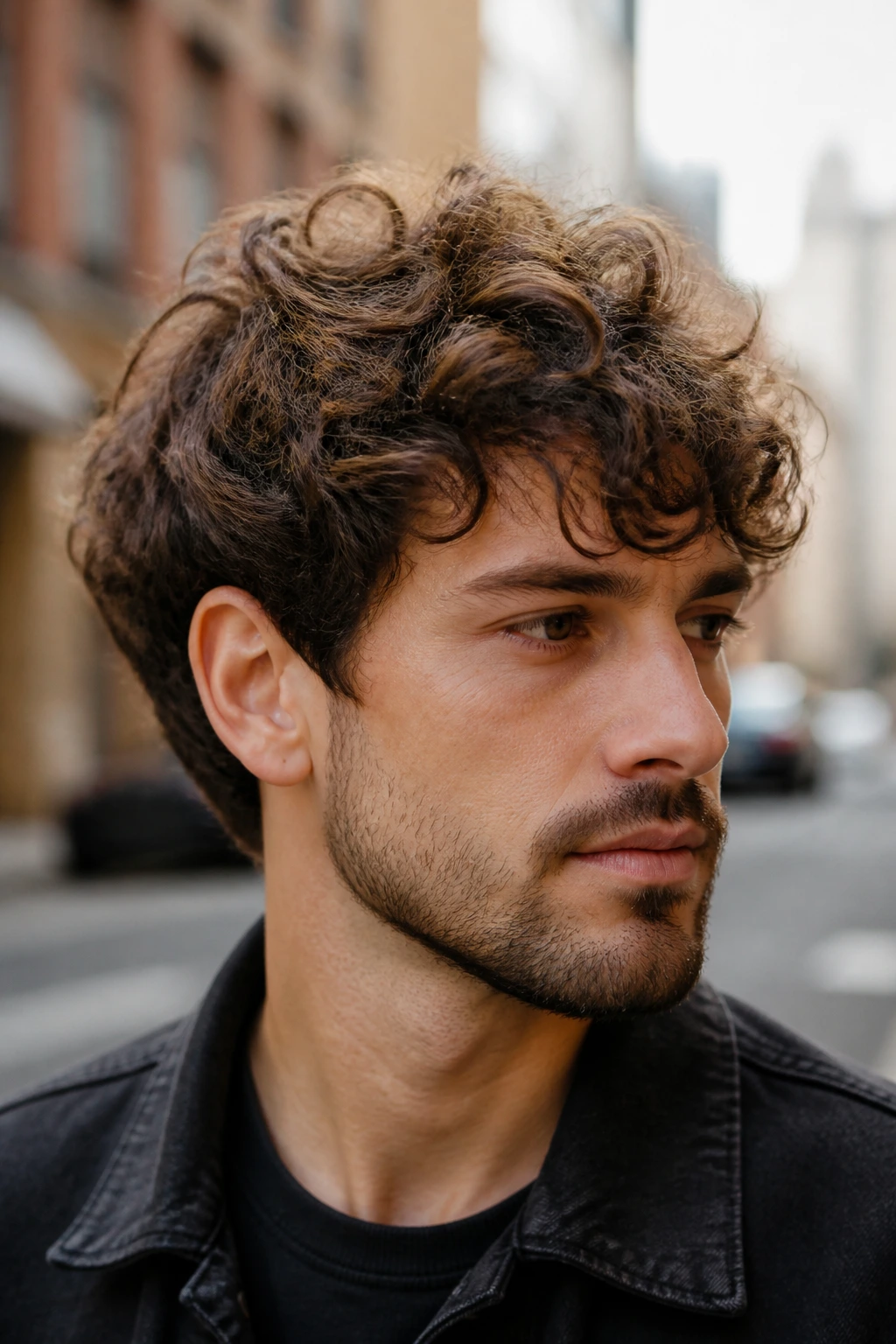
Frizzy hair gets a bad reputation because people keep trying to make it behave like something it isn’t. That usually backfires. The better move is to choose a cut that understands the way your hair grows, swells, bends, and settles. Once the shape is right, even rough texture starts looking deliberate.
The best men’s hairstyles for frizzy hair are not the ones that erase the texture. They’re the ones that give it a frame. Short cuts keep it clean, layered cuts keep it moving, and longer cuts let it become part of the style instead of the thing you spend all morning fixing.
If you walk into a barber with a clear idea of your length, your crown, and the amount of maintenance you’ll actually do, the result gets better fast. That’s the part worth carrying forward: don’t fight the hair. Give it a shape that makes sense, then wear it with less drama.
