



Long hair changes the math on beard design. A short crop can get away with a beard that’s a little loose around the edges; shoulder-length hair cannot. The two halves of the face start competing for attention, and the wrong beard makes the whole thing look like it was grown in separate rooms.
That’s why beard styles for long hair need shape, not just length. The strong ones either echo the flow of the hair, clean up the jawline, or create a sharp contrast on purpose—think a rounded Garibaldi with waves, a boxed beard under a center part, or heavy stubble against slicked-back hair. The trick is not to make everything match. That’s boring.
A beard and long hair combination also asks for a little honesty about growth patterns, because patchy cheeks, a weak chin, or a dense mustache all change the way the style reads. I’ve seen more good hair ruined by a sloppy neckline than by bad scissors. Keep that line in the right place and the whole look suddenly makes sense.
Why These Beard Styles Work With Long Hair
-
Face Shape Control: Long hair tends to stretch the face visually, so the beard has to shorten, widen, or square that shape on purpose. A rounded beard helps with angular faces, while a fuller chin can balance a round face that needs a little vertical pull.
-
Texture Matching: Wavy hair and a coarse beard can look disconnected unless the sideburns and cheeks are blended cleanly. A soft transition, even just 6 mm to 12 mm, keeps the look from feeling chopped up.
-
Maintenance Reality: Long hair already collects flyaways, lint, and humidity frizz; a beard that’s equally untamed can tip the whole thing into “I forgot to finish grooming.” Clean necklines and tidy mustache edges make the difference.
-
Style Range: You can wear 3 mm stubble or a 6-inch beard and still look balanced if the shape is deliberate. The point is proportion, not length for its own sake.
-
Barber-Friendly Language: Most of these styles can be explained in plain words—shorter on the cheeks, fuller on the chin, fade the sideburns, clean the throat. No need for poetry.
1. The Full Beard and Man Bun

A man bun pulls the eye upward, which means the beard has to do some grounding work. A full beard gives the face weight again, and that matters more than people think. Without it, the bun can make the head look top-heavy and a little unfinished.
Why it works: The full beard balances the clean sweep of tied-back hair by adding texture at the jaw and chin. Keep the cheeks natural but not wild, and let the chin stay slightly longer than the sides so the shape reads intentional instead of bushy.
What to ask for
- Keep the beard around 2 to 4 inches at the chin.
- Taper the sideburns so they don’t crash into the hairline.
- Trim the neckline one to two finger widths above the Adam’s apple.
- Keep the mustache off the lip so the mouth doesn’t disappear.
Best for: Thick growth, oval faces, and anyone who likes a heavier, grounded profile.
2. Loose Waves and a Rounded Beard
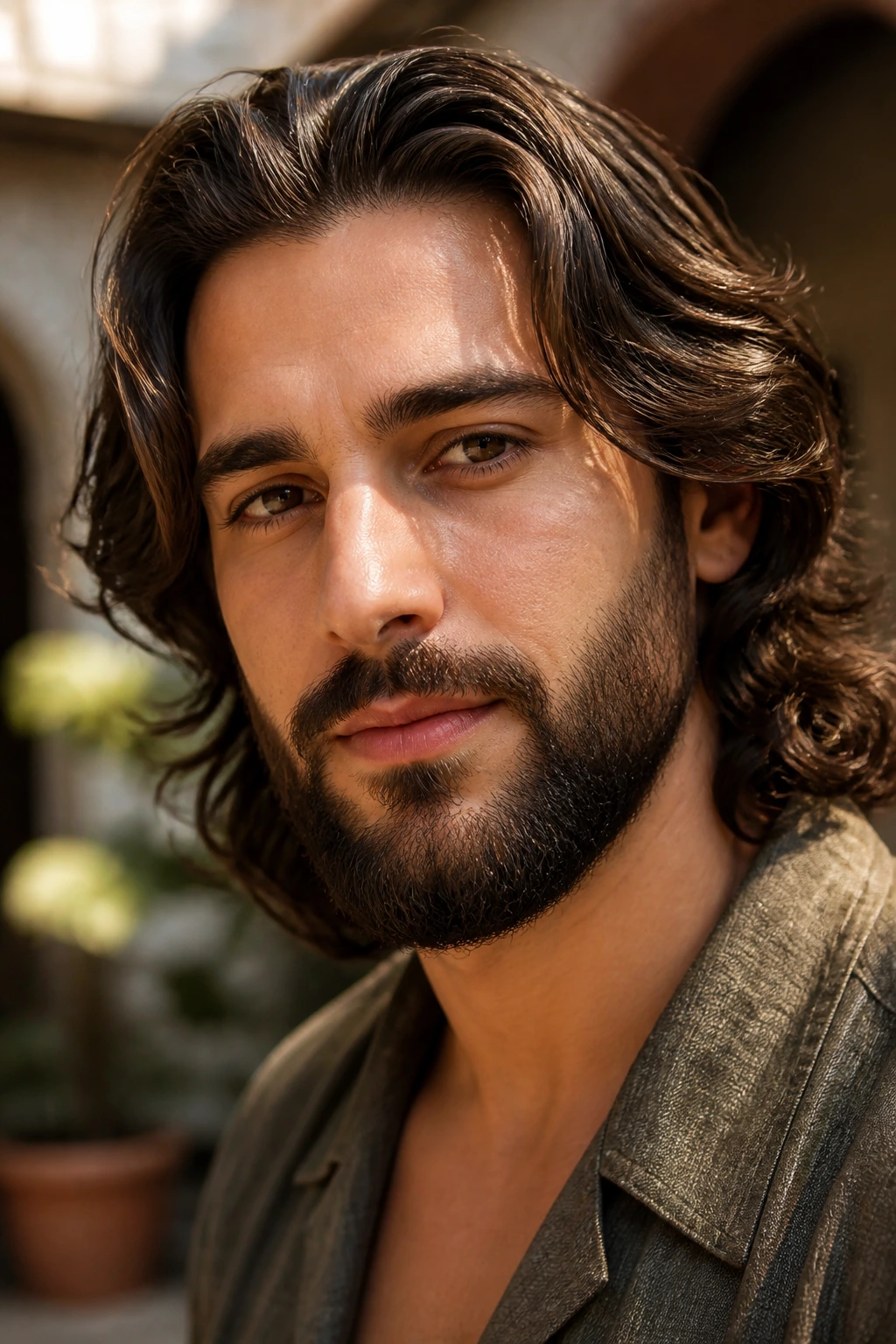
Why does a rounded beard sit so well under loose waves? Because both shapes move in soft curves. A sharp, pointy beard under wavy shoulder-length hair can feel like a bad argument between two different styles. Rounded wins here because it repeats the motion of the hair instead of fighting it.
The beard should stay fuller through the cheeks and taper only slightly at the chin. Think of it as a gentle dome, not a triangle. If the face is narrow, a rounded bottom adds width without looking bulky. If the face is square, it softens the jaw just enough to take the edge off.
Keep the cheek line clean but not carved to death. Every few weeks, remove the scruffy ends under the jaw so the curve stays visible from the front.
3. Curly Hair and a Tapered Beard
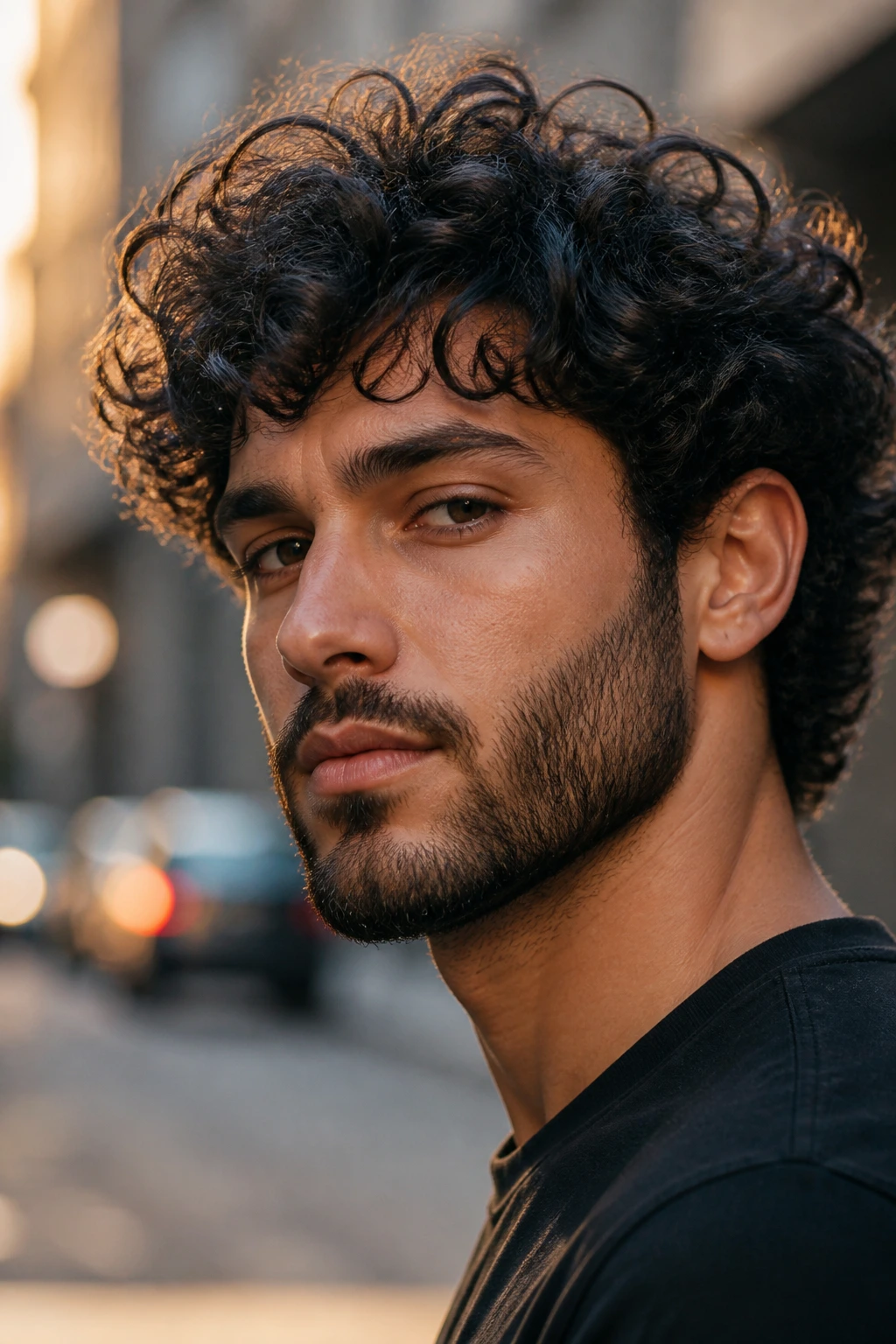
Curly hair adds volume where you least expect it, and a tapered beard keeps that volume from turning into a cube. The taper matters. If the beard is equally wide from cheek to chin, the whole look starts to feel heavy, especially around the lower face.
The shape that works
- Keep the cheeks at about 6 mm to 8 mm.
- Let the chin build to 10 mm to 14 mm.
- Blend the sideburns softly into the curls so there’s no hard break.
- Use beard balm or light butter if the curl pattern frizzes when it dries.
This style works especially well on round or heart-shaped faces because the chin gets a little extra length without making the sides puff out. And if the beard itself curls, don’t fight it with a tiny comb and unrealistic expectations. Shape the outline, tame the flyaways, and move on.
4. Center Part Hair and Short Boxed Beard

A center part likes symmetry, and a short boxed beard gives it exactly that. The two shapes mirror each other in a way that feels sharp without looking stiff. It’s one of the cleanest pairings on this list, and also one of the easiest to wear in a work setting.
The beard should sit close to the face, usually in the 3 mm to 6 mm range, with crisp cheeks and a squarer bottom. The point isn’t to hide the jaw. It’s to give the jaw a neat edge that echoes the parting line up top.
Skip this one if you want softness. The boxed shape is more structured than forgiving, and that’s the whole appeal. It makes straight or slightly wavy long hair look deliberate instead of merely grown out.
5. Slicked-Back Hair and Heavy Stubble

Slicked-back hair already looks polished, so the beard shouldn’t try to match that level of finish. Heavy stubble is the better move. It adds grit, a little shadow, and enough contrast to keep the face from looking too glossy.
Three to five millimeters is the sweet spot. Shorter than that can read like you forgot to shave; longer than that starts turning into a short beard, which changes the whole mood. Keep the cheek line soft and the neckline tidy. That combination looks easy, but it only works when the edges are controlled.
This is a good option if your beard grows unevenly. Stubble forgives small gaps that a fuller style would expose. It also pairs well with straighter hair textures because the slight roughness on the face stops the hair from feeling too slick.
6. Side-Swept Layers and a Ducktail
Side-swept layers move diagonally, and a ducktail beard does the same thing on the face. That’s why the pairing works so well. The beard pulls the eye down to a point, which gives the long hair a little direction instead of letting it drift everywhere.
Shape notes
- Keep the cheeks shorter than the chin.
- Let the chin grow into a subtle point, not a dagger.
- Trim the mustache so it blends, not swallows the upper lip.
- Ask for a gradual taper from the ears down toward the chin.
The ducktail is a smart pick for round or short faces because it adds vertical length. It can also clean up thick, side-heavy hair by giving the lower half of the face a clear endpoint. If the point gets too sharp, it starts looking theatrical. A soft point is enough.
7. Mid-Back Waves and a Garibaldi
A Garibaldi beard is relaxed by nature, and that’s why it sits so well under mid-back waves. Both feel a little free, a little lived-in, and neither one benefits from being over-carved. The beard should be wide, rounded, and substantial, not trimmed into a neat little box.
The key is keeping the bottom shape visible. Let it grow, then round the base so the beard feels full rather than ragged. The mustache needs attention too—clean the lip line every few days, or the whole thing starts eating your mouth.
This style is for guys who don’t want a precious look. It works with thick hair, heavy growth, and faces that can handle a little width at the jaw. Use a boar brush once a day, and the shape will hold better than you’d expect.
8. Straight Hair and a Balbo
Straight hair can look almost severe if the beard is too full, which is why the Balbo is such a useful choice. It brings structure without turning the lower face into a wall of hair. The detached mustache and chin beard create a deliberate gap that gives the whole look some breathing room.
Why this one feels sharp
- The clean-shaven cheeks keep the face open.
- The disconnected pieces add contrast under long, straight hair.
- A narrower chin shape can help long faces look more balanced.
- Daily edging matters, because stray hairs show fast against clean skin.
If you like crisp lines, this is a strong option. If you hate regular upkeep, skip it. The Balbo looks best when the edges are clean enough to show that the separation is on purpose, not accidental.
9. Thick Hair and a Bandholz
If your hair and beard are both dense, the Bandholz can be a beast—in a good way, if you keep the shape under control. This is the style that says, “I have decided to let volume exist.” It needs patience, because the beard has to grow long enough for the shape to read instead of just puff.
Keep an eye on these details
- Let the beard reach at least 3 to 5 inches before judging the shape.
- Comb it daily so the hairs sit in the same direction.
- Keep the mustache out of the mouth.
- Use beard oil on the ends; dry ends fray fast.
The Bandholz suits square or oval faces especially well. It does not suit people who want quick results. The beard needs time, and the hair needs enough length to match its energy. When both are healthy, the whole look has a heavy, almost cinematic presence.
10. Layered Hair and a Verdi
Layered long hair has movement, and a Verdi beard gives it a polished counterpart. The beard is fuller than a goatee but neater than a full natural beard, and the mustache usually gets a little more styling attention than the rest. That’s the charm.
The mustache often gets a tiny bit of wax—nothing dramatic, just enough to keep it from collapsing into the upper lip. The beard underneath stays rounded and full at the chin, which gives the face a lower anchor. The result feels old-school without turning costume-y.
This style works if you like detail. It also works if your beard grows better in the chin and mustache than on the cheeks. You can lean into that instead of fighting it, and long layered hair helps the look feel balanced rather than top-heavy.
11. The Extended Goatee
Why choose the extended goatee when you’ve got long hair? Because it keeps the focus where some faces need it most: the center. If the cheeks are patchy or the jawline is weak, this style adds shape without pretending the side growth is fuller than it is.
How to wear it well
- Keep the chin and mustache connected.
- Shave the cheeks clean or nearly clean.
- Let the chin grow to about 1 to 2 inches.
- Keep the edges close enough that the shape still looks deliberate.
Long hair softens the goatee’s sharper profile, which matters. Without that hair balance, the style can feel too narrow. With it, the look becomes focused and clean. I like this one on guys with oval or diamond faces, especially if they want definition without a full beard’s maintenance.
12. The Circle Beard
The circle beard is the tidy cousin in the room. It frames the mouth, keeps the jaw area neat, and works nicely when long hair already gives the face enough drama. The shape is compact, so it won’t fight with waves, braids, or a layered cut.
It’s a good pick when the beard density is medium and you want a shape that stays readable at a glance. Keep the lower circle symmetrical and the mustache trimmed so it connects cleanly to the chin. The outline should look soft enough to wear every day, not sharp enough to cut paper.
This style is especially decent for men who wear glasses. The mouth area gets a frame, the hair gets the length, and the face doesn’t feel overloaded. Clean, simple, and honest. Sometimes that’s the move.
13. The Van Dyke
The Van Dyke is a little theatrical, and that’s the point. A detached mustache with a pointed chin beard creates contrast immediately, which can be excellent under long hair if the hair itself is soft or flowing. The beard doesn’t need to shout. It just needs to be precise.
A sharp cheek shave is non-negotiable here. The style falls apart the minute the side growth gets lazy. Keep the chin point narrow but not needle-thin, and give the mustache enough shape that it looks planned. If the mustache is weak, this style loses most of its power.
It works best when you want your face to read angular and a touch dramatic. If you’re after understatement, pick something else.
14. The Anchor Beard
The anchor beard draws a clear line along the jaw and chin, which makes it a useful choice when long hair softens everything above the neck. The shape has a strong bottom edge, almost like it’s bracing the face. That can be a lifesaver for round faces or softer jaws.
The cheeks are usually trimmed back hard, while the chin and jaw remain the focus. Clean the lines often. This style looks sloppy fast if the anchor loses its shape around the corners. A detail trimmer and a steady hand matter more than length.
I like this one because it gives structure without taking over the whole face. It feels controlled. Under long hair, that control is the whole point.
15. Mutton Chops with Long Hair
Mutton chops can look ridiculous when they’re alone. Put them under long hair, though, and they start making sense again. The hair gives the face enough coverage that the sideburns feel intentional, almost classic, instead of stagey.
The trick is tapering the chops so they flow naturally from the hairline. Thick, blocky sideburns are where this style goes wrong. Keep the edges softer, and decide whether you want a mustache attached or a cleaner upper lip. Either can work, but you need to commit.
This is a bold shape. Not subtle. If your face is narrow, chops can add welcome width. If your hair is already huge, the chops need to stay controlled or the whole look will swallow your features.
16. The Chin Strap
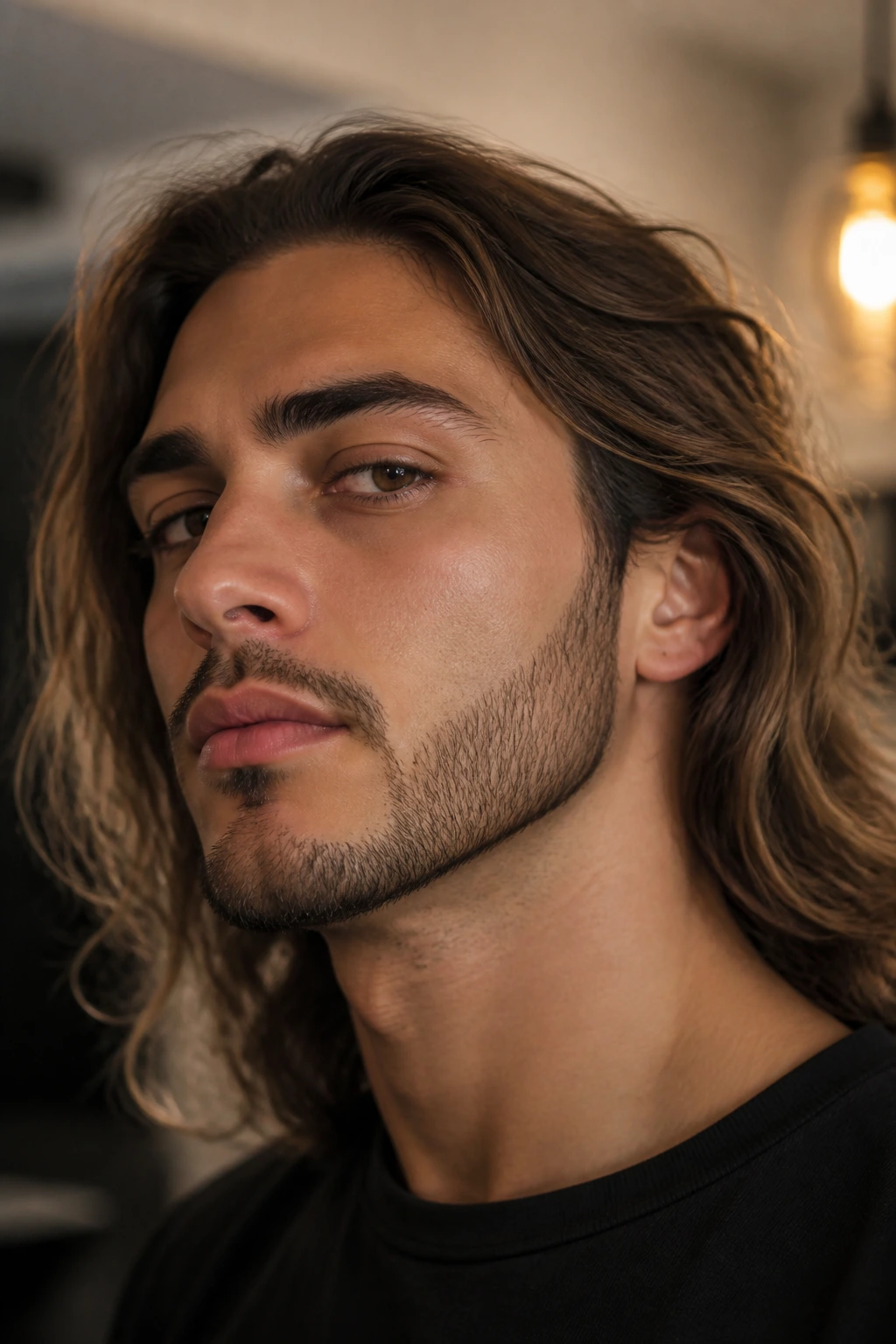
A chin strap with long hair can be either smart or disastrous. There’s not much middle ground. Done well, it sharpens the jaw and keeps the lower face defined. Done badly, it looks like a line someone drew in the dark.
What to get right
- Keep the strap narrow, usually around 2 to 4 mm wide.
- Follow the jawline cleanly from ear to chin.
- Keep the neckline just above the throat.
- Leave the cheeks clean so the line stays visible.
This style works best if your jaw already has some shape or if you want a cleaner face without adding much bulk. It’s high-maintenance, though. Let it grow even a little, and the crisp outline disappears.
17. The Faded Beard
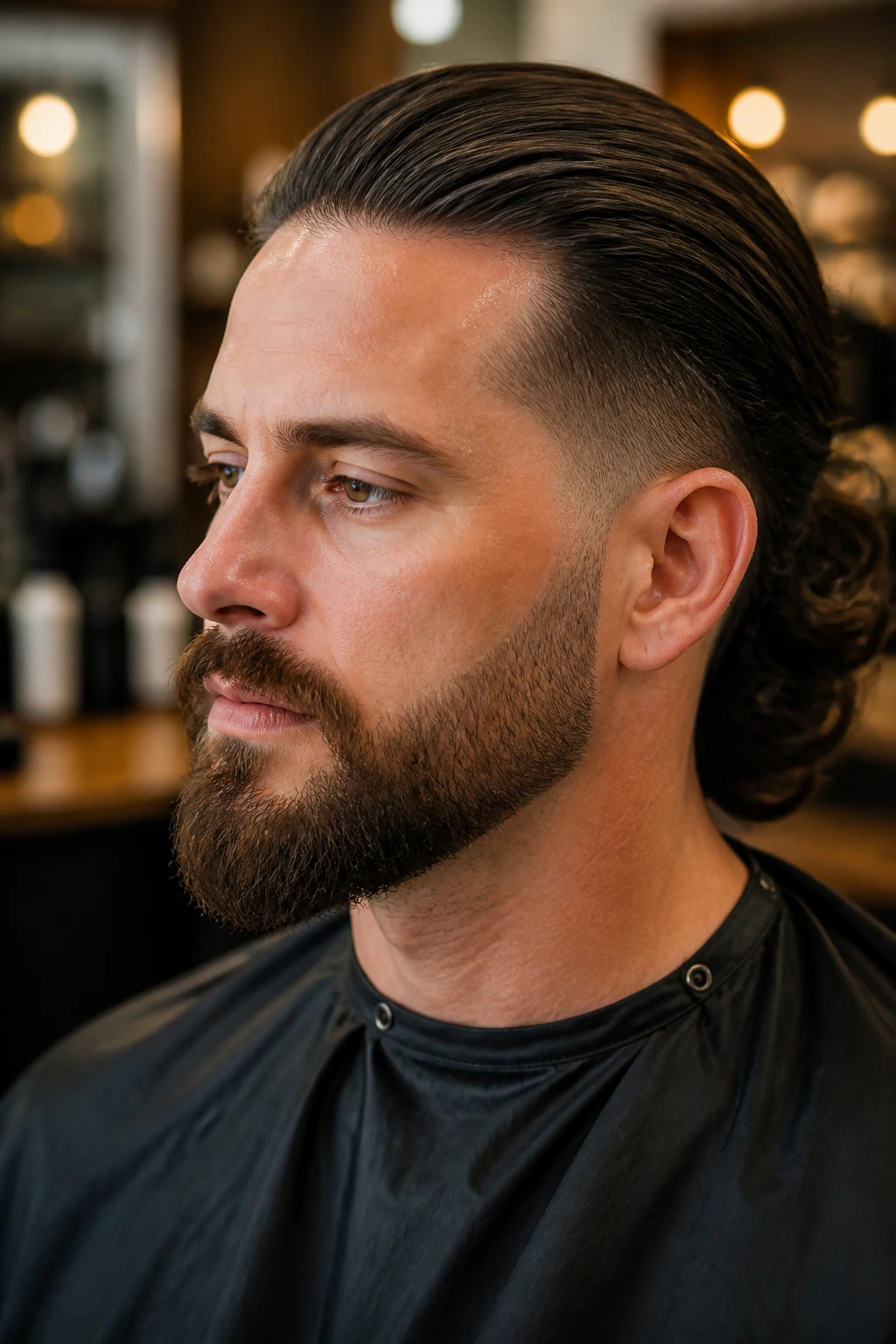
The faded beard is a modern answer to long hair, and it’s a good one. The fade on the sideburns keeps the transition from head hair to beard from looking abrupt. That little gradient does a lot of visual work.
Use the fade to control the silhouette. Shorter near the ears, a touch fuller at the jaw, then a bit more length at the chin if needed. The shape stays neat even when the hair itself is loose. That’s useful for guys who like movement up top but want structure down below.
It’s a barber-friendly style, too. If you visit every few weeks and touch up the edges at home, the look stays sharp without needing a full reset each time. Low drama. Clean result.
18. The Sculpted Jawline Beard
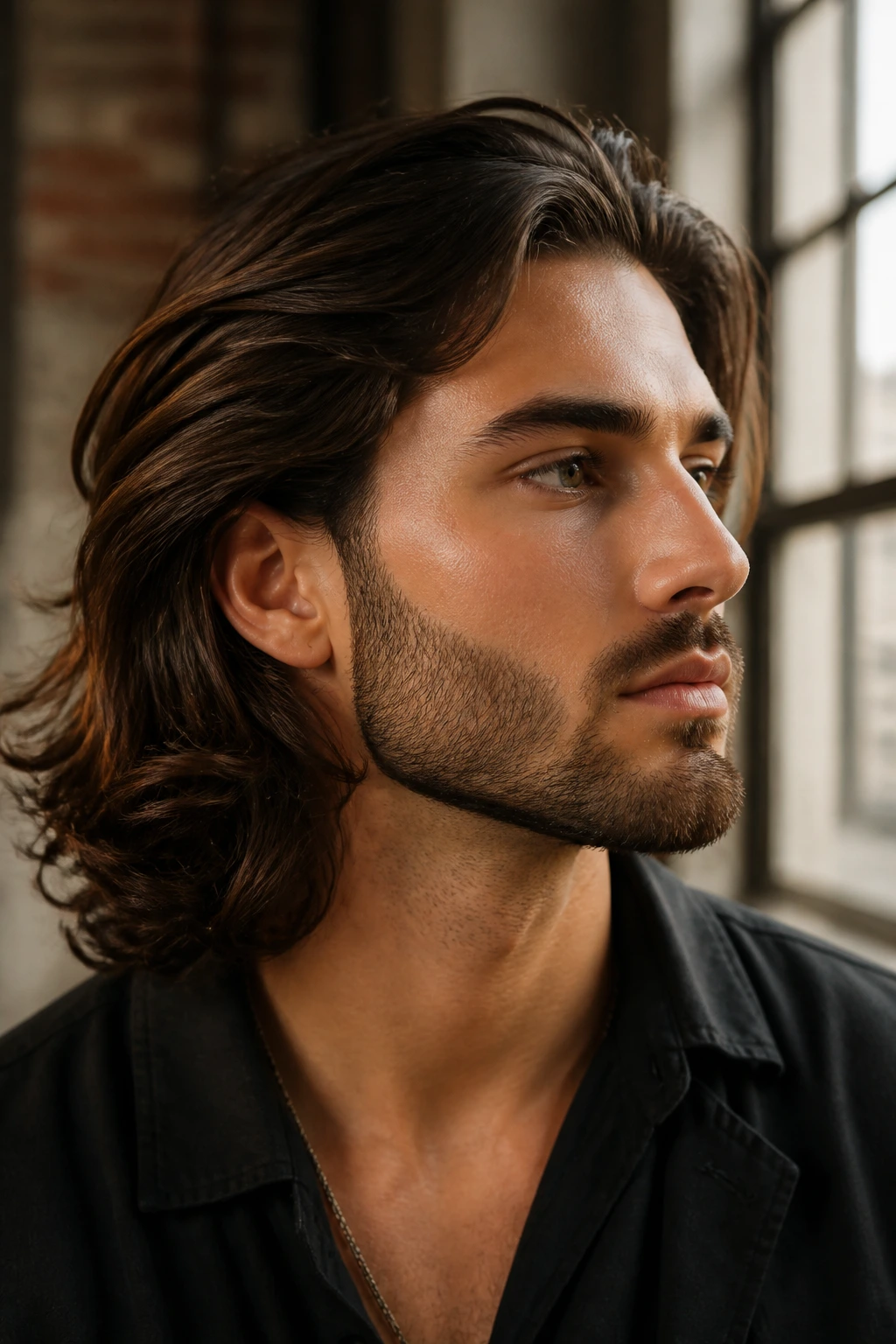
A sculpted jawline beard is for men who want definition more than mass. The beard hugs the jaw, follows the bone, and gives long hair a clean lower frame. It can be short, but it should never look accidental.
The shape works because it redraws the face. The jaw becomes more visible, the cheeks stay tidy, and the hair gets to stay long without making the whole look fuzzy. I like this on square and round faces, especially when the wearer has good cheek density and doesn’t need a huge beard to make the profile work.
This one depends on regular line work. If you wait too long, the sculpted effect disappears and the beard turns ordinary. Keep the edges fresh, and the style stays crisp.
19. The Chin Curtain
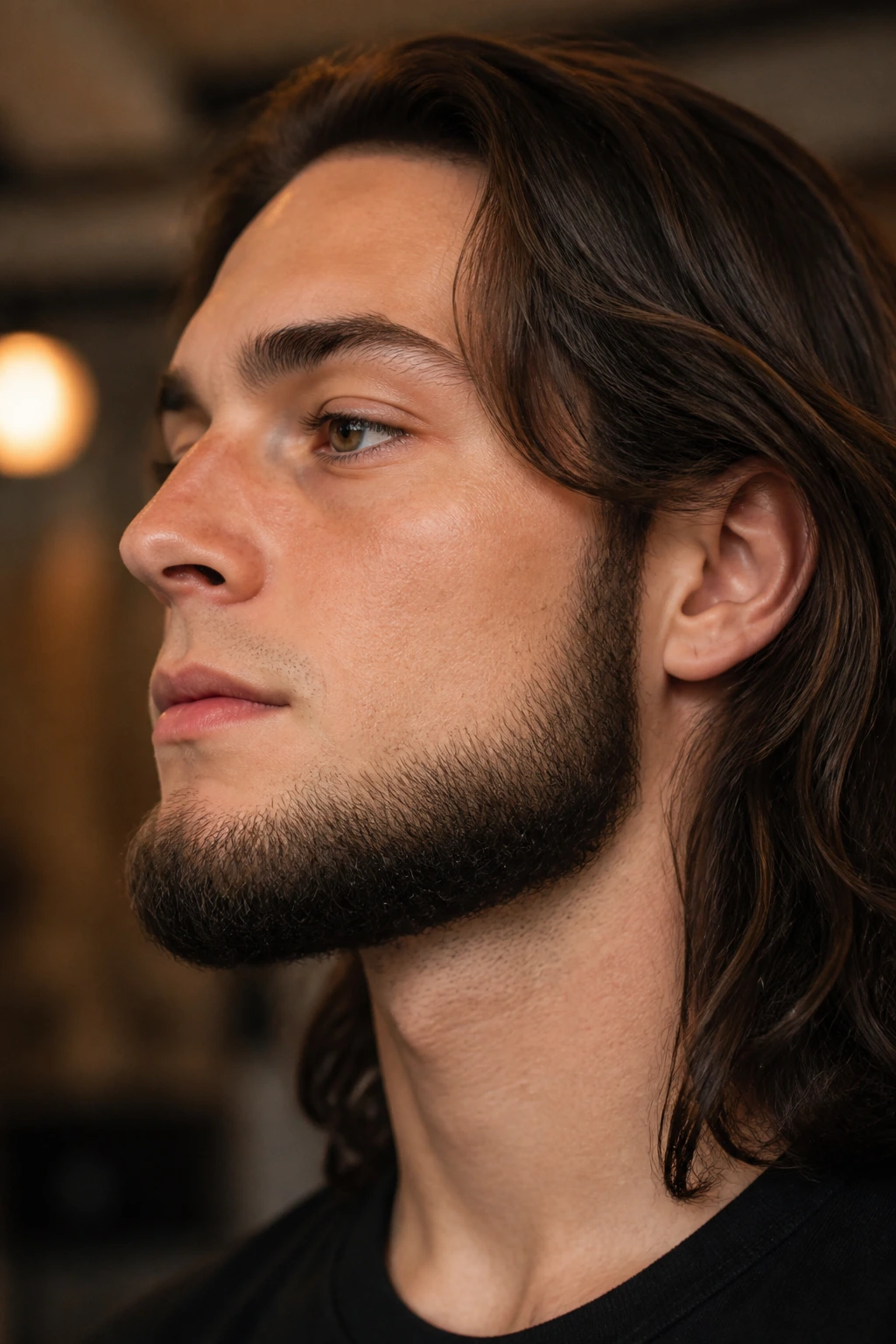
A chin curtain is one of those old styles that feels strange until you see it under long hair. Then it clicks. The beard runs along the jaw and chin, with the mustache left out, which makes the face look longer and more focused.
That upper-lip gap creates a clean line that long hair can soften nicely. The style works especially well when the mustache grows weak or when you want to keep the area around the mouth clear. A beard like this needs symmetry. If one side sags, the whole shape turns lopsided fast.
It’s not flashy. It’s precise in a quiet way. If you like vintage looks, this is one of the better ones to try.
20. The Natural Unlined Beard

A natural unlined beard is not the same thing as neglect. That’s the first mistake people make. The style keeps the shape loose and the cheeks natural, but the neckline still needs to be cleaned up or long hair will make the whole look seem forgotten.
The appeal here is texture. Long hair above, natural beard below, and no hard bars cut into the face. That relaxed feel works when you don’t want a barbershop-sharp look. It also works if your growth pattern is irregular, because forcing the lines too hard can make patchiness more obvious.
Trim stray ends every few weeks, keep the neck in check, and let the rest breathe. A little order is enough. Too much carving ruins the point.
21. The Clean Neckline Beard
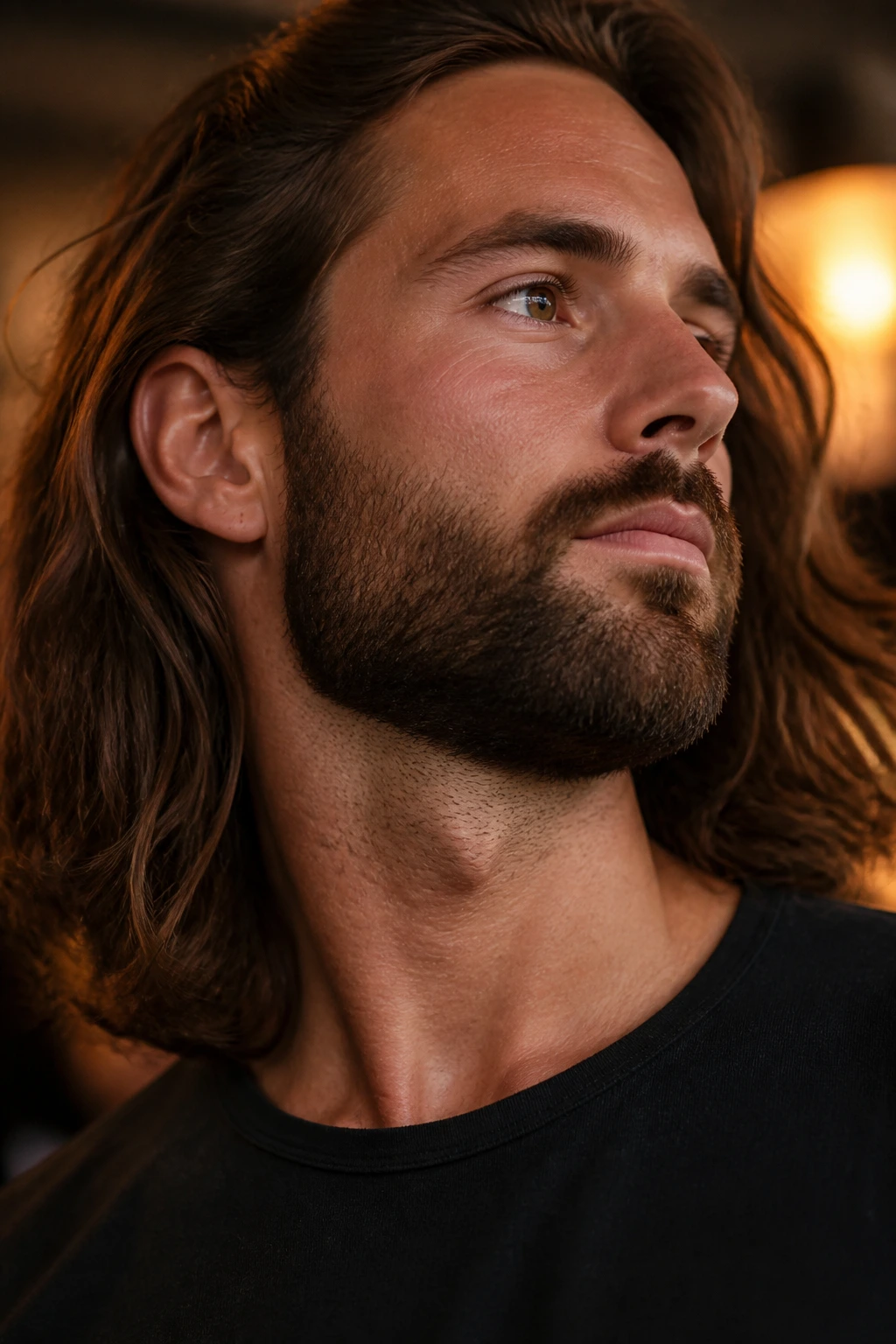
The clean neckline beard is boring in the best possible way. Clean necklines make long hair look intentional. A beard can be full, short, curly, or slightly patchy, and the whole thing still reads well if the throat line is properly placed.
The rule I trust
- Find the Adam’s apple.
- Place the neckline one to two finger widths above it.
- Curve the line gently from ear to ear.
- Do not let it sink into the throat.
This small detail changes the entire silhouette. Long hair already brings visual weight down the sides of the face, so a clean neck line keeps the lower half from turning muddy. It’s one of the easiest fixes on this list, and also one of the most ignored.
22. The Salt-and-Pepper Beard
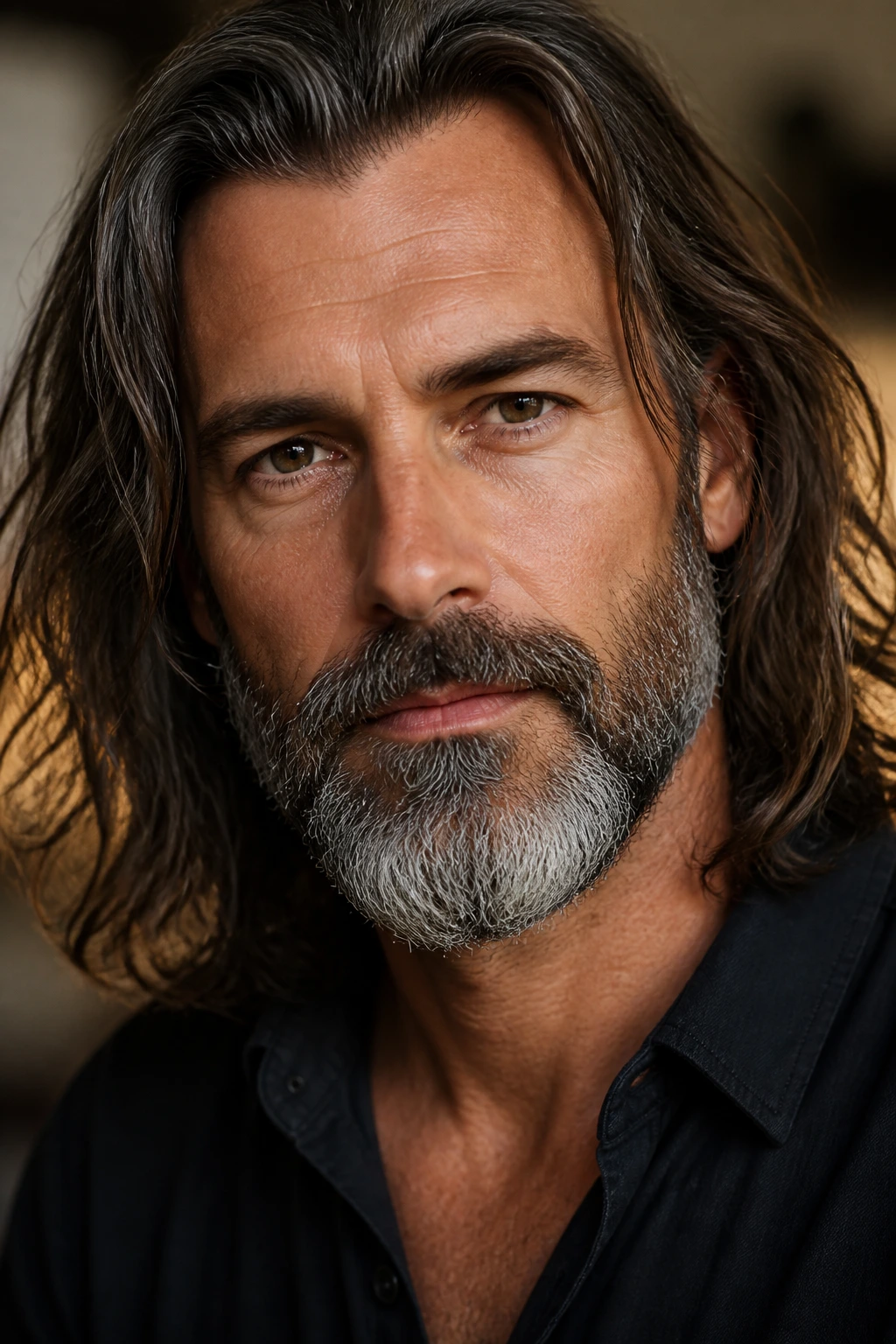
Gray beard hair under long hair can look sharp or tired. The difference is the outline. Salt-and-pepper growth shows stray edges more clearly, so the shape needs a little more discipline than you might think.
A beard like this looks best when the cheeks are neat and the neckline is clean. Let the color do the work. Gray catches the eye on its own, which means you do not need extra length or extra drama to make it interesting. In fact, too much bulk can make the look feel heavy.
If the hair on top is also graying, even better. The tones tie together naturally. Use a matte balm if the beard is wiry, because too much shine can make gray hair look stringy instead of textured.
23. The Braided Beard
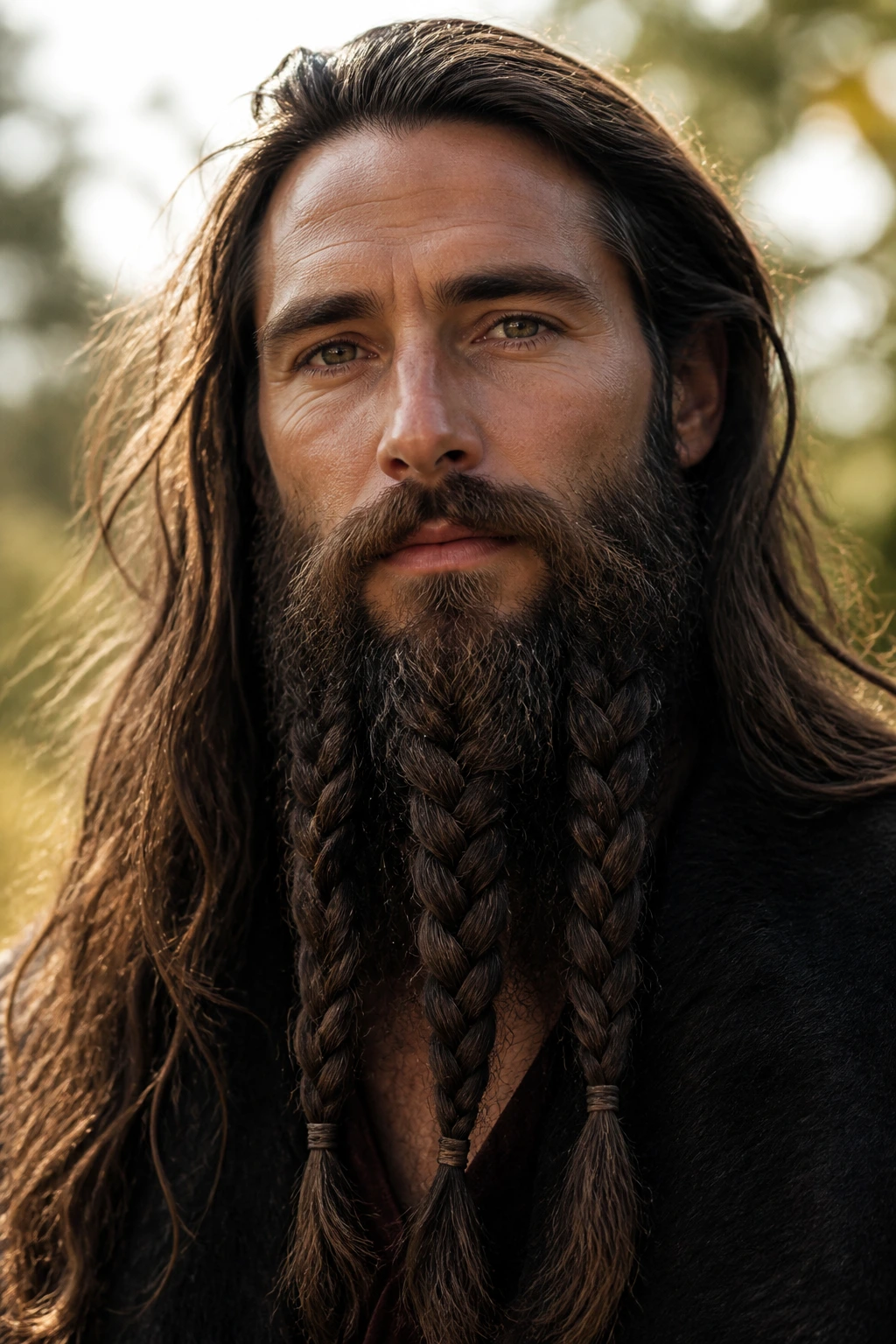
Braids are for length, and length is the whole joke here. If the beard isn’t long enough to hold sections, don’t force it. But once it gets there, braiding can turn a big beard into something controlled and surprisingly clean under long hair.
Practical braid notes
- Divide the beard into 2 or 3 sections.
- Use small, clear elastics or leather ties.
- Keep the braid moisturized with a light oil so the ends don’t fray.
- Brush it before braiding or the knots will show.
This style works well when the head hair is also tied back, because the whole look becomes coordinated without matching exactly. It’s not for everyone, and that’s fine. The braid should look like a choice, not a desperate attempt to manage bulk.
24. The Split Beard
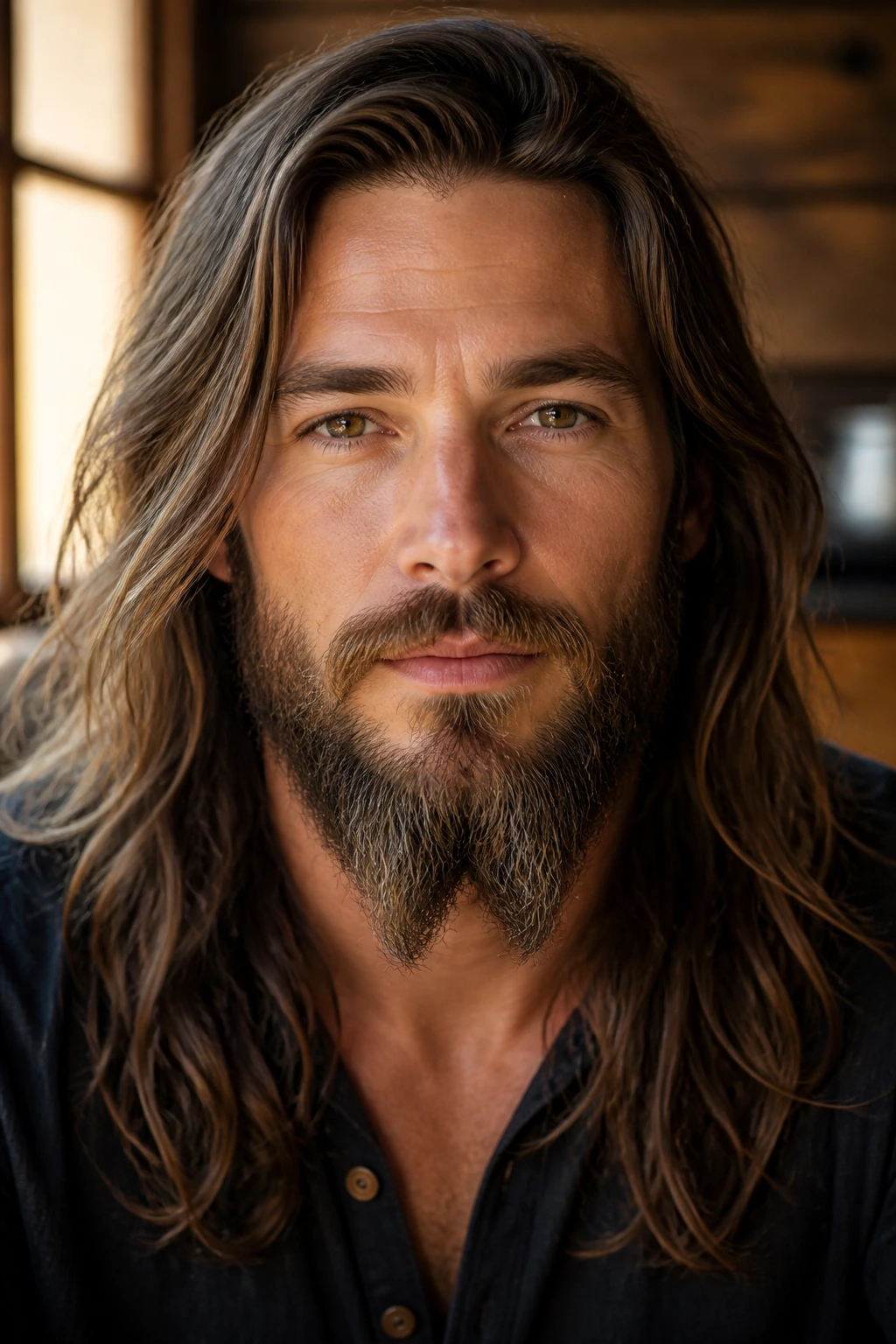
A split beard, or forked chin beard, is dramatic in the right way. The beard divides at the chin into two points, which gives the face a sharper, more old-world finish. Under long hair, it makes a lot of sense because the hair already brings softness to the upper half.
The split has to be centered. If the fork drifts to one side, the whole face looks off. Keep the beard long enough that the split reads cleanly, and use balm to keep the tips from fraying. This is not a low-maintenance style. It needs combing, trimming, and a bit of stubbornness.
If you want something with character, this is it. If you want easy, move on.
25. The Curly Beard
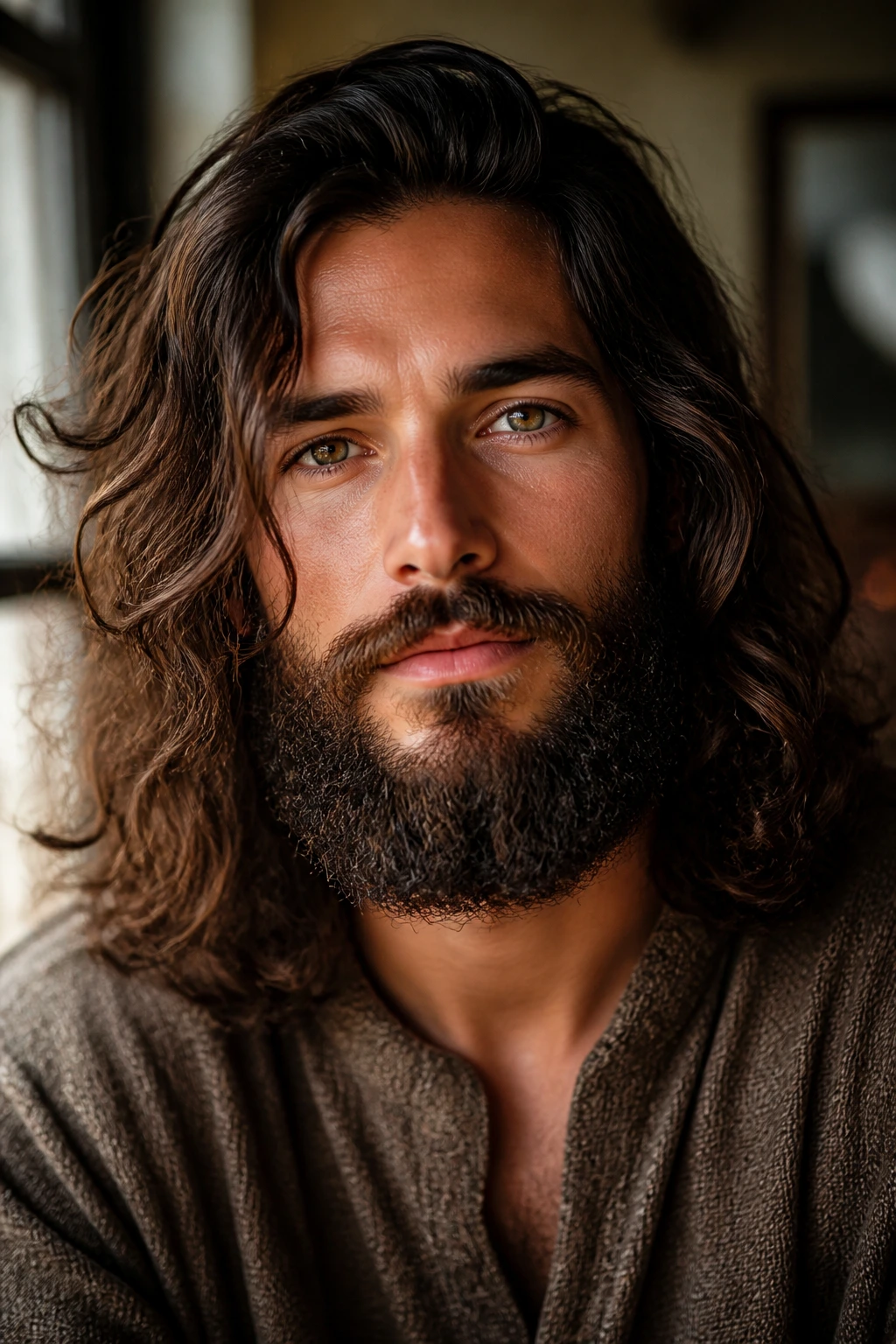
Curly beard hair has its own opinions. Ignore that, and the beard will puff out in every direction. Work with it, and it becomes one of the most interesting beard styles for long hair because the texture ties into wavy, curly, or even loosely brushed head hair.
Keep the outline shaped, then let the curl live inside that frame. A conditioner made for beards or hair helps a lot. So does combing while the beard is damp, not bone dry. Dry curls pull and frizz more, and that creates a wider silhouette than you probably wanted.
The important part is not making the beard too short. Curly hair shrinks. A beard that looks 1 inch long when wet may sit far shorter once it dries. Plan around that, or the shape will surprise you in a bad way.
26. The Pointed Beard

A pointed beard gives long hair a clean finish at the chin. It adds length without needing a huge overall beard, which is useful if the hair on top is already doing a lot of visual work. The point should be subtle—more a gentle taper than a cartoon peak.
The trick is keeping the chin slightly longer than the cheeks, maybe by half an inch to an inch. That’s enough to sharpen the profile without turning the beard into a cone. This style works well with layered hair and with faces that need a little extra vertical line.
I prefer it when the point is tidy and soft-edged. A hard point looks forced. A soft one looks like a choice.
27. The Mustache-Forward Beard
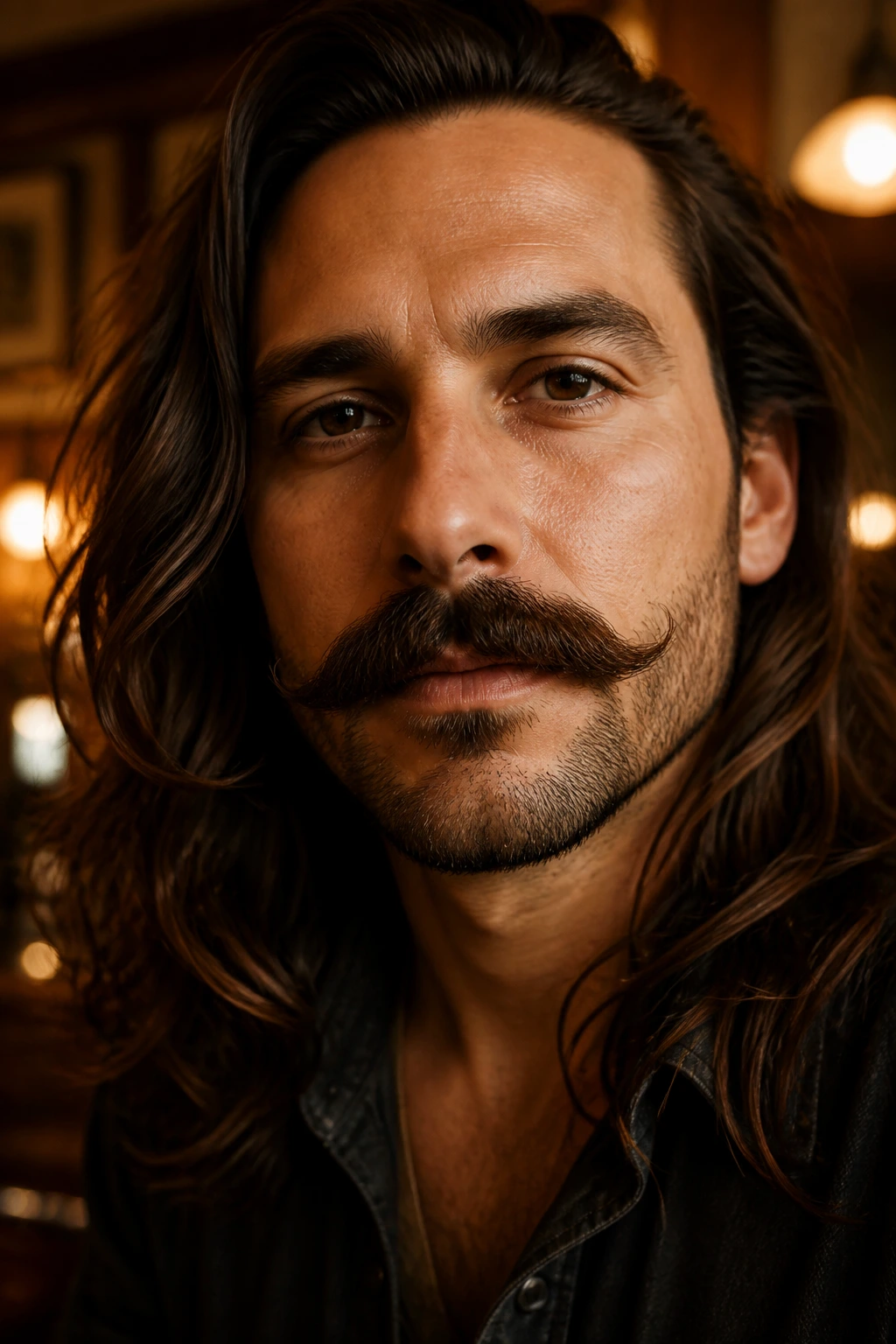
If the mustache has good density, let it lead. A mustache-forward beard keeps the beard shorter and shifts attention to the upper lip and center of the face. Long hair helps here because it gives the style enough visual mass around it.
This can mean a chevron, a handlebar, or simply a mustache that sits a little stronger than the beard below. Keep the beard trimmed back to 5 mm to 8 mm so the mustache still feels like the main event. Wax helps if the mustache wants to droop or split.
This works especially well on men with strong lip growth and medium beard density. It’s neat, a little vintage, and not nearly as fussy as it sounds.
28. The Patchy Beard Done Carefully

Patchiness does not automatically mean “shave it all off.” It means choose a shape that makes the gaps less obvious. Under long hair, a patchy beard can look deliberate if you keep it shorter, cleaner, and narrower than the growth would suggest.
The smarter approach
- Use a guard in the 2 mm to 4 mm range.
- Keep the cheek line controlled.
- Avoid growing the beard too long in the patchy zones.
- Shape the chin and mustache so they carry the look.
Long hair helps by pulling attention upward, which means the beard doesn’t need to prove itself with length. It only needs to look tidy. That’s a better strategy than chasing fullness that isn’t there.
29. The Short Beard with Crisp Cheeks

A short beard with crisp cheeks is one of the safest pairings for long hair. Safe doesn’t mean dull. The clean cheek lines give structure, and the shorter length keeps the face from getting crowded when the hair is already long and textured.
This style sits well around 4 mm to 8 mm, depending on density. Keep the mustache neat and the jawline squared or softly rounded based on your face shape. It’s a style that doesn’t ask for much, but it rewards precision.
I like it on guys who wear long hair but still want a tidy finish. It looks strong with glasses, simple shirts, and hair that’s either straight or just slightly wavy. Nothing fussy. No drama. Good shape.
30. Heavy Sideburns into Beard
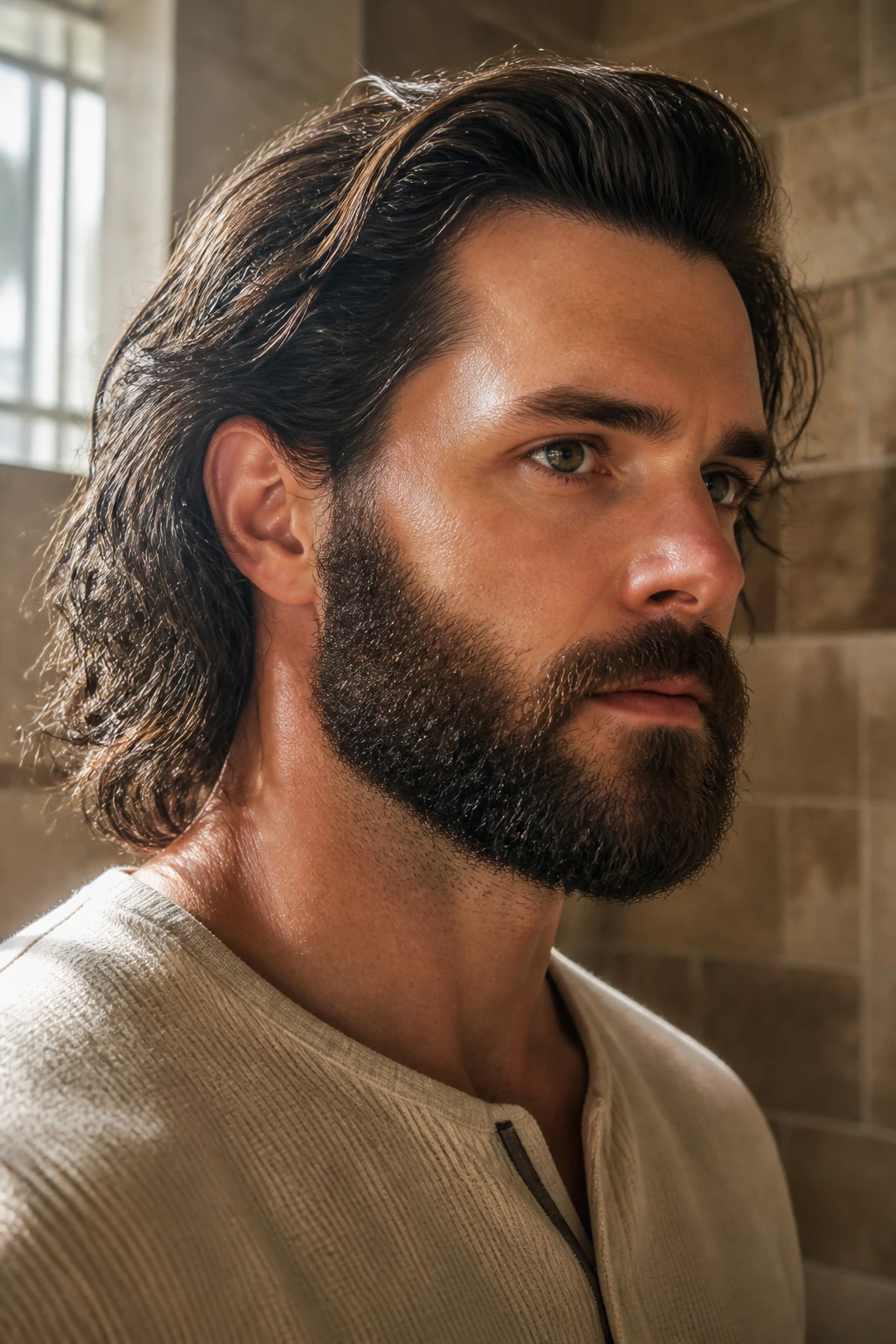
Heavy sideburns are the bridge most long-haired men forget to build. When the sideburns flow into the beard cleanly, the hair and facial hair stop looking like separate decisions. They start reading as one shape.
This style works especially well with thick growth on the sides of the face. Keep the transition tapered, though. A blunt block of hair from temple to jaw can get bulky fast. The better move is a softer blend that widens the face just enough to feel solid without turning square.
If your head hair is worn loose, this pair is especially useful. It keeps the hair from floating above an empty-looking jaw. That’s a detail people notice even when they can’t name it.
31. The Viking Beard
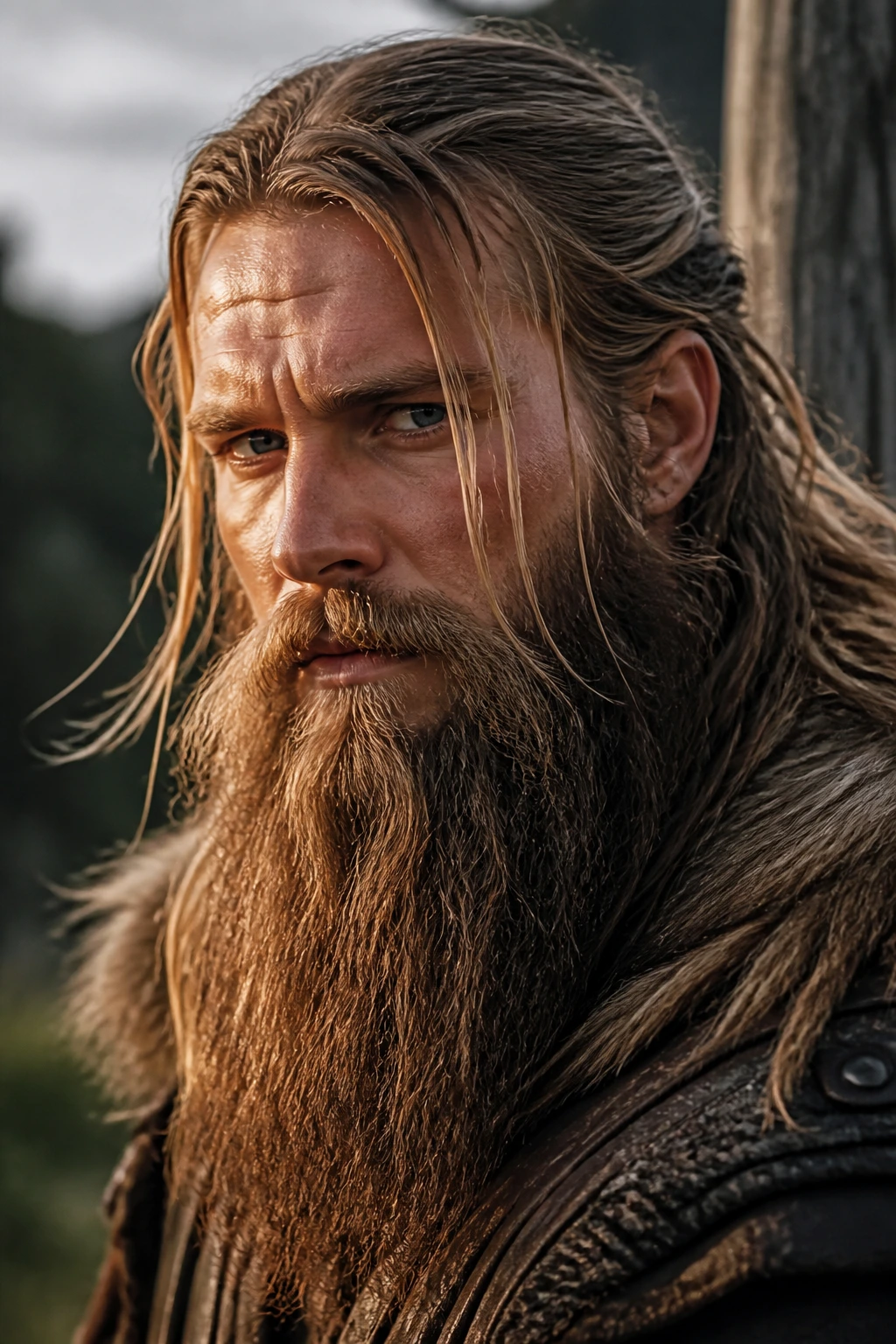
A Viking beard is not a beard style so much as a commitment. Long hair and a long beard together can look balanced, but only if both are cared for. Otherwise it turns into a knot farm. Good length needs good shape.
What keeps it wearable
- Wash the beard 2 to 3 times a week.
- Comb it daily, especially after showering.
- Use oil on the ends so they don’t split.
- Braid or tie sections when eating, working, or wearing scarves.
This style suits dense growth and a face that can carry width. It also works well if you’re okay with a little maintenance. If not, it will own you. The charm comes from the contrast between strength and order.
32. The Minimal Trimmed Beard
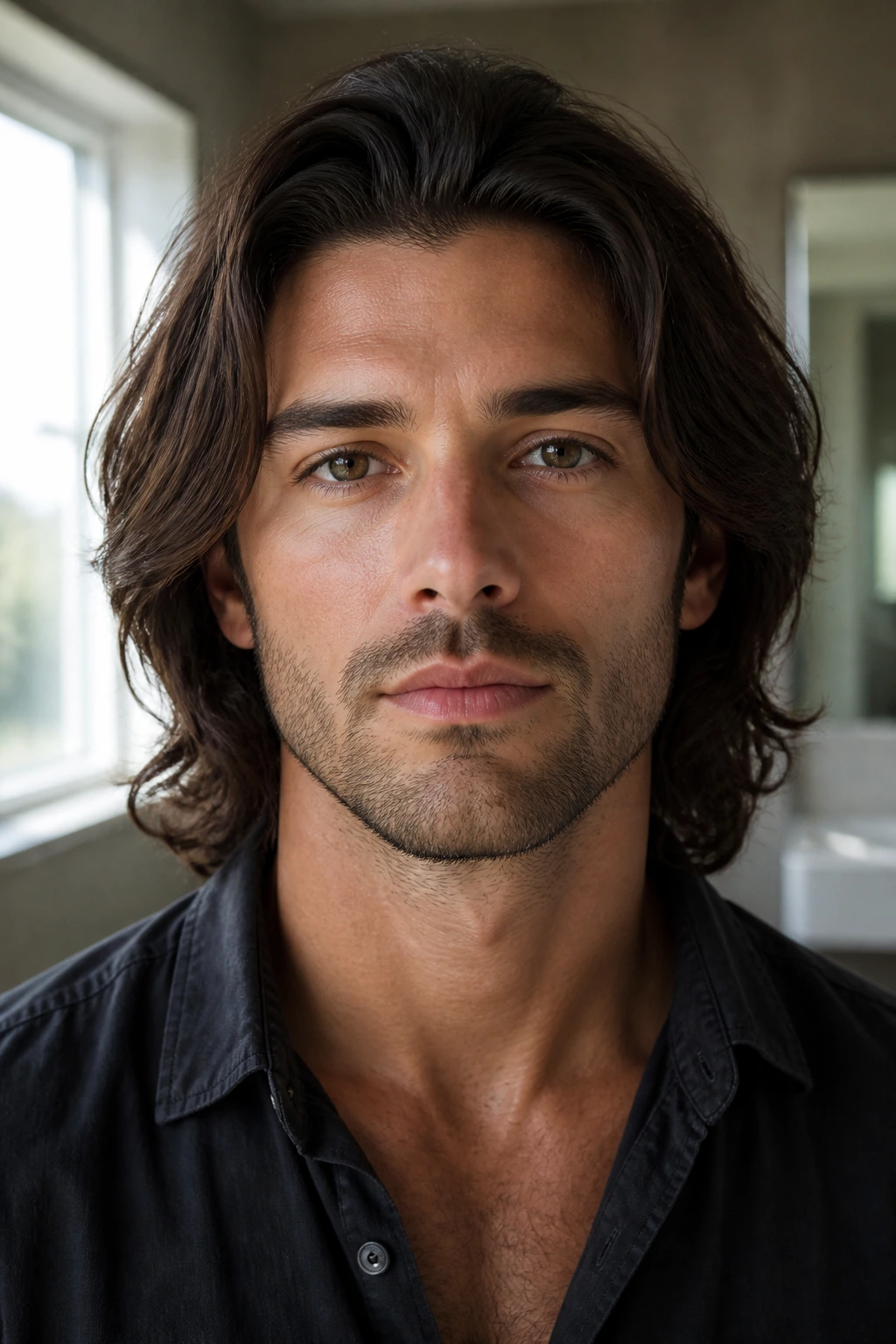
Sometimes the smartest beard style for long hair is the one that backs off a little. A minimal trimmed beard—think 1 mm to 3 mm—lets the hair lead while still giving the face some shape. It’s especially useful if your beard is sparse, fine, or grows unevenly.
The neckline still matters. So do the cheeks. A small amount of clean structure keeps the style from looking forgotten. That tiny shadow under the jaw can make long hair feel more finished without turning the lower face heavy.
This is the choice for men who want long hair first and beard second. It reads calm, tidy, and a little easier than a full beard. Sometimes that’s the smartest look in the room.
What Long Hair Changes In Beard Geometry
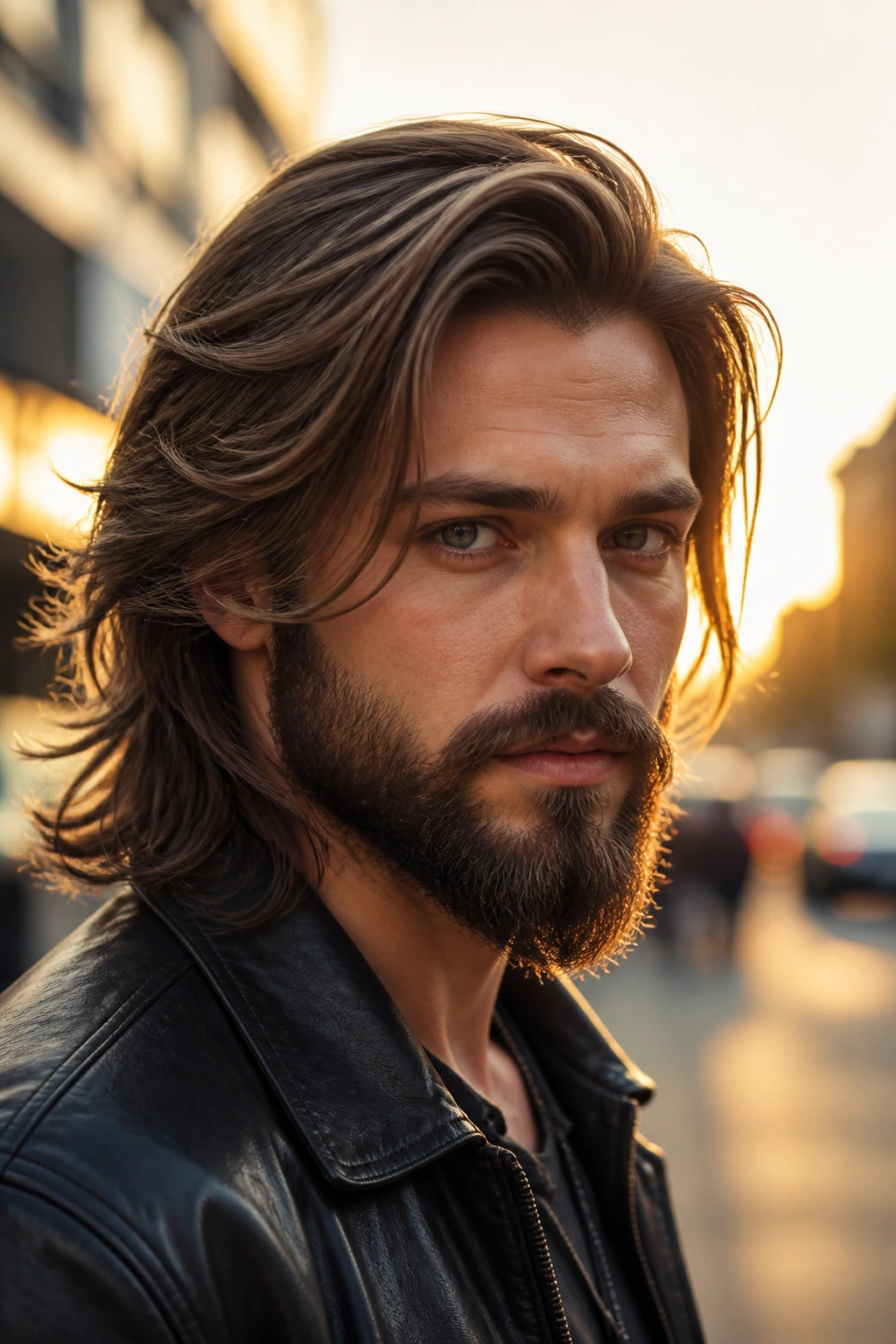
Long hair changes the way the face reads before the beard even starts growing. It adds vertical line, width around the temples, and movement near the ears. Once that happens, the beard has to answer a few questions: do you want more width, more length, or more clean space under the jaw?
That’s why the most successful pairings tend to be deliberate. A rounded beard softens long hair. A pointed beard lengthens a round face. A faded beard keeps thick hair from getting too heavy around the edges. None of this is abstract. It’s about where the eye lands first and where it lands second.
Face shape still matters, but texture matters almost as much. Straight hair plus a coarse beard looks different from curly hair plus a soft beard, even when the lengths match. If one side of the face is busy, the other side usually needs a calmer shape.
Tools That Make These Styles Easier To Keep

- Adjustable beard trimmer: A guard range from about 0.5 mm to 12 mm covers most styles on this list.
- Hair clippers with a taper lever: Useful for blending sideburns into the beard without obvious steps.
- Barber scissors: Better than a trimmer for trimming mustache tips and stray curls.
- Wide-tooth comb: Best for long beard hair, especially if it curls or tangles.
- Boar-bristle brush: Helps lay coarse beard hair flat and spreads oil through the length.
- Detail razor or foil shaver: Good for cheeks and neckline when you want clean lines.
- Hand mirror: Necessary for checking the back of the neckline and the jaw under the ears.
- Blow dryer with a nozzle: Handy for drying hair and beard in the direction you want them to sit.
- Hair ties or section clips: Useful for tying long hair back while trimming the beard.
- Beard oil and balm: Oil softens; balm adds hold. Those are not the same job.
Products And Barber Choices Worth Paying Attention To

A good beard style with long hair starts with products that match the texture, not the marketing. Coarse beards usually want a heavier oil or balm; fine beards can get greasy fast if the product is too rich. If your beard dries out at the ends, a little oil on damp hair helps more than slathering on a thick balm after it’s already frizzy.
Shampoo matters too. Beard hair does not need the same aggressive wash as scalp hair, especially if the beard is long. A gentle beard wash or a mild shampoo a few times a week keeps the skin underneath from getting stripped. If the beard is curly, a leave-in conditioner or a beard conditioner makes the shape easier to manage the next morning.
At the barber chair, ask for shapes, not vibes. Say “clean neckline,” “soft cheek line,” “fade the sideburn into the beard,” or “keep the chin fuller than the sides.” Those words get you closer to the result than “make it look cool.” They also prevent the classic problem of leaving the chair with a style that looked amazing in the mirror and impossible to maintain at home.
How To Wear The Look Without Fighting Your Face Shape
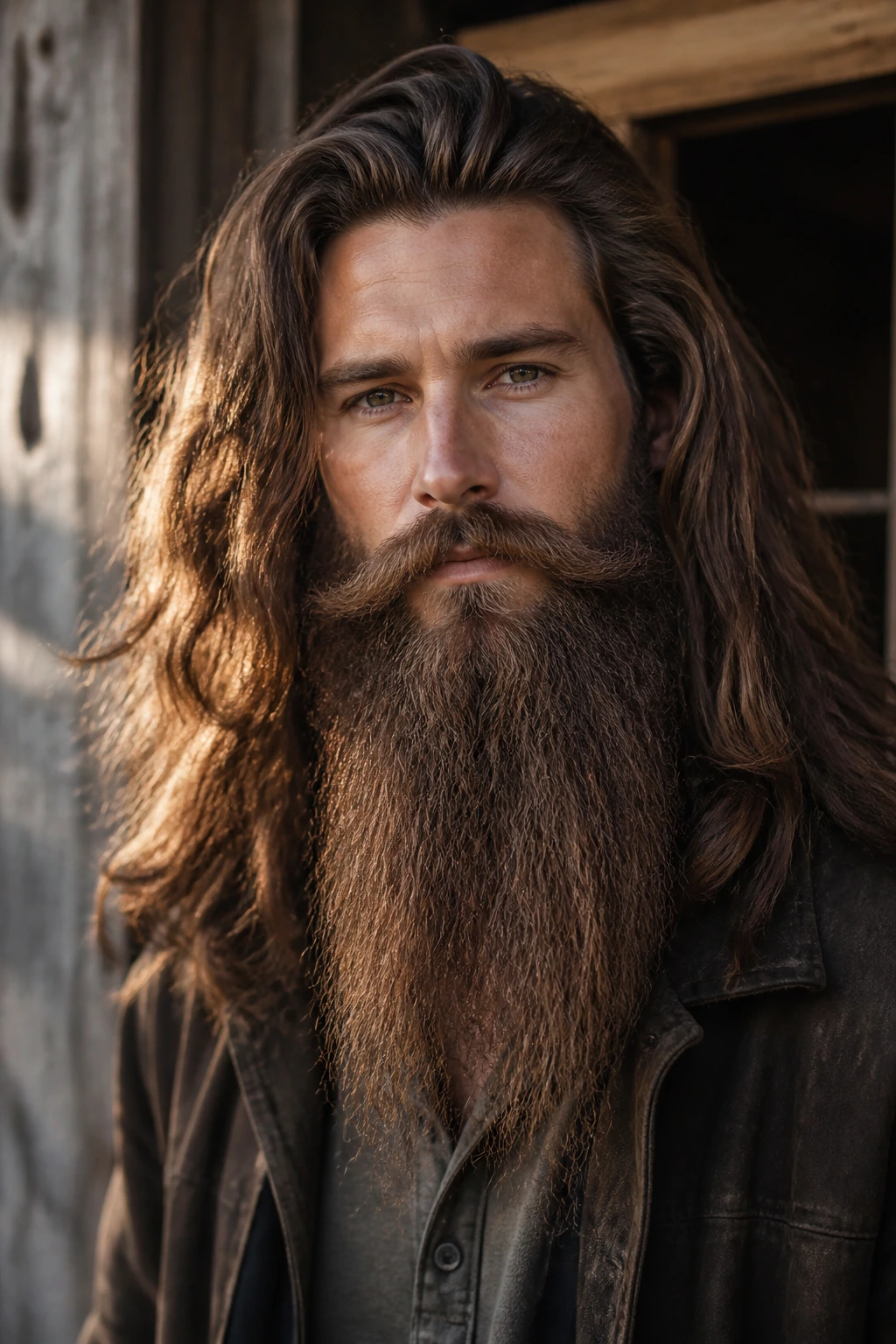
Presentation: Long hair and beard work best when one of them leads and the other supports. If the hair is loose and full, keep the beard defined. If the beard is full and heavy, let the hair stay softer or pulled back. When both are massive, the face can disappear.
Pair It With: Open collars, plain tees, henleys, denim jackets, and heavy knitwear make these styles feel grounded. Sharp suits can work too, but they usually want a cleaner beard like the short boxed, faded, or Balbo shapes. A floppy hat with a giant beard and long hair can get excessive fast.
Length Balance: Round faces usually like more height in the beard. Long faces usually benefit from width at the cheeks or jaw. Square faces can handle a rounded beard if the hair is dense; heart-shaped faces often look better with a fuller chin than a wide side profile.
Setting: If you work around clean, structured dress codes, keep the beard tidy and the neckline exact. If your clothes are looser and your hair is worn down more often, a natural beard or Garibaldi may fit better. The goal is not to “match a vibe.” The goal is to keep the face from feeling split in half.
The Small Grooming Moves That Change Everything
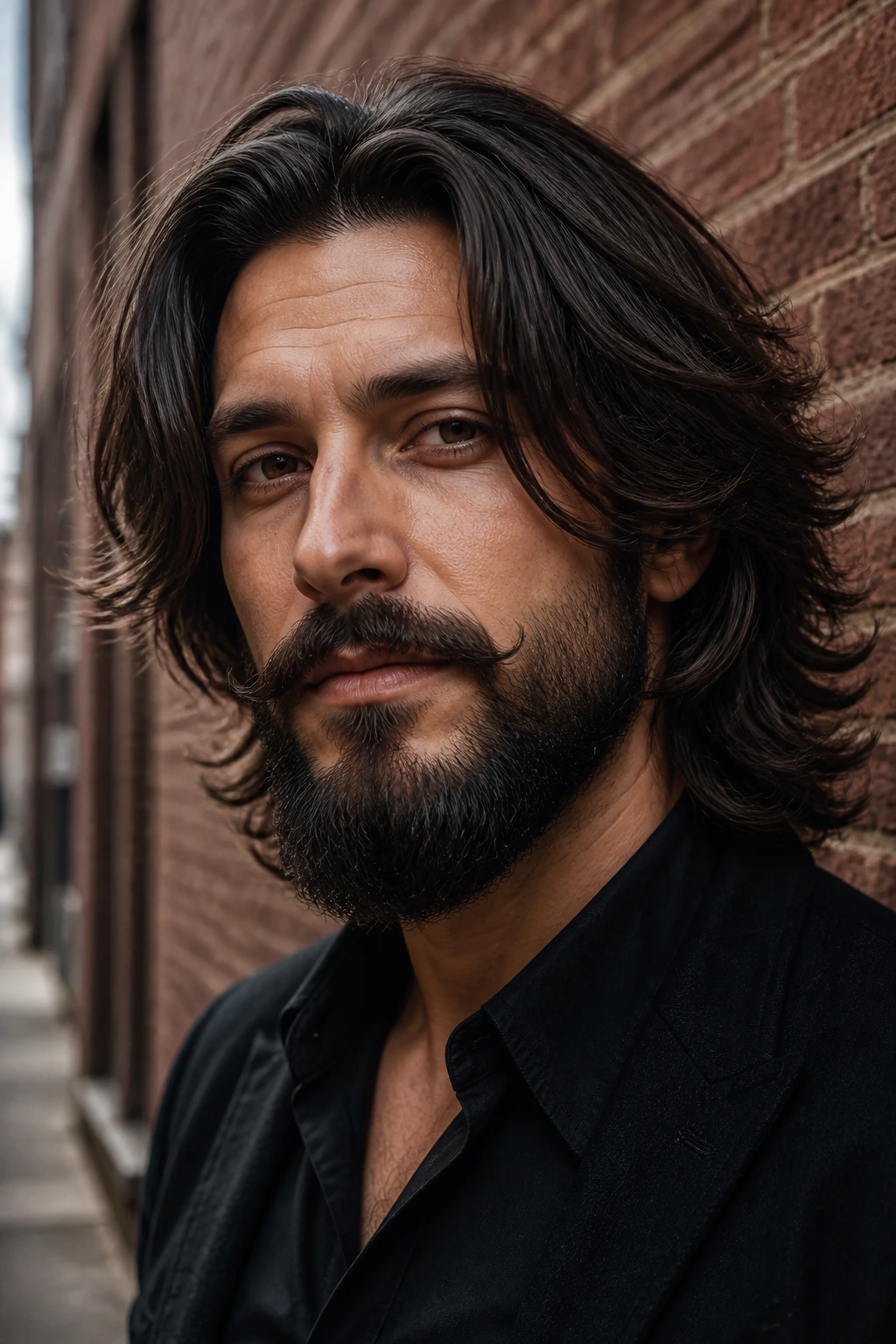
Texture Match: If the hair on top is smooth, don’t leave the beard frizzed out and dry. A few drops of oil and a quick brush make the beard look like part of the same person. If the hair is wavy or curly, a little controlled mess in the beard looks natural.
Edge Control: Clean the neckline every 5 to 7 days if your beard grows fast. Even the most relaxed style starts to look careless when the throat line drops too low. Keep the cheeks softer only if the rest of the shape is doing enough work.
Contrast: A strong beard can make long hair feel sharper; a short beard can make long hair feel lighter. Pick one lane on purpose. People notice when the contrast is intentional, even if they can’t explain why.
Low-Effort Save: If the beard is acting up, shorten it by one guard step before you try to “fix” it with more product. Too much balm on a bad shape only gives you a shiny bad shape.
Keeping The Beard And Hair In Shape Between Trims
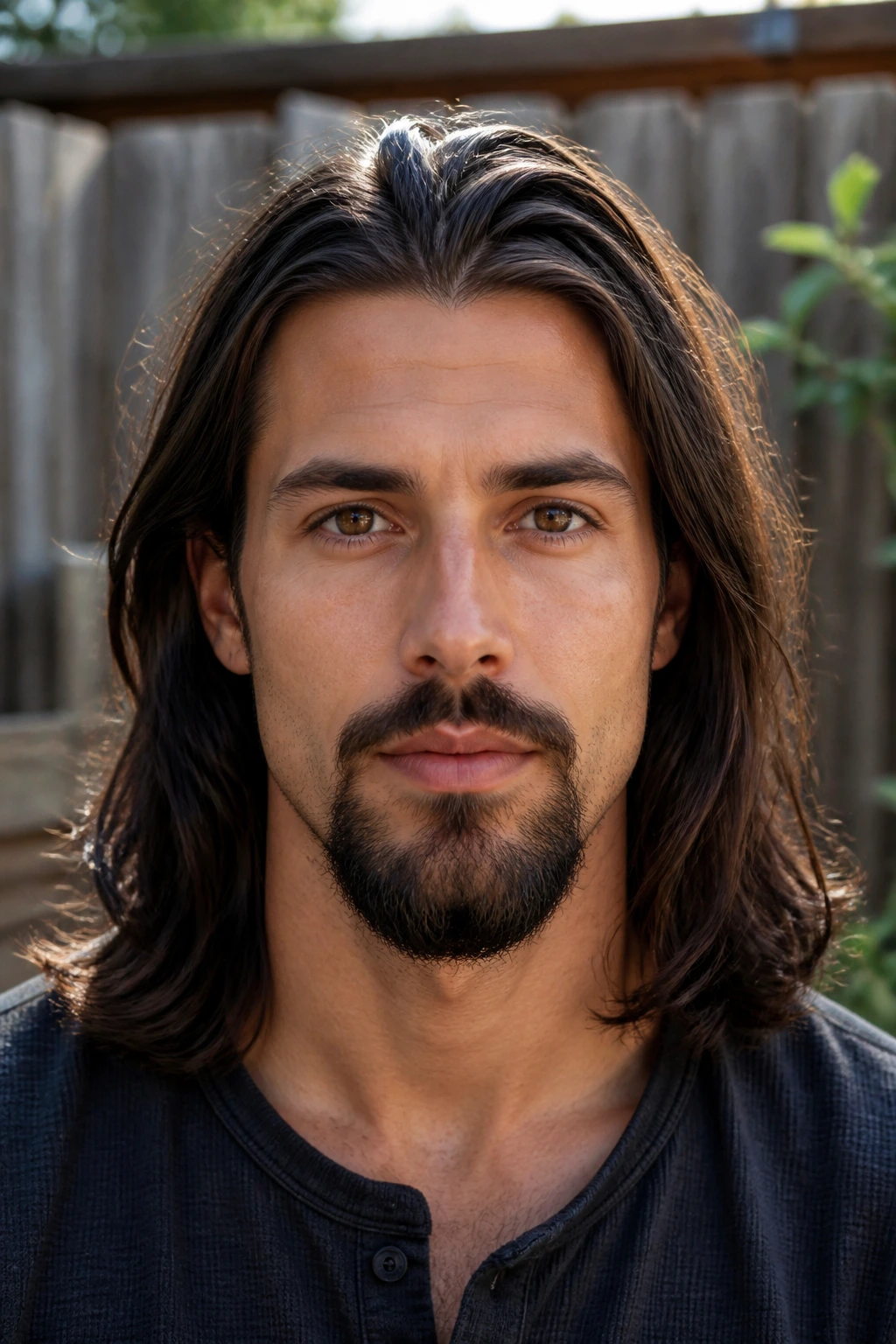
Long hair and a beard both punish neglect. Fast. The good news is that the upkeep is pretty simple once you set a rhythm.
Wash the scalp as needed based on oil and activity, but don’t scrub the beard hard every day. Two to three beard washes a week is enough for most men. After workouts or sweaty days, a rinse and a comb-through usually does the job. The beard should dry in the direction you want it to sit, not in the direction the towel dragged it.
Trim the neckline weekly if you grow fast; every 10 to 14 days if growth is slower. The cheeks can go a little longer between cleanups, but don’t let the lines disappear. Barber visits every 3 to 5 weeks keep more structured styles from drifting. Fuller styles like the Garibaldi or Bandholz can stretch longer, but only if you’re willing to brush and condition them so they don’t split at the ends.
Hair ties, hats, scarves, and even pillow friction matter. If the beard gets flattened at night, a quick morning brush and a little oil bring it back. Small habits. Big difference.
Variations And Adaptations To Try

The Office-Ready Trim: Keep the beard in the 3 mm to 6 mm range with a clean neckline and a soft fade at the sideburns. It gives long hair a neater finish without looking sterile. This works well if you need the style to survive under a collared shirt.
The Rugged Weekend Build: Let the beard fill out into a Garibaldi, Bandholz, or Viking shape, then tie the hair back loosely. The contrast between controlled hair and bigger beard gives the face a stronger frame. It’s a good fit for dense growth and a square jaw.
The Curly-Hair Adjustment: If your head hair and beard both curl, keep the beard a touch longer than you think you need. Curls shrink, and a too-short beard can turn into a puffball at the jaw. Use conditioner and a wide-tooth comb, not a tiny plastic one.
The Patchy-Beard Plan: Shorten the beard, narrow the shape, and keep the chin and mustache as the visual anchor. Long hair helps cover some visual imbalance, but only if the beard stops trying to be something it isn’t. A clean shape beats a hopeful one.
The Gray-Beard Version: Let the silver show, but tighten the outline. Gray hair shows uneven edges faster, so a cleaner cheek line and neckline keep the style from looking wild. This version looks especially good when the head hair has the same salt-and-pepper tone.
Common Mistakes To Avoid
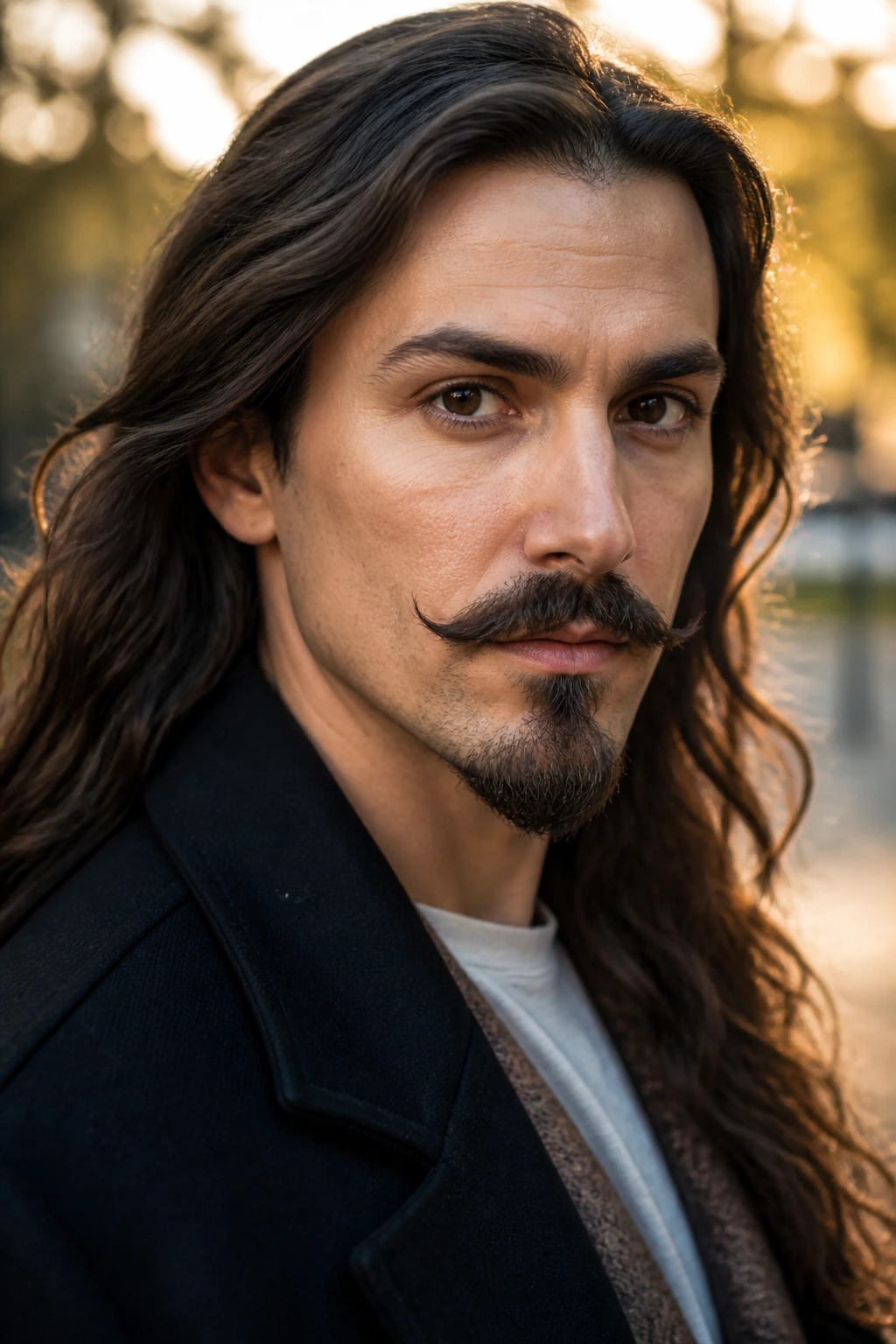
The first mistake is letting the neckline sink into the throat. That makes even a good beard look tired, and long hair amplifies the problem. Keep the line above the Adam’s apple, curve it gently, and check it in a handheld mirror before you leave the sink.
The second mistake is giving the beard and the hair the same amount of volume. That usually ends with a face that looks wider than it is tall, or tall without enough support. One of the two has to lead. Decide which one.
The third mistake is over-shaping the cheeks on every beard. Some styles need soft cheeks. Some need natural growth. If you carve the upper half too hard on a Garibaldi, Bandholz, or natural beard, you kill the exact texture that made the style worth wearing.
The fourth mistake is using too much product. Beard oil is not hair gel. A few drops go a long way, especially on finer hair. Overdoing it makes the beard look wet and collapses the shape, which is annoying because the fix is usually less product, not more.
The fifth mistake is trimming the mustache as an afterthought. Long hair pulls attention upward; a messy lip line makes the whole face feel unfinished. Clean it every few days, even if the beard itself is meant to look relaxed.
Questions People Actually Ask
Which beard style works best with shoulder-length hair?
A rounded beard, full beard, or clean faded beard usually balances shoulder-length hair well. Those shapes keep the face from looking too long or too narrow, and they don’t fight the movement in the hair.
Should the beard be the same length as the hair?
No. Equal length can look heavy and flat unless you’re going for a very specific big, wild look. Most of the better combinations use contrast: shorter beard with long hair, or full beard with hair that’s tied back.
What if my beard is patchy?
Go shorter and cleaner. A 2 mm to 4 mm beard with a sharp neckline usually looks more deliberate than a half-grown beard trying to cover gaps. Long hair helps, but the beard still needs a shape that works with the growth you actually have.
How often should I clean up the neckline?
Every 5 to 7 days is a safe rhythm for fast growth. Slower growers can stretch that a bit, but once the neckline drops onto the throat, the style starts looking softer than it should.
Can I wear long hair and a beard with glasses?
Yes, and some styles look better with glasses than without them. Short boxed beards, circle beards, and clean faded styles sit nicely with frames because they keep the lower face tidy instead of crowding it.
What works best for curly hair and a curly beard?
A tapered beard with a controlled outline usually wins. Curly hair needs space, but not chaos. Let the beard keep its natural texture and shape the outside edge instead of trying to flatten the curl out.
Is a long beard a bad idea for a round face?
Not if the beard adds length and not width. Ducktails, pointed beards, and sculpted jawline styles help more than wide, rounded shapes. The goal is to stretch the face a little without making the cheeks puff out.
When should I see a barber instead of fixing it myself?
If the sideburn blend, neckline, or cheek line keeps drifting out of shape, get a barber involved every few weeks. Home trimming works fine for maintenance, but once the outline gets muddy, a clean reset saves time and frustration.
The Shape That Makes The Hair Work
Long hair and a beard can look like a mess, or they can look like a plan. The difference is rarely length. It’s proportion, edge control, and choosing a beard shape that gives the hair somewhere to land.
If you want the easiest route, start with one of the cleaner styles: short boxed, faded, rounded, or heavy stubble. If you want more personality, move toward the Garibaldi, ducktail, Verdi, or Bandholz. And if you already have a strong facial structure, a chin strap, Balbo, or Van Dyke can sharpen the whole thing without adding bulk.
The useful part is this: you do not have to pick the loudest beard to make long hair work. You only have to pick the one that keeps the face from floating away from itself.
