



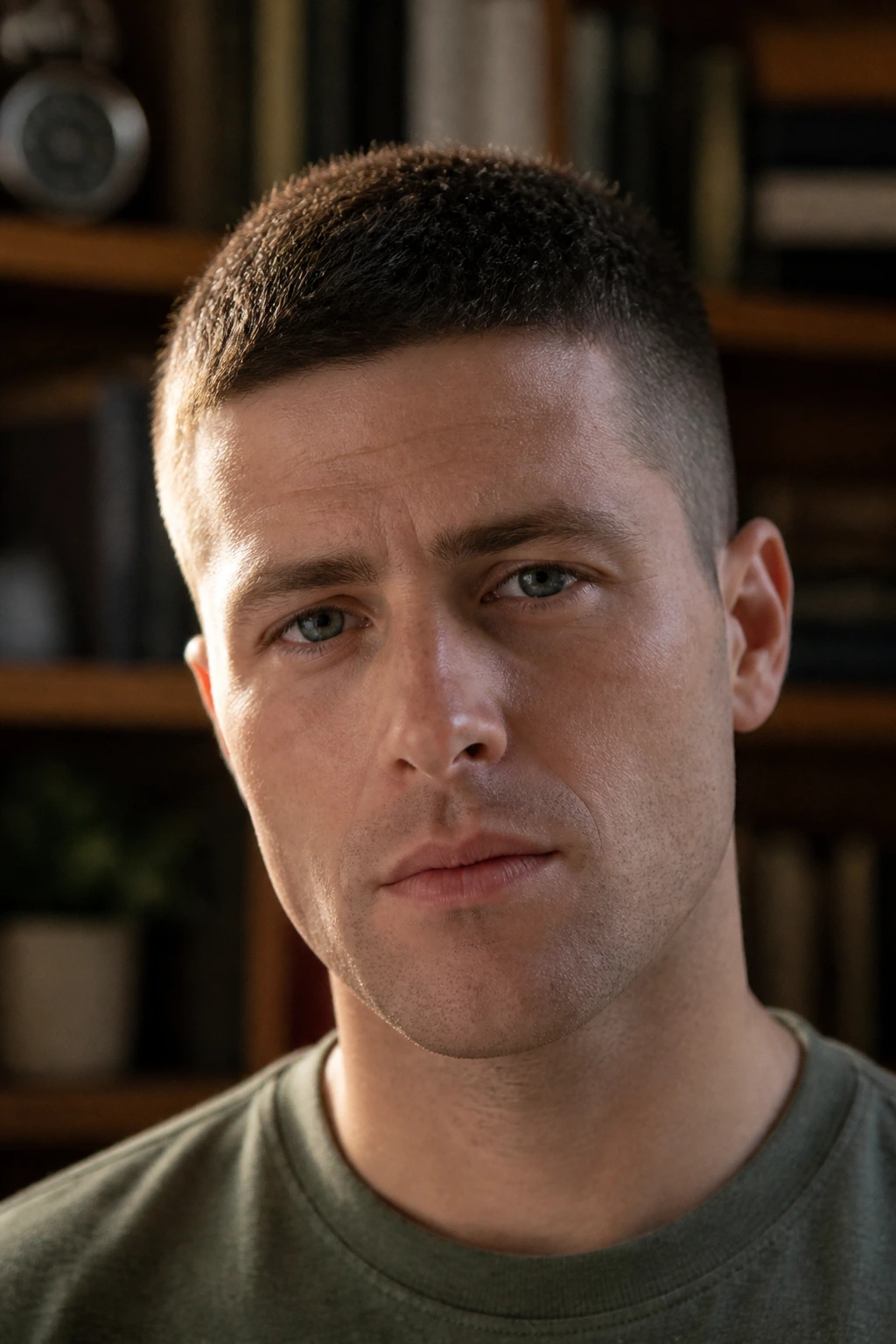
A clean crew cut on men has a rare kind of honesty to it. There’s no long fringe to hide behind, no floppy length pretending to be deliberate. The shape either works or it doesn’t, and when it works, it looks sharp in a way that feels almost unfairly efficient: tight sides, a controlled top, a neckline that doesn’t wander off in three directions.
That’s why this haircut keeps hanging around. It can read military, Ivy League, barbershop-clean, or a little rough around the edges depending on how the fade is handled and how much length stays on top. Give a barber a vague “short on the sides” request and you might walk out with something flat and forgettable. Give them a clear crew cut shape—top length, taper point, hairline treatment, texture—and the whole thing changes.
The best versions don’t all look the same, either. A crew cut with a low taper can feel tidy and understated. A skin fade version has more bite. A scissor-cut version looks softer and less machine-made. Curly hair, straight hair, thick hair, thinning hair—they all have a place here, and the right version makes the haircut look like it belongs to your head instead of being pasted onto it.
Why These Clean Crew Cuts Keep Working

- They look deliberate fast: A crew cut keeps its shape after a windy commute, a long workday, or a day when you don’t touch your hair at all.
- They’re easy to explain: Guard numbers, taper height, and top length are simple barber language, which cuts down on bad surprises.
- They suit more hair types than people think: Straight, wavy, curly, coarse, and finer hair all work if the top length and fade are chosen with some care.
- They play well with facial hair: A crew cut can sit right above stubble or a fuller beard without looking mismatched, as long as the sideburns are blended on purpose.
- They handle thinning spots honestly: Shorter sides and a controlled top can keep temples, crowns, and receding areas from looking overly exposed.
- They don’t need much product: A dime-size amount of matte clay or cream is often enough; the haircut itself does most of the work.
What Makes a Crew Cut Look Clean Instead of Flat
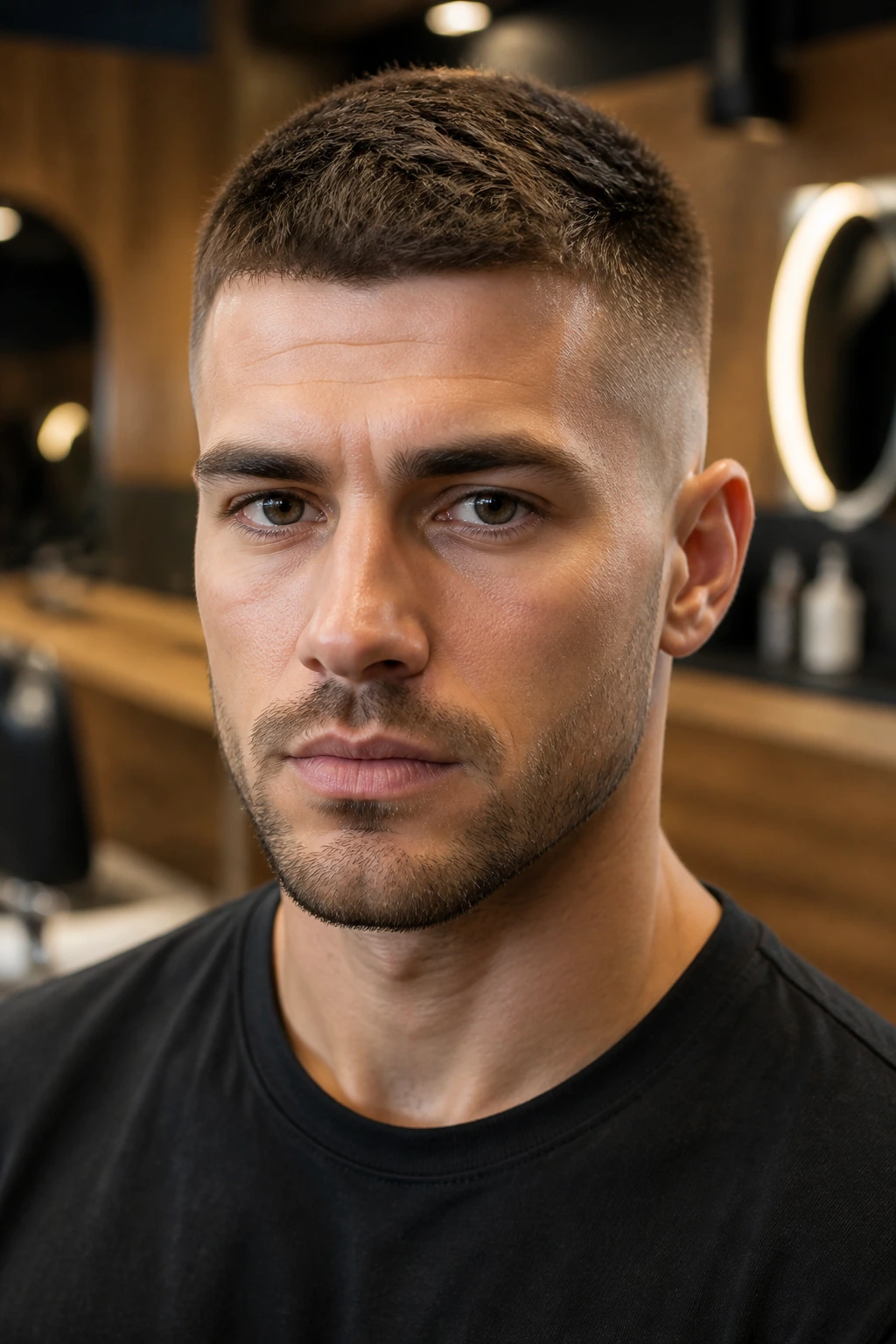
A clean crew cut is less about being short and more about being shaped. The difference lives in the taper, the top, and the edge work around the ears and neckline. If the sides are hacked down without a soft transition, the cut can look blunt. If the top is left without enough purpose, it turns into a buzz cut with a little confusion on top.
The top should have a job
A crew cut top usually sits somewhere around 1 to 3 inches, depending on the variation. That length can be brushed forward, pushed slightly up, or nudged to the side, but it should look like it was left there on purpose. If the top is too long and the sides are too tight, the cut starts to look like a mismatch.
The taper matters more than most people think
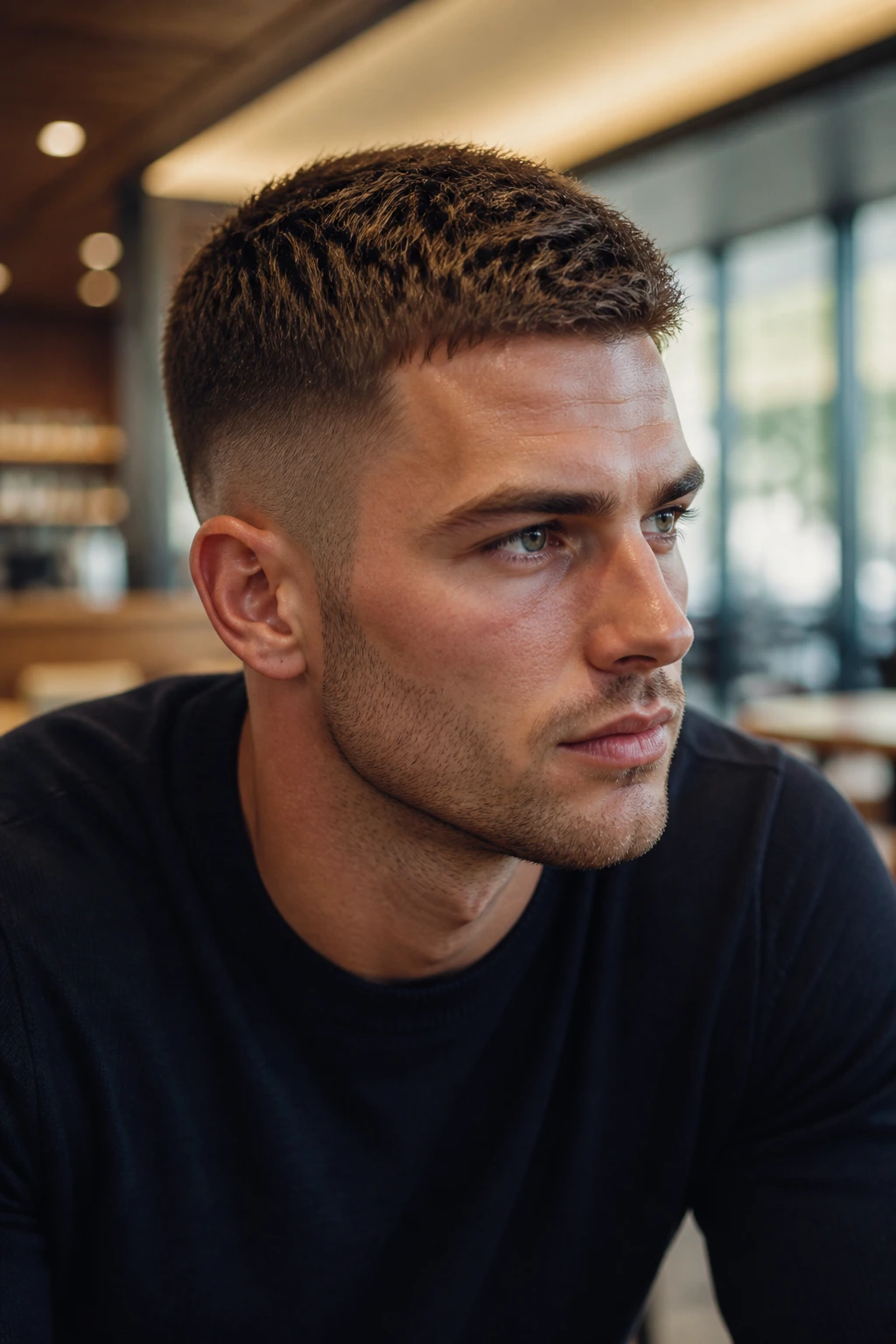
The taper around the temples and neckline is what keeps the cut from reading as harsh. A low taper gives a clean finish without shouting. A skin fade adds contrast and edge. Either can work. What doesn’t work is a fuzzy line that looks like it was forgotten halfway through.
The neckline is the giveaway
Seriously. A good crew cut can be ruined by a sloppy neck area in two weeks flat. A clean neckline should follow your natural hairline, not sit so high that it looks carved with a ruler. The best barbers leave it neat, not unnatural.
How to Ask Your Barber for the Exact Crew Cut You Want
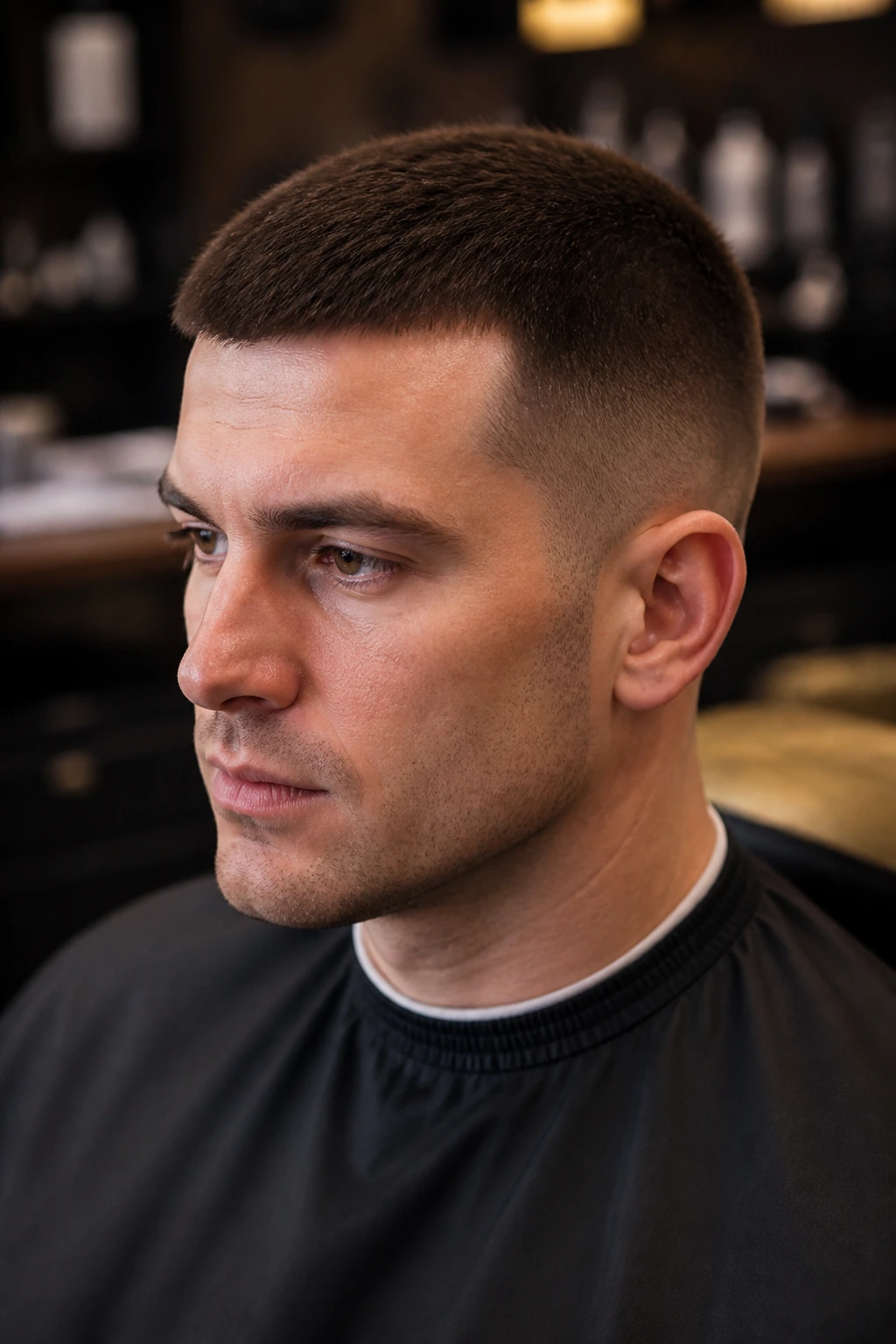
Most bad haircuts start with the word “short.” That word is too vague to trust. If you want a crew cut that looks clean, give a barber numbers, shape, and a finish.
Start with the top length
Say how much length you want on top in plain terms: 1.5 inches, 2 inches, or a little longer if it can still stand up with a matte product. If you want the top to lay forward, say that. If you want enough length to part it slightly, say that too. Barbers hear a lot of vague requests; the ones who appreciate detail usually cut better.
Be specific about the sides and back
A low taper, mid fade, high fade, or skin fade changes the whole mood of the haircut. A low taper keeps it calm and classic. A skin fade makes the top pop. If you want it more conservative, ask for a #1 or #1.5 guard into a taper instead of a harsh skin fade.
Don’t ignore the neckline and sideburns
Say whether you want the neckline blocked, tapered, or natural. For a clean crew cut, tapered usually wins. Sideburns should either fade into the beard or end cleanly at the ear, not sit there like an afterthought.
Texture changes the result
If your hair is thick or straight, ask for point-cut texture on top so it doesn’t sit like a helmet. If your hair is wavy or curly, say you want the top left a little longer and shaped to follow the pattern, not crushed down.
The Clippers, Trimmers, and Matte Products That Matter
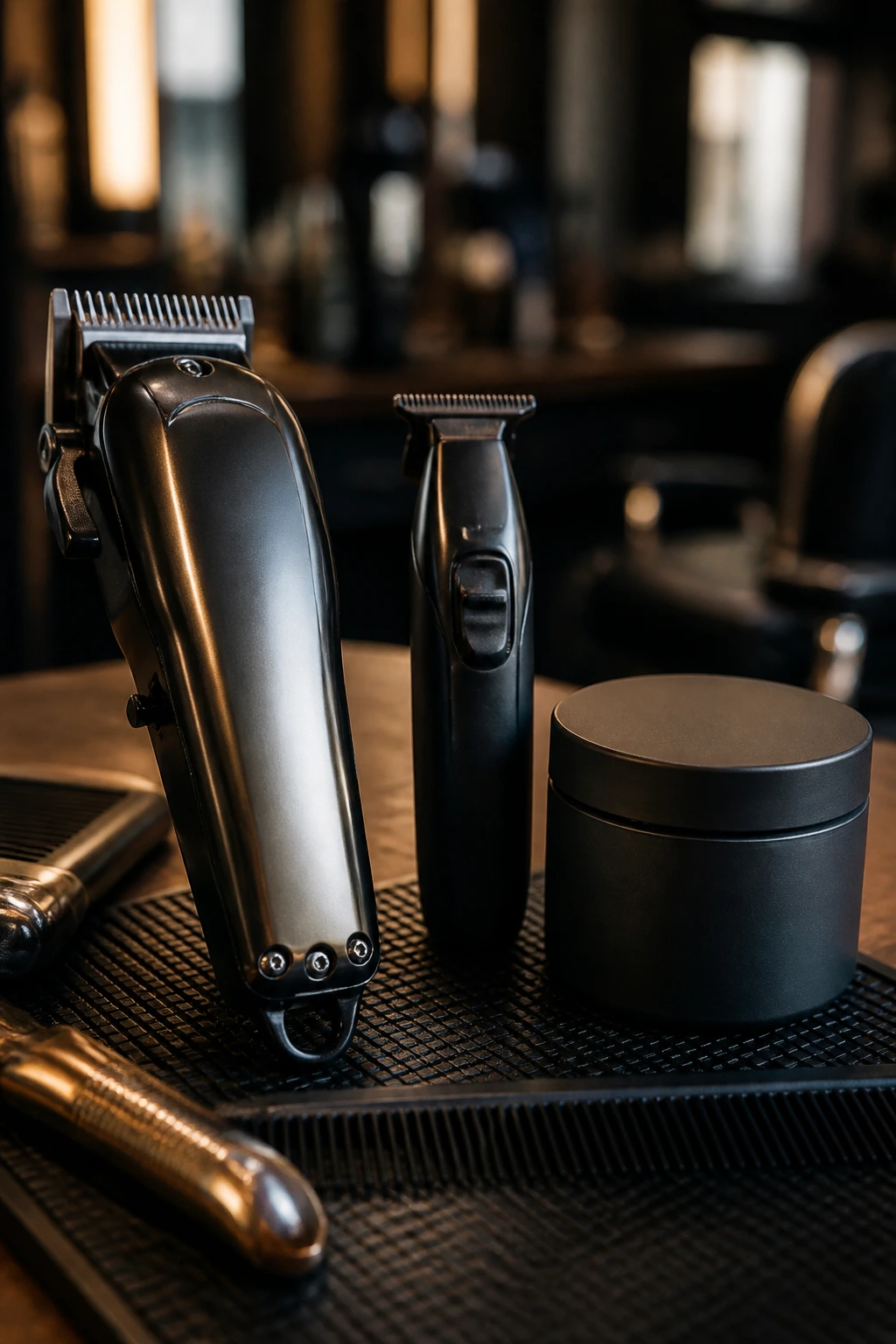
A crew cut is one of the easiest haircuts to maintain at home, but only if your tools are decent. Cheap clippers with weak guards tend to snag at the crown and leave uneven patches near the fade line. That’s a small annoyance on day one and a big annoyance by week two.
- Hair clippers with guards: You want a set that includes guards around #0.5 through #4 for most clean crew cut work.
- Detail trimmer: Useful for neckline cleanup, sideburn touch-ups, and beard connection.
- Hand mirror: Essential if you trim your own neck or want to check the back fade without guessing.
- Matte clay or paste: Best for short tops that need separation without shine.
- Light styling cream: Better than heavy wax if your hair is fine or tends to collapse under product.
- Spray bottle: Handy for dampening the top before a trim or quick restyle.
- Boar-bristle brush or small vent brush: Helps directionally set the top, especially on straight hair.
1. Low Taper Crew Cut
This is the crew cut that still looks polite at a business lunch. The top stays short enough to sit neatly—usually around 1.5 to 2 inches—while the taper around the temples and neckline stays low and smooth. It’s the version I’d hand to someone who wants a clean haircut without looking like he’s trying to make a statement.
The low taper keeps the shape grounded. You can brush the front slightly forward, or nudge it off-center with a fingertip of matte clay, and it still reads controlled. It’s especially good if you wear collared shirts a lot, because the neckline doesn’t fight the collar. Quiet cut. Good cut.
2. Mid Fade Crew Cut
Why does the mid fade work so well here? Because it gives the haircut a center of gravity. The fade starts around the middle of the head, which creates enough contrast to keep the top from looking plain while still avoiding the severe look of a high skin fade.
The top can stay modest—about 1.5 to 2.5 inches—and that middle transition gives the whole cut a little more shape around the sides. If your face is rounder, this version helps add height without going full flat-top territory. It’s neat, readable, and one of the easiest ways to make a crew cut look intentional in a mirror and in bad office lighting.
3. High Fade Crew Cut
A high fade crew cut does not whisper. The sides climb up fast, which leaves the top standing on its own and makes the cut look sharper from across the room. On dense hair, that contrast is a gift. On thinner hair, it can be too exposed if the top is cut too short.
The trick is to keep the top long enough to hold a little movement—roughly 2 inches or more—so the haircut doesn’t collapse into a strip. If you want a stronger jawline effect or just like your haircut to have more edge, this version hits hard without needing much styling.
4. Skin Fade Crew Cut
This one is crisp. The fade drops all the way to skin around the lower sides and back, which makes the top look darker and fuller by comparison. It’s a clean crew cut with attitude, and it tends to look best when the barbershop blend is smooth instead of patchy.
A skin fade crew cut needs upkeep. No way around that. When the fade grows out even a little, the contrast softens fast, and that’s part of the appeal for some people and a dealbreaker for others. If you like a sharp edge and don’t mind a trim every couple of weeks, this is a strong choice.
5. Burst Fade Crew Cut
The burst fade curves around the ear instead of dropping straight down, which gives the haircut a rounded, almost scooped shape at the sides. That makes it a smart choice for men whose hair grows in awkward directions near the temples or who want a crew cut that flows better into a beard.
It also keeps the back from looking boxy. The top can stay fairly short and textured, while the curved fade helps the whole cut look more finished from the side. There’s a little extra movement in this version, which is why it reads cleaner than a plain close crop with zero shape.
6. Drop Fade Crew Cut
A drop fade crew cut follows the natural curve of the head and dips lower behind the ears. That drop creates a softer silhouette, especially if the back of your head is a little flat or if you want the cut to feel less squared off. It’s a smart option when the goal is tidy, not military-strict.
The shape helps the top sit better, too. With a short textured top and a dropped fade, you get a haircut that looks balanced from the front and less blocky from the side. If your barber knows how to blend the transition smoothly, this one looks expensive without trying to look expensive.
7. Temple Fade Crew Cut
The temple fade is the detail most people miss, and that’s a shame because it changes the whole vibe. By tightening up the temples and sideburn area while leaving the rest of the sides a touch fuller, this version makes the haircut look sharp near the face, where people actually notice it first.
It’s especially useful if you wear glasses or have a beard. The cleaned-up temple area keeps the frames and facial hair from competing with the haircut. A temple fade crew cut gives you crisp edges without having to go full high fade. Small change. Big visual payoff.
8. Classic Regulation Crew Cut
This is the version that feels closest to the old-school barbershop cut. The top is short, even, and practical. The sides are tapered rather than dramatically faded, which gives the whole haircut a neat, disciplined look without sliding into buzz-cut territory.
I like this version on men who want zero drama. It doesn’t need product unless you want a little direction on top, and it holds its shape after a wash and a towel dry. If you work in a conservative setting or just prefer a haircut that never looks fussy, this is a solid lane.
9. Ivy League Crew Cut
The Ivy League version stretches the crew cut just enough to allow a side part or a soft sweep. It’s cleaner and more polished than a standard short crop, but it still keeps the short-back-and-sides discipline that makes a crew cut easy to wear.
What makes it different
The extra length on top—often closer to 2.5 to 3 inches—means you can comb it to one side, push it back a touch, or wear it slightly forward depending on your hair’s natural bend. That flexibility makes it one of the best versions for guys who want a clean haircut that still looks dressed up with almost no effort.
10. Textured Crew Cut
Textured tops make short hair look expensive. That sounds silly, but it’s true. A little point cutting at the salon gives the top tiny broken-up pieces so it doesn’t sit in one smooth block. On straight hair, that texture keeps the top from looking like a plastic helmet.
Use a matte product and work it through dry hair with your fingertips, not a comb. The goal is separation, not shine. If you’ve ever looked in the mirror and thought your short haircut felt too rigid, texture is usually the fix.
11. Forward-Brushed Crew Cut
A forward-brushed crew cut works with gravity instead of fighting it. The top is left just long enough to move forward and slightly down, which is useful if your hair grows flat on top or if you have a crown swirl that sends everything backward at the wrong time.
The clean look comes from control, not height. Brush the front forward while the hair is still a little damp, then let it set with a light matte cream. It’s one of those cuts that looks casual from a distance but clearly had a hand in it.
12. Side-Part Crew Cut
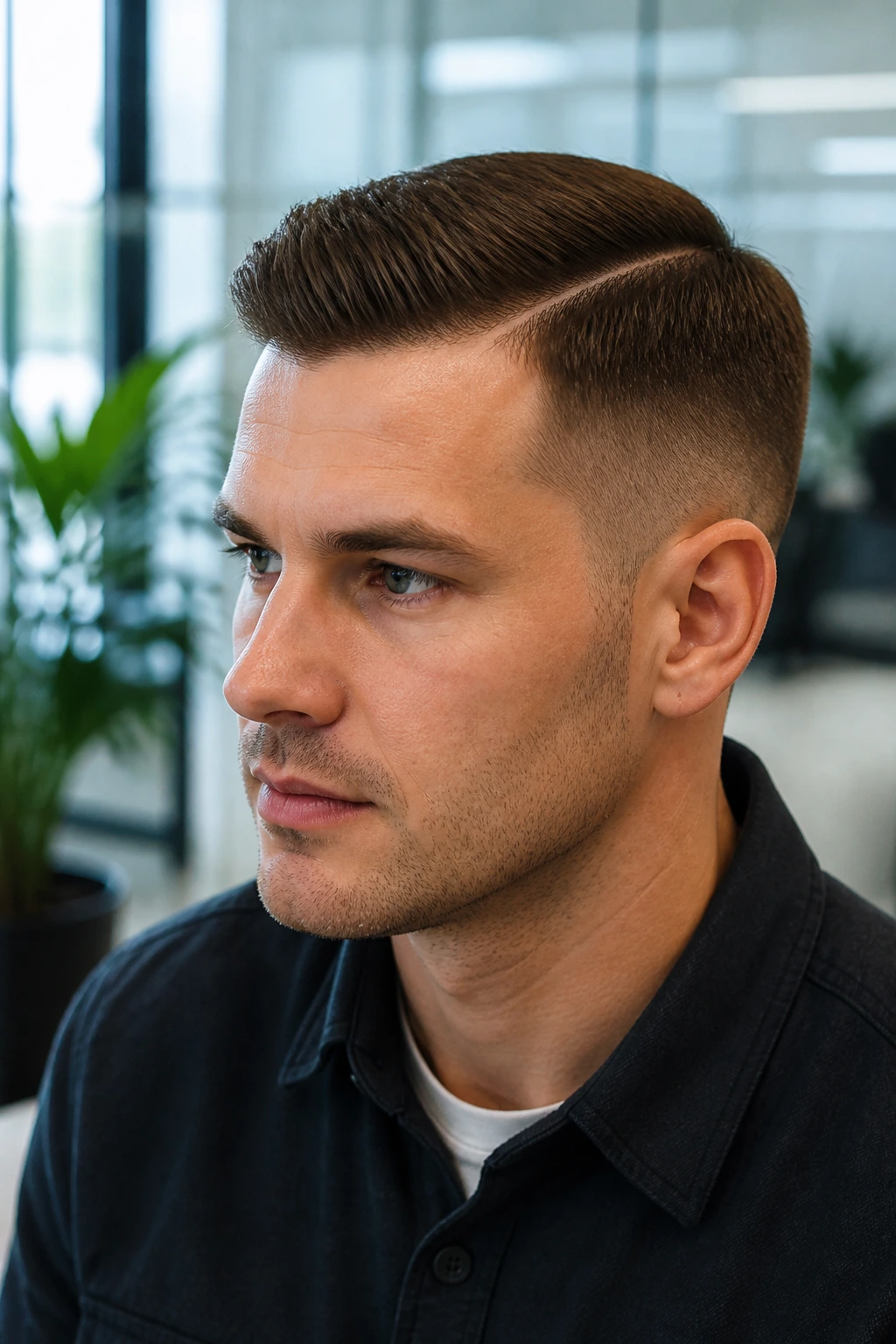
A side-part crew cut is what happens when short hair gets a little more manners. The part doesn’t need to be carved in razor-sharp unless you want that look. Even a soft natural part can make the haircut seem tidier and more structured.
How to wear it
Keep the top around 2 to 3 inches so the part has enough length to show. Then ask for a taper or fade that keeps the sides neat without over-darkening the profile. This one is excellent for office settings, weddings, or any place where “clean” should read as “composed,” not “severe.”
13. Hard Part Crew Cut
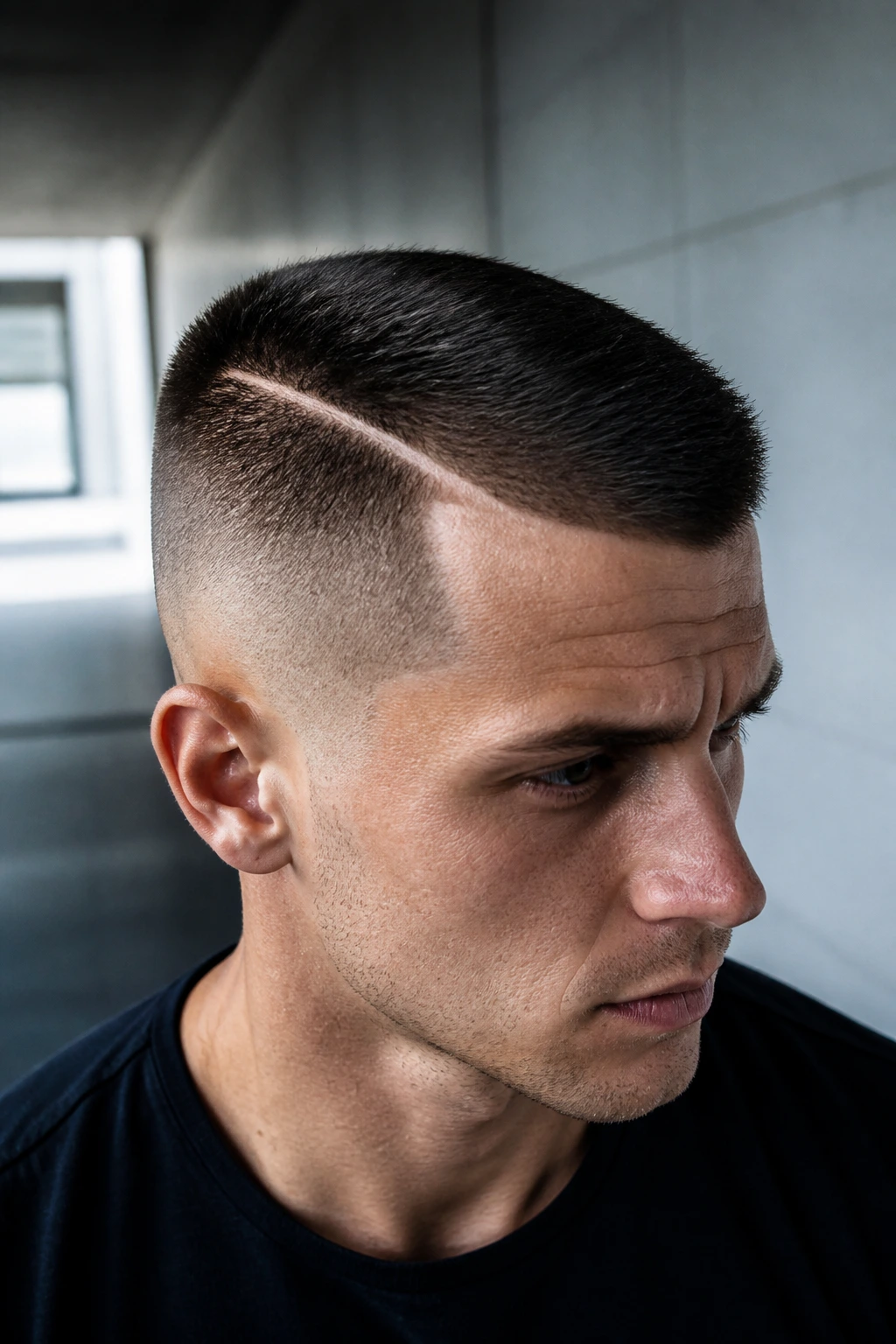
A hard part gives the crew cut a visible line that instantly sharpens the silhouette. It’s a bold detail, and it works best when the rest of the cut is kept simple. Too much texture plus a hard part can start to look crowded.
The upkeep is the catch. That line grows fuzzy faster than most people expect, and once it softens, the haircut loses some of its punch. If you like crisp edges and you don’t mind keeping them crisp, a hard part can turn an ordinary crew cut into something much more deliberate.
14. Messy Crew Cut

Messy doesn’t mean unkempt here. It means the top has been cut and styled so it breaks up a little rather than lying in one clean sheet. That piecey finish works especially well on straight or slightly wavy hair because it keeps the top from looking too formal.
A light matte paste is enough. Rub it between your palms until it disappears, then pinch small sections near the front and crown. It should look like the haircut moved a little on its own, not like you spent twenty minutes trying to make it happen.
15. Wavy Crew Cut
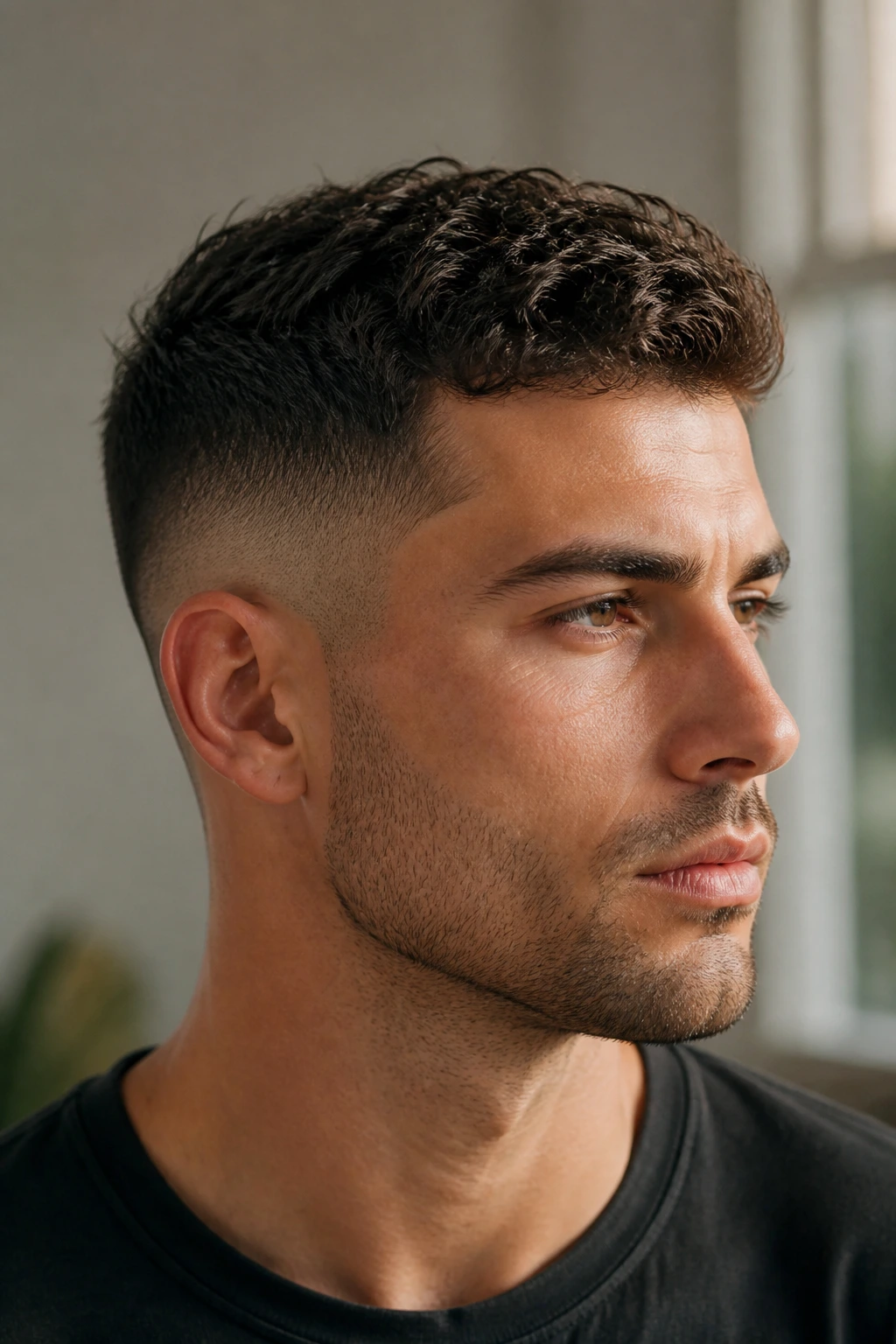
Wavy hair is built for this cut if you don’t overfight it. The crew cut shape keeps the sides tight, while the top lets the natural bends show through. That means less daily wrestling and fewer mornings spent flattening waves that want to exist anyway.
Use a small amount of cream or a very light clay, then push the top forward or slightly off-center while it’s damp. If the wave pattern is strong, leave a touch more length on top so the ridges don’t puff up into short, fuzzy bumps.
16. Curly Crew Cut
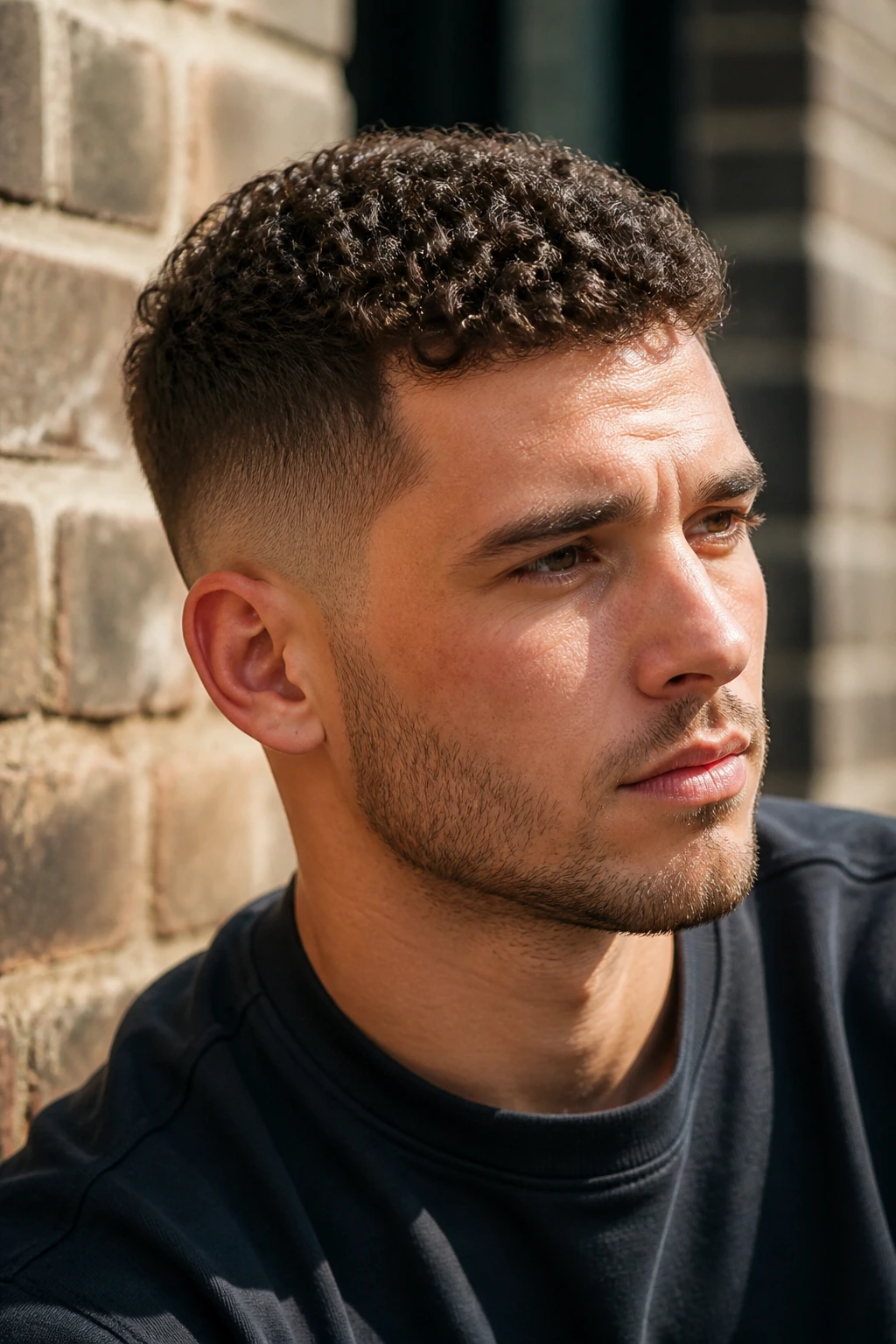
A curly crew cut looks best when the top is short enough to stay neat but long enough to show actual curl pattern. If the curls are cut too close, the top can spring up in awkward ways. If they’re left too long, the shape starts to lose the whole crew cut idea.
The clean part is the sides. A taper or fade keeps the volume up top from spilling into the temples and ears. Ask for the curls to be shaped dry if your barber knows how to do that; curly hair behaves differently when it’s wet, and a dry finish often gives a more honest result.
17. Thick-Hair Crew Cut
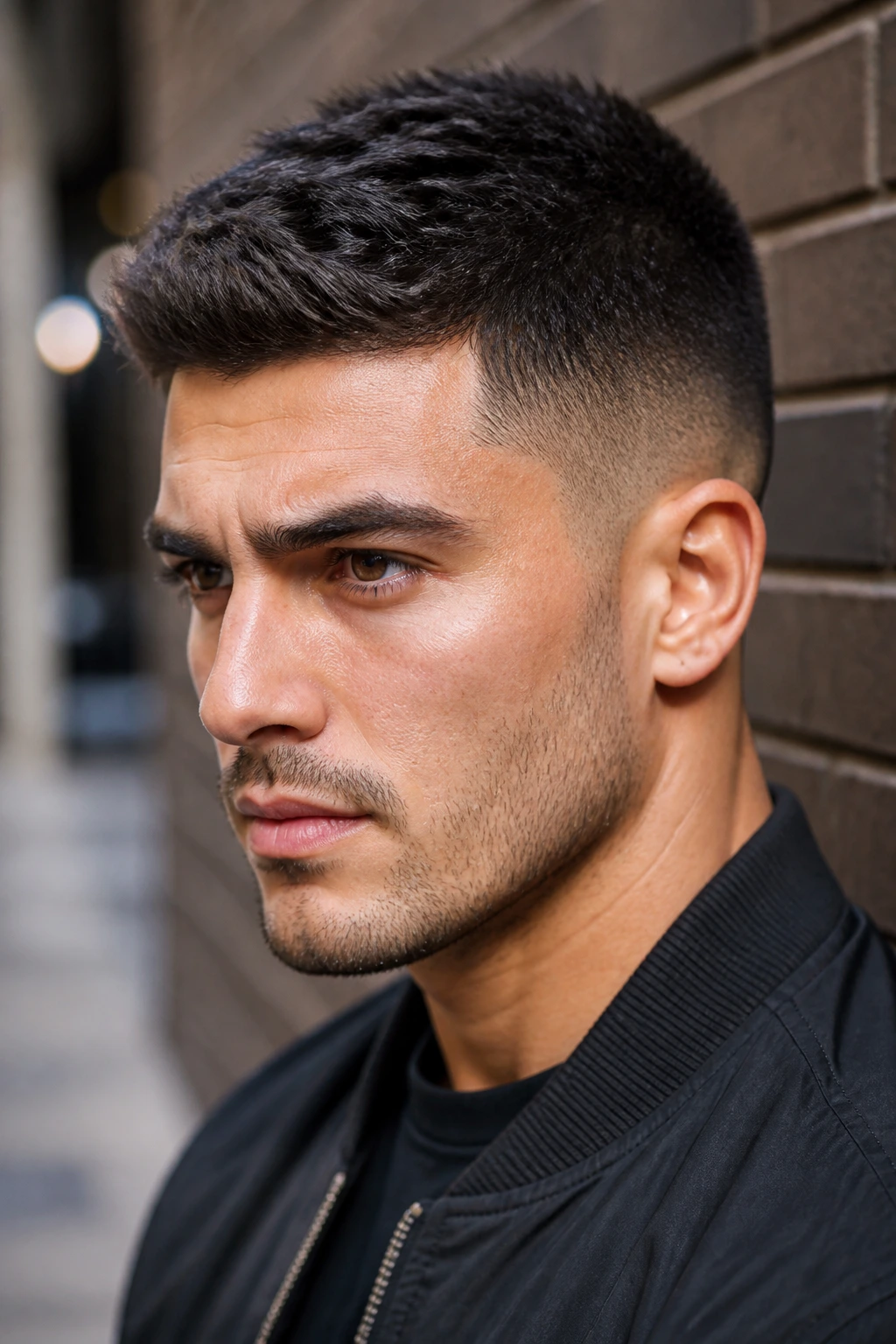
Thick hair needs bulk removed, not just length taken off. If the barber only trims the surface, the top can still balloon out and the sides can look too wide. A good thick-hair crew cut usually uses some debulking, point cutting, or scissor-over-comb work so the top sits down instead of flaring out.
This is one of those cuts that looks clean because it’s controlled, not because it’s short. A moderate fade and a short, textured top keep the weight where you want it. Skip heavy pomades here. They make thick hair look greasy before they make it look neat.
18. Fine-Hair Crew Cut
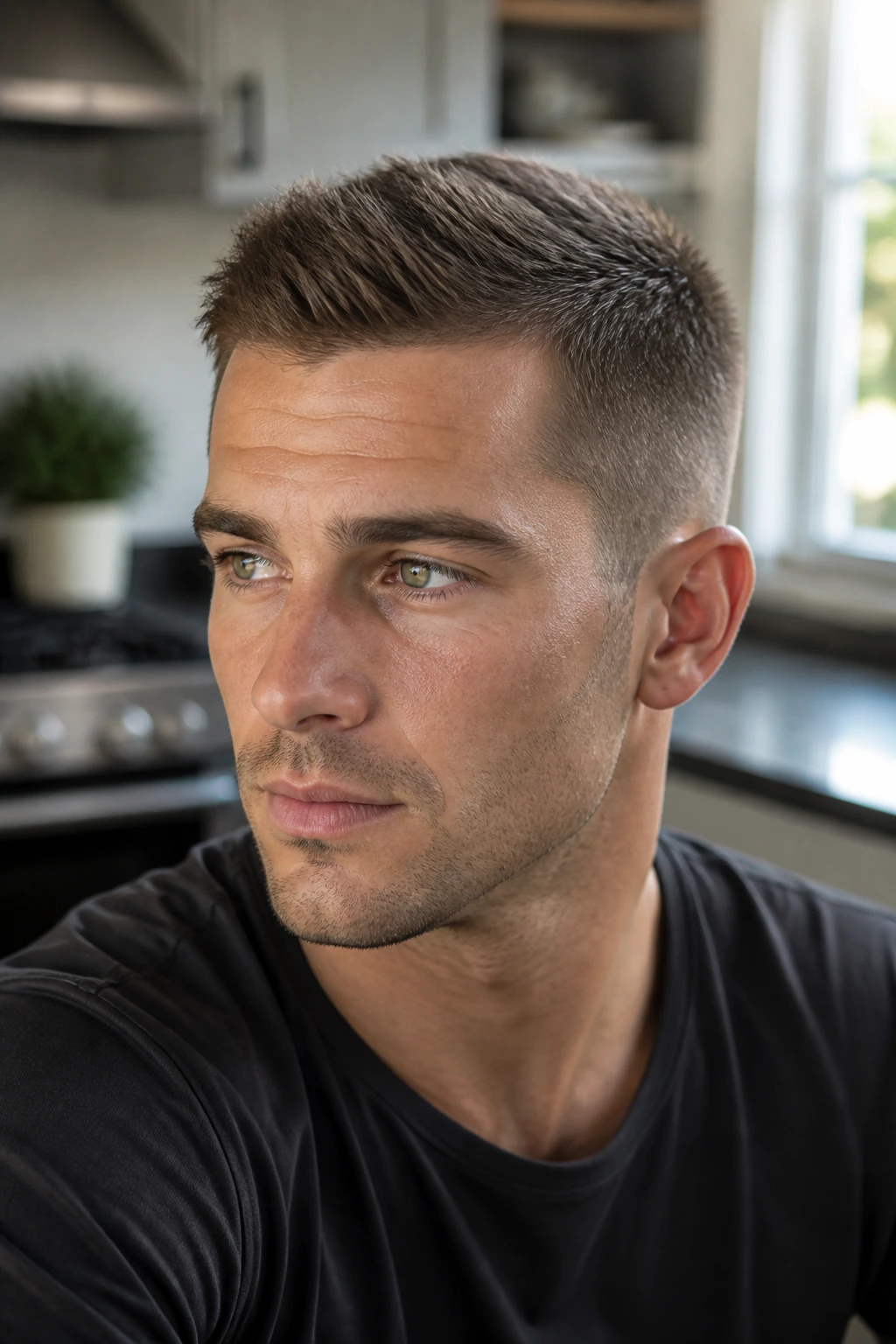
Fine hair can absolutely pull off a crew cut, but the cut needs a little care. Go too short on top and the scalp starts showing through in a way that makes the haircut feel thin instead of clean. Leave enough length—usually around 1.5 to 2 inches—so the hair has something to work with.
A matte cream or lightweight paste is better than stiff wax. You want lift at the root and just enough separation to show texture. Keep the sides tidy and the top slightly longer than you think, and fine hair starts looking more deliberate than delicate.
19. Receding Hairline Crew Cut
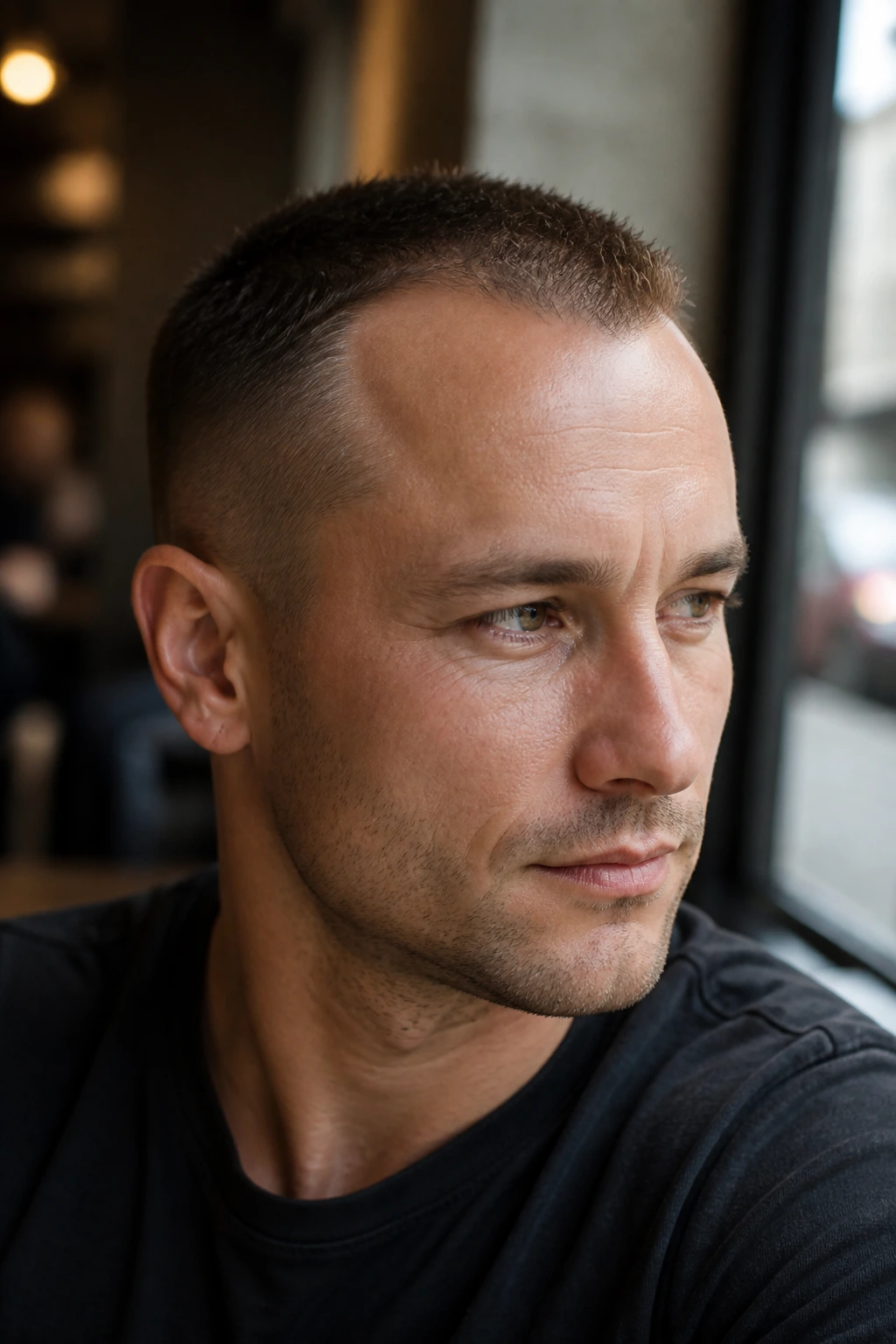
A receding hairline doesn’t need a dramatic haircut to “fix” it. That usually makes things worse. A crew cut works because it keeps the sides clean and the top short enough that the hairline doesn’t become the whole story.
Leave a little more length toward the front if your temples are creeping back. Then ask for a soft taper around the hairline rather than a hard, boxy edge. The cleanest version of this cut respects the shape you already have instead of pretending it isn’t there.
20. Widow’s Peak Crew Cut
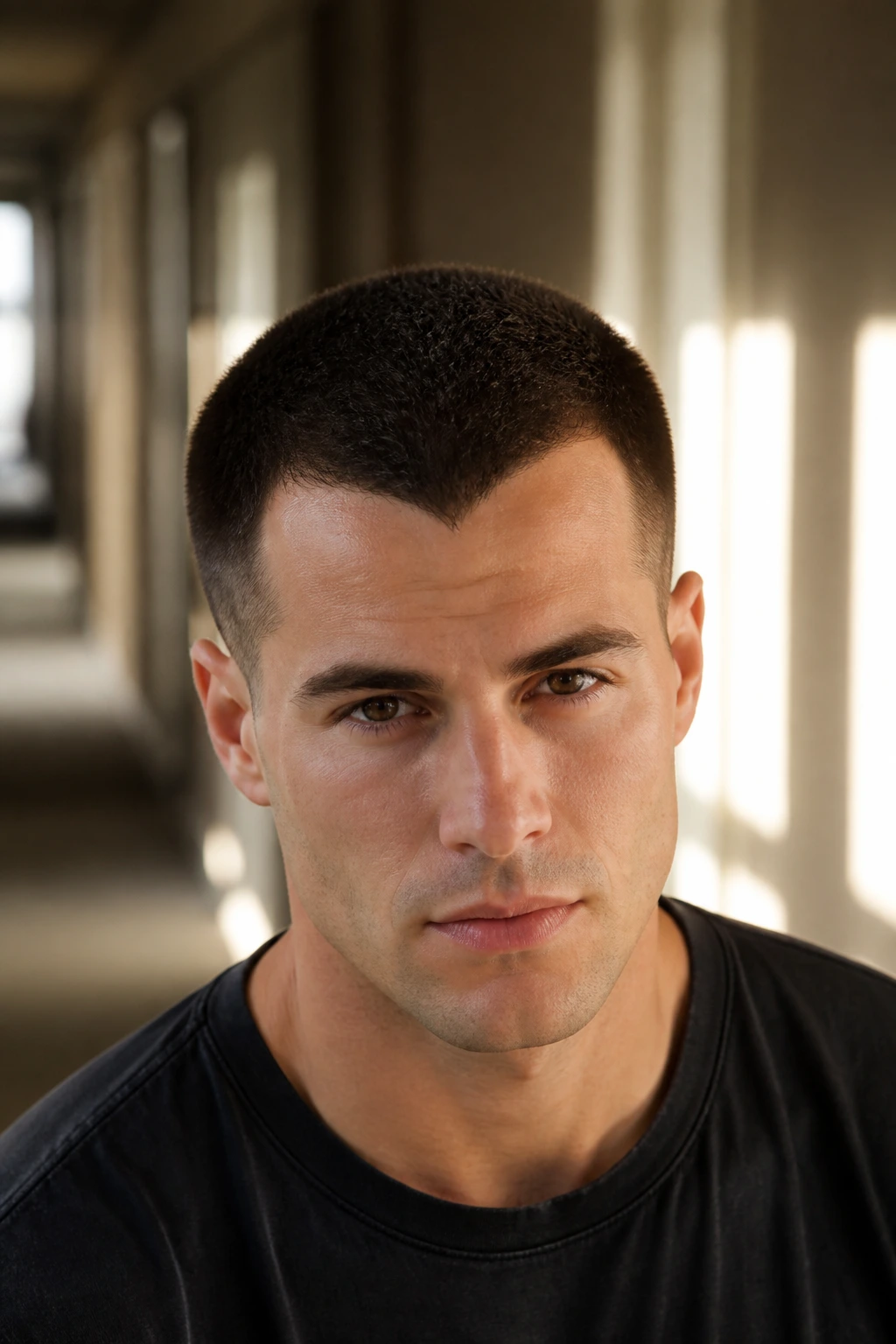
A widow’s peak can look sharp with the right crew cut because it already gives the front some shape. The mistake is usually trying to square it off. Better to work with the point and keep the top short enough that the hairline looks intentional, not forced.
A slightly longer front section helps. Brush it forward or let it fall naturally into the peak, then keep the sides tight with a taper or fade. The result looks balanced, and the peak becomes part of the haircut’s geometry instead of a problem to hide.
21. Round-Face Crew Cut
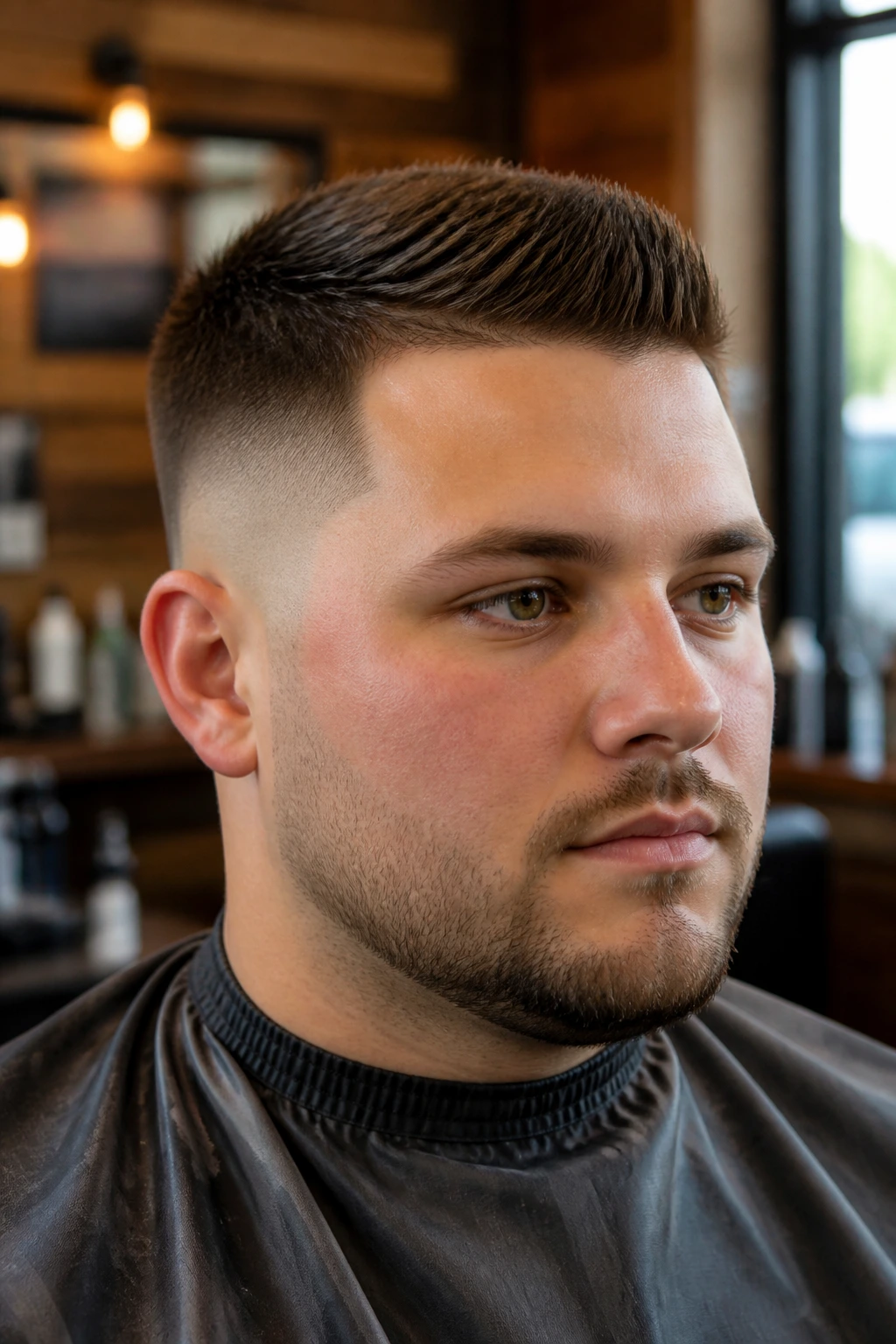
Rounder faces tend to benefit from a little height on top and less bulk on the sides. That’s why a crew cut with a mid or high fade works so well here. It stretches the face visually without turning the haircut into something overly tall.
The shape trick
Ask for the top to be left a touch longer in the front and kept shorter near the crown. That subtle lift helps create vertical lines. Keep the sides snug. If they puff out, the face reads wider, and that’s usually the opposite of what you want.
22. Square-Face Crew Cut
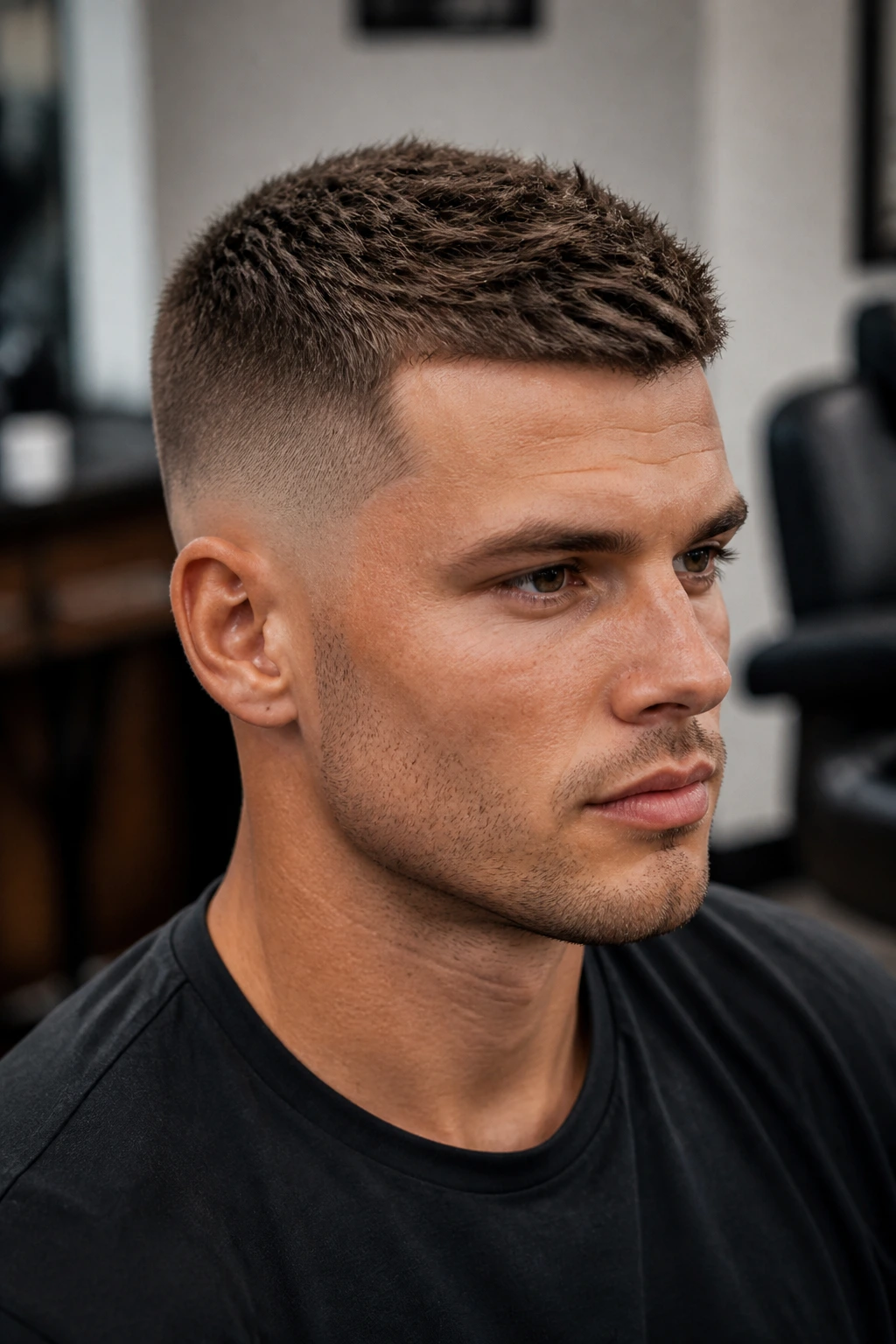
Strong jaws and broad foreheads can handle short hair, but a square face needs the edges softened a bit so the cut doesn’t get boxy. A low taper or shadow fade works better than a harsh, high-contrast clipper job in many cases.
The top should stay textured, not sculpted into a hard block. A little forward motion or slight side direction keeps the haircut from looking too rigid. Clean does not have to mean severe, and this face shape is proof.
23. Oval-Face Crew Cut

Oval faces have the easiest job here. Nearly every clean crew cut variation works because the proportions are already balanced. That means you can choose based on hair type, work setting, or how much upkeep you want rather than trying to correct the face shape.
Still, the haircut benefits from restraint. If you’ve got an oval face, you don’t need a huge top or a severe skin fade to make things work. A classic taper, a little texture, and a tidy neckline can be enough.
24. Angular Face Crew Cut
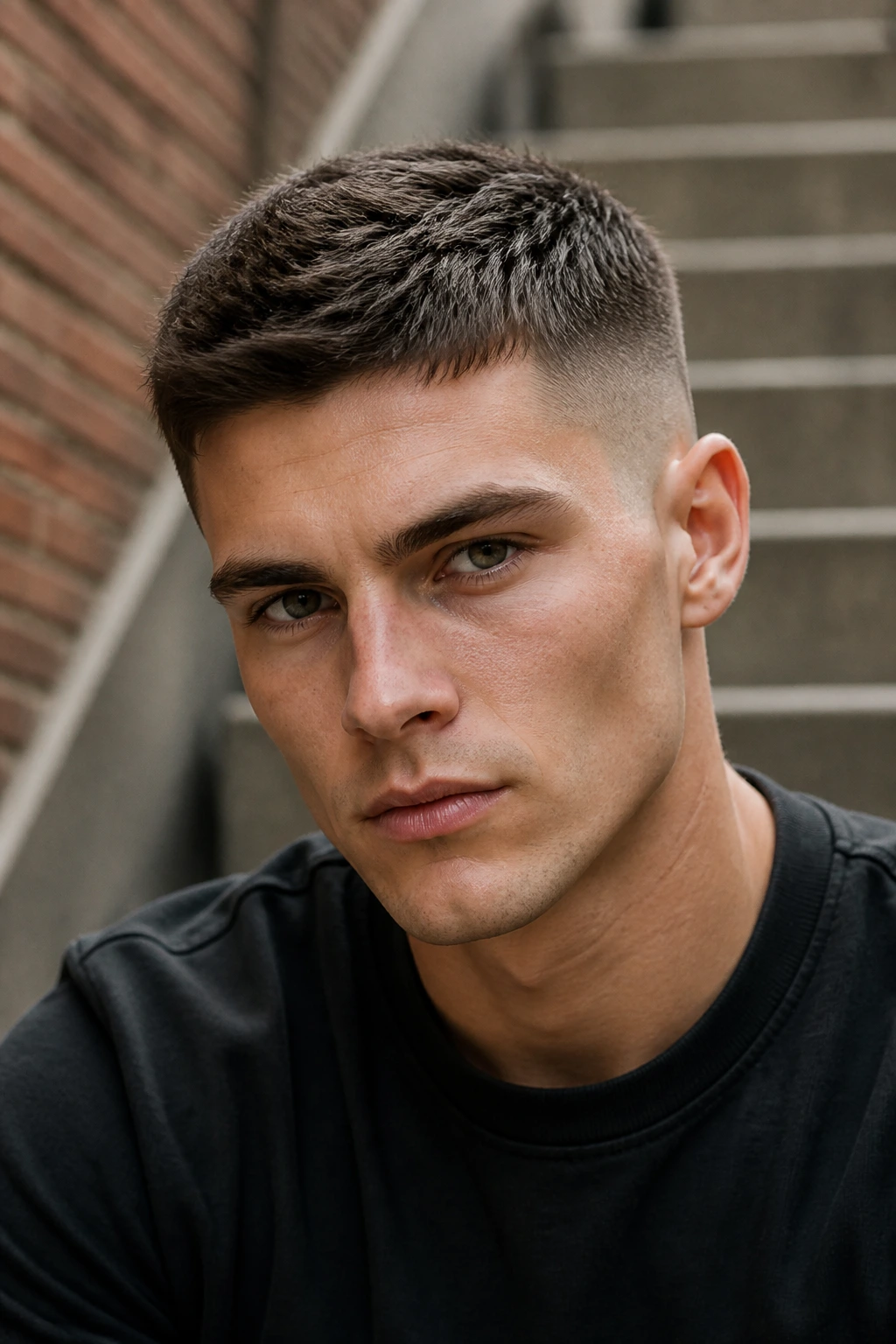
Angular faces often look best when the haircut reinforces the jaw and cheekbone lines without overcomplicating them. A moderate fade and a slightly textured top do that job well. Too much height can look theatrical; too little contrast can make the haircut disappear.
A clean lineup can help here if your hairline is naturally even. Keep the sides precise, but not razor-stiff unless you really want that look. The goal is to sharpen the face, not turn the haircut into a stencil.
25. Military Regulation Crew Cut
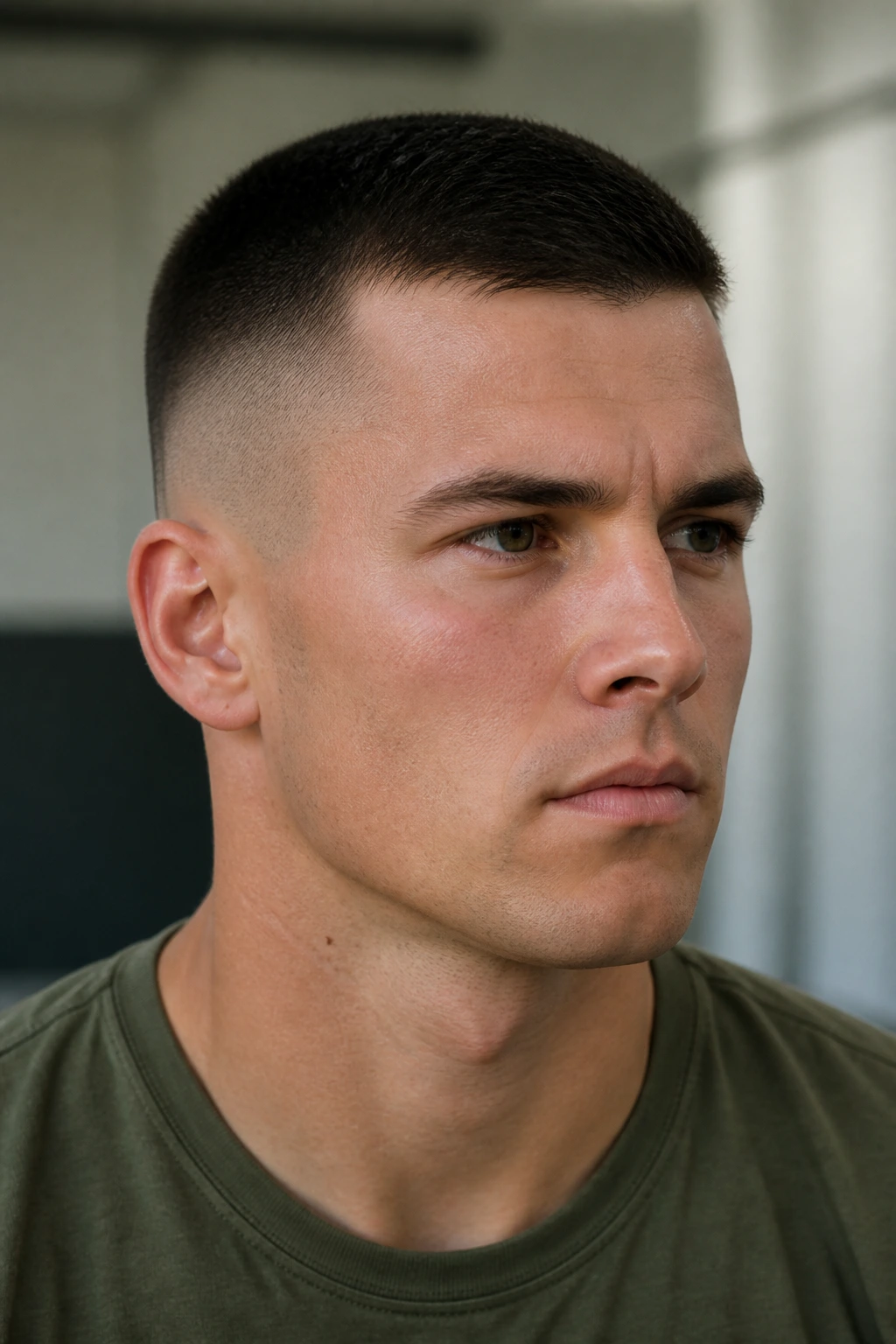
This is the no-nonsense version. Short top, tight sides, clean neckline, very little room for styling games. It’s the crew cut stripped down to its simplest form, and that simplicity is the point. Nothing flaps around. Nothing needs rescuing in the morning.
The best version still has proper blending so it doesn’t look like it was done in one rushed pass. Keep the top uniform and short enough to lie naturally, and let the neckline and sideburns stay clean. If you want a haircut that behaves, this one behaves.
26. One-Guard Crew Cut
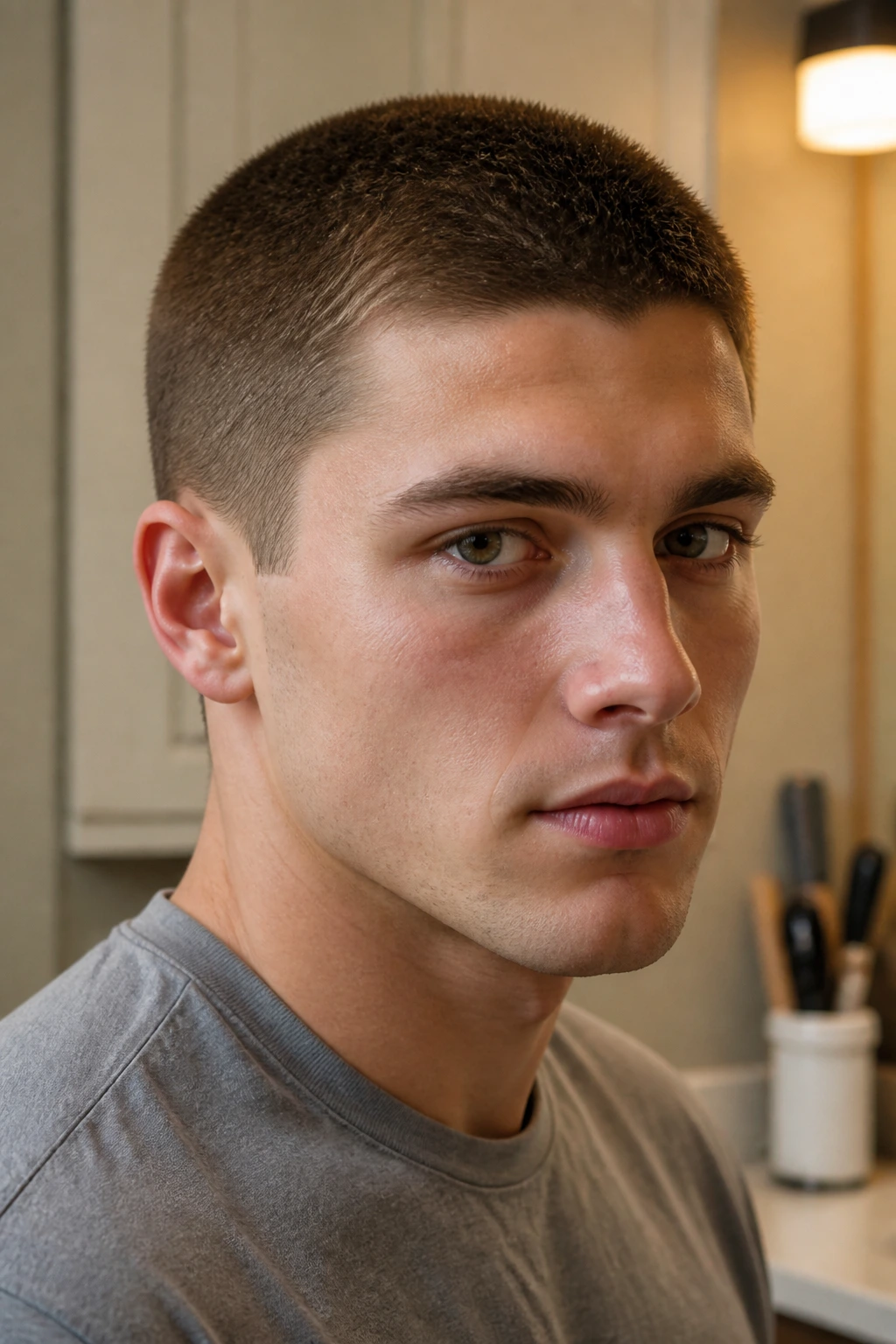
A one-guard crew cut is almost stubborn in its honesty. The same guard is used across much of the top and sides, which creates a short, even look that’s easy to maintain at home. It’s not flashy, and that’s exactly why it works for some men.
The danger is ending up with something too flat if your head shape has a strong crown swirl or a flat spot at the back. In that case, leave a little more length on top than on the sides and keep the edges neat. Even a one-guard look needs some shaping to read as a crew cut instead of a buzz cut.
27. Scissor-Cut Crew Cut

A scissor-cut crew cut is softer and more natural-looking than a clipper-heavy version. It’s the haircut you choose when you want the shape of a crew cut but don’t want that machine-tight finish everywhere. The top especially benefits from scissor work because it keeps the ends less blunt.
This version tends to grow out more gracefully. The line between top and sides doesn’t scream for attention, and the haircut can stay wearable a bit longer between appointments. If your hair is straight and you want movement rather than sharp contrast, this is a very good lane.
28. Extended Crew Cut
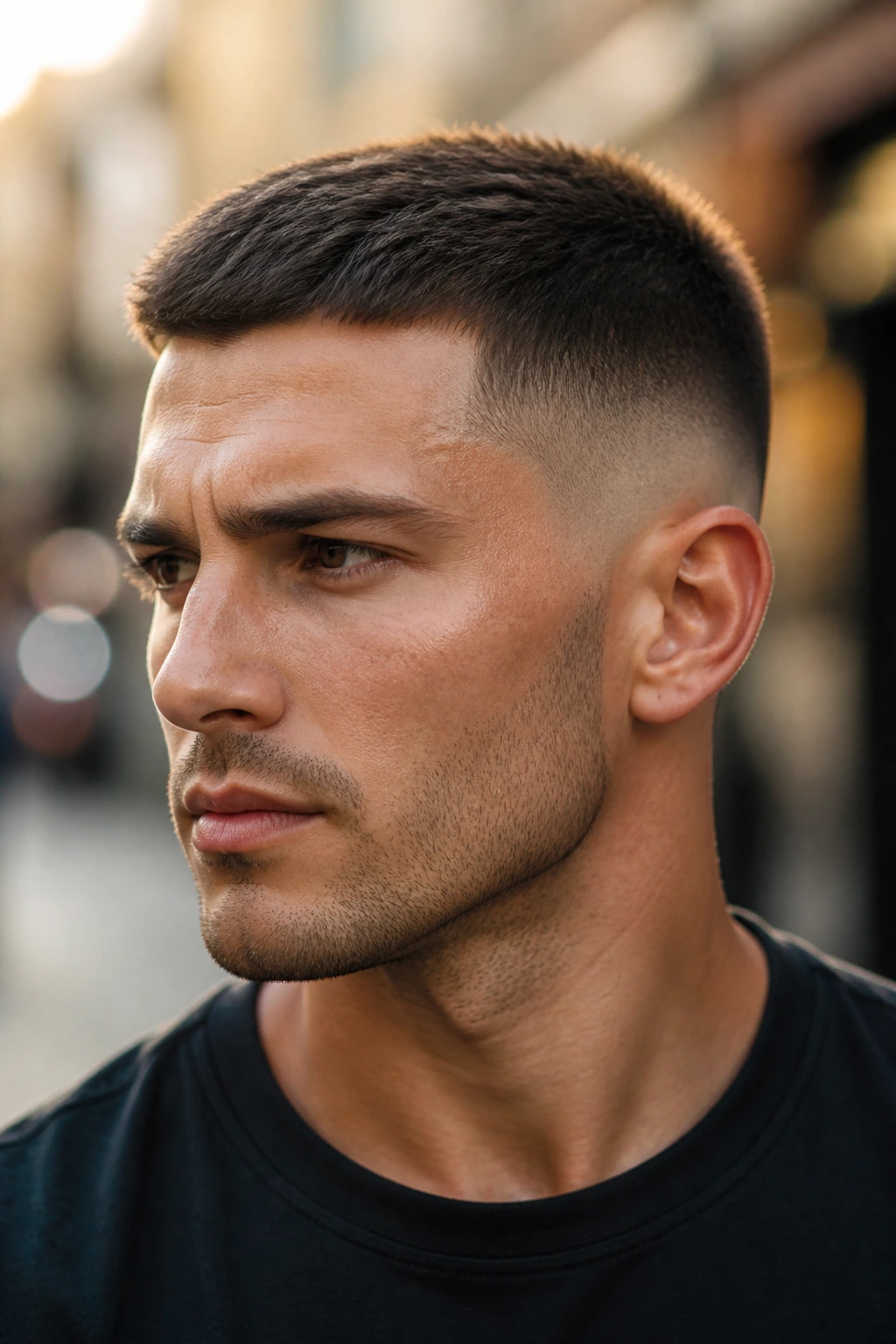
The extended version keeps the crew cut idea but gives the top more room—usually closer to 2.5 or 3 inches—so you can push it, brush it, or part it more easily. It’s still short, but it has enough surface area to show direction.
That extra length also helps if your hair has a strong cowlick or a stubborn crown swirl. You get more control without losing the neat sides that make the crew cut work. It’s one of the best options for men who want to look clean without feeling over-trimmed.
29. Shadow Fade Crew Cut
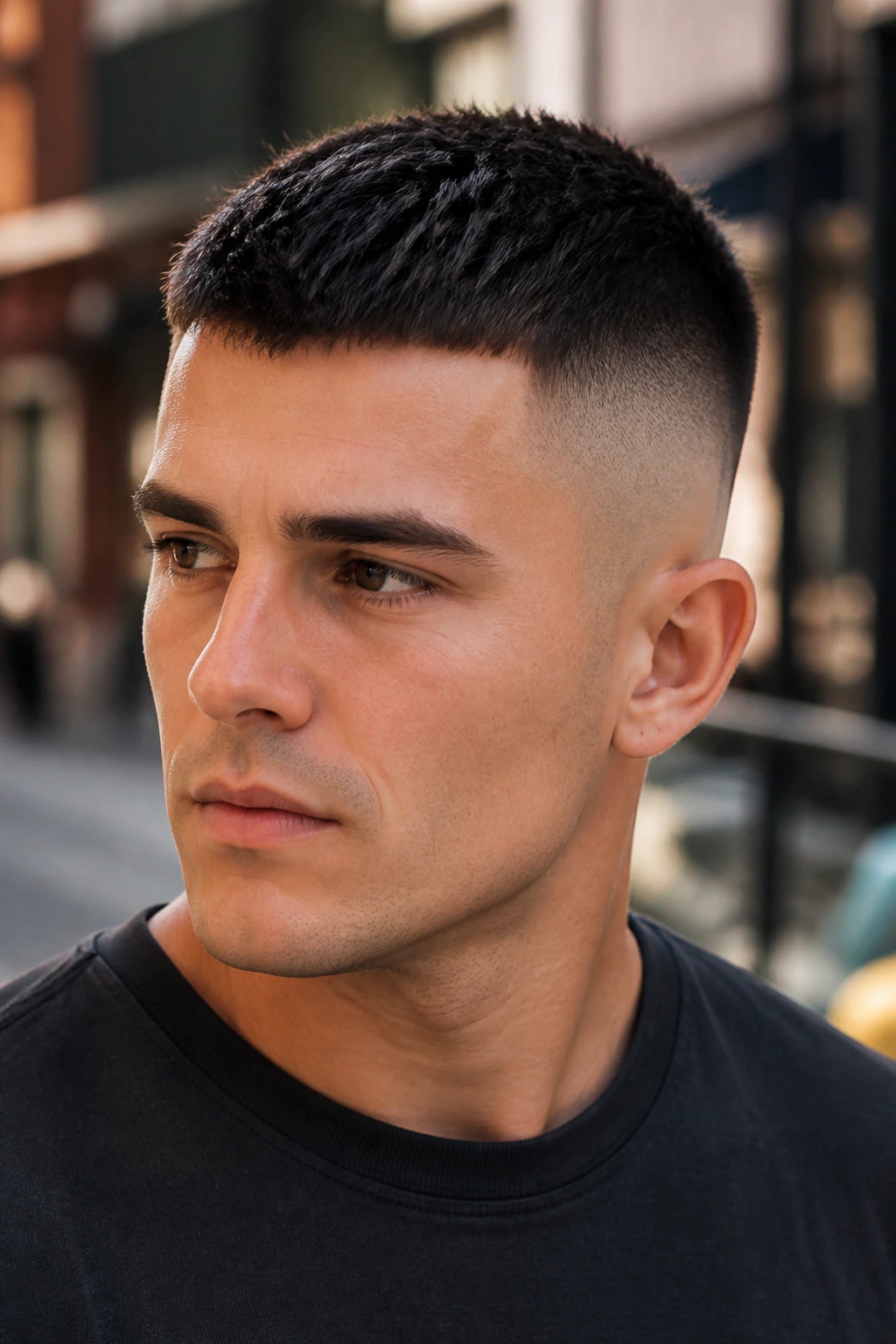
A shadow fade stays darker at the bottom instead of dropping all the way to skin. That gives the haircut a softer edge, which can be a better match if you don’t want the full high-contrast feel of a skin fade. The top still reads sharp, but the sides look less severe.
This version is forgiving during grow-out. It also suits men whose hairline doesn’t like being overly exposed. If you want a crew cut that looks tidy without making every line obvious, the shadow fade is a smart middle ground.
30. Brushed-Up Crew Cut
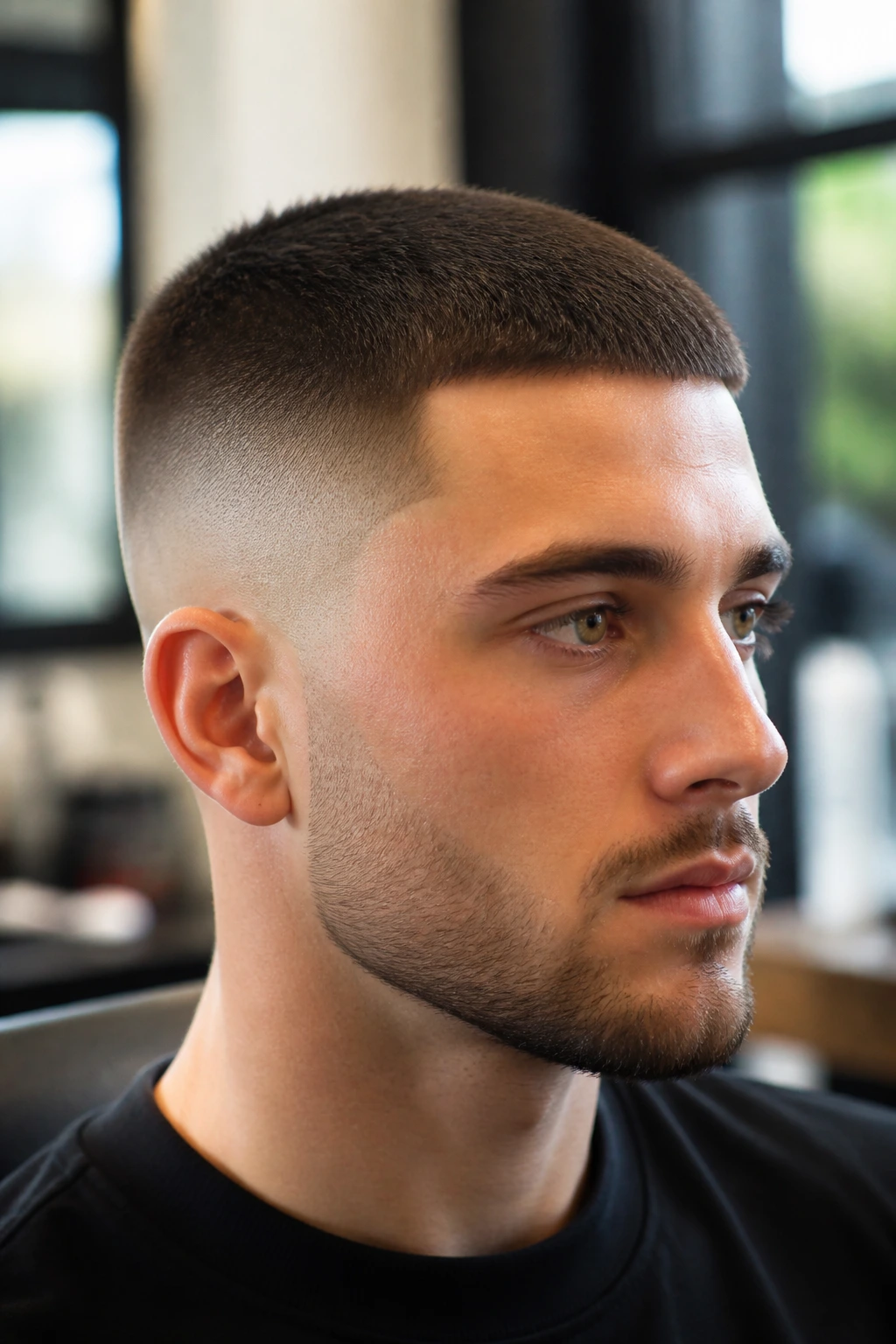
A brushed-up crew cut adds a little lift to the front and maybe a touch through the center, but it stops short of turning into a quiff. The result is cleaner than a messy texture cut and more animated than a flat-forward style.
A blow dryer helps here. Use it on low or medium heat, brush the front up and slightly back, then finish with a small amount of matte product. If you want a bit more presence without more length, this is the move.
31. Matte Finish Crew Cut
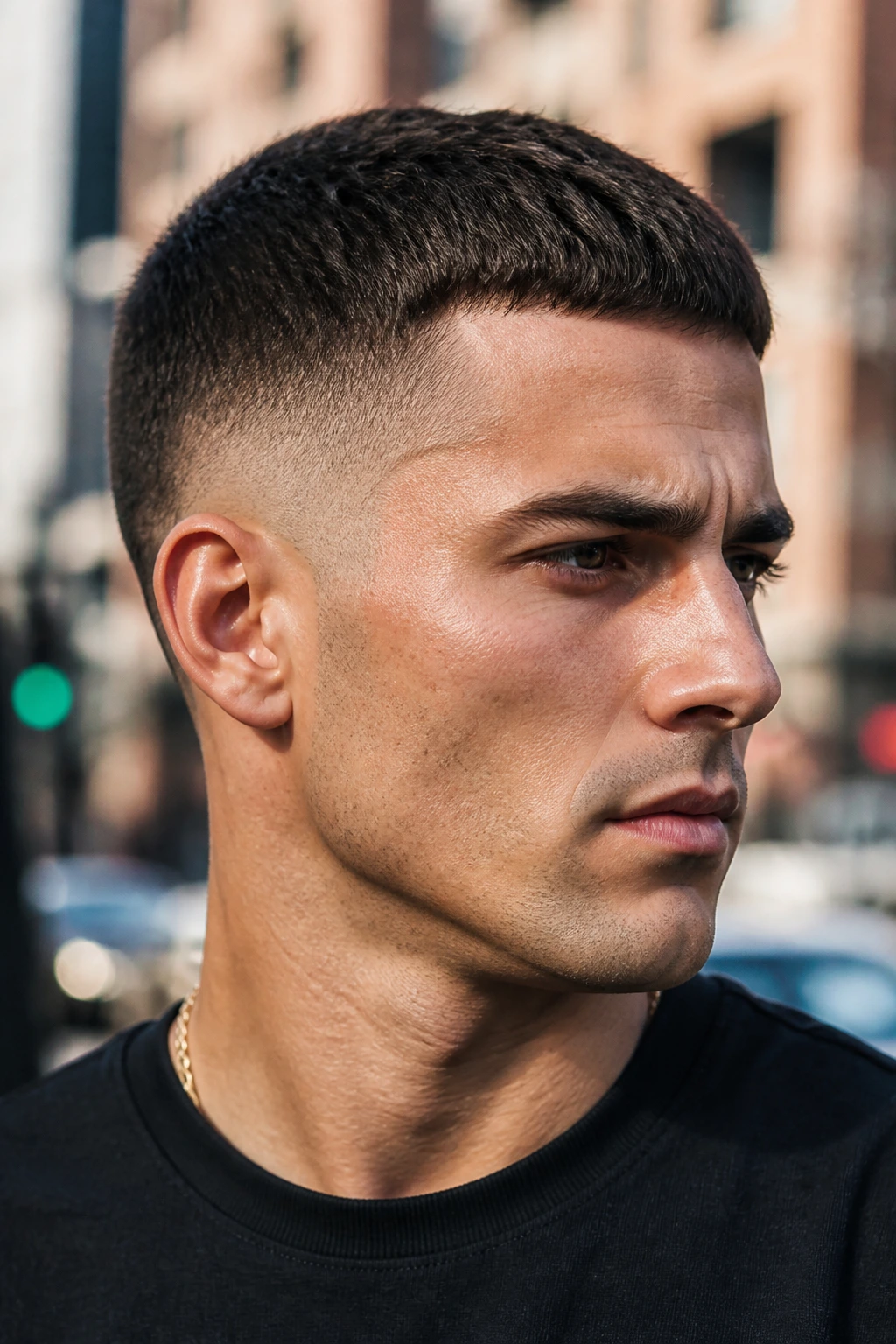
Matte finish matters more than people think. Shine on short hair can make the cut look wet, thin, or overly product-heavy, which is the opposite of clean. A matte finish keeps the top looking dry, dense, and more natural under harsh light.
This style depends on the right product and the right amount of it. A pea-sized amount can be enough if the cut is already shaped well. If you see visible clumps, you’ve used too much. The haircut should still look like hair, not modeling clay.
32. Natural Gray Crew Cut
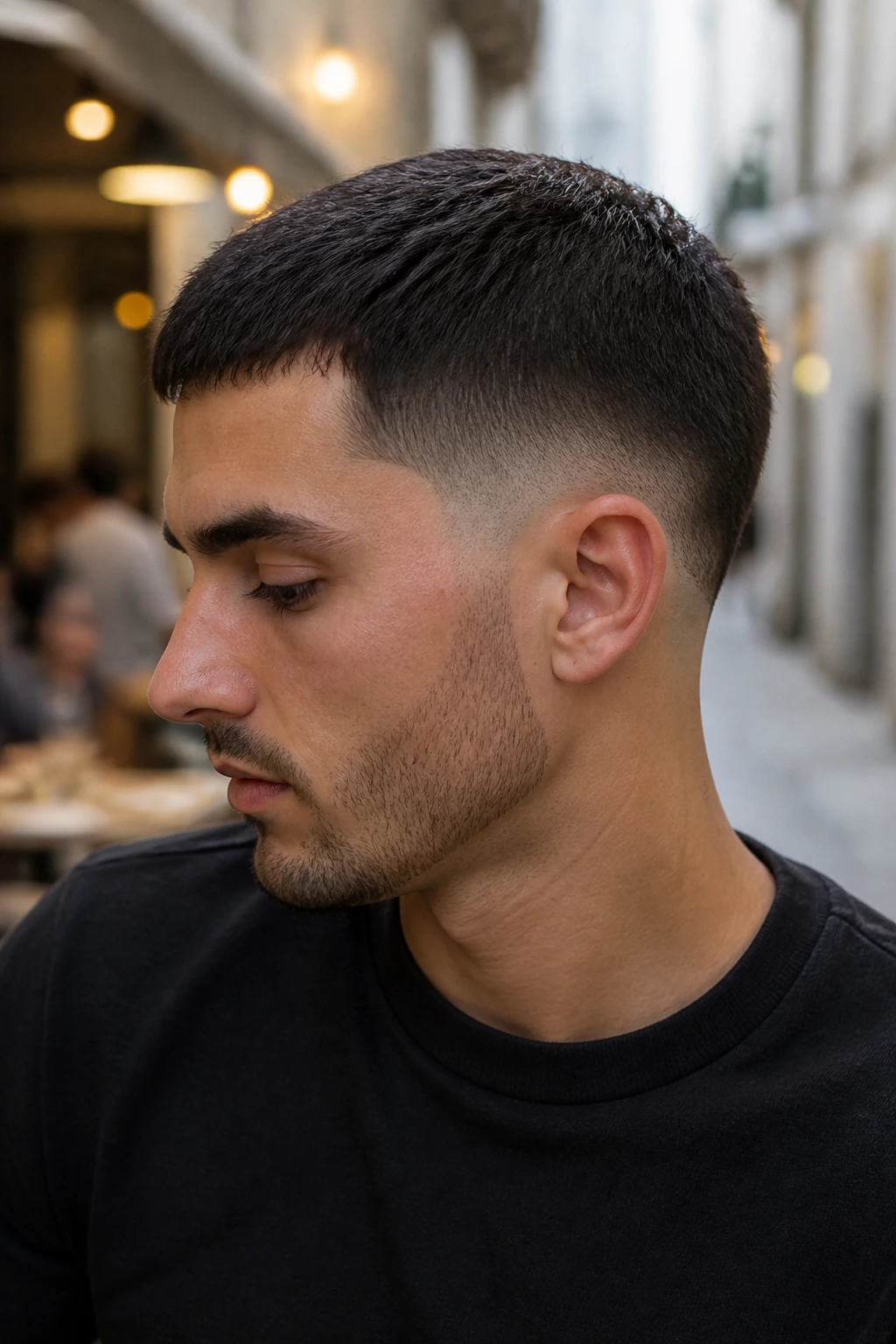
Gray hair can look especially sharp in a crew cut because the short shape shows the silver instead of hiding it under longer layers. Clean edges around the temples and neckline make the gray feel intentional, not like something that just happened.
The key is avoiding overstyling. Gray hair can get wiry when overloaded with product, so a light cream or nothing at all may be better than a thick pomade. Keep the shape neat and let the color do some of the work.
33. Salt-and-Pepper Crew Cut
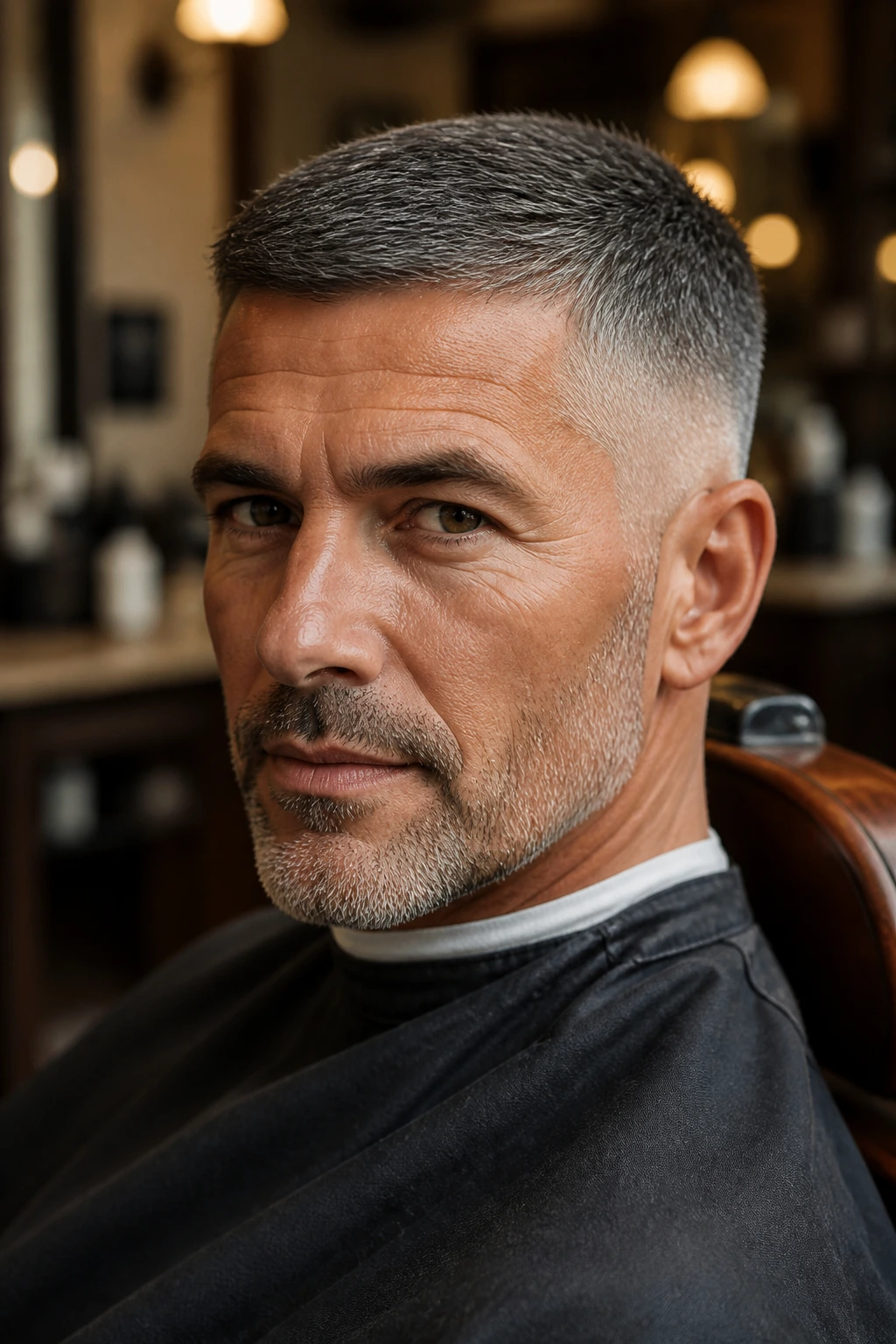
Salt-and-pepper hair has a nice built-in contrast, and a crew cut puts that contrast right where it matters. The top can be left slightly textured so the mix of dark and gray strands shows through, while the sides stay tighter and cleaner.
That contrast looks especially good when the neckline is trimmed regularly. If the back gets shaggy, the whole effect softens fast. A salt-and-pepper crew cut doesn’t need to look polished in a glossy way. It needs to look deliberate, which is a different thing.
34. Beard-Connected Crew Cut
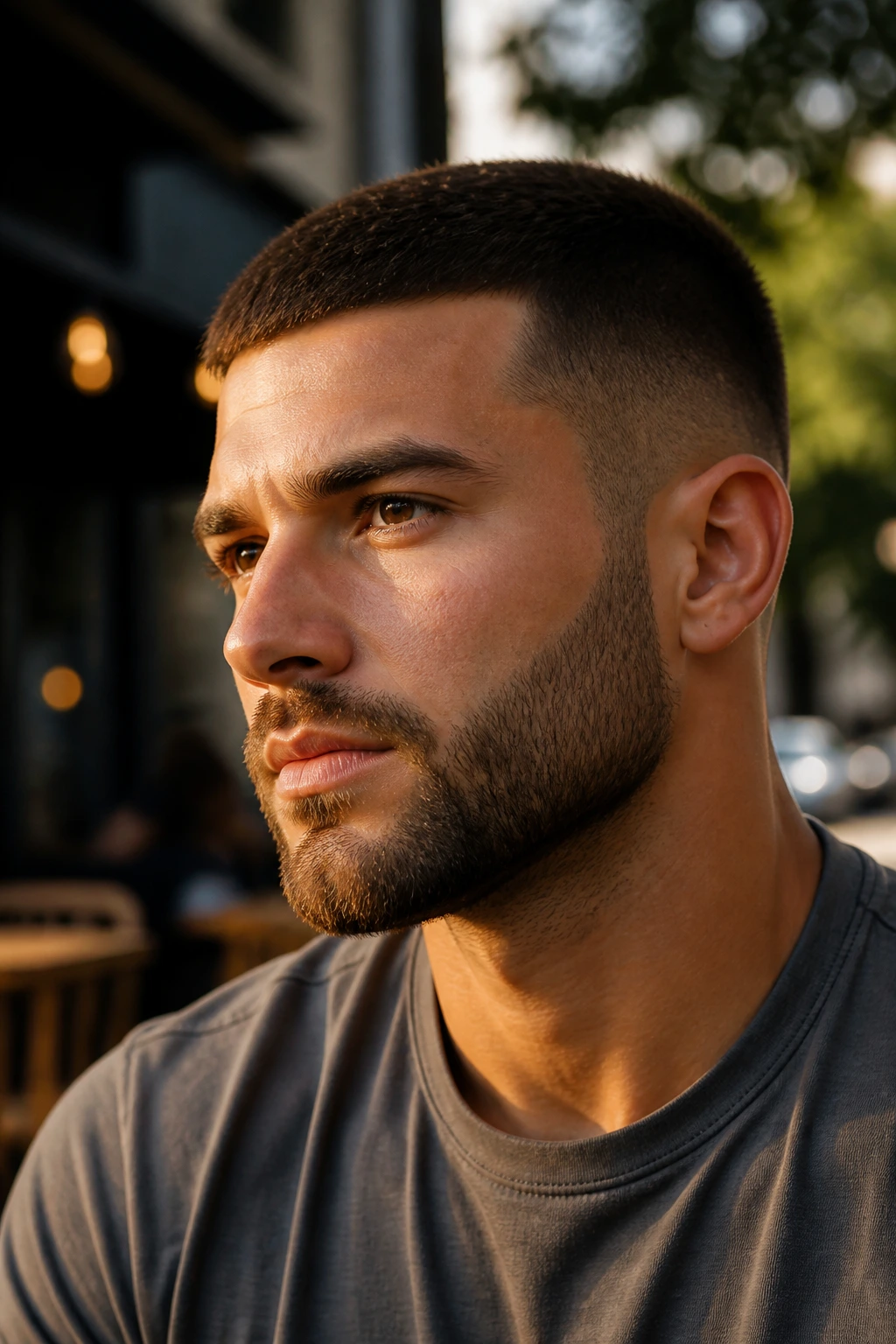
A beard-connected crew cut is all about the transition. The sideburns and lower fade should move into the beard without a visible cliff edge. When that blend is right, the haircut and beard read as one shape instead of two separate grooming decisions.
Keep the beard line clean around the cheek and neck, then let the taper at the temples bridge the gap. This version works especially well with short to medium beards, because the haircut and facial hair meet in the middle without fighting for attention.
35. Soft-Edge Crew Cut
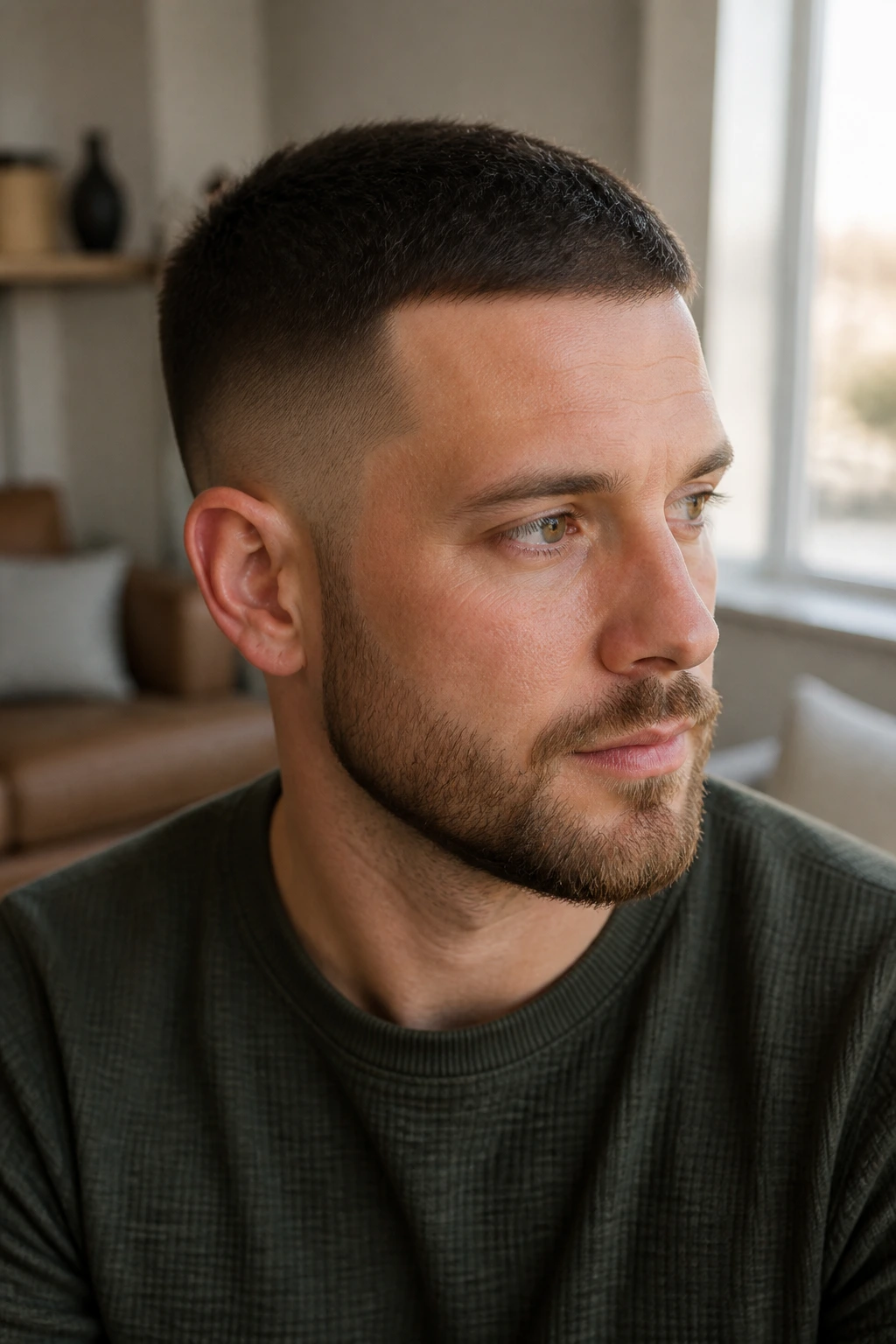
Some faces look better with soft edges than with razor lines. A soft-edge crew cut keeps the hairline natural, avoids heavy lineup work, and lets the shape feel more human. It still looks neat, just less carved.
That softness can be a relief if your hairline is a little uneven or if you don’t want the haircut to scream for maintenance every six days. The trick is keeping the taper clean enough that the softness feels intentional, not lazy. There’s a difference.
36. Razor Lineup Crew Cut
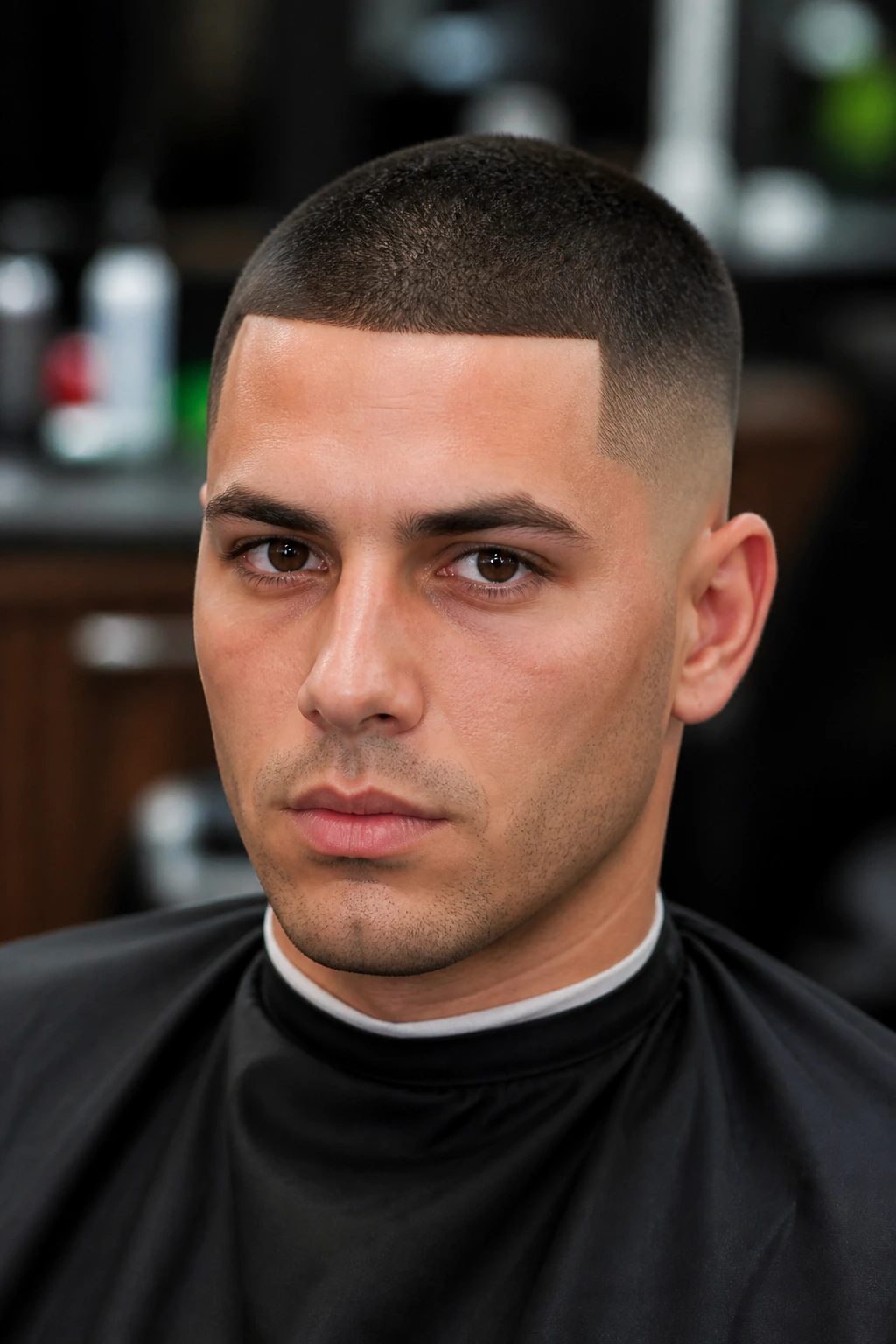
A razor lineup makes the forehead line, temples, and sometimes the neck look very crisp. It’s a bolder finish and one of the easiest ways to make a short crew cut read as ultra-clean in photos and in person. The hairline becomes part of the design.
The downside is grow-out. A lineup shows regrowth fast, especially around the temples. If you like a sharp edge and you’re willing to touch it up often, this is a strong look. If you want something forgiving, skip it.
37. Low-Profile Crew Cut

A low-profile crew cut sits close to the head and doesn’t ask for much attention. The top stays short, the fade or taper stays subtle, and the whole cut reads as neat from every angle without much styling. It’s the haircut equivalent of a well-made plain white shirt.
This is a good option for men with active schedules or anyone who hates fussing with hair in the morning. A little moisture after the shower, a quick finger-comb, and you’re done. No drama. No extra machinery.
38. Tapered Crown Crew Cut
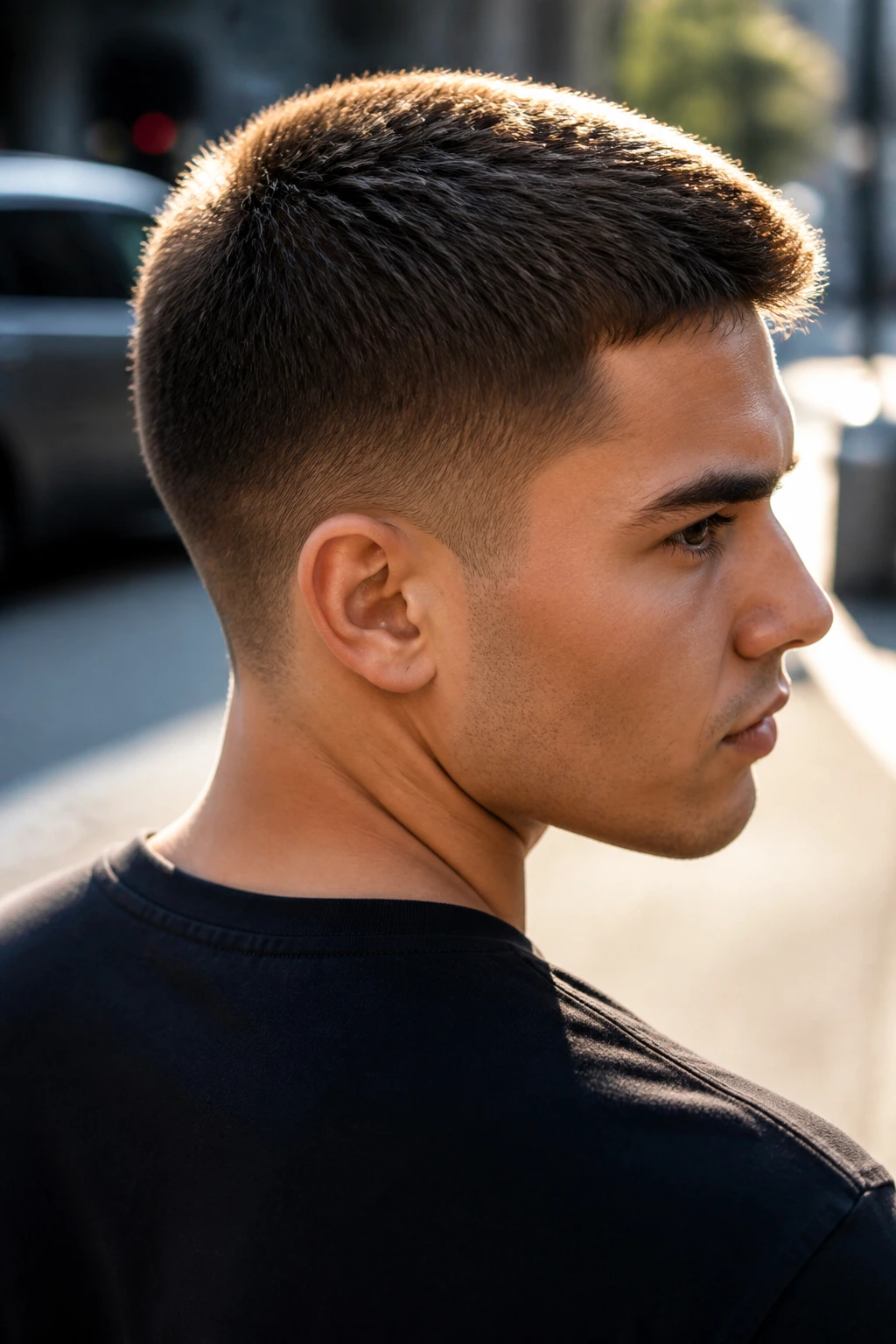
The crown is where a lot of crew cuts go wrong, especially when the swirl is ignored. A tapered crown crew cut leaves enough length and smart blending at the back so the crown doesn’t stick up, split, or reveal a patchy circle when the light hits it.
If your hair grows in a strong swirl, tell the barber before the clippers ever touch the head. That small conversation saves a lot of irritation later. The clean look here comes from respecting the crown shape, not fighting it into submission.
How to Style a Crew Cut in Five Minutes
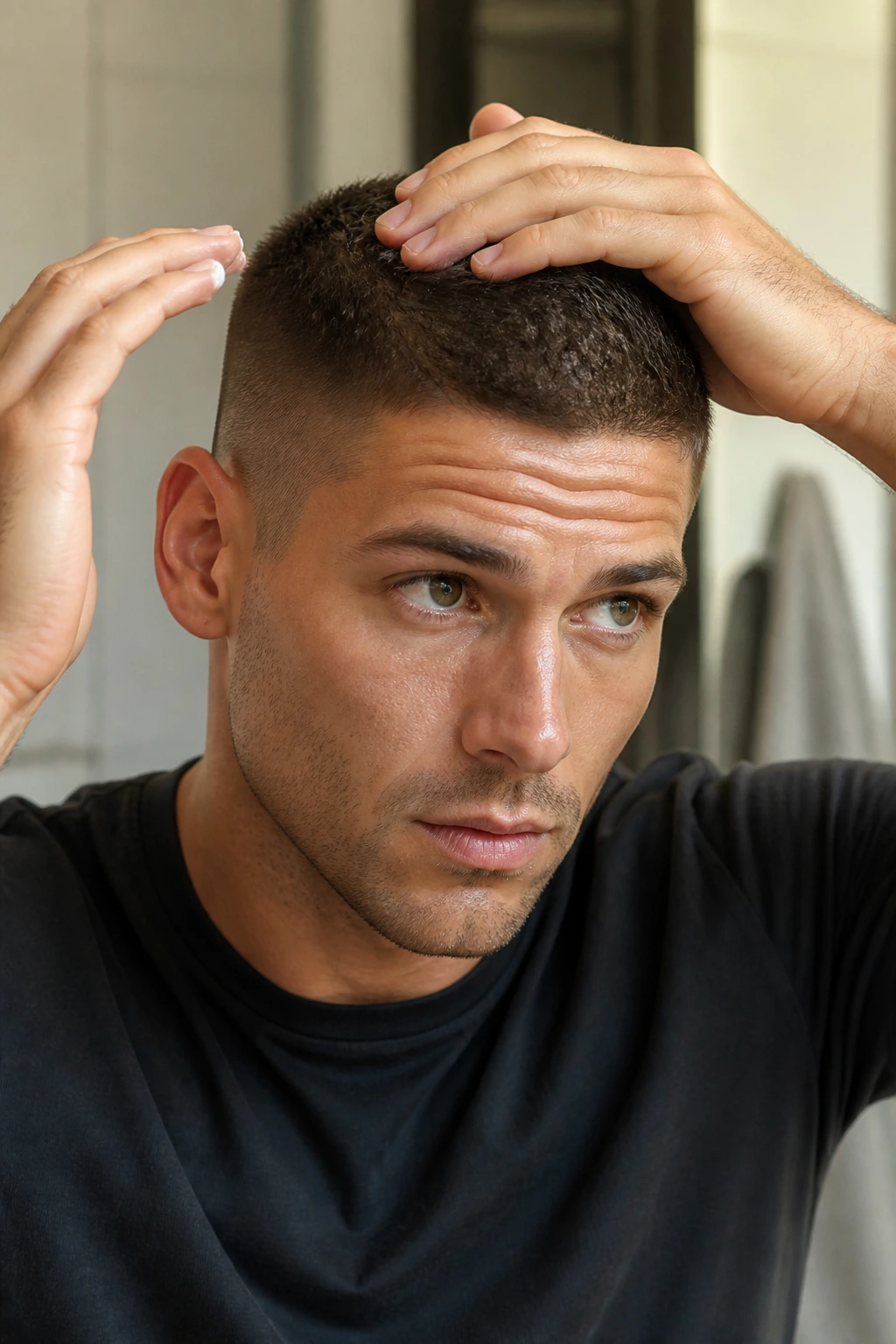
A crew cut should not need a bathroom cabinet full of product. If it does, something is off in the haircut or the styling routine. The best daily versions take only a few steps and usually less than five minutes from towel-dry to door.
Quick matte finish: Work a pea-sized amount of matte clay or paste into dry or barely damp hair. Start at the back of the top and move forward so the product doesn’t collect in the front. Use your fingertips if you want a natural finish, or a small comb if you want more control.
Cleaner work version: Damp hair, small brush, light cream. Brush the top in the direction your hair naturally wants to go. If you force it against the grain every morning, it will start to puff up or split by lunch. Hair remembers the fight.
If you wear a beard: Keep the sideburns and beard neckline trimmed to the same visual level as the fade. A mismatch here makes the haircut look unfinished even if the top is perfect.
Common Mistakes That Make a Crew Cut Look Sloppy
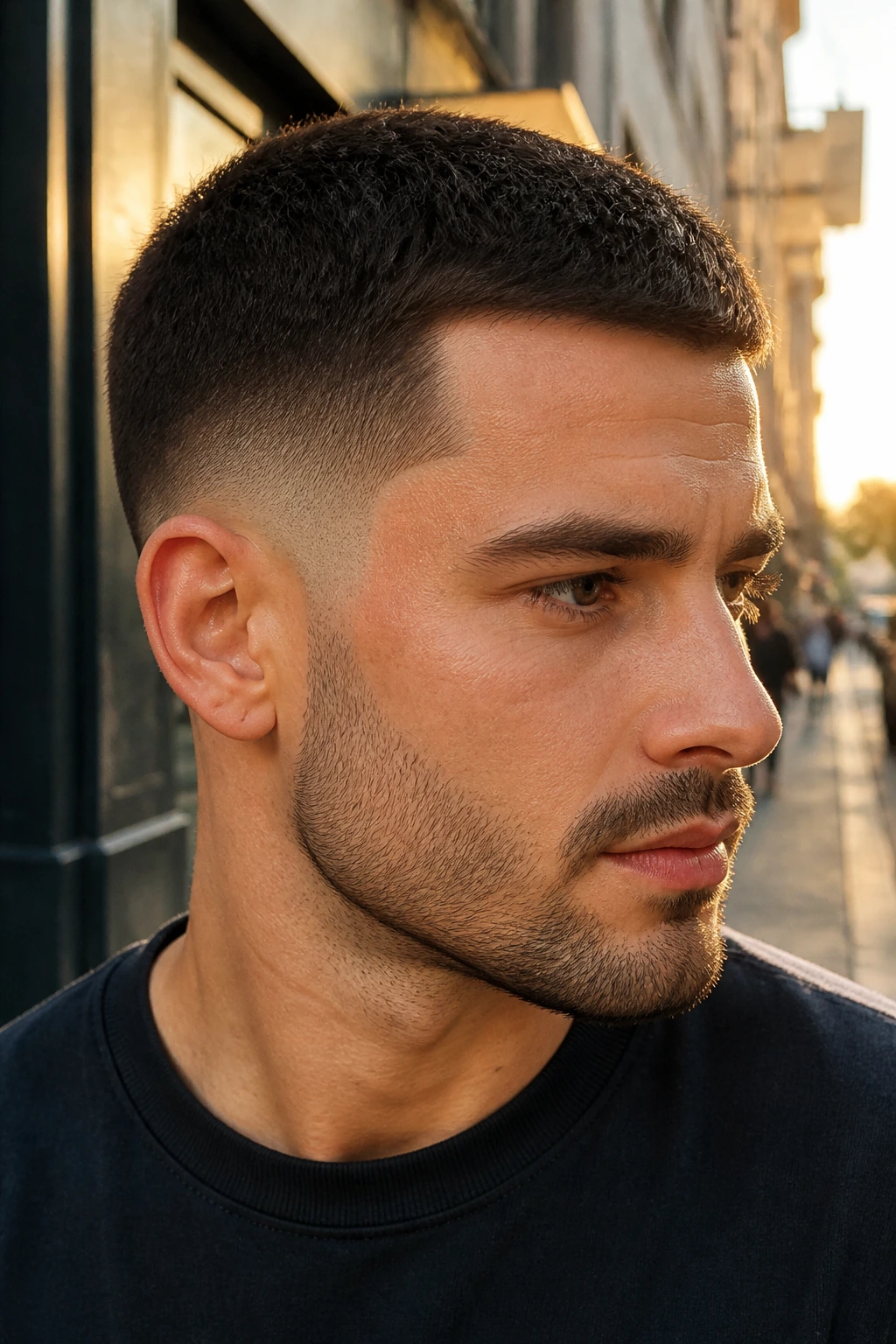
- Going too short on top too soon: If the top is cut down to the same level as the sides, the whole haircut can flatten out. Leave enough length to give the top a shape, even if it’s only an inch and a half.
- Ignoring the crown swirl: A crown that grows in a circle needs room. If it’s cut too tight, it will stand up or split open, especially when dry. Ask the barber to account for the whorl.
- Using too much shiny product: Short hair doesn’t need a thick coat of pomade. Too much shine makes the cut look greasy and separates the strands in a way that highlights thin spots.
- Letting the neckline grow wild: A clean crew cut loses its edge fast when the neck gets fuzzy. A quick cleanup every week or so keeps the shape intact.
- Treating the beard as separate: If you wear facial hair, the sideburn blend matters. A hard disconnect between haircut and beard makes the whole look feel unfinished.
Small Tweaks That Change the Whole Look
Flavor Enhancement: A tiny bit of sea salt spray on damp top hair can add grip before you use clay, especially if your hair is fine and slippery. Don’t soak it; two or three sprays is enough.
Customization: If your top is too flat, leave a quarter-inch more length in the front than at the crown. That tiny difference gives you a little lift without turning the cut into a pompadour.
Serving Suggestions: If you wear glasses, keep the temple area clean but not razor-shaved. That keeps the frames from looking like they’re competing with your haircut.
Make-It-Yours: Curly hair usually looks best with a softer taper and less product; straight hair usually needs a touch more texture; thick hair often needs more debulking than length reduction. The cut changes more than the product does.
Keeping the Cut Sharp Between Barber Visits

A crew cut looks best when the edges stay honest. For most men, a full haircut every 2 to 4 weeks keeps the shape in line. If you wear a skin fade or sharp lineup, aim closer to the short end of that range. If you wear a low taper or scissor-cut version, you can usually stretch a bit longer.
The neckline is the easiest thing to clean up at home. Use a trimmer every 7 to 10 days if the hair grows fast around the nape. Work slowly, check both sides in a mirror, and stop before you chase every stray hair. Over-cleaning the neck can make the line climb too high.
Shampooing doesn’t need to happen daily for everyone with short hair. If your scalp gets dry, washing too often can make short hair feel rough and stand up in odd directions. A light conditioner on the top can help if your hair is coarse or curly. If your hair is fine and oily, a lighter wash schedule may feel better. The real point is to keep the shape easy to restyle, not to make the hair squeaky and brittle.
The Most Useful Questions Men Ask About Crew Cuts
How short should the top be for a clean crew cut?
Most versions sit somewhere between 1.5 and 3 inches on top. Shorter than that starts drifting toward a buzz cut; longer than that starts looking more like an Ivy League or short textured crop.
What should I tell the barber if I want a crew cut and not a buzz cut?
Ask for short sides with a taper or fade and enough length on top to brush forward or slightly up. That top length is what separates the look from a uniform buzz.
Does a crew cut work with thinning hair?
Yes, especially if the haircut is kept short enough to avoid stringy length and long enough to avoid revealing every patch. A low taper or shadow fade can make the top look denser.
Can curly hair wear a crew cut without looking puffy?
It can, but the top usually needs to be shaped with the curl pattern in mind. A barber who cuts curly hair dry or knows how curls spring back will usually get a cleaner result.
How often should I touch up the fade?
For skin fades and sharp lineups, every 2 to 3 weeks is common. For low tapers, you can often stretch to 3 to 4 weeks before it starts looking off.
What product is best for a crew cut?
Matte clay or matte paste is the safest bet for most short crew cuts. If your hair is very fine, a light cream can work better. Heavy shine products usually make short hair look thinner, not cleaner.
Can I cut a crew cut at home?
Yes, especially if you’re keeping the sides even and the top modest. A hand mirror, good guards, and a slow hand matter more than fancy tools. The back and neckline are where most home cuts go sideways.
What’s the difference between a crew cut and an Ivy League?
An Ivy League is usually longer on top and more willing to show a side part or combed shape. A crew cut stays shorter, cleaner, and more direct.
Why the Crew Cut Still Earns Its Place
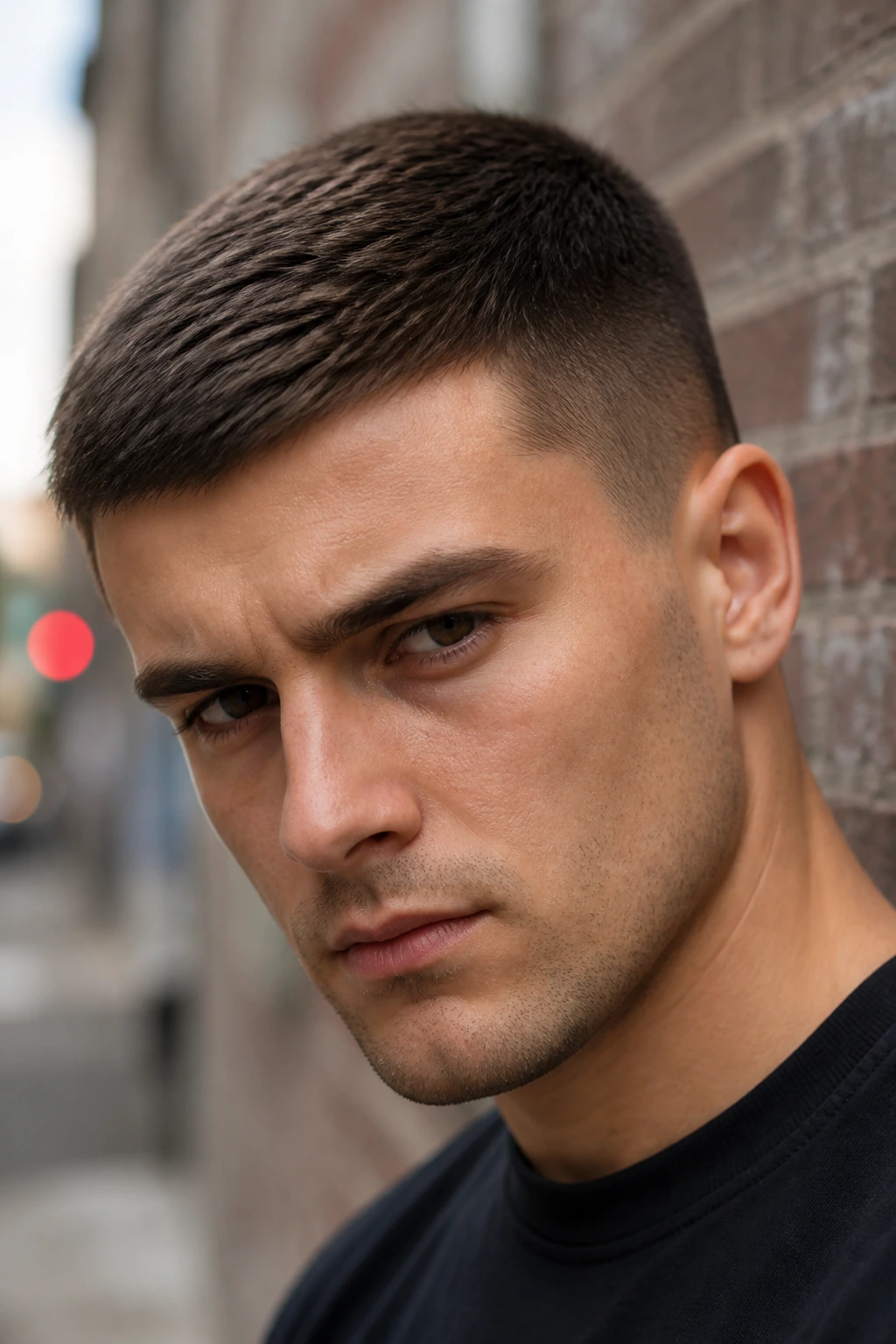
A clean crew cut is one of those haircuts that refuses to become dated because it never depends on tricks. It works when the taper is clean, the top has enough shape, and the neckline is handled like somebody will actually see it later. Those are simple rules, but they matter more than most people admit.
The nice part is range. You can make the cut sharper with a skin fade, softer with a taper, more refined with a side part, or more forgiving with texture and a little extra length. That flexibility is why the crew cut keeps coming back in different forms, and why it’s worth knowing which version fits your head, your hair, and your patience for upkeep.
One good version is enough to change your morning routine. Pick the shape that matches your hair instead of fighting it, and the cut will do the rest.
