



Haircut ideas for men get judged too fast. A photo on a phone screen looks sharp right up until the barber discovers your cowlick kicks left, your crown grows fast, and your temples thin out a little after lunch. Then the style that looked crisp in a mirror starts fighting your head by day six.
The better question is not which cut is fashionable. It’s which shape works when your hair is dry, when you skip product, when the sides start pushing out, and when you have to sit under bad office lights. I care far more about that second version of a haircut than the version that shows up on social media.
That’s why the cuts below are built around shape, growth pattern, and upkeep. Some are five-minute styles; others ask for a round brush, a comb, and a little patience. The good ones keep their line even after a couple of weeks. The bad ones turn into a helmet, a mushroom, or a sad little triangle. Nobody needs that.
Why These 33 Cuts Earn a Spot on the Chair
- Built for different hairlines: Some cuts soften a receding front, while others lean into a strong widow’s peak instead of pretending it isn’t there.
- Short, medium, and long options: You can stay close to the scalp or keep enough length for movement, which matters if your workday changes from desk to dinner.
- Barber-friendly language: Each style can be described with length, fade height, part placement, and fringe shape instead of vague words like “texture.”
- Room to grow out: The better shapes still look intentional after two or three weeks, which saves you from living at the barber’s chair.
- Easy to personalize: A little beard balance, a different product finish, or a softer neckline changes the mood without changing the whole cut.
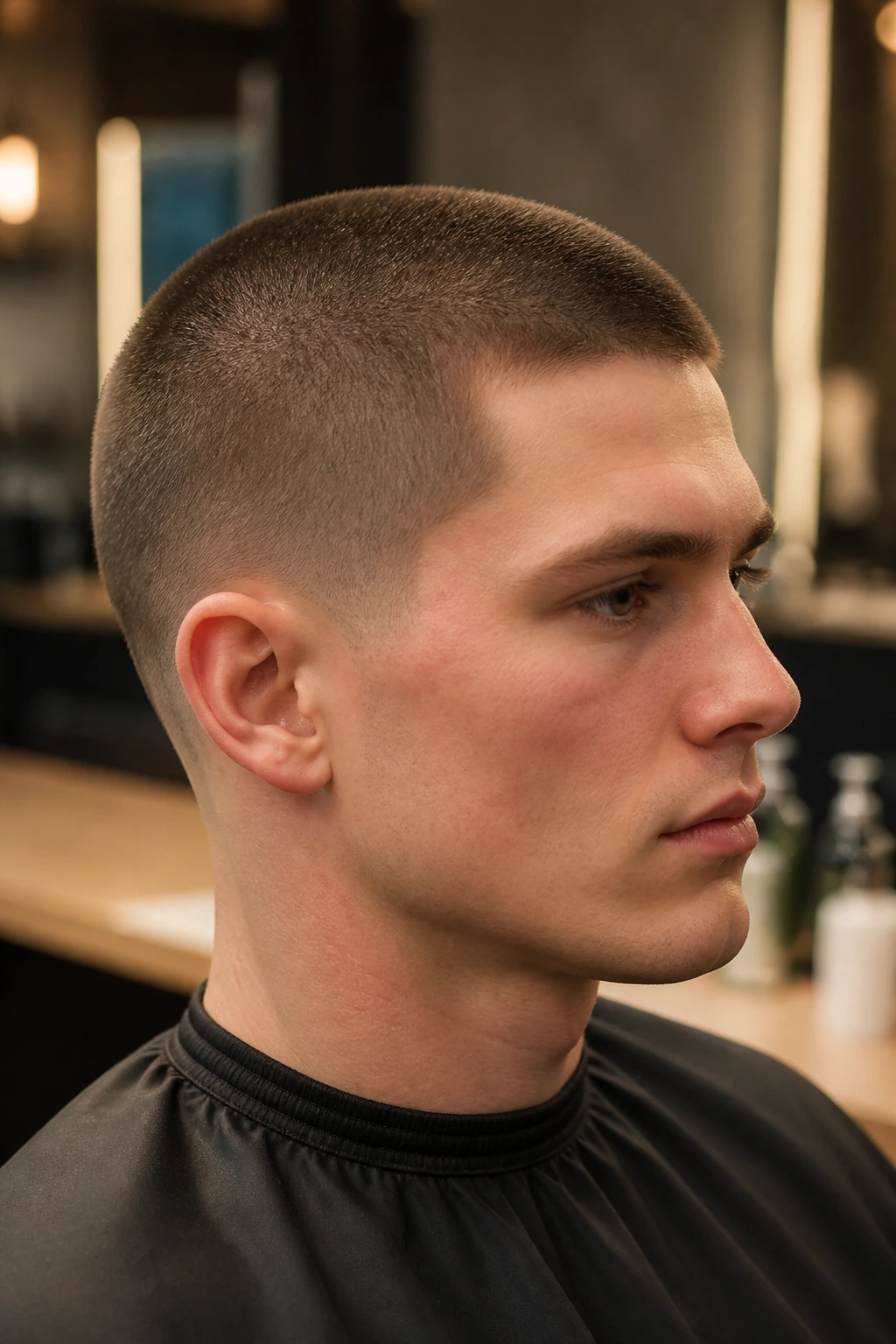
1. Buzz Cut
A buzz cut is blunt in the best way. There’s nowhere to hide, so the shape has to be honest: clean edges, even length, and a guard number that matches your head instead of your ego.
Why It Works
A #1, #2, or #3 guard keeps the cut close without making every bump and swirl on your scalp obvious. I like this cut on guys with strong bone structure, fast growth, or hair that refuses to sit still in the morning.
- Ask for one guard all over, or keep the top one guard longer than the sides.
- Ask for a tapered neckline if you want it to grow out cleanly.
- Skip heavy product; a tiny bit of matte cream is enough if you want a softer finish.
Best move: If your crown sticks up, don’t go to the shortest guard first. One notch longer usually looks more deliberate.
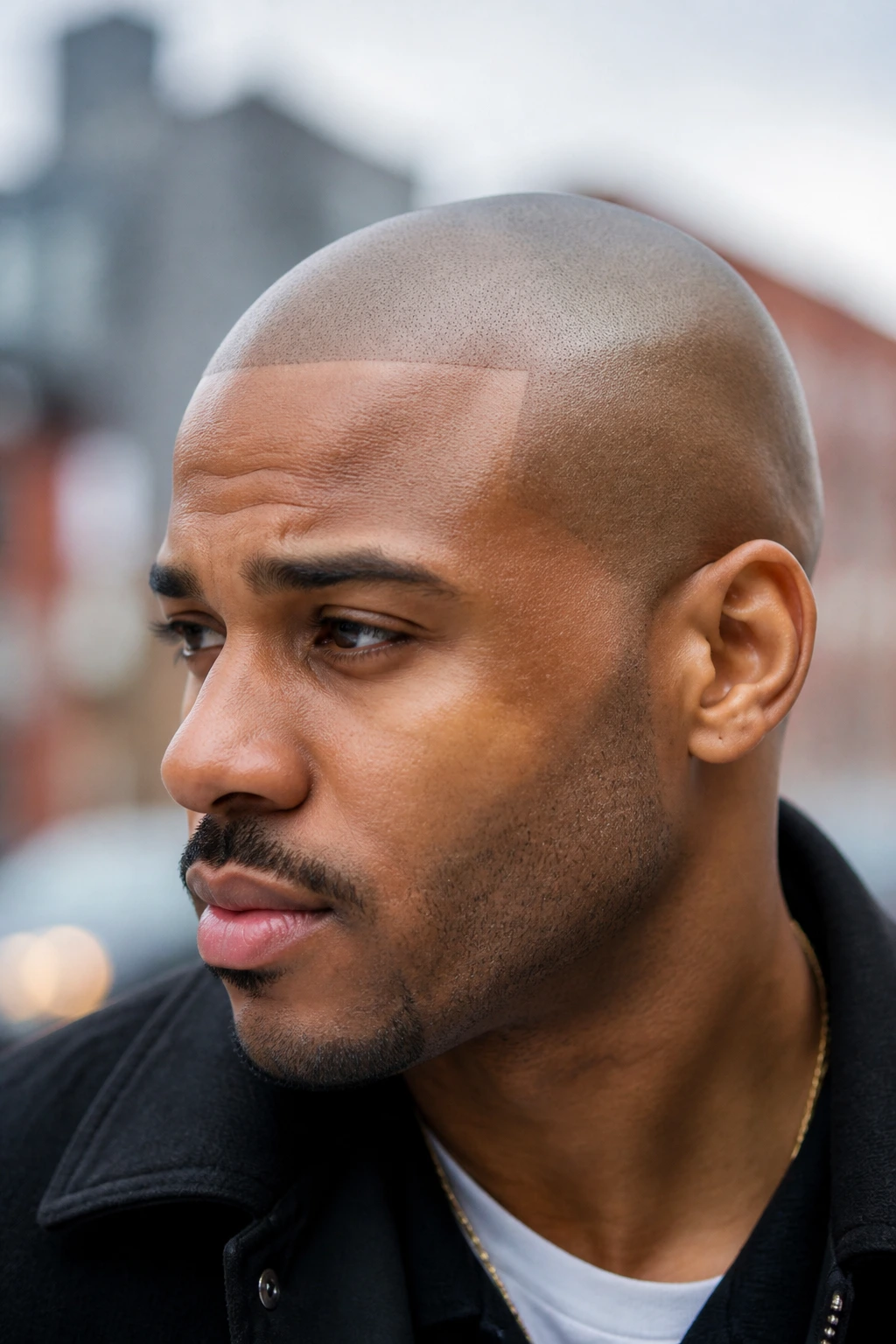
2. Shaved Head
A shaved head is not a fallback. It’s a choice, and it looks better when it’s treated like one. The clean scalp, the sharp line at the temples, and the absence of half-finished styling all give it a hard-edged simplicity.
If your hairline is retreating or your hair is thinning on top, this cut often looks better than trying to force volume that isn’t there. Use a foil shaver or a very close clipper pass, then keep the scalp moisturized and protected with SPF on exposed days. Dry, flaky skin ruins the whole look fast.
3. Crew Cut
The crew cut sits in that sweet spot between military-short and office-ready. The top stays short enough to comb with your fingers, but long enough to keep the shape from looking shaved down.
How to Ask for It
Tell the barber 1 to 1.5 inches on top with a clean taper on the sides and back. If your hair is thick, I’d keep a touch more length through the front so it doesn’t stand up like bristles. A little styling cream gives it control without shine.
4. Caesar Cut
The Caesar cut is for men who want fringe without fuss. The front is cut straight and worn forward, which makes the shape work nicely if your hairline is starting to rise a bit.
It looks best when the top sits around 1 to 1.25 inches and the texture is choppy, not soft. Keep the sides shorter, but not skin-tight, or the fringe starts to look disconnected. This one is good with matte paste and bad with shiny pomade. The whole point is that blunt, compact look.
5. French Crop
A French crop is the Caesar’s cooler cousin. The fringe is shorter, the texture is rougher, and the sides are usually faded or tapered so the top can sit heavy without looking bulky.
The reason I like it is simple: it works on straight hair, wavy hair, and mildly rebellious cowlicks. Ask for point-cut texture on top and a fringe that barely touches the brows. If you want to hide a forehead a little, this does the job without looking like you’re hiding anything.
6. Textured Crop
A textured crop has more bite than the French crop. The top is choppy, the fringe can be uneven on purpose, and the whole haircut looks best when it’s a little matte and a little messy.
The Detail That Matters
This style needs piecey separation, not a smooth helmet. Tell your barber you want the top left around 2 to 3 inches and broken up with scissors, not clippers only. Then use a dry paste or clay and scrunch it in with your fingers. The cut should look like it was moved by hand, not painted on.
7. Ivy League
The Ivy League is what happens when a crew cut learns how to dress itself. The sides stay neat, but the top has enough length for a side part and a little lift at the front.
This is one of the safest haircut ideas for men who need something tidy without looking stiff. Ask for 2 to 3 inches on top, tapered sides, and a soft part rather than a shaved one. A touch of cream or light pomade keeps it in place. It’s clean, but it doesn’t feel overworked.
8. Side Part
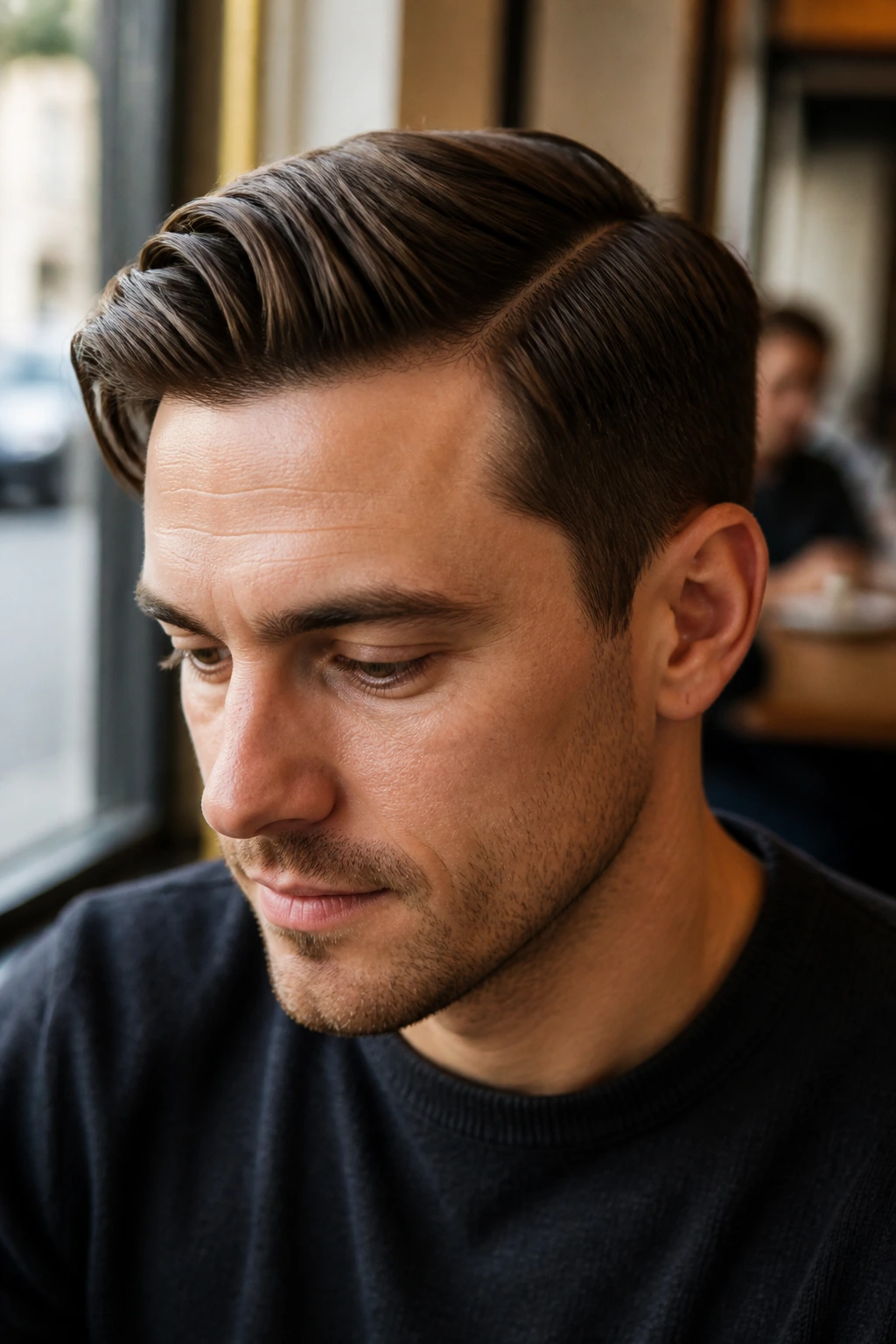
A classic side part is still one of the smartest cuts around because it respects the hair’s natural fall. The part line creates order, and the longer side lets you shape the outline of your face a bit.
If you have medium-density hair, this cut gives you control without forcing volume. Keep the top around 2.5 to 4 inches and ask the barber to blend the sides with scissors or a low taper. I prefer the softer version over the hard, razor-sharp part unless you want a very crisp, business-heavy look.
9. Hard Part Comb Over
A hard part comb over gets a bad reputation because people confuse it with trying too hard. Done right, it’s just a clean part, a controlled sweep, and enough contrast to give your hair structure.
It works especially well if your hair is straight or slightly wavy and you want to direct attention away from thinner spots. Keep the top 3 to 4 inches, let the barber carve the part line, and use a medium-hold product so the sweep doesn’t collapse by noon. Too much shine makes it look dated. Matte to low-shine is safer.
10. Quiff
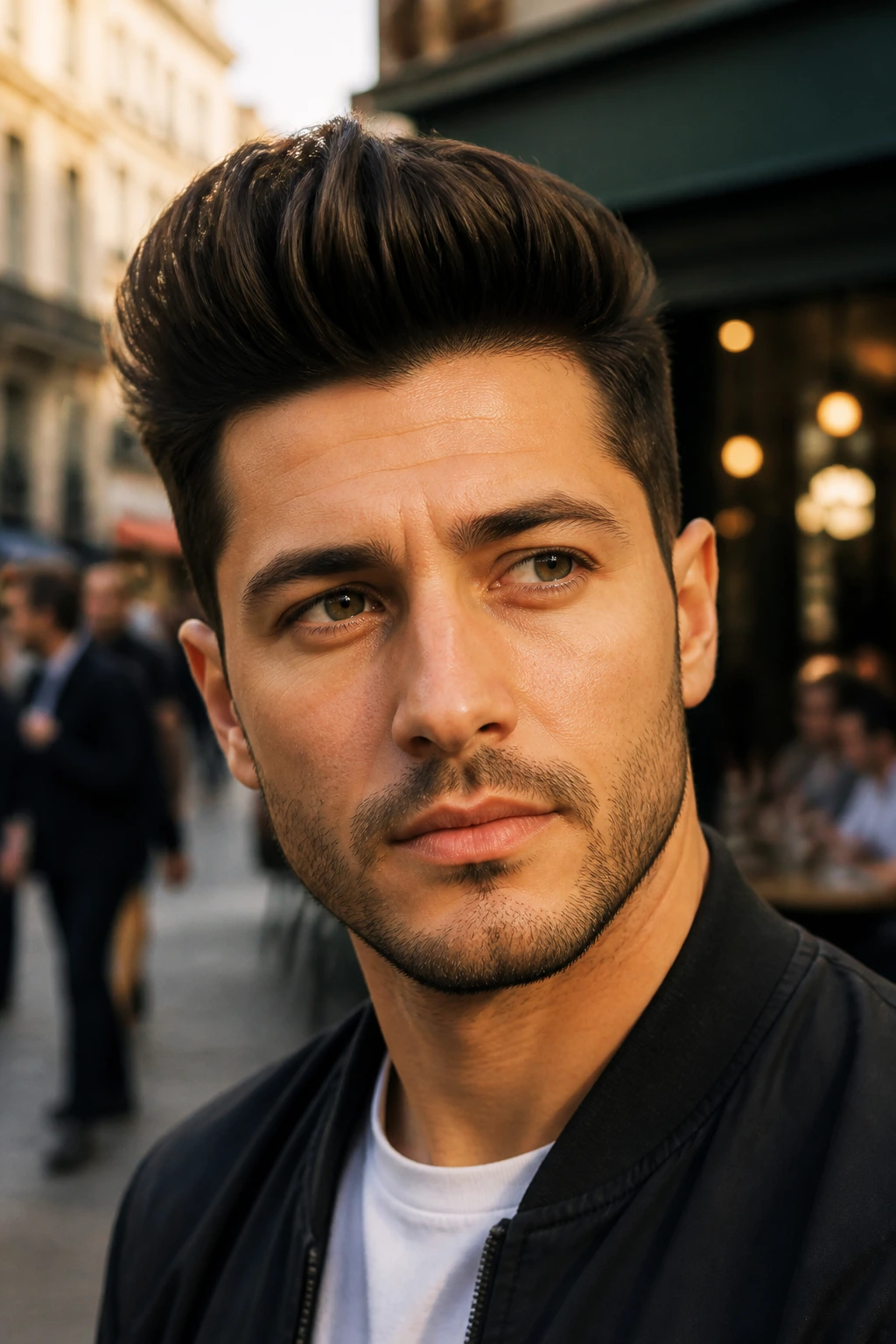
A quiff is all about front-loaded volume. The hair lifts off the forehead and back a little, which gives the cut some energy without pushing it all the way into pompadour territory.
Why It Works
The quiff needs length in the front, not everywhere. Ask for about 3 to 4 inches at the fringe and a gradual reduction toward the crown. Blow-dry the front up and back with a round brush, then lock it down with a light clay or mousse. If your hair is fine, this shape can fake thickness better than most cuts.
11. Pompadour
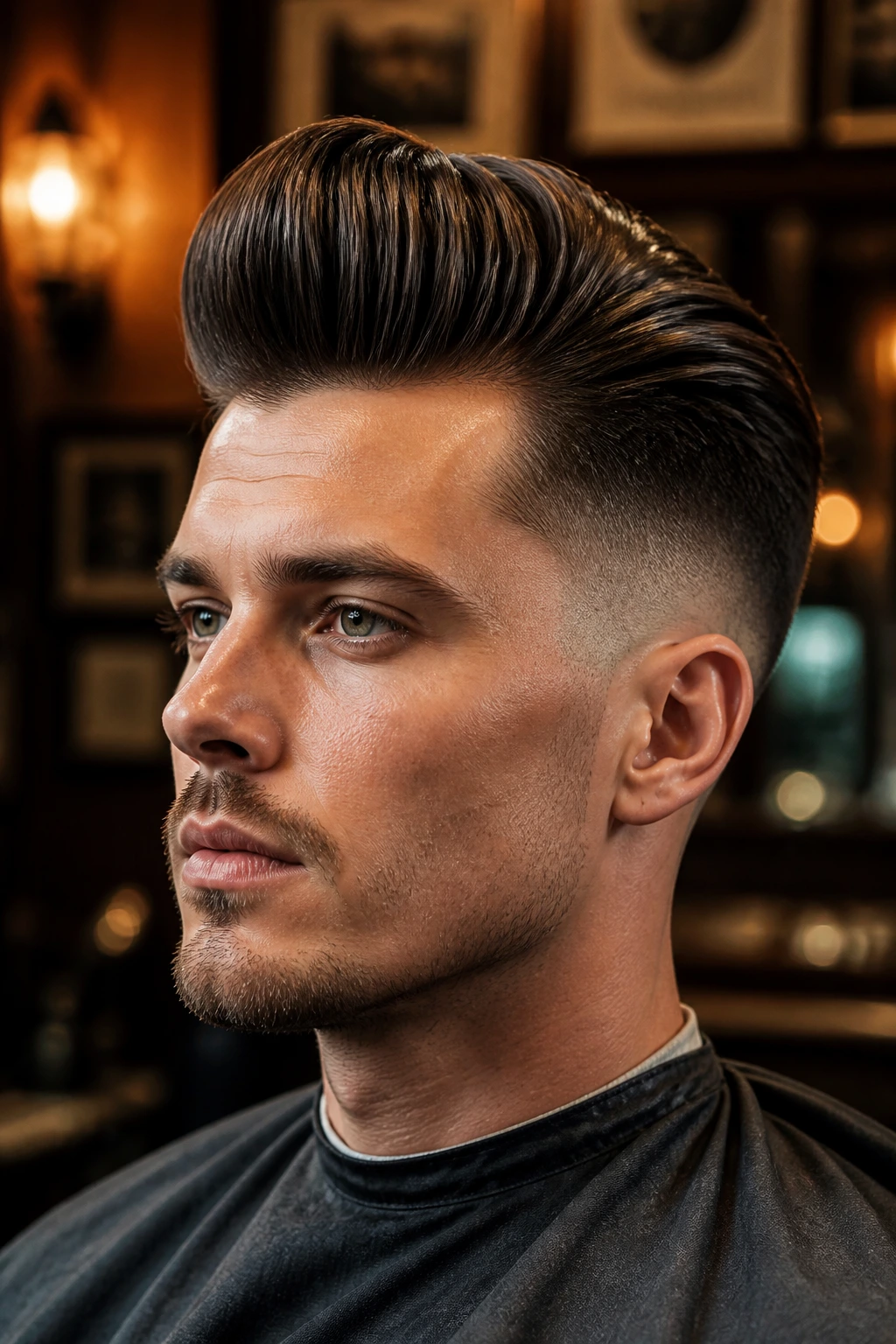
The pompadour has more height and polish than a quiff. It’s a statement cut, but it’s only worth wearing if you’re willing to spend a few extra minutes with a blow dryer and comb.
The top needs enough length to roll back—usually 4 inches or more—and the sides should stay tight enough to keep the silhouette from spreading out. This is not the haircut I’d choose if I wanted to roll out of bed and leave. It’s for the days when you want your hair to look deliberate, sculpted, and a little old-school.
12. Slick Back
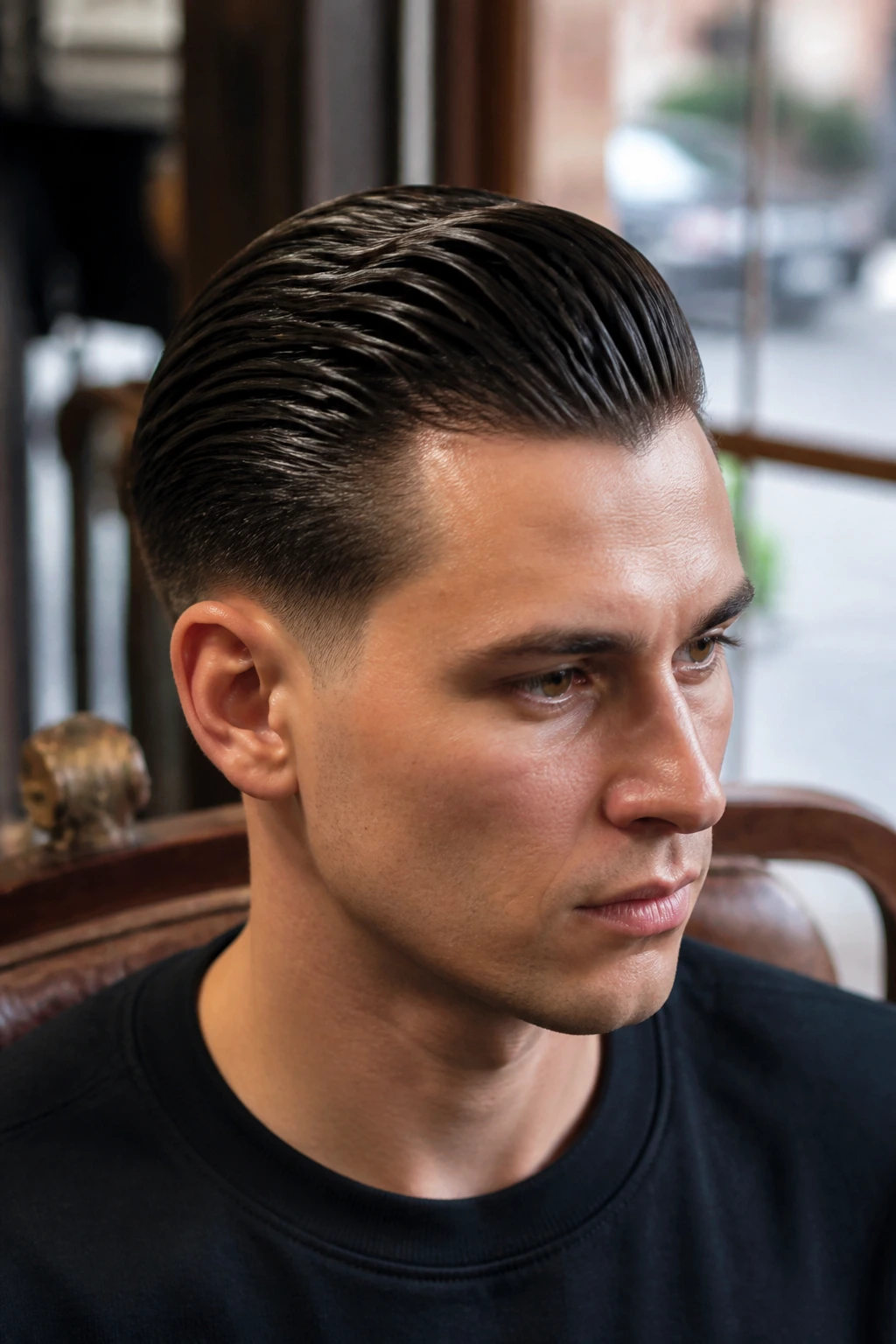
A slick back lives or dies on hair health. If the hair is dry or frizzy, the style can look greasy fast; if it’s too short, it won’t hold the sweep.
Ask for 3 to 5 inches on top with tapered or disconnected sides depending on how sharp you want the contrast. Use a comb, not your fingers, and distribute pomade from front to back in one direction. I like this cut more on straight or wavy hair than on curls that want to spring forward again.
13. Taper Fade
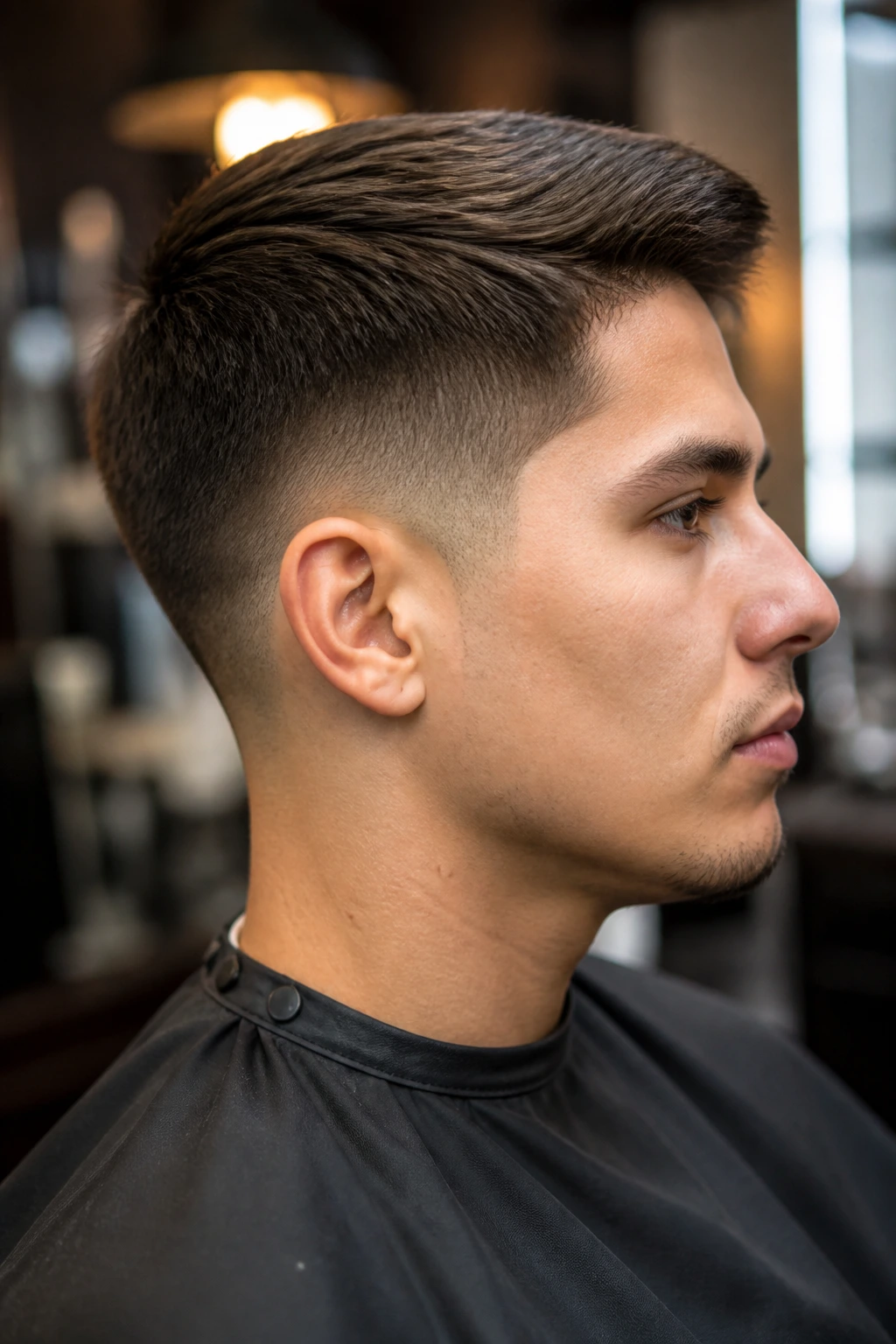
A taper fade is the quiet one in the group. It doesn’t shout. The hair gradually shortens around the sideburns and neckline, which makes almost any top look more finished.
That’s the reason I recommend it so often. A taper fade works with a crew cut, a side part, a crop, even curls, because the transition is gentle and the grow-out is forgiving. If you want something neat without a harsh contrast, start here before you go chasing skin-fade drama.
14. Low Fade
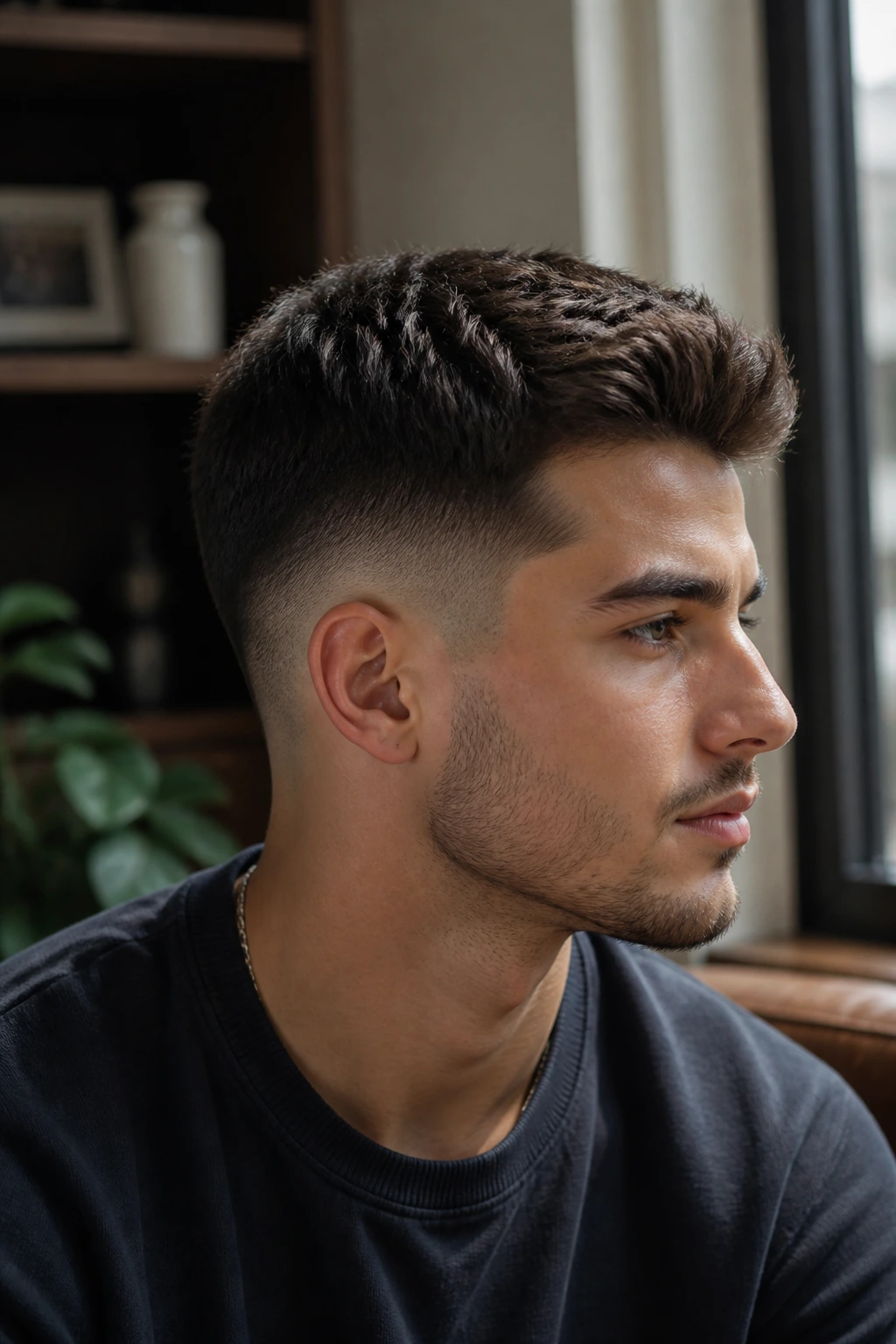
A low fade keeps the fade line closer to the ear, which leaves more weight on the sides and a little more softness around the head. That matters if your face is narrow or your hair is thin and you don’t want the sides disappearing too fast.
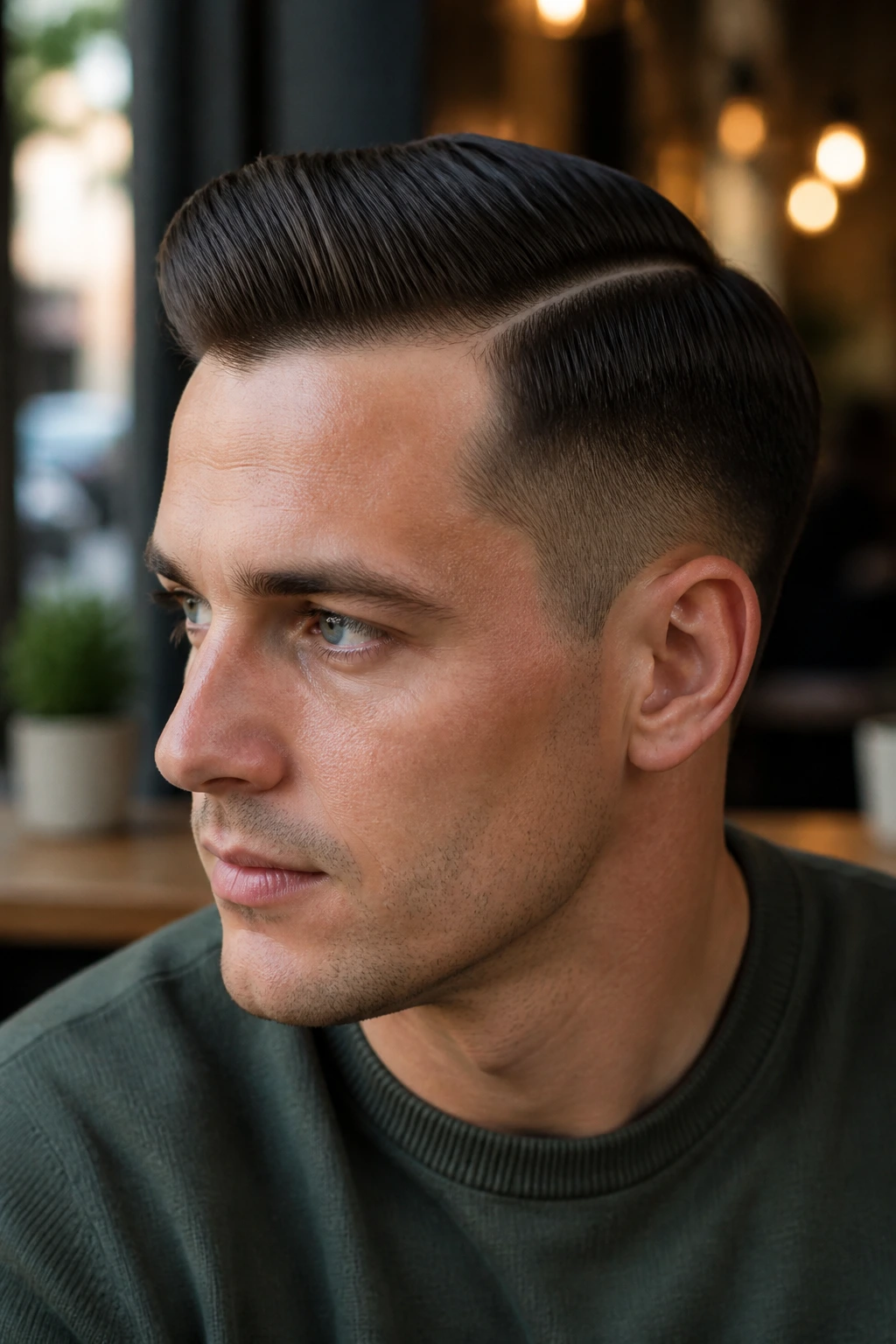
Ask for the fade to start just above the ear, then keep the top in whatever shape fits your texture—short crop, quiff, or part. A low fade gives you contrast without making the haircut look aggressive. It’s one of the easiest fades to live with at week three.
15. Mid Fade
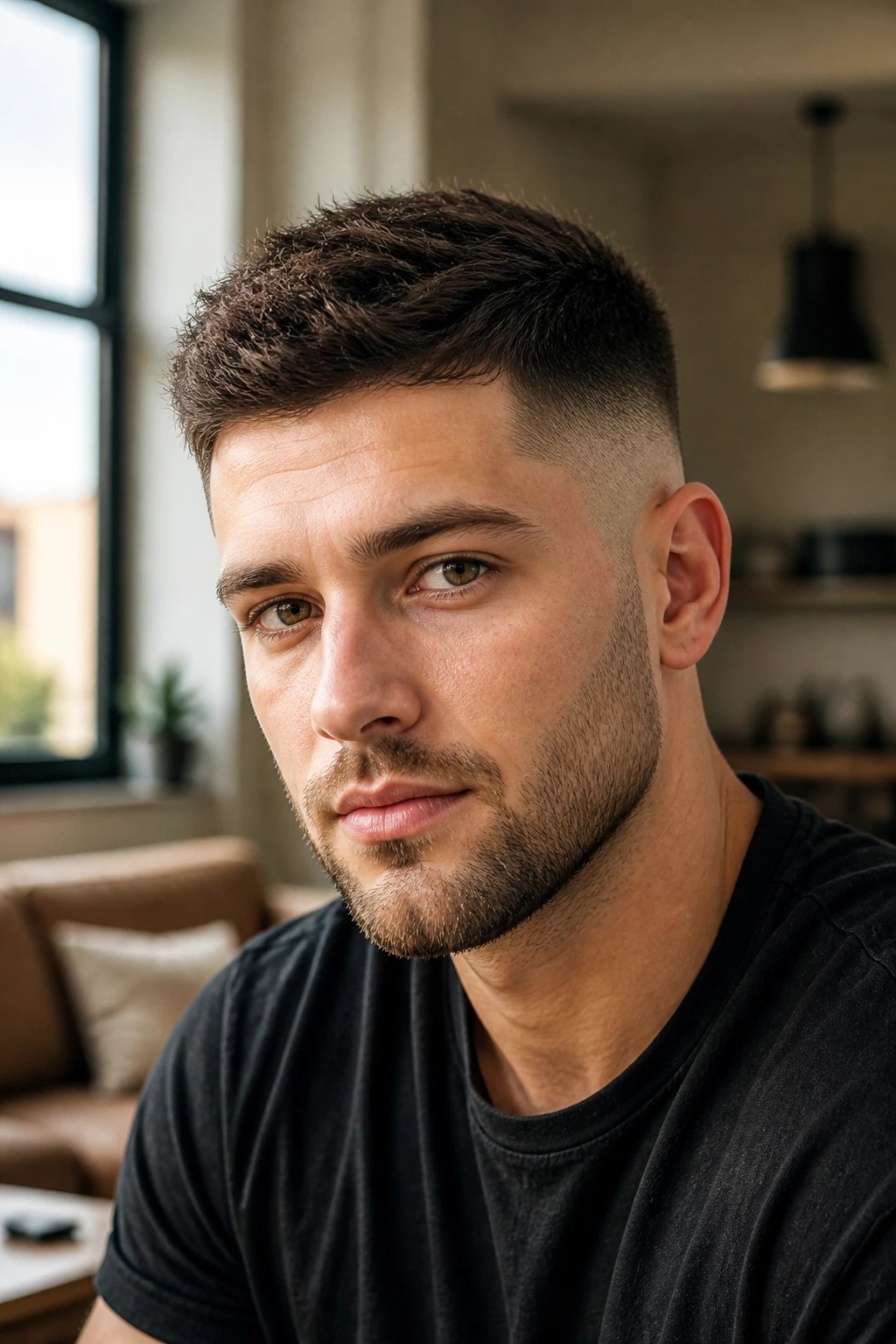
The mid fade sits in the middle for a reason. It balances the top and sides without leaning too far into either camp, which makes it a strong choice for guys who don’t want the haircut to do all the talking.
This cut works with straight hair, curly hair, and thick hair because the fade line is visible enough to sharpen the profile, but not so high that it swallows the shape. I’d choose it when I want a cut that still looks fresh after a little grow-out. That middle ground is underrated.
16. High Fade
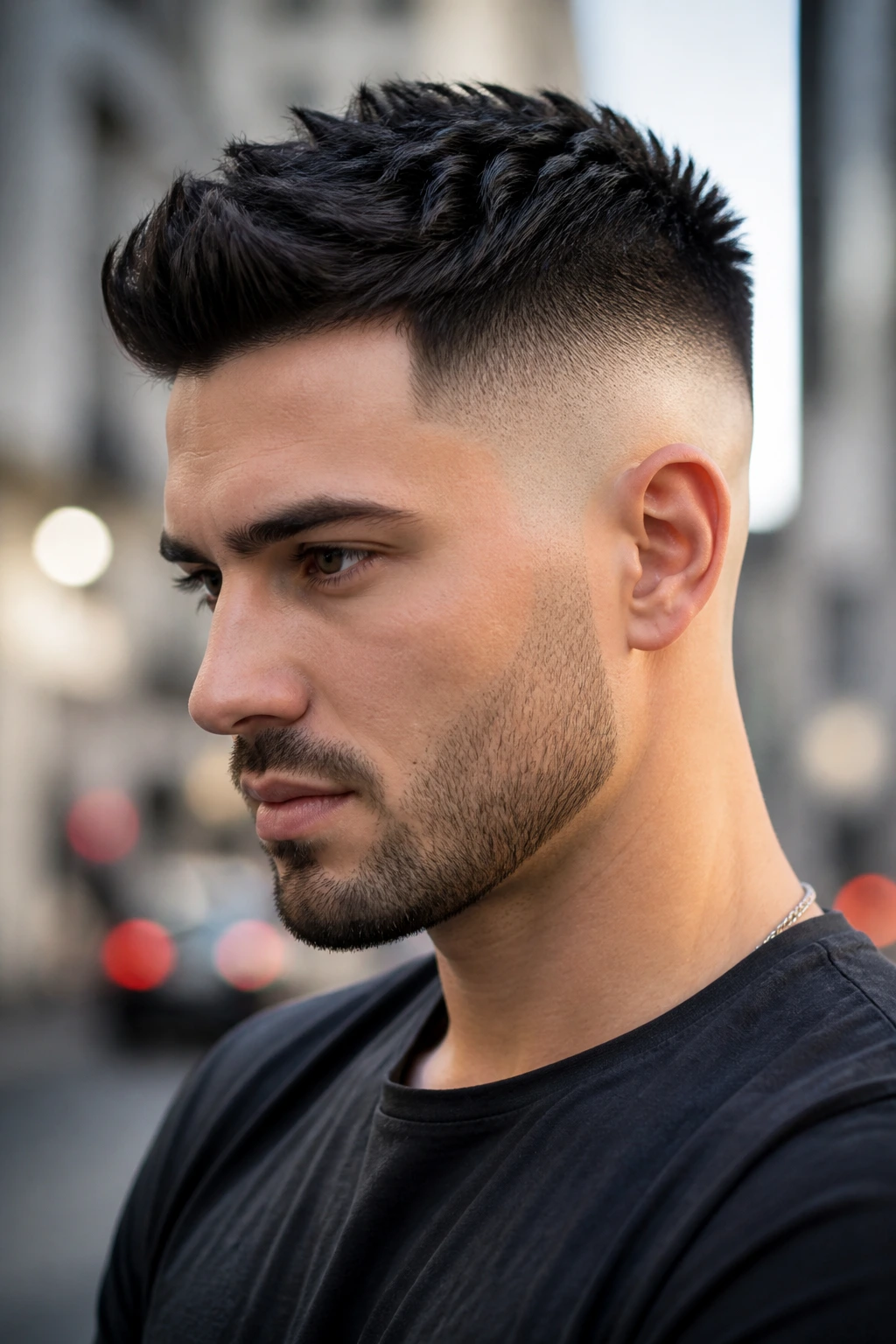
A high fade gives you a sharper edge and more contrast. The short sides rise higher on the head, which makes the top look fuller and more compact.
It’s a good move if you want the top to carry the style—textured crop, short quiff, curls, even a hard-part comb over. The downside is obvious: you lose softness faster, so the grow-out looks louder than a low fade’s. If your hair grows fast at the temples, plan on more frequent touch-ups.
17. Skin Fade
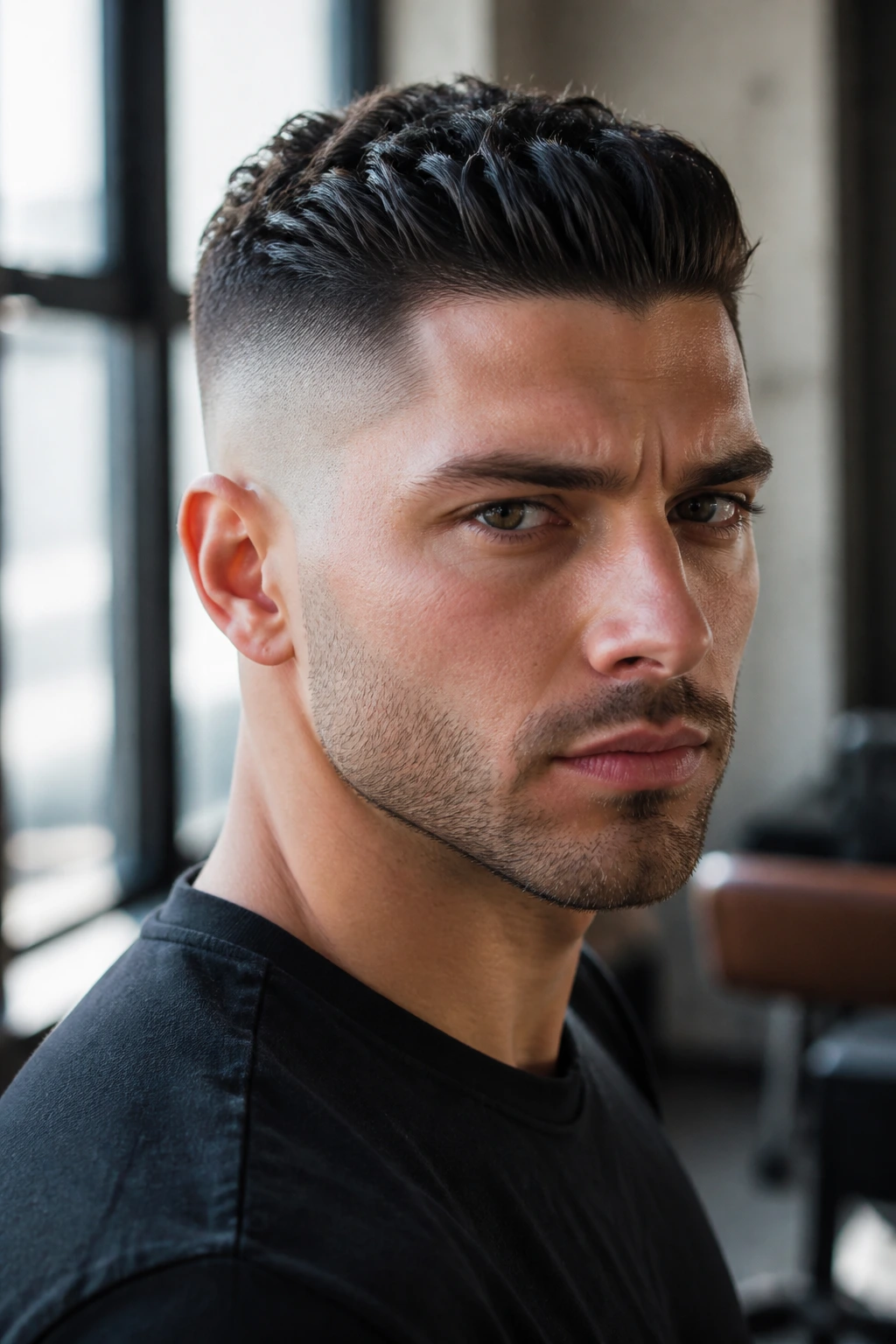
A skin fade goes all the way down to bare skin, and that clean finish changes the whole haircut. It gives crisp structure to the top, whether the top is short, curly, brushed back, or heavily textured.
The key is getting the transition smooth. A skin fade with rough blending looks patchy, especially when it starts growing out. I like this cut most on dense hair because the contrast is strong and intentional. If your hair is fine, the fade can expose more scalp than you want.
18. Burst Fade
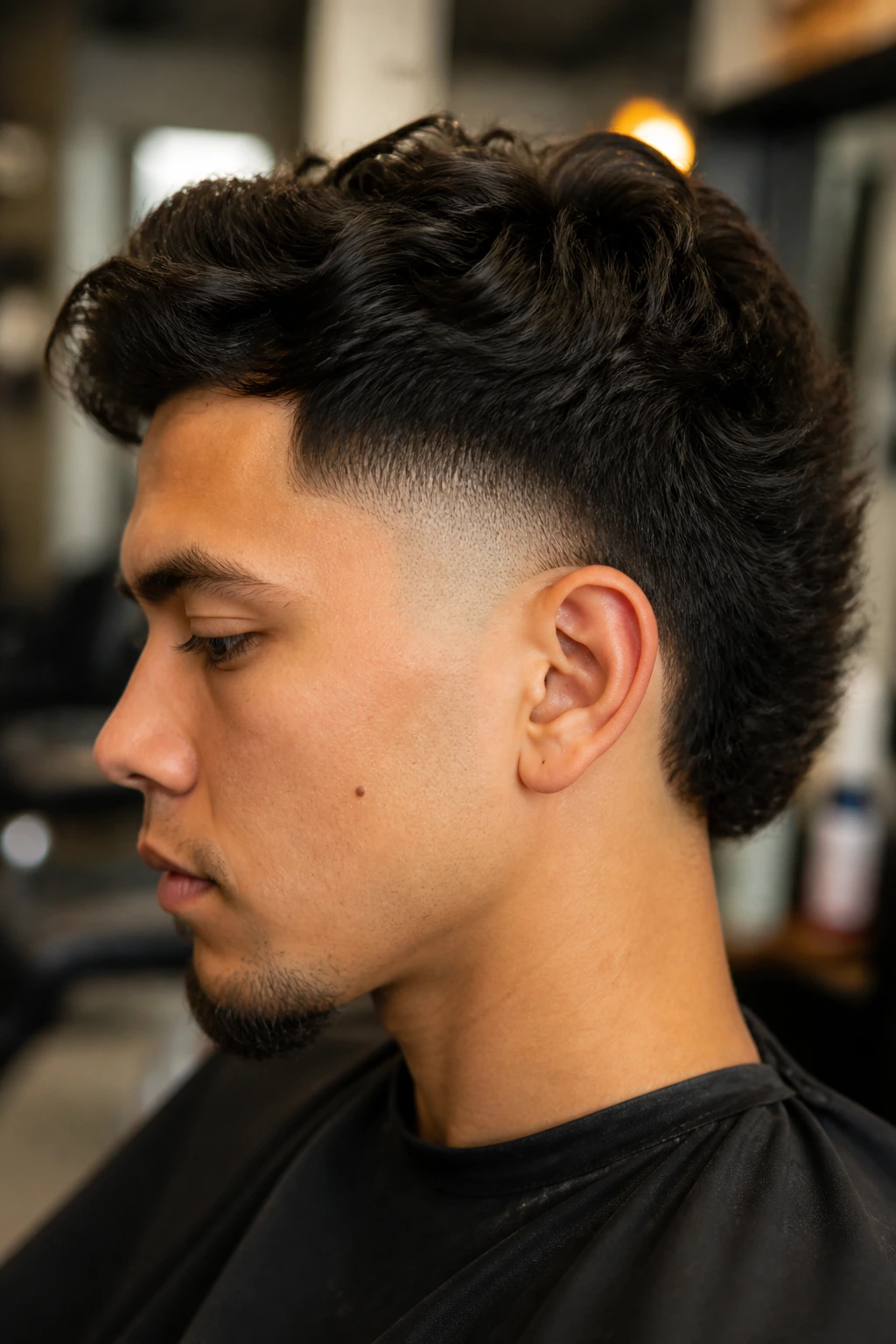
A burst fade curves around the ear and leaves more length in the back. It’s a good fit for mohawks, curly tops, and even a modern mullet when you want something that feels shaped rather than generic.
The shape matters more here than the exact length. Keep the center section guided by the rest of your hair pattern, and ask the barber to keep the fade rounded rather than straight. It gives the sides movement. It also avoids that flat, clipped look you get from a standard fade that cuts too hard around the ear.
19. Drop Fade
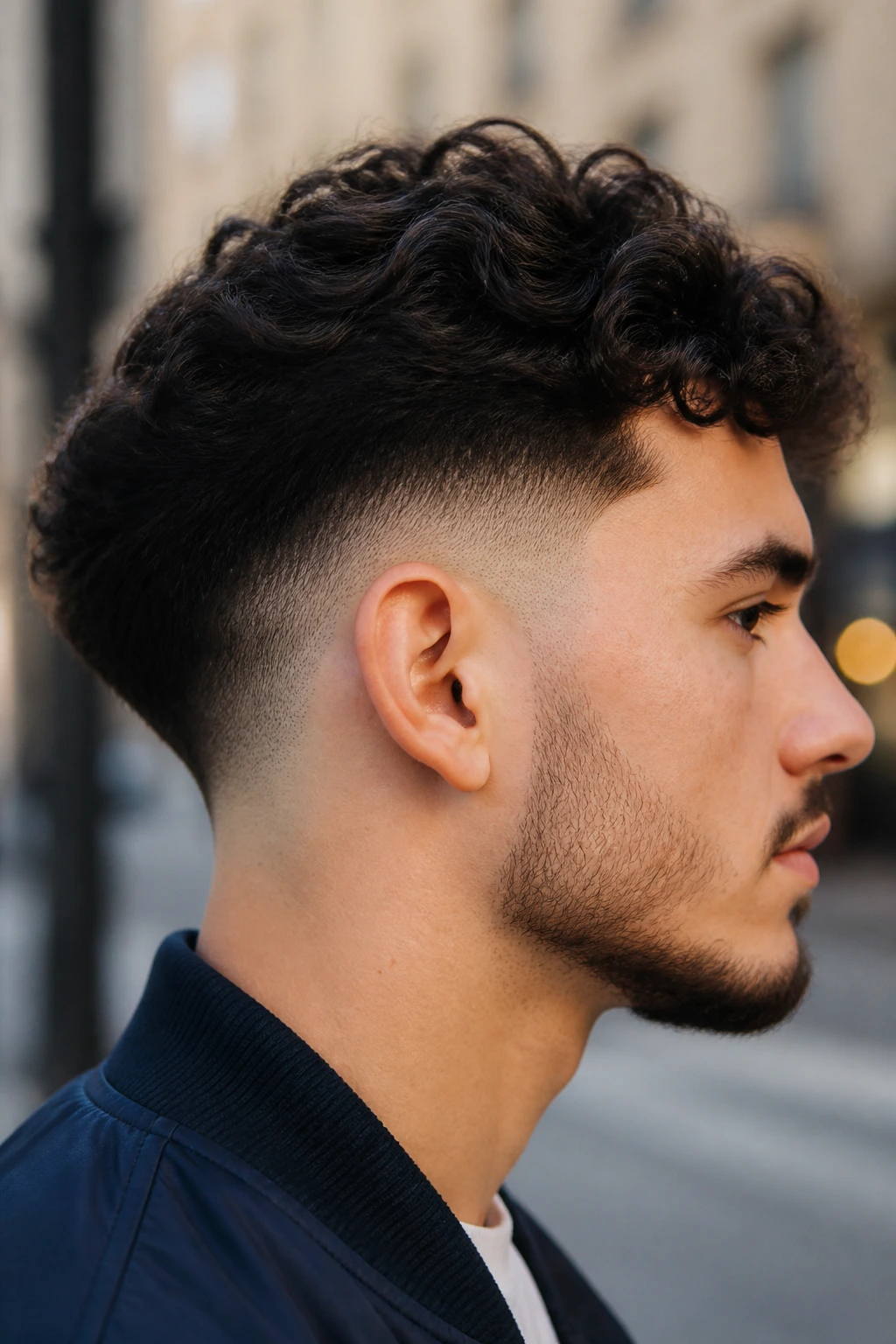
A drop fade dips lower behind the ear and follows the shape of the head. That little drop gives the haircut a more sculpted outline, especially from the side.
I like this one when the top has some natural wave or curl, because the fade mirrors the curve of the head while the top does its own thing. Ask for the fade to drop low at the back, not just on the sides. It’s a small detail, but on the finished haircut it reads as cleaner and more thoughtful.
20. Curly Top Fade
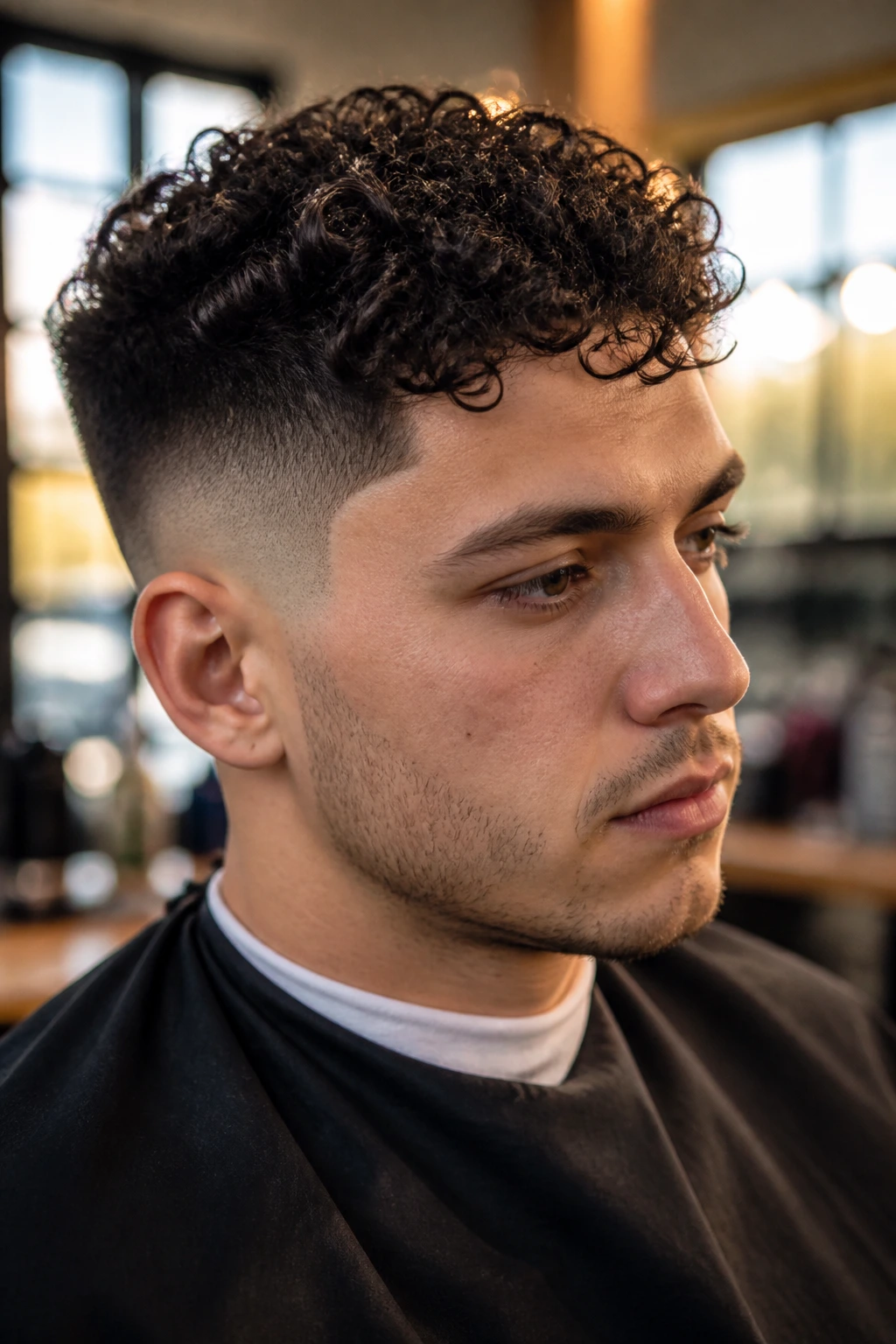
Curly hair needs room, not punishment. A curly top fade keeps the sides tight while leaving enough length on top for the curl pattern to show instead of turning into a puff.
Tell the barber to leave 2 to 4 inches on top, depending on curl tightness, and to shape the top by following the curl, not flattening it. A leave-in conditioner and a little curl cream are usually enough. Skip heavy waxes. They crush the curl and make it look sticky.
21. Curly Fringe
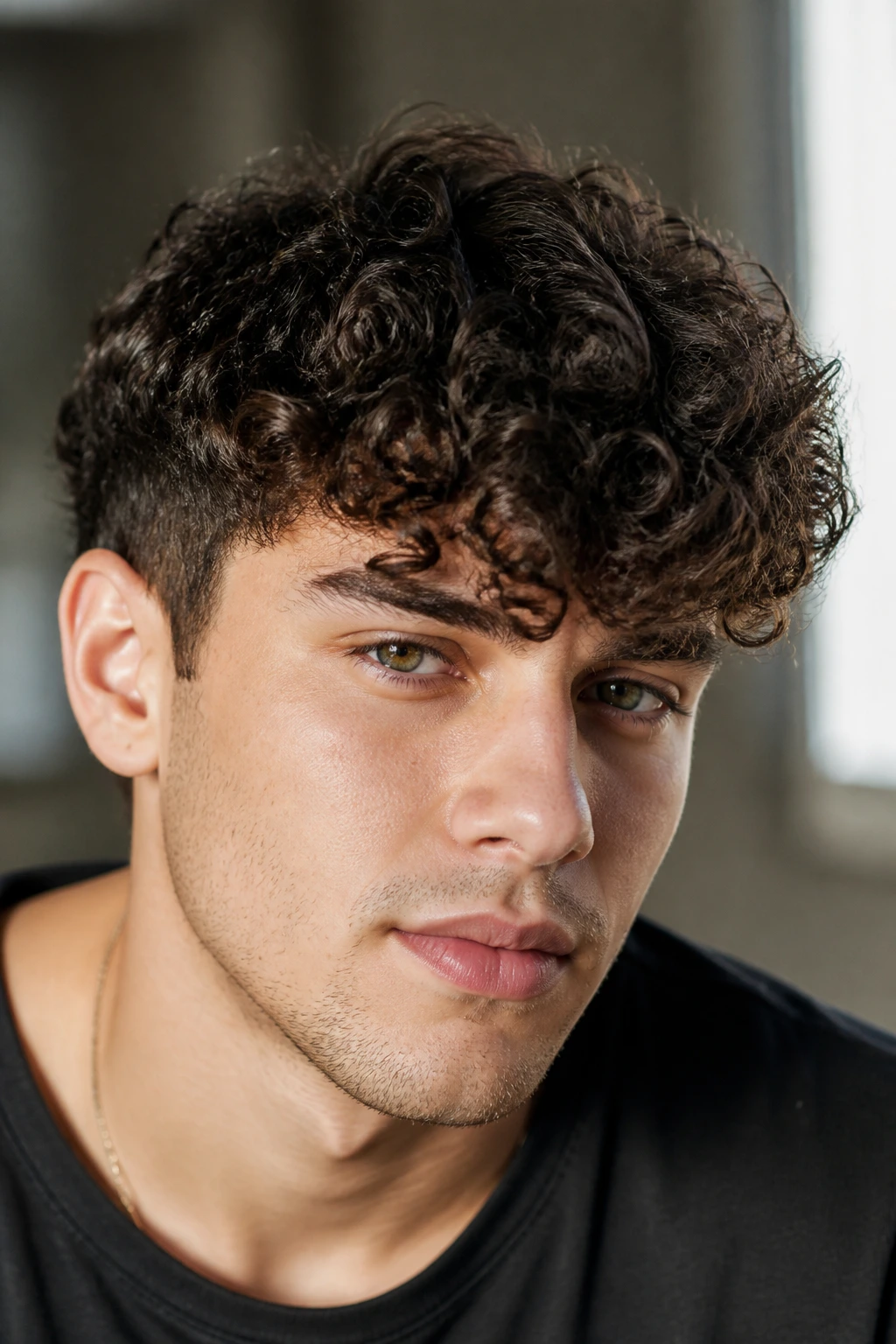
A curly fringe is one of my favorite ways to handle curls near the forehead. Instead of forcing everything straight back, you let the front fall forward with purpose.
This cut works best when the fringe is cut dry, curl by curl, so the barber can see how much bounce each section has. Keep the sides tapered or faded lightly so the fringe stays the focus. The result should feel relaxed, not shaggy. If the curls are too short, the fringe pops up; too long, and it gets heavy fast.
22. Curtain Haircut
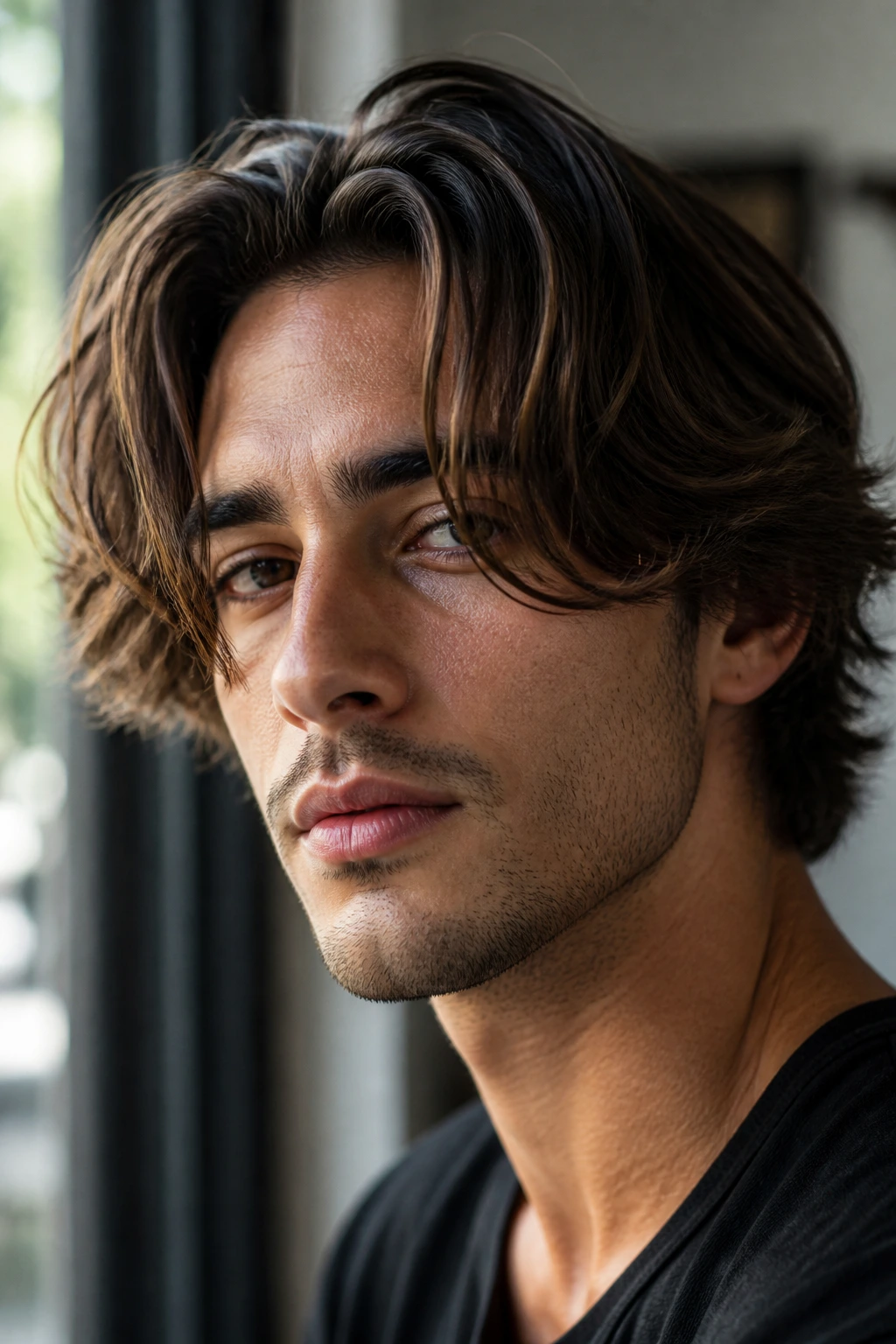
Curtain hair is back because it solves a real problem: medium-length hair needs a shape, not just length. The center part opens the face, and the soft fall on both sides gives the cut its movement.
You’ll want enough length on top and through the front—usually 4 to 6 inches—to let the hair separate naturally. This cut works better on wavy and straight hair than on very tight curls. A lightweight cream or sea-salt spray keeps it loose. The trick is not to flatten the roots.
23. Bro Flow
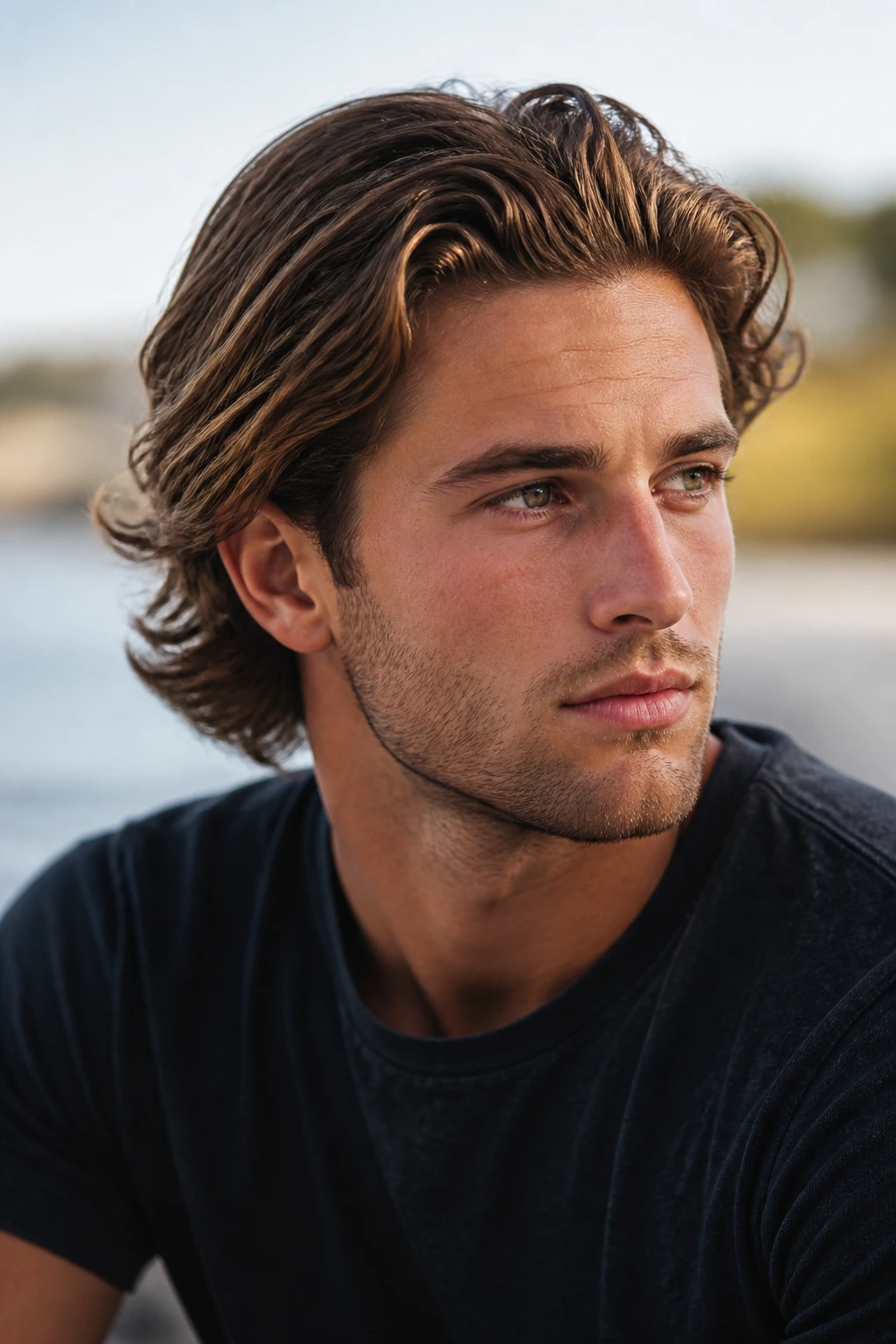
The bro flow is what happens when medium hair finally stops fighting you. It’s pushed back and away from the face, but not slicked down, so the movement stays visible.
What Makes It Different
Unlike a slick back, this cut likes some air and some mess. Hair usually needs to reach the nose-to-ear length range before it starts behaving this way in a useful manner. It’s a good fit for thick hair, wavy hair, or anyone growing out a shorter cut and refusing to look awkward in the middle stages.
24. Undercut
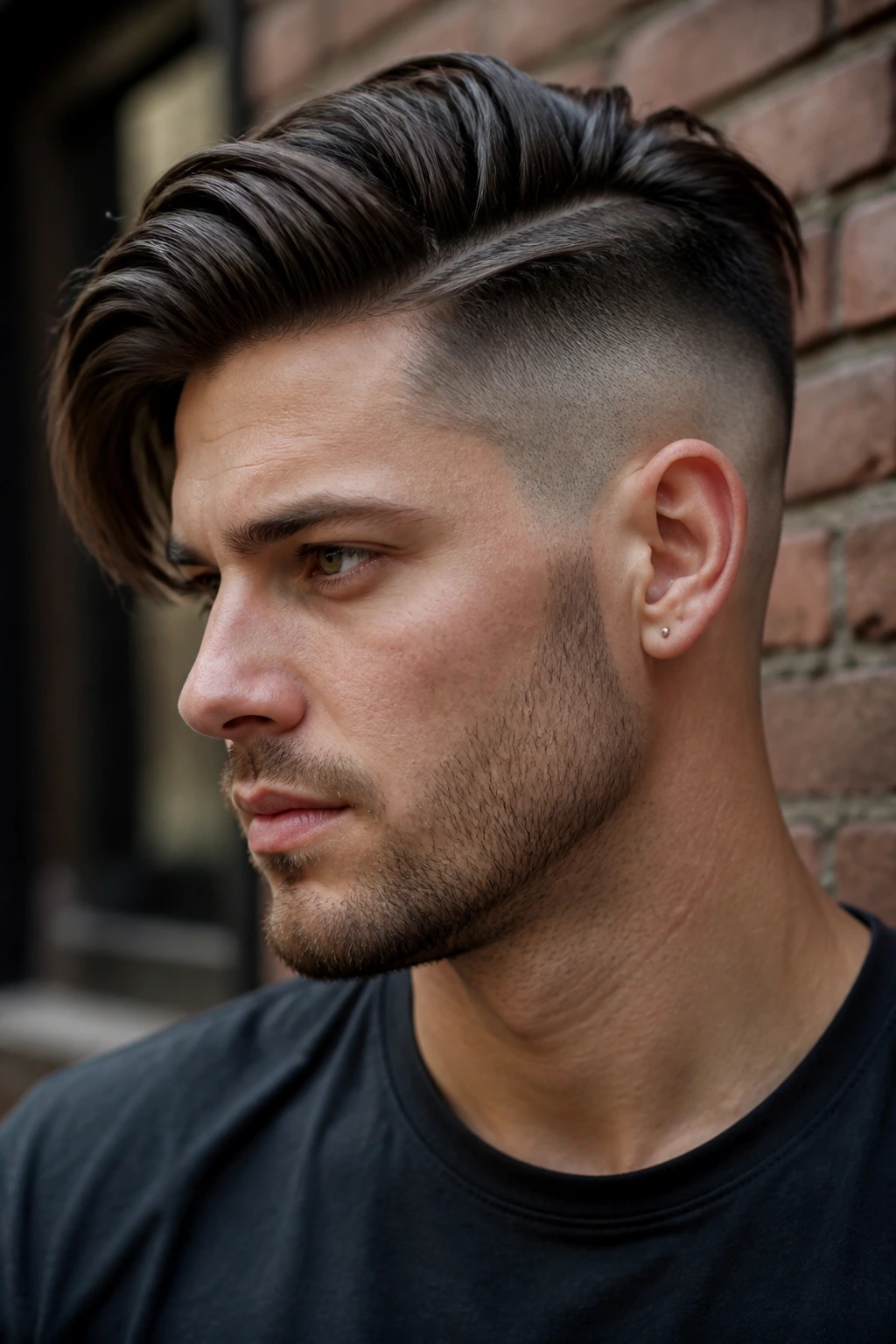
The undercut creates a hard separation between the top and the sides. That contrast is the whole point, which is why this style can look very sharp or very dated depending on how the top is worn.
Keep the top long enough to sweep, tie back, or texture—usually 3 to 6 inches—and let the sides stay clipped short all the way up. This cut is a strong match for straight hair and dense hair. It needs confidence and maintenance. If the line between top and sides gets fuzzy, the whole shape loses power.
25. Two-Block Cut
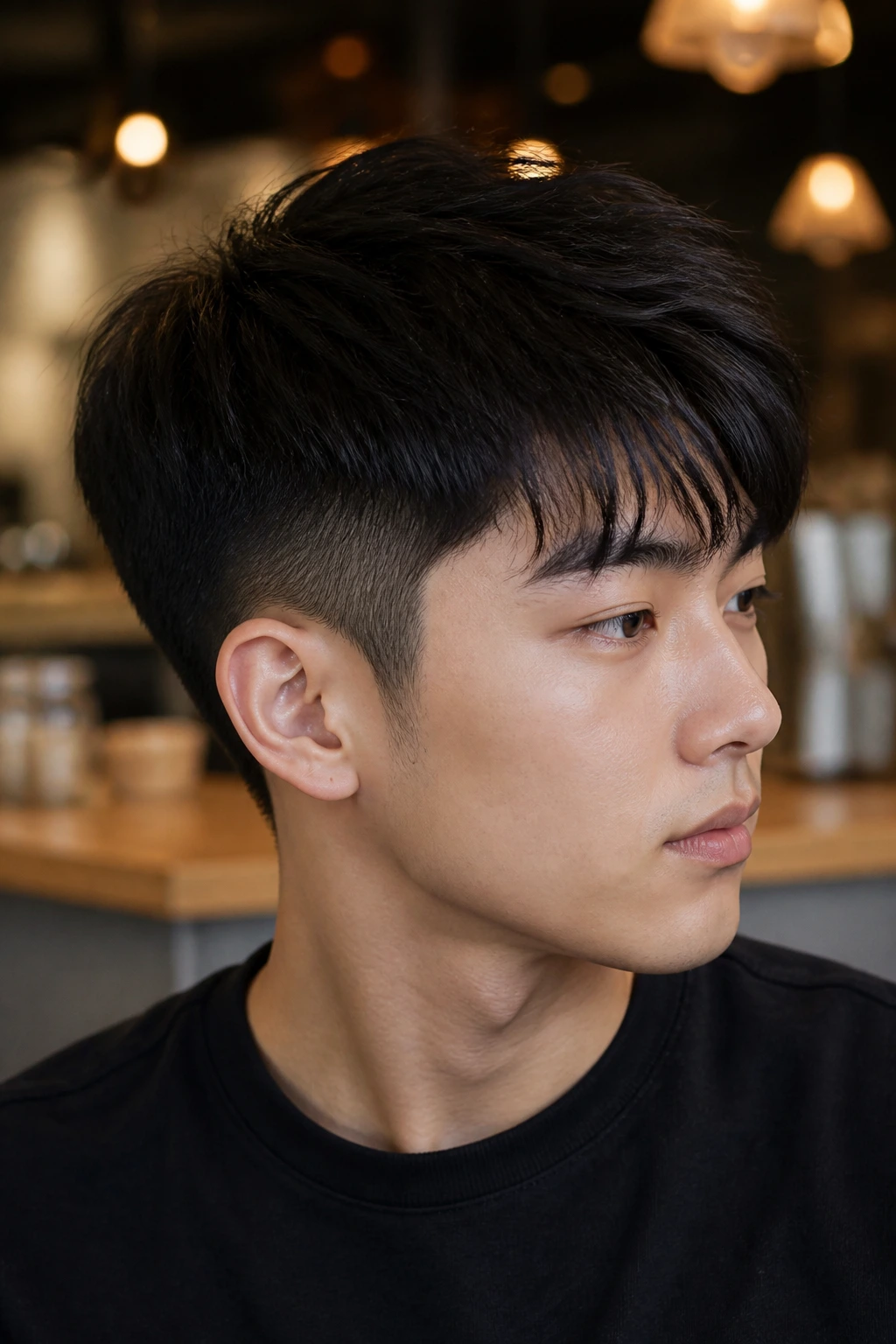
The two-block cut leaves the top and sides in two clearly different zones, with a softer, more layered finish than a classic undercut. It’s a strong choice if you want shape but don’t want the haircut to feel too severe.
The top is usually cut with movement and the sides are kept shorter, but not always shaved down. I like it on straight or slightly wavy hair because the front can drop forward or part easily. It’s one of those cuts that looks casual until you realize how carefully it’s built.
26. Spiky Hair
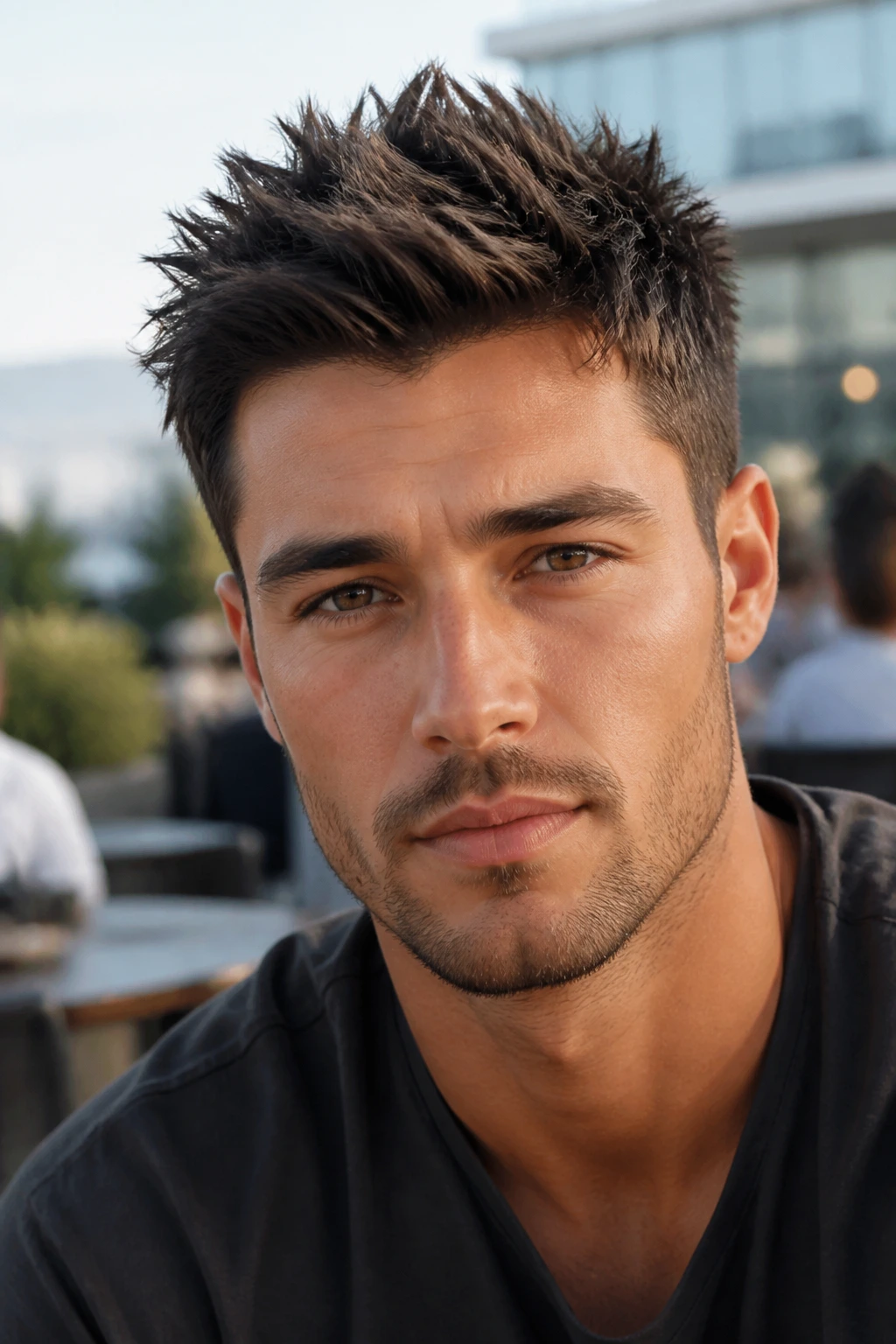
Spiky hair works best when the spikes are controlled, not stiff. The goal is separation and lift, not the frosted-tip look from old pop-punk photos.
Keep the top around 2 to 3 inches, then use a matte paste or fiber to push small sections upward and forward. This cut is good for hair that has enough body to hold shape but not enough length to lie flat all day. If you want the spikes to last, blow-dry first and product second. Reversing that order usually ends in frustration.
27. Side-Swept Fringe

A side-swept fringe softens the face and gives the haircut a little motion across the forehead. It’s especially useful if your hairline is uneven or your forehead feels a bit too exposed in a straight-on style.
Leave enough length in the front for the sweep—usually 3 to 4 inches—and keep the sides tapered so the fringe looks like part of the cut, not a curtain pulled over it. A light cream or low-hold paste works better than heavy wax. Heavy product makes the fringe collapse into your eyebrows.
28. Modern Mullet

The modern mullet keeps the attitude but trims away the chaos. Shorter on the sides, controlled up top, and longer at the back, it’s much cleaner than the old version that looked like it had lost a fight with the wind.
This cut works best when the back has shape, not just length. Ask for a softer transition through the crown and a neckline that follows the hair rather than blocking it hard. I prefer this on thicker hair or wavy hair, where the back can move without looking stringy.
29. Classic Mullet
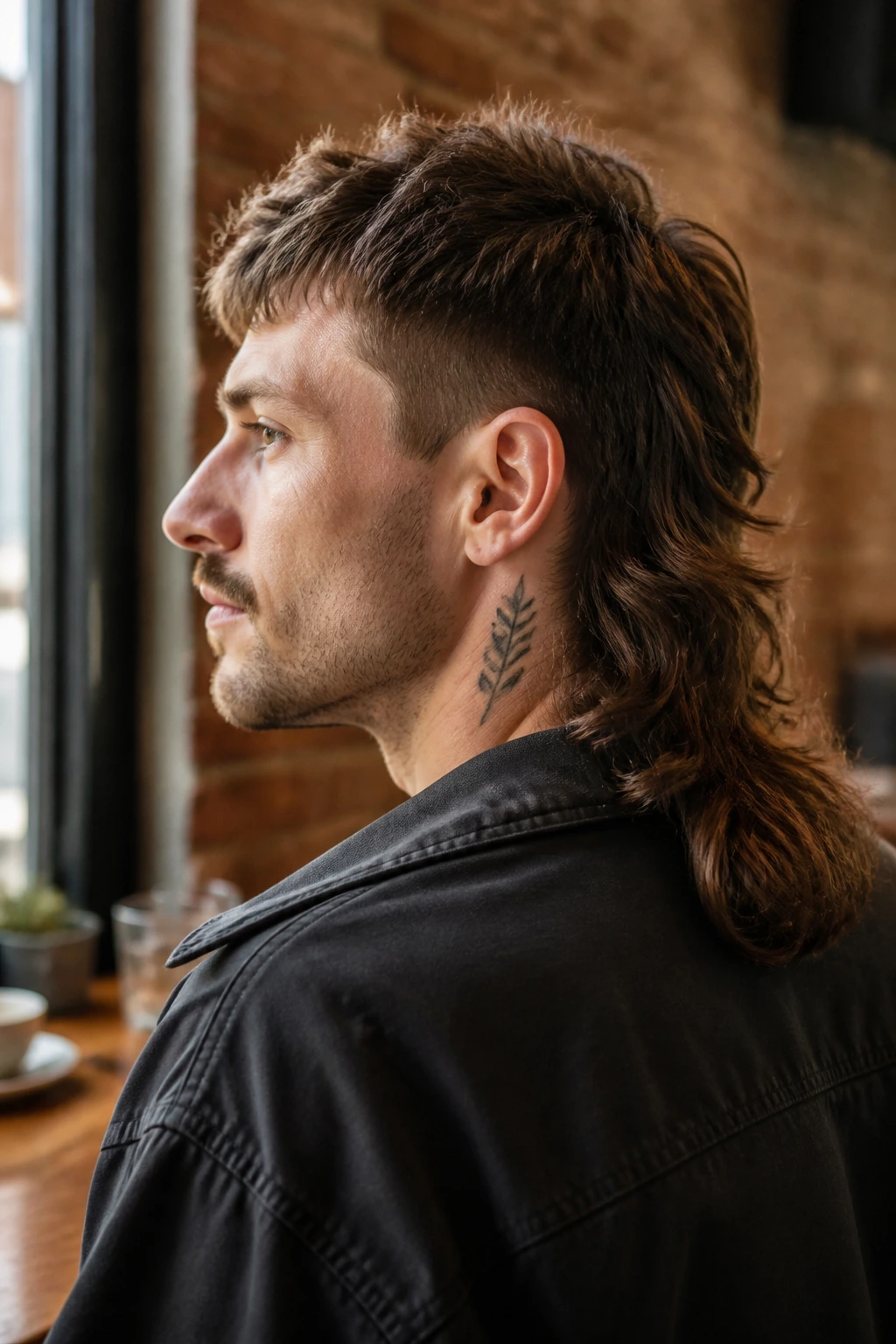
The classic mullet is less polite. The contrast between front and back is stronger, and the haircut has more edge because it doesn’t try to smooth everything over.
If you want this version, keep the top short to medium, the sides tight, and the back noticeably longer. It’s a style with personality, so it needs confidence and a bit of attitude. The mistake people make is trying to make it too tidy. Then it stops being a mullet and becomes a confused layered cut.
30. Long Layers
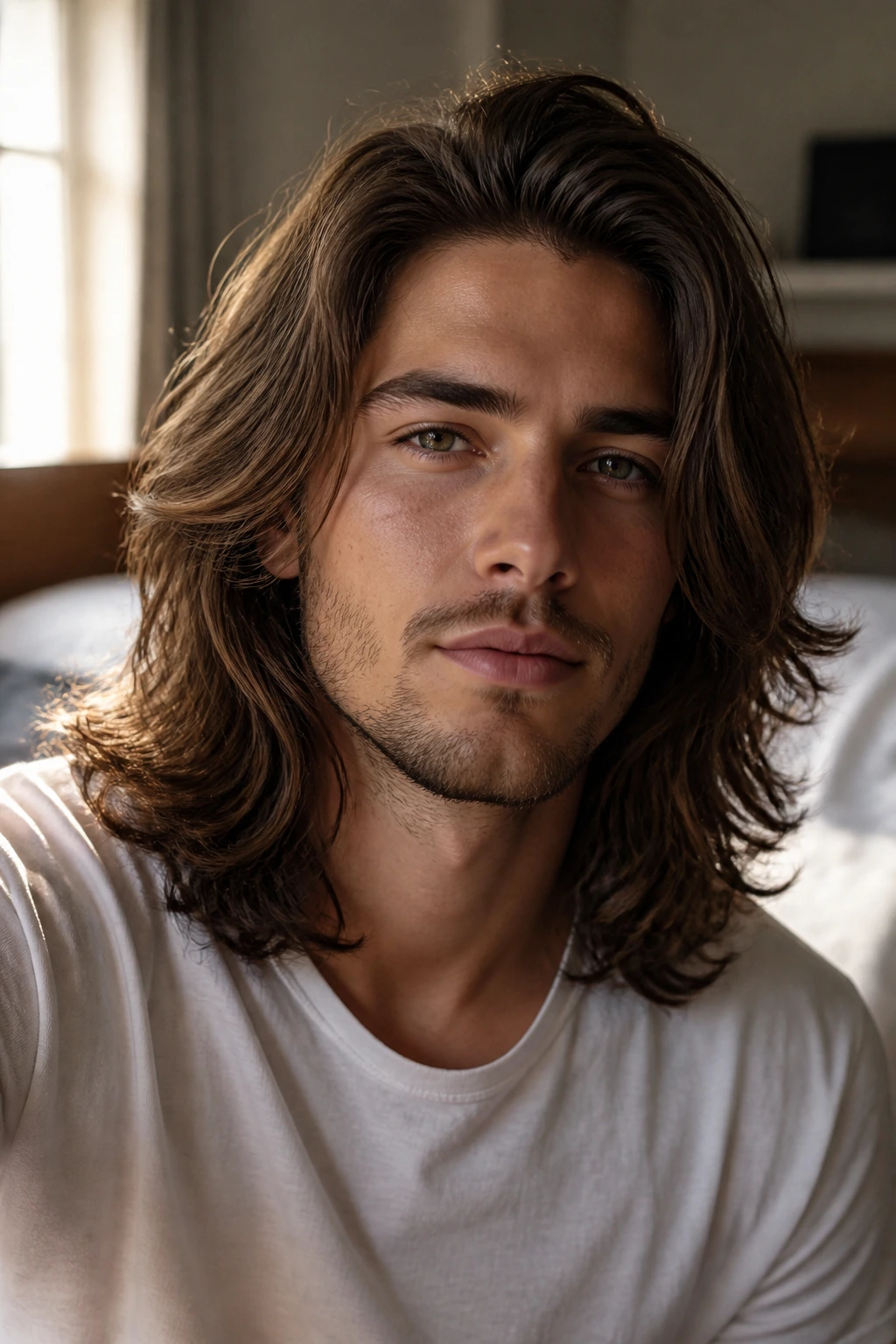
Long layers are the answer when you want movement without tying everything back. Layers keep long hair from hanging like a curtain, and they help the hair fall around the face instead of straight down.
Ask for shape around the cheekbones and collarbone, plus enough internal layering to take some weight out of the ends. This is especially useful for thick hair that turns bulky when it grows. Long layers need regular dusting trims, but they give you options: parted, pushed back, tucked behind the ears, or tied up.
31. Afro Fade
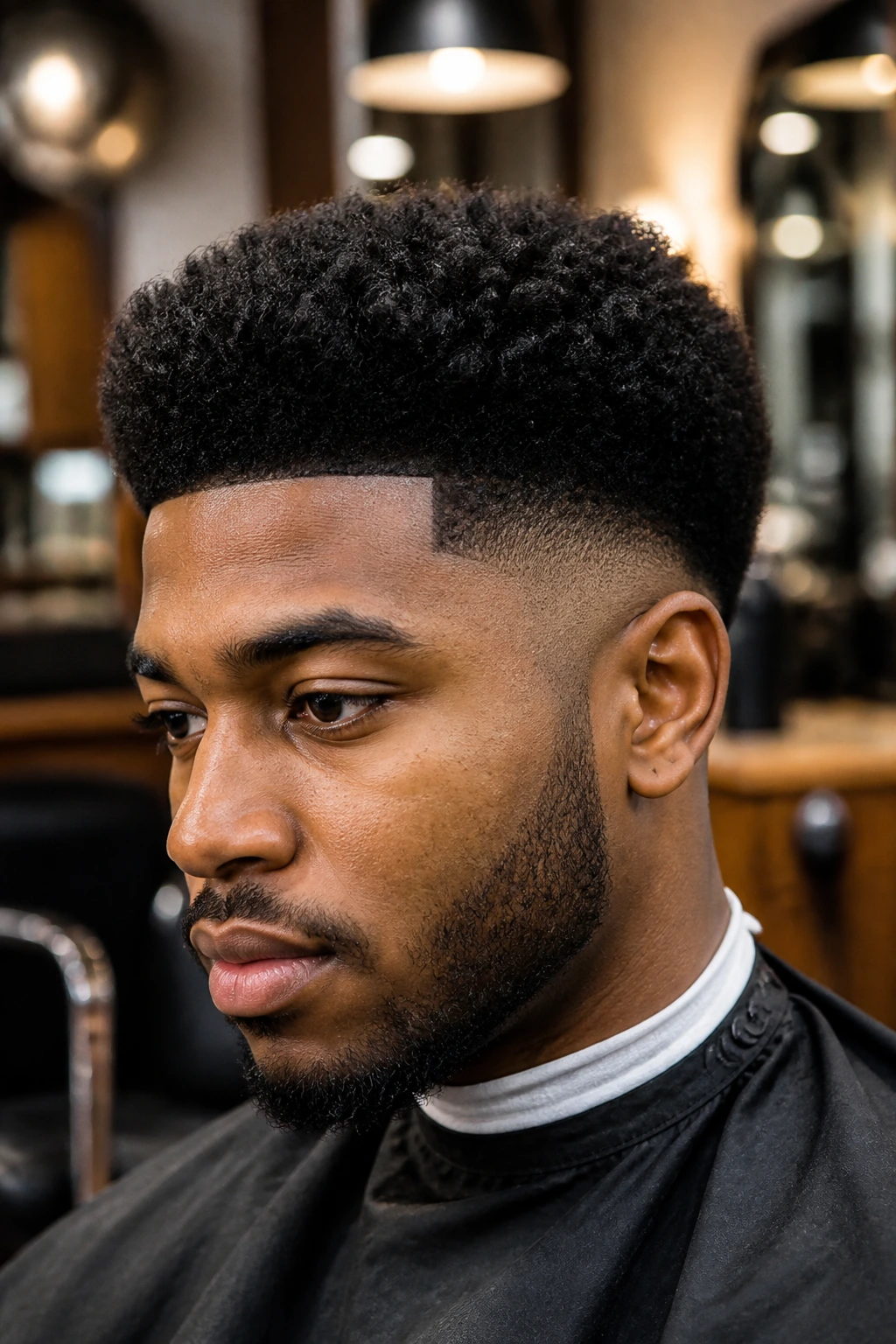
An afro fade keeps the natural texture front and center while cleaning up the sides and neckline. The fade gives the shape a sharper outline, and the top stays full enough to show the curl pattern or coil pattern properly.
The best version respects the hair’s volume instead of flattening it. Ask for the top shaped to your head, not chopped into a square just because it’s easier. Moisture matters here. A leave-in conditioner, curl sponge, or light cream can make a big difference in how clean the shape reads from every angle.
32. Man Bun
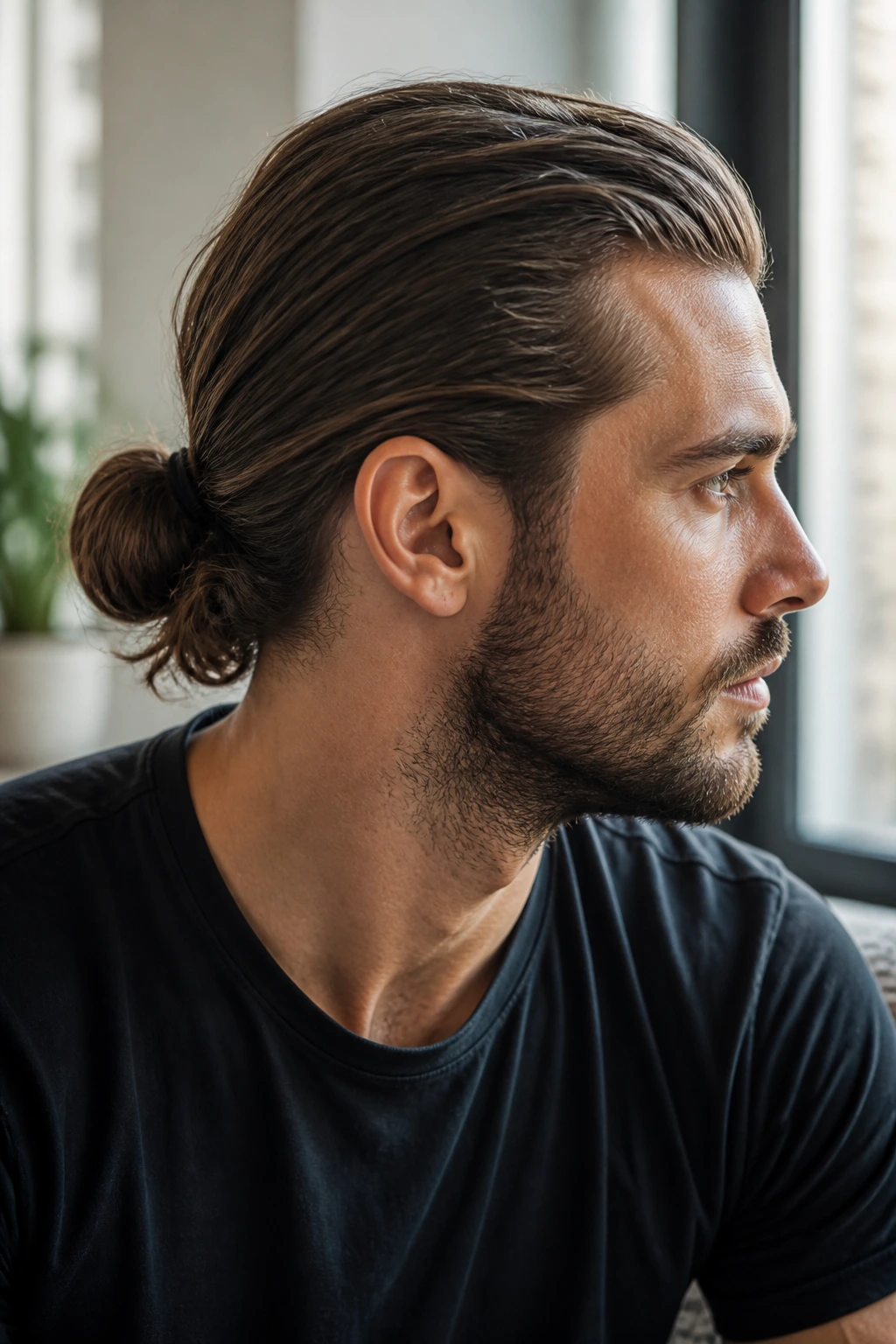
A man bun works when the hair is long enough to gather without pulling at the scalp. If the bun is too tight or the hair is too short, the whole thing looks strained.
The haircut underneath matters more than people admit. A clean taper or undercut around the sides keeps the long hair from looking bulky when it’s worn down. This is one of those styles that looks calm when the hair is in control and careless when it isn’t. I prefer a bun that sits low and loose over a rock-hard knot on the crown.
33. Twists or Locs with Shape-Up
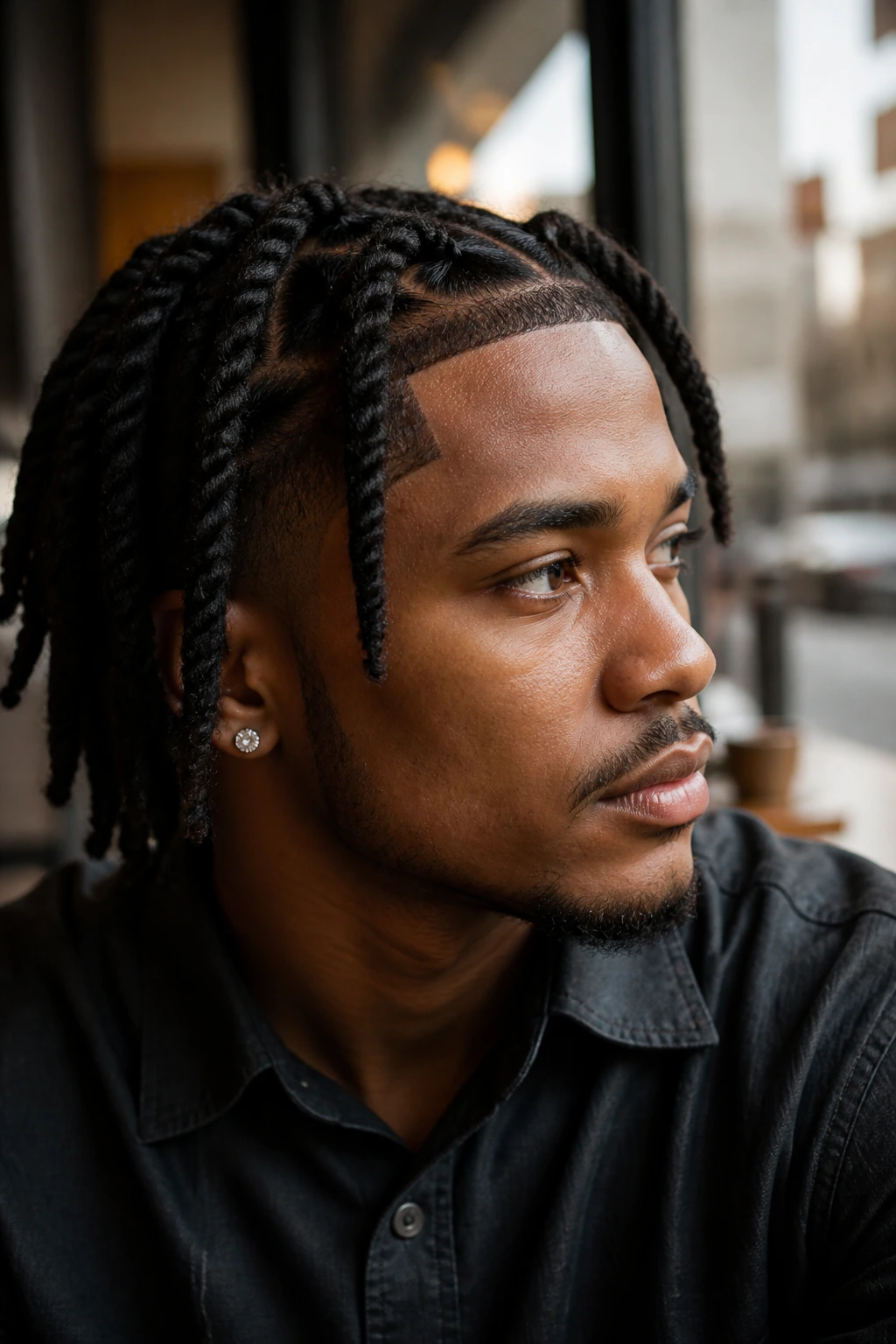
Twists and locs can look unfinished if the outline is ignored. A sharp shape-up at the hairline and temples gives the style a frame, and that frame matters a lot in the final result.
Keep the edges clean, the parting neat, and the length maintained with a routine that fits the style’s needs. The beauty here is not about forcing the hair into a European haircut shape. It’s about letting the texture lead while the edges stay tidy. That balance is what makes it look intentional.
Why These Cuts Hold Their Shape After the Barber Chair
A haircut is easy to love on day one. Day ten is the real test.
What separates a useful men’s haircut from a pretty photo is the way it grows. Short sides buy you breathing room, but only if the top has enough weight to sit in place instead of puffing outward. That’s why the shapes above lean on tapers, fades, fringe control, and texture lines. They give the hair somewhere to go as it lengthens.
There’s also the issue of outline. A good cut keeps a clean silhouette from the front, side, and back, even after the sharpest lines soften a little. I care a lot about the neckline here. A tapered neck buys you another week of looking tidy. A hard block can be fine, but once it grows out, it often looks like the haircut stopped trying.
Essential Equipment for These Haircuts
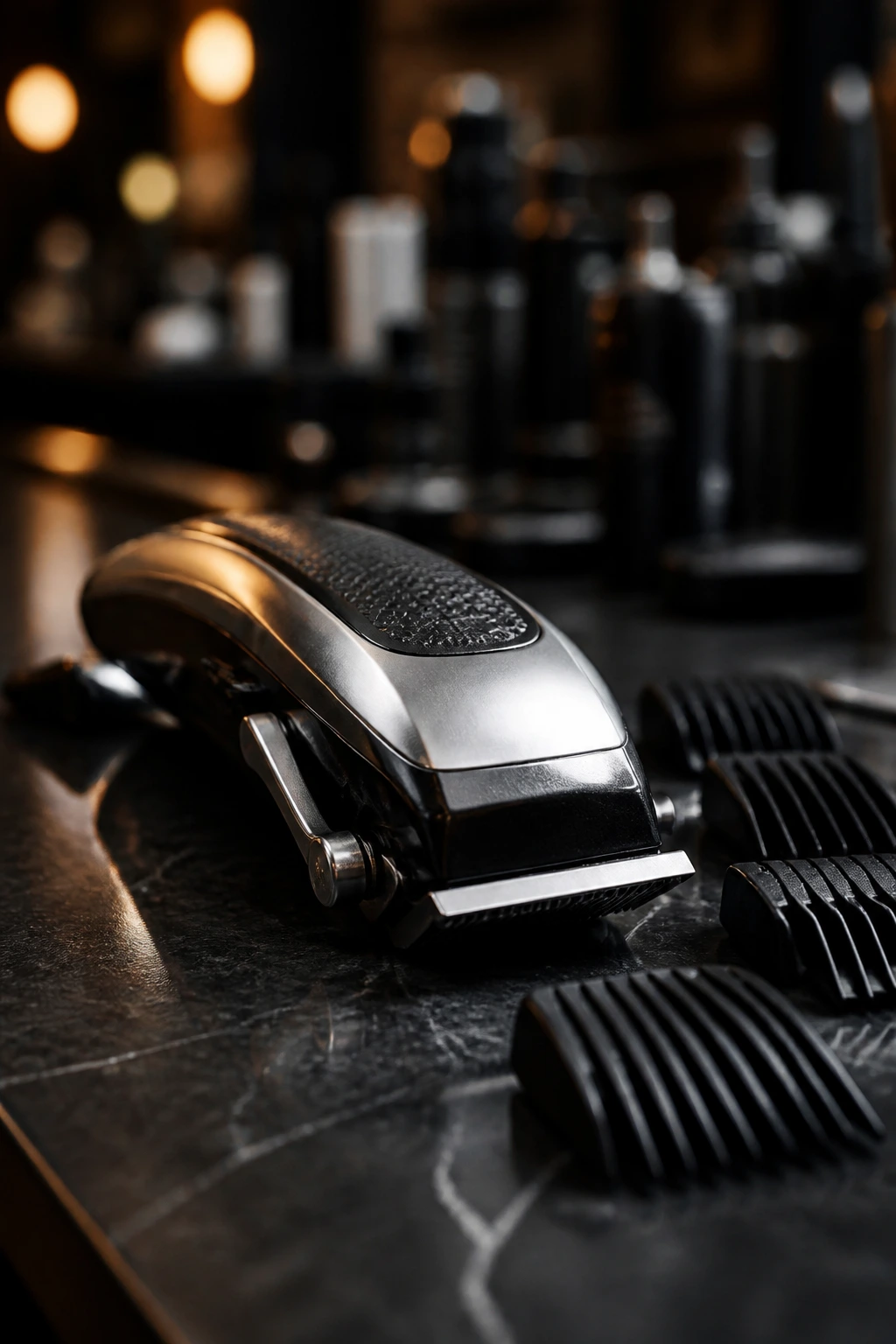
- Quality clippers with guard sizes #0.5 through #8: You need these for buzz cuts, fades, tapers, and clean side cleanups.
- Detail trimmer: This sharpens the hairline, beard line, and neckline without chewing up the edges.
- Hair scissors and thinning shears: Scissors matter for crops, Ivy League cuts, long layers, and any style that needs real shape.
- Comb and wide-tooth comb: The first for clean parts and slick styles, the second for curly or longer hair.
- Blow dryer: A good dryer changes the shape of quiffs, pompadours, curtain cuts, and brushed-back styles.
- Round brush or vent brush: Useful for lifting roots and guiding the front up or back.
- Spray bottle with water: Keeps the hair workable while you section it or restyle it on damp hair.
- Matte clay, paste, or fiber: Best for crops, spiky hair, and short textured styles.
- Pomade or styling cream: Better for side parts, slick backs, and softer polished cuts.
- Diffuser: Worth having if your hair is curly or coily and you want the shape to keep its bounce.
- Hand mirror: Essential for checking the neckline and back of the head; no one should guess at this.
- Cape or towel: Keeps clipped hair off your clothes, which sounds minor until you’ve spent the afternoon scratching.
How to Pick the Right Cut for Your Hair Texture
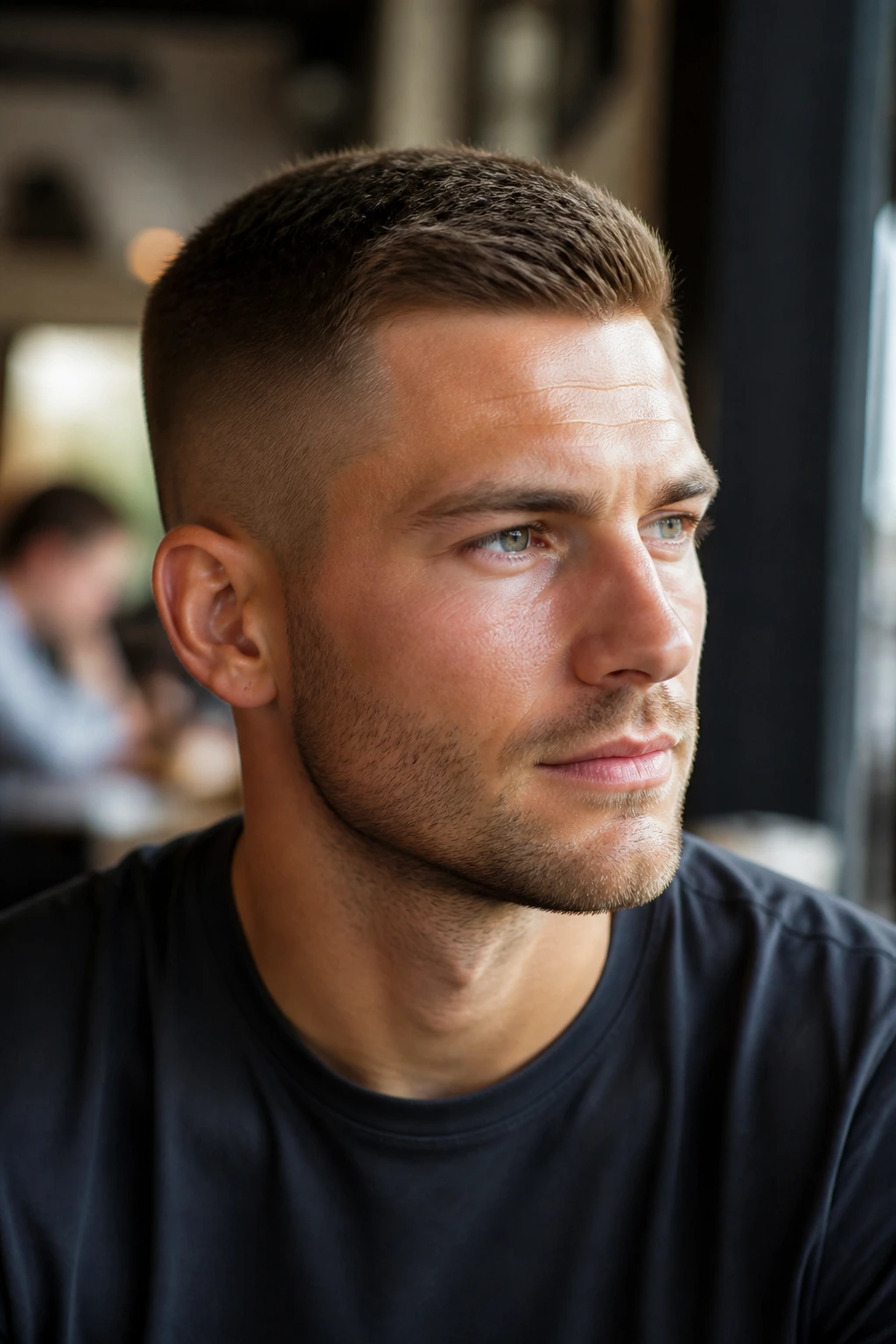
Fine hair, thick hair, curls, cowlicks — these are the real decision-makers. Face shape matters too, but texture usually wins the argument.
Fine or Thinning Hair
Shorter cuts with controlled texture usually help more than long styles that droop. A French crop, Caesar cut, side part, or low fade can make the top look fuller because the hair is not fighting gravity all day. Avoid overusing heavy pomade; it separates fine strands and makes the scalp show through.
Thick or Dense Hair
You can carry more shape, but you also get bulk faster. Textured crops, quiffs, pompadours, and side parts work well if the barber removes weight without creating holes. Ask for internal texturizing, not just shorter length. Thick hair needs structure, not just reduction.
Curly or Coily Hair
Curly hair looks best when it’s allowed to do what it does. Curly top fades, curly fringes, afro fades, and twist styles keep the texture visible while cleaning the perimeter. If the barber cuts curls wet and too short, the result can spring up higher than expected, so dry-cutting or curl-aware shaping helps.
Straight Hair with a Cowlick
Short crops, brushed-forward fringes, and side parts usually beat long flat styles here. Cowlicks at the front or crown can wreck a pompadour if the length is wrong, so give the barber the exact spot that kicks out. That little spiral decides more than people like to admit.
How to Wear These Cuts With Beard, Glasses, and Wardrobe
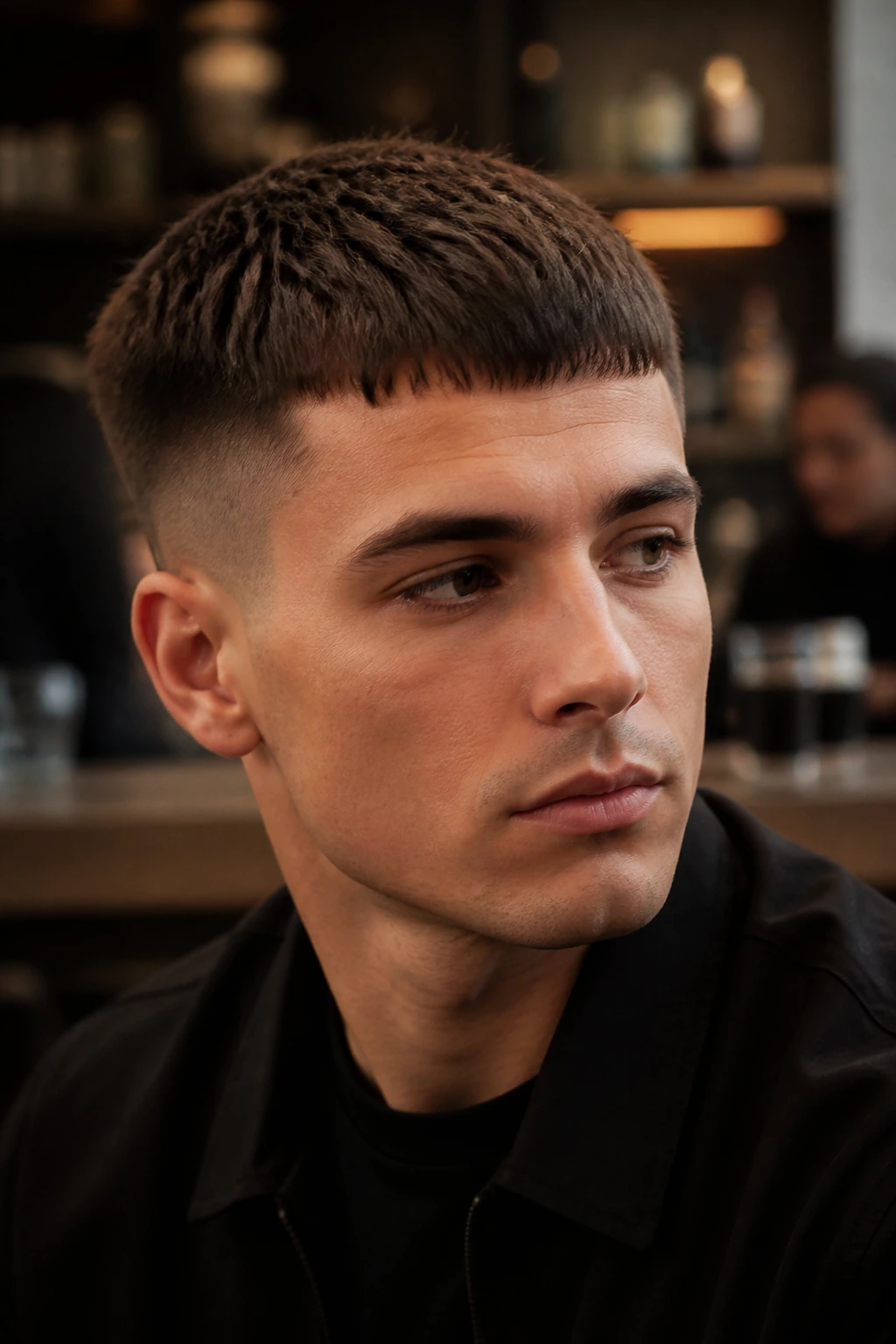
Presentation: Keep the finish aligned with the haircut’s shape. A buzz cut, skin fade, or high fade looks sharper with a matte finish, while a side part, slick back, or Ivy League can carry a little shine without looking greasy. The trick is matching the polish level to the cut’s attitude.
Accompaniments: Beard shape changes the whole frame. A strong fade usually works well with a clean beard blend, while a longer top or mullet can handle a fuller beard if the sideburns are managed carefully. Glasses should sit with the haircut, not fight it; narrow frames pair well with fuller tops, and thicker frames often need cleaner sides.
Portions: Think in ratios. Short cuts need the sides to stay tighter than the top by at least one clear step — a #1 side with a #2 or #3 top, or a fade with two extra inches above it. Longer cuts need enough balance so the back doesn’t overpower the face. If the hair is wide, trim the width; if it’s flat, keep some lift.
Product Pairing: Matte clay for crops and quiffs, cream for softer side parts and curtain hair, pomade for slick backs, and curl cream for textured curls. If you use the wrong product finish, the haircut still works, but the whole thing looks off by a half-step.
Extra Styling Moves That Make the Difference
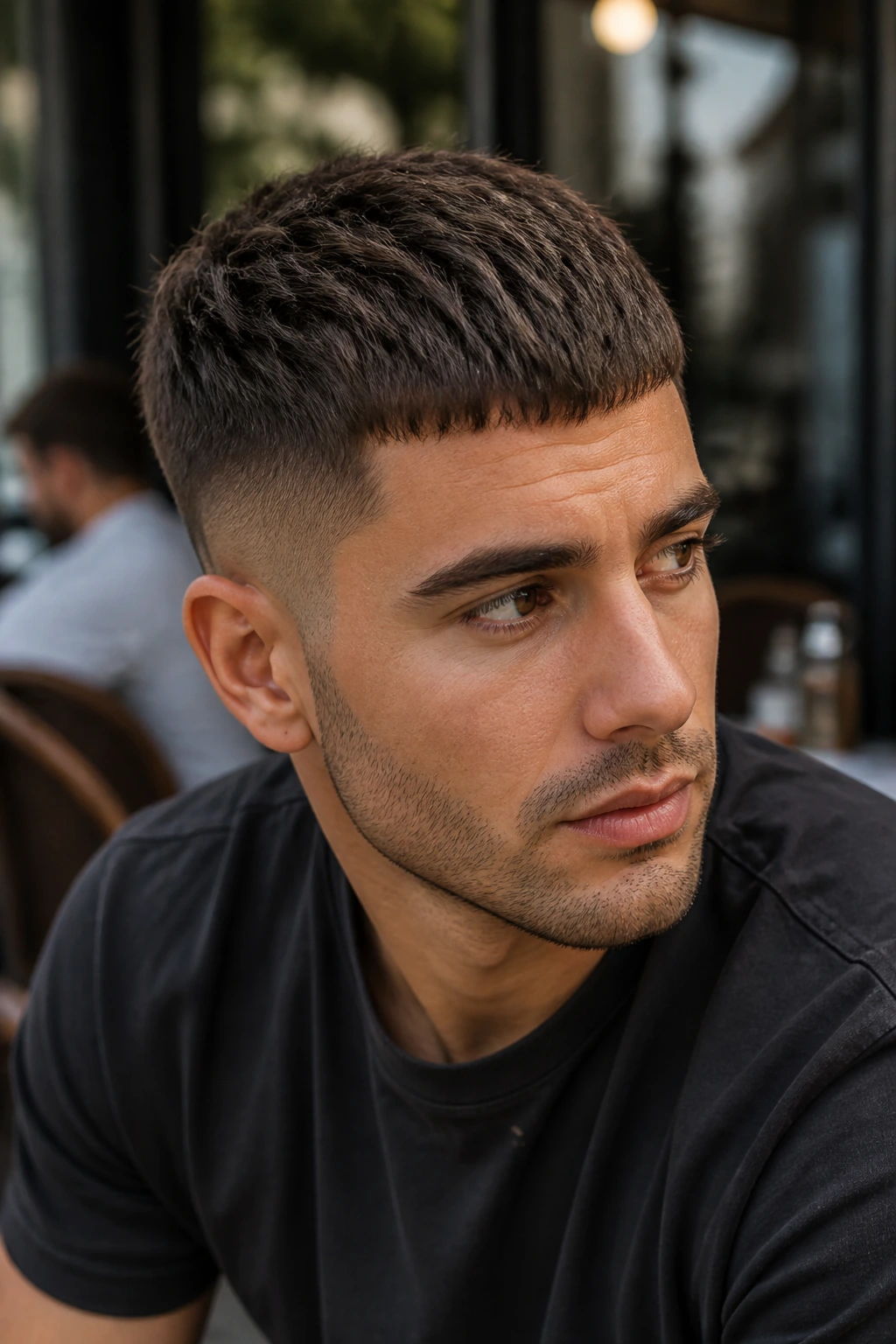
Texture: Blow-dry the hair until it’s about 80 percent dry before adding product. That one habit changes a lot of cuts, because the product grips better and the roots lift instead of collapsing.
Edge Work: Clean the neckline and sideburns every 7 to 10 days if you wear a fade, crop, or buzz cut. It’s a fast trim, and it stops the haircut from looking fuzzy at the edges.
Lift: For quiffs, pompadours, and brushed-up styles, direct the airflow from the roots upward first, then backward. If you go straight back too soon, the front flattens out and stays there.
Beard Balance: When the beard is dense, keep the hairline and temple area tighter so the face doesn’t turn into one large block of weight. When the beard is short, you can carry more volume on top without crowding the jaw.
Maintenance, Grow-Out, and Sleep Care
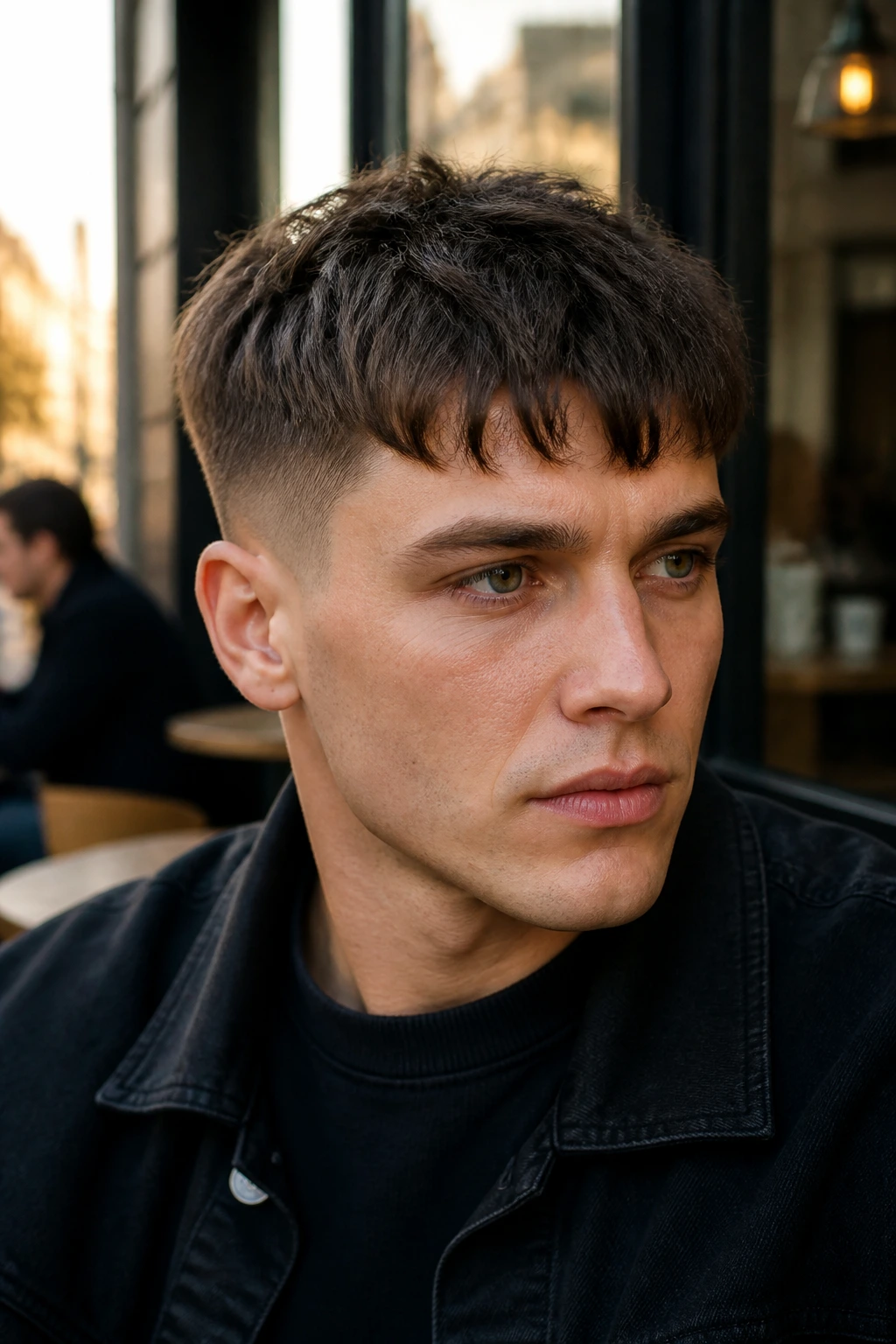
Short cuts need the most frequent attention. A buzz cut, skin fade, or high fade usually wants a trim every 2 to 3 weeks if you want the edges to stay crisp. A taper fade, crew cut, or textured crop can stretch to 3 to 5 weeks before it starts losing shape.
Medium-length cuts are more forgiving. Side parts, quiffs, curtain hair, bro flow, and long layers can often go 5 to 8 weeks between full cuts if you’re willing to restyle them on wash days. Long hair and twists need different maintenance: moisturize the lengths, protect the ends, and get the shape cleaned up before the outline gets shaggy.
Sleep matters more than people think. For longer hair, a satin pillowcase cuts down on frizz and friction. For textured styles, don’t go to bed with wet hair mashed under your head unless you want a weird bend in the morning. If you must wash at night, dry the roots first. It takes longer than you think.
Variations and Adaptations to Try

Office-Softened Version: Take a skin fade, pompadour, or hard-part style and lower the contrast. A low fade, softer part, and matte finish keep it sharp without looking severe under fluorescent lights.
Curly-Hair Translation: Any crop, fringe, or fade works better when the barber cuts to the curl pattern instead of straightening everything out. Leave a little more length on top and use curl cream instead of hard wax.
Receding-Hairline Fix: French crops, Caesar cuts, side parts, and buzz cuts usually handle a rising hairline better than slicked-back styles. The trick is to stop chasing the front line downward with too much length.
Low-Maintenance Version: Pick a taper, crew cut, or textured crop with a modest top length. These cuts stay clean longer and don’t demand a blow dryer every morning.
Beard-Heavy Version: If the beard is the main feature, keep the hair a bit tighter on the sides and cleaner around the temples. That stops the face from feeling overloaded.
Grey-Hair Advantage: Grey strands can look fantastic in side parts, brushed-back cuts, and bro flow styles because the texture reads better when the shape is simple. A polished outline keeps grey from looking random.
Common Mistakes to Avoid
- Asking for the photo, not the shape: A model’s hairline, density, and cowlicks may be nothing like yours. Bring the photo, but also bring a guard number, a top length, and a fade height.
- Going too short on the first pass: Especially with crops, quiffs, and curly tops, too much length removed at once leaves you nowhere to fix the shape. Leave a little extra and tighten it later if needed.
- Ignoring the neckline: A blocked neckline can look sharp for a week and then get messy fast. A tapered finish usually grows out more gracefully.
- Using the wrong product finish: Heavy shine on fine hair can make the scalp show. Dry matte product on a slick back can make the style fall apart. Match the finish to the cut.
- Forgetting about growth direction: Cowlicks at the crown or front can push a cut in odd directions. If the barber doesn’t account for them, the shape can split, puff, or stick up.
Frequently Asked Questions
Which haircut works best for thin hair?
Shorter styles with texture usually help most. A French crop, Caesar cut, side part, or low fade can create the look of fullness without forcing long strands to lie flat over sparse areas.
What’s the easiest haircut to maintain?
A buzz cut is the simplest, followed closely by a shaved head if you’re willing to care for the scalp. If you want a little more shape, a crew cut or taper fade stays manageable without daily styling drama.
How often should I get a fade trimmed?
A skin fade may need a cleanup every 2 to 3 weeks, while a low or taper fade can usually stretch a little longer. If the edge around the ears starts to blur and the neckline puffs out, it’s time.
Can curly hair wear a fringe?
Yes, and it often looks better than trying to flatten curls back. A curly fringe works best when it’s cut dry or at least shaped with the curl pattern in mind, so the length doesn’t spring too high.
What should I tell my barber if I only have a photo?
Say what you like about the photo in plain terms: fade height, top length, fringe length, and whether the finish is matte or polished. A picture without those details leaves too much room for guesswork.
Is a slick back a bad idea if my hair is thinning?
Not automatically, but it can be risky if the top is too long and the product is too shiny. A side part or textured crop often covers thin areas more naturally, while still looking neat.
How do I grow out a short haircut without looking awkward?
Keep the neckline tapered, trim the ears and sideburns on schedule, and let the top grow faster than the sides. That way the shape lengthens instead of ballooning outward.
Are long styles harder to keep tidy than short ones?
They can be, but they’re not always more work. Long layers, bro flow, or curtain hair often need less frequent cutting than fades; they just need better conditioning and more thoughtful styling.
Cuts That Keep Working
A good men’s haircut should do more than look fresh when you leave the chair. It should still make sense after a workout, after a week of growth, and after you’ve had one of those mornings where the mirror gets less than your best effort.
That’s the real test behind every style in this list. Some cuts keep things tight. Some give you room to grow. A few lean into texture, and a few lean into clean lines. The point is not to find the most dramatic option. It’s to find the one that still looks like you when the easy part is over.
Pick the cut that matches your hair, then ask the barber to build around that truth instead of fighting it. The result usually looks better, grows out better, and saves you from spending your entire life chasing the next correction.
