



A shag haircut should move when you turn your head. If it sits there like a stiff cap, somebody cut the wrong places.
That is why 1970s shag haircuts for older women keep turning up in smart salons. The good versions are not costume pieces and they are not a jumble of random layers either. They give hair lift at the crown, softness around the face, and enough texture to stop everything from hanging in one flat sheet. That matters when hair gets finer, coarser, wavier, or simply less cooperative than it used to be.
The best part is how practical the shape can be. A well-cut shag can make fine hair look airier, thick hair look lighter, and silver hair look more dimensional without forcing you into a severe, fussy style. If your hair has changed over the years — and whose hasn’t? — the right layers can put movement back where gravity has taken some away. The real trick is choosing the version that suits your length, texture, and how much styling you’re willing to do before coffee.
Why These Shags Keep Their Shape
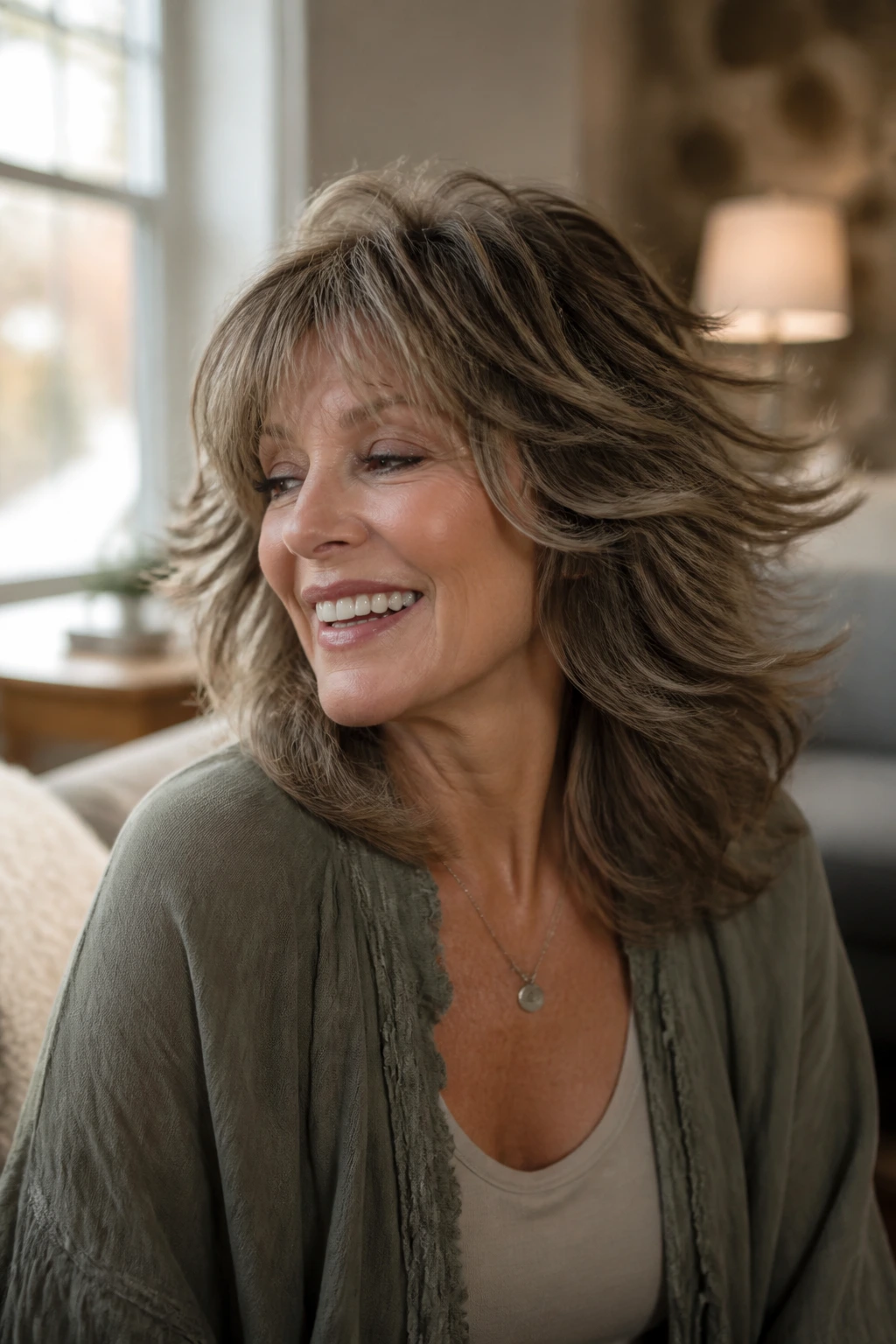
Crown lift without teasing: A shag builds height into the haircut itself, so you are not stuck backcombing the top every morning just to get a little life.
Softness where the face needs it: The best face-framing layers skim the cheekbone, jaw, or collarbone instead of cutting a hard line straight across the face.
Less helmet, more movement: Thick, one-length cuts can sit heavy and round on mature hair; a shag breaks that blocky outline into pieces that bend.
Better behavior for gray hair: Silver strands often look strongest when they have separation and air around them. A shag shows off that texture instead of fighting it.
Flexible styling: You can wear one with a round brush and a smooth finish, or you can let it dry with a little mousse and call it done.
Works at more than one length: Chin-length, collarbone, shoulder-skimming, and long versions all keep the same 1970s spirit if the layers are placed well.
Why the 1970s Shag Flatters Mature Hair So Well
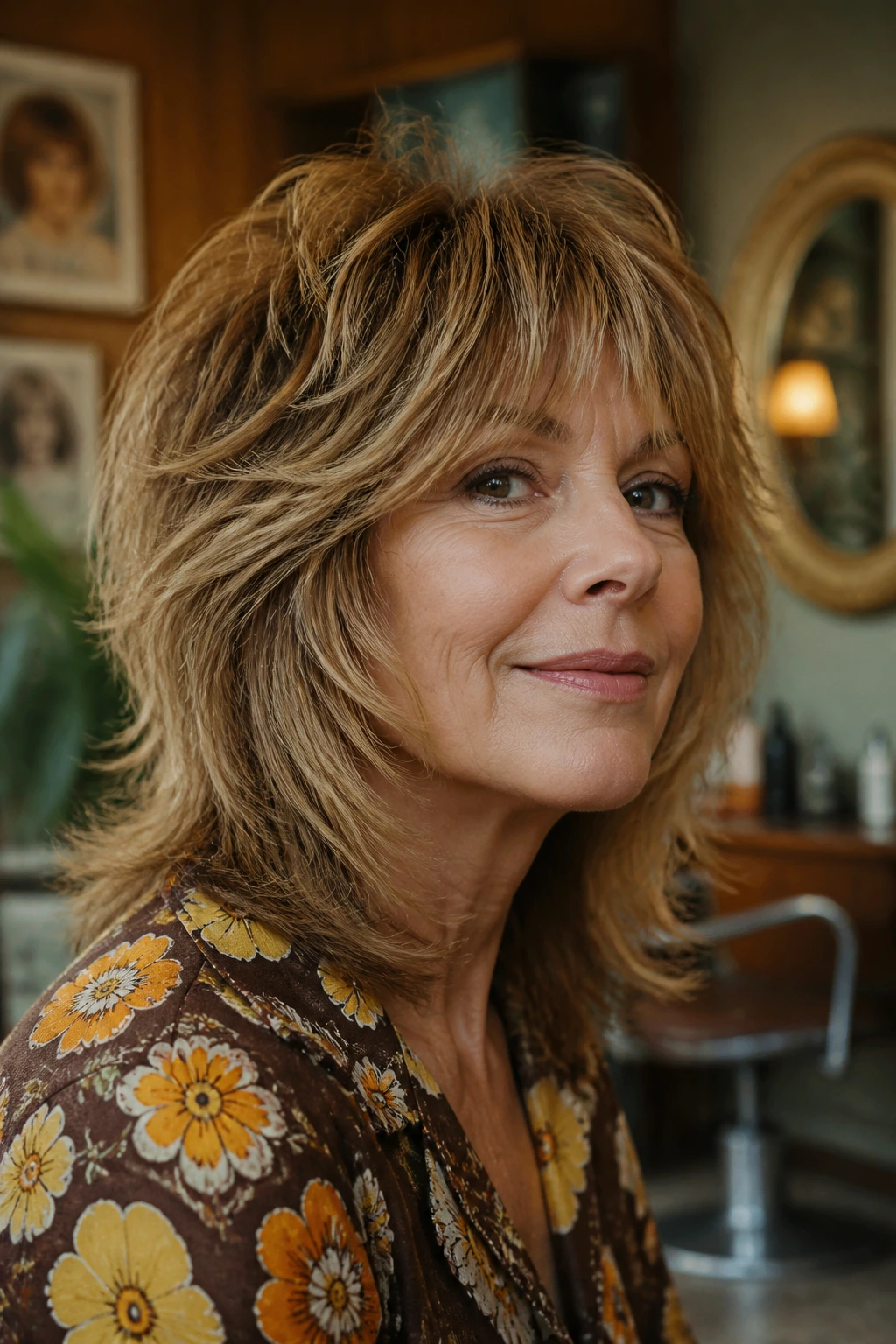
The old-school shag got a reputation for being wild, but the core idea is simple: remove weight where the hair collapses and leave enough structure where the hair needs support. That is a useful haircut at any age. It is especially useful once the part starts widening, the crown goes flat faster, or the ends start feeling thinner than they used to.
A blunt cut can look elegant on the right head of hair, but it can also show every problem at once. Flat roots. Puffy ends. A jawline that needs a little softening. The shag blurs those hard spots. The layers create bend, and bend is what makes hair look alive.
The 1970s version has a particular charm because it avoids the overdone look that some heavily layered cuts pick up. Done right, it feels airy, not shredded. There is a difference. Airy hair still has shape. Shredded hair can look like it was attacked by thinning shears. Ask for the first one.
What makes it different from a plain layered cut
A plain layered cut often starts and ends with shape control. A shag is more interested in movement. The layers begin higher, the face frame tends to be softer, and the fringe often matters just as much as the perimeter length. That is why the style can make a haircut feel younger without trying to look younger, which is a much better deal.
Where the real lift comes from
The crown and the top side sections do most of the work. If those pieces are cut to support some bend, the rest of the style falls into place more easily. You can think of it like building a house with a better roofline. The base matters, but the shape above it changes everything.
1. Feathered Crown Shag
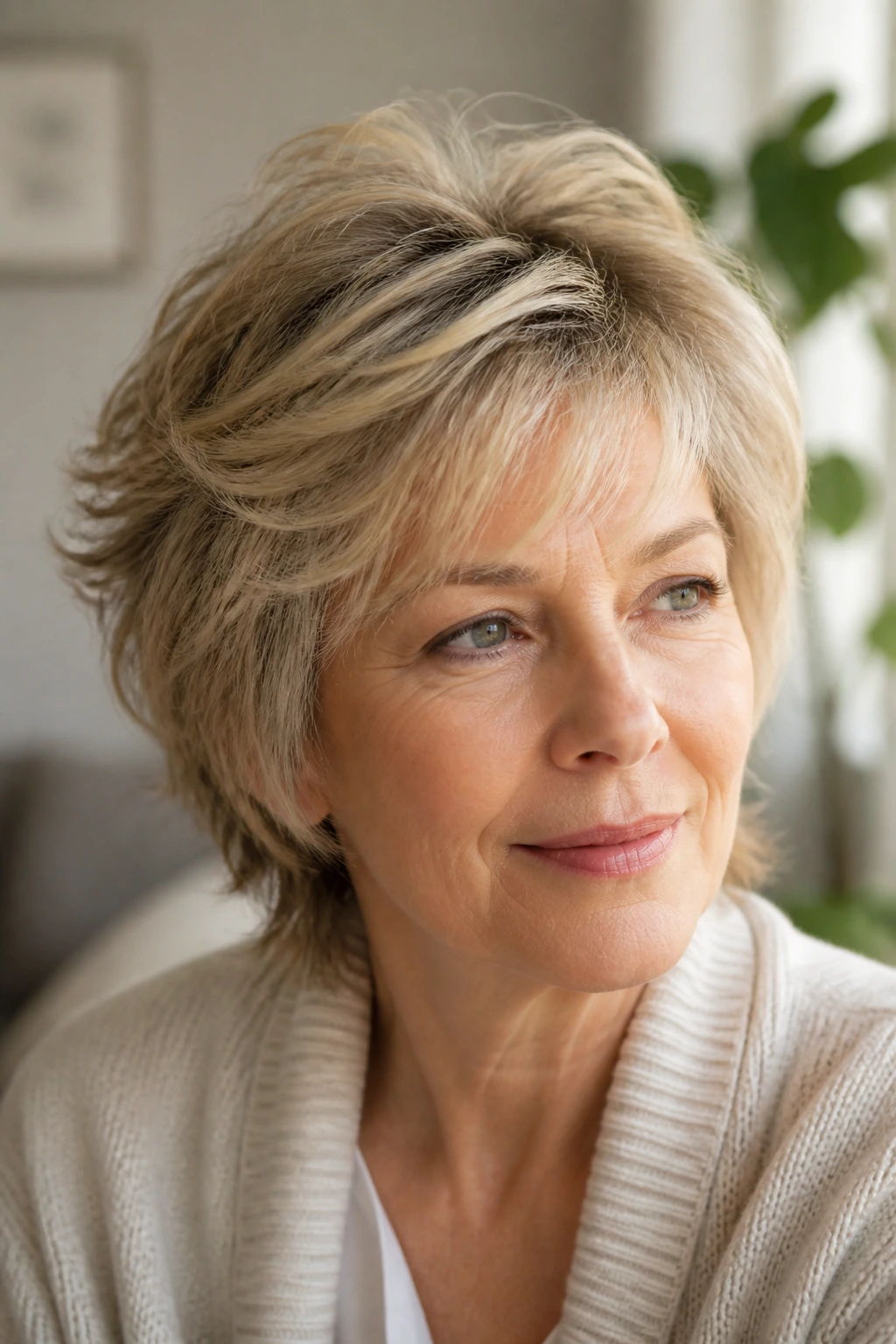
This is the shag I reach for when hair has gone soft at the roots and flat by noon. The crown is lightly lifted, the top layers are feathered, and the face frame stays soft enough that it does not read as severe. It has that easy 1970s bounce without turning into a mushroom.
The key is restraint. You want the top shorter than the sides, but not so short that the cut pops up in a weird, triangular way when you blow-dry it. Ask for internal layers at the crown and longer outer layers through the sides. That keeps the movement up top while the outline stays graceful.
Why it works on finer hair
Fine hair needs support more than it needs thinning. This cut gives the illusion of fullness by keeping weight from dragging the crown down. A little root-lift spray and a round brush can wake it up fast.
- Best for hair that collapses near the part
- Good if you wear glasses, because the fringe can be kept light and mobile
- Easy to style with a quick bend at the roots
A blunt finish on this cut will kill the point. Keep the ends soft.
2. Curtain-Bang Collarbone Shag
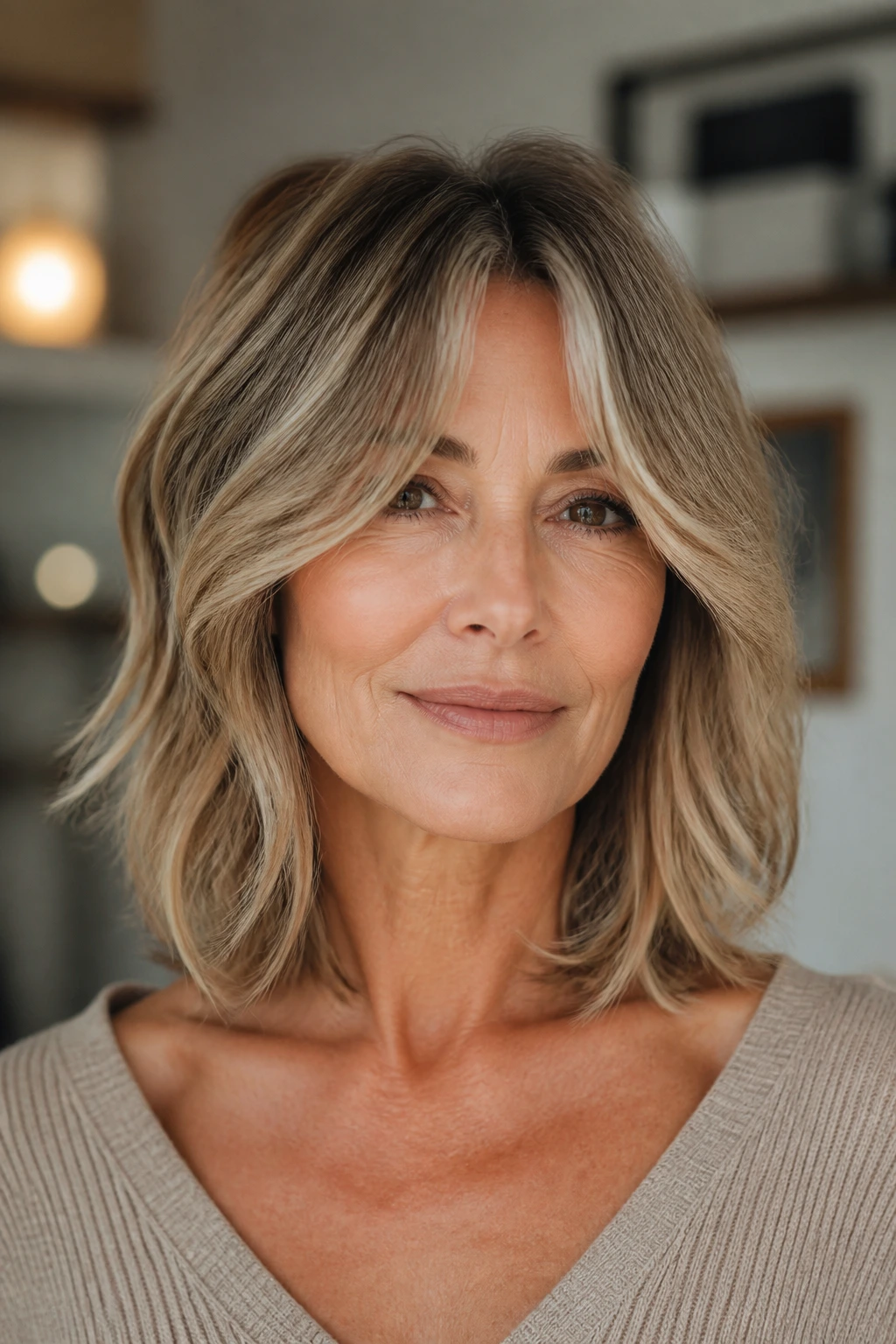
The curtain-bang version is probably the easiest shag to live with if you do not want your forehead doing all the talking. The fringe parts in the middle, sweeps away from the eyes, and drops into layers that hit around the collarbone. It has enough length to tuck behind the ears or clip back on rushed mornings.
What I like here is the balance. The bangs give you the 1970s mood immediately, but the length keeps it grown-up and practical. It does not feel like a costume from a themed party. It feels like a haircut with memory.
If your hair has a natural wave, this shape can be almost unfairly flattering. The front pieces open the face, and the collarbone length keeps the whole thing from feeling too short around the neck. Blow-dry the bangs away from the face with a medium round brush, then let the rest stay a little loose.
A soft curtain fringe also hides a widening part without making the haircut look heavy. That is a nice trick. A very nice trick.
3. Chin-Length Piecey Shag
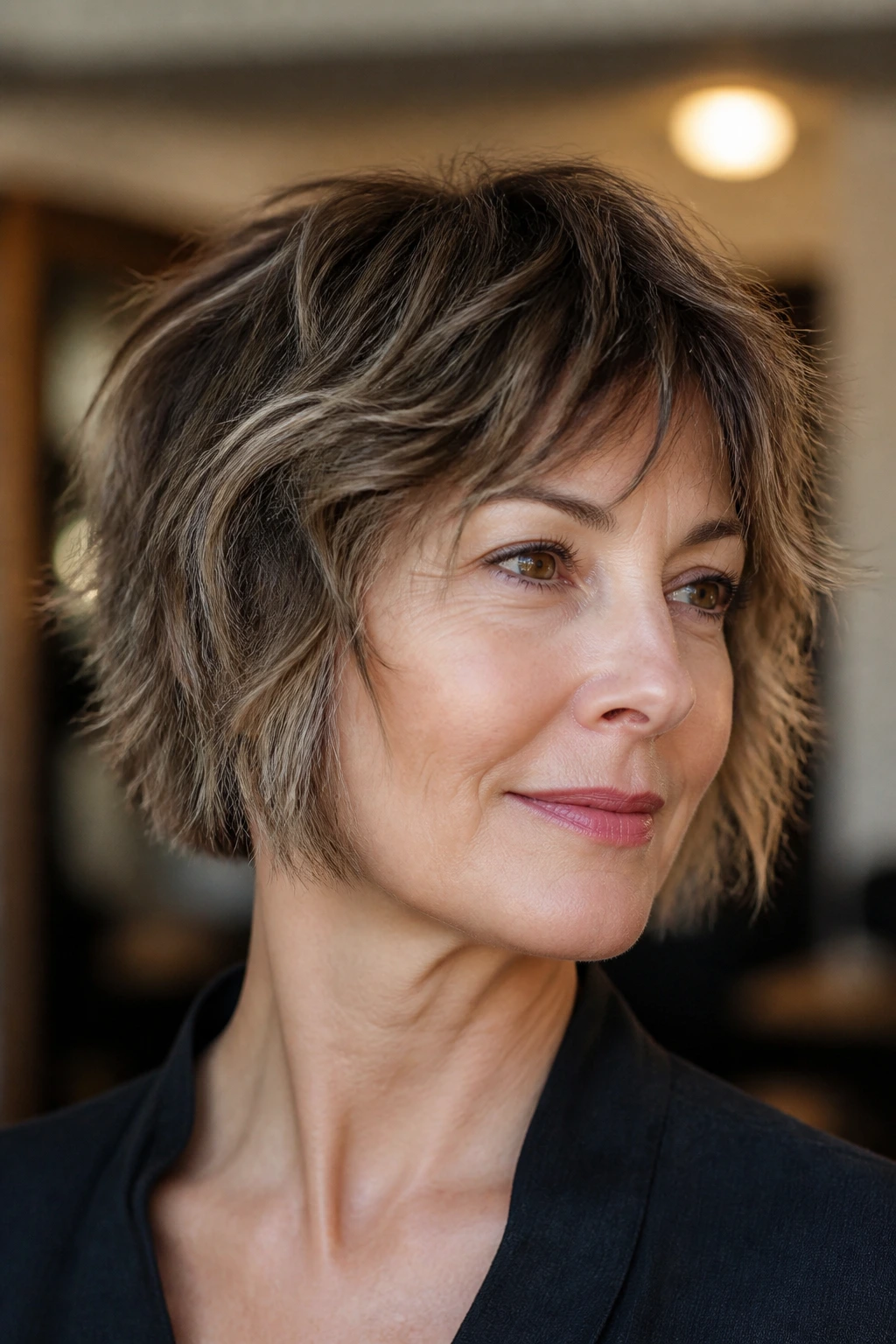
A chin-length shag is sharp in a good way. It keeps the jawline open, shows the neck, and gives the face a little edge without turning into a tidy little bob that sits there and behaves itself. The texture is the whole point. The pieces should look separated, not stacked.
This version works especially well if your hair flips out at the ends on its own. Instead of forcing that movement away, the cut uses it. A few cheekbone-length pieces in front and some shorter internal layers in back give the shape enough swing to stay interesting.
Best for a strong jaw or narrow face
If your face is long, the chin-length version can bring the shape inward. If your jaw is defined, the broken-up ends soften it. Either way, the haircut keeps the outline crisp while the texture does the softening work.
Don’t over-style this one. A little mousse, a quick dry, maybe a touch of wax on the ends — that’s enough. Too much polish and it loses its charm.
4. Soft Curly Shag With a Light Fringe

Can a shag work on curls without turning into a pyramid? Absolutely — if the cut respects the curl pattern. This version keeps the fringe light and long enough to spring naturally, then builds layers that follow the curl instead of cutting across it like a shelf.
The biggest mistake with curly shags is forcing them to behave like straight hair. That road ends badly. A curly shag wants dry cutting or at least a careful curl-by-curl check once the shape is set. If the curls shrink a lot, the fringe should stay longer than you think. Curls eat length.
What to ask for
- A dry cut or a curl-aware wet cut
- Layers that remove bulk without opening holes in the shape
- Fringe left long enough to curl, not sit above the brows
- A soft taper at the sides so the haircut does not flare out
This cut is lovely on silver curls, salt-and-pepper curls, and wavy hair that has more spring on some days than others. It looks lively. Not messy. There’s a difference, and a good stylist knows it.
5. Silver Fox Shag With Airy Ends
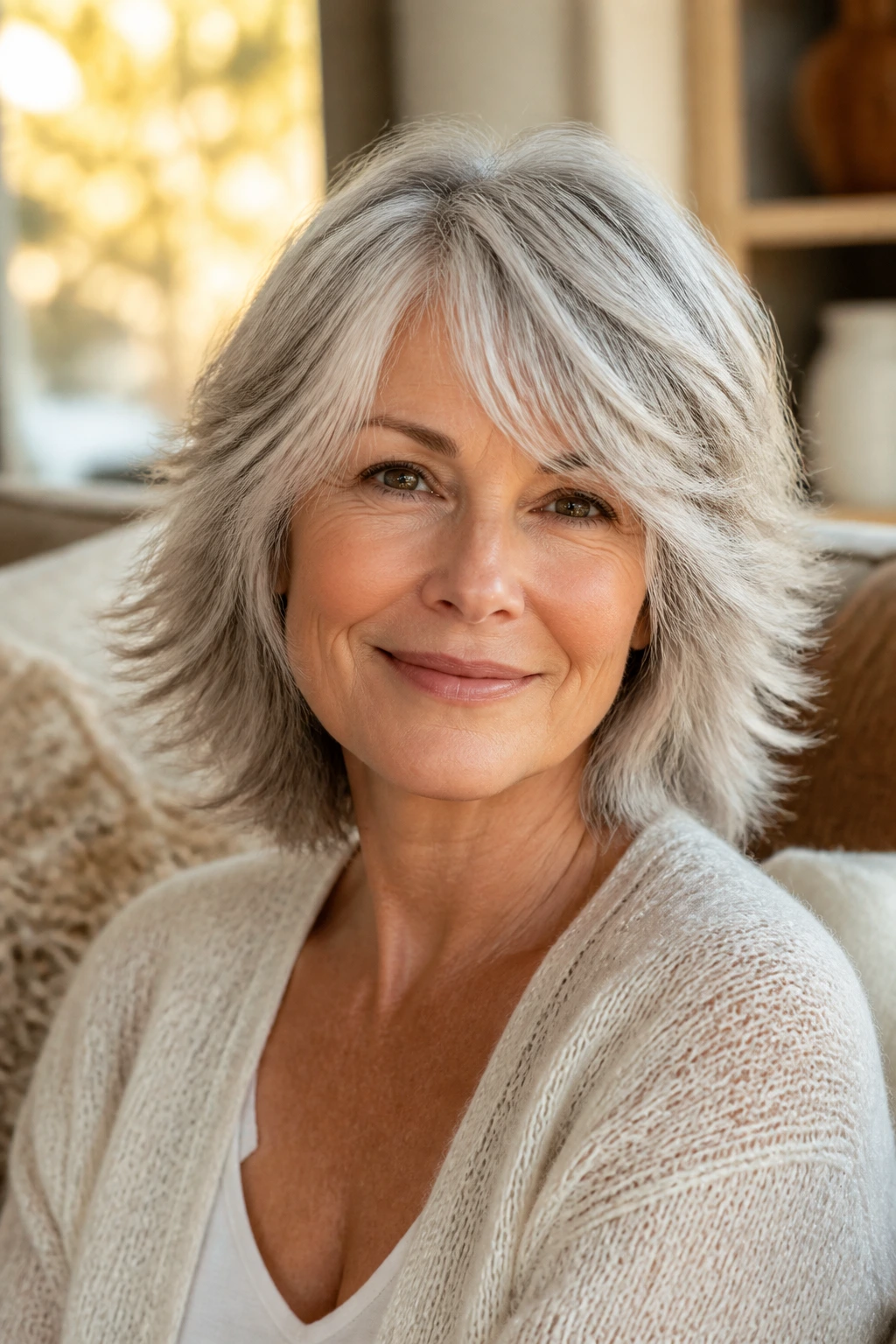
Gray hair takes texture well. Sometimes better than pigmented hair. It reflects light differently, and when you give it a shag shape, those silver strands can look almost woven. The airy ends keep the haircut from becoming too dense near the bottom, which is where older hair often gets a little blunt and tired.
This is a strong choice if you want to show off natural silver instead of coloring over it every few weeks. The layers create movement around the face, and the ends should be sliced or point-cut lightly so they fall in pieces rather than one hard line. That gives the cut a bright, fresh feel.
A silver shag can look especially good with a side part, because the movement breaks up the part line and keeps the root area from looking flat. Use a lightweight foam or mousse, not a heavy cream that drags the hair down. Silver hair can be coarse, and coarse hair does not need much help looking full.
There is something satisfying about this cut when it is done well. It looks like hair with character, not hair trying to hide.
6. Razor-Textured Shag
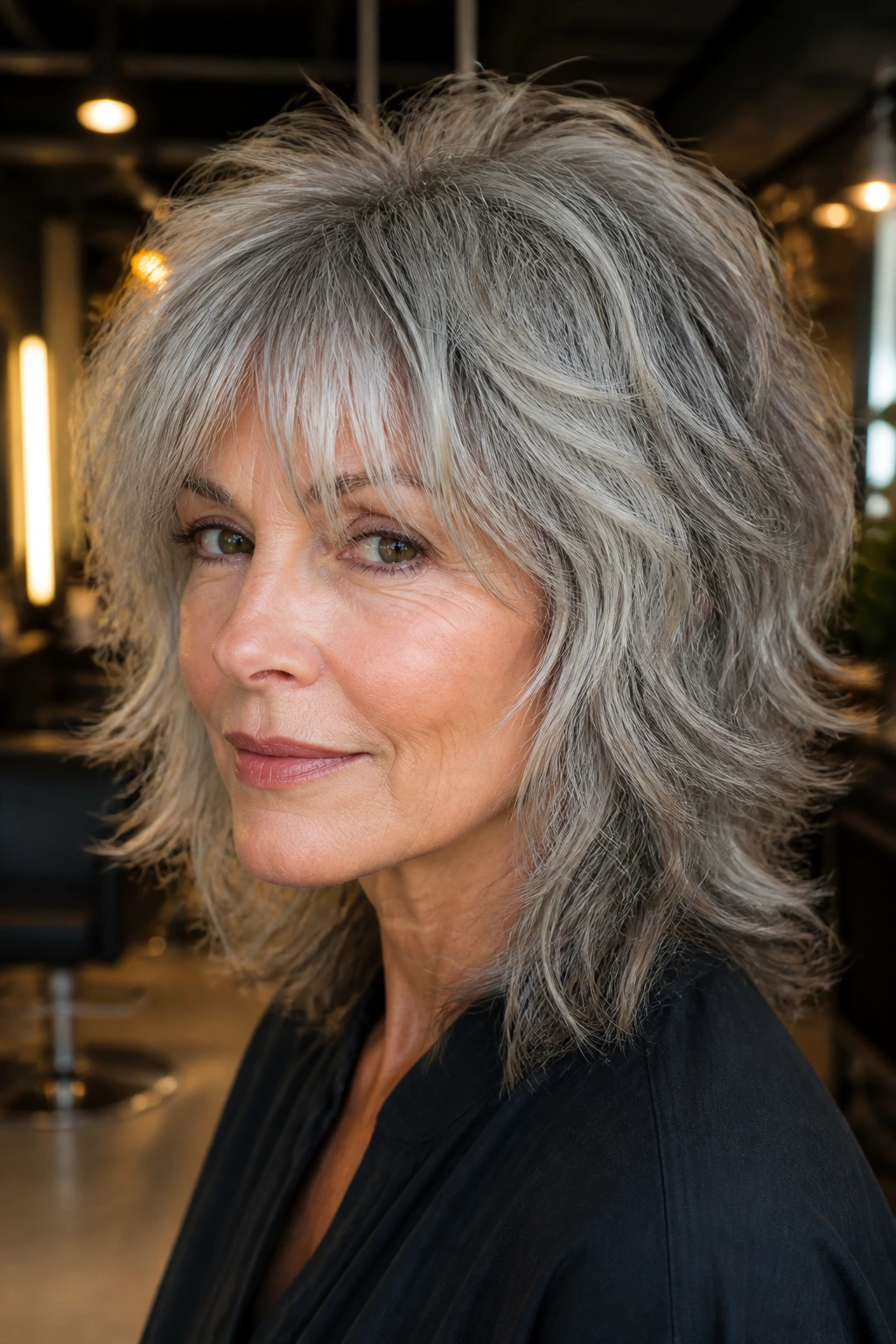
A razor-textured shag is not subtle. It has edge, separation, and that slightly undone finish that sits between polished and rebellious. On straight-to-wavy hair, it can create lovely piecey movement, especially around the face and ends.
But here’s the catch: a razor cut is not the right answer for every head of hair. If your hair frizzes easily or feels fragile, the wrong razor work can make the ends look see-through and rough. Scissors may be the safer choice. A good stylist will know when to stop and when to switch tools.
What it looks like in real life
The layers are a touch sharper. The fringe often lies flatter and more separated. The ends catch the eye because they do not blur into one mass.
That can be a nice change if you’ve worn softer, rounder cuts for years. It gives the face a bit more contour. Ask for a gentle razor finish rather than an aggressive one, and keep the density in the perimeter if your hair is already fine.
7. Shoulder-Skimming Grown-Out Shag

This one is for the person who likes the shag shape but does not want to part ways with length. The hair lands around the shoulders, the layers begin higher up, and the face frame is soft enough to tuck behind the ears or let fall forward. It feels relaxed without looking lazy.
The shoulder-skimming length is useful because it survives real life. It goes into a clip. It bends nicely under a coat collar. It can be curled for dinner and then scrunched back into shape the next day. That matters more than people admit.
If you have been wearing a bob and want something with more motion, this is a smart bridge. It keeps the profile light without taking you all the way into shorter territory. The layers should still do the lifting; don’t let the length fool you into asking for one long, heavy curtain of hair.
A good grown-out shag doesn’t sit still. It shifts when you move. That is the whole pleasure of it.
8. Side-Swept Shag With Face Framing
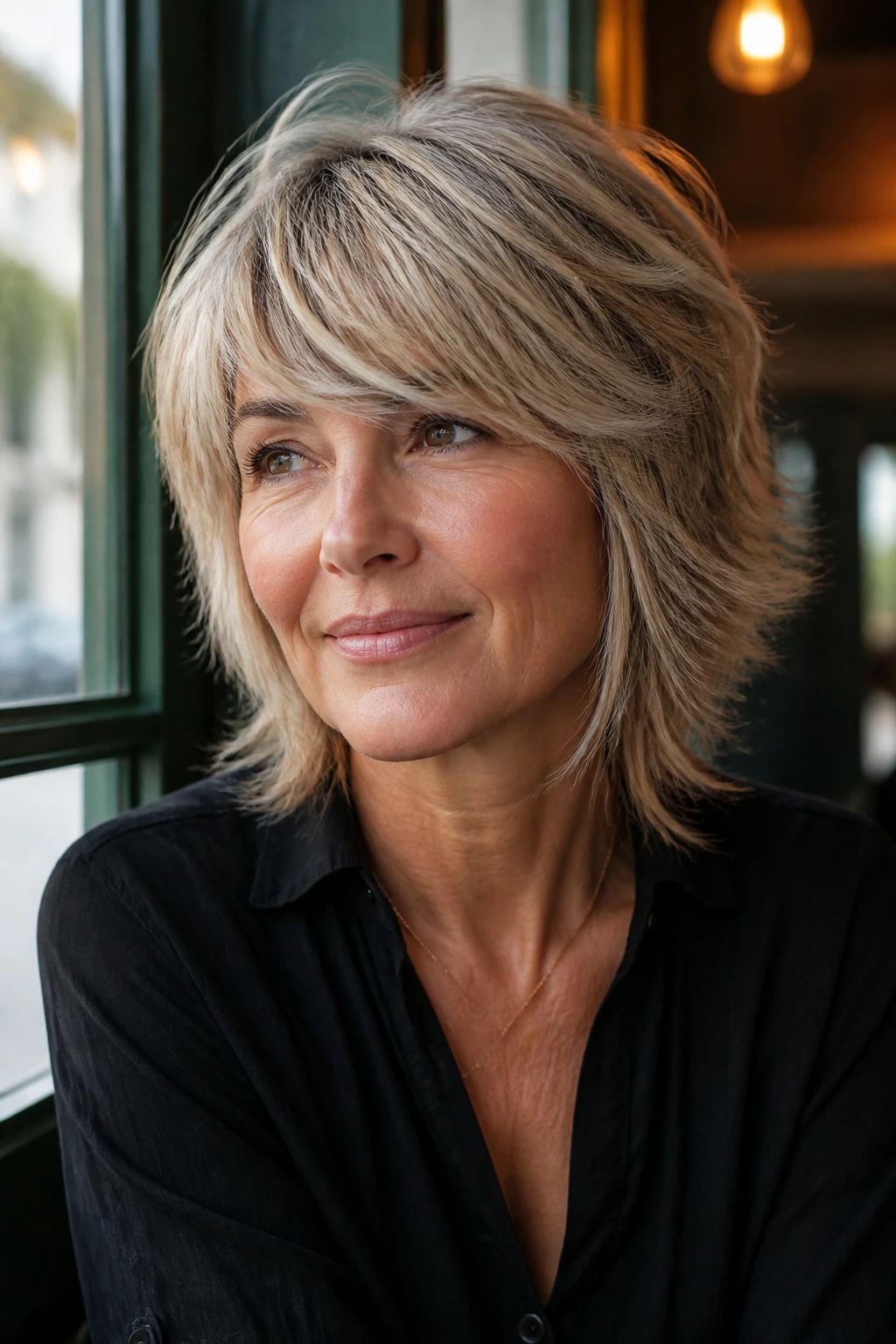
A side-swept shag is a strong choice when you want softness but not a full curtain fringe. The front pieces sweep across the forehead and then fall away from the cheekbone, which can be flattering if the temples have thinned a little or if you simply like a bit of asymmetry.
The side sweep also works well with a strong jaw or a square face, because it breaks the straight lines without hiding the face. That is a useful distinction. Some haircuts cover features. This one edits them.
A few details matter here. The sweep should start high enough to create lift, but not so high that the fringe is forever fighting to stay in place. The side layers should be long enough to move when you brush them back, not so short that they stick out around the eye. A medium round brush or a large roller at the front can set the bend.
I’d ask for this when you want a shag that feels a little more tailored. Less boho. More neat, but not stiff.
9. Bixie Shag for Fine Hair
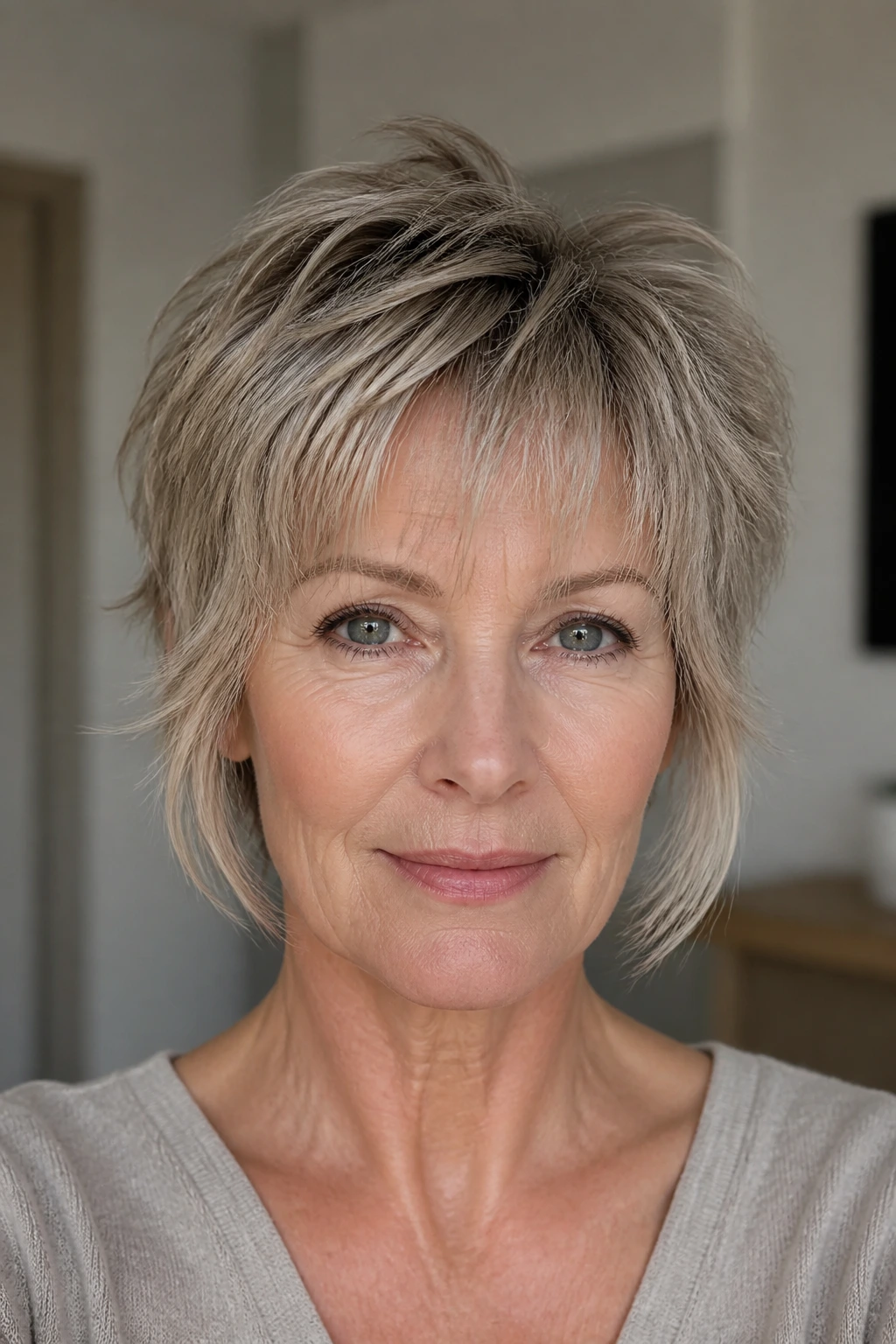
The bixie sits between a pixie and a bob, and the shag version gives it a little more softness through the top and sides. This is a good haircut when you want lift, want to lose some weight, and do not want to spend ten minutes every morning making your hair pretend it has volume it does not have.
What makes it useful for fine hair is the top shape. Shorter crown layers give you a lift point, while the side lengths stay long enough to avoid that overly cropped, exposed feeling some pixies bring. Around the ears and nape, the cut should feel light but not sparse.
A bixie shag also looks nice on women who wear earrings. Sounds small. It is not. The haircut leaves the face open enough to let the jewelry and the neckline do some work. That gives the whole look a little polish without requiring a blowout.
If your hair tends to fall flat by mid-afternoon, this one can be a relief. It does not ask for much. A bit of mousse and a quick rough-dry usually gets it back into shape.
10. Wavy Mid-Length Shag
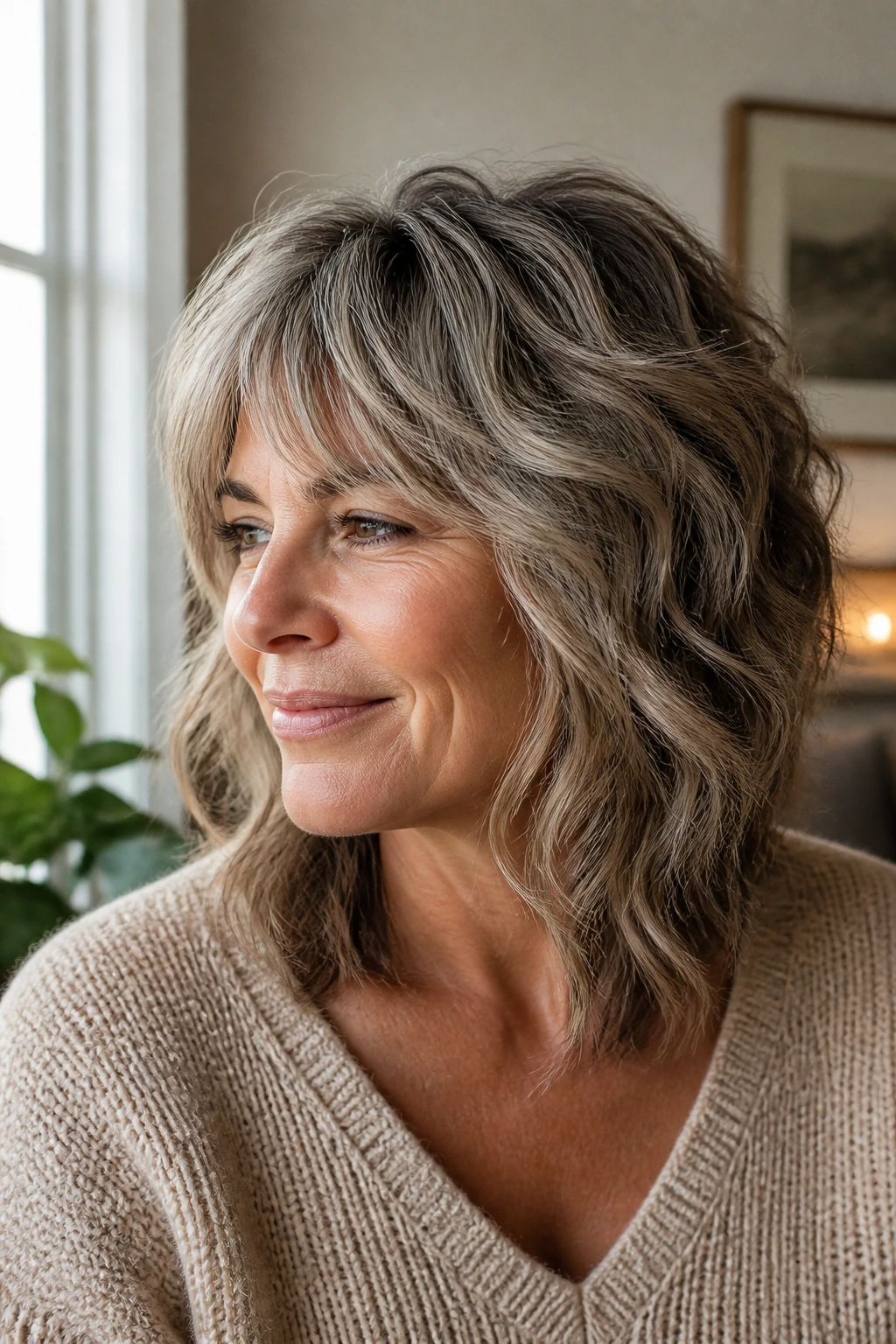
Wavy hair is the middle child of haircut textures. It behaves like straight hair just enough to be annoying, then turns around and acts curly in humid air. A mid-length shag is one of the few shapes that can make that inconsistency work for you.
The wave pattern does the styling
If the layers are placed right, the wave pattern will give the haircut its own bend. You do not need every strand perfectly polished. You need enough definition so the waves separate instead of clumping. A diffuser, a little leave-in, and a scrunching motion are usually enough.
The mid-length version lands around the collarbone or just below. That gives the waves enough room to move without dragging them down. Keep the fringe soft and the ends lightly texturized. Heavy thinning near the bottom will make the cut puff at the sides, which is not the mood.
This is the version I recommend to women who want the shag effect but do not want a dramatic chop. It looks relaxed in a very usable way. That counts.
11. Debulked Thick-Hair Shag
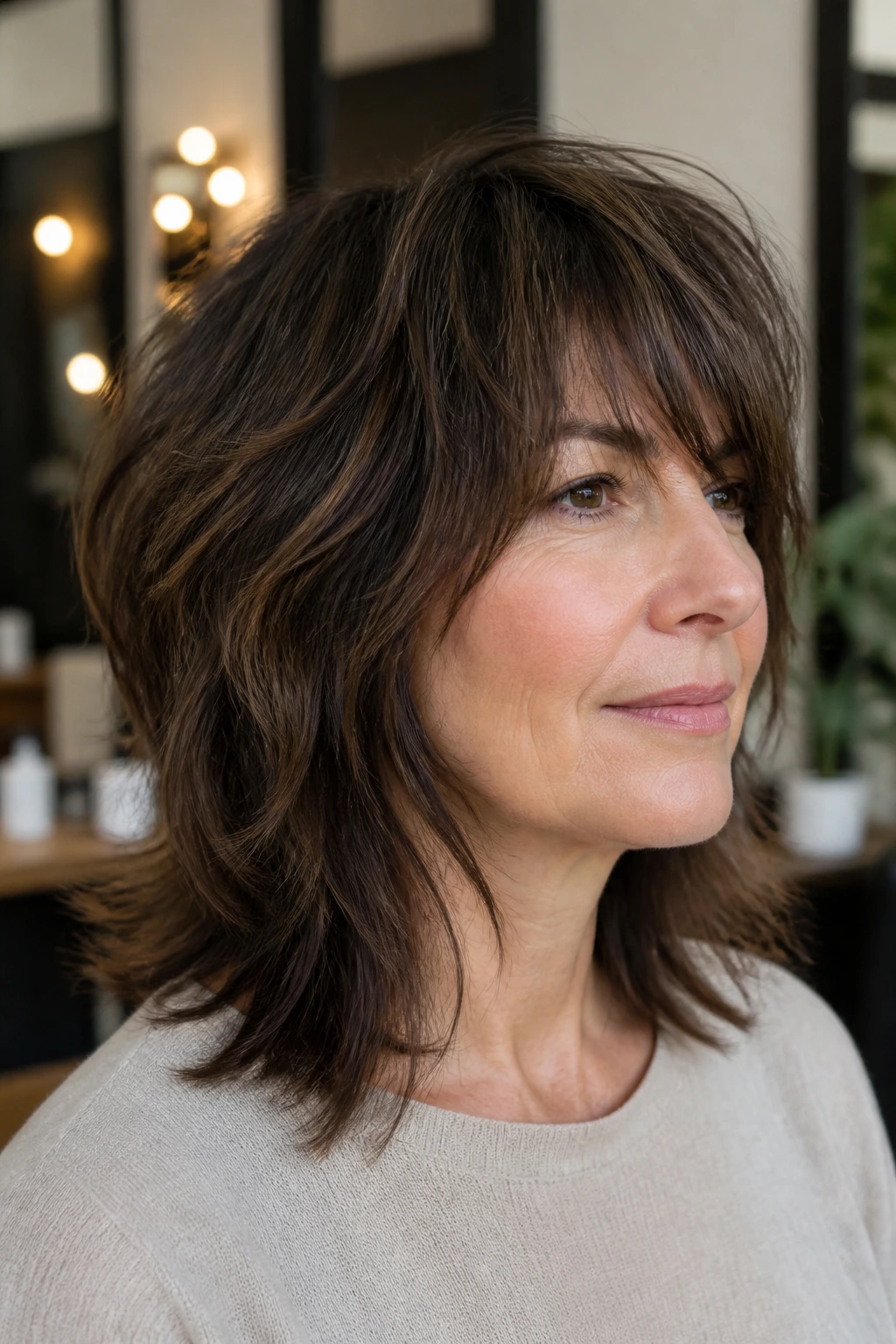
Thick hair can carry a shag beautifully, but only if the cut removes weight in the right places. Otherwise you get the classic triangle: narrow at the top, wide at the bottom, and a lot of hair making one loud announcement. Not ideal.
The fix is internal layering and careful texturizing through the middle and lower lengths. The stylist should keep enough perimeter weight so the cut does not fray, then lift the heaviness from the inside. That gives you movement without making the ends look thin.
The goal is shape, not sheer volume
A lot of people think thick hair needs to be thinned aggressively. That is how you end up with frizz and flyaways around the outside while the inside still feels bulky. Point cutting and internal layering are usually safer than heavy thinning shears.
This version is good if your hair feels hot on the neck, sits like a helmet, or takes forever to dry. A thick-hair shag can make the whole head feel lighter without losing the body that thick hair naturally has. The result should feel controlled, not chopped to bits.
12. Long Retro Shag With Curtain Fringe
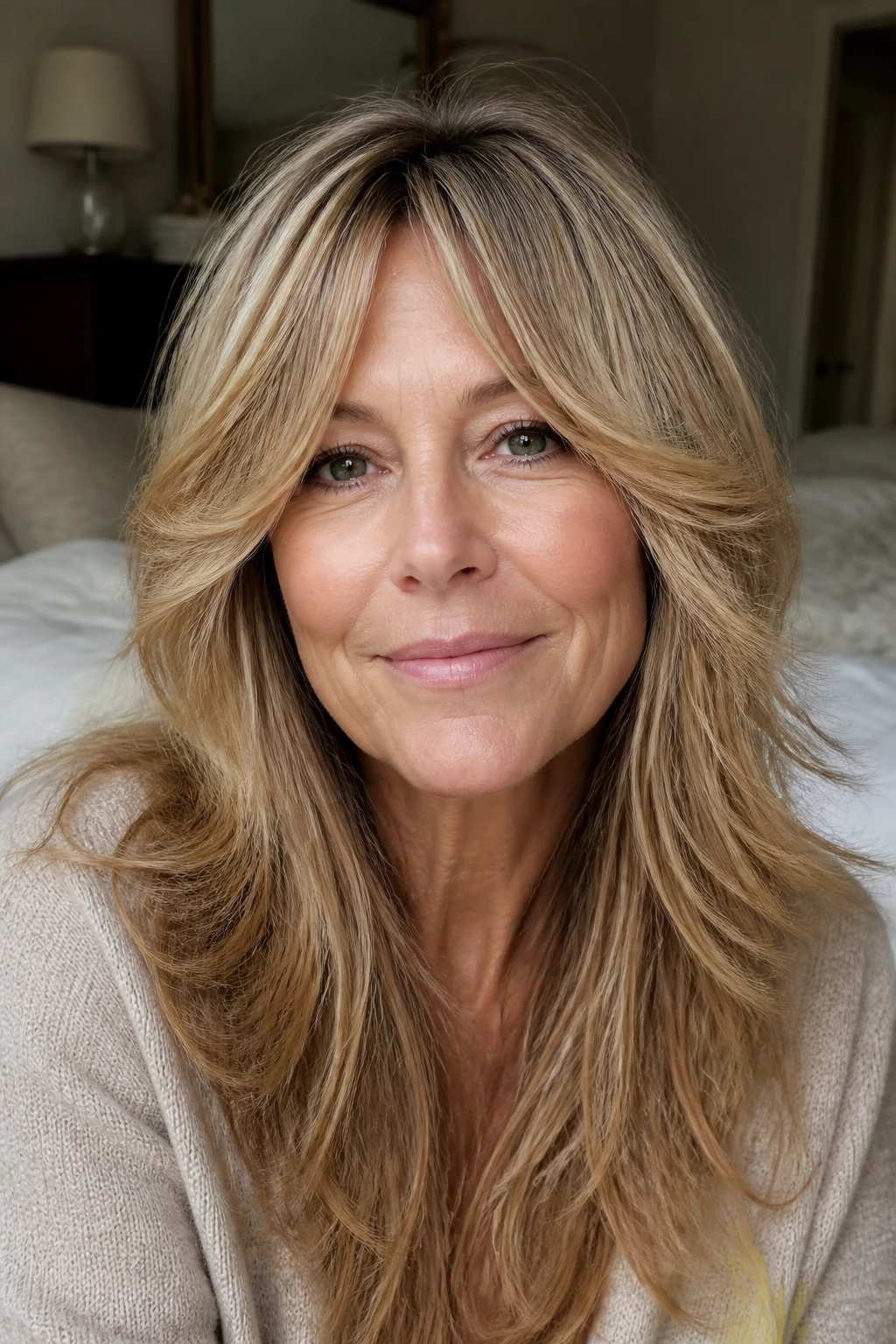
If you like length and you like the 1970s mood, this is the one to study. The hair stays long, the layers begin around the cheekbone or lower, and the curtain fringe gives you that old-school softness around the eyes. It has a little romance to it.
The long version can be especially flattering on women who do not want to expose the neck too much. It still gives movement, but it keeps enough length to feel familiar. If you usually wear your hair down, this one is easy to slip into. It also works with low ponytails and loose half-up styles, which is handy.
Because the length is substantial, the layers need to be balanced carefully. Too many short pieces and the ends will look ragged. Too few and the haircut loses its shag identity. The sweet spot is a face frame that starts higher, then melts into longer layers through the back.
This is a good choice when you want the softness of a feather cut and the character of a shag in the same haircut. That combination wears well.
13. Rounded Shag for Glasses Wearers
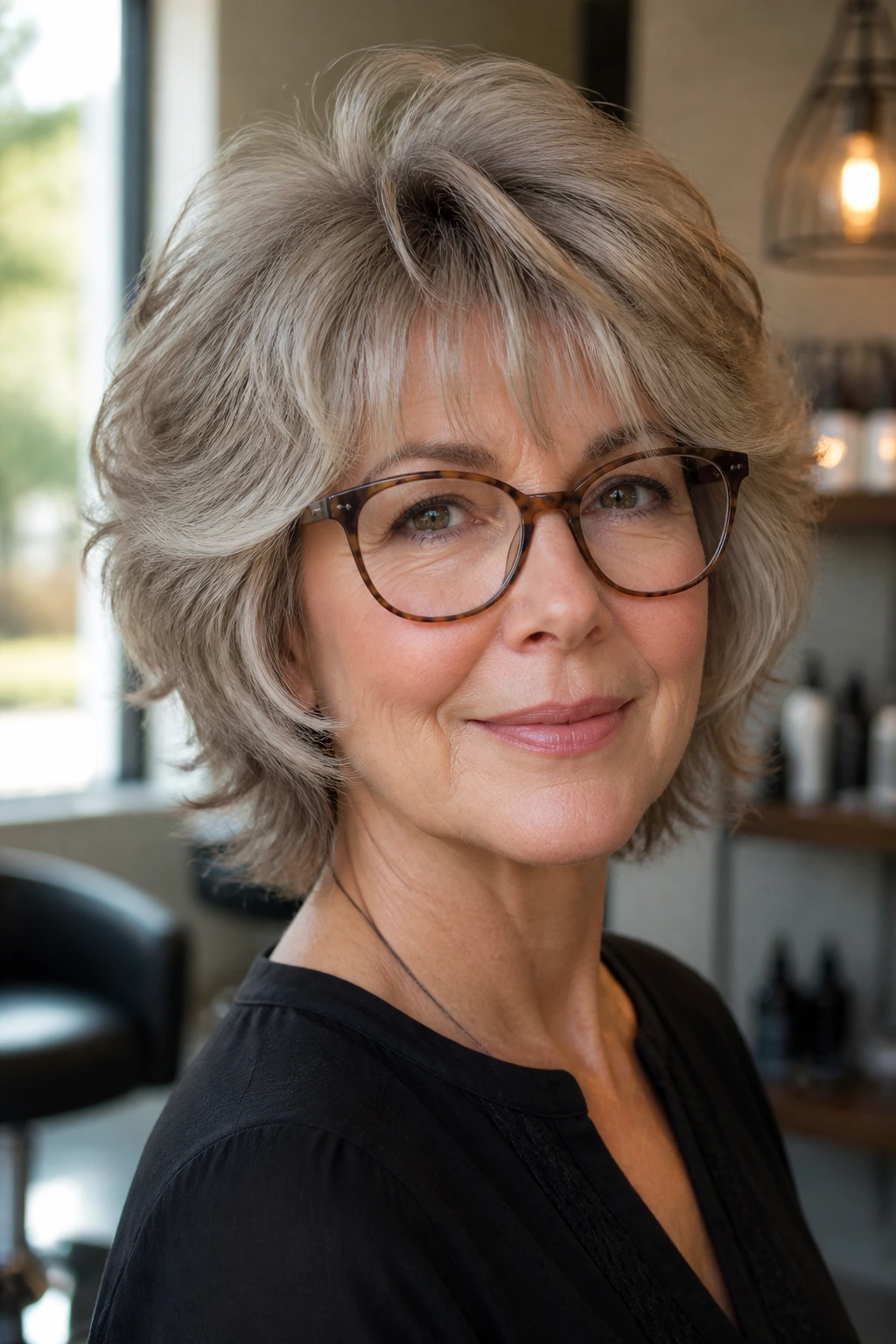
Glasses change a haircut more than people think. The frame creates a visual line right across the face, so a shag that lands too close to the lenses can feel crowded fast. A rounded shag solves that by keeping the fringe light, the side pieces soft, and the top lifted enough to leave space around the frames.
This cut is especially nice if you wear fuller frames or tinted ones. The hair should frame the glasses, not compete with them. Side layers that graze the cheekbone and a fringe that parts cleanly can make the whole face look more open.
A rounded shape also helps if your face is angular. The curve softens the outline without making the haircut mushy. That balance matters. Nobody wants their hair to look like it was shaped by a helmet and then argued with.
Ask the stylist to check the cut with your glasses on. Seriously. That small step saves a lot of grief later. What looks balanced without frames can feel awkward once you put them back on.
14. Choppy Gray-Blending Shag
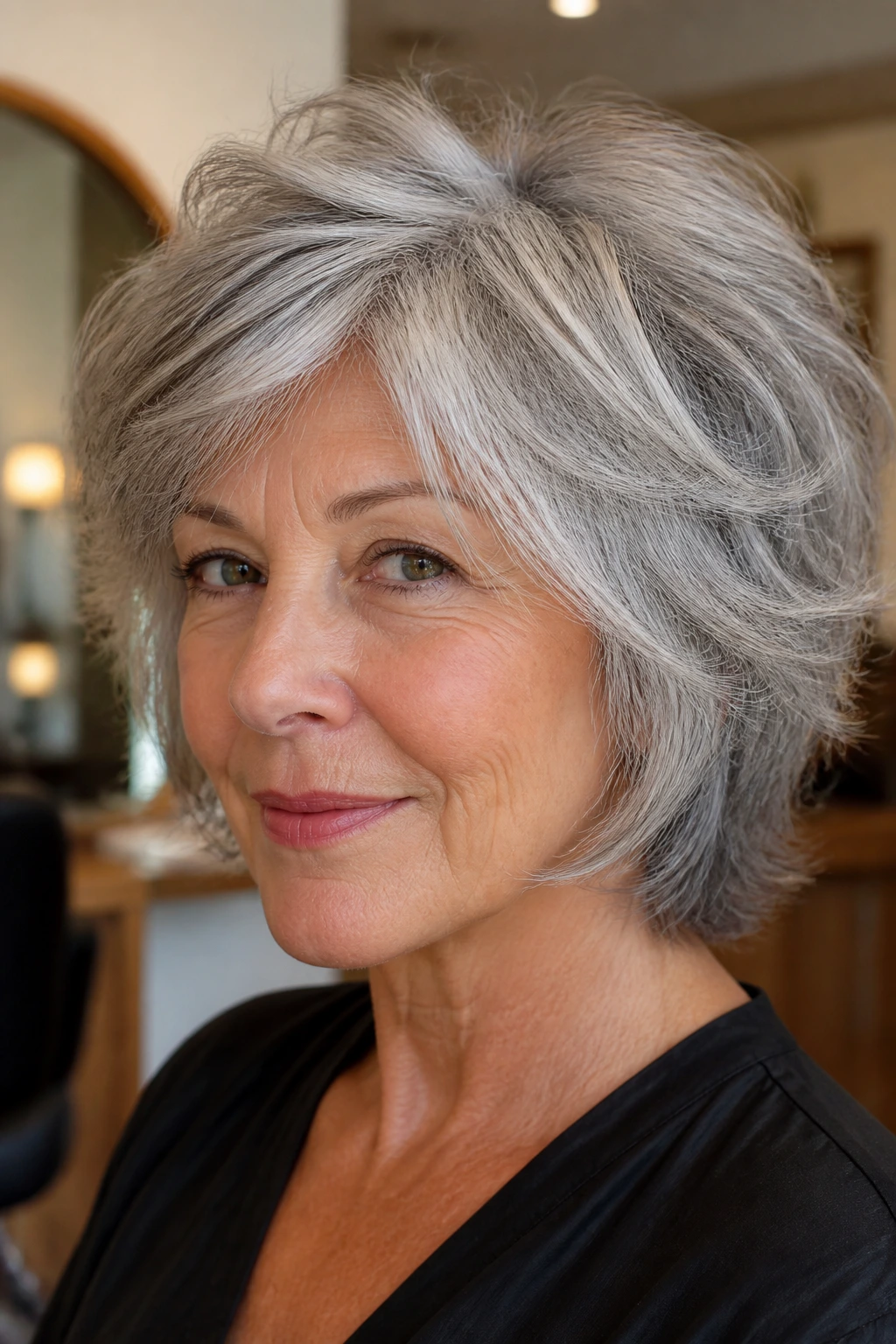
This is the shag for people who are letting silver come through and do not want harsh lines around the roots. The choppy layers break up the shape enough that the grow-out looks intentional, even when it is doing a little bit of everything at once. The texture softens the transition between pigmented hair and gray.
A short, blunt style can make gray regrowth feel obvious. A shag scatters the eye. The layers create little shifts in tone, especially when the silver sits around the face and crown. That makes the grow-out less obvious and the haircut more lively.
A side part often helps here, because the irregular texture lets gray pieces catch light at different angles. Keep the fringe soft. A hard bang line can fight the blending effect. If you color the rest of your hair, ask for a tone that sits close to your natural base so the layers can do the visual work.
The best part is that this version tends to look even better after a few weeks. Not sloppy. Just more lived-in.
15. Wash-and-Go Shag
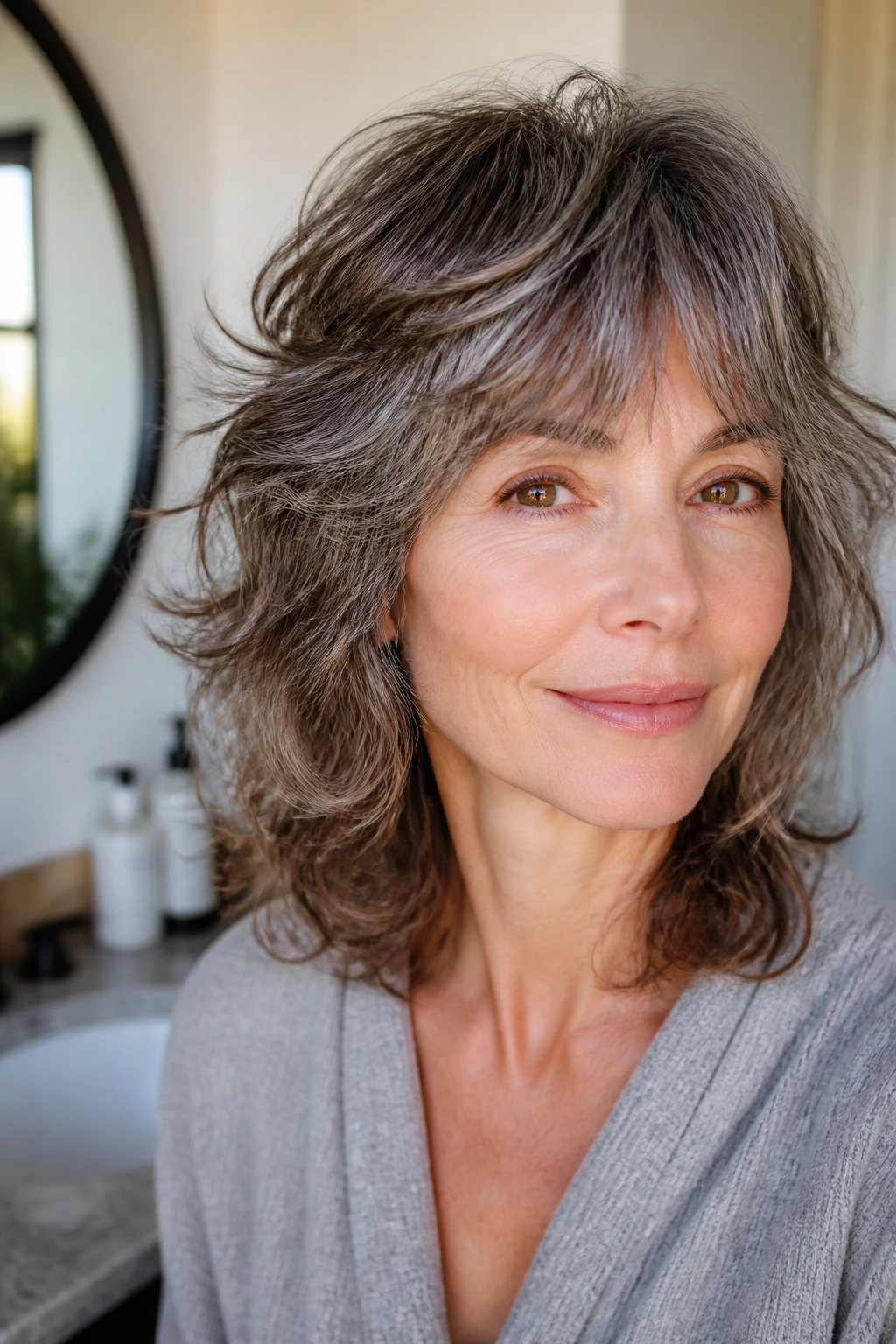
Some haircuts need a blowout. This one does not. The wash-and-go shag is built for women who want shape with the least amount of daily handling. It is still a shag, so the layers and fringe matter, but the overall cut should be a little softer and a little longer so it falls into place with minimal coaxing.
The real trick is product choice. A lightweight mousse or foam at the roots, a touch of cream through the mids, and then hands off. Letting the hair air-dry a bit before you touch it helps preserve bend. If you keep fussing, the texture usually gets worse, not better.
This works especially well on hair that already has some wave or bend. But straight hair can wear it too, as long as the layers are cut with enough movement in mind. I would not make this version too short. The longer perimeter is what keeps it from looking over-styled when you do nothing at all.
Not every haircut should demand effort. A good wash-and-go shape is one you can trust on a busy morning.
16. Softer Wolf-Shag With a 1970s Bend
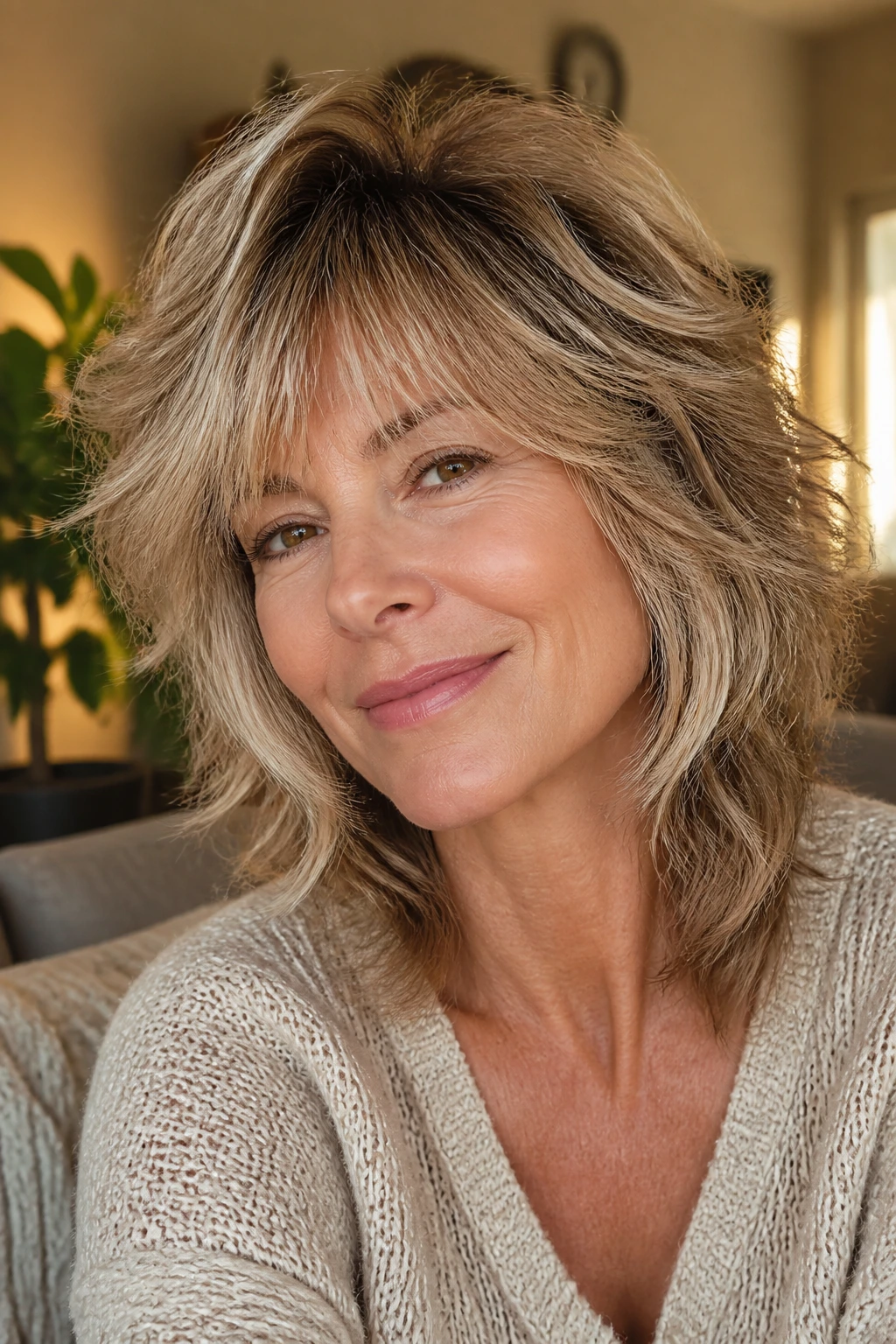
The wolf-shag gets a bad reputation when it’s cut too harshly. Too much crown, too much bite in the ends, too much attitude for no reason. The softer version keeps the drama up top but smooths the corners around the face and neckline, which makes it far easier to wear.
Who this suits
Women who like a little edge. Women who do not want a tidy salon bob. Women who want their haircut to have some swing and some personality without shouting.
The top should still be airy, but the face frame needs enough softness to flatter rather than sharpen. If the layers are cut well, the haircut has that unmistakable 1970s shape while still feeling current in the best sense of the word: wearable.
I would be cautious with this one if your hair is already very fine and fragile. Too much texturizing can make the ends look straggly. But on dense, wavy, or slightly coarse hair, it can be a lot of fun. Not costume fun. Real-life fun.
17. Polished Feathered Shag for Straight Hair

Straight hair can wear a shag, but it needs a little help so the cut doesn’t collapse into flat ribbons. The polished feathered version keeps the movement refined. The layers are blended enough to lie cleanly, the fringe is brushed softly away from the face, and the ends are beveled rather than chopped blunt.
This is the version I’d recommend for someone who wants a shapely haircut that still looks neat in a work setting. It has texture, but not chaos. The blow-dry matters here: use a round brush at the crown and front, then direct the ends slightly under or slightly out, depending on your face shape and the effect you want.
A straight-haired shag has one particular job. It has to create the illusion of motion without depending on a wave pattern that isn’t there. That means the layers must be cut with discipline. If the structure is off, the whole thing looks stringy. If the structure is right, it feels clean and airy.
This is a good closing shape for the list because it proves the shag isn’t only for people with natural texture. It can be tailored. That’s the part people miss.
How to Ask for the Right Layers at the Salon
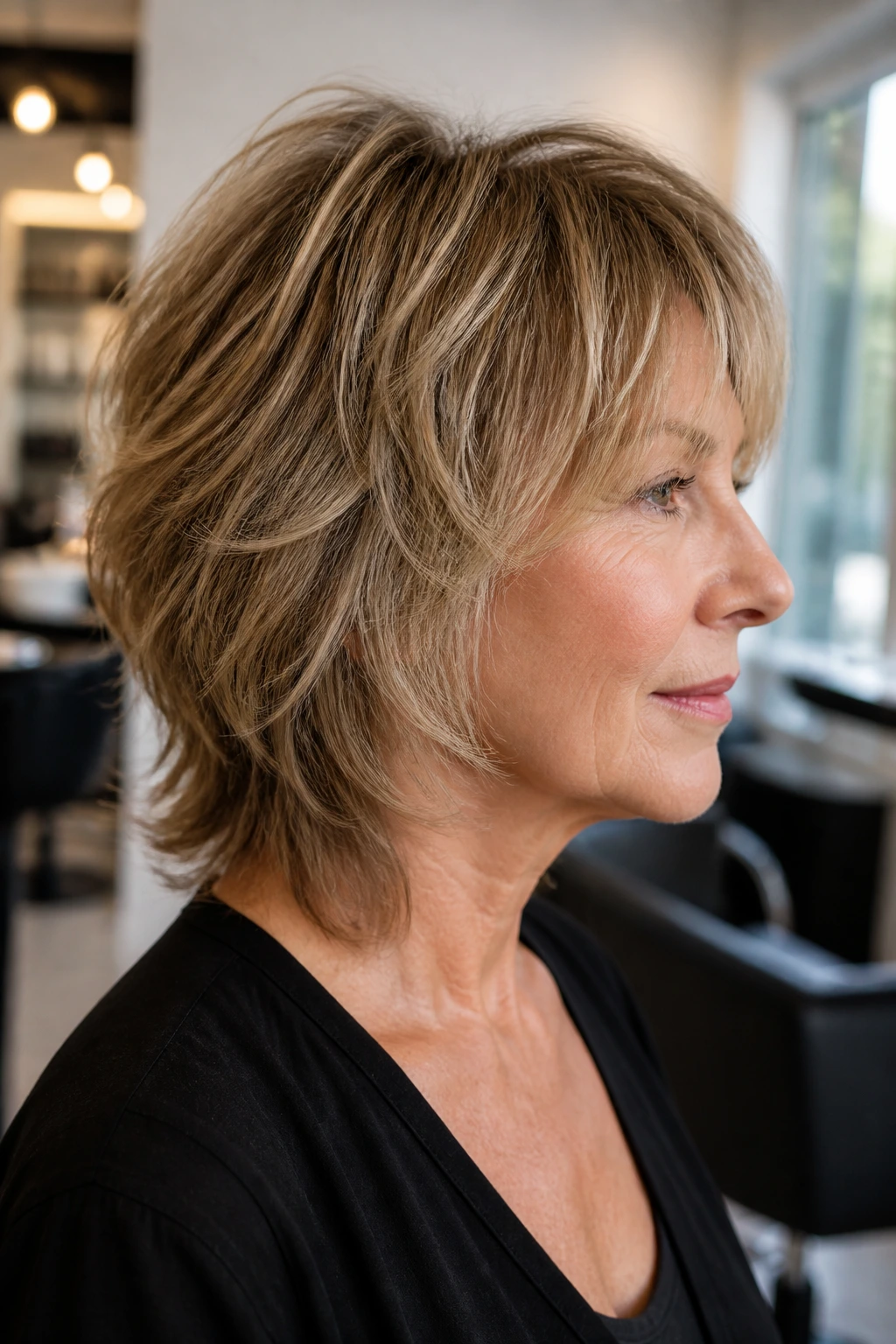
The best shag haircut starts with a clear conversation, not a vague “something with layers.” That phrase is far too loose. A shag can mean soft feathering, heavy crown layers, a long fringe, a chopped-up wolf shape, or a shoulder-skimming cut with barely any face frame. Those are not the same haircut.
Bring 2 or 3 photos, but don’t just show the finished look. Show the side angle too. That tells the stylist where the fringe lands, how high the crown sits, and whether the layers are short or long. A front photo alone lies. It always does.
Words that help at the chair
- Internal layers: say this if you want movement without losing the perimeter length
- Face frame starting at the cheekbone: useful if you want softness around the eyes and jaw
- Long curtain fringe: good if you want bangs you can part or sweep aside
- Keep the perimeter full: that stops the ends from getting wispy too fast
- Not too short at the crown: helpful if you have fine hair and hate a spiky top
If your hair is very fine, ask for the top to be lifted without over-thinning the ends. If it is thick, ask where the bulk should be removed. And if you wear glasses, say so out loud. The frames change everything.
Tools and Styling Products That Make These Cuts Behave
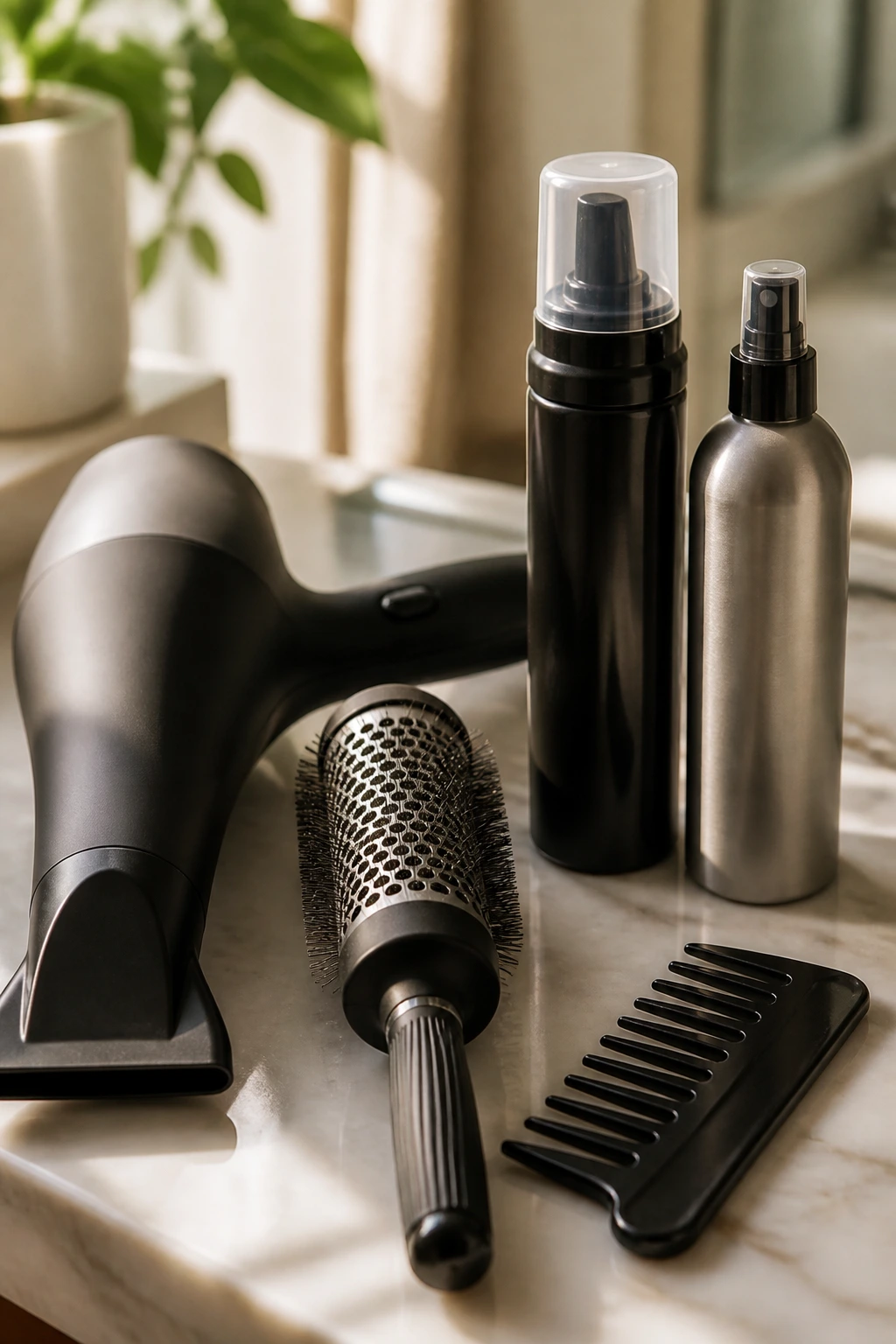
You do not need a bathroom shelf crowded with products to wear a shag well. You need a few specific things that help the shape, not a pile of heavy creams that collapse it by lunch.
- Blow dryer with a nozzle: the nozzle helps direct the hair at the roots and keeps the fringe from puffing out wildly.
- 1.25-inch to 1.5-inch round brush: ideal for lifting the crown and shaping curtain bangs or face-framing pieces.
- Diffuser: useful for wavy and curly shag haircuts because it protects the bend while drying.
- Lightweight mousse or foam: gives root support without sticky buildup.
- Texturizing spray: adds separation through the ends when the cut starts to look too smooth.
- Light styling cream: best on mids and ends, used sparingly so the layers still move.
- Wide-tooth comb: safer than rough brushing when hair is damp and layered.
- Small clips: handy for setting the crown or pinning the fringe while it cools.
- Optional flat iron or bend iron: useful only if your hair is straight and stubborn about holding a wave.
If a product feels heavy in your hands, it will probably weigh the cut down. That is the rule I trust most here.
How to Style a Shag Without Fighting It

A shag haircut looks best when you work with the direction the hair already wants to go. That does not mean giving up on shape. It means picking your battles. Start with damp hair, not dripping wet hair, and section off the crown, sides, and fringe before you even plug in the dryer.
Put mousse or foam at the roots first. A little goes a long way. Then add a pea-sized amount of lightweight cream to the mid-lengths if your hair feels dry or coarse. Keep heavy oils away from the root area unless you enjoy flatness. Most people don’t.
Blow-dry the crown first if you want lift, and direct the roots in the opposite direction of your usual part for a few seconds before returning them to place. That small trick gives the top a better rise. Use the round brush mostly on the front pieces and fringe. The rest can be rough-dried until about 80 percent dry, then shaped by hand.
For wavy or curly versions, stop drying when the hair is still slightly damp and let the ends air-set. Over-drying is where the shape gets frizzy and brittle. A light mist of texture spray at the end can separate the layers, but don’t turn the whole head into a dry cloud.
Common Mistakes That Flatten the Shape
The first mistake is over-thinning the ends. It looks airy on day one, then sparse and ragged a week later. If the cut has already been texturized heavily, there is no fixing that with product. The answer is to leave more weight at the perimeter next time.
Another common problem is fringe that’s too short. A shag fringe should usually skim, brush, or sweep. If it sits high above the brows with no soft edge, the cut can feel harsh and dated in a bad way. Longer fringe gives you more styling options, and that matters when your hair has a mind of its own.
Heavy serums are a third culprit. They clump the layers together and take the life out of the texture. Use the smallest amount possible, and keep it below eye level unless your hair is bone dry and coarse. Most shags need air more than shine.
Don’t forget the crown. A flat top makes even the best layers fall limp. If you skip root lifting, the haircut loses the 1970s shape and turns into something generic.
Variations and Adaptations to Try
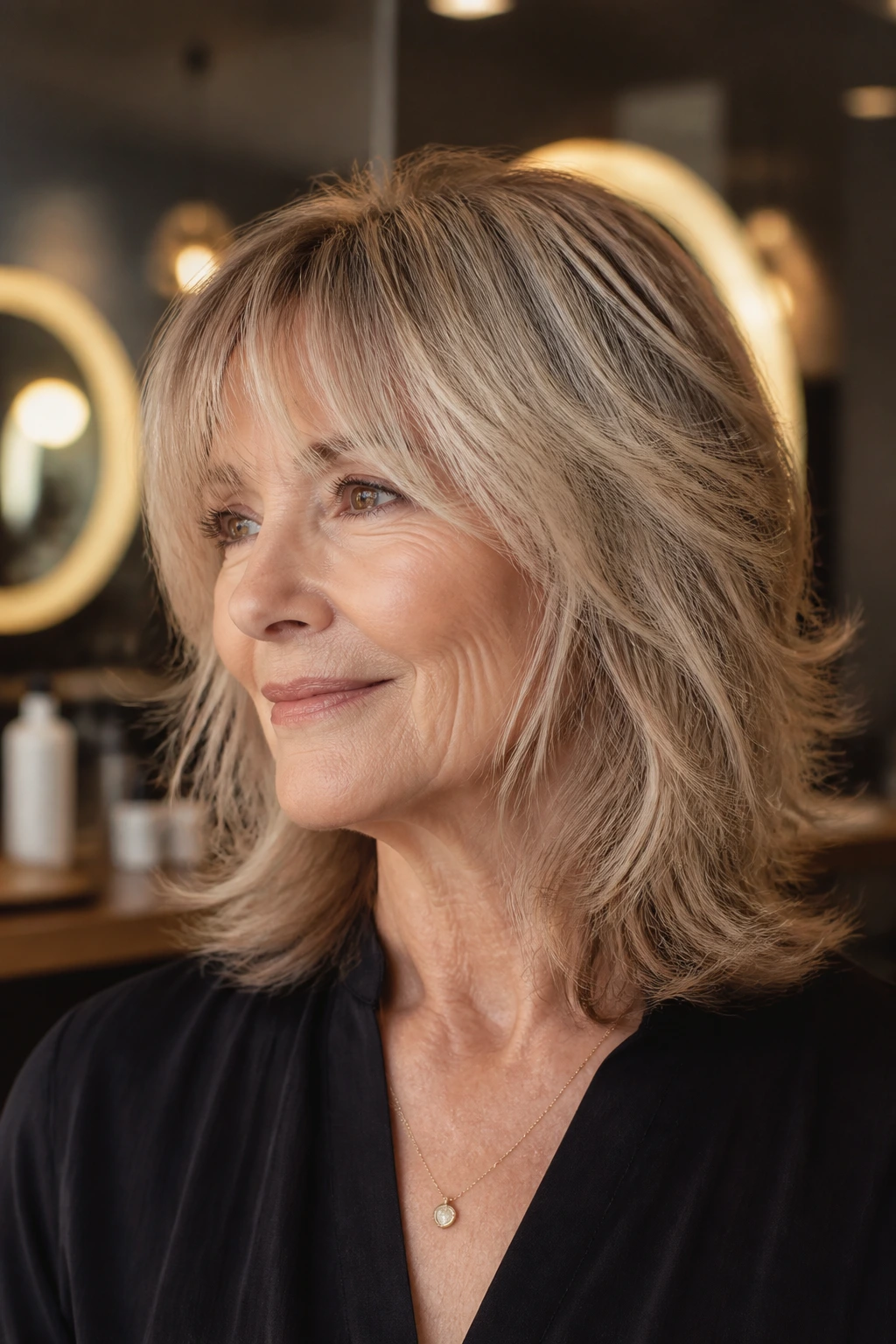
The Soft Salon Shag: This version keeps the 1970s shape but softens the ends and fringe, which makes it ideal if you want movement without a choppy finish. It’s a good fit for straight or slightly wavy hair that should look tidy after a quick blow-dry.
The Curly Dry-Cut Shag: This adaptation is cut to the curl pattern instead of against it. It works best when the stylist shapes the hair while dry or nearly dry, so the fringe and layers fall where the curls actually live.
The Long-Growth Shag: Keep the length at the collarbone or below and let the layers stay long too. This is the smart choice if you want a haircut that grows out gracefully and still tucks into a clip or low ponytail.
The Silver-Frame Shag: Built to show off gray or white hair around the face. The layers are lighter at the front and crown so the silver catches light in pieces rather than as one solid block.
The Bixie-Shag Hybrid: Shorter than a classic shag, softer than a pixie. It brings lift to fine hair and keeps the neck and ears open, which can be very flattering with earrings and scarves.
The Razor-Soft Edge Shag: Best for hair that wants separation without looking torn up. The stylist uses a light razor finish or point cutting so the shape stays airy, not shredded.
Keeping the Cut Fresh Between Salon Visits
A shag grows out better than a blunt cut in most cases, but it still needs maintenance. Fringe usually needs attention first. If you wear curtain bangs or a side-swept fringe, a trim every 3 to 5 weeks keeps the front from dropping into your eyes and swallowing the face frame.
The full shape can usually go 8 to 10 weeks if the layers are placed well. Thick or curly hair may stretch a little longer, but once the crown loses lift or the ends start looking scruffy, the cut stops doing its job. That’s the sign. Not the calendar.
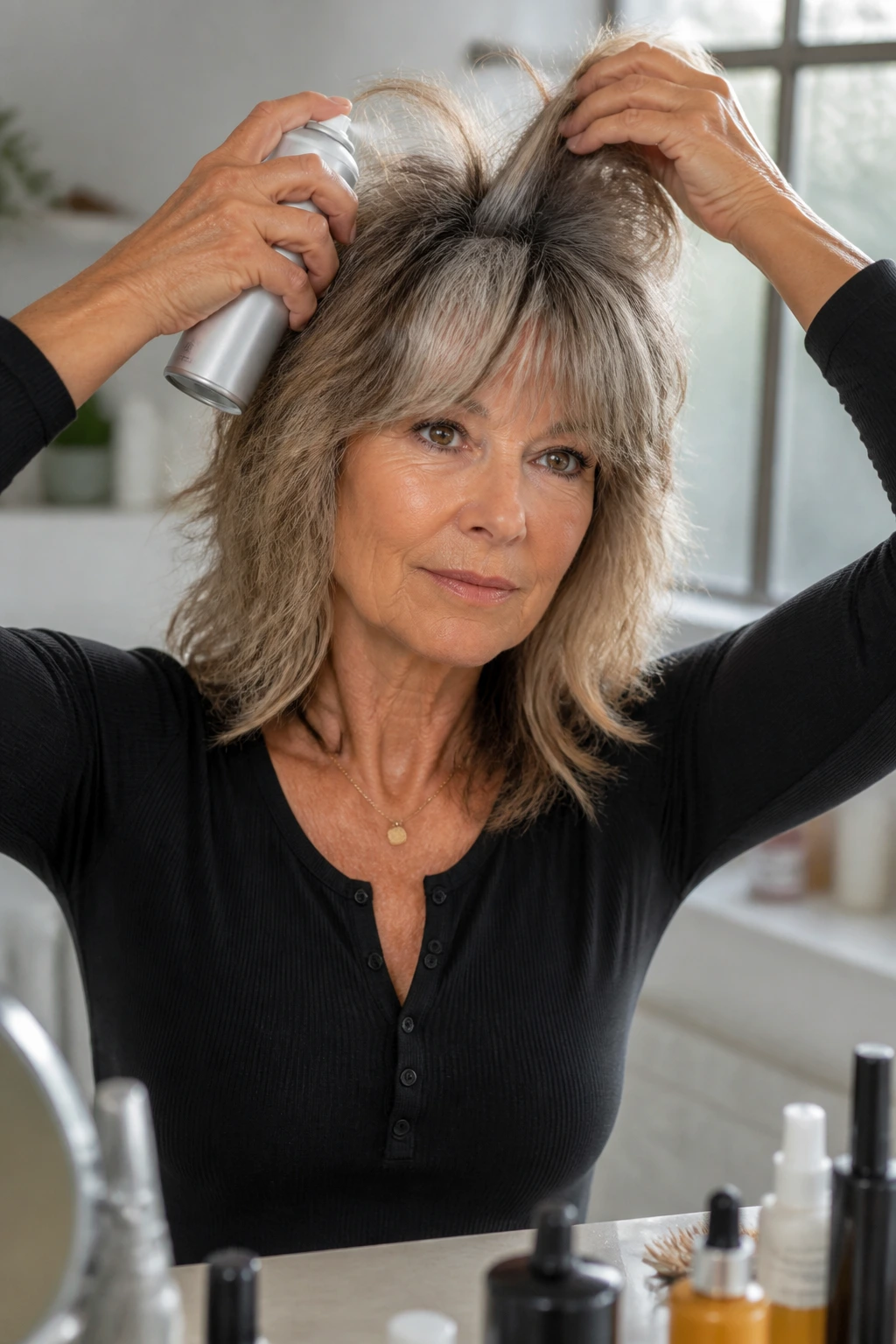
At home, wash frequency depends on texture, but many shag cuts behave well with 2 to 4 washes a week. Between washes, a little dry shampoo at the roots can bring back the top lift. For wavy and curly hair, a water mist mixed with a tiny amount of leave-in can wake up the bend without soaking the hair again.
Sleep matters too. A silk pillowcase or a loose clip at the crown can keep the shape from getting crushed overnight. It sounds small. It isn’t.
Questions People Ask Before Getting a Shag

Will a shag make fine hair look thinner?
Not if it’s cut with care. The problem comes from over-thinning the perimeter, not from the shag shape itself. Fine hair usually needs more structure at the ends and a little lift at the crown, not a shaved-down look.
Is a shag good for curly hair?
Yes, but only if the stylist respects the curl pattern. A dry cut or curl-aware shaping keeps the fringe and layers from shrinking into awkward spots. Curly shag cuts can look fantastic when the length and face frame are planned around shrinkage.
What’s the difference between a shag and a wolf cut?
A wolf cut is usually more extreme, with a heavier crown and a stronger taper toward the ends. A shag can be soft, polished, and much more wearable for everyday life. They overlap, but they do not live in the same neighborhood.
Can I wear a shag with glasses?
Absolutely, though the front pieces need to clear the frames. A rounded or side-swept shape usually works better than a fringe that sits right on the lenses. Bring your glasses to the appointment if you can.
How often should I trim a shag?
Fringe every 3 to 5 weeks, full shape every 8 to 10 weeks. If the cut starts losing movement or the ends look stringy, it is probably time. Waiting too long usually shows up first around the face.
Should a shag be cut wet or dry?
Either can work, but dry cutting often gives better control on waves and curls. Wet cutting is fine for straight hair or for setting the basic structure, as long as the stylist checks the finished shape once it dries. The wrong method is the one that ignores texture.
Can I grow a bob into a shag?
Yes, and it’s one of the easier grow-out paths. Once the bob hits the chin or collarbone, layers can be added around the crown and face to break up the blunt line. It’s a good way to keep the transition from looking awkward.
What if my hair is very straight and stubborn?
Ask for a more polished shag with longer layers and a beveled finish. You may need a round brush or a bend iron to bring out the shape, but the cut should still have enough internal movement to help you. Straight hair needs structure, not chaos.
The Cut That Still Has Spark
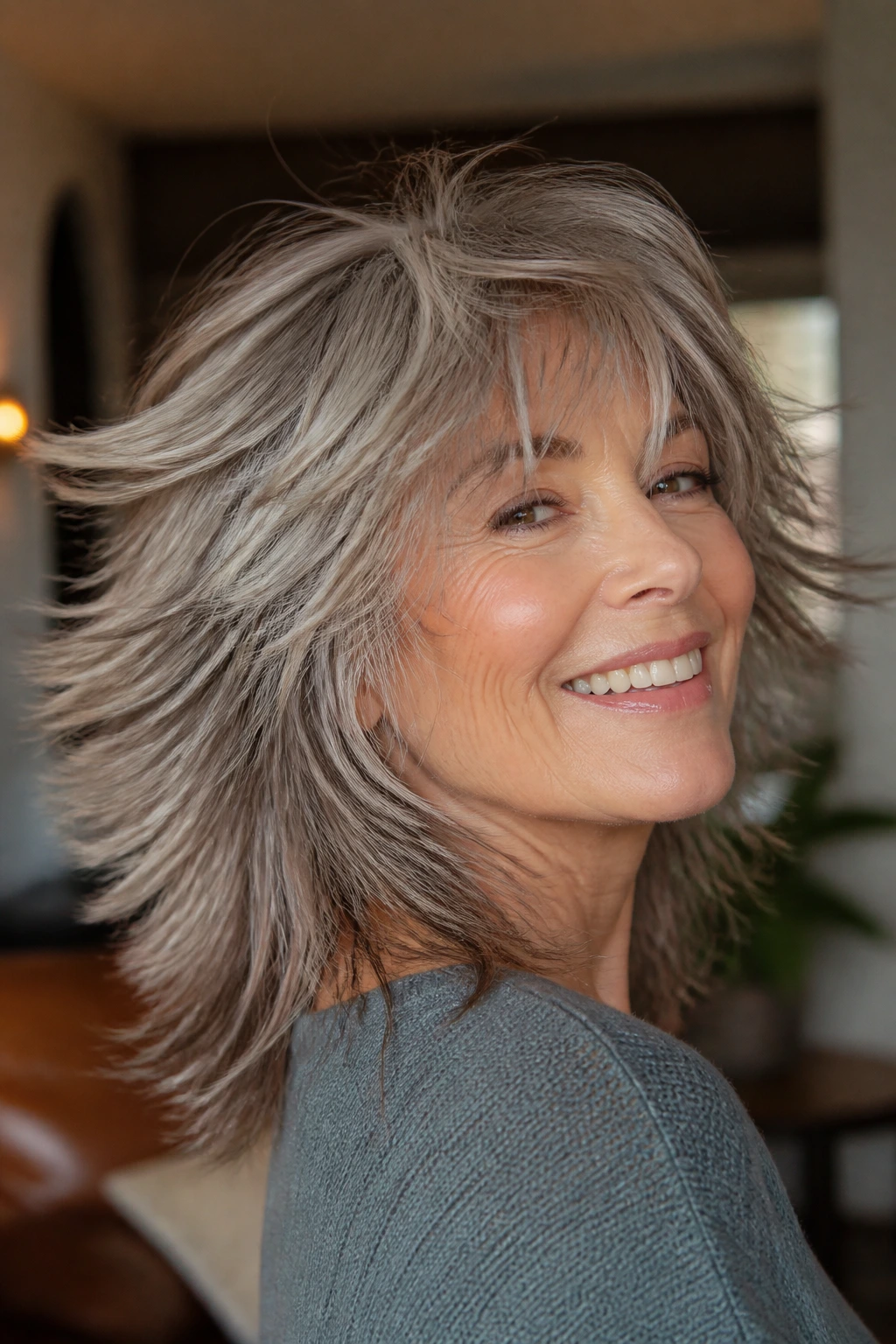
The best 1970s shag haircuts for older women do one thing well: they give hair motion without making you work for it every morning. That is the whole deal. You get lift, softness, and a shape that can handle gray hair, fine hair, thick hair, and the plain fact that hair changes as the years go on.
What makes this style last is its range. It can be feathered and soft, sharp and piecey, short and cheeky, or long and relaxed. The right version should feel like your hair, only better behaved and a little more alive.
If you are heading to the salon, bring a couple of photos, say what you want to keep, and be honest about how much styling you’ll actually do. That one conversation will do more for the haircut than any trend label ever could.
