



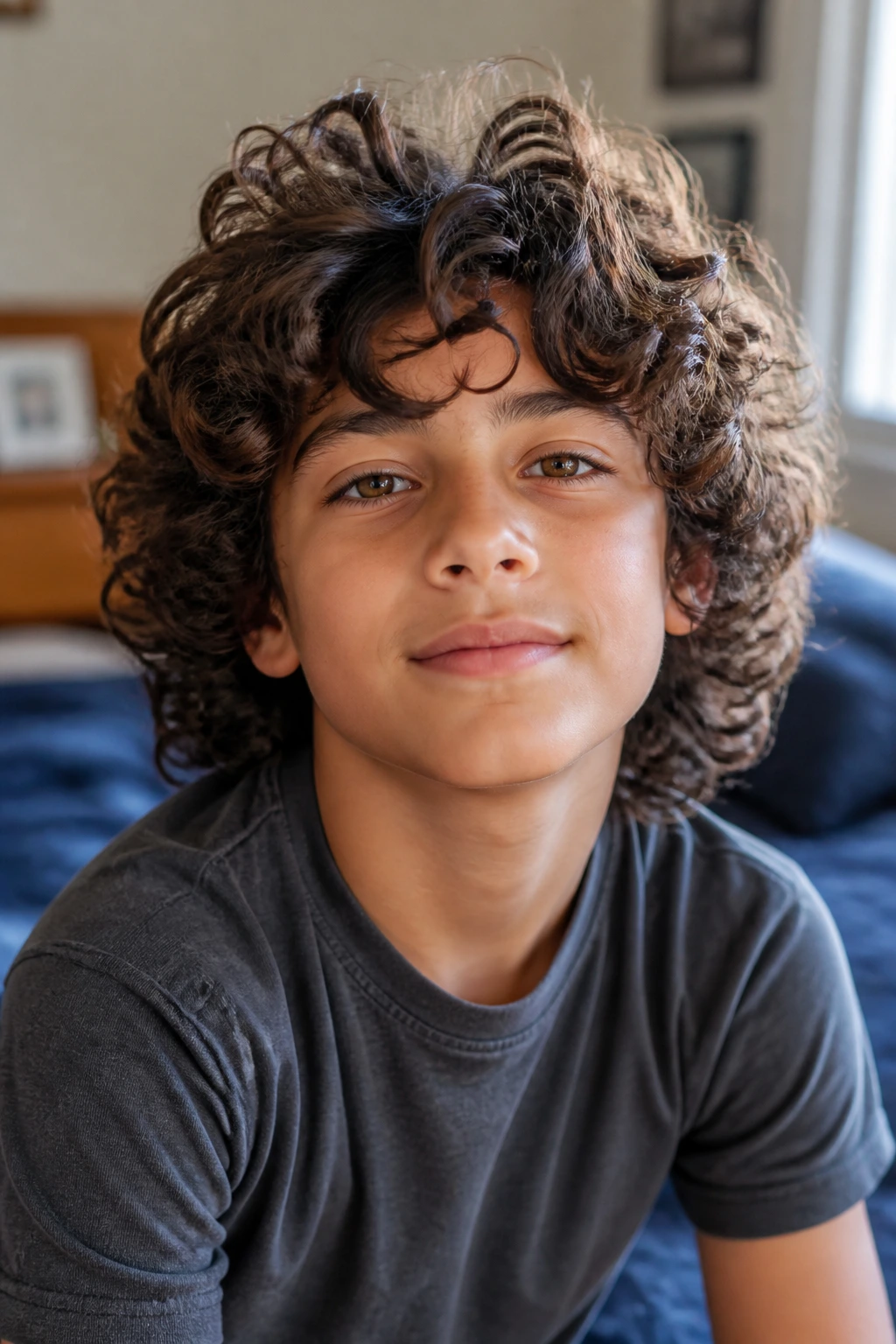
Long curly hairstyles for boys work best when the cut respects the curl pattern instead of trying to bully it into obedience. A good shape lets curls stack, spring, and fall where they want; a bad one turns into a puffed triangle by lunch, especially if the hair was brushed dry that morning. If you’ve ever watched neat ringlets go fuzzy after school pickup, you already know why the right style matters.
The nice part is that long curls give you range. You can wear them loose and airy, pull them into a low bun, braid them when play gets rough, or shape them into something sharper that still feels like hair and not a helmet. The trick is choosing a style that works with the density, shrinkage, and curl size instead of pretending every head of curls behaves the same way.
I care more about shape than trend. A boy with shoulder-length curls usually looks best when the sides are controlled, the weight sits where it should, and the front is allowed to fall the way the hair naturally falls. Give the curls enough moisture, enough layers, and enough room, and mornings get easier fast. Start with the styles that make the hair do less work.
Why These 27 Styles Work on Long Curly Hair
-
They respect shrinkage: Long curls may look longer wet than dry, so these styles are built around the way the hair actually sits once it’s fully dry.
-
They use shape instead of force: A clean part, a soft taper, or a loose braid does more than a pile of product ever will.
-
They handle school-day wear: These looks stay readable after hoodies, backpacks, recess, and one too many hand sweeps across the forehead.
-
They fit different curl sizes: Loose waves, springy ringlets, and tighter coils all show up here, because a good long-curly style should not assume one texture.
-
They give parents a reset button: A ponytail, bun, braid, or puff can save a rough morning without chopping off the length you worked for.
-
They grow out without looking sloppy: That matters more than people admit. A style that still looks decent after six weeks is worth keeping.
1. Shoulder-Length Ringlets with a Clean Middle Part
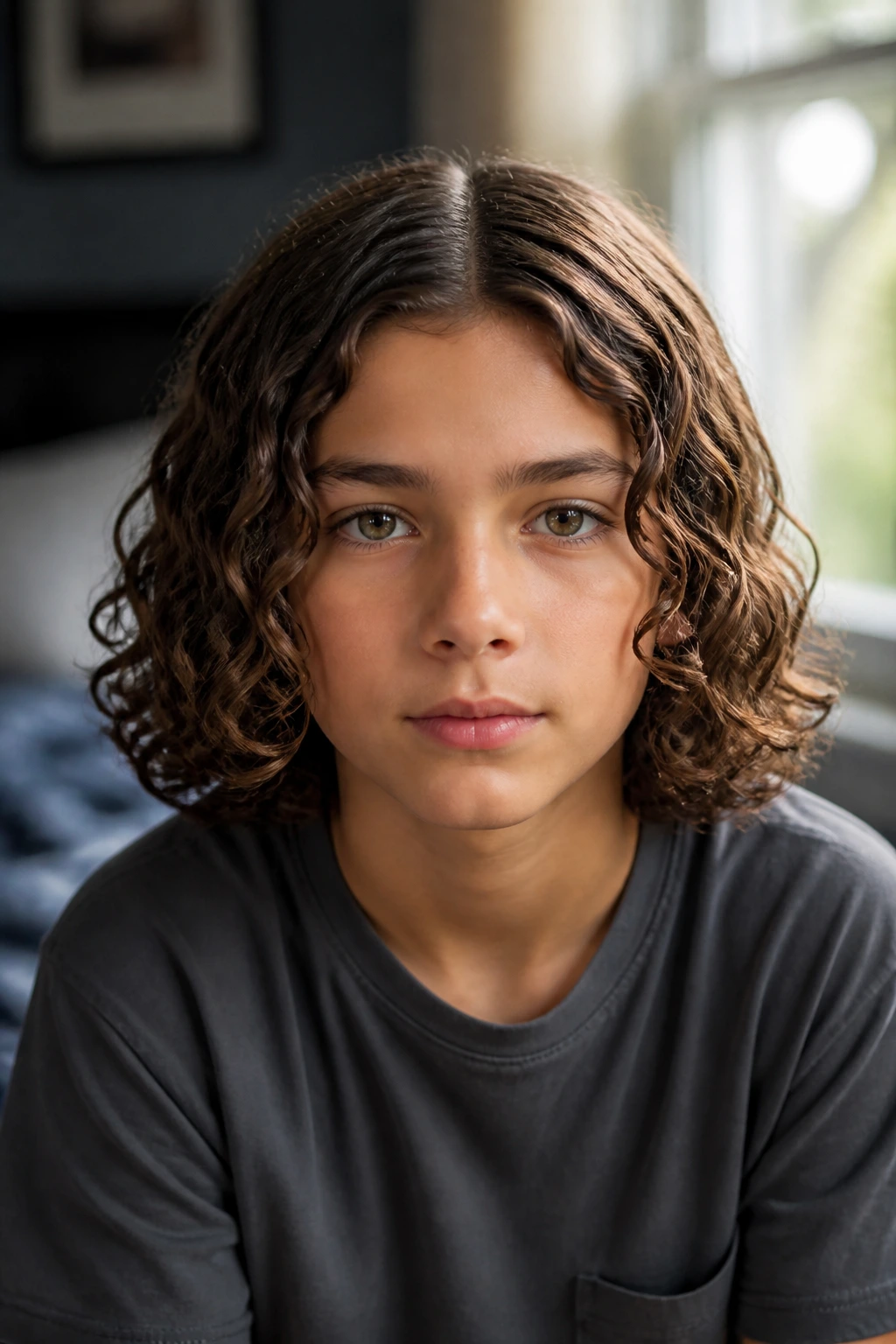
This is the style that makes long curls look calm instead of busy. The middle part lets the ringlets fall on both sides of the face in a way that feels balanced, and the shoulder length gives the curls enough weight to hang instead of sticking out like spring coils. It works especially well when the haircut has a few soft layers so the bottom doesn’t puff into a shelf.
The part should be made while the hair is damp, not dry. Dry curls resist and split wherever they want, which is why a comb line made on damp hair looks cleaner and stays put longer. A little leave-in conditioner and a light gel on the front help the curls clump without turning stiff. If the hair has a cowlick at the crown, let it keep a slight wobble. Fighting that spot usually makes the whole style look off.
2. Curly Fringe with Long Layers
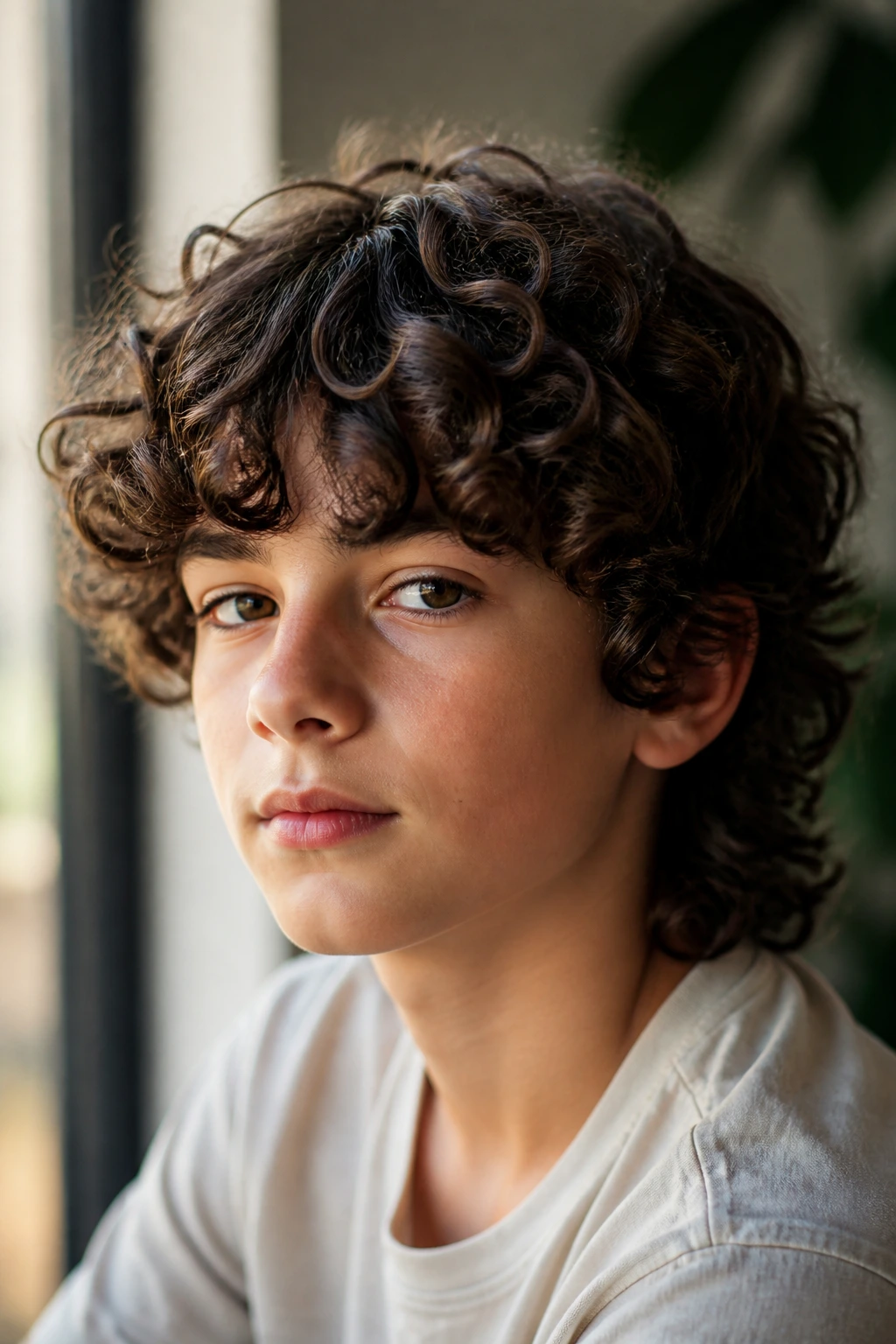
Want hair out of the eyes without chopping off the length? This is the move. A curly fringe keeps the front a little shorter so it falls forward on purpose, while the longer layers in back stop the whole head from looking boxy. The result is softer and more relaxed than a blunt cut, and the curls keep their bounce instead of hanging like wet rope.
Ask for the fringe to sit just above the eyes when dry, not when wet. That sounds like a small difference, but on curly hair it matters a lot. Curls shrink, and a front section that seems harmless in the barber chair can sit halfway up the forehead once it dries. A pea-sized amount of curl cream on the fringe keeps it from frizzing into a halo.
3. Half-Up Knot with Loose Ends
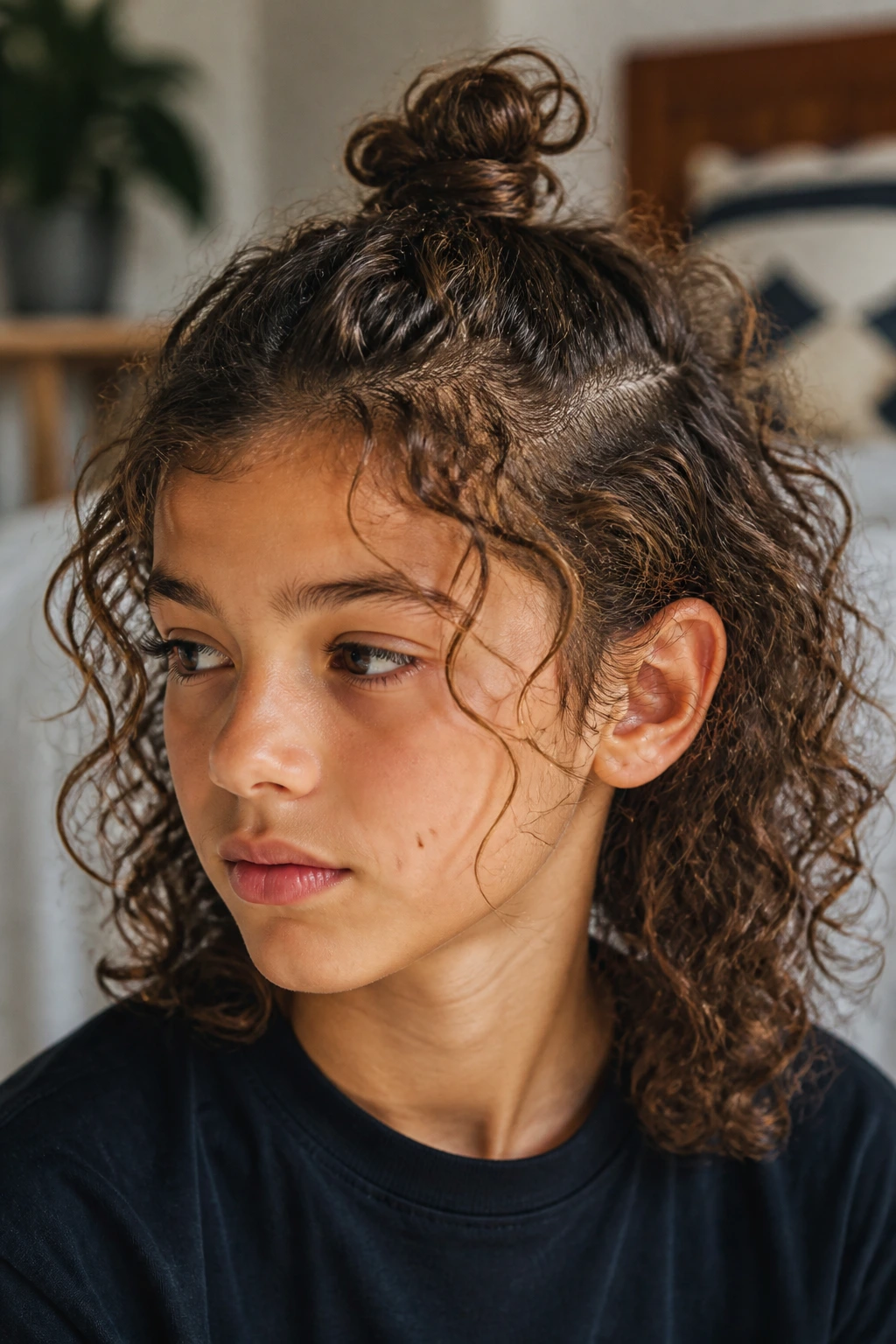
There’s a reason this one keeps showing up on kids with long curls. It clears the face, keeps the top from collapsing, and still shows off the length. The knot should sit high enough to look intentional, usually at the crown, but not so high that it turns into a tiny top loop with the rest hanging awkwardly below.
Use a soft elastic or a fabric band. Tight rubber bands snag curls and leave little bent spots that are hard to smooth out later. Gather the top half with your fingers instead of a brush so the curl clumps stay together. The loose ends below the knot should still have enough moisture to hold shape; if they’re dry and frizzy, the whole style starts looking tired by lunchtime.
4. Low Man Bun with Face-Framing Curls
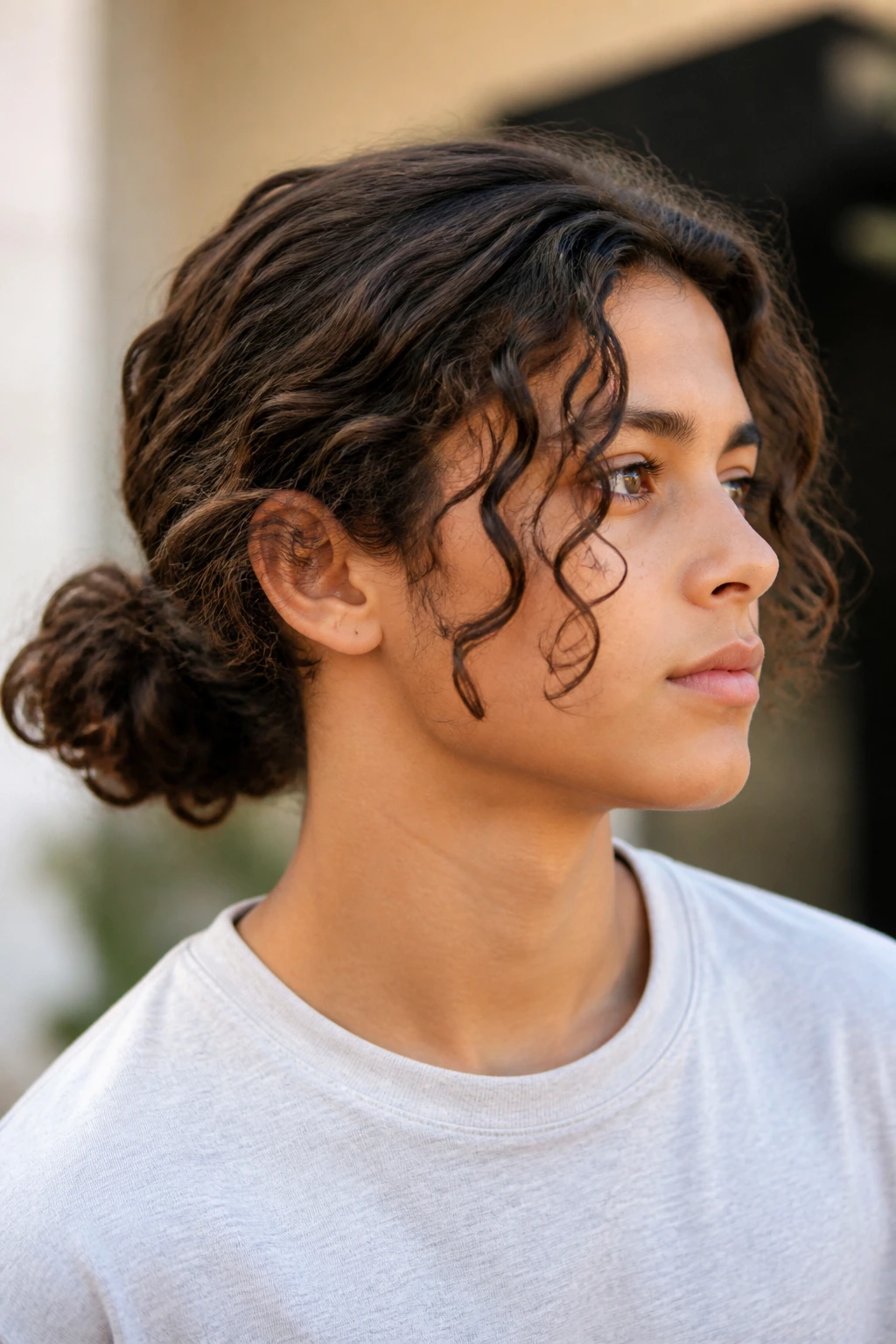
A low bun is the cleanest answer when the neck gets sweaty or the hair starts sticking to a hoodie collar. The bun sits at the nape, where it stays out of the way, while a few front curls can stay loose around the temples and ears. That little bit of softness keeps the style from feeling too severe.
The bun should be loose. If you pull it tight, you’ll flatten the curl pattern and create a headache before the day is halfway done. I like this style on boys who have enough length for a true wrap, not just a knot of squeezed hair. If the front pieces keep falling out, leave them out on purpose. That looks better than a bun that’s trying too hard.
5. Curly Curtains with a Soft Side Bend
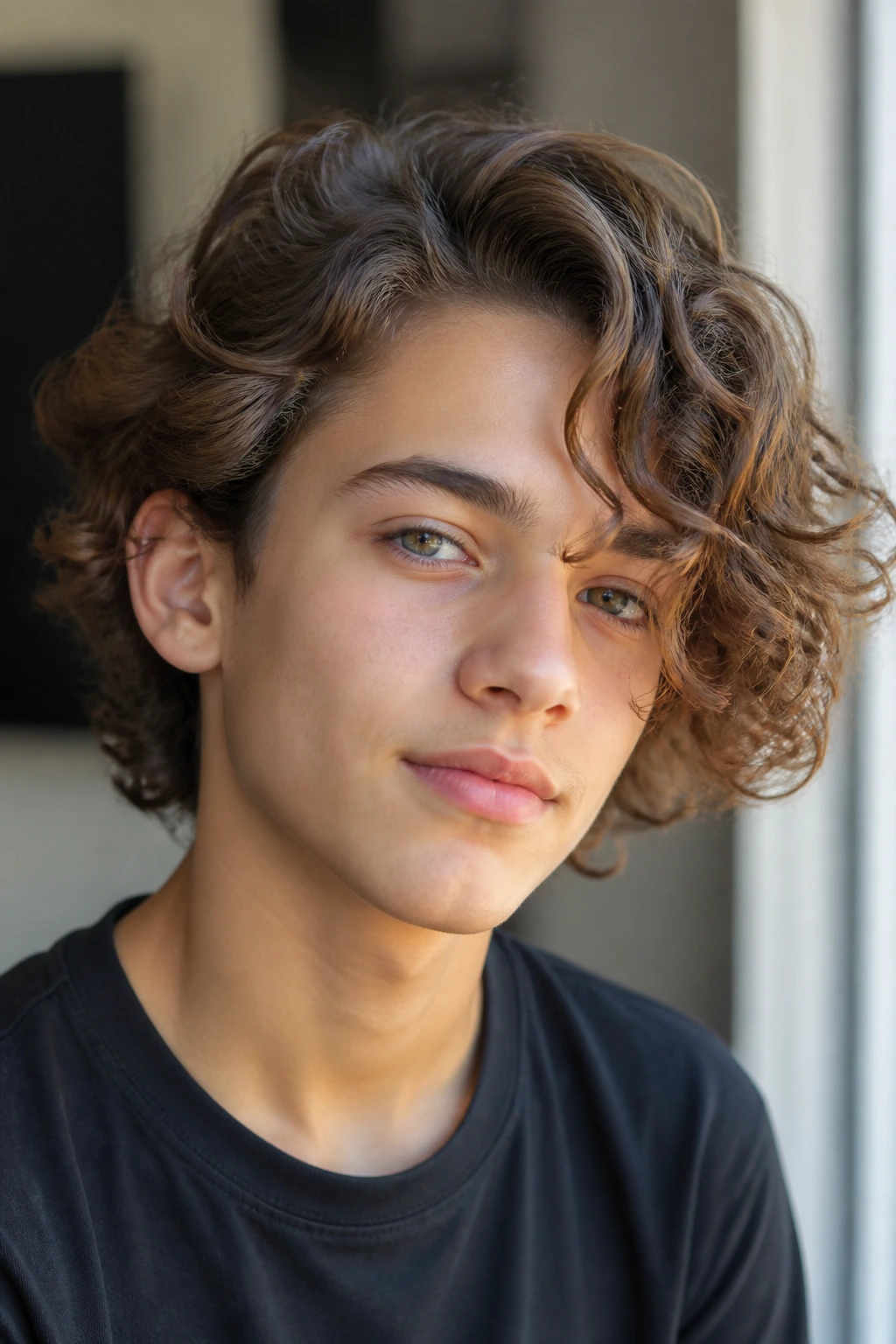
This is the cousin of a middle part, but with less rules. Instead of a hard split straight down the center, the curls fall with a small bend to one side so the front looks natural and a little looser. That bend helps if the crown has a stubborn cowlick or if the hair refuses to lie neatly on a dead-straight line.
Ask for long layers around the face and a little weight removal near the cheeks. Too much bulk up front makes curly curtains turn boxy fast. The whole point is movement. A mist of water, a little leave-in, and finger-combing are enough for most mornings. If the part drifts a bit, let it. Curly curtains look better when they seem to have happened on their own.
6. Layered Curly Shag
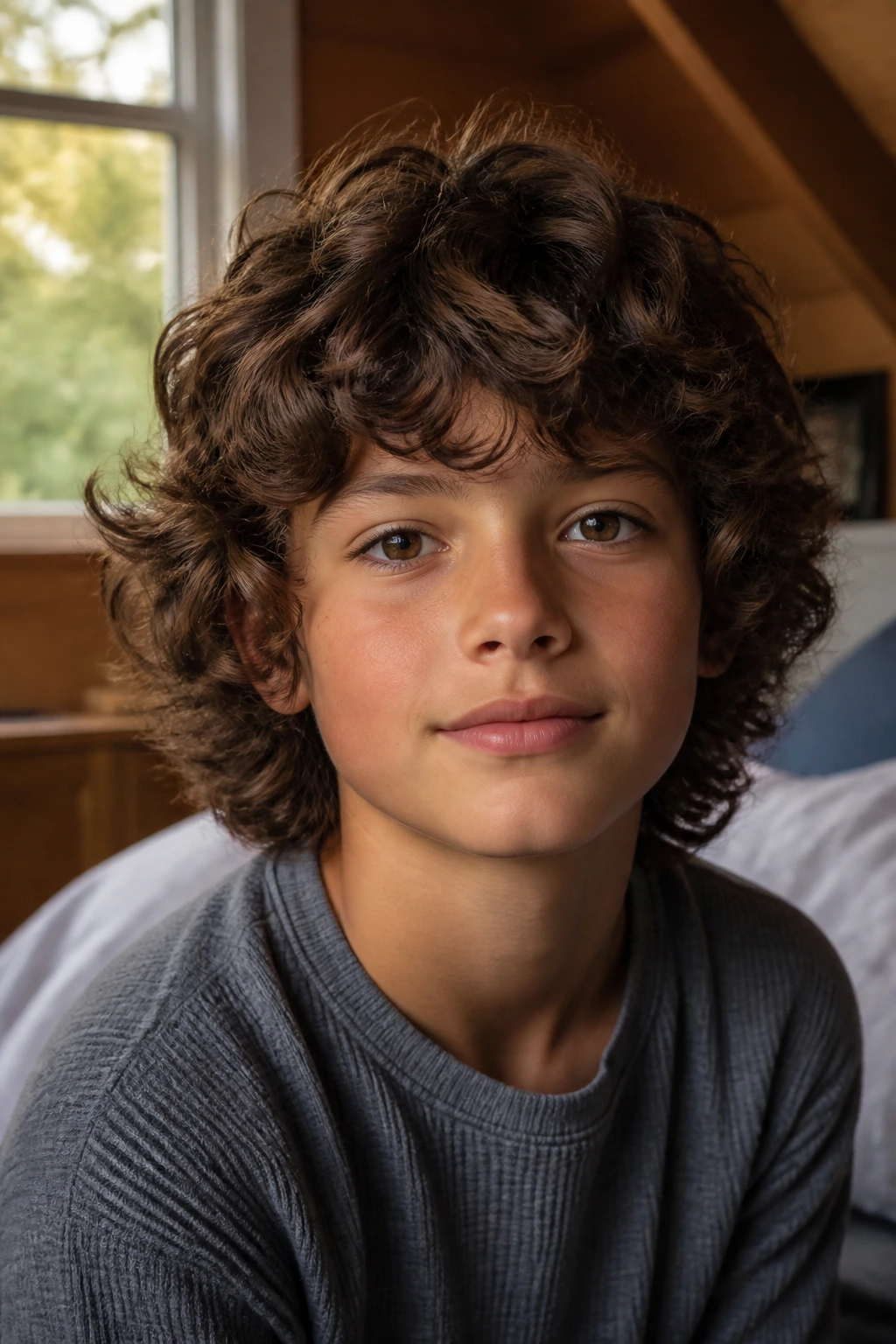
Thick curls need layers the way a good stew needs salt. Without them, the hair can balloon outward at the sides while the bottom drags down like a heavy curtain. A shag takes some of that weight away and turns the whole shape into something lively, airy, and far less triangular. It also gives the curls room to spring up instead of collapsing into one flat sheet.
This style shines when the hair has a lot of texture and not much patience. Air-drying works fine, though a diffuser on low heat helps if you want a bit more lift at the roots. I like a shag best when it looks slightly messy in a controlled way. If every curl is too perfect, the cut loses the charm. If the hair is too dry, though, the layers can separate and look ragged, so moisture matters here.
7. Side-Swept Long Curls with a Taper
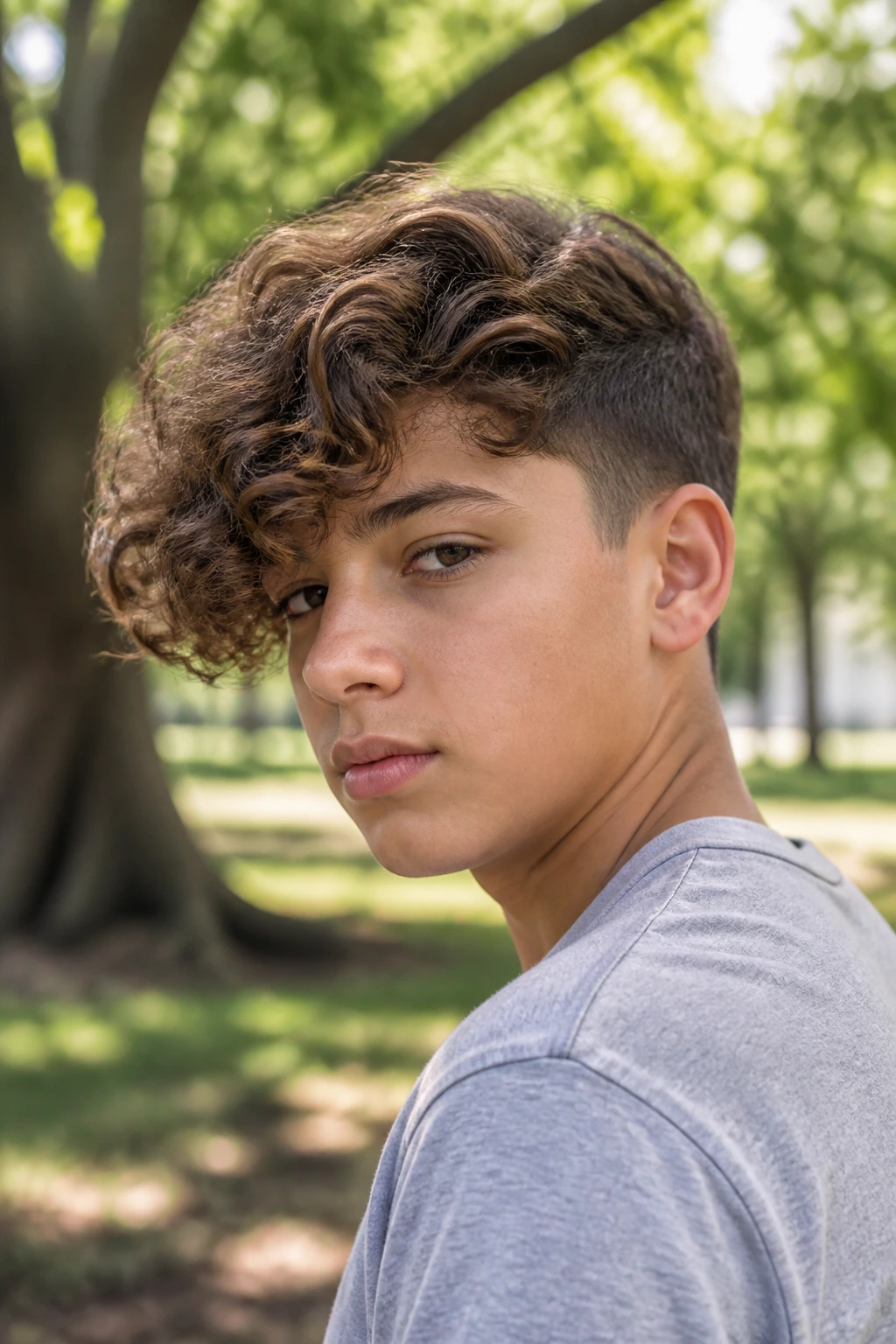
Side-swept curls solve a real problem: hair in the eyes without losing the length you spent months growing. The top stays long, the front gets brushed or finger-swept across the forehead, and the sides are cleaned up with a soft taper around the ears and neckline. That taper is what keeps the cut from turning into a mushroom.
This is a better choice than a hard part if the hair has a mind of its own. A soft sweep can be reset with wet hands in ten seconds, while a sharp line often falls apart once the curls dry. I like it on boys who want a neat look without looking overly styled. It reads tidy, but not stiff.
8. Pineapple Ponytail
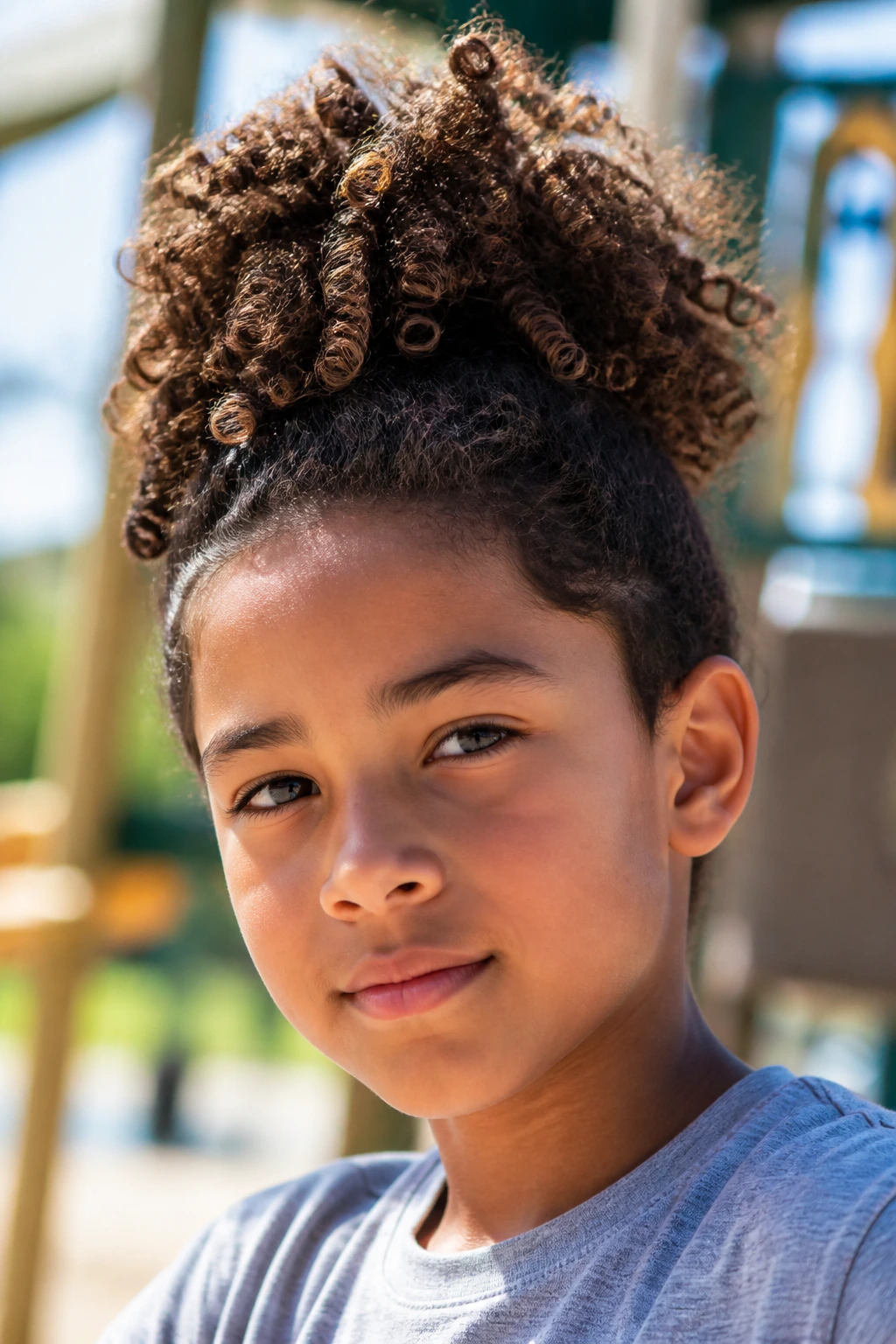
The pineapple ponytail is the easiest way to gather long curls without crushing them. Pull the hair high on the crown and let the ends fan outward so the curls sit up instead of being flattened into a tight bun. It’s a fast fix for hot days, rushed mornings, and second-day curls that need to be rescued from bedhead.
Use a satin scrunchie if you can. Tight elastics leave dents that take forever to disappear, and kids hate that tugging feeling anyway. The pony should be loose enough that the curls still have space to breathe. If the hair is especially heavy, this style works best for shorter stretches of the day, because a high pony can tug at the scalp after a while.
9. Twin Braids Down the Back
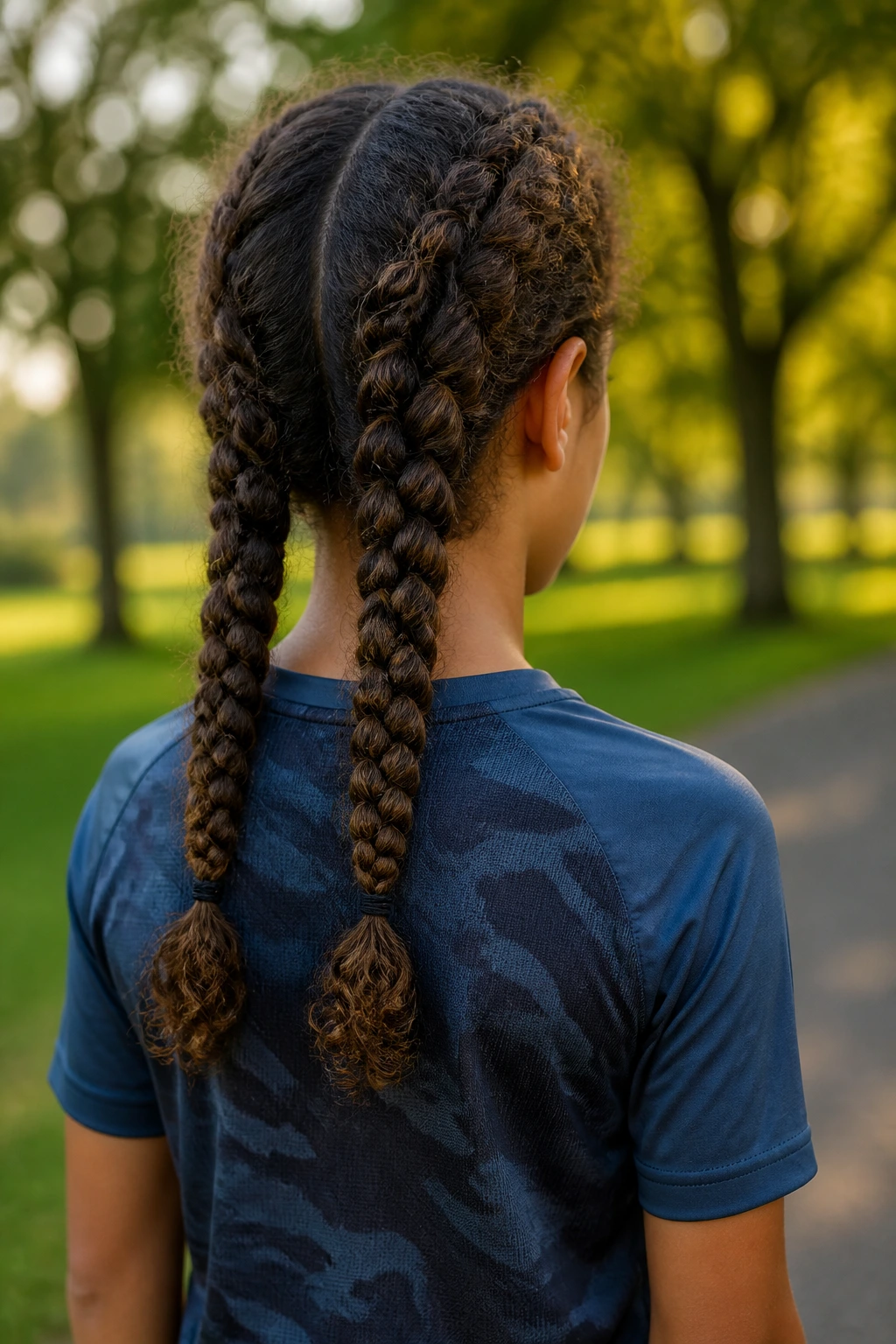
Two braids down the back turn long curls into a protective style that stays put through running, climbing, and every other thing that happens to a boy’s day. Split the hair cleanly down the center, then braid each side loosely enough that the scalp doesn’t feel stretched. Tight braids on curly hair are a bad trade. They look neat for an hour and then start pulling.
This style is especially useful if the hair tangles at the nape or gets matted behind the ears. A little leave-in conditioner before braiding helps the strands slide past each other instead of catching. You can keep the braids simple, or tie the ends with tiny soft bands. The look is clean, but it still leaves room for texture once the braids come out.
10. Crown Braid with Loose Curls
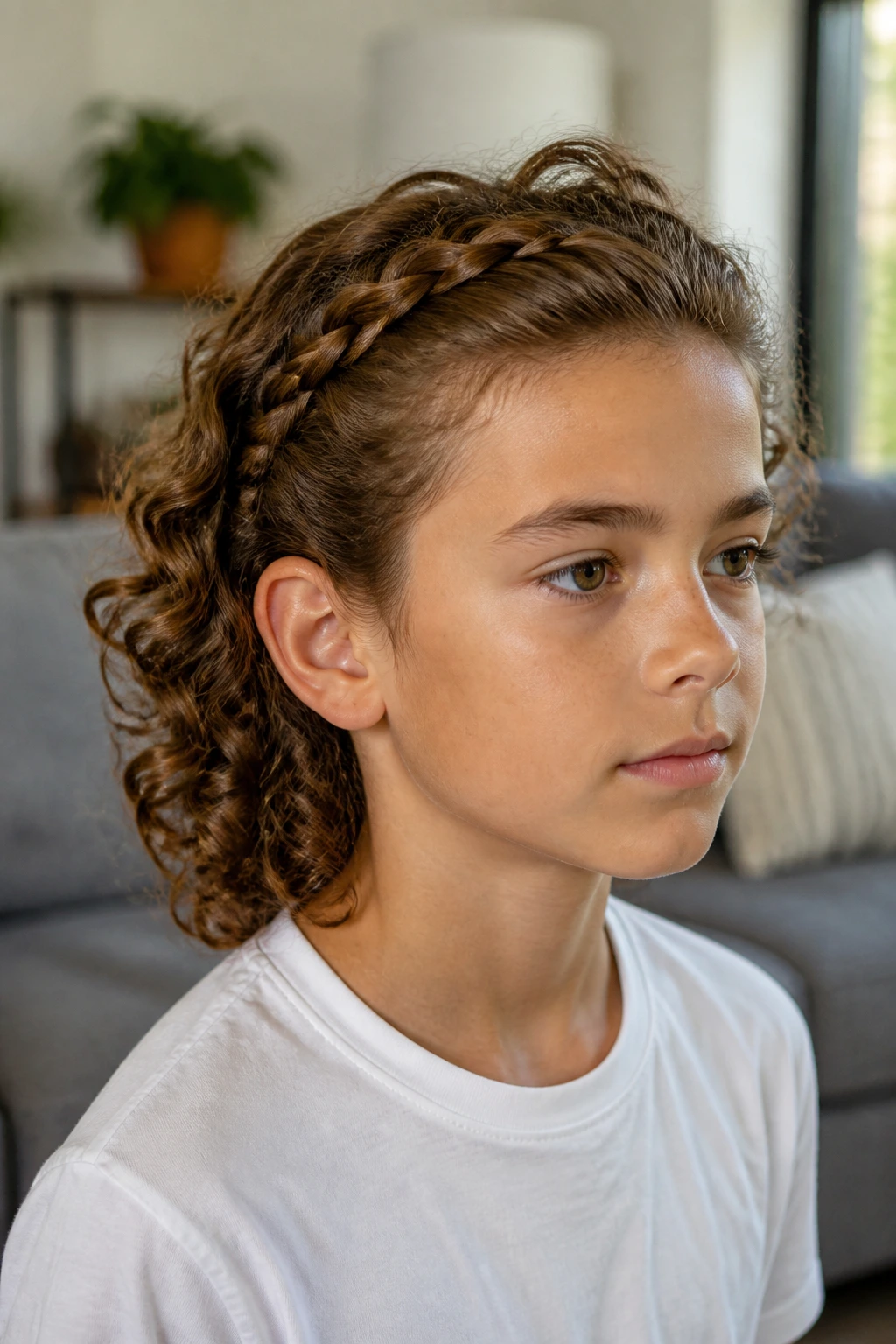
A crown braid keeps the front controlled while letting the back stay loose and curly. It’s one of those styles that looks fancier than the work it takes, which makes it a smart choice for picture day, family events, or any time the hair needs to stay off the face without disappearing into a bun.
The braid should travel along the hairline, not sit high up like a headband that’s trying to escape. If the front sections are too short, the braid gets patchy, so this style works best when the hair has enough length at the temples and around the ears. A few small pins can help anchor the braid, but don’t overdo it. Too many pins make the style feel heavy and fussy.
11. Curly Faux Hawk
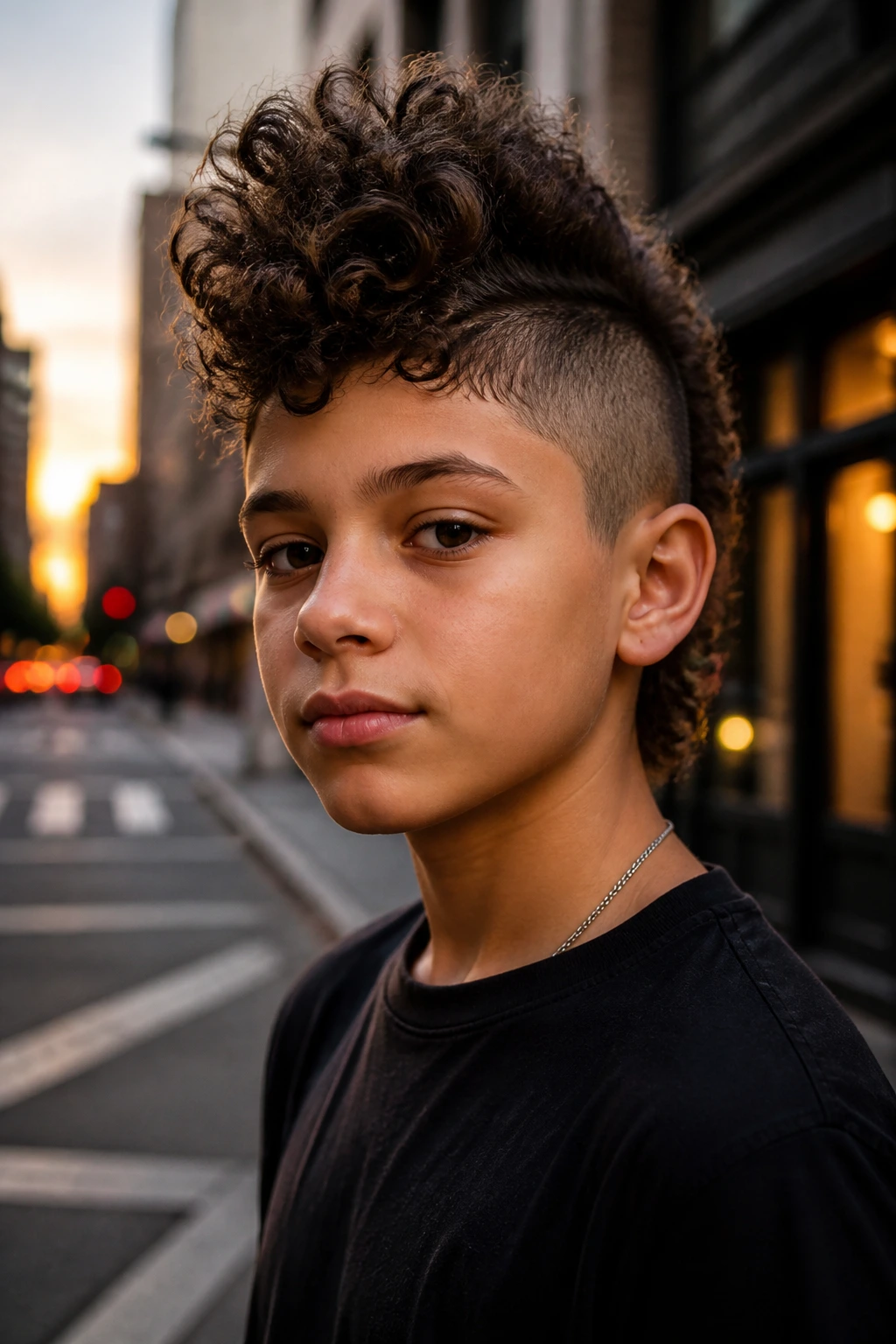
If the faux hawk is done right, it gives shape without shaving the sides into submission. The middle section stays long and lifted, while the sides are tapered down or tucked close so the curls stand out in one strong line from forehead to neckline. It’s a bold look, but not a wild one.
This style depends on the barber knowing where to remove bulk and where to leave weight. A curly faux hawk looks best when the center strip is wide enough to show the curl pattern, not so narrow that it looks like a strip of fluff. A little mousse or curl cream at the center helps the curls rise. The sides should stay neat, not flattened to the scalp like they’re being punished.
12. Messy Low Bun with Loose Tendrils
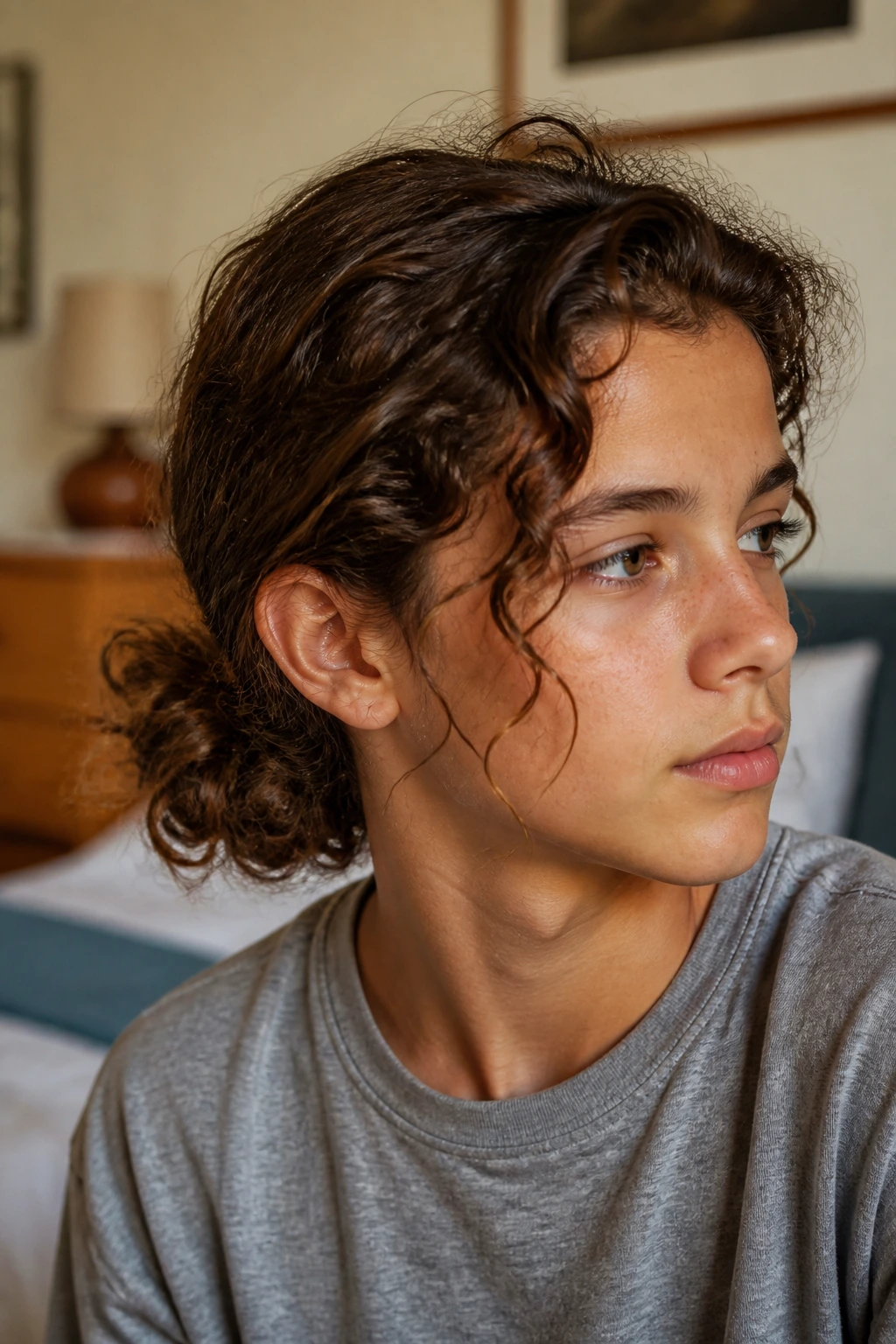
This is the laid-back version of the low bun, and I mean that in a good way. The bun sits low at the nape, but a couple of curls are left out near the temples and ears so the whole style feels softer. It works when the hair is on day two or three and needs to be contained without being slicked down.
The trick is to stop before the bun gets too tight or too polished. If the curls are wrapped over and over until every strand disappears, the style loses its shape and starts looking severe. A messy low bun should still show texture. The loose tendrils are not an accident either. They keep the cut from looking like a quick tie-back job done in a parking lot.
13. Rope-Twist Ponytail
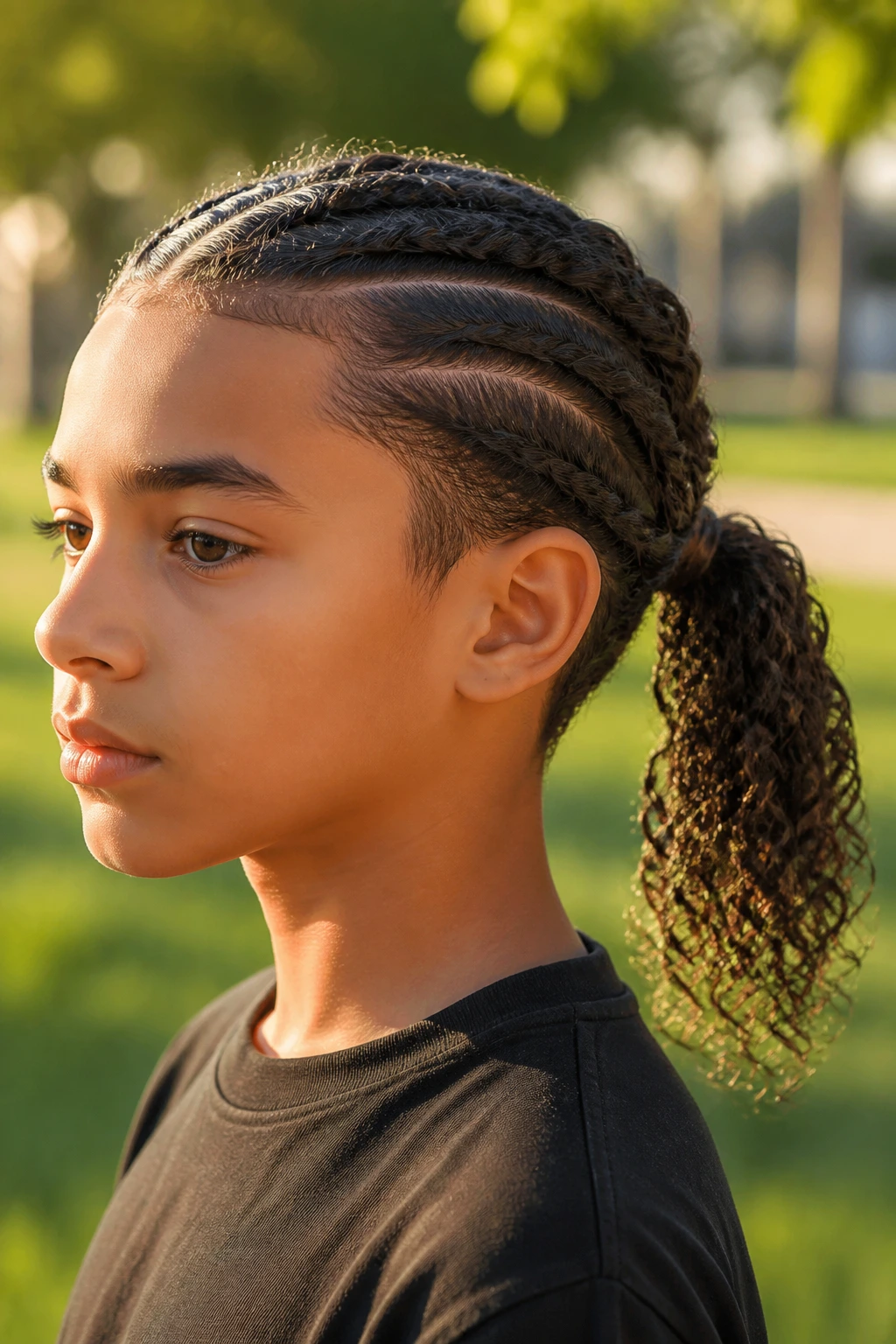
Rope twists are faster than braids and easier on the fingers, which is part of why they work so well for long curly hair. Split the hair into two sections, twist each section in one direction, then wrap them around each other in the opposite direction. That creates a neat rope shape that holds better than loose ponytail hair and feels less fussy than a full braid.
It’s a good choice when hair tangles fast or when the child dislikes the long braid process. The twist should be done on damp, conditioned hair so the strands stay smooth while you work. Once it’s tied at the end, the ponytail can hang low or high. I like it most when the ends are left a little loose instead of packed into a hard band.
14. Curly Mohawk with Tapered Sides
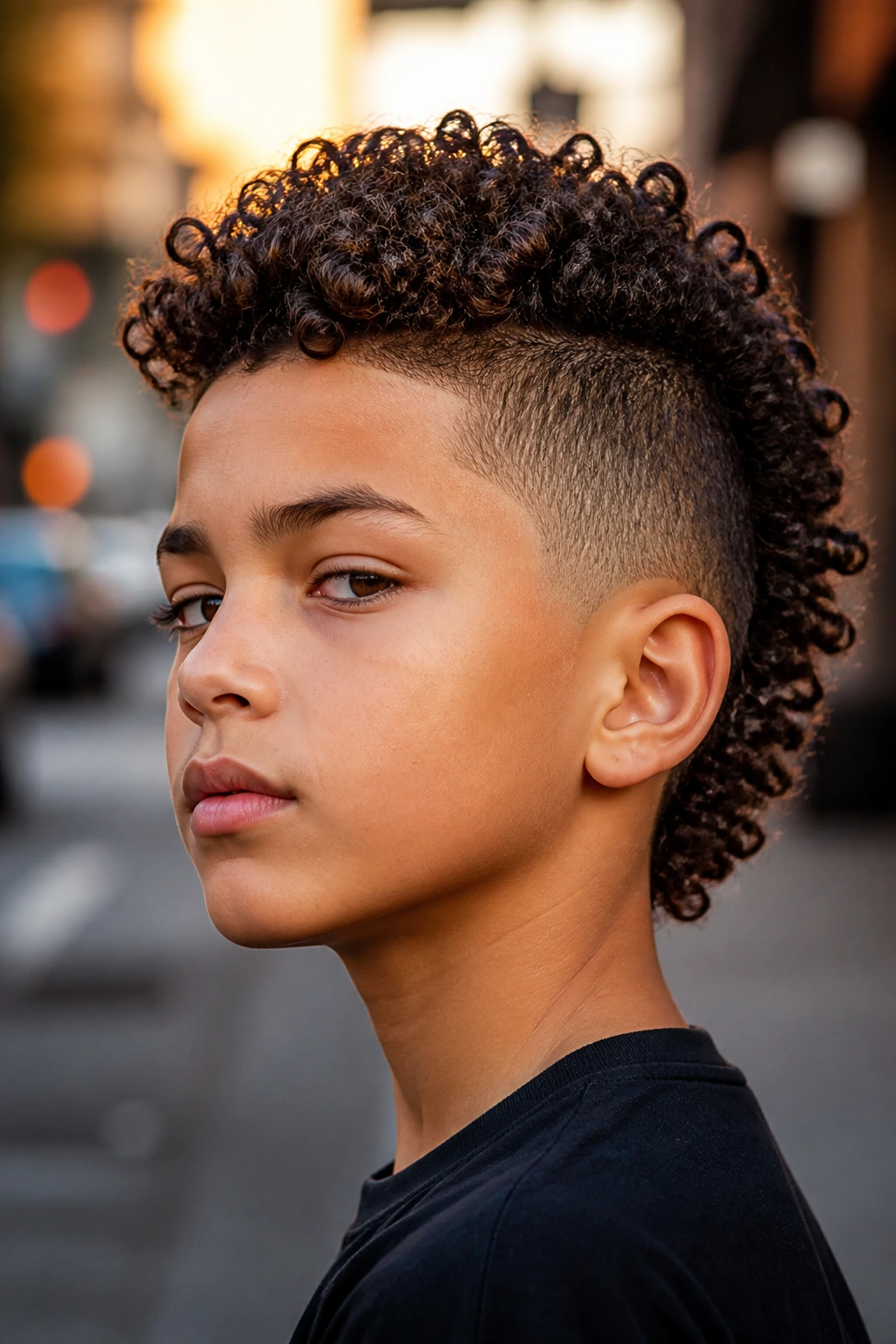
A curly mohawk has more edge than a faux hawk because the contrast is sharper. The sides are tapered tighter, and the curls in the center are left with more height and personality. On tight ringlets or dense coils, the center section can stand up on its own with a little product and a good cut.
This style needs maintenance around the temples and neckline, or the shape starts to blur. That doesn’t mean constant barber trips, just enough cleanup to keep the silhouette visible. I like it for boys who want a louder look without losing their curl pattern. It says something without requiring a lot of styling time each morning.
15. Chunky Two-Strand Twists
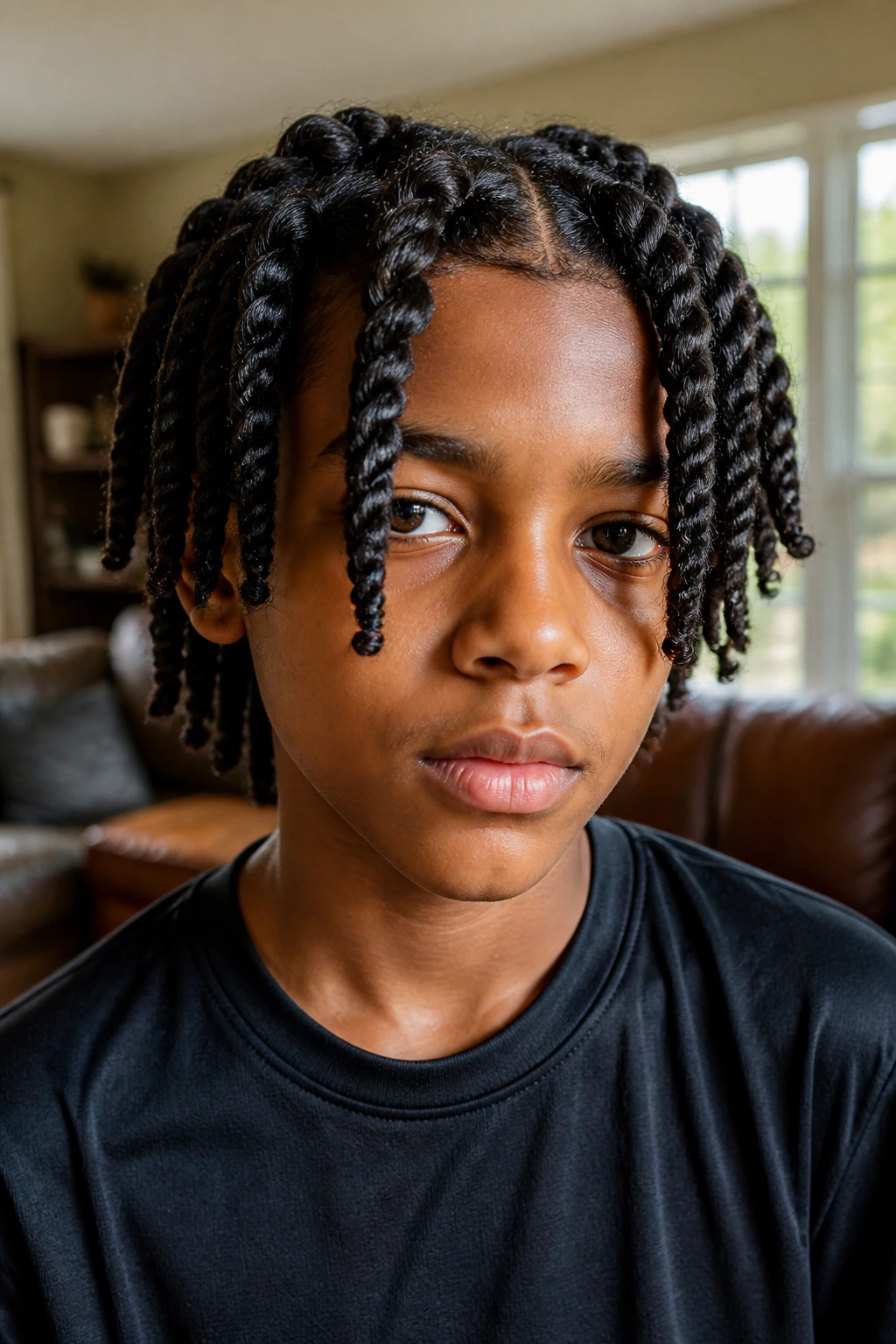
Two-strand twists are one of the best long-haired options when the goal is to protect the curls and still keep length on display. Each twist is made by dividing a section into two parts and wrapping them around one another until the rope holds. The finished look can hang loose, be tied back, or be worn under a cap without getting wrecked.
This style works especially well on damp hair with leave-in conditioner and a little styling cream. If the hair is too dry, the twists fray and pick up fuzz at the ends. Chunky twists last longer when the parts are clean and the tension is even from root to tip. They’re neat without being stiff, which is a hard balance to hit.
16. Freeform Locs with a Clean Line-Up
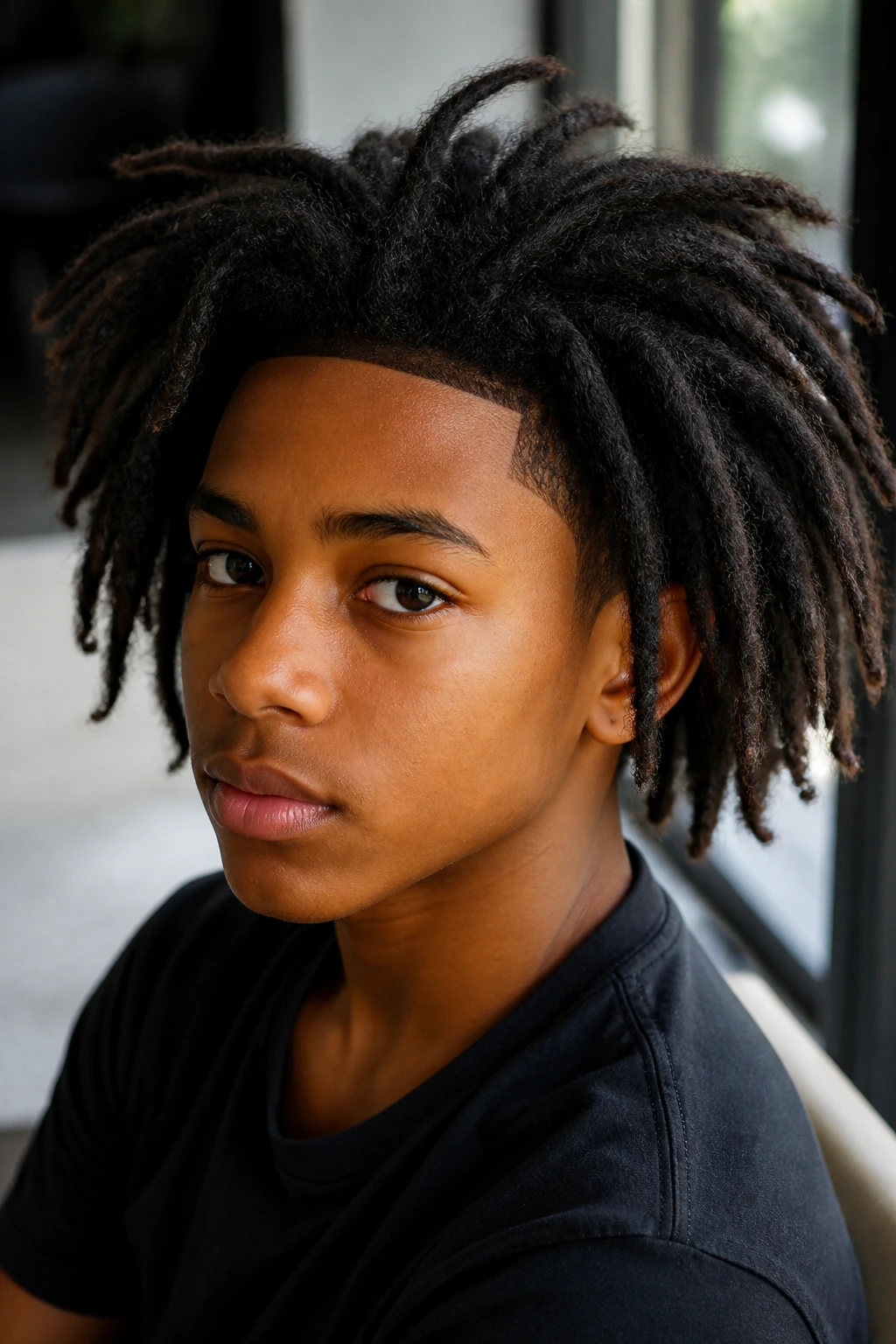
Freeform locs are not a quick style. They’re a long game. The hair is allowed to lock and shape over time, which means the texture does most of the work. A clean line-up at the edges keeps the style from drifting into shapelessness, and that contrast is part of the appeal.
The important thing here is patience and a light hand. Heavy combing or tight pulling works against the locking process, and kids’ scalps do not appreciate rough treatment. Keep the scalp clean, moisturized, and separated enough that the roots don’t mat into one giant patch. This style has presence, but it asks for restraint. That’s the whole point.
17. Box Braids with Curly Ends
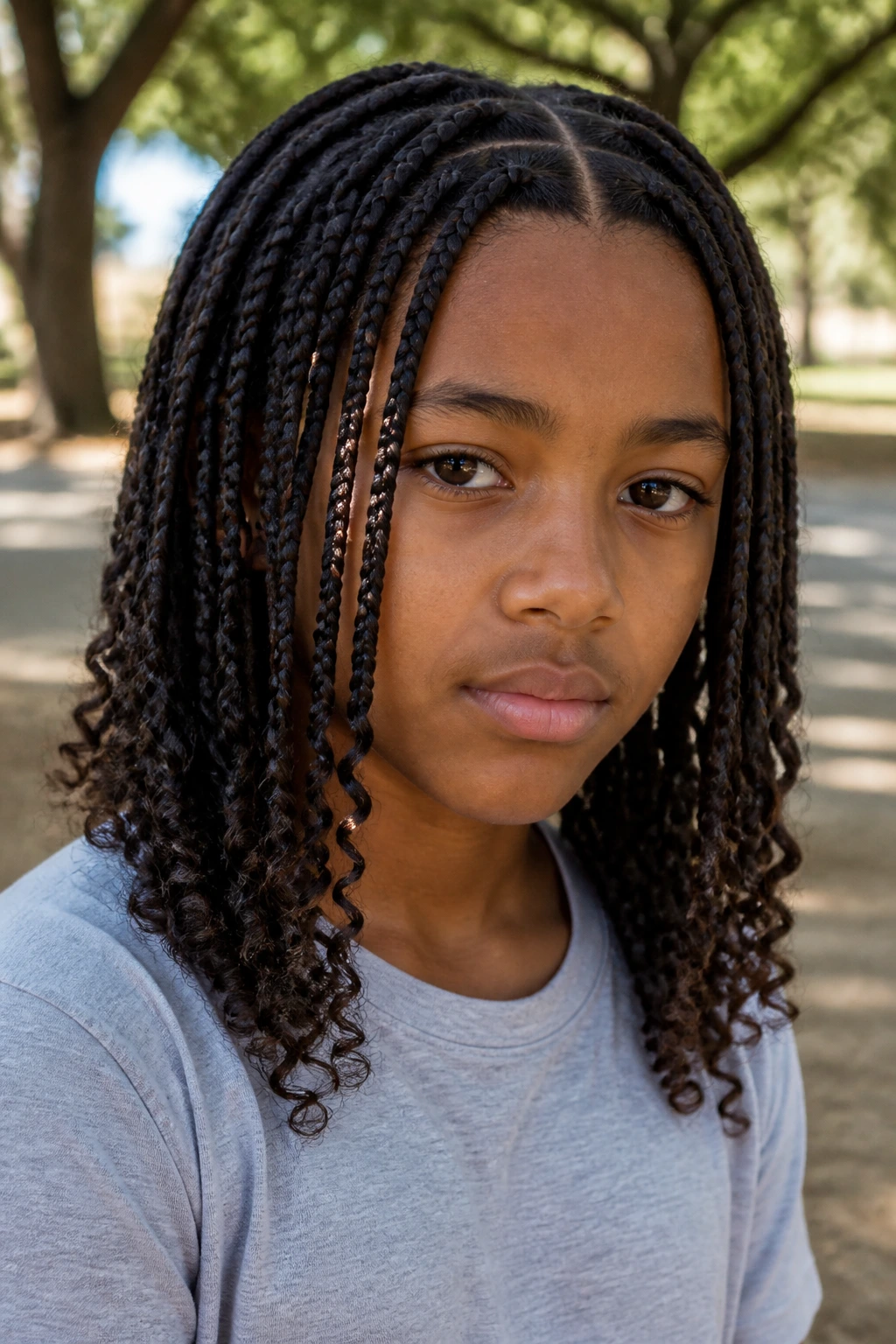
Box braids are the protective style I reach for when the hair needs to stay contained for more than one day. The sections are squared off, the braids fall cleanly, and the curly ends keep the look from becoming too rigid or severe. That curl at the bottom gives the whole style movement, which matters more than people realize.
Ask for medium-sized parts and avoid tight tension at the hairline. If the braids pull at the forehead, the style is wrong even if it looks neat in the chair. Box braids also make mornings easier because the hair is already arranged. A little scalp oil at the base and a satin covering at night help the style last without turning dusty or frizzy.
18. Cornrows into a Back Ponytail
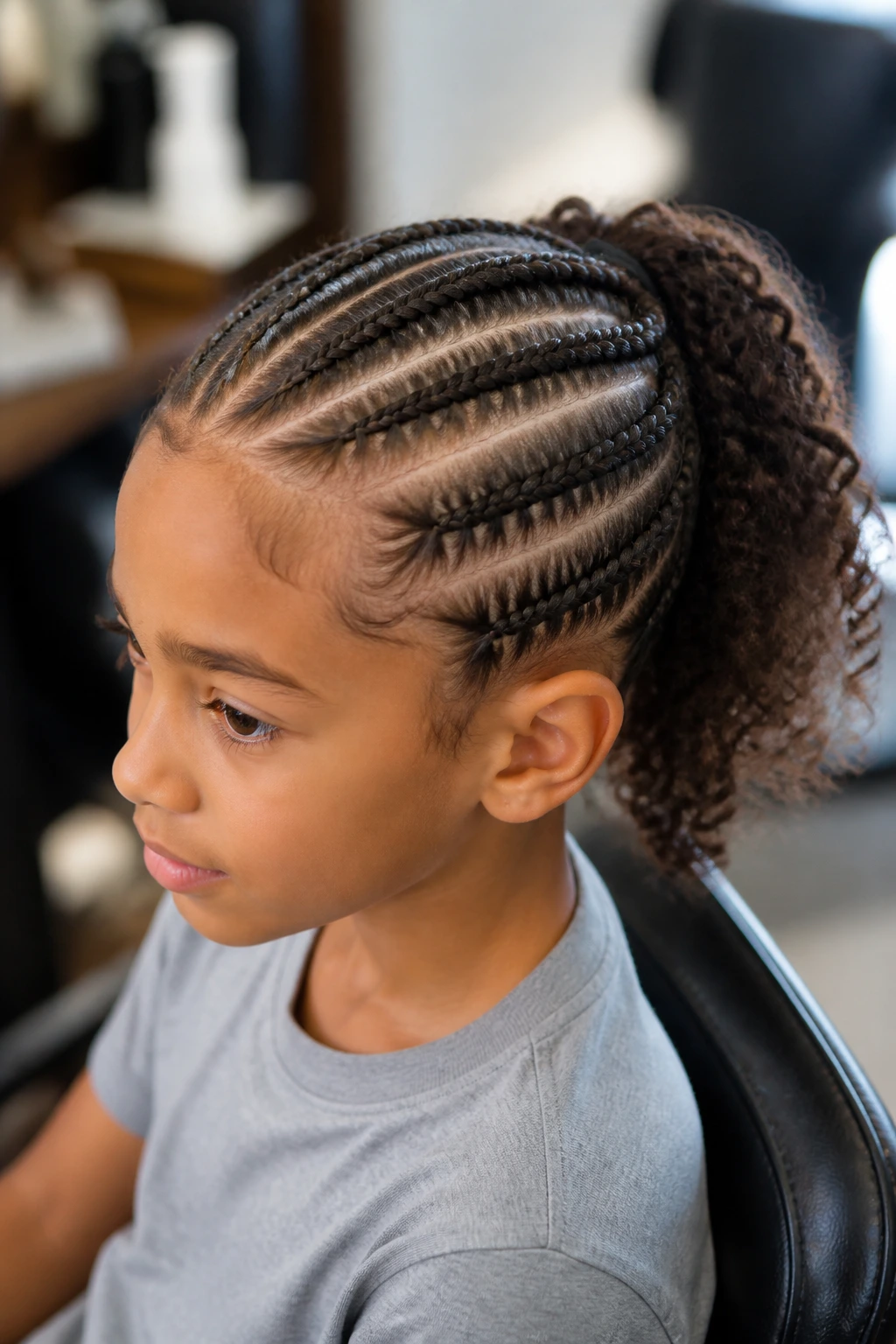
Cornrows feeding into a ponytail are a good answer when hair needs to stay close to the head. The braids keep the front and sides controlled, and the ponytail at the back leaves enough length to show off the curls or twists that follow. It’s tidy without looking flat, which is a better result than most people expect.
The braids should feel snug, not sharp. If the scalp is sore after the style is finished, it’s too tight. This matters a lot on kids, whose hairlines are more sensitive than adults sometimes assume. Once the cornrows are in, the ponytail can be left curly, twisted, or braided further down. It’s a strong style for active kids who still want some length on display.
19. Choppy Wolf Cut with a Long Neckline
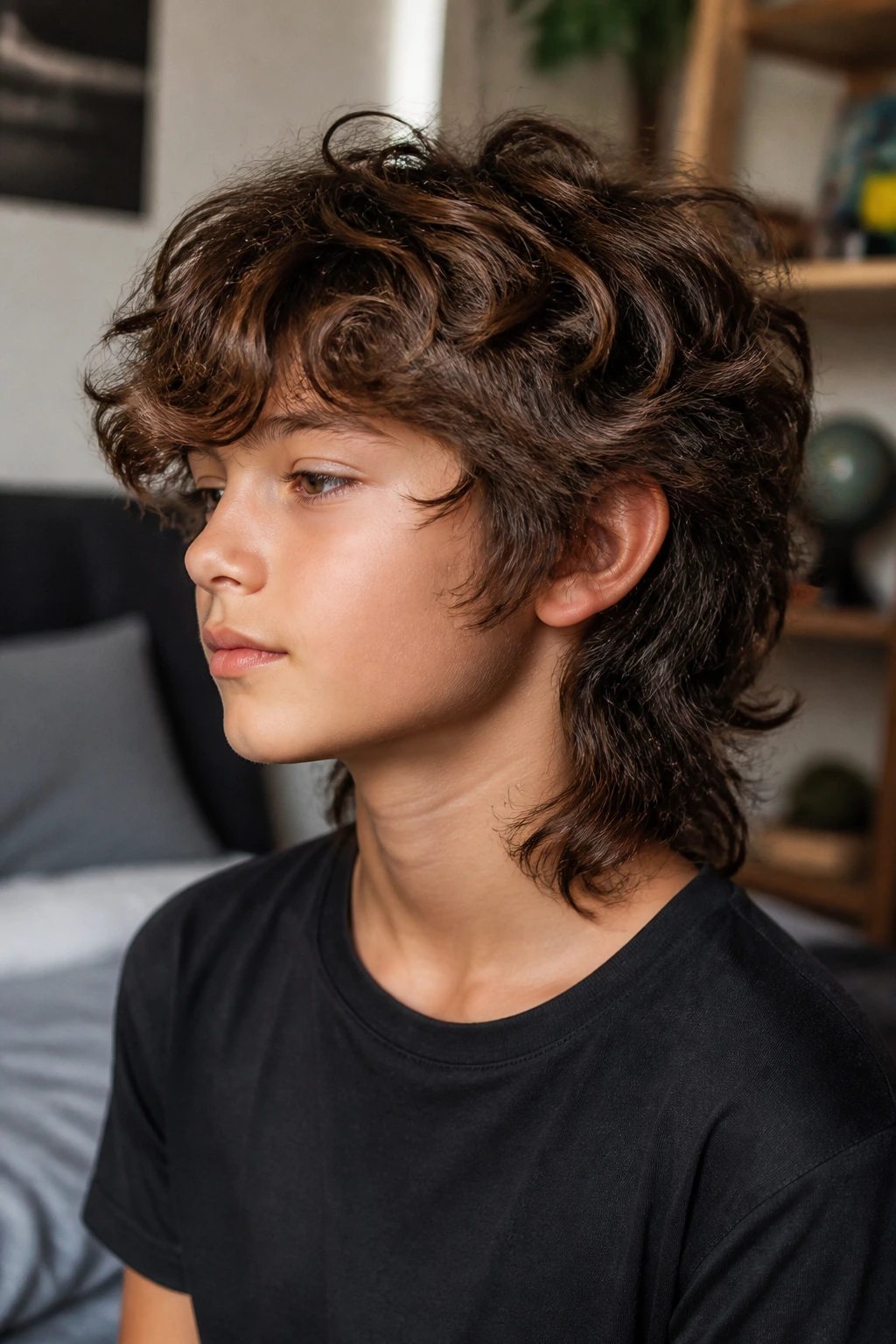
The choppy wolf cut works because it removes weight in the right places and leaves enough length at the back to keep the curls interesting. The crown sits a little shorter, the layers are uneven on purpose, and the neckline stays longer so the hair doesn’t collapse into a block. It’s a messy shape, but not a careless one.
This style is best on hair that has real volume. Thin curls can disappear in a wolf cut if too much weight comes out. On thicker textures, though, the cut gives the curls room to move and keeps them from sitting like a helmet. It’s one of the few long curly styles that still looks decent when the day gets rough.
20. Rounded Long Afro
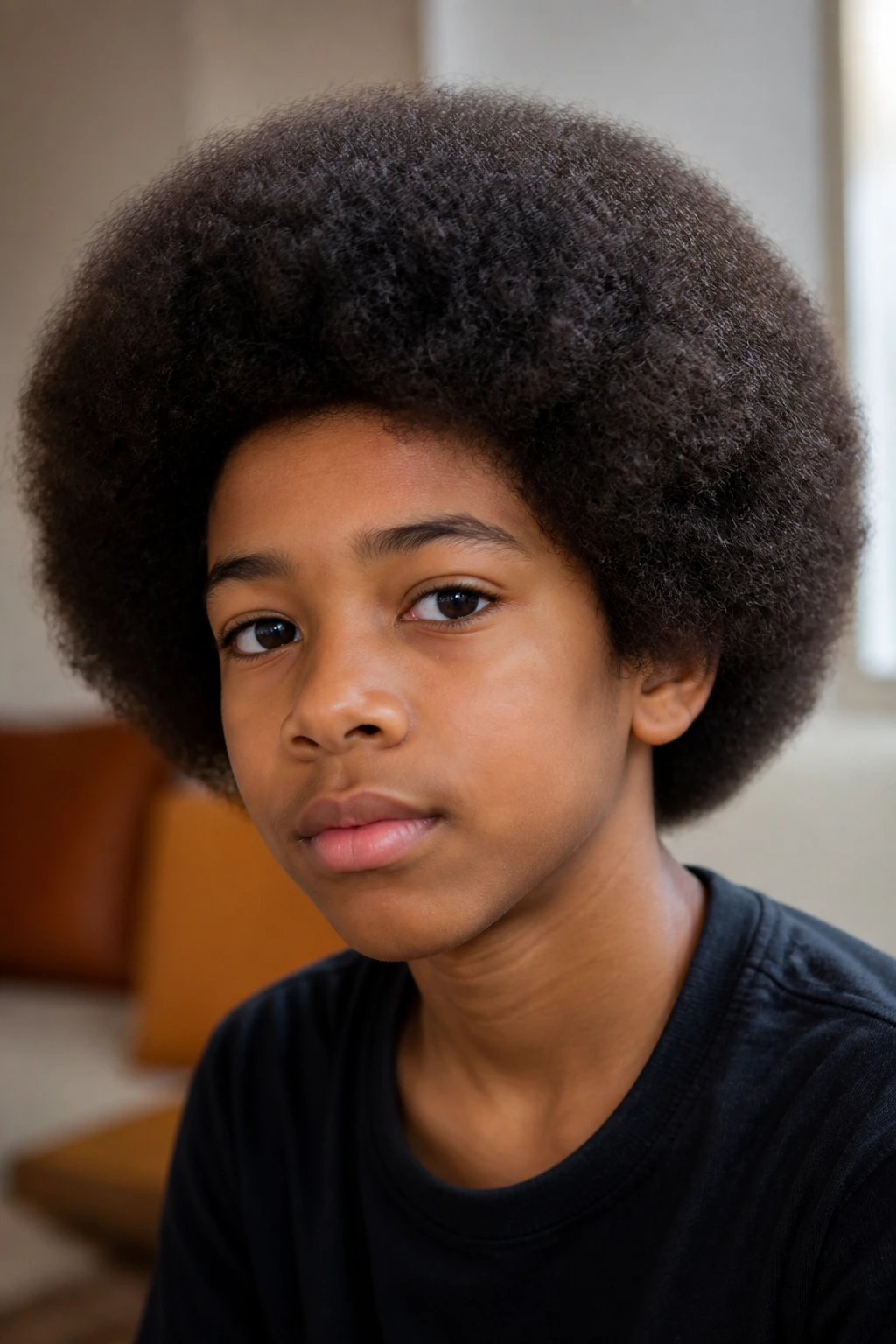
A rounded long afro is all about shape control. The goal is not just length; it’s balance. The outline should stay soft and even around the forehead, sides, and back so the hair looks full without turning boxy. On coily textures, this is one of the strongest long looks because the shape does the heavy lifting.
Moisture matters here more than almost anywhere else on the list. A dry afro expands in the wrong direction and starts to lose its outline. A good leave-in and a little oil on the ends help keep the shape from getting dusty. Regular shaping trims matter too. Not every trim needs a big cut, but the silhouette should be refreshed before it starts leaning one way.
21. Side Part with One Braided Accent
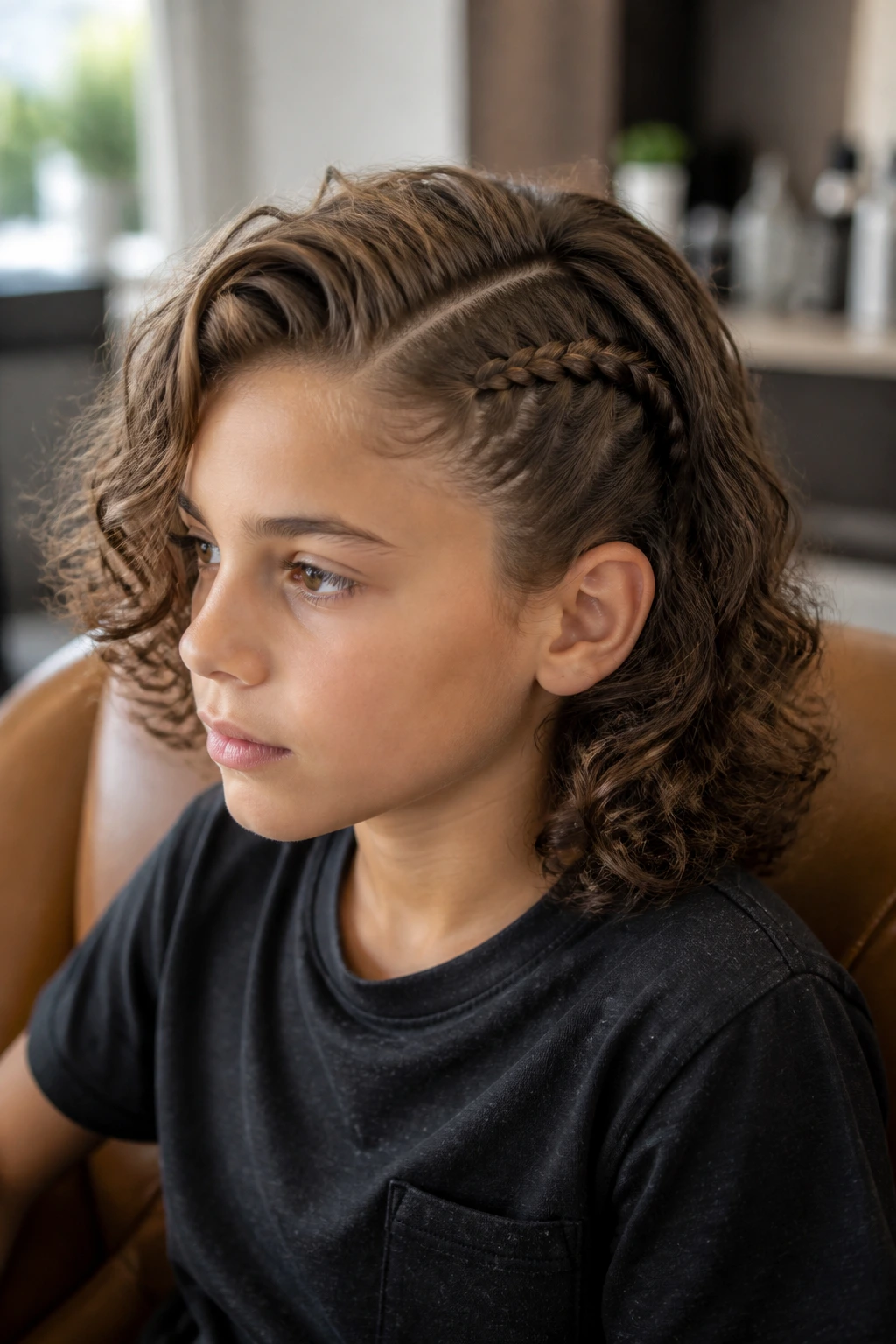
This is the style for a kid who wants one interesting detail, not a full head of braids. Keep most of the hair loose and curly, then add a single braid along one side or at the temple. That braid keeps hair out of the face and gives the style a finished look without taking away the texture that makes long curls fun to wear.
It’s also a smart compromise when everyone in the chair wants something different. The curl pattern stays visible, the braid adds control, and the whole thing can be changed out fast when it’s time for a different look. If the side part isn’t perfectly straight, don’t chase perfection. On curly hair, a little imperfection reads as normal.
22. High Puff with Hanging Curls
A high puff is one of the fastest ways to get long curly hair up and off the neck without flattening everything. The hair is gathered high on the crown, and the texture is left full instead of stretched smooth. On longer hair, some curls may spill out or hang down, which is part of the look and not a mistake.
Use a soft band that won’t dig into the scalp. A puff should feel secure, not tight. This style works especially well on coily hair that naturally wants to gather upward. It’s practical for active days, but it still reads like a style rather than a survival move. That’s a nice line to hit.
23. Wet-Look Defined Curls
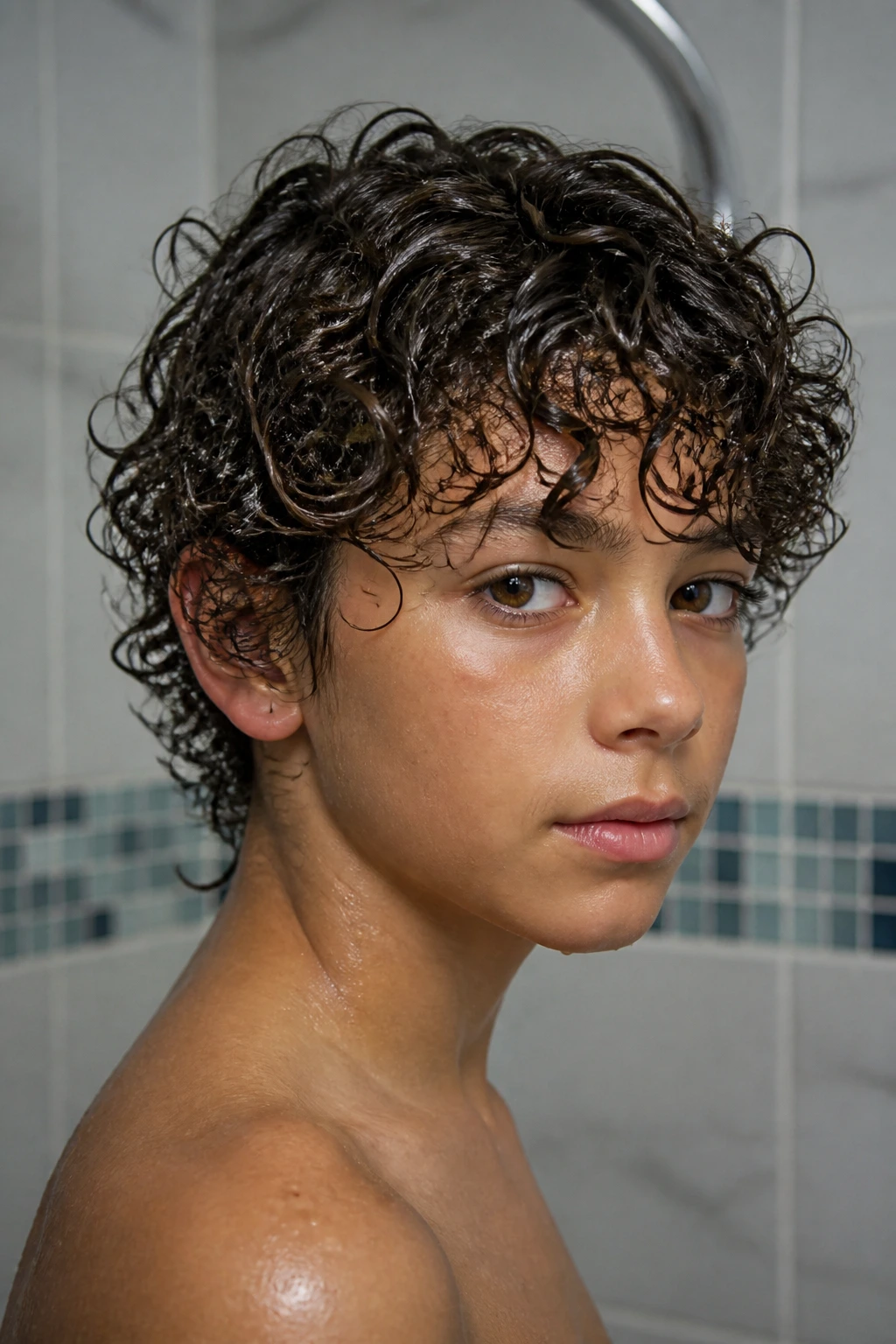
Wet-look curls are all about definition. The hair is styled while soaking wet with leave-in conditioner and gel, then left alone so the curls dry into crisp clumps. When this works, the curl pattern looks clean, separated, and rich without needing much else. It’s one of the neatest ways to wear long curls on a day when you want control.
The mistake people make is touching it too much while it dries. That breaks the clumps and creates fluff right where you wanted shine. Once the hair is dry, the cast from the gel can be scrunched out for a softer finish. If the hair feels crunchy and stiff from root to ends, too much product went in. A little restraint goes a long way here.
24. Surfer Curls with Air-Dried Volume
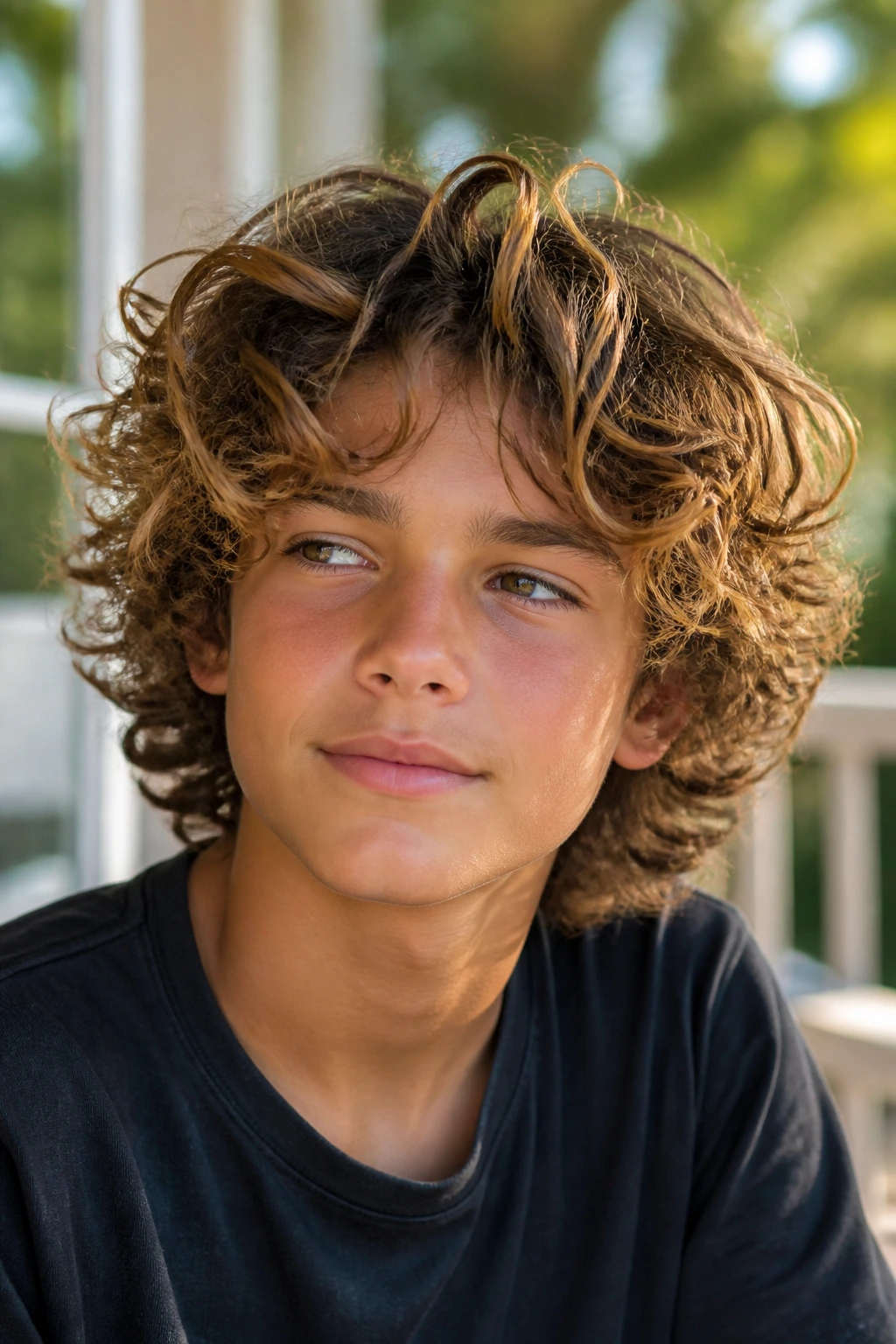
Surfer curls are the easygoing version of long curly hair. The hair is left loose, lightly conditioned, and air-dried so the texture stays soft and touchable. The shape isn’t polished, but it shouldn’t look neglected either. The trick is to keep the ends hydrated and let the curl pattern do the rest.
This style works best on looser curls and waves that don’t need heavy control. If the hair gets too much cream, it can slump. Too little, and the frizz takes over. I like this look when the goal is movement and a little mess, not a crisp outline. It’s one of the few styles here that can look better after a bit of natural chaos.
25. Half-Braided, Half-Down Style
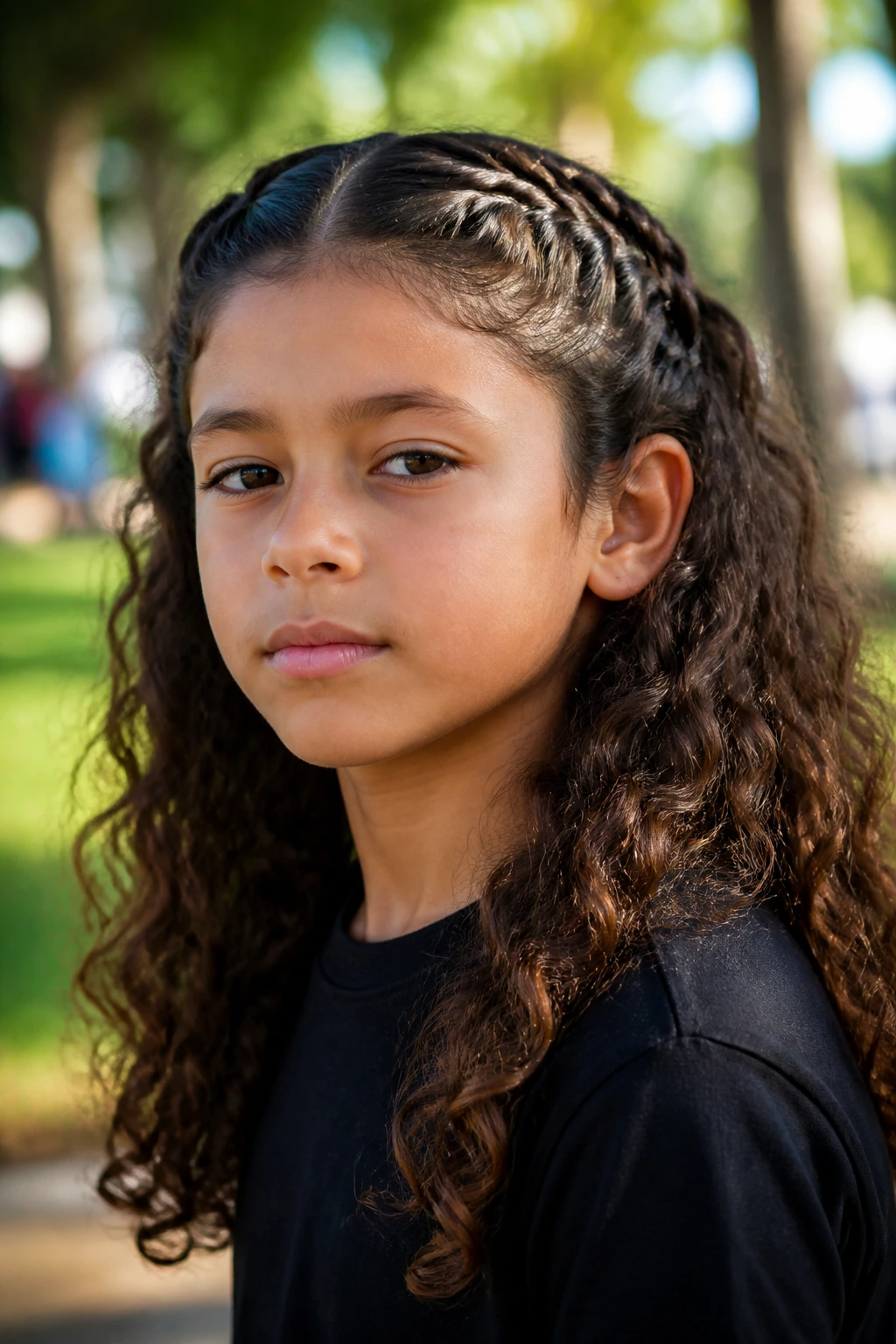
Half-braided styles are useful because they split the job in two. The top or sides get braided for control, while the rest of the hair stays loose so the curls still show. That makes this a good choice for boys who want structure without giving up the length they’ve been growing.
You can keep it simple with one braid on each side, or add a few narrow braids through the front and leave the back open. It works well when the hair is long enough to braid but not long enough for every braid idea to land cleanly. The braid sections should be secure and even, while the loose section should be hydrated enough to keep its shape.
26. Flipped-Out Layers with Soft Ends
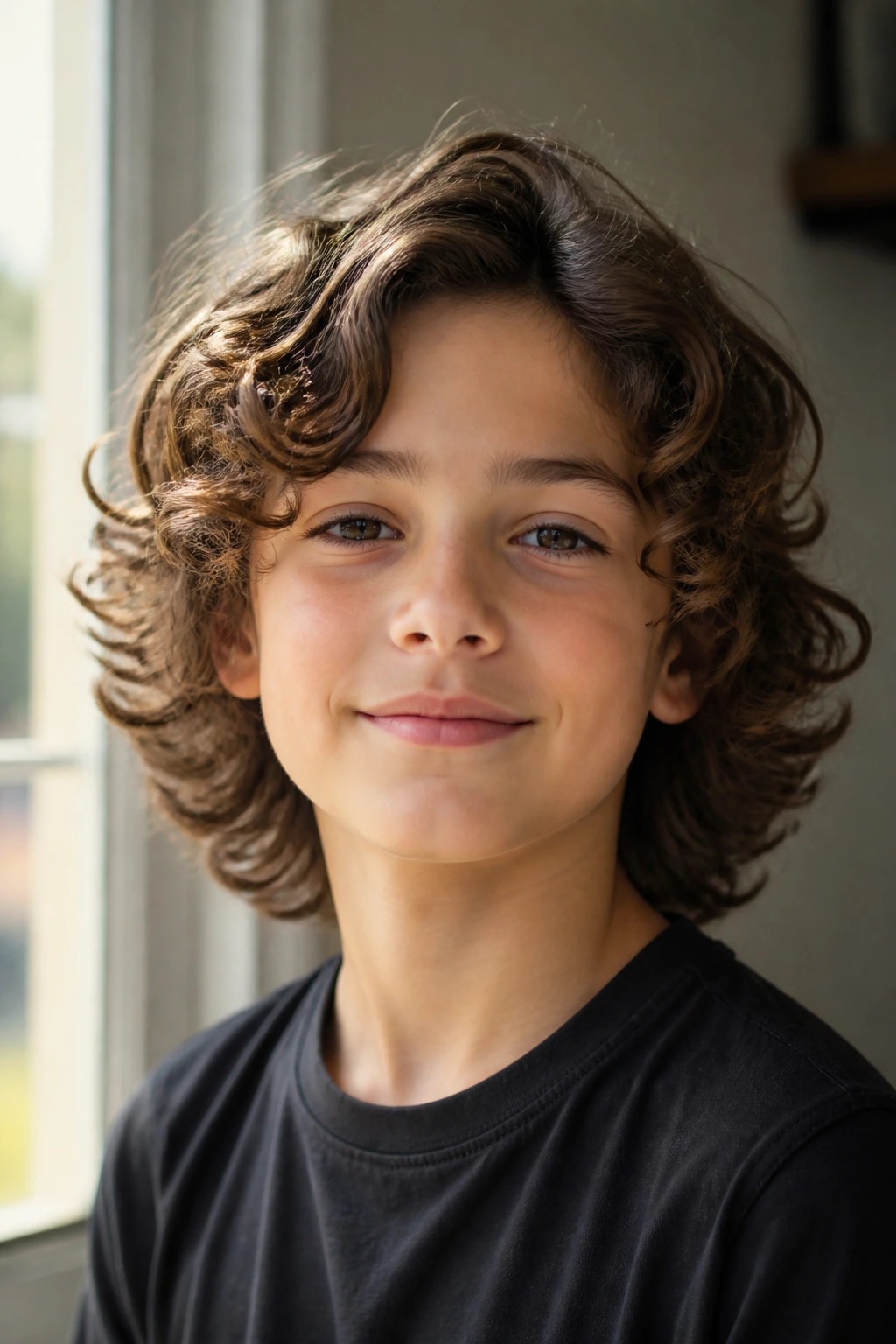
Flipped-out layers are a small detail that changes the whole silhouette. Instead of letting the ends curl under or hang straight, the last inch or two are encouraged to flip outward, which gives the hair a little motion at the bottom. On shoulder-length curls, that can keep the cut from looking too heavy.
This works best on layered cuts, not one-length hair. The layers give the ends room to move, while a diffuser or finger-twisting at the ends helps set the direction. I like this look when the hair is long enough to touch the shoulders but still needs some shape at the bottom. It feels relaxed, not overdone.
27. Loose Top Knot with Free Ends
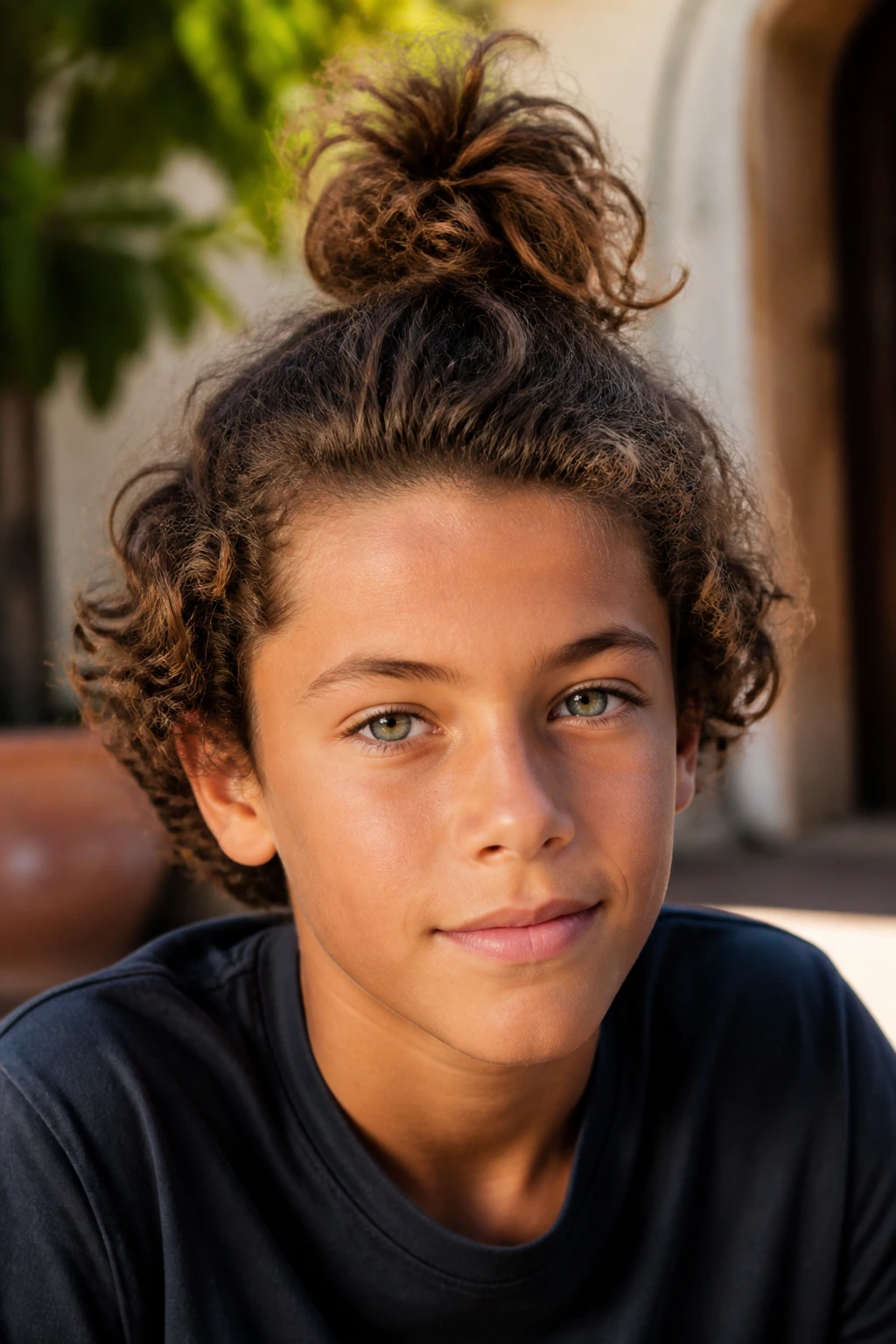
A loose top knot is the final answer for days when the hair just needs to be out of the way. Gather the curls high, twist once or twice, and stop before the knot gets hard and compressed. Leave a few ends peeking out so the style keeps some texture and doesn’t turn into a tight little ball on top.
This one is useful on long days, warm days, or days when the curls need a break from being touched. If the hair is heavy, a second band lower down can help keep the knot from slipping. What makes this style work is the looseness. Pull it too tight and it loses the easy shape that makes it useful in the first place.
Why Long Curly Hair Needs Shape, Not Just Length
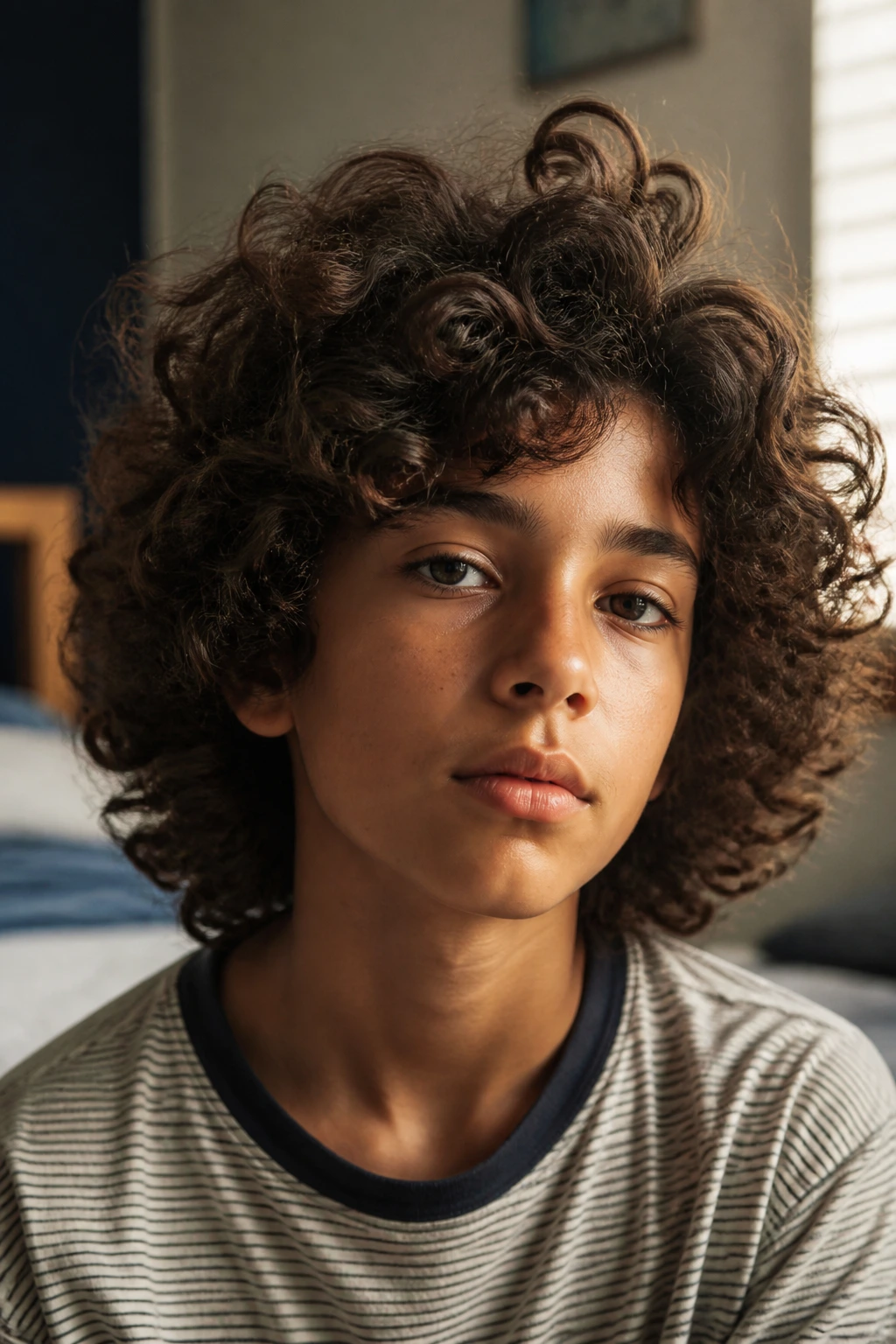
Long curly hair looks best when the cut takes the curl pattern seriously. That sounds obvious, but a lot of bad haircuts ignore it. A curl that hangs to the chin when wet might spring up several inches once it dries, and the weight at the bottom can either help the shape or wreck it. That’s why layers matter so much. They stop the hair from building a broad triangle around the head.
The other thing people miss is that curl size changes how the style sits. Loose curls need different handling than tight coils, and a heavy, blunt shape can make both look clumsy. A good cut removes bulk where the hair balloons, then leaves enough length where the curls need to fall. That balance is what makes the style look easy.
Moisture is part of the shape too. Dry curls frizz outward, and that changes the outline in a way a comb can’t fix. Leave-in conditioner, a light gel, and a satin pillowcase do more useful work than most people think. The hair does not need to be soaked in product. It needs to be kept soft enough that the curl clumps stay together.
A boy with long curls usually does better with a style that can survive being imperfect. That’s the real test. If the hair still looks decent after a hoodie, a nap, and one bad attempt at finger-combing, the style is doing its job.
The Barber Chair Cheat Sheet for Boys With Curls
-
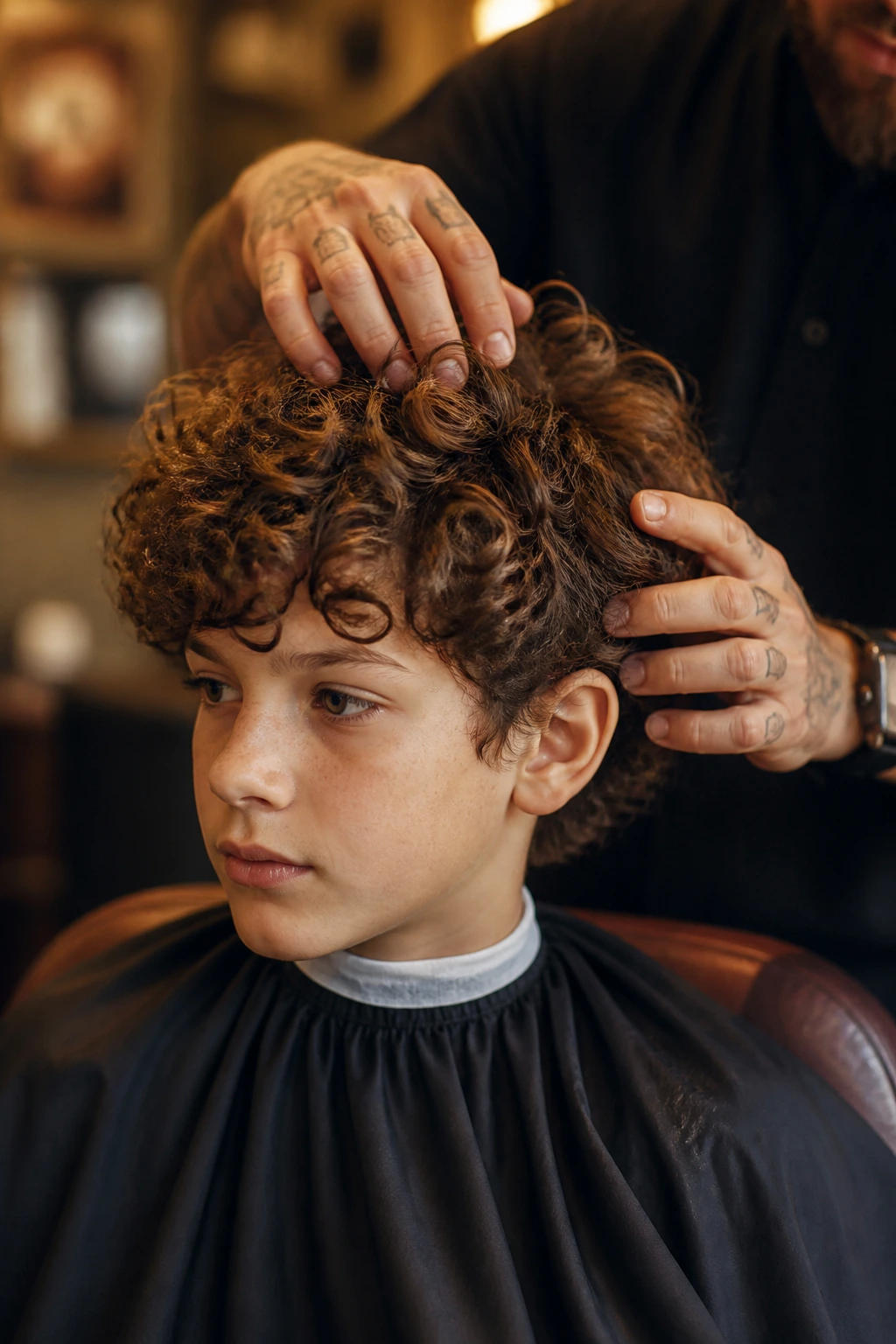
Ask for layers, not a blunt line. A blunt cut on long curls often creates that wide triangle shape nobody wants.
-
Keep the sides controlled, not shaved off unless you want that contrast. A soft taper around the ears and neckline usually grows out better than a hard skin fade.
-
Leave enough length at the front if the hair falls into the eyes. A curly fringe needs room to shrink.
-
Bring a photo of the curl type you actually want to keep. A loose ringlet look and a tight-coil look are not the same cut, even if they share the same length.
-
Cut curls mostly dry when possible. Wet curls hide their true length, and that’s how you end up with bangs that dry way shorter than expected.
-
Tell the barber how the hair gets worn. Loose, braided, tied up, or left down changes where the weight should go.
Tools That Make Morning Styling Easier
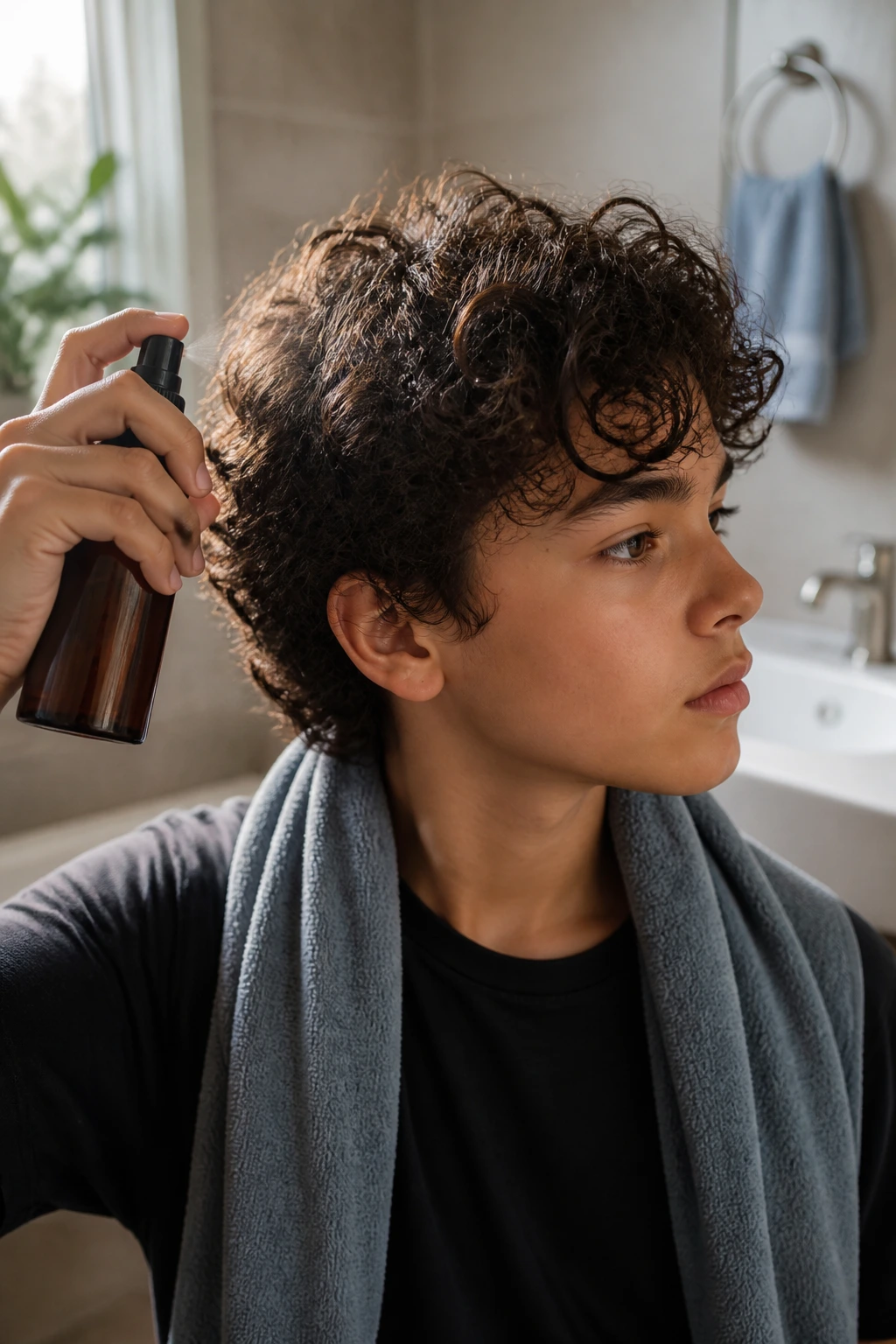
-
Wide-tooth comb: Best for detangling damp curls without ripping apart the curl pattern.
-
Spray bottle: A few sprays wake up flattened curls fast, especially at the crown and fringe.
-
Leave-in conditioner: Helps the curls stay soft and keeps the ends from drying into fuzz.
-
Curl cream or light gel: Use one or the other, or both in small amounts, to hold the shape.
-
Microfiber towel or soft cotton T-shirt: Regular bath towels rough up curls and make frizz worse.
-
Satin scrunchies or soft elastics: These hold buns, puffs, and ponytails without chewing up the hair.
-
Diffuser attachment: Useful if you need lift and definition without blasting the curls apart.
-
Satin bonnet or pillowcase: This matters more than people think. It keeps the style from looking wrecked by morning.
How to Wear These Looks at School, Practice, and Picture Day
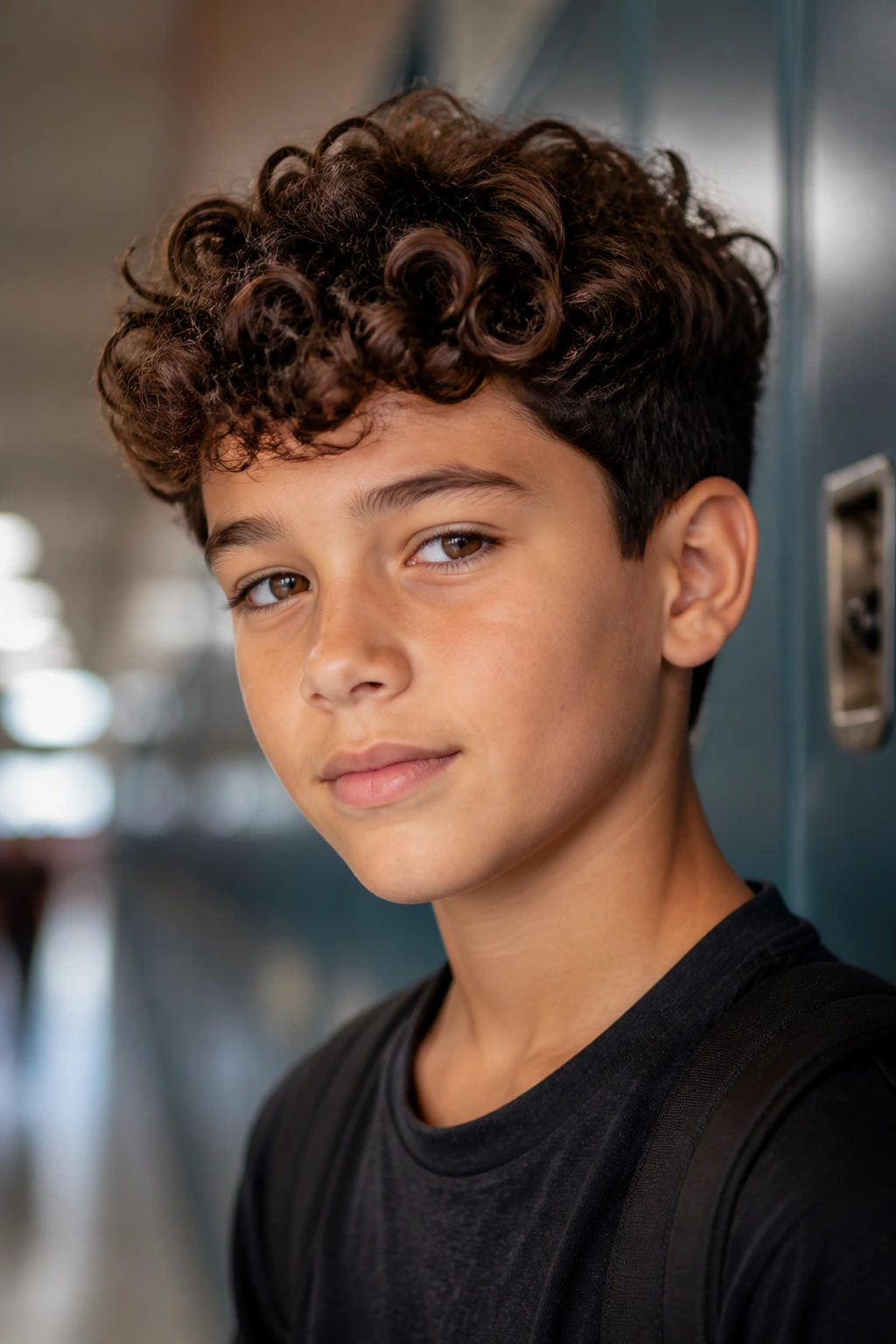
School mornings reward styles that can be reset in under two minutes. The half-up knot, side-swept cut, low bun, and pineapple ponytail win here because they keep the face clear without needing a full restyle. If the hair starts to puff by lunch, a little water on the palms and a quick squeeze at the ends usually brings it back.
Practice days call for styles that stay tied down and won’t fall apart under sweat. Box braids, cornrows into a ponytail, twin braids, and the high puff all do that job well. I’d avoid anything too tight around the front hairline, though. A style that survives soccer but leaves the scalp sore is not a win.
Picture day is the time for definition. Curly curtains, a clean middle part, wet-look curls, or a crown braid look sharp without flattening the curls into something unnatural. Use a touch more product than usual, but stop before the hair gets greasy. That line is thinner than people think.
Practical Upgrades That Make Each Style Look Cleaner
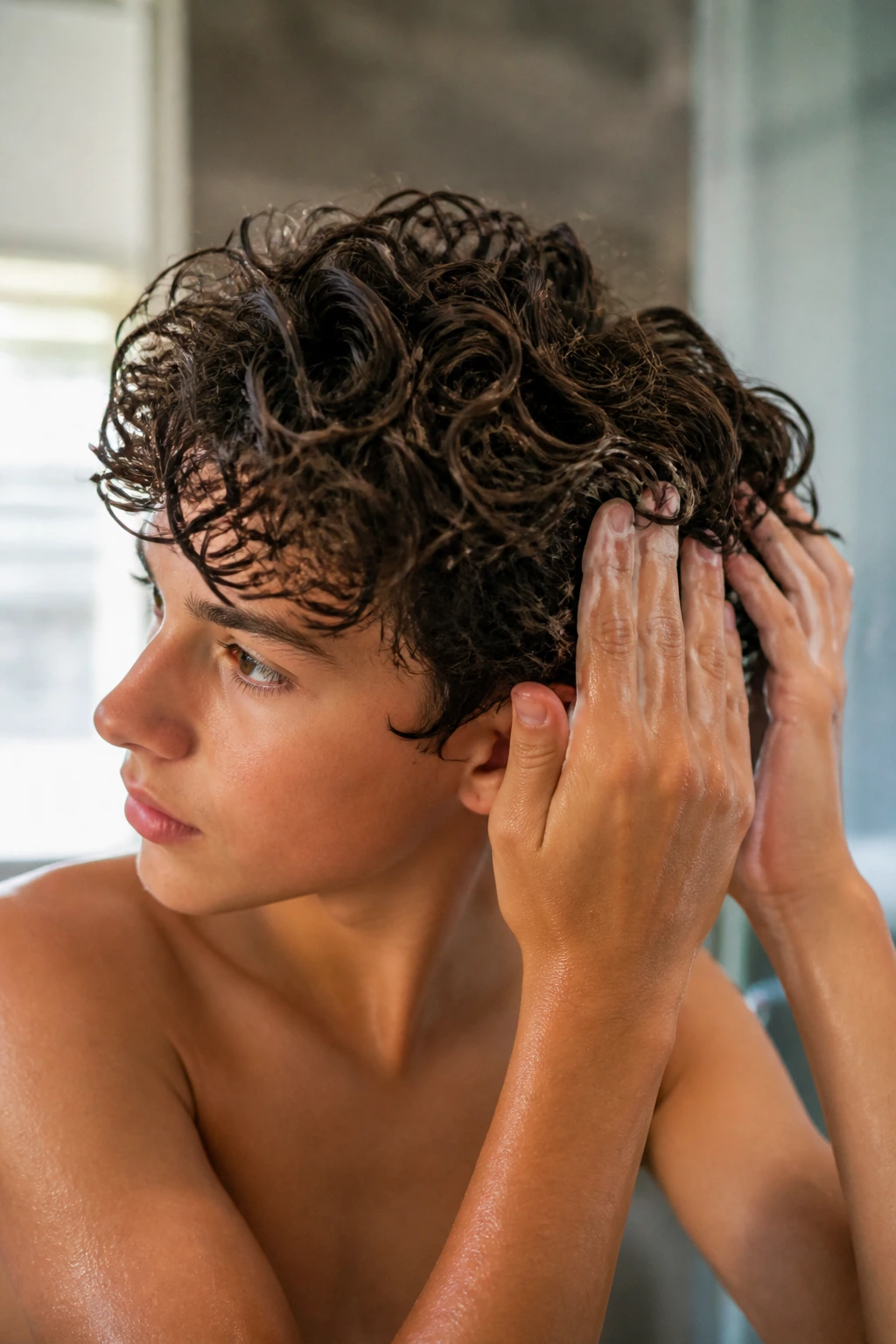
Moisture boost: A leave-in conditioner on damp hair before styling keeps long curls from fraying at the ends. It also makes braids and twists slide into place with less tugging.
Speed trick: Separate the hair into four sections before styling. The work goes faster, and you won’t keep re-tangling the same spot while trying to reach the back.
Clean finish: Smooth the outer layer with wet hands, not a brush, after the style is in place. A brush can break up the curl clumps you just built.
If the hair is thick: Ask for weight removal in the right spots, usually under the top layer and around the back. That’s where long curly hair tends to bulk up.
If the hair is fine: Don’t overload it with cream. Fine curls fall apart faster under heavy products, and the style ends up limp. A lighter leave-in and a small amount of gel usually work better.
For dressy days: A tiny bit of shine cream on the outer layer can make curls look polished without turning them stiff. Use less than you think. Too much and the hair looks greasy, not neat.
Common Mistakes That Make Curls Puff, Frizz, or Tangle
-
Brushing dry curls: This breaks curl clumps apart and leaves the hair wide and fuzzy. Detangle when the hair is damp and slippery with conditioner.
-
Cutting curls too short while wet: Wet curls lie. They shrink a lot, sometimes more than the person doing the cutting expects. Ask for a dry or mostly dry cut when you can.
-
Tight elastics at the hairline: These leave dents, headaches, and broken hairs around the temples. Use soft bands and stop pulling once the hair is secure.
-
Using too much heavy product: If the curls look greasy by midday, the product was too rich or too much of it went on. The fix is lighter application, not more rubbing.
-
Skipping night protection: Cotton pillowcases rough up curls and flatten the style. A satin bonnet or pillowcase saves time the next morning.
-
Forgetting to trim the shape: Long curly hair can grow out sideways before it grows down. A small trim keeps the outline from turning into a mushroom.
Easy Variations for Different Curl Patterns and Routines
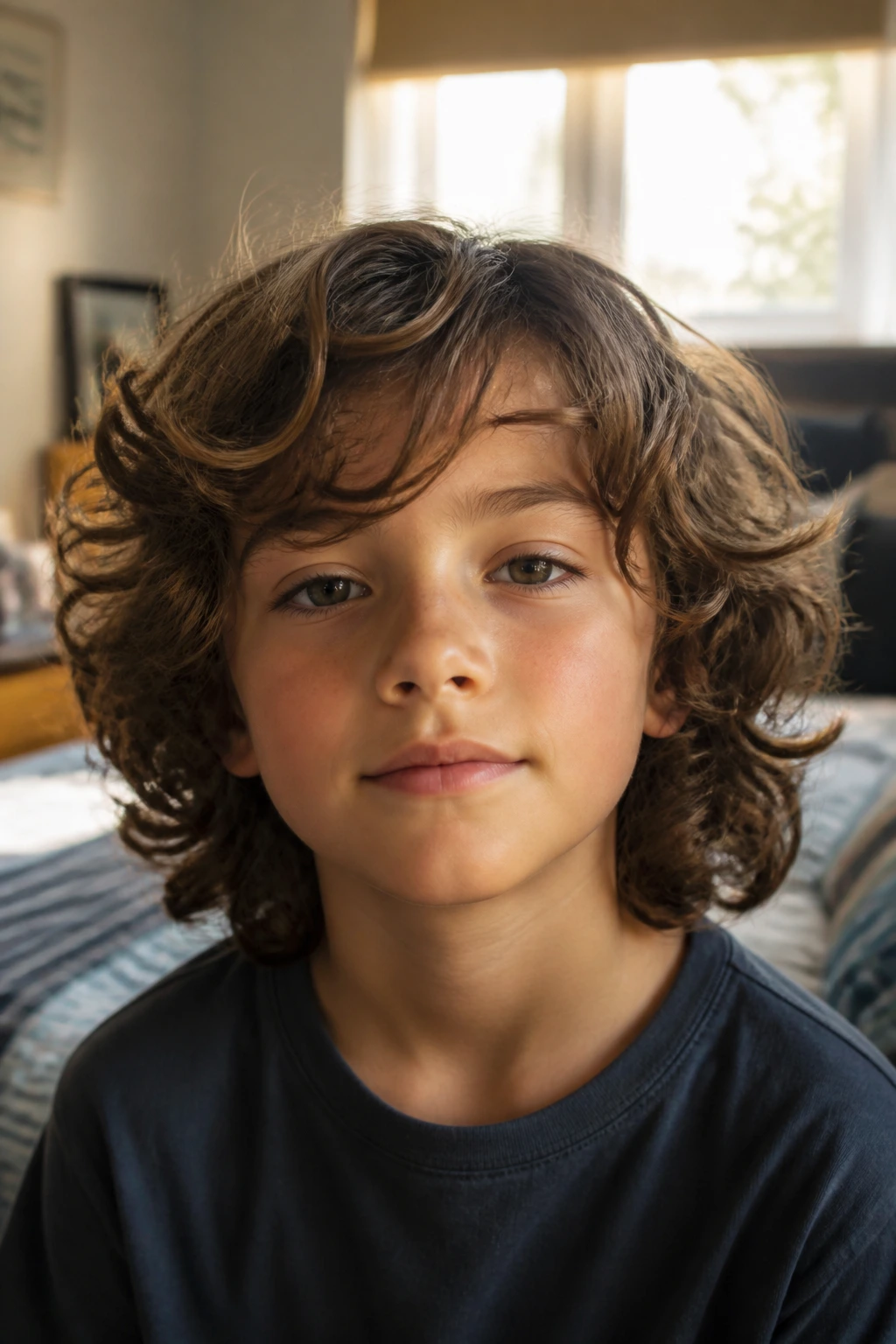
Loose Wave Version: If the hair leans 2C or loose 3A, keep the layers longer and the styling lighter. Heavy creams can flatten the bend, so a light leave-in and air-drying often do enough.
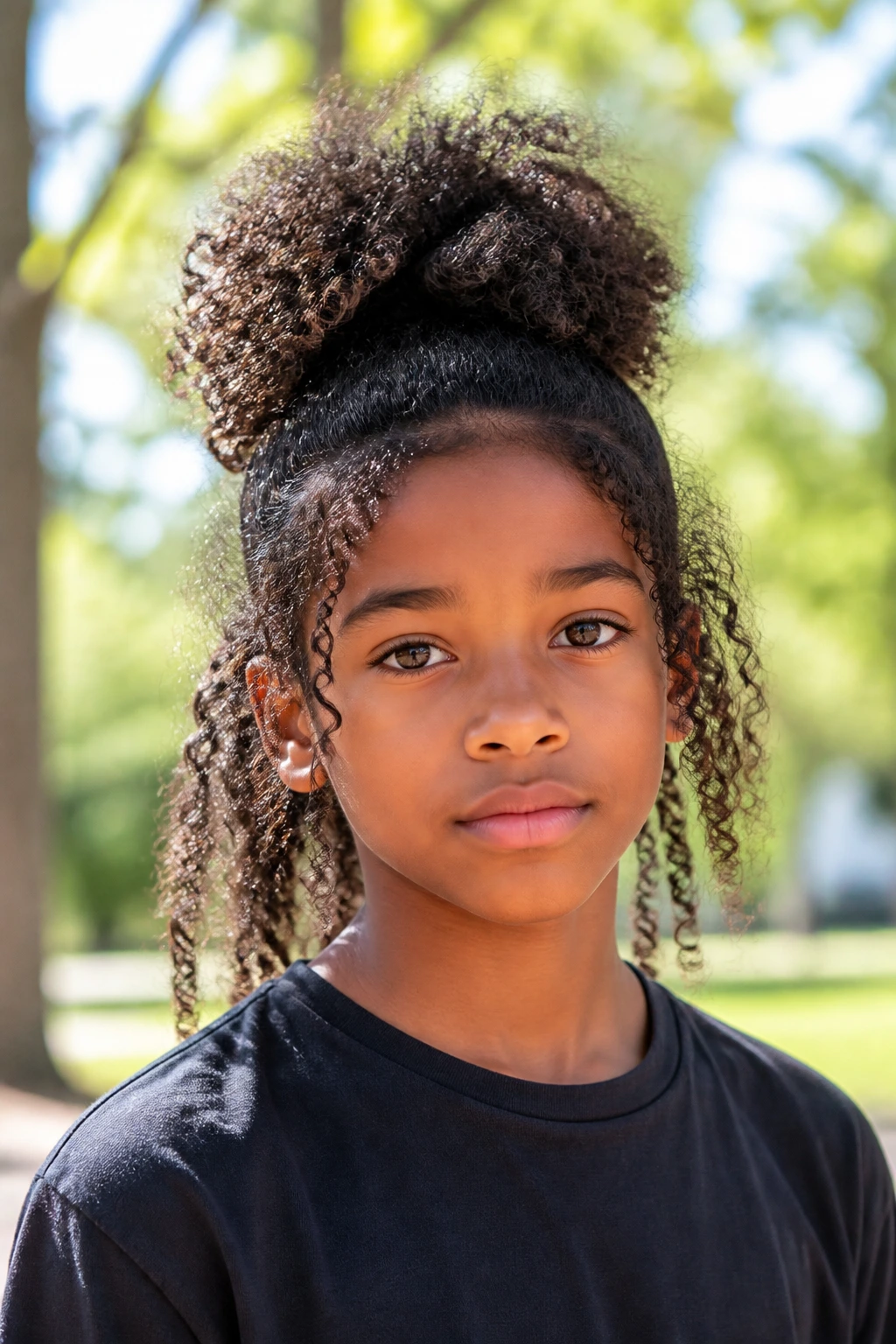
Tight Curl Version: For 3C to 4A hair, use more moisture and less combing. Styles like the high puff, two-strand twists, box braids, and rounded afro shape hold better than loose part-based styles.
Low-Maintenance School Version: Pick one style that can be reset without a full wash. The side-swept taper, low bun, pineapple ponytail, and half-up knot all make morning chaos less awful.
Dress-Up Version: Go for a middle part, crown braid, wet-look curls, or a clean side part with one braid. These read neat in photos without forcing the hair flat.
Protective-Style Rotation: Alternate braids, twists, and loose styles so the hairline gets a break. Wearing one tight style all the time is a fast way to get soreness around the temples.
Washing, Sleeping, and Refreshing the Style
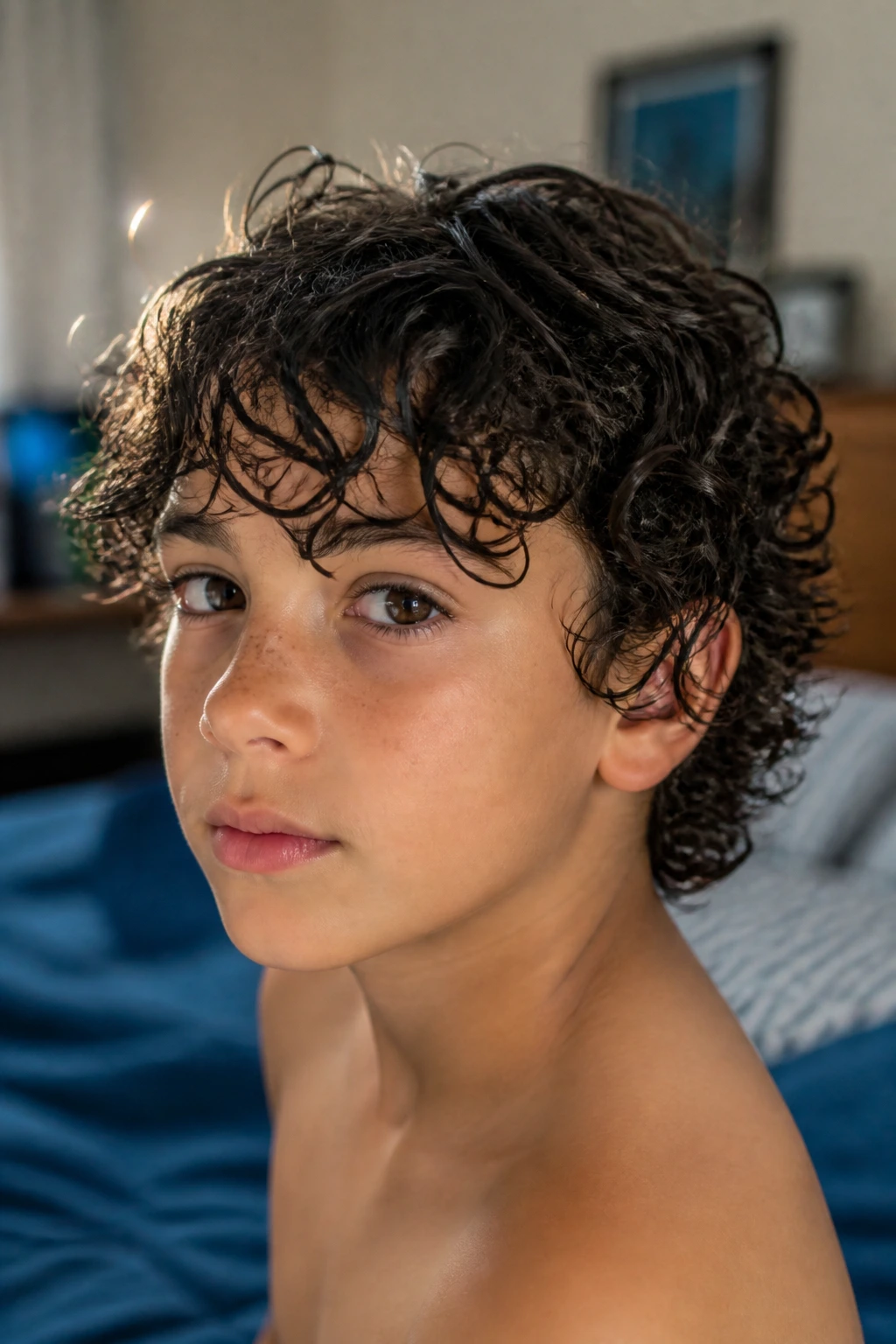
Long curly hair usually does better when it isn’t washed every single day. A lot depends on scalp oil and activity, but most boys can stretch wash days by refreshing the curls with water and a little leave-in on the mid-lengths and ends. The scalp should still get cleaned when it needs it. Dry shampoo can help some hair types, but it’s not a cure for buildup.
Night care is where a lot of the shape gets saved. A satin bonnet, satin pillowcase, or even a loose satin scarf helps the curls keep their clumps instead of rubbing into a frizzy cloud while sleeping. If the hair is in braids or twists, make sure the tie isn’t so tight that it leaves dents by morning. That kind of damage adds up.
To reset a style, dampen the hair lightly, scrunch the curls with clean hands, and smooth the top layer with a tiny bit of product if needed. Don’t soak the whole head unless you want to start over. The goal is to wake the style back up, not drown it.
Frequently Asked Questions
How long does a boy’s hair need to be for these styles?
Most of the loose styles start working once the hair reaches the ears or chin, but buns, braids, and twists usually need more length. If the hair can be gathered without pulling hard, you’ve crossed into useful territory. Shoulder length opens up the biggest range.
Which styles work best for tight curls or coils?
High puffs, rounded afros, twists, braids, cornrows, and taper-heavy styles usually behave best on tighter textures. Loose part-based styles can still work, but they need more moisture and more shape control. The tighter the curl, the more important the cut becomes.
Can a boy with fine curls wear a bun without it falling apart?
Yes, but the bun should stay loose and low, and the hair should have enough length to wrap cleanly once. Fine curls often do better with half-up styles or a small knot rather than a dense bun. A soft elastic helps the style hold without slipping.
How do you keep curls from frizzing by noon?
Start with damp hair, add a small amount of leave-in conditioner, and finish with a light gel or curl cream on the outer layer. Then leave the curls alone while they dry. Touching them over and over is what creates the frizz in the first place.
Are braids too much tension for kids?
They can be if they’re pulled tight at the scalp. A good braid should feel secure, not painful. If the child complains about sore temples, tight spots, or a headache, the style needs to be loosened or redone.
Should curly hair be cut wet or dry?
Dry or mostly dry is usually better for long curls, because the shrinkage is easier to judge. Wet hair hides length and can fool even a decent haircut into looking shorter than it will once it dries. A barber who understands curls will often work in sections and check the shape as they go.
What if the hair keeps falling into the eyes?
That usually means the front needs a little structure. A curly fringe, side sweep, curtain bend, or half-up knot will solve the problem without taking off too much length. You do not need to chop the whole front short to keep hair out of the face.
How often should long curly hair be trimmed?
Usually every 8 to 12 weeks, depending on how fast the shape grows out. The goal is not a big cut every time; it’s a small shape refresh so the sides don’t flare and the ends don’t split into fuzz. Curls look healthier when the outline is maintained.
Styles That Grow Out Without Looking Choppy
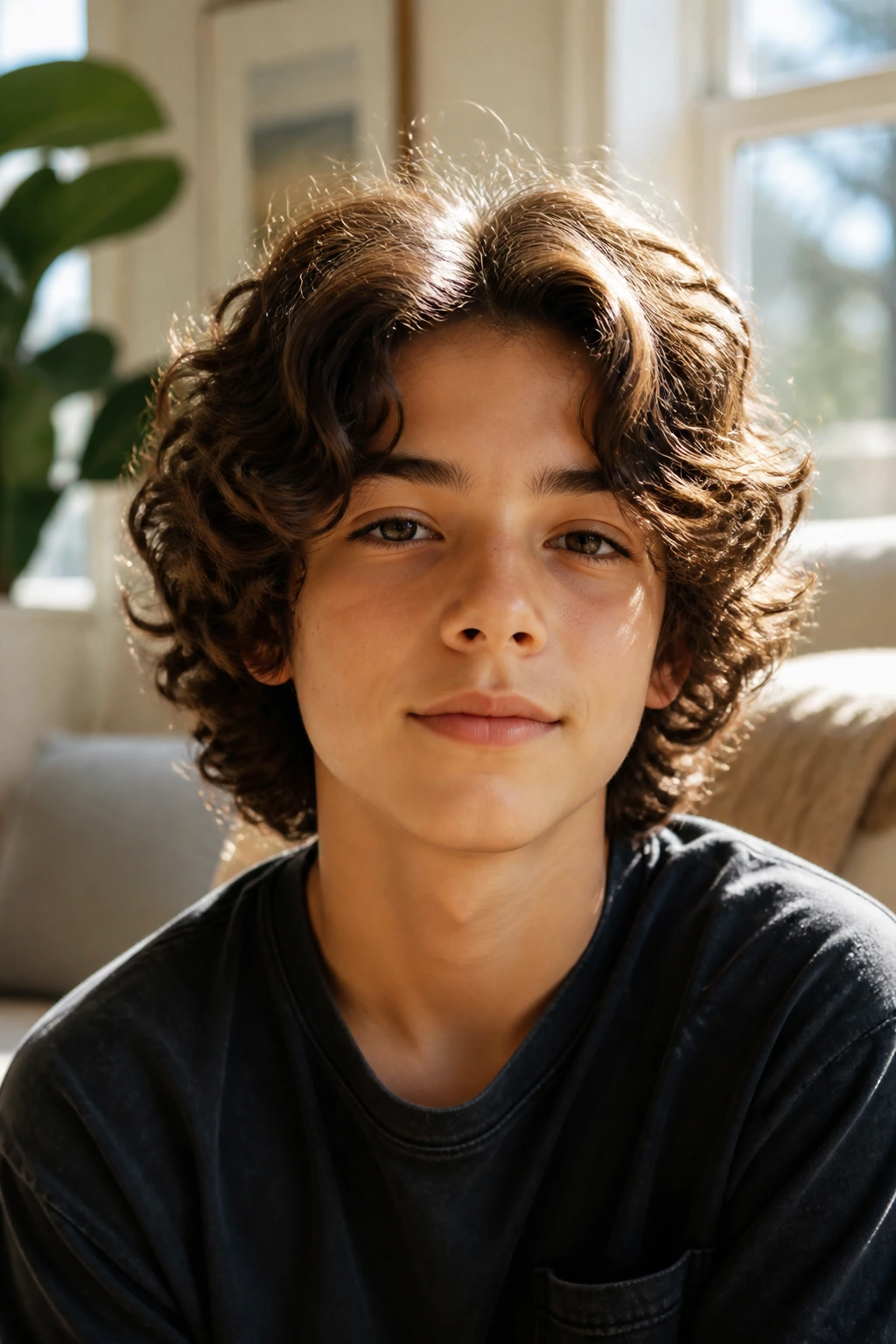
The best long curly hairstyles for boys are the ones that still look good when the day gets messy. A clean middle part, a soft shag, a loose braid, or a low bun can save a morning without making the hair feel controlled to death. That balance is the sweet spot. The style should help the curls do their thing, not erase them.
If I had to pick one rule, it would be this: shape the haircut first, then pick the style second. Once the layers, bulk, and front length are working together, the rest becomes easier. The hair starts to behave like a style instead of a problem.
A good curly cut grows out with some grace. That’s the real win, and it’s worth chasing every time.
