



Short hair on little girls can be a small miracle when the cut is right. The best haircut ideas for little girls and short hair are the ones that keep moving with the day — through breakfast, a sticky ice-pop, a backpack, a nap in the car, and a brush-out that takes less than a minute. When the shape is smart, short hair looks tidy with almost no drama.
When the cut is wrong, though, you feel it fast. A blunt line that sits too high can puff out at the sides. Bangs that land right at the lashes become a constant finger-flick. And a pixie that’s taken too short in the nape can itch, stick up, and grow out into a fuzzy little halo long before the next trim.
The useful part is that short hair gives you options. A little girl with fine hair doesn’t need the same cut as a child with dense curls or a stubborn cowlick at the crown. The shape can be tailored to how she actually lives — whether she’s the kind of kid who leaves clips in, pulls every strand behind one ear, or hates anything touching her forehead. That’s where the real value sits, and that’s why the best short cuts are never just “short.” They’re specific.
Why These Short Haircuts Work Better Than Random Chopping
Fast mornings: The right short cut cuts down on detangling because there’s less hair rubbing against collars, car seats, and sleeves all day.
Better grow-out: A well-shaped bob or pixie keeps its line for weeks; a poorly planned one turns awkward after the first half-inch of regrowth.
Texture-friendly: Fine, straight hair, thick hair, waves, and curls all behave differently, and the right cut makes the pattern look intentional instead of unruly.
Accessory-ready: Short hair still works with clips, headbands, barrettes, ribbons, and side parts, which matters when a child wants variety without length.
Lower tug factor: Shorter ends usually mean fewer knots at the nape and less pulling around the ears, which is a real relief for tender scalps.
1. Chin-Length Blunt Bob With Soft Ends
A chin-length blunt bob is the haircut I reach for when someone wants short hair that still feels calm and tidy. The line sits right where the jaw starts to turn, so it frames the face without flaring out at the shoulders. On little girls, that matters. It gives shape without looking severe.
The trick is in the finish. Ask for the perimeter to be blunt enough to hold its edge, then have the stylist soften the very ends with a little point-cutting. That tiny bit of softness keeps the bob from looking boxy, especially on fine hair that tends to float away from the head. If there’s a strong cowlick at the crown, leave a touch more length in the back so it does not kick up.
Why it stays useful
A chin-length bob sits in the sweet spot between easy and polished. It’s short enough to dry quickly after a bath, but long enough to tuck behind the ears or clip to one side. That means fewer battles on school mornings and fewer adjustments after she takes off a hat.
- Works well on straight or slightly wavy hair.
- Lets you part it down the middle or slightly off-center.
- Holds barrettes better than a pixie because there’s enough length to grab.
- Needs a trim about every 6 to 8 weeks to keep the line from turning mushroom-shaped.
Best tip: If the hair flips outward at the ends, ask for the bob to be cut just a hair longer in front than in back. That small slope helps it settle instead of bouncing.
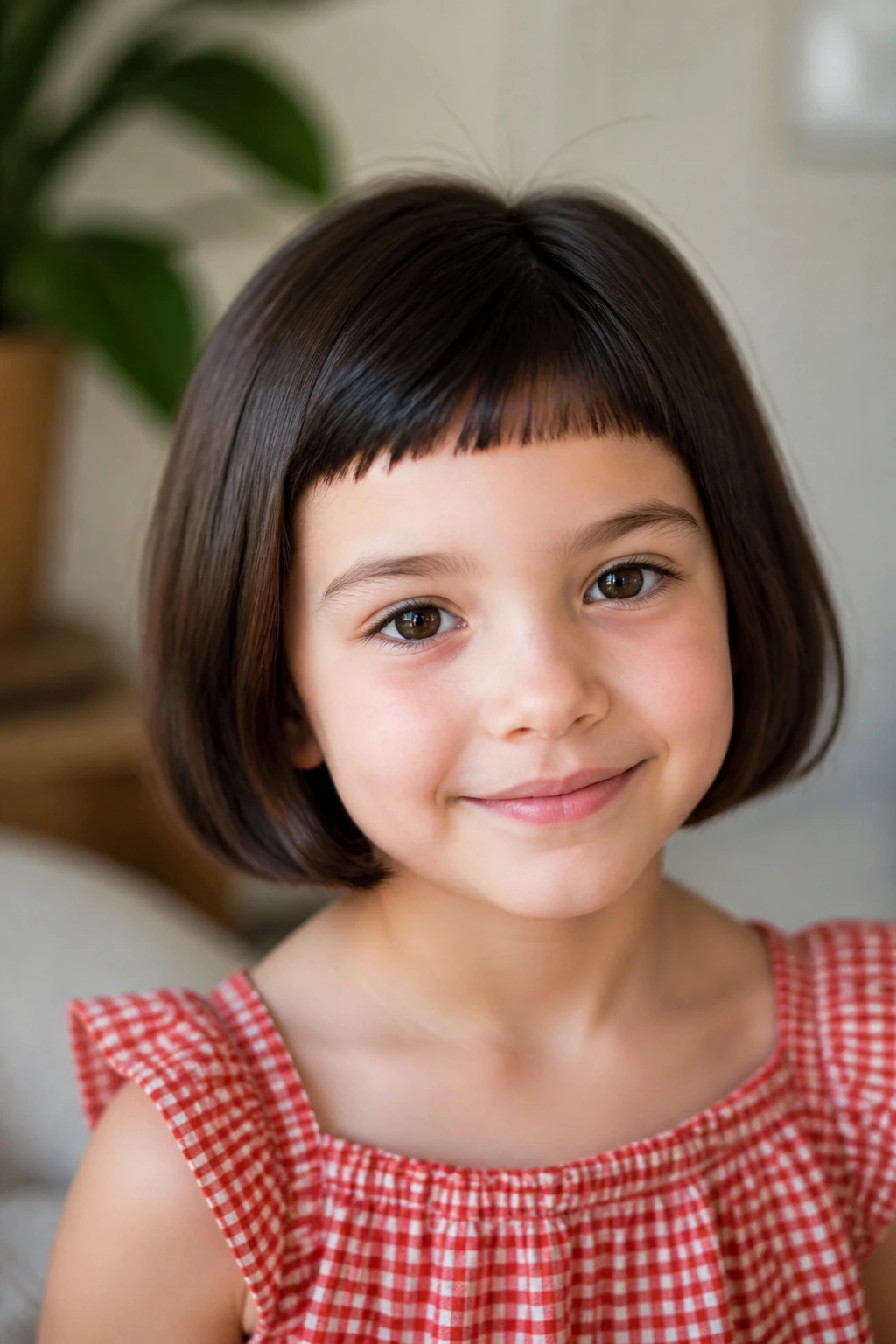
2. French Bob With a Tiny Fringe
The French bob has a bit of attitude, but on a child it reads as neat rather than fussy. It usually lands between the cheekbone and the jaw, with a short fringe that sits just above or right at the brows. The whole cut has that compact, rounded feel that looks especially nice when the hair has a little natural bend.
I like this one for kids who wear their hair down most of the time and don’t mind a fringe. It gives a face a clear frame without needing layers everywhere. If the child has a low forehead or a strong blink habit, keep the fringe a touch longer so it doesn’t live in the eyes. Short bangs look cute for a day. Then they grow into a daily maintenance job.
Best when the front matters
A French bob works because the fringe does part of the work. You do not need much styling elsewhere if the line is clean. A quick brush and a tiny dab of lightweight cream at the ends are enough for most days.
What to tell the stylist
Ask for the fringe to be cut dry or nearly dry if the hair springs up a lot. Wet bangs can lie to you. They always look longer than they will after they dry.
3. Curly Bob That Respects the Curl Pattern
Curly hair loves a bob when the shape is cut for the curl, not against it. That means the length usually lands around the chin or just below, with enough room for the curls to spring without turning into a puffed triangle. On little girls, this is one of the smartest short cuts you can choose, because it keeps the curl pattern visible instead of crushed flat.
The main mistake with curly short hair is over-layering the top. That can leave the crown too light and the bottom too wide. Instead, ask for the shape to be balanced while dry, curl by curl if possible. A stylist who knows curls will often leave the perimeter a bit longer than you expect, because shrinkage is not a guess. It’s a fact.
What makes it different
A curly bob is not about precision lines. It’s about letting the curls cluster naturally so the haircut keeps its body after wash day. The result is softer, springier, and much easier to live with than a shape that tries to flatten the texture.
- Good for ringlets, waves, and mixed textures.
- Needs a leave-in conditioner or curl cream, used sparingly.
- Often looks best with a side part or soft off-center part.
- Benefits from trims every 8 to 10 weeks, since curls disguise regrowth better than straight hair.
Practical note: If the child hates heavy product, use a pea-sized amount of cream, rub it between wet hands, and smooth only the outside layer. The curls underneath usually do fine on their own.
4. Long Pixie Cut With Ear Coverage
A long pixie is for the child who wants short hair but not too short. The sides are trimmed close enough to look neat, while the top and front stay long enough to sweep, tuck, or clip. That little bit of extra length around the ears makes a huge difference in real life. It softens the cut and gives you options.
This shape also grows out well, which I care about more than I care about any first-day photo. A pixie with a little ear coverage can survive a few weeks of growth without turning into a helmet. The top can be blown forward, brushed sideways, or left a little messy. No hard rules.
Why it works
A long pixie is a good bridge cut for kids who are curious about short hair but not ready for something super cropped. It keeps the neck light, dries fast, and still leaves enough hair to play with.
If the hairline at the nape is soft or uneven, ask for the back to be tapered gently instead of cut blunt and high. That keeps the grow-out line from looking choppy.
5. Bixie Cut: The Middle Ground That Makes Sense
If a bob and a pixie had a practical little cousin, it would be the bixie. The shape sits between chin length and cropped, with a little more texture than a classic bob and a little more softness than a full pixie. On little girls, it has a nice looseness to it. Nothing feels overplanned.
The bixie is useful when you want movement without heavy styling. It can be tucked behind the ears, fluffed with fingers, or left to fall where it wants. The cut usually has light layers around the crown and a shorter back, which helps it lie close without looking flat. It’s a good choice for kids who dislike hair in their face but still want some shape around the front.
When to pick it
Choose a bixie if you keep saying, “I want something short, but not severe.” That’s the exact brief. It works on straight hair that needs lift, and on wavy hair that gets bulky at the ends.
Ask the stylist not to thin the top too much. A bixie needs enough weight to look like a real shape, not a wispy accident.
6. Soft Shag for Short Hair
A short shag gives you texture without making the haircut feel chopped up. The layers are softer than the old rock-and-roll version people remember from years ago. Think cheekbone movement, a bit of nape lift, and ends that sit lightly instead of in one solid block.
This cut is good on kids with waves, thick hair, or hair that refuses to behave in one direction. The layers stop the bottom from ballooning out, which is the thing that makes many short haircuts look puffy after two weeks. With a shag, that puffiness is part of the design, and that’s the whole point. It looks lived-in, not overworked.
Good for the kid who never sits still
If she twirls, runs, climbs, or spends half the day upside down, a soft shag can be the least annoying option. It keeps a bit of shape even when the hair gets rumpled.
Stylist note: Ask for face-framing pieces that stop around the cheekbone, not right at the widest part of the jaw. That small adjustment can change how the whole haircut settles.
7. Asymmetrical Bob With One Longer Side
An asymmetrical bob sounds bold, but on a child it can be surprisingly easy to wear. One side sits a little longer than the other, which gives the cut motion even when the hair is still. The trick is keeping the difference modest. You want a visible slope, not a dramatic one-sided angle that needs constant correction.
This is a smart pick if the child naturally parts her hair to one side or always pushes one side behind her ear. The longer side helps the cut feel deliberate rather than accidental. It also gives you a little insurance on grow-out days, because uneven growth is less obvious when the cut is already slightly offset.
Why it’s more practical than it sounds
A gentle asymmetrical bob can flatter rounder faces, but I’d rather say this: it keeps the front from looking too wide. That’s the real advantage. It draws the eye down, not out.
- Works best when the longer side is only about 1 to 2 inches longer.
- Looks cleaner with a deep side part.
- Needs a trim every 5 to 7 weeks so the angle does not blur.
- Can be tucked behind the shorter side’s ear for a neat finish.
8. The Pageboy With Rounded Ends
The pageboy is old-school in the best way. It has a rounded outline, often with the ends curling under just a bit, which gives short hair a smooth, tidy finish. On little girls, this cut can look sweet and classic without being fussy. It’s one of those styles that seems to cooperate with the hair rather than fight it.
What I like most is the way the pageboy handles thick or straight hair. Instead of leaving the ends wide and blunt, it curves them in toward the neck and jaw. That keeps the silhouette compact. If the hair likes to flip out, a little internal shaping helps the ends settle under better.
A clean choice for straight hair
This cut is especially good when you want the hair to look combed even on a busy day. It does not need much styling. A brush, a center or side part, and maybe a tiny bit of smoothing cream near the ends are enough.
If a child wears glasses, the pageboy can also sit neatly around the arms of the frames instead of crowding them. That sounds small. It isn’t.
9. Side-Swept Pixie With a Longer Front
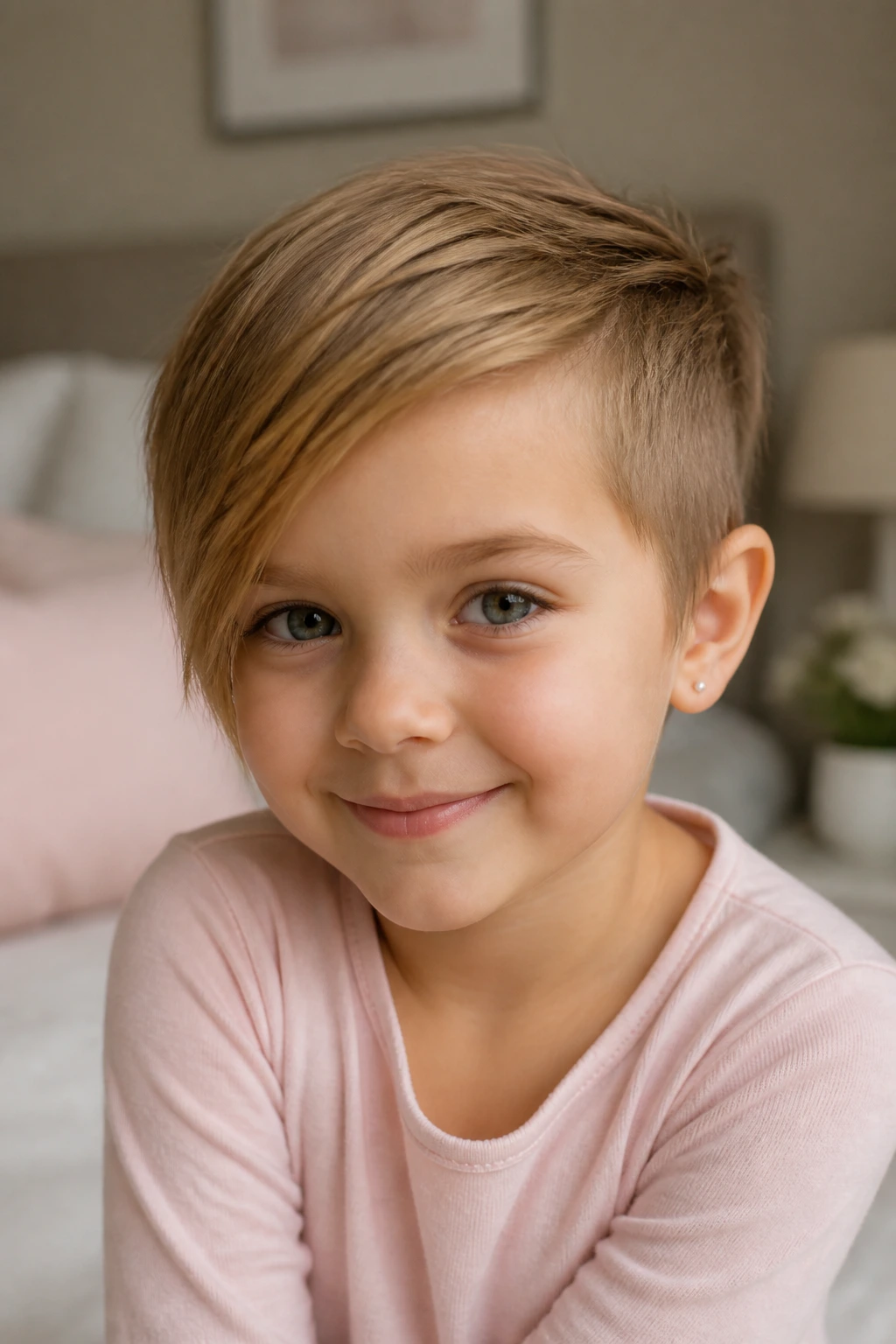
A side-swept pixie keeps the sides and back short, but leaves the front long enough to sweep across the forehead. That one detail makes the whole cut softer. It also gives a child more control, because she can wear the fringe forward, pin it back, or push it to the side when she gets tired of hair touching her face.
This is one of the best short styles for active kids. It stays out of the eyes, dries quickly, and still looks finished if you only finger-comb it. The long front adds enough shape that it doesn’t read as a buzzed haircut. That matters if you want short hair that still feels a little playful.
What to watch for
Keep the fringe long enough to move. If it’s cut too short, the style loses its entire point. The front should skim the eyebrow, not fight with it.
A tiny dab of light cream, rubbed between the fingers, helps the front stay swept instead of springing up at the roots.
10. Ear-Length Crop That Barely Touches the Lobe
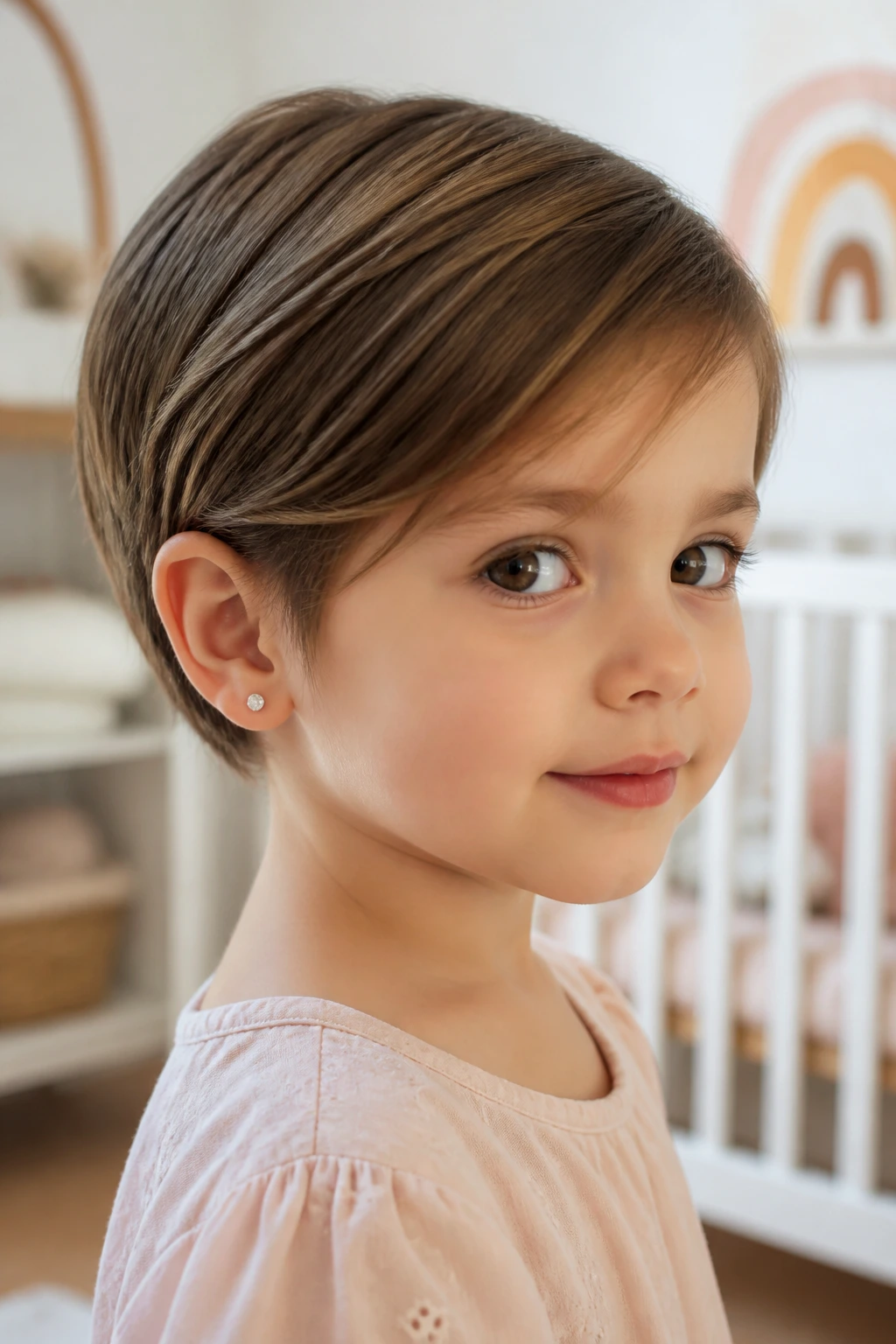
An ear-length crop is tiny, efficient, and a little bit brave. It sits just around the ears with enough length on top to soften the outline. On the right child, it looks crisp and sweet. On the wrong cut, it can look harsh, which is why the finish matters so much.
The shape works best when the top stays a bit longer than the sides. That keeps the cut from turning into a cap. If the child has a lot of hair, the stylist may need to remove bulk inside the shape so it lies closer to the head. Otherwise, the crop can puff out at the sides and lose its clean line.
Best for kids who hate hair on the neck
This is the cut I’d consider when a child is constantly pulling hair away from the ears or neck. There’s less to catch, less to tangle, and less to tuck back in place. It also dries fast enough that a towel rub and a few finger passes can finish the job.
Nope, it is not low-maintenance forever. It needs more frequent trims than a bob. But the daily care is easy.
11. Bowl-Inspired Soft Cut With a Modern Finish
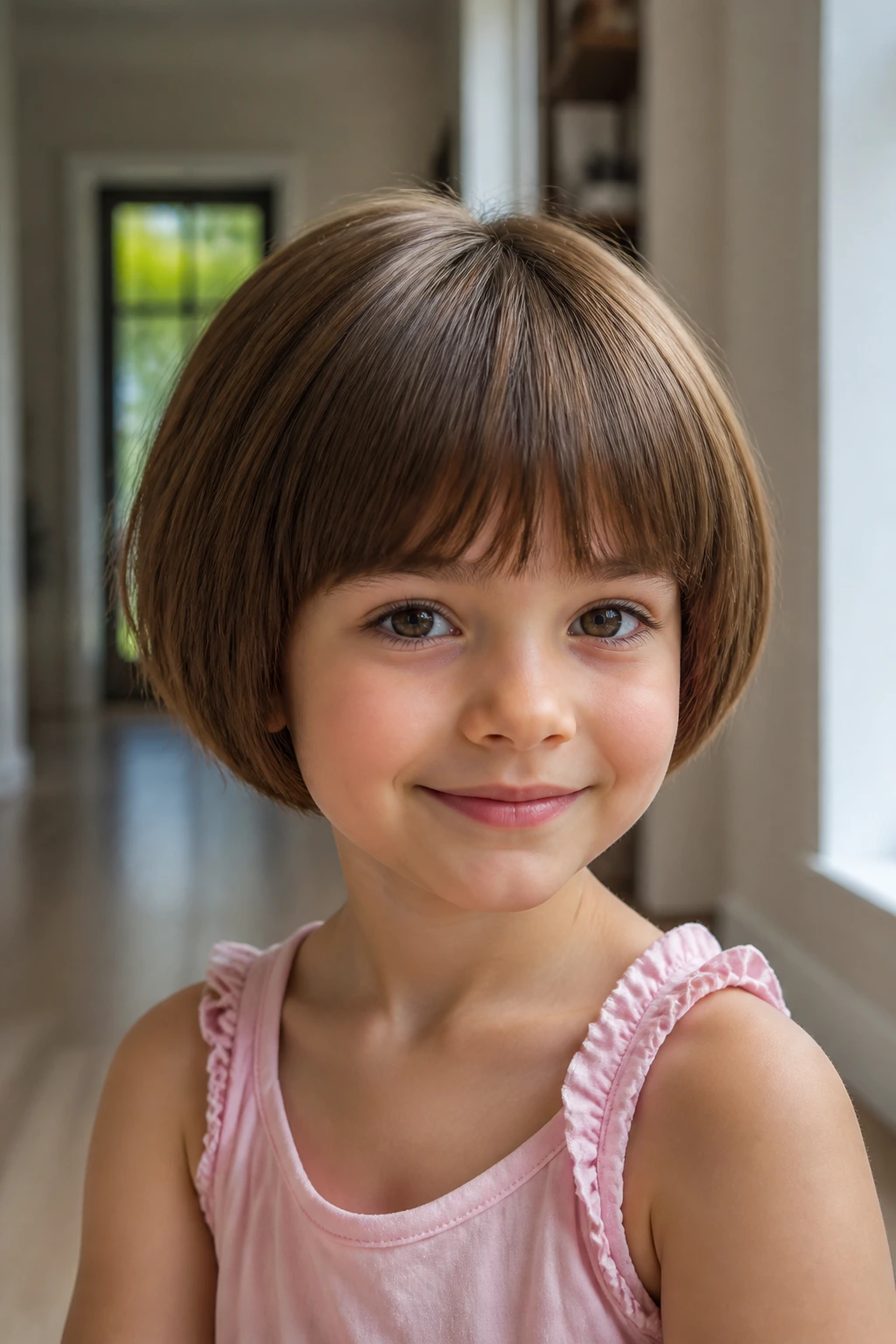
A bowl-inspired cut can be charming when it’s softened. The old version had a hard, unbroken line and sometimes looked like the hair was sitting on the head. The modern version keeps the rounded shape but adds movement at the edges and a little lift at the crown. That change makes all the difference.
This style suits straight or slightly wavy hair that grows out in a strong, even pattern. It can look particularly neat on kids whose hair tends to split away from the ears. The curve does some of the work for you. And because the shape is balanced, it can grow for a few weeks before the silhouette starts to go off.
The hairline note matters here
Ask the stylist to keep the line soft around the temples. If the shape is too rigid there, the cut can look severe. A rounded temple gives the style some air.
A bowl-inspired cut is not a joke haircut when it’s done well. It’s practical, neat, and surprisingly flattering when the edges are lightened just enough.
12. Layered Bob for Thick Hair

Thick hair needs a different kind of respect. If you cut it into a blunt bob without dealing with the bulk, it can rise up at the ends and sit like a little shelf. A layered bob handles that problem by taking weight out from the inside while keeping the outside line clean enough to look deliberate.
This is a strong choice for children with dense straight hair or heavy waves that bunch at the neck. The layers should be internal, not choppy all over. That keeps the hair from feeling stringy. Think of it as shaping the inside of the haircut so the outside can behave.
Why the layering has to be careful
Too many short layers can make thick hair puff out in odd places. Too few layers leave the bottom bulky and slow to dry. The sweet spot is usually a blunt perimeter with light internal shaping.
If her hair tends to stick to the head when wet, ask for a little more length than you think you need. Thick hair always shrinks up less than curls, but it still moves after drying.
13. Shoulder-Skimming Lob for Families Not Ready to Go Short
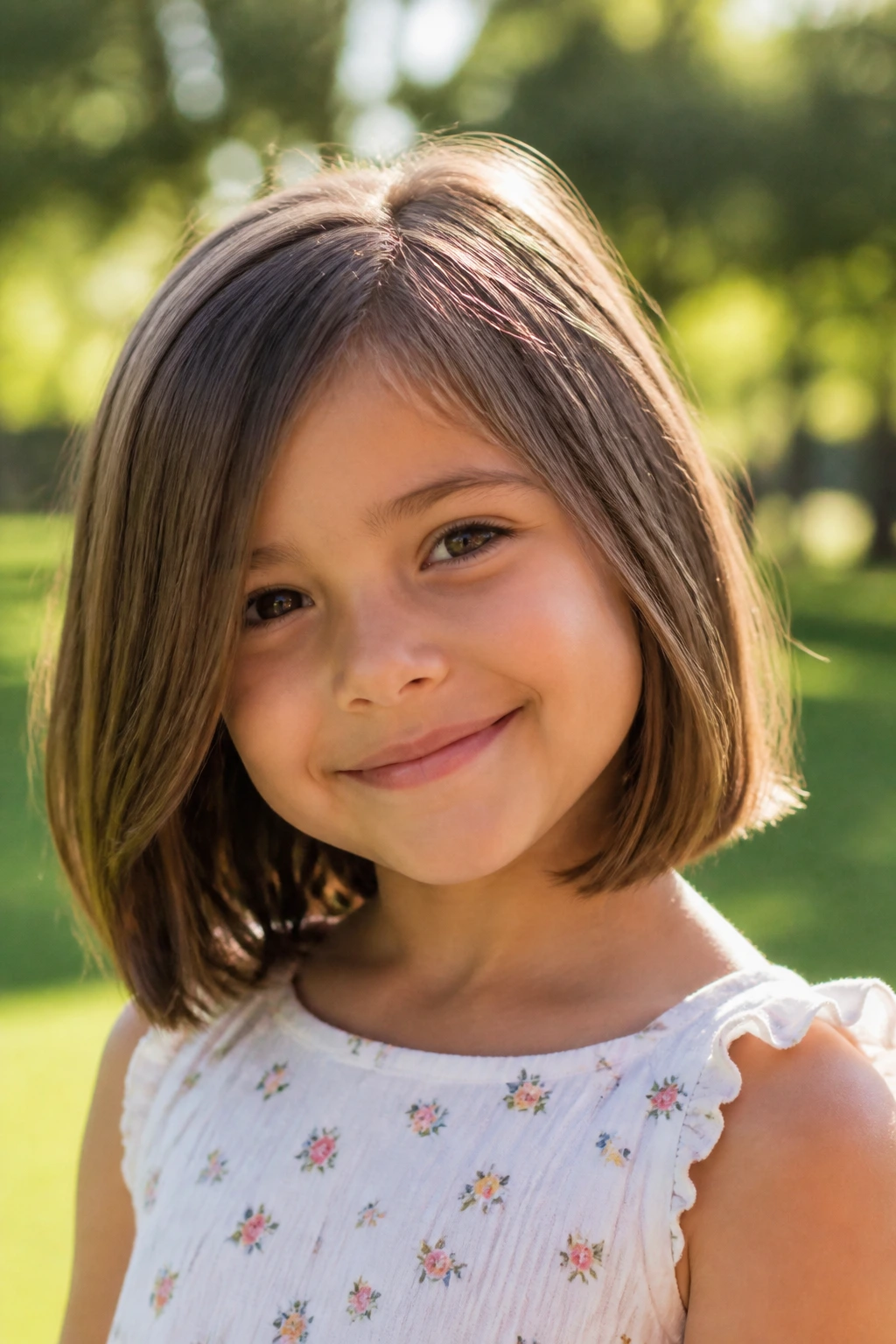
A lob — a long bob — is the gentlest way to move into short hair without cutting all the way up to the chin. It usually hits somewhere between the jaw and the shoulder, which gives you enough length for ponytails, half-ups, and clips, but less bulk than classic long hair. For little girls, that can be the sweet spot between freedom and familiarity.
I like this option when the child is curious about short hair but not quite ready to let go of the back-of-the-neck length. A lob also grows out with less visible drama than a severe crop. The line stays useful for a long time. It’s the haircut equivalent of keeping the door open.
Good if she likes options
A lob can be tucked, braided at the front, clipped back, or worn loose. It also works better than people expect with thick scarves and hooded jackets, because the ends do not have to fight the fabric as much as very long hair does.
If you only want to go “a little shorter,” this is the one I’d point to first.
14. Curtain-Bang Bob With a Soft Center Part

A curtain-bang bob gives you the shape of a bob with a more relaxed front. The bangs part in the middle and sweep away from the face, which helps if a child likes hair off the forehead but does not want a hard fringe. The effect is softer than a straight bang and easier to grow out.
This cut is useful for kids with strong cowlicks at the front hairline. The part helps the hair travel with its natural direction instead of fighting it. It also gives the haircut a little movement around the eyes and cheeks, which is nice if the rest of the shape is simple.
What to ask for
Keep the curtain pieces long enough to tuck behind the ears if needed. If they’re too short, they can spring into the eyes and turn into tiny curtains with bad manners.
The rest of the bob can stay blunt or lightly layered. I prefer a clean perimeter here; the fringe is already doing enough visual work.
15. Tapered Nape Cut That Stays Neat at the Back
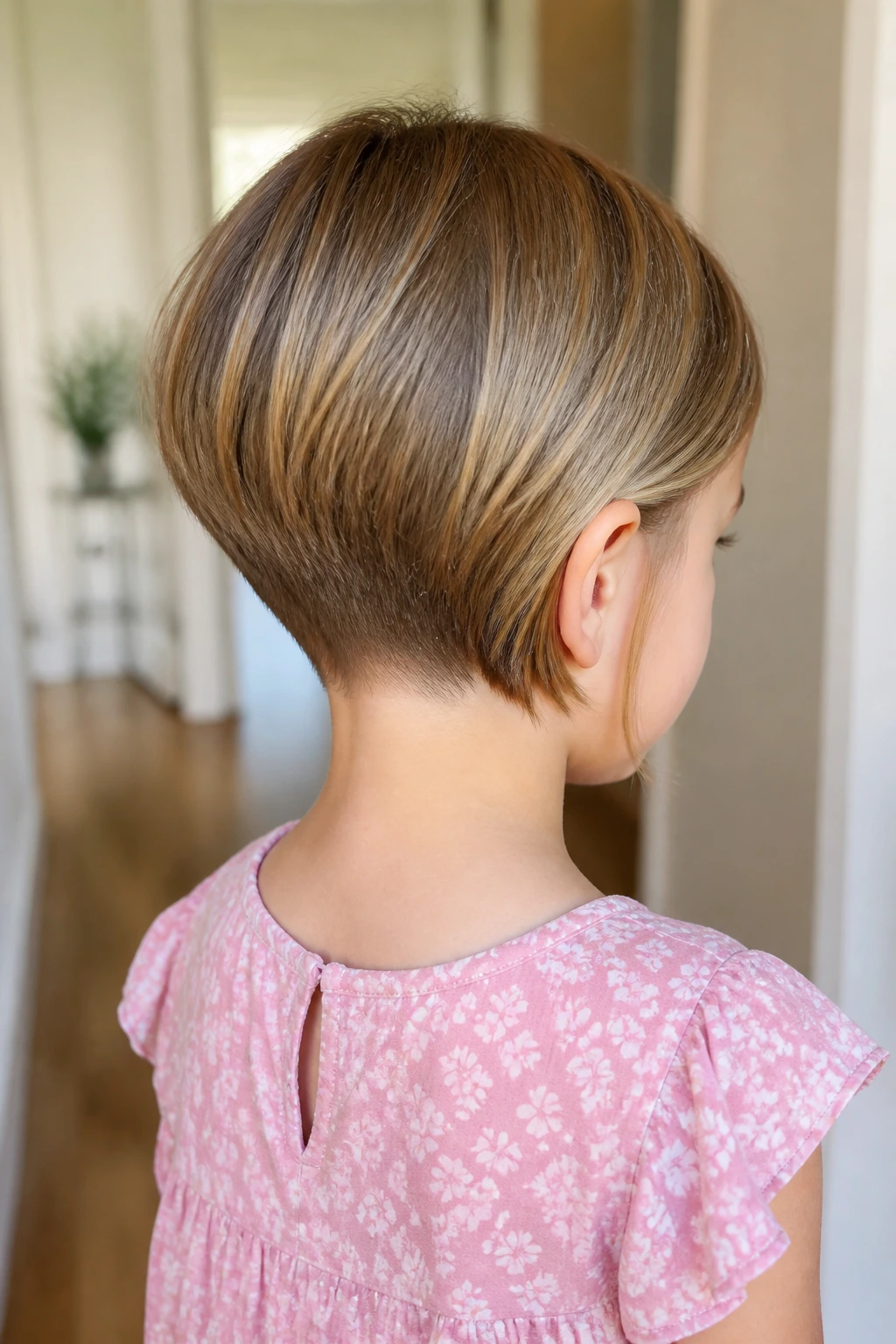
A tapered nape cut is one of those haircuts parents appreciate more and more as the weeks pass. The neckline is trimmed shorter and gradually blends upward, so the back lies close to the head and stays neat under collars and sweatshirts. It’s tidy without looking shaved.
This is especially good for kids who dislike hair tickling the neck. It also helps if the hair at the nape grows faster or curls differently than the rest of the head. A taper keeps that area from blooming out first, which is where many short cuts start to look untidy.
The back matters more than people think
A haircut can look fine from the front and still feel messy because of the nape. This cut fixes that problem early.
- Best for active kids and warm classrooms.
- Works well under helmets, hats, and sports gear.
- Needs clean edging every 4 to 6 weeks to keep the taper visible.
- Can pair with a bob, pixie, or shag on top.
16. Textured Crop With Choppy Ends
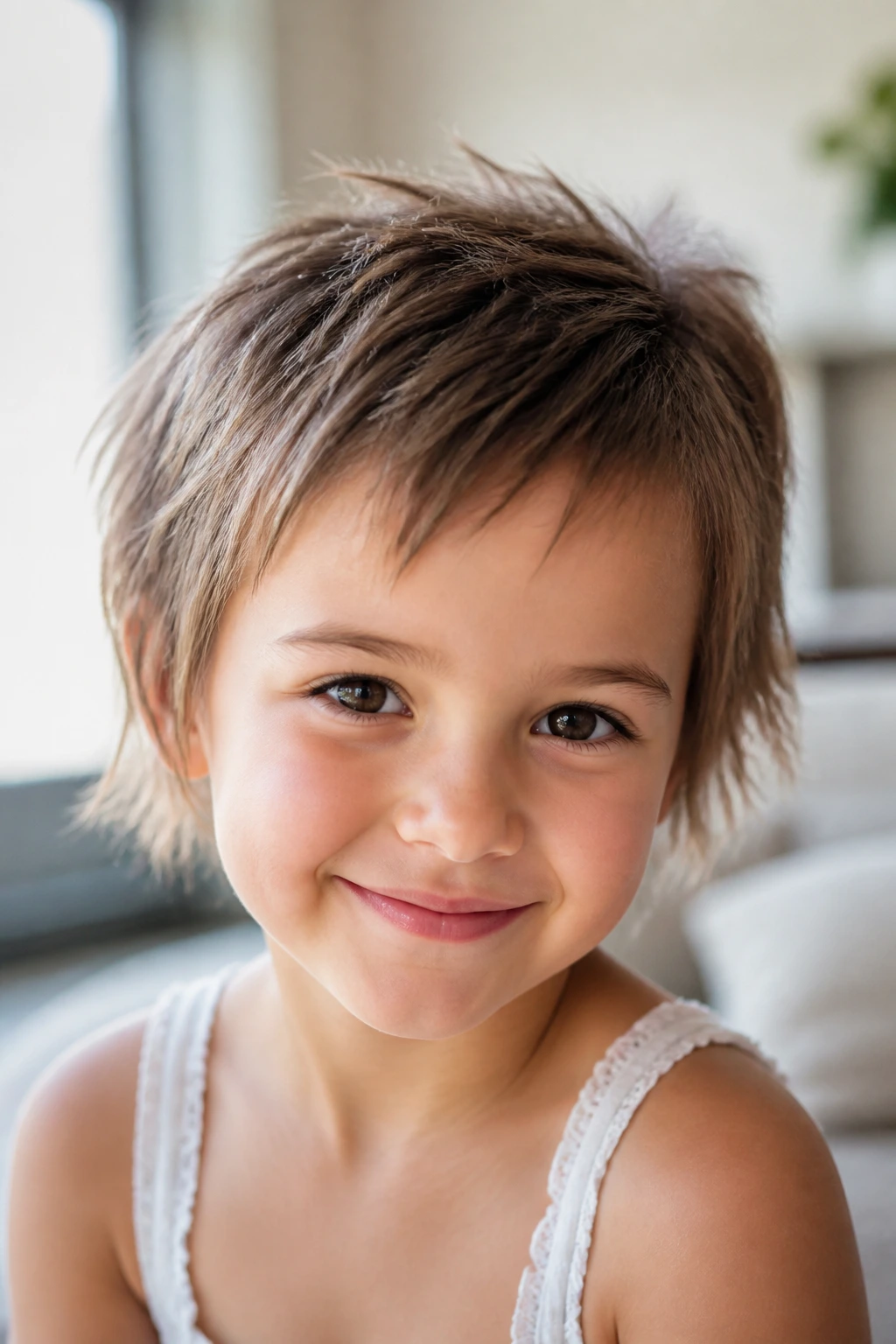
A textured crop looks casual in the best way. The ends are cut with small, uneven pieces rather than one hard line, so the hair moves a little when she turns her head. It’s a good choice when the goal is short hair that does not feel formal or stiff.
This style shines on finer hair that needs the illusion of more movement, but it also works on thicker hair if the stylist keeps the layers controlled. The important part is not to overdo the choppiness. Too much texture can turn into frizz. A little texture gives life. A lot gives you a battle.
Why it’s worth considering
A textured crop usually grows out with grace because it never depended on a perfect line to begin with. That makes it useful for families who do not want to chase the salon every month.
Stylist note: Ask for the longest pieces to stay around the cheekbone or jaw, and let the rest taper gently toward the neck. That shape feels softer than a strict pixie and less heavy than a bob.
17. Rounded Mushroom Cut With Soft Layers

A rounded mushroom cut sounds more rigid than it is. When it’s done softly, it has a smooth, curved outline and a little volume at the crown, with the perimeter sitting around the ears and jaw. The effect is playful, tidy, and very visible as a shape. Some kids love that. Some need to warm up to it.
This cut suits thick, straight, or slightly wavy hair that naturally wants body. The rounded shape keeps the ends from kicking out in all directions. It also creates a clean silhouette that holds up well in photos and on windy days. That’s not the same thing as saying it’s high-maintenance. It just means the shape does the work.
When it makes sense
Pick this one if the child likes a very defined haircut and does not mind that it will stand out a bit more than a classic bob. It can look sweet with a center part or a short fringe.
A softer mushroom cut is far better than a harsh one. The difference lives in the edges. Keep them light, and the whole thing becomes much more wearable.
How to Choose the Right Short Cut for Her Hair Texture and Cowlicks
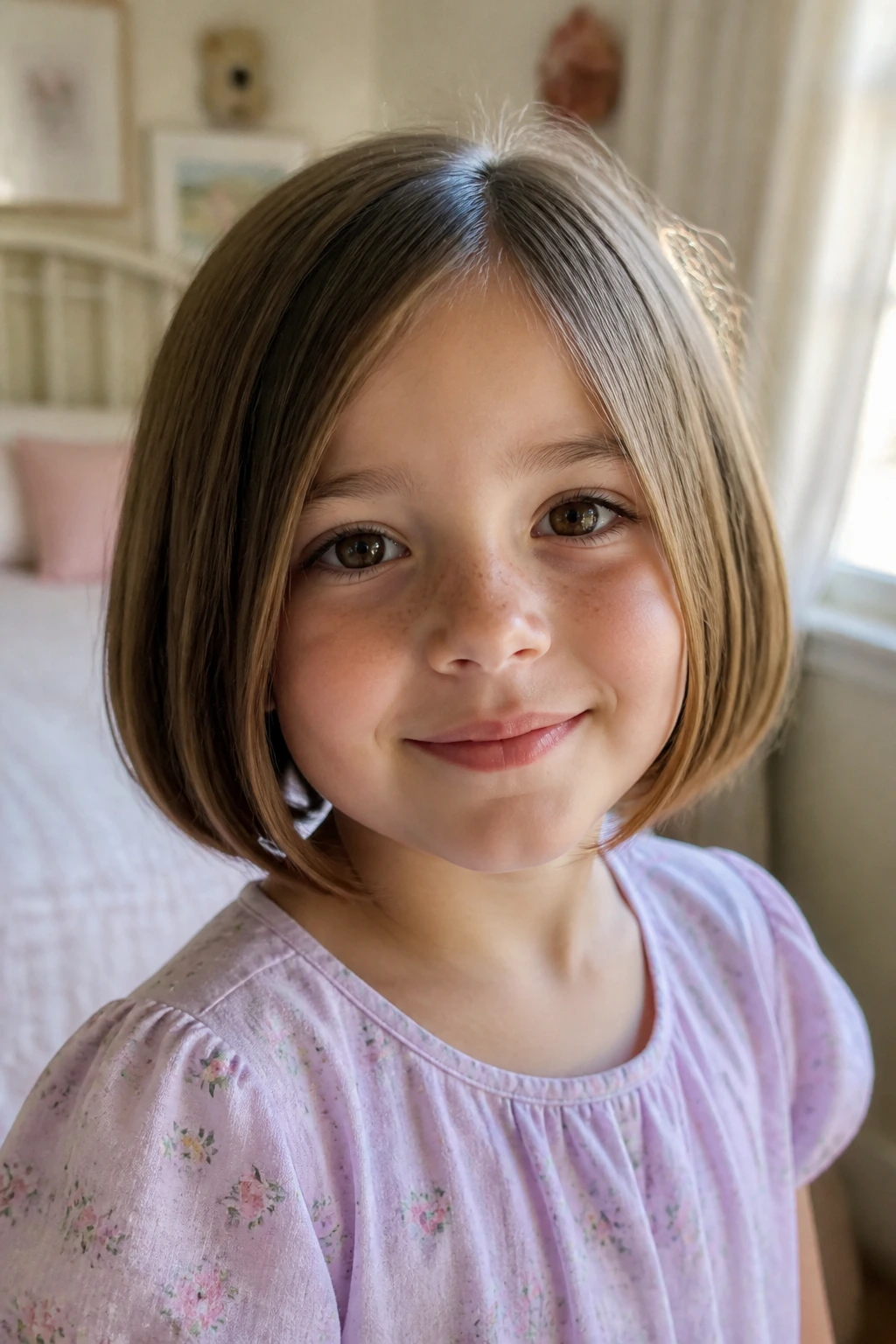
The fastest way to choose a good short haircut is to stop thinking about length first. Start with texture, crown direction, and how the hair falls around the ears. A child with fine hair usually needs a shape that creates body without too many layers. A child with thick hair often needs bulk removed from inside the shape so the bottom doesn’t balloon.
Cowlicks deserve a real conversation with the stylist. If the hair pops up at the crown, a shorter cut can either tame it or make it louder. That depends on where the weight lands. Keep more length where the cowlick lives, and the hair has a better chance of lying down. Cut too high there, and the hair will stand up like it has opinions.
The ears and neck matter too. If a child hates hair on the neck, choose a taper or a pixie with a shorter nape. If she likes tucking hair back, keep enough length around the jaw or ears to make that easy. The best short haircuts are not the ones that look impressive on a salon chair. They’re the ones that still make sense after a nap, a hoodie, and three hours of play.
Essential Tools for Short Hair Care
A good short haircut still needs a few useful things at home. Nothing fancy. Just the tools that keep the shape from turning into a fuss.
- Wide-tooth comb: Best for detangling damp hair without snapping the shorter pieces around the crown.
- Fine mist spray bottle: Useful for re-wetting a fringe or reshaping a part without starting over in the sink.
- Child-safe detangling brush: Good for smoothing the sides and nape in two or three passes.
- Sectioning clips: Helpful when you need to tame the front and the back separately.
- Light leave-in conditioner: A small amount keeps short ends from getting fuzzy, especially on thick or wavy hair.
- Soft headbands and snap clips: These are lifesavers when bangs are growing out or the front needs a break from the face.
- Small blow dryer with a low heat setting: Optional, but useful if the child hates sitting with wet hair.
- Satin pillowcase: Not a styling trick, just a practical way to cut down on morning frizz and bedhead.
How to Ask for the Cut Without Guesswork
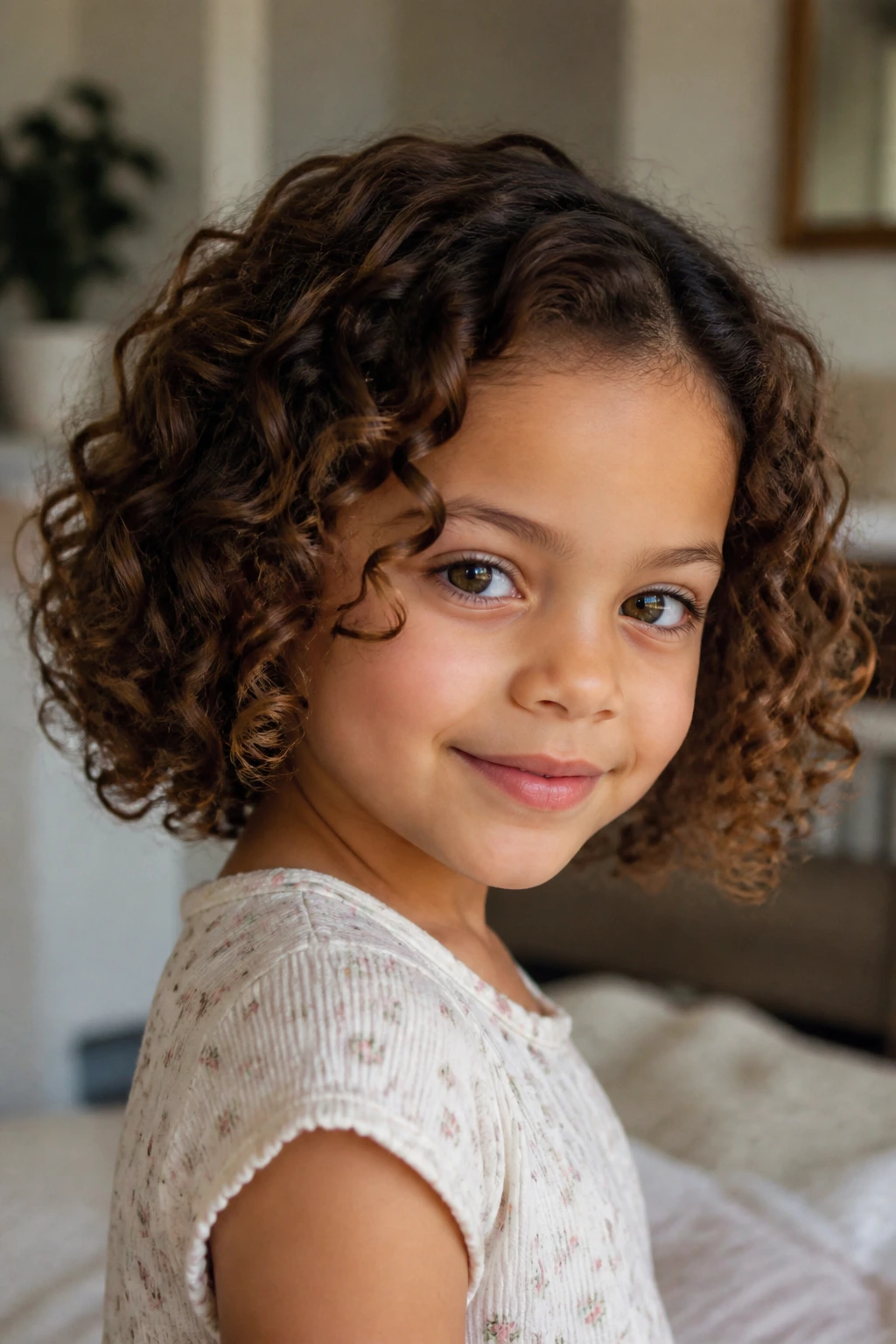
Bring photos, but bring the right photos. A picture of a glossy adult bob tells you almost nothing about how the cut will behave on a child with a different hairline, density, and growth pattern. Bring one or two photos of the shape you want, then point out the parts that matter: fringe length, neck length, side length, and whether the ears should show.
Say what the child dislikes. That matters more than people think. If she hates hair on her forehead, say so plainly. If she cannot stand anything brushing her neck, make that the first thing you mention. If she wears glasses, bring them to the appointment or at least mention where the frames sit.
Do not skip the growth-out conversation. Ask how the cut will look in 4 weeks, not just on day one. That one question weeds out a lot of bad choices. A cut that starts cute and grows awkwardly is a poor trade, especially for a child who is not going to sit still for daily styling.
For curls, ask whether the cut will be shaped dry. For thick hair, ask where the bulk will come out. For fine hair, ask how much layering is actually necessary. Those are the questions that matter.
Fast Styling Moves for School Days and Busy Mornings

Short hair can be wonderfully quick to handle, but only if you don’t overcomplicate it. Most little girls need one of three things: a fresh part, a little water, or a tiny bit of product. That’s usually enough.
Damp reset: Mist the front and sides lightly, then smooth with your hands or a brush. A cowlick that looks wild at 7:30 often settles after 30 seconds of dampening and brushing in the right direction.
Part-and-push: On bob lengths, change the part by half an inch and push the front across the forehead or behind one ear. That simple move changes the whole shape.
Clip the front, not the sides: If bangs are growing out, use a small clip to hold the fringe back at the root rather than pinning the ends flat. It looks neater and does not create a crease.
Use less product than you think: A pea-sized amount of leave-in or smoothing cream is plenty for most short cuts. Too much makes short hair look greasy in a hurry.
Save heat for special occasions: Most of these cuts do not need daily blow-drying. A towel, a comb, and a little patience usually do the job.
The Mistakes That Turn a Cute Cut Into a Fuss
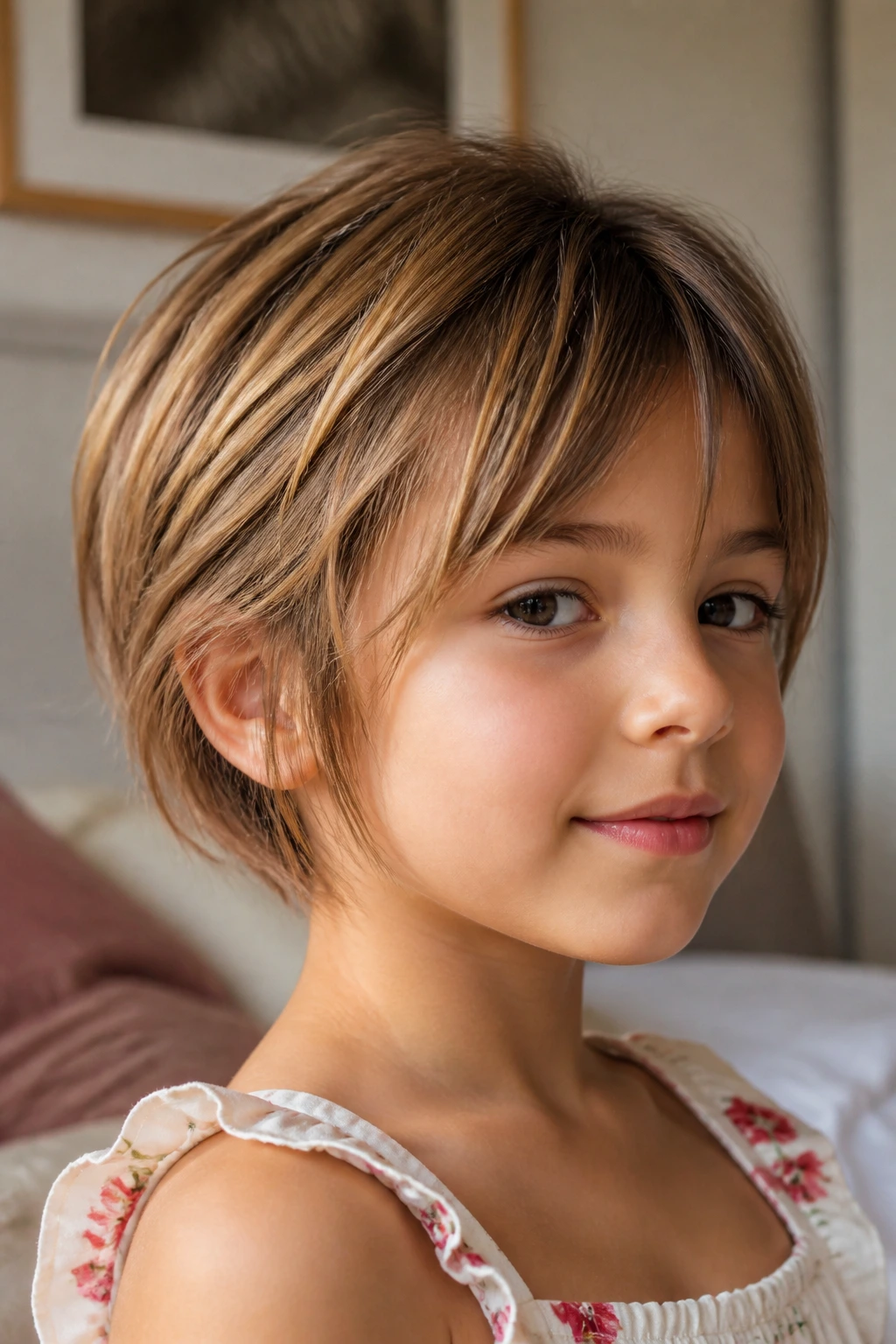
The biggest mistake is cutting bangs too short. They look tidy on the day of the cut, then bounce up, split, and land right in the eyes after the first wash. Leave fringe longer than you think you need, especially on straight hair that shrinks a little as it dries.
Another common miss is thinning thick hair in the wrong places. If the stylist removes too much bulk from the top or crown, the hair can puff out at the sides and look wider, not lighter. Bulk should be removed inside the shape, not stripped from the visible outline unless the hair is genuinely dense and heavy.
Skipping the grow-out plan causes trouble too. A strong bob line or a very short crop needs a trim schedule. Without it, the nape gets fuzzy, the fringe collapses, and the sides start to stick out in ways no brush can fix.
And here’s the sneaky one: choosing a style that needs daily styling when the child has zero patience for it. A cut can be lovely and still be wrong for the family’s morning rhythm. If she hates touching her hair, choose a cut that falls into place with a comb, not a round brush and a prayer.
Better Versions for Fine Hair, Thick Hair, Curls, and Waves

Fine-hair fix: Keep the perimeter blunt and use light internal shaping. Fine hair often looks fuller when the ends are clean and the layers are modest.
Thick-hair fix: Go for a layered bob, tapered nape, or soft shag. These remove bulk where it clogs the shape and keep the cut from puffing outward.
Curly-hair fix: Cut for the curl pattern, not against it. Dry cutting or curl-by-curl shaping keeps the silhouette honest after shrinkage.
Wavy-hair fix: Choose styles that can live a little messily — bixies, shaggy bobs, and side-swept pixies all work because they do not rely on precision every single day.
Accessory-friendly fix: If she likes clips and bands, keep the front long enough to pin back. That gives you far more styling range than a cut that’s too short at the temples.
How to Keep the Shape Between Trims
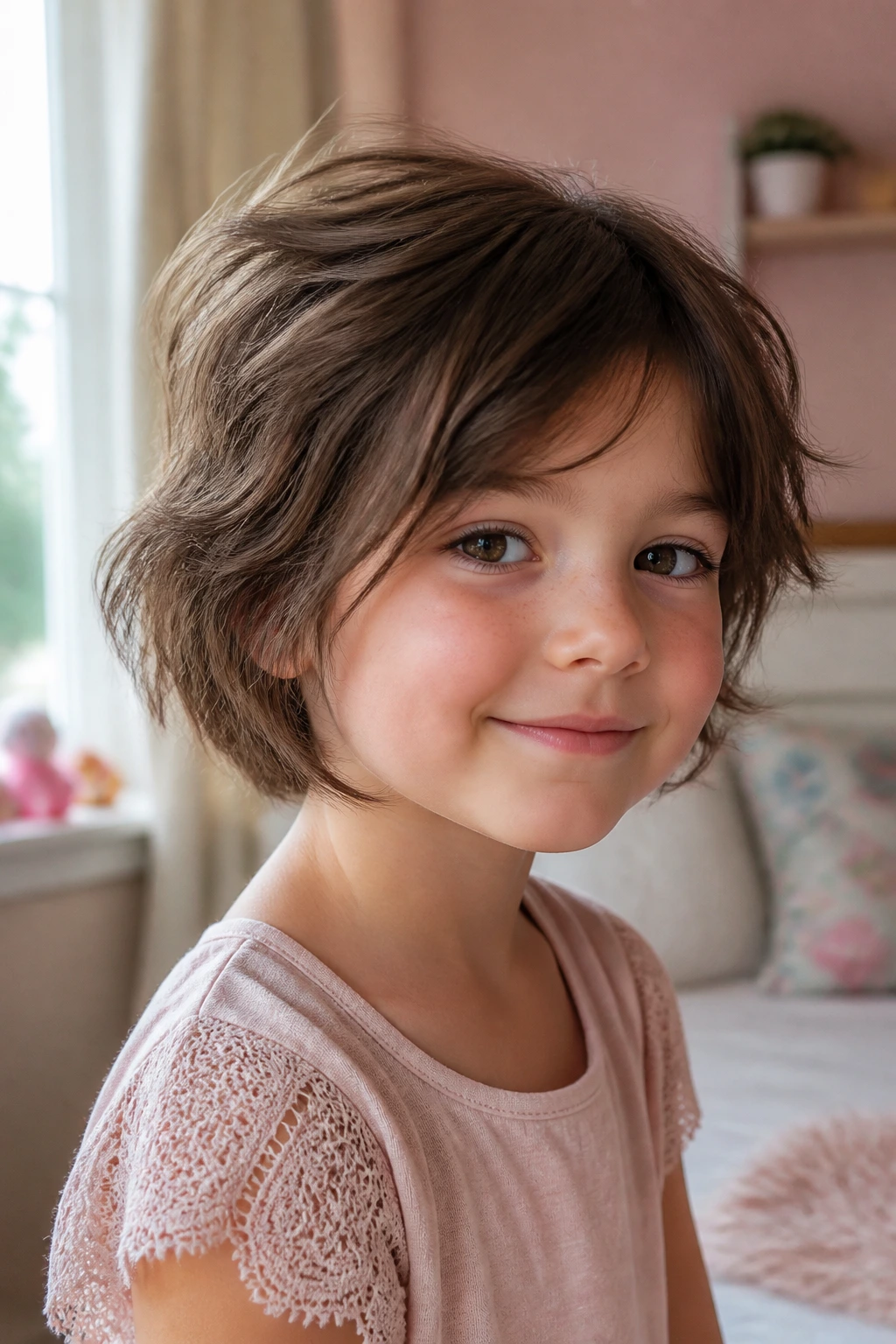
Short hair on little girls usually needs more frequent shaping than long hair, but not every style needs the same schedule. A blunt bob can often go 6 to 8 weeks before it starts losing its line. A pixie, especially one with a tapered nape, usually needs attention closer to every 4 to 6 weeks if you want it to stay crisp. Bangs may need a tiny trim even sooner.
Wash schedule matters less than shape maintenance. Most children do fine washing short hair every 2 to 3 days unless they’ve been swimming, sweating, or getting sticky from paint, food, or playground dust. Between washes, a spray bottle and a quick brush-through are often enough. The goal is not to make the hair look salon-fresh every morning. The goal is to keep it from tangling and sticking up in places that bother her.
Save clips, barrettes, and headbands in one small basket near the comb. That keeps the routine simple. When accessories are easy to grab, you actually use them instead of leaving them in a drawer and muttering about how they’d solve everything if you could find them.
Questions Parents Ask About Short Hair on Little Girls

What short haircut works best for fine hair?
A blunt bob or a long pixie usually gives fine hair the most body. Too many layers can make the ends look wispy, so clean edges tend to work better.
What about thick hair that puffs up?
Ask for internal layering, not random choppy ends. A layered bob, soft shag, or tapered nape cut usually removes the bulk without making the hair look thin.
Will bangs make mornings easier or harder?
Both, depending on the child. Bangs keep hair out of the eyes, but they need trimming and occasional restyling. If you want less upkeep, choose curtain bangs or a side-swept front instead of a straight fringe.
How often should a little girl with short hair get trims?
Most short cuts need shaping every 4 to 8 weeks. Pixies and tapered crops usually need the most frequent trims, while bobs can go a bit longer.
Can short hair still go into clips or tiny ponytails?
Sometimes, yes. A lob, bixie, or long pixie gives you the most room for clips and little pulled-back sections. Very short crops are more about accessories than tying hair back.
What if she hates the new haircut after the first wash?
Start with a wet reset and a different part before you panic. Many short cuts look odd for a day or two until the hair settles. If it still feels wrong after that, a trim around the fringe or sides usually helps more than waiting.
Should I bring a child’s photo or an adult’s photo to the stylist?
Bring whatever shows the shape best, but point out the details you actually want. A child’s hairline, density, and neck shape matter more than the person in the picture.
Can curly hair be cut short without turning into a triangle?
Yes, if the cut is shaped for the curl and not over-layered at the top. The perimeter needs balance, and the stylist should respect shrinkage instead of guessing.
Growing Out Gracefully
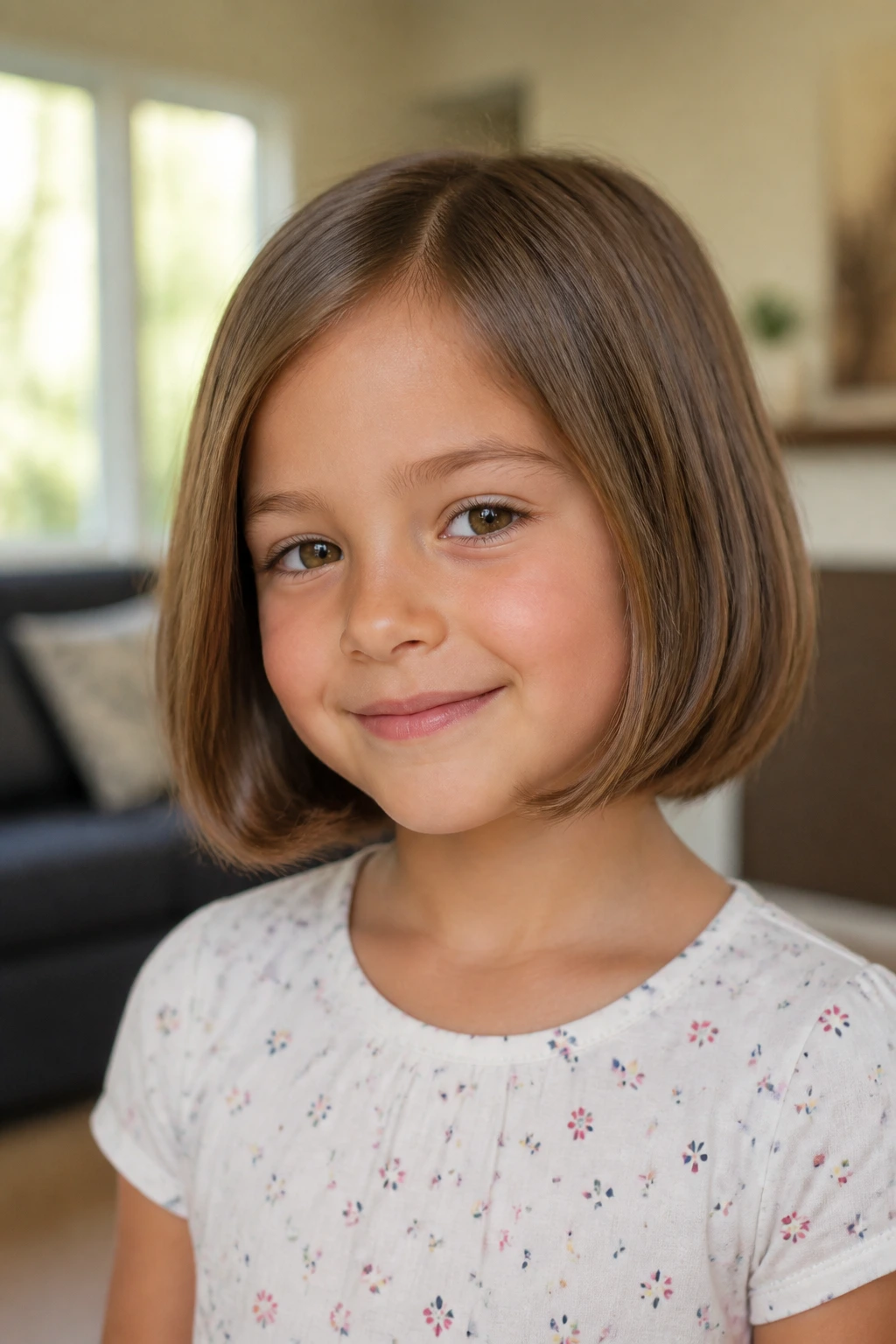
The best short haircut for a little girl is the one that still looks like itself after it has grown for a few weeks. That’s the part most people miss. They choose for the first day, then spend the next month fighting the nape, the fringe, and the sides. A smarter cut makes those weeks easier.
If you keep one thing in mind, make it this: pick the shape based on hair pattern, not just a photo. The right bob, pixie, or crop will work with her cowlicks, her curls, and her patience level. That’s what turns a cute haircut into one she’ll actually live with.
Book the next trim before you leave the salon. It’s a small thing, and it saves a lot of chaos later.
