



Curly hair on boys has a way of telling the truth fast. Cut it too bluntly and it puffs into a triangle. Leave the wrong weight at the temples and it turns into a helmet by lunchtime. The right boys haircuts for curly hair don’t fight the curl pattern at all — they give it a shape that still looks good after recess, after a nap in the car, and after somebody has yanked a sweatshirt over the head in a hurry.
That shape matters more than most parents realize. Curly hair shrinks as it dries, sometimes by a full inch or more depending on the curl type, which is why a cut that looked fine in the barber chair can feel tiny once the hair springs up at home. The trick is to think in movement, not just length. A good curly cut lets the crown breathe, keeps the sides from ballooning, and gives the front a clean line or a soft fall instead of a random puff.
And yes, there’s room for personality. Some boys look best with a neat taper and a little fringe. Others need heavier sides cleaned up so the top can do its thing. A few can pull off a shag, a mini frohawk, or a curly bowl cut that sounds odd on paper but looks sharp when the curl pattern is dense enough to hold the outline. The useful part is knowing which shape matches which head of hair — and that’s where the good stuff starts.
Why These Curly Cuts Earn Their Keep
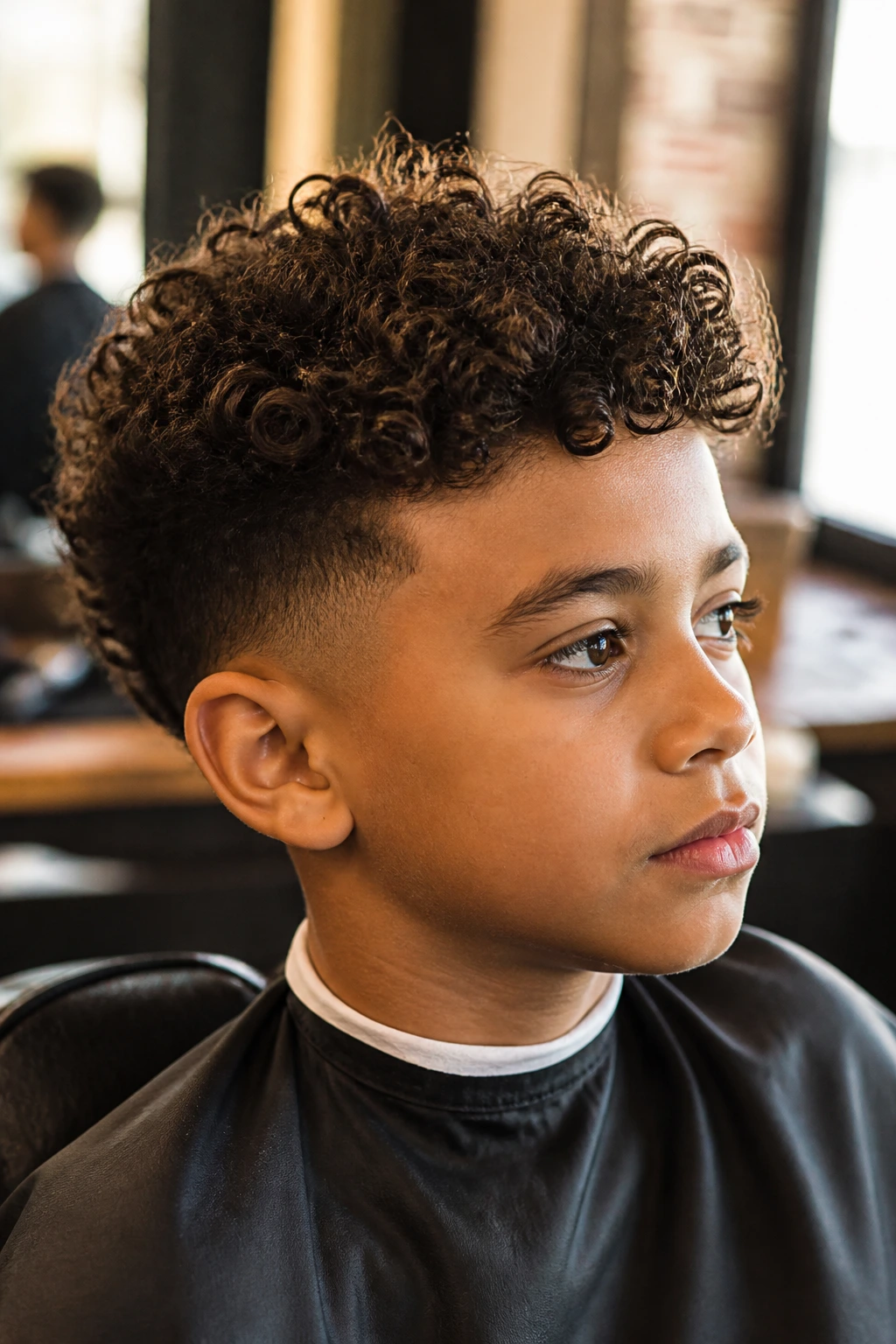
- They work with shrinkage, not against it: Curly hair always sits shorter once it dries, so these cuts leave room for that spring instead of trimming the top into a surprise buzz.
- They cover different curl patterns: Loose waves, springy ringlets, tight coils, and thick mixed textures all need different balance at the sides and crown.
- They grow out without looking messy fast: A clean taper, low fade, or scissor shape keeps the haircut looking intentional even when it’s gone a few weeks.
- They fit school mornings: Most of these styles can be refreshed with water, leave-in conditioner, and 30 seconds of finger scrunching.
- They leave room for personality: Clean, sporty, soft, edgy, longer, shorter — there’s space here for kids who want to look neat and kids who want a little swagger.
- They give the barber a clear target: When you can name the shape, length, and fade height, the chair conversation gets a lot easier.
1. Curly Taper Fade
A curly taper fade is the haircut I’d hand to a parent who wants clean edges without flattening the top. Keep 2 to 4 inches on top, taper the sideburns, and let the neckline fade softly instead of boxing it off. The curls sit up better when the bottom half is trimmed with purpose.
Why It Works
The fade pulls the eye downward and stops the sides from ballooning. That’s the whole trick. If the curls are medium or tight, this cut makes them look controlled without making them look stiff.
Best for: boys who need a tidy school cut that still leaves room for curl bounce.
Ask for: a low taper around the ears and nape, with the top left long enough to scrunch.
Tiny detail that helps: cut the top dry or nearly dry so the barber sees the real curl pattern.
2. Textured Curly Crop
This one is blunt in the right places and choppy where it counts. The textured curly crop keeps the top short enough to stay easy, usually around 1.5 to 3 inches, while the sides taper down so the shape doesn’t puff out at noon.
The best version looks slightly messy on purpose. Not sloppy. Just soft, broken-up, and alive.
Use it when: the hair is thick and grows forward with a mind of its own.
What to tell the barber: keep weight off the corners of the forehead and point-cut the top so the curls don’t land as one solid block.
Good finishing move: a pea-sized bit of curl cream or light matte paste rubbed through damp hair.
3. Curly Fringe with a Soft Taper
Does your kid have curls that want to fall onto the forehead anyway? Then let them. A curly fringe with a soft taper keeps the front longer — usually brow length when stretched — and cleans the sides just enough to stop the whole shape from getting wide.
How to Get the Most From It
The fringe works because it uses the curl’s own bend. You’re not forcing a side part, and you’re not trying to slick anything down. You’re letting the front curve a little, which looks especially good on boys with oval or long faces.
A soft taper is the part people miss. If the sides stay too full, the fringe looks accidental. If the taper is clean and low, the front becomes the point of the haircut.
Tip: don’t blow-dry the fringe flat. Scrunch it from underneath or let it air-dry forward.
4. Burst Fade Curly Top
Picture a curl-heavy top sitting above the ears, with the fade curving around the back like a neat arc. That’s the burst fade. It gives curly hair a little drama without going full mohawk, and it looks especially sharp when the curls are dense.
Why It Stands Out
The curved fade makes the haircut feel sporty and structured. It’s one of those cuts that looks even better from the side than from the front. If the curls are springy, the burst shape can keep the top looking lifted while the fade removes bulk right where kids usually get that mushroom effect.
Best for: boys who want something a little bolder than a regular taper.
Barber note: keep the burst tight behind the ear and leave enough top length for the curls to sit round, not flat.
Watch out for: fading the sides too high if the face is already narrow.
5. Curly Undercut
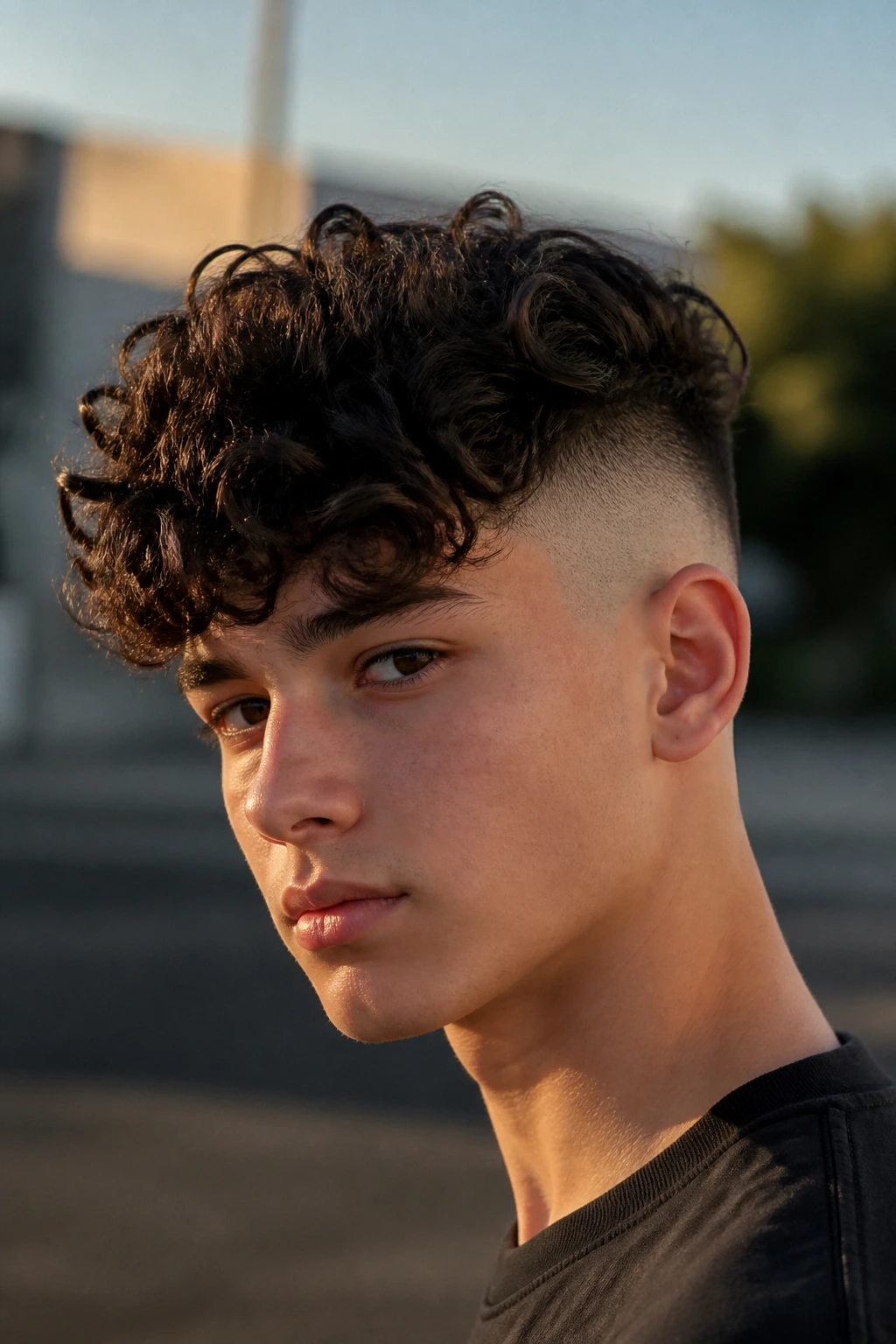
The curly undercut is a sharper, more obvious contrast cut. The top stays longer — often 4 to 6 inches — while the sides are clipped short and disconnected. It’s a strong shape, and that’s either the whole appeal or the whole problem.
When it’s done well, it gives curly hair a real frame. When it’s done too hard, it can look like two different haircuts sharing the same scalp. Keep the transition clean and the top loose, and it works.
Best for: older boys and teens who like a style with edge.
Ask for: a visible disconnect, but not a choppy shelf at the top.
Works best with: thick curls that stand up on their own without much product.
6. Curly Shag
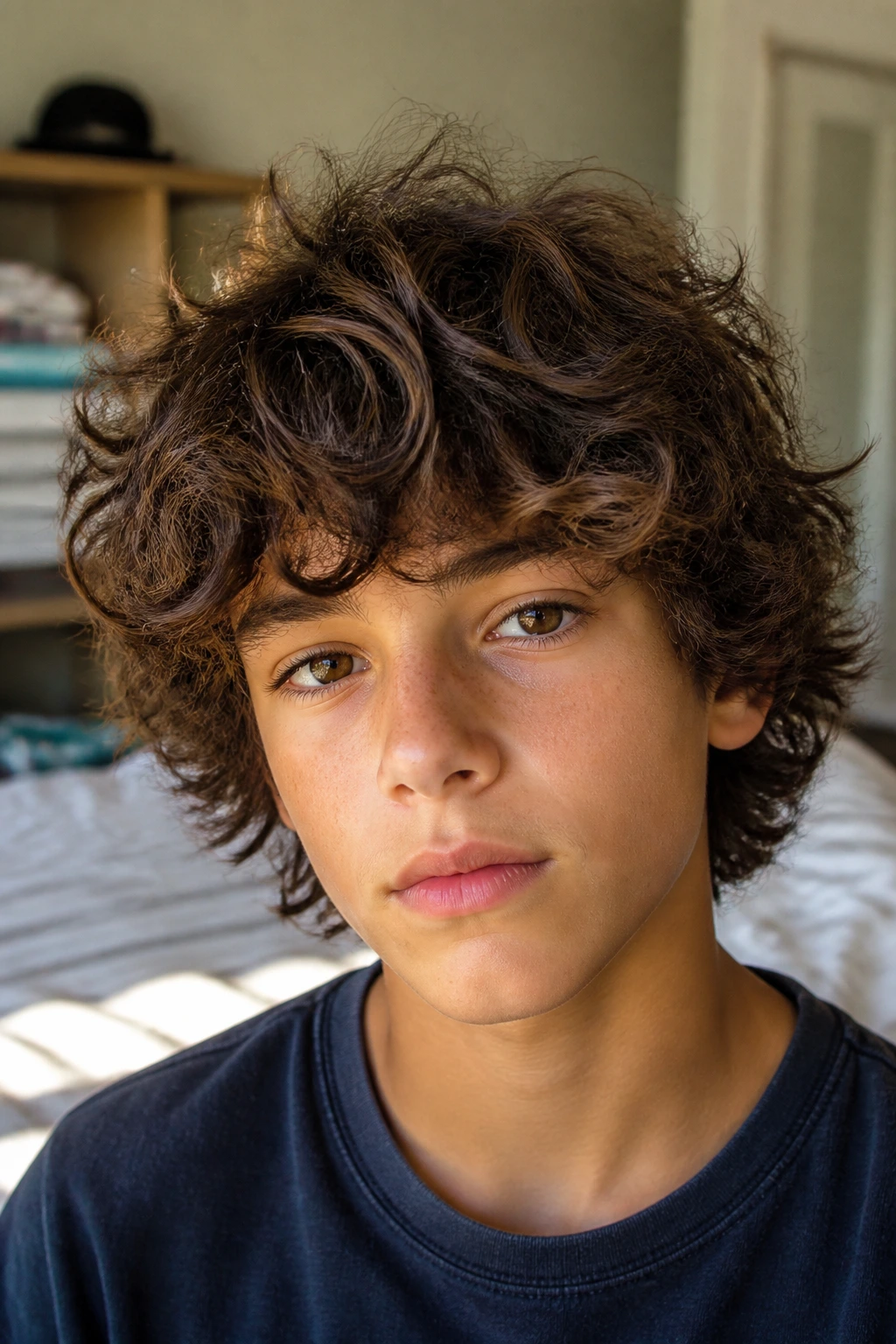
The curly shag is a layered cut with movement all over it — top, sides, and back. It works because curly hair already has texture, and the layers keep that texture from sitting like a heavy block. If you’ve got a kid who hates the “short back and sides” look, this is the escape hatch.
It feels a little freer than a fade. A little cooler too, honestly. The key is keeping the layers soft so the haircut grows out into a longer, lived-in shape rather than a lopsided mop.
Best for: medium curls and boys who don’t mind a longer, artsier silhouette.
What to say in the chair: layer the crown, lighten the bulk near the ears, and leave enough length for the curls to fall naturally.
Best styling habit: a leave-in conditioner and a quick finger rake, nothing fussy.
7. Curly Caesar
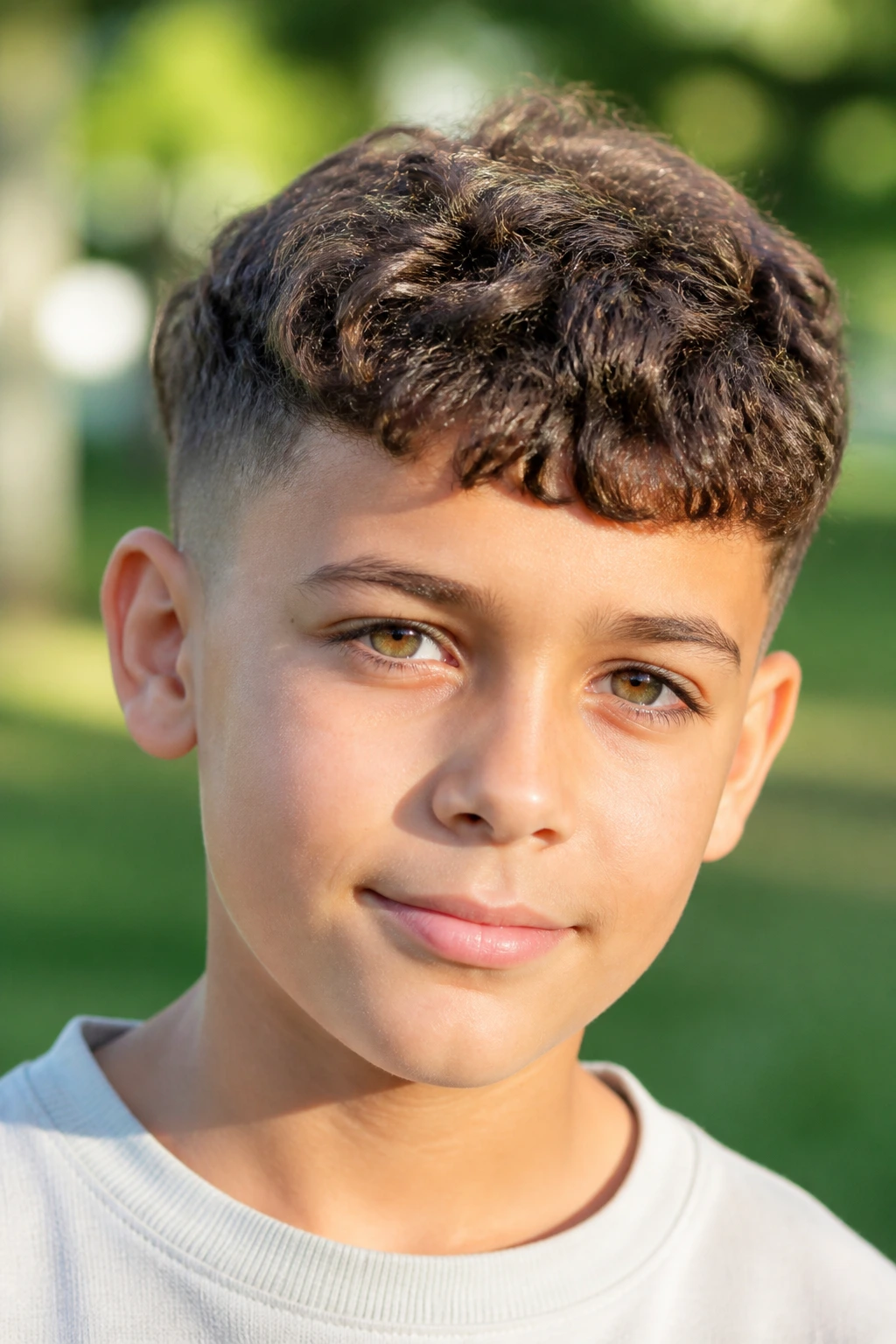
Short, forward, and blunt at the front — that’s the curly Caesar. It keeps the top cropped and pushes the curl pattern toward the forehead in a short fringe. On tight curls, it can look crisp. On looser curls, it looks relaxed and athletic.
The appeal is simplicity. There’s not much to do in the morning except dampen the hair and press it into place with your fingers. If the curls are dense, though, the top needs enough length to avoid turning into a flat brush cut.
Best for: boys who want low-maintenance and don’t care about much height on top.
Tip: ask the barber to keep the front soft, not square, so the fringe follows the curl line.
When it misses: if the top is trimmed too short, the curl pattern loses its shape and the cut just looks clipped.
8. High-Top Curls
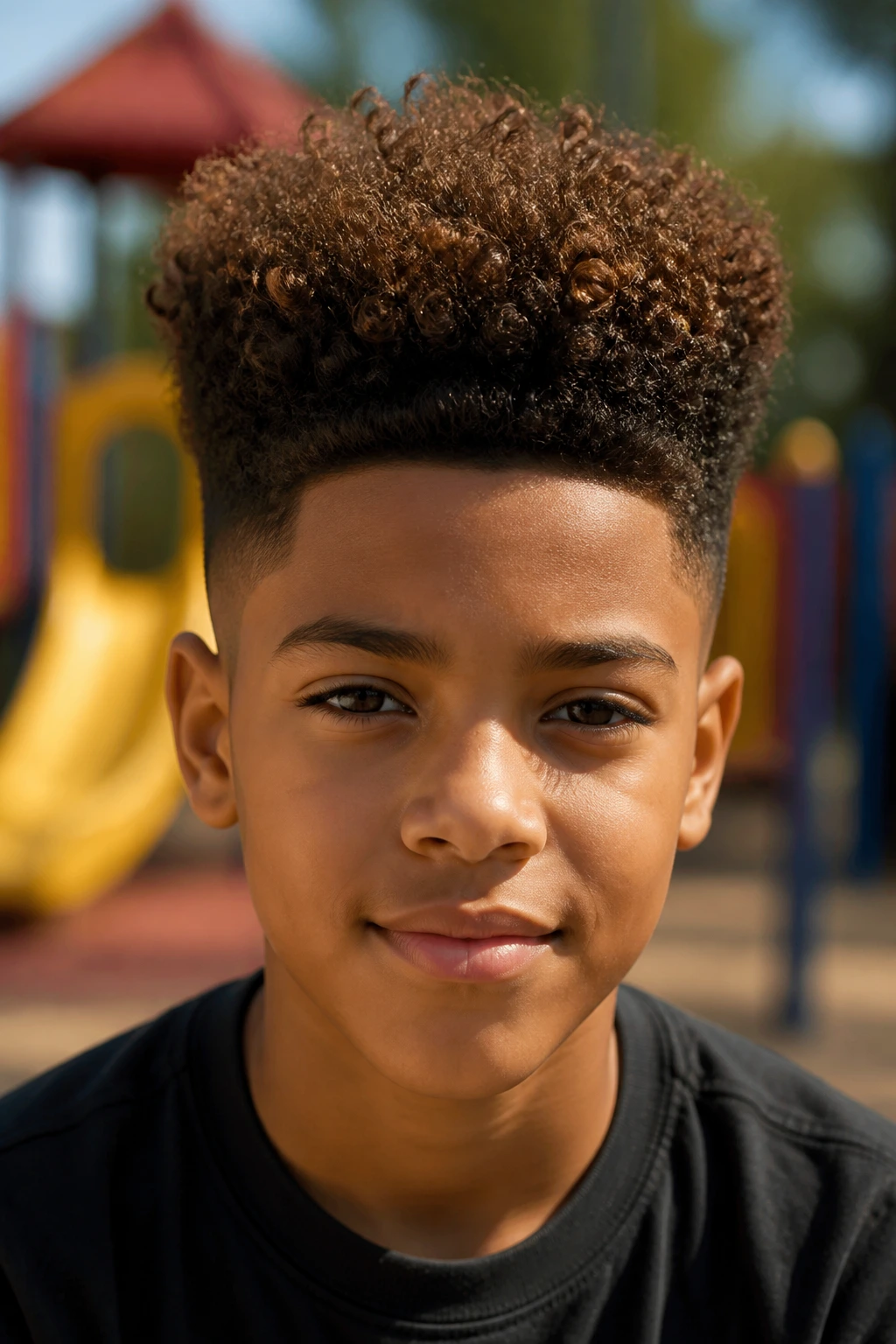
High-top curls make the most of vertical volume. The sides stay tight while the top rises and holds its shape, especially on tight coils or very dense curly hair. It’s a cut with real presence. No need to pretend otherwise.
The shape works because curly hair already wants to expand upward when it dries. A skilled barber can round the top just enough to keep it tidy, then clean the sides so the silhouette feels deliberate. It can be playful on younger boys and sharp on older ones.
Best for: thick, coily hair that likes height.
Barber request: keep the top rounded, not flat, and bring the fade low enough that the shape doesn’t look boxy.
Extra note: a sponge or curl cream can help define the top without making it crunchy.
9. Low Fade with Loose Curls
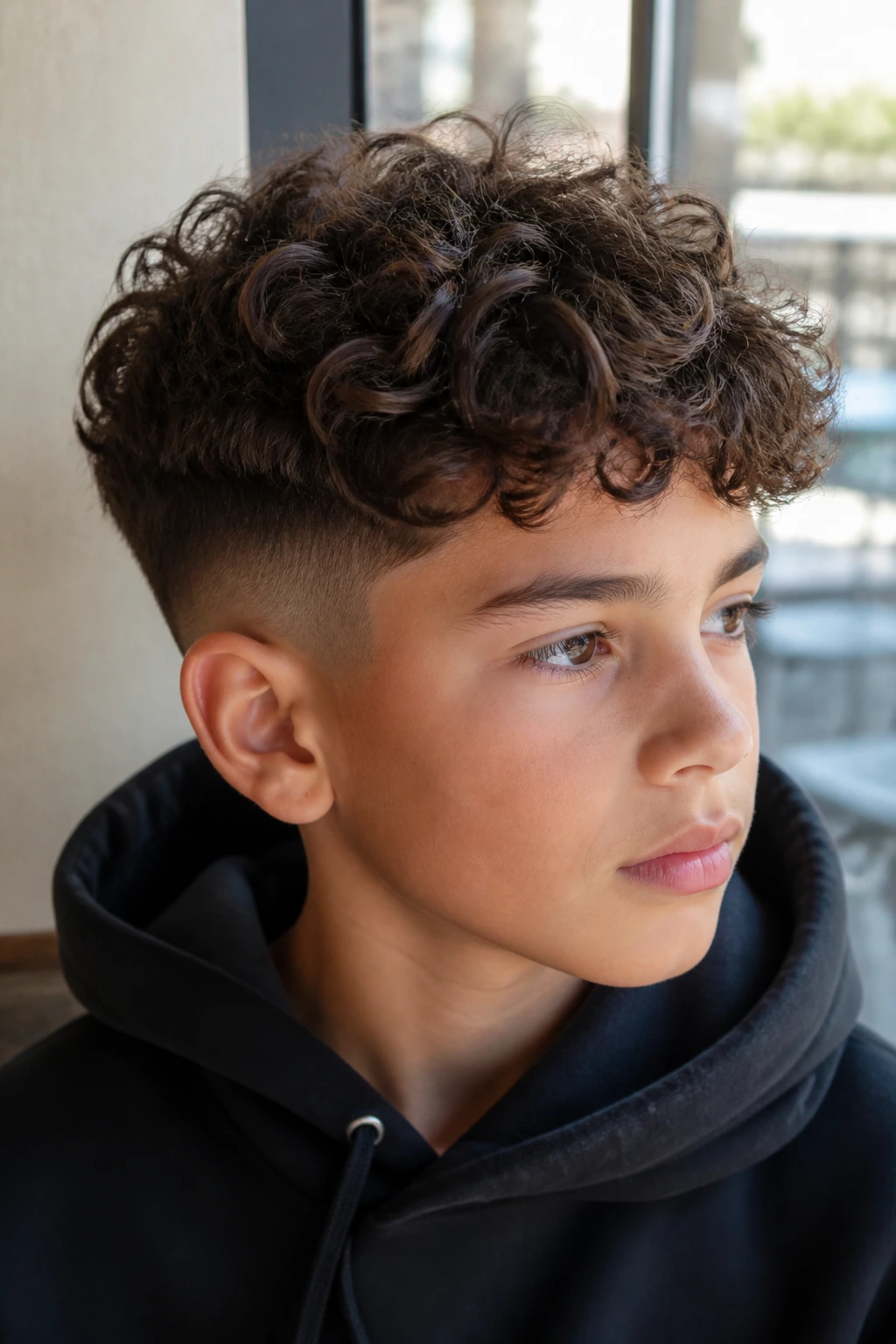
A low fade with loose curls keeps the haircut calm. The fade begins near the ear and neckline, leaving most of the weight on top so the curls can drape instead of spike. It’s a clean choice for boys whose curls are soft, springy, or a little wavy.
This cut works especially well when you want the hair to look good without a lot of styling. The low fade does the quiet work; the curls do the rest. Nothing forced. Nothing overdone.
Best for: looser curls that fall rather than coil.
Tell the barber: don’t fade too high, or the top starts looking disconnected in a way the curls won’t forgive.
Styling note: a light leave-in spray is usually enough. Heavy product can weigh the waves down.
10. Mid Fade with Defined Curls
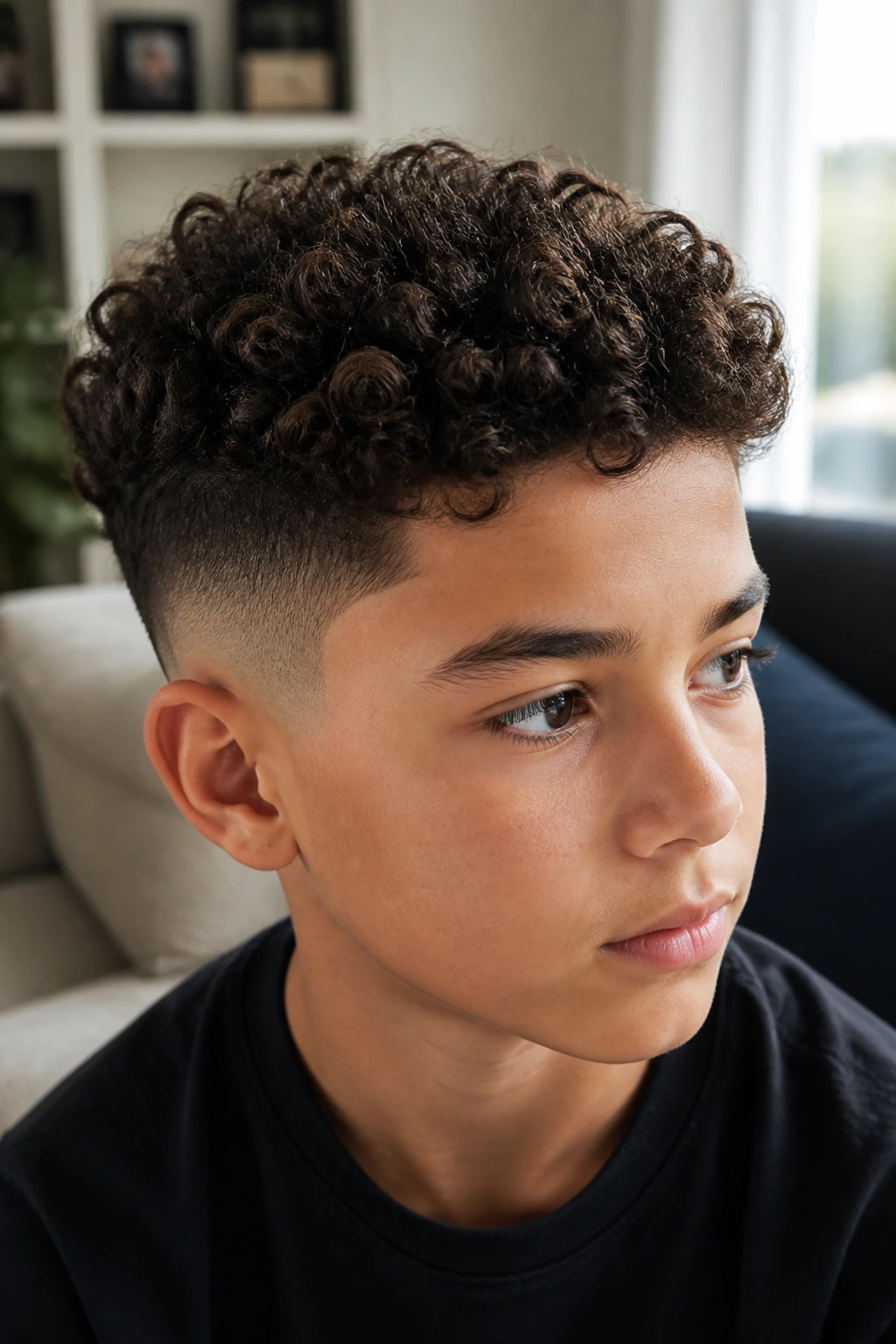
The mid fade gives you a bit more contrast than a low fade, and that’s useful when the curls are thick enough to carry a stronger shape. It clears the space around the ears and temples, then lets the top keep its spring.
I like this one on boys with rounder faces because the extra vertical shape helps the haircut feel taller and less wide. It’s still neat. It just has more presence than the soft low fade.
What makes it different: the fade starts higher, so the curl pattern on top stands out harder.
How to wear it: define the top with a curl cream or light gel, then let it air-dry or diffuse for 5 to 8 minutes.
Barber detail: keep the transition smooth. A harsh shelf between the fade and top looks clunky on curly hair.
11. Side-Part Curly Cut
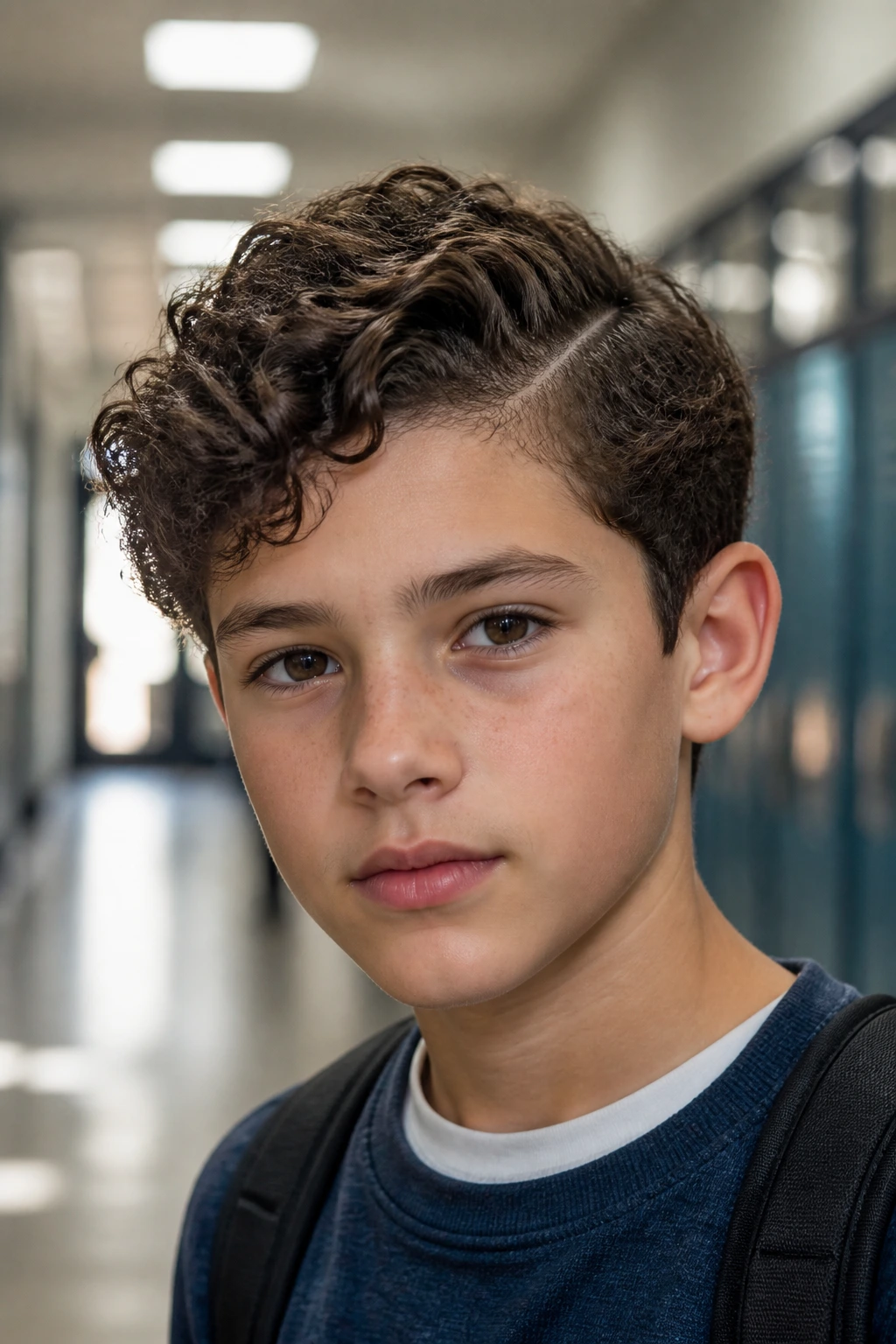
A side-part curly cut sounds tame, but it can be one of the sharpest options on the list. The part gives structure, while the curls keep the style from looking stiff or old-fashioned. That balance is the whole point.
It works best when the top has enough length to fall to one side without being dragged flat. The barber should follow the natural growth pattern instead of forcing a hard line that fights the crown.
Best for: school photos, dressier occasions, and boys who like a more polished shape.
Ask for: a soft part and a scissor-cut top with tapered sides.
Good add-on: a little water-based cream to keep the part visible without freezing the curls in place.
12. Curly Mullet
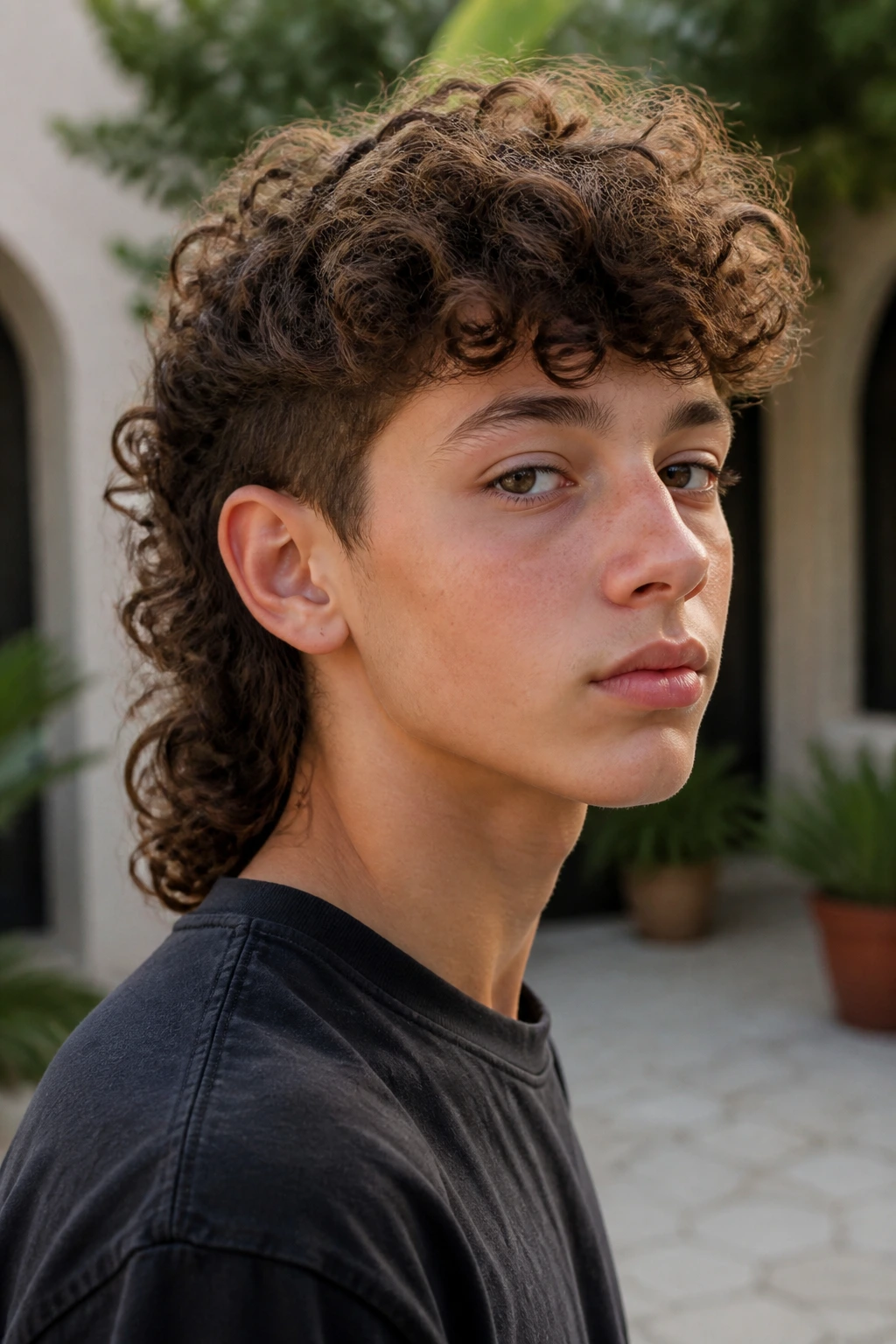
Yes, it’s back. But on curly hair, the mullet can look surprisingly modern because the curl pattern softens the shape. Keep the front and sides shorter, leave more length in the back, and the whole cut reads less costume and more cool.
The important part is balance. A curly mullet should still have a clean front line and neat sides, or it turns shaggy fast. The back length should feel intentional, not forgotten.
Best for: boys with a bit of confidence and curls that sit well with extra back length.
Who should skip it: kids whose hair grows very flat in the crown area — the silhouette can look droopy.
Style move: scrunch the back lightly so it doesn’t hang limp.
13. Rounded Scissor Cut
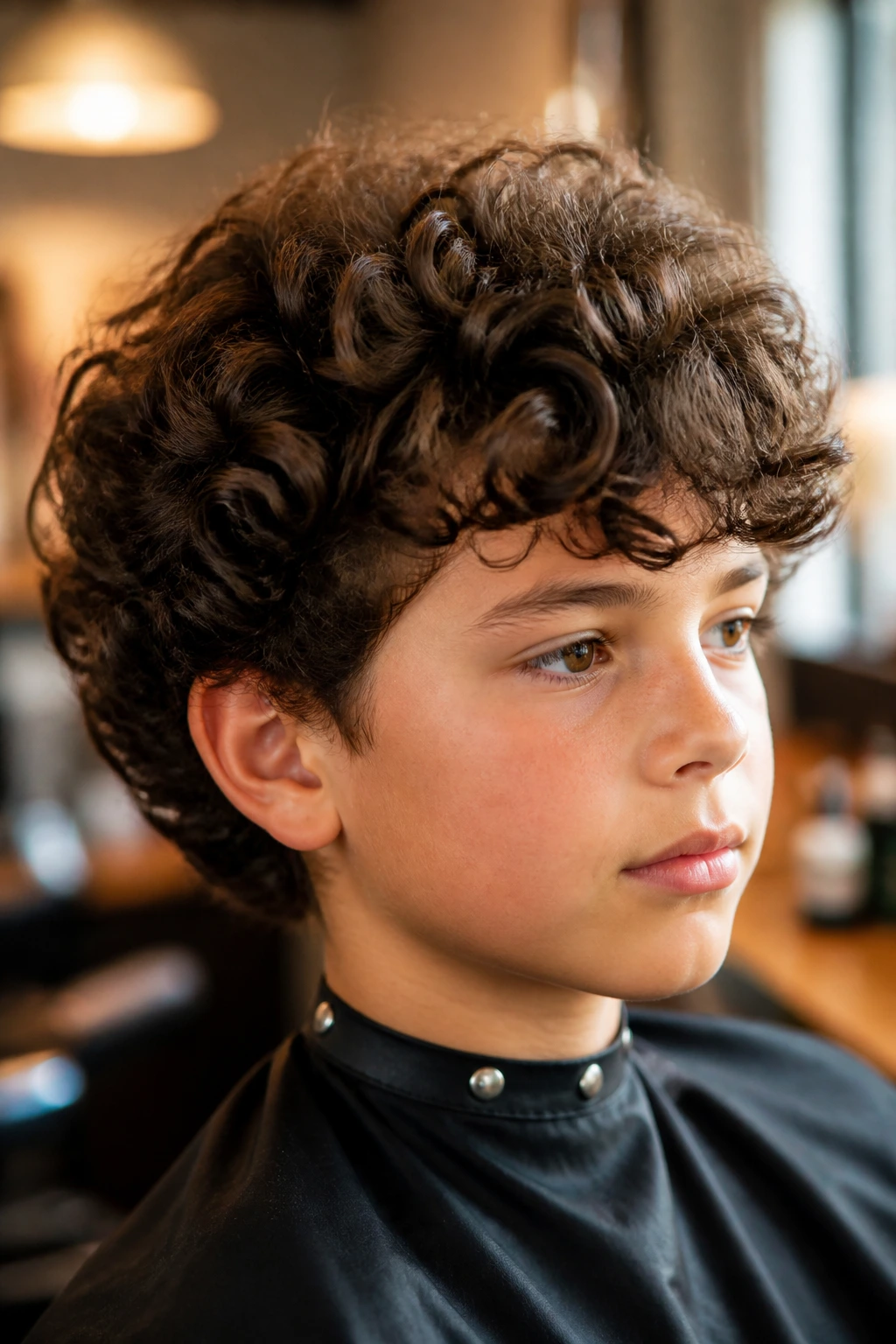
This is the barber’s haircut, in the best sense. No hard fade needed, no heavy clipper line, just a rounded scissor shape that follows the head and keeps the curls soft all the way around. It’s especially good for families who want a cut that grows out gracefully.
The round outline matters. It keeps curly hair from building too much width at the sides while still leaving the top natural. If the curls are dense, this cut can look full in a good way instead of puffy in a bad one.
Best for: boys who wear their curls naturally and don’t want a super short style.
Barber note: ask for the silhouette to be rounded at the temples and crown, not chopped straight across.
Why I like it: it rarely looks awkward halfway through the grow-out.
14. Temple Fade Curls
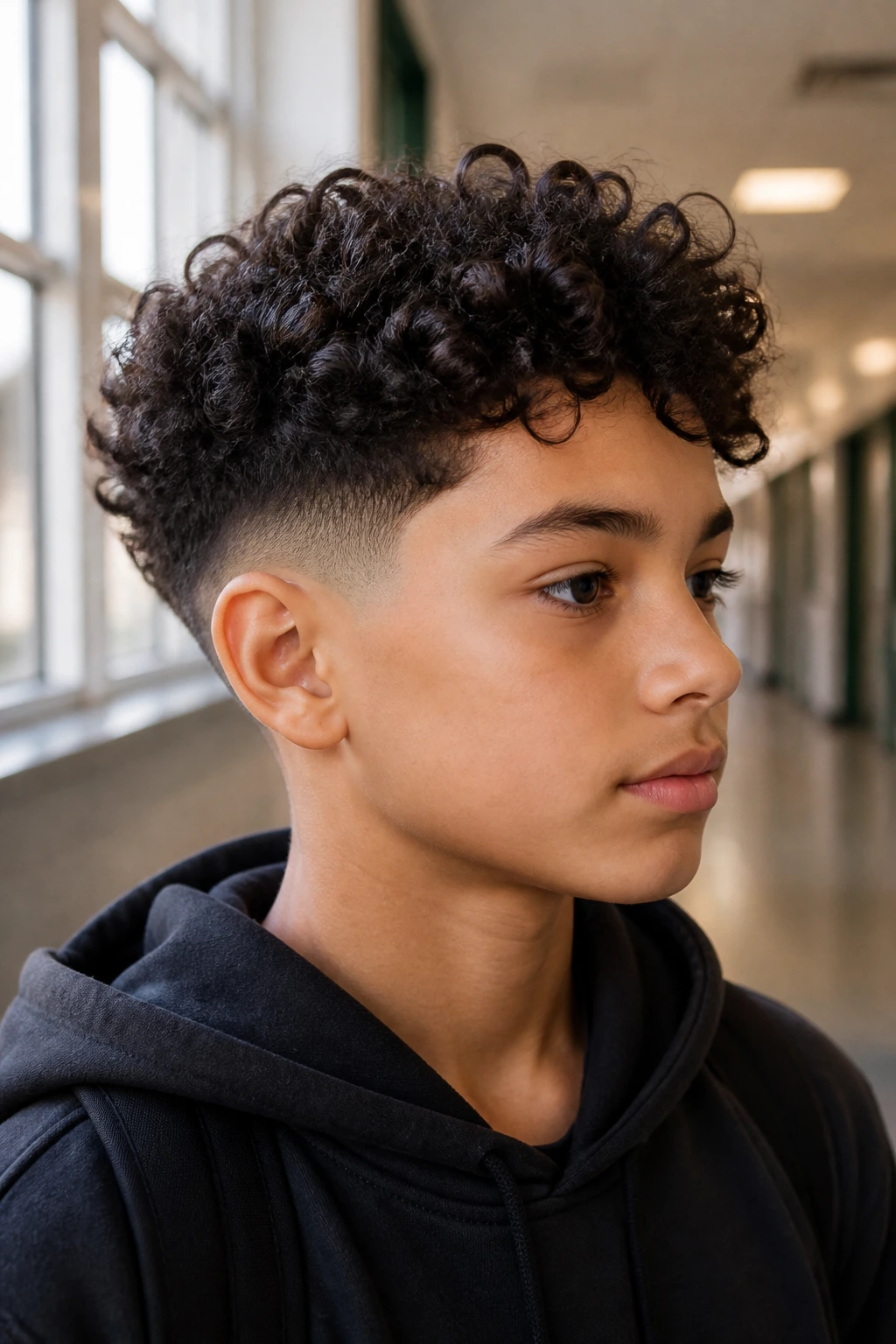
A temple fade gives curly hair a cleaner edge right where the haircut tends to get bulky first. It leaves the back and sides longer than a skin fade would, but sharpens the temples enough to make the whole cut look fresh.
That little bit of shape near the temples can change the whole face line. It’s subtle, which is useful if your kid doesn’t want anything too dramatic. The curls can stay lively on top while the sides stay trimmed where they matter.
Best for: boys with fuller cheeks or broader foreheads.
What to request: keep the temple fade low and soft, then let the top remain naturally curly.
Good with: medium to thick curls that need just a bit of cleaning around the edges.
15. Drop Fade Curls
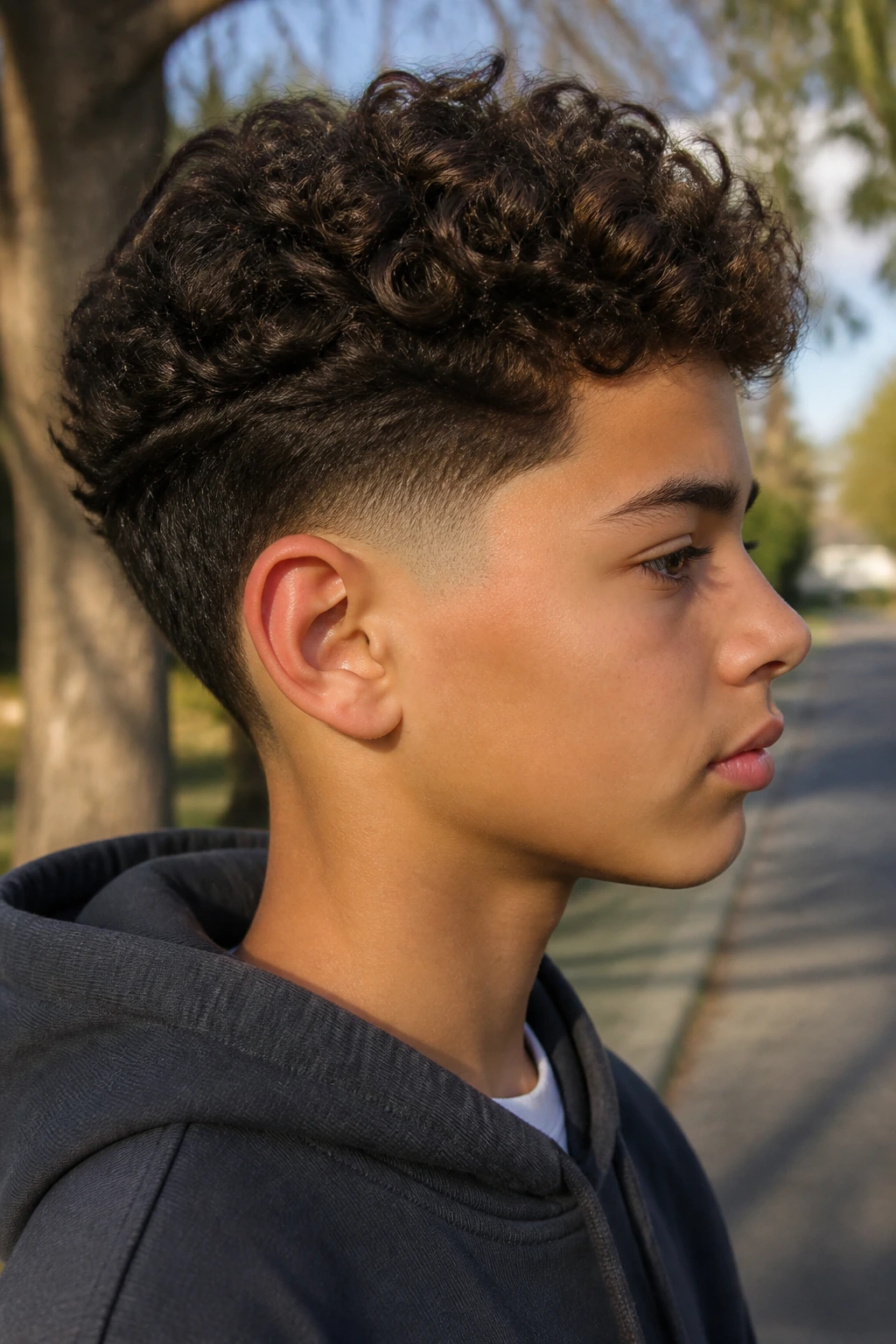
A drop fade curves down behind the ear, which gives the haircut a bit of motion. On curly hair, that curve makes the fade feel built into the style rather than chopped onto it. It’s a small detail, but it changes the whole side profile.
The drop fade is especially nice when the top has volume and the crown needs a little help looking controlled. The fade drops lower at the back, so the outline hugs the head more naturally.
Best for: boys whose curls puff out around the ears and nape.
Barber request: keep the drop smooth and do not let the fade ride too high at the temple.
Simple styling fix: a damp finger-comb and a small amount of cream is usually enough.
16. Curly Ivy League
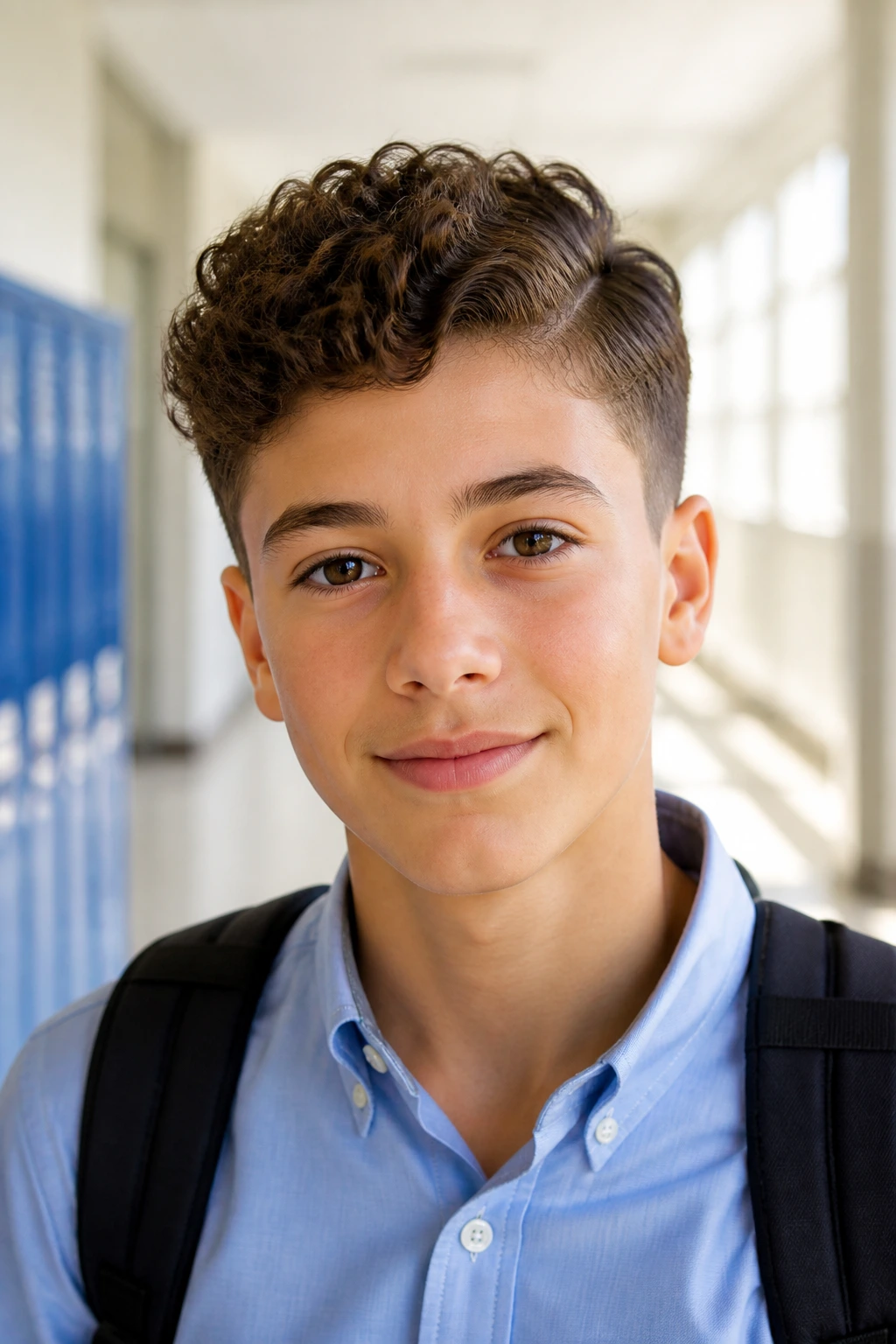
The curly Ivy League is one of the cleaner, dressier curly styles. Think short tapered sides, a modest amount of length on top, and enough curl left in the front to side-part or brush slightly back. It’s neat without becoming flat.
It works because the cut gives the hair a more tailored outline. That helps on boys who need a style that can go from school to family photos without a lot of fuss. The top should stay long enough to show texture, not turn into a crew cut.
Best for: older boys, formal events, or anyone who likes a tidy look.
Tell the barber: keep the top textured and the side taper soft, so the curl pattern still shows.
Pair with: a lightweight styling cream and a comb only if the curls are loose enough to obey.
17. Layered Medium Curls
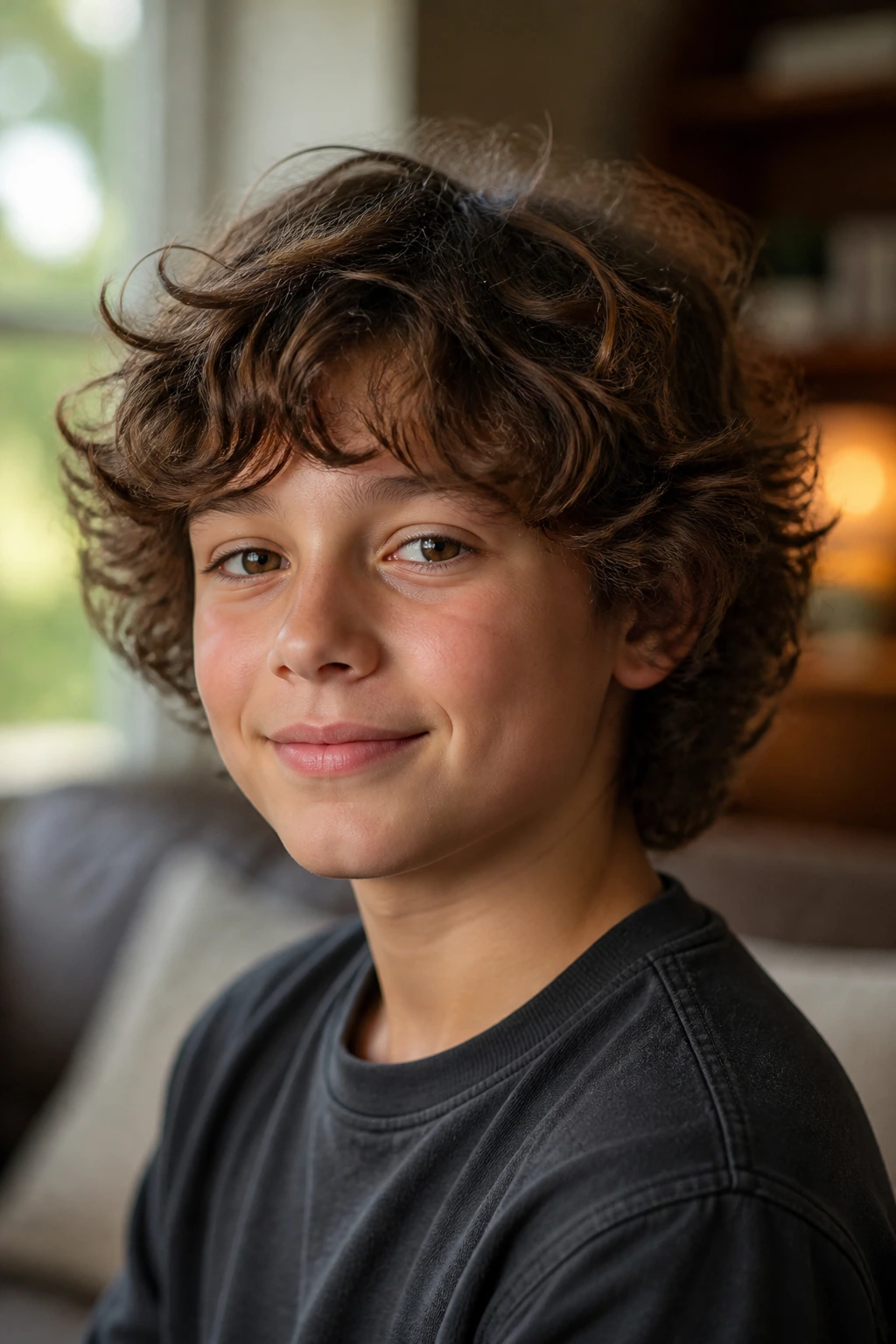
Medium-length curls need layers or they start acting heavy. This cut keeps the top and sides long enough to show shape, then removes bulk so the hair moves instead of sitting like a cap. It’s a strong choice for boys who don’t want short hair but still want control.
The good version lands somewhere around ear to collar length, depending on curl tightness. It should look soft, not unshaped. That means the barber has to cut with the curl pattern in mind, not just chop to one number.
Best for: boys with thick hair and medium curls that need room.
Styling tip: let it air-dry to about 80 percent, then lift the roots with your fingers.
Grow-out bonus: this one usually ages well between cuts.
18. Short Sponge Curl Taper
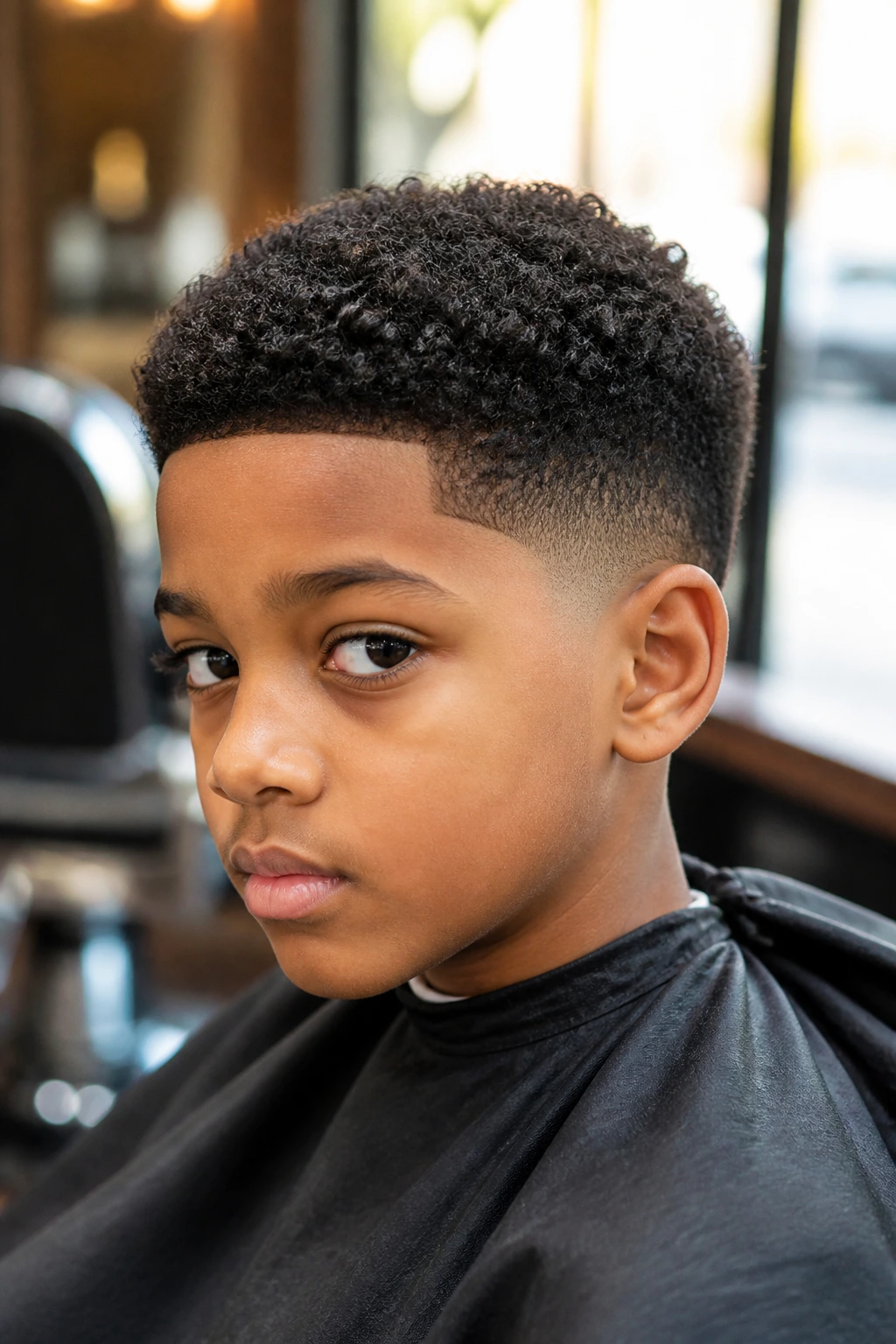
This is a practical cut for tight coils. The top stays short enough to be defined with a curl sponge, while the taper clears out the sides and neckline. The result is neat, compact, and easy to keep fresh.
The sponge adds texture without needing much product. That matters because heavy creams can make short coils look greasy fast. Keep the top textured and the fade soft, and the haircut stays balanced.
Best for: boys with very tight curls or coils.
Barber note: do not take the top too low — the curl pattern needs a little length to show.
Best routine: sponge on damp hair, add a little leave-in, then leave it alone.
19. Mop Top Curls
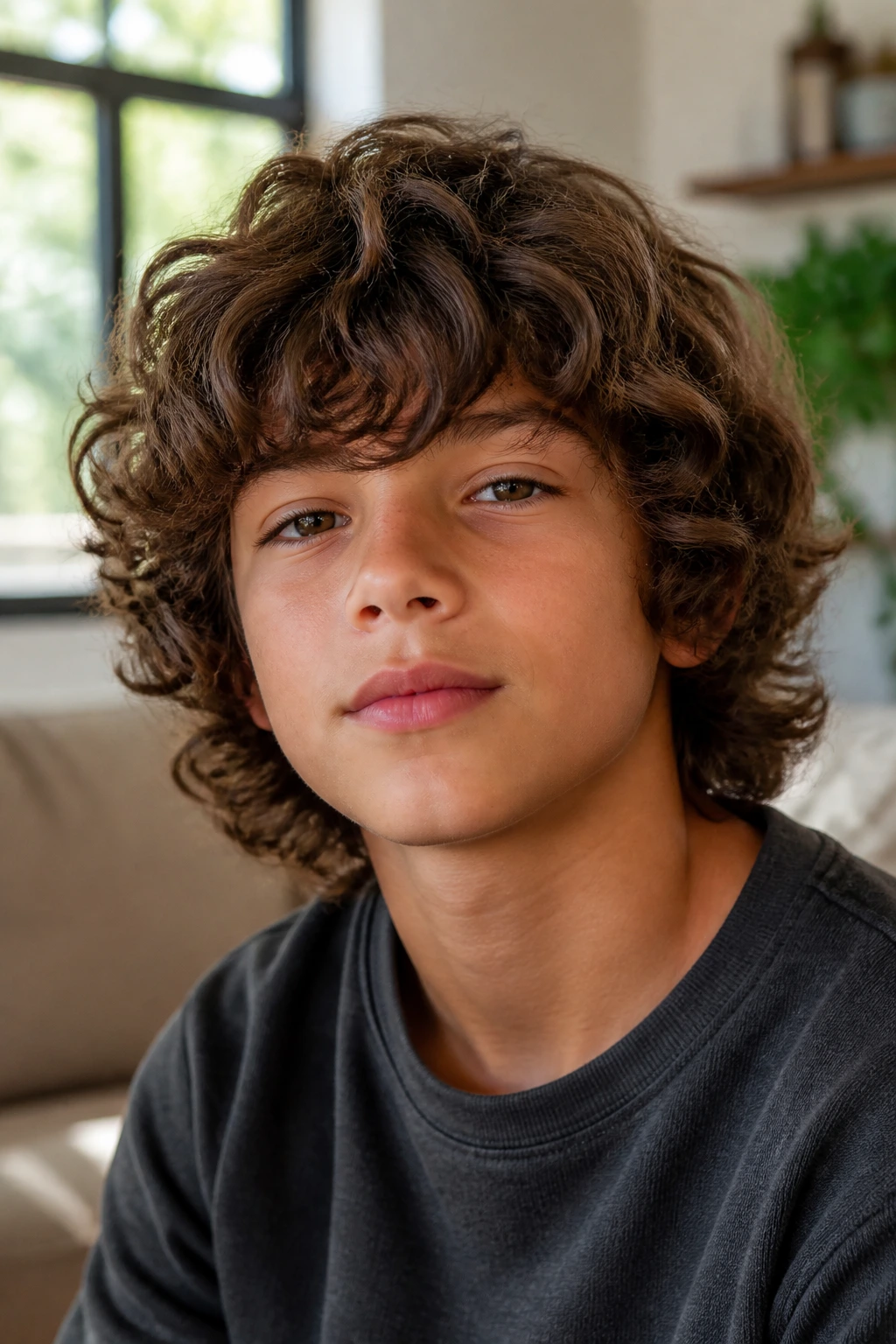
A mop top sounds messy, and that’s the charm. This cut keeps the curls longer around the front and sides so they fall in a soft, shaggy frame. It has a casual, slightly old-school feel, but on the right head shape it looks cool instead of careless.
The trick is keeping enough structure underneath so the haircut doesn’t collapse into a puffball. A barber who knows curly hair can layer the crown and trim the perimeter to keep the outline moving.
Best for: boys with looser curls and a playful style.
What to avoid: over-thinning the top. That kills the shape and leaves frizz.
Best use case: low-maintenance days when a little chaos is part of the look.
20. Heavy Fringe Crop
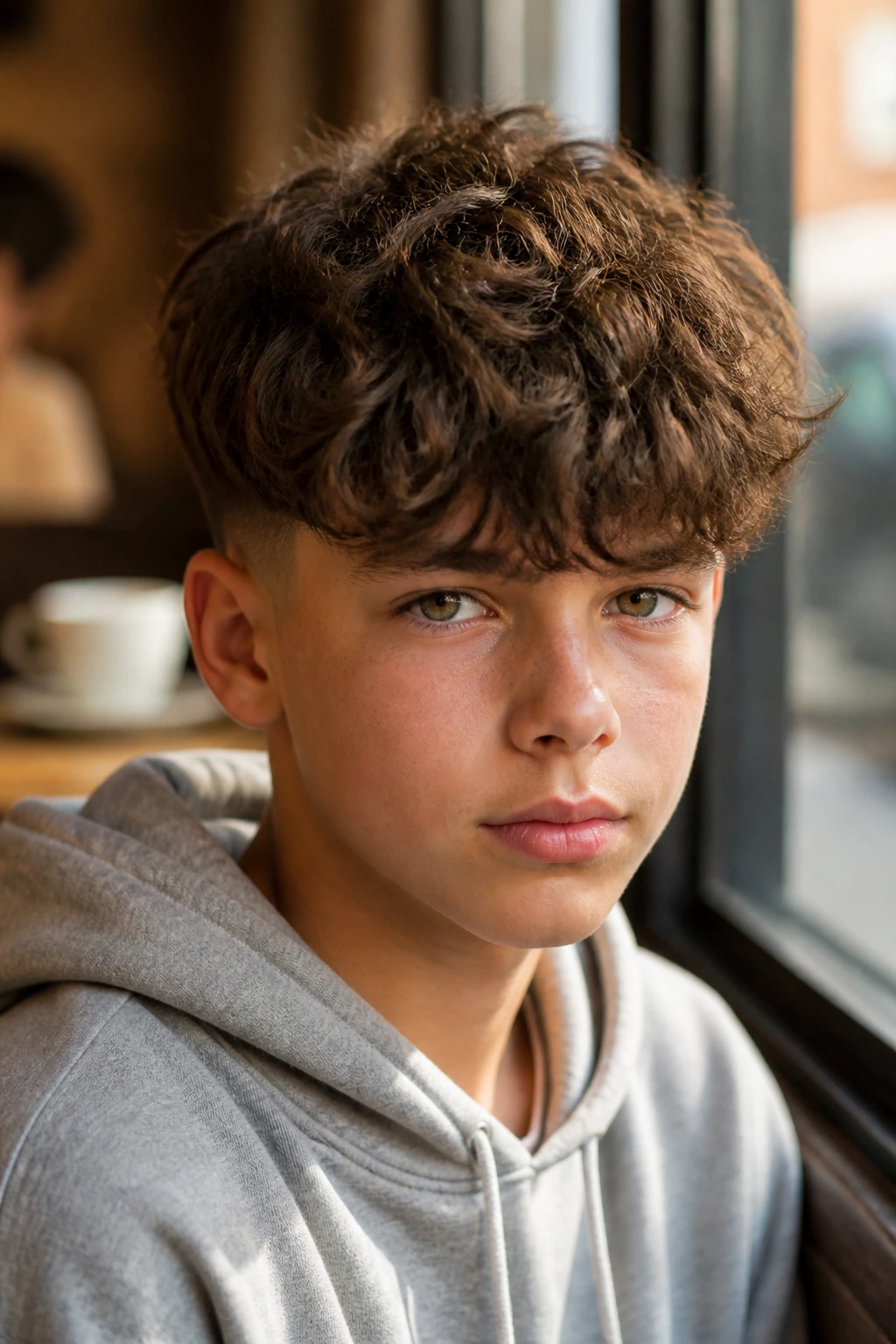
If the forehead is a little taller or the face is longer, a heavy fringe crop can be a smart move. The curls come forward and create a stronger line across the front, which helps shorten the face visually. The sides stay short, the top stays textured, and the fringe does the work.
It can look bold if the curl pattern is dense, but that’s not a bad thing. The main issue is balance. Keep the fringe thick enough to matter and tapered enough at the corners to avoid the mushroom effect.
Best for: boys who like a front-heavy, fashion-forward shape.
Barber direction: cut the fringe so it falls naturally, not like a straight ruler line.
Styling note: a tiny amount of curl cream keeps the front from splitting apart.
21. Curly Mohawk
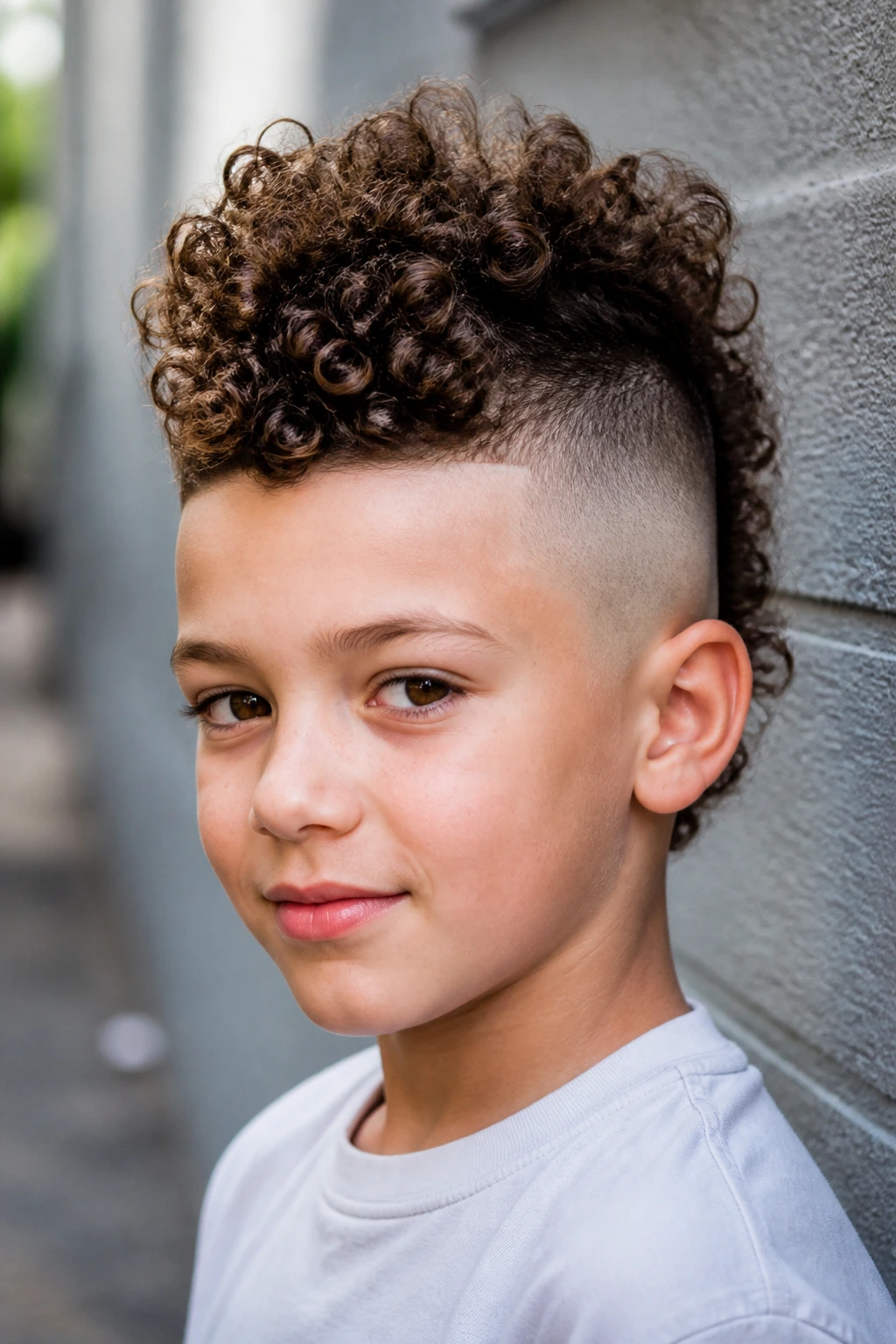
A curly mohawk takes the curl’s natural lift and gives it a narrow lane to live in. The sides are faded or clipped short, while the top runs from front to back in a bold strip of texture. It’s not subtle. That’s the point.
On the right boy, it looks energetic and clean at the same time. The mohawk shape can be narrower or softer depending on how much drama you want. Just make sure the top has enough length to hold the silhouette, because curls shrink and a too-short mohawk becomes a strip of stubble.
Best for: boys who want a louder, sportier cut.
Ask for: a soft mohawk line rather than an edgy one if you want it school-friendly.
Good finish: finger-style the top upward, then let it set without touching it too much.
22. Disconnected Curly Fade
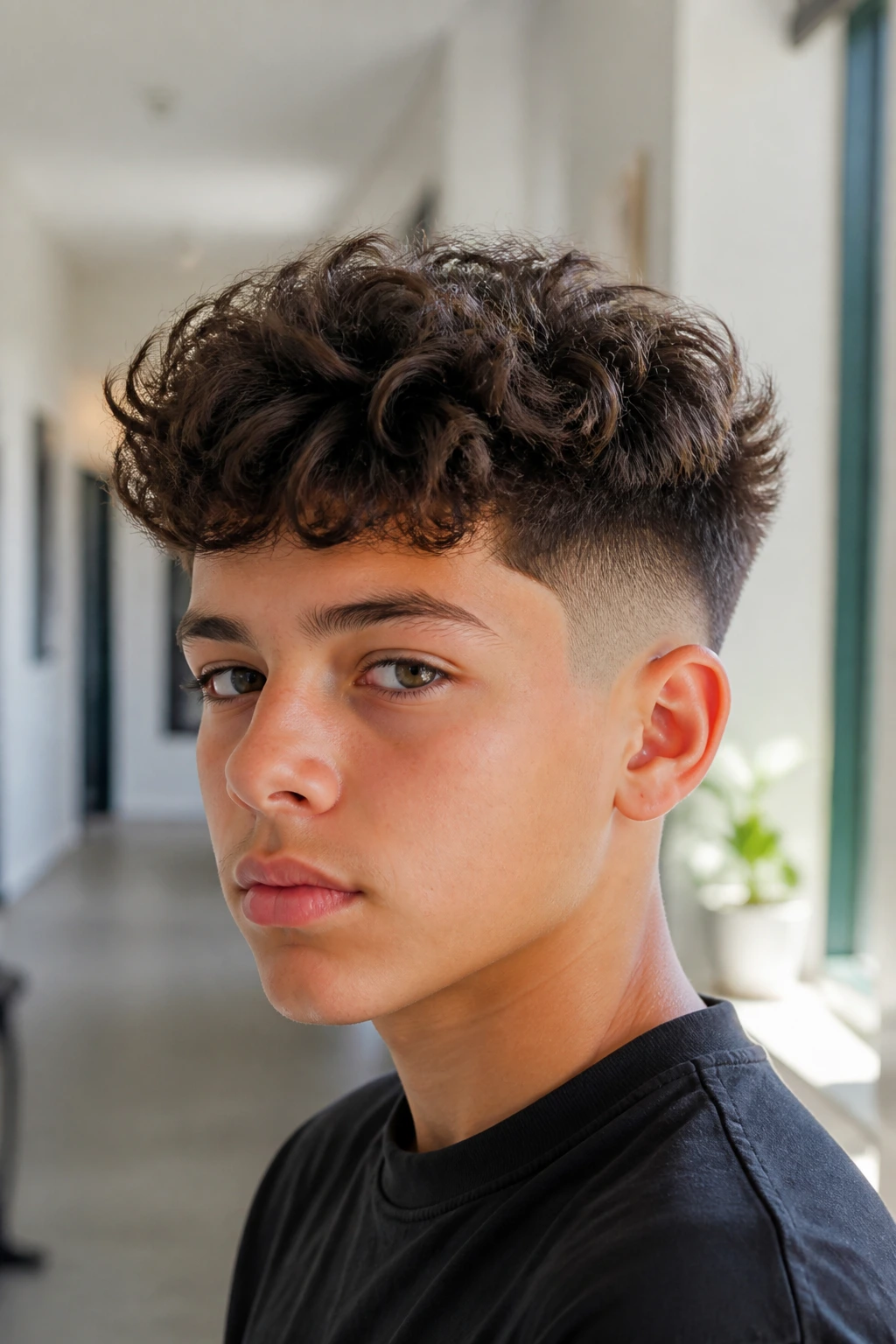
A disconnected curly fade is all about contrast. The sides are taken down short, and the top stays long enough that the two zones look separate. It’s a strong visual move, and curls make it better because the top still has natural movement.
The disconnect can be flattering when the hair is thick and the barber wants to reduce visual bulk fast. But it has to be clean. If the disconnect is sloppy, the haircut reads unfinished rather than sharp.
Best for: boys who like a more modern, obvious style.
Barber note: keep the top rounded or textured so the disconnect looks intentional.
Who loves it most: kids with dense curls that need a strong frame.
23. Angular Fringe Curls
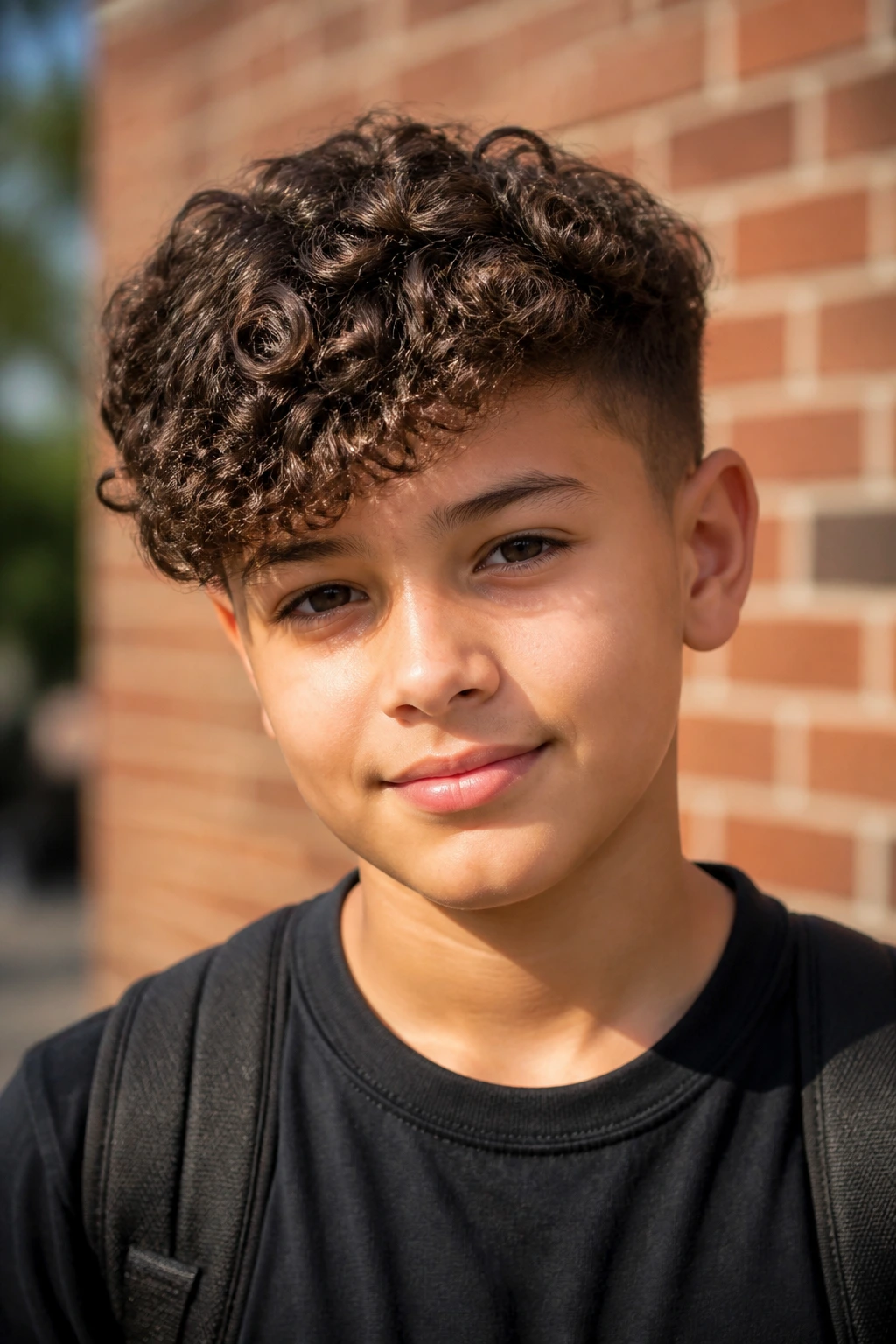
An angular fringe cut moves the front line a little diagonally, which gives the curls a sense of direction. It’s a small twist, but it matters on round faces because the diagonal line adds length without needing much extra height.
The sides should stay tidy and not steal attention from the front. If the fringe is too blunt, the angle disappears. If it’s too thin, it looks accidental.
Best for: boys who want their curls to frame one side of the forehead a bit more.
What to request: a soft diagonal fringe, not a sharp hard part.
Styling clue: rake the curls forward with your fingers, then push a few strands to the heavier side.
24. Bro Flow Curls
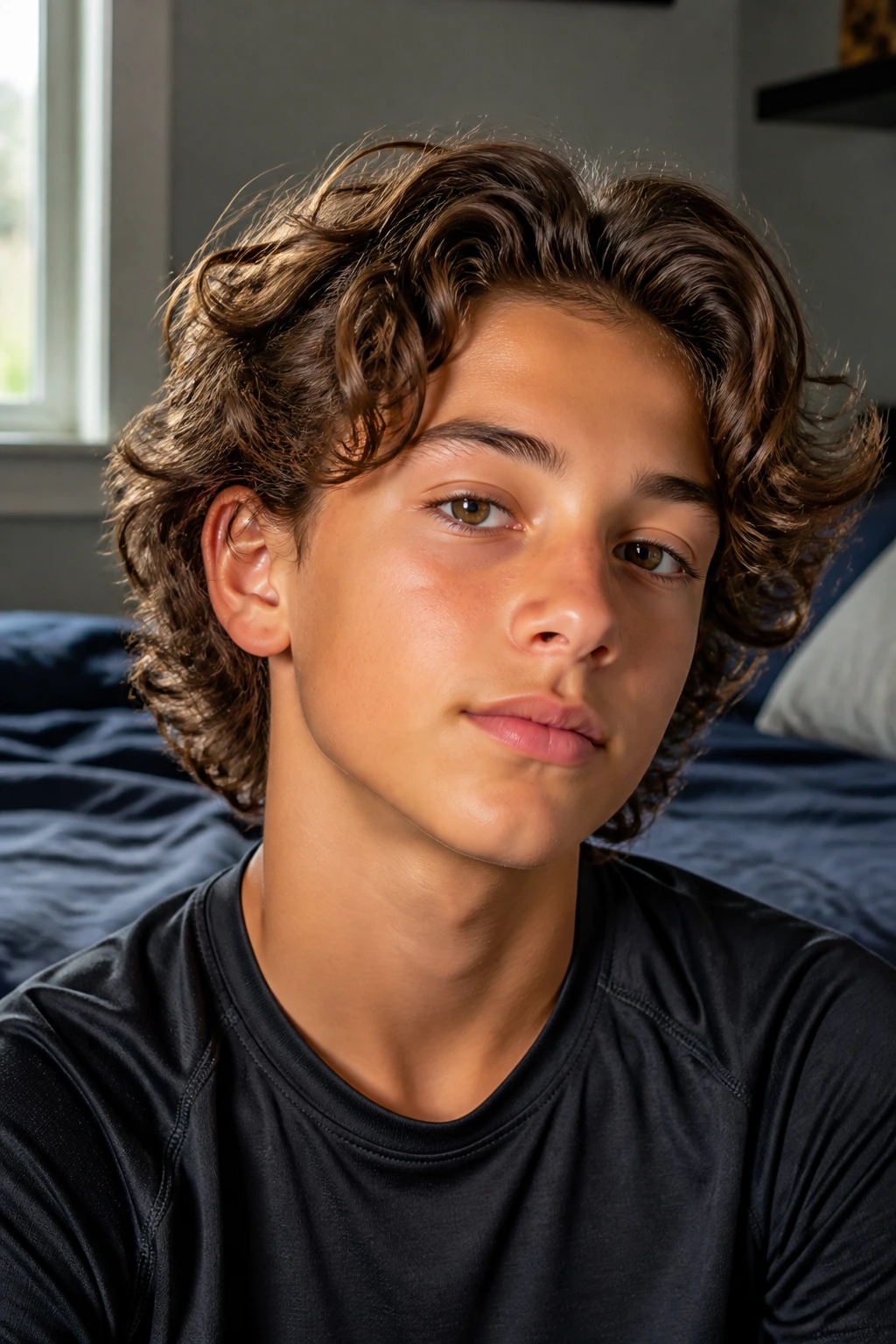
The bro flow is basically what happens when curly hair is allowed to grow a little and still gets regular shaping. It sweeps back or falls loose around the ears and neck, which gives it a relaxed shape that looks better on medium to longer lengths.
I like this on boys whose curls sit loose and wavy rather than tight. It needs a bit of patience, because the best version only shows once the length reaches past the ear. The reward is a soft, athletic-looking cut that doesn’t feel chopped.
Best for: older boys, surfers, and anyone trying to grow hair out without looking shaggy.
Maintenance note: trim the ends every 8 to 10 weeks so the shape stays controlled.
Style move: a light leave-in and a quick shake after the shower.
25. Soft Afro with Shape-Up
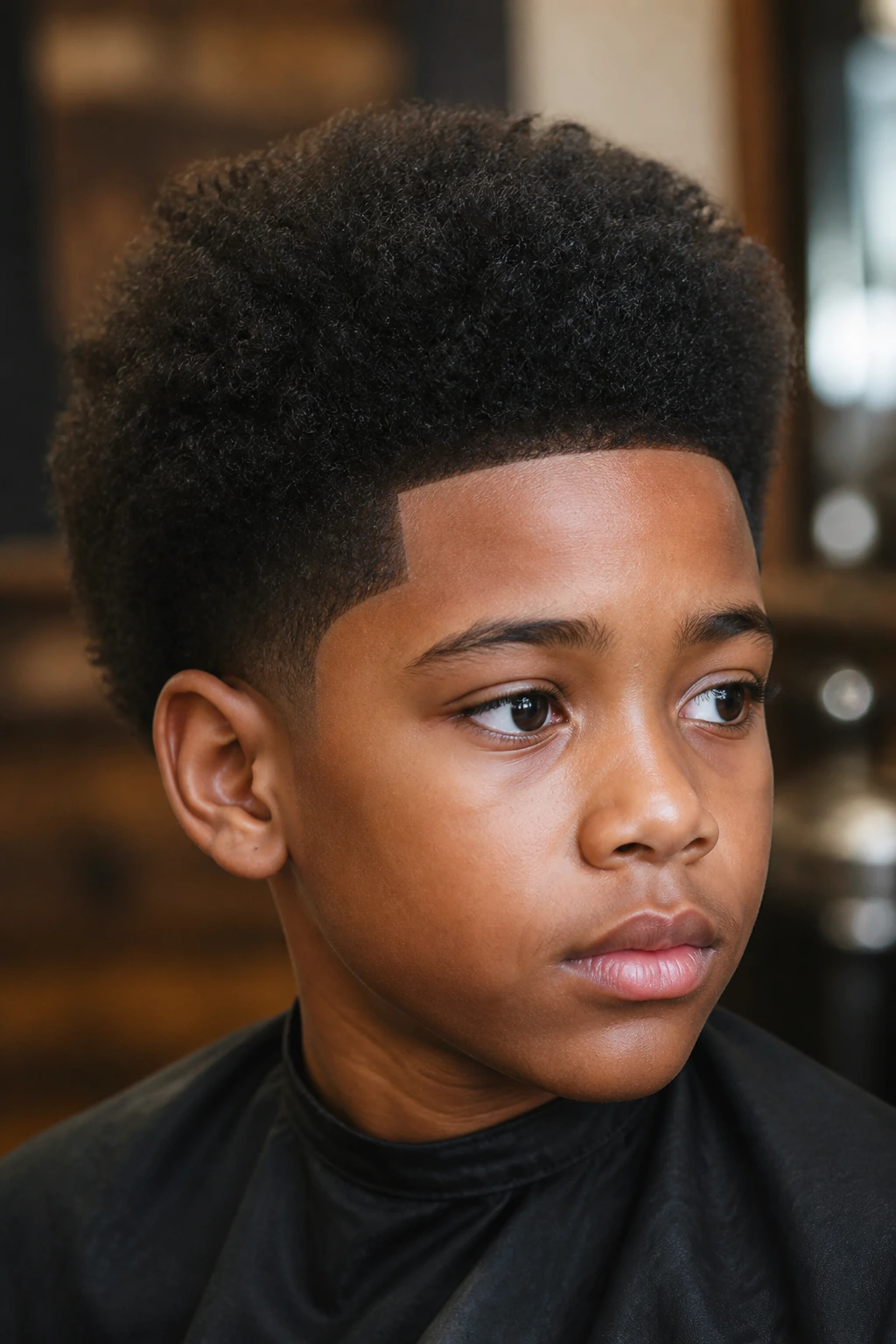
A soft afro keeps the natural roundness of curly and coily hair while cleaning the outline at the edges. That shape-up around the hairline and temples matters a lot. It turns volume into shape.
The cut works because it respects the hair’s natural density instead of trimming it into submission. If the curls are very tight, a rounded silhouette looks better than trying to force a flat top or a tight fade. The edges can be crisp, but the body of the hair should stay soft.
Best for: boys with dense coils or compact curl patterns.
Barber note: ask for a gentle round shape and a neat line-up, not a squared-off box unless that’s the look you want.
Best effect: clean edges with real texture on top.
26. Modern Curly Bowl Cut
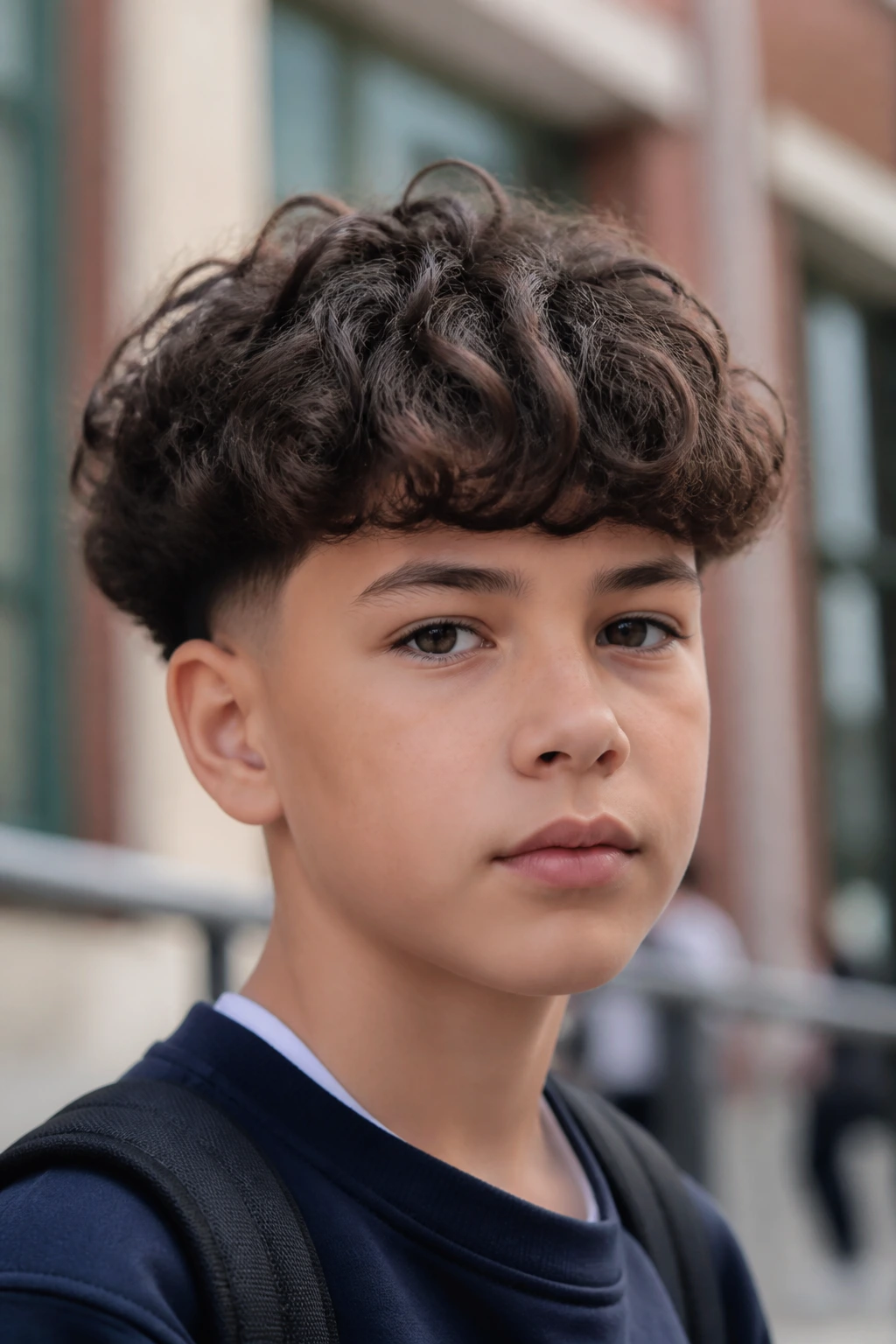
The bowl cut has a better reputation when the hair is curly. A modern version keeps the top rounded and the sides tucked in, usually with a taper or undercut underneath so the outline doesn’t get bulky. On the right curl pattern, it looks graphic and playful instead of dated.
This cut works best when the curls are dense enough to form a ring around the head. Fine curls can lose the shape fast. Thick curls hold it well, and the result is much cleaner than the old hard-edged version people remember from childhood photos.
Best for: thick curls and boys who like a distinct silhouette.
Ask for: a rounded perimeter with weight removed underneath.
Watch for: too much bulk at the ear line. That ruins the whole shape.
27. Two-Block Curly Cut
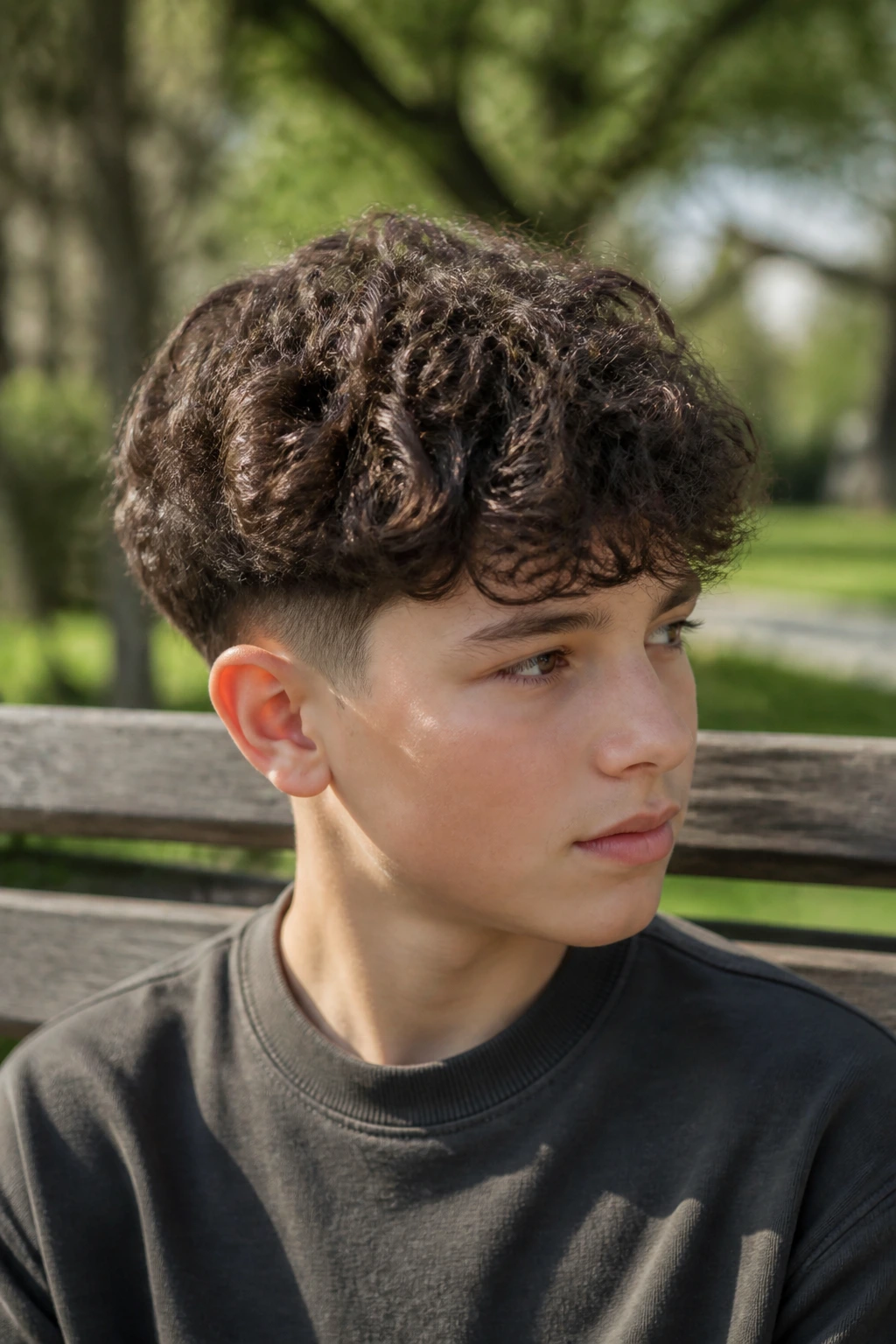
The two-block cut separates the top from the sides and back, leaving the upper section longer and the lower section shorter. It has a clean, modern feel, and curly hair gives it extra movement. The front can fall as a fringe or sweep off to the side.
It’s a good choice when the curls are looser and you want a style that looks controlled without being severe. The lower block should stay neat, but the top can be textured and a little airy.
Best for: boys who want a current-looking style with medium length on top.
Barber request: shorter sides and nape, longer crown, soft texture through the top.
Good with: a mild cream or mousse, nothing heavy.
28. Brush-Up Curls with a Fade
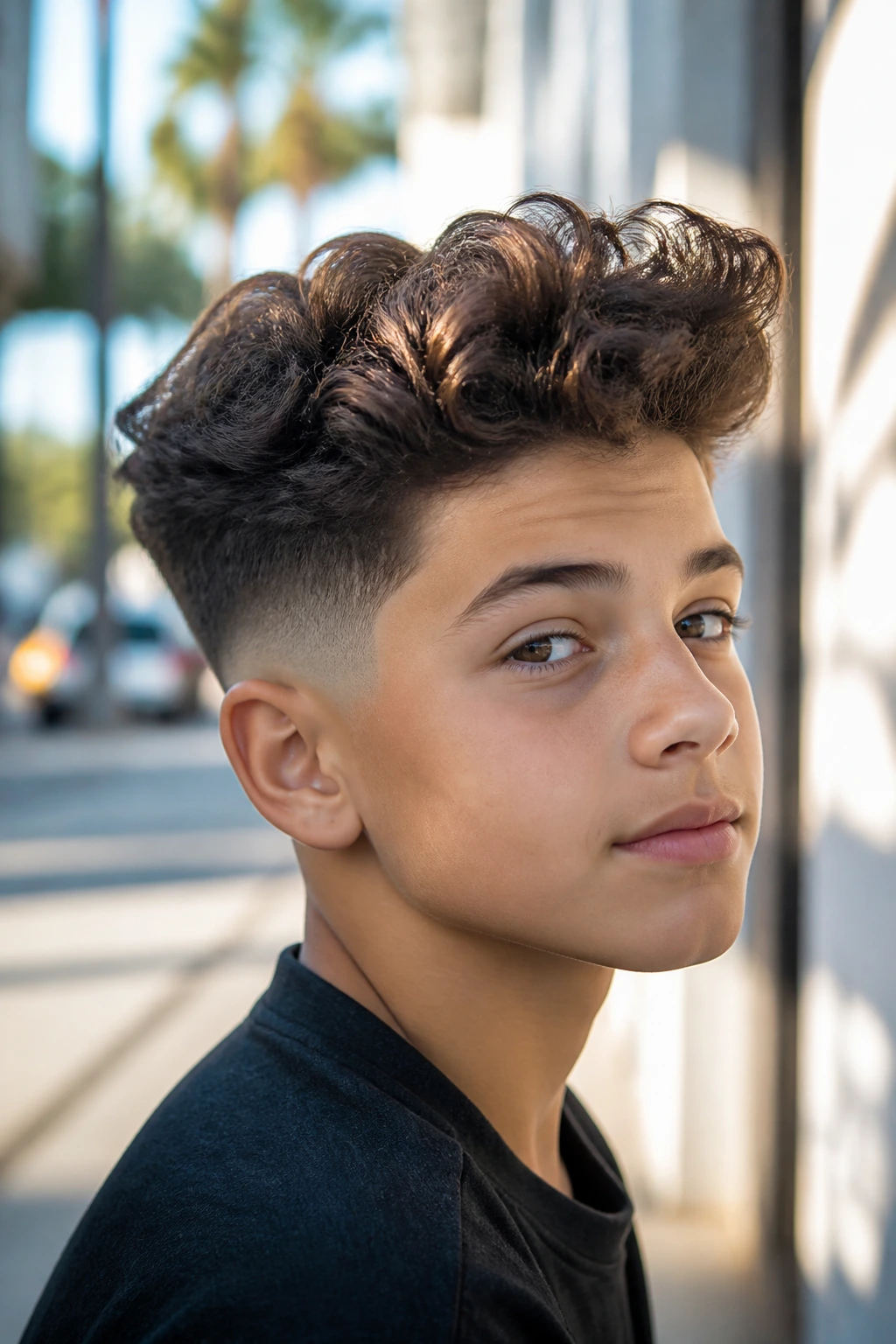
This one pushes the curls upward at the front, almost like a soft quiff, but keeps the curl pattern visible. A fade on the sides makes the brushed-up shape feel cleaner and taller. It’s a nice option when the curls have enough spring to hold some lift.
The front should be styled with fingers, not flattened with a brush. That would kill the texture. The goal is height with movement, which is harder than it sounds but worth it when the curls cooperate.
Best for: boys with looser curls or waves that can be coaxed upward.
Tip: dry the front by lifting it at the roots with your fingers while it’s still damp.
What not to do: overload it with gel, or the front will go stiff and crunchy.
29. Mini Frohawk
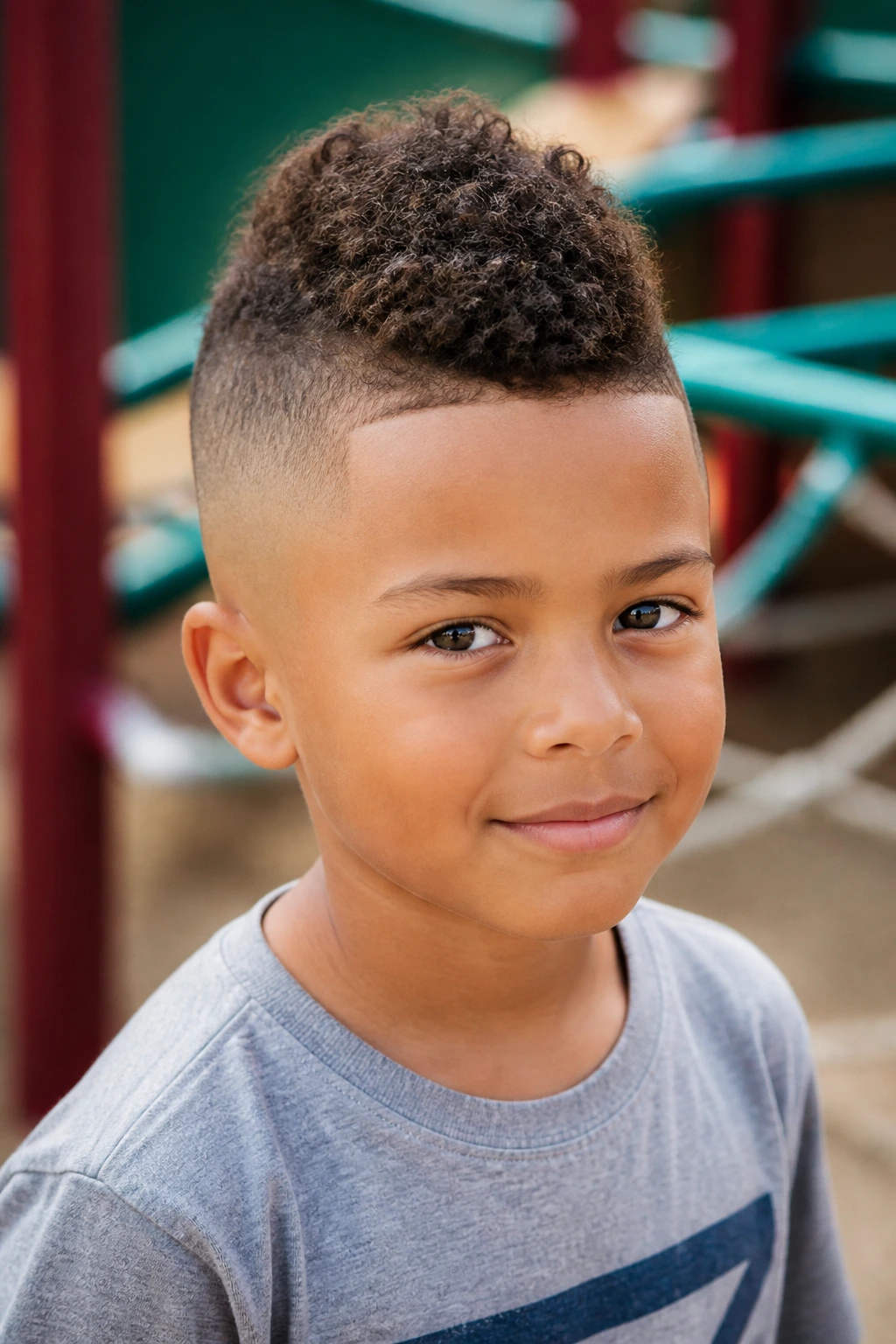
Think of this as the friendlier version of a mohawk. The center strip stays wider, the sides are tapered or faded, and the top keeps enough softness to look natural. It’s playful, active, and easy to recognize without being extreme.
The mini frohawk works well on curls that want to stand up on their own. It also gives thicker hair a shape that doesn’t feel boxed in. If the sides are too short and the strip is too narrow, it starts feeling harsh. Keep the proportions relaxed.
Best for: boys who want a sporty, confident style.
Barber note: keep the middle strip broad enough that the curls can spread a little.
Style thought: a dab of curl cream on damp hair is usually enough.
30. Long Top Curly Cut
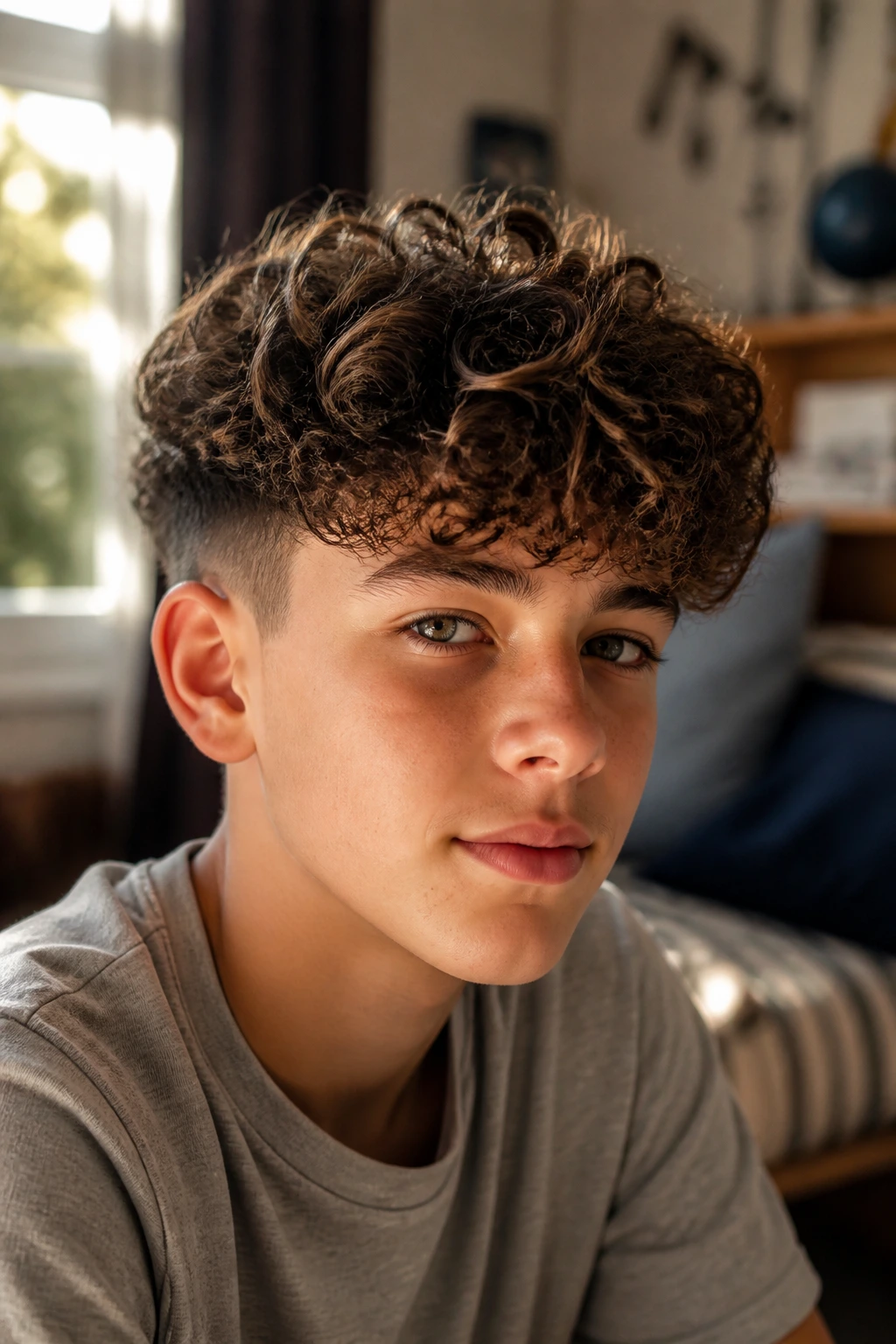
Sometimes the best answer is simply to keep the top long and shape the sides. This cut leaves the curls with room to bend, hang, and spring, then trims the perimeter so the haircut still looks deliberate. It’s a strong move for boys whose hair looks better with length than with chopping.
The real job here is cleanup, not reduction. A good barber will remove the heavy spots around the ears and neck while preserving the curl pattern on top. That keeps the cut from turning into a shaggy outline.
Best for: boys growing their hair out or anyone who doesn’t want a short cut.
Maintenance note: trim the ends before they start fraying, usually every 8 weeks or so.
Simple truth: this style only works if the shape underneath is still tidy.
31. Curly Curtains
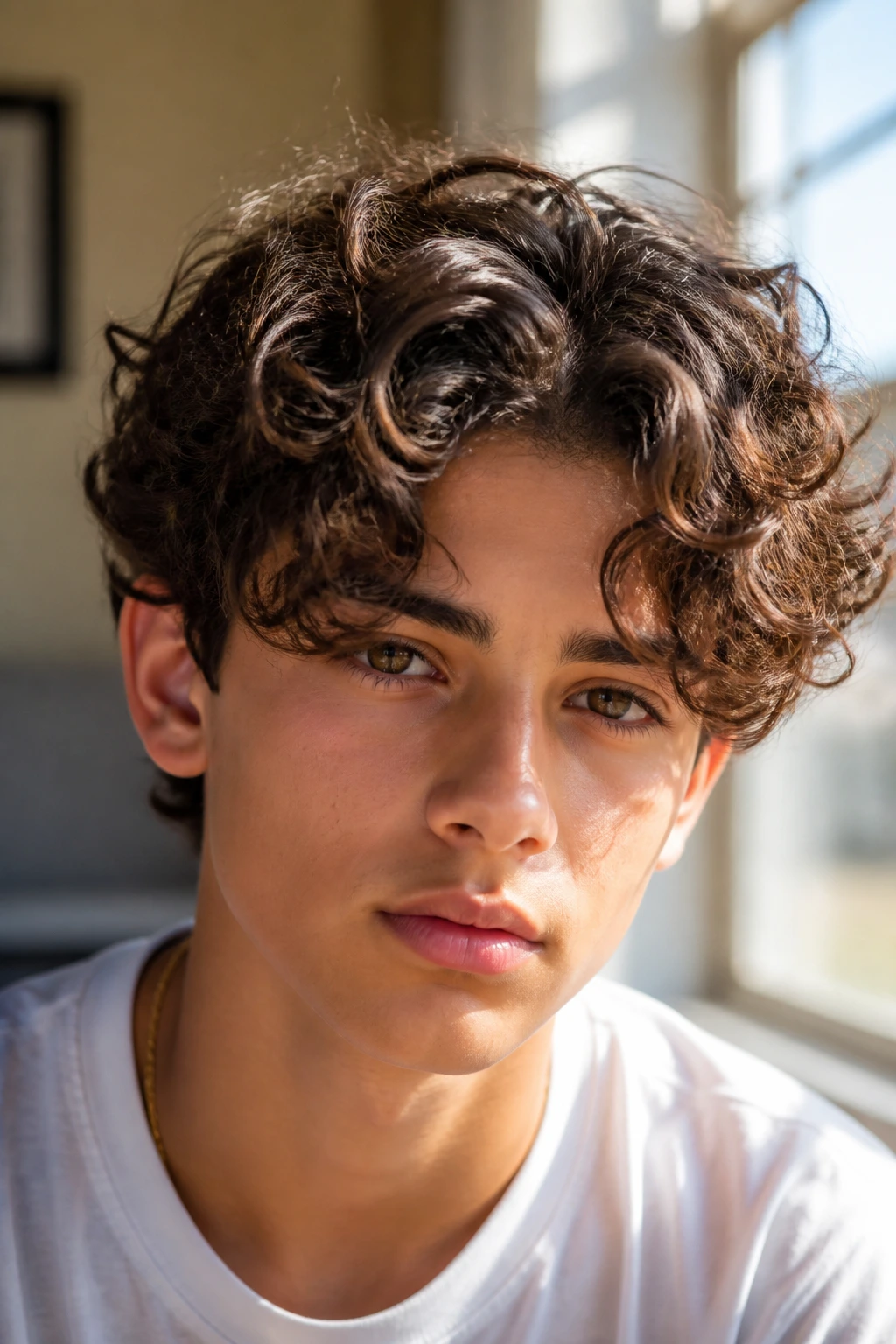
Curly curtains split the front near the middle or slightly off-center and let the curls fall on both sides of the forehead. It’s softer than a hard side part and more interesting than pushing everything straight back. On the right face shape, it can look effortless in the good sense — not the lazy sense.
This cut needs enough length to create that frame. The sides can be tapered or left longer depending on how full the curls are, but the front needs a clear middle lane to fall into.
Best for: boys with medium curls and a little extra length up front.
Barber request: keep the front long enough to drape, then lightly shape the sides so the curtains don’t widen too much.
Works best with: a light cream and a quick finger part after washing.
32. Natural Curls with a Line-Up
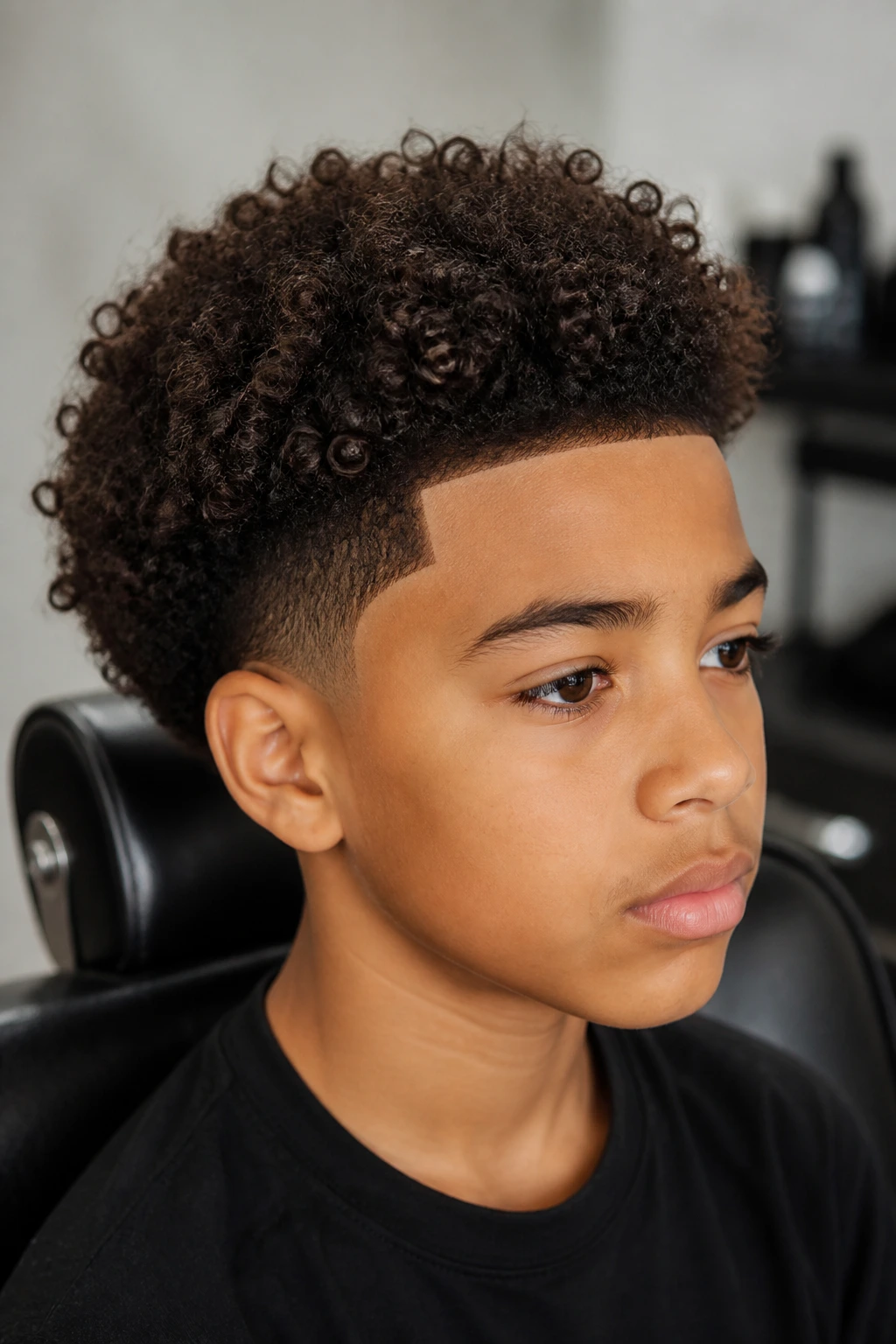
If you want the hair to stay as natural as possible, a line-up can do a lot of the heavy lifting. The curls keep their shape and volume, while the hairline, temples, and neckline get cleaned with a sharp edge. That contrast makes the whole cut look finished.
This style is especially strong on tight curls and coils because the natural texture becomes the star of the show. A line-up frames it without forcing the hair into a different personality.
Best for: boys who want natural texture with neat edges.
Tell the barber: preserve the shape, clean the perimeter, and keep the hairline straight without cutting into the hairline too aggressively.
Small caution: don’t over-line the temples. Too much cleanup can make the front look thin.
33. Surfer Curl Layers
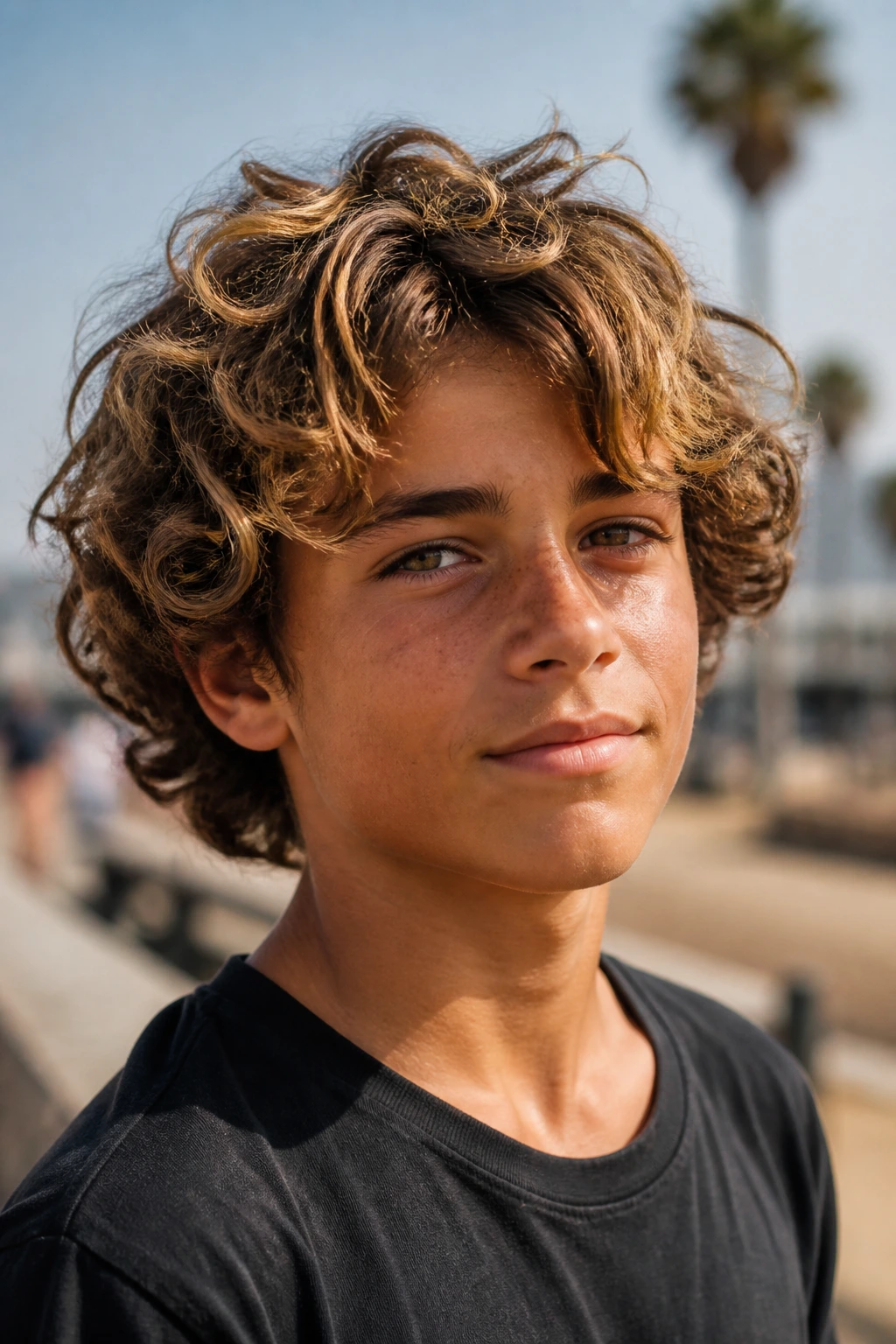
Surfer curl layers are loose, breezy, and a little sun-worn in the best way. The curls stay longer, the layers keep them from stacking up, and the whole cut feels easy to live with if the hair has that softer bend. It’s one of the few longer looks that can still seem tidy when the layers are right.
The shape should fall, not flop. That’s where the layers matter. They keep the ends moving and stop the hair from getting bulky at the bottom. On boys who like a relaxed look, this cut is a strong finish to the list.
Best for: looser curls, medium waves, and kids who don’t want a short chop.
Barber note: ask for long layers with a cleaned-up outline around the neck and ears.
Best styling habit: a leave-in spray, a quick scrunch, and leave it alone.
Why Curly Hair Needs Shape, Not Just Short Sides
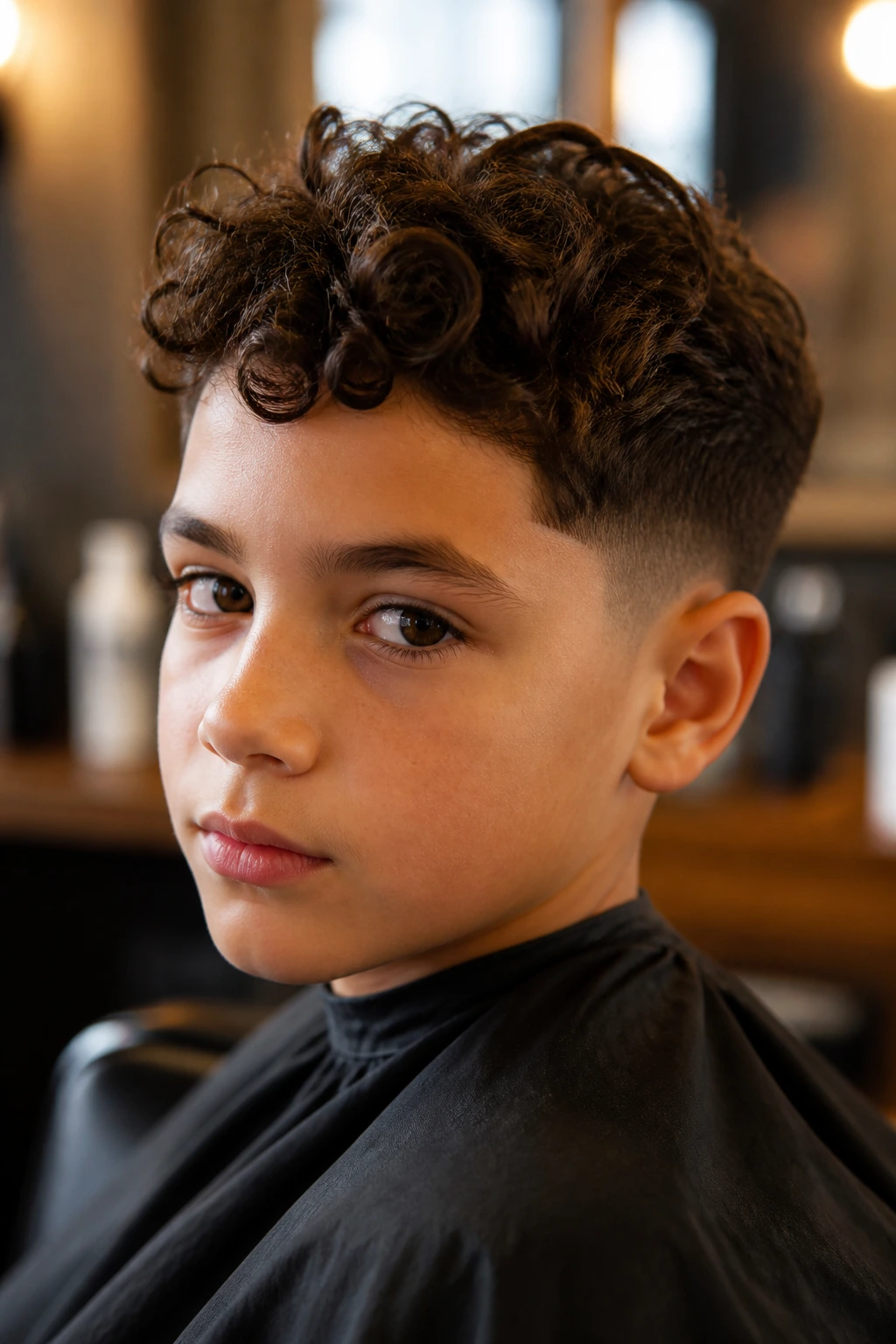
Curly hair behaves differently from straight hair the moment it dries. Short sides can help, sure, but they do not solve the whole problem. If the top is left too heavy, it still mushrooms. If the crown is ignored, it still sticks out. A good cut watches the whole outline — temples, nape, fringe, and crown — and uses each part to guide the shape.
Dry cutting matters more with curls than with straight hair because the curl pattern hides length when it’s wet. A barber who only cuts curly hair stretched out can easily take off too much. That’s why the best curly cuts are usually checked in the chair, then rechecked once the hair springs back. Messy surprise on the first wash is not the goal.
There’s another piece people miss: density. Two boys can have the same curl type and totally different hair behavior because one has thick, heavy strands and the other has finer, lighter curls. The thick hair needs bulk removed in the right spots. The finer hair needs length left in place so the curls don’t disappear into the scalp. Same curl pattern. Different haircut.
Essential Tools for Curly Hair at Home
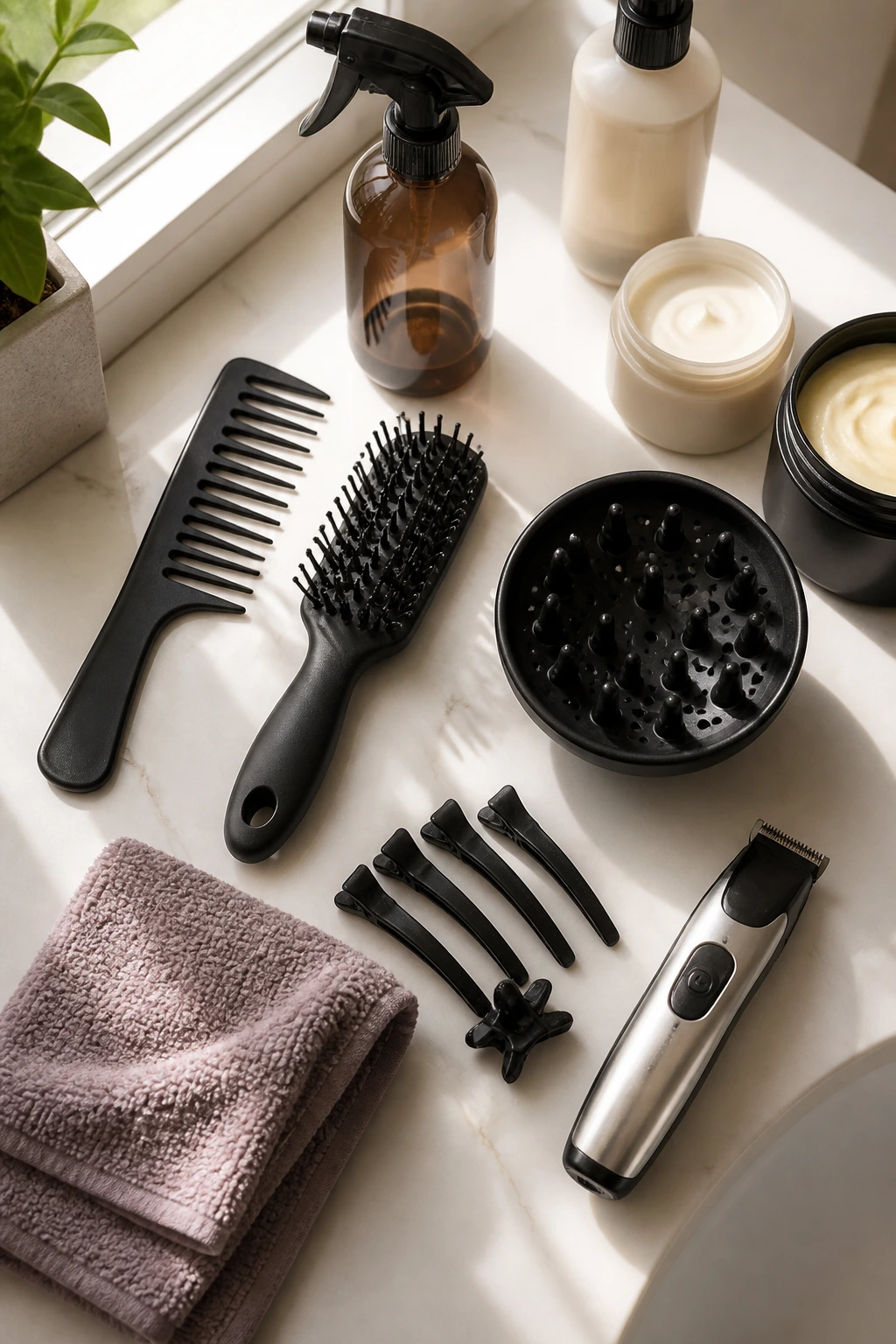
- Spray bottle: A few spritzes wake the curls up without soaking them.
- Wide-tooth comb: Good for detangling after conditioner, not for forcing curls flat.
- Detangling brush: Useful on thicker hair; choose one with flexible bristles.
- Leave-in conditioner: Helps curls hold shape and keeps the ends from drying out.
- Curl cream or light mousse: Adds definition without turning the hair hard.
- Diffuser attachment: Handy when you need speed and don’t want the curls blasted flat.
- Hair clips: Useful for keeping sections apart on wash day.
- Small trimmer or edge brush: Helps tidy the neckline and sideburns between barber visits.
- Microfiber towel or soft T-shirt: Cuts down on rough frizz after washing.
Smart Barber Notes and Product Picks
The cleanest haircut starts with the right words in the chair. Say whether you want the curls to fall forward, sit up, or sweep to the side. Tell the barber if the hair shrinks a lot when it dries. That one detail saves a lot of bad surprises. Bring one photo of the shape you want and one photo of the length you do not want. That second photo matters more than people think.
Product-wise, lighter is safer for most boys. A leave-in conditioner and a small amount of curl cream handle a lot of hair types without making the curls sticky. If the hair is very thick or coarse, a cream plus a touch of mousse can give hold without crunch. Heavy oils and thick pomades can be fine in tiny amounts, but they’re usually too much for loose curls and they make the hair lie down when it should spring up.
Wash routine matters too. Curly hair usually behaves better when it is not stripped every day with harsh shampoo. A gentle shampoo a couple of times a week, plus conditioner on most wash days, keeps the curl pattern softer and less frizzy. If the hair feels dry and rough at the ends, that’s usually a sign the product is too harsh, the wash is too frequent, or the towel is being used like sandpaper.
How to Wear These Cuts on Busy Mornings
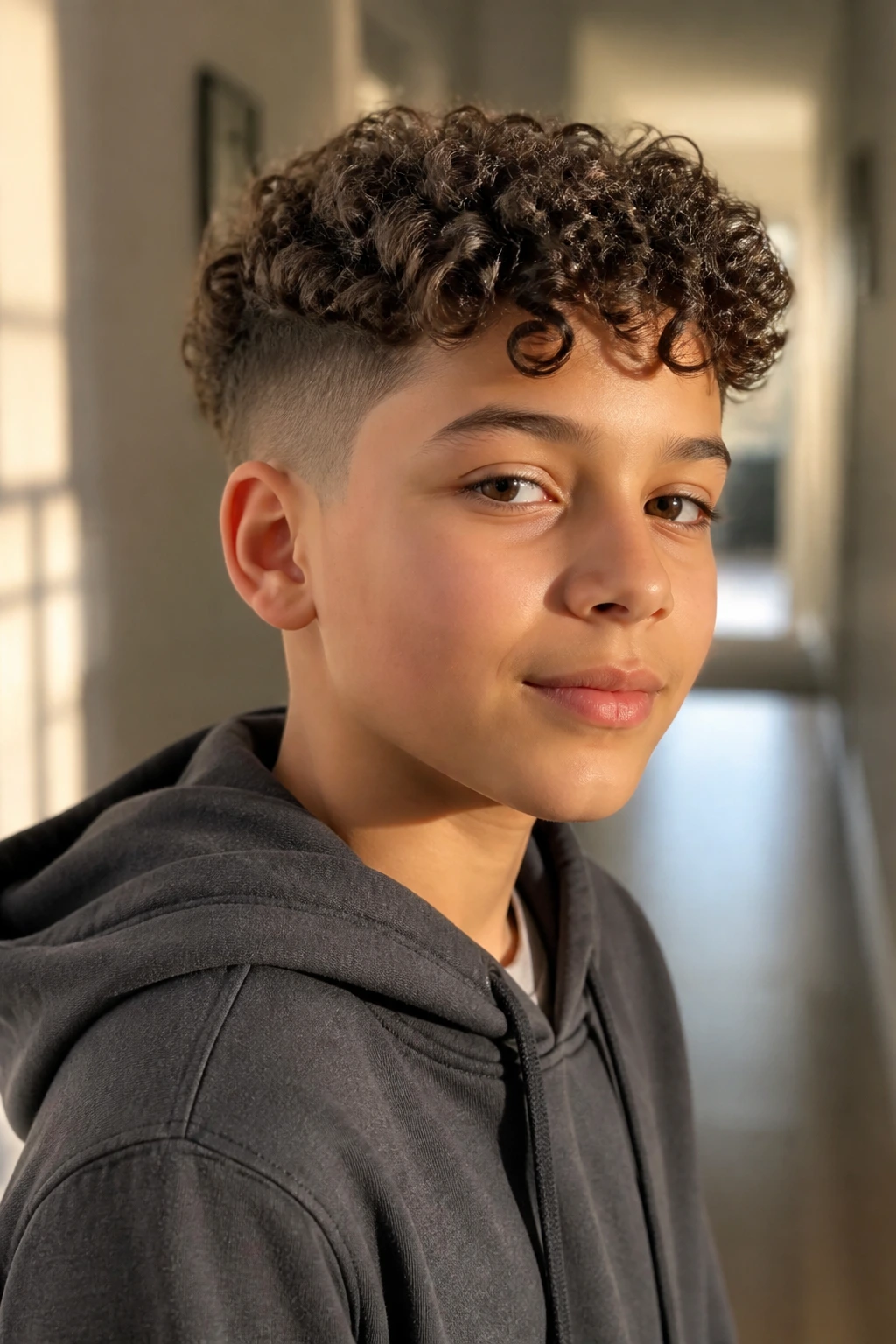
Presentation: Aim for a silhouette first, not perfection. A good curly cut should still look like a haircut when the curls dry in their own direction, so choose a shape that looks balanced from the front and side without constant combing.
Accompaniments: Leave-in conditioner, a small bottle of water, and a satin pillowcase do more than a drawer full of random gels. If your kid wears hats often, pick a cut with a tidy taper or fade so hat hair is easier to reset.
Portions: Shorter cuts need a dime-size amount of product. Medium curls usually need about a nickel-size amount. Long curls may need a little more, but not a palmful — that’s how you get limp roots and crispy ends.
Routine Fit: If there’s no time in the morning, choose a taper, crop, or Caesar. If you can spare five minutes, medium layers, a fringe, or curtains give you more shape. If the hair will be air-dried anyway, shape matters more than styling products.
Extra Tips for Better Curl Definition
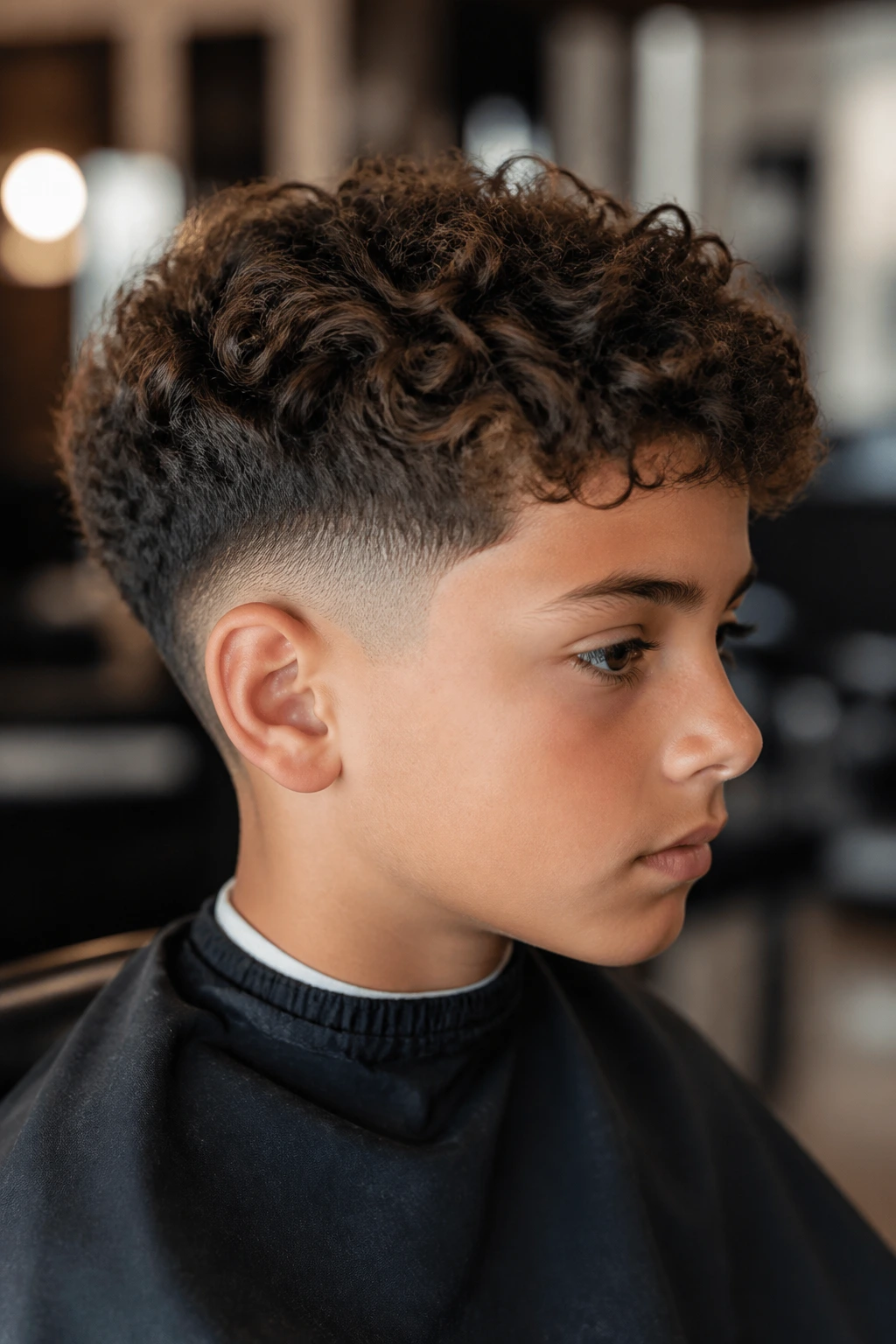
Texture Boost: Work product through damp hair in sections, then scrunch upward from the ends. That keeps the curls from clumping into one heavy mass at the back.
Frizz Control: Stop rubbing hair with a regular bath towel. Press it with a microfiber towel or soft T-shirt instead. Frizz often starts in the bathroom, not outside in the weather.
Fast Morning Fix: Mist the hair with water, pinch a little curl cream into the top layer, and shake the curls loose with your fingers. Thirty seconds is often enough.
Make-It-Yours: Fine curls usually need lighter products and more lift at the roots. Thick curls can take a little more cream and usually look better with stronger cleanup at the sides. Tight coils often look best with a defined edge and a rounded top.
Common Mistakes That Ruin a Good Curly Cut
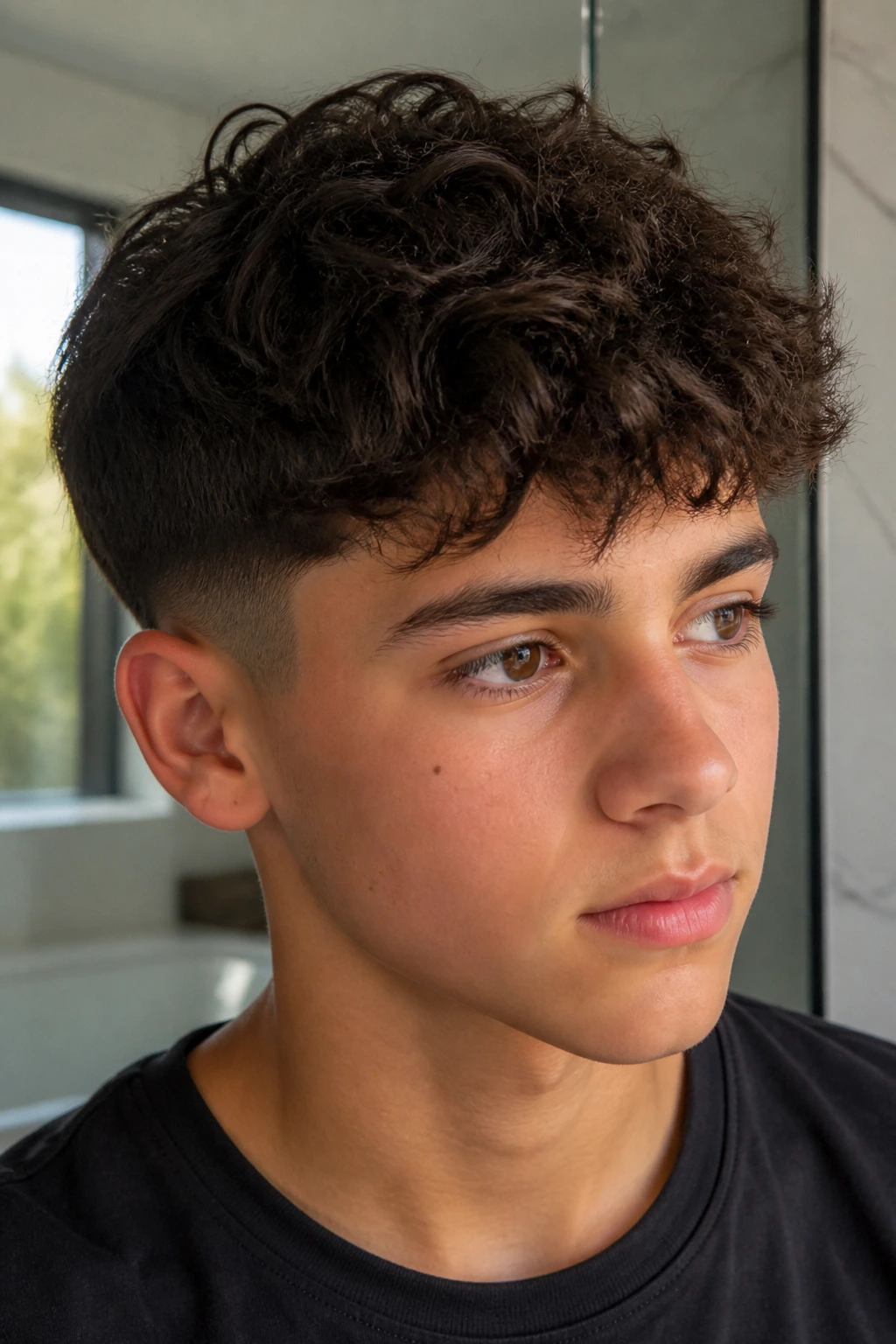
Cutting it too short while it’s wet: Wet curls lie. Dry curls shrink. If the barber trims too aggressively without checking the dry shape, the top can end up clipped too close and lose all personality. The fix is simple: leave enough length to account for spring, then refine after the hair dries.
Taking the sides too high: A fade that climbs too far up the head can make curly hair look wide on top and narrow underneath. The symptom is that helmet shape nobody wants. Ask for a lower fade or a softer taper if the top already has a lot of volume.
Using heavy product on loose curls: Thick paste on soft curls can flatten the front by noon. The hair looks greasy at the roots and dry at the ends. Switch to a light cream, a small mousse, or plain leave-in conditioner.
Ignoring the crown: The back of the head can puff out even when the front looks fine. If the crown is too heavy, the haircut loses balance from every angle except the mirror-facing one. A skilled barber should check that spot and remove bulk where the hair sticks up.
Brushing curls like straight hair: That pulls the curl apart and makes frizz worse. Use fingers or a wide-tooth comb when the hair is wet and conditioned, then leave it alone once it starts drying.
Variations and Adaptations to Try
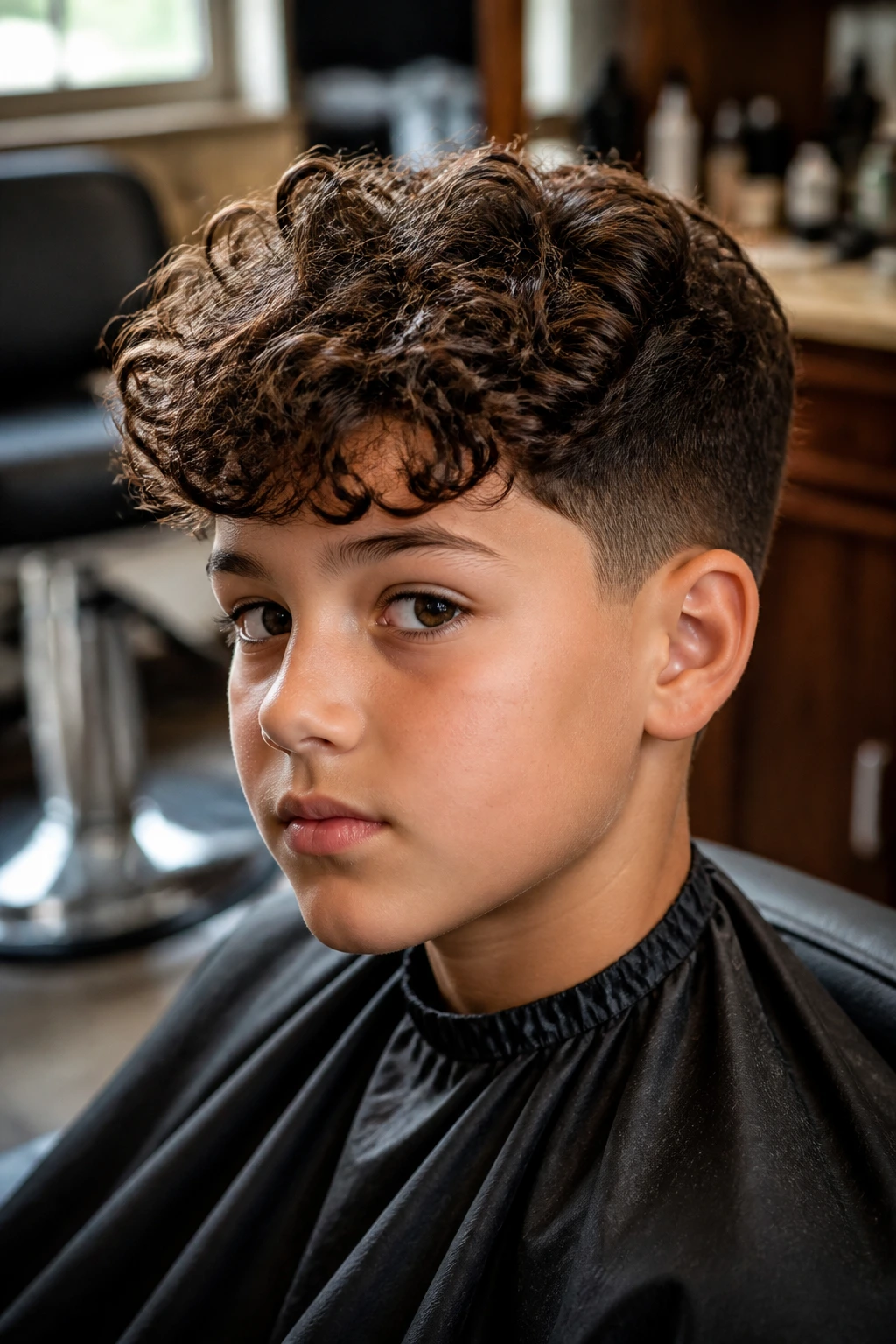
The School-Rule Version: Pick a low taper, a neat neckline, and a top that stays under 3 inches. It still looks curly and clean, but it will slide past dress codes more easily than a bold fade or mohawk.
The Big-Texture Version: Leave the top longer and build the sides with a stronger fade. This is the one for thick curls that need room to move and don’t mind a little visual drama.
The Fine-Curl Version: Keep the top layered and lighter, not chopped blunt. Fine curls need air and shape more than product, so a softer cut usually looks fuller.
The Grow-Out Version: Choose a scissor shape or shaggy layer set, then trim only every 8 to 10 weeks. This keeps the hair from turning awkward between visits.
The Sport-Friendly Version: Go with a crop, Caesar, or low fade. These cuts survive helmets, sweat, and rough mornings without needing a complete restyle.
Keeping the Shape Between Haircuts
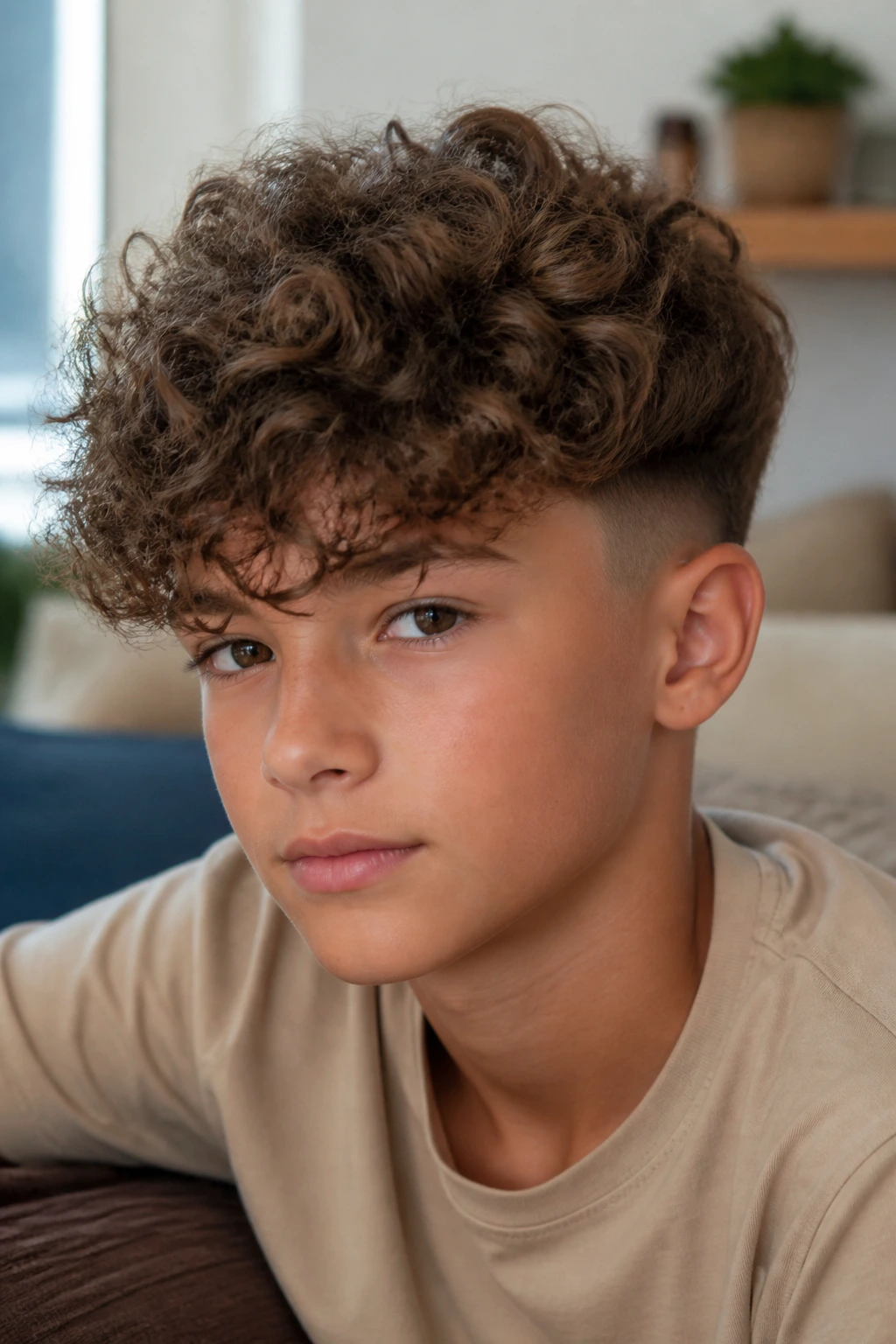
Short curly cuts usually need touch-ups every 3 to 4 weeks if you want the fade or taper to stay crisp. Medium curly styles can stretch to 5 or 6 weeks. Longer shags, bro flows, and layered cuts often hold up for 8 weeks or a bit more before the outline starts to blur.
Night care helps more than people expect. A satin pillowcase cuts friction, and that means less frizz in the morning. If the curls flatten overnight, mist them lightly with water and scrunch the shape back with your hands — not a brush. After swimming, rinse the hair as soon as you can. Chlorine and salt both dry out the ends and make curls feel rough.
One more thing. Don’t chase perfection every day. Curly hair looks best when it still has some life in it. The goal is clean shape, not helmet polish.
Questions Parents Ask About Boys Haircuts for Curly Hair
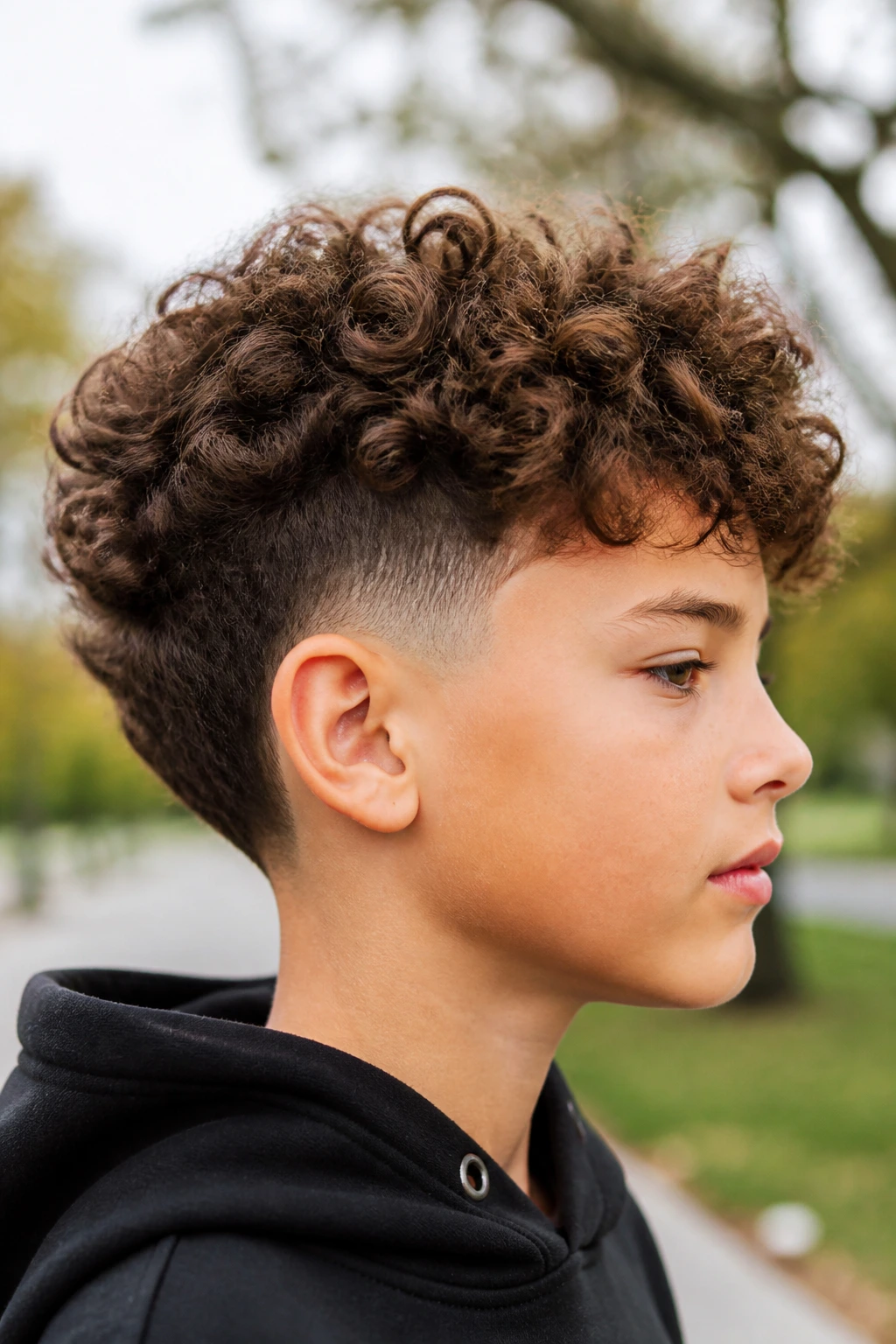
How short can you cut curly hair before it loses its shape?
Shorter than you think, but not as short as straight hair. Once curls get trimmed too close, the texture can disappear and the haircut starts looking flat instead of curly. For most boys, leaving at least 1.5 to 2 inches on top is a safer starting point.
Should curly hair be cut wet or dry?
Dry or lightly damp is better when the barber wants to read the curl pattern. Wet cutting can work, but only if the barber knows how much the hair will shrink once it dries. That shrinkage is the part that gets people into trouble.
What if my child hates product?
Then pick a haircut that does more of the work itself. A taper, rounded scissor cut, or curly Caesar can look good with little more than water and a tiny bit of leave-in conditioner on the ends.
Can a fade work on tight coils?
Absolutely. Tight coils often look especially sharp with a low or mid fade because the contrast frames the texture on top. The key is not fading so high that the top feels disconnected from the head shape.
How do I stop the curls from looking frizzy after the haircut?
Use a soft towel, don’t overbrush, and keep the hair damp while applying a small amount of leave-in or curl cream. Frizz usually starts when the hair is rubbed hard, dried too fast, or cut too short around the ends.
What haircut is easiest to grow out?
A taper, shag, layered medium cut, or rounded scissor cut usually grows out cleanly. Hard undercuts and very high fades need more frequent cleanups because the contrast gets messy sooner.
Is a fringe a bad idea for curly boys?
Not at all. A fringe works well if the curls have enough bend to fall naturally and the barber leaves room for shrinkage. The mistake is making the front too short, which turns the fringe into a stiff little bump.
What should I tell the barber if I don’t know the terms?
Say what you want the hair to do: sit forward, stay rounded, keep the sides tight, leave the top long, or grow out easily. That gets you further than trying to guess the right haircut name under pressure.
The Cut That Lets Curls Do Their Thing
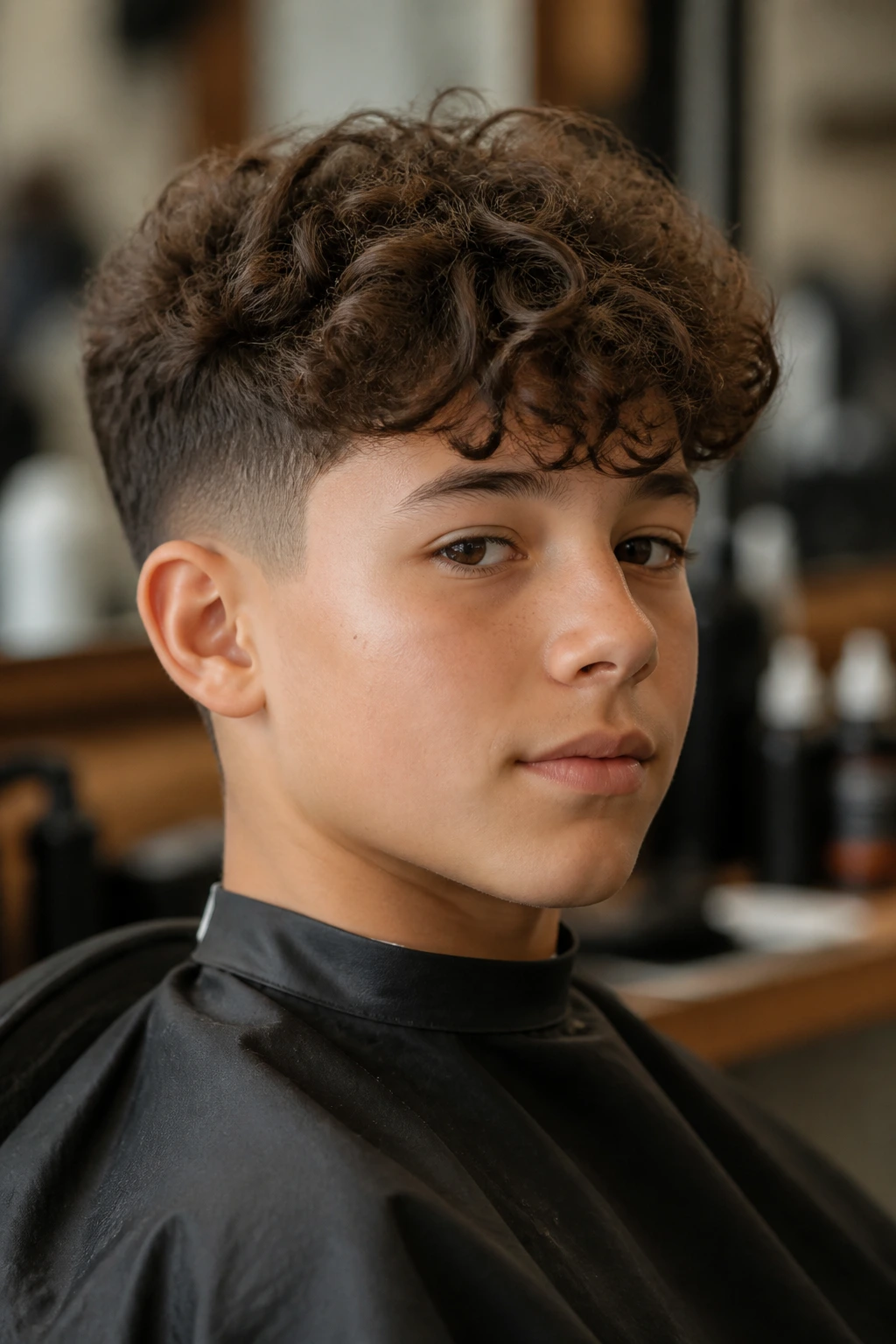
The best boys haircuts for curly hair don’t flatten the texture into something it isn’t. They set up a shape, then let the curls finish the work. That means better grow-out, fewer morning battles, and a haircut that still looks like a haircut when the day gets messy.
If you remember only one thing, make it this: curly hair needs a plan before the first snip. A good barber can build that plan around the curl pattern, the crown, and the amount of maintenance your kid can handle without complaining. That’s the whole game.
And once you find the right shape, the curls stop acting like a problem and start acting like the best part of the haircut.
