



Blonde hair looks for little girls can be tricky in a very ordinary way: the hair is often fine, silky, and quick to show every part line, elastic mark, and flyaway. A style can look neat in the bathroom mirror and fall apart before the car has reached school drop-off. That is why the best blonde styles are rarely the fanciest ones; they’re the ones with enough structure to stay in place and enough softness that a child does not spend all day tugging at them.
Light hair has a useful habit, though. Braids show up cleanly, ribbons read from across a room, and a tiny clip can change the whole shape of a bob without adding weight. If you’ve ever put the same ponytail on brown hair and blonde hair, you know the difference: on blonde, the pattern matters more, so sectioning, placement, and accessory choice become the whole game.
The looks below move from fast to fussy without getting precious about any of it. Some need only a comb and two elastics. Some rely on a deep side part, a twist, or a bow with a little stiffness so it stays visible. And a few are the sorts of styles I reach for when I want a child to look dressed up without turning her head into a construction project. Start with the easy ones, then save the braids and buns for the days that call for them.
Why These Blonde Hair Looks Are Worth Saving
- They work with the hair you actually have: Fine blonde strands, thick golden waves, and short bob cuts all get their own options, so you’re not forcing one style to fit every head.
- They hold up better than loose hair: Braids, twists, and bubble sections give blonde hair enough structure to survive recess, lunch, and a car seat nap.
- They stay comfortable: Most of these looks use soft elastics, low tension, or clipped sections, which matters when you’re styling a child who will tell you the second something pinches.
- They make blonde hair look intentional: Pale strands can hide a messy part, but they also make braid patterns, ribbons, and clips easy to see.
- They can be dressed up or down: The same low bun or ponytail can look school-ready at breakfast and photo-ready with one ribbon change.
- They don’t demand a salon bag full of gear: A comb, a brush, a few clips, and snag-free elastics will handle most of the styles here.
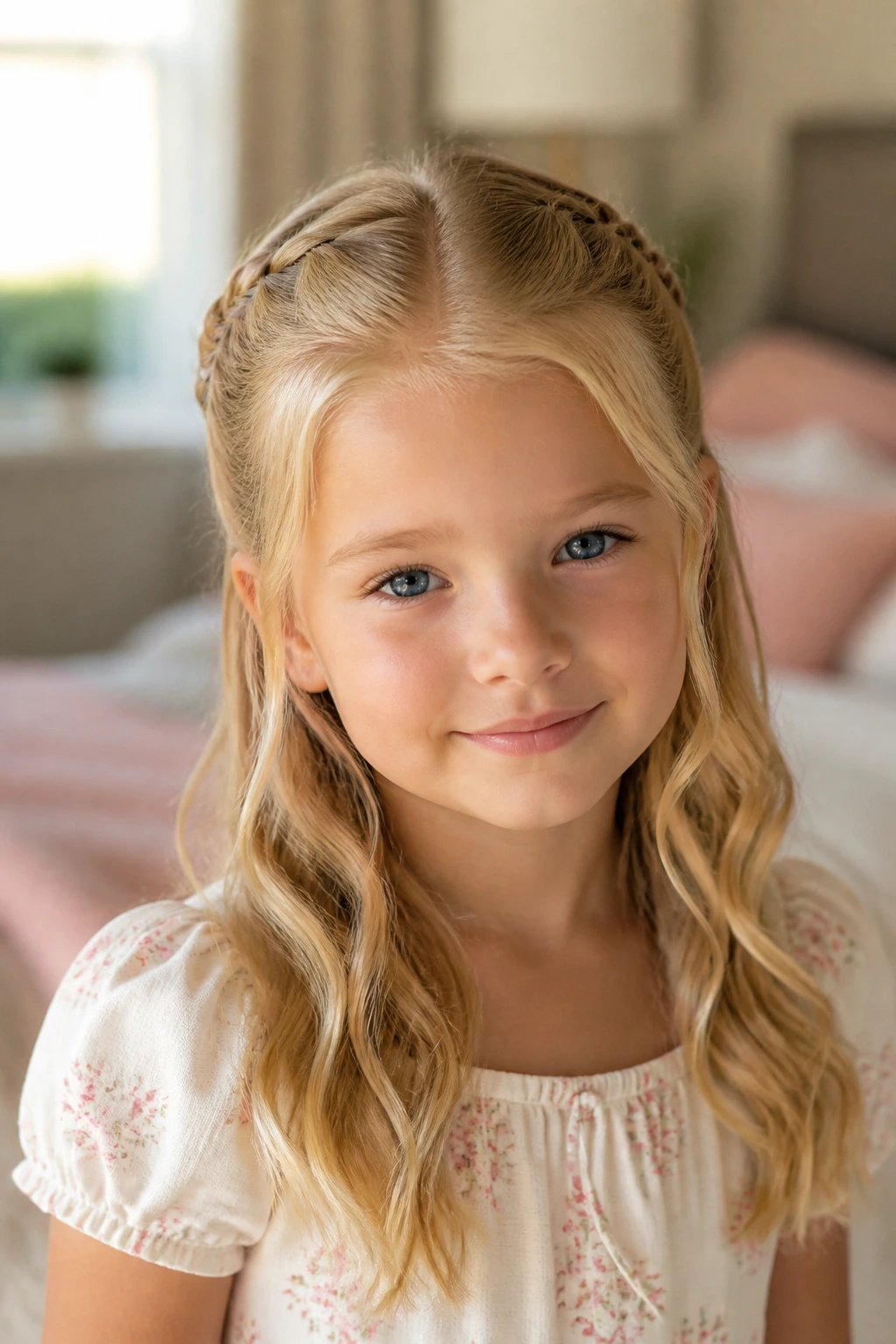
1. Soft Side-Part Waves with a Satin Bow
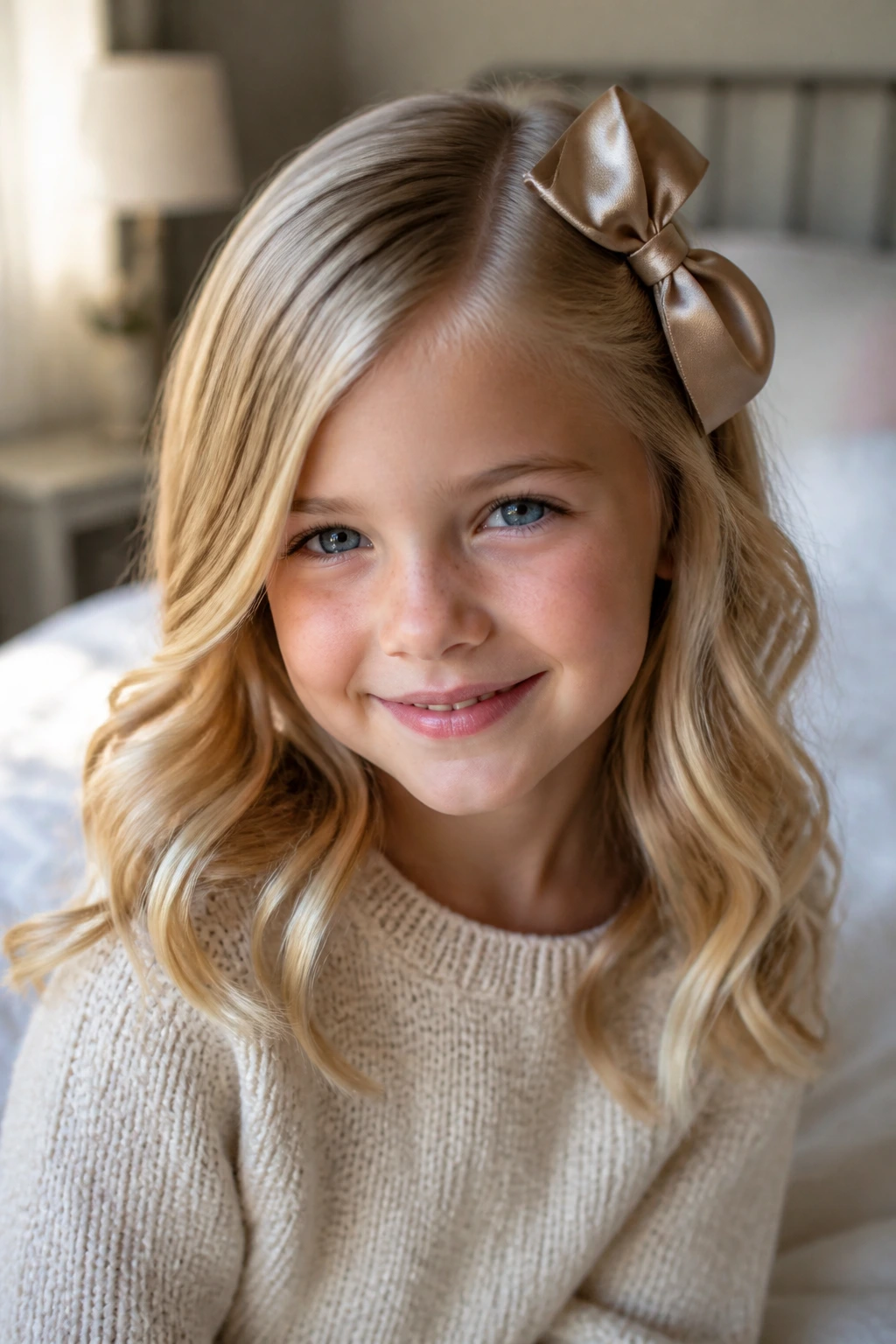
Loose waves on blonde hair have an easy, airy look that flat straight hair sometimes misses. A deep side part gives the style shape, and a satin bow near the heavier side of the part keeps it from drifting into “I brushed this and hoped for the best” territory.
This works well on shoulder-length or longer hair, especially if the ends already bend a little. If the hair is straight, a few loose braid waves set overnight or a light pass with a curling wand from an adult hand will do the trick. Keep the front smooth, leave the ends soft, and let the bow be the one crisp detail.
A single sentence worth remembering: on blonde hair, the part line does a lot of the visual work, so make that line neat before you touch anything else.
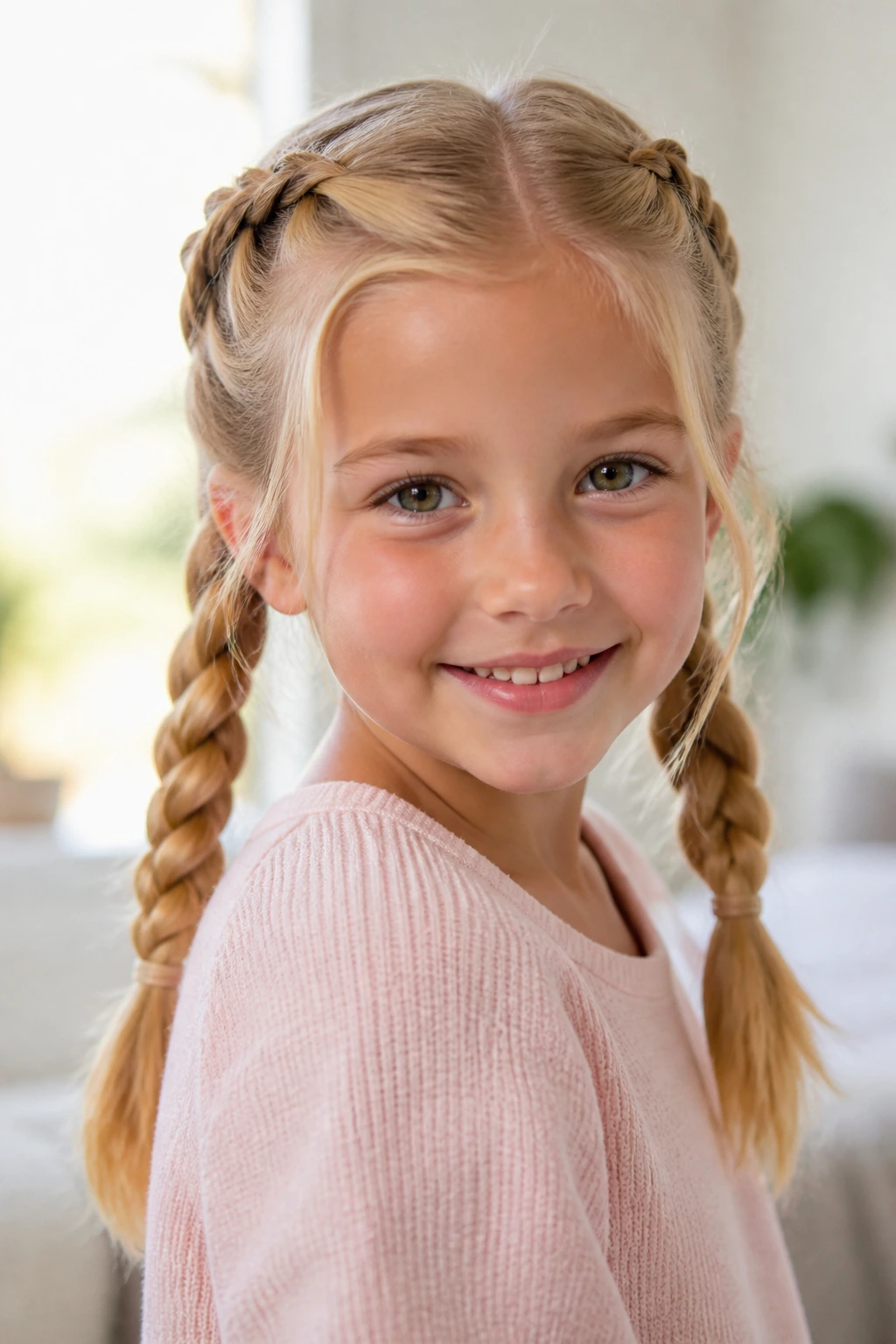
2. Double Dutch Braids into Low Pigtails
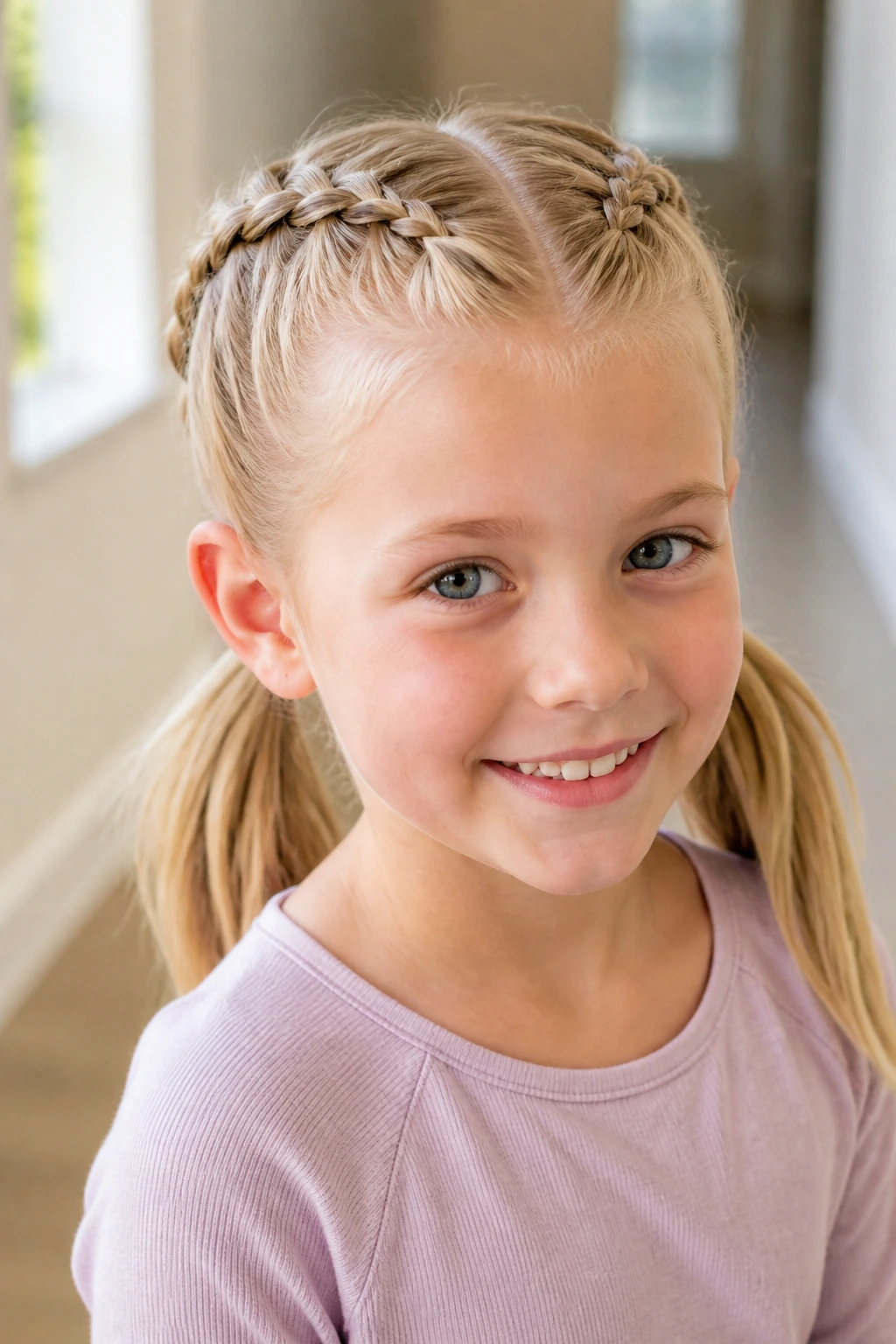
These braids are the workhorse of kids’ hairstyles, and blonde hair shows them off beautifully. The raised braid lines read cleanly, even from a distance, which is useful when a child is moving fast and you want the style to look deliberate after an hour of cartwheels.
The best version starts with two tight-but-not-pulling Dutch braids at the front and ends in low pigtails at the nape. Use small elastics at the ends and tug the braid edges a little for softness. On very silky blonde hair, a mist of water or a tiny bit of leave-in spray helps the sections stay put while you braid.
If you want a style that can handle a full school day, this is one of the safest bets.
3. Crown Braid with Loose Ends
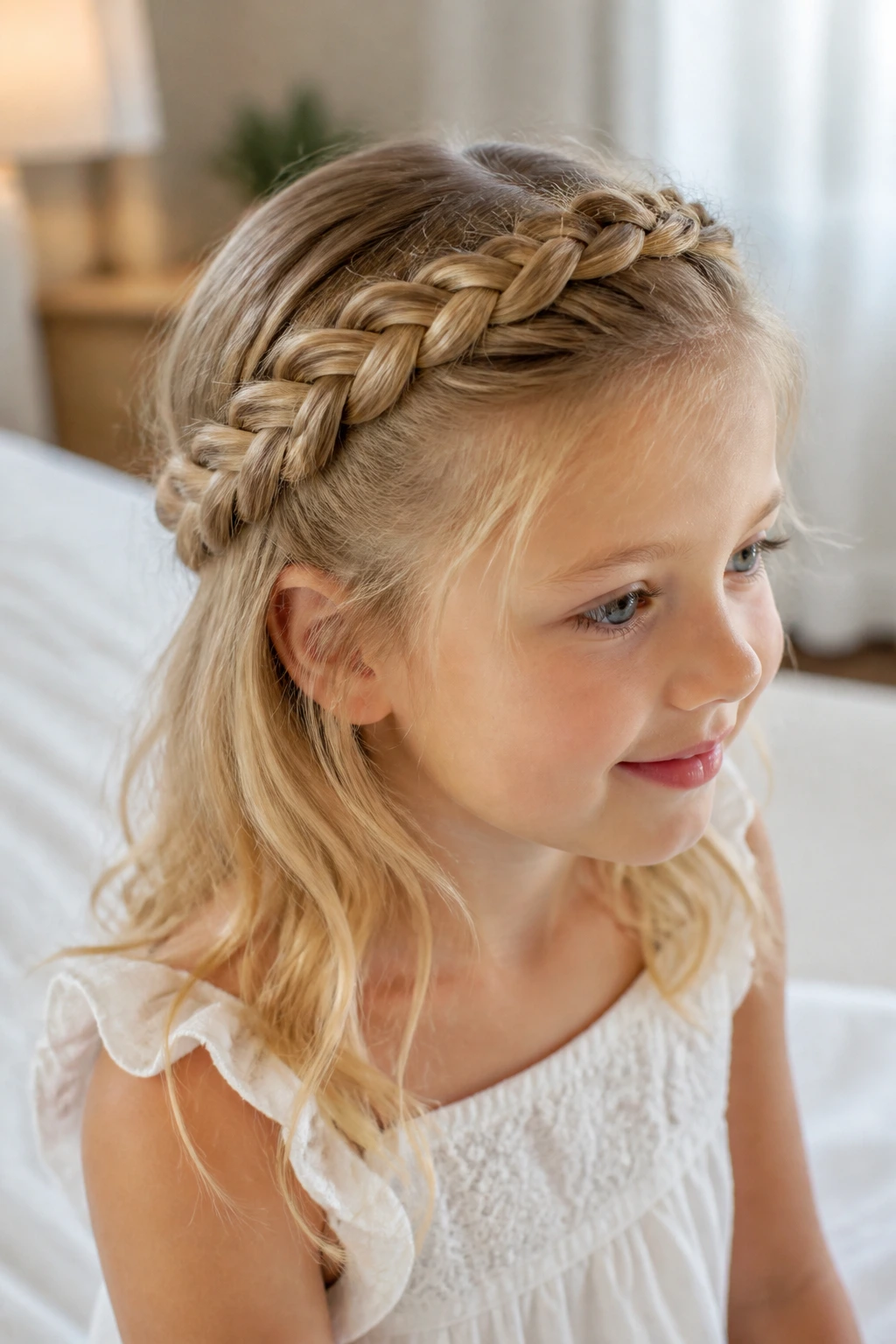
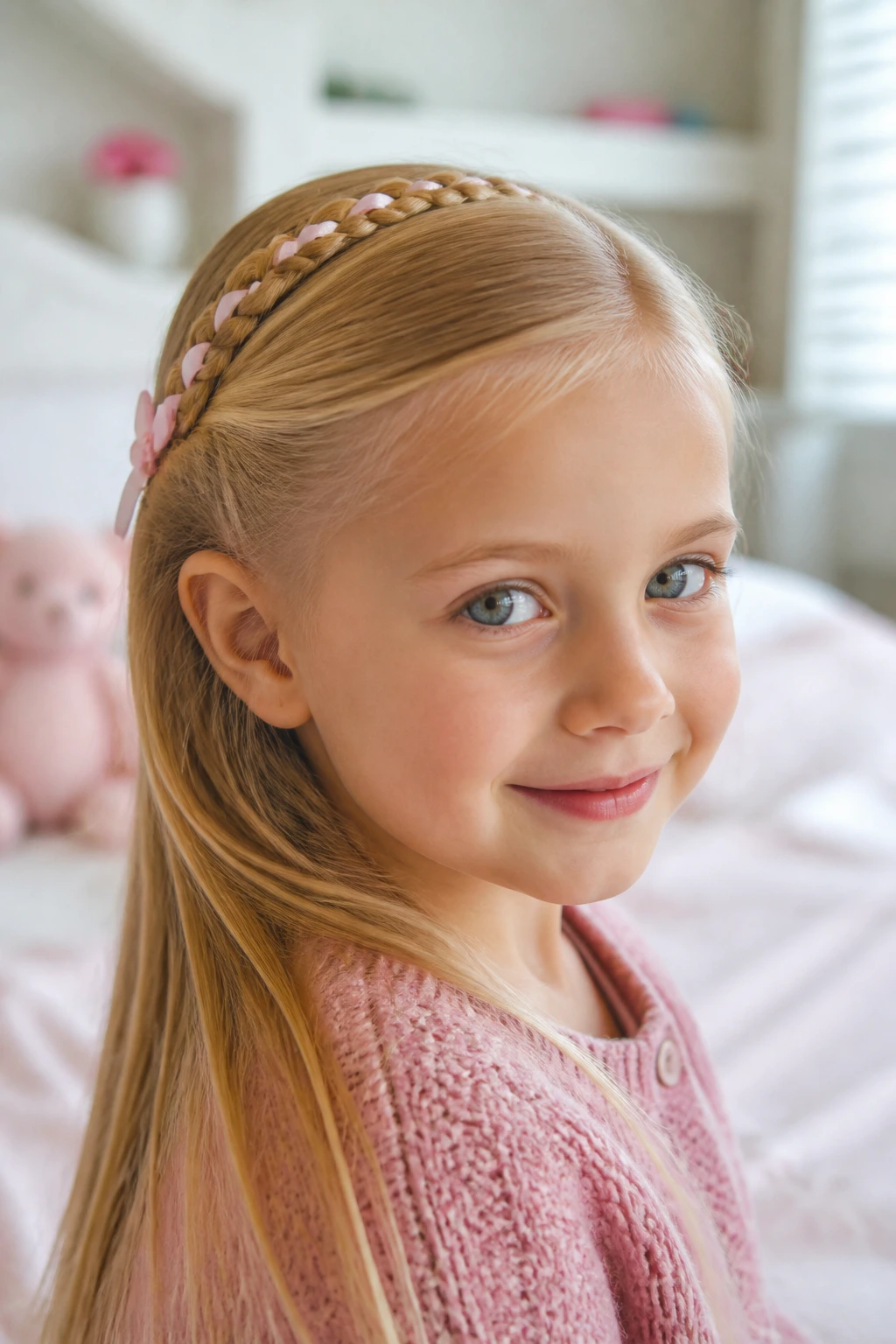
Want one style that reads dressed up without a crown of bobby pins? This is the one. A braid starts near one temple, curves across the head, and finishes on the other side, leaving the remaining hair loose and softly bent at the ends.
The reason it works on blonde hair is simple: the braid looks like a clear band across a pale canvas. Every crossover shows, which means you don’t need heavy accessories to make it visible. It’s a lovely choice for birthdays, church, family photos, or any day when you want “finished” without “fussy.”
Keep the braid loose enough that the scalp doesn’t get stressed, then secure the tail out of sight with a clear elastic and a hidden pin if needed. That little bit of give makes all the difference.
4. Bubble Ponytail with Tiny Elastics
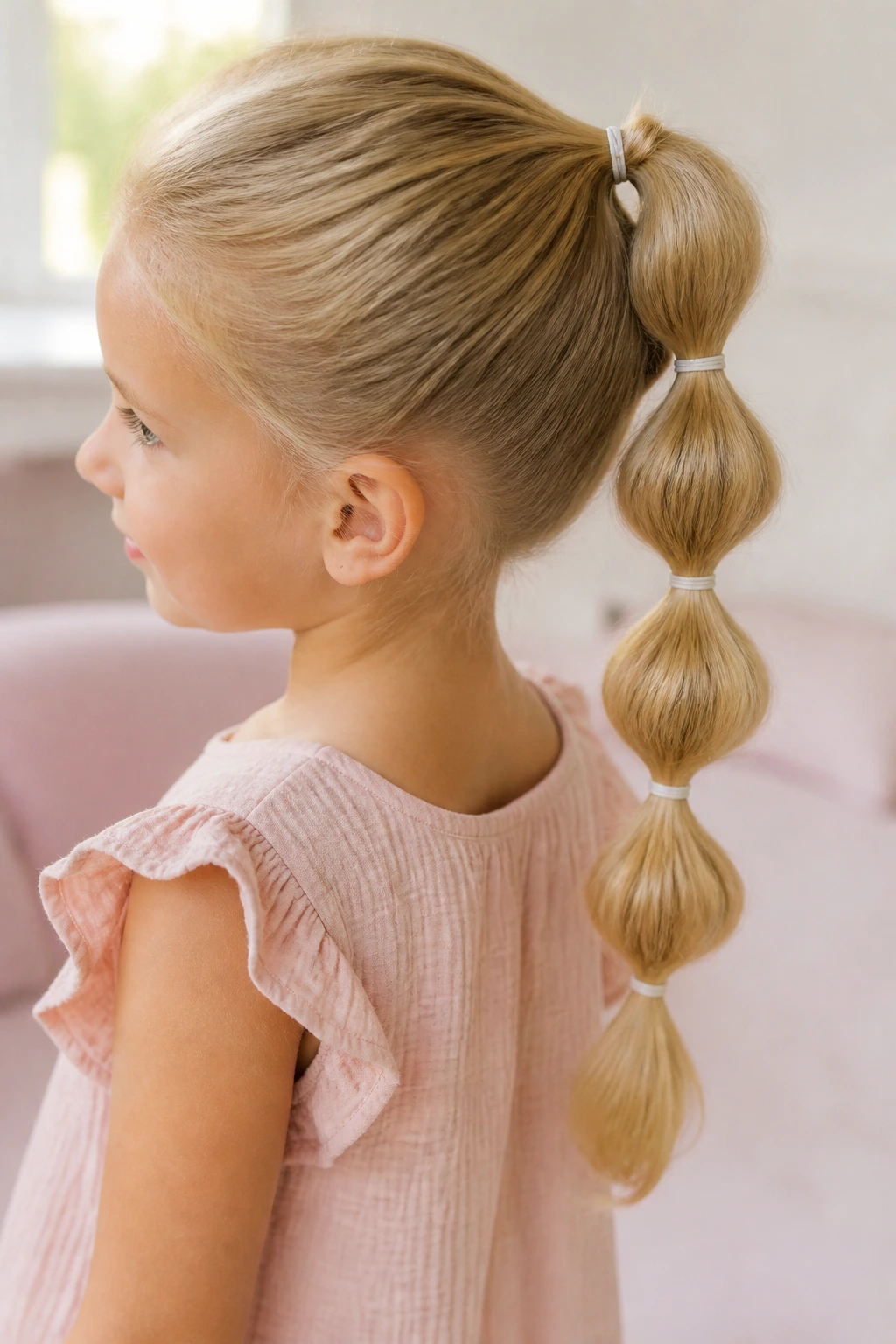
Bubble ponytails are a lifesaver on fine blonde hair, because the style makes the ponytail look fuller than it is. You tie a standard ponytail first, then add small elastics every 1 to 2 inches down the length, puffing each section gently between the bands.
It’s playful without being messy. And on pale hair, the bubbles read clearly, which means even a very simple version looks intentional. Use clear elastics for a barely-there look, or pick soft-colored bands if you want the style to feel more fun.
- Best for: hair that slips out of ordinary ponytails.
- Looks best with: mid-length to long hair.
- Easy upgrade: a ribbon tied around the top elastic gives the whole style a softer finish.
5. Half-Up Top Knot with Wispy Front Pieces
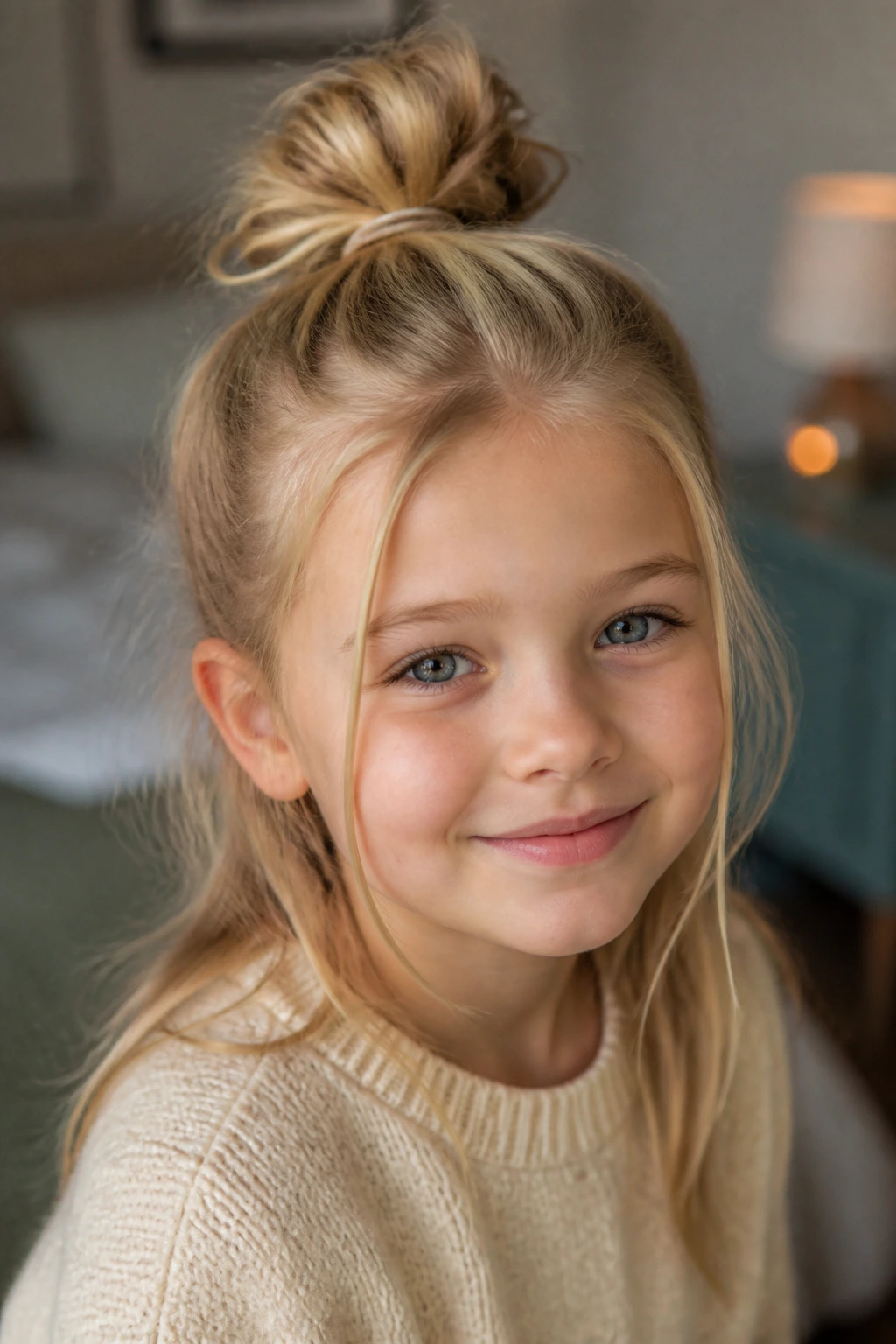
A half-up top knot solves the classic problem of a child who wants hair out of her face but does not want the whole head pulled back. The top section gets twisted into a small bun high enough to show shape, while the rest stays down and loose.
On blonde hair, the bun reads like a bright little knot at the crown, and the loose hair below keeps the style from looking severe. Leave a few face-framing pieces if the child likes softness around the cheeks. If you want a neater version, smooth those front pieces back with a dab of styling cream and a soft brush.
This one works on a school morning, but it also plays nicely with a pretty bow or a sparkly clip when the day turns dressier.
6. Twist-Back Headband Style
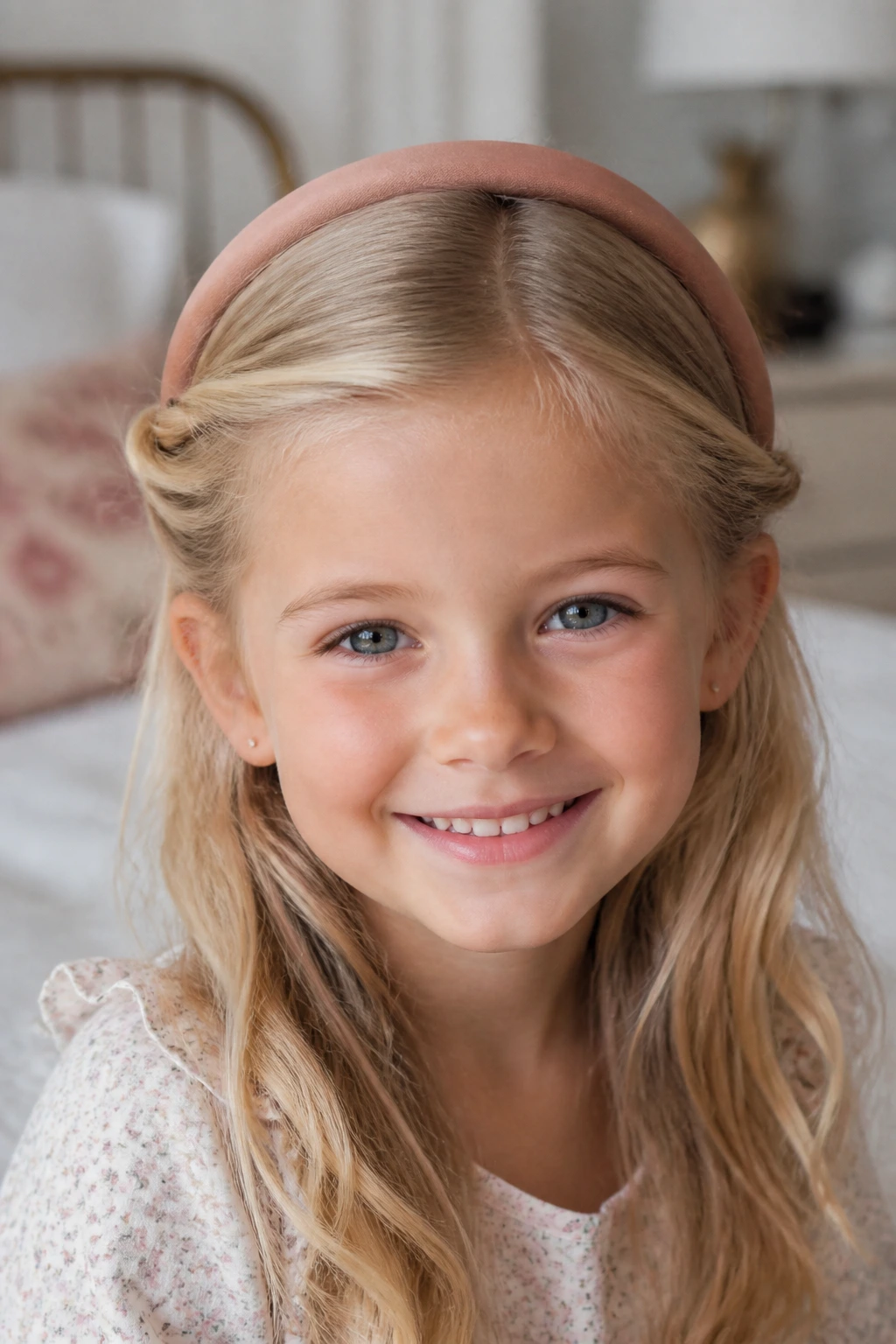
Bangs. Flyaways. A child who will not tolerate anything tight at the crown. That’s the whole reason this style exists.
Take small sections from the front on each side, twist them back, and secure them behind the ears or at the back with tiny clips. A padded headband or a soft fabric band can sit on top if the hair needs extra control. On blonde hair, the twists show up clearly without needing a complicated braid, and the style keeps the eyes clear without flattening the whole head.
This is one of those looks that appears simple because it is simple. Still, it behaves better if you part the sections neatly first. Sloppy parting is what makes it look accidental.
7. Low Ballet Bun with a Ribbon Wrap
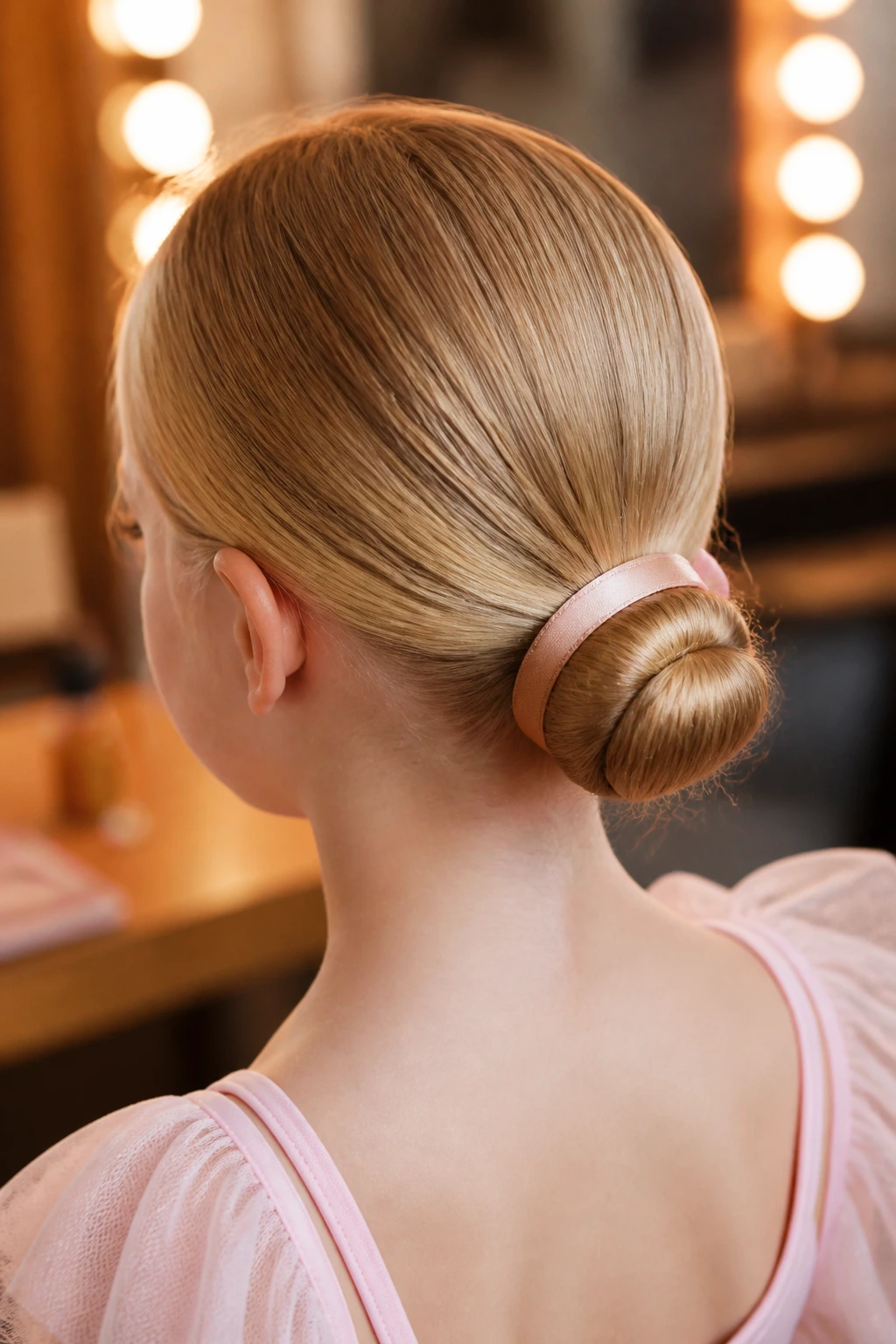
A low ballet bun has a clean shape that suits blonde hair when you want something polished and calm. The bun sits at the nape, gathered smoothly, and a ribbon wrapped around the base gives it a softer edge than a bare elastic.
Why it stays neat
The low placement makes the style kinder to the scalp than a high bun. It also reduces the “bump” that can happen when hair is squeezed into a crown knot. If the hair is fine, a few hidden pins plus a snag-free elastic are usually enough.
Best when the day gets formal
This is the style I’d pick for a recital, a family dinner, or a day when the outfit has already done the talking. Keep the bun compact, not tight, and let the ribbon be the visible detail. The result should look tidy, not stiff.
8. French Braid Pigtails
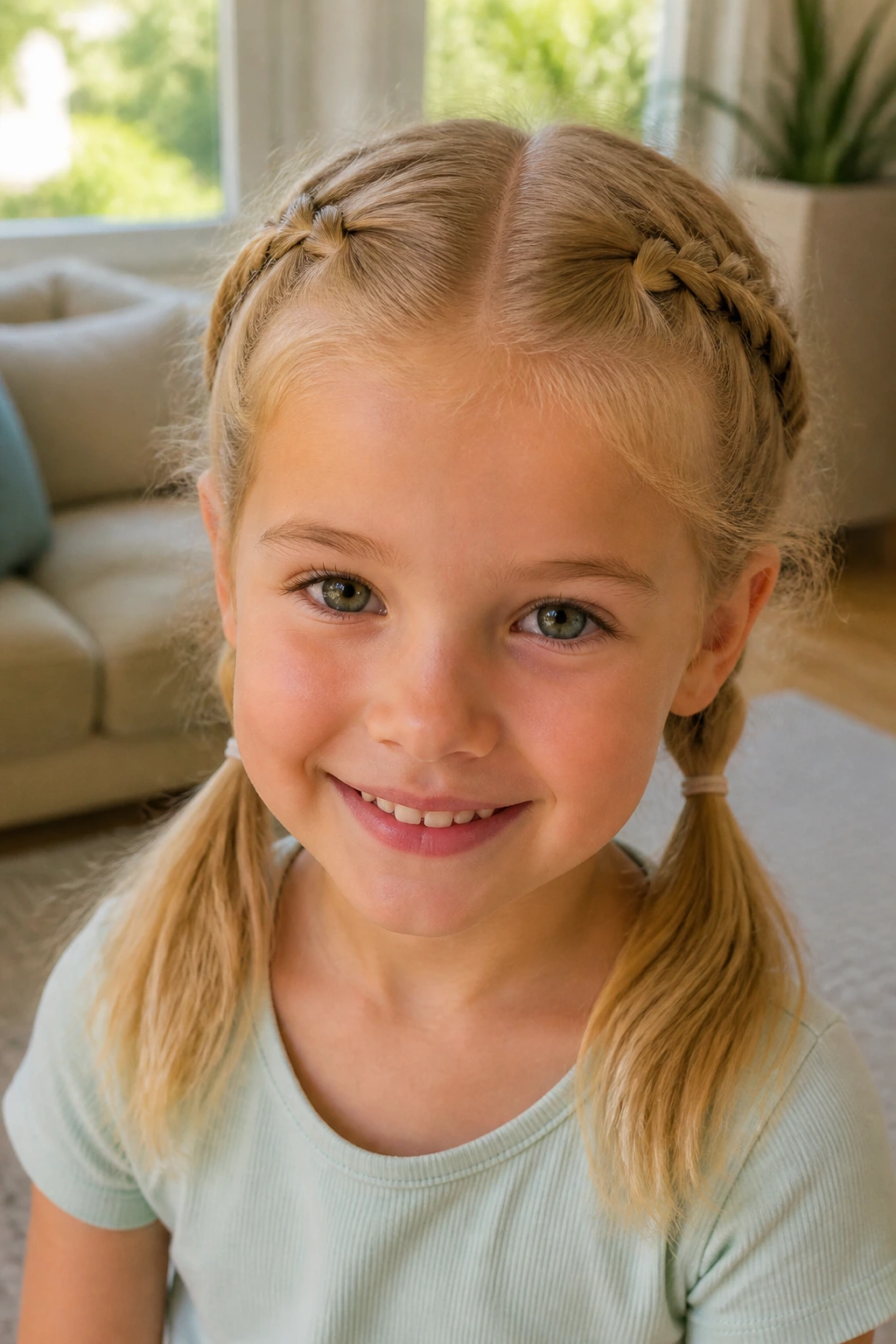
French braid pigtails are the sort of style that can survive a lot of head movement. They start near the forehead, pull in new hair as they go, and end in two low or mid-height pigtails that sit close to the neck or shoulders.
Blonde hair makes the braid tracks easy to see, which is half the charm. The style looks crisp even when the child is not standing still. It’s also a good choice for hair that gets into the face while drawing, reading, or climbing.
A small caution: if the hair is freshly washed and slippery, wait a few hours or add a light texture spray first. Braids grip better when the hair has a little memory in it.
9. Waterfall Half-Up Braid
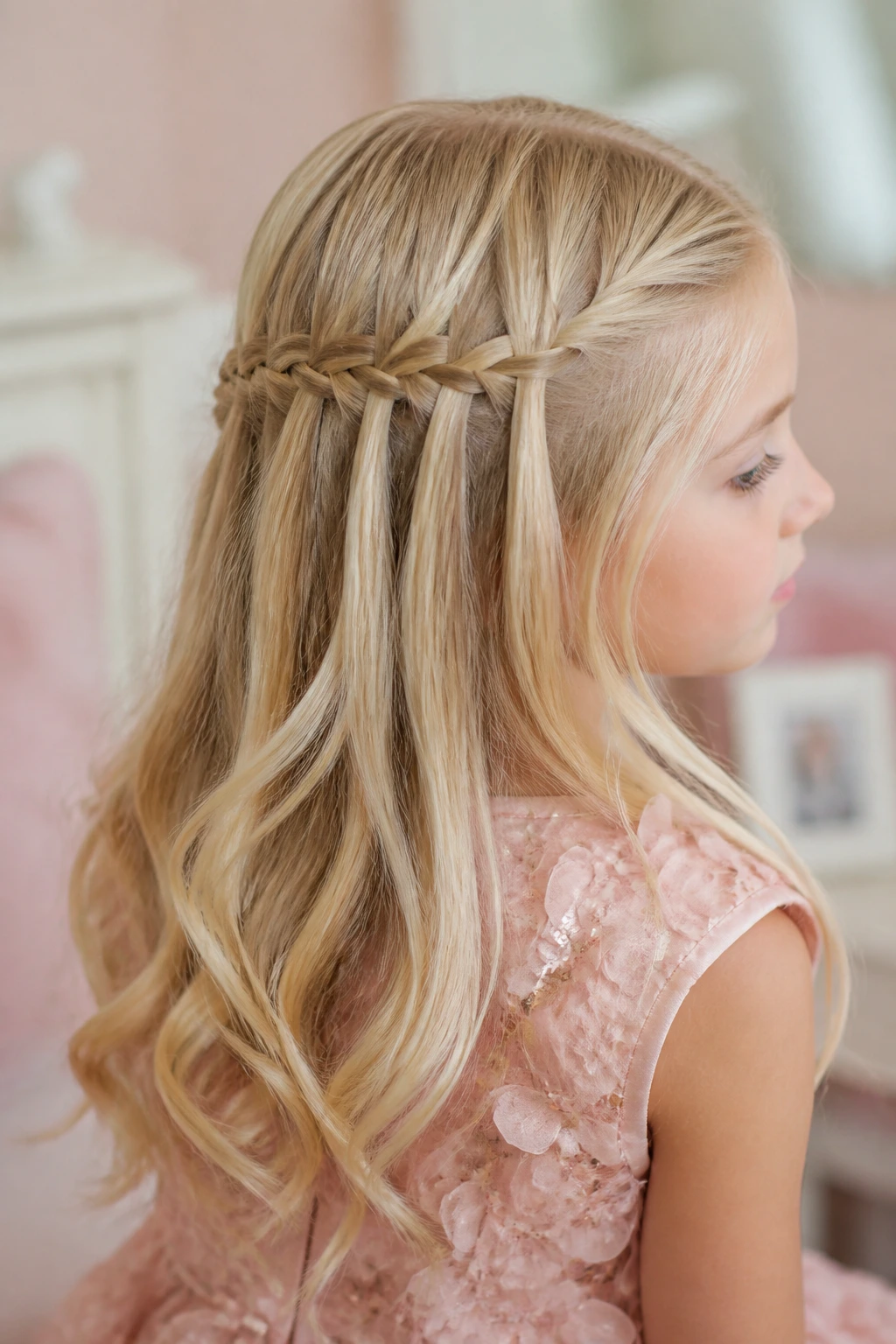
Waterfall braids can look complicated, but the idea is simple: one section drops through the braid on purpose, which creates that cascading effect across the back of the head. On blonde hair, the pattern is easy to see because the strands are lighter and the braid loops stand out.
This style shines on wavy or gently curled hair, since the loose lower sections keep some movement. Keep the braid loose enough that the child can still forget it’s there. If you pull too hard, the whole look turns stiff and the “waterfall” part loses its softness.
It’s a pretty choice for a dress, but it can also work with a T-shirt and leggings if you swap the finish for a tiny clip instead of a big bow.
10. Messy Space Buns
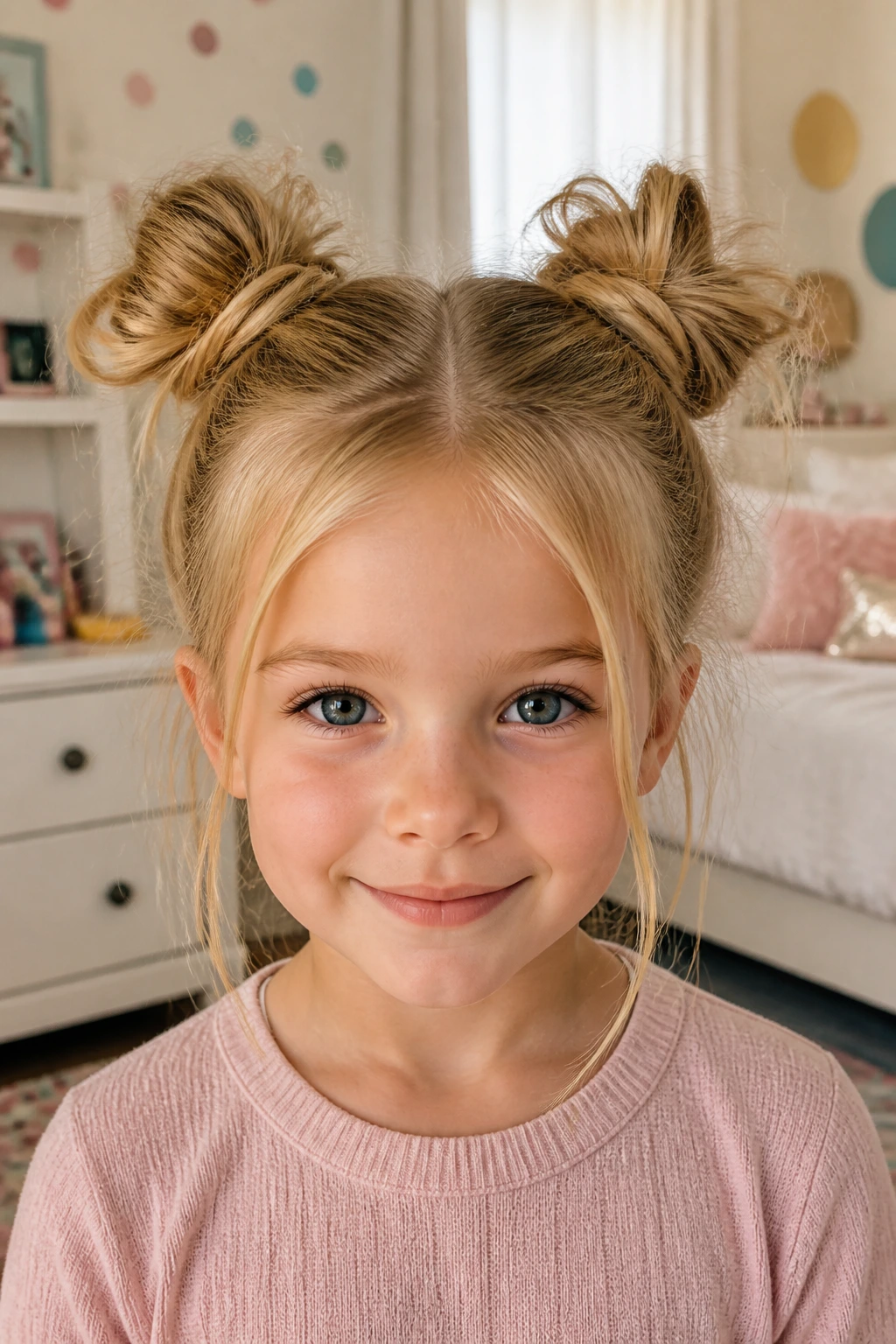
Space buns are fun, but the smart version isn’t actually messy. The part should be clean, the two buns should sit evenly, and the looseness should happen at the edges, not in the whole structure.
That makes them especially good for blonde hair, where the sections are visible and the buns read like two bright little knots on top of the head. If the child has fine hair, tease each section lightly before wrapping it into a bun so it looks fuller. If the child has thick hair, keep the buns smaller and lower so they don’t feel heavy.
A few face-framing strands make the style look more relaxed. Too many, and the buns lose the shape that makes them worth doing.
11. Sleek High Ponytail with a Wrapped Base
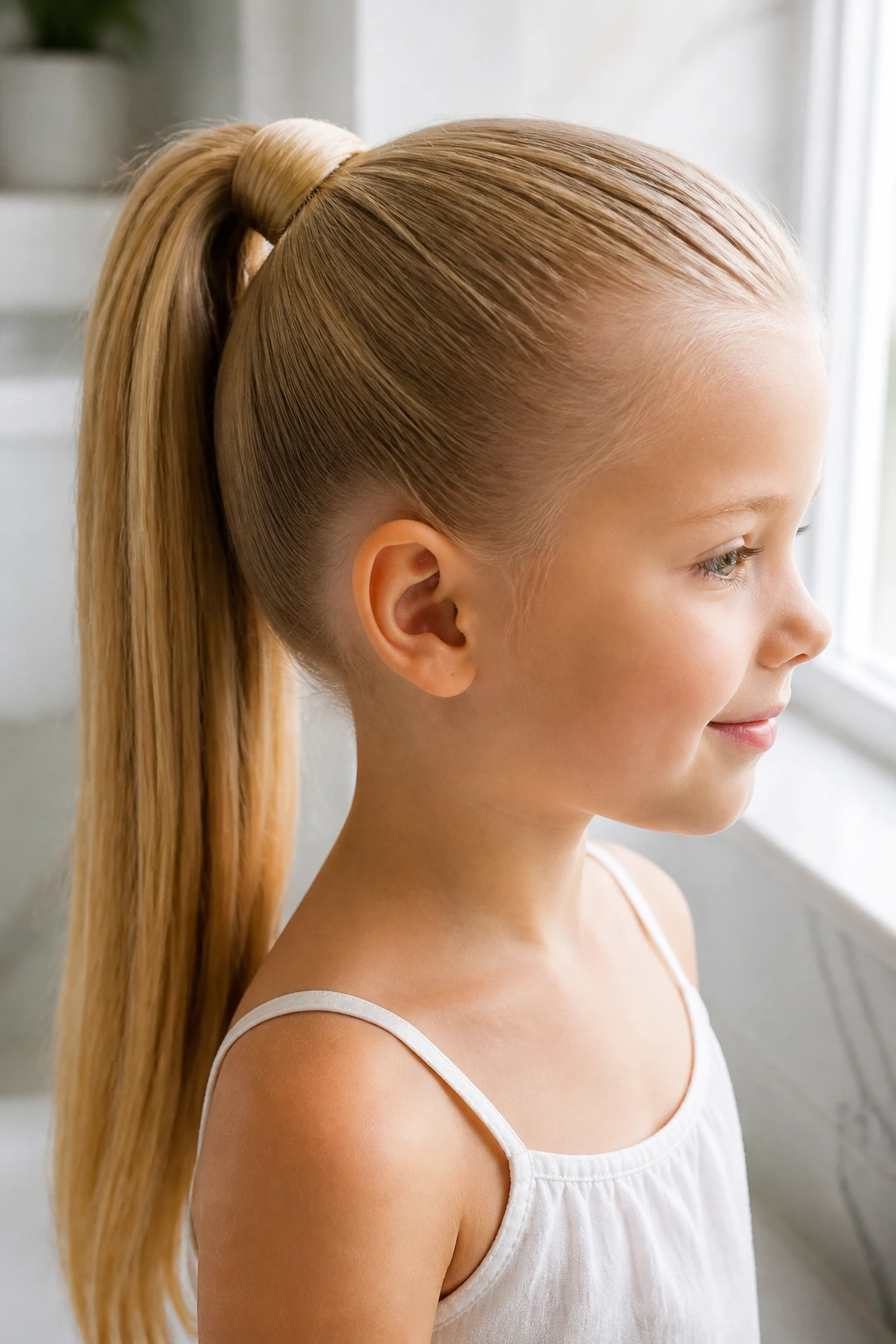
A high ponytail is the plainest style in the room until you wrap a strand of hair around the elastic. That one move changes the whole thing. It hides the band, makes the ponytail look finished, and keeps the top from looking like an afterthought.
On blonde hair, a sleek high ponytail works best when the sides are brushed smooth and the top is neat but not scraped back hard. Use a little styling cream or water on the brush to tame flyaways, then wrap a small hair section around the base and pin it underneath. If the child is active, add a second hidden elastic under the wrapped piece for more hold.
It’s sporty, yes. It can also look surprisingly dressed up when the hair is extra shiny and the part line is clean.
12. Curly Half-Up Clip-Back
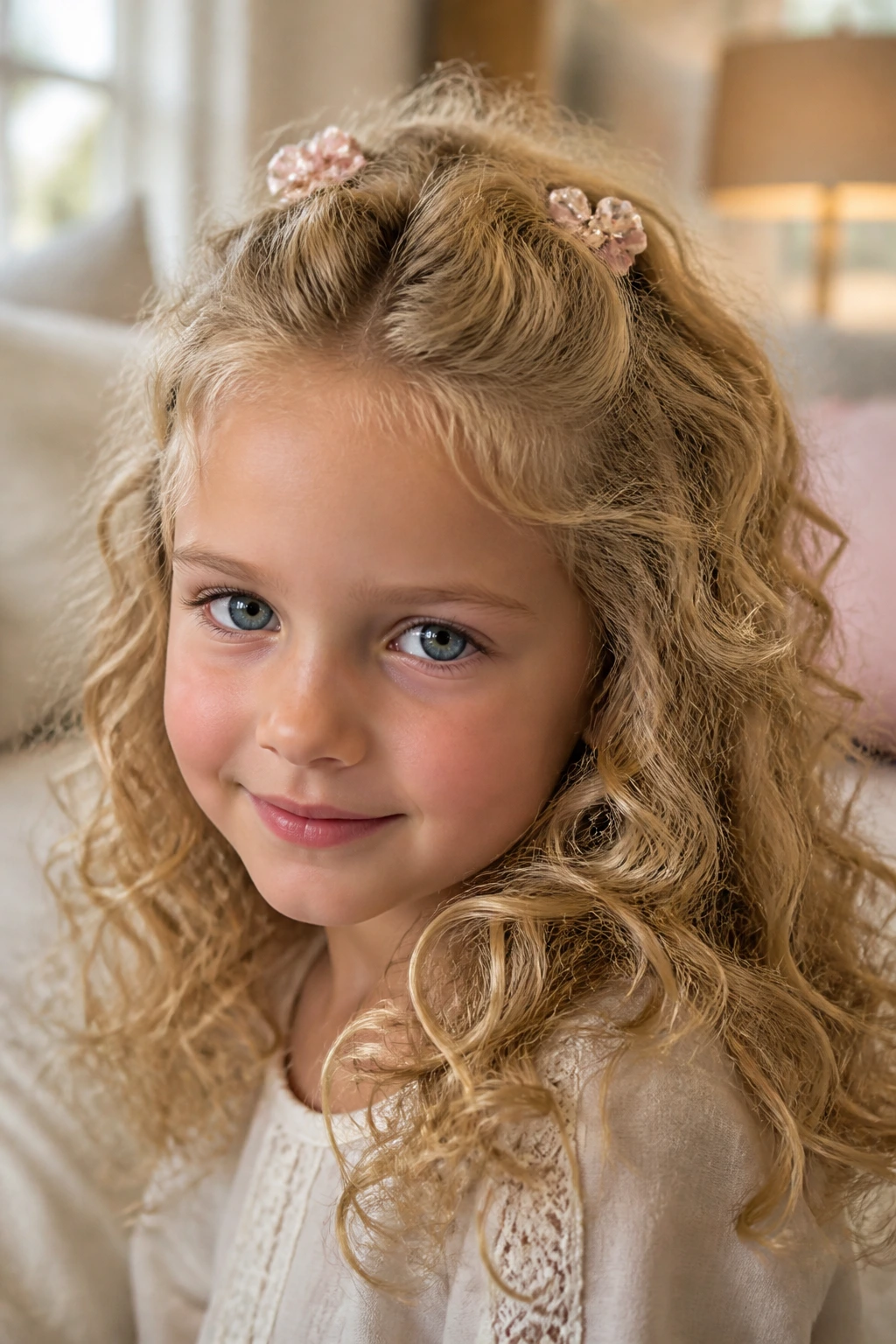
Curly blonde hair can look beautiful half-up because the top section is controlled while the curls below still do their own thing. The result feels light, and it keeps the crown area from puffing out or falling into the eyes.
If the curls are springy
Leave the curl pattern alone. Don’t brush it into frizz just because the top needs taming. Use your fingers or a wide-tooth comb, gather the upper section gently, and clip it back with two small barrettes or one sturdy clip.
If the curls are looser
A small twist on each side before clipping makes the style feel more finished. That extra bit of shaping matters on blonde hair because loose curls can disappear visually unless they’re framed by a stronger line at the top.
13. Side Fishtail Braid
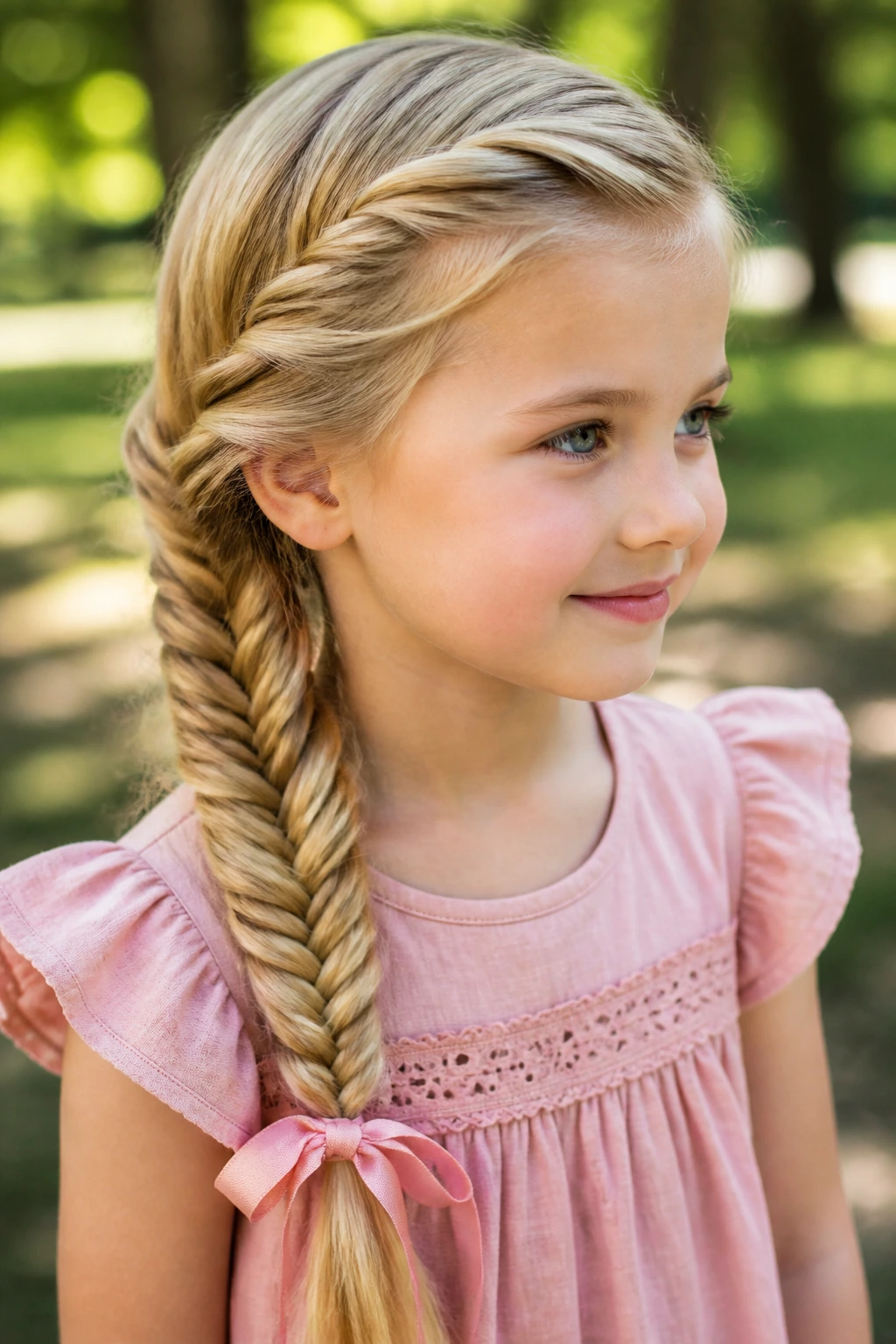
A fishtail braid looks intricate, but it’s really a matter of patience and small sections. On blonde hair, that’s a gift. The weave reads clearly, so even a not-quite-perfect fishtail still looks deliberate.
This style works best when pulled to one side over the shoulder or draped down the back with a ribbon at the end. If the hair is fine, tug the braid edges gently after tying it off. That widens the braid and stops it from looking stringy.
A fishtail braid is one of those looks where the finish matters almost as much as the braid itself. A neat middle part or deep side part can make the whole thing look calm instead of busy.
14. Braided Heart Accent Style
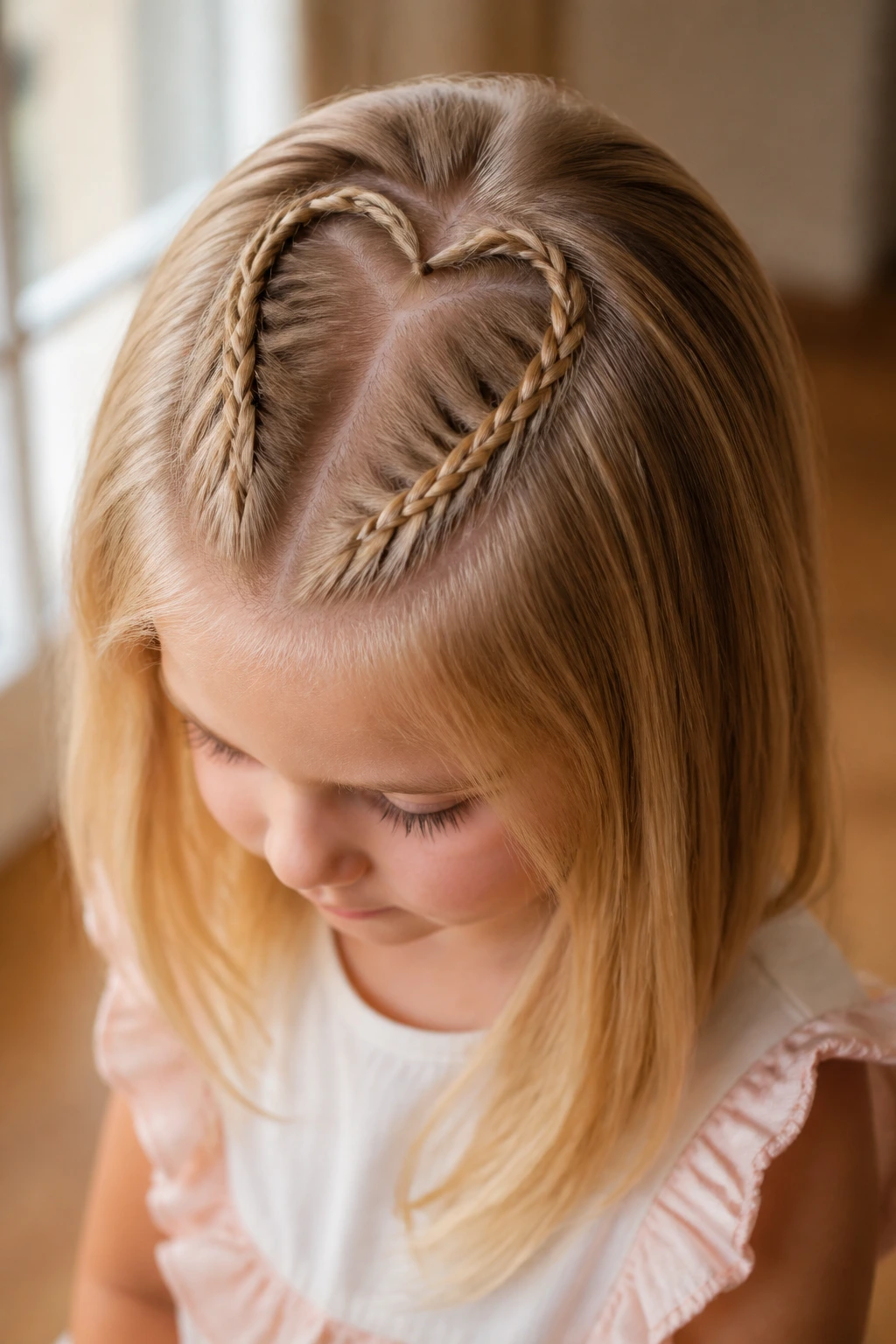
If the day calls for one small bit of drama, a braided heart delivers it. Two tiny braids curve toward the center and form a heart shape near the crown or upper back of the head, with the rest of the hair left down or pulled into a ponytail.
It is a sweet choice for birthdays, holidays, or photos, and blonde hair makes the shape easy to spot. The key is keeping the heart small enough to hold its outline. If it gets too large, the curves start to blur.
This style works best on medium or long hair, where the braid can actually arc without running out of length. Add one ribbon or one small clip. More than that, and the heart starts to fight with the rest of the look.
15. Sock Bun for Special Days
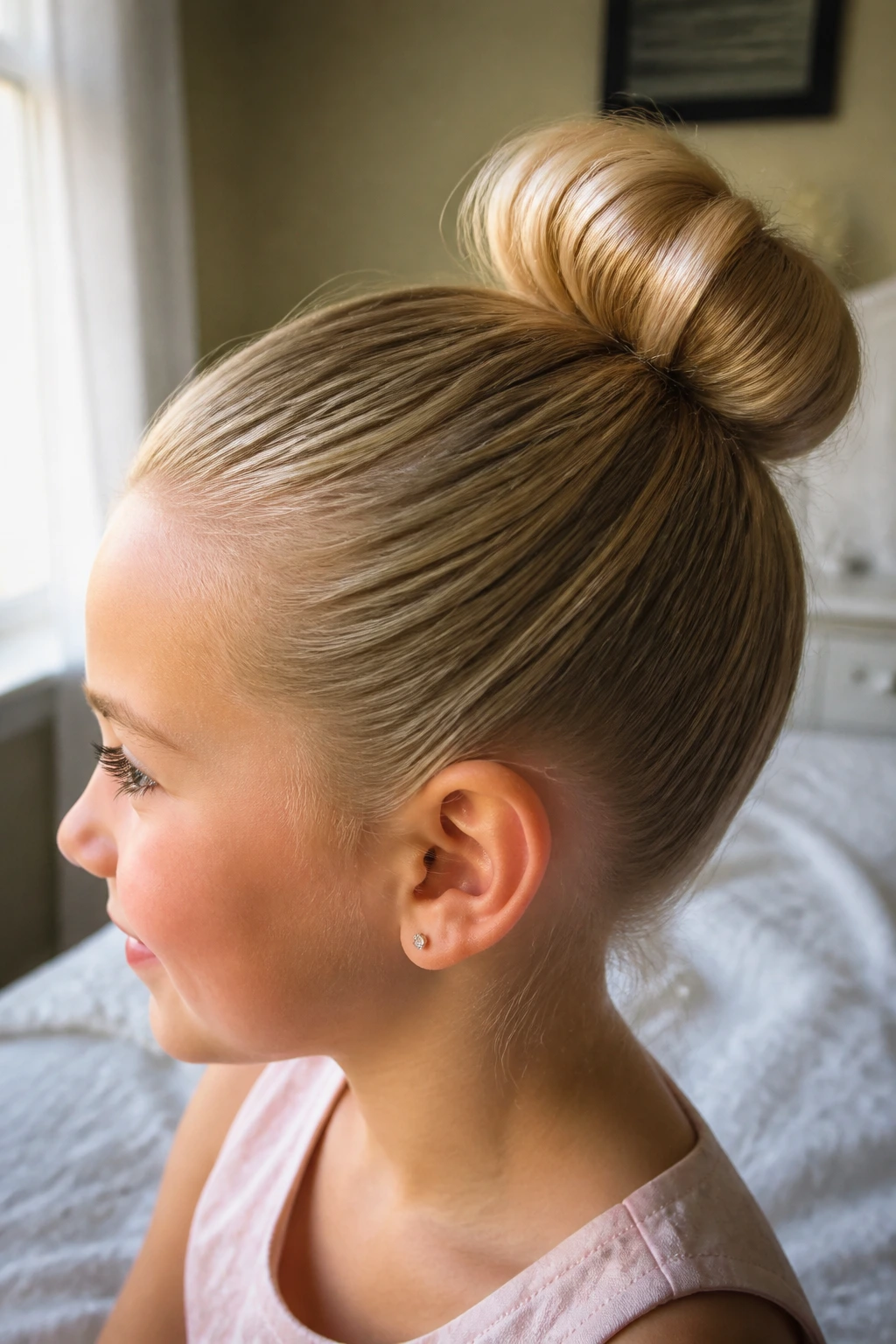
A sock bun, or foam donut bun, gives blonde hair a round shape that looks neat from every angle. The hair is smoothed into a ponytail first, then wrapped around the bun form and pinned down until the circle looks even.
Compared with a simple twisted bun, this version has more height and more polish. It also keeps the bun from collapsing halfway through the day, which is useful if the child has thicker hair or needs the style to hold for several hours. On blonde hair, the smooth round shape can look almost like a soft shell or a little halo, especially when the edges are brushed flat.
Use a light mist of water or styling cream to keep the flyaways under control. Don’t overdo it. A bun should look neat, not crunchy.
16. Soft Ringlet Pony with a Scrunchie
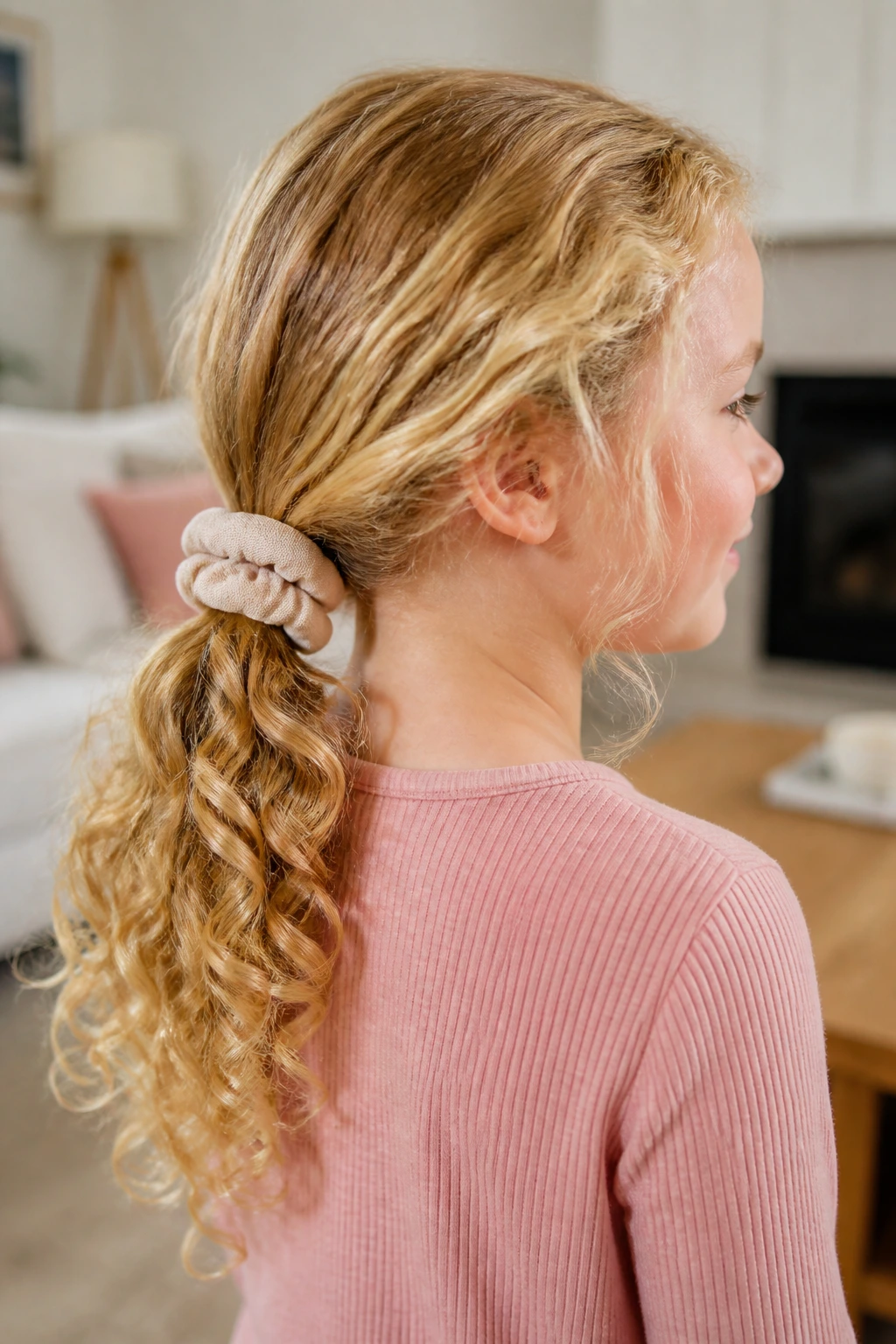
If the hair already has curls or ringlets, a ponytail can look better when you stop trying to flatten it. Gather the hair low or mid-height, secure it with a soft scrunchie, and let the curls spill below in their own shape.
This is a smart style for blonde curls because the texture matters more than the structure. A scrunchie protects the hair from dents, and it looks softer than a thin elastic digging into the back of the head. If the ponytail needs a little help, twist two small pieces from the front before tying it back. That gives the style a frame without making it stiff.
Leave the curls alone once they’re in the ponytail. The fewer times you touch them, the better they behave.
17. Two-Twist Low Ponytails
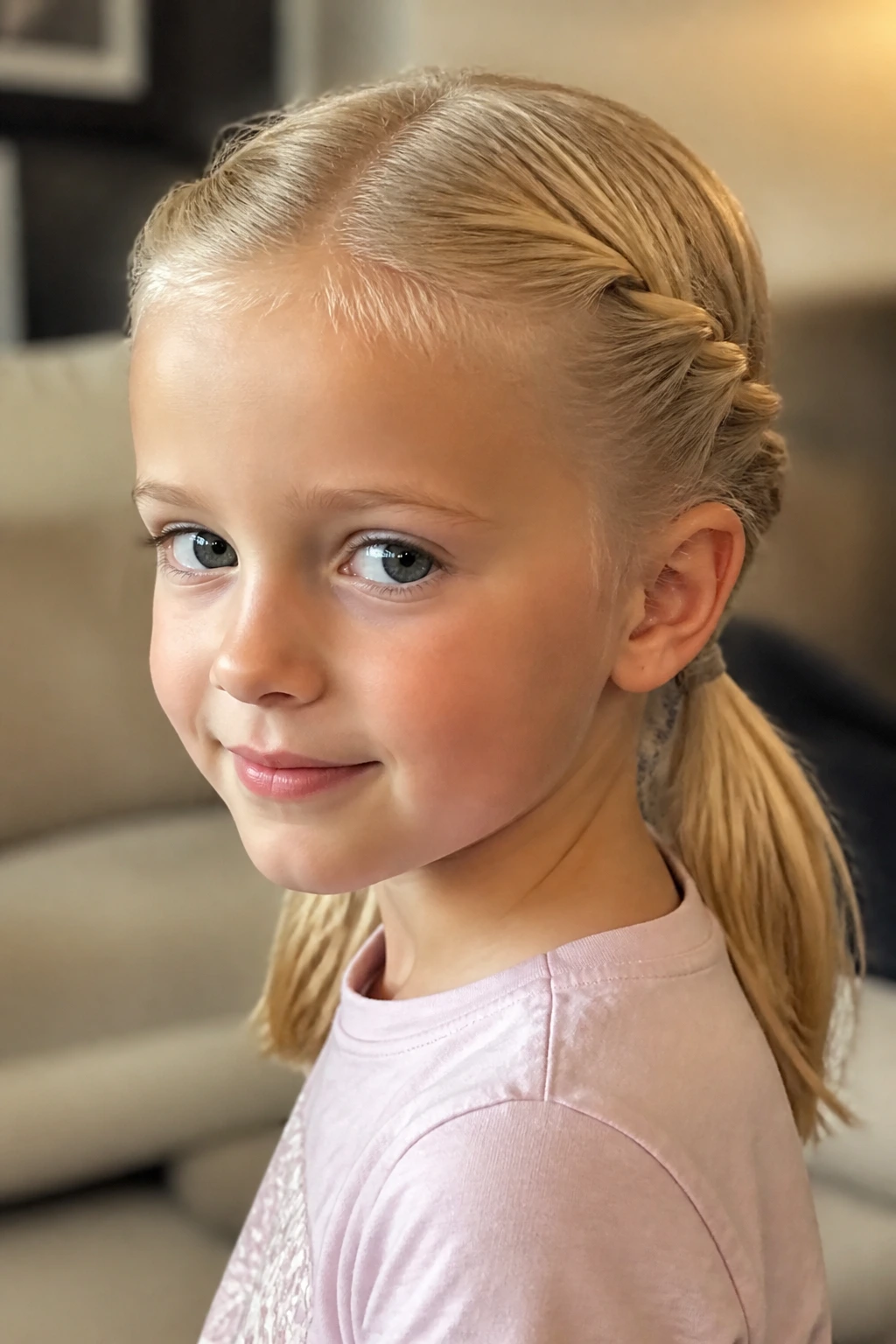
Two-twist low ponytails are one of those styles that feels like a shortcut, but it doesn’t look like one. Twist a section from each side toward the back, then join them into two small low ponytails or one split ponytail near the nape.
It’s a nice middle ground between loose hair and full braids. The twist keeps hair out of the face, and blonde strands show the rope-like pattern clearly. If you’re styling a child with fine hair, this is kinder than a tight braid because the twist can hold with less tension.
A matching pair of tiny ribbons at the ends keeps the style from looking unfinished. Little details matter more here than height or volume.
18. Headband Tuck-In Style
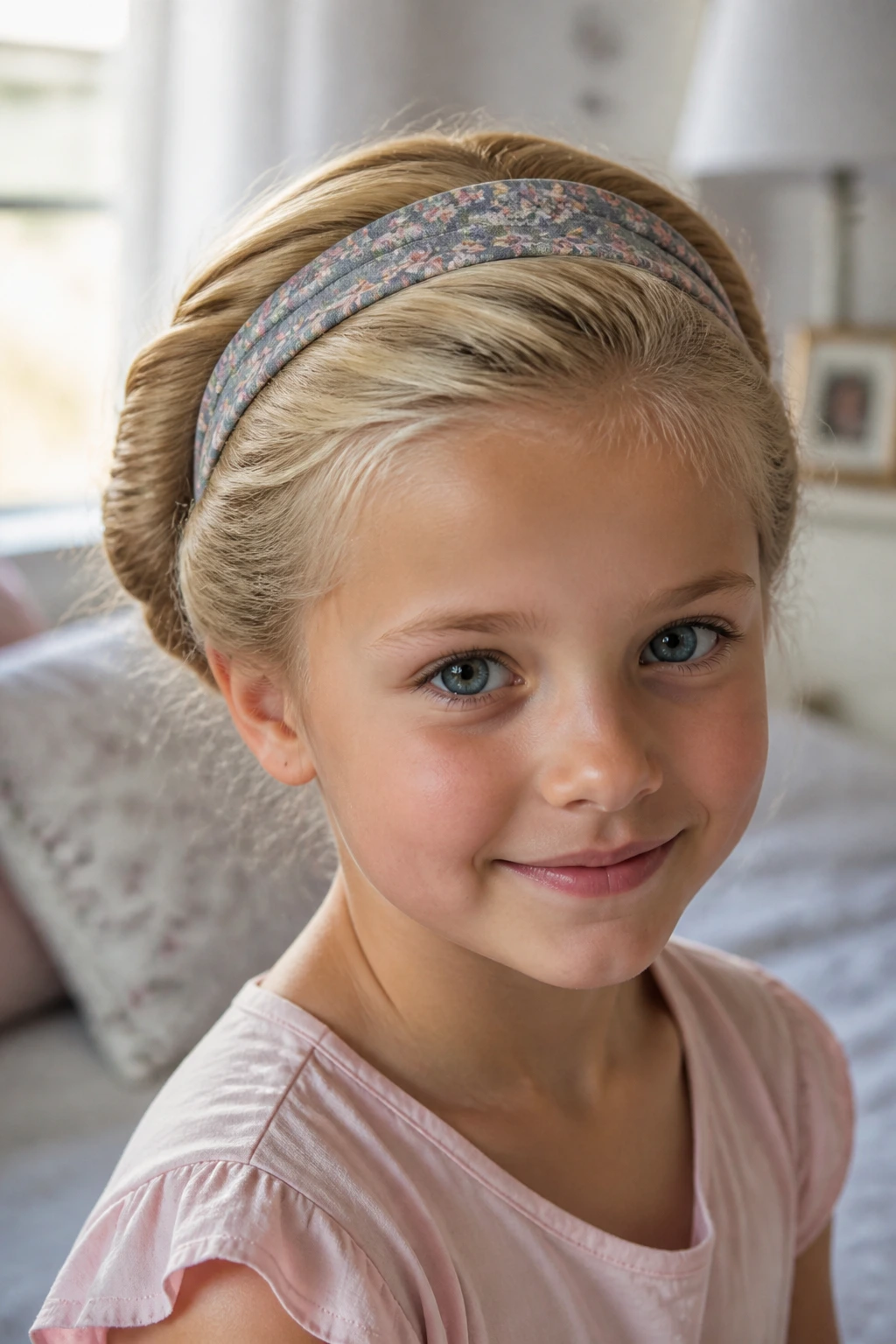
Shorter hair can still look dressed up. A stretchy headband and a few tucked-in sections can turn a bob or lob into something that looks far more styled than it actually is.
When the bob flips out
If the ends flare outward, let them. A headband tuck-in style does not need perfect smoothness. The point is to pull the front and sides back, then tuck the lengths into the band so the hair stays in a soft roll at the back. On blonde hair, the shape reads cleanly even when the texture is a little uneven.
What makes it work
Use a headband that grips without squeezing. A slippery band will slide; a stiff one will give a headache. The sweet spot is a stretchy band with enough hold to stay in place but enough softness that a child can wear it through a whole afternoon.
19. Mini Braids into Loose Hair
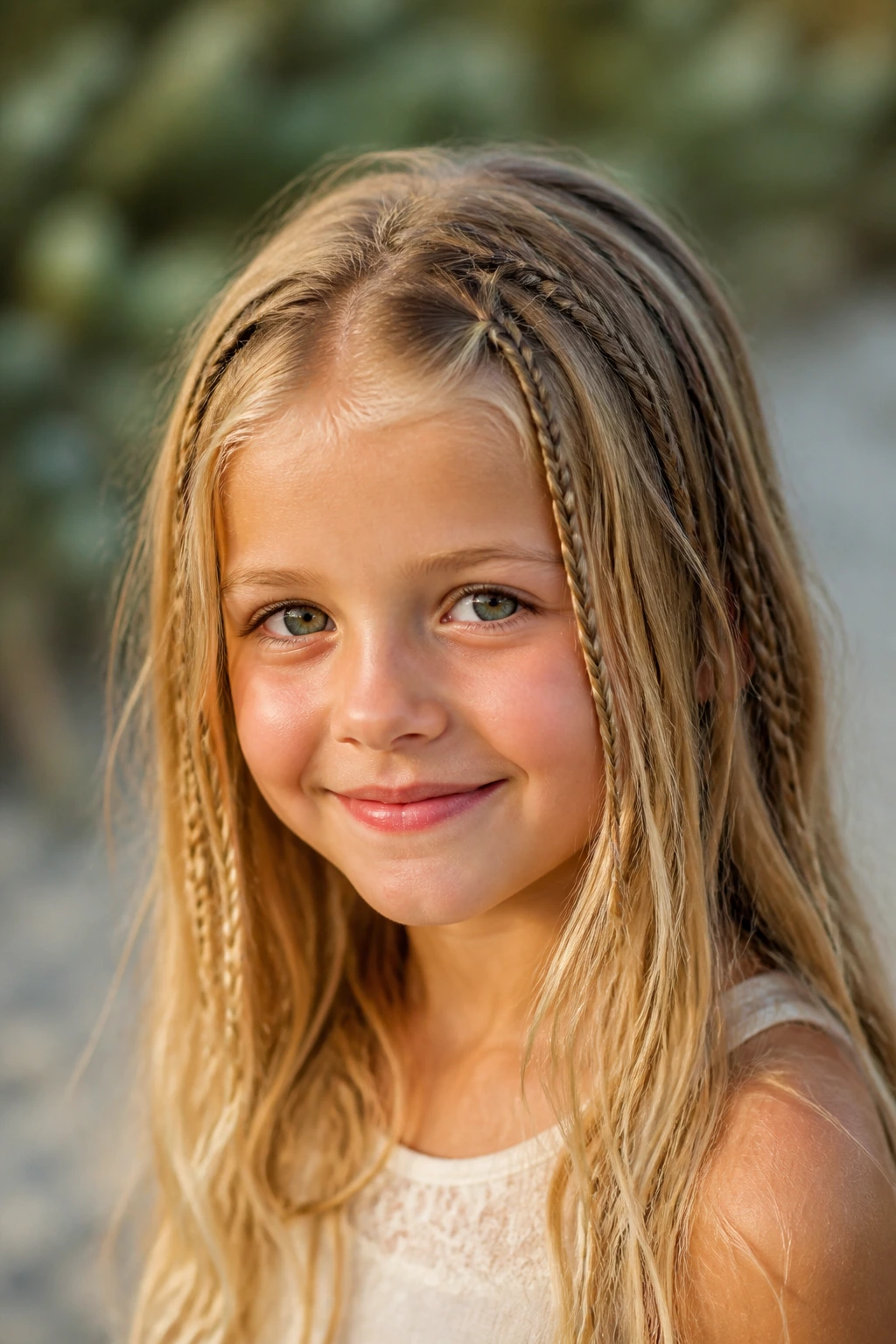
A few tiny braids hidden among loose blonde hair can change the whole look without taking over the style. They add texture near the face and along the sides, but the rest of the hair still moves freely.
This is a good option when you want something a bit playful without committing to a full braid pattern. On lighter hair, the tiny braids appear almost like little accents drawn into the hair. Use clear elastics at the ends, or let the braids disappear into the rest of the hair if they’re short enough.
Three mini braids are usually enough. More than that, and the style starts to feel busy. Keep the spacing uneven if you want it to look relaxed.
20. Pixie Cut with Tucked Barrettes
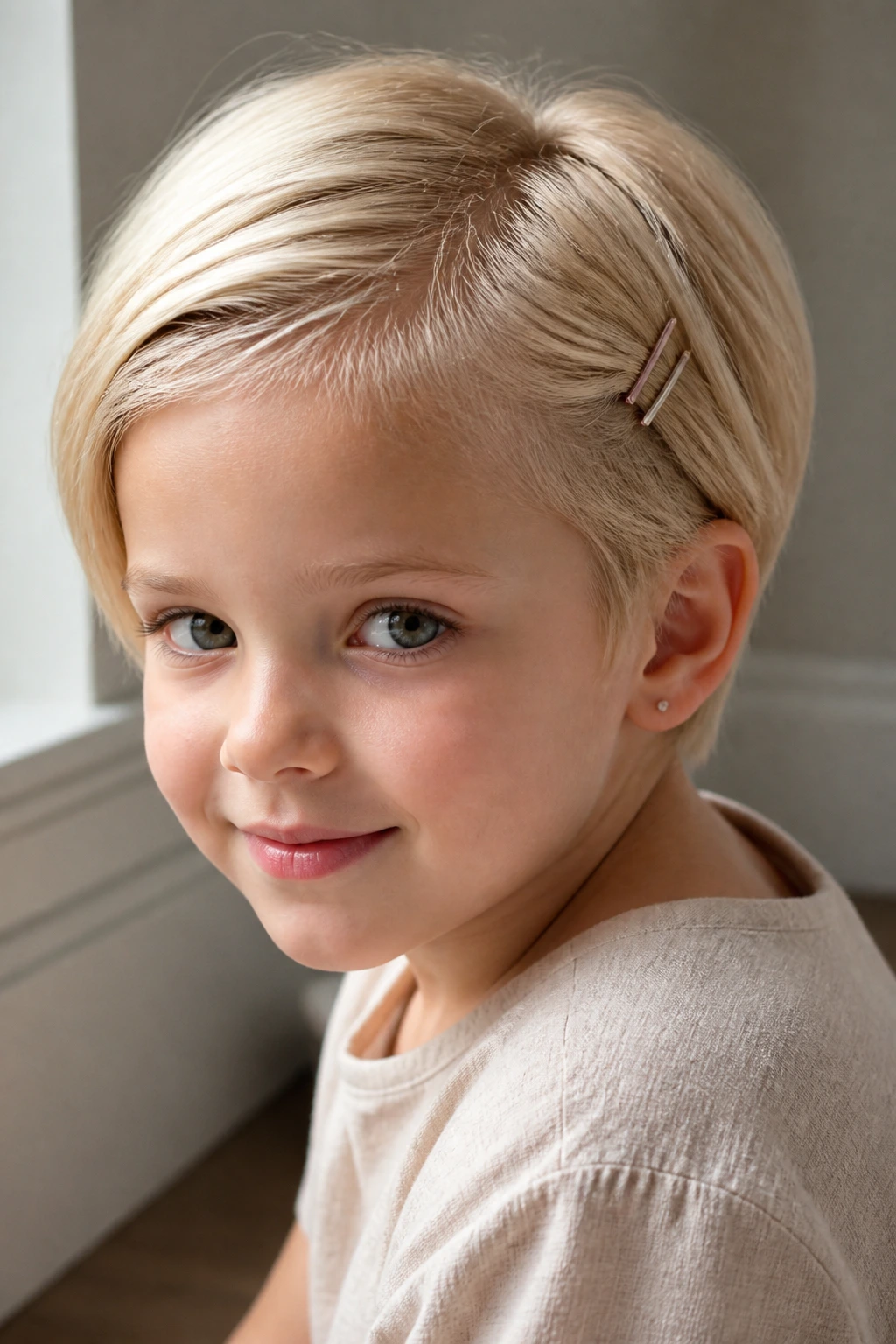
A pixie cut does not need much to feel styled. One neat side part, one barrete near the temple, or a pair of tiny clips stacked slightly apart can give a short blonde cut shape and direction.
Because blonde hair is light, the clips show up almost like little punctuation marks. That means you can use a plain silver snap clip, a bow, or a colored resin barrette and get a strong effect without adding weight. Keep the clips flat and close to the scalp so they don’t pull the hair forward.
This is one of the few styles where restraint helps more than decoration. A pixie looks sweetest when the accessory is small and the cut itself gets to breathe.
21. Chin-Length Bob with Tiny Clips
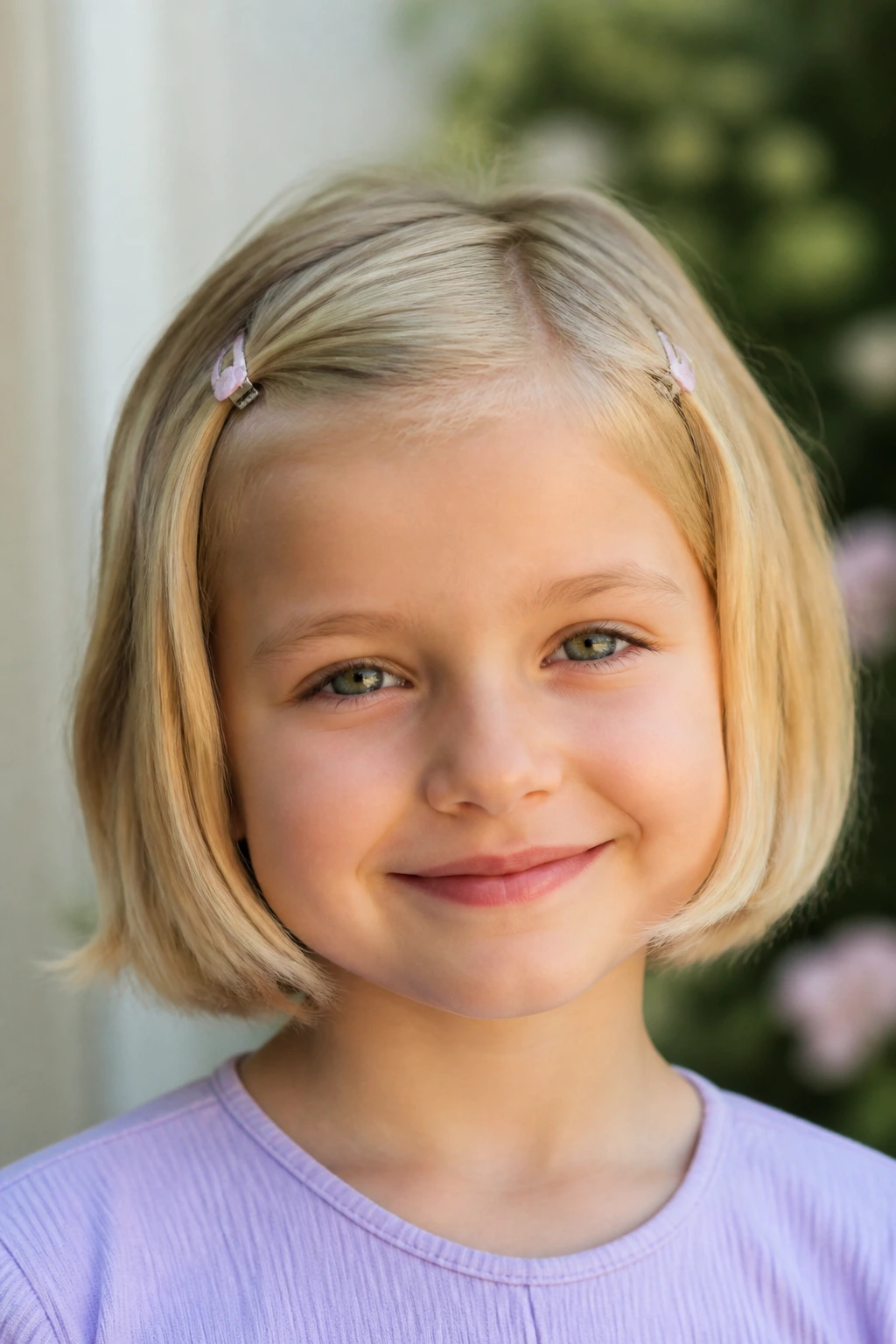
A chin-length bob can slide into “plain” territory fast, so a couple of tiny clips near the side part do a lot of work. They hold the front back, frame the face, and give the haircut shape without hiding it.
On blonde hair, the clips are visible enough to matter but small enough not to overwhelm the cut. That matters with shorter hair, where a big bow can swallow the whole silhouette. If the bob flips under at the ends, that’s fine. If it flips out, even better. The clip is there to give the style a point of focus, not to erase the haircut.
Try two matching clips for symmetry, or one clip on the heavier side of the part if you want a softer feel. Either way, keep it light.
22. Braided Halo Crown
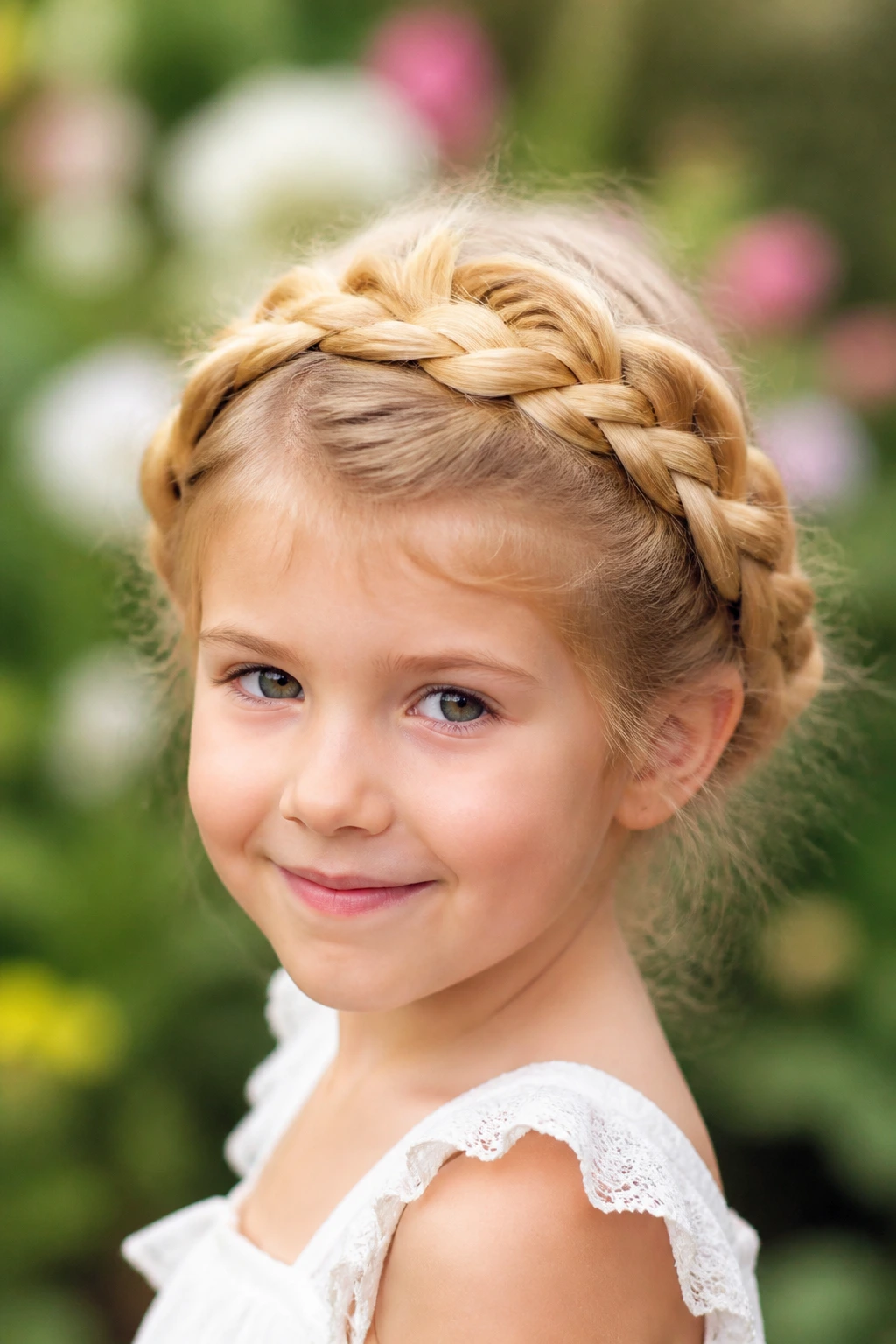
A braided halo crown is the more polished cousin of the crown braid with loose ends. The braid circles the head all the way around, so the hair looks wrapped in its own pattern.
This style shows beautifully on blonde hair because the braid line stays visible all the way around the scalp. It’s a strong choice for a flower girl dress, a holiday outfit, or any day when the child wants to feel a little dressed up. The tradeoff is time. This one takes more patience than a ponytail or half-up style, and it behaves best on hair with enough length to braid cleanly around the head.
Keep the halo braid loose, pin it in hidden places, and resist the urge to overfill it with accessories. The braid itself is the accessory.
23. Playdate Tousled Layers with Clips
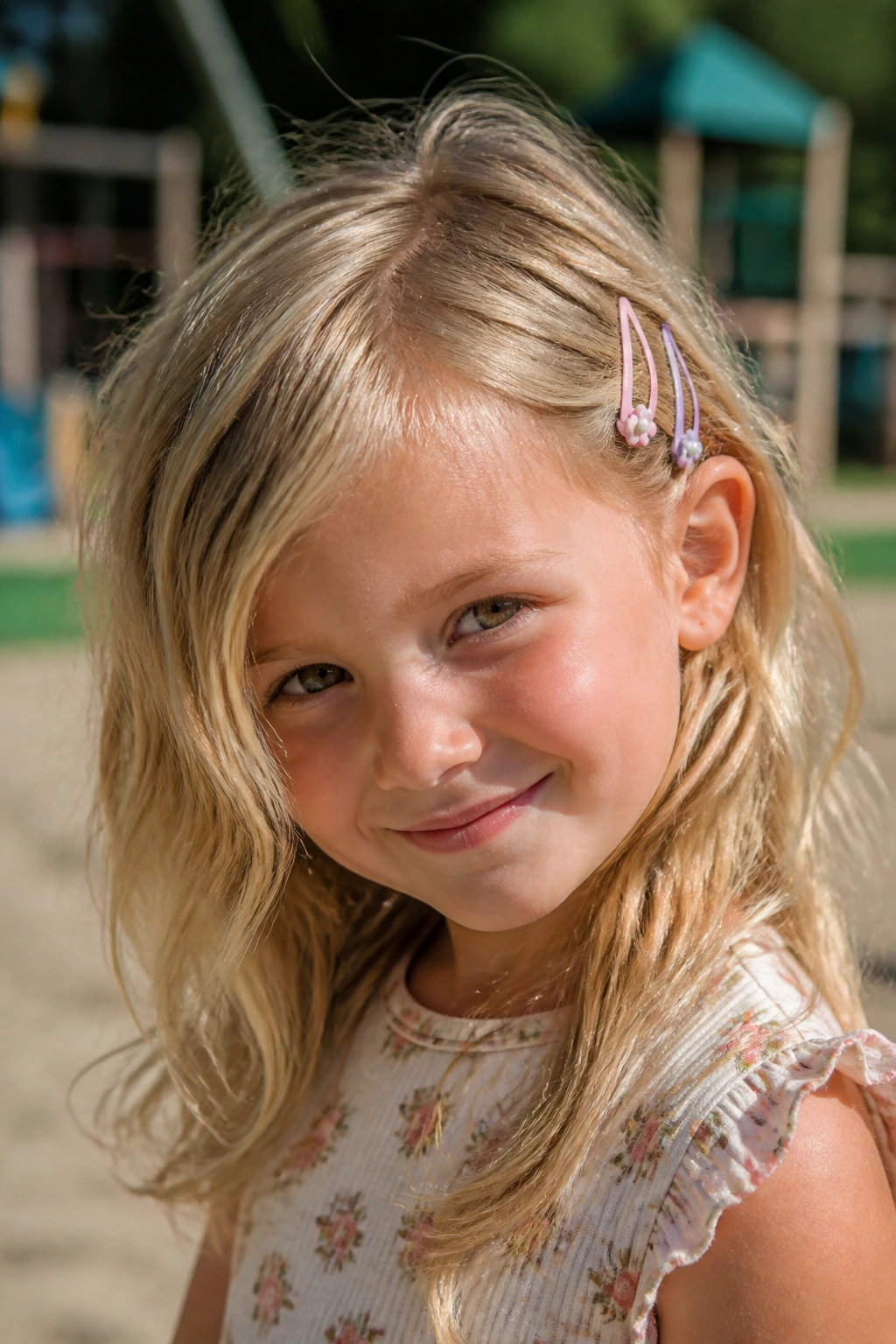
Some days call for a style that looks sweet but can survive grass, slides, and a snack that turns into a long story. Tousled layers with a few clips do exactly that. Part the hair off-center, tuck one side behind the ear, and add two or three small clips where the hair tends to fall forward.
The point is not polish. The point is control with a little softness left in it. On blonde hair, the clips stand out even when the rest of the hair is loose and moving. That makes this style useful on days when you want hair out of the face but do not have the patience for a full braid.
A tiny bit of wave or texture helps, but you do not need heat. A loose braid from the night before, a quick scrunch with damp hands, or even the natural bend in the hair will do the job.
Why Blonde Hair Shows Braids, Bows, and Loose Waves So Well
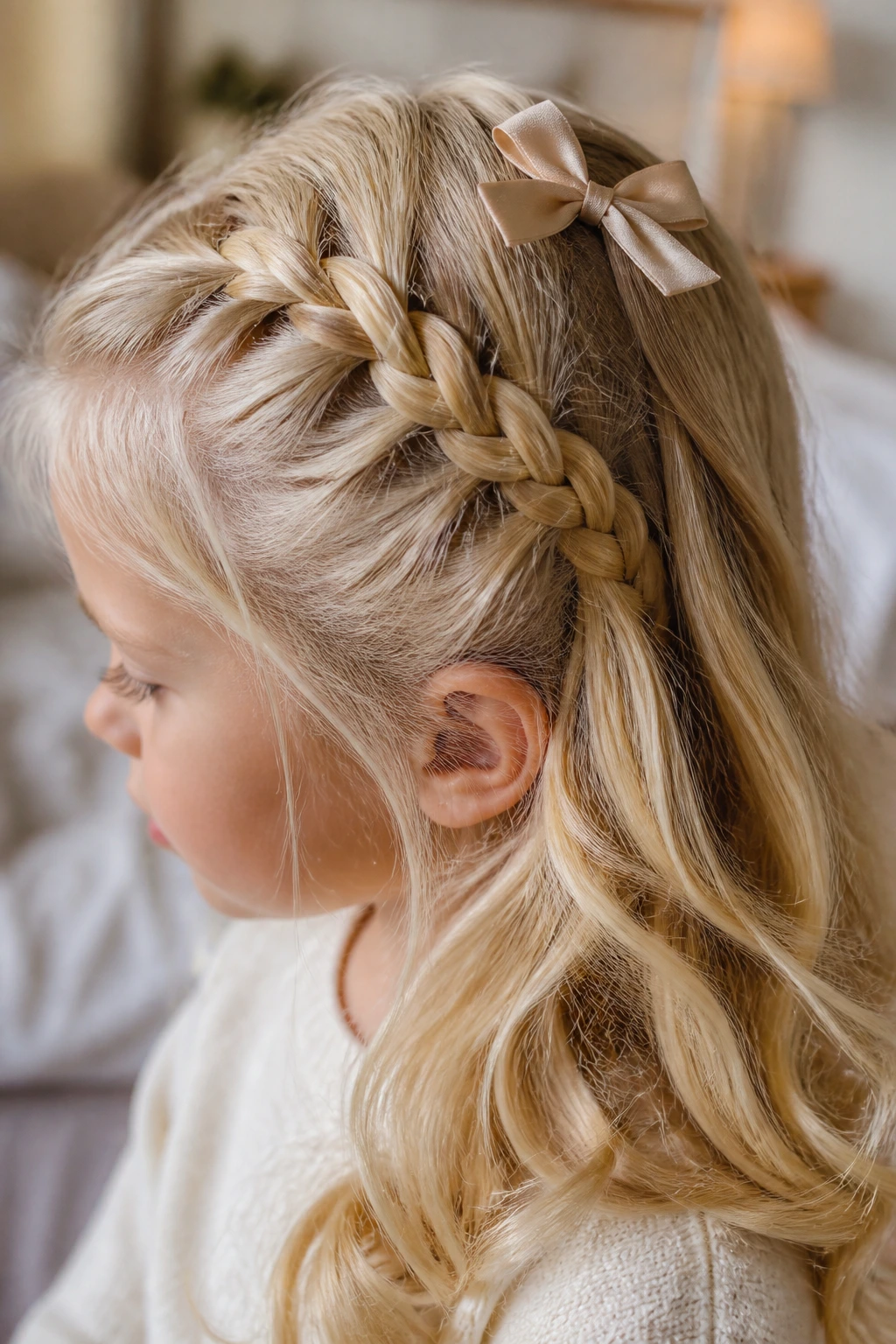
Blonde hair has a habit of making structure easy to see. The braid pattern stands out. The line of a part stands out. Even the difference between one ribbon placement and another can look dramatic because pale strands don’t hide the edges the way darker hair sometimes does. That is why these styles can look more finished than they sound on paper.
The downside is the same thing, of course. Fine blonde hair will also reveal slippage, crooked sectioning, and elastics that are too tight for the amount of hair they’re holding. A style that survives on a thick brown mane may collapse on a silky blonde head unless you give it a little texture or a little grip. Water, light styling cream, and snug-but-not-pulling elastics solve more problems than fancy products do.
There’s another reason these looks work: they age well across the day. A braid that starts neat can loosen into something soft by afternoon. A bow that looked formal at breakfast can still look sweet after recess. That slow change is part of the charm. Hair for kids should be allowed to move.
Picking the Right Style for School, Play, and Picture Day
The easiest way to choose a style is to decide what the hair has to survive. A quiet classroom asks for something different than a birthday party with frosting and face paint. If you sort the day first, the hairstyle choice gets a lot simpler.
School mornings: choose styles that keep hair away from the face and need only one or two adjustments. French braid pigtails, a twist-back headband style, or a low ponytail with a wrapped base all do the job without taking over the morning. The child can still sit on the carpet, slide down the playground, and wear a backpack without the hair fighting back.
Playdates and sports: choose low-tension styles that won’t snag or collapse. Bubble ponytails, two-twist low ponytails, and space buns work because they stay contained but not rigid. If the child is prone to touching her hair, go with a style that gives her something obvious to leave alone.
Picture days and dress-up events: go for shape and symmetry. Crown braids, ballet buns, halo braids, and side-part waves look best when the parting is careful and the accessory is intentional. You do not need a lot of decoration. You need one good ribbon, one neat clip, or one clean braid line.
Short hair days: keep the focus on clips, parting, and texture. A pixie or bob does not need to look “fixed.” It needs a little direction and one clear accent.
Tools That Make Styling Faster and Gentler
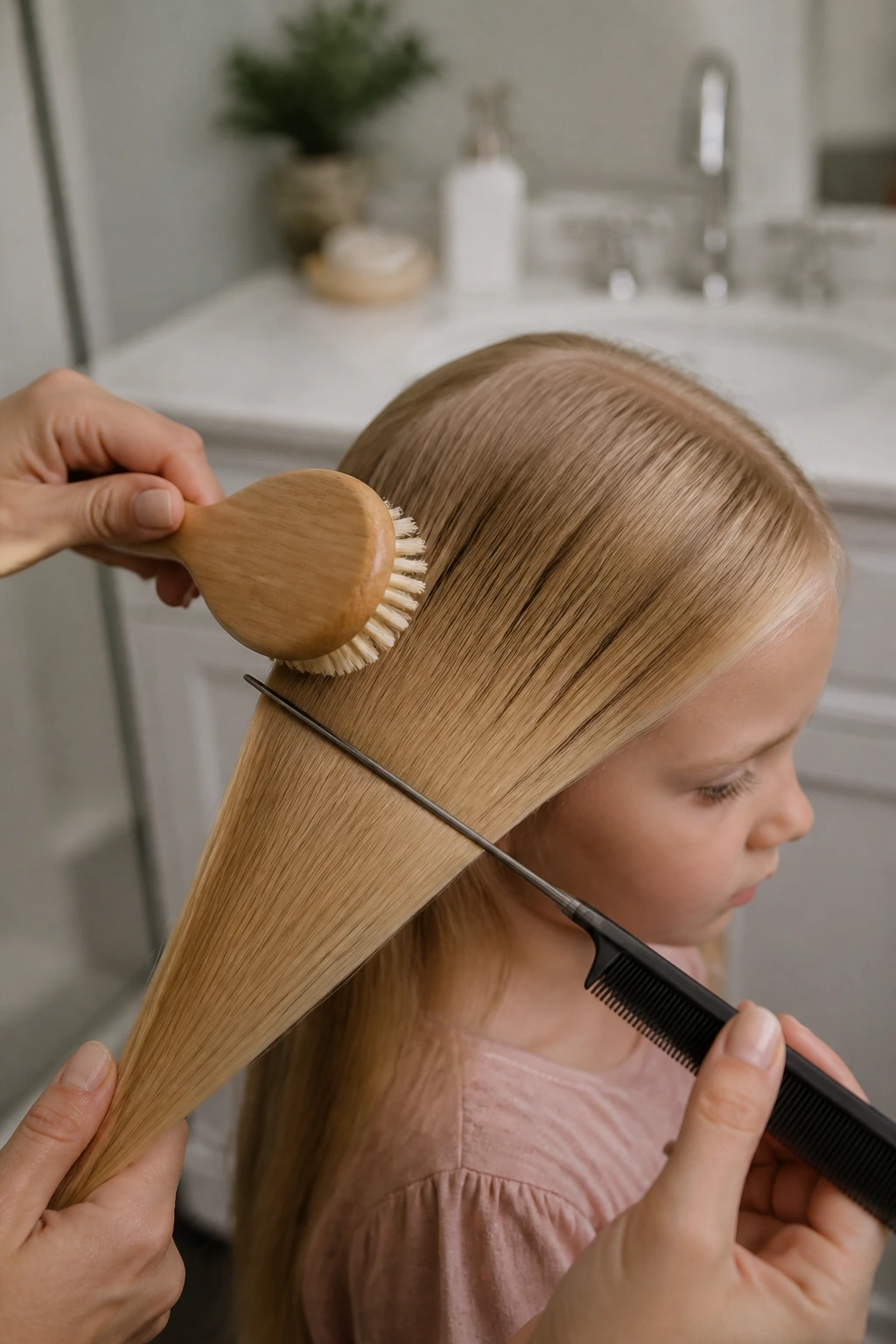
- Rat-tail comb: Best for crisp parts, braid sections, and neat half-up styles.
- Soft-bristle brush: Smooths the top without scraping the scalp or fraying the ends.
- Wide-tooth comb: The better choice for curls, wet hair, and knots near the ends.
- Spray bottle with water: A few mist sprays calm flyaways and help braids grip.
- Leave-in detangler: Useful on fine blonde hair that knots at the neck and behind the ears.
- Snag-free elastics: Tiny bands with no metal seam are kinder to delicate hair.
- Micro elastics: Good for bubble ponytails, mini braids, and tiny sections.
- Snap clips and alligator clips: Hold front pieces and bangs without the bulk of a big barrette.
- Soft ribbon and satin bows: They add shape without adding weight.
- Light-hold styling cream or gel: A pea-sized amount smooths the hairline and keeps the style from puffing out.
What to Buy for Soft Hold and Less Tugging
If the hair is fine, start by shopping for products that hold shape without coating every strand. Heavy creams and sticky sprays can flatten blonde hair fast, and once that happens, the style looks tired before lunch. A light leave-in detangler with a watery texture is usually enough. It should help the comb slide through, not leave the hair slick and wet for an hour.
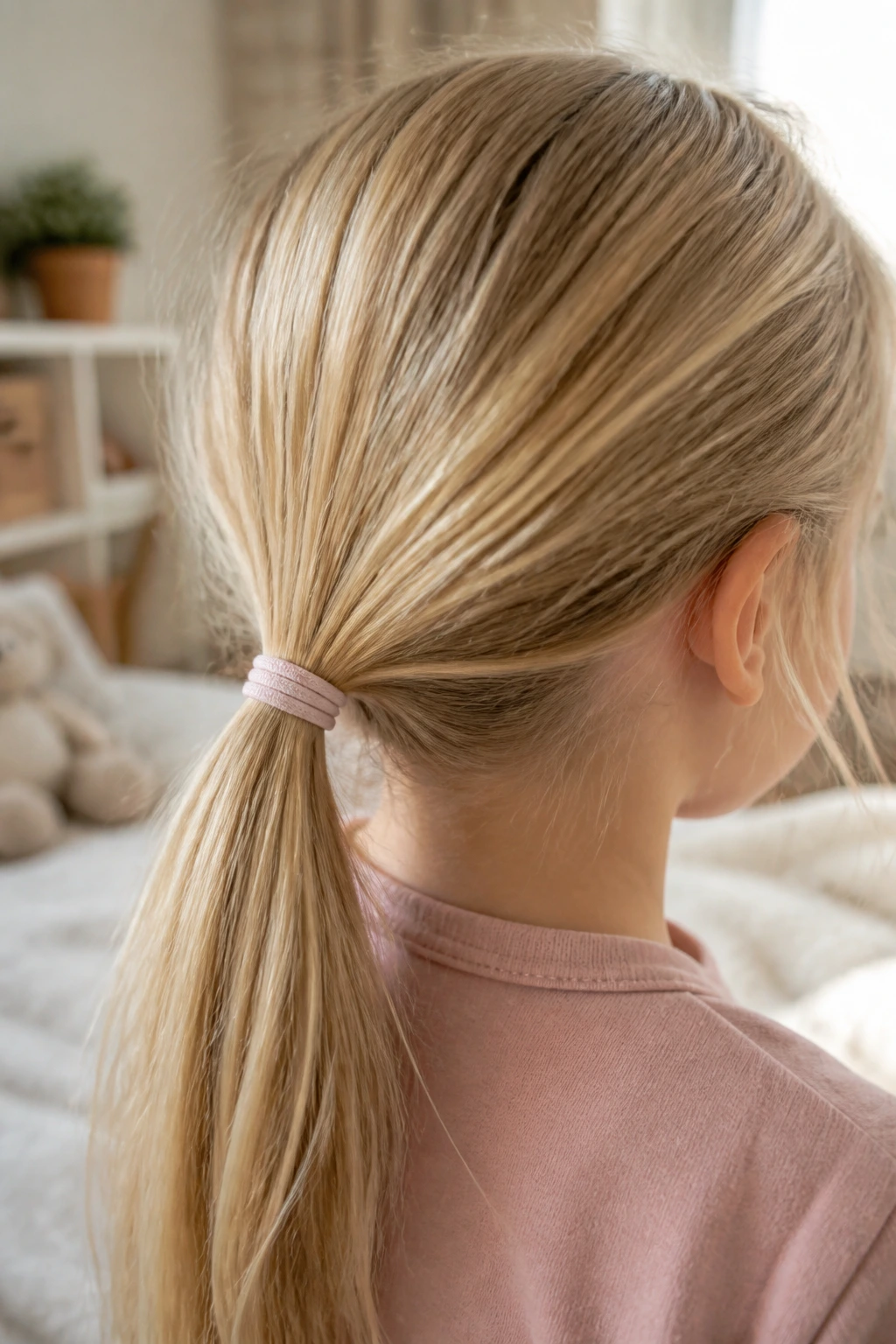
Look at the elastics next. The best ones are soft, stretchy, and seam-free. They should stretch enough to wrap three times around a small ponytail without digging in. If a band feels sharp in your hand, it will probably snag the hair. That’s not fussy advice. It saves time and tears.
For accessories, ribbon matters more than people think. Satin and grosgrain ribbons hold their shape better than thin, limp fabric, and they show up well against pale blonde hair. If the child has a sensitive scalp, choose clip-on bows instead of elastic bows that have to be pulled over a thick section. Little things like that change whether a style feels wearable or not.
If you like a little texture, pick a light mousse or texture spray rather than a heavy wax. Use a tiny amount, not a palmful. Blonde hair shows buildup fast, and dullness creeps in before you notice it in the bottle.
How to Keep the Style Comfy from Breakfast to Bedtime
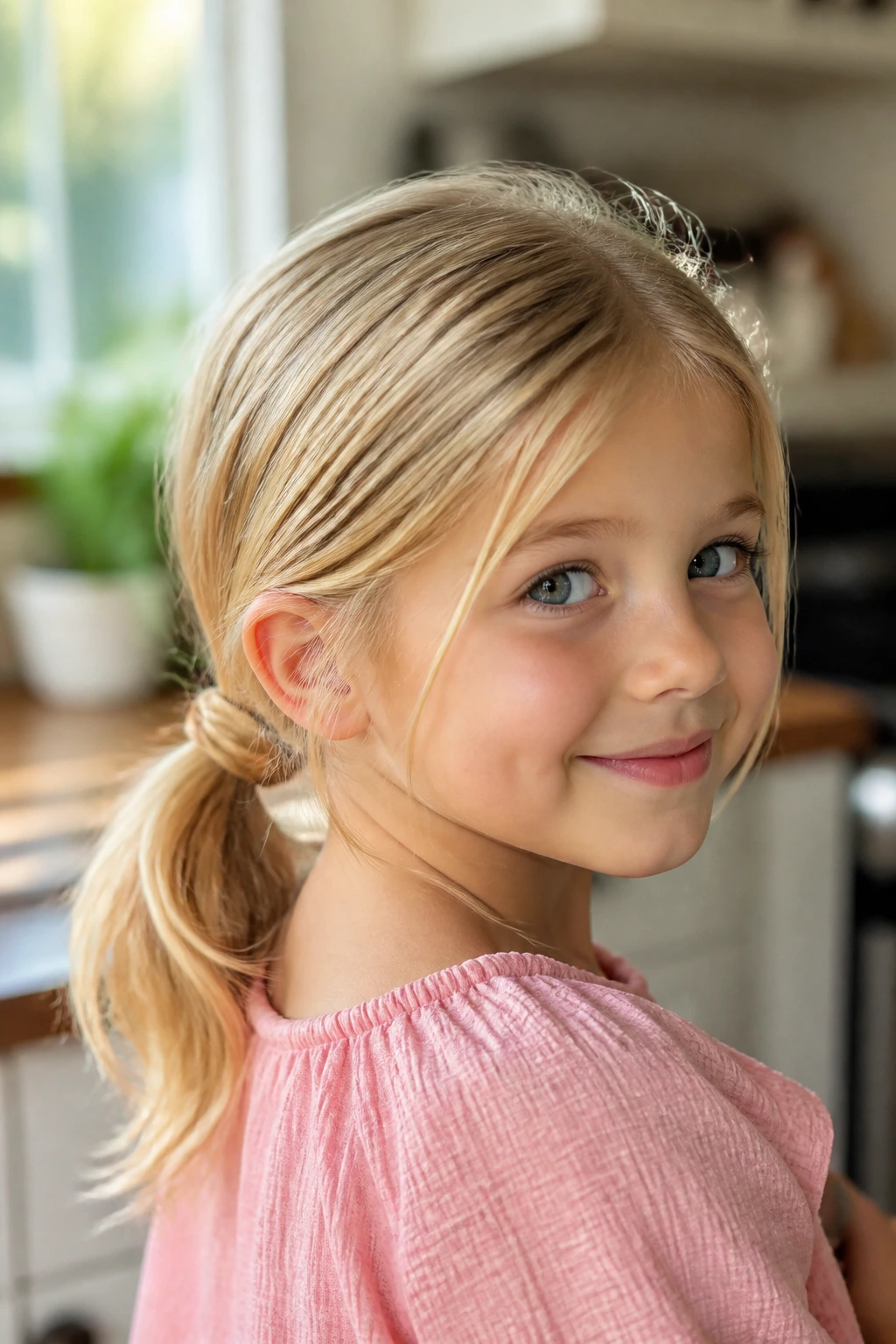
Most kids will tolerate a style that looks neat. They will not tolerate one that pulls at the temples, tugs at the nape, or slides into their eyes every ten minutes. Comfort starts with placement. Low buns and low ponytails are kinder than high, tight versions. Soft clips are kinder than hard ones. And if the child keeps touching the same spot, that spot probably needs to be loosened.
A braid or ponytail can usually stay in place through a school day, but not every style should be left untouched overnight. Bubble ponytails and wrapped ponies often need a quick reset the next morning because the elastics leave dents. Braids can last into the next day if you sleep on a satin pillowcase or wrap the hair loosely. A headband tuck-in style, on the other hand, usually needs to come out before bed so the scalp can rest.
If a style gets a little crooked by afternoon, don’t treat that as failure. Fix the parts that matter: smooth the hairline, replace a loose elastic, or add one clip where the hair has slipped. That five-minute repair is often enough to carry the look through pickup time and dinner.
Easy Swaps for Fine, Curly, Short, or Long Hair
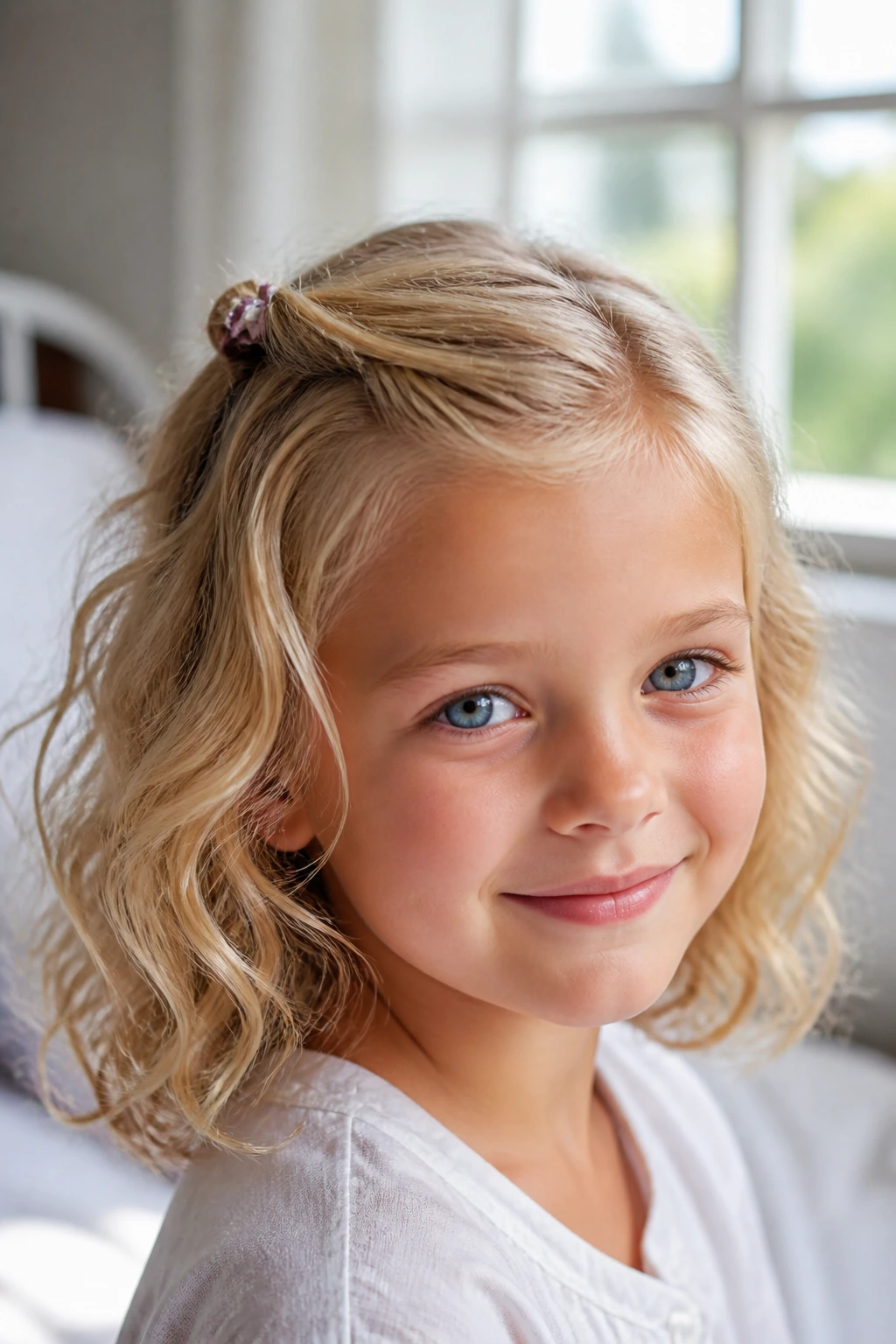
Fine-Hair Feathering: Use smaller sections, a little texturizing spray, and tighter braids that are later loosened by hand. Fine blonde hair looks fuller when the style has repeated lines and no huge empty spaces.
Curly-Texture Celebration: Skip dry brushing and work with damp curls or leave-in conditioner. Half-up clips, low ponytails, and soft headbands keep the curl pattern intact instead of fighting it.
Short-Hair Clip Story: Swap braids for stacked barrettes, side clips, and tiny twist-backs. On a bob or pixie, the job is to frame the face, not to force a long-hair style into place.
Ribbon-and-Bow Swap: If the style feels too plain, change the accessory before you change the whole hairstyle. A satin bow can make the same ponytail feel dressy, while a narrow ribbon makes it softer and more casual.
Sports-Day Secure: Drop the ponytail lower, use two elastics instead of one, and pin any loose pieces flat. This helps when a child is running around and the hair needs to stay out of the way.
Picture-Day Polish: Clean center parts, smooth sides, and one statement accessory make the style read more formal without making it stiff. A halo braid or low bun fits here nicely.
Common Styling Mistakes and How to Fix Them
-
Pulling the hair too tight at the hairline: The symptom is a red line, fussy behavior, or a child saying her scalp hurts by lunch. Fix it by loosening the top section and switching to low tension with a soft brush and smaller elastics.
-
Using slippery hair straight out of the bath: Freshly washed blonde hair often slides out of braids and ponytails. Let it dry a bit, add a touch of texture spray, or braid it when it has less slip.
-
Choosing clips that are too heavy: Large metal or resin clips can drag fine hair down and make the style collapse. Use smaller clips, and if the hair is very fine, anchor them with a tiny hidden bobby pin.
-
Brushing curls until they puff: Curly blonde hair can turn frizzy fast if you attack it with a brush. Use fingers or a wide-tooth comb, and only smooth the sections you need for the style.
-
Adding too much product: If the hair feels waxy or looks dusty, there’s too much cream or spray in it. Start with a pea-sized amount and build only if the hair still frizzes.
-
Forcing a style that needs more length than the child has: A crown braid on a chin-length bob will never sit the way it does on longer hair. Pick the version that fits the cut, not the photo you had in your head.
Questions Parents Ask Most
What’s the easiest blonde hairstyle for a rushed morning?
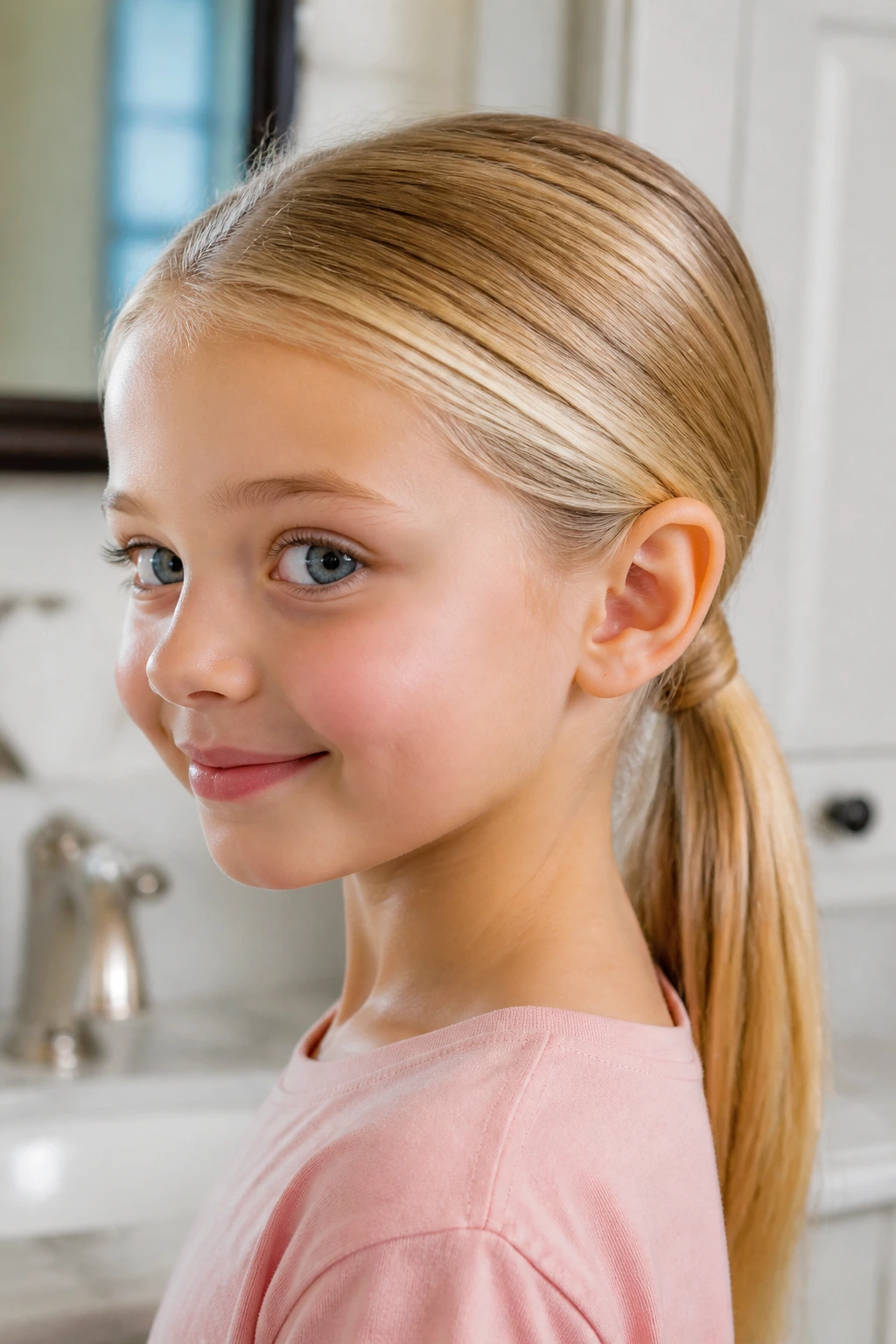
A low ponytail with a wrapped base or a twist-back headband style is usually the fastest. Both keep hair away from the face, need only a brush and one or two elastics, and stay neat without a lot of fuss.
How do you keep fine blonde hair from slipping out of braids?
Start with slightly textured hair, not freshly washed hair. A mist of water, a light leave-in spray, or a small amount of mousse gives the braid something to grip.
Which looks work best on short blonde hair?
Pixie cuts and bobs do best with clips, headbands, and tiny twists. The goal is to frame the face and control the front, not to imitate long-hair styles that need more length.
Can you use heat tools on little girls’ hair?
You can, but you do not need them for most of these styles. If an adult uses a curling wand or flat iron, keep the heat low, work quickly, and skip heat on hair that is already dry or fragile.
How do you make a style last through school and playtime?
Use low tension, secure the style with snag-free elastics, and choose a shape that matches the day. Braids and low ponytails last longer than loose half-up styles, and they handle movement better.
What if the hair is curly instead of straight?
Work with the curl pattern instead of against it. Half-up clips, soft headbands, low ponytails, and loose braids keep curls intact and cut down on frizz.
How do you keep bangs out of the way without a full ponytail?
Try a twist-back headband style or a pair of small side clips. They control the front without pulling the rest of the hair up.
What should you do if a style goes flat by midday?
Pinch the braid edges, replace the elastic, or add a ribbon where the shape needs help. Often the style doesn’t need to be redone — it just needs one small correction.
A Sweet Finish Without the Fuss
The nicest thing about blonde hair on little girls is that it does not need much to look intentional. A neat part, a ribbon, a braid that follows the head instead of fighting it — those details carry farther than complicated styling ever does. And because blonde hair shows structure so clearly, even small choices have a visible payoff.
What matters most is comfort. If the style holds but the child keeps reaching for it, it’s the wrong style for that day. If it looks a little loose by afternoon but she forgot it was there, that’s a win. Hair should help the day move along, not turn into another thing everyone has to manage.
Pick the look that matches the mood, the weather, and the amount of patience in the room. The best styles here do not ask for much, and that’s why they get worn again and again.
