



A short mullet only looks sloppy when the shape is lazy. Tighten the sides, clean up the nape, and leave just enough length in back for movement, and the whole cut stops reading as a costume and starts reading as a plan.
The best mullet haircuts for short hair live in a narrow, useful lane: enough contrast to give you attitude, not so much length that the back collapses into a shaggy tail. That balance is the whole trick. On short hair, every line shows, which is why a clean taper, a controlled fringe, and the right amount of texture matter more than the name of the cut itself.
And that’s the part people miss. A short mullet can be sharp, soft, curly, punk, polished, or quietly cool. It can sit close to the head and still keep that little flick of length at the back that makes the silhouette move when you turn. Once you stop thinking of it as one haircut and start treating it like a shape with 27 possible moods, it gets much easier to choose the version that actually fits your hair.
Why You’ll Love These Short-Hair Mullets
-
The shape grows out cleanly: A short mullet can go from neat to lived-in without that awkward helmet stage a lot of short cuts hit.
-
The back stays useful, not heavy: Most of these versions keep the nape long enough to matter, but short enough that it doesn’t drag the whole style down.
-
Texture does most of the work: A dab of matte paste, a little sea-salt spray, or a diffuser can change the feel of the cut in seconds.
-
They work across hair types: Straight hair gets edge, wavy hair gets lift, and curls get shape instead of bulk.
-
You can tune the attitude: Tight fade, soft fringe, choppy layers, or a brushed-back top — each one changes the vibe in a way you can actually see.
-
They’re easier to personalize than a blunt crop: Small changes at the temple, ear, or neckline make a big difference, which is useful if you like a cut that feels a little more yours.
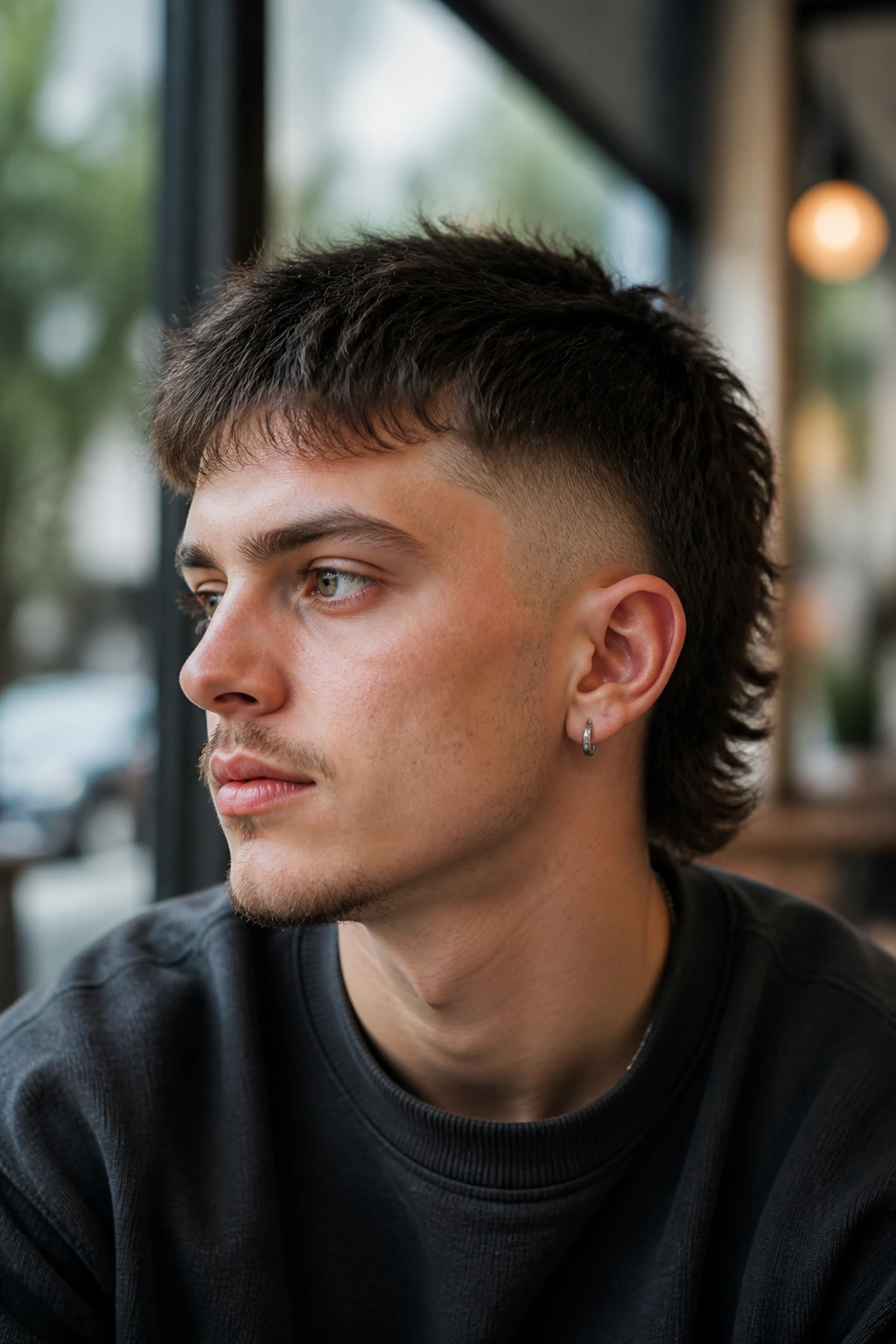
1. Micro Fade Mullet
This is the cleanest place to start if you want the mullet shape without a dramatic back shelf. The fade around the temples keeps the outline neat, while the back sits just long enough — usually an inch or two longer than the top — to show movement when you turn your head.
The micro fade version works because it keeps the sides under control. That matters more than people think. If the sides puff out, the whole cut starts looking wider and older than it should.
I like this cut on straight or slightly wavy hair, especially when you want something sharp that still grows out with a bit of grace. Keep the neckline tapered, not boxed, or the silhouette turns blocky fast.
2. Soft Feathered Mullet
This one has less edge and more lift. The crown is cut with softer layers, so the ends fall in light pieces instead of chunky steps, and the back moves instead of hanging there like an afterthought.
Why It Feels Easier to Wear
Feathering takes the pressure off the cut. You still get the longer nape that makes it a mullet, but the top and sides blend more gently, which is useful if you want something that doesn’t shout from across the room.
It’s a good choice for fine hair because the layers can make the top feel airier without stripping out too much weight. If your hair is thick, ask for feathering only where it helps the shape — too much thinning can leave the ends wispy in a bad way.
A quick blow-dry with a vent brush and a touch of lightweight cream is usually enough. The point is movement, not stiffness.
3. Curly Crop Mullet
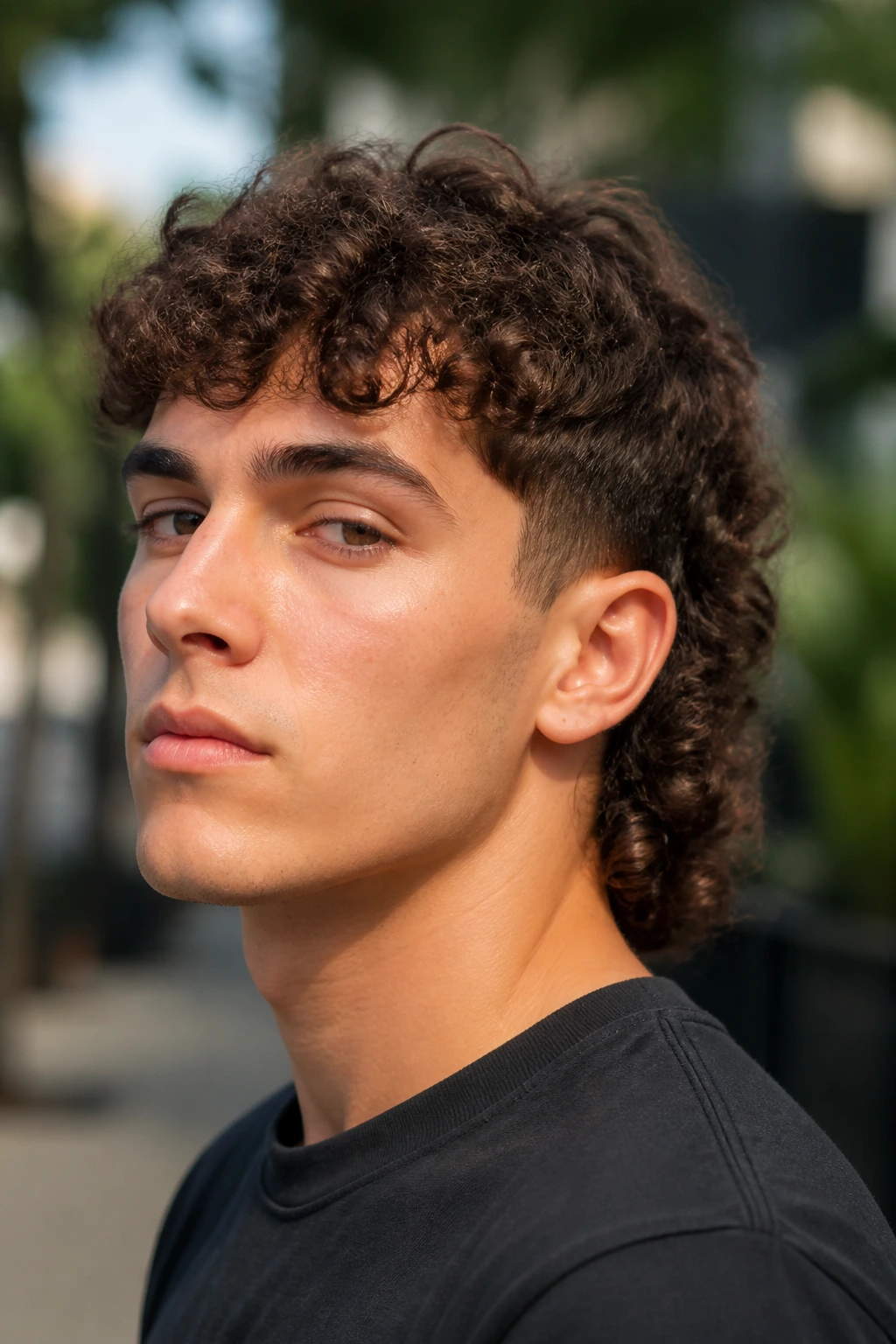
Can curls carry a mullet on short hair? Absolutely, if you leave the curl pattern alone and clean up the perimeter. The best curly crop mullets keep the top and crown shaped but not flattened, then let the back curl back on itself in a soft tail.
The biggest mistake with curly short mullets is over-cutting the bounce out of them. Leave enough room for the curl to spring up after drying. A good stylist will cut some of the length dry, or at least check the curl pattern before taking more off.
How to keep the shape
- Use curl cream on damp hair, not soaking wet hair.
- Scrunch from the ends upward, then diffuse on low heat.
- Ask for a gentle taper around the ears so the curl doesn’t balloon sideways.
This cut looks best when the curls look formed, not forced. That little bit of unevenness is the charm.
4. Pixie Mullet
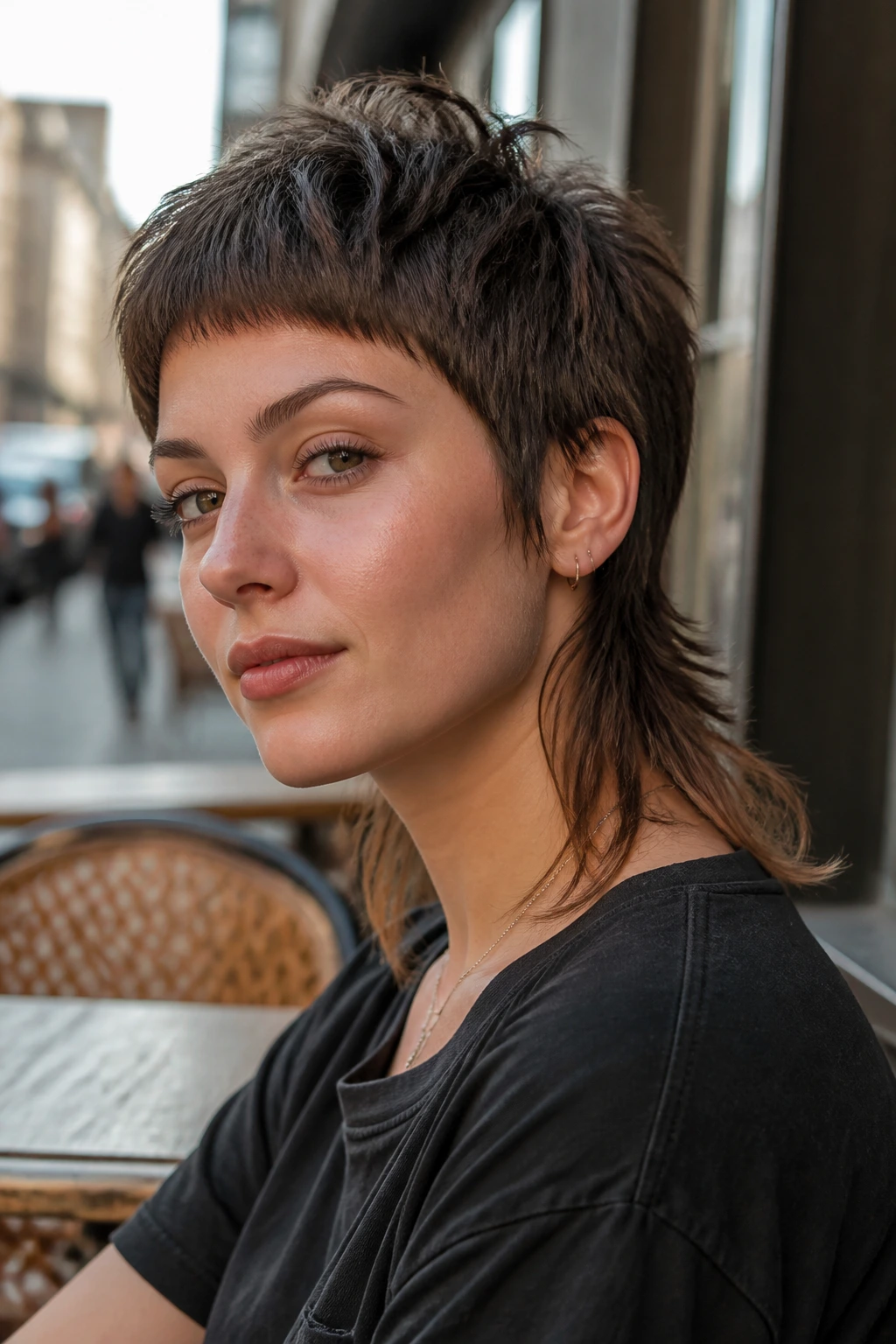
If you’ve been growing out a pixie, this is the haircut that keeps the in-between stage from looking accidental. The front stays cropped and quick around the face, while the back drops a little longer to create that mullet line without needing much length overall.
There’s a neat little tension here, and I like it. The top is short enough to feel crisp, but the nape gives the eye somewhere to go. That’s why the cut works on short hair: the shape is doing more than the length.
It’s especially smart if you want a cut that can be finger-styled in under five minutes. Add a tiny bit of paste at the crown, push the fringe forward or sideways, and leave the back slightly piecey. That’s enough.
5. Shaggy Wolf Mullet
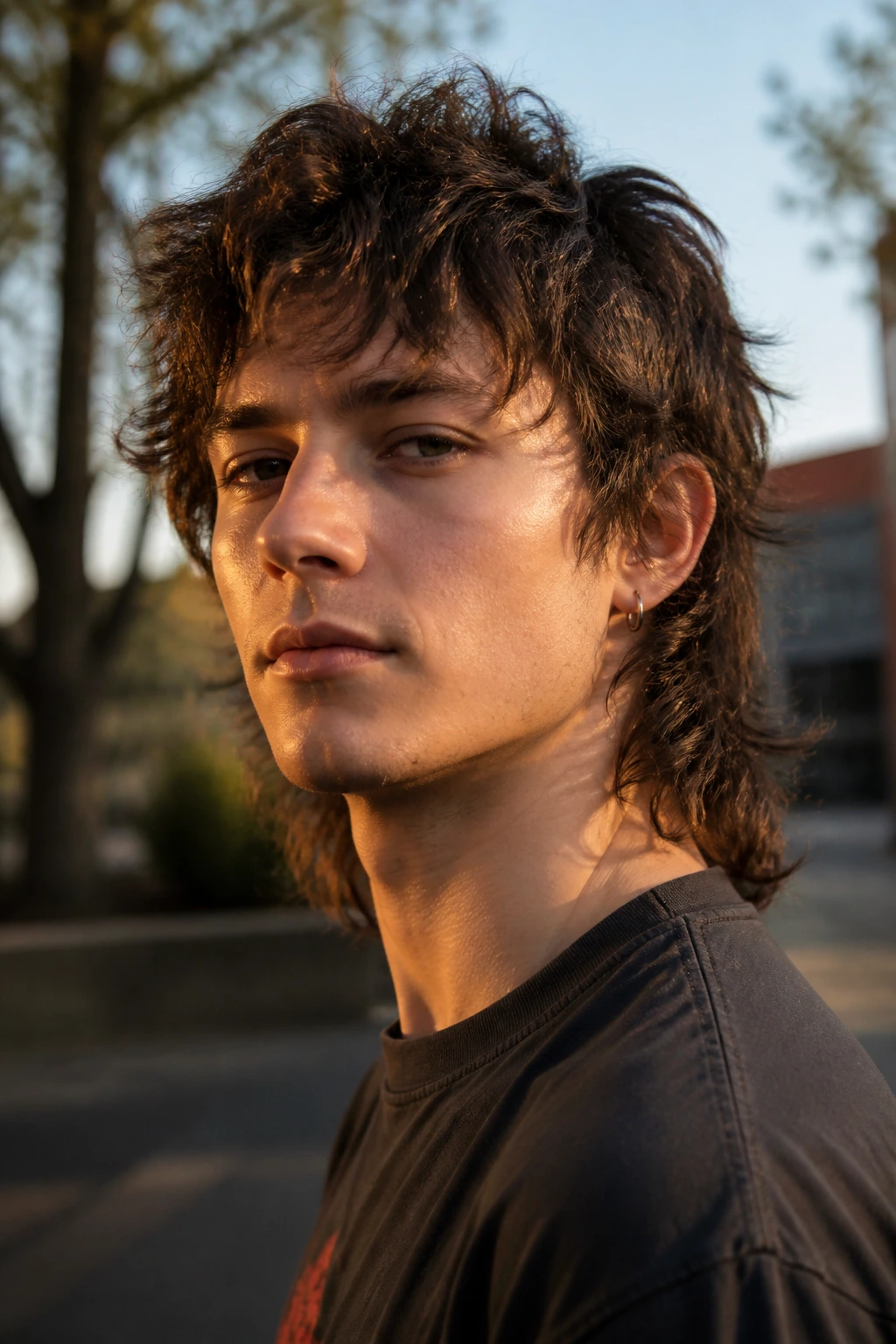
This is the messier cousin of the mullet, and on short hair it can look fantastic when the layers are kept tight. The top gets short, choppy movement; the back keeps a little tail; and the whole thing feels more feathered than blunt.
The wolf influence shows up in the crown. That’s the part that makes it feel shaggy instead of structured. If your hair has natural wave, this cut can almost style itself after a rough dry and a bit of salt spray.
A good one has shape even when it’s not perfect. That’s the real test. If the layers only work after a lot of curling iron help, the cut is too dependent on styling and too little on the haircut itself.
6. Tapered Crop Mullet
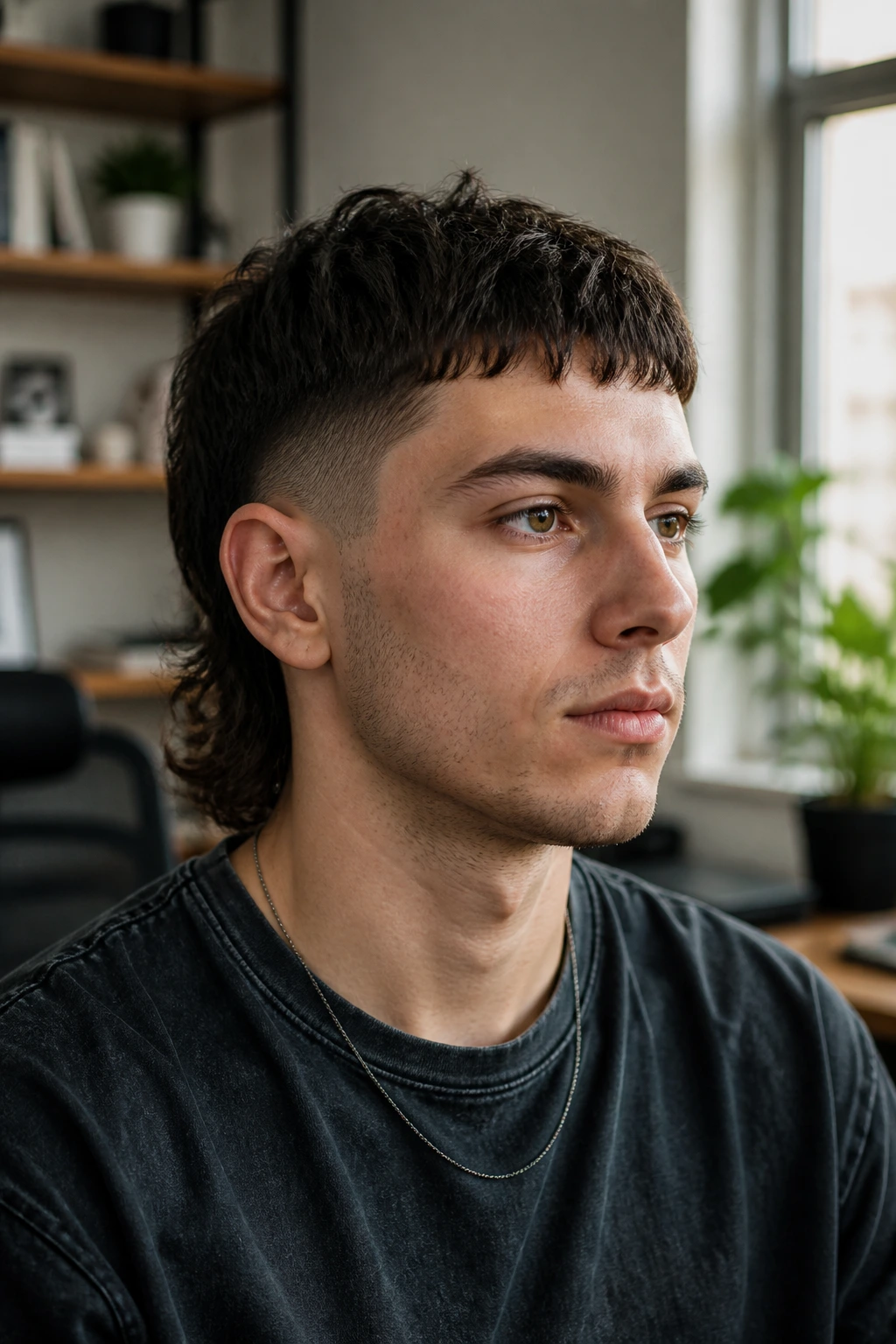
A tapered crop mullet is for people who like a neat outline but don’t want to lose the mullet idea completely. The sides are kept tight and gradually shortened near the ears, while the top stays cropped and the back drifts longer in a controlled line.
This version is sharper than a shag, softer than a fade, and easier to live with than a dramatic punk cut. The taper gives you a clean edge around the face, which helps if your hair grows fast at the temples or if your neckline tends to puff up.
It’s also one of the better short mullets for straight hair because it doesn’t rely on curls or heavy wave to show shape. Ask for the back to remain narrow through the neck, not wide. Width is the enemy here.
7. Undercut Mullet
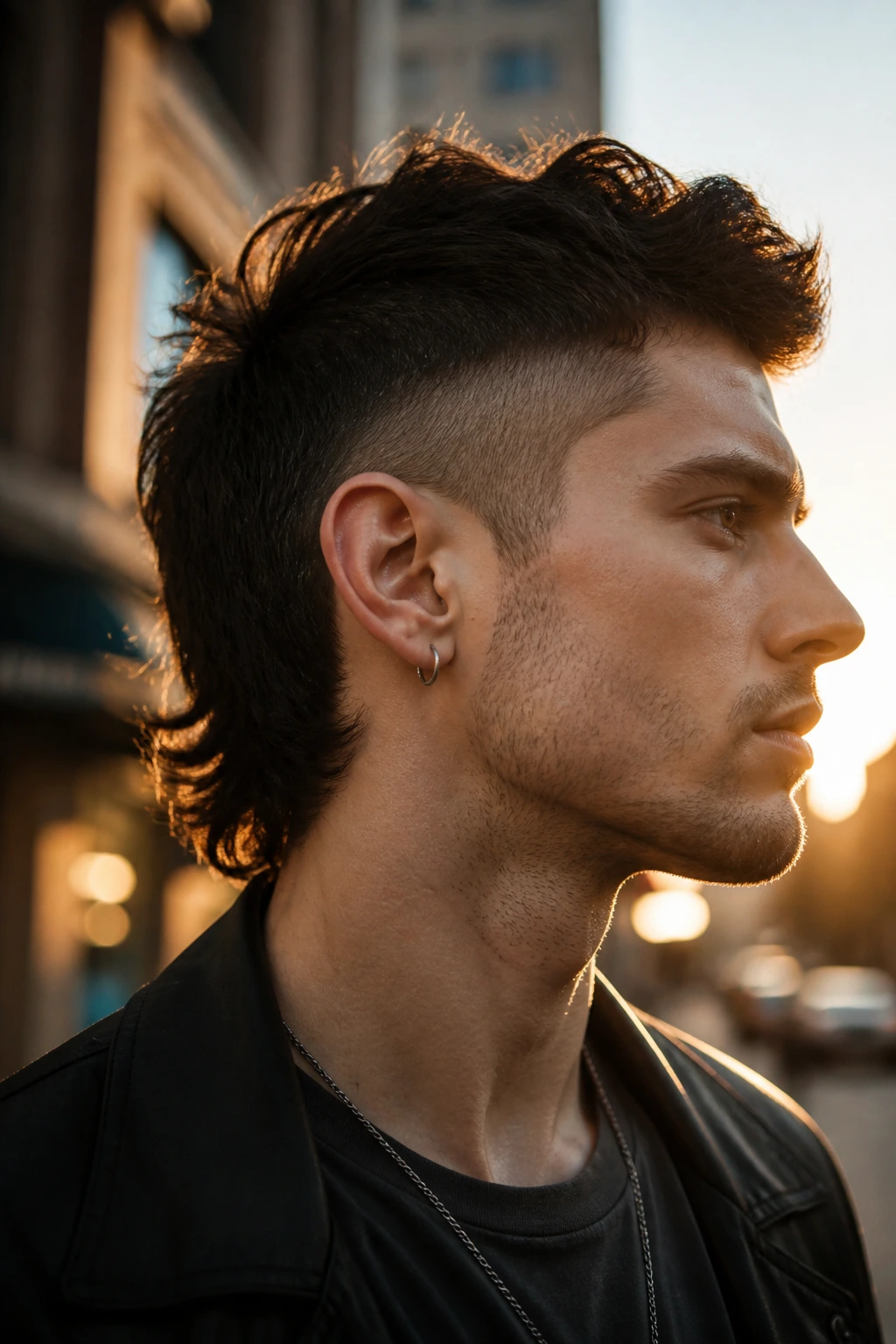
The undercut mullet strips out bulk on the sides so the top and back can do the talking. That makes the silhouette feel bold even when the overall length is short. You get a cleaner break between the shaved or very short sides and the longer crown.
What I like about this version is the contrast. It doesn’t try to soften the mullet into something else. It leans into the shape and makes it obvious.
If you have thick hair, the undercut can be a relief because it removes the weight that makes short cuts feel puffy. Ask your stylist to keep the transition line low enough that the top doesn’t look detached. Too high, and the cut starts floating.
8. Razor-Textured Mullet
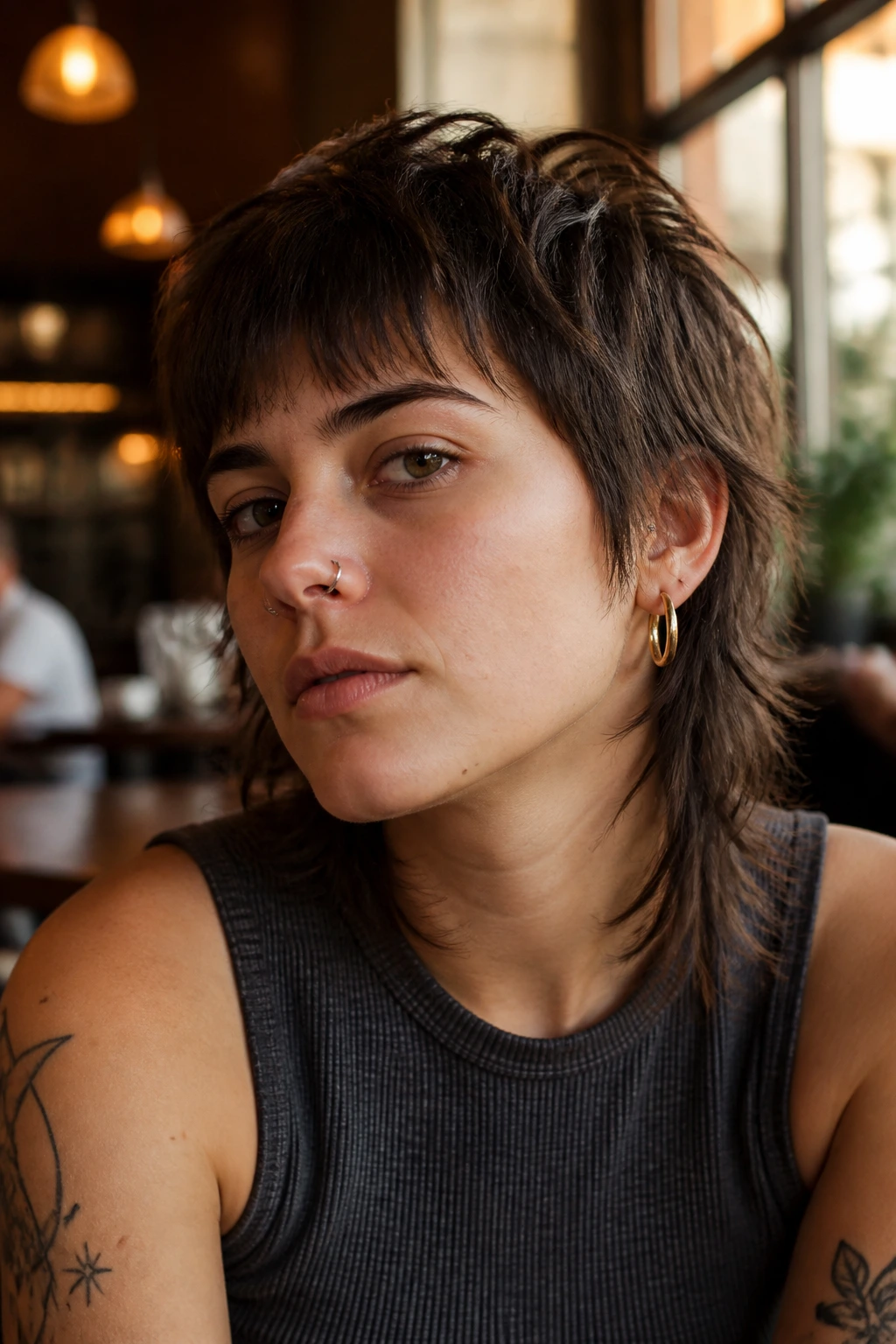
A razor-textured mullet is all about softness at the ends. The razor slices into the shape and leaves the fringe, crown, and back with airy, separated edges instead of blunt chunks.
That can be a really useful move on dense hair. Thick hair can turn a short mullet into a brick if every layer is cut with the same bluntness. Razor texture breaks that up and makes the movement visible.
Best when you want
- a piecey finish that looks slightly undone
- less bulk through the crown
- a back section that flicks instead of sits flat
If your hair is fine, keep the razor work light. Too much can make the ends look stringy. This is one of those cuts where restraint matters more than enthusiasm.
9. Baby Bangs Mullet
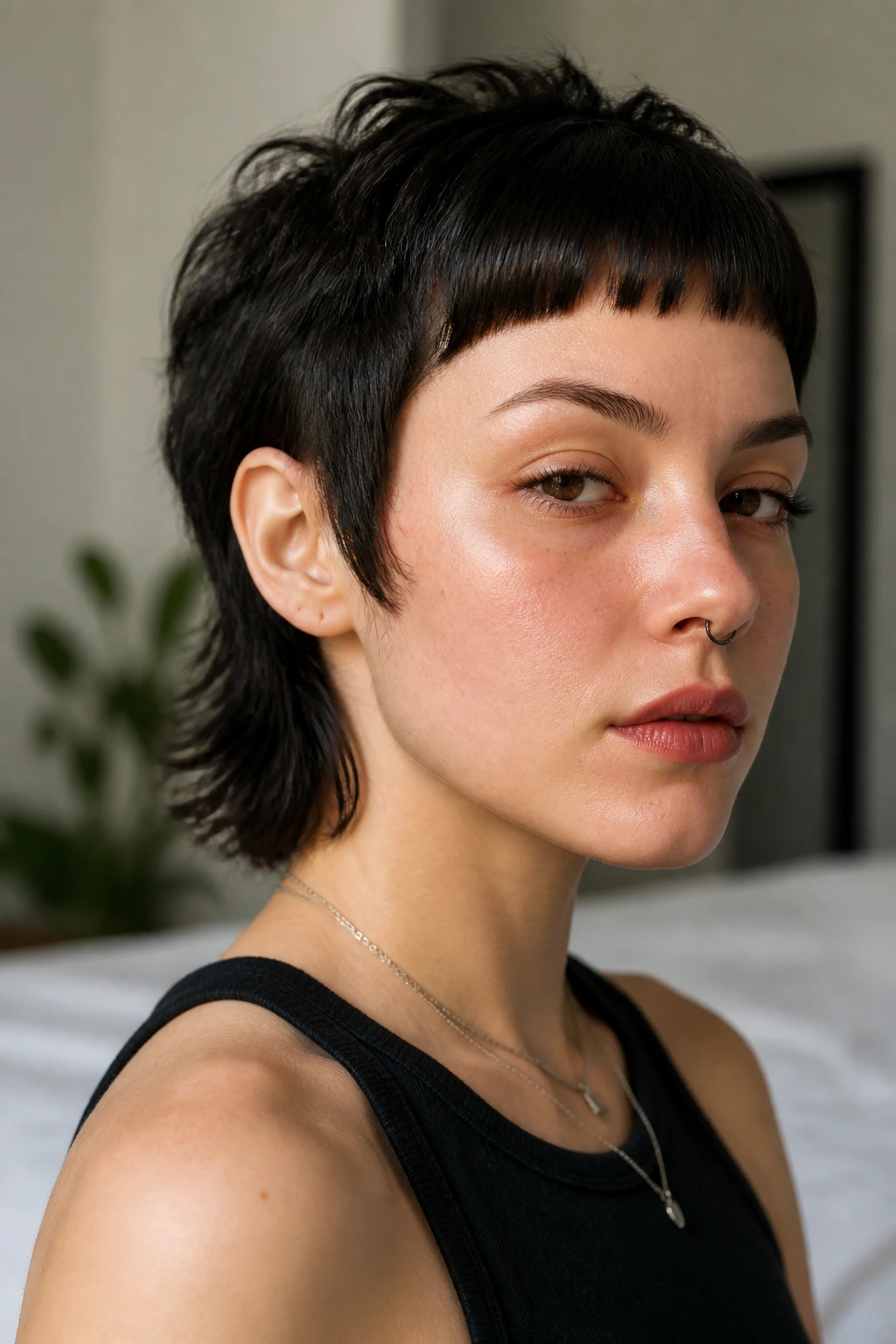
The fringe does the talking here. Baby bangs put a hard little line across the forehead, and the short back keeps the shape from feeling too sweet or too vintage.
This cut has a nice tension to it. The bangs are blunt and obvious, while the rest of the cut is choppy and loose. That contrast is what gives it character. Without the longer nape, baby bangs on their own can feel severe. With the mullet shape behind them, they look intentional.
It works best if you’re comfortable with upkeep, because baby bangs show growth fast. If your hairline is naturally uneven, ask for the fringe to be slightly textured at the corners so it doesn’t look like a rigid ruler cut.
10. Curtain Fringe Mullet
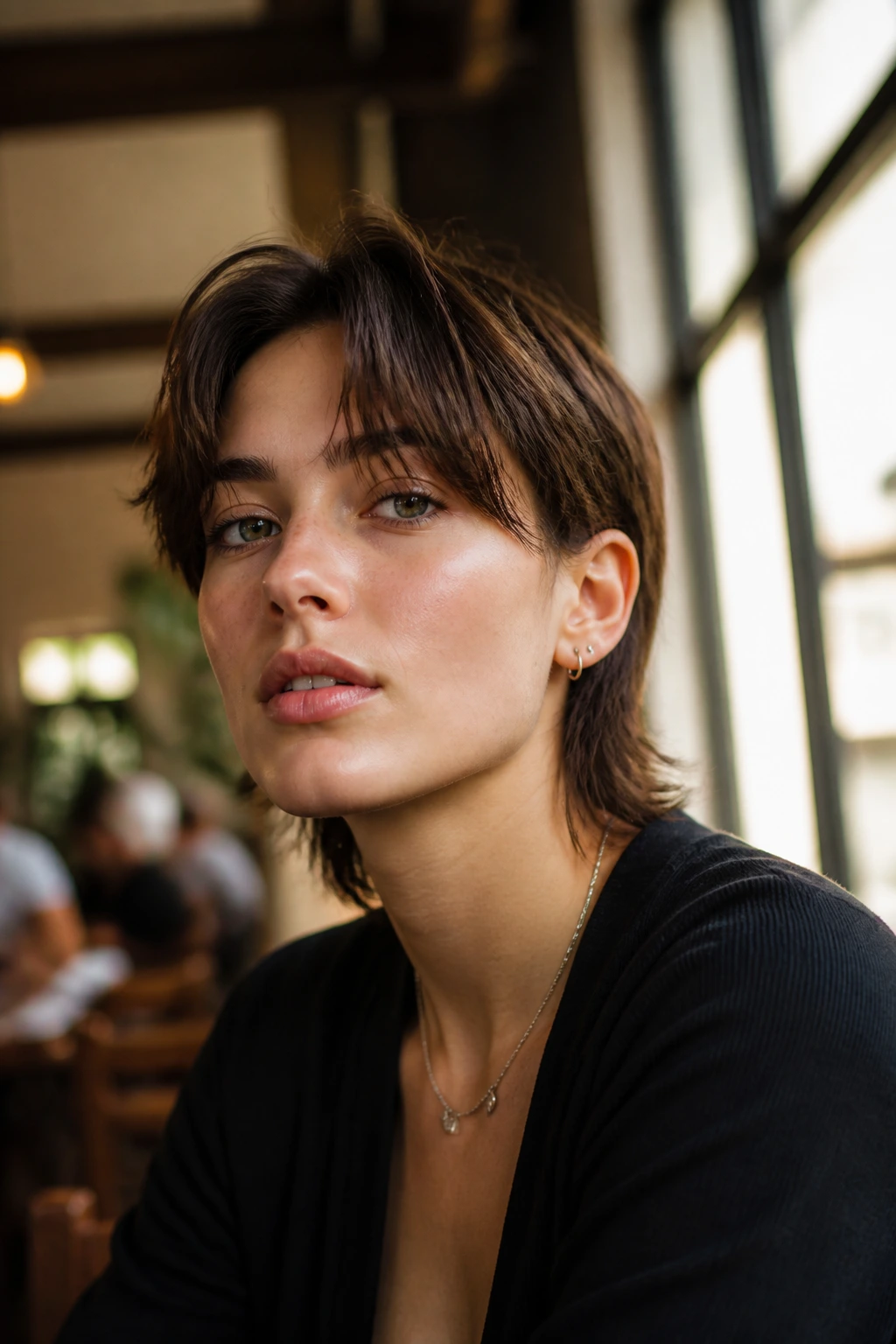
If you want the front to open rather than fall straight down, this is a smart direction. Curtain fringe softens the forehead area, and the short mullet back keeps the silhouette from getting too floaty.
The beauty of this cut is in the face-framing. The fringe splits, sweeps, and lands just off center, which can make a round or square face feel a little longer without hiding it under hair. The back stays short enough that the overall shape still feels modern.
What makes it click
The fringe should start light at the root, not heavy at the brow. If it’s too dense, the whole cut gets top-heavy. A quick round-brush pass or finger-dry with a small bend in the curtain pieces is usually enough.
11. Bowl-to-Mullet Hybrid
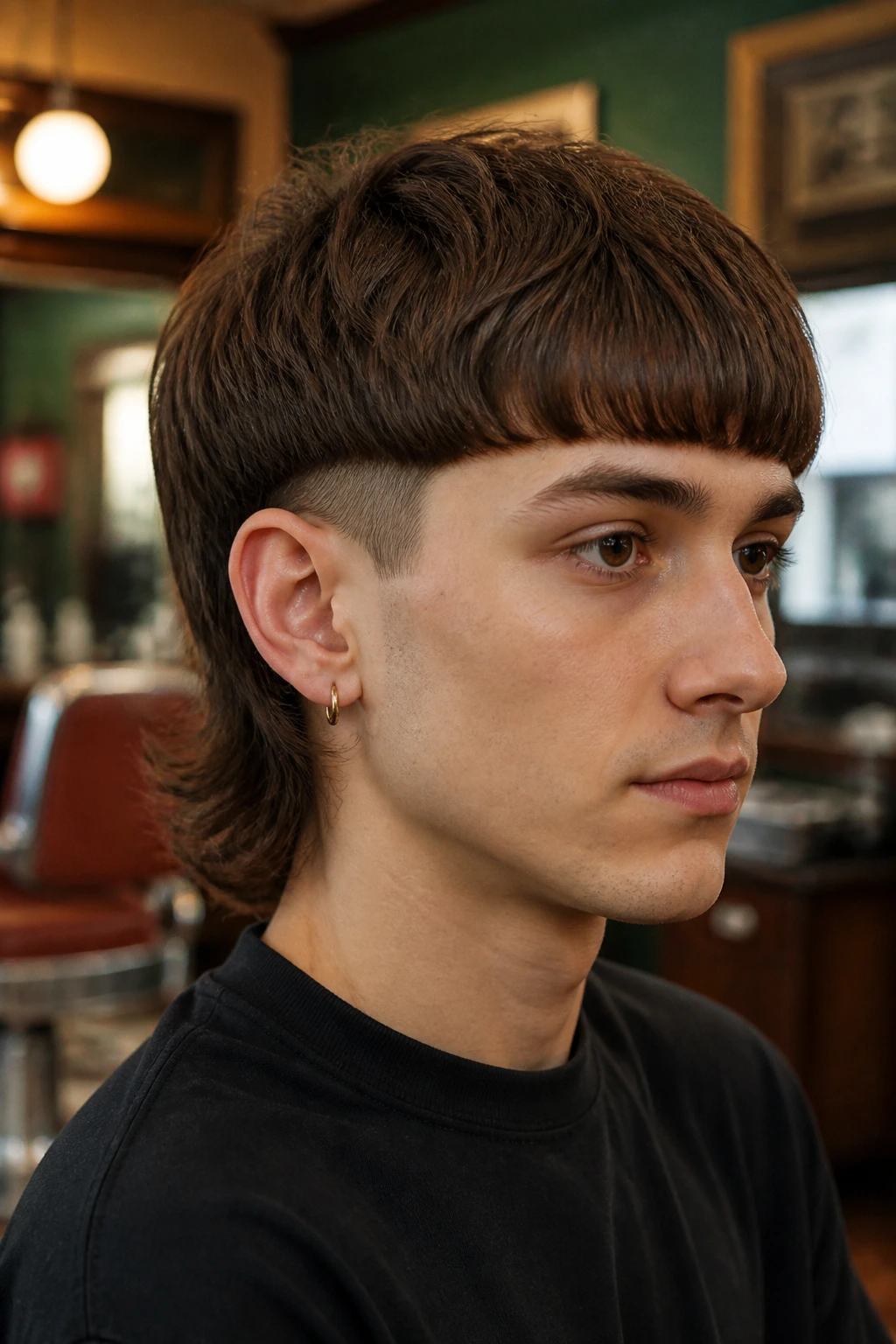
This one is for people who like shape with a bit of weirdness. The top has the rounded weight of a bowl cut, but the back is allowed to stretch out into mullet territory, which gives the style a sharp, slightly retro feel.
It sounds niche, and it is, but that’s part of the appeal. On short hair, the bowl-to-mullet hybrid keeps the crown compact and the outline strong. You don’t get the floppy mid-length stage that can make other short cuts feel lost.
Ask for the shape to stay rounded at the top and longer through the nape, with soft connection points at the sides. If the transition is too abrupt, it reads as two separate haircuts instead of one deliberate one.
12. Slicked-Back Mullet
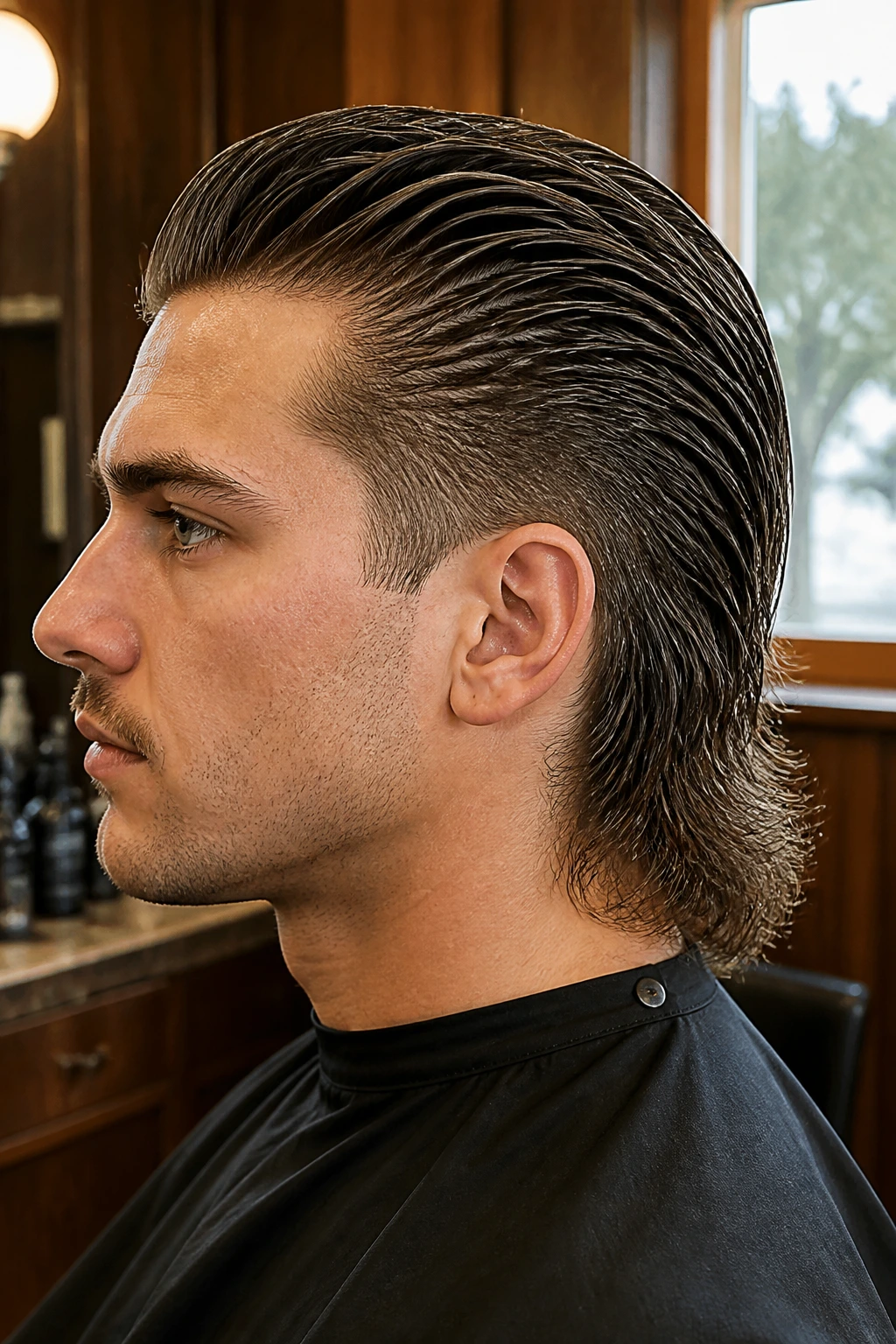
This version is a little more polished and a little less messy. The top is kept short enough to comb back with cream or light pomade, while the back still hangs slightly longer so the cut keeps its identity.
I like this one on straight hair because the slick-back shows off the difference between the crown and the nape. It’s cleaner. Less fuss. More line.
The important part is not to drown the hair in product. You want control, not helmet shine. A pea-sized amount worked through damp hair is plenty for most short lengths. If the sides start looking greasy, you’ve used too much.
13. Feathered 90s Mullet
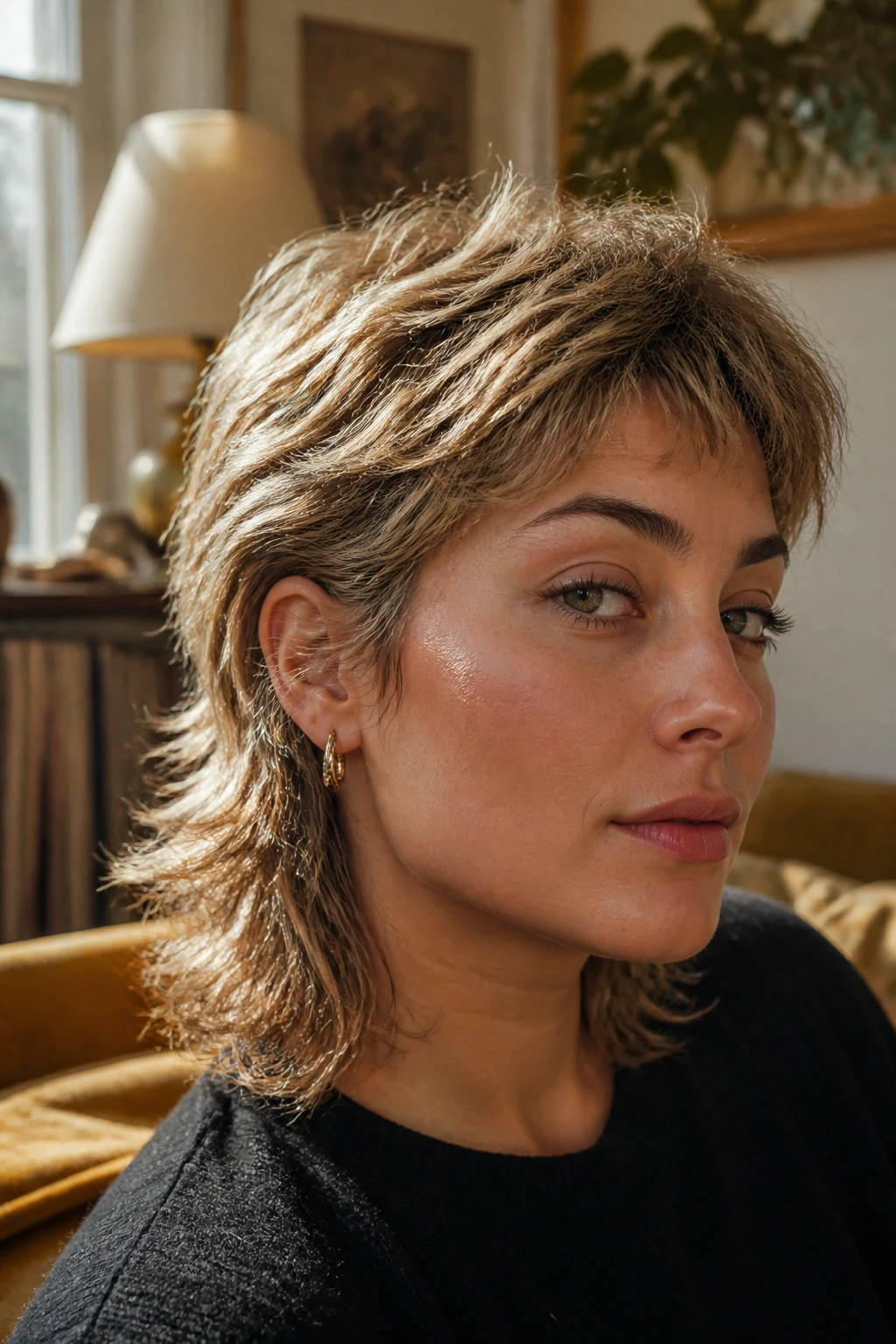
This version leans into soft edges and air-dried texture. The top is layered with a light hand, the sides are softly shaped, and the back has that feathered flick that makes the whole cut feel relaxed rather than hard-edged.
It has a bit of a throwback feel, but short hair keeps it from looking costume-like. The trick is to keep the feathering delicate. If the layers are too dramatic, the cut turns into a parody of the decade instead of a useful shape.
A little mousse at the roots and a rough dry with fingers usually does the job. Let the ends move. That’s where the charm lives.
14. Asymmetrical Mullet
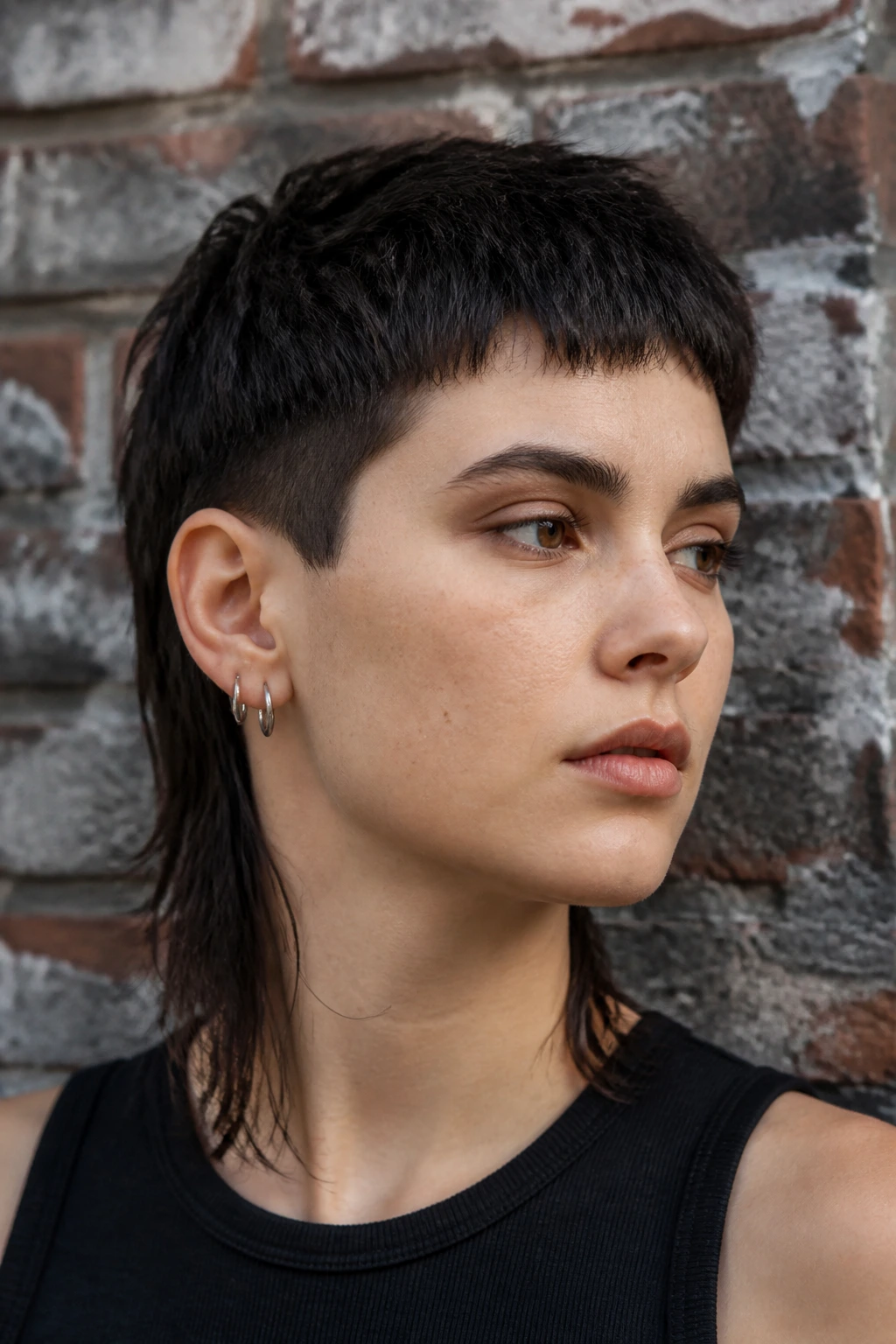
One side sits a touch longer than the other. That’s the whole idea, and it works because the mullet already plays with balance. Asymmetry pushes the shape farther without needing a lot of length.
This cut is best when you want a little oddness but don’t want the whole haircut to look chaotic. The top can still be short and controlled, while one side drifts slightly forward or lower than the other. It catches the eye without becoming too busy.
The key is moderation. If the asymmetry is too strong, the style loses the mullet outline and becomes something else entirely. A small difference in length is usually enough.
15. Layered Bob Mullet
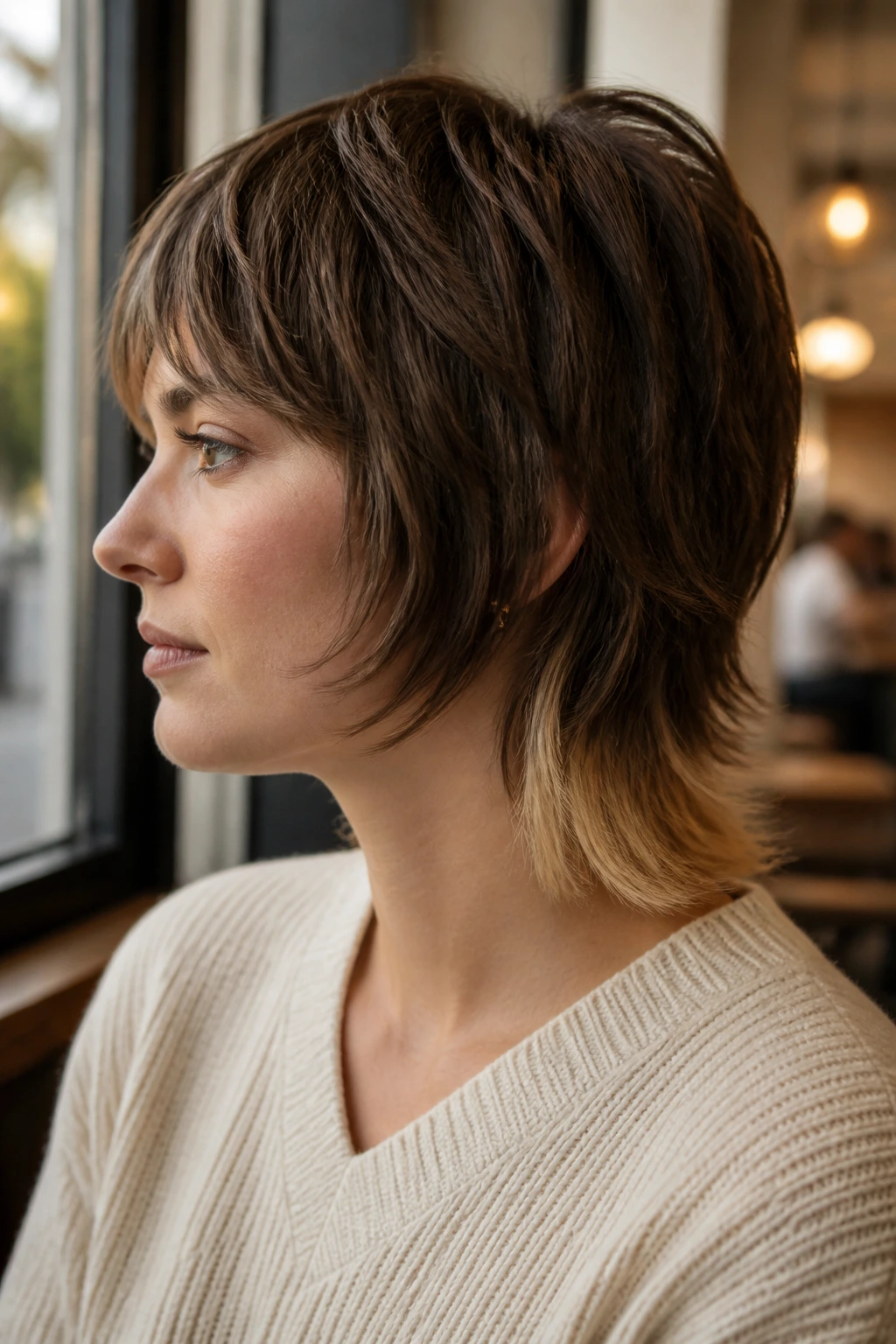
Think of this as the bridge between a bob and a mullet. The front and sides still carry the neatness of a bob, but the back is cut a bit longer and lighter so the silhouette slips toward mullet territory.
It’s one of the easier short mullet options for people who want movement without a jagged edge. The bob shape keeps the sides wearable, and the longer back keeps the haircut from feeling too safe.
I’d recommend this if you like hair that can tuck behind the ears one day and fall forward the next. It’s also handy if you’re growing out a blunt bob and don’t want to jump straight into a more aggressive cut.
16. Shullet
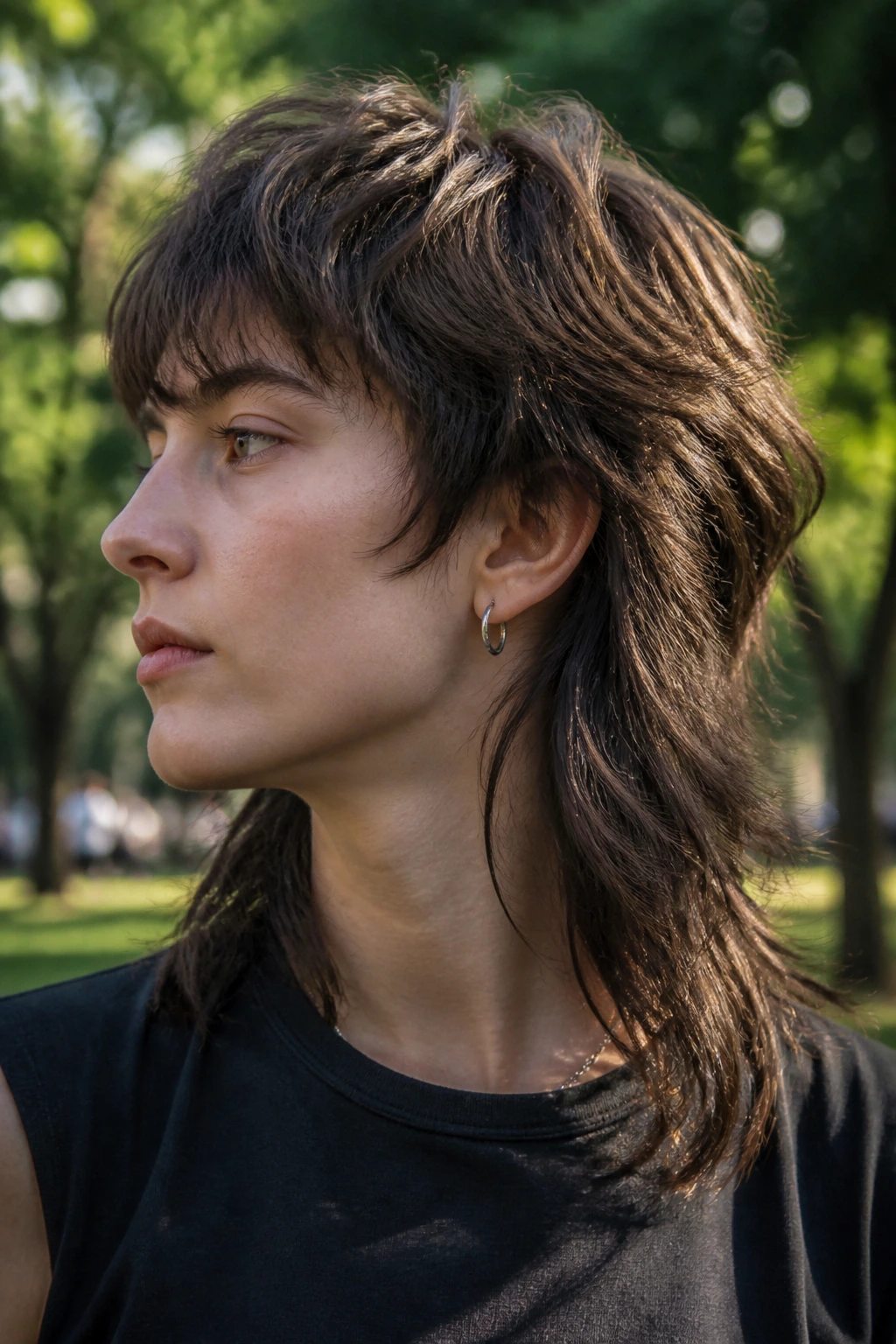
The shullet is the shag-mullet hybrid that gives you layers everywhere and a tail in back, without forcing a hard split between the two. On short hair, that means movement on top, softness around the face, and a back that stays noticeably longer than the sides.
This is one of the most forgiving versions if your hair has natural wave. It doesn’t need perfect styling because the whole point is that the layers already carry texture. A little leave-in conditioner or light cream is enough for many people.
Best use case
If you like hair that looks a touch wild even when it’s clean, this is a solid pick. It’s casual, but not lazy. That distinction matters.
17. Business Mullet
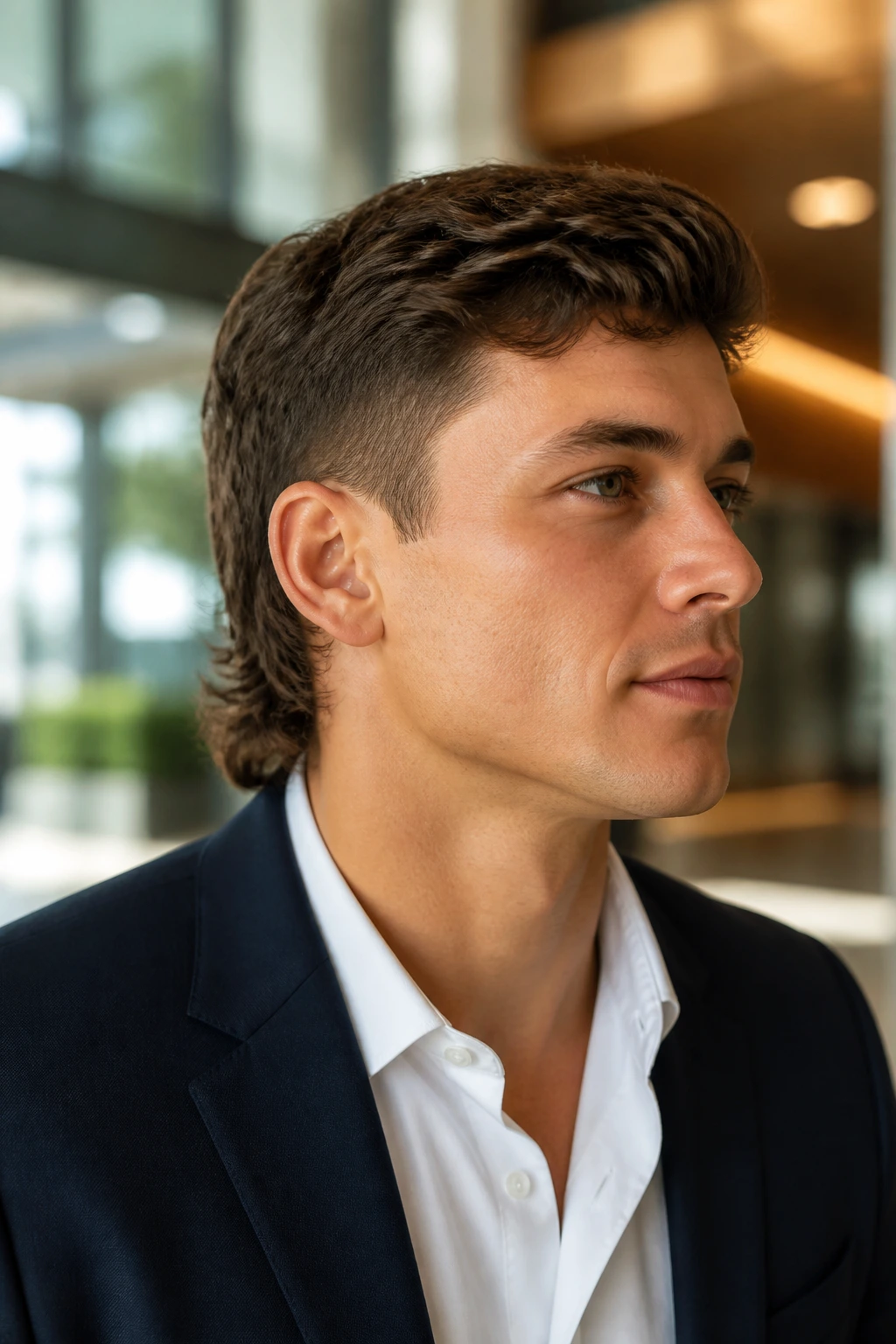
A business mullet keeps the joke out of the haircut and leaves the shape intact. The sides are tidy, the neckline is controlled, and the back is trimmed just enough to signal mullet without making a scene.
This is the version I’d point to if someone wants to wear a short mullet with a button-down or blazer and not feel like the cut is fighting the clothes. The perimeter is clean, the top is restrained, and the styling usually stays matte or low-shine.
It’s not bland. That’s the useful part. It just doesn’t announce itself as loudly as a punkier version.
18. Skin-Fade Mullet
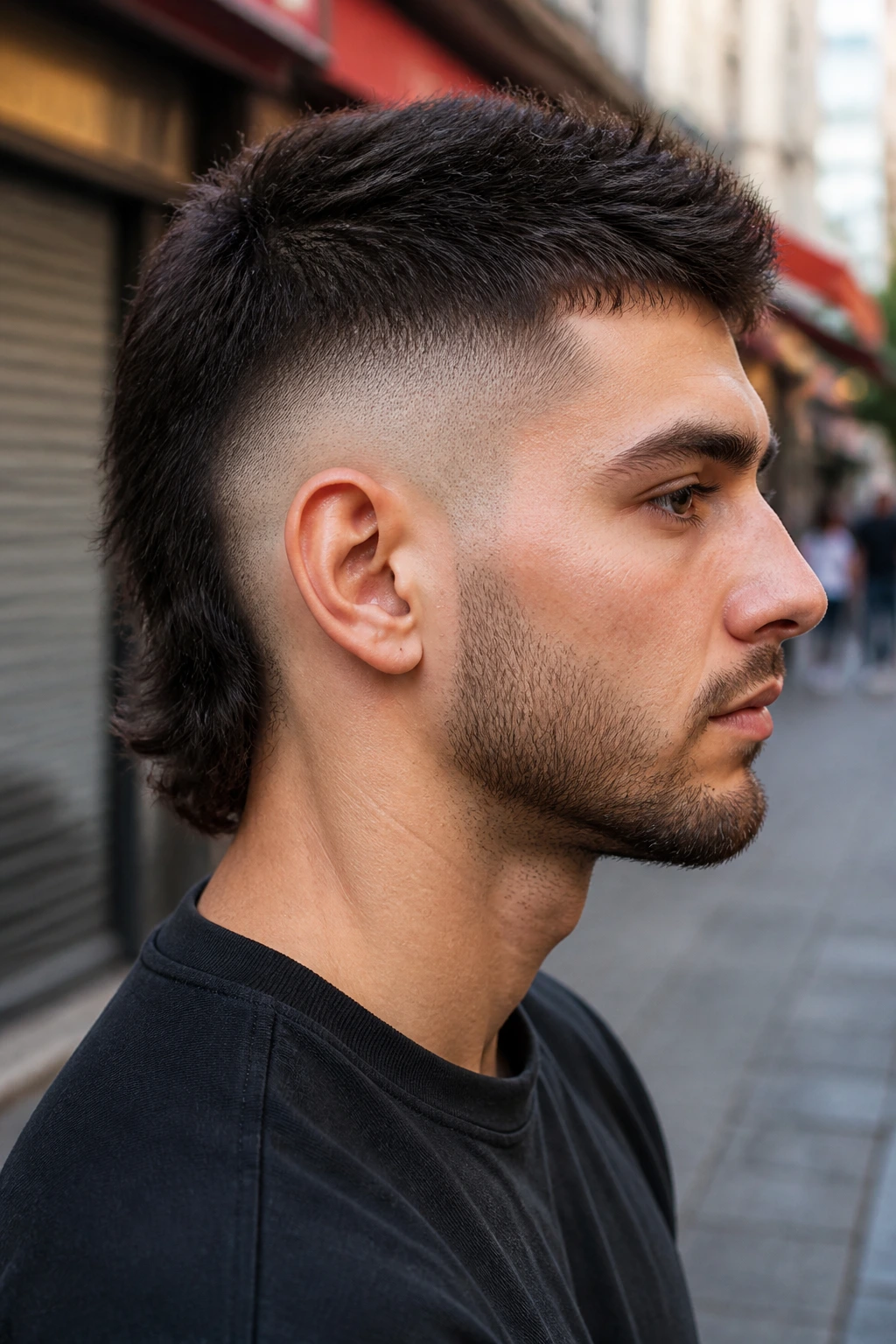
The skin fade gives this haircut a sharp base. The sides drop to bare skin or nearly bare skin, which makes the top and back stand out hard by contrast.
On short hair, that kind of contrast can be a gift. It keeps the shape crisp and lets the nape length look intentional instead of accidental. If you like a cut with a little bite, this is one of the cleanest ways to get it.
Be careful with the fade height. Too high, and the top loses weight. Too low, and the whole cut can look heavy at the temple. The sweet spot is usually where the fade supports the top instead of competing with it.
19. Wavy Surfer Mullet
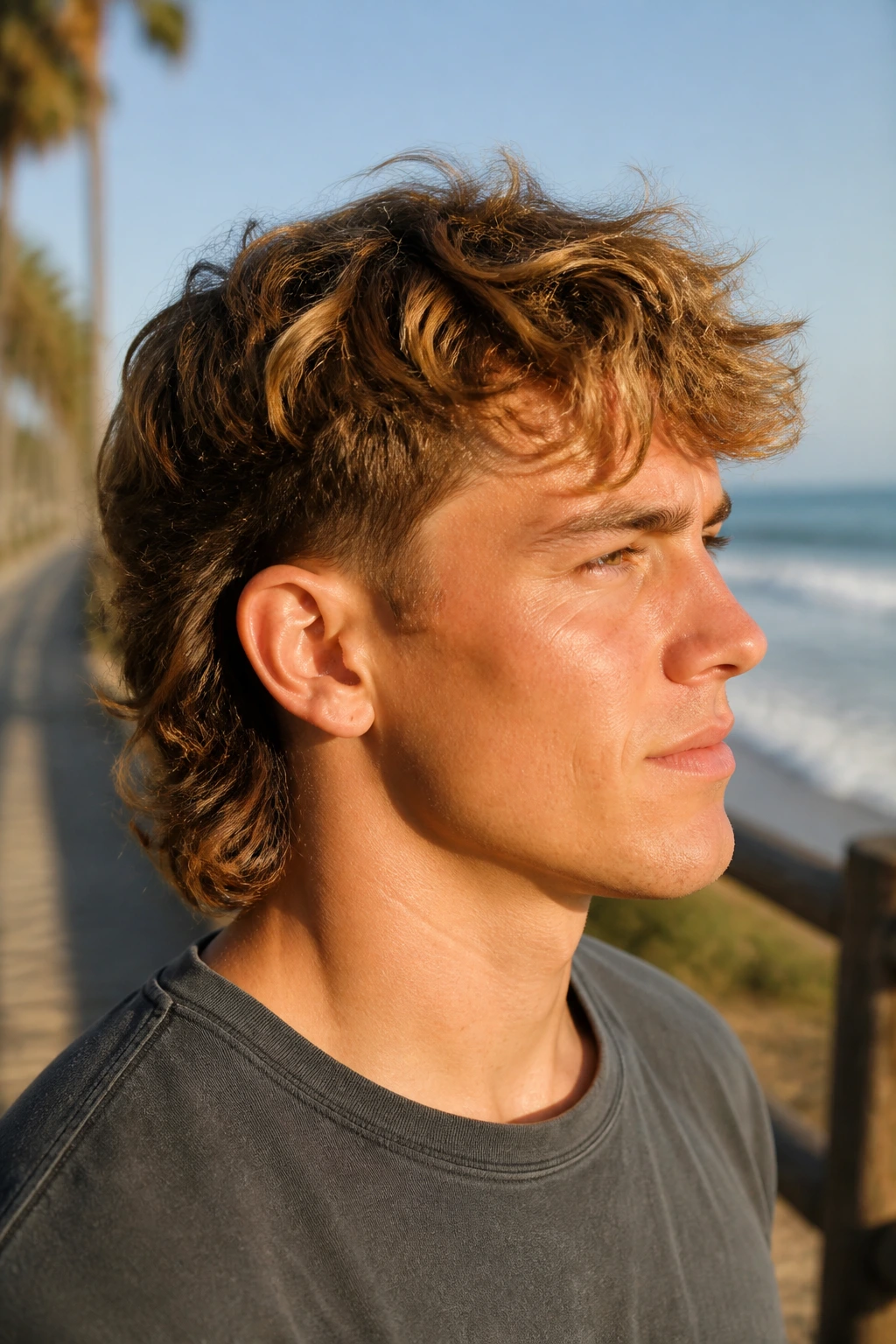
This one feels relaxed in a way that’s hard to fake. The waves do most of the work, and the short back gives them somewhere to fall without turning the cut into a shaggy blob.
The best surfer mullets on short hair keep the ends loose. You want a little bend, a little separation, and a shape that looks better after a day of real movement. Salt spray helps, but the cut itself has to carry the style.
If your hair naturally kinks, this may be one of the easiest versions to live with. Let it dry with as little fuss as possible, then pinch the ends with a small amount of cream. Done.
20. French Crop Mullet
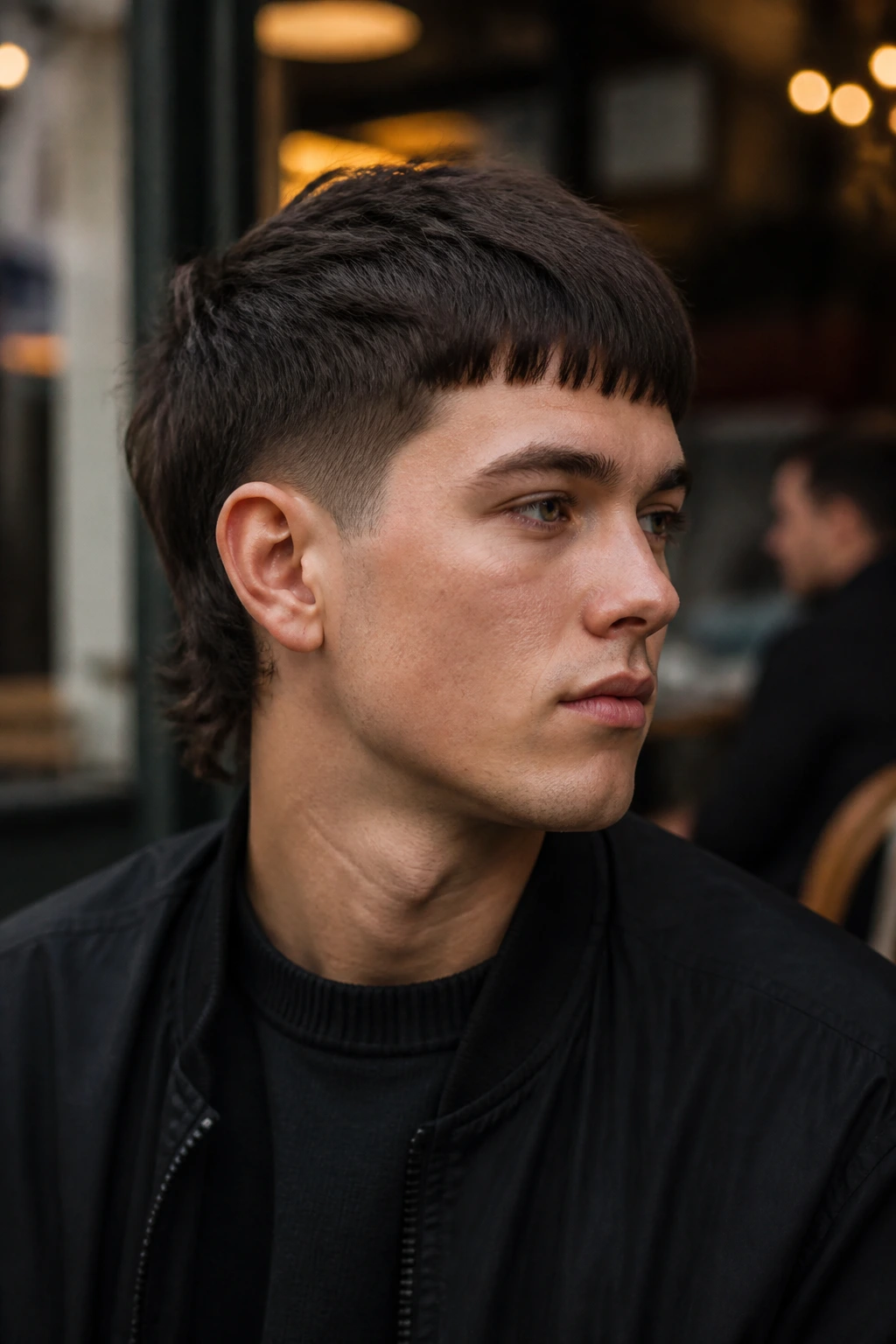
The French crop front keeps things blunt and modern, while the back length sneaks in a mullet note. That front-back contrast is why this cut feels sharper than it sounds.
This version suits straight hair especially well because the crop gives the fringe some structure. The back can stay narrow and short, which keeps the silhouette from drifting into shag territory. If you want a hairstyle that looks deliberate from the front and a little unexpected from the side, this one has real range.
Ask for the fringe to stay compact and the back to taper softly into the neck. That keeps the whole cut from looking boxy.
21. Thick-Hair Choppy Mullet
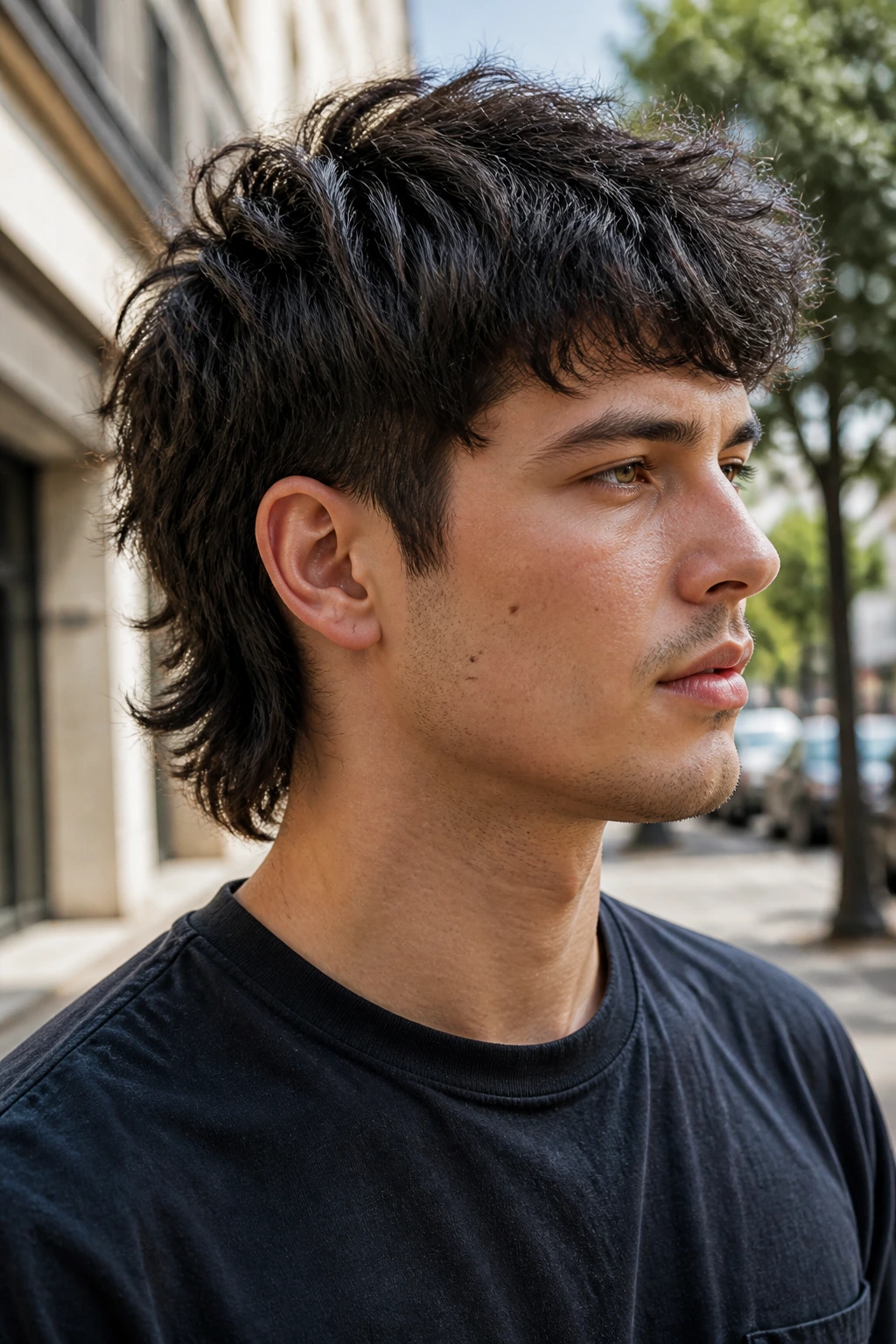
Thick hair needs a different kind of control. You don’t want to remove so much weight that the ends go fluffy and weak, but you do want enough internal layering that the crown doesn’t sit like a cap.
A choppy mullet handles that nicely. The layers break up bulk, the back stays light, and the sides can be kept close enough to prevent that triangular look thick hair loves to create. It’s one of the more practical short mullet choices if your hair grows dense fast.
What to ask for
- Internal layers, not just surface texture
- A narrow neckline
- Enough weight left at the fringe so the cut doesn’t go wispy
That last point matters. Over-thinning thick hair is a fast route to regret.
22. Soft Sculpted Mullet
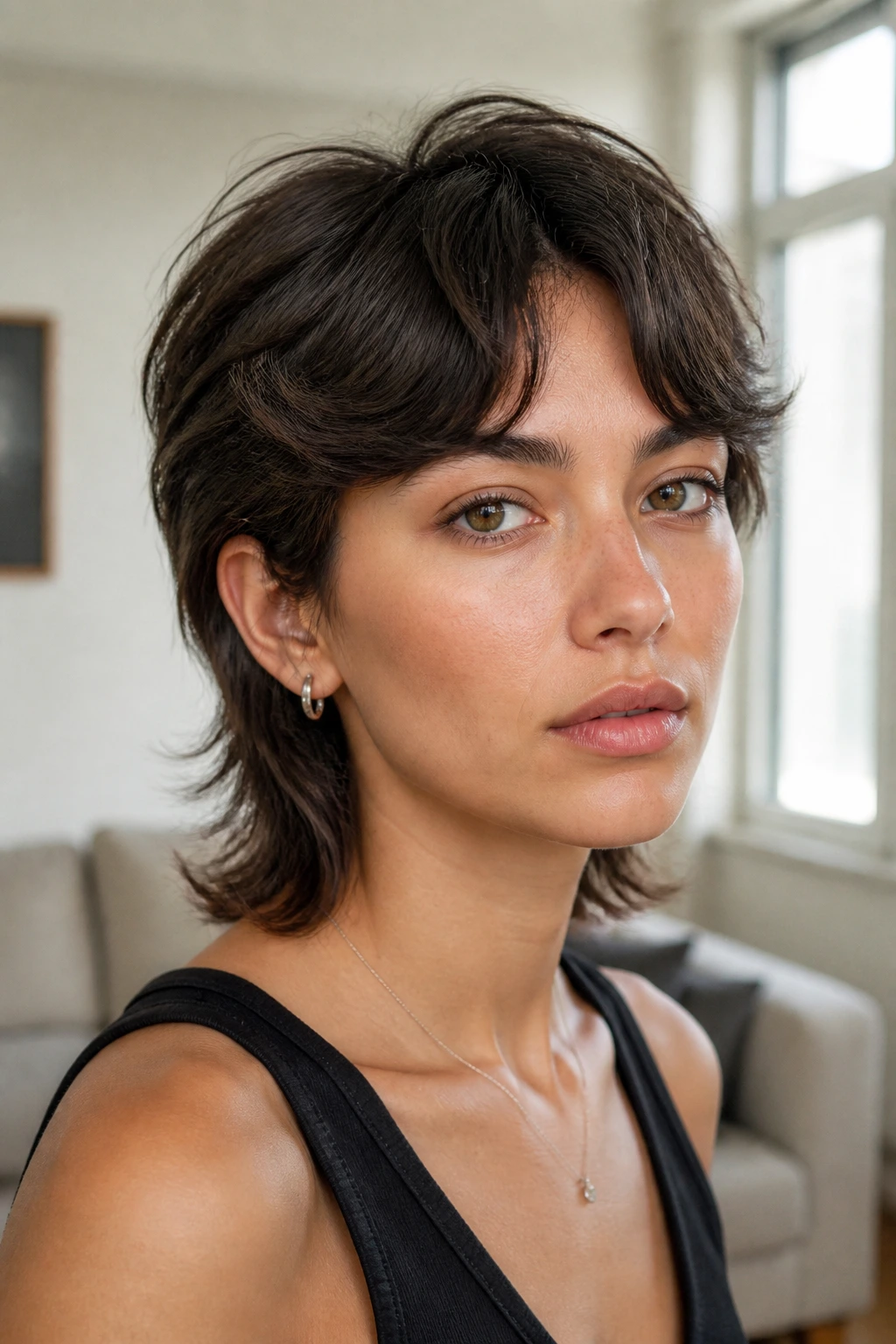
This is the gentlest version in the group. The shape is still there, but the edges are softened, the fringe is blended, and the back drops in a quieter line that feels less aggressive.
I like this cut when someone wants the movement of a mullet without the hard contrast. It looks especially good when the hair is blown forward at the crown and left a little piecey around the temples. The result is clean, but not stiff.
It’s a solid choice if your style leans minimal and you still want personality in the haircut. Think of it as a mullet with the volume turned down, not the idea removed.
23. Spiky Punk Mullet
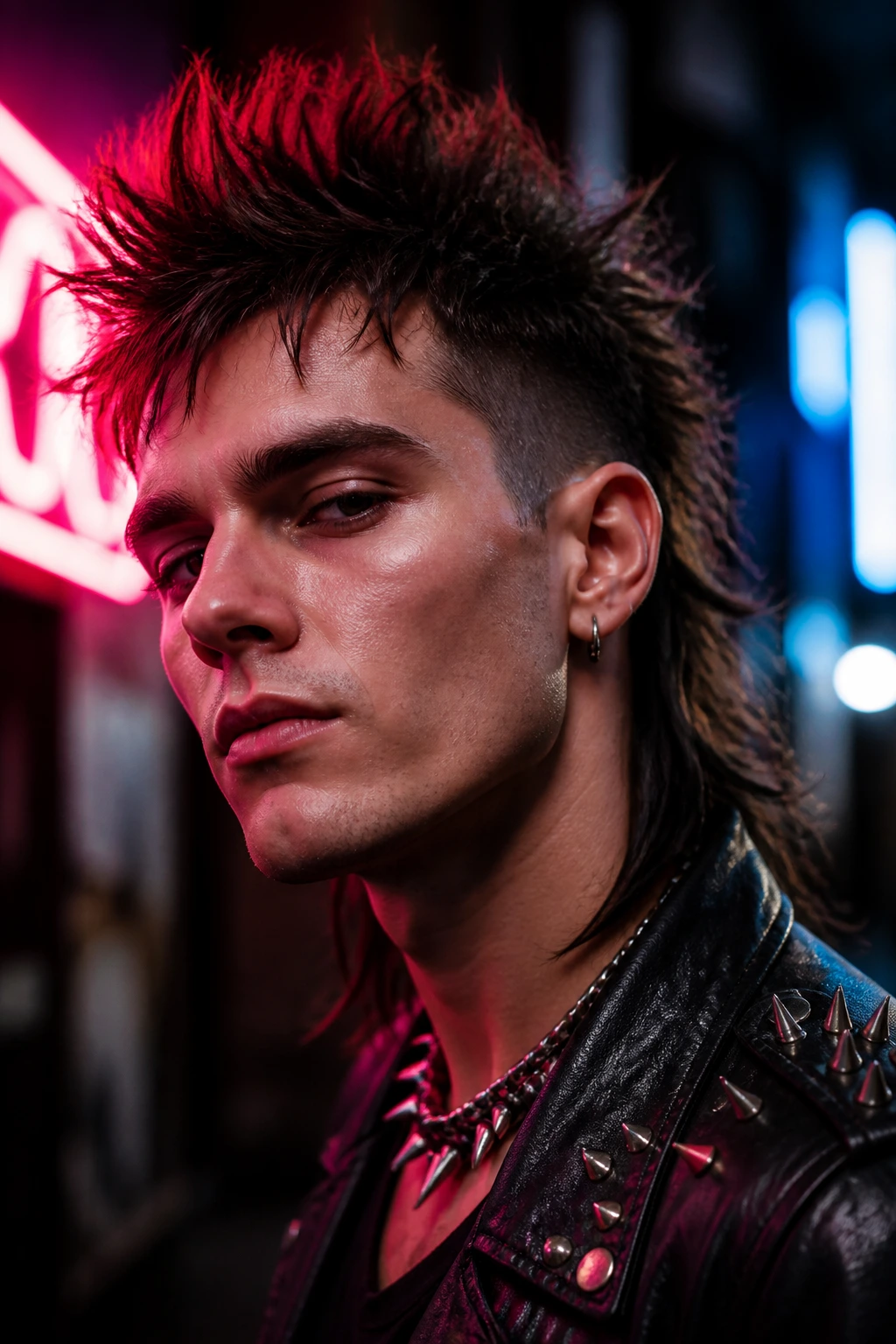
This is the loud one. The top is short enough to stand up with paste or wax, the sides are tight, and the back stays long enough to keep the silhouette unmistakable.
The spiky version depends on product, but it shouldn’t depend on too much of it. You want a dry, separated finish, not a greasy shell. If the spikes are too uniform, the style starts looking stiff. Messier is better here.
It’s a fun cut for short hair because the short length makes the spikes easy to reset. A wash, a towel dry, a little product, and you’re back. No complicated styling rituals.
24. Low-Contrast Office Mullet

This is the version for people who want the shape but don’t want a hard edge around it. The sides are blended softly, the back is only a touch longer, and the fringe stays controlled.
There’s not much drama, and that’s the point. In a short mullet, low contrast keeps the haircut wearable in more settings. The outline is still there, but it doesn’t shout. You can tuck it behind the ears, sweep it forward, or leave it natural.
If you’ve never worn a mullet before, this is one of the safest ways in. It lets you test the shape without committing to a bigger visual swing.
25. Grow-Out Transitional Mullet
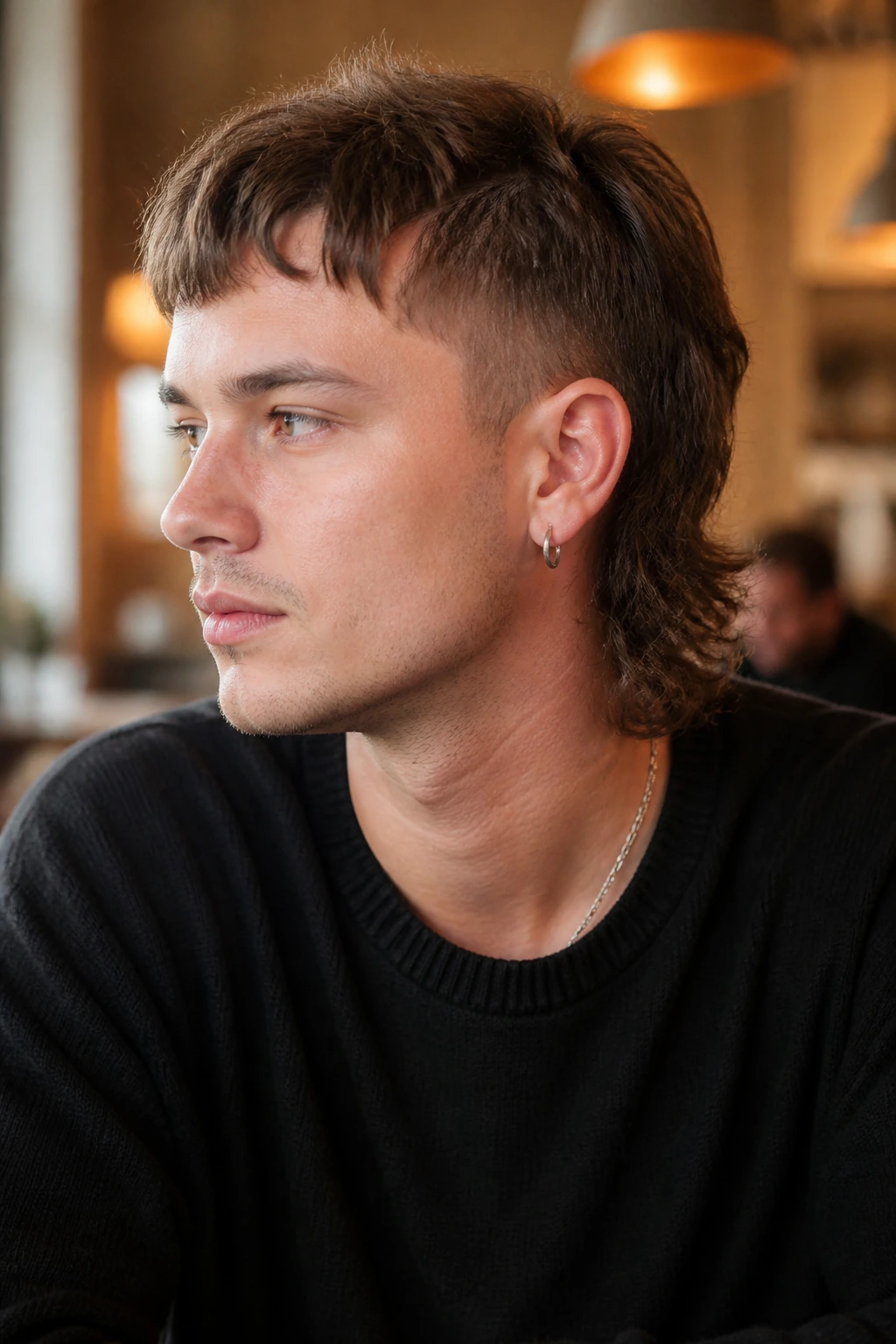
This cut is built for the awkward middle. If you’re moving from a pixie, buzz, or undercut into a longer style, a transitional mullet gives the front and top enough structure while the back catches up.
The trick here is not to fight the unevenness. Let the haircut work with the different lengths instead of forcing them into one blunt line. A slightly longer nape and soft fringe can make the whole grow-out process look intentional.
That’s why I like this version so much. It respects the in-between stage. Not every haircut has to pretend it was born at full length.
26. Fringe-Heavy Mullet
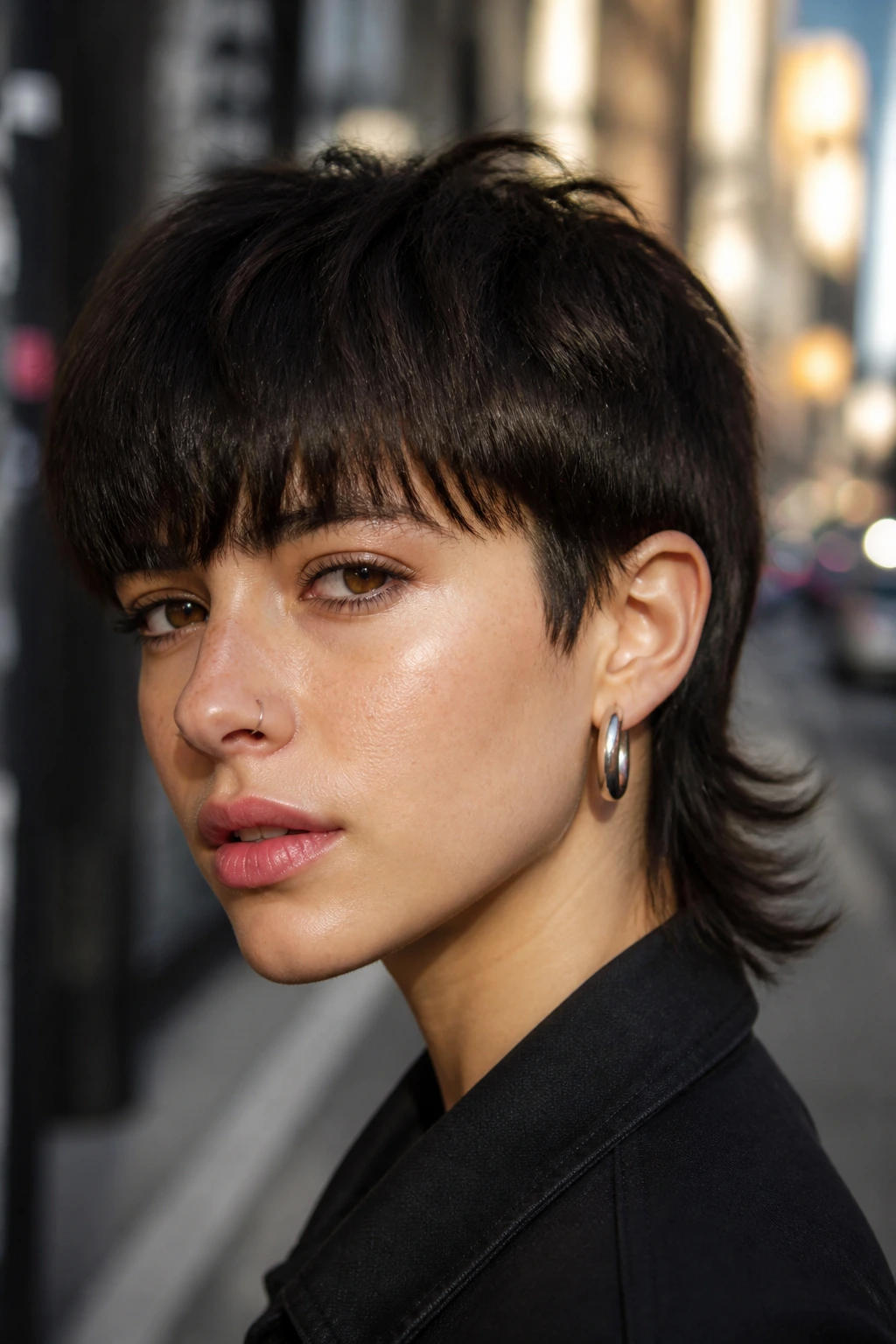
The fringe-heavy mullet puts the front front and center. The bangs are the strongest visual part of the cut, and the back acts more like a supporting line than the main feature.
This works well if you like face-framing and want the style to feel more fashion-forward than retro. The fringe can be blunt, curtain-like, or choppy, but it should have enough weight to stand on its own. If the back is too long, the balance gets muddy.
I’d call this one a good pick for straight or slightly wavy hair. The bangs show shape best when they can fall in a clean way, not collapse into the eyes.
27. Neck-Taper Mini Mullet
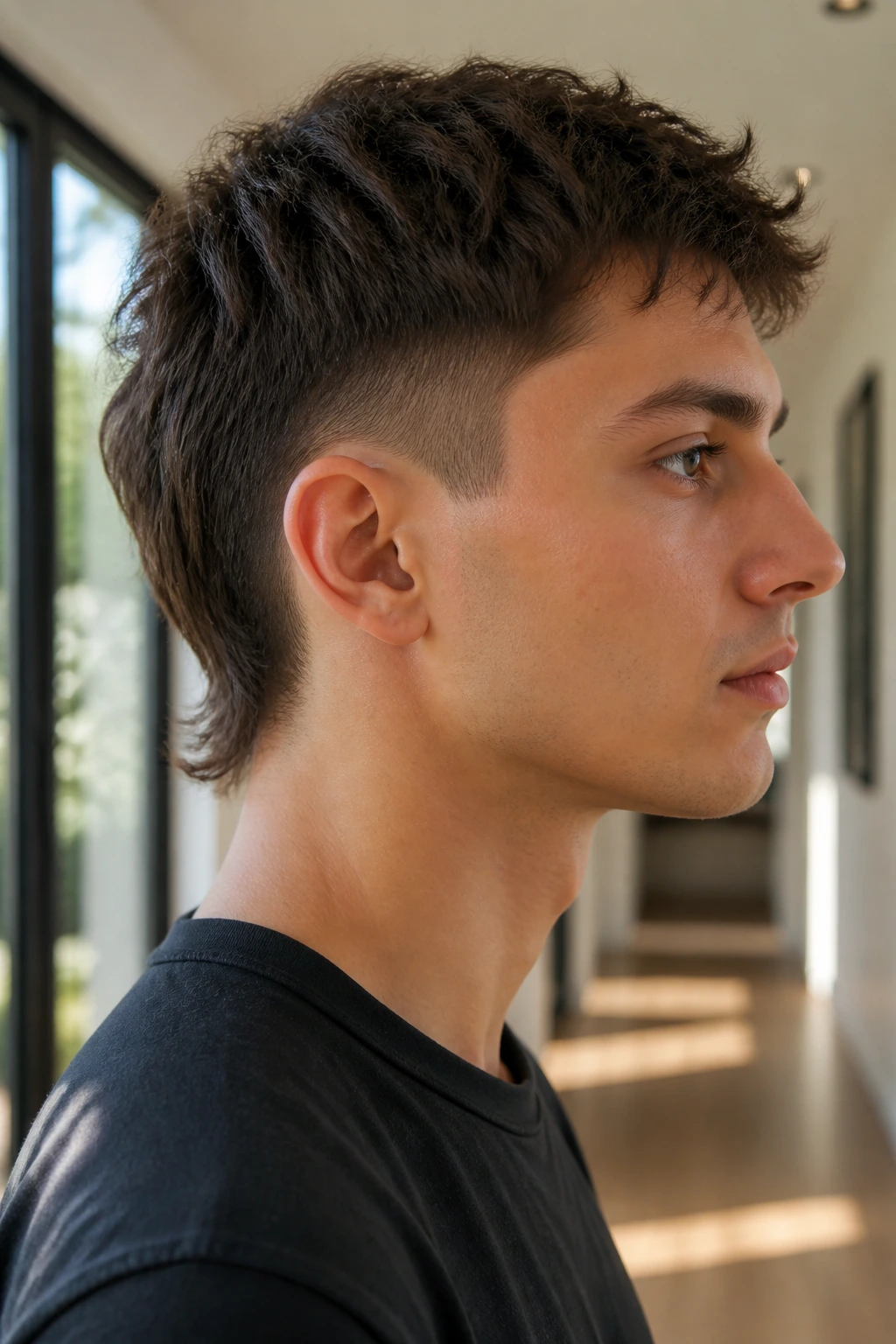
This is the shortest, neatest version of the bunch. The top stays compact, the back has a tiny tail of length, and the neckline is tapered so the cut hugs the shape of the head.
It’s a smart option if you like a mullet in principle but don’t want much maintenance. The mini version still gives you the profile shift at the nape, but it stays tidy enough to live with every day. It’s a small haircut with a lot of attitude.
If your hair grows fast or your neck line gets fuzzy quickly, ask for a soft taper rather than a blunt line. That one choice keeps the haircut looking deliberate for longer.
Why Short Mullet Haircuts Depend on Shape, Not Shock Value
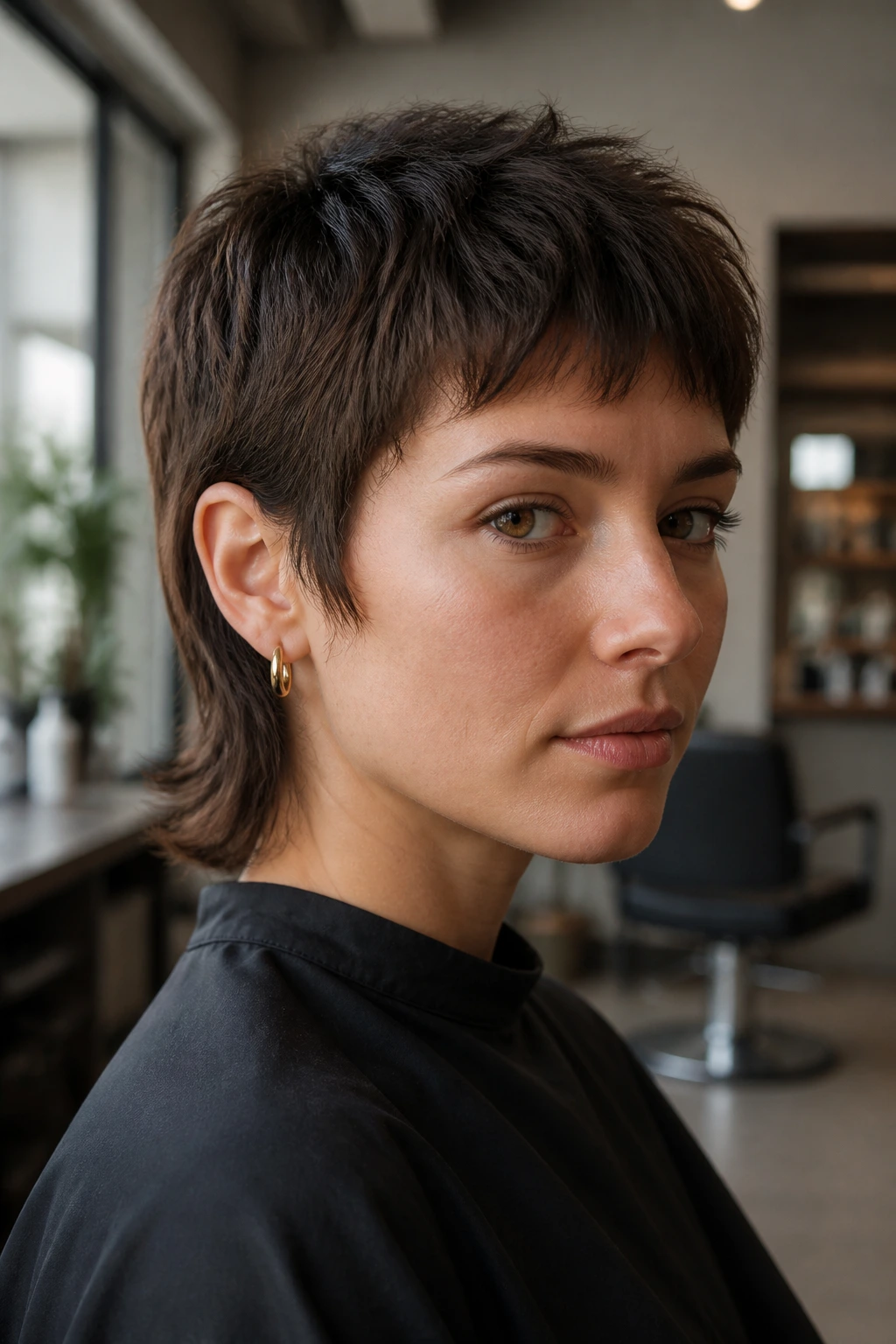
A good short mullet is really a lesson in proportion. The sides have to be short enough to let the back matter, but not so short that the top floats away from the rest of the haircut. Once the balance is off, the shape starts doing strange things around the ears and neck, and people notice that before they notice the style.
I’m a big fan of keeping the neckline narrow and the crown slightly textured rather than over-thinned. The crown is where a lot of short cuts go wrong. If you strip out too much density there, the hair loses its body and the back becomes an awkward afterthought. A short mullet needs some weight to hold its outline.
Texture helps, but only if the cut underneath is sound. Straight hair may need more internal layering to keep the back from drooping. Wavy hair often needs less. Curly hair needs respect for the curl pattern, or the silhouette turns square. That’s why the shape matters more than the label. “Mullet” is just the family name. The real work happens in the angles, the taper, and the way the hair falls when it’s dry.
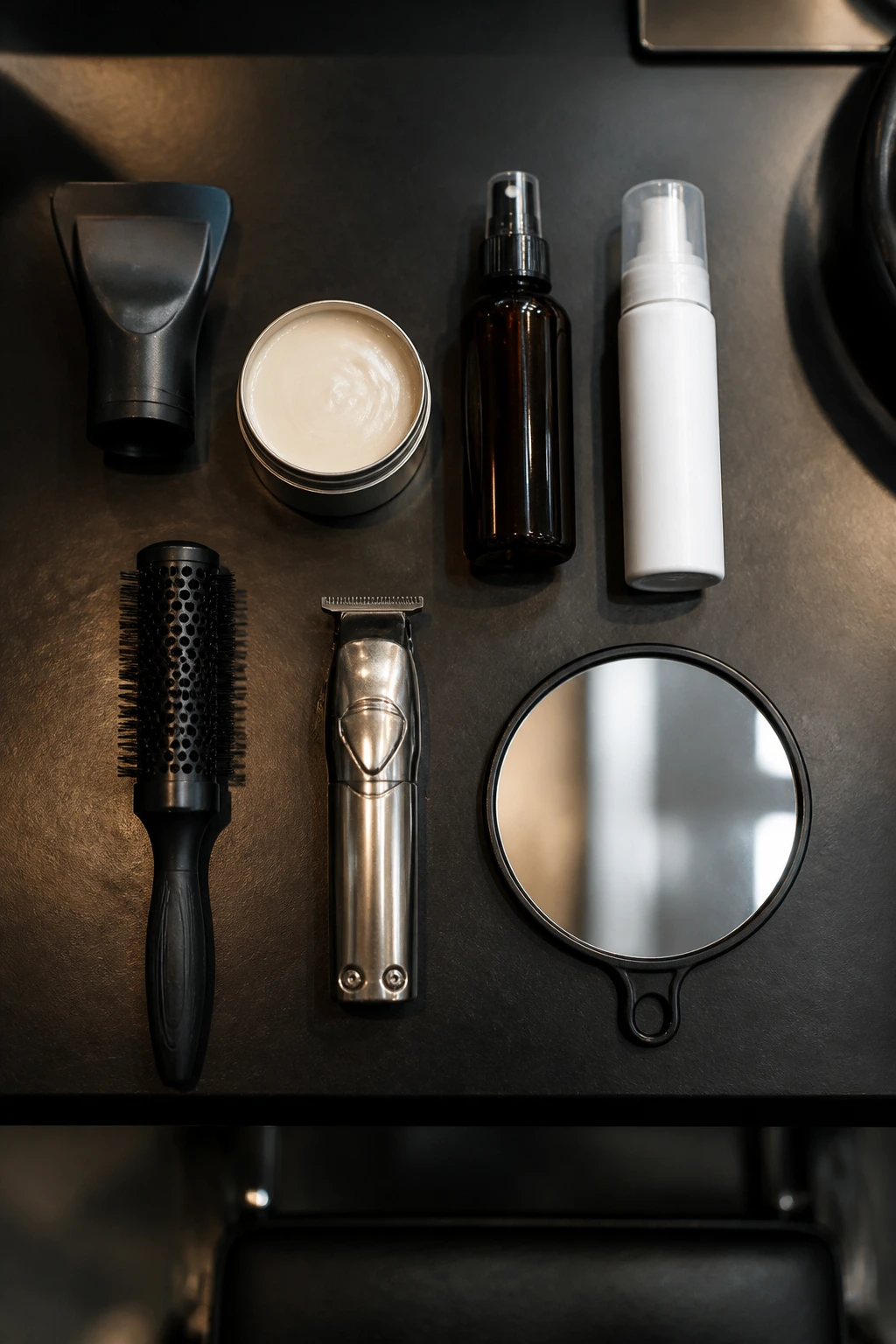
Essential Tools for These Cuts
-
A blow dryer with a nozzle or diffuser: The nozzle helps straight and thick hair stay controlled; the diffuser keeps curl pattern intact without blasting it apart.
-
Matte paste or clay: Good for piecey, short shapes where you want separation at the crown and a dry finish through the ends.
-
Sea-salt spray or texture spray: Handy for soft feathered, wavy, and shaggy versions when you want a little grit without heaviness.
-
Lightweight mousse or root lift spray: Useful for fine hair that needs body at the roots without sticky buildup.
-
A round brush or vent brush: Helps guide the fringe, polish the front, and keep the top from collapsing.
-
A small trimmer or neckline shaver: Optional, but useful if you keep the nape tidy between salon visits.
-
A hand mirror: Not glamorous, but essential if you want to check the back line at home.
How to Ask for the Right Short Mullet Haircut
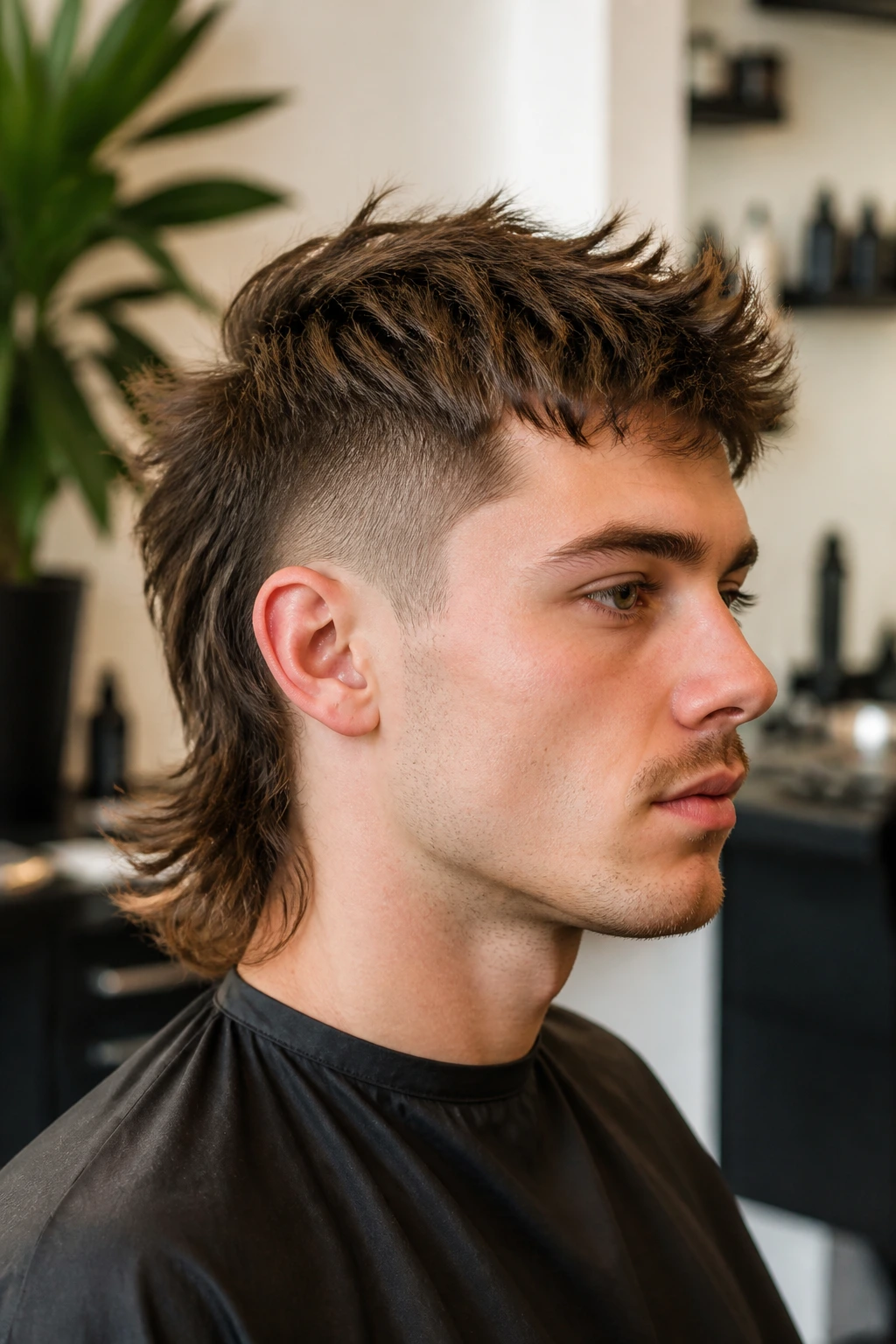
Bring photos. Three is better than one. And not three near-identical photos either — bring one that shows the front, one that shows the side, and one that shows the back. Stylists need length cues, not just a vibe board.
Be specific about the parts that matter: how short you want the sides, how much length you want left at the nape, and whether you want a fade, a taper, or a softer scissor blend. Saying “I want a short mullet” is a start. Saying “keep the crown textured, leave the back about 1.5 inches longer than the sides, and don’t over-thin the ends” gives the cut shape.
If you’ve got a cowlick, mention it before the scissors come out. Same with thick hair, flat roots, or a neck line that grows fast. Those details change where the weight should sit. Ask what the grow-out will look like, too. A good short mullet should still make sense after a few weeks of growth, not turn into a lopsided surprise.
How to Wear and Style a Short Mullet Haircut
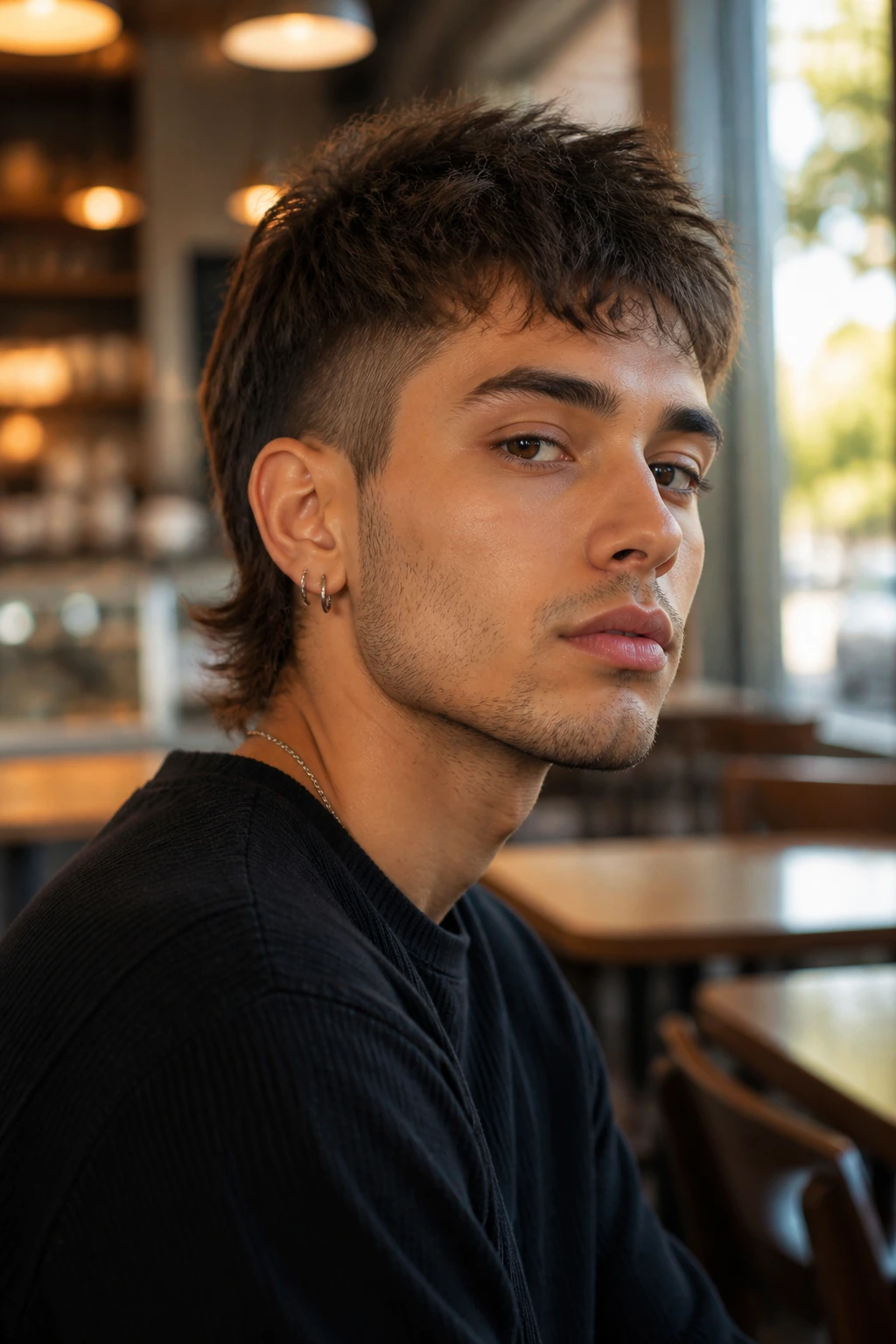
Shape: Decide where the eye should land first. If you want a cleaner look, keep the fringe controlled and the back narrow. If you want a looser shape, let the crown sit a little higher and the ends move more freely.
Texture: Product choice changes the whole read. Matte paste gives you separation and a drier finish. Cream softens the edges. Salt spray brings out wave and makes the cut feel more casual. Use less than you think you need, then add a touch more only if the hair is still swallowing the shape.
Finish: A short mullet can lean polished or rough. Brushed back and neat around the ears, it reads sharper. Finger-styled with some bend in the fringe, it feels more relaxed. Both work. Just don’t mix the two too aggressively in the same head of hair.
Accessories: Glasses, earrings, collars, and hats all change how the cut lands. A close-fitting collar can make a neck taper look sharper. A beanie can flatten the crown. Big earrings bring attention to the sides, which is fun if the temples are tight.
Extra Styling Moves and Personal Tweaks
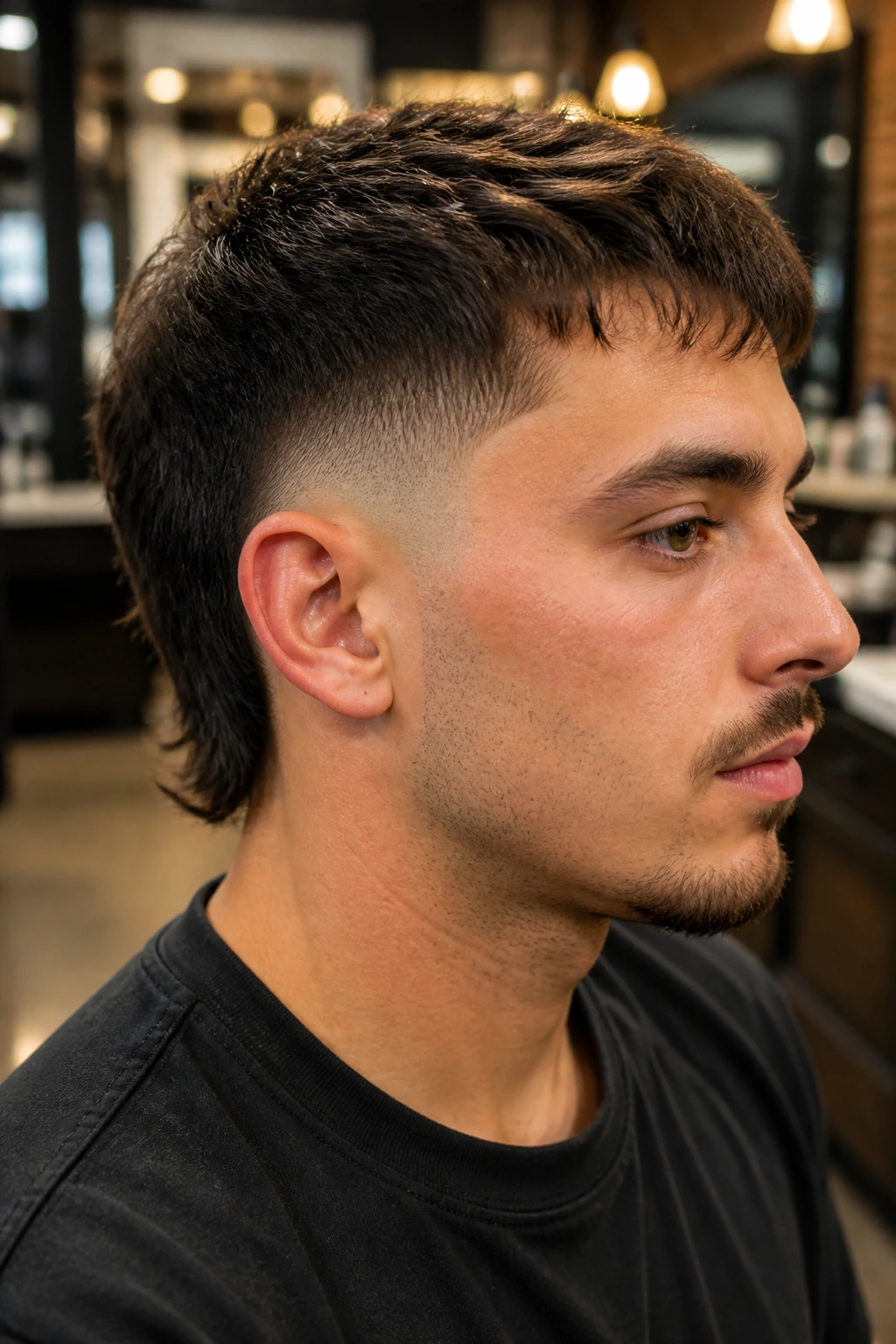
Texture Boost: On damp hair, use a pea-sized amount of mousse at the roots, then mist sea-salt spray through the crown. That combo helps short layers separate without turning the back crunchy.
Customization: If the cut feels too strong, soften the temple area and leave a touch more length in the fringe. If it feels too mild, tighten the sides with a low fade or undercut and let the nape keep its extra inch.
Finishing Touch: After drying, rub a tiny amount of matte paste between your palms and pinch the ends of the back section. That little move keeps the tail from sitting flat against the neck.
Make-It-Yours: Fine hair usually likes lighter products and more root lift. Thick hair needs more internal shaping. Curly hair does better with curl cream and a diffuser. Straight hair often needs the most help from texture spray, because it can look too sleek without a little roughness.
Common Mistakes That Throw Off the Balance
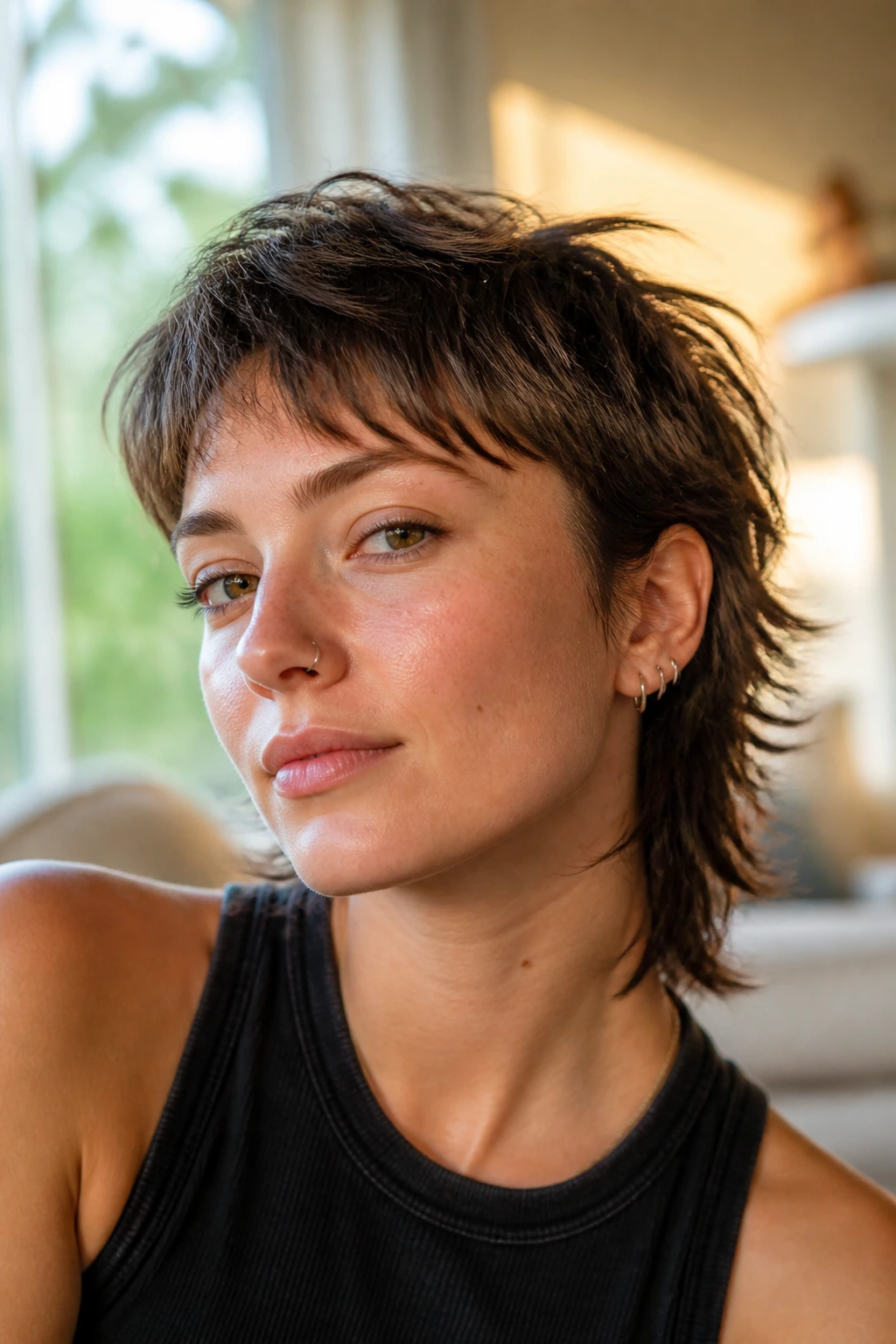
-
Making the sides too long: The cut starts to look boxy and the back disappears. Fix it with shorter temples or a cleaner taper.
-
Thinning the crown too aggressively: The top goes see-through and loses support. Ask for internal layering instead of heavy texturizing if your hair is already fine.
-
Leaving a blunt neck line: That creates a hard shelf at the back. A tapered neckline keeps the silhouette softer and more modern.
-
Using too much heavy product: The cut loses lift and the texture clumps. Start small — a pea-sized amount is often enough on short hair.
-
Ignoring how fast your hair grows: A short mullet can shift shape quickly, especially around the ears and nape. If your hair grows fast, schedule trims a little sooner.
-
Skipping the reference photo: “Short mullet” means different things to different people. Without a visual, you’re trusting a word that covers a lot of territory.
Variations and Adaptations to Try
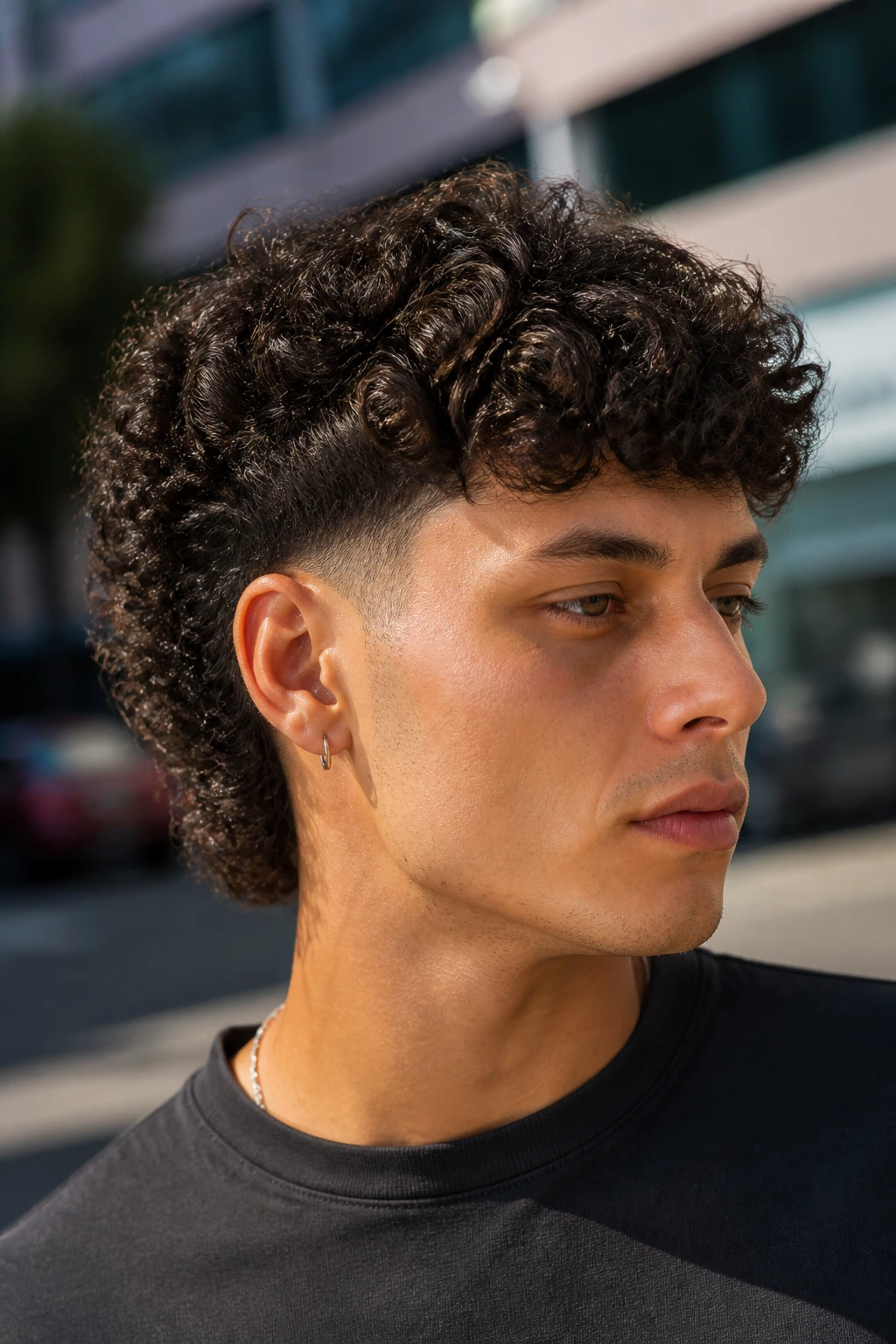
Curly Halo Mullet: Keep the sides tighter and let the curls build a soft halo around the crown and nape. This version works best when the curl pattern is left intact, not over-cut.
Fade-and-Fringe Remix: Pair a low or skin fade with a heavier fringe up front. It creates a sharper contrast and suits people who want the front to carry the style.
Soft Office Version: Blend the sides with scissors, keep the back only slightly longer, and style it with a light cream. It’s the version I’d pick for someone who wants the shape without the drama.
Punk Strip Cut: Tight sides, spiked crown, narrow tail. Very little needs to happen here beyond good clipping and a touch of paste.
Pixie Grow-Out Helper: Leave the top layered and let the nape catch up over time. This one is less about a finished look and more about surviving the awkward stage with style intact.
Air-Dry Shullet: Best for wavy hair. The cut leans shaggy on top and mullet through the back, with very little daily styling required.
Trim Schedule, Grow-Out, and Care Between Visits
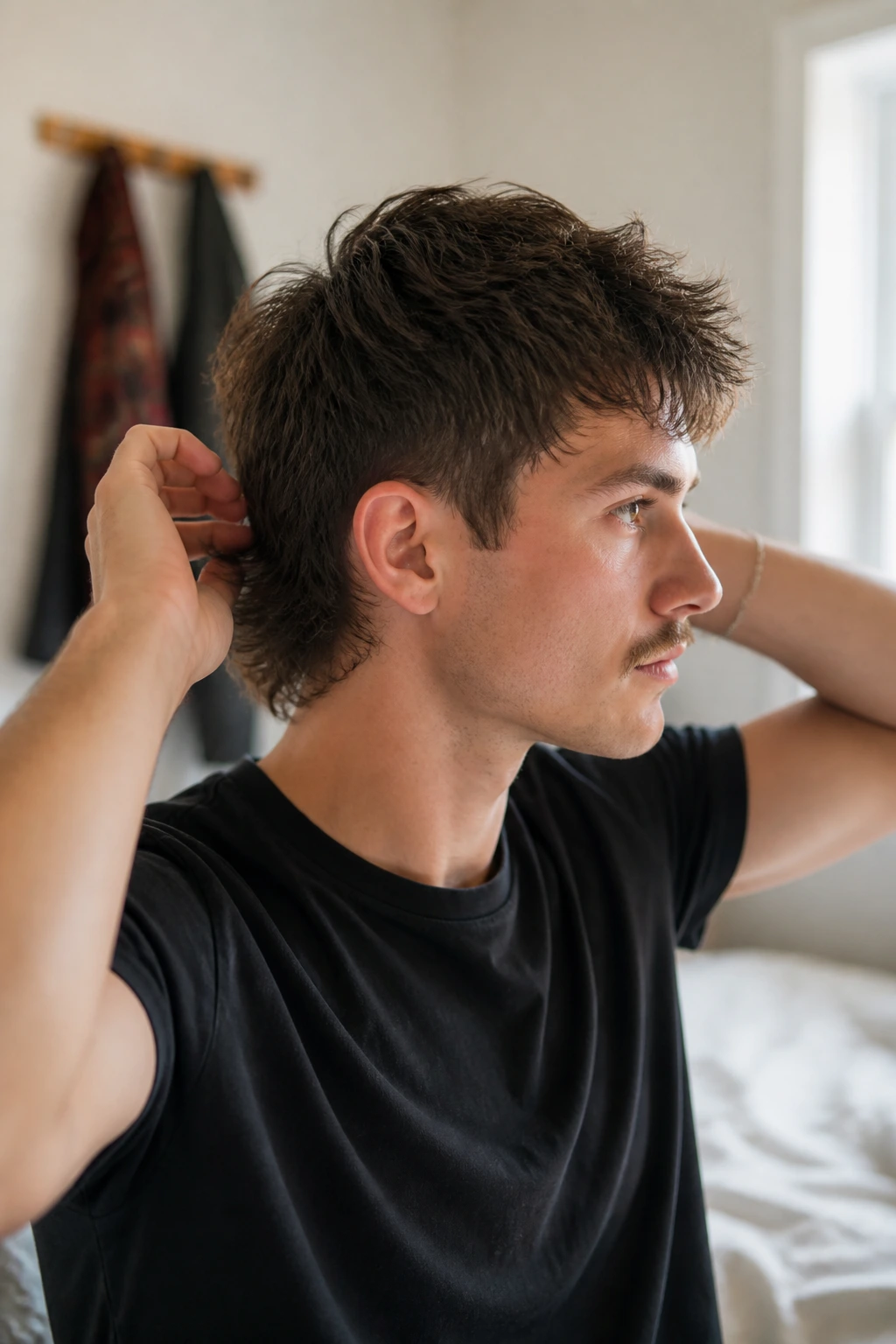
Short mullets keep their shape best when you treat the neckline and temple area like maintenance zones. For faded or heavily tapered versions, a trim every 3 to 4 weeks keeps the outline crisp. Softer scissor-cut versions can usually stretch to 5 to 7 weeks before they start losing their balance.
The nape is the first place that shows wear. It gets fuzzy, then it flips, then the shape starts to look wider than intended. A quick clean-up there can buy you another couple of weeks if you’re not ready for a full haircut. If you do touch it up at home, keep it light. You want to tidy the line, not redesign the whole back.
Wash frequency depends on scalp type and product use. Most people with short hair can go 2 to 4 days between washes if the scalp stays comfortable. Heavy paste or wax may need a clarifying shampoo every 1 to 2 weeks so the crown doesn’t go flat. For sleep, a satin pillowcase helps keep the fringe from sticking up in odd directions, and it’s cheaper than fighting the shape every morning.
If you’re growing the cut out, let one area lead. Don’t try to force every section to the same length at once. That’s how you get the weird triangle stage.
Questions People Usually Ask Before They Cut It Short
Will a short mullet work on fine hair?
Yes, if the layers are kept light and the crown isn’t over-thinned. Fine hair does better with a bit of root lift and a softer back length than with heavy texture stripping.
Can curly hair pull off a short mullet?
Absolutely. The best curly versions keep the curl pattern intact and clean up the sides so the shape doesn’t balloon. A diffuser and curl cream go a long way.
What’s the difference between a shag and a mullet?
A shag spreads layers more evenly around the head, while a mullet leaves a clearer sense of length in the back. On short hair, the difference shows up in the neckline and side shape.
How often should I trim it?
Most short mullets need attention every 4 to 6 weeks, though fades and sharp tapers usually need sooner. If the neck line starts puffing up, you’re already in trim territory.
Can this look professional?
Yes, if you keep the contrast low and the neckline tidy. A business mullet or soft sculpted version can read clean in settings where a spikier version would feel out of place.
What if the back flips out weird?
That usually means the weight line is sitting too blunt or too short. A little more taper at the neck, plus a light cream or blow-dry in the direction you want, usually calms it down.
Do I need clippers for maintenance?
Not always. Clippers help with fades and neck clean-ups, but scissor-cut versions can be maintained with salon visits and a careful trim schedule.
How do I grow it out without hating it?
Keep the sides and back balanced instead of letting one section run wild. A transitional mullet shape can carry you through the middle stage until you decide on the next cut.
The Short Mullet Sweet Spot
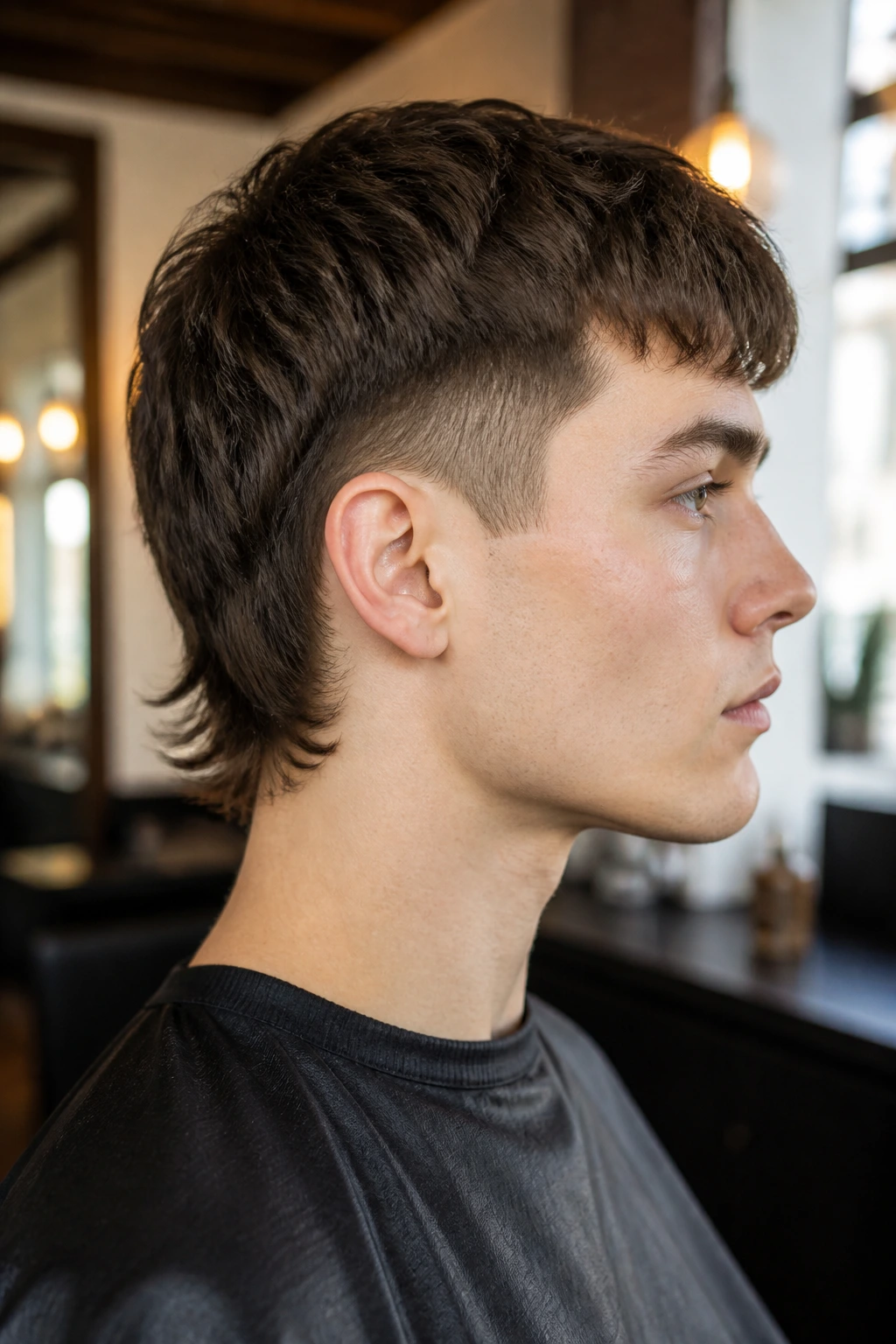
The best short mullets aren’t trying to prove anything. They just use shape well. That’s the real charm here: a tight side, a smart fringe, a little movement at the nape, and enough texture to make the whole thing feel alive when you walk.
If you’re choosing between a safer crop and something with more personality, this is the lane I’d look at first. Start with the version that matches your hair type, keep the neckline tidy, and let the back carry just enough length to change the silhouette. That small shift can make a short cut feel like it finally has a point.
