



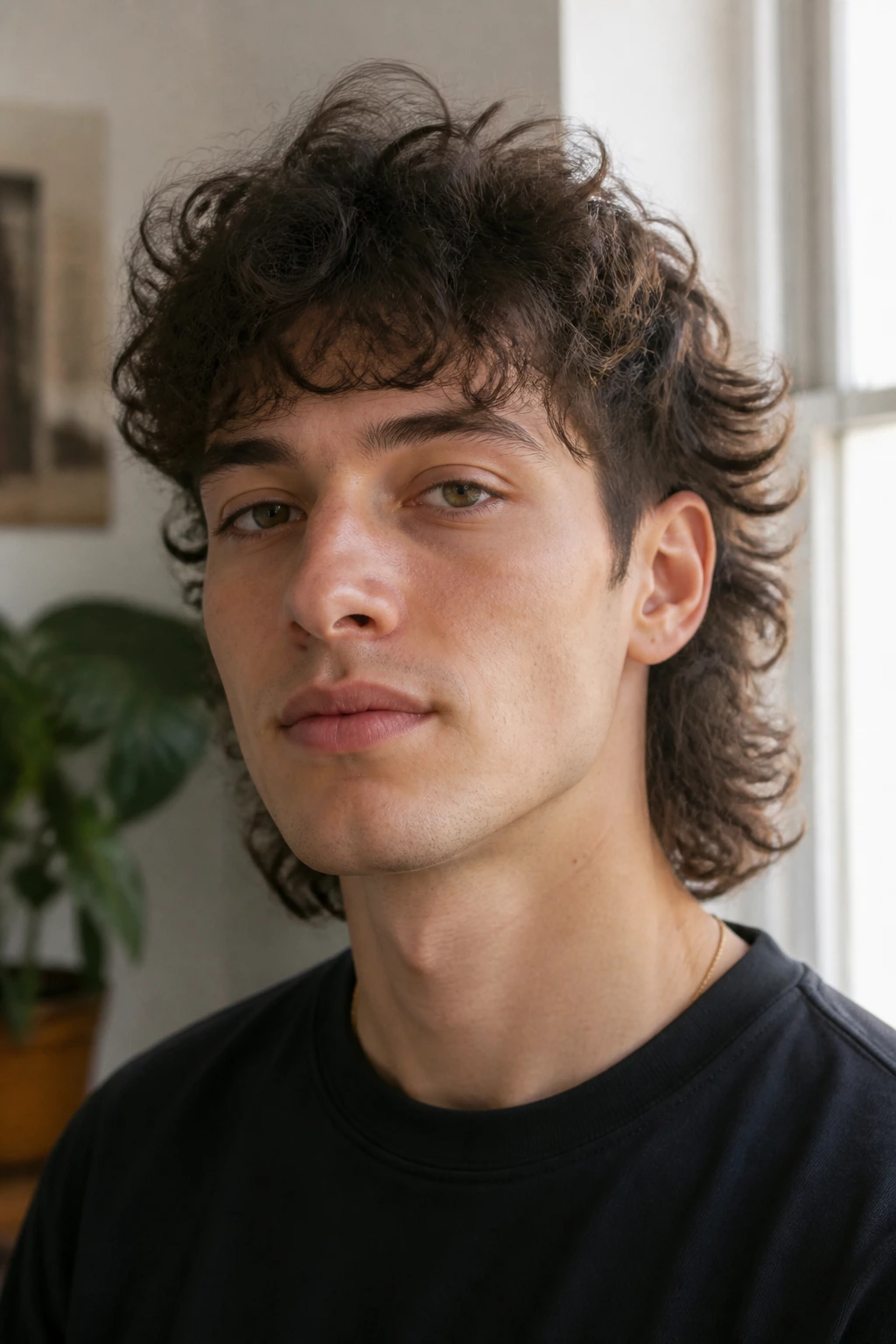
Mullets and curls have a better relationship than most people expect. Straight hair shows every hard line in a mullet; curly hair softens the shape, hides the awkward bits, and turns the whole thing into something lived-in instead of costume-y. That’s why mullet haircuts for curly hair can look so good when the cut is planned around the curl pattern instead of fought against it.
The real trick is balance. You want enough length in the back to read as a mullet, enough layering at the crown to keep the top from puffing into a dome, and enough control around the sides so the whole shape doesn’t collapse into one giant triangle. Curly hair has its own rules. Shrinkage changes everything. A section that looks collarbone-length when wet might bounce up to the jaw once it’s dry, and if the stylist forgets that, the “mullet” can disappear into a puff of layers with no clear outline.
Some versions are soft and wearable. Some have a little swagger. A few lean into that choppy, wolf-cut energy that curly hair wears so well. The good ones all share the same basic idea: they let the curl pattern carry the haircut instead of making the curl pattern apologize for it.
Why Curly Mullet Haircuts Work So Well
Curl pattern does the blending: The bend in the hair softens the jump between short crown layers and longer back length, so the shape looks intentional instead of abrupt.
Shrinkage becomes part of the design: Curly hair springs up after drying, which means the back can stay lively and the top can keep volume without looking flat or stringy.
They keep bulk in check: A smart mullet removes weight where curls collect it most — around the sides and crown — without taking away the movement that makes curly hair fun.
They grow out with less drama: Because the cut already has uneven lengths, a few extra weeks between trims usually read as texture, not neglect.
You can steer the vibe: The same mullet outline can look soft, edgy, polished, shaggy, or retro depending on where the bangs sit and how much taper you keep around the ears.
1. Soft Curly Mullet with Airy Fringe
This is the version I’d hand to someone who likes the idea of a mullet but does not want to look like they picked a fight with their mirror. The fringe stays light, the sides stay blended, and the back falls in loose curls that move when you turn your head. It’s flattering on 2C to 3B hair because the curl adds shape without turning the whole cut heavy.
What makes it work is the restraint. Ask for soft point cutting through the front and just enough internal layering at the crown to stop the top from ballooning. If the fringe sits a little above the brows when wet, that’s usually about right; curls lift, and then some.
I like this cut with a light mousse and a diffuser set to low heat. Let the front fall where it wants. Don’t try to force it into a perfect curtain. The charm is in the loose, slightly uneven movement.
2. Shaggy Wolf-Cut Mullet
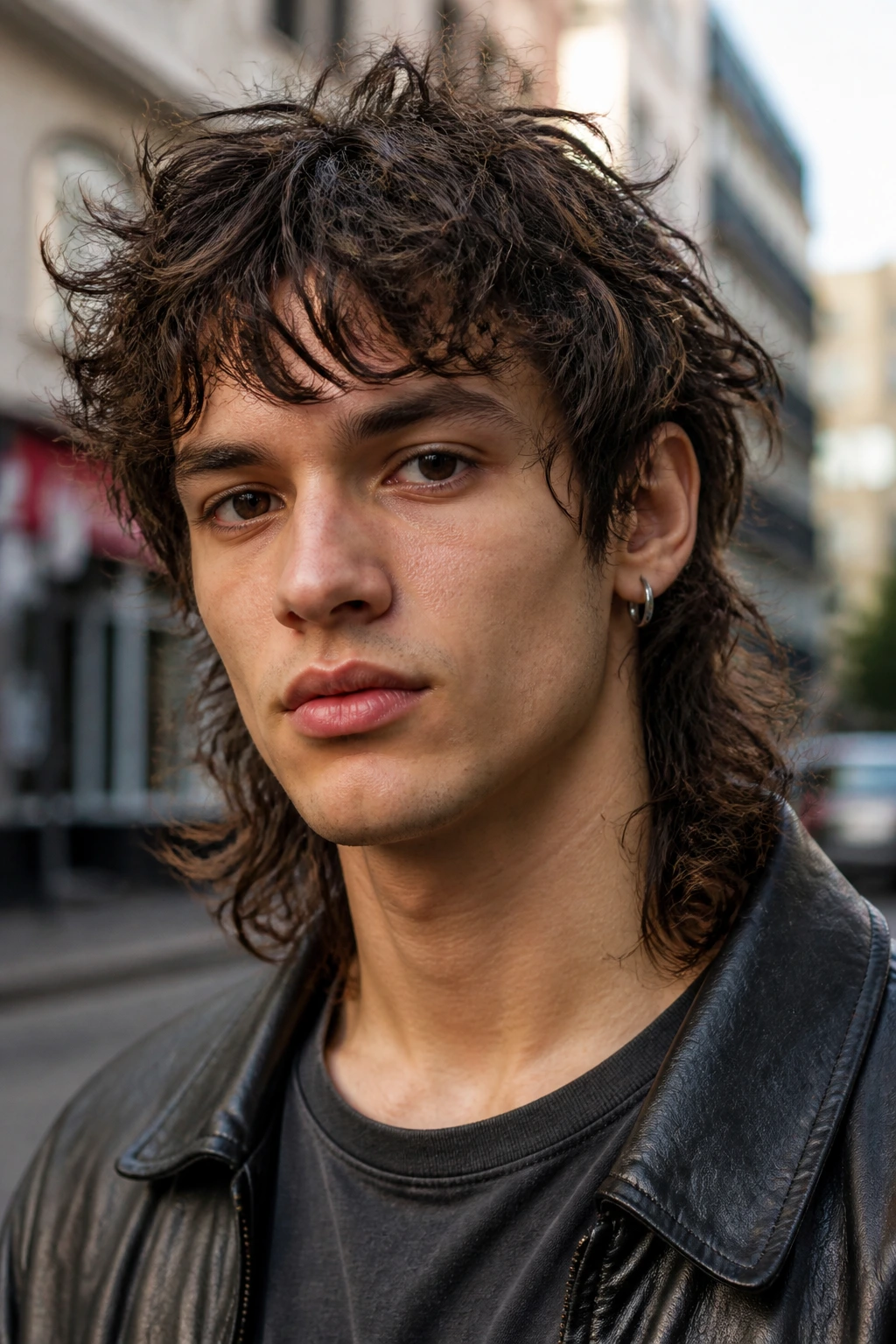
This one has more attitude. The crown is chopped up, the layers are broken and piecey, and the back keeps enough length to make the silhouette read as a mullet instead of a pure shag. On dense curls, it takes out that heavy helmet feel that can creep in when the top gets too long.
Why It Lands So Well
The wolf-cut influence gives the haircut a rougher edge, which curly hair handles better than sleek hair usually does. The texture wants to stand apart in sections. That’s useful here, because the haircut depends on that separation.
A stylist should keep the layer transitions visible but not blunt. If every layer is cut too aggressively, the shape gets fluffy in the wrong places. A little weight in the back keeps the whole thing from flying apart.
For styling, use a curl cream only at the mid-lengths and ends, then seal with a medium-hold gel. Too much cream can blur the texture and make the crown sit flat. This cut likes movement, not mush.
3. Tapered Curly Mullet
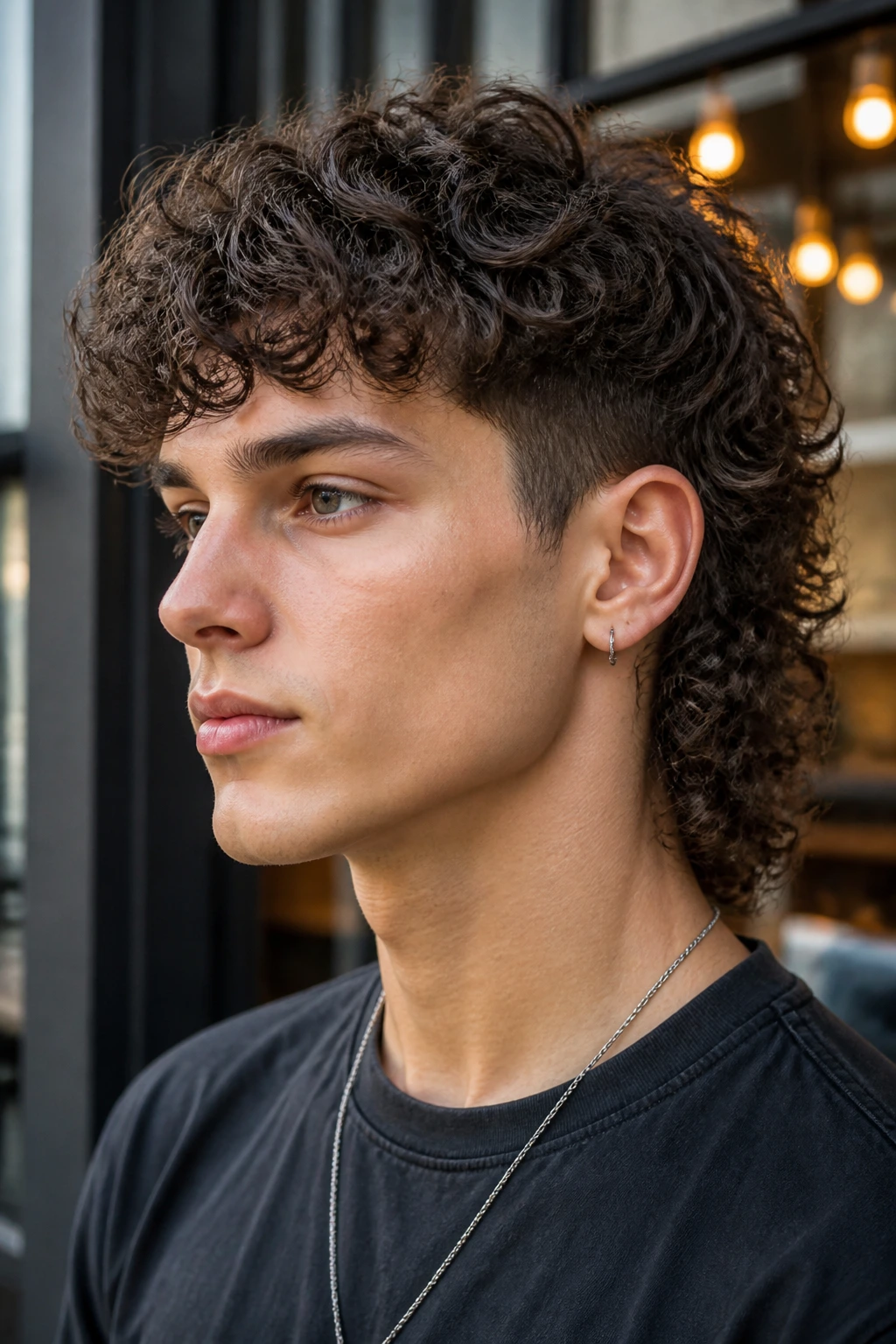
A tapered curly mullet is for the person who wants the outline to look neat from the front and a little unruly from the side. The sides are kept tighter around the ears and temple area, while the back holds the length. That contrast is what gives the cut its shape.
It works especially well if your curls are thick and prone to puffing out around the cheek line. Tapering takes the pressure off the sides, which makes the whole face look cleaner without stripping away the curly texture. It’s one of those cuts that looks more expensive when it’s done well, mostly because the silhouette is disciplined.
Best move: ask for the taper to fade softly, not sharply. A hard disconnect can look harsh on curls unless the rest of the cut is equally strong. A soft taper keeps the haircut wearable in real life, not just in one perfect mirror angle.
4. Mini Mullet for Short Curls
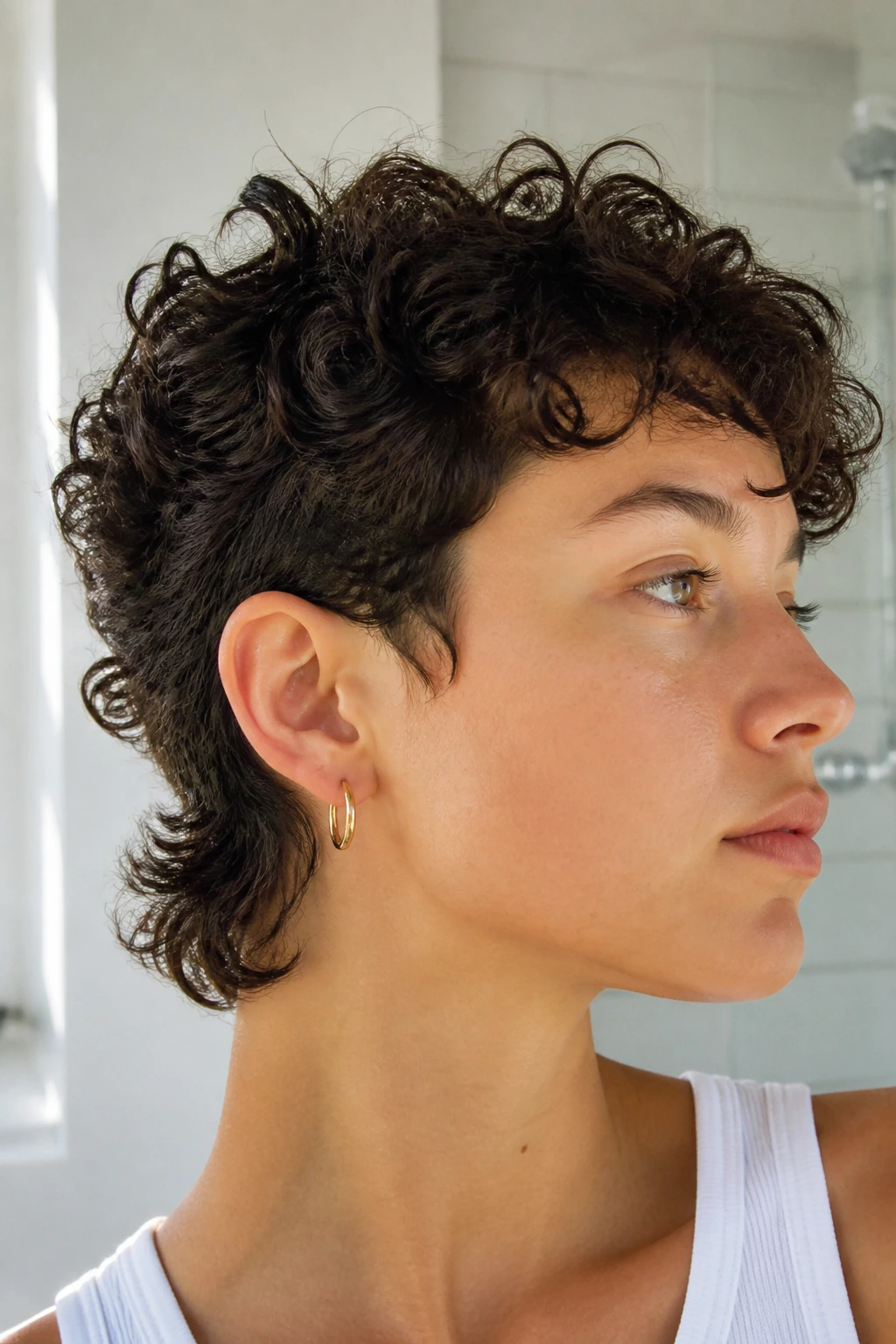
Short curls can do a mullet too, and I actually think this version gets unfairly overlooked. The top stays cropped, the nape gets a little tail, and the sides are clipped or shaped just enough to keep the ears visible. It’s compact, but it still reads as a mullet.
This is the haircut for people who want easy morning styling and don’t mind a little edge. It works on tight waves, loose spirals, and coily textures, as long as the cut respects the curl pattern. If the stylist leaves the top too long, the whole thing turns into a heavy cap. Short curls need room.
One thing I like here is how fast it dries. A little leave-in, a dab of gel, scrunch, and go. No elaborate arm workout with a diffuser. No fuss. Just shape.
5. Shoulder-Length Mullet with Curtain Bangs
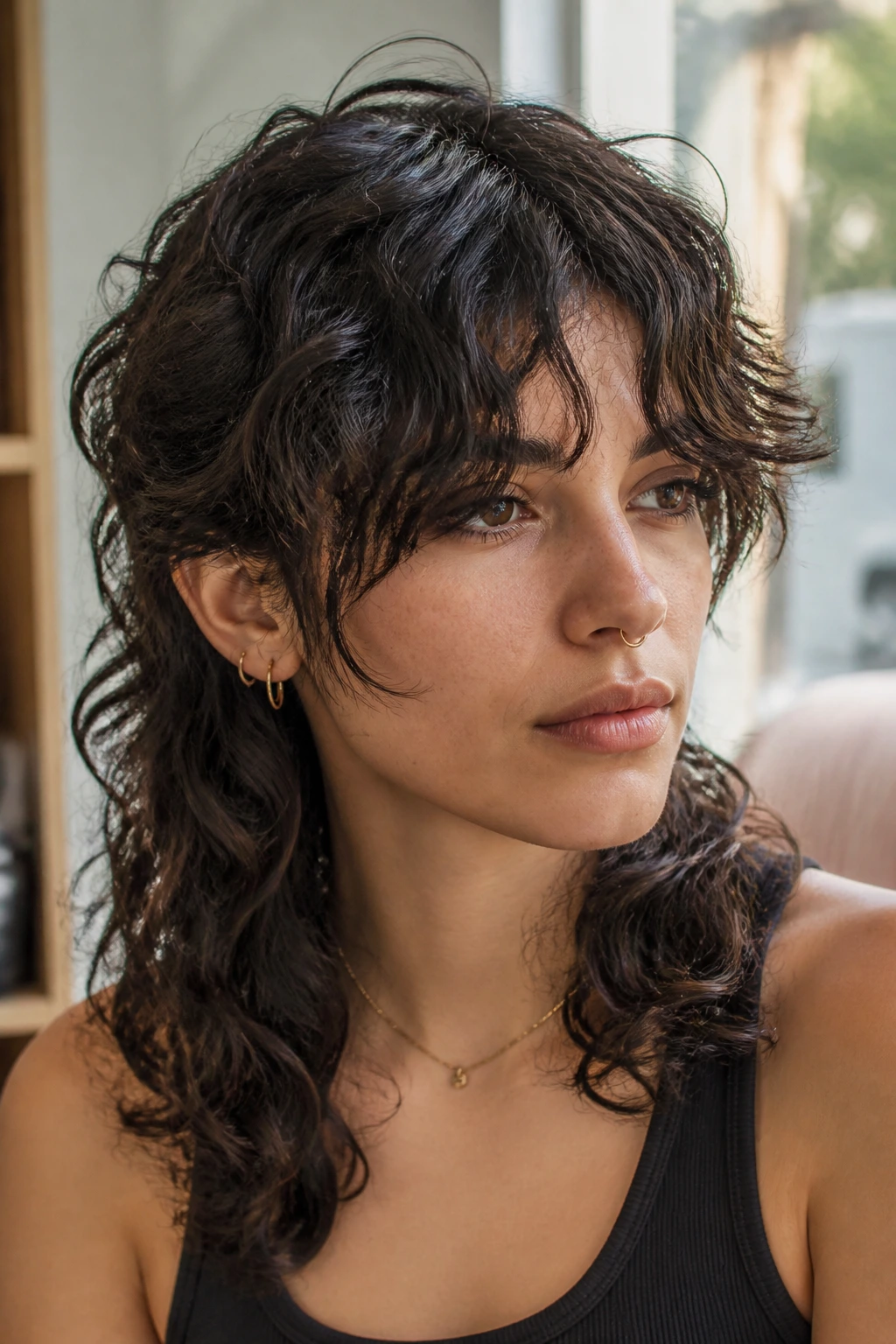
Why do curtain bangs and a mullet get along so well? Because they both rely on movement instead of strict symmetry. The front opens away from the face, the back hangs longer, and the curl pattern creates a soft frame that feels relaxed rather than overworked.
This version sits nicely on shoulder-length hair because the curls have enough room to spring, but not so much length that they lose their bounce. Ask for the bangs to start a little longer than you think you need. Curly fringe always rises more than you expect once it dries, and no one enjoys a surprise eyebrow crop.
I’d keep the styling light: a leave-in conditioner, a mousse at the roots, and a gel just through the fringe so it doesn’t separate into fuzzy little wisps. The cut already does the heavy lifting.
6. Tight Ringlet Mullet
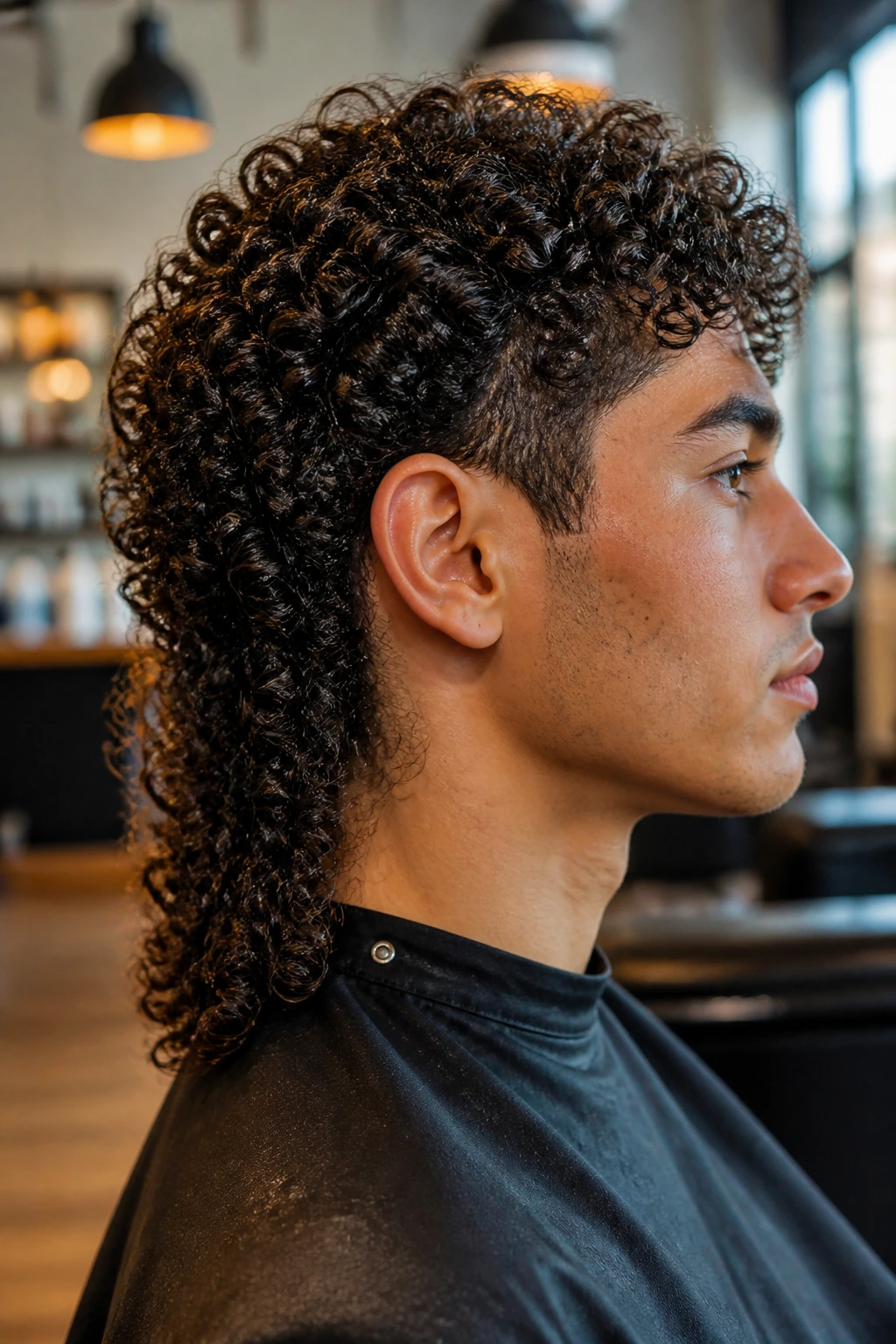
Tight ringlets make a mullet look more refined than people expect. The curl pattern creates neat little coils along the perimeter, so the haircut reads as sculpted rather than wild. That’s a big deal when you’re working with a shape that can easily tip into chaos.
The back should keep enough length for the ringlets to form clear spirals. The crown, though, needs careful layering. Too much removal up top and the silhouette breaks apart; too little and the curls sit like a thick cap. The sweet spot is a controlled lift, especially if the hair is dense.
This is one of the cuts where hydration matters. A good leave-in and a gel with real hold will keep the spirals from frizzing out by noon. Dry curls can make a mullet look blurry. Defined curls make it look deliberate.
7. Clean-Neck Curly Mullet
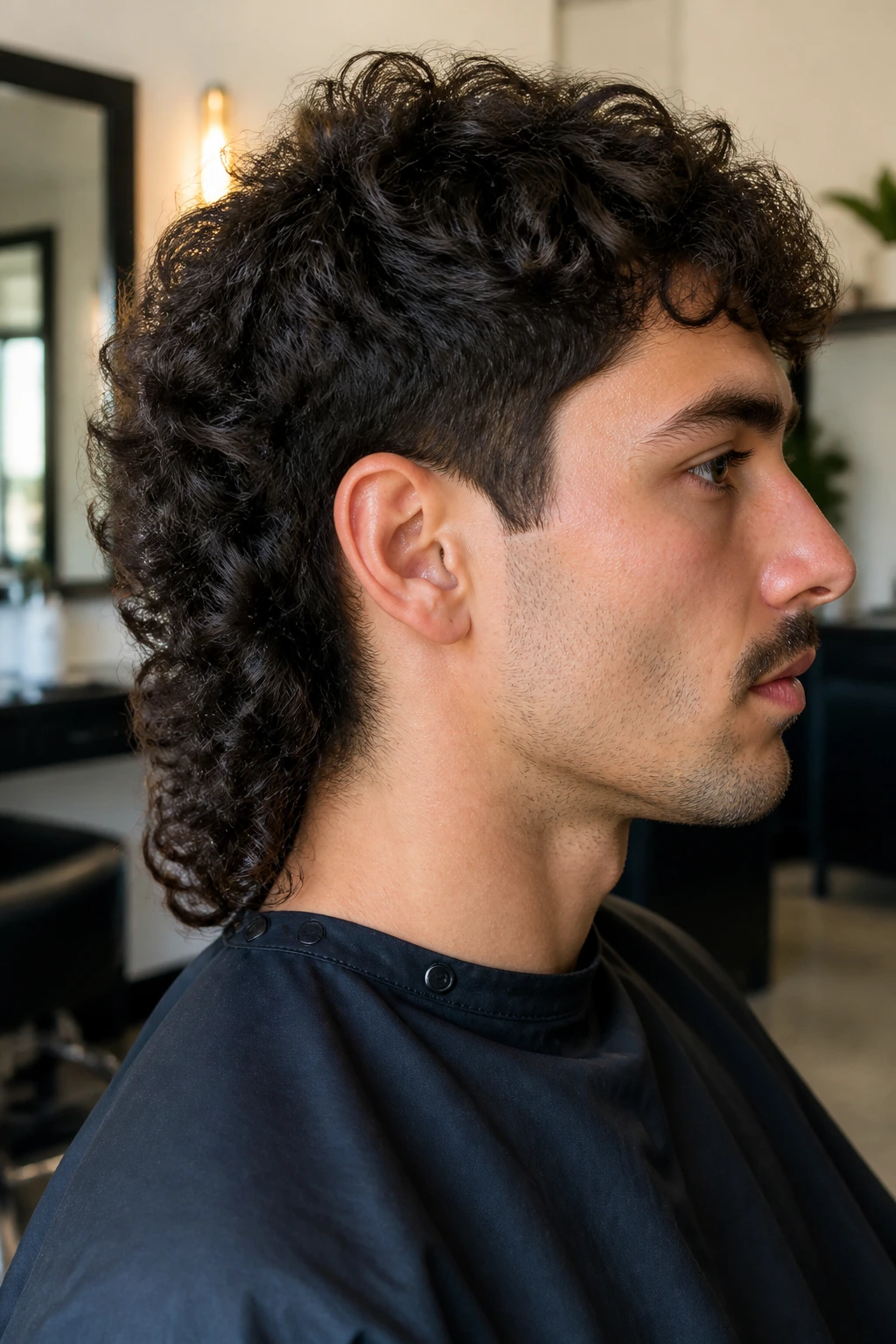
This is the tidy version, the one that keeps the neck and nape visible so the mullet doesn’t overwhelm the whole head. The back still has length, but the neckline is cleaned up and the edges are shaped with purpose. It feels sharper than a shag, less casual than a grown-out mop.
Shape Notes
A clean neckline changes the whole attitude of the cut. It gives the curls a place to fall instead of letting them spread down the shirt collar in every direction. That small detail matters more than people think.
This style also works well if you wear collared shirts or jackets often. Hair that sits cleanly at the nape is easier to live with when you’re dressing up a little. It won’t snag on everything.
The styling here is simple: diffuse until the roots are set, then let the back air-dry for a softer finish. If you want the neck area to stay neat, ask your stylist for a light cleanup every few weeks.
8. Undercut Curly Mullet
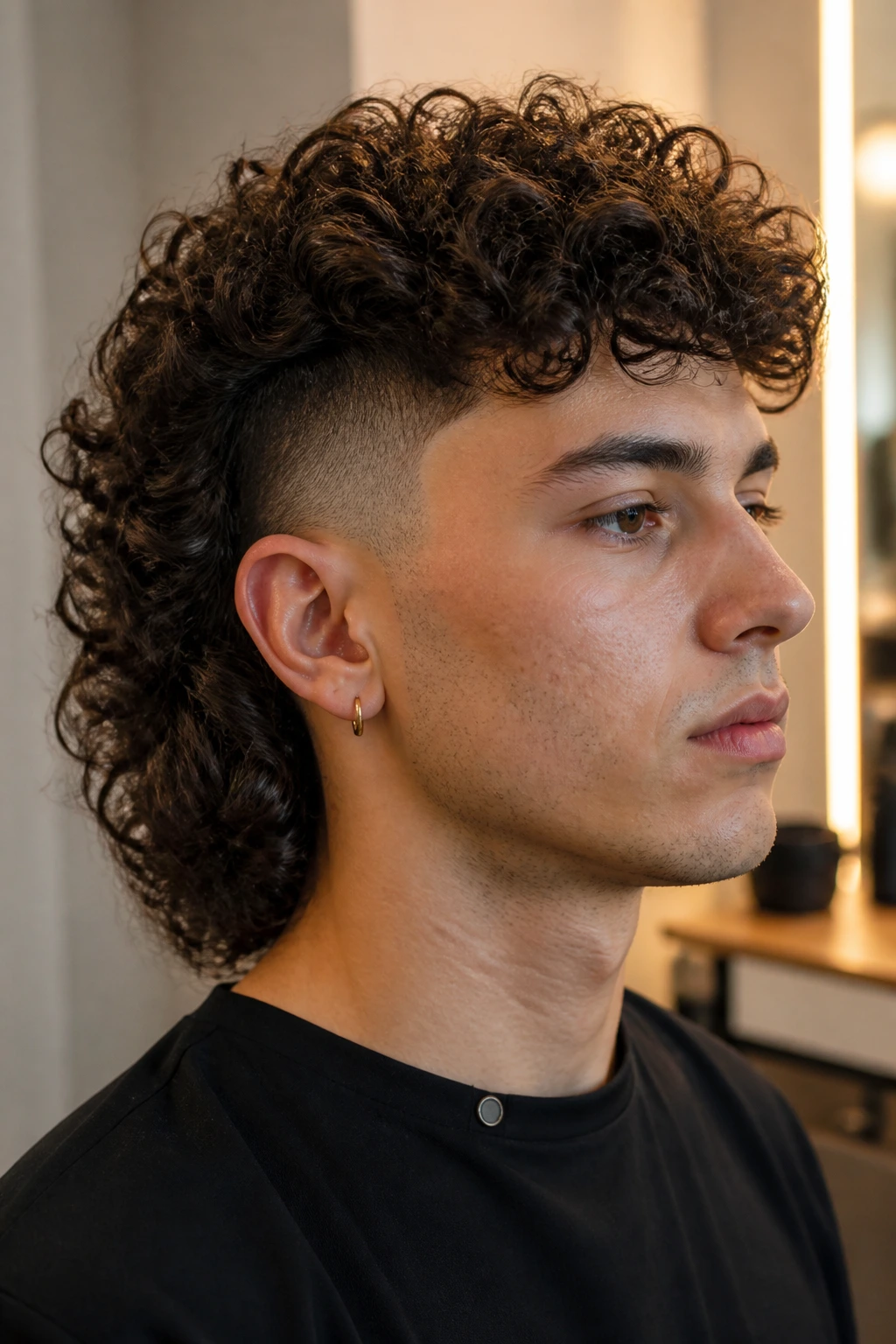
Now we’re getting into bolder territory. An undercut curly mullet leaves a clear disconnect between the long top/back and the shaved or closely clipped sides, and the contrast is the whole point. On thick curls, it removes a shocking amount of bulk.
This is not the cut for someone who wants to fade into the crowd. It’s graphic, and it looks especially strong when the curls on top are left long enough to move. The top becomes a little crown of texture while the sides stay disciplined.
The downside is obvious: grow-out takes planning. If the undercut starts creeping out, the shape can look patchy fast. But when it’s maintained, the cut has a clean, almost architectural edge that curly hair wears better than you’d think.
9. Rounded Mullet for Wavy Curls
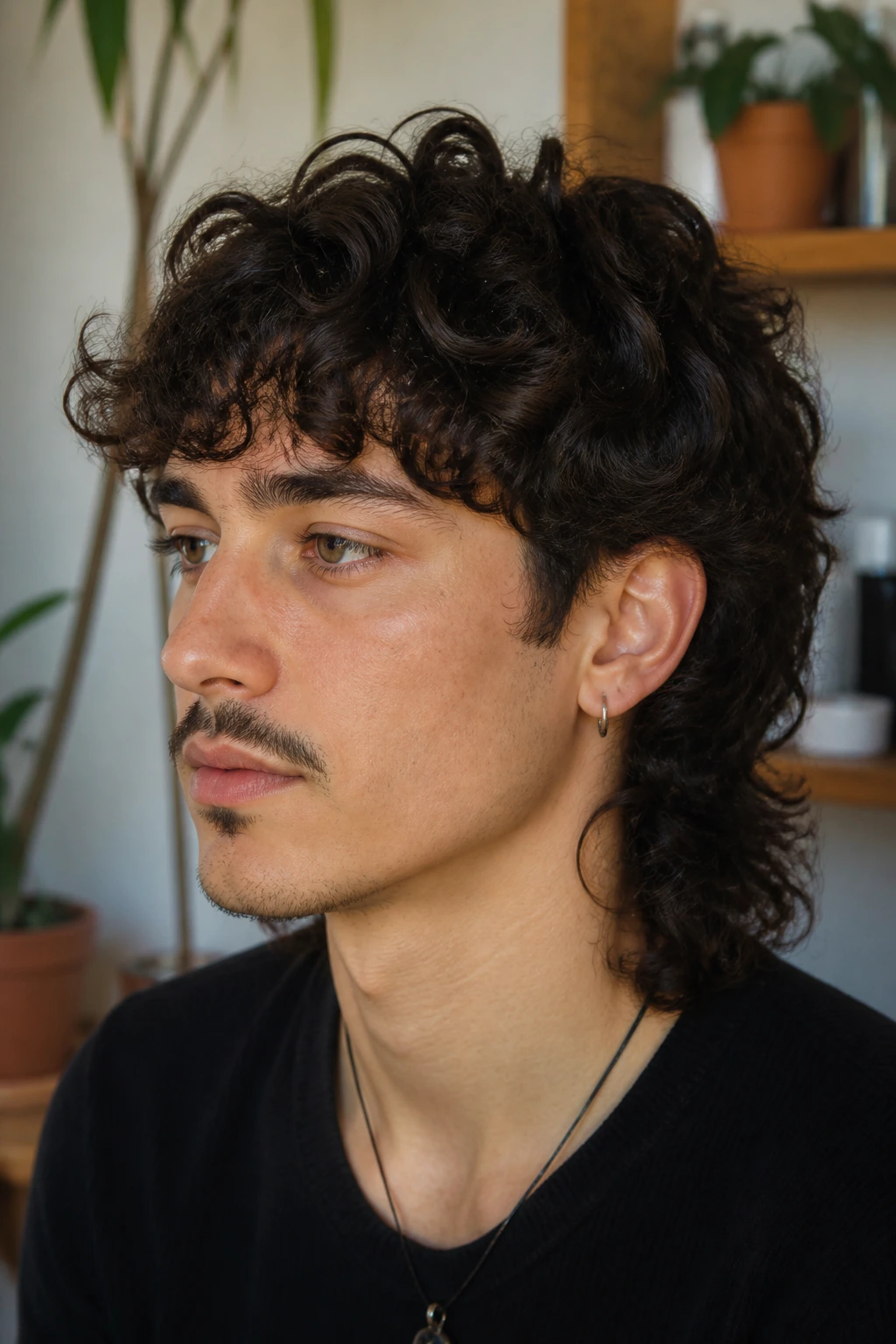
Wavy curls often need a softer hand than tighter curl types, and a rounded mullet gives them exactly that. The outline is curved instead of choppy, so the haircut feels balanced from every angle. Nothing pokes out in a weird way.
The sides blend into the top with less drama, and the back hangs just enough to read as a mullet without screaming for attention. This is one of the easier versions to grow into if you’re nervous about going short.
I like this cut for people who air-dry more than they diffuse. Waves tend to settle into a rounded shape on their own, especially with a little foam or light curl cream. Keep the product light, though. Too much weight can stretch the bend out and flatten the back.
10. High-Volume Halo Mullet
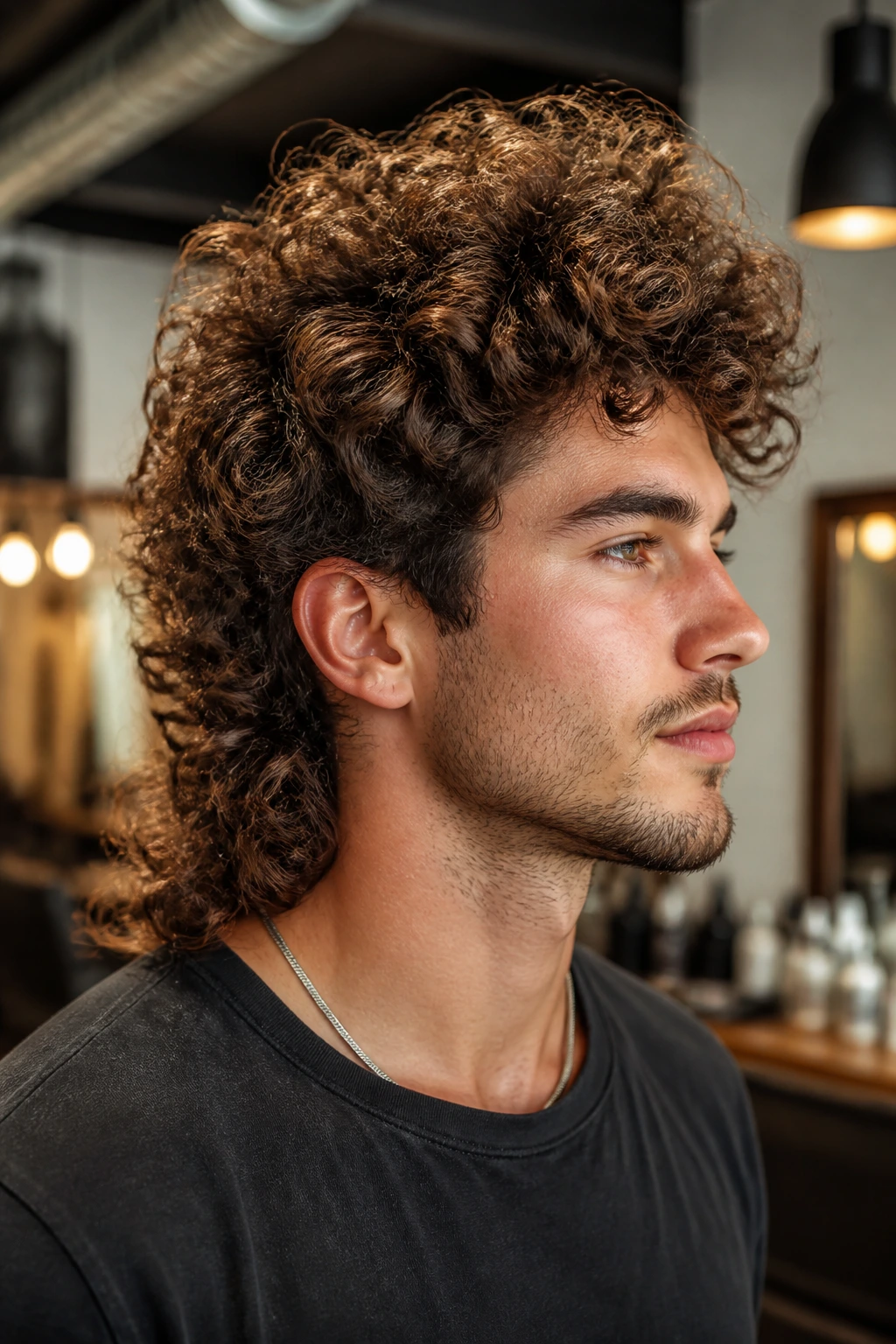
If your curls are thick and springy, this is the loudest, fullest version of the bunch. The crown stays lifted, almost halo-like, while the back keeps length for a clear silhouette. It’s a mullet with a lot of presence.
The key is removing bulk in the right spots, not everywhere. If the top is carved too deeply, the crown can look sparse in weird patches. Better to keep structure in the front and let the curls stack naturally around the head. The result is full, rounded, and a little dramatic.
A good sign: when the haircut still looks balanced from the side even after the curls have fully dried. If the back disappears or the top mushrooms, the layering needs adjustment. This style loves density, but only when the shape is controlled.
11. Micro-Bang Curly Mullet
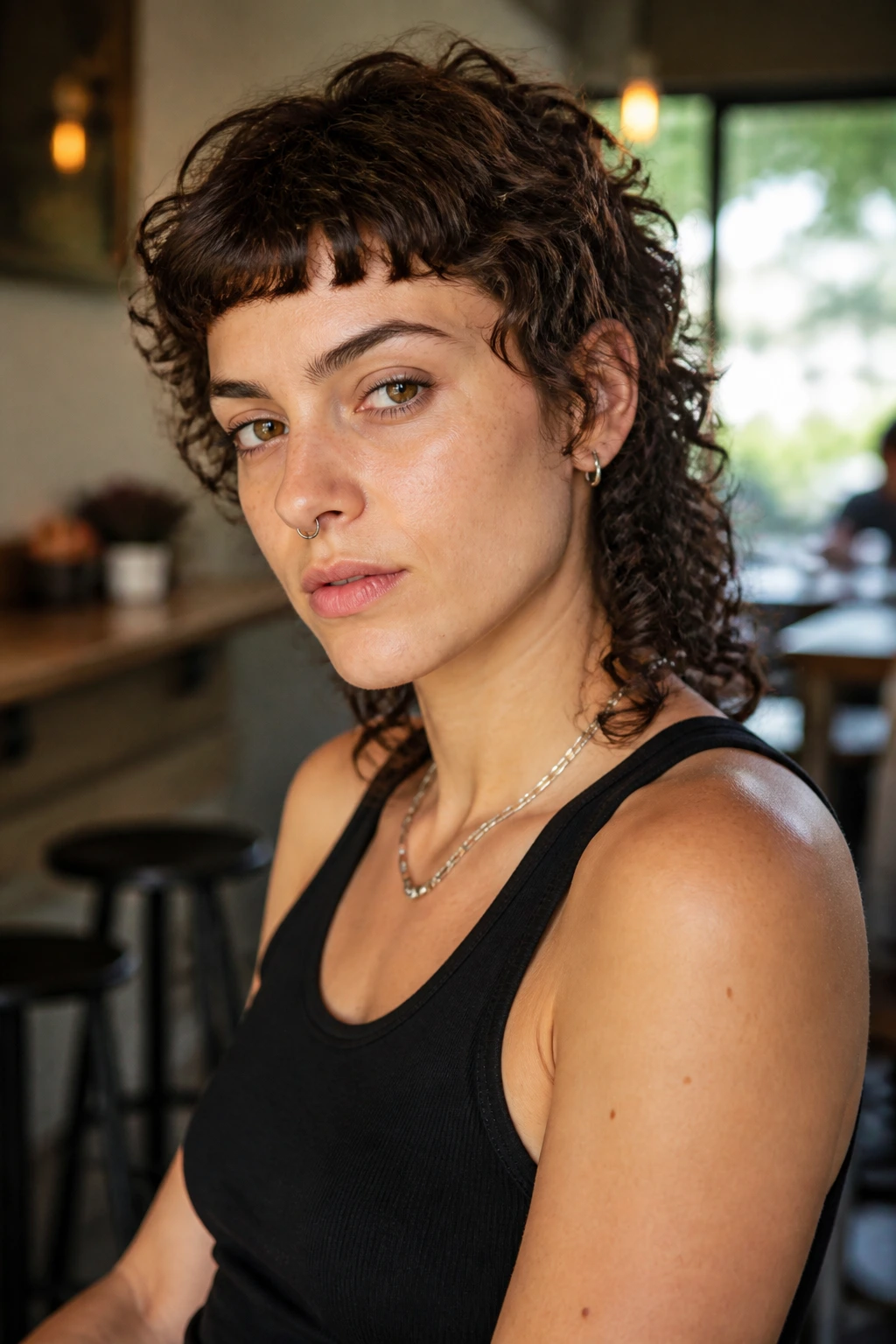
Micro bangs on curly hair are brave. On a mullet, they get even braver. The cut is short in front, longer in back, and sharp enough to feel intentional, but the curls keep it from becoming too severe. That’s the charm.
The bangs need careful planning because curl shrinkage can turn “short” into “tiny” overnight. I’d rather see them cut slightly longer and then dry into that crisp little line than trimmed too high and left stranded above the forehead. Curly micro bangs can be excellent. They just don’t forgive guesswork.
This cut looks best with a confident, minimal styling routine. A light gel at the fringe, a bit of definition through the back, and that’s usually enough. If you want a haircut with a little attitude and very little softness, this one delivers it.
12. Layered Chest-Length Mullet
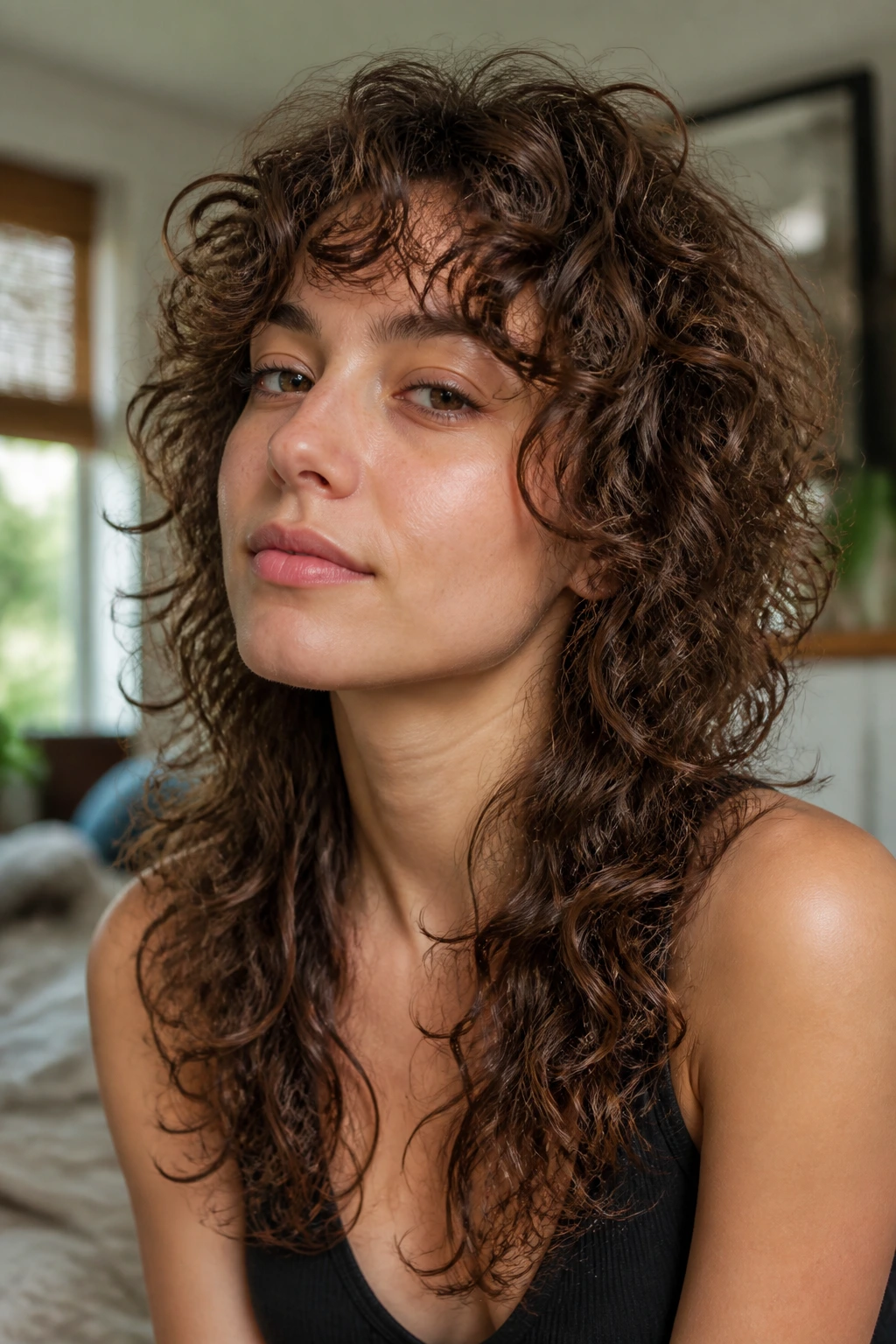
A chest-length mullet sounds almost contradictory, which is exactly why it works. The top still has shorter layers, the sides are shaped back from the face, and the length at the bottom gives the cut a long, fluid finish. On curly hair, that contrast reads clearly.
This version suits people who do not want to give up length but still want movement at the crown. It’s also forgiving when your curls vary from day to day. One wash can look looser, another can look springier, and the overall shape still holds.
The main thing to watch is weight. Long curly hair can drag the top down if the layers aren’t placed well. If the crown feels flat when dry, the cut probably needs more lift up high.
13. Copper-Lit Curly Mullet
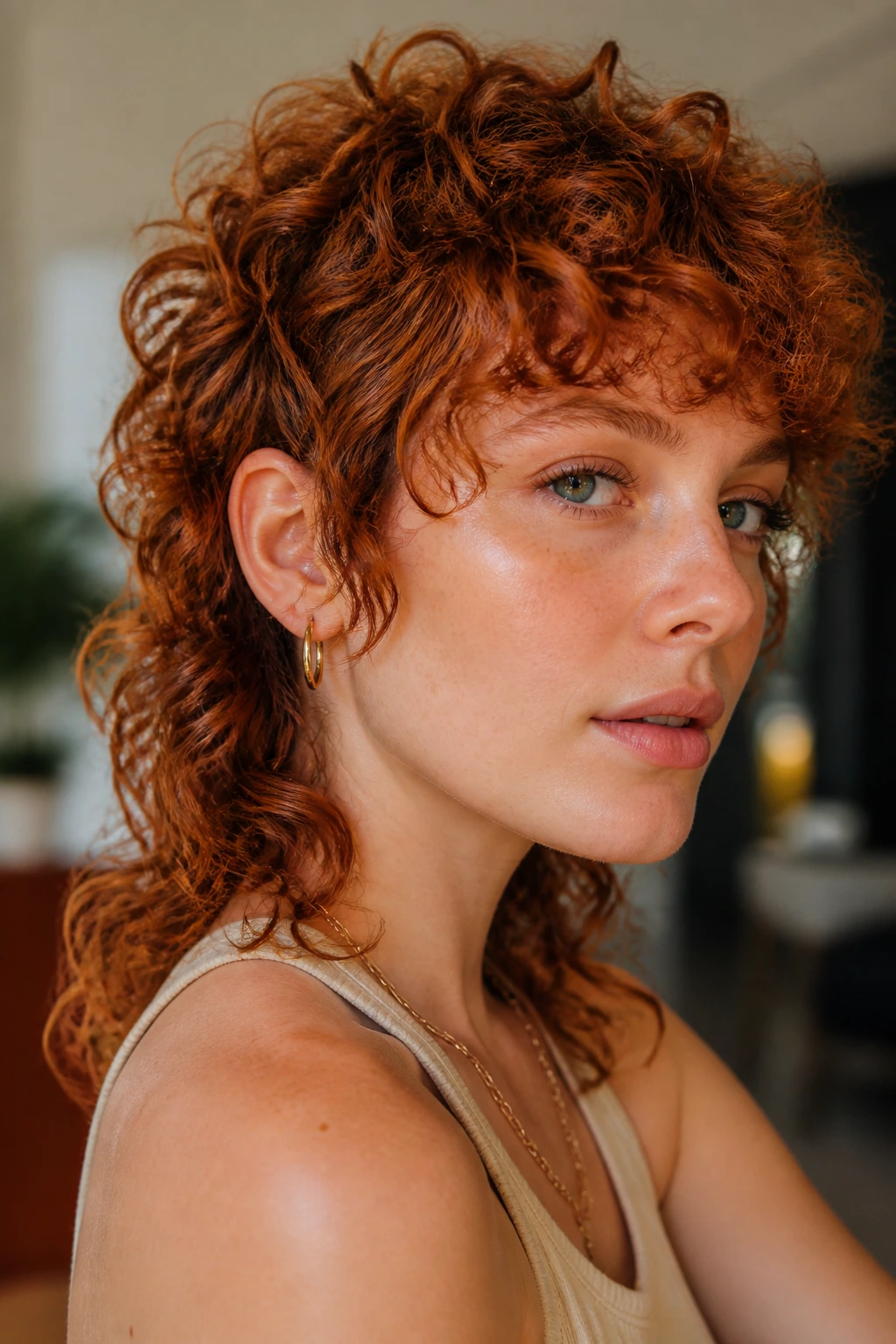
Color changes everything, and a copper tone makes the layers on a curly mullet easier to read. The warm tone catches the bends and twists in the hair, so the texture looks more layered even from a distance. The haircut doesn’t need to be extreme to feel alive.
That said, this style still depends on the cut being clean. Warm color won’t rescue bad layering. It just makes the movement more visible. If the curls are cut with purpose around the face and crown, copper gives the whole shape a little extra energy.
I’d keep the finish soft here — not stiff, not lacquered. A light serum on the ends is enough. You want shine and separation, not a shell. The cut and color should work together, not compete for attention.
14. Jagged Grunge Mullet
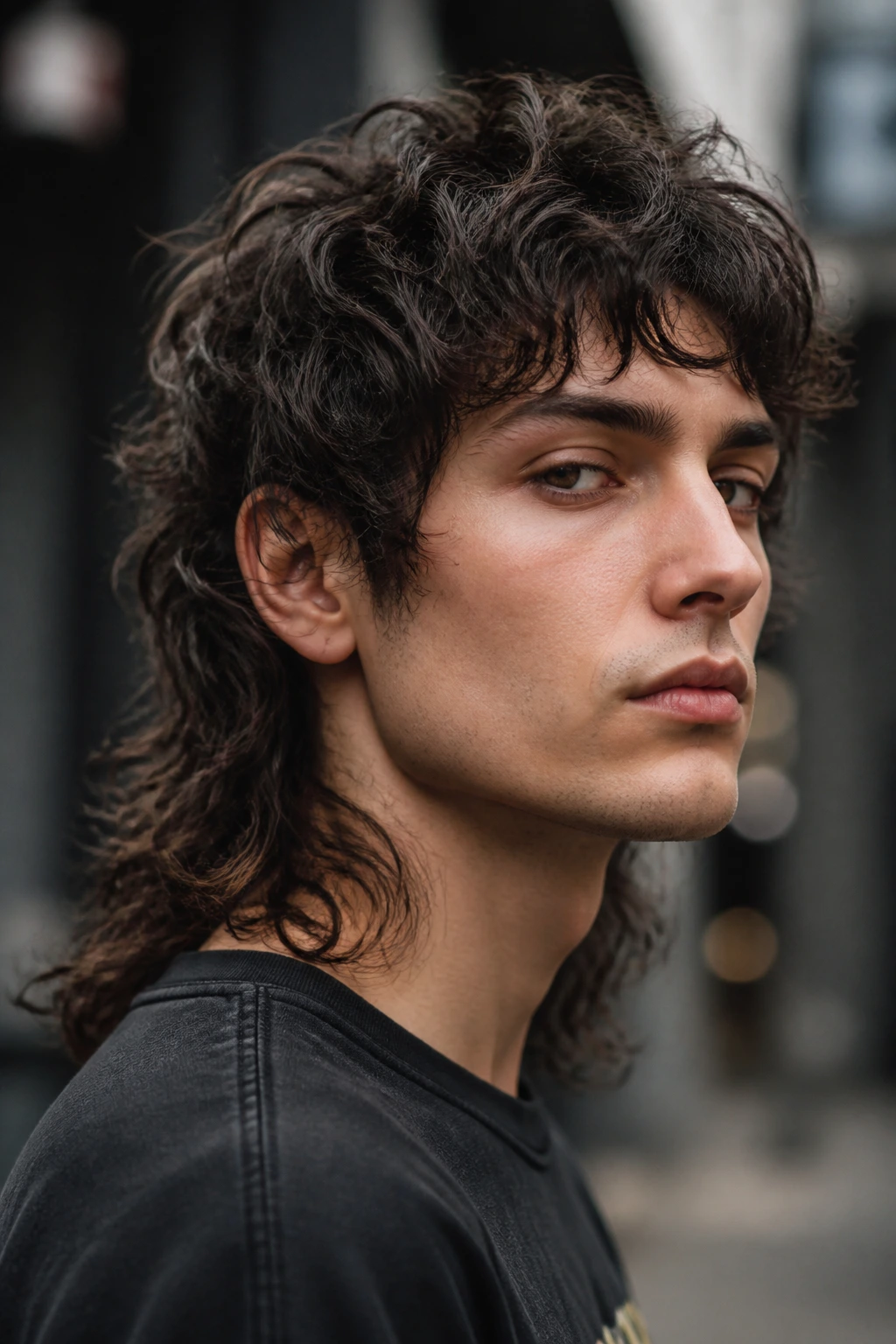
This is the rougher cousin in the family. Jagged ends, uneven layers, a little built-in mess — and yes, that mess is the point. Curly hair gives the grunge mullet a texture that straight hair often has to fake with product and heat.
What makes it different from a shag is the back length. Keep enough of it and the shape stays mullet-like. Let the layers get too even and you’re just in shag territory. The grunge version wants a slightly broken outline, almost like the curls were cut with movement in mind first and polish second.
It’s a good match for people who wear their hair a little undone on purpose. You can air-dry this one, scrunch it, and go. If the curls separate into distinct clumps, even better. That separation is part of the look.
15. Face-Framing Curly Mullet
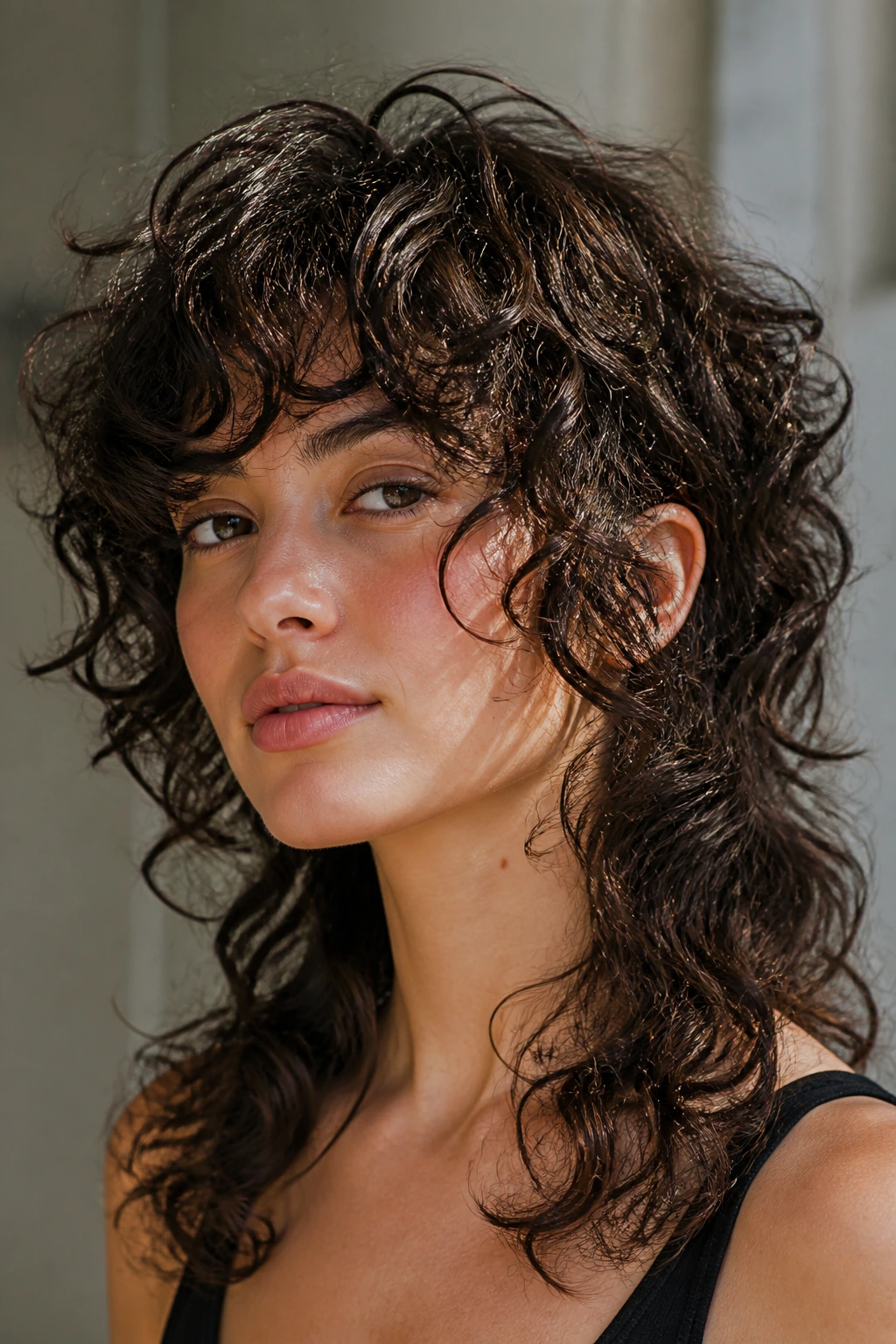
This version puts the spotlight near the cheeks and jaw. The front layers curve around the face, the back keeps its length, and the whole cut ends up looking softer than a classic mullet but more interesting than long layers alone.
Where It Helps Most
If your face tends to disappear behind your hair, these front layers fix that fast. They give the eyes, cheekbones, and jaw some shape without needing bangs. That’s handy for people who like to tuck hair behind one ear and still want the cut to do something visible.
The face-framing pieces should start high enough to move, but not so high that they turn into awkward little springs. A good stylist will cut them with shrinkage in mind and blend them so they still fall with the rest of the curls.
This cut is easy to wear with a side part, a middle part, or no strict part at all. That flexibility is half the appeal.
16. Curly Pixie Mullet
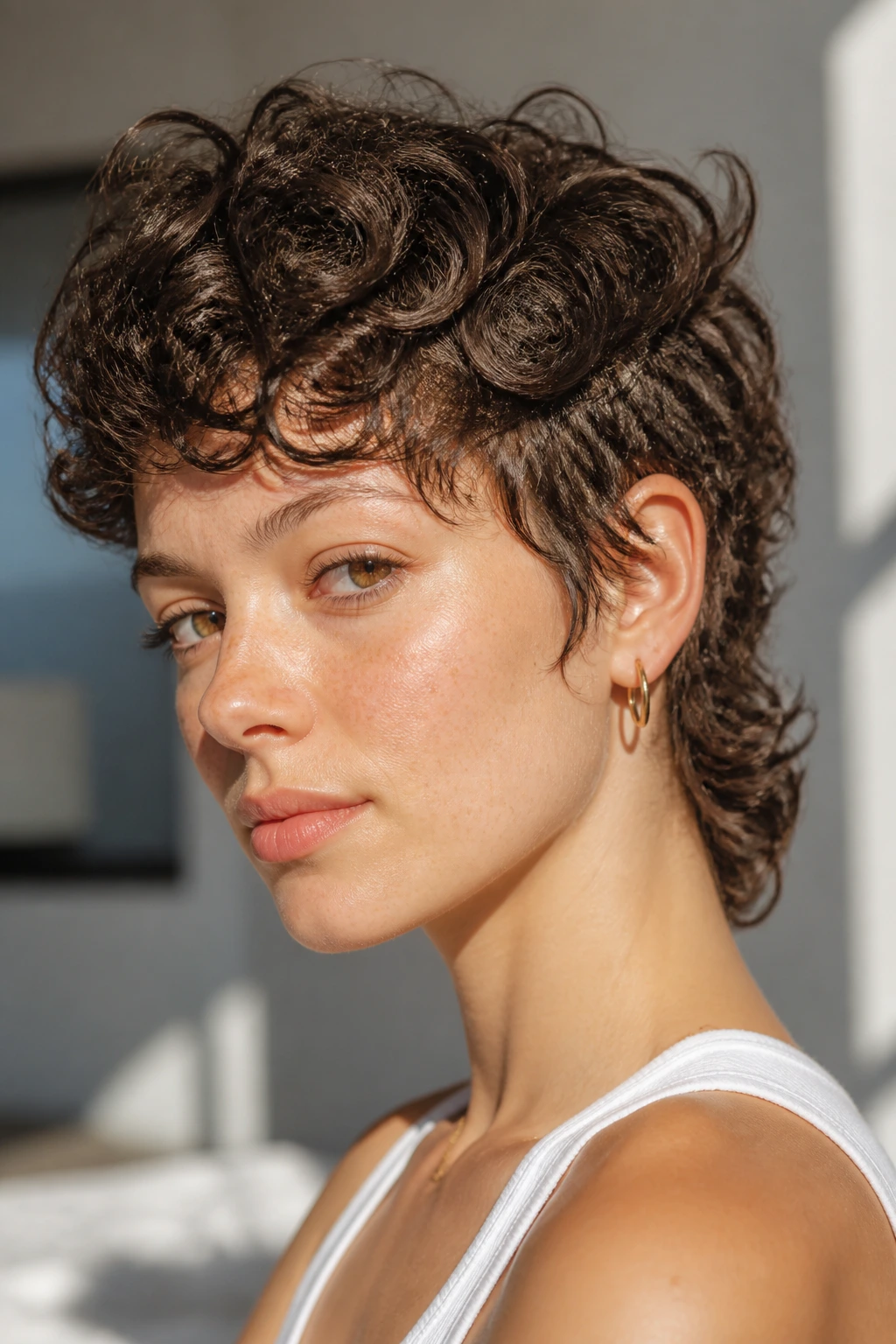
Short, sharp, and a little cheeky. The curly pixie mullet keeps the front and crown cropped while letting a small tail or longer nape section give the silhouette its mullet identity. It’s tiny, but it still has personality.
This cut is especially good when you want to show off your curl pattern rather than carry a lot of length. It clears the neck, dries fast, and does not ask for much product. A pea-sized amount of curl cream can be enough if your hair isn’t too thirsty.
The trade-off is maintenance. Short curly cuts lose their shape quickly, so trims need to happen more often. If you like the feeling of a fresh cut and don’t mind regular upkeep, this one is satisfying.
17. Retro Disco Mullet
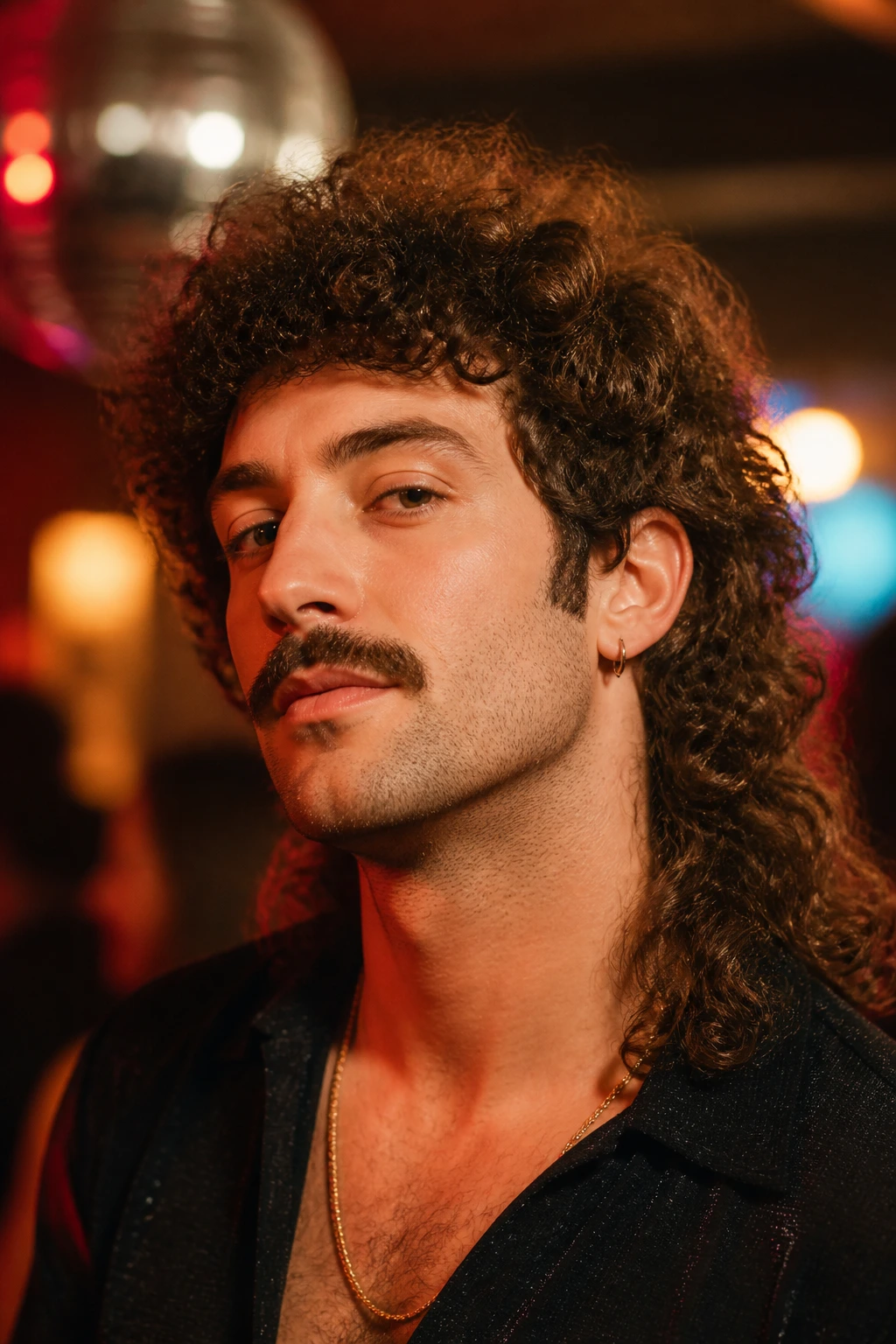
Think volume at the crown, movement at the sides, and a little flip through the back. The retro disco mullet leans into a softer, more expressive shape than the hard-edged versions. It has a bit of old-show-night energy, but in curly hair it comes off playful rather than costume-like.
The cut works because curls already bring natural lift. You don’t need to manufacture it with a dozen hot tools. A good shape around the crown and a slightly longer back are enough to give that throwback feel.
I’d style this one with a rounder silhouette in mind. Diffuse upside down for lift, then turn the head upright and let the top settle. Don’t over-brush it. The texture wants to stay visible.
18. Wash-and-Go Curly Mullet
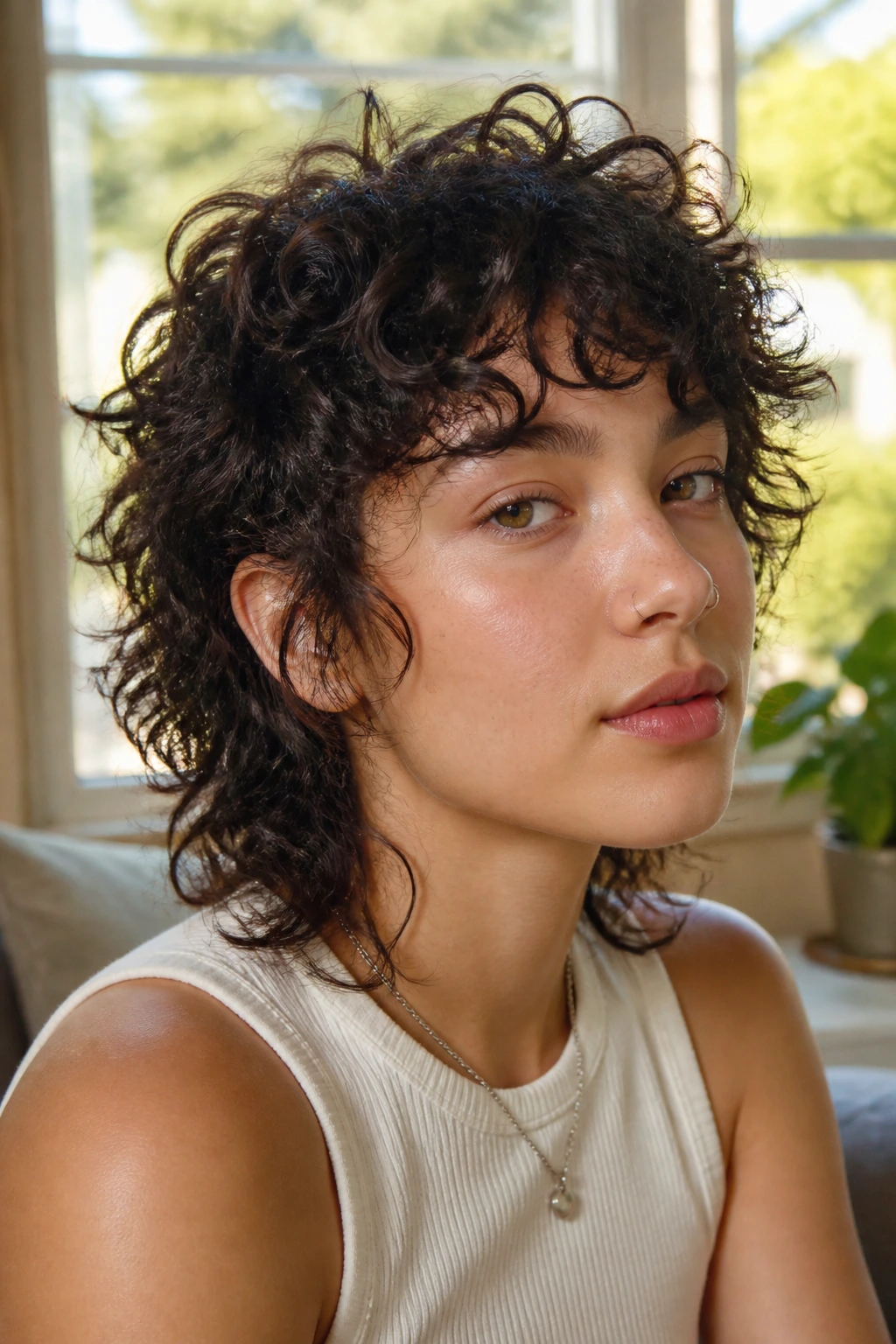
This is the low-fuss choice, and I’m a fan when the cut is done properly. The whole point is that the haircut should look like it belongs to your curl pattern on an average day, not just after a long styling session. If the shape needs perfect product placement to make sense, it’s not a wash-and-go cut.
The layers should be placed so the hair falls into a readable outline as it dries. That means not too much bulk in the crown and not too much thinness at the ends. The back should still have enough weight to hang, but not so much that it turns into a triangle.
A wash-and-go mullet needs the right products, but not many of them. Leave-in, curl gel, maybe a tiny bit of mousse at the roots. That’s enough for most textures.
19. Mullet Bob Hybrid
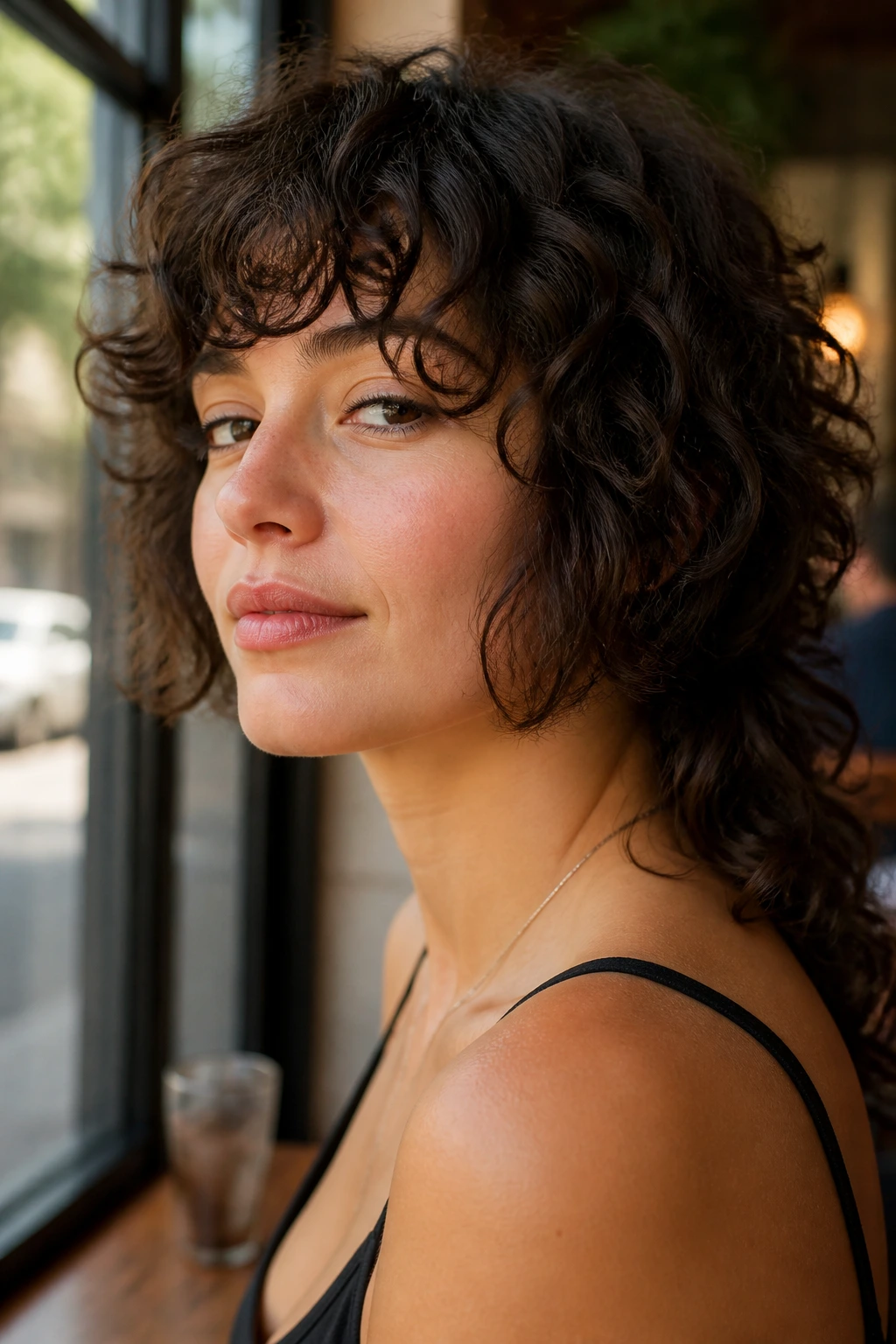
A mullet bob is what happens when a bob starts getting ideas. The front and sides are bob-like, grazing the jaw or chin, while the back hangs longer and looser. On curls, that contrast is delicious because it keeps the haircut from reading as blunt or boxy.
This is a smart choice if you’re growing out a bob and don’t want that awkward between-stage where everything flares outward. The mullet shape gives that grow-out a purpose. It looks planned. Which is rare, and nice.
The biggest win here is movement around the face. The shorter front pieces open things up, while the back keeps the cut from feeling too safe. It’s a good middle ground for people who want structure but not a strict line.
20. Long Curly Mullet with Crown Layers
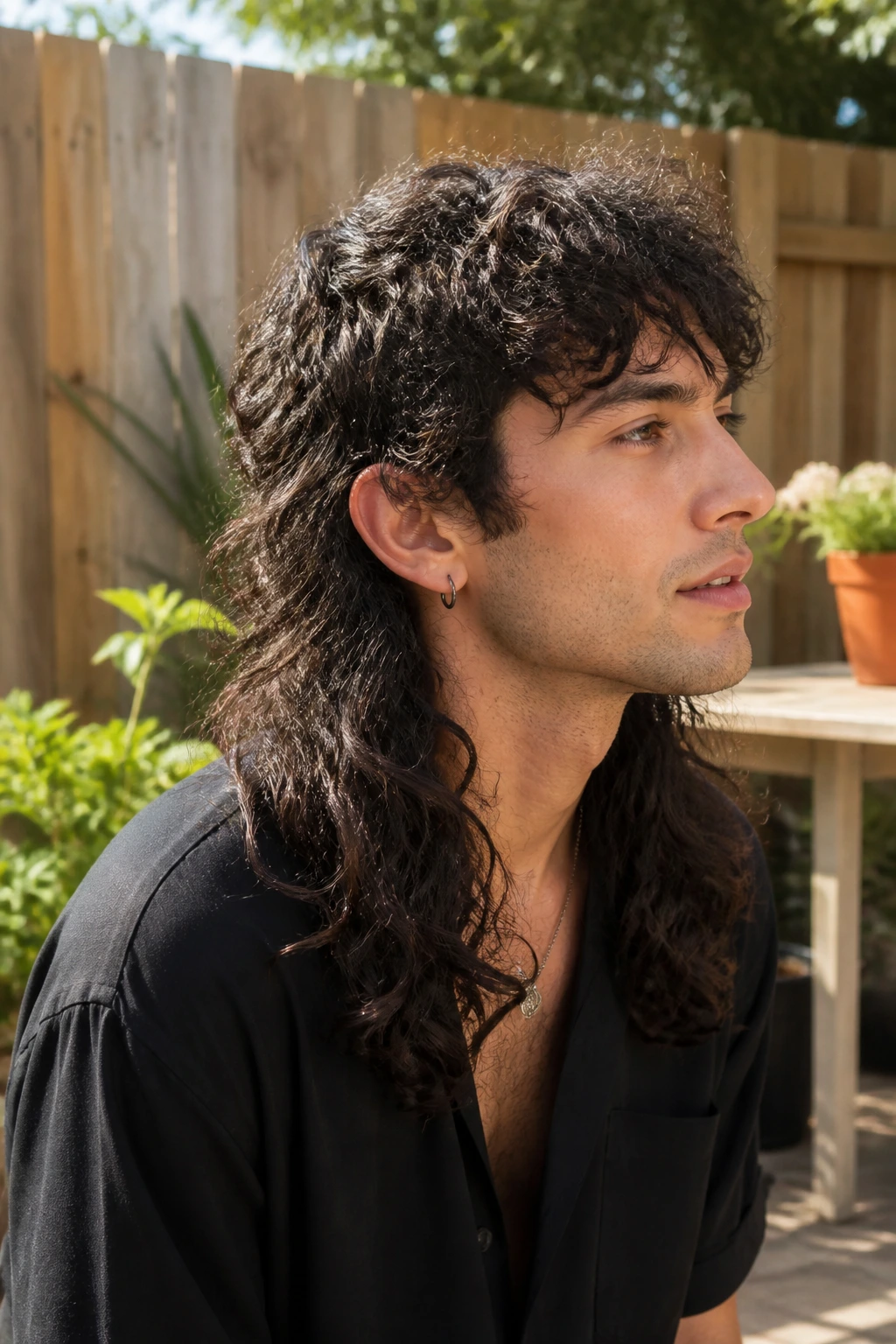
Long curly hair can still wear a mullet well if the crown gets enough shape. That’s the whole point of this version. The back stays long, the layers at the top remove weight, and the overall effect is more lifted than a straight long cut would be.
I like this on curls that have lost their shape because of length. Sometimes the hair isn’t heavy in a good way — it’s just dragging itself down. Crown layers fix that without forcing you into a shorter style. The result is long hair that moves again.
If your curls are fine, keep the layers subtle. If they’re thick, go a little deeper at the crown and around the temples. Either way, the back should keep enough length to swing when you walk. That movement is the payoff.
21. Asymmetrical Curly Mullet
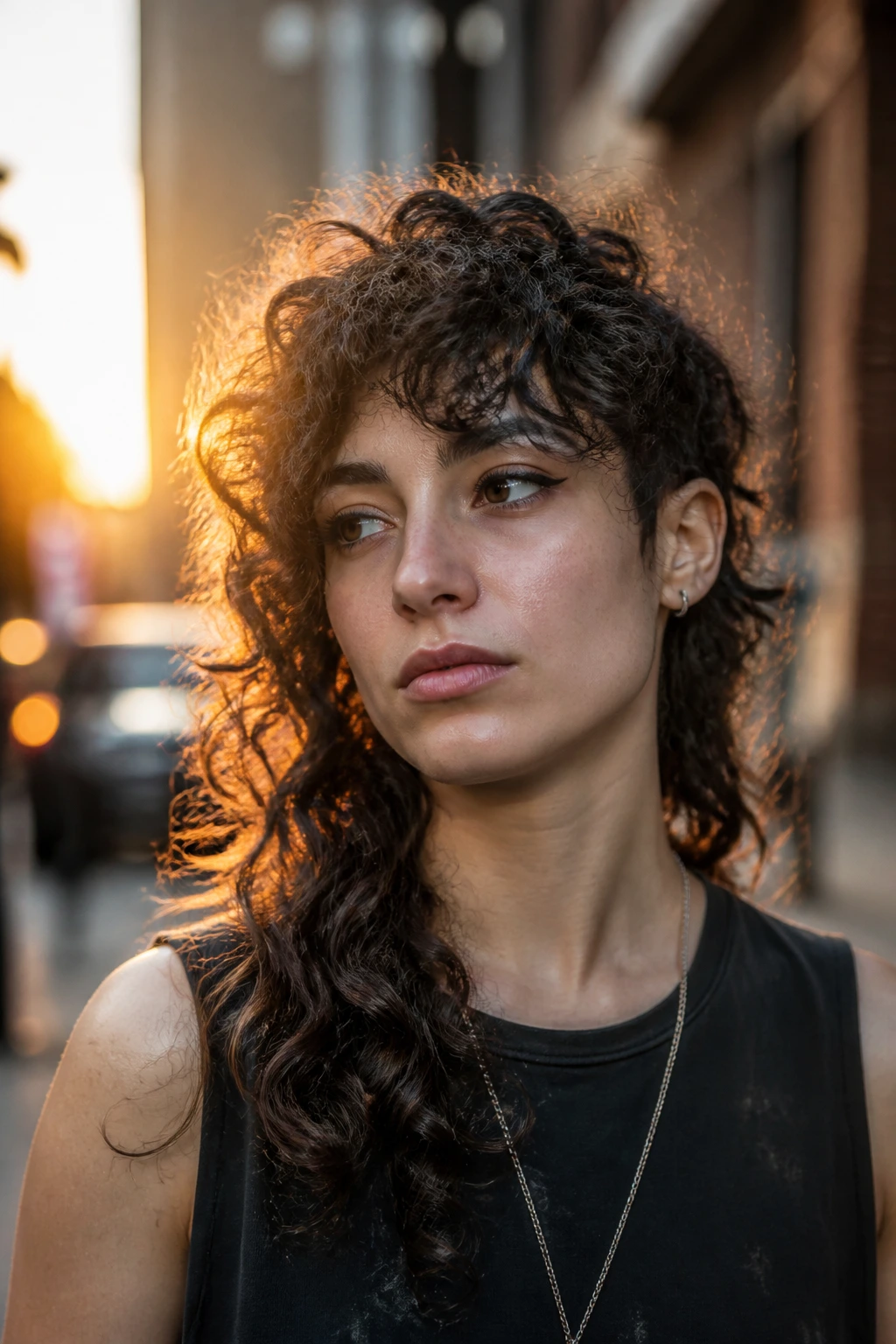
One side longer than the other? That can work, and on curls it often looks stronger than it does on straight hair. The curl pattern helps the asymmetry feel artistic instead of accidental. The shape becomes part of the statement.
This cut is for someone who wants people to notice the haircut first. It has a built-in angle, and that angle can make the face look sharper or longer depending on where the longer side falls. It’s not subtle. That’s fine. Not every haircut has to whisper.
The key is to keep the asymmetry deliberate. If one side is only a little off because the trim went badly, it looks unfinished. If the difference is clear and repeated through the layering, it reads as a design choice.
22. Side-Swept Fringe Mullet
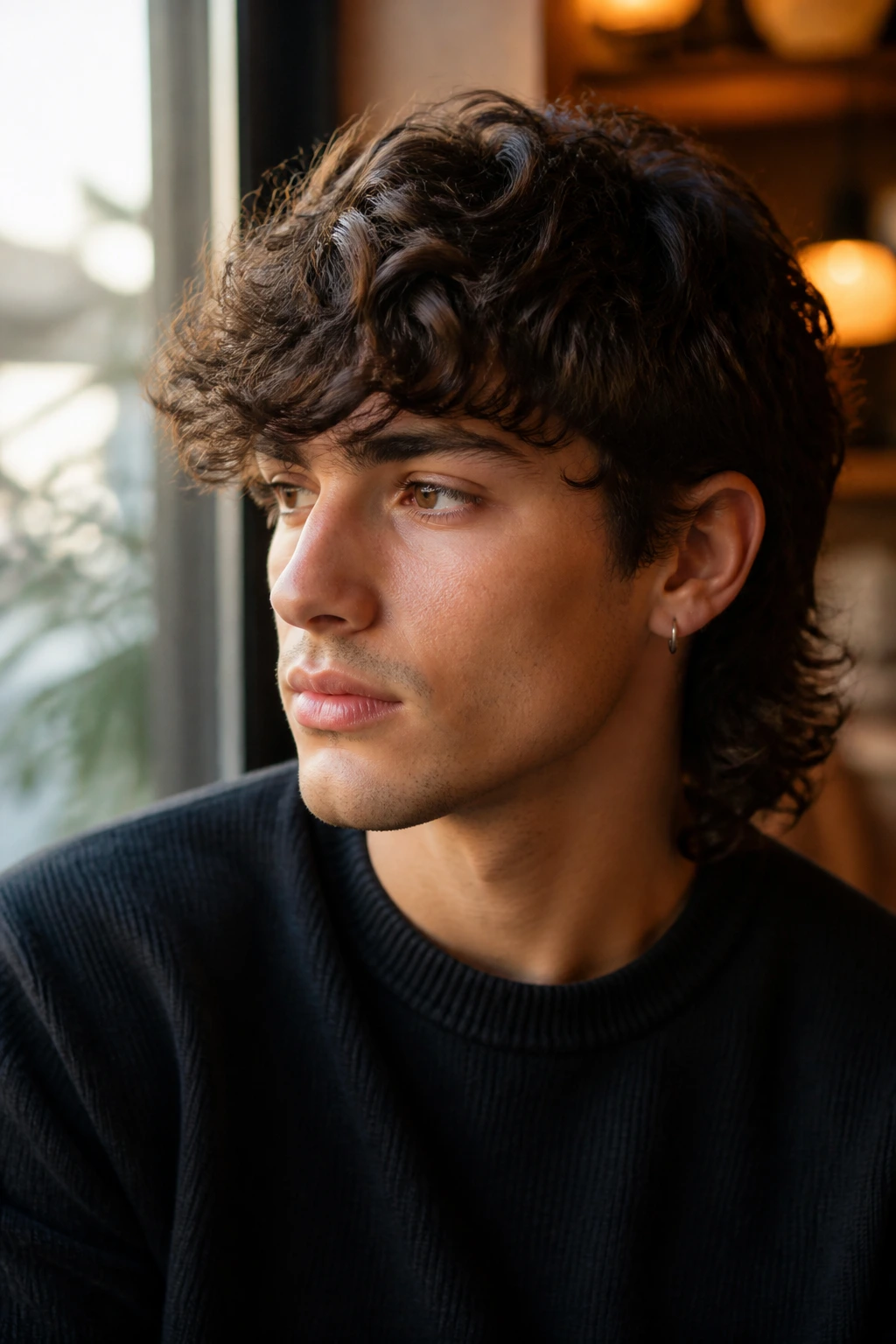
A side-swept fringe changes the whole mood of the mullet. Middle parts can make the front feel too obvious, while a side sweep softens the forehead and lets the curls spill in a more relaxed line. It’s a good option for people who don’t like the center-bang look.
The fringe should be cut long enough to move when dry, because curly side-swept pieces can spring up more than expected. If you go too short, they sit awkwardly and can feel separate from the rest of the haircut. Blending matters here.
This style works especially well if your hair naturally falls to one side already. Don’t fight that. Let the part and the curl pattern team up. The haircut will look more natural, and mornings will be easier.
23. Rounded Afro Mullet
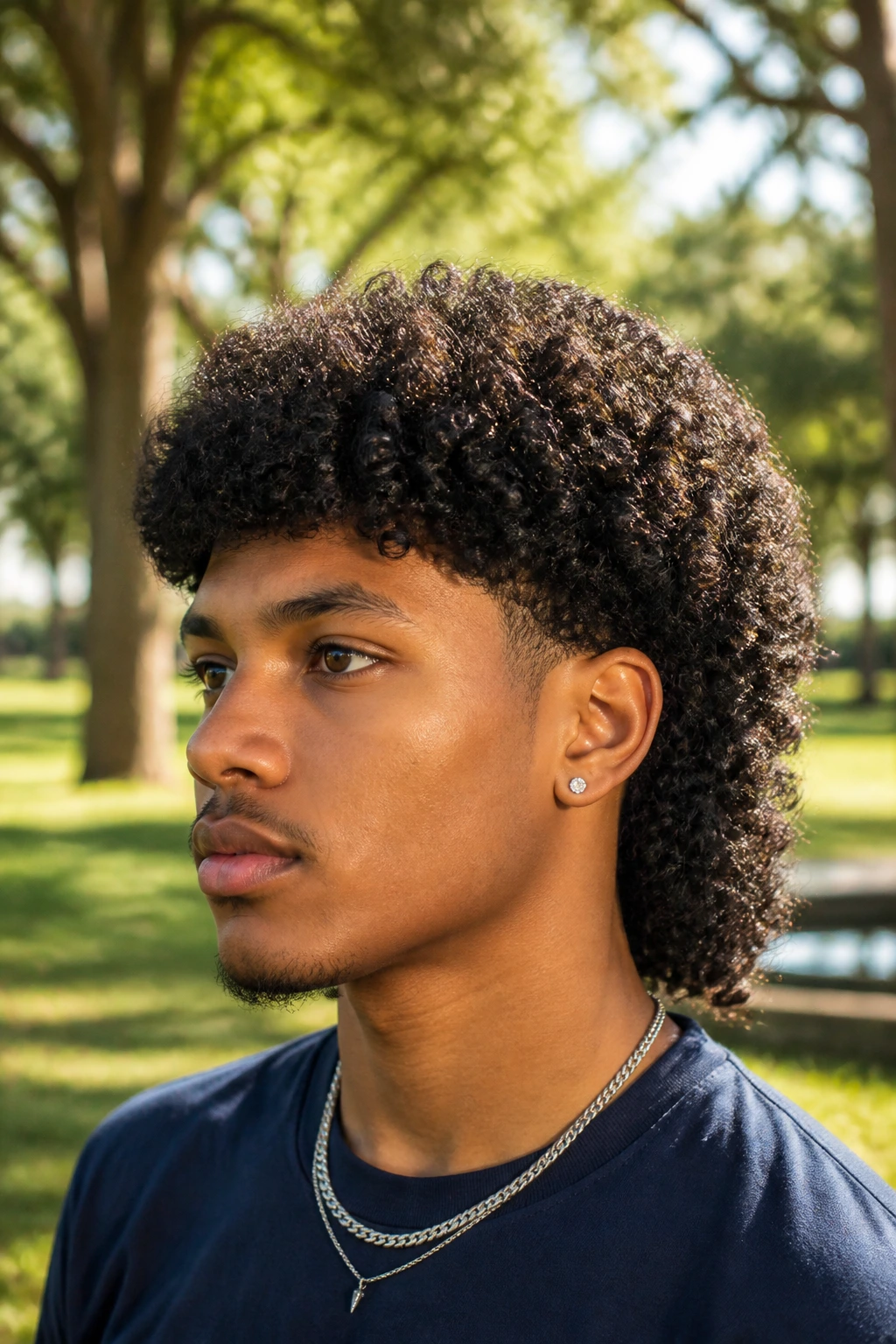
This version has real shape. The crown and sides are sculpted into a rounded outline, while the back keeps a little extra length to earn the mullet name. On coily textures, the result can be gorgeous because the shape is visible even before styling.
The cut needs balance. Too much length removed from the back and it turns into a rounded short cut. Too much left at the back and the silhouette loses its clean line. The goal is a controlled roundness with one clear area of extension.
Moisture matters here more than almost anywhere else in the list. Coily hair that’s dry or under-conditioned can shrink unevenly and hide the shape. A rich leave-in and a sealing cream can help the cut hold its outline.
24. Soft Razor-Cut Mullet
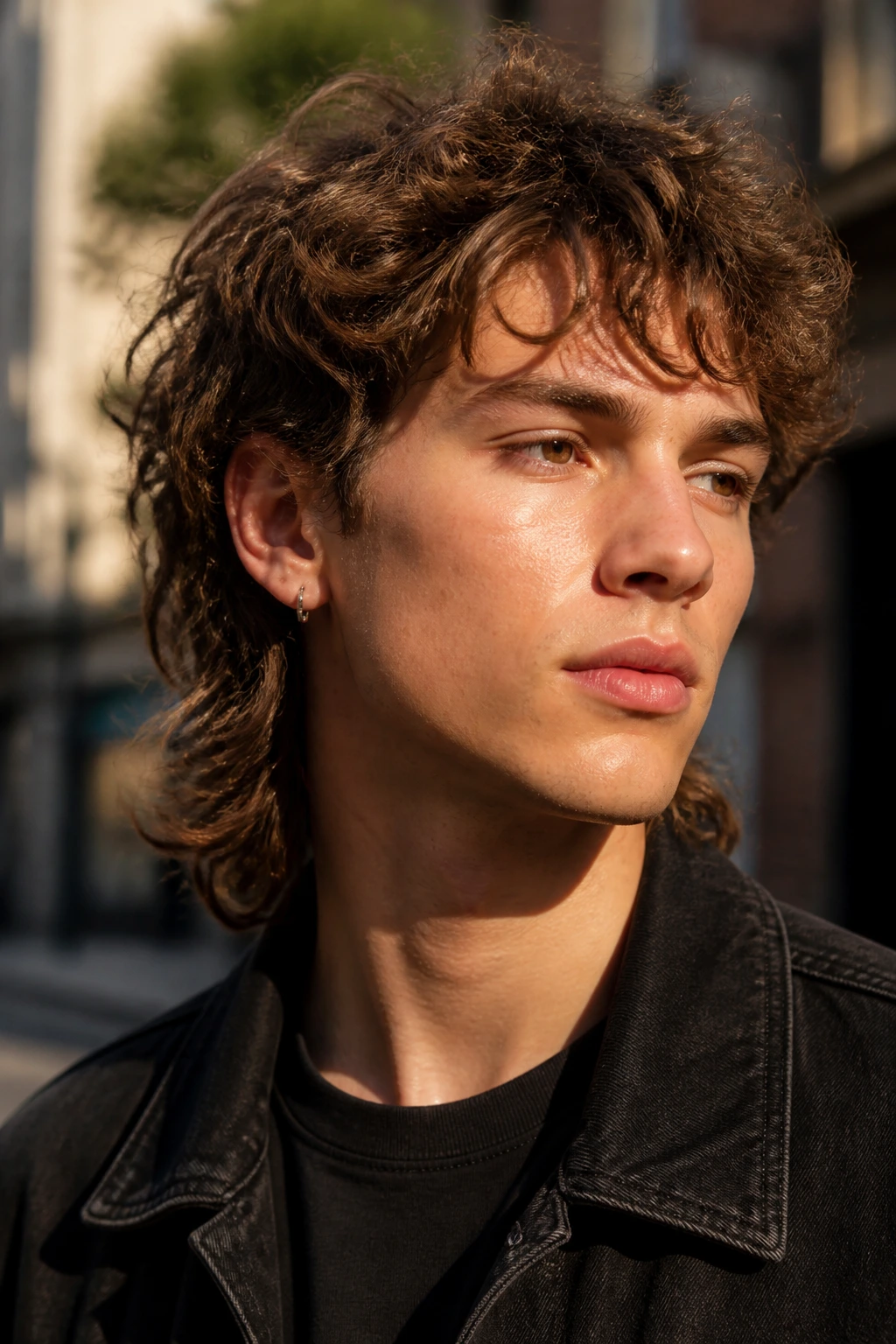
A razor-cut mullet has a featherier finish, but I’d only recommend this for curls if the stylist truly knows how the hair behaves. Razors can give the edges a light, airy feel; used badly, they shred the curls and make frizz worse.
When it’s done well, though, the cut looks soft around the perimeter and lighter through the crown. It’s a good choice for people who want movement more than sharp edges. The back doesn’t hang like a curtain; it floats a little.
If your curls are fine or delicate, ask whether scissors might be better than a razor for most of the shaping. Sometimes the softer choice is the safer one. On curls, that’s often the smarter call.
25. Collarbone Mullet with Flipped Ends
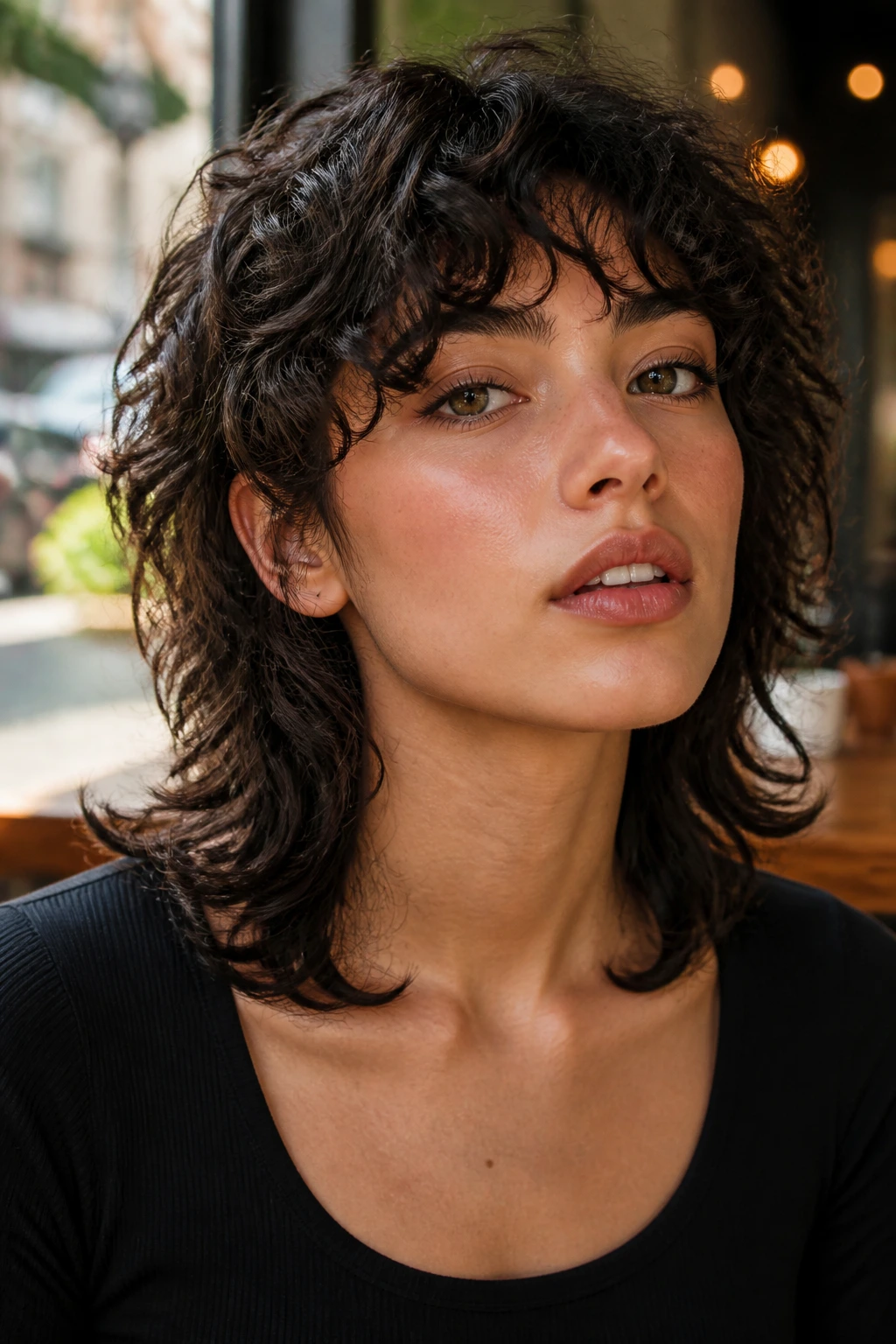
This cut sits in a nice middle zone. The front reaches around the collarbone, the back extends just a little longer, and the ends flip out as the curls dry. It’s one of the easiest shapes to live with because it feels styled even on a quiet day.
The flip at the ends is what keeps it from looking flat. Ask for layers that encourage that outward movement, especially if your curls like to open up at the hemline. The result has a bit of swing, which makes the haircut feel light.
This version works well with jackets, scarves, and anything that sits near the shoulders. The longer front pieces still frame the face, but the back keeps the mullet identity intact. Subtle. Not boring.
26. Coily Mullet with Tapered Sides
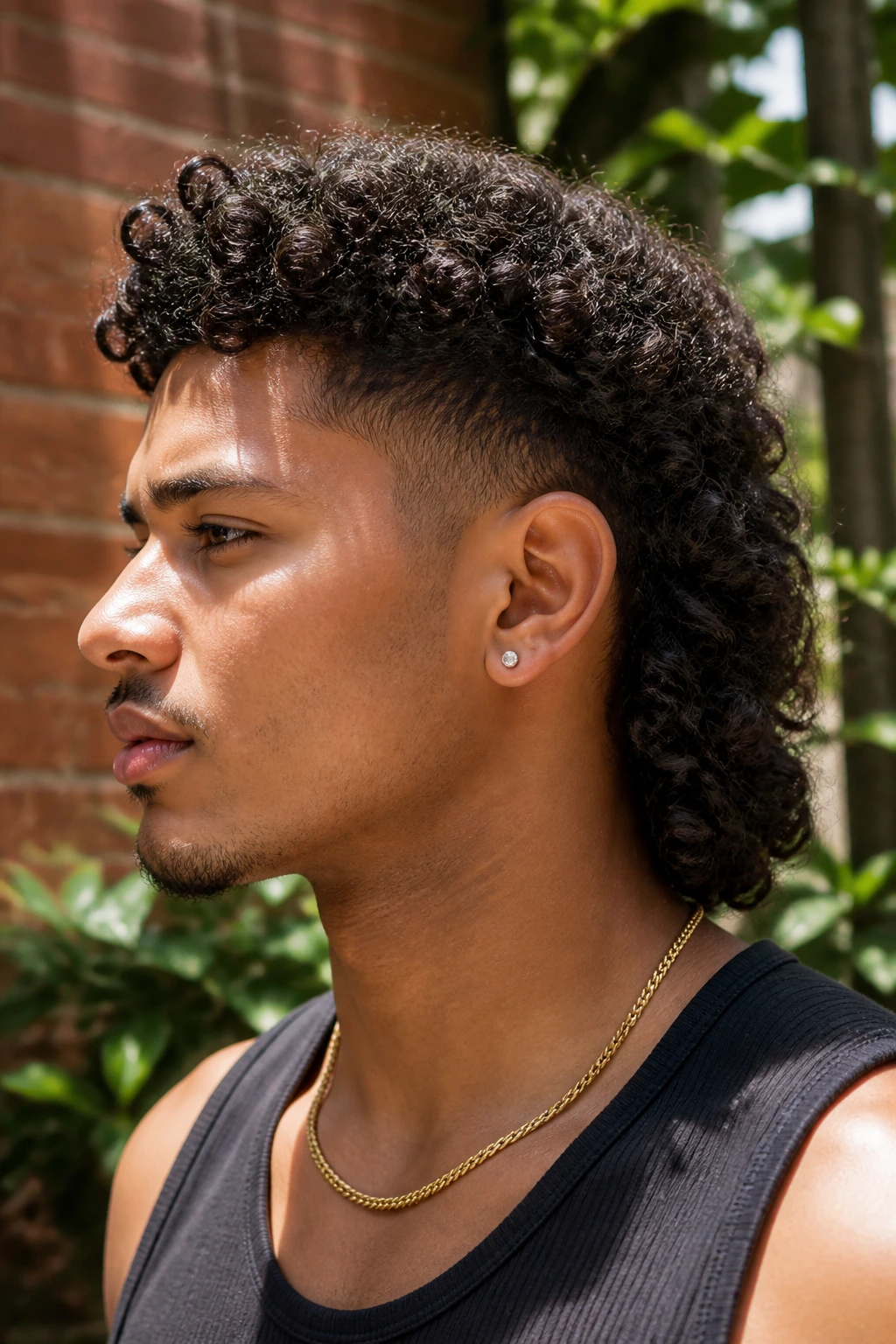
Coily hair can take a mullet shape beautifully when the sides are tapered close and the top is left with enough height. The structure shows up fast because coils hold shape in a more compact way than loose curls do. That makes the silhouette feel crisp.
Shape Notes
The tapered sides keep the profile from becoming too wide. The crown should still have room to breathe, though. If it’s cut too flat, the style loses its lift and starts looking like a cropped shape with a long back rather than a mullet.
This is a cut that benefits from careful sectioning at the salon. Coils do not all behave the same, even on the same head. Some areas shrink more than others, and the stylist needs to account for that so the back doesn’t end up too short.
I’d keep the styling simple: a hydrating leave-in, a cream to define, and a little gel at the edges if you want a cleaner outline. That’s enough.
27. Tousled Beach Mullet
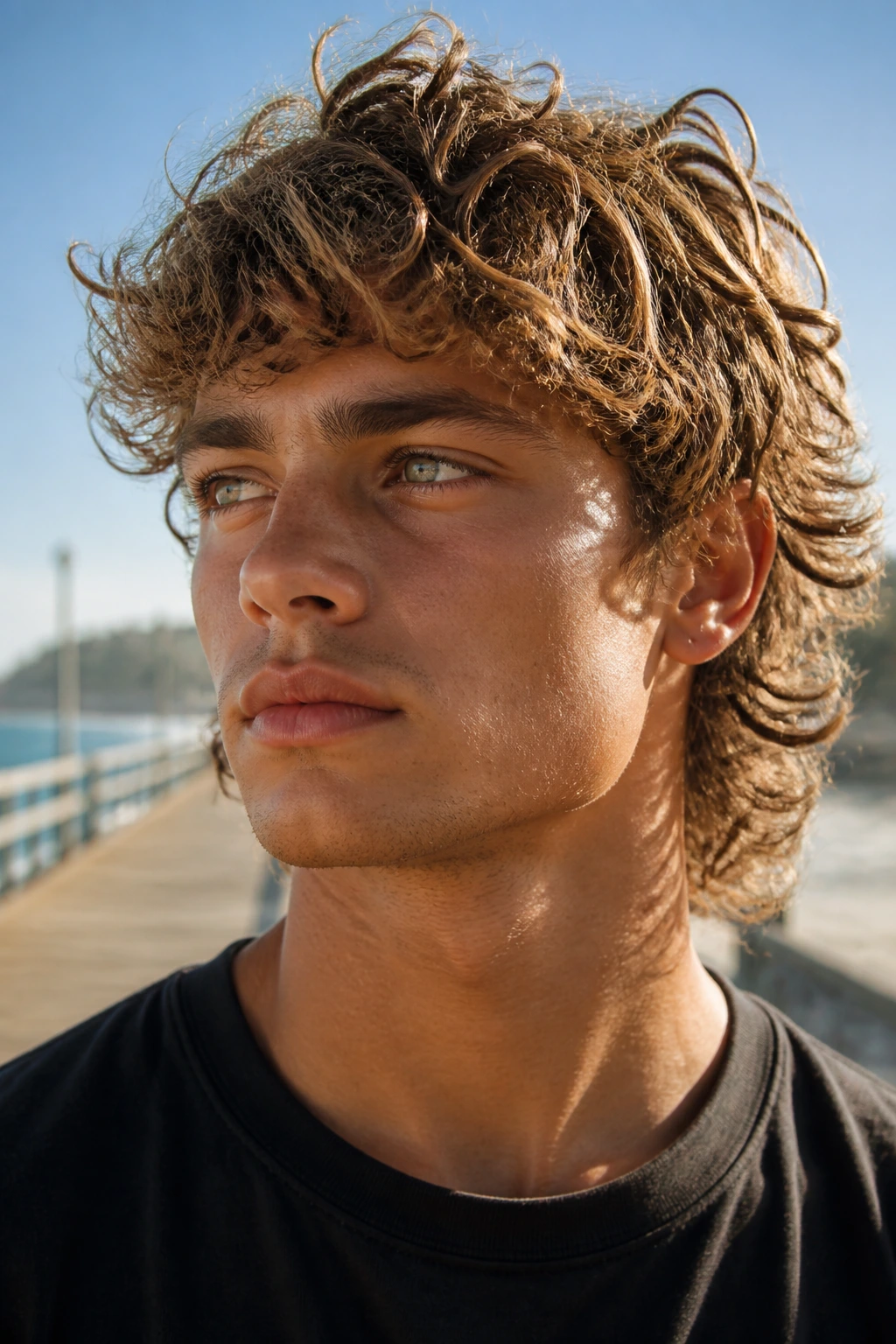
This one is loose, easy, and a little sun-faded in spirit even if you’re nowhere near the beach. The curls are encouraged to separate into softer clumps, the layers stay irregular, and the back keeps movement instead of stiffness. It’s the less precious version of a curly mullet.
The cut should avoid blunt edges. Everything benefits from a bit of softness here. If the perimeter is too neat, the beachy feeling disappears fast. The shape needs air around it.
A salt spray can help if your curls tolerate it, but don’t drown the hair in it. Too much salt dries the cut out and makes the ends rough. A light spritz and scrunch is enough for most people.
28. Deconstructed Curly Shag Mullet
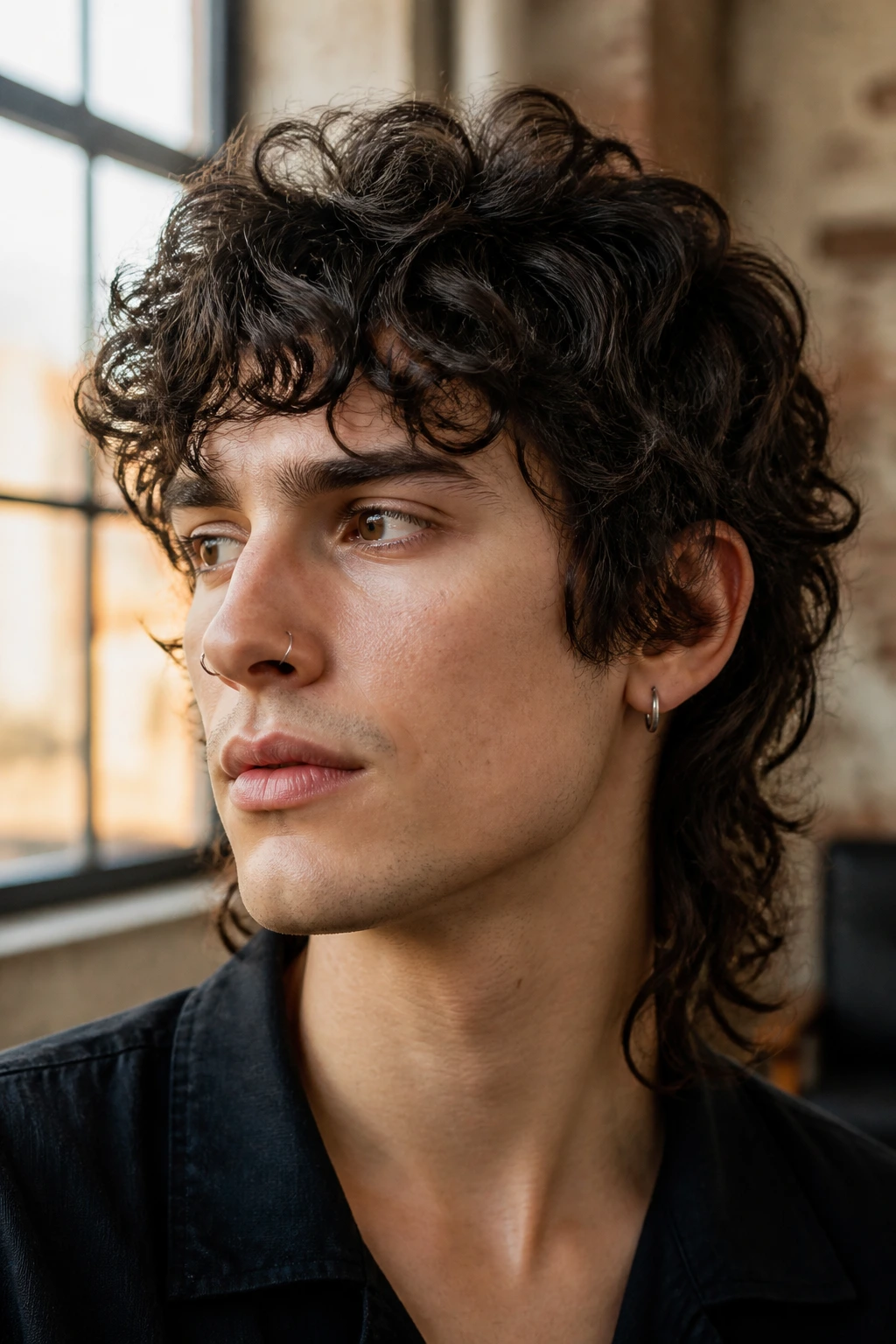
This version is for people who like the idea of a mullet but prefer the messier side of the family. The layers are broken apart, the crown has movement, and the back is long enough to keep the shape readable. It has the energy of a shag, but it still keeps one foot in mullet territory.
The deconstructed look depends on irregularity. Not chaos. Irregularity. There’s a difference. You want pieces that move differently from one another, not a haircut that looks like it was trimmed in a hurry.
It suits curls that naturally clump and separate. If your hair likes to create little textures on its own, this cut will make use of that instead of flattening it out. That’s why it can look so good air-dried.
29. Two-Level Mullet with Clear Sections
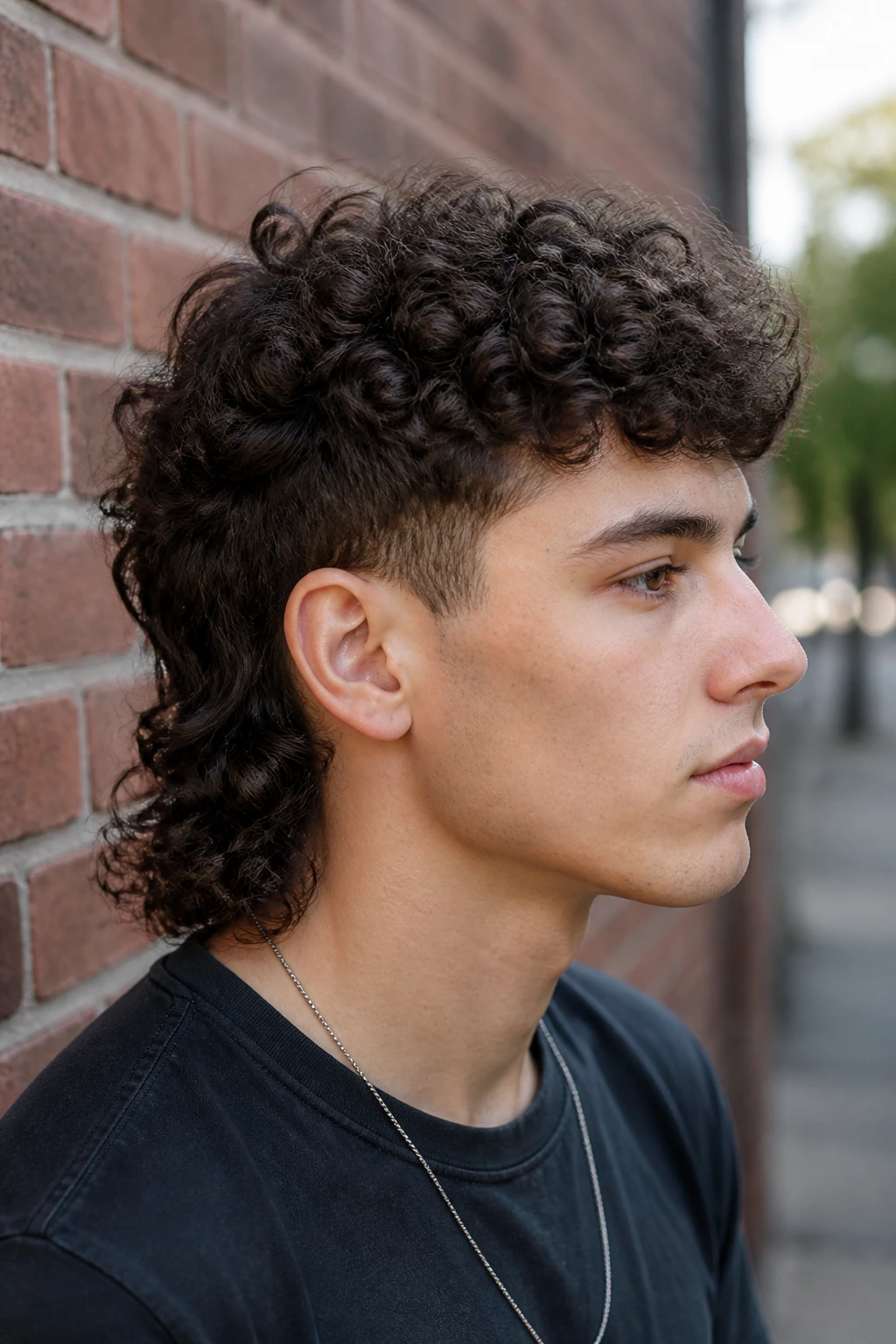
Some haircuts blur everything together. This one does not. The top and back are deliberately distinct, with a visible transition that makes the mullet shape easy to read. Curly hair makes that separation softer around the edges, but the structure is still there.
I like this for someone who wants to lean into the concept instead of hiding it. The haircut has clear zones: a shorter crown, a middle transition, and a longer back. That organization helps curls sit where they’re supposed to sit.
The danger is overcutting the middle section. If the transition gets too thin, the haircut can look hollow. Keep enough weight so the layers can stack naturally and the whole shape still feels connected.
30. Platinum Curly Mullet with Dark Roots
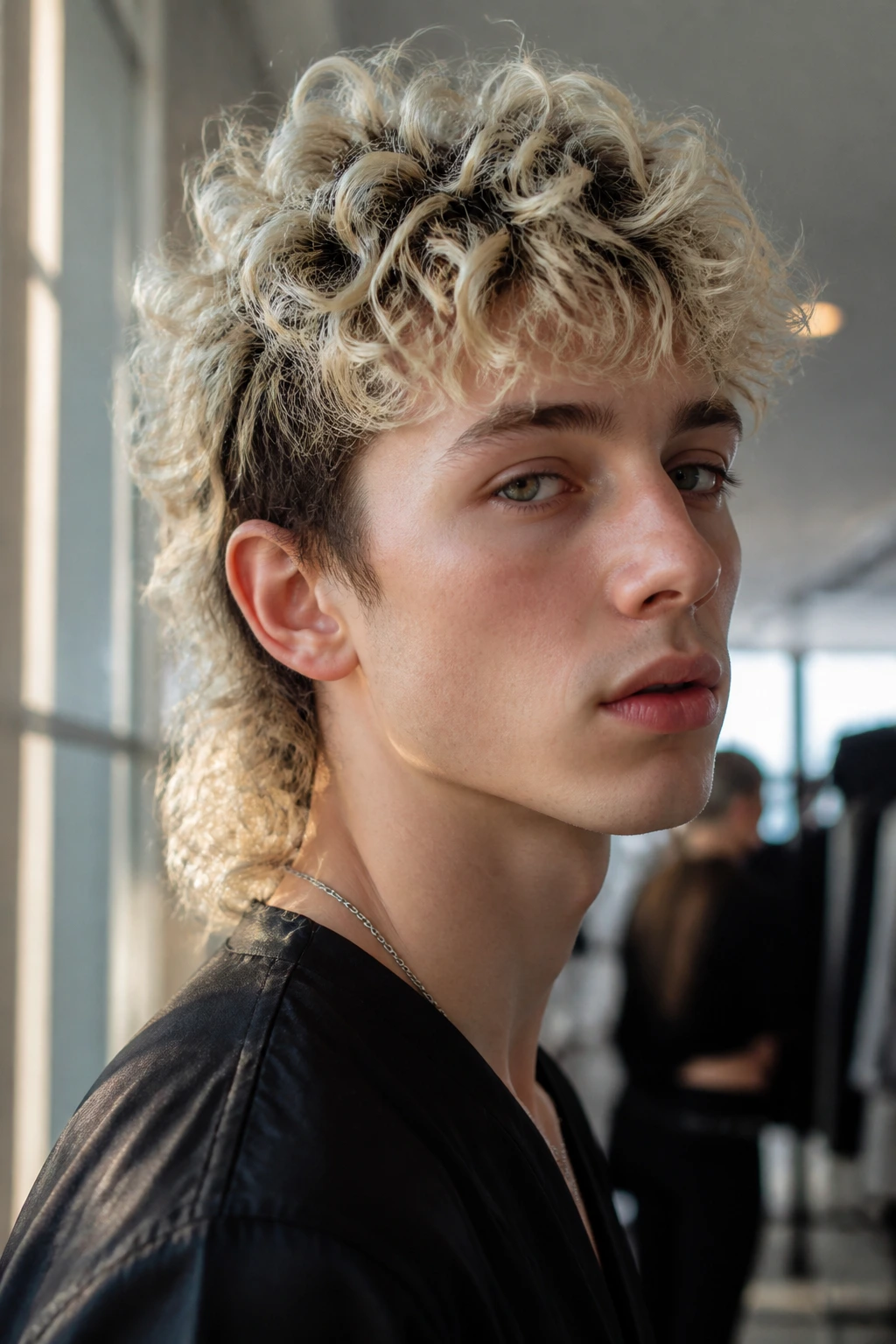
Color can sharpen a haircut, and this one proves it. Platinum curls with darker roots make the movement in the hair obvious, because the contrast catches every bend. The cut itself can stay fairly simple; the color does some of the visual work.
This isn’t about being flashy for the sake of it. It’s about readability. The roots show where the crown begins, the lighter lengths show the curl definition, and the mullet outline becomes easier to see from a distance. That’s useful if you want the style to feel dramatic without being fussy.
Keep the styling gentle if the hair has been lightened. Bleached curls can get dry fast. A good bond-building treatment and a rich conditioner matter here more than a fancy finishing product ever will.
31. Sleek Event-Ready Mullet
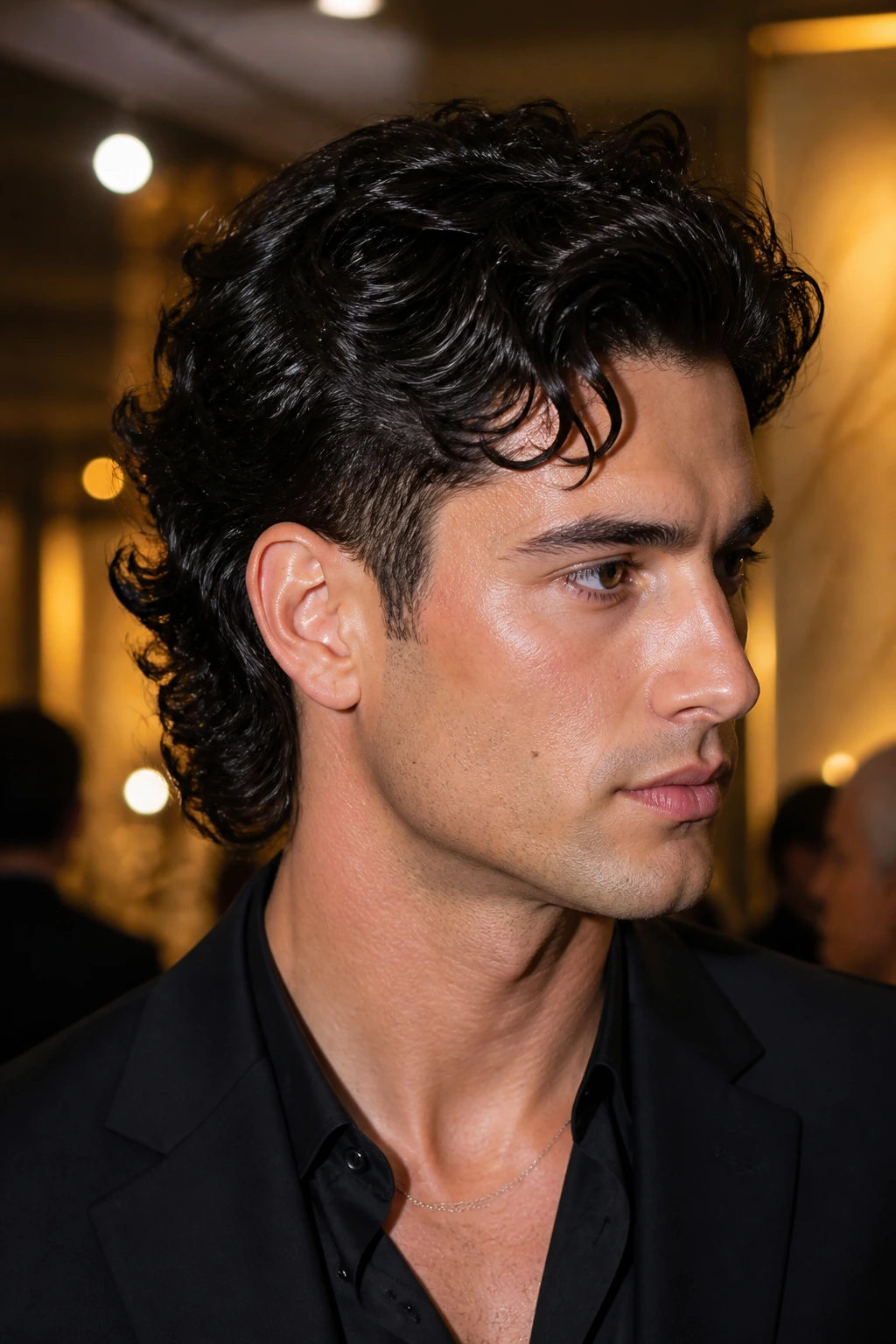
Yes, a mullet can look polished. The trick is a smoother crown, cleaner edges around the face, and curls that are defined enough to look intentional rather than wild. This version works for events, dinners, and any setting where you want the haircut to feel edited.
The back still keeps its length, but the overall shape is neater. Think controlled texture, not blown-out volume. A strong side part can help, and a serum or light glossing cream can keep frizz down without killing the curl pattern.
I like this version because it proves the cut can dress up. It doesn’t have to read as scrappy. If the lines are clean and the curls are defined, it looks sharp in a way that surprises people.
32. Teen-Friendly Easy Curly Mullet

This cut keeps the spirit of a mullet but tones down the maintenance. The layers are soft, the sides aren’t too tight, and the back isn’t so long that it becomes a tangle magnet. It’s a smart pick for anyone who wants personality without a complicated morning routine.
What makes it work is the grow-out. Teen haircuts need to survive homework, sports, bad weather, and the general chaos of life. This one does that better than something too precise. The curls can live their own life a bit, and the cut still makes sense.
A lightweight mousse or foam is often enough here. No one needs a whole drawer of products for a school-day haircut. Keep it simple and let the curls do the rest.
33. Long Luxe Mullet with Deep Layers
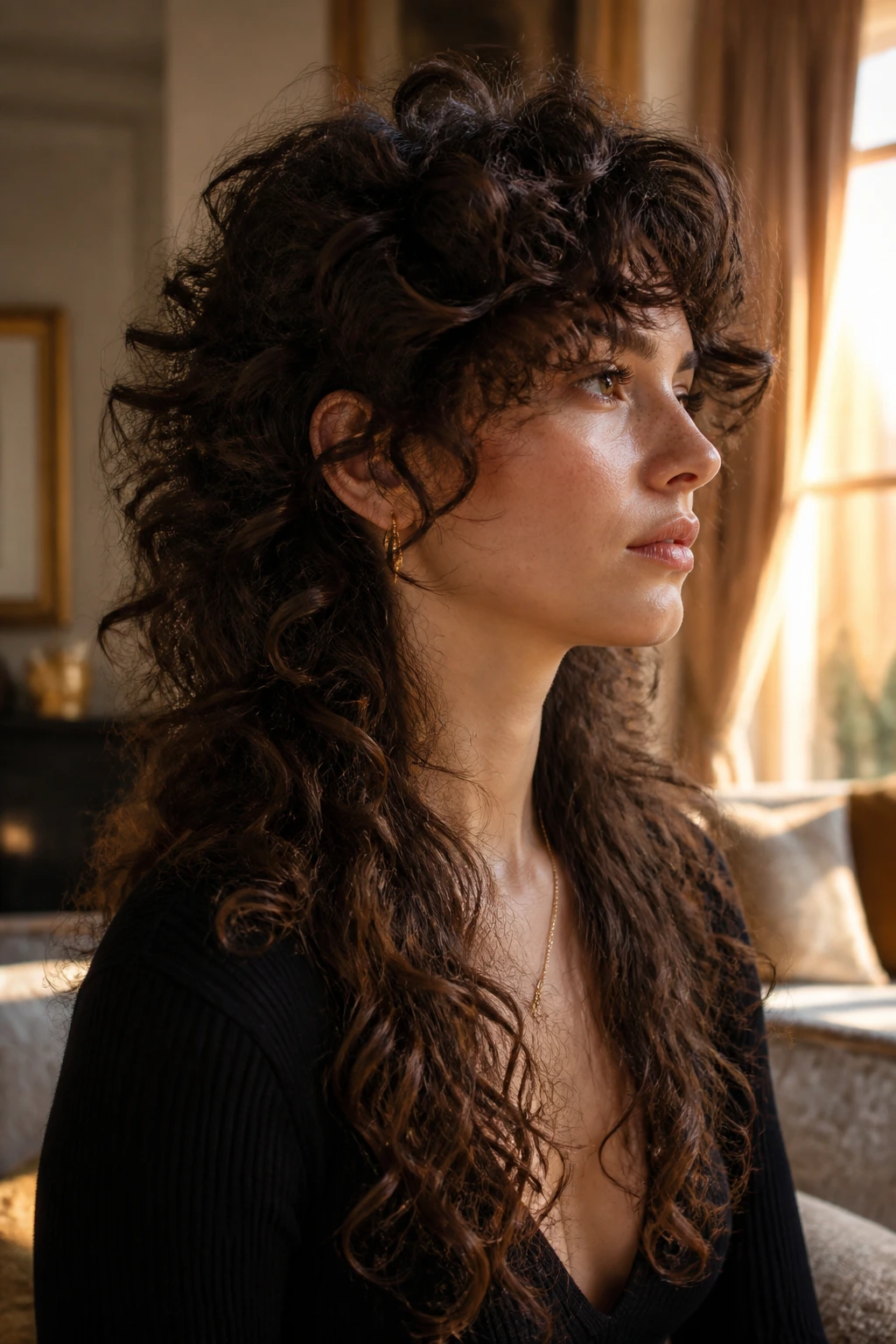
This is the most polished version in the group, and I mean that in the useful sense, not the glossy-magazine sense. The hair stays long, the layers are deep enough to move, and the back keeps a soft sweep that feels deliberate. On curly hair, that length can look rich instead of heavy when the cut is right.
The deep layers matter because long curly hair can go shapeless fast. If the crown is left too full, the top sags and the ends look tired. With the right layering, the hair lifts again, and the mullet shape becomes a quiet line rather than a loud statement.
If you want one cut from this whole list that can stretch from casual to dressed-up without much trouble, this is the one. It behaves well in a ponytail, it looks better down, and it gives curly length a reason to exist.
What Makes a Curly Mullet Hold Its Shape
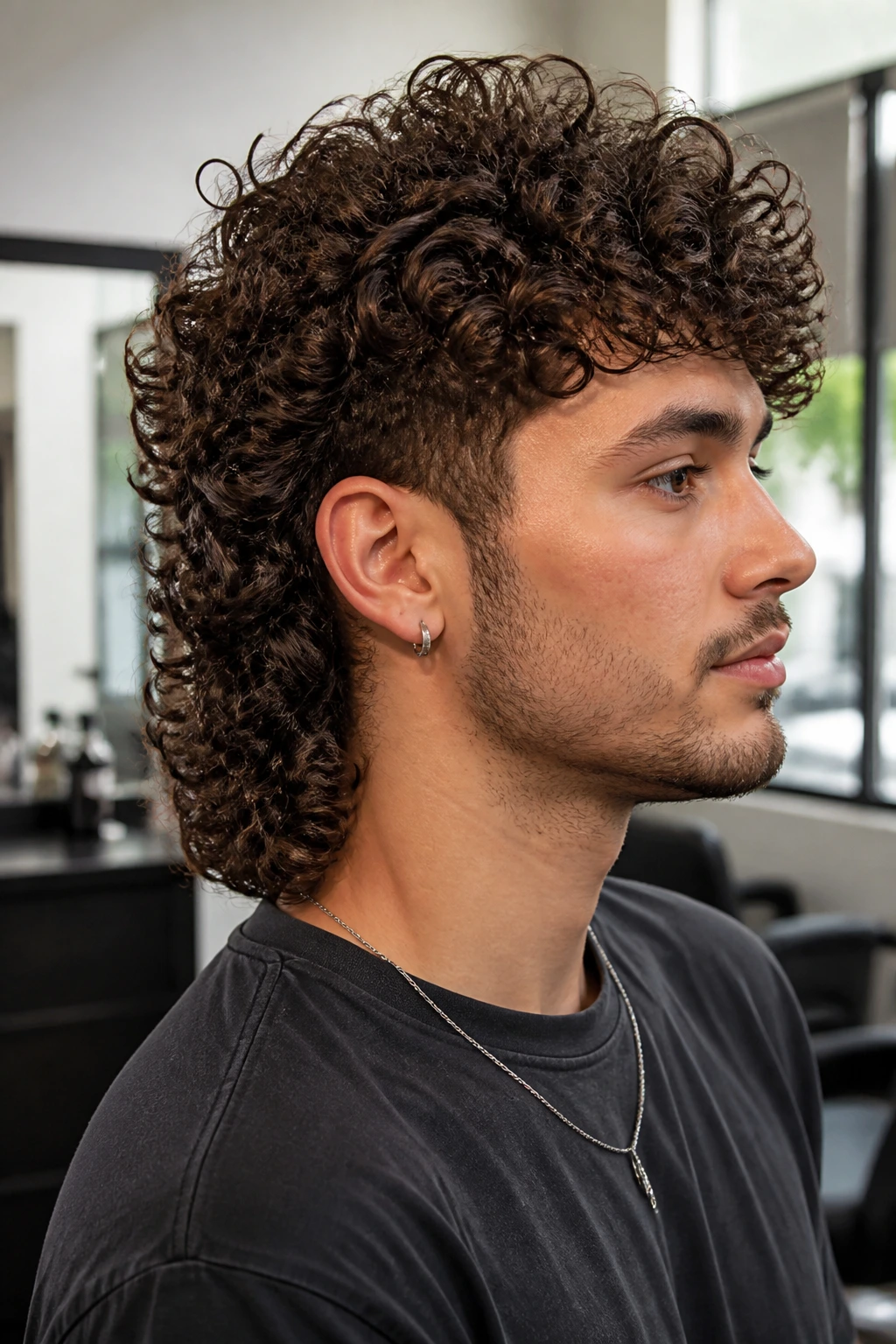
Curly hair needs a different kind of architecture than straight hair. A mullet on curls succeeds when the cut respects shrinkage, density, and the way individual curl families stack on top of each other. Short layers at the crown lift the silhouette. Longer pieces in the back keep the mullet line visible. Tapering around the ears stops the haircut from turning into one wide shape.
That balance is why dry cutting is often such a smart move for curly mullets. You can see where the curl lands, not where it sits when it’s wet and stretched out. Wet hair can lie to you. It’s polite like that, then springs back and changes the whole plan once it dries.
I also think curly mullets work better when the stylist cuts with the hair’s natural parting in mind. If your curls want to fall left, don’t force a dead-center part just because it looks neat in theory. Neat is overrated if it fights the pattern. A cut that follows the curl will usually look better on day three than a cut that depends on perfect styling every morning.
Essential Equipment for Styling and Cutting
-
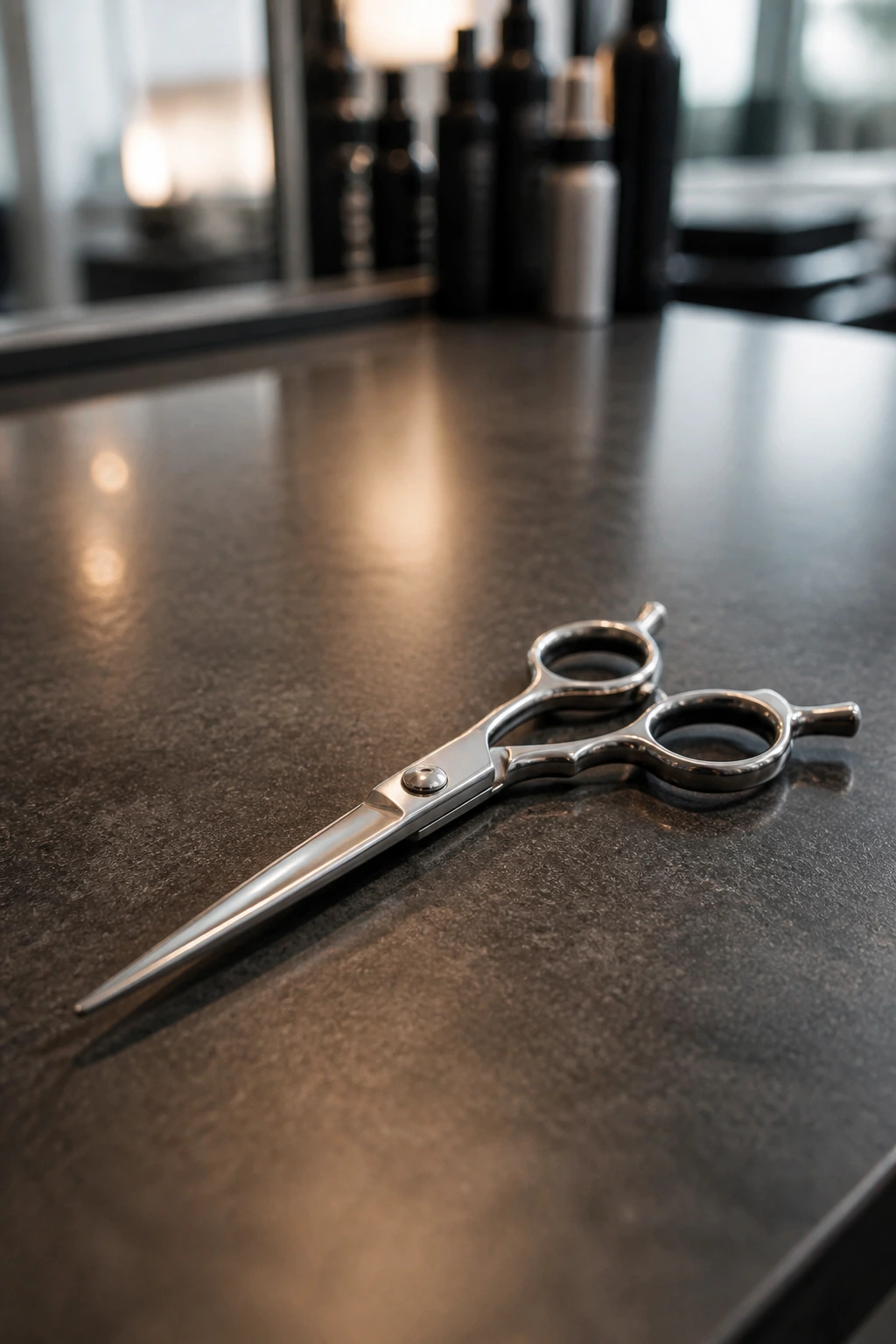
Sharp haircutting shears: Cheap kitchen scissors chew the ends and leave curls looking fuzzy; proper shears give a cleaner line and better shape.
-
Point-cutting or texturizing shears: Useful for softening heavy sections, though they should be used carefully on curls so the hair doesn’t turn wispy.
-
Wide-tooth comb: Better than a fine comb for detangling curls without stretching them out or breaking up their clumps.
-
Spray bottle with water: Handy for reactivating sections during styling or for checking how a curl will sit before the cut is finished.
-
Sectioning clips: These keep crown, sides, and back organized, which matters when the haircut depends on uneven length.
-
Diffuser attachment: A diffuser helps set the curls while keeping the shape from blowing into frizz.
-
Microfiber towel or cotton T-shirt: Both reduce friction; rough terry cloth can puff up the cut before you’ve even finished styling.
-
Leave-in conditioner, curl cream, or mousse: Choose by texture and density; the product should support the shape, not smother it.
-
Medium-hold gel: Useful when you want the curls to keep their definition through the back and fringe.
-
Hand mirror: Essential for checking the nape and side profile, where a mullet either looks deliberate or doesn’t.
What to Ask for at the Salon
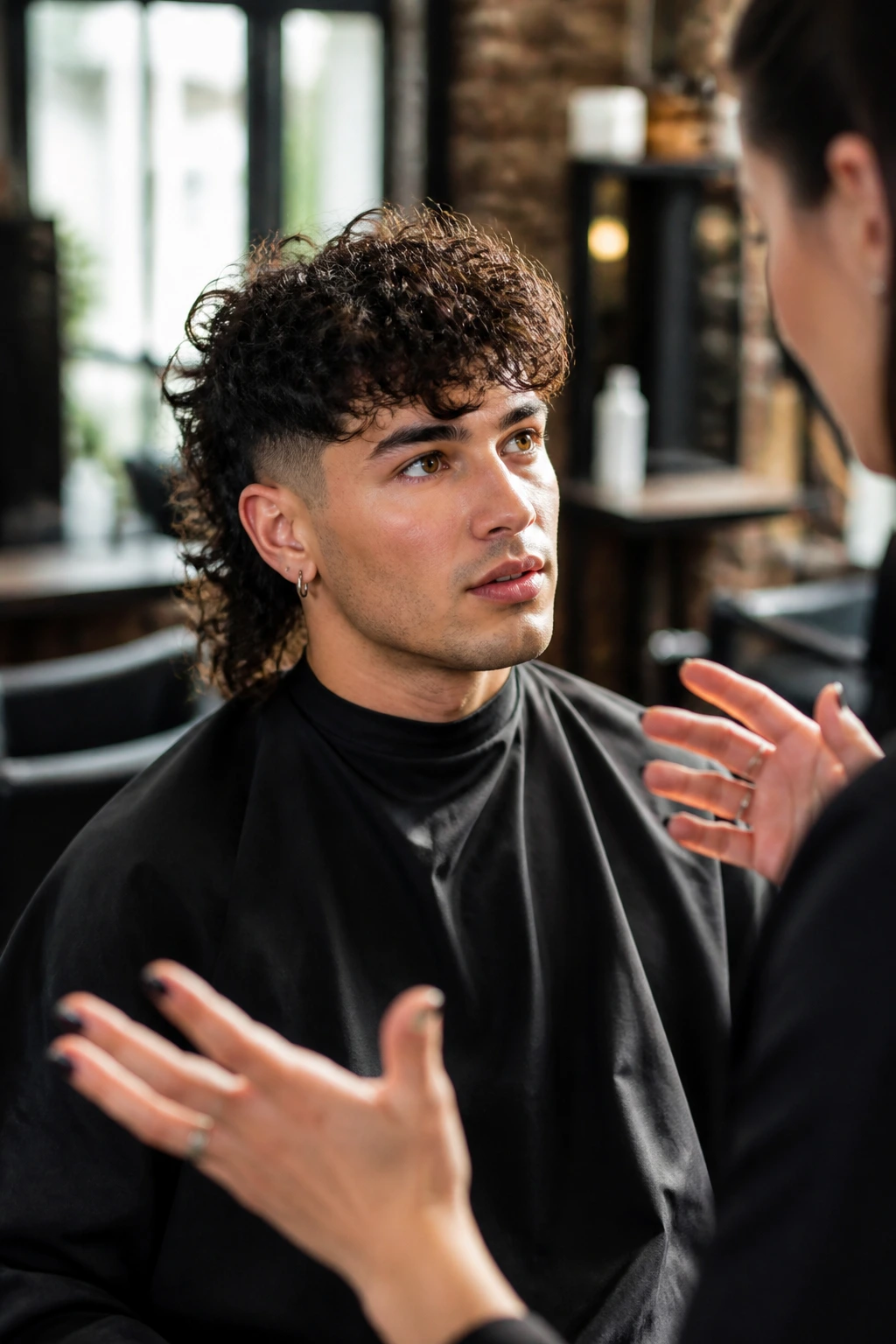
The cleanest way to get a good curly mullet is to describe the shape in plain words. Say you want shorter layers at the crown, some length preserved in the back, and a soft transition around the sides. Bring photos from at least two angles. Front-only pictures are a trap, because mullets live and die by side and back shape.
Ask whether the cut will be done on dry hair, wet hair, or a mix of both. For curls, dry cutting or cutting mostly dry is often useful because it shows the true length and shrinkage. If the stylist only talks about “taking off some weight” without explaining where, press for detail. Weight can be removed from the crown, sides, or perimeter, and each choice changes the result.
If your hair is thick, mention bulk. If it’s fine, mention that too. The same haircut can look airy on one head and limp on another. That’s not a flaw in the cut; it’s a clue that the layering plan needs to match the density. A good stylist will adjust the depth of the layers instead of copying a picture line for line.
Smart Product Picks and Texture Notes
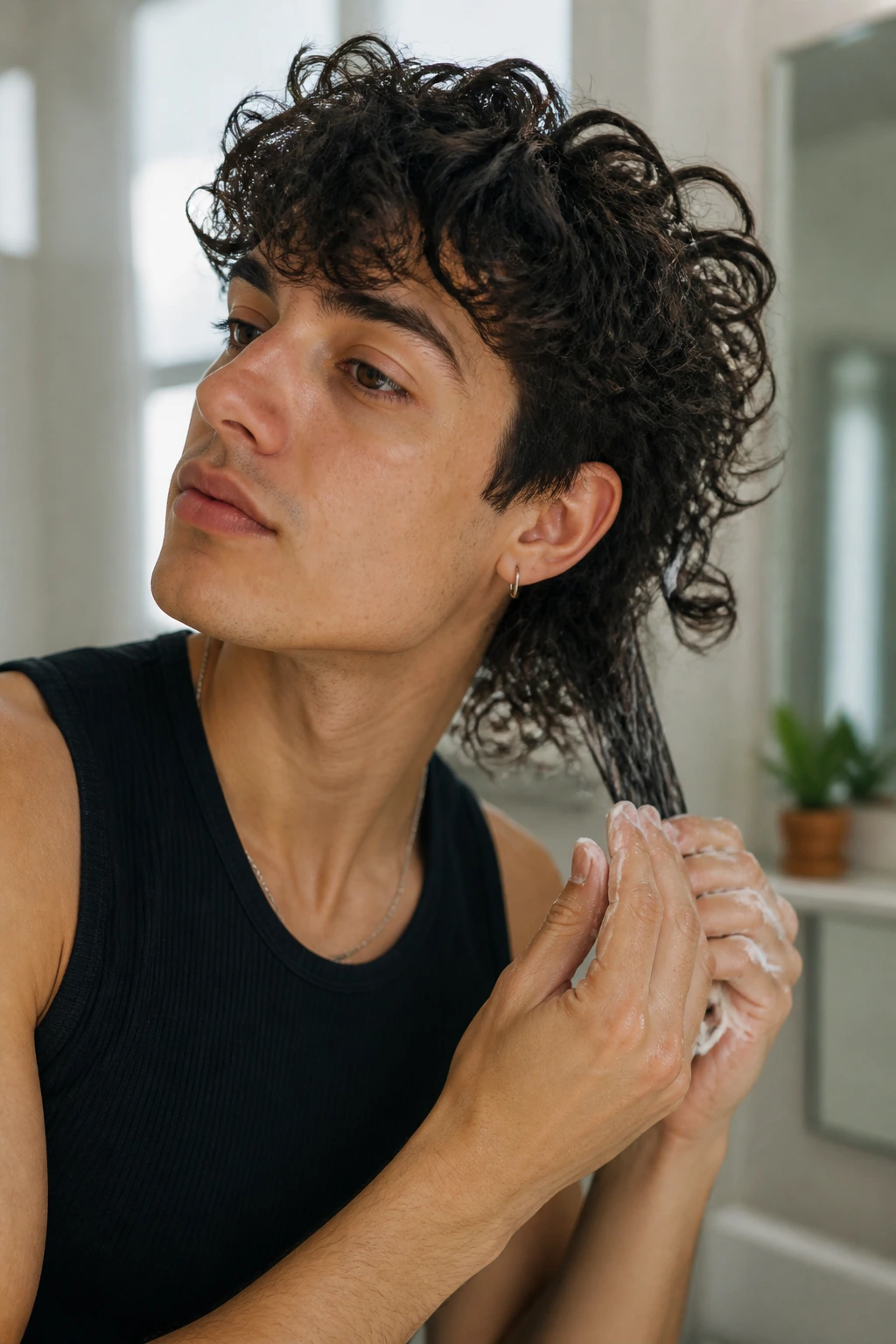
Fine curls usually behave better with lighter products. Foam, light mousse, and a small amount of leave-in tend to keep the shape buoyant without dragging the front down. Heavy creams can flatten the crown and blur the separation in a curly mullet, which is a shame because the separation is half the point.
Thicker curls often like richer leave-ins and a gel with real hold. The back length needs enough control to stay defined, especially when the hair is humid or prone to swelling. If the curl pattern expands a lot during the day, use product sparingly at the roots and more generously through the ends.
Coily textures usually need moisture first, definition second. A hydrating base makes the shape easier to see because the curls clump better. Product overload is a real problem here. Too much can make the cut sticky and shrink the movement right out of it.
And one tiny thing that matters: clarify the hair before a fresh cut if there’s a lot of product buildup. Heavy residue can hide bulk and trick the eye about how the haircut actually sits.
How to Style and Refresh a Curly Mullet
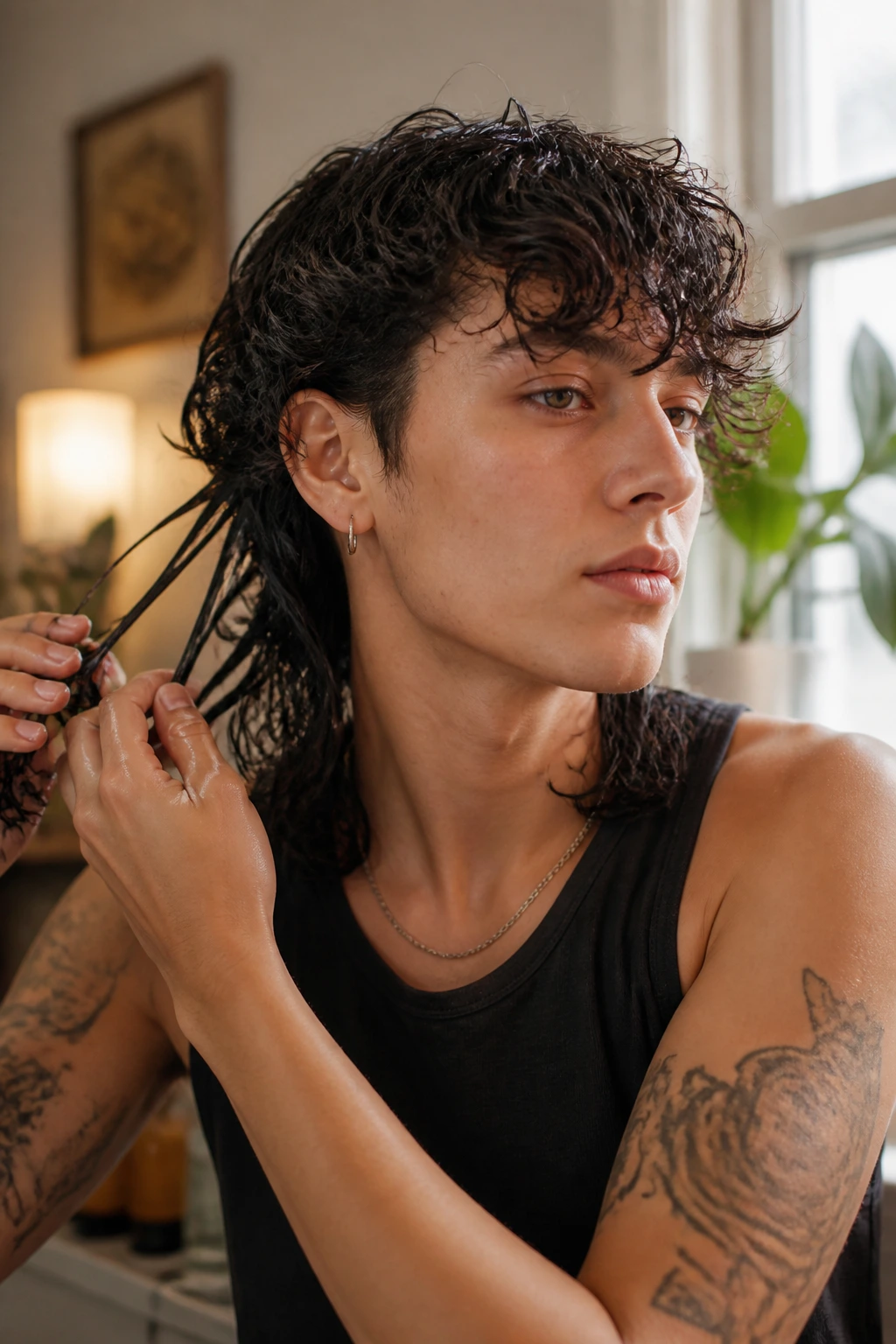
The best curly mullets usually start on damp hair, not soaking-wet hair. After washing, squeeze out water with a microfiber towel or T-shirt so the curls stay grouped instead of dripping. Then work in a leave-in or curl cream from the mid-lengths down, keeping the crown lighter if you want lift there.
A diffuser can be your friend if you keep the heat moderate and the airflow gentle. Cup the curls from below, pause near the roots to encourage lift, and stop before the hair is fully dry if you want a softer finish. If you over-diffuse, the shape can get frizzy and overexpanded. That’s not a styling failure. It’s just too much air.
For refresh days, mist the back and fringe lightly, smooth a bit of leave-in over the outer layer, and scrunch with clean hands. Don’t drown the whole head. Most curly mullets only need the curls to wake up, not a full reset. A tiny amount of water does more than people expect.
Additional Tips and Texture Boosters
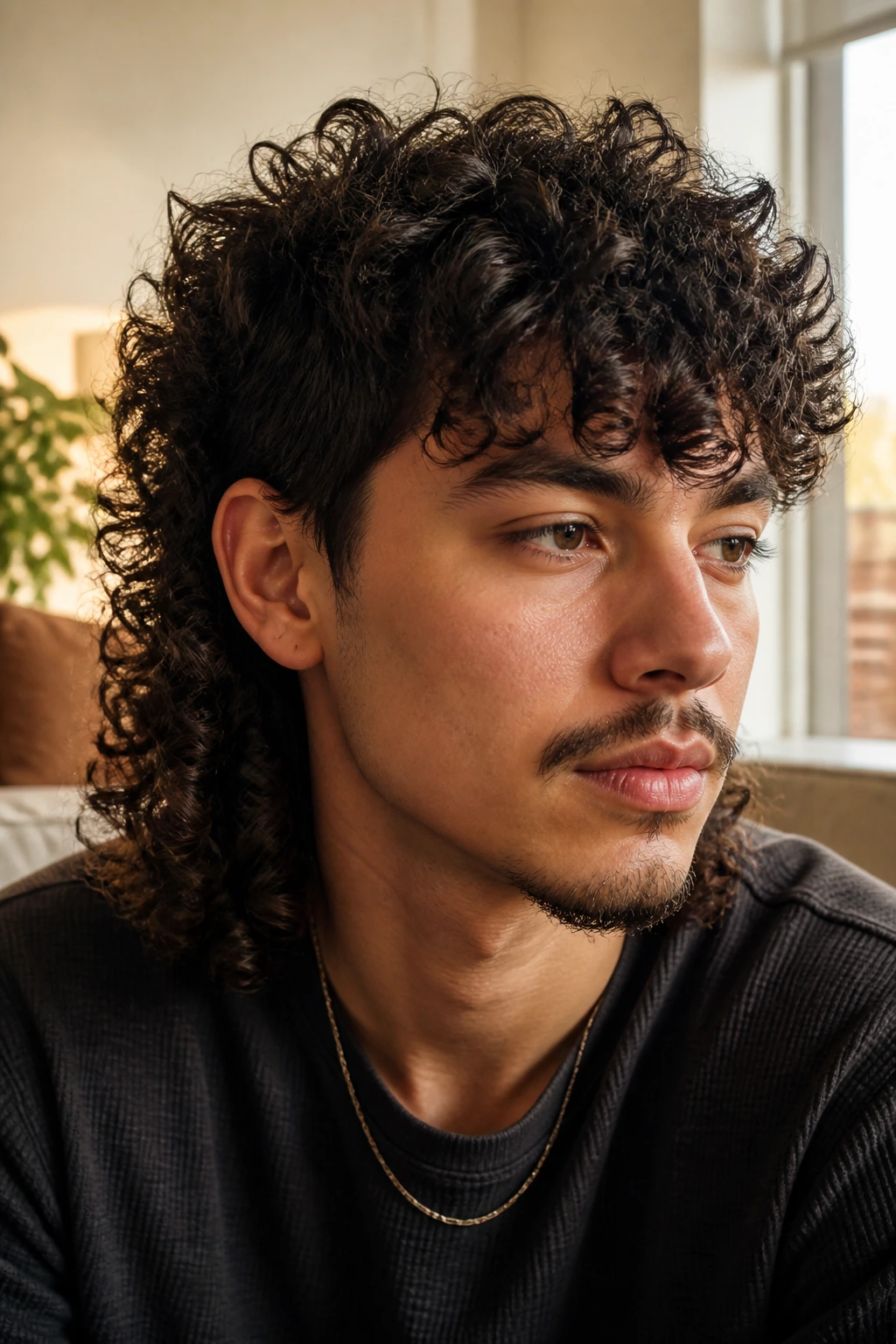
Flavor Enhancement: A pea-sized amount of gel cast broken up once the hair is fully dry can keep the shape crisp without making the curls crunchy for the whole day.
Customization: If you want the cut softer, ask for longer face-framing pieces and keep the nape only slightly extended. If you want more edge, shorten the sides around the ears and deepen the contrast at the back.
Serving Suggestions: A tucked-behind-one-ear look shows off the line of the haircut fast. So does a half-up twist that leaves the back visible. Small choices. Big difference.
Make-It-Yours: Fine hair usually benefits from lighter layering and more root lift; thick hair needs bulk removed around the crown and lower side panels; coily hair often looks best when the outline is shaped, not thinned.
Common Mistakes to Avoid
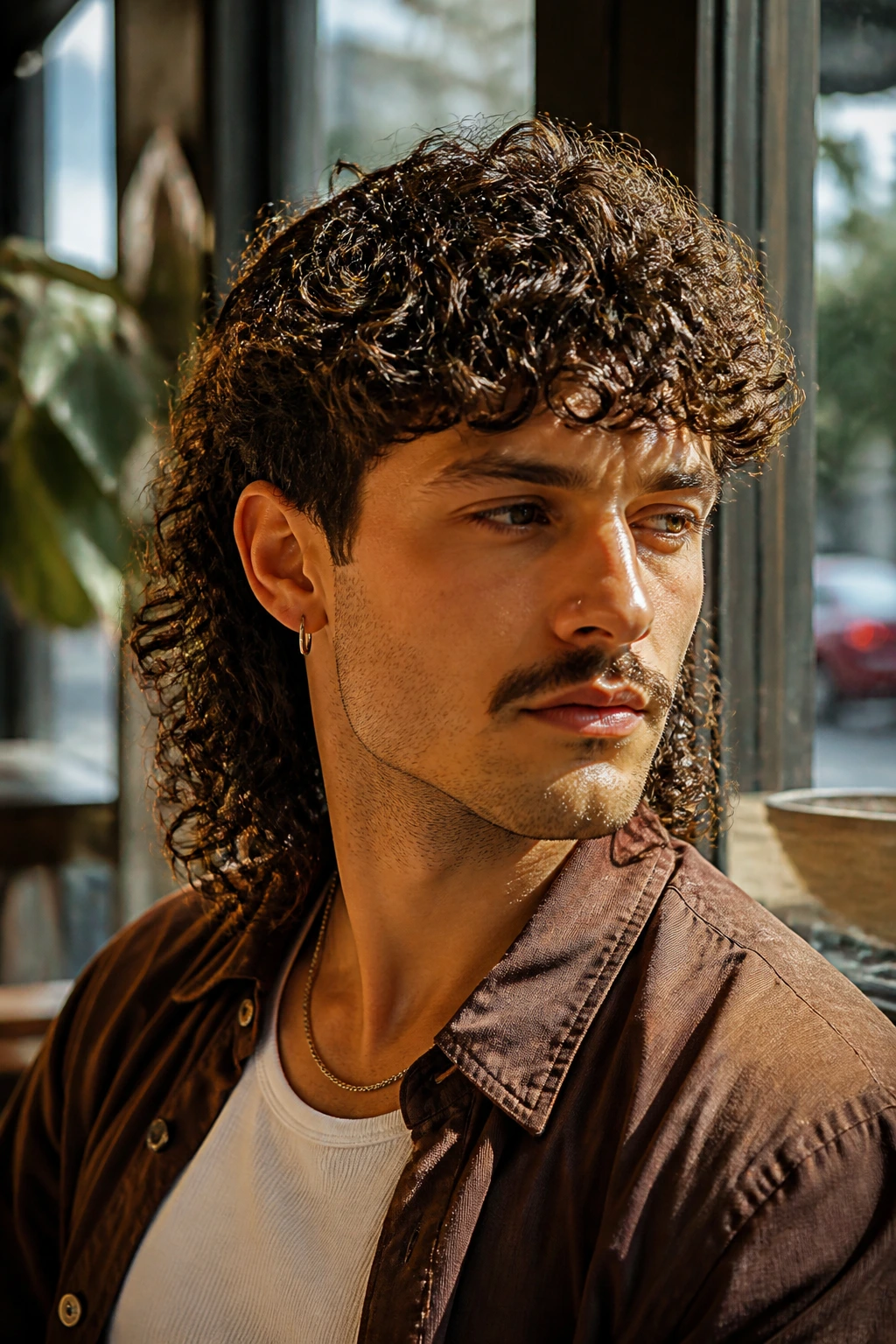
Cutting curls too wet: Wet curls stretch, and then shrink later. If the cut looks fine in the chair and suddenly too short at home, this is usually why. Dry cutting or cutting with shrinkage in mind prevents that surprise.
Over-thinning the ends: Too much texturizing can leave the back stringy and hollow. Curly mullets need movement, but they still need enough mass at the ends to show the shape.
Ignoring the crown: If the top is left too heavy, the haircut turns into a triangle or a mushroom. The crown needs controlled removal of weight so the mullet line stays visible.
Going too short at the fringe: Curly bangs rise. They just do. If the fringe is cut too high, you can end up with a tiny, detached front section that has no relation to the rest of the haircut.
Skipping maintenance: A mullet grows out with attitude, but it still needs trims. If the nape starts losing its line and the sides puff out, the whole cut can look untidy instead of intentional.
Variations and Adaptations to Try
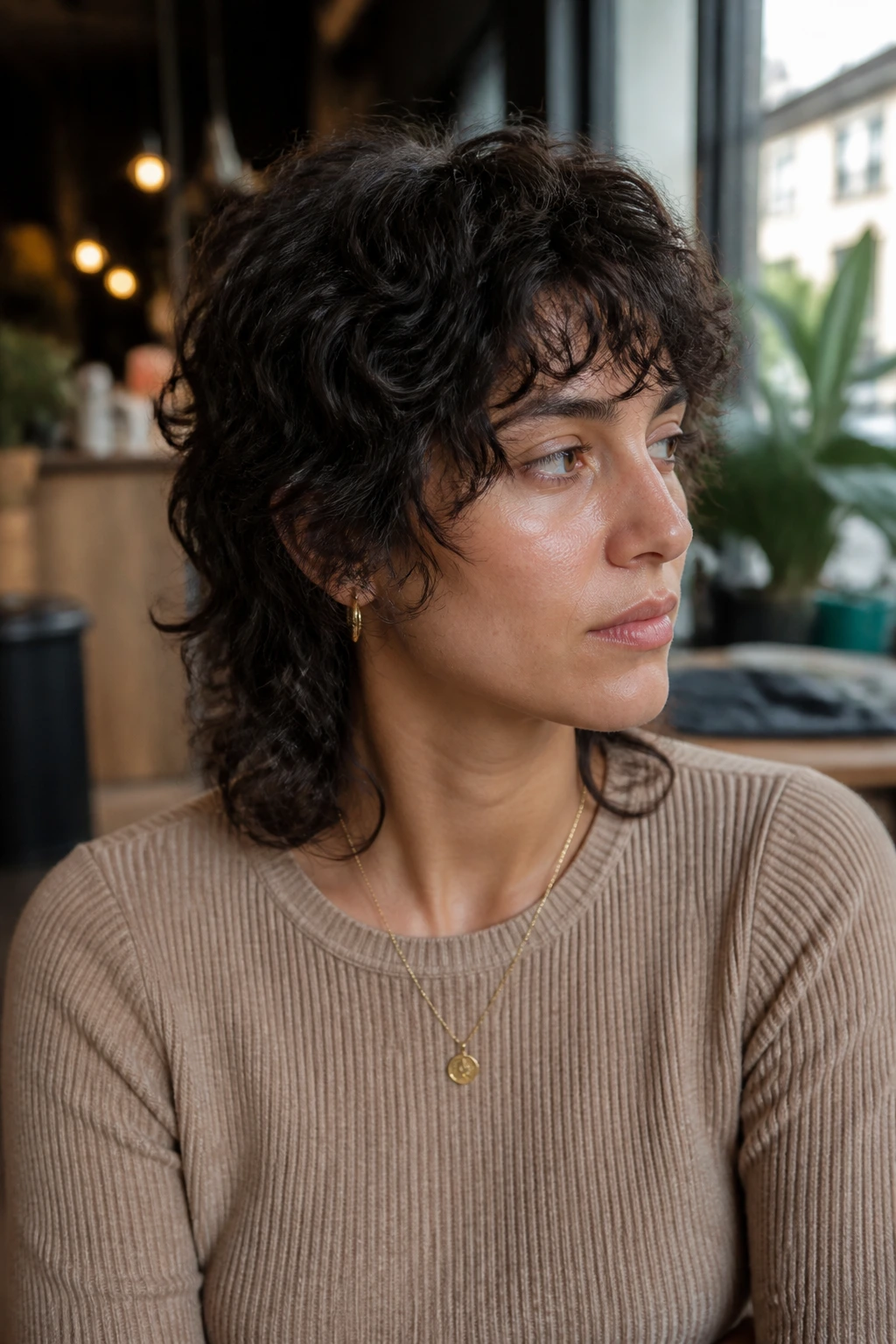
The Soft Office Mullet: Keep the sides longer, the fringe gentle, and the back just below the collar. It has enough shape to feel modern, but it won’t start conversations in every meeting.
The Heavy Crown Wolf: Push more texture into the top and keep the back choppier. This one fits dense curls and people who like a rougher, more obvious outline.
The Coily Halo Shape: Round the sides and crown into a visible halo, then leave a clear length at the back. It works best when the curls are moisturized and allowed to keep their form.
The Grown-Out Bob Mullet: Let the front sit around the jaw and keep the back a few inches longer. It’s a smart bridge if you’re moving away from a bob but aren’t ready for a full short cut.
The Clean-Nape Version: Tighten the neckline and keep the perimeter crisp. That’s the one to pick if you like structure and want the back to look sharp under jackets and collars.
Keeping the Shape Between Trims
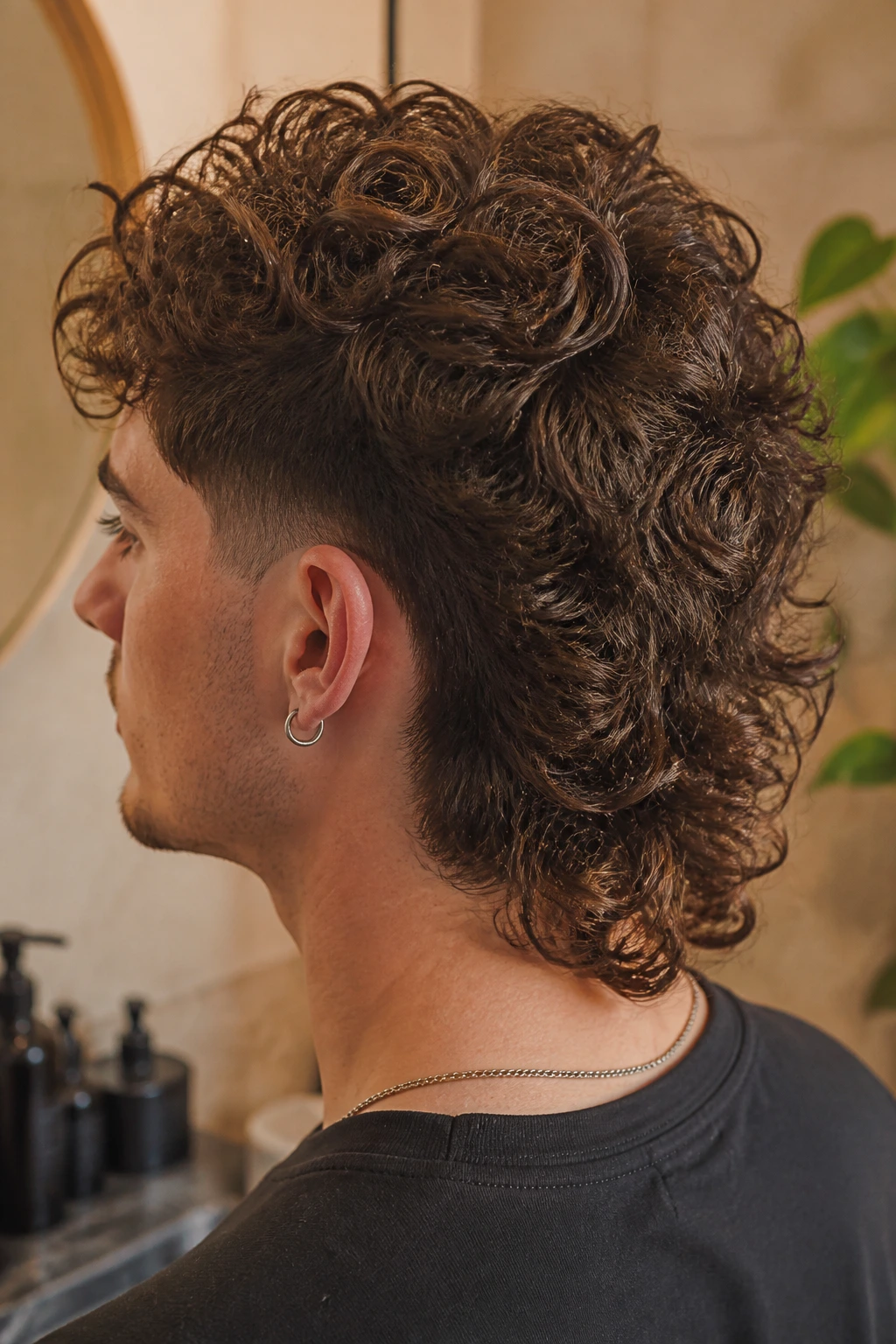
A curly mullet usually holds up for a decent stretch if you don’t fight it every day. Most people need a trim somewhere around 6 to 10 weeks, depending on curl type, density, and how clean they want the neckline to stay. Shorter versions need more frequent upkeep. Longer versions can stretch further.
Between cuts, focus on the parts that reveal the shape fastest: the nape, the ear line, and the crown. When those zones get overgrown, the haircut loses its outline even if the ends still look healthy. A tiny trim in the wrong place can change everything, so if you’re trimming at home, be cautious and small-handed.
The best upkeep routine is simple. Wash as needed, refresh with a spray bottle, and avoid stacking too much product at the crown. Heavy product buildup can make the top sit flat and hide the lift that gives the cut its character. Clean hair shows the shape better. That’s not a moral statement. It’s just hair being hair.
Frequently Asked Questions
Will a curly mullet work on fine hair?
Yes, if the layering is light and the crown isn’t over-thinned. Fine curls need shape more than aggressive removal of weight, so the goal is lift without leaving the ends see-through.
Do curly mullets need to be cut dry?
Not always, but dry or mostly dry cutting is often safer because it shows shrinkage and curl behavior. A wet cut can still work if the stylist knows how your curls spring up.
How do I ask for one without sounding vague?
Say you want shorter layers around the crown, length preserved in the back, and a softer transition around the sides. Bring photos that show front, side, and back views so the silhouette is clear.
Can a curly mullet look polished?
Absolutely. Keep the neckline clean, define the curls with a controlled product, and avoid over-frizzing the top. A neat mullet looks edited, not messy.
What if my curls flatten at the crown?
Ask for more lift near the root area and use a light mousse at the top during styling. Diffusing at the roots for a few extra seconds can help, but don’t overload the crown with cream.
Does this cut suit coily hair?
Yes, especially when the shape is rounded and the sides are tapered with care. Coily hair can make the mullet line look very clean, as long as shrinkage is accounted for.
How often should I trim it?
Short curly mullets usually need attention every 6 to 8 weeks. Longer versions can go a bit longer, but once the nape and side shape blur, the haircut starts losing its edge.
Can I grow a bob into a mullet?
That’s one of the easiest transitions. Let the back stay longer while the stylist softens the front and adds crown layers, and the shape will shift gradually instead of looking accidental.
The Shape That Keeps Its Edge
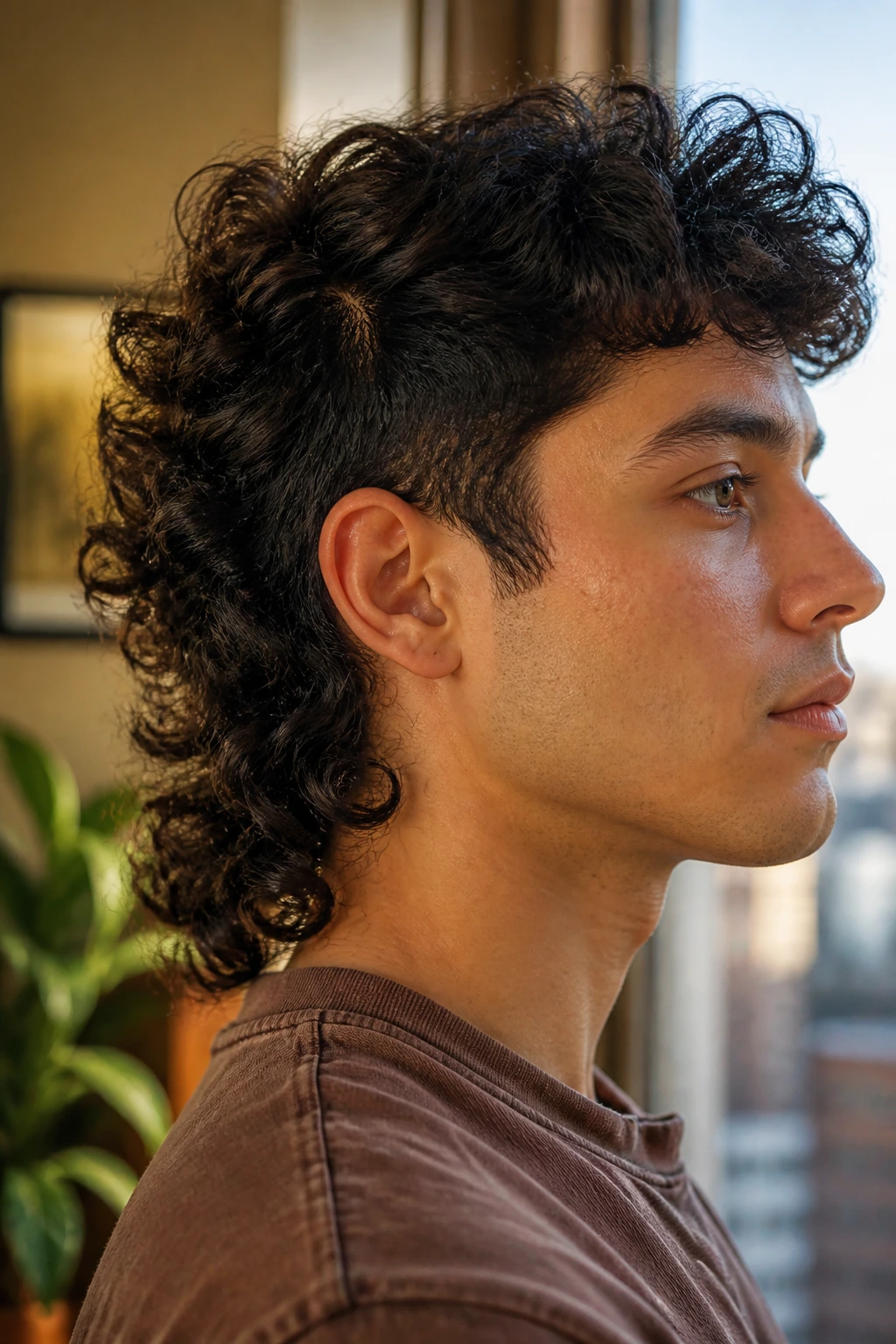
A curly mullet works because it respects the thing curly hair does best: it moves, bends, lifts, and changes shape as it dries. That means the haircut can look softer, cooler, or more controlled than the same outline would on straight hair. The curl pattern does half the styling, which is a nice place to be.
The best versions don’t try to tame every curl into submission. They leave enough structure to keep the outline readable and enough freedom for the hair to keep its personality. That balance is where the good cuts live. Not too neat. Not too wild. Just enough of both.
If you’re choosing one, start with the version that fits your curl density and your patience level, then let the shape breathe a little. Curly mullets get better when they’re allowed to look like hair, not architecture.
