



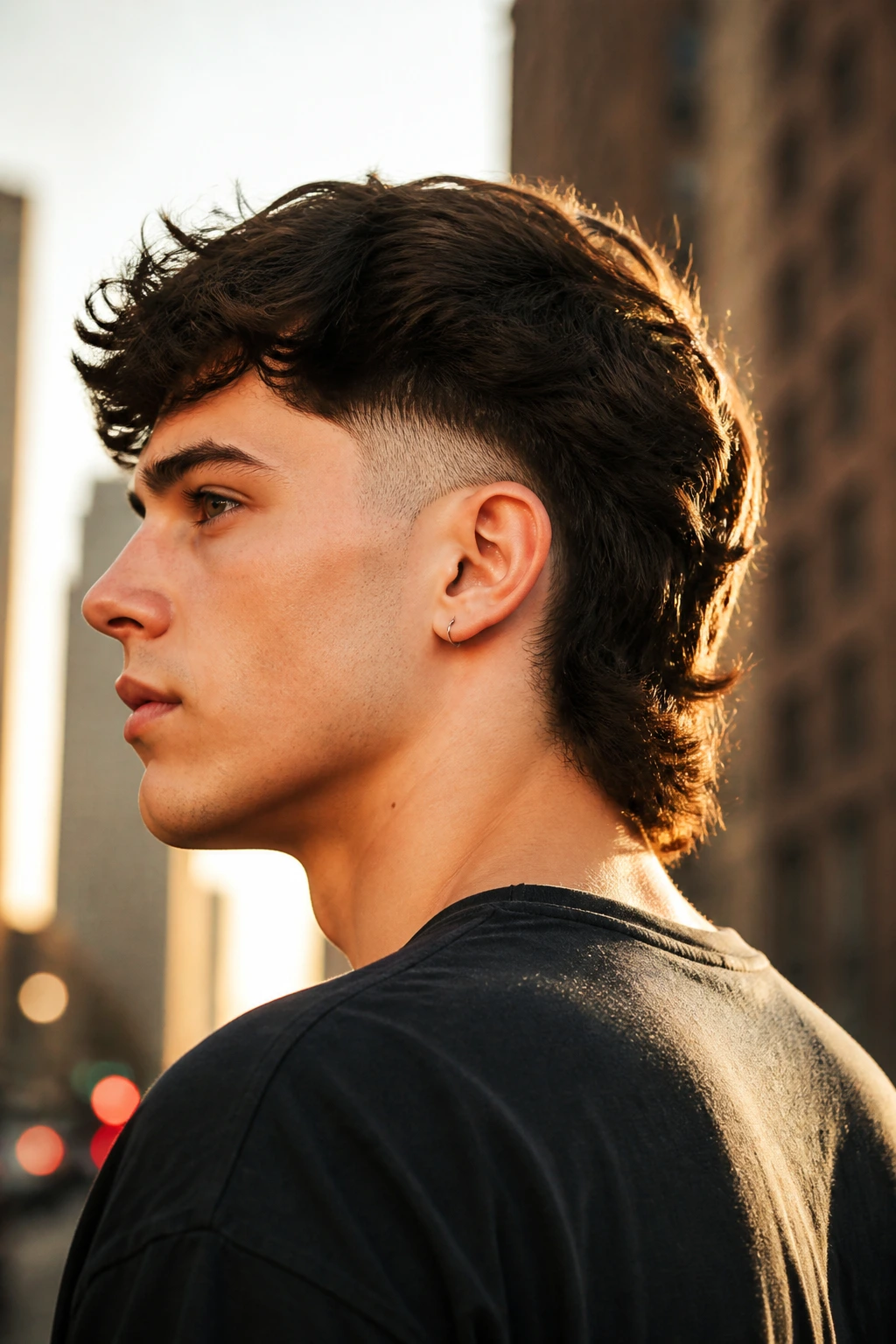
Short wavy mullets are one of those haircuts that get better when they stop trying to behave. On straight hair, the shape can look a little staged if the cut isn’t handled well. On short wavy hair, though, the bend in the strands does half the work for you. It gives the crown lift, softens the transition from short sides to longer back, and keeps the whole thing from looking pasted down.
The sweet spot is narrow. Too much bulk around the ears and the cut turns boxy. Too much thinning at the crown and the wave pattern starts to frizz out instead of sitting in clean, broken-up pieces. Get the balance right, and the haircut feels alive the second it dries — the front falls with a bit of attitude, the sides stay tight enough to look deliberate, and the back keeps its own line without screaming for attention.
That balance is exactly why this lineup matters. Some versions are clean enough to wear with a button-down. Some lean hard into texture and edge. Some barely need more than a damp hand and a pea-sized dab of matte paste. The shape is doing the heavy lifting; you’re just choosing how sharp, soft, or loud you want it to read.
Why This Collection Works So Well on Short Wavy Hair
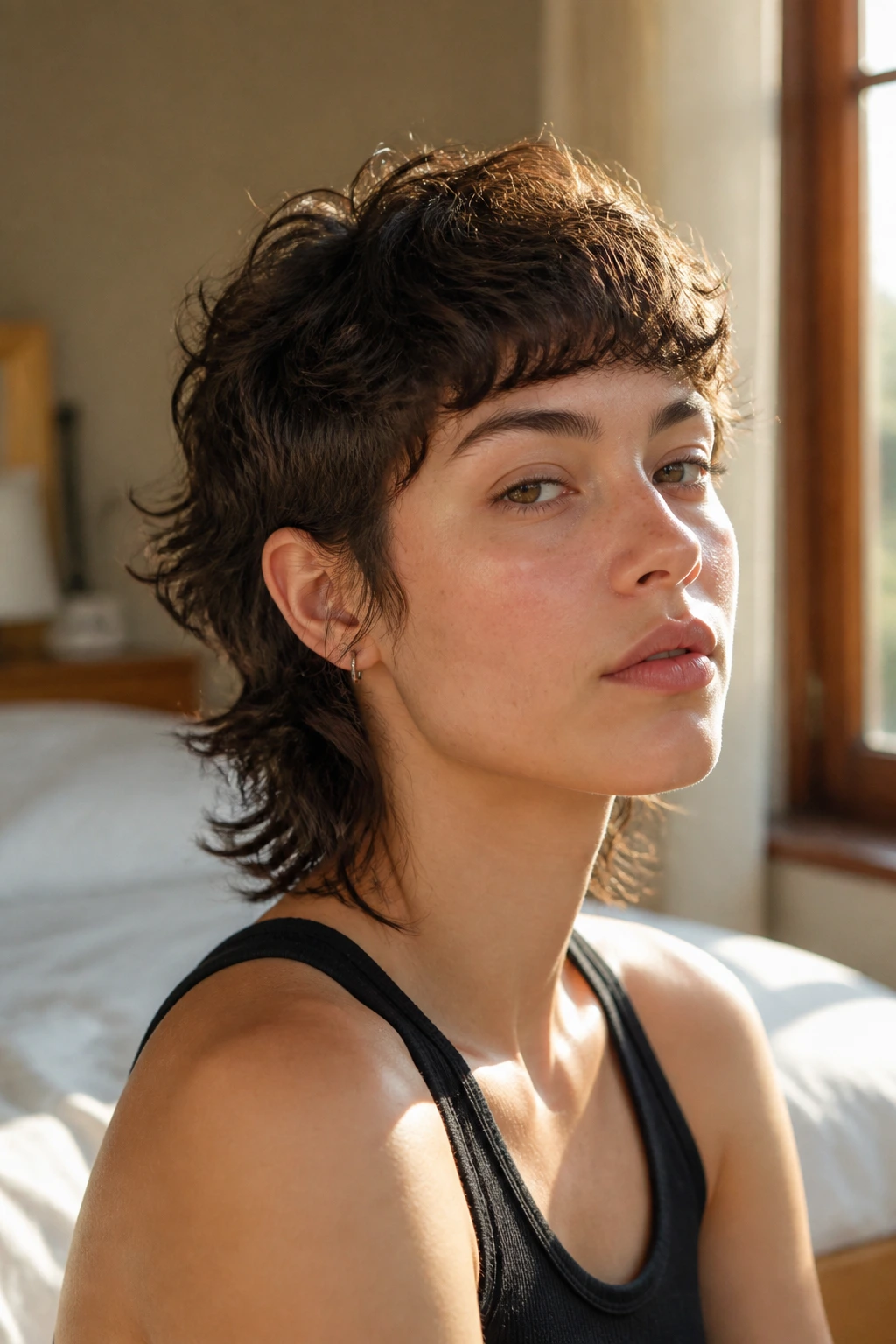
- The wave pattern gives you built-in movement: Short wavy hair already breaks up light and shadow, so a mullet shape looks textured instead of stiff.
- The back can stay short without disappearing: Even a modest nape length reads as a mullet when the crown and sides are controlled properly.
- There’s room to go neat or messy: A low taper keeps things clean; a burst fade or razored finish pushes it toward sharper territory.
- Grow-out is easier to live with: When the sides soften and the back gets a little longer, the cut still looks intentional instead of awkward.
- Product use stays manageable: Most of these looks work with a small amount of paste, cream, mousse, or sea salt spray — not a bathroom shelf full of styling junk.
- You can tune the cut to your face shape: A fringe, a side part, or a taller crown changes the whole silhouette without changing the basic mullet idea.
What to Tell Your Barber Before the Clippers Start
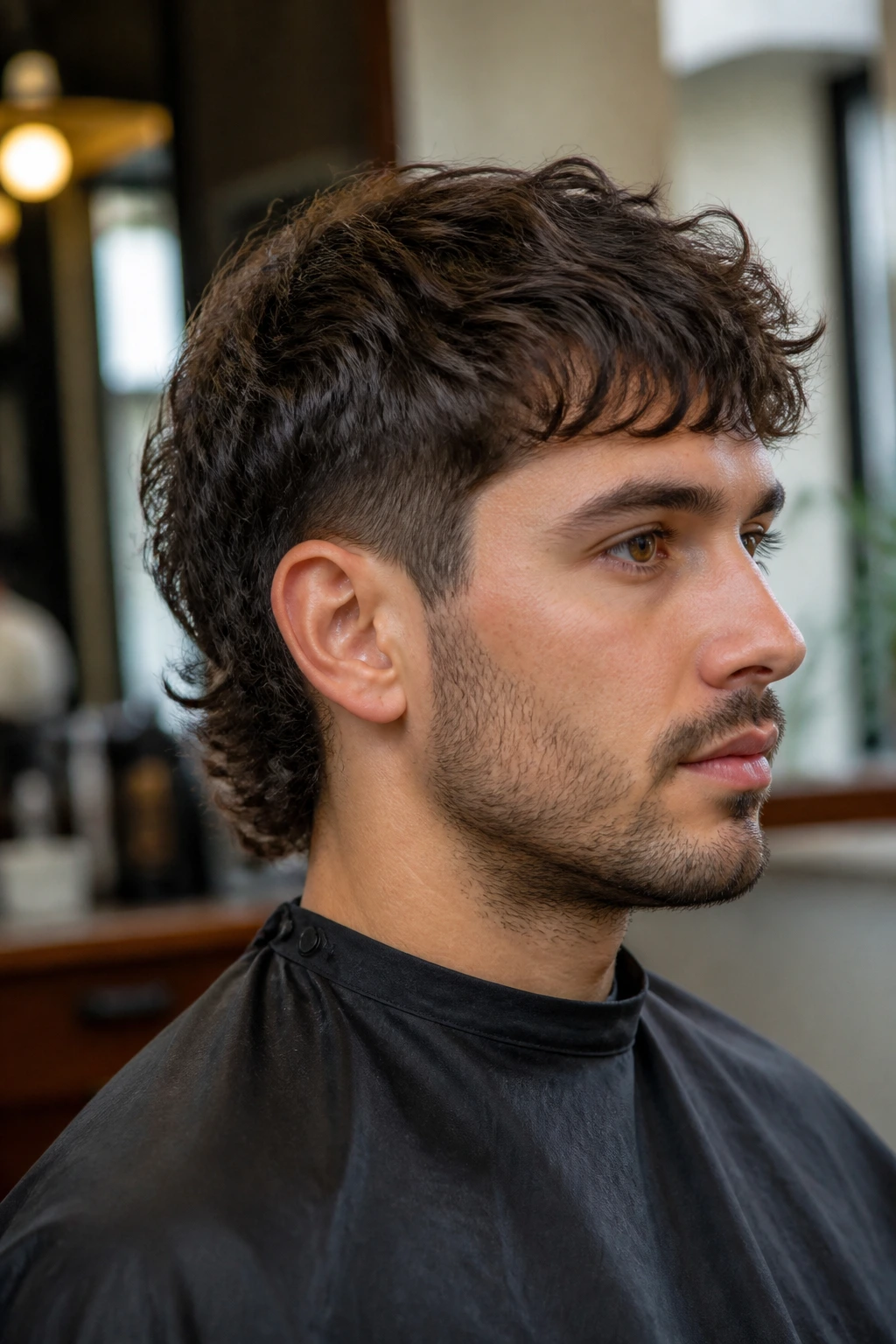
The most useful thing you can bring to the chair is not a vague idea of “something mullet-ish.” It’s a clear picture of where you want the shape to sit at the ears, crown, and nape. Say whether you want the cut to read soft or obvious, because those are two different jobs. A soft version keeps the transition gradual. An obvious version uses a stronger contrast between the top and the back.
Also mention how your waves behave when they dry. Loose waves lie differently from tighter S-shaped bends, and that changes how much weight should stay in the crown. If your hair puffs up when it’s cut too short, ask for point cutting or scissor work rather than aggressive thinning. If you want a fade, be precise about the fade height. A low taper leaves the mullet shape intact. A high fade starts drifting into a different haircut entirely.
Bring two photos if you can: one showing the front and one showing the back or side. That matters more than it should. Barbers can read shape faster than words, but only if you give them something specific to read. And if your waves shrink when dry, ask for a dry check before the final cleanup. Short wavy hair can change its mind in fifteen minutes.
1. Soft Shag Mullet
Loose waves and a shaggy tail are a natural pair. The soft shag mullet keeps the top layered and the sides feathered, so the cut moves when you turn your head instead of sitting in one blocky shape. It works especially well if your waves are loose enough to bend without needing a lot of heat.
Ask for the top to stay around 2 to 3 inches, with the nape left a little longer and the side sections softened rather than clipped hard. A little curl cream on damp hair is enough here. Scrunch it once or twice, then let it air-dry or use a diffuser for a few minutes. Heavy wax will only drag the wave down and make the layers look stuck together.
2. Clean Low-Taper Mullet
This is the version for someone who wants the shape without the drama. A low taper around the temples and neckline keeps the haircut tidy while the back still carries the mullet line. The wave pattern does the rest, which is honestly the nice part — you don’t need to force anything.
The key is keeping the transition subtle. Tell the barber you want the sides neat but not stripped, with enough length left to avoid a sharp disconnect at the ears. A matte cream works better than a greasy pomade because it preserves the bend in the wave. If you wear glasses, this cut tends to sit well around the arms without puffing out awkwardly.
3. Burst Fade Mullet
A burst fade changes the whole silhouette. Instead of fading straight up the side, it curves around the ear, which makes the short wavy mullet feel more sculpted and less like a grow-out. On hair that has a bit of bend, the burst fade gives the top a clean frame and keeps the back looking deliberate.
It’s a good choice if you want contrast. A lot of contrast. The barber should keep the fade low enough to preserve the tail at the nape, then leave enough texture on top so the waves don’t flatten into the scalp. A sea salt spray plus a quick diffuser session works well here. Expect to tidy the fade more often than the rest of the cut; the sides grow in fast, and the curve loses its shape when the fade starts blurring.
4. Curtain Fringe Mullet

What happens when you split the front down the middle? You get a mullet that feels a little cooler and a little less aggressive. The curtain fringe mullet uses a center part or near-center part to let the front fall away from the face while the back stays longer, so the whole cut has movement from front to back.
This one likes loose waves more than tight coils. Ask for the fringe to sit around eyebrow level when dry, not wet, because short wavy hair shrinks. A light styling cream keeps the curtain from separating into frizzed-out strings. If your forehead is wider or your face runs a touch long, this shape helps balance things out without making the haircut feel heavy.
5. Choppy Crop Mullet
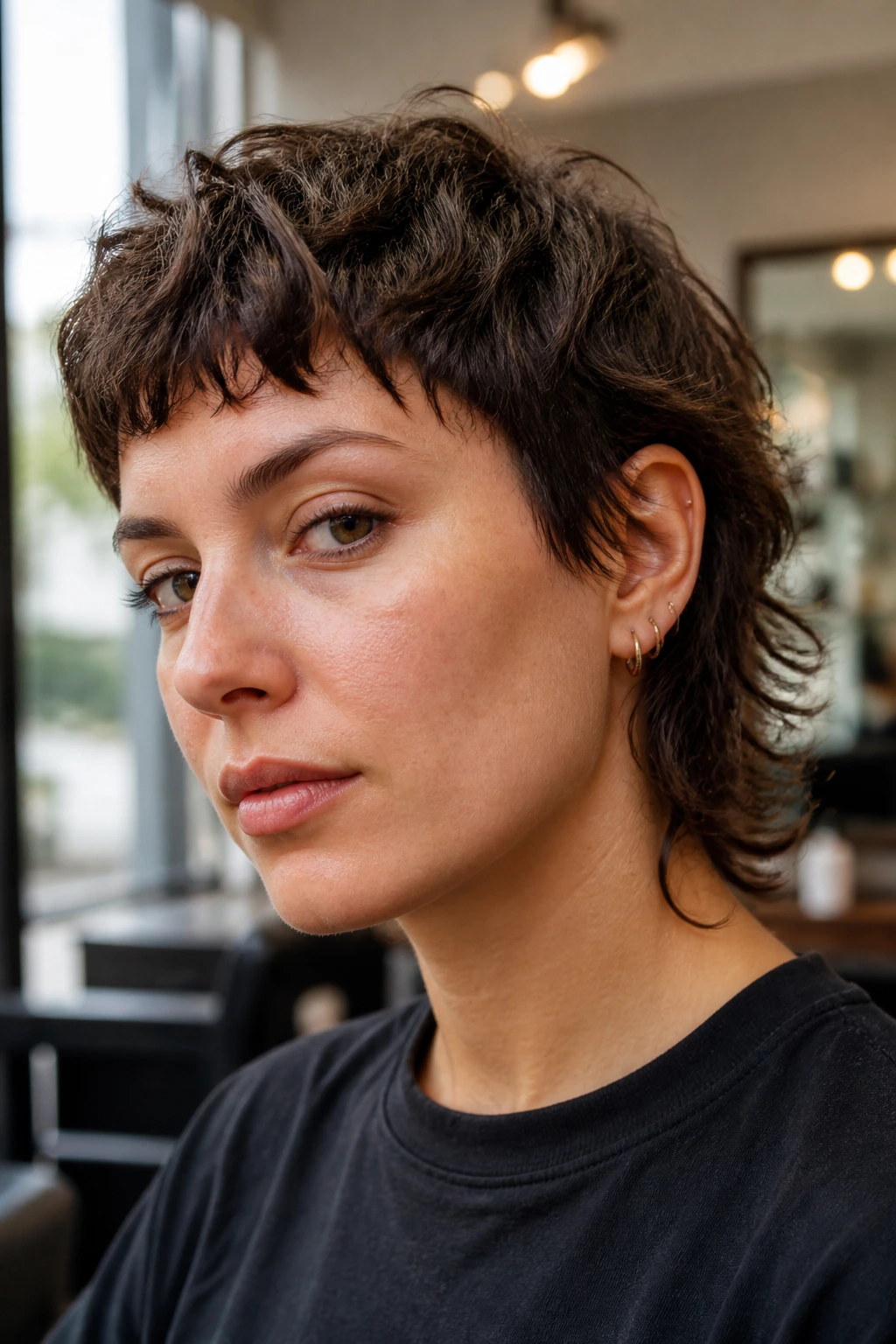
The choppy crop mullet sits right on the edge of neat and unruly. The front stays cropped short enough to keep the haircut practical, but the ends are broken up with point cutting so the texture doesn’t look blunt. Then the back is left longer, just enough to keep the mullet identity intact.
This is a strong choice for thicker waves because the choppy edge keeps the hair from ballooning into a helmet shape. Ask your barber to remove weight through the top rather than over-thinning the crown. A little texture powder at the roots can give the front lift without making it crunchy. Good cut. Better grow-out, actually.
6. Wolf-Cut Mullet
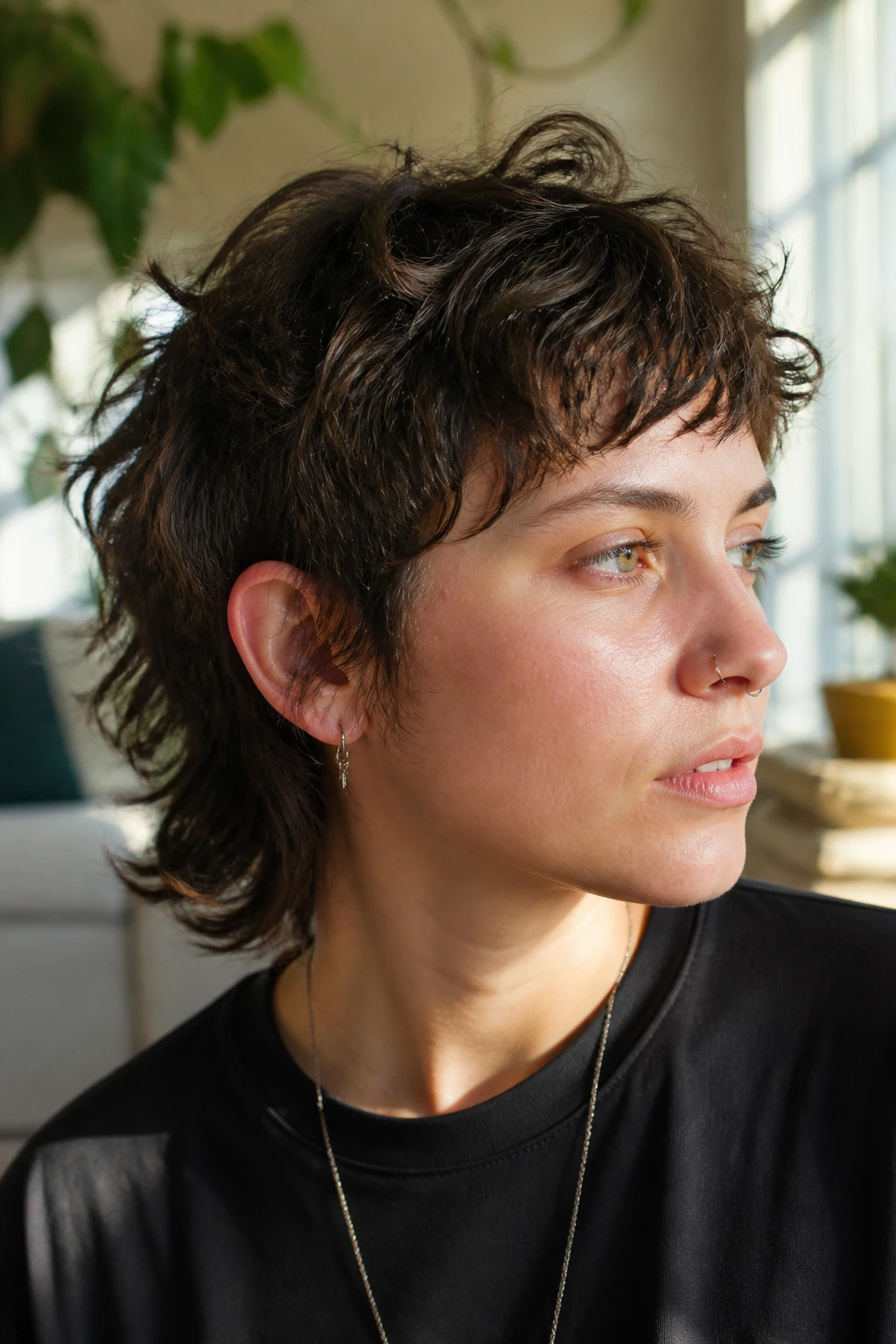
This one leans into layers. The wolf-cut mullet is built with more movement at the crown and a messier transition into the back, so the whole haircut feels a bit wilder than the classic version. Short wavy hair takes to this shape quickly because the natural bend already gives the layered pieces something to do.
The trick is not over-polishing it. Leave enough length on top for the wave to split into pieces, then keep the back a little longer so the silhouette stays readable. Curl cream or a light mousse works better than paste because this cut wants softness, not stiffness. If your hair is dense, the barber may need to remove some bulk under the crown so the top doesn’t sit like a dome.
7. Temple-Taper Mullet
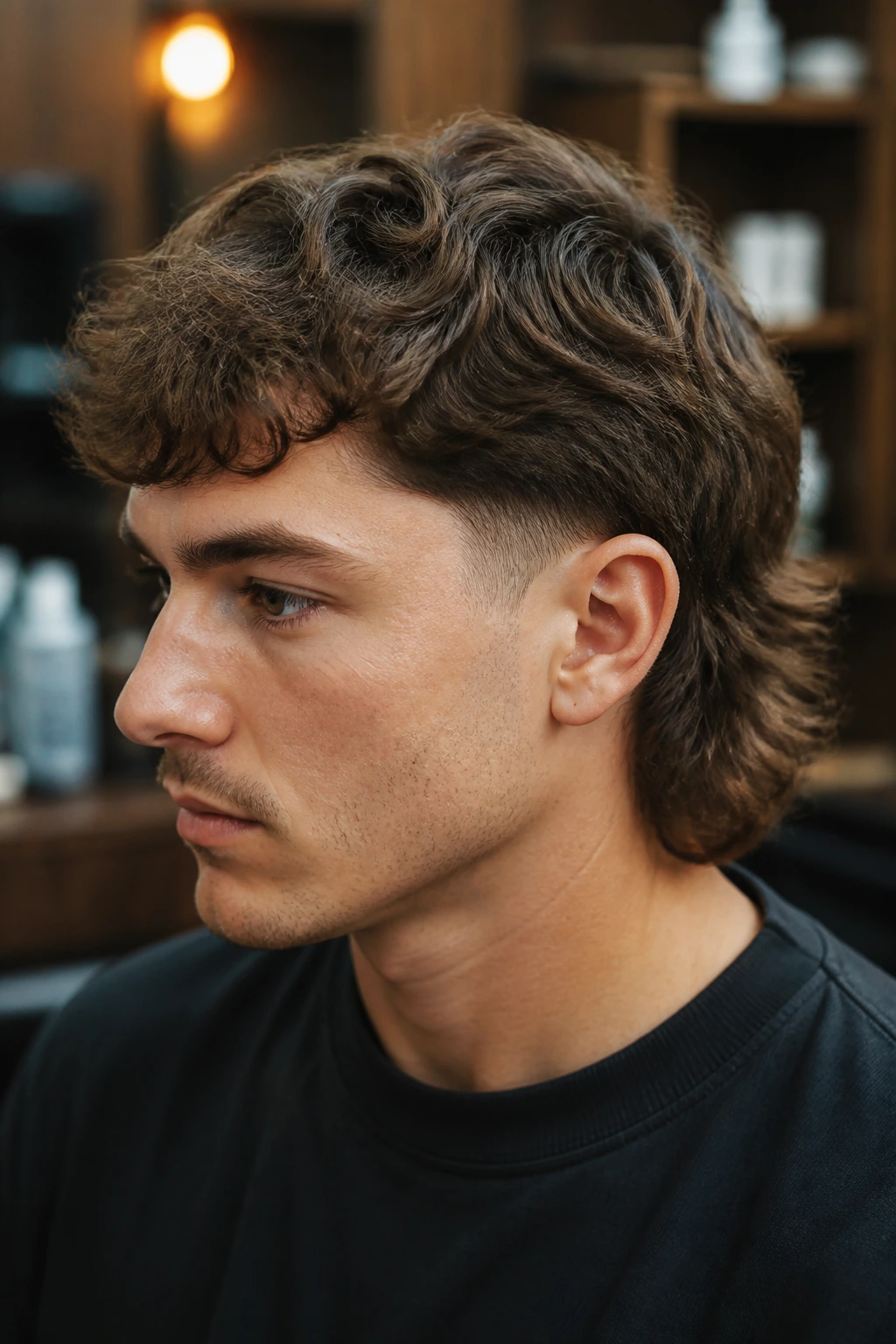
At the temples, restraint matters. The temple-taper mullet keeps that area tight and tidy while allowing the rest of the haircut to carry texture and length. That makes it feel cleaner than a fully shagged-out mullet, but it still has enough edge to avoid reading as a plain short cut.
It works especially well if your face is rounder or your hair grows wide at the sides. The temple taper narrows the silhouette without touching the back too aggressively. Ask for a gradual taper rather than a hard fade if you want the haircut to age gracefully over a few weeks. A matte paste at the top is enough to pull the waves forward or slightly up.
8. Wet-Look Mullet
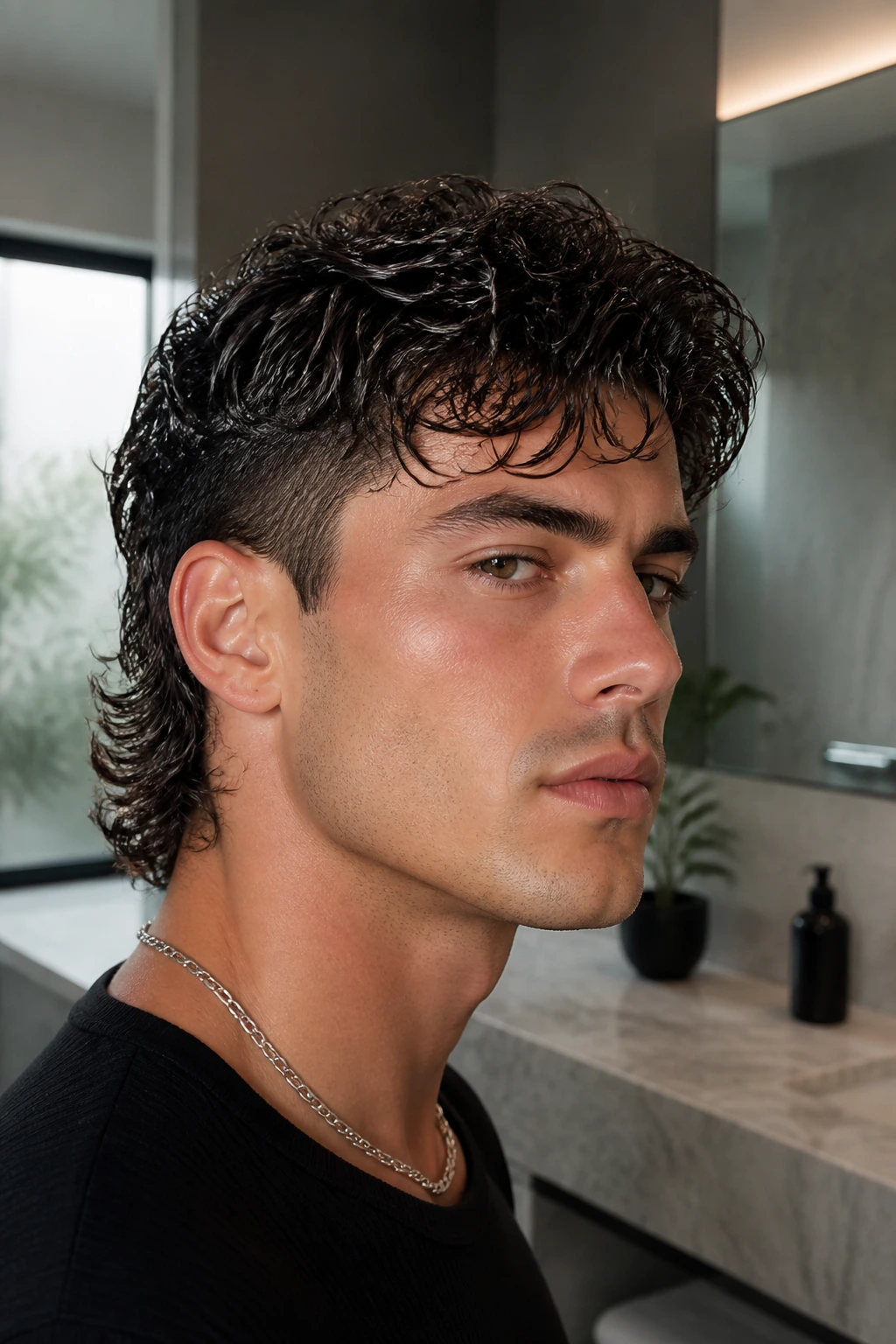
Gel changes the read of a short wave fast. The wet-look mullet uses that glossy finish to turn the bend in your hair into a sharp, defined shape instead of a soft, airy one. It’s a useful version if you like the cut to feel more dressed up at night or more stylized in general.
Start with damp hair and work a strong-hold gel or styling cream from the front through the crown, then comb it into the direction you want. Let it set before you touch it too much. Once the cast forms, you can scrunch the ends a little if you want less shine. This style looks best when the sides are kept very clean, because the shine draws attention to every line in the cut.
9. Mini Mushroom Mullet
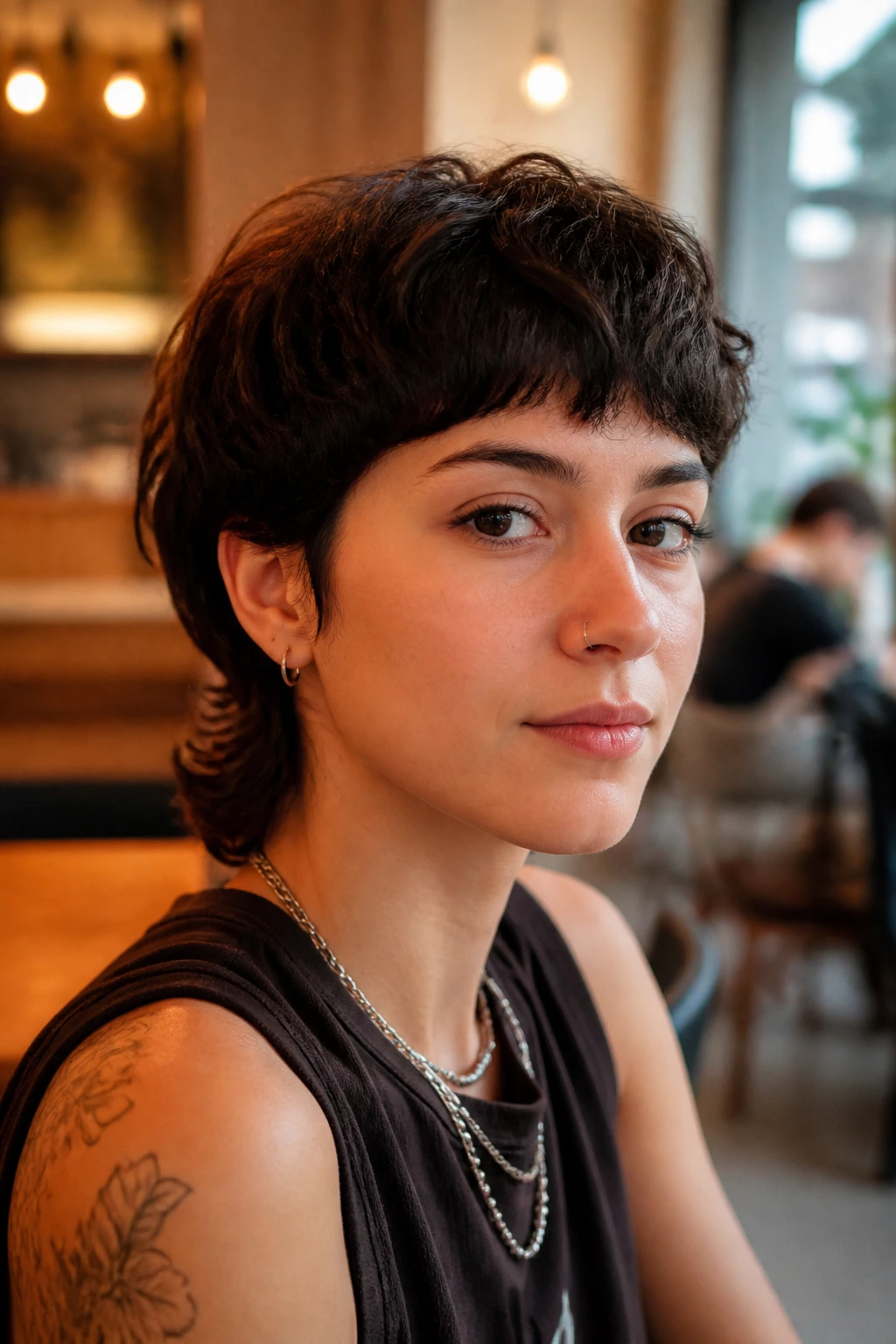
A mini mushroom mullet sounds odd until you see it move. The top keeps a rounded outline, but the back still extends enough to break the bowl shape and give you that tail at the nape. On short wavy hair, the natural texture keeps the rounded top from looking too severe.
This version suits softer features and people who want something playful without going full retro. Ask for the crown to keep a bit of weight, then lightly soften the perimeter so the edge doesn’t look helmet-like. A small amount of styling cream is enough. If you go heavy with product, the whole shape collapses into one flat sheet, and that’s the opposite of what this cut wants.
10. Side-Part Mullet
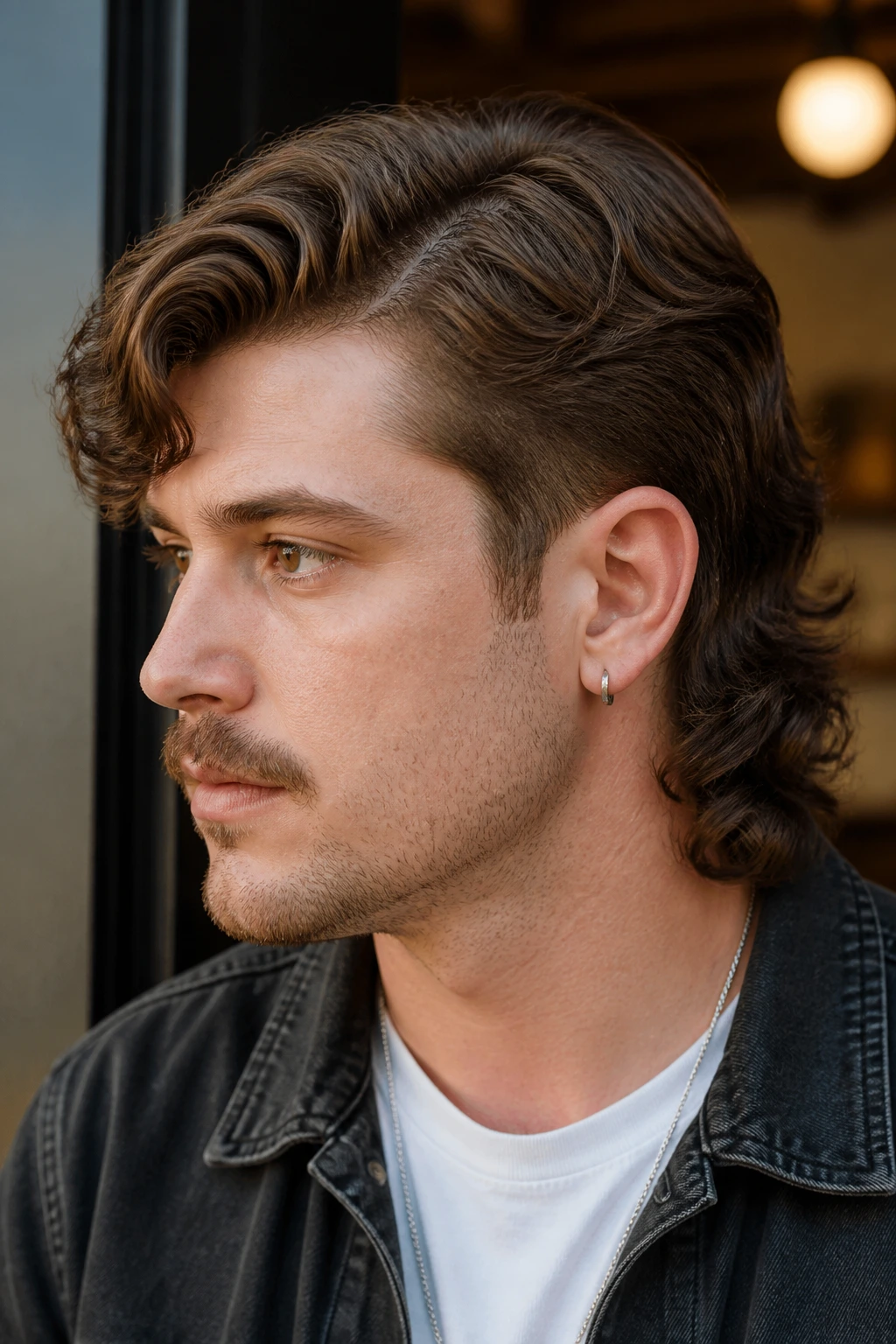
A side part can tame a mullet without killing it. That’s the appeal here. The side-part mullet keeps the top directional, which makes the haircut feel more intentional and less like a loose experiment. The back still carries the longer line, so the silhouette stays true to the shape.
This is one of the easier versions to wear if you have a wider forehead or you like a more polished look. Keep one side tucked closer to the head and let the waves on top sweep over naturally. A light cream or paste works well because it helps define the part without flattening the bend. If your hair has a stubborn cowlick, tell the barber before they start cutting. That swirl will decide where the part actually lives.
11. Feathered Retro Mullet
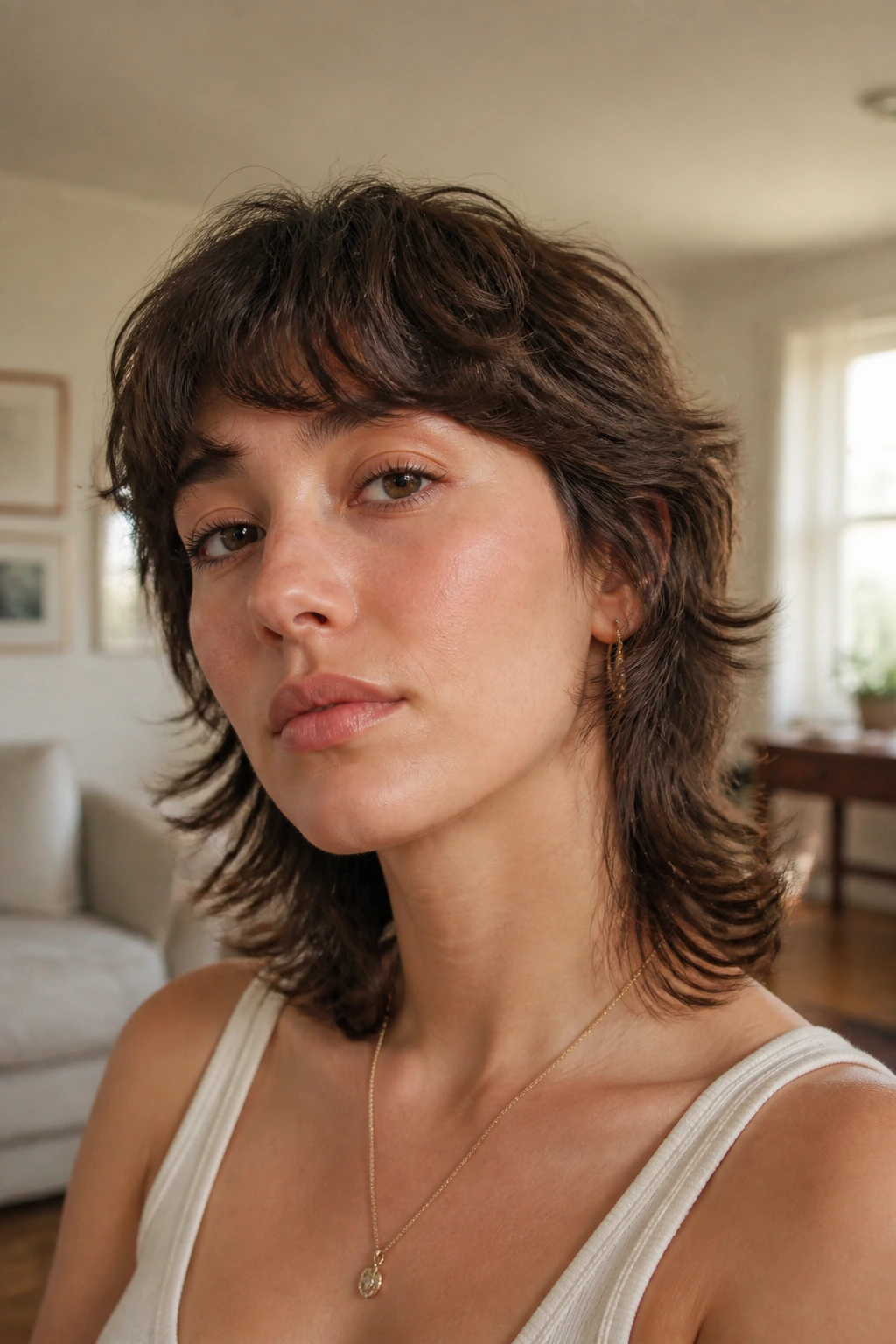
Feathering keeps the cut from sitting like a helmet. The feathered retro mullet borrows a little from older layered shapes, with ends that are soft, broken, and a bit airy around the face and nape. On short wavy hair, that feathered finish makes the cut feel lighter than a blunt mullet ever could.
This version works well when you want movement but not chaos. Ask for point cutting or soft razor work only if your hair can handle it; very fragile strands can get fuzzy fast. A blow-dryer with a nozzle and a vent brush can give the front a gentle sweep, then you can finish with a touch of cream. It’s a nice cut if you like the idea of the mullet but not the theatrical part of it.
12. Piecey Fringe Mullet
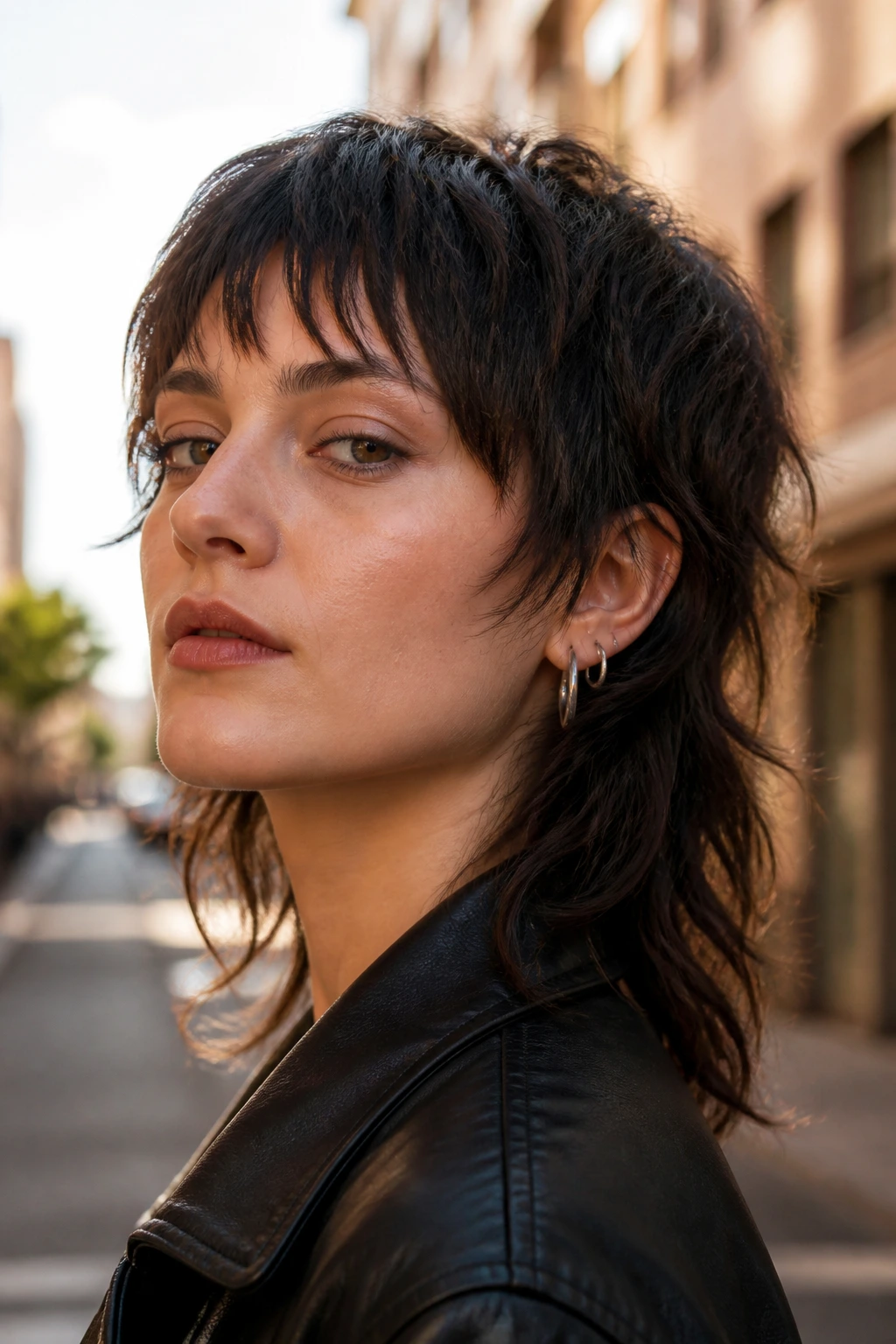
Short front sections give the cut more edge. The piecey fringe mullet keeps the bang area broken into separate strands, which plays nicely with wavy hair because the front never has to sit perfectly flat. The back stays longer and a little looser, so the contrast between front and back is easy to see.
This version likes lightweight product. A matte paste or texture powder lets you pinch small sections apart with your fingers instead of combing everything into one shape. That separation makes the haircut look deliberate, not messy. If your waves clump naturally, don’t fight them too hard. Separate just enough to show the line of the fringe and move on.
13. Soft Mohawk Mullet
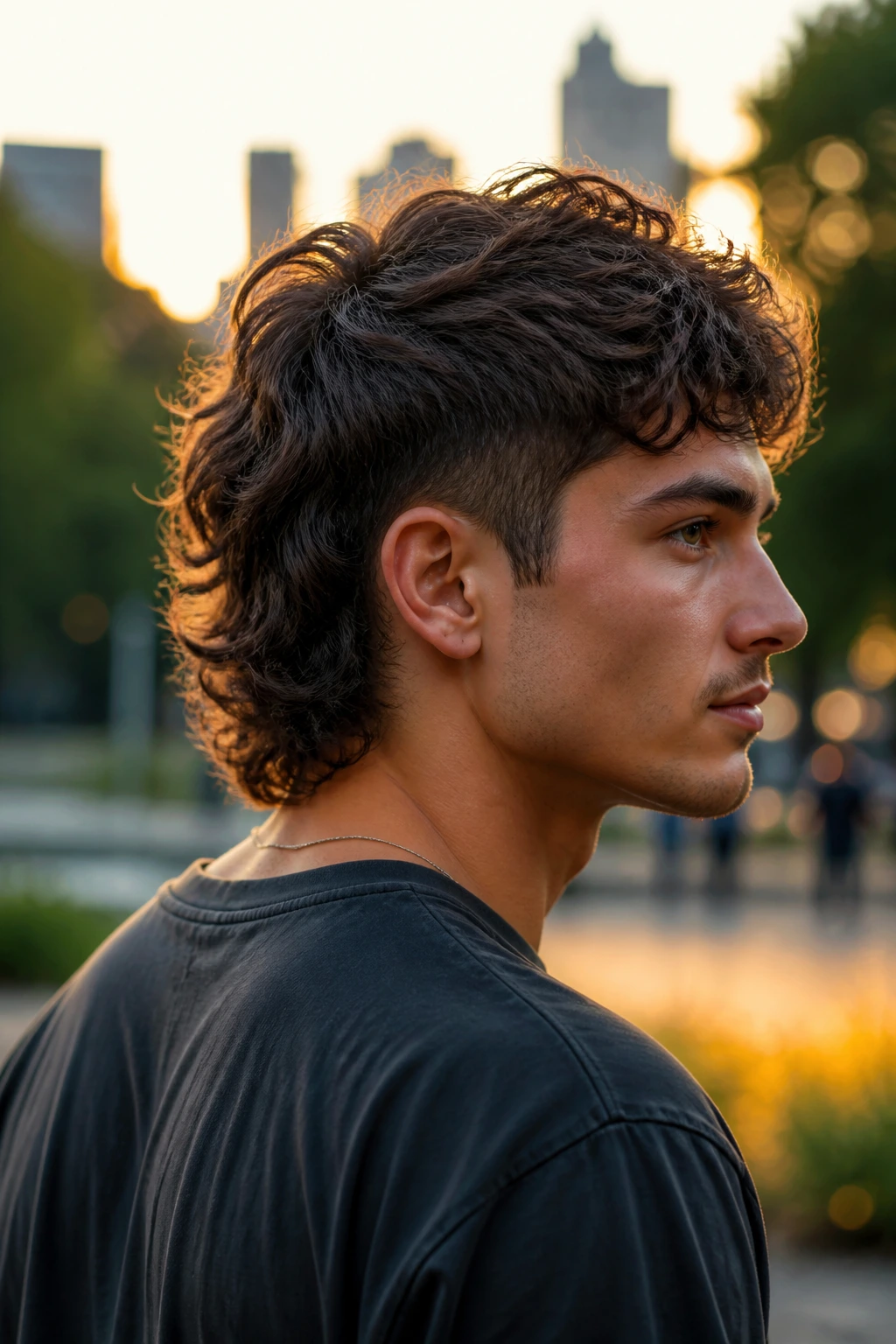
The center ridge is the whole point here. The soft mohawk mullet keeps the sides shorter and the middle section a touch taller, then lets the back fall into the mullet tail. It’s a bold shape, but the “soft” part matters — the goal is lift, not a spiky strip that feels stuck on.
This works especially well if your hair grows forward at the crown or if you want the haircut to show from the side. Ask for the center to be left slightly heavier than the edges, then style it with a blow-dryer and a little mousse. That gives the ridge shape without making it hard or crunchy. If you have a strong cowlick, this cut can actually help, because the wave direction blends into the mohawk line instead of fighting it.
14. Razor-Textured Mullet
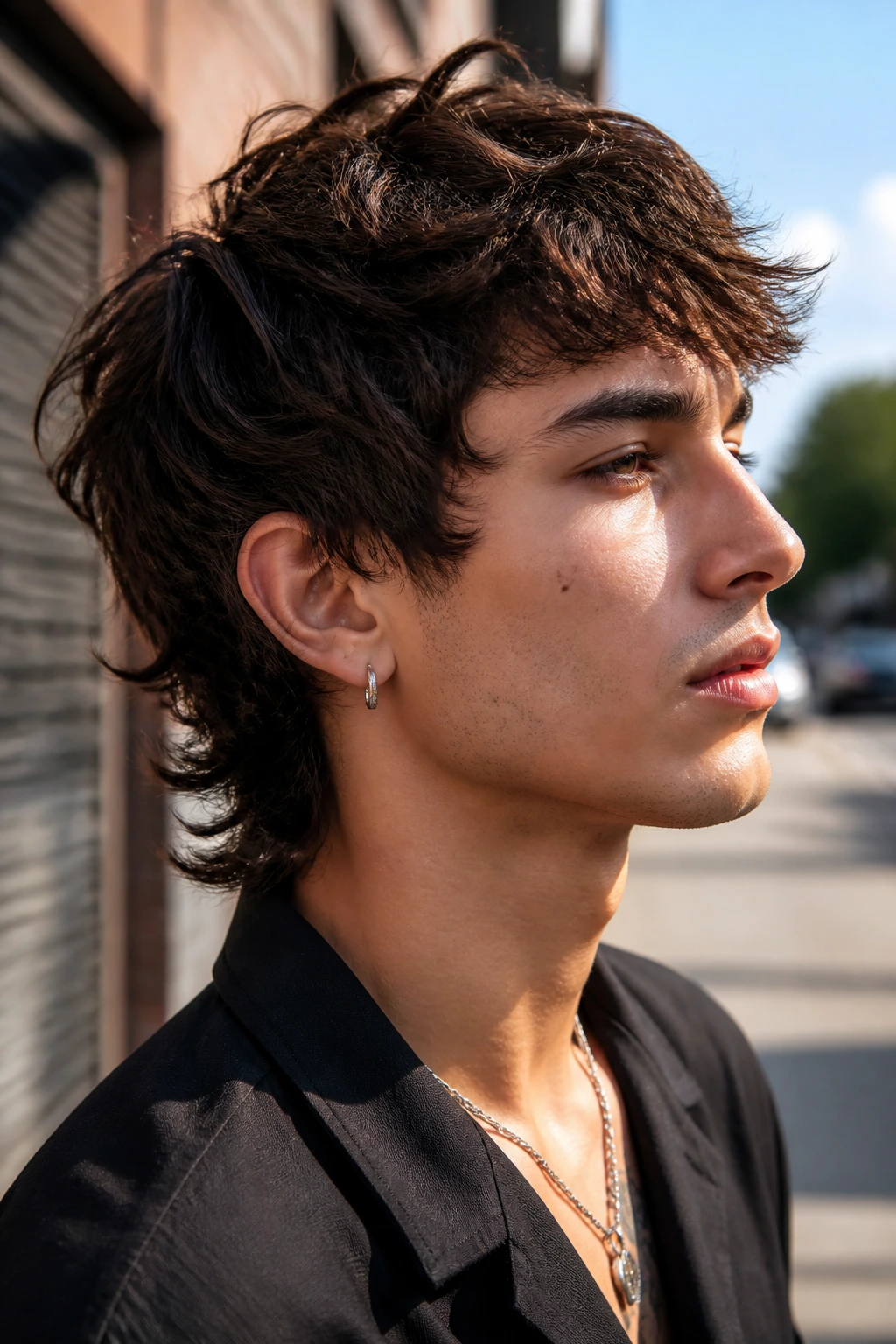
Razors and waves get along when the hair is dense enough. The razor-textured mullet uses a softer, sliced finish to take some weight out of the top and back, which lets short wavy hair move instead of puff. The result feels lighter, a little sharper, and more broken up than a scissor-only cut.
This is not the version for fragile ends that already fray easily. If your hair is coarse or thick, though, razor work can help the shape settle better around the ears and neck. Use a leave-in cream or very light paste so the texture stays separated. Too much product makes razor-cut hair look stringy, and stringy is not the same thing as textured.
15. Drop Fade Mullet
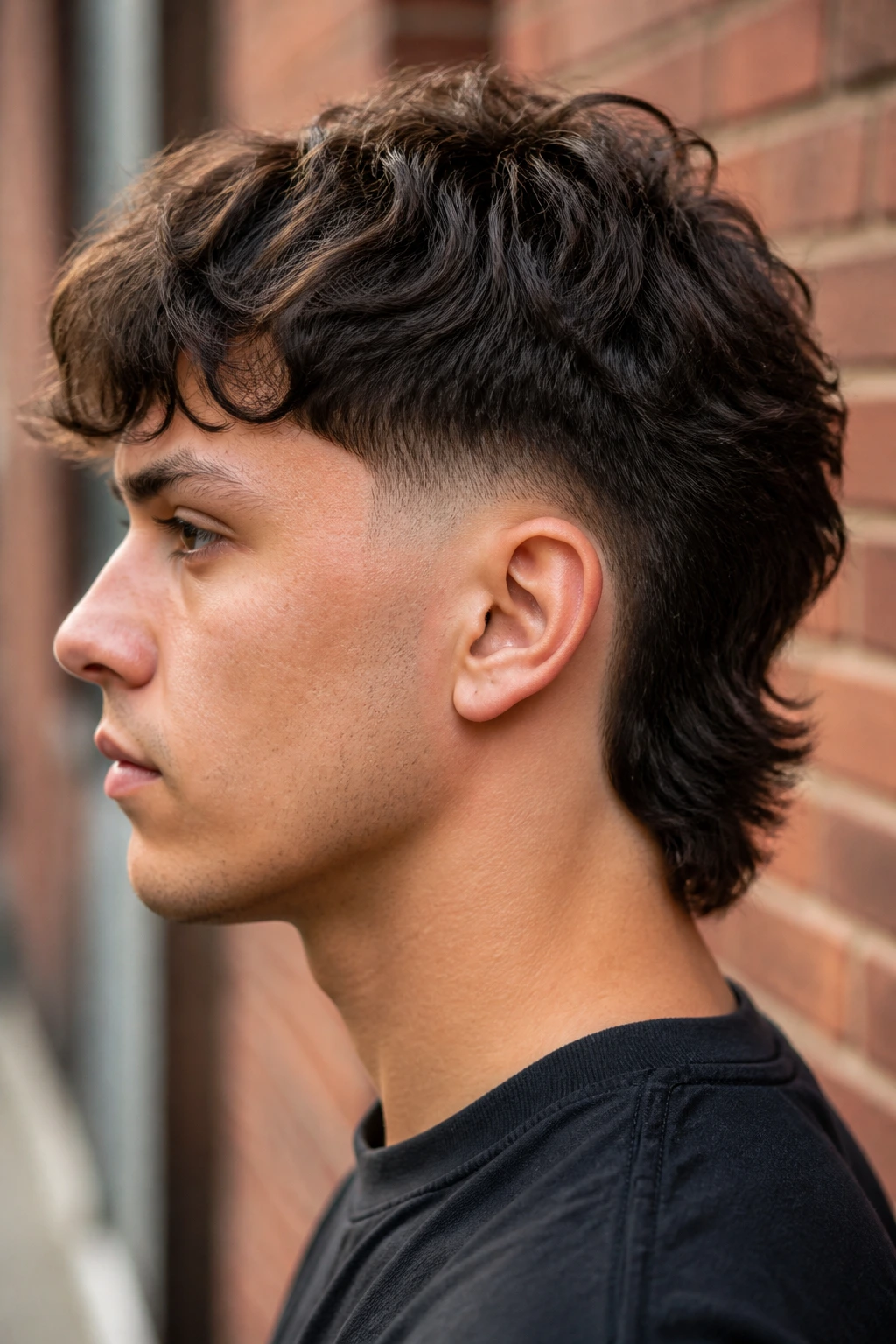
The drop fade version is all about the curve behind the ear. Instead of fading straight across, the line drops lower as it moves back, which gives the haircut a cleaner profile from the side. Short wavy hair keeps the top from looking too hard against that fade, so the contrast feels balanced.
It’s a strong option if you like a sharper silhouette. Ask the barber to keep the fade low enough that the nape length still reads as a mullet, because a drop fade can eat the tail if it gets too high. Use a small amount of matte paste on dry hair to keep the top separated. This cut does need maintenance. When the fade grows out, the whole shape starts to blur fast.
16. Bowl-Edge Mullet
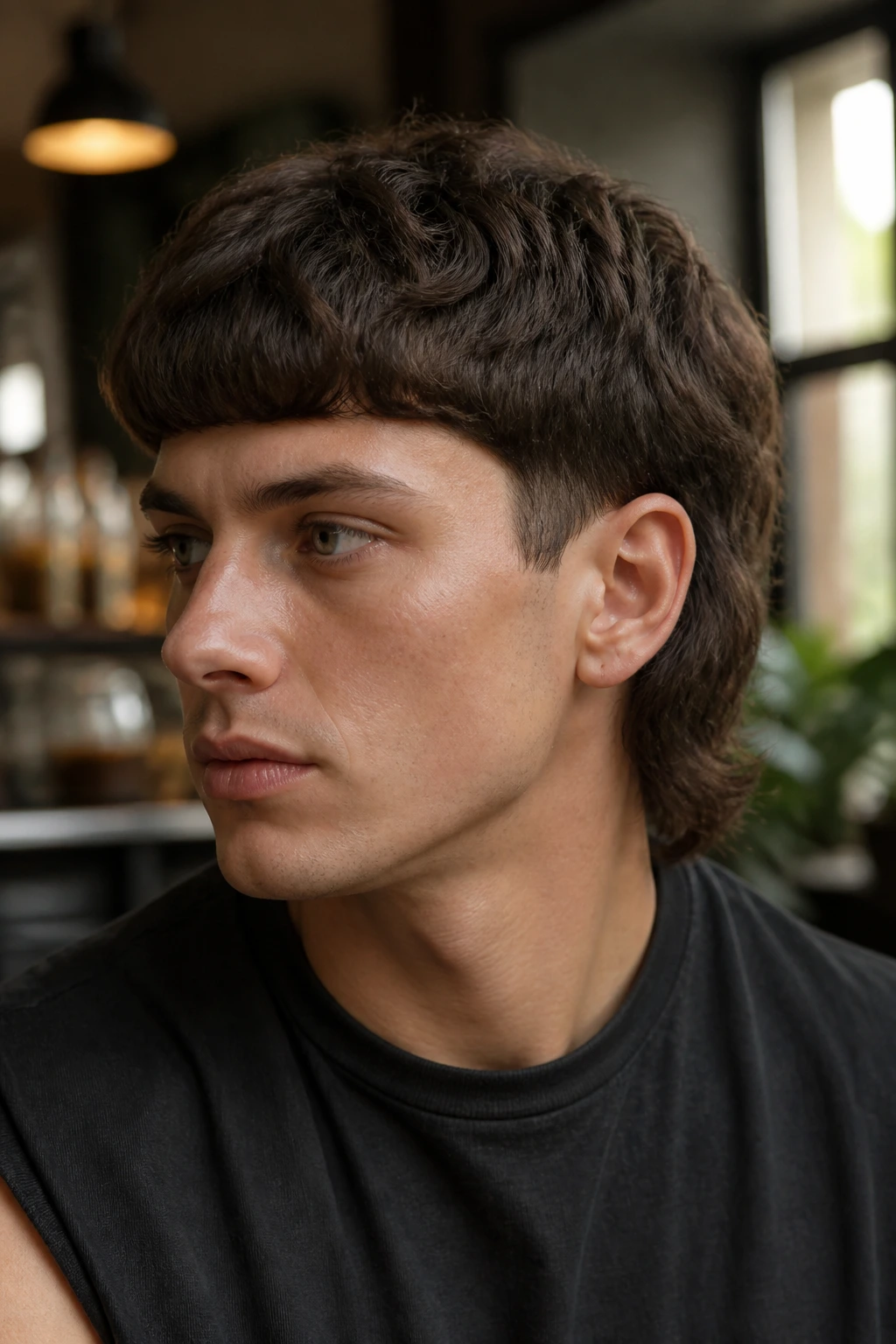
A bowl-edge mullet takes confidence. The top has a rounded perimeter, a little like a softened bowl cut, but the back keeps length so the haircut doesn’t collapse into pure retro novelty. Short wavy hair gives this shape some needed movement, which keeps it from looking overly rigid.
This one tends to work better on thick hair or on people who want a very graphic outline. Ask for the edge to be broken up just enough that it doesn’t form one hard line all the way around. A minimal styling routine is enough here — a touch of cream or nothing at all if your waves already sit well. If you over-style it, the clean line gets muddy, and the whole point disappears.
17. Heavy Crown Mullet
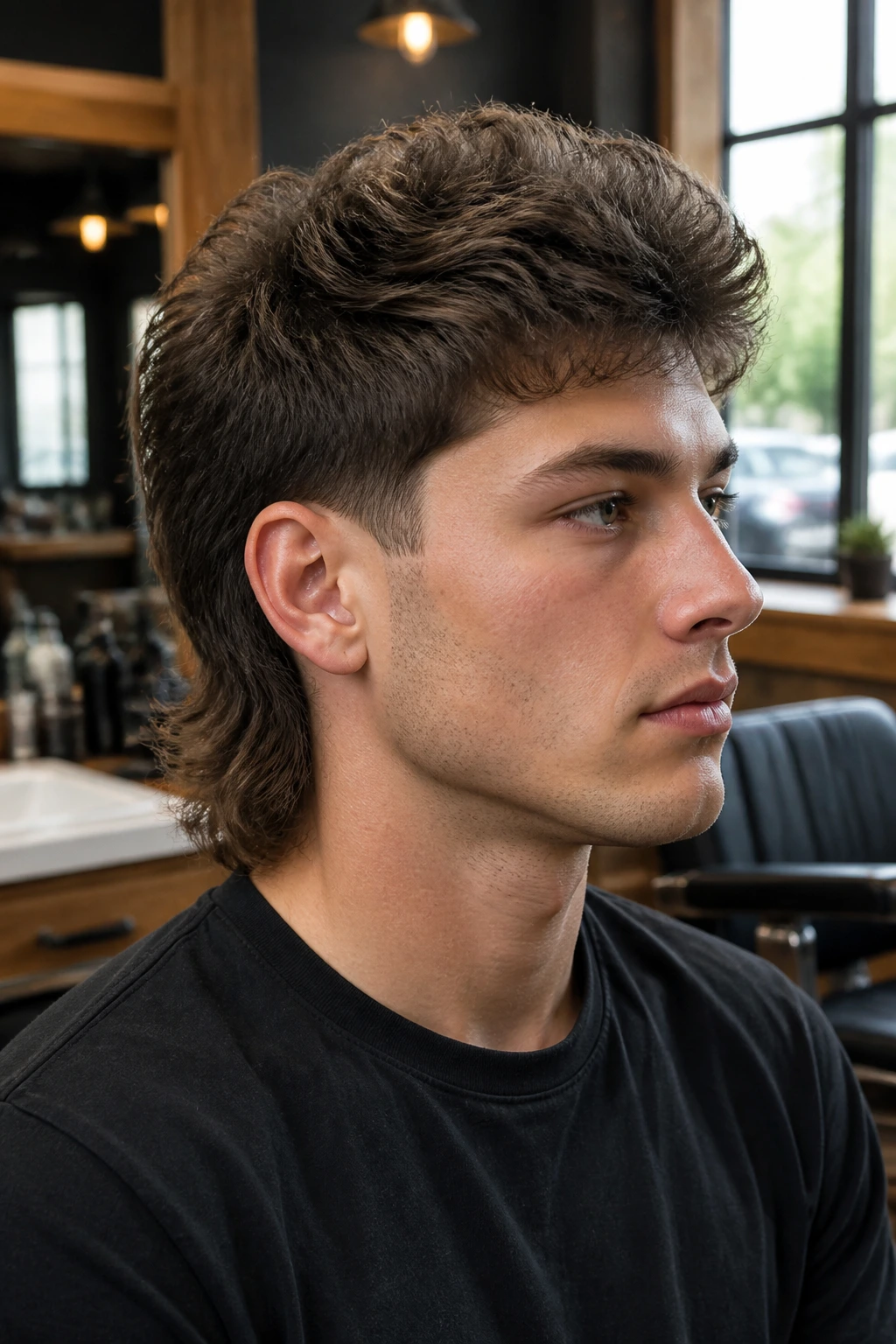
Heavy crown mullets matter when the top grows outward instead of down. If your short wavy hair lifts at the crown and pushes wide, keeping some extra weight there can help the shape sit in a controlled way instead of puffing up like a triangle. The tail at the back stays visible, but the top keeps more substance.
The barber should debulk carefully, not aggressively. A little too much removal at the crown and the cut loses its body; too little and the top mushrooms. This is one of those shapes where a dry check matters, because wavy hair lies differently once it settles. Styling cream works better than hard-hold gel here. You want the hair to sit, not lock.
18. Swept-Over Mullet
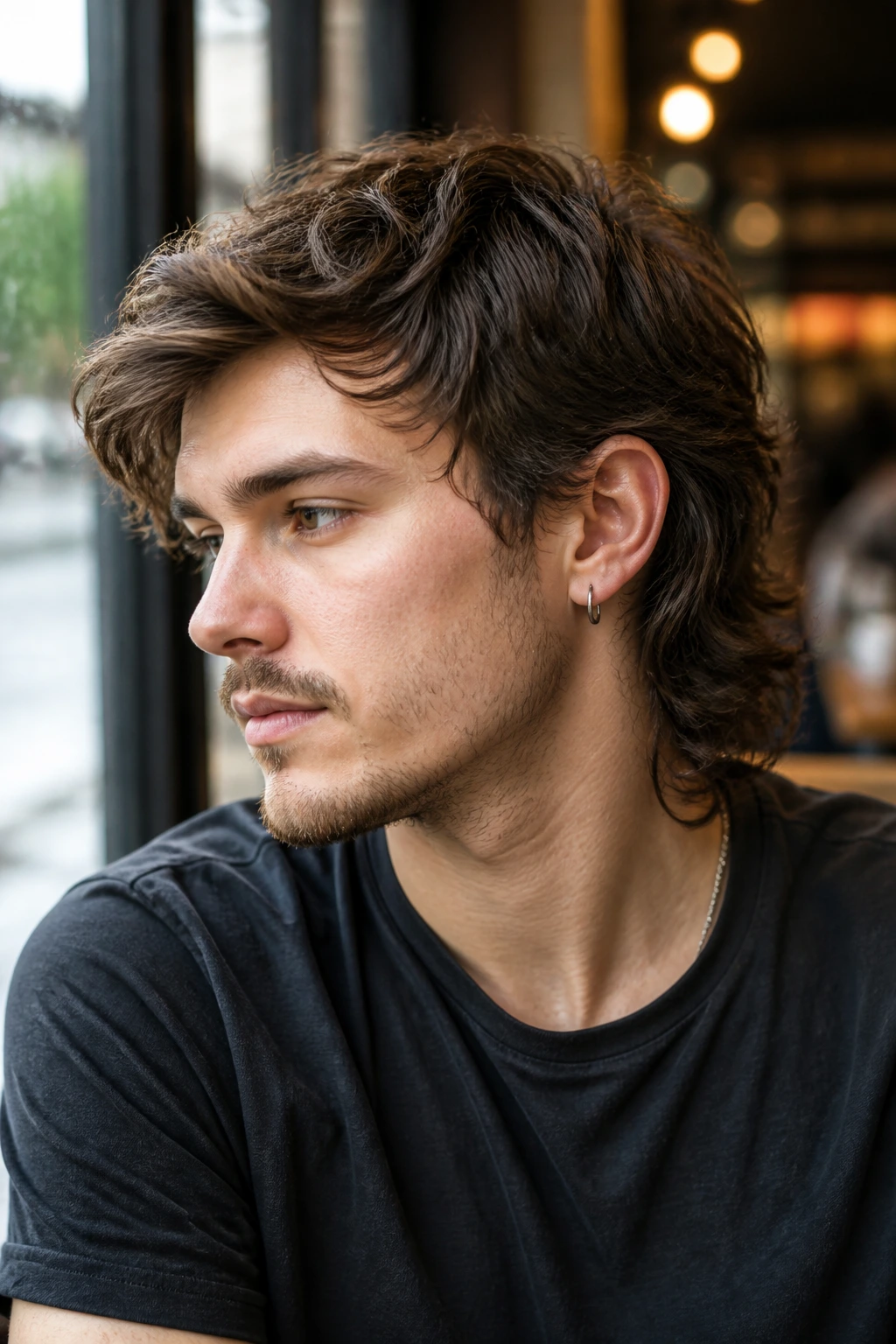
Sweeping the top to one side gives the back more contrast. The swept-over mullet feels slightly cleaner than a center-part version, but it still keeps enough texture to read as wavy and short, not slicked flat. It’s a good fit if you like asymmetry and want a haircut that changes shape depending on how you finger-comb it.
Ask for the top to stay long enough to brush over naturally, with the front left a little longer than the opposite side. A vent brush and a blow-dryer can help set the direction, then a dab of paste holds the wave together. This style often looks better when it’s not too neat. A few loose pieces at the hairline make the whole thing feel alive.
19. Nape-Long Mullet
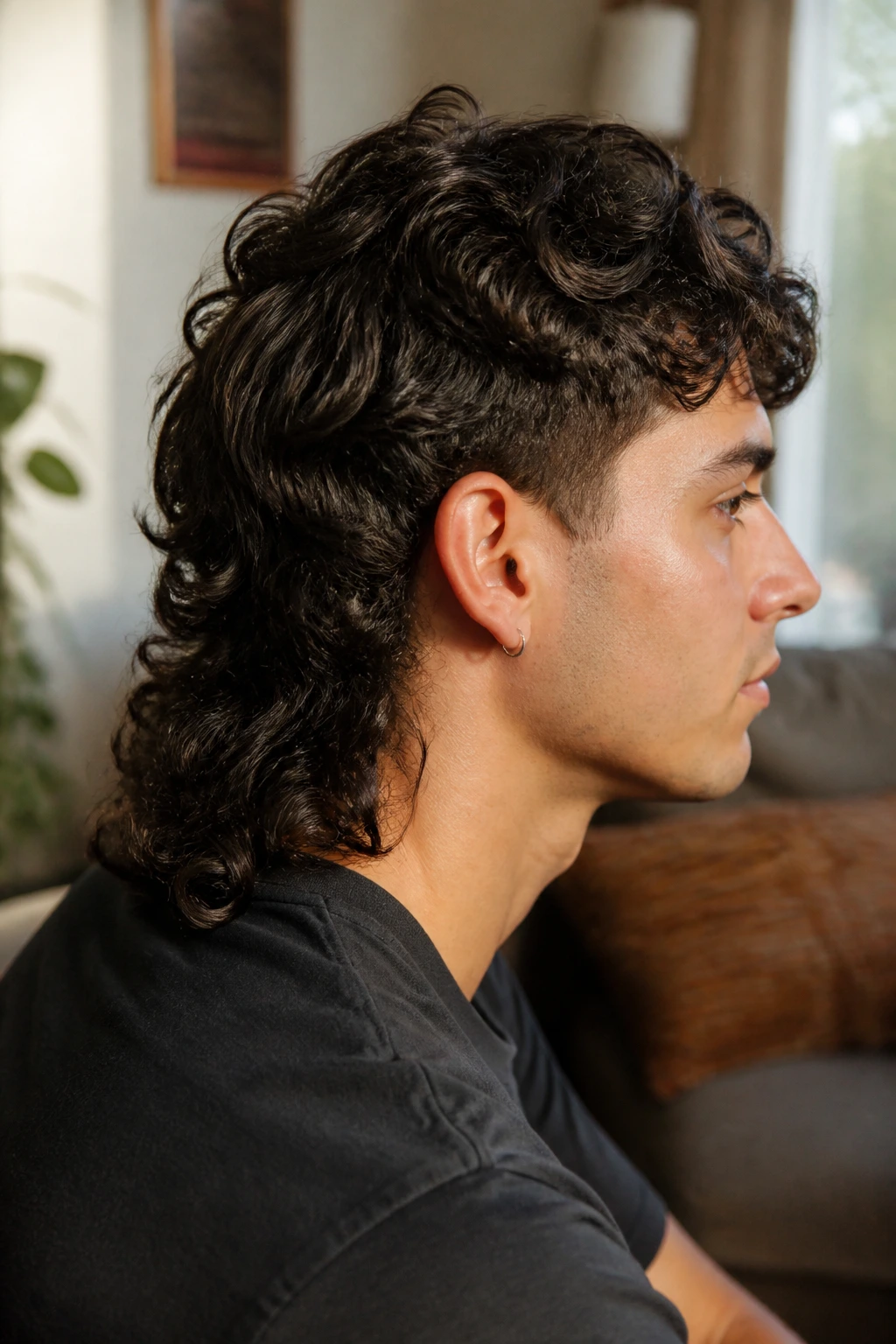
Nape length is the point here. The nape-long mullet keeps the back visibly longer than the sides and top, so there’s no question what the haircut is trying to do. On short wavy hair, that extra length at the neckline gives the bend somewhere to sit, and it keeps the silhouette from looking too cropped.
This is the version for people who want the mullet to be obvious but still controlled. Ask the barber to leave the back enough length to clear the shirt collar, or at least brush it, while keeping the sides tight enough to show the difference. A little curl cream through the back helps the tail fall in separated pieces instead of one thick clump. It needs a clean neckline, though. A messy neck line ruins the point.
20. Choppy Layered Mullet
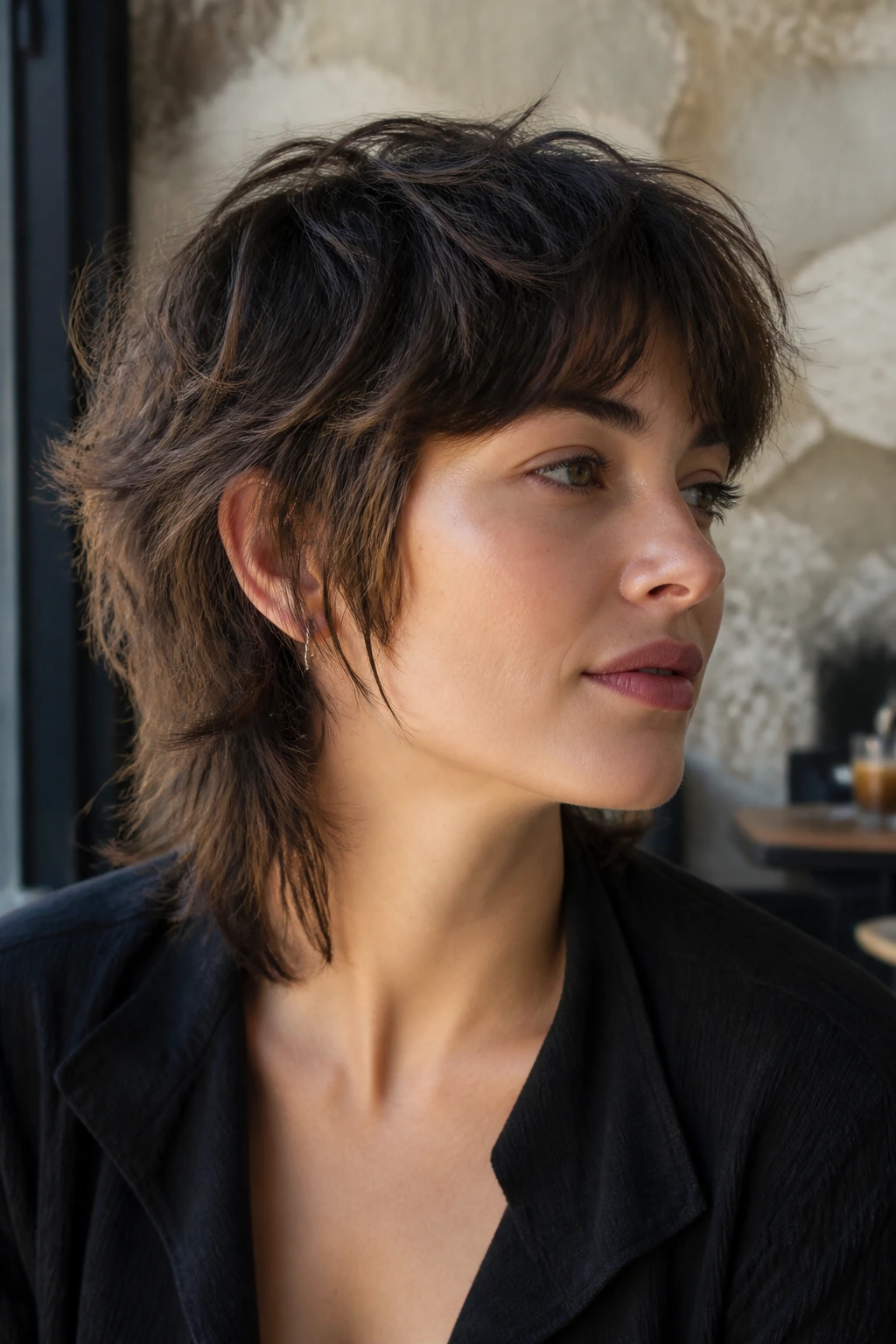
Stacked layers make the cut look fuller, not flatter. The choppy layered mullet uses short internal layers to build movement through the crown and back, which is useful if your waves are loose and tend to lie in one direction. The shape gets texture from the cut itself, so you don’t have to create all the movement with product.
This version is good for fine to medium hair that needs a little lift without a lot of bulk. Ask for the layers to be visible but not overly disconnected. Too many tiny slices and the cut starts to frizz up; too few and it sits heavy. A lightweight mousse on damp hair gives this style enough structure to hold the choppy pieces apart as it dries.
21. Air-Dried Natural Mullet
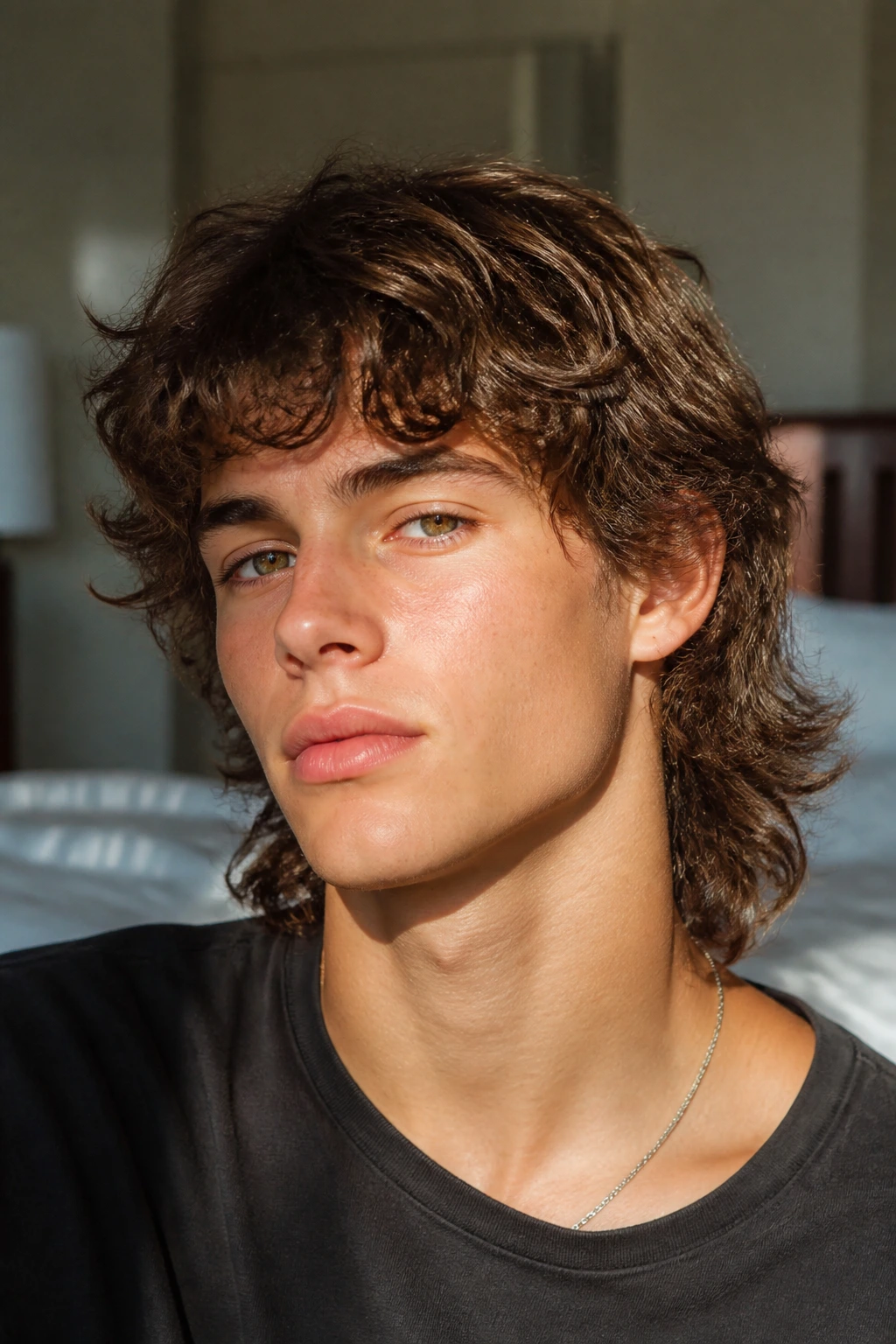
Some people want the haircut to look almost accidental. The air-dried natural mullet is built for that. The sides stay clean enough to define the shape, but the top and back are left loose so your wave pattern can do the styling by itself. It’s the most forgiving version on days when you do not want to stand in front of a mirror for fifteen minutes.
This cut works best when the barber leaves enough length for the waves to form, not so short that they spring into odd little spikes. Use a touch of curl cream, scrunch once, then leave it alone. That last part matters more than people think. The more you poke at it while it dries, the more it loses the soft, lived-in finish that makes this version good.
22. Ear-Tuck Mullet
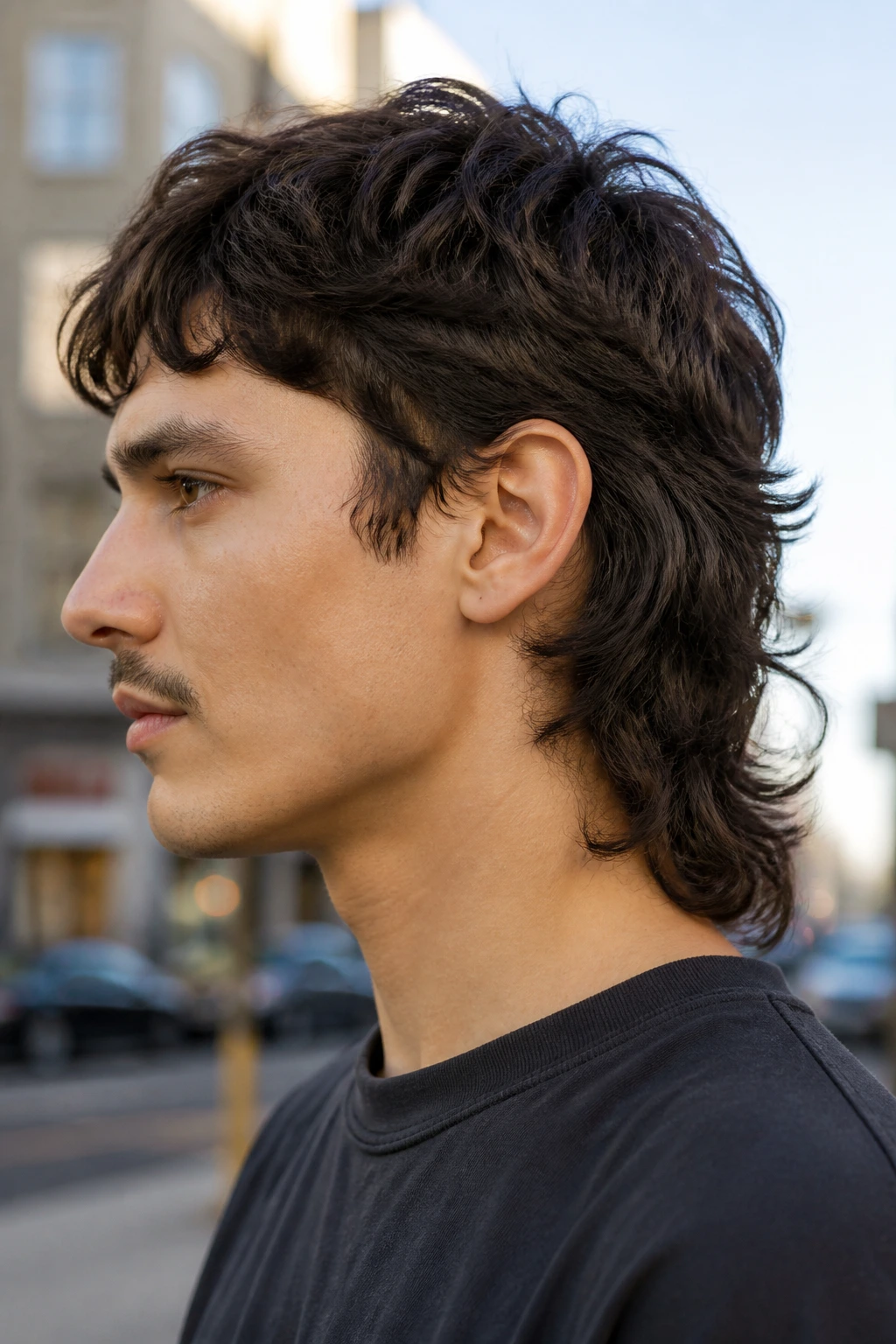
This is the cleanest way to wear a mullet and still tuck hair behind the ear. The ear-tuck mullet keeps enough side length to move out of the face when you want it to, while the back stays longer to keep the shape alive. For short wavy hair, that flexibility is the whole appeal.
Tell the barber you want the sides to graze the ear, not cover it heavily, and keep the back a little longer than the side length so the silhouette still reads correctly. A light cream or mousse helps the front sit without slipping forward all day. It’s a smart choice if you switch between casual and neat settings often, because the cut can shift with a hand and still look intentional.
23. Disconnected Mullet
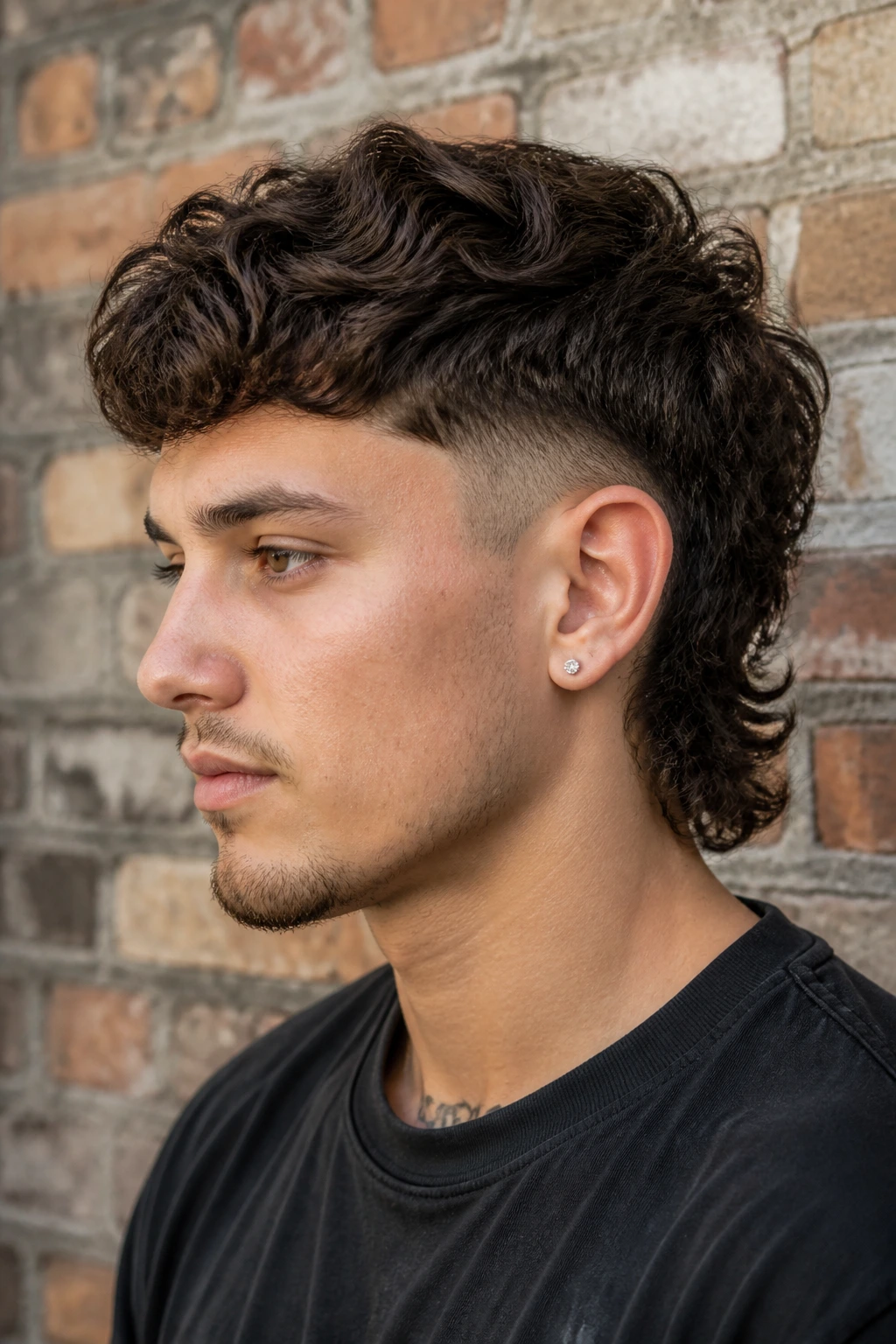
Disconnected cuts look sharper when the wave pattern is uneven. The disconnected mullet leans into that contrast with a clear jump between the short sides and the longer top and back. There’s no attempt to hide the line; that’s the point. On short wavy hair, the texture keeps the divide from feeling too harsh.
This version needs a precise barber. The line has to be clean enough to look deliberate but not so severe that the haircut becomes a novelty. If you like sharper clothes, boots, and a cut with some attitude, this one fits. Keep the styling simple — matte paste and finger shaping are enough. The wrong product here makes the transition look greasy instead of crisp.
24. Faux Hawk Mullet
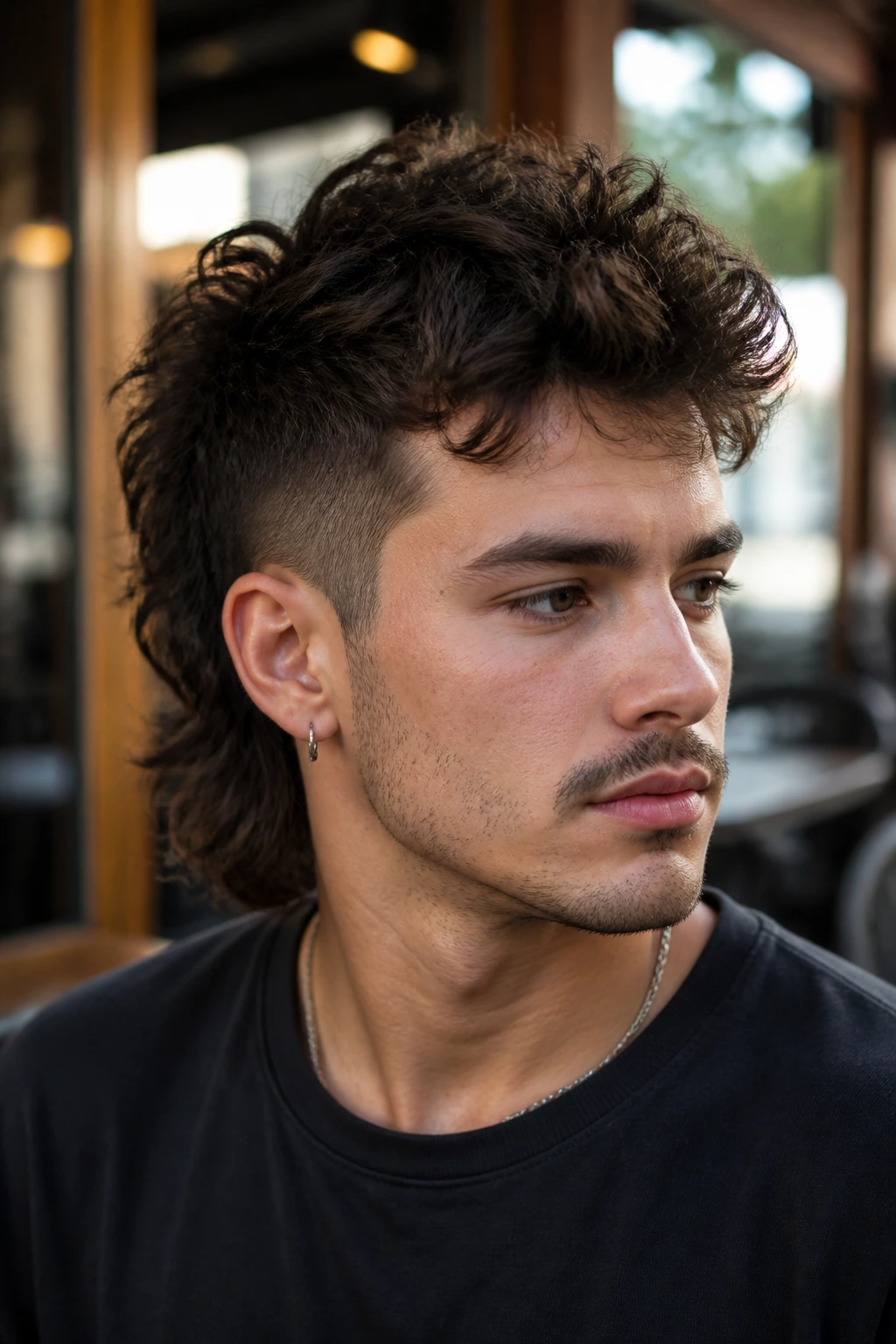
A faux hawk version pushes the energy into the center. The sides stay tighter, the top rises a little higher through the middle, and the back keeps enough length to keep the mullet identity alive. It’s a strong shape for people who want the haircut to feel active from every angle.
This cut works especially well when your wave pattern lifts naturally at the crown. Ask the barber not to over-thin the center strip, because that ridge gives the style its line. Blow-dry the top upward for a few seconds, then finish with paste or clay. The back should still move. If it stays too stiff, you lose the contrast that makes the cut worth wearing.
25. Rounded Fringe Mullet
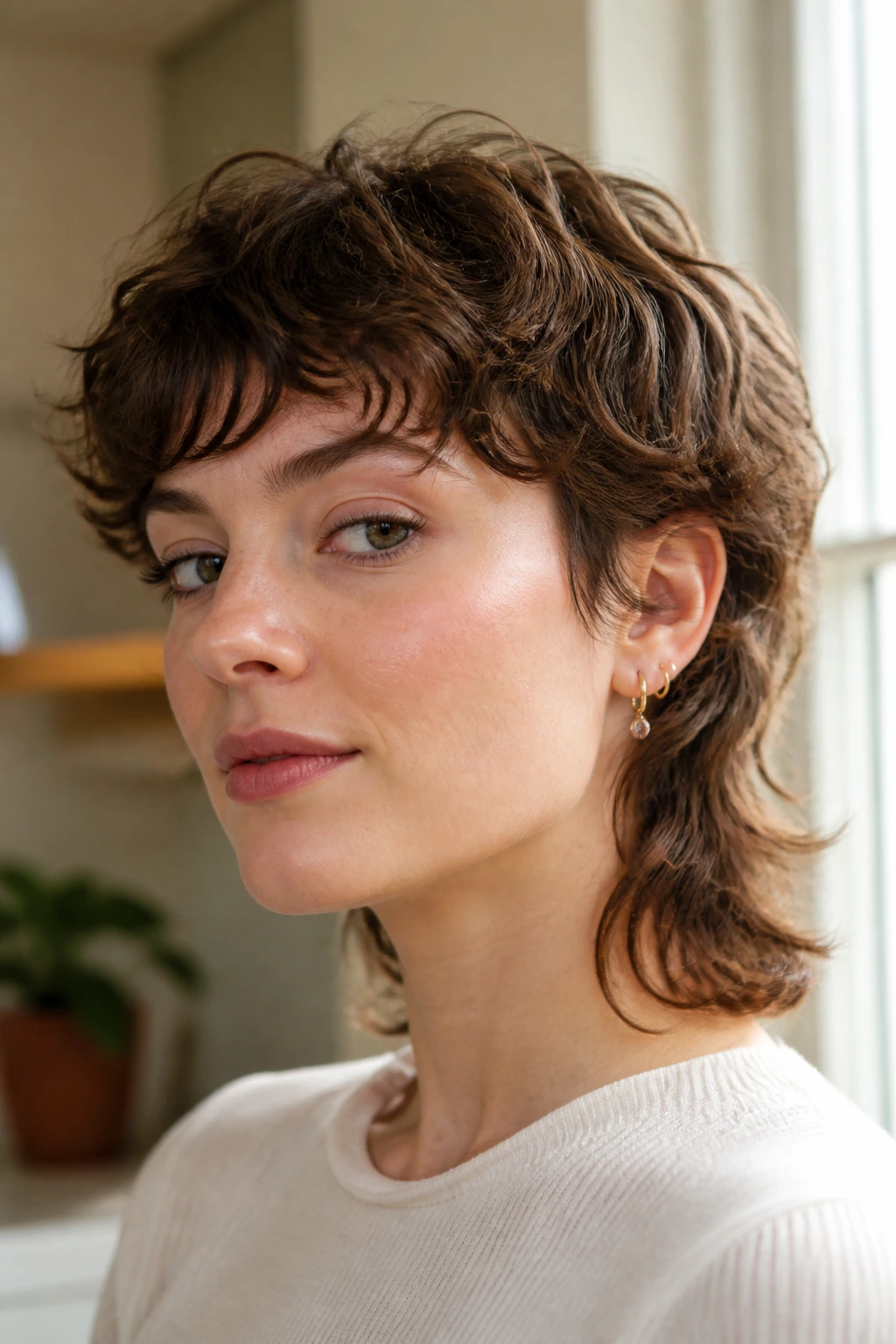
Rounded fringe softens a mullet faster than any fade. The front follows a gentle curve instead of a hard straight line, which makes the haircut feel less severe and a bit friendlier on short wavy hair. The back stays longer, so the shape still has the right profile.
This version suits square faces and strong jawlines especially well because the fringe breaks up the edges. Ask the barber to keep the curve soft and avoid a harsh, straight-across bang unless you want a stronger statement. A touch of styling cream keeps the fringe sitting in a smooth arc without turning it flat. If your waves spring upward, a quick blow-dry across the forehead can calm them down before they set.
26. Surfer Taper Mullet
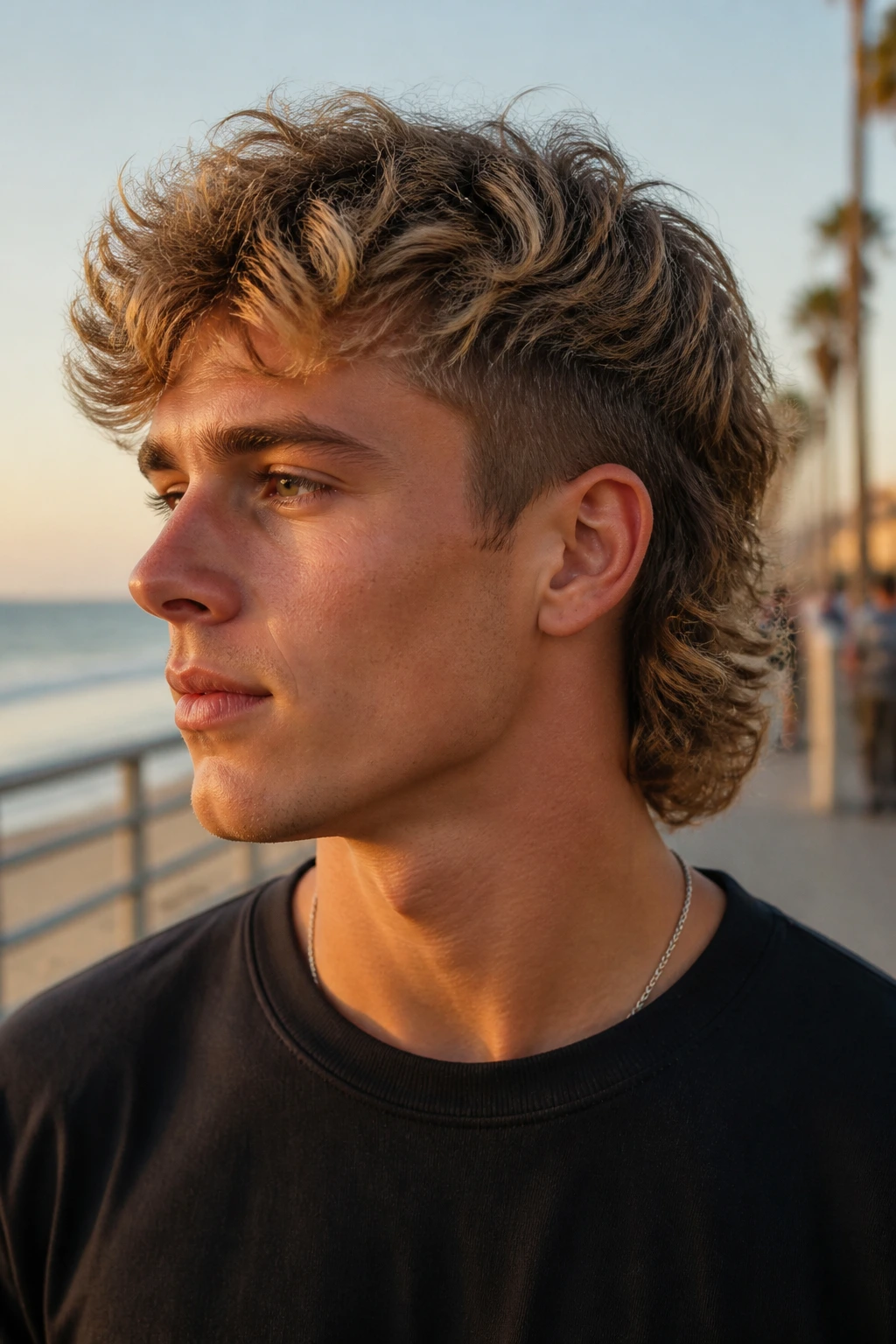
Think saltwater, not hairspray. The surfer taper mullet keeps the sides soft and the top lightly separated, with enough nape length to remind you it’s still a mullet. Short wavy hair almost wants this cut, because the texture already has that loose, wind-tossed shape built in.
Use sea salt spray carefully here. A little gives grit and separation; too much dries the hair into rough little threads. The cut looks best when the waves can fall naturally and the edges are just tidy enough to keep it from turning shaggy. If you live for low-effort styling, this is one of the easier versions to wear. It rewards hair that’s been rinsed, scrunched, and left alone.
27. Side-Swept Micro Mullet
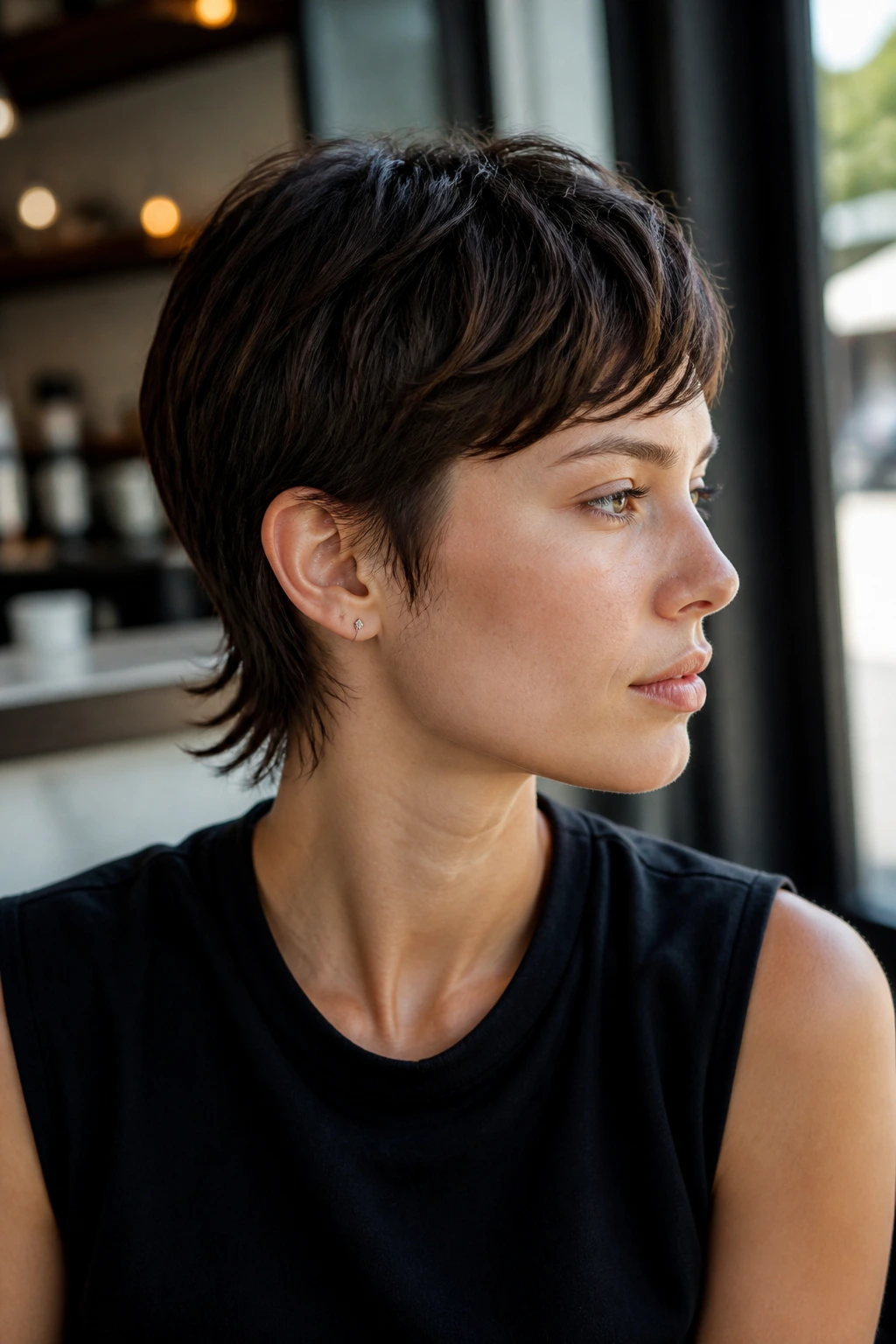
Shorter front, cleaner sides, and a tiny bit of length in the back. That’s the whole idea. The side-swept micro mullet is subtle enough that some people will read it as a textured short cut first and a mullet second, which makes it a useful option if you want a quieter shape.
It works well when you need the haircut to pass in more conservative settings. Ask for the back to stay just long enough to show movement at the neckline, not so long that it dominates the cut. A small amount of paste swept diagonally across the front is enough to guide the waves. This is the kind of mullet that looks better when it’s not over-explained.
28. Caesar Mullet
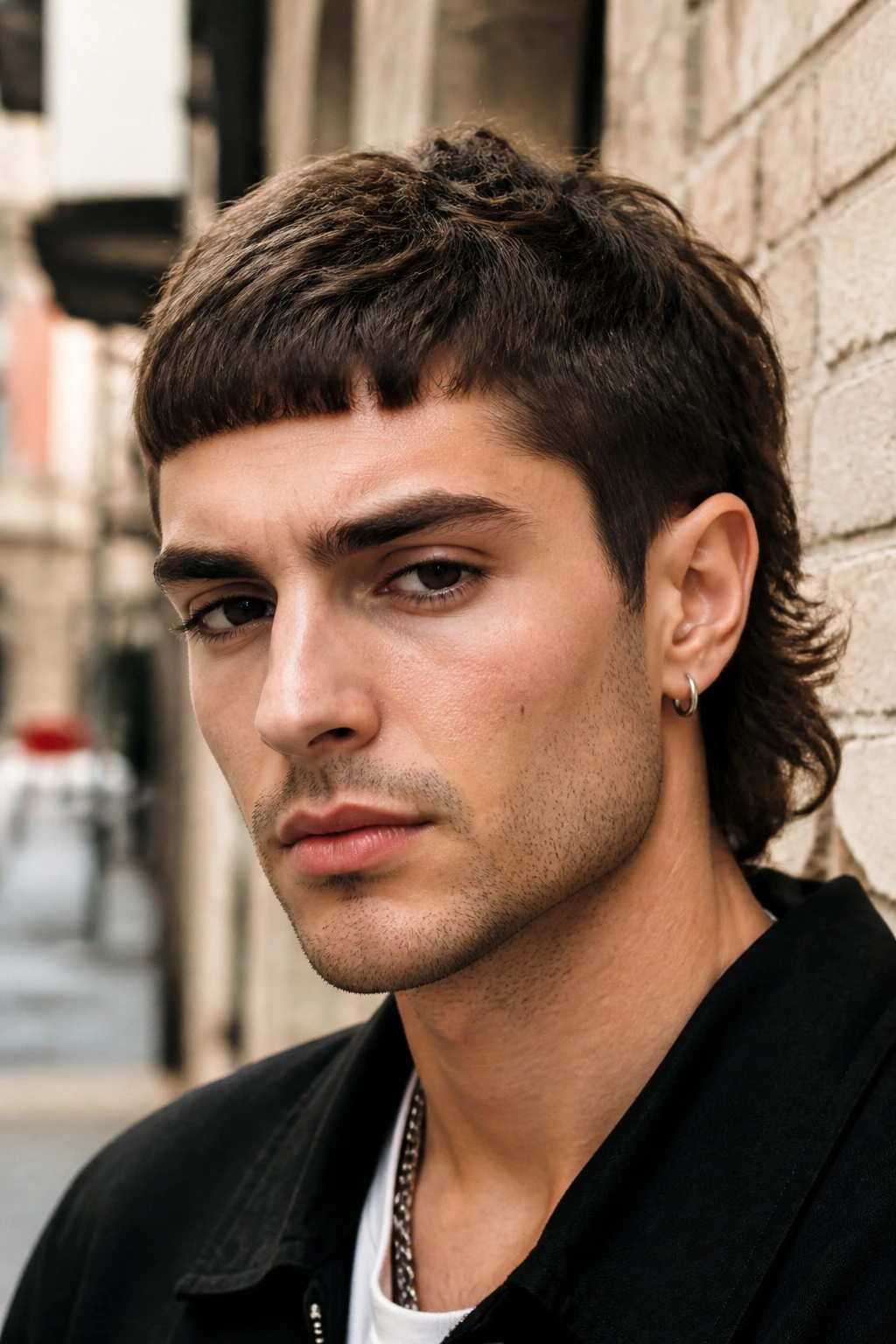
The Caesar mullet is blunt where it counts. The front keeps a short, straight fringe, while the top and back carry enough texture to keep the haircut from becoming a pure Caesar crop. On short wavy hair, that blunt front line gives the cut a neat anchor, and the waves behind it do the rest.
This version is useful if your hairline is a little uneven or if you want to control the forehead area. Ask for the fringe to stay short enough to sit above the brows, then let the back keep the mullet shape without getting too long. A matte product works better than shine here; the blunt front looks sharper when the finish stays dry and soft rather than glossy.
29. Hard Part Mullet
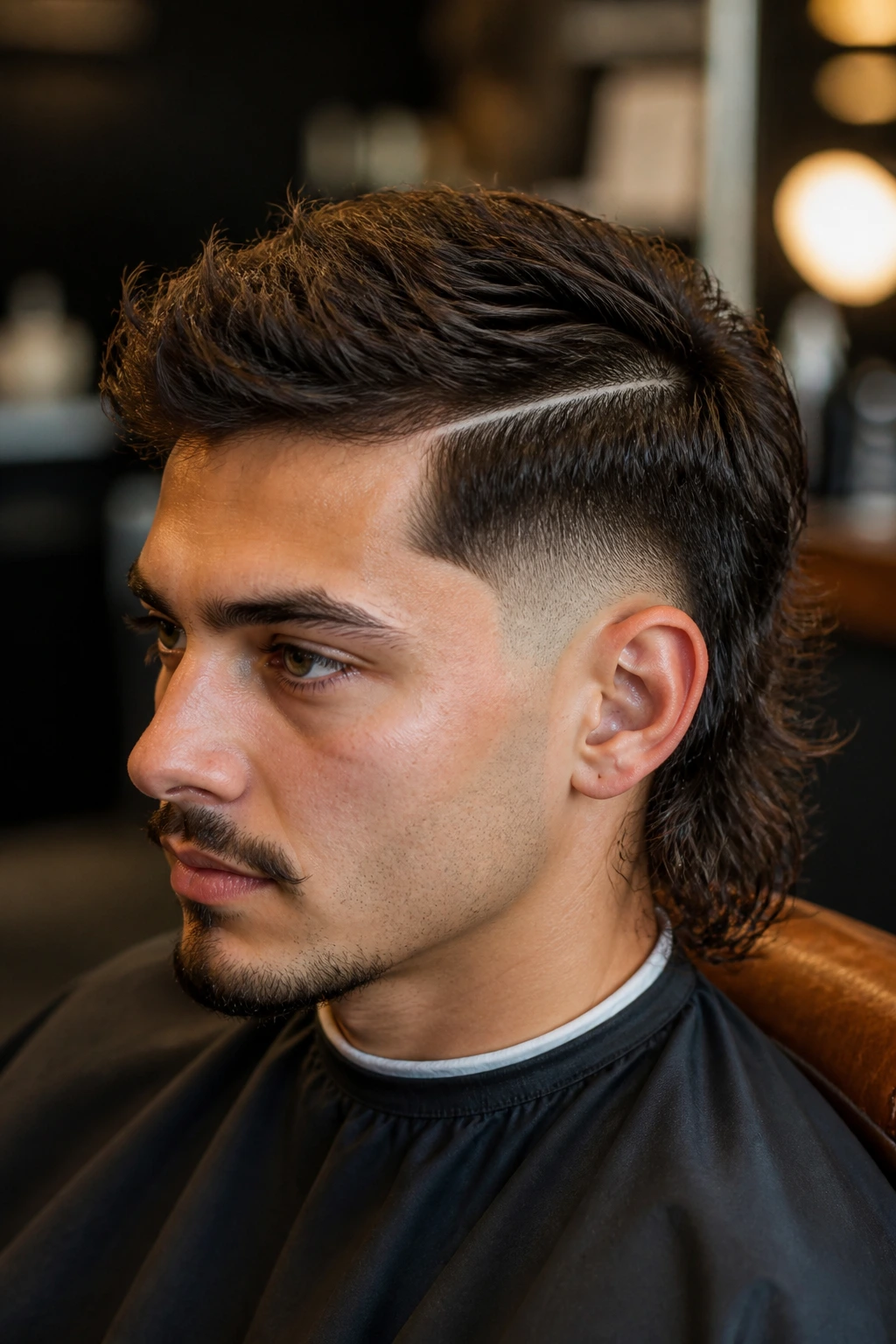
A hard part is useful when your waves refuse to sit where you want. The shaved line gives the top a clear direction, and the rest of the cut can stay textured without losing structure. That’s the appeal of the hard part mullet: a little order up front, a lot of movement everywhere else.
This style needs maintenance. The part line softens fast, and once it starts fading out, the whole shape gets looser. Ask the barber to place the part where your hair naturally separates if possible, because fighting a cowlick is a waste of time. Use a comb and a light paste to keep the top clean, then let the back stay more relaxed. It’s a good compromise between sharp and lived-in.
30. Messy Bedhead Mullet
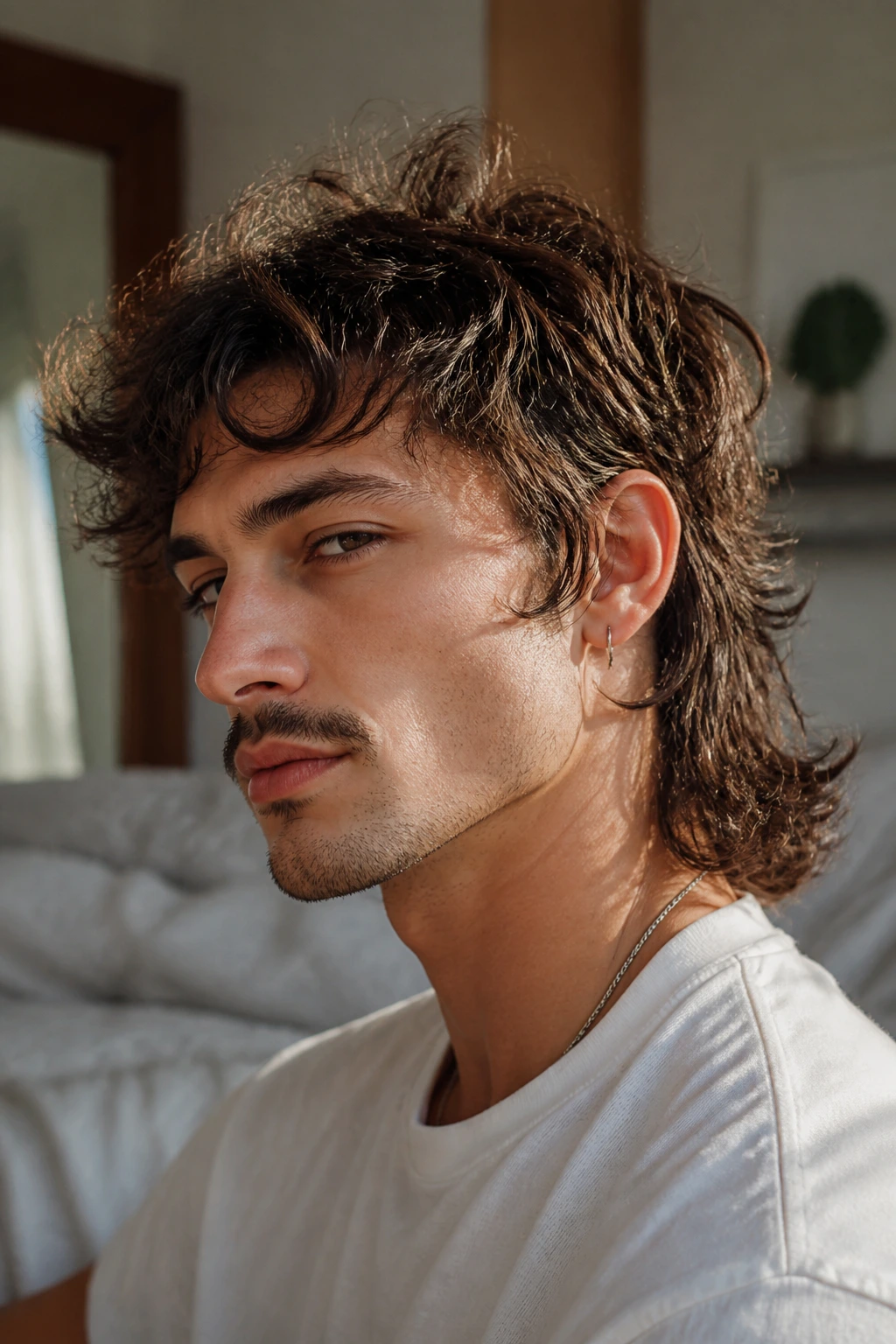
Messy bedhead is not the same thing as uncut. The bedhead mullet is deliberately tousled, with the short wavy texture left broken up and a little uneven on purpose. The back still carries enough length to keep the silhouette clear, but the front and crown look casually disturbed.
This is one of the easiest versions to live with if you hate spending time on your hair. A texture powder at the roots or a light spray of dry texture mist is usually enough. Then use your fingers, not a brush. If the ends begin to clump from too much product, wash more often or switch to a lighter formula. This cut works because it looks relaxed, not because it looks forgotten.
31. Feathered Nape Mullet
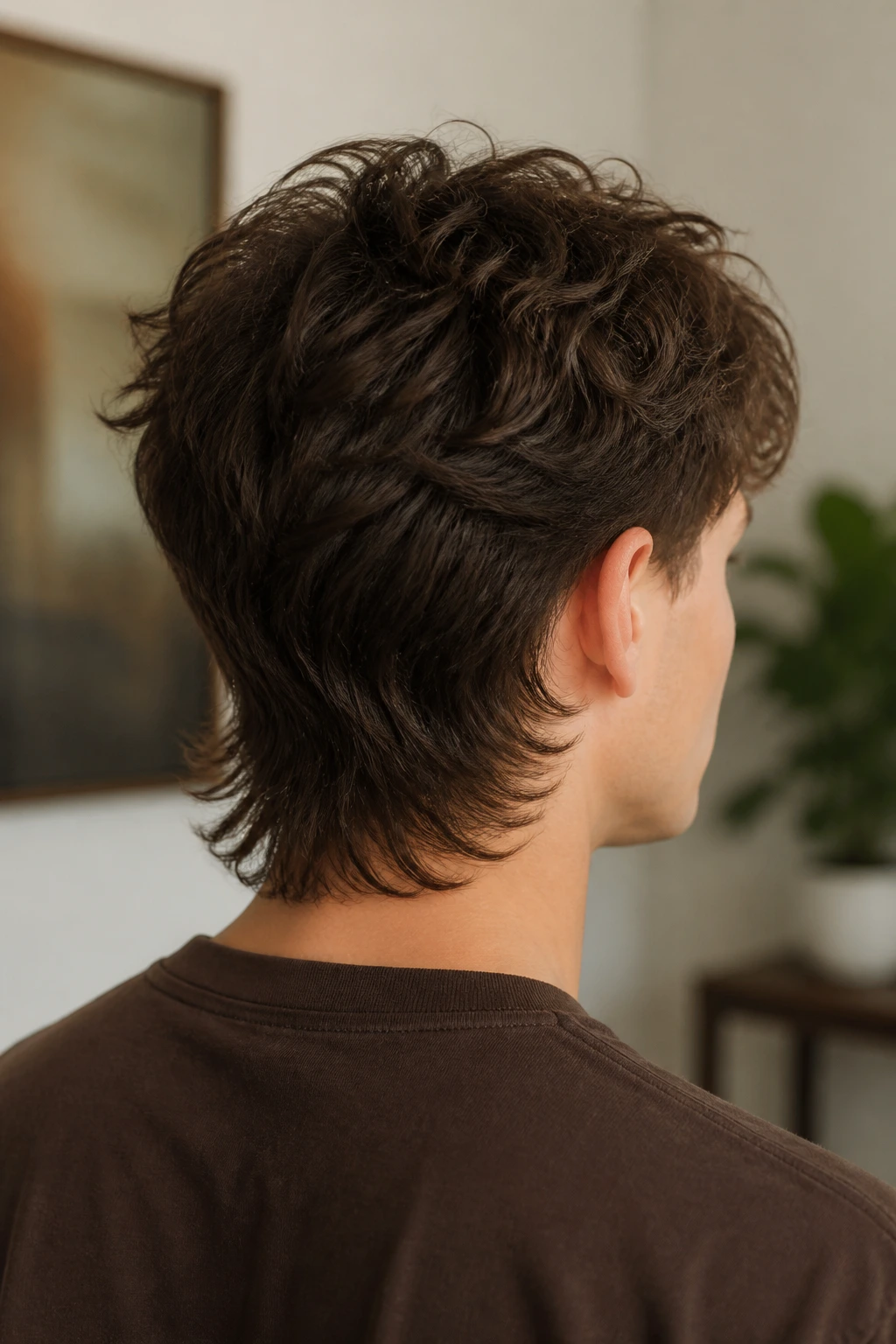
The feathered nape version is all about the finish. Instead of a chunky tail, the back is softened and tapered so it falls in lighter pieces. That matters on short wavy hair because a heavy nape can make the cut look stiff, while feathering lets the wave pattern keep moving.
Ask the barber for soft point cutting in the back and avoid a blunt line at the neckline unless you want a harder look. A small amount of cream through the nape helps the strands separate without puffing out. If you like the mullet shape but hate the heavy feeling some versions carry at the back, this is the one to try first.
32. Razor-Bang Mullet
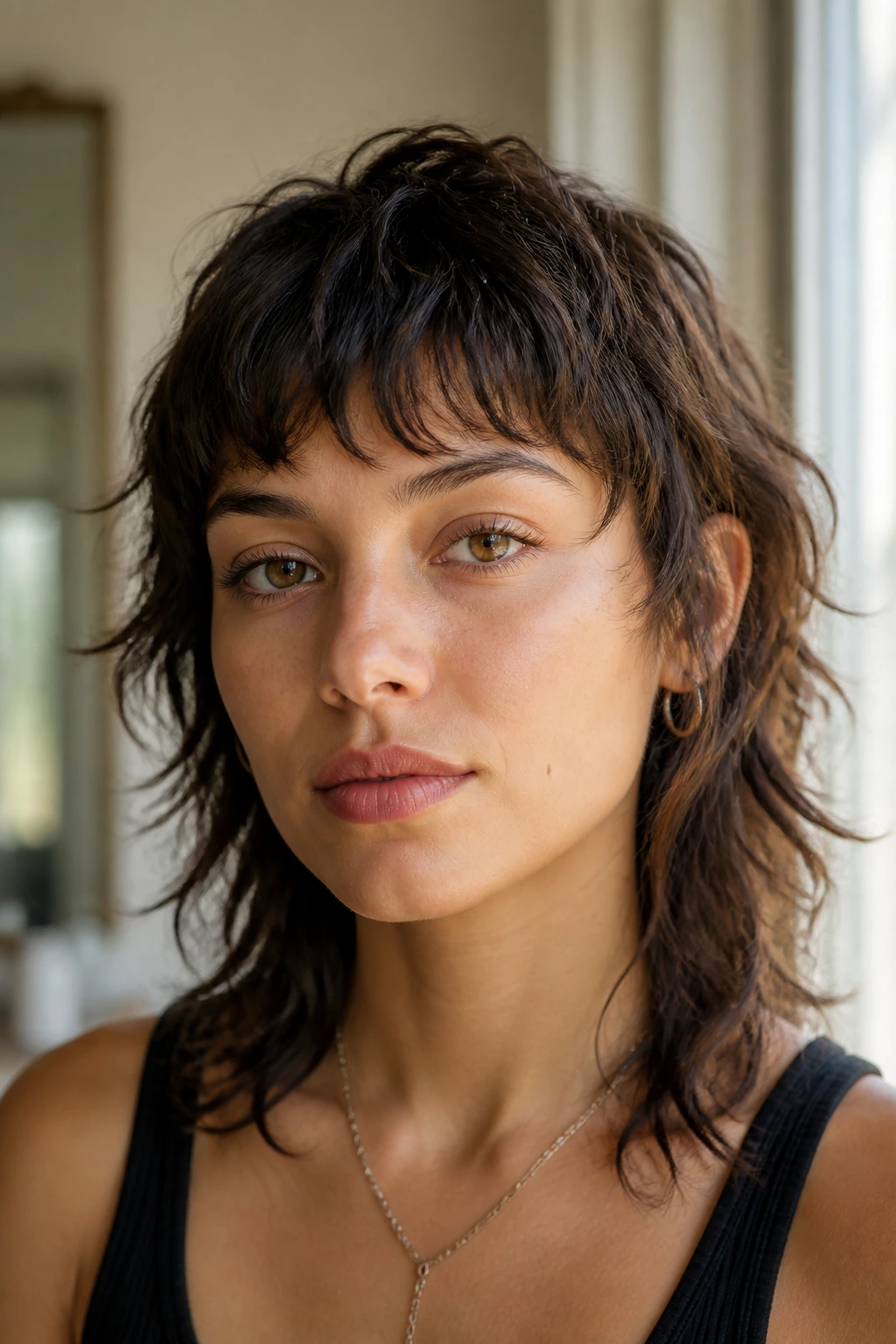
Sharp fringe, soft back — good contrast. The razor-bang mullet uses a more sliced front edge to make the bangs look intentionally broken up, which works well if your waves are short and sit a little differently on each side. The back stays looser and longer, so the eye moves from crisp to soft as it travels down the haircut.
This version asks for a steady barber hand. The fringe should feel piecey, not shredded. Use a light styling cream or a touch of paste on the bangs, and keep the back mostly untouched so the wave can do its thing. If your forehead is shorter, don’t let the fringe get too heavy. A dense bang on a short face can close the whole cut in too much.
33. Classic Scissor Mullet
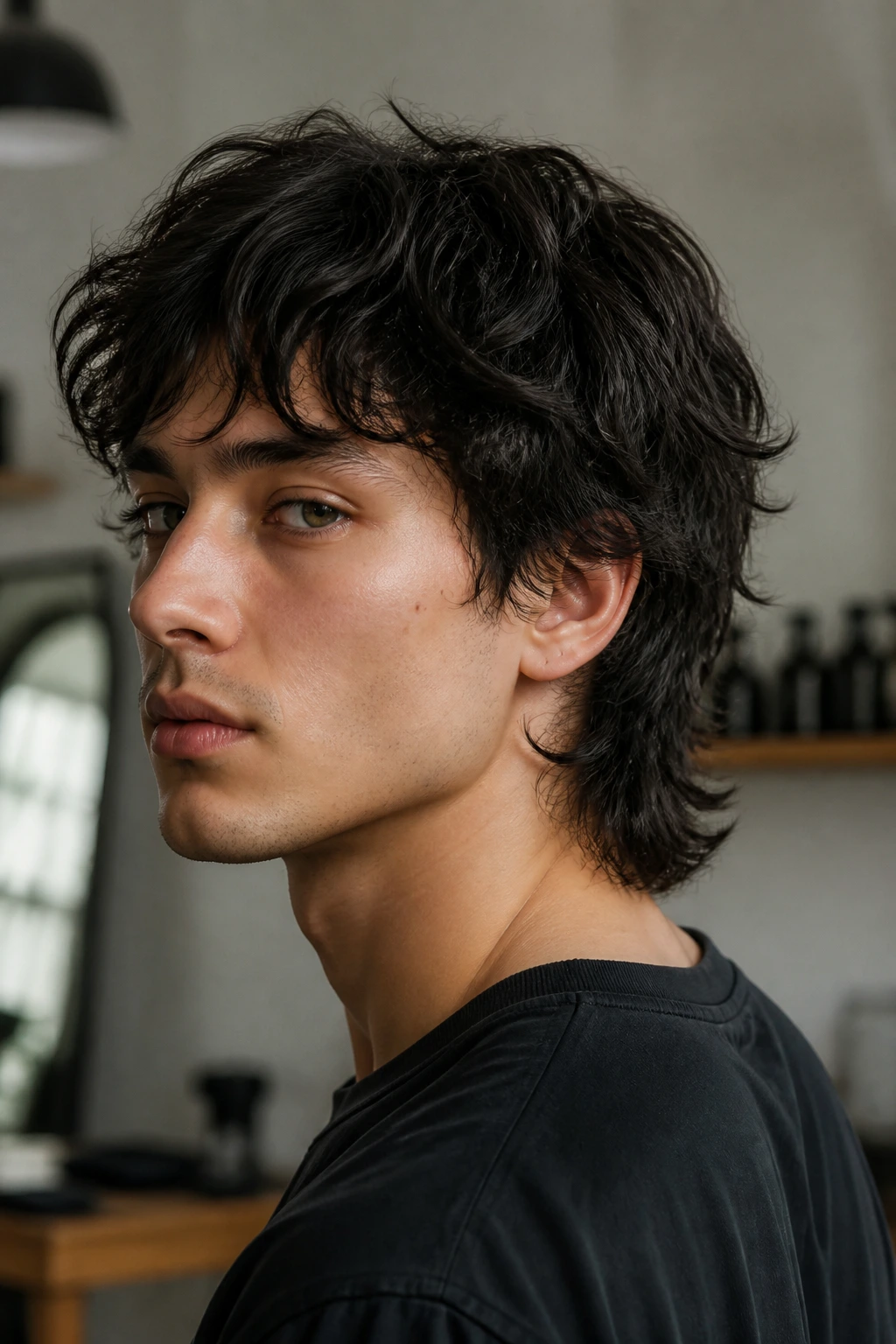
Sometimes the old standard is the one worth keeping. The classic scissor mullet avoids hard fades and extreme lines, which makes it a smart choice for short wavy hair that needs softness more than drama. The top, sides, and back stay balanced, with scissors doing the shaping instead of clippers taking over.
This version ages well between trims. Because the shape is built with balance rather than contrast, it grows out in a more forgiving way. Ask for the nape to stay longer than the sides, the crown to keep a bit of lift, and the fringe to stay light enough to move. A dab of matte paste or leave-in cream is usually all it needs. It’s plain in the good sense. Nothing about it looks accidental.
Why Short Wavy Hair Makes a Mullet Easier to Wear
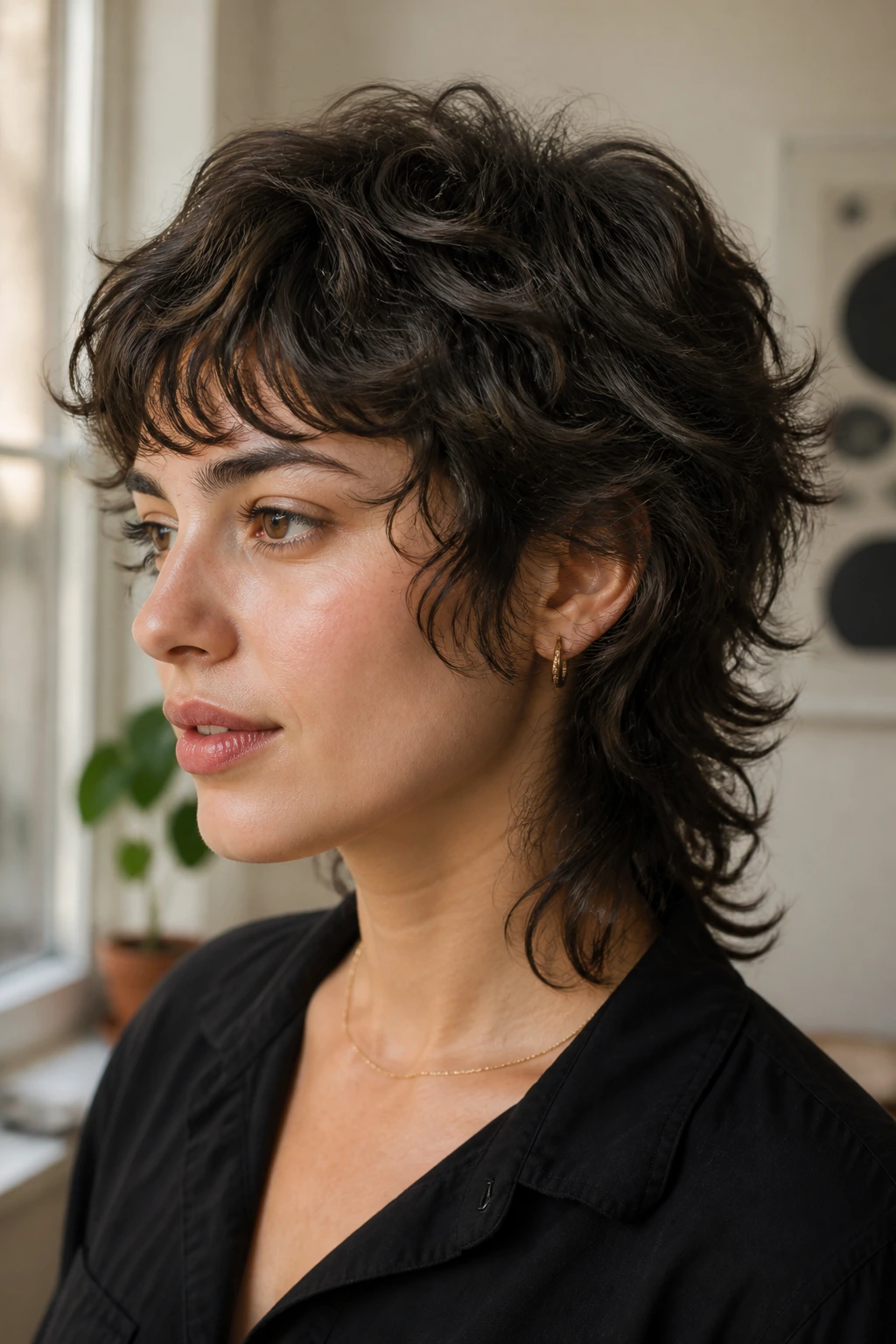
Short wavy hair gives a mullet something straight hair often has to fake: natural separation. The bends in the strands create little pockets of light and shadow, so the haircut already looks textured before you touch any product. That matters because the mullet lives or dies on contrast. The sides need to be short enough to clear the face. The back needs enough length to read as a tail. Wavy hair connects those two pieces without making the transition look blunt.
There’s also a practical side to it. Waves help hide small imperfections in the cut. If the neckline softens a little between appointments, the hair still falls in a shape. If the crown grows out unevenly, the texture breaks it up. Straight hair tends to show every line the minute it moves; short wavy hair is more forgiving, which is why a mullet can feel sharp instead of fussy.
The only real trap is overcorrecting. Too much thinning, too much heat, too much product — any of those can wreck the natural bend. Leave enough length for the wave to live. That’s the whole game.
Essential Tools for Styling and Touch-Ups
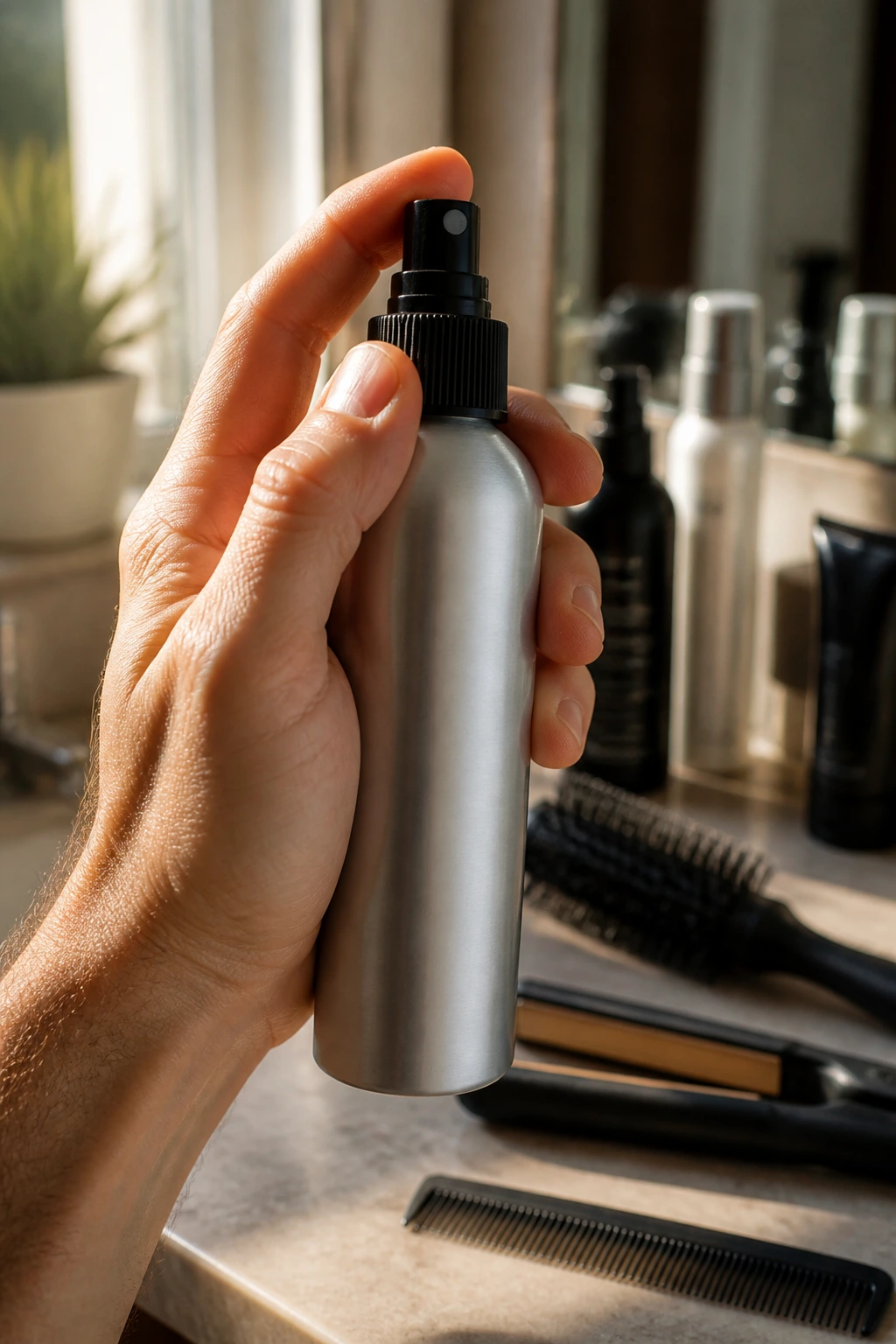
- Spray bottle: A few mists wake up the wave pattern without forcing you to rewash your hair.
- Matte paste or clay: Best for piecey texture and controlled ends; use a pea-size amount first.
- Light styling cream: Helpful if your waves are loose and you want softness instead of grip.
- Sea salt spray: Good for air-dried versions, though coarse hair can get dry if you overuse it.
- Mousse: A strong option for lift at the crown without heavy buildup.
- Blow-dryer with nozzle: Directs the front and crown when you want more shape.
- Diffuser attachment: Useful when your waves frizz if they dry on their own.
- Wide-tooth comb or fingers: Fingers are often better; a comb can flatten a cut that’s supposed to move.
- Hand mirror: Worth keeping around if the neckline or nape needs checking between cuts.
- Small trimmer or clipper with guard: Optional for people comfortable cleaning the neckline at home; if not, leave this to a barber.
How to Keep a Short Wavy Mullet in Shape Between Cuts
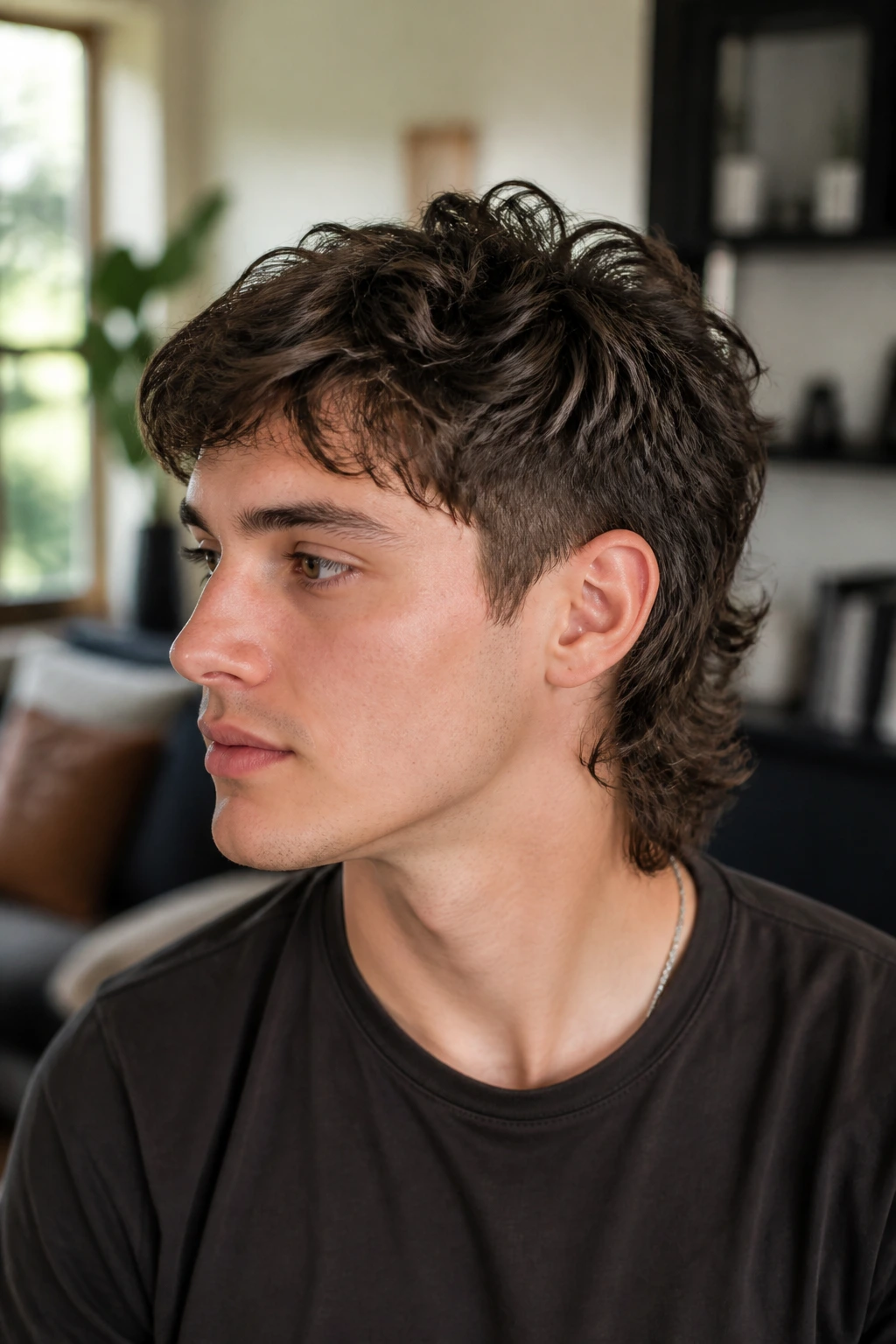
Short wavy mullets hold their shape best when you stop treating them like a daily full-restyle job. The simplest routine is often the strongest one: dampen the hair lightly, work in a small amount of product, and let the wave form without too much combing. If you keep pulling the top flat, you erase the movement that makes the cut work.
For maintenance, the fade-heavy versions usually want a cleanup every 2 to 3 weeks. Scissor-heavy versions can stretch to 5 or 6 weeks before they start losing their lines. The back is the part people ignore, and that’s a mistake. If the nape grows too much, the whole haircut starts reading as overgrown instead of mullet-shaped. A quick neckline cleanup solves a lot.
Sleeping on it matters too. A cotton pillowcase can rough up the front and make the crown go frizzy by morning. A silk or satin pillowcase helps the waves keep their shape, and if that sounds fussy, fine — use a light mist of water and scrunch in the morning instead. Five seconds. That’s enough for most of these cuts.
Pro Tips for Making the Texture Look Intentional
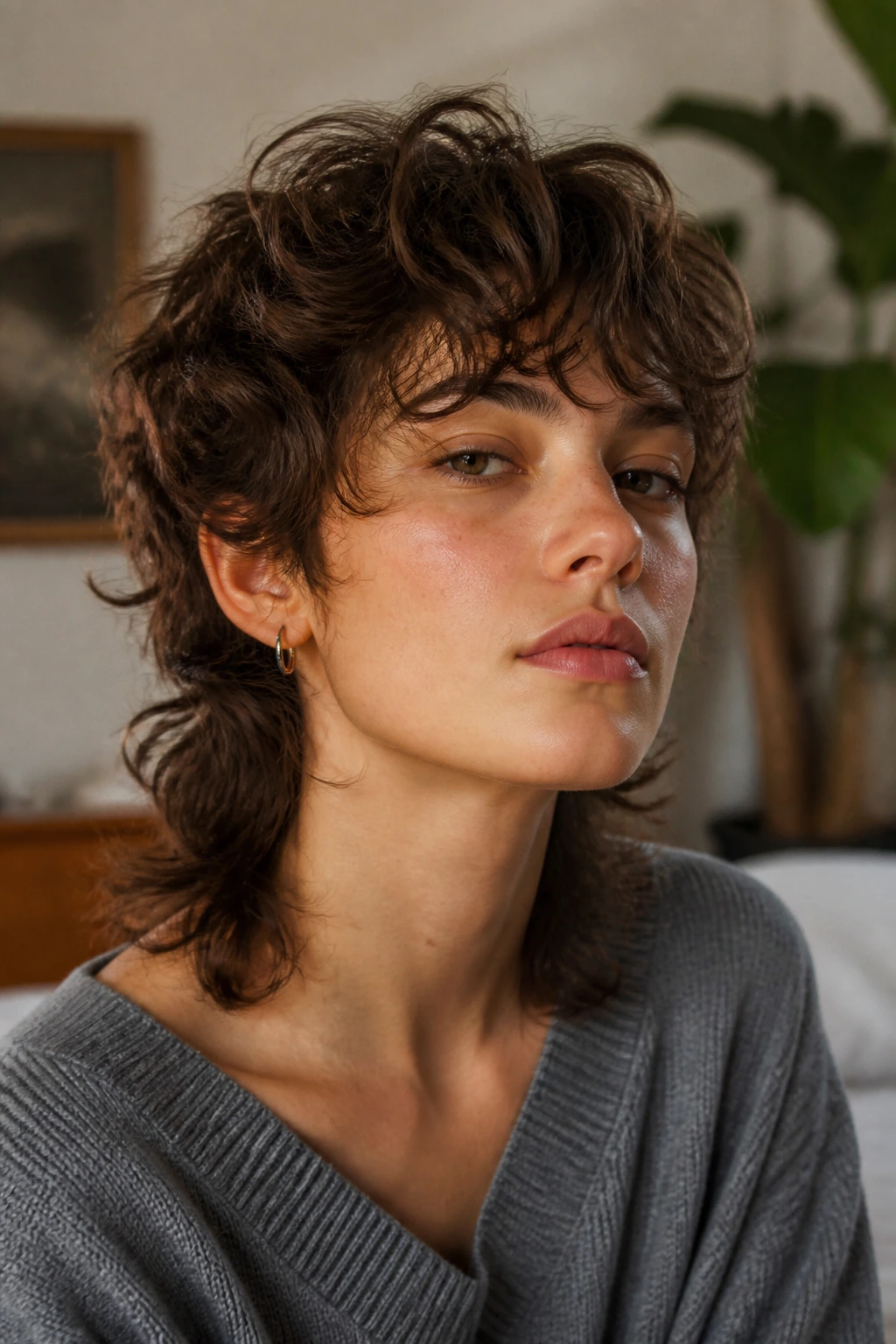
Dry-Cut Advantage: Ask your barber to check the final shape dry if your hair shrinks a lot once it’s out of the chair. Short wavy hair can look one way wet and a completely different way thirty minutes later. A dry check keeps the sides from ending up too high and the fringe from landing in your eyes.
Product Sweet Spot: Start with less than you think. A pea-size amount of matte paste or cream is often enough for short wavy hair, especially if the cut already has good layering. Too much product clumps the wave and makes the whole thing feel heavy.
Root Control: If the crown wants to puff, blow-dry it for 20 to 30 seconds with the nozzle aimed at the roots before the rest of the hair dries. That tiny bit of direction keeps the top from exploding sideways.
Nape Cleanliness: A neat neckline makes the back look deliberate. If the nape turns fuzzy, the whole haircut loses shape fast. Even the messier versions look better when the neck line is clean.
Common Mistakes That Flatten the Shape
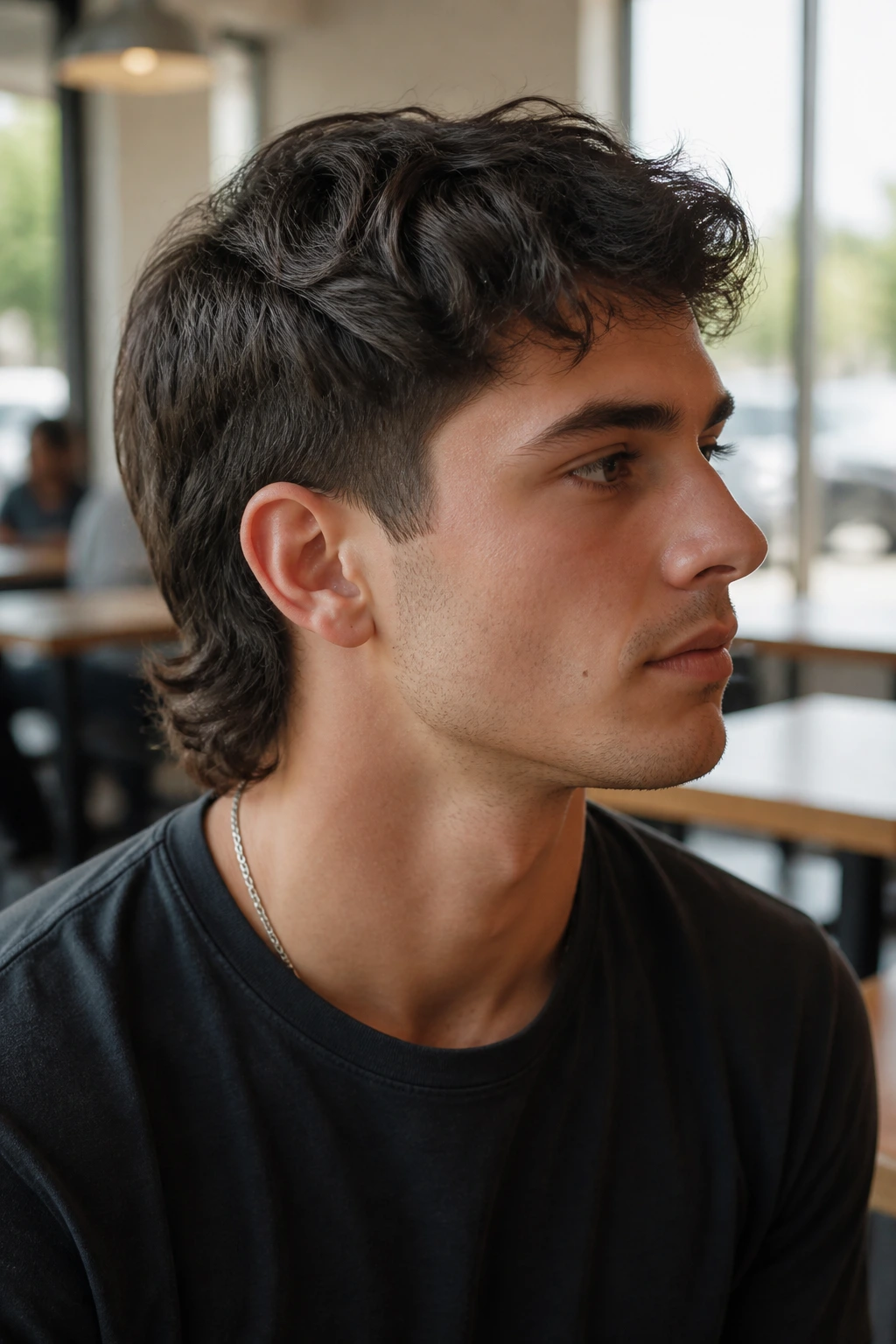
Cutting the fade too high: This is the fastest way to make a mullet stop looking like a mullet. If the fade climbs too far up the sides, the back no longer feels connected to the rest of the haircut. Keep the fade low unless you want a much sharper, more disconnected shape.
Thinning the crown too aggressively: Short wavy hair can go from textured to frizzy in one bad pass of thinning shears. The symptom is that dry, airy puff that refuses to sit down. The fix is softer point cutting and a lighter touch at the top.
Letting the fringe get too heavy: A front that hangs too far over the eyes can swallow the face, especially on short cuts. If the fringe starts blocking your view or splitting into a wet-looking curtain, trim it back or style it with less product.
Using shiny, heavy products on loose waves: Thick pomades and glossy creams can collapse the bend and make the haircut feel greasy instead of textured. Matte paste, mousse, or a light cream usually preserves the shape better.
Ignoring the neckline: A messy nape makes even a good mullet look accidental. Clean the neckline often enough that the tail looks shaped, not forgotten.
Variations and Face-Shape Tweaks

The Office-Quiet Version: Keep the taper low, the fringe light, and the back only slightly longer than the sides. This keeps the mullet shape visible without making the haircut feel loud in a formal setting. It works especially well if you need the cut to sit under a collar without sticking out.
The High-Contrast Version: Push the sides tighter with a burst or drop fade and leave more length through the top and nape. This version suits people who want the haircut to read from across the room. It needs a sharper barber hand and a little more upkeep.
The Fine-Hair Version: Ask for layers that create movement without too much bulk removal. Short wavy fine hair can look flat if it’s over-thinned, so the cut should build shape mostly through layering and light product. Mousse and a diffuser help more than clay here.
The Thick-Hair Version: Keep the crown debulked, but do not strip the texture out of the ends. Thick hair needs structure, not punishment. A scissor-heavy approach with some interior weight removal will keep the cut from turning into a round puffball.
The Longer-Face Version: A curtain fringe, rounded fringe, or side-swept top helps balance length in the face. Leave enough movement at the front so the haircut frames the features instead of stretching them.
Frequently Asked Questions
Will a short wavy mullet work if my waves are loose, not curly?
Yes. Loose waves are often easier to wear because they create texture without turning the haircut into a frizz cloud. Keep the layers soft and avoid over-thinning, then use a light cream or mousse.
How short can the back be and still count as a mullet?
Shorter than most people think. As long as the nape has visible extra length compared with the sides and crown, the shape still reads correctly. The contrast matters more than having a dramatic tail.
Should I ask for a fade or a taper?
A taper keeps the mullet shape softer and usually ages better between cuts. A fade makes the haircut sharper and more obvious, but it also needs more maintenance. If you’re unsure, start with a low taper.
What if my waves puff up when I try to style them?
That usually means the cut has too much bulk in the crown or you’re using a product that’s too heavy. Switch to a lighter cream or mousse, and ask your barber to remove weight with more control next time.
Do I need heat styling every day?
No. Most short wavy mullets look better with minimal heat. A quick blast from a diffuser or a short pass with a blow-dryer can help the shape, but the cut should still work once it air-dries.
Can fine hair wear a mullet without looking thin?
Yes, if the cut keeps enough texture and avoids aggressive thinning. Fine hair usually needs lift at the roots and a little layering, not a lot of product. Too much product makes it collapse fast.
How often should I trim this haircut?
Fade-heavy versions often need cleanup every 2 to 3 weeks if you want the outline to stay crisp. Scissor-based versions can usually go 5 to 6 weeks. The neckline is the first place to watch.
What should I do if the back grows out awkwardly?
Don’t chop random bits at home unless you’re very comfortable with clippers and scissors. Clean the neckline, then let a barber rebalance the nape and sides together. Uneven home fixes tend to make the shape worse, not better.
The Shape That Moves With You
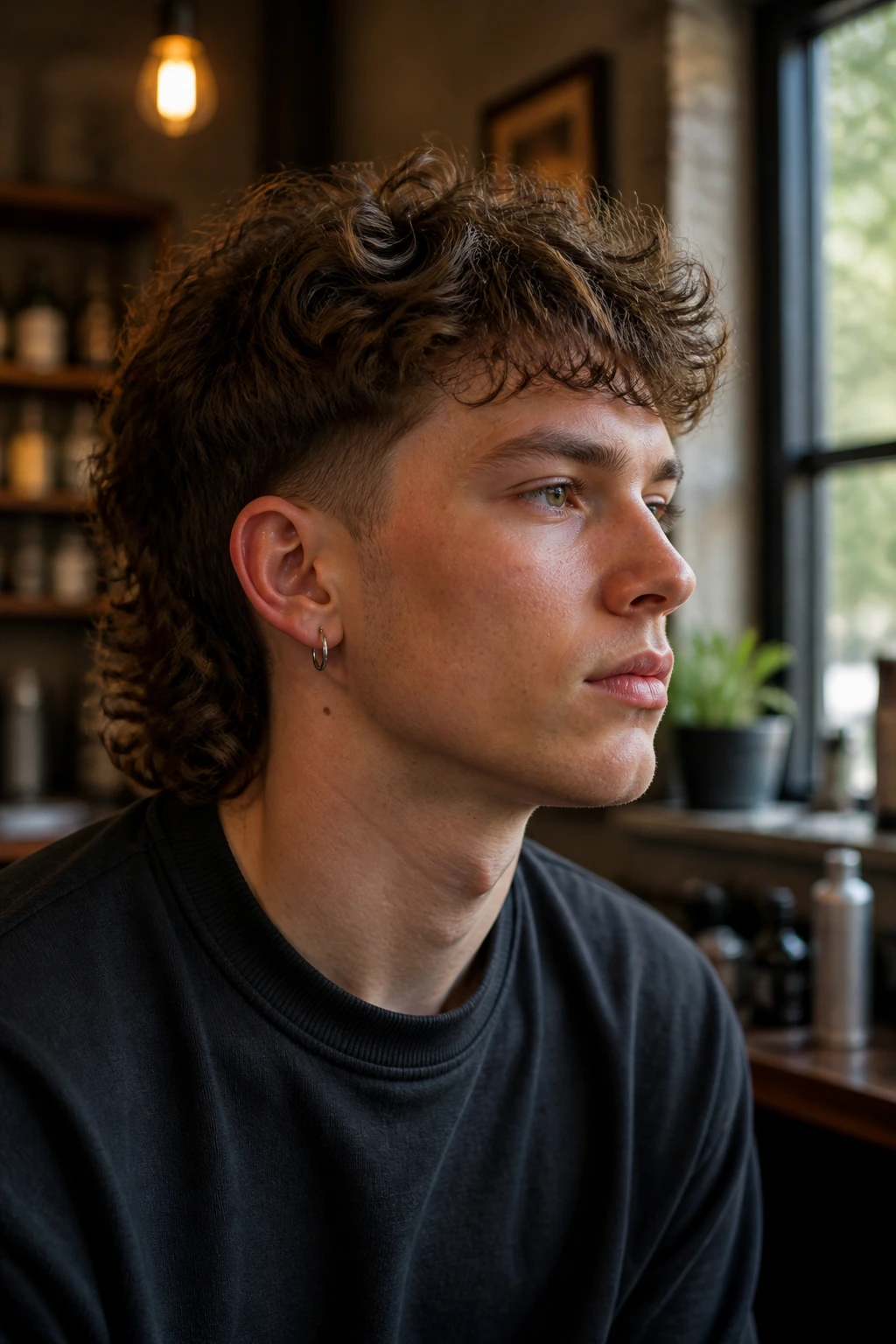
Short wavy hair doesn’t need to be squeezed into the same safe crop every time. A mullet gives it somewhere to go. The crown can lift, the sides can stay tight, and the back can keep just enough length to make the whole shape feel deliberate.
Pick the version that matches how much contrast you actually want, not the version that sounds coolest in theory. That’s the part people skip. A clean low taper, a feathered nape, a burst fade, or a soft shag all tell a different story, and the right one depends on how your waves sit when no one is looking. Bring a photo, say what you want the back to do, and let the texture lead from there.
