



A pixie haircut after 60 works best when it looks like it belongs on your head, not like it was borrowed from somebody else’s photo album. The strongest versions are usually the ones with a clean nape, a little lift where the crown needs it, and enough softness around the face to keep the cut from going severe. Short hair can do that. Long hair often can’t.
That’s why pixie haircuts for women over 60 keep hanging around salon chairs. They suit thinning hair without turning it into a sad little apology, and they can make silver, white, and salt-and-pepper tones look crisp instead of dull. A good pixie also does something longer cuts struggle with: it respects a changing hairline, cowlicks, and texture that has gotten drier or finer over time. You feel the difference the first morning you style it. Less drag. Less bulk. Less fuss.
The trick is not “just cut it short.” A pixie can be soft, sharp, feathered, swept, piecey, polished, airy, or cropped close. The right version depends on your density, your growth pattern, how much forehead you like to show, and whether you want something you can finger-style in two minutes or a shape with a little more drama. The styles below cover the range, and they each solve a different problem.
Why These 27 Pixie Haircuts Earn Their Keep
- They work with lighter density: Shorter length removes the weight that makes fine hair hang flat by noon.
- They handle gray hair beautifully: Silver strands show shape and texture fast, so a precise cut can look more intentional than a longer one.
- They can calm stubborn cowlicks: A good pixie redirects growth patterns instead of fighting them for six inches.
- They make styling faster: Most versions need a round brush, fingers, or a dab of paste — not a full blowout routine.
- They leave room for personality: Earrings, glasses, brows, and neckline all become part of the look, not afterthoughts.
1. The Soft Tapered Pixie
A soft tapered pixie is the one I reach for when someone wants short hair but not a hard edge. The back hugs the neck, the sides stay slim, and the top keeps just enough length to brush forward or off to the side. Nothing sits heavy. Nothing sticks out.
What makes this cut so reliable is the shape at the nape. Ask for a clean taper that follows the head, not a blunt block. That small detail keeps the cut looking neat for weeks instead of puffing out around the collar after ten days. It also plays nicely with fine or medium hair that tends to fray at the ends.
If you wear scarves or jackets with higher collars, this is one of the easiest pixies to live in. The neckline stays tidy, and the top can still be softened with a light cream or a touch of mousse. It’s calm, not boring. There’s a difference.
2. The Feathered Crown Pixie
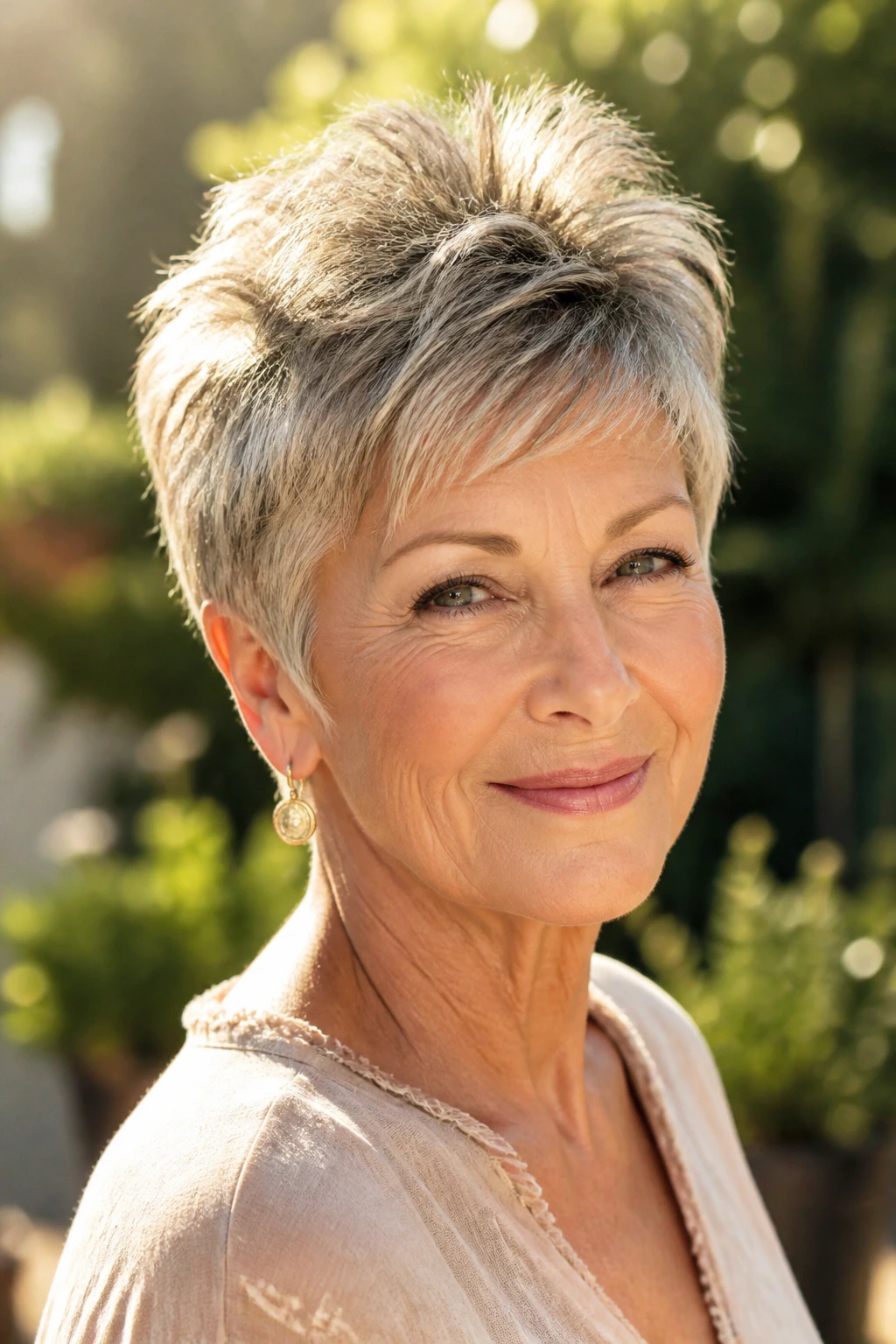
A feathered crown pixie does one job very well: it gives the top of the head some lift without turning the whole cut into a pompadour. The crown layers are cut to move, not sit like a cap. That matters when hair has started to lose a little spring.
Why it flatters flat crowns
The crown is where many short cuts fail. If the layers are too short, the head looks compressed; too long, and the top slumps. This cut keeps the top around 2 to 3 inches in the lifting zone, then feathers the ends so the layers can separate instead of clumping together. A bit of root lift spray and a quick blast with a dryer makes the shape pop.
Best on fine or medium hair. Thick hair can wear it too, but the stylist needs to remove weight from underneath so the crown doesn’t balloon.
- Ask for: shorter sides, layered crown, and a soft fringe.
- Style with: mousse at the roots and a small round brush.
- Skip: heavy wax; it kills the feathering.
3. The Long Fringe Pixie
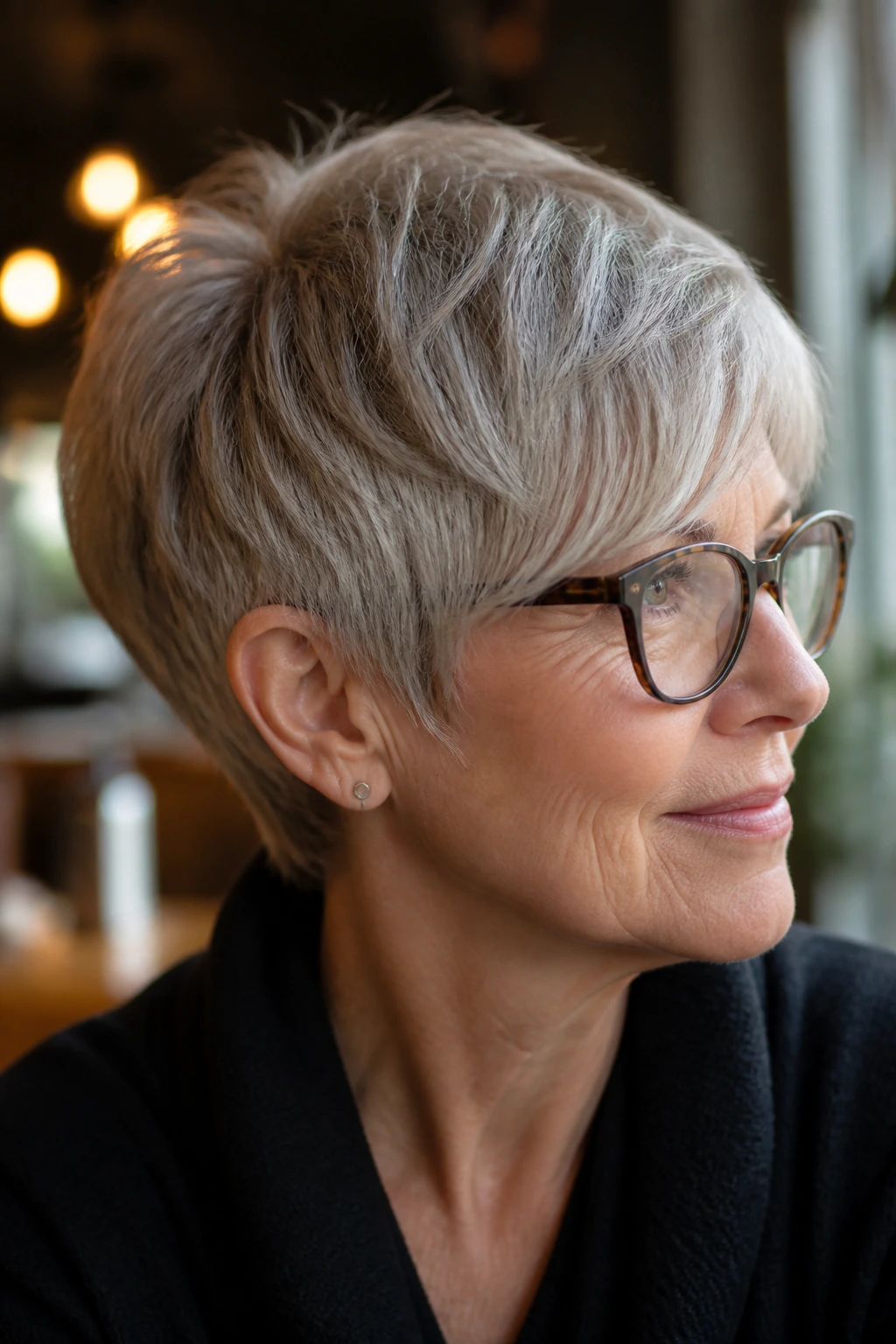
Why does a long fringe matter so much? Because it changes the whole mood of a short cut. A fringe that lands around the eyebrow or a little below gives you options: sweep it sideways, part it softly, or let it fall forward on lower-energy days.
This version works especially well if you want to soften a forehead without hiding half your face. The front carries the shape, while the back stays tight and light. That contrast is what gives the cut some life. If the fringe is cut too blunt, it can feel heavy; if it’s layered with a little point-cutting, it moves better and doesn’t get stuck in one direction.
I like this shape for anyone who wears glasses, because the fringe can sit just above the frame or drift to the side without fighting it. The trick is keeping the front long enough to be useful, not so long that it starts acting like a bob piece stuck on top of a pixie.
4. The Choppy Textured Crop
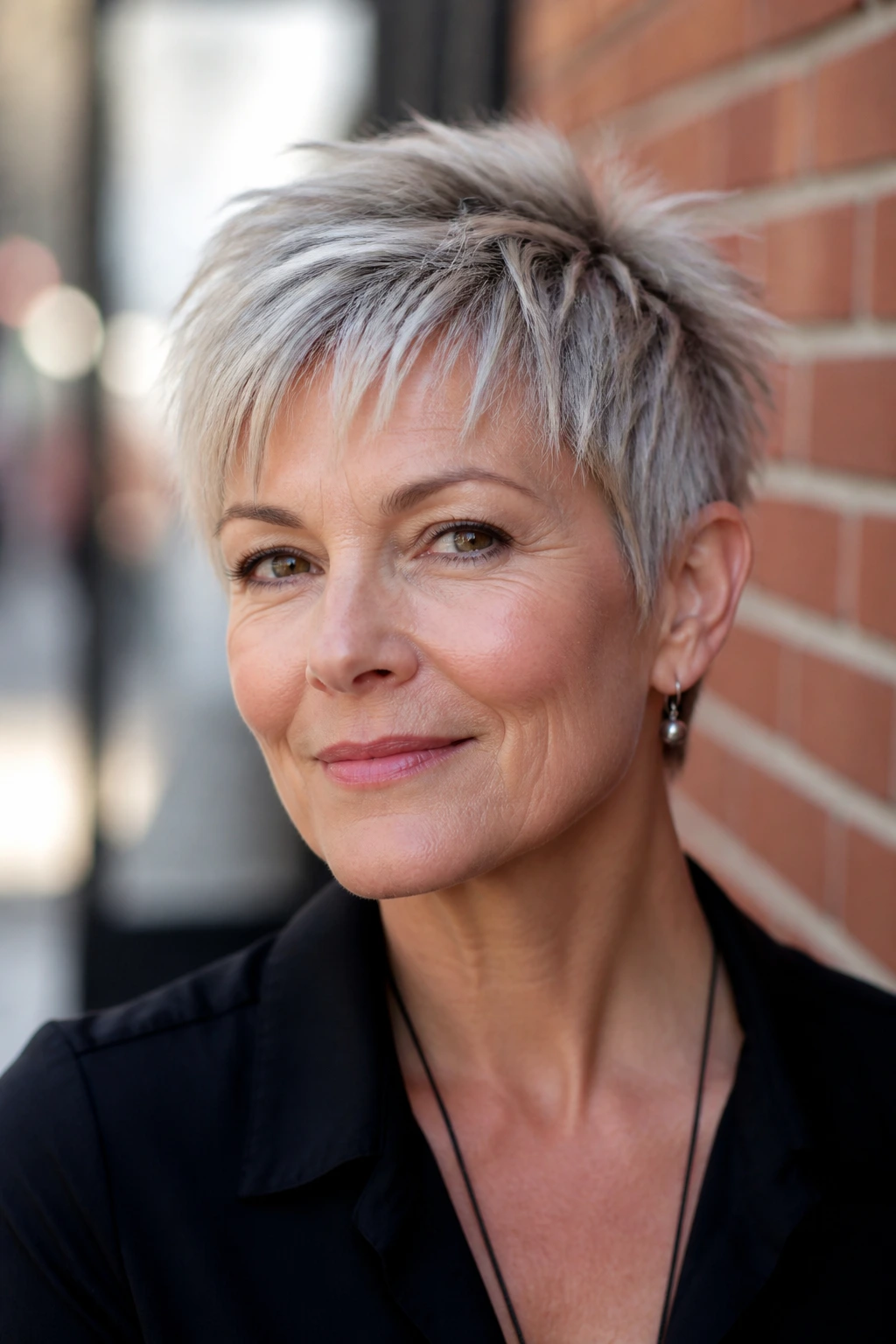
A choppy textured crop is the blunt answer to limp hair. It has edges, but not neat ones. The ends are snipped or razored into small pieces so the hair breaks up into little sections instead of lying flat in one sheet.
Picture this on a day when your hair has decided to do absolutely nothing. A choppy crop gives you shape even before you reach for product. That’s because the movement is built into the cut itself. You can scrunch in a pea-sized bit of paste, run your fingers through the top, and get a piecey finish in under two minutes.
This is one of the best choices if you like a bit of edge without going full spiky. It also helps if your hairline is irregular or your growth pattern is busy around the temples. The uneven texture hides those little quirks instead of exposing them.
5. The Sleek Side-Swept Pixie
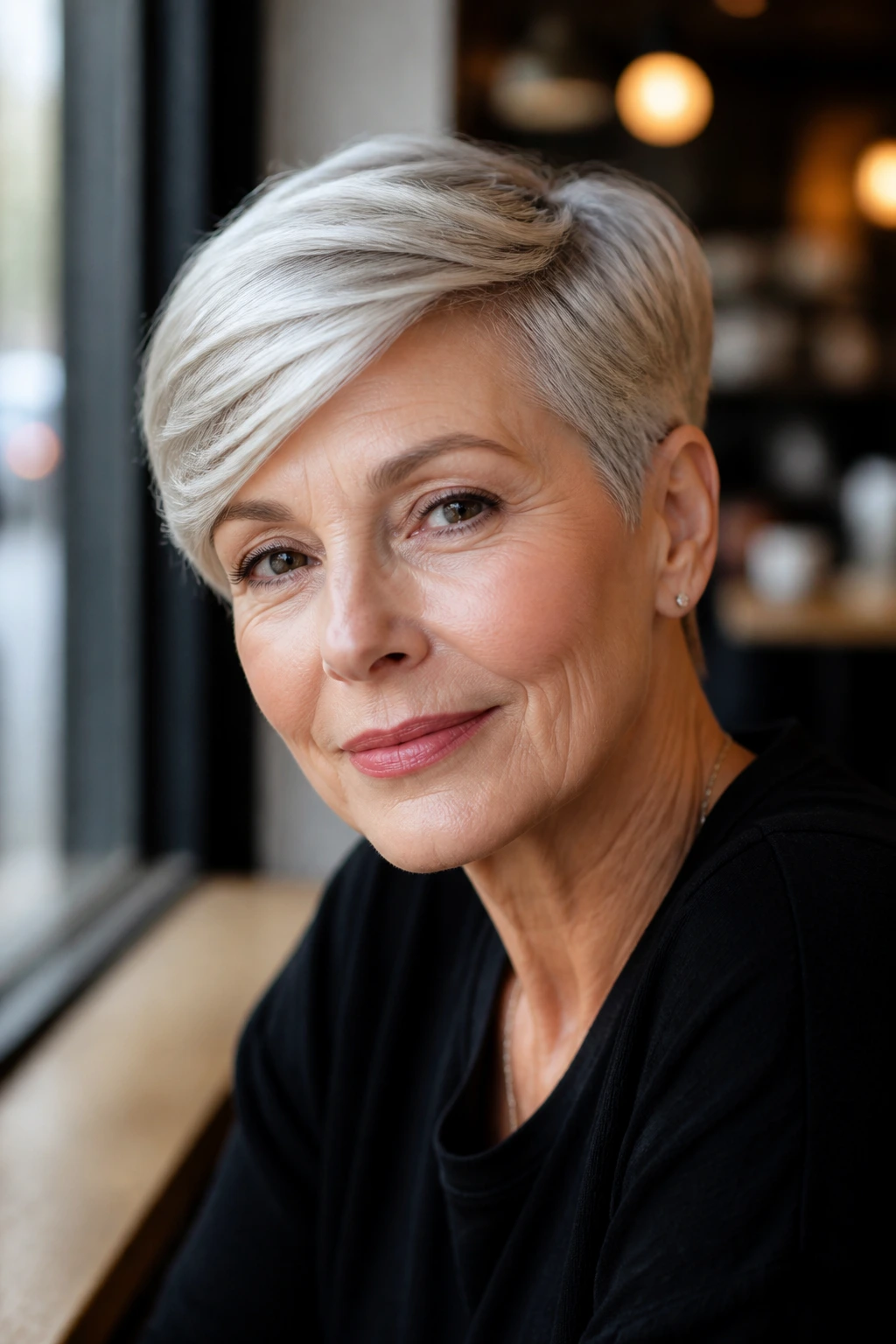
This one is for the woman who likes her short hair smooth, not fluffy. The side-swept pixie keeps the top longer and directs it across the forehead, while the sides stay close enough to keep the silhouette clean. It looks especially good on straight hair, though a loose wave can wear it too.
The key is control. Not stiffness. A small flat brush or a vent brush, a dryer with the nozzle attached, and a light cream are enough to get the shape settled. If you like a polished finish, this cut gives you the nearest thing to short-hair elegance without needing a lot of fuss.
One thing I love here: it works with a deep side part if you want drama, or a soft side part if you want the cut to calm down. Same haircut. Different attitude. That’s a useful trick to have in your pocket.
6. The Silver-First Pixie
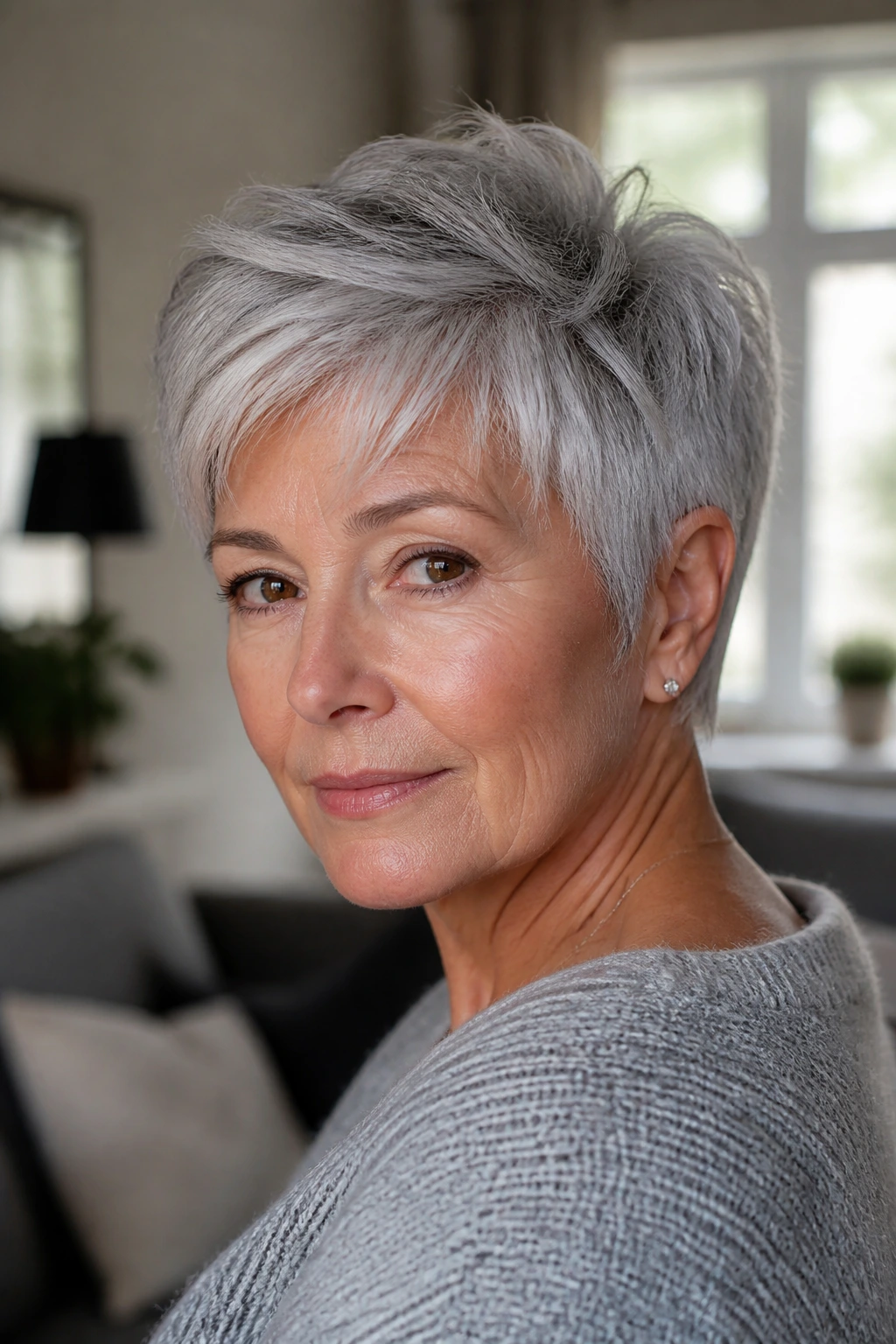
A silver-first pixie is built to make gray hair look deliberate. Not hidden. Not “managed.” Deliberate. The shape is usually soft around the face, clean at the nape, and layered just enough to show off the different tones in silver, white, pewter, or salt-and-pepper hair.
Gray hair often has a little more roughness in the cuticle, which means it can frizz or flare at the ends if the shape is too long. Shorter layers keep the outline crisp. They also let the shine sit on the surface, which is where silver looks best. A decent gloss or toning shampoo can help, but the haircut carries most of the weight.
If you’ve spent years coloring your hair, this is the point where the cut stops asking you to hide anything. Let the texture show. Let the silver show. The best versions of this pixie don’t fight the color at all.
7. The Undercut Pixie
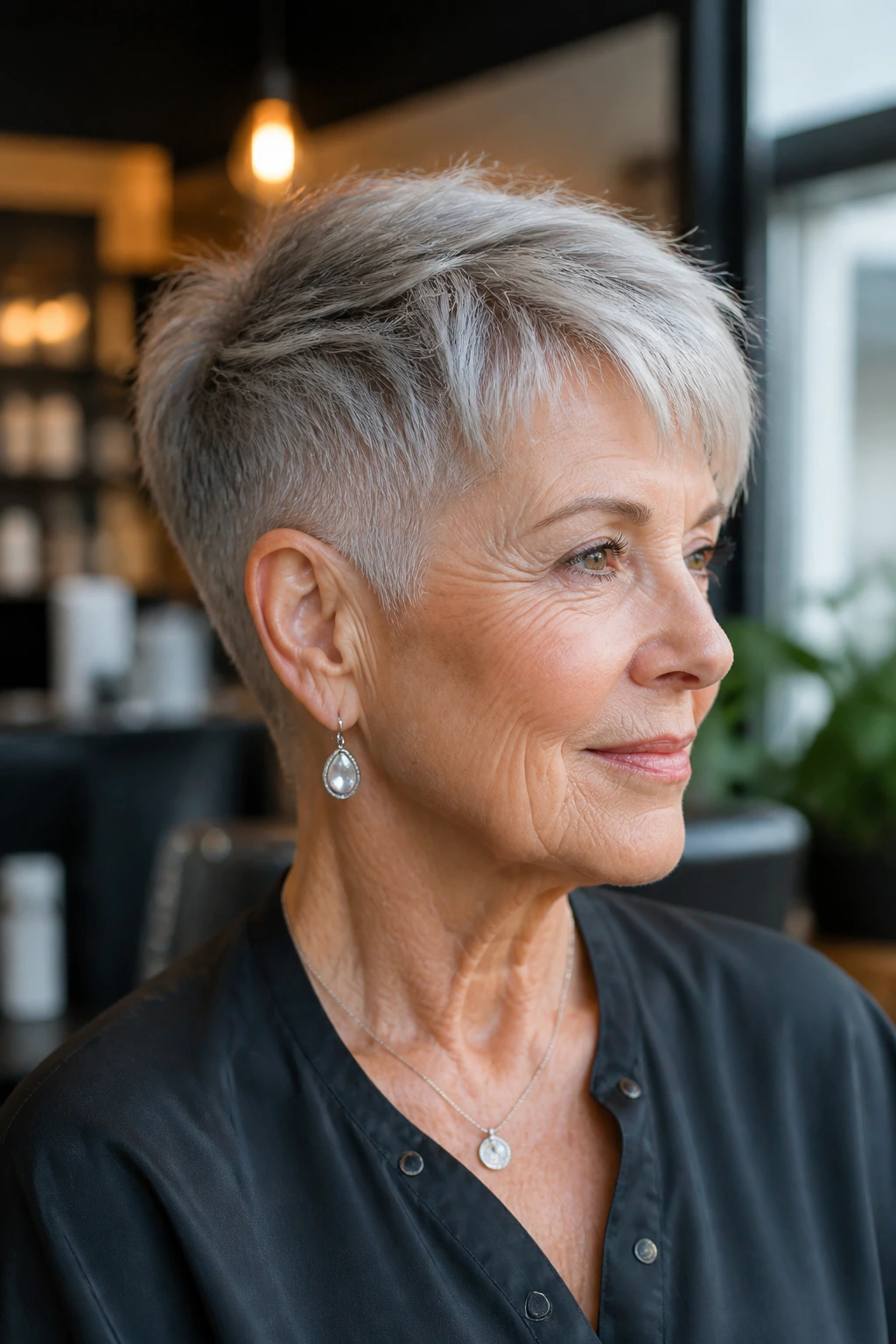
The undercut pixie is for anyone with too much hair and not enough patience. The sides or nape are cut much shorter underneath, while the top stays longer and more flexible. That removes bulk where it usually swells and keeps the top from looking helmety.
What to ask for at the salon
Ask your stylist to remove weight under the top layer, especially if your hair is dense around the ears or back of the head. A hidden undercut can be subtle, or it can be quite short if you want more contrast. Either way, the top needs enough length to fall over the shorter section cleanly.
This cut is a good one if you like structure but not stiffness. It can look sharp with a side part, or a little rebellious with piecey texture. It also dries faster than a fuller pixie, which is not a small thing on a busy morning.
8. The Curly Pixie
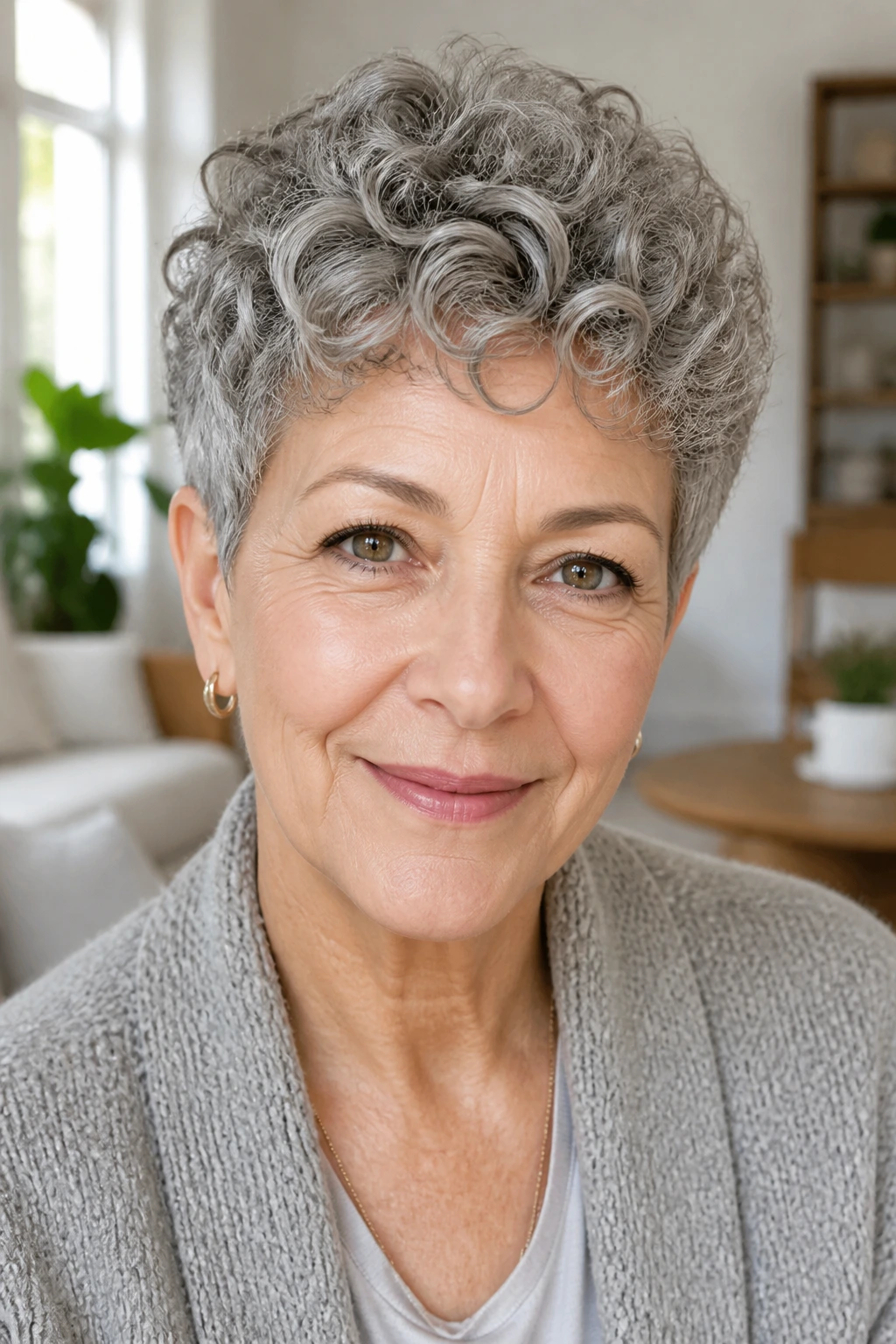
Curly hair and pixies get along when the cut respects the curl pattern instead of chopping through it like it’s straight. That means leaving enough length for the curls to coil — usually more on top, a bit less through the sides, and a nape that’s shaped with care so it doesn’t puff up.
The shape matters more than the length
A curly pixie can be soft and rounded, or it can be tighter and more sculpted. The big mistake is cutting it too short while it’s dry or ignoring shrinkage. Curls spring up. Sometimes a lot. If your stylist leaves the top around 2.5 to 4 inches, you’ll still have some room to shape the curl without losing the silhouette.
Use a light cream or gel on damp hair, then diffuse or air-dry. Don’t rake through it after it starts drying. That’s how you get frizz and a halo that grows when you want it to stay tucked in.
9. The Wedge-Inspired Pixie
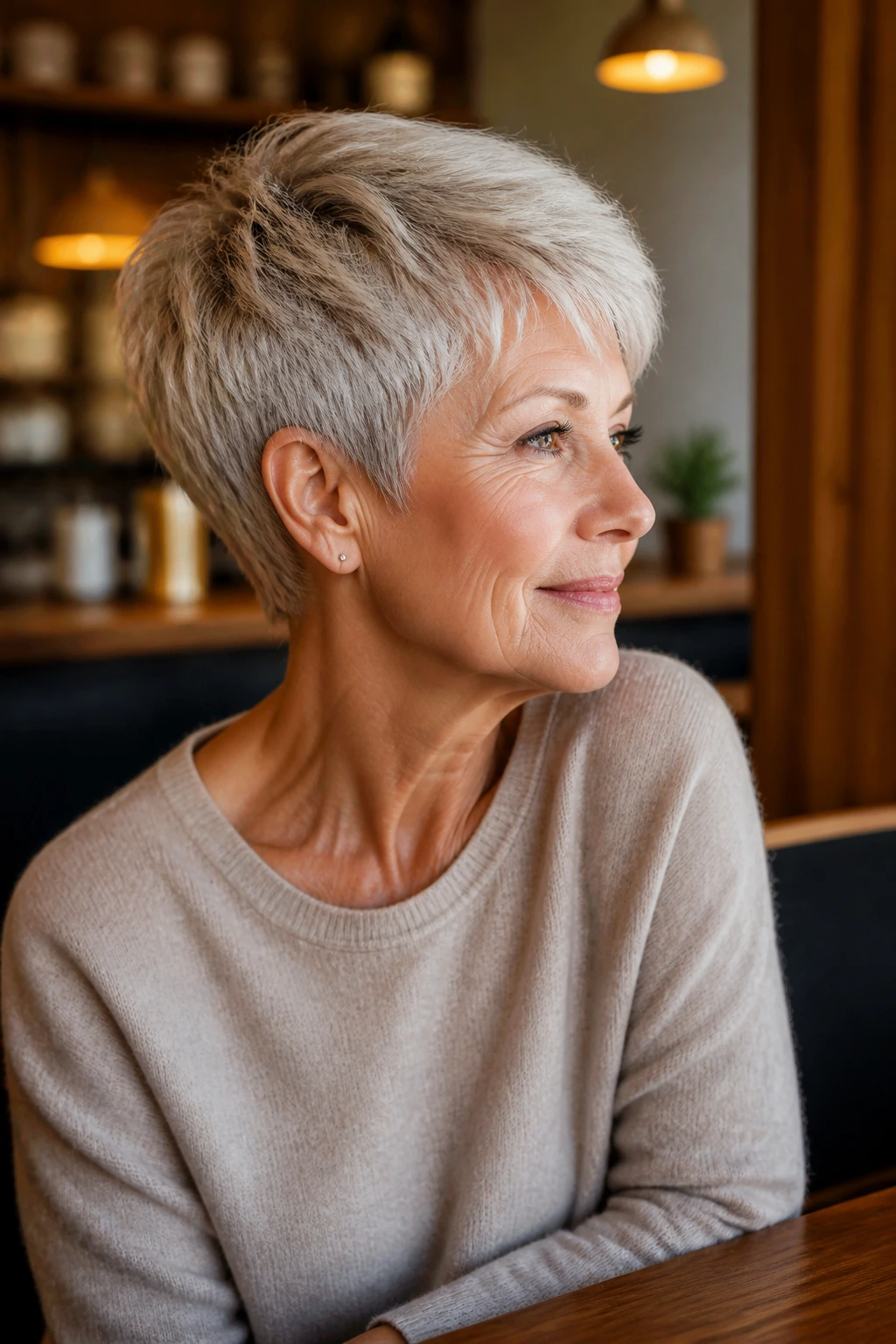
A wedge-inspired pixie borrows the stacked back from a classic wedge cut and trims it down to pixie length. The back sits fuller and slightly rounded, while the front stays lighter and more open around the face. It’s a neat profile, and it gives the head a nice shape from the side.
Compared with a flatter pixie, this one has more architecture. That can be useful if your hair tends to collapse at the back or if you want a more defined silhouette under the ears. The stacked layers help the crown keep a little body without needing a lot of product.
This is a good haircut for someone who likes tidy lines. It won’t feel as loose as a shaggy crop, but it pays you back with shape that stays readable between cuts. Some people like that. I do.
10. The Brushed-Up Volume Pixie
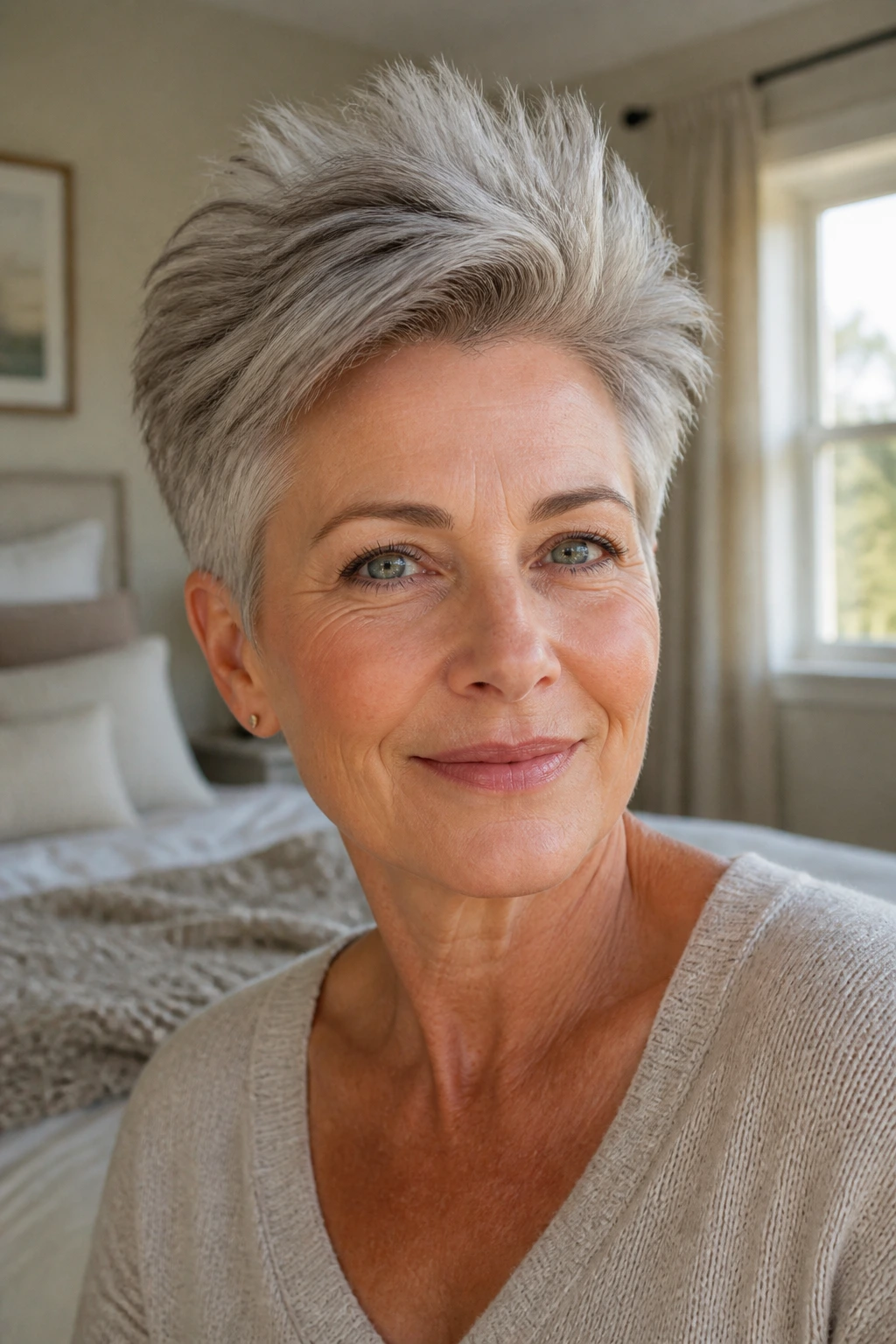
A brushed-up volume pixie is all about height at the crown. Not skyscraper height. Just enough lift to keep the top from lying like wet paper. The sides are usually shorter, the back is tapered, and the crown layers are left with enough length to stand up a little when dried with a round brush.
The best way to wear this cut is with a root-lifting mousse applied to damp hair and a quick blow-dry that lifts the roots away from the scalp. Fingers can finish the job, but the brush gives it shape. The result feels airy, not stiff.
This is one of the better choices for hair that has gone flatter over time. It gives the crown a bit of presence, which makes the face look more open. If you’ve ever felt like your short hair disappeared by lunch, this shape fights back.
11. The Micro Pixie
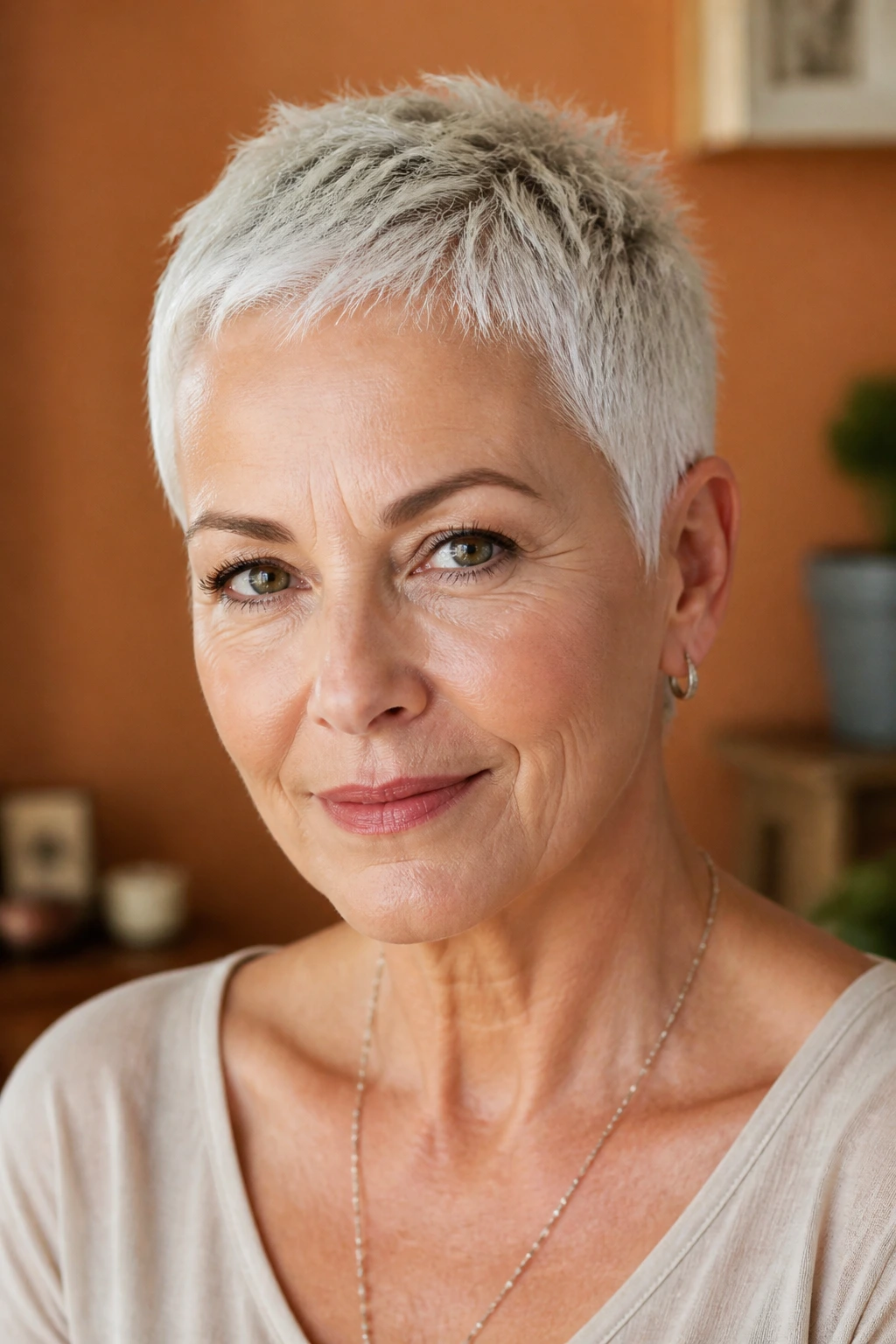
A micro pixie is short enough to show the outline of the head, but not so short that it turns severe. The top, sides, and nape all stay close, with just enough softness to avoid looking clipped to the skin. It’s a neat cut, and it asks for confidence.
Some women love this because it puts the face in full view. Brows, cheekbones, earrings, skin tone — all of it gets a cleaner frame. Other women need a little more length through the fringe or top. Fine. This cut is not for everyone, and it does not pretend to be.
If you like a low-profile morning routine, the micro pixie can be a gift. A fingertip of styling cream, a quick comb through, and you’re done. No round brush. No volume game. No pretending you wanted ten minutes of labor.
12. The Layered Pixie Bob
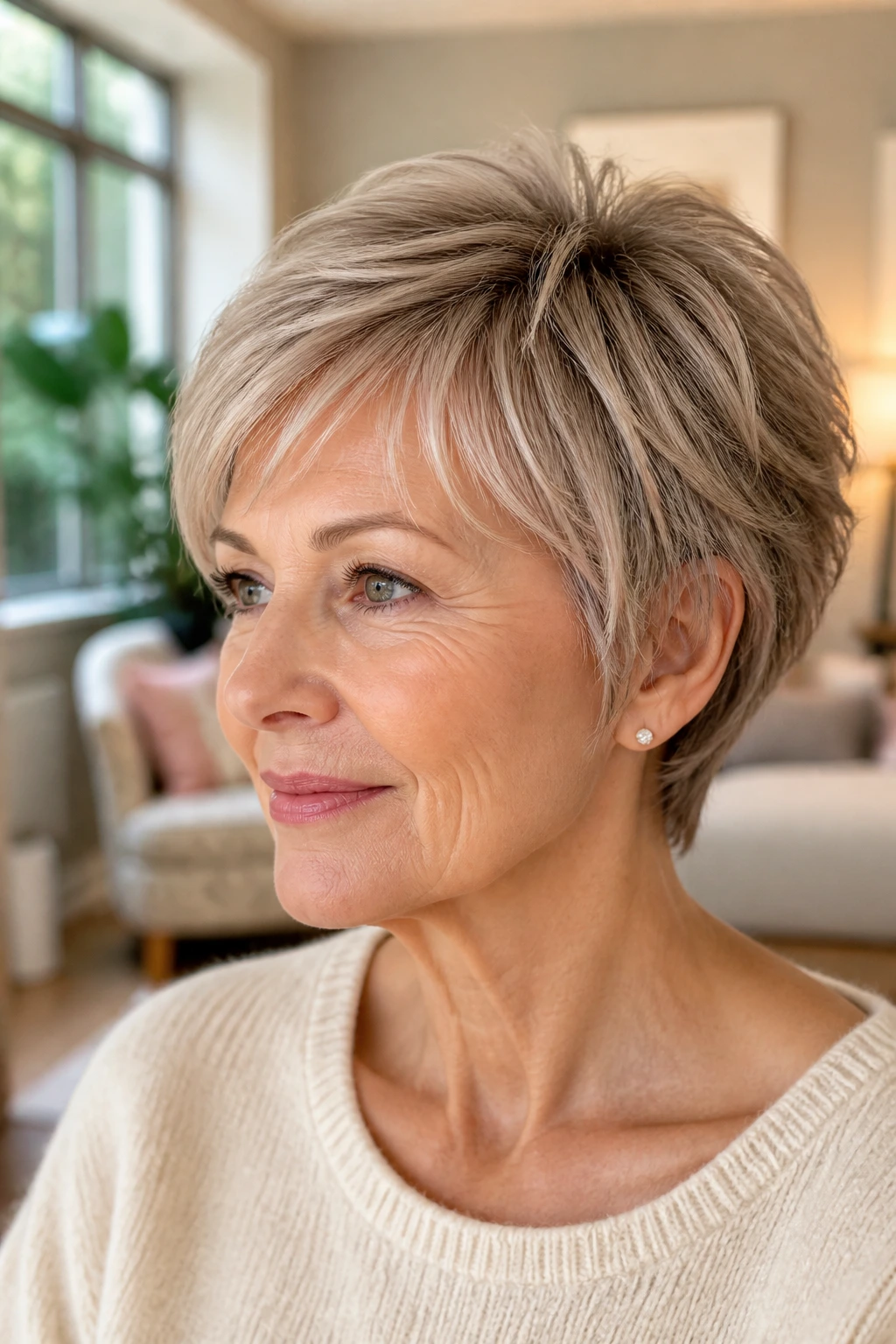
A layered pixie bob lives in the middle ground between a pixie and a short bob, which makes it useful if you want short hair but not that short. The nape is still tapered, but the top and sides carry more length, often enough to tuck behind the ears or skim the jawline.
That extra length changes the mood. The cut feels softer around the face, and it grows out with less panic. If you’re testing short hair for the first time, this is the kind of bridge cut that makes the leap less scary. It also works well if you’re not ready to commit to frequent trims every month.
The layered structure keeps it from turning into a shape-less helmet. Ask for movement through the crown and around the cheekbones. Without those layers, the pixie bob can sag. With them, it has swing.
13. The Asymmetrical Pixie
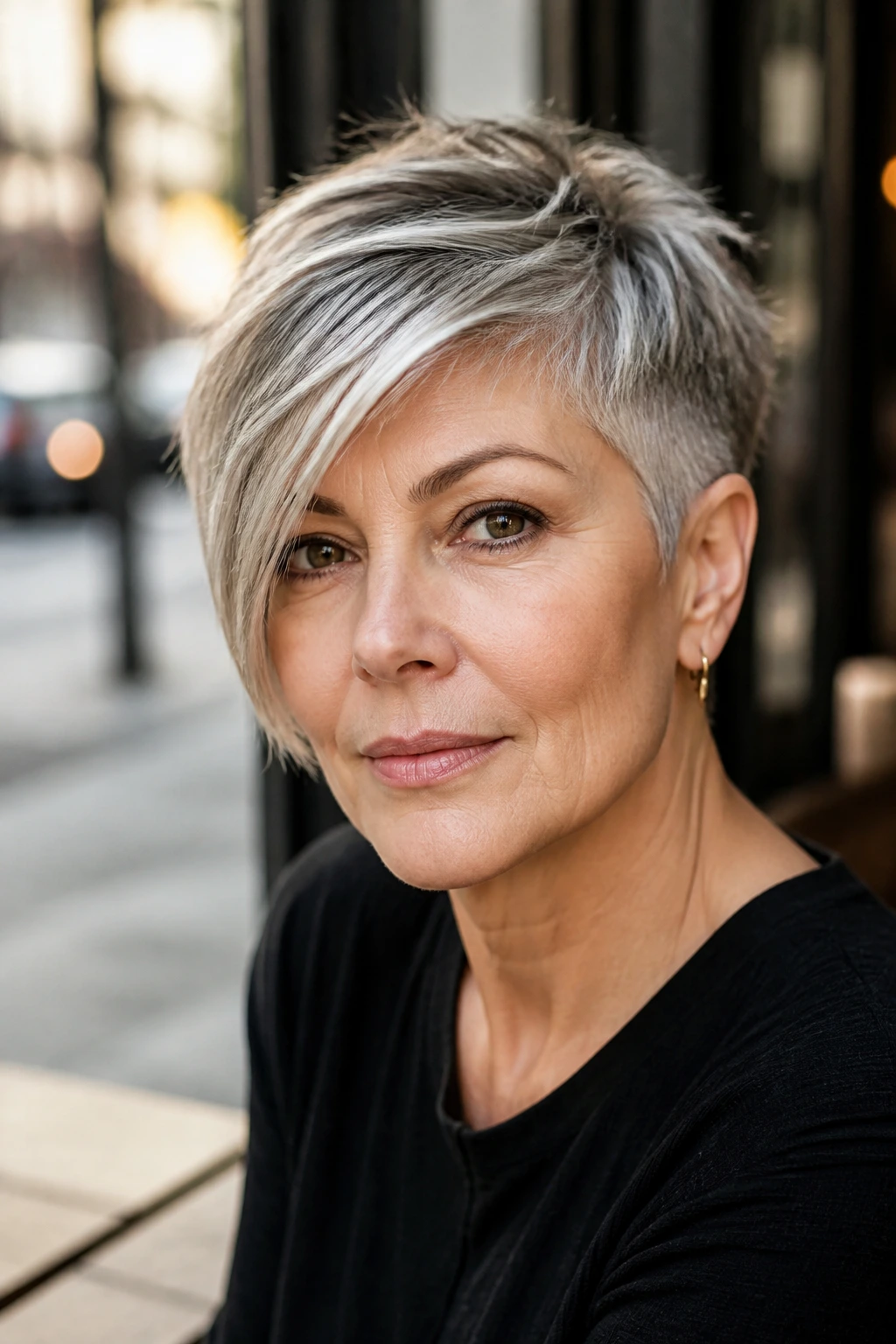
A truly asymmetrical pixie is a little more interesting than a standard side-swept cut. One side is noticeably longer, or the front line drops diagonally so the cut has a slant to it. It creates motion before you even touch the hair.
This is the pixie for someone who likes a visible point of view. It can soften one side of the face, pull attention to the eyes, or make a very simple outfit feel sharper. The angle matters. Too much difference and the cut starts to feel theatrical; too little and you lose the whole point.
Contrary to what people assume, asymmetry can be flattering on mature faces because it breaks up sameness. It gives the eye somewhere to travel. That little diagonal line can do more than a face-framing layer ever could.
14. The Wispy Bang Pixie
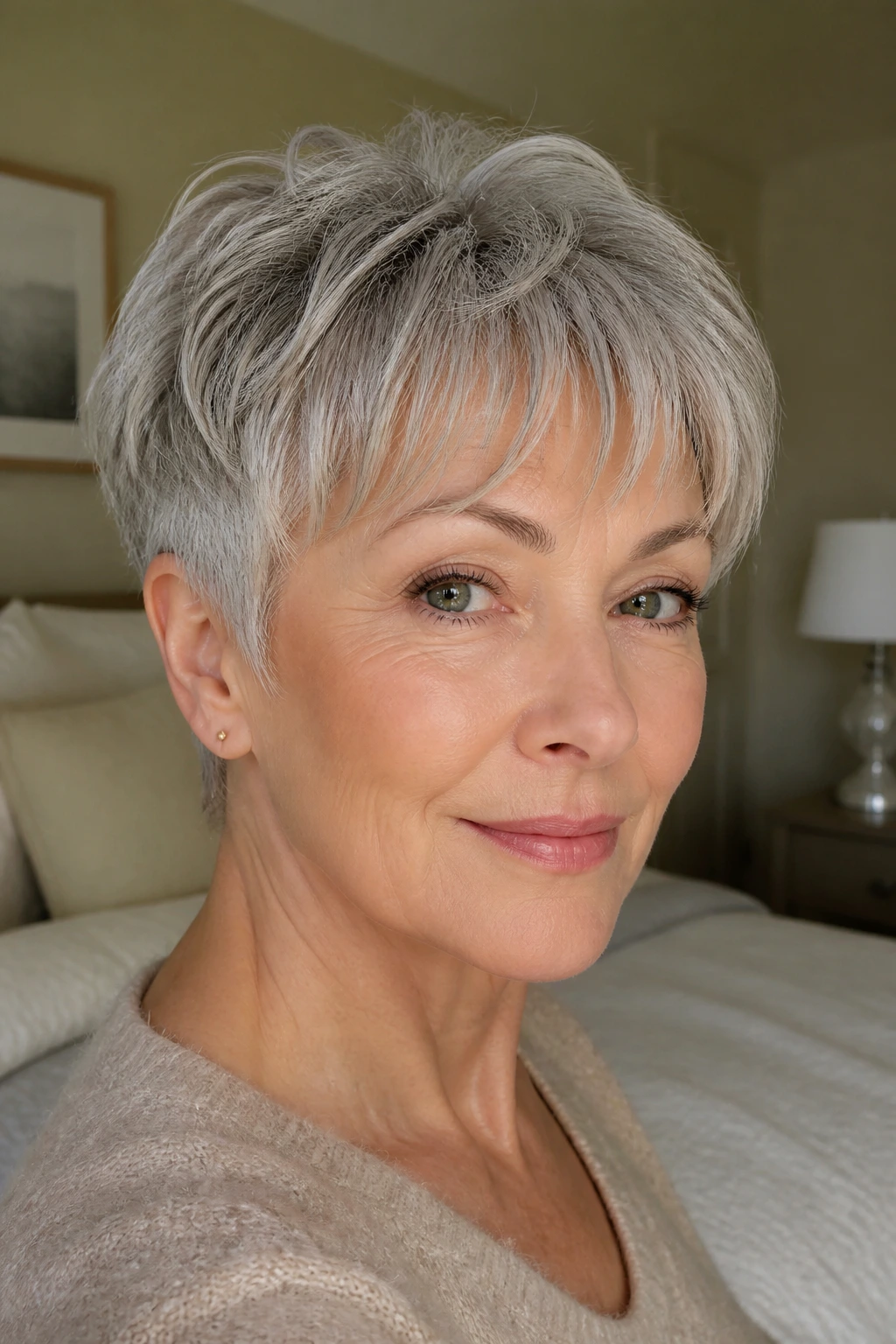
Wispy bangs can rescue a pixie from feeling bare around the forehead. The fringe is cut light, almost airy, with little separated pieces instead of one solid bar across the front. That’s the whole trick. Softness first. Coverage second.
How to keep the fringe from taking over
The bangs should sit lightly on the forehead, not clump into one heavy strip. Ask for point-cutting or feathering through the ends so the fringe can separate. A tiny brush-through with a blow-dryer nozzle keeps the line from closing up. If you like to wear your hair a little messy, this cut rewards that.
- Best for: softer forehead coverage.
- Avoid: a dense bang that blocks the eyes.
- Styling note: dry the fringe first so it doesn’t kink.
15. The Ear-Tucked Pixie
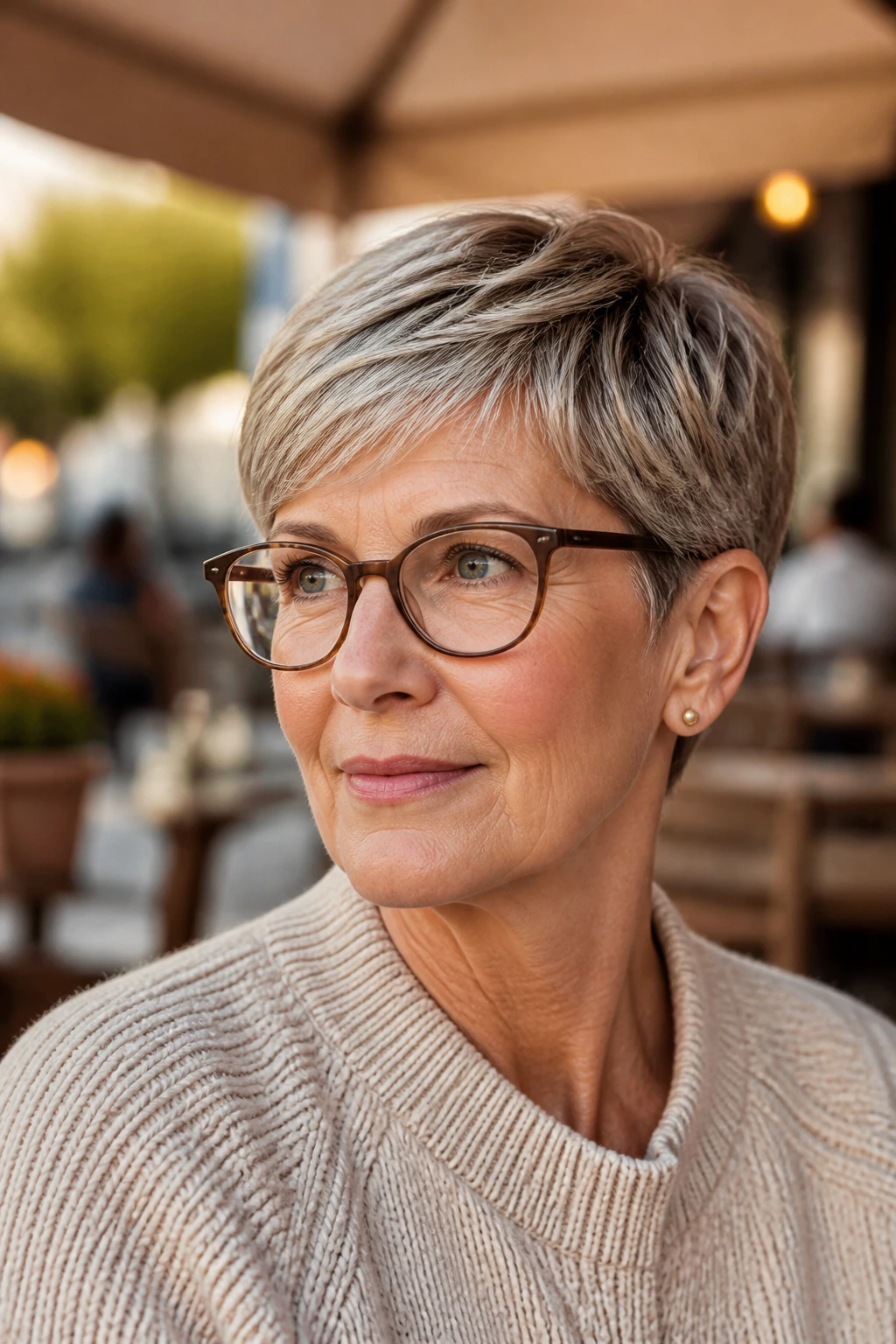
An ear-tucked pixie has enough length at the sides to tuck neatly behind the ears, which sounds small until you wear it. Then it becomes the whole appeal. The sides stay clean, the fringe can sweep across or back, and the ears become part of the shape instead of an awkward interruption.
I like this cut with glasses because the temple area has room to breathe. Earrings also matter more here — small hoops, drops, even a plain stud. The cut makes those details visible without trying too hard.
This shape feels especially polished on days when you want short hair to look intentional in a hurry. Tuck one side, let the other fall forward a bit, and the haircut does the rest. Easy. Smart. No drama.
16. The Salt-and-Pepper Shaggy Pixie
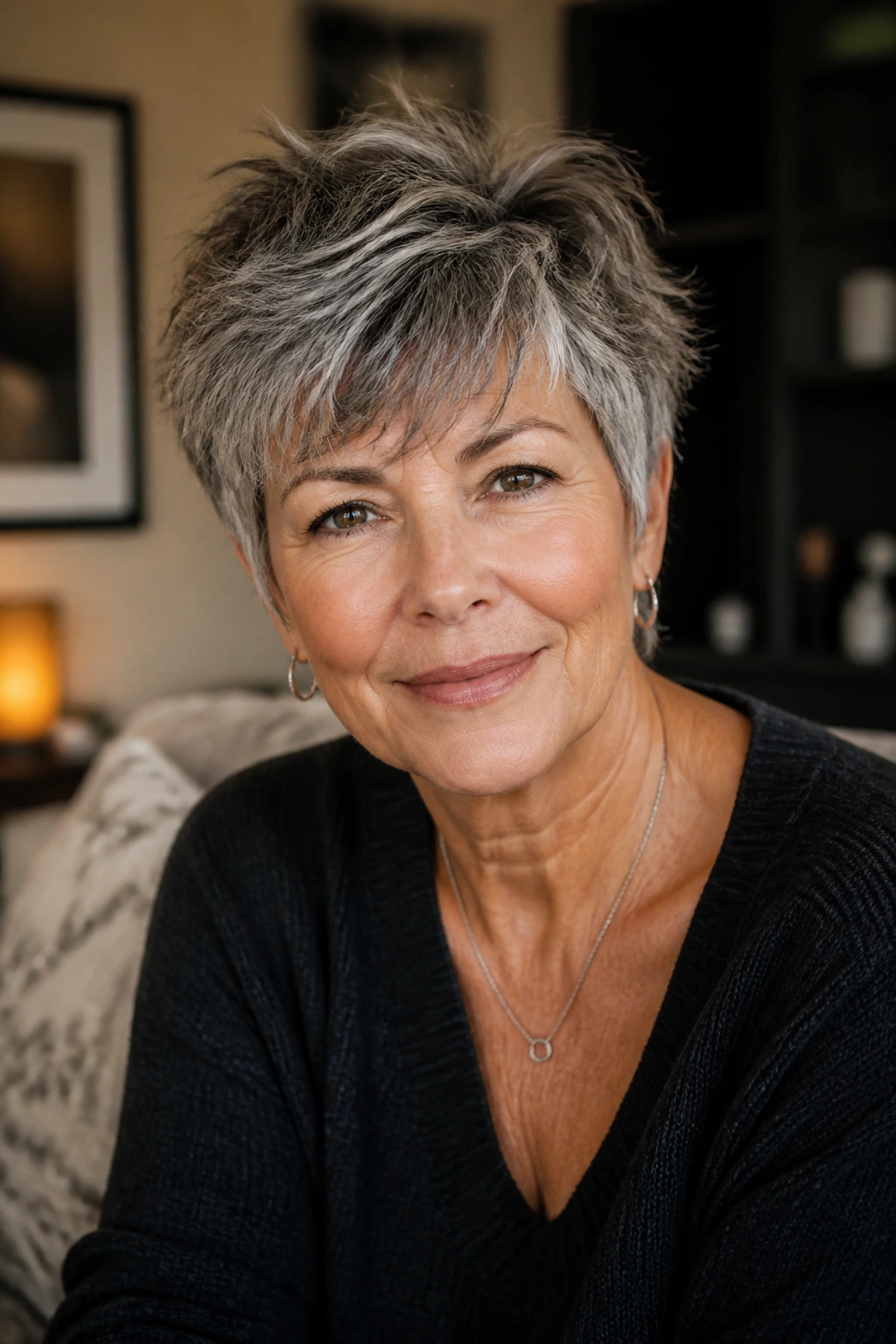
A salt-and-pepper shaggy pixie is relaxed in the best possible way. The layers are feathered and a little irregular, so the color breaks up into soft streaks instead of one flat tone. That’s where the charm lives. The cut lets the natural mix of silver, dark, and white strands do the heavy lifting.
This is not a stiff haircut. It likes movement. A little mousse, a bit of scrunching, maybe a diffuser if your hair has a wave, and you’re there. It looks best when it’s not overworked. If you try to make it too neat, you lose the point.
The shaggy texture also hides grow-out more gracefully than a sharp cropped style. That matters if you do not want to race back to the salon every four weeks. Some cuts are high-maintenance by design. This one is kinder.
17. The Razor-Textured Pixie
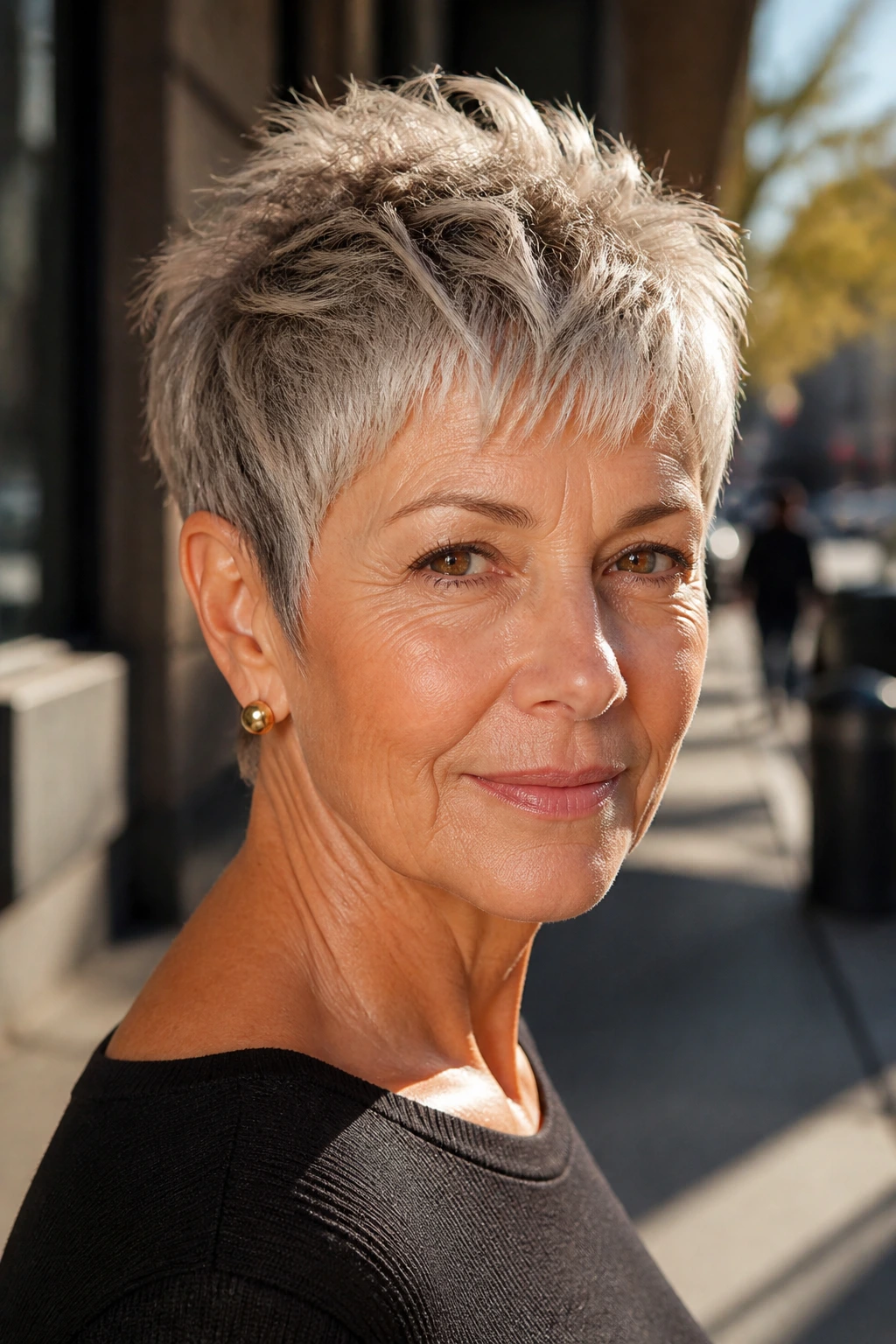
A razor-textured pixie has a sharper, airier finish than a scissor-cut version. The ends are softened by the blade, which creates little wisps and broken pieces through the top and sides. The result can look light and modern, especially on thick hair that needs movement.
What makes it work
The razor takes weight out of the hair without creating chunky steps. That’s useful when your hair has body but no shape. It can also make dense hair sit closer to the head, which is often what you want in a short cut. The downside is obvious: if the ends are already fragile, too much razor work can rough them up.
- Good for: thick or heavy hair.
- Not ideal for: very dry, brittle ends.
- Finish with: a matte paste or light cream.
18. The Nape-Soft Pixie
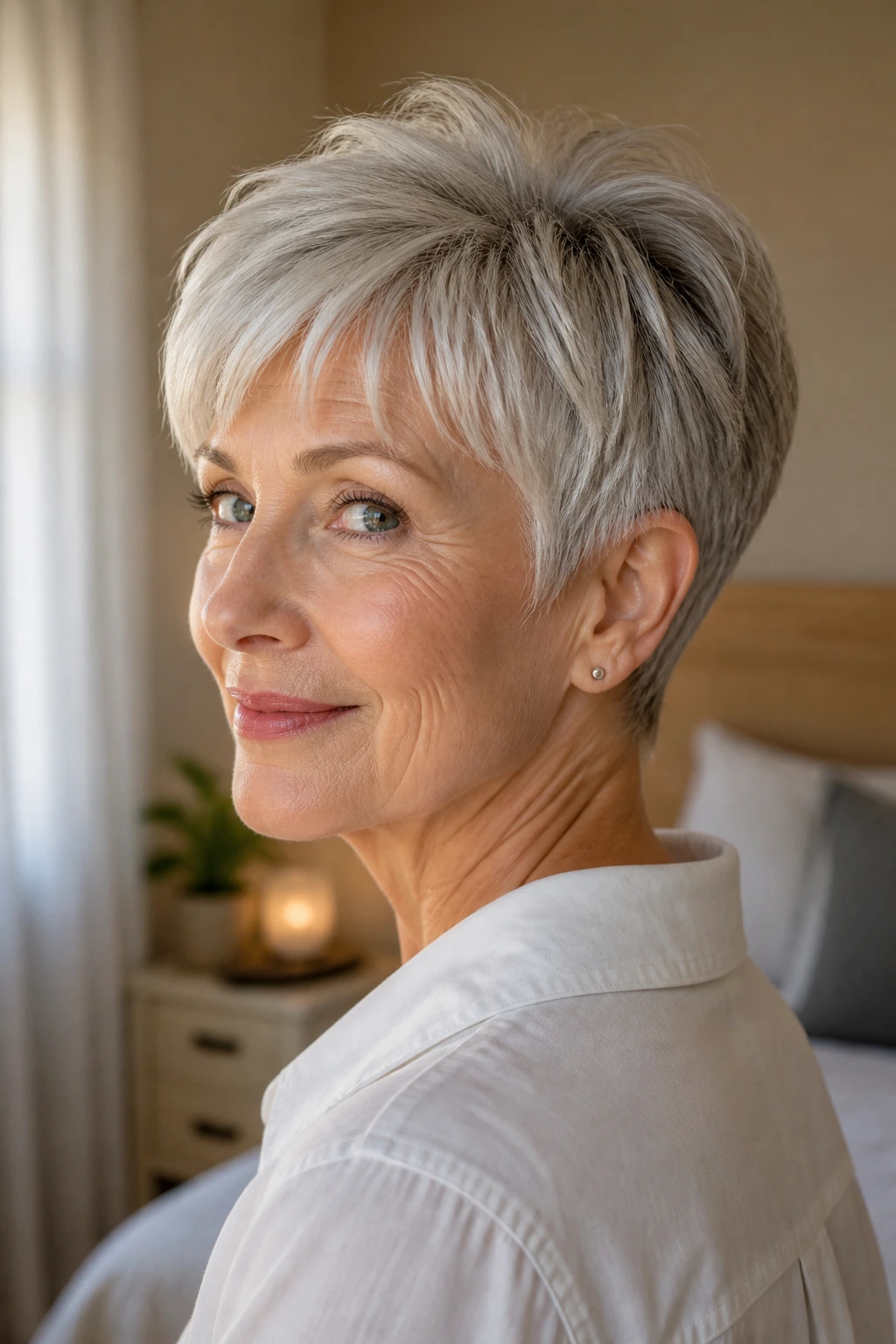
A nape-soft pixie does not draw a hard line at the back of the neck. Instead, it tapers gently so the cut looks finished but not severe. That softness is useful if you dislike seeing a rigid square shape in the mirror every morning.
This version gives the neckline a quiet frame. It can be tiny and neat, or a little longer if you want the back to brush the collar without sticking out. The difference between a good nape and a bad one is about half an inch, maybe less. Small detail. Big mood shift.
If you wear collared shirts often, this cut is worth a look. It sits well with fabric and doesn’t create that stiff shelf of hair that catches on everything.
19. The Brushed-Forward Fringe Pixie
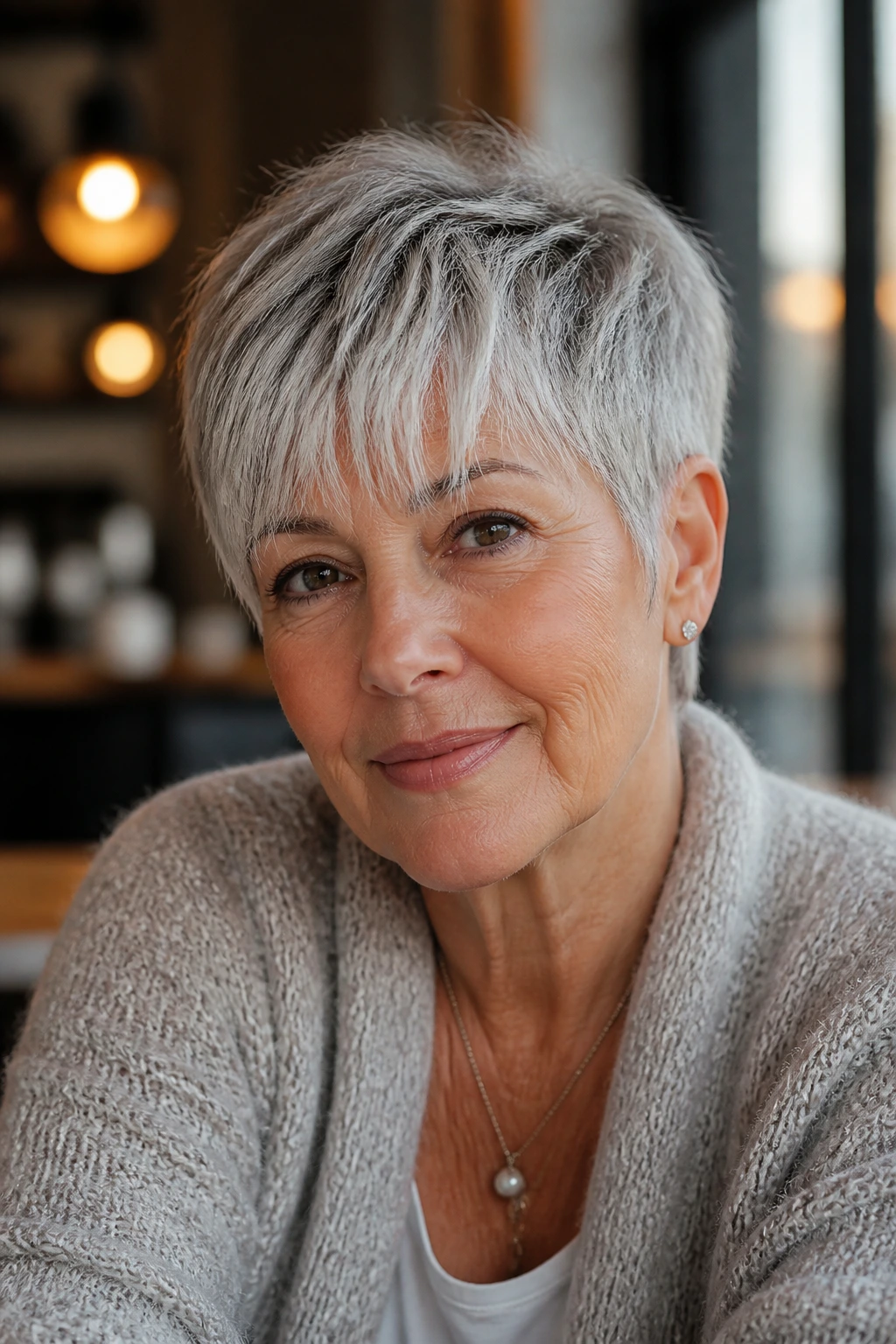
A brushed-forward fringe pixie pushes the action toward the face. The top is longer, the fringe is directed forward, and the crown usually stays soft rather than high. That forward motion gives the cut a bit of attitude without making it loud.
This is a smart choice if your hairline has become a little sparse at the temples or if you want to bring the eye down toward the eyes. The fringe acts like a frame. It should stay light enough to move, though. If it gets heavy, the whole style loses air.
I find this one especially flattering when the rest of the cut is tight at the sides. The contrast creates shape, and shape is what keeps short hair from looking like a compromise.
20. The French-Girl Pixie
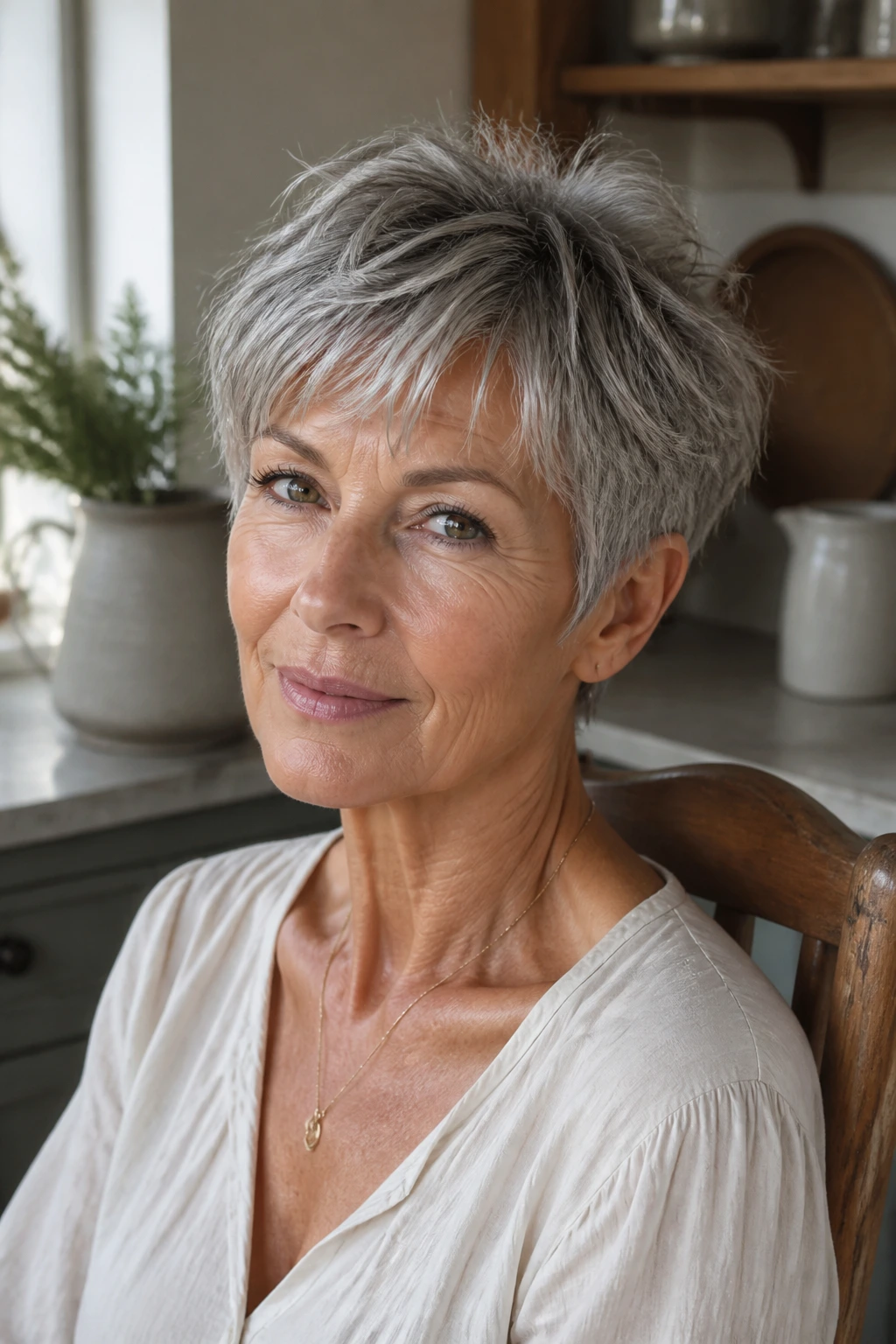
The French-girl pixie is less about perfection and more about a soft, undone finish. Think short hair that looks like it dried with a little bend and a little personality left in it. The fringe is often loose, the crown slightly tousled, the nape clean but not severe.
This cut works because it doesn’t fight texture. A slight wave, a bit of natural bend, even a small cowlick can become part of the style if the layers are cut correctly. A dab of styling cream on damp hair and a quick finger-dry is often enough.
It’s a good option if you dislike the too-polished salon finish that some short cuts demand. This one can look a little rumpled and still be absolutely right.
21. The Soft Spiky Pixie
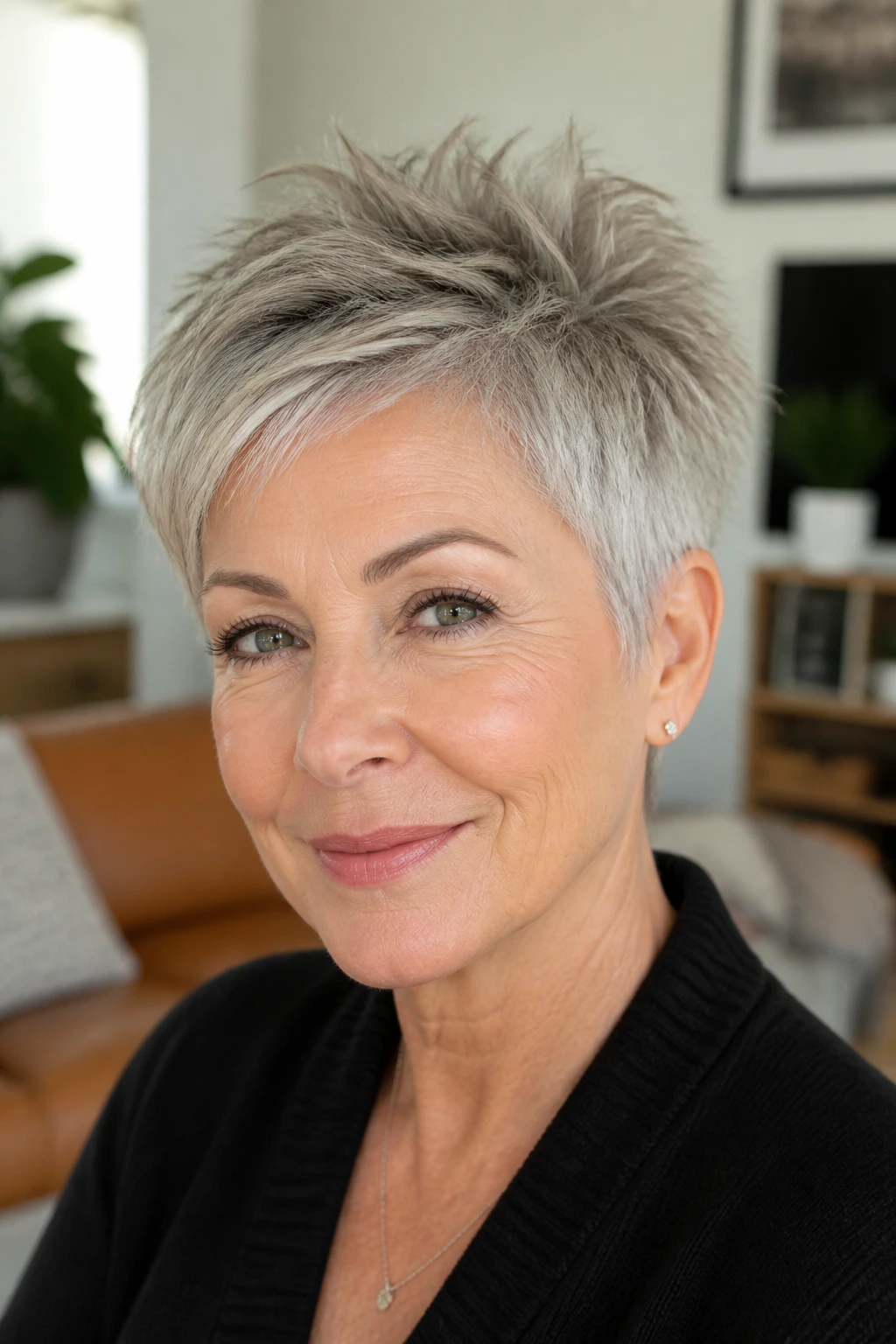
A soft spiky pixie is not a punk cut. It’s a pixie with small lifted pieces that separate at the top and front. The texture gives the style energy, but the softness keeps it from feeling harsh on mature features.
The trick is restraint. Use a tiny amount of paste — think pea-sized, not walnut-sized — and pinch the ends where you want them to stand. If you use too much product, the spikes collapse into shine and weight. That’s not the look.
This cut is good if your hair is naturally dense or has a bit of grit to it. It holds shape well, and the slight irregularity gives the face a lifted, animated frame.
22. The Tousled Air-Dry Pixie
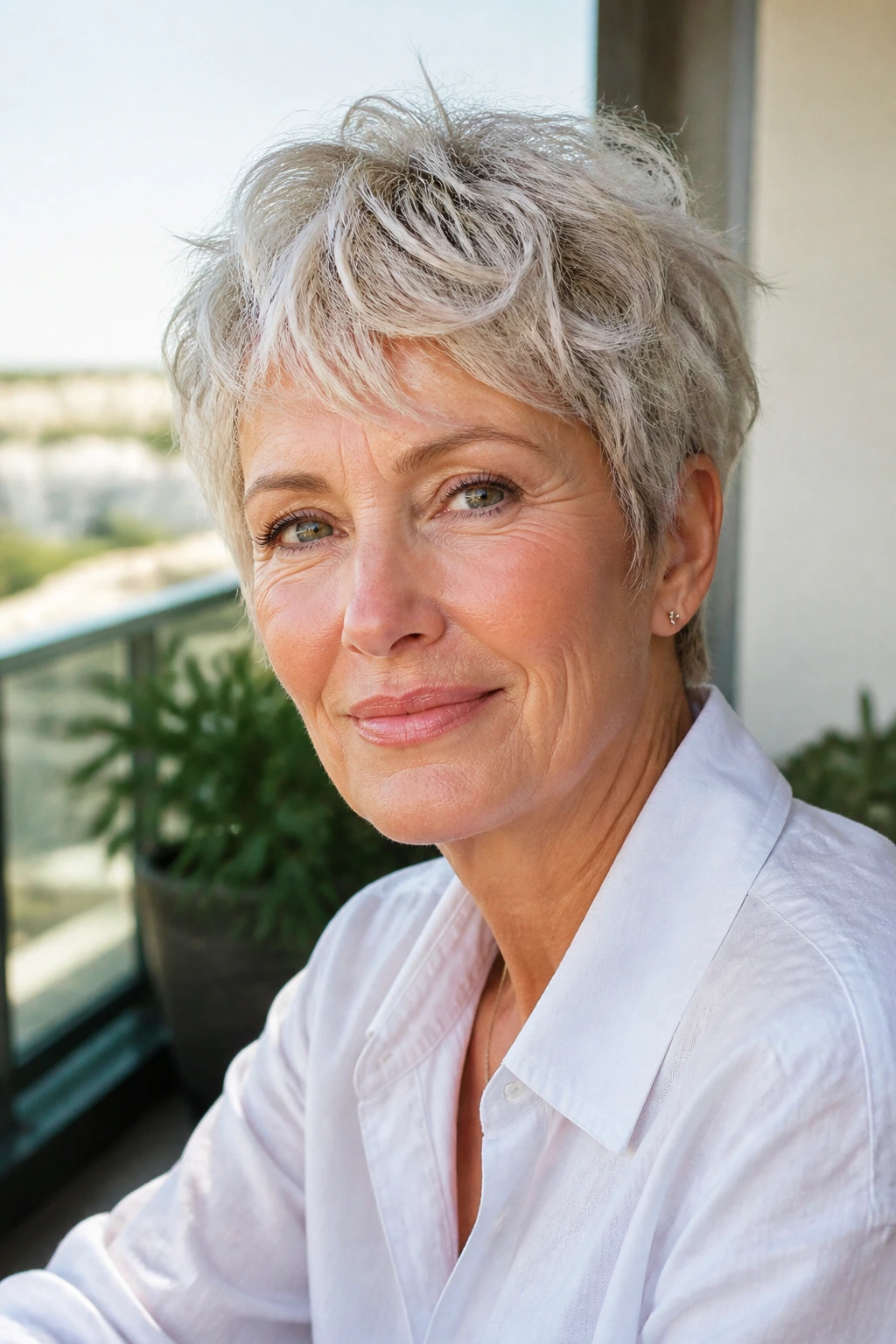
Can a pixie really work without a blow-dryer? Yes, if the cut is built for it. A tousled air-dry pixie keeps the layers light enough to fall into place while your hair dries on its own. Wavy hair tends to love this shape. Straight hair can wear it too, but it needs a little more product and patience.
Best when your mornings are short
This cut leans on texture spray, a little cream, and a hands-off drying method. Scrunch it once or twice. Then leave it alone. The more you touch it while it sets, the flatter it tends to go. A diffuser can speed things up if your hair is stubborn.
- Best on: natural wave or soft curl.
- Helpful product: a light curl cream or texture milk.
- Watch out for: over-smoothing the roots.
23. The Tapered-Neck Pixie
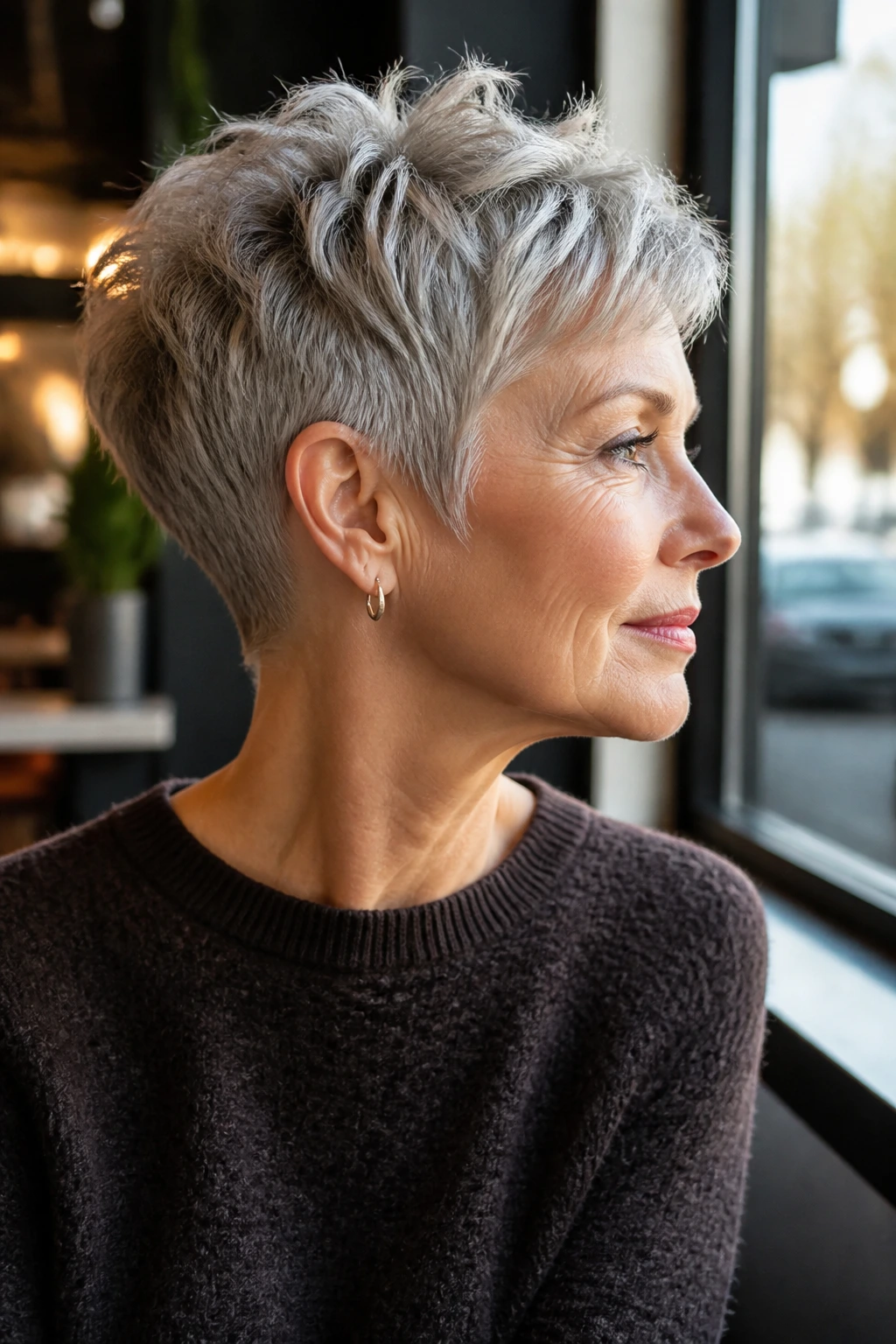
The tapered-neck pixie earns its keep in the back. The neckline is clipped close and gradually fades into the rest of the cut, so the back stays crisp as it grows. That matters more than most people think. A rough nape makes even a good pixie look unfinished.
Compared with a shaggy back, this one feels neater and more controlled. It’s a strong choice if you like jackets, scarves, or anything with a visible collar. The tapered neck keeps the fabric from fighting the haircut.
It also helps the cut hold its shape longer between trims. Hair at the nape grows fast and odd; a good taper buys you time.
24. The Side-Part Glam Pixie
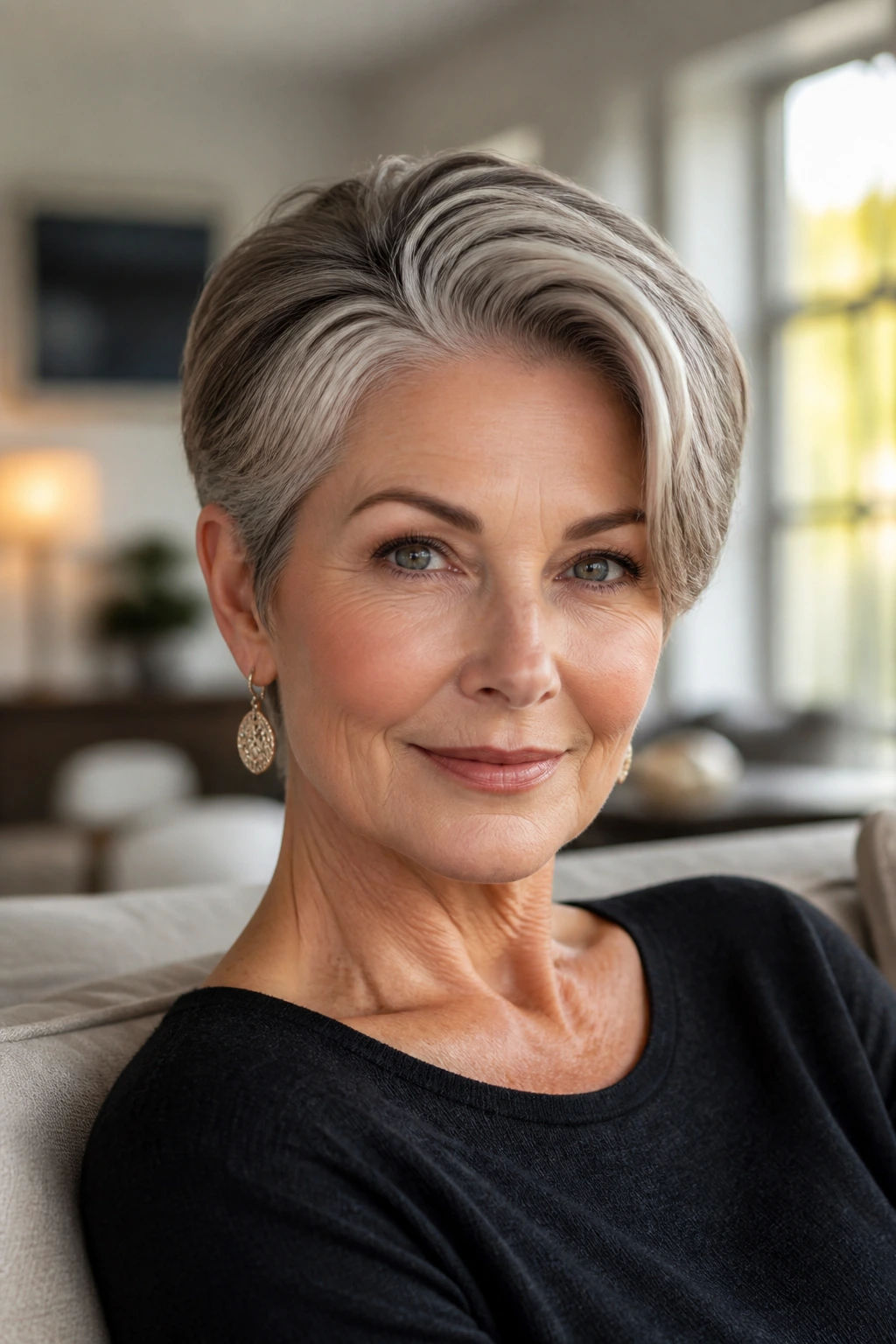
A side-part glam pixie is for days when you want short hair to look a little dressed up. The deep part creates a sweep of volume on one side, and the longer top lets the hair fall with a polished curve. It can look sleek, but it doesn’t have to be stiff.
I like this style because it gives short hair a bit of evening energy. You can smooth it close for a formal event, or lift the roots a little for daytime. Same cut. Different effect.
If you wear statement earrings, this shape has a nice way of framing them without stealing the show. The hair stays in the background, where it should, and the face gets the attention.
25. The Feathered Bang Pixie
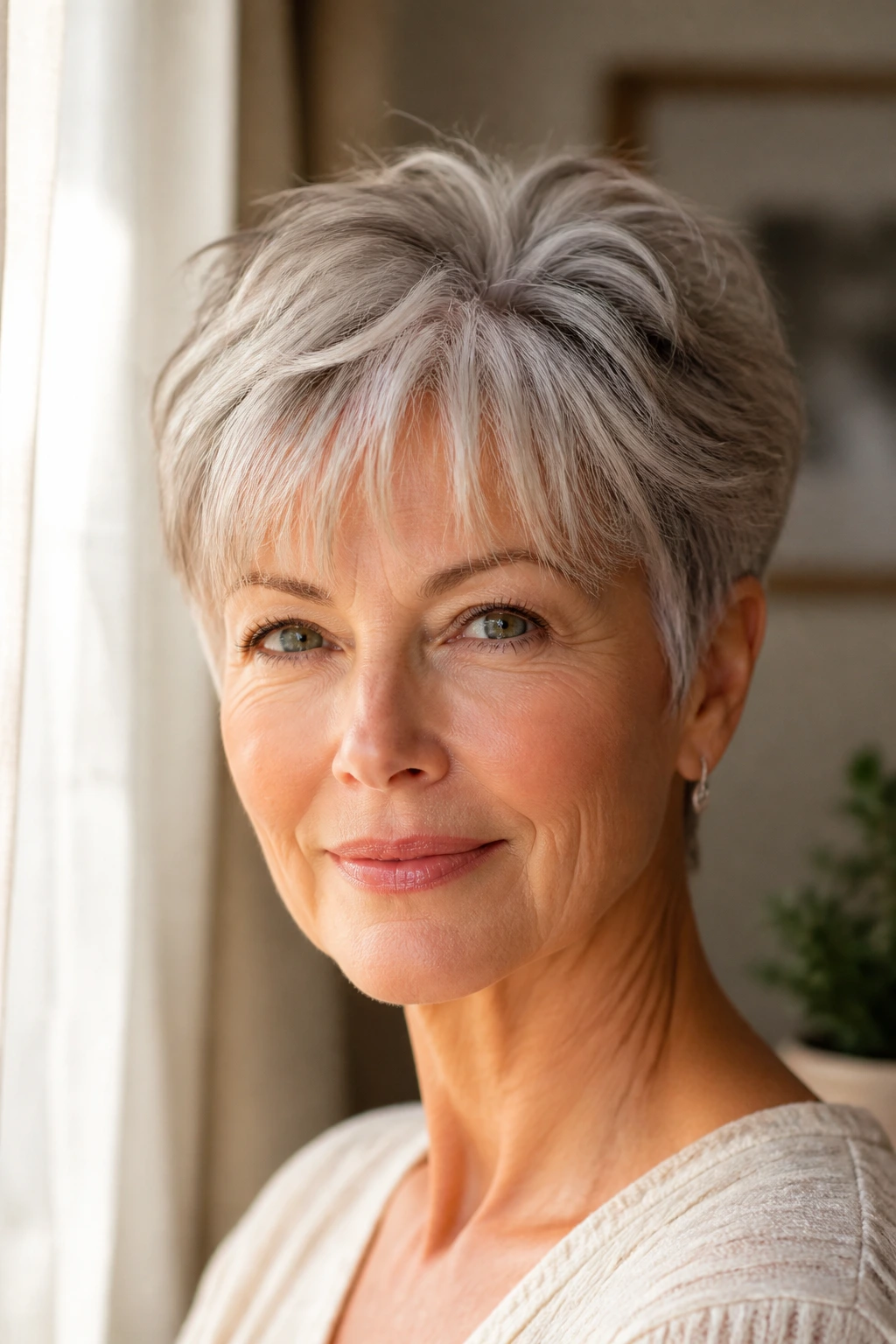
Feathered bangs soften a pixie in a way blunt bangs never quite manage. The fringe breaks apart into tiny layers that float over the forehead instead of sitting in one hard line. That makes the haircut feel lighter, and on mature hair, lightness matters.
This is one of those cuts that benefits from a stylist who cuts with motion in mind. A fringe that is too thick can close in the face. A feathered fringe gives room. It also grows out better, which means fewer awkward weeks between trims.
If you want a pixie that feels gentle around the eyes and temples, this is a good place to land. It’s one of the least fussy versions in the whole stack.
26. The Wash-and-Go Pixie

A wash-and-go pixie is built for low effort, and I mean that in a good way. The cut is shaped so the hair falls into place after a quick towel blot and a little product. No big round-brush finish. No careful sculpting. Just enough structure to keep the silhouette from going fuzzy.
What to ask for
Keep the sides tidy, the top short enough to dry fast, and the layers soft enough to move without styling. A little cream, a dab of mousse, and maybe a spritz of texturizer are usually enough. If your stylist knows you want speed, say so early. That changes everything.
- Good for: busy mornings and low-product routines.
- Product note: use lightweight formulas only.
- Maintenance: shape still needs regular trimming.
27. The Statement-Color Pixie
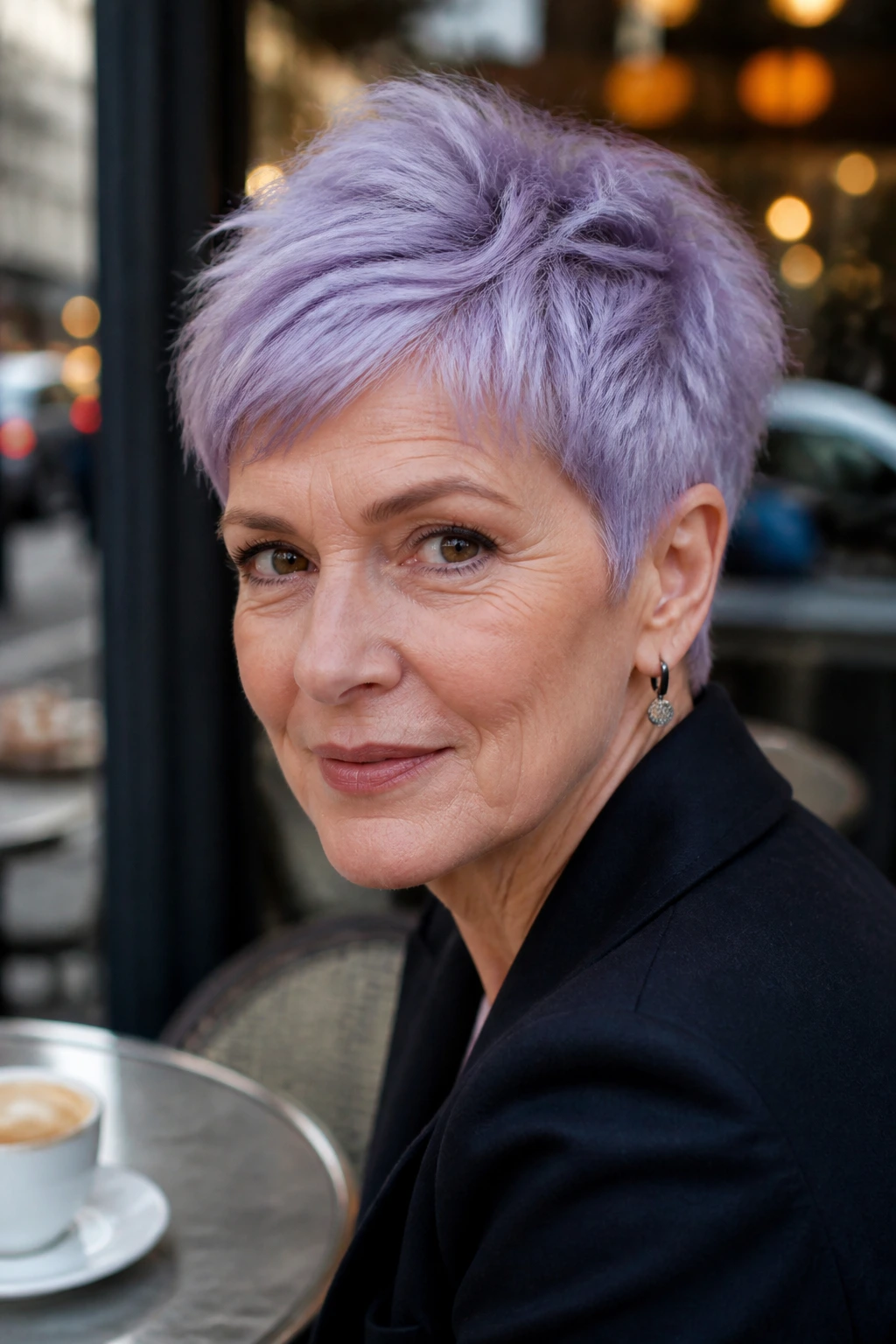
A statement-color pixie is the cut that lets color do the talking. The haircut itself stays simple and well-shaped, while the tone becomes the headline. That could mean bright silver, a smoky lavender glaze, a clear white-blonde, copper, rose gold, or even a deeper brunette with a sharp gloss.
Short hair shows color fast. Every plane of the head catches light differently, which makes dimension easier to see. That’s the real advantage here. A pixie is small enough to show off tone but strong enough to keep the whole thing from looking costume-like.
If you love your hair color as much as your cut, this style makes room for both. Keep the shape clean, keep the finish smooth, and let the color carry the personality.
Why the Pixie Works So Well on Mature Hair
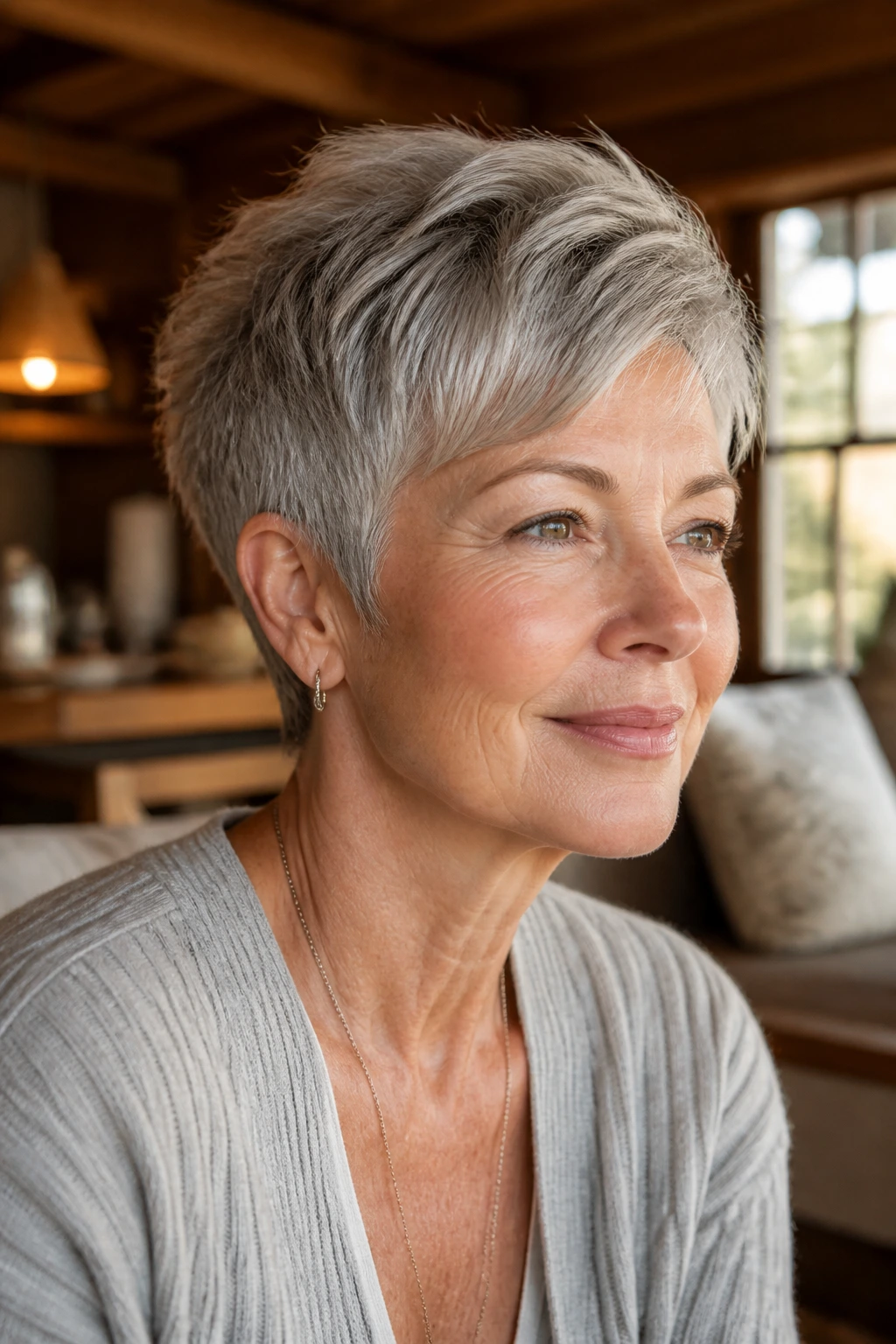
Short hair can be kinder than long hair when density changes. That sounds backward until you’ve lived with fine ends that split, frizz, or disappear into nothing by the second day. A pixie takes weight off the strand. Less weight means more lift at the root, and more lift means the hair looks fuller without needing a mountain of product.
The other advantage is control. Gray hair often grows in with a different texture than the rest of the head, sometimes coarser, sometimes drier, sometimes both. A pixie lets you shape those changes instead of dragging them down to collarbone length where they become harder to manage. The silhouette stays clear. The crown stays readable. The neckline can be cleaned up before it turns fuzzy.
There’s also a practical truth people skip over: a short cut can make a strong hairline look stronger. Cowlicks don’t disappear, but they stop fighting so much real estate. A good pixie works with the grain, not against it. That is why the best versions tend to have a tapered nape, a layered crown, and a face frame that is soft enough to move.
One caution. A pixie only looks easy when it’s cut well. A blunt top with chunky sides can make hair look heavy or helmet-like. The good ones are shaped, not just shortened.
The Tools That Actually Matter for Short Hair
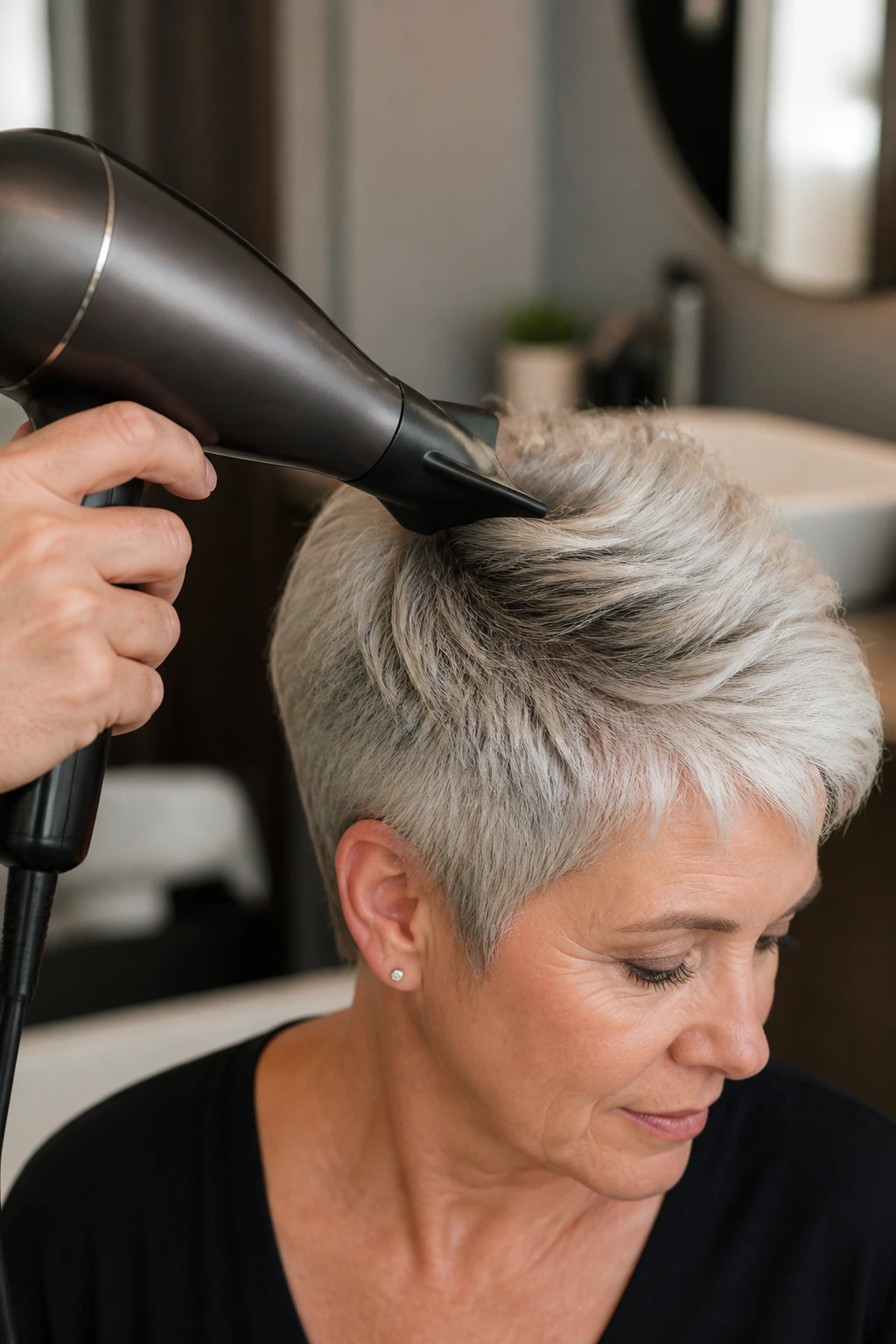
- Blow-dryer with a nozzle: Directs air at the roots so you can shape the crown instead of blasting the whole head.
- Small round brush, 1 to 1.5 inches: Useful for lifting the front and smoothing the sides without creating too much volume.
- Vent brush or paddle brush: Best for fast dry-down on a wash-and-go cut.
- Light mousse or root-lift spray: Adds support at the base without making the cut sticky.
- Texture paste or cream: A pea-sized amount is enough for piecey definition.
- Fine-tooth comb: Handy for clean parts and sleeker styles.
- Tail comb: Good for sectioning the crown and directing the fringe.
- Hair clips: Keep the top out of the way while you dry the back.
- Hand mirror: Worth having if you keep a short nape neat at home.
- Clarifying shampoo: Helps if you use wax, paste, or dry shampoo often.
How to Choose the Right Pixie for Your Hair Texture and Face Shape
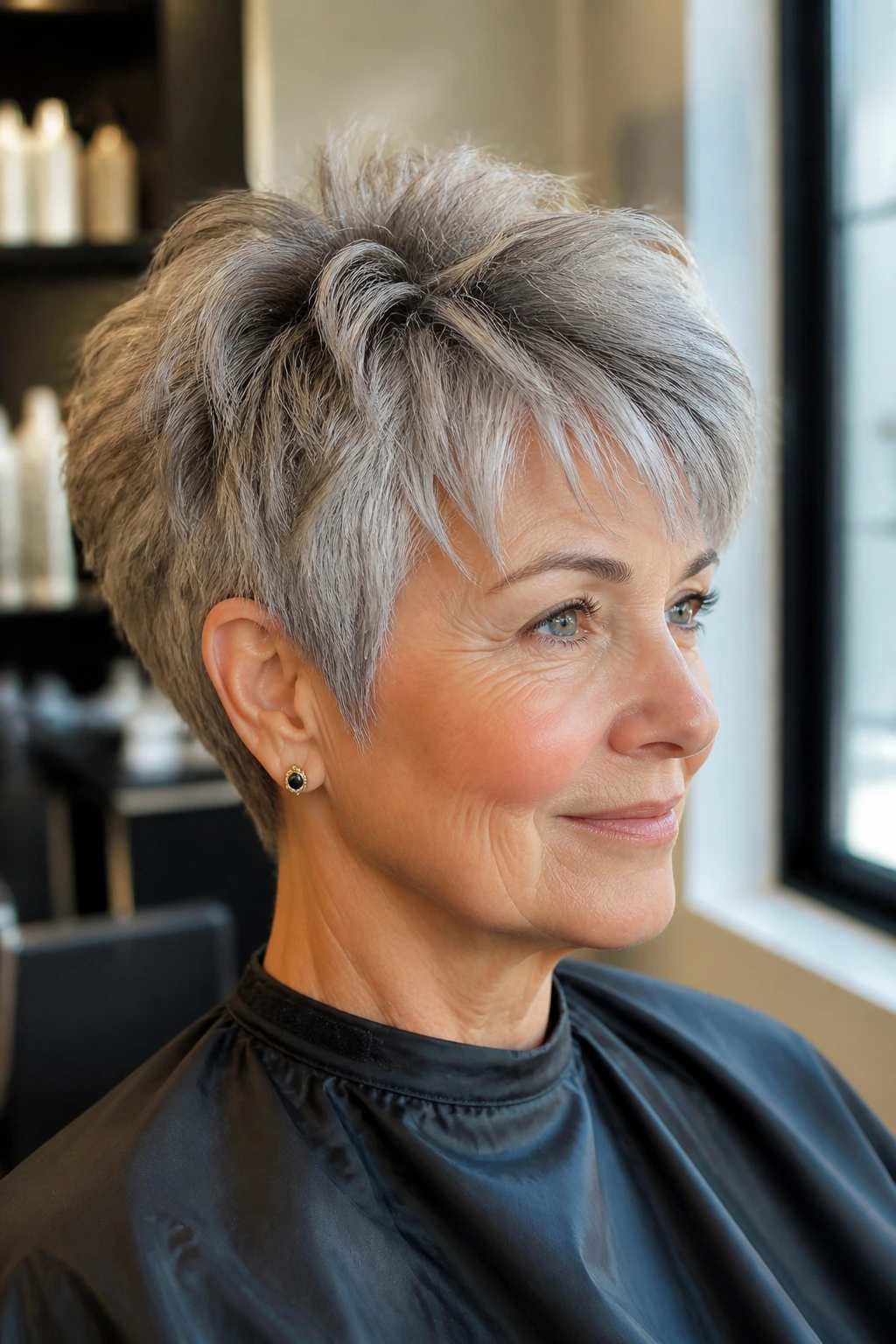
Fine hair usually wants lift more than it wants length. If that’s your texture, look for stacked crowns, soft layers, and a taper at the nape. Heavy layering on fine hair can go too far, so keep the cut light but not shredded. Thick hair needs the opposite treatment: remove bulk under the top and around the ears so the head doesn’t balloon out. A razor or point-cut finish can help, but only if the hair can take it.
Curly and wavy hair need room for movement. If a pixie is cut too short against a curl pattern, it can spring up unevenly and sit wider than planned. Leave enough length for the wave to form, and trim it dry when possible so shrinkage doesn’t surprise you. Face shape matters too, though not in a rigid way. A round face often likes height at the crown or a longer fringe. A longer face may prefer softness through the sides. Square faces tend to look good with feathered fronts and rounded texture. Heart-shaped faces usually benefit from volume near the cheekbones rather than only on top.
Cowlicks and widow’s peaks deserve their own conversation. If your hair pushes hard in one direction, choose a pixie that follows that growth rather than fights it. A side part, a forward fringe, or a soft sweep can make the whole cut settle faster. You can bully a cowlick with product for a day. You cannot bully it every morning without getting tired of the haircut.
How to Wear These Pixies Day to Day
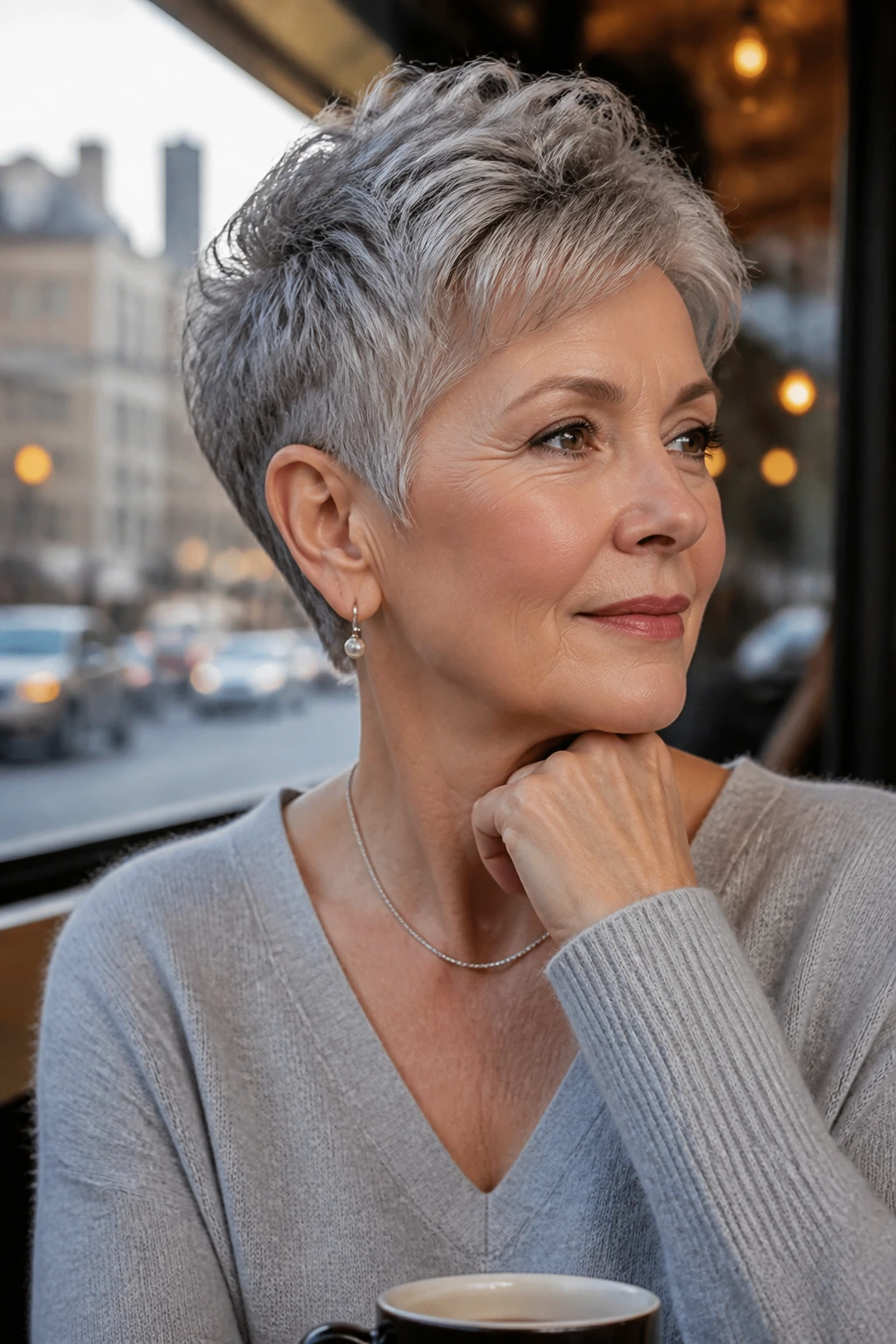
Silhouette: The first thing a pixie changes is the outline of your head and neck. Keep the crown where you want the eye to go — slightly lifted if you want height, flatter if you want a smooth profile, and a little textured if you want movement without fuss.
Accessories: Earrings matter more here. So do glasses, scarves, and collars. A slim sideburn or a tucked ear can make a frame sit better, and a clean nape looks especially good with open necklines or a soft turtleneck. Small details, yes. They change the whole balance.
Finish: Matte paste gives separation. Light cream gives softness. A little spray gives hold without crunch. Pick the finish based on what you want the haircut to say. Sleek and precise? Go smoother. Lived-in and easy? Keep it touchable.
Best pairing: Simple necklines, clean brows, and a face frame that isn’t fighting your clothes. A pixie tends to expose more of your features, which is part of the appeal. Use that. Don’t hide the haircut under a high collar unless you’re going for contrast.
Small Tweaks That Change the Whole Cut
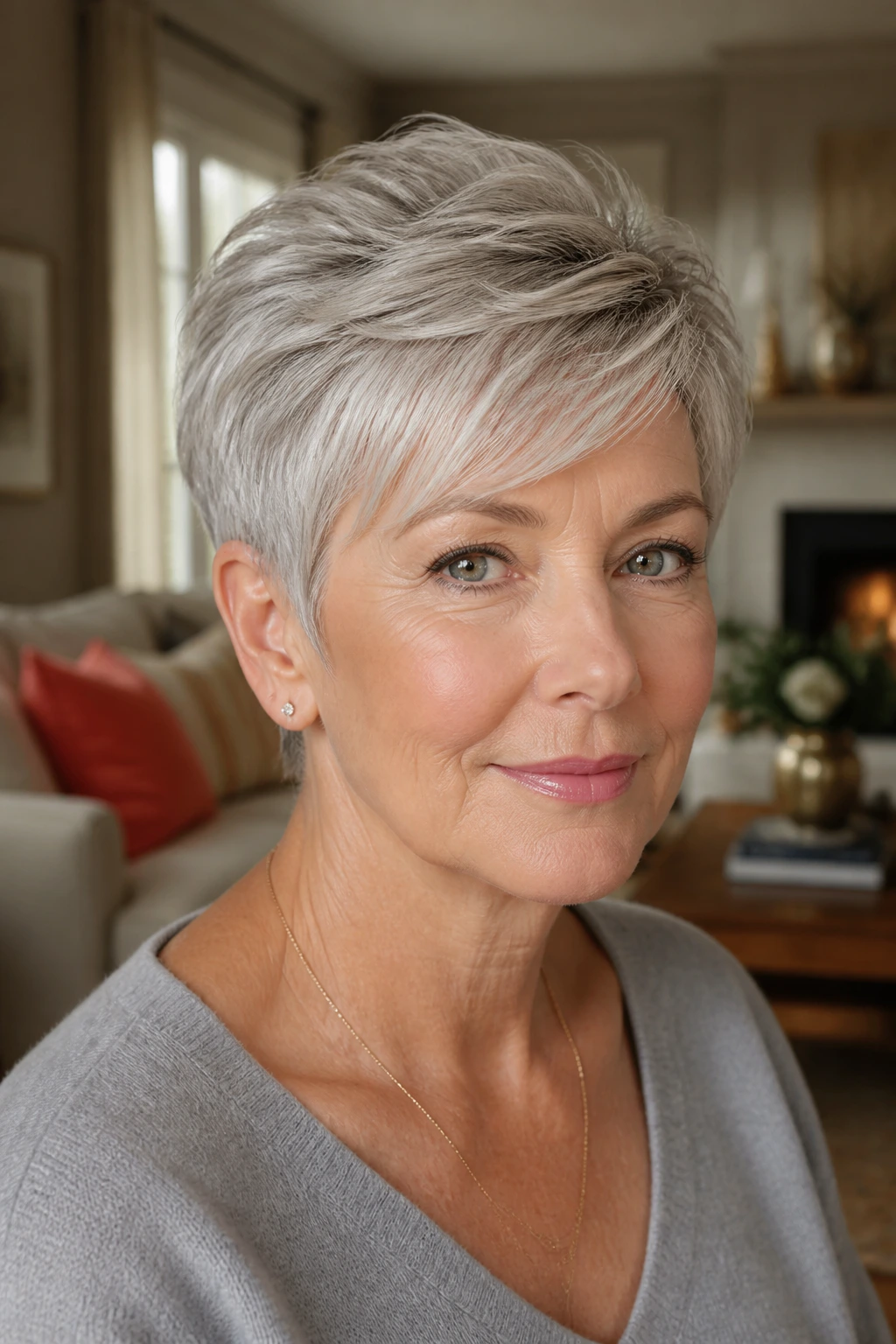
Lift Boost: Work mousse or root spray into damp hair only at the crown and front hairline. That one move keeps the top from dropping flat, and it matters more than adding ten different products to the ends.
Softness Boost: Ask for point-cutting around the temples and cheekbones. A pixie can go from severe to flattering with half an inch of softness near the face. It’s not decoration. It’s balance.
Color Boost: If your hair is silver or salt-and-pepper, a gloss or gentle toner can keep the tones clean instead of muddy. On colored hair, a few highlights around the fringe can make the layers read more clearly.
Make-It-Yours: If you wear glasses, keep the temples slimmer. If your forehead is the feature you like most, leave the fringe open. If you want a cut that feels more polished, ask for a smoother side part and cleaner lines at the nape.
Keeping the Shape Between Salon Visits
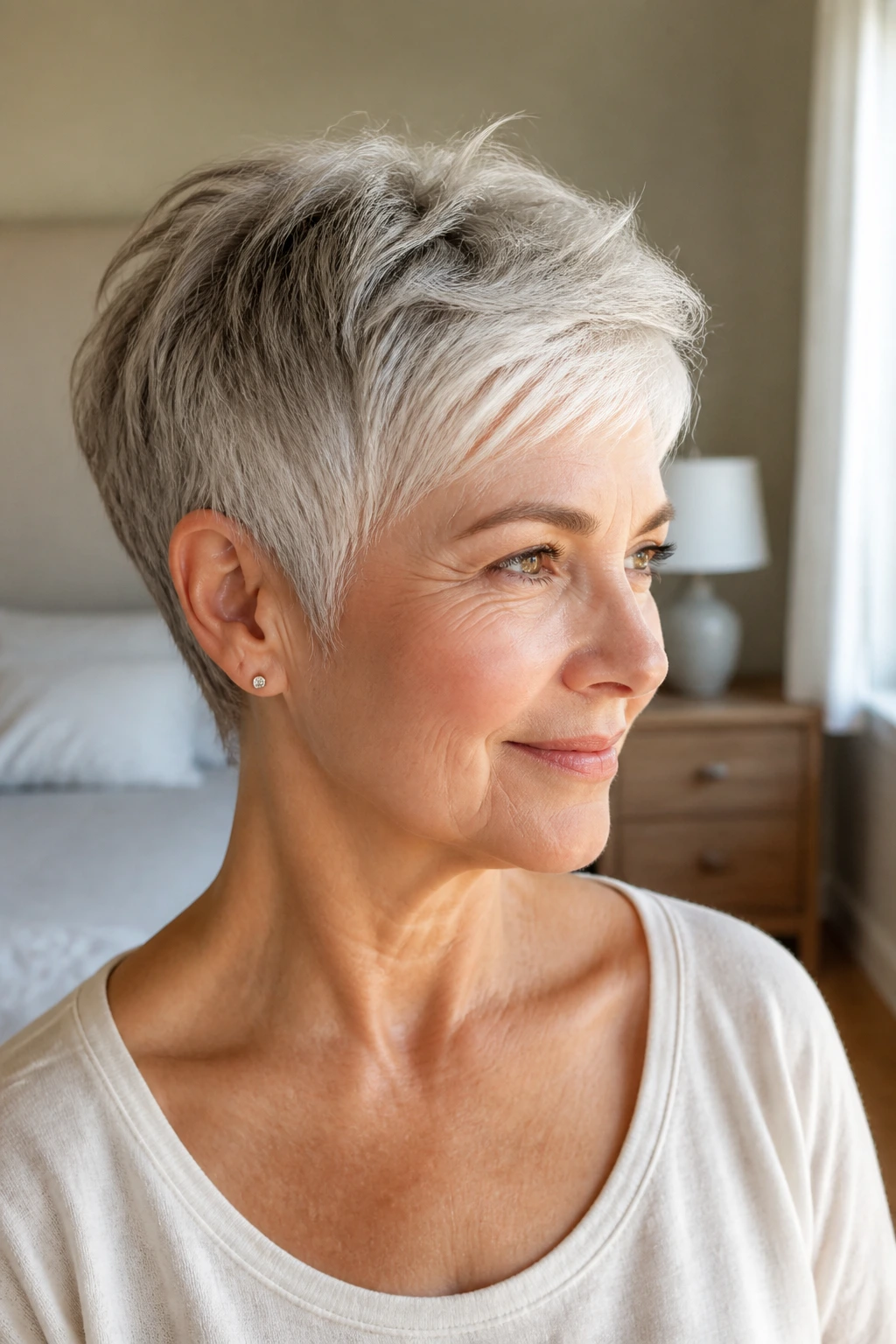
A pixie looks best when the shape is maintained, not rescued. Most versions need a trim every 4 to 6 weeks, and shorter undercuts or micro pixies may need attention closer to 3 or 4 weeks. That isn’t vanity. Short hair grows into its shape fast, and the neckline is usually the first place to give the game away.
Wash frequency depends on your scalp, not the calendar. Fine or oily hair may want shampoo every day or every other day. Dry, curly, or silver hair often does better with 2 or 3 washes a week and a lighter cleanser. If you use paste, wax, or heavy dry shampoo, clarify every 2 to 4 weeks so buildup doesn’t flatten the crown and make the hair look dusty.
Night care matters too. A satin pillowcase keeps the top from getting roughed up, and a tiny bit of water mist in the morning can wake up a fringe without re-wetting the whole head. If you’re styling with a blow-dryer, a quick cool shot at the end helps the roots set. If you air-dry, keep your hands out of it while it’s drying. That one habit saves a lot of frizz.
Variations and Adaptations to Try
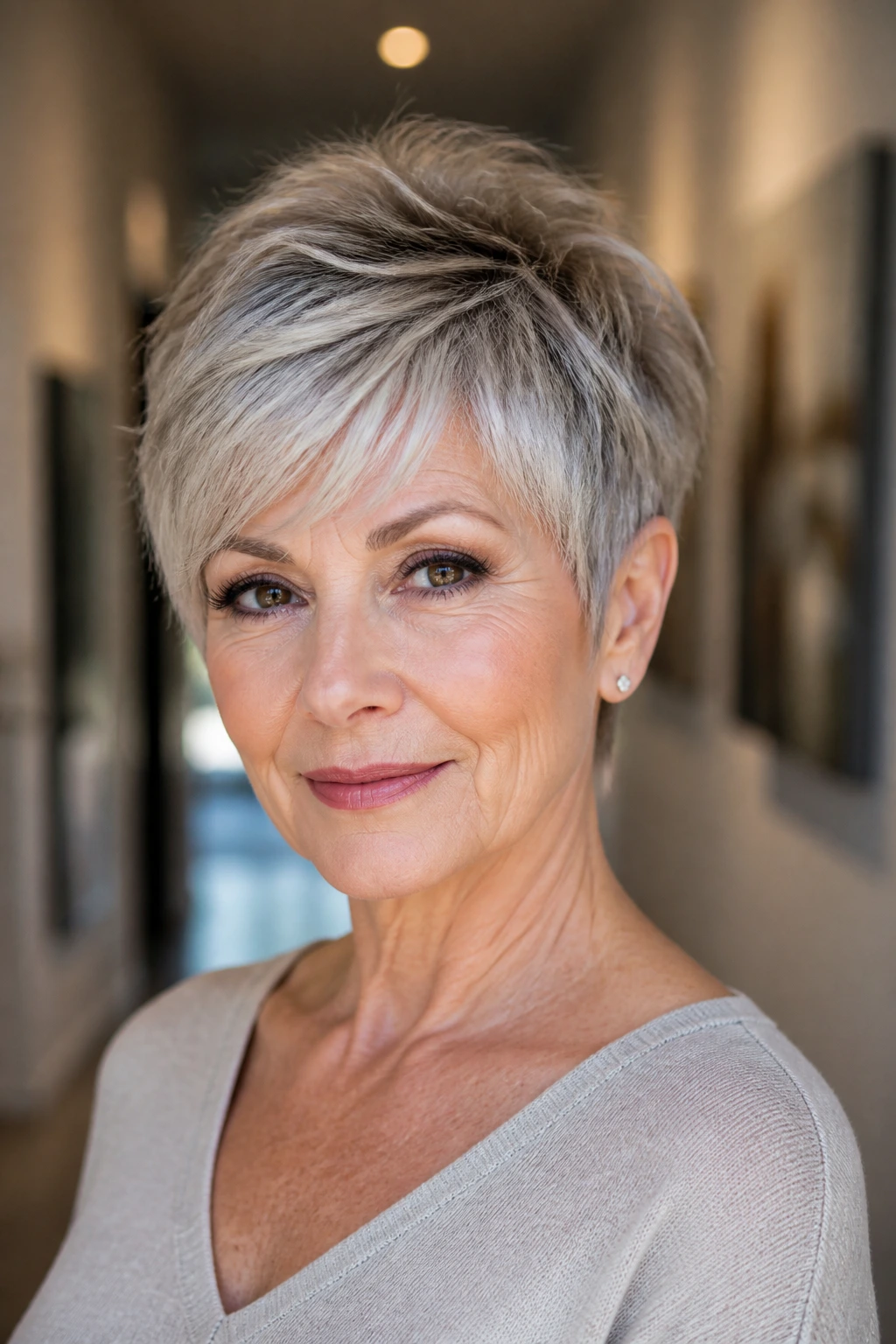
For Fine Hair: Choose a feathered crown, side-swept fringe, or tapered pixie with short sides and a light top. The goal is lift, not layers everywhere. Too many layers on fine hair can make it look see-through.
For Thick Hair: Ask for interior weight removal, a tapered nape, and a top that keeps enough length to move. Thick hair loves a pixie when the bulk is removed from the wrong spots. Otherwise it turns boxy.
For Natural Gray: Keep the cut soft and the finish clean. Silver strands show movement quickly, so a layered or feathered pixie often looks better than one with hard lines. A gloss every so often keeps the tone from going dull.
For Glasses Wearers: Leave a little room at the temples and avoid a fringe that falls right into the frame unless you want constant pushing-back. Ear-tucked, side-swept, and softer forward-fringe versions usually work best.
For Low-Maintenance Mornings: Pick a wash-and-go or softly tapered pixie with enough structure to dry into place. The less you need to re-direct the hair after washing, the more likely you’ll keep the cut long enough to enjoy it.
For a Stronger Statement: Try an asymmetrical line, undercut sides, or a bolder color finish. Keep one part of the haircut simple so the statement has room to breathe.
Common Mistakes That Make Pixies Work Against You
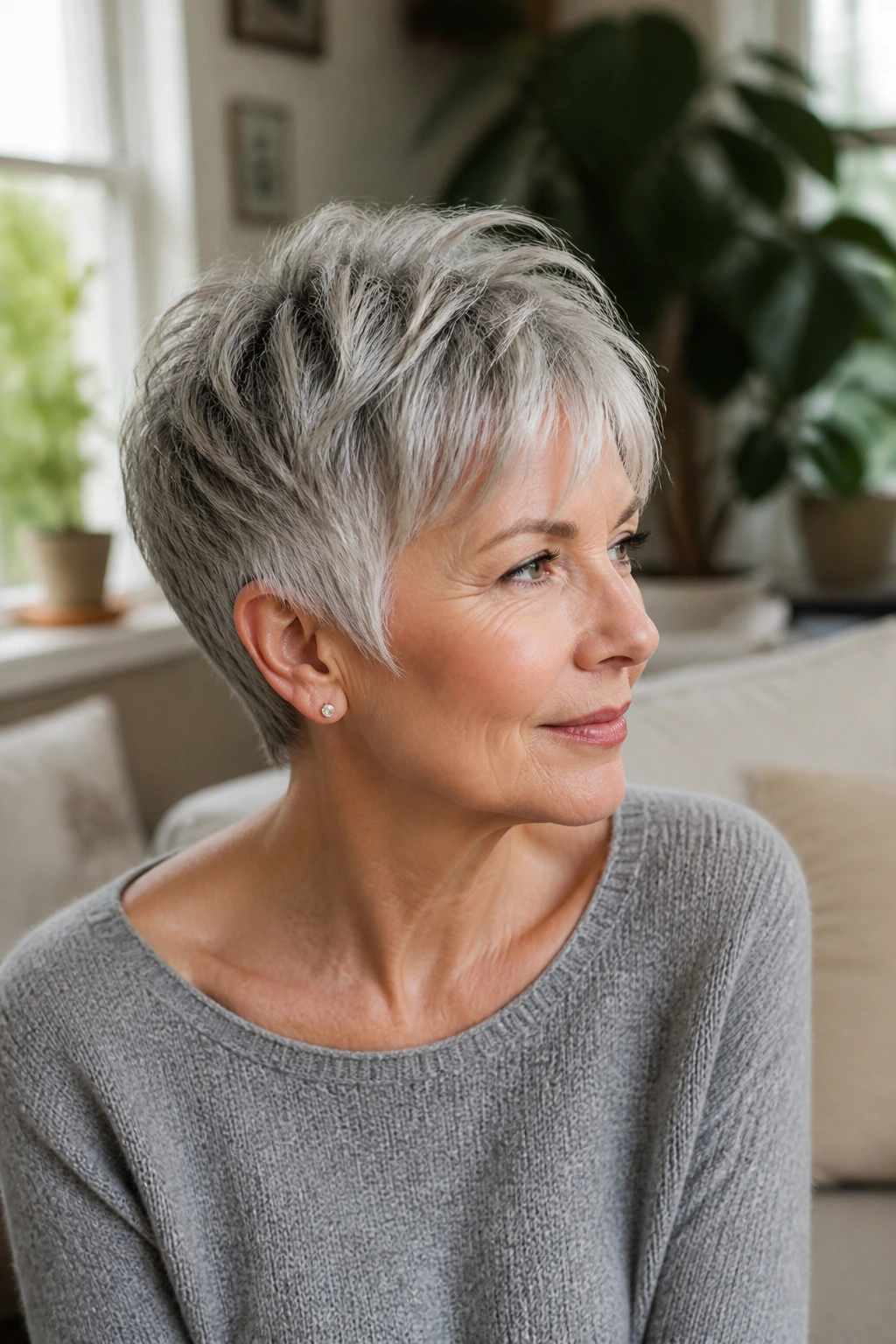
Cutting the crown too short: When the top is cropped too close, the hair can look flat or patchy, especially if density is changing. Leave enough length at the crown to lift and sweep; otherwise the cut loses shape fast.
Leaving the nape bulky: A thick back section grows into a fuzzy shelf under the collar. Ask for a real taper, not just a quick trim. The nape is the difference between neat and unfinished.
Using too much product: A dime-sized amount can become a helmet if you use wax or paste like mousse. Start with a pea-sized touch, warm it in your hands, and add only if the hair still needs definition.
Ignoring growth patterns: Cowlicks at the crown or temples will fight a cut that ignores them. A good pixie follows the grain. A bad one spends every morning arguing with your hairline.
Forgetting the grow-out: Some very short cuts are gorgeous for four weeks and awkward by week six. If you don’t want frequent salon visits, ask for a softer edge, longer fringe, or more taper so the shape fades more gently.
Frequently Asked Questions About Pixie Haircuts for Women Over 60
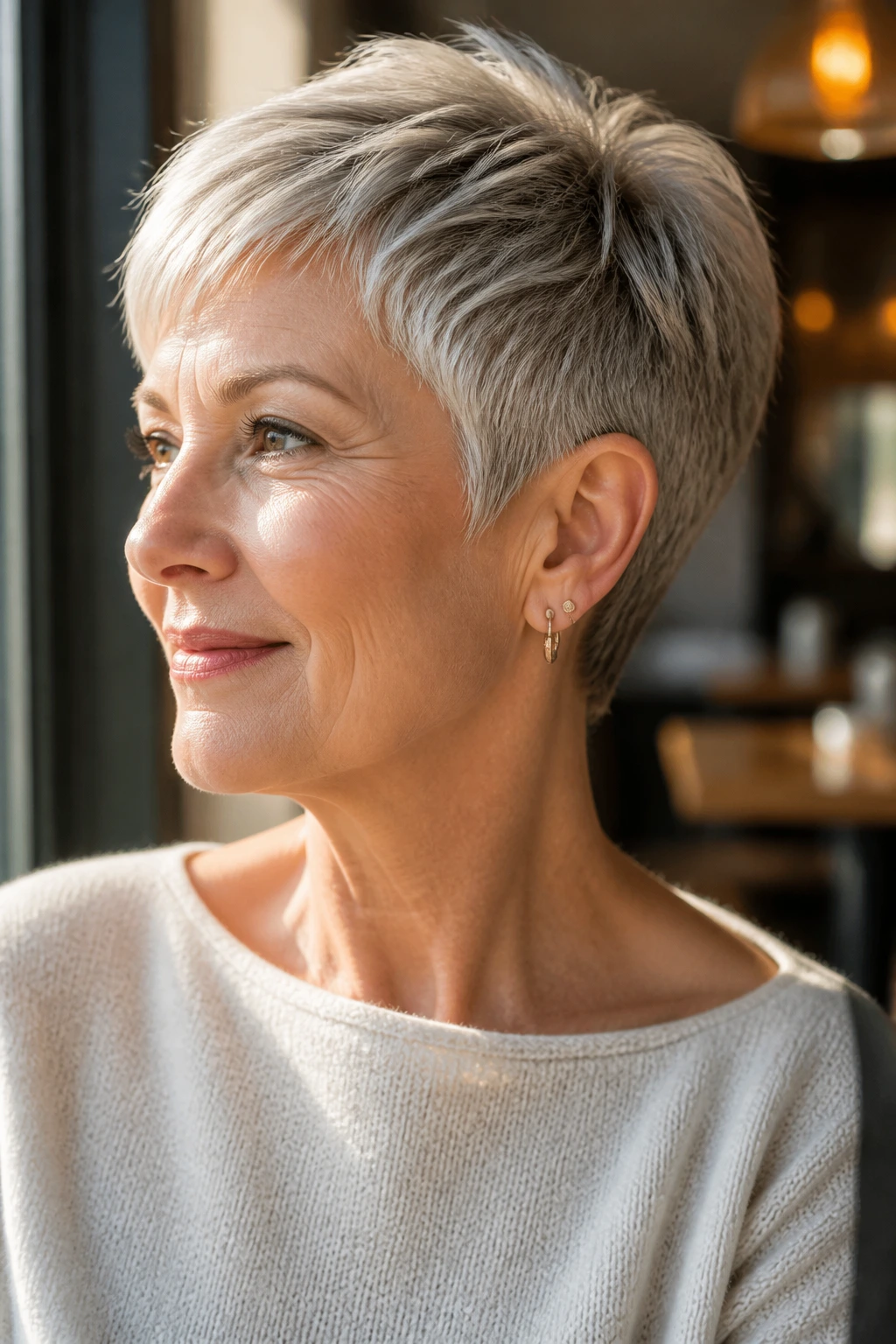
Will a pixie haircut make thinning hair look even thinner?
Not if the cut is shaped correctly. Short hair often looks fuller because the ends are not dragging the strands down, and a layered crown can create lift that longer hair loses.
Can I wear a pixie if I have curly hair?
Yes, but the cut has to respect shrinkage and curl pattern. Keep enough length for the curl to form, and ask for shaping that removes bulk without chopping the curl away.
How often should a pixie be trimmed?
Most pixies need a trim every 4 to 6 weeks. Very short or highly structured versions may want a cleanup sooner, especially around the nape and fringe.
What if I wear glasses all the time?
Choose a cut with space at the temples and sides. Ear-tucked, side-swept, and soft fringe styles usually sit better with frames than blunt front-heavy cuts.
Can a pixie still look feminine if it’s short?
Absolutely. Softness in the fringe, a tapered nape, and a bit of movement at the crown can make a short cut feel gentle, elegant, or sharp depending on how it’s finished.
What product should I start with if I’m new to short hair?
A light mousse or root-lift spray for damp hair, plus a small cream or paste for finishing, covers most needs. Start light. Short hair gets weighed down faster than people expect.
How do I grow out a pixie without looking awkward?
Keep the nape clean, let the fringe get a little longer, and shift the shape toward a short bob or layered crop as it grows. Regular trims on the sides keep the in-between stage from turning shaggy in the wrong way.
What if my hair sticks straight up in one spot?
That’s usually a cowlick or a strong growth pattern. Don’t fight it with more product first; try changing the part, leaving a little more length there, or asking for a cut that follows the swirl instead of crossing it.
A Sharp Finish
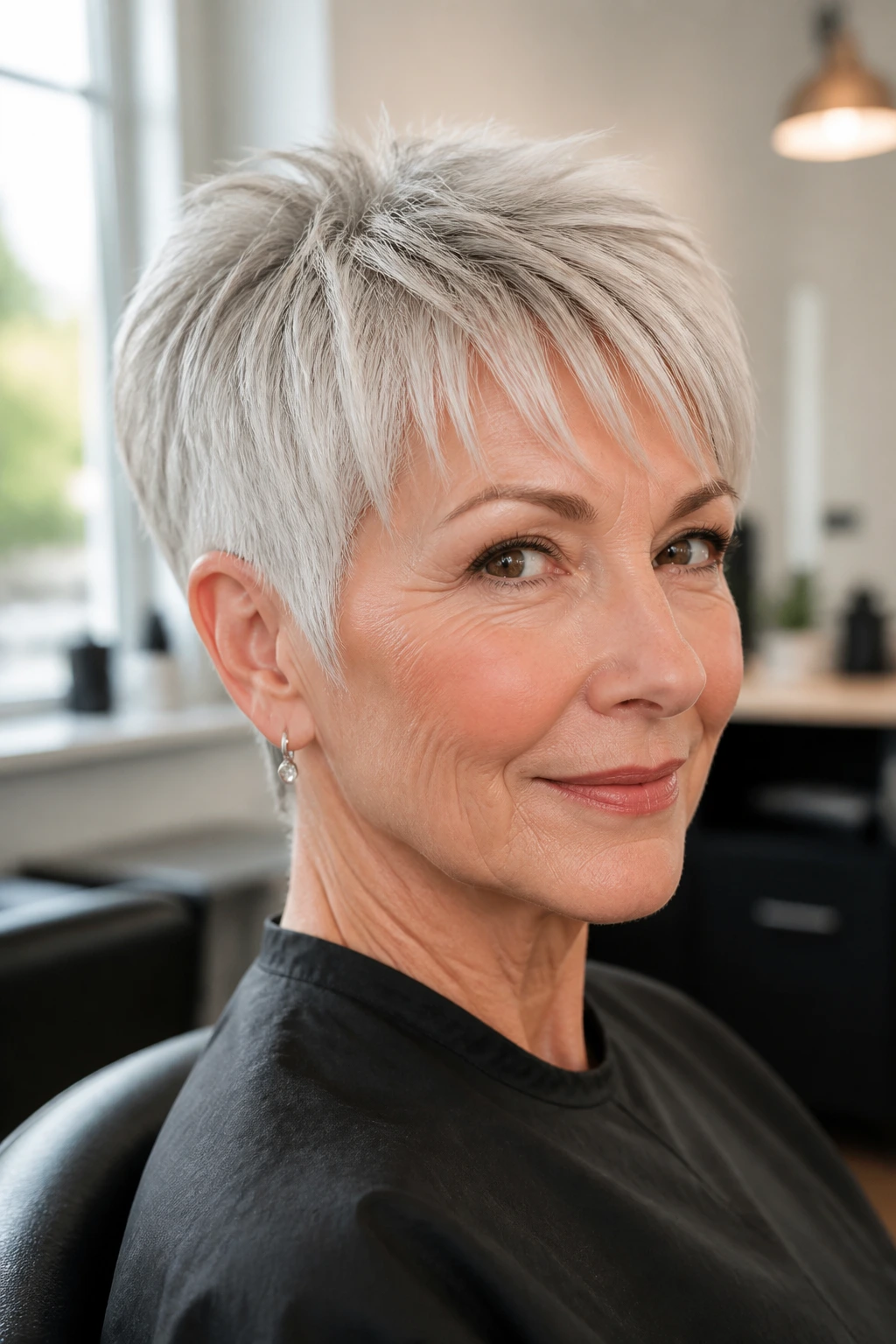
The best pixie is the one that works with your hair as it is, not the one that tries to rewrite it. That may mean a soft taper, a long fringe, a little crown lift, or a cut that stays close and neat because that’s what your hair does well. Short hair is honest. It shows the shape immediately.
That honesty is the appeal. When the neckline is clean, the crown has the right amount of lift, and the fringe lands where it should, a pixie can look fresh without looking overdone. And that’s the sweet spot worth aiming for.
