



A pixie cut leaves nowhere to hide, and that is exactly why it can look so sharp. A clean nape, a little lift at the crown, and a fringe that falls in the right place can do more for the face than a lot of longer cuts that spend all day pretending to have a shape.
The catch is that pixie cuts for women are never “one and done.” The same haircut can look crisp, soft, edgy, or fussy depending on where the weight sits, how the fringe lands, and whether the back is tapered properly. Fine hair can go limp fast if it’s over-thinned. Thick hair can puff up like a triangle if the bulk isn’t removed in the right places. Curly hair needs room for shrinkage. Straight hair needs a little texture or it can turn flat and severe.
That is why the best pixie is not the shortest one. It is the one that behaves well on your head after a gym day, a windy walk, a rushed blow-dry, and a week that did not leave much time for styling. The styles below lean into different moods, different textures, and different upkeep levels, so you can match the cut to the hair you actually have, not the hair in a photo with perfect lighting.
Why This Collection Is Different
-
For fine hair that collapses: These cuts include soft layering, crown lift, and longer fringe options that keep the shape from disappearing by lunchtime.
-
For thick hair that has a mind of its own: Several pixies here use interior weight removal and tighter napes, which keeps the outline clean without turning the ends wispy.
-
For curls and waves: Some shapes leave room for shrinkage and bend, so the top stays visible instead of disappearing into a puff at the sides.
-
For people who want grow-out to look decent: A few styles lean long in the front or around the ears, which buys you extra weeks before the cut starts looking shaggy.
-
For strong features, glasses, and earrings: The right pixie can frame brows, cheekbones, frames, and jawlines instead of fighting them.
-
For low-drama mornings: A good pixie should wake up with enough shape to need only a spritz, a blast of air, or a pea-sized dab of paste.
1. Classic Tapered Pixie
The classic tapered pixie is the haircut I’d send someone to first if they want short hair without a lot of theatrics. The nape hugs the neck, the sides stay soft, and the crown keeps just enough length to move when you turn your head. It looks neat from every angle, which matters more than people admit.
Why it works
The taper is the whole trick. When the back is snug and the crown has a little lift, the cut reads polished instead of helmet-like. It also grows out with more grace than a blunt crop, because the silhouette softens instead of exploding outward. Ask for the neckline to be cleaned up, not shaved to the bone.
A pea-sized bit of matte paste is enough on most days. Work it through dry hair, then push the top slightly forward or to the side.
Best for: first-timers, straight hair, and anyone who wants a short cut that doesn’t shout.
2. Choppy Textured Pixie
This one has edges that look deliberately broken up, not blunt. The ends are point-cut, the top is piecey, and the whole thing has that slightly slept-in look that works especially well on straight or wavy hair. It is not fussy, but it is not lazy either.
What to ask for
- Shorter sides with internal texture, not heavy layering.
- A top that stays long enough to pinch and separate.
- Texturizing that removes bulk without making the ends see-through.
The choppy pixie shines when you want movement. If your hair tends to sit flat, this cut gives it somewhere to go. Use a small amount of styling wax and keep the roots light; heavy cream will erase the whole point.
Best for: people who like a bit of edge and don’t mind touching the front pieces once or twice a day.
3. Long Pixie with Side-Swept Bangs
A long pixie with side-swept bangs gives you more room around the forehead, which is often the part people are nervous about. The fringe skims across one brow, the crown stays plush, and the sides stay close enough to keep the outline tidy. It is soft in a way that never feels apologetic.
The reason this cut works so well is simple: the long front gives you styling choices. You can sweep it back, tuck part of it behind the ear, or let it fall forward on a damp day and call it done.
How to wear it
Blow-dry the bangs in the direction you want them to live. If you try to fight the cowlick at the front with a round brush and too much heat, the fringe will win by lunch. A flat brush and a side part usually behave better.
Best for: longer faces, forehead softness, and grow-out that still looks intentional.
4. French Crop Pixie
The French crop pixie has that slightly effortless, airy feel people love, but it still depends on shape. The fringe is shorter and softer than a classic side-swept bang, the sides stay neat, and the top has a little separation rather than a stiff finish. It looks especially good when the hairline is part of the haircut instead of something the haircut hides.
This style is not about volume for volume’s sake. It’s about control with movement. The best versions keep the temples soft and the nape clean so the top can do the talking.
Pro move: ask for the fringe to be cut dry or finished dry so the length lands where it actually sits after shrinkage and drying. Wet hair lies. Always.
Best for: straight to wavy hair, low-maintenance styling, and anyone who likes a slightly undone front.
5. Feathered Pixie for Fine Hair
Fine hair can look delicate in a good way, or it can collapse into a wispy nothing if the layers are too aggressive. The feathered pixie sits on the good side of that line. The top keeps airy layers, but the outline stays intact enough to make the shape visible.
A lot of people think fine hair needs more thinning. I disagree. Fine hair usually needs better direction, not more removal. Keep the crown soft, leave enough fullness at the sides, and avoid chewing up the ends with a razor.
Use root spray at the crown, then rough-dry with your fingers. If the shape is right, you won’t need much more.
Best for: delicate strands that need lift without fraying.
6. Piecey Spiky Pixie
Sharp, separated, and a little mischievous. The piecey spiky pixie takes short hair and gives it direction, which is why it feels different from a soft crop. The top has short layers that stand up with product, while the sides stay tight enough to keep the whole thing from drifting into chaos.
This cut lives or dies by product choice. Too much gel and it turns crunchy. Too little and it goes limp by noon. A matte paste or fiber cream warmed between the palms works best. Pinch the ends upward and forward, then leave them alone.
What makes it different
The silhouette is tiny, but the texture is loud. That contrast is the appeal. It looks clean in the back and a little electric on top.
Best for: short hair lovers who want a bolder finish without going full undercut.
7. Curly Pixie with Defined Top
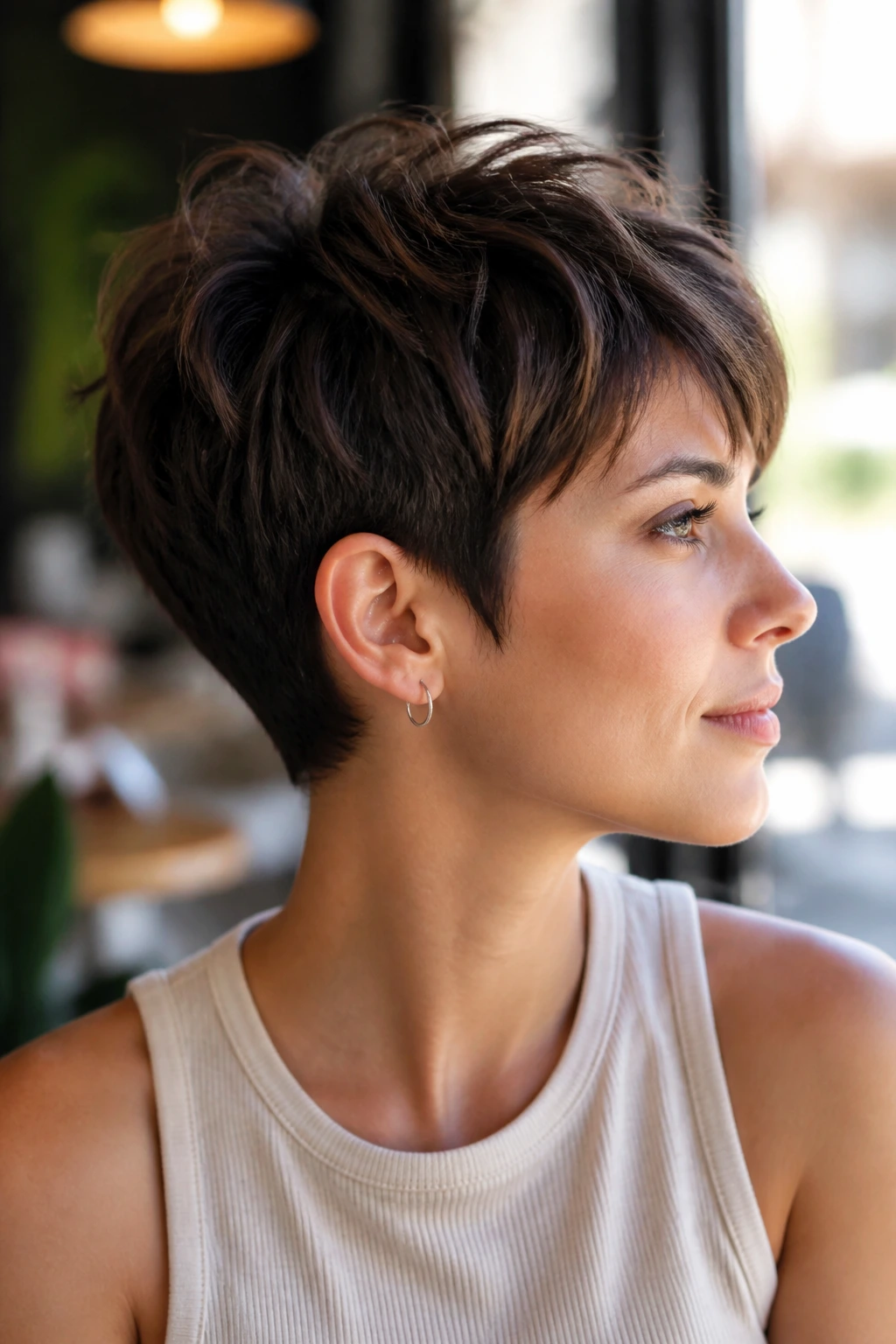
Curly pixies need respect. If the sides are cut too short, the shape puffs outward. If the top is chopped too much, the curls lose their pattern and start behaving like cotton. The sweet spot is a little length on top, tight control at the nape, and enough room for the curls to spring instead of fight.
The best curly pixie usually looks better dry than wet, because the curl pattern tells you where the shape lives. Ask for the cut to be refined with your curl pattern in mind, not just straightened out in the chair.
A curl cream and a tiny bit of gel are enough for most people. Scrunch, diffuse, stop before the curls get stiff.
Best for: natural curls, bendy waves, and anyone who wants the top to stay visible.
8. Undercut Pixie with Hidden Edge
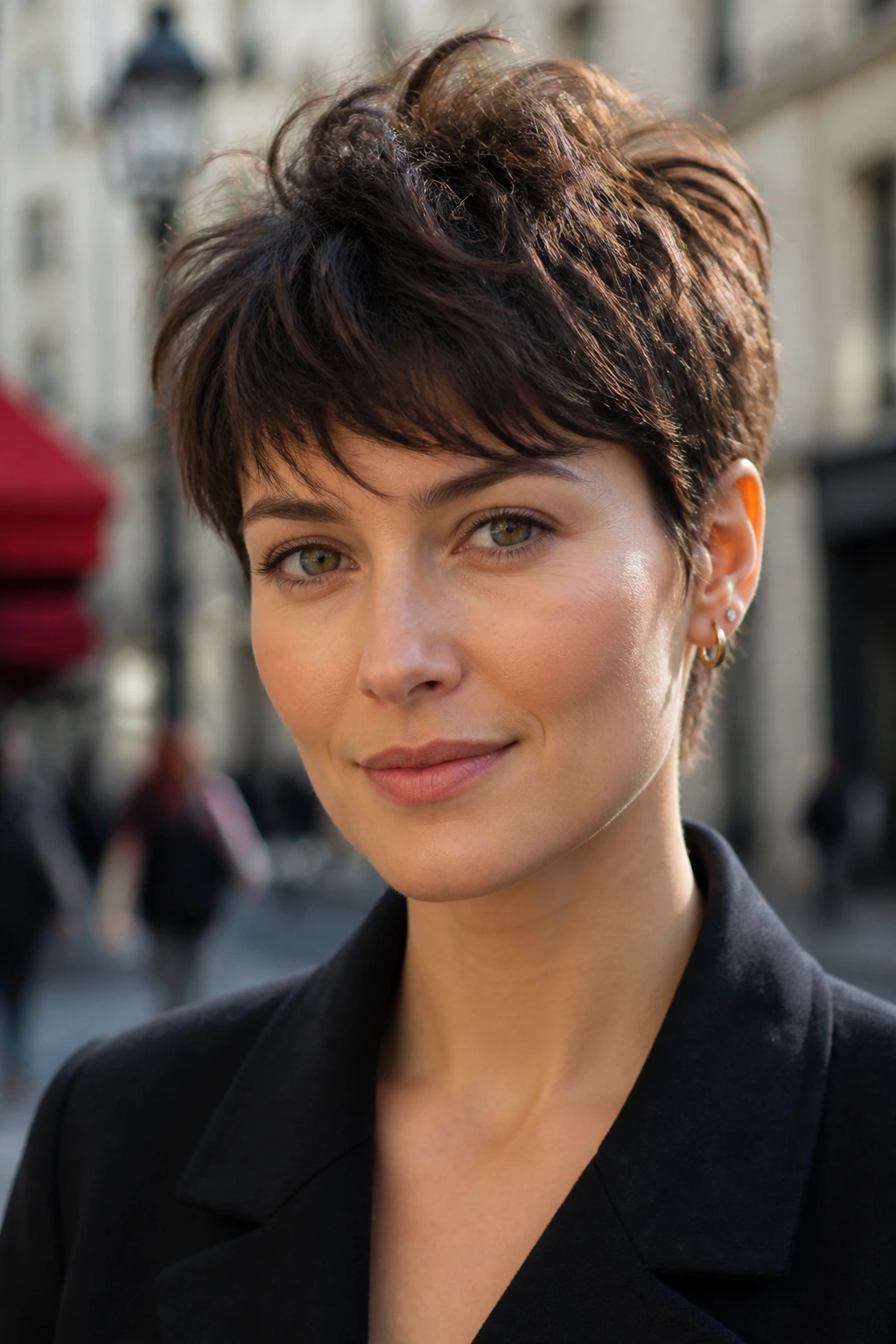
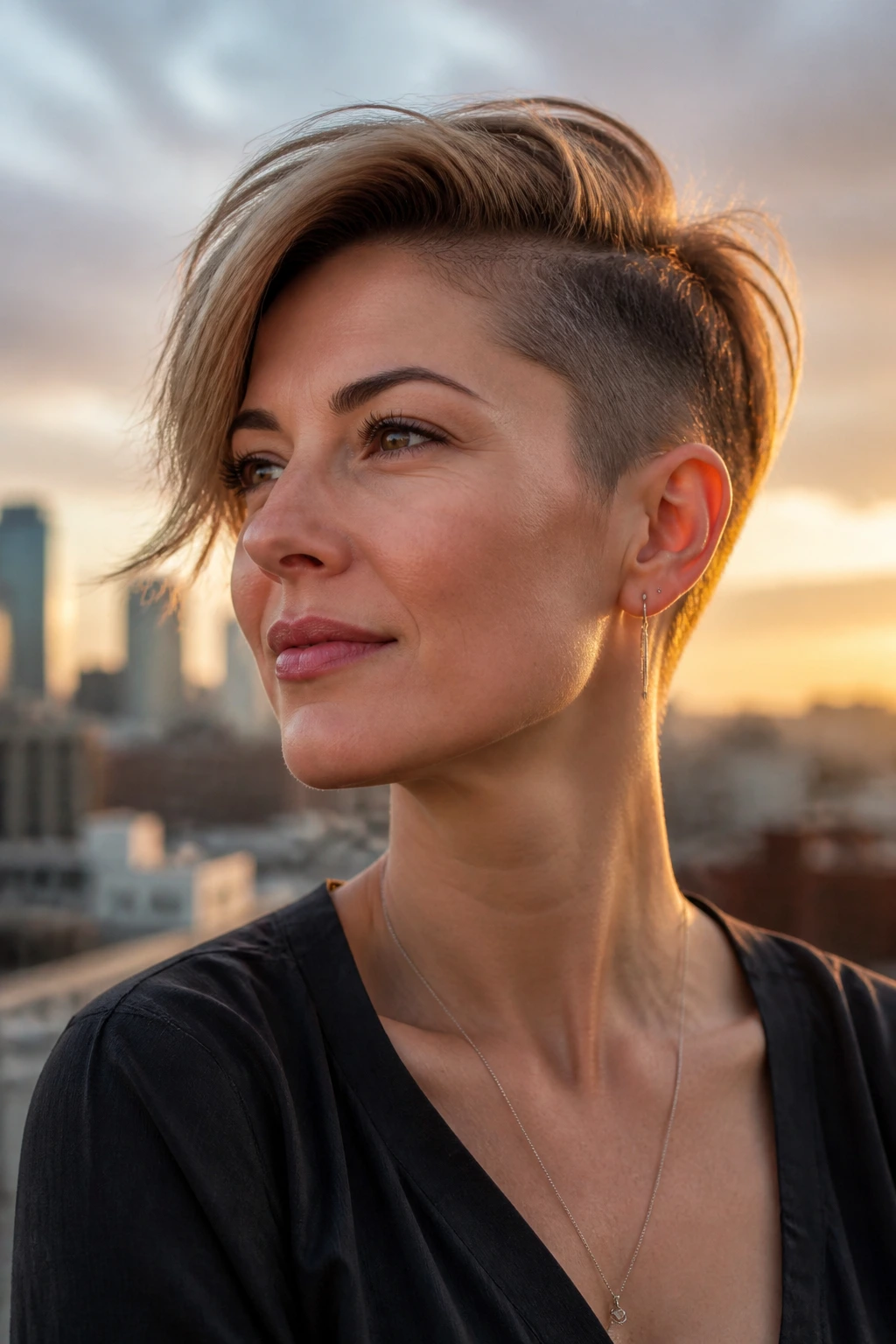
At first glance, this cut looks like a tidy pixie. Then you tuck the top aside and the hidden undercut shows up. That’s the fun of it. The sides and nape are clipped short enough to remove bulk, but the top keeps enough length to fall over the shaved section when you want it quiet.
This is a smart option for thick hair. It removes heat, weight, and some styling drama without forcing the whole cut into an obvious punk shape. If you wear glasses or small hoops, the hidden contrast can look especially clean.
Quick note
The undercut should support the shape, not become the whole haircut. If the top is too short, you lose the cover and the cut stops being versatile.
Best for: thick hair, hot climates, and people who like a little secret hidden in the shape.
9. Asymmetrical Pixie
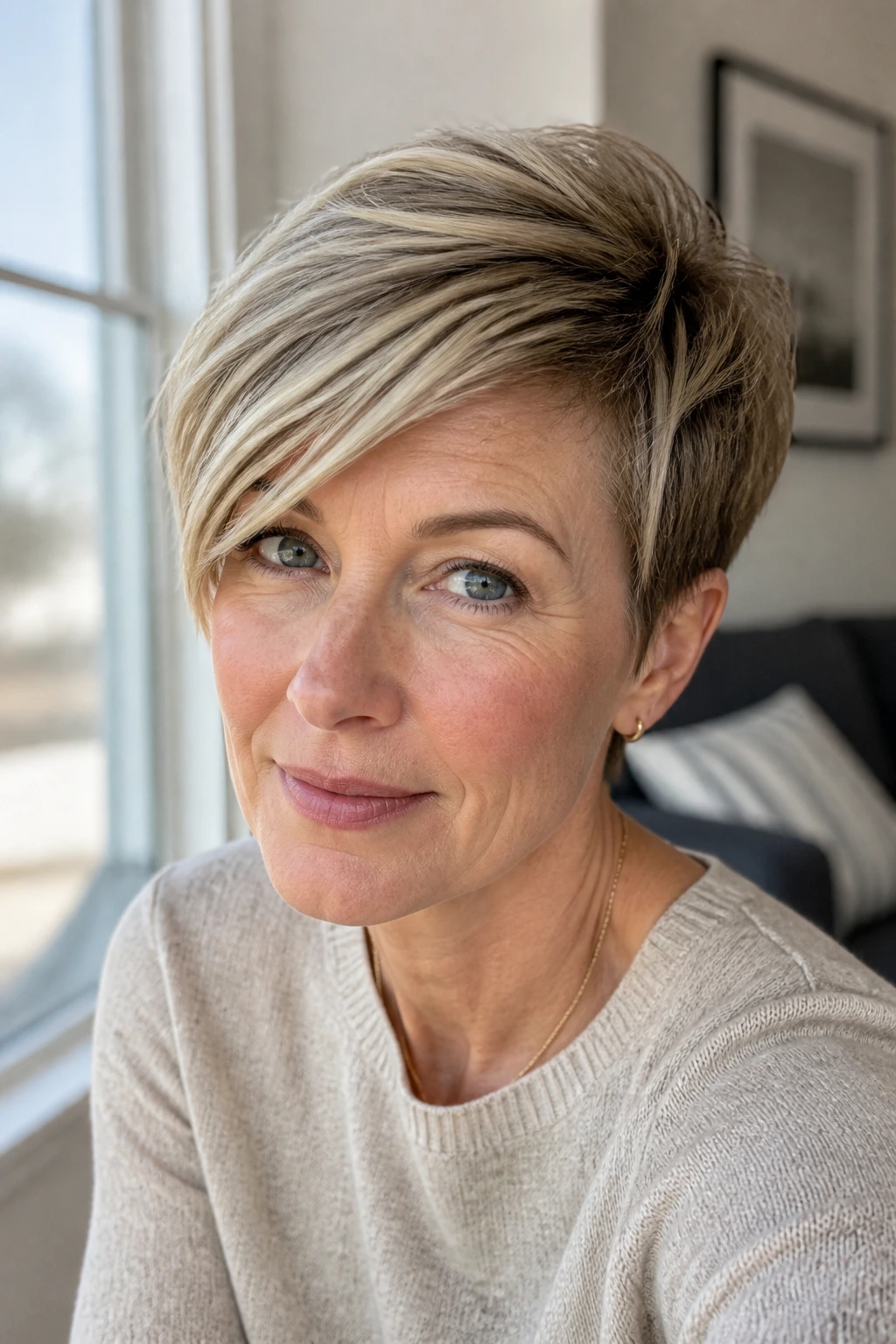
One side longer, one side shorter. That’s the basic idea, but the good asymmetrical pixie is more about diagonal energy than a dramatic lopsided stunt. The longer side usually sweeps across the cheekbone, which makes the cut feel fluid instead of chopped.
I like this shape when someone wants softness with a bit of tension. It flatters square or broad faces because the diagonal line breaks up straight edges. It also gives you a simple styling decision each morning: tuck the short side, sweep the long side.
If the longer side lands at jaw level, the cut starts to feel modern in a clean way. If it goes too long, it drifts out of pixie territory and into a half-grown crop.
Best for: people who like movement and a little face-framing asymmetry.
10. Feathered Crown Pixie
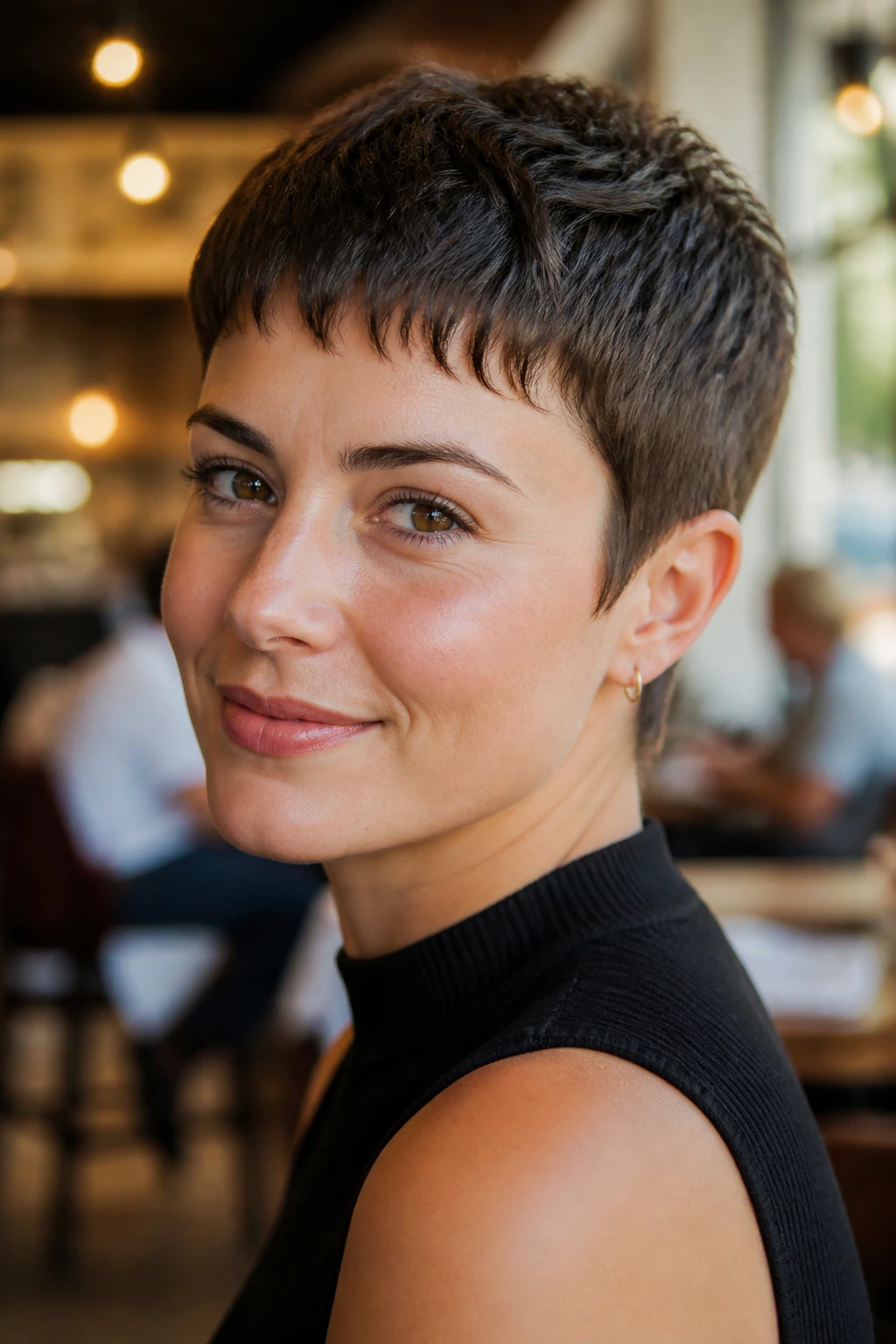
The crown is where this cut earns its keep. The sides stay lean, but the top is layered to rise slightly when you blow-dry it or rough it up with your fingers. That extra lift changes the whole silhouette, especially in profile.
This style works because height at the crown creates balance. It can make the face feel longer, the neck look cleaner, and the haircut feel less flat from the front. A small round brush, used only at the roots, is enough. Don’t overdo the ends. You want lift, not a flip from the early days of bad hair memories.
Best for: flat crowns, soft features, and anyone who wants a little more shape up top.
11. Silver Pixie with a Clean Nape
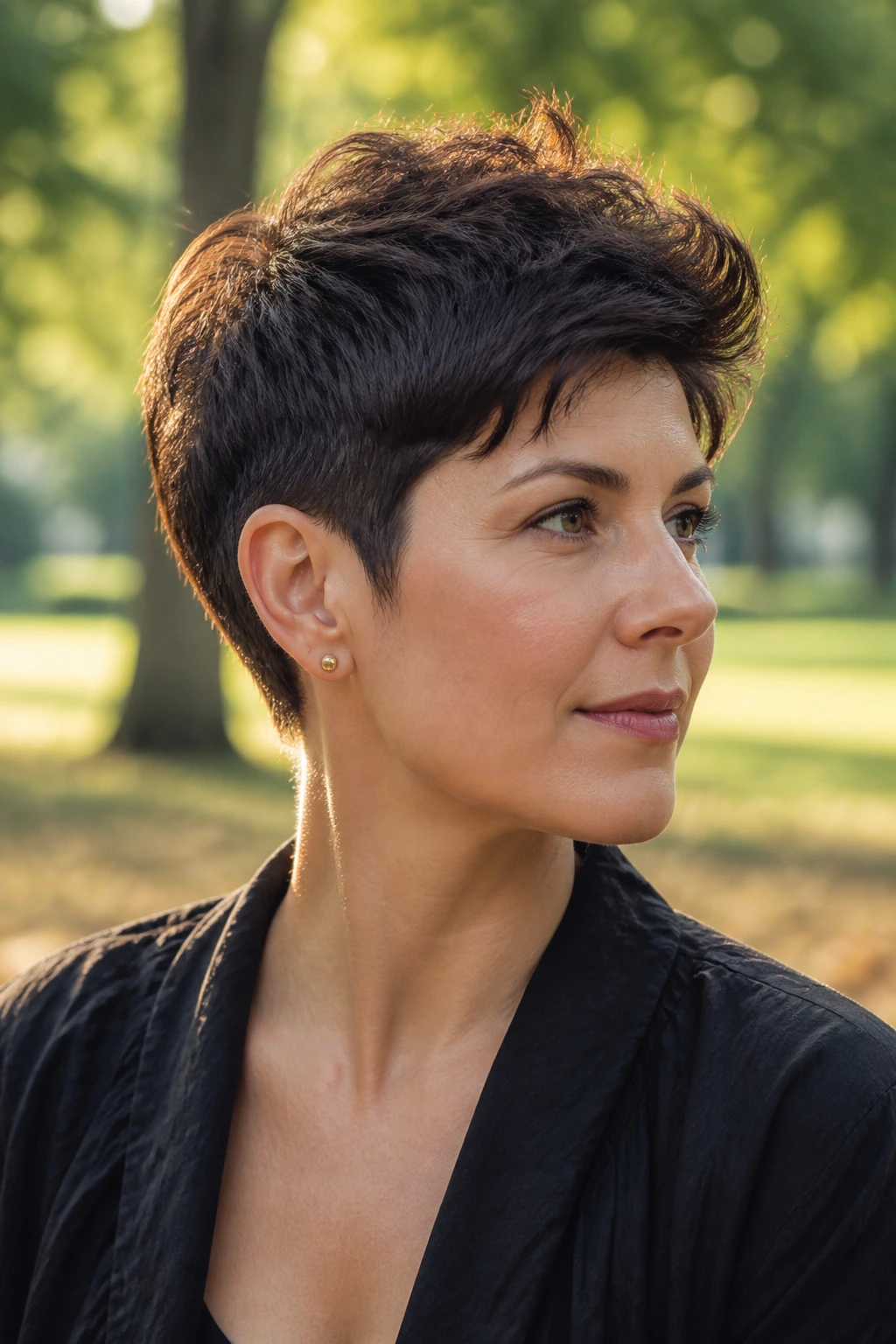
Silver hair and a clean nape are a good pair. The color shows off the cut line, and the cut line makes the color look deliberate instead of accidental. When the neckline is crisp, silver strands look sleek rather than fuzzy.
This is the kind of pixie that benefits from very regular cleanup around the ears and neck. Even a half-inch of extra growth can blur the whole thing. A light shine cream can help, but keep it minimal; silver hair can look greasy fast if you pile on product.
Why it stands out
The shape is plain in the best way. Nothing is fighting the color.
Best for: natural silver, white, or cool-toned blonde hair that deserves a neat outline.
12. Micro Pixie Crop
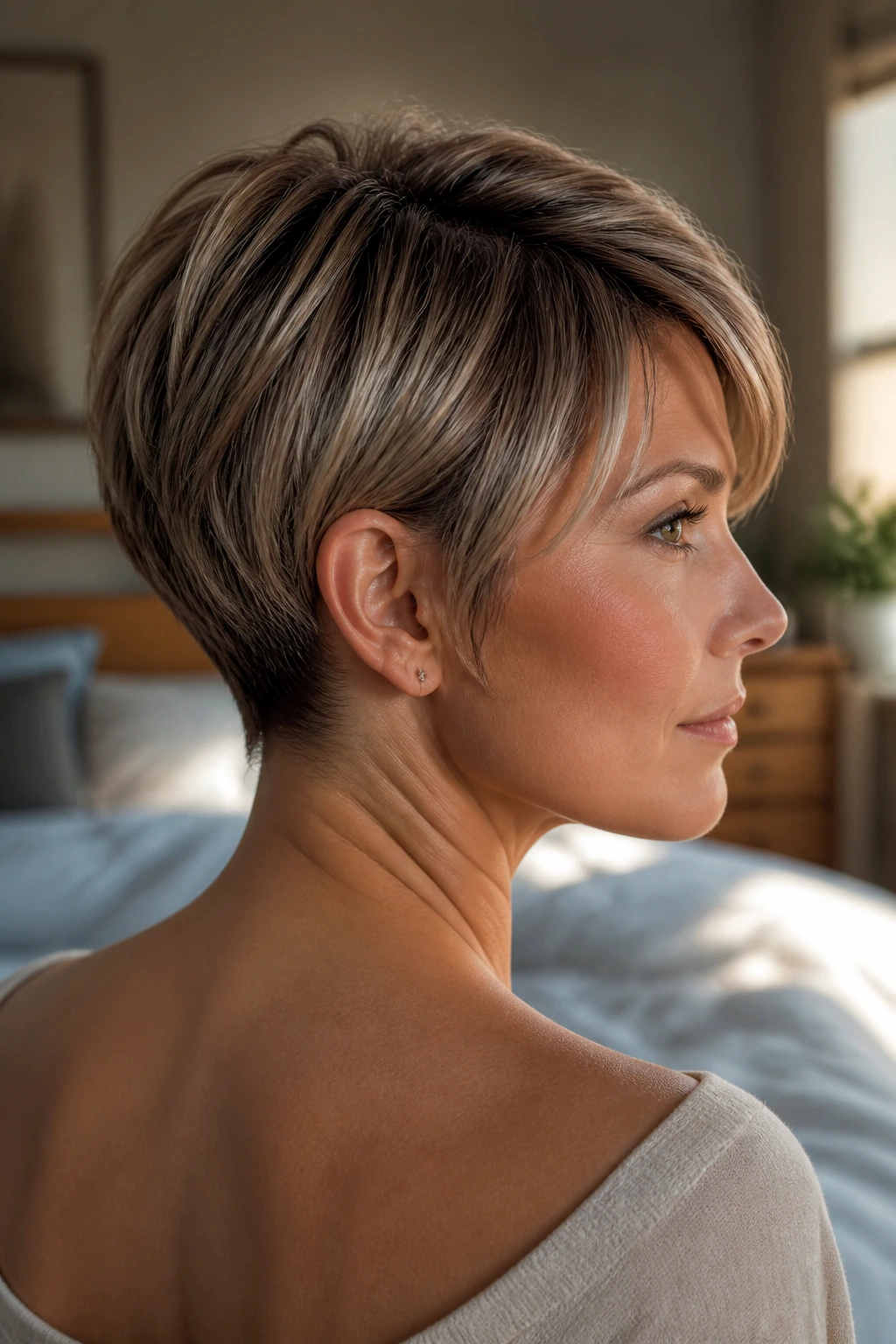
The micro pixie crop is very short, very close, and very confident. The sides sit tight, the top barely lifts, and the whole cut leans into bone structure. There is less styling freedom here, but the tradeoff is a sharp, almost sculpted finish.
This cut is not for someone who wants to hide behind hair. It’s for brows, earrings, cheekbones, and a strong neckline. If the scalp is sensitive or the hairline has cowlicks, talk that through before anything gets clipped short.
A dab of balm or light pomade can make the difference between neat and too severe. Use less than you think. With this cut, over-product is the fastest way to make it feel greasy.
Best for: bold faces, busy mornings, and people who want the shortest version of a pixie.
13. Bixie Cut
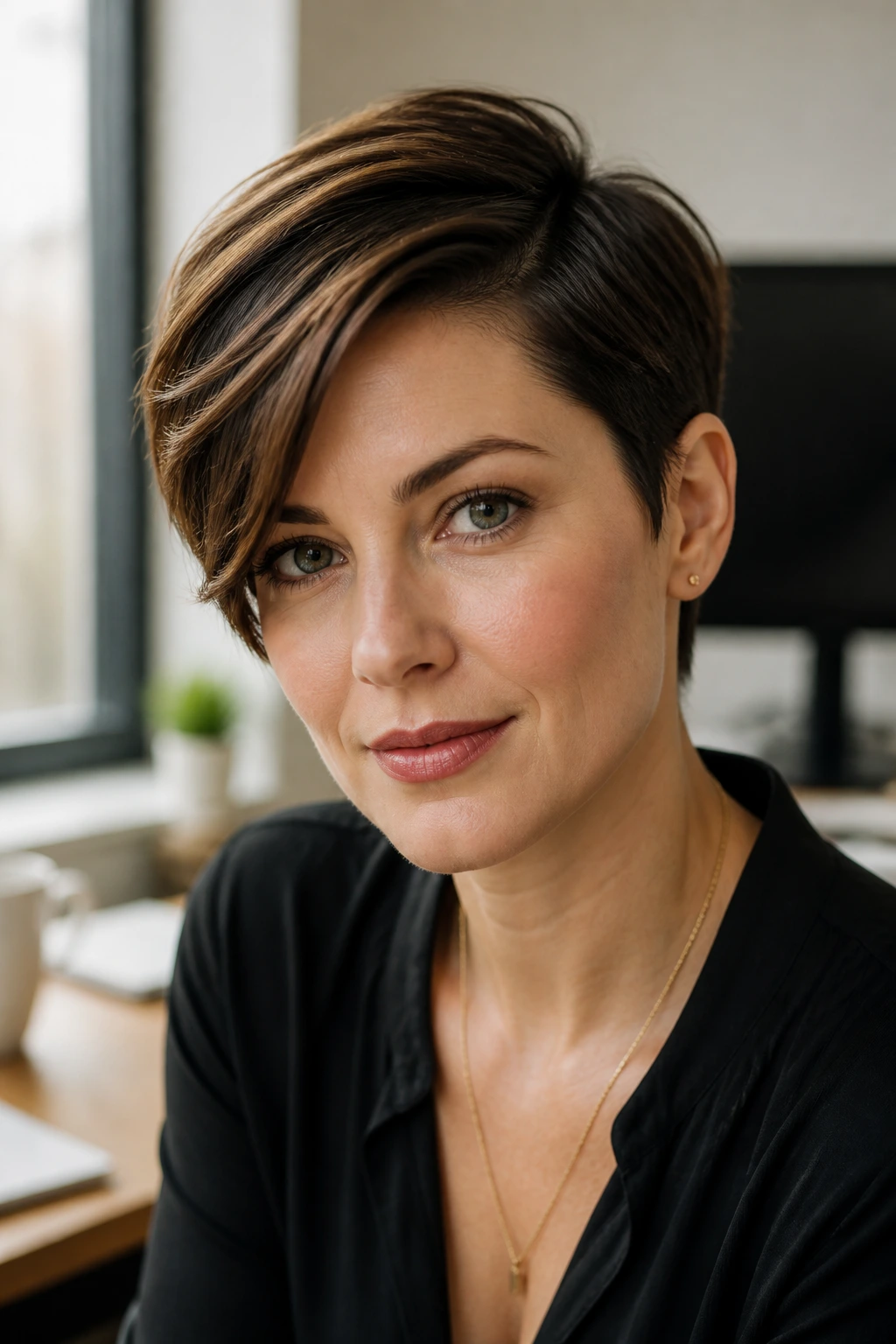
The bixie sits between a bob and a pixie, and that in-between space is the whole point. It keeps more length around the ears and nape, so you can tuck, flip, or brush it back without much effort. If you’ve been flirting with short hair but don’t want the jump all at once, this is the safer landing.
The bixie is also a good grow-out shape. It avoids the sudden hard line that some pixies get once they pass the neat stage. That means fewer awkward weeks and more usable hair while you decide whether to stay short.
Best for: anyone testing short hair, or anyone who wants a softer transition than a true crop.
14. Shaggy Pixie with Wispy Ends
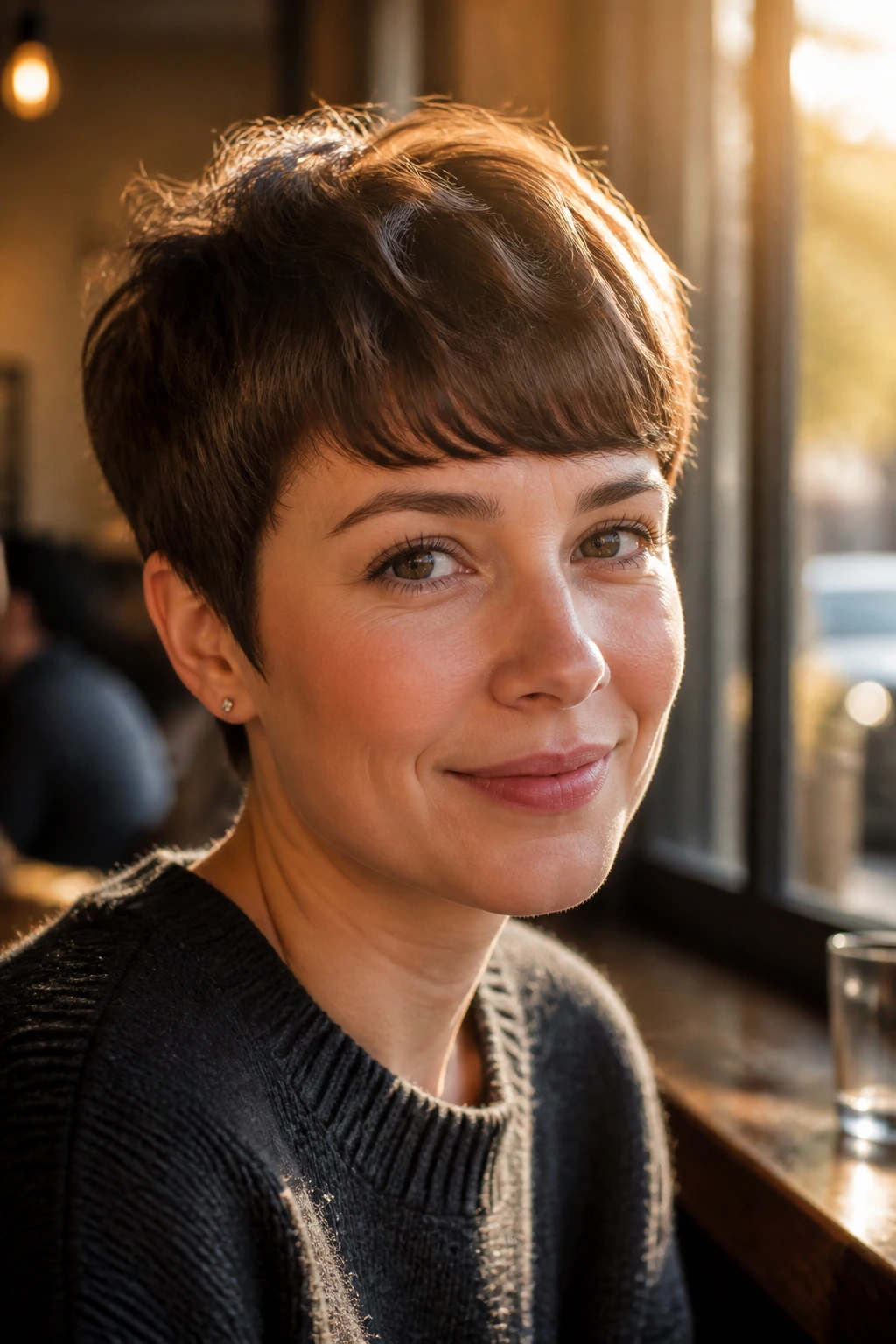
A shaggy pixie has a little mess in it, and that is the point. The ends are wispy, the layers are loose, and the silhouette feels softer than a sharp crop. It can look almost casual enough to skip styling, but a few minutes with product make it much better.
This cut suits people who hate looking “done.” It reads relaxed, especially when the fringe is separated and the crown is not over-smoothed. A little air-dry cream works well here. The worst thing you can do is flatten it into submission.
Best for: wavy textures, easy mornings, and people who prefer softness over precision.
15. Slicked-Back Pixie
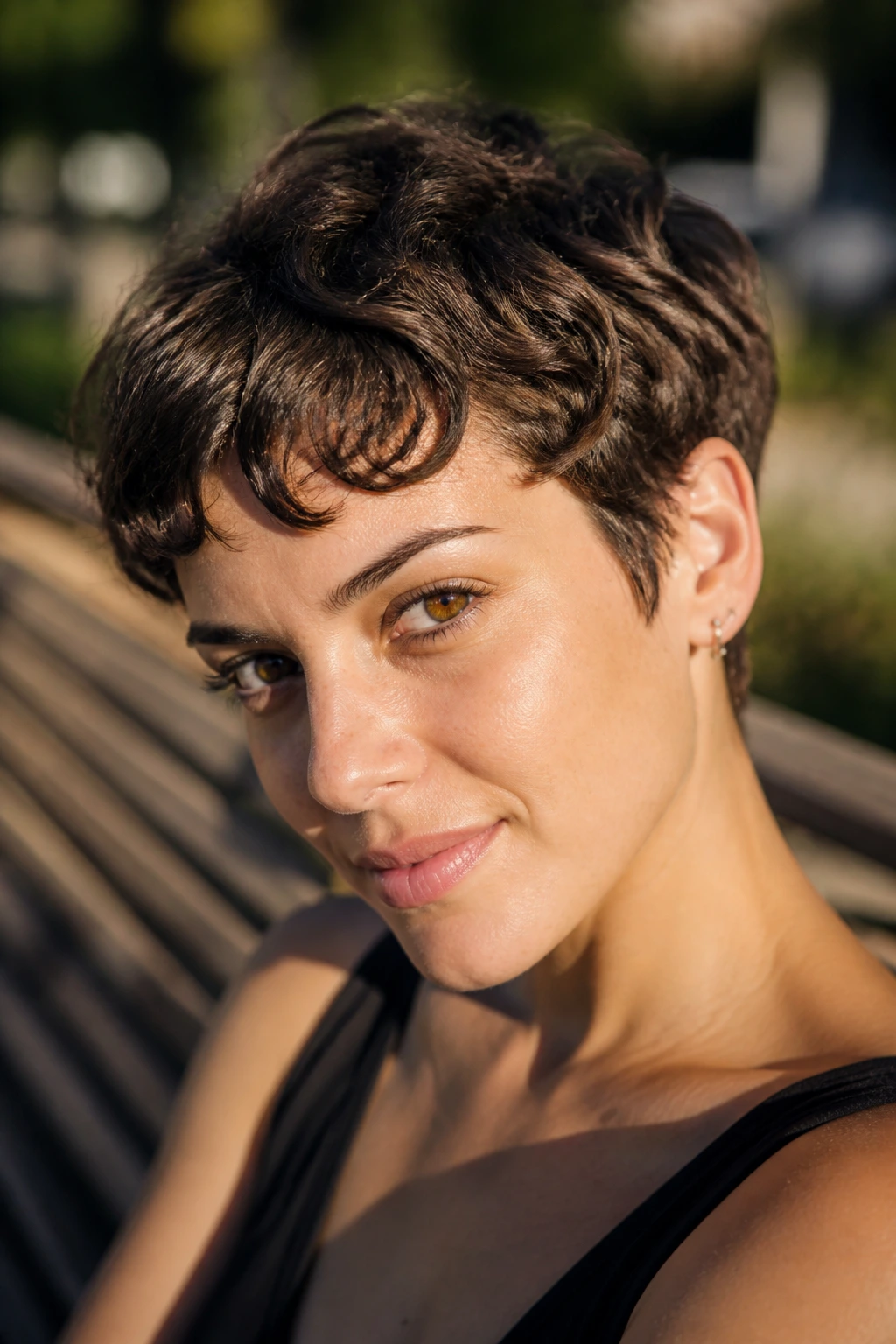
The slicked-back pixie turns the hairline into the main event. The top is brushed straight back or slightly upward, the sides stay close, and the finish can go glossy or satin depending on product. It looks expensive in the old-fashioned sense: clean, deliberate, and a little severe.
This shape works best when the top has enough length to move backward instead of sticking up like a startled brush. Use gel for a wet finish or a light cream for a quieter look. I prefer the softer version for daytime and the glossy one when the outfit is carrying a lot of structure already.
Best for: evening styling, strong cheekbones, and days when you want the haircut to look polished fast.
16. Grown-Out Pixie
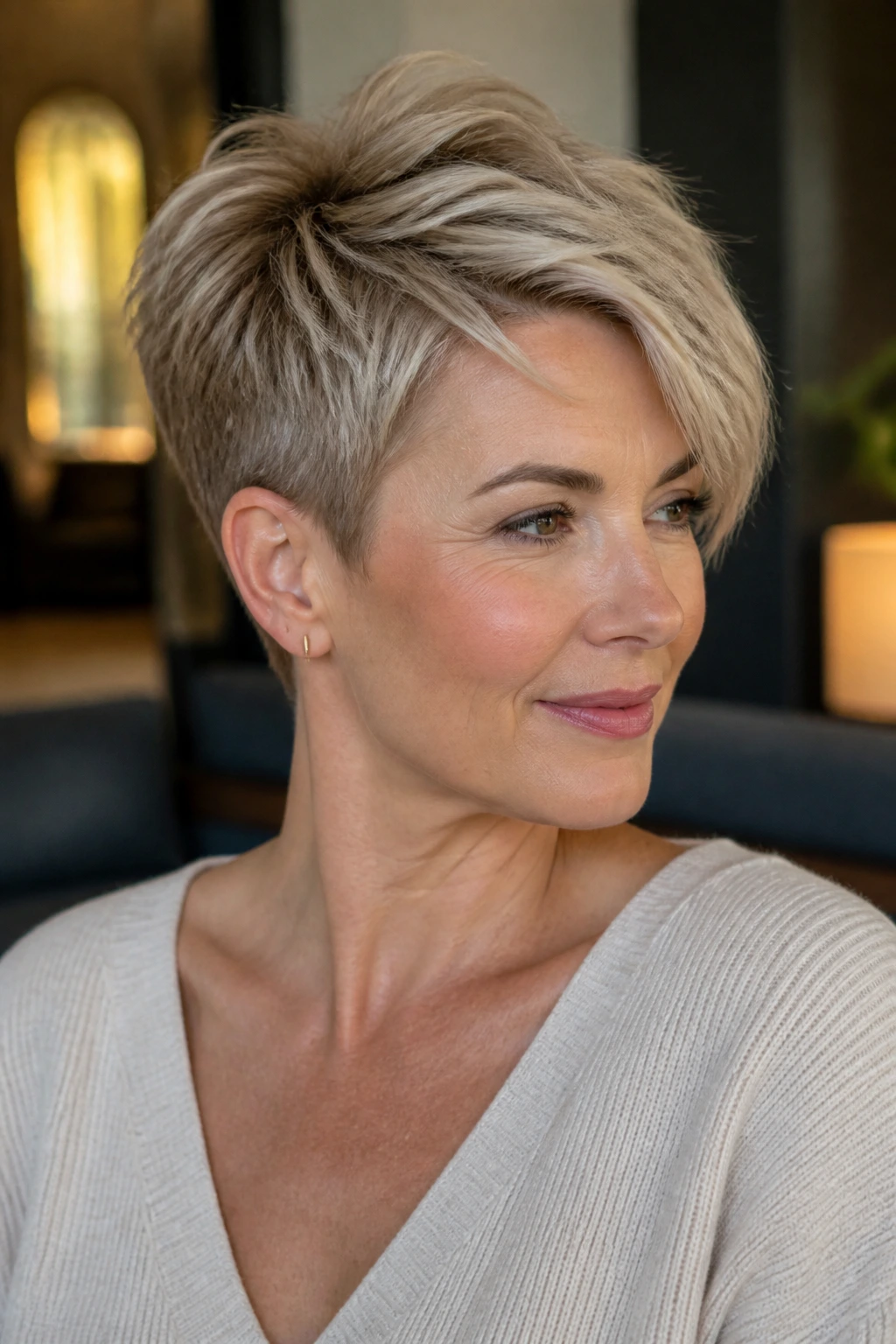
A grown-out pixie can look graceful if the shape is managed on purpose. The sides are allowed a little more length, the top stays layered, and the nape is kept tidy so the cut doesn’t collapse into a mullet. That last part matters. A lot.
This is the stage where people often panic and either chop everything off or leave it too long. Neither move helps. Clean up the neck, keep the ears from getting swallowed, and let the top bridge the gap as the style grows.
Small reality check
Grow-out is not an accident. It is a haircut in motion.
Best for: people between trims, or anyone moving from a pixie toward a bixie.
17. Thick-Hair Pixie
Thick hair can be a gift and a headache. The right pixie handles both. The trick is internal weight removal, not just hacking away at the outline. If the stylist thins the ends too much, the shape puffs and frays. If they leave too much bulk in the crown or behind the ears, the cut feels boxy.
A good thick-hair pixie usually has a tight nape, cleaner sides, and enough length on top to stop the hair from springing into a triangle. Ask where the weight is being removed. If the answer is vague, push for a better one.
Best for: dense hair that needs control more than softness.
18. Soft Nape Pixie
The soft nape pixie keeps the neckline neat without making the back feel shaved or severe. The top stays feathered, the sides fall gently toward the ears, and the back curves into the neck instead of ending in a hard shelf. It is one of the prettiest pixie shapes when you want polish without sharp edges.
This cut is especially good with collars and scarves, because the neck remains visible and the line stays clean. It also grows out in a forgiving way. The shape blurs a bit before it turns messy.
Best for: softer features, minimal styling, and anyone who wants the back of the head to look finished.
19. Side-Part Pixie
A deep side part can change a pixie more than an extra inch of length. It builds height on one side, softens the forehead, and lets the rest of the cut stay close. The part also gives the hair a natural direction, which means less fighting in the morning.
This is one of the most dependable office-friendly pixies. It looks tidy without turning stiff. If you have a cowlick near the front, the side part can either help or annoy you depending on where the hair wants to go, so the start point matters. Shift it half an inch until the line falls naturally.
Best for: people who want structure without a dramatic cut.
20. Rounded Fringe Pixie
The rounded fringe pixie has a softer front, with the fringe curving gently across the forehead instead of hanging in a hard line. That curve makes the whole cut feel more balanced, especially if the rest of the haircut is cropped close around the sides.
This shape is useful when you want to soften a longer face or bring attention to the eyes. The rounded fringe can also hide a forehead cowlick better than a blunt line, because it follows the head instead of arguing with it.
A small vent brush and light blow-dry can keep the fringe from separating into odd little spikes.
Best for: softer foreheads, eye emphasis, and a more feminine line.
21. Air-Dried Wavy Pixie
Some pixies are built to be styled. This one is built to be lived in. The air-dried wavy pixie leans into bend, texture, and movement instead of trying to flatten every wave into obedience. The sides stay neat enough that the shape still reads as a pixie, but the top is allowed to do its own thing.
A curl cream or light mousse works better than heavy paste. Scrunch it in, let the hair dry about 80 percent on its own, then twist a few pieces if the waves need direction. The result should look like hair that knows where it’s going without having to be bossed around.
Best for: naturally wavy hair and low-heat routines.
22. Two-Length Pixie
The two-length pixie keeps the top noticeably longer than the sides, but not so dramatically that it becomes an undercut. That difference in length is what gives the cut its energy. You can sweep the top, pinch it up, or let it fall forward while the sides stay quiet.
This shape is excellent if you want styling choices. It can look smooth one day and piecey the next. The key is keeping enough contrast to notice the layers, but not so much that the transition looks awkward.
What makes it useful
You get flexibility without losing the clean outline that makes a pixie read as a pixie.
Best for: people who like changing the finish without changing the haircut.
23. Sculpted Pixie with Balanced Proportions
Not every pixie needs drama. Some need balance. A sculpted pixie with balanced proportions keeps the crown, sides, and fringe in conversation with each other so nothing feels accidental. The outline is tidy, the top has just enough height, and the ears are either partly visible or fully framed on purpose.
This is the sort of cut that looks better the more precise the haircut is. Point-cutting around the fringe and soft tapering at the nape make a difference you can see from across the room. It is neat, but not hard.
Best for: oval faces, neat dressers, and anyone who likes a controlled silhouette.
24. Height-Boost Pixie for Round Faces
A round face usually looks best when the haircut adds a little vertical line. This pixie does that with crown lift, side taper, and a fringe that moves diagonally instead of straight across. The goal is not to “fix” a face. The goal is to give the silhouette some length.
Keep the sides close enough that they don’t widen the face. Then push the top up and slightly forward. A side-swept piece or a soft lift at the crown can change the whole balance of the cut.
Skip heavy side volume. That is where the shape starts to feel wide.
Best for: anyone who wants a little height and less width at the cheeks.
25. Baby Bang Pixie
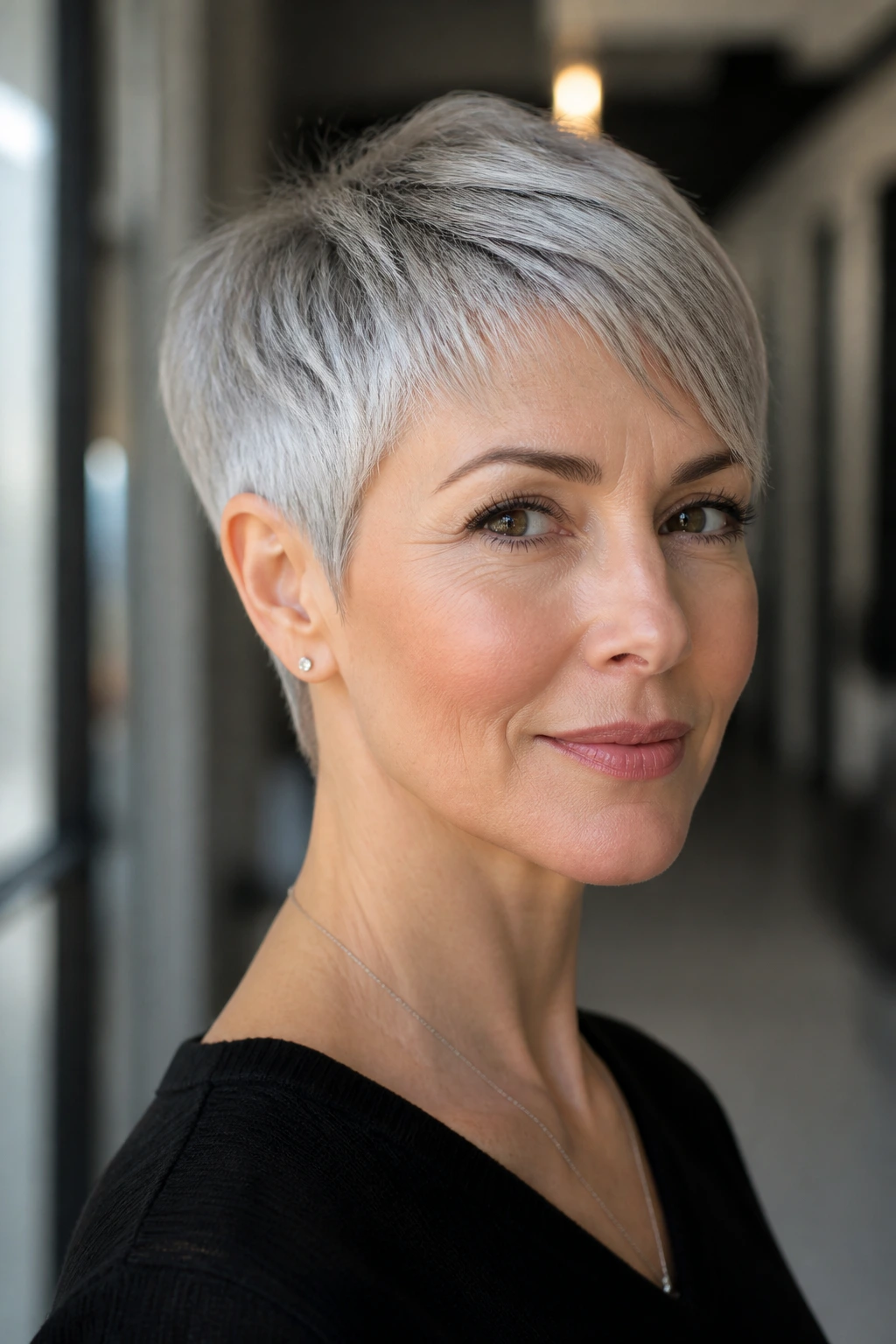
Baby bangs bring the attitude. The fringe sits short on the forehead, often above the brows, and the rest of the cut stays cropped to keep the ratio in check. It is a little edgy, a little graphic, and much easier to wear when the haircut around it is clean.
This style needs upkeep. Baby bangs grow fast and change shape fast. If you like soft, blurry hairlines, this is not your cut. If you like showing off brows and earrings, it can be a knockout.
A word of warning: short fringe plus a heavy crown can look top-heavy. Keep the rest of the shape balanced.
Best for: strong brows, artistic styling, and regular trims.
26. Tucked-Behind-the-Ear Pixie
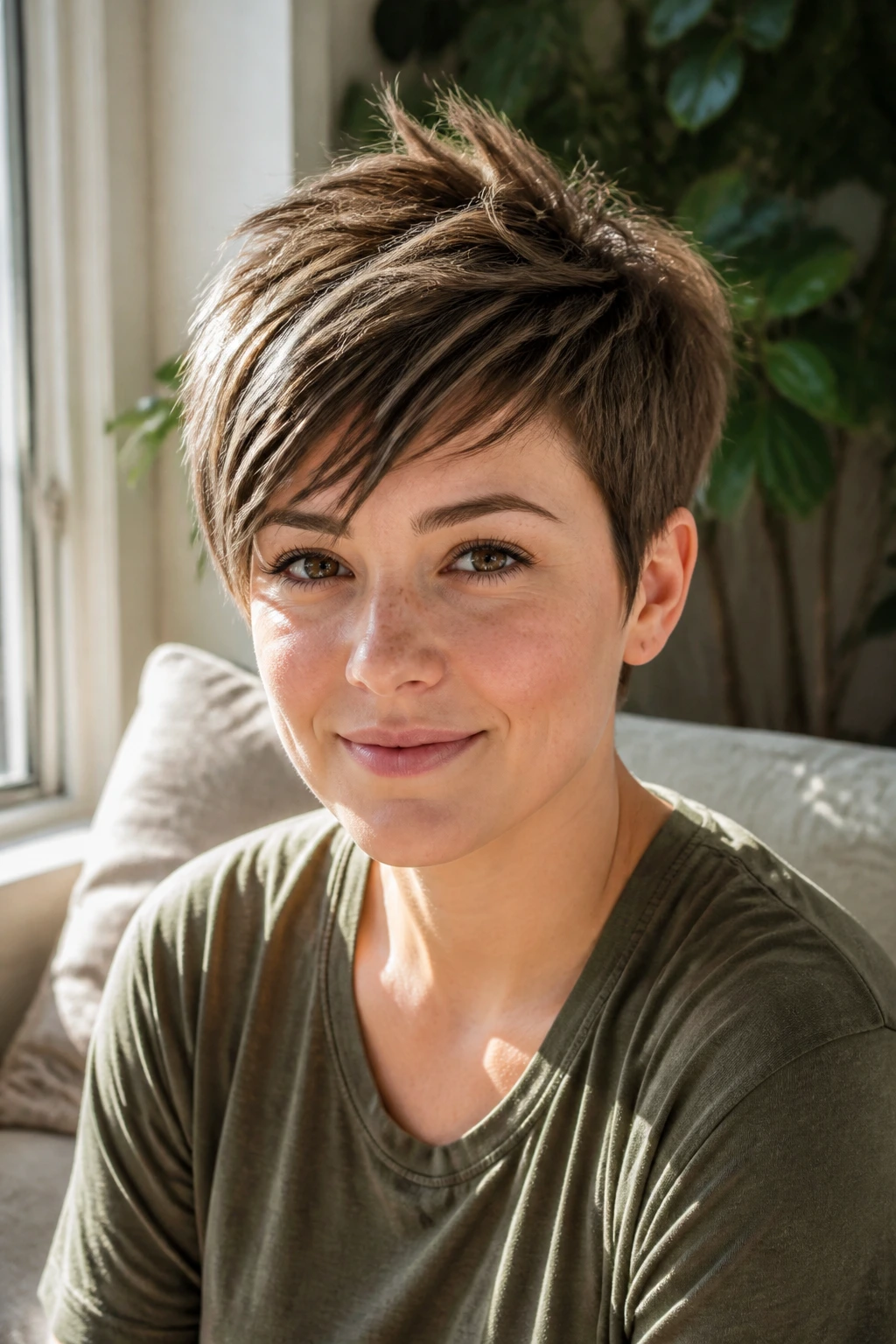
The tucked-behind-the-ear pixie is all about usefulness. The sides stay long enough to tuck, the top stays short enough to keep the cut neat, and the ear line becomes part of the style rather than a place to hide. It’s the haircut equivalent of having a good pocket.
This is a smart option if you wear glasses or like earrings that need some space. It also gives you a little more flexibility on days when you want softness around the face. Ask for enough length in front of the ear so the tuck feels easy, not forced.
Best for: practical styling and a soft, wearable profile.
27. Wet-Look Editorial Pixie
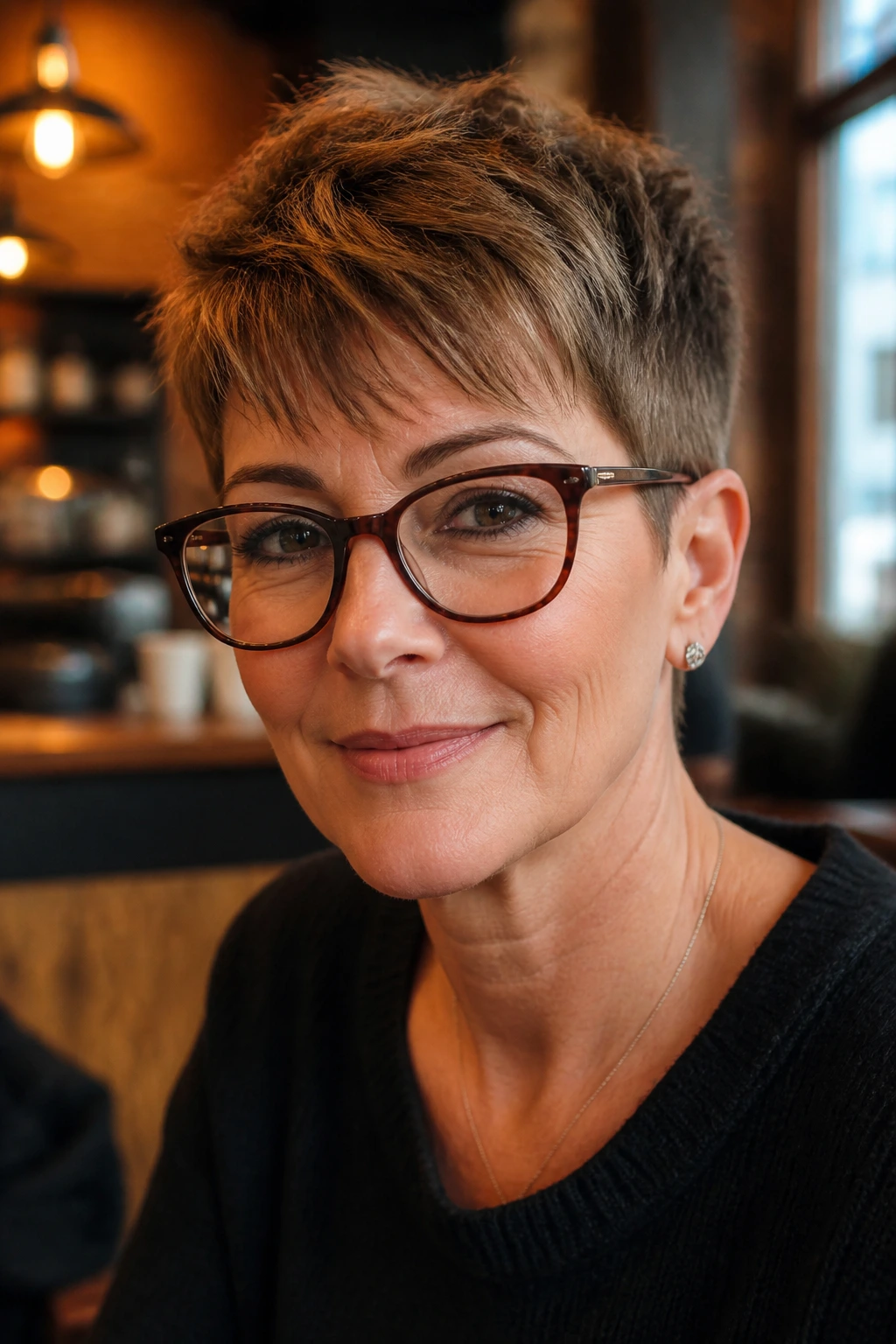
The wet-look pixie is sleek, glossy, and a little dramatic. Hair is combed into place with gel or glossing cream so it sits close to the head while still showing the shape of the top. It works especially well when the cut has clear lines at the nape and temples, because the shine makes those details stand out.
This is not an everyday casual finish for most people, and that is fine. It is one of the most effective ways to make a pixie feel dressed up without adding length. A fine-tooth comb helps, but do not rake the hair so hard that the texture disappears into a flat sheet.
Best for: evening looks, clean lines, and strong facial features.
28. Flipped-End Pixie
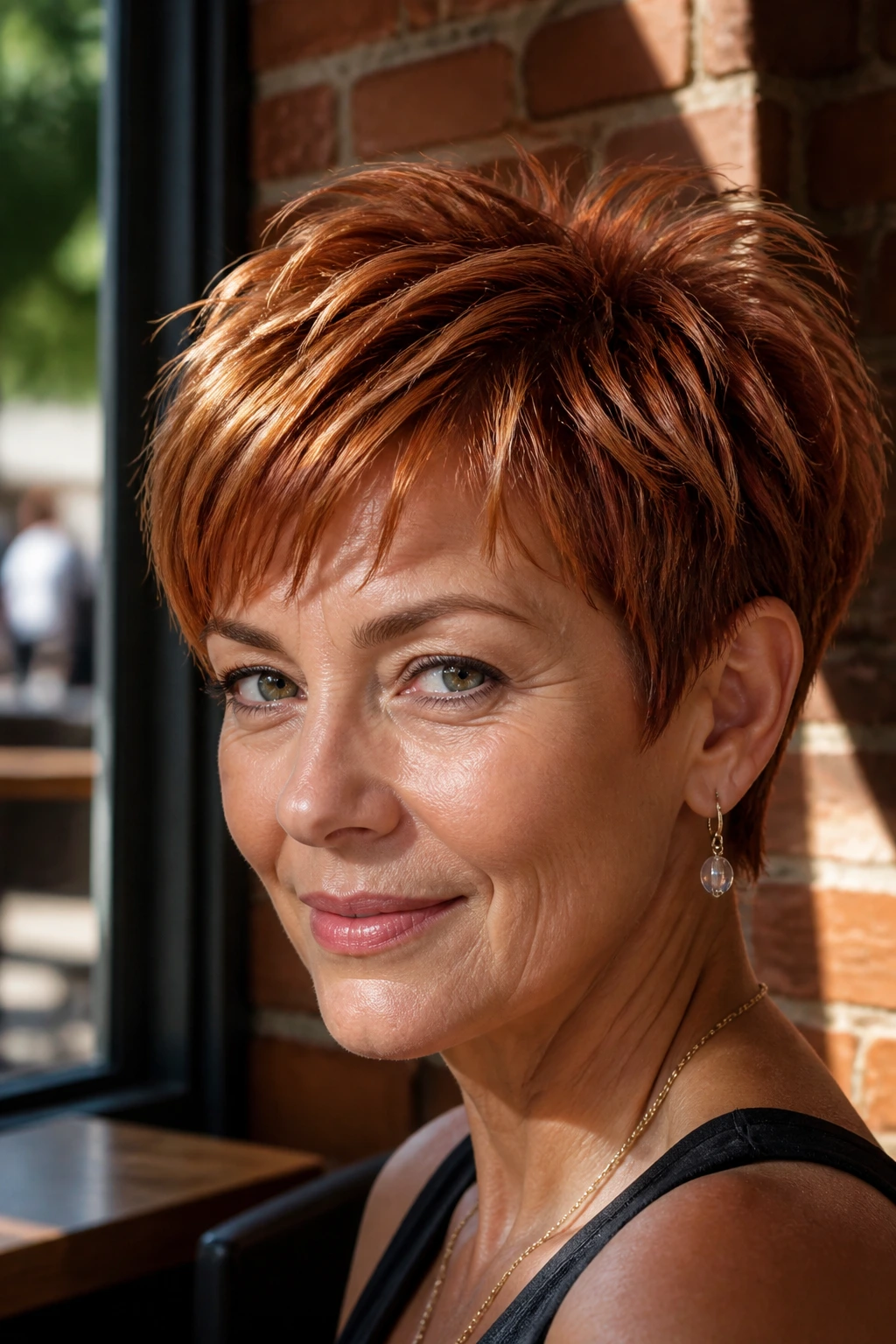
A flipped-end pixie uses a tiny outward bend at the tips to keep the cut from feeling too strict. The ends can flip away from the face, especially near the cheekbones or neck, which gives the haircut a bit of lift and play. It is subtle, but it changes the mood.
This cut works better with some top length, because short ends do not flip gracefully. A small round brush or even a flat iron used gently at the edge can do the trick. The goal is not a full retro curl. Just a slight flick.
Best for: softer styling, cheekbone emphasis, and a little movement at the ends.
29. Glasses-Friendly Pixie
Glasses change a haircut. They create a hard line at the temples and can hide bulk in exactly the wrong places. A glasses-friendly pixie keeps the sides clean enough to sit around the frames, not under them, and leaves the fringe soft so the top of the lenses do not compete with the hair.
If you wear glasses every day, bring them to the cut or at least show photos with similar frame shapes. The arms of the glasses need room behind the ear, and the temple area should not puff outward. Small details. Big difference.
Best for: frame wearers who want hair that works with their glasses instead of around them.
30. Copper-Dimension Pixie
Color changes pixies fast, and copper is one of the best examples. Warm tones catch light on the short layers, which makes the texture easier to see. If the cut is softly layered, copper can make each piece look more deliberate. If the cut is blunt, the color can look flat. The haircut and color need to support each other.
A few subtle highlights or lowlights can keep the shape from reading like one solid helmet of color. I like this most on cuts with crown lift or piecey ends, because the movement gives the color something to show off.
Best for: warm tones, dimensional layers, and a little brightness around the face.
31. Soft Curved Pixie
The soft curved pixie avoids hard lines. The fringe bends gently, the sides taper without looking shaved, and the nape follows the neck in a shallow curve. It is one of the easiest pixies to wear if you do not want a severe look.
This shape is good when you want short hair but still want softness around the face. It can take a side part, a center-ish part, or a loose tuck behind the ear. The cut looks calm, which sounds boring until you realize how useful calm hair can be.
Best for: people who want short hair with a softer outline.
32. Long-Top Undercut Pixie
This is the most dramatic version in the mix. The top stays long enough to sweep, spike, or fall forward, while the sides and back are trimmed much shorter underneath. The contrast is obvious, and that is the point. You get shape, edge, and a lot of styling range from one cut.
If you like changing your look day to day, this one gives you room to do it. Wear the top slicked back one day and loose the next. Just keep the undercut maintained, because once the shorter section grows out, the whole effect blurs fast.
Best for: bold contrast, thick hair, and people who want maximum styling flexibility.
Why Pixie Shape Matters More Than Length
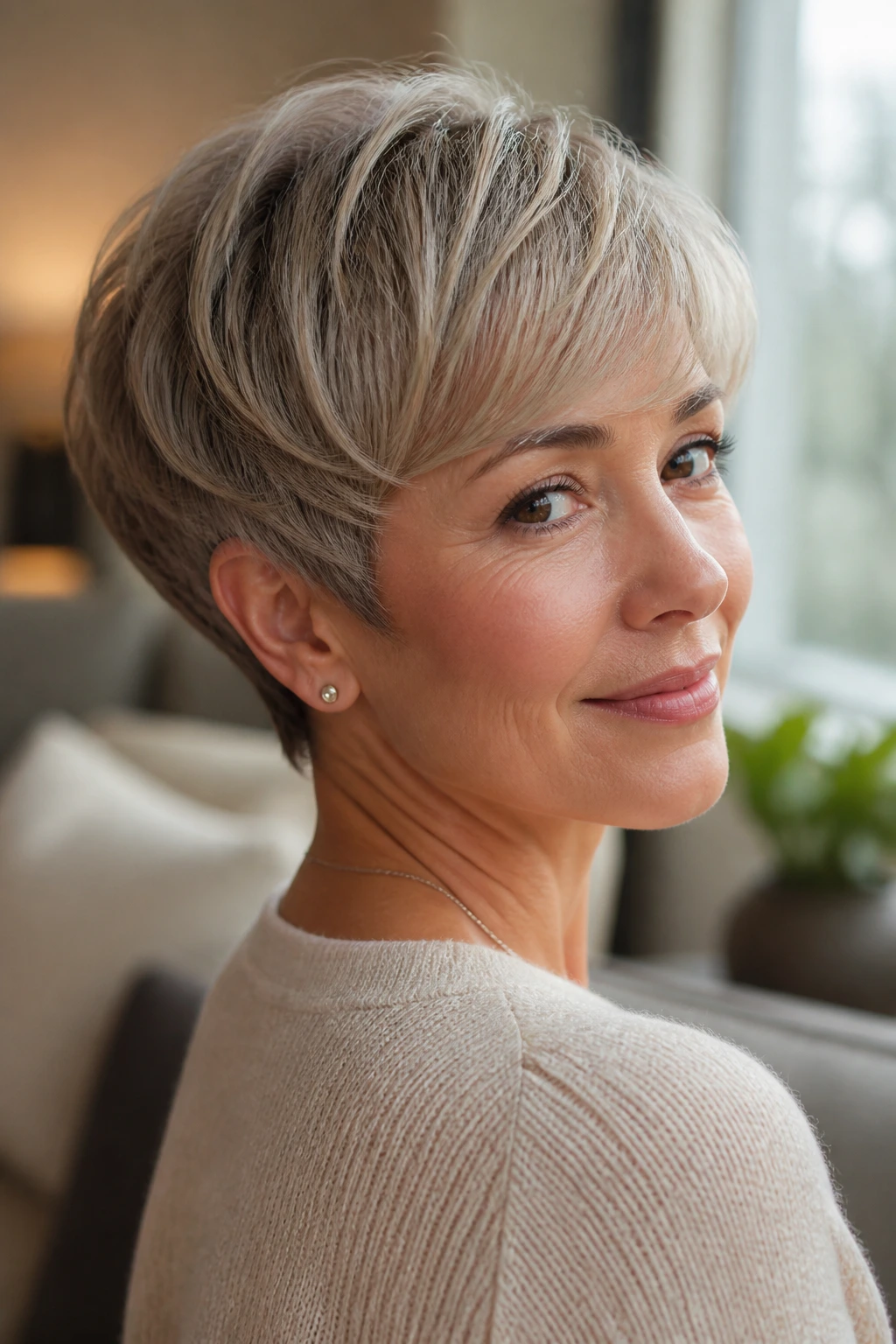
A pixie cut lives or dies by its silhouette. The nape, the temple area, the crown, and the fringe all have jobs, and if one of them is off, the whole haircut starts looking accidental. That is why the shortest cut is not always the best cut. A half-inch in the right place can matter more than an extra inch in the wrong one.
Hair texture decides a lot here. Fine hair wants weight left where the shape needs body. Thick hair often needs bulk removed inside the cut, not hacked away at the outline. Curly hair needs room for shrinkage, which means the stylist has to think in dry shape, not wet length. Straight hair usually needs a little texture or lift so the top does not sit like a lid.
The other piece people forget is upkeep. Short hair grows at the same rate as long hair—roughly half an inch a month—but a pixie shows every millimeter faster. Once the nape starts widening or the ears start getting swallowed, the clean line is gone. That does not mean the cut failed. It means the shape needs a trim before the outline gets muddy.
A good pixie should feel like a haircut that keeps making sense from the back, not just the mirror selfie.
Tools That Keep a Pixie Sharp
-
Sharp haircutting shears: Blunt tools chew the ends and make short hair look frayed fast.
-
Texturizing shears: Useful for thick hair, but they should be used lightly; too much thinning on fine hair is a mistake.
-
Clippers with guards: Helpful for clean napes and hidden undercuts, especially if you like the back tidy.
-
Fine-tooth comb: Good for directing fringe, parts, and slick finishes without dragging the top flat.
-
Small round brush: Best for lifting the crown and giving the fringe a soft bend.
-
Vent brush: A fast dry-time helper when you want shape without too much polish.
-
Blow dryer with nozzle: The nozzle matters. It directs airflow where you need lift instead of blasting the whole cut into fuzz.
-
Spray bottle: A few misted sections can reset a smashed fringe or revive a slept-on crown.
-
Matte paste or fiber cream: Ideal for piecey texture; use a pea-sized amount and add only if needed.
-
Light mousse or root spray: Useful for fine hair and crown lift without heaviness.
-
Satin pillowcase or bonnet: Keeps the cut from getting crushed overnight.
Choosing the Right Pixie for Your Hair Texture and Face
A good pixie starts before the scissors touch the hair. Bring pictures, yes, but bring the right pictures. The images should match your hair density, your hairline, and your willingness to style it in the morning. A glossy model with baby-fine strands is not useful if your hair is thick and bends at the temple like wire.
The consultation matters more with short cuts than with long ones. Ask where the weight will come out, where the fringe will fall when dry, and how much length will remain at the nape after the first clean-up. If you wear glasses, say so. If you hate hair touching your forehead, say that too. If your cowlick sits hard on the right front, show it off and talk about it. Hair that lies in a cowlick is not “difficult.” It just needs a shape that respects the direction it already has.
I also like to hear a stylist describe the grow-out stage before the first cut. That tells you whether the shape can survive past week three. Some pixies are beautiful only in the first ten days. Those are expensive hobbies.
How to Wear a Pixie Without Fighting It
Presentation: Keep the outline clean and the top directional. A little lift at the crown, a soft side sweep, or a tucked ear can make the whole cut look intentional in under two minutes.
Accompaniments: Earrings, brows, collars, and glasses matter more with a pixie because the haircut opens up the face. A sharp hoop or a plain stud can look better than a necklace when the neckline is visible.
Portions: If you want softness, ask for a longer fringe and enough side length to tuck. If you want edge, keep the sides tighter and let the crown stay slightly longer. Those proportions change the mood faster than color.
Beverage Pairing: If this sounds silly, fair enough, but the mood of a pixie does pair with what you wear and carry. A crisp coffee in hand matches a neat taper. Sparkling water, a glass of wine, or a plain espresso can all fit the same haircut depending on how sleek you style it.
Small Styling Moves That Change the Whole Cut
Texture Enhancement: Dry hair needs less product than people think. Start with a tiny amount, warm it between your hands, and press it into the mid-lengths and ends. If the roots get coated, the lift disappears.
Customization: Shift the part by half an inch. That tiny move can soften a forehead, hide a cowlick, or add lift on the flatter side without changing the haircut at all. Cheap fix. Big payoff.
Serving Suggestions: If the cut exposes your ears, use them. A strong brow, a lipstick with a little depth, or a clean collar line can make the haircut look sharper than over-styling ever will.
Make-It-Yours: Fine hair usually looks best with lighter products and a softer fringe. Thick hair likes cleaner napes and more internal weight removal. Curly hair needs enough length to keep its pattern after shrinkage. The cut should obey the hair, not lecture it.
Keeping a Pixie Sharp Between Trims
A pixie does not need a full wash every day, but it does need attention. Most short cuts stay happiest with trims every 4 to 6 weeks if you want the outline crisp. If you are leaning into a softer grow-out, 6 to 8 weeks can work, but the nape will start to round out and the ears may need some cleanup.
Sleep matters too. A satin pillowcase or a bonnet keeps the top from getting mashed into one flat shape. If the crown loses lift overnight, mist it lightly with water in the morning and hit the roots with a blow dryer for 30 to 45 seconds. That little reset often works better than another round of product.
Dry shampoo helps, but use it where the oil lives, not everywhere you see hair. The roots near the crown and fringe are usually the first to go limp. If you have curly or wavy hair, refresh with a damp hand and a tiny bit of cream instead of piling on dry shampoo, which can make the texture chalky.
Color-treated or silver hair needs a bit of extra care. A gentle shampoo and occasional clarifying wash keep the cut from looking dull or coated. Clean scalp, clean line, better shape.
Pixie Cut Variations Worth Trying
-
Curly-Cut Pixie: Keep the top a little longer and let the curls shrink naturally. This keeps the shape visible instead of puffing outward.
-
Fine-Hair Lift Pixie: Leave enough crown length for root spray and avoid over-thinning the ends. The goal is lift, not see-through strands.
-
Thick-Hair Taper Pixie: Remove bulk inside the haircut and keep the nape tight. That keeps the silhouette from ballooning.
-
Grow-Out Bixie: Let the front and sides stretch toward bob territory while the nape stays neat. This is the easiest bridge between short and medium hair.
-
Low-Maintenance Soft Pixie: Keep the fringe longer, the sides soft, and the neckline clean. It gives you shape without a lot of styling work.
-
Statement-Edge Pixie: Add a hidden undercut, a baby bang, or a strong side sweep. One sharp detail is often enough; you do not need three.
Pixie Cut Mistakes That Show Up Fast
-
Cutting the fringe too short too early: The front is the part you see first, so if it is cropped with no margin, there is nowhere to fix it. Leave a little more length on the first pass and refine dry.
-
Over-thinning fine hair: The haircut may look airy in the chair, then collapse into fuzz by afternoon. Fine strands need shape, not over-removal.
-
Leaving the nape too bulky: A wide nape makes the whole pixie look grown out even when the top is still fresh. Clean the neckline regularly.
-
Ignoring cowlicks and growth patterns: Hair that fights at the front or crown will still fight after the cut. The shape has to work with the direction of the hair.
-
Using too much product: Short hair goes greasy fast. Start with less than you think, and add only if the piecey bits need it.
Common Questions About Pixie Cuts
Will a pixie cut work on thick hair?
Yes, but it needs the right internal shaping. Thick hair usually looks best when bulk is removed inside the cut and the nape stays tight, so the outline doesn’t puff into a triangle.
How often do pixie cuts need trims?
Most crisp pixies need cleanup every 4 to 6 weeks. If you like a softer grow-out, you can stretch it longer, but the neckline and side shape will start to blur.
Can curly hair wear a pixie without turning frizzy?
It can, as long as the top is left long enough for the curl pattern and the cut is shaped dry or finished dry. Short curly hair needs room to move; if it’s cut too tight, it can lose its pattern.
What if my hair has a strong cowlick?
Build the cut around it instead of trying to erase it. A side part, longer fringe, or a softer crown can calm the swirl, while heavy product and short fringe often make it fight harder.
Is a pixie cut hard to grow out?
Only if the neckline and side shape are ignored. Keeping the nape tidy and letting the top bridge the transition makes the grow-out look like a plan instead of a mistake.
Do pixie cuts suit glasses?
Absolutely, if the temples and side lengths are planned around the frames. The hair should sit beside the glasses, not under the arms or puffing behind them.
Can I style a pixie without heat?
Yes. Water, a little leave-in, and the right product can do a lot. Air-dried texture usually works best on wavy or curly hair, while straight hair may still need a quick blast at the roots.
What should I bring to the salon?
Bring photos that match your hair type, not just the vibe you want. The most useful pictures show the side, the back, and the fringe, because that is where a pixie succeeds or fails.
A Pixie That Keeps Its Shape
A good pixie is not about bravery, and it is not about “pulling off” short hair like some sort of trick. It is about shape. The clean nape, the weight on top, the fringe line, and the way the cut grows for the next six weeks matter more than whether it looks cute in one mirror shot.
That is why the best version is the one that fits your texture, your cowlicks, your glasses, your earrings, and your patience. When those pieces line up, a pixie stops looking like a haircut you are managing and starts looking like the haircut that manages the rest of the look for you.
Bring the right photo, talk about the real hair you have, and ask for the shape you want from the back as much as the front. Start with the silhouette, then let the cut do the talking.
