



A good pixie cut can do something sneaky: it changes the whole mood of the face before anyone notices the hair itself. Cut it too bluntly, and it can sit there like a hard little cap. Cut it with the right taper, fringe, and crown lift, and the face looks brighter, the neck looks longer, and the haircut starts doing half the styling for you.
That matters more with age, because hair doesn’t stay politely the same. The crown can flatten. The temples can thin. Gray strands can get wiry or coarse in a way that makes long layers feel fussy. Pixie cuts for women over 50 work best when they respect those shifts instead of pretending they don’t exist.
The cuts below are not all trying to do the same job. Some soften a forehead. Some build lift where the roots have gone stubbornly sleepy. Some make thick hair behave. Some keep curls from turning into a triangle. And a few are for the woman who wants short hair with a little edge, not a haircut that looks borrowed from a catalog. A good pixie is specific. That’s the whole point.
Why These Pixie Cuts Feel Worth Considering
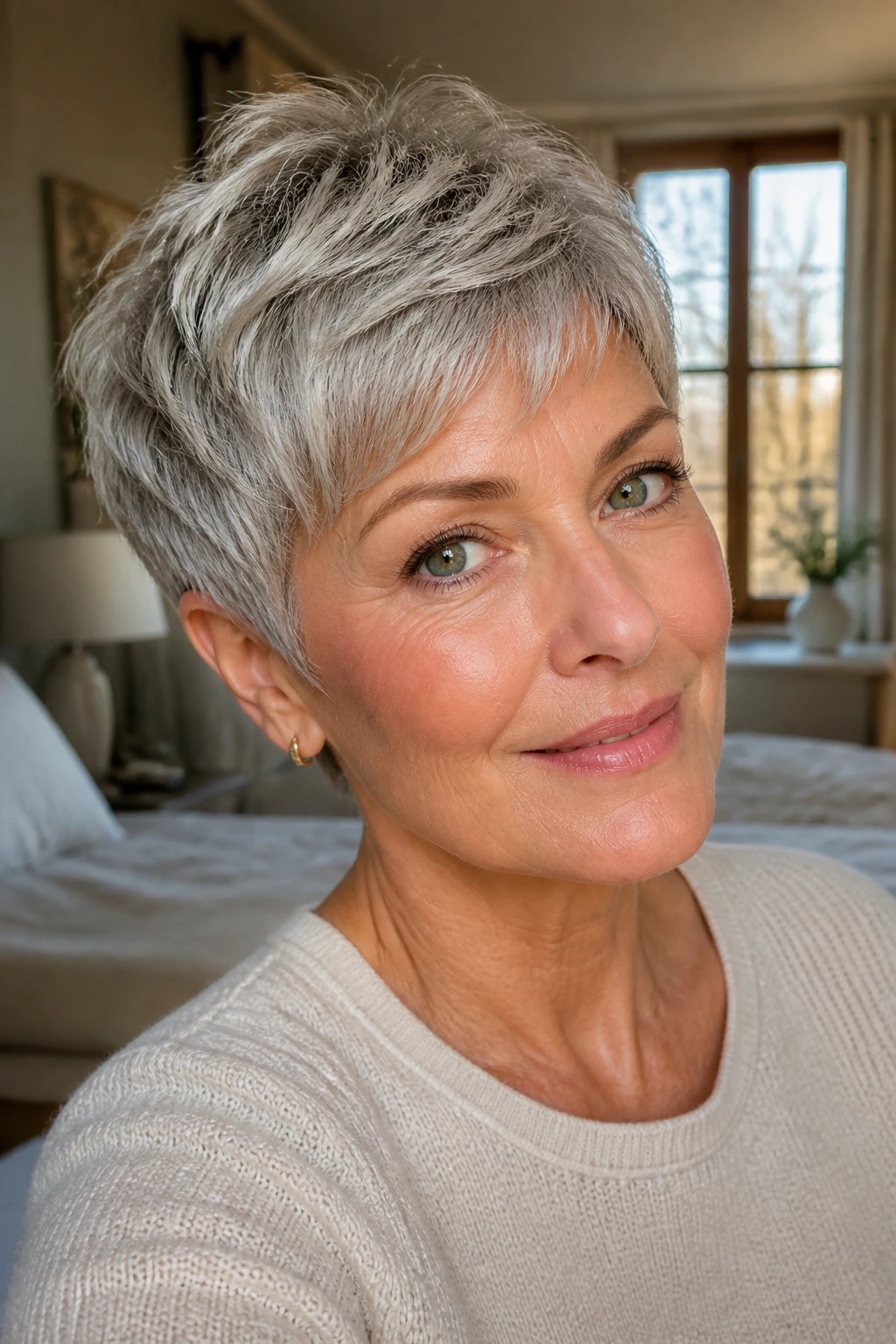
-
They put the shape where the eye goes first: A clean nape, a lifted crown, or a swept fringe changes how the whole face reads from six feet away.
-
They work with thinning or changing hair: Shorter lengths remove the weight that drags fine hair down and make patchier growth patterns easier to disguise.
-
They’re easier to refresh than longer cuts: A quick mist, a little root lift, and a finger-comb usually beat a long round-brush session.
-
They play well with gray and silver hair: Short cuts show off salt-and-pepper tones instead of letting them hide under heavy layers.
-
They can be soft or sharp: Pixies are not one note. They can look delicate, crisp, playful, or polished depending on how the fringe and sides are cut.
-
They grow out in stages you can live with: The better versions still look deliberate at six weeks, which saves you from that awkward “I meant to do this” phase.
1. The Soft Tapered Pixie
This is the pixie I’d hand to someone who wants short hair without looking like they’ve been hacked with clippers. The sides stay close, the nape is tapered cleanly, and the top keeps just enough length to move instead of stick up. It has that neat, tailored shape that makes earrings and necklines do a little more work.
Why It Flatters So Many Face Shapes
The taper is the whole trick. It removes bulk at the bottom, which keeps the haircut from puffing out around the ears or settling into a blocky outline at the back of the head. On fine hair, that matters a lot. On thicker hair, it matters even more.
Ask for soft point-cutting through the top, not a blunt chop. You want the ends to look broken up and light, not like one heavy shelf sitting on the head. If your hair grows forward at the temples, a softer taper around the sideburn area helps the cut lie down instead of fighting you every morning.
A little styling cream is enough here. Too much product turns the shape heavy, and this cut loses its clean line fast.
2. The Feathered Crown Pixie
Feathered layers at the crown give this cut its lift, and lift is the word that matters. Hair that has started to flatten at the roots needs structure near the top, not more bulk at the sides. A feathered crown creates that airy, brushed-up shape without making the haircut look stiff.
What Makes It Different
The stylist usually keeps the sides close and builds texture upward through the top with scissors held at an angle. That feathering softens the transition from crown to fringe, which keeps the haircut from looking helmet-like. On straight hair, it gives movement. On slightly wavy hair, it can make the texture look deliberate instead of unruly.
This one also buys you time between washes. The crown can be misted with water, blown dry with the fingers, and brought back to life with a dab of mousse at the roots.
If your hair collapses by noon, this is one of the better bets on the list.
3. The Side-Swept Fringe Pixie
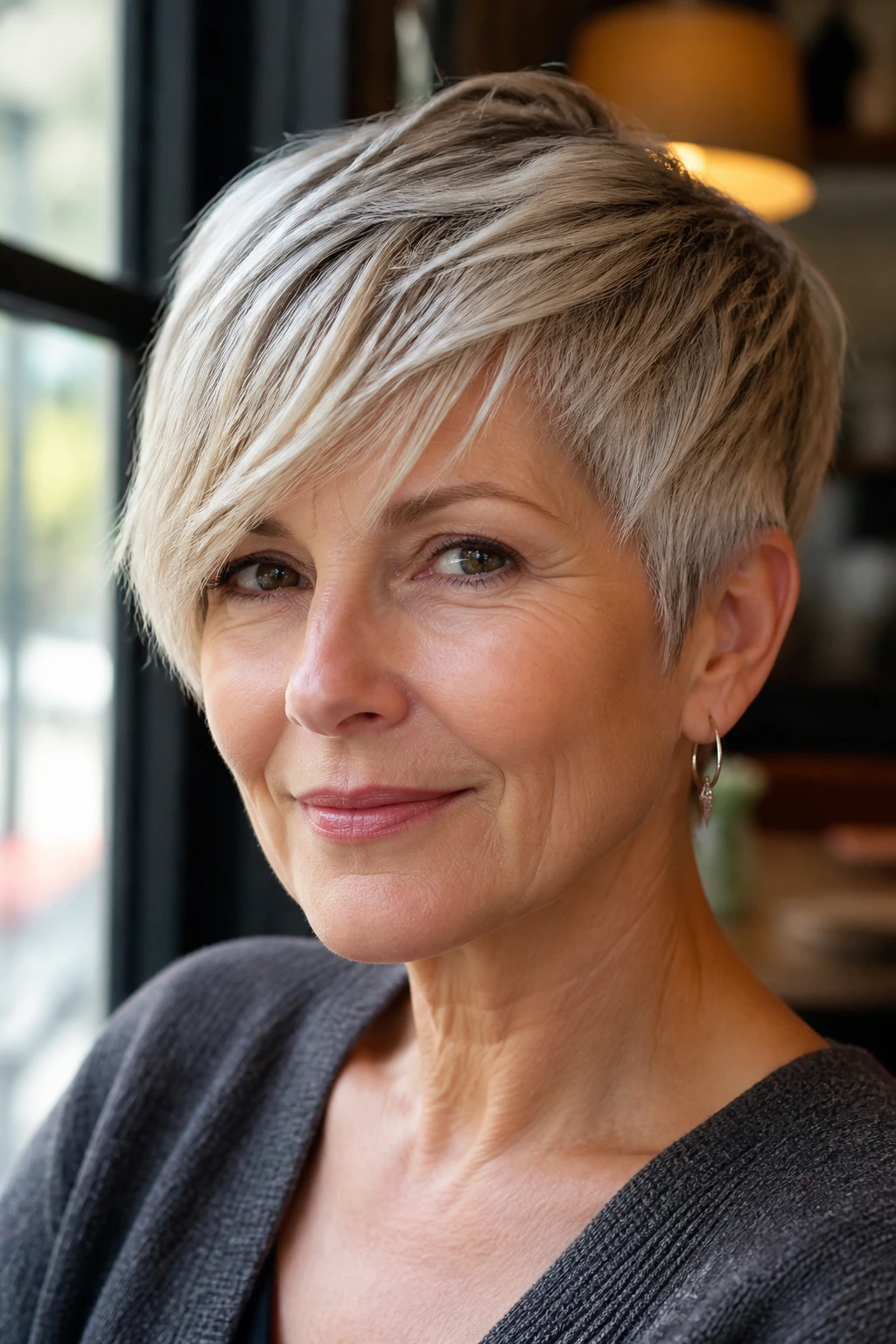
Want something softer around the forehead? Start here. A side-swept fringe can take a pixie from crisp to flattering in about two inches of hair. It skims the brow, hides a higher forehead if you want that, and helps the cut sit nicely with glasses instead of crashing into the frames.
The best version is not too thick. A fringe that is cut heavy starts to look like a curtain, and that’s a headache to style. Keep it light, long enough to sweep, and soft at the edges. If the hairline has a few sparse spots at the temples, this cut handles them with much more grace than a blunt bang ever will.
Ask Your Stylist For This
- A longer front section that can be pushed across the forehead
- Soft layering so the fringe blends into the crown
- Narrower sides near the temples
- Enough top length to tuck or sweep, depending on the day
I like this cut for anyone who wants one moving part instead of five. The fringe does a lot of the work.
4. The Choppy Texture Pixie
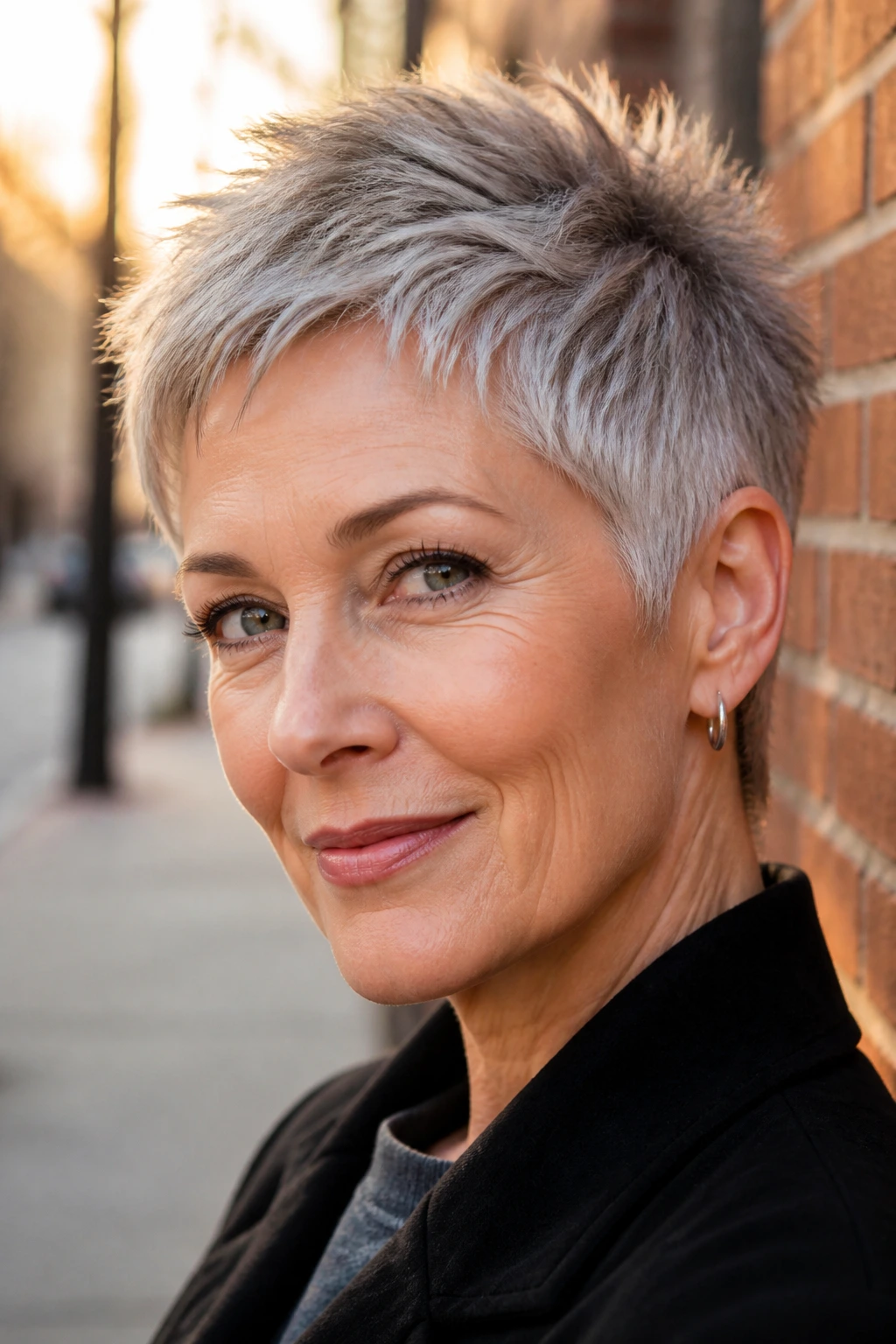
This is the scruffier cousin of the neat tapered pixie, and it’s a good one. Choppy ends break up density, so thick or wiry hair doesn’t sit in one solid mass. The effect is piecey, not perfect, which is exactly why it works.
A razor or point-cut finish can help, but the important thing is restraint. Too much texturizing and the cut frays at the edges, especially if the hair is already dry. The goal is separation, not frizz. The crown should still have enough shape to lift, while the sides stay light enough that they don’t balloon out over the ears.
This cut likes a matte paste or a dry texture spray. Run it through the ends with your fingertips, then stop. Do not keep fussing. The more you touch it, the less the texture looks intentional.
5. The Long-Top, Tapered-Back Pixie
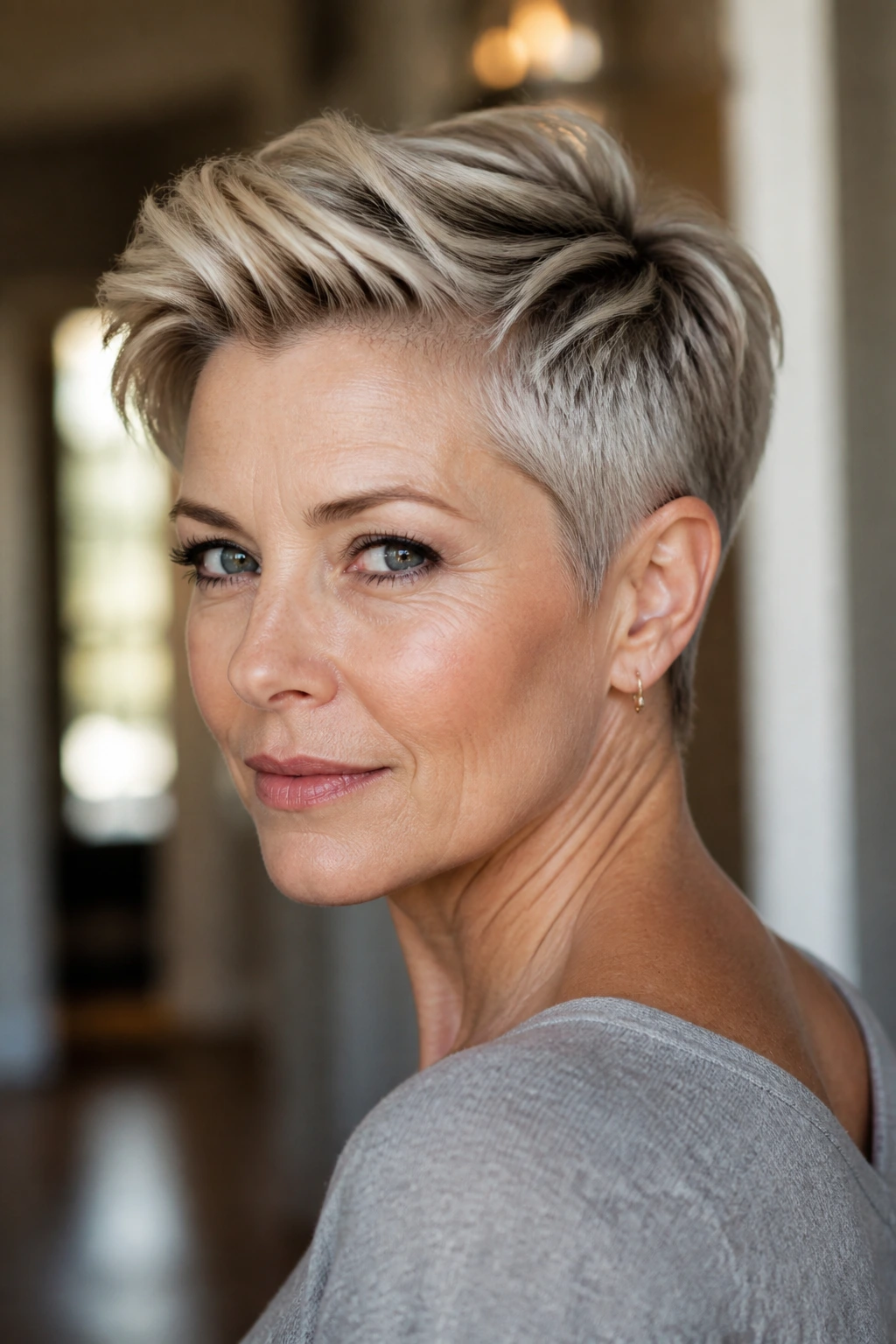
Some people want the freedom to slick it back one day and wear it forward the next. This cut gives you that. The top stays longer, often around 2.5 to 4 inches, while the back is tapered tight through the nape. It has a little more styling range than a shorter crop, and that matters if you like options.
The shape also does a nice job of balancing a strong jawline or a broader forehead. Longer top lengths soften the profile, while the short back keeps the whole thing feeling sharp. I’d especially recommend it for straight or slightly wavy hair, where the length can actually move instead of collapsing.
How to Wear It
- Side-part it for a polished look.
- Push it back with a little cream for a lifted finish.
- Let it fall forward on busy days and it still reads as styled.
This is one of those cuts that keeps giving back, which is rare in short hair.
6. The Curly Pixie with Lift
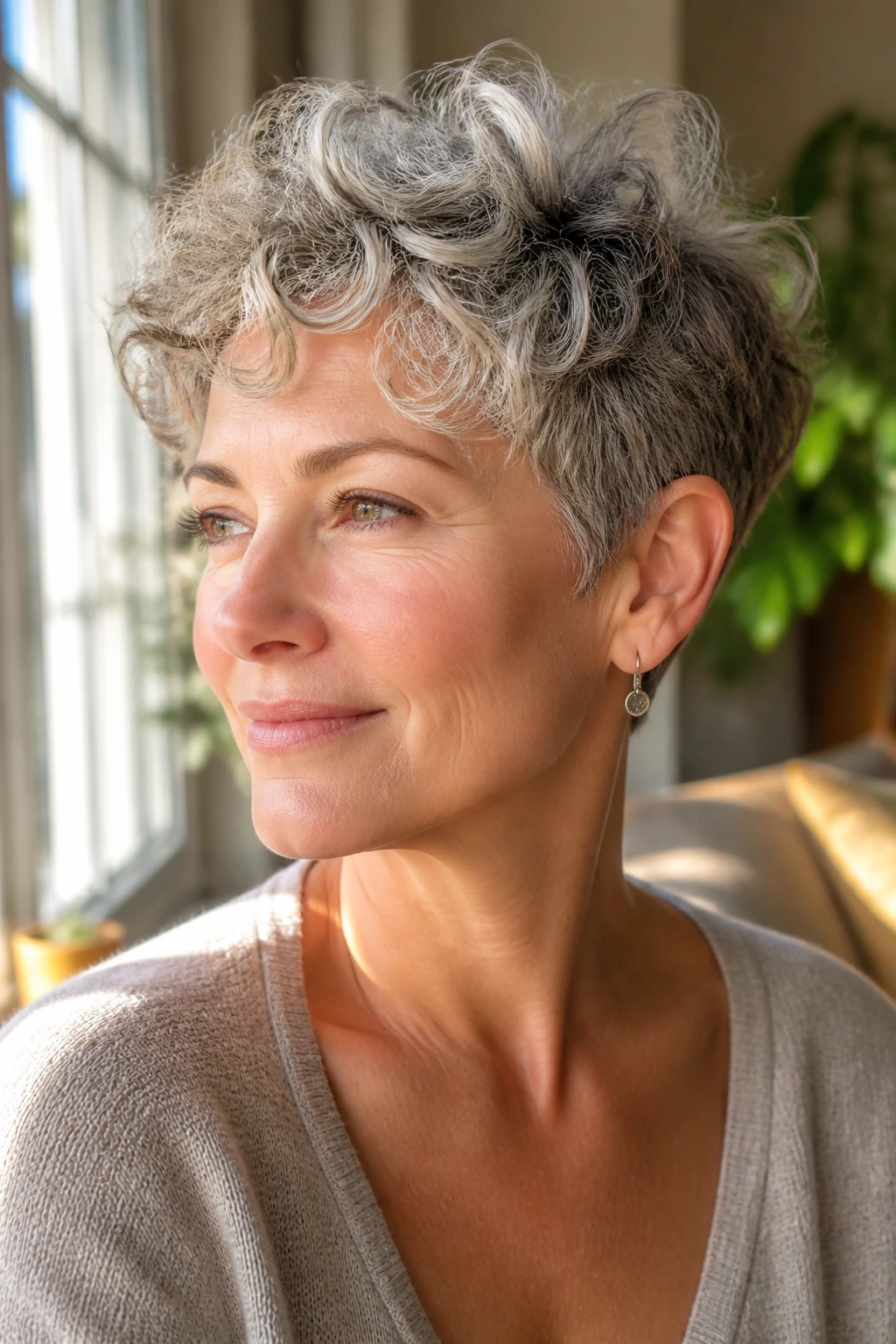
Curly hair and pixie cuts can be brilliant together, but only when the shape is cut for the curl pattern rather than against it. The best curly pixie has enough room at the crown for spring, soft shaping around the ears, and a nape that doesn’t puff outward like a mushroom cap.
Dry cutting often helps here, because curls change their mind when they’re wet. A stylist who understands shrinkage can create a silhouette that still looks balanced once the curls dry into place. That part matters. A lot.
Use a leave-in conditioner, then a light gel or curl cream. Scrunch, diffuse until about 70 percent dry, and leave the rest alone. Overhandling is the enemy. So is a heavy hand with thinning shears.
If you’ve got loose waves or ringlets, this is one of the prettiest pixie shapes around.
7. The Silver-Bright Pixie
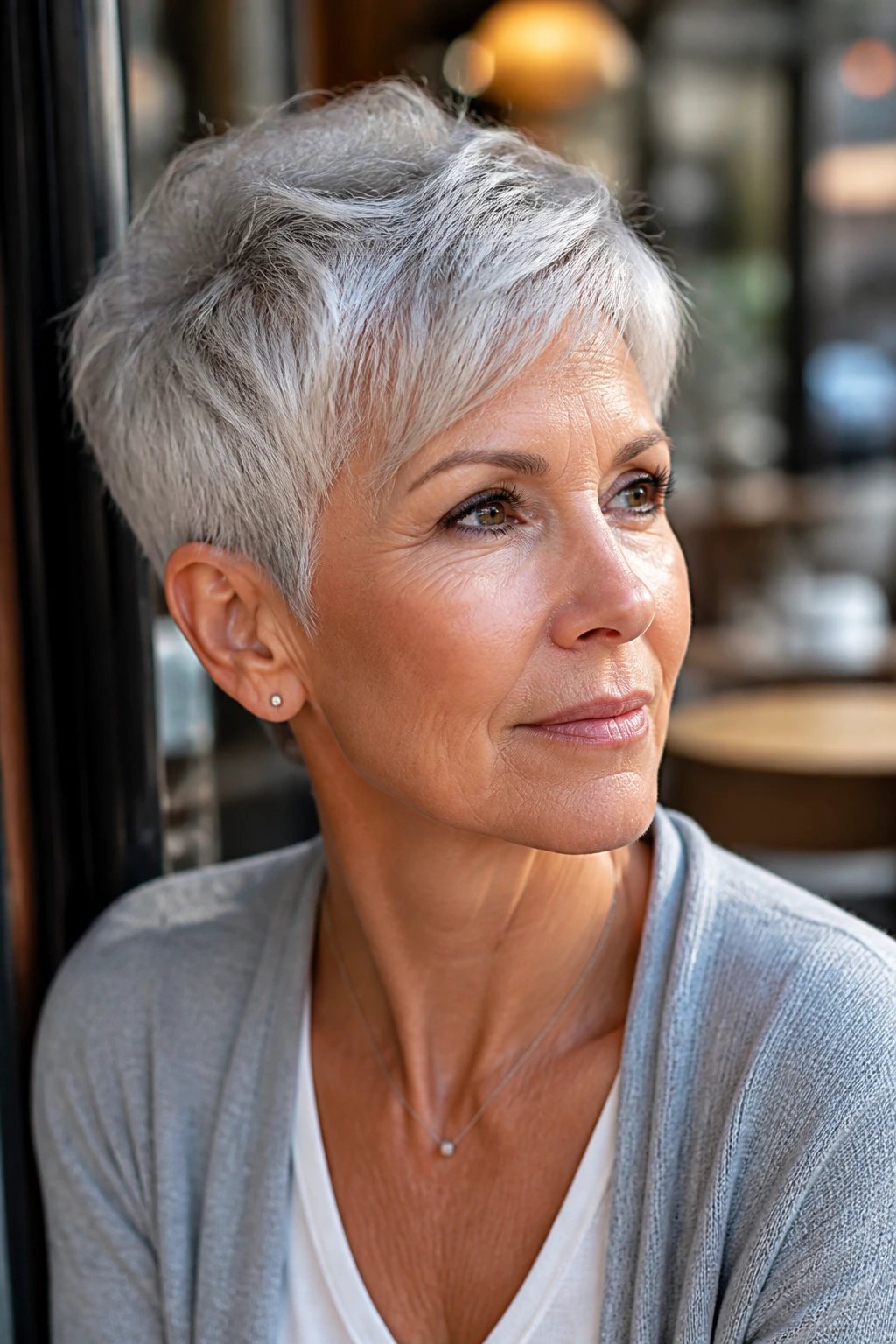
Gray, white, and silver hair can look striking in a pixie because the short length shows the color movement instead of hiding it. You get the shine at the top, the cool tone at the temples, and the depth where darker strands are still hanging on. The cut turns color into shape.
A good silver pixie usually keeps the edges clean and the texture soft enough that the hair doesn’t look wiry. If the gray has a yellow cast, a purple shampoo every week or two can help, but don’t overdo it. Too much can leave the hair dull and slightly lilac, which is not the effect anyone is chasing.
This is also a fine place for a gloss service or a few soft lowlights if the overall tone feels flat. Not dramatic. Just enough to make the silver move.
The right cut lets the color do what it does best: shimmer, not shout.
8. The Hidden Undercut Pixie
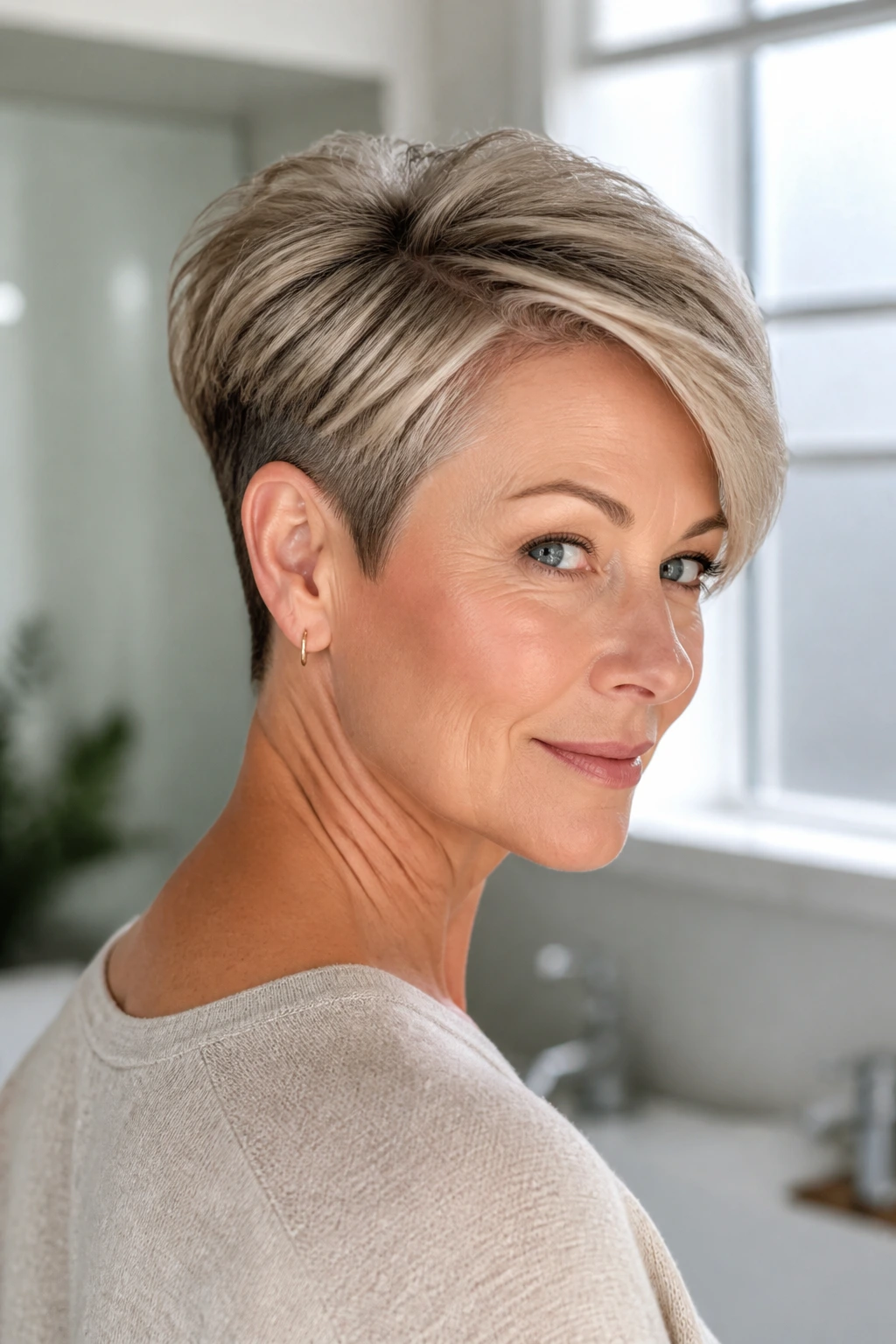
An undercut sounds bold until you realize how much of it can stay hidden. That’s the appeal here. The nape and maybe a bit around the ears are clipped shorter underneath, which removes bulk and gives the top more room to sit. If your hair is dense, this can be the difference between a cut that lies flat and one that keeps popping out at the sides.
The undercut also helps in warm weather, or if your neckline gets itchy from heavier hair. But it needs a careful hand. Go too high, and the cut starts to feel exposed when you pull your hair back. Keep the undercut low and let the top layers cover it naturally.
This style likes a side part and a little separation at the crown. It is not meant to be over-smooth. Think clean, not slick.
9. The Rounded Classic Pixie
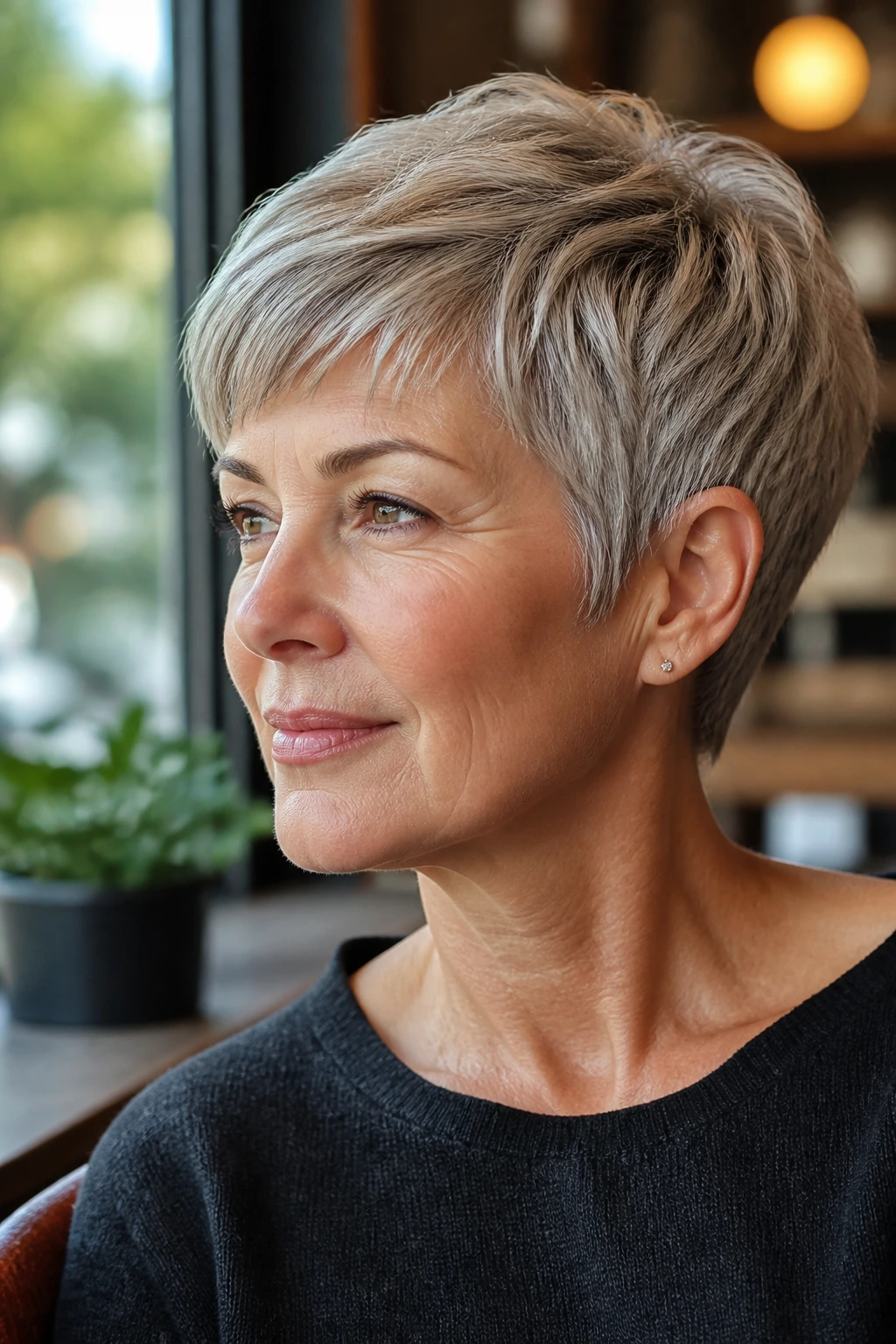
There’s a reason the rounded classic pixie never really leaves. Its shape is simple in the best way: curved through the crown, soft around the temples, and tidy at the nape. Nothing sticks out. Nothing needs a lot of convincing.
This is the version I’d call the most quietly polished in the bunch. It suits women who want a haircut that still looks good when it’s raining, windy, or three days past your best blow-dry. The curve around the head keeps it from looking harsh, and that matters if you have a strong jaw or naturally angular features.
A rounded pixie does need proper weight control. Leave the sides too heavy and the whole thing starts to look like a bowl. Cut it too short at the top and the softness disappears. The sweet spot is in the middle: controlled, curved, and easy to live with.
10. The Asymmetrical Pixie

A little asymmetry goes a long way. One side stays slightly longer, the part sits off-center, and the whole cut gets a line that feels less expected than a standard pixie. It is a smart move if you want something fresh but don’t want a haircut that screams for attention every time you walk into a room.
The best asymmetrical pixies are subtle. Think half an inch to an inch of difference, not a wild diagonal that makes you spend all morning styling around it. The longer side can skim the cheekbone or soften one side of the forehead. The shorter side keeps the shape clean.
Best For
- Faces that like a little visual movement
- Hair that naturally parts to one side
- Anyone who wants a sharper edge without going ultra-short
I’d avoid making the asymmetry too severe unless you enjoy regular styling. This cut should feel stylish, not fussy.
11. The Razor-Piecey Pixie

Razor-cut ends create that airy, separated finish some people love and some people ruin by using too much product. On the right hair, it’s excellent. Straight or slightly wavy strands get a lifted, broken-up look that feels lighter than scissors alone usually give.
The trick is balance. A razor on fine, fragile hair can make the ends ragged if the stylist gets heavy-handed. On healthier hair with a bit of density, though, the razor softens the perimeter and gives the cut that piecey movement people keep trying to fake with wax.
Use a small amount of paste, warm it in your palms, and press it into the ends rather than rubbing it through the roots. That keeps the texture separated without killing the lift.
This one reads casual, but it still needs a precise cut underneath.
12. The Bixie
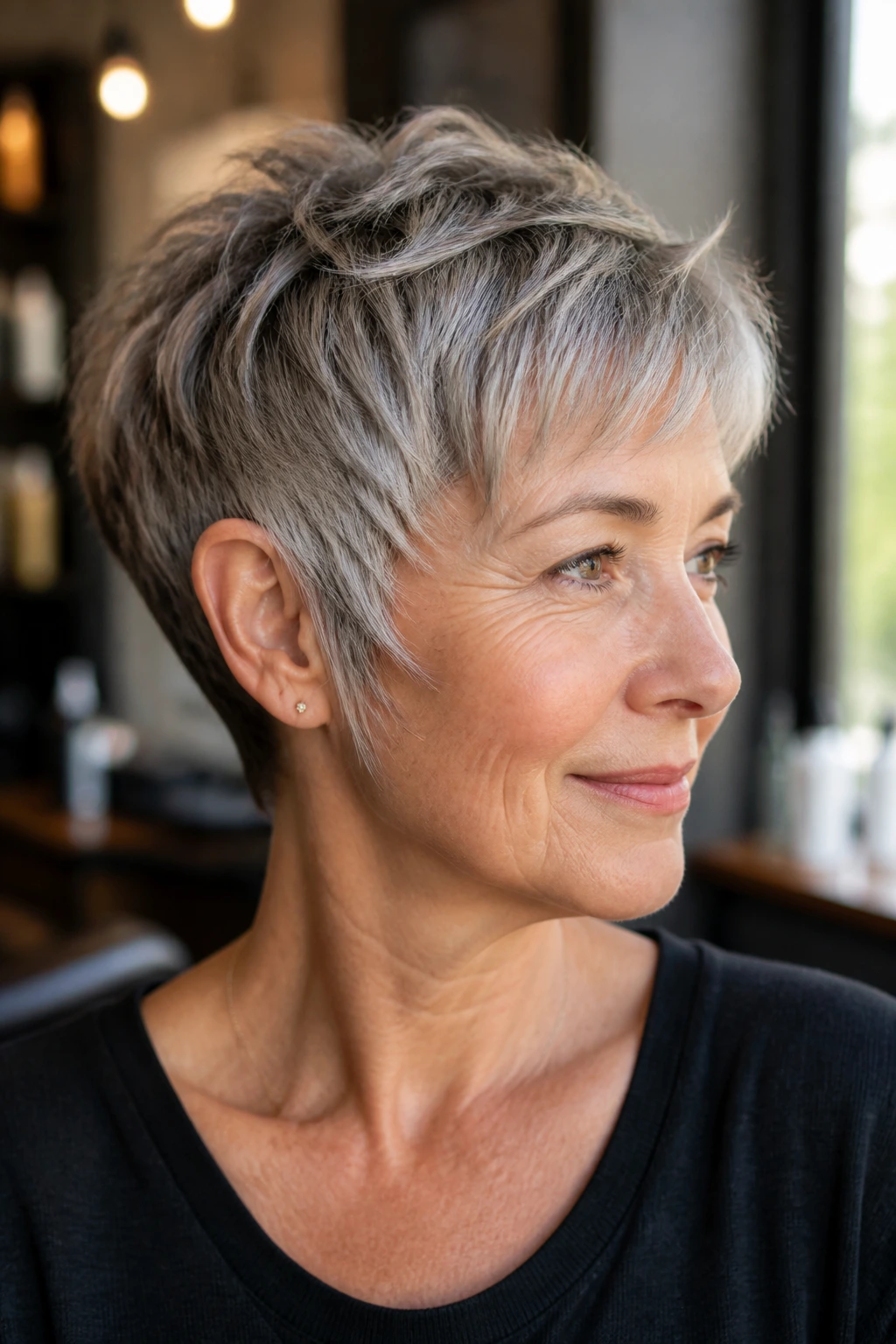
A bixie lives between a bob and a pixie, which is exactly why some women love it. It gives you a little more length around the ears and jawline, but still has the short, light feel of a pixie at the crown and nape. If you’re nervous about going very short, this is the bridge.
The extra length can soften the jaw and make the grow-out less dramatic. It also gives you room to tuck hair behind one ear or flip the front across the forehead. For anyone who likes their hair to behave in more than one direction, that flexibility is worth a lot.
The danger is heaviness. If the perimeter is too blunt, the cut starts feeling like a short bob wearing a pixie costume. Ask for texture through the top and soft graduation through the back so it keeps the short-hair energy.
13. The Brush-Forward Fringe Pixie
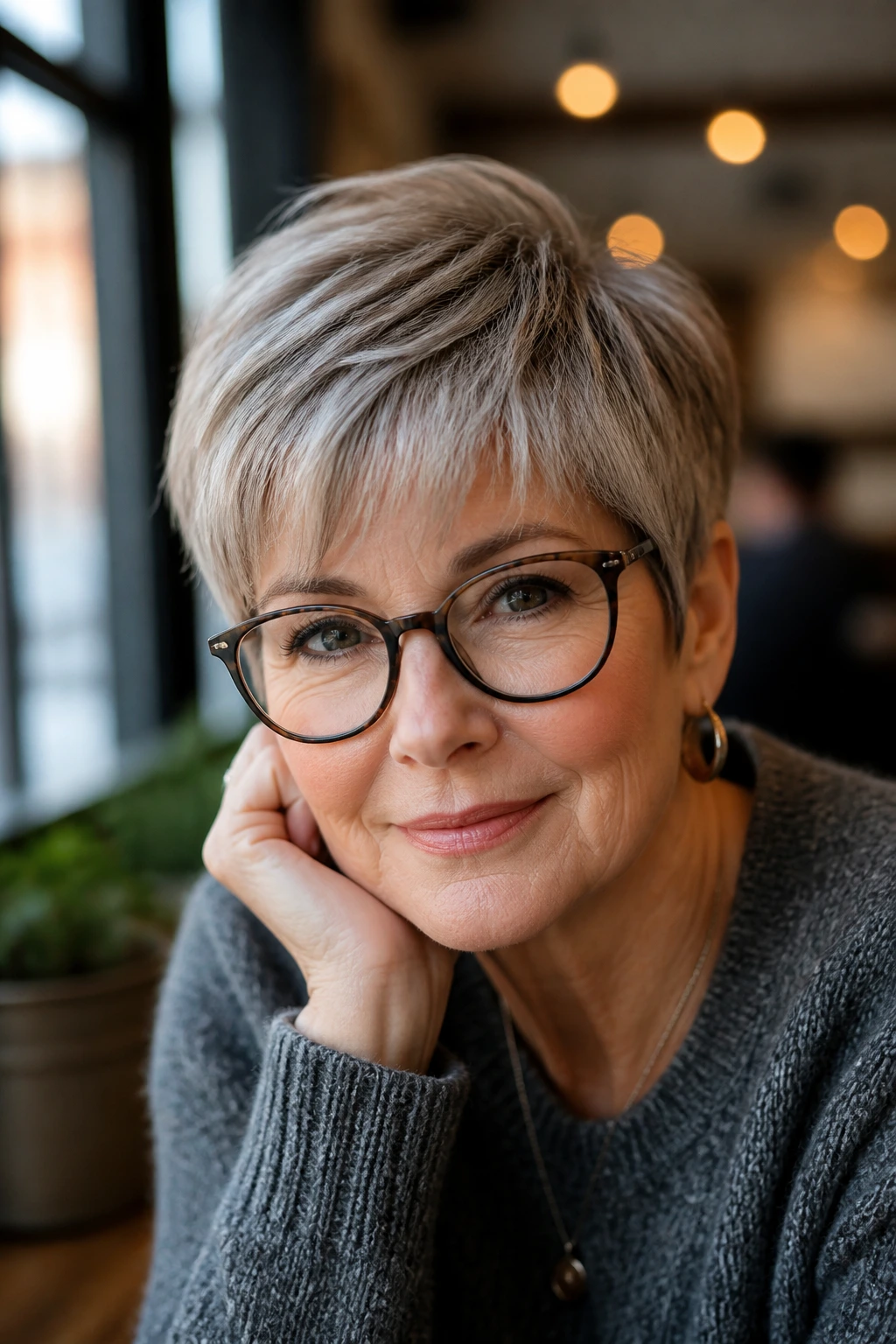
A forward fringe can be a little daring, but not in a loud way. It brings the eye toward the face, softens the forehead, and gives the haircut a gentle frame. With the right length, it can also hide a few uneven spots in the hairline or draw attention away from a high crown.
This style works especially well if you like to air-dry a bit and then finish the front with a round brush or your fingers. The fringe should sit light, not dense. A heavy forward fringe can feel pushy on the face, which is not the goal.
If you wear glasses, test the fringe length carefully. It should clear the frames or rest just above them, not sit in the lenses. That tiny adjustment changes everything.
How It Wears
- Soft and face-framing on oval or long faces
- Useful when the forehead feels like the first thing people notice
- Easy to soften with a bit of root spray and finger-drying
14. The Soft Spiky Pixie
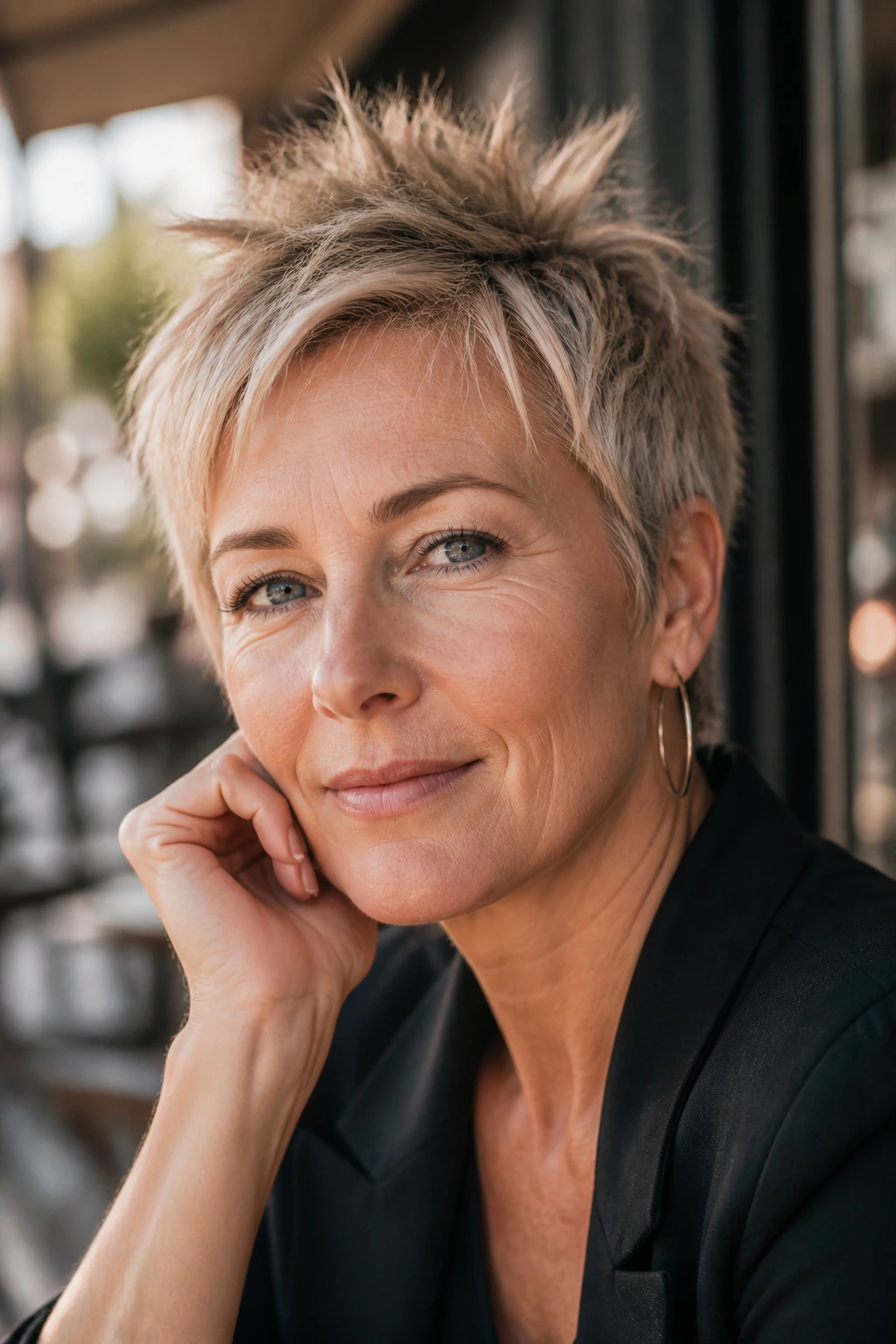
Spiky does not have to mean harsh. Done well, it means lifted and slightly separated, with the ends pointing in different directions so the whole haircut feels energetic. The key is keeping the spikes soft, not crunchy. If the product makes the hair feel stiff, it’s too much.
This is a good cut for straight or dense hair that needs some attitude at the crown. Use a small dab of styling wax, work it through the top with your fingertips, then pinch a few sections near the front and crown. Stop before it gets rigid. You want movement, not a miniature helmet of gel.
The soft spiky pixie can be a nice change if you’ve spent years wearing smoother cuts. It gives the face some lift and keeps the top from lying flat against the head.
15. The Micro Pixie
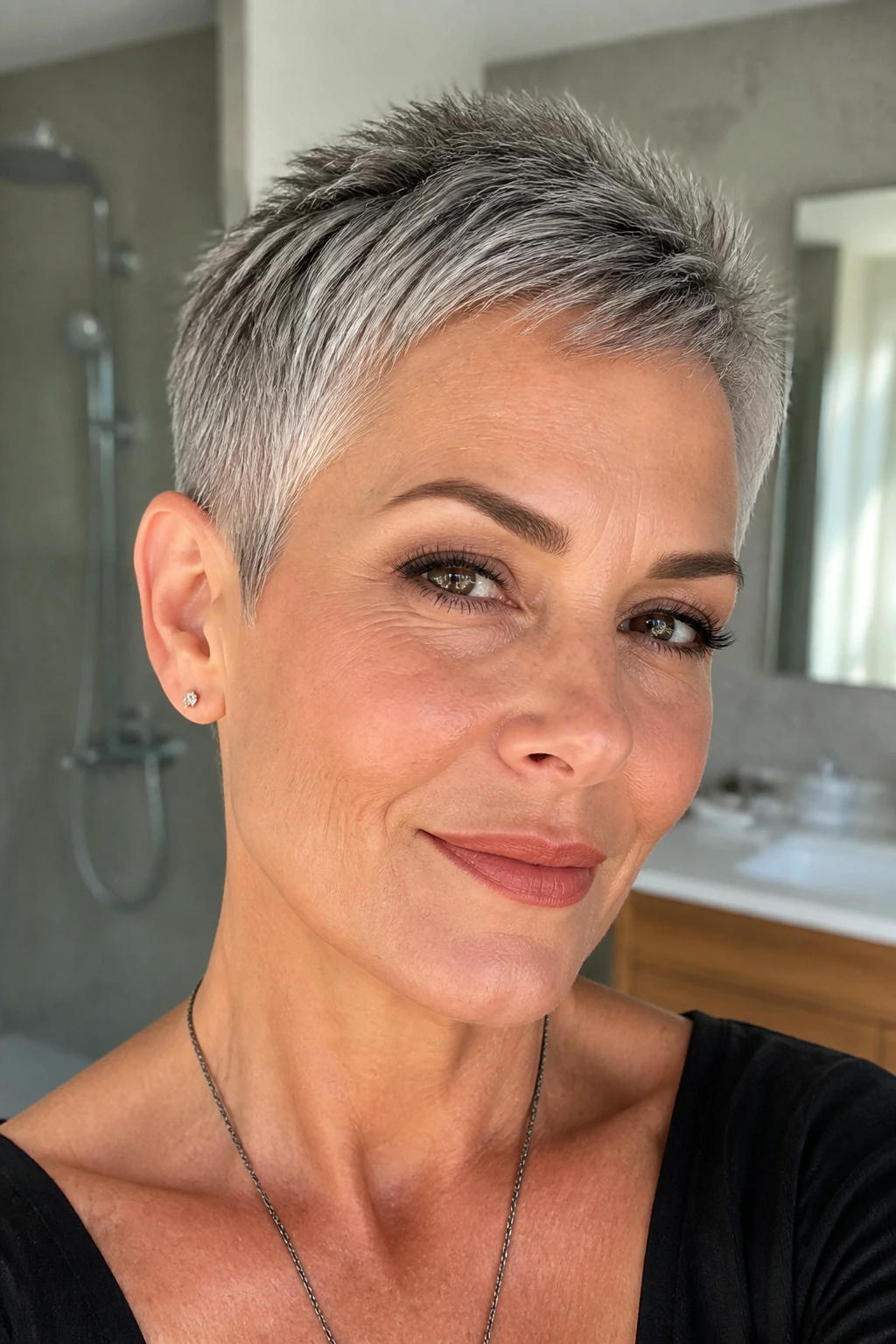
A micro pixie is short, direct, and not for someone who wants to hide behind her hair. The top stays very close, the sides are trimmed tight, and the overall effect puts the features front and center. When it’s cut well, it looks clean and deliberate, not severe.
This style can be excellent for fine hair because there is little weight to drag it down. It also works for people who hate spending time styling. A bit of pomade or cream, a quick rake through the top, and you’re done.
But the micro pixie reveals everything. Cowlicks, head shape, growth patterns, all of it. If you like a soft veil of hair around the face, this is not your cut. If you like a clean outline and very low maintenance, it can be a sharp, useful choice.
16. The Fine-Hair Lift Pixie
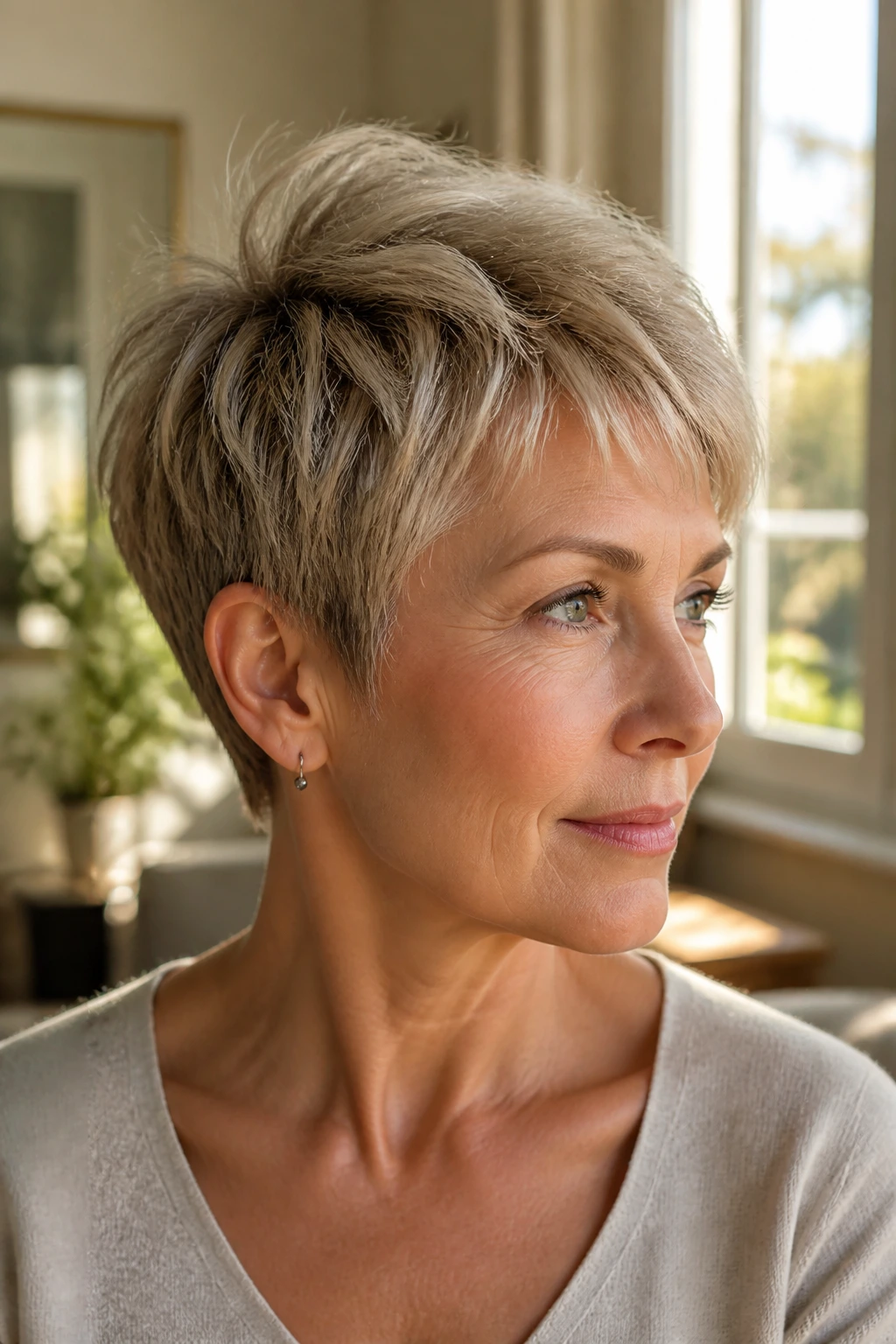
Fine hair needs a different kind of planning. Too much slicing or thinning and the ends can go wispy in a bad way. Too little layering and the top sinks flat by midmorning. This cut lives in the middle, with a little crown height, gentle layering, and a perimeter that stays crisp enough to look full.
Ask for internal layers that create lift without removing too much weight from the ends. That sounds small, but it changes the whole shape. Fine hair often looks best when the bottom line is kept relatively clean, because a blunt edge gives the illusion of density.
Smart Styling Note
Blow-dry the roots in the opposite direction they naturally fall, then switch them back once they’re about 80 percent dry. That tiny trick gives more lift than most people expect.
Dry shampoo at the roots can help too, but go easy. Fine hair gets dull fast if you overuse powder.
17. The Grow-Out Friendly Pixie
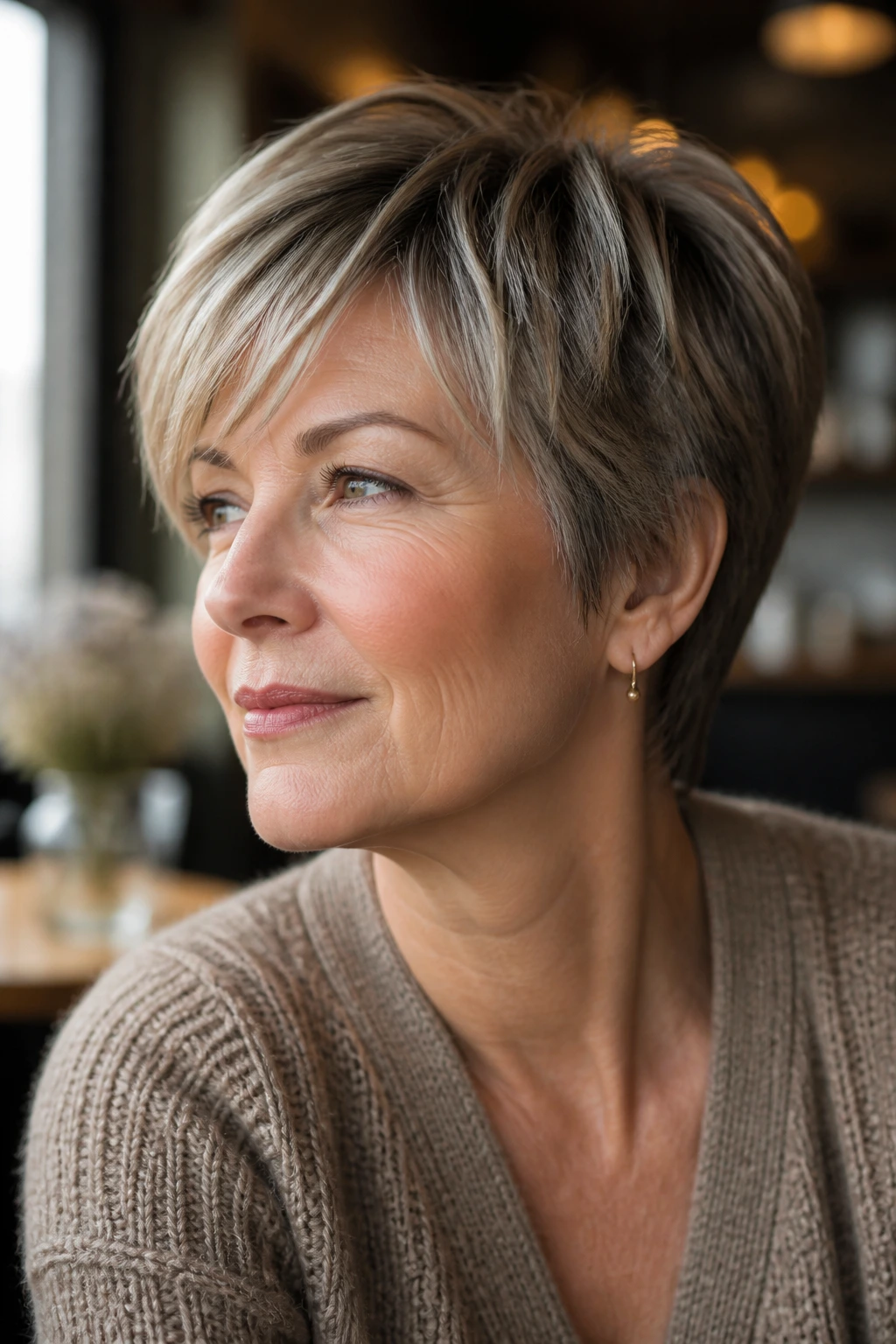
Not every pixie is built for perpetual salon visits. Some are designed to soften as they grow, and that is a fine thing. A grow-out friendly pixie keeps a little more length at the fringe and crown, with a nape that is tapered but not razor tight. It looks intentional for longer, which saves you from that awkward week where you’re debating hats.
This is the cut for someone who wants a short haircut with a calmer maintenance schedule. It still gives shape at the beginning, but the lines don’t collapse the minute the scissors stop touching it. The front can be pushed aside, the back can lie close, and the whole thing transitions into a short crop without much drama.
If you’re testing short hair for the first time, this is one of the safest places to start. Safe is not a dirty word here. Sometimes it just means smart.
Why Pixie Cuts for Women Over 50 Need Shape, Not Just Shortness
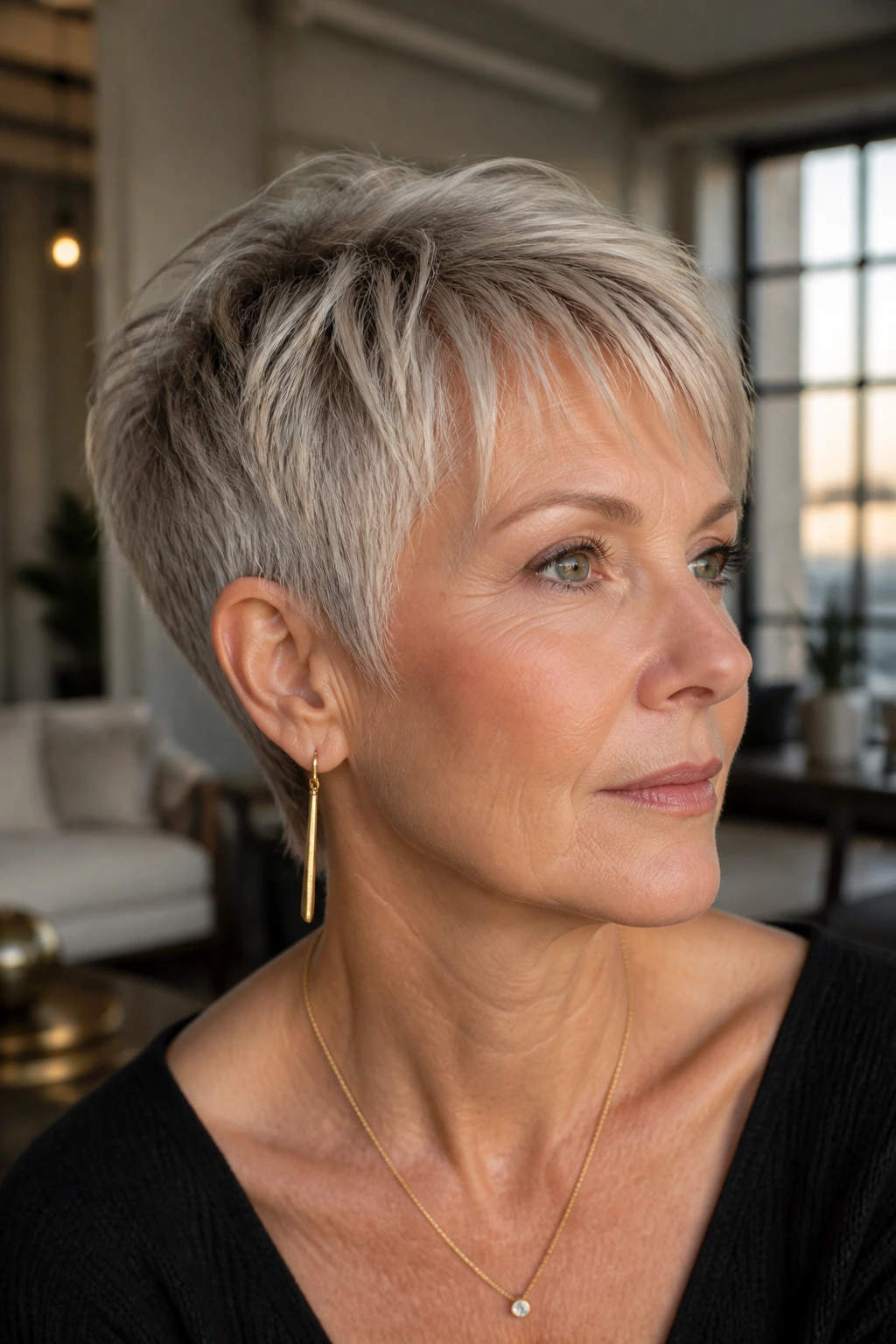
A pixie is only flattering when the shape does a job. Short hair by itself is not enough. The crown needs lift, the sides need to respect the face, and the back needs a clean finish so the neckline does not disappear under uneven bulk. That is especially true when hair gets finer, coarser, or more resistant in different spots than it used to be.
The mistake I see most often is treating every short cut like a one-size-fits-all crop. It isn’t. A good pixie accounts for growth patterns, cowlicks, the way glasses sit on the temples, and where the hair naturally wants to part. If the hair wants to split at the crown, you do not bully it flat with paste and hope for the best. You cut for it.
The Three Spots That Matter Most
- Crown: This is where lift makes the biggest visual difference.
- Fringe: A few extra millimeters can soften the forehead or change how the cut sits with glasses.
- Nape: A clean taper keeps the silhouette from feeling heavy or boxy.
Hair texture matters, too. Fine hair needs structure. Thick hair needs debulking. Curly hair needs shape that respects shrinkage. None of that is complicated, but it does mean the best pixie is usually the one that looks a little more customized than the one in a generic salon photo.
Essential Tools for Styling These Pixies at Home
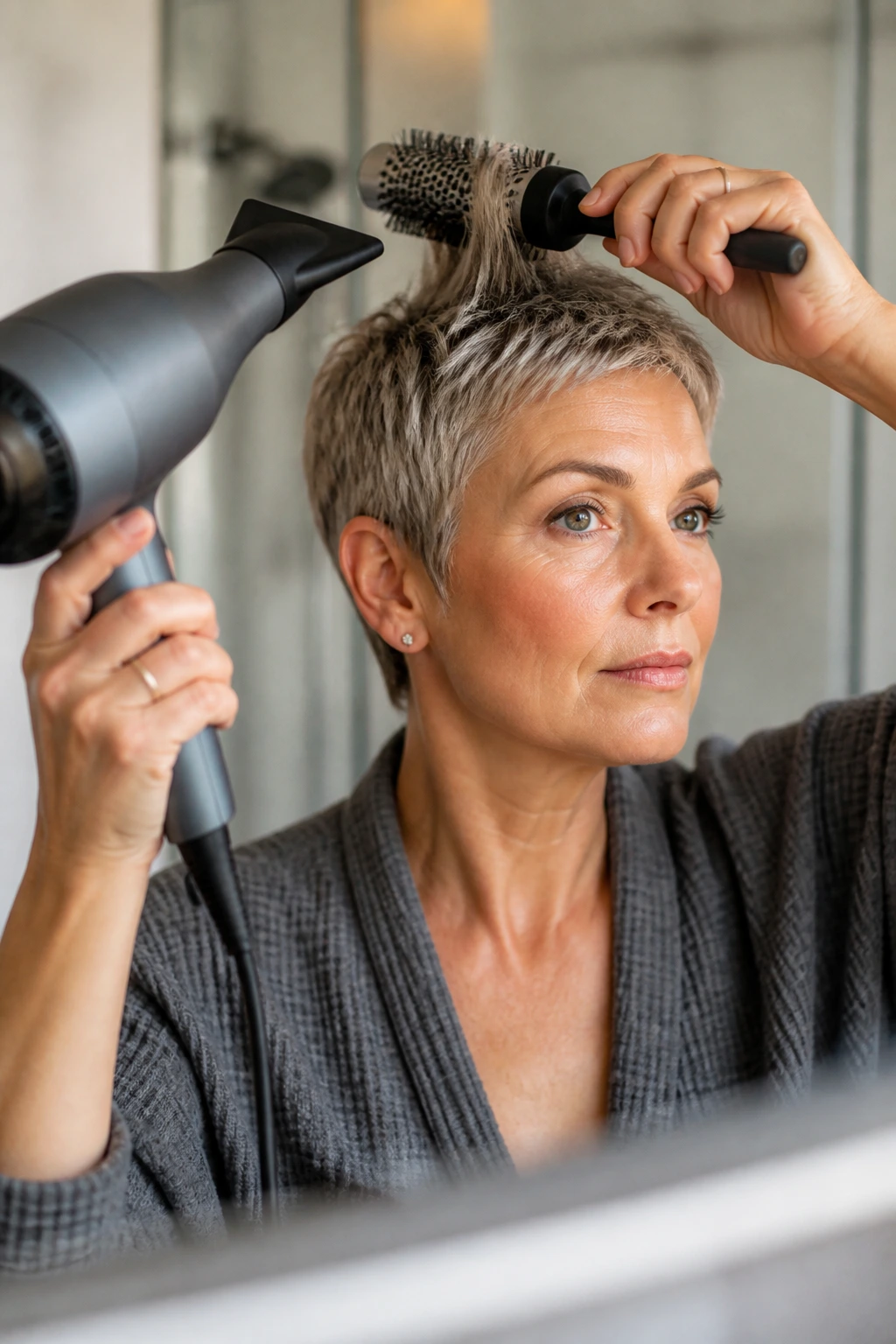
- Blow dryer with a concentrator nozzle: Directs airflow at the roots so you can build lift without blasting the whole cut apart.
- Small round brush, 1 to 1.5 inches: Useful for bending the fringe and lifting the crown without over-smoothing the texture.
- Vent brush: Fast drying and decent root lift on shorter layers.
- Tail comb: Helps with clean parts and lifting sections at the crown.
- Texturizing paste or matte pomade: Good for piecey definition on choppy or spiky pixies; use a pea-sized amount.
- Lightweight mousse: Best for fine hair that needs body without stiffness.
- Root-lift spray: Works at the crown before blow-drying, especially on hair that falls flat fast.
- Smoothing cream: A tiny amount keeps the fringe from fuzzing out on humid days.
- Dry shampoo: Useful on day two and three to give the roots grip, not just oil control.
- Hand mirror: Sounds basic, but the back of a pixie is where bad cuts hide.
- Duckbill clips: Handy for sectioning the crown if you’re blow-drying in pieces.
- Wide-tooth comb: Better than a brush for curls and waves that need to stay intact.
How to Get the Most Out of a Pixie Cut
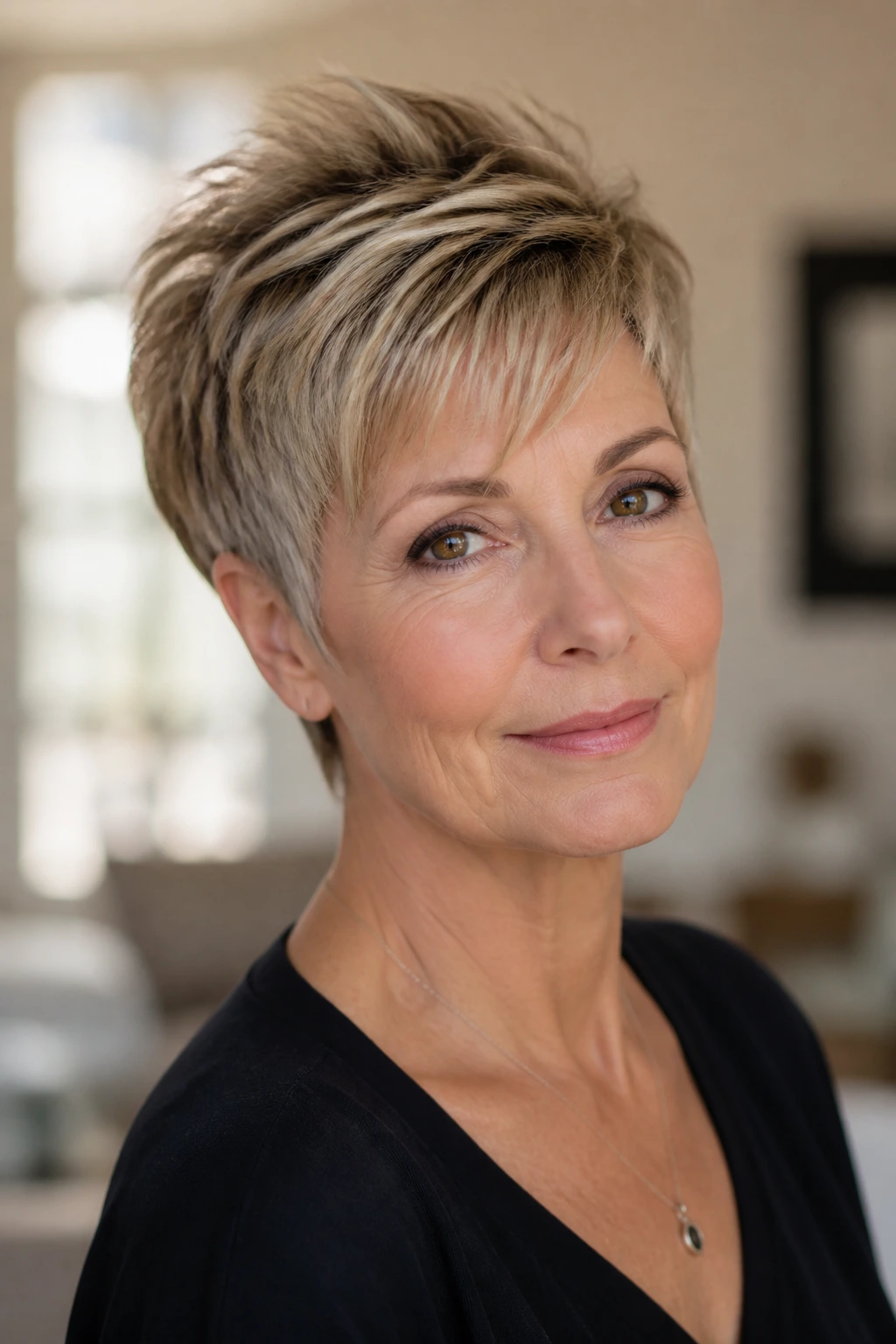
The salon conversation matters more than the styling product. Bring photos, yes, but point to the part you like. Is it the fringe? The nape? The way the crown sits close and still looks soft? That detail is worth more than a vague “I want something like this.”
Face-Framing: If your face is round or square, a longer fringe or side-swept front can pull the eye vertically and soften the width at the cheek. If your face is long, keep some width at the sides so the cut does not over-elongate everything.
Texture Balance: Fine hair usually looks better with less internal thinning and more precise layering. Thick hair often needs weight removed at the crown or nape so the shape doesn’t mushroom out by lunch.
Glasses-Friendly Planning: Leave enough front length to clear the frames, then trim the sides so they don’t kick outward when they meet the temples. That tiny detail keeps the whole haircut from fighting your glasses every morning.
Color Pairing: Silver, highlights, or a soft gloss can sharpen the texture of a pixie because short hair exposes the movement in the strands. On gray hair, a little shine matters a lot. Dull gray can look flat; glossy gray looks intentional.
Common Mistakes That Make a Pixie Harder to Wear
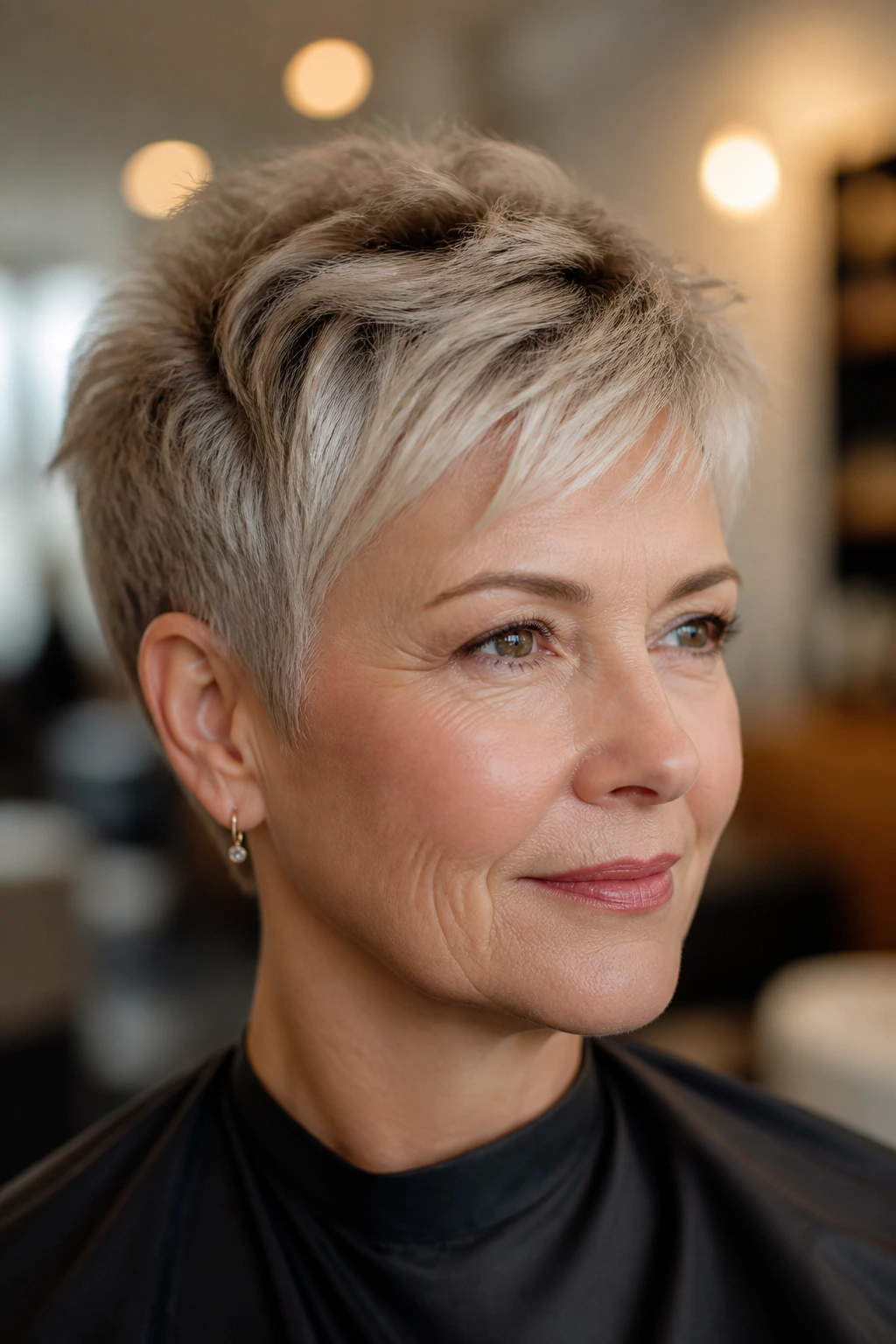
The first mistake is cutting the crown too short. That sounds neat on paper and often looks blunt on the head. The crown needs enough length to lift and bend; otherwise, the haircut sits flat and starts showing the shape of the skull more than the shape of the style.
The second mistake is leaving too much bulk at the sides. That’s the route to the little triangular puff around the ears that makes a pixie feel dated fast. The fix is simple: taper the sides and keep the transition from crown to ear soft enough that the cut doesn’t flare outward.
A third issue is overusing product. Short hair does not need a whole jar of wax. If the hair starts looking greasy, crusty, or stuck in one direction, there’s too much on it. Start with a pea-sized amount. Seriously. You can always add more.
Another common problem is ignoring the way the hair grows. Cowlicks at the fringe, a stubborn crown swirl, and strong growth at the temples all affect the cut. A pixie that fights those patterns every morning will become annoying fast. A better cut works with them, even if that means leaving a touch more length in one spot.
Ways to Change the Mood Without Changing the Cut
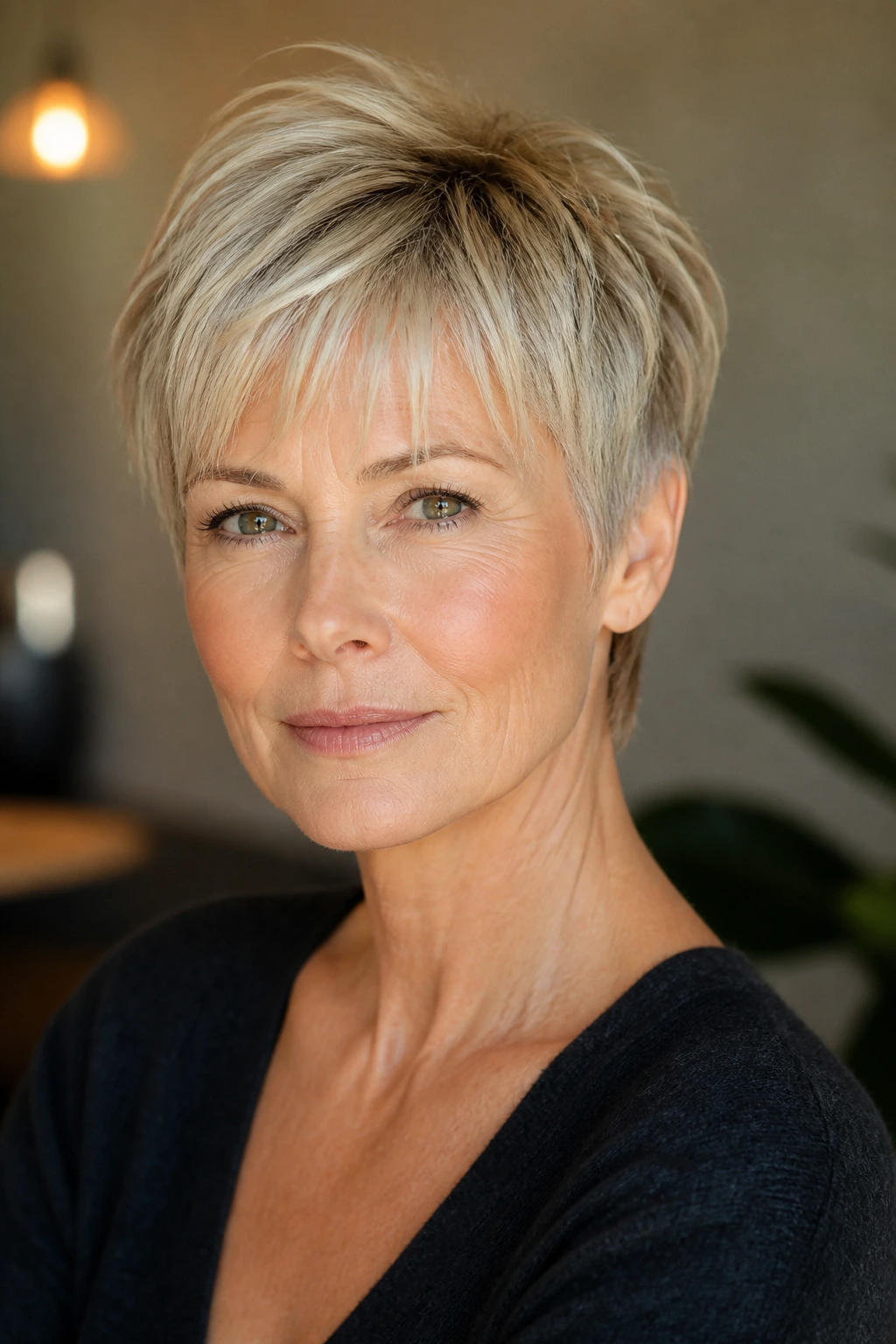
Glasses-Friendly Fringe: Keep the front slightly longer and softer at the edge so it clears frames cleanly. This is a small tweak, but it stops the cut from feeling crowded around the eyes.
Silver-First Blend: Add a soft gloss or lowlight around the crown and temples to make gray strands look dimensional instead of flat. The goal is not to hide silver. It’s to give it shape.
Air-Dry Texture: On wavy hair, a leave-in cream and a little scrunching can give the pixie a relaxed finish that looks less styled. Good when you want movement and not much polish.
Thick-Hair Debulked Version: If your hair is dense, ask for undercutting under the surface layers rather than aggressive thinning on top. The cut stays fuller-looking without expanding at the sides.
Soft Edge Version: Keep the perimeter feathered and the fringe longer for a gentler effect. This is the version I’d steer toward if you like a pixie but hate anything that feels severe.
Sharper Evening Version: Use a matte pomade and push the top slightly back or to the side for more contrast. Same haircut, different attitude.
Keeping a Pixie Sharp Between Trims
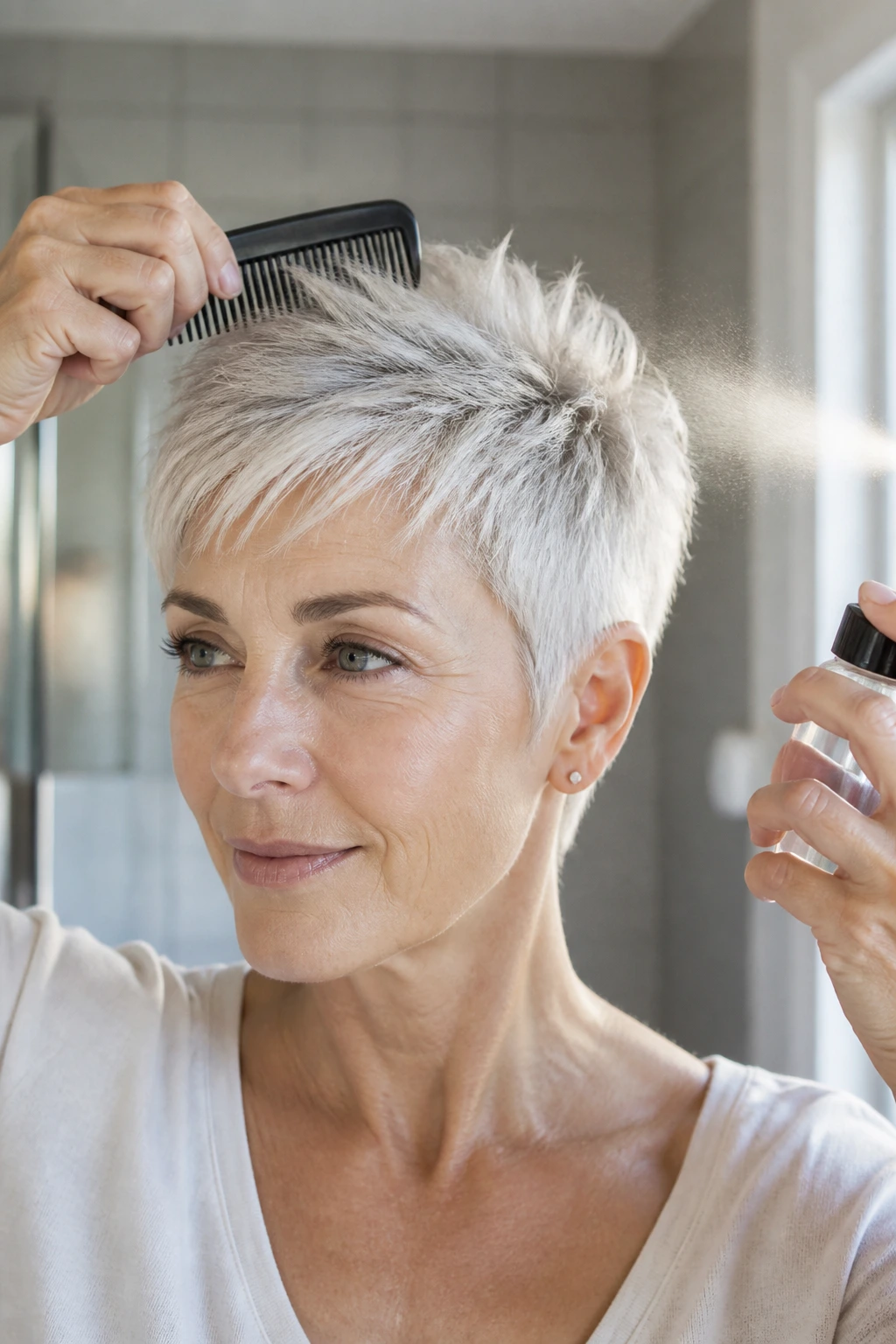
Pixies do not hide grow-out as well as long cuts, so maintenance matters. Most need a trim every 4 to 6 weeks if you want the outline to stay clean. If your hair grows fast through the nape or around the ears, book on the earlier side. Once the sides start touching the collar or the crown loses its lift, the whole shape changes.
At home, the best refresh is usually small and boring. Mist the hair lightly with water, add a pea-sized amount of cream or mousse, and blow-dry the roots in sections. If the top is flat, lift it with your fingers and direct the airflow under the strand, not over it. That gives the hair some memory without making it stiff.
For sleeping, a satin or silk pillowcase can cut down on friction at the crown and fringe. It won’t save a bad cut, but it can keep the shape from getting smashed into a weird bend. If the fringe bends in the morning, a quick pass with a damp comb and five minutes of drying usually fixes it.
Frequently Asked Questions About Pixie Cuts for Women Over 50
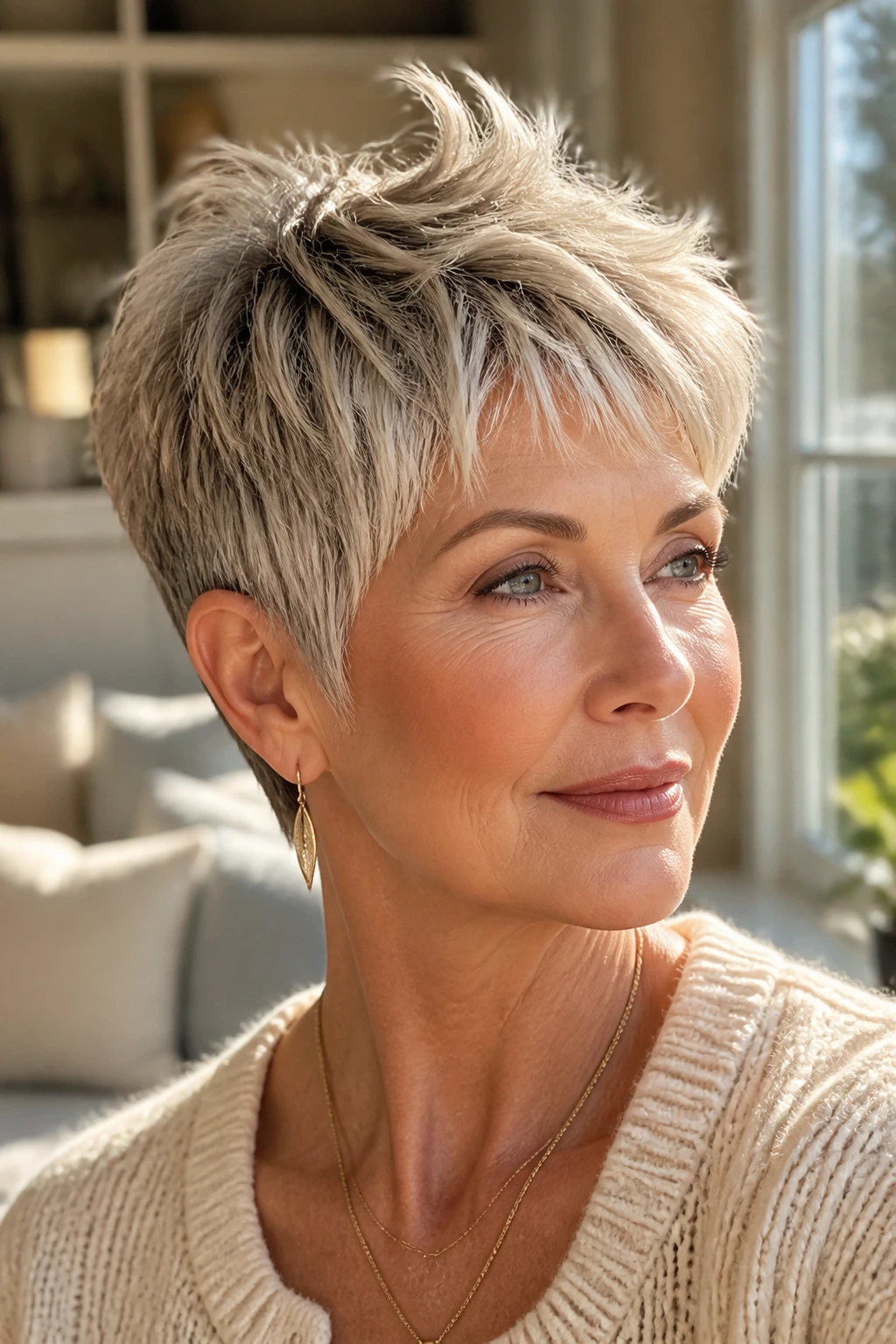
Will a pixie cut make my face look harsher?
Not if the cut is shaped correctly. A side-swept fringe, soft taper at the sides, and a little crown lift usually soften the face instead of hardening it. The severe look comes from blunt edges and too much tightness around the temples.
Is a pixie good for fine hair?
Yes, often better than longer cuts. Fine hair loses volume under its own weight, and a pixie removes that drag. The main rule is to keep some structure at the crown and avoid over-thinning the ends.
Can I wear a pixie if my hair is curly?
Absolutely, but the cut has to respect shrinkage. Curly pixies work best when they’re shaped while dry or partially dry, with enough room at the top so the curls can spring instead of swelling outward.
How often do I need a trim?
Most pixies need attention every 4 to 6 weeks. If you like a very crisp nape or short sides, stay closer to 4 weeks. If the cut has more length on top and a softer outline, 6 weeks can be fine.
What if I wear glasses every day?
Ask for the fringe and side lengths to clear the frames. The wrong length can bunch at the temples and make the haircut look crowded. A good pixie with glasses should frame them, not compete with them.
Can a pixie still look feminine and soft?
Yes, and this is where the details matter. Soft edges, a little fringe movement, and a rounded crown can make a pixie look gentle rather than sharp. The style is not the issue. The shape is.
What if I’m growing out a short cut and want something less awkward?
Choose a grow-out friendly pixie with some length at the front and crown. That gives you room to tuck, sweep, or part the hair while the back catches up. It is much easier to live with than a crop that was cut too tight everywhere.
Do silver and gray strands work better in short hair?
They often do. Short hair shows the tonal shifts in gray and silver strands more clearly, which can make the color look deliberate instead of patchy. A little gloss can help the shine, but the shape does most of the work.
The Short Cut That Keeps Its Shape
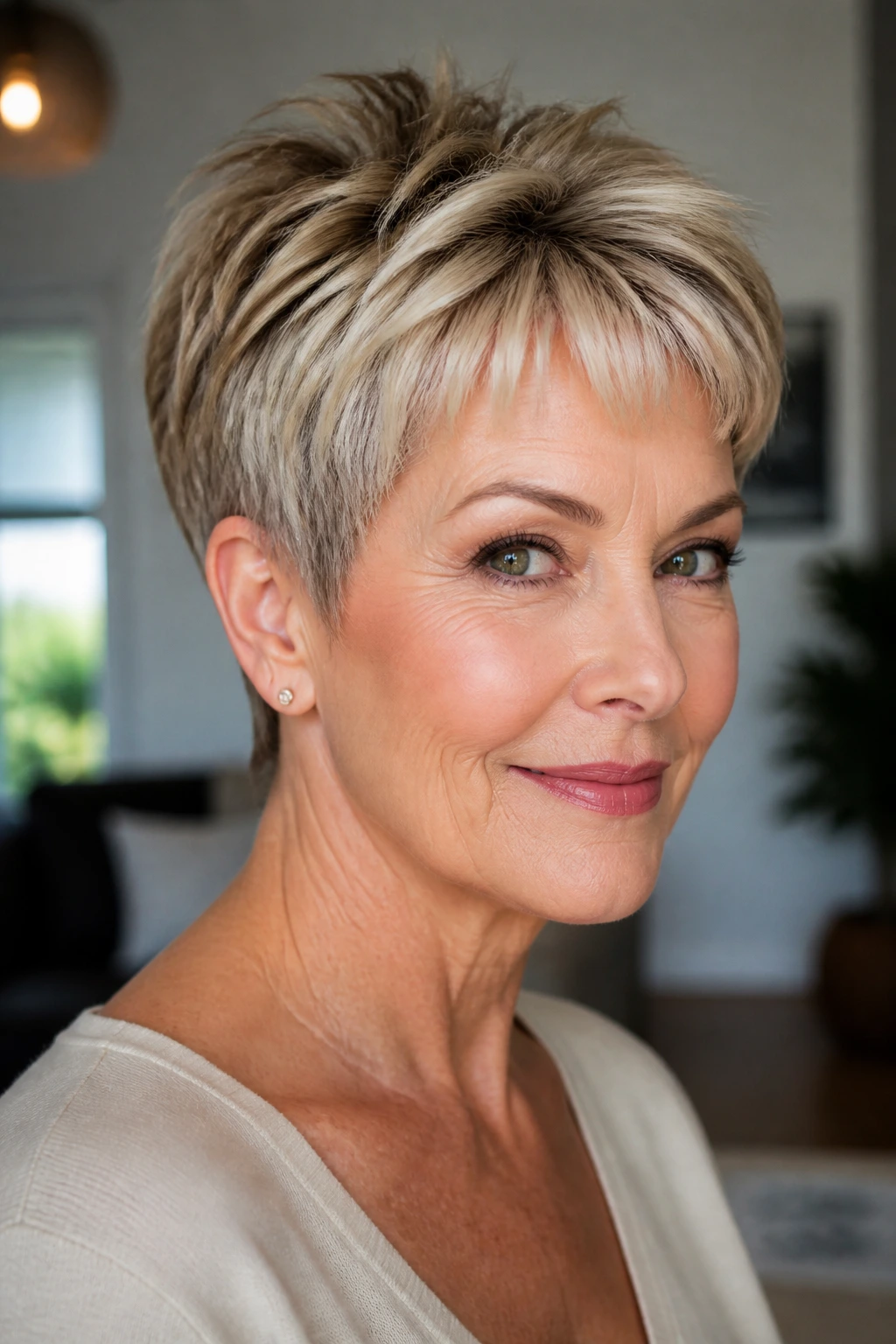
A good pixie is never only about going short. It’s about getting the right balance of crown, fringe, and nape so the haircut works with the hair you actually have. That is why the best versions on this list feel different from one another. They solve different problems.
If your hair is fine, choose the cuts that build lift without stripping out too much weight. If it’s thick, look for debulking and clean tapering. If it’s curly, find a shape that understands shrinkage. The right pixie does not erase your hair’s personality. It gives it a cleaner outline.
Bring a photo, yes, but bring a point of view too. The best short cuts are tailored, not guessed at. And when the shape is right, a pixie can do something very few haircuts manage: it looks crisp on day one, manageable on day six, and still like you meant it on day twelve.
