



A good pixie cut can feel almost too bare until one small vintage detail lands in the right place. A deep side part. A soft finger wave. A curved fringe that sits a half-inch longer than you expected. Suddenly the whole haircut has a backbone, and it stops reading as “short hair” and starts reading as style.
That’s the reason pixie cuts with a vintage vibe keep hanging around. They’re not trying to be loud. They lean on shape, polish, and one or two old-school cues that do the heavy lifting: a clean nape, a molded crown, a tuck behind the ear, a wave that bends instead of spikes. I’ve always liked that kind of restraint. It gives short hair room to breathe, which is a lot more flattering than a haircut that fights your face every morning.
The best part is how many directions this idea can go. A vintage pixie can look glossy and formal, soft and romantic, sharp and mod, or a little boyish in that perfectly deliberate way old photographs always capture. The 33 cuts below range from screen-siren smooth to flapper-short to feathered and free, so you can find the version that fits your texture, your styling patience, and the clothes you actually wear.
Why These Pixies Carry a Vintage Note
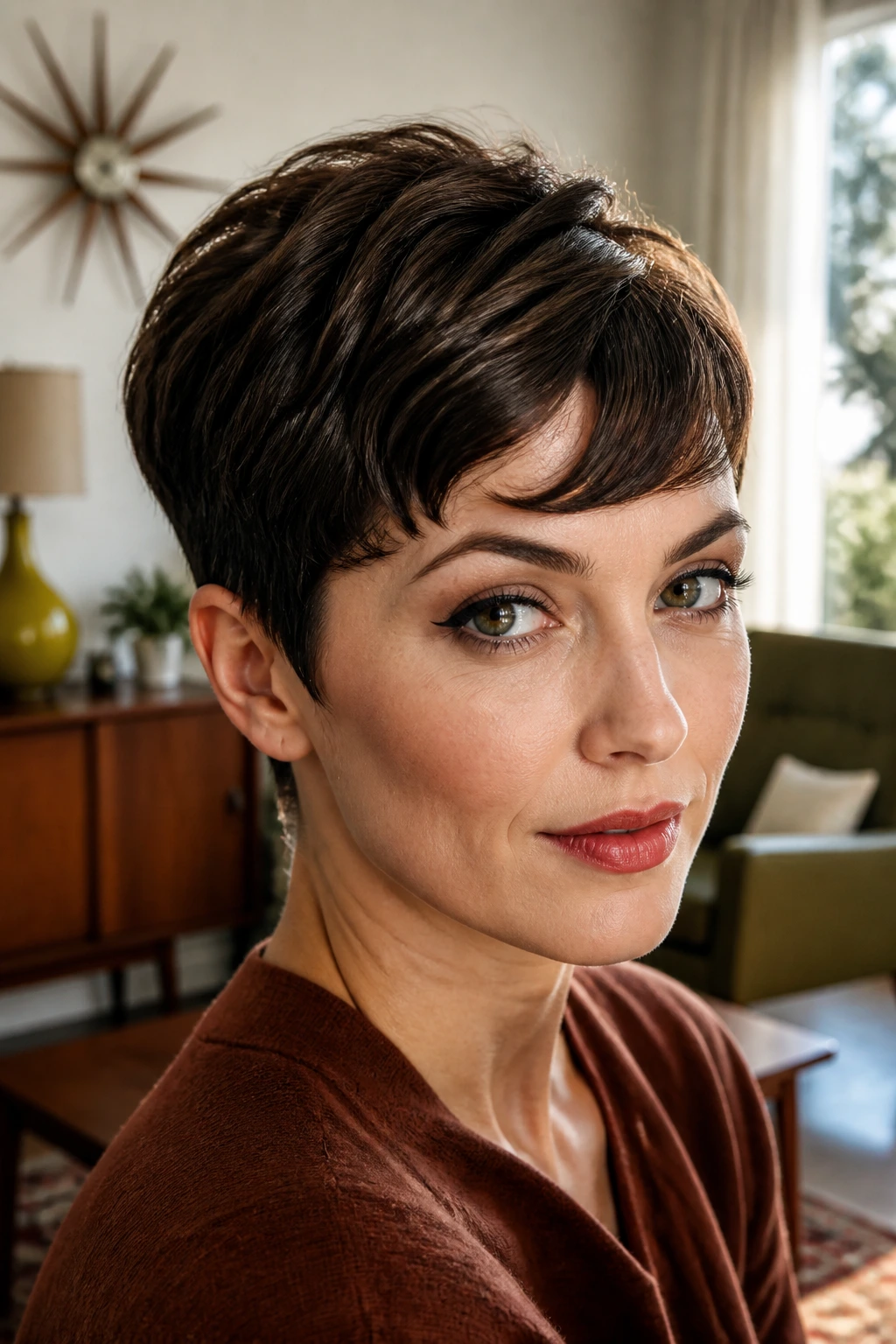
-
Era Range: These cuts pull from the 1920s through the 1970s, so you can pick a reference point that matches your taste instead of settling for one generic short crop.
-
Shape First: The best vintage pixies rely on a clear outline — curved fringe, tapered nape, or lifted crown — because that silhouette does more for the look than product ever will.
-
Styling Flexibility: Some of these need a round brush and five minutes; others come alive with pin curls, a flat iron, or a dab of pomade the size of a pea.
-
Face-Framing Control: A side sweep can soften a strong jaw, a blunt micro fringe can sharpen the eyes, and a longer temple area can keep the cut from feeling severe.
-
Accessory Ready: Small barrettes, pearl pins, satin ribbons, and slim headbands fit this family of cuts naturally. The haircut doesn’t have to do everything alone.
-
Grow-Out Friendly Options: A few of these shapes keep their line as they grow, which matters if you don’t want a trim appointment hanging over your head every four weeks.
1. Audrey Side-Sweep Pixie
A deep side part and a smooth sweep across the forehead do most of the work here. This is the pixie that looks neat without looking stiff, and that balance is what keeps it from feeling dated in the wrong way.
The crown stays softly lifted, the sides stay close, and the front has enough length to bend over one eye. I like this shape on straight or slightly wavy hair because the movement reads cleanly. A round brush at the root and a light mist of flexible hairspray are usually enough.
Why It Has That Old-Film Feel
The line is gentle, not boxy. That matters. It gives you the calm, tailored look of a black-and-white close-up without making the haircut feel ceremonial.
2. Finger-Wave Pixie
This one leans all the way into gloss. The front section is shaped into small, sculpted S-waves, while the rest of the crop stays tidy and close, so the waves become the whole point of the cut.
It works best when the hair has enough length at the front to hold the wave pattern — usually about 2 to 3 inches. Set it with mousse, finger-clamp the waves into place, and let them dry before you touch them. If you rake through too early, the whole thing collapses into frizz. That’s the tradeoff, and it’s worth it.
How It Reads on the Face
Finger waves pull attention to the eyes and brow line. They also look especially good with a strong lip or a simple neckline, because the haircut already gives you enough detail.
3. Flapper Fringe Pixie
Short, airy, and a little cheeky. This cut borrows the spirit of a 1920s crop but keeps the front soft enough that it doesn’t look like a costume piece.
The fringe sits in a light fringe line across the forehead, not heavy or blunt. The sides are close, and the nape is neat, which makes the face look more open than a fuller bob would. If your hair is fine, this shape can be a gift because it doesn’t need much bulk to make sense.
A tiny bit of matte paste at the ends keeps the fringe from separating in odd clumps. Too much, though, and you lose the floaty feel. Tiny amount. Seriously.
4. Curved Pageboy Pixie
This is the pixie for anyone who likes a rounded edge. The hair curves under around the ears and jaw, borrowing that pageboy softness while staying short enough to feel cropped.
The magic is in the contour. Instead of spiking out or sitting flat, the perimeter bends in a clean, deliberate arc. It’s a beautiful choice for thick hair because the shape gives the cut a neat frame, and it’s also kind to long faces since the curved line adds width right where you want it.
Best Way to Style It
Blow-dry with a small round brush, turning the ends under just a touch. If you skip that step, the cut can look unfinished, which is exactly the wrong word for this style.
5. Victory-Roll Crown Pixie
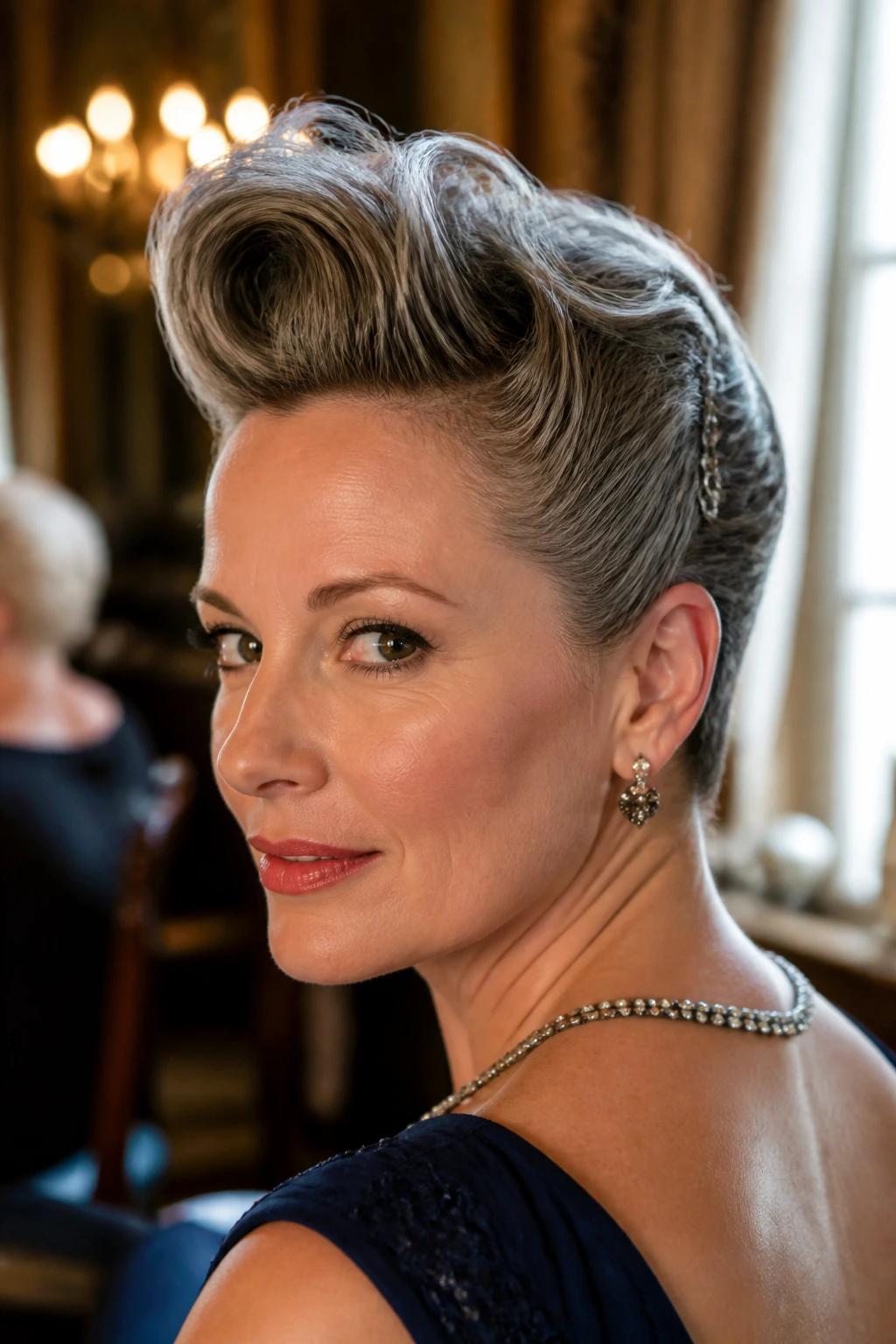
This is the drama cut in the group. The front is rolled or puffed at the crown, then pinned so it sits high and proud, with the sides kept smooth to let the top do the talking.
It’s a strong look for evening, weddings, or any outfit that needs a little theater. The crown volume gives you that 1940s victory-roll reference without turning the whole head into a historical reenactment. Keep the roll soft and secure it with hidden pins, not a mountain of hairspray. You want structure, not helmet.
Who It Flatters
This shape loves medium-density hair with some natural bend. Fine hair can do it too, but you may need a little backcombing at the roots and a setting spray that actually holds.
6. Mia Farrow Feather Pixie
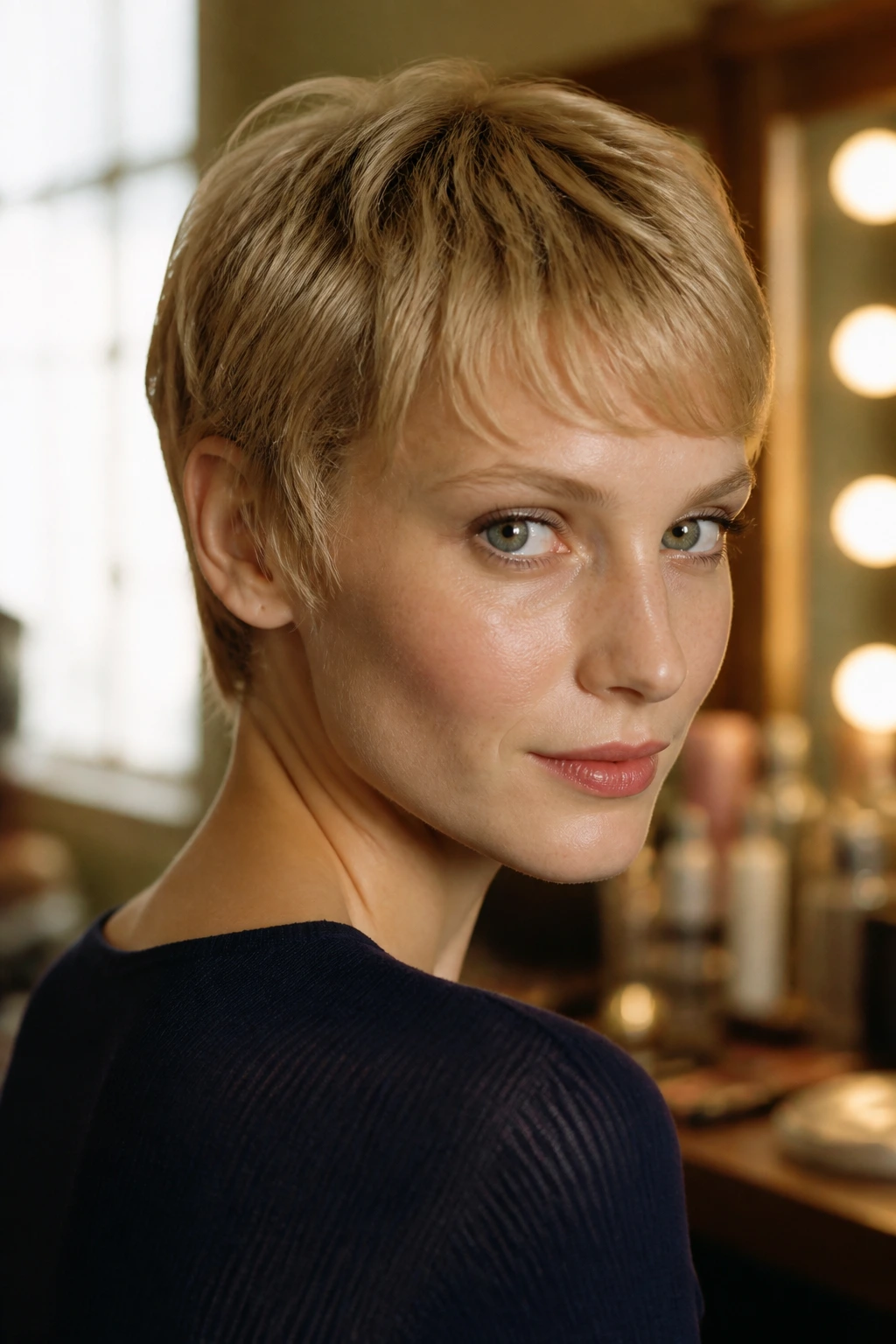
If you want a pixie that feels light around the edges, this is the one. The layers are fine and feathery, the fringe is wispy, and the whole cut sits close to the head without losing movement.
It has that late-1960s softness people keep coming back to because it doesn’t try to overpower the face. The texture is the point. I’d use this on fine to medium hair, especially if you like an air-dried finish. A pea-size of lightweight cream is enough; anything heavier turns the feathering into a paste-like blur.
7. Pompadour Pixie
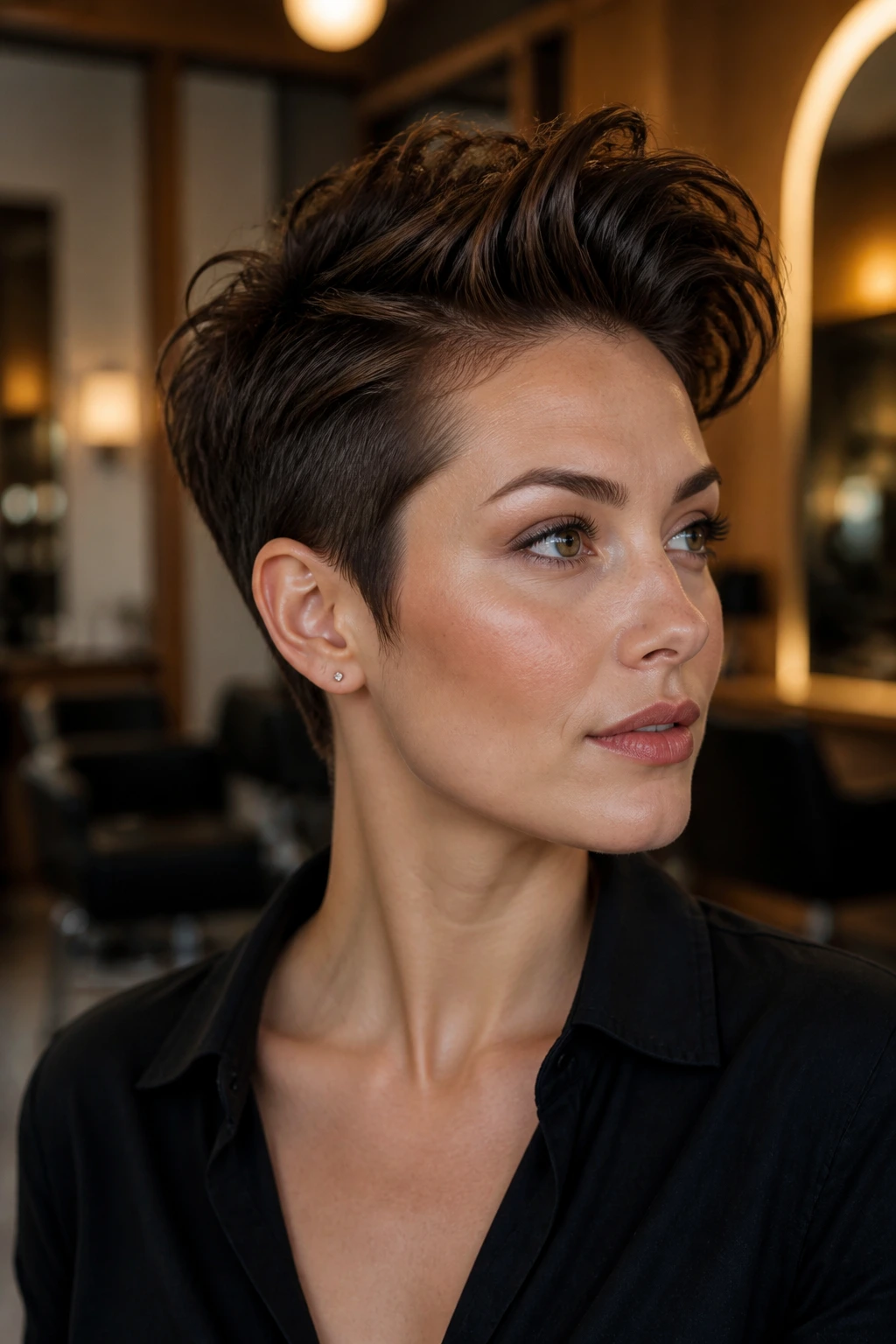
A little height at the front changes the whole personality of a short cut. The pompadour pixie lifts the forelock up and back, then keeps the rest trimmed close so the volume lands where it counts.
This one has a retro edge, but it can still look clean and elegant if you keep the sides tight and the front smooth. Matte styling clay gives it more grip, while a gloss cream makes it feel dressier. If your hair tends to lie flat at the crown, a quick blast of heat at the roots before shaping helps more than people expect.
The look works especially well if you like strong brows, hoop earrings, or a crisp collar. It wants a bit of attitude.
8. Pin-Curl Pixie
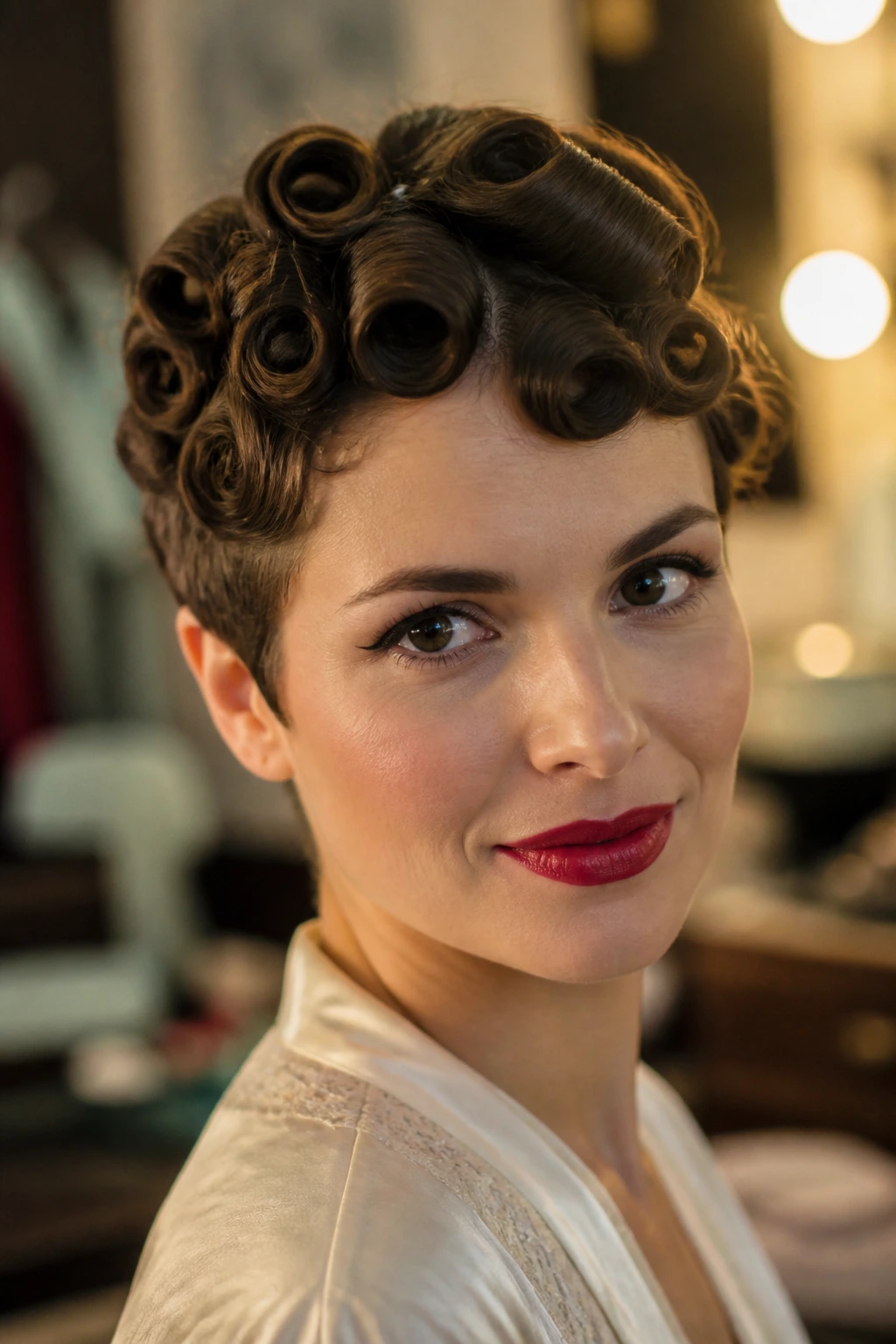
This cut is all about setting the hair in small loops or curls and letting them dry into a soft, molded pattern. Think vintage dressing room, but shorter and easier to live with.
Use clips or pin curl clips on damp hair, wrap small sections no wider than your finger, and let them dry fully before removing anything. That last part matters. Half-dry curls droop, and then the whole style loses the sculpted feel that gives it charm.
Set It the Night Before
If you’re patient enough to let the curls set overnight, the finish gets cleaner and more polished. In the morning, finger-separate just a little and leave the ends alone unless they look wildly uneven.
9. Ear-Tucked Sculpted Pixie
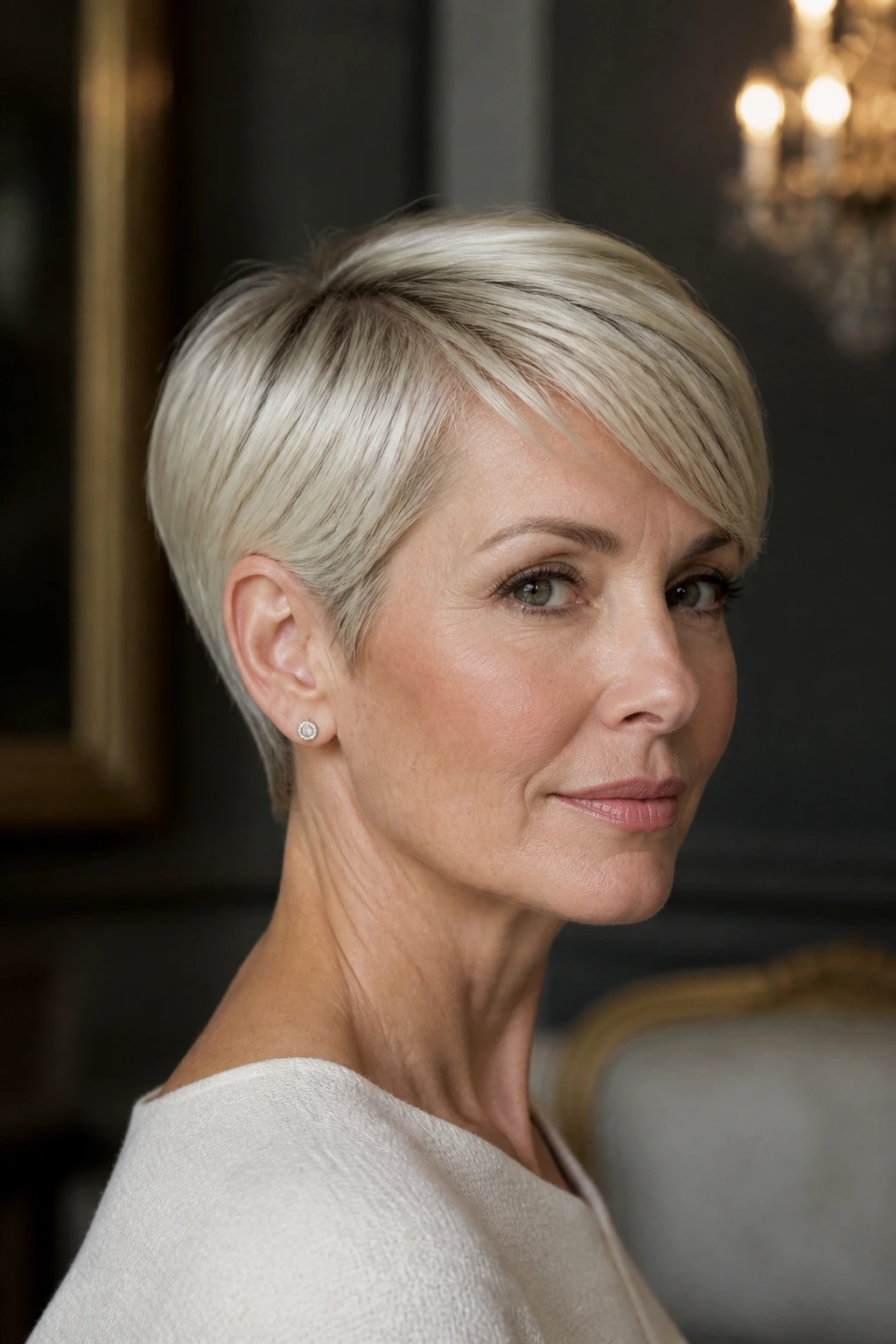
There’s something very deliberate about a pixie that hugs the ear. It looks tidy, a little tailored, and a touch formal without being fussy.
The front and crown stay smooth, while the side section is long enough to tuck behind the ear and stay there. A small barrette can help, but the real trick is cutting the side with enough precision that it naturally sits flat. I like this shape for strong jawlines because the exposed ear and clean cheek line keep the face from feeling crowded.
A satin-finish cream works better than a shiny gel here. You want a neat shell, not a slick helmet.
10. Marilyn Soft Wave Pixie
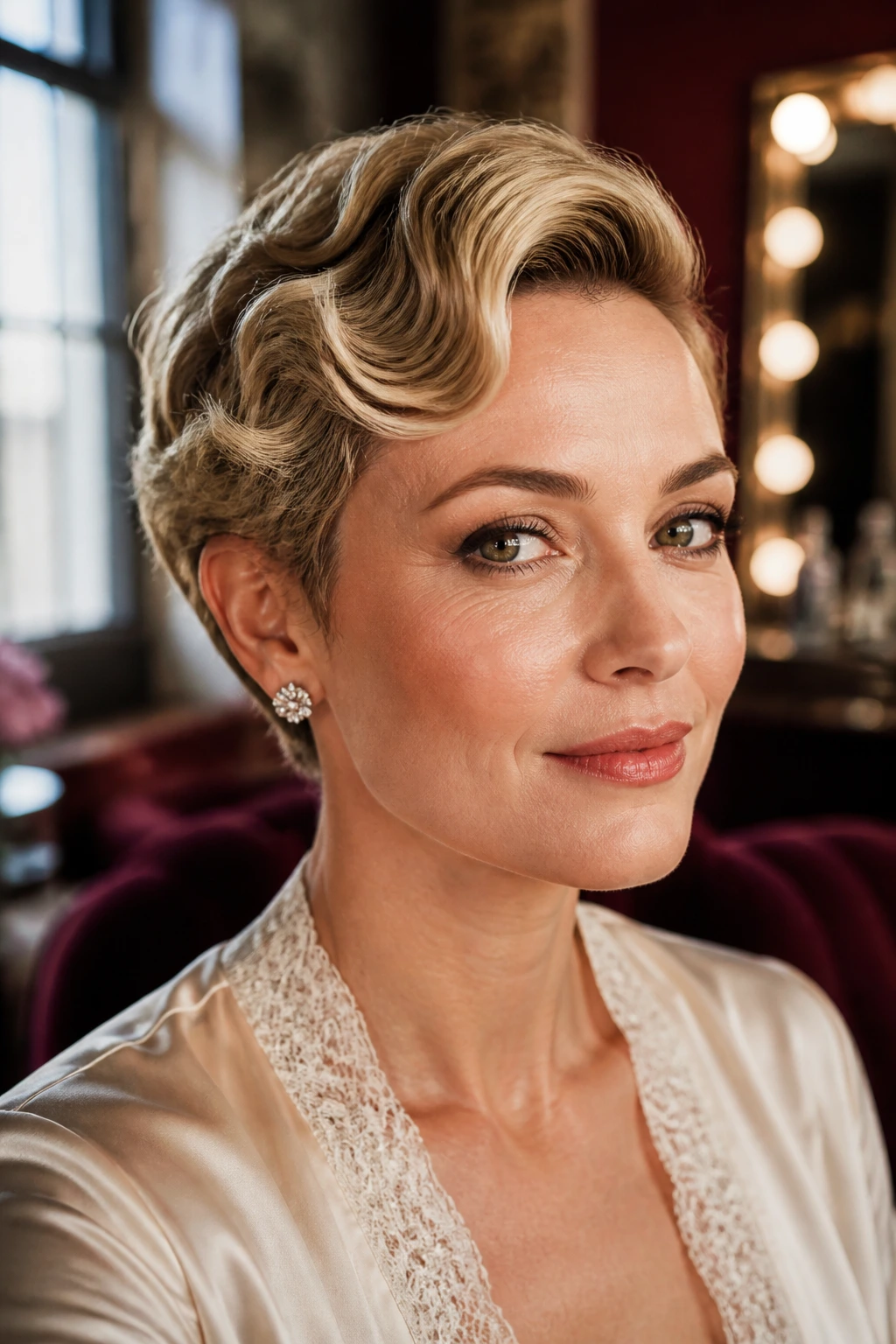
Soft wave, side part, a touch of lift at the front. That’s the whole recipe, and it works because the shape stays feminine without falling into overdone territory.
The wave should bend, not curl into a tight ring. If the hair is too straight to hold the motion, use a medium barrel iron and brush the wave out once it cools. That little brushing step is what gives the finish that old-Hollywood blur instead of a modern curl pattern.
What to Watch For
Too much volume at the crown can make the cut look closer to a short bob than a pixie. Keep the sides neat so the shape stays crisp.
11. Brushed-Forward Boy Crop
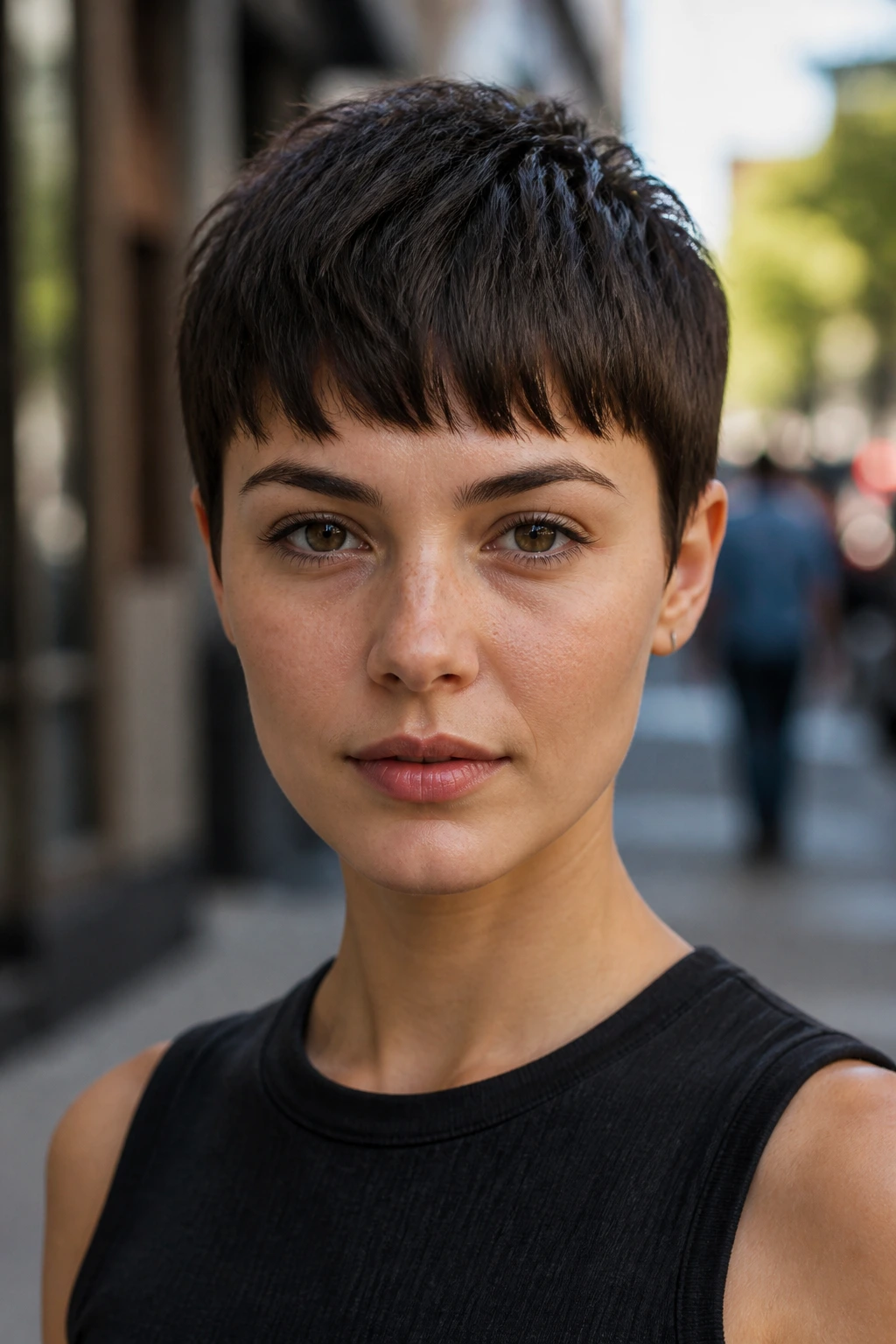
This one has a slightly androgynous feel, and I mean that as praise. The top is brushed forward, the fringe skims the forehead, and the back stays short enough to keep the silhouette compact.
It nods to school-photo portraits and old menswear cuts from decades ago, but it still feels current because the line is so spare. It suits straight hair especially well, though a light cream can help tame waves if you want the front to sit closer to the brow.
No volume contest here. The charm is in the bluntness.
12. Tapered Nape, Long-Crown Pixie
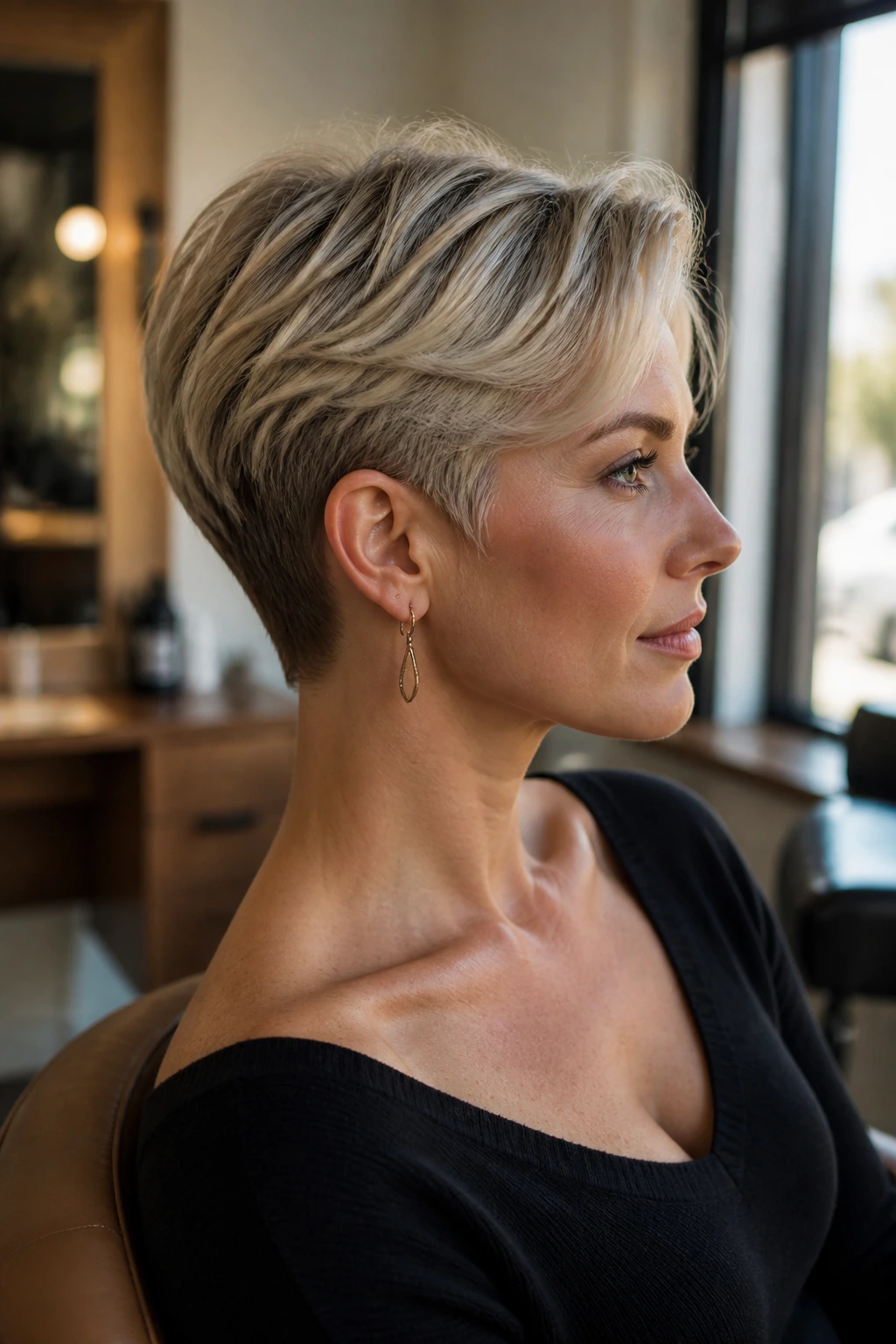
This is the practical one that still looks styled. The nape is clipped tight and clean, while the crown and front are left longer so you get lift, sweep, and a little room to move.
That contrast is what makes it interesting. A lot of short cuts lose their shape as they grow; this one can actually become more interesting for a few weeks before it needs a trim. If you want a vintage note without committing to rollers or pins, this is a smart place to start.
- Best for: people who want shape with low daily effort
- Ask for: a snug nape, soft graduation, and length left at the crown
- Style with: mousse at the roots and a small round brush
- Avoid: over-thinning the top, which can make the crown look stringy
13. Retro Quiff Pixie
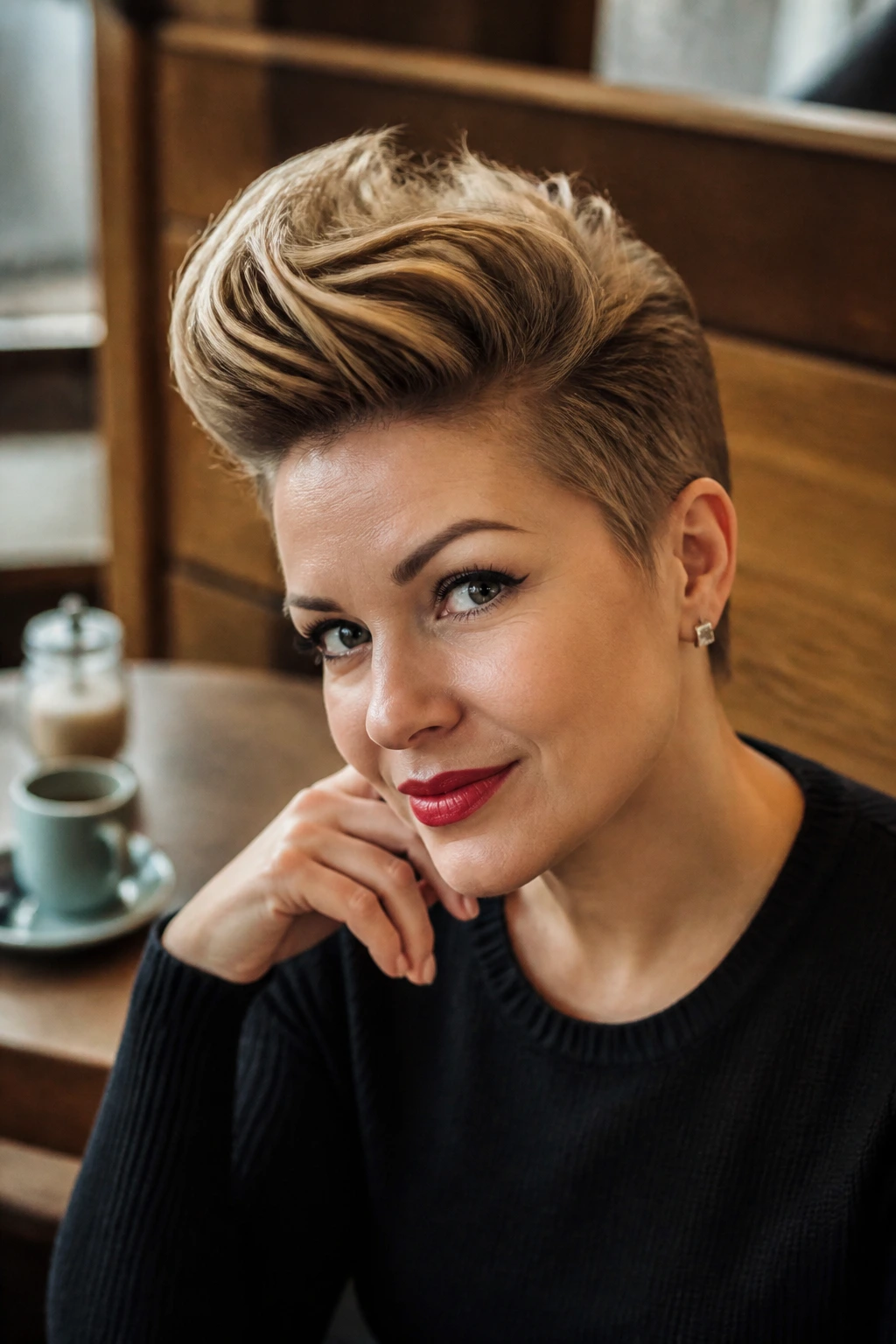
The quiff gives the pixie a little swagger. Lift the front, sweep it back or slightly to one side, and keep the rest of the head tighter so the height feels intentional.
This is the cut that can go playful or polished depending on product. A soft matte paste makes it look casual; a shine cream makes it feel more dressed up. I prefer the version that doesn’t get too stiff — the charm is in the bend, not the structure for its own sake.
A small round brush or even your fingers can push the front up while it’s still warm from the dryer. That’s often enough.
14. Mod Graphic-Bang Pixie
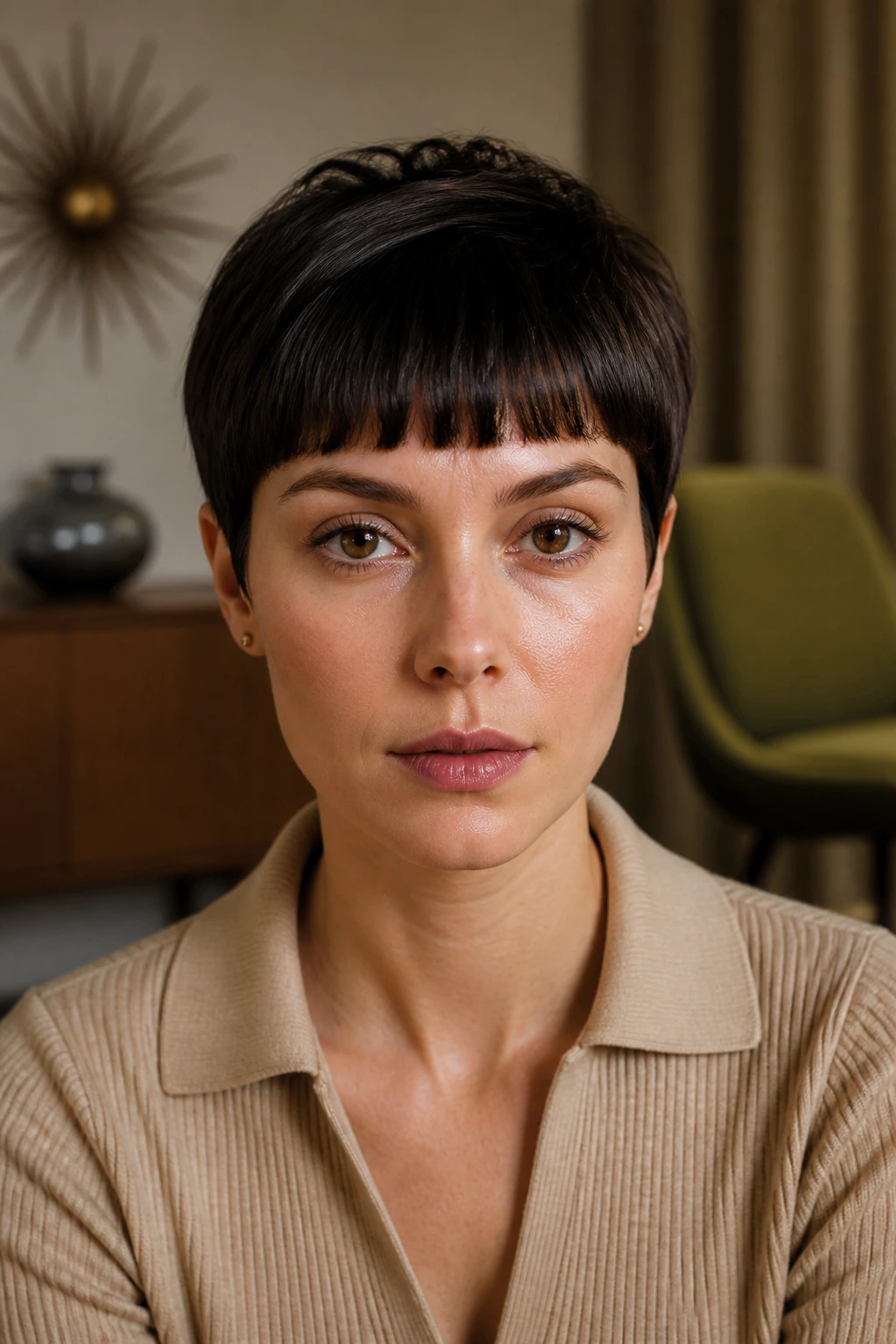
Sharp, clean, and a little geometric. The fringe sits straighter across the forehead, while the rest of the crop stays close and tidy so the bangs remain the focal point.
This one has strong 1960s energy, especially if you keep the ends neat and the crown smooth. It works best when the fringe is cut with precision — not thick enough to create a heavy block, but not wispy enough to disappear. The shape is simple, which means any unevenness shows fast. That’s the price of a clean line.
Wear it with a graphic liner or a plain turtleneck and the whole thing snaps into place.
15. Sideburn Statement Pixie
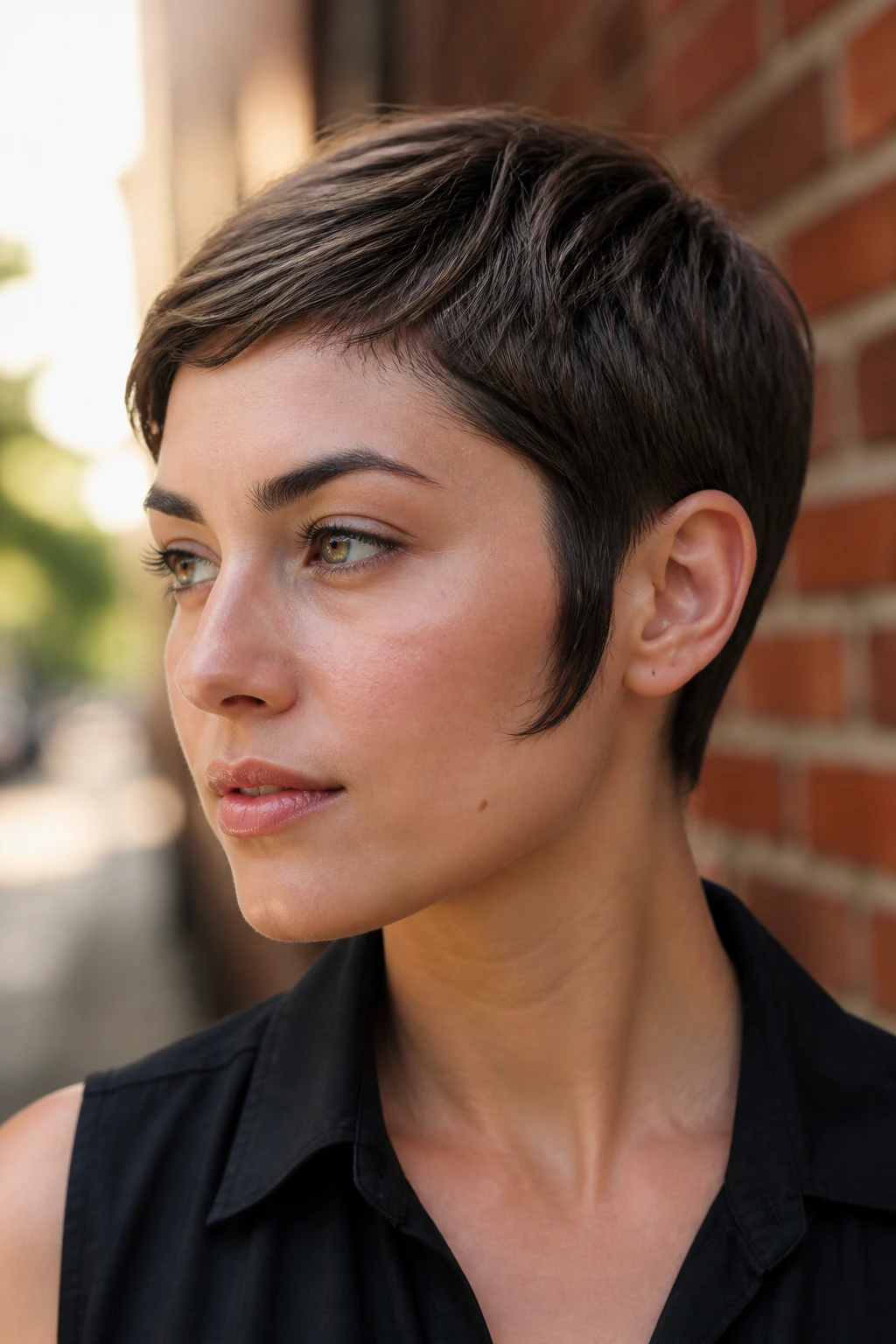
Most short cuts ignore the sideburn area. This one doesn’t. It leaves a deliberate little strip of length at the temples, which gives the haircut a softer, more deliberate frame.
The sideburns can taper into the cheek or stay slightly fuller depending on how dramatic you want it. I like this on oval and heart-shaped faces because it creates a nice visual line down the side of the head. It also helps if you want a vintage reference that feels less polished and a bit more androgynous.
A dab of paste on the sideburns keeps them from fraying out by the end of the day. That tiny detail matters more than most people think.
16. Hollywood Wave Pixie
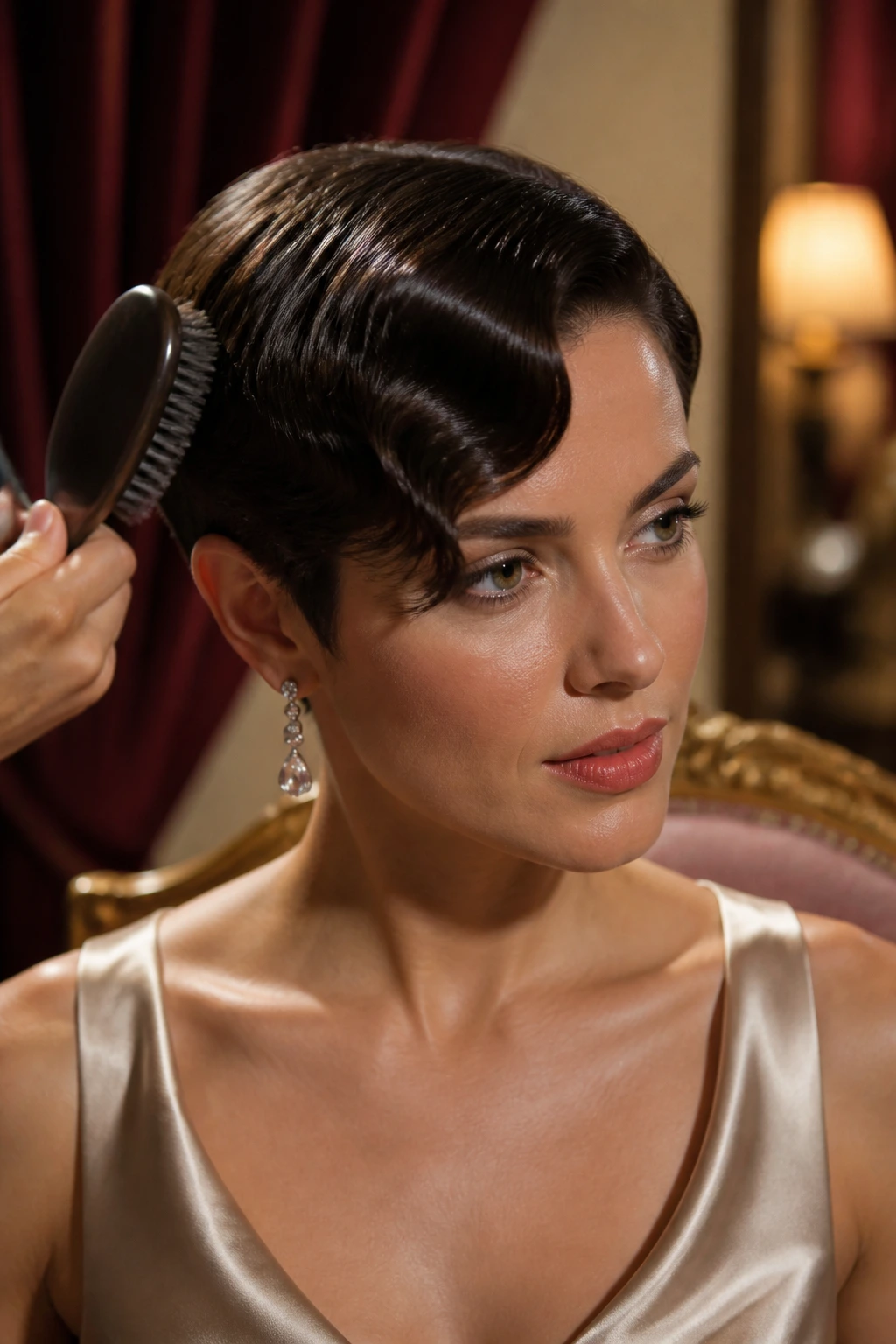
This version has one large, glossy wave sweeping across the front, with the rest of the cut tucked and controlled. It’s the kind of pixie that looks like it was meant for a satin dress and a clean side part.
The wave should feel smooth from root to tip, not stiff or ridged. Use a flat iron or a barrel iron, then brush the wave into shape while it cools. If the front is too short, the effect gets lost, so this is better when you have at least a few inches to play with.
A shine spray at the end helps, but don’t drown it. You want polished hair, not wet hair pretending to be polished.
17. Bettie Micro-Bang Pixie
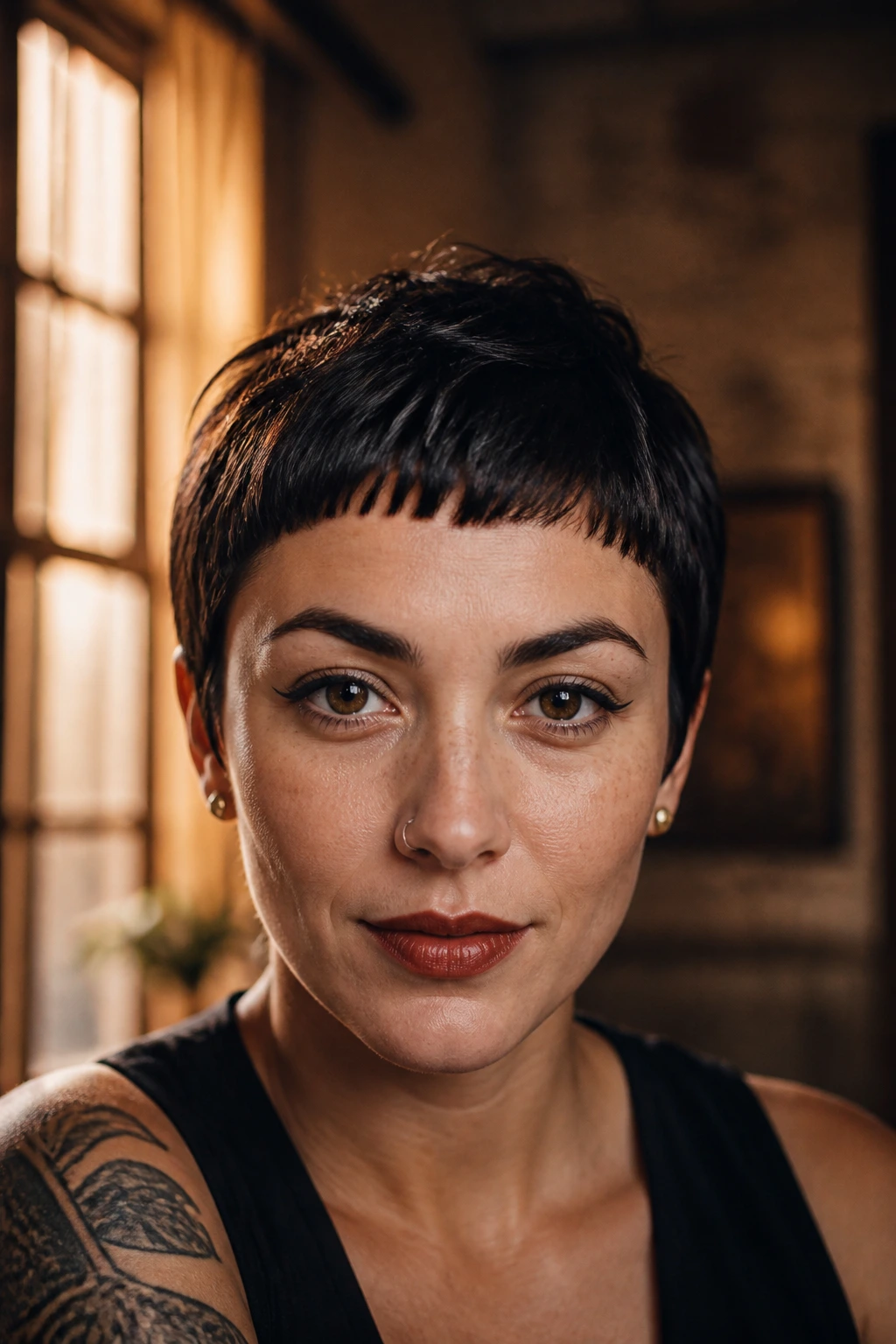
Tiny bangs change everything. They create a blunt, graphic line just above the brows and leave the rest of the cut short, neat, and a little subversive.
This is a sharp look. It pulls attention straight to the eyes and the shape of the forehead, so it’s not shy about being the center of the frame. I’d keep the sides close and the nape clean so the fringe stays the star. If your hair grows fast, this is the cut that will remind you of it in a hurry.
A tiny bit of wax on the tips can help the fringe sit evenly. Too much and the bangs separate into little spikes, which is not the same mood at all.
18. Rolled-Crown Pixie
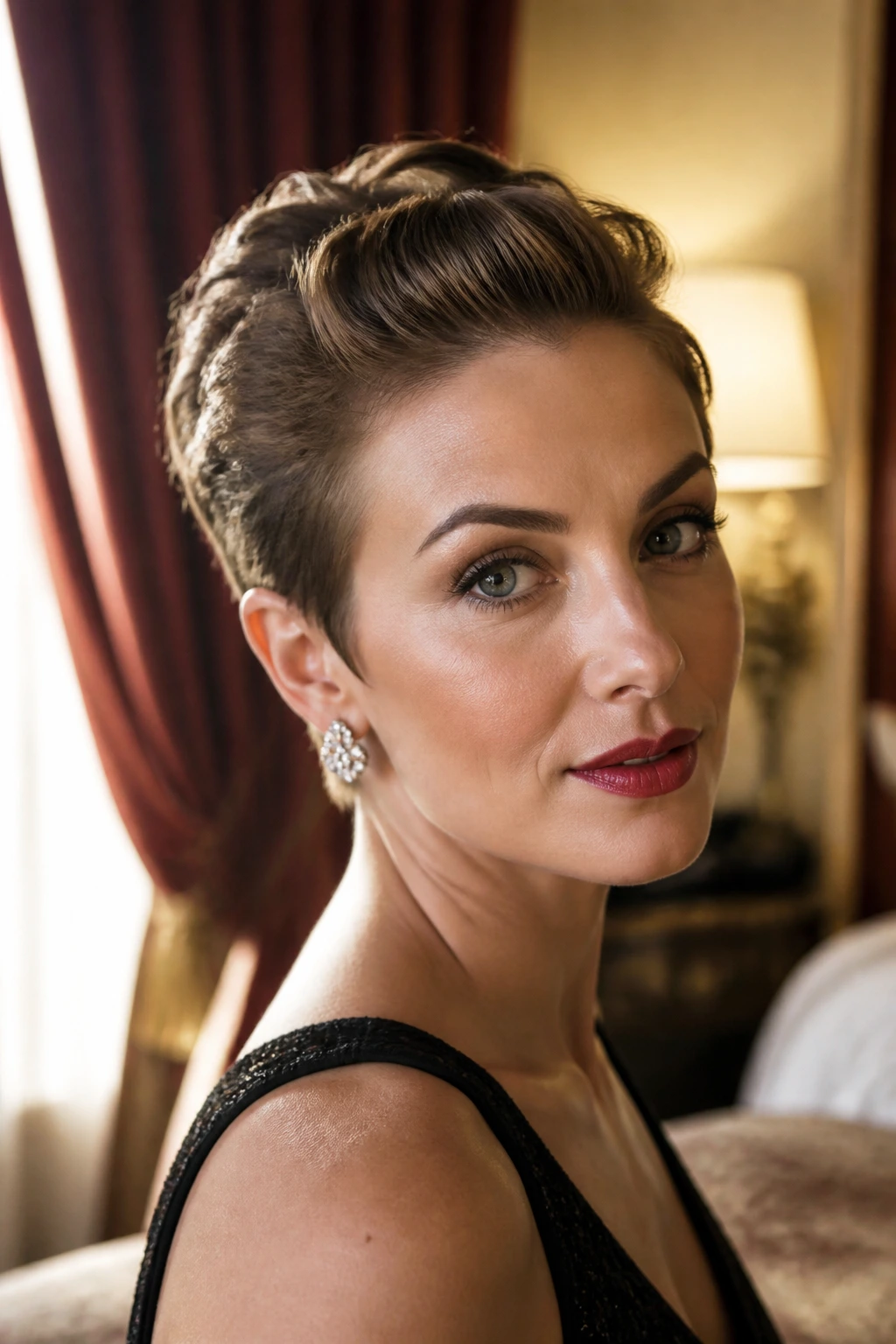
A rolled crown gives the whole head a little lift and a lot of polish. The front section is coaxed backward into a soft roll, then pinned in place so it sits rounded rather than flat.
The Shape Matters More Than the Pins
Use enough structure to keep the roll from collapsing, but don’t overpack it with product. The best version looks smooth at the surface and full underneath, with the sides kept closer so the crown reads clearly.
This style is a good fit for evenings, special events, or any day you want the haircut to feel dressed on purpose. It has old glamor in it, but not the fussy kind.
19. Flipped-Edge Pixie
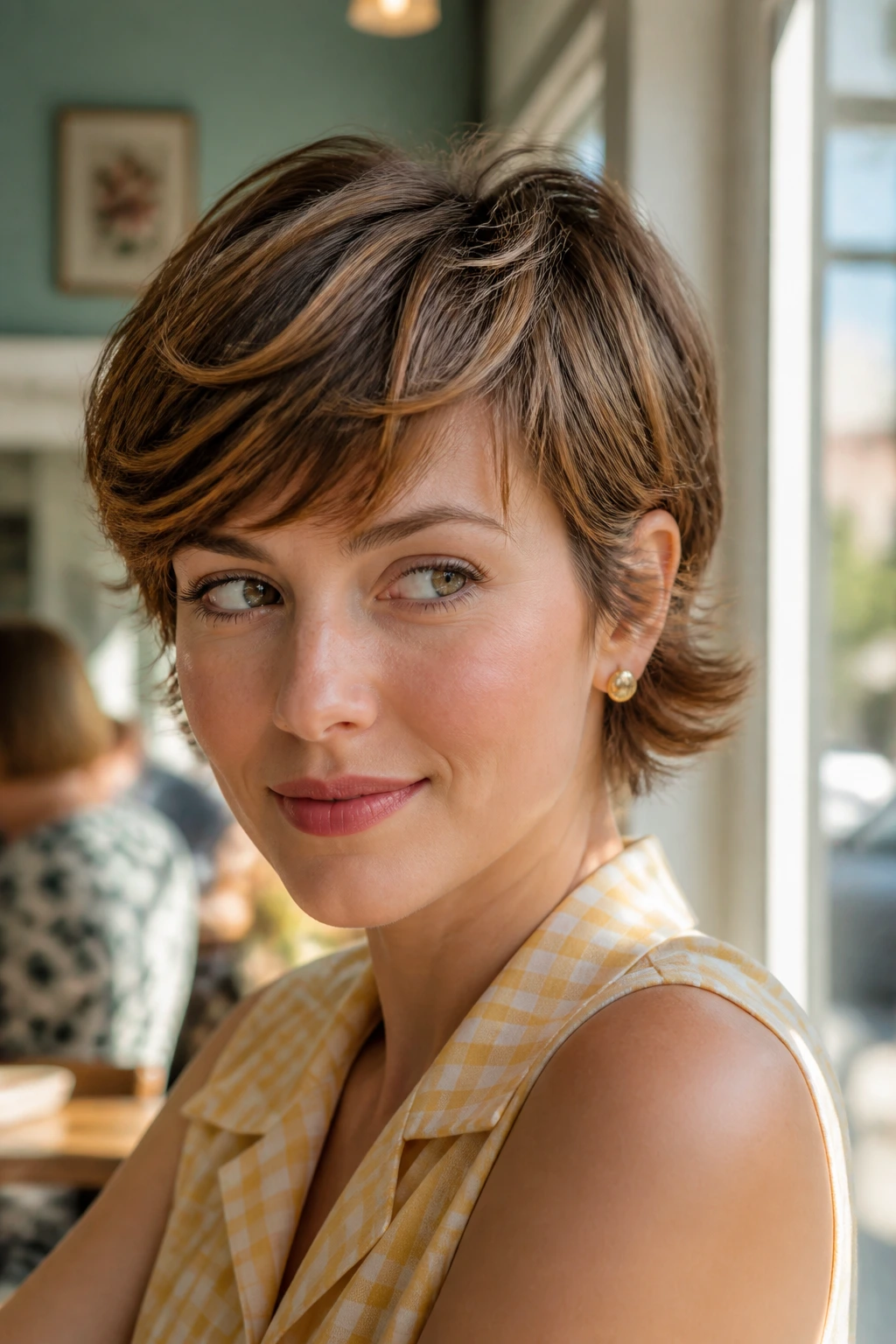
A flipped edge at the ends gives short hair a playful little kick. The nape or side sections turn outward just enough to catch the eye, which makes the cut feel lighter and less severe.
It’s a smart choice if you like a 1960s shape but don’t want full-on hard lines. A small flat brush and a twist of the wrist at the dryer can make the ends flip cleanly. Fine hair often does this easily; thicker hair may need a bit more coaxing.
This style can go from schoolgirl sweet to sharp mod depending on what you wear with it.
20. Feathered Seventies Pixie
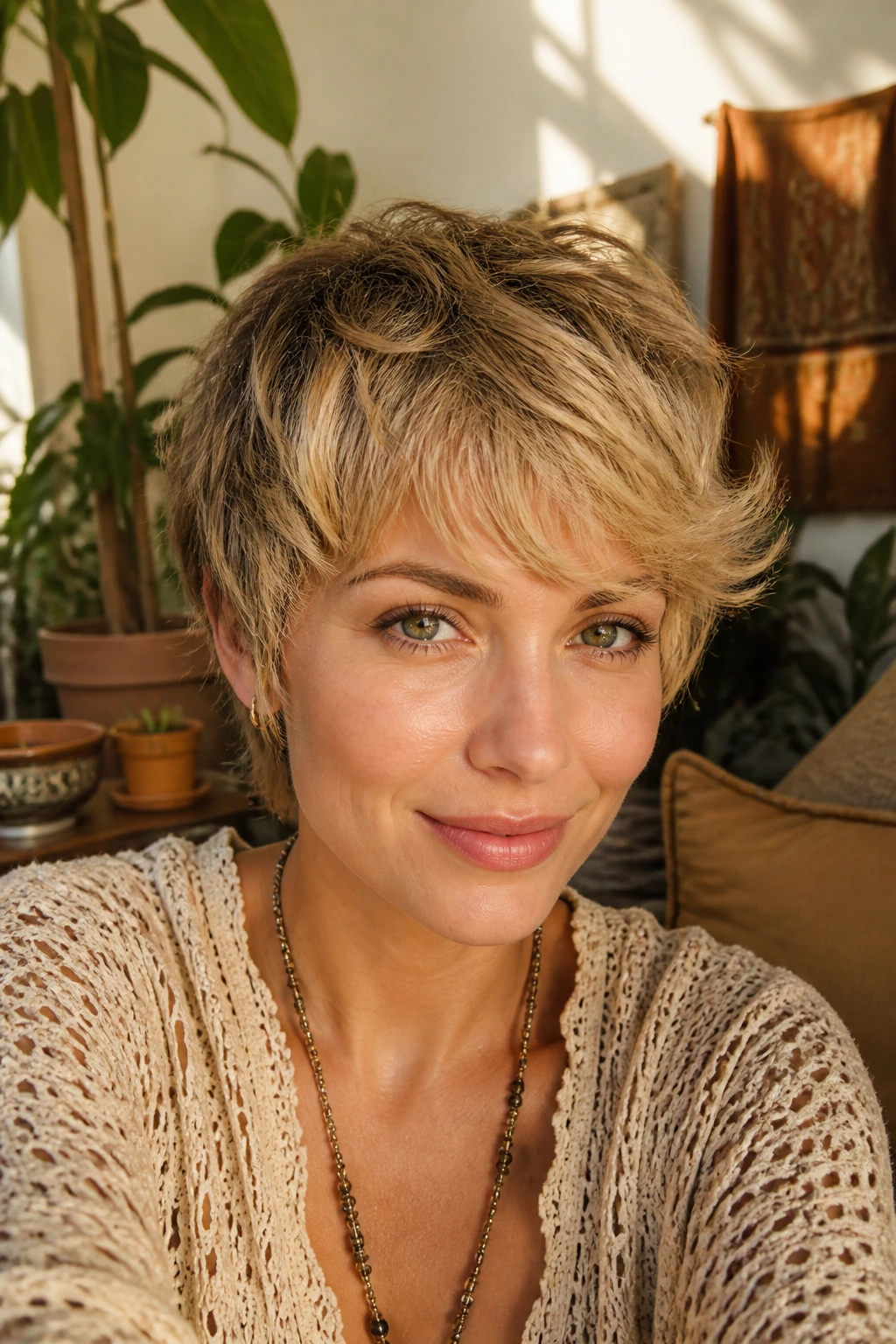
This one softens the edges and lets the layers move. The top is feathered back or away from the face, the fringe is broken up rather than blunt, and the whole thing feels a little airy.
It works especially well if you have some natural wave. Use mousse at the roots, rough-dry until about 80 percent dry, then shape with your fingers instead of a brush if you want the loose, feathered finish to stay intact. A brush can overwork it fast.
The beauty of this cut is that it doesn’t need to be perfect to look right. In fact, perfection would ruin it.
21. Curl-Defined Pixie
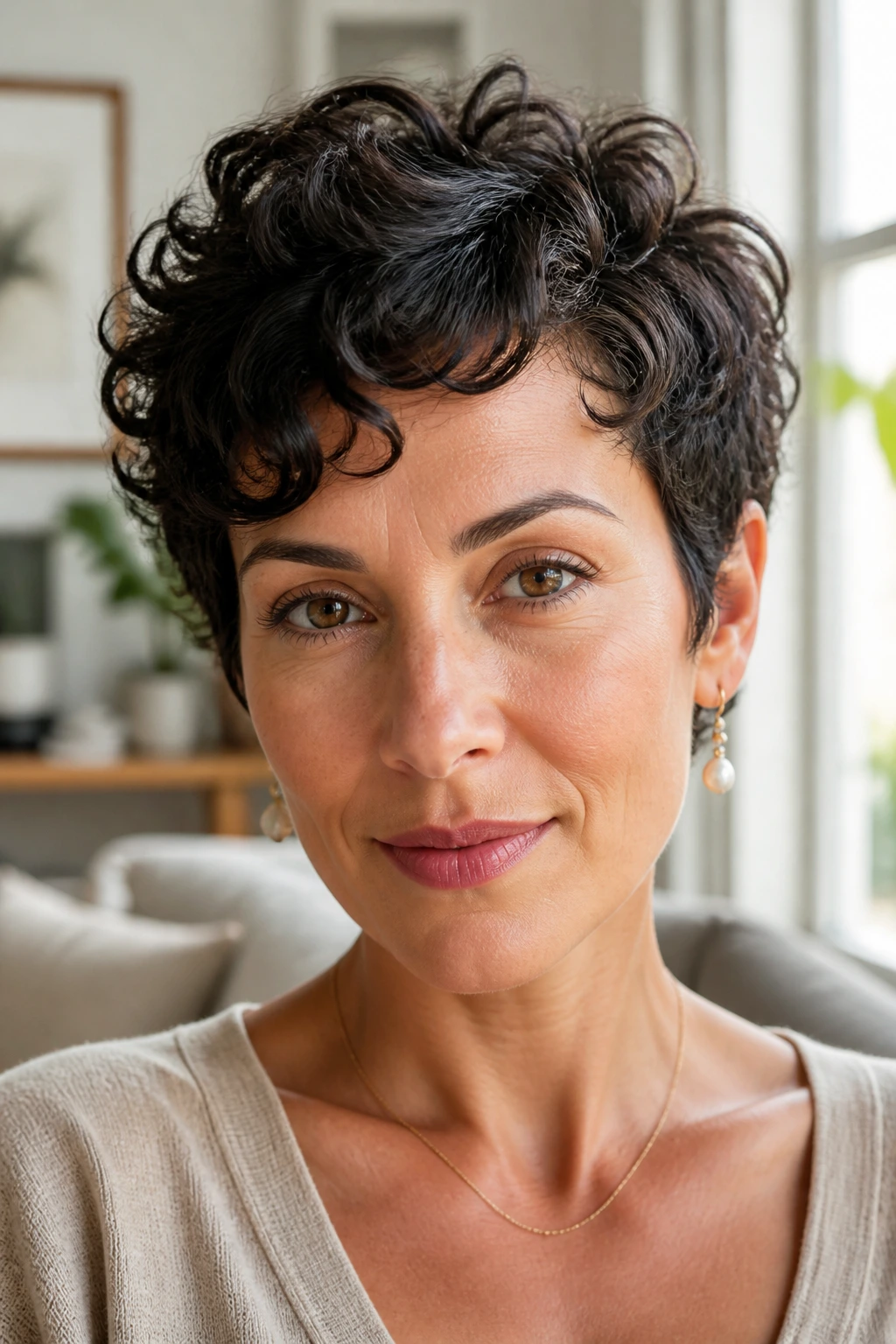
If your hair already bends or curls, this is the version that respects that texture instead of forcing it into a straight-haired idea of a pixie. The sides are shaped, but the curls are left with enough room to form little pockets of shape.
The vintage note comes from the softness, not from setting the hair into a hard pattern. Use a cream that defines without weighing the curls down, and let the front fall where it wants before you decide to pin it or part it. When curly pixies are cut well, they have this neat, expensive-looking outline around the ears and nape.
Don’t fight every curl. That road gets ugly fast.
22. Slicked-Back Tuxedo Pixie
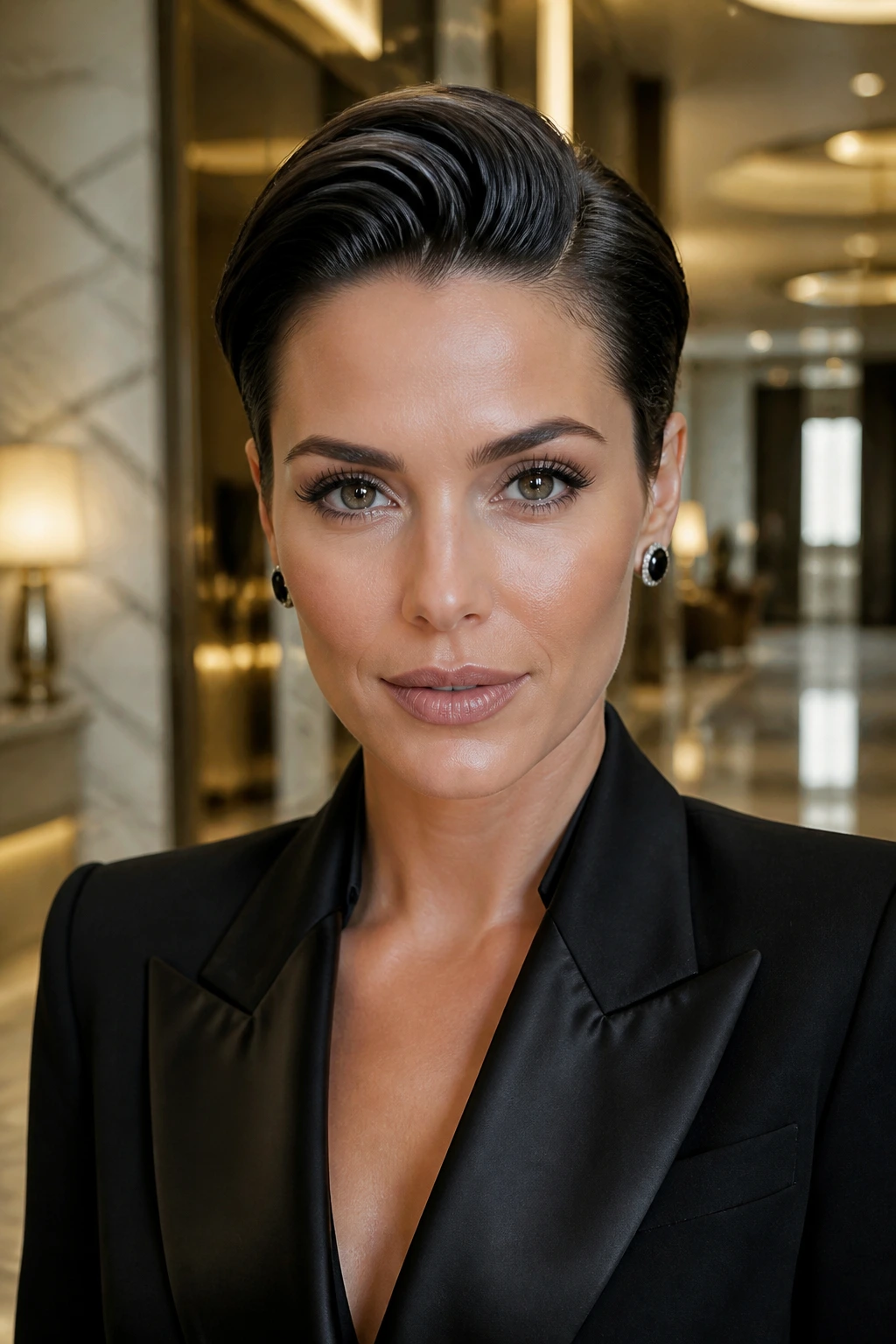
The slicked-back pixie has a dressy, almost tailored feel. The front and sides are combed away from the face, the crown is flattened just enough to look sleek, and the finish leans glossy rather than fluffy.
This works when you want the haircut to act like an accessory. It pairs cleanly with a strong shoulder line, a tux jacket, or a square neckline. If your hair is very fine, a lightweight gel gives better hold than creamy products; thick hair may need a stronger comb-through at the roots.
The key is balance. Too much wet-look product turns chic into greasy in a heartbeat.
23. Romantic Ear-Length Pixie
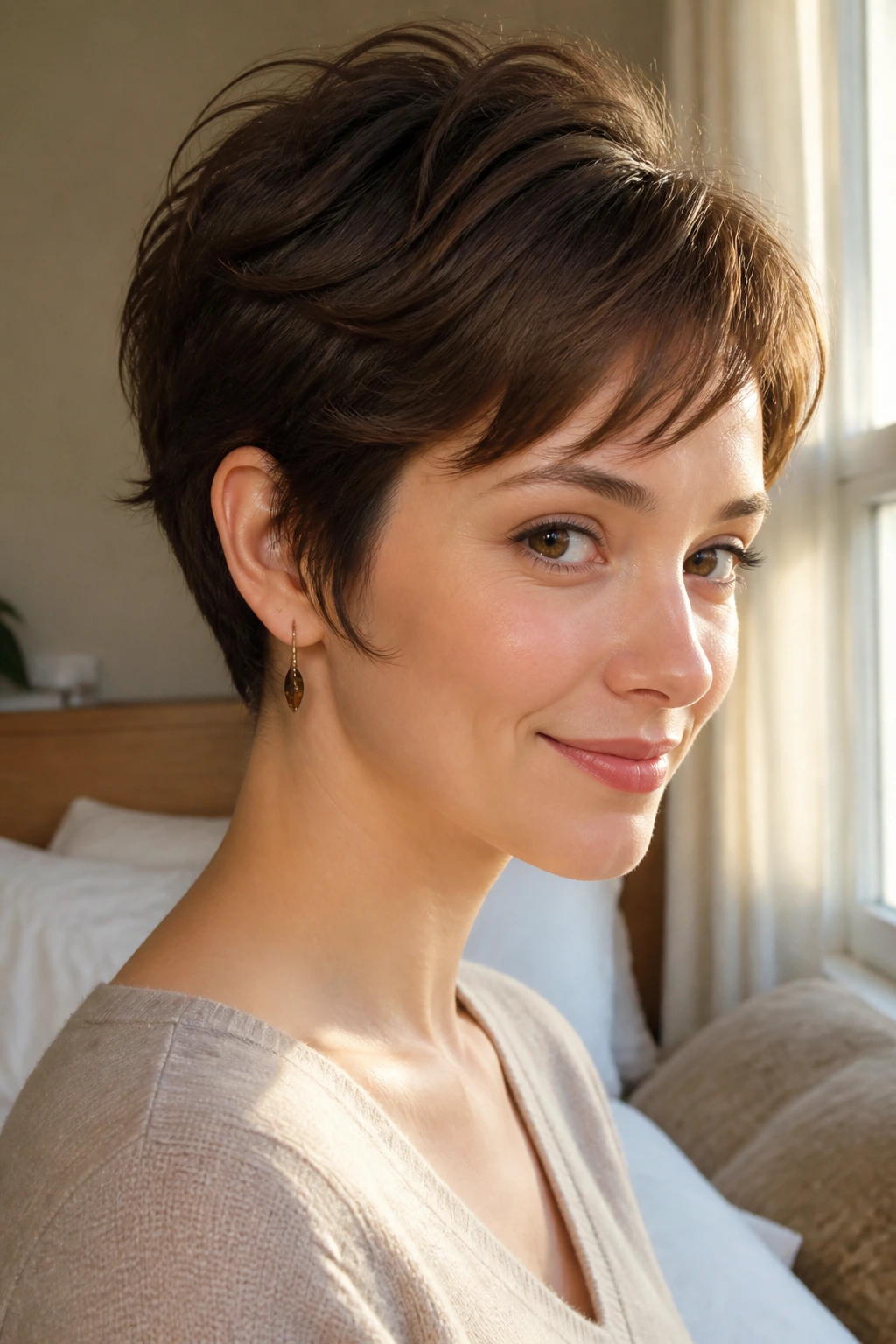
This is one of the softer ideas on the list. The hair around the ears stays a little longer, the fringe is wispy or side-swept, and the outline doesn’t hug the head so tightly that it feels severe.
It’s a nice option if you want a vintage mood without looking like you’ve copied one decade exactly. The lines are gentler, which makes the cut forgiving if your hair has natural cowlicks or if you like to tuck one side behind the ear and leave the other loose. That asymmetry helps.
A light cream or mousse is enough. Heavy product crushes the softness that makes this version work.
24. Bouffant Pixie with Rounded Crown
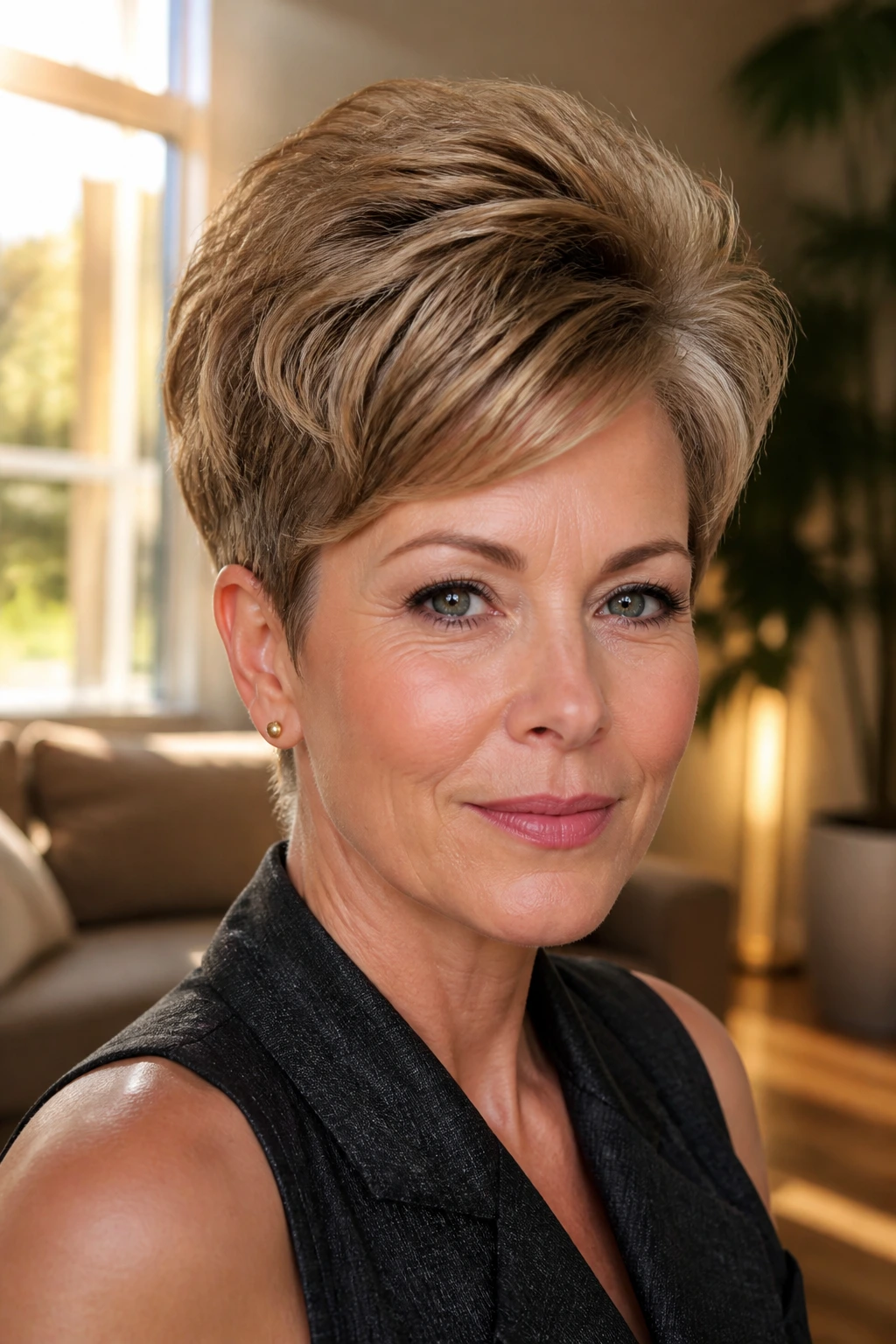
This cut borrows the fullness of a bouffant and shrinks it down to pixie scale. The crown is rounded and lifted, while the sides stay controlled so the volume doesn’t sprawl.
It’s especially good when you want your short hair to look styled from across a room. A root-lifting spray, a round brush, and a bit of backcombing at the crown can build the shape. The trick is to stop before the top gets too big; otherwise, the proportions turn awkward fast.
A Small Rule That Helps
Keep the nape neat. Rounded volume looks better when the base is tidy.
25. Spiral-Set Pixie
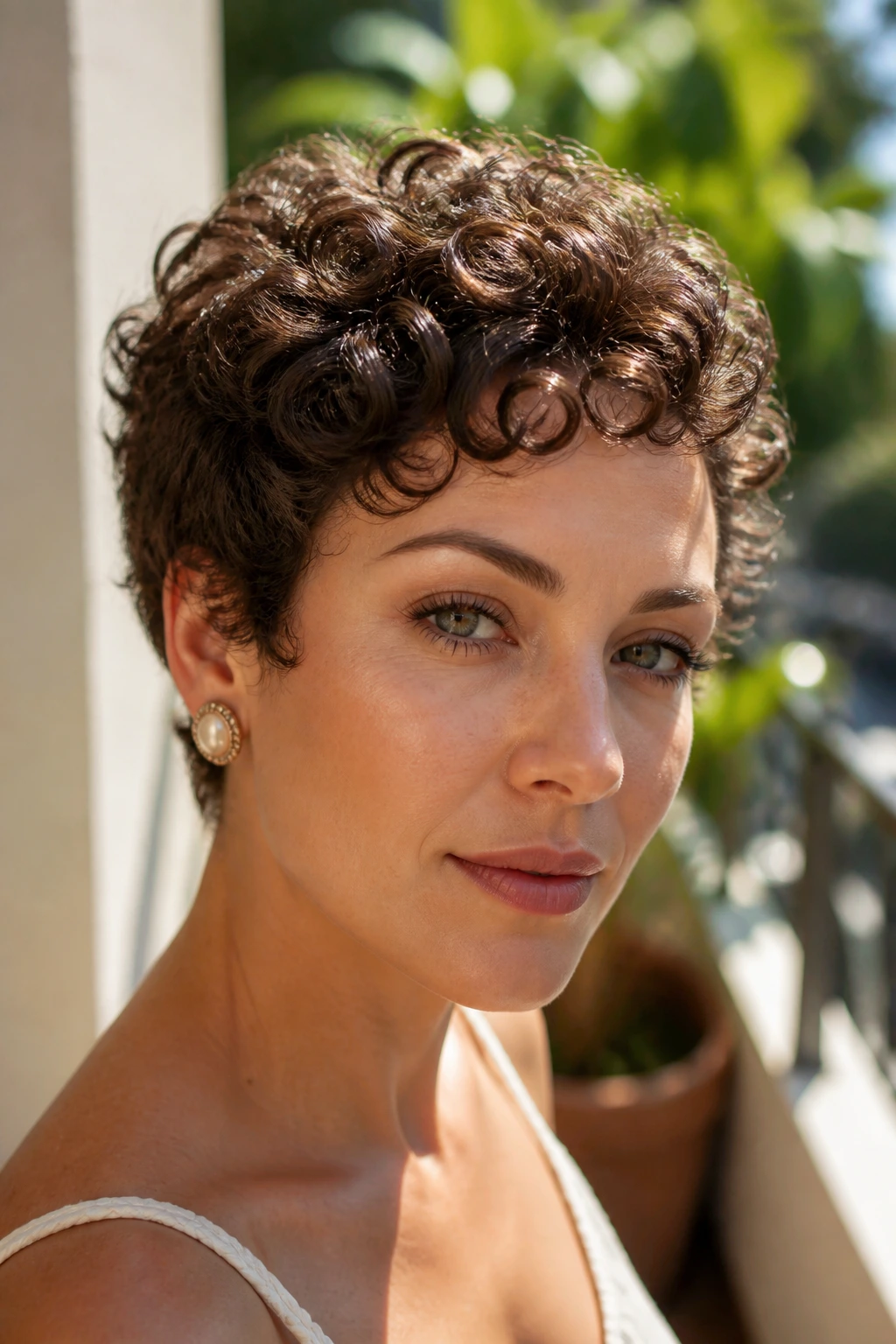
Tiny spirals change the texture completely. Instead of soft waves, you get defined little curls that feel playful and deliberate, almost like a set-from-scratch studio look.
Use small rods, perm rods, or narrow curling iron sections, then separate the curls only after they cool. If you rush the shakeout, the definition disappears and the style becomes puffy rather than shaped. A little shine cream on the fingertips keeps the ends from fraying.
This is one of the more hands-on pixies in the bunch. Not hard. Just a bit fussy in a good way.
26. Boyish Crop with Long Fringe
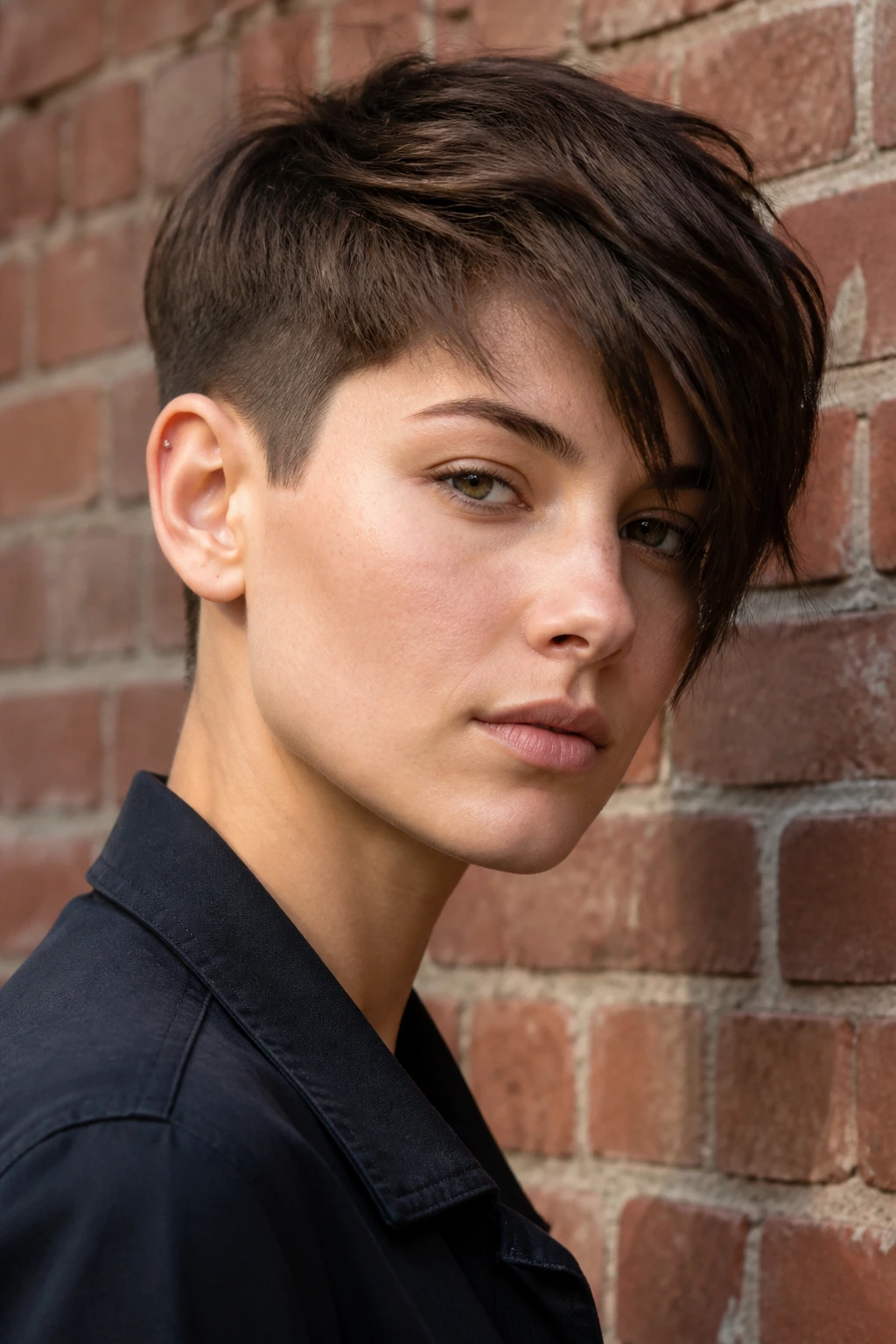
A short, close crop on the sides and back gives this cut its clean line, while the longer front fringe keeps it from feeling too plain. That contrast is the whole point.
It has a vintage tomboy edge that sits somewhere between schoolboy neatness and old magazine portraits. If you like a low-profile cut with one standout detail, this is a strong pick. The fringe can be swept, brushed forward, or bent with a little wave iron depending on the day.
It’s one of those styles that looks sharper when the neckline is kept crisp. Don’t let the nape get fuzzy.
27. Old-Hollywood Side-Part Pixie
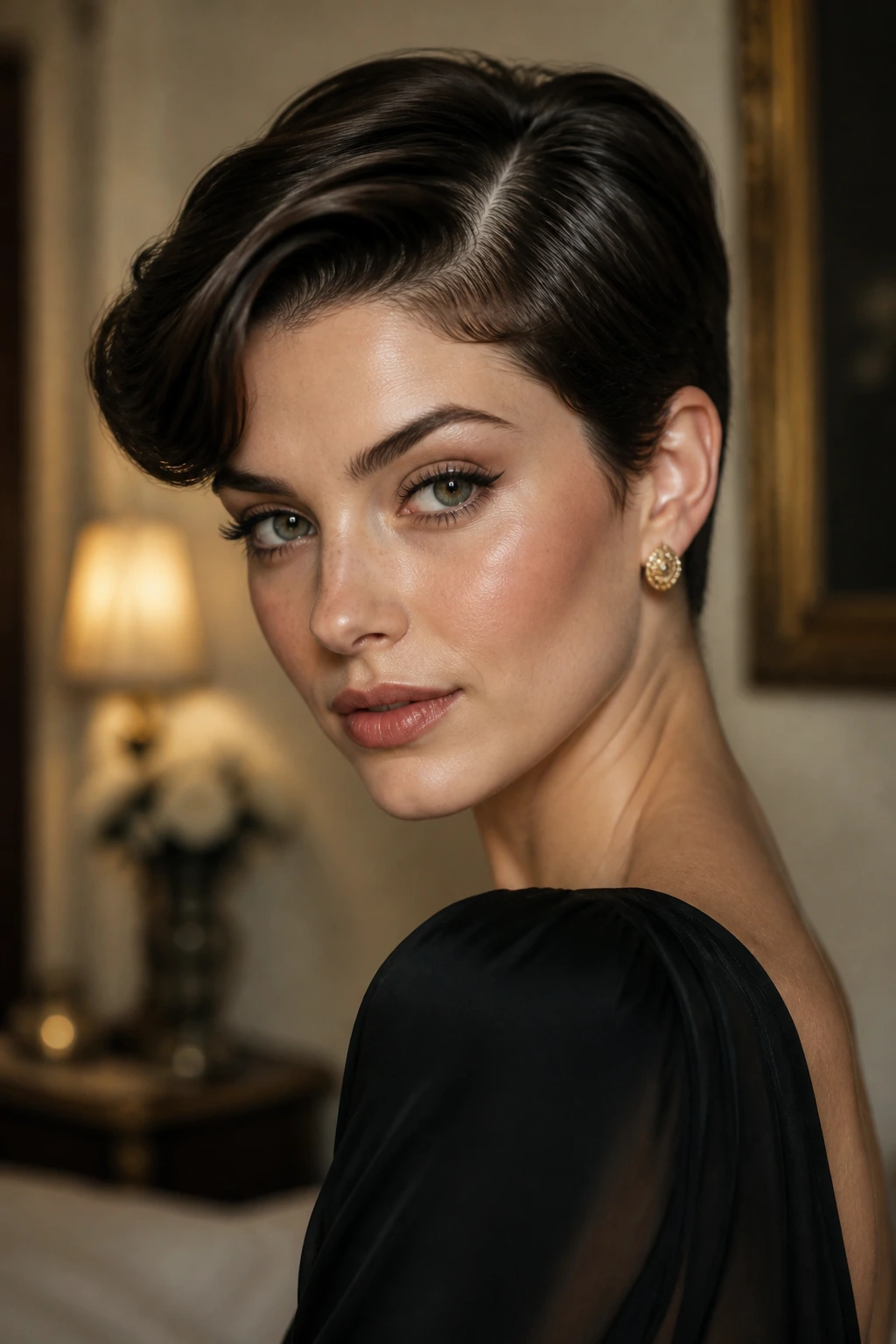
A deep side part and glossy finish are doing a lot of work here. The front sweeps in one direction, the crown has just enough lift, and the sides stay close so the profile feels sleek.
I like this cut when the goal is polish rather than edge. It pairs beautifully with a low earring, a red lip, or a strong brow because the haircut leaves space for the face to do the rest. If you’ve got a cowlick at the front, have the stylist work with it instead of fighting it into a dead straight part.
That’s the difference between elegant and overworked. You can feel it.
28. Marcel-Wave Pixie
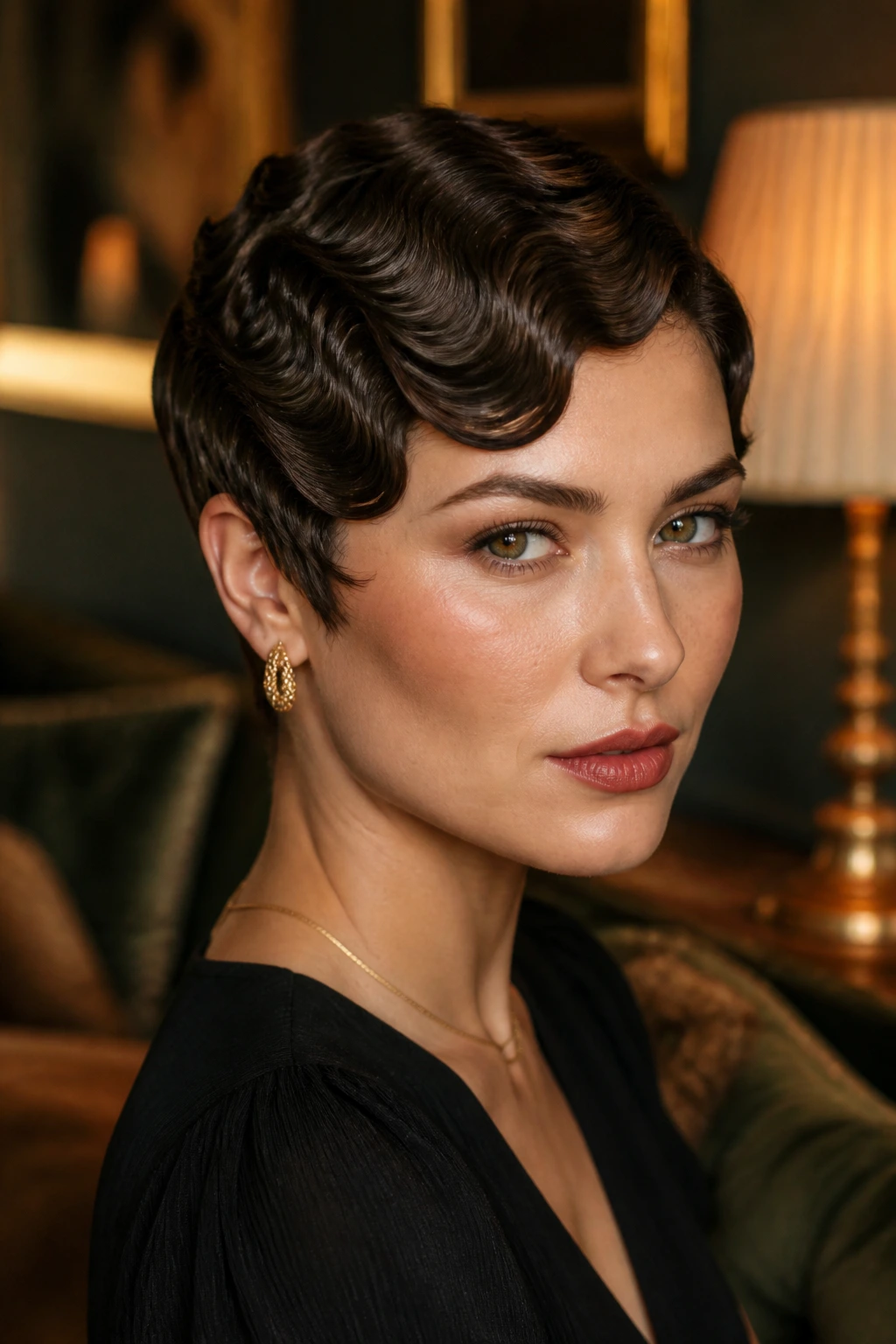
Marcel waves are tighter, more defined than loose finger waves, and they give the pixie a strong vintage theatricality. The pattern is set in structured curves, then softened just enough so it doesn’t look like costume hair.
This style does best when the hair is long enough on top to take a true wave shape. A clamp iron or a careful hot-tool set can help, but the finish should still look molded rather than curled. It’s a good choice if you like clear lines and a more formal profile.
A little shine paste goes a long way here. Too much, and the wave pattern loses its edges.
29. Pillbox-Hat Pixie
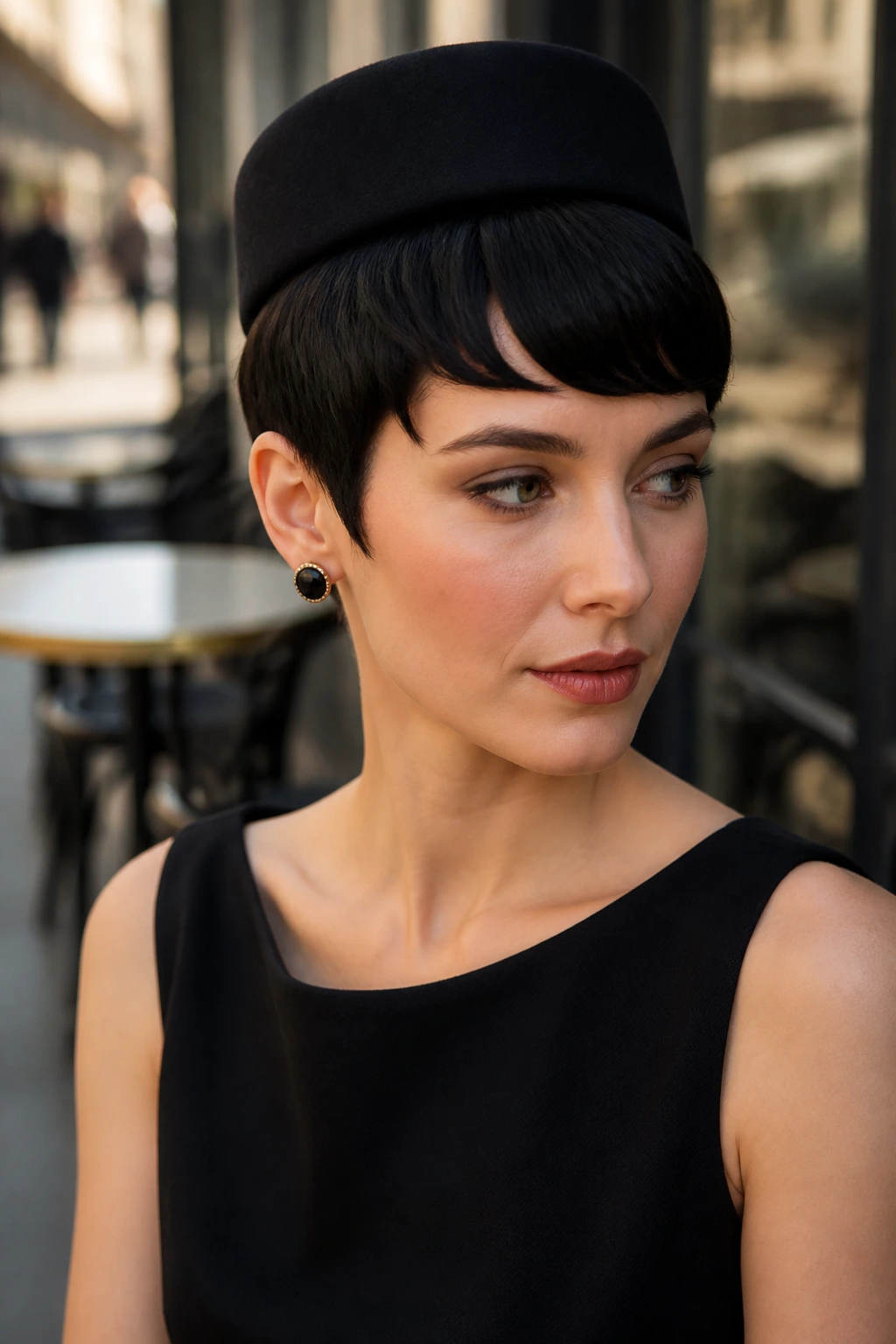
Some cuts are made to sit under a hat without a fight, and this is one of them. The crown stays compact, the sides are tidy, and the top has enough polish that a pillbox or structured hat doesn’t crush the whole look.
That doesn’t make it boring. It just means the shape is disciplined. If you wear hats, fascinators, or sharp little headpieces, this kind of pixie saves you from the mushroom effect a lot of shorter styles create. The hair sits close, so the hat becomes part of the silhouette instead of an awkward add-on.
A side part can help, though a center line works if the cut is balanced enough.
30. Tousled Feather Pixie
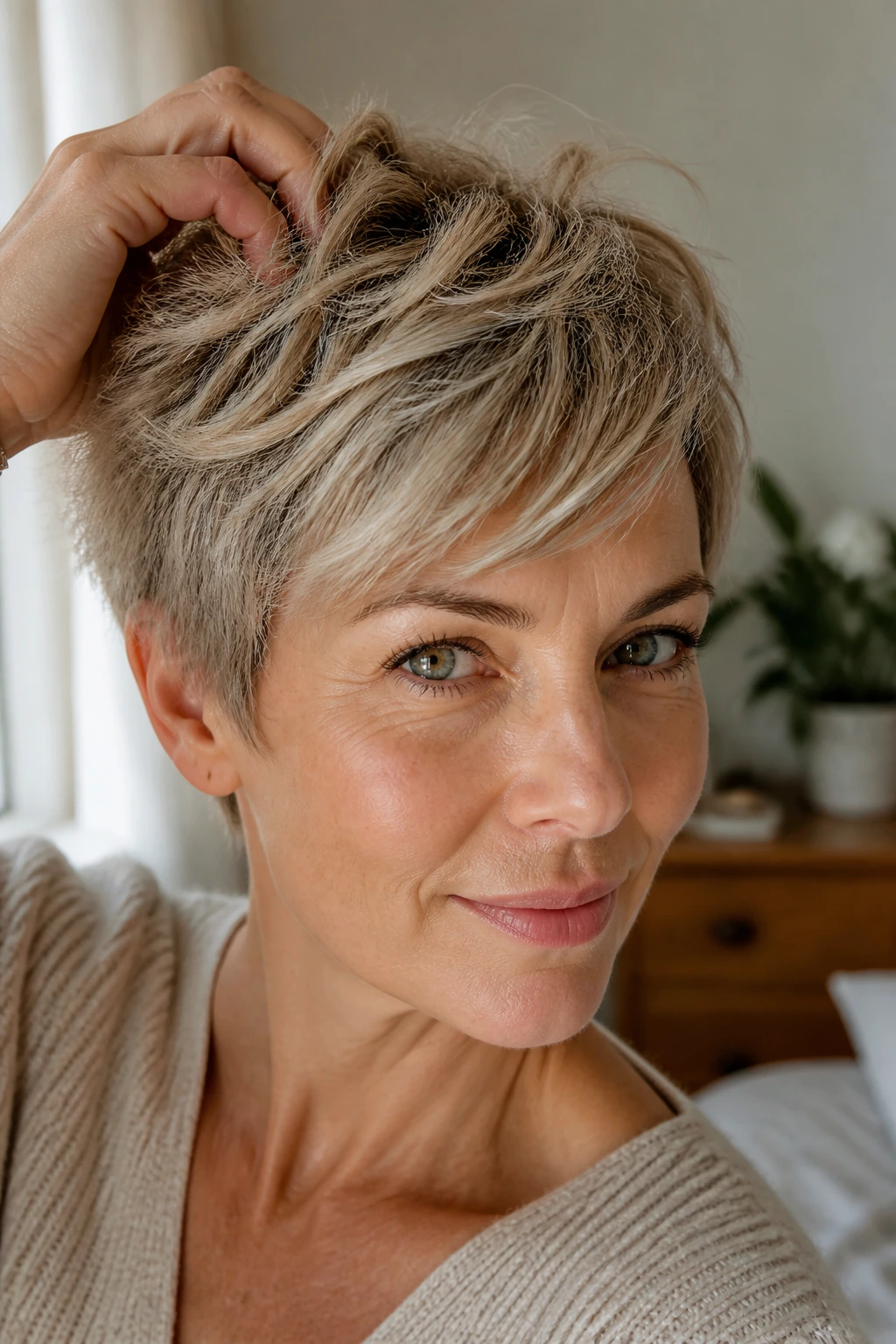
This one sits at the softer end of the vintage spectrum. The layers are feathered, the ends are touched with movement, and the finish looks lightly mussed rather than teased into place.
It’s a good choice for anyone who wants a retro reference without a lot of styling ceremony. Let the hair dry mostly on its own, then work a little cream through the ends and lift the crown with your fingers. If you over-brush it, you lose the easy shape and get a puffier cut than intended.
The best versions look like they’ve been lived in for an hour, not over-edited for a photo.
31. Velvet-Ribbon Pixie
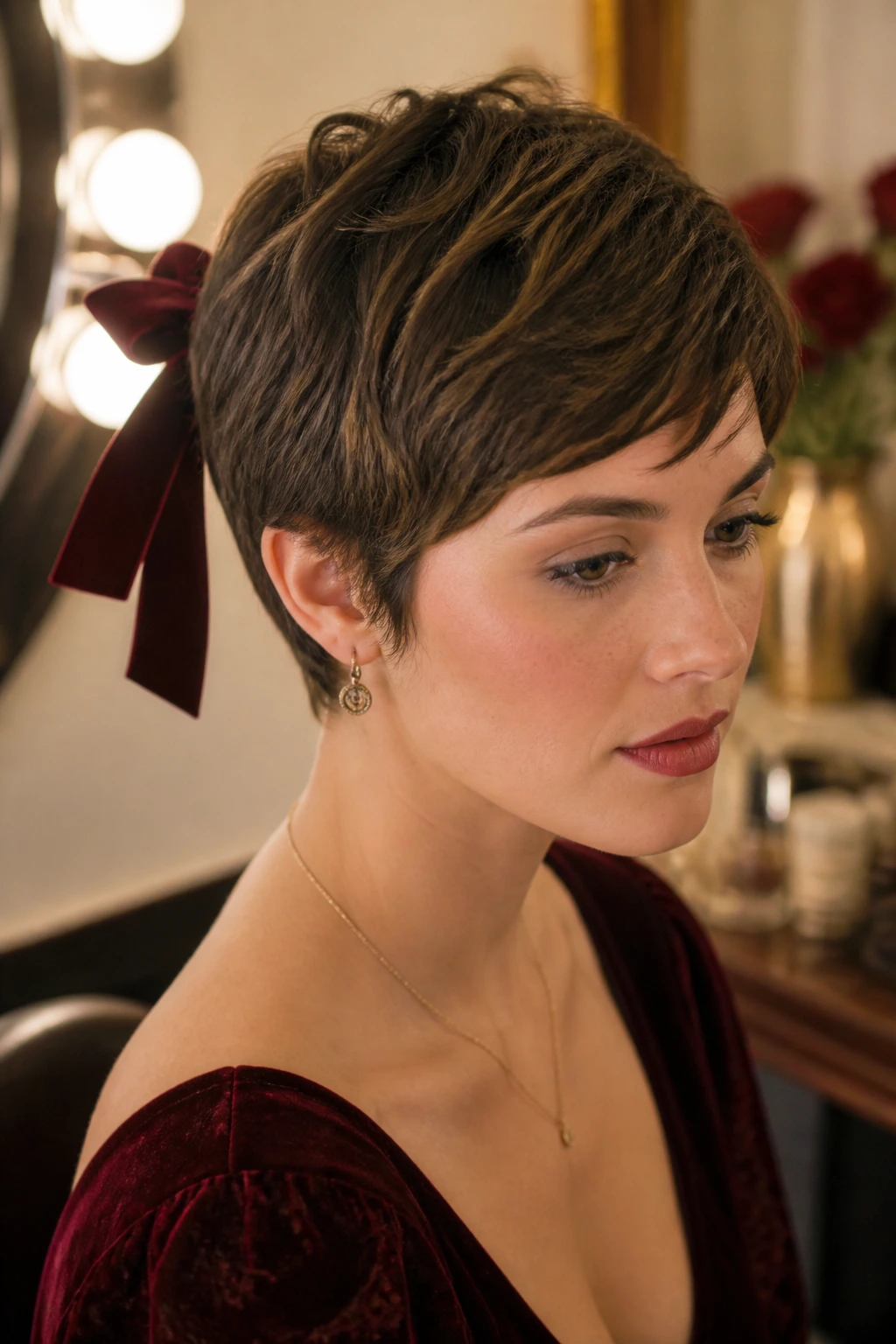
A ribbon can change a pixie faster than a new product ever will. This cut keeps the base shape simple — neat sides, some length up top, maybe a soft sweep at the front — and then uses a velvet ribbon, tie, or slim bow as the vintage cue.
It’s a smart move when you want a feminine finish without asking the haircut itself to do all the dramatic work. Black, navy, deep green, and burgundy all read well against short hair. Tie it just behind the crown or use it as a narrow headband, depending on how much forehead you want to show.
I like this version when the hair is freshly cut and a little too plain on its own. The ribbon solves that in one move.
32. Textured Retro Bang Pixie
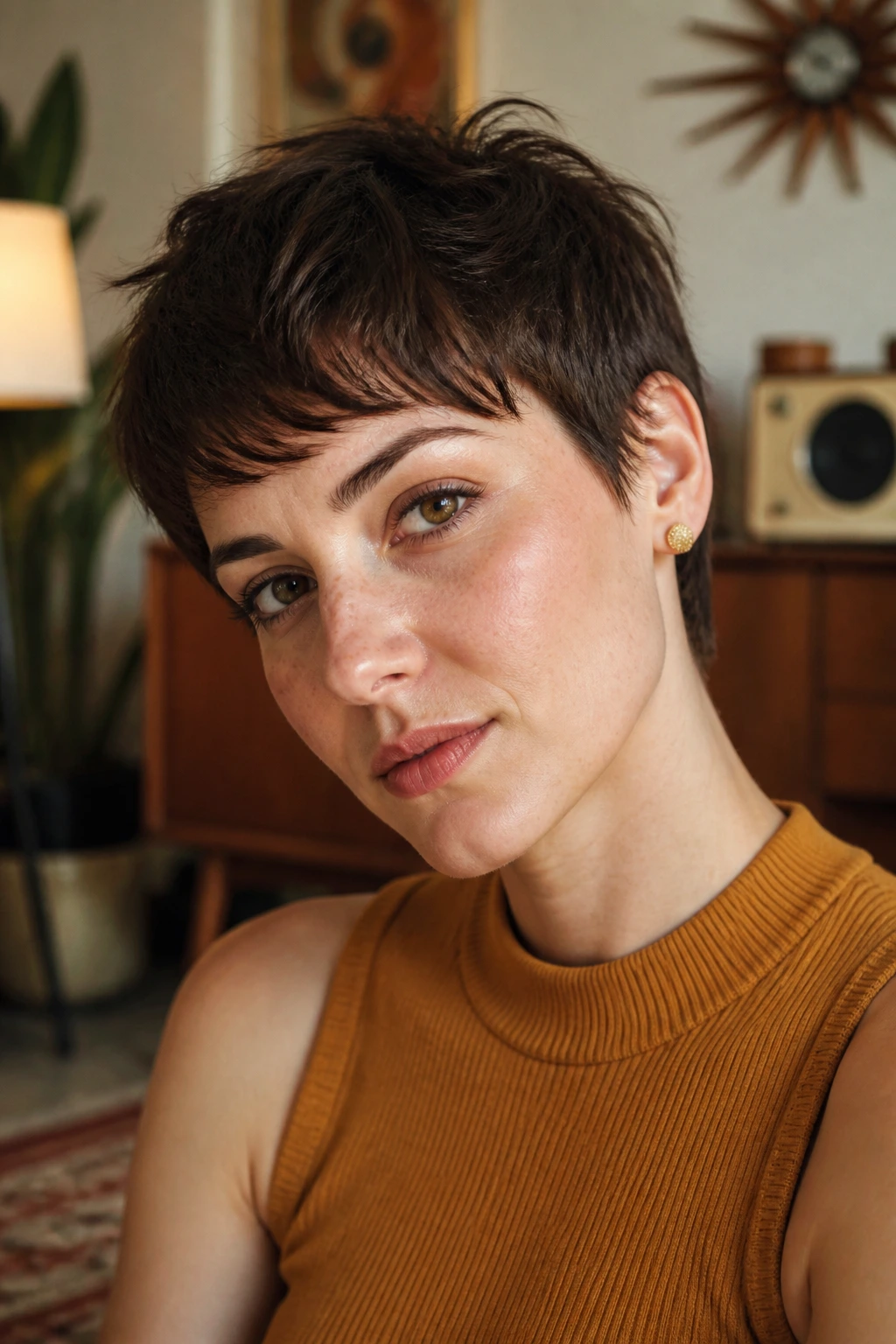
Here the fringe is the headline. It’s textured, choppy, and shaped with enough piece separation to keep it from looking heavy, but the overall feeling still nods to older short cuts.
This is a nice bridge between vintage and modern. The shape can be precise at the nape and a little undone in the front, which keeps it from getting stuck in one decade. Use paste or a light wax at the fringe only — not the whole head — so the texture stays focused where it matters.
What Gives It Life
The contrast between a clean outline and a broken fringe line. That contrast keeps the cut awake.
33. Glossy Cuffed-Back Pixie
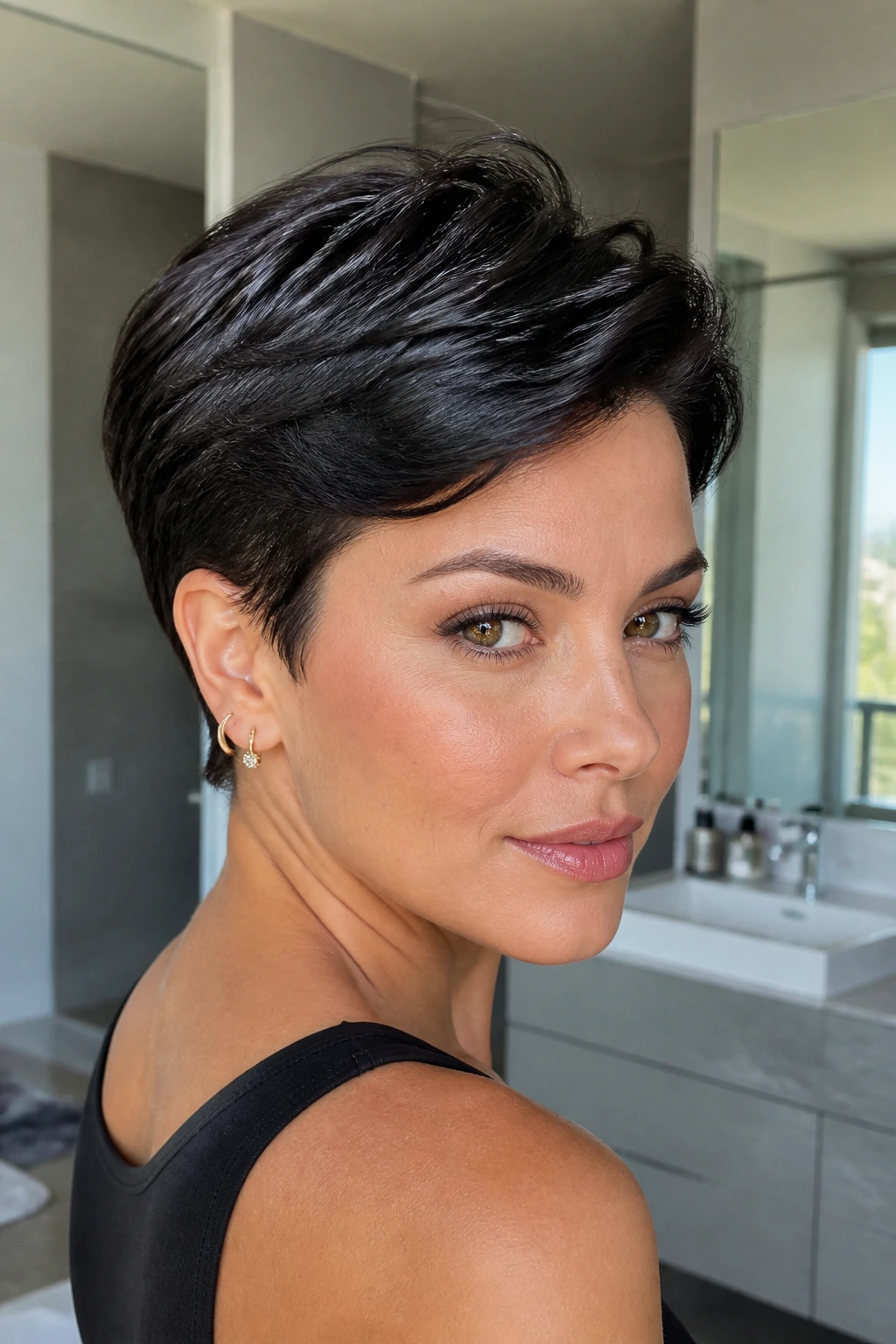
The final cut in the group turns the ends inward with a smooth, tucked finish. It feels neat, polished, and just soft enough around the edges to keep the look from becoming severe.
A cuffed-back pixie is one of those shapes that rewards careful drying. Lift the roots, then turn the ends in slightly with a brush or fingers so the outline feels deliberate. It gives a nice nod to mid-century grooming, especially when the hair is kept shiny and the neckline is clean.
This is the version I’d choose for someone who wants vintage influence without an obvious costume reference. It’s subtle. That’s the point.
What Makes a Pixie Read as Vintage
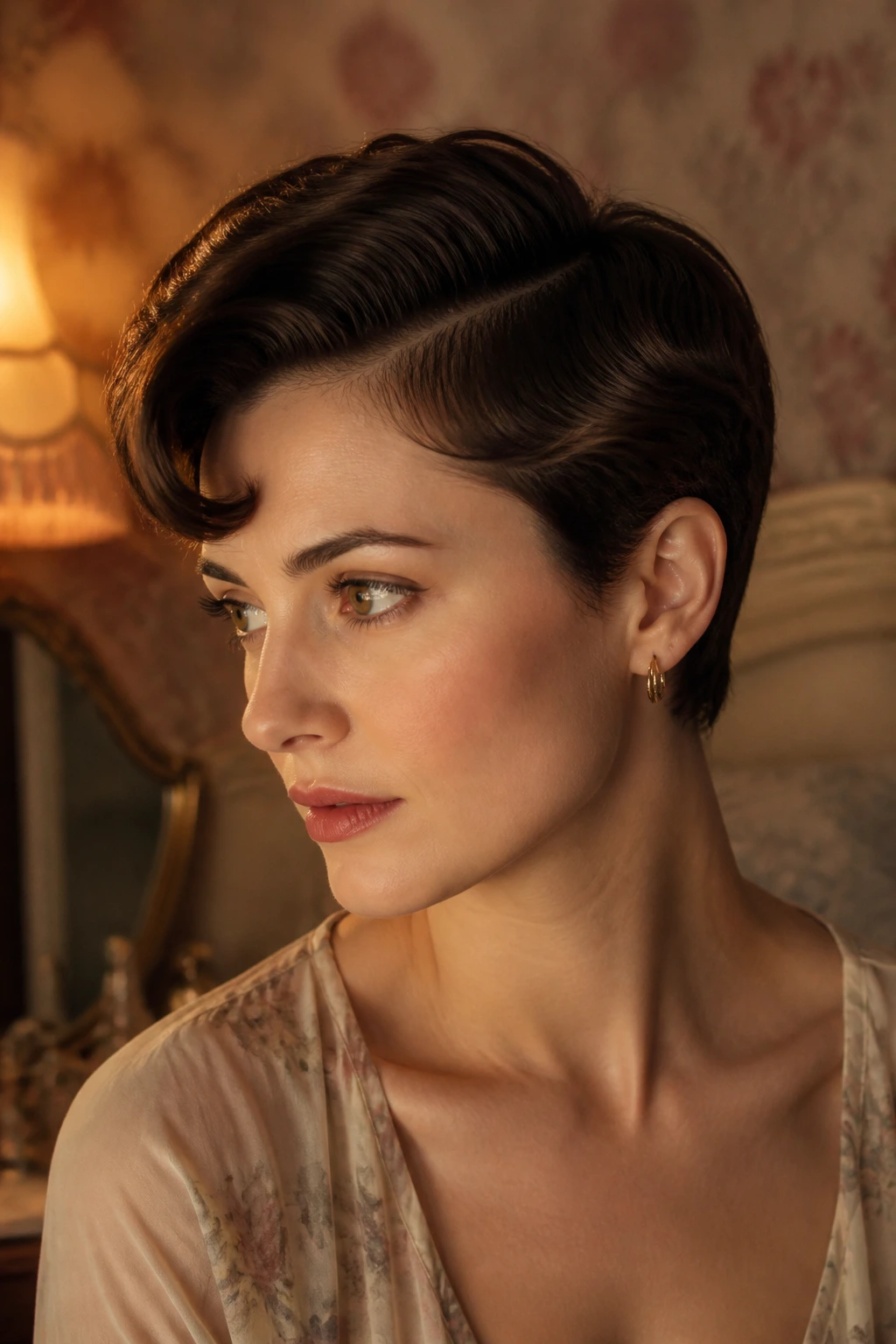
A vintage pixie is less about age and more about contour. The haircut usually has one visible decision point — a deep side part, a rolled front, a curved fringe, a tucked nape, or a wave pattern — and that single move changes the mood more than ten tiny styling tricks ever could.
That’s why a plain short crop can look modern while the same length, cut with a bit of shape at the front or a softer perimeter at the sides, suddenly feels like it belongs to another decade. I’m biased toward cuts that hold a line. They grow out better, they photograph better in real life, and they don’t ask you to coat the whole head in product just to make sense.
The best versions also respect texture. Straight hair can carry a clean Hollywood wave or a blunt mod bang. Wavy hair brings life to feathered and brushed-forward shapes. Curls need room at the crown and around the temples, or the whole thing puffs where it should be shaping. Get that part wrong and no amount of vintage reference will save the cut.
Essential Tools for These Styles
-
Sharp hair-cutting scissors: Short hair shows blunt ends fast, so dull blades will ruin the line before you even get to styling.
-
Fine-tooth comb: Useful for parts, finger waves, and keeping the fringe line neat.
-
Round brush, small to medium: The smaller sizes help with crown lift, under-curving ends, and shaping side-swept fronts.
-
Blow dryer with a nozzle: Concentrated airflow makes a big difference when you’re trying to polish a short cut instead of blasting it around.
-
Flat iron or small curling iron: Handy for waves, flips, quiffs, and controlled bends at the front.
-
Mousse or root spray: Gives the crown enough support for lifted styles without turning the hair crunchy.
-
Pomade, cream, or paste: Pick the finish you want — glossy, soft, or piecey — and use a tiny amount first.
-
Duckbill clips and bobby pins: Especially helpful for pin curls, rolled crowns, and securing side sections while they cool.
-
Shine spray or light serum: A little goes a long way on vintage styles that need polish.
How to Ask for the Right Shape at the Salon
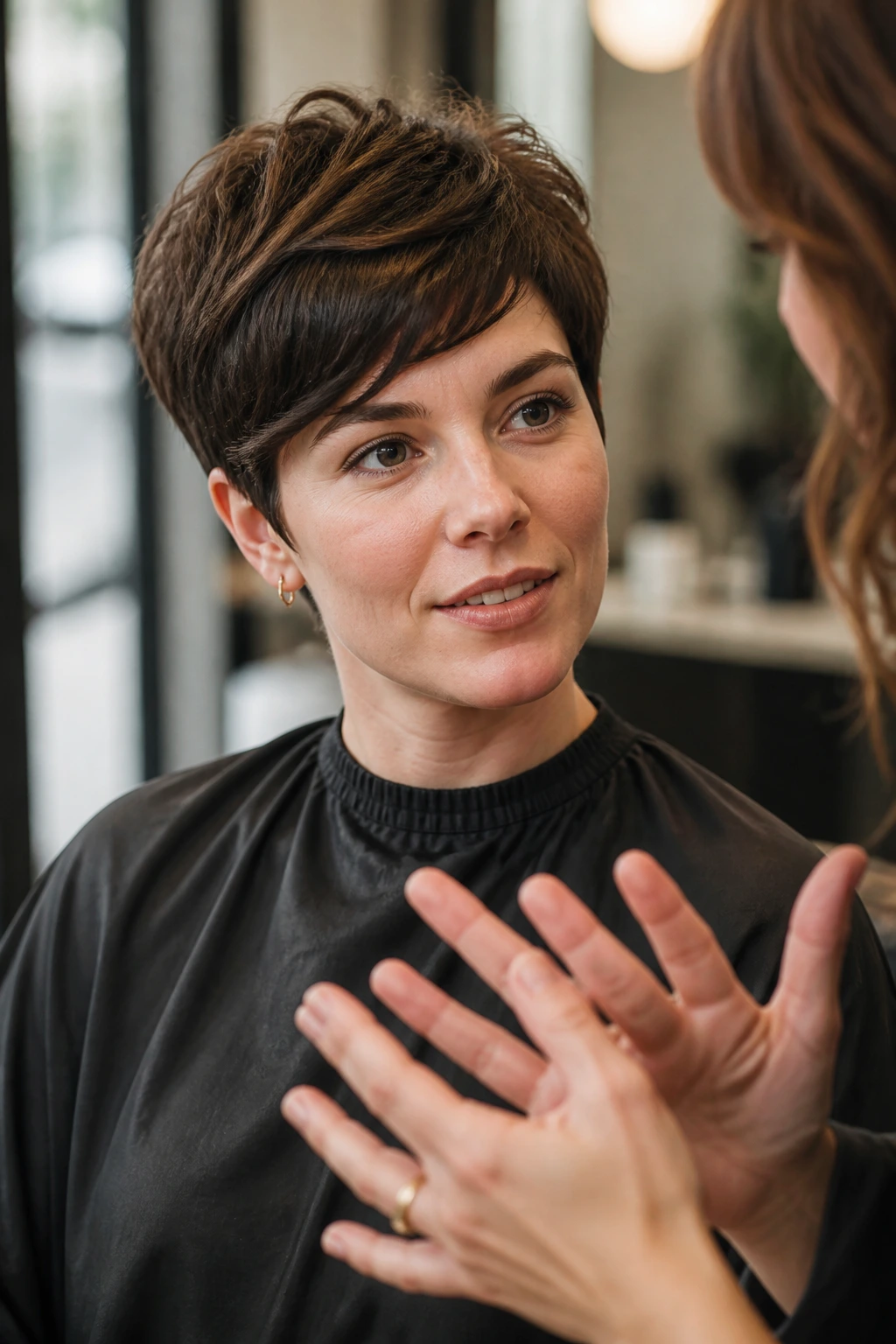
Bring photos, but don’t stop there. Photos show the mood; the details are what keep the haircut from going sideways. Tell the stylist whether you want a tight nape, a fuller crown, a long fringe, or ear-length side sections, because “vintage” can mean a dozen different things once the scissors come out.
Ask how much daily styling you’re willing to do. That question matters more than face shape in a lot of cases. A finger-wave pixie and a feathered pixie may look similar in a feed, but one wants a set and the other wants fingers and a dry-down. Those are different lives.
If your hair is thick, ask how much internal weight should come out so the top can sit close instead of mushrooming. If your hair is fine, ask where the volume should stay so the cut doesn’t collapse by lunchtime. Those small decisions change everything.
How to Wear These Cuts Without Fighting Them
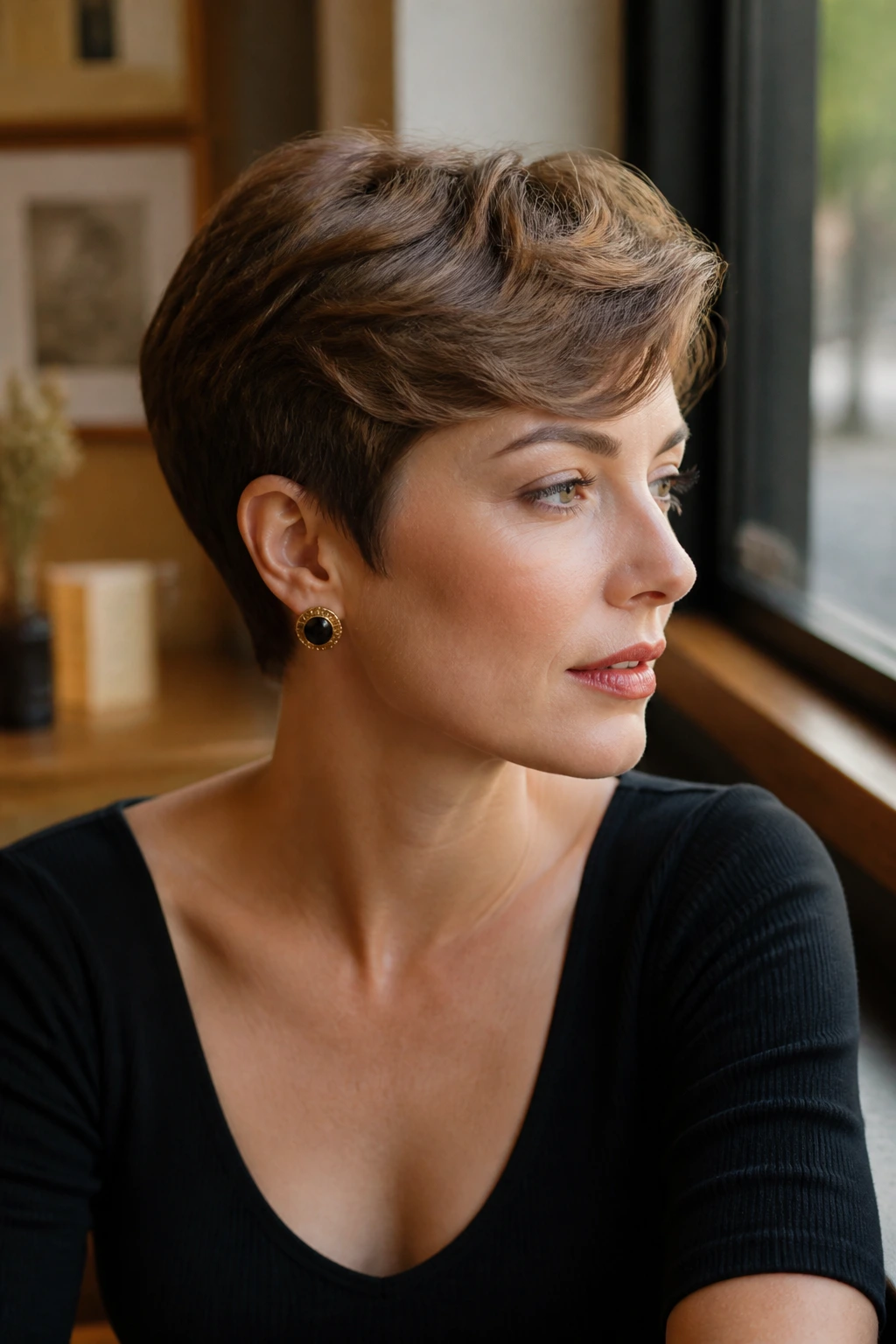
Silhouette: Keep the outline honest. A clean nape, a clear part, or a curved fringe does more for a vintage pixie than a pile of product ever will.
Accessories: Small hoops, pearl studs, narrow headbands, barrettes, and satin ribbons all make sense here. Choose one and let the haircut stay the main event.
Wardrobe: Boat necks, collared shirts, cardigans, slip dresses, and tailored jackets all leave room for short hair to show. Heavy hoods and thick scarves can hide the cut’s shape.
Finish: Glossy cream gives the more formal looks their shine, while matte paste makes the feathered or boyish versions feel intentional instead of flat.
Extra Polish and Personal Touches
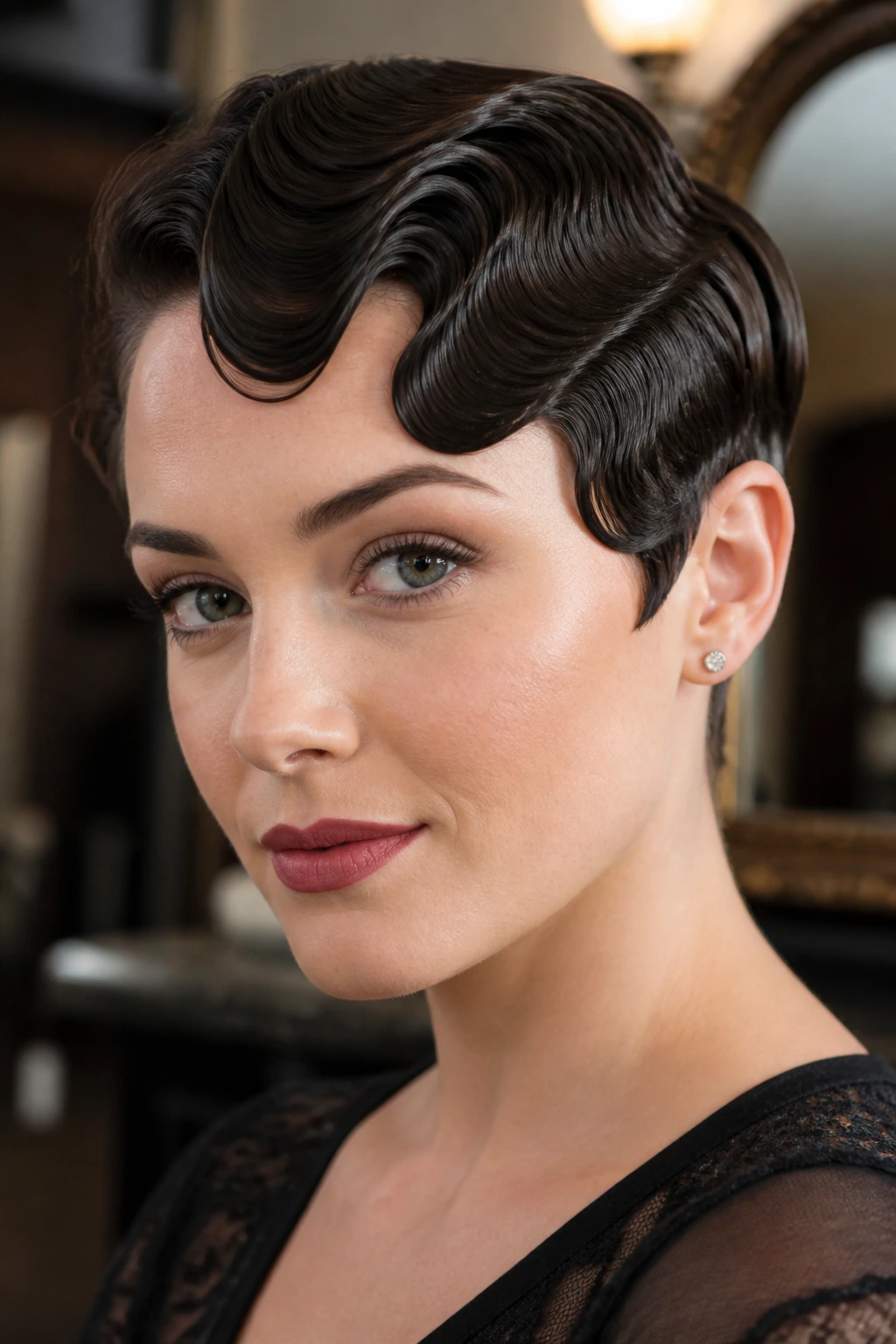
Gloss Boost: Smooth a few drops of serum over the crown and ends only after the hair is fully dry. If you do it while the hair is damp, the whole cut can go limp.
Texture Switch: Use mousse for airy, feathered shapes, paste for piecey retro bangs, and pomade for finger waves or slicked-back looks. One product does not do every job well here.
Accessory Trick: A slim barrette placed just above the ear can change the balance of a side-swept pixie in seconds. It’s a small move, but it looks thoughtful.
Make-It-Yours: Fine hair usually looks best with lift at the crown and a lighter perimeter. Thick hair needs internal removal so the shape sits close. Curly hair works better when the fringe is left a little longer than you first think.
Keeping the Shape Between Haircuts
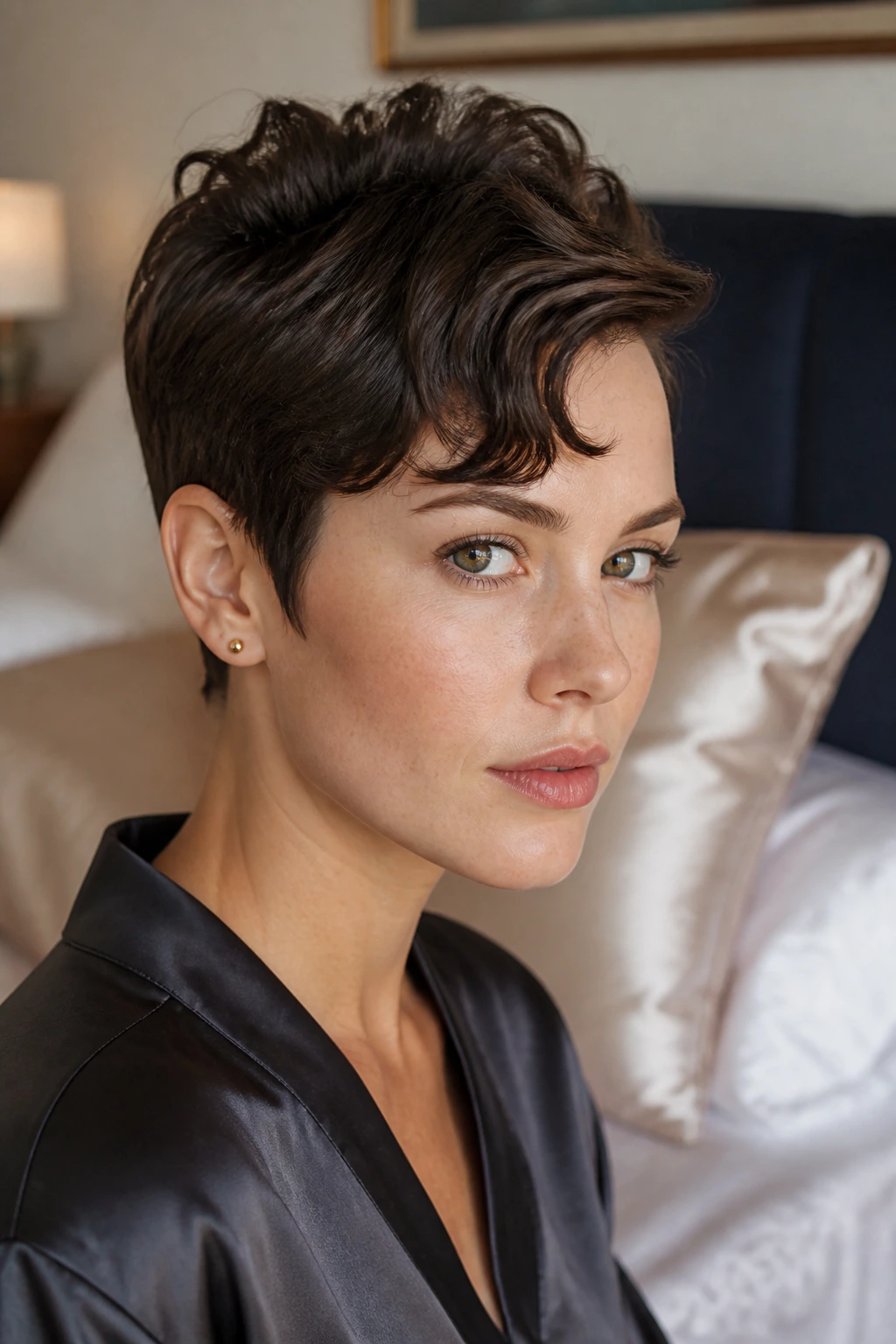
A short cut shows growth fast. That’s not a flaw; it’s part of the deal. Most of these vintage pixies stay sharp for about 4 to 6 weeks before the nape and fringe start to lose their line, though softer feathered cuts can stretch a little longer.
At night, a satin pillowcase helps, and for styles with a wave or roll, pinning the front section loosely can save you a morning restyle. If you have a pixie that depends on lift, use dry shampoo on day two or three, not after the hair has already collapsed. It works better on slightly lifted roots than on limp ones.
Wash frequency depends on product load. If you use pomade, shine cream, or gel, you may need to cleanse every 1 to 3 days so the cut doesn’t start to look greasy at the nape. If the style is feathered and airy, you can stretch it longer by brushing out the crown and misting the roots lightly with water before reshaping.
Common Mistakes to Avoid
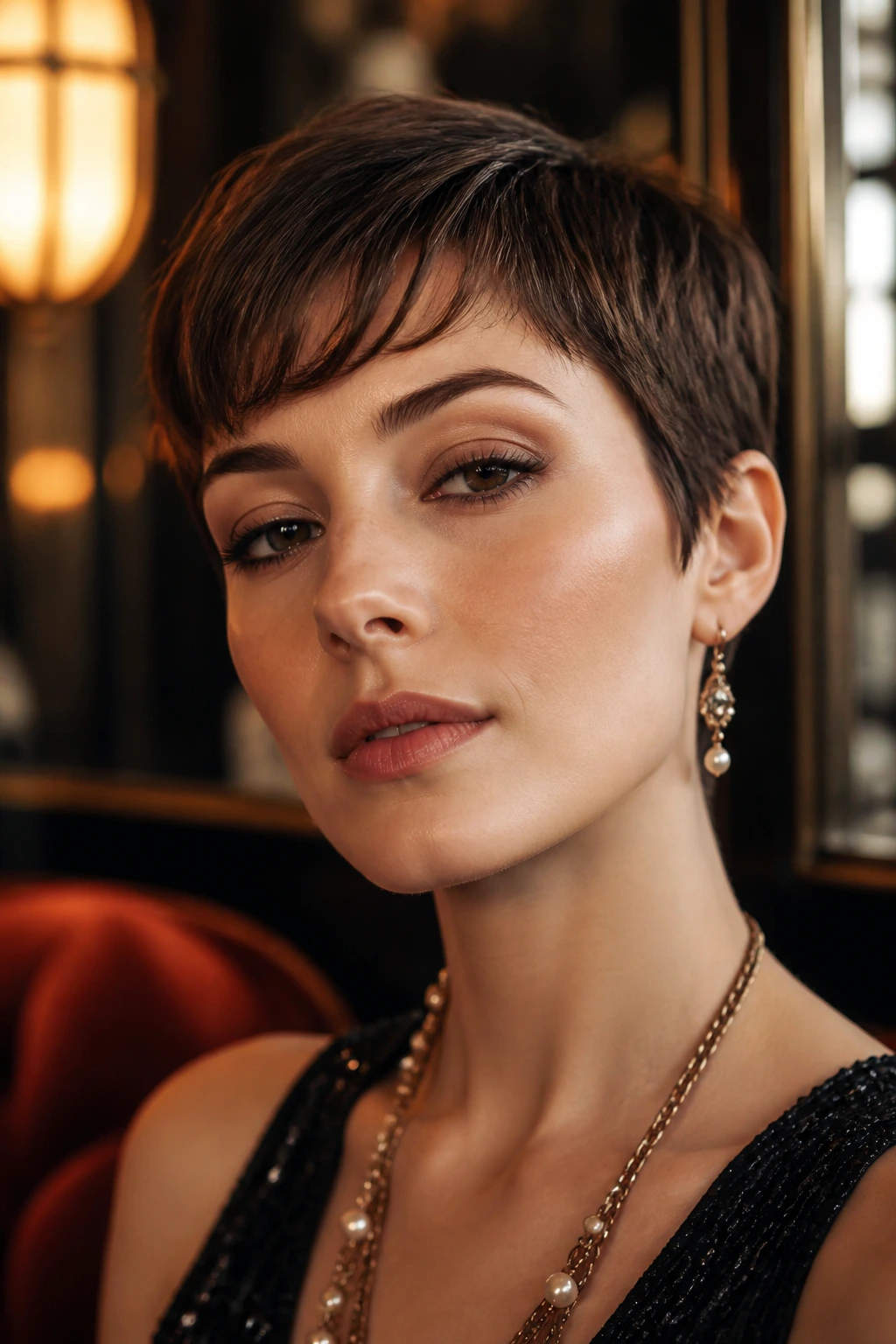
-
Cutting the fringe too short on the first pass: Micro-bangs are a style, not a default. If you go too short too soon, you may lose the vintage balance and land in awkward grow-out territory. Start a little longer; you can always trim.
-
Using too much heavy cream on fine hair: The cut will look flat by lunchtime and the crown loses the lift that gives the style its shape. Switch to mousse or a lightweight foam first.
-
Leaving the nape bulky: A fuzzy, heavy back makes the whole haircut feel unfinished. Ask for a clean taper or regular cleanup if the back starts swallowing the line.
-
Thinning thick hair in the wrong places: Over-texturizing the top can leave the fringe see-through while the sides still look dense. Weight removal needs to happen where the shape can handle it, not everywhere at once.
-
Trying to force every vintage idea into one cut: A finger wave, a pompadour, a micro fringe, and a rolled crown all in the same hairstyle is chaos. Pick one reference and let it lead.
Variations and Adaptations to Try
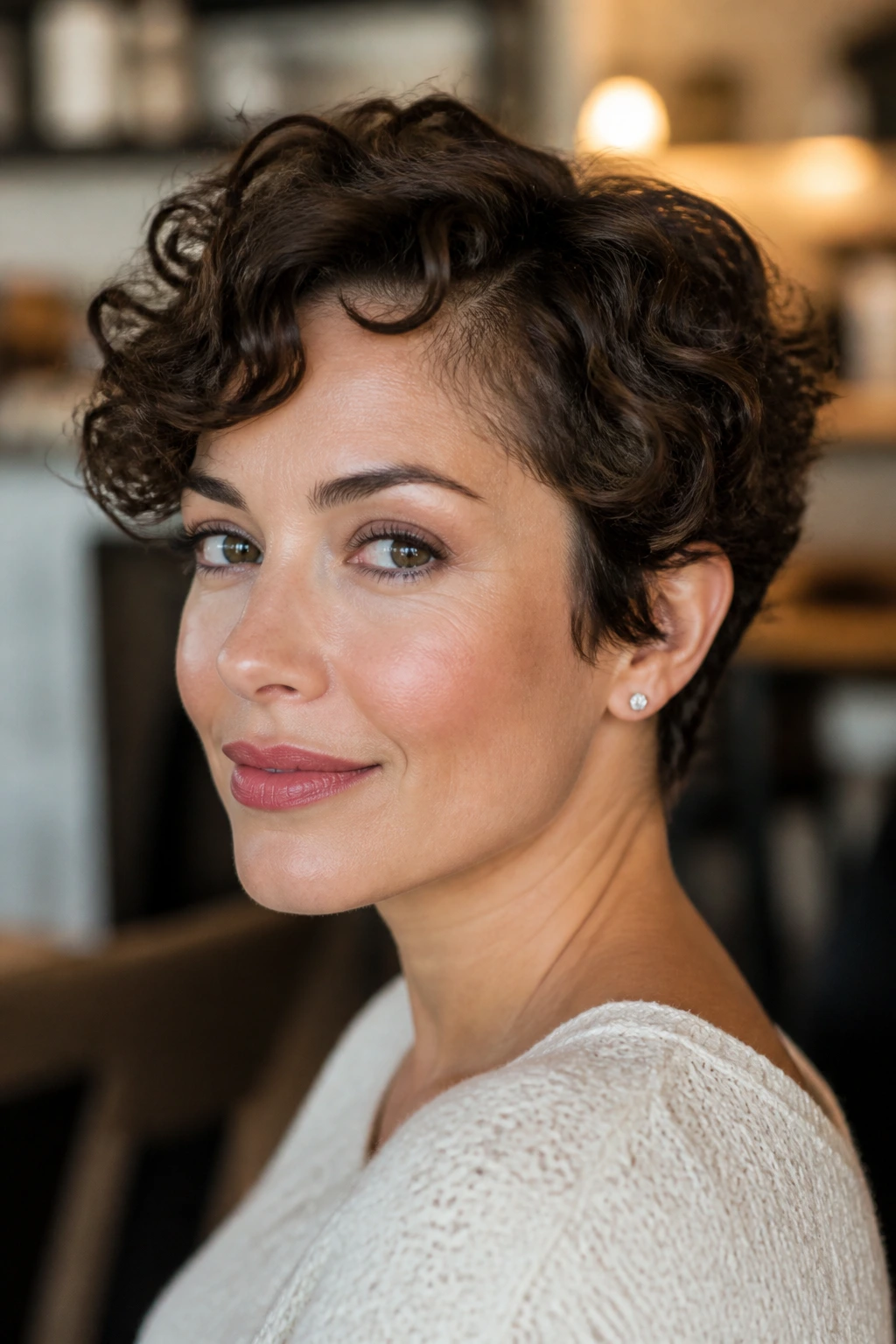
Soft Curly Vintage Pixie: Keep the perimeter tidy, leave more length at the crown, and let curls form their own shape. This is the easiest path if your hair already has bend and you don’t want to fight it.
Fine-Hair Lift Pixie: Focus on a short nape, slightly longer top, and a root spray that gives hold without weight. This version needs less hair to look full, which is the whole point.
Thick-Hair Tapered Pixie: Ask for internal debulking and a snug outline around the neck and ears. The shape will sit flatter and feel less like a helmet.
Evening-Gloss Pixie: Swap matte paste for shine cream, smooth the sides behind the ears, and set one front wave. It’s the quickest way to make short hair look dressed up.
Low-Effort Air-Dry Pixie: Use a light cream and scrunch or finger-shape the front while damp, then leave the rest alone. This works best with a feathered or tousled version.
Hat-Friendly Pixie: Keep the crown compact and the sides neat so structured hats don’t crush the silhouette. Good if you wear pillboxes, berets, or narrow headwear and don’t want a fight.
Frequently Asked Questions About Vintage Pixies
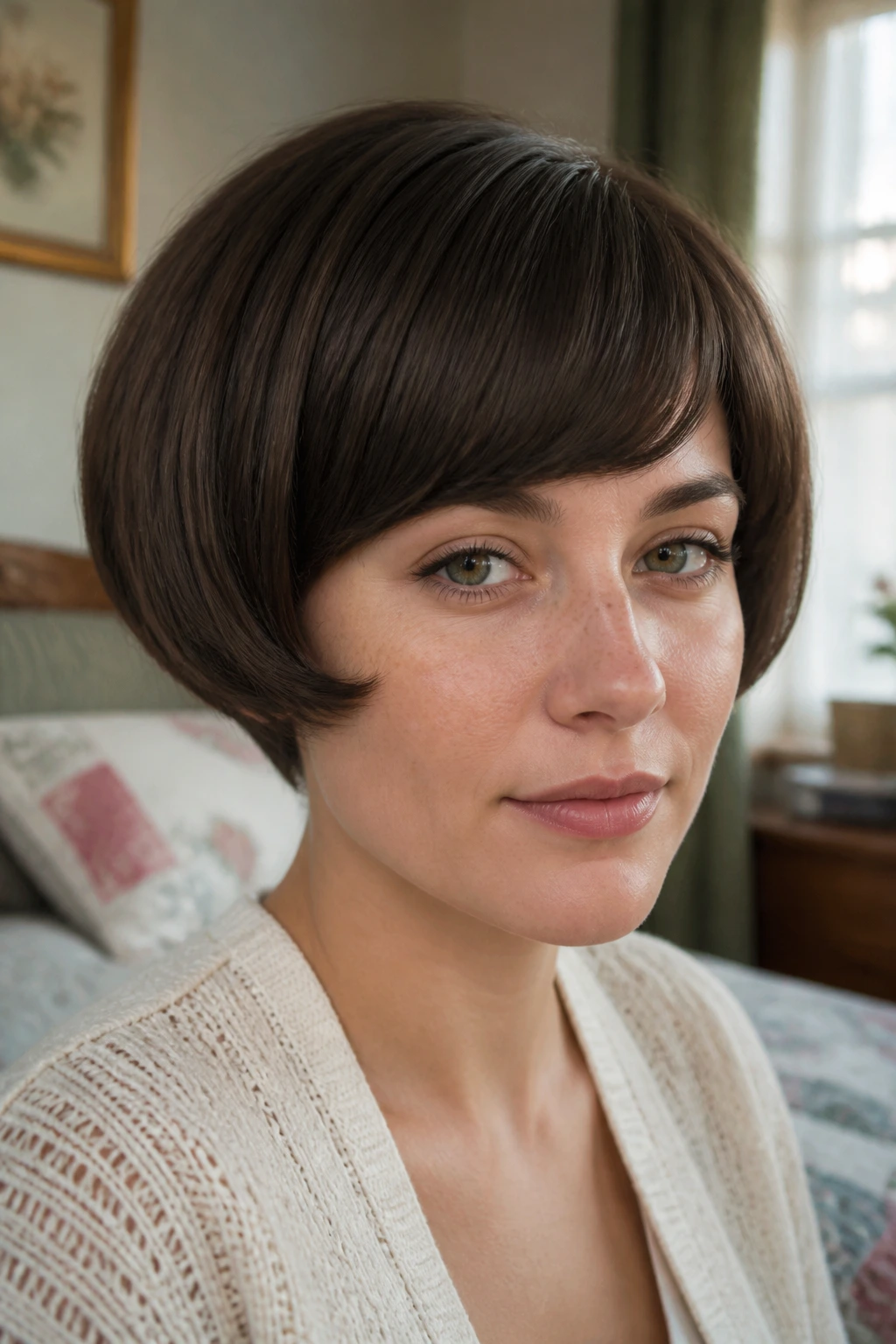
Will a vintage pixie work on curly hair?
Yes, but the cut has to respect the curl pattern. Leave a little more length at the crown and fringe so the curls can form a shape instead of springing into a puff.
How often does a pixie need trimming to stay sharp?
Most versions need a cleanup every 4 to 6 weeks. Shorter, more structured cuts like micro-bangs or tight napes may need attention sooner, while feathered styles can stretch a bit longer.
Can I air-dry a vintage-inspired pixie?
Some versions, yes. Feathered, tousled, and curl-defined cuts air-dry well; finger waves, rolled crowns, and smooth side parts usually need some heat or setting help.
What if my hair has a stubborn cowlick at the front?
Work with it instead of against it. A deep side part, a longer fringe, or a brushed-forward shape usually behaves better than a blunt, straight-across bang on a strong cowlick.
Do these cuts suit round faces?
They can, especially the versions with lift at the crown, a longer side sweep, or a little length near the temples. The goal is to create a vertical line or an angled front rather than a perfectly round outline.
Is a pixie hard to style every day?
Some are, some aren’t. A feathered crop or tapered nape can be quick, while wave-set and rolled styles take more hands-on time. Pick the haircut that matches your morning patience, not the one that looks hardest on Instagram.
Can I grow one of these out without looking messy?
Yes, if the cut has a layered crown and a tapered nape. Those two details keep the growing stages from turning into a blocky triangle, which is where most short hair gets annoying.
What product finish works best for a vintage look?
It depends on the style. Glossy cuts want cream, pomade, or shine spray; softer feathered versions prefer mousse or light styling lotion; textured bangs usually look better with a matte paste.
A Cut That Keeps Its Shape
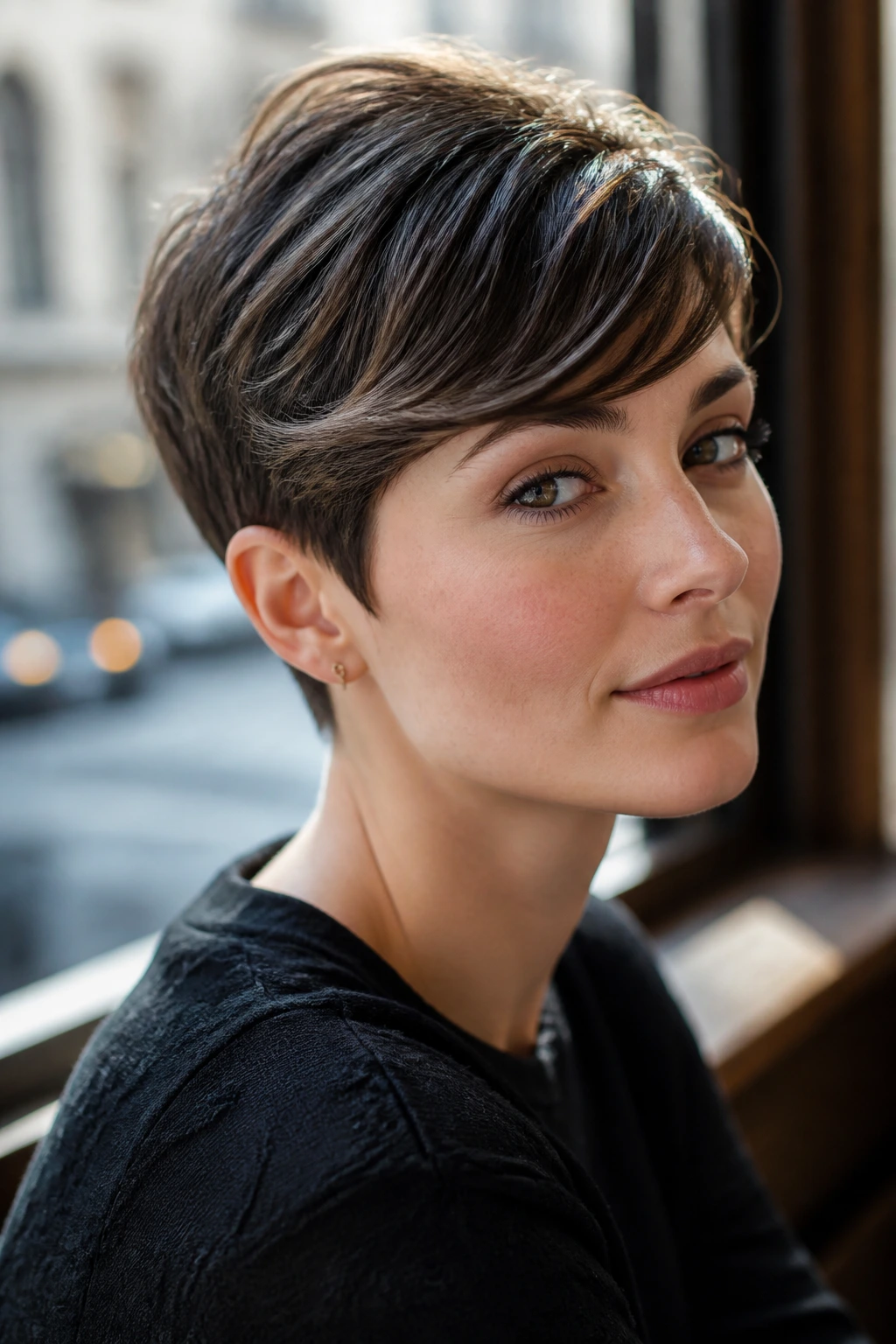
Vintage pixies work because they are specific. They do not lean on length, and they do not need a pile of styling tricks to tell you what they are. A curved fringe, a wave at the front, a clean nape, or a lifted crown does the job on its own, and that kind of clarity is rare.
The smartest way to choose one is to think about what you want the haircut to do before you think about the decade. Do you want polish, softness, edge, or a little theater? Pick that first, then choose the era that gives it shape. The best short hair always looks like someone made a decision, and these cuts do exactly that.
