



Medium-length hair can be maddeningly good at ponytails and maddeningly annoying at the same time. It’s long enough to twist, braid, wrap, and puff up with some attitude, but short enough that a bad elastic choice or a sloppy part can make the whole thing droop by lunch. The sweet spot is real. So are the frustrations.
That’s why ponytail styles for medium length hair deserve more credit than they get. You’re not stuck with a single “office ponytail” or a tiny gym stub at the back of your head. With the right placement, a few well-placed pins, and a little control over the crown, shoulder-grazing hair can pull off sleek, soft, polished, messy, and surprisingly full looks without needing inches and inches of extra length.
The trick is knowing which style works with your cut instead of fighting it. Layers, blunt ends, curtain bangs, and collarbone-length cuts all behave differently once you gather the hair. A style that looks flat on someone with thick, one-length hair can look airy and expensive on medium hair, while the same style can collapse on fine hair unless you prep the roots first. That’s where the good stuff starts.
Why Medium-Length Hair Is a Ponytail Sweet Spot
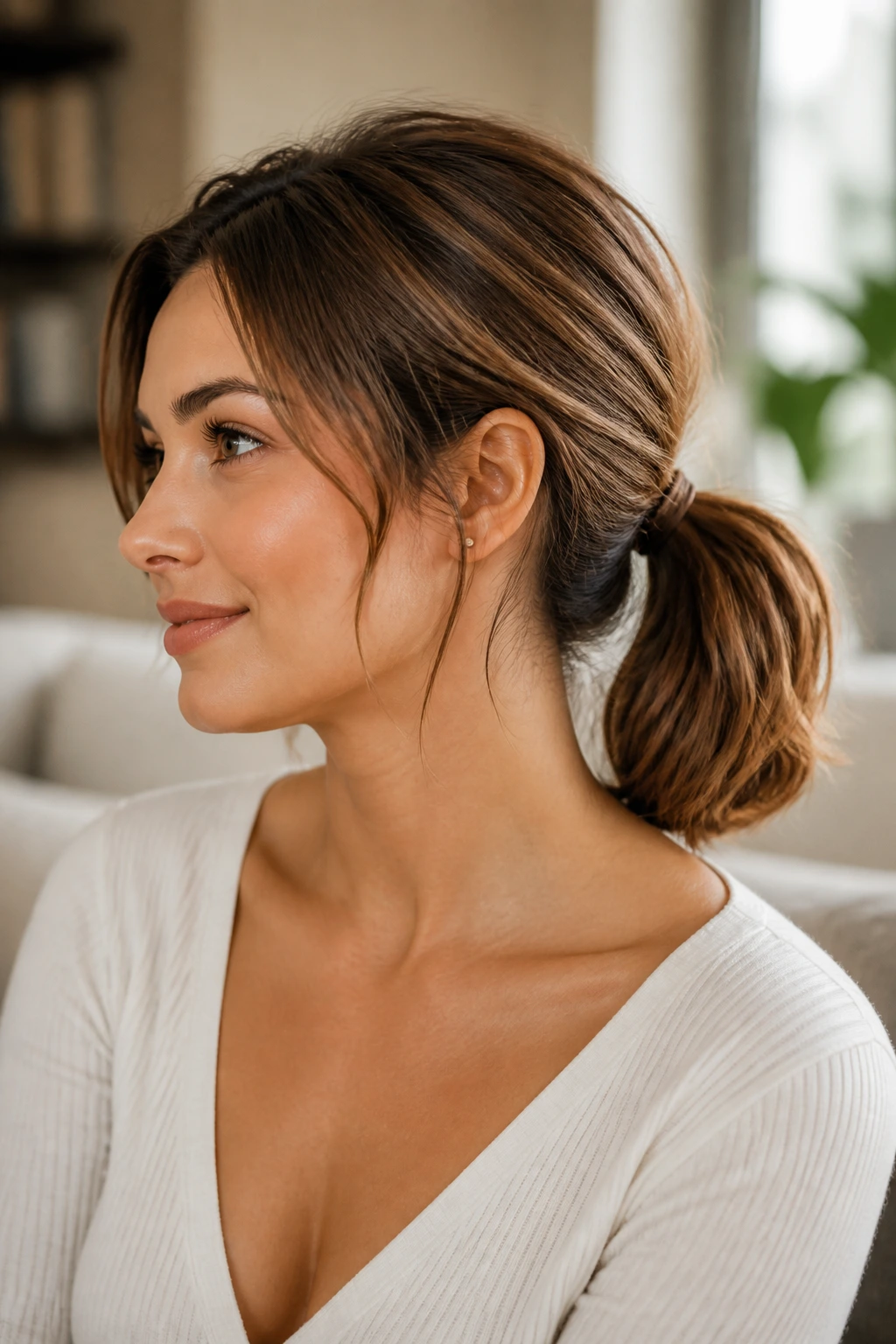
-
The length is just right for structure: You have enough hair to build a visible shape, but not so much weight that every ponytail drags itself downward by the hour.
-
Layers can work in your favor: Instead of forcing every strand to line up, medium layers give you movement around the face and a softer tail, which is often better-looking than a rigid, blunt finish.
-
You can fake extra volume fast: A teasing comb, dry shampoo, or a second elastic can change the silhouette in 60 seconds, and that matters when the tail itself isn’t very long.
-
Accessories actually show up: Scarves, ribbon, cuffs, and wrapped elastics don’t disappear into a giant mass of hair, so the details read clearly.
-
The styles stay wearable: A medium ponytail can look polished without feeling heavy, headache-inducing, or overdone. That’s the line I keep coming back to.
-
You get more range than people expect: One day it’s sleek and low, the next it’s twisted, puffed, or bubble-sectioned. Same hair. Different mood.
1. The Sleek Low Ponytail at the Nape
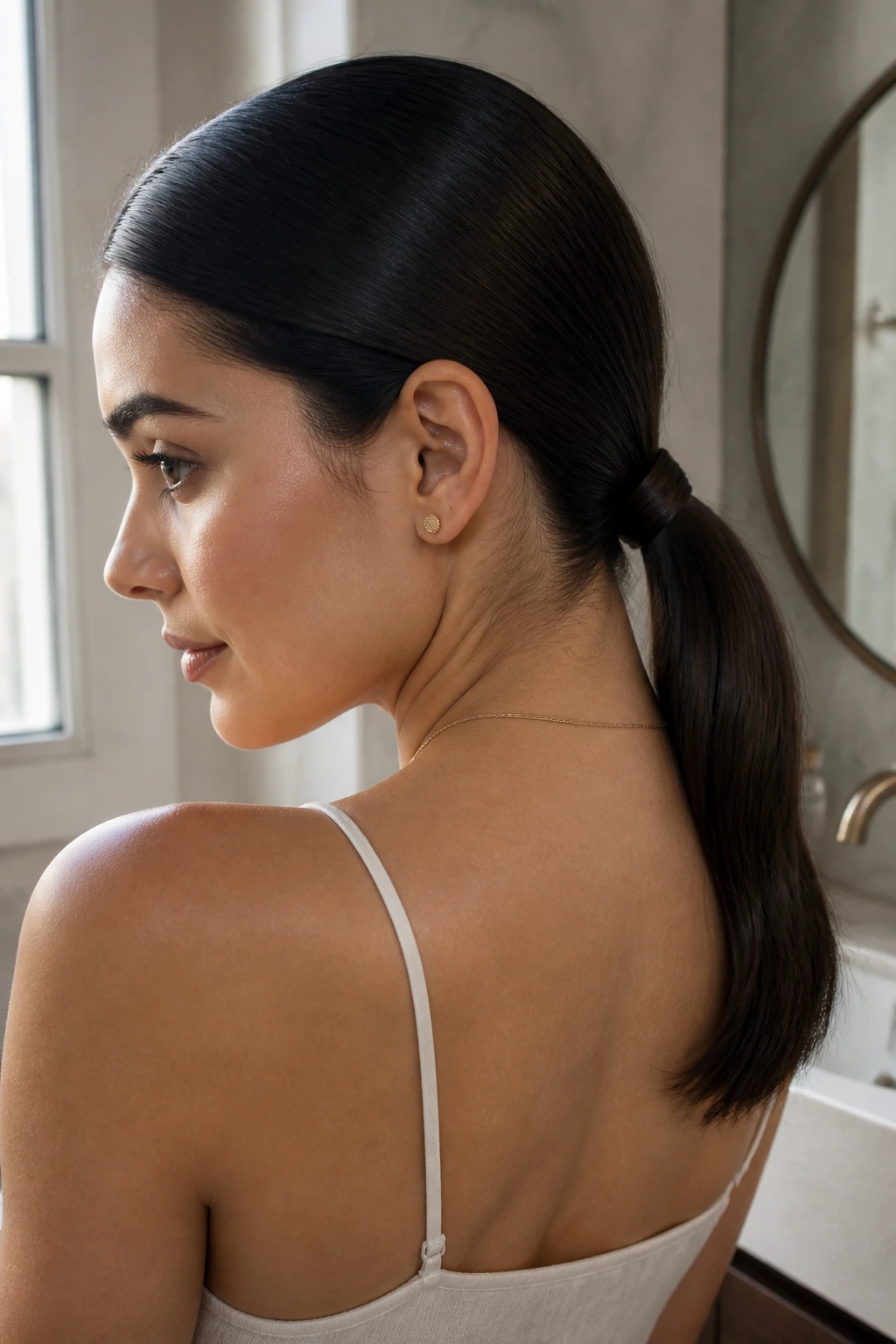
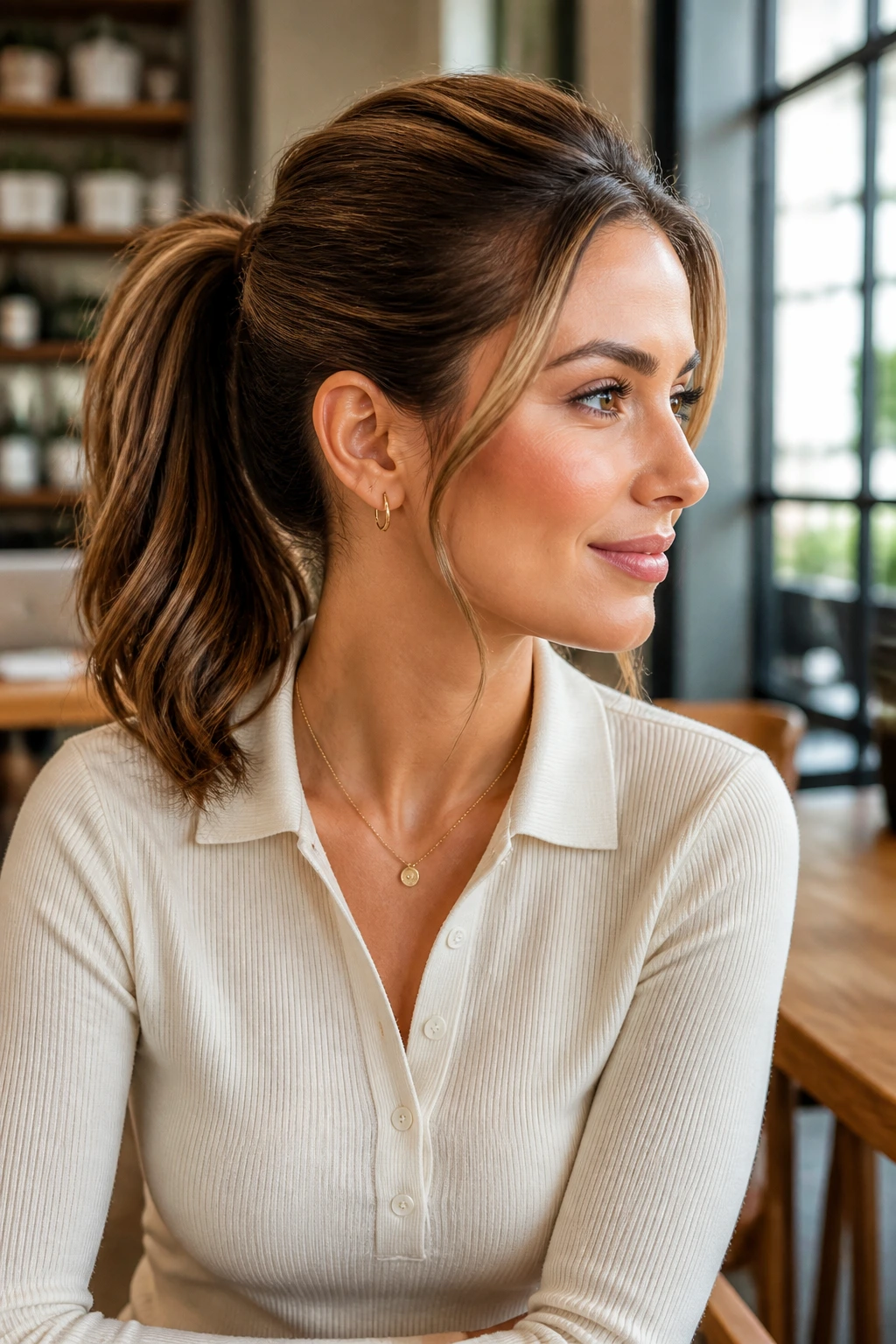
A good sleek low ponytail is almost rude in how simple it looks. The hair sits right at the nape, the part is clean, and the surface has that flat, glassy finish that makes medium-length hair look intentional instead of “I threw it back and hoped for the best.” If your ends land around the collarbone, this style is one of the easiest ways to make that length feel controlled.
Why It Works
The low placement keeps the weight balanced, which matters when your hair isn’t long enough to drape dramatically. A small amount of smoothing cream or serum on damp hair helps the top lie down without the greasy look that can happen if you go heavy-handed. I like this one most on straight or lightly wavy hair, because the natural bend at the tail gives it a little life instead of a dead-straight rope.
Quick Styling Notes
- Brush the hair back with a boar-bristle brush or a dense paddle brush.
- Use a tiny bit of gel along the hairline if you want the front extra flat.
- Secure with a snag-free elastic, then wrap a thin strand around the base.
- If the ends stick out, bend them under with a flat iron for 5 seconds.
Best For
Workdays, interviews, dinners, or any outfit with a strong neckline. It looks especially good with gold hoops and a crisp collar.
2. The Wrapped Mid-Height Ponytail With a Clean Finish
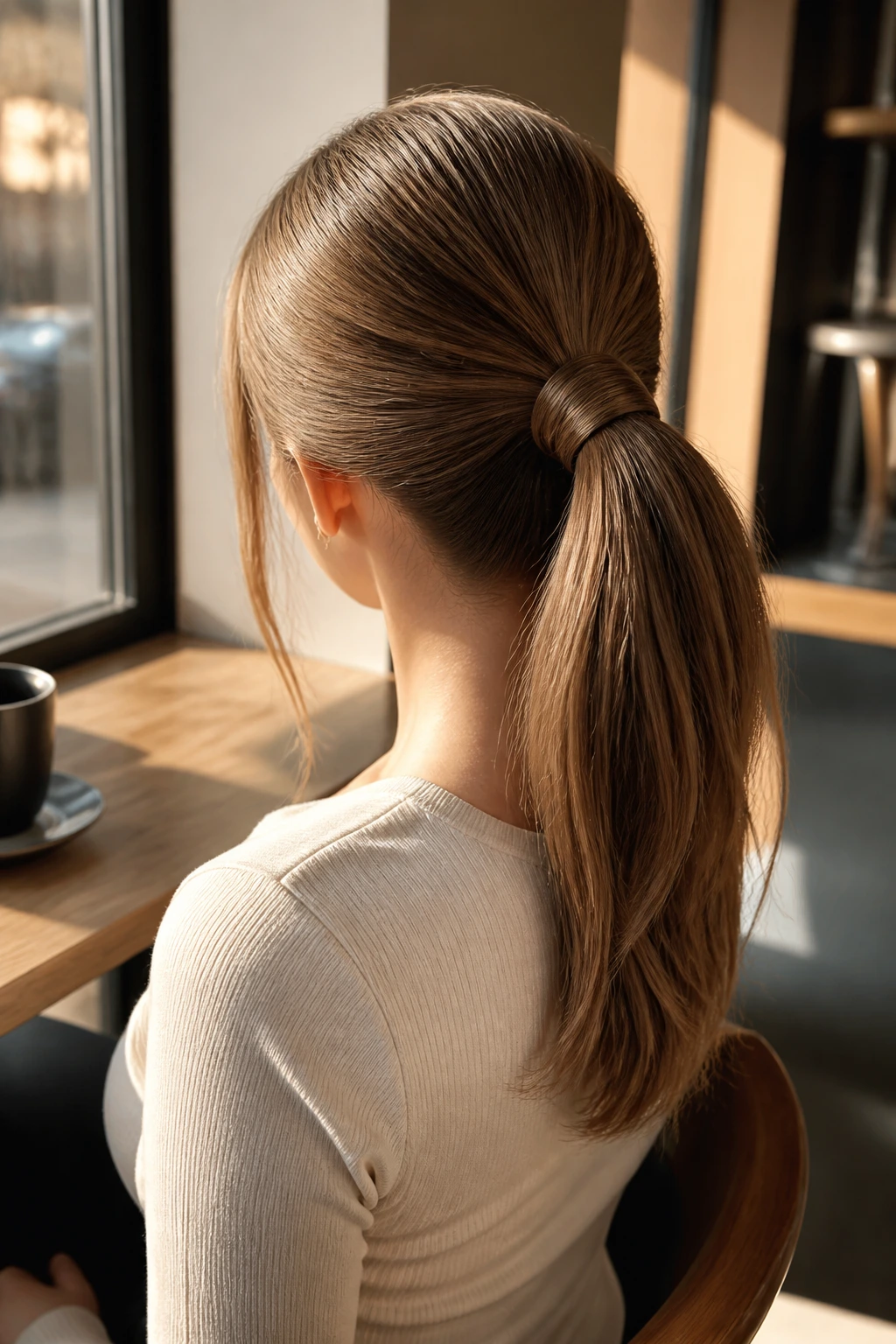
This is the ponytail I reach for when I want polish but not severity. The pony sits in the middle of the back of the head, not too high, not too low, and the wrapped base hides the elastic so the whole thing looks finished. Medium-length hair handles this height beautifully because the tail still has enough drop to move.
The style works best when you smooth the front first, then gather the hair with both hands instead of overbrushing it into submission. That keeps the crown from going flat in a weird, tight way. A one-inch section of hair wrapped around the base makes a big difference. Tiny detail. Big payoff.
If your layers are short, leave a few face-framing pieces out and curl them away from the face with a 1-inch iron. That softens the line around the cheeks and keeps the ponytail from looking too severe. I think this style looks especially good with knit tops and open necklines, because it balances softness and structure without trying too hard.
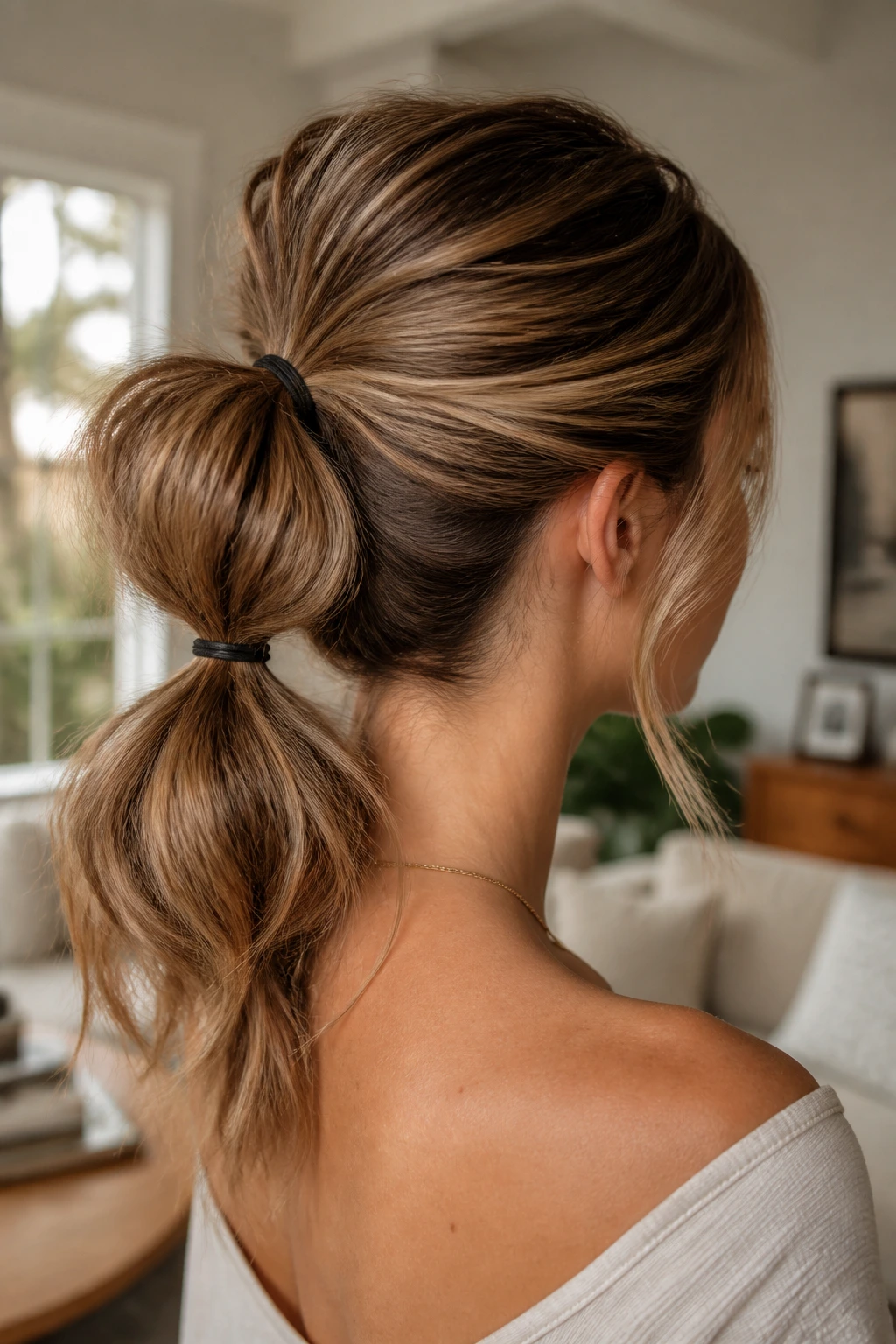
3. The Bubble Ponytail That Looks Fuller Than It Is
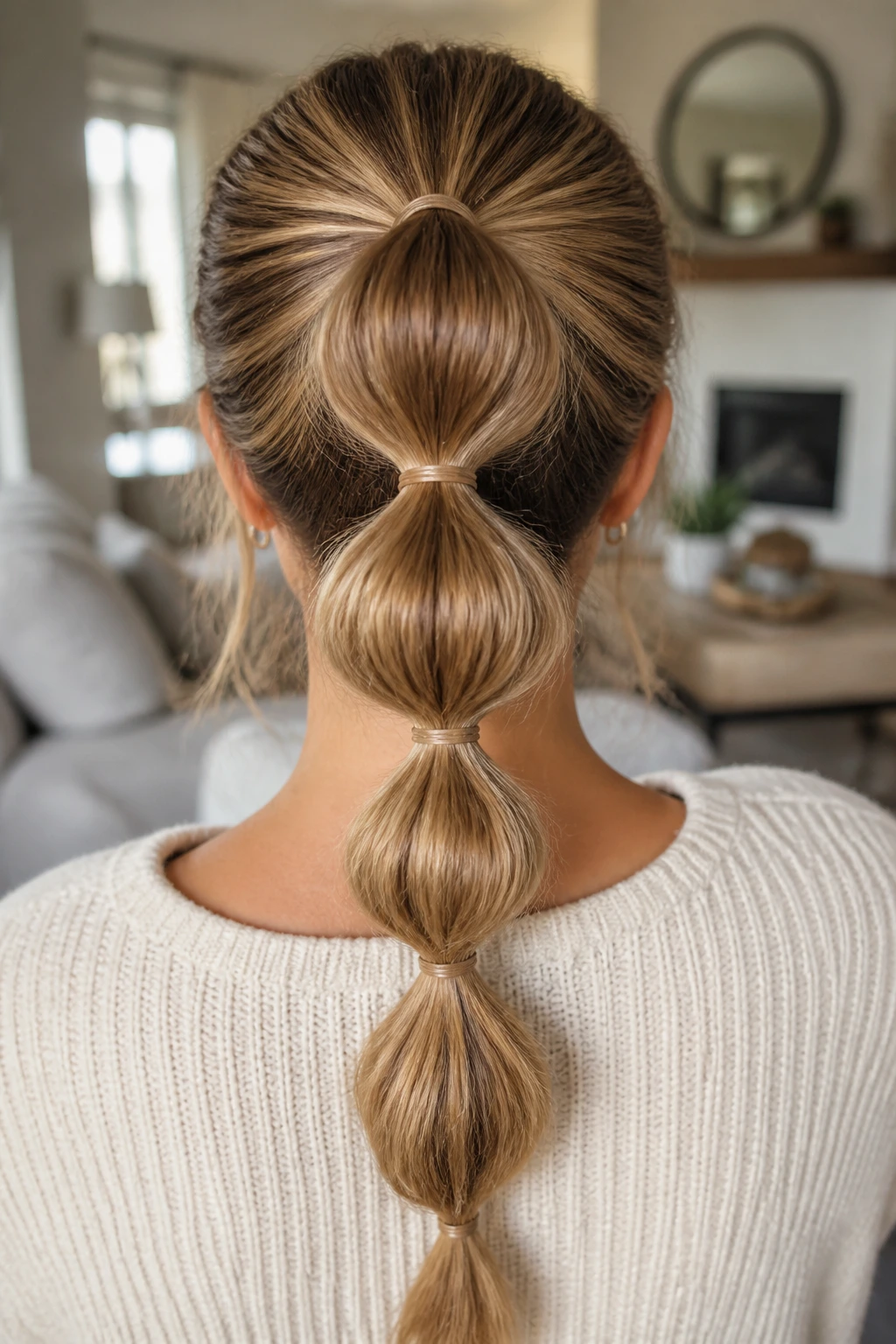
Bubble ponytails are a cheat code for medium hair. They create the illusion of length and thickness by breaking the tail into puffed sections with small elastics every 1½ to 2 inches. That spacing matters. Too tight, and the bubbles look cramped. Too loose, and the shape falls apart before you leave the house.
Start with a simple mid or low ponytail, then place clear elastics down the length of the tail. Pull gently at each section to fatten the “bubble” without tearing at the elastic. On medium hair, I usually stop before the very end and leave the last few inches clean, which keeps the shape from turning mushy.
What Makes It Different
A bubble ponytail gives medium-length hair a silhouette it doesn’t naturally have. That’s the whole trick. Instead of pretending the tail is long, you turn the length into a design choice.
Tiny Details That Matter
- Use matching elastics if you want the sections to disappear.
- Tease each bubble a little more if your hair is fine.
- Add a satin ribbon between two bubbles for a softer finish.
- Mist the finished style with flexible hold spray, not hard-shell lacquer.
4. The Half-Up Ponytail That Saves Second-Day Hair
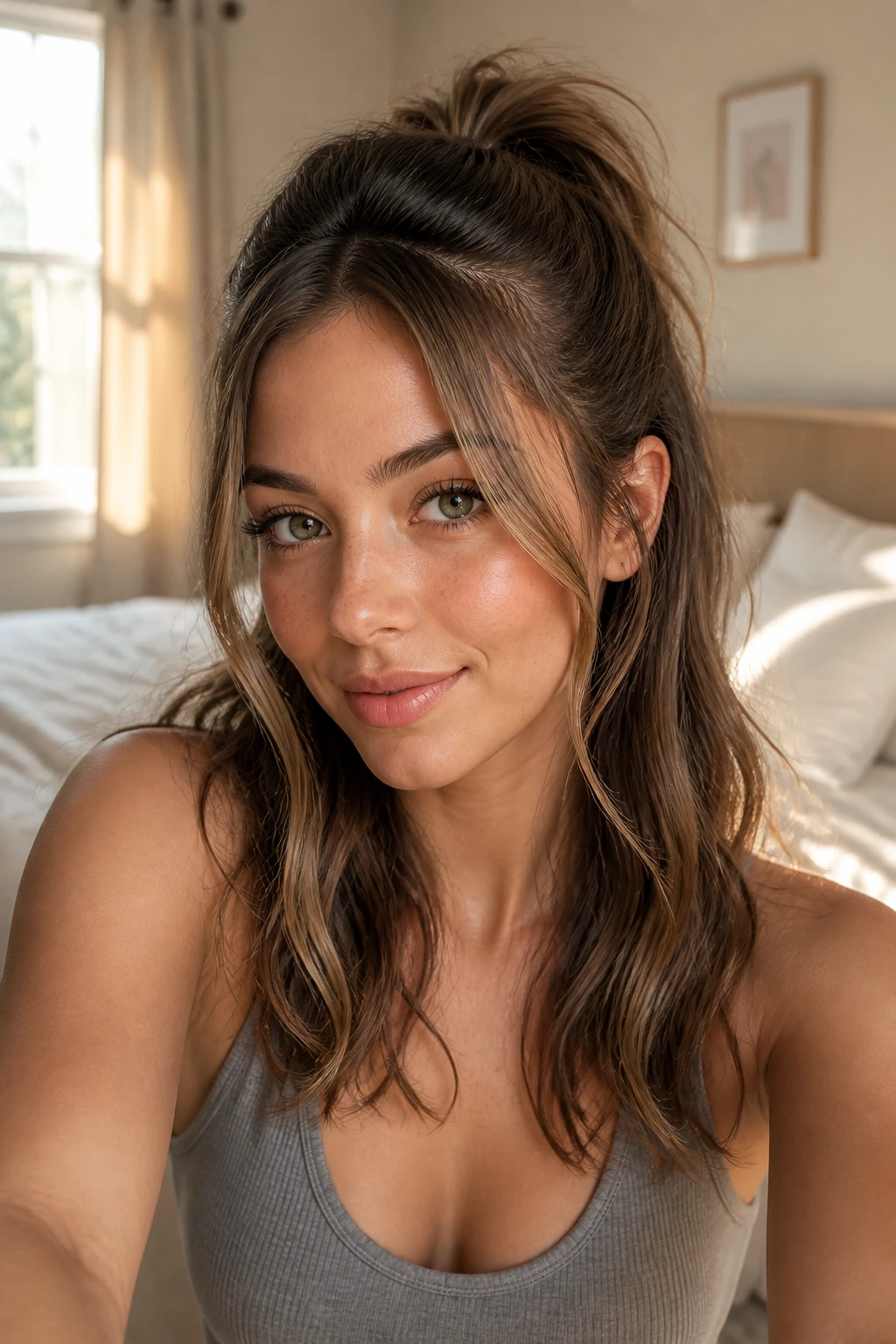
Half-up ponytails are what I call the “I still want hair movement, but I’m done dealing with every strand” style. You pull back the top half and leave the bottom half loose, so the crown gets lift and the ends still move around your shoulders. On medium hair, this is often the most forgiving ponytail shape because it doesn’t ask every layer to behave.
The style really shines on hair that has a little grit in it. Second-day hair grips better, especially if you add a touch of dry shampoo at the roots before you gather the top section. If you’re using a center part, keep the half pony low and clean. If you want a softer look, leave the part slightly off-center and tug a few pieces loose near the temples.
It’s not a formal style, and that’s part of the appeal. It reads easy but not lazy. The difference is in the top section: if you lift it slightly before securing, the whole style looks fuller and more deliberate.
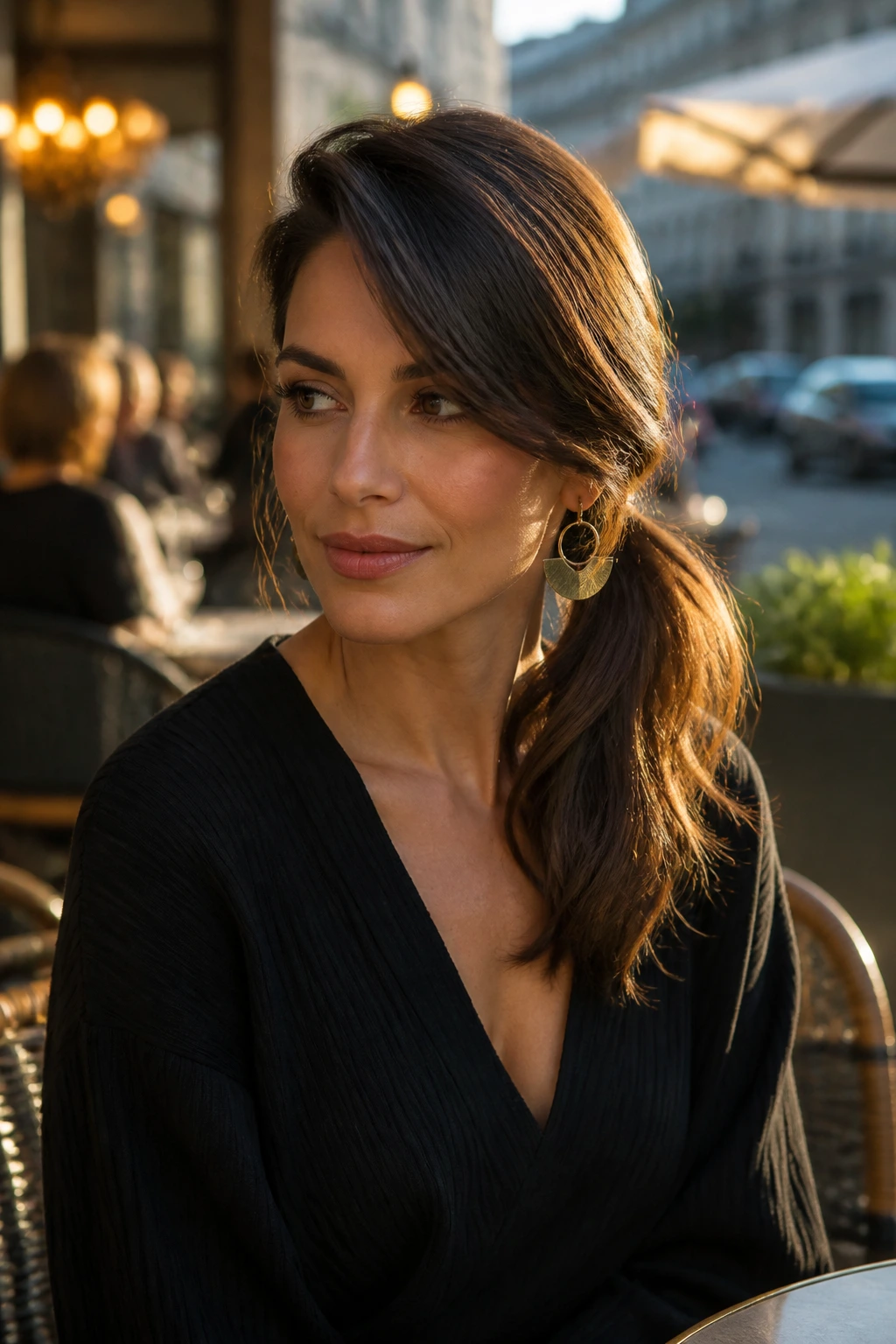
5. The Side-Swept Low Ponytail With One-Sided Drama
A side ponytail can look childish if it’s done flat and fast. The good version sits low, sweeps to one side, and uses a deep part so the front has direction instead of puff. On medium-length hair, this style works because the tail has enough heft to rest on one shoulder without feeling sparse.
I like this one for softer outfits: off-the-shoulder tops, wide necklines, or anything with earrings that deserve room. Curl the tail in large sections with a 1¼-inch iron if you want movement, or leave it straight for a cleaner line. Either way, pull the tail a little forward once it’s secured so it lands naturally rather than sticking out behind you.
The best part? It makes shoulder-length or collarbone-length hair look a little longer than it is, because the eye follows the diagonal line of the part and tail. That diagonal does a lot of work.
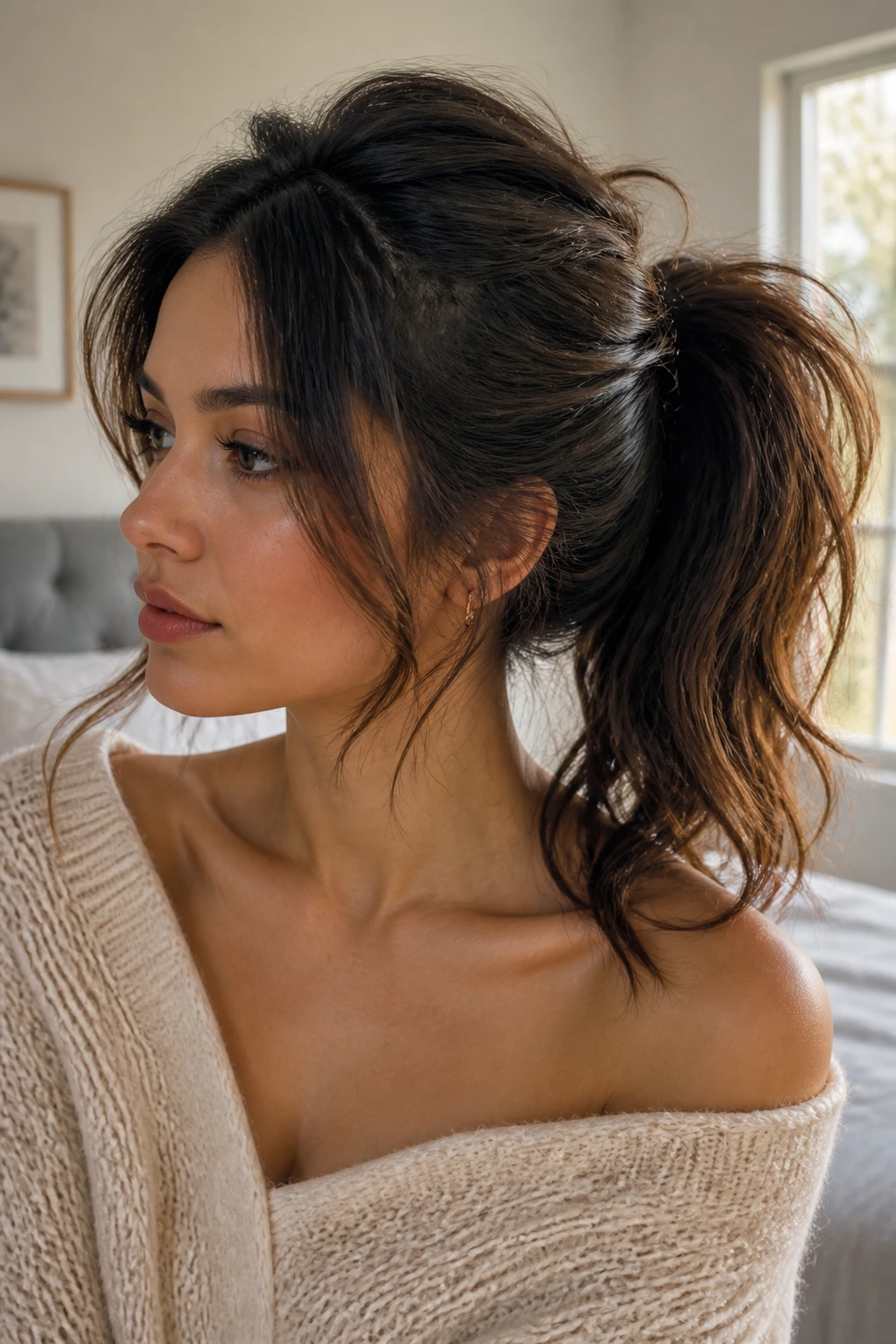
6. The Messy Textured Ponytail That Still Looks Thought Out
There’s a narrow line between “textured” and “forgot to brush my hair,” and this style lives right on it. The difference is prep. A good messy ponytail starts with rough-dried roots, a little texturizing spray, and a crown that has been lifted with your fingers before you secure the elastic.
This is the ponytail for medium hair when you want movement and a little grit. It works especially well on layered cuts, because the shorter pieces around the face and crown break up the shape in a flattering way. Don’t over-smooth the top. That’s the biggest mistake people make. If the crown is too flat, the whole style turns limp.
How I’d Wear It
- Let two small face-framing strands fall out naturally.
- Curl the tail in alternating directions for softer bends.
- Tug the top gently after securing to get a little height.
- Finish with dry texture spray on the tail, not the roots alone.
7. The High Ponytail With Flipped Ends
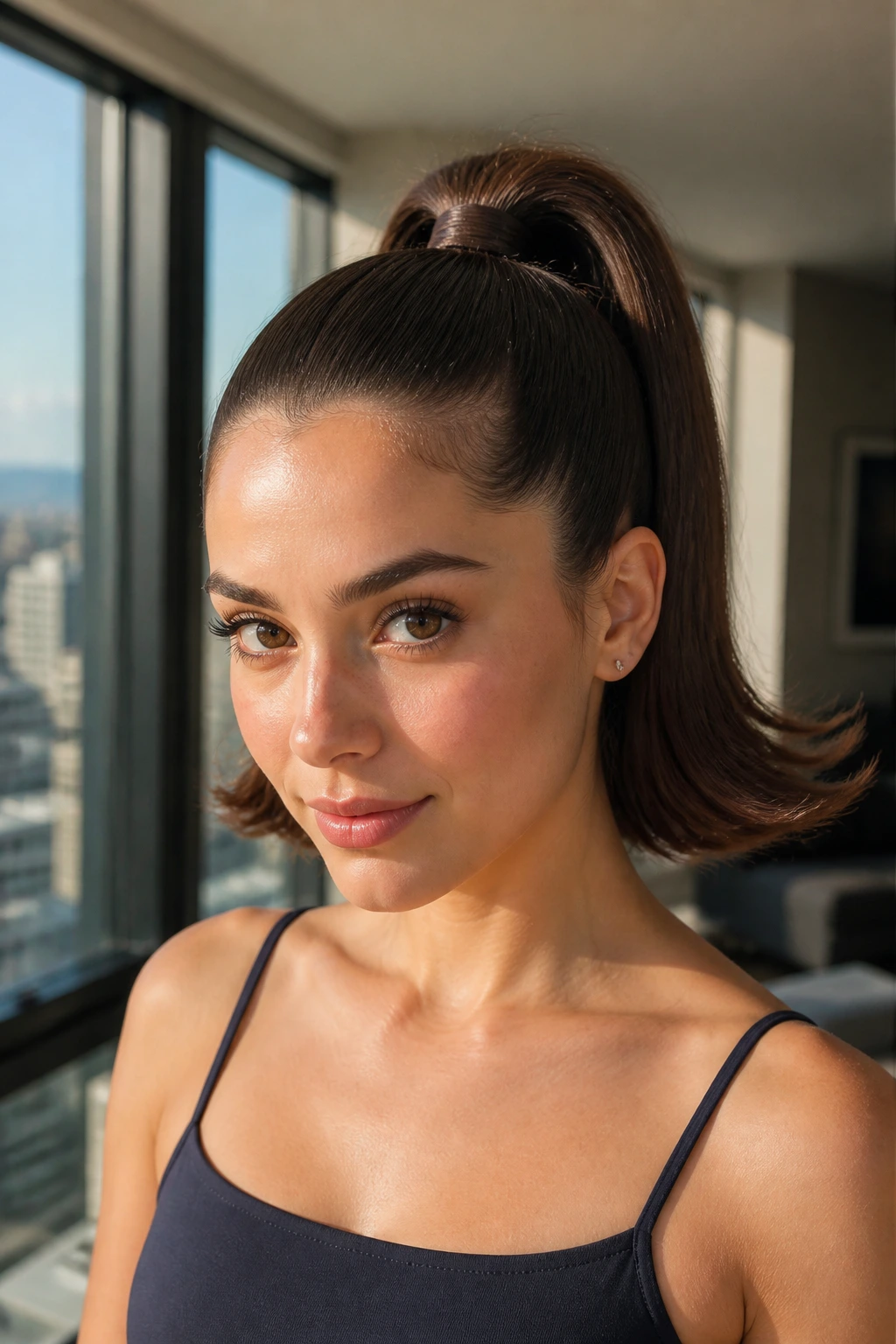
A high ponytail on medium hair can look fantastic if you treat the ends like a design feature, not an afterthought. Flip them outward with a flat iron or a round brush, and suddenly the style has energy. Without that detail, medium hair in a high pony can look a bit stubby. With it, the shape feels playful and clean.
This works best when the pony sits high enough to lift the face, but not so high that the base screams “prom night.” A good rule: place the elastic on the crown line, then smooth the top backward with a brush. Once it’s secure, take small sections from the tail and bend the ends away from the neck. That flick at the bottom gives the style movement.
It’s a good match for sharp eyeliner, sporty outfits, or anything with a little retro edge. And yes, it takes a few more minutes than a basic ponytail. Worth it.
8. The Rope-Twist Ponytail That Looks More Complicated Than It Is
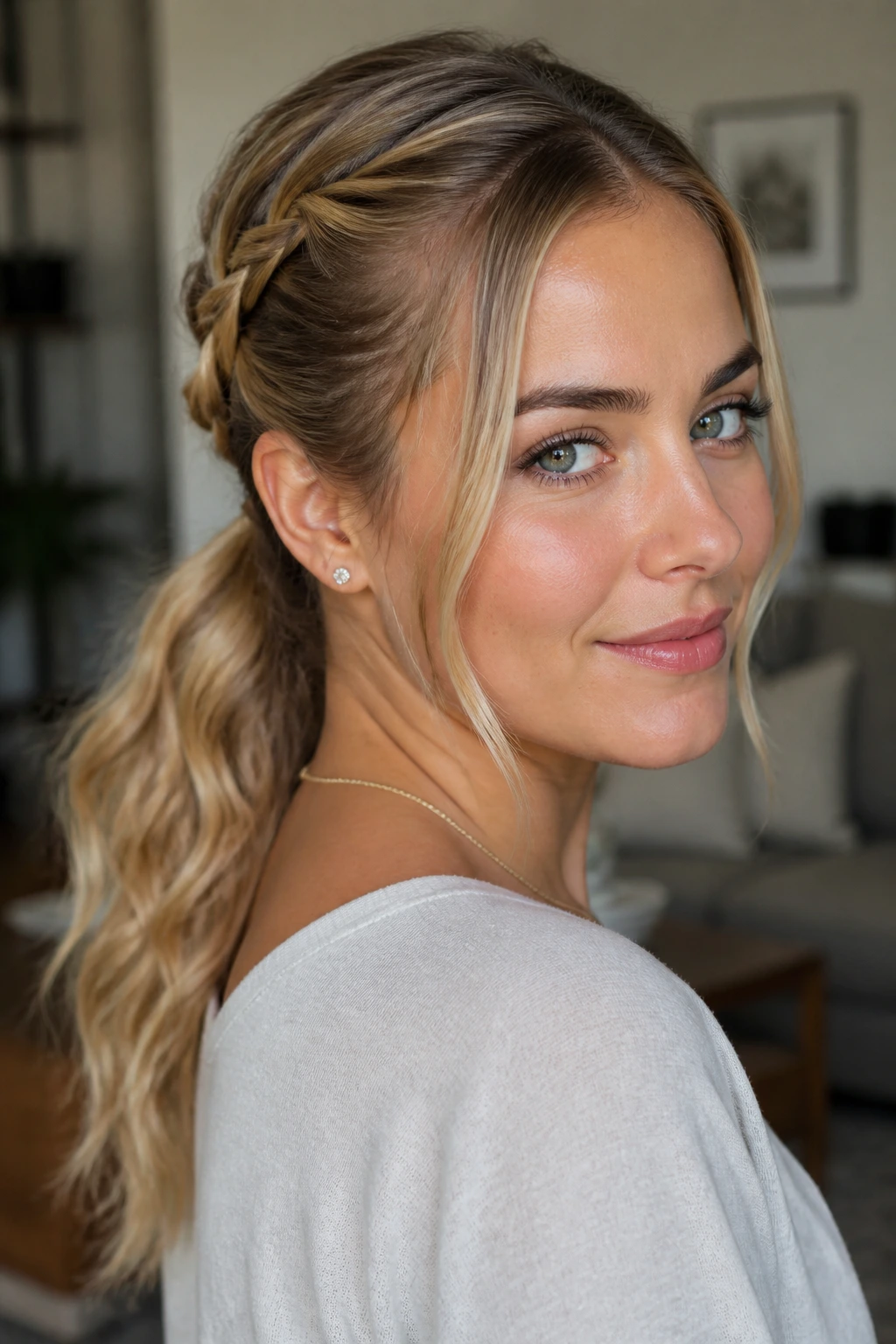
Rope twists make medium hair look neatly engineered without a lot of tools. Split the hair into two sections on each side, twist them back away from the face, then combine them at the nape or mid-height into a ponytail. The result has a tidy, almost braided look, but the actual technique is less fussy than a braid.
What I like here is the texture around the face. The twists create a bit of direction without tightening the hairline. If your hair is layered, the shorter pieces are easier to tuck into a twist than into a full braid, which means the front looks cleaner.
A little detail: twist each side in the same direction, then wrap them together in the opposite direction so the rope actually holds. That small mechanical step matters more than people expect. If the twist keeps unraveling, that’s usually why.
9. The Braided-Base Ponytail With a Little Built-In Grip
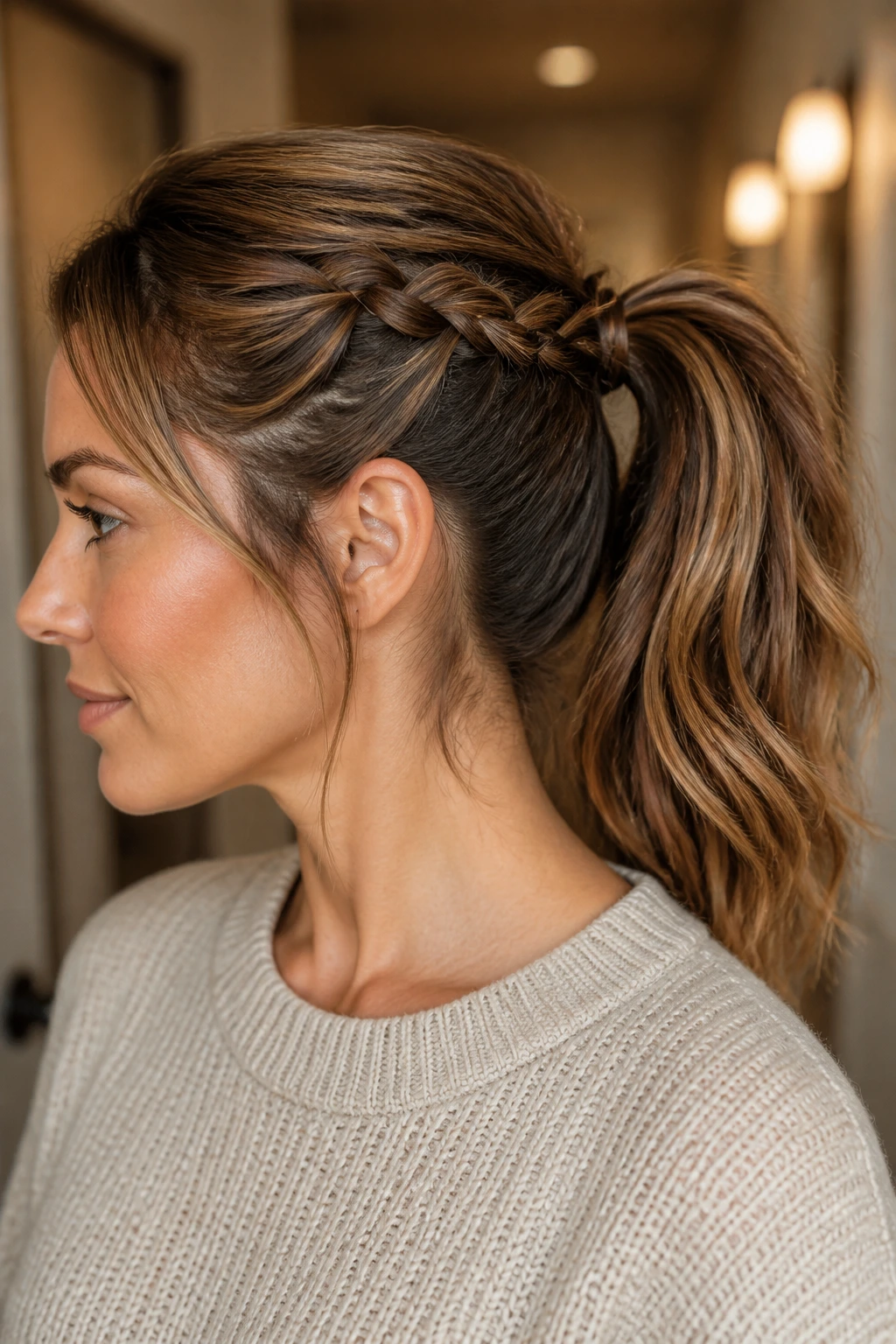
If your ponytail slips because your hair is silky or freshly washed, braid the top section first. A small French braid, Dutch braid, or even a narrow three-strand braid at the crown gives the elastic something to bite into. That’s the real advantage here. It’s not just pretty; it helps the style stay put.
On medium-length hair, a braided base also fixes one of the common ponytail problems: the top looks flat while the tail looks too small. The braid adds structure where the style needs it most. You can leave the tail straight, curl it, or even turn it into a bubble tail afterward.
Best Moves
- Braid only the top front section if you want a softer finish.
- Pancake the braid slightly by tugging at the edges.
- Keep the ponytail low if your layers are short.
- Use a firm elastic, then cover it with a wrapped strand if you want the braid to blend in.
10. The French Braid Into Ponytail Combo
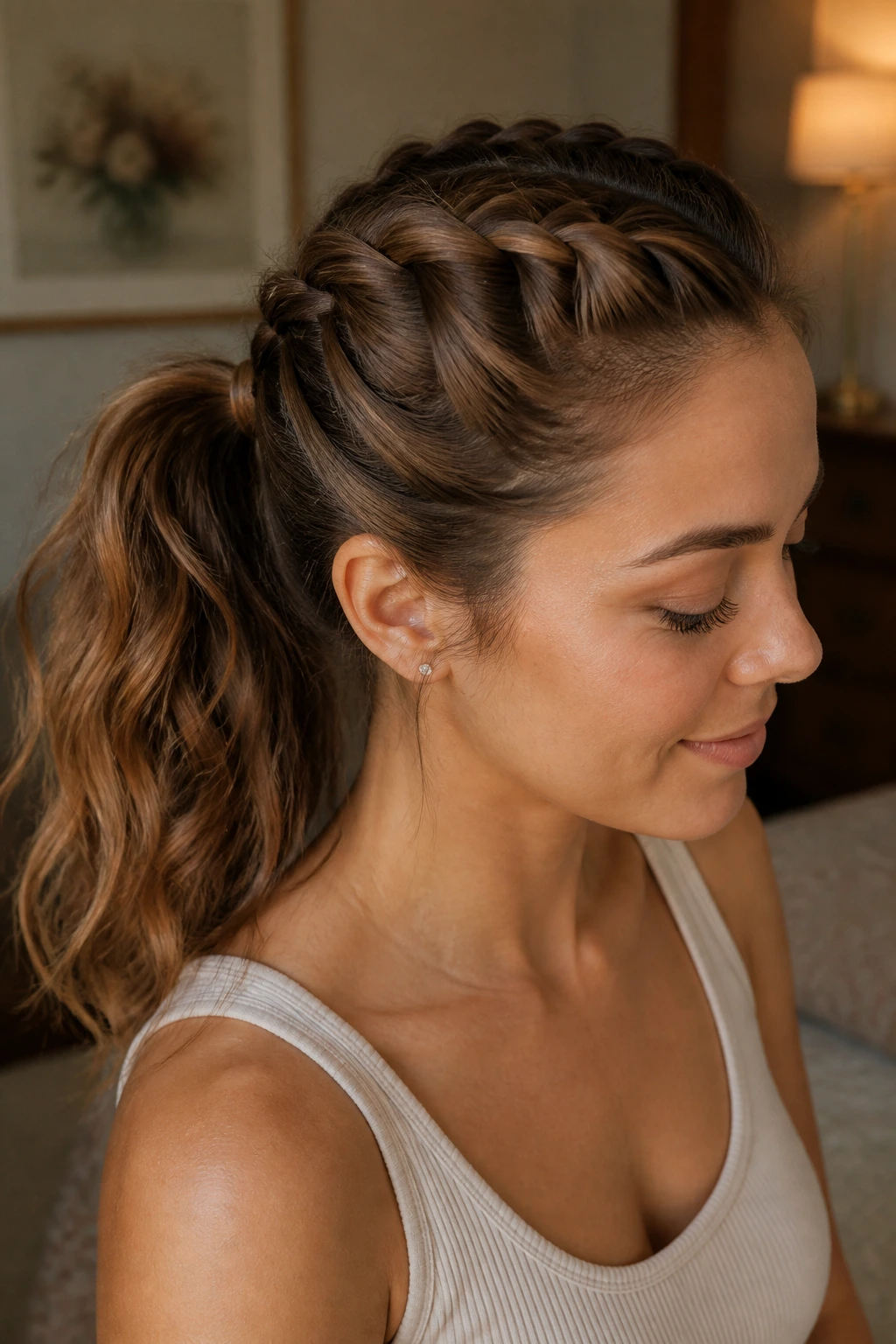
This one is more polished than the braided-base version because the braid carries farther down the head before it ends in a ponytail. It gives medium-length hair a stronger shape at the top and keeps the sides from puffing out weirdly. If you’ve ever had the front of your hair feel too loose in a normal ponytail, this is the fix.
The braid starts at the hairline and moves toward the crown, where it meets the rest of the hair. Then you secure the whole thing into a ponytail, usually mid-height or low. I prefer this style when the hair is a little dirty, because the braid holds better and the finish looks intentional rather than slick in an artificial way.
The key is not braiding too tight. If you pull too hard at the start, the braid can make the face look pinched, and medium hair doesn’t have the spare length to hide that. Keep it snug, not ruthless.
11. The Fishtail Ponytail That Makes Medium Hair Look Woven
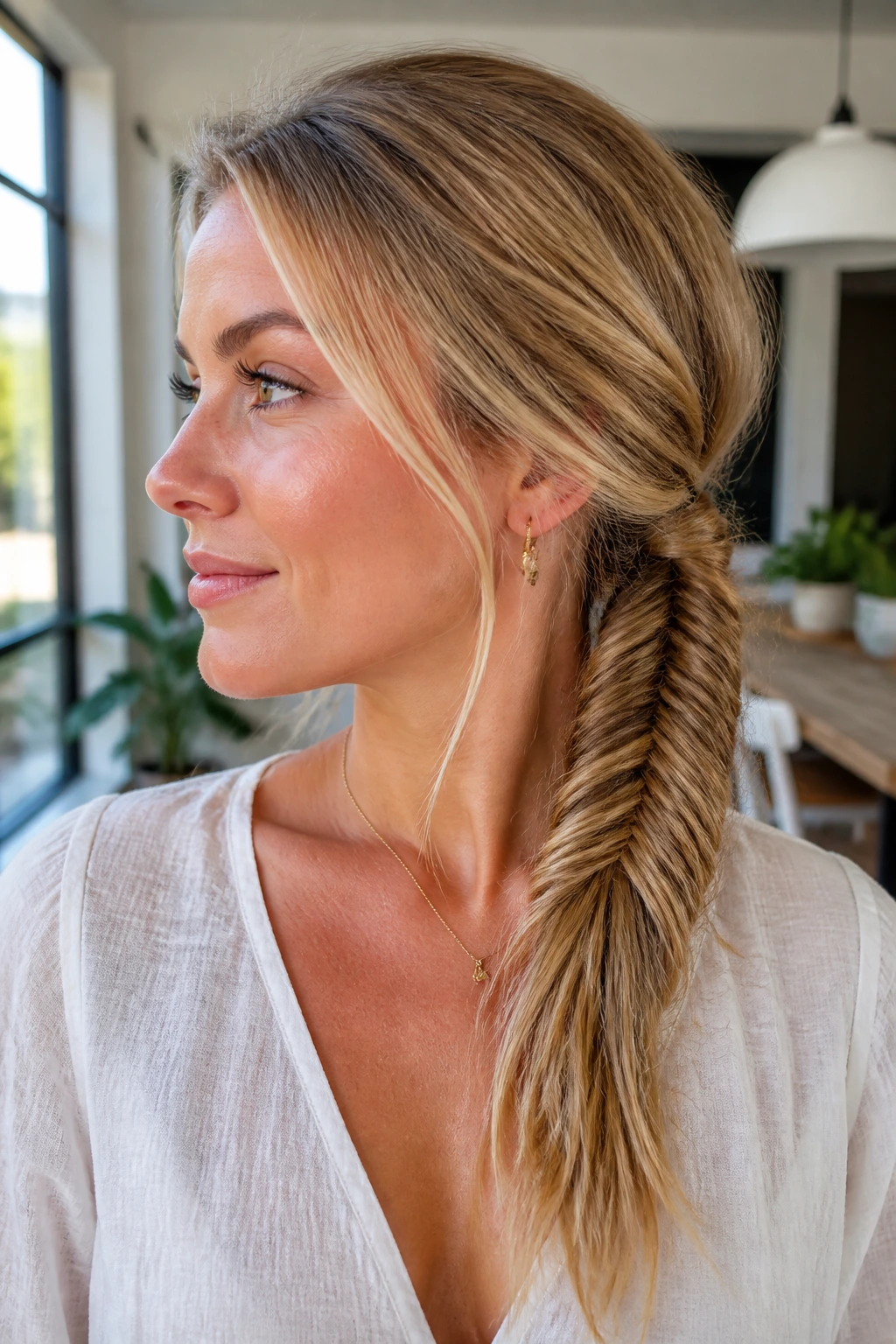
A fishtail ponytail has a certain patience to it. The weave is tighter and more detailed than a regular braid, and on medium-length hair it gives the tail enough visual interest to stand out without needing dramatic length. I like it best on low or mid-height ponytails where the braid pattern can actually be seen.
If the tail is too short, a full fishtail braid can look cramped. That’s why medium hair works better than shorter cuts: there’s enough tail to show the pattern. Start with a secured ponytail, then fishtail the tail all the way down or stop halfway and tie the rest with a clear elastic.
Use a little dry shampoo or texture spray first. Clean, slippery hair will fight you here. Once the braid is done, pull at the sides of the fishtail gently to widen it. Not too much. You want a woven look, not a frayed one.
12. The Crisscross Ponytail That Hides the Elastic Beautifully
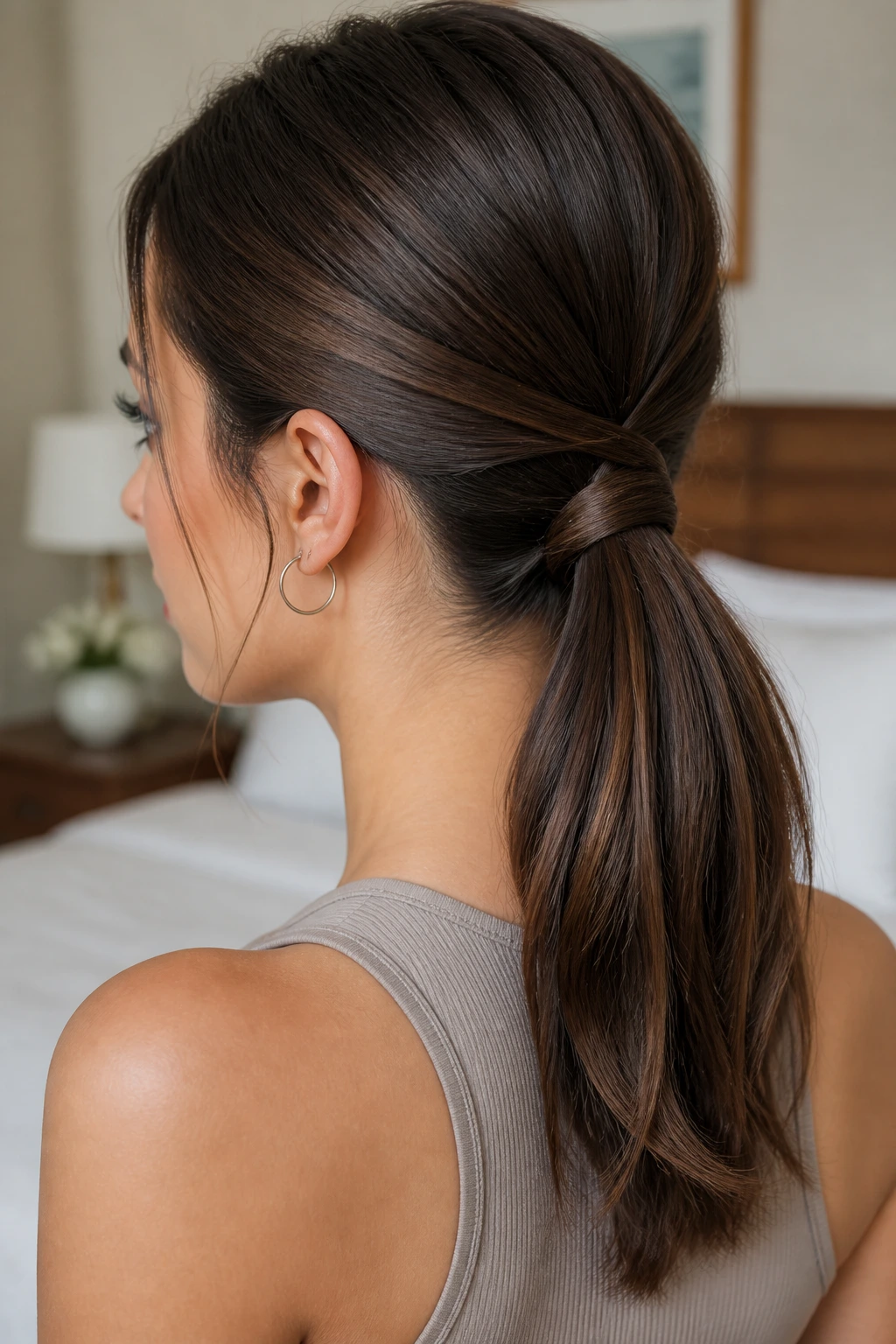
Crisscross ponytails are one of those styles that look fancier than the effort required. Take two sections from either side of the head, cross them over the back, and pin them before gathering the rest into a ponytail. The visual result is a neat little X or layered cross at the base that makes medium hair look styled, not simply tied back.
This is a good choice when the crown is a little flat but you don’t want teasing. The crossing action gives lift and shape without making the top bulky. It also helps disguise shorter layers around the temples, since those pieces can be tucked into the crossed sections.
If you want it extra neat, smooth the hair with a soft brush before you start. If you want it softer, keep a few wisps loose around the ears. I like this style with matte hair pins more than shiny ones. Matte tends to blend better into everyday hair.
13. The Curly Ponytail With Controlled Volume
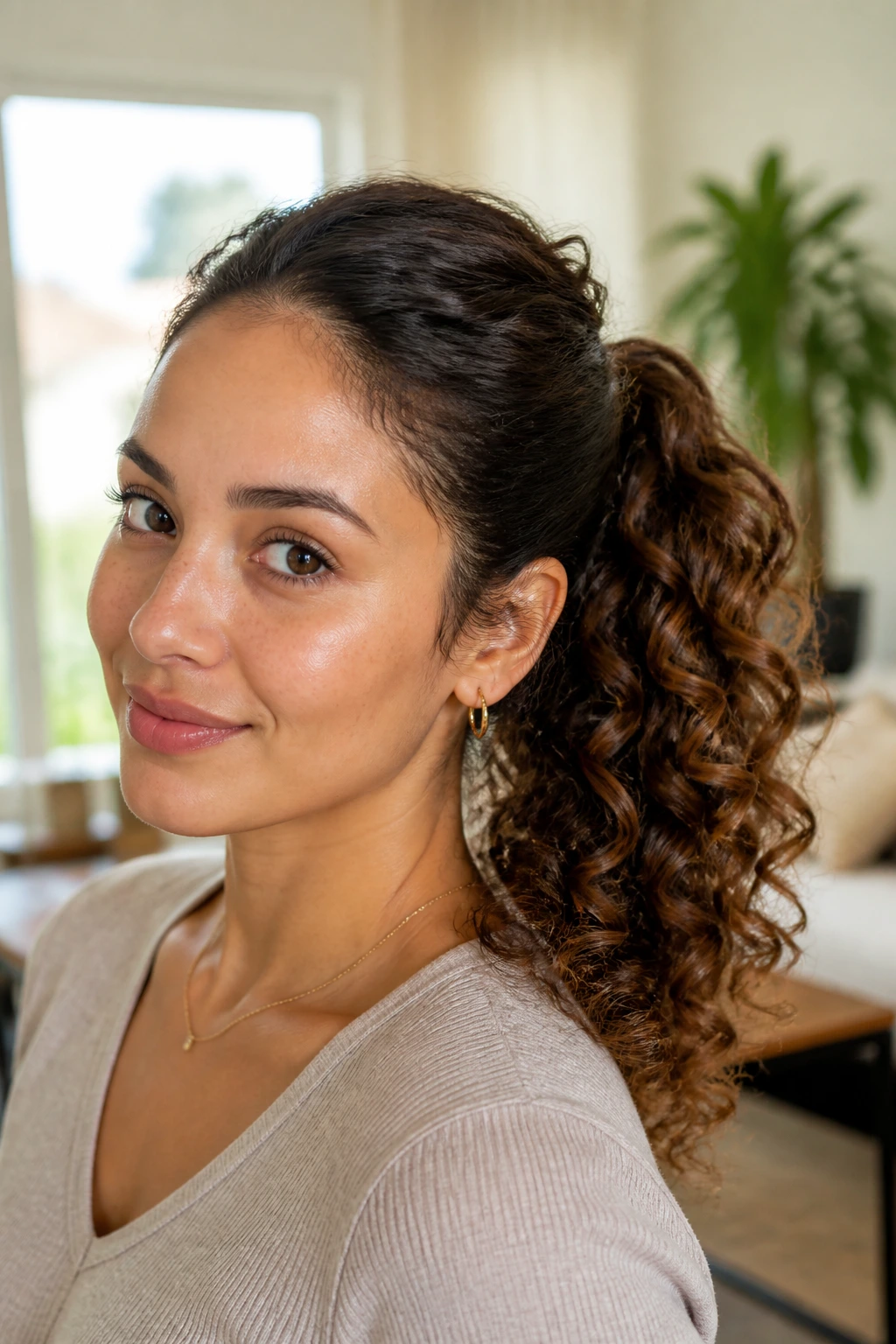
Curling the tail before or after you gather it changes the whole mood. On medium-length hair, curled ponytails are often the best way to make the length read as lush instead of abbreviated. The bends and spirals add visible body, which is especially useful if the cut has layers that tend to fall apart when pulled back.
I usually curl the hair in 1-inch sections with a curling iron, then brush the curls out just enough to soften them. If you leave them too defined, the ponytail can look too formal. If you brush too much, you lose the whole point. There’s a small sweet spot.
The crown can be sleek or slightly lifted. Both work. What matters more is the tail itself: let it sit a little off-center or slightly to one side, then mist the ends with flexible spray. It gives the style movement without turning it stiff.
14. The Teased Crown Ponytail That Gives You Instant Lift
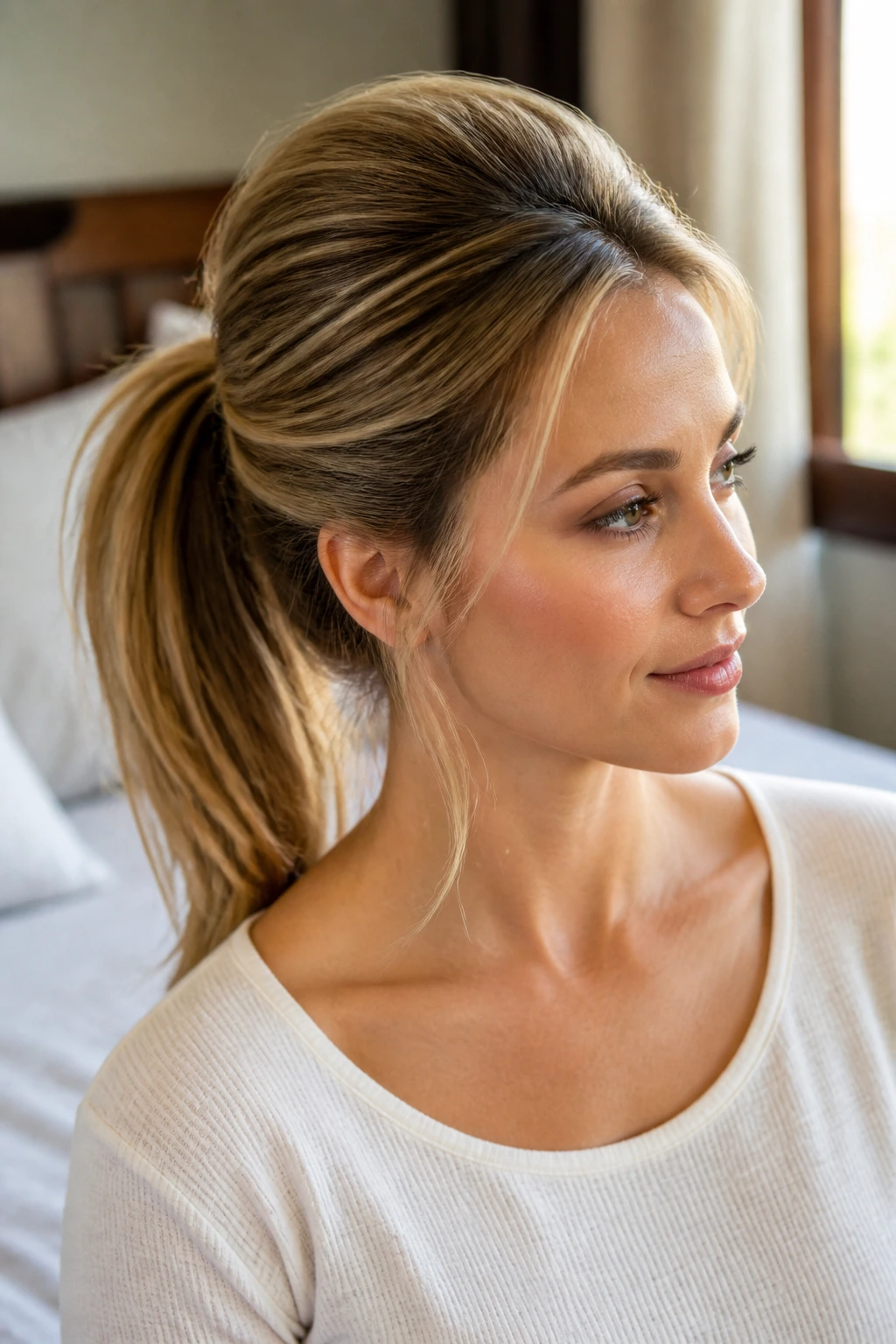
A little backcombing at the crown changes everything. Teasing the roots at the top and smoothing only the outside layer over that lift gives medium-length hair a ponytail with actual height, not just the illusion of it. If your hair tends to lie flat at the scalp, this is the style to learn.
Start with a section at the crown, lift it straight up, and backcomb the underside with a fine-tooth comb two or three times. Don’t shred the whole section; you only need enough friction to create a cushion. Then smooth the outer layer over the tease and secure the ponytail underneath or just below it.
This style looks best when you keep the ponytail tail itself simple. Straight or softly waved ends are enough. The crown is the star. And if you’re worried about damage, use a little texturizing powder instead of aggressive teasing every time. Same lift. Less snapping.
15. The Scarf-Tied Ponytail That Adds Color Without More Hair
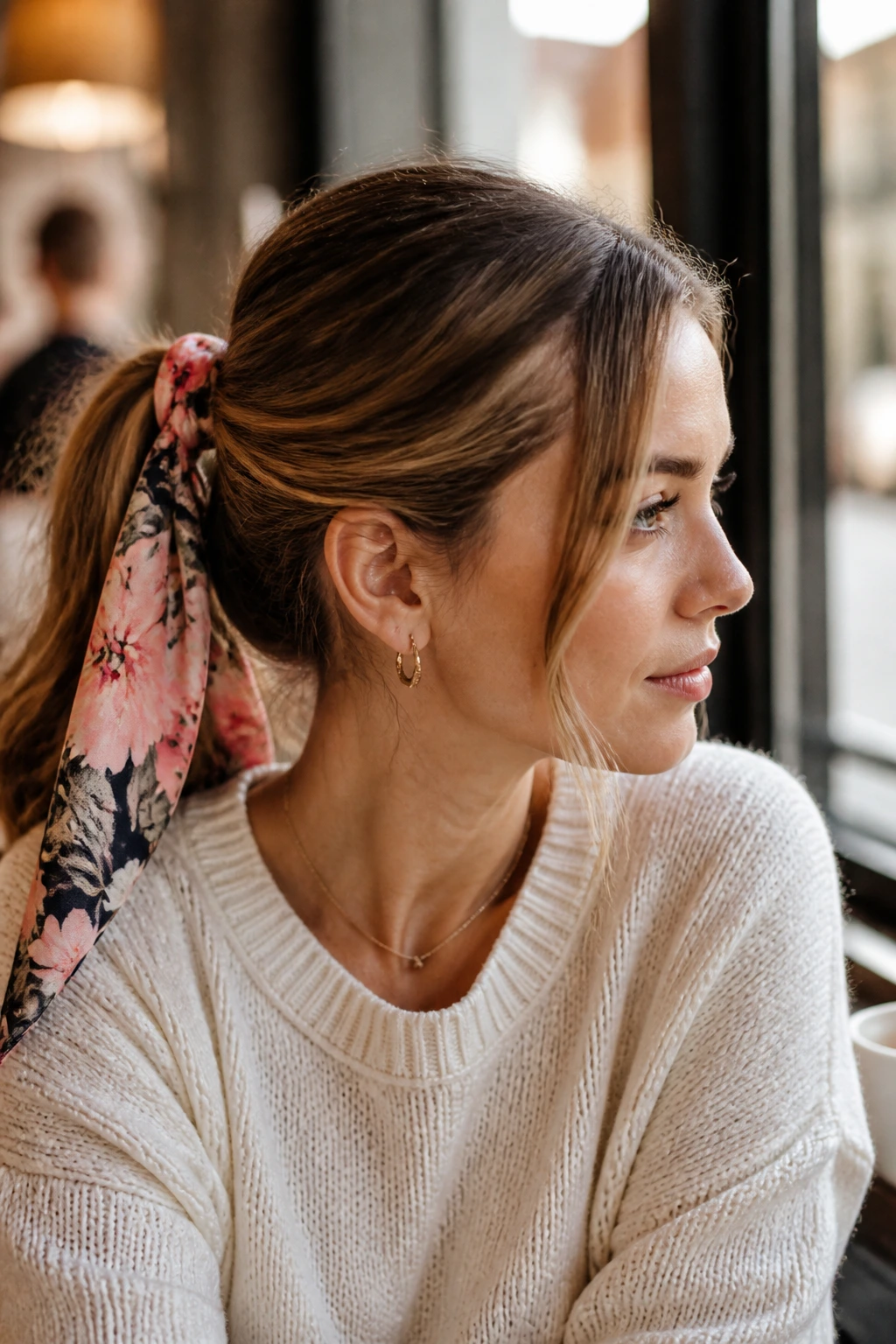
A scarf can do more for medium hair than a fancy serum ever will. Tie one around the base of a low or mid ponytail, and suddenly the style has color, movement, and a bit of softness around the nape. It also hides smaller elastics nicely, which is useful if your tail isn’t thick enough to disguise the base on its own.
Silk or satin is the easiest choice because it slips less and sits flatter. Cotton scarves can work, but they add bulk fast. I like this style with a clean middle part or a soft side part, depending on whether you want it crisp or relaxed. Keep the scarf knot slightly off-center for a less rigid look.
The length of the scarf matters. Too short and the tails poke out awkwardly. Too long and you’ll spend the day retying it. A medium-length scarf that trails a few inches down the ponytail is the sweet spot.
16. The Ribbon-Wrapped Ponytail With a Softer Edge
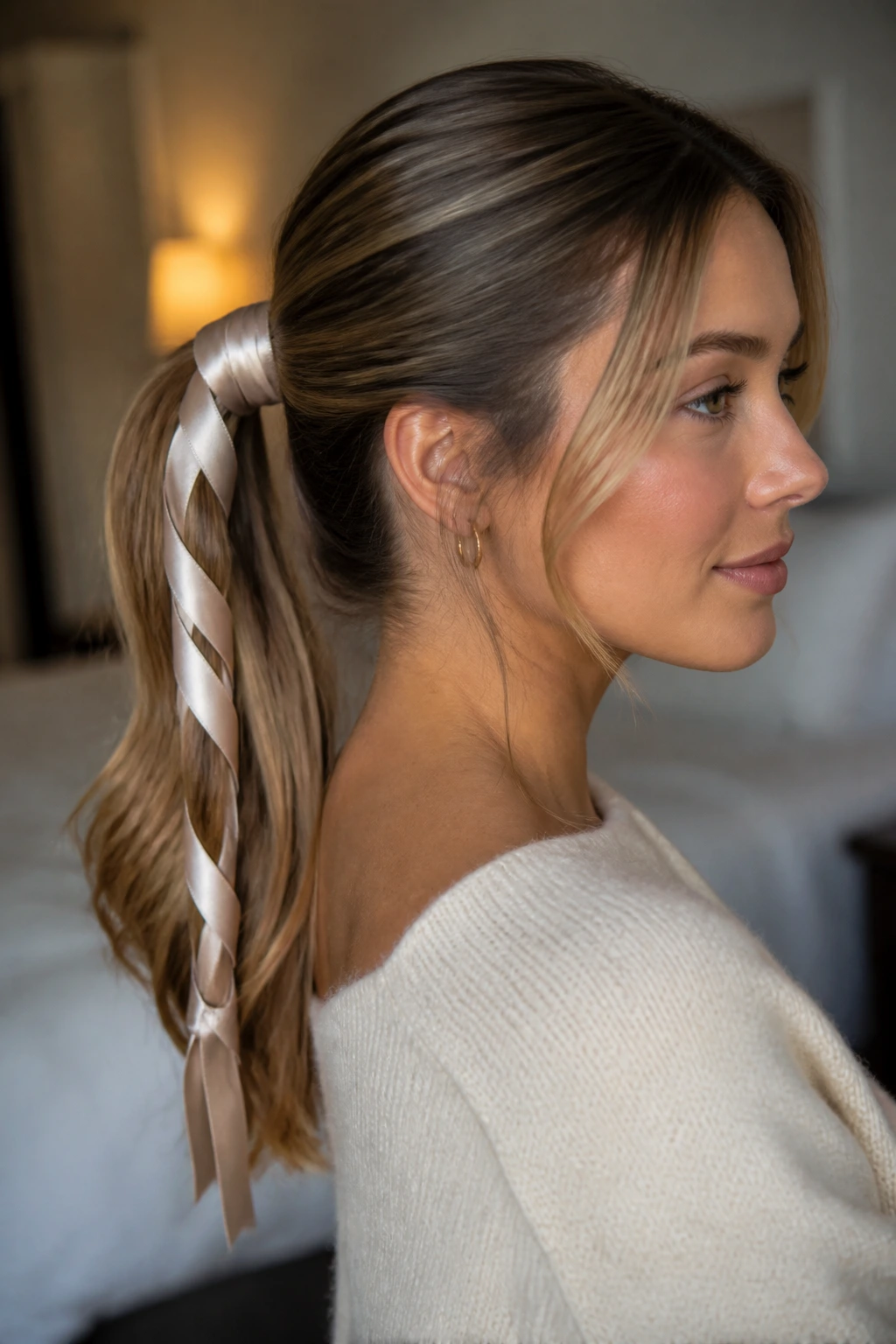
Ribbon feels more delicate than a scarf. It threads through the base or wraps around the tail and gives the style a cleaner, sweeter finish. On medium hair, I like ribbon when the ponytail itself is simple and the accessory is doing the talking.
Pick a ribbon that’s narrow enough to wrap without bunching. Satin ribbon works well because it lies flat and catches light in a subtle way. Tie it around the elastic, then weave it loosely down the tail or leave the ends hanging from the base. If you want a neater look, tie a small bow. If you want something less precious, let the ends trail.
This style is especially good when your hair is having an uncooperative day. The ribbon draws the eye to the accessory rather than to every tiny uneven layer. That’s not a trick. It’s a rescue plan.
17. The Sporty Slick Ponytail That Stays Put
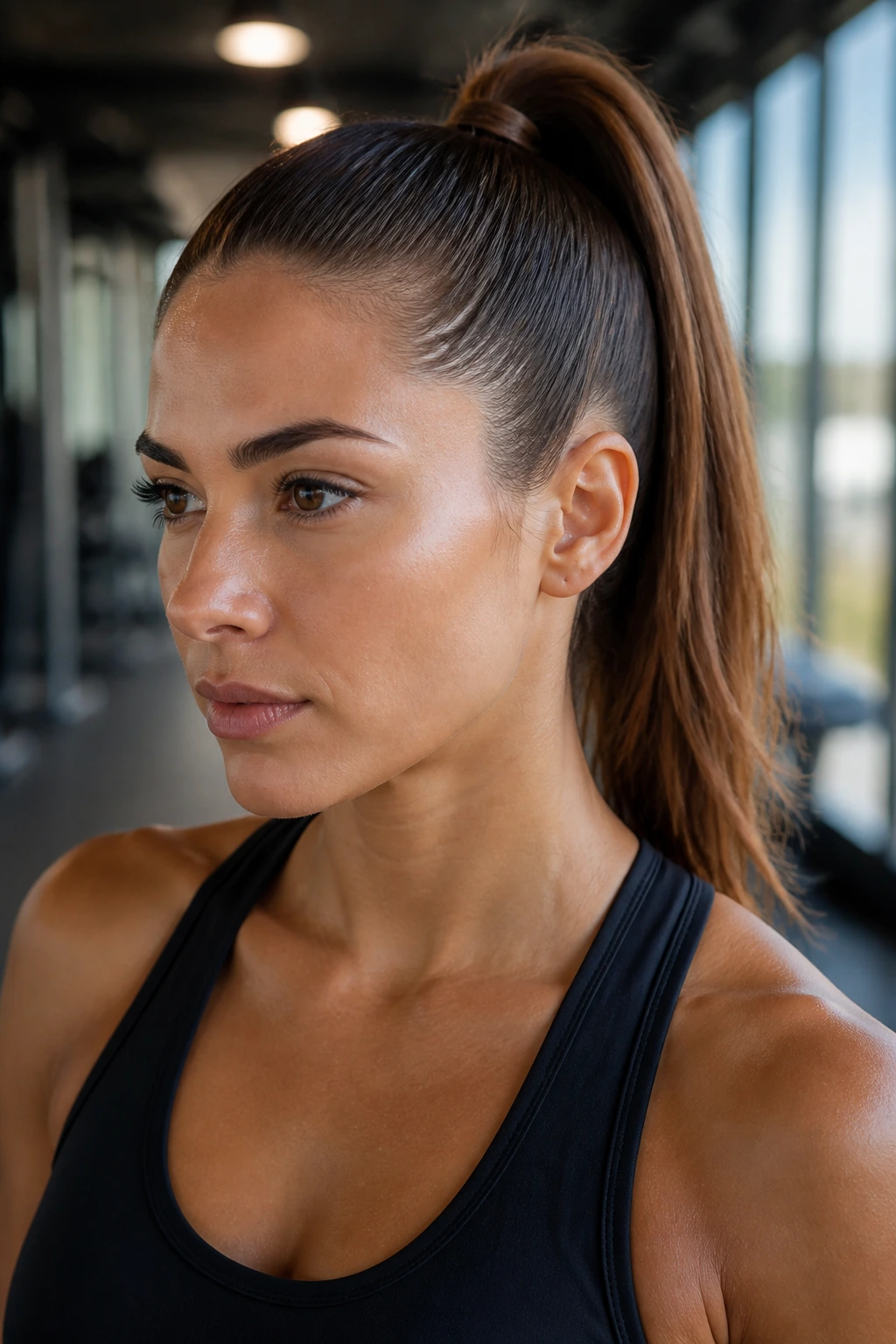
This is the style I’d trust for a long day, a humid room, or anything where you cannot keep touching your hair. The crown is smoothed with gel or strong-hold cream, the sides are brushed tight, and the ponytail sits high or mid-high with a deliberately sharp finish. Medium-length hair can handle this because the tail doesn’t have enough weight to yank the base loose.
Edge control along the hairline helps, but only if you use a tiny amount. Too much product and the front gets crunchy instead of smooth. I like a soft toothbrush or edge brush for this, because it gives control without making the hair look scraped back in a bad way.
The sporty version can be practical and still look sharp. If you want it cleaner, wrap the base. If you want it tougher, leave the elastic visible. Either way, this is a ponytail that means business.
18. The Twisted Low Ponytail With Temple Pieces Pulled Back
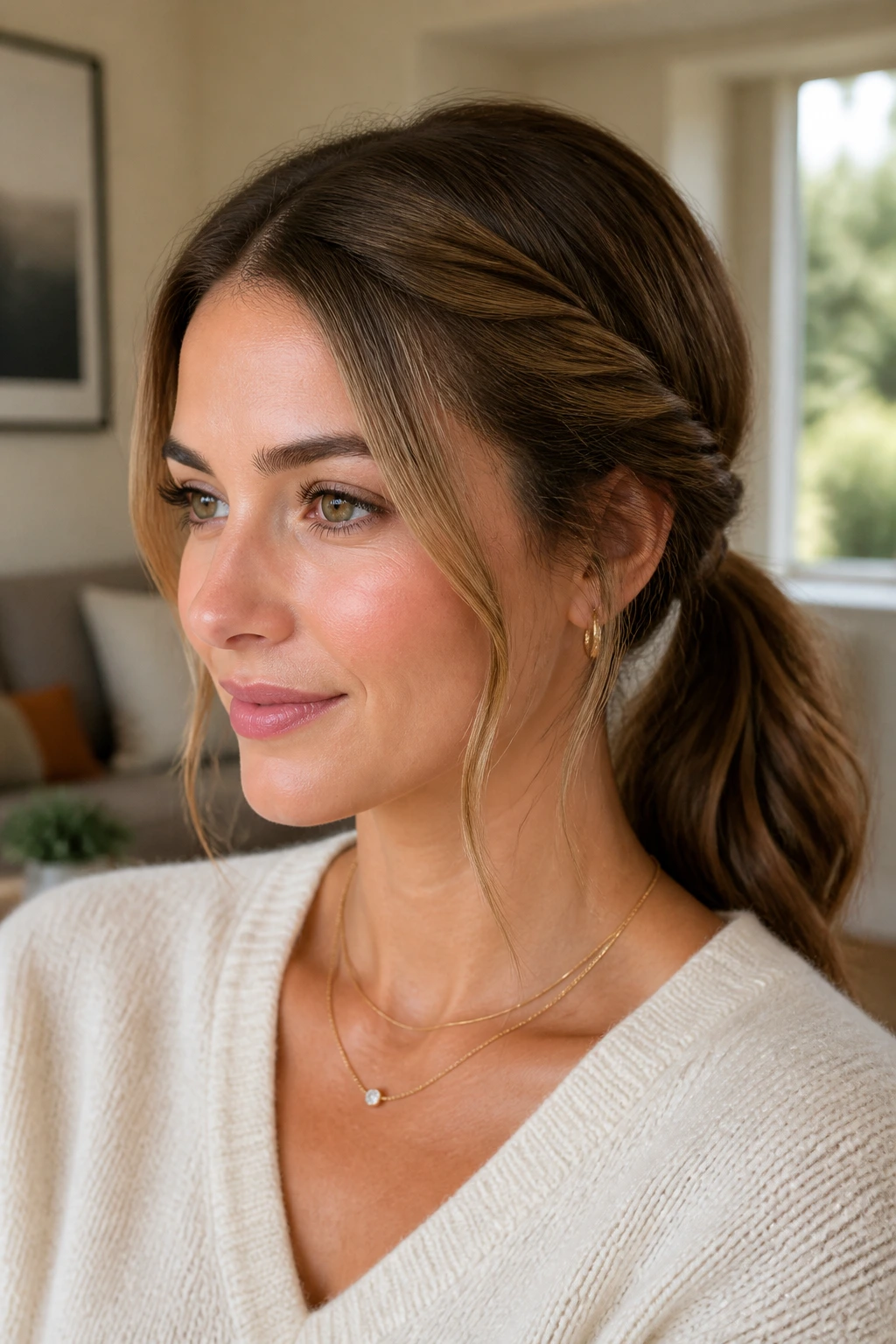
Twisting the hair back from the temples creates a soft frame that keeps a low ponytail from feeling too plain. Two small sections are twisted from each side and secured into the back before the rest of the hair becomes the ponytail. Medium-length hair is ideal for this because the pieces aren’t so long that they unravel under their own weight.
I like this look when the front needs a little control but you don’t want a full braid. The twists give the head shape. The tail gives you movement. Together, they make the style feel complete without making it busy.
If your hair is layered around the front, this is a very useful style. Those shorter strands can be tucked into the twists rather than hanging loose and fighting the elastic. A few bobby pins hidden under the twist are normal here. Use them. No one’s counting.
19. The Double-Elastic Lift Ponytail That Fakes More Volume
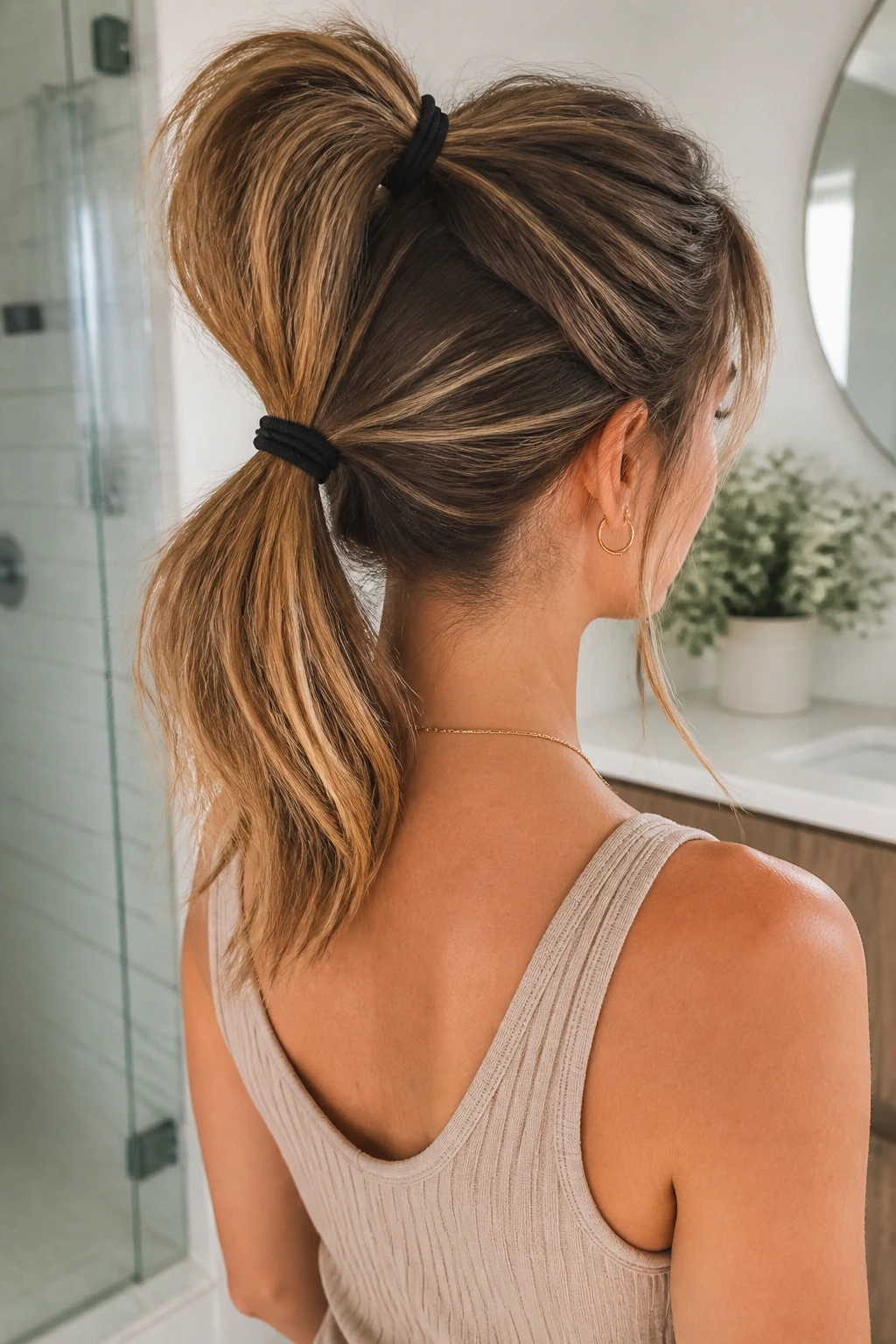
A second elastic placed a few inches below the first can make medium hair look thicker and longer in one move. The top elastic creates the base, and the lower elastic helps the tail stand away from the head instead of collapsing flat against the neck. It’s a small structural trick, but it matters.
This is not the same as a bubble ponytail. The goal here isn’t sections. The goal is lift. Pull the top portion of the hair slightly upward before you secure the first elastic, then smooth the tail over the second one so the transition looks seamless. If your hair is fine, this can help the tail read as fuller without teasing the life out of the crown.
Use this method for a mid-height or high ponytail when you want the shape to feel a little more dramatic. It works particularly well on layered cuts because the extra support helps the shorter pieces sit with the longer ones.
20. The Stacked Ponytail That Makes Medium Hair Look Longer
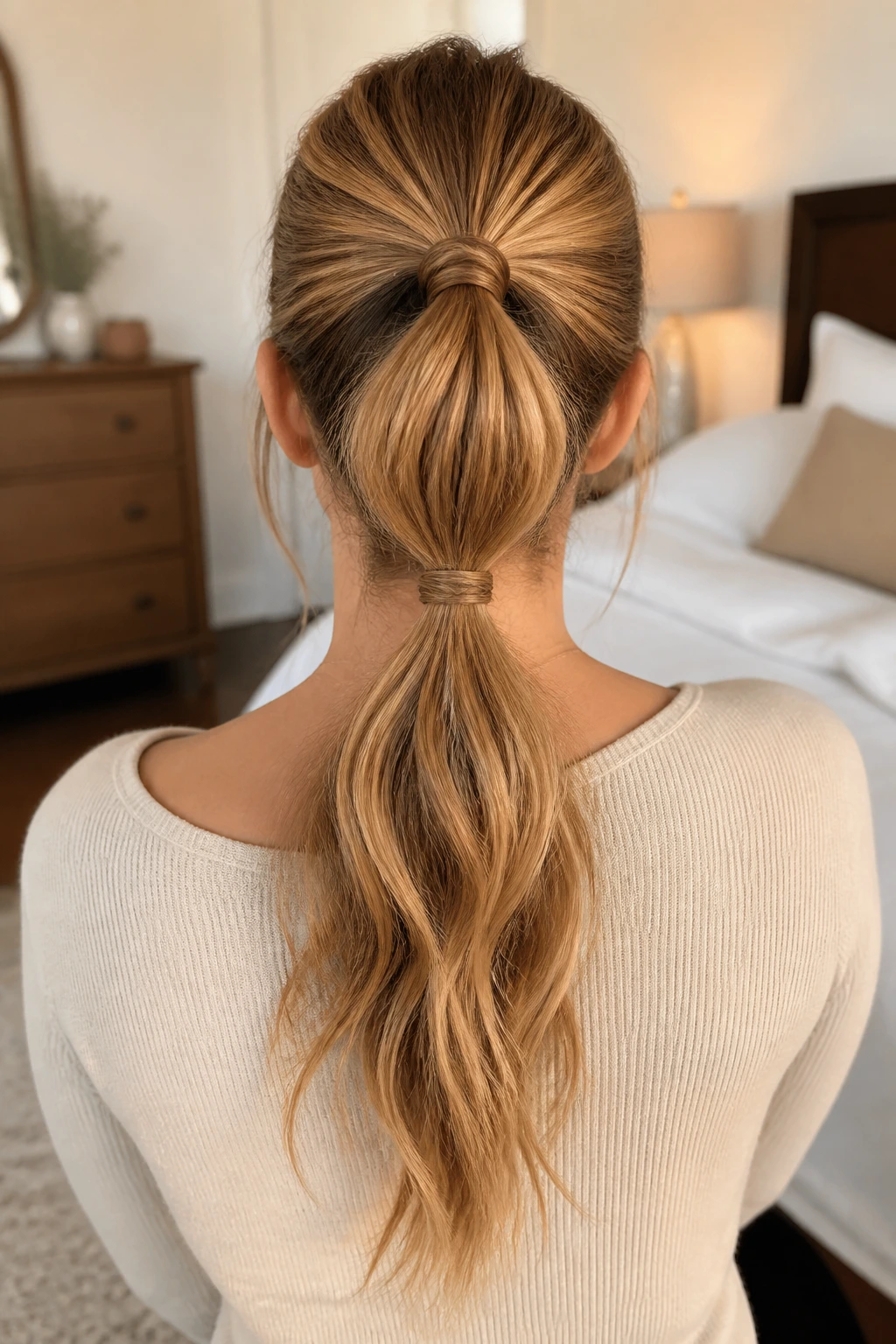
Stacked ponytails are one of the smartest tricks for medium-length hair. You make two ponytails, one above the other, then let the top one fall over the lower one so the whole shape looks longer and fuller than a single ponytail could. It’s a neat little illusion, and it works.
The top section should be a little smaller than the bottom one. That keeps the upper part from looking bulky. Once both elastics are in place, smooth the top tail down over the lower elastic so it hides the split. If you curl the ends afterward, the blend gets even better.
This is one of the few styles that can make shoulder-length hair look genuinely substantial without extensions. That’s why people keep coming back to it. It gives the tail body where medium hair usually runs out of length.
21. The Ponytail With Curtain Bangs That Softens the Whole Face
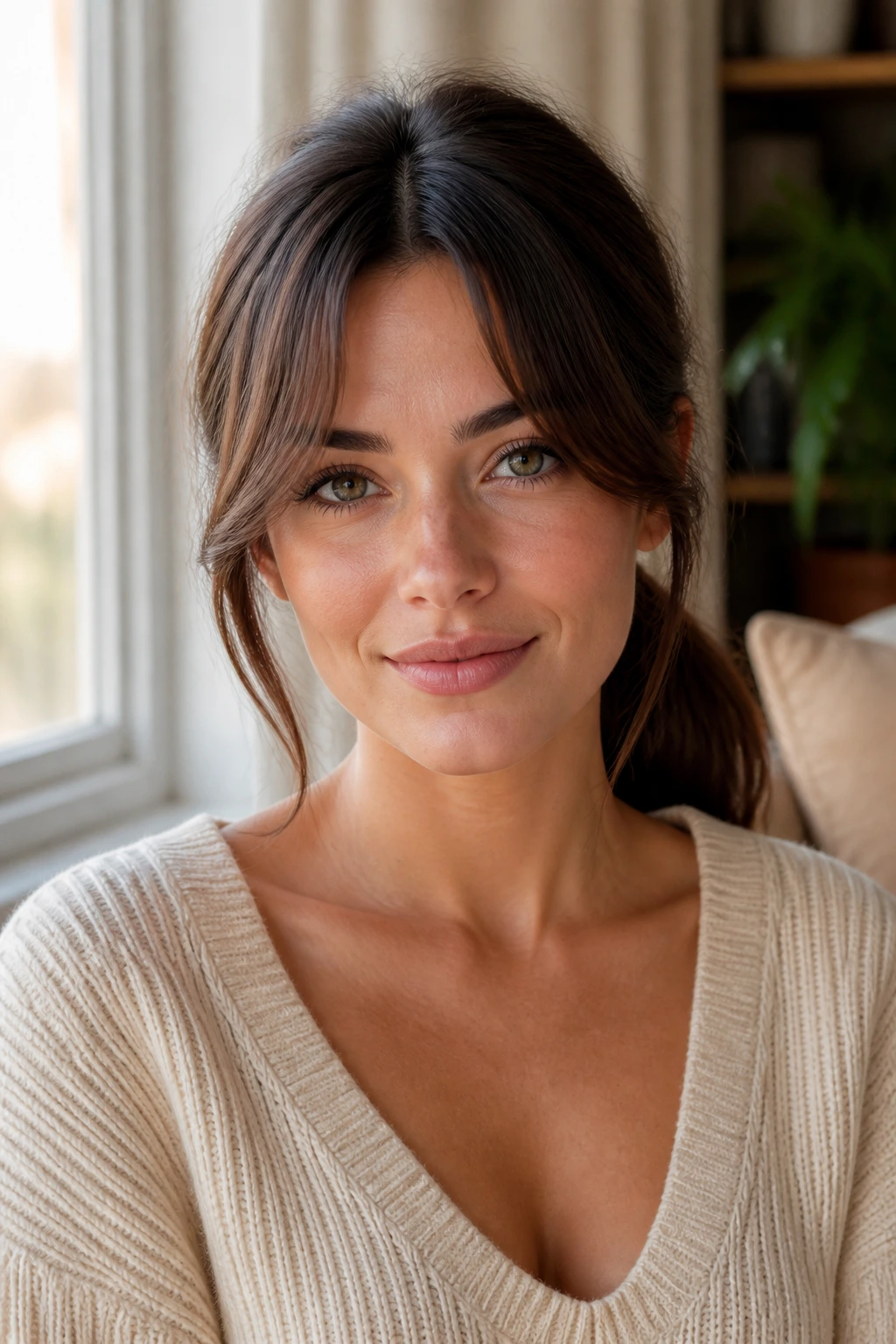
Curtain bangs change a ponytail from strict to softly framed. The bangs stay loose in front, split down the middle or slightly off-center, while the rest of the hair pulls back into a low or mid ponytail. Medium-length hair works especially well here because the ponytail doesn’t overwhelm the fringe.
I like this style when the face needs movement around it. The bangs do the work of softening the forehead and cheek area, while the rest of the hair stays out of the way. If your bangs are longer, blow-dry them first with a round brush so they curve out gently instead of sticking to the face.
The ponytail itself can be simple. It almost should be. Too much going on at the back and the fringe stops doing its job. This is one of those styles where less is better, and that’s not me being polite. It’s the truth.
22. The Face-Framing Strand Ponytail That Feels Casual on Purpose
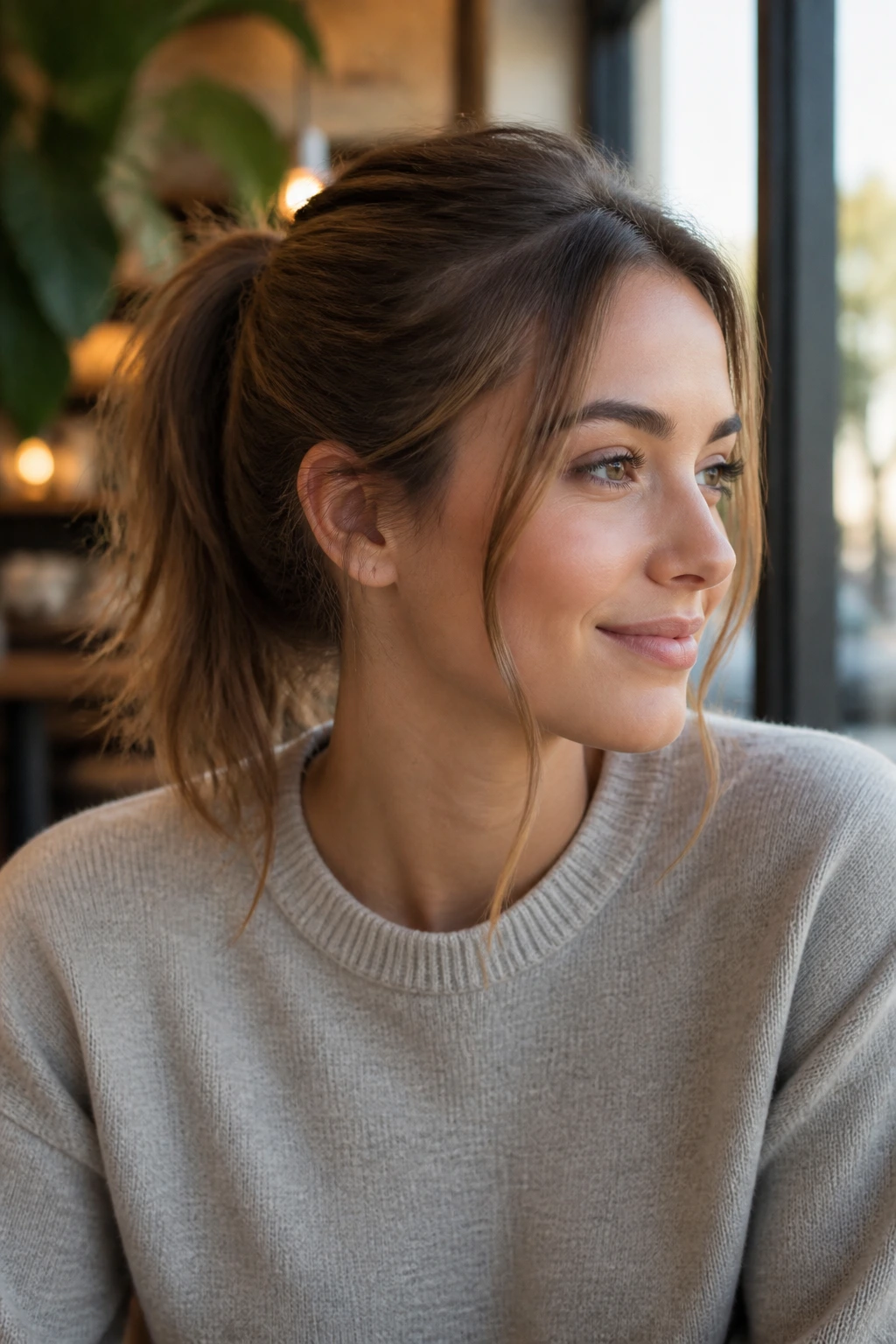
Sometimes the difference between plain and flattering is just two loose front pieces. Pull the rest of the hair back into a ponytail and leave a couple of longer strands out near the cheekbones. Curl them away from the face if you want more polish, or leave them straight if the vibe should stay easy.
The trick is placement. Those front pieces should start close enough to the temples that they frame the face, not dangle like afterthoughts. On medium hair, you usually don’t need more than a finger-width section on each side. More than that and the front can start to feel heavy.
This works with low, mid, or high ponytails. I especially like it with slightly messy tails, because the loose pieces balance the relaxed finish. It’s a very human-looking style. That matters more than people admit.
23. The Braided Bubble Ponytail With Texture at Every Step
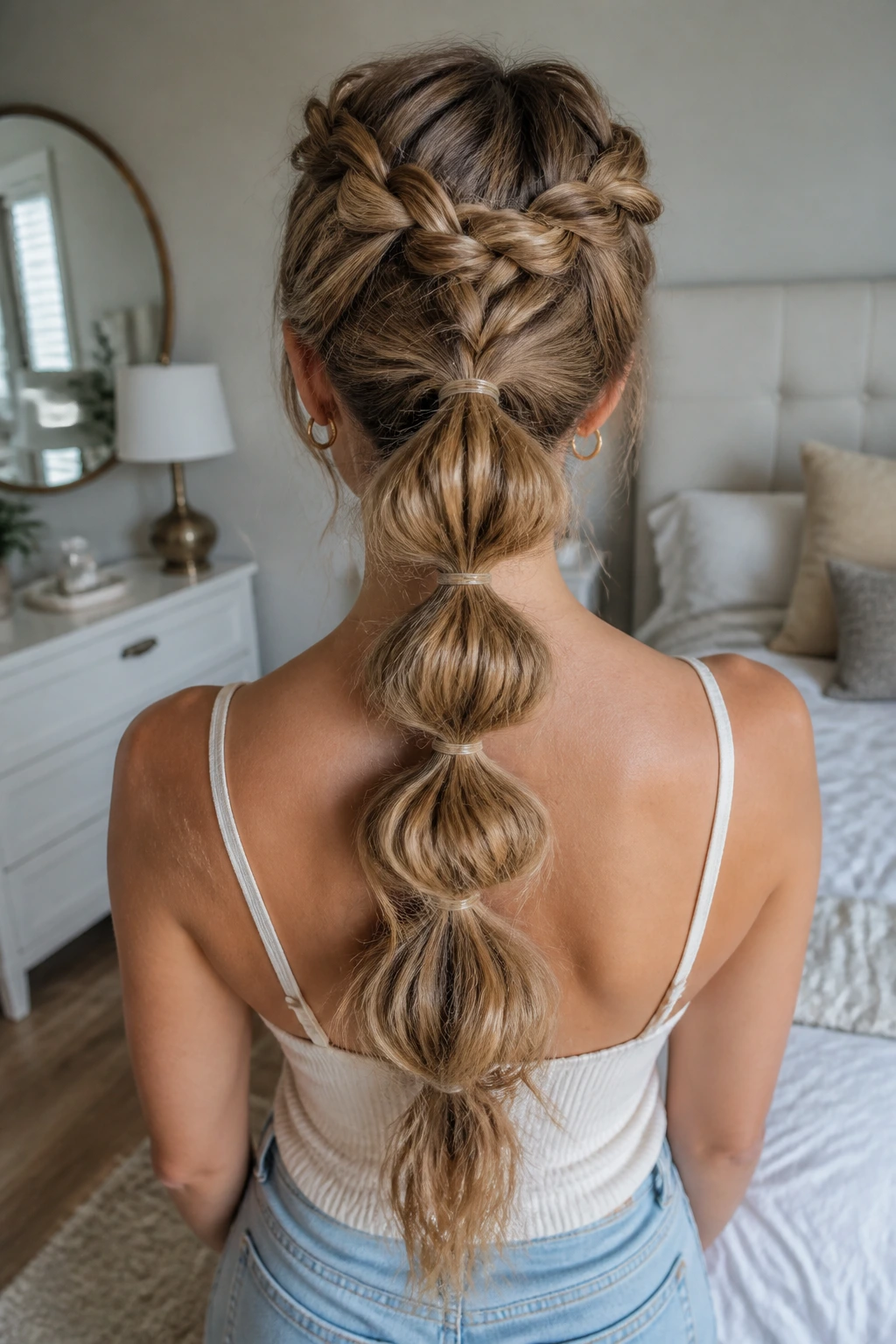
If you like the bubble ponytail but want more detail, braid the top section before turning the tail into bubbles. The braid adds a built-in pattern near the scalp, then the sections down the tail create the puffed effect. Medium-length hair can handle both without getting overloaded.
I usually use a small Dutch braid or a narrow French braid at the top, then secure the tail and place elastics every couple of inches. Pull each bubble gently. The braid should stay neat while the bubbles get a little airy. That contrast is what makes the style work.
This one needs texture spray more than shine serum. Too much slip and the braid loosens, the bubbles sag, and the whole thing loses its shape. It’s a style that benefits from a little grit. Not a lot. Enough.
24. The Low Ponytail With Rolled Ends and a Vintage Curve
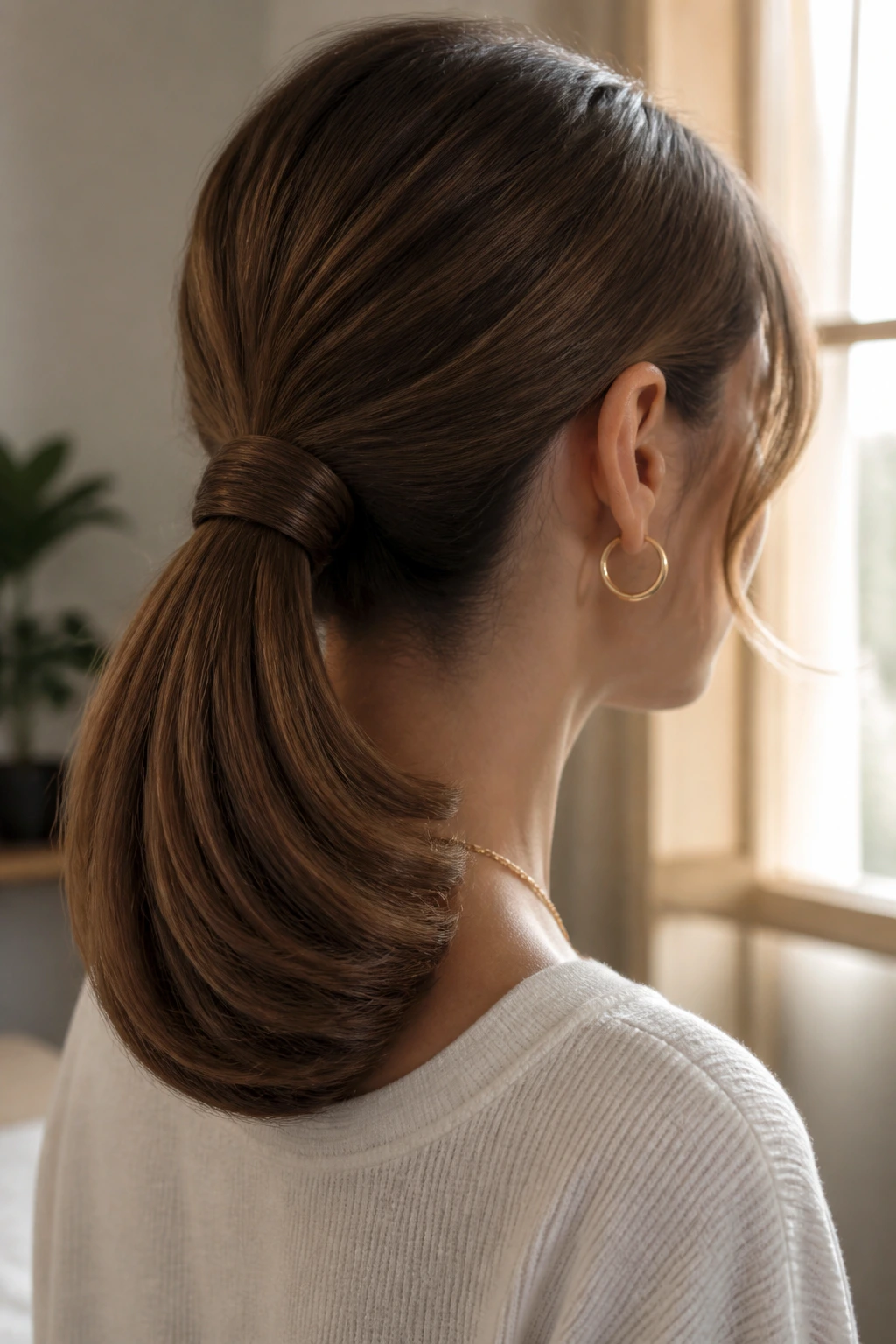
Rolled ends give a ponytail a softer, older-feeling finish, like the tail was turned under with purpose instead of left to hang straight. On medium-length hair, that bend keeps the ends from sticking out in a choppy way. It’s one of the cleanest fixes for blunt shoulder-length ends.
You can create the curve with a round brush, velcro rollers, or a quick bend from a flat iron. The ponytail itself stays low and smooth while the bottom takes on that inward roll. I like this style when the hair is freshly blown out, because the ends already have a little memory and are easier to shape.
It’s a small thing, but it changes the posture of the style. Straight ends feel casual. Rolled ends feel considered. There’s a difference.
25. The Pearl-Accented Ponytail That Uses Pins Like Jewelry
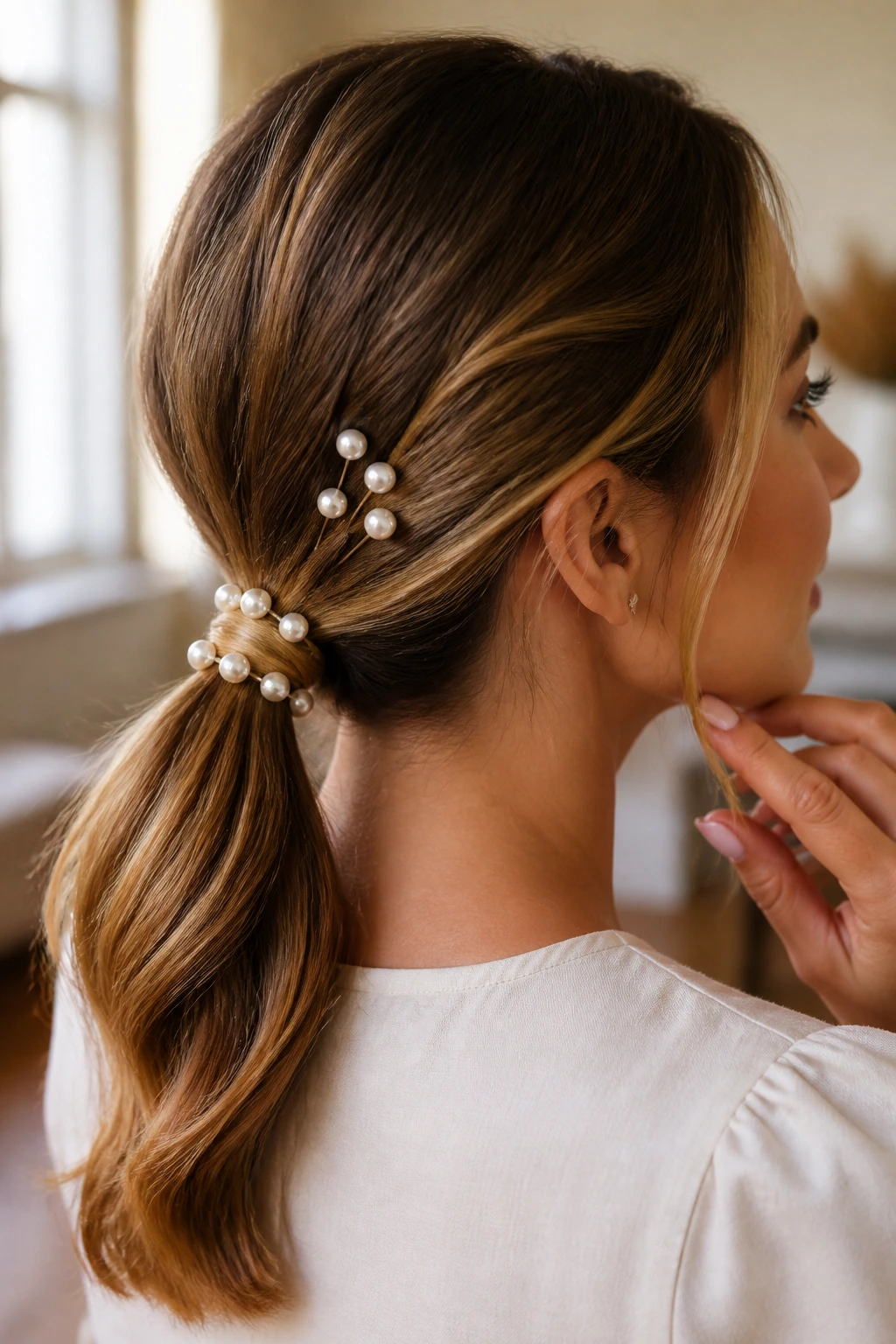
Pearls on pins or tiny pearl cuffs can turn a plain ponytail into something dressier without adding bulk. Medium-length hair is the right canvas for this because the decorative details stay visible instead of vanishing into a huge tail. The style works best with a clean base and either a low or mid-height pony.
Place the pearls along the wrapped section of the elastic or scatter a few pins just above the tail. Don’t cluster them too tightly. A handful spaced with a little breathing room reads better than a pile of ornaments. I’m picky about that. Too many pearls and the style starts to look costumed.
This is one of the easiest ways to dress up hair that would otherwise feel too short for a dramatic updo. It’s not pretending to be longer. It’s just using the length you have with a little polish.
26. The Minimalist Center-Part Ponytail That Looks Sharp Without Fuss
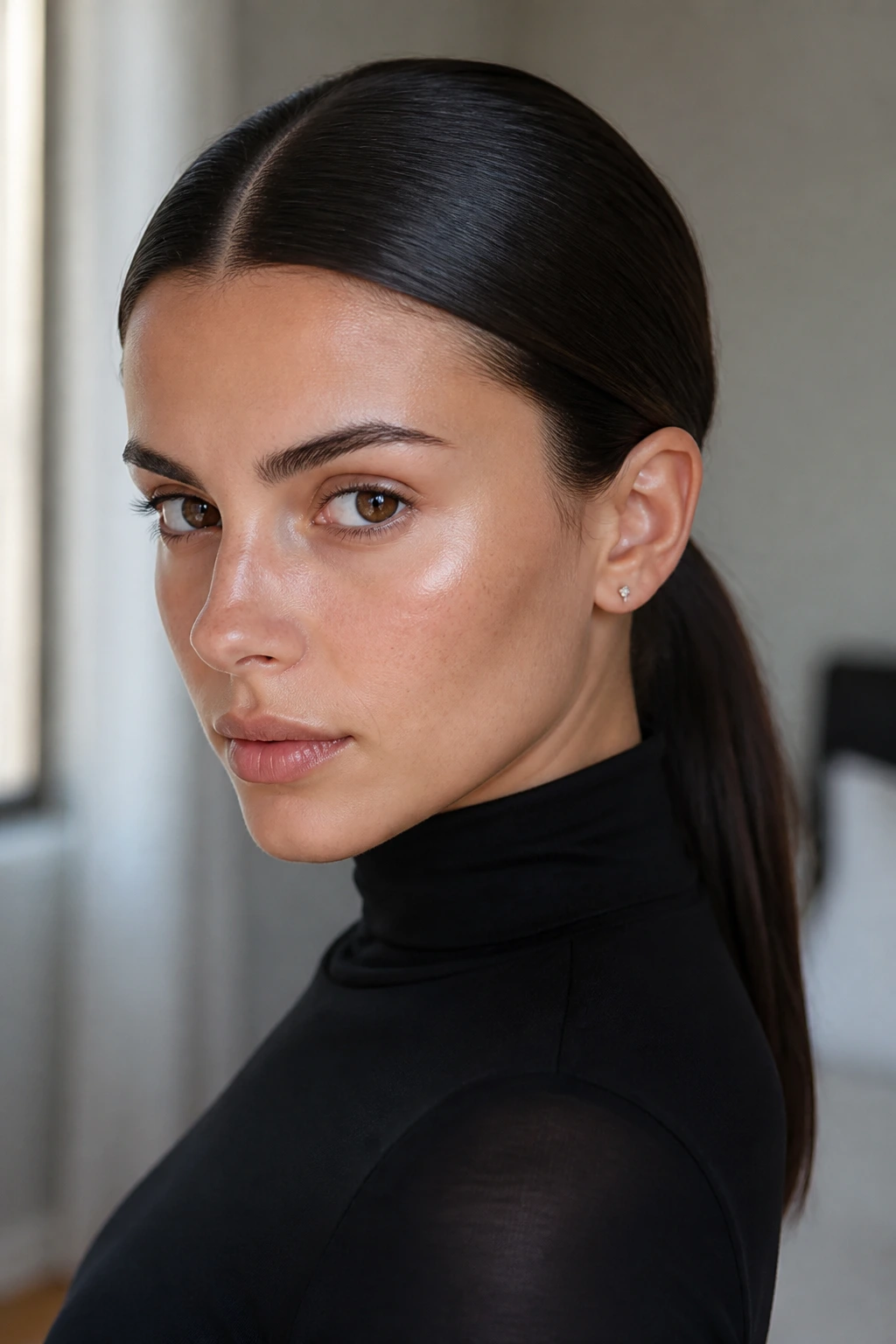
A center part plus a low or mid ponytail sounds plain, but on medium-length hair it can look clean in the best possible way. The part gives symmetry, the tail stays simple, and the whole thing feels deliberate instead of decorative. That’s useful when you want the outfit, makeup, or earrings to do more of the talking.
This style depends on a tidy part line. Use the tip of a comb, not your fingers, and keep both sides even. Pull the hair back low and smooth, then secure it close to the nape. If your hair is straight, the result is crisp. If it’s wavy, the tail gets a little softness without losing the shape.
I like this on days when I want zero fuss but don’t want to look like I gave up. There’s a difference. This style lives in that difference.
27. The Low Knot-Wrapped Ponytail That Hides the Elastic and the Effort
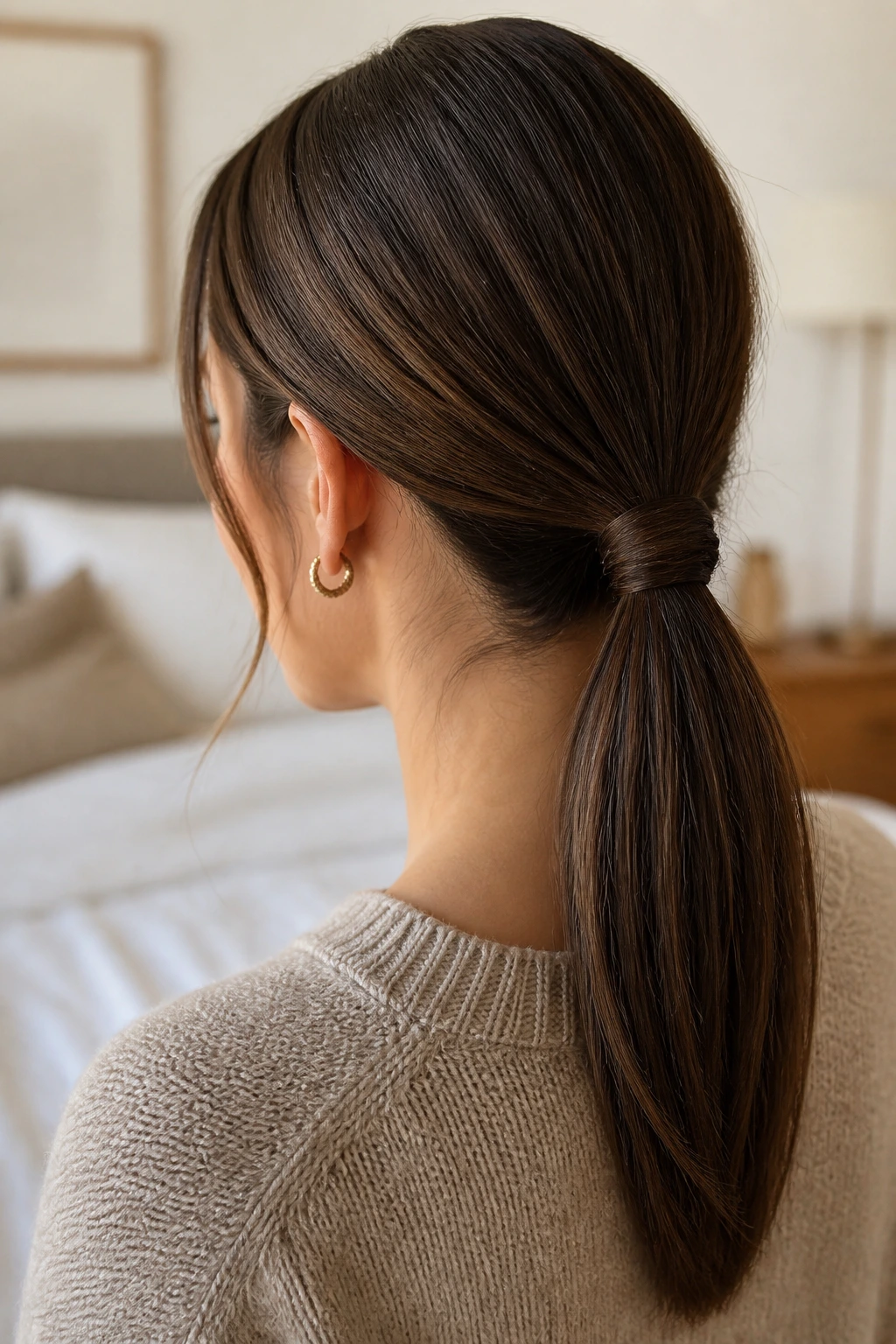
This one starts as a ponytail and ends with the base covered by a small knot-like wrap formed from two thin side sections. It has the neatness of a wrapped ponytail but with a little more visual interest at the nape. Medium-length hair is handy here because the shorter overall length makes the wrapped detail easier to control.
Gather the hair low, split a thin strand from each side, and cross them over the base before pinning underneath. You get a knot effect without actually tying the hair into a true knot, which would pull too hard and create a lump. That’s the difference between a style and a headache.
This is one of my favorite understated finishes for medium hair because it looks more engineered than a plain elastic but never fussy. If you want a ponytail that works for both day and dinner, this is the kind of detail that gets you there.
Why These Styles Hold Better on Medium Hair Than You’d Expect
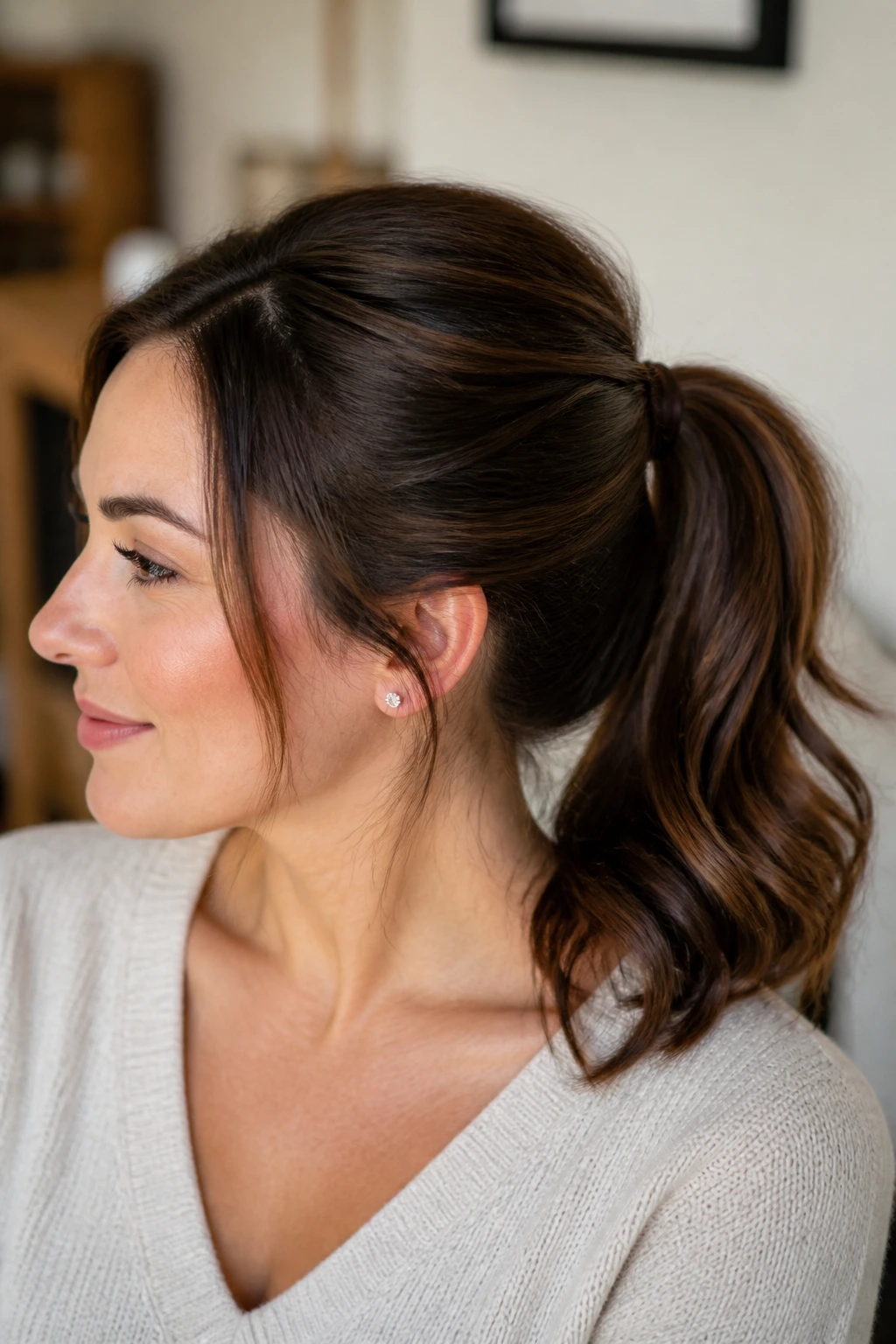
Medium-length hair has a funny advantage: it’s light enough to stay lifted, but not so short that it refuses to tuck, twist, or wrap. That means a ponytail doesn’t need to be elaborate to look finished. It just needs the right structure at the base and a little intention in the tail.
The styles that work best here usually do one of three things. They add grip at the roots, they disguise the elastic, or they give the tail a shape that flatters the shoulder-length drop. When one of those things is missing, the ponytail tends to slump. When two are in place, it usually behaves.
That’s why medium hair can pull off bubbles, wraps, braids, and soft twists so well. The length gives you enough material to play with, but not so much that the style becomes heavy. It’s a useful place to be.
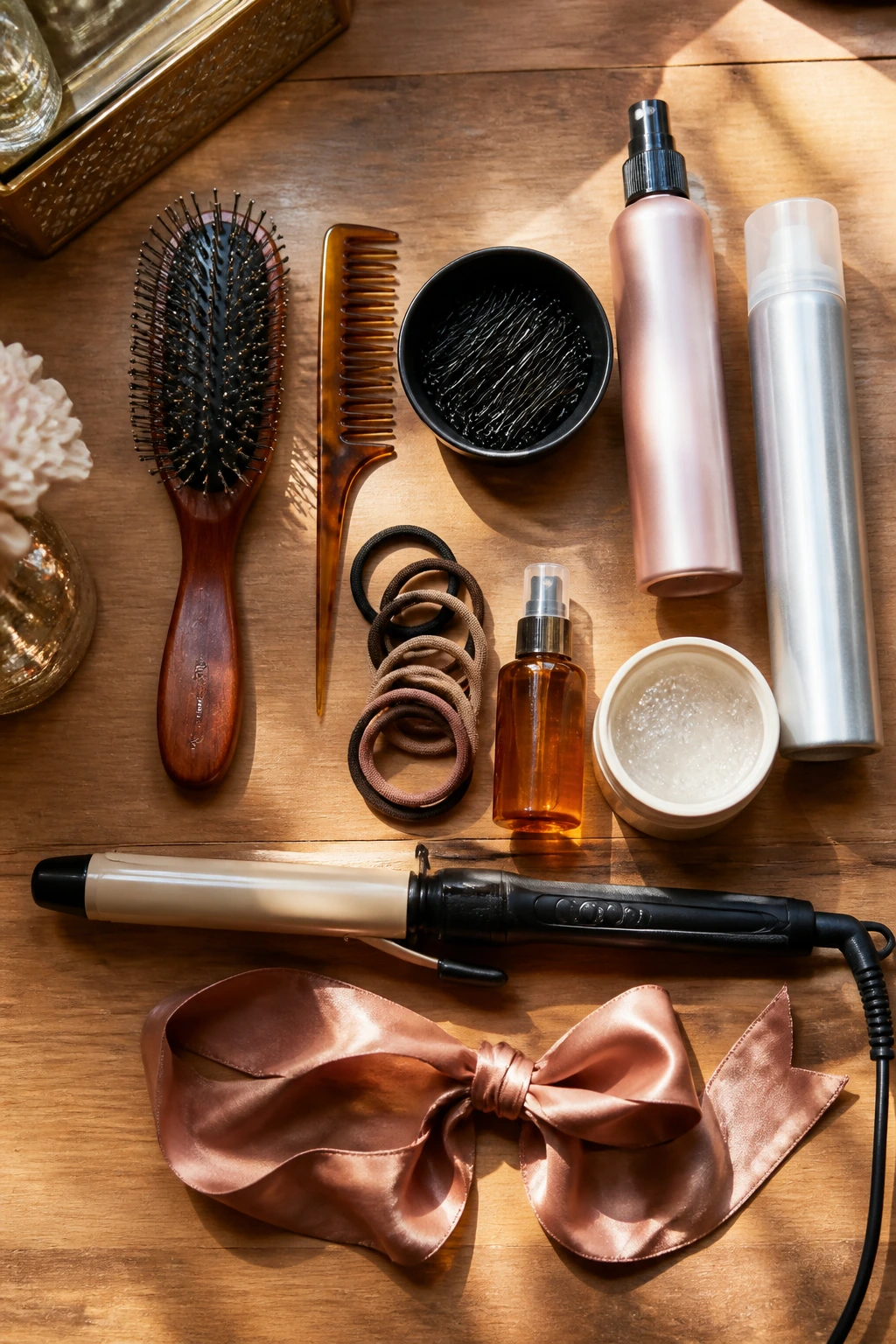
Essential Tools for These Ponytail Styles
-
Snag-free hair elastics: The skinny ones are best for bubbles, braids, and stacked styles; they hold without chewing up the hair.
-
Boar-bristle or paddle brush: A brush with some grip helps smooth the crown without leaving the top fuzzy.
-
Fine-tooth comb: Useful for clean parts, teasing the crown, and keeping wrapped styles tidy.
-
Bobby pins: You’ll need these for twists, knots, and any style that hides shorter layers.
-
Texturizing spray: Gives clean hair enough grit to hold braids, bubbles, and twists.
-
Dry shampoo: Helpful for root lift and for second-day hair that’s too soft to stay put.
-
1-inch or 1¼-inch curling iron: Best for soft bends, face-framing pieces, and flipping the ends of the tail.
-
Hair serum or smoothing cream: A small amount keeps sleek styles from puffing up around the part.
-
Strong-hold gel or edge brush: Handy for slick ponytails and sharp hairlines.
-
Ribbon or scarf: Optional, but nice when you want the style to read more finished with almost no extra work.
Smart Product and Hair-Prep Tips
The biggest mistake people make with medium-length ponytails is using too much product at the wrong point. A slick style needs smoothing cream or gel near the hairline, not all through the tail. A textured style needs dry shampoo or spray at the roots, not a heavy serum that turns everything slippery. Keep the product where the problem lives.
Clean hair and ponytails have a complicated relationship. Freshly washed hair can look lovely, but it often slips apart faster than hair that’s got a little day-two grit. If your hair is very soft, try prepping with texture spray or a whisper of dry shampoo before you gather it. That one move can change how well a braid or bubble section holds.
For medium-length cuts with layers, the ends matter more than people think. If the tail looks stringy, curl it or add a bend to the last few inches. If it looks puffy at the top and thin at the bottom, add a second elastic a few inches down or try a stacked ponytail. The shape of the tail is half the style.
And yes, elastic choice matters. Thick bands can create lumps in hair that’s not long enough to hide them. Thin snag-free ties usually do the job better.
How to Wear These Ponytails Without Fighting Your Outfit
Presentation: Sleek low styles sit best with structured collars, jewelry, and sharp makeup, while softer twisted or curly ponytails look better with open necklines and looser tops. If the ponytail is high and polished, keep the crown clean; if it’s messy or bubble-style, let a little texture live around the face.
Outfit Pairings: A side ponytail works with off-shoulder or asymmetrical tops. A wrapped low ponytail pairs well with blazers and button-downs. Scarf and ribbon styles look better when the rest of the outfit stays simple, because the accessory should feel like the intentional detail.
Portions: For medium-length hair, one strong detail is usually enough. If the ponytail is braided, don’t pile on three more accessories. If the style already has a scarf, keep the rest calm. The eye needs a place to rest.
Beverage Pairing: Not everything needs to be loud. A clean, center-part ponytail with minimal shine feels balanced with a crisp outfit, while a textured or curly ponytail can carry a more relaxed, undone look. The point is to match the attitude of the hair to the rest of the picture.
Additional Tips and Finishers That Make the Styles Look Better
Flavor Enhancement: A pea-sized drop of shine serum rubbed only between your palms can calm the top layer on sleek styles without flattening the tail. Use less than you think. Hair soaks up more than it looks like it will.
Customization: If your hair is fine, use one extra elastic in stacked or bubble styles so the sections don’t droop. If your hair is thick, widen the bubbles and use stronger pins for the twists. Same style. Different support.
Serving Suggestions: Okay, not serving exactly — but the visual finish matters. Curl the face-framing pieces away from the face, bend the ends under for a neater line, or leave a few wisps loose near the ears if you want softness.
Make-It-Yours: Straight hair can take a sharper, slicker route. Wavy hair usually looks best when the natural bend is left partly intact. Curly hair often needs a little leave-in conditioner before the ponytail goes up so the ends don’t frizz into a halo.
Common Mistakes to Avoid With Medium-Length Ponytails
The first mistake is placing the elastic too low or too high for the haircut. On medium hair, an inch can change the whole feeling. Too low and the tail can look limp; too high and the sides may puff out awkwardly. Check the head shape in the mirror before you lock it in.
Another problem is over-brushing the hair into submission. That gives you a flat crown and frizzy ends, which is the worst of both worlds. Smooth the roots, yes. Beat the hair into a shiny helmet, no. If you need control, use a brush with product instead of brushing dry hair for five straight minutes.
People also underestimate the need for texture. Fresh, slippery hair often refuses to hold bubbles, braids, and twist styles. A little dry shampoo or texture spray fixes that fast. Not a cloud. A light dusting.
Then there’s the elastic issue. Big, chunky ties can swallow medium hair and leave the tail looking stubby. Thin, strong elastics usually look better because they disappear into the style instead of competing with it.
Finally, don’t ignore the ends. Medium-length ponytails can look unfinished if the last 3 or 4 inches are left frayed and undefined. Curl them, bend them, or at least smooth them with a tiny bit of serum. The tail is the part everyone remembers.
Variations and Adaptations to Try
The Fine-Hair Lift: Use dry shampoo at the roots, then stack two ponytails instead of one. That gives the tail more body without pretending the hair is thicker than it is.
The Thick-Hair Control Version: Choose low or mid-height styles with braids, twists, or a wrapped base. Thick hair can look beautiful in a ponytail, but it needs anchor points or the style starts to bulge.
The Curly-Hair Coil: Leave the texture alone and secure the ponytail loosely enough that the curls keep their spring. A satin scrunchie or wide elastic protects the shape better than a hard tie.
The Shorter-Layer Fix: If the front layers keep escaping, build the ponytail with a braided base or twist the side sections back first. That gives the short pieces a place to live.
The Dressy Upgrade: Add a ribbon, pearl pins, or a metallic cuff to a sleek low ponytail. Small accessories work better on medium hair because they stay visible.
The Lazy-Day Version: Take a mid ponytail, pull out two face-framing pieces, and stop there. No curling iron, no elaborate base, no wrestling match.
Make-Ahead, Overnight Wear, and Next-Day Refresh
Ponytails are not all equally sleepy. A sleek low ponytail can stay neat through a long day, but it may look flat the next morning if you sleep on it. Braided and twisted styles tend to survive a little better because the texture keeps the shape from collapsing as fast. Bubble ponytails are more fragile; once the elastics shift, the whole structure starts to loosen.
If you’re prepping for an event, do the base style first and save the final smoothing for last. For example, set the ponytail, leave the scarf or ribbon off, and add it right before you leave. That keeps the accessory from getting crushed while you get dressed. For curls, refresh the tail with a quick pass of a 1-inch iron the next day rather than redoing the whole head.
Overnight, a silk bonnet or loose silk scarf can help keep the crown from frizzing, especially on slick styles. If the ponytail itself needs to survive overnight, choose a low wrapped style or a braided base; those are the least likely to wake up looking chaotic. In the morning, a tiny touch of dry shampoo at the roots and a finger through the tail is usually enough.
Frequently Asked Questions
How do I make a ponytail look longer on medium-length hair?
Stacked ponytails and bubble sections both help, but the easiest trick is to curl or bend the tail so the ends don’t look blunt. A wrapped base also keeps the eye on the shape, which makes the length feel more deliberate.
Which ponytail styles hold best on layered hair?
Braided-base ponytails, twisted low ponytails, and slick styles with a wrapped elastic hold the best because they control the shorter layers near the face. If the haircut has lots of layers, leave a few pieces out on purpose instead of pretending every strand will stay put.
What if my hair is too slippery for a ponytail?
Start with dry shampoo or texture spray at the roots, even if the hair is clean. Then use a tighter-grip elastic and avoid over-conditioning the hairline. Slippery hair needs friction, not more shine.
Can I do bubble ponytails on fine medium-length hair?
Yes, but the sections need help. Use smaller spaces between elastics, tug each bubble gently, and tease the crown a little before you start. If the hair is very fine, a stacked ponytail may give a fuller result with less fuss.
How do I keep the crown from looking flat?
Lift the top section before you tie the elastic, then backcomb only the underside if you need more height. A little dry shampoo at the roots also creates space between strands, which helps the crown keep shape.
What ponytail works best for an event or dinner?
A wrapped mid-height ponytail, a sleek low ponytail with a deep side part, or a pearl-accented low ponytail usually looks polished without trying too hard. If the outfit already has drama, keep the ponytail quieter.
Can I sleep in a ponytail?
A loose, low braid or a soft low ponytail is safer than a tight elastic at the crown. If you do sleep in one, use a silk scrunchie and keep it low so you don’t wake up with a crease across the top.
How do I stop short layers from sticking out?
Build the style with twists, braids, or a low placement, then smooth the shorter pieces into the base before you secure it. Bobby pins hidden under the ponytail can tame the layers without making the style feel pinned down.
A Better Way to Pull It Back
Medium-length hair does not need to be a compromise. It needs the right shape, the right anchor point, and a little respect for what the length can actually do. Once you stop treating the ponytail as a fallback and start treating it like a style choice, the whole category opens up.
The best part is how practical these looks are. You can keep one style sharp and another soft, one simple and another decorative, without changing your haircut or begging for extra inches. That’s the charm of medium hair. It gives you enough to work with, then gets out of the way.
