



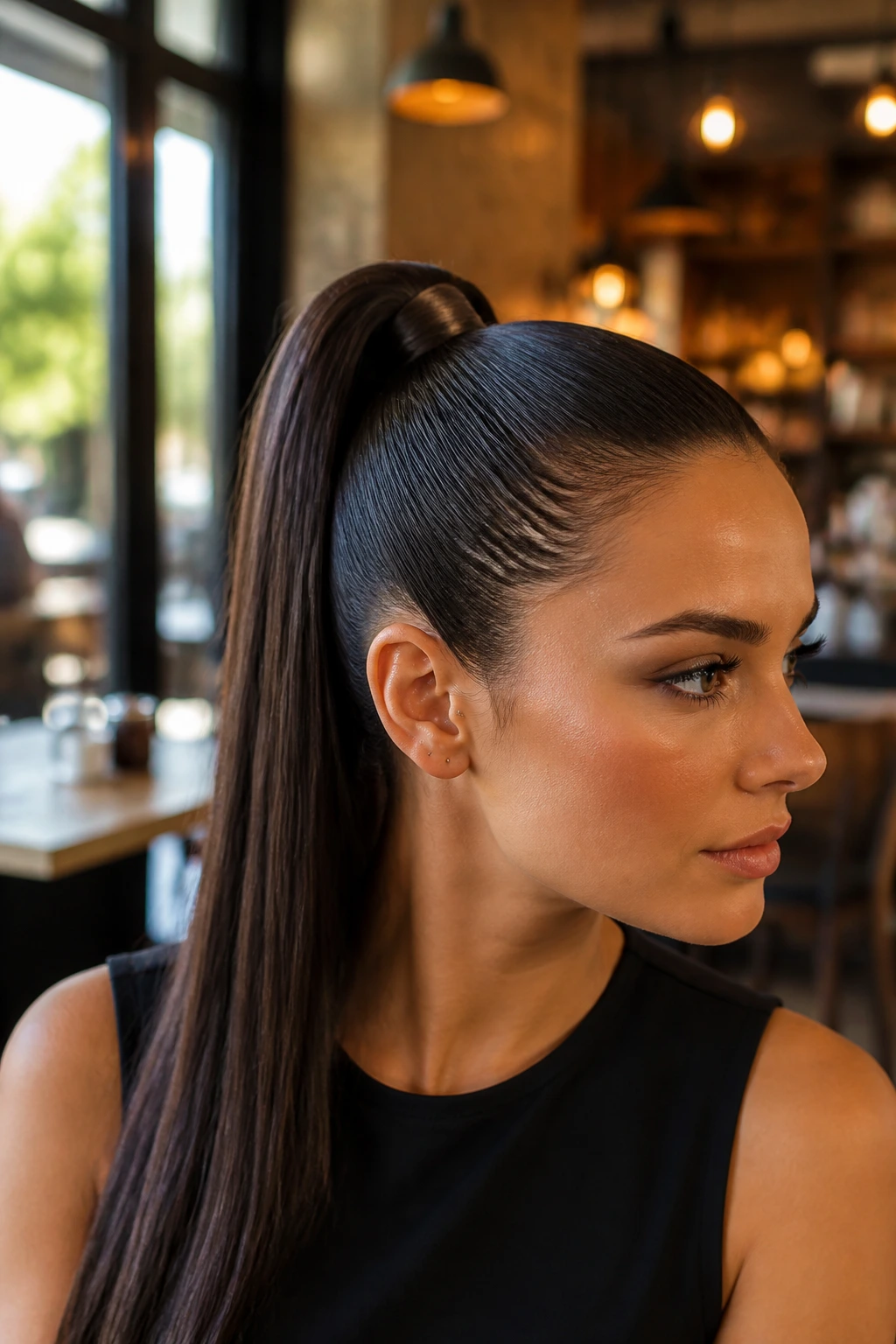
A sleek high ponytail can change the whole read of a face in seconds. Pull the crown tight, smooth the hair until it lies almost like ribbon, and suddenly a plain tee, a sharp blazer, or a sequined dress looks more deliberate. The style has edge, but not noise. That balance is why the sleek high ponytail keeps showing up on women who want something clean without looking fussy.
What makes it useful is the range. You can wear it glassy and severe, soft at the temples, braided at the base, or so long it brushes the middle of your back. The same shape works on straight hair, stretched curls, relaxed textures, and extension hair, though the prep changes a lot depending on what’s sitting on your head. Get the crown wrong and the whole style falls flat. Get the tension, part, and finish right, and the pony does half the styling work for you.
There’s a reason this look keeps surviving trend cycles: it’s fast when you know the method, and it forgives a lot of hair moods. A little root oil? Brush it into a smooth tie. Freshly washed but too fluffy? Set the top first. Need something that still looks dressed up after a long day? A good high ponytail can carry you there without asking for a full salon session.
Why Sleek High Ponytails Stay in Rotation
-
Face-Lifting Placement: A ponytail set at the crown opens the face and keeps the jawline in view, which is why even a simple T-shirt looks sharper with it.
-
Texture Control: The smooth top hides second-day frizz, root puff, and uneven layers better than a loose style ever will.
-
Accessory Friendly: A wrapped base, cuff, scarf, or bow changes the mood fast without rebuilding the whole style.
-
Hair-Type Friendly: Straight hair, stretched curls, coily blowouts, and clip-in pony pieces can all land in the same shape with the right prep.
-
Event Range: It can read gym-clean, office neat, or evening polished depending on the finish on the crown and the length of the tail.
1. Glass-Finish Center Part High Ponytail
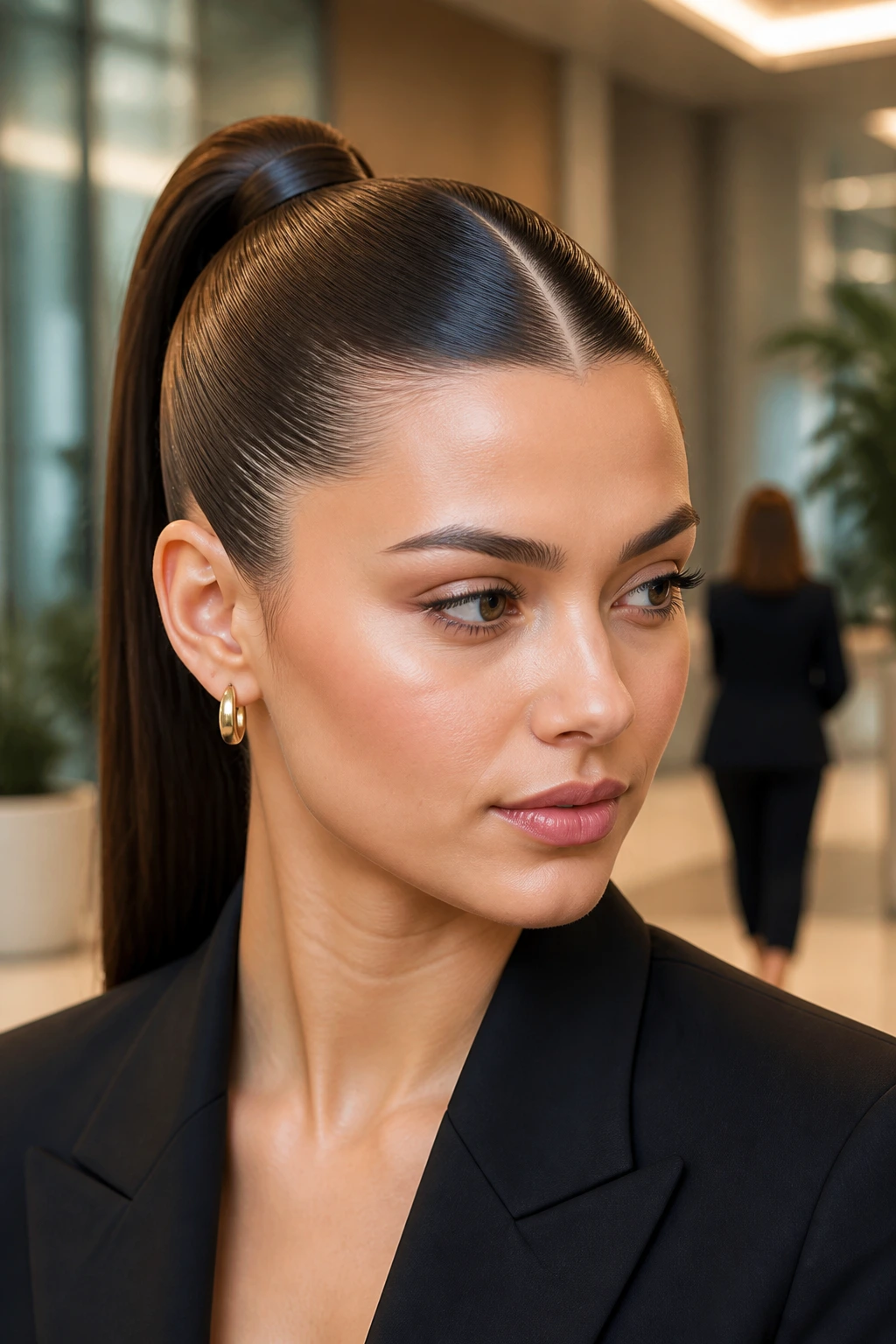
A center part gives the whole style a strict, clean line. The hair sits close to the scalp from forehead to crown, then drops into a tail that looks sharper because the top is so controlled. Fine hair gets a fuller read here; thick hair gets tamed without losing length.
I like this one when the outfit has structure — a blazer, square neckline, or anything with sharp shoulders. Keep the part precise with a rat-tail comb and use enough gel to hold the roots, not enough to make the hair look coated all the way to the ends.
2. Deep Side-Part Snatched Ponytail
Best when you want the face to look a touch narrower. A deep side part changes the mood immediately, and the sweep across the forehead gives the style motion before the pony even starts. It also makes earrings and a bare neck feel a little more intentional.
- Works well with fuller brows and strong cheekbones.
- Keep the part line crisp; a wobbly zigzag breaks the effect.
- Smooth the heavy side first, then gather the pony at the crown.
This version has a bit of drama without asking for extra accessories. It’s the one I’d pick for a night out or any day when you want the front view to carry as much weight as the back.
3. Wrapped-Base Classic High Ponytail
Can a classic pony still feel fresh? Absolutely, if the base disappears. Wrap a narrow strand of hair around the elastic and pin it underneath; that tiny move turns a school-day tie into something more deliberate. Keep the wrap flat, though. A chunky wrap makes the crown look clumsy.
This is the version that slides into almost any setting. It works for interviews, dinners, and quick errands, which is probably why it never leaves the rotation. The finish is simple, but the clean base gives it a little polish you can see from across the room.
4. Waist-Length Extension High Ponytail
Compared with a shoulder-length tail, this version depends on weight and anchor points. A ponytail piece or clip-in extension gives you the long, swinging length that makes the crown look even tighter by contrast. The trick is hiding the seam so the base stays believable.
If your own hair is fine, anchor the ponytail piece with crossed bobby pins before you wrap the base. If your hair is thick, build a firm little anchor pony first, then attach the extension so the whole style sits evenly instead of leaning back. Long tails need support.
5. Bubble High Ponytail
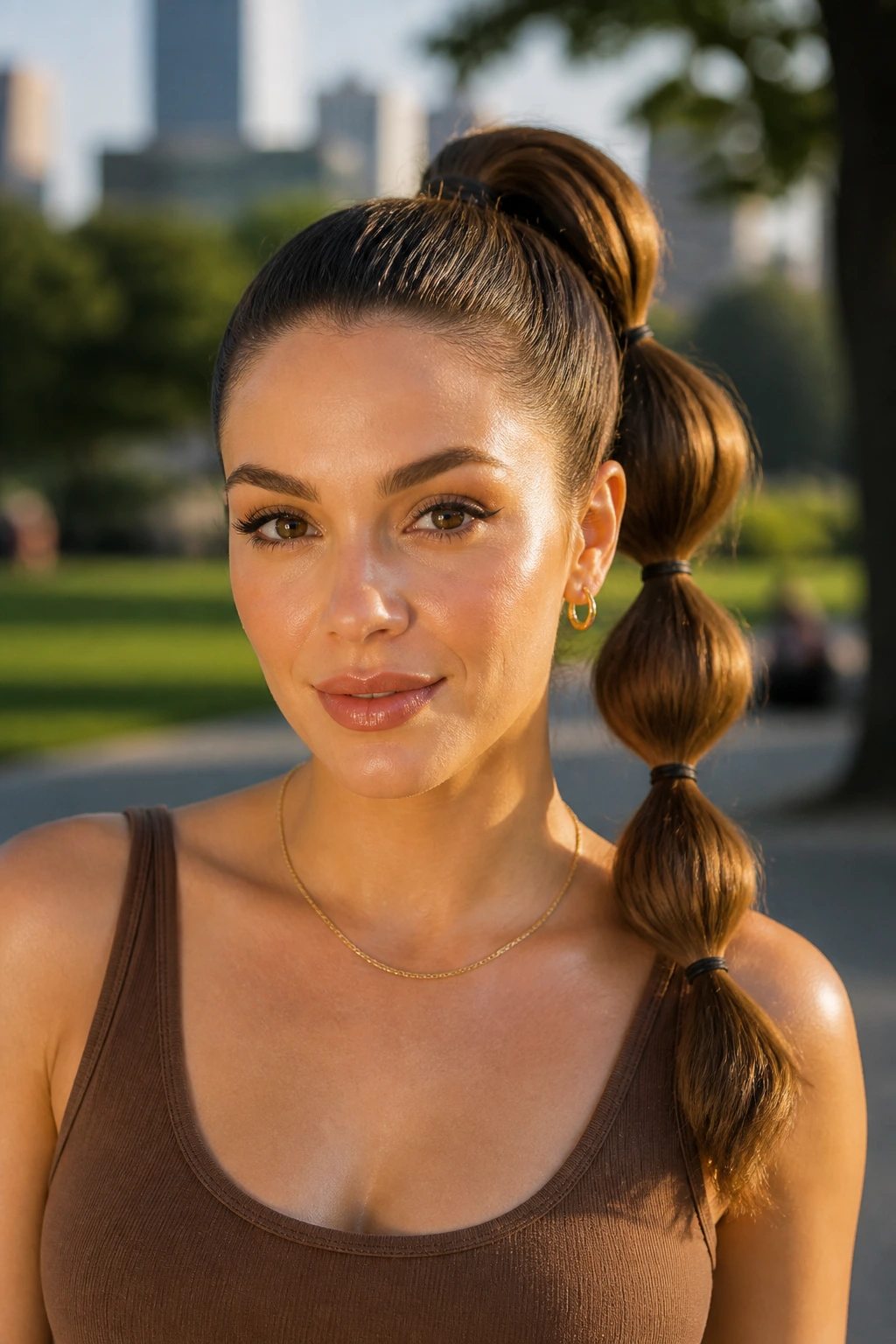
Three or four clear elastics spaced 2 to 3 inches apart keep the bubbles even. That spacing matters. Too close, and the tail reads cramped; too far apart, and the shape turns sloppy. The crown still needs to stay sleek, which is what makes this version feel intentional instead of playful by accident.
This is one of the easiest ways to add structure without curling, waving, or braiding the whole ponytail. It’s also good for medium-length hair that wants more visual heft. The segmented shape makes the tail look fuller even when the hair itself isn’t especially thick.
6. Braided-Base High Ponytail
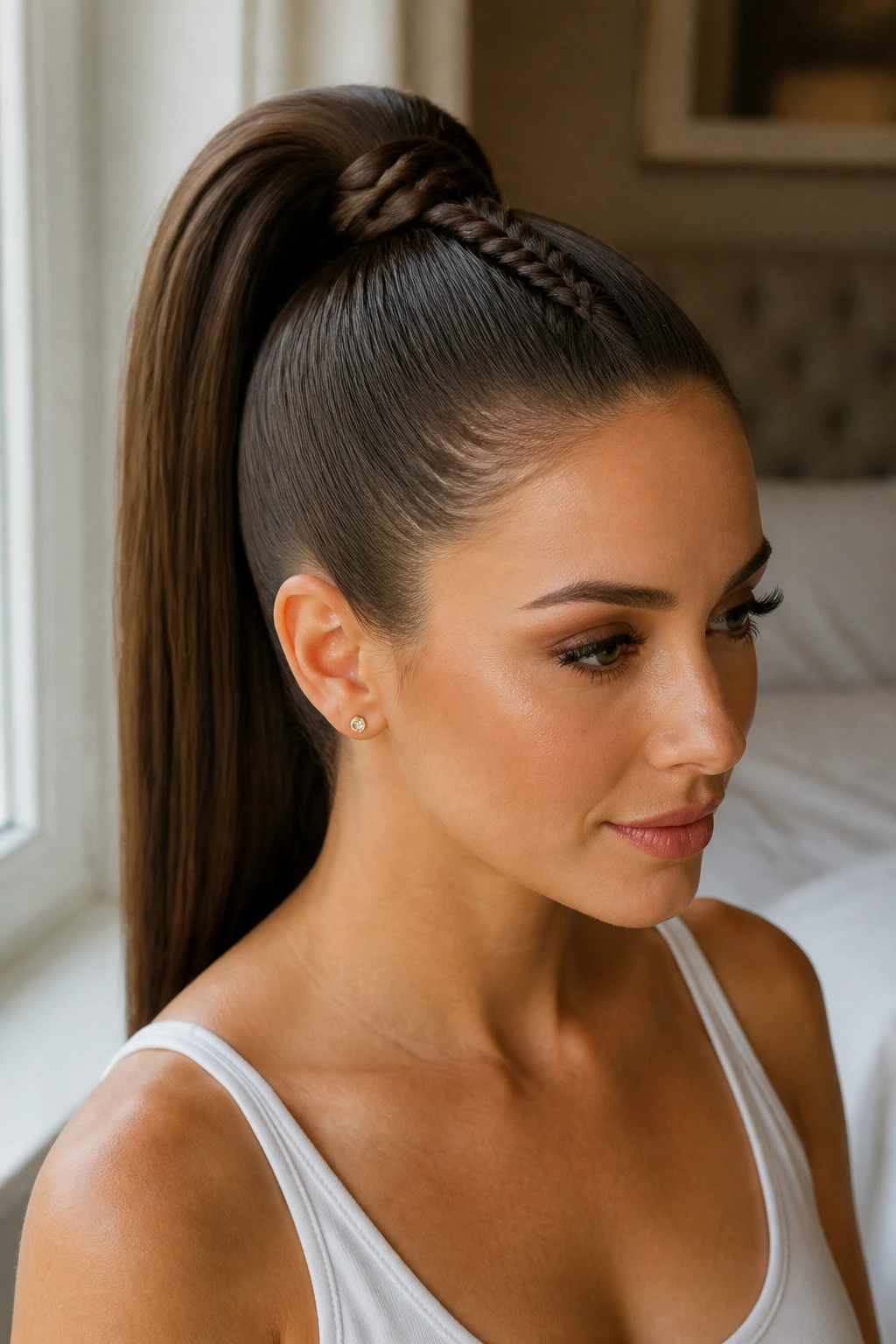
A slim braid climbing from the hairline into the pony does two jobs: it hides the top seam and keeps shorter layers tucked down. That means less fighting with loose pieces later. I like this when the front of the hair tends to separate after an hour or two.
The braid can be centered, off to one side, or split into two small plaits that meet at the elastic. All three reads are different, but they share the same benefit — the base looks built, not just tied. It’s a smart choice when you want sleekness with a little texture near the crown.
7. Wet-Look High Ponytail
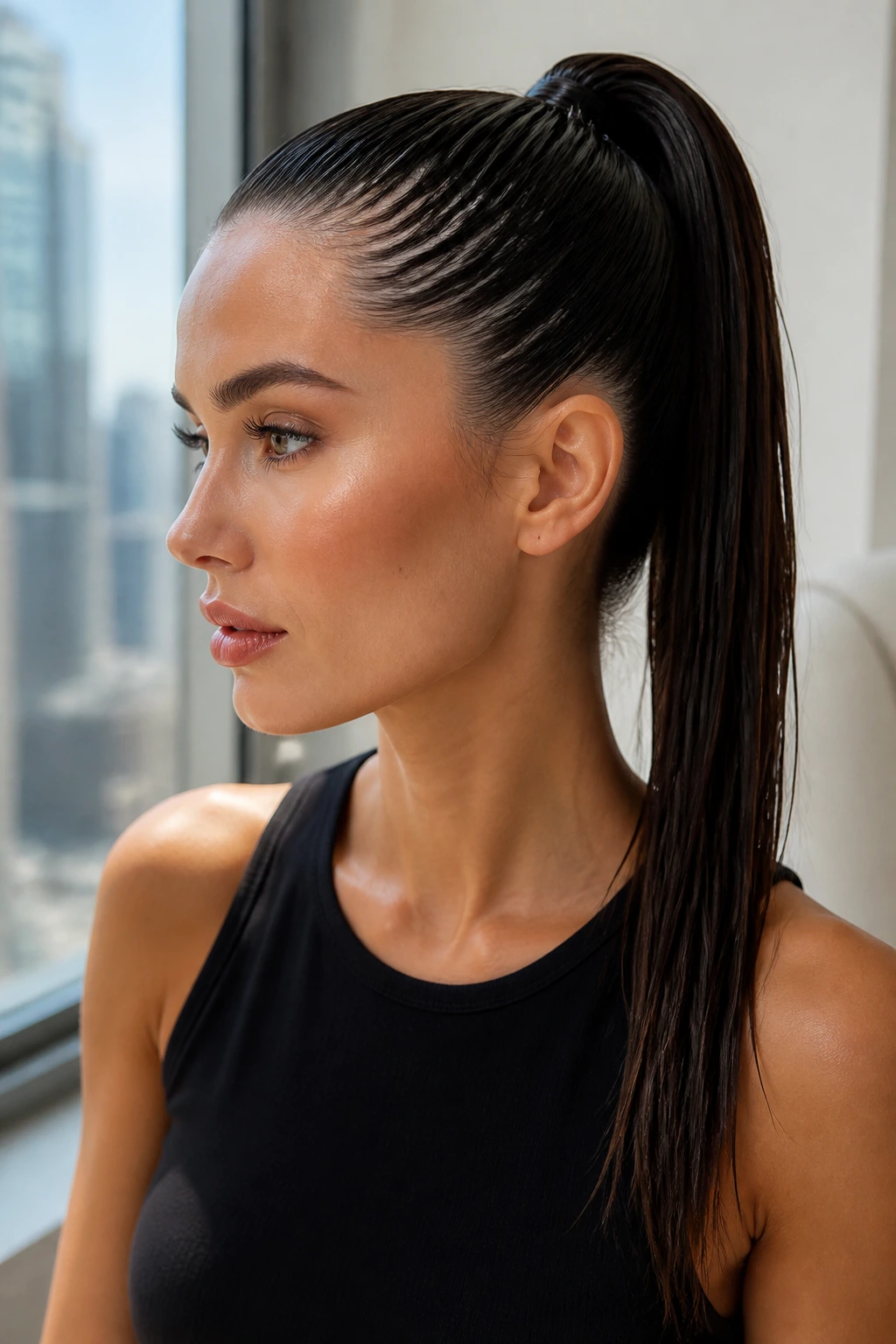
Gloss is the point here. The hair at the crown should look damp and reflective, while the tail can stay straight and controlled. Use a styling gel with strong hold, then smooth it with a dense brush so the finish looks even rather than patchy.
This pony is a good match for sharp collars, satin fabrics, and bold makeup. It does not need much else. If you add too many accessories, the shine starts to feel crowded, so I’d keep the base clean and let the hair’s surface carry the look.
8. Sculpted Baby Hairs High Ponytail
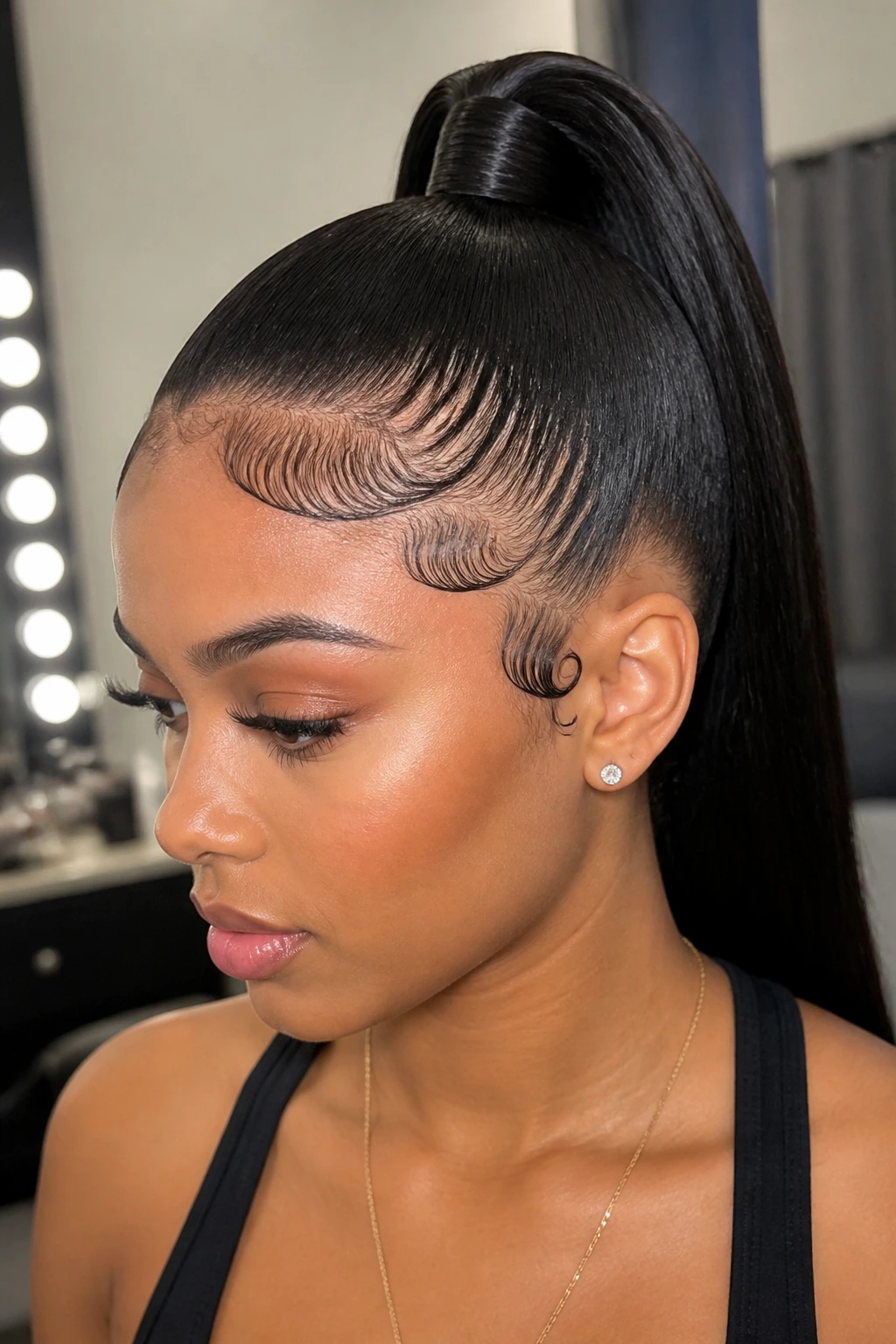
Edges make the style feel intentional. A few laid baby hairs, shaped into soft curves or a single swoop, soften the line where the pony meets the forehead. The rest of the hair can stay strict and smooth, which gives you a nice contrast.
- Keep the edge styling light if your hairline is fine.
- Use a small brush or edge tool, not a heavy hand.
- Match the swoop shape to the rest of the face framing, if any.
This version works especially well on natural textures and relaxed hair because the hairline detail can carry the personality without roughening up the whole crown.
9. Flipped-Ends High Ponytail
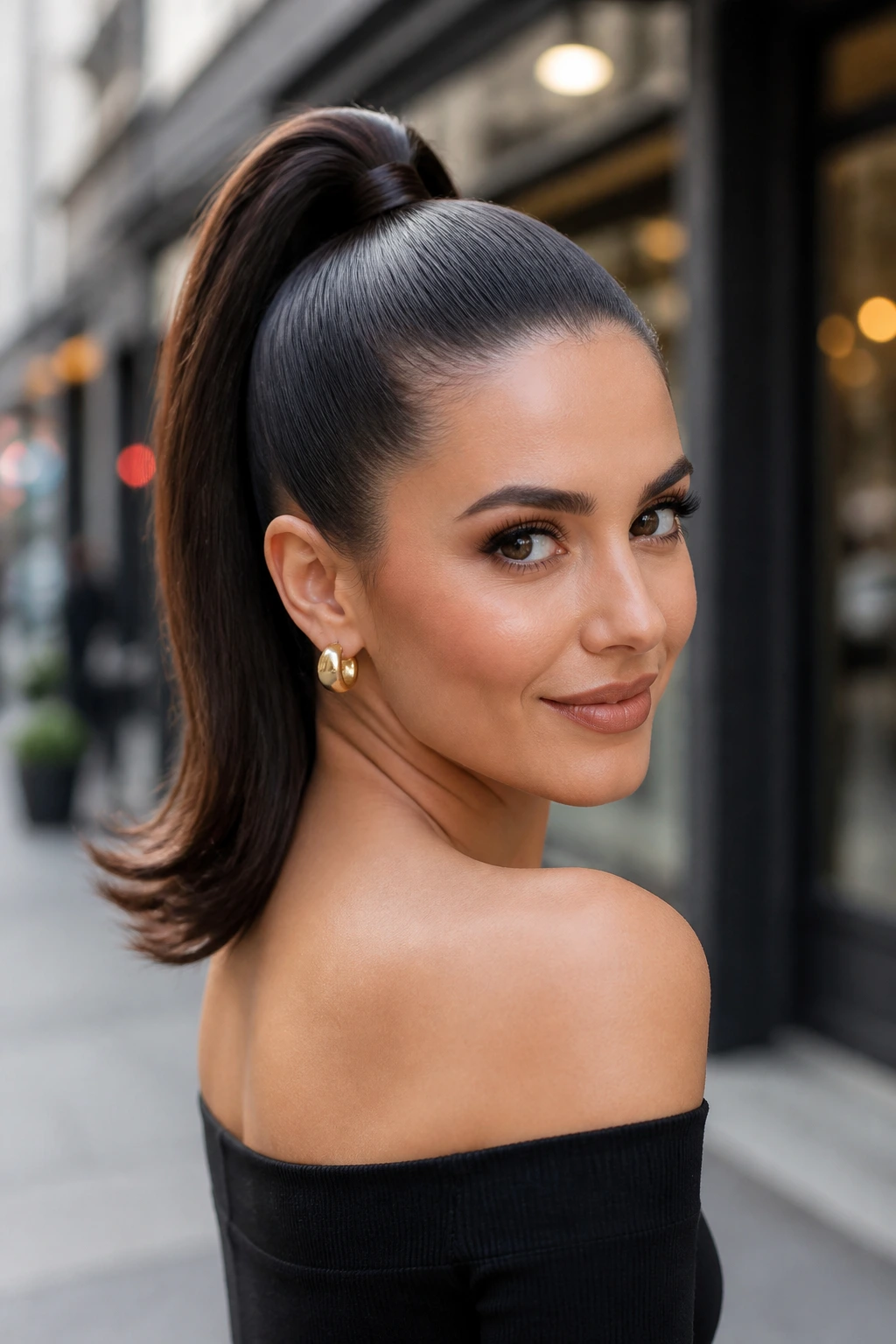
Flat crown, bent ends. That’s the whole charm. The ponytail stays sleek at the top, then the last few inches curve outward with a flat iron or a round brush, giving the tail a little swing instead of a dead-straight drop.
I like this because it keeps the style from feeling too severe. It still reads clean, but the flipped finish adds movement when you turn your head. It’s a good option for medium-length hair, where the tail can use a little visual lift at the bottom.
10. Silk Scarf High Ponytail
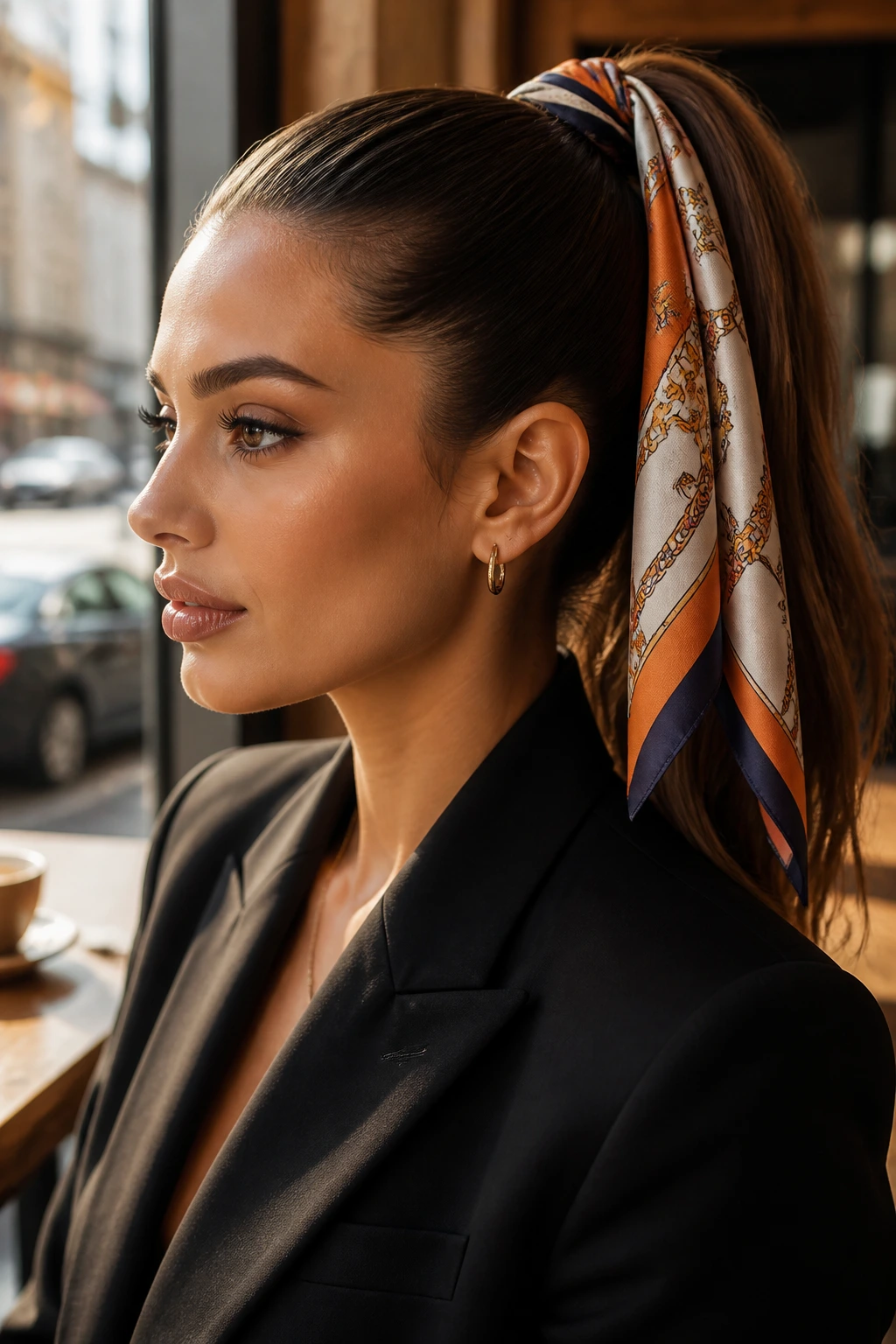
A silk scarf at the base changes the whole mood without changing the shape. Tie it in a small knot, let the tails hang, or wrap it around the elastic like a band. The print becomes part of the outfit, which is handy when the hair itself is kept very simple.
This works especially well with monochrome clothing. A black pony with a red scarf, or a cream scarf against dark hair, gives you contrast without extra styling time. Keep the crown neat and the scarf aligned with the part, or the whole thing starts to drift.
11. Gold Cuff High Ponytail
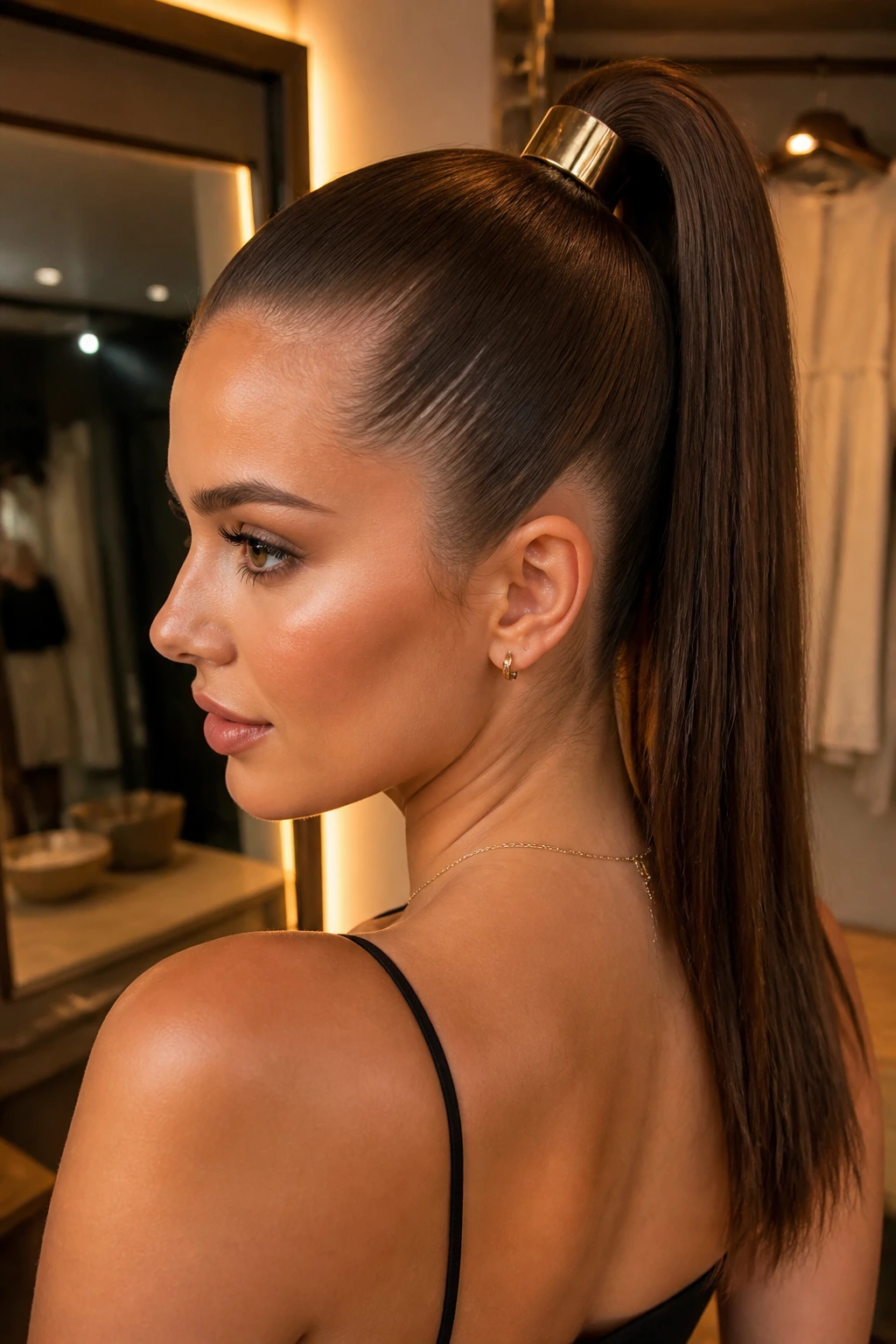
One cuff, not three. A single gold hair cuff at the base makes the ponytail look finished in a way that reads clean from every angle. The metal gives the elastic a dressed-up shell, and the straight tail below keeps the focus where it belongs.
This style likes simple clothes and strong lines. The cuff can be thin and minimal or slightly wider, but I’d skip anything oversized unless the rest of the outfit is equally bold. When the rest of the hair is smooth, even one small metal accent goes a long way.
12. Rope-Braid Length High Ponytail
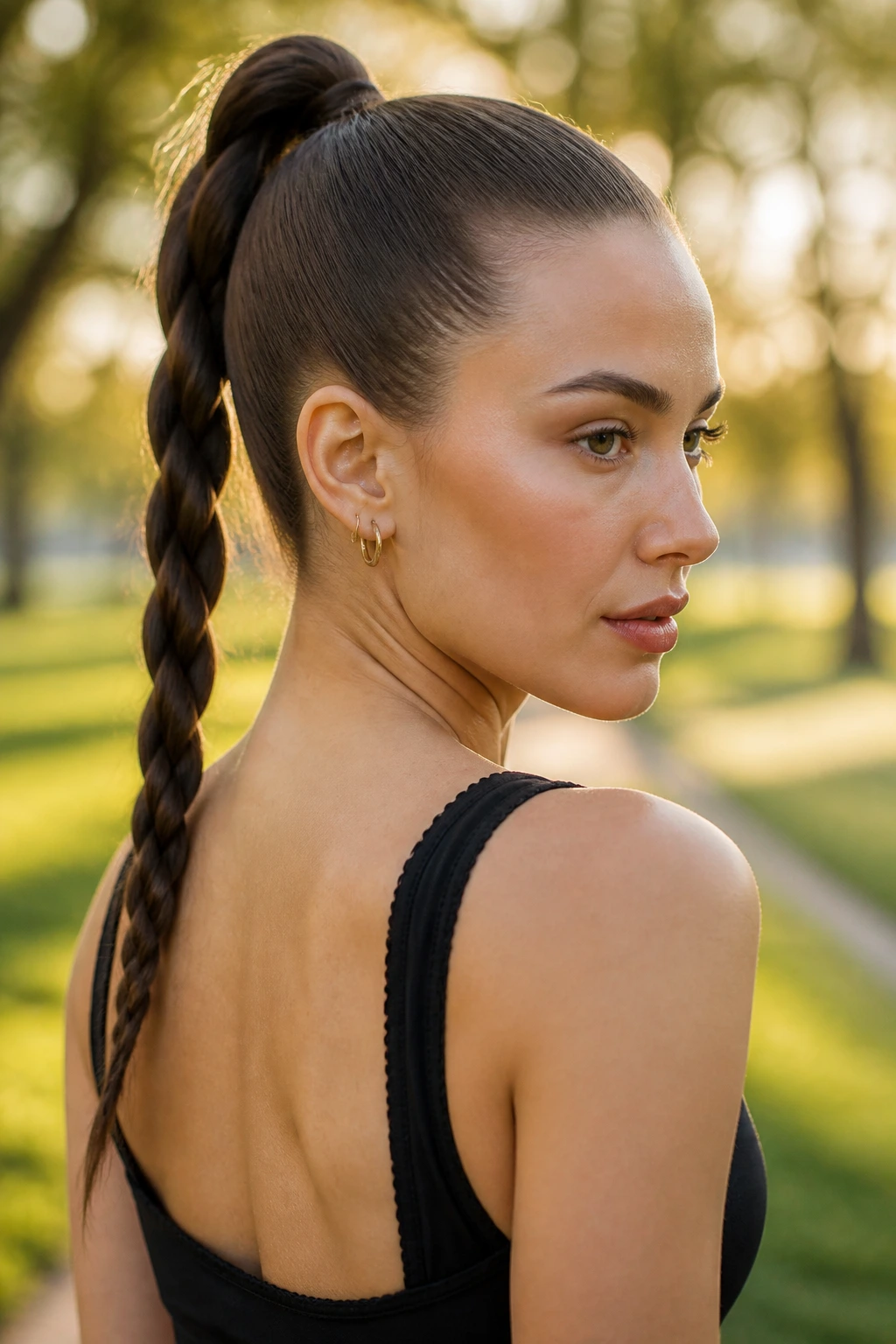
Twisting the tail into a rope braid keeps it from tangling and gives movement without the fuss of a full three-strand braid. It also looks tighter and neater than a loose plait, which fits the whole sleek theme better. You’ll want to smooth the tail first so the braid doesn’t puff.
- Divide the ponytail into two sections.
- Twist each section in the same direction.
- Wrap them around each other in the opposite direction.
That little twist pattern is what keeps the braid compact. It’s one of my favorite choices for windy days, because the shape holds longer than a straight tail that keeps brushing against your shoulders.
13. Face-Framing High Ponytail
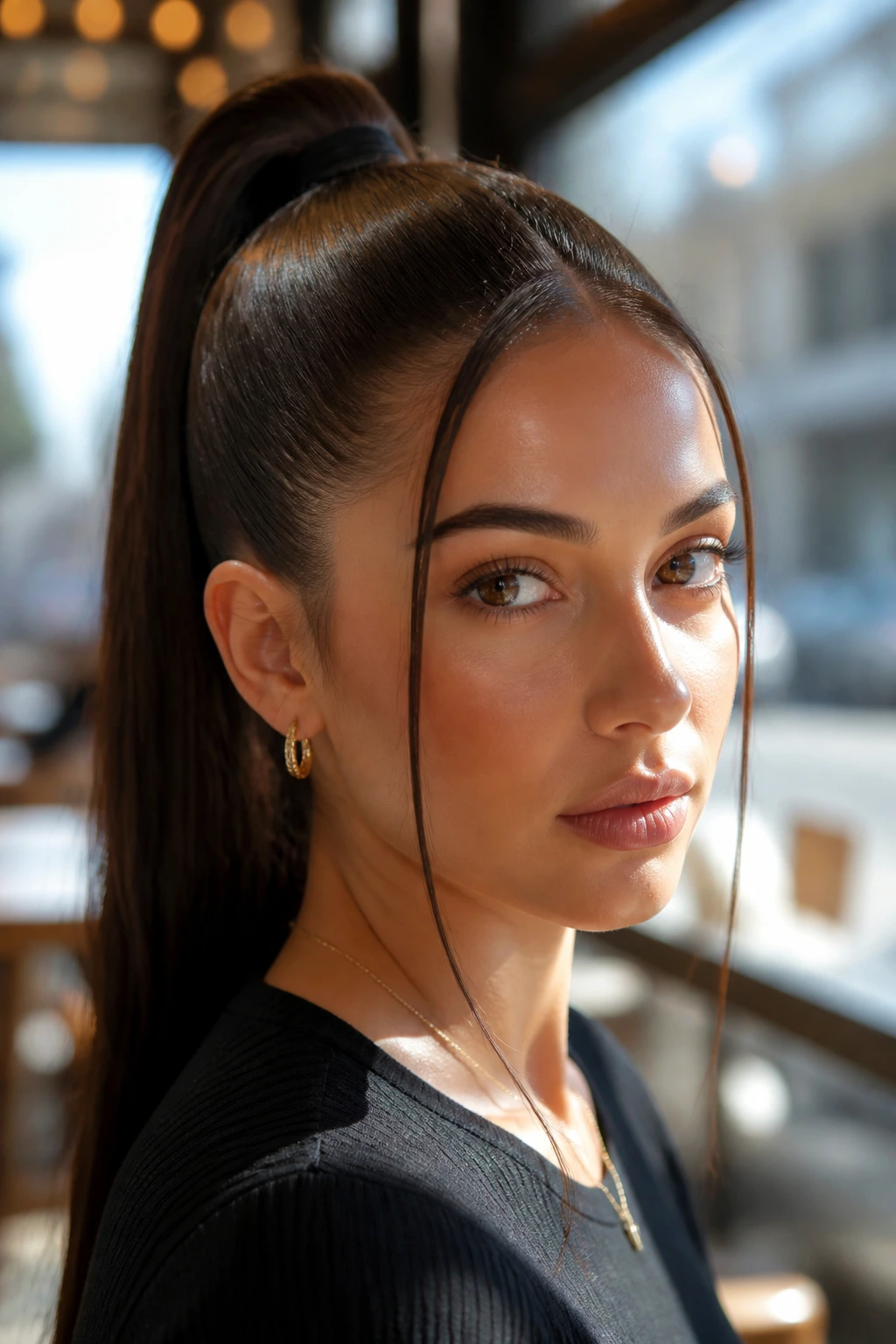
Can a sleek pony feel soft? Yes — if you leave one narrow strand or two slim pieces around the face. Keep them thin. If the front pieces get too wide, the style stops feeling deliberate and starts reading like you forgot to finish.
This version is useful when the crown needs structure but the face still needs a little softness. It works well with strong jawlines, sharp cheekbones, or any outfit that already has a lot of geometry. The loose pieces should look intentional and brushed through, not stray.
14. Feed-In Braid High Ponytail
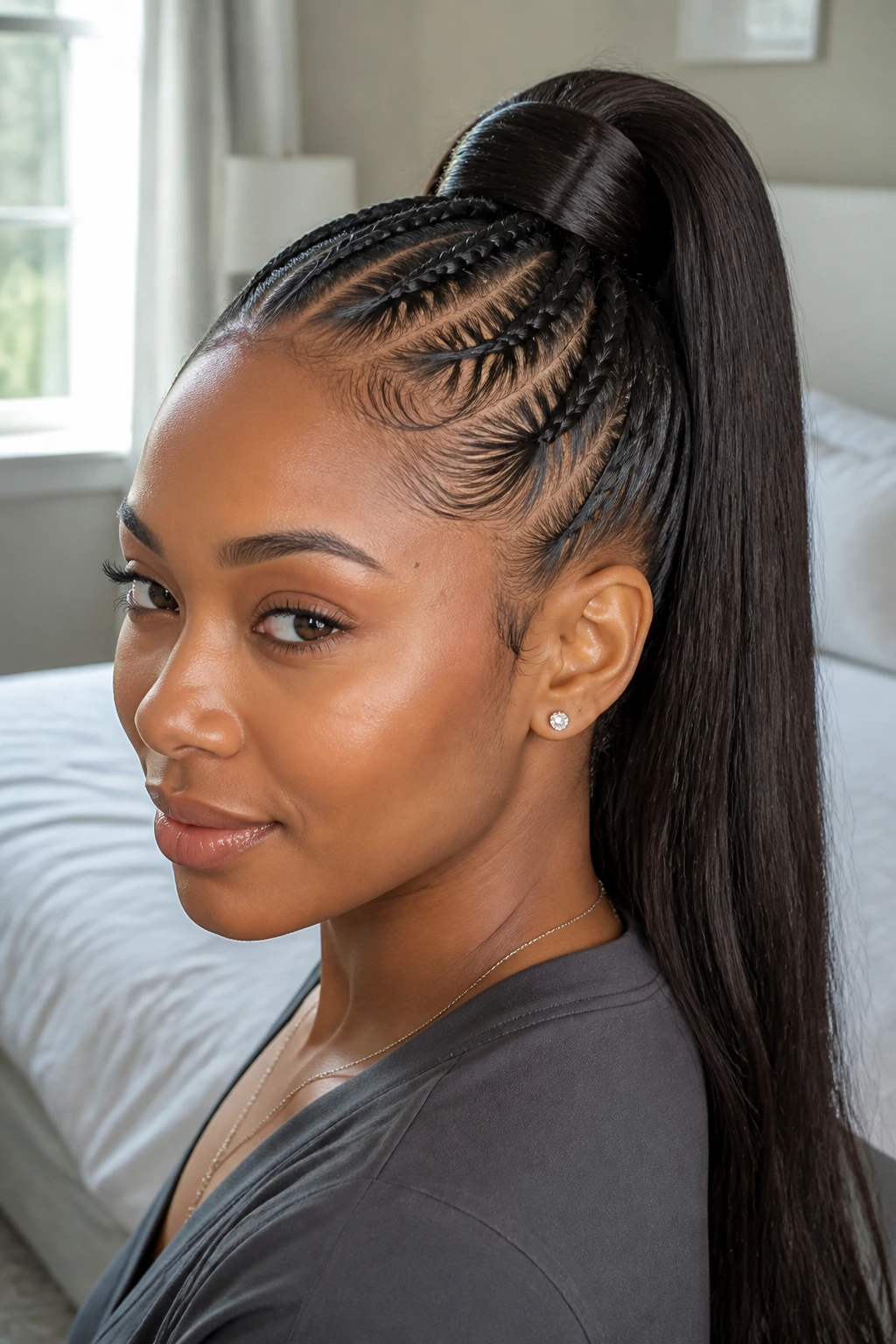
The braid feeds into the pony rather than stopping at the base. That’s the detail that makes it look built from the start. It’s especially neat on thicker hair, because the braid keeps the front section tight before the pony opens up at the crown.
This style has a protective feel to it, too. It keeps shorter layers tucked in and gives the pony a cleaner start, which matters if your hair tends to separate at the temples. When the braid is narrow and even, the finish looks polished from the front and the side.
15. Angled Side-Sweep High Ponytail
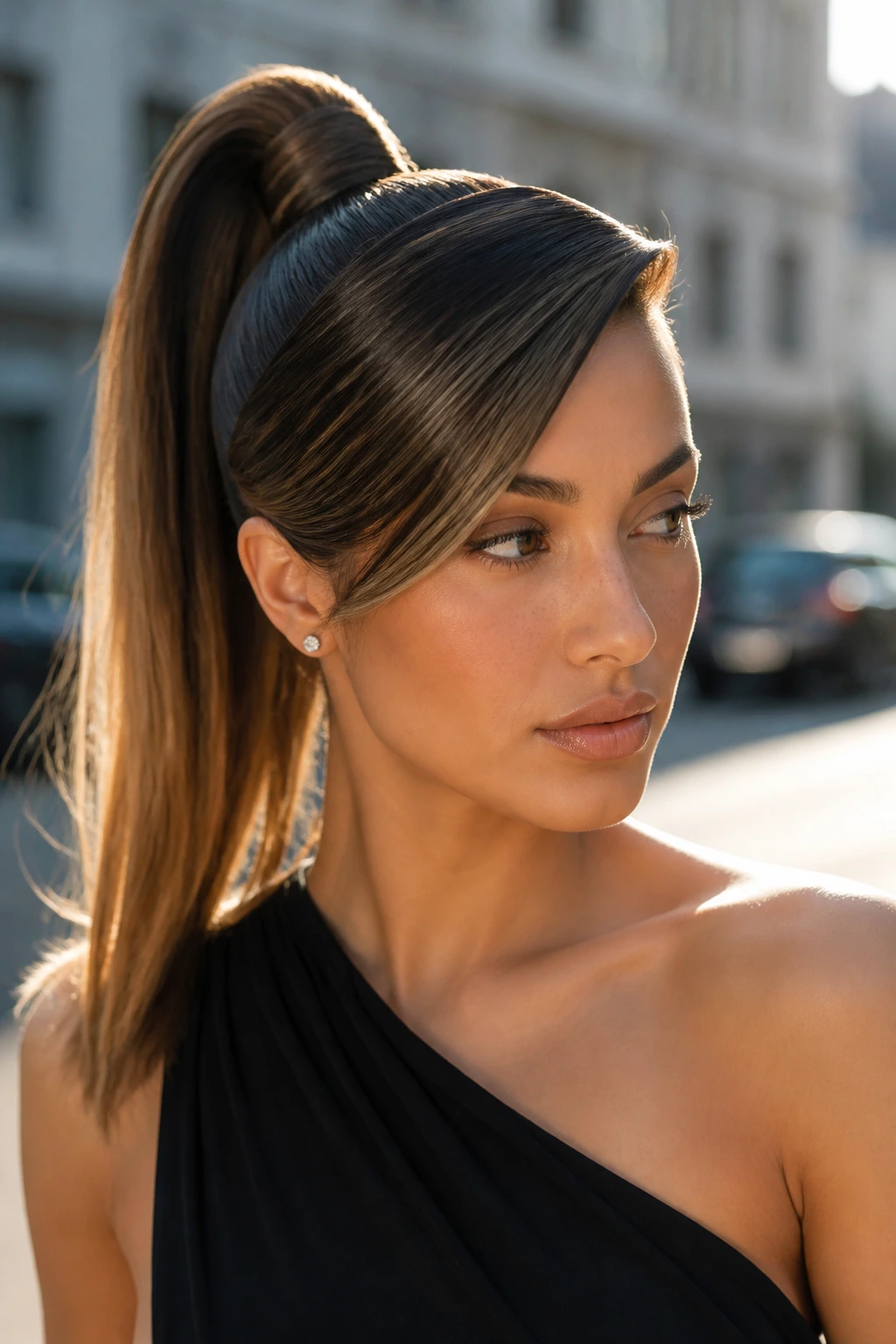
Compared with the center part, the side sweep changes the whole attitude. The front section angles across the forehead and gives the pony a little motion before it reaches the base. It’s a small shift, but it softens the geometry just enough.
This works best when you want something sleek without the symmetry feeling too stern. A deep side-sweep can balance larger earrings or a statement neckline, and it’s a nice way to break up a long face without adding volume everywhere else. Clean roots, soft sweep, strong tail.
16. Sport-Tight High Ponytail
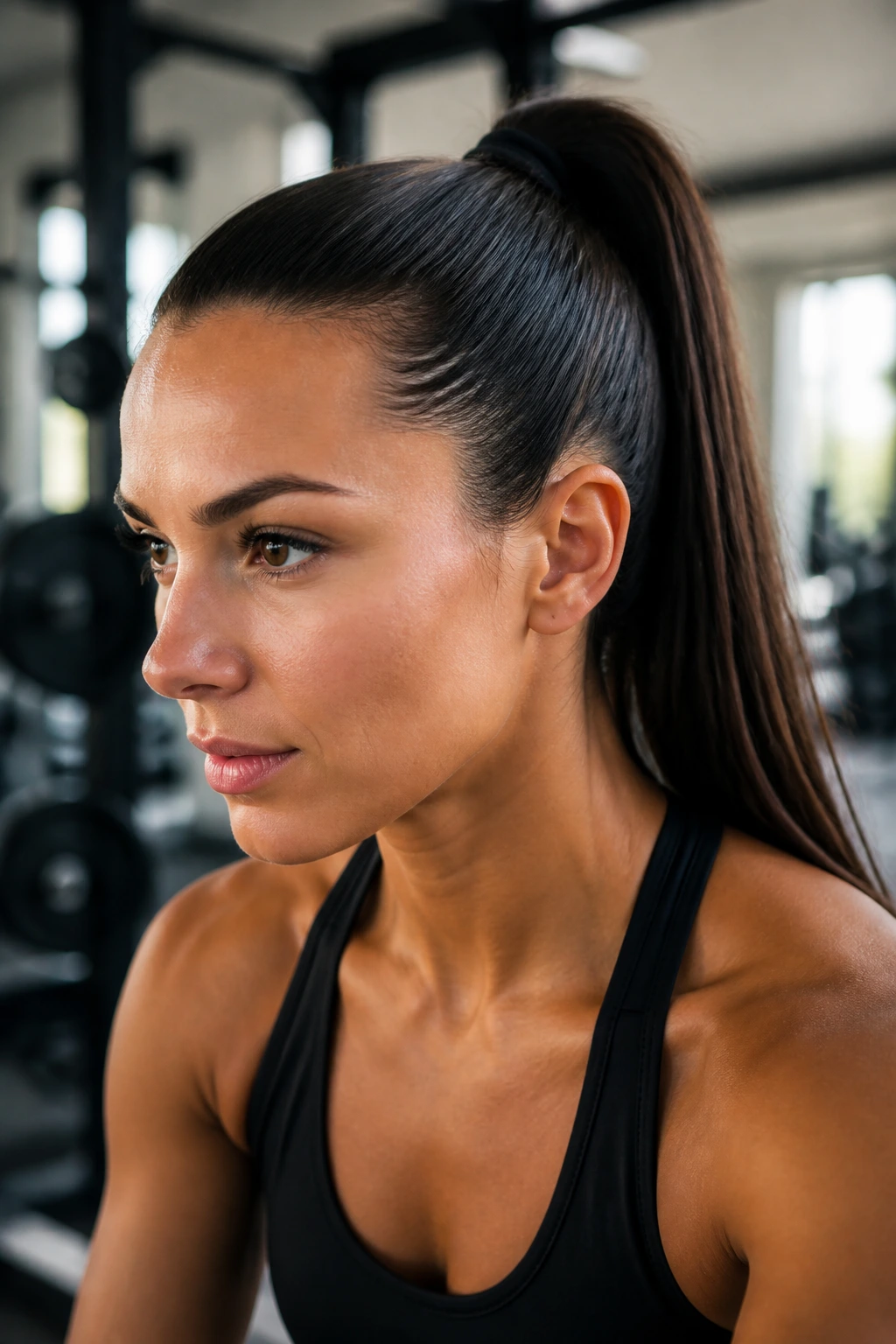
A zero-fuss pony for workouts and rushed mornings. The crown is pulled tight, the base sits high, and the tail stays straight so nothing bounces loose mid-day. If your hair slips easily, double the elastic or use a snag-free band with a little grip.
This isn’t the dressiest version, but it has its place. It’s useful when you want hair completely out of the face and off the neck, with no stray pieces brushing your temples. Keep the finish neat and simple; this style looks best when it’s not trying too hard.
17. Curtain-Bang High Ponytail
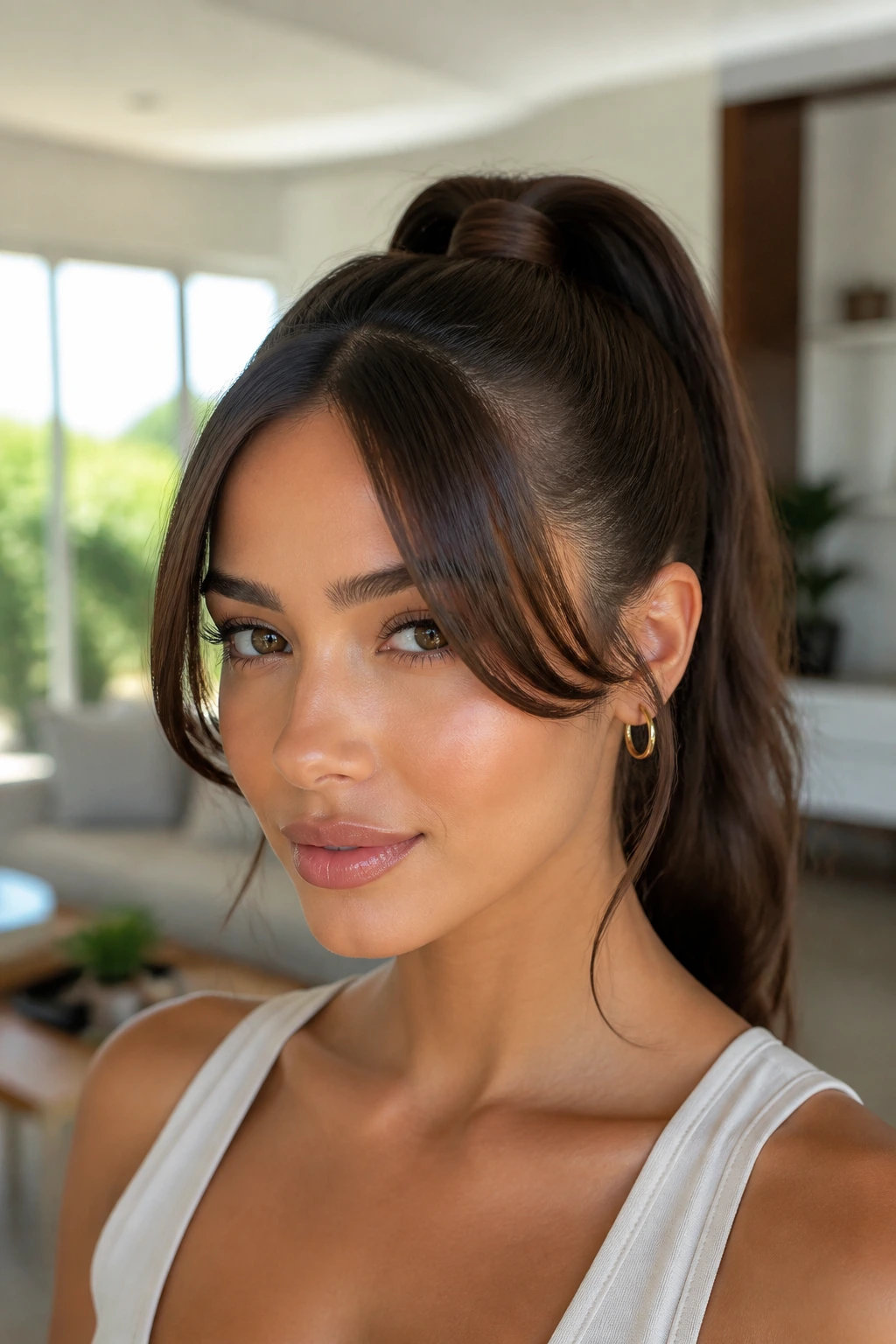
Curtain bangs change the balance by giving the front some weight while the rest of the hair gets pulled up. The bang pieces should sit lightly against the forehead and blend into the crown instead of sitting like a heavy curtain. That blend matters.
This version is one of the easiest ways to wear bangs with a high ponytail without losing the sleek line. It looks polished when the bangs are soft and the pony itself stays firm. If your bangs are newly trimmed, keep a tiny flat iron nearby for a quick bend at the ends.
18. Side Cornrow High Ponytail
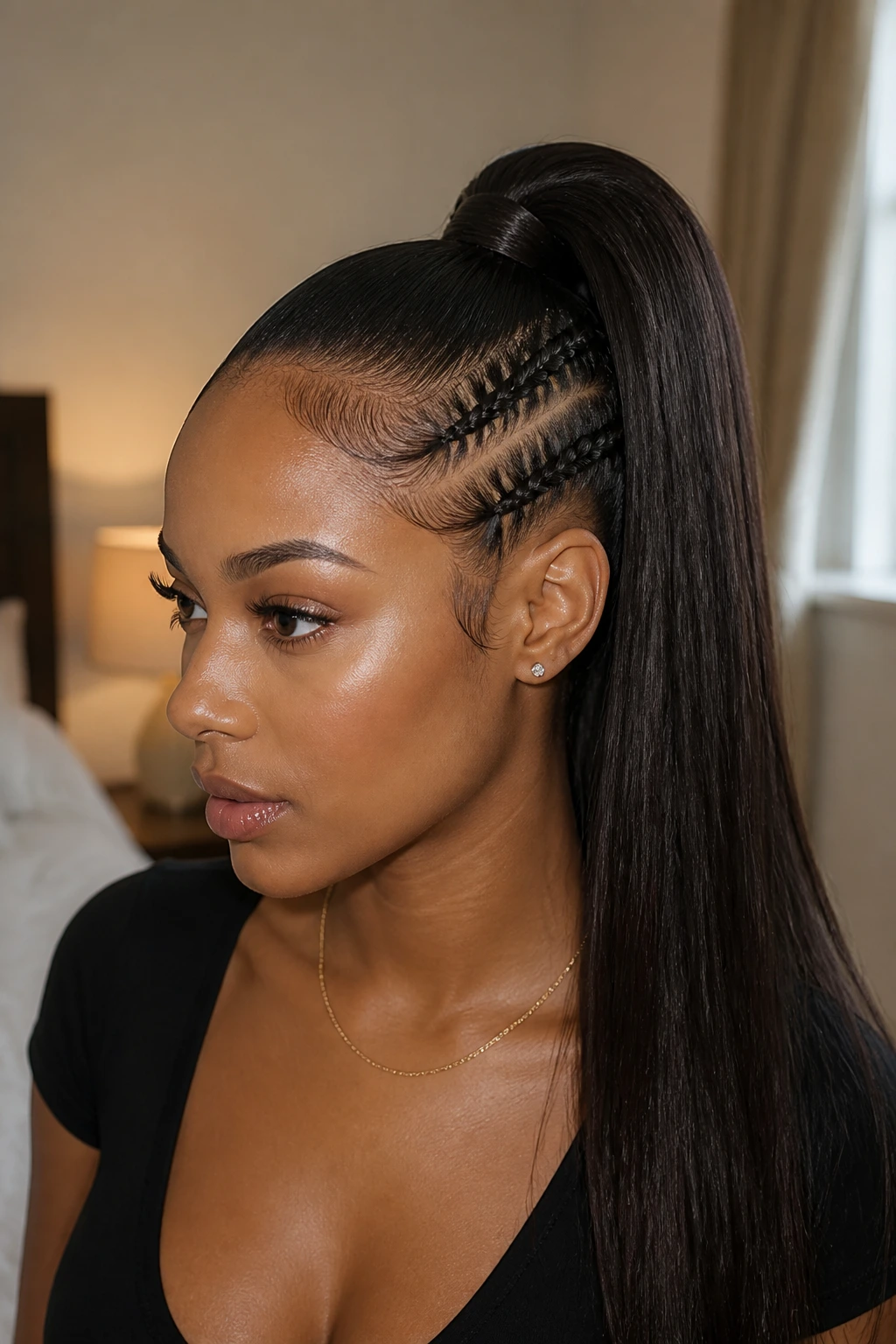
One or two cornrows along the temple give the style a sharper edge. They also keep the hairline incredibly clean, which is useful if your side layers like to escape. The rest of the hair can stay sleek and high, so the braid detail doesn’t take over.
- Best for natural hair or blown-out textures that can hold braid tension.
- Keep the cornrow narrow if you want the pony to remain the main event.
- Finish the tail with straight lengths or a wrapped extension for contrast.
This one has presence from the side view, which is where a lot of ponytails get ignored.
19. Blunt-Edge Extension High Ponytail
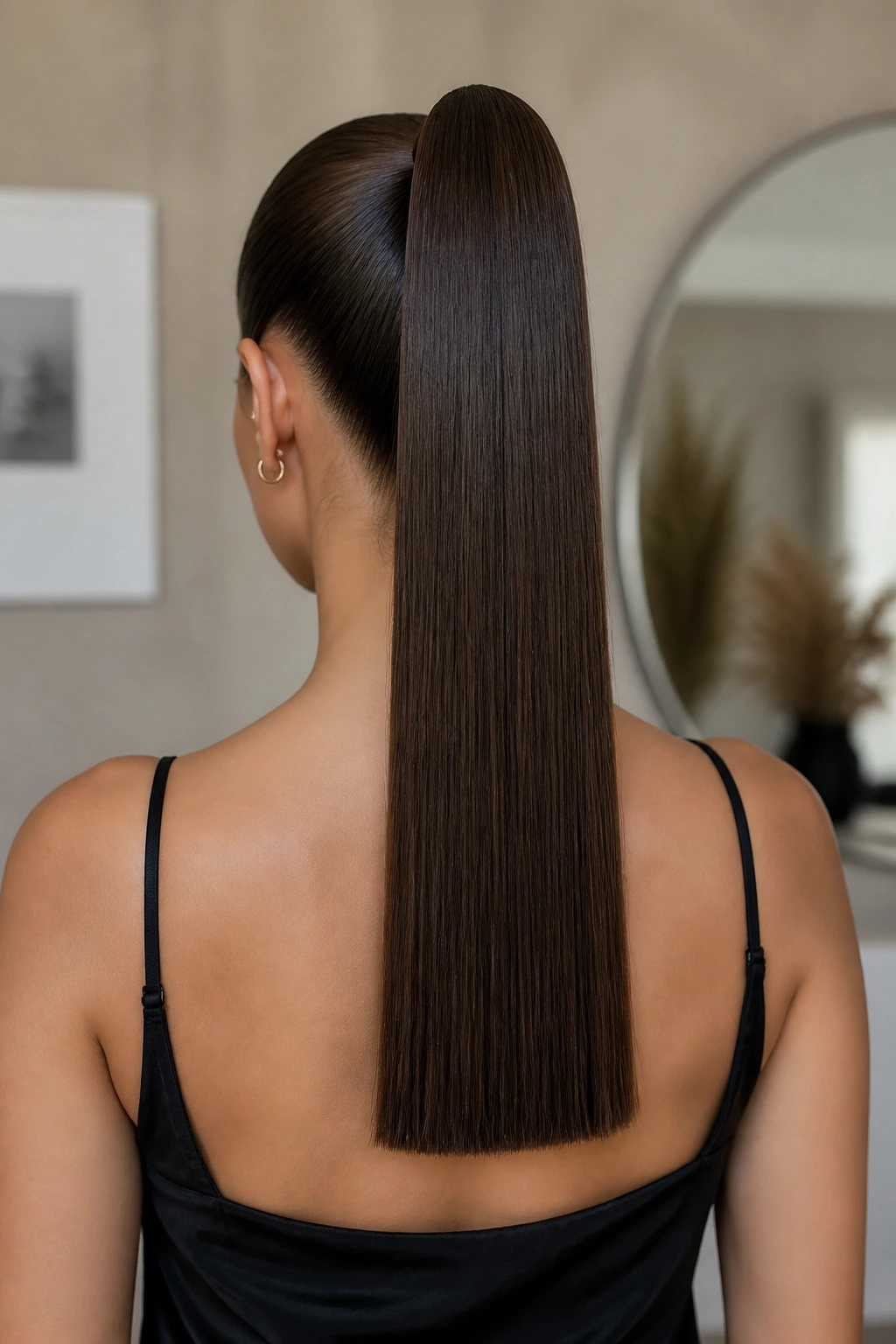
This is the one that looks expensive from the back. The tail ends in a blunt, straight line, which makes the whole pony read deliberate and heavy in a good way. Extensions help here because they give you enough length and density to keep that line crisp.
The crown should be sleek enough that the blunt finish feels earned, not accidental. I’d choose this style when the outfit is minimal and you want the hair to carry the sharpness. Keep the ends trimmed straight; if the tail thins out too much, the blunt edge loses its punch.
20. Sleek Crown, Curly Length High Ponytail
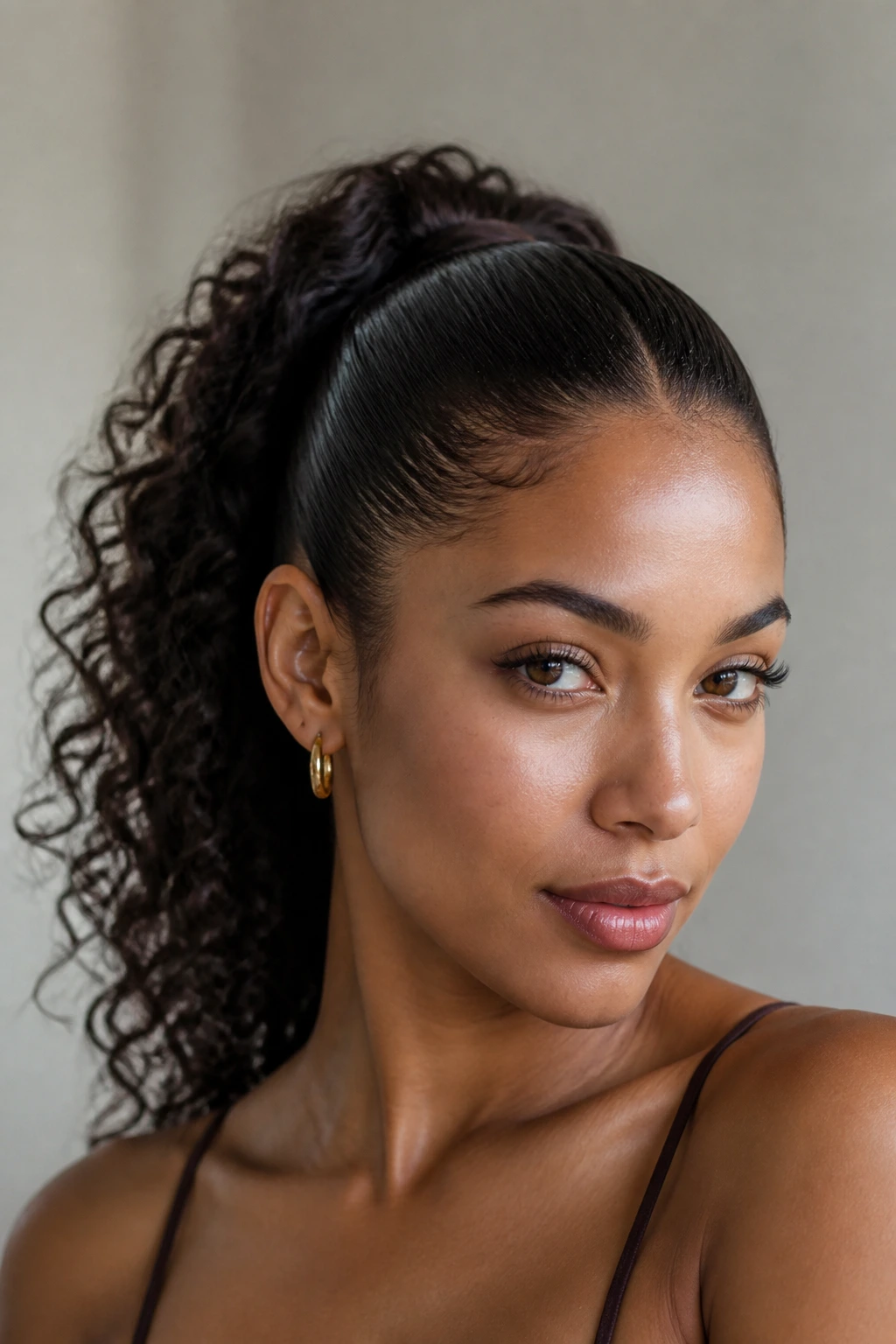
Smooth top, texture below. That contrast is what makes this one stand out. The crown stays flat and neat, while the ponytail drops into curls, waves, or natural coils that keep the look from feeling too rigid.
This is one of the most useful styles for women with curly or coily hair, because it lets you control the top without forcing the full length to behave. Stretch the crown first, then let the tail keep its shape. The result has polish at the scalp and movement everywhere else.
21. Metallic Cord-Wrapped High Ponytail
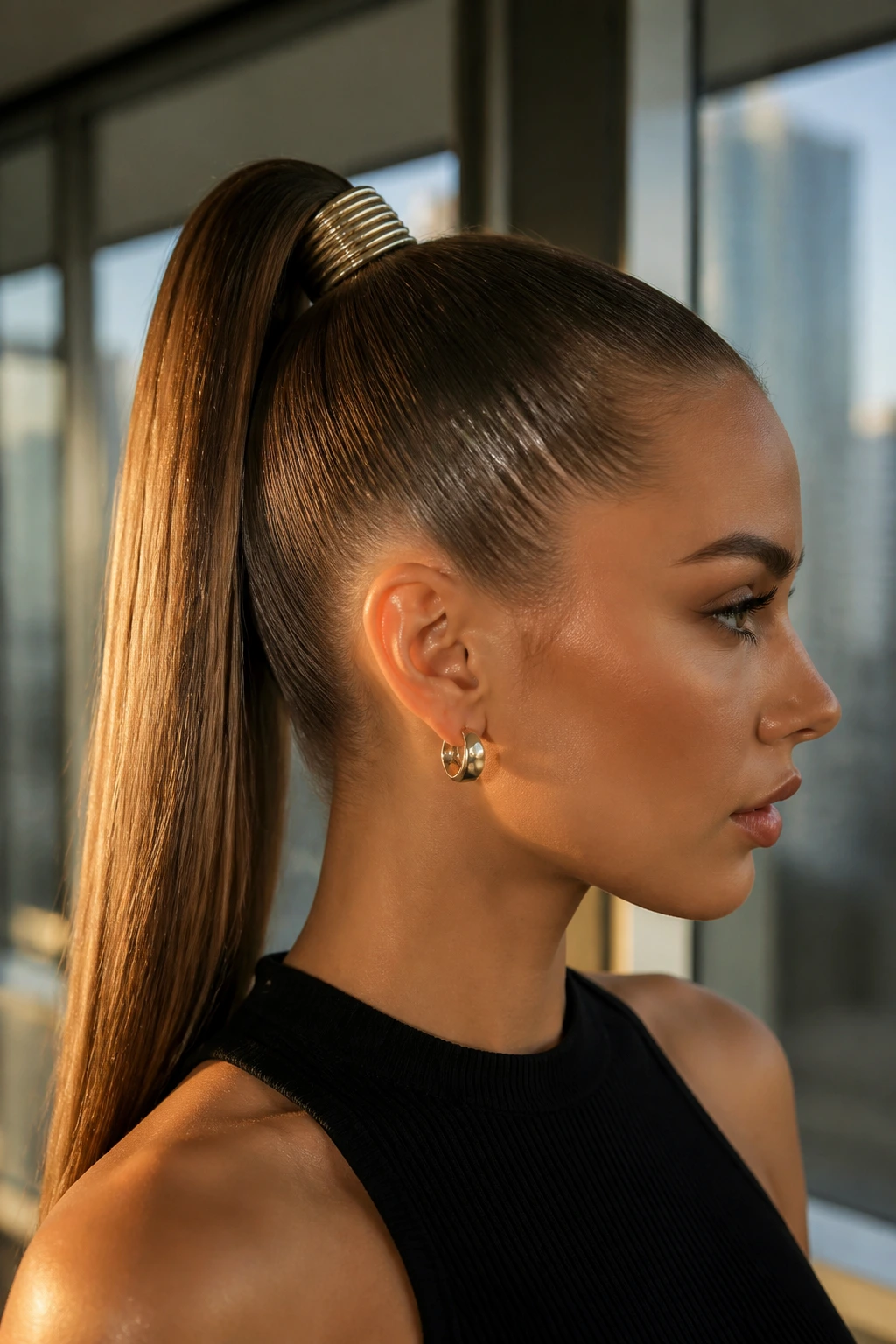
Thin cord, not thick rope. A narrow metallic cord around the base adds shine without swallowing the pony. The effect is sharper than a scarf and lighter than a heavy cuff, which makes it a nice middle ground when you want something decorative but not loud.
This style works best with a smooth, tight crown and a straight tail. The cord should sit flat against the elastic so it looks integrated rather than tied on as an afterthought. If the outfit already has metal accents, echoing them in the hair makes the whole look feel put together.
22. Knotted-Base High Ponytail
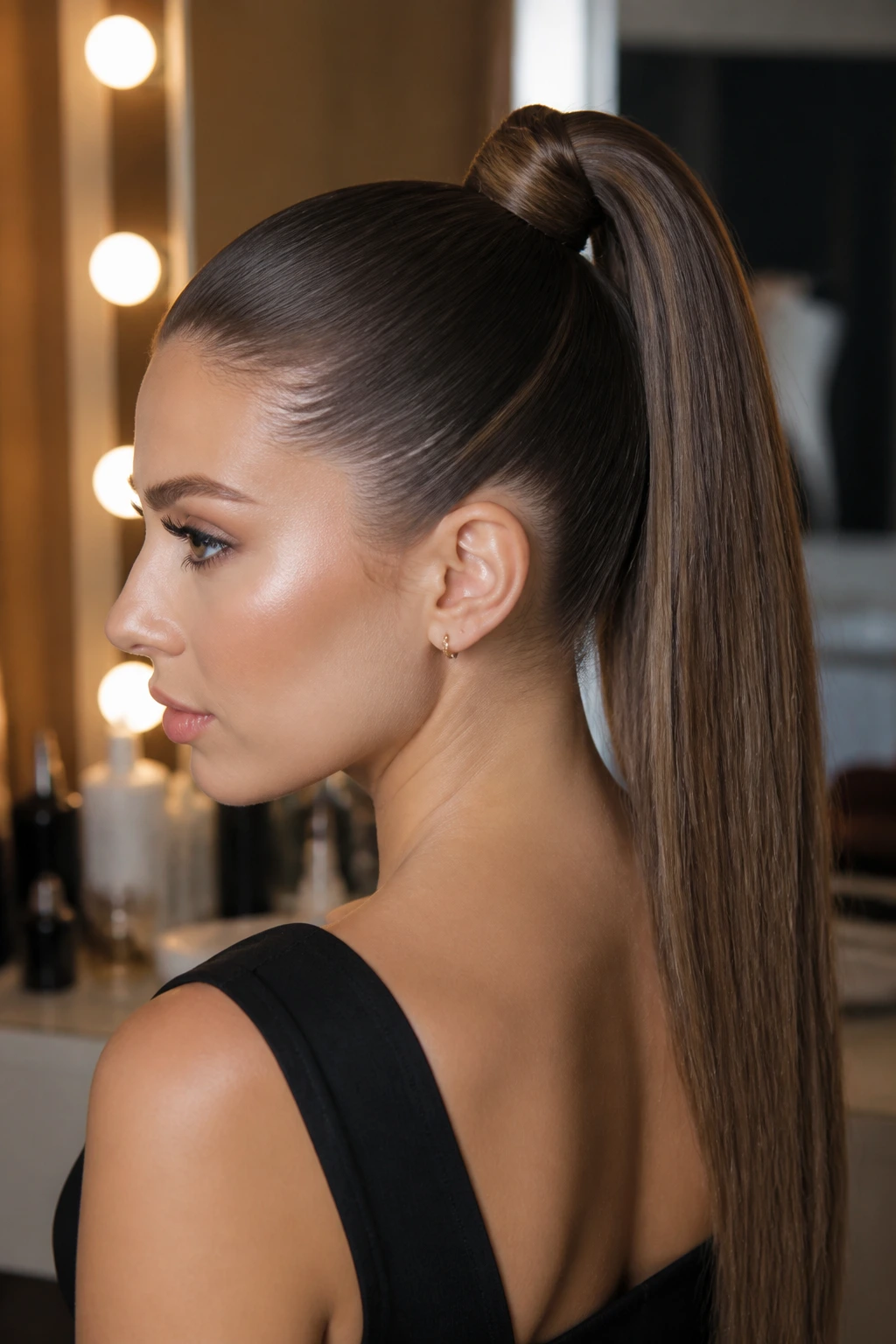
A small knot at the wrap point gives the base some shape without cluttering it. You can make the knot from a thin section of hair or use a tiny tied detail to hide the elastic. Either way, the finish feels a little more tailored than a standard wrap.
- Keep the knot tight and flat.
- Use a few bobby pins under the tail if the base feels loose.
- Best with straight or lightly waved lengths.
I like this one because it adds interest from close up, but the silhouette stays clean from a distance. That makes it a quiet option, not a showy one.
23. Double-Elastic Lift High Ponytail
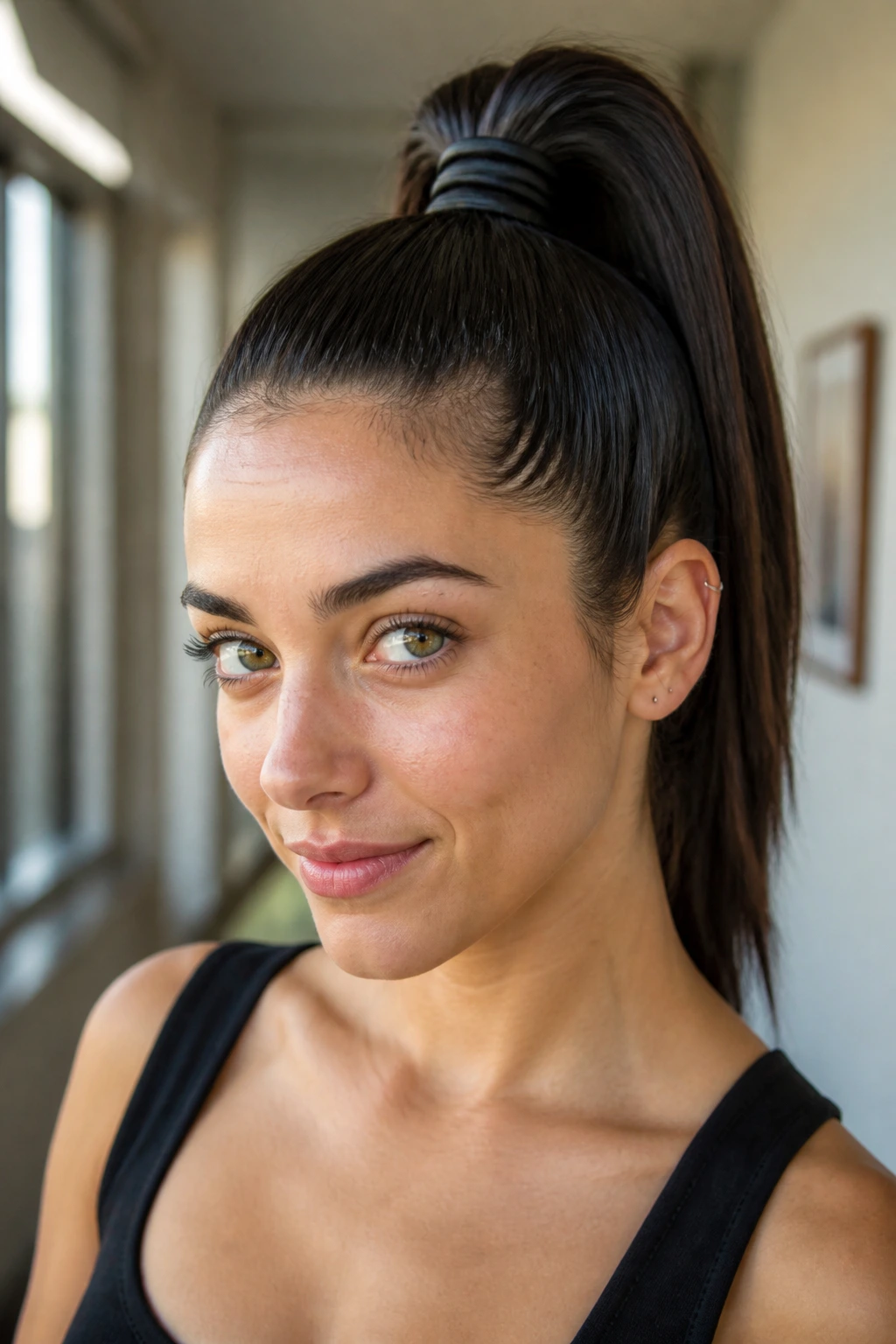
Two elastics stacked a finger-width apart support extra weight. That matters if your hair is dense, long, or full of extensions that want to drag the base down by the end of the day. The added support also keeps the pony higher and more upright.
The style itself stays sleek, but the double hold makes it behave better. Use the first elastic to set the height, then secure the second right on top of it for backup. If one elastic slides, the other keeps the shape from collapsing into a low slump.
24. Straight-Root, Wavy-Length High Ponytail
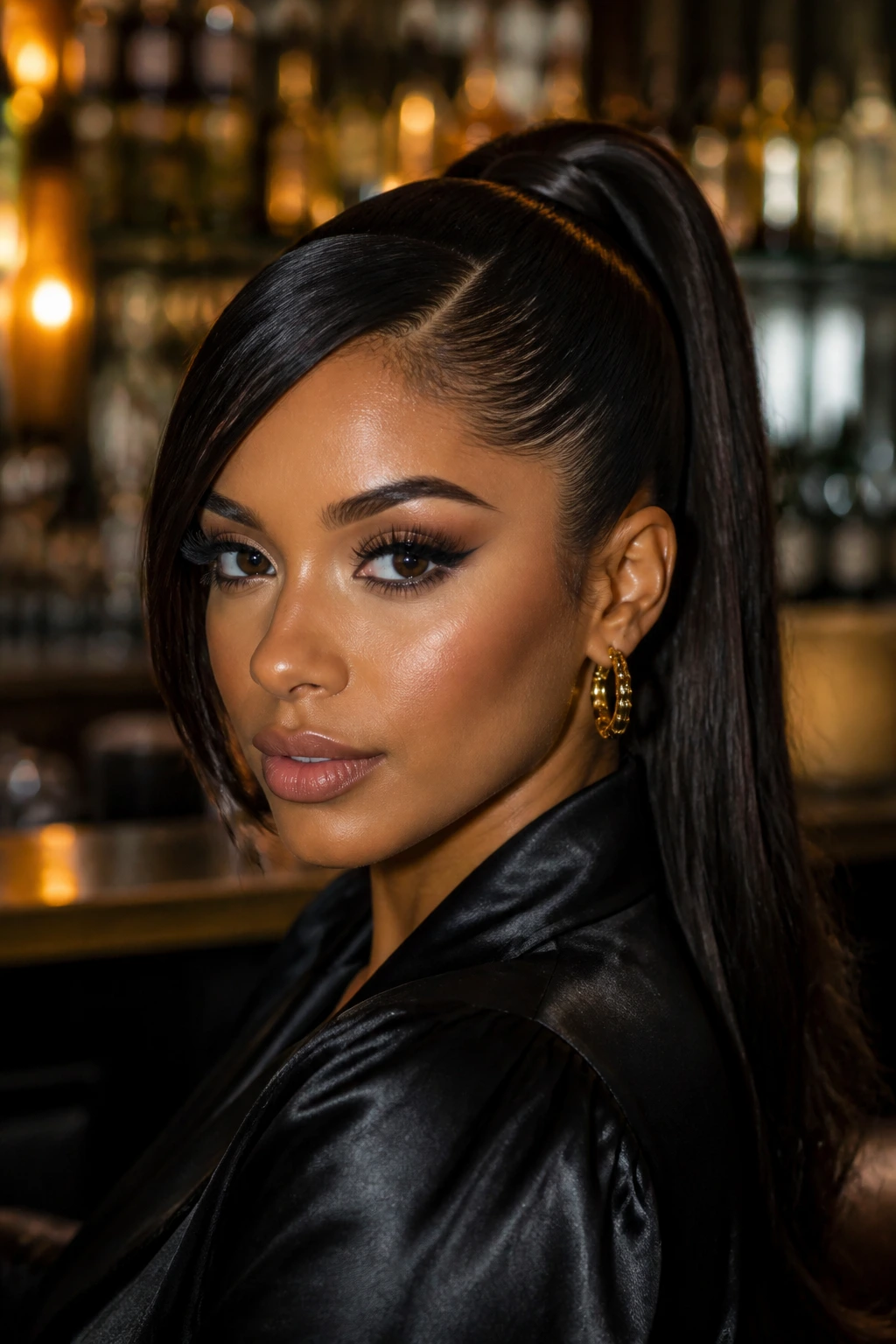
Roots flat, lengths loose. That contrast feels easy in a way the fully straight version sometimes doesn’t. The crown stays controlled, while the tail keeps a soft bend or a loose wave, which is helpful if pin-straight hair feels too severe for the outfit.
This version works well on hair that already has some texture and doesn’t want to be pressed into a fully glossy sheet. Smooth the front, bend the mid-lengths lightly, and leave the ends with movement. The result has structure without looking overworked.
25. Blowout-Texture High Ponytail on Natural Hair
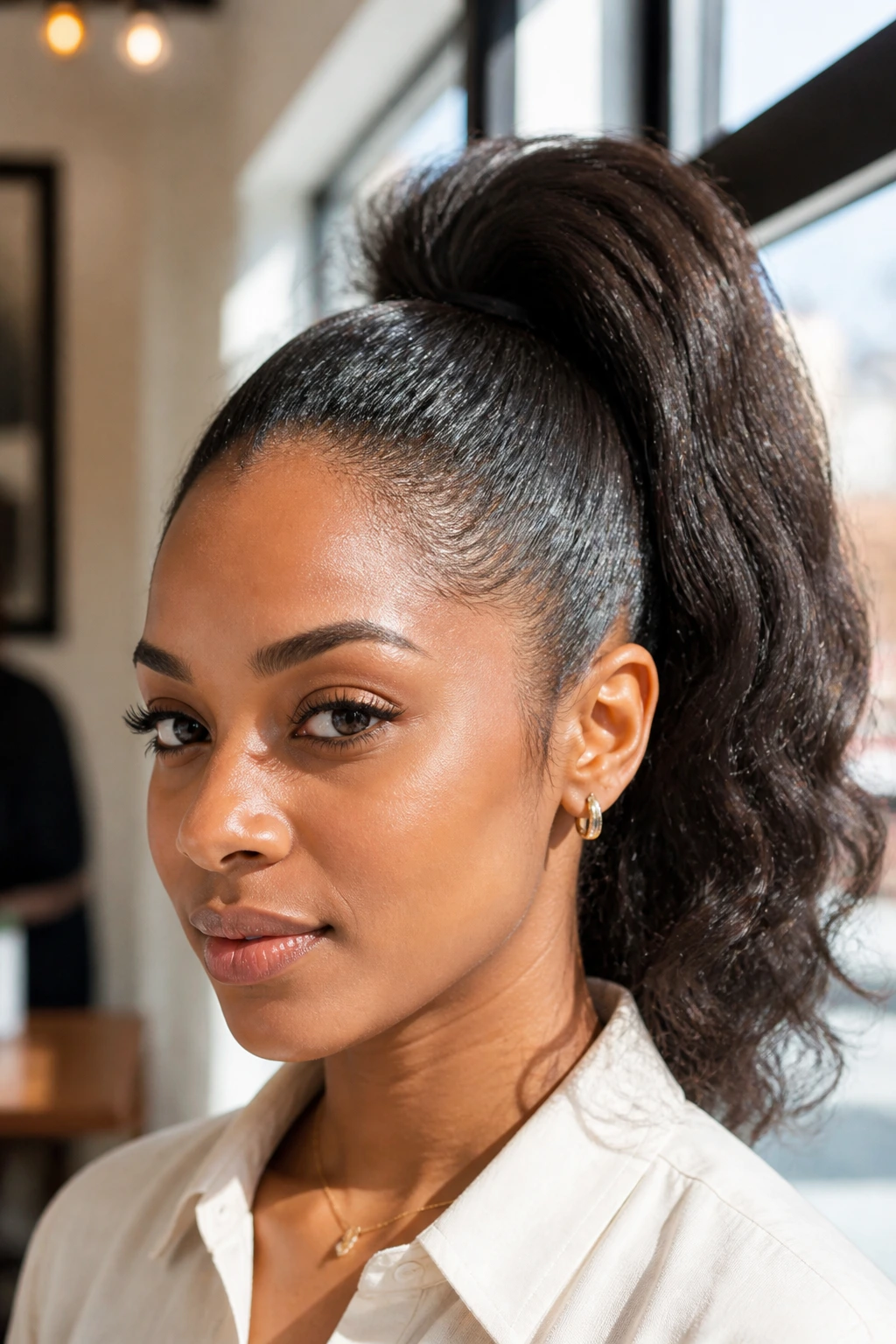
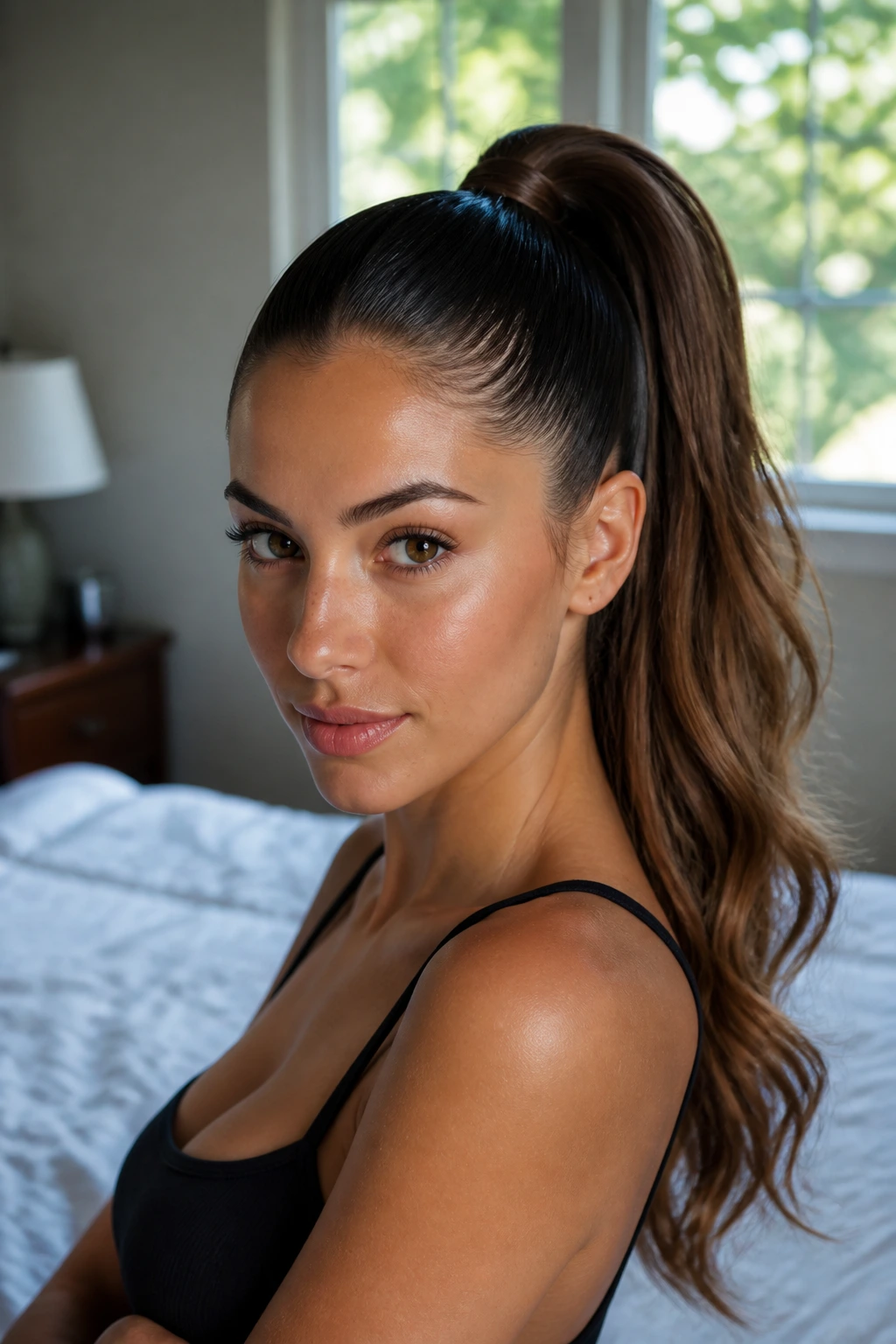
Stretch the roots first. That’s the part that keeps this version from puffing up before lunch. A good blowout or tension-dry base lets natural hair sit higher and smoother, while the tail keeps some softness and body.
I like this style because it respects texture instead of fighting it into a helmet. You get the lift of a high ponytail with enough movement to keep it from feeling stiff. If your hair shrinks fast, set the crown with a scarf for ten minutes after tying it, then let the tail fall on its own.
26. Short-Hair Extension High Ponytail
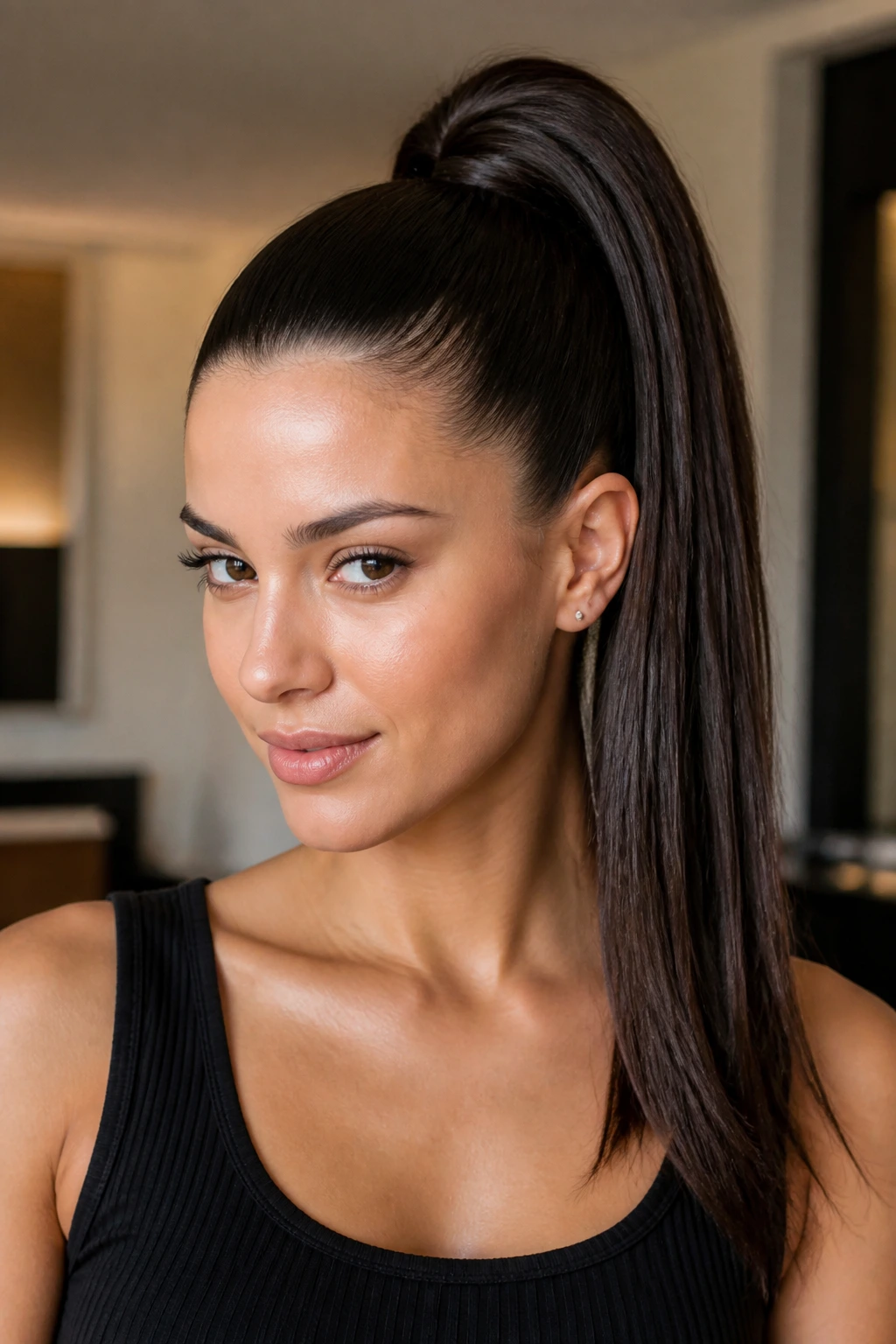
If your own length barely reaches the nape, a ponytail piece solves the size problem fast. The key is making the anchor pony small and tight enough to support the extra weight, because a weak base will tilt or sag. Shorter hair can still carry a high ponytail. It just needs a little help.
The transition from your hair to the extension should be hidden with wrap hair or a matching piece. When the color match is close and the base is smooth, the style reads as one long line instead of two separate parts. This is the version I’d hand to anyone growing out a cut and needing a clean fix.
27. Twisted Front Sections High Ponytail
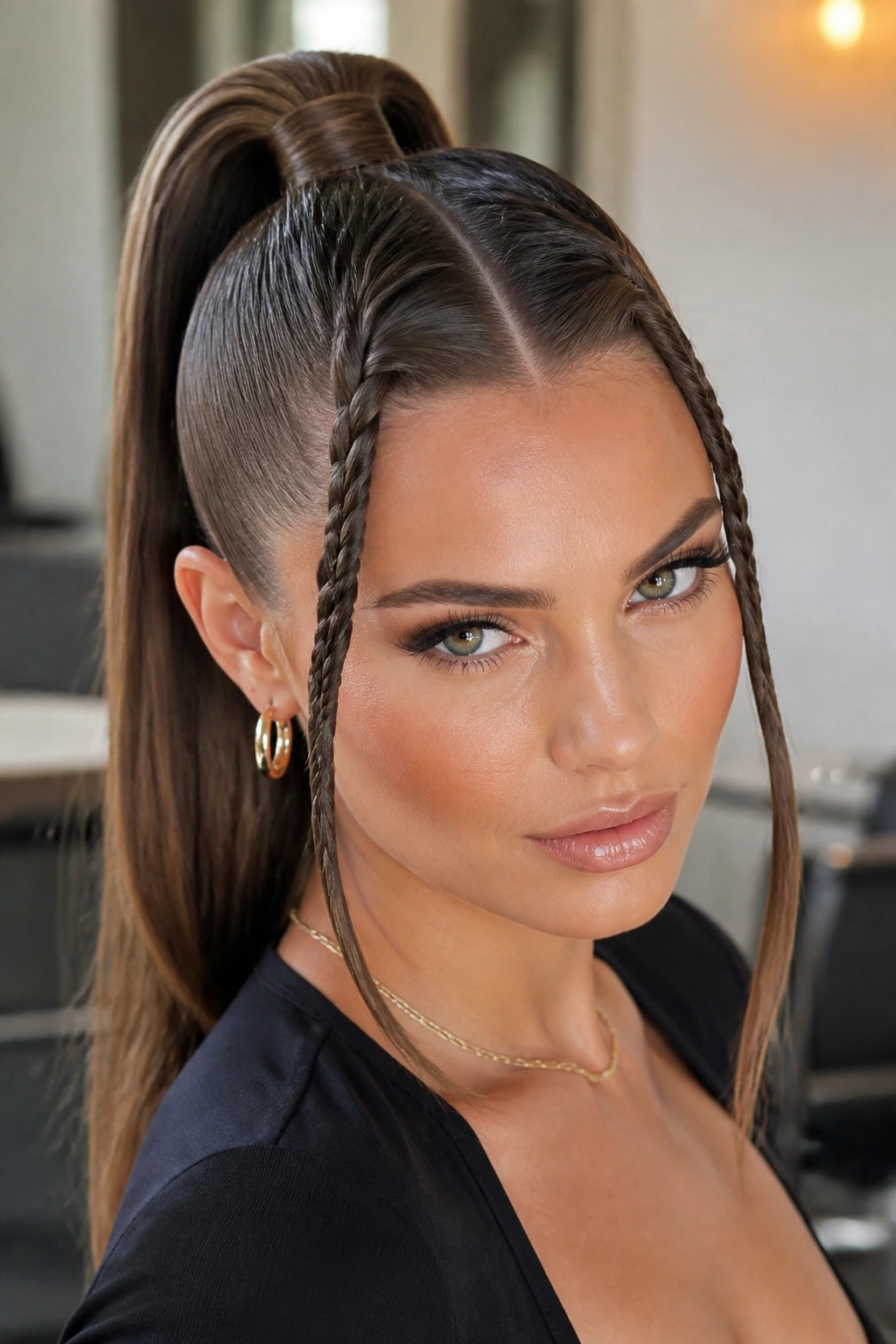
Two front twists keep short layers under control and add a bit of shape around the temples. They’re softer than braids and quicker to make, which is useful if you want detail without spending ten minutes on the mirror. The rest of the hair stays sleek and high.
This style sits nicely between formal and casual. The twists frame the face, the pony keeps the length neat, and the whole thing feels finished without needing a lot of product. If your layers are too short to tuck cleanly, use a couple of hidden pins where the twist meets the elastic.
28. Ear-Tucked Editorial High Ponytail
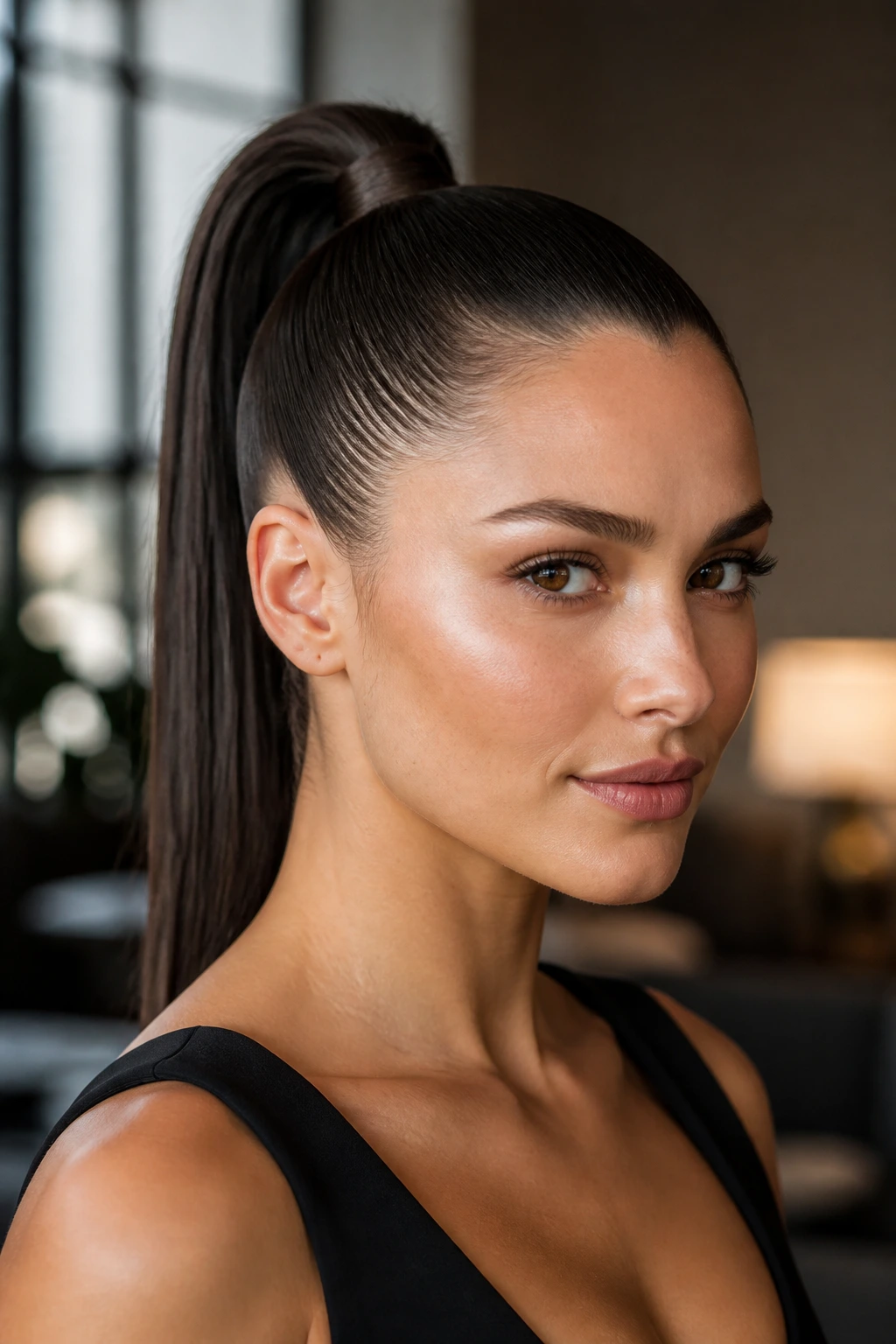
Tuck both sides behind the ears for a sharp, clean line. That small move changes the whole front view, because it exposes the cheekbones and makes the pony look taller. The effect is severe in a good way — not harsh, just uncluttered.
This is a good choice when you want your earrings, neckline, or makeup to get more attention. Keep the sides flat and the ears visible so the style reads crisp. A little shine at the temples makes the whole thing look more intentional, especially under strong light.
29. Satin-Bow High Ponytail
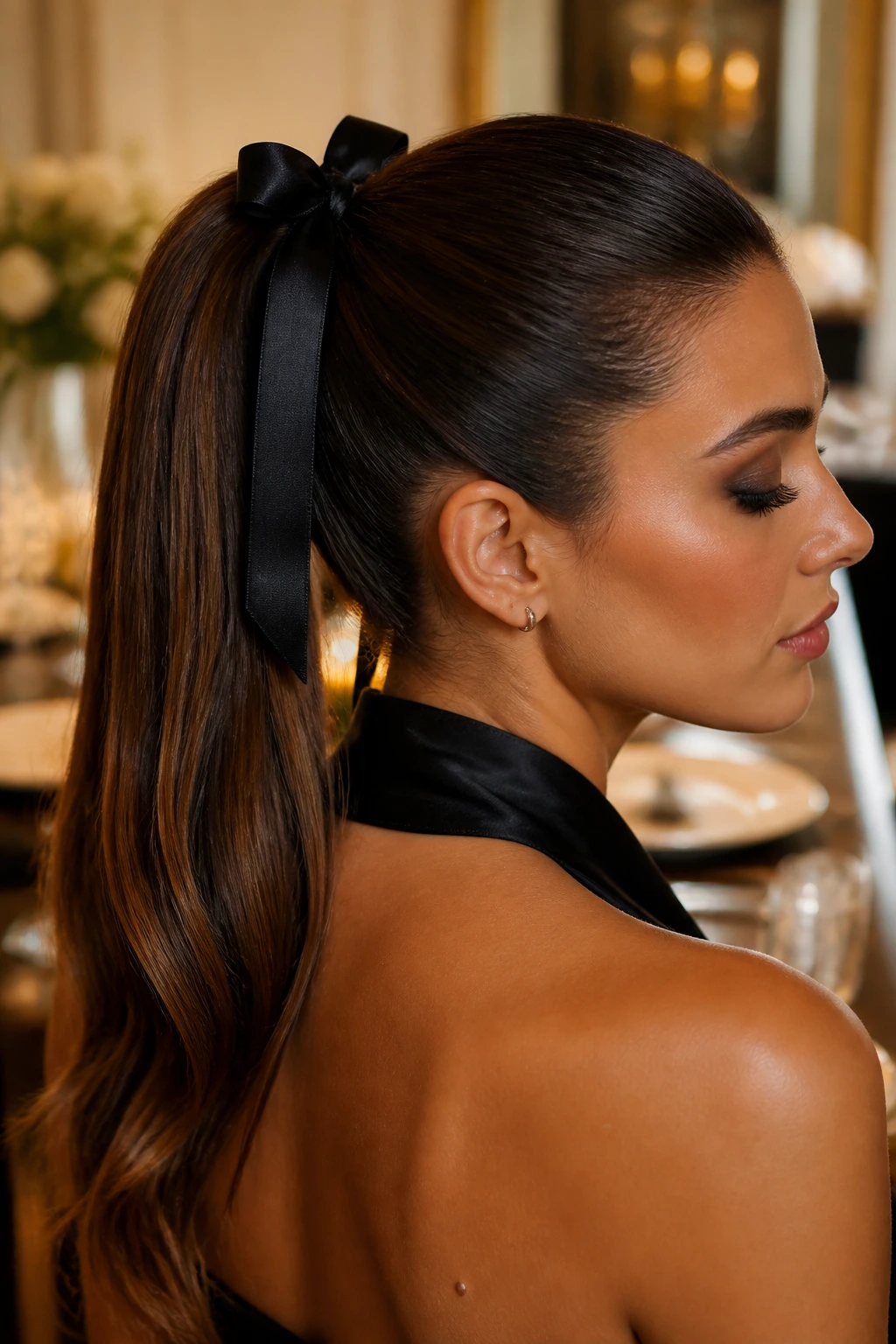
A soft ribbon keeps the style from feeling too severe. Satin gives the base a smoother, dressier mood, and the bow creates a little softness against the hard line of the pony. It’s a nice contrast when the rest of the outfit is very clean or structured.
- Choose a ribbon that lies flat, not one with stiff wire edges.
- Tie the bow just below the elastic so it doesn’t fight the crown.
- Best on straight, blown-out, or softly waved lengths.
This is the version I’d use for celebrations, dinners, or any setting where you want the hair to look finished without leaning into glitter or heavy accessories.
30. Crisscross-Base High Ponytail
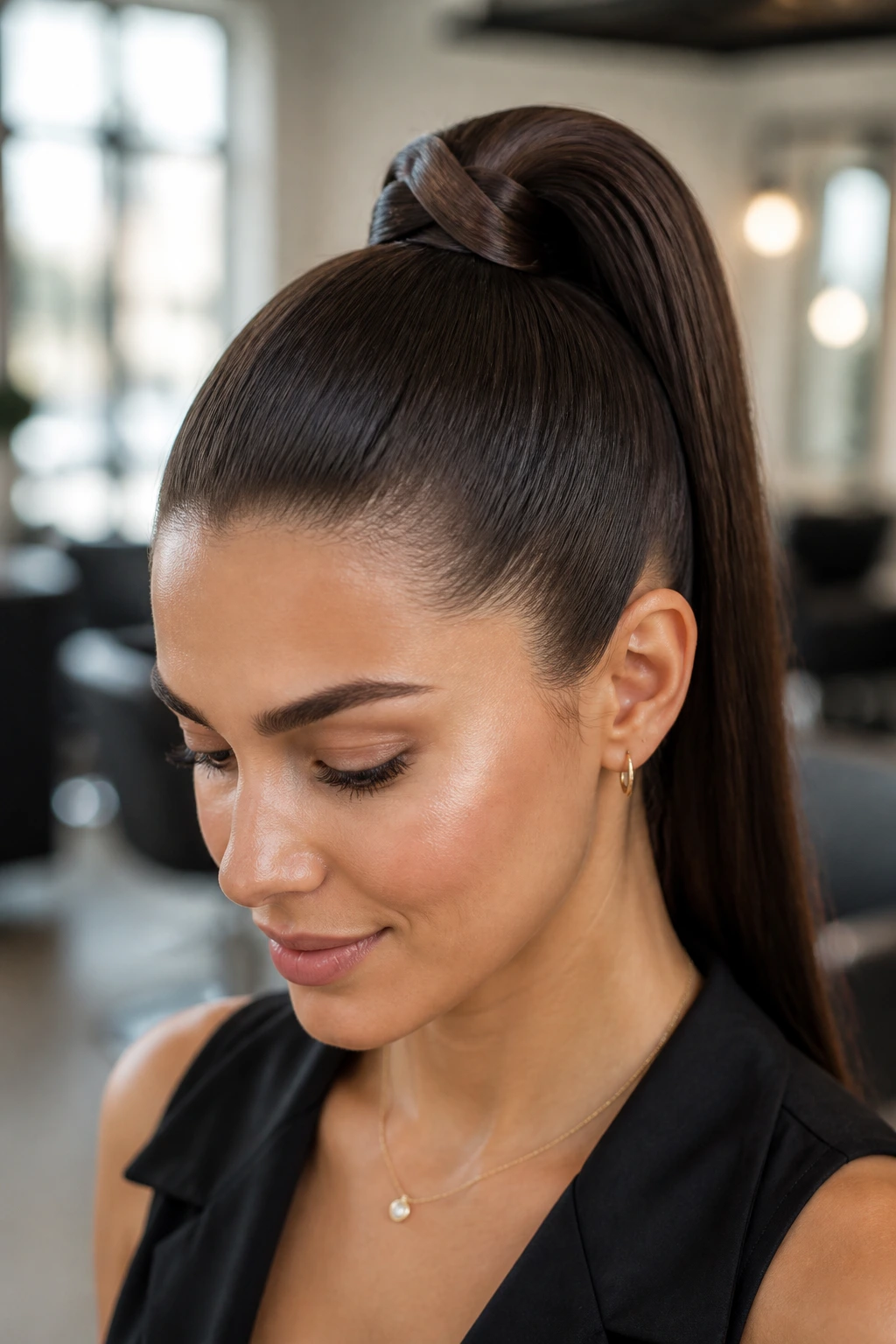
Two wrapped strands crossing over the elastic make the base look woven instead of tied. The detail is small, but it gives the pony a bit of craft at the crown. Keep the strands narrow and flat; thick crisscross pieces start to look bulky fast.
This style is useful when you want something decorative that still stays minimal. It sits between the classic wrapped base and the more ornamented cuff or scarf finish. The crisscross pattern gives the eye something to land on, then the rest of the hair can stay strict and smooth.
31. Crown-Volume High Ponytail
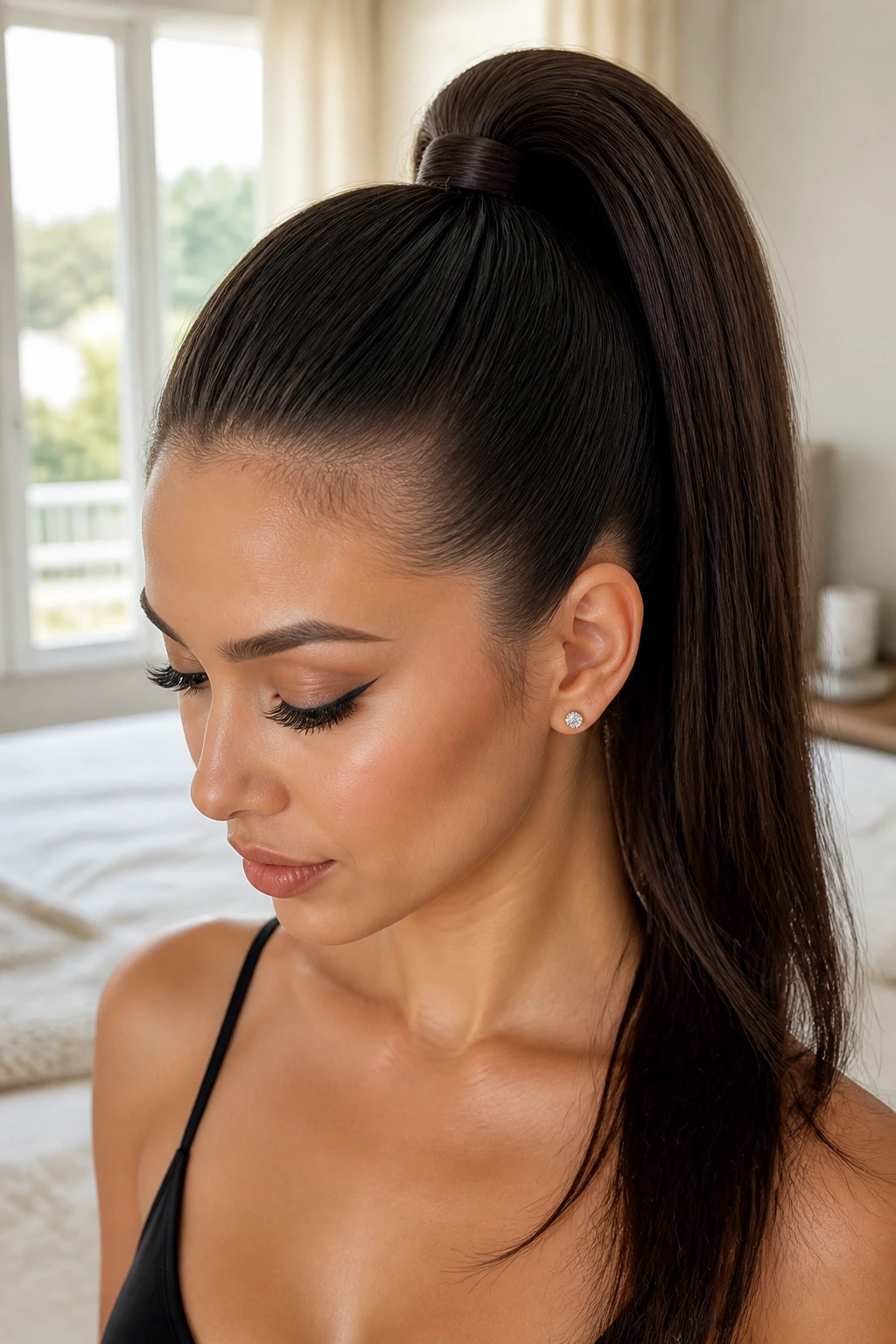
Not every sleek pony has to be plastered flat. A little lift at the crown — just enough to avoid a helmet shape — gives the style more height and softness. The pony still reads neat, but the top has a touch of air in it.
This version is especially nice if your face looks better with some vertical lift or if your hair is so fine that a completely flat crown can make the tail feel too thin. Build a small cushion at the root, then smooth the outside layer over it. Subtle volume, not a bump.
32. Micro-Braided-Perimeter High Ponytail
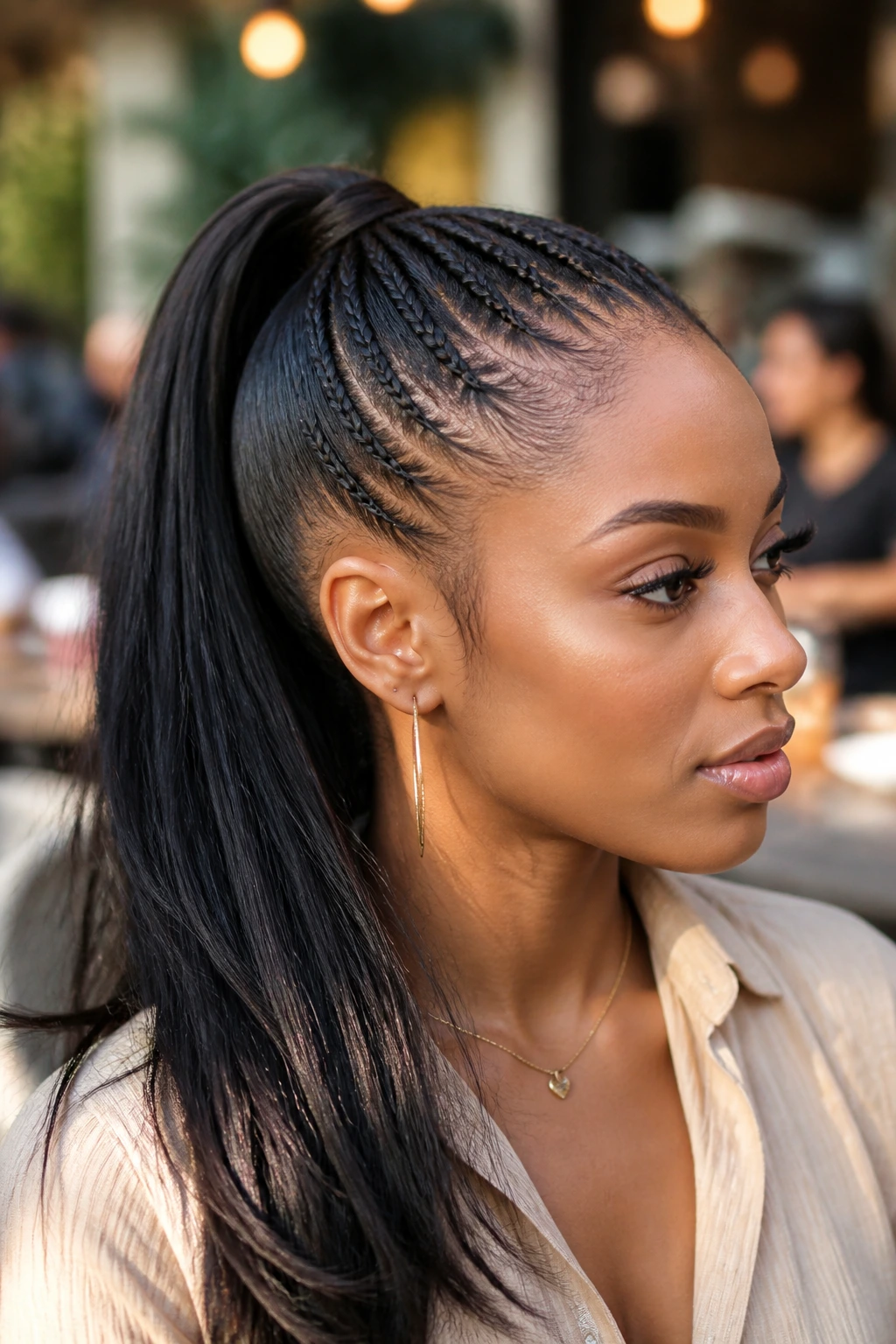
A few tiny braids around the hairline create texture without wrecking the sleek top. They also help anchor short flyaways that tend to escape near the temples and nape. The look feels detailed up close and clean from farther away.
- Keep the braids pencil-thin.
- Let them feed into the pony instead of stopping awkwardly.
- Works well with natural textures, stretched hair, or extension pieces.
This is a strong choice when you want some personality built into the style rather than added on top. It’s neat, but not plain.
33. Crimped-Length High Ponytail
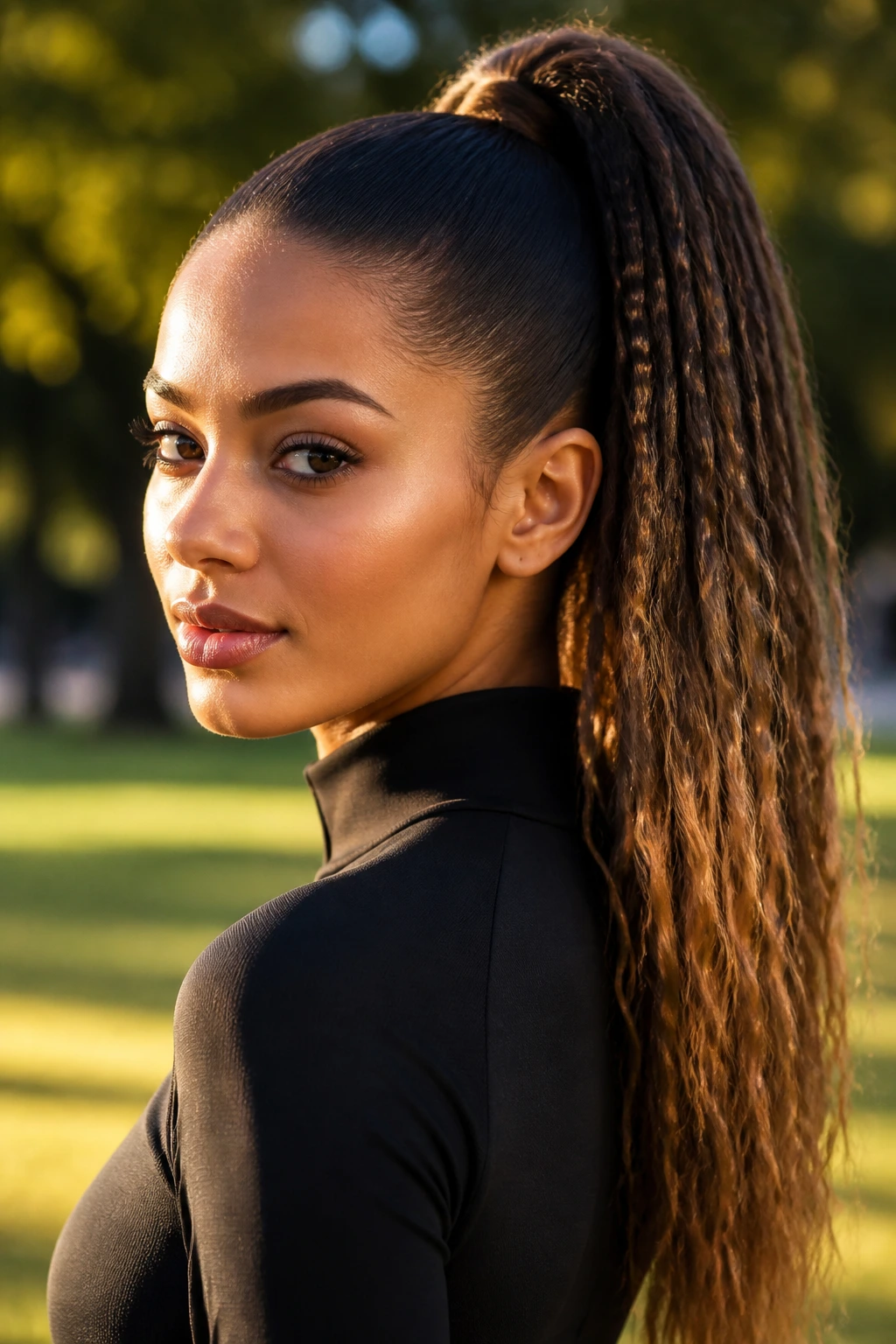
Smooth root, patterned tail. Crimping the length while keeping the crown sleek gives you texture that doesn’t mess with the base. The result is more playful than a straight ponytail, and the crimped tail holds shape in a way that waves sometimes don’t.
This version works best when you want the tail to have a little body, especially on hair that falls flat fast. Keep the crimp confined to the length so the crown doesn’t lose its clean line. It’s a nice middle path between polished and fun.
34. Off-Center High Ponytail
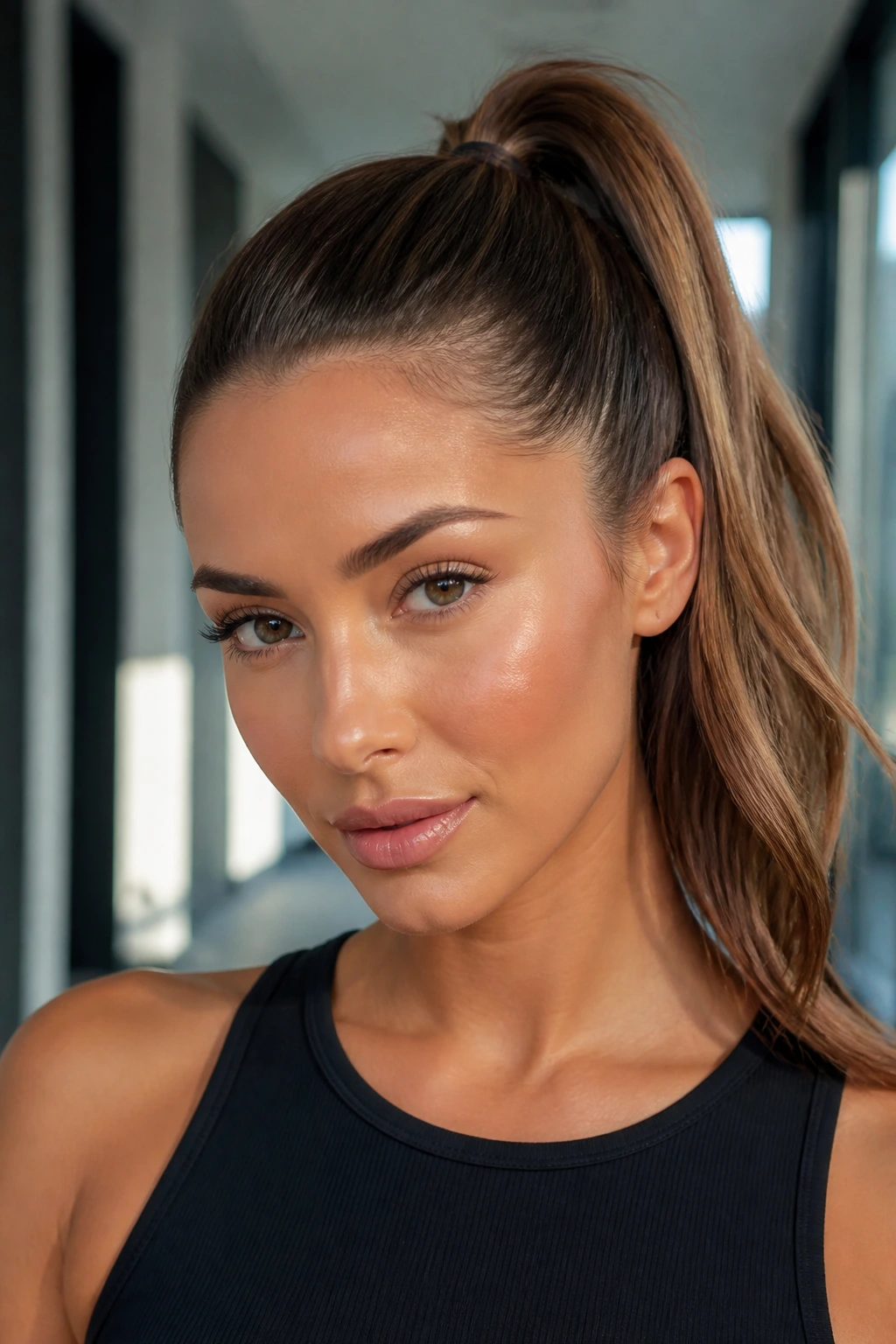
Shift the base an inch to one side and the style softens without losing lift. That small offset changes the balance of the whole head, especially if a true center pony feels too rigid. It also works well when one side of the hairline sits a little differently than the other.
This is a good option for anyone who wants a sleek high ponytail that feels a little more relaxed. The asymmetry keeps it from looking too formal, and the slight shift can flatter a strong side part or a prominent jawline. Small move. Big effect.
35. Minimalist High Ponytail
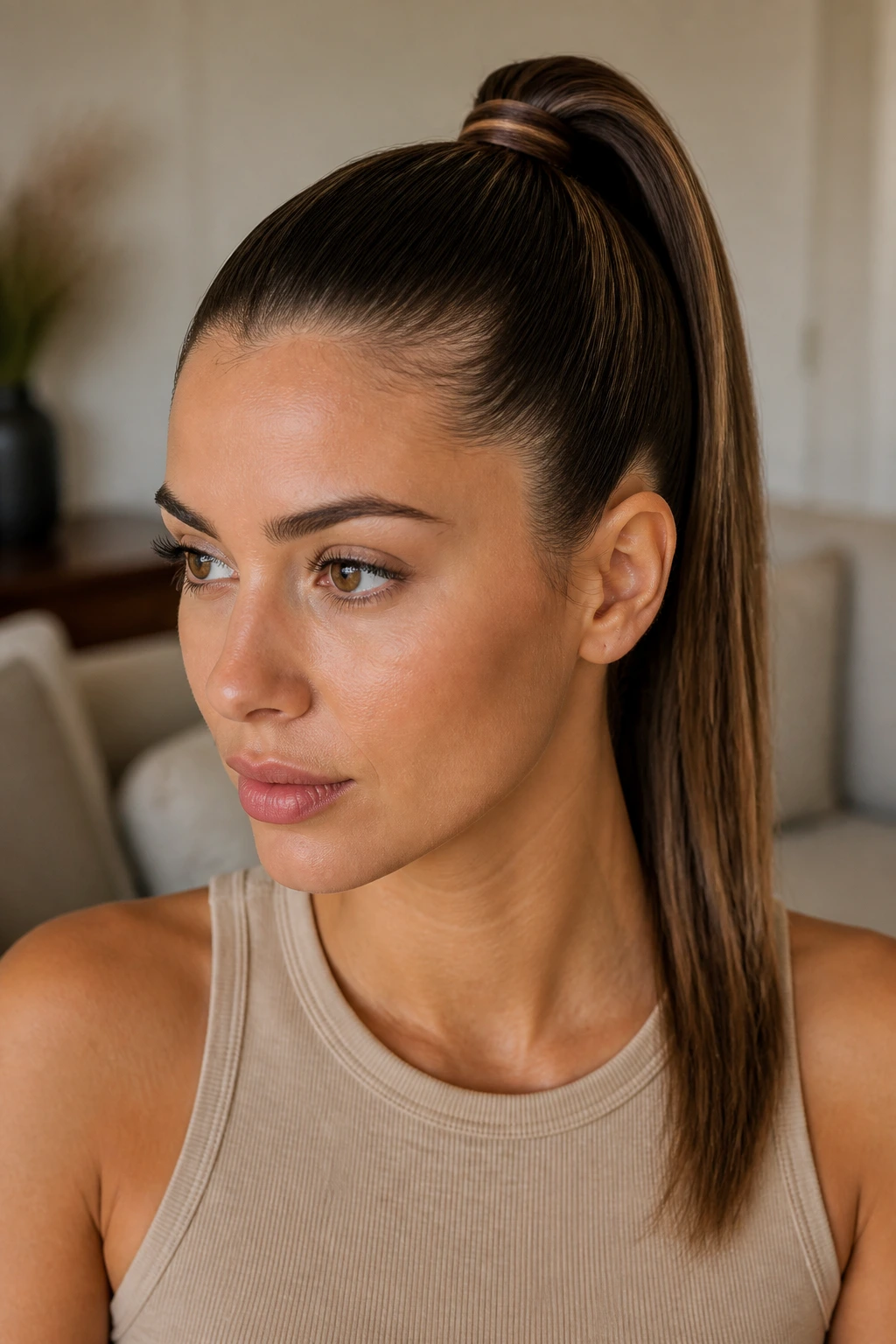
No accessory, no extra detail — just clean lines and a strong pull. This is the version that asks the most from the prep and the least from the accessories. If the crown is smooth, the base is tight, and the tail falls cleanly, it doesn’t need help.
I like this one when the outfit already has enough going on. The hair becomes the quiet line that holds the look together. It’s simple, but not plain. The difference is in the finish, and the finish has to be neat.
How to Build a Smooth Crown That Stays Flat
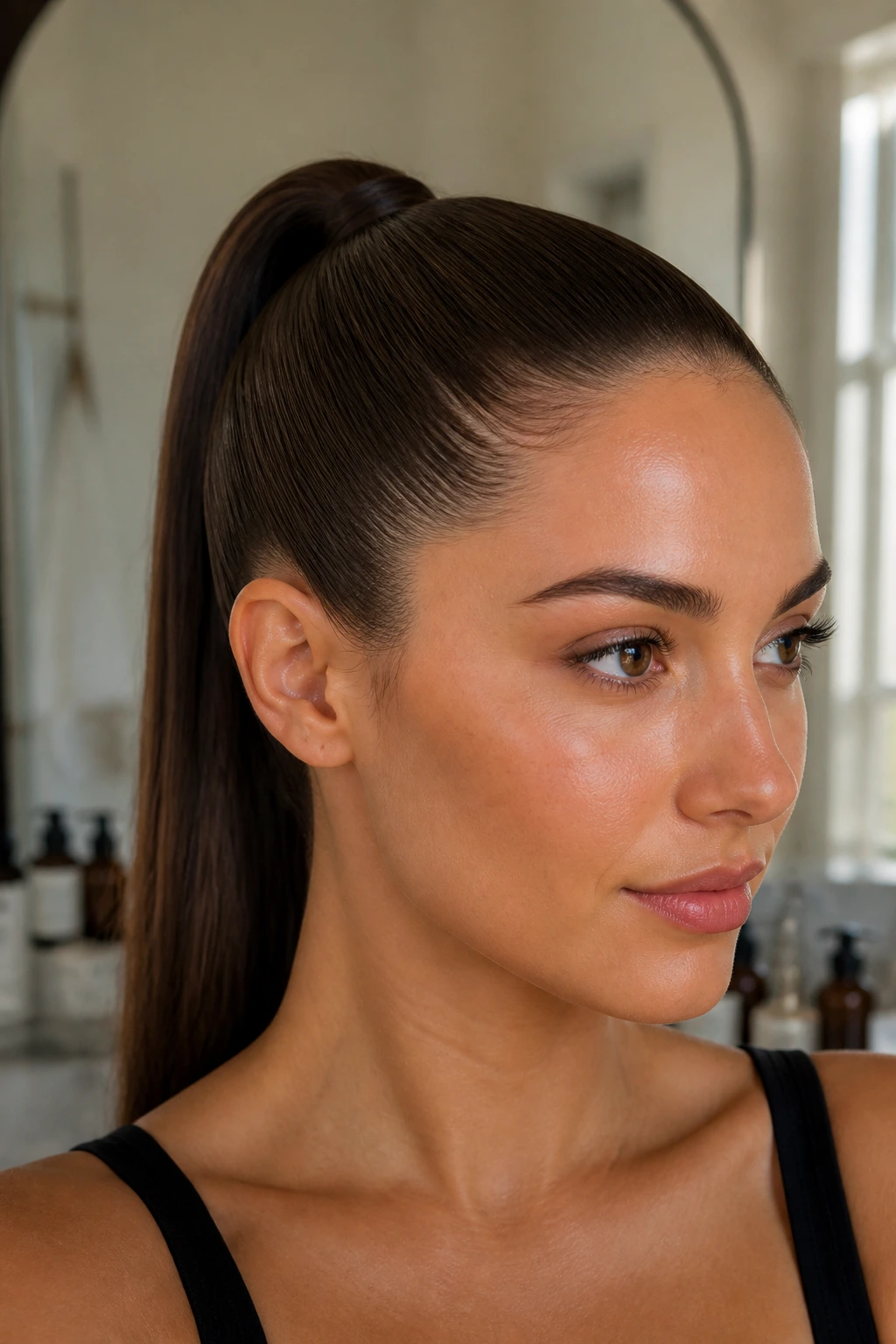
The crown is the whole game. If the top is bumpy, the ponytail never really recovers, no matter how good the length looks. Start with hair that’s dry enough to hold shape — day-old hair is often easier than freshly washed hair — and use a small amount of smoothing cream or gel around the hairline before you brush anything back.
Root Prep: Apply product with your fingertips, not a heavy palm. You want enough control to calm frizz, not a slick helmet that slides around after twenty minutes.
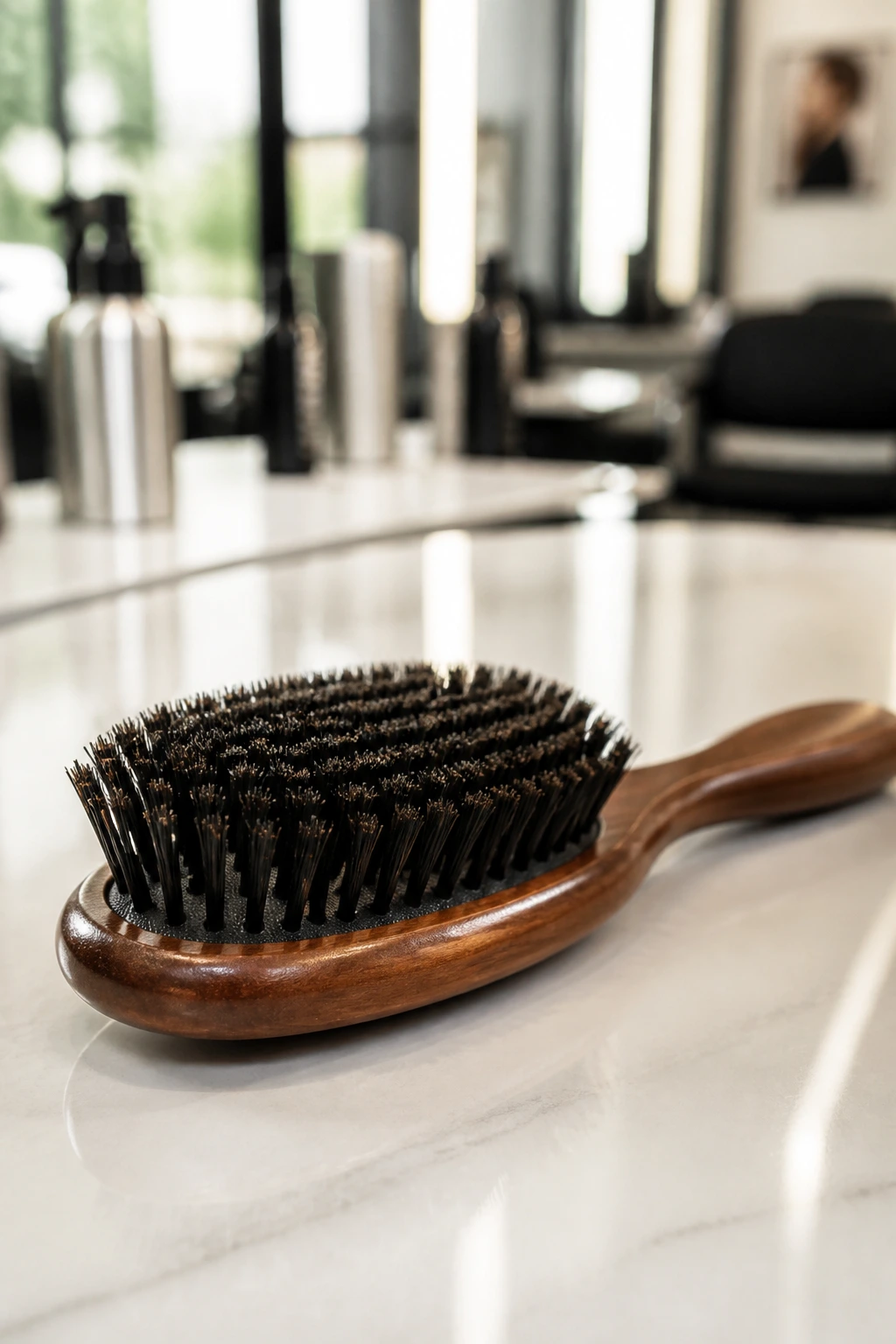
Brush Choice: A boar-bristle brush gives the cleanest finish on the top because it lays the cuticle down instead of roughing it up. A paddle brush can work for thicker hair, but I’d still finish with a finer brush around the part and temples.
Tension Matters: Pull the hair back with steady tension from both sides of the head so the pony sits level. If one side is tighter than the other, the base tips and the crown starts to buckle. Place the elastic right at the high point of the head, usually around the top of the ears or just above it.
Lock the Finish: Once the pony is secured, wrap a narrow strand around the elastic and pin the end under the base. Then mist lightly with hairspray and press a silk scarf over the crown for five to ten minutes. That little set time helps the top cool into place instead of puffing back up.
If your hair has a lot of texture, smooth the crown in sections rather than trying to force the whole head at once. Short passes with a blow dryer nozzle or a quick flat-iron touch on the top layer will keep the finish cleaner than repeated brushing, which tends to fluff the hair right back out.
Ponytail Mistakes That Add Bumps, Grease, or Frizz
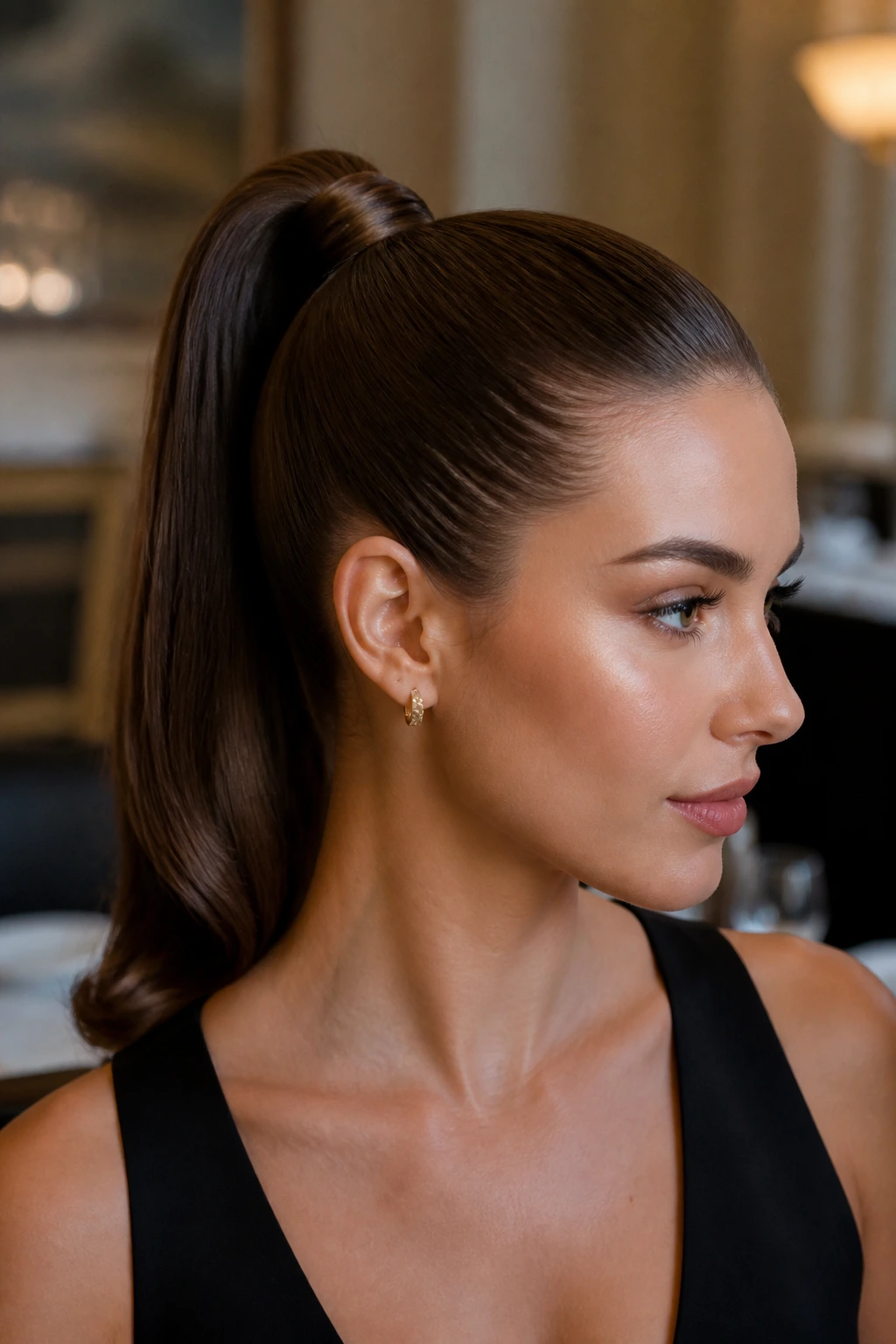
The first mistake is overloading the roots with product. Too much gel or cream makes the hairline look greasy and can leave white residue when it dries. Use a small amount, smooth it through the top layer, and stop before the length starts to clump.
Another common problem is placing the pony too low. A style that sits behind the crown loses the lift that makes a high ponytail look sharp. If you need a guide, line the base up with the top of the ears or slightly above, then check the side view before you tighten it.
Skipping prep on freshly washed hair causes another headache. Clean hair often has too much slide and too much puff, so the pony won’t stay flat unless you give the roots some grip first. A bit of mousse, a rough-dry, or a light blow-dry at the crown solves a lot of that.
The last mistake is forgetting the tail. A smooth crown with frizzy, fuzzy ends looks unfinished. Run a little serum through the length or use a flat iron on the lower half if the tail is puffy. Don’t bother coating the whole pony from root to tip — that’s how you end up with a stringy look.
Ways to Change the Mood Without Starting Over
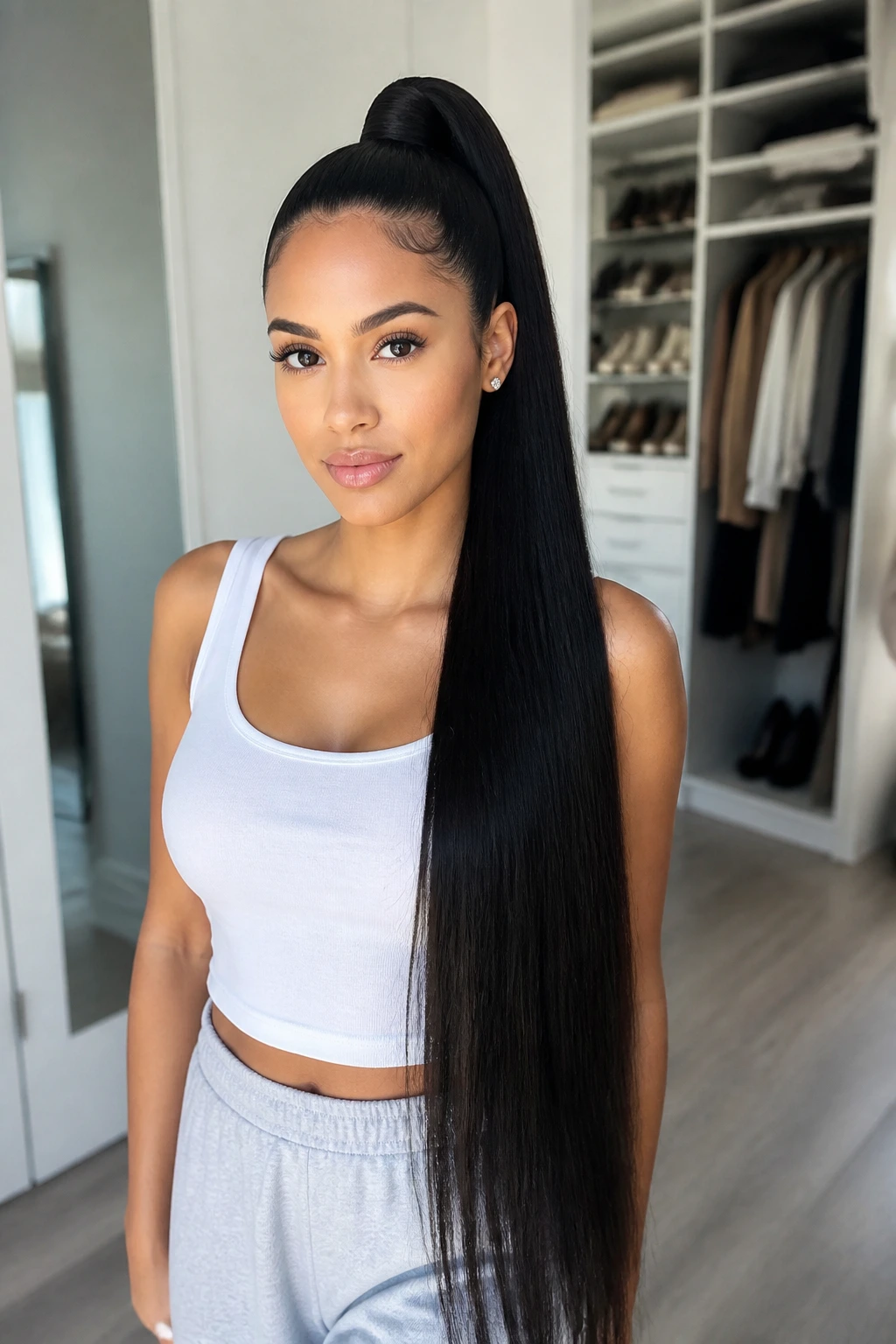
Soft-Face Sweep: Leave a narrow front piece or side sweep in place and keep the rest of the crown tight. It softens the pony without turning it loose, which is handy when you want a little movement around the cheeks.
Braided Armor: Add a slim braid at the hairline or a feed-in braid that leads into the base. This works well when you need the style to hold through a long day and you want something more built into the shape.
Ribbon Finish: Swap the elastic wrap for a silk scarf or satin bow. The change is simple, but it shifts the pony from clean and sharp to dressy and a little more playful.
Natural Texture Contrast: Keep the crown sleek and let the length stay wavy, curly, or crimped. The mix of smooth top and textured tail keeps the style from feeling one-note.
Metal Detail: A gold cuff or narrow cord gives the base a small hit of shine. Use one accent only. Once you pile on two or three, the style starts competing with itself.
Tools That Make Sleek Ponytails Easier
-
Rat-tail comb: Best for clean parts and neat sectioning at the crown.
-
Boar-bristle brush: Lays the top flatter than a wide brush and helps the cuticle sit down.
-
Edge brush or small toothbrush: Useful for baby hairs, temples, and tiny flyaways.
-
Strong-hold gel or styling cream: Keeps the roots from puffing back up while the pony sets.
-
Light hairspray: Helps finish the crown without making it hard or sticky.
-
Snag-free elastics: A covered or seamless elastic grips better and breaks less hair.
-
Bobby pins: Needed for wrapping the base, securing scarf knots, or hiding extension seams.
-
Flat iron: Optional, but useful for smoothing the tail or flipping the ends.
-
Blow dryer with nozzle: Helpful for stretching natural hair or setting the crown with direction.
-
Silk scarf or satin wrap: Great for pressing the style flat while the product dries.
-
Ponytail extension or clip-in piece: Optional, but useful when you want extra length or density fast.
How to Keep a Sleek High Ponytail Fresh Overnight
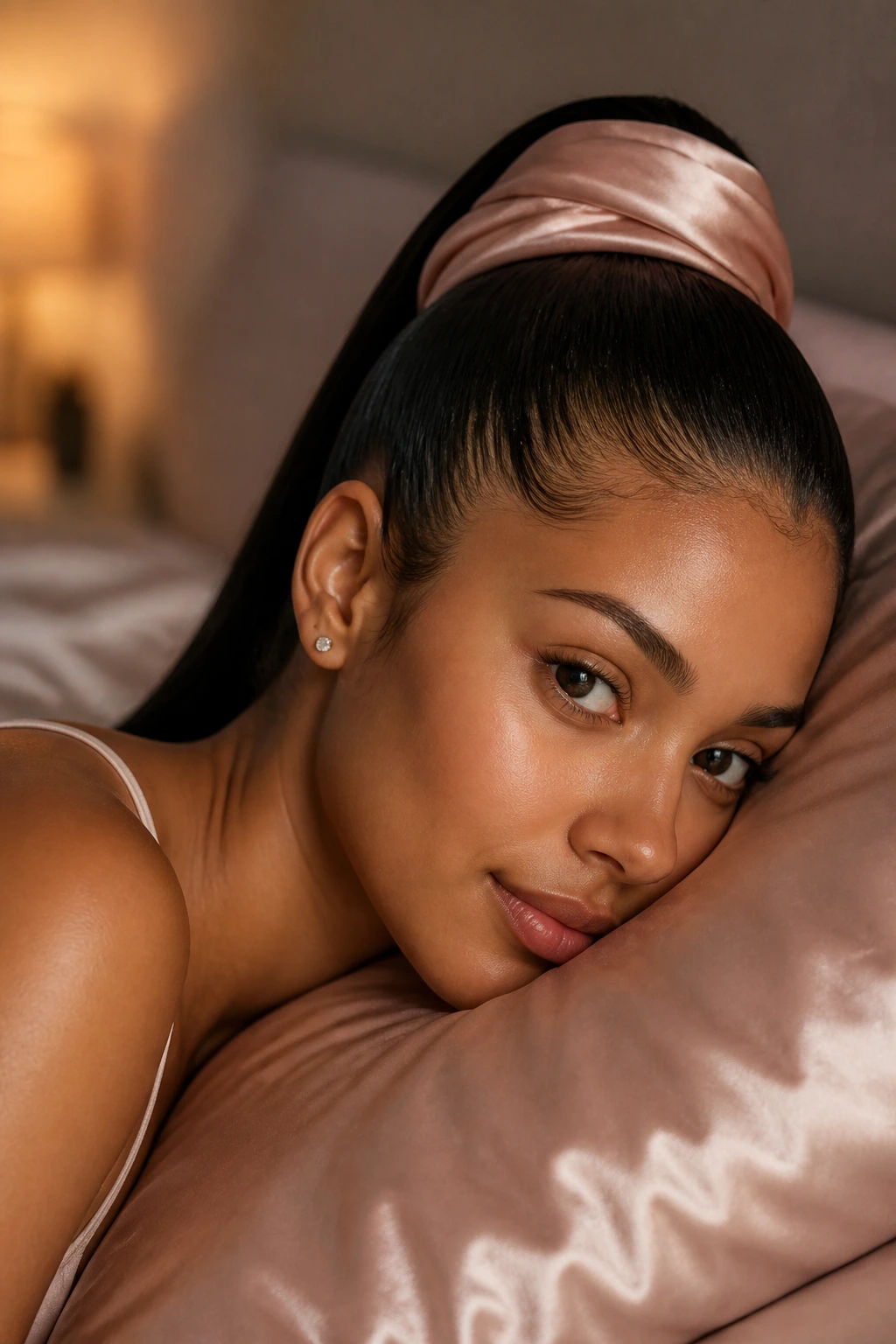
A sleek ponytail can make it through a full day if the base is set well, but overnight is where things get tricky. The safest move is to loosen the elastic a touch before bed, then sleep on a silk pillowcase or wrap the crown with a silk scarf. That keeps friction low and stops the top from puffing out at the temples.
Next-Day Refresh: If the roots flatten a little, mist the crown lightly with water or a leave-in spray, brush it smooth, and hit only the top layer with low heat if needed. Don’t keep piling product on old product. That’s how the hairline gets sticky and dull.
Edge Care: If you wear this style often, shift the placement a little from one day to the next so the same spot on the scalp isn’t under tension every time. A ponytail that is pulled too tight for too long can leave the hairline sore, and that soreness is usually your cue to ease off.
Extension Care: If you’re using a ponytail piece, take it out before sleeping unless it’s made for overnight wear. Store it flat or hung in a clean place so the fiber doesn’t tangle. Smooth, dry hair is easier to reuse than hair that’s been tossed into a drawer.
Questions People Ask Before Wearing a Sleek High Ponytail
How do you keep a sleek high ponytail flat all day?
Set the crown with a small amount of gel or cream, then press it down with a scarf after tying the pony. A smooth base, tight elastic, and a light spray usually hold better than repeated brushing during the day.
Can you do this style without heat?
Yes, especially on straight or lightly wavy hair. Use tension, product, and a very neat brush-out; if your hair is curly or coily, you may get a smoother result by stretching it first, even if you skip the flat iron.
What hair type works best for a high ponytail?
Honestly, almost all of them can wear it. Straight hair gives the cleanest line, curly and coily hair give more body, and extension hair gives the longest silhouette. The prep changes, not the style itself.
How do you hide short layers at the front?
Use a tiny bit of styling cream and direct the layers back with a brush before tying the pony. If a few pieces still pop out, pin them under the base or fold them into a twist near the temples.
Is a tight ponytail bad for your hair?
A pony that’s pulled too hard can stress the scalp and edges, especially if you wear it that way often. Keep the tension firm but not painful, and give your hairline a break by changing the placement or wearing the style looser on some days.
What kind of elastic works best?
A snag-free elastic or a covered band usually grips well without chewing up the hair. If your hair is thick or very long, a double elastic or a bungee-style tie may hold the base more securely.
How do you make the pony look fuller?
Use extensions, tease the tail lightly at the crown, or try a bubble or rope-braid finish. Even a blunt cut at the ends can make the ponytail read denser than feathered layers do.
Can this style work for formal events?
Absolutely. The difference is in the finish: smoother crown, cleaner part, better wrap at the base, and a more deliberate accessory like a cuff, scarf, or satin bow. Small details matter more than extra volume.
The Last Pull-Back
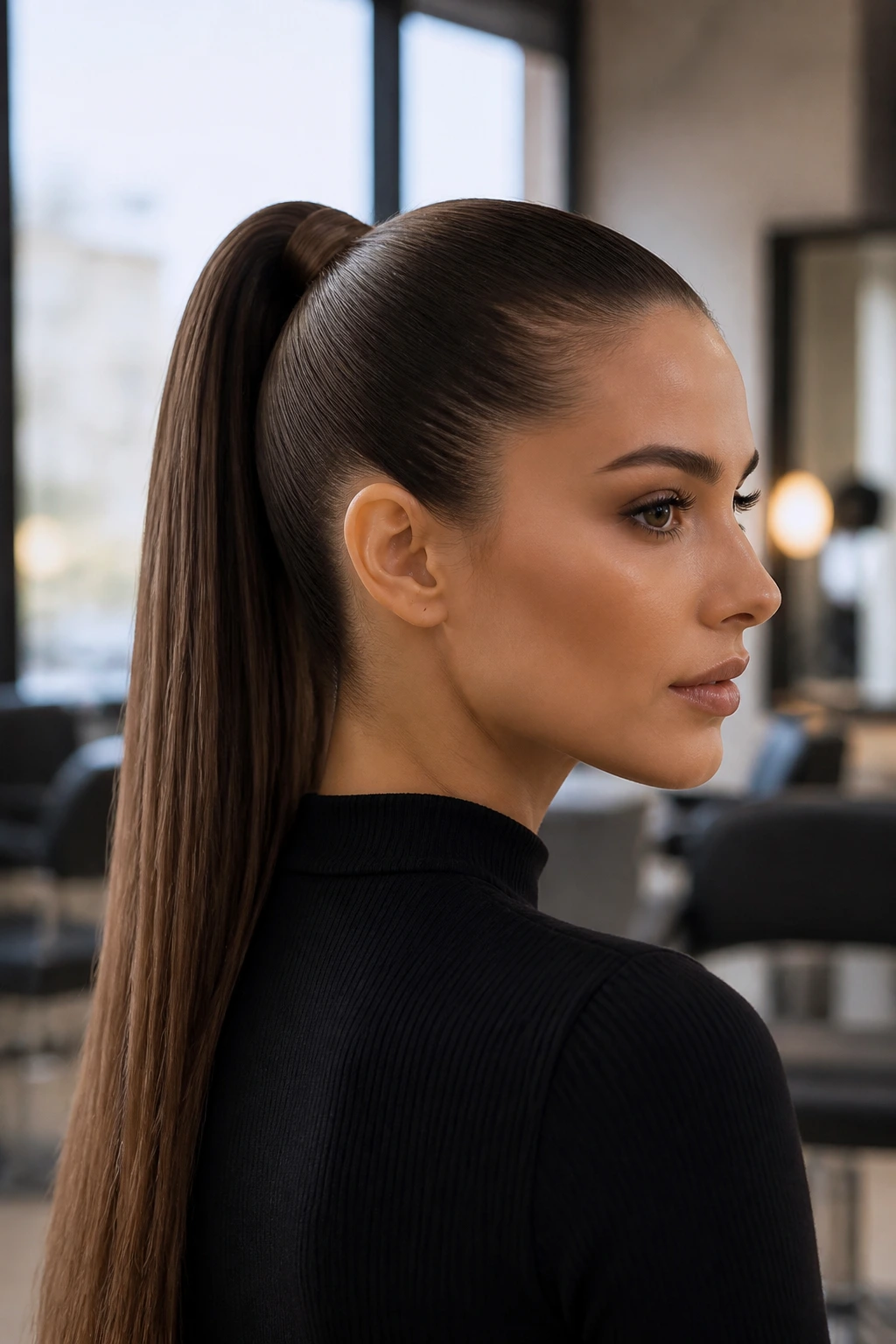
A sleek high ponytail rewards a steady hand more than a long routine. Get the crown clean, choose the right base detail, and the style takes on a shape that can go from daytime sharp to night-out polished without changing its bones. That’s the appeal. It looks simple from a distance, but the good versions are built, not accidental.
The next time your hair feels uncooperative, start at the roots and leave the drama to the tail. Once the line is clean, almost everything else gets easier.
