



Hair pulled back in summer is not a small convenience. It’s survival with better edges. When the air is thick, the sun is hot, and your neck is already warm by 9 a.m., a ponytail stops being “just a style” and starts doing actual work. The trick is that the best summer ponytail styles do more than keep hair off your face. They change where the weight sits, how much tension you feel at the scalp, and whether the whole thing still looks intentional after a little sweat and a little wind.
That’s why one ponytail can feel sloppy while another looks polished enough for dinner, even though both were tied in under five minutes. Placement matters. Texture matters. The elastic matters more than most people think. A ponytail that sits too high can tug at the hairline and puff up the front by noon. One that sits too low can fall flat if the crown has no lift. And one that’s too glossy at the roots can slide right out once sunscreen, humidity, and a day of moving around get involved.
The styles below range from sleek and glassy to braided, bubbled, twisted, and softly undone. Some work best on second-day hair. Some need a comb and a little gel. A few are built for curls that should stay curls, not get bullied into submission. The point isn’t to make every ponytail look the same. It’s to give you options that actually hold up when the weather gets rude.
Why These Ponytail Styles Are Worth Your Time
-
They keep the neck clear: A good summer ponytail moves the hair off the nape fast, which is the difference between feeling cooled down and feeling like you’re wearing a scarf made of your own hair.
-
They work with second-day texture: A lot of these styles look better when the hair has a little grip, so you’re not fighting freshly washed silk that slips everywhere.
-
They stretch fine hair farther: Double ponytails, bubble styles, and wrapped bases can make thinner hair look fuller without backcombing it into a puff.
-
They play nicely with curls and waves: Not every ponytail needs to flatten texture. Some of the best versions leave curl pattern intact and just clean up the shape.
-
They give you outfit range: The same basic tie-back can look sporty, polished, romantic, or sharp depending on where the base sits and what you wrap around it.
-
They buy you time: Most of these can be done in minutes, but they don’t read like an afterthought. That matters when you need your hair to behave and the day is already moving.
1. Glassy High Ponytail
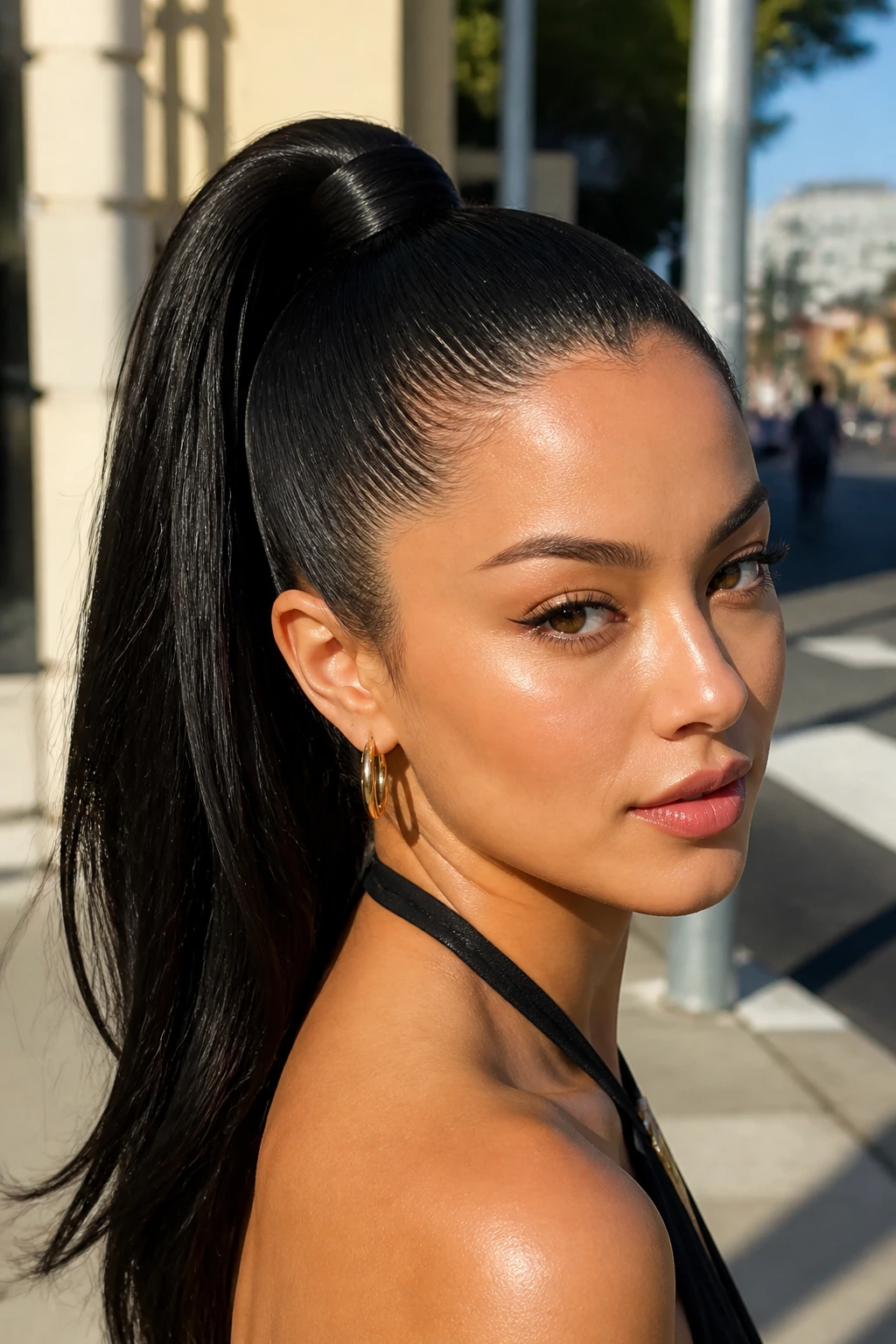
A glassy high ponytail is the sleek, pulled-up version that makes the whole face look more awake. It sits high on the crown, brushes the hairline smooth, and has that taut, clean finish that holds up especially well when the weather turns sticky.
The move here is control. Use a fine-tooth comb, a light gel or edge control at the front, and a boar-bristle brush to press the top flat before the elastic goes in. Keep the tail itself smooth, then wrap a small strand around the band so the base looks finished instead of bare. If your hair is fine, a little dry shampoo at the roots gives the pony enough grip to stay up.
Best for: straight to wavy hair, bold earrings, and days when you want the style to look deliberate. Watch for: too much product at the roots, which can make the pony slide instead of staying put.
2. Low Wrapped Ponytail
The low wrapped ponytail is the style I reach for when the neck is hot and I want the hair to behave without looking severe. It sits at the nape, stays out of the way, and looks cleaner than a basic low tie because the elastic is hidden.
Pull the hair back with a center part for a sharp line, or keep it brushed straight back for something softer. The wrap is what gives it polish: take a one-inch section from the tail, wind it around the elastic, and pin the end underneath with a small bobby pin. That tiny detail changes the whole feel.
This one is forgiving on humid days because the low placement reduces tension at the crown. It also works well with silkier hair that tends to slip in higher styles.
3. Bubble Ponytail
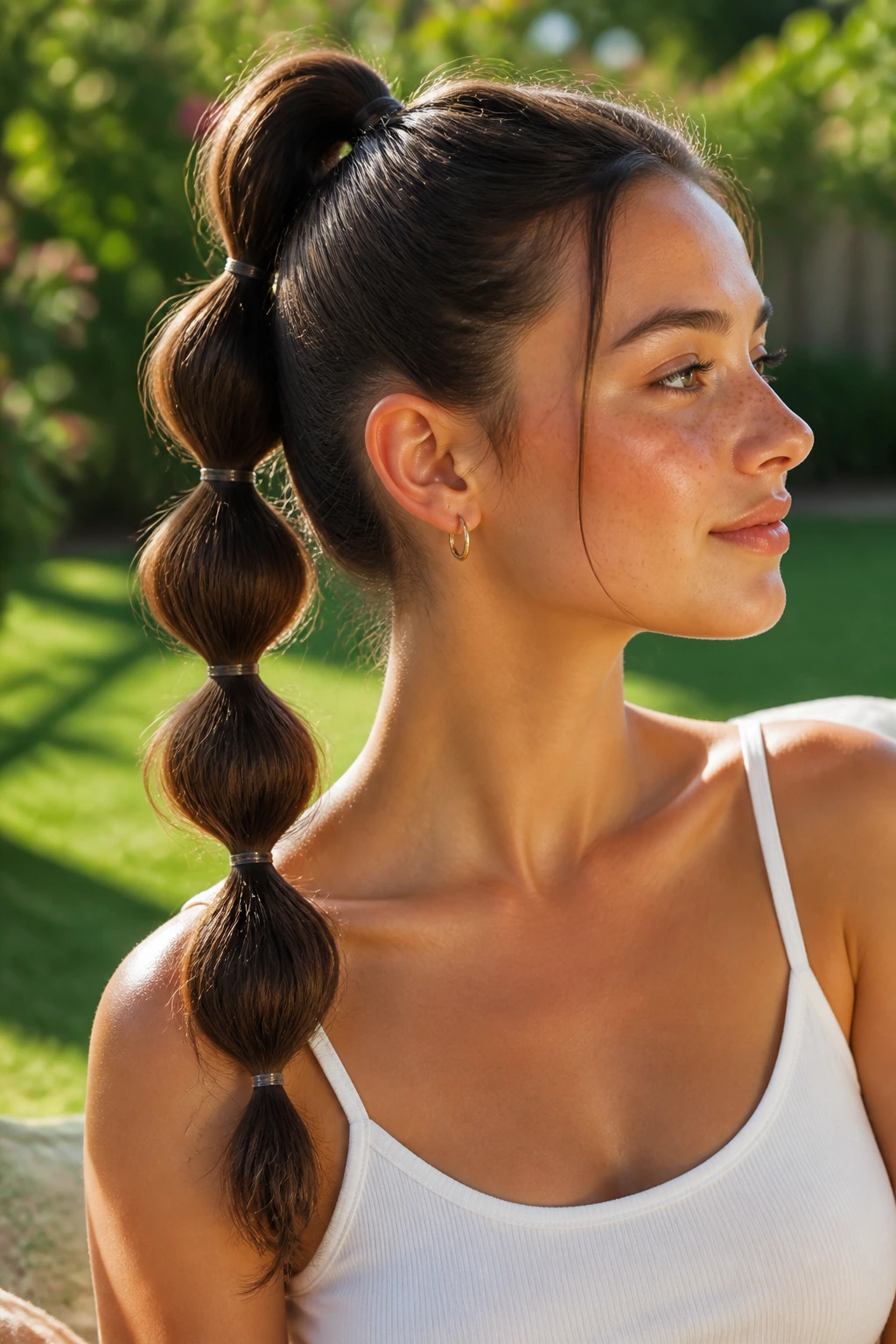
Bubble ponytails look fancier than the effort they take. You tie the hair into a ponytail, then add small elastics every 2 to 3 inches down the length and gently tug each section into a rounded “bubble.”
The shape is the point. It creates fullness without teasing, which makes it useful for long hair that goes limp by midday or for thick hair that needs structure. Start by smoothing the crown, then keep each bubble even. Don’t yank them too hard; a soft puff reads better than a lumpy sausage shape.
If your hair is layered, this style is kinder than a braid because it doesn’t rely on every strand staying perfectly tucked in. A mist of flexible-hold spray on the finished bubbles keeps the curve from collapsing too fast.
4. Braided Power Ponytail
A braided ponytail is one of the easiest ways to make a simple tie-back feel sturdier. The braid gives the tail shape, and shape is what keeps long hair from turning into a sweaty rope by early afternoon.
Tie the hair into a high or mid pony, then braid the tail all the way to the ends. You can keep the braid tight and neat for a sharper look, or loosen it a little by pinching the edges after you finish. Either way, the braid keeps strands from flying loose in wind and humidity.
This style is especially good if your ends tangle easily. The braid gives them containment, which means less brushing and fewer snags later.
5. Soft Wave Ponytail
A soft wave ponytail is for the person who wants movement, not helmet hair. Leave a little bend in the lengths, sweep the hair back loosely, and let a few pieces fall naturally around the face if the look needs to stay easy.
The key is not over-brushing. Smooth the roots, yes, but keep the tail textured so it doesn’t look stiff. A touch of wave cream or mousse on damp hair helps hold the shape if you’re starting from an air-dry base. If you already have waves, this is one of the few styles that works with them instead of flattening them out.
It’s a good choice for warm evenings, casual brunches, and hair that’s in that awkward place between “needs washing” and “still looks decent.”
6. Side-Swept Ponytail
A side-swept ponytail changes the balance in a way that feels a little more playful than a centered style. Pull it low and slightly behind one ear, then let the tail fall over one shoulder.
This works best when the part is a little off-center and the base is secure but not yanked tight. If you want the style to feel softer, leave the front a touch loose near the temples. If you want it cleaner, brush everything back and anchor the elastic with a bungee or a strong snag-free tie.
It’s a smart choice for off-the-shoulder tops, large earrings, and hair that needs volume on one side rather than all over. One side gets the show; the other gets to rest.
7. Double-Tier Ponytail
Double-tier ponytails fake length and fullness in a way that looks a lot more natural than teasing. You make one ponytail on the top half of the head, then gather the lower half underneath it into a second pony. The top pony hides the seam, and the bottom pony gives the tail extra lift.
This trick is especially helpful for medium-length hair that falls flat when it’s all tied at one point. It also keeps the base from drooping, because the weight gets distributed instead of hanging from one elastic.
Use this when you want height but don’t want the obvious bump that comes from backcombing. It’s neat, clever, and a little underrated.
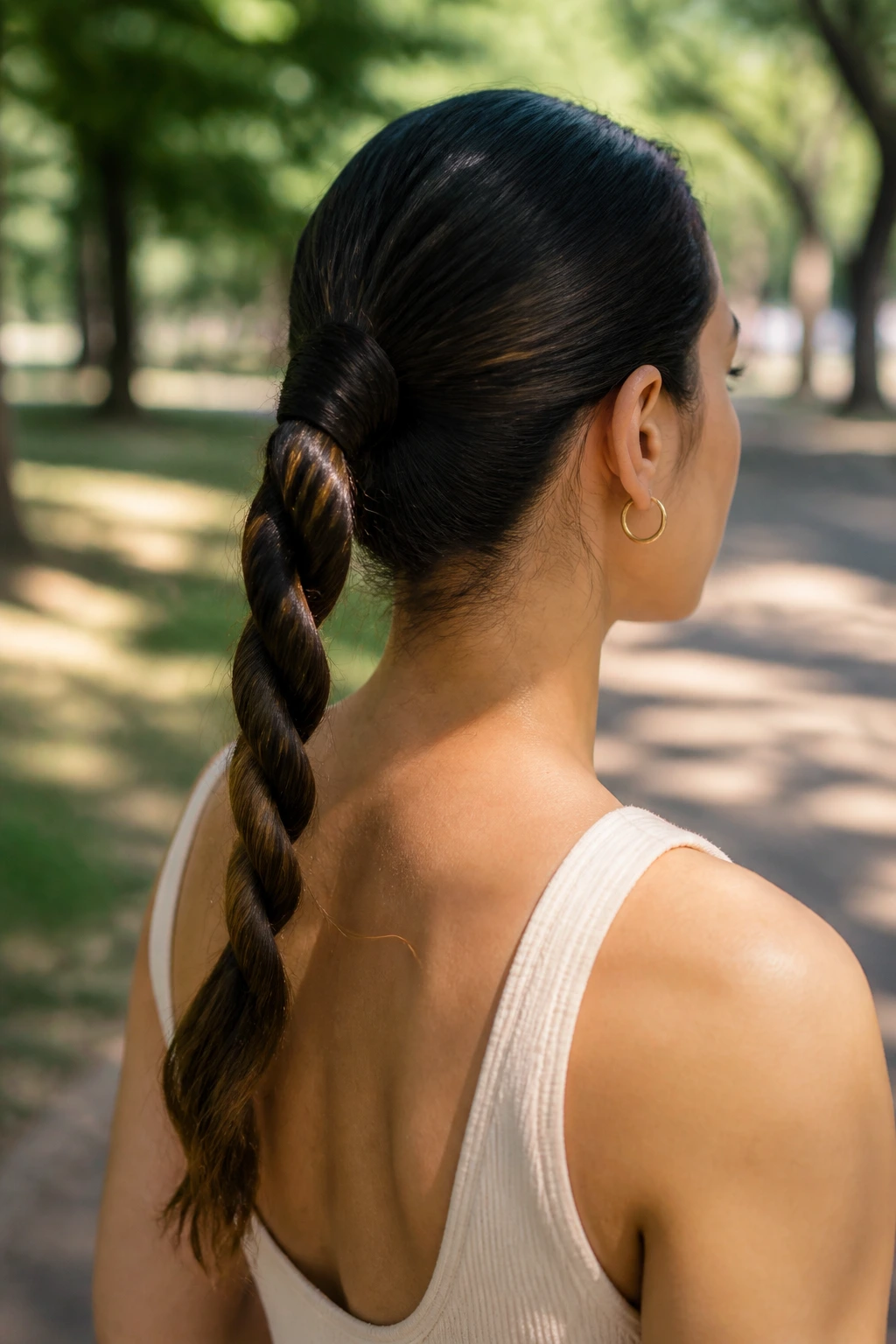
8. Rope-Twist Ponytail
A rope-twist ponytail has a cleaner line than a braid and often takes less time. After securing the ponytail, split the tail into two sections, twist each section clockwise, then twist them around each other counterclockwise.
That opposite-direction move is what makes the rope hold. If you twist both parts the same way, the style loosens too fast. Keep the tension even all the way down and secure the end with a small elastic. The result looks polished without being fussy.
This is one of those styles that works on straight hair, wavy hair, and even slightly damp hair if you need to leave the house before your head has fully settled.
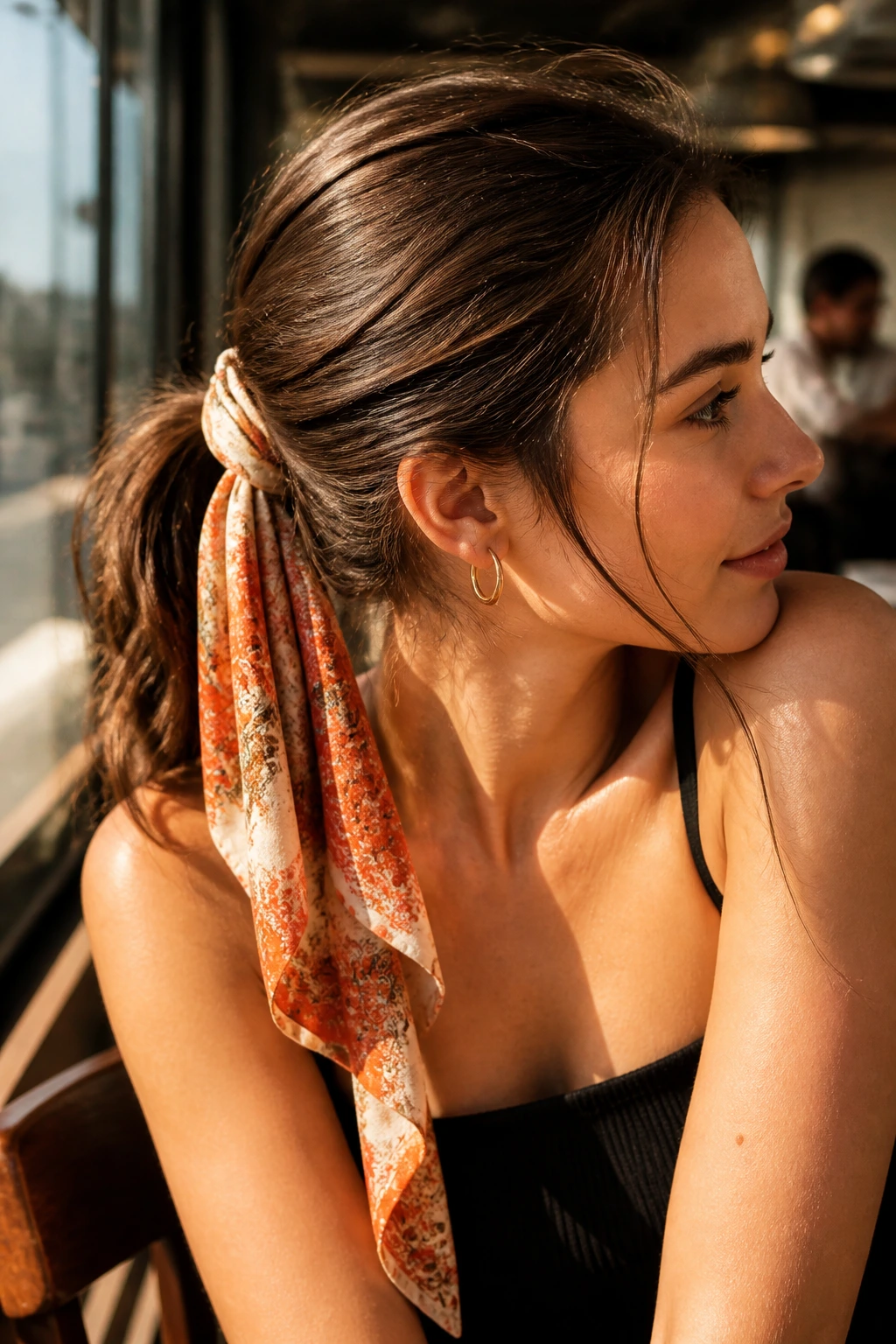
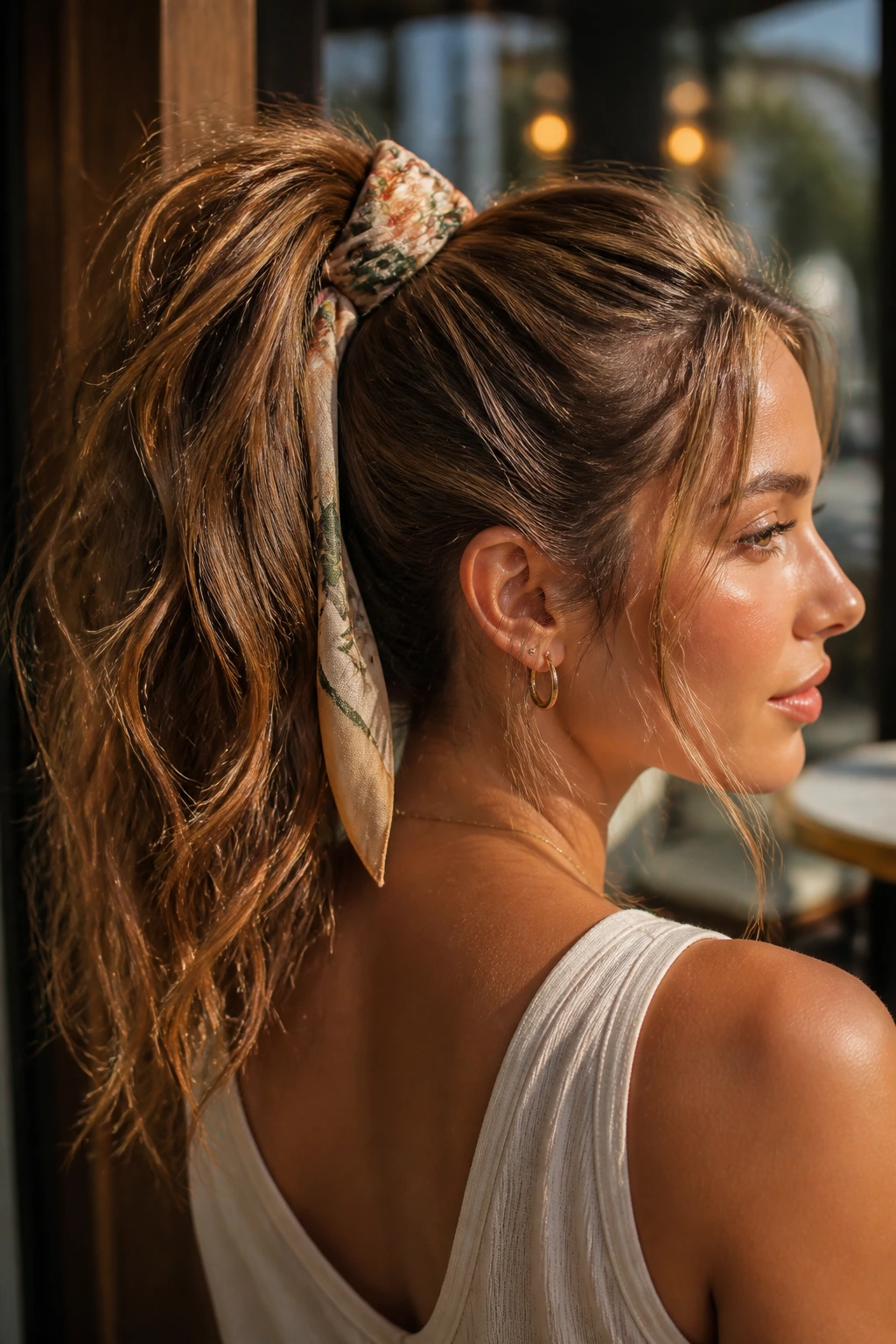
9. Scarf-Banded Ponytail
A scarf-banded ponytail adds color and texture without asking much from the hair itself. You can tie the scarf around the base, thread it through the elastic, or wrap it down the tail if you want a longer, ribbon-like line.
Use a silk or satin scarf if your hair is prone to friction and frizz. Cotton can work, but it grips differently and can feel heavier. Keep the scarf narrow if you’re doing a low ponytail; a wide one can overwhelm the style and make the shape look bulky.
This is a strong option when your hair is clean but plain. The scarf does the visual work so the ponytail doesn’t have to.
10. Wet-Look Ponytail
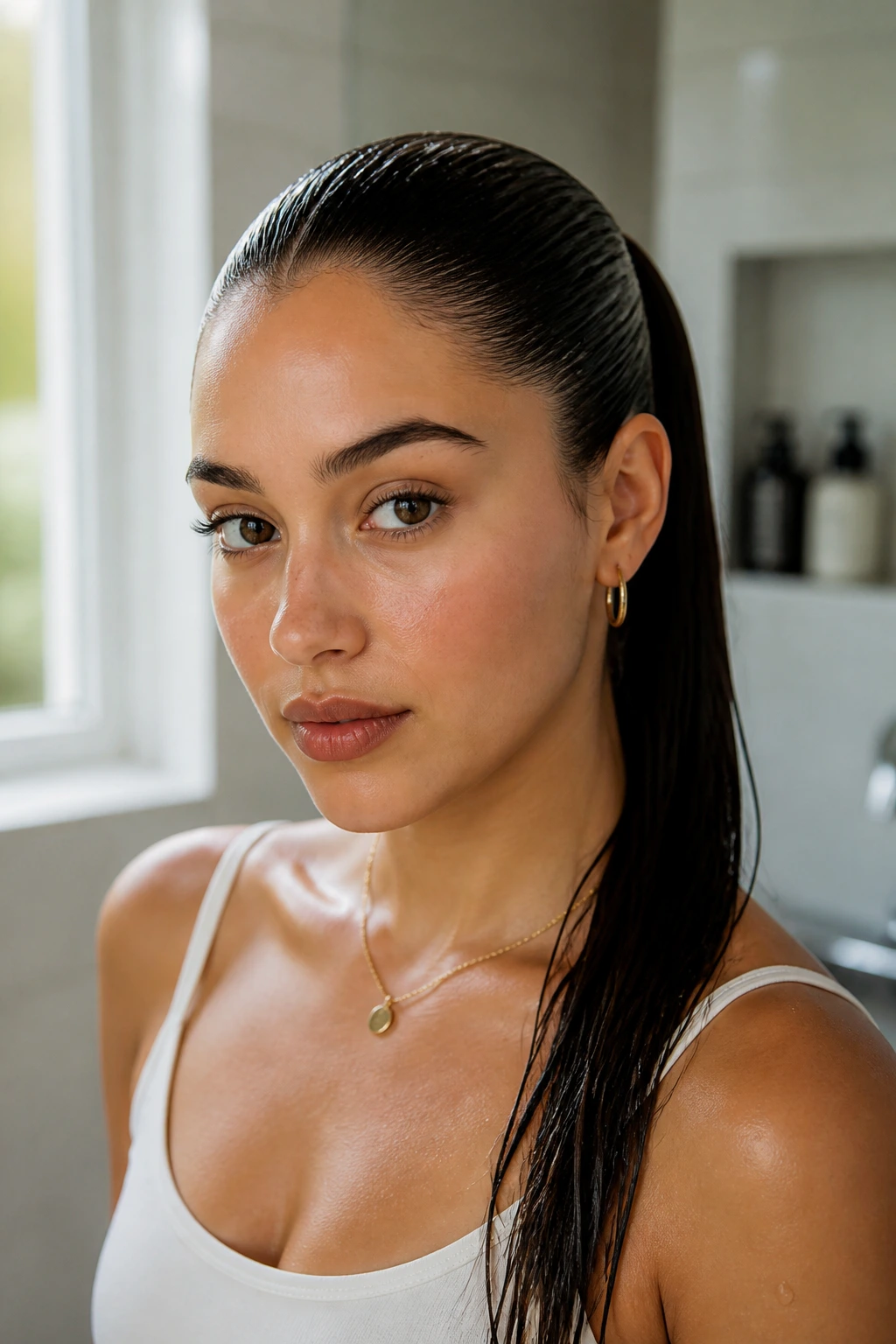
The wet-look ponytail is sharp, bold, and slightly theatrical in the best way. The top stays glossy and close to the head, while the tail itself can be smooth or left a little damp-looking with product.
Start with gel on the roots and a smoothing cream through the lengths. Comb it back carefully so every section lines up, then tie it at the height you want. The finish should look sleek, not greasy. That’s the line. Too much product and you get limp roots; too little and the whole thing separates in heat.
It’s a strong summer style for pool days, short nights out, or any situation where you want the hair to look intentionally controlled.
11. Curly Pineapple Ponytail
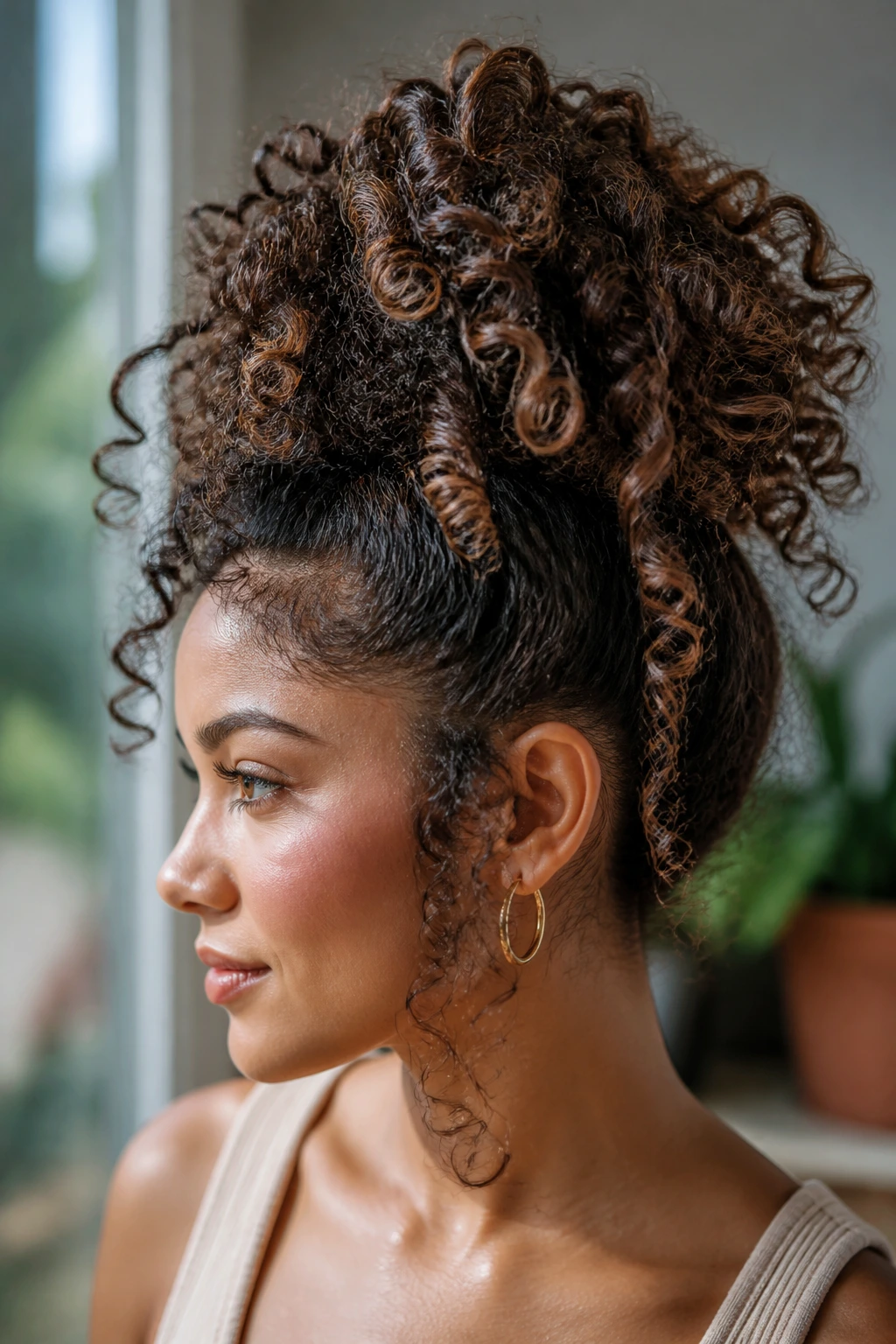
For curls, the pineapple ponytail is less about “styling” and more about preserving shape while getting the hair up and off the neck. The base sits high and loose, usually at the top of the head or just behind it, so the curls can fall naturally around it.
Use a soft scrunchie or a spiral tie so the curl pattern doesn’t get crushed. If you’ve got tight coils, this style can protect volume while keeping the sides from getting sweaty and flattened. The ponytail should sit high enough to keep the curls from dragging on your shoulders, but not so tight that it yanks the front hairline.
It’s one of the few summer ponytails that actually looks better if the texture stays big.
12. Bubble-Braid Ponytail
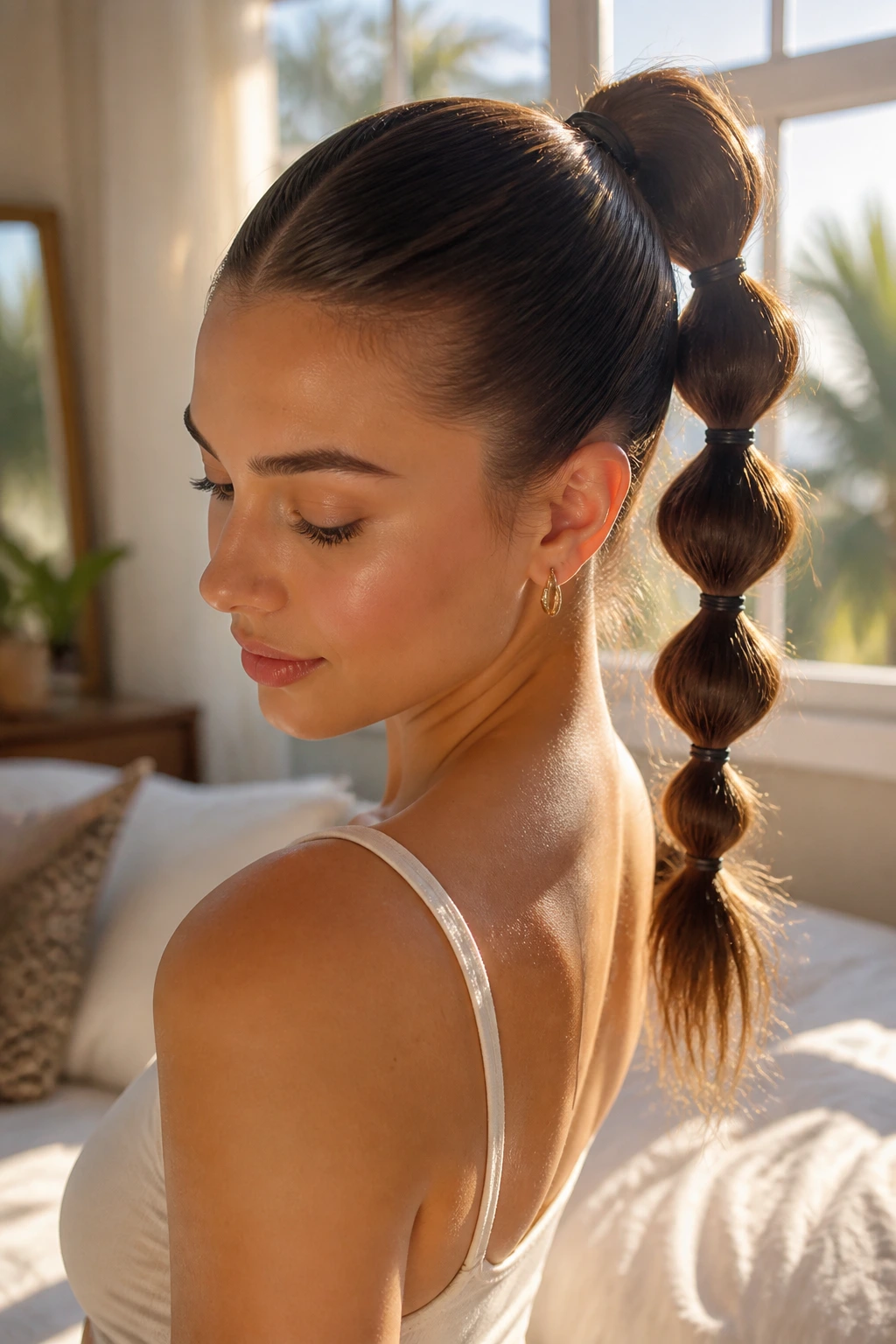
A bubble-braid ponytail is what happens when structure and texture share the stage. You begin with a ponytail, add elastics down the tail to create bubbles, and then braid around or between the sections so the shape looks more intricate.
It’s more secure than a standard bubble ponytail and less fragile than a full braid on layered hair. The sections stay visible, which means the style reads well from a distance. Tug each bubble gently after you secure it, then smooth the ends so they don’t stick out like wire.
Use this when you want something with a little more detail than a standard tie-back but don’t want to spend half an hour getting there.
13. Flip-Through Ponytail
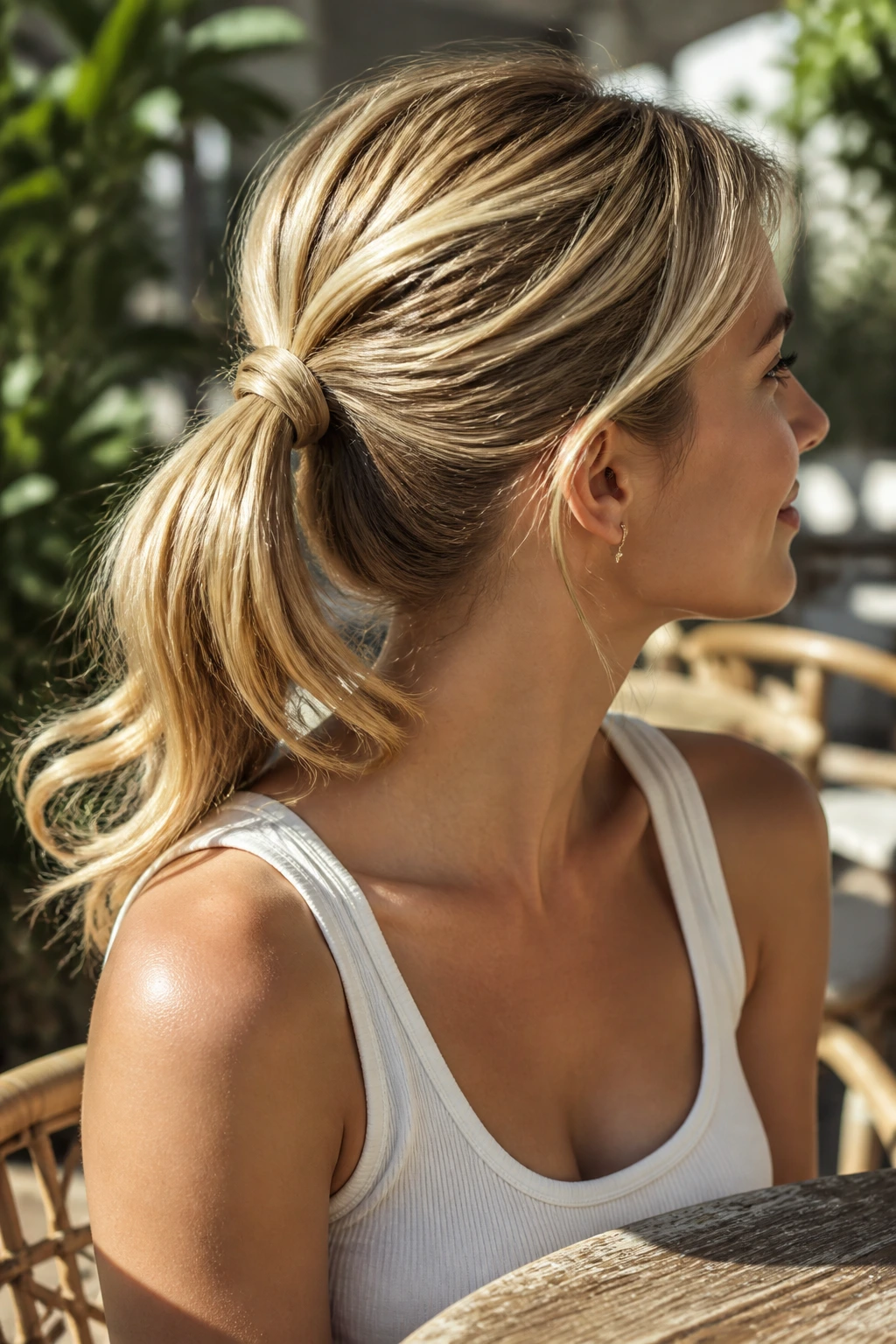
The flip-through ponytail has that tucked-and-tailored feel that can make even a plain outfit look more finished. You make a ponytail, split the hair just above the elastic, and flip the tail through the opening so it turns inward and drops cleanly.
That simple turn gives the base extra interest without needing braids or accessories. It works best on mid-length to long hair and especially well when the roots need smoothing but the ends are free to move.
Keep the flip loose if you want softness, or pull it snug for a more sculpted line. Either way, it’s a quiet style with more shape than people expect.
14. Ribbon-Tied Ponytail
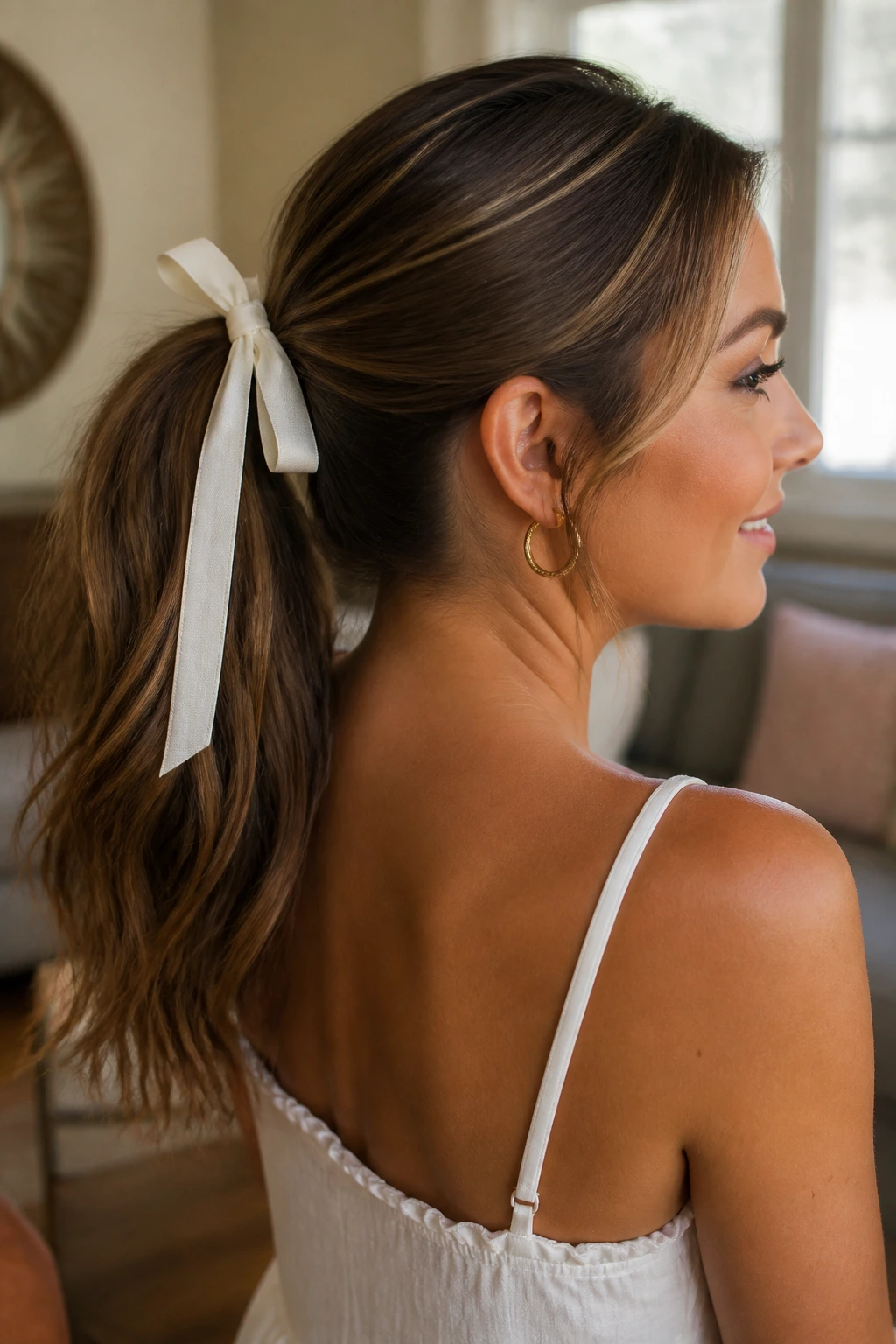
A ribbon-tied ponytail feels lighter and a little more playful than a scarf style. Instead of wrapping the whole base, you knot a ribbon at the elastic or tie it into a bow, letting the tails hang with the ponytail.
Thin grosgrain ribbon holds a crisp shape. Satin gives a softer finish. If the ribbon is wide, keep the ponytail simple so the accessory doesn’t fight the hair. The best version of this style has enough structure to look intentional but enough looseness to stay easy.
It’s a nice answer for days when you want the ponytail to look like you planned the outfit around it.
15. French-Braid Into Ponytail
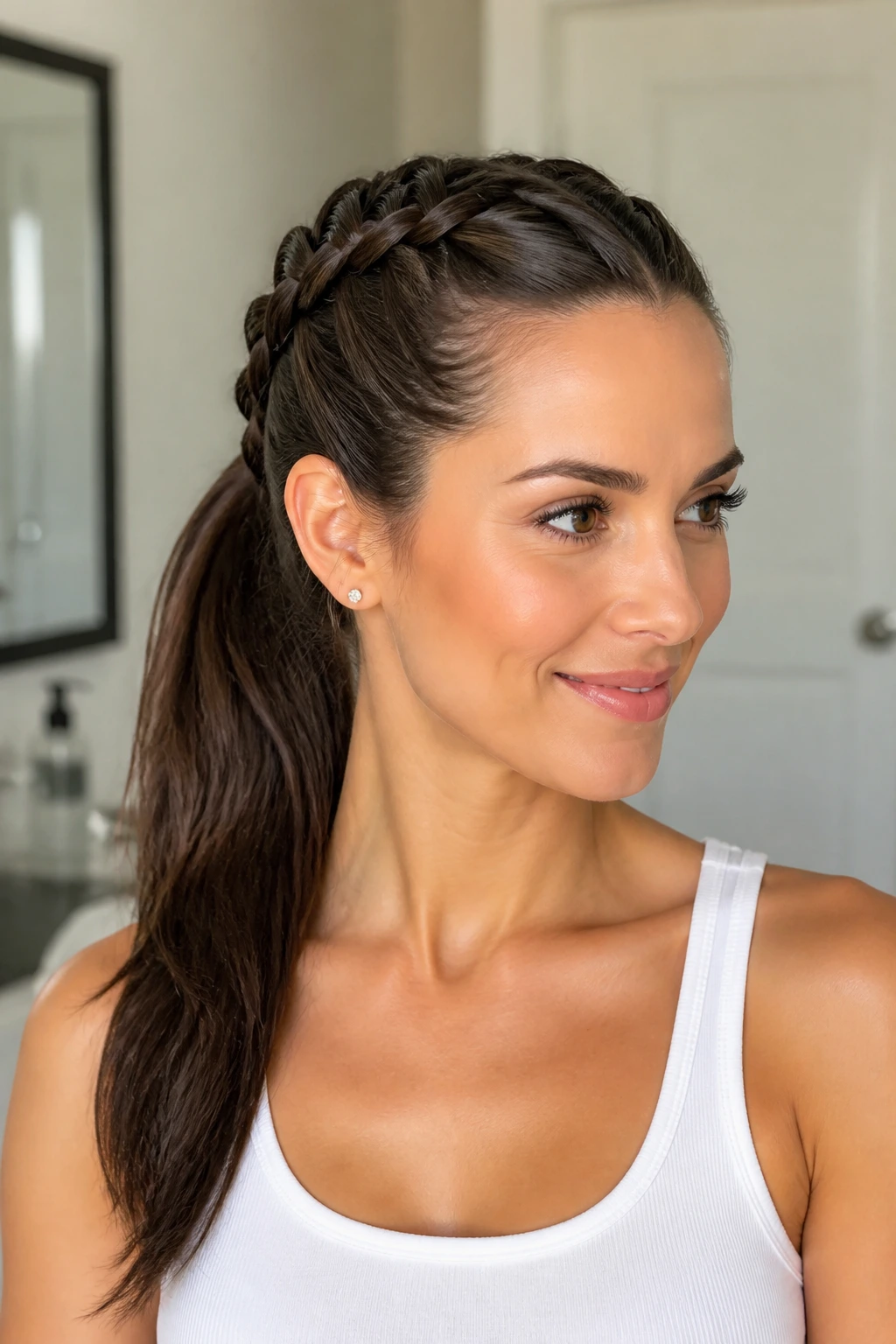
A French-braid into ponytail keeps the front neat and sends the eye straight into the tail. You braid from the hairline back toward the crown, then gather everything into a ponytail at the base.
This is a smart summer move because it keeps the front sections controlled without flattening the whole head. It’s also useful for hair that slips out of clips and braids by lunchtime. Tighten the braid enough to hold, but don’t yank so hard that the scalp feels sore by midafternoon.
If you want a style that handles humidity, errands, and a decent amount of movement, this one earns its place fast.
16. Half-Up Sky Ponytail
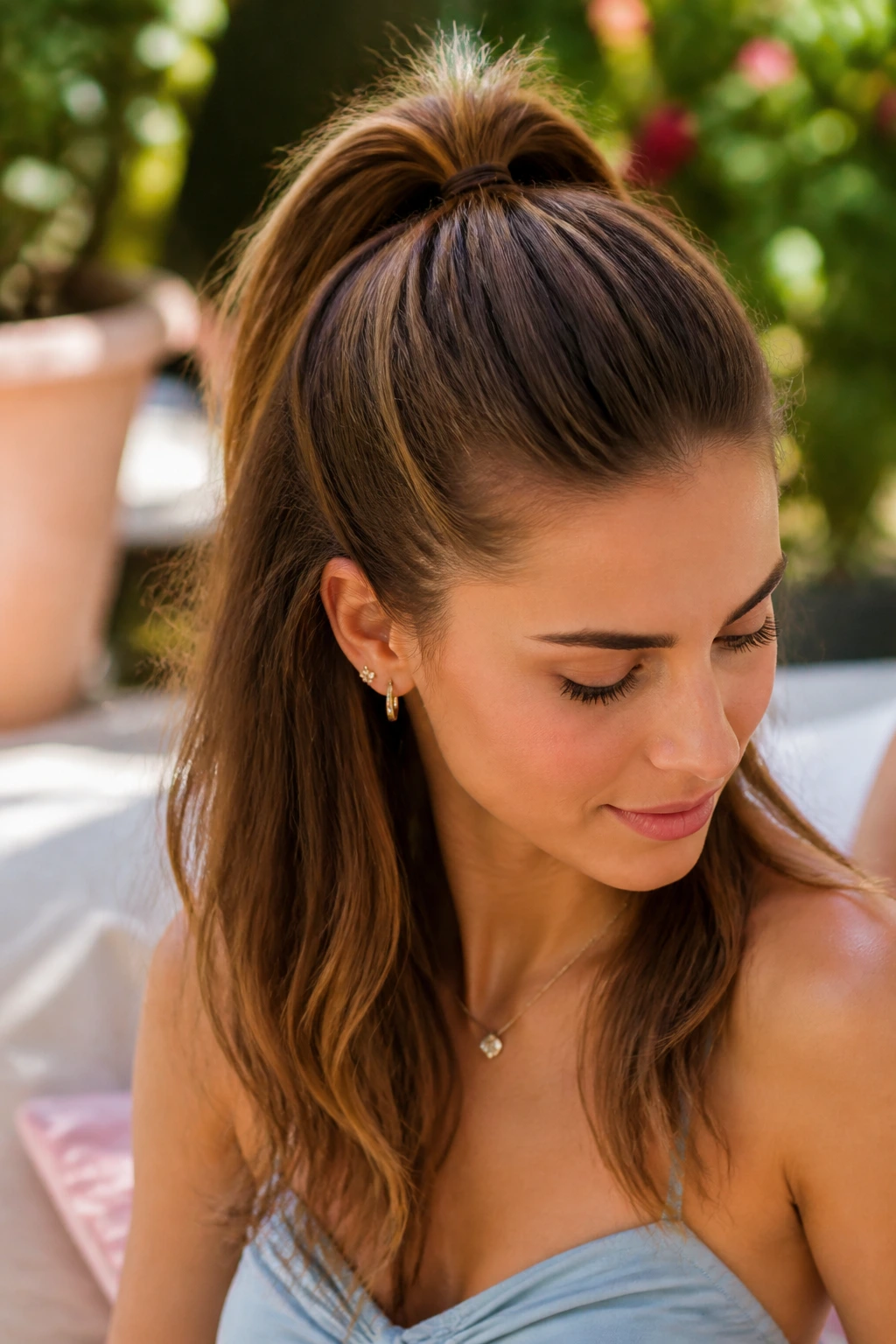
A half-up sky ponytail gives you the lift of a ponytail without giving up all your length. Pull the top section into a high pony, leave the rest down, and keep the crown smooth so the top section looks lifted rather than puffed.
It’s especially good for medium and long hair in heat because it keeps the sides away from the face while the lower half still moves. That balance is the point. You don’t get the full weight of a ponytail on the scalp, and you don’t have to deal with hair stuck to your neck all day.
Use this when you want something casual that still reads as styled.
17. Low Bubble Ponytail
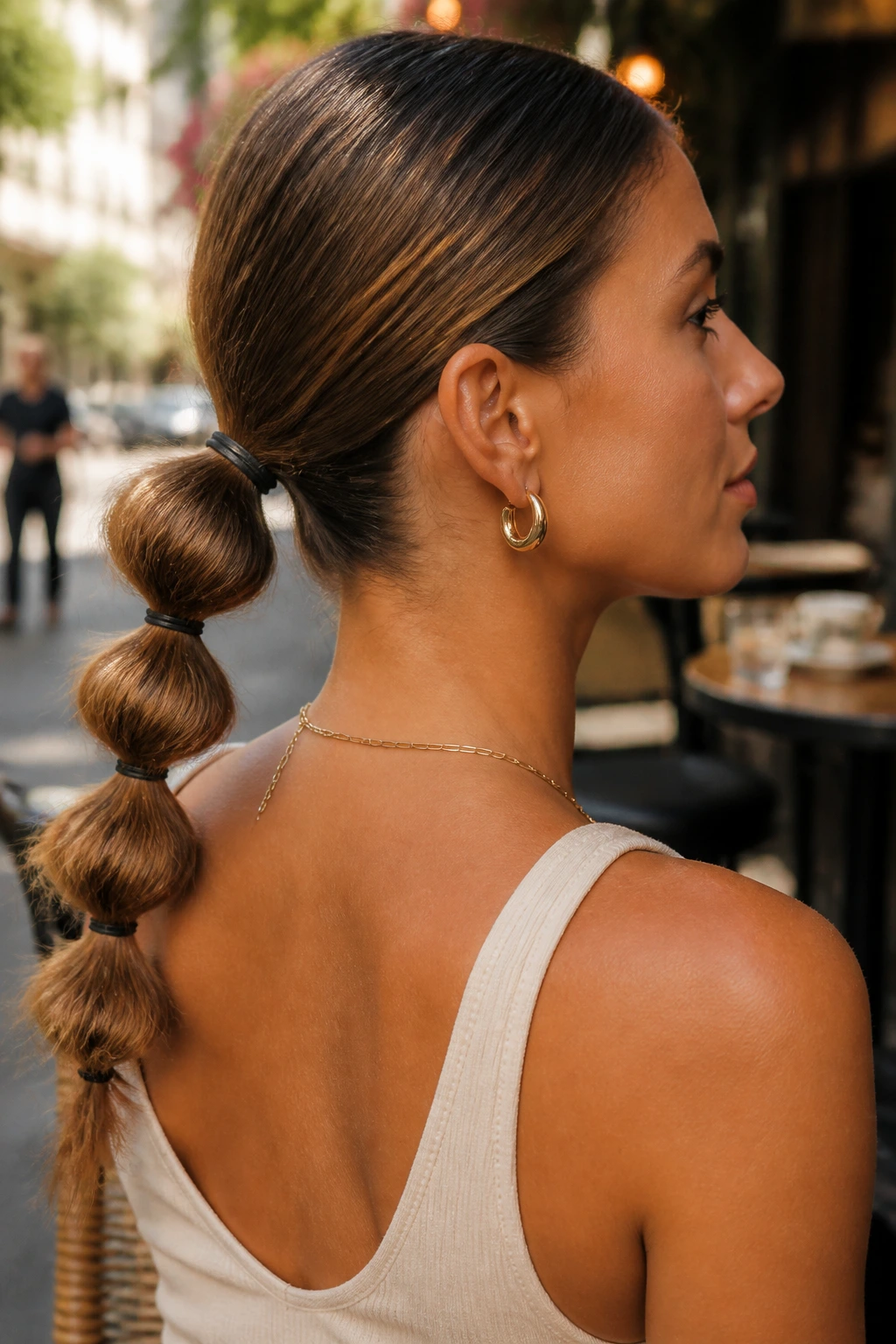
The low bubble ponytail has a softer mood than the high version. Set the elastic at the nape, then add more ties down the length, spacing them evenly so the bubbles stay balanced.
Because the base is lower, it sits nicely under hats, with collared shirts, or under a light jacket in air-conditioned spaces. That sounds minor. It isn’t. A style that works with clothing gets worn more often.
If your hair is very long, this shape can also make the tail feel less heavy because the visual weight gets broken into sections.
18. Crimped Ponytail
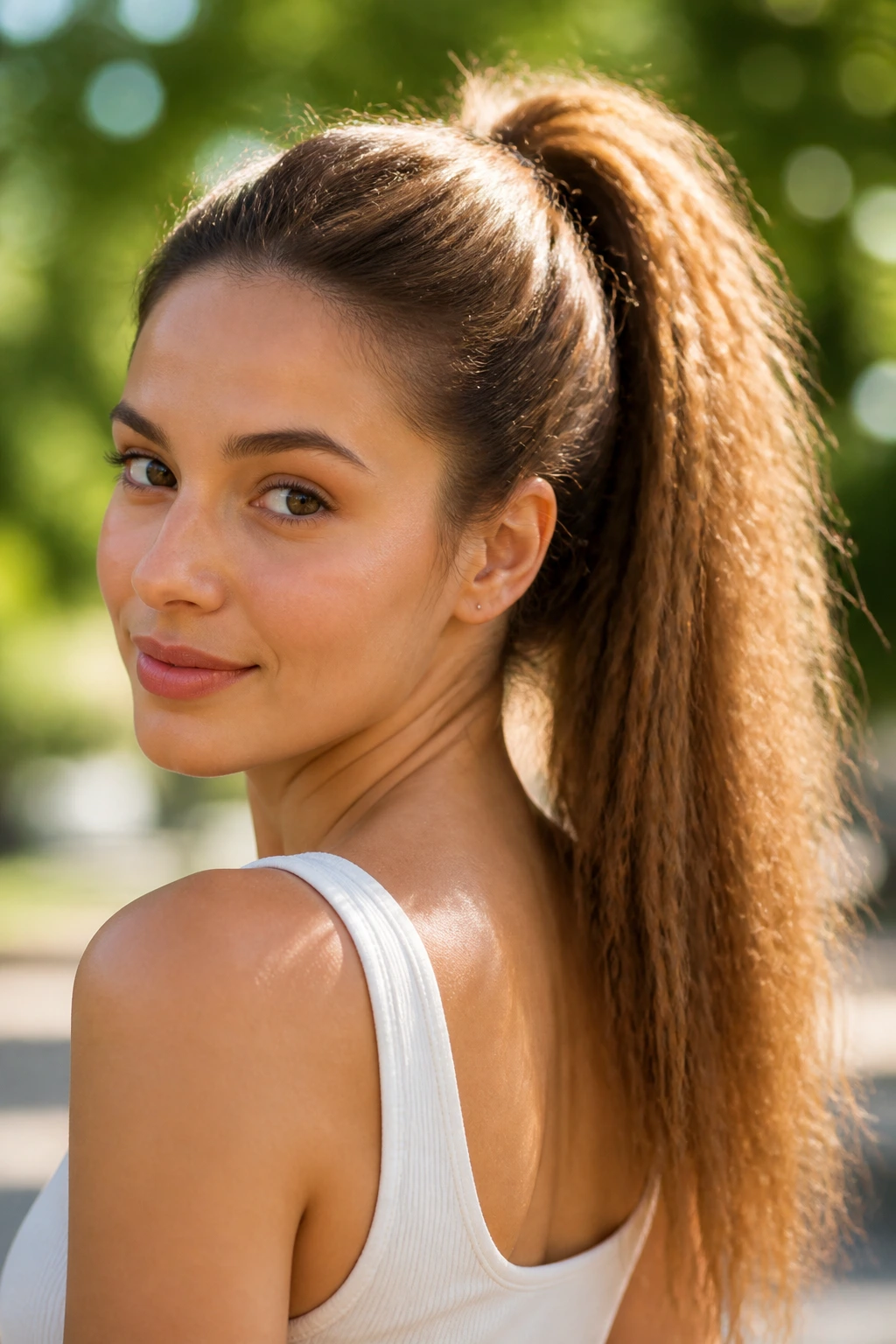
Crimped ponytails have that textured, retro edge that looks especially good in summer light. The hair doesn’t lie flat, which means the style holds volume even if the humidity is rude.
You can crimp the tail only, or crimp the whole head if you want the texture to carry from roots to ends. Keep the pony itself simple so the crimping does the talking. A little shine spray on the finished length can keep it from looking dry or fuzzy.
This style suits anyone who likes texture with a little attitude. It’s not shy.
19. Blowout-Volume Ponytail
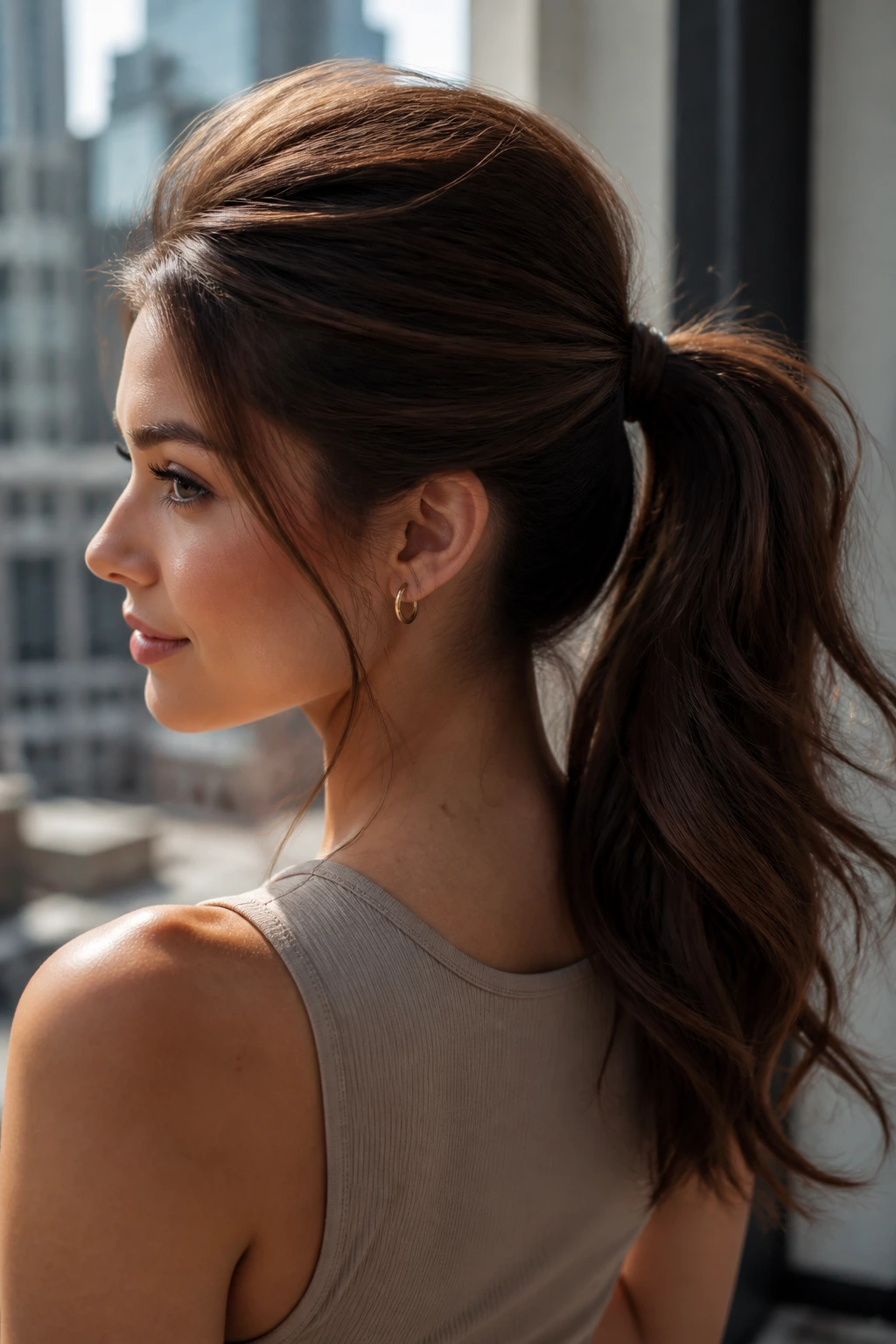
A blowout-volume ponytail uses a bit of lift at the crown and soft movement through the tail so the style feels airy rather than tight. Think round-brush bounce at the front, then a ponytail that keeps the ends curved instead of pin-straight.
This one works best when the base isn’t crushed down with heavy product. Use a lightweight mousse or volumizing spray, brush the crown up and back, and let the lengths stay touchable. If you curl the ends slightly under or out, the tail looks fuller without much extra effort.
It’s a good bridge between casual and polished. You can wear it to lunch, then leave it on for dinner.
20. Tucked Minimal Ponytail
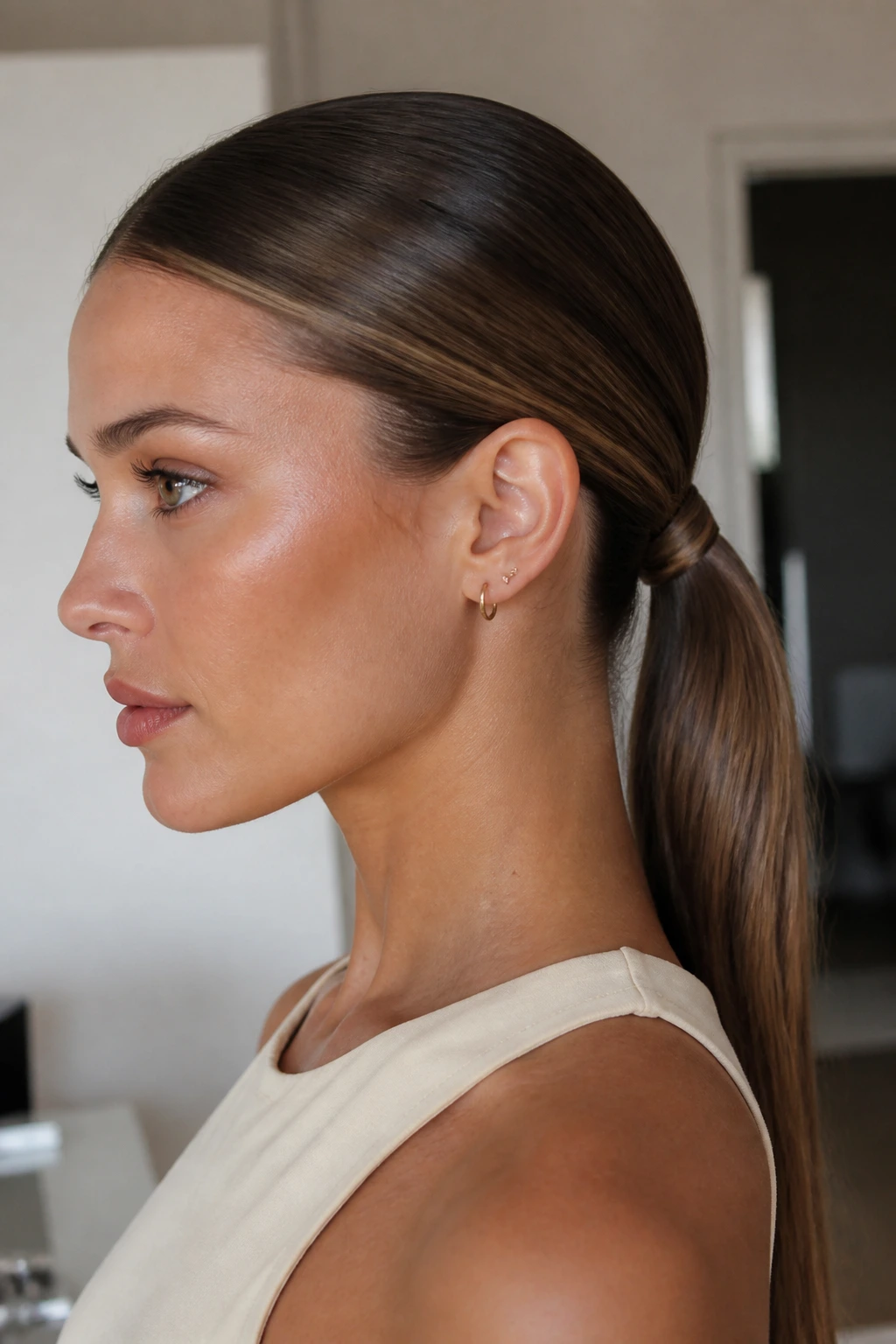
The tucked minimal ponytail is the clean little sibling of the wrapped pony. It sits low, gets smoothed close to the head, and uses the tail itself to create a short fold or tuck instead of a long swing.
This is a smart choice for shorter hair, blunt cuts, or people who want a more architectural shape. It keeps the profile neat and doesn’t depend on tons of length. If the ends are slippery, pin the tuck with two crossed bobby pins under the fold so it doesn’t open.
It’s restrained in a good way. No fuss, no puff, no extra.
21. Crown-Braid Ponytail
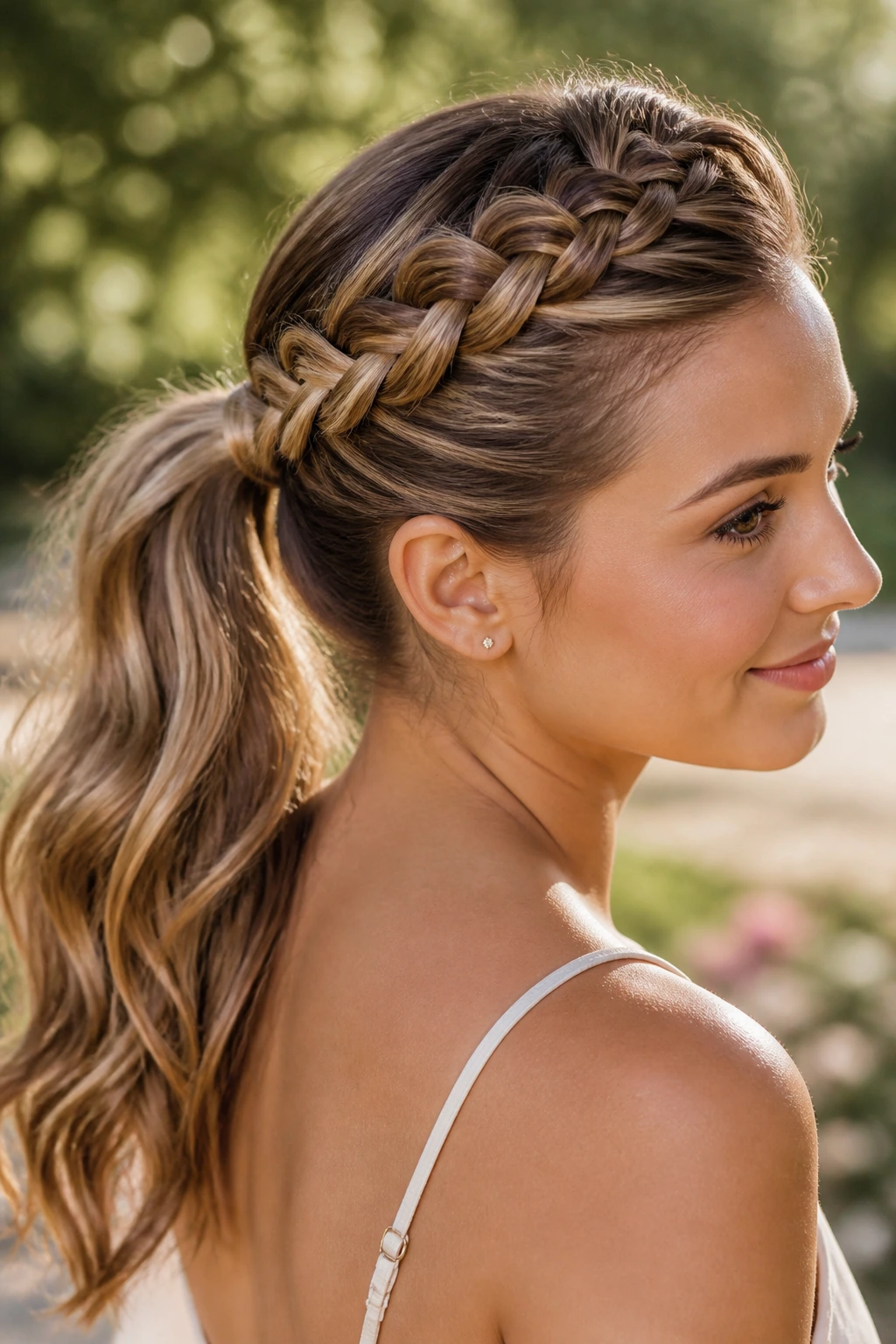
A crown-braid ponytail has a more romantic feel, but it’s practical too. Braid along the hairline or temple area, sweep the braid back, and gather the rest into a ponytail so the front gets interest and the back gets utility.
The braid gives structure to hair that would otherwise frizz at the temples. It also makes the ponytail feel fuller because the eye sees detail before it sees the base. Keep the braid snug enough to stay in place, but not so tight that it leaves a hard line at the scalp.
This is one of those styles that looks more complicated than it is. That’s a nice place to land.
22. Sport Braids Into Ponytail
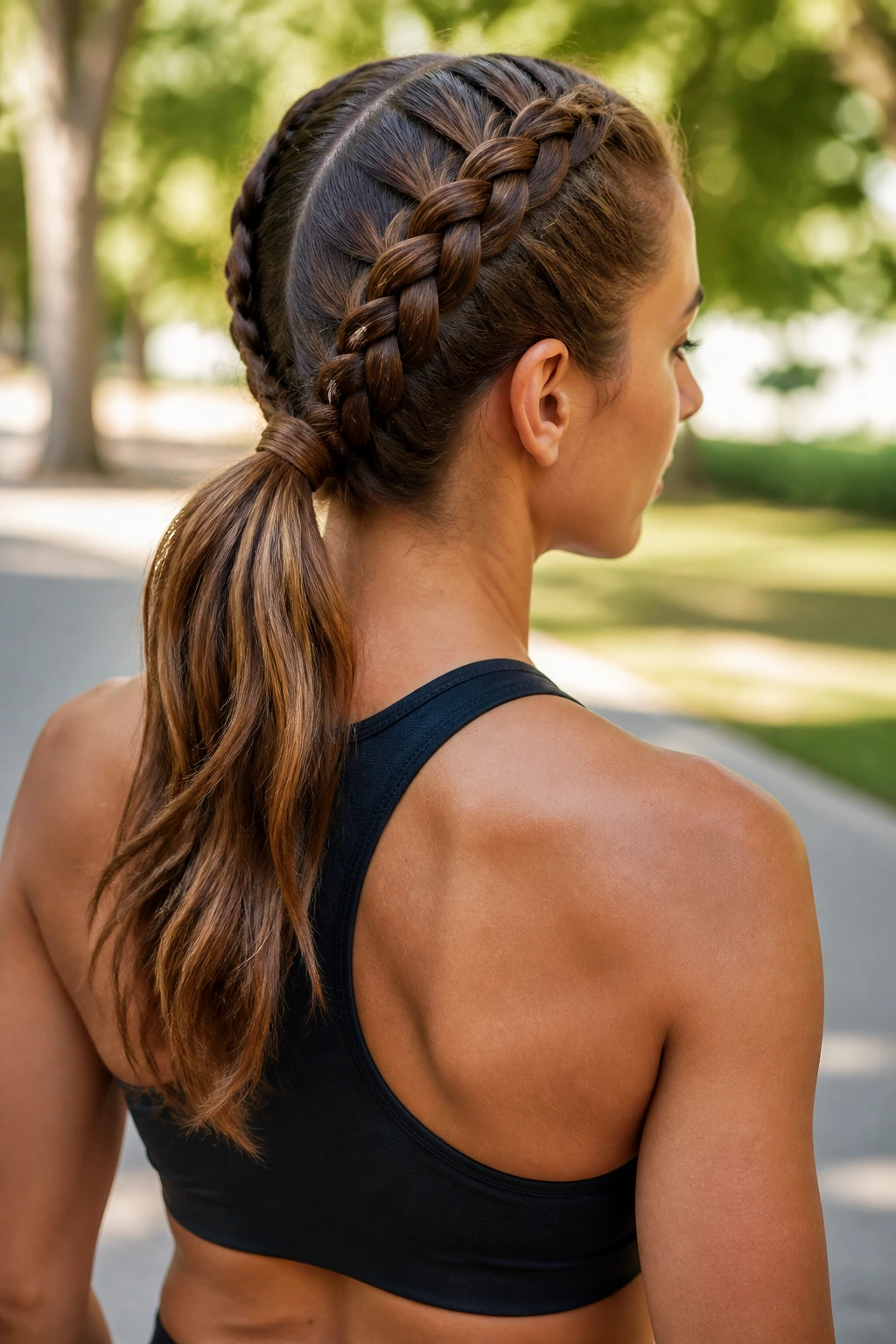
Two side braids feeding into a ponytail are built for movement. They keep hair off the face, reduce flyaways at the front, and create a strong base before the tail even starts.
This style works well for workouts, walking in heat, or long days when you know your hair will be tugged by wind. Dutch braids or tight three-strand braids both work. The important part is that the braids meet cleanly at the back before the elastic goes in.
It’s functional without looking plain, which is hard to beat on a sticky day.
23. Claw-Clip Supported Ponytail
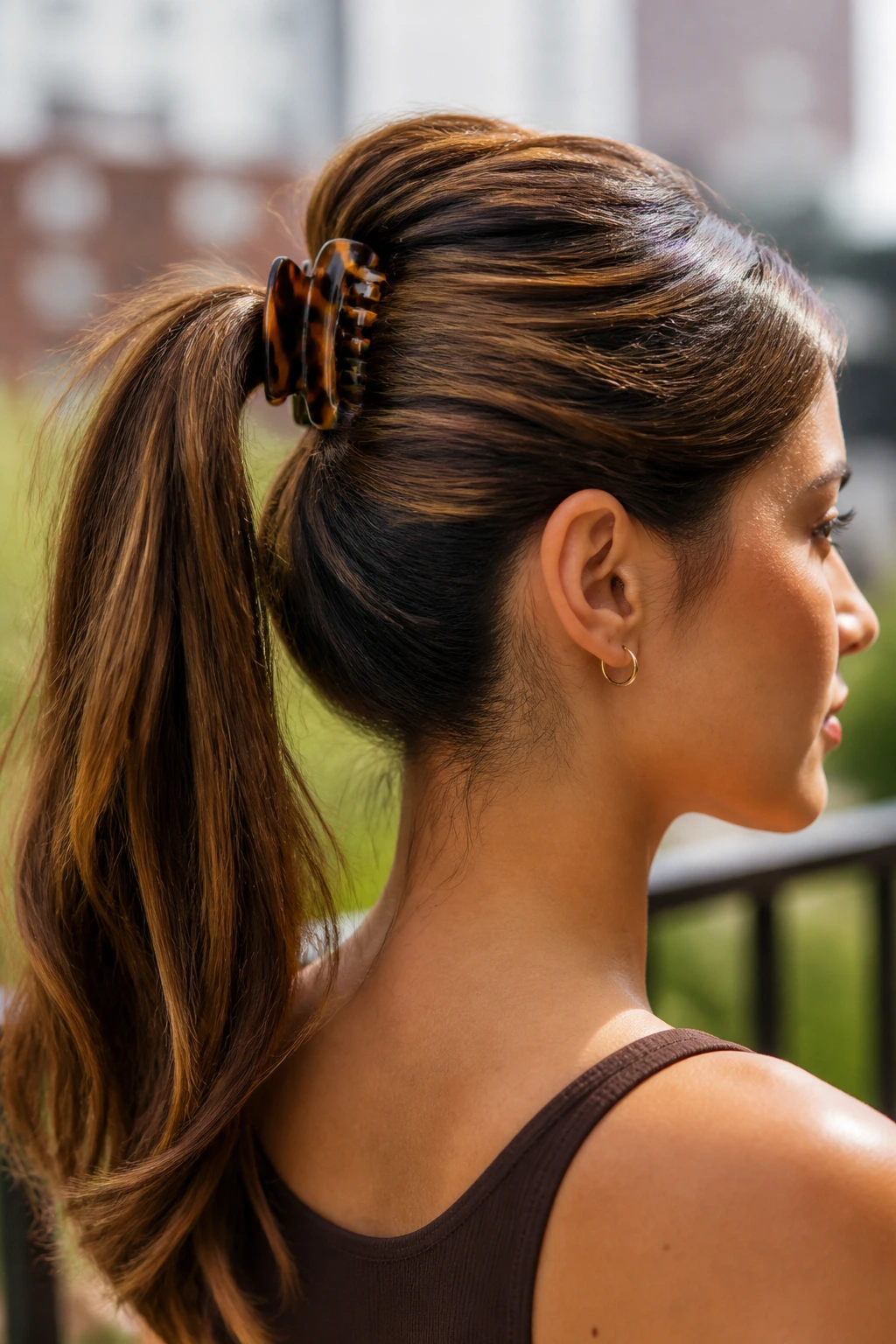
A claw-clip supported ponytail gives the base a little extra lift and holds the hair in place without adding more tension at the scalp. You still make a ponytail, but the clip sits above or around the base as a support point.
This works especially well for thick hair that pulls down a regular elastic fast. It also helps if you want volume at the crown but don’t want the tightness of a high tie. Choose a clip with smooth teeth so it doesn’t snag the hair.
The style feels a bit casual, a bit clever, and very useful when the hair is too heavy for one elastic alone.
24. Face-Framing Tendril Ponytail
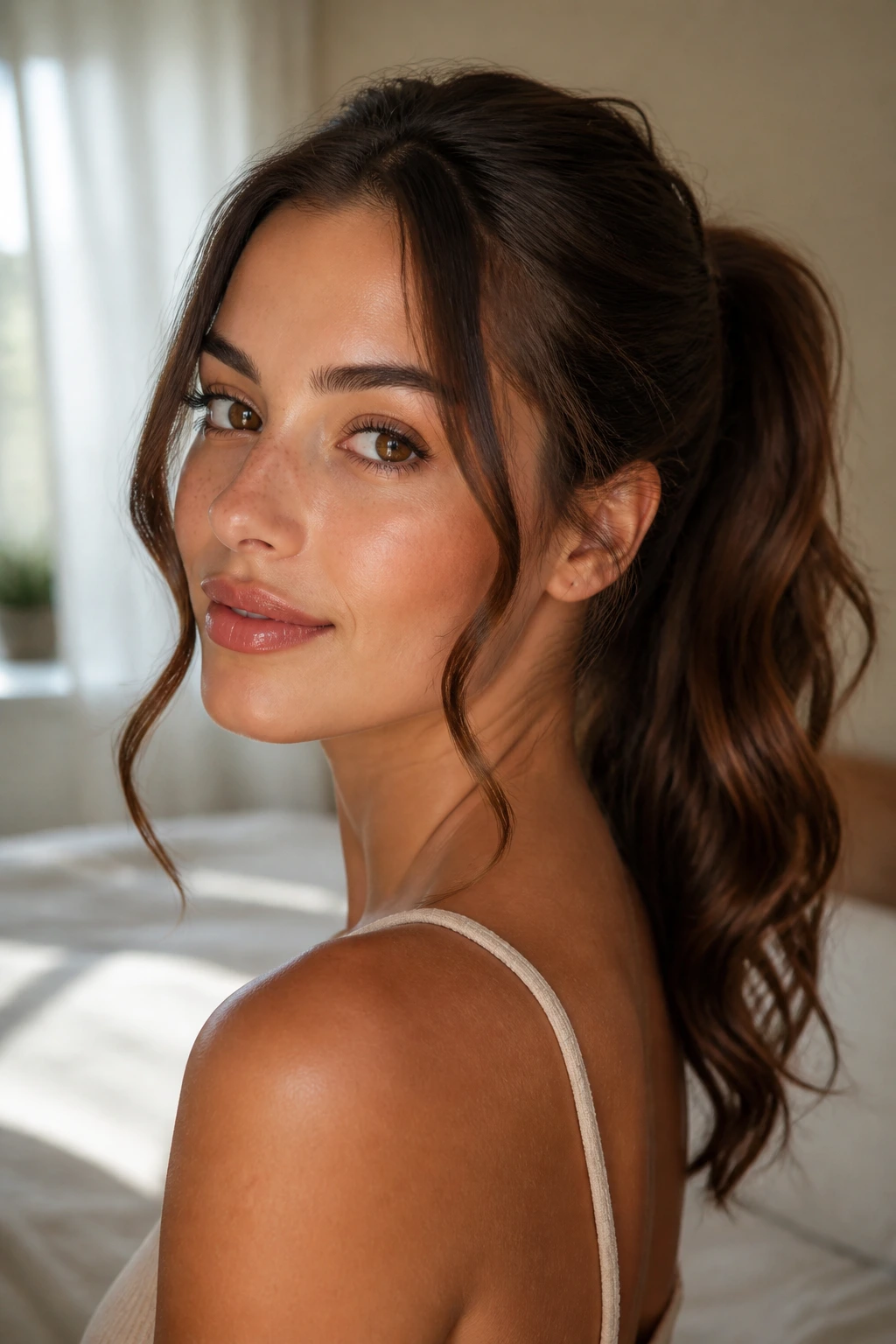
A face-framing tendril ponytail softens the whole look in the best possible way. You leave two slim pieces out near the cheeks or temples, then tie the rest back cleanly so the hairline doesn’t disappear into one hard line.
The tendrils should be deliberate, not accidental. Use a tail comb to section them evenly, and curl or wave them lightly if the rest of the hair is polished. Straight tendrils can work too, but they need to be intentional and clean.
This is a nice answer if a full slick-back feels too severe. The little pieces around the face keep the style from looking sealed shut.
25. Wrapped Bubble Ponytail
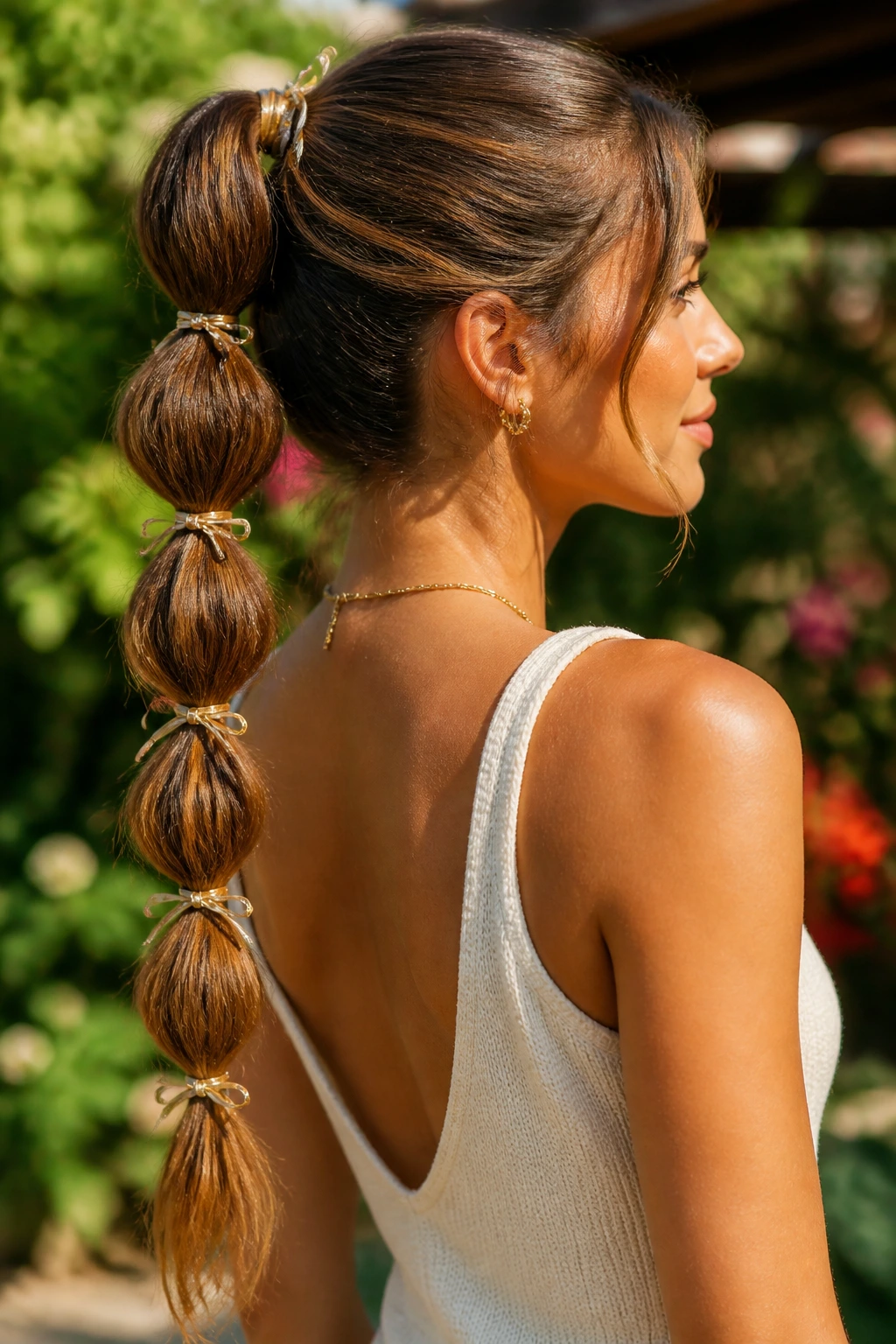
A wrapped bubble ponytail is a more finished version of the classic bubble style. After each elastic goes in, you hide the tie by wrapping a thin strand of hair around it or by using a coordinating ribbon on each section.
That extra layer makes the bubbles feel cleaner and more dressed up. The style is especially good for long hair because the repeated wrapped points break up the length in a way that looks crisp rather than heavy. Keep the bubbles even and the wraps slim; chunky wraps can make the tail feel overbuilt.
It’s a good choice when you want drama, but neat drama.
26. Knotted Ponytail
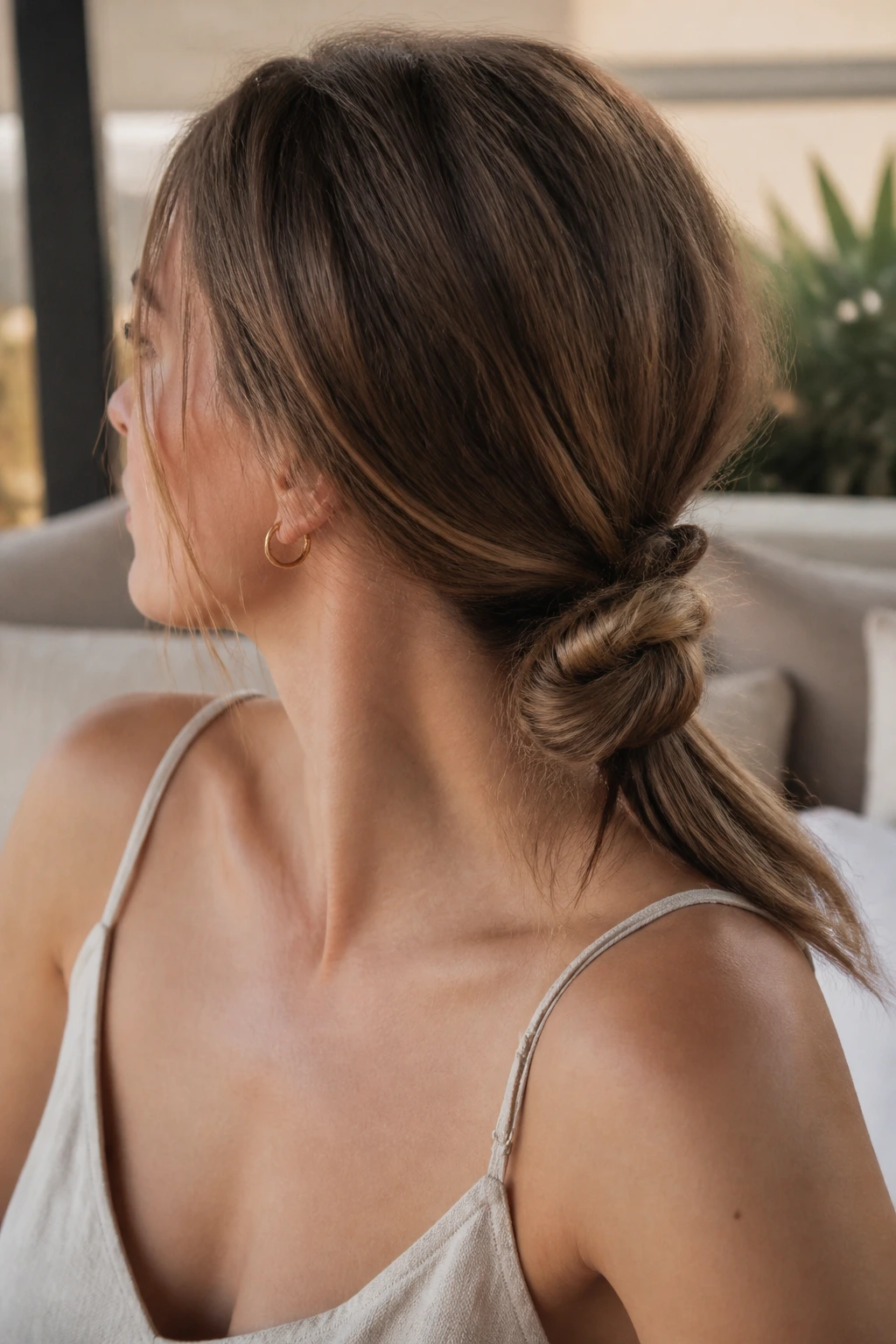
A knotted ponytail creates shape fast. You gather the hair low, split the lengths into two sections, tie them into a loose knot, and secure the ends beneath or behind the knot with pins if needed.
The result is softer than a braid and less common than a twist. It works best on medium to long hair with a little texture, because slippery hair can undo the knot too quickly. A texturizing spray at the lengths helps the knot hold without looking stiff.
This one has a relaxed, slightly undone finish that works well with linen, cotton, and anything else that looks better when the hair doesn’t try too hard.
27. Ribbon-Woven Ponytail
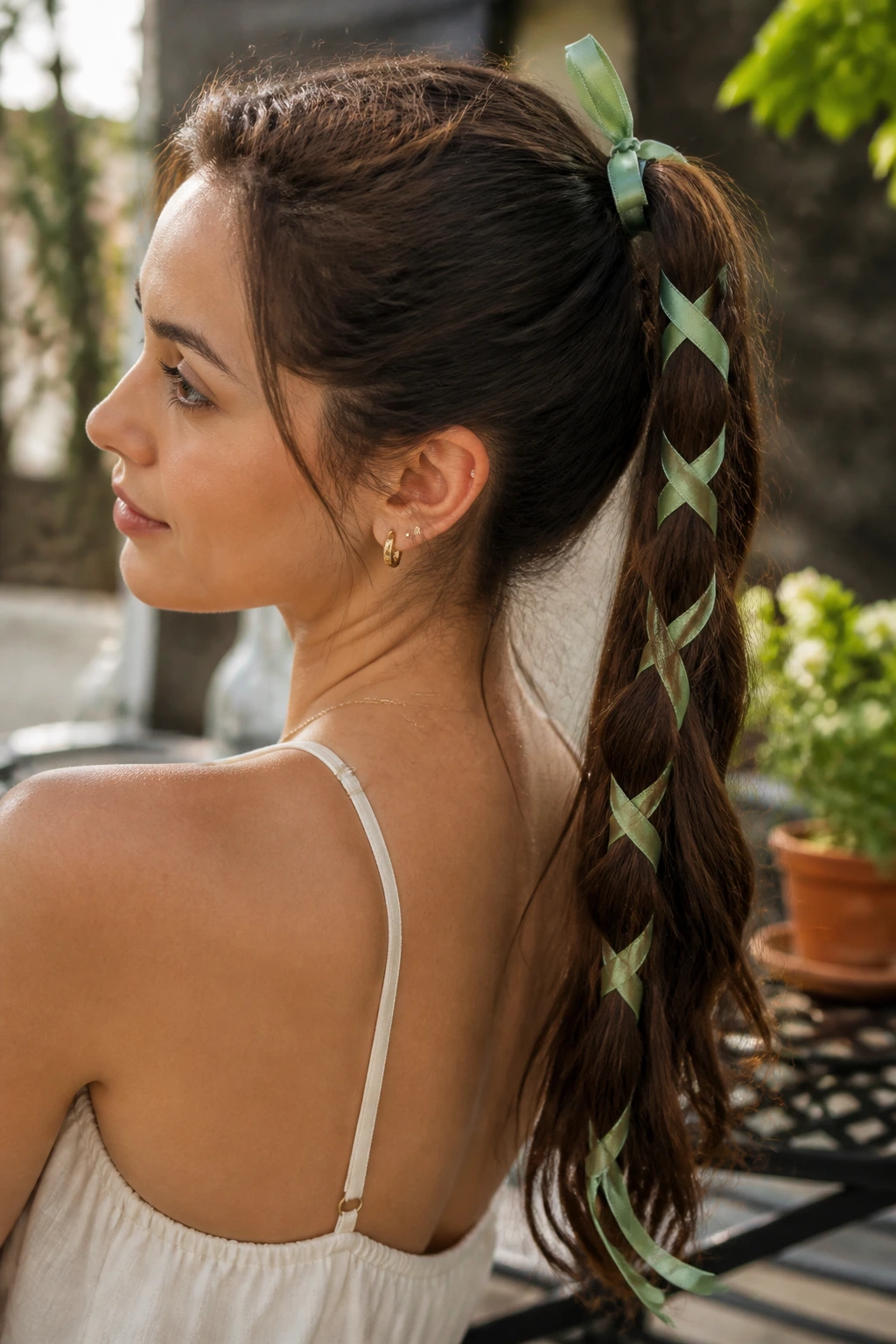
A ribbon-woven ponytail makes the tail itself the decoration. Thread a narrow ribbon through a braid or weave it between sections of a ponytail, letting the color peek through the hair as it moves.
Choose a ribbon that contrasts enough to show up, but not so much that it looks like gift wrap. Satin, velvet, and grosgrain each give a different feel. Satin is smooth and light. Grosgrain holds shape. Velvet feels more deliberate and a little old-school in a nice way.
It’s one of the simplest ways to make a ponytail feel special without changing the base structure.
28. Fishtail Ponytail
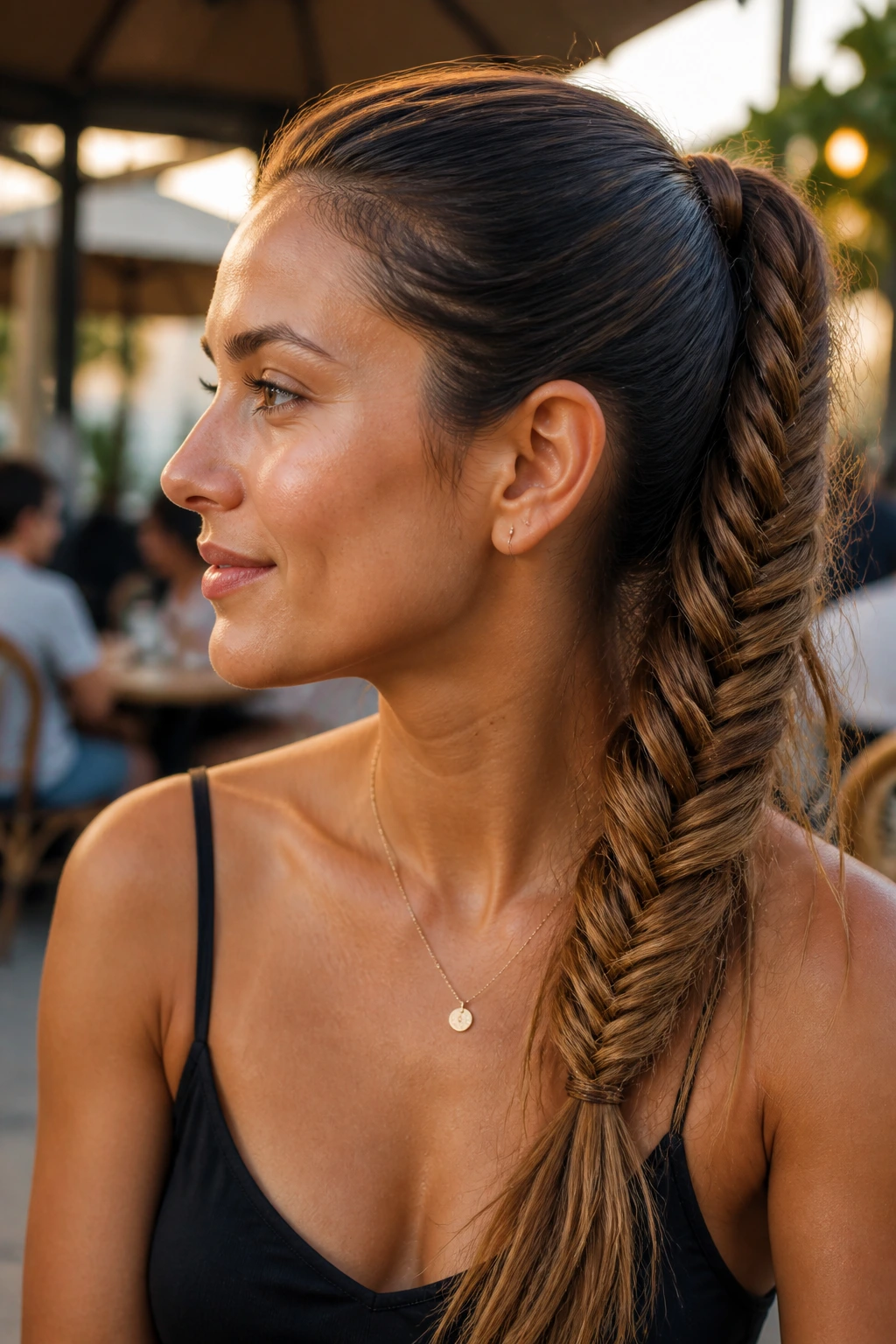
A fishtail ponytail gives you texture that looks intricate from a distance and surprisingly casual up close. Secure the hair in a ponytail first, then fishtail the tail by pulling small pieces from each side across to the other.
The tighter you keep the sections, the neater the braid. The looser you pull them, the softer and more romantic it gets. Fishtails can look thin on very fine hair, so gently widen the braid after you finish to make it fuller.
This style is a good fit for long hair that tends to fray at the ends. The braid keeps everything together while still showing off movement.
29. Twisted Nape Ponytail
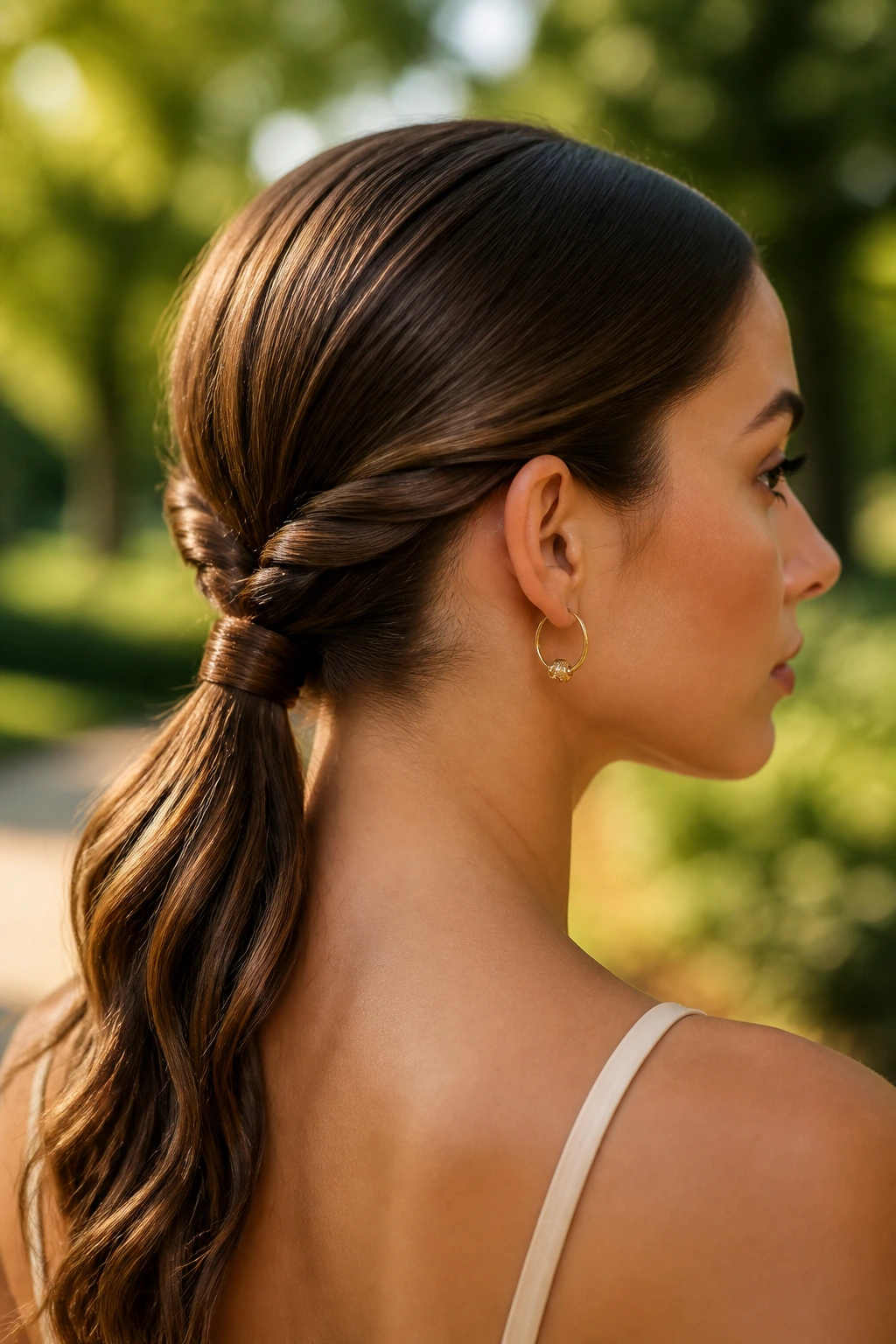
A twisted nape ponytail is all about the base. Twist the hair from each side back toward the nape, join the twists, and secure them into a low ponytail.
It looks clean from the front and gives the back a little architectural detail. This style is especially nice for medium-length hair because the twist adds shape without needing massive length. Keep the twists even so one side doesn’t look thicker than the other.
If you’re wearing something simple up top, this is an easy way to give the hair a more finished line.
30. Messy Beach Ponytail
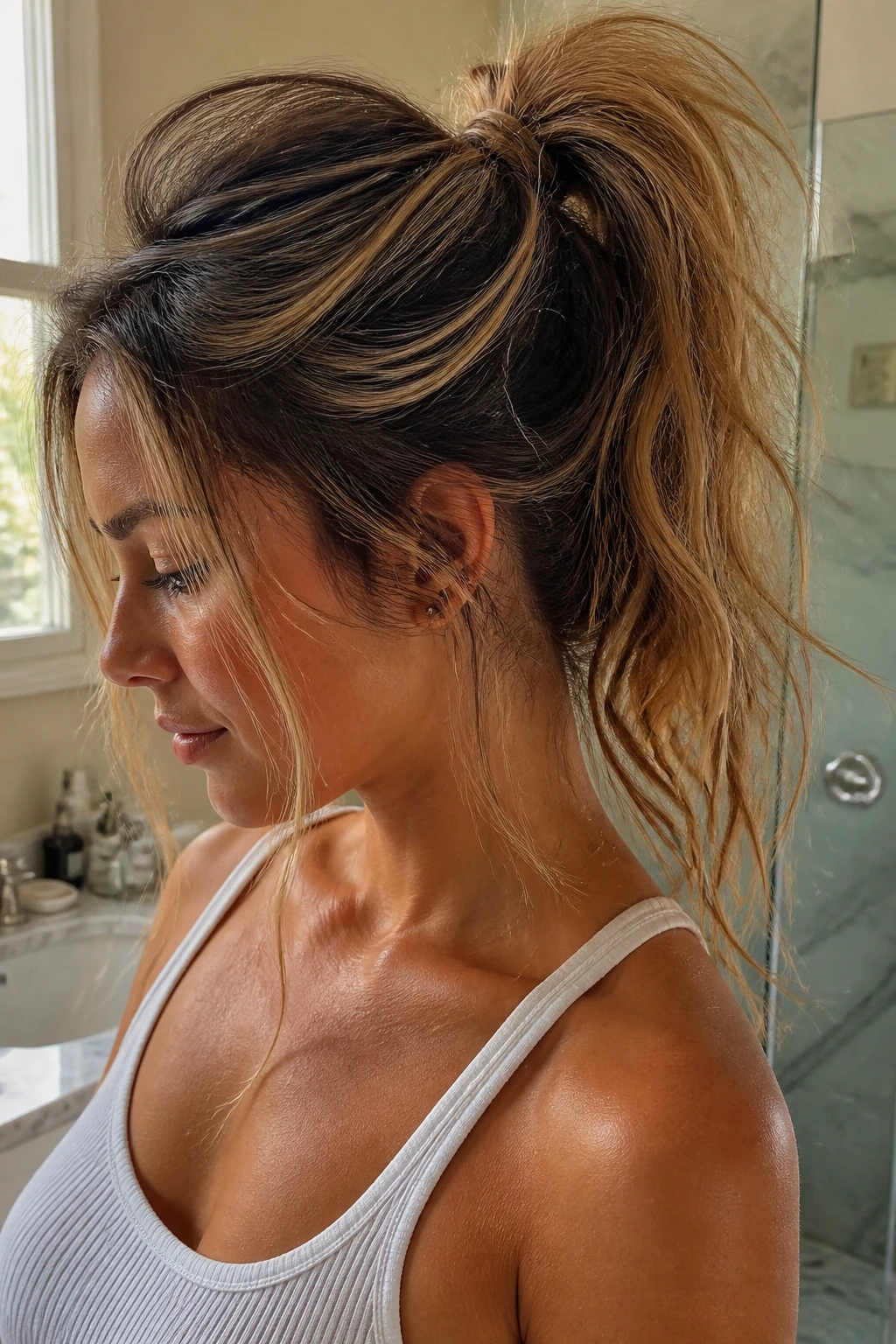
A messy beach ponytail should look touched by salt air, even if the closest you got was a texturizing spray and a warm bathroom mirror. The hair is loosely gathered, the crown has a little lift, and the tail stays deliberately imperfect.
The danger here is going too far and making it look forgotten. Keep one section smooth around the hairline, then rough up the lengths with your fingers instead of a brush. A salt spray or dry texture spray gives the tail enough grit to stay in the shape you want.
This works best when you want summer hair that feels easy, not staged.
31. Center-Part Sleek Low Ponytail
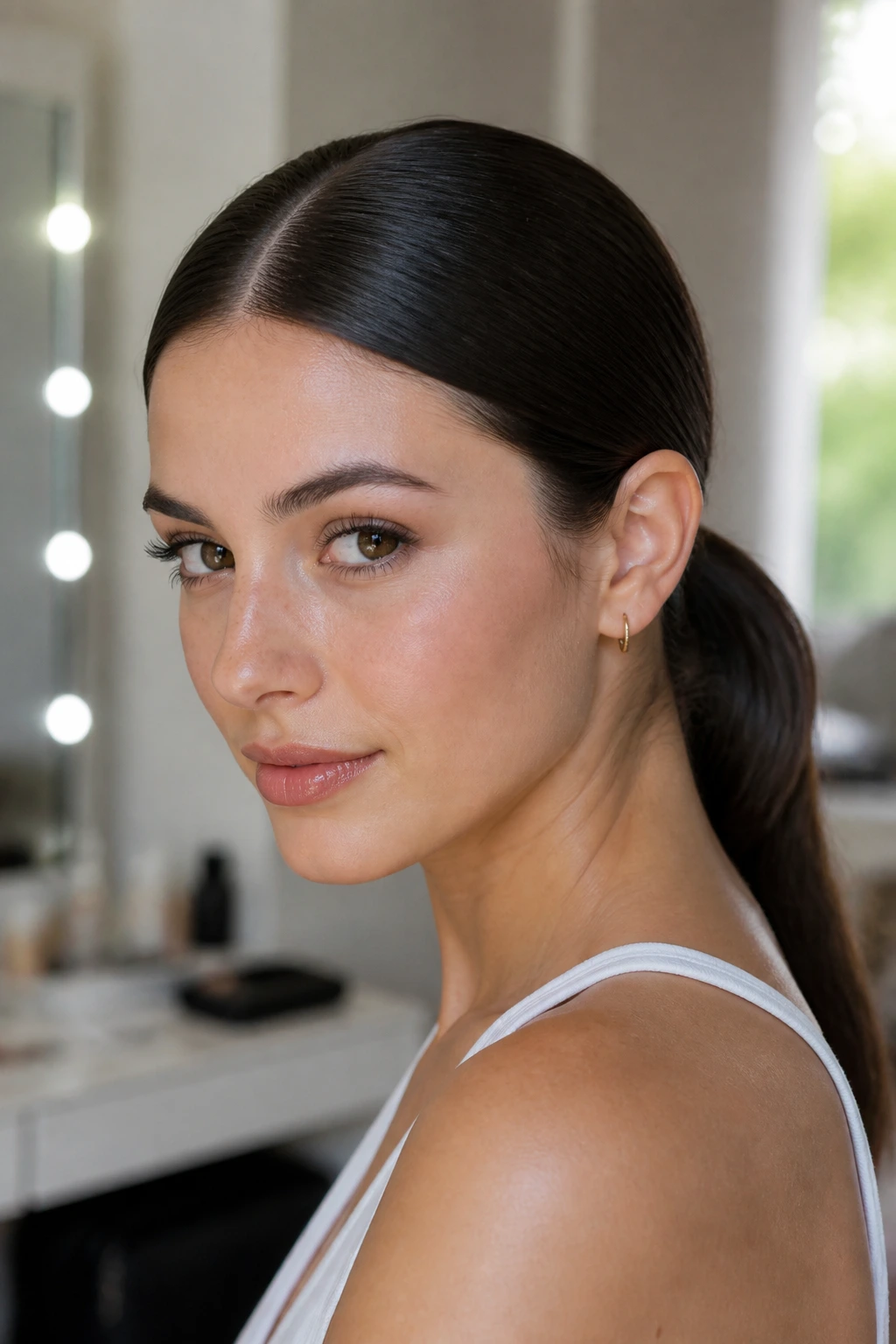
The center-part sleek low ponytail is the cleanest line in the whole group. The part runs straight down the middle, the hair is brushed flat, and the base sits low and neat at the nape.
This one suits sharp collars, tailored tops, and days when you want your hair to look calm even if you’re not. A little serum on the mid-lengths helps the ends stay smooth, but keep it off the roots or the pony will slide. If your hair is thick, sectioning before brushing helps keep the middle part even.
There’s nothing noisy here. That’s the charm.
32. Curled-Ends High Ponytail
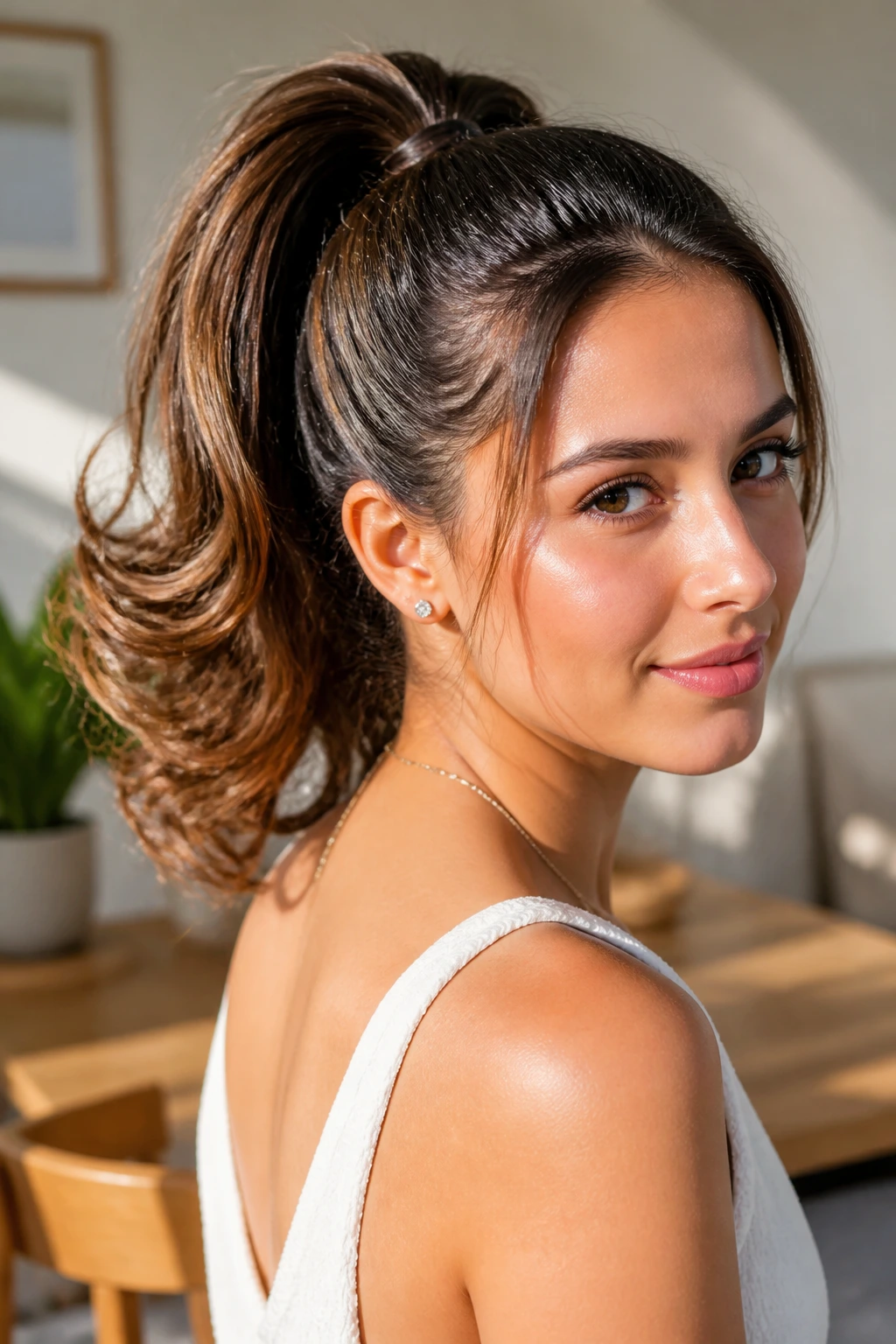
A high ponytail with curled ends has more bounce than a straight tail and a little more polish than a fully textured one. The base goes up high, then the ends get curled or bent so they move instead of hanging like a rope.
This style suits days when you want the lift of a high pony but not the severity of a fully sleek finish. You can curl just the last third of the tail for a softer result. If your hair is very straight, a bit of mousse or heat protectant before curling helps the shape last longer.
It’s one of the easiest ways to make a ponytail look intentionally styled instead of simply secured.
33. Double Pony Lift
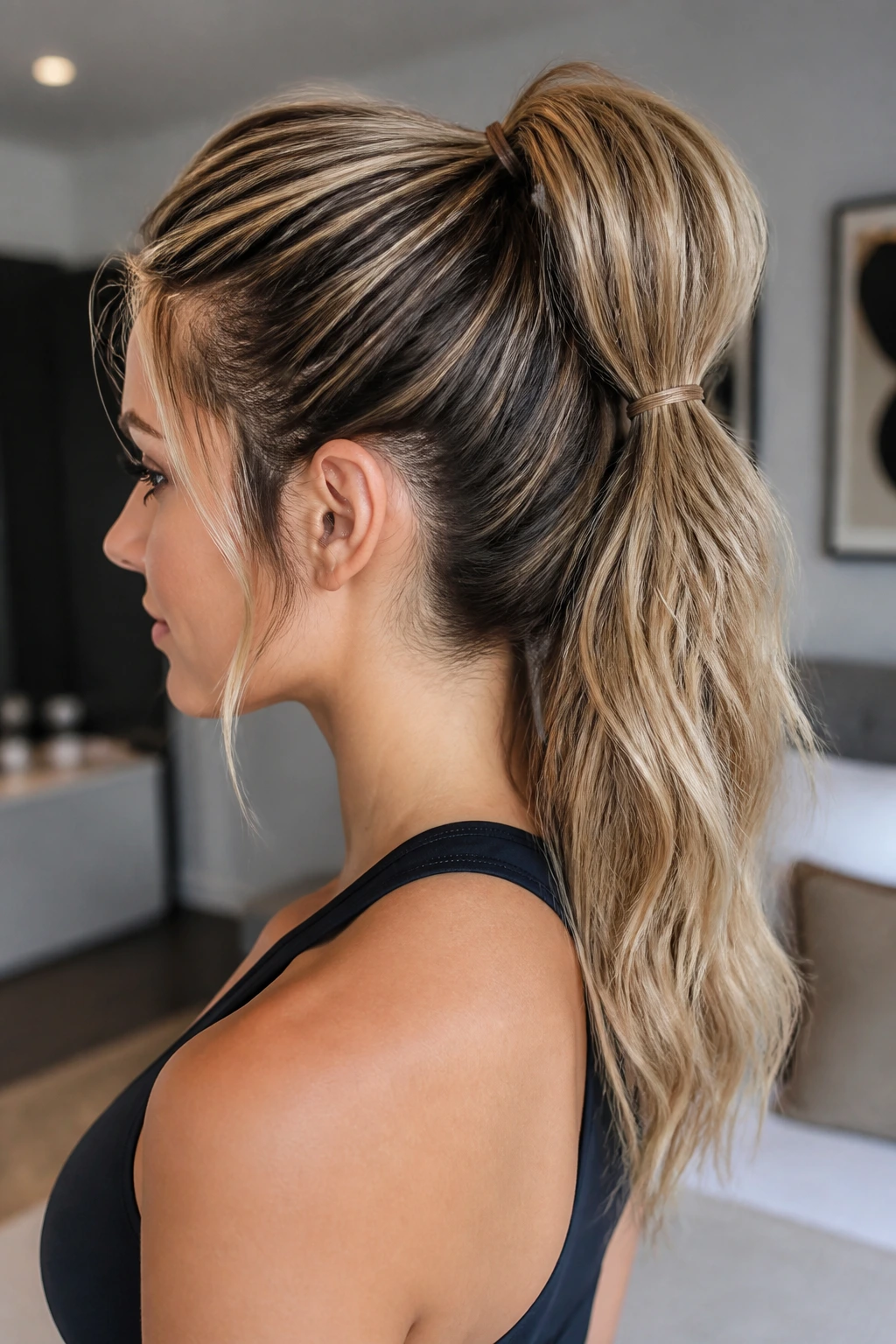
The double pony lift is a trick for getting more height without making the crown look overly teased. You create one ponytail high on the head, then a second one just beneath it. The top pony hides the lower one, and the whole shape sits higher than a single elastic would allow.
This is especially useful for hair that droops fast under its own weight. It creates fake volume in a way that still looks tidy. If the lower pony sticks out, tighten it a little closer to the head and use a small elastic so the bulk stays hidden.
It’s one of the most practical styles in the group because it solves a real problem: the ponytail that keeps collapsing.
34. Micro-Braid Ponytail
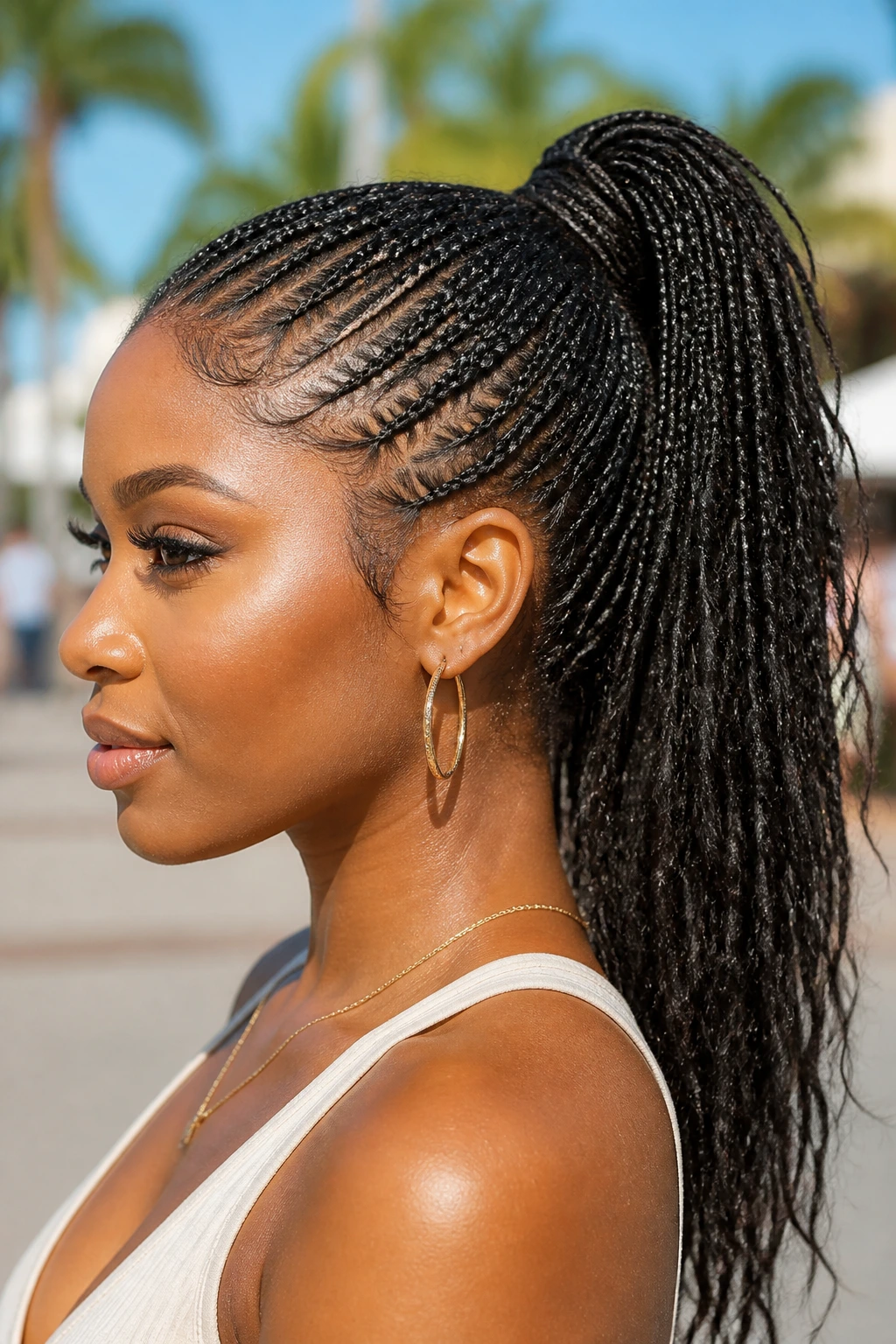
Micro-braids give a ponytail detail without locking you into a full braided style. Add one, two, or three tiny braids along the hairline, around the temple, or through the tail, then tie the rest back as usual.
This is a strong choice when you want texture that feels light. It works on straight hair, waves, and curls, and it’s especially good for second-day hair that needs a little structure. Keep the braids small enough that they read as accent pieces, not the whole look.
The style has a bit of edge, but it’s still wearable. That balance matters.
35. Asymmetrical Low Ponytail
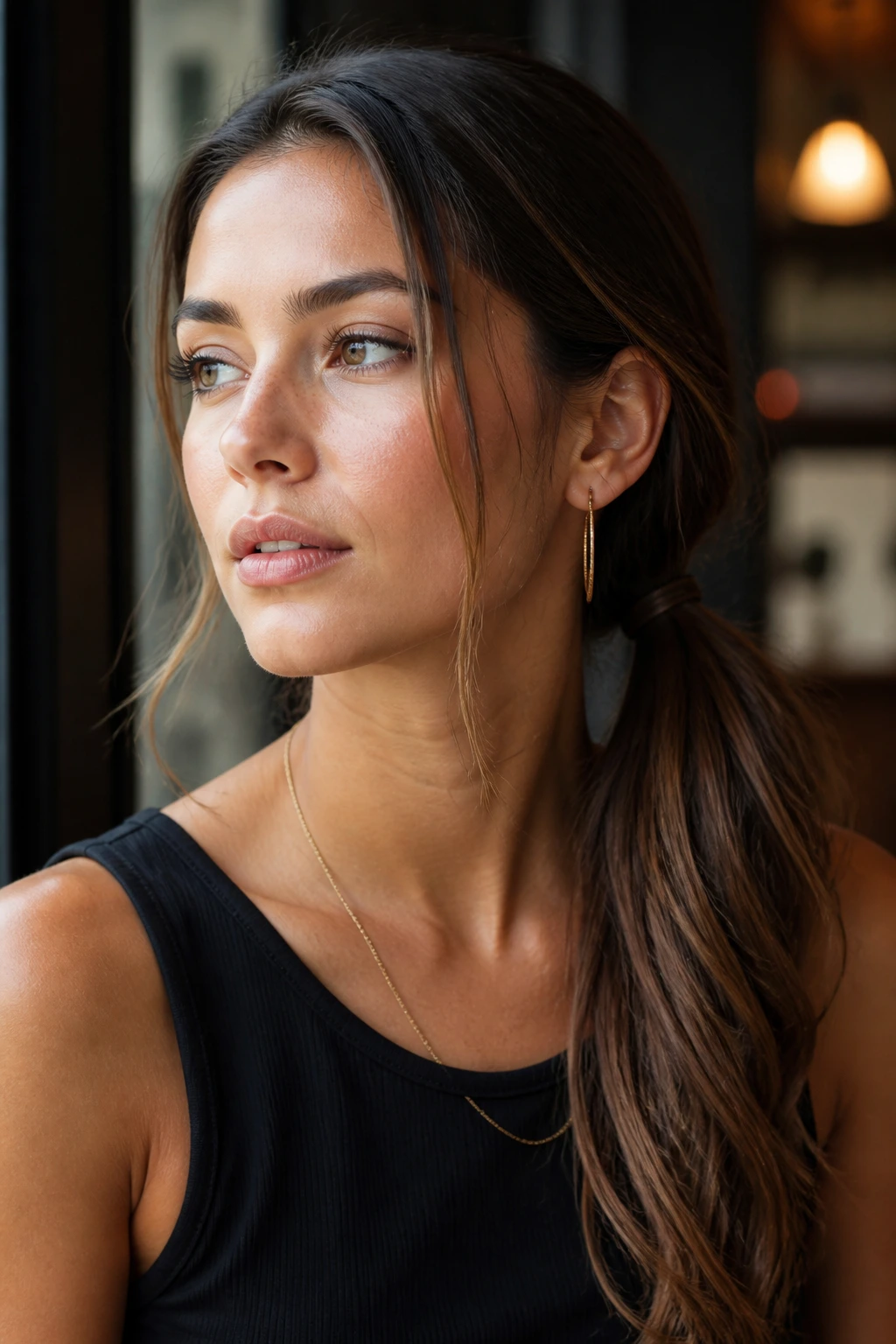
An asymmetrical low ponytail sits just off-center rather than exactly in the middle. That tiny shift changes the whole mood. It feels softer, slightly modern, and a little less formal than a centered low tie.
Brush the hair toward the chosen side, secure it low and slightly behind the ear, then let the tail fall naturally. You can make it polished or loose depending on how clean the crown is. A side part helps the asymmetry feel intentional, but it isn’t required.
If you like low ponytails but think the straight-down-the-middle version is too stiff, this is the easier, better-looking answer.
36. Elastic-Stack Ponytail
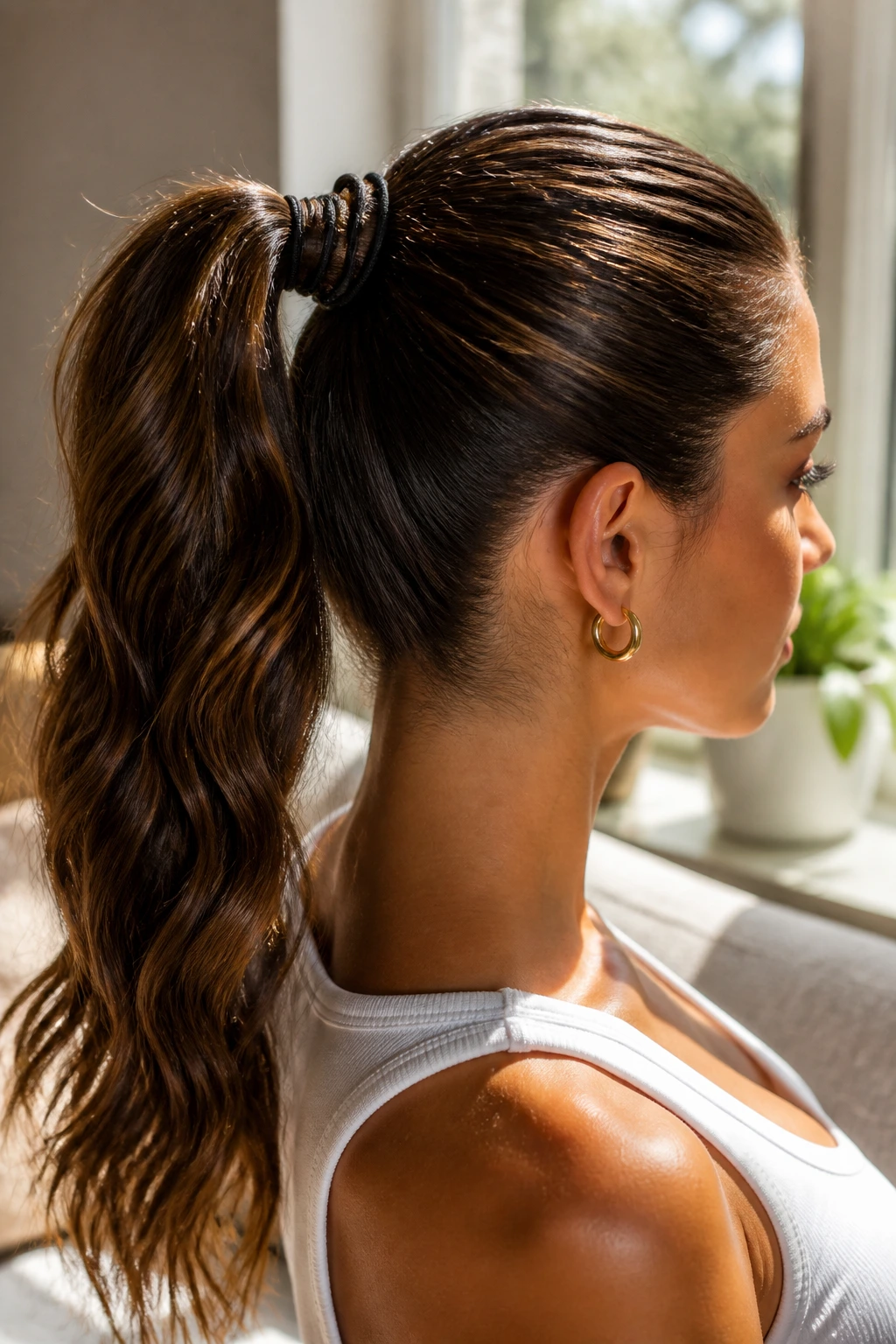
Elastic-stacked ponytails use multiple ties close together at the base or down the tail to create a controlled, segmented shape. The look is stronger and more graphic than a single elastic, and it can make long hair feel more structured.
This is useful for very thick hair or for anyone who wants the ponytail to stand out as a shape, not just a way to get hair off the face. Keep the elastics matching or intentionally contrasting. Both work. What matters is spacing them evenly so the stack reads cleanly.
It’s a good style when you want something modern and a little architectural.
37. Satin-Strip Ponytail
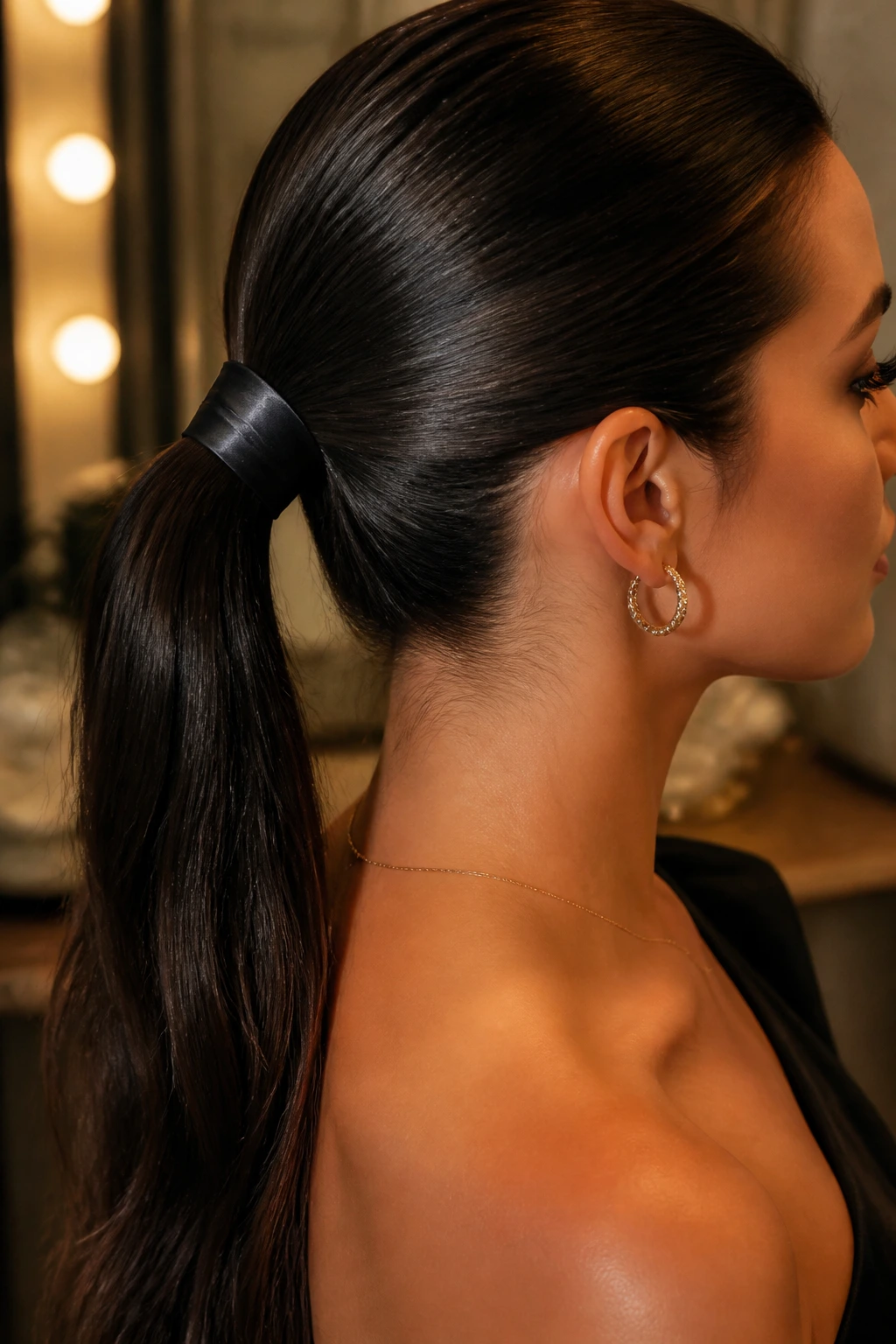
A satin-strip ponytail is smooth, glossy, and a little more delicate than a scarf style. Wrap a narrow satin strip around the base or trail it down the tail so it becomes part of the shape instead of just a tie.
Satin gives a nice slip, which helps if your hair tangles easily around rough elastics. It also catches the eye without adding weight. Keep the strip narrow if the ponytail is high; wide satin can overpower the whole look fast.
This style is a nice pick for evenings, dates, or any day when you want the hair to look finished with minimal fuss.
38. Loop-Through Ponytail
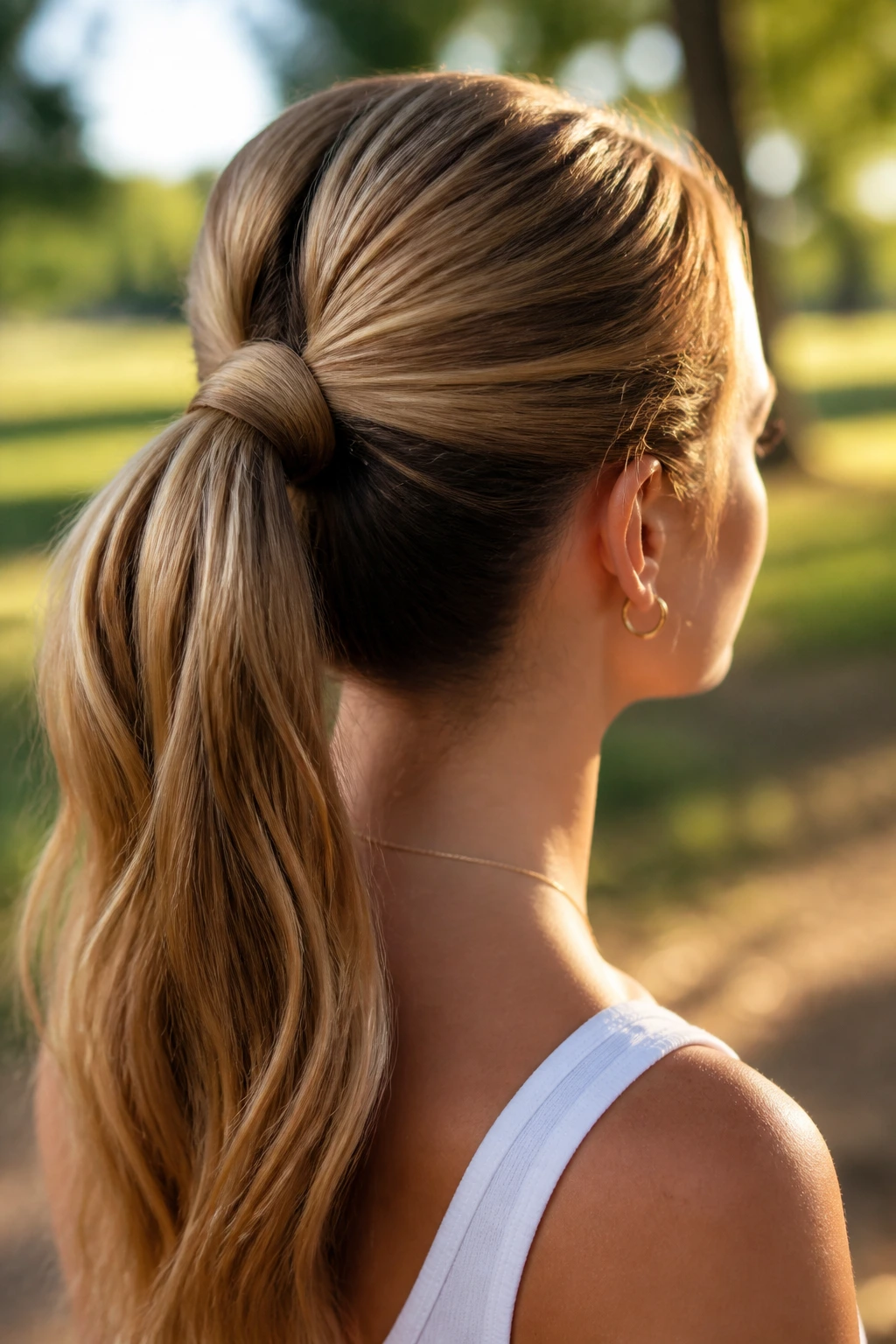
The loop-through ponytail has that clean folded shape that makes people assume it took more effort than it did. Pull the hair into a ponytail, make a small opening above the elastic, and thread the tail through once or twice depending on how much loop you want.
You can keep the loop tight and tidy or loosen it slightly for a softer, fuller shape. This style works best on medium to long hair and on hair that has enough grip to hold the fold. A little texture spray before you make the loop helps if the strands are too slippery.
It’s the kind of ponytail that feels simple until you see the shape in the mirror. Then it looks far more deliberate than a basic tie-back ever does.
Why Summer Ponytails Hold Their Shape or Fall Apart
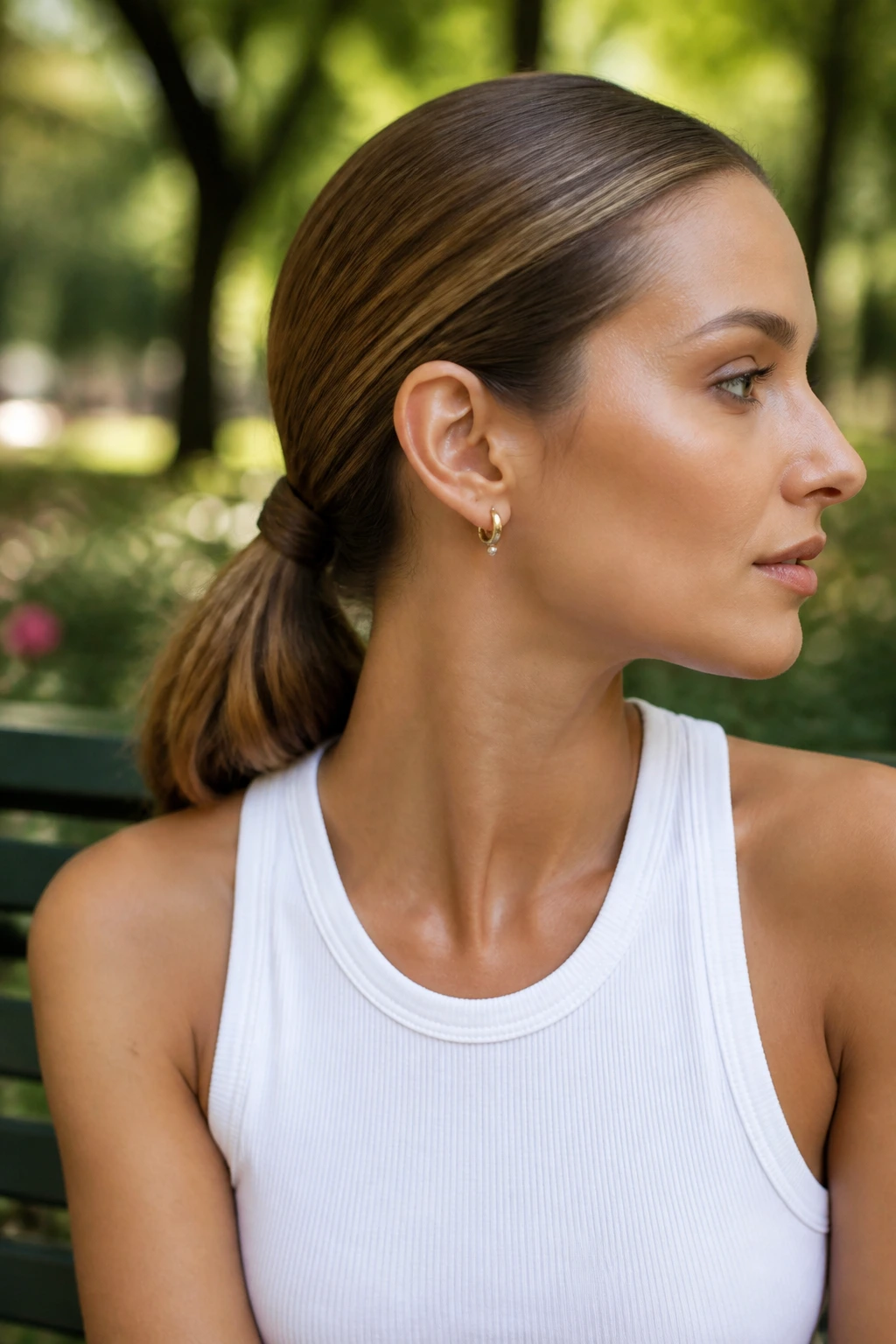
A ponytail survives heat for one reason: the base is doing the heavy lifting. Not the ends. Not the accessory. The base. If the crown is too slippery, too heavy with oil, or tied at a point where the head naturally rounds out, the style starts to slide before lunch.
The difference between a style that stays and one that slips often comes down to a few small choices. Clean roots can be too slick. Freshly washed hair can be too soft. Hair that’s been brushed a hundred times can get frizzy at the front and flat at the crown. Summer makes all of that more obvious because sweat changes the texture as the day goes on.
I like to think of a good ponytail as a shape problem, not a hair problem. Where does the weight sit? Is the elastic anchored into enough hair? Does the style need texture to grip, or does it need smoothing so the front doesn’t puff out? Answer those questions first, and the rest gets easier fast.
The Tools That Make These Styles Easier
You do not need a drawer full of gadgets. A few useful tools cover almost every ponytail here.
- Boar-bristle brush: Smooths the crown and gathers hair without leaving it puffy.
- Tail comb: Helps draw clean parts and section off small pieces for wraps, braids, and tendrils.
- Snag-free elastics: Clear or fabric-covered ties reduce breakage and look cleaner at the base.
- Bungee elastic: Great for sleek or heavy ponytails because it grips without requiring a giant loop of stretch.
- Bobby pins: Use them to lock wraps, tucks, and loops in place.
- Edge brush or clean toothbrush: Good for smoothing hairline flyaways and shaping baby hairs if you like that finish.
- Claw clip: Handy for quick support on thick hair or for holding a section while you build the base.
- Texturizing spray: Gives grip to fine or slippery hair so styles don’t slide right out.
- Flexible-hold hairspray: Sets the finished shape without making the tail feel stiff.
- Silk or satin scarf: Useful both as an accessory and as a friction-lowering wrap.
If you only buy one extra thing beyond elastics, make it a tail comb. It earns its place.
Smart Product Picks and Hair Prep Notes
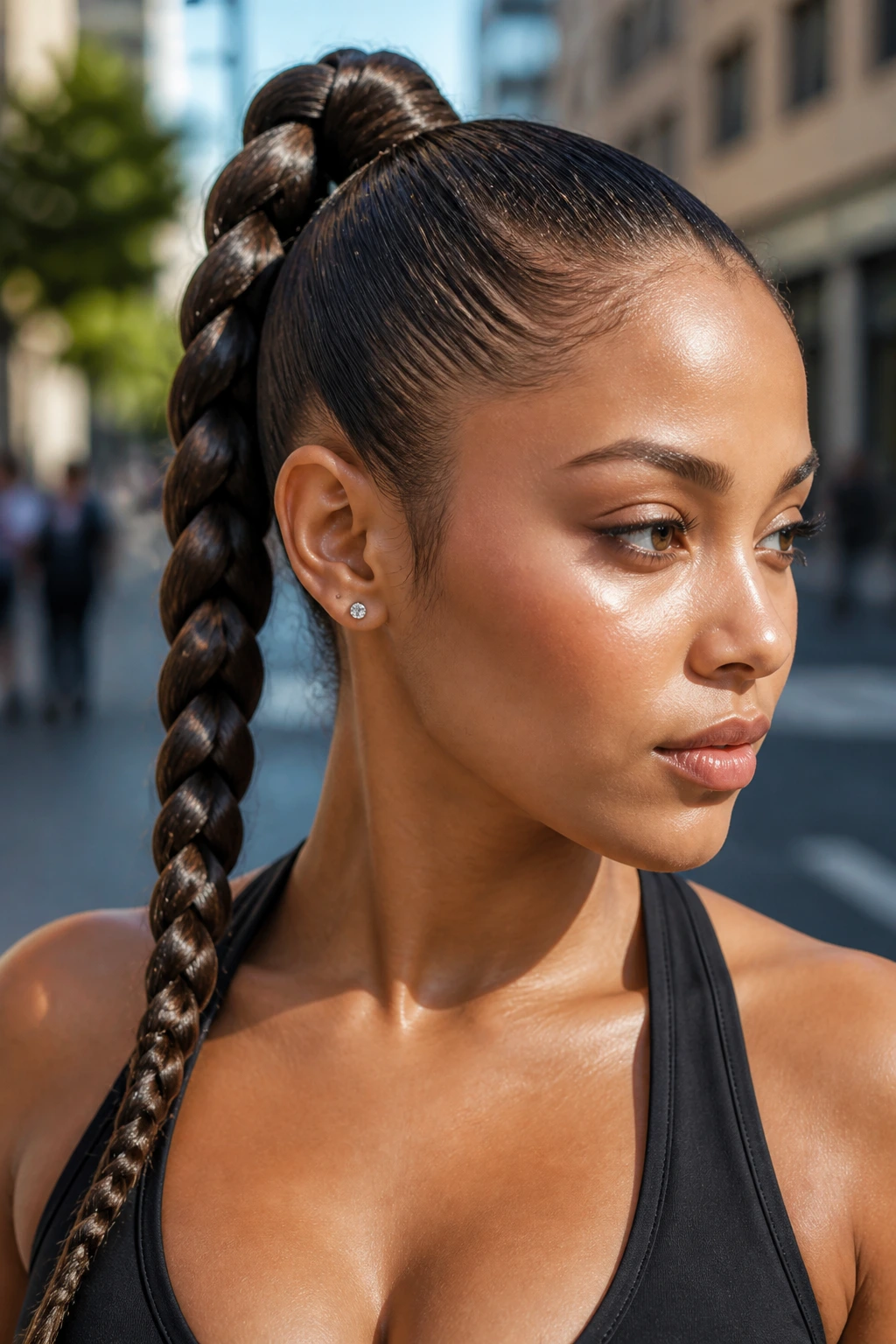
The best ponytail is often won before the elastic goes in. A little product at the right point can make the difference between a style that holds and one that spends the day slowly surrendering.
For fine or slippery hair, a dry texture spray at the roots gives the base more bite. For curly hair, a light leave-in or curl cream through the lengths keeps the tail from turning fuzzy. Straight hair usually wants less product than people think. Too much serum or oil at the crown makes the ponytail glide, especially once heat enters the room.
If you’re going sleek, gel belongs at the hairline and top layers, not slathered through the whole head. If you’re going soft and textured, use mousse or salt spray while the hair is still damp so the shape dries in place. And if the hair is dirty enough to feel heavy but not dirty enough to wash, that’s often the sweet spot for bubble styles, braids, and rope twists. The strands have grip, which is exactly what those looks need.
How to Wear These Ponytails All Day Without Fighting Them
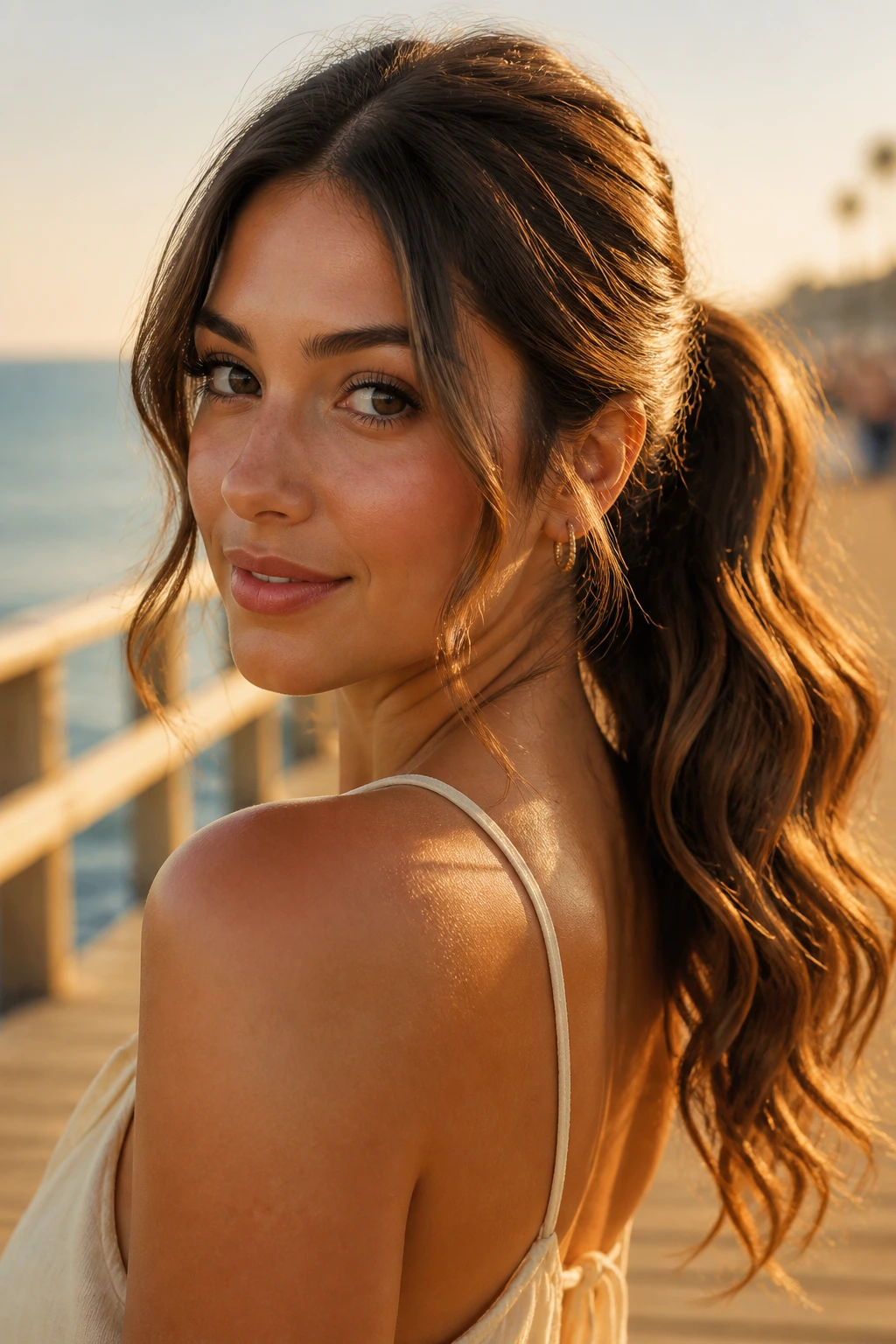
Presentation: Choose the finish based on the mood you want. A glassy or center-part pony reads sharp. A bubble, rope, or braid reads more relaxed. The base placement changes the whole face frame, so don’t treat that as an afterthought.
Pairings: High ponytails work well with earrings, open necklines, and collars that need space. Low ponytails sit nicely with crew necks, linen shirts, and anything you want to look clean without drawing too much attention to the hair itself. Scarf and ribbon styles do their best work when the outfit is simple.
Wear Time: Sleek styles tend to look best early in the day when the part is clean and the front is smooth. Braided, bubble, and textured ponytails usually age better because a little softness only helps them. If you need one look that survives the longest, start with grip and structure rather than shine.
Best Moments: Use the polished styles for work, travel, and dinner plans. Use the more textured ones when you know wind, sweat, or movement will be part of the day. Hair should work with the schedule, not against it.
Extra Tips for Fuller, Cleaner, Longer-Lasting Ponytails
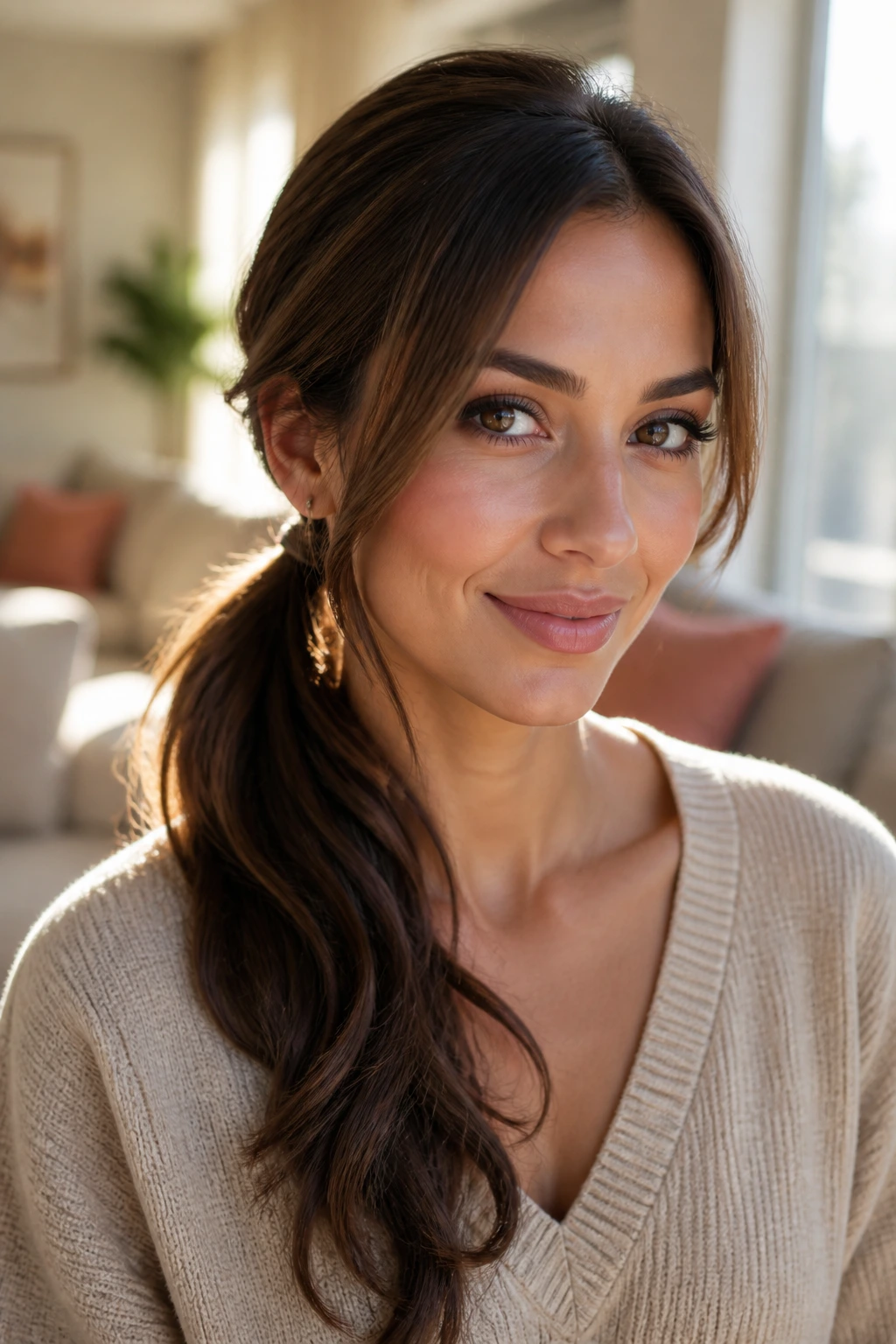
Volume Trick: If your ponytail keeps looking thin, split the hair into two layers and stack the elastics instead of relying on one. It gives the tail more lift right away and keeps the base from drooping.
Humidity Shield: A light spray of flexible-hold hairspray over the crown after you smooth it can keep flyaways from blooming when the air gets damp. Don’t drench the hair. A mist is enough.
Texture Saver: For curls and waves, keep your hands out of the lengths after the style is set. Every extra brush-through breaks up the shape and invites frizz faster than humidity does.
Accessory Swap: If a style keeps slipping, trade a glossy elastic for a fabric-covered tie or a small bungee. Grip matters more than color here.
Scalp Comfort: Very tight ponytails are not worth the headache. If you feel a tug at the temples within minutes, loosen it and move the base slightly lower. A style that hurts will not feel good by noon.
Common Ponytail Mistakes That Make the Style Collapse
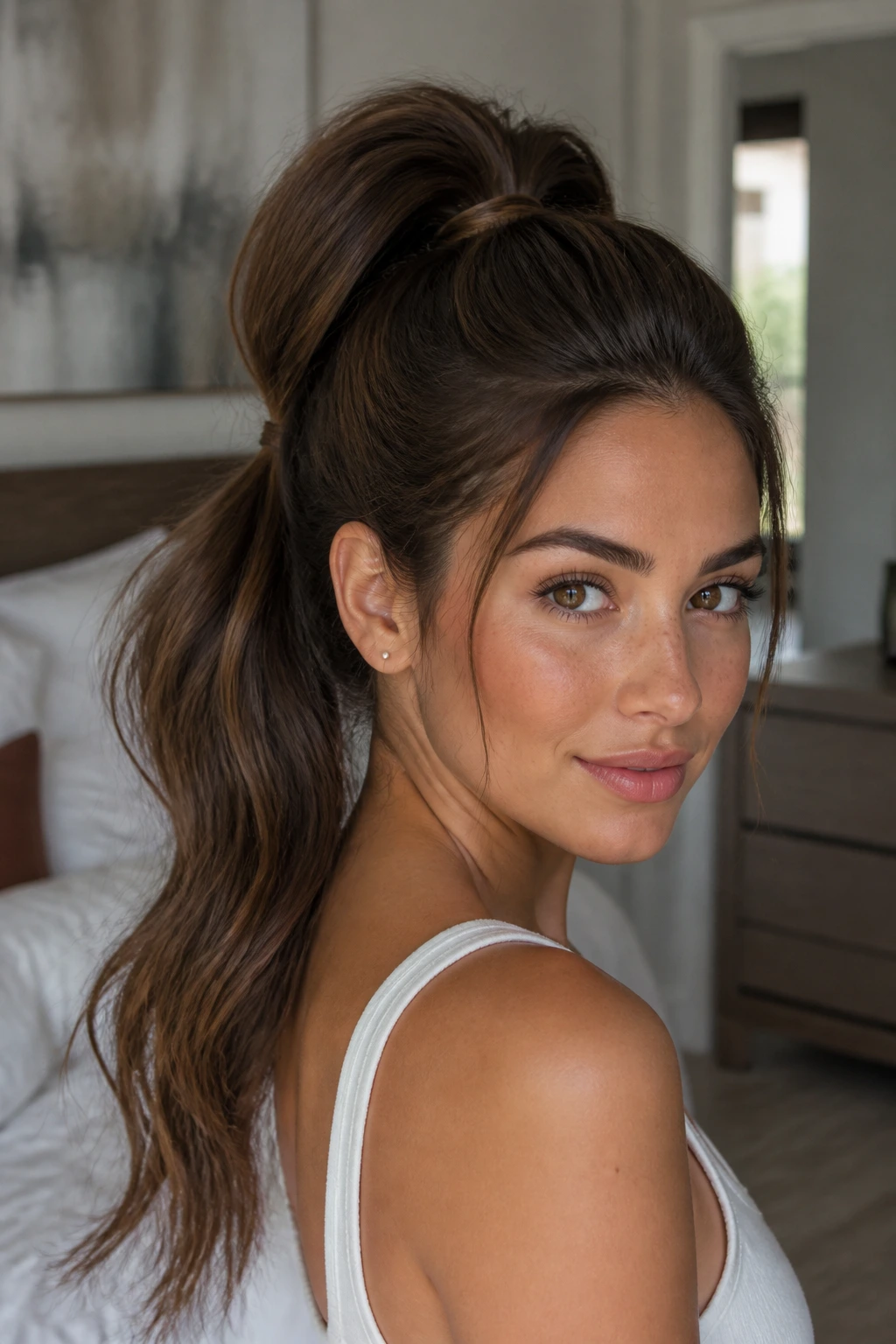
The first mistake is tying the ponytail with hair that’s too clean and too smooth. Freshly washed hair can be slippery, especially if you’ve used conditioner near the roots. The fix is simple: add a little dry texture spray or wait a day. Grip beats shine here.
Another common problem is placing the elastic on the wrong part of the head. Too high, and the pony can pull like a handle. Too low, and it falls flat because the crown has no lift. The best placement usually sits on the most stable part of the head, not the highest point you can reach.
Overloading the front with oil is another one. The roots look sleek for ten minutes, then the whole pony starts sliding. Keep heavy products off the base and save them for the ends if the tail needs smoothing.
A fourth mistake: making the ponytail tight enough to cause a headache. That does not make it secure. It usually just means the hairline will puff up later, which looks messier than a slightly looser base ever would.
Variations and Mix-and-Match Ponytail Ideas
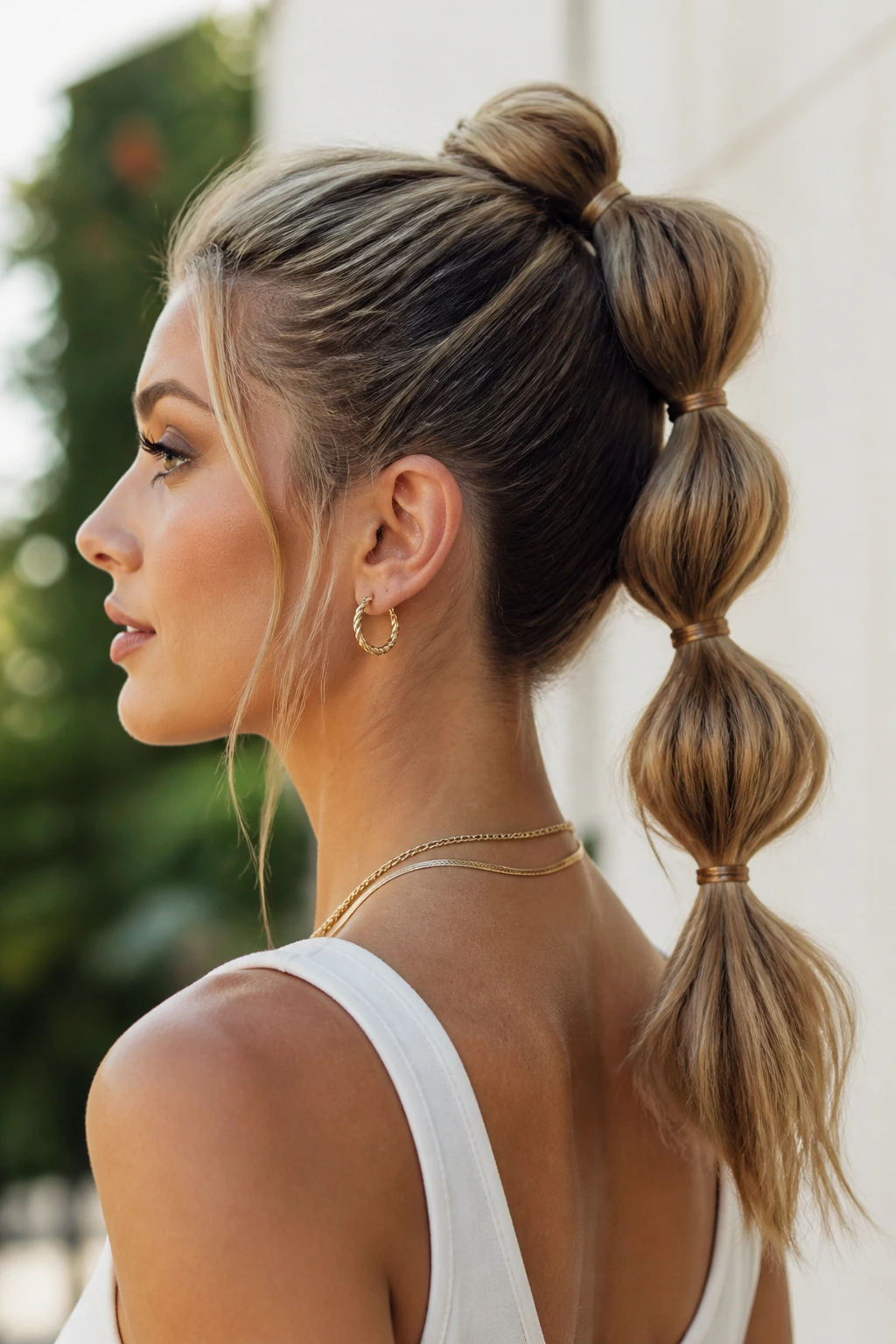
Fine-Hair Lift Kit: Pair a double-tier base with a bubble tail. The hidden second pony gives lift, and the bubbles create the illusion of density without teasing the crown raw.
Curly-Hair Friendly Version: Swap the slick finish for a loose pineapple pony or a high puff pony with a soft wrap at the base. The goal is to keep curl pattern intact, not flatten it into something it does not want to be.
Short-Length Cheat: Use a low tucked ponytail or a half-up pony when the full length won’t reach the same way. A small twist or fold can make shorter layers look intentional instead of escaped.
Heat-Resistant Twist: Build the ponytail with one or two small braids feeding in from the temples, then keep the tail rope-twisted or braided. More structure means less frizz when the air turns humid.
Dress-It-Up Swap: Add a ribbon, scarf, or satin strip to any basic ponytail. That one accessory can take a style from gym-ready to dinner-ready without changing the whole structure.
Keeping the Style Fresh Through the Day and Into Tomorrow
A ponytail can last a whole day, but not forever. For most styles, the sweet spot is the first 6 to 10 hours, especially if you started with clean prep and a secure base. Braids, ropes, and bubble styles usually age better than sleek styles because softness reads as part of the design.
If you plan to wear the same style into the next day, sleep with the hair loose or in a soft braid, not in the same tight elastic. Tight styles left overnight press a line into the hair and can make the front feel sore by morning. A silk bonnet or pillowcase helps reduce friction if the hair is curly, waved, or already dry at the ends.
To refresh the style, mist the roots lightly with water or a leave-in spray, smooth the front with your fingers, and add a tiny bit of dry shampoo where the crown has flattened. Don’t pile on more oil just because the ends look dull. That usually fixes the wrong thing.
Questions People Ask Before Trying These Ponytails
Which ponytail style lasts longest in humidity?
The braided, bubble, and low wrapped styles tend to hold shape best because they rely on structure instead of perfect smoothness. Sleek styles can last too, but they need more root control and are more likely to show frizz at the hairline.
What’s the best ponytail for fine hair?
Double-tier ponytails, bubble ponytails, and wrapped low ponies all help fine hair look fuller. They create visual thickness without requiring a ton of backcombing or heavy product.
Can I do these styles on curly hair without flattening it?
Yes. The pineapple ponytail, half-up ponytail, and soft low pony all let curls keep their shape. The trick is using a soft tie and not brushing the curls into submission before they go up.
How do I keep the ponytail from slipping?
Start with slightly textured hair, use a snag-free elastic or bungee, and place the base where the head is most stable. If the hair is very silky, a little dry shampoo at the roots helps the elastic grip.
What if my scalp gets sore?
Loosen the tie and move the base lower. Pain is a sign the style is too tight or too high for your hair length and weight. A ponytail should feel secure, not punishing.
Can these styles work on short hair?
Some can. Half-up versions, low tucked ponytails, side ponies, and twisted nape styles work especially well when the lengths are shorter. A few of the more braided styles need at least shoulder-length hair to hold properly.
How do I make a ponytail look fuller fast?
Use a double pony, stack two elastics, or choose a bubble or crimped style. Those shapes create volume with structure, which looks fuller than trying to fluff a flat tail with your fingers.
Do I need heat to make these look good?
No. In fact, several of the best summer ponytails look better without heat because a little texture helps them stay put. Rope twists, braids, bubble styles, and soft low ponies all work well on air-dried hair.
The Ponytail That Fits the Day
A good summer ponytail does more than clear your face. It changes how the whole day feels on your neck, at your scalp, and in the mirror when you catch yourself sideways in a window. The styles that hold up best are the ones that match the hair’s texture instead of fighting it, and that small shift makes a bigger difference than most people expect.
Some days call for glassy and sharp. Some call for loose bubbles, braids, or a scarf tied around the base like you meant to be seen. Pick the version that works with your hair’s mood, the weather, and the amount of time you actually have. That’s where these styles earn their keep.
