



Medium-length hair is the sweet spot for updos—and the place where bad advice falls apart fast. Shoulder-grazing layers are long enough to twist, roll, and pin, but short enough that one heavy knot can start slipping by lunch if the shape is wrong.
You do not need waist-length hair to get a neat French twist, a soft chignon, or a braided crown that stays in place. A few bobby pins, a little grit at the roots, and a willingness to leave the shortest pieces alone can do more than another five inches of length.
That in-between length has its own rules. It likes structure, it hates being crushed into one bulky lump, and it looks best when the shape is intentional rather than overworked.
The styles below are built around that exact balance.
Why These 25 Updos Earn Their Keep
They work with shoulder-grazing cuts: Medium hair has enough length to twist and tuck, but not so much weight that every pin gets dragged down by noon.
They make layers useful: Instead of fighting shorter face pieces and uneven ends, these styles use them for softness, movement, or a little extra texture.
They hold better on second-day hair: A touch of oil at the roots and a bit of leftover texture gives bobby pins something to bite into.
They fit more than one dress code: The same haircut can look polished with a center-part chignon or relaxed with a knot at the nape, which is handy when your calendar changes faster than your hair.
They don’t need a drawer full of tools: Most of these updo hairstyles for medium length hair only ask for pins, an elastic, a comb, and one decent spray.
1. Low Twisted Bun
The low twisted bun is the one I reach for when the hair needs to look calm, not fussy. It sits at the nape, hides uneven ends, and gives medium-length hair a shape that does not fight the cut.
Start with a low ponytail, split it just above the elastic, and thread the pony through that gap once before coiling the ends into a flat bun. On medium hair, that little loop keeps the bun from puffing into a lopsided ball. Four to six bobby pins crossed in an X at the nape are usually enough.
Leave one slim face-framing piece out if your layers are short around the jaw. It softens the whole thing without making the style look unfinished.
2. French Twist Lite
What if the French twist could stop pretending it needs long hair? A softer, lower version looks cleaner on medium hair and is less likely to collapse into a stiff shell.
Brush the lengths straight back, roll them upward along the back of the head, and keep the seam just above the nape rather than climbing high up the skull. Six pins, placed bottom to top, make the difference between a twist that lasts and one that slowly opens in the back.
This version works best when the front is smooth and the back has a little grip. If your hair is slippery, spray the roots first and let them sit for 20 seconds before you start rolling.
3. Braided Crown Pin-Up
Braids are the cheat code for medium-length hair, because they turn ordinary layers into something with teeth. A crown braid wrapped into a tucked back shape gives you interest without asking the hair to do more length than it has.
Braid each side from temple to ear, then pin the braids along the hairline and hide the ends in a low tuck or a small bun. If the hair is fine, mist texturizing spray through the mid-lengths before braiding; the braid will hold its shape instead of sliding loose.
This one is especially good on second-day hair. The slight grit makes the braid edges cleaner and the pins less slippery.
4. Clipped Tucked Roll
If your hands are moving fast, the French clip earns its keep. It is the quickest polished updo on this list, and medium hair sits in it without turning into a huge lump.
Twist the hair upward from the nape, fold the ends inward, then clamp a medium French clip over the center of the roll where the twist is fullest. If the ends want to kick out, tuck them under with two bobby pins before clipping.
I like this best with hair that has a little bend in it already. Dead-straight hair can slide, while softly waved hair locks into the clip and stays put.
5. Double Knot Bun
Two knots hold better than one. That is the whole reason this style works so well on silky medium hair that would otherwise slip out of a basic bun by noon.
Split the ponytail into two equal sections, tie one loose knot, then a second knot just below it before wrapping the leftover ends around the base. The knots create their own anchor, so the bun has a little friction built in.
Use a clear elastic at the base and hide it under the coil. If your hair is very smooth, rough up the mids with dry shampoo first; otherwise the knot can flatten out and look underbuilt.
6. Half-Up Bouffant Twist
Half-up styles are the answer when you want lift but still want the length visible. A small bouffant at the crown keeps medium hair from lying flat, and the twist at the back gives it a finished edge.
Tease a one-inch strip at the crown, smooth only the top layer, then twist the temples back and pin them where the head starts to curve. The rest of the hair can stay loose, curled, or slightly waved.
This is a smart choice if your haircut has face-framing layers or bangs. It keeps the front out of your eyes without pinning everything back so tightly that the style feels severe.
7. Sleek Center-Part Chignon
Sharp center parts change the whole mood. They make medium-length hair look deliberate in a way that loose waves cannot, which is why a sleek chignon can feel so strong on this cut.
Run a pea-sized bit of smoothing cream over the top layer, part the hair cleanly down the middle, and gather it low just below the bump at the back of your head. Coil the lengths into a compact chignon and pin the surface smooth with 6 to 8 bobby pins.
This style depends on clean lines. If the roots are frizzy, smooth them with a fine-tooth comb and a tiny bit of serum before you start pinning. Too much product, though, and the hair goes greasy fast.
8. Messy Top Knot with Face-Framing Pieces
Not every updo belongs at the nape. A top knot can sit nicely on medium hair if you keep it loose and stop trying to make it too big.
Pull the hair up to the crown, but not all the way to the top of the head, and wrap it into a soft knot with a scrunchie instead of a hard elastic. Leave a few pieces around the temples and jawline on purpose. That is the whole point.
This shape works especially well on layered cuts. The shorter pieces around the face stop the style from looking too neat, and the knot itself stays small enough that it does not collapse under its own weight.
9. Braided Low Bun
A braid at the base gives the bun teeth. That tiny bit of texture makes a low bun hold better on medium hair, especially when the ends are too short to wrap neatly on their own.
Make a low ponytail, braid it all the way down, then wrap the braid around its base and pin along the ridge of the braid rather than just at the outer edge. That ridge catches pins better and keeps the bun flatter.
If your hair is thick, keep the braid a little loose so the bun does not turn into a brick. If it is fine, braid tighter and use a texturizing spray before you start.
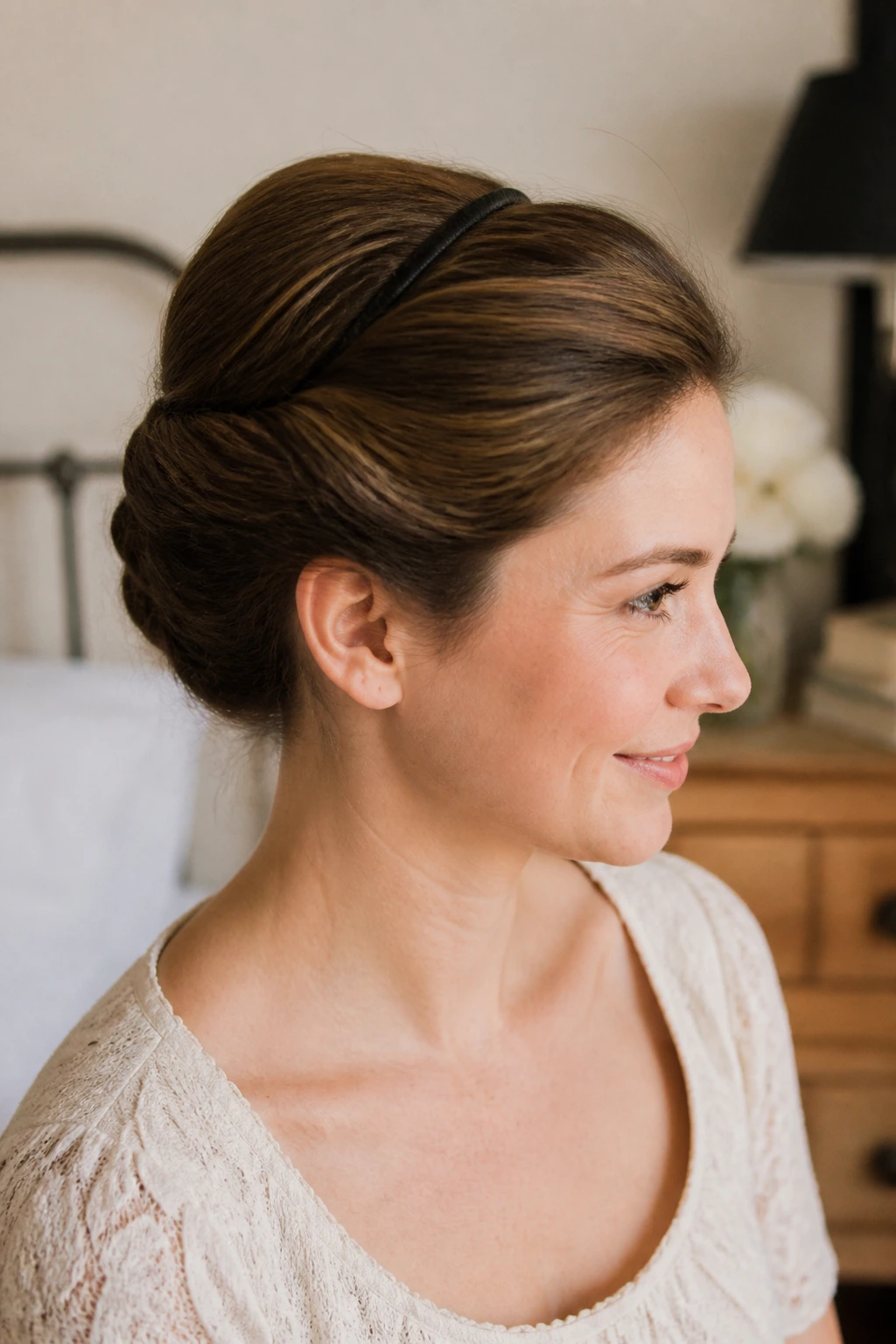
10. Gibson Tuck
Vintage styles often look more natural on medium hair than on very long hair. The Gibson tuck is proof. It folds the ends inward cleanly, which is exactly what shoulder-length hair wants to do anyway.
Place a soft band or elastic about two inches back from the hairline, then roll the hair upward and tuck the ends into the band until they disappear. Medium hair has enough length for the fold, but not so much that the tuck gets bulky.
If shorter layers pop out near the sides, pin them inward before you finish. A light mist of spray at the end keeps the tuck from loosening without making the hair crunchy.
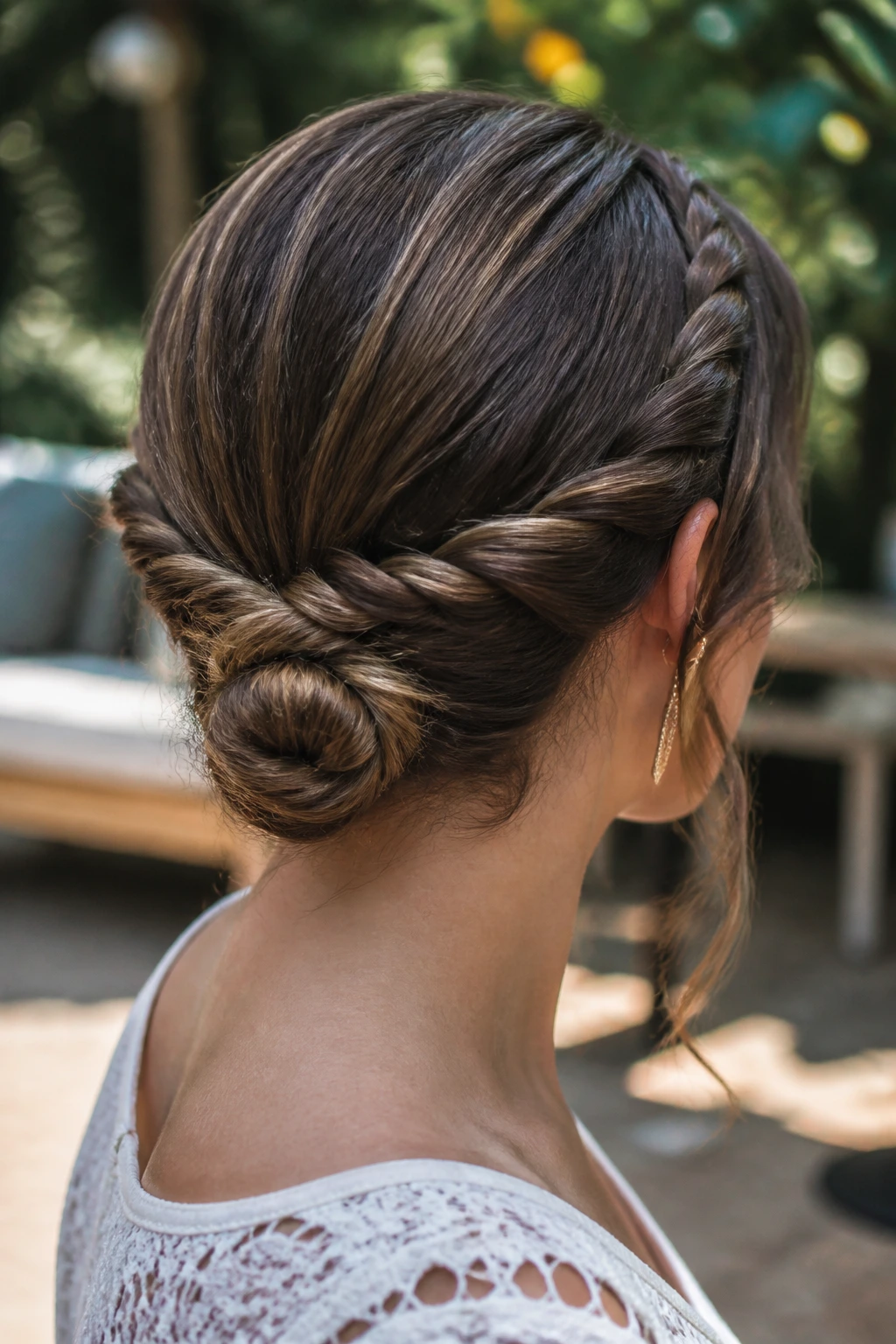
11. Rope-Braid Low Knot
Rope twists make even simple hair look more deliberate. They also solve the problem of medium-length hair that feels too short for a fancy bun and too long for a tiny knot.
Split the ponytail into two sections, twist each section in the same direction, then wrap them around each other in the opposite direction. Coil the rope at the nape and pin it into a compact knot. The texture reads clearly, even from a distance.
This style is good when your hair leans frizzy or wavy. Rope braids hold shape better than a plain twist, and they forgive a little unevenness in the cut.
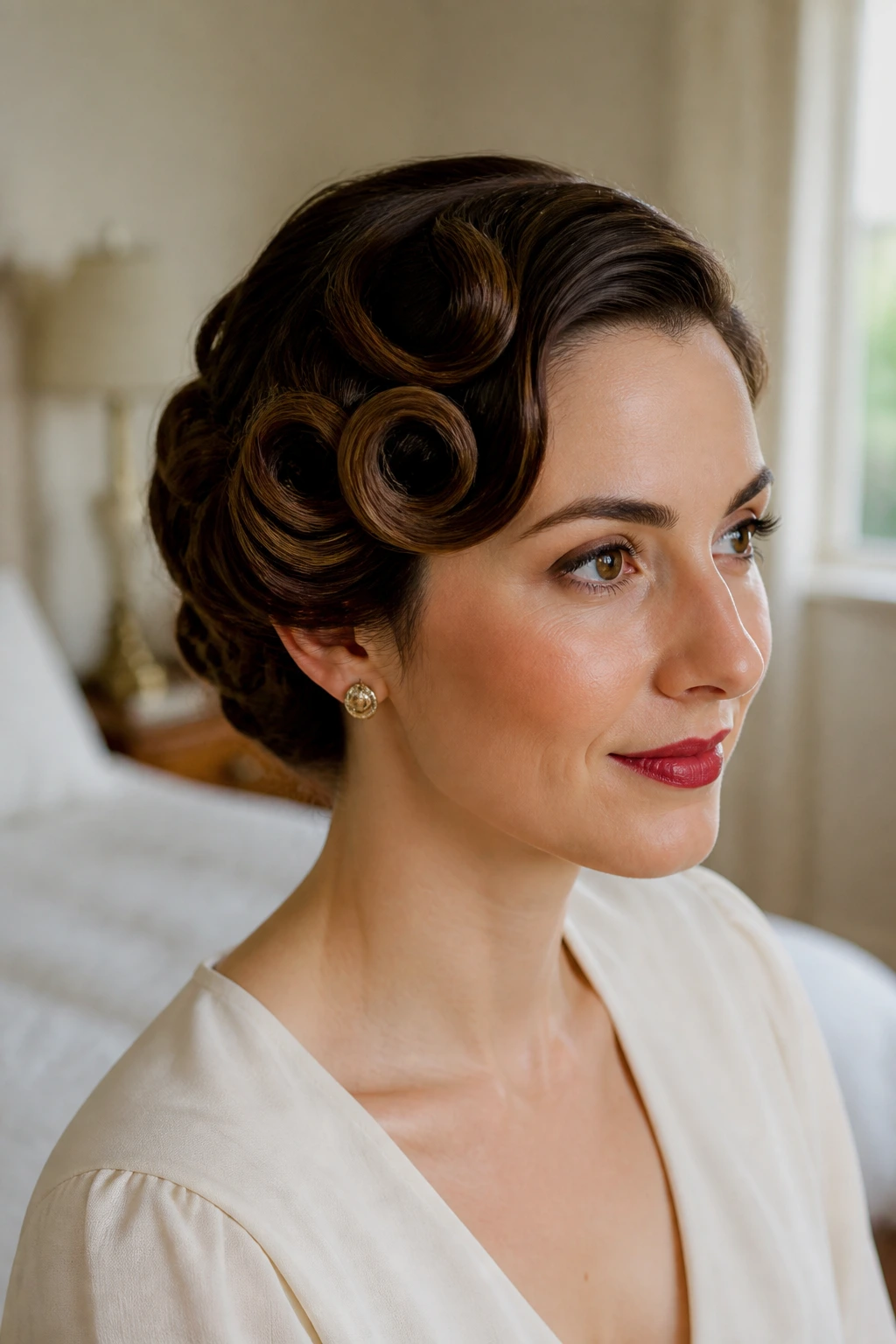
12. Side-Swept Pin Curl Updo
One side can carry the whole style if the curls are deliberate. A side-swept pin curl updo gives medium hair a vintage shape without requiring a pile of length.
Curl one-inch sections around a wand or hot rollers, pin each curl flat as it cools, and sweep the gathered lengths to one side. The pinned curls create a soft ridge, while the back stays tucked low and neat.
This one loves waves and natural bend. If your hair is stick-straight, set the curls first and let them cool fully before you start moving them; warm hair slides and loses shape faster than people expect.
13. Bubble Ponytail Updo
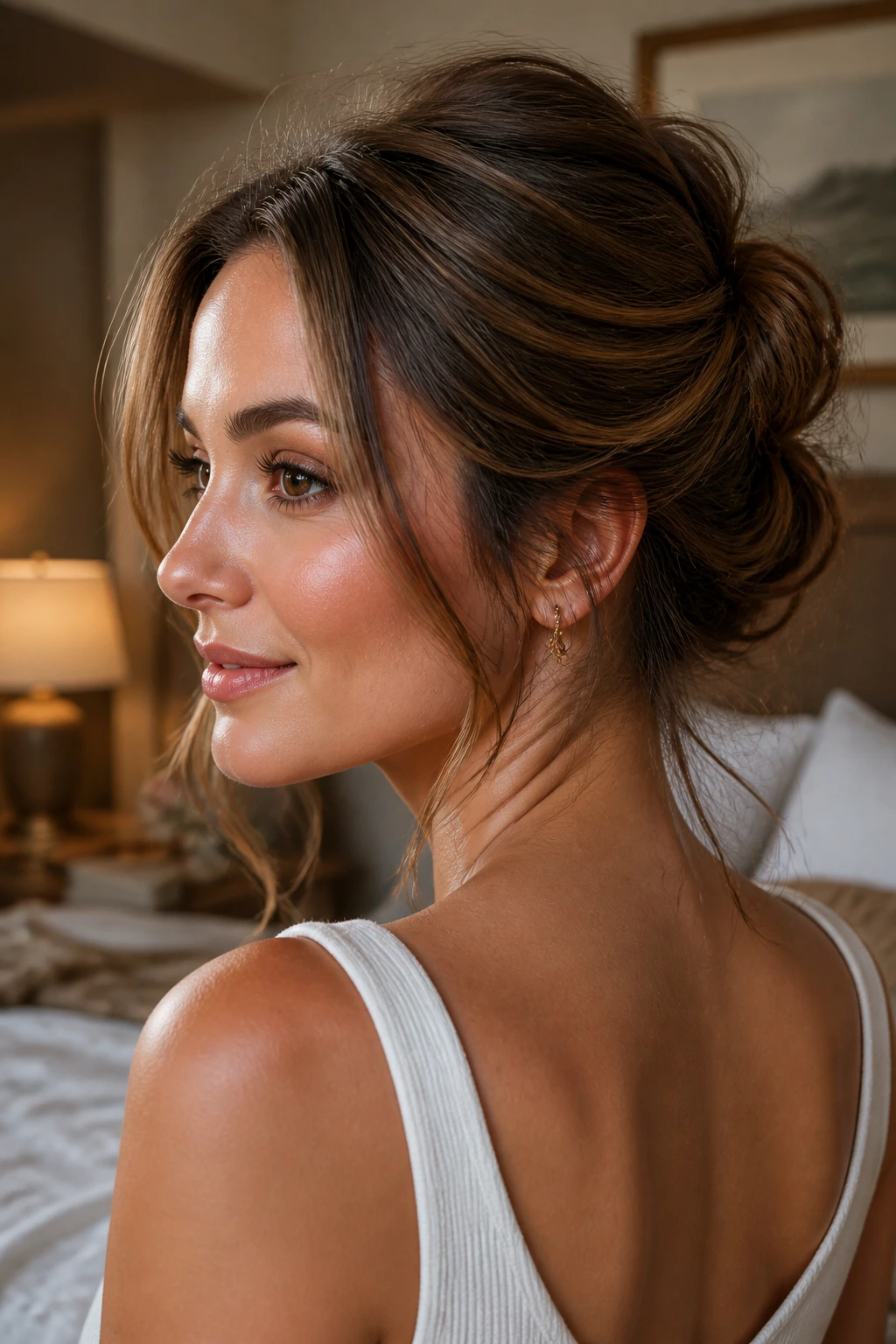
Bubble ponytails stop medium hair from looking plain. The segmented shape gives the hair a sculpted feel, and the bubbles can stay loose without falling apart.
Make a ponytail, add small clear elastics every 1.5 to 2 inches, and tug each section outward until it rounds into a bubble. If you want this to read as an updo instead of just a ponytail, twist the tail into a small coil at the end and pin it under.
Use your fingers, not a brush, to puff the sections. Brushing them out can flatten the shape and make the bubbles sag before you even leave the mirror.
14. Knotted Ponytail Coil
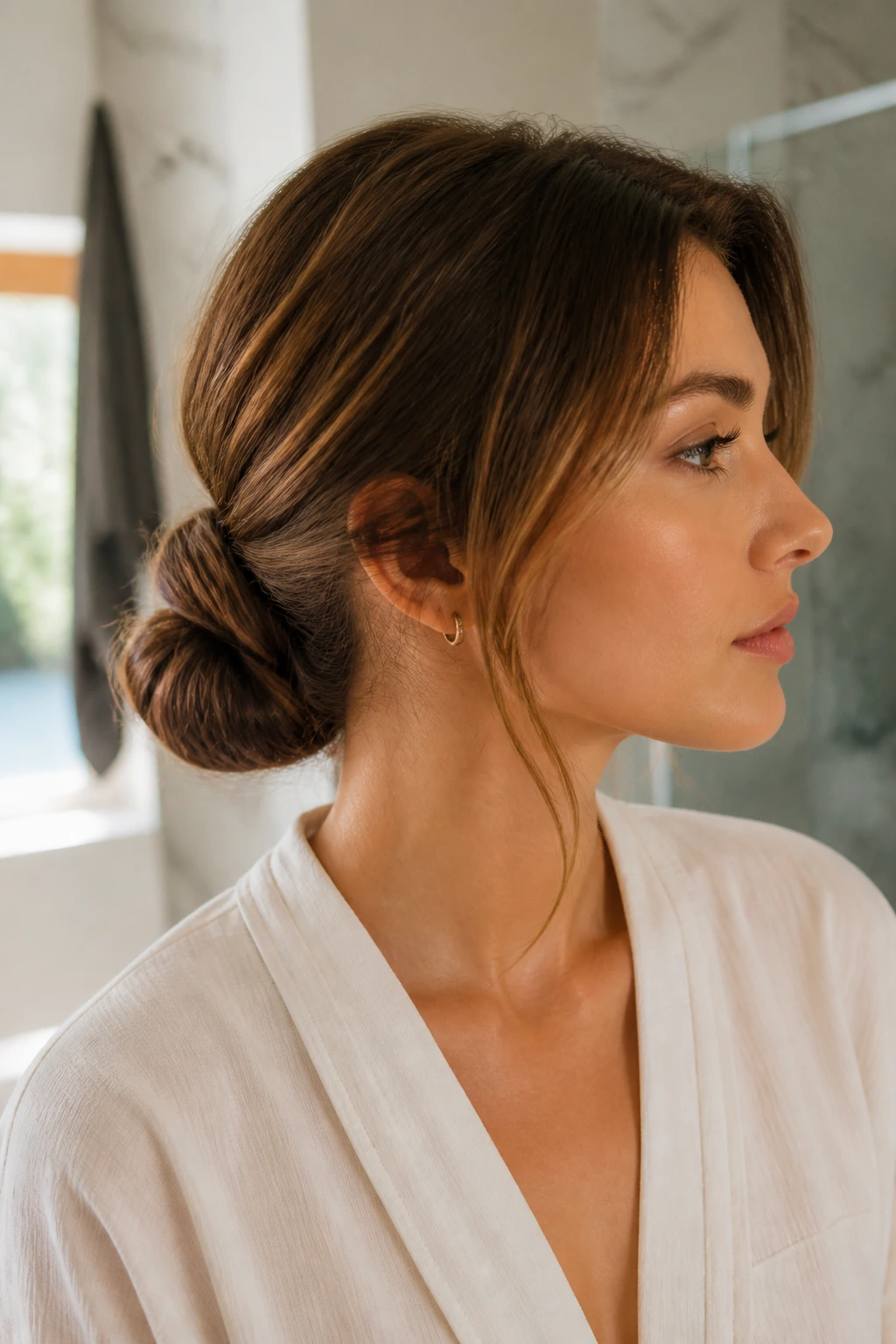
A single knot can hold more shape than a loose twist. That is what makes this version useful for medium-length hair that needs to stay neat without looking overdone.
Start with a low ponytail, tie one overhand knot with the lengths, and wrap the remaining ends around the base until the knot becomes the center of the style. Pin the coil from underneath so the knot stays visible.
This is one of the best options for minimalist dressing. It looks tidy with a plain T-shirt, but it also holds its own with a blazer or a dress that has a clean neckline.
15. Rolled Bun with Hair Stick
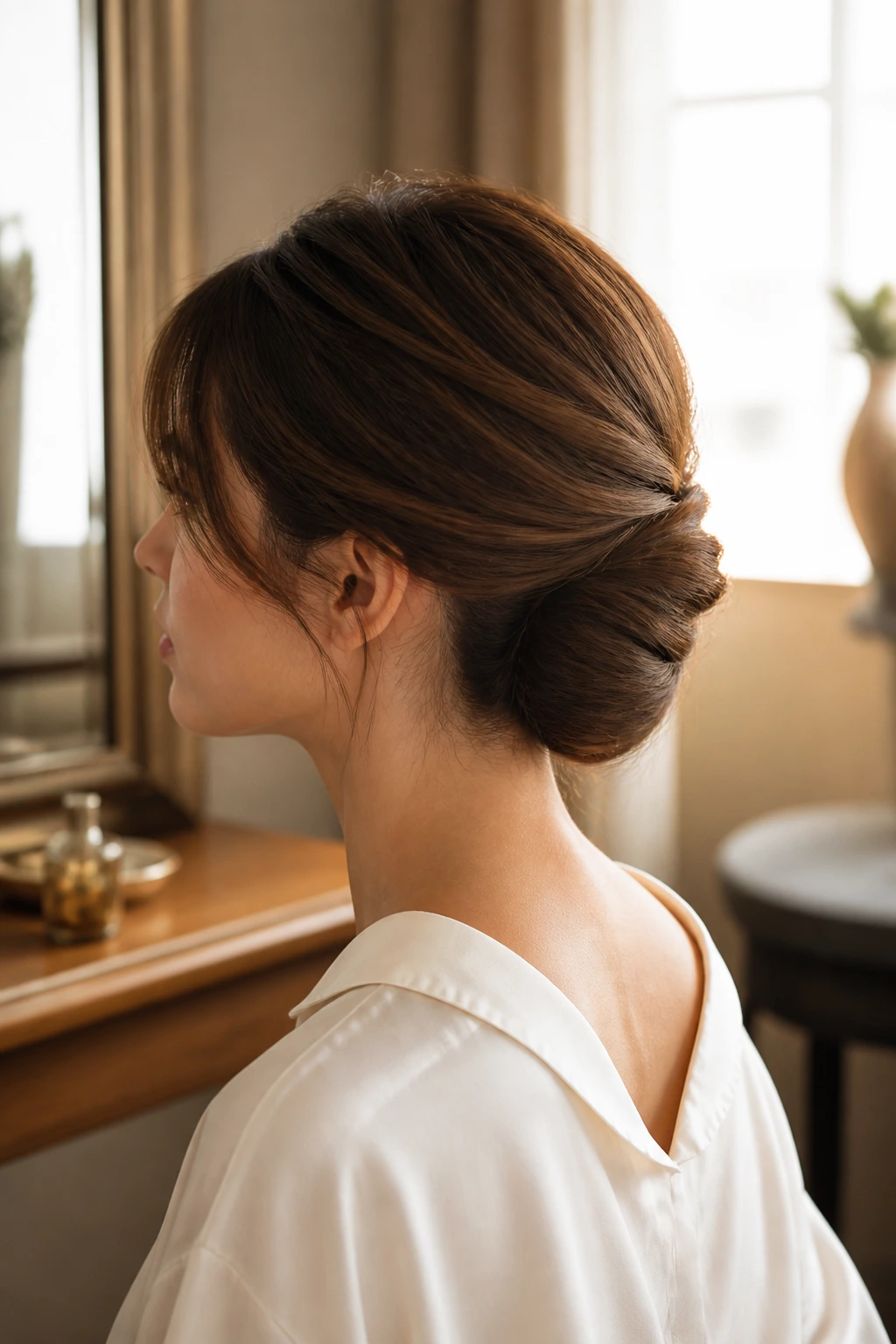
A hair stick changes the mood instantly. It makes a bun look more intentional, and medium hair is the right length for a roll that sits close to the scalp instead of sprawling out sideways.
Roll the ponytail upward into a compact cylinder, then slide the stick through the roll at a slight angle so it catches both the bun and the hair underneath. If the stick feels loose, cross it with one hidden U-pin.
This works best when the hair has a little texture. If your lengths are freshly straightened, add dry shampoo first so the roll does not slide and flatten.
16. Halo Braid Into Bun
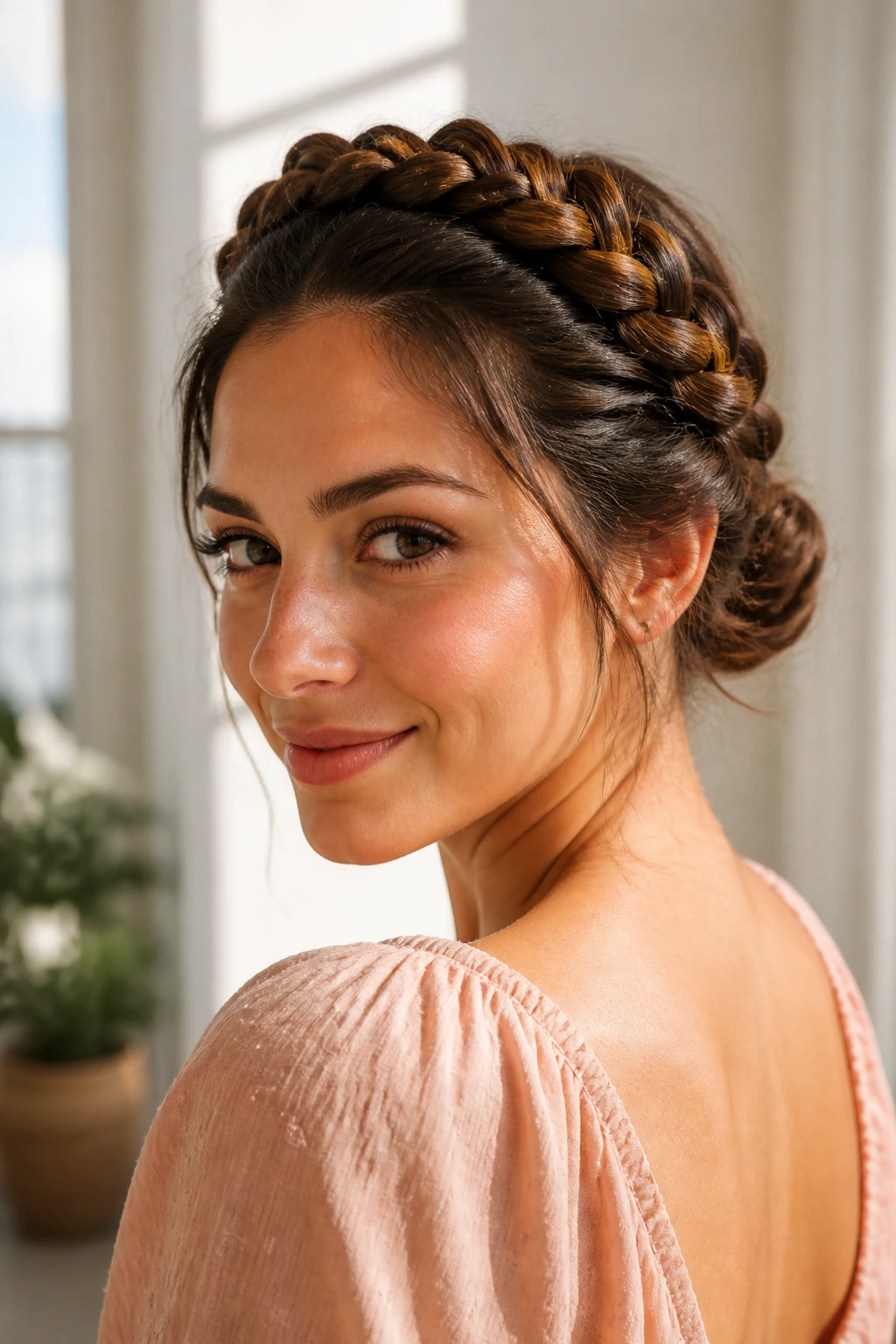
Braids around the perimeter make the center bun feel secure. That is why this style is so useful on medium hair with layers around the temples and neck.
Braid around the head like a halo, then gather the remaining lengths at the back and tuck them into a small bun under the braid line. The braid hides shorter pieces before they can poke out, which is half the battle with medium cuts.
This version needs a few more pins than the simpler buns, but not many. I usually place them where the braid meets the bun so the whole thing reads as one shape rather than two separate pieces.
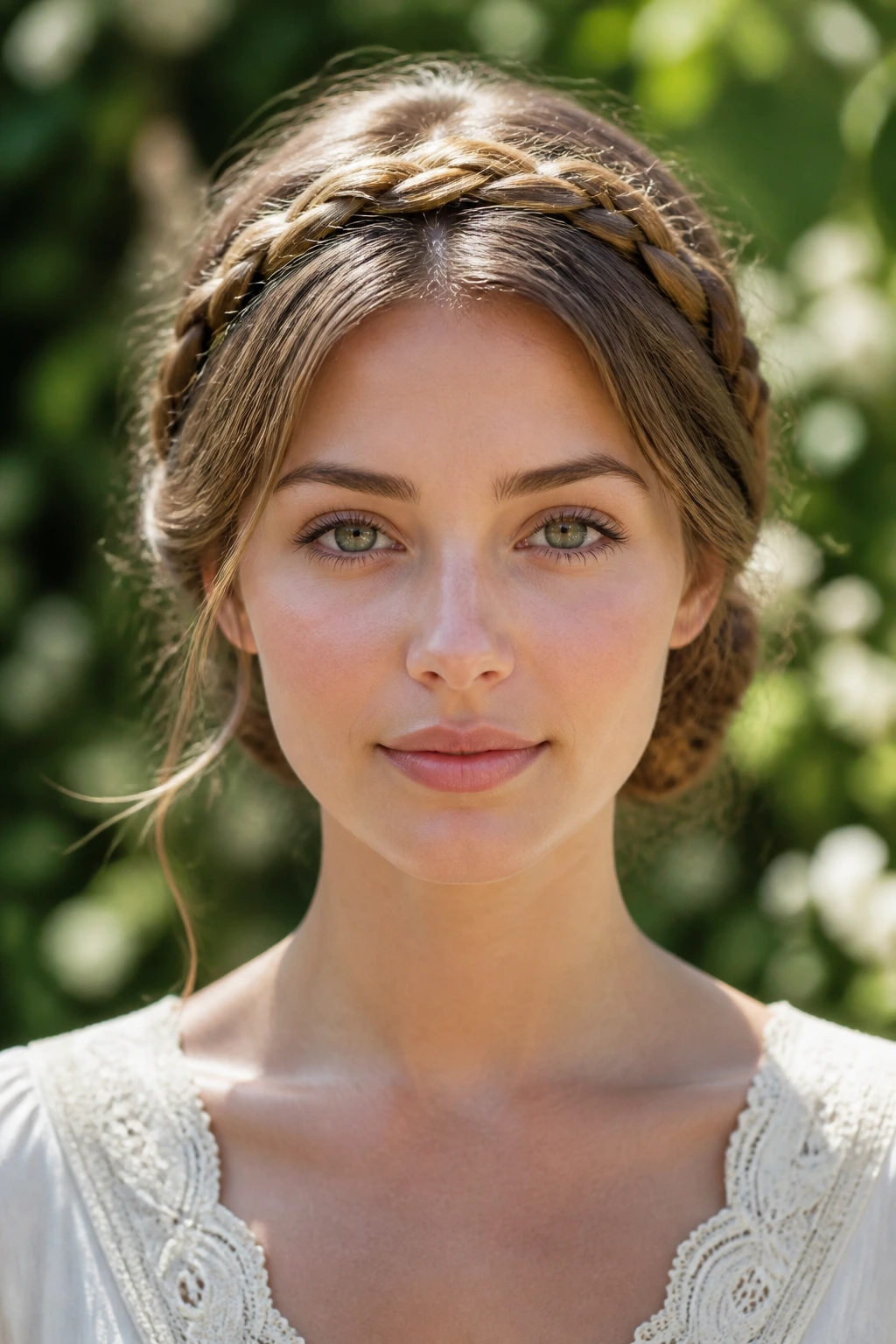
17. Mini Milkmaid Crown
Milkmaid styles usually look better on medium hair than on very long hair. Long hair can make the braids heavy; medium hair keeps the crown compact.
Create two braids, cross them over the top of the head, and pin them discreetly where they meet. You can tuck the rest of the lengths into a low coil or let them vanish under the braids if your cut is short enough.
If you have bangs, leave them out. The crown already gives enough structure, and bangs keep the style from feeling too rigid around the face.
18. Faux Bob Twist-Up
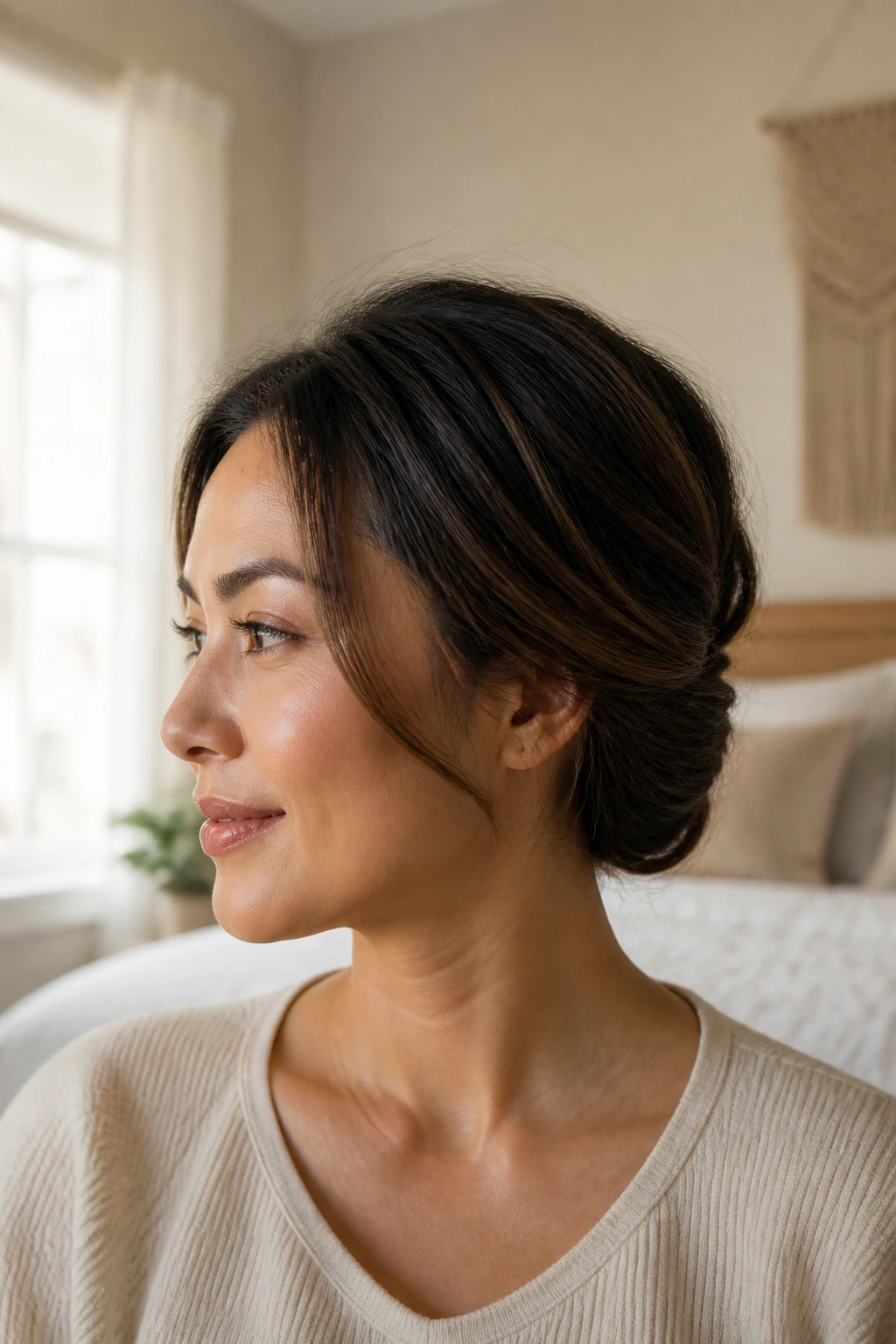
Shorter-looking hair can be a fun trick. A faux bob lets medium-length hair fold under and pretend it is a little shorter, which creates a tidy silhouette for events or dinners.
Curl or smooth the lengths, tuck the ends under at the nape, and pin them close to the neck in two rows so the shape does not bounce back out. Medium hair is ideal here because it reaches the fold point without piling up too much bulk.
The trick is not to fight the bend. If the ends keep flipping outward, curl them under first and then pin. Straight, stubborn ends are the quickest way to make this style unravel.
19. Victory Roll-Inspired Updo
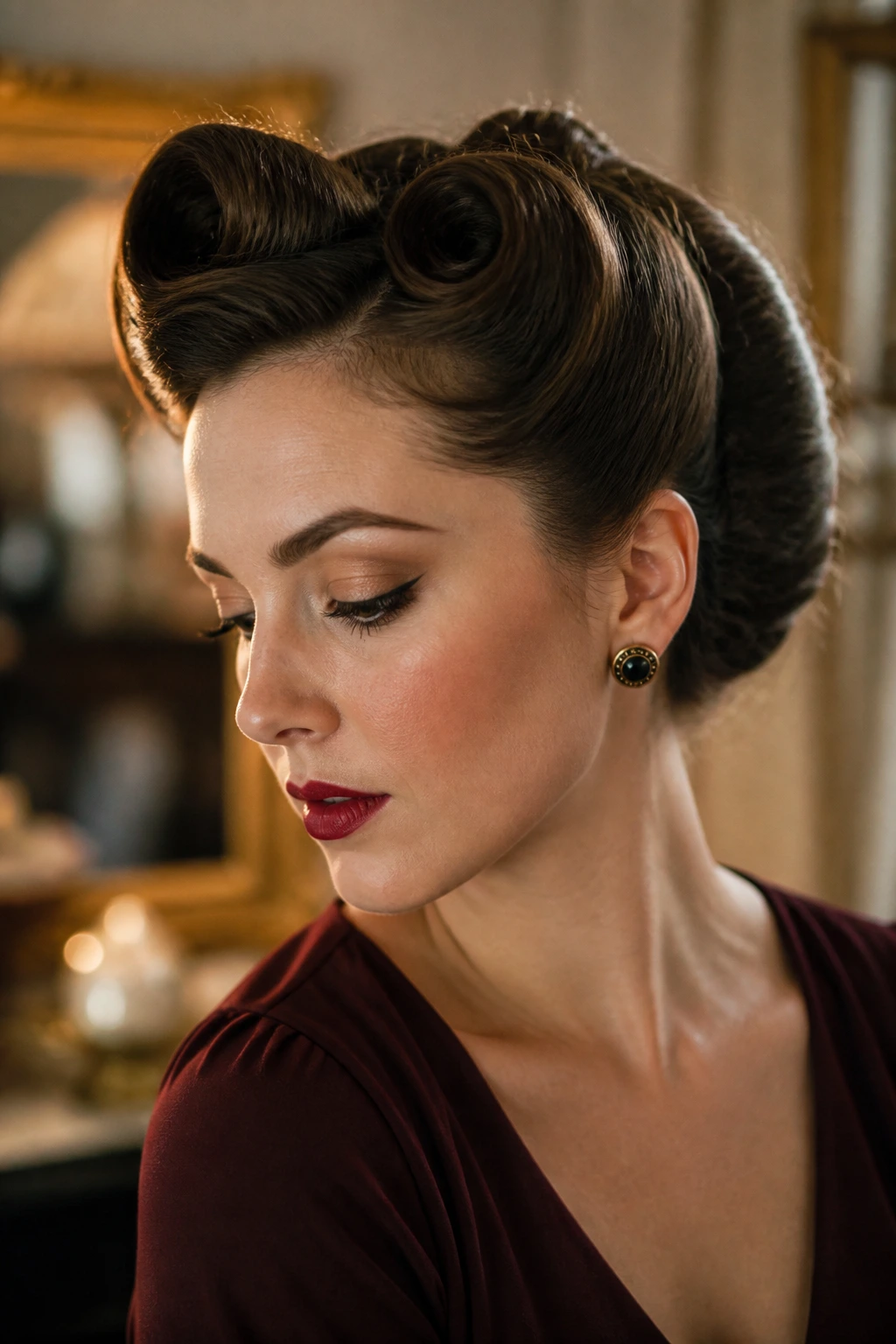
Retro rolls need structure, not endless length. Medium hair has enough body to hold the rolls without making them droop into the back of the head.
Roll the front sections inward around your fingers or a small brush handle, pin the rolls high above the temples, and gather the back into a tidy tuck or low bun. The rolls should sit above the cheekbone area, not right at the hairline.
A strong-hold spray helps here, but only after the shape is set. Spray too early and the hair gets sticky before you can shape the roll cleanly.
20. Banana Clip Twist
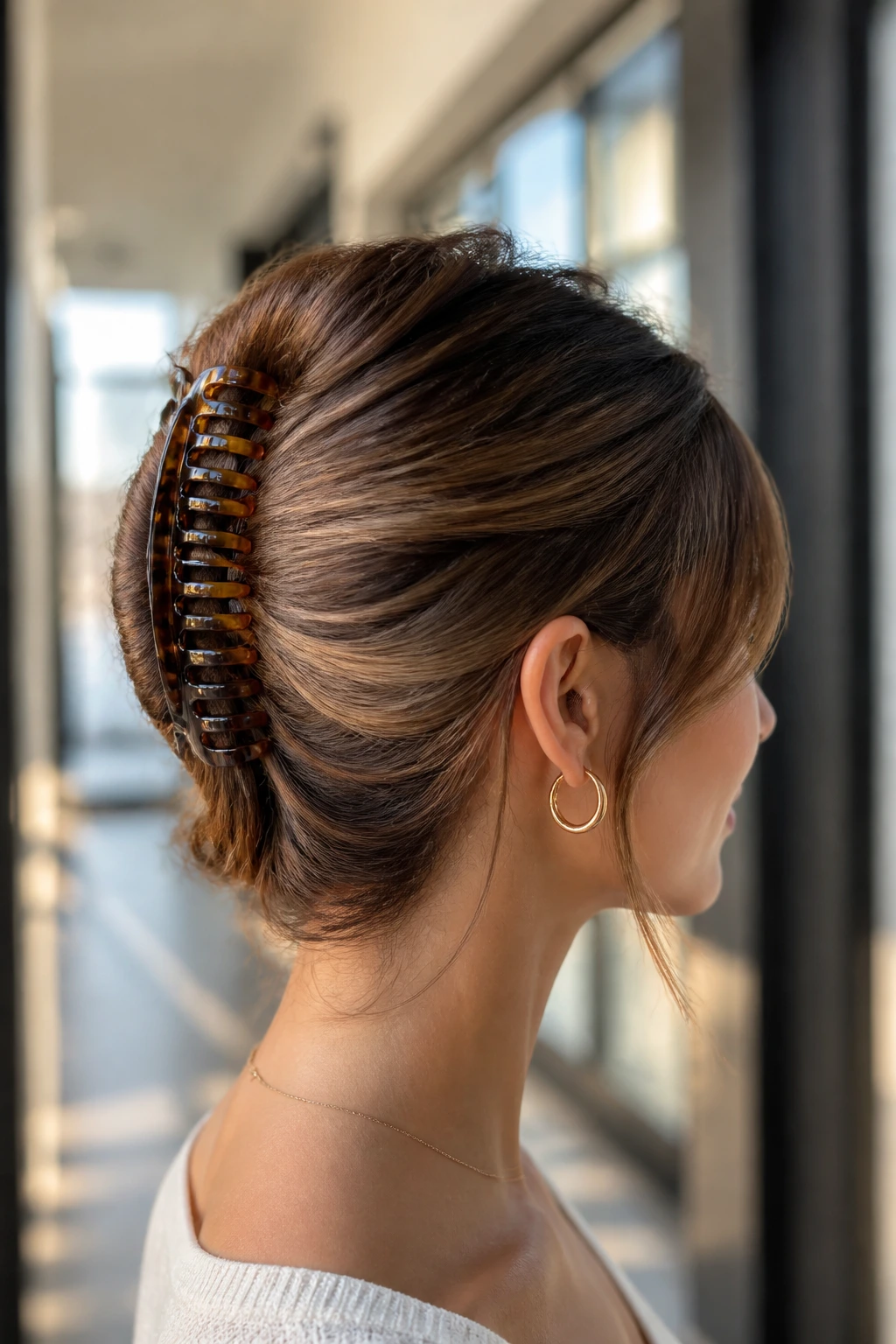
Banana clips are back for one reason: they handle medium hair without turning it into a lump. They are fast, and they keep the shape long and narrow instead of bulky.
Gather the hair, twist it upward, open the clip, and let the teeth grab the twist from base to top. Look for a clip that spans most of your length; if it is too short, the twist will spill out at the ends.
This is one of the easiest styles to fix if it loosens. Just open the clip, twist the hair again, and re-close it a little lower or higher depending on where the weight sits.
21. Two-Minute Claw Clip French Twist
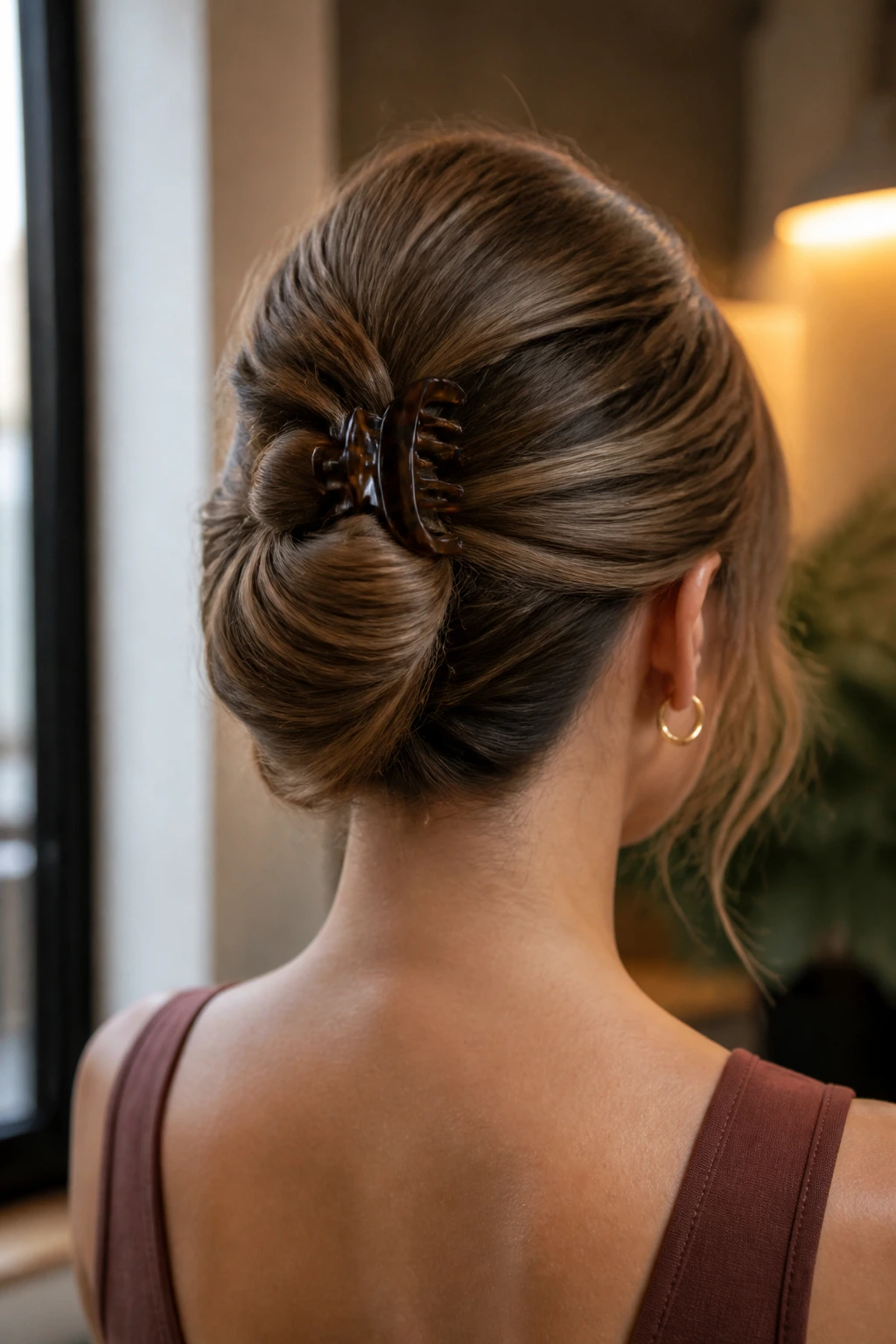
This is the fastest polished style on the list. If a morning is moving too fast for pins and braids, this one still gives shape.
Twist the hair upward, fold the ends down, and clamp a medium claw clip over the center of the twist. Leave a little lift at the crown if you want the style to look less flat.
Medium hair fits a claw clip better than very long hair because it does not create as much bulk. If the clip slips, tuck two bobby pins in at the sides and let the clip do the rest of the work.
22. Dutch Braid Bun
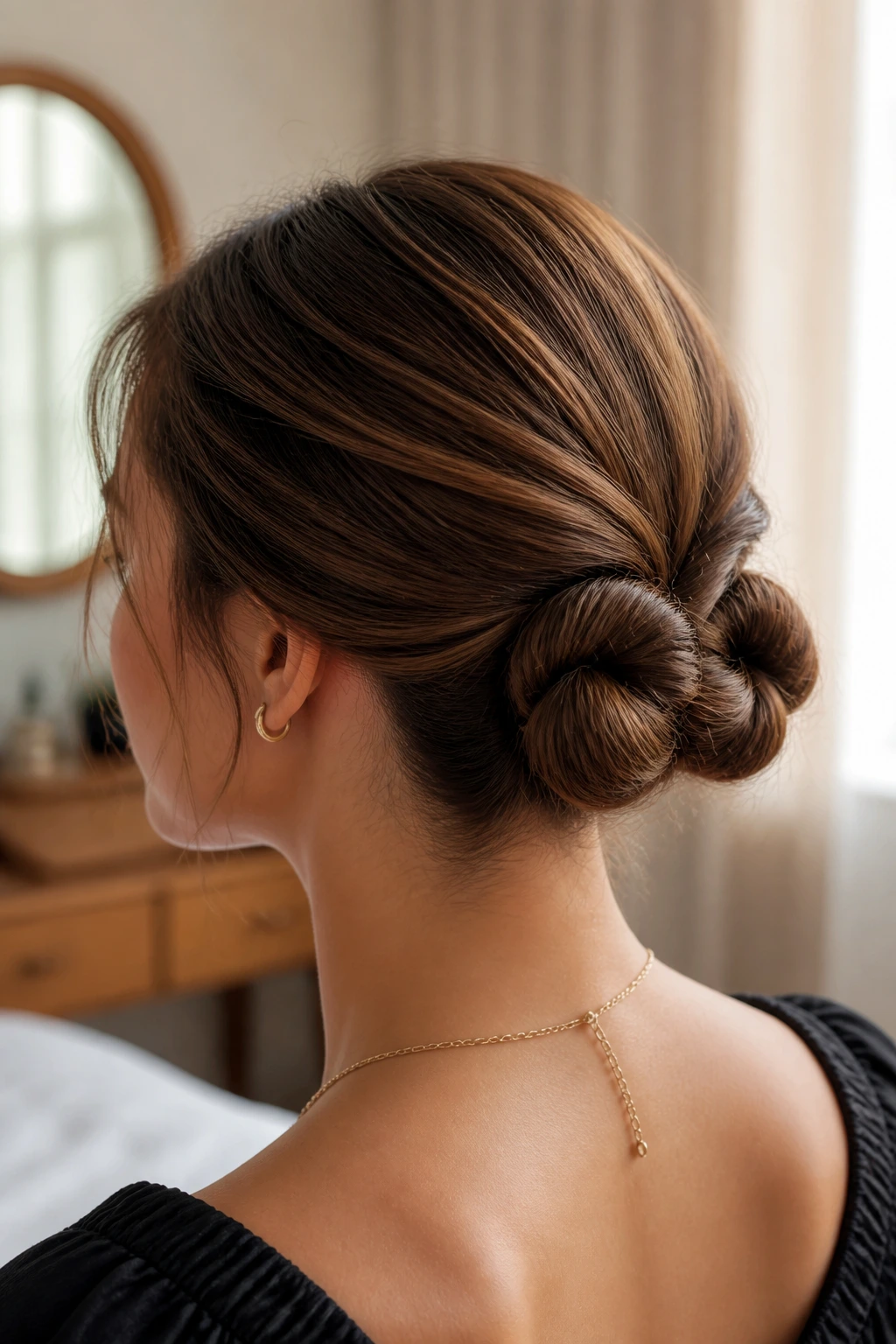
A Dutch braid does the heavy lifting before the bun even starts. The braid sits raised on the scalp, which gives medium hair a stronger base and a cleaner front.
Braid from the front hairline or temple back toward the nape, keeping the braid above the scalp instead of flat against it. Then coil the remaining hair into a bun and pin the underside first, where the weight sits.
This style is good when you want the front to stay tidy all day. It also helps if the layers around your face are short; the braid collects them before they can fall loose.
23. Wrapped Low Pony Bun
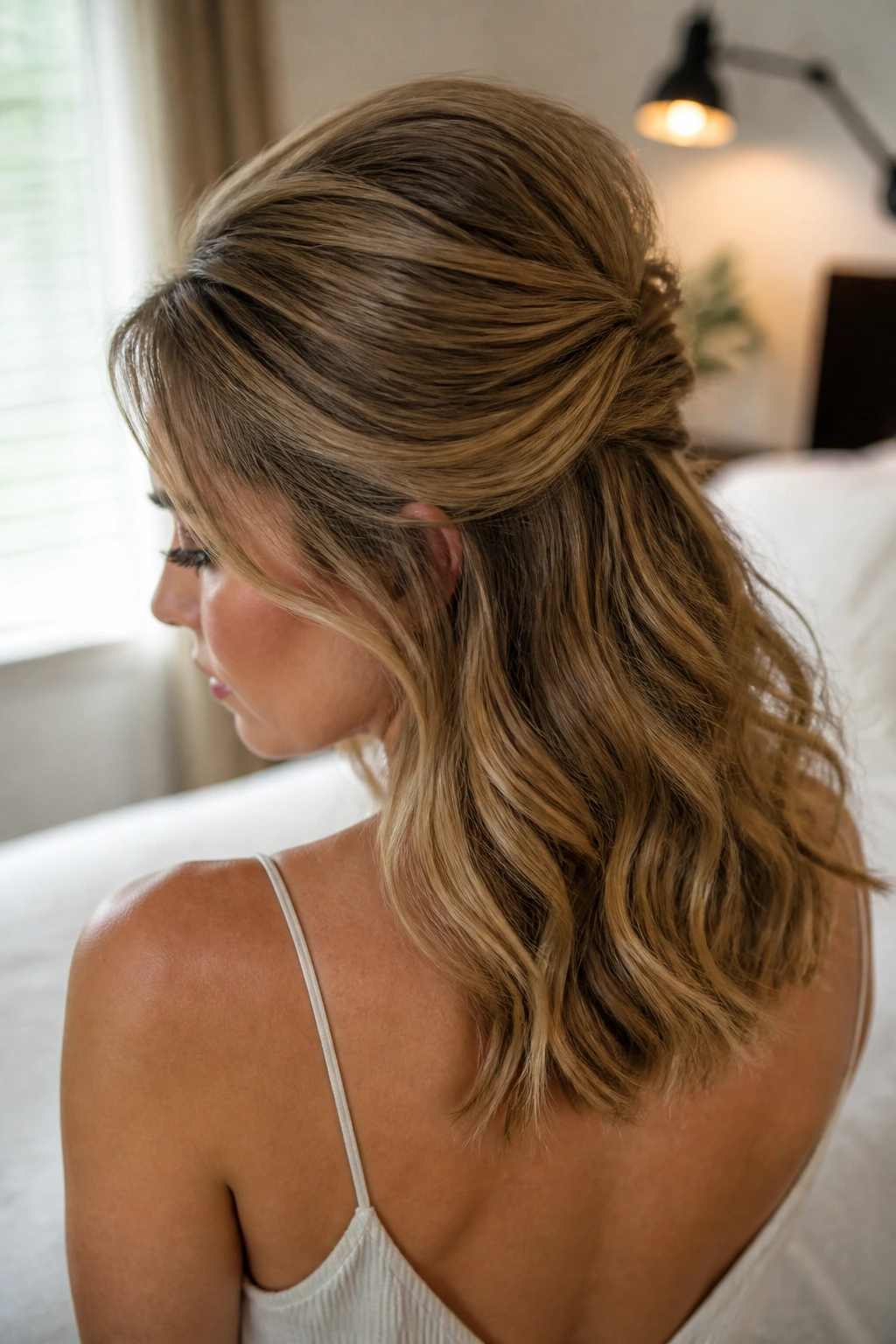
Simple, tidy, and harder to ruin than it looks. A wrapped low pony bun is one of those medium-length hair updos that does not need much explaining because the shape carries itself.
Start with a low ponytail, wrap a one-inch section around the elastic, then twist the tail around the base until you have a compact coil. Pin the ends underneath so the bun stays smooth on the outside.
This is the version to pick when you want clean lines and no obvious hardware. The wrapped strand hides the elastic, and the low placement keeps the bun from feeling stiff.
24. Messy Nape Knot
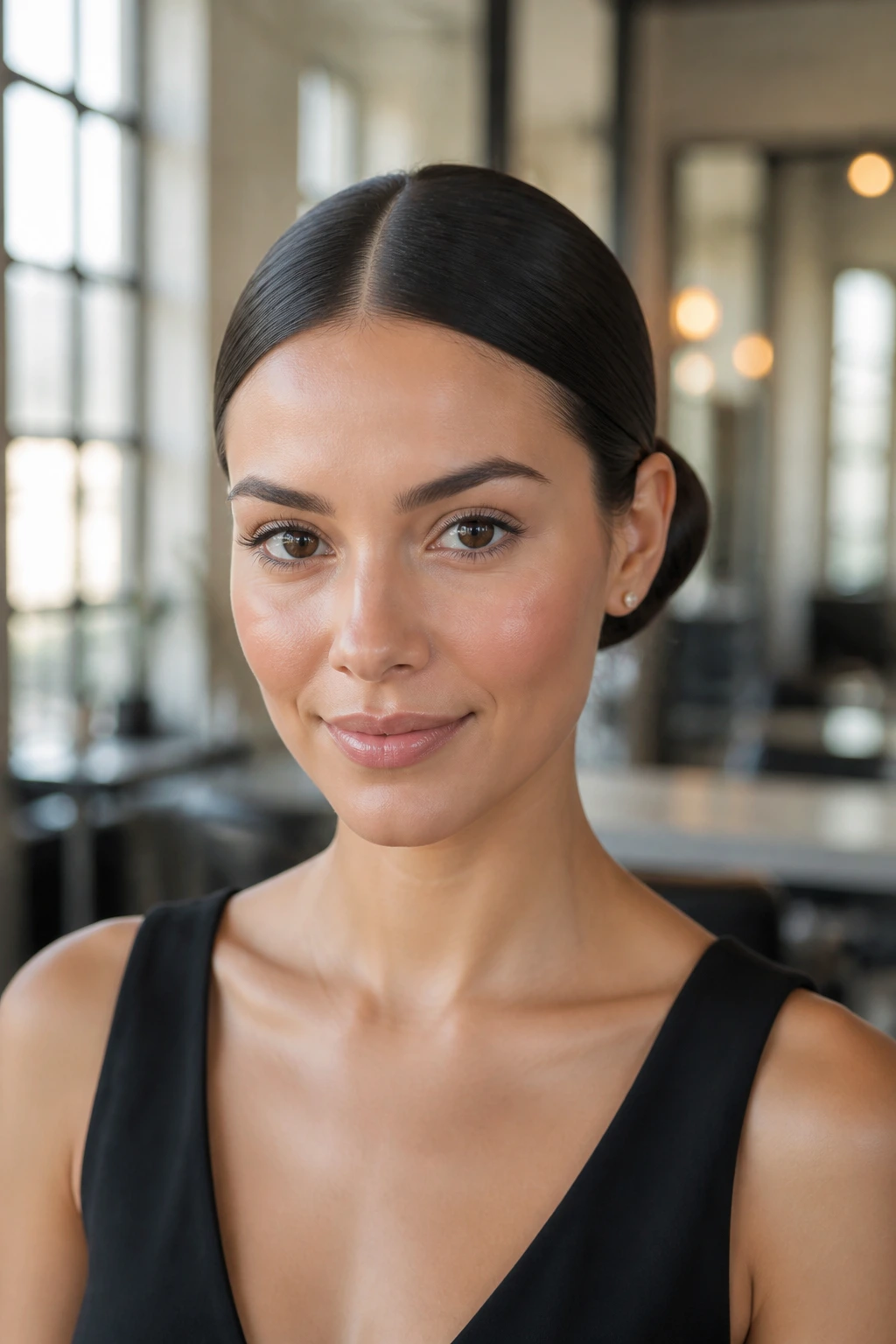
Small knots at the nape are underrated. They suit medium hair because the cut has enough length to knot, but not so much that the knot swallows the whole shape.
Gather the hair low, tie one loose knot, and tuck the ends under just enough to hide the tips. Leave a few thin pieces near the ears if you want the style to feel softer and less exact.
A bit of texture spray helps here, especially on silky hair. Without it, the knot can look too neat and slide toward the neck.
25. Elegant Side Bun
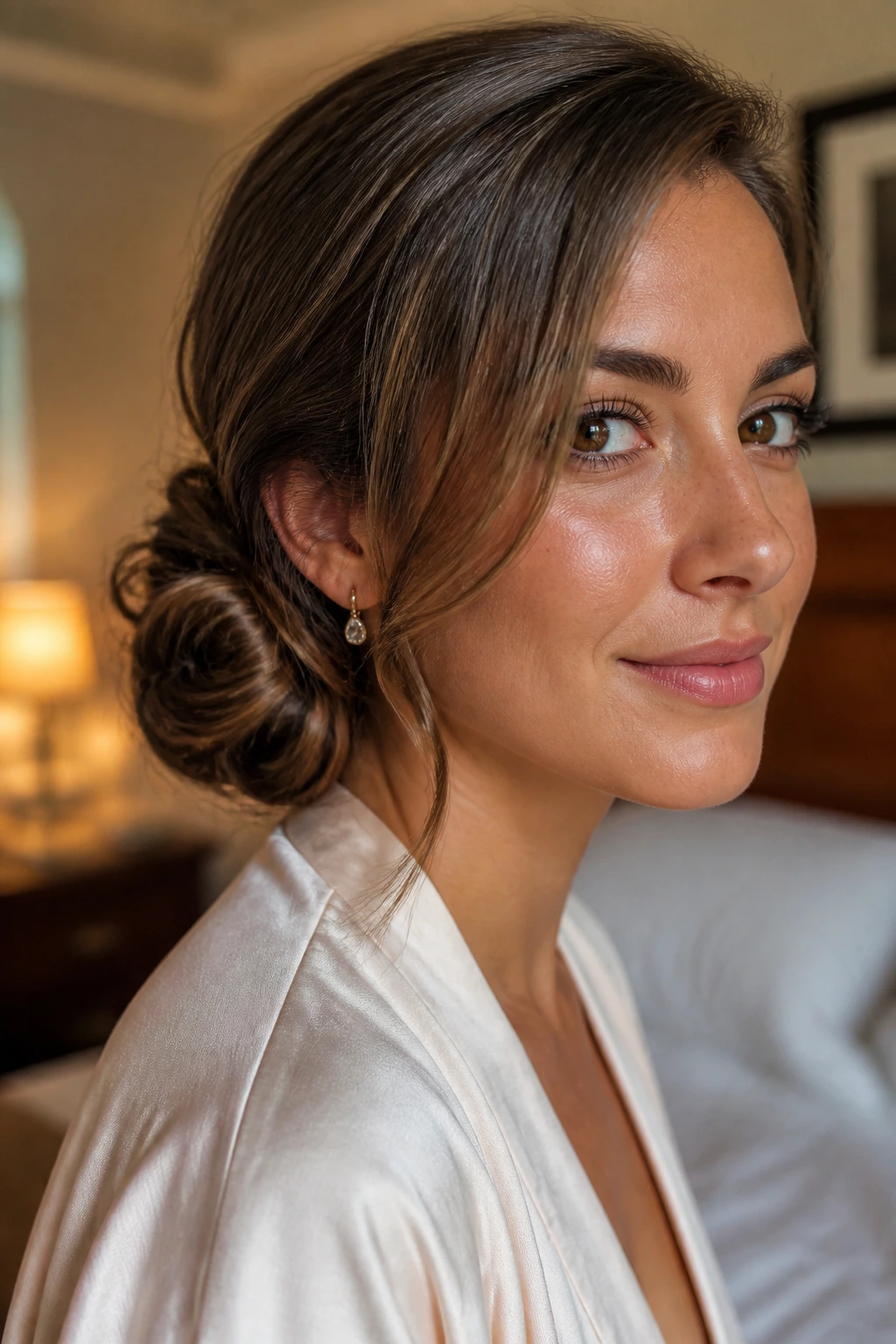
A side bun changes the balance of the whole face. It pulls the eye sideways instead of straight back, which gives medium hair a more relaxed, dressed-up line.
Sweep everything to one side and park the bun just below the ear, not on the jawline. Pin the bun from the underside so the surface stays round and the face line stays clean.
This is the one I would pick for a dinner, a wedding guest look, or any outfit with a neckline that deserves attention. It feels a little softer than a centered bun, and medium hair keeps the bun small enough to stay elegant.
Why Medium-Length Hair Is the Sweet Spot for Updos
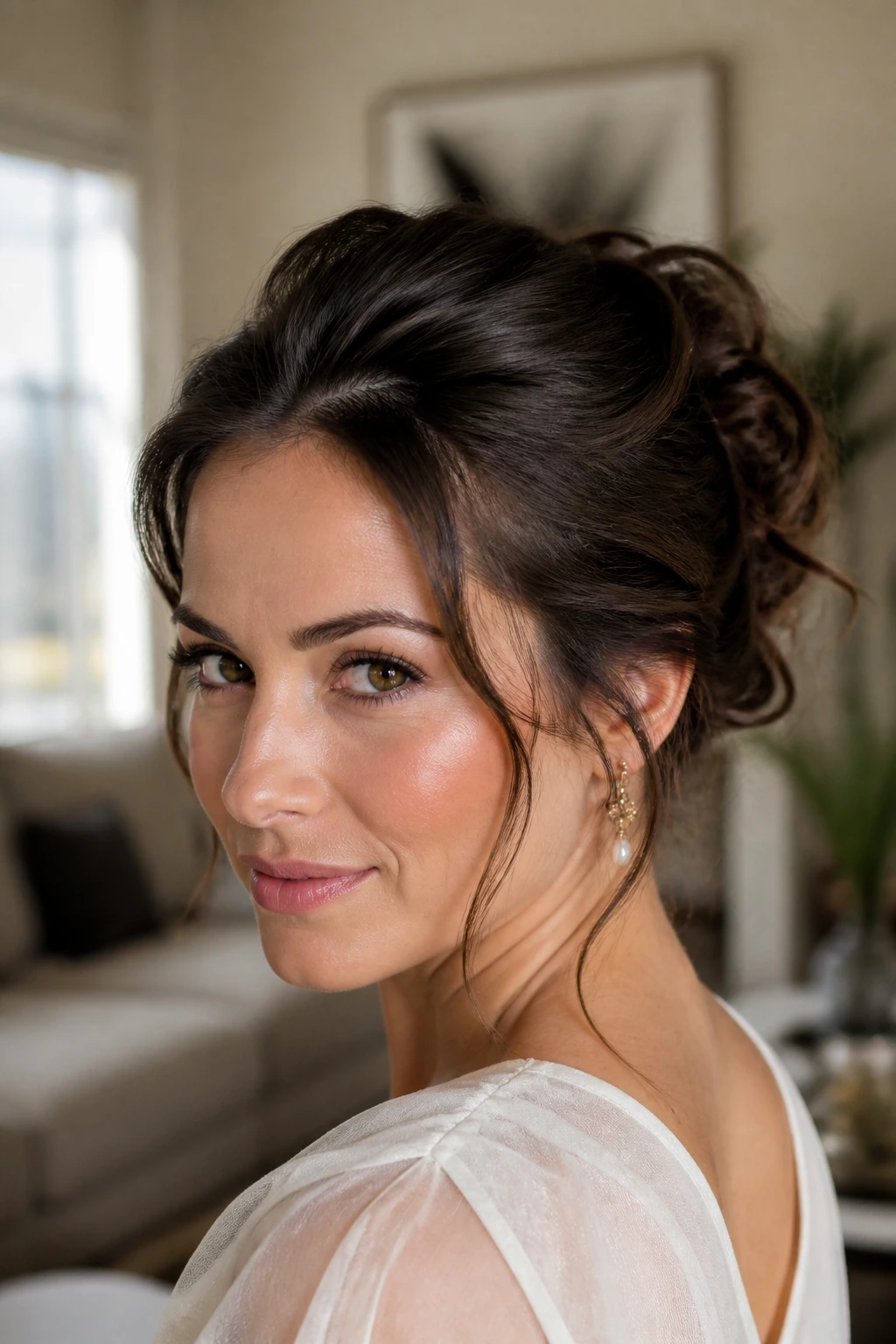
A lot of people treat medium hair like a problem to be solved. That is backward. It is the length where updos stop looking forced and start looking lived in.
There is enough length to build shape: A bun, twist, braid, or tuck has enough fabric to work with, so the style can look finished instead of pinned to death.
There is enough weight to help the style settle: Very short hair often springs apart. Medium hair usually stays where you place it once the pins catch.
There is less bulk than long hair: That matters more than people think. Long hair can make a neat style sag by adding too much pull, especially at the nape.
Layers become useful instead of annoying: The shorter bits around the face and neck can soften the style, fill in gaps, or add a loose edge on purpose.
Accessories sit better: Claw clips, hair sticks, and narrow barrettes tend to land in the right place on medium hair instead of floating awkwardly on top.
The middle length gives you choices. That is the whole point.
Essential Tools for These Updo Hairstyles
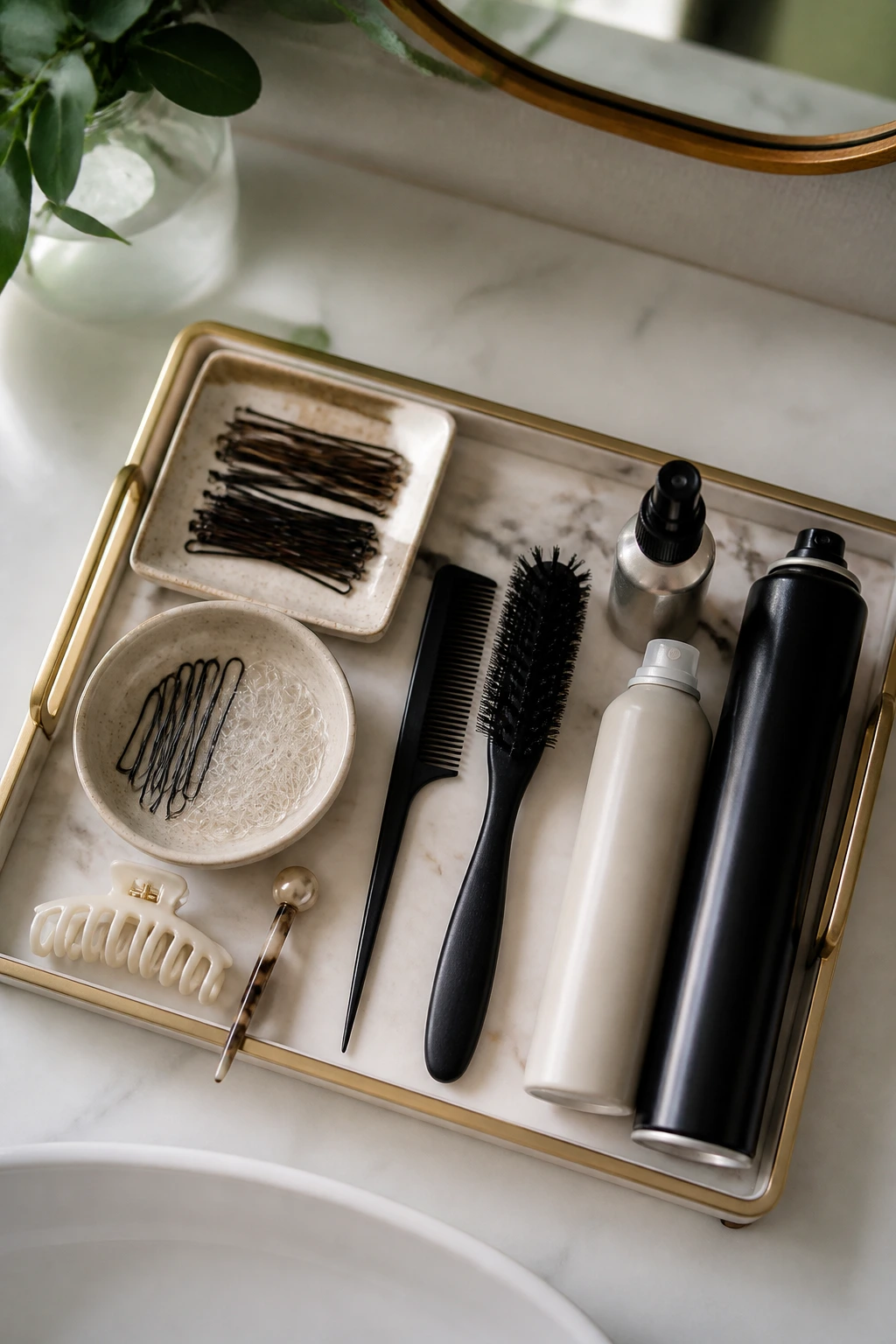
- Bobby pins in two sizes: Small pins handle flyaways; longer pins catch heavier twists and braided buns.
- U-pins: These are the secret weapon for buns and chignons because they hold shape without leaving a hard dent.
- Clear elastics and soft bands: Use clear elastics for braids and wrapped styles, and a soft band when you want less breakage.
- Fine-tooth comb: This gives you clean parts, smooth sides, and better control at the crown.
- Teasing brush: A little backcombing at the root can save a style that would otherwise go flat.
- Texturizing spray: Medium hair often needs grip more than shine; this gives pins something to hold.
- Dry shampoo: Best for day-two texture, oil control at the roots, and a little extra friction on clean hair.
- Medium claw clip: Great for French twists, tucked rolls, and fast office styles.
- Hair stick or chopstick: Handy for rolled buns and quick knot styles, especially on thicker hair.
- Strong-hold hairspray: Use it at the end, not at the beginning, so the shape can still move while you build it.
Smart Styling Tips for Medium-Length Hair Updos
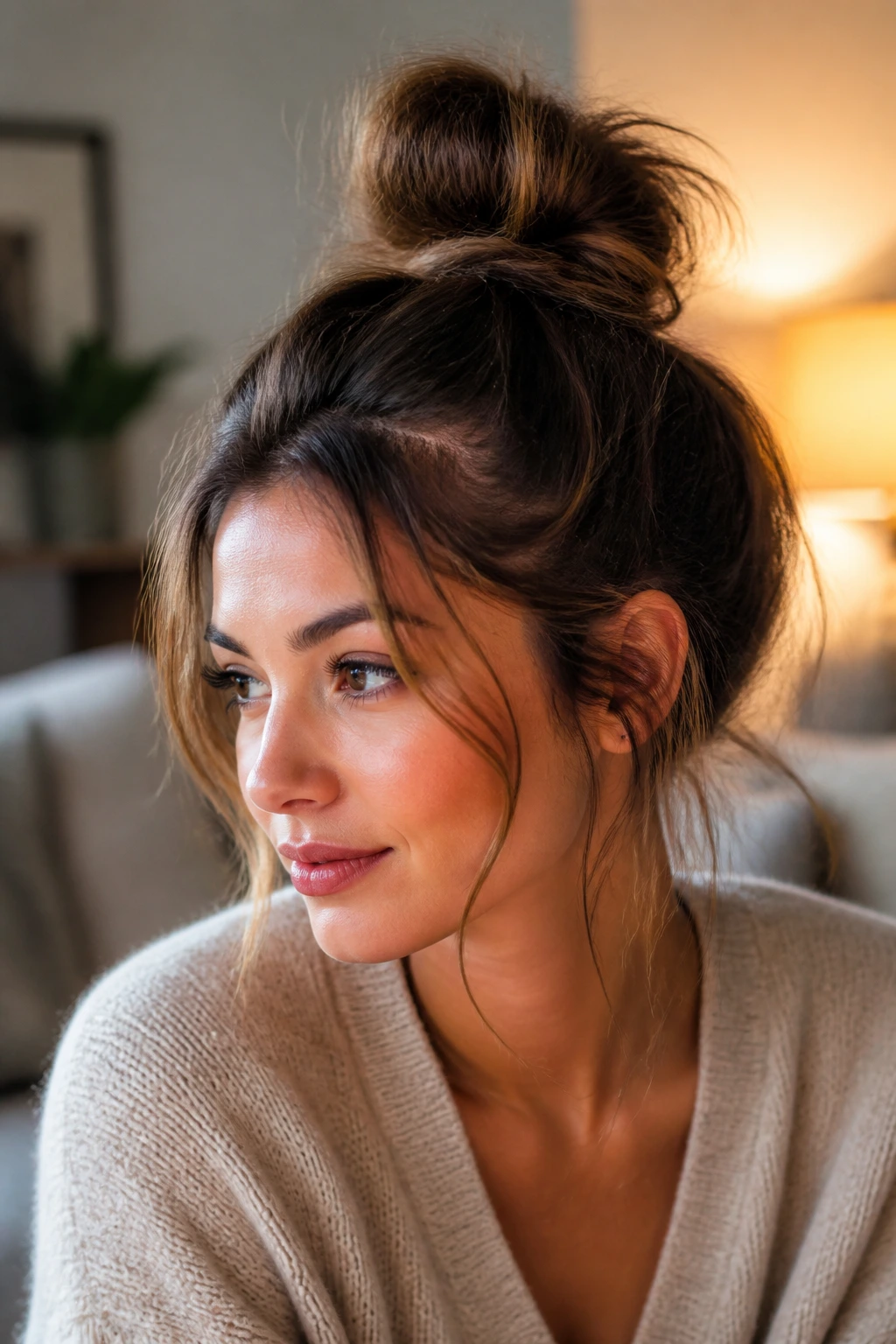
Start With Grip, Not Shine
Freshly washed hair is slippery. That can be fine for a blowout, but it is a nuisance for medium-length updos. If the hair is too soft, pins slide and twists loosen faster than you think.
A light coat of dry shampoo or texturizing spray at the roots gives the style a little bite. Wait a few seconds, then work the hair with your fingers so the product settles instead of sitting on top.
Anchor the Shape Where the Head Curves
The best place to pin medium hair is usually where the skull starts to curve at the back of the head. That spot catches the base of a bun or twist and keeps the weight from slipping straight down.
If you pin too high, the style can look like it is floating. If you pin too low, it drags under the weight of the ends. That small difference matters more on medium hair than on long hair.
Leave the Shorter Pieces on Purpose
Do not chase every single layer into submission. That rarely ends well. A few short pieces around the temples or nape can make the style look softer and more expensive than a perfectly smoothed helmet.
If a layer keeps escaping, either pin it inward or leave it out on purpose. Half-fighting it is the worst option.
Cross the Pins
One pin in one direction is fine for a light touch. Two pins crossed into an X hold better, especially on thick or silky hair. When I want a style to last through a long day, I almost always cross the pins at the seam.
It feels fussy the first time. Then it stops being fussy and starts being practical.
How to Keep an Updo Fresh Through the Day and Overnight
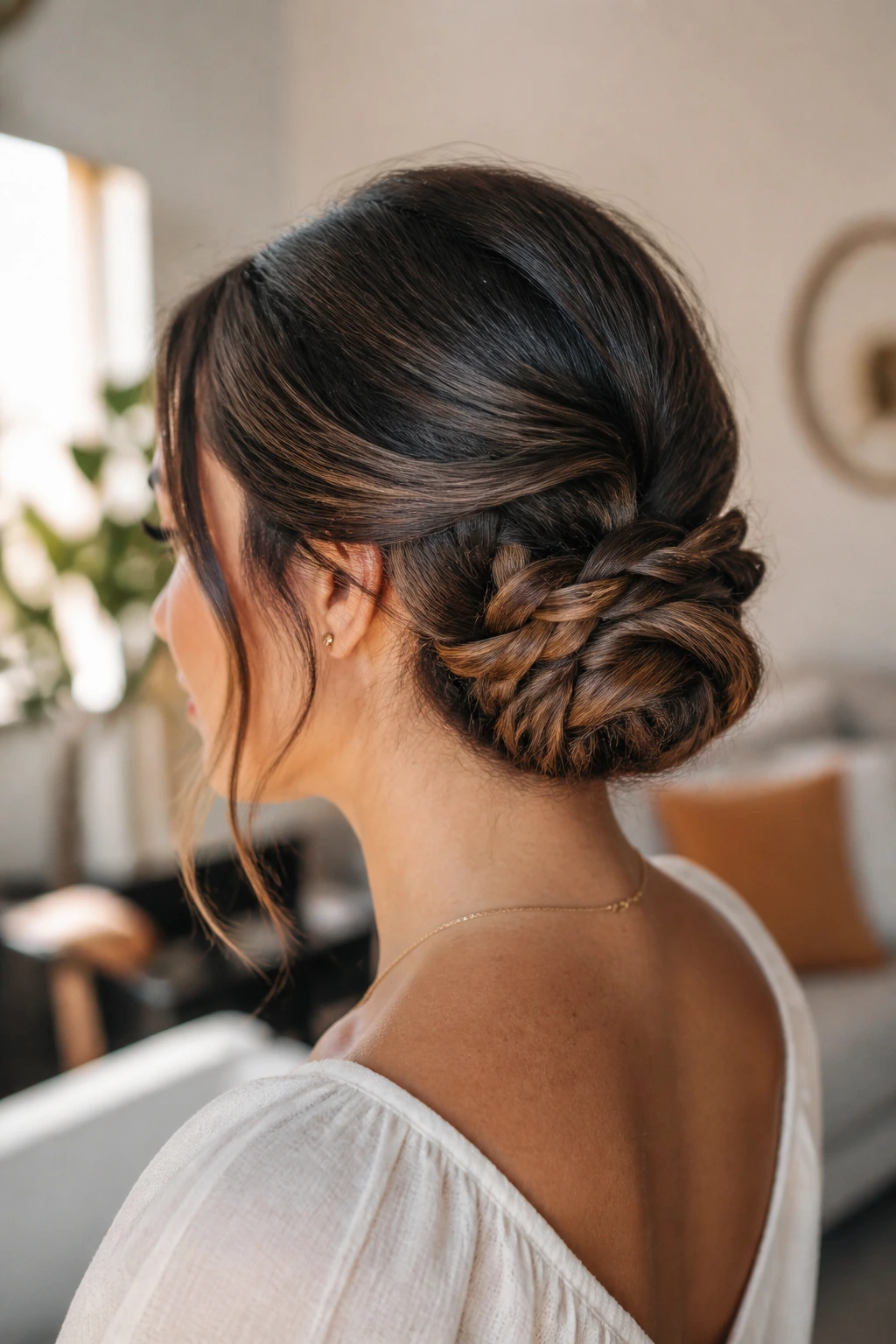
Medium-length hair can hold an updo through a full day if you respect the shape. Start with enough texture, keep a couple of spare pins in your bag, and do not keep touching the top of the style every ten minutes. That sounds small, but repeated smoothing is one of the fastest ways to break a twist or flatten a bun.
If the crown softens, pinch the roots gently and lift them with your fingers instead of brushing. If the nape loosens, slide one pin in from underneath and catch the elastic, not just the surface hair. That small anchor makes a bigger difference than another blast of hairspray.
For overnight wear, loosen anything tight before bed. A snug French twist or high knot can leave a dent and pull on the scalp, especially if you sleep on one side. If you want to preserve a style, use a silk scarf or a satin pillowcase, and tuck loose pieces back in before sleeping. The next morning, a little dry shampoo at the roots and a fingertip reshape usually bring the style back fast.
Common Mistakes That Make Medium-Length Updos Sag
Starting with silky-clean hair: The style looks good for ten minutes and then starts to slide. The fix is simple: add texture first, even if it is only a little dry shampoo at the roots.
Building the bun too big: Medium hair cannot always support a giant knot. When the shape gets too bulky, it droops backward or starts to split. Keep the bun compact and flat instead.
Ignoring the layers: Short face pieces that are not handled on purpose usually escape on their own. Pin them in, braid them in, or leave them out on purpose. Half-thought-out layers are what make a style look unfinished.
Using the wrong clip size: A clip that is too small squeezes the twist and pops open. A clip that is too large leaves the ends dangling. Match the hardware to the amount of hair, not to the look of the clip in the store.
Spraying before the shape is set: Heavy hairspray too early can make the hair sticky and hard to move. Build the style first, then mist the outside to lock it down.
Pinning only the surface: If the pins do not catch the base, the style shifts with every turn of the head. Slide pins into the inner structure, not just the outer shell.
Variations and Easy Swaps to Try
Fine-Hair Lift Kit: If your hair is thin, swap soft oils for dry shampoo and root spray. Tease a one-inch section at the crown, use smaller buns, and cross every pin so the style does not sag by lunch.
Curly Texture Version: Keep the curls intact instead of brushing them out. A looser knot, low bun, or halo braid works best here because it lets the curl pattern do the decoration for you.
Short-Layer Rescue: For hair that barely reaches the shoulders, choose styles with tucked ends, like the French twist lite, Gibson tuck, or claw-clip French twist. Leave one or two shorter pieces loose if they refuse to pin cleanly.
Event-Ready Polish: Add a side part, a shine spray on the surface only, and one simple accessory like a slim barrette or pearl pin. The shape stays the same, but the finish looks more intentional.
Heat-Free Everyday Finish: Skip the curling wand and rough-dry with mousse instead. A little bend and texture are enough for most of these styles, and heat-free hair often holds pins better because it is not too slippery.
Frequently Asked Questions
Which updo holds best on layered medium hair?
Braided buns, Dutch braid buns, and halo braid styles usually win because the braid itself helps trap shorter pieces. If your layers are very short around the face, leave those out on purpose instead of trying to force them into the main coil.
Can I do a French twist on shoulder-length hair?
Yes, but it works better as a French twist lite than as a tall, formal shell. Keep the roll low and compact, and use more pins than you think you need at the seam.
Is dirty hair better for updos?
A little second-day texture is often better than freshly washed softness. Hair that is too clean can slide, while hair that is lightly textured gives pins and elastics something to grab.
How do I keep bobby pins from slipping out?
Insert them with the wavy side facing the scalp and catch a bit of base hair, not just the surface. If the hair is very smooth, spray the section first and cross two pins in an X.
What if my hair is too thick for these styles?
Split the hair into smaller sections and build the shape in layers. Thick medium-length hair usually needs more pins, but the styles still work if you keep the bun flat and anchor it from the inside.
Can I wear these styles with bangs?
Absolutely. Bangs often make medium-length updos easier because they frame the face and keep the style from looking too tight. A half-up bouffant twist, side bun, or loose chignon usually works especially well.
Which style is the fastest for a rushed morning?
The claw-clip French twist and the banana clip twist are the quickest, with the low twisted bun close behind. They need less sectioning than braids and still look deliberate.
How do I stop an updo from looking too formal?
Leave one or two face-framing pieces loose, soften the crown a little, and avoid over-smoothing the surface. A little texture changes the mood fast, even if the basic shape stays the same.
The Last Pin
Medium-length hair does not need to be apologized for. It needs the right shape, the right grip, and a little honesty about where the layers want to fall.
That is why these updos work: they respect the cut instead of fighting it. Pick one that suits the day, keep the pins close, and let the length do what it already does best.
