



A bob that skims your jaw can still wear a ponytail. A chin-length cut can too. The trick is knowing which ponytail styles for short hair actually hold, which ones need a few hidden pins, and which ones collapse the second you turn your head.
That’s the part people miss. Short hair doesn’t fail at ponytails because it’s “too short” in some absolute sense; it fails when the style asks for more length, weight, or tension than the haircut can give. A blunt bob behaves differently from a layered lob. A grown-out pixie needs a different anchor point than a collarbone cut. Once you start treating the haircut like the clue instead of the obstacle, the whole thing gets easier.
There’s also the matter of texture, and that’s where the best short-hair ponytails get interesting. A little grit at the roots. A bent end instead of a poker-straight one. A wrapped elastic so the base looks intentional instead of accidental. Those tiny decisions do most of the work. The finished style can be sleek, soft, sporty, or dressed up, but the mechanics underneath are what make it stay put.
Why These Ponytails Work So Well on Short Hair
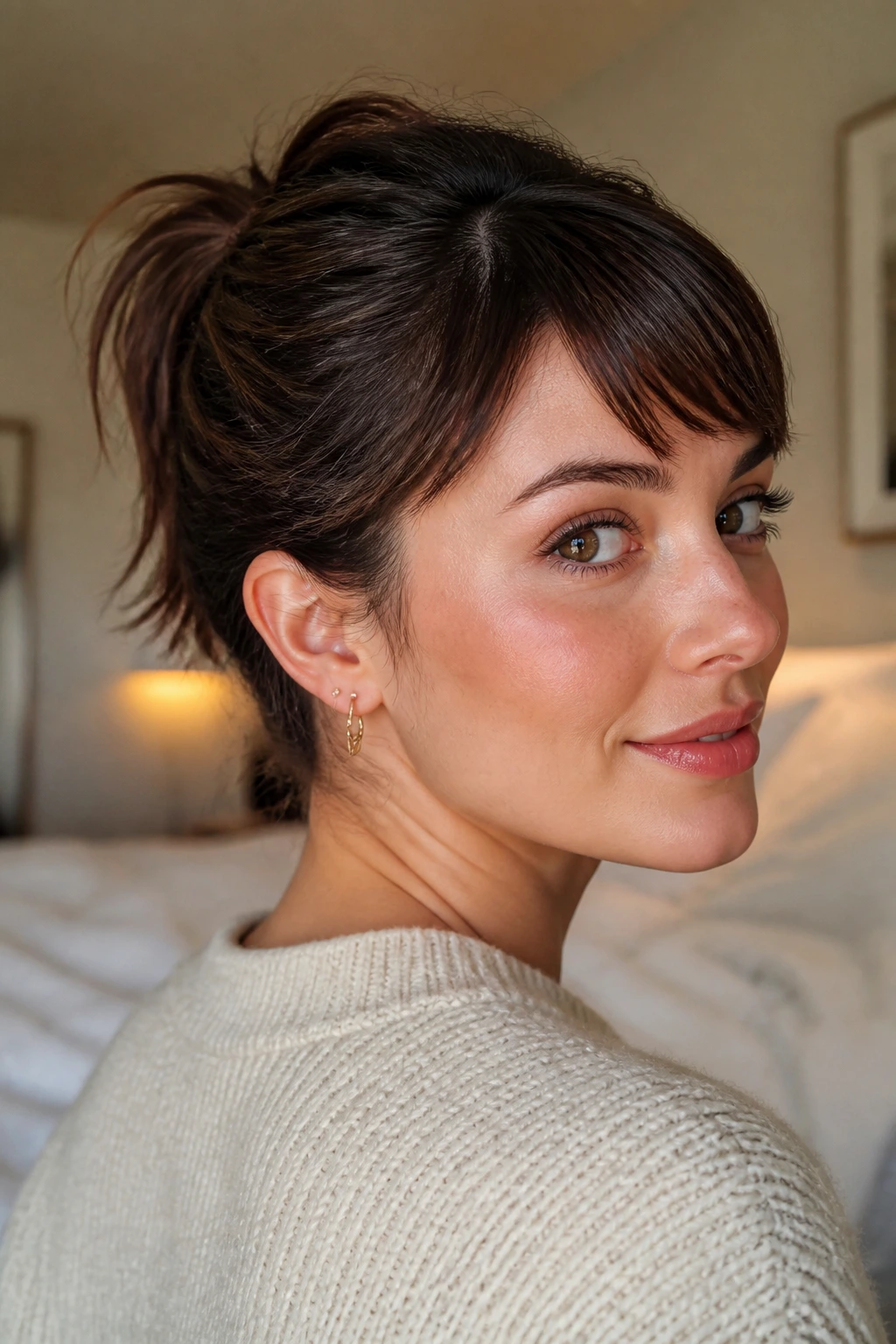
-
They start where the hair is strongest: The nape, crown, and area just behind the ears usually have the longest, densest strands on a short cut, so those spots give the elastic something to grab.
-
They use shape, not length: A side part, a tucked end, or a small braid can make a short ponytail look finished even when the tail itself is only a few inches long.
-
They hide the awkward bits on purpose: Layered sides, blunt ends, and shorter face-framing pieces stop feeling random when you pin, twist, or wrap them into the style.
-
They scale with your haircut: A bob, lob, or pixie grow-out can all wear a version of a ponytail if you match the anchor point to the length you actually have.
-
They don’t need a giant toolkit: A rat-tail comb, a few mini elastics, bobby pins, and one texture product will cover most of the looks in this collection.
1. Sleek Nape Wrap Pony
This is the one I reach for when I want short hair to look sharper than it feels. The pony sits low, almost at the dip of the neck, and the wrapped strand around the elastic makes the whole thing read polished instead of improvised.
Why It Holds Better Than It Looks
The low placement matters. Hair at the nape is usually heavier and a little longer than the sides, so the elastic doesn’t fight every layer at once. Keep the top smooth with a boar-bristle brush, then anchor the base with a small clear elastic before wrapping a 1/2-inch strand around it.
A quick mist of hairspray on the brush helps more than spraying the whole head. That keeps the crown flat without turning the ends stiff.
A Few Details That Make It Better
- Works best on chin-length bobs and longer.
- Part it cleanly down the middle or just off-center.
- Use one bobby pin under the wrap strand if your hair is silky.
- Leave the tail straight or bend the ends under with a flat iron.
Best move: keep the wrap strand thin. Thick wrap pieces look bulky fast on short hair.
2. Piecey Textured Pony
This one has a little grit, a little movement, and none of the brittle stiffness that ruins textured styles. It’s the ponytail you wear when day-two hair is cooperating and you want that messy, done-on-purpose feel.
Short layers are your friend here. A light mist of dry shampoo at the roots, a few bends through the mid-lengths with a 1-inch iron, and a loose gather at the back give the style enough lift to look full without trying to fake extra length.
The tail itself can stay imperfect. In fact, it should. If every strand is polished, the short pieces at the temples stick out like they’re protesting. Let a few of them fall. Then tame only the ones that matter.
3. Half-Up Crown Pony
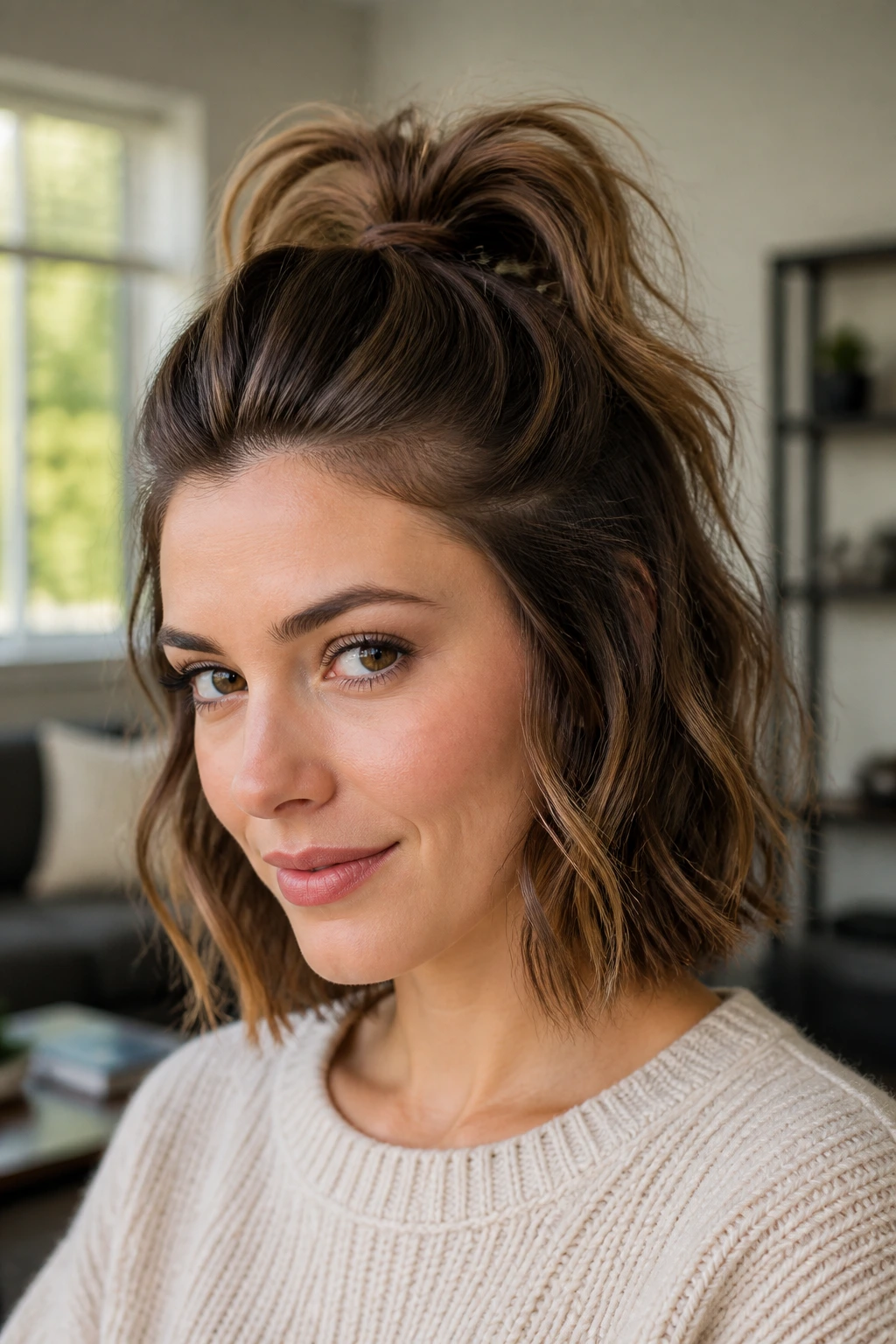
Why does this work so well on a bob that barely reaches the neck? Because it only asks the top section to behave.
The upper half creates the ponytail, while the bottom layers stay loose and do the visual heavy lifting. That means you get the shape of a ponytail without forcing every strand into one tiny elastic. It’s especially good for blunt cuts, where the ends are clean and the shape looks intentional from the start.
How to Style It
Pull back from the temples to the crown, not from the hairline, so the style keeps a little height. Secure the top section with a small elastic, then tug the crown very slightly for softness. The loose bottom layer should skim the jaw or neck and make the whole style look fuller than it is.
A flat iron bend on the loose pieces helps if your bob goes straight and flat on its own.
4. Bubble Pony for Bobs
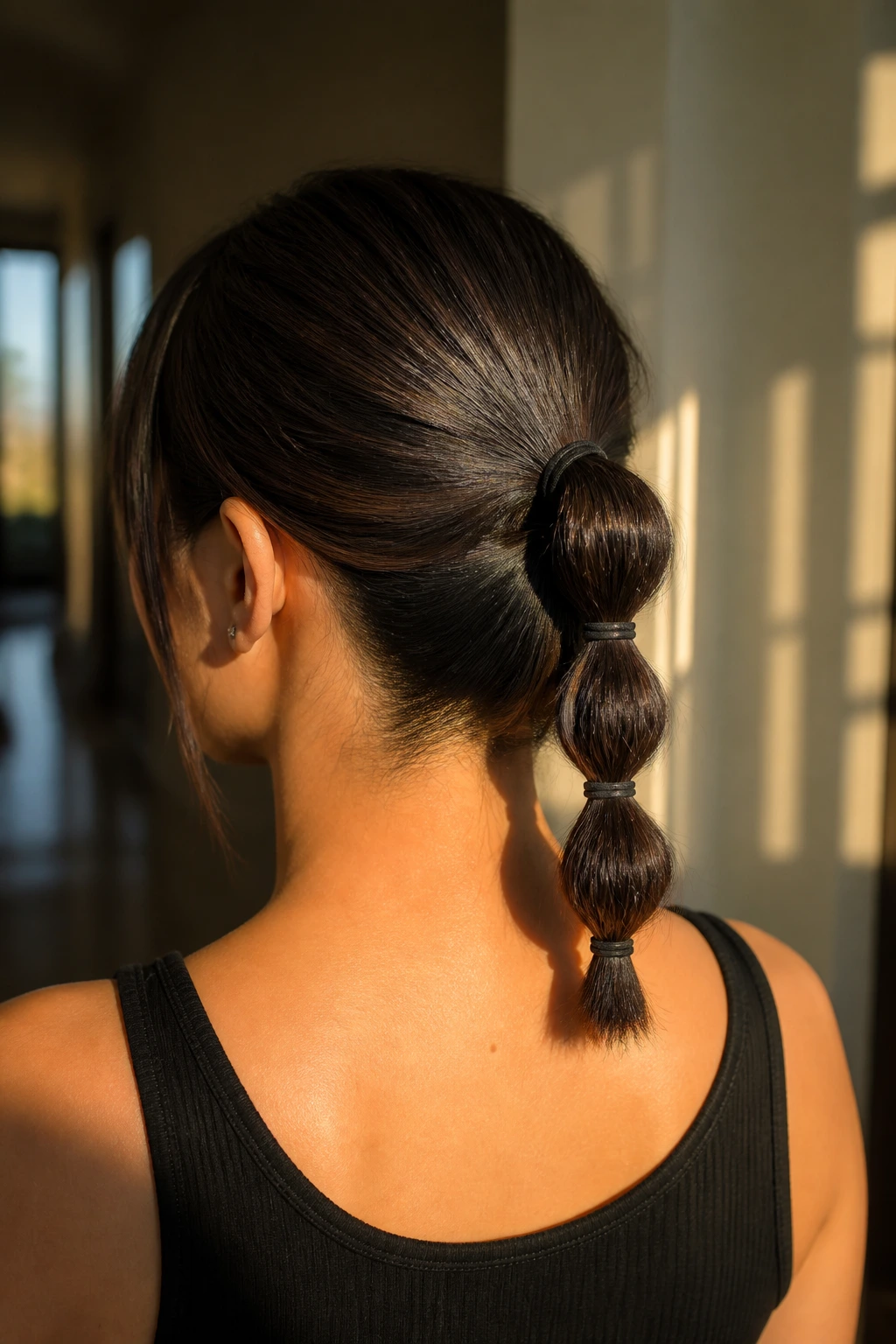
A bubble pony is one of the smartest ponytail styles for short hair because it cheats the eye. The actual tail can be short, but the repeated bubbles make it look longer, fuller, and more deliberate.
You build it with small clear elastics spaced about 1 to 2 inches apart down the tail. Then you pinch each section outward so it rounds into a little puff. The style works best on a lob, but a chin-length cut can still pull it off if the tail has enough tail-end to catch.
It’s playful without looking juvenile, which is not an easy balance. Keep the part clean and the bubbles even, and you get a style that feels graphic rather than fussy.
5. Side-Swept Low Pony
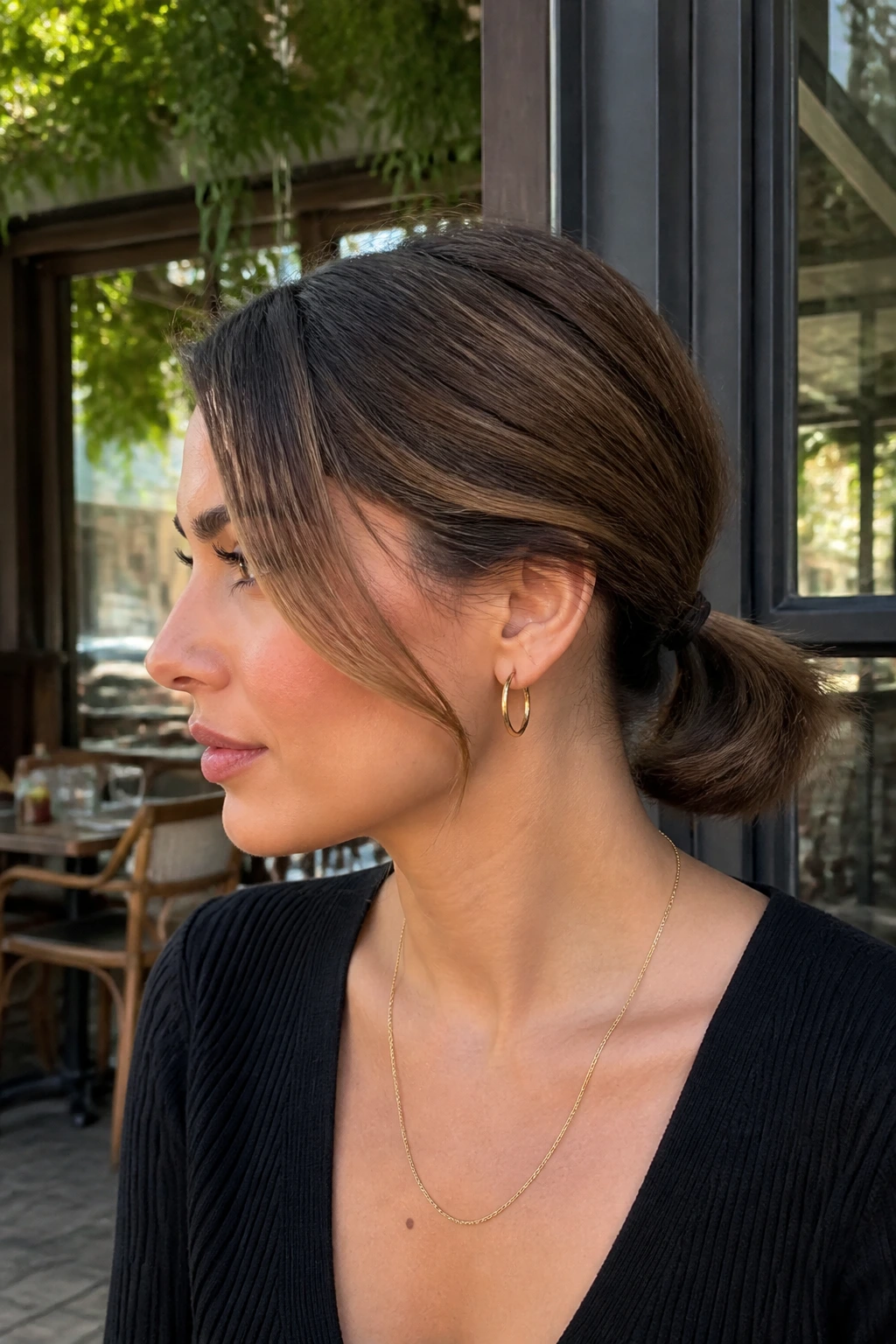
A deep side part changes everything. It moves the weight, hides shorter layers on one side, and lets the pony sit low and soft instead of hovering awkwardly in the center of the head.
This is one of those styles that quietly flatters almost everyone. The side-swept front softens the face, and the low pony keeps the neckline clean. If your hair is layered around the cheekbones, this one works especially well because the layers blend into the sweep instead of breaking the silhouette.
Brush the hair across the crown in the direction of the part, secure it just behind the ear, and leave the tail slightly loose. A tiny bend at the end keeps it from looking too severe.
6. Wet-Look Tight Pony
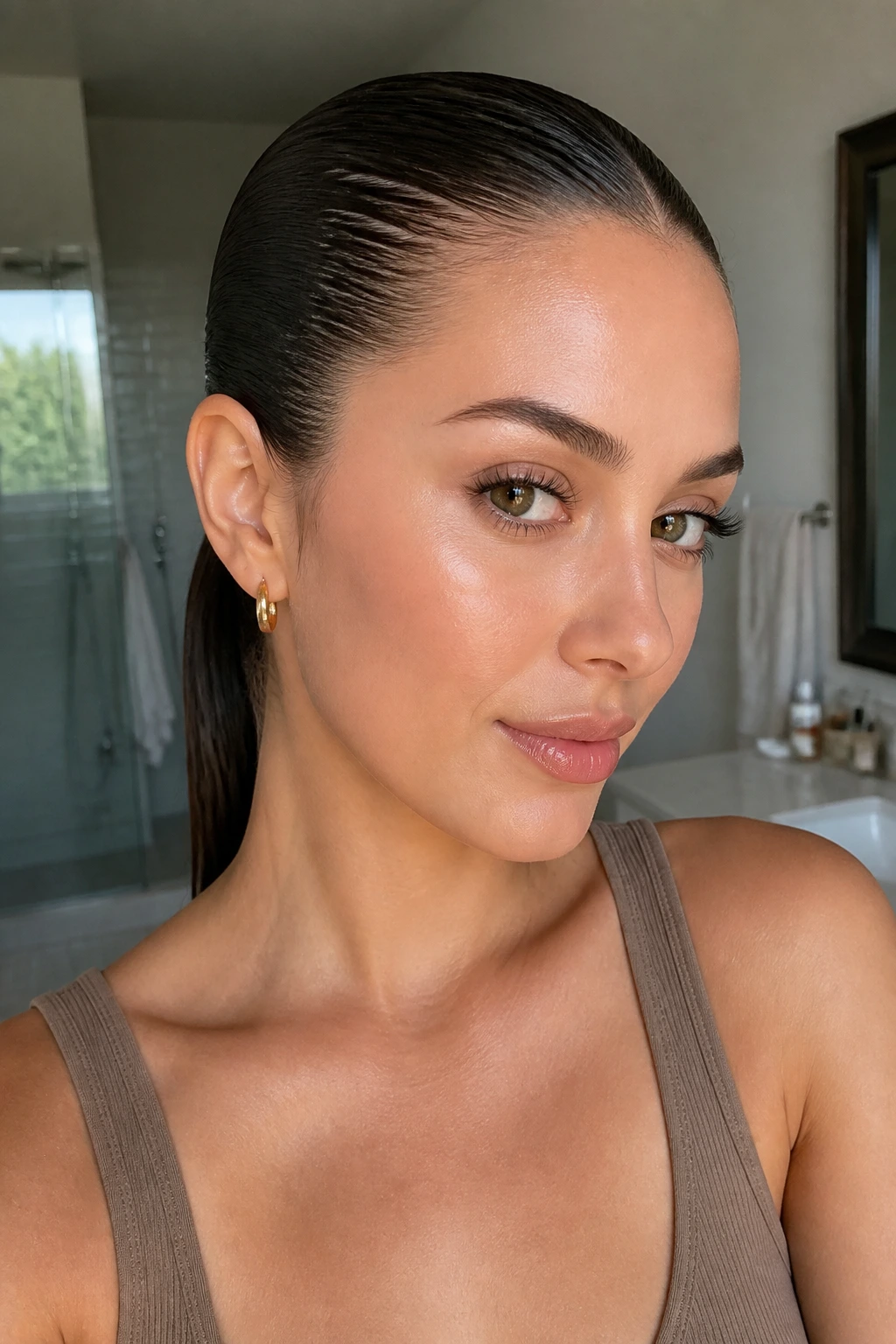
The wet look is one of the few styles that actually gets easier when the hair is shorter. There’s less surface area to smooth, and the shorter tail reads sleek rather than sparse.
Apply gel to damp roots, then brush everything straight back with a flat brush or an edge brush. The trick is pressure. You want the sides to lie down flat, almost lacquered, before you set the pony with a small elastic. A little shine serum on the tail adds that glossy finish without making it greasy.
Use this when your hair is in the awkward in-between stage and you want it to look like a choice, not a compromise. It pairs especially well with a sharp jawline, hoop earrings, or a clean collar.
7. Rope-Twist Pony
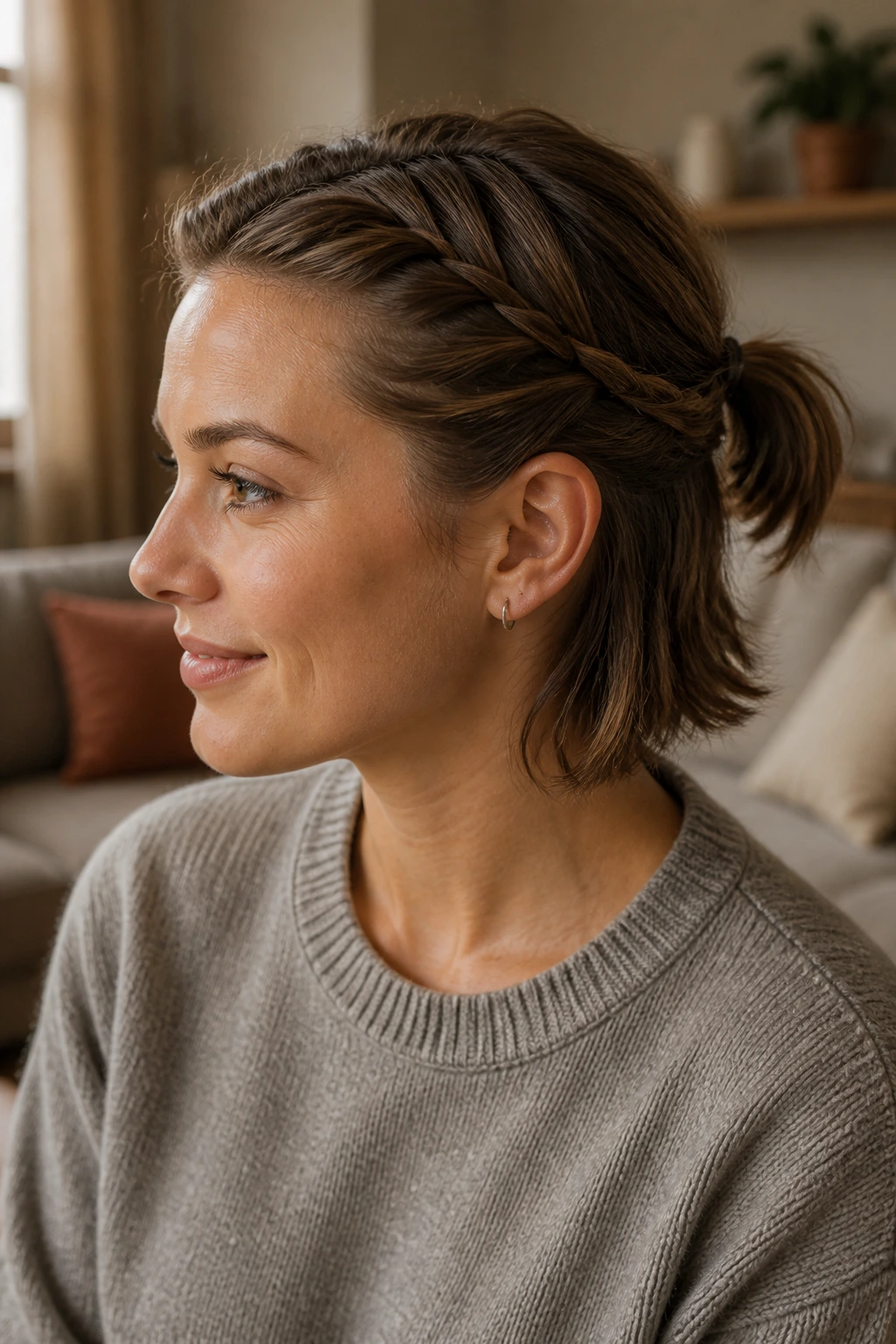
Two rope twists can do more for short hair than a full braid sometimes. They’re quicker, softer, and they hold onto shorter layers around the temples better than a single smooth gather.
Take a front section on each side, twist each one away from the face, then join them at the back into a small ponytail. The twists create built-in texture, which means the style doesn’t need much extra teasing or product. If your hair slips easily, secure each twist with a tiny pin before the final elastic goes in.
The look sits somewhere between polished and casual. I like it when the ends are slightly bent and the twists are not too tight; that keeps it from looking overly formal.
8. Braided Base Pony
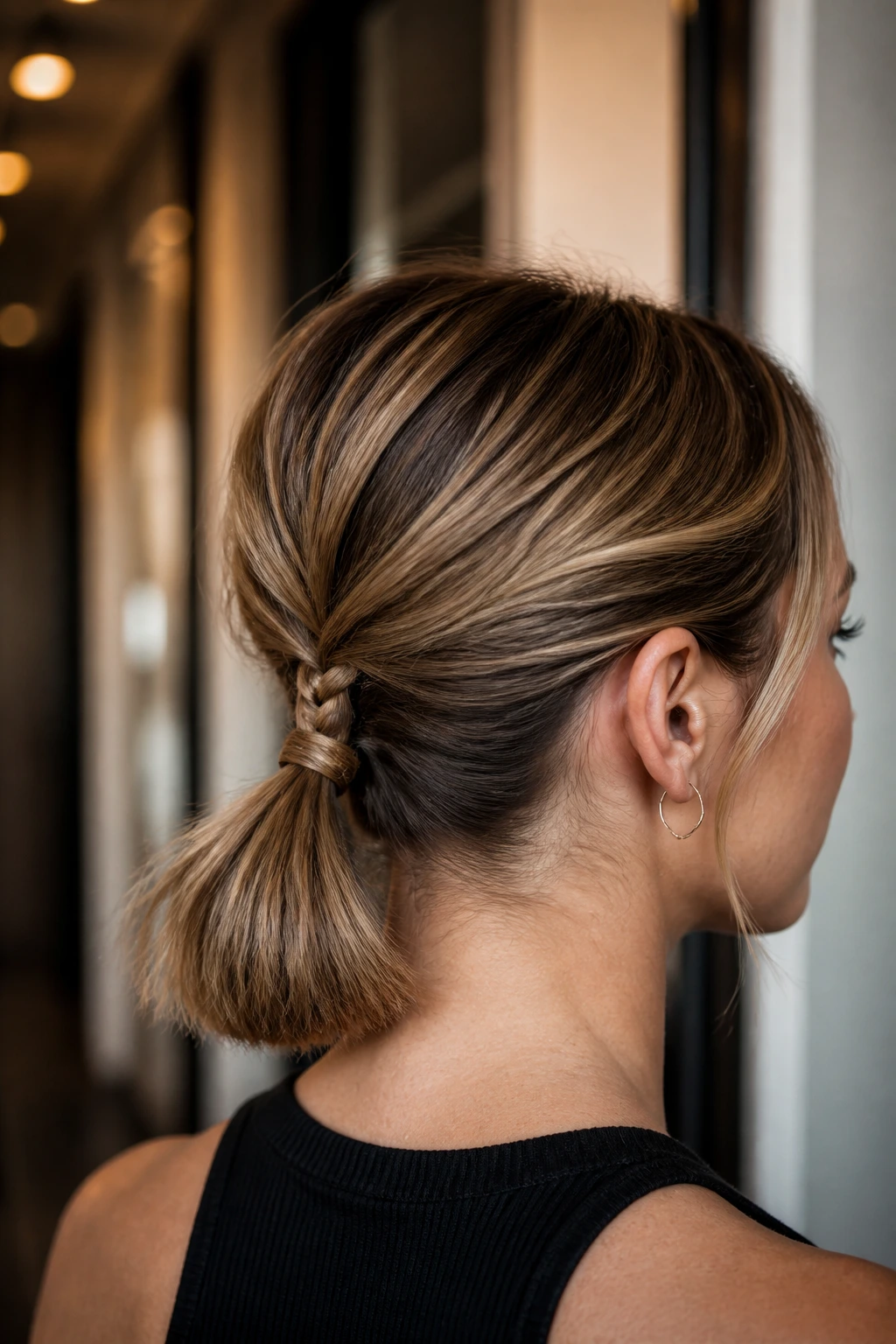
A tiny braid at the base can solve one of the biggest short-hair problems: the short pieces that refuse to stay inside the elastic.
Braid a narrow section from the front or temple toward the back, then gather the rest of the hair into a low ponytail. The braid becomes a little visual bridge between the front and the tie, and it hides the place where shorter layers often pop out. If you only have enough length for a half-inch braid, that’s fine. The braid does not need to be long to do its job.
This one looks especially good on layered cuts because the braid gives the shape some order. Without it, the layers can feel scattered.
9. Faux-High Pony
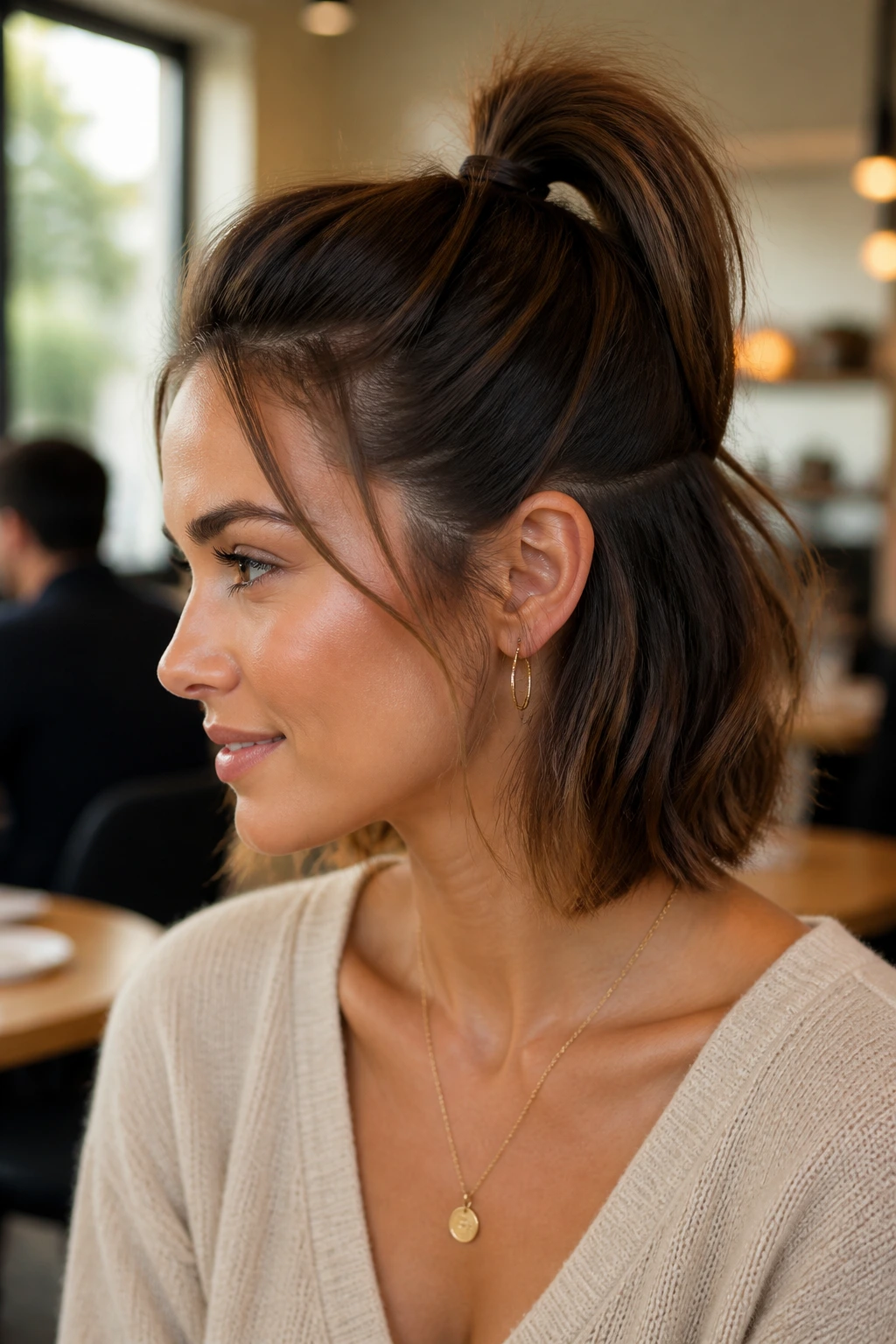
A true high ponytail can be a stretch on short hair. A faux-high pony cheats the height by using a two-step anchor: one small pony at the crown, then a second one just below it that gets pulled up and pinned so the first pony sits higher.
It’s a little bit of stage magic. Not much else. But it works.
The Point of the Illusion
You’re not asking the hair to live in one place it can’t quite reach. Instead, you’re stacking tension. That lets the crown look lifted while the actual tail stays short and secure. It’s a good choice for layered bobs, especially when you want more energy at the top without losing control at the sides.
Keep the top section lightly backcombed, not teased to the moon. You want lift, not a nest.
10. Curly Puff Pony
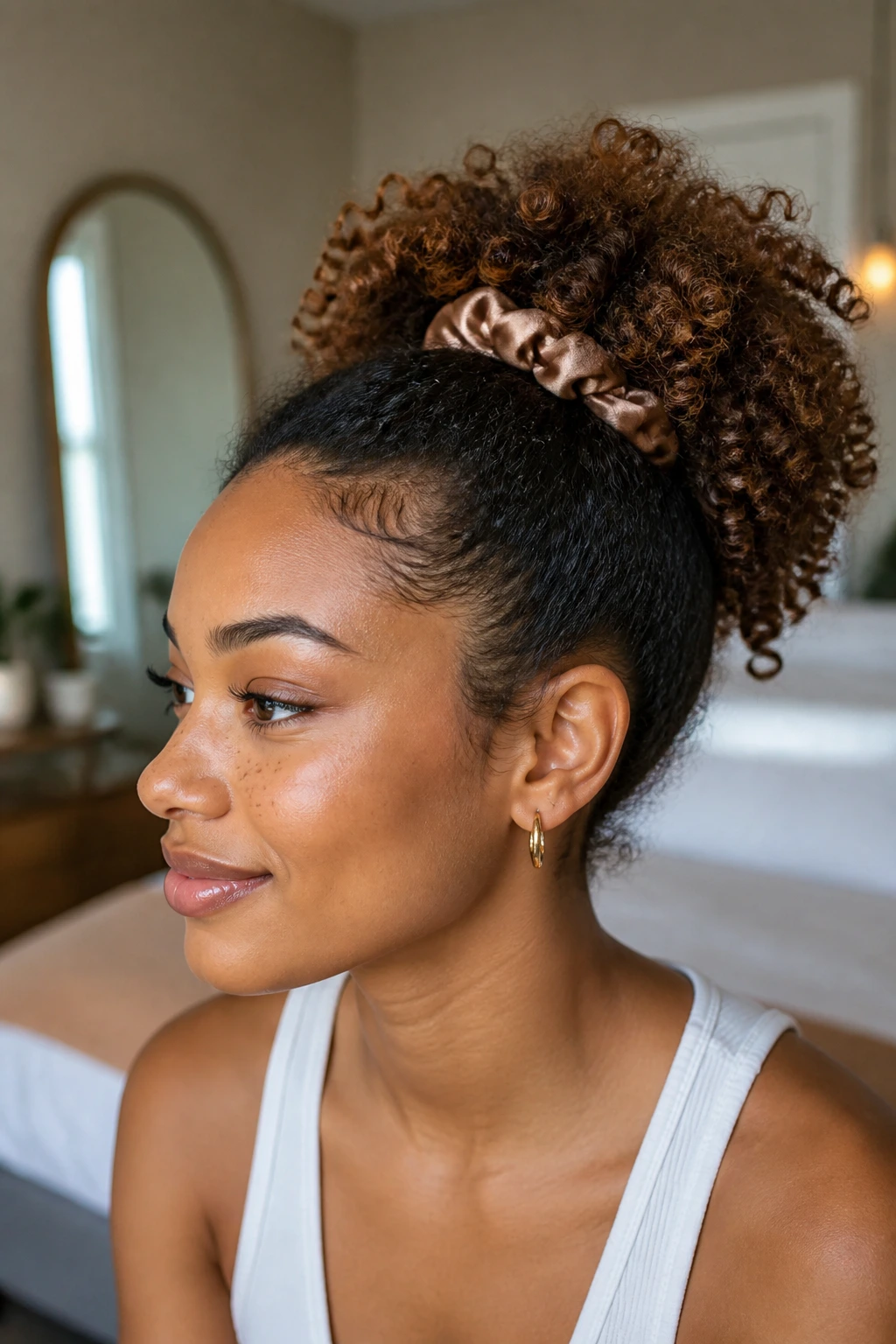
Curly hair and short ponytails have a different rhythm. They don’t need to be flattened into obedience. They need a base that respects the curl pattern.
Gather the hair at the crown or mid-back, depending on length, and let the puff keep its natural round shape. A satin scrunchie or soft elastic reduces breakage and keeps the base from getting dented. If a few curls escape around the hairline, leave them. Those little pieces soften the look and keep it from feeling over-sculpted.
I like this style because it doesn’t try to squeeze curls into a shape they never wanted. It uses the natural bulk of the curl to create the ponytail’s volume.
11. Ribbon-Tied Low Pony
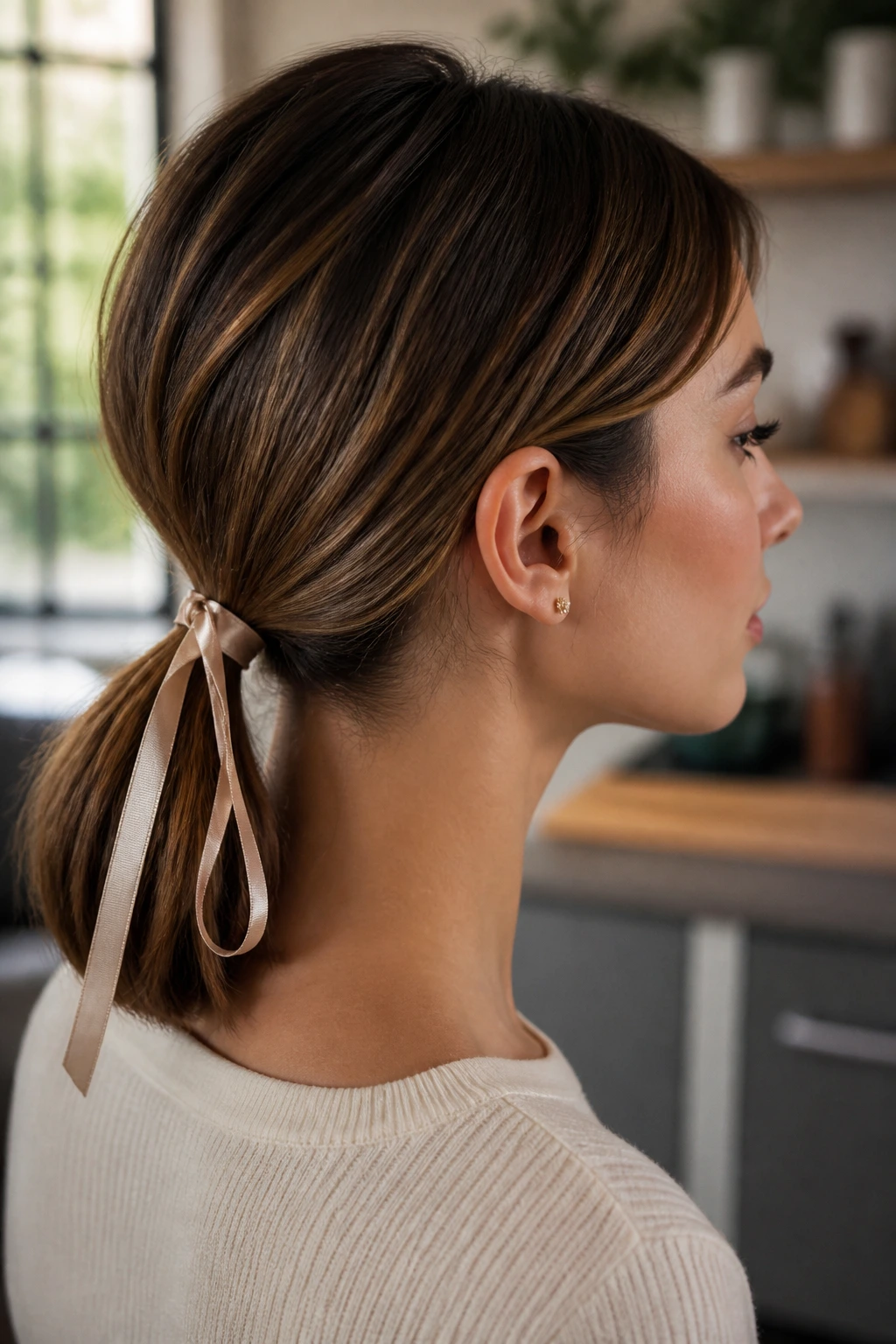
A ribbon can make a short ponytail look finished in about ten seconds, which is hard to argue with. The style itself can be plain—a low pony at the nape, smooth crown, minimal fuss—but the ribbon changes the whole read.
Use a slim silk or satin ribbon, not a thick craft ribbon that bulks up the base. Tie it around the elastic after the pony is secure, then let the tails hang a few inches. If the ends of your hair are blunt, the ribbon gives the shape a softer finish. If the ends are layered, it distracts from the unevenness.
The best part is that this works on hair that’s just long enough to gather. You do not need a long tail for the ribbon to do its job.
12. Double-Elastic Length Cheat
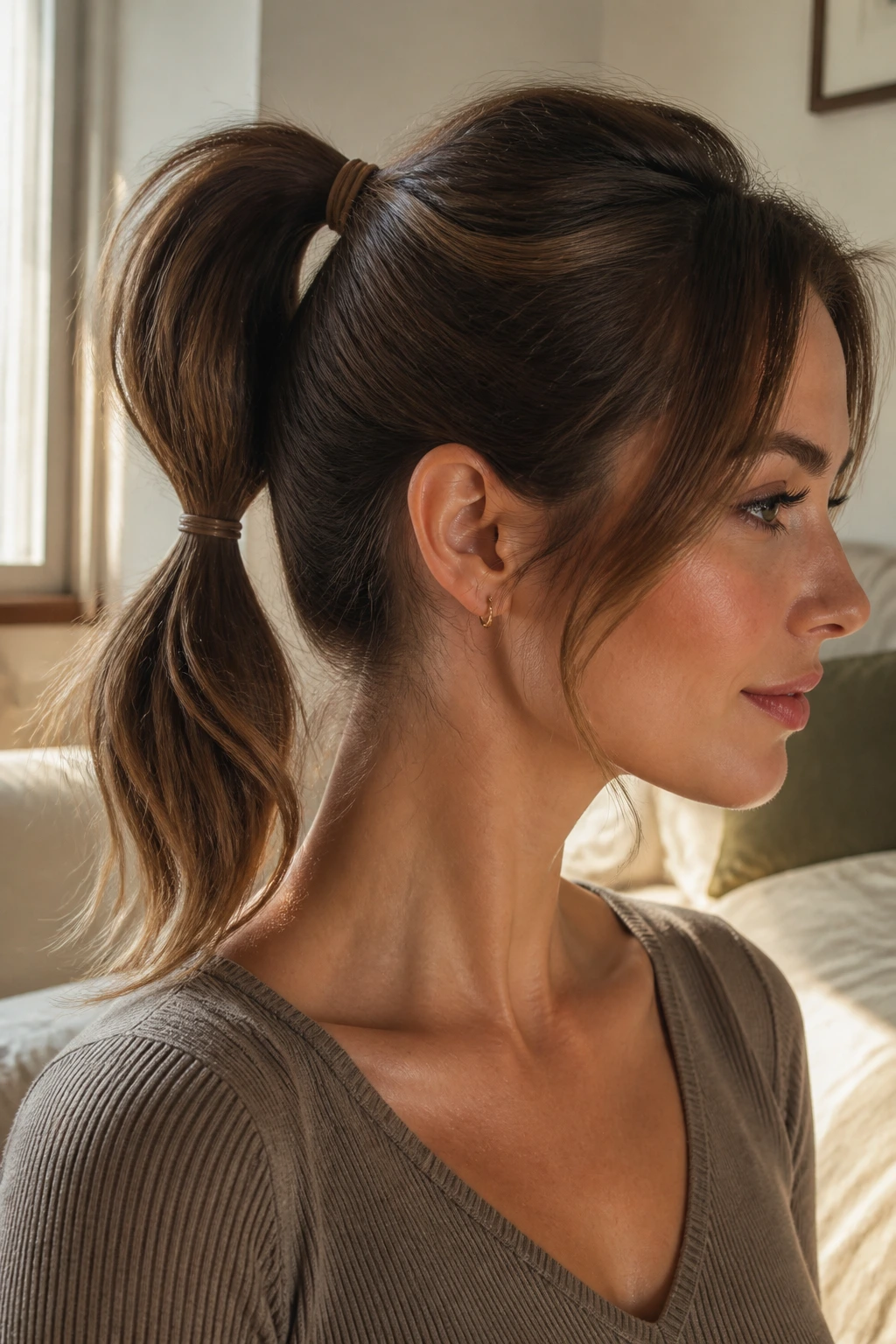
This is the style I’d point to if someone says, “My hair is too short for a ponytail,” and means it in the most literal way.
You split the hair into two sections. The top section becomes a small pony, and the bottom section joins below it with a second elastic. Then you blend the two with fingers or a soft brush so the tail looks longer and fuller than one pony could manage alone. It’s a sneaky little fix, but a useful one.
What to Watch
The first elastic should sit high enough to build shape, but not so high that it pulls the sides loose. Keep the lower elastic snug, because that’s what helps the tail sit together instead of sagging into two sad pieces.
It’s not glamorous. It is effective.
13. Face-Framing Soft Pony
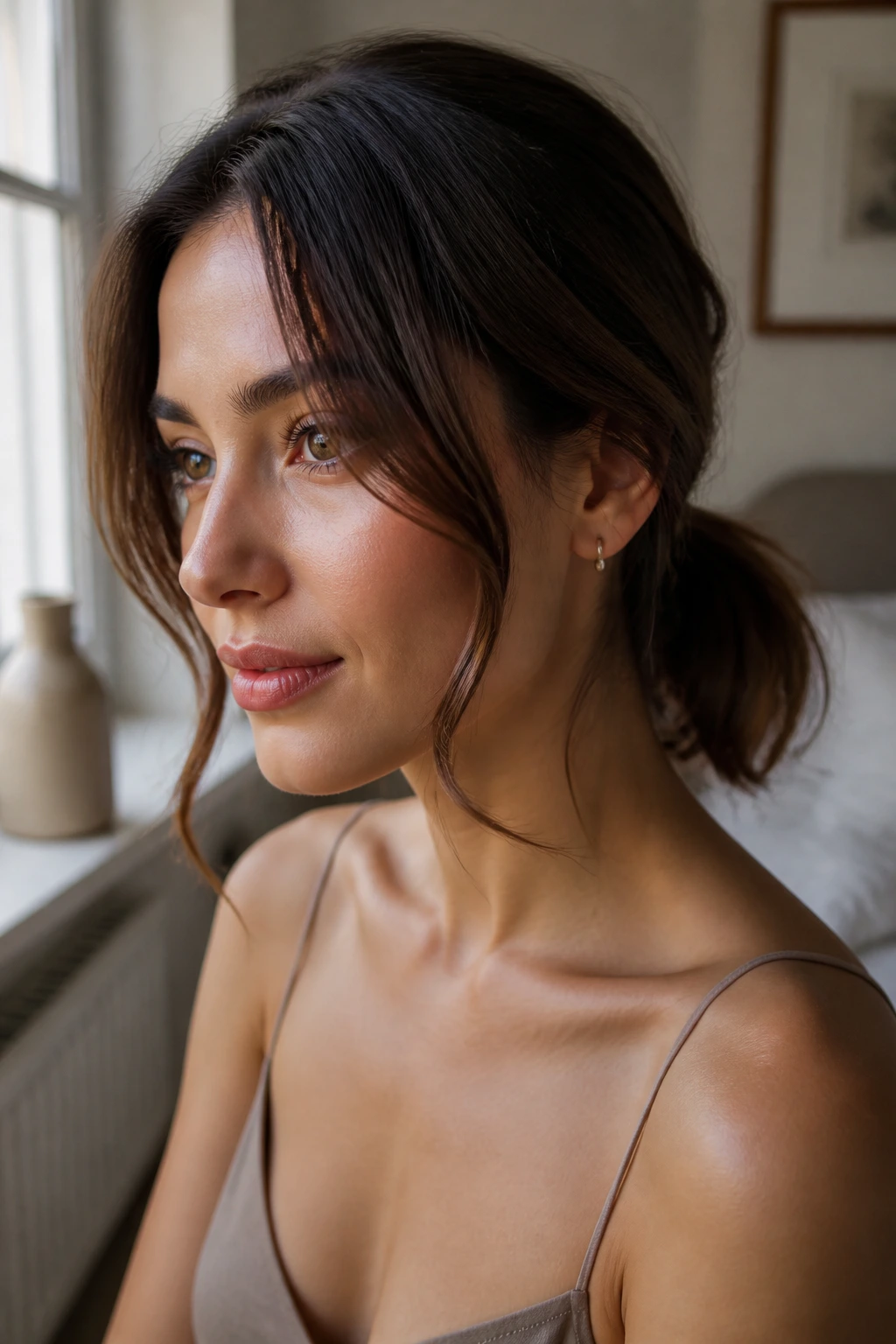
Sometimes the smartest thing you can do with short hair is leave some of it alone. This ponytail keeps the front pieces loose on purpose, then gathers the rest low and soft.
Curl or bend the face-framing pieces away from the face so they fall in a clean line, not a stringy one. The back stays tucked into a small pony, which gives you a neat base without stripping away the softness around the cheeks. If you’ve got layers that hit the jaw, this style lets them work for you instead of against you.
It’s one of the most forgiving styles in the bunch. A little frizz around the face? Fine. A strand that escapes at the temple? Also fine.
14. Deep Side-Part Pony
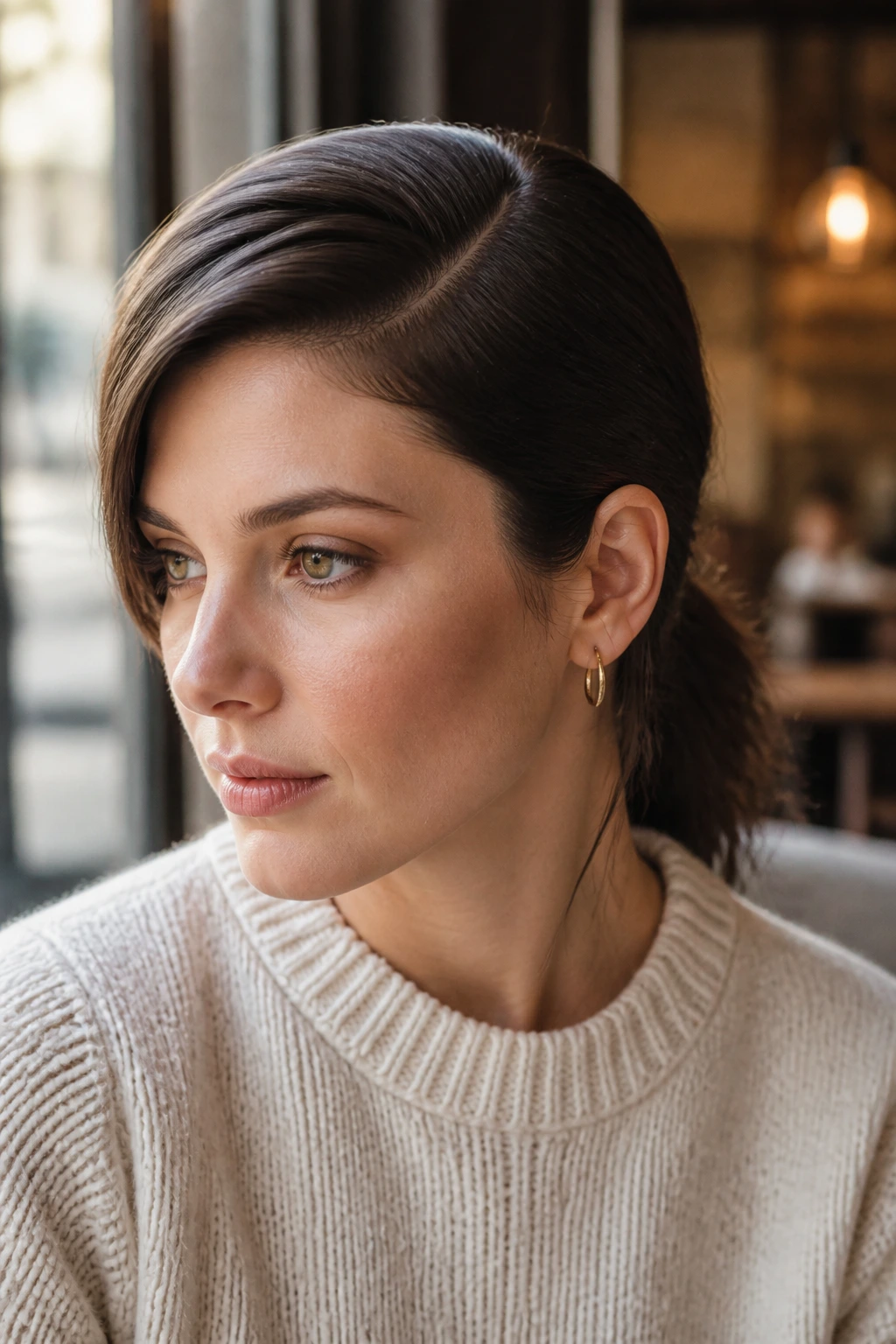
A deep side part gives short hair drama without demanding much length. It creates an elegant slope across the crown and makes a small ponytail feel richer because the part itself becomes part of the design.
Brush the hair over in one clean direction, then smooth it into a low pony just behind the ear on the heavier side. The tail can stay neat or slightly curved under. The main thing is the part line; make it crisp enough to see from the front. That line carries the style.
This is one of my favorites for finer hair because a side part tricks the eye into seeing more volume at the top. It’s a simple move, but it changes the balance of the whole head.
15. Mini Mohawk Pony
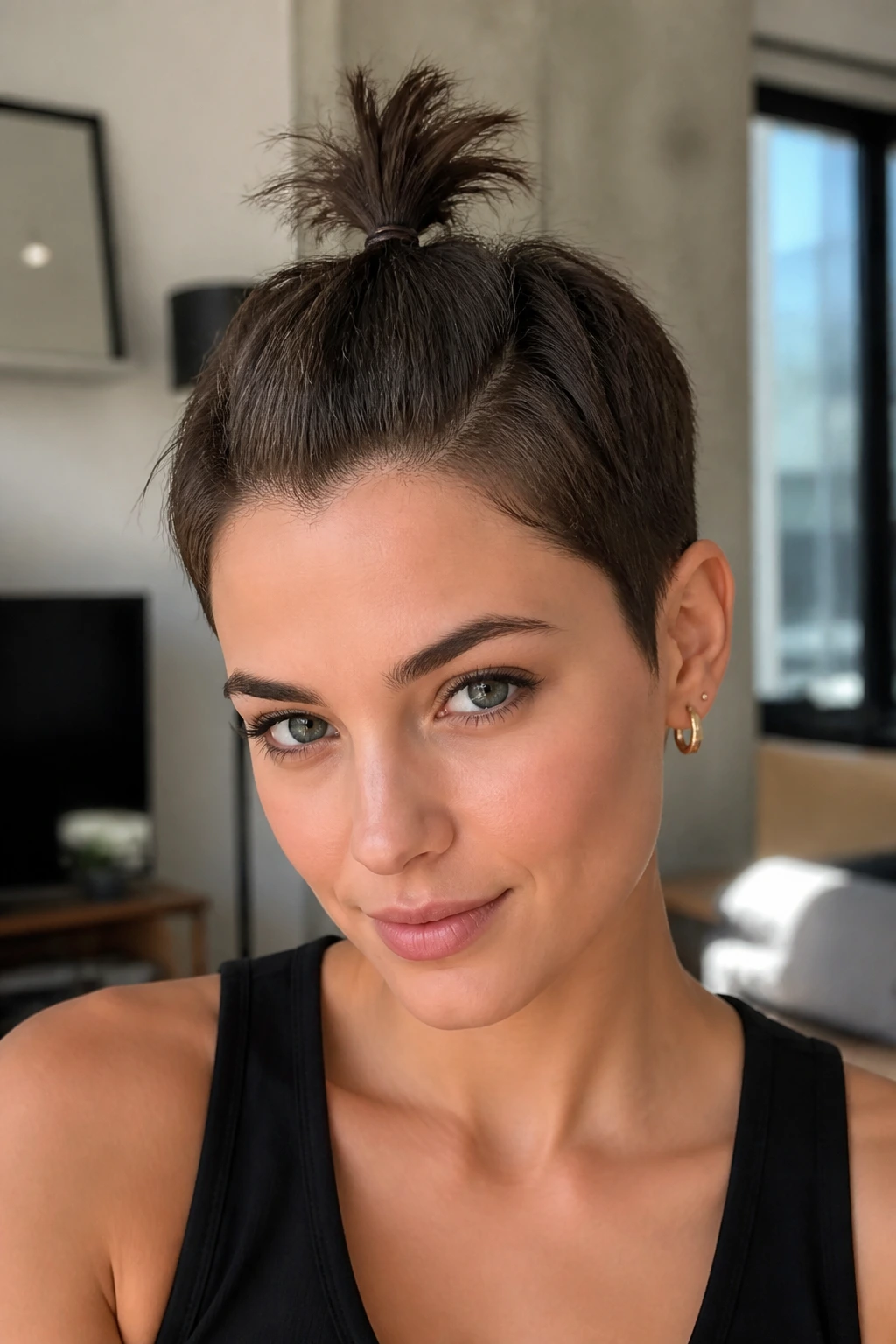
This is the most playful look in the group, and it suits short hair better than people expect. Instead of pulling everything straight back, you build a center strip from the forehead to the crown, secure it in a tiny pony, and leave the sides sleek or pinned.
The result has a little lift, a little attitude, and a shape that works especially well on pixie grow-outs. It doesn’t need much length on the sides because those pieces are meant to lie close to the head anyway. If you want more edge, use a texturizing spray through the center strip before tying it off.
You either like this style or you don’t. I happen to think it’s one of the best ways to make very short hair look styled instead of merely managed.
16. Tucked-End Pony
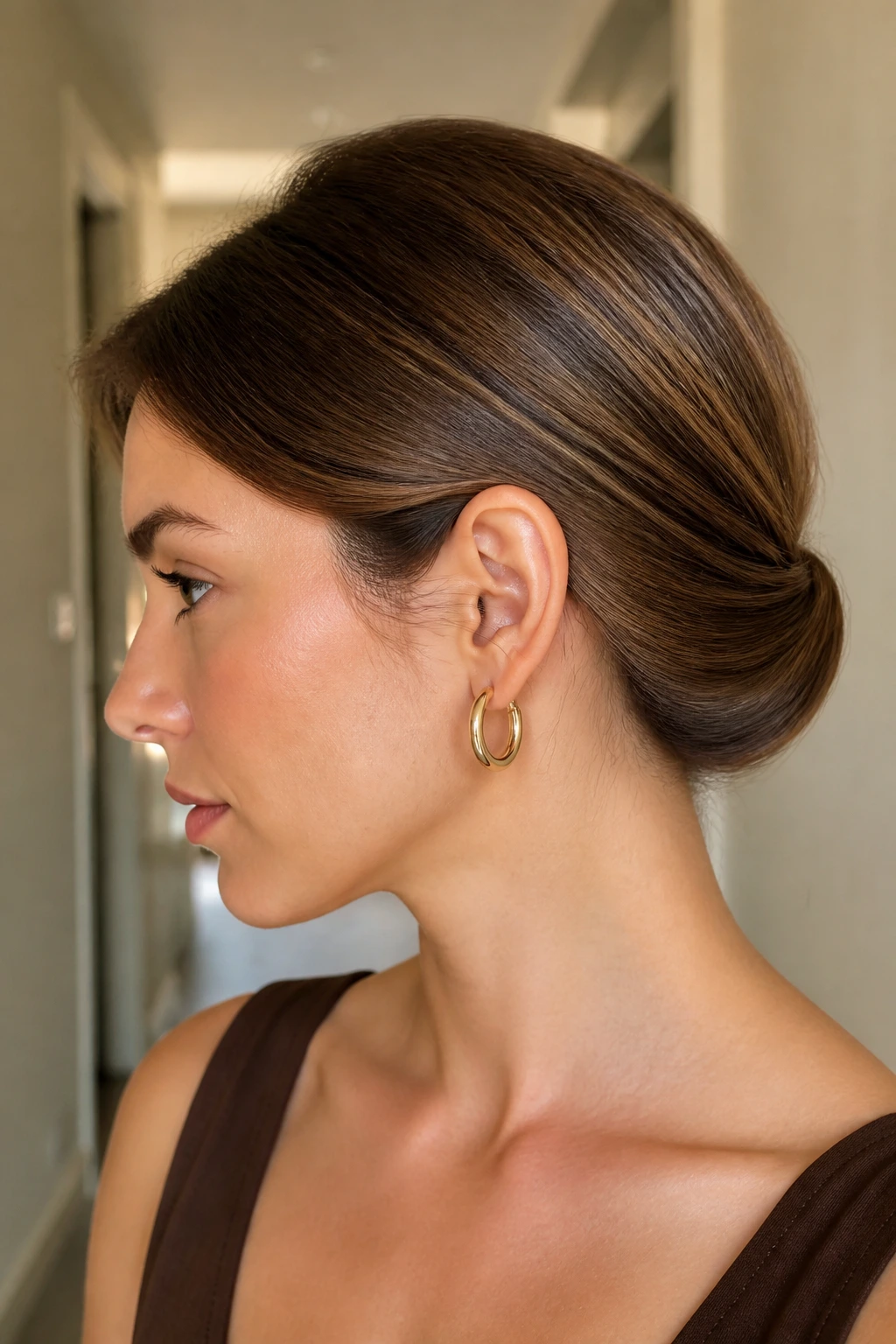
Blunt ends on short hair can stick out at odd angles, especially when the ponytail barely clears the nape. Tucking the ends under solves that problem fast.
Gather the hair low, secure it, then fold the tail under itself and pin it flat so the outline becomes more compact. The style almost looks like a little rolled chignon pretending to be a ponytail. It works particularly well on bob-length hair that wants to flip outward on its own.
Why It’s Useful
The tucked end hides uneven lengths and makes the silhouette cleaner. It also keeps the shortest hairs from poking out the bottom, which is the part that usually gives the game away on short styles.
Use this when you want something neat but don’t want a full updo.
17. Loop-Through Low Pony
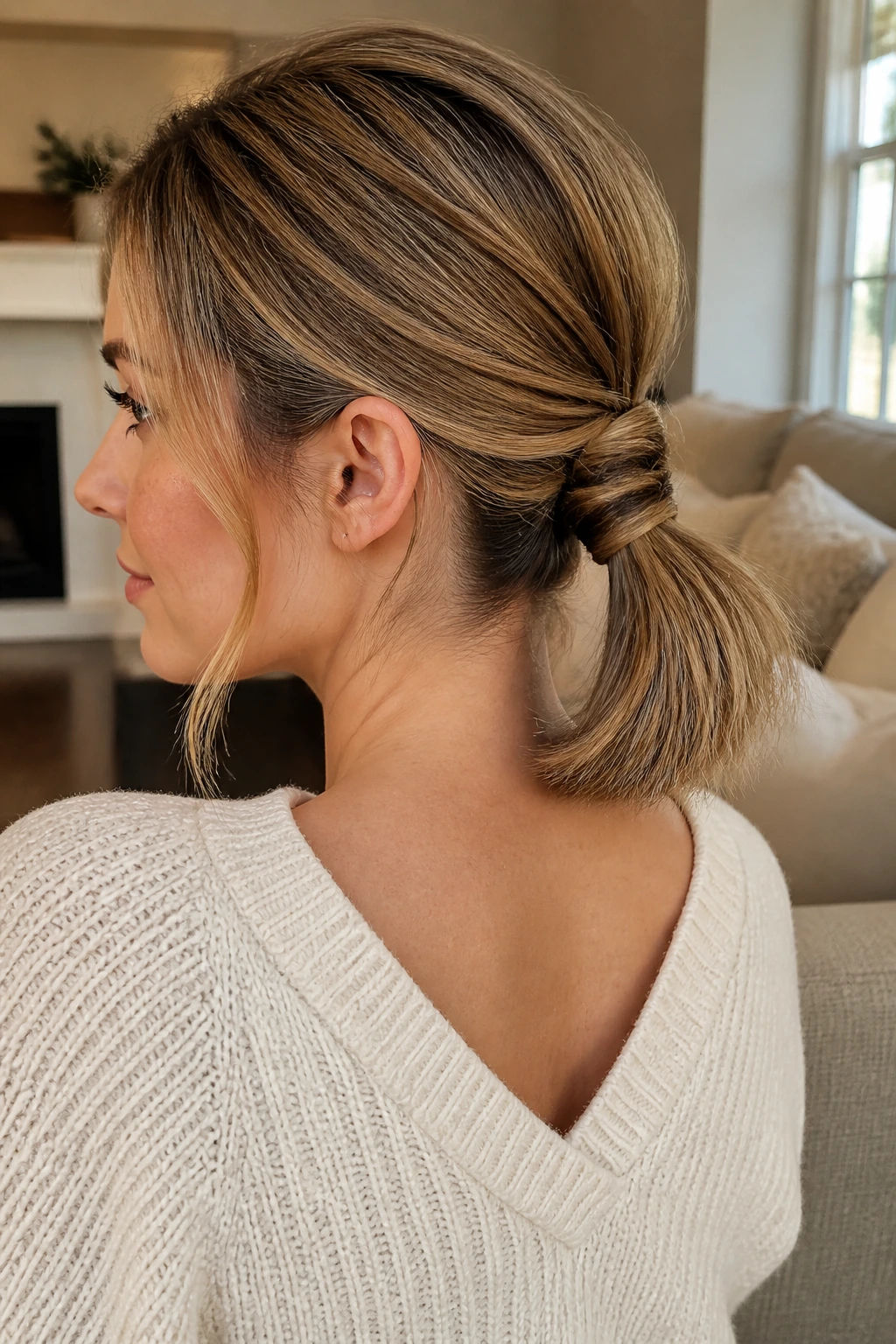
A loop-through pony gives short hair a more finished shape with almost no extra effort. Pull the hair into a low pony, create a little space above the elastic, and flip the tail through that opening so the base twists inward.
It works on short hair because the movement adds polish even when the tail itself is modest. If your hair is layered, the loop helps hide the shorter pieces that would otherwise separate and fray. A touch of smoothing cream on the hands keeps the twist sleek without flattening the whole style.
This is one of those styles that reads more deliberate than the time it takes to do it. I like that. Short hair deserves a few tricks that pay off quickly.
18. Scarf-Wrapped Pony
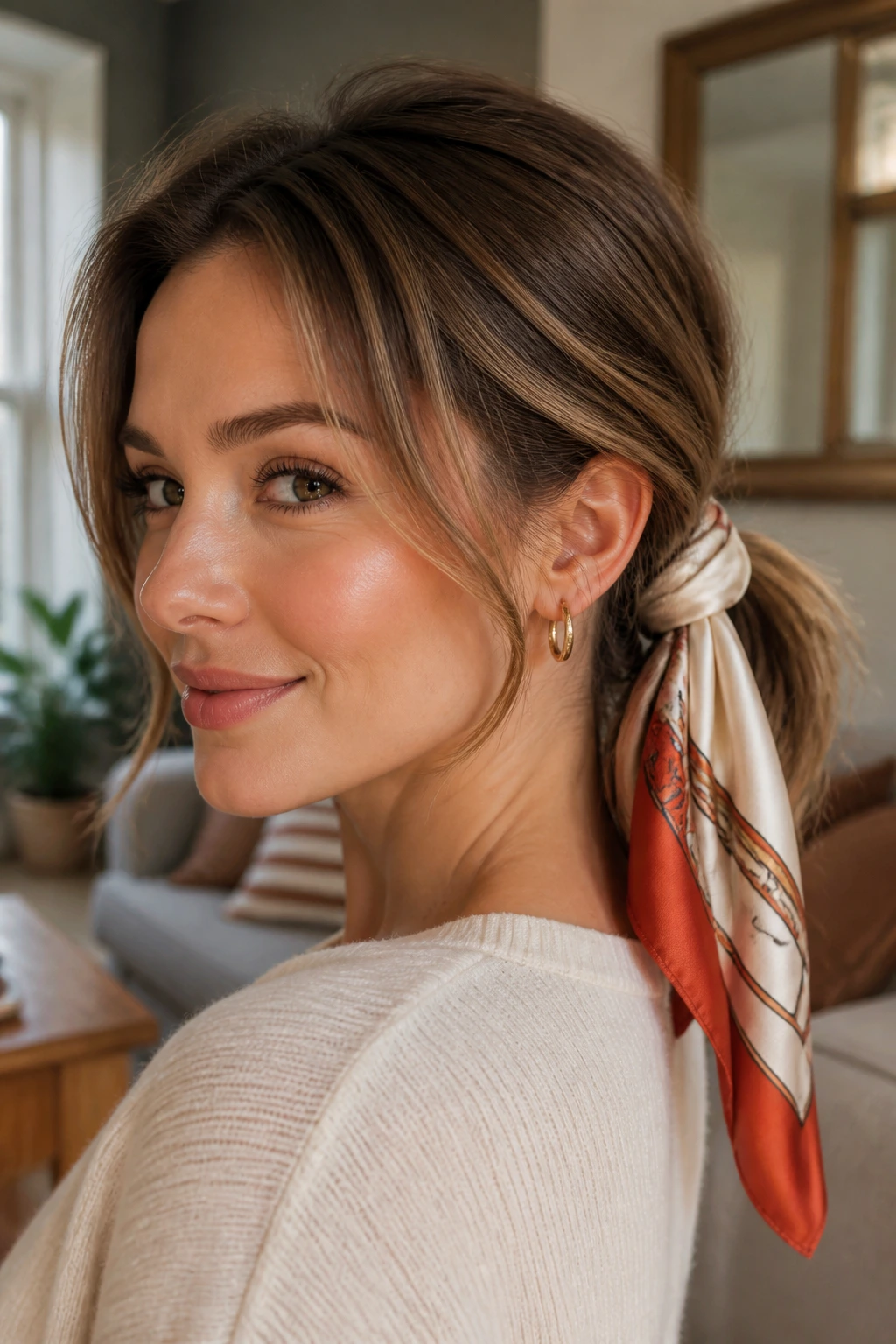
A scarf-wrapped pony is part hairstyle, part accessory, and honestly, that’s why it works. The scarf covers the elastic, adds color, and gives the short tail a little visual weight.
Tie the scarf around the base after securing the pony, then knot it so the tails sit off to one side or trail down the pony. Keep the knot snug enough that it doesn’t slide, but not so tight that it bunches the hair at the crown. If your hair is very fine, a scarf can be easier than trying to hide the elastic with a strand of hair.
Choose a silk or cotton scarf with enough body to stay in place. Flimsy fabric tends to twist and collapse.
19. Polished Workday Pony
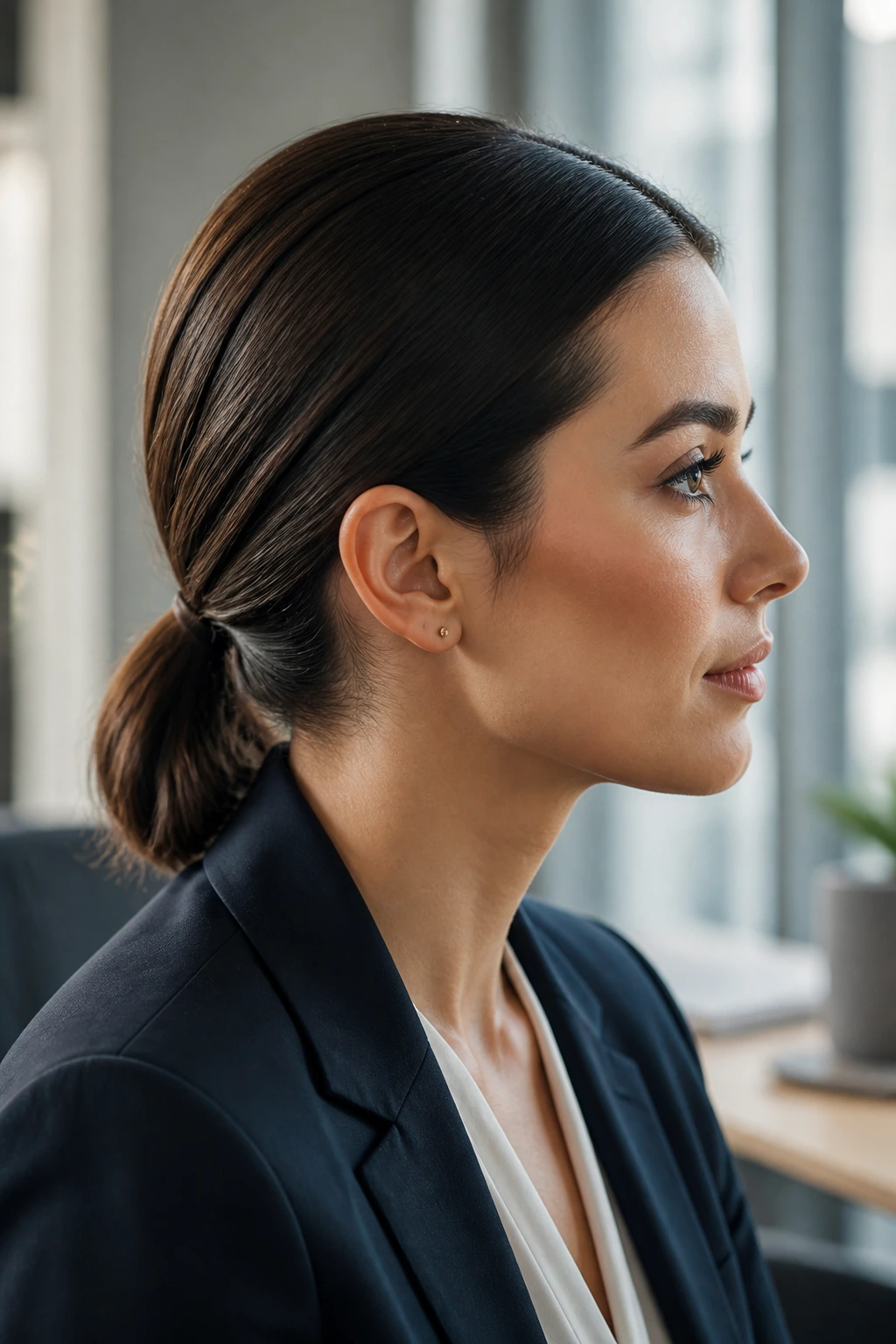
This one is about precision. Center part, smooth crown, low anchor, ends shaped with a flat iron or blow-dryer brush. Nothing loud. Nothing fussy.
The style works because it respects the haircut’s natural lines instead of trying to invent new ones. On short hair, a neat ponytail often looks more expensive than a complicated one, simply because every detail is visible. There’s nowhere for sloppy work to hide.
I’d wear this with a crisp shirt, a blazer, or any neckline that benefits from a clean back. The pony itself can be modest. The finish is what matters.
20. Tousled Weekend Pony
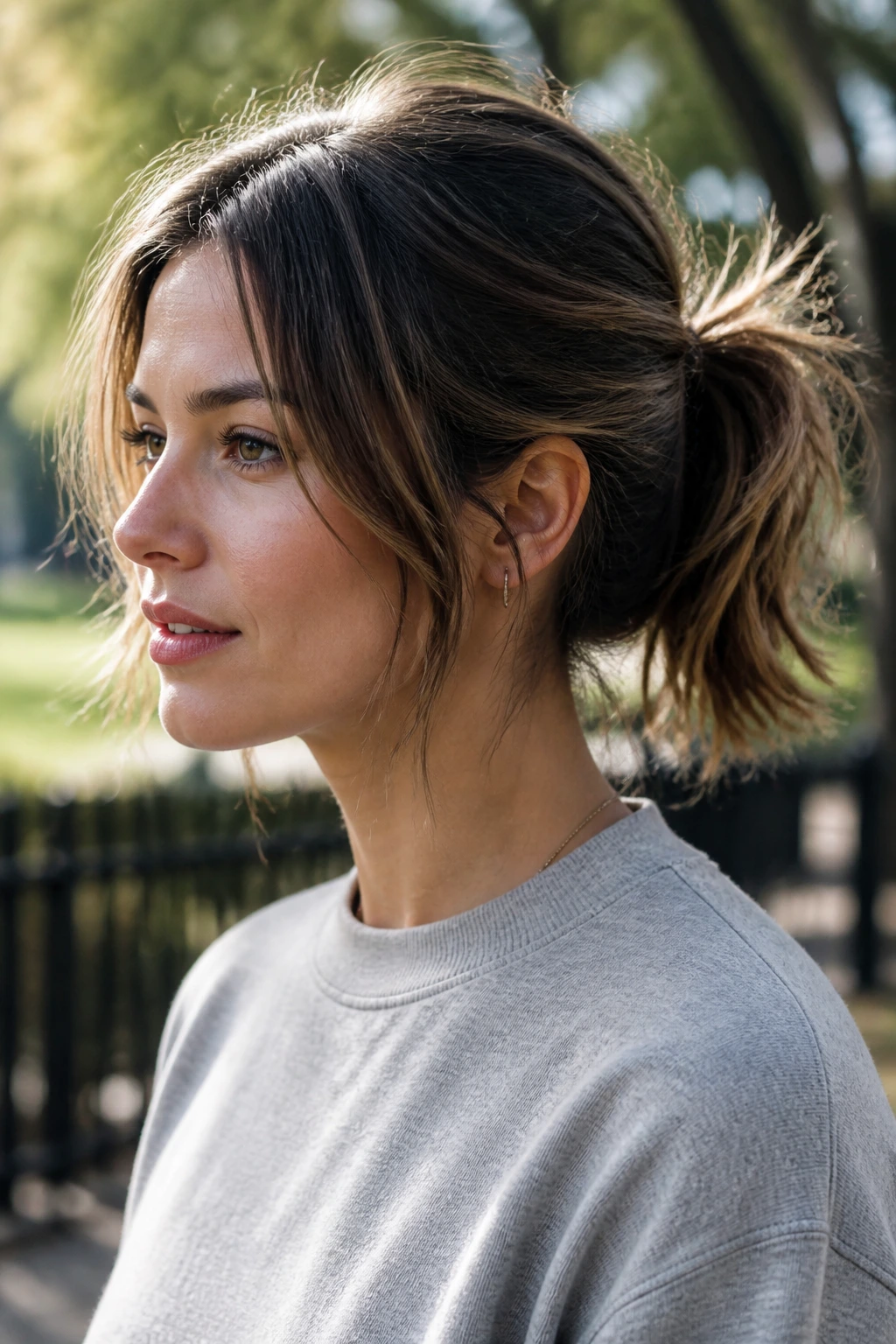
If the polished workday pony is all edges, this one is all looseness. It’s built for hair that’s got some bend, some dry shampoo, and a little attitude.
Mist the roots with texture spray, gather the hair loosely at the back, and keep the crown soft rather than flat. The tail should look airy, with pieces separated just enough to show the texture. A tiny bit of bend in the ends keeps the style from going limp halfway through the day.
This is what I’d call a forgiving ponytail. It doesn’t punish you for imperfect hair. In fact, imperfect hair is part of the point.
21. Braided Accent Pony
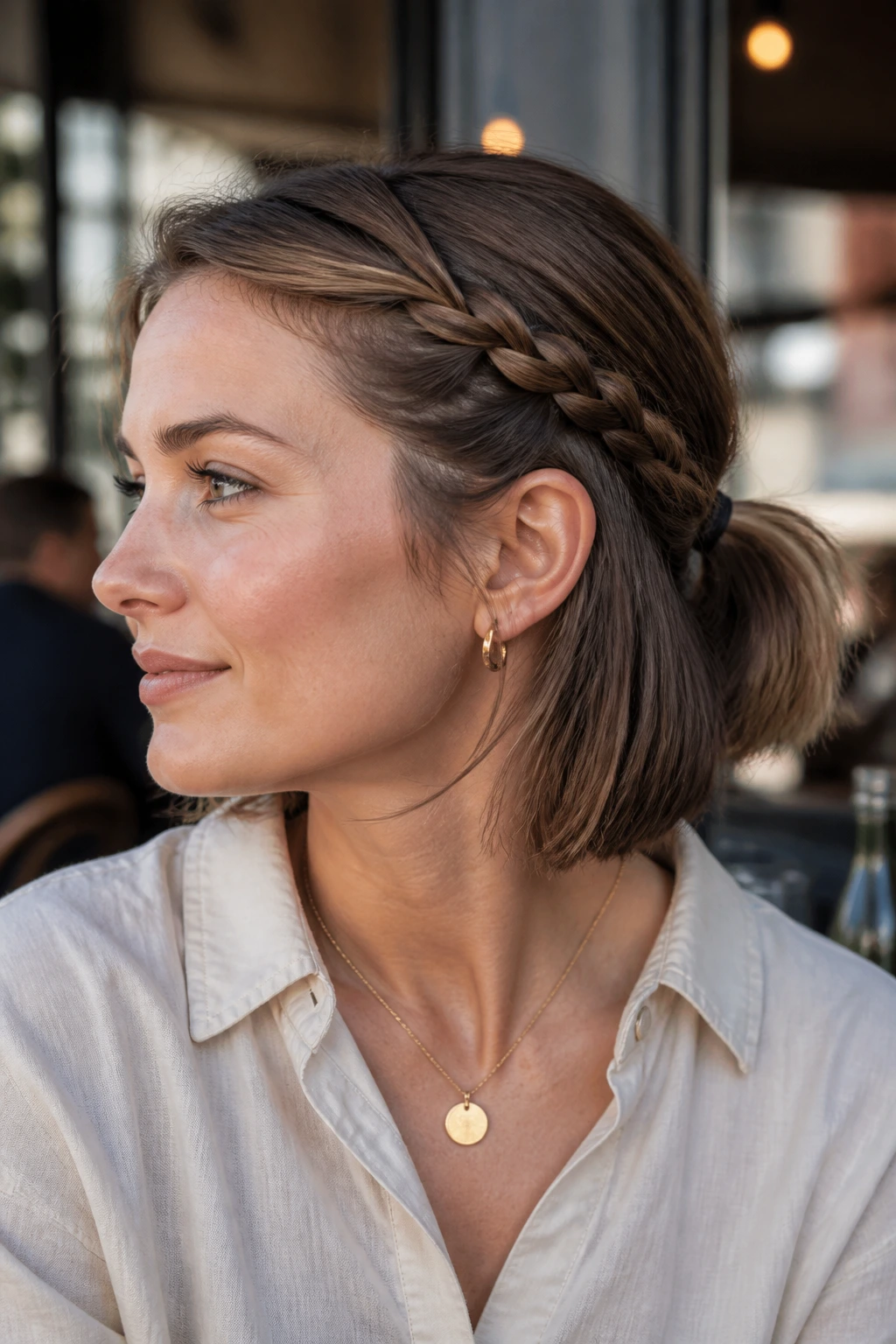
A small braid on one side of the head can do the work of a much more complicated style. It pulls short layers into line, adds a clean edge, and gives the ponytail a focal point.
You can braid a narrow temple section or make a small Dutch braid along the hairline, then gather everything into a pony at the back. If you’re not a braid person, keep it loose and simple. Tight, perfect braids are not the goal here. A little texture at the edge is enough.
This style is especially good when the haircut has one side that behaves better than the other. The braid balances the shape and gives the eye something to follow.
22. Halo-Twist Pony
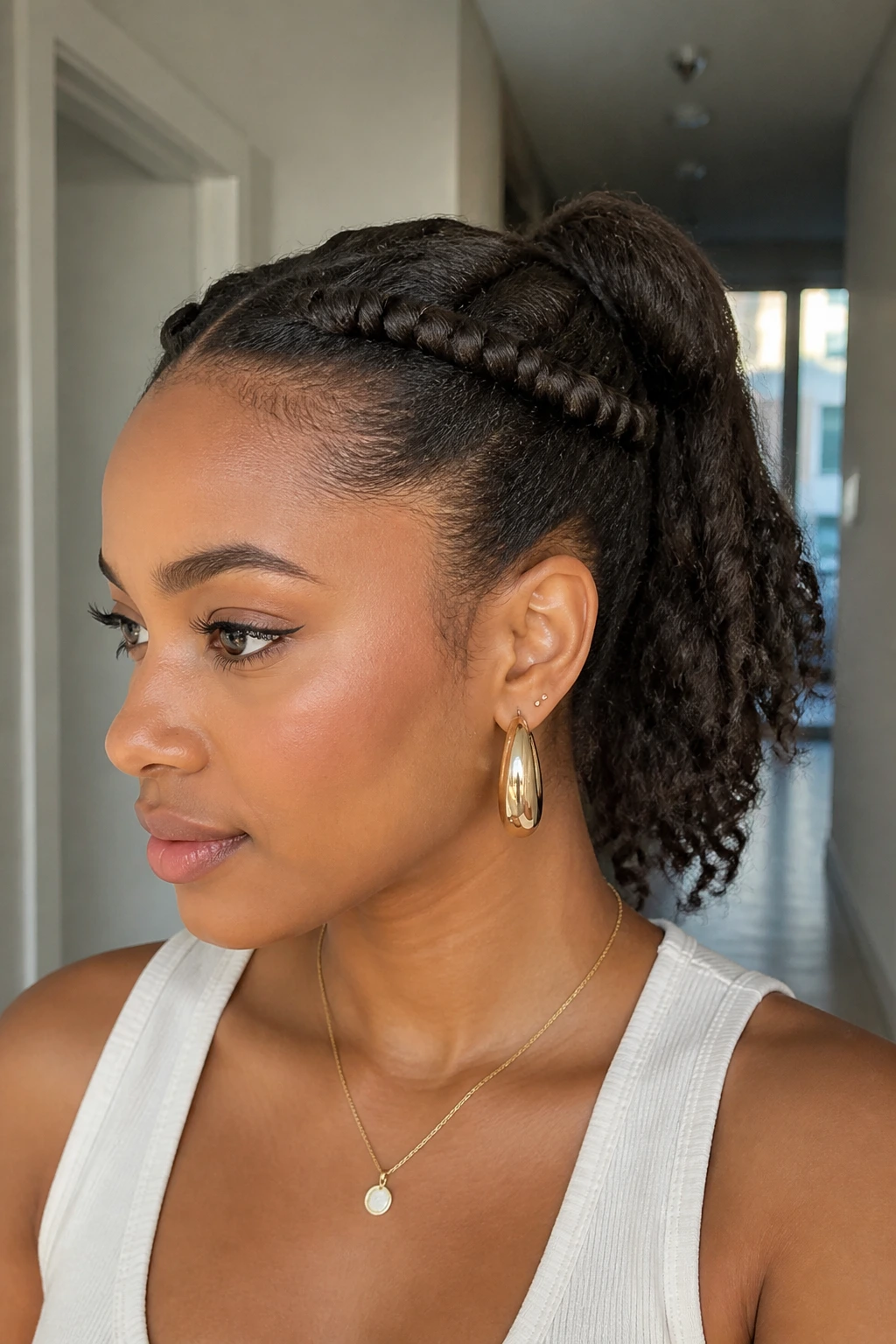
Two flat twists from the temples make this style feel more structured than a plain pony, but not as formal as a full braid crown. The twists sweep back, meet near the crown or nape, and feed into the ponytail base.
It works best when you want the sides controlled without slicking them down completely. Short layered pieces tuck into the twist more easily than they do into a smooth gather, and the twist itself creates a nice frame around the face. If the hair is slippery, a touch of styling paste on the fingers will help the sections hold.
This is a good example of a small detail carrying the whole look. Without the twists, the pony is simple. With them, it has shape.
23. Half-Up Half-Down Pony
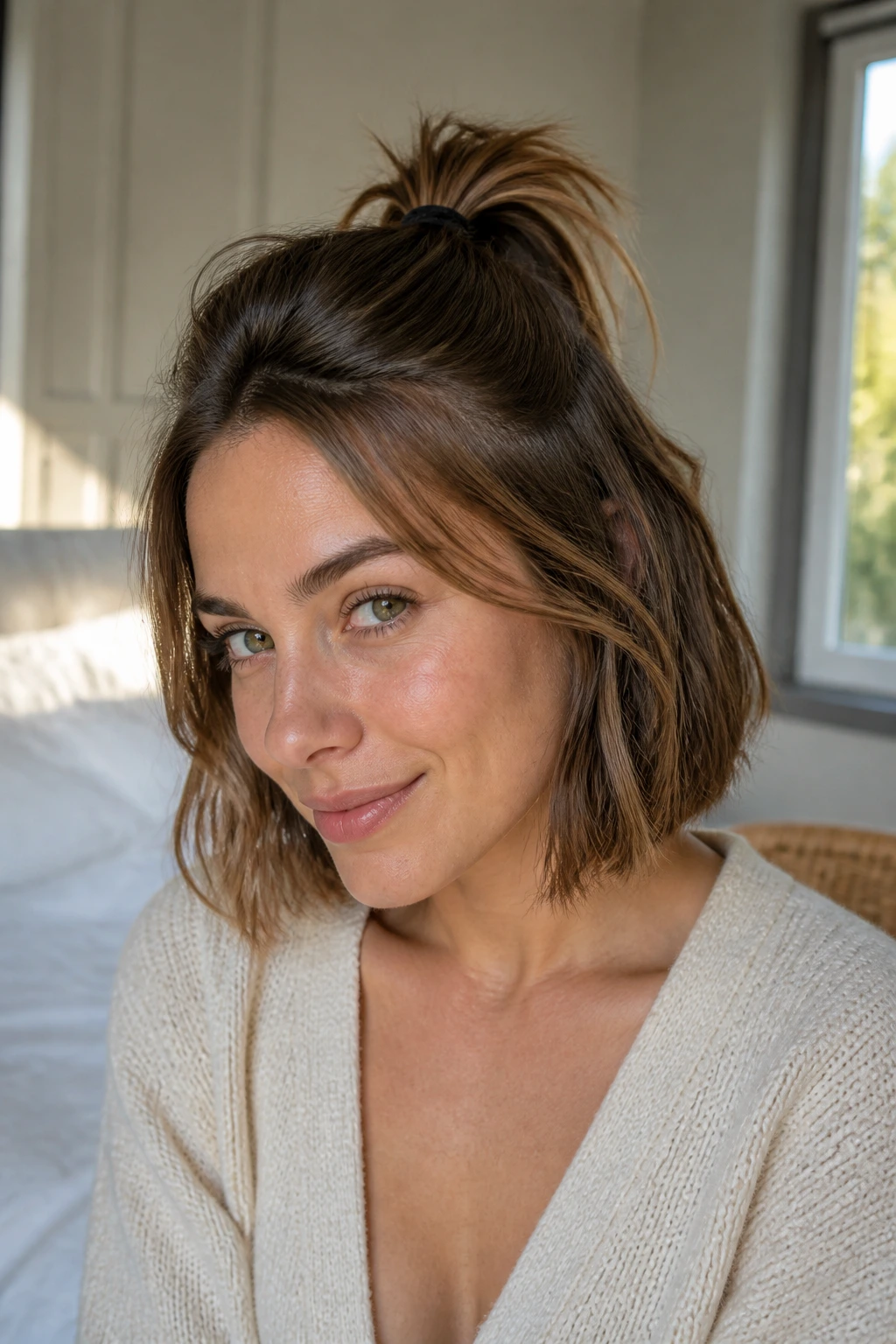
For very short bobs, this may be the most practical ponytail on the list. The top half gathers into a tiny pony, while the bottom half stays loose and does the rest of the styling work.
It’s low-pressure. That’s the main thing. You’re not forcing all the hair into one spot, which means fewer flyaways and less stress at the nape. Add a slight bend to the loose layers and the style suddenly looks intentional, not improvised.
This is also a good bridge style if you’re growing out a cut. It gives you the feeling of a ponytail without requiring full ponytail length.
24. Outward-Flip Pony
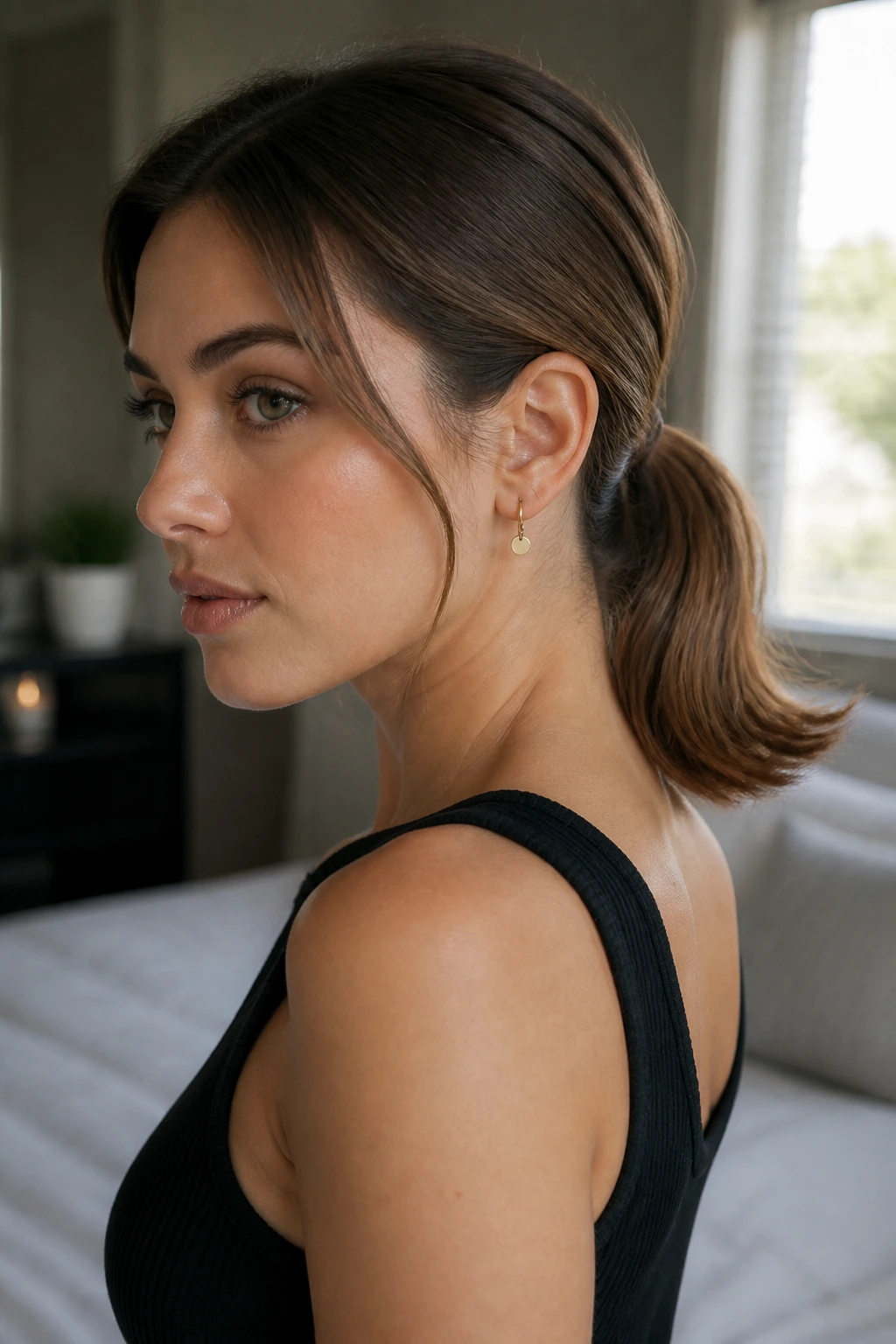
A flipped-out tail brings a little motion to short hair, and it hides the blunt ends that can make a tiny pony look abrupt.
After securing the pony low or mid-height, turn the ends outward with a flat iron or round brush so they kick away from the neck. Keep the crown smooth and the flip deliberate. The contrast between the sleek base and the playful ends is what makes this one work.
It’s especially nice on lobs that like to bend anyway. Instead of fighting the flip, you build it in.
25. Clip-In Lift Pony
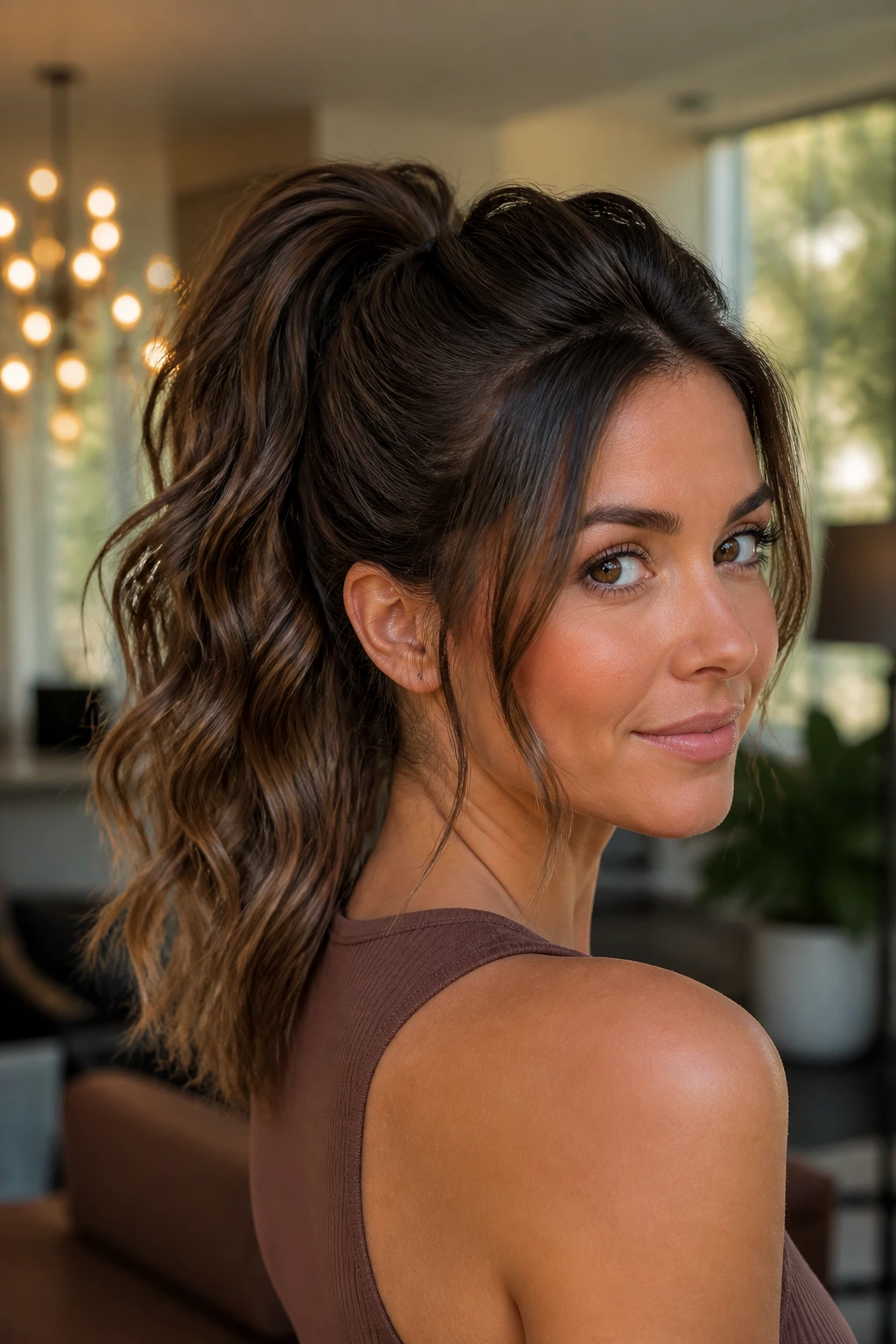
Sometimes the cleanest answer is to add a little hair. A clip-in pony piece or a small extension can give short hair the swing it needs, especially if your natural hair stops just shy of a full tail.
The important part is matching texture, not chasing some impossible idea of length. A piece that’s slightly wavy will blend better into a wavy bob than a dead-straight one. Use your real hair to make the base, hide the attachment with a wrap strand or scarf, and let the added length do the rest.
This isn’t cheating. It’s solving the actual problem in front of you.
26. Pixie Pebble Pony
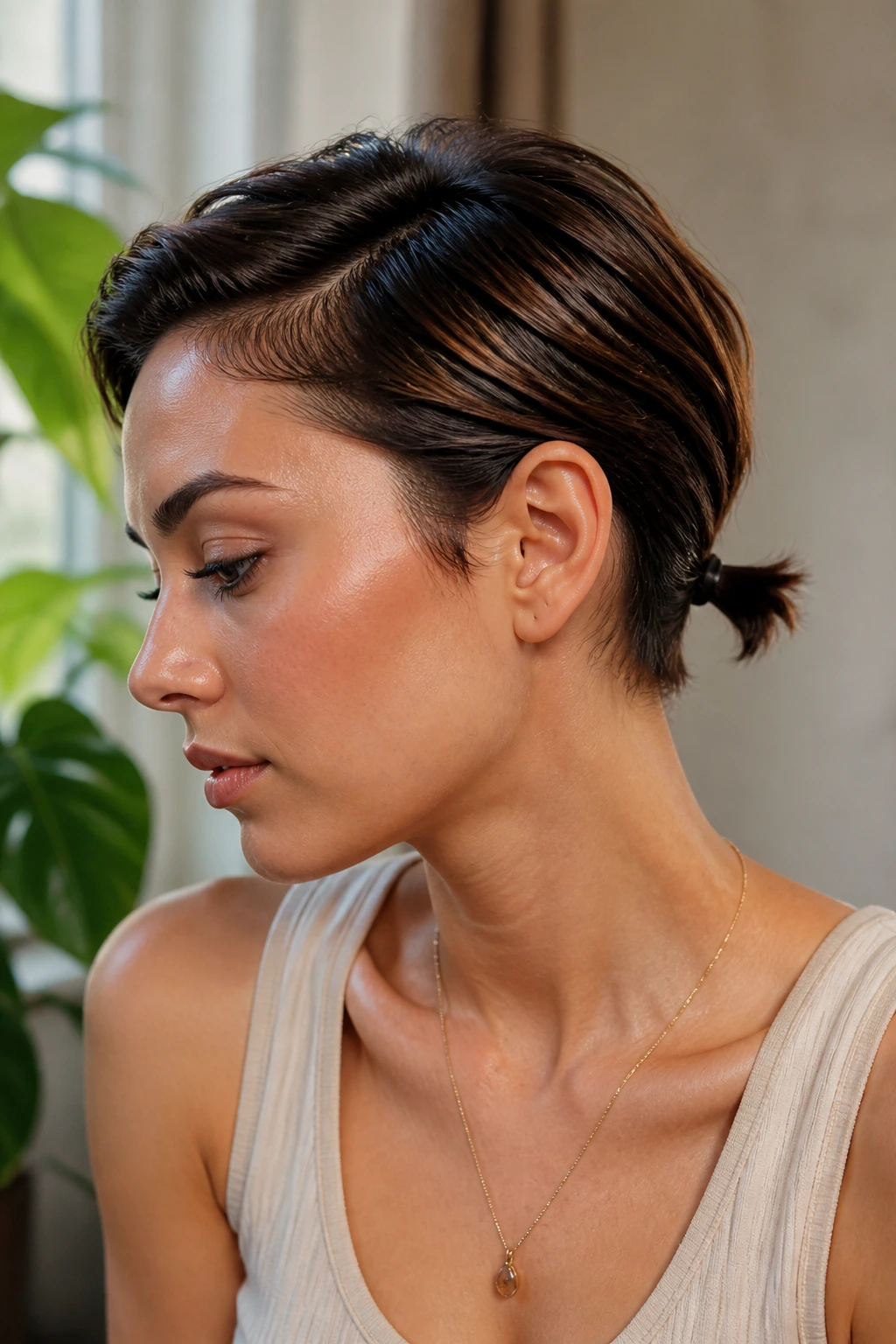
Very short hair can still gather into a tiny pony if the nape has enough growth. I like this style because it doesn’t pretend to be more than it is; the charm is in the scale.
Use a small elastic and a bit of gel or cream to smooth the sides toward the center. You may only have a short tail—fine. Keep the base neat, let the ends stay tiny, and pair the style with a strong part or a neat temple sweep. If you need a pin on one side, use it. One visible pin is better than three that keep sliding out.
This is the kind of ponytail that looks best when it’s tidy and intentional.
27. Volume-Boost Crown Pony
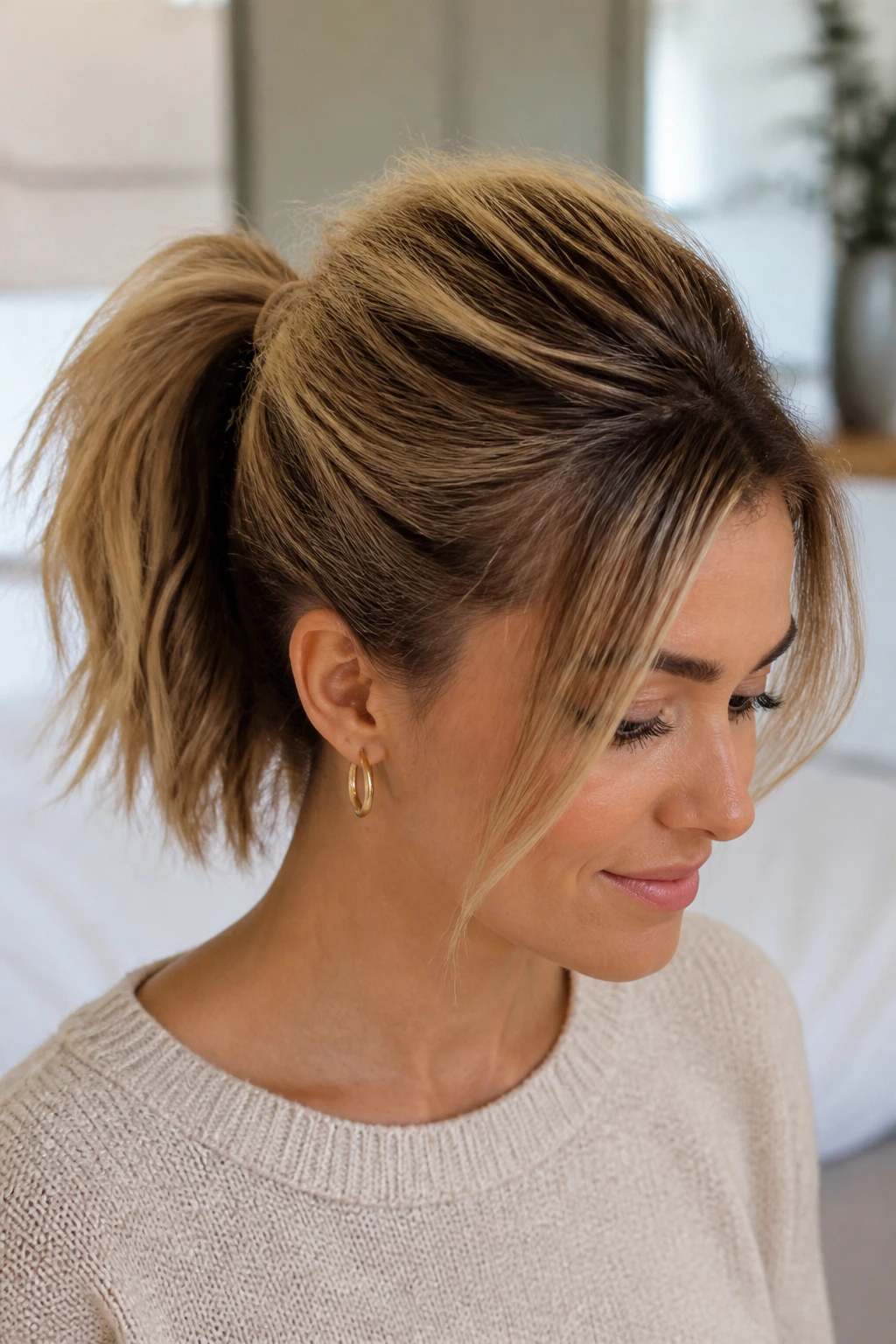
If your hair is fine, flat, or prone to lying close to the scalp, the crown needs help. This style builds that help first, then worries about the pony later.
Backcomb a small section at the crown, mist it with texture spray, smooth only the top layer, and secure the pony slightly below the puff. The lift should sit at the top of the head, not in a giant lump near the elastic. That balance is what keeps it from looking dated or overworked.
A little volume goes a long way here. Too much teasing makes short hair look stiff fast. Keep it airy and move on.
28. Humidity-Proof Gel Pony
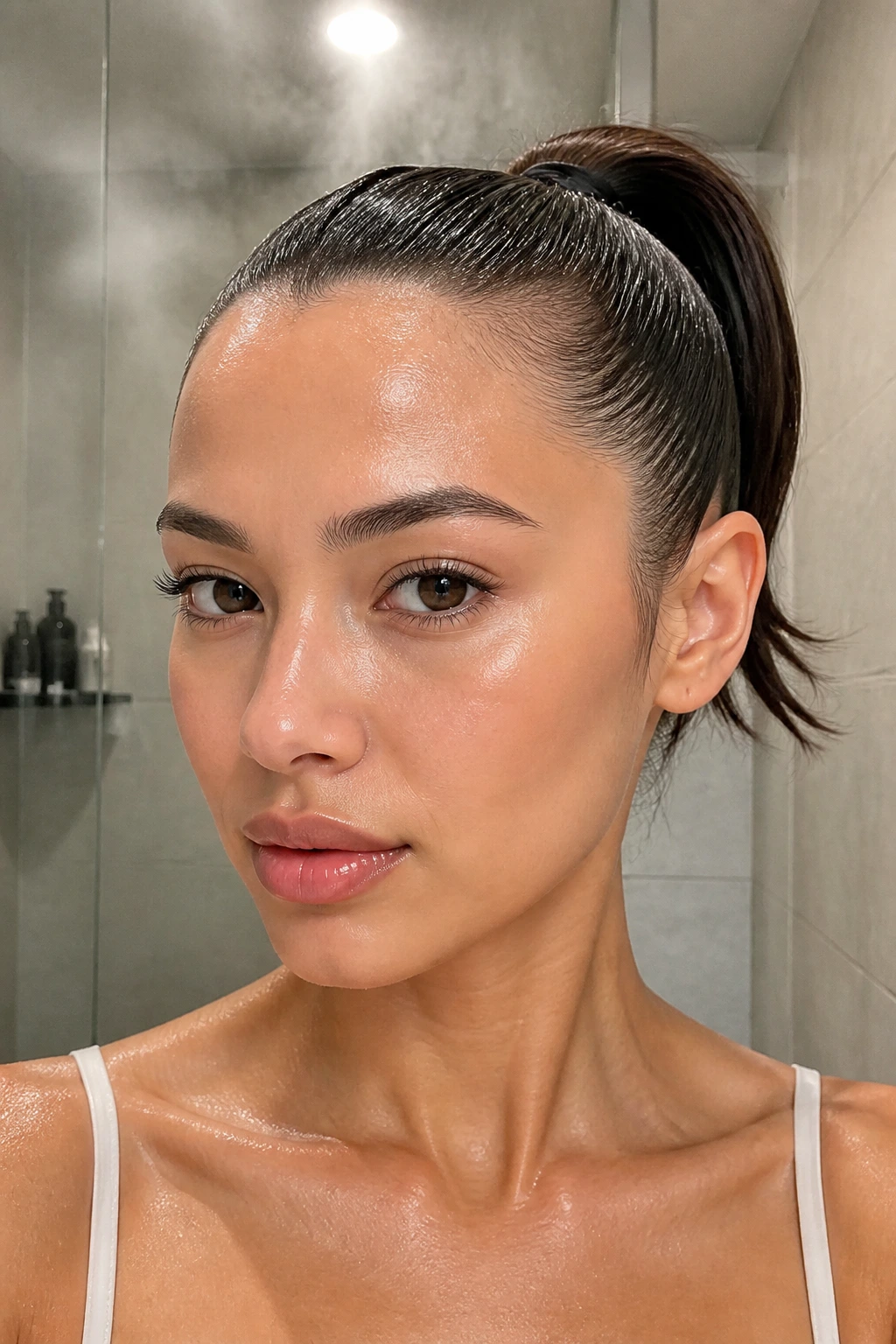
Some days you don’t want softness. You want control. This is the style for weather that turns every baby hair into a separate personality.
Apply gel to damp roots, brush everything into place, and seal it with a light mist of hairspray once the pony is secure. The short layers around the temples should sit flat enough that the outline stays clean even if the air gets heavy. It’s a sharp look, but the point is staying power.
I’d keep this one for days when you know your hair likes to swell, frizz, or puff out the moment you step outside. It’s not the prettiest ponytail in the room. It may be the most dependable.
29. Low Knot-Through Pony
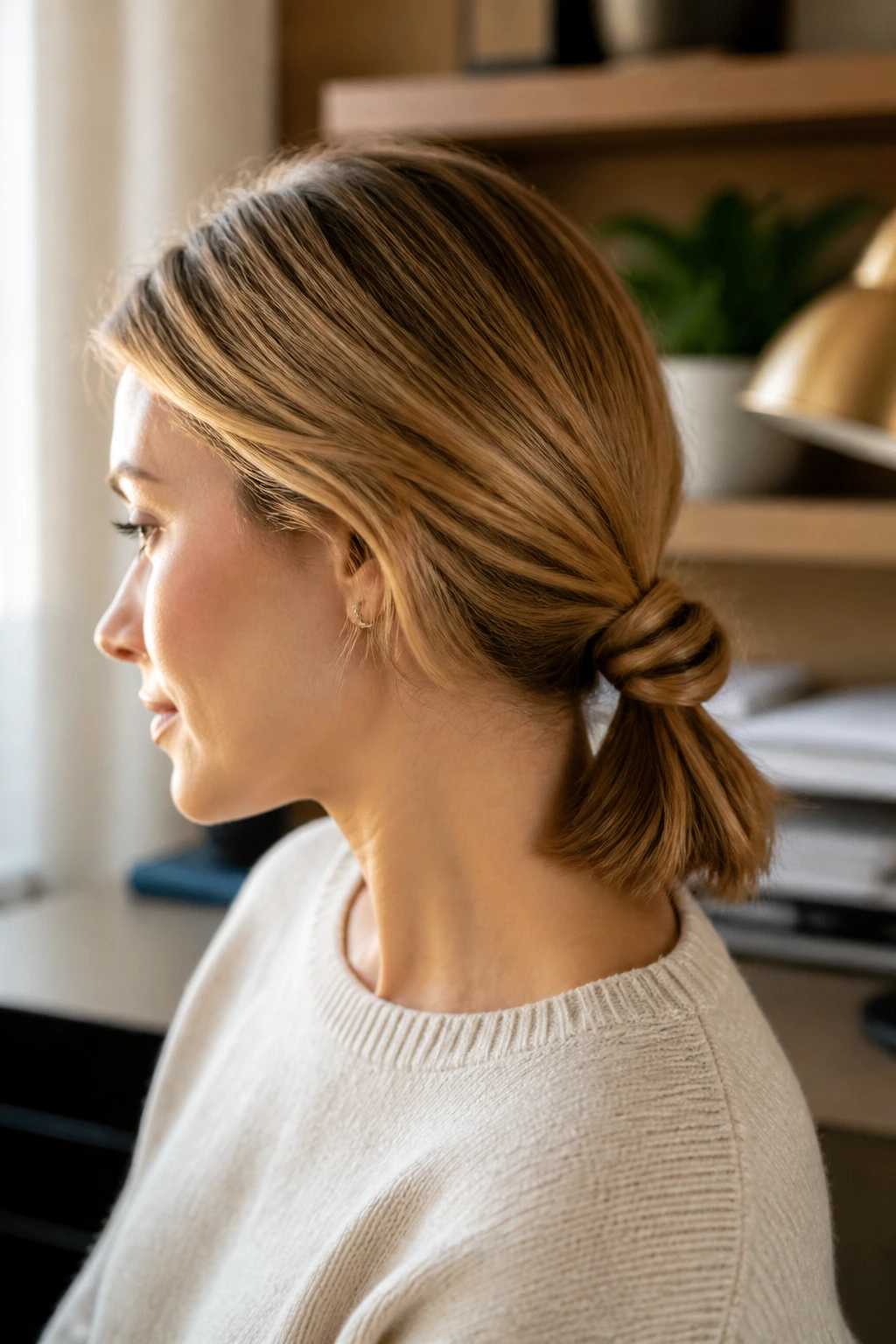
A knot-through finish gives a regular low pony some movement without requiring more length than your hair has. The base stays low, then the tail loops through itself in a soft knot shape.
That knot gives the style a little texture and keeps the tail compact. It’s useful for hair that sits just above the collar and tends to flip under or out in odd ways. If you want it to feel dressier, leave the knot neat. If you want it casual, pull a few pieces loose around the ears.
The beauty of this style is that it looks like you spent longer on it than you did.
30. Sporty On-the-Go Pony
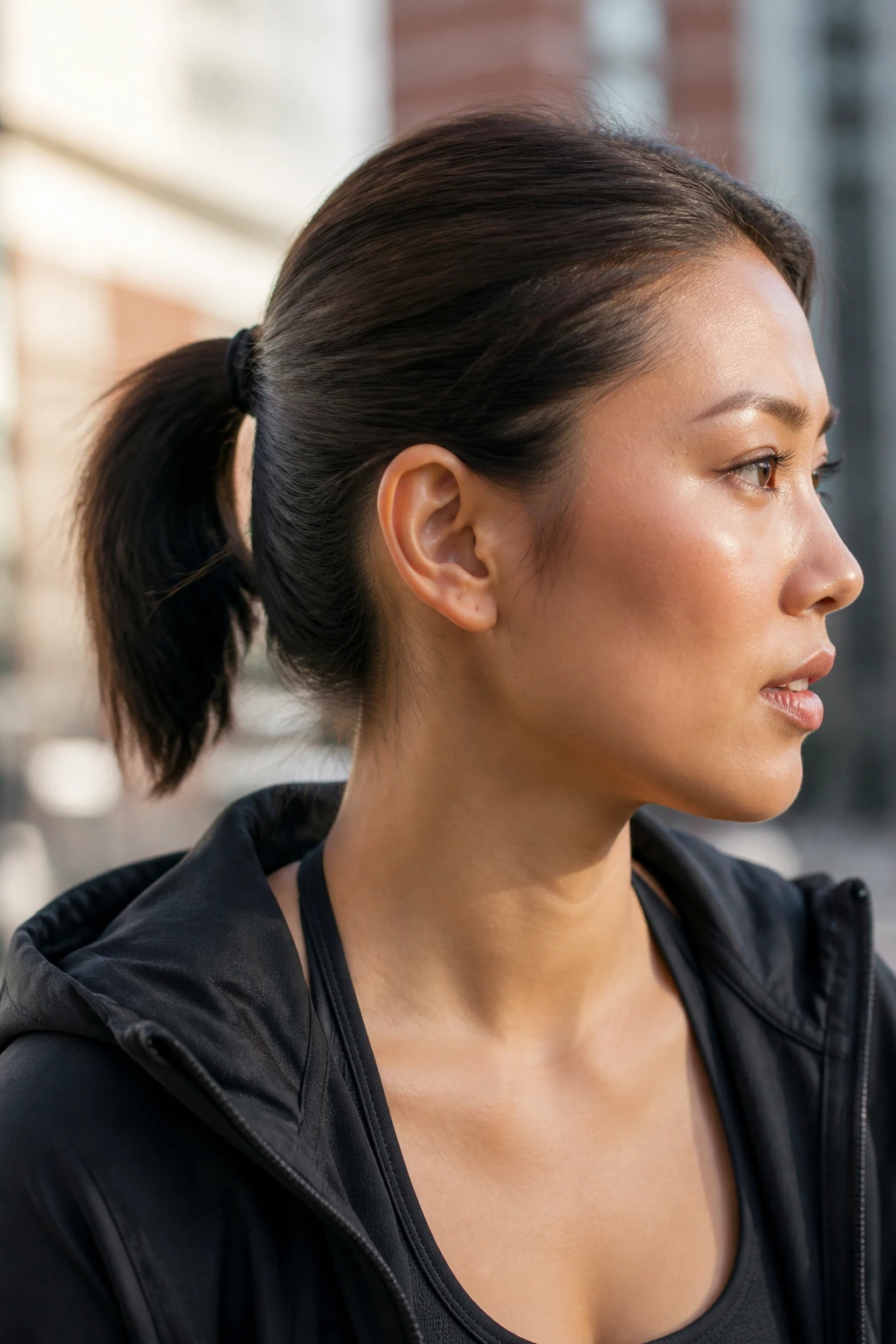
This is the clean, practical pony for movement: walking, errands, travel, whatever. It keeps the hair off the face without demanding perfect symmetry.
Use a center or off-center part, brush the sides back with a little water or styling cream, and gather the hair at mid-back. On short cuts, the point is to keep the pony secure while the shorter front pieces stay tucked in. A fabric elastic or coil tie is kinder than a tight rubber band if you wear it often.
It’s not fancy. It’s the ponytail you can throw on, forget about, and still look like you meant to dress your hair.
31. Party-Ready Sparkle Pony
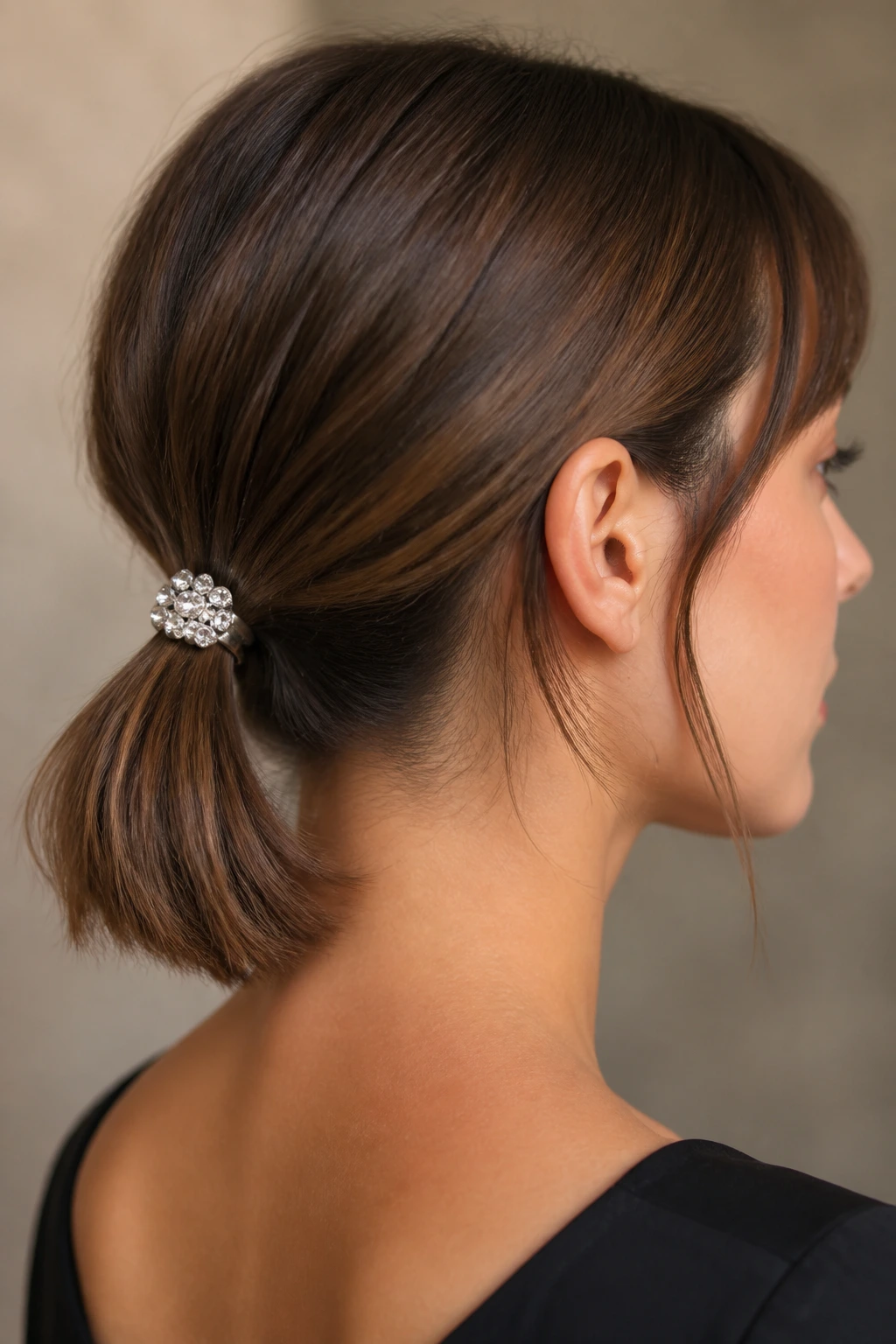
A small accessory can make a short pony feel dressed up fast. A pearl pin, metallic cuff, or single jeweled clip near the base gives the style a focal point and distracts from the fact that the tail isn’t long.
Keep the hair itself clean and simple. The accessory should be the statement, not the pony structure. If the hair is textured, smooth just the top section and let the tail keep some movement. That contrast makes the sparkle read better.
This is a good move when you need a low-effort style that still feels like an occasion. One clean base. One bright detail. Done.
32. Minimalist Nape Pony
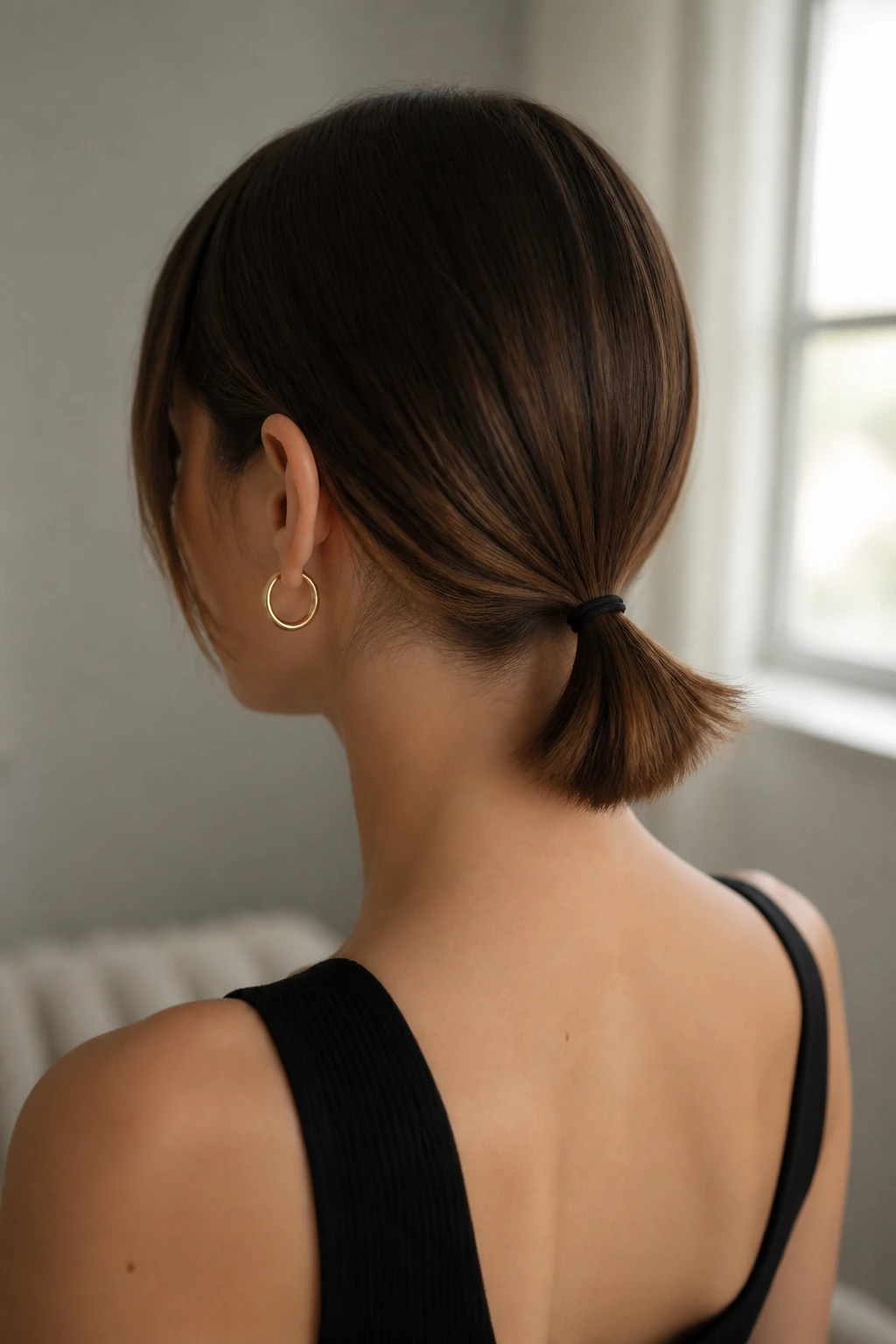
Sometimes the best short-hair ponytail is the one that barely announces itself. A center part, a low nape tie, a little shine, and nothing else.
The minimalist version works because it does not overplay the length. It lets the haircut sit where it naturally wants to sit and gives it only enough structure to look finished. If your hair is blunt, the line at the end becomes part of the style. If it’s layered, the loose edges soften the whole thing.
I’m fond of this one because it has no tricks in the open. Everything happening is small, and that restraint makes it look calm.
Why Short Hair Responds Better to Some Ponytails Than Others
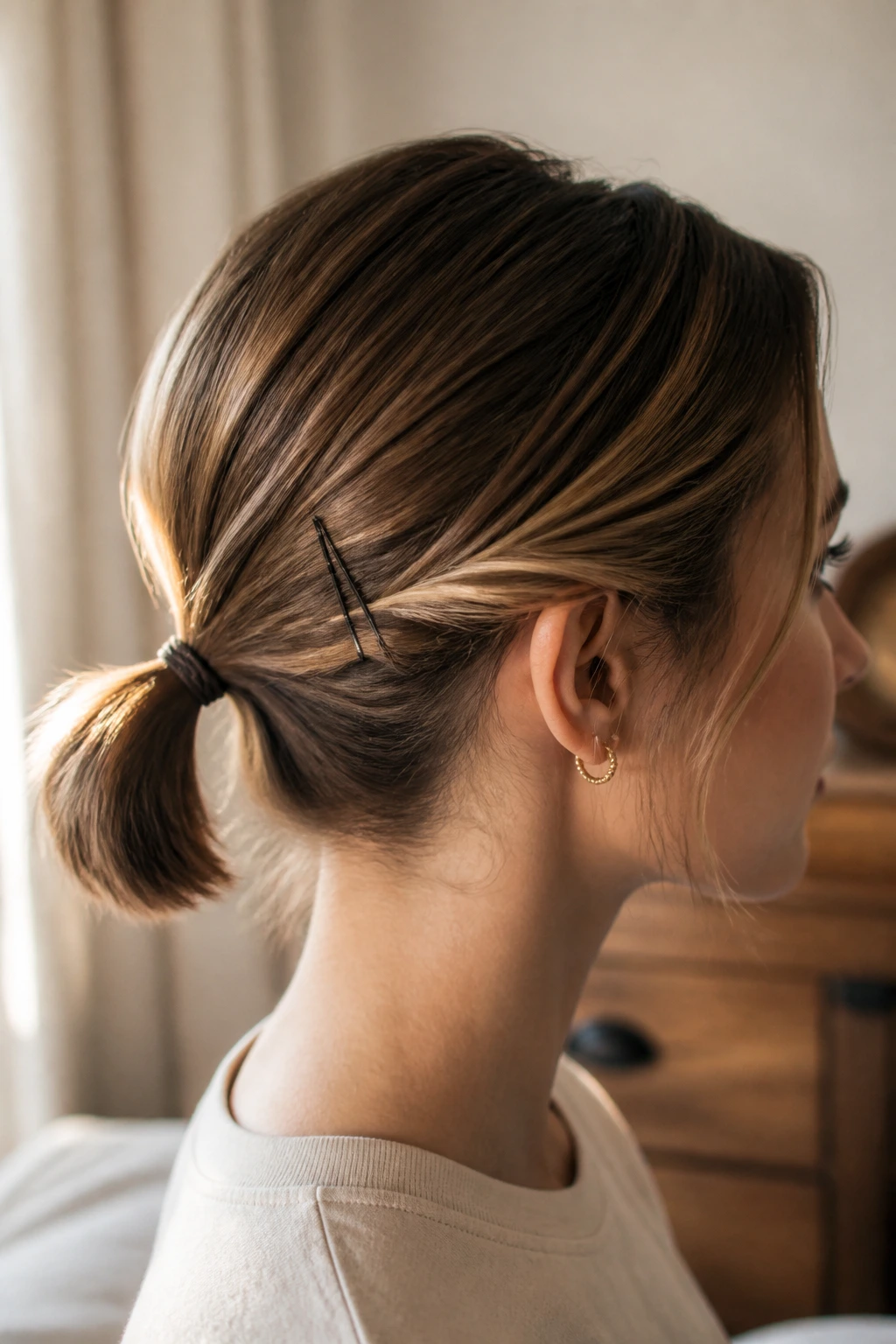
Short hair has less weight, so it moves more, slips more, and shows every pin you use. That sounds annoying until you realize it also means you can control it with far less product than people with long hair need. A handful of bobby pins can do what a heavy serum never will.
The big difference is anchor point. A ponytail sitting too high on short hair tends to pull at the sides and expose all the broken little ends around the hairline. A low or half-up anchor usually gives the hair a more natural place to gather. That’s why so many of the strongest styles in this collection sit at the nape, at the crown, or in a split half-up shape.
Texture changes the outcome too. Straight, silky hair needs grip. Curly hair needs a base that respects shrinkage and avoids over-stretching the pattern. Layered hair needs disguise—twists, wraps, braids, and side parts that hide the uneven bits instead of pretending they aren’t there. Once you match the style to the haircut’s behavior, the whole thing stops being a fight.
The Tools That Save Short Ponytails From Falling Apart
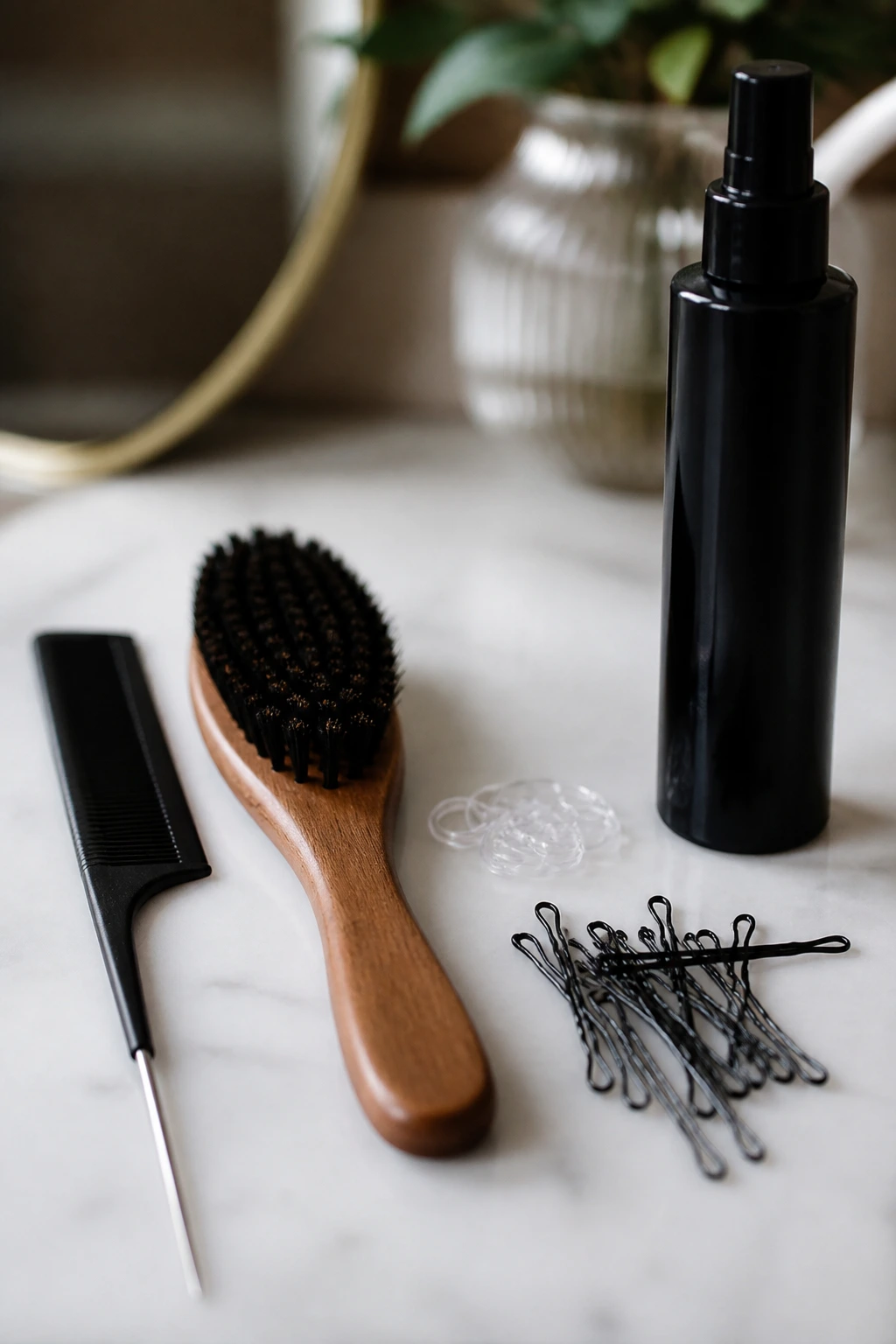
-
Rat-tail comb: Perfect for clean parts and for sectioning tiny pieces without creating a mess at the scalp.
-
Boar-bristle brush: Smooths the crown and sides without leaving the hair puffed up the way a plastic brush can.
-
Mini elastics: These matter more on short hair than big, thick ties. A small elastic holds closer to the head and looks less bulky.
-
Clear elastics: Handy for bubble ponies, braid bases, and double-pony tricks where the tie should disappear.
-
Bobby pins: Use the flat, crimped kind if your hair is slippery; they grip better and stay hidden more easily.
-
Texturizing spray: Gives fine or freshly washed hair enough friction to stay in place.
-
Gel or styling cream: Better for sleek styles and humidity control. Use a small amount, not a palmful.
-
1-inch curling iron or flat iron: Helps put bend into short tails, ends, and face-framing pieces.
-
Satin scrunchie or ribbon: Softer on fragile short hair and useful when you want the base to look intentional.
-
Hand mirror: A boring tool, but a necessary one when the nape section is tiny and easy to misplace.
How to Prep Short Hair So the Elastic Has Something to Grip
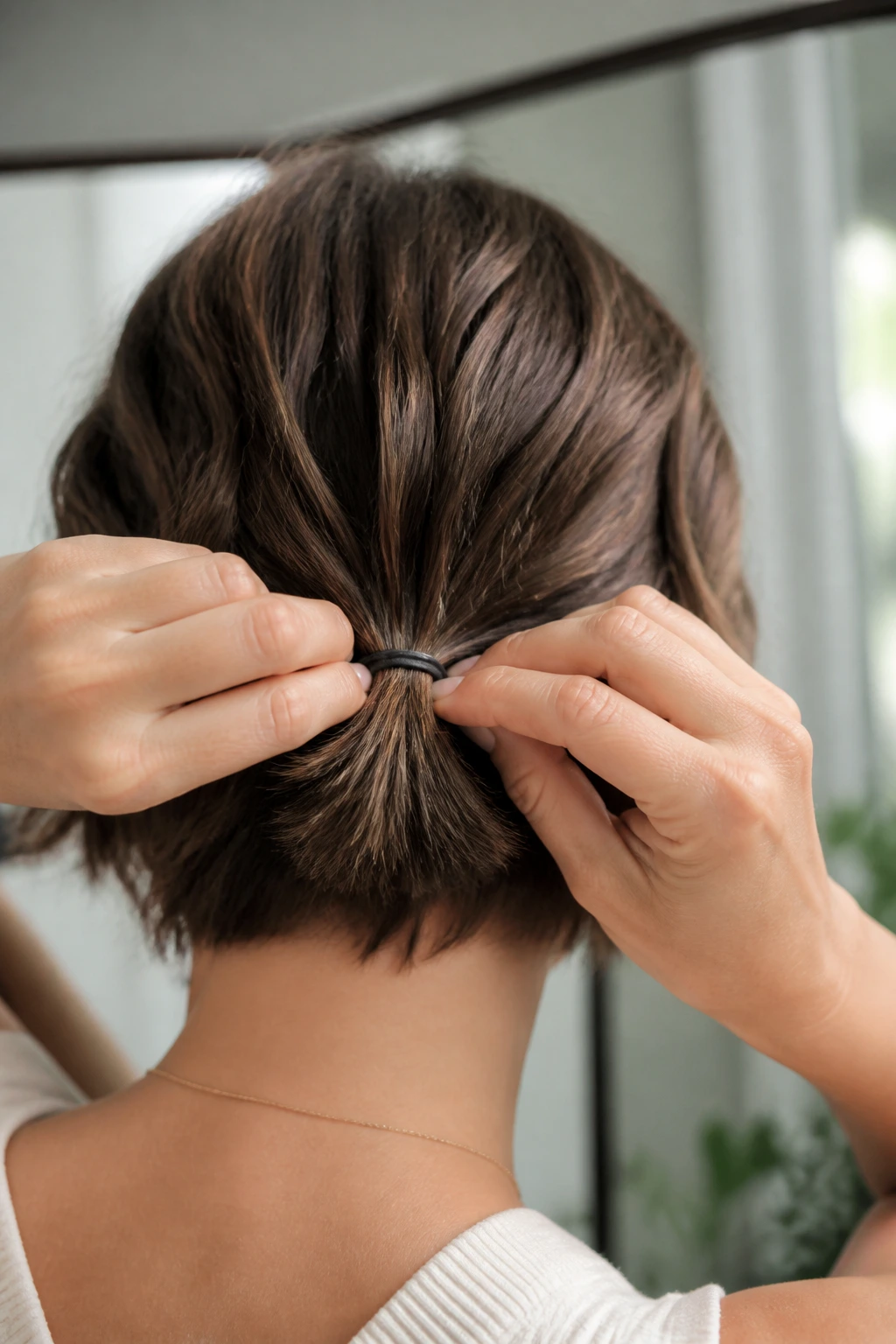
Start with the hair you actually have, not the hair you wish you had. That sounds blunt, but it saves a lot of frustration. Short styles hold better on hair that’s got a bit of lived-in texture—usually day two hair, or hair with a light dusting of dry shampoo at the roots.
If the hair is freshly washed and slippery, rough it up a little. A pea-sized amount of mousse or light cream at the roots, then a blow-dry with your head tipped slightly back, gives the crown more shape. If you’re building a sleek look, go the other direction: apply smoothing cream from the temples back, then brush hard and set the part before the hair cools.
Sectioning matters more than product volume. Use the comb to decide where the pony sits, clip away the parts you’re not touching yet, and gather the hair in stages instead of all at once. That keeps short layers from escaping before the elastic even goes in. If your cut has a lot of layers, work in a little hairspray at each side before you secure the base.
How to Wear These Styles for Work, Weekends, and Nights Out
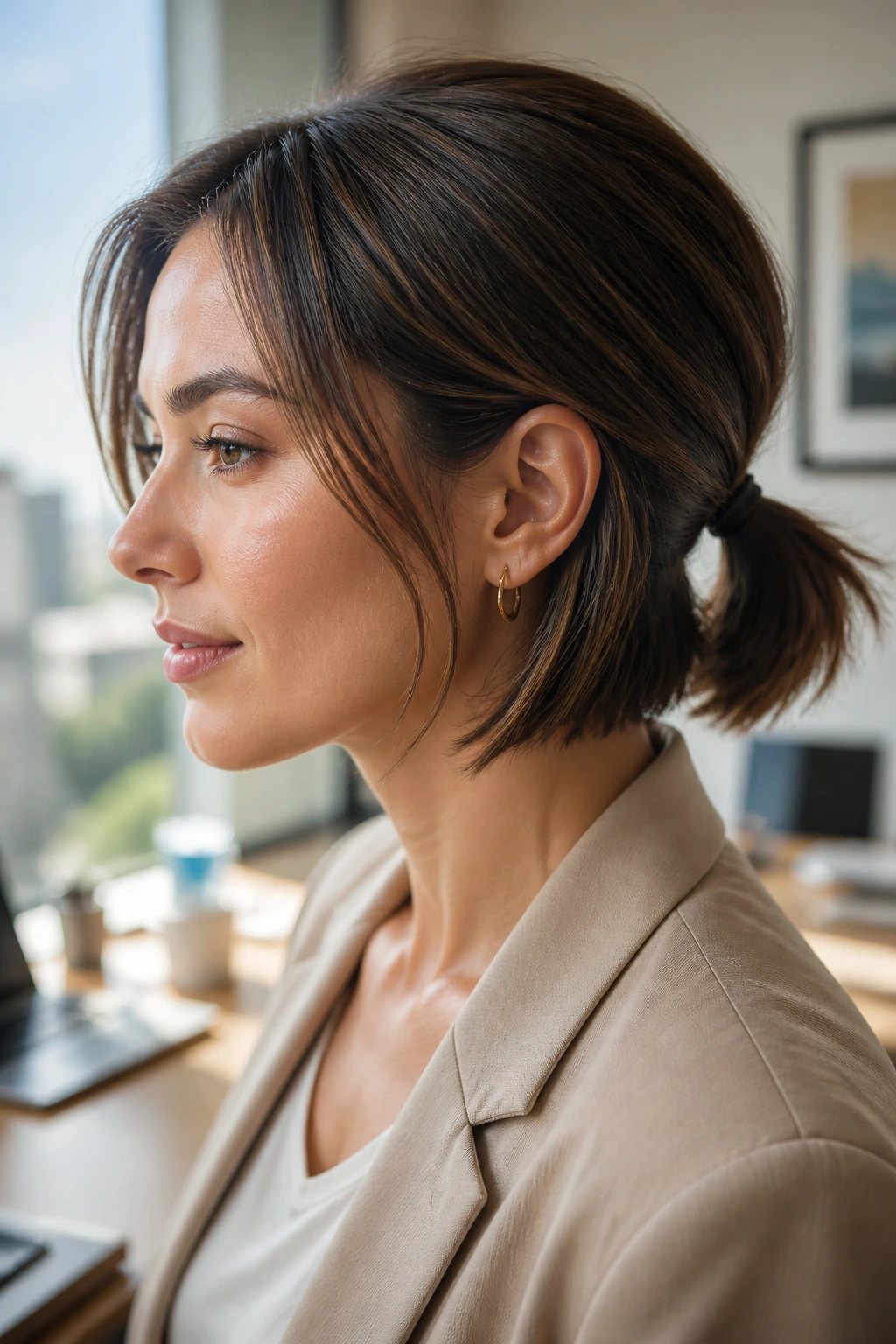
Best for work: The sleek nape wrap pony, the polished workday pony, and the minimalist nape pony all behave well under collars, jackets, and headphones. They’re neat enough for a client call, and they don’t need constant checking in a bathroom mirror.
Best for off-duty days: The piecey textured pony, tousled weekend pony, and sporty on-the-go pony are the ones I’d choose when comfort wins. They tolerate movement, a little wind, and the reality of not wanting to fuss with your hair every hour.
Best for evenings out: The scarf-wrapped pony, party-ready sparkle pony, wet-look tight pony, and faux-high pony all give short hair more shape from the front. They read deliberate, which is the whole point when the outfit is doing half the talking.
Best for fine or slippery hair: Anything with a braid, twist, or double-elastic setup is going to behave better than a simple single tie. The hair needs friction. Give it that, and the style stops sliding.
Styling Upgrades and Personal Touches
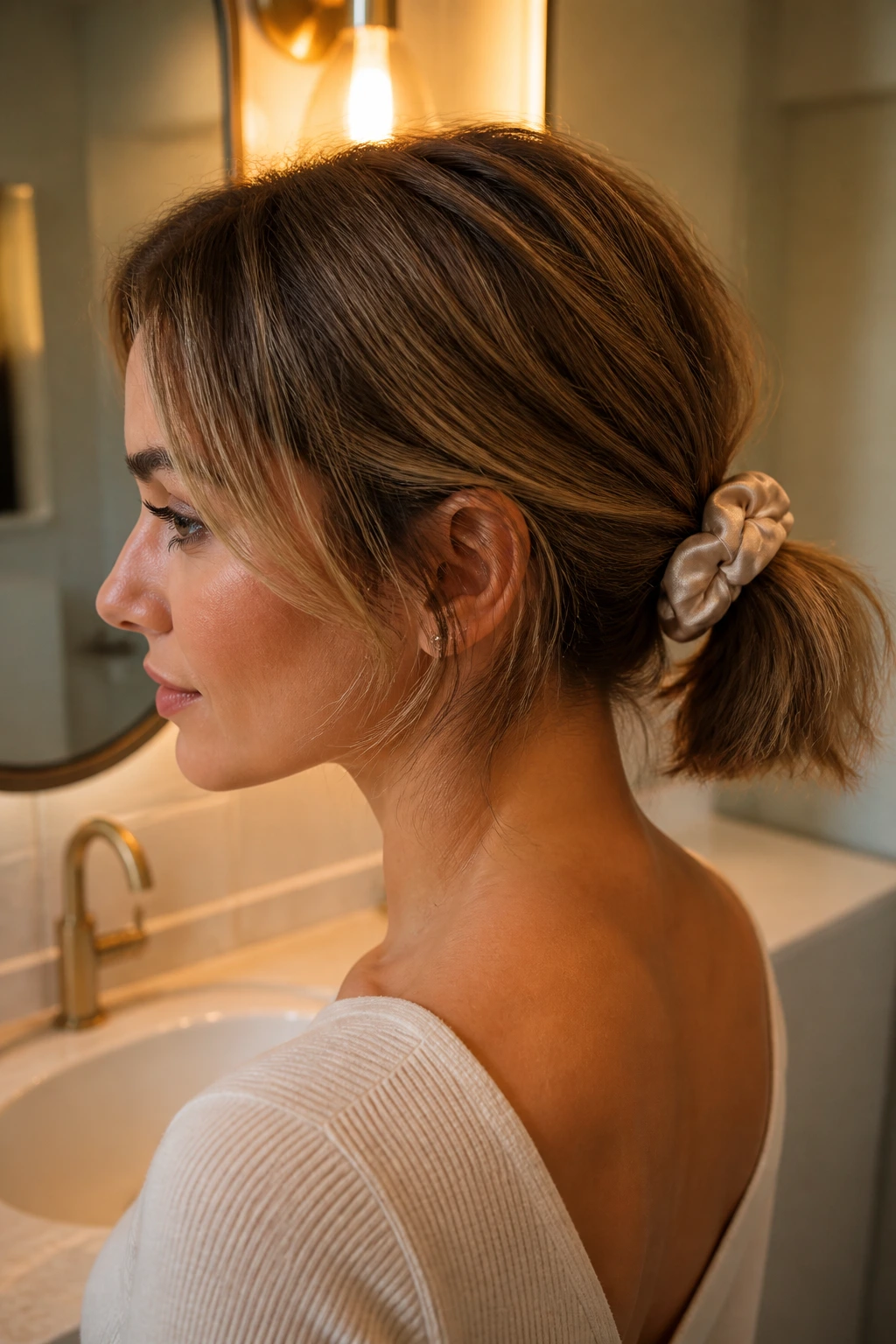
Texture Boost: If the pony looks too small, mist the tail with texturizing spray and scrunch it gently with your hands. That tiny bit of grit makes short ends look thicker and gives the shape more body.
Sleek Finish: For a sharper line, put styling cream on a toothbrush or edge brush and smooth the hairline, then seal it with a light mist of hairspray. This is cleaner than dumping product straight onto the scalp.
Accessory Shift: Swap the elastic for a ribbon, scarf, or metal cuff when the style feels too plain. On short hair, one accessory can do the visual work of a longer tail.
Length Cheat: Add a hidden second pony, a loop-through, or a small clip-in tail if you want more swing. No shame in that. Short hair can be practical and a little sneaky at the same time.
Softness Trick: Pull out two or three tiny pieces around the temples and curl them away from the face. The style feels less severe immediately.
Common Mistakes to Avoid
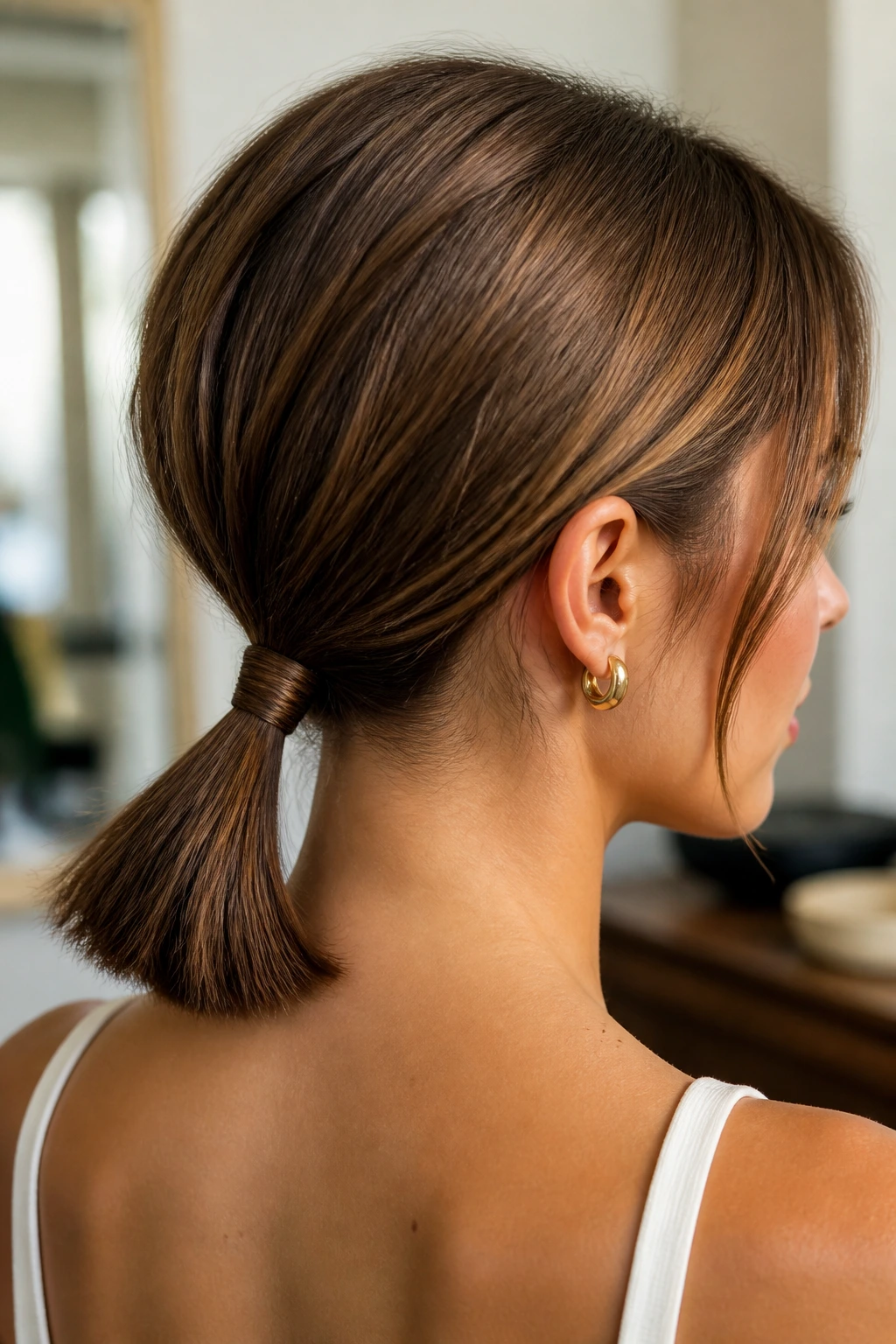
The biggest mistake is trying to force a high ponytail out of hair that’s barely long enough for a low one. The result is usually a tight, strained crown and sides that peel loose by lunch. Start lower or use a stacked trick instead.
Another common problem is too much product. A heavy cream or thick oil turns short hair slick in the wrong way, and then the elastic slides like it’s on glass. Use lightweight texture at the roots and save the richer stuff for dry ends.
People also skip anchoring the short layers. Those little pieces around the ears and neckline need pins, twists, or a braid if they’re going to stay in the game. If they’re left loose, they pop out first and make the whole pony look undone in the bad sense.
And then there’s the over-tightening habit. Pulling hard does not make short hair more secure. It usually makes the hairline sore and the style look tense. A better hold comes from grip and sectioning, not brute force.
Variations and Adaptations to Try
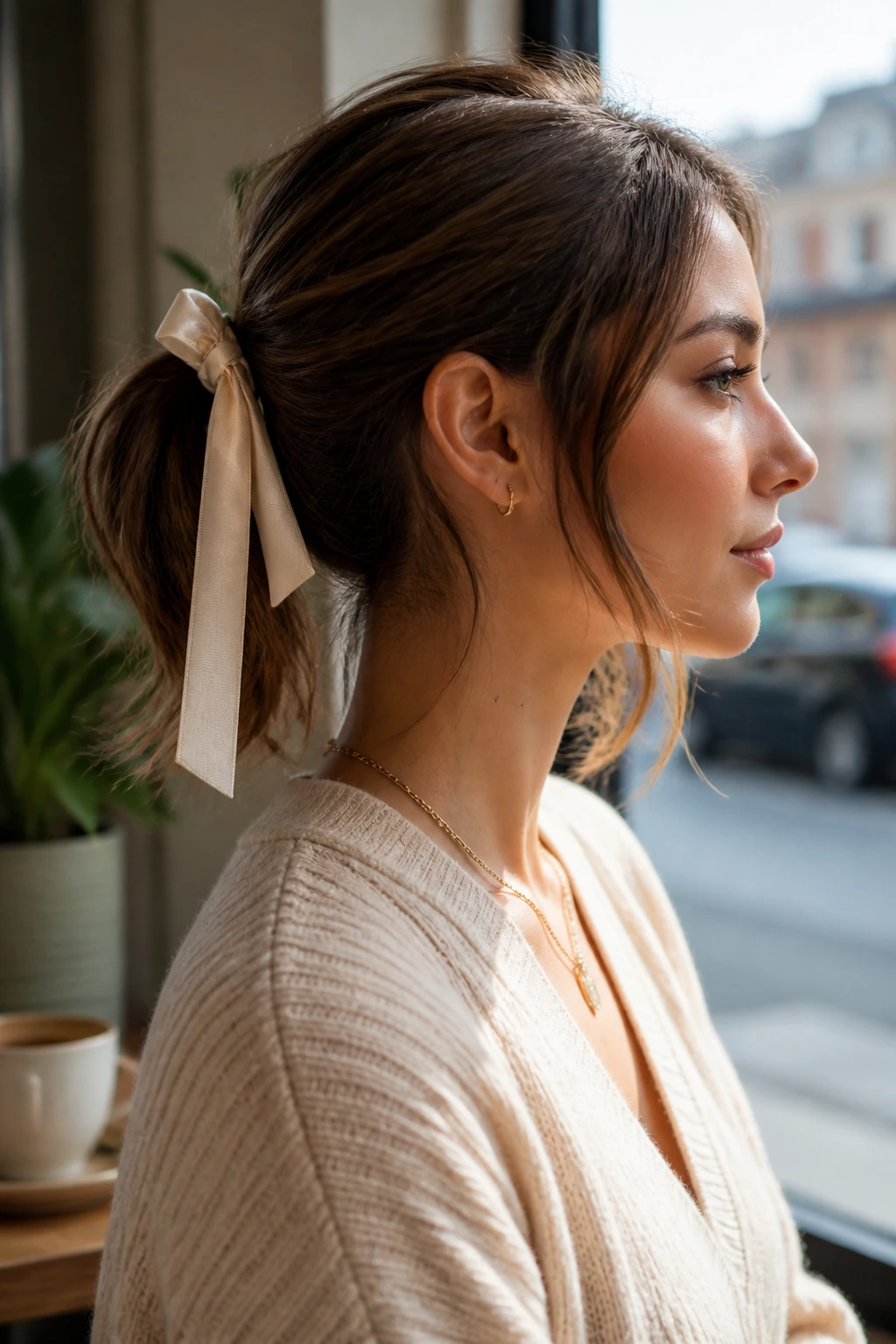
Fine-Hair Lift Pony: Tease only the crown and use a small clear elastic so the base doesn’t look thick. This version gives fine hair more lift without making it feel stiff or helmet-like.
Curly-Texture Pony: Skip the brush and gather with your fingers so the curl pattern stays intact. A satin scrunchie or coil tie works better here because it won’t flatten the shape at the base.
Humidity Shield Pony: Smooth the hair with gel first, then lock it down with hairspray once it’s secured. This is the style to reach for when the air outside wants to rewrite your hair for you.
Office-Polished Pony: Use a center part, low wrap, and tucked ends for a sharp finish that looks clean under blazers and button-downs. Nothing moves much, and that’s the point.
Grown-Out Pixie Pony: Build tiny anchors at the nape and use a micro elastic so the style looks intentional instead of forced. It’s small, but it still counts.
Accessory-First Pony: Start with the ribbon, scarf, or sparkly clip, then build the pony around it. That keeps the accessory from feeling like an afterthought.
How to Keep These Ponytails Fresh
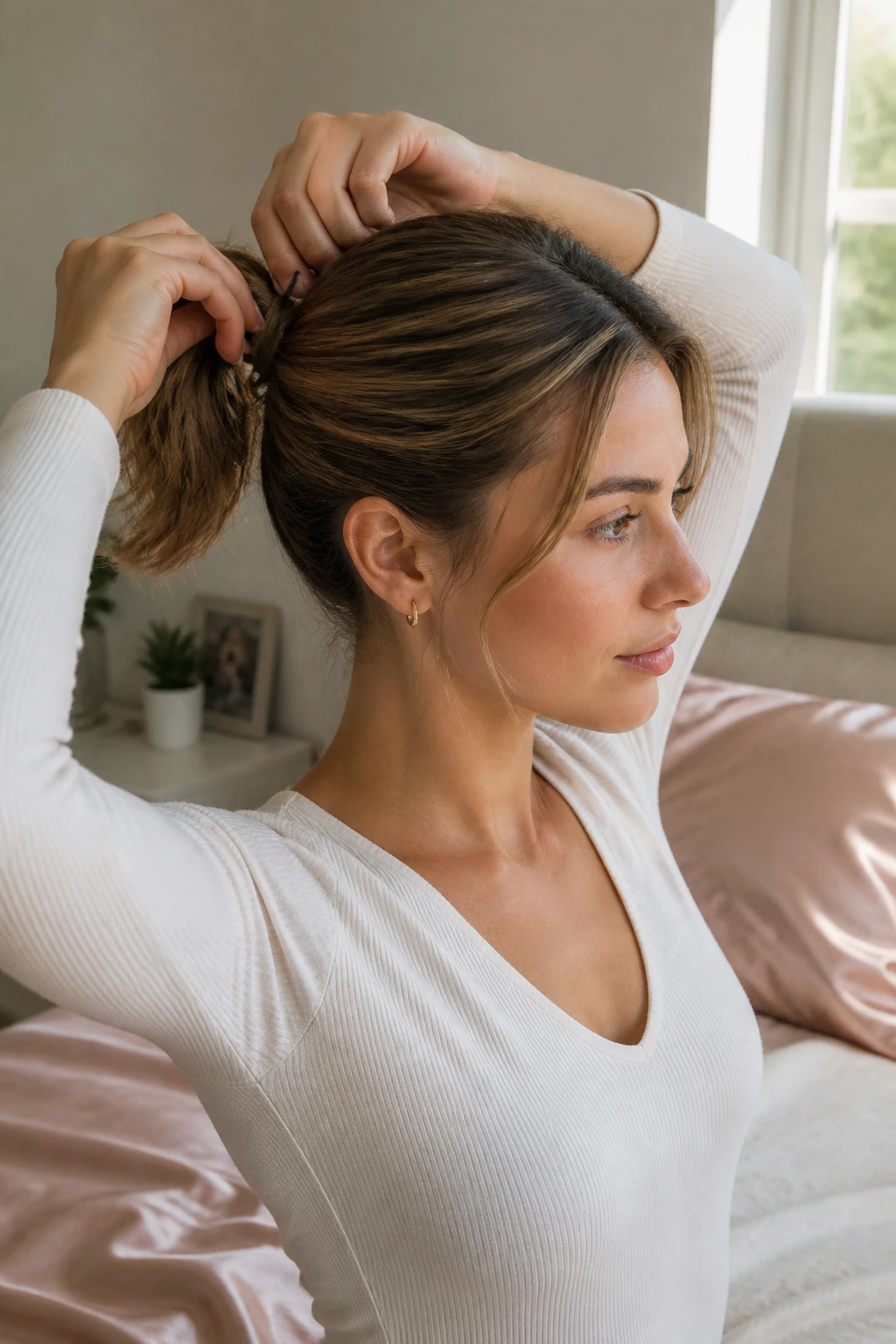
Short ponytails usually hold best on the day they’re done. Sleek styles can stay neat for most of the day if you keep your hands out of them; textured ones can last longer because a little mess is part of the design. If you want to preserve a style overnight, sleep on a silk pillowcase or wrap the hair loosely with a silk scarf so the crown doesn’t puff up.
For next-day wear, don’t try to resurrect a flattened pony by loading on more product. Lift the base gently with your fingers, mist the roots with water or a light refresher spray, and re-secure the pony a half-inch lower if the old elastic left a bend. That small shift can save the whole style.
If you’re planning ahead, prep the texture the night before—curl the ends, set the part, or braid the side sections—and finish the pony in the morning. A short-hair ponytail is much easier when the foundation is already there. And if it starts to fall apart after a few hours, that usually means the anchor point was too high or too loose, not that the haircut failed you.
Frequently Asked Questions
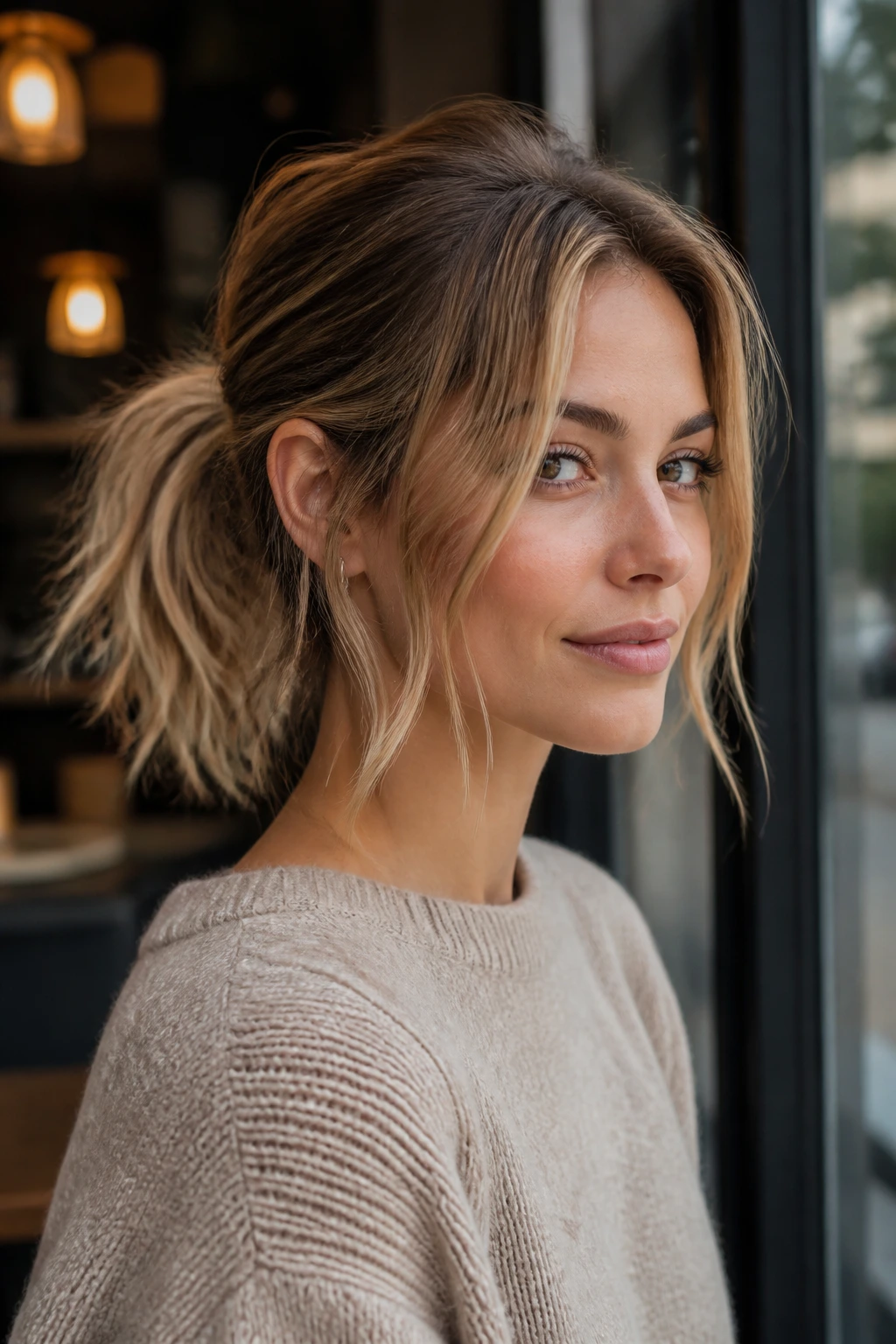
What short length is actually long enough for a ponytail?
Anything from a grown-out pixie to a lob can work, but the style changes with the length. If the back reaches the nape, you can usually do a low pony; if it’s shorter than that, half-up, stacked, or mini-pony tricks are usually more realistic.
How do I keep short layers from sticking out?
Twist them, braid them, or pin them before you tie the elastic. A light spray of texture or a dab of styling cream on the fingers helps the ends blend instead of escaping.
Can a bob really do a high ponytail?
A true high pony is tough on a blunt bob, but a faux-high version usually works. Stack two small ponytails or build height at the crown so the style looks lifted without asking the hair to stretch too far.
What product works best for fine short hair?
Dry shampoo and texturizing spray usually give the best grip without collapse. Heavy oils and thick creams tend to flatten the roots and make the pony slide out faster.
How do I make a short ponytail look thicker?
Use a bubble technique, a wrapped elastic, or a little crown lift. You can also curl the ends outward or slightly tease the tail so it doesn’t lie flat against the neck.
Are these styles okay for curly or coily hair?
Yes, but the method changes. Use softer ties, keep the curl pattern intact, and don’t brush the hair into a shape it doesn’t want to hold. A puff pony or halo-twist version usually behaves better than a slicked-back one.
Can I wear a short ponytail to sleep?
You can, but keep it loose. A soft scrunchie or scarf is better than a tight elastic, and it’s smarter to move the tie lower so you don’t wake up with a sore spot at the crown.
What if my hair keeps slipping out of the elastic?
Add grip before you add tension. Dry shampoo, texture spray, or a little mousse at the roots usually solves the problem better than pulling tighter. If that still doesn’t hold, switch to a smaller elastic or add a hidden bobby pin.
The Styles That Stay Put
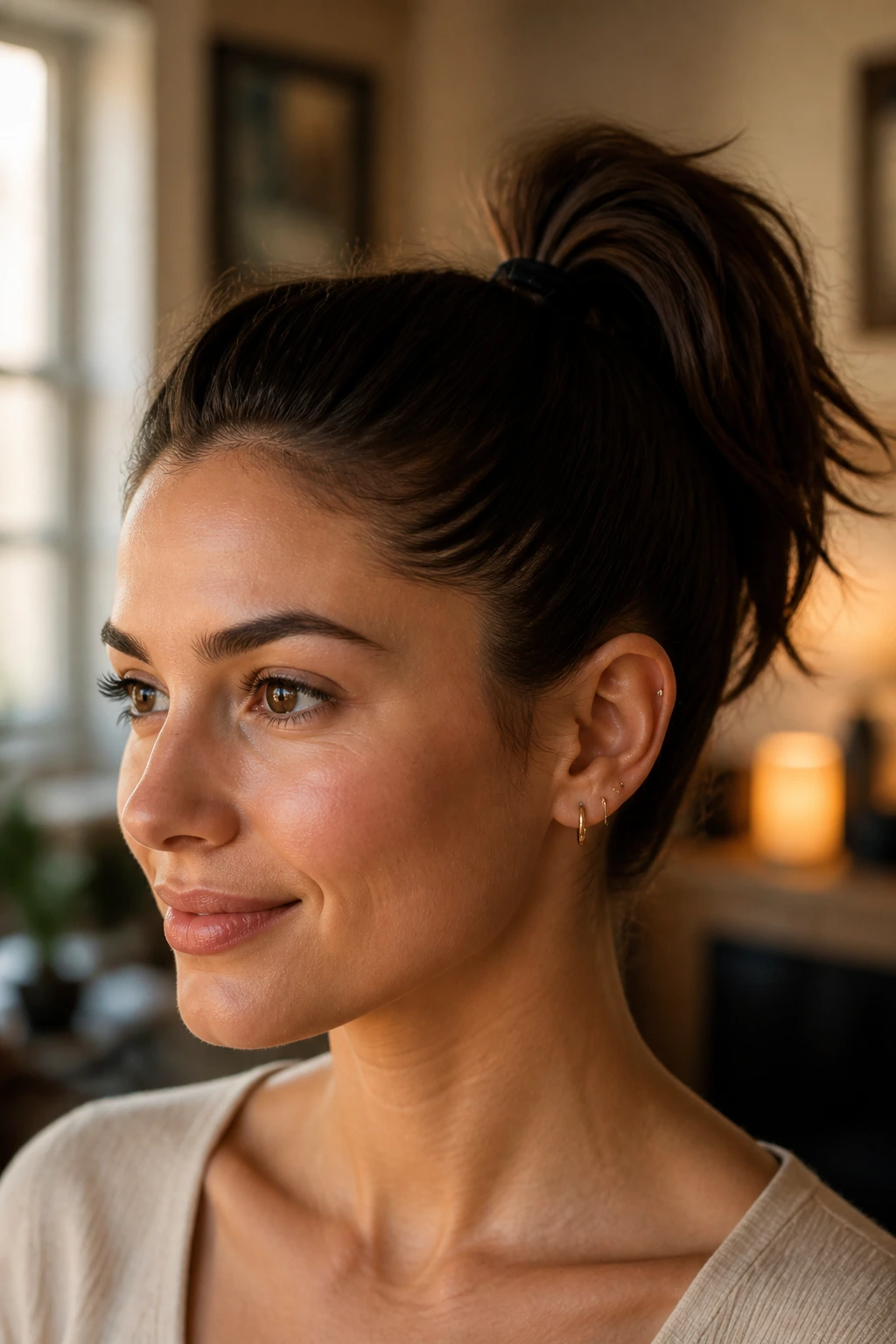
Short hair doesn’t need permission to behave like a ponytail. It needs the right shape, the right anchor, and a little respect for how hair actually moves when it’s not heavy enough to drag itself down. Once those pieces are in place, the options stop feeling limited.
The nicest thing about these ponytail styles for short hair is how different they can look from one another with almost the same basic tools. One elastic. One comb. A twist here, a ribbon there, maybe a little grit at the roots. That’s enough to go from neat to casual, from sporty to dressy, from “my hair was bothering me” to “yes, this was deliberate.”
And honestly, that’s the sweet spot. The best short-hair ponytails don’t try to impersonate long hair. They make short hair look exact, sharp, and useful in its own right.
