



Fine hair can go limp in a hurry, and a blunt one-length bob is often the fastest way to make it look even flatter. The fix is not more length, and it is not a heavy, choppy haircut that chews the outline to pieces. The sweet spot is a shaggy bob with enough internal movement to keep the ends from hanging like wet ribbon, but enough perimeter left in place that the shape still reads as full.
That balance matters more than most salon photos admit. Fine hair is not always thin hair; sometimes you’ve got plenty of strands, but each strand is delicate and easy to collapse. Cut too much weight out of it and the ends look wispy. Leave too much weight in and the whole thing sits there like a helmet with nice intentions. The right shaggy bob haircuts for fine hair solve that by moving the eye around the face, lifting the crown a little, and letting the ends flick instead of droop.
There’s a reason this haircut keeps showing up on people whose hair looks better with a bit of air in it. The best versions are never over-chipped. They’re built with soft layers, pointed ends, and a perimeter that still has presence when the wind hits or when you’ve skipped a wash. And yes, the difference between “piecey and cool” and “stringy and sad” can be one or two careful snips.
Why These Shaggy Bob Haircuts Work on Fine Hair
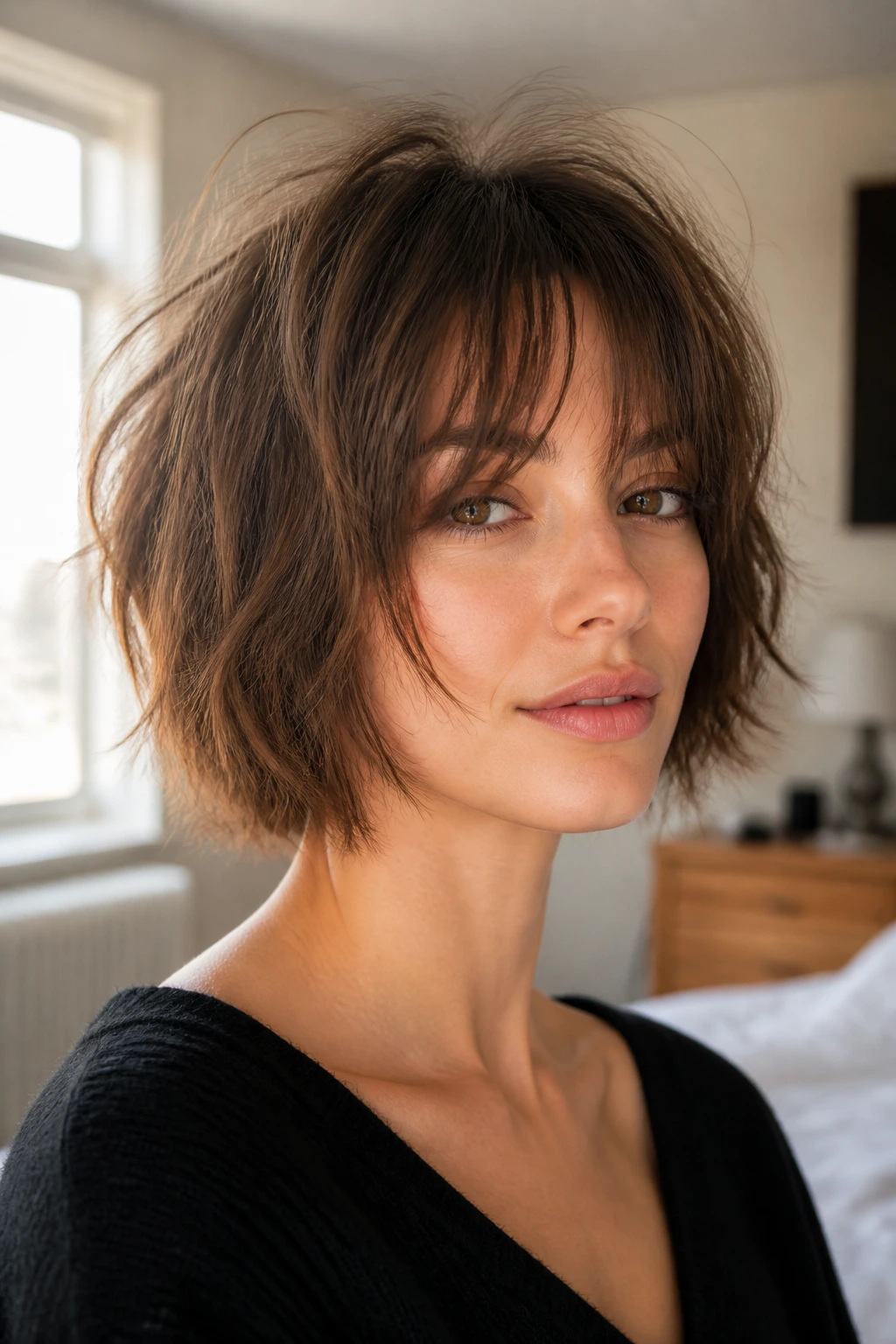
- They keep the outline honest: A solid perimeter gives fine hair a fuller edge, so the cut still looks deliberate when the texture goes soft by midday.
- They move volume upward: Shorter layers around the crown and cheekbones create lift where the eye sees it first, which is more useful than random puff at the ends.
- They hide sparse spots better: Face-framing pieces and a little bend around the temples break up flat areas without making the whole head look thinner.
- They’re easier to style lightly: A small amount of mousse, root spray, or dry shampoo does more work when the cut already has shape built in.
- They can be tuned to your density: Fine hair that’s plentiful can handle more texture than fine hair that’s sparse, and a good shaggy bob can be adjusted for both.
1. Collarbone-Grazing Shag Bob
This is the safest place to start if your fine hair scares you when it gets too short. The collarbone length gives the ends somewhere to hang, which means they look thicker than they do at jaw length, and the soft layers keep the shape from feeling heavy. It’s the sort of cut that moves when you turn your head instead of sticking to your scalp.
Ask for light internal layers starting around the chin, not a hard stack at the crown. The front should skim the collarbones and curve a little inward when you blow-dry it, but the ends should still feel airy, not shredded. This one is especially kind to oval and heart-shaped faces, and it also plays well with a side part if your hair lies flat at the center.
Styling note: a pea-sized amount of mousse at the roots and a quick bend with a 1-inch brush is usually enough.
Why it works: the length keeps the line strong, while the shag detail stops it from turning into a flat slab.
2. Chin-Skimming Razor Shag
A chin-length bob can look fuller than a longer cut, but only if the ends are handled with some restraint. This version uses razor-softened edges and a bit of internal movement so the bob doesn’t sit like a hard box around the face. The result is light, edgy, and a little bit undone.
The key is control. If the razor goes too deep on already delicate strands, the ends can turn wispy fast. I’d keep the perimeter blunt enough to hold a line, then feather only the very outer layers so the haircut still has a bit of bite. This works especially well if your hair has a slight wave or a natural bend that comes alive with air-drying.
It’s a good choice for people who want shorter hair without giving up face-framing movement.
It also happens to be one of the easiest shaggy bob haircuts for fine hair to wake up with on day two.
3. Curtain-Bang Shag Bob
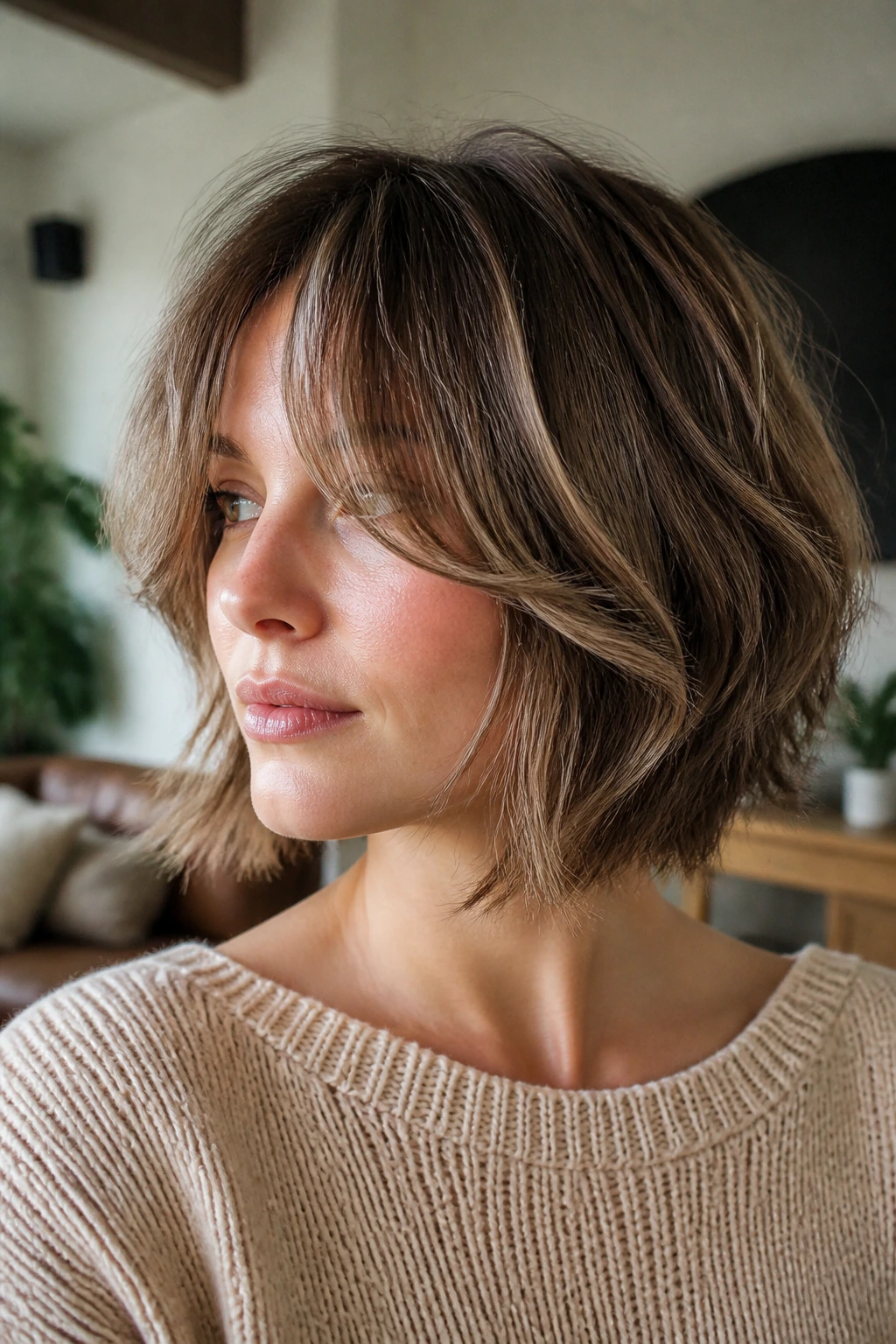
Curtain bangs do a lot of quiet work here. They split the hair around the face, lift the eye upward, and make the front of the haircut feel fuller without asking the rest of your hair to do more than it can. On fine hair, that matters. A fringe that opens from the center creates shape even when the rest of the bob is behaving politely.
The trick is not to make the bangs too thick. Fine hair usually looks better with a softer curtain that starts somewhere around the cheekbones and narrows toward the bridge of the nose. That keeps the fringe airy and lets it fold into the side layers instead of sitting on top like a curtain rod. Blow-dry the bangs forward first, then wrap each side away from the face with a small round brush.
If you like a cut that feels a little retro but still easy to wear, this is a smart pick.
It softens broad foreheads, flatters long faces, and gives fine hair a lot more visual movement than a solid fringe.
4. Side-Swept Fringe Shag Bob
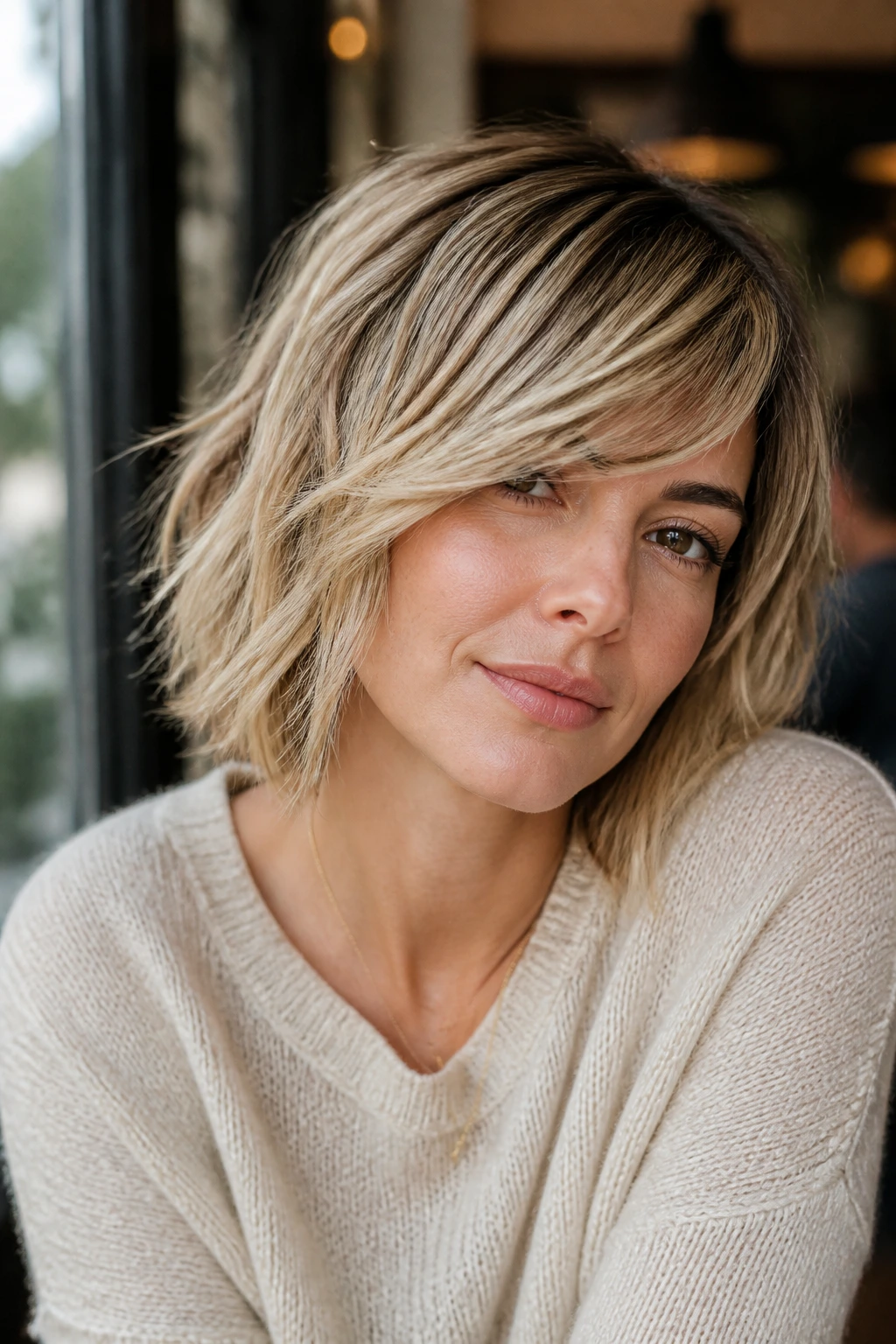
A side-swept fringe is one of the quickest cheats in the haircut book. It creates the feeling of lift at the front, hides a flat root line, and gives your face a diagonal shape that fine hair rarely gets on its own. If your part collapses as soon as you walk out the door, this cut is worth a serious look.
The best version keeps the fringe long enough to tuck back if you change your mind. Ask for a side-swept piece that starts around the outer brow and blends into cheekbone-length layers, with the rest of the bob kept light around the jaw. You want movement, not a heavy sweep that hangs in one clump.
This shape is especially helpful if one side of your hair is naturally flatter than the other. It also works nicely with glasses, because the fringe can skim the frame instead of fighting it.
A dab of root spray at the part and a quick lift with your fingers is usually enough to keep it from collapsing.
5. Bottleneck Bang Shag Bob
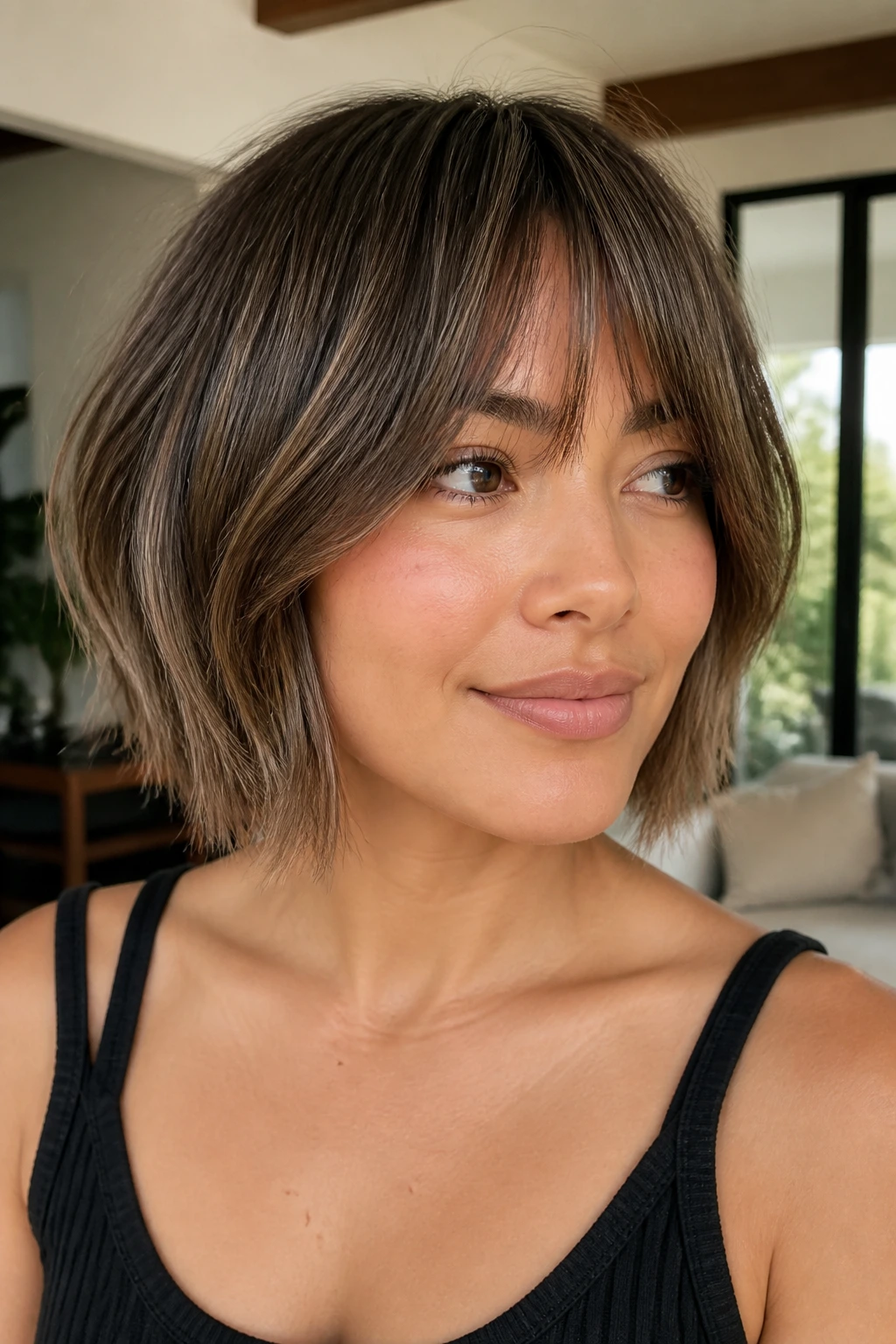
Bottleneck bangs are the middle ground between blunt bangs and curtain bangs, and that middle ground is often exactly where fine hair wants to live. The center sits a little narrower, then opens out near the cheekbones, which means you get face framing without dragging too much weight into the front.
On a shaggy bob, this shape makes the haircut feel tailored. The bangs add interest right where people look first, while the bob stays loose underneath. I like this option for people who want fringe but don’t want to babysit it every morning. It still needs a little round-brush work, but it won’t punish you if you skip perfection.
Keep the bangs light. Seriously. Fine hair with too much fringe can turn stringy the second humidity shows up. Ask your stylist to keep the center piece soft and the temple pieces longer so the whole shape blends into the bob instead of sitting on top of it.
6. Feathered-Crown Shag Bob
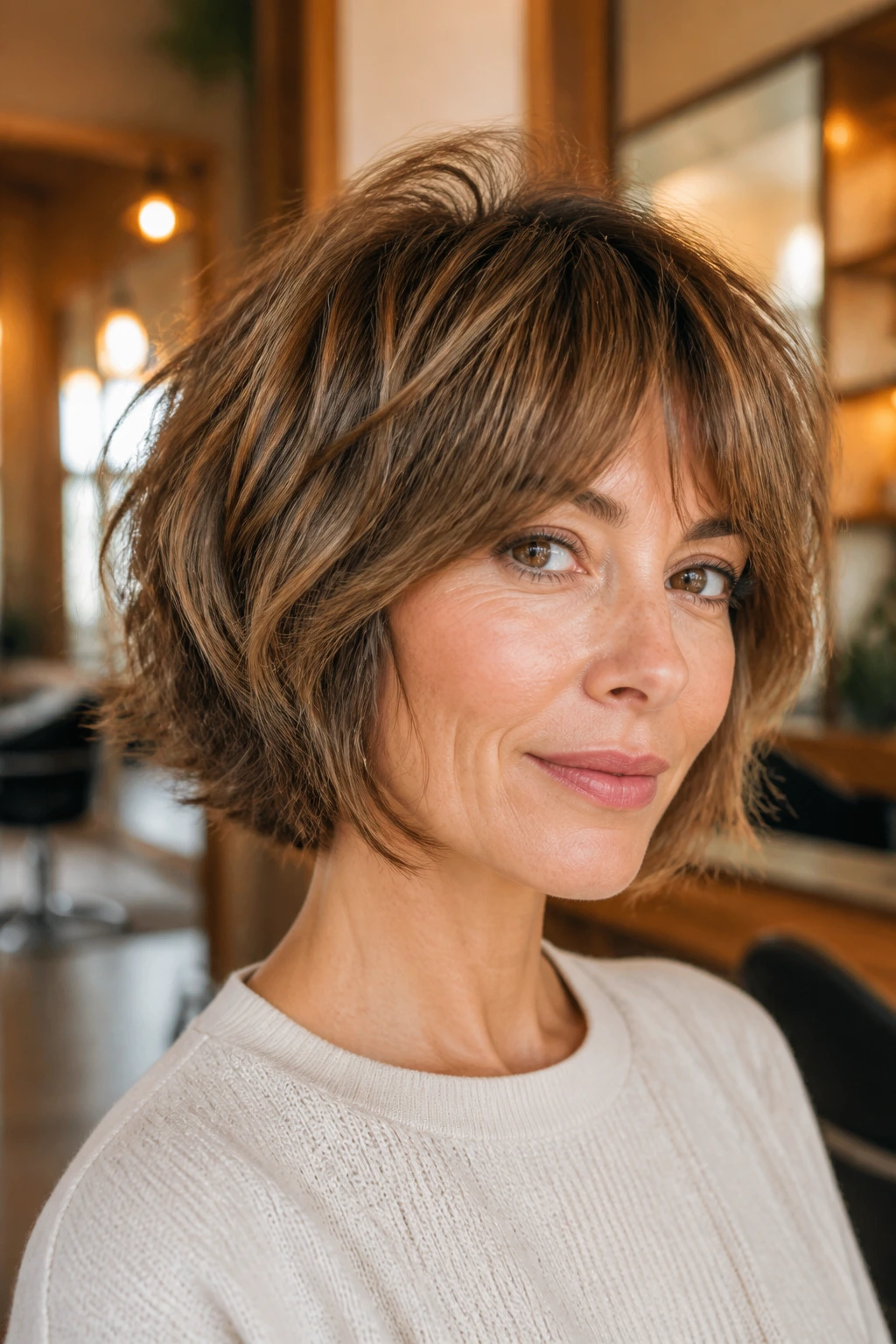
If your crown goes flat the minute you stop teasing it, this is your haircut. Feathered crown layers give the top of the head a little lift without making the whole cut look choppy or overdone. The shape feels a bit like a classic blowout, only looser and easier to live with.
The important thing is placement. You want the shortest layers to live high enough to lift the root area, but not so short that they stick up like little flags. A good stylist will cut the crown in a way that bends over the round brush and settles back down with movement. That difference matters. Too much shortness at the top on fine hair looks fluffy, not full.
This cut is especially helpful if the back of your head is flatter than the front. Blow-dry the crown forward first, then lift the roots back with the nozzle pointed upward. It sounds fussy. It isn’t, really. Five minutes is often enough.
7. French-Girl Shag Bob

There’s a reason this version gets copied so often: it looks relaxed, but the bones of the haircut are doing a lot of heavy lifting. The French-girl shag bob usually sits around the jaw or just below it, with soft fringe pieces and a slightly rounded outline that makes fine hair appear denser than it is.
What keeps it from falling flat is the balance between bluntness and softness. The perimeter stays strong, while the top and sides get just enough texture to break up the shape. On fine hair, that’s a much better deal than aggressive layering. You get movement without sacrificing the line that gives the illusion of thickness.
It suits hair that has a little bend and can handle being air-dried. If your strands are pin-straight, you can still wear it, but you’ll want a small round brush or flat iron bend at the ends.
The vibe is casual, not careless. There’s a difference.
8. Wavy Air-Dry Shag Bob
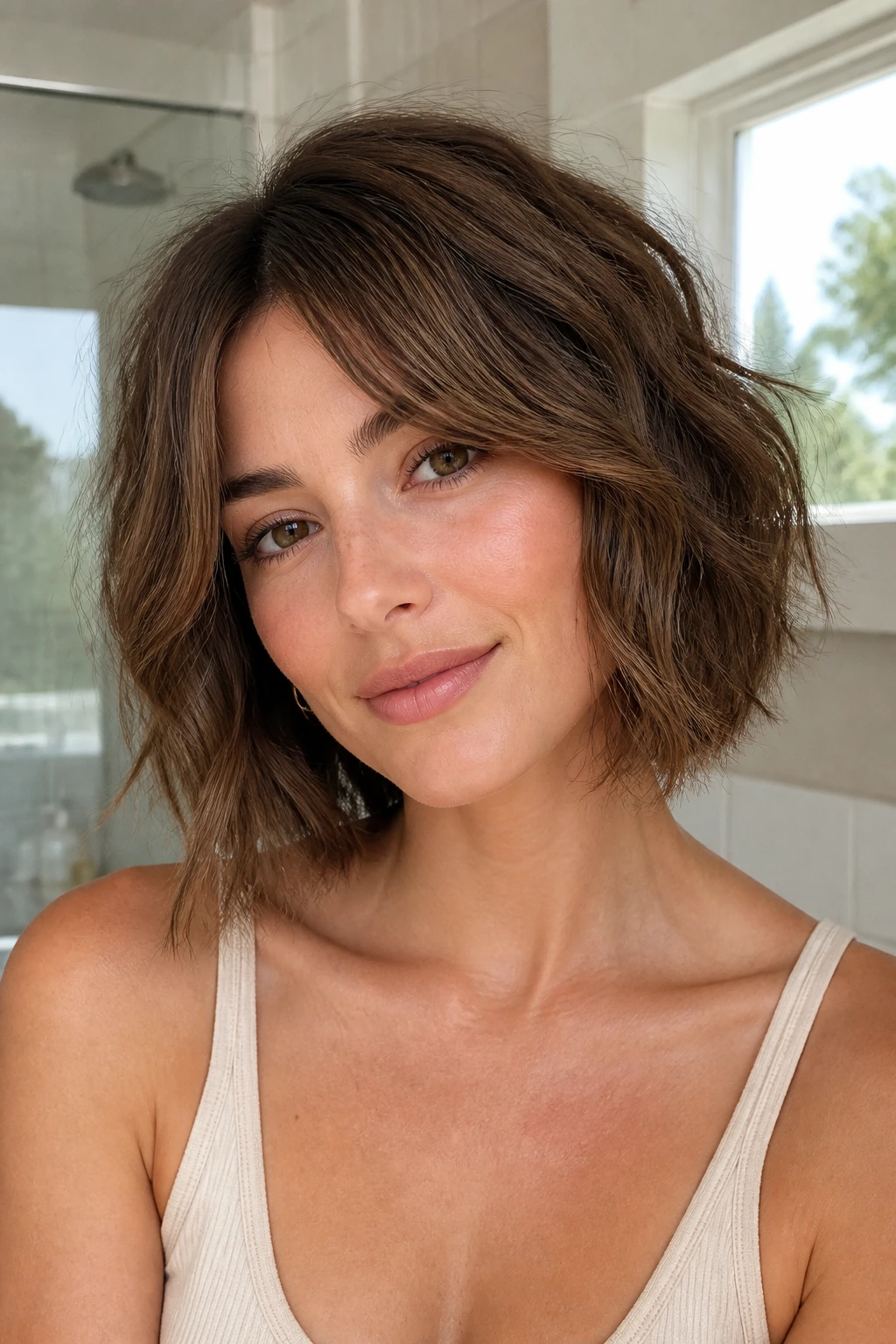
Some cuts are built for blow-drying. This one is built for you to wash, scrunch, and get on with your day. A wavy air-dry shag bob works because the layers are long enough to let wave pattern show, but soft enough that the ends don’t puff into a triangle. On fine hair, that’s the whole game.
The haircut should respect the wave, not fight it. Ask for longer interior layers and face-framing pieces that start below the cheekbones. That keeps the shape from expanding too much when your hair dries. A light mousse, a microfiber towel, and maybe a diffuser for the front pieces are usually enough to bring it to life.
I’d avoid heavy curl cream here unless your waves are thirsty. Fine hair gets weighed down fast, and a product that feels rich in your hands can make the roots look sleepy by lunch.
The goal is soft bends, not crunchy spirals.
9. Curly Shag Bob for Fine Curls

Fine curls are a little tricky, because they can look full and sparse in the same haircut depending on where the weight lands. A curly shag bob solves that by shaping the hair around the curl pattern instead of against it. The result is rounder, lighter, and far less likely to balloon at the sides.
This cut should be shaped with the curls in mind, preferably while dry or at least in a state close to how you wear them most days. The front pieces can be shorter to open the face, while the back stays a touch longer so the cut doesn’t spring up too high. If your curls are loose and fine, too many short layers can make the ends disappear. That’s the trap.
Diffusing on low heat helps preserve the curl clumps, and a wide-tooth comb is kinder than a brush.
Fine curls love definition, but they do not love over-manipulation.
10. Straight-Hair Shattered Bob
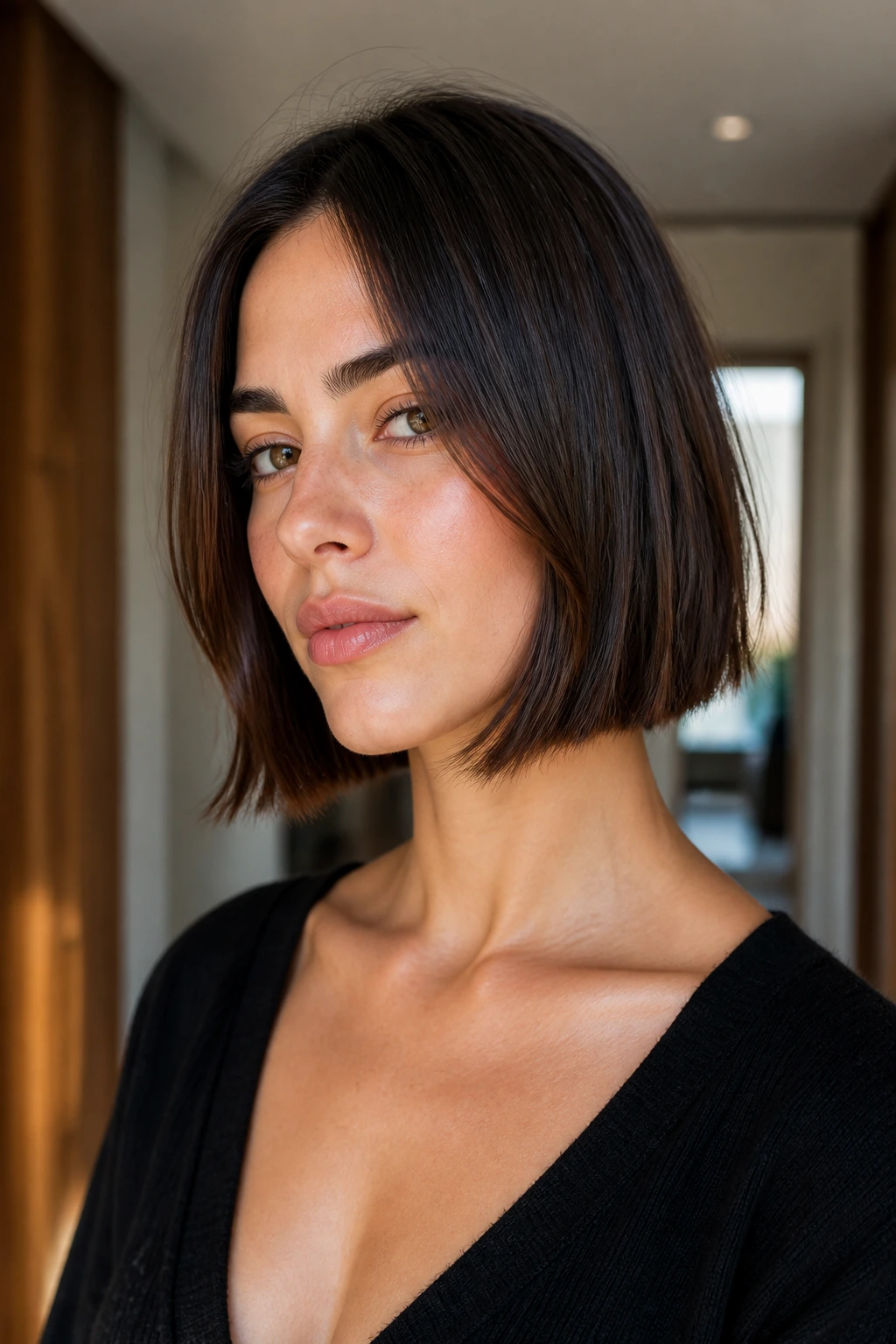
Straight fine hair can be the hardest to fake volume with, because every line shows. A shattered bob uses point cutting and light internal texture to break up that rigid sheet, so the haircut doesn’t look like it was cut with a ruler. You still want a clean outline, though. Too much shredding and the ends vanish.
The most useful detail here is the finish at the bottom. Ask for edges that flick rather than fray, with a little separation around the front pieces. That keeps the haircut modern and prevents the “all one length, no life” problem straight fine hair gets so often. If you’ve got a flat crown, a tiny bit of root lift at the blow-dry stage goes a long way.
This is a good option if you like your hair to look polished even when it’s textured.
It’s not messy. It’s edited.
11. Off-Center Part Shag Bob
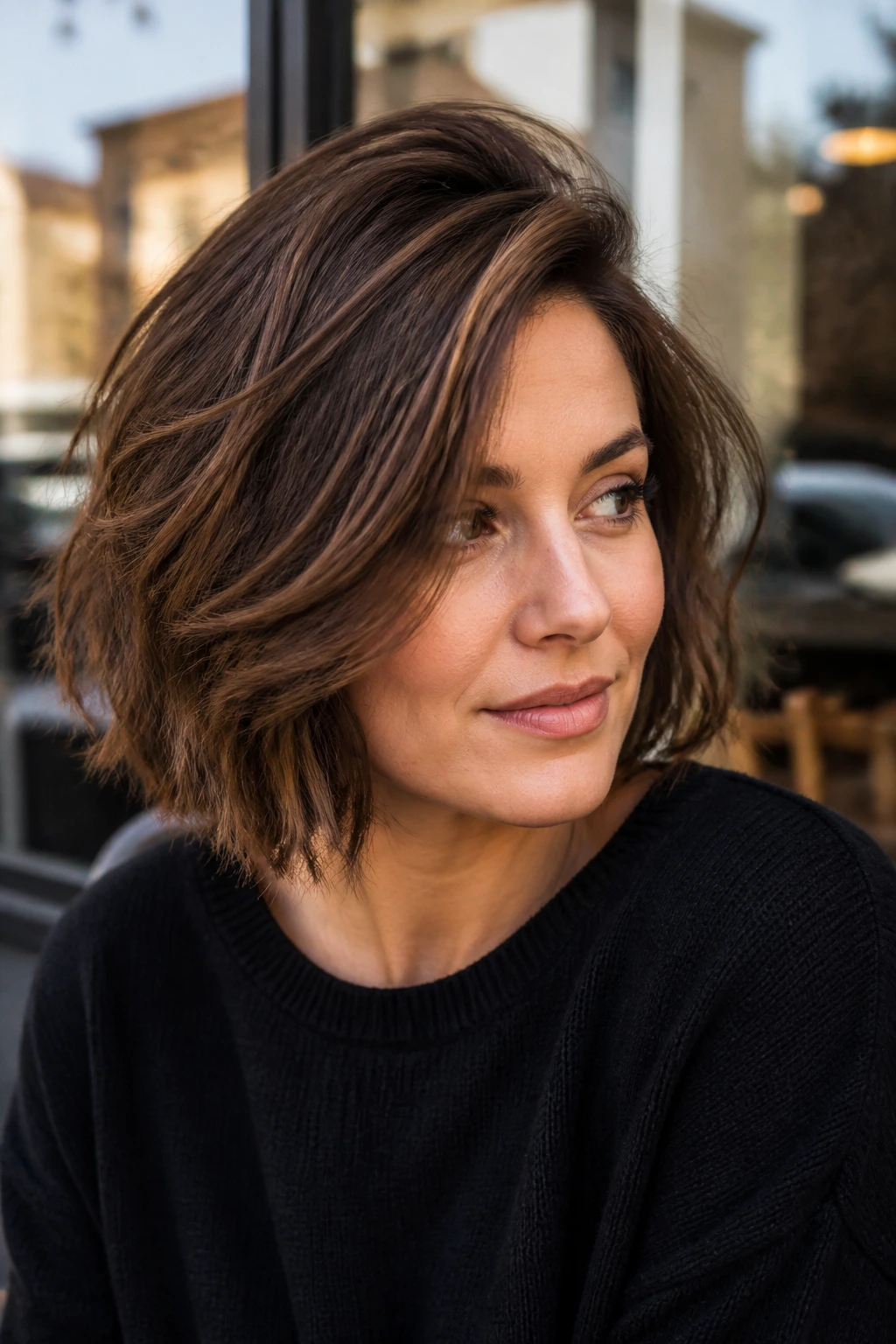
A tiny shift in the part can change the whole read of fine hair. An off-center part gives one side a little more height, makes the crown look less narrow, and lets the shaggy layers fall in a way that feels intentional instead of severe. Sometimes that’s all you need.
The haircut itself should stay fairly soft, with front pieces that can sweep across the forehead without collapsing. This works well if your hair naturally splits somewhere near the middle but never fully commits. Instead of fighting the drift, use it. The off-center part builds a little asymmetry into the style and gives your roots a lift where they need it most.
I like this option for people who want movement but don’t want obvious bangs. It’s a low-drama way to make the cut look fuller in photographs and in real life, which are not always the same thing.
A touch of root spray at the heavier side keeps the shape from falling back to center.
12. Asymmetrical Shag Bob

A subtle asymmetrical bob has a sharp little trick up its sleeve: one side longer than the other creates a diagonal line, and diagonal lines make the eye think there’s more hair there. On fine hair, that illusion can be a lifesaver. The shape feels modern without needing a lot of bulk.
The asymmetry should be gentle, not theatrical. You want enough difference to notice the movement, but not so much that the haircut starts looking like it’s correcting a mistake. Ask for soft texture through the top and a longer front on one side, then let the layers taper lightly toward the back. That gives the cut motion when you tuck one side behind the ear.
This is a solid pick if you like a little edge and don’t mind a shape that shows off the jawline.
It works especially well on straight or lightly wavy fine hair, where the lines stay visible.
13. Inverted Shag Bob with Soft Layers
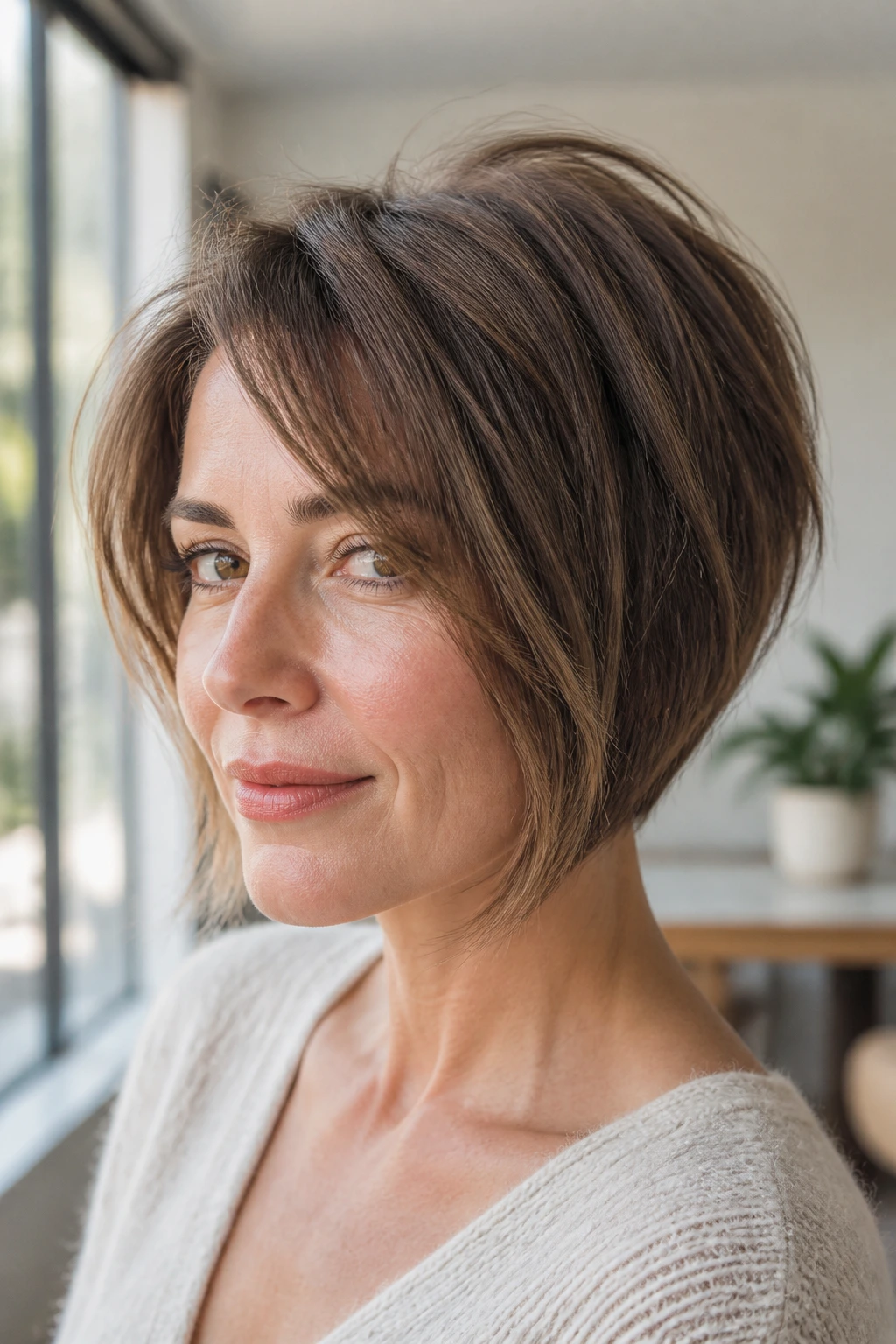
An inverted bob brings a little lift to the back of the head and a little length to the front, which is handy if your hair goes flat at the nape but you still want to keep some softness around the face. On fine hair, the soft version is the better one. Too much stacking and the back can puff out without looking thicker.
This cut gives you that slight built-in shape at the back while the front pieces sweep forward and break up the outline. It’s flattering on people who like a neckline that looks clean and a front that does something interesting. If your hair is naturally straight, a quick bend with a brush at the front helps the longer pieces sit properly.
What I like here is the balance. It feels structured, but it doesn’t look stiff.
That’s a tough line to walk with fine hair, and this cut manages it better than most.
14. Jawline Bob with Hidden Layers

Not everyone wants a shag that announces itself from across the room. A jawline bob with hidden layers keeps the perimeter strong, then sneaks in movement underneath so the hair feels lighter without looking chopped up. For fine hair, that can be the most flattering move of all.
The layers live inside the haircut, not on the surface. That means the silhouette stays fuller, especially around the ends, while the top moves enough to keep the shape from turning square. If you’ve had shag cuts that made your hair look see-through, this quieter version may be the fix. It’s a smart compromise.
This is also one of the easiest shaggy bob haircuts for fine hair to wear in professional settings. It still has texture, but it doesn’t read as messy.
If you like the idea of a shag but hate obvious layer lines, start here.
15. Bixie-Bob Hybrid
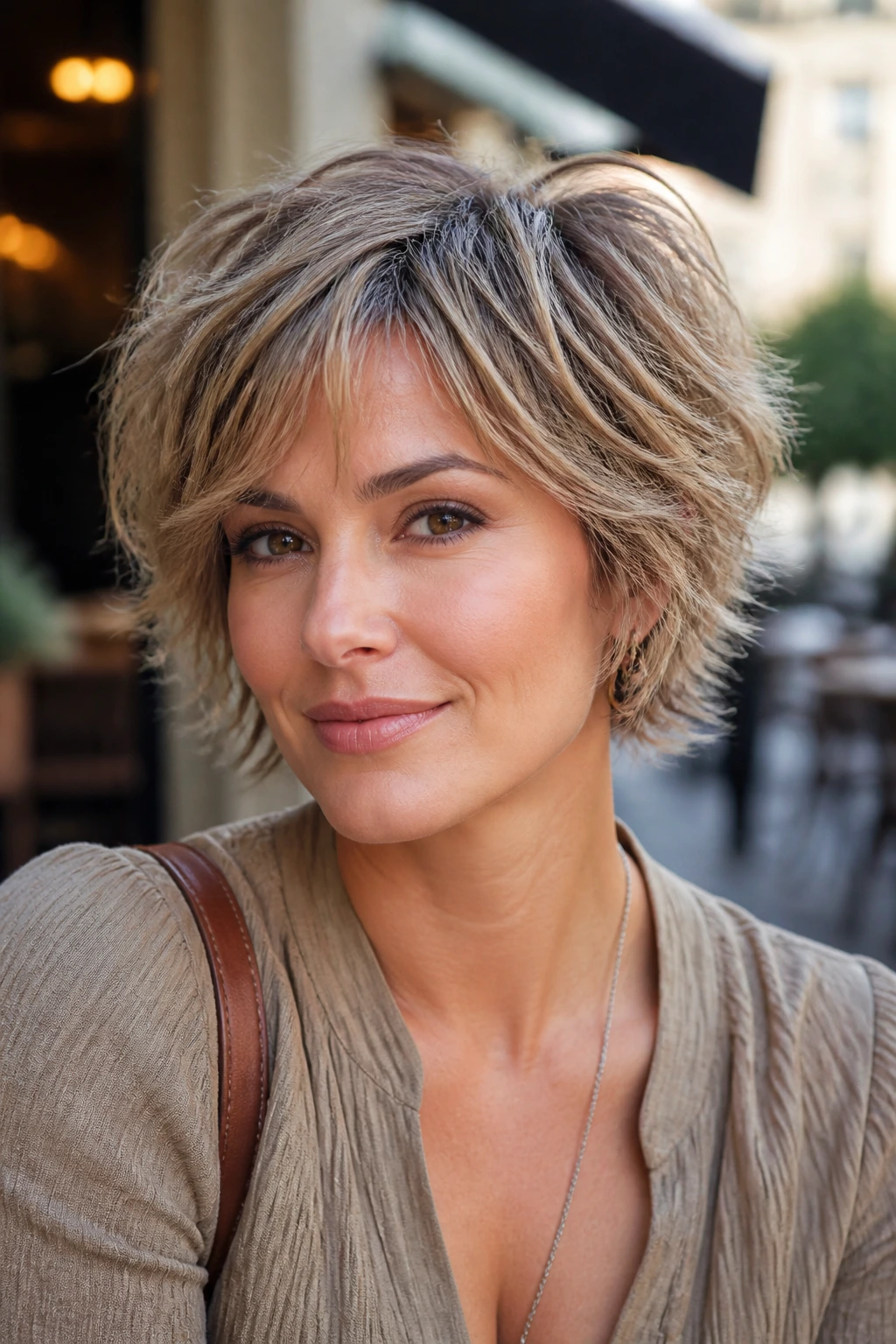
The bixie-bob hybrid sits between a pixie and a bob, and that in-between length can be magic for fine hair. Why? Because the hair is short enough to lift, but long enough to keep a little softness around the face. It has energy. It also has a shorter drying time, which is a practical perk people forget to mention.
The layers can be built up around the crown and temples to create a lived-in, airy shape. You do want to keep some density at the outline so the haircut doesn’t go feather-light all over. A bit of paste or cream through the ends gives it separation without turning it greasy. Use less than you think.
This cut suits people who want more edge and less length. It’s not a timid shape.
If you’re tired of hair that always needs a ponytail to behave, the bixie-bob hybrid is a sharp little reset.
16. Soft Wolf Shag Bob
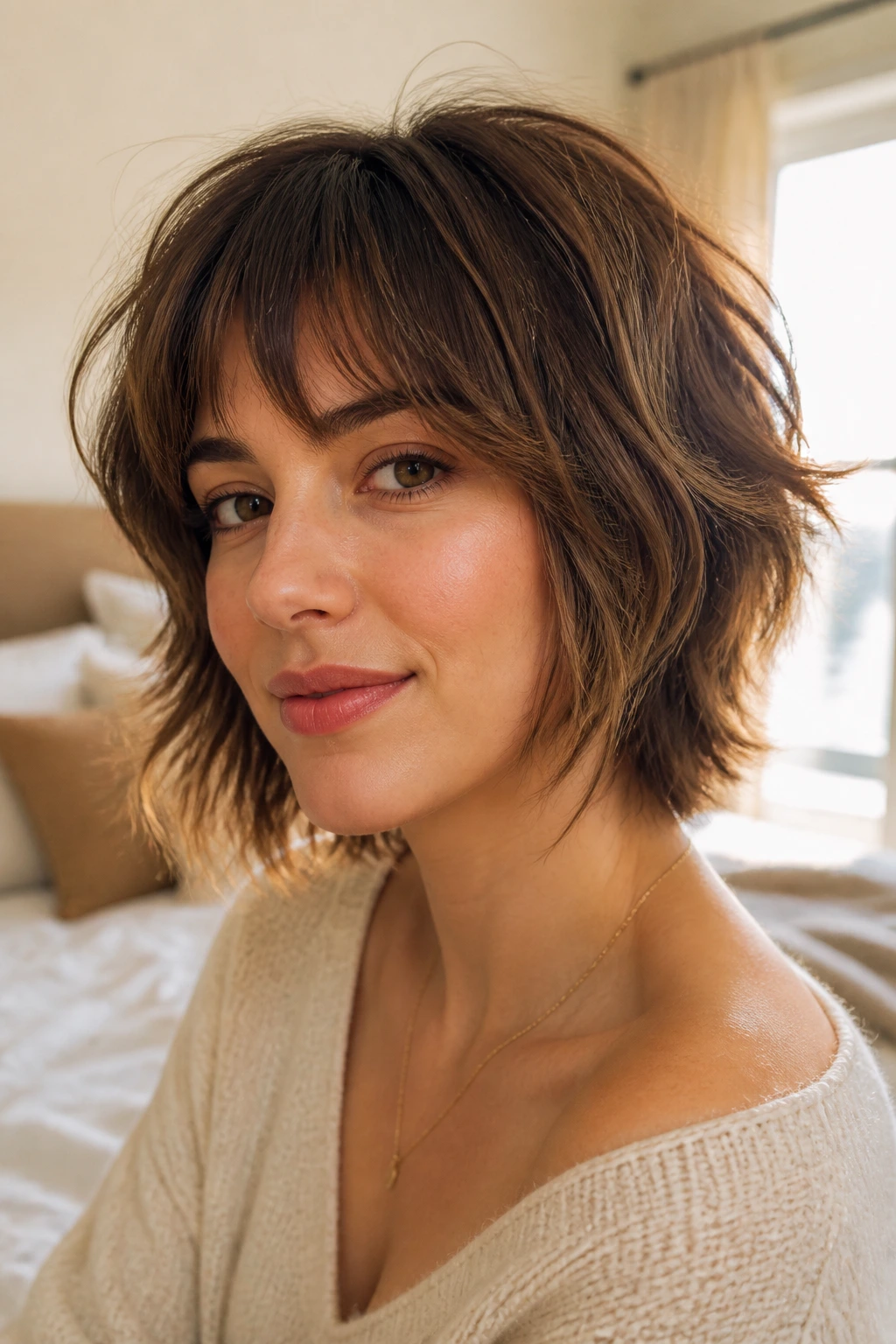
A soft wolf shag bob takes the looseness of the wolf cut and reins it in to bob length, which is exactly why it can work so well on fine hair. The crown gets a touch of lift, the sides get movement, and the outline stays short enough to feel current without becoming high-maintenance.
The “soft” part matters. Fine hair doesn’t need a lot of aggressive disconnect. It needs a clean enough perimeter to hold together and enough texture to avoid collapse. Ask for layers that blend rather than jump, and keep the front pieces slightly longer if your face needs more framing.
This cut has a bit of attitude, but it doesn’t chew through density the way a full wolf cut can.
If your hair leans wavy, this one can look especially good with a quick scrunch and a diffuser.
17. Nape-Lift Bob
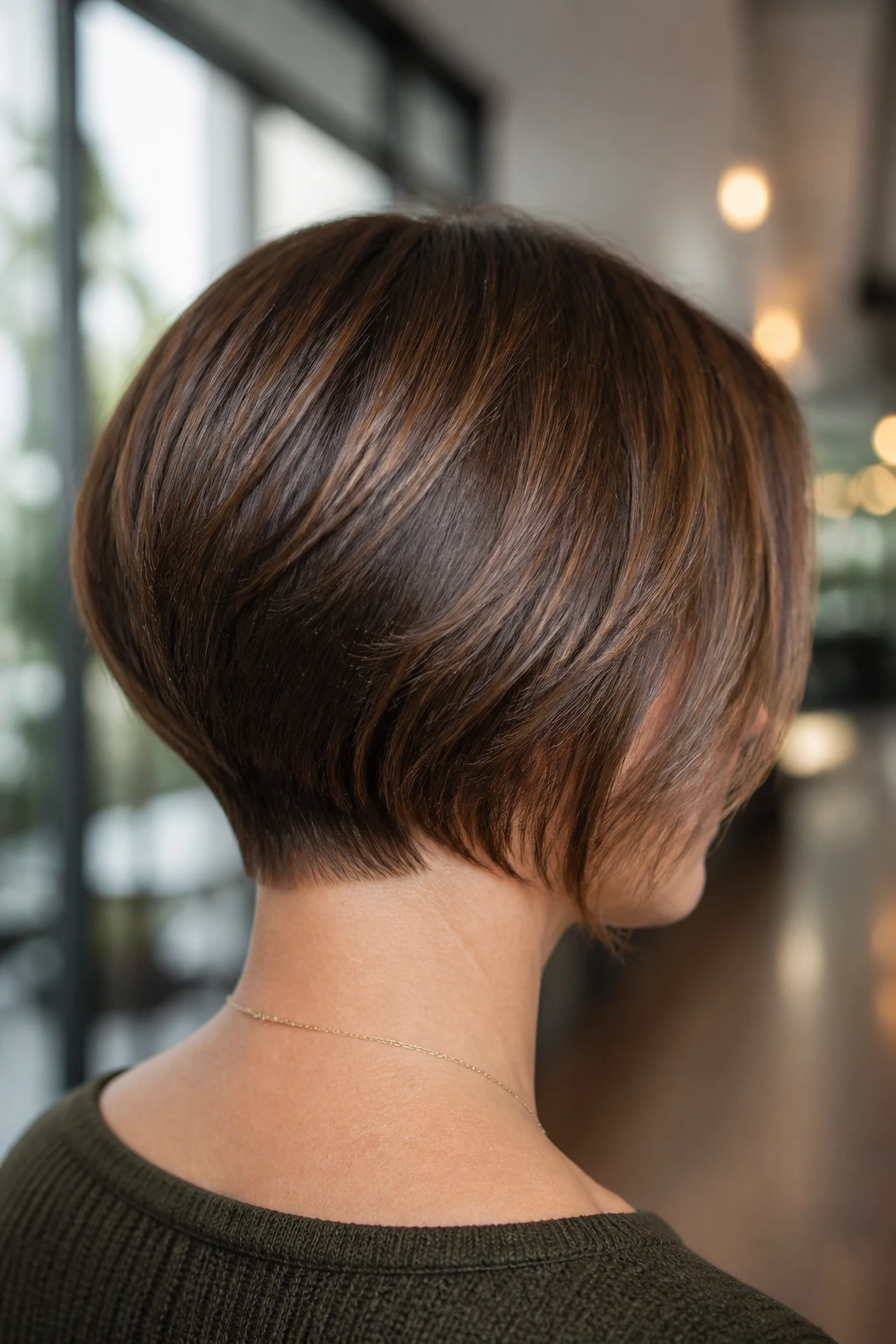
Flat back of the head? This is the cut that deals with it. A nape-lift bob keeps the back slightly shorter and uses subtle graduation to create a cleaner, lifted silhouette. Fine hair often loses its shape first at the nape, so giving that area a bit of support changes how the whole head reads.
The danger here is over-stacking. Too much and the back can puff while the front goes limp, which is a miserable trade. The better version keeps the lift gentle and lets the front remain soft and movable. It’s a controlled shape, not a helmet.
I like this one for people who wear scarves, high collars, or jackets that brush the neckline. The haircut still looks tidy after it’s been rubbed around a little, which is worth more than people think.
A small round brush and a quick pass at the roots are usually enough to make it sit right.
18. Blunt-Base Shag Bob
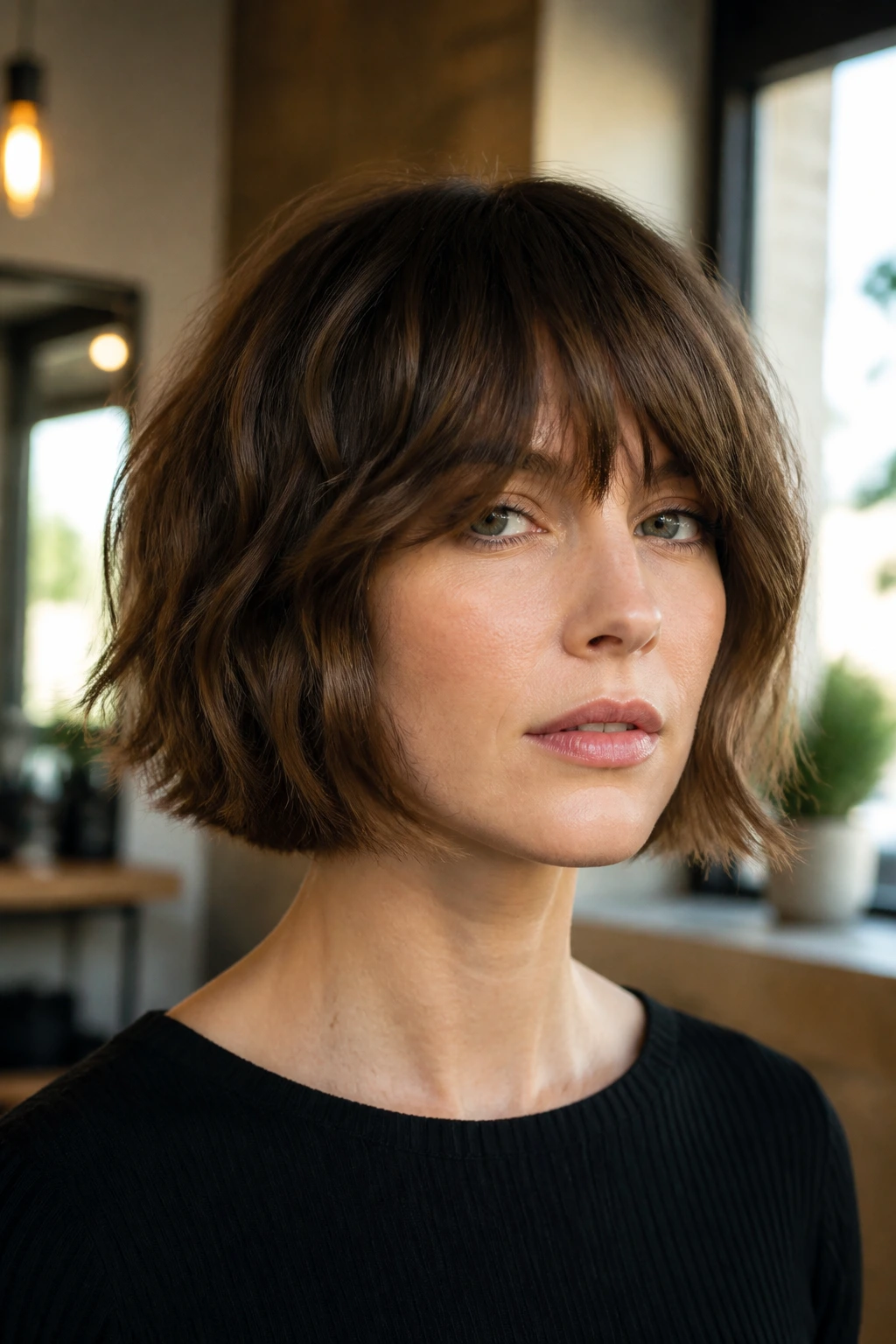
This is the move for anyone whose ends look too sparse when the haircut gets textured too much. A blunt-base shag bob keeps the perimeter thick and solid, then adds the shag only above that line. You get movement where you want it and a fuller edge where you need it.
It’s one of the smartest shaggy bob haircuts for fine hair because it respects the weakness of the strand. Fine hair often looks best when the bottom line is left alone. Let the interior do the lightening; let the outline stay strong. That’s the part a lot of haircuts get backwards.
The result feels polished from a distance and a little piecey up close.
If you’ve ever looked in the mirror and thought, “My ends have disappeared,” this is the answer worth trying.
19. Deep Side-Part Shag Bob
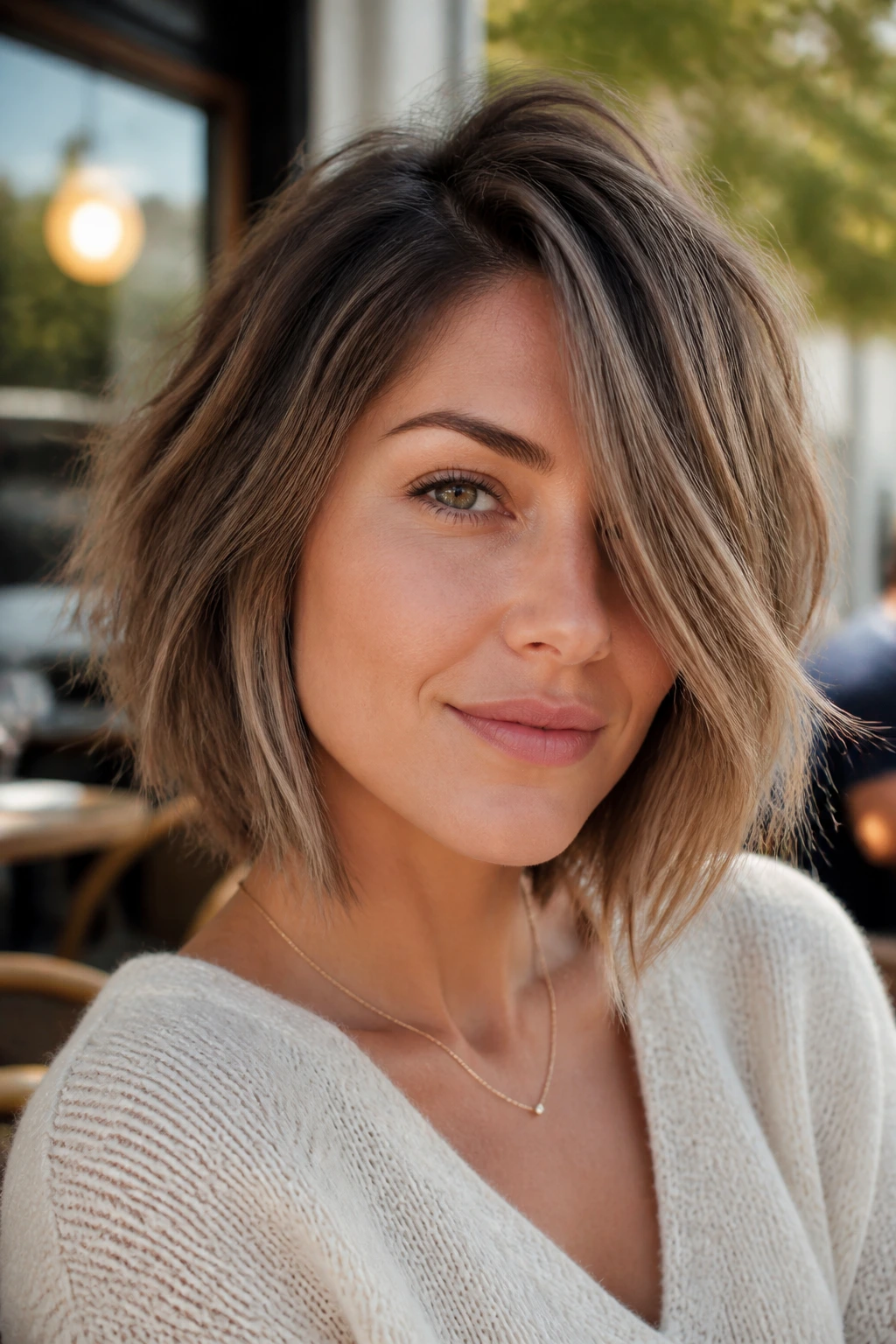
A deep side part does to fine hair what a good angle does to a room: it changes the whole feeling of the space. This version takes a shaggy bob and throws the weight to one side, which instantly creates height at the root and a softer line across the forehead.
The cut should support that part, not fight it. Longer front pieces on the heavier side, lighter layers through the top, and a perimeter that doesn’t get too thinned out will help the shape stay put. If your crown goes flat when you use a center part, this is an easy shift with a big visual payoff.
It also gives the haircut a little drama without needing extra length.
And that matters. Fine hair doesn’t always need more hair. Sometimes it just needs a better direction.
20. Cheekbone-Opening Shag Bob
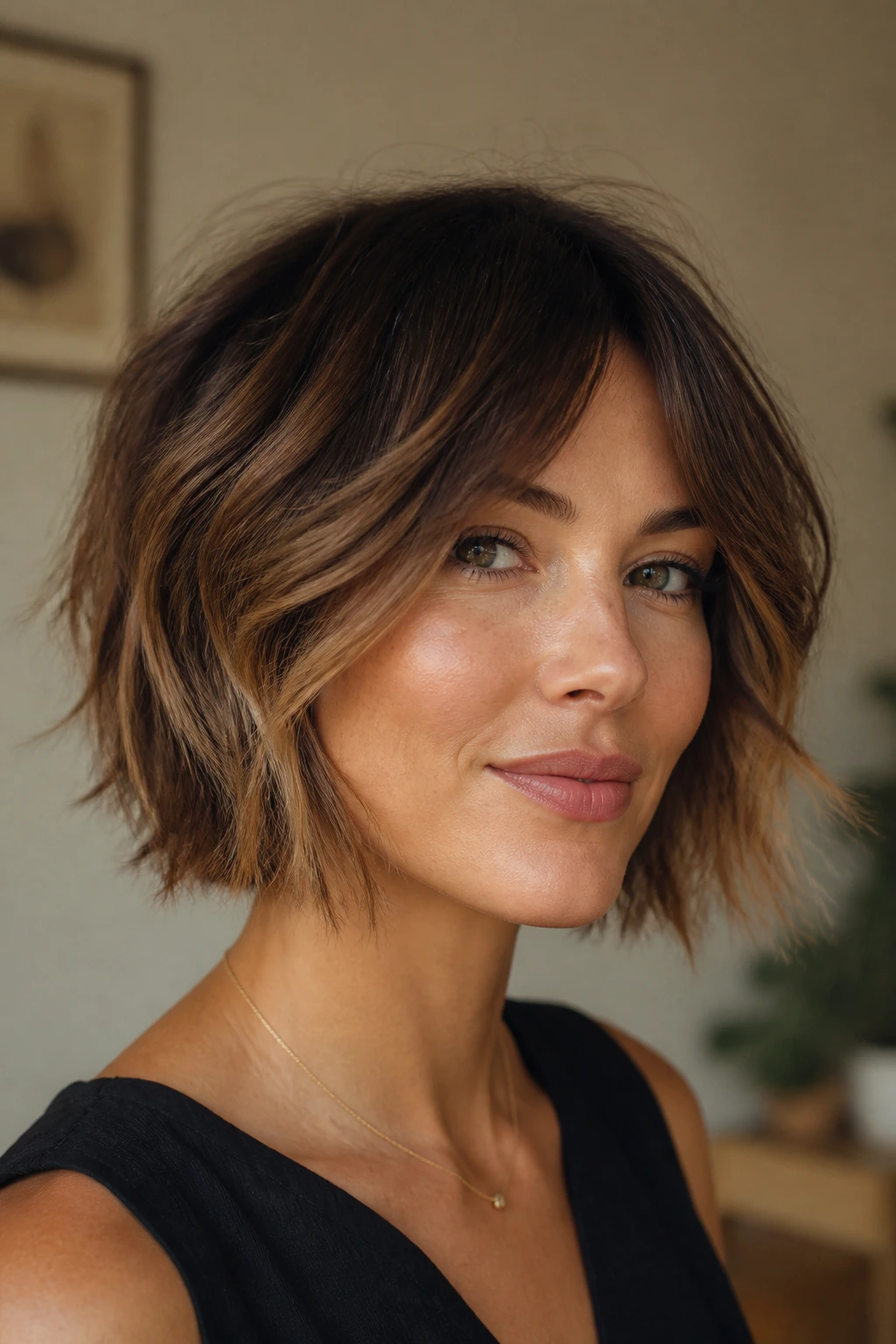
This one is all about the front pieces. The hair is cut so the shortest face-framing layers kiss the cheekbones, which pulls attention upward and makes the bob feel fuller around the face. Fine hair benefits from that because the eye doesn’t linger on the sparse parts; it goes straight to the architecture.
The rest of the cut should stay soft and supportive, not over-chopped. Think of the front as the feature and the back as the frame. A quick bend away from the face with a flat iron or small brush keeps the pieces from collapsing into the cheeks. If your cheekbones are one of your better features, this cut puts them to work.
It’s also a good choice if you wear earrings often.
The short front opens space around the jaw and neck, which gives the whole look a little more breathing room.
21. Tucked-Behind-Ears Bob

Some cuts are made to be worn forward. This one is made to disappear behind the ears in a way that still looks styled. The Tucked-Behind-Ears Bob needs enough length in front to sweep back, plus soft layers that fall into place when you tuck one side or both.
That little ear tuck is more useful than it sounds. It breaks up the outline, gives the illusion of fullness around the temples, and lets you show off the neck and jaw without committing to a shorter cut. On fine hair, it also prevents the front from looking too wispy, because the tucked shape creates a second line.
If you wear glasses, this cut is friendly. If you wear hoops, even friendlier.
The whole point is to make the haircut look lighter without making the hair itself look scarce.
22. Airy Micro-Shag Bob
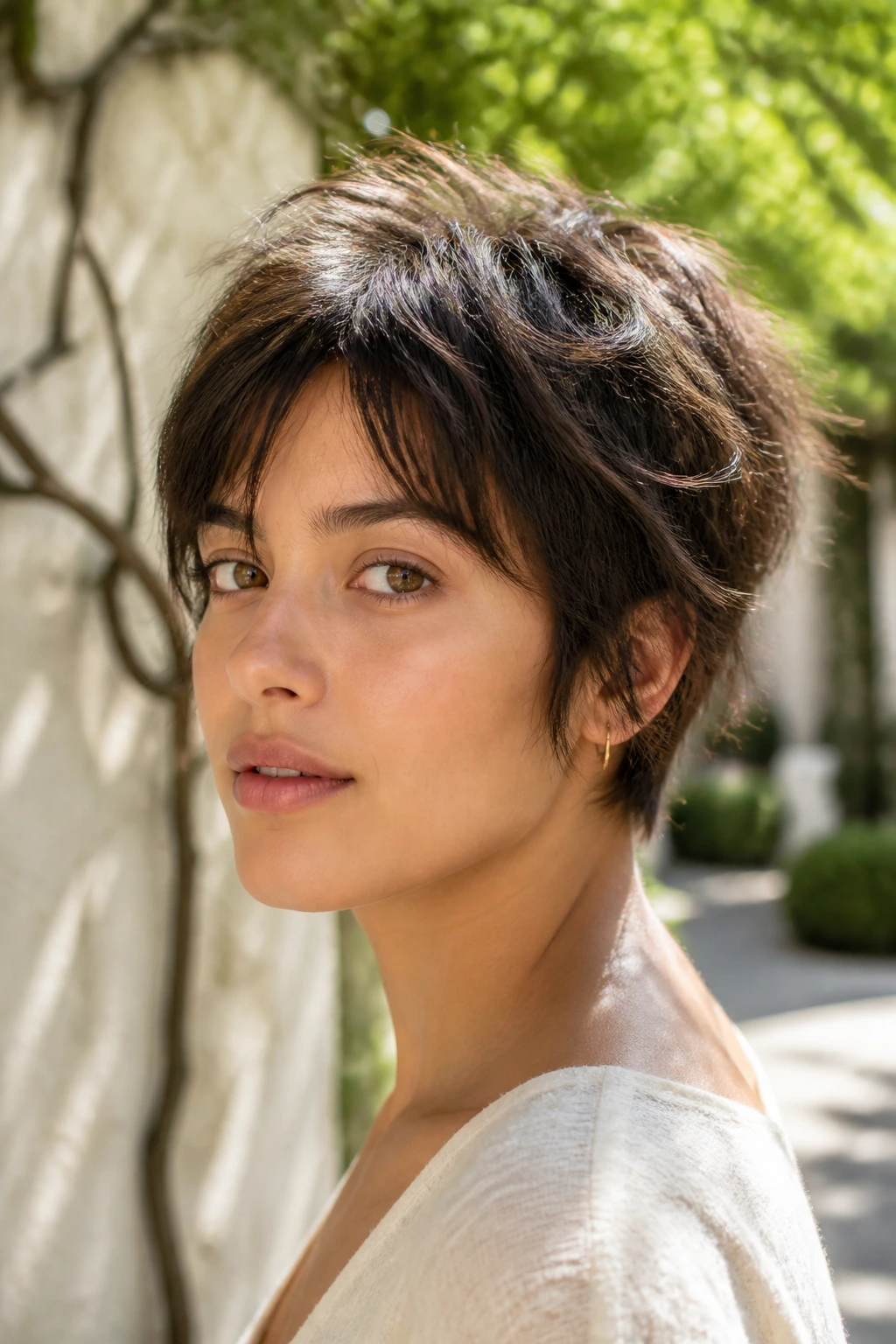
A micro-shag bob is short, sharp, and not for someone who wants to hide behind hair. The length usually sits above the jaw, with little airy pieces around the crown and sides that keep it from looking like a plain crop. Fine hair can thrive at this length because the strands aren’t carrying much weight.
The danger is overdoing the texture. A micro-shag should feel lifted, not chopped to bits. Ask for soft, tiny layers rather than chunked-out sections, and keep the perimeter clean enough to make the haircut readable. You want movement, but you still need a shape.
This is a strong choice for someone who likes low drying time and a bit of edge.
It’s also the haircut that looks best when you stop fussing with it halfway through the morning.
23. Shoulder-Skimming Shag Lob
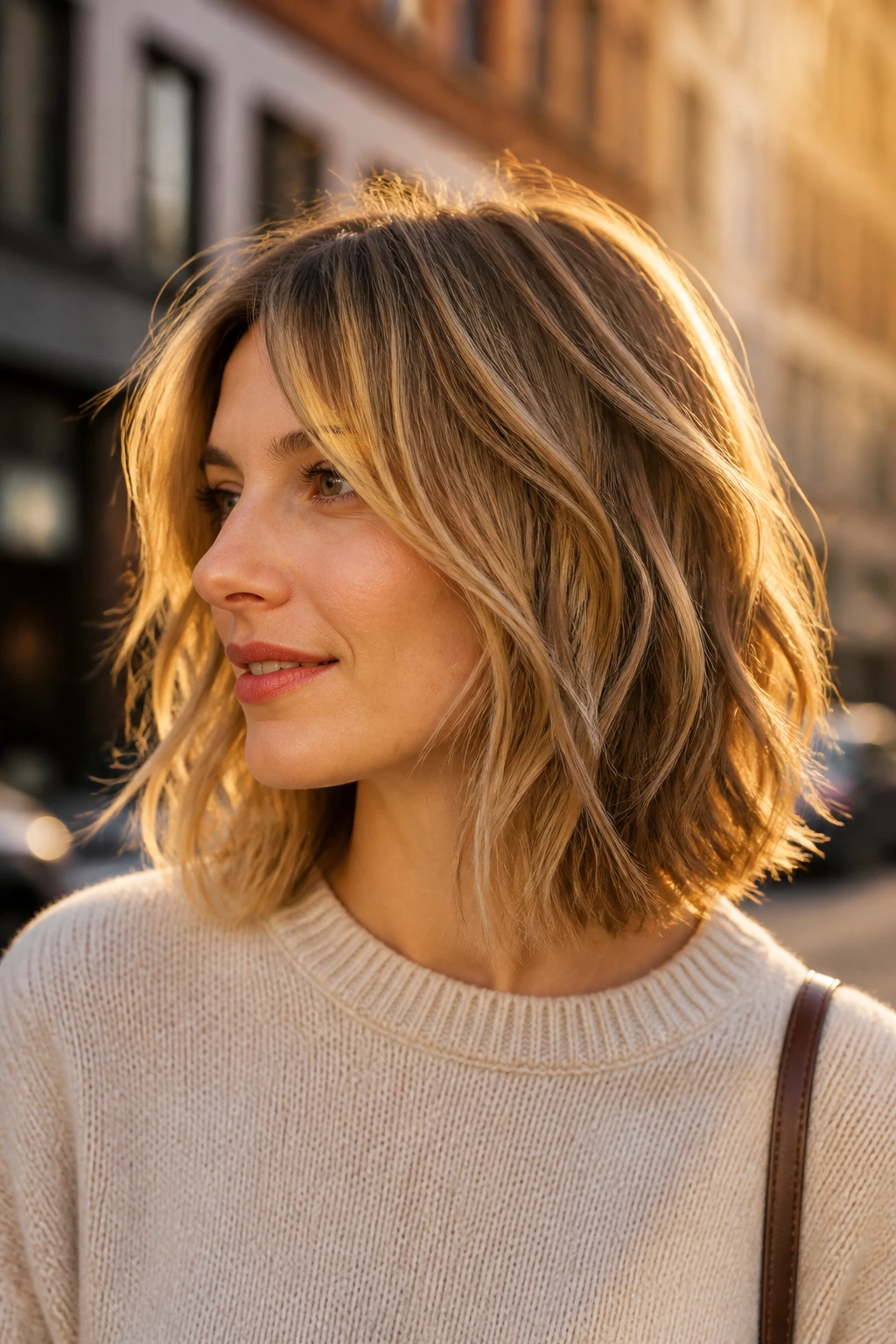
If you want the easiest transition from longer hair, start here. A shoulder-skimming shag lob keeps enough length to feel familiar, but the shag layers stop it from hanging flat across the shoulders. On fine hair, that shoulder contact can be both a blessing and a curse. The right cut lets the hair skim instead of cling.
The longer length also gives the illusion of density because the ends are not all crowded into one small area. Use long, soft layers and a little bend through the mid-lengths to keep the shape alive. If you wear your hair in waves, this cut is forgiving. If you wear it straight, the outline still holds.
It’s the version I’d pick for someone who wants movement without losing the ability to clip it up.
Sometimes practicality wins. It should.
24. Rounded Bob with Feathered Ends
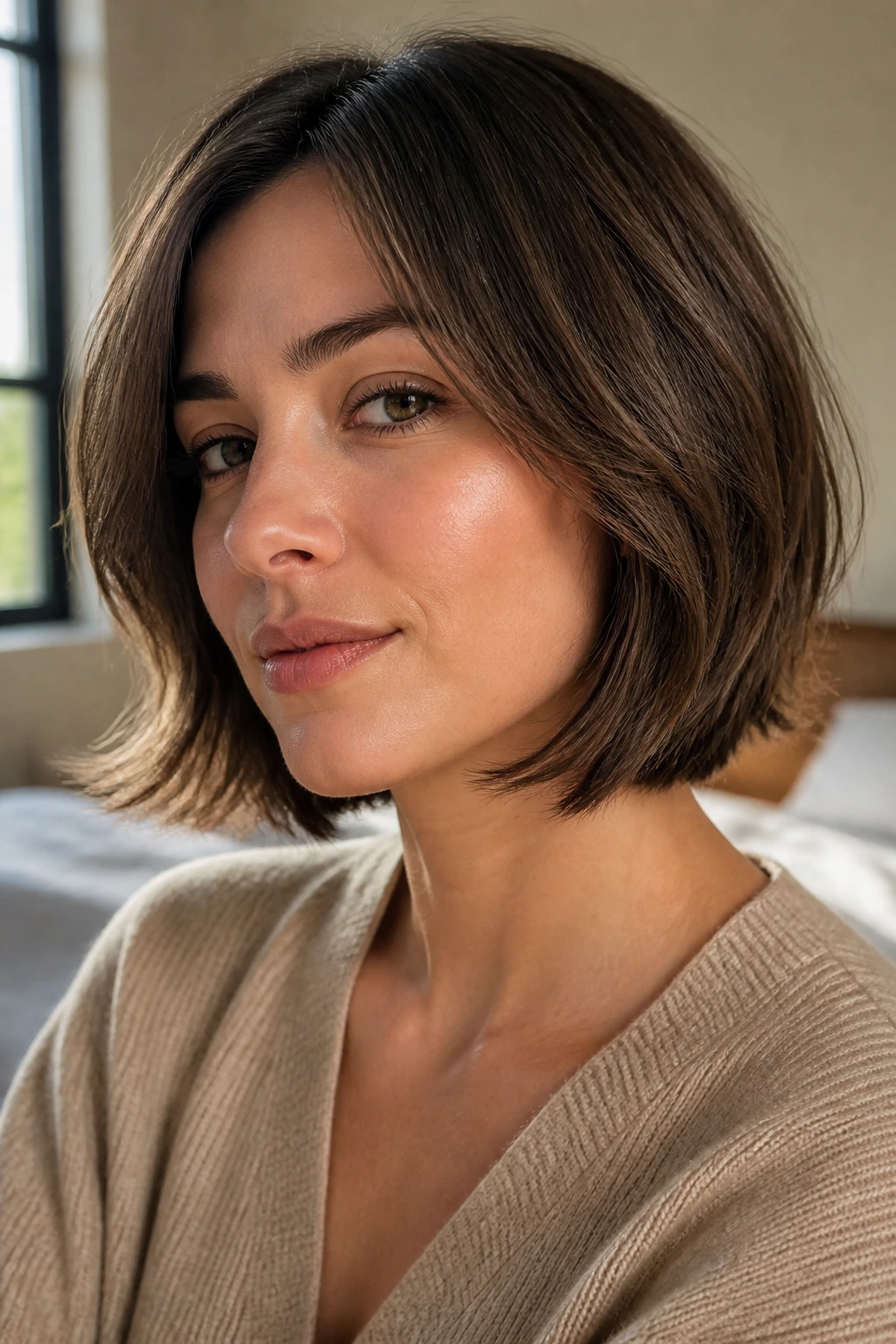
A rounded bob gives the silhouette a softer curve, which can make fine hair look more abundant at the sides. Add feathered ends, and the haircut starts to move instead of sitting like a shelf. That combination is especially useful if your hair is straight and tends to show every blunt line.
The rounded shape should come from the cut, not from over-styling every single morning. Ask for a gentle arc through the sides with feathering only at the final inch or two. That keeps the ends lively without making them thin. It’s subtle, but on fine hair subtle often wins.
This cut is nice if you prefer a softer, more classic feel.
It doesn’t scream shag. It just whispers movement.
25. Razored Bob with Wispy Fringe
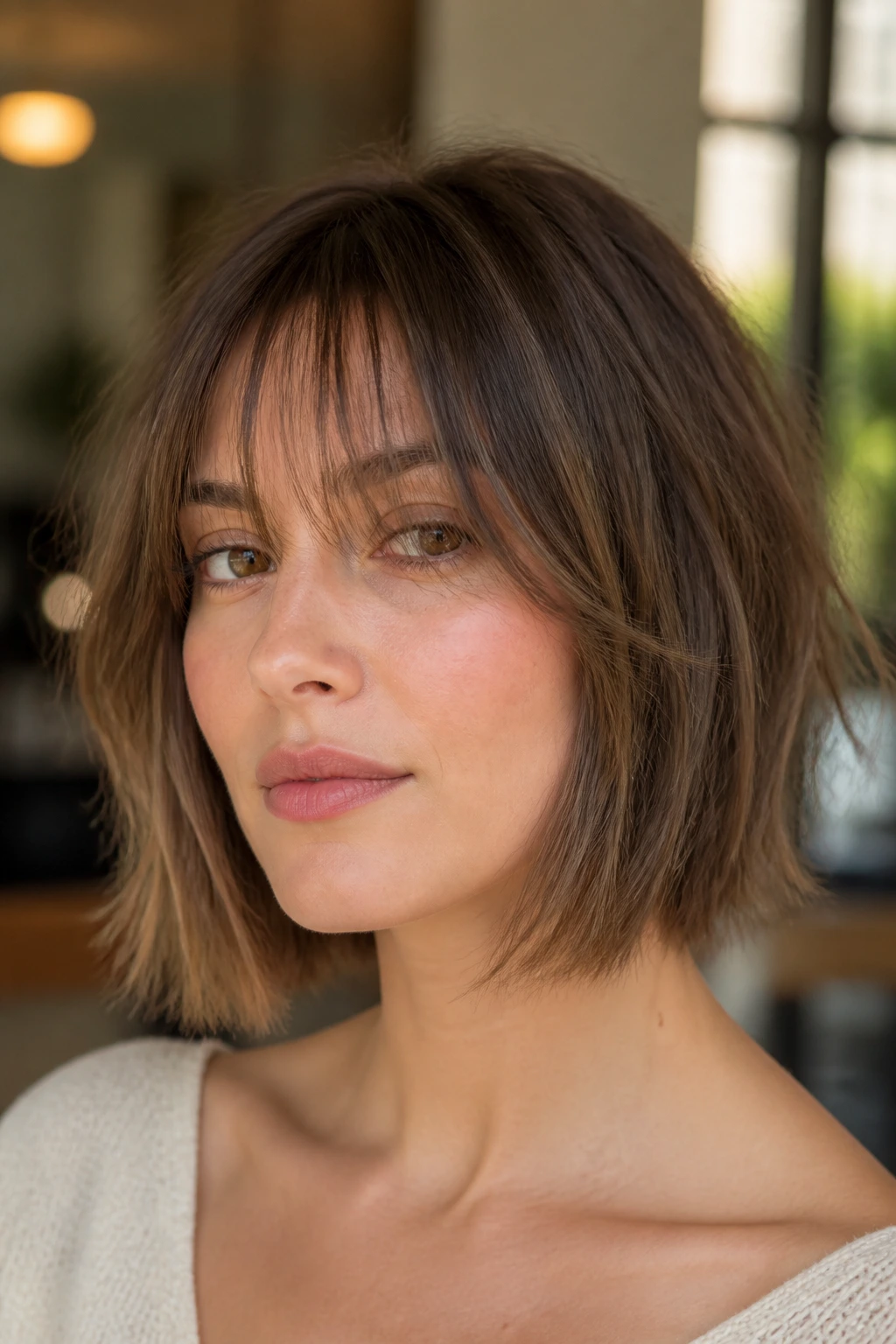
A razored bob with a wispy fringe can look beautifully light on fine hair, but it only works if the strands are healthy enough to take that kind of cut. The fringe should be soft and see-through in a controlled way, not stringy in the unfortunate way. There’s a difference, and you can feel it when you run your fingers through it.
The razor should be used with a careful hand. On brittle hair, it can chew the ends too much. On healthy fine hair with a little bend, though, it can create that floaty, piecey texture people chase in salon photos. Keep the fringe short enough to matter and long enough to tuck if you get tired of it.
This is a strong pick if you like a slightly artsy look and don’t mind styling your fringe.
It’s lovely with a little serum on the ends and a dry texturizing spray at the crown.
26. Low-Maintenance Day-Two Bob
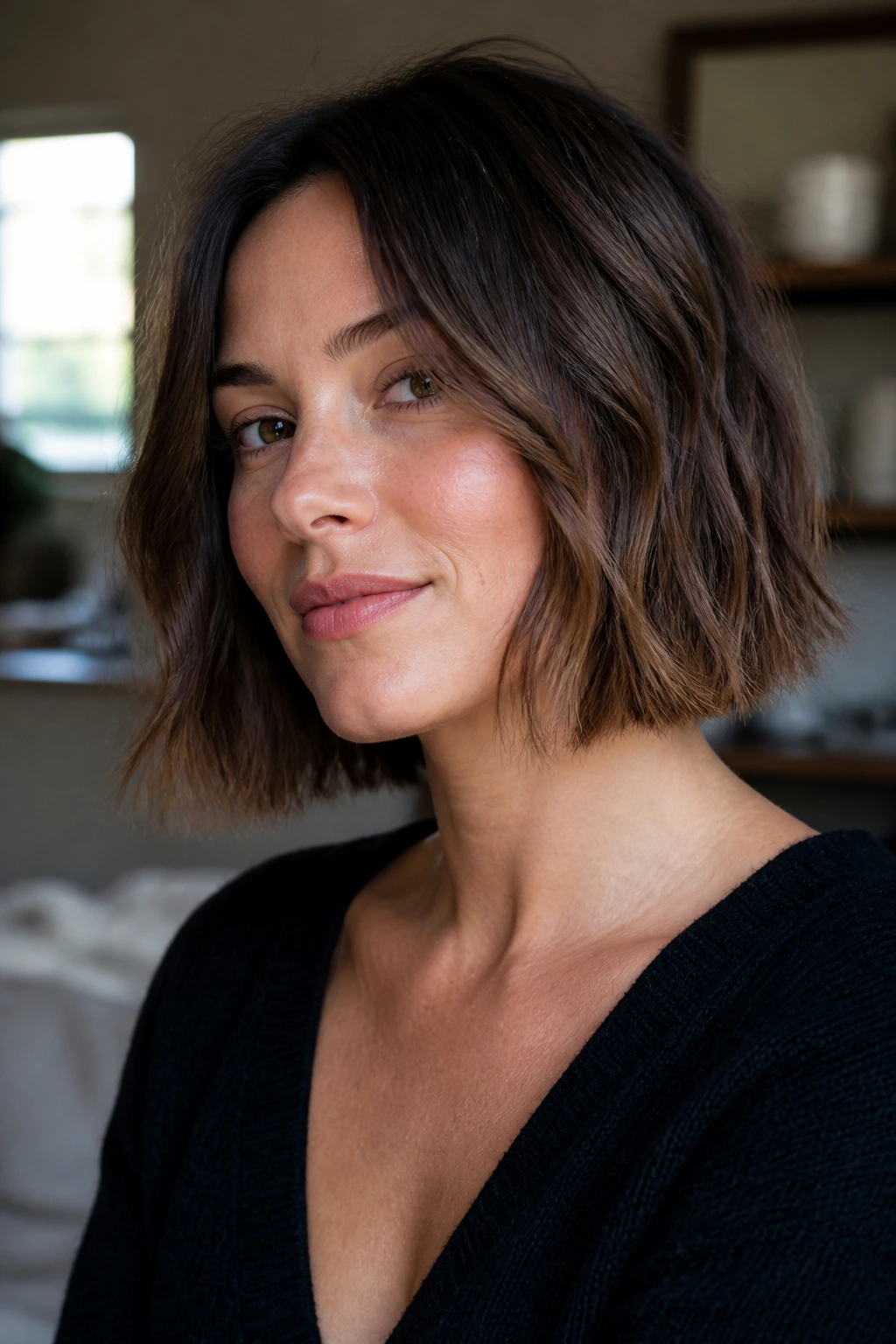
Some haircuts are designed to look good only when they’re fresh. This isn’t one of them. A low-maintenance day-two bob keeps the layers soft enough to settle nicely overnight, which is a gift for fine hair that tends to fall more easily after the first wash. It’s the haircut that remembers shape even after sleep.
You want a bob with enough internal movement to revive easily, but not so much texture that it tangles into itself. That means medium-soft layers, a strong outline, and a finish that can be reset with dry shampoo and your fingers. If you air-dry, this cut usually gets better on day two. If you blow-dry, it still holds a little bend.
This is the cut for people who do not want a complicated morning.
And honestly, that’s most people.
27. Glossy Shag Bob for Fine Hair
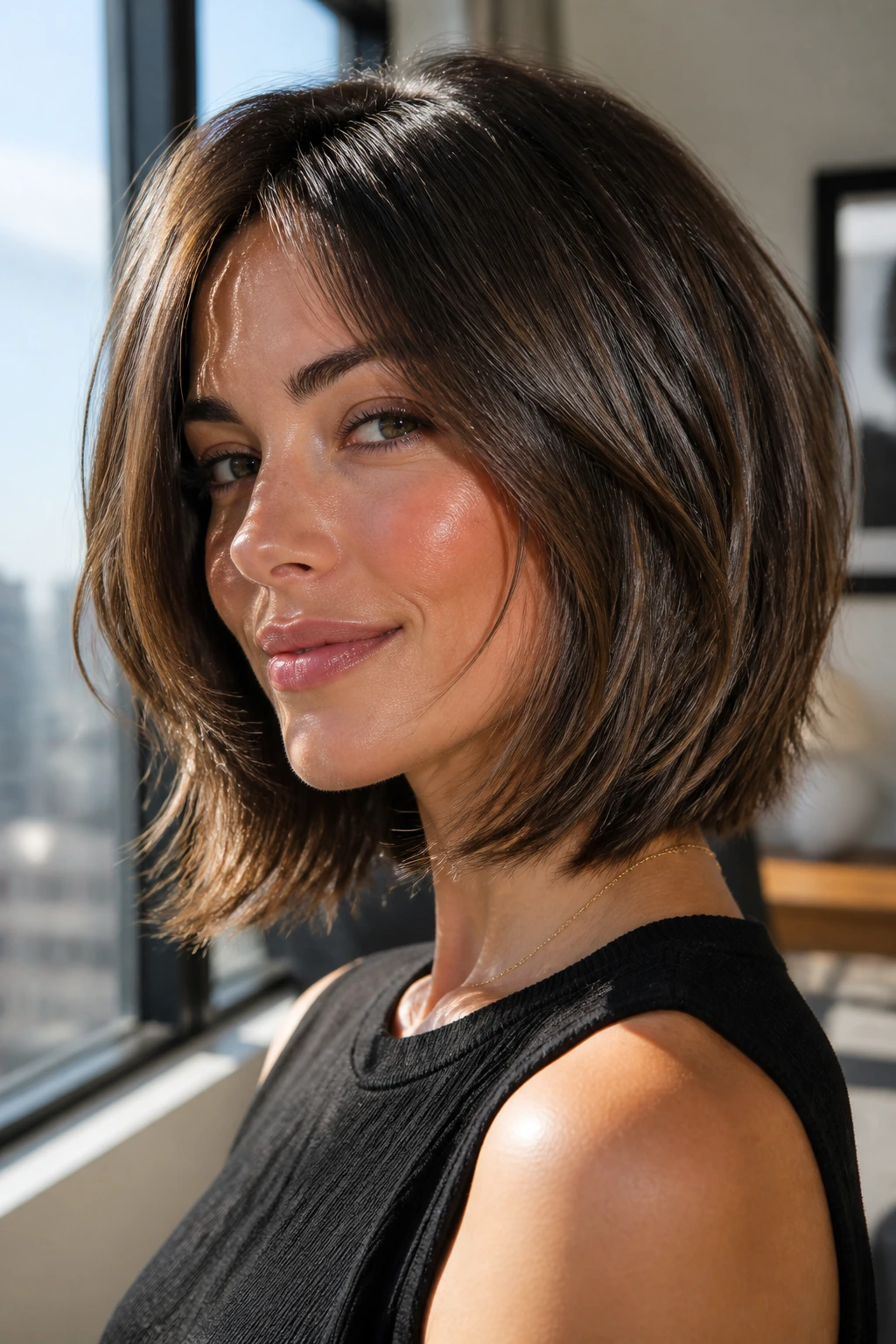
A glossy shag bob is the polished cousin in the family. It keeps the movement and layering, but the finish is smoother, shinier, and a little more controlled. Fine hair often looks better with shine because shine makes the surface read as healthy and the line as fuller.
The trick is to keep the texture in the shape, not in a rough finish. Use a lightweight smoothing cream on the mids and ends, then bend the front pieces slightly under or away from the face. You still want separation in the layers, just not a dry, frayed look. The result feels neat without losing the shag detail.
This is the version I’d choose if you like a cleaner wardrobe, sharper earrings, or a haircut that can move from office to dinner without a second thought.
It’s calm. It’s not boring.
Why Shaggy Bob Haircuts for Fine Hair Keep the Ends Moving

The best shaggy bob haircuts for fine hair do one thing very well: they keep the outline strong while the inside of the cut stays light. That sounds simple, but it’s where a lot of salon cuts go wrong. Too much thinning and the ends lose their body. Too little layering and the haircut collapses into a flat sheet the second it air-dries.
The real art is in where the weight gets removed. For fine hair, that usually means interior movement, not a shredded perimeter. Point cutting can soften the line without stripping the density away. Long layers around the cheekbones and crown can create lift without making the bottom half look see-through. That’s the pattern worth repeating in your head when you sit in the chair.
If your hair is fine but dense, you can usually handle a little more texture. If your hair is fine and sparse, the perimeter matters even more.
That’s the part many people miss. Fine hair does not need to be fought into submission. It needs a shape that supports it.
Essential Tools for Styling a Shaggy Bob at Home
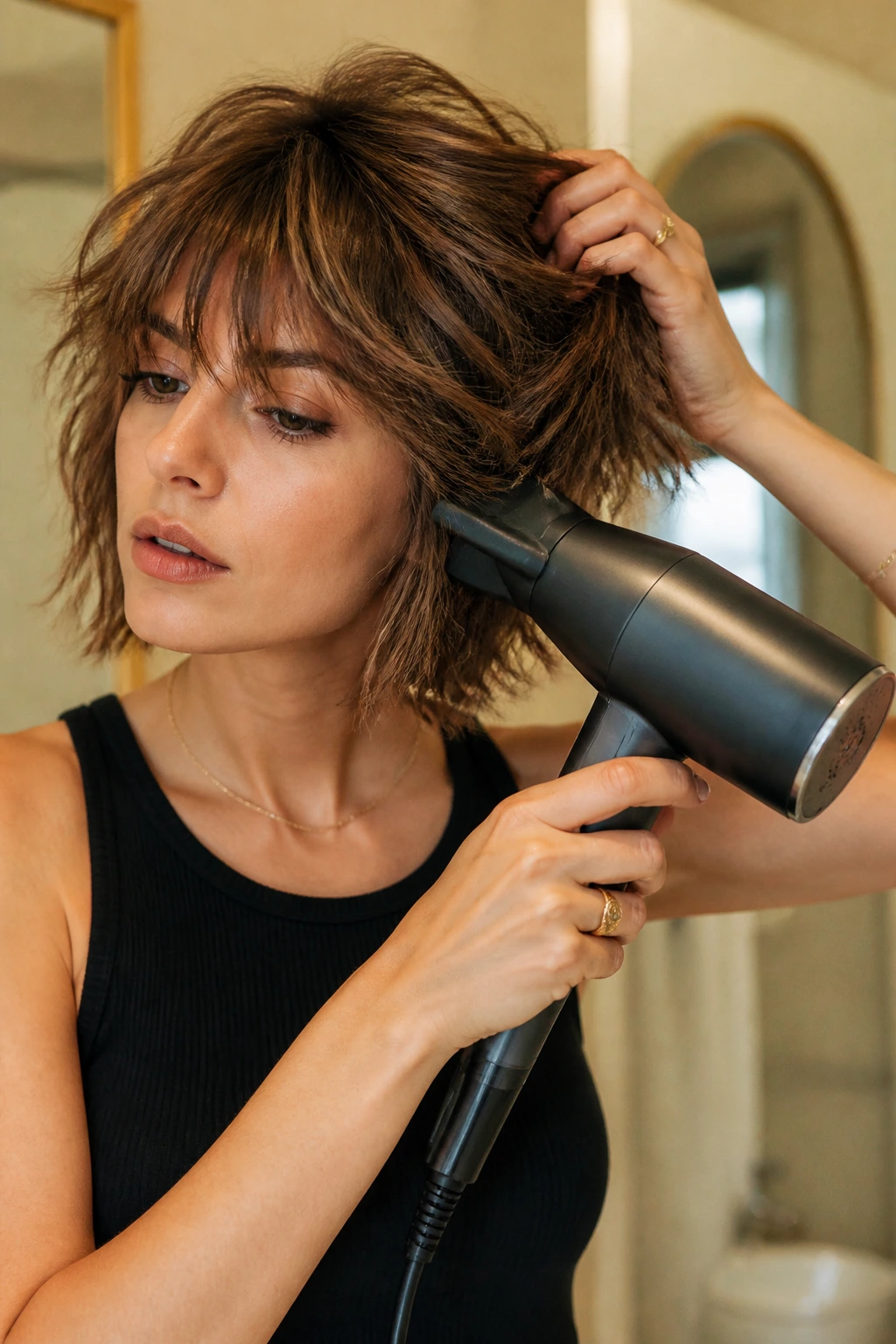
- A blow dryer with a nozzle: The nozzle helps direct airflow at the roots so the cut gets lift instead of puff.
- A small round brush, 1 to 1.5 inches: This gives the ends a bend without overcurving the whole bob.
- Lightweight mousse: Use it on damp roots and mids for grip; heavy creams usually flatten fine hair too fast.
- Root-lift spray: Spray it at the crown and part line before drying for a little extra standing power.
- Texturizing spray: A dry, airy spray helps the layers separate without turning crunchy.
- Dry shampoo: Useful on day two, or even on clean hair if your roots tend to collapse early.
- A flat iron or small curling iron: Great for a quick bend through the front pieces or a soft flick at the ends.
- Heat protectant: Fine hair burns quickly and shows damage quickly, so this one is non-negotiable if you use heat.
What to Ask for at the Salon and Which Products to Buy
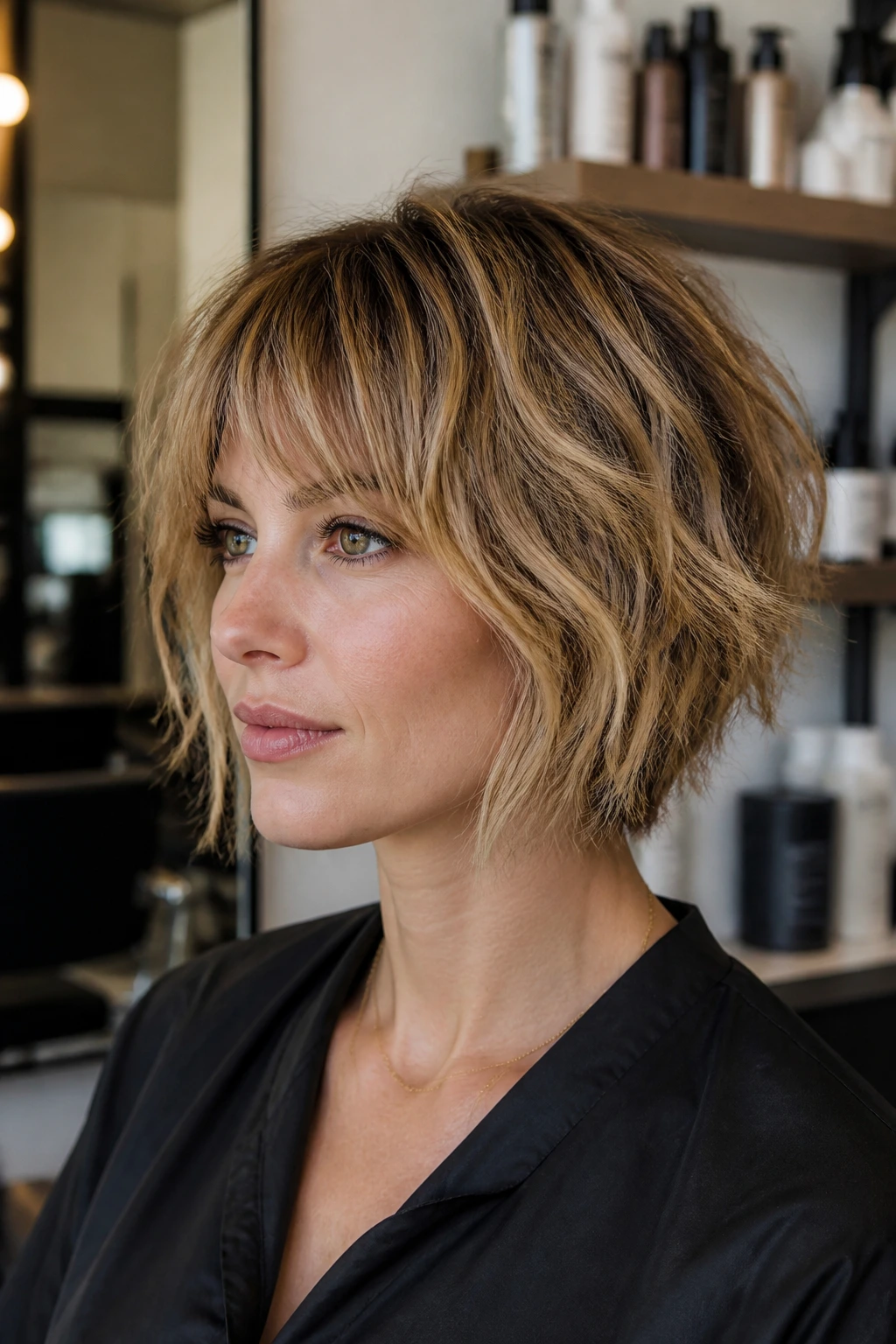
The salon part matters more than the product shelf. Bring photos of cuts that match your hair’s density and texture, not just the vibe. A shaggy bob on thick wavy hair can lie to you hard. It may look dreamy in a picture and turn into a frizzed-out triangle on your head.
Ask for this: a strong perimeter, soft internal layers, and face-framing pieces that start where your hair actually has enough density to support them.
Ask for this too: point cutting or light slide cutting instead of aggressive thinning shears near the bottom.
If you wear bangs: ask to have them cut with your natural part and in the way you actually style them, not in a fantasy routine you’ll never keep.
On the product shelf, the smart buys are boring in the best way. Lightweight mousse. Root spray. Dry shampoo. A heat protectant that does not leave a greasy film. If your hair is wavy, a light cream can help, but keep it off the roots. Fine hair doesn’t need a complicated cabinet. It needs a few things that behave.
How to Style a Shaggy Bob Without Flattening the Crown
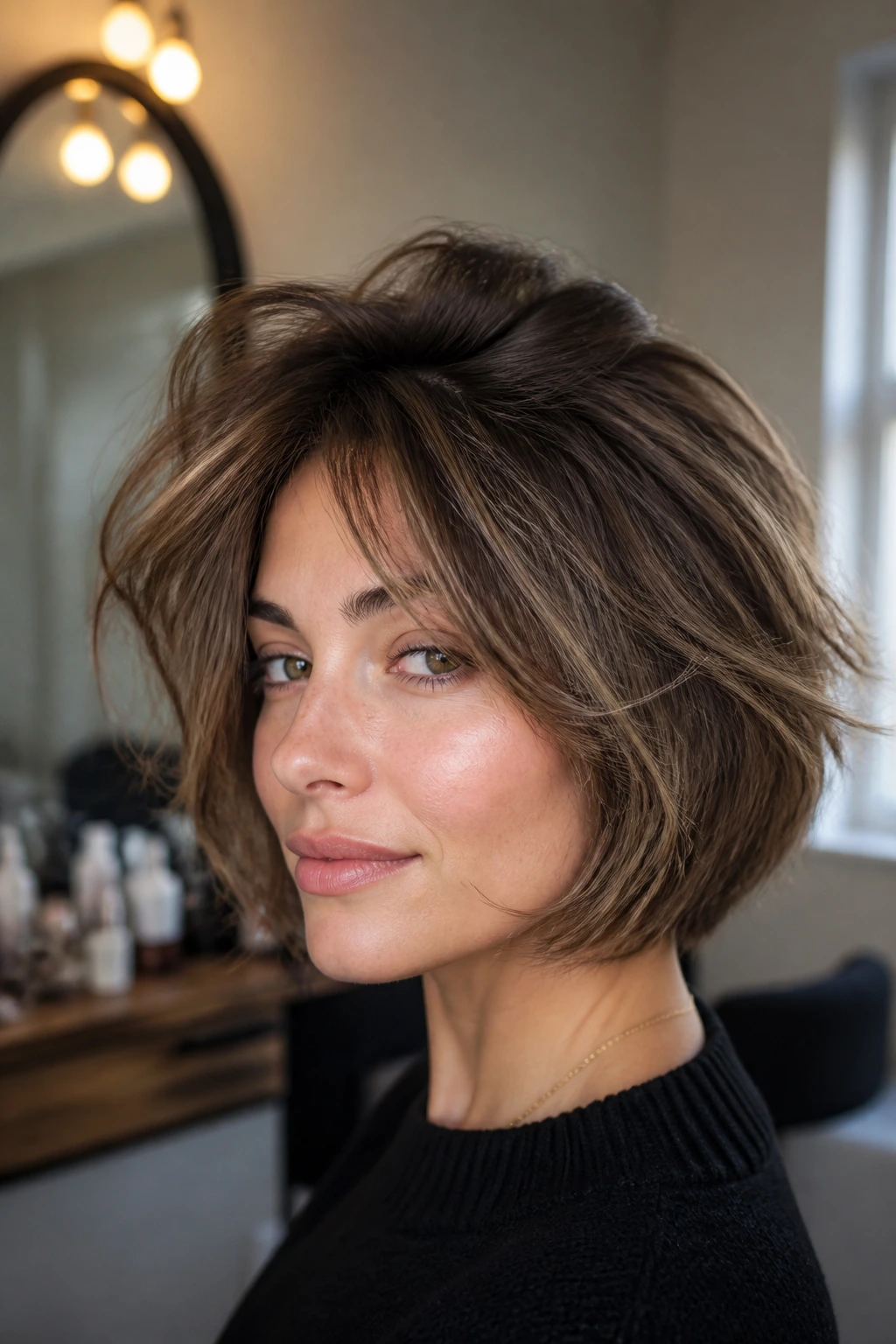
Everyday Finish: Rough-dry the roots until they’re about 80% dry, then use a round brush only where the shape needs help. Focus on the crown and the front pieces. Don’t try to round-brush every inch of hair unless you enjoy losing your afternoon.
Quick Polish: If you want the haircut to look more finished, wrap the ends under or away from the face with a small iron for a 5-second bend per section. The goal is not curl. The goal is a quiet curve that keeps the line alive.
Day-Two Reset: Mist the roots with water or a leave-in spray, add a little dry shampoo, and scrunch the ends with your hands. Fine hair usually comes back better when you disturb it less. You’re refreshing the shape, not rebuilding it from scratch.
Best Pairings: This cut looks especially good with earrings that show, necklines that open up the jaw, and glasses that don’t crowd the fringe. Hair and clothes should talk to each other a little. Not match. Talk.
Additional Tips and Texture Boosters
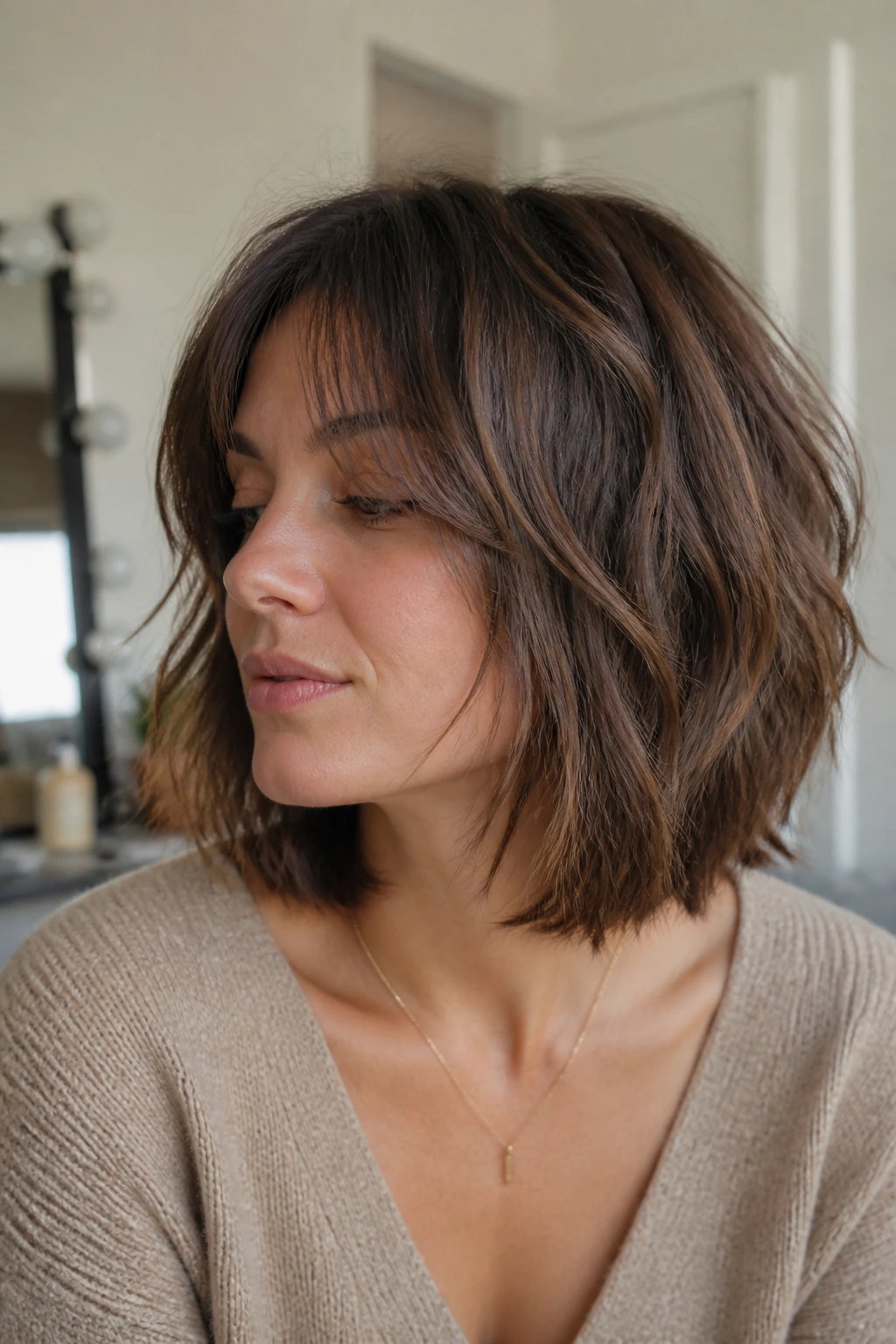
Root Lift: If the crown collapses fast, flip your part while the hair is still warm from the dryer, clip the top section up for five minutes, then release it. That tiny set can change the whole day.
Texture: Use texturizing spray in short bursts at the mid-lengths, not the roots. Fine hair gets greasy-looking fast if you aim too high, and a good shag needs separation, not dust.
Shine: One drop of lightweight serum on the ends can keep a shaggy bob from looking dry. More than that, and you’ll see the weight before you feel it.
Make-It-Yours: If you love a softer look, keep the layers longer and the bangs wispy. If you like more edge, ask for a stronger front angle and a slightly shattered finish around the ends. Same haircut, different attitude.
Common Mistakes That Make Fine Hair Look Thinner
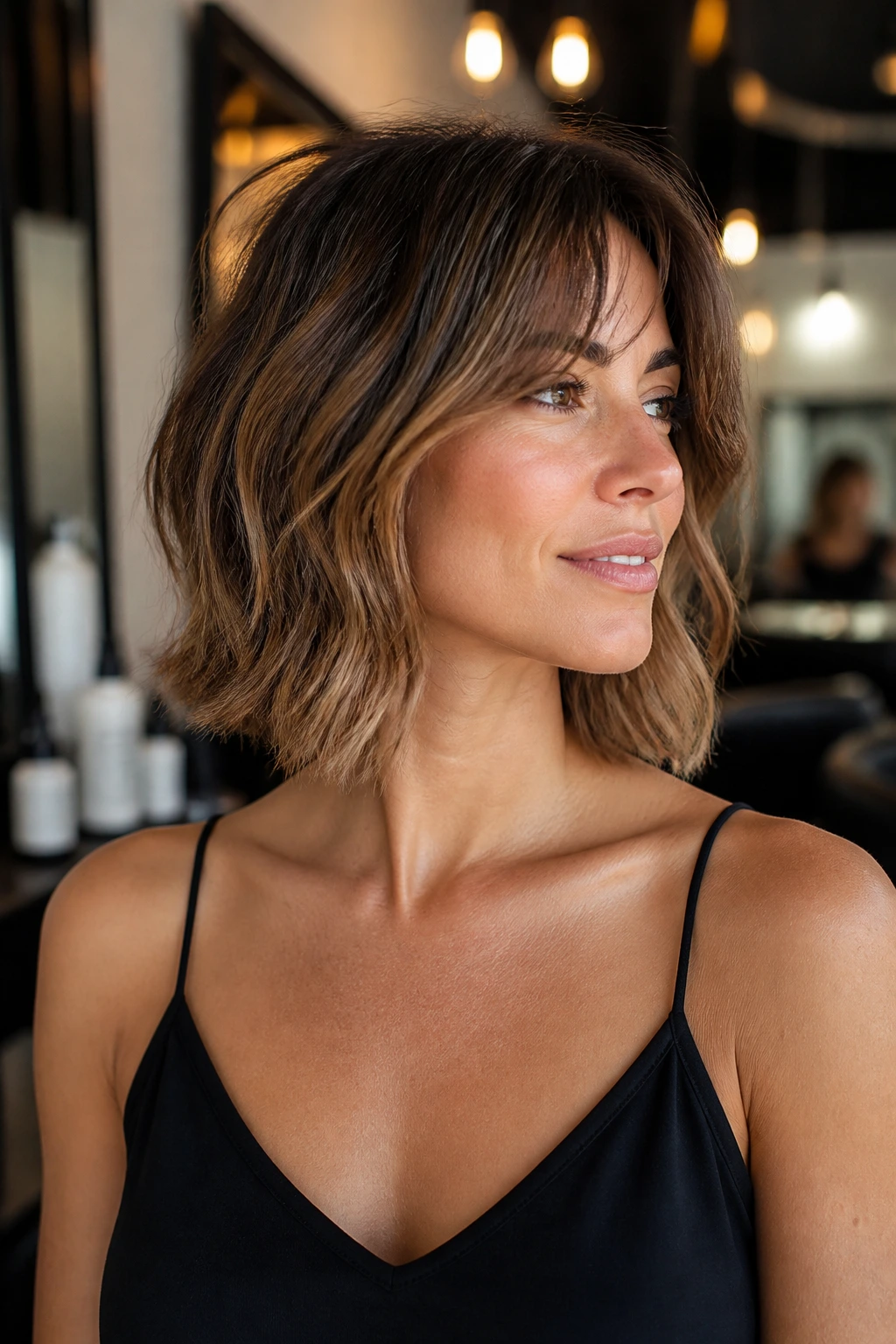
- Over-layering the crown: Too many short layers at the top can make fine hair stand up and then collapse by noon. The fix is longer crown layers that lift without exposing too much scalp.
- Thinning the perimeter too much: If the ends get shredded, the haircut loses its outline and looks see-through. Keep the bottom line blunt or only lightly chipped.
- Using heavy cream near the roots: Fine hair drinks up product fast, and greasy roots flatten a shag in a heartbeat. Put nourishing products on the mids and ends only.
- Cutting bangs too thick: Heavy fringe on fine hair can split, separate, and show gaps. Wispy or curtain styles usually behave better.
- Skipping a day-two routine: A shaggy bob often looks best with a quick rework in the morning. If you ignore the roots and the part, the cut can lose its shape before lunch.
- Choosing a cut that ignores your natural bend: A bob that fights your texture is work twice over. Match the layer pattern to how your hair already falls.
Variations and Adaptations to Try
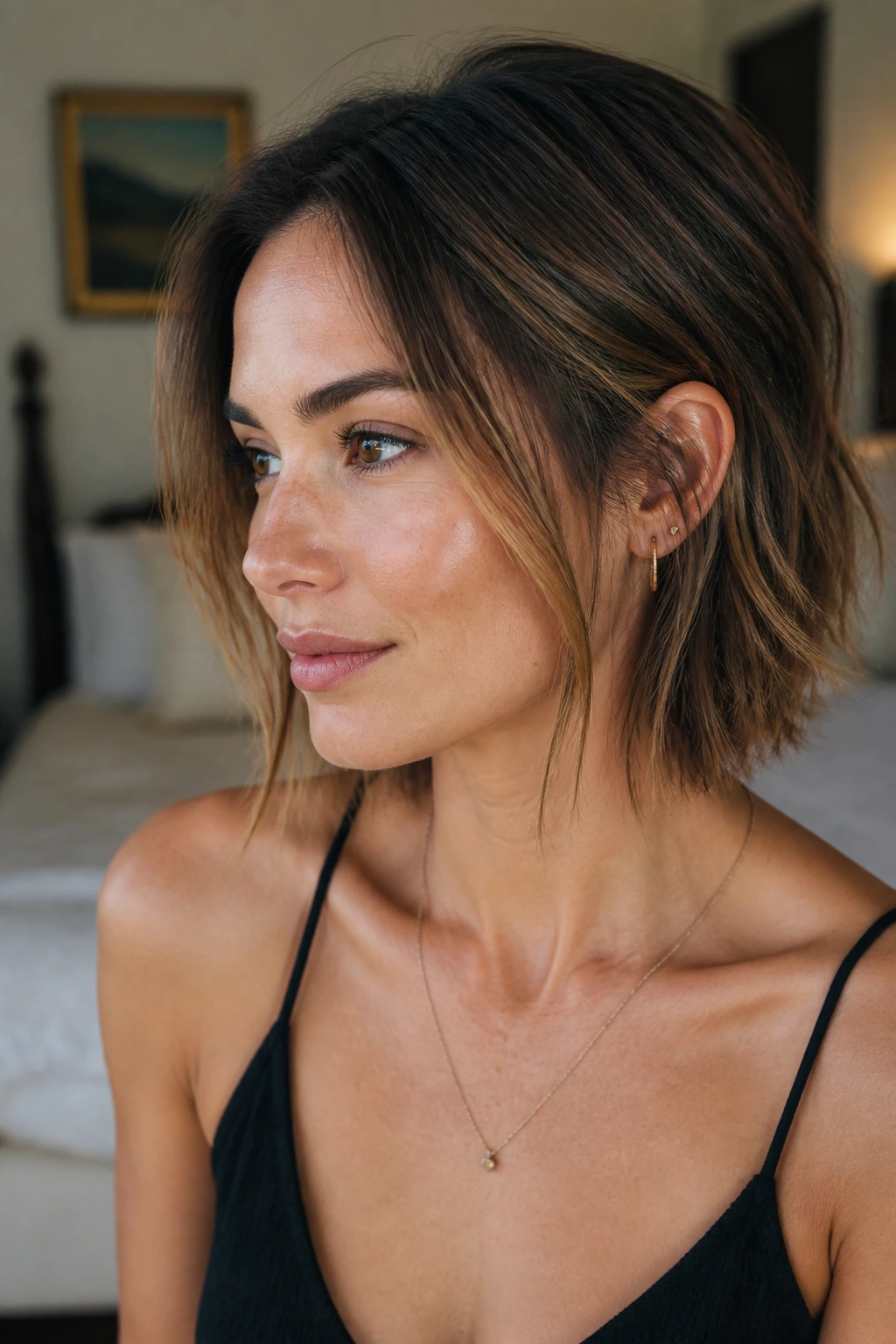
The No-Fringe Version: Keep the front long enough to tuck behind the ears and let the cheekbone pieces do the framing. This is the easiest choice if you hate bang upkeep but still want movement at the front.
The Air-Dry Version: Ask for longer layers and soft ends, then style with mousse and a little scrunching only. It works best on hair with a slight wave and gives a lived-in finish without heat.
The Sleeker Office Version: Keep the perimeter more blunt and the layers softer, then finish with a round brush and a drop of serum. You still get the shag movement, just in a cleaner package.
The Curly-Friendly Version: Keep the length a touch longer and cut with the curl pattern in mind. Fine curls need space to spring, but they also need enough weight to avoid puffing out.
The Short Edge Version: Go for a bixie-bob hybrid or micro-shag if you want lift and don’t mind frequent trims. The shape feels bolder, but it can be a very good choice for very fine strands.
Care, Trims, and Day-Two Maintenance

Fine hair grows out in a way that shows quickly, especially around bangs and face-framing layers. A trim every 6 to 8 weeks keeps the shape from sagging. If you wear curtain bangs or a fringe, you may want a bang trim every 3 to 4 weeks so the front doesn’t drop into your eyes and pull the whole haircut down with it.
Washing too often can strip fine hair of the bit of grit it needs to hold volume, but waiting too long can make roots limp and oily. Most people with fine hair do well washing every 2 to 4 days, depending on scalp oil and product use. Dry shampoo can stretch the gap, though it should be brushed out well so it doesn’t leave the roots chalky.
At night, a loose clip or a silk pillowcase helps preserve the bend. In the morning, don’t wet the whole head unless you have to. Hit the roots, refresh the front, and leave the ends alone when they’re still doing their job.
Questions People Ask Before Getting the Cut
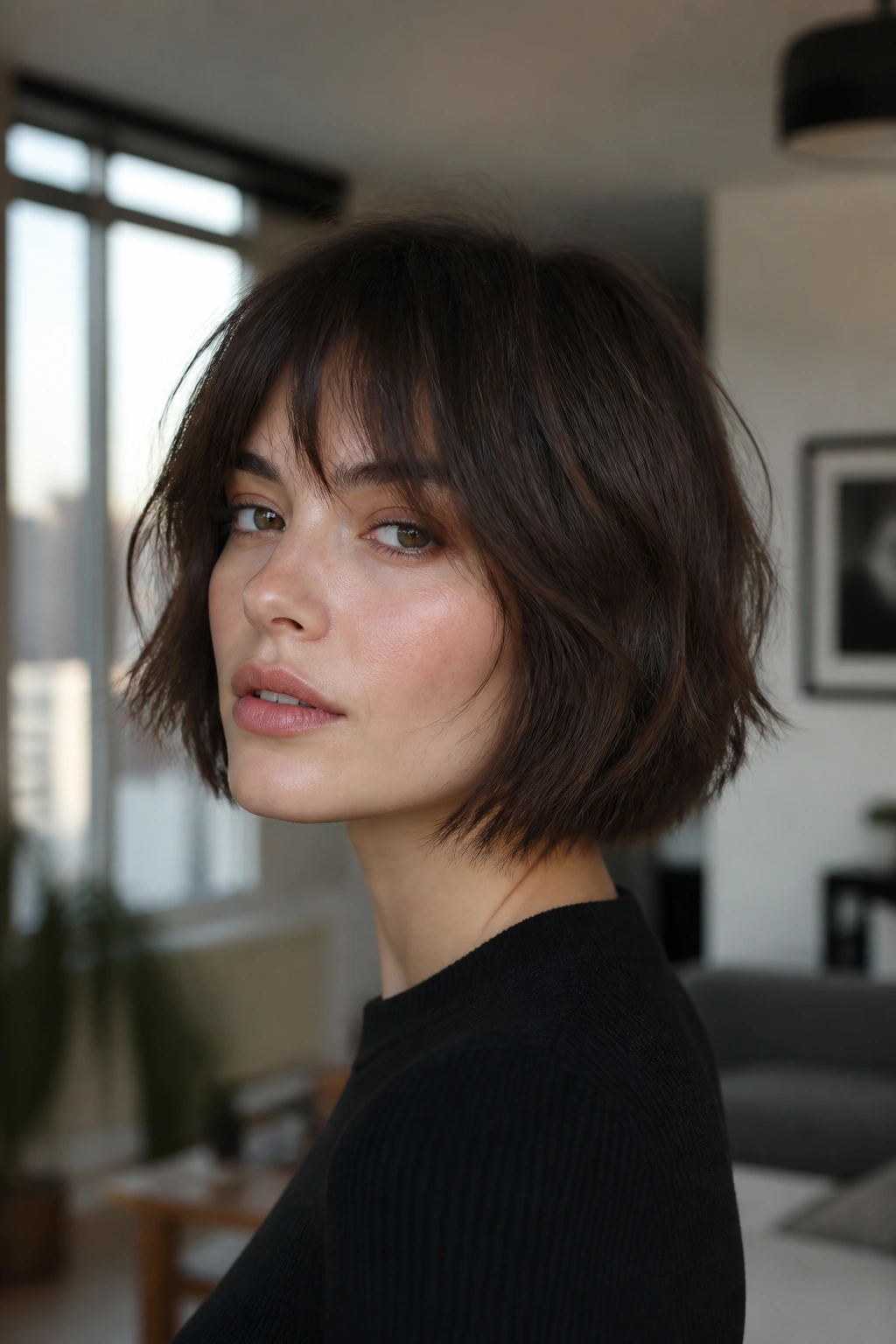
Will a shaggy bob make fine hair look thinner?
Not if the perimeter is kept strong. The problem is not the shag idea itself; it’s over-thinning the ends until there’s nothing left to hold the shape.
Is a blunt bob better than a shaggy bob for fine hair?
A blunt bob gives the thickest-looking outline, but a shaggy bob gives more movement and usually looks better if your hair goes flat fast. The right choice depends on whether you want the fullest edge or the most life.
Can straight fine hair wear a shaggy bob without looking frizzy?
Yes, but keep the layers longer and the finish smoother. A small bend at the ends and a little root lift will do more than rough texture ever will.
Are bangs a bad idea on fine hair?
Heavy bangs can be a problem. Curtain bangs, bottleneck bangs, and soft side-swept fringe usually behave better because they use less hair and blend into the cut.
How often should I trim a shaggy bob?
Plan on 6 to 8 weeks for the shape and sooner if the fringe starts hanging in your eyes. Fine hair loses its structure faster than thicker hair, so the trim schedule matters.
What if my hair is wavy and fine at the same time?
That’s actually a very good starting point for a shaggy bob. Ask for longer layers and a dry check at the ends so the waves don’t shrink the cut too much.
What product should I avoid most?
Heavy oils and thick creams near the roots. They flatten fine hair fast and make the cut lose its lift before the day is halfway over.
The Shape That Keeps Moving

The nicest thing about shaggy bob haircuts for fine hair is that they don’t try to turn delicate strands into something they’re not. They work with lift, movement, and a clean line at the bottom. That’s the formula. Everything else is decoration.
Pick the version that matches how you actually live. If you air-dry, choose a longer, softer version. If you blow-dry, you can lean a little sharper. If your ends are fragile, keep the perimeter blunt. If your roots are flat, spend your layers where the lift will show.
And if you’ve spent years thinking your hair needs more of everything, it probably doesn’t. It needs better shape.
