



A blunt bob on short hair has no place to hide. The edge lands, the line either looks crisp or it doesn’t, and every millimeter changes the mood.
Blunt bob cuts for short hair have a funny habit of looking simple from the outside and exacting in the chair. On straight hair, they can read almost graphic, like the haircut was drawn with a ruler. On wavy or curly hair, they ask for more planning, not more drama — just a clearer sense of where the weight sits and where the line should live.
Some versions sit at the chin and feel polished. Others stop near the ear and lean sharp, almost editorial. Bangs can soften the whole thing, or they can make it hit harder. That variety is the whole point, really. A blunt bob is not one haircut. It’s a shape decision, and once you know what each version is doing, the choices get a lot easier to read.
Why These 22 Blunt Bob Cuts Work on Short Hair
-
The perimeter does the talking: A clean hemline gives short hair structure even when you don’t spend much time styling it, which is why a blunt bob still reads clearly after a rough air-dry.
-
The length is doing real work: At chin, jaw, or nape level, the cut changes how much of the neck and jaw you show, and that changes the whole mood faster than bangs ever will.
-
One cut, many finishes: The same blunt base can look sleek, French, boxy, soft, or glossy just by changing the part, the bend at the ends, or the way you dry it.
-
It holds shape between trims: Layers blur as they grow. A blunt edge keeps its outline longer, so the haircut still looks planned even when it’s a few weeks past a fresh salon visit.
-
Short hair finally gets to look deliberate: There’s no “fixing” a blunt bob with extra fluff. The cut already has a point of view, which is exactly why it suits people who like a clean, clear line.
What Makes a Blunt Edge Work on Short Hair
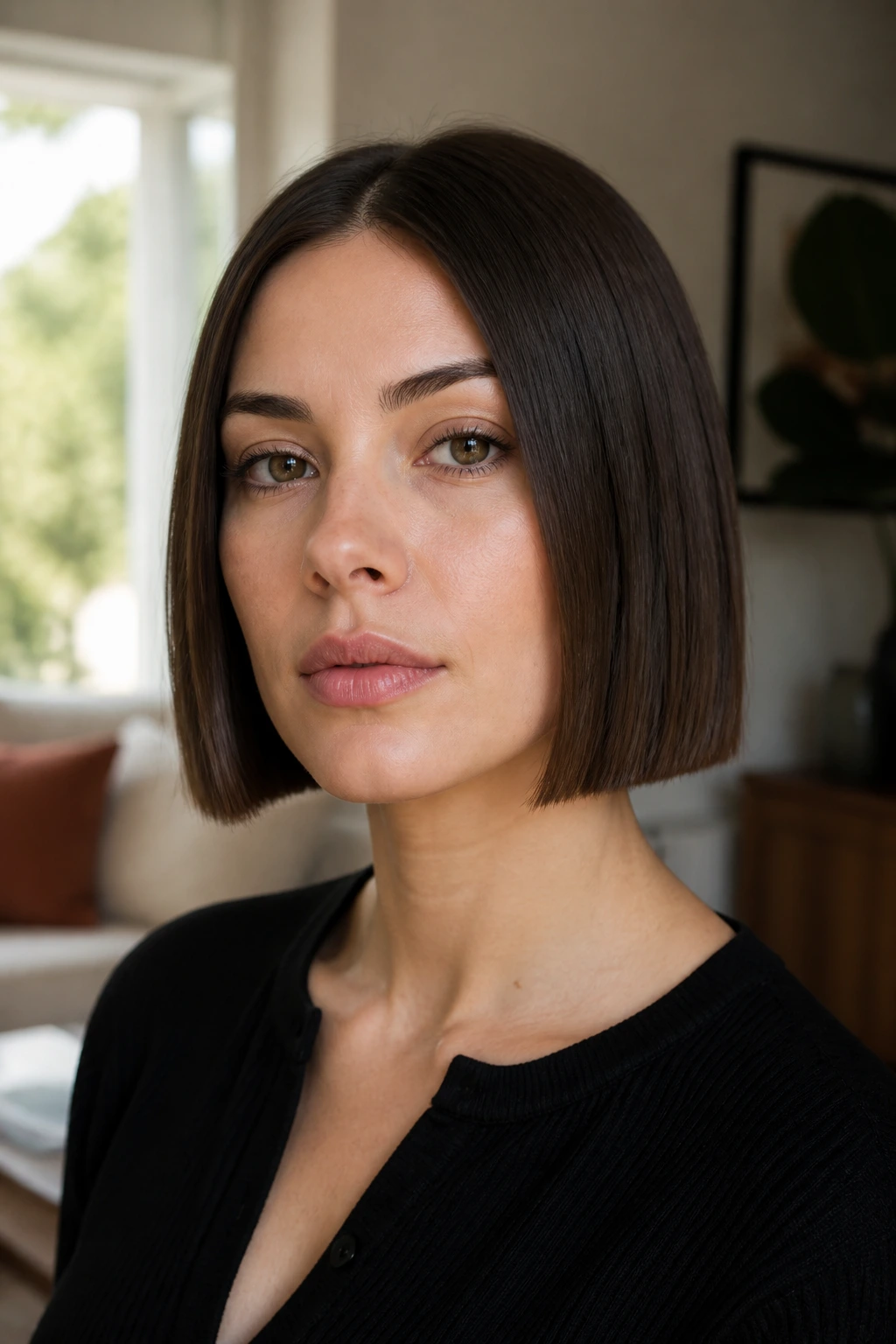
A blunt bob only looks simple when the geometry is right. The ends need to sit on one visual line, and that line needs to land in a place that flatters the jaw, neck, and profile you actually have — not the one you wish you had on a humid morning.
The tricky part is weight. Too much softness at the perimeter and the cut starts to look accidental. Too much bulk and it can feel boxy in the wrong way, especially around the sides. The sweet spot is a strong outline with just enough internal control that the bob moves when you turn your head, but doesn’t fall apart the second you tuck one side behind your ear.
The part matters more than most people think
A center part makes a blunt bob feel cool and even. A side part pushes weight over one side of the face and can make the same cut read more dramatic or more forgiving. If you’ve ever watched a bob change personality in five seconds, the part was probably doing half the work.
Texture changes the read, not the idea
Straight hair shows every millimeter of the line. Wavy hair adds bend and makes the edges feel softer. Curly hair needs a different cutting approach, but the blunt perimeter can still be there — it just has to be placed with shrinkage in mind.
1. Chin-Grazing Classic Blunt Bob
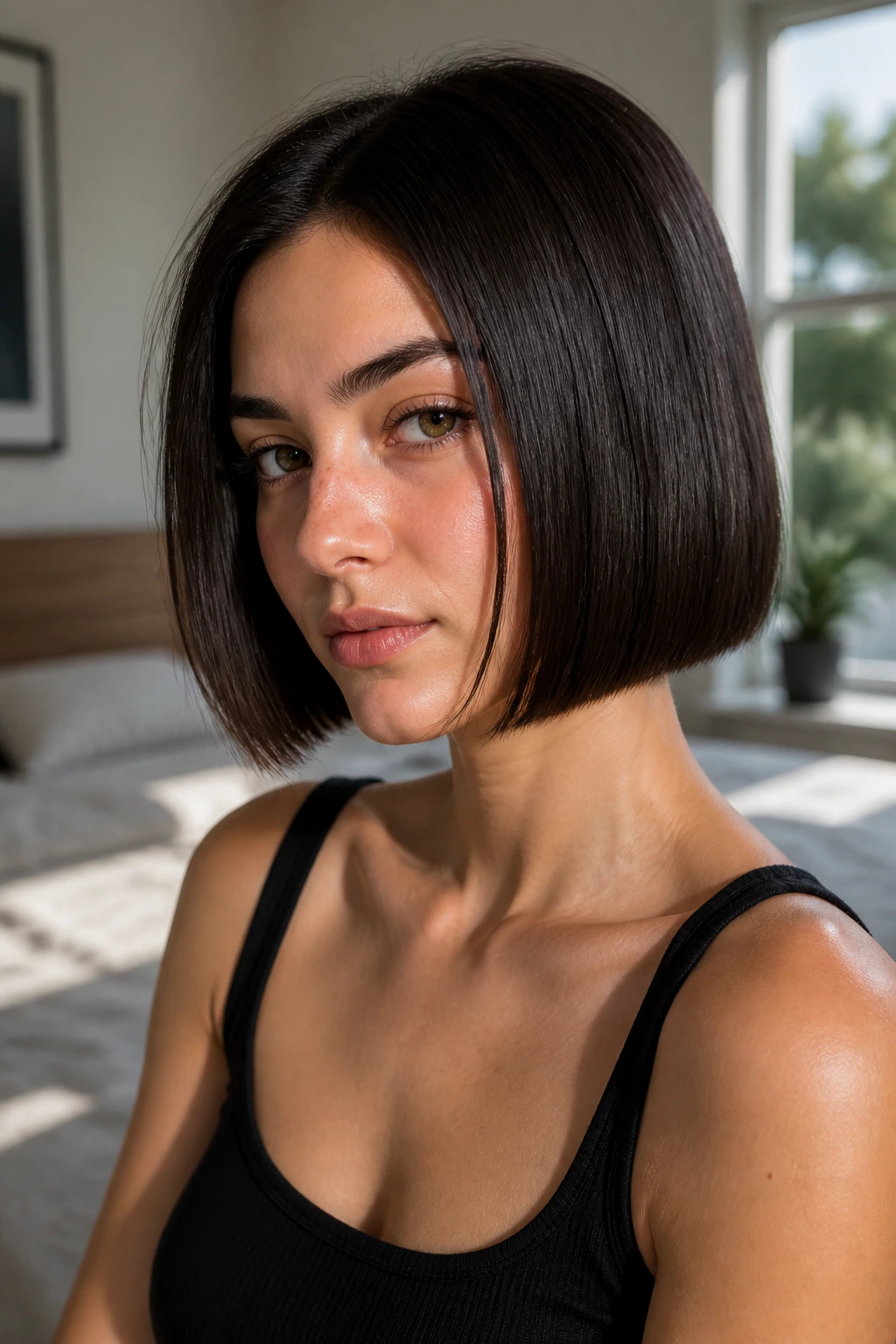
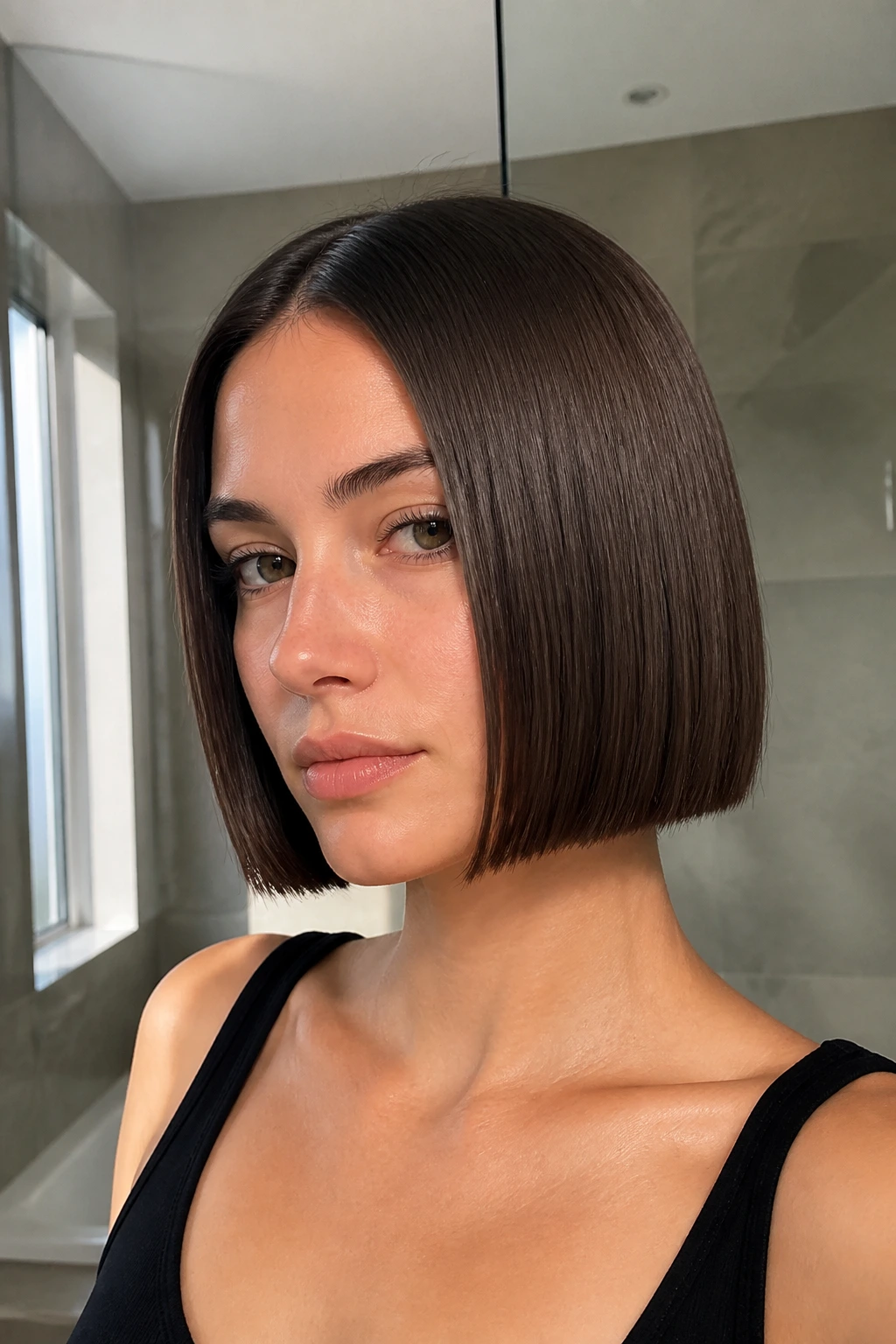
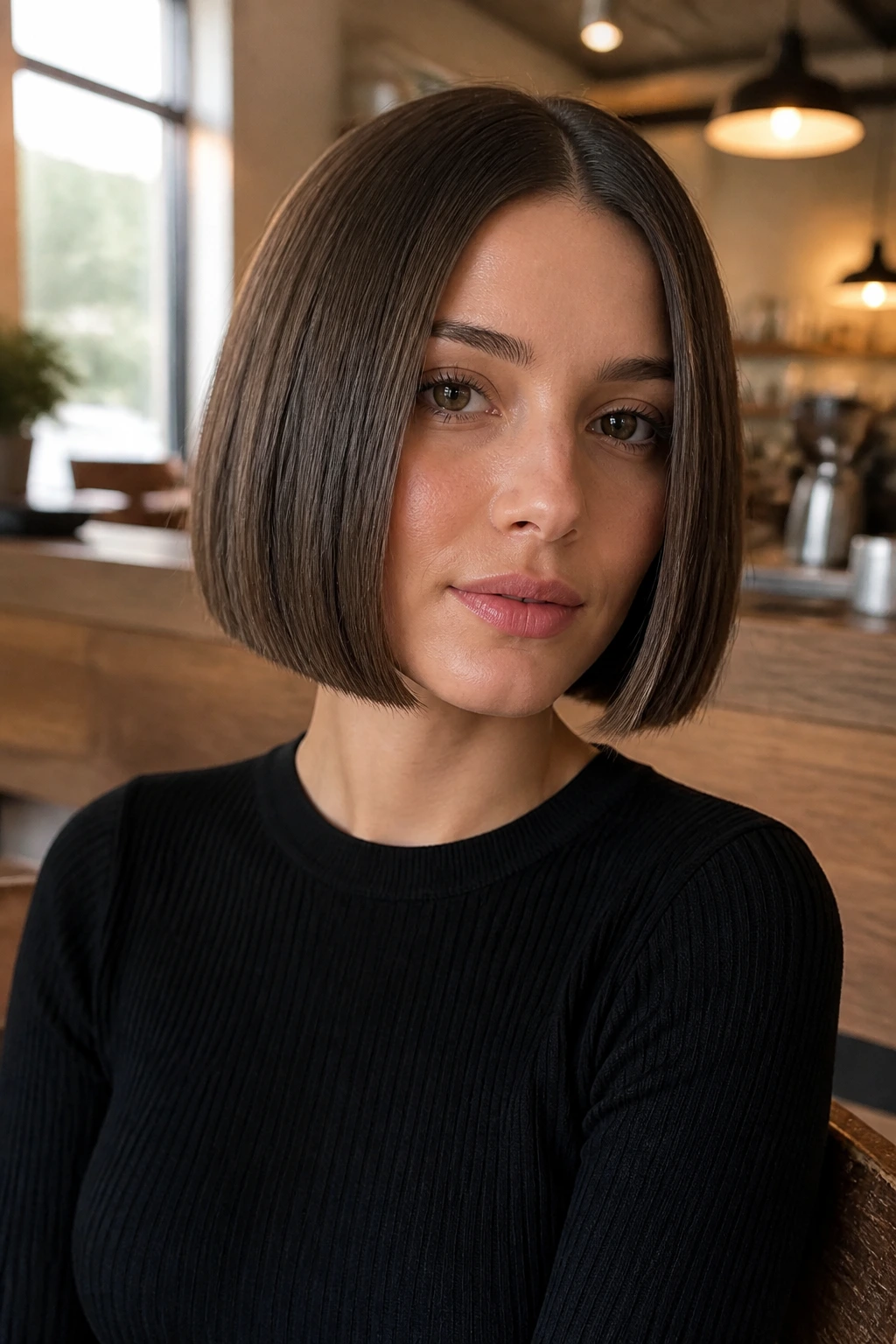
This is the version most people picture first: a clean line that lands right at the chin or a whisper below it. It’s the blunt bob in its most direct form, and that directness is the charm. Nothing fussy. Nothing disguised.
I like this length because it gives you room to tuck one side behind the ear without losing the shape. On straight hair, the cut looks almost architectural. On hair with a slight bend, the ends need a quick pass with a round brush or flat iron so they don’t flip out and break the line.
If you want a bob that feels timeless without looking stale, start here. It’s the baseline. Everything else in this list is just a different conversation with the same sharp outline.
2. Jaw-Length Center-Part Blunt Bob
A jaw-length blunt bob with a center part is one of the cleanest shapes you can wear. The part divides the face evenly, and the hemline sits where the jaw starts to matter visually. That’s useful if you want the haircut to frame the face instead of crowding it.
Why the center part feels so clean
The center part keeps both sides honest. There’s no extra sweep to hide behind, so the line has to be good. When it is, the haircut feels crisp and self-assured, especially on medium-density hair that can hold the shape without puffing out at the temples.
- Best length: Just at the jaw or ¼ inch below it.
- Best texture: Straight to softly wavy hair.
- Best finish: A slight inward bend at the ends, not a hard curl.
This version is a smart pick if you like symmetry and you want the bob to sit flat and neat instead of airy or messy.
3. Ear-Skimming Micro Bob
How short can a blunt bob go before it stops feeling like a bob? Shorter than most people expect. The micro bob skims the ears, clears the jaw, and puts the neckline on show. It’s tiny, but it doesn’t whisper.
What makes the micro length pop
The cut works because all the attention goes to the perimeter. There’s nowhere for the eye to wander, so the line has to be precise from temple to temple. On very straight hair, it can look almost sculpted; on wavy hair, a light smoothing cream keeps the shape from puffing outward.
This is the cut I’d choose for someone who likes strong shapes and doesn’t mind frequent trims. The grow-out is fast. The payoff is immediate.
If you want it to sit neatly, ask for a clean neckline and a blunt edge that barely brushes the tops of the ears. That small difference changes the whole read.
4. Brow-Skimming Blunt Bob With Full Fringe
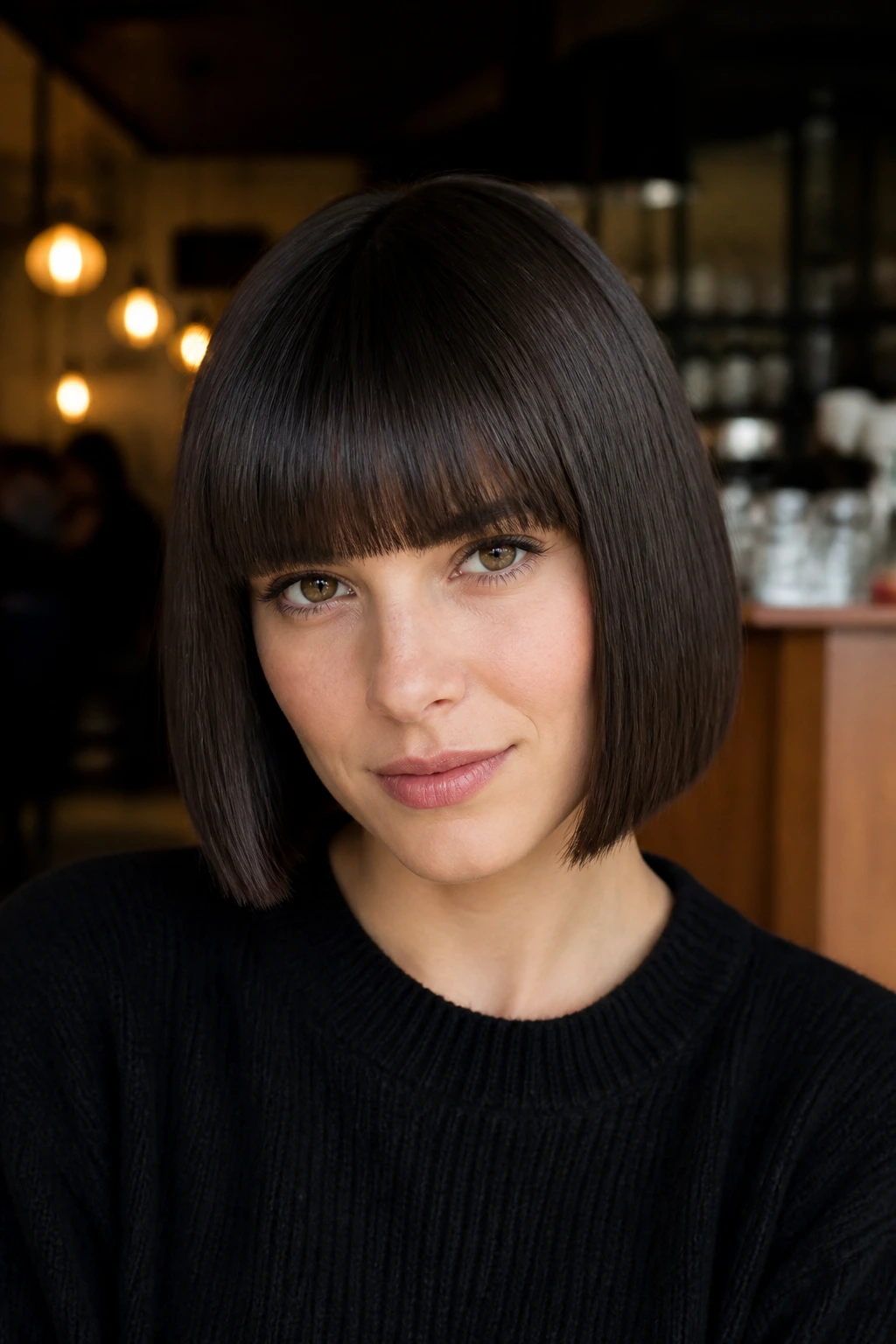
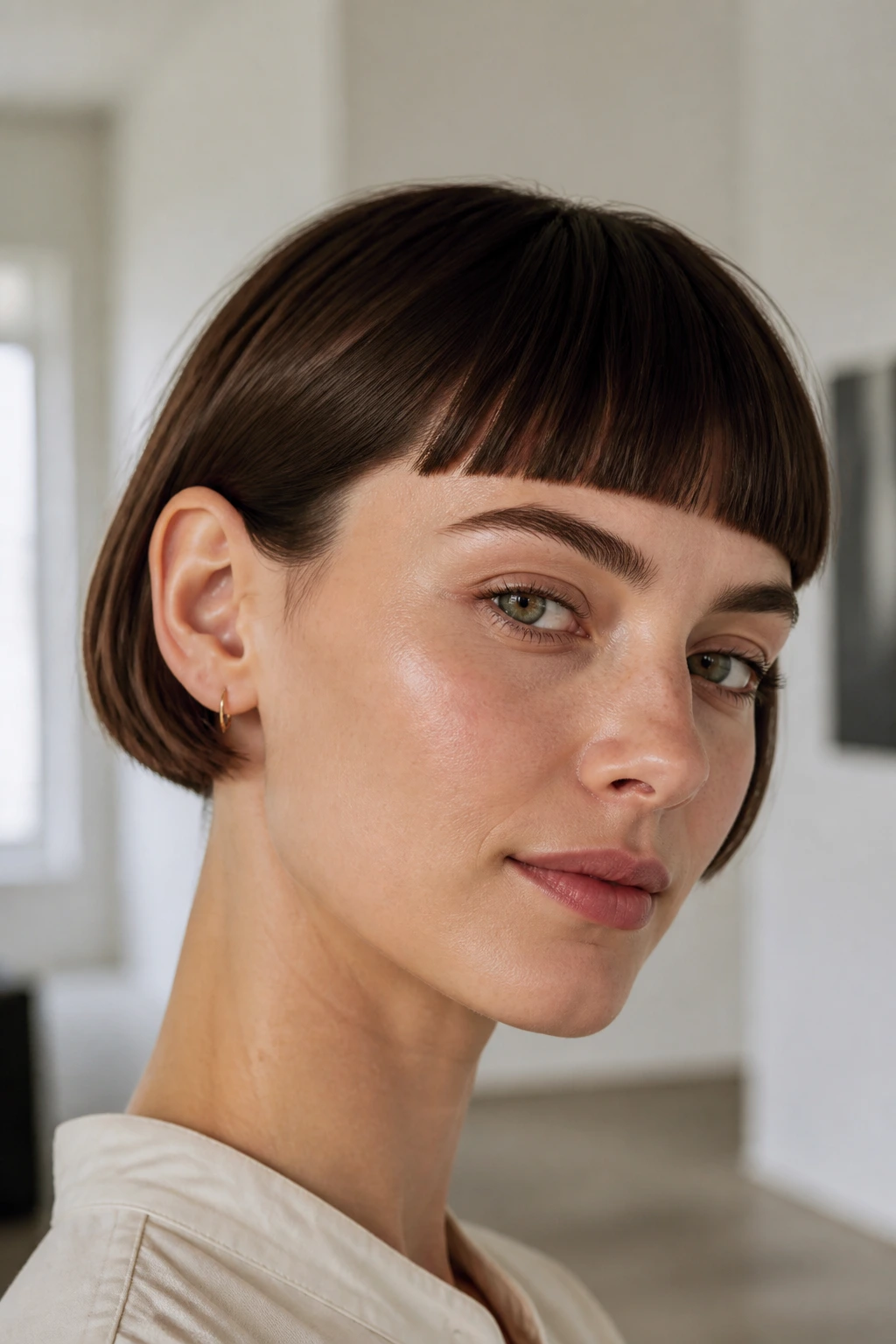
If a classic bob feels a little too open, add a full fringe. The bangs land around the brows, and the rest of the bob stays blunt and compact. That combination softens the overall shape without giving up the clean edge.
This version has a nice balance to it. The fringe gives your eyes a frame, while the perimeter stays straight enough to keep the cut from looking fluffy. It’s especially good when your hair is naturally straight or only bends a little at the ends, because the bangs and the hemline can both stay crisp.
The one thing I’d watch: don’t let the fringe get too heavy. If it sits on the eyelids, the whole cut can feel weighed down. Brow-skimming, not face-hiding, is the sweet spot.
5. Blunt Bob With Baby Bangs
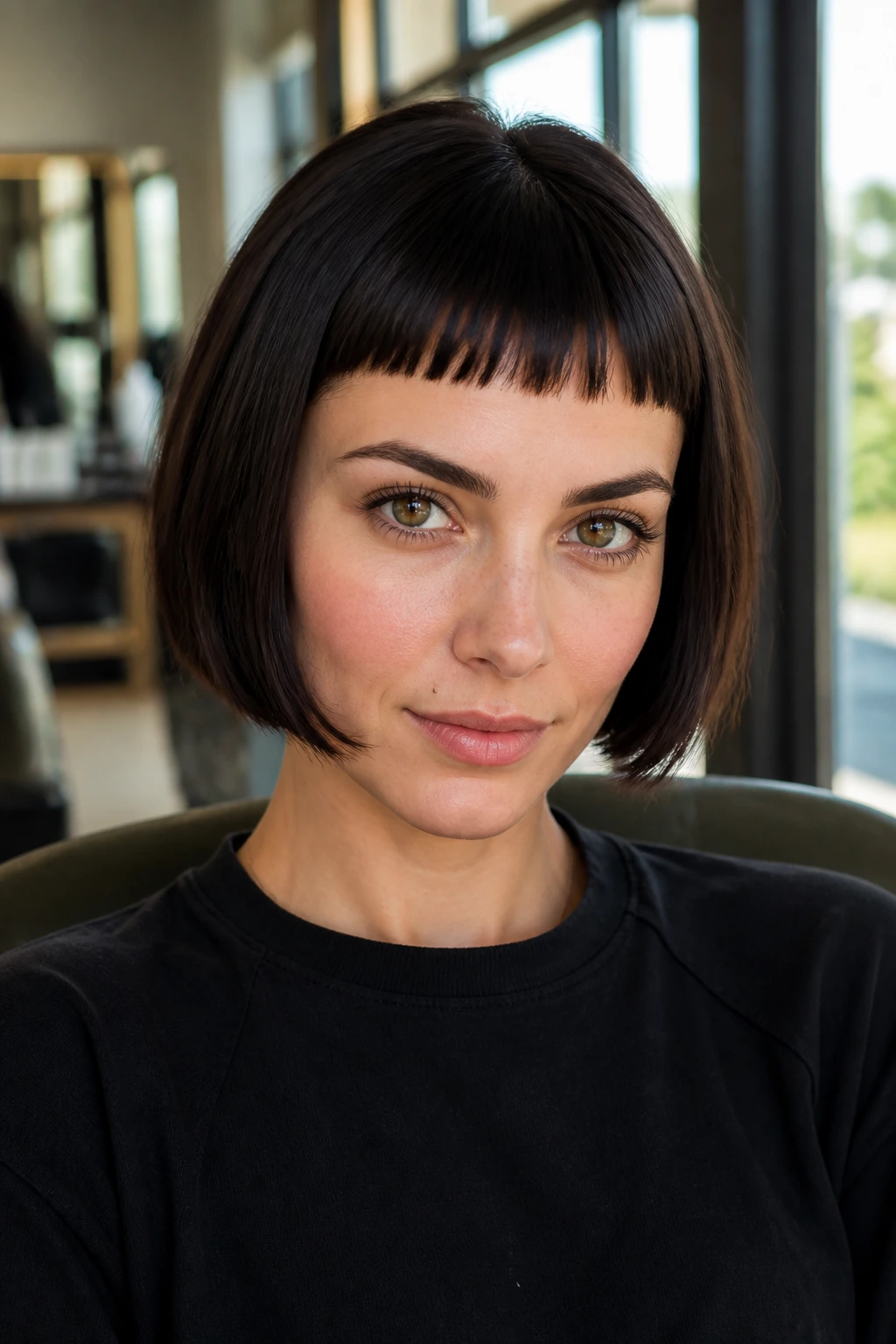
This is the sharpest version in the stack. Baby bangs turn a blunt bob into something graphic fast, and that tiny strip of fringe pulls attention upward. The haircut stops feeling ordinary the second the bangs clear the brows.
Baby bangs work best when you want contrast. The perimeter stays severe and clean, but the forehead gets a sudden break in the line. It’s a strong look on short hair because it keeps the bob from feeling too safe.
That said, the cut asks for honesty. If your hair grows fast or your bangs hate living above the brow line, you’ll be back in trim territory more often than you might like. Still, when the proportions are right, this bob has bite.
6. Side-Part Power Bob
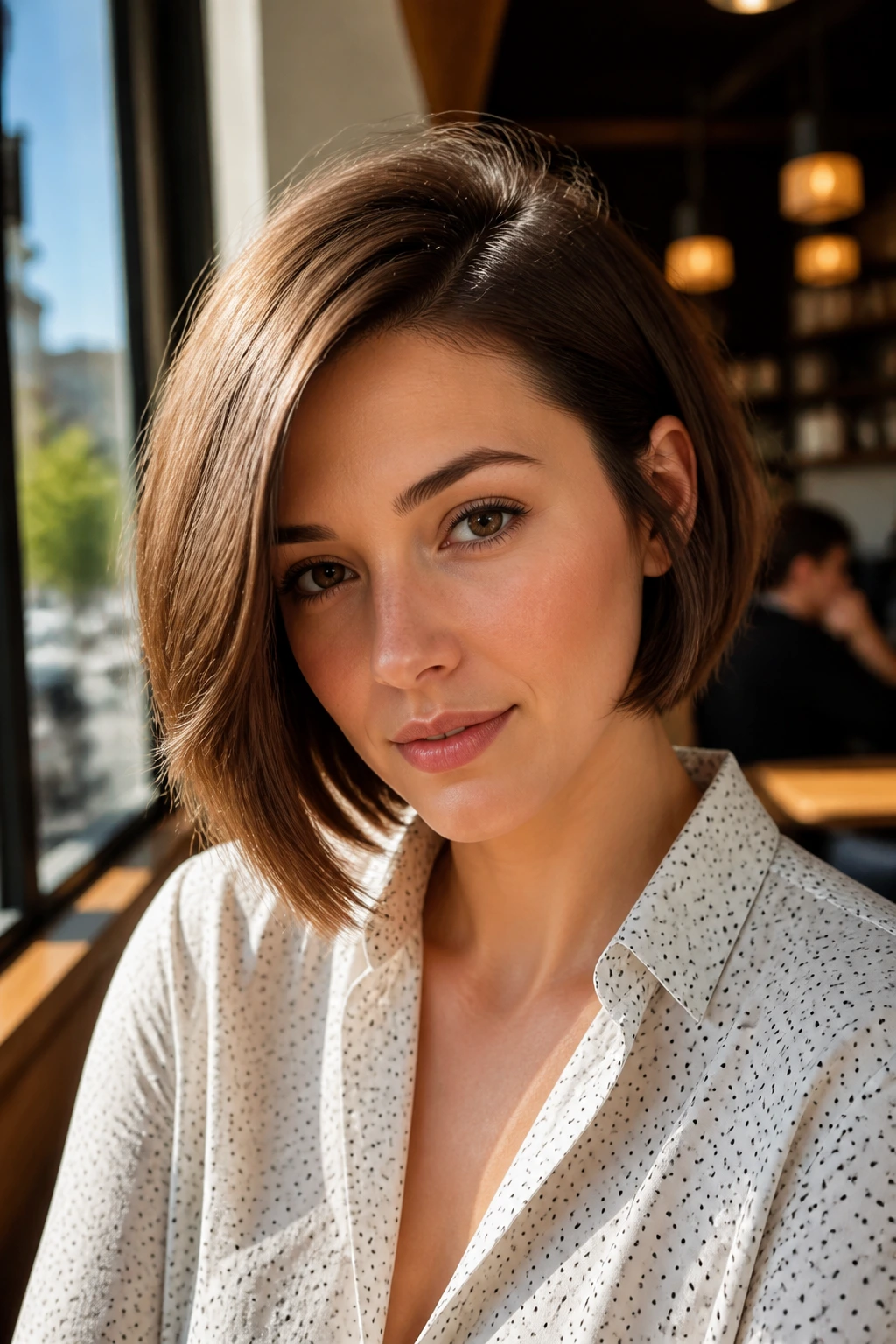
A side part can change a blunt bob faster than a new color can. Push the part over by an inch or so and the shape picks up lift, weight, and a little attitude. One side falls forward. The other side opens the face.
The trick is to keep the part deep enough to create movement, but not so deep that the bob becomes lopsided in a sloppy way. I like this on short hair that needs a touch more body at the crown, because the side part gives you that lift without layers doing the work.
If your hair is flat at the roots, this is one of the easiest blunt bob cuts to live with. It lets the haircut do the heavy lifting while your styling stays simple.
7. French Bob With a Clean Edge

A French bob is shorter, cheekier, and a little less polished than the classic chin bob. It usually sits around cheekbone to jaw level, sometimes with a soft fringe, and it looks best when the ends are tidy but not overworked.
What makes it feel French
The shape has room to breathe. It doesn’t need every strand pinned into place. A bit of bend at the ends, a little movement around the face, and a blunt line underneath are enough. That’s why it tends to look better when the hair has some natural texture instead of being iron-flat all the time.
The French version is a good fit if you like a bob that feels cut with intention but not flattened into submission. It has edge, but it still moves when you turn your head. That’s a useful line to walk.
8. Italian Bob With More Body
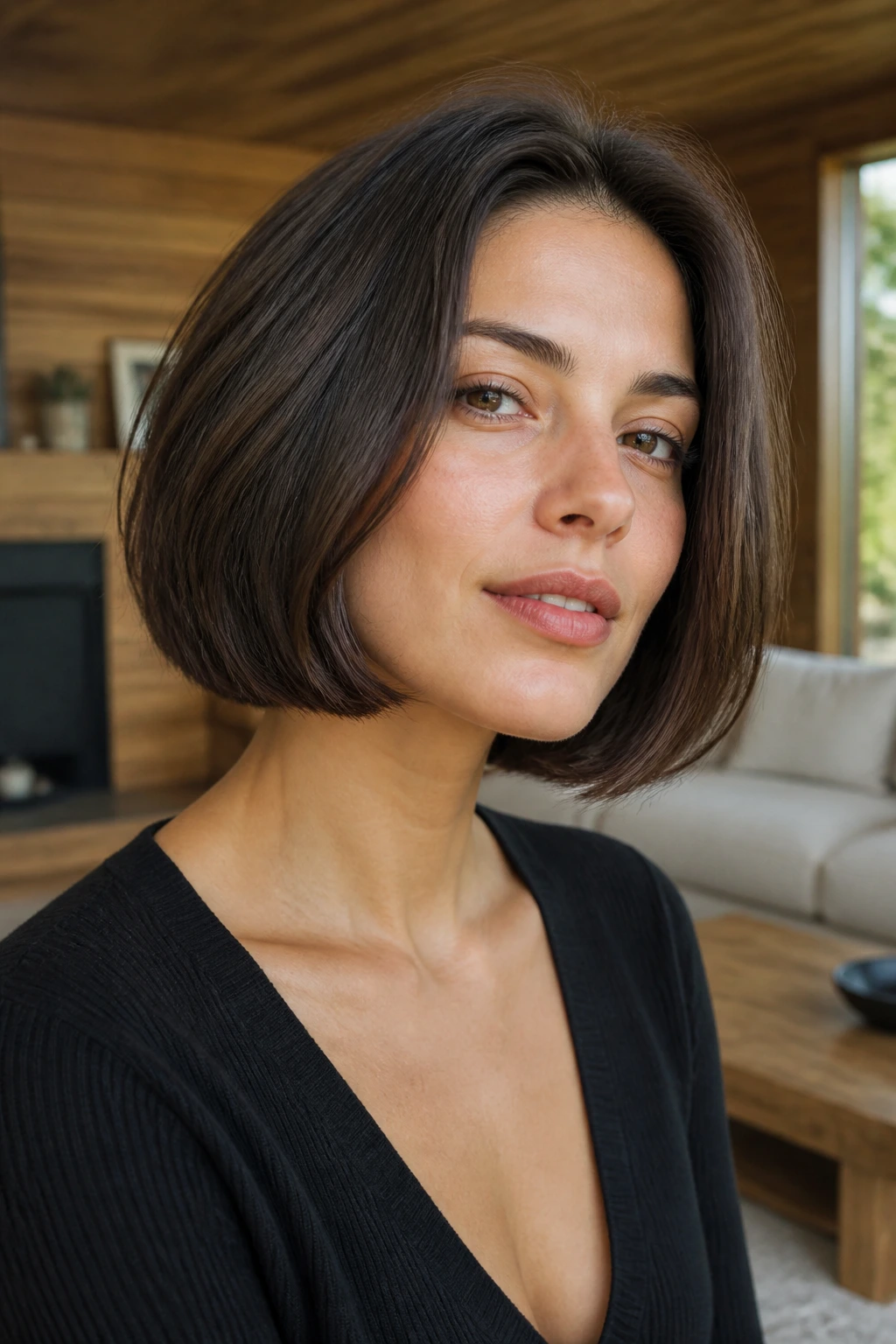
If the French bob is a touch airy, the Italian bob is heavier and fuller through the body. The length usually sits near the jaw, and the crown holds more volume, which gives the style a richer silhouette. It feels lush without needing layers to fake it.
This cut loves density. It also loves a round brush. You want lift at the roots and a soft curve at the ends, not a pin-straight sheet. The shape should look full in profile, with enough weight that the bob doesn’t collapse against the head.
Compared with the French bob, the Italian version looks more substantial around the sides. If you’ve got thicker hair and want the blunt line to read as polished instead of severe, this is the one I’d put near the top of the list.
9. Glass-Straight Blunt Bob
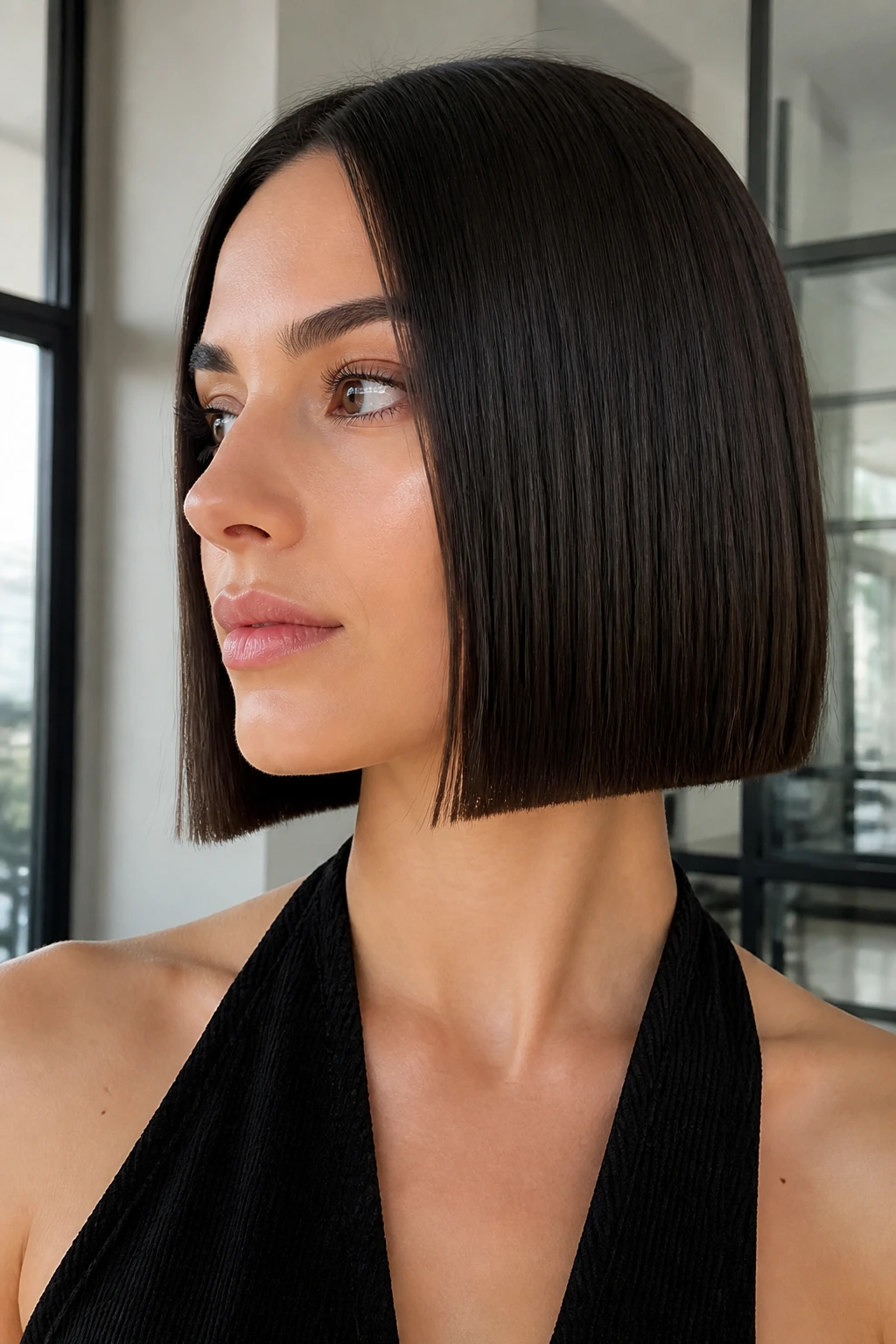
A glassy blunt bob is one of the most demanding versions, and one of the most satisfying when it’s done right. The line should look almost drawn. No bends at the ends. No fuzz around the hairline. Just a smooth, reflective sheet that lands cleanly at the jaw or slightly below it.
You need a heat protectant, a dryer with a nozzle, and a flat iron that isn’t cranked so high it fries the ends. One or two passes are enough if the hair is already mostly straight. More than that starts to make the bob look dry instead of sleek.
This is the cut for people who like precision. It’s not forgiving of skipped trims or rough sleeping habits. But when the surface lies flat and the edge stays sharp, it’s hard to beat.
10. Wavy Blunt Bob With Polished Ends
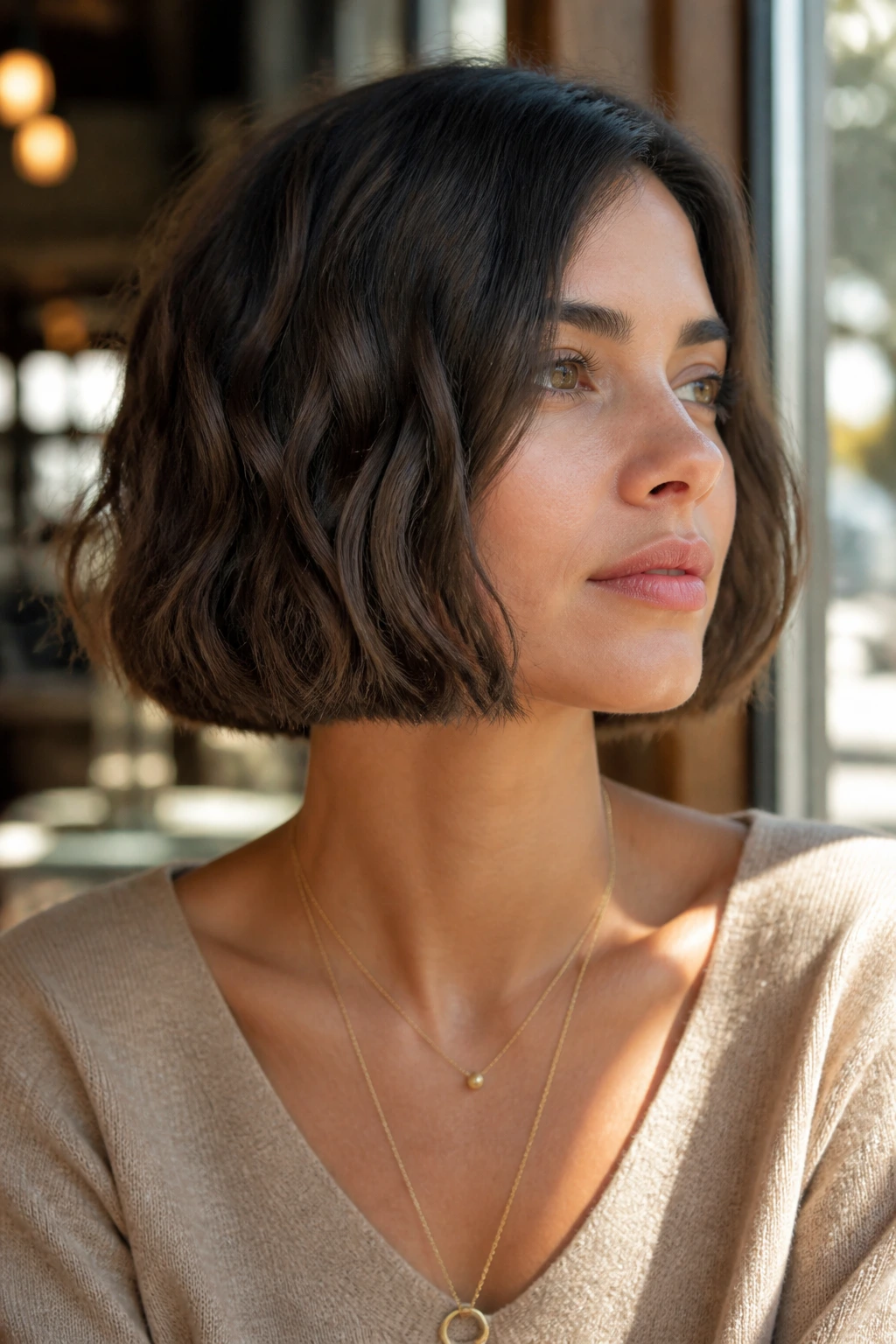
If your hair bends on its own, don’t fight that. A wavy blunt bob works because the wave adds movement while the ends stay tidy. The haircut keeps its structure, but it doesn’t look stiff.
How to keep the edge visible
- Let the wave start below the cheekbone instead of at the root.
- Smooth the last inch of hair under with a 1-inch curling iron or round brush.
- Use a light cream, not a heavy balm, so the shape doesn’t swell.
This version is especially good when you want the bob to feel relaxed without losing the blunt perimeter. The important part is the ends. If the last inch turns out in five different directions, the whole shape loses its point.
11. Curly Blunt Bob With a Strong Perimeter
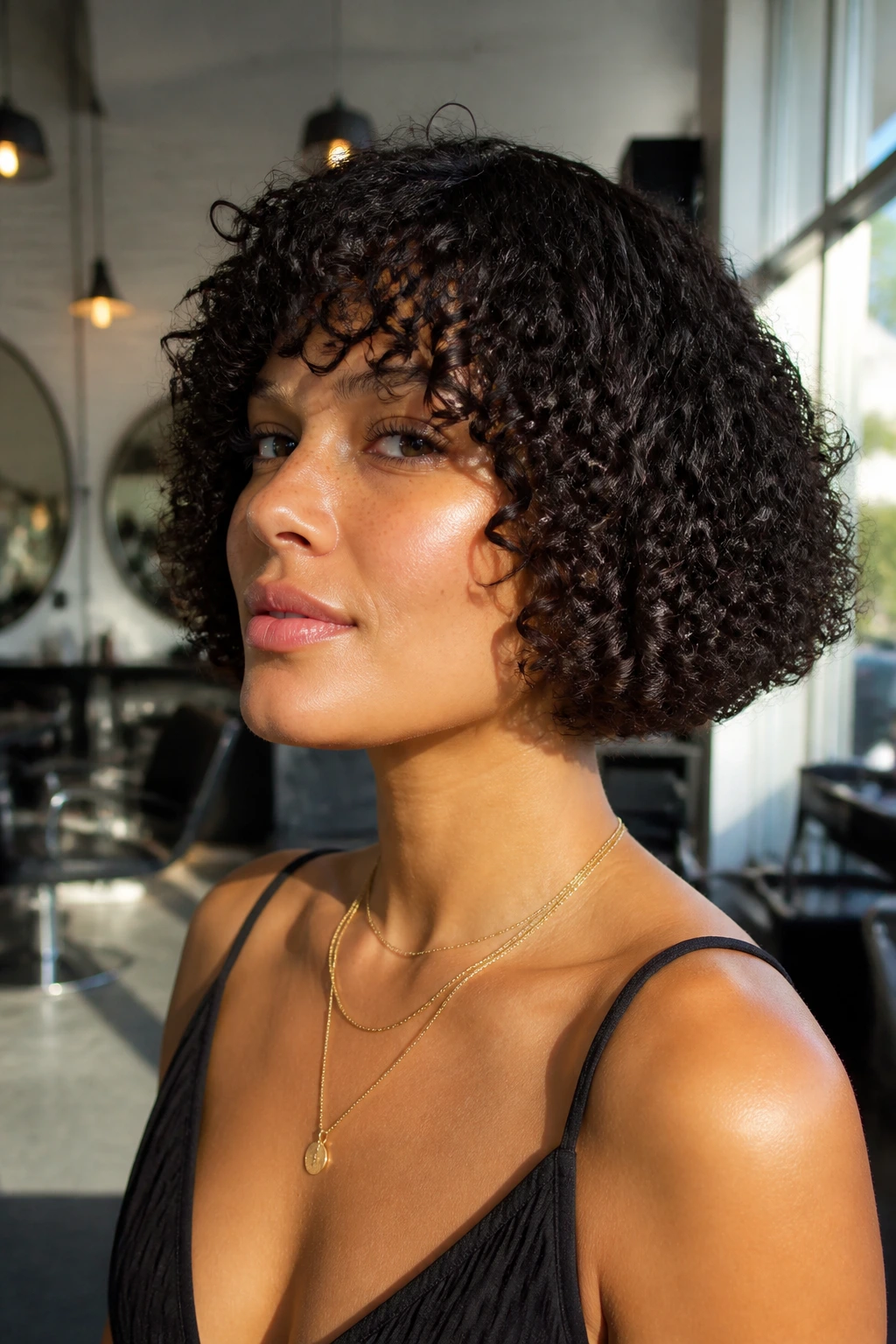
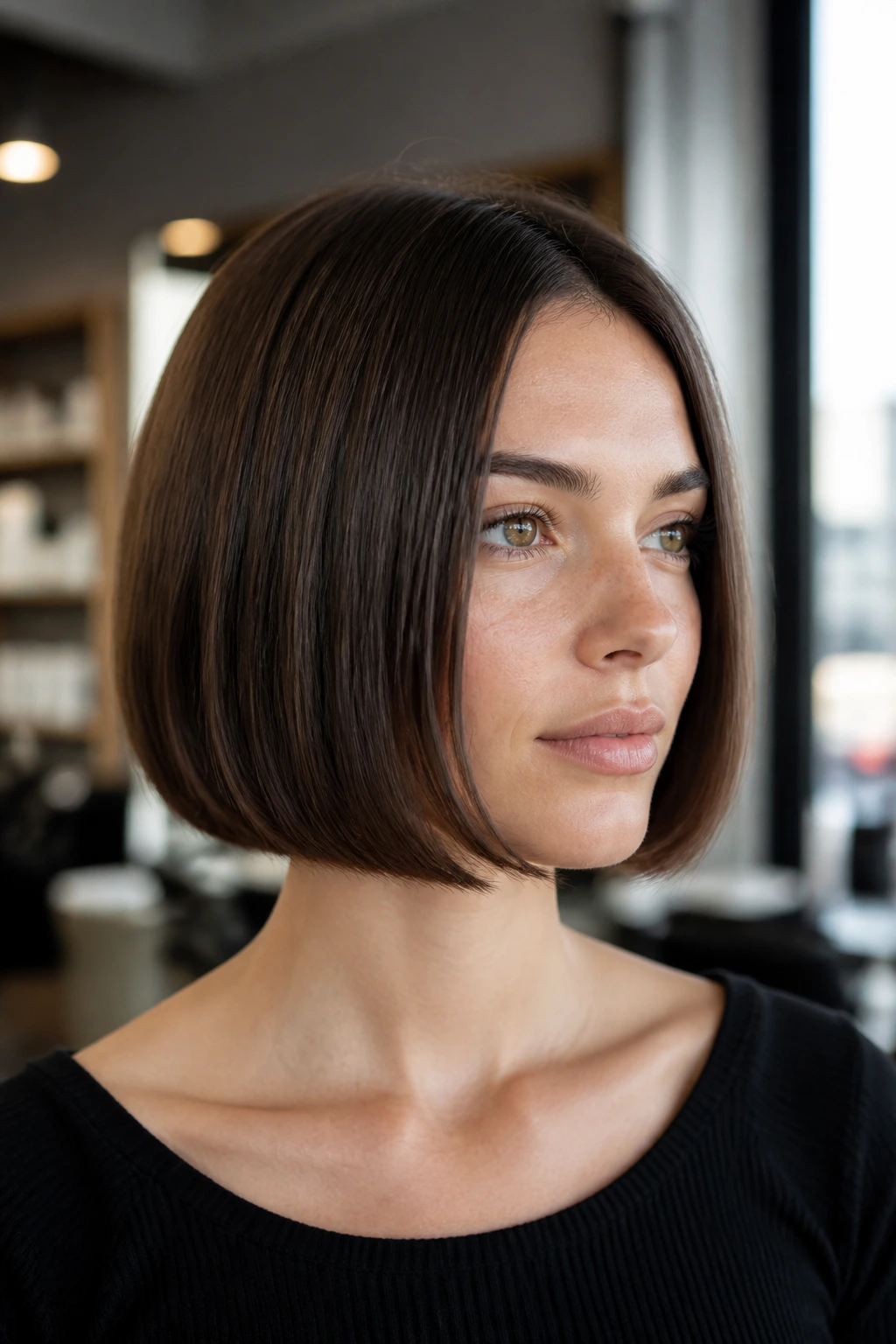
Can curls wear a blunt bob? Absolutely, but the cut has to respect shrinkage. A curly bob works best when the perimeter is placed with the curl pattern in mind, not against it. If the curl springs up 1 to 2 inches, the visual line needs to land lower than you think.
How to keep the perimeter visible on curls
The cleanest approach is to cut it dry or stretched, so the stylist can see where the curls actually settle. Ask for a blunt outline at the bottom and minimal disturbance to the outer shape. Too much layering makes curls puff and blurs the edge.
A diffuser helps here, but only if you dry without blasting the curls apart. Scrunch a small amount of cream through damp hair, diffuse on low heat, and stop when the curl clumps are set and the bottom line still reads as a line. That’s the whole game.
12. Hidden Undercut Blunt Bob
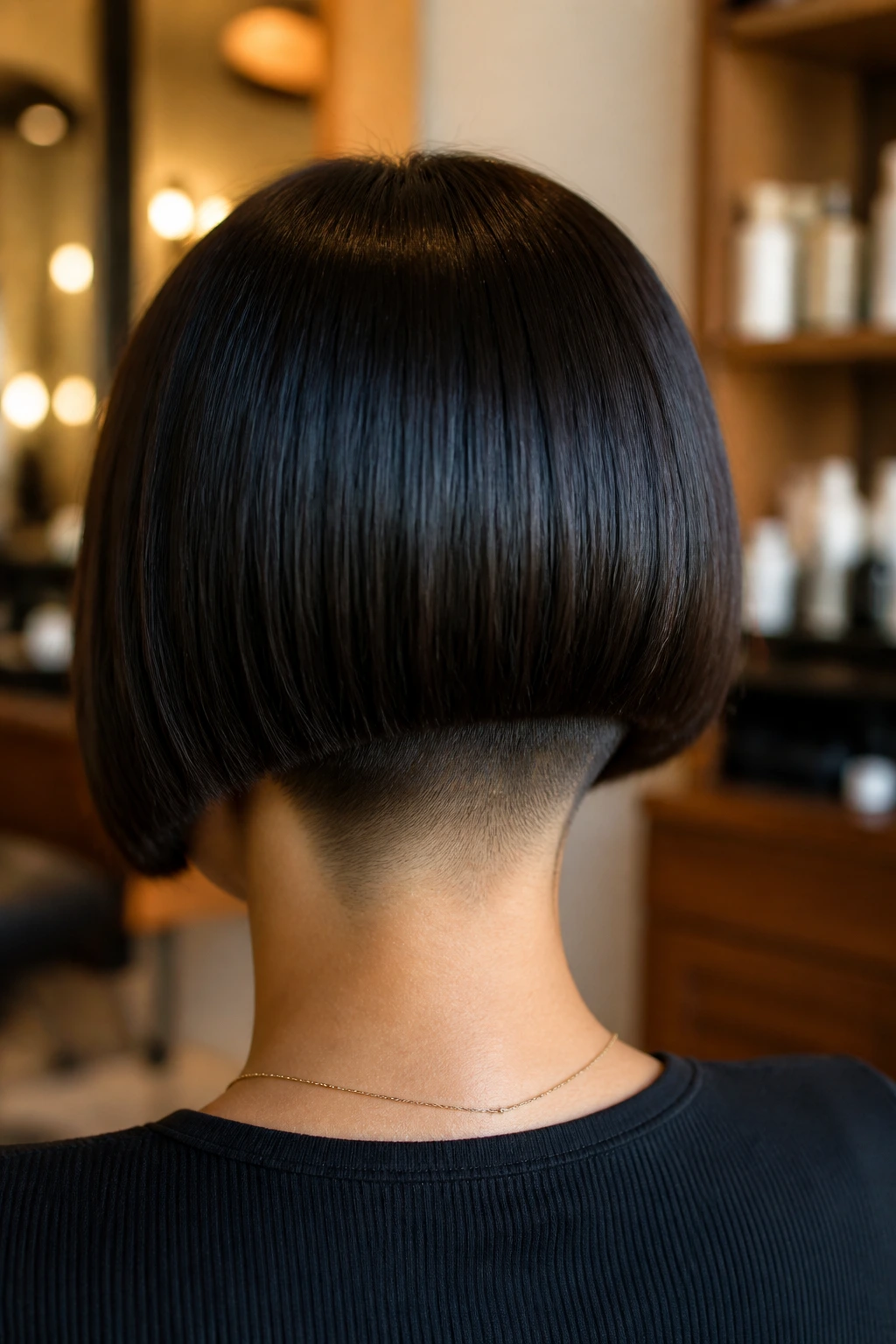
This is the blunt bob for people with a lot of hair who want the outside line to stay clean. A hidden undercut removes bulk underneath — usually at the nape, sometimes behind the ears — while the top layer keeps its blunt perimeter.
The payoff is simple. Less puff. Better swing. A cleaner line at the bottom. You still get a bob that looks full from the outside, but you don’t have to fight a triangle shape every time you blow-dry it.
- Best for: Thick, dense hair that mushrooms at the sides.
- Ask for: Hidden removal only; keep the perimeter blunt.
- Avoid if: You like ponytails with a lot of thickness, because this does take bulk away.
It’s one of the smartest blunt bob cuts on the list because it solves a real shape problem instead of pretending the hair will behave on its own.
13. Asymmetrical Blunt Bob
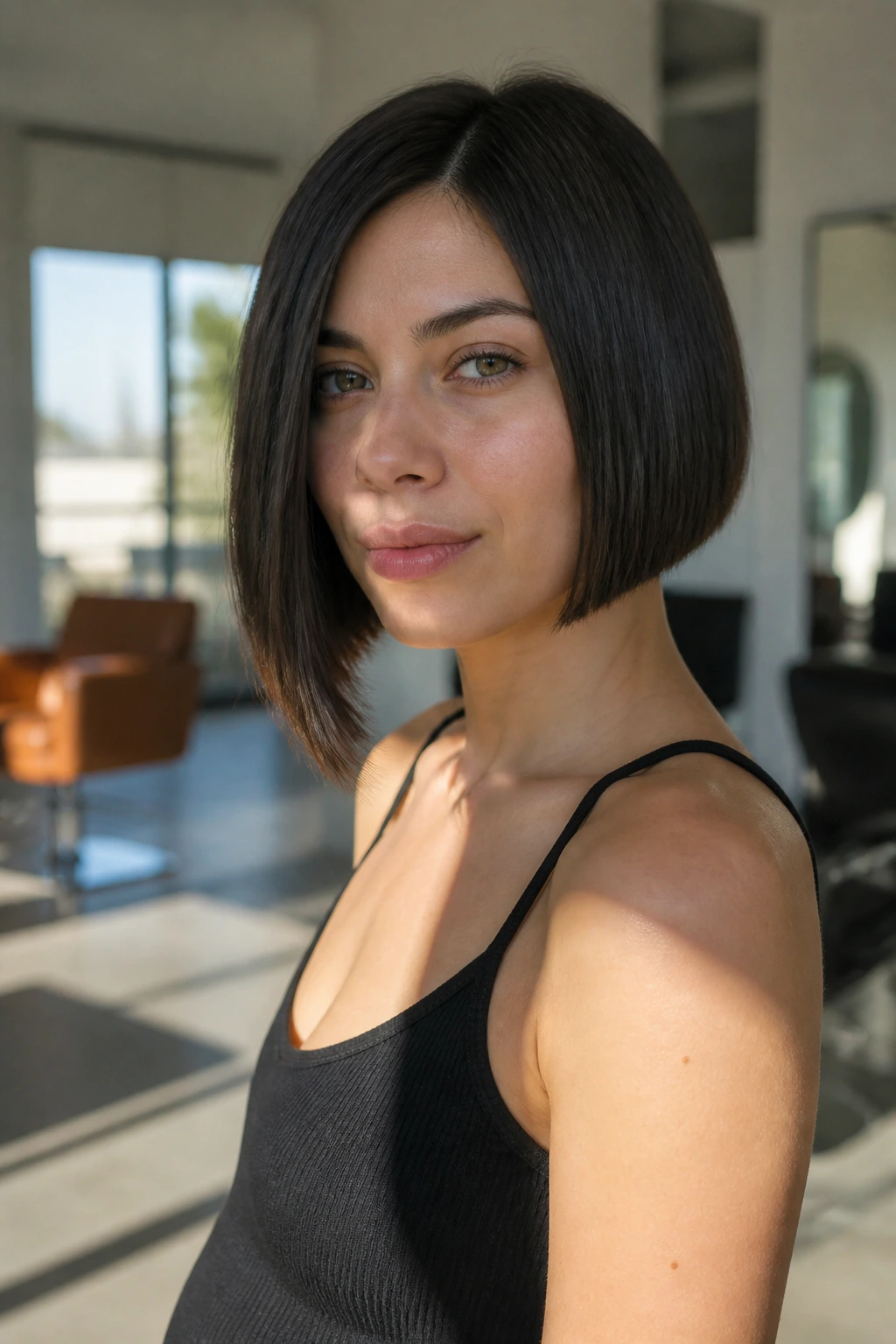
A slight asymmetry gives a blunt bob a little movement without giving up the hard edge. One side sits maybe ½ inch to 1½ inches longer than the other. That’s enough. You do not need a dramatic angle to make the point.
The reason this works is that the eye likes a small interruption. The longer side drapes the face; the shorter side shows off the jaw or neck. The blunt line keeps the shape disciplined, while the difference in length adds a bit of tension.
I’d use this on someone who likes clean hair but doesn’t want the same look from every angle. It’s subtle enough to wear every day, but it still feels considered.
14. Box Bob With a Square Outline
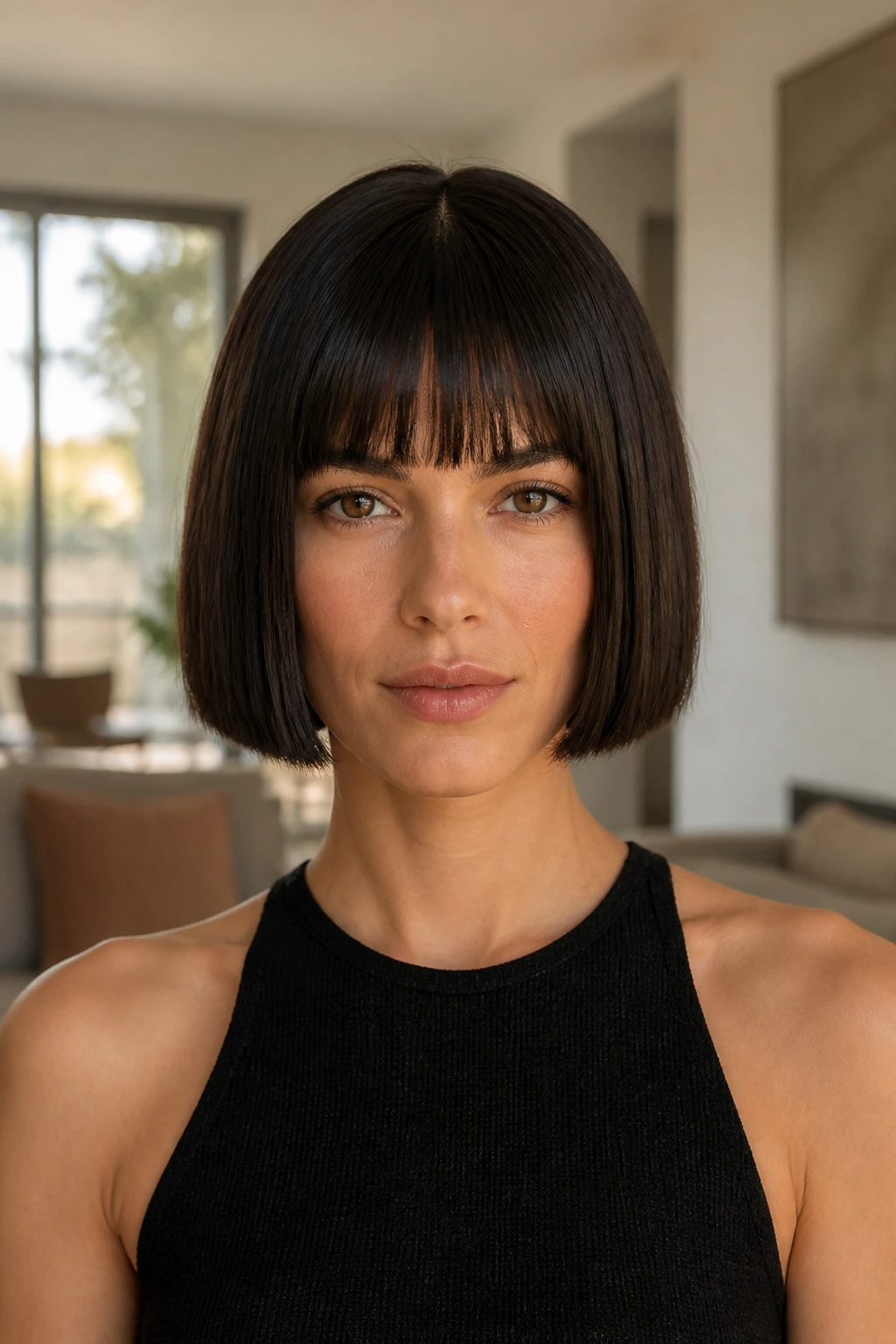
The box bob is blunt with the corners left in. Instead of rounding the perimeter softly, the shape stays square around the jaw and cheeks. It can look almost architectural when the hair is dense enough to hold the form.
This cut has presence. That’s the whole appeal. It doesn’t try to soften the face or feather out the ends. It sits there with a clear shape, which makes it a strong choice for people who like a more modern, graphic bob.
On fine hair, the boxier silhouette can make the hair look fuller than it is. On thick hair, it needs careful internal control or it can become too wide. The line itself stays blunt either way. The job is keeping the corners honest.
15. Rounded Blunt Bob That Curves In at the Ends
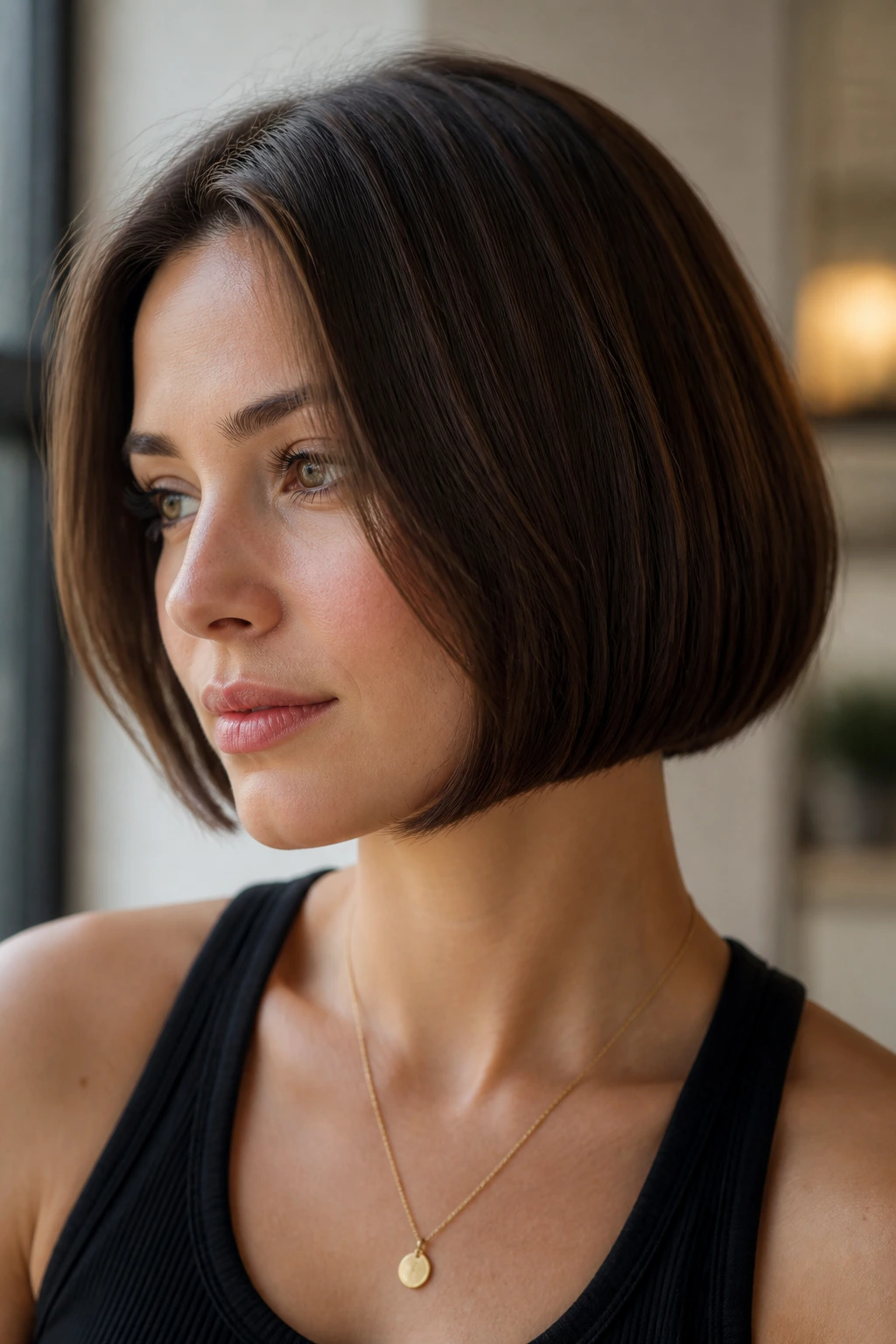
Can a blunt bob still feel soft? Yes, if the outline stays blunt and the styling bends the ends inward. The rounded bob keeps the perimeter clean while the blow-dry gives the shape a slight curve at the jaw.
Where the roundness comes from
The roundness does not come from layers. It comes from direction. A round brush, a little heat, and a finish that curves under for 10 to 15 seconds while the hair cools are enough to make the bob look gentler without changing the actual cut.
This version suits people who want the edge but don’t want a hard shelf around the face. It’s a good middle ground — blunt enough to look polished, rounded enough to feel easier on the eyes.
16. A-Line Blunt Bob With a Slight Front Drop
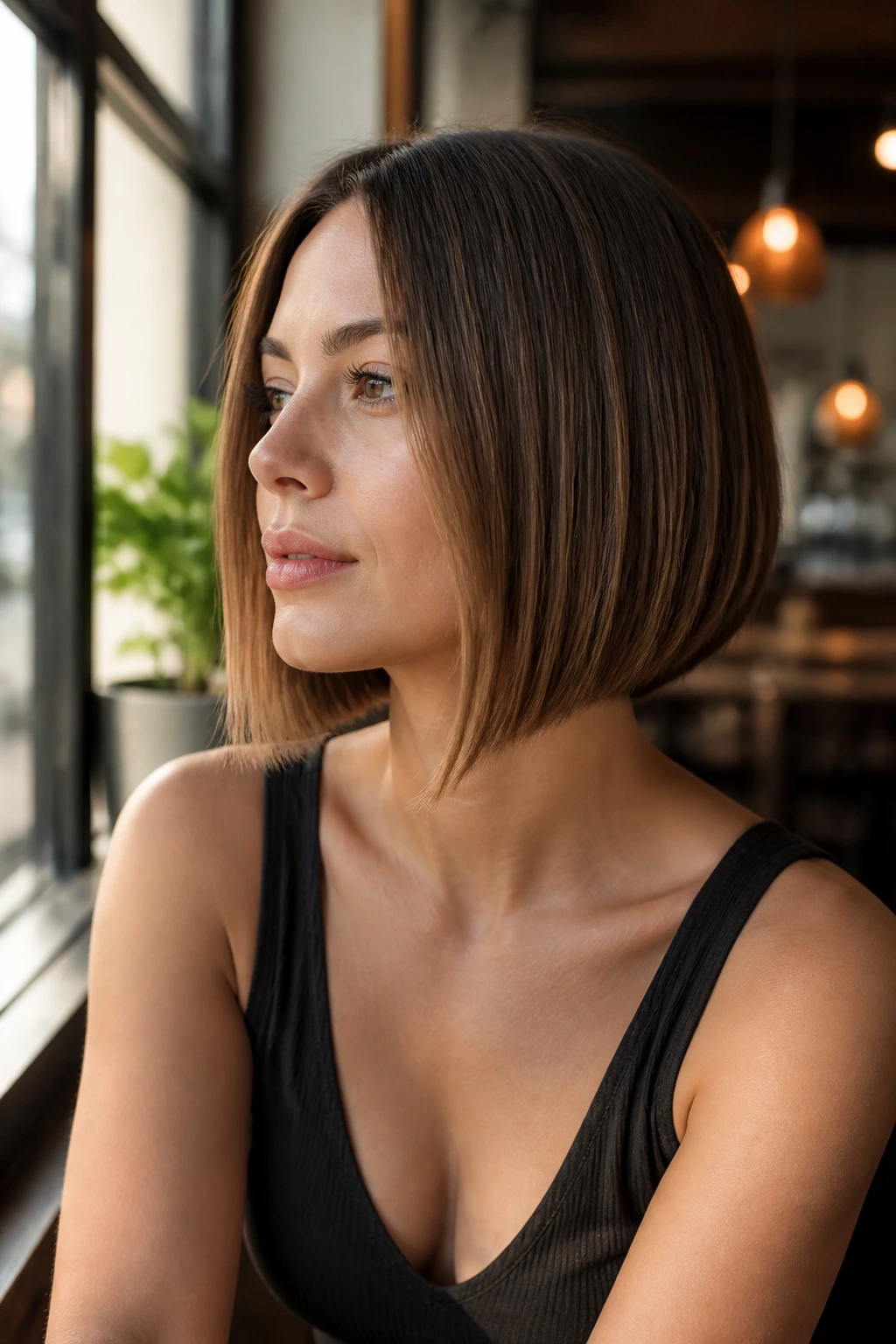
A slight angle does not erase bluntness. That’s the useful thing about an A-line bob. The back sits a little shorter, the front drops maybe ½ inch to 1 inch longer, and the perimeter still reads as one clean line.
This shape is handy if you want the bob to lean forward a bit and skim the jaw without stopping dead at the same length all the way around. It gives the profile some motion, especially when you turn sideways. The difference is subtle, which is exactly why it stays sharp instead of looking dated.
I like this on people who want a little more length near the face but still want the haircut to feel short. It’s a small adjustment, but it changes the balance.
17. Nape-Length Power Bob
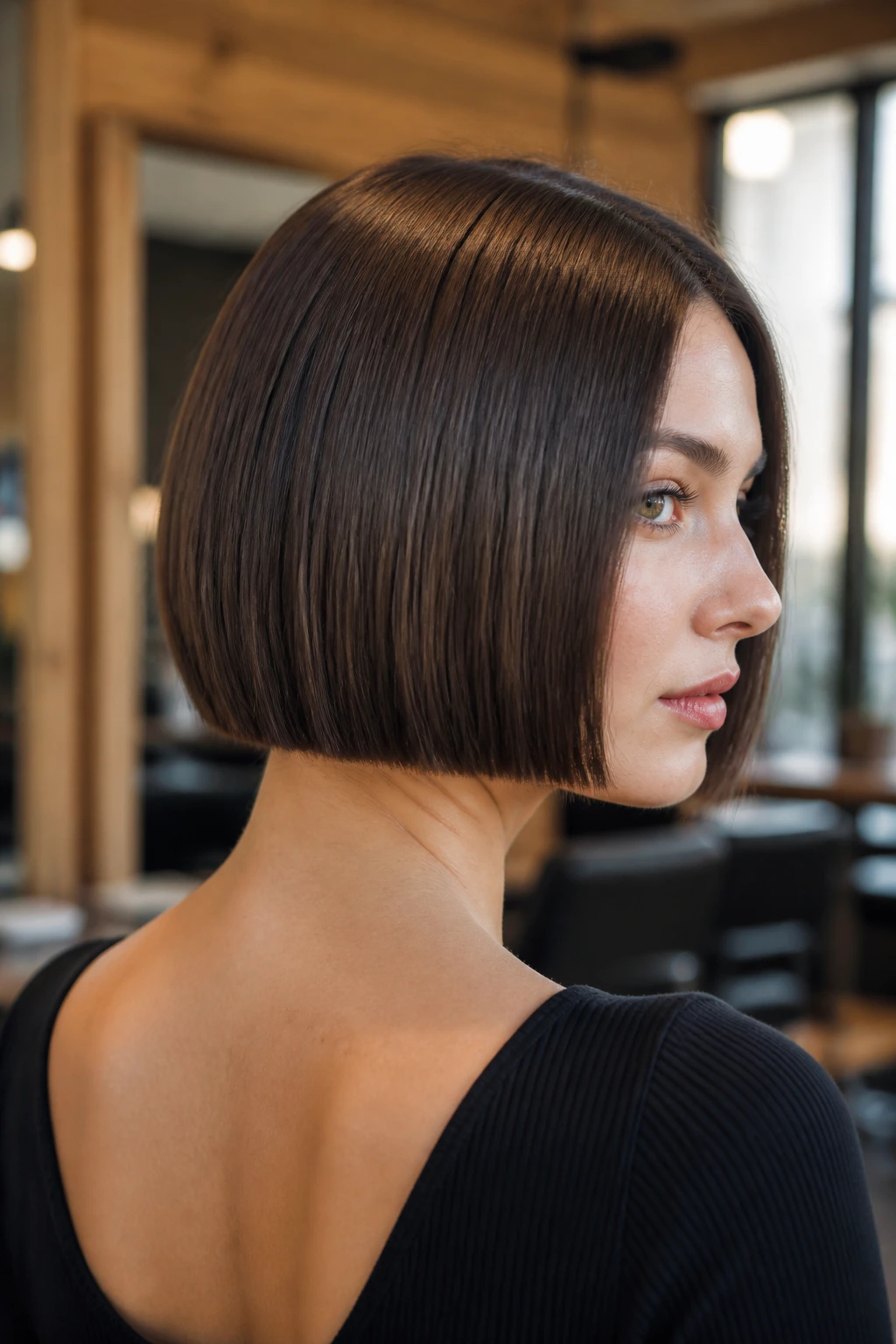
A nape-length bob sits high enough to show off the neck and low enough to keep the haircut feeling substantial. It’s clean at the back, crisp at the hem, and easy to tuck under a coat collar without exploding into a puff ball.
This is a practical cut, even if it looks very done. The neckline stays visible. The perimeter stays strong. And because the back is short, it tends to dry faster than a longer bob, which matters more than people admit.
- Clean neckline: Great if you wear earrings or high collars.
- Shorter drying time: Less hair to smooth.
- Trim schedule: Keep it tight every 4 to 6 weeks if you want the line to stay sharp.
It has a little authority to it. Not loud. Just decisive.
18. Blunt Bob With Curtain Bangs

Curtain bangs can make a blunt bob feel less severe without softening the perimeter itself. The fringe splits at the center and opens around the cheekbones, which gives the haircut some movement up front while the ends stay straight.
The trick is to keep the bangs long enough to blend, usually somewhere between the cheekbone and lip line, depending on the face. If they’re cut too short, they fight the bob. If they’re too long, they disappear into the sides.
This is a smart option if you want face-framing without committing to a full fringe. The cut stays blunt; the bangs do the easing-in.
19. Blunt Bob for Fine Hair
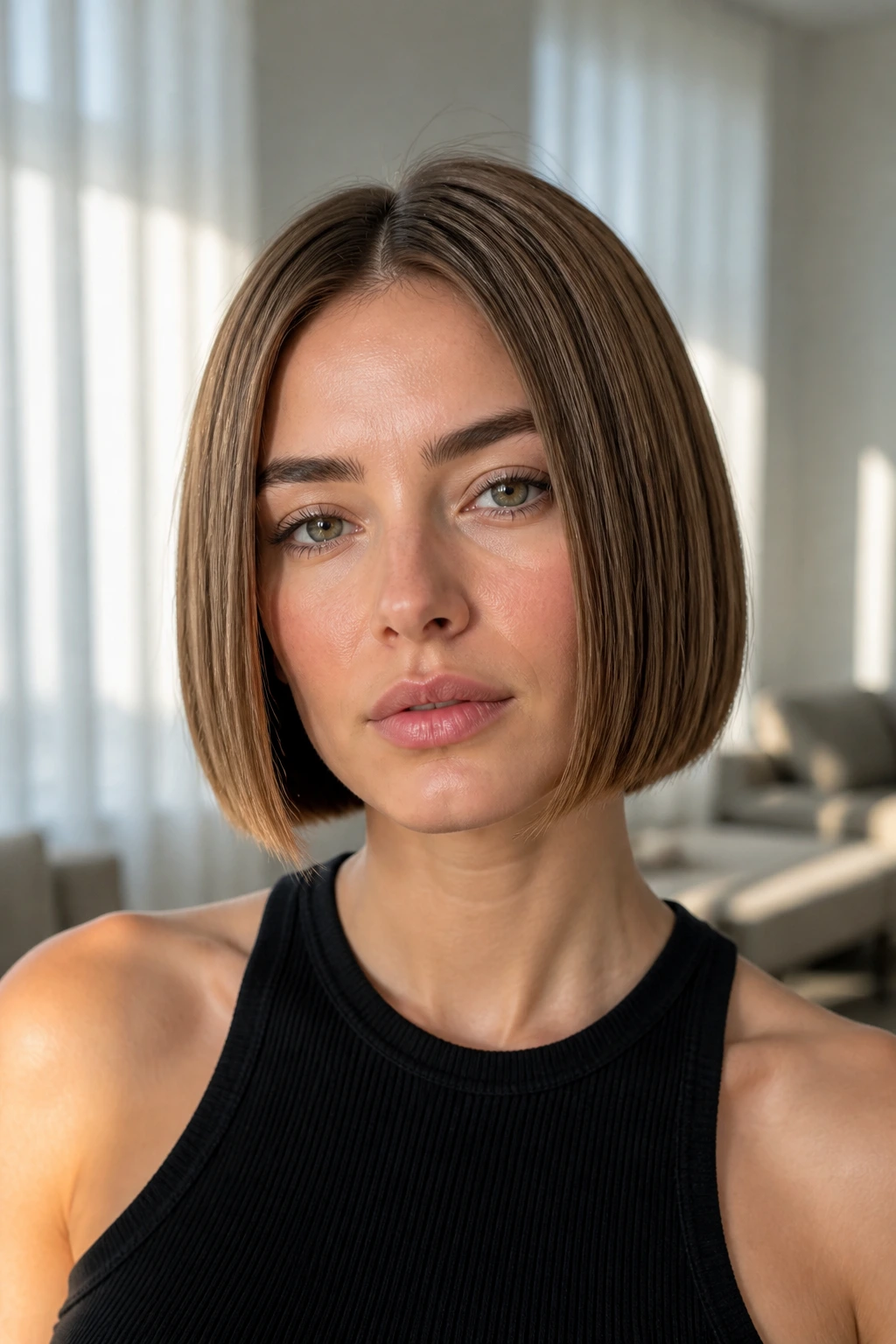
Fine hair often looks better in a blunt bob than in a layered one. The blunt edge creates density where there isn’t much of it, so the ends look fuller and the whole shape reads with more presence.
The mistake people make here is asking for too much texturizing. That takes away the very thing fine hair needs: a clear line. Keep the perimeter clean, use a root-lift spray at the crown, and avoid over-thinning the ends. A little fullness at the bottom makes the haircut look heavier in the best way.
If your hair is fine and you want a bob that doesn’t collapse by lunchtime, this is the one to watch.
20. Blunt Bob for Thick Hair
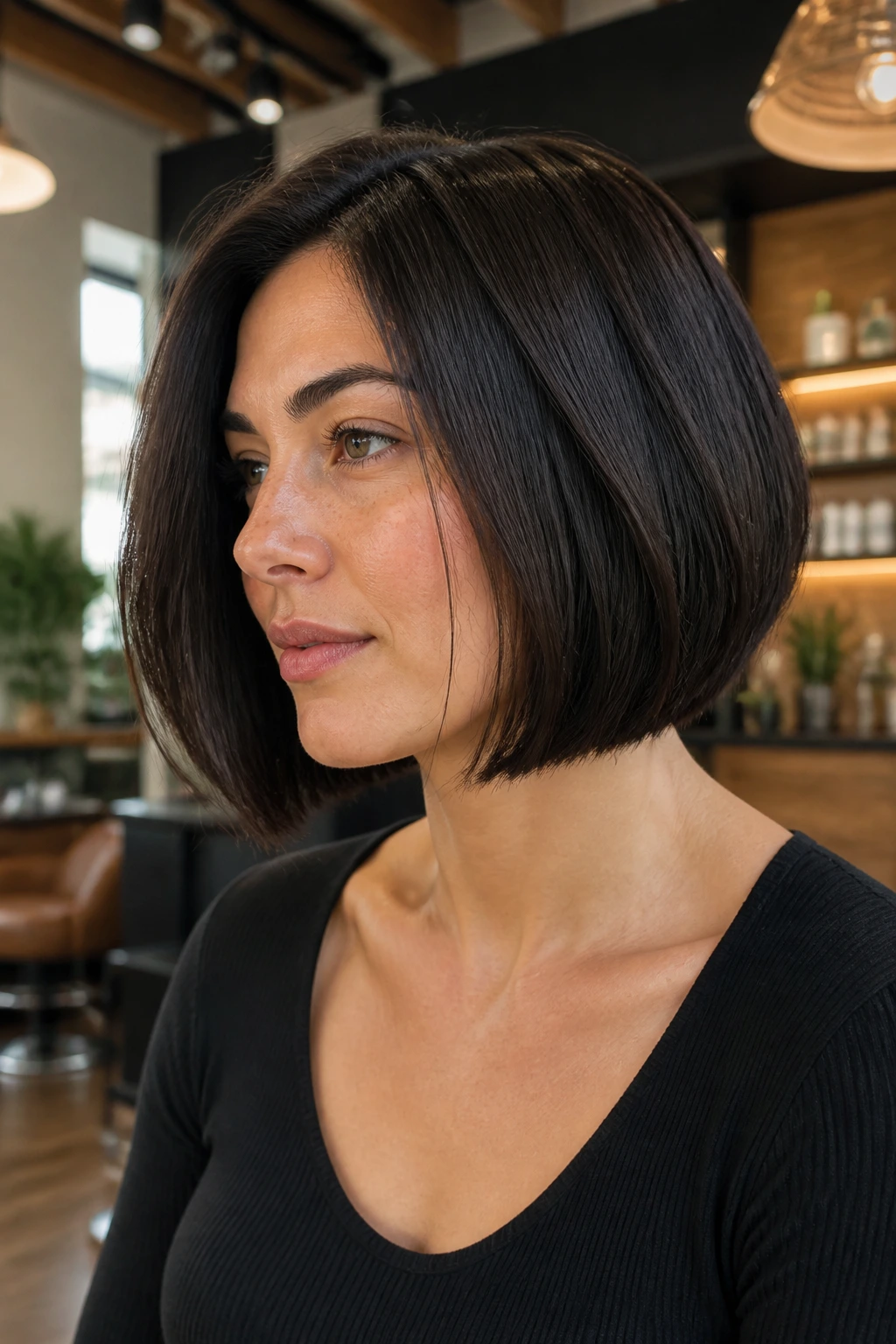
Thick hair and blunt bobs can be a great match, but only if the bulk gets controlled in the right place. You want the outside perimeter to stay blunt while the inside loses weight where it counts. Otherwise the whole shape balloons out and steals the jawline.
What to ask for
- Keep the bottom edge blunt.
- Remove bulk underneath, not at the perimeter.
- Use minimal thinning near the front, or the ends fray.
- Blow-dry with tension so the hair lies flat before the final polish.
This version gives you a strong outline without the helmet effect. If you’ve ever had a bob that sat too wide at the sides, this is the fix.
21. Blunt Bob for Round Faces

A blunt bob can work beautifully on a round face if the length sits in the right place. Aim for just below the jaw or a touch longer, so the line does not stop right at the widest point of the cheek. A soft off-center part helps too, because it breaks the symmetry enough to lengthen the face visually.
The cleanest version is not a super short bob that lands at the cheek. That can widen the face. Better to let the front skim lower and keep the sides controlled. You still get the blunt edge, but the shape stretches instead of widening.
I like this version when the goal is balance, not disguise. The bob should frame the face, not fight it.
22. Deep Side-Sweep Blunt Bob
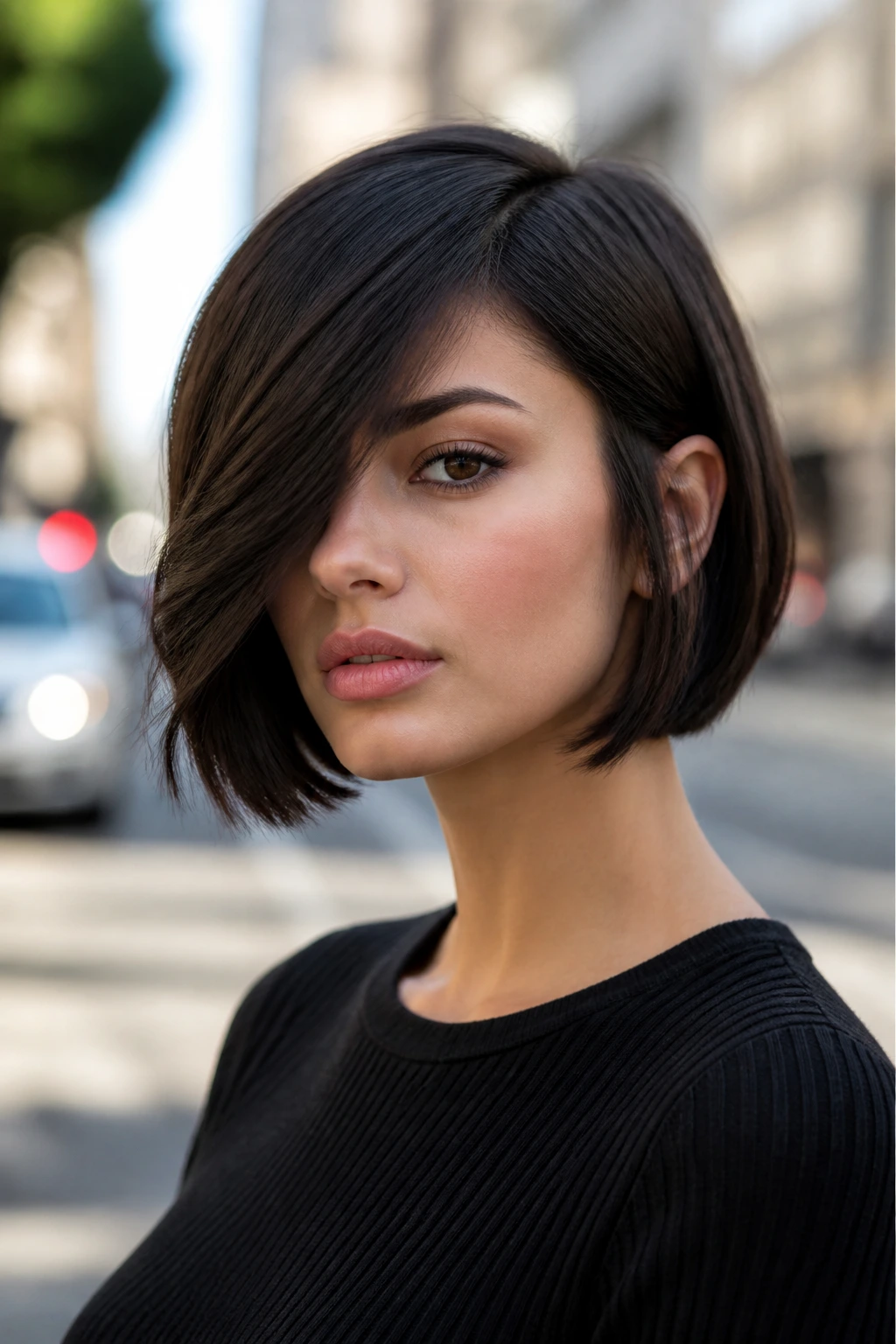
What happens when you want movement without layers? You sweep the front across the forehead and keep the back blunt. The deep side-sweep bob gives you a little drama up front and a very clean perimeter underneath.
It works especially well when one side of the face feels stronger than the other, or when you want the haircut to look styled even on a low-effort day. The sweep should feel intentional, not flimsy. If the front keeps slipping back into the center, it needs either a stronger cut line or a better blow-dry.
This is one of my favorite finishing moves for a blunt bob because it changes the attitude without touching the hemline. Same cut. Different personality.
How to Ask for the Right Blunt Bob in the Chair
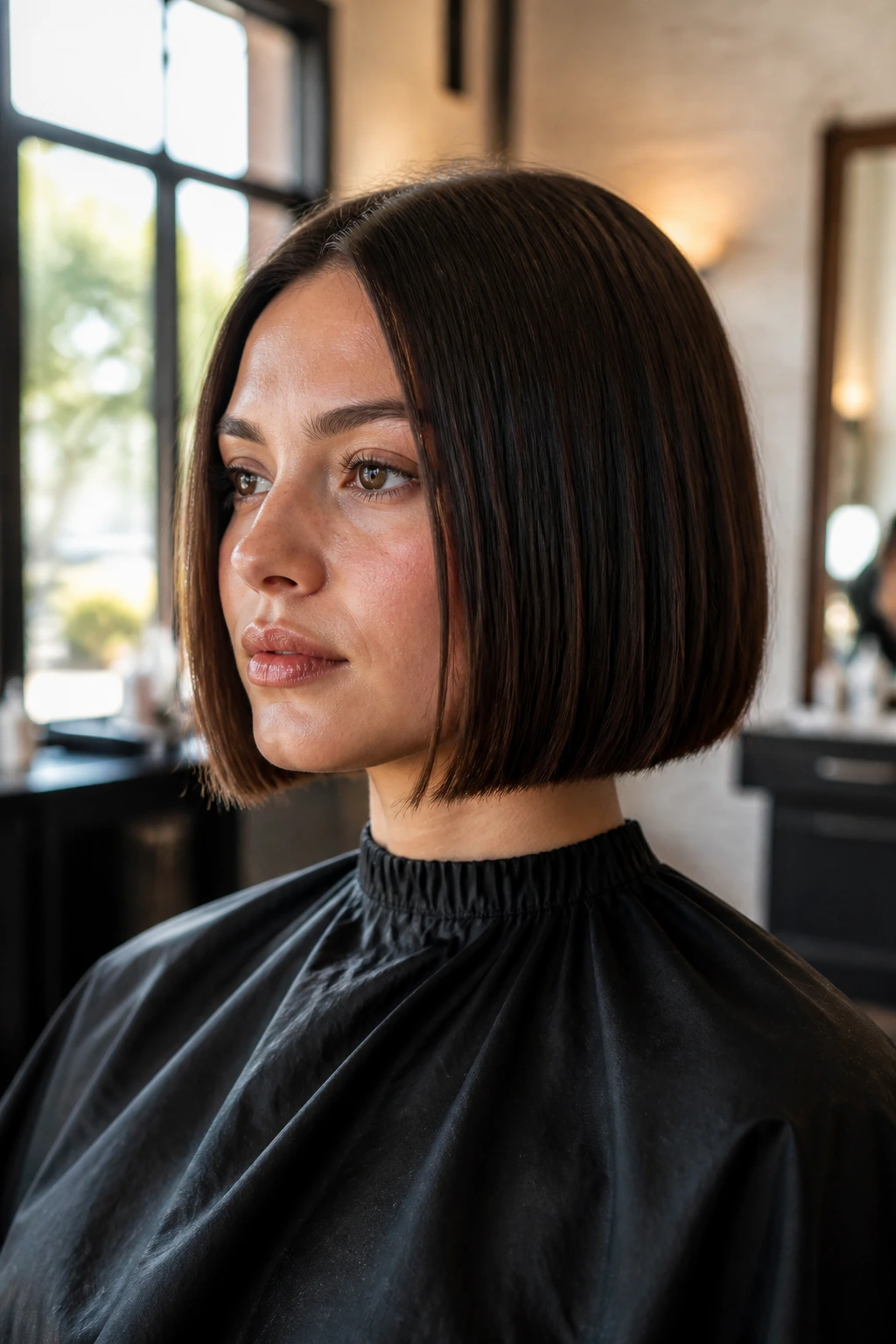
The easiest way to get a blunt bob you actually like is to talk in landmarks, not vague adjectives. Say where you want the front to land — chin, jaw, lip, or just below the ear — and say whether you want the back to match or sit a touch shorter. Those two details tell a stylist far more than “short” ever will.
Bring photos, but bring the right kind. One picture for the length, another for the fringe, another for the finish. A photo of a French bob, for instance, tells the stylist something different from a photo of a glassy bob, even if both are short and blunt. And if your hair is wavy or curly, say that out loud. Wet hair lies.
A few concrete phrases help:
- “I want a blunt perimeter with no soft layers through the bottom.”
- “Keep the front at jaw level, not at the cheek.”
- “I like a center part” or “I usually wear a deep side part.”
- “Please account for my shrinkage / puffiness / cowlick at the crown.”
That last line matters. A good bob starts with honesty about the hair you have, not the hair you wish would show up in the mirror.
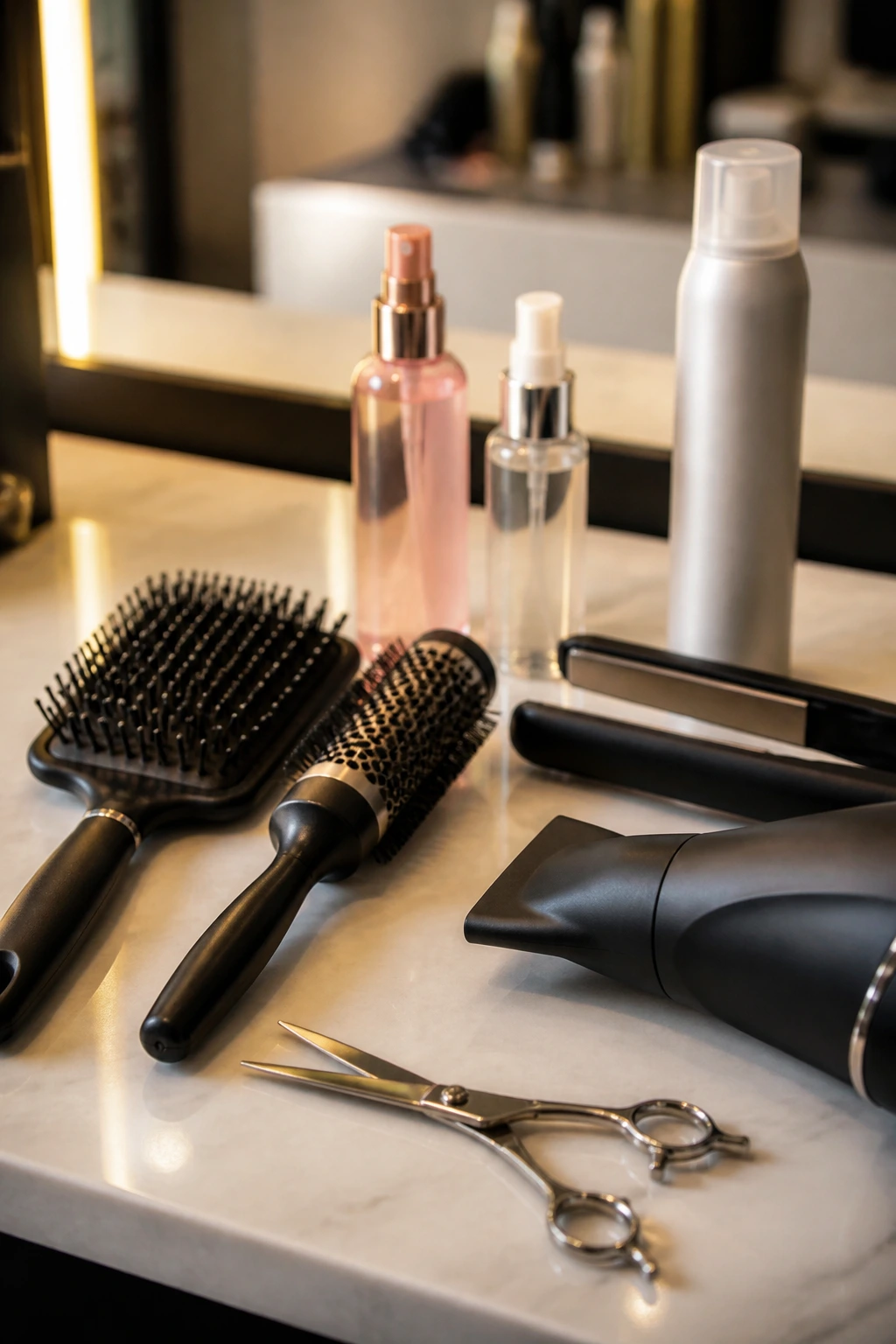
Styling Tools That Keep the Line Crisp
-
Sharp haircutting shears: If you trim bangs or clean up a fringe at home, dull scissors chew the ends and make the line look frayed.
-
Paddle brush: Best for smoothing the hair straight while drying. It keeps the bob flat without adding too much bend.
-
Small round brush, 1 to 1.5 inches: Useful for tucking the ends under or giving a slight curve at the jaw.
-
Blow dryer with a nozzle: The nozzle points air down the hair shaft, which helps the cuticle lie flatter and keeps the finish cleaner.
-
Flat iron with adjustable heat: Handy for glass-straight versions and for putting a tiny bend in the ends. Keep it lower than you think if your hair is fine.
-
Heat protectant spray: Non-negotiable if you use hot tools. A dry blunt bob shows damage fast.
-
Light serum or smoothing cream: A small amount on the mids and ends can control puff without making the bob look greasy.
-
Dry shampoo: Useful for day-two root lift, especially on fine hair that goes flat near the crown.
Keeping the Shape Between Salon Visits
A blunt bob lives or dies on upkeep. That’s not a flaw. It’s the price of having a clean line. If you want the haircut to look fresh, plan on trims every 4 to 6 weeks for micro bobs and nape-length cuts, and every 6 to 8 weeks for chin-length versions that you’re letting grow a bit softer.
Bangs need their own schedule. Full fringe and baby bangs usually ask for a touch-up every 3 to 4 weeks, sometimes sooner if your hair grows fast or sits heavy on the brow. Waiting too long doesn’t just make them longer; it changes the balance of the whole cut.
At home, keep the finish simple. Dry the hair until it’s about 80 percent dry, then direct the ends where you want them to go. If you flat iron, use one pass first and only repeat where the hair still bends out. Sleeping on a silk pillowcase helps, but a loose clip at the nape can keep the ends from kink-flipping overnight too.
For color-treated or heat-styled bobs, a weekly mask is enough. Heavy conditioning every day can flatten the line. The bob should move, but it should not sag.
Common Cutting Mistakes That Blur the Line
-
Going too soft at the bottom: If the perimeter gets over-layered or point-cut too deeply, the bob loses its blunt shape and starts looking wispy. The fix is simple: keep the line intact and save texture for the interior, if you need it at all.
-
Choosing the wrong stopping point: A bob that lands right at the widest part of the cheek can widen the face or make the jaw look heavier. Ask for the hemline to hit above or below that spot, not squarely on it.
-
Ignoring shrinkage and bend: Curly and wavy hair rarely falls where it looks like it will when wet. If the cut is made too high, it can spring up an inch or two and feel much shorter than planned. Dry cutting or stretch-cutting helps.
-
Using thinning shears on the edge: This is where a lot of bobs go fuzzy. Thinning the perimeter makes the ends look shredded, which kills the clean line the haircut depends on.
-
Skipping trim appointments too long: The first sign is usually not length. It’s shape drift. One side starts to kick out, the neckline grows fuzzy, and the bob stops framing the face. At that point, it’s past its best look.
Ways to Change the Same Bob Without Starting Over
Soft Bend Finish: Keep the same blunt cut, but wrap the last inch under with a round brush or flat iron. The shape stays sharp, while the ends feel less severe. This is the easiest switch if you want the bob to look polished for work and easier on weekends.
Glass Finish: Use heat protectant, a nozzle dryer, and a flat iron to get the surface smooth and reflective. It suits straight hair best, and it makes the perimeter look deliberate from every angle.
Air-Dry Edge: Work a light cream through damp hair, part it cleanly, and tuck it behind the ears while it dries. You keep the blunt line, but the finish reads a little more relaxed and lived-in.
Fringe Swap: Keep the hemline the same and change only the bangs. Full fringe, baby bangs, or curtain bangs can make the cut feel like a different haircut without touching the base.
Grow-Out Bob: Let the front sit a little longer than the back and keep the trims spaced out a touch more. It’s a smart move if you want the blunt outline to stay while you quietly grow the style into a longer bob.
Questions People Ask Before They Chop
Will a blunt bob work on wavy hair?
Yes, as long as the cut accounts for bend and the ends are finished on purpose. Wavy hair gives the bob movement, but the perimeter still needs to be clean so it doesn’t puff out into a triangle.
How short is too short for a blunt bob?
Once the line gets up around the ear and starts feeling like a crop, you’re moving away from classic bob territory. That can still look great, but if you want the bob shape to read clearly, keep at least a little length around the jaw or nape.
Do blunt bobs need bangs?
No. A blunt bob can stand on its own. Bangs change the mood, though — full fringe softens the forehead, baby bangs sharpen the look, and curtain bangs make the face frame feel easier.
What if my hair flips outward at the ends?
That usually means the cut is either too heavy at the bottom or your drying direction is working against you. Blow-dry the ends under with a brush and use a flat iron only on the last inch if needed.
Can fine hair hold a blunt bob?
Very often, yes. Fine hair can look fuller in a blunt shape because the clean edge gives the illusion of density. The key is to avoid over-thinning and keep the line dense at the bottom.
How often does a blunt bob need trimming?
Most short blunt bobs look best with trims every 4 to 8 weeks, depending on length and how precise you want the line. Bangs need attention sooner than the rest of the cut.
Is a blunt bob hard to grow out?
Not if the next length is planned. Ask for a slightly longer front and a clean neckline, then move toward a longer bob in small steps. The awkward stage is mostly what happens when the shape wasn’t thought through.
What should I tell my stylist if I don’t want layers?
Say you want a blunt perimeter with the weight kept at the bottom. If your hair is thick, ask for internal bulk removal only, not texturizing through the outline.
The Clean Line
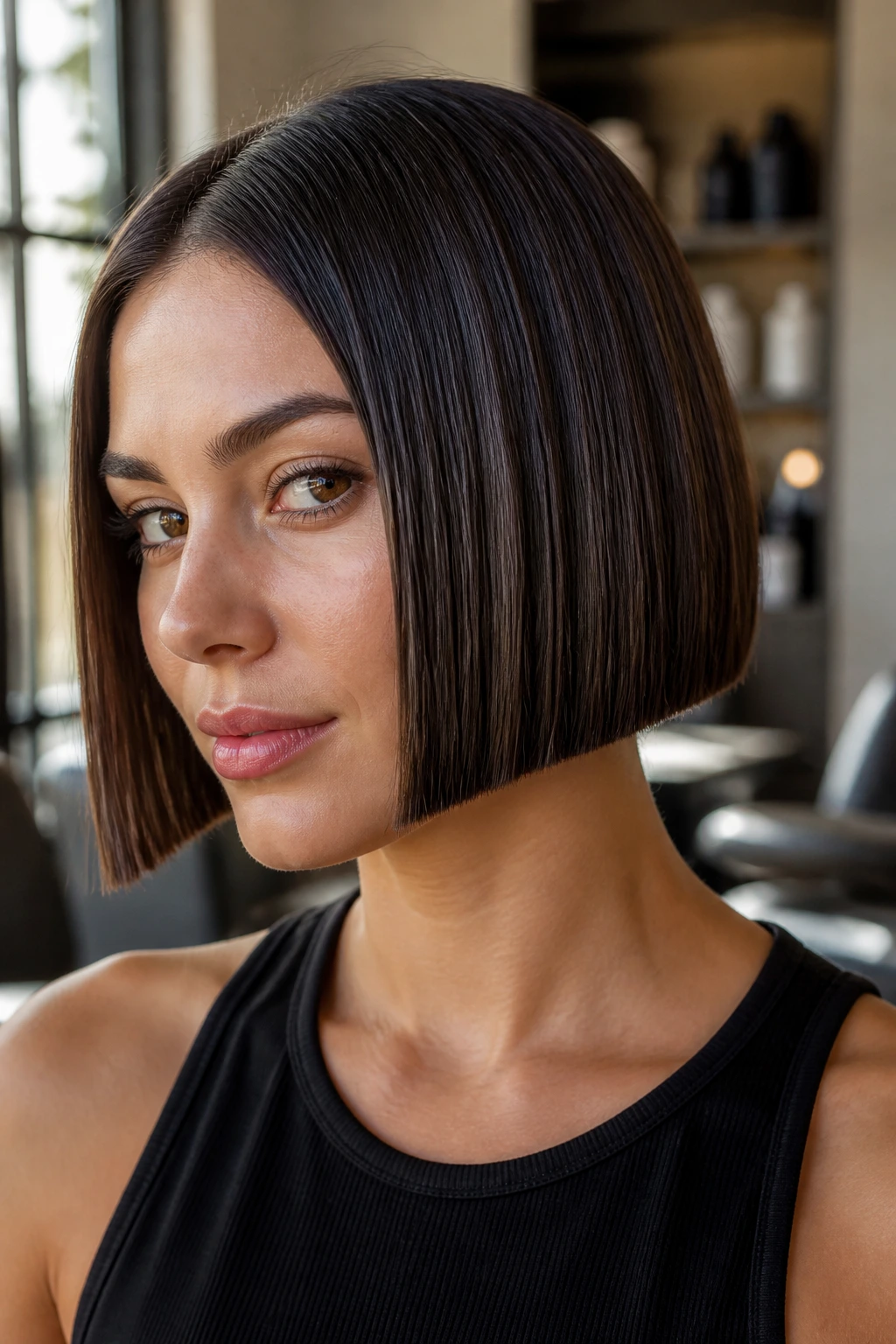
A blunt bob only looks simple when the cut is handled with care. The line has to sit in the right place, the part has to support it, and the perimeter has to stay clean enough to do its own work. That’s what separates a good short bob from one that looks like it was trimmed in a hurry.
Pick the version that suits your texture, then keep the ends honest with trims and sane styling. A blunt bob does not need a lot of fuss. It just needs a clear shape and a little respect, and the minute it has both, it starts carrying the whole look.
