



Straight hair remembers every cut line. If the layers are too timid, a bob sits there like a hard helmet; if the bangs are cut with no plan, they split and hang in your face by lunch. That’s why shaggy bobs with bangs for straight hair work best when the texture is built in on purpose, not hacked in after the fact.
The sweet spot is movement without chaos. A good shag on straight hair keeps the ends loose, lifts the crown a little, and gives the fringe a job—softening the face, not fighting it. On finer hair, that can mean point-cutting the perimeter. On thicker hair, it often means removing weight under the top layer so the bob doesn’t puff out into a triangle by noon.
What follows is a mix of salon-friendly shapes, from chin-length pieces that sharpen the jaw to collarbone cuts that grow out gracefully when you’re tired of trimming bangs every three weeks. Some are polished. Some lean grunge. All of them are built for straight hair that needs a little movement but not a lot of daily drama.
Why These Cuts Earn Their Keep
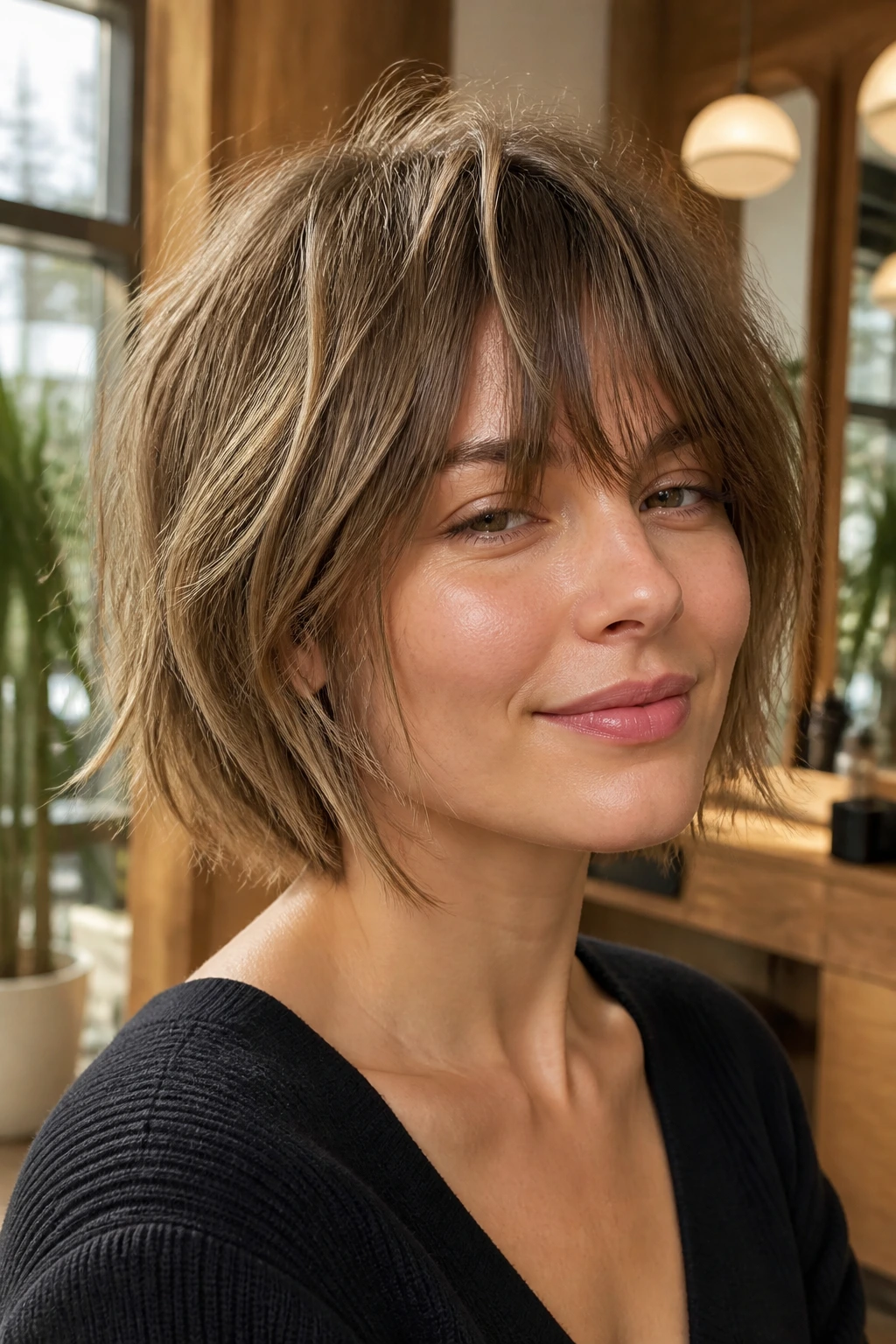
Movement without a perm: The layers break up the blunt line that straight hair loves to show off, so the cut looks lighter even when your hair is naturally smooth.
The fringe changes the whole silhouette: Wispy bangs, curtain bangs, and micro fringe each frame the face in a different way, and on straight hair that difference is obvious fast.
Length changes the maintenance curve: A chin-length shag needs more shaping, while a collarbone version gives you a little breathing room between trims.
Texture is doing the heavy lifting here: These cuts rely on point-cut ends, sliced layers, and a small bend from a blow-dryer or flat iron rather than big styling tricks.
They can flatter more than one density: Fine straight hair gets lift from shorter internal layers, while thick straight hair gets relief from weight removal under the top section.
1. Chin-Length Choppy Shag Bob with Wispy Bangs
This is the one that makes straight hair look awake without turning it into a project. The cut lands around the jaw, the ends are lightly shattered, and the bangs sit soft enough to blur the forehead instead of boxing it in.
Why It Works
Chin length is a smart place for straight hair because the shape stays visible even when the texture settles. The wispy fringe keeps the cut from reading severe, and those tiny broken ends stop the bob from looking like one solid block.
Best If You Want
- A cleaner jawline
- Less bulk than a blunt bob
- Bangs that don’t feel heavy by midday
Styling note: A quick bend with a 1-inch round brush at the ends is enough. You do not need curled-under pages-from-a-magazine hair here.
2. Jaw-Skimming Razor Bob with Micro Fringe
Micro bangs are a brave move, and on straight hair they look sharp in a way that curly textures can’t quite mimic. Pair them with a razor-cut bob that kisses the jaw, and the whole thing gets this cropped, exact little attitude.
Why It Works
Straight hair shows the outline immediately, which is the point. A razor finish softens the edge of the bob so it moves instead of sitting like a shelf, while the micro fringe keeps the face open and graphic.
Who Should Think Twice
If your hairline fights short bangs, this is not the place to experiment casually. Micro fringe on straight hair needs regular trims, and cowlicks can send it in strange directions fast.
Salon note: Ask for the fringe to be cut dry and slightly longer than you think you want. It shrinks in attitude once you style it.
3. Collarbone Shaggy Lob with Curtain Bangs
Why does this one keep showing up in good salons? Because it grows out with manners. The collarbone length gives straight hair enough weight to swing, while the curtain bangs split the difference between fringe and face frame.
What Makes It Different
The longer length means the layers can be more relaxed, which matters on smooth hair that tends to go flat if the cut gets too short. Curtain bangs also buy you flexibility: wear them down, part them in the middle, or tuck them behind a barrette when you want the face more open.
How to Wear It
A center part looks deliberate here, but a slight off-center part gives the cut a softer line. If your hair is fine, keep the shortest pieces near the cheekbone and let the rest fall longer so the lob doesn’t thin out at the ends.
4. French-Inspired Rounded Bob with Brow-Grazing Bangs
Picture a bob that curves in a little at the bottom and lands just under the cheekbone. Now add bangs that skim the brows and soften the forehead without hiding half your face.
That’s the whole charm.
Why It Works
Straight hair loves a rounded outline when the interior is lightly layered. The curve at the bottom makes the bob feel polished, and the brow-grazing fringe gives it that slightly tailored look that never feels stiff.
Best For
- Oval and heart-shaped faces
- Hair that likes to fall flat at the crown
- Anyone who uses a round brush without cursing at it
Tip: Blow-dry the fringe first, side to side, so it settles with a bit of bend instead of sticking straight down.
5. Bottleneck Bang Bob with Soft Layers
Bottleneck bangs are one of those cuts that look easy because they’re doing a lot quietly. Shorter in the center, longer at the sides, they create a smooth transition into the rest of the bob instead of drawing a hard line across the face.
The bob underneath should stay soft too. On straight hair, that usually means subtle layering around the cheeks and a perimeter that’s a touch broken up rather than blunt all the way around.
What I like about this version: It frames the eyes without demanding perfect styling. If one side of your fringe behaves better than the other, that’s fine. This cut forgives a little unevenness.
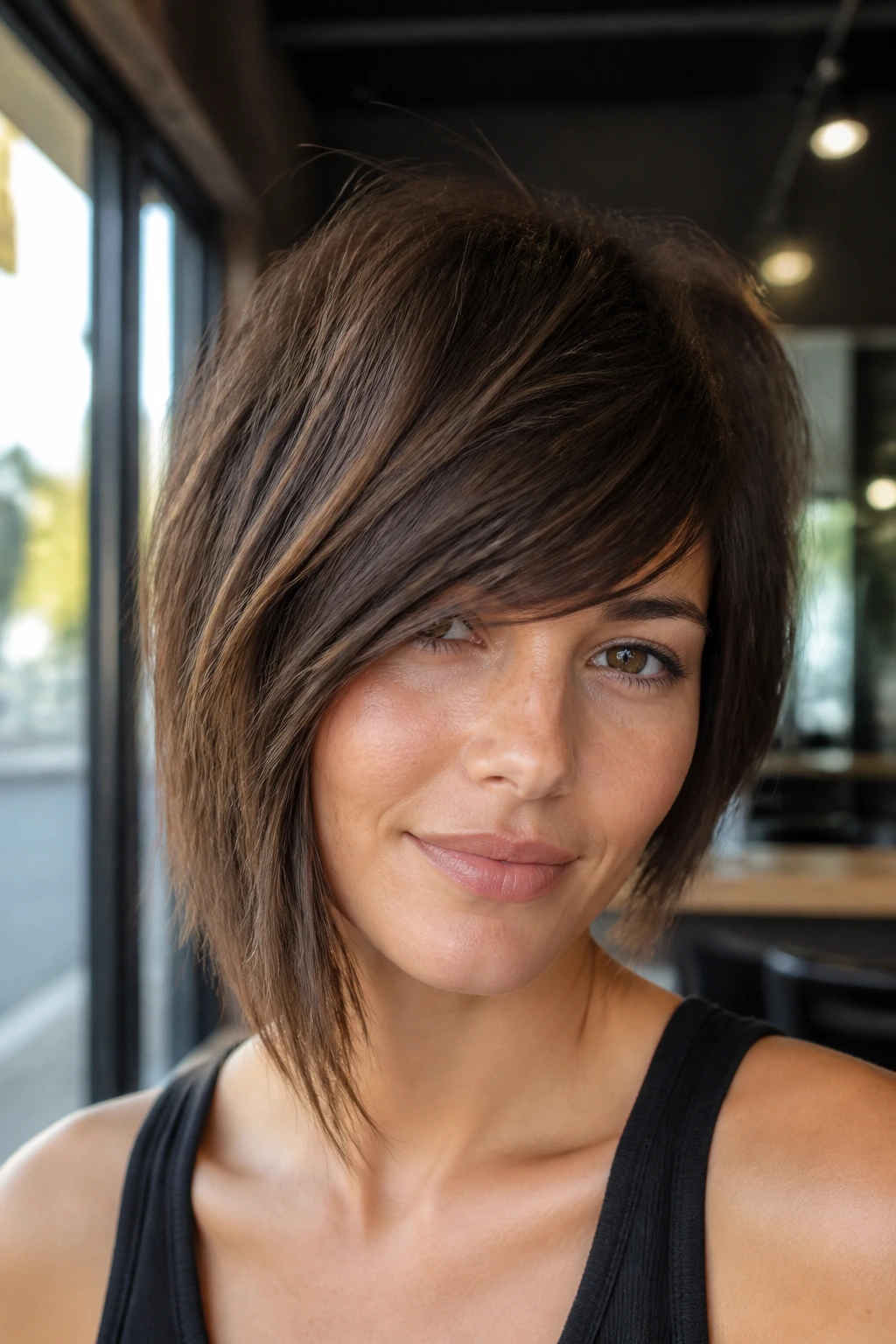
6. Asymmetrical Shag Bob with Side-Swept Fringe
Not every bob needs to sit perfectly even. An asymmetrical shape—one side slightly longer than the other—gives straight hair a little visual tension, which is exactly what keeps it from looking too tidy.
Why It Works
The side-swept fringe softens the longer side so the cut doesn’t look like an accident. Together, the angle and the fringe create movement across the face, which is useful if your hair falls very straight and needs some direction.
Ask for This
- One side about 1/2 to 1 inch longer
- Side-swept bangs that blend into the front
- Light internal texture, not heavy thinning
Styling note: Tuck the shorter side behind your ear. It makes the asymmetry feel intentional instead of fussy.
7. Blunt Perimeter Shag with Piecey Bangs
This is for people who like a stronger outline but still want a little mess in the middle. The perimeter stays blunt enough to keep the bob looking full, while the top and fringe get broken up into pieces.
On straight hair, that contrast matters. Too much layering and the cut goes wispy; too little and it goes flat. This version walks the line by keeping the bottom edge solid and the bangs lightly separated.
Best For Thick Straight Hair
If your hair has real density, a blunt perimeter keeps the ends from disappearing. The piecey bangs stop the whole look from feeling heavy near the forehead.
8. Feathered Neck-Length Bob with Split Bangs

A neck-length bob sounds simple until you see how much more air it has when the ends are feathered. That soft feathering keeps straight hair from hanging like a curtain, and the split bangs break the front line in a very easy way.
Split bangs are a little less committed than full curtain bangs. They part without trying too hard, which is useful if you want fringe but don’t want it to be the loudest thing in the room.
Good to know: This cut tends to look best when the ends are moved with a flat iron just enough to feather them outward. One tiny bend. That’s it.
9. Stacked Shaggy Bob with Airy Bangs
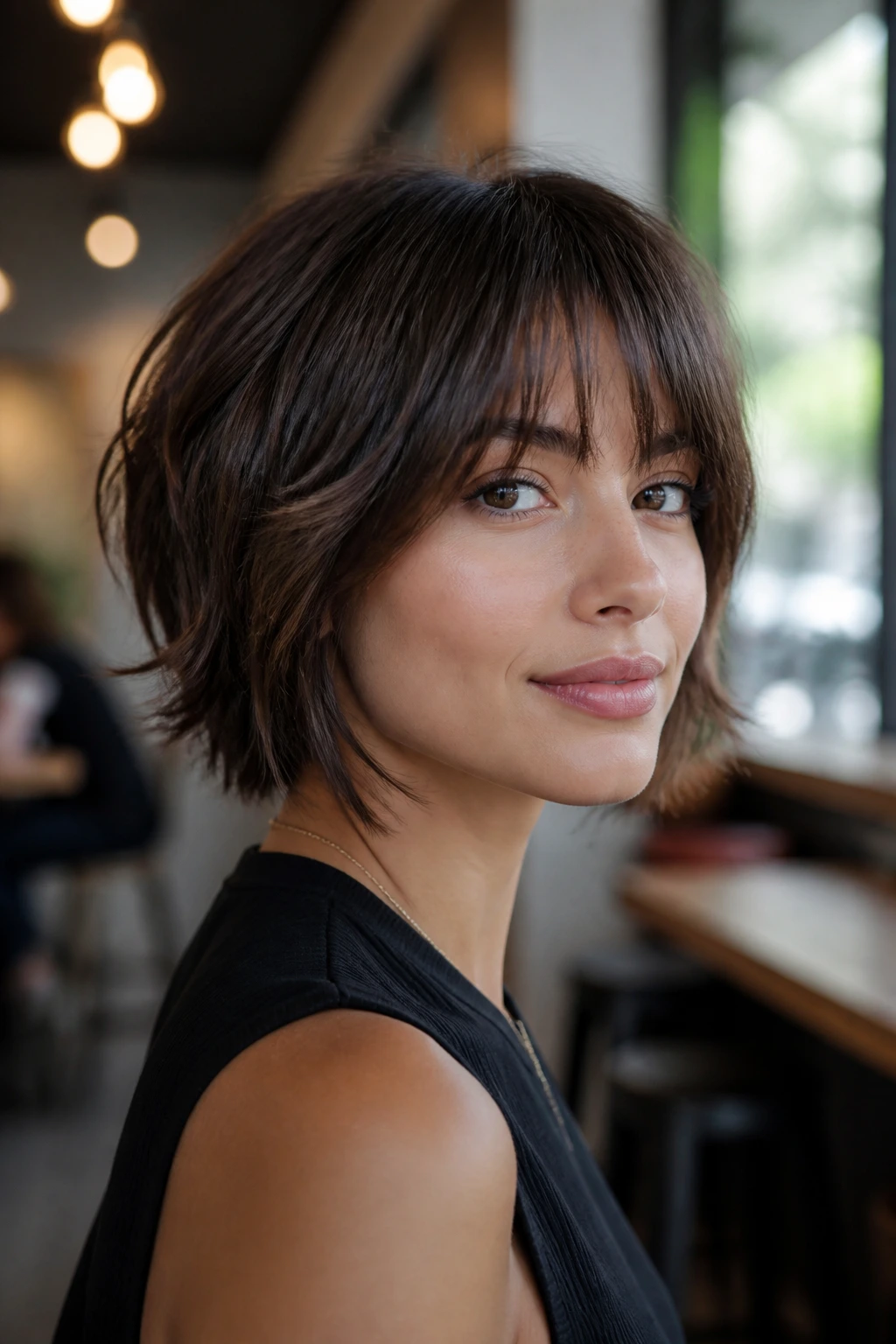
Fine straight hair can get a real boost from a stacked shape, especially if the crown needs help. Shorter layers in the back create a little lift, and airy bangs keep the front from going flat and boxy.
Why It Works
The stacking builds shape where straight hair often collapses first: the back of the head. Airy bangs then balance that height so the cut doesn’t feel top-heavy.
How to Style It
Dry the crown first with a round brush or a small vent brush, lifting the roots away from the scalp. Then let the front cool before touching it. If you mess with the bangs while they’re warm, they’ll separate and set in the wrong direction.
10. Boxy Bob with Baby Bangs
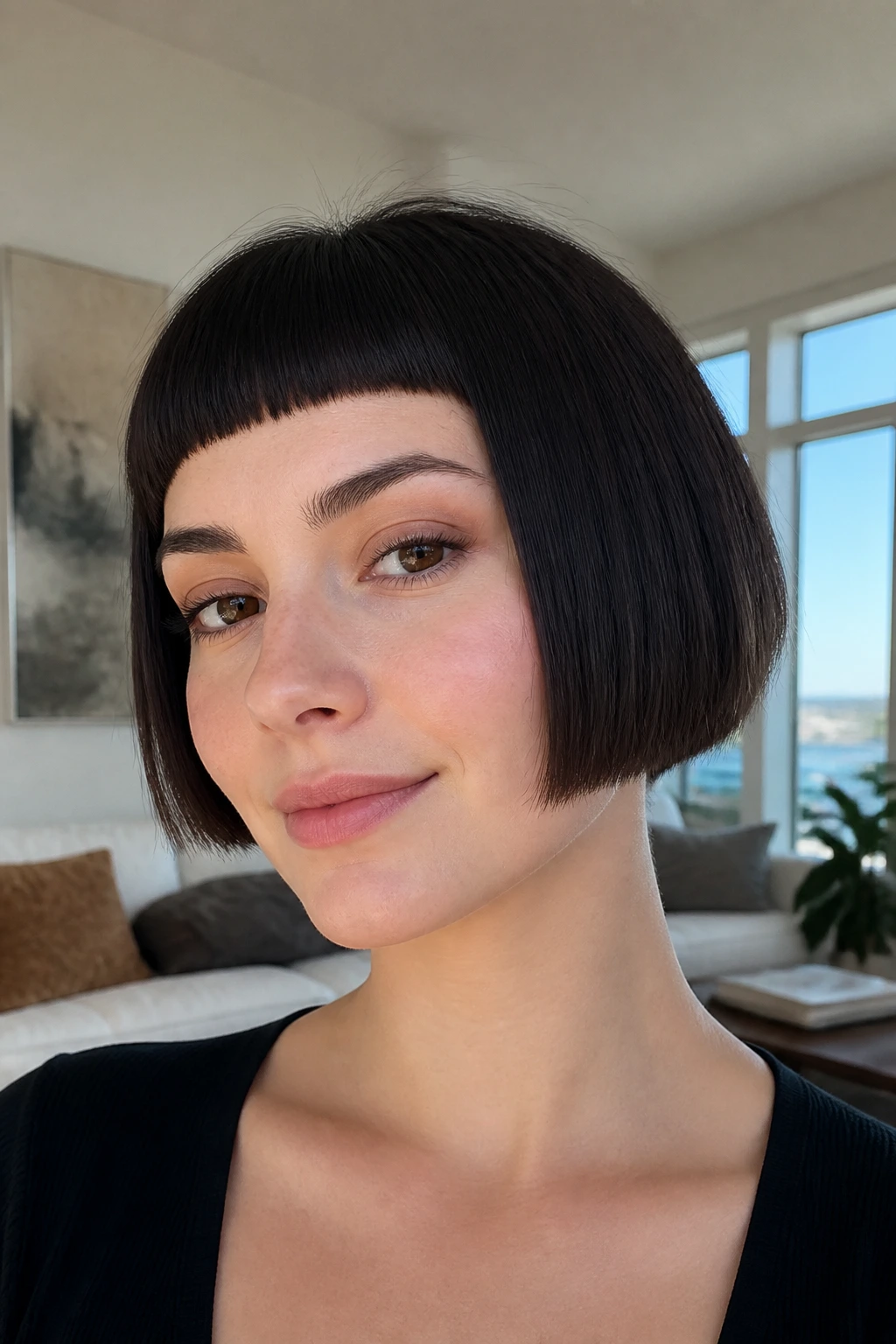
Baby bangs can look like a stunt if the rest of the cut is too soft. Pair them with a boxy shag bob and the shape suddenly makes sense. The outline stays a little square, but the texture keeps it from feeling severe.
This is one of the bolder choices in the lineup. It suits straight hair that can hold a clean edge, and it works best when the bangs are cut with tiny points so they don’t sit like a heavy strip across the forehead.
My take: This is a strong style, not a safe one. If you want subtle, keep moving.
11. Sliced Lob with Long Curtain Fringe
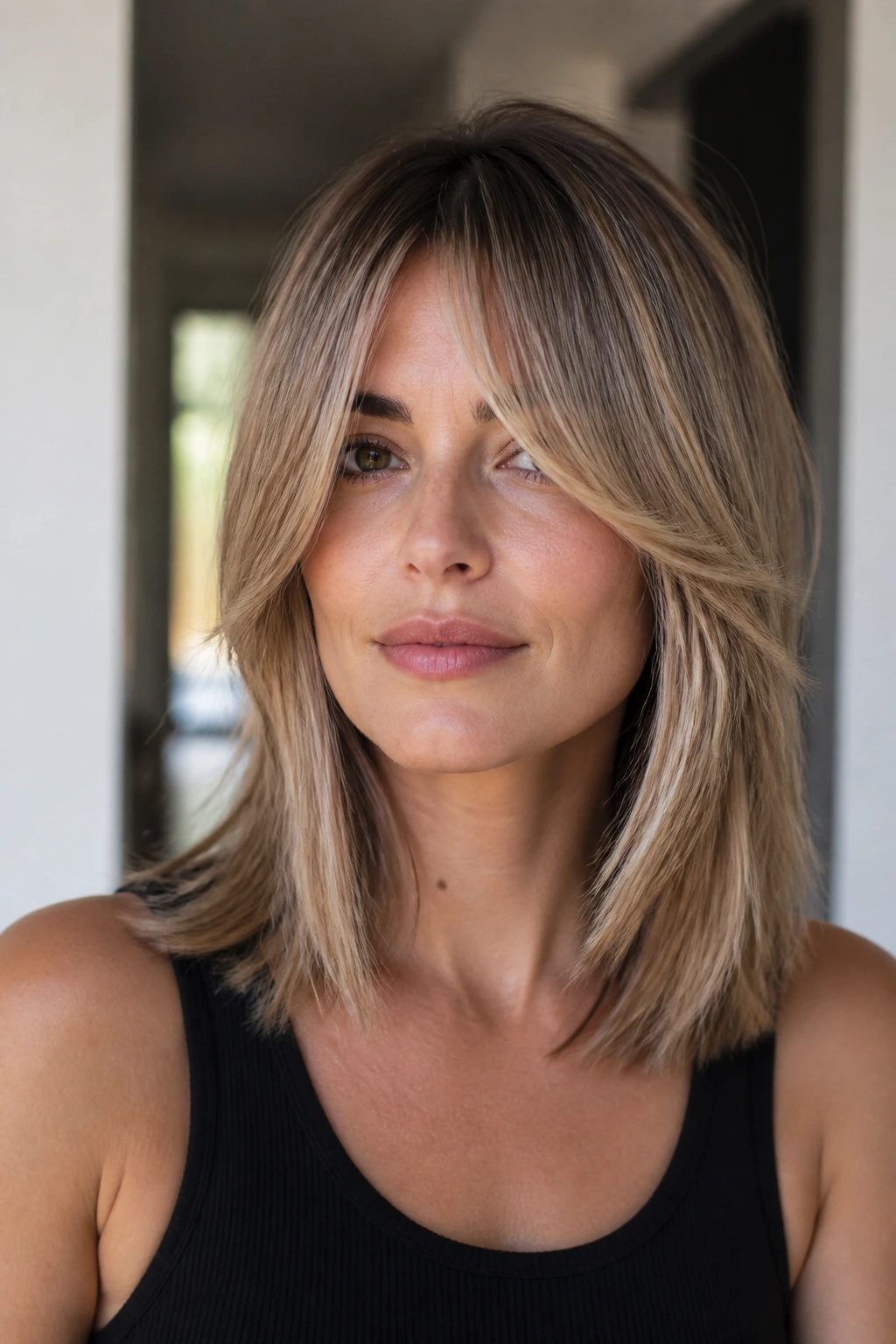
The sliced lob is the quiet option here, and that’s part of its charm. The layers are softer, the length sits below the chin, and the curtain fringe gives just enough face framing to make the cut feel finished.
Straight hair loves this when it’s a little heavy through the mids, because slicing removes bulk without carving the cut to pieces. It looks especially good when the ends flick outward just a bit.
What to Ask Your Stylist
Ask for long layers through the front only, with the back kept fuller. That helps the cut stay modern rather than too feathered.
12. Undone Italian Bob with Heavy Texture and Bangs
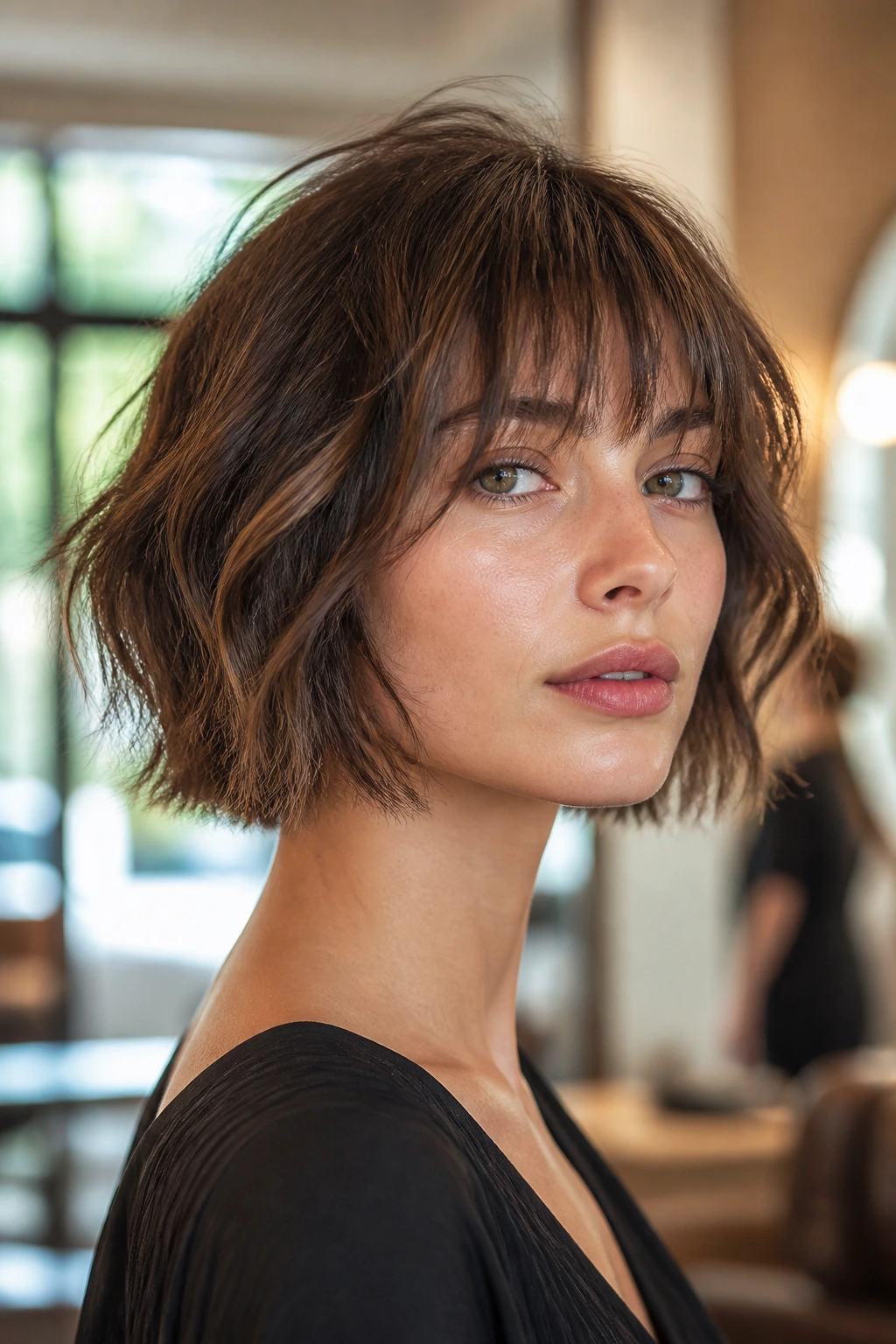
An Italian bob is usually known for its clean shape and shiny finish, but it can wear a shaggy fringe beautifully when the texture is handled with restraint. Think of this as elegance with a few scuffed shoes.
The bangs should be soft, not chopped to bits. The texture belongs mostly in the interior and around the face, while the outer line stays controlled enough to keep the bob from wandering into mullet territory.
Best For: Straight hair that’s medium to thick and wants movement without losing polish.
13. Razor-Cut Bob with Brow-Skimming Fringe
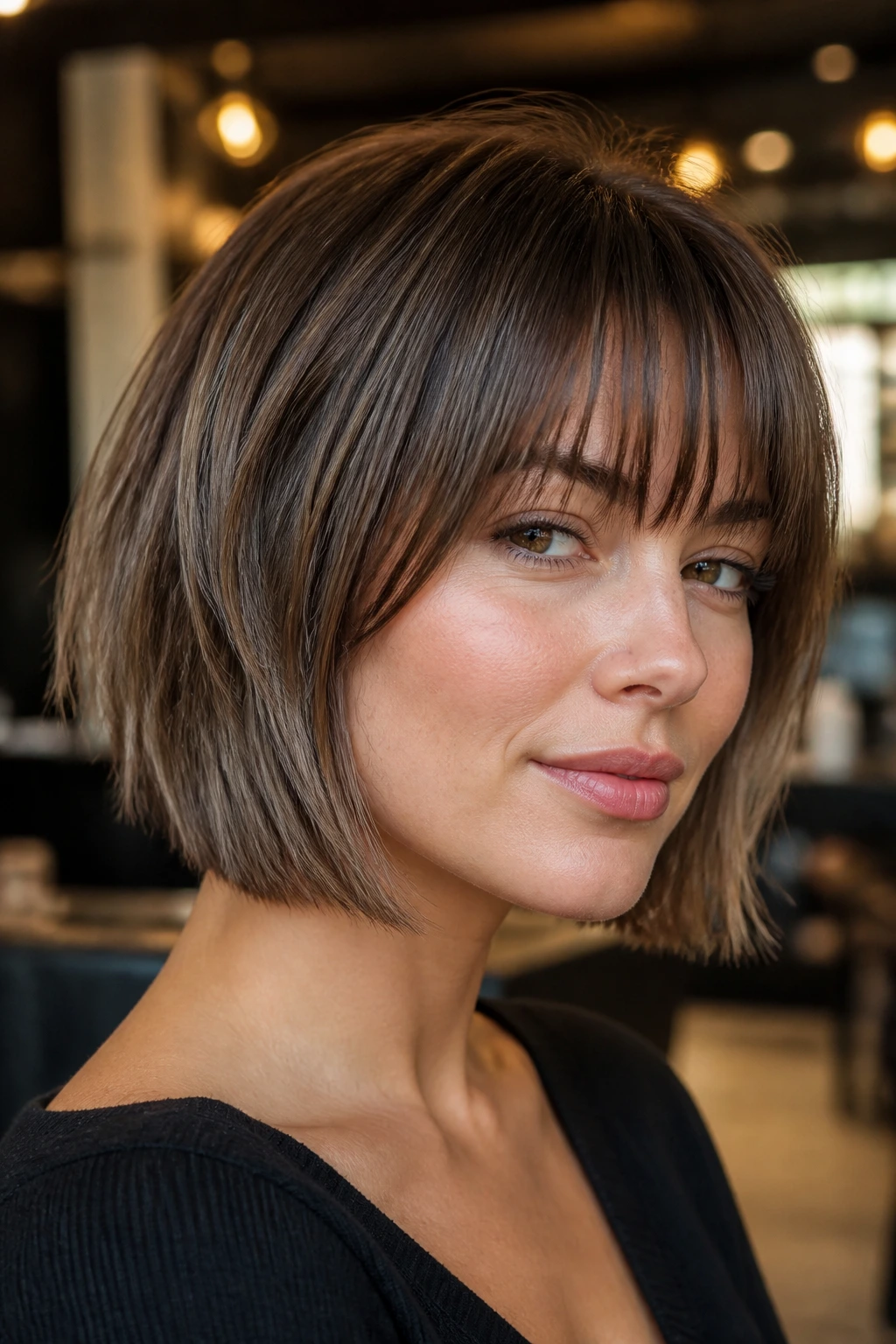
Razor cutting on straight hair is a gamble if it’s done carelessly. Done well, it gives you movement that scissors sometimes leave too blunt.
Why It Works
The razor creates lighter ends and softer edges, so the bob looks like it shifts when you move your head. Brow-skimming fringe ties the front together and keeps the cut from looking too fragmented.
A Small Warning
Fine hair can look stringy if the razor work is too aggressive. The fix is simple: keep the perimeter a little fuller and let the razor live mostly in the mid-lengths.
14. Curved Shag Bob with Tapered Bangs

A curved shag bob has a shape that wraps inward just enough to flatter the face. The tapered bangs make the front feel lighter, with the center a bit shorter and the sides easing into the cheekbones.
This is a strong choice if you wear glasses, because the curved shape leaves room around the frame without making the hair puff out at the temples. On straight hair, that’s a useful little detail.
Styling Trick
Dry the bangs first, then clip the side pieces while they cool. If you leave everything loose at once, the fringe and the front layers fight each other.
15. Disconnected Bob with Chopped Fringe
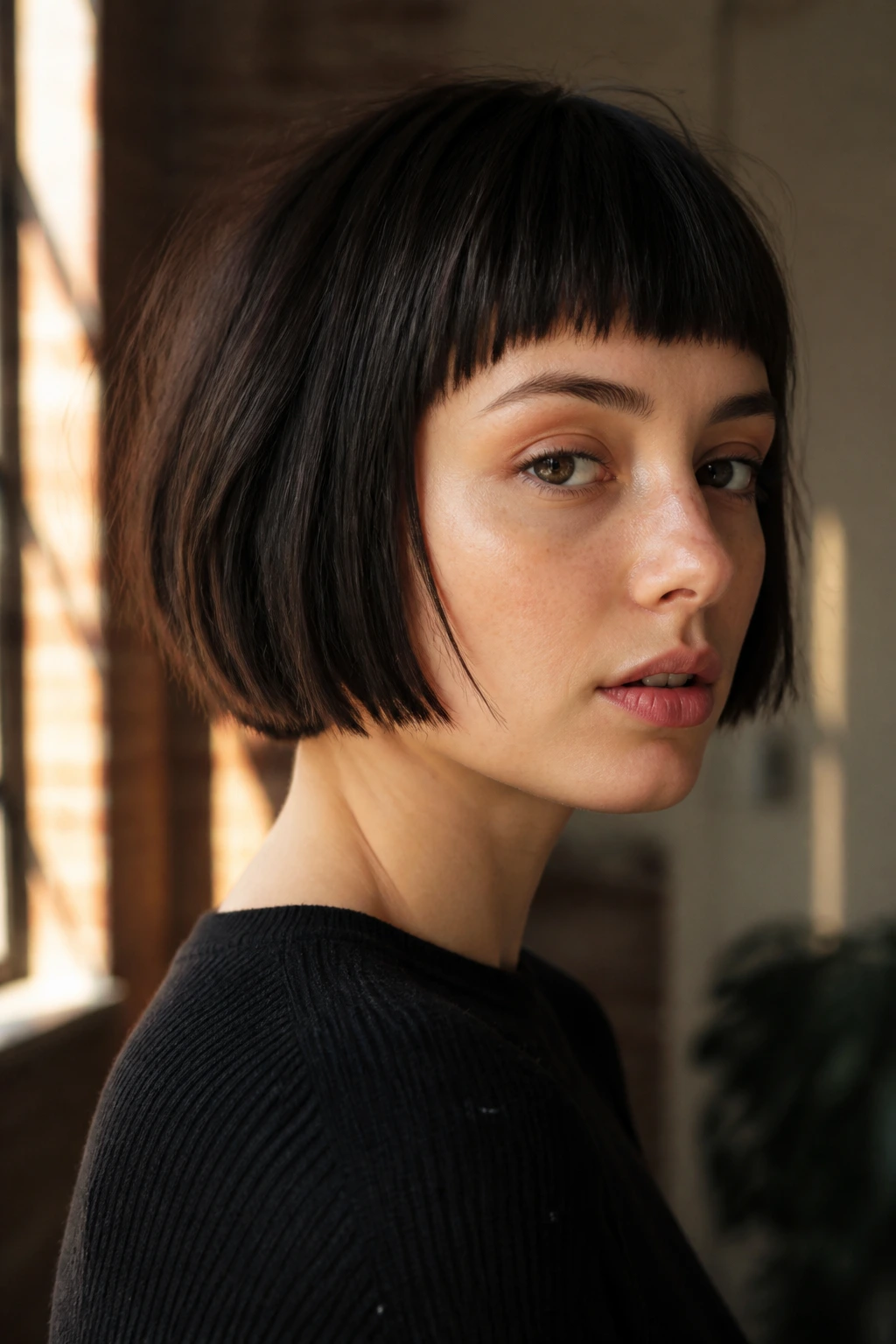
Disconnected layers sound dramatic because they are. That’s the point. Instead of blending everything smoothly, this cut leaves a noticeable difference between the top, the fringe, and the ends.
Why It Works
Straight hair can hold a disconnected shape better than most textures because the line stays visible. Chopped fringe keeps the top from feeling too polished, which is what gives the cut its edge.
When It Fits
If you like a little roughness near the face and don’t mind seeing the layers, this is a good one. If you hate having to finger-style your bangs into place, skip it.
16. Soft Wolfish Bob with Wispy Curtain Bangs
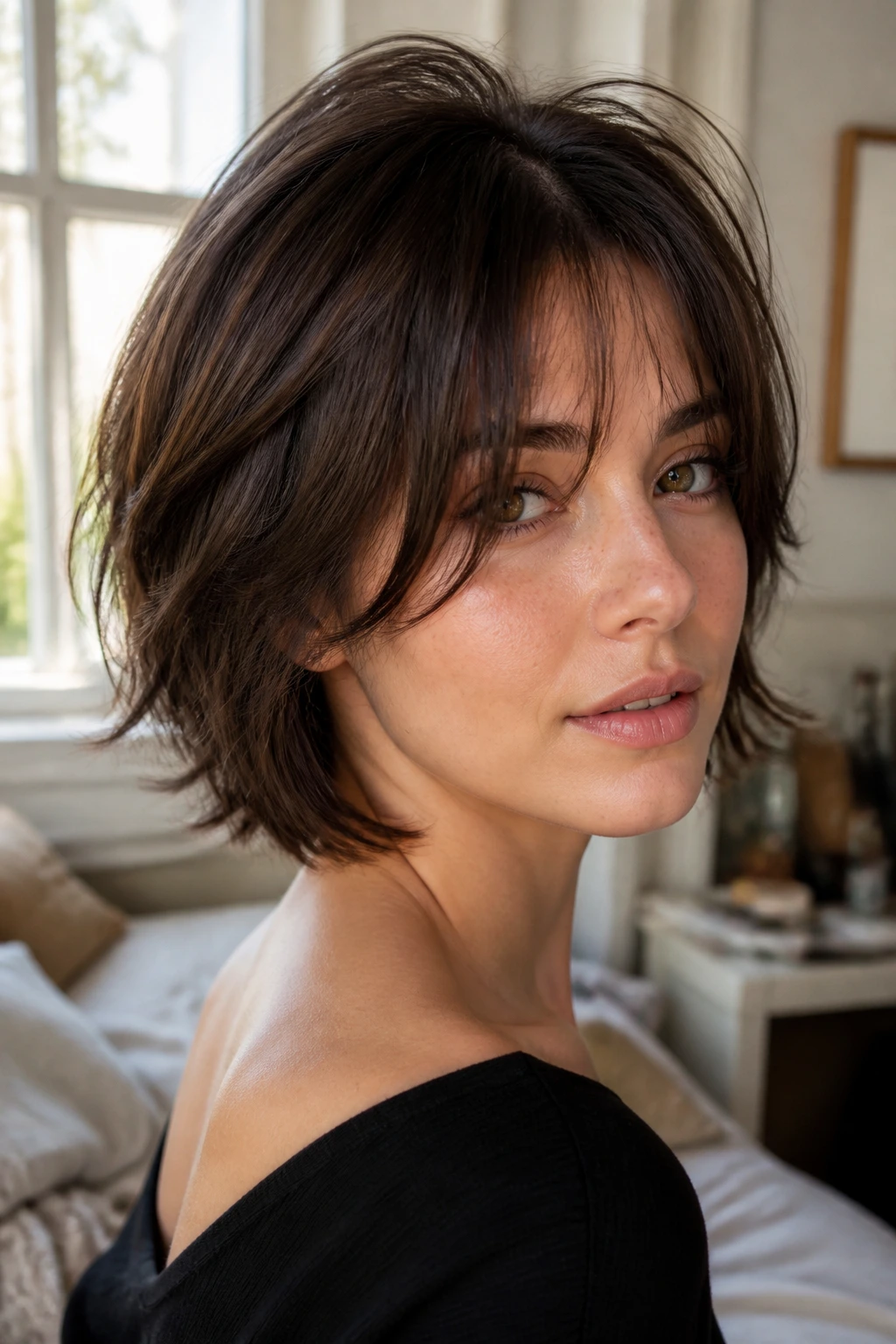
This is the bridge between a shag bob and a wolf cut, but it stays much more wearable for straight hair. The crown gets a bit of lift, the ends go lighter, and the curtain bangs fall in wispy halves that don’t crowd the eyes.
It’s the kind of cut that looks better after a day of wear than it does in a freshly finished mirror shot. Straight hair often settles into it nicely, especially if you prefer a slightly undone feel.
Use this if: you want edge, but not too much edge. That line matters.
17. Shoulder-Skimming Shag with S-Curved Bangs

Shoulder-skimming length gives straight hair room to swing, and that matters more than people think. If the bob is too short, the shape can feel rigid. A little extra length lets the layers breathe.
What S-Curved Bangs Do
They bend softly away from the forehead and toward the cheeks, which creates motion without a heavy center part. The fringe looks especially good when it’s blown with a round brush just enough to curl, not curl-curl.
Styling note: This is one of the easier cuts to air-dry with a bit of mousse and a finger twist at the fringe. It doesn’t need perfection.
18. Inverted Bob with Feathered Bangs
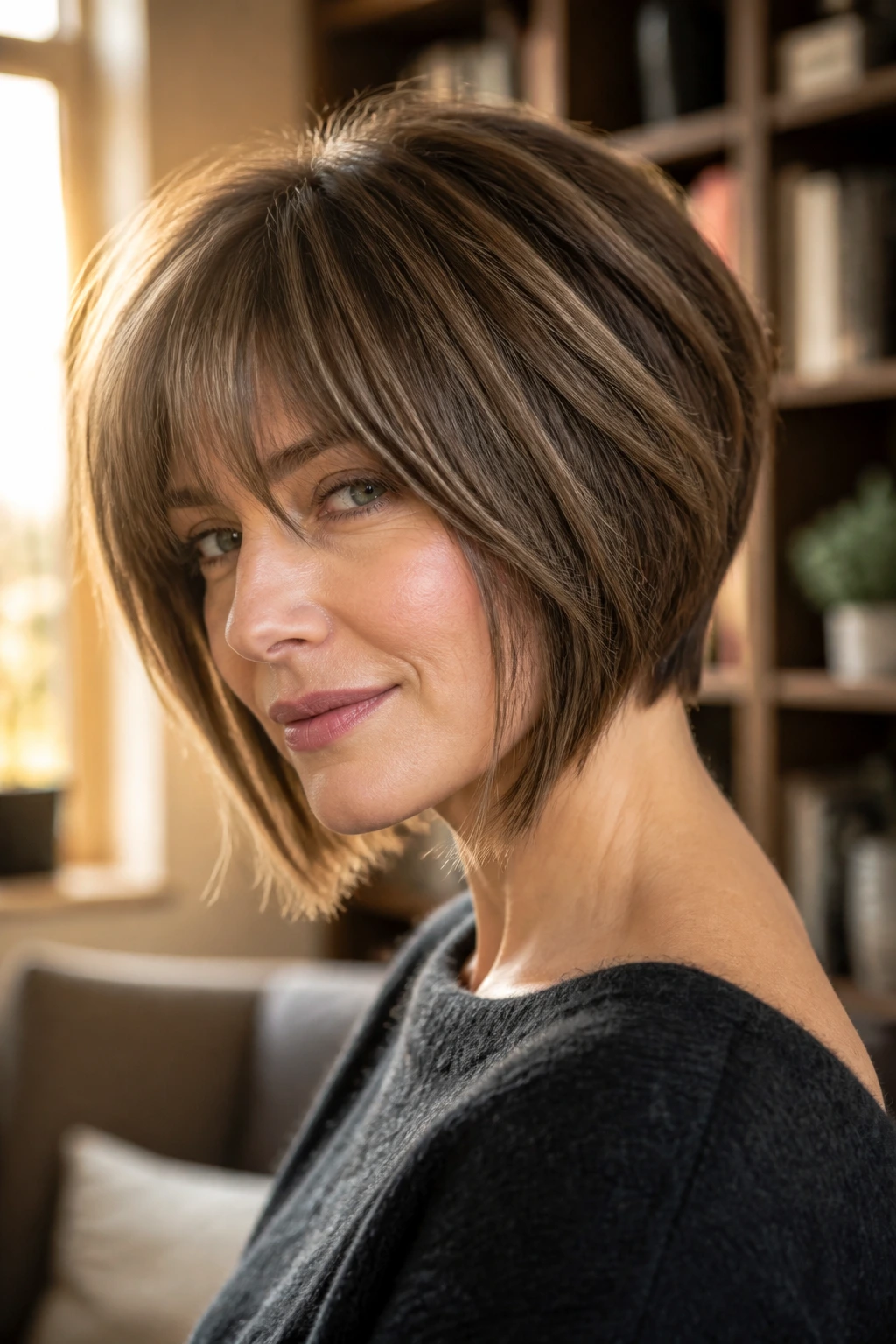
An inverted bob sits shorter in the back and longer in the front, which gives the neck a longer line and the jaw a little lift. Add feathered bangs, and the whole thing turns less sharp and more wearable.
On straight hair, the angle of the cut does most of the work. The feathered bangs keep the front from looking too hard, and they blend into the longer pieces around the cheekbone in a way that feels easy.
Best For
- Rounder faces that want some vertical shape
- Hair that needs a little structure
- People who like the back neat and the front softer
19. Face-Framing Shag Bob with Long Fringe

This is the least committal bangs choice in the whole group, and that makes it useful. The fringe starts longer, then blends into face-framing layers that can be tucked, parted, or brushed forward.
It suits straight hair that you don’t want to overcut. If you’re nervous about bangs but still want something around the face, this shape gives you the feeling of fringe without locking you into a short, blunt line.
Nice detail: The longest pieces should land near the cheekbone, not the chin. That little shift keeps the cut lively.
20. Low-Maintenance Air-Dry Bob with Light Bangs
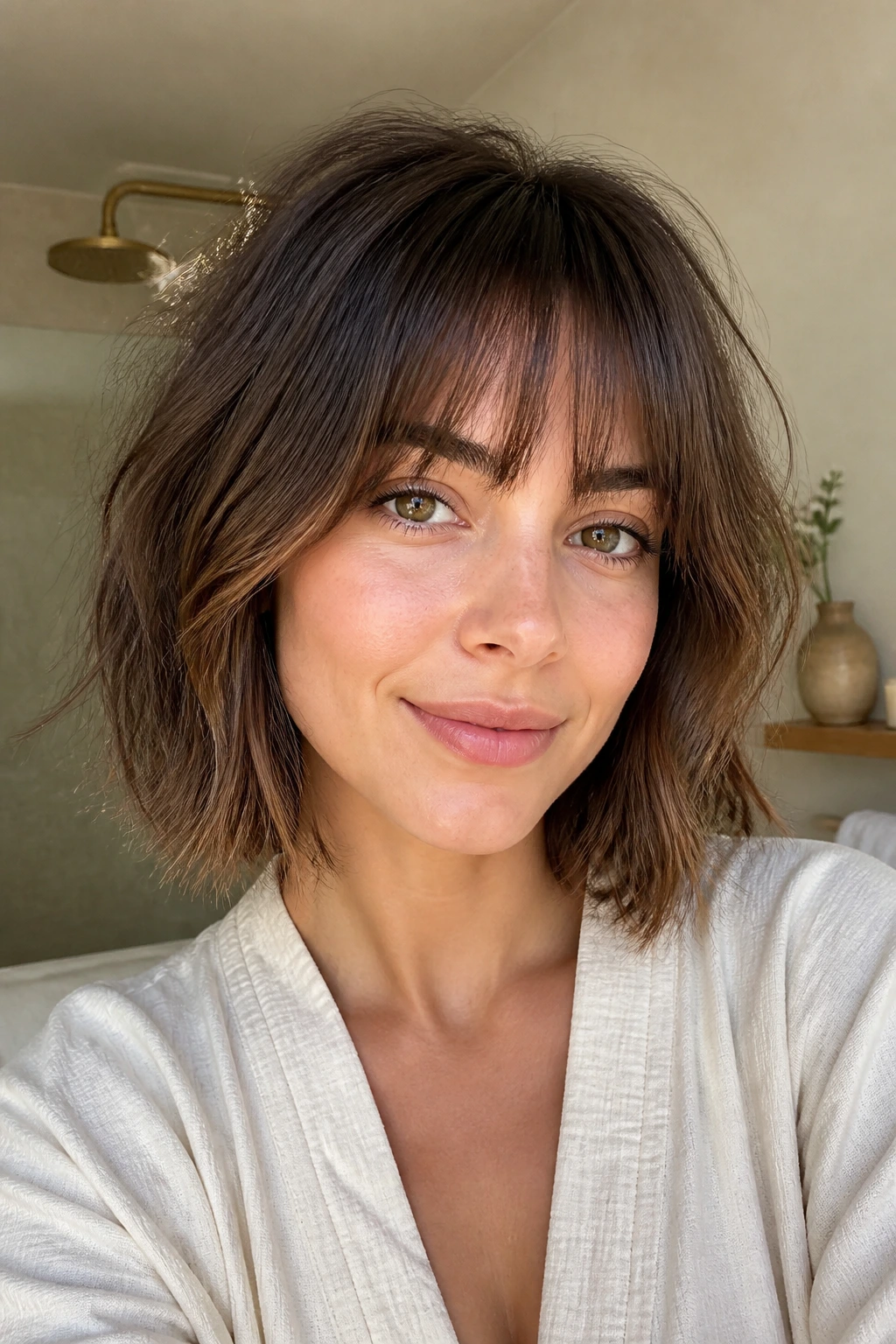
Some cuts demand a blowout to make sense. This one doesn’t. The layers are built to fall on their own, and the light bangs stay soft enough to look decent after a quick rough-dry.
Why It Works
Straight hair still needs a bit of product here—usually a light mousse or a root spray—but the cut does not collapse if you skip the round brush. That makes it a smart choice for people who don’t want to stand in the bathroom for fifteen minutes every morning.
Good Habit
Scrunch the ends lightly while they’re damp, then leave them alone. Straight hair often looks worse the more you touch it while it dries.
21. Sleek Shag Bob with Hidden Layers and Bangs
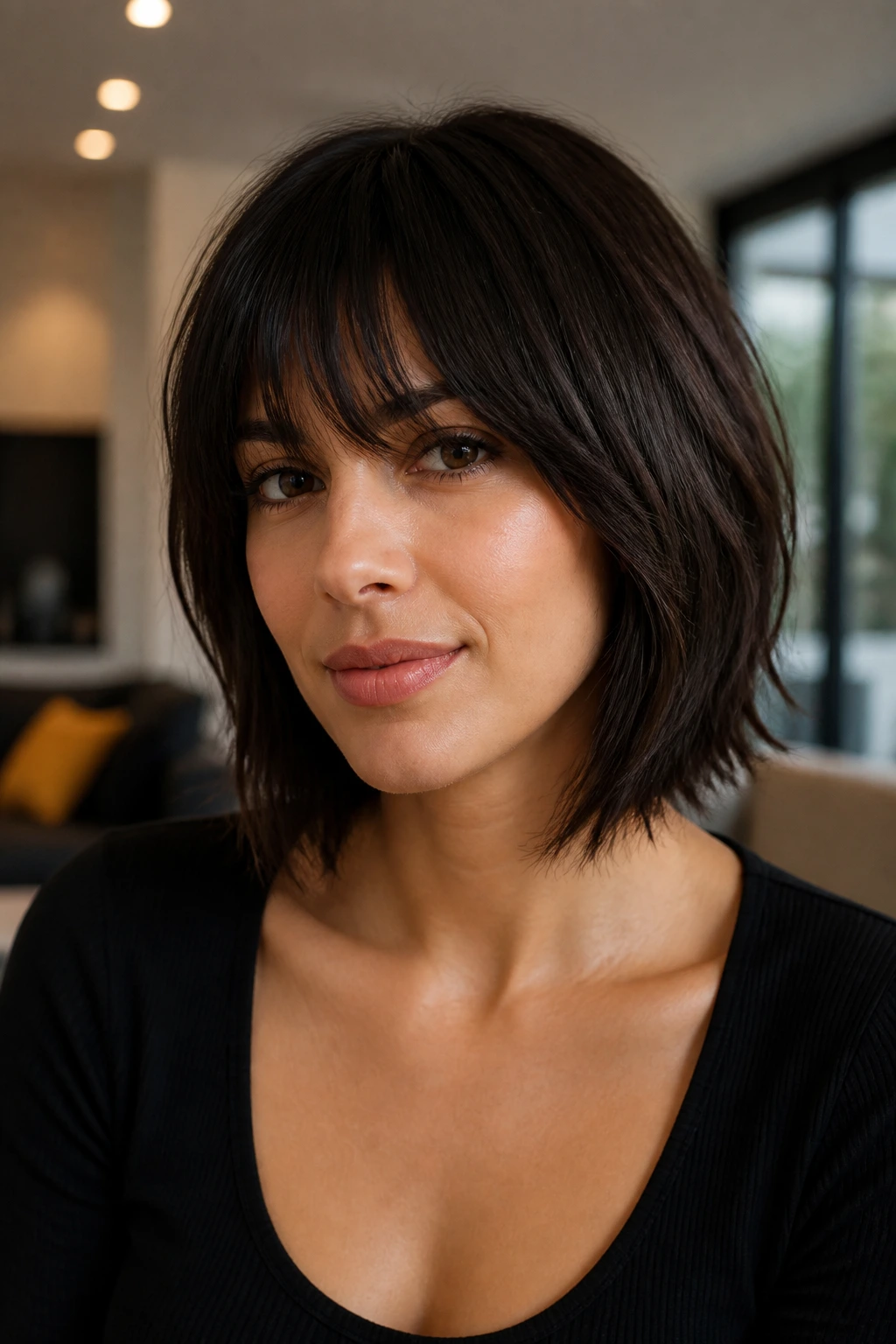
This cut is for people who want polish first and texture second. The top layer stays smooth, the hidden layers remove weight underneath, and the bangs are shaped to move without breaking the sleek line.
The trick is restraint. Straight hair can look fantastic with this approach because the shape stays clean while the movement hides inside the cut. You see it in motion, not all at once.
What Makes It Different
Unlike a rougher shag, this version doesn’t advertise every layer from across the room. It’s quieter. That quietness is the whole appeal.
22. Chin-Length Bob with Sweeping Side Bangs

Side bangs are the forgiving fringe. They cover a cowlick more easily, they grow out more gracefully, and they’re less likely to split down the middle on naturally straight strands.
Why It Works
A chin-length bob gives the side-swept fringe a place to land. The two together create a diagonal line across the face, which can soften sharper jawlines and keep the cut from feeling too square.
Styling Tip
Direct the bangs across the forehead with the blow-dryer, then pin them in place for a minute while they cool. That tiny pause makes a bigger difference than most people expect.
23. Piecey Bixie Bob with Micro Layers
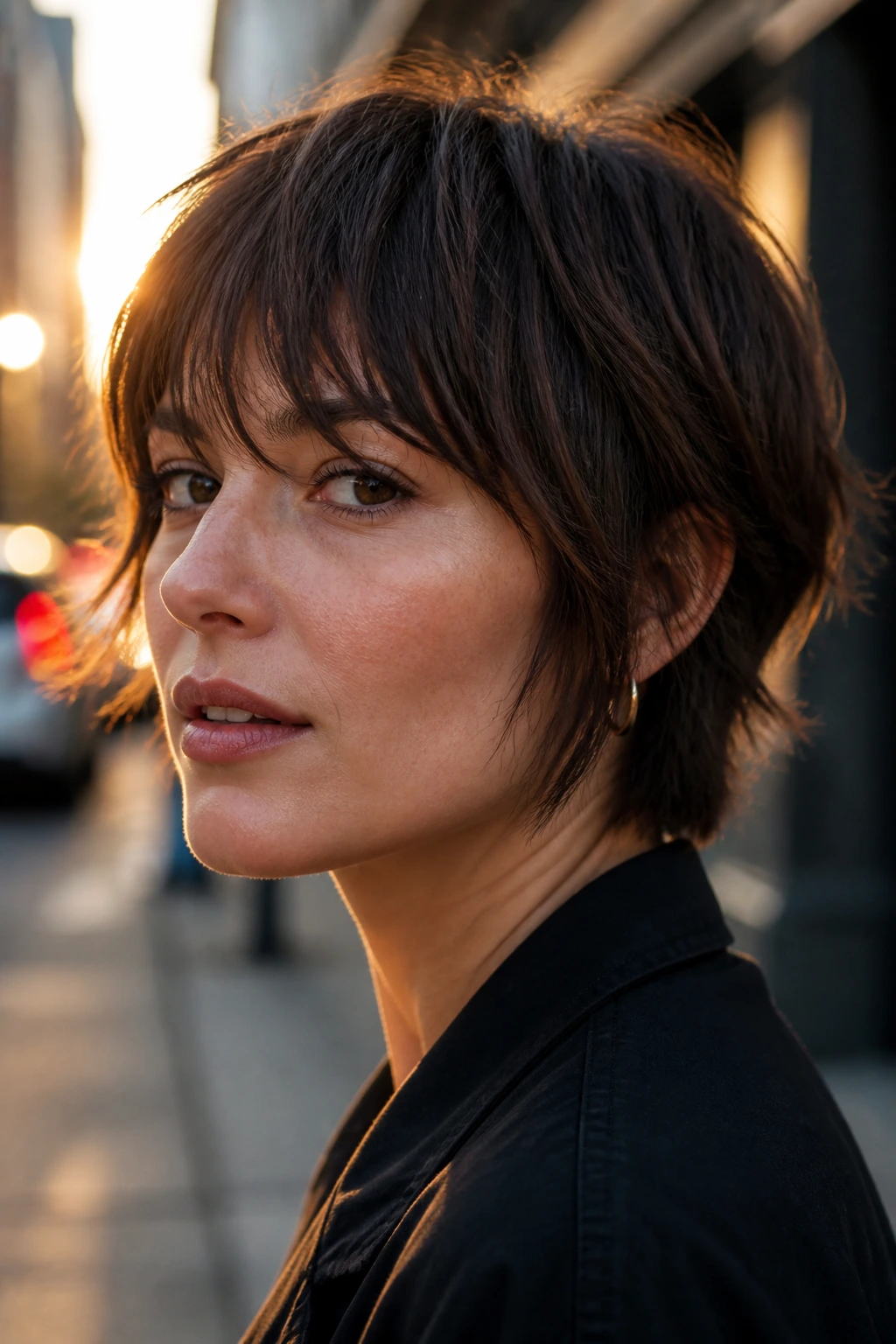
This one sits between a bob and a bixie, and yes, that means it has a little more attitude than a classic shaggy bob. The micro layers keep straight hair from looking too uniform, while the fringe stays short enough to feel playful.
It’s a strong choice if you want less weight around the neck and more shape around the eyes. On very smooth hair, the cut benefits from texture spray or a touch of dry wax at the ends.
Best For: smaller faces, sharper features, and anyone who likes a shorter shape that still reads as a bob.
24. Rounded Mushroom Bob with Soft Bangs
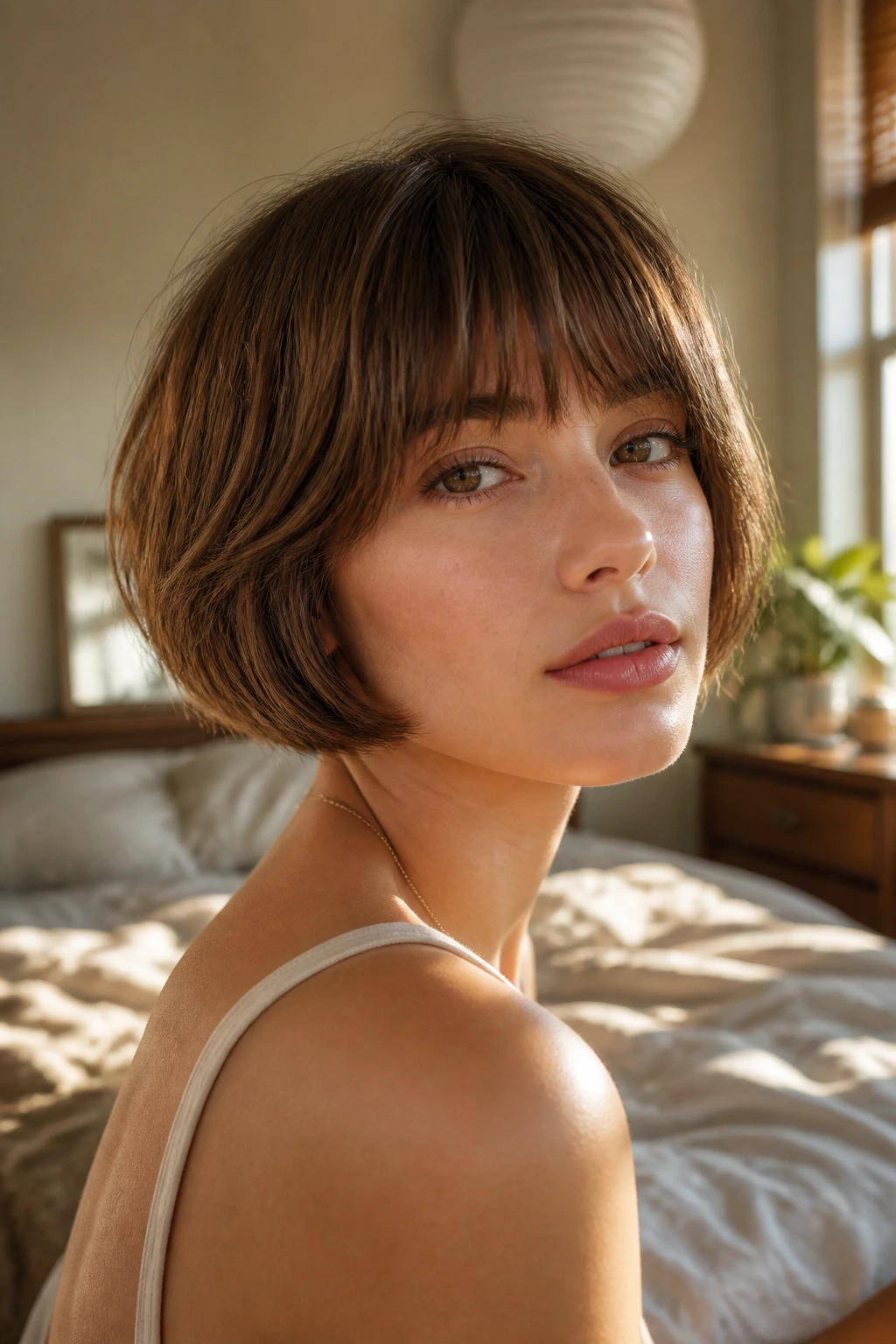
The mushroom bob gets a bad reputation when it’s too heavy and too perfect. Make it shaggy, round the silhouette a little, and soften the bangs, and it suddenly turns interesting instead of dated.
Why It Works
The rounded shape gives straight hair a controlled curve, while the soft bangs keep the front from feeling helmet-like. This version leans retro without copying a costume.
Use Caution If
Your hair is very fine and limp, because too much roundness can collapse. Keep the crown light and the interior airy.
25. Collarbone Flip Bob with Curtain Bangs
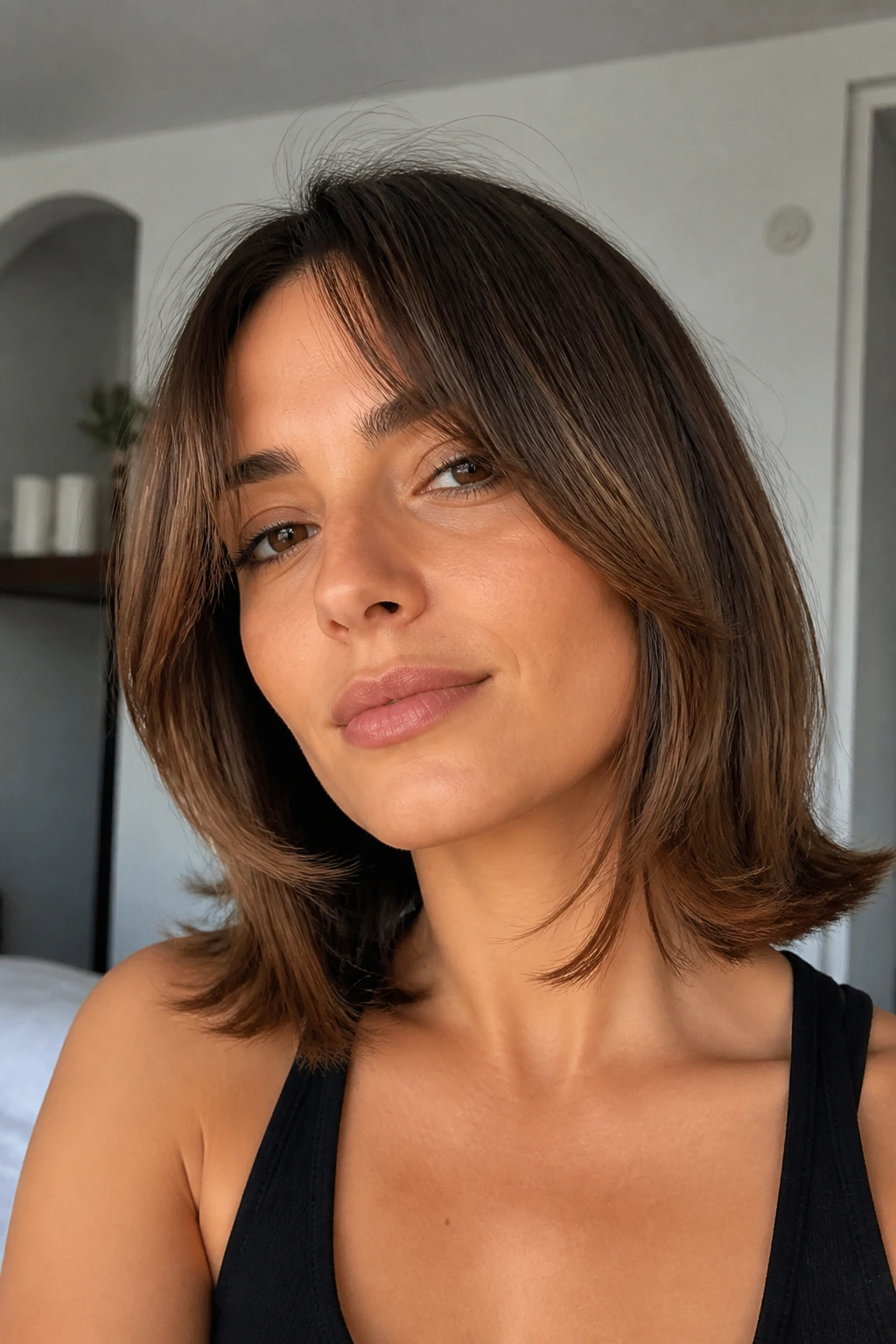
This one lives for the ends. The collarbone length gives the cut room to flip outward, and the curtain bangs echo that motion so the whole shape feels connected.
Straight hair usually wants to lie flat, which is why a flipped end can look fresh fast. You only need a slight outward bend—nothing like the overstyled flips people used to force with huge rollers.
How to Wear It
Rough-dry the hair, then touch just the ends with a flat iron or round brush. Let the fringe part in the middle and fall around the cheekbones.
26. Textured Blunt Bob with Choppy Fringe
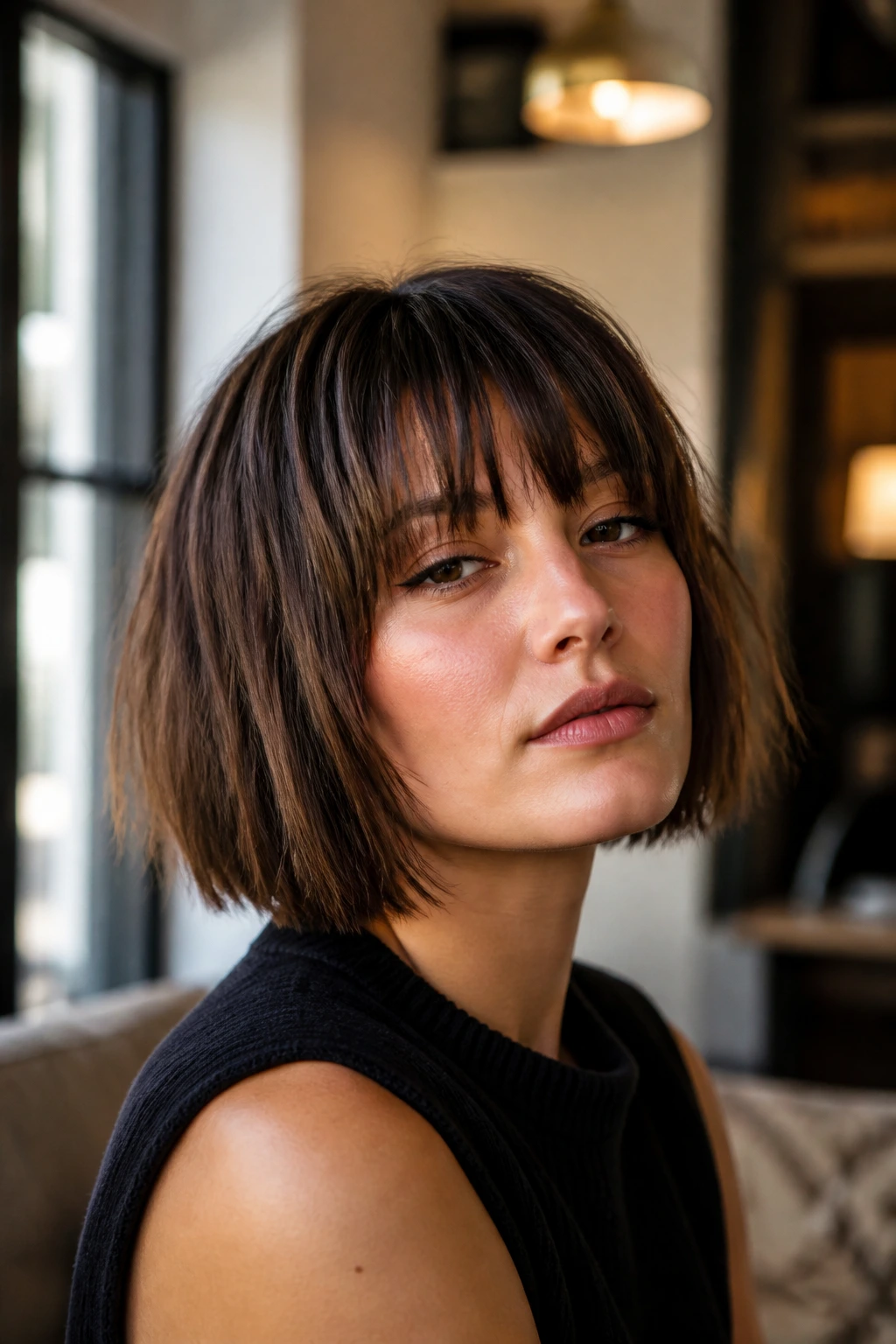
A blunt bob sounds like the opposite of shaggy, but that contrast is what makes this cut interesting. The outline stays strong, which keeps straight hair looking full, and the choppy fringe adds the looseness.
Why It Works
If your hair is dense, the blunt edge gives structure that won’t disappear. The fringe and a few interior slices stop the shape from feeling too rigid, so you get the best part of both worlds without the cut turning fuzzy.
The Key
Don’t over-texturize the ends. The blunt line is the anchor here. If you chip away too much, the whole thing loses its punch.
27. Layered Polish Bob with Glassy Ends and Bangs
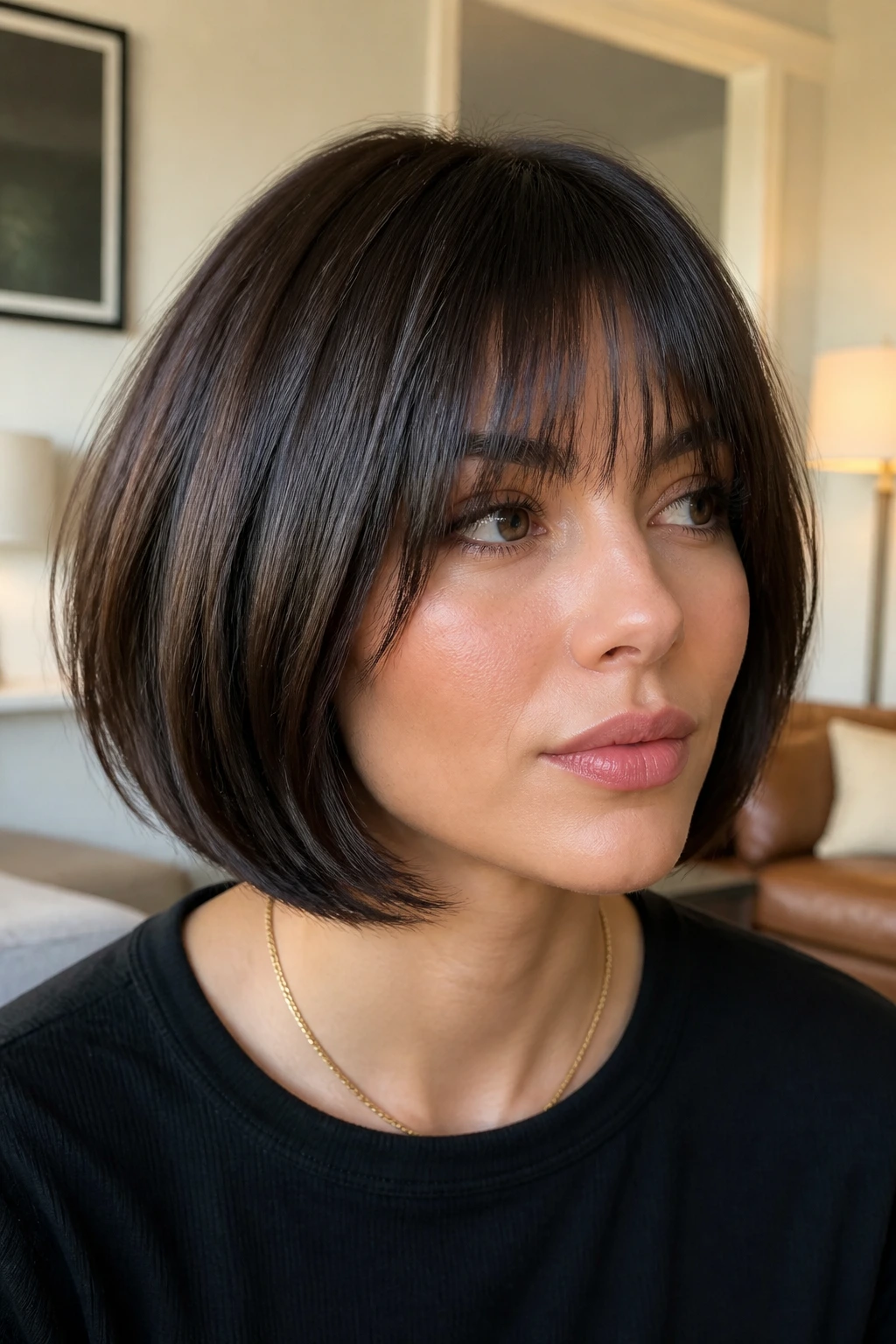
Some shaggy bobs are rough; this one is not. The ends stay glossy and smooth, while the internal layers give the hair enough lift that it doesn’t collapse into a single sheet.
Straight hair is good at showing shine, and this cut uses that to its advantage. The bangs should be soft and controlled, with just enough separation to keep the front from looking heavy.
Why It Works
The balance is what matters. Glassy ends keep the cut expensive-looking, while the hidden layers keep it from being boring. That contrast reads beautifully on hair that naturally lies flat.
28. Modern Grunge Bob with Full, Broken-Up Fringe

Grunge does not have to mean sloppy. In this version, the bob is short enough to have shape, the layers are broken up enough to feel lived-in, and the fringe is full without being a solid curtain.
Straight hair makes this style look crisp instead of messy, which is a nice little advantage. The broken-up fringe keeps the forehead interesting, and the rougher ends give you texture even when the rest of the hair is clean.
My opinion: This is the cut for people who want a little rebellion without giving up a mirror that makes sense in the morning.
Why Shaggy Layers Behave Differently on Straight Hair

Straight hair tells on a haircut. Curly and wavy textures can blur a bad line for a day or two, but pin-straight strands show whether the layers were placed with intent. That is why the best shaggy bob has to do two jobs at once: remove enough weight to create movement, then leave enough structure so the shape doesn’t fall apart.
The other thing straight hair does well is reflect light. That’s helpful if the cut is clean. It’s brutal if the cut is too thin. Over-thinning on a 1A or 1B texture usually leaves you with ends that look airy in the chair and stringy a week later. The better move is point-cutting, slide-cutting, and placing the shortest layers where they actually help the silhouette.
One more thing. Straight hair often needs direction, not volume everywhere. A little lift at the crown, a soft bend around the cheekbone, a fringe that lands in the right spot—that’s enough. You don’t need a huge, teased finish unless you enjoy spending half your life with a round brush.
What to Tell Your Stylist Before the First Snip
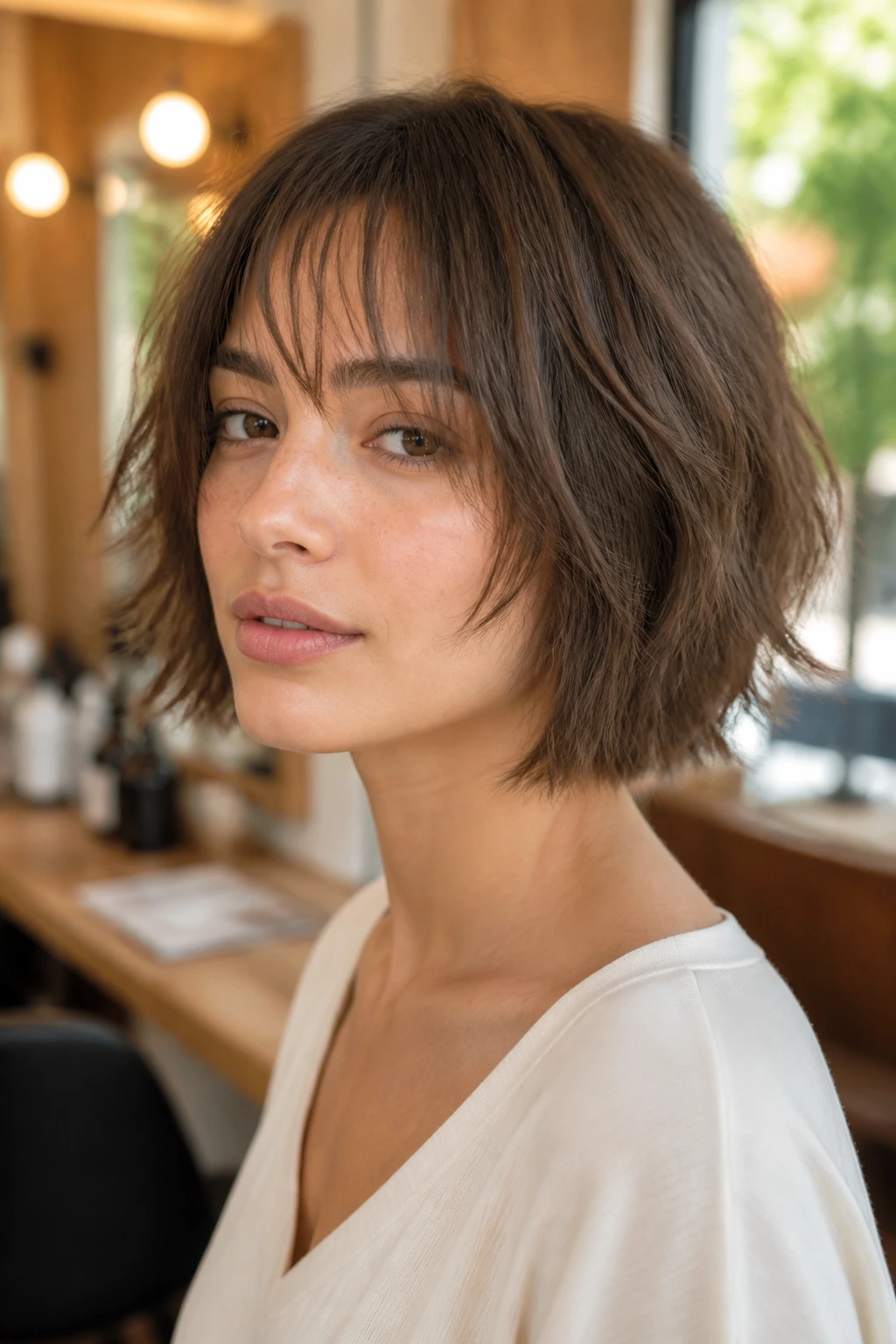
Bring photos. Good ones. One from the front, one from the side, and, if possible, one showing the fringe on a face shape that resembles yours a bit. Haircuts are partly about the cut itself and partly about where the bangs hit your features, so the pictures matter more than the menu of words.
Then say how you actually wear your hair. Air-dried? Blow-dried smooth? Flat-ironed only on special occasions? That answer changes everything. A shag bob that looks alive with a round brush can look limp if you never heat-style it, and a fringe that needs a bit of bend may be a bad match if you’re not willing to touch it with anything but a towel.
A few phrases help. Ask for point-cut ends, internal texture, and a fringe that suits your hairline. If your hair is fine, say you want movement without losing density at the perimeter. If it’s thick, say you want the bulk removed underneath rather than shredded across the surface. Those distinctions matter. A lot.
A small list worth repeating
- Tell them your trim tolerance: if you hate monthly appointments, avoid ultra-short bangs.
- Mention cowlicks near the front hairline: they change how bangs should be cut.
- Ask how the cut will look in two months: grown-out shape matters on straight hair.
- Be honest about styling time: some of these cuts need five minutes; some need fifteen.
Essential Tools for Styling Straight-Hair Shag Bobs
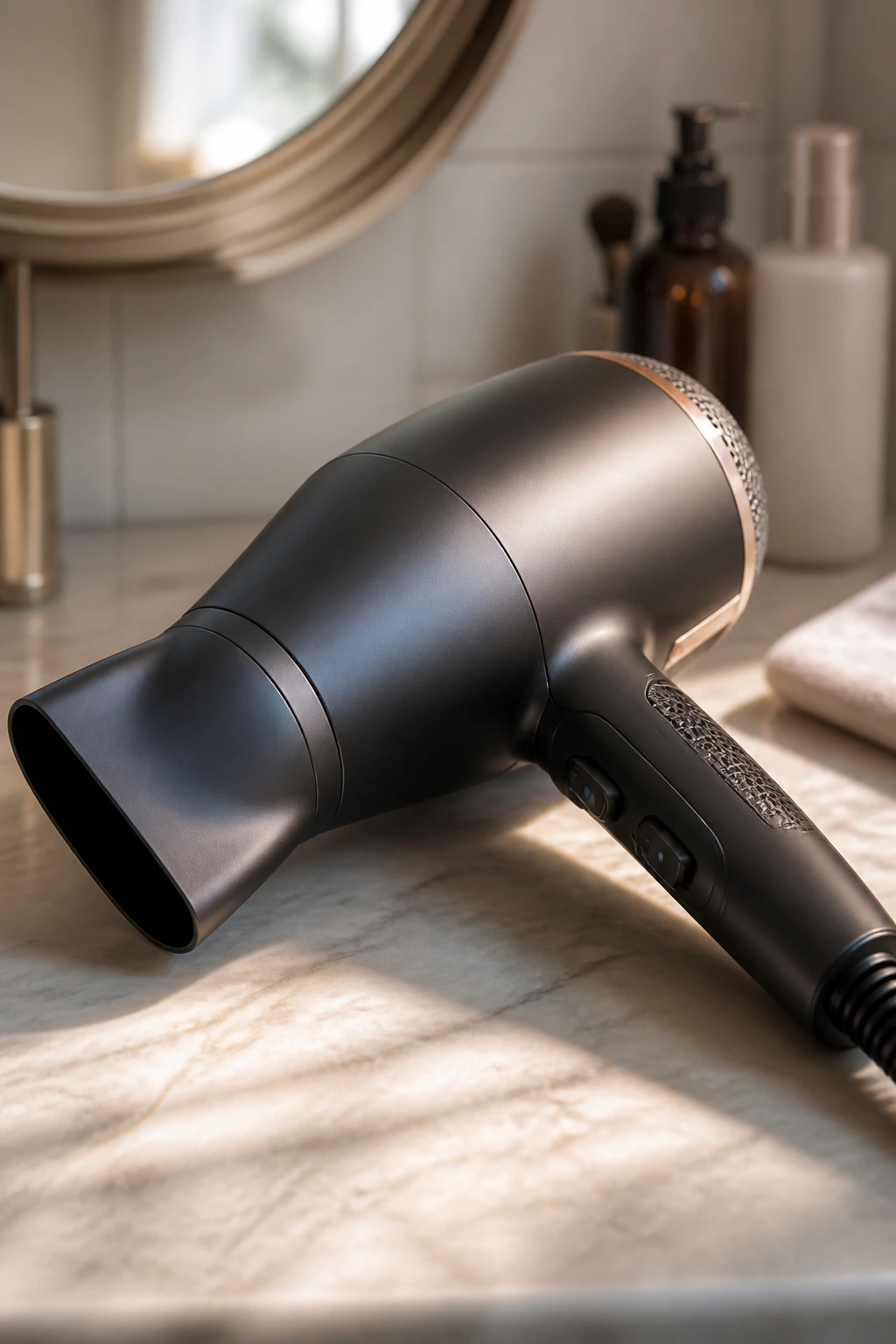
-
Blow dryer with a concentrator nozzle — Directs air where you want it and helps the fringe sit with shape instead of floating around.
-
1-inch round brush — Handy for bending the ends and giving curtain bangs that soft curve near the cheekbone.
-
Flat iron with rounded edges — Useful for a slight flip or bend at the ends; you do not need to curl the whole bob.
-
Lightweight texturizing spray — Adds separation to shaggy layers without turning straight hair sticky or gritty.
-
Root-lifting mousse or spray — Gives fine straight hair a little support at the crown before the cut settles.
-
Heat protectant — Not optional if you’re touching the bangs or ends with hot tools.
-
Duckbill or sectioning clips — Keep bangs and side pieces out of the way while you dry the rest of the hair.
-
Smoothing cream or tiny amount of serum — Helps polished versions stay neat without flattening the texture you worked for.
-
Wide-tooth comb or tail comb — Good for sectioning the fringe and parting the hair cleanly before drying.
-
Dry shampoo — Straight hair shows oil fast at the roots; this buys you another day or two between washes.
How to Wear These Cuts Day to Day

Office polish: A side part, smooth roots, and one tucked side can make a shaggy bob look more tailored without wiping out the movement. Keep the fringe soft and let the ends bend under just a touch.
Weekend texture: Rough-dry the hair, mist texture spray through the mids, and pinch the ends with your fingers. The cut should look a little separated, not stiff. That’s the whole point.
Second-day hair: Dry shampoo at the roots before you go to bed, then give the bangs a quick refresh in the morning with a damp brush or a flat iron pass. Straight hair often looks best on day two anyway, when the layers have settled.
Dress-it-up mode: Add a small bend at the front pieces and a little shine on the ends. A barrette on one side can make a shaggy bob feel intentional fast, especially if the fringe is in that in-between stage where it wants to split.
What to Ask for at the Salon So the Cut Keeps Its Shape

The biggest mistake with shaggy bobs on straight hair is asking for “texture” and stopping there. Texture can mean a hundred different things to a stylist. On your hair, it should mean a controlled removal of weight, not a random razored haze around the head.
Ask where the shortest layer will sit. That one detail changes the whole cut. If the shortest face-framing pieces hit at the cheekbone, the bob feels open and lifted. If they start too high, the top can puff and the fringe can float away from the face in a weird way.
Ask how the fringe will move when it grows out. Seriously. A good bang on straight hair should still look decent after three weeks, not only on the day you leave the chair. If the answer sounds vague, push for a longer fringe or curtain shape. A little extra length is often the difference between a flattering grow-out and a forehead panic.
And if your hair is very fine, say so loudly. Fine straight hair needs a different kind of texture than coarse straight hair. One wants lift. The other wants bulk management. Same haircut name, different job.
Additional Tips and Finishing Moves
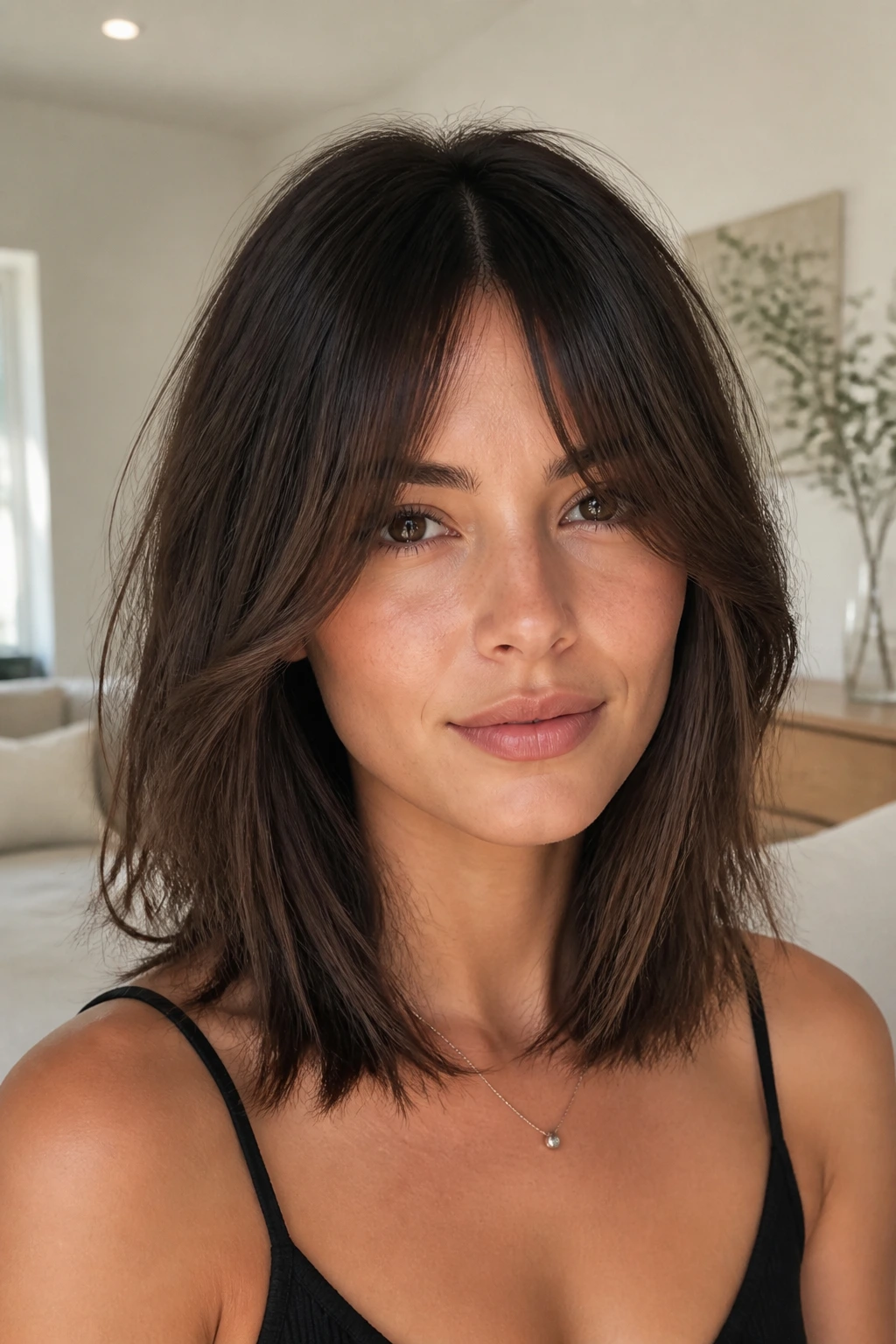
Texture boost: Flip your part to the opposite side before blow-drying. That small move lifts the roots and keeps the shag from sinking flat at the crown.
Bang control: Dry the fringe first, then leave it alone while it cools. Bangs that get touched, re-touched, and touched again tend to split and lose shape by lunch.
Smooth finish: Use one pea-sized amount of serum only on the bottom inch of the hair. Anything more starts weighing down the shaggy pieces you wanted in the first place.
Make-it-yours: If you wear glasses, ask for the fringe to clear the frames without hiding the brows. If you have a strong jaw, keep more face-framing length near the chin. If your face is longer, a fuller fringe can help bring the shape down a bit.
Common Mistakes That Flatten the Shape

Over-thinning the ends: The hair looks light in the chair, then turns see-through after a week. The fix is a more controlled internal texture cut, not aggressive thinning all over.
Cutting the bangs too short on straight hair: Short fringe can spring up or separate in a way that feels harsh. Ask for a slightly longer starting point, especially if your hairline has a cowlick.
Skipping the blow-dry entirely: Some shaggy cuts are forgiving, but straight hair still needs direction near the front. Even five minutes with a dryer can save the shape.
Using heavy oils near the roots: That makes the crown collapse and kills the piecey ends. Keep heavy products on the last inch or two only.
Choosing a length that sits exactly at the widest part of the jaw or cheek: That can make the face look wider than it is. A chin-skimming or collarbone finish usually works better because it either opens the jawline or moves below it.
Variations and Adaptations to Try
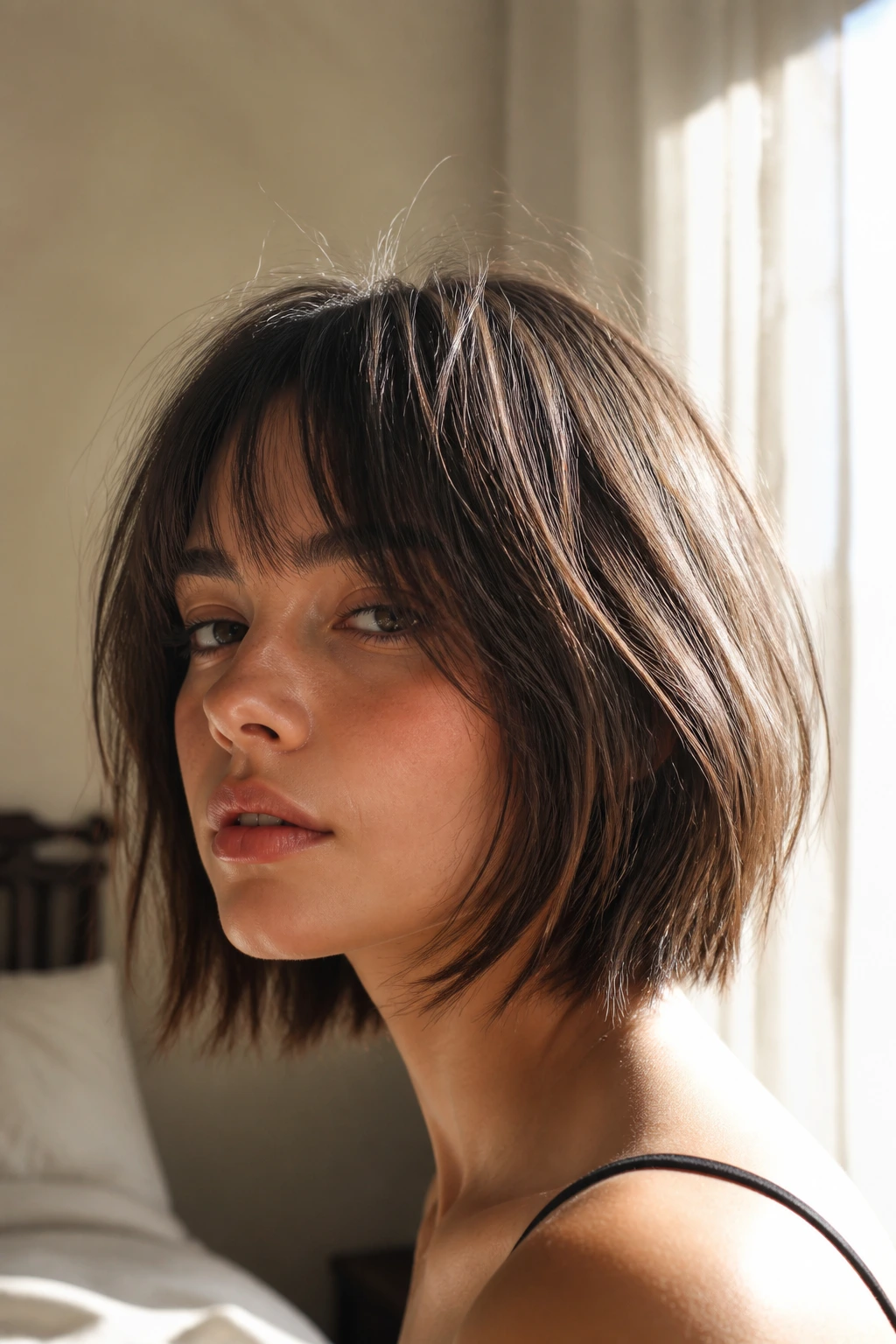
Fine-Hair Featherweight Version: Keep the perimeter a little fuller and ask for internal layers only through the crown and around the face. Pair it with wispy bangs and a root lift spray. This version gives fine straight hair movement without turning the ends stringy.
Thick-Hair Weight-Removal Version: Start with a longer bob and remove bulk underneath, especially around the back and lower sides. Curtain bangs or split bangs keep the front from feeling too dense. This is the one that behaves better than a standard blunt cut when the hair has real body.
Cowlick-Friendly Fringe: Choose side-swept bangs or bottleneck bangs instead of a short, straight line. The hairline fight disappears fast when the fringe is allowed to move with the cowlick instead of against it.
Heatless Air-Dry Version: Leave the fringe a touch longer and keep the layers soft. Work in a light mousse, twist the front once while damp, and let the cut dry on its own. The result is less polished, but it holds up for people who hate heat tools.
Grown-Out Lob Version: If you’re tired of constant bang trims, push the length to the collarbone and let the fringe become curtain bangs. The cut still reads shaggy, but the maintenance drops and the grow-out looks deliberate.
Glossy Blowout Version: Ask for smoother ends, hidden internal layers, and a fringe that blends rather than chops. This is the right move if you like shine and movement without visible roughness.
How to Keep the Shape Between Salon Visits

Straight hair shows growth quickly, so the maintenance schedule matters more than with curlier textures. Bangs usually need a trim every 2 to 4 weeks if they sit at the brow or above it. Collarbone lengths can stretch closer to 8 to 10 weeks before the shape starts to lose its line, while chin-length bobs often look best with a cleanup around 6 to 8 weeks.
Washing frequency depends on oil, but straight hair usually gets greasy at the roots faster than people want to admit. Two to four washes a week is common if you use dry shampoo in between. Apply dry shampoo the night before if possible; it absorbs oil better by morning and doesn’t leave the chalky patch that appears when you overdo it at 8 a.m. in a rush.
Heat styling also matters. If you use a flat iron or round brush, keep a heat protectant in the routine every single time. For sleep, a loose clip or a silk pillowcase helps preserve the fringe and stops the ends from going weird at the side you sleep on. It’s a small thing. It saves a lot of bad mornings.
Frequently Asked Questions
Are shaggy bobs with bangs good for fine straight hair?
Yes, if the layers are handled carefully. Fine straight hair needs lift and movement, but too much thinning will make the ends look weak, so ask for subtle internal layers and a fringe that stays a little longer.
Which bangs are easiest to maintain on straight hair?
Curtain bangs and side-swept bangs are usually the easiest because they grow out with more grace and don’t demand a perfect straight line every day. Micro bangs and full blunt fringe need the most upkeep.
Can I wear a shaggy bob if I never blow-dry my hair?
You can, but choose a softer version with longer fringe and less aggressive layering. Air-dry styles work best when the cut is built to fall naturally instead of relying on a rounded finish from heat.
What if my bangs split in the middle all the time?
That usually means the hairline wants a curtain shape or the fringe is too short for your growth pattern. A slightly longer bottleneck or side-swept bang often solves the problem better than fighting it with more product.
Does this haircut work on thick straight hair too?
Absolutely, and sometimes it works better than on fine hair because thick straight hair can hold the shape. The trick is removing weight underneath so the bob does not widen out at the bottom.
How often should I trim the bangs?
Shorter fringe often needs attention every 2 to 3 weeks. Longer curtain or side bangs can usually last longer, sometimes 4 to 6 weeks, depending on how fast your hair grows.
Should the cut be done wet or dry?
A lot of straight-hair shags look better with at least some dry cutting, especially around the fringe and front layers. Dry cutting shows exactly how the hair falls, which is useful when the shape depends on small differences.
How do I grow this out without it looking awkward?
Let the bangs become curtain pieces first, then push the length toward a lob. Keeping the front layers a little longer during the grow-out makes the transition look like a choice instead of a mistake.
A Bob That Knows When to Quit

Straight hair doesn’t need more drama. It needs a cut that knows where to put the movement, where to keep the line, and where to let the fringe do the talking. That’s why these shaggy bobs work: they don’t try to make straight strands into something they’re not. They just give them a better shape to live in.
If you want the easiest place to start, pick the version that matches your daily routine, not your fantasy routine. A cut that looks great with no effort will beat a high-maintenance shape every time, because hair has to work in the morning light, not just in the salon mirror. Bring one photo of the shape, one of the fringe, and a clear answer about how much styling you’ll actually do. The right shaggy bob will take it from there.
