



A short bob does a strange little magic trick on thinning hair: it makes the ends look fuller without asking the hair to do impossible things. Long layers can start to look tired, especially when the last four inches are see-through and the crown has gone a bit soft. A clean bobline, though, gives the eye something solid to land on.
The shape matters more than the length alone. A bob that sits at the jaw, stacks slightly at the back, or folds under at the ends can make fine hair look denser from the first glance in the mirror. And on older women, that matters in a very practical way — not because hair “should” look any one way, but because a sharp outline, a little lift at the crown, and a sensible part can make styling feel less like a chore and more like a clean reset.
What I like about short bobs for thinning hair is that they don’t all chase the same effect. Some build fullness through a blunt edge. Some cheat a little lift into the nape. Some soften the face with fringe so the eye stops noticing sparse temples. The right cut is the one that works with your density, your texture, and the amount of effort you actually want to spend before breakfast.
Why These Short Bobs Earn Their Keep
- A strong perimeter makes hair look thicker: When the ends all stop at the same line, the eye reads the shape as denser than wispy, broken lengths.
- Shorter cuts put the volume where you can see it: A chin- or jaw-length bob keeps lift near the face, not hidden halfway down the back.
- The crown gets a better chance to rise: Stacked or graduated cuts remove some weight so the top doesn’t lie flat against the scalp.
- Texture can hide a lot of thin spots: A little bend, a soft wave, or a piecey finish breaks up scalp show-through better than a smooth curtain of hair.
- Bangs can help, but they aren’t mandatory: Side-swept, curtain, or wispy fringe can shift attention and balance the face without swallowing the whole cut.
- Short bobs grow out with more grace: When the line is clean, a six-week grow-out looks intentional instead of shaggy and tired.
1. Jaw-Length Blunt Bob
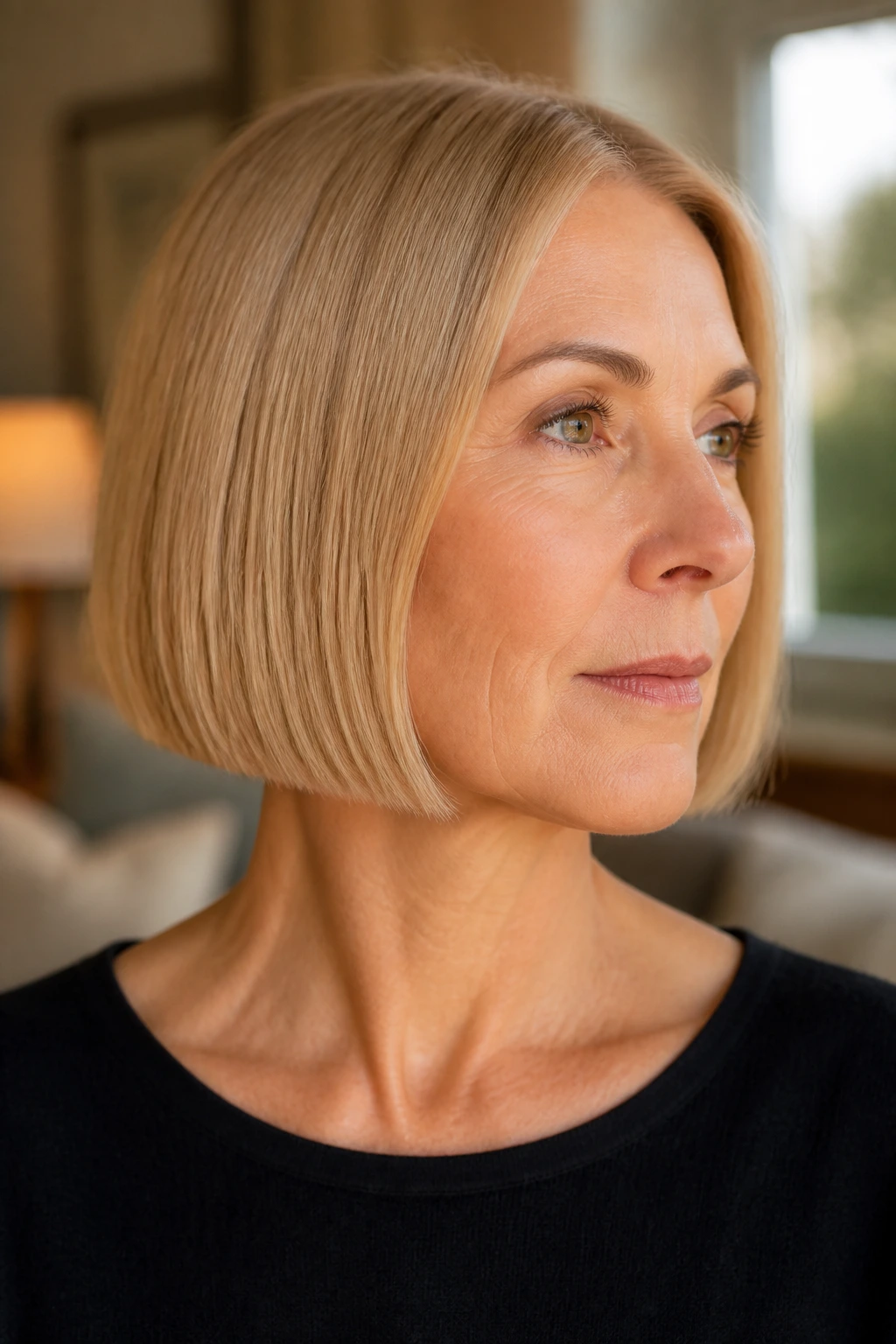
A jaw-length blunt bob is the haircut I reach for when someone wants the ends to look thickest with the least fuss. The line lands right around the jaw, which gives the eye a solid frame and keeps sparse lower lengths out of the picture. If your hair is fine and straight, this one can look almost architectural in the best way.
Ask for one length with very little internal layering. That’s the whole point. Too much slicing inside the shape steals density, and thin hair rarely gives that back.
The best styling move is boring, but it works: blow-dry with a flat brush, then tuck one side behind the ear. That little asymmetry keeps the cut from feeling boxy.
2. Chin-Grazing A-Line Bob
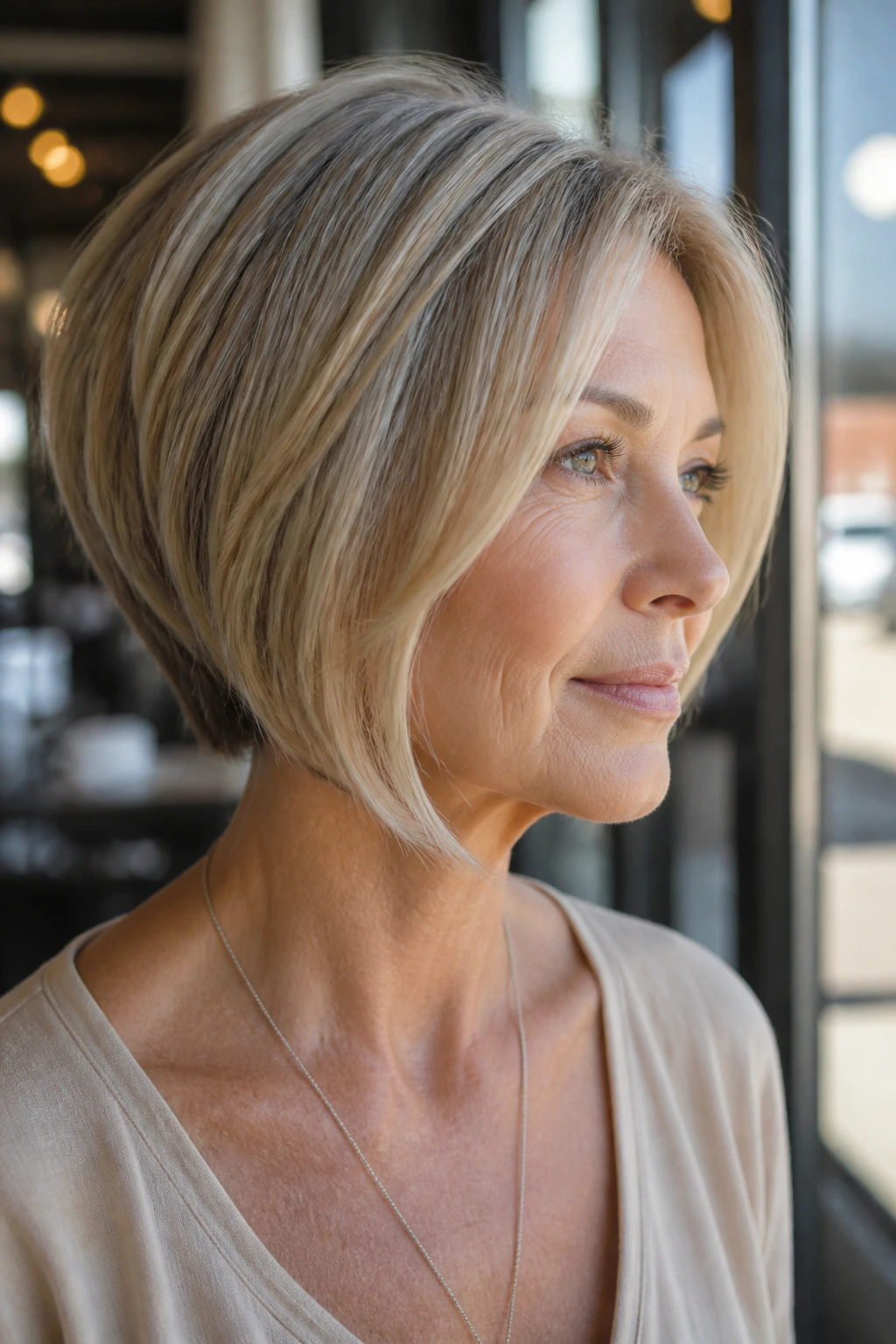
The chin-grazing A-line bob is a soft answer to a blunt cut. It sits a touch longer in the front and slightly shorter at the nape, which creates movement without breaking the outline apart. On thin hair, that front-to-back angle gives the illusion of more hair than a straight, heavy layer job ever will.
I like this cut on women who want the face to look a little slimmer through the jaw. The forward length does that quietly. No drama. Just shape.
Keep the angle modest if your hair is very fine. A steep A-line can look stringy at the front, and stringy is the enemy here.
3. Crown-Stacked Bob
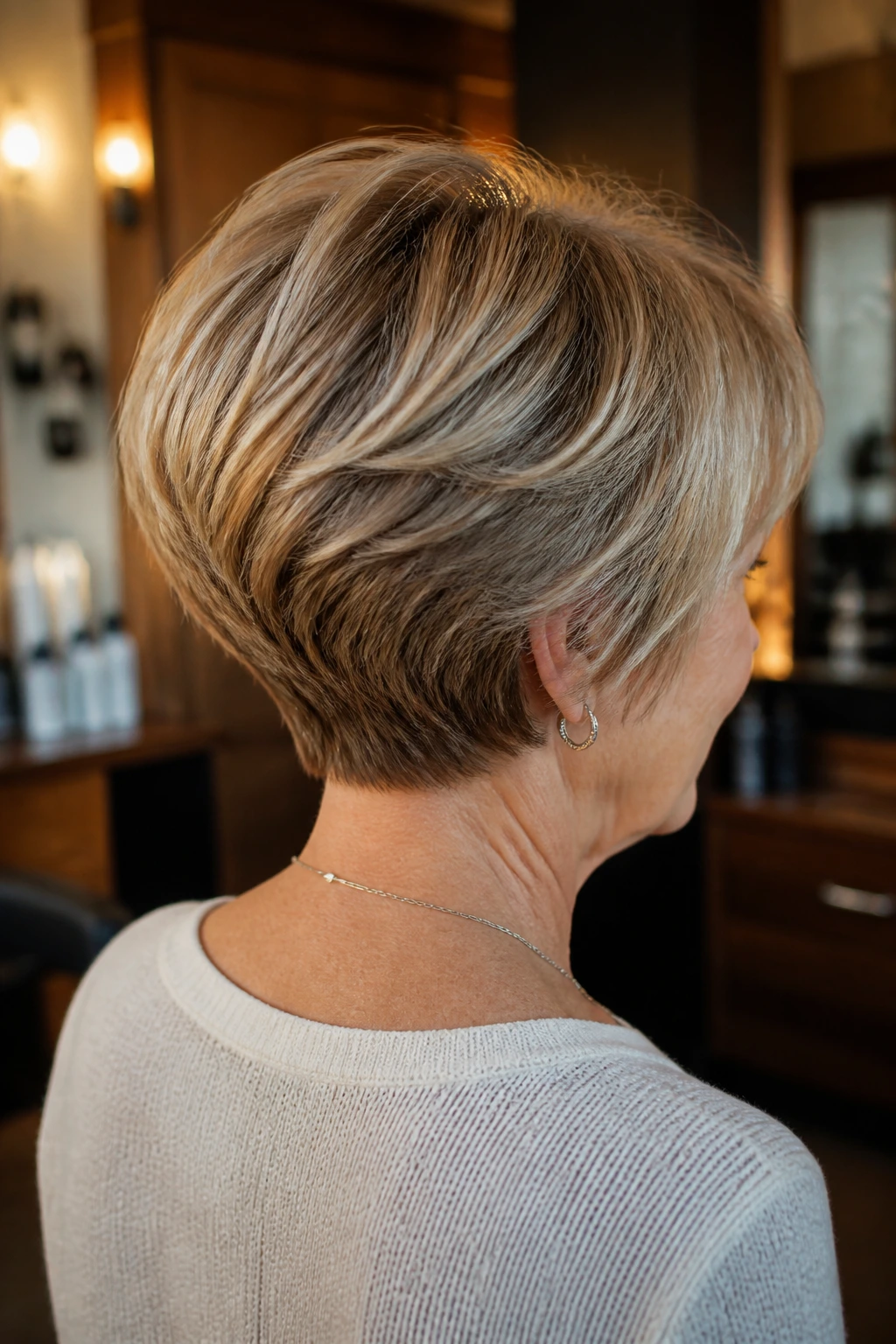
If the crown goes flat the minute you leave the salon, a stacked bob earns its spot fast. The back is built with short, graduated layers that rise under the occipital bone, so the shape lifts instead of sinking. It’s one of the few cuts that gives thinning hair a little structural help.
This works best when the stacking is soft, not puffy. Too much graduation and you get a helmet shape. Too little and the crown still collapses.
A round brush and a quick blast at the roots are enough. You do not need a marathon blowout. You need direction, heat, and a few minutes of patience.
4. Feathered Layered Bob
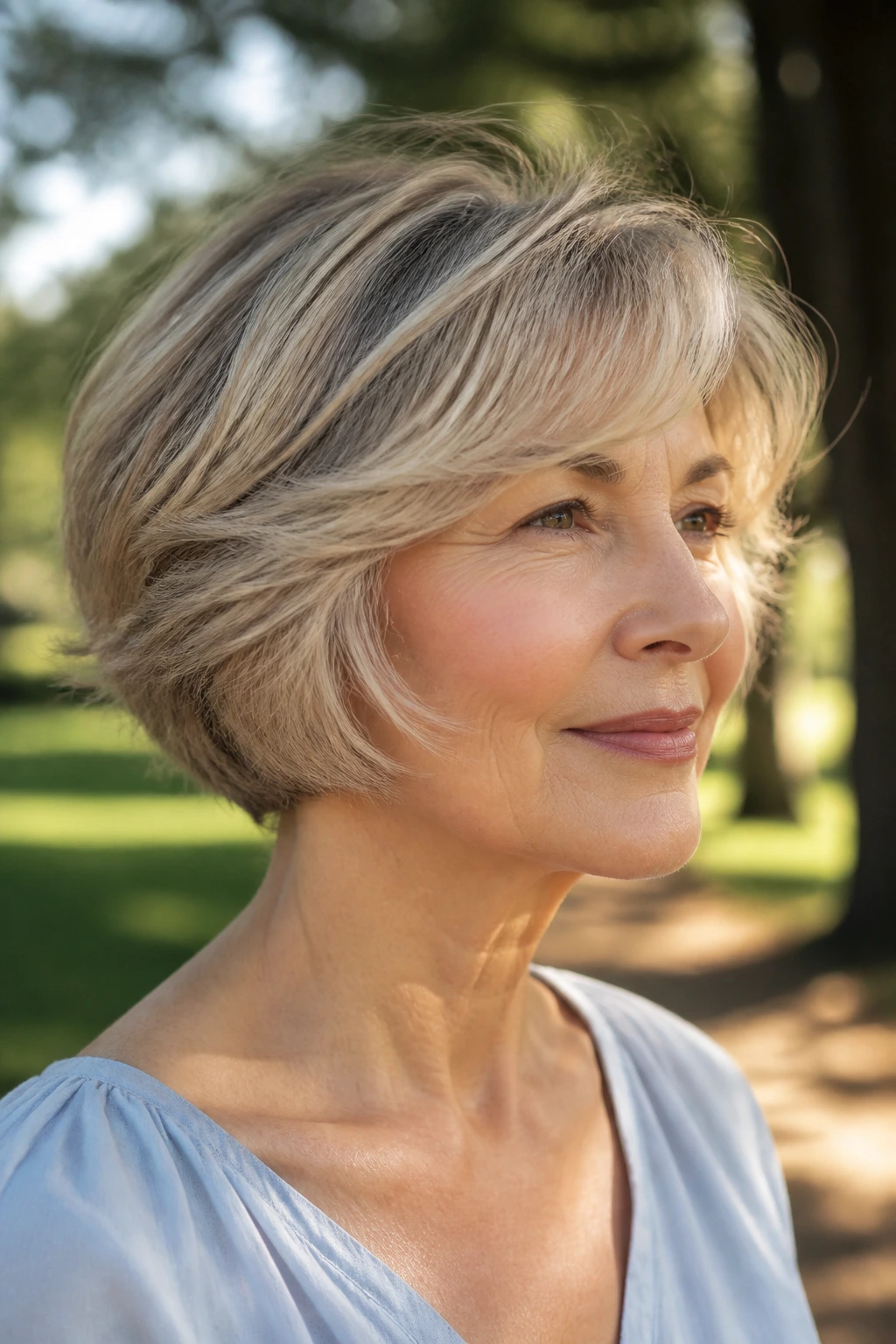
Feathering can be a lifesaver when hair feels thin but not fragile. The ends are softened so the cut moves instead of hanging in one hard block. That movement is useful, because flat, heavy-looking hair tends to expose every sparse patch.
The catch is that feathering should stay controlled. If the stylist uses aggressive razoring, the ends can fray and look even lighter. On older hair, that’s usually a bad trade.
This is a good pick if you air-dry half the time and want the hair to fall into place with only a little hand shaping. It should look light, not shredded.
5. French Bob with Wispy Fringe

A French bob sits close to the cheekbones or just under the ears, and that compact shape can make fine hair look full from root to end. Add a wispy fringe, and the cut gets a little softness around the eyes without losing its edge. It’s chic, but not precious.
This one is excellent if your forehead feels a bit wider than you’d like or your temples have thinned. The fringe doesn’t need to be heavy. In fact, it shouldn’t be.
The styling trick is a quick bend with a small round brush or a flat iron near the fringe only. Leave the rest slightly undone. If everything is too polished, the cut loses its charm.
6. Side-Swept Fringe Bob

A side-swept fringe bob is a smart move when you want coverage without a full bang commitment. The part is deep enough to shift volume toward one side, and the fringe sweeps across the forehead in a soft diagonal. That diagonal line does a lot of visual work.
It’s especially useful if the hairline has started to look lighter at the temples. The side-sweep breaks up that area without trapping heat against the forehead the way a heavy bang can.
Keep the fringe long enough to move. A short, choppy side bang can spring up in odd places and show every cowlick you own.
7. Curtain-Fringe Bob
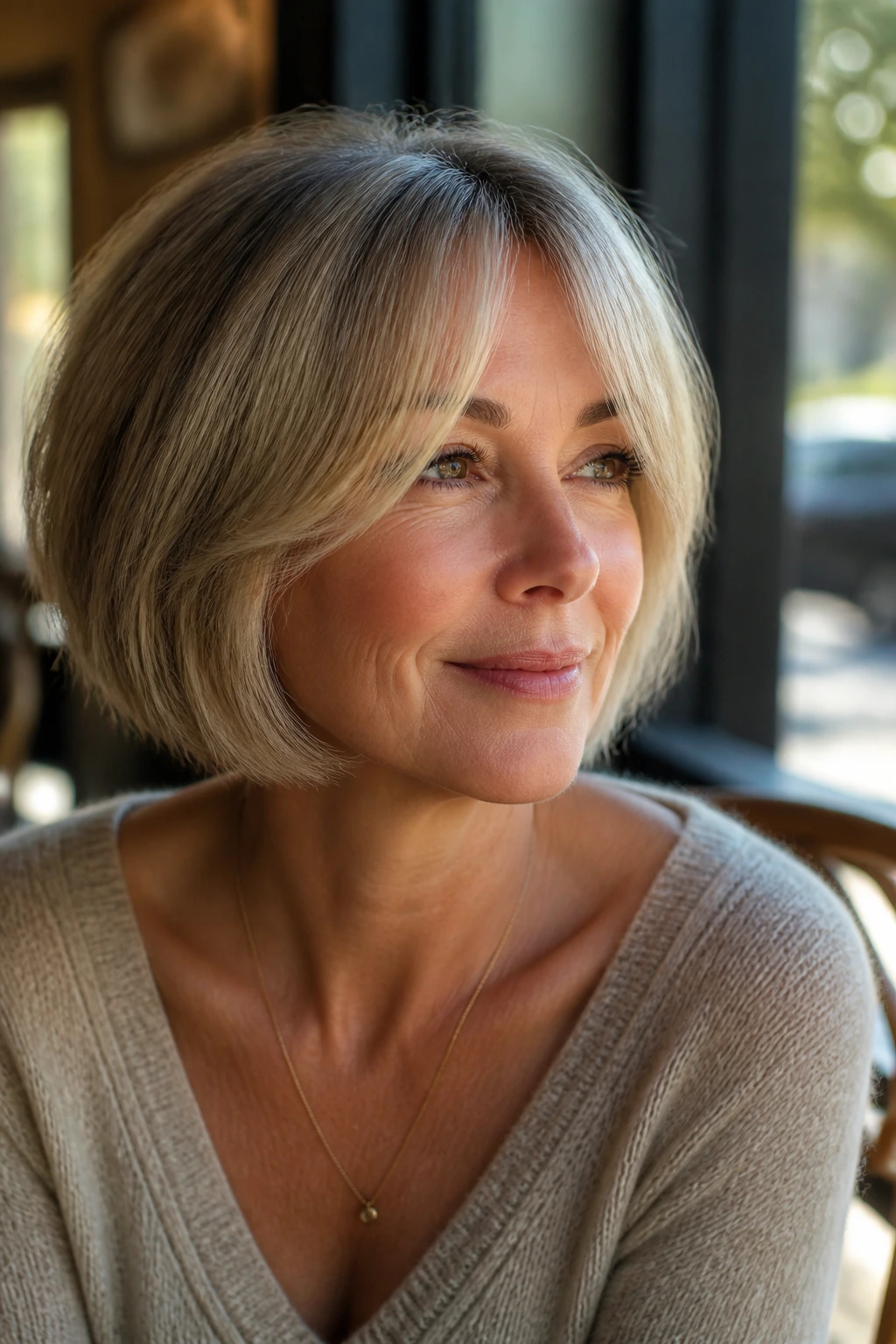
Curtain fringe and a short bob are a good pairing because both pieces work the face instead of fighting it. The fringe parts in the middle or slightly off-center and falls away from the forehead in two soft panels. That opens the face while still giving some coverage at the hairline.
This shape is kinder than blunt bangs if your hair is thin at the front. There’s less bulk to manage, and grow-out is easier. That part matters more than people admit.
Ask for the fringe to blend into the side lengths. If it’s disconnected, it will look tacked on. Nobody wants bangs that sit there like they were delivered by mistake.
8. Rounded Tucked-Under Bob
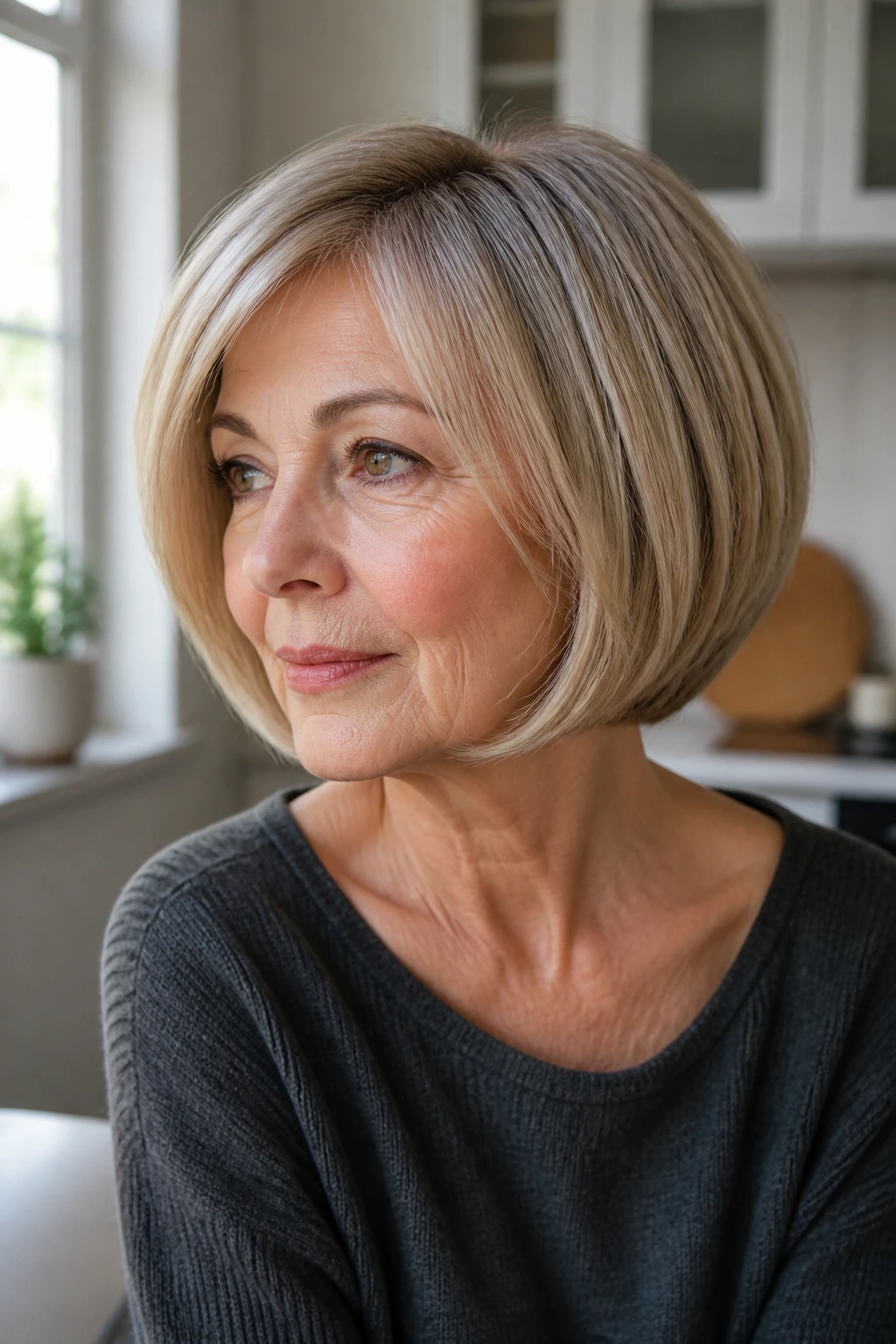
The rounded tucked-under bob is for anyone who likes a polished finish and can spare five minutes with a brush. The ends roll slightly inward, which gives the whole cut a fuller, more deliberate outline. From the front, that curve makes the bob look denser than a straight, flat edge.
This is one of my favorites for coarse-fine hair — hair that’s thin in actual density but has a little body in each strand. The rounded shape makes the most of that natural grit.
A 2-inch round brush helps, but so does a brief set with clips while the hair cools. Cooling is where the shape sticks. Skip that, and the ends may swing back out by lunch.
9. Wedge Bob
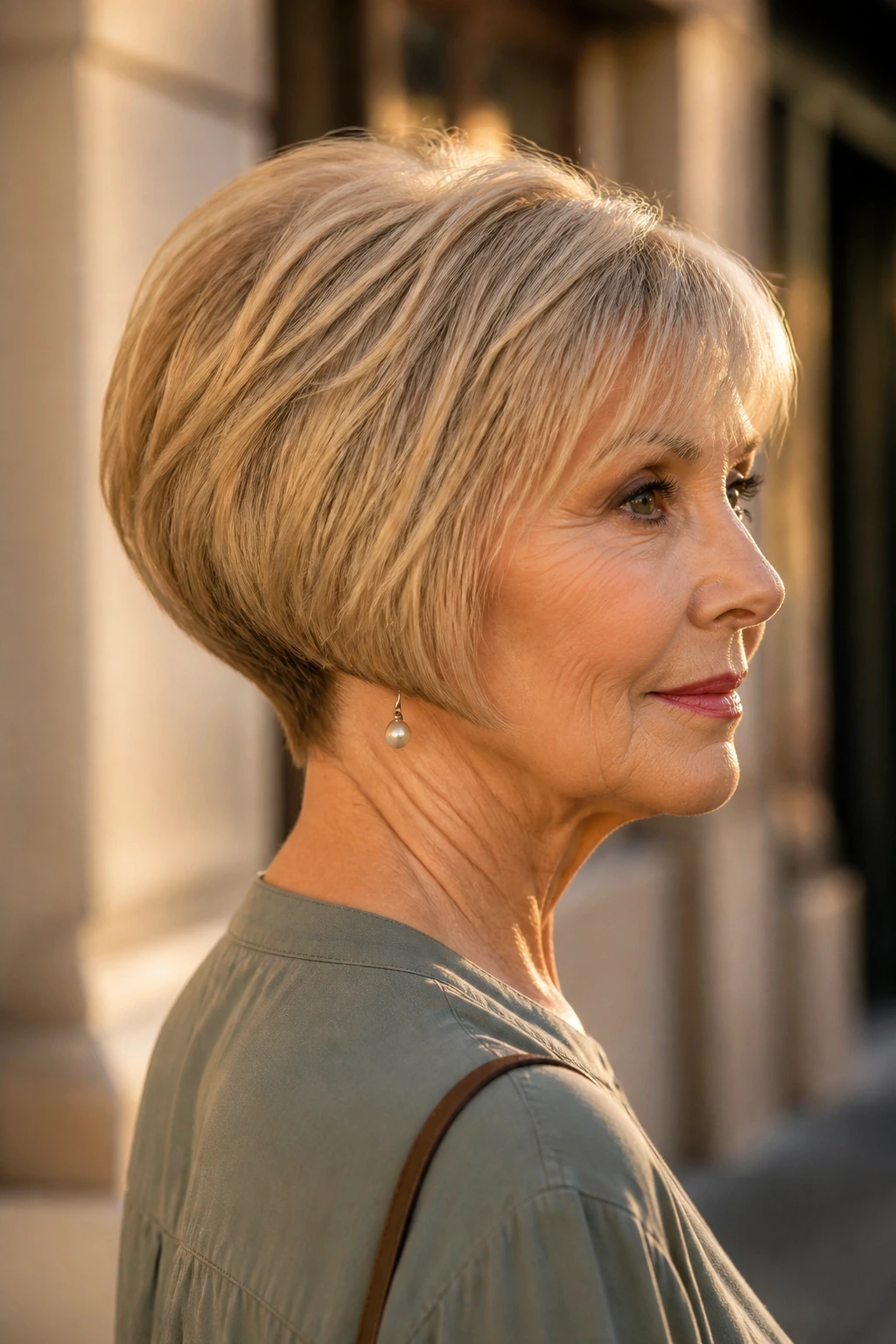
A wedge bob has a sharper slope through the back and sides, which creates a compact shape that looks tidy on thinning hair. It can add visual lift without making the cut feel bulky or stiff. The silhouette is neat, which is exactly why it reads as fuller.
The wedge works best when the angle is softened enough to avoid the old-school “stacked triangle” look. You want lift, not a hard wedge line that announces itself from across the room.
If your neck is slim and you like a sculpted outline, this is a strong choice. If you prefer a softer shape around the jaw, ask for the wedge to be rounded off a little.
10. Choppy Textured Bob
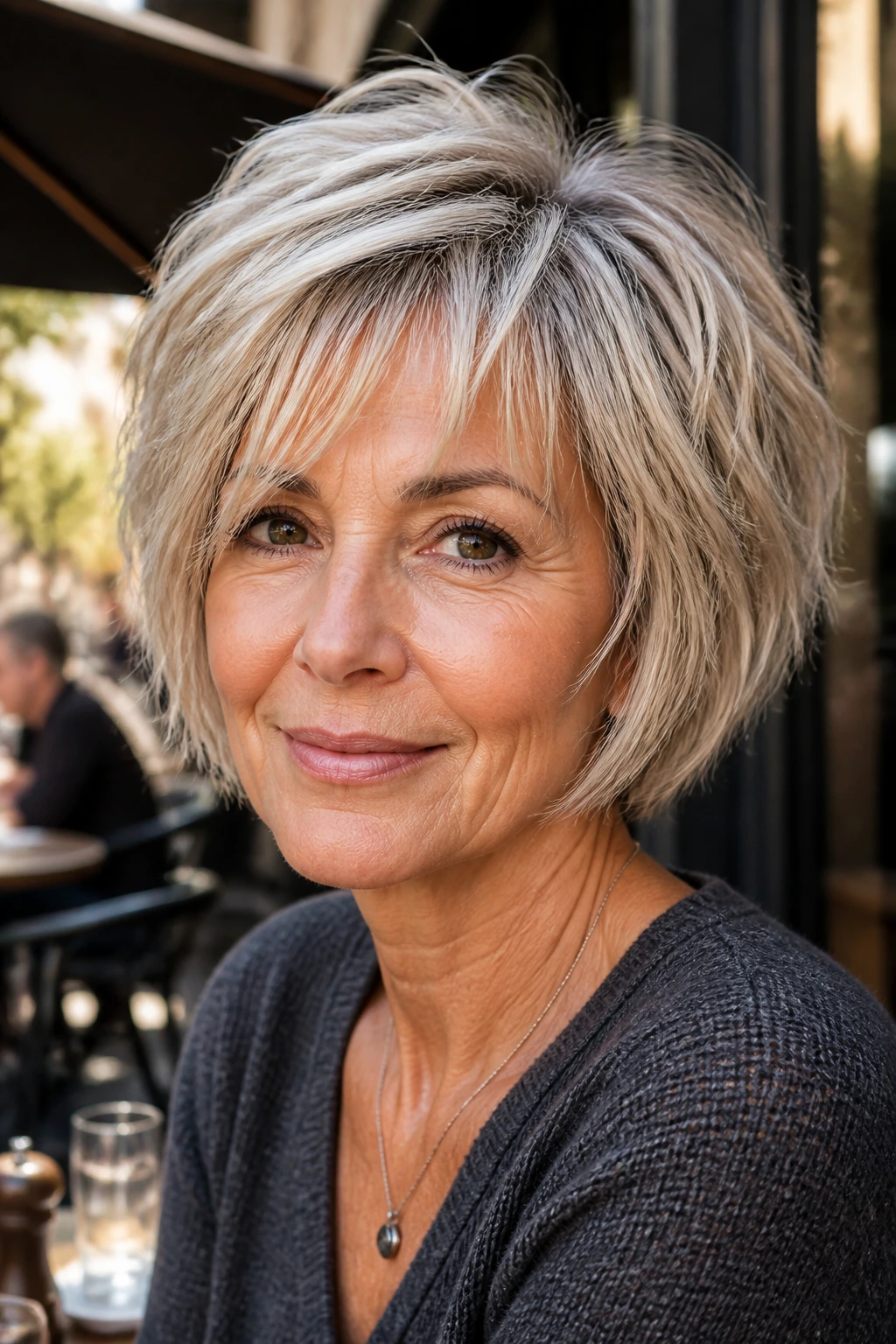
A choppy textured bob is a good answer when the hair is thin and a little flat in different places, because uniformity is the thing you want to break apart. The ends are point-cut or lightly razored so the hair separates into pieces instead of hanging in one sheet.
That separation creates movement. Movement creates the impression of density. It’s a small cheat, but a useful one.
Do not overload it with product. A pea-size bit of cream or a light mousse is usually enough. Too much and the texture turns sticky, which only makes thin hair clump and show scalp faster.
11. Curly Short Bob

Curly hair and thin hair can live in the same head, and a short bob can make that easier to manage. The cut should be shaped with the curl pattern in mind, not cut like straight hair and hoped for. When curls are clipped too short in the wrong spots, they spring up and expose gaps.
Ask for the shape to be cut dry or nearly dry if your stylist works that way. That lets the curl tell the truth. Wet curls lie.
This style looks best with a diffuser and a light gel or mousse. You want the curls to hold their shape without turning crunchy. Crunch is not volume. It’s just stiff hair pretending.
12. Wavy Air-Dried Bob
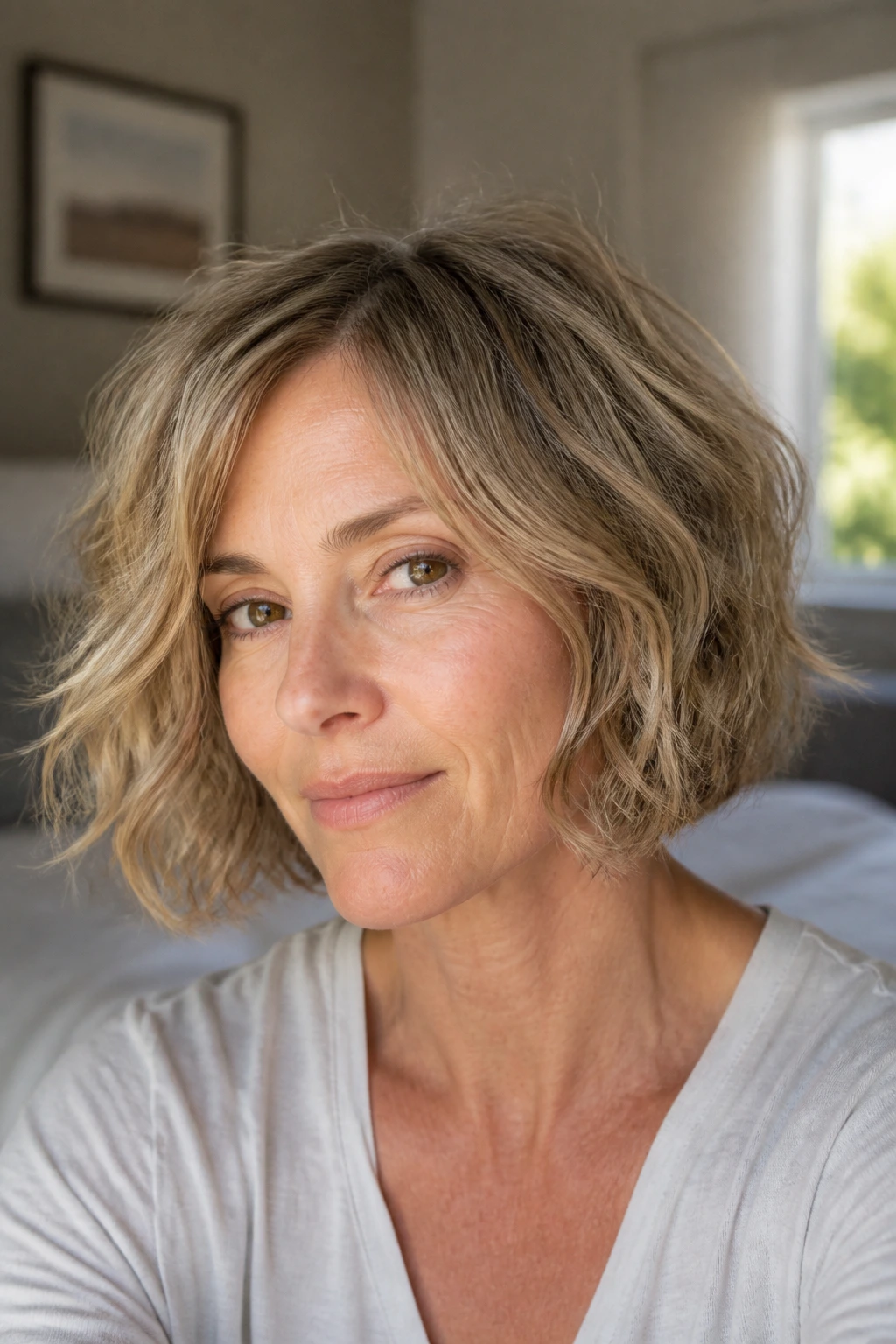
A wavy air-dried bob is for people who want to wash, scrunch, and leave the house without a fight. The cut usually sits around the chin or just below it, with enough internal shaping to keep the waves from collapsing into a triangle. Done right, it looks casual and full.
I like this one for fine hair that has a natural bend but no real mass. The wave gives the eye texture to follow, which helps disguise thinning at the ends.
Use a light mousse on damp hair and twist a few sections around your fingers while it dries. Don’t try to smooth every bend out. That’s where the body goes to die.
13. Inverted Bob
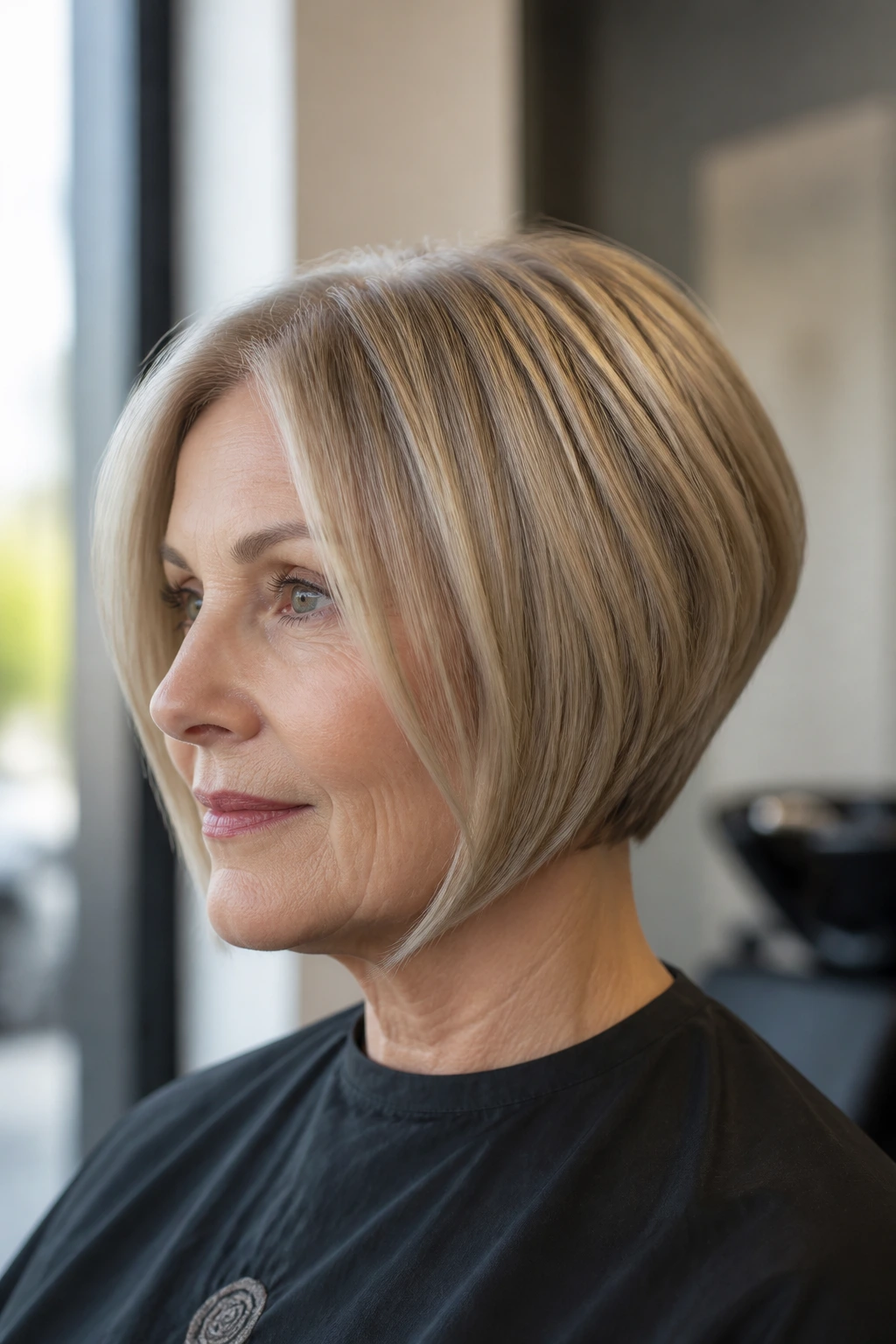
An inverted bob runs shorter in the back and longer in the front, but the difference can be subtle or dramatic. For thinning hair, subtle is usually the smarter move. You get lift at the nape and a little forward swing around the face without exposing too much scalp at the crown.
This cut is tidy, modern, and good for anyone who likes clean lines. It can also help the hair look more deliberate when density is uneven from back to front.
The front pieces should be long enough to skim the jaw, not drag into the neck. That keeps the shape crisp. Too much length and the point of the inversion gets lost.
14. Asymmetrical Bob
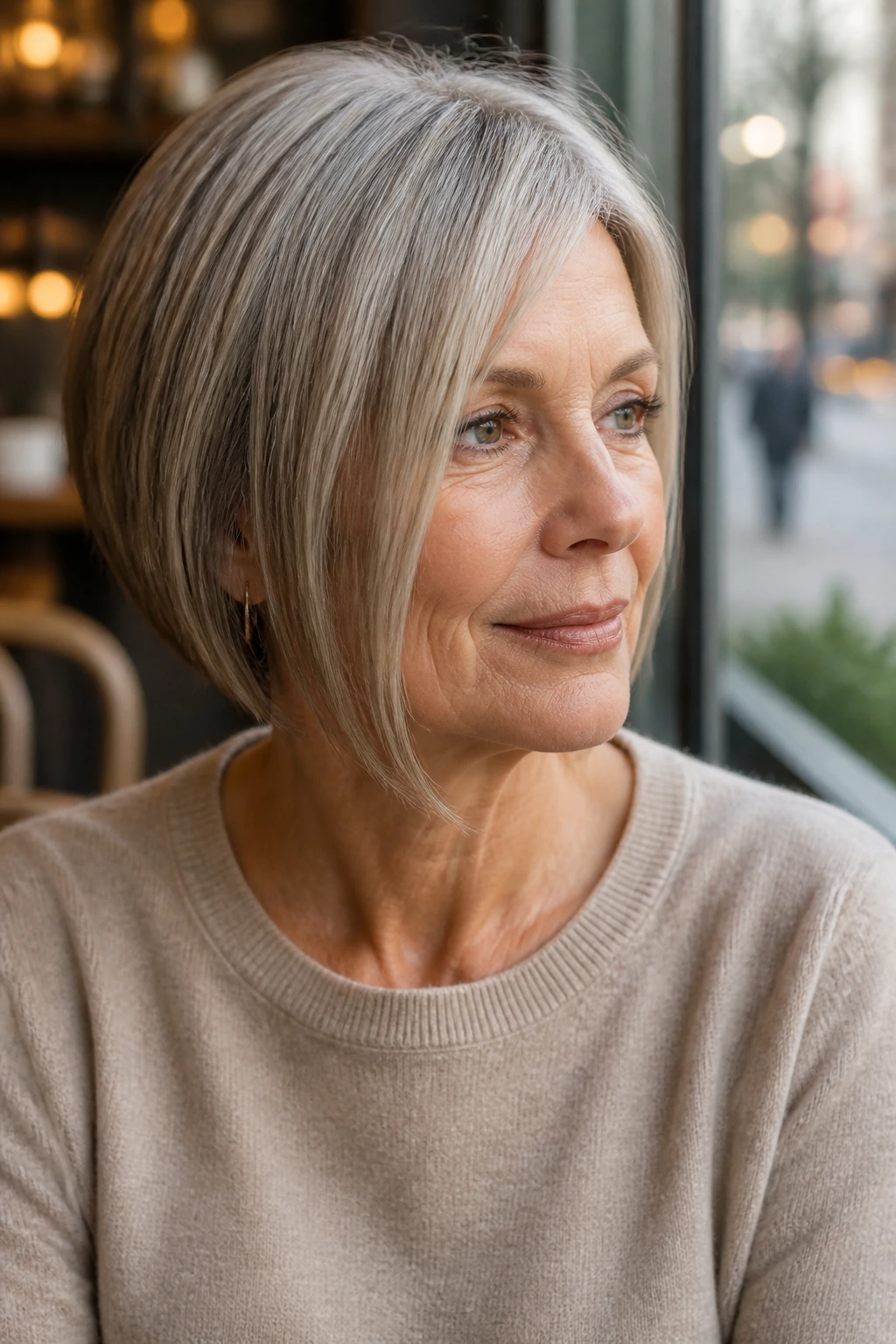
An asymmetrical bob gives one side a slightly longer line, which sounds dramatic but can be surprisingly useful on thinning hair. That uneven line pulls attention away from sparse spots and gives the cut a little motion even when it’s worn straight.
It’s especially handy if one side of your hair grows differently or if you have a part that never behaves. The asymmetry gives the eye a place to go.
Keep the difference modest if your hair is very fine. A huge asymmetry can look sparse on the shorter side. One inch, maybe two. That’s plenty.
15. Tapered Nape Bob
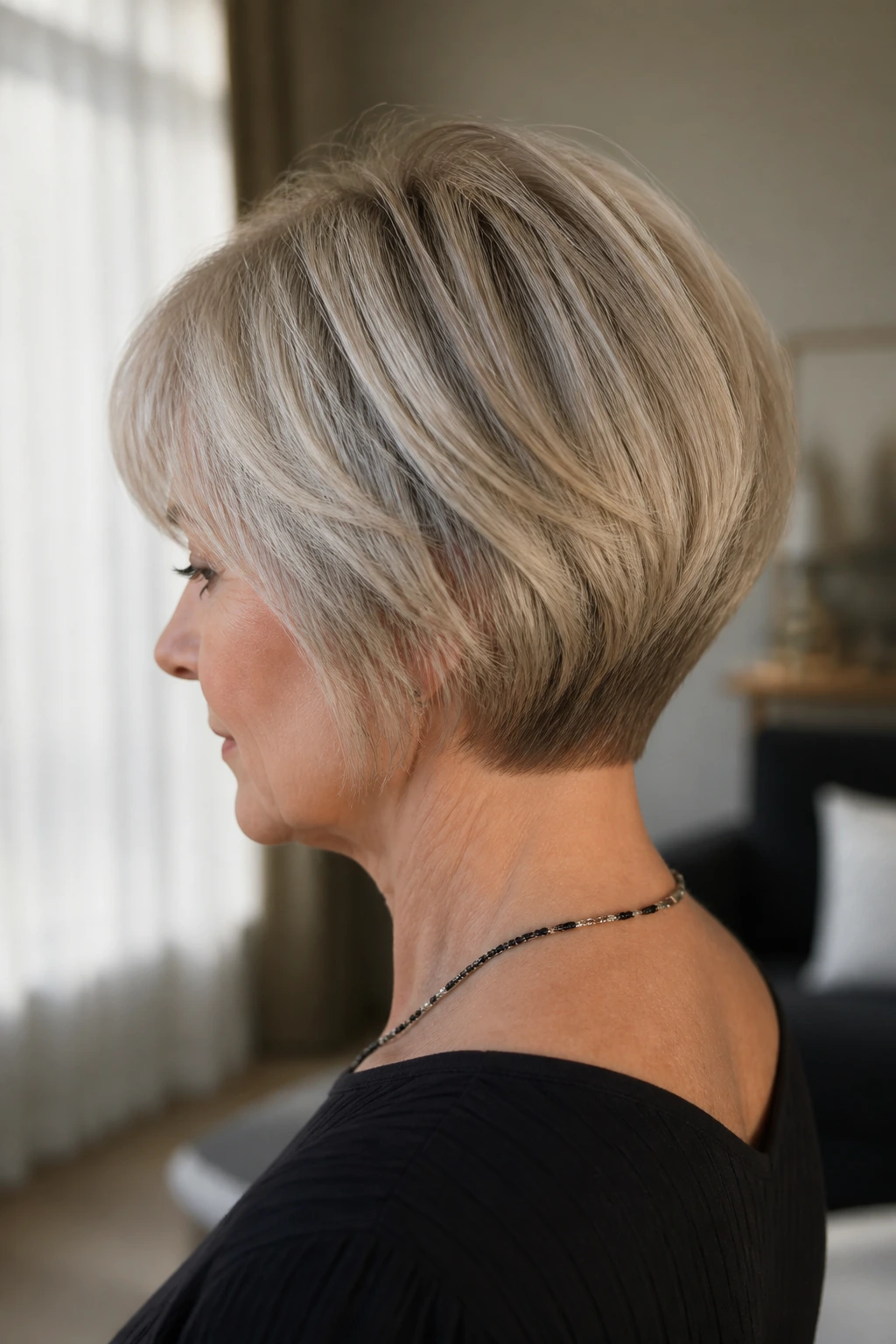
A tapered nape bob keeps the back neat without stripping too much weight from the whole head. The nape is cleaned up close to the neckline, while the top and sides stay a bit fuller. That contrast helps the crown look lifted.
This cut is a solid choice if you dislike bulky hair at the collar but still need shape around the sides. It also grows out cleanly, which matters more than people expect.
Ask the stylist not to over-thin the bottom layers. Tapering should shape the silhouette, not leave you with a whisper at the back and no support anywhere else.
16. Deep Side-Part Bob
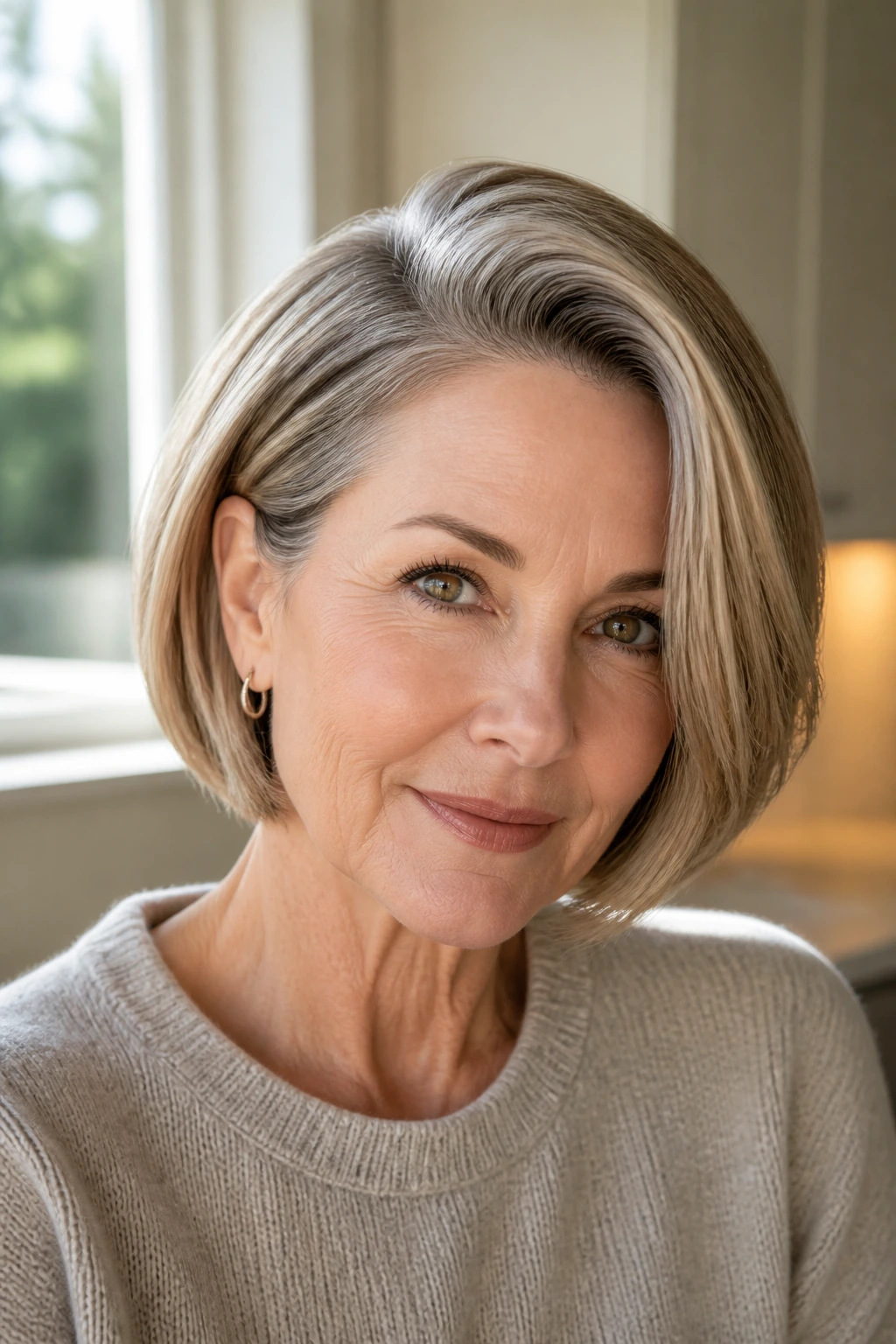
A deep side-part bob is one of the fastest ways to fake more volume. The part shifts weight to one side, lifts the roots on top, and creates a stronger line through the hairline. It’s simple. It works.
This is especially useful if the center part has started to reveal more scalp than you’d like. A side part can soften that exposure immediately, no cutting required.
If the hair wants to fall back to center, train it with a blow-dryer for a week or two. Clip the part in place while it cools. Hair remembers repetition better than stubbornness.
17. Face-Framing Chin Bob

A face-framing chin bob adds a few strategic pieces around the cheeks and jaw. Those front sections are a touch longer, which helps soften the face while leaving the perimeter thick enough to look intentional. It’s a nice balance.
This cut is useful if you don’t want fringe but still want some shaping near the eyes and cheekbones. The front pieces can hide a little temple thinning, too, which is a useful side effect.
Keep the framing pieces polished, not stringy. If they get too thin at the tips, they’ll just announce that the hair is thin. Better to keep them blunt enough to hold a line.
18. Ear-Length Crop Bob
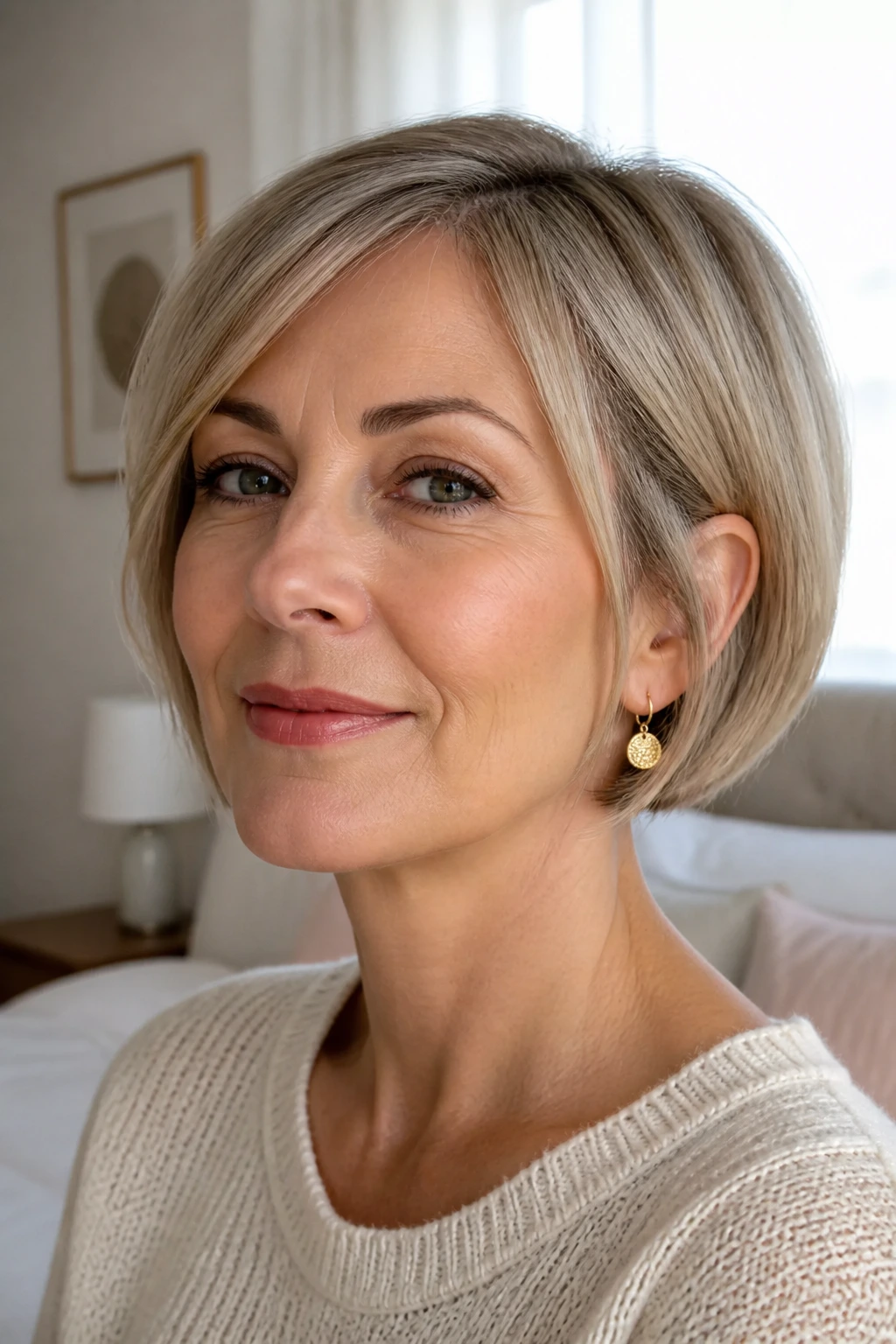
An ear-length crop bob is short, bold, and not for everyone. But if the hair has thinned enough that longer cuts keep looking see-through, this can be a smart reset. The shorter length puts the focus on the face and cuts off the weak ends that usually cause trouble.
It works best when the neckline and cheekbones can carry the shape. That’s where the eye goes. The cut should feel crisp, not severe.
This is one of those styles that looks better with confidence than with overstyling. A little pomade at the ends, a clean side part, and done. Anything more can start to feel busy.
19. Sleek One-Length Bob
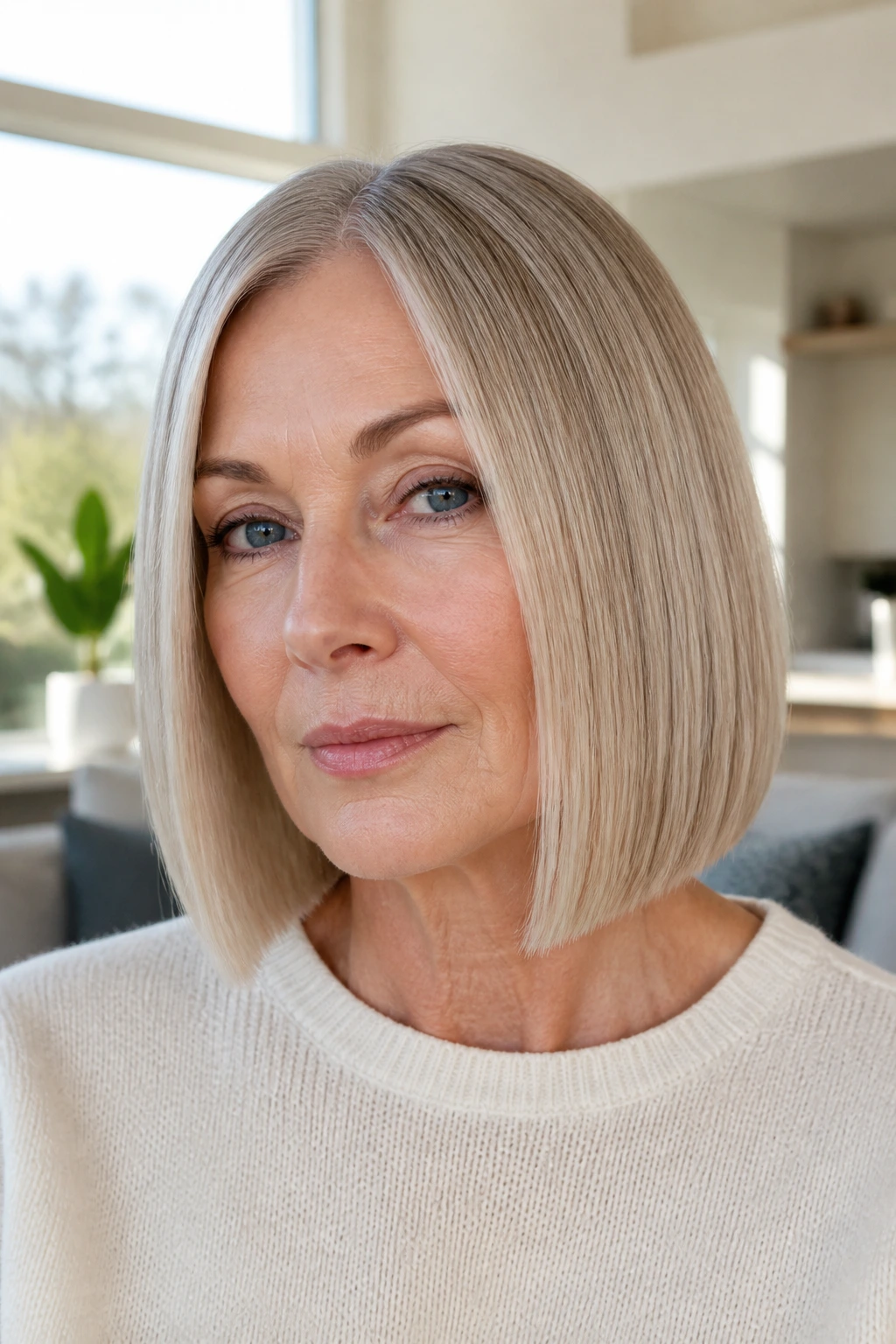
A sleek one-length bob looks simple, and that simplicity is the point. No layers to fray. No internal shattering. Just a clean line that makes the hair look as full as it can look at that length.
This cut suits straight or slightly wavy hair that behaves well under a brush. If the hair is very frizzy or coarse, the sleek finish may take too much work. But when the texture cooperates, the result is sharp.
Use a smoothing cream sparingly and keep the ends blunt. The temptation is to add “movement” everywhere. Resist it. Sometimes the thickest-looking bob is the one that has the least chatter.
20. Bixie-Bob Hybrid
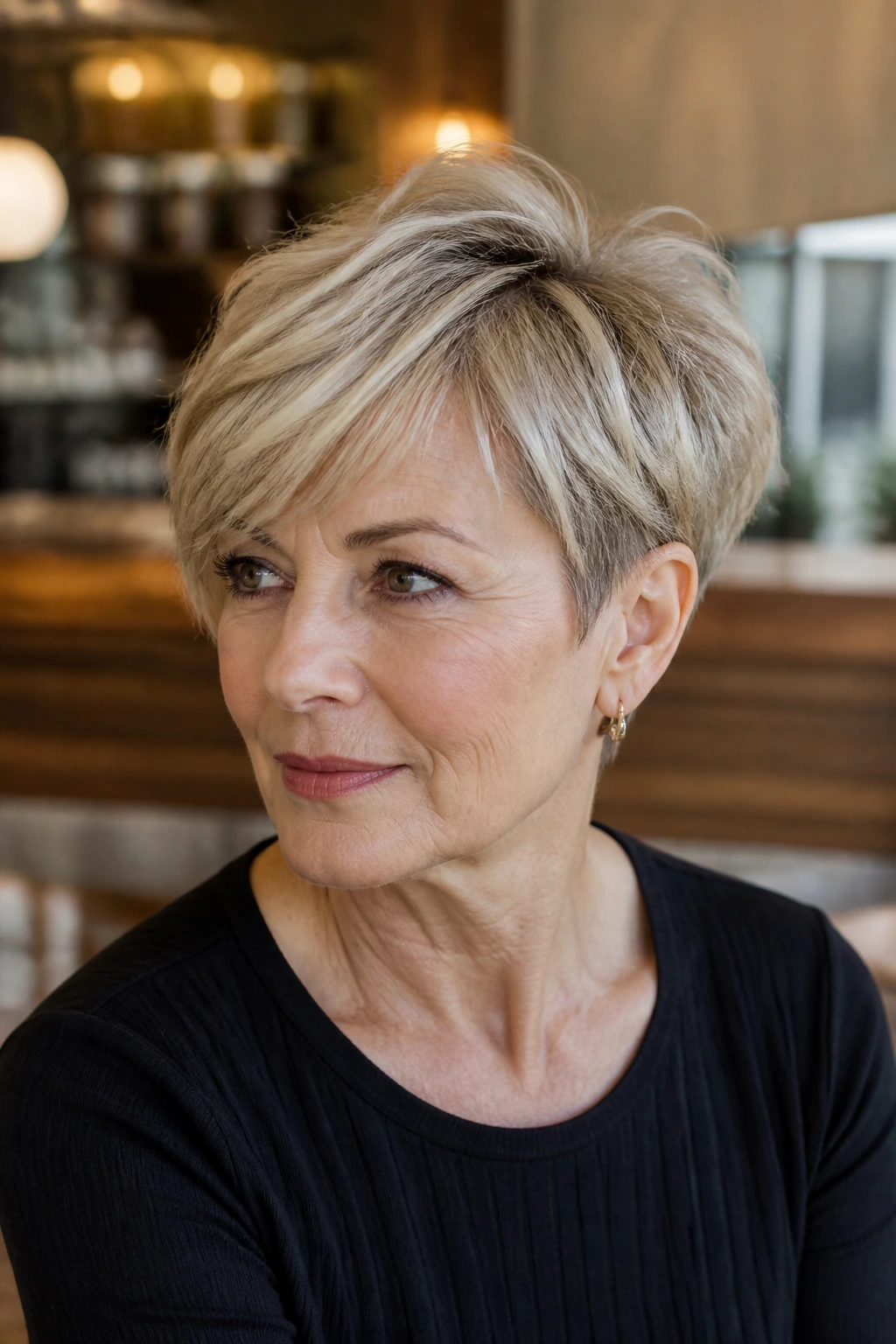
A bixie-bob hybrid sits between a bob and a pixie, with a bit more length at the top and soft sides that graze the ears or jaw. It’s a good option when thinning hair needs lift more than length. The shorter shape keeps the top from dragging flat.
I like this for women who want something playful but not spiky. It has more air than a classic bob, but it still reads as polished.
Ask for the top to stay long enough to sweep across the forehead or tuck back. That makes the cut easier to style on days when the roots are doing their own thing.
21. Piecey Tousled Bob
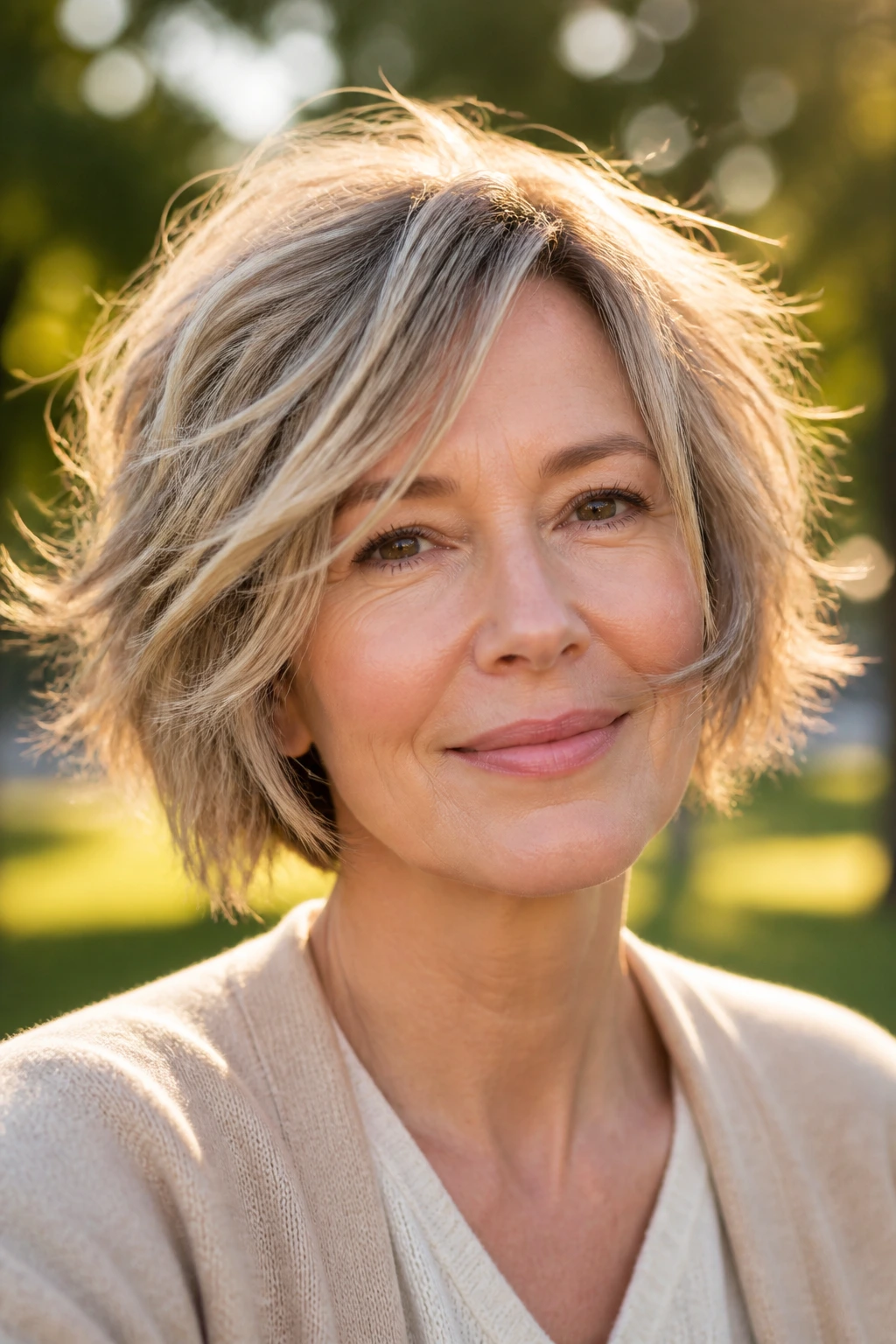
A piecey tousled bob gives you separation instead of smoothness, and that separation can make fine hair look denser. The ends are lightly textured, then styled in loose little sections that don’t sit too neatly together. It’s a little undone, but that’s the appeal.
This is a smart move if you don’t want to fight every wave and swirl in your hair. A bit of natural chaos can be your friend here.
Use a small amount of texture spray or mousse, then scrunch and let it be. If you keep touching it, the pieces collapse. Hair is annoying like that.
22. Graduated Bob
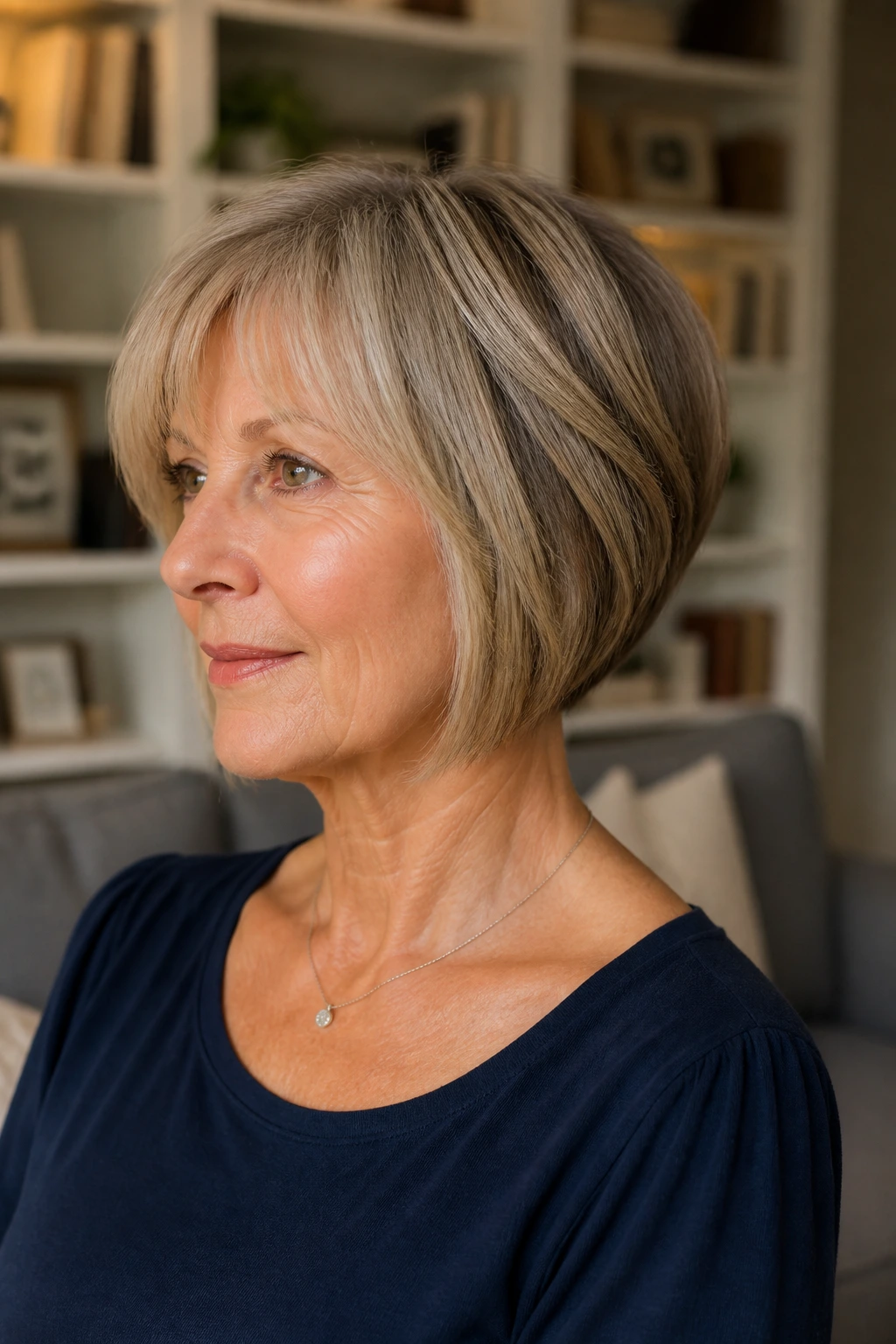
A graduated bob is similar to a stacked bob, but softer through the back and sides. The graduation gives lift and shape without making the cut look too sharp. On thinning hair, that softer rise can feel more flattering than a hard stack.
It works well if you want fullness but don’t want the cut to look obviously “done.” The shape still has intention. It just isn’t shouting.
This one is especially useful for hair that’s thinner at the temples than at the crown. The graduation gives the eye a stronger shape to follow around the head, which helps the whole cut feel balanced.
23. Salt-and-Pepper Dimension Bob
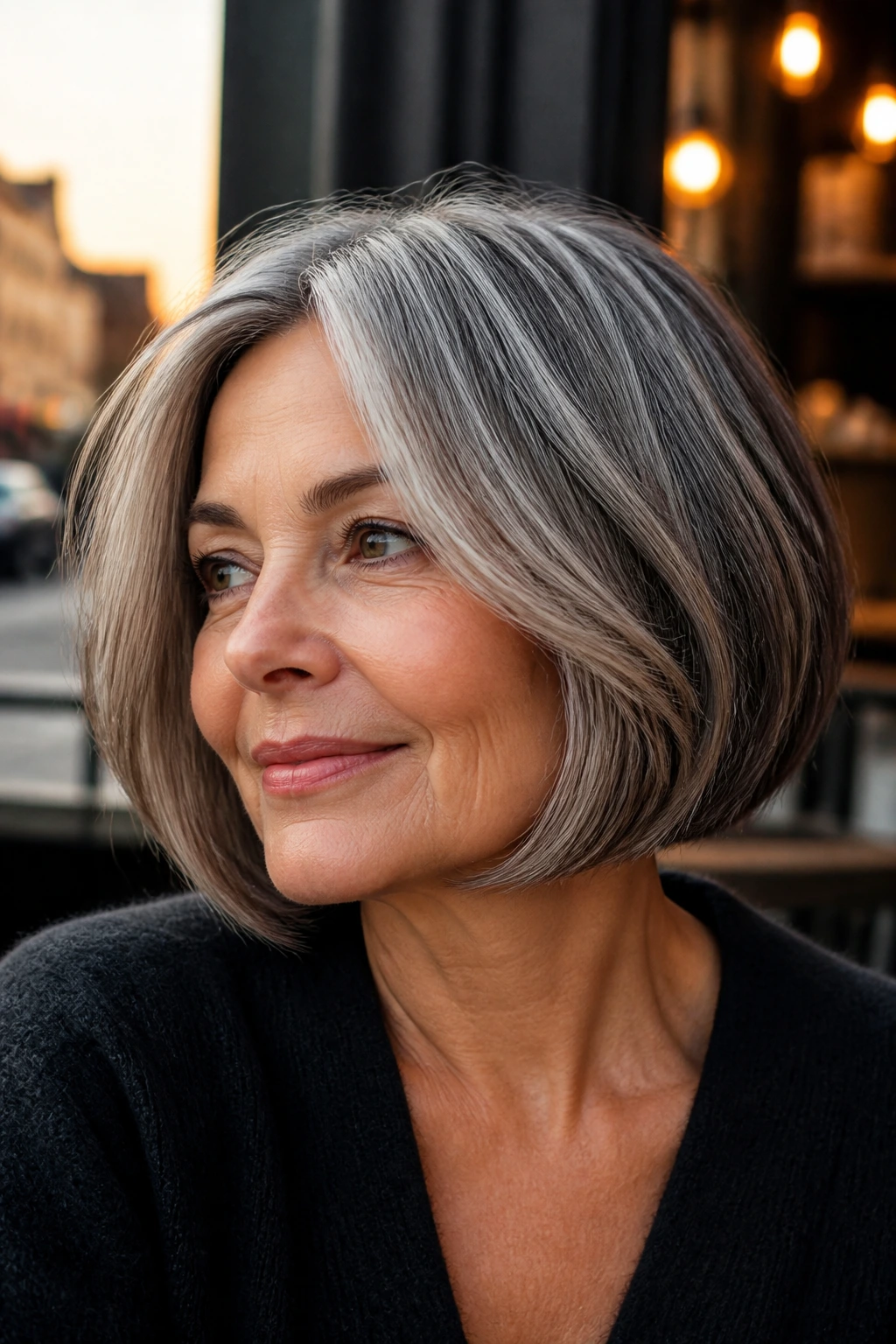
A salt-and-pepper bob isn’t only about color, but color does a lot of the work. Mixed gray, silver, and natural pigment create shadows and highlights that make the cut look fuller than a single flat shade. On fine hair, that dimension matters.
A blunt or softly layered bob shows off the mix best. The contrast between lighter silver strands and deeper pieces adds movement, even when the hair is cut simply.
If you color your hair, ask for subtle dimension instead of one solid block. Flat color on thin hair can look plastic. A little variation gives the cut texture before you’ve even picked up a brush.
24. Round-Brushed Volume Bob
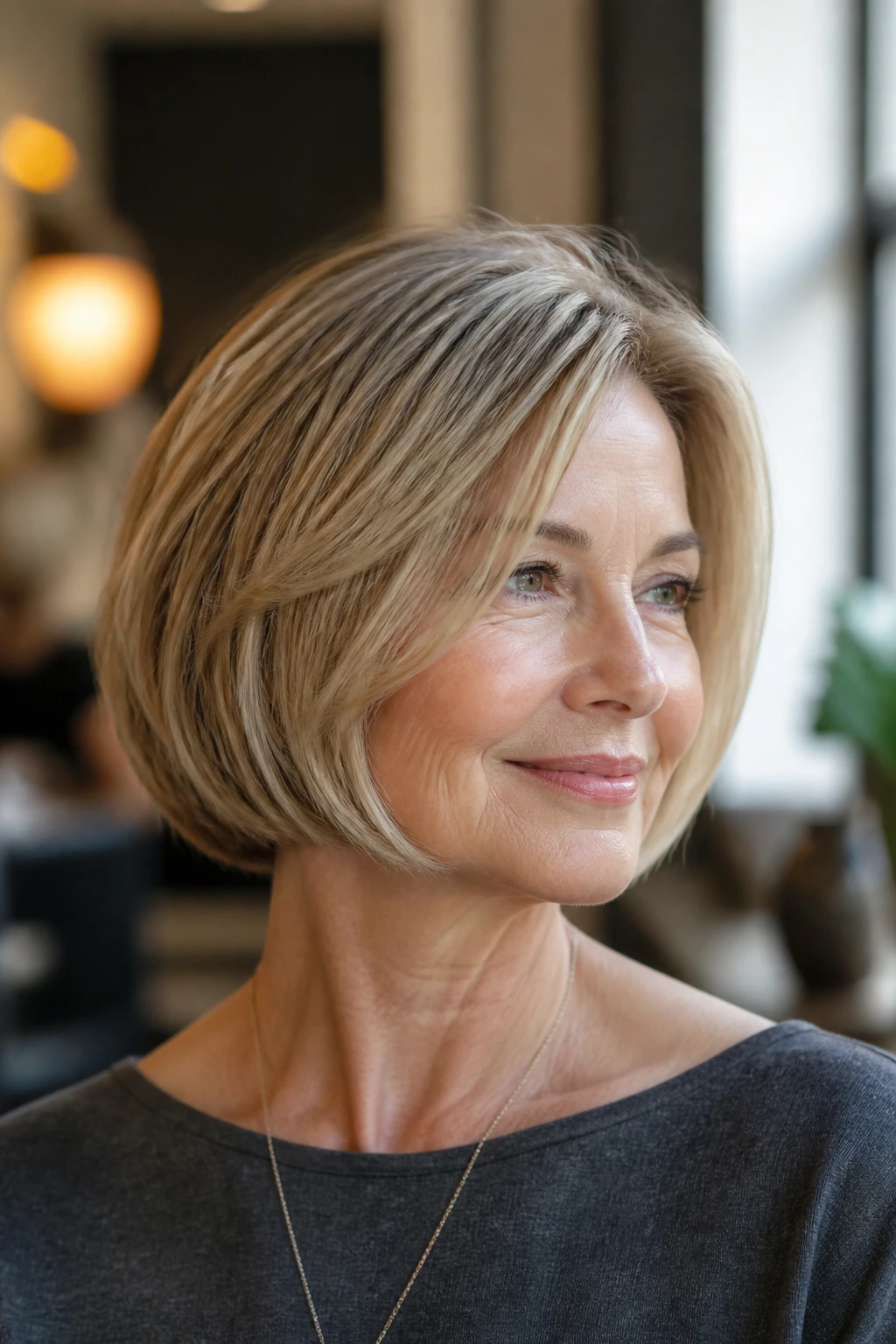
A round-brushed volume bob is for anyone who likes a salon finish that lasts through the morning coffee run. The cut itself usually sits around the chin and is shaped so the sides can hold a gentle bend. The styling is the point: roots lifted, ends tucked, crown nudged up.
This works best when the stylist leaves enough length for a 2-inch round brush to get under the section cleanly. Too short and the brush can’t do its job.
The result should look airy, not overblown. If the hair starts to curl under in a stiff ring, the brush was too hot or held in place too long. Move faster. Let it cool before you fuss.
25. Micro-Bang Bob

A micro-bang bob is a strong choice if you like a little edge and your forehead can handle it. The bangs are short, but the bob itself stays clean and compact, so the look doesn’t tip into costume territory. Done well, it feels modern and sharp.
This is not the easiest option for everyone. I’d only choose it if you’re comfortable with regular trims and a little maintenance on the fringe. Tiny bangs grow out fast and become awkward fast.
The payoff is a lot of personality in a small shape. If your hair is fine, keep the bob line blunt so the bangs don’t do all the talking.
26. Flipped-End Bob

The flipped-end bob uses outward ends instead of tucked-under ones, which gives the cut a lighter, more spirited feel. Those flipped edges can make thin hair look playful and lift the silhouette away from the neck. It’s a nice change when a bob starts to feel too serious.
This style works best on straight to slightly wavy hair. You can coax the ends with a flat iron or a small round brush, but the curve should stay soft.
I prefer this look when the hair is shorter and the shoulders are in the way of a tucked-under finish. The flip keeps the outline visible. It also reads well with glasses, which is a small but real bonus.
27. Bubble Bob

A bubble bob is rounded and full through the sides, then softly curves inward at the ends. That “bubble” shape gives thin hair a fuller outline without relying on long layers or heavy teasing. It’s one of the most forgiving short bobs on the list.
This cut is a strong pick if you want softness around the face and a shape that looks finished even on second-day hair. The curve at the bottom helps the bob hold together visually.
Ask for the roundness to stay gentle. Too much curvature and it starts to look dated. Too little and it loses the very fullness that makes it work.
What Short Bobs Really Do for Thinning Hair
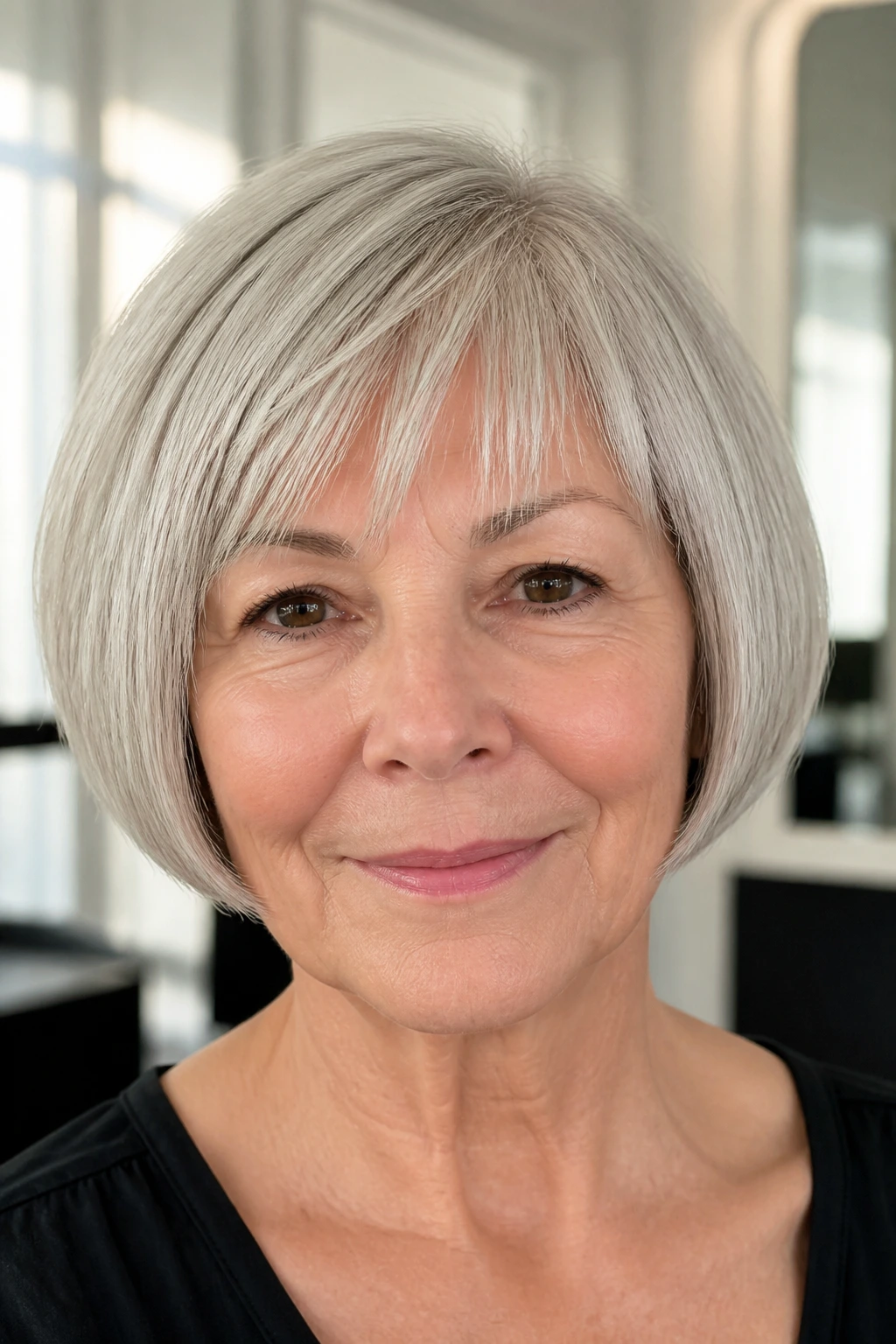
The biggest mistake people make with thinning hair is chasing length when what they actually need is a better outline. Hair that grazes the collarbone can look elegant, sure, but if the ends are wispy and the crown is flatter than you want, elegance turns into effort. A short bob cuts off the see-through part and puts the eye on the strongest section of the head.
Shape matters just as much. A blunt edge gives the illusion of density because all the ends land together. Stacking, graduation, and slight under-rolling help the crown and nape look lifted without demanding a lot of product or brush work. That’s why the same haircut can look flat on one head and crisp on another. The cut is doing the work.
There’s also a practical truth here: older hair often changes texture. Some strands get finer. Some get wirier. Some parts dry faster than the rest. A good short bob handles those shifts better than a long cut that has to behave perfectly all the way down. It can be polished when you want it, or a little rough around the edges when life gets in the way.
What to Ask Your Stylist Before the Shears Come Out
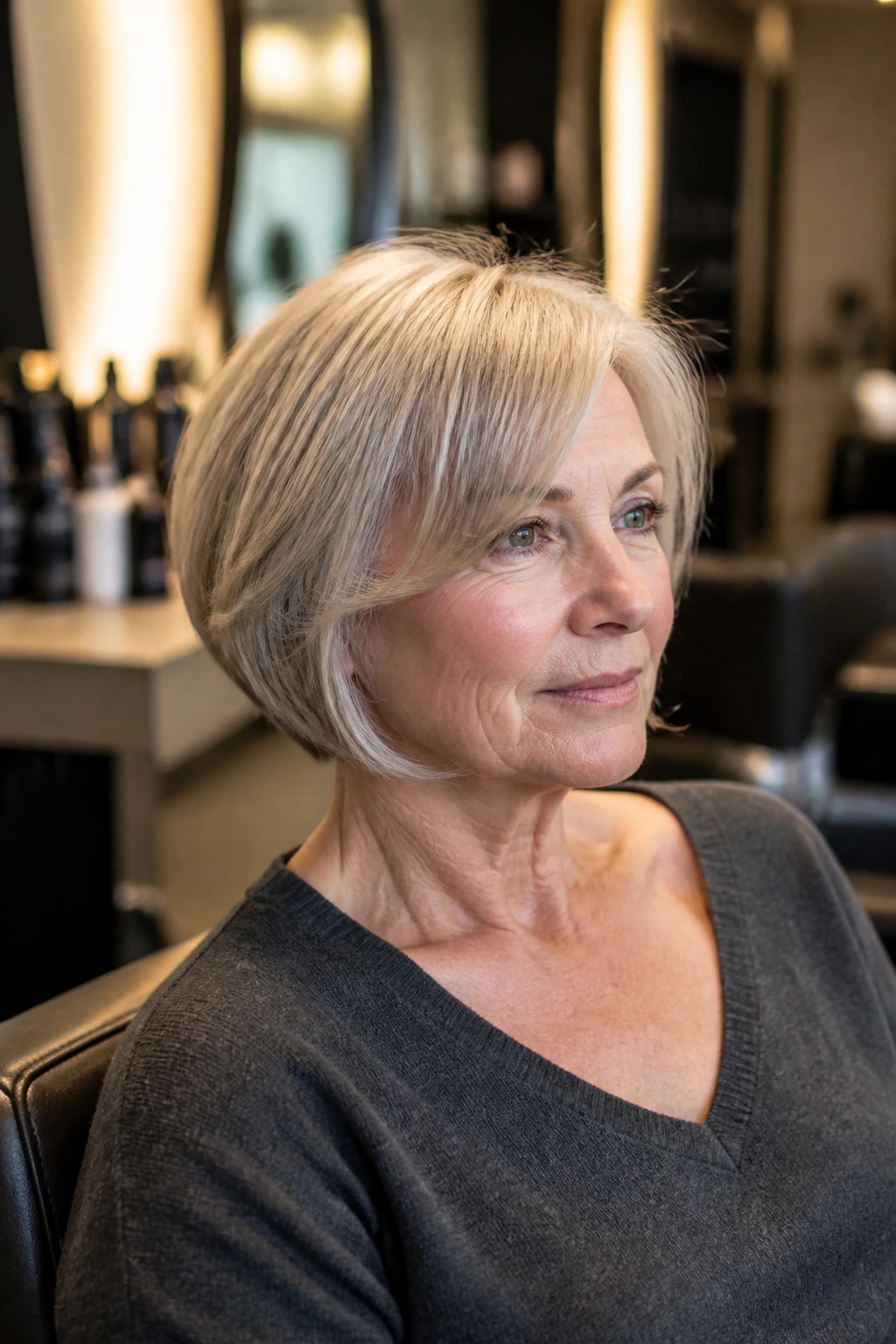
Bring photos, but bring a sentence too. “I want the ends to look thicker,” or “I need lift at the crown without making the back puffy,” tells a stylist more than a dozen saved images with different lighting and different hair density. The best bob for thinning hair is usually the one built around your weakest spots, not the one copied from a stranger with twice your volume.
Talk about the part. If your hair falls naturally to one side, a center part may fight the cut from day one. If the crown is sparse, ask how much stacking the head can actually support before it starts to look overworked. These details are boring in the chair and invaluable at home.
And yes, ask about the neckline. Some bobs look best just under the ear. Others need the jaw. A cut that misses the neck entirely can make fine hair look like it’s hanging on for dear life. That’s not a flattering trade.
How to Style a Short Bob Without Overworking It
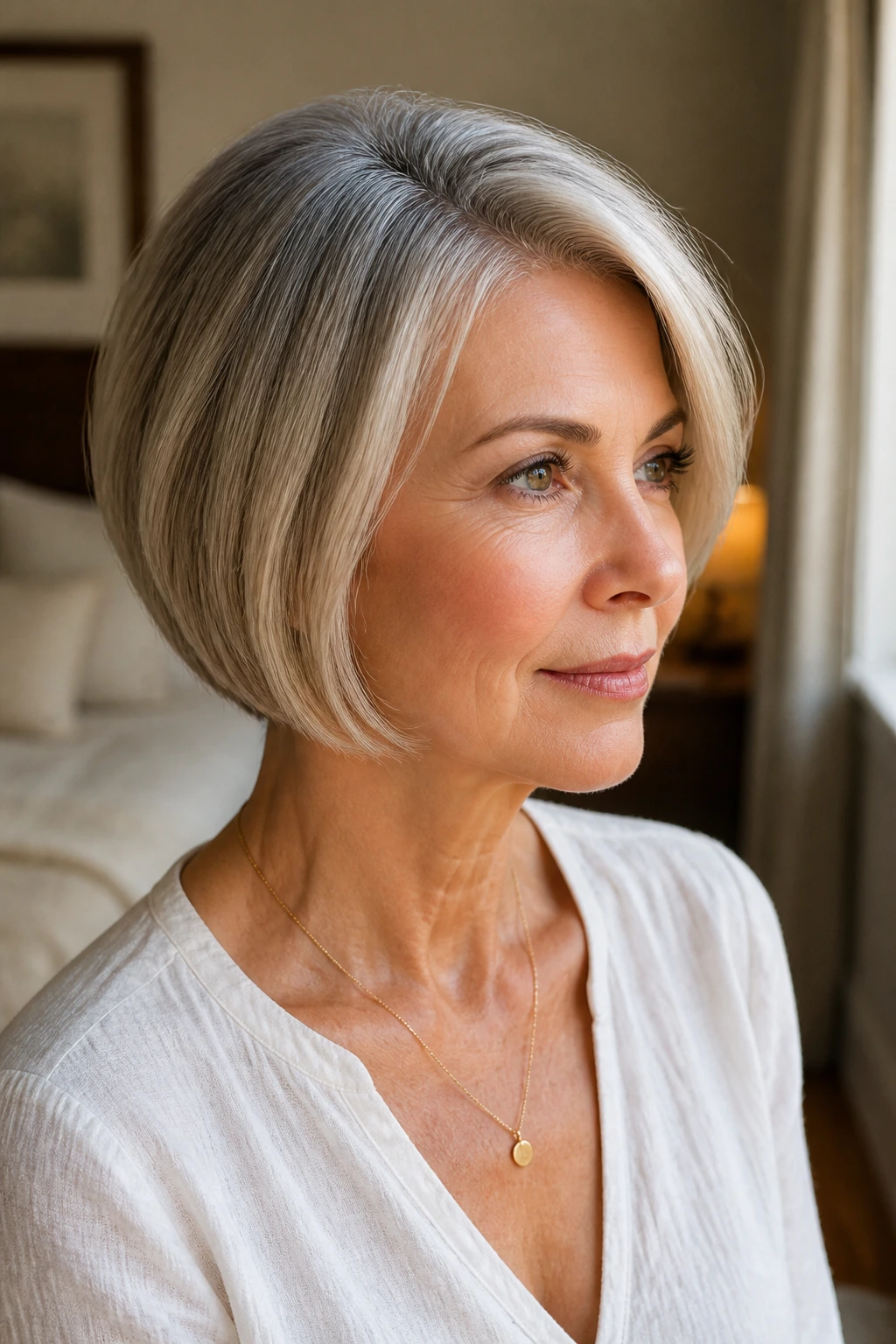
Root Lift: Start with mousse or a light volumizing spray at the roots, not the ends. The ends need shape; the roots need the help.
Direction Matters: Blow-dry the hair in the opposite direction of its part for the first minute or two, then switch back. That gives the roots a little memory before they settle.
Tools: A 1.5- to 2-inch round brush is enough for most of these cuts. Smaller brushes create too much curl on short hair, which can make the style look busier than you want.
Finish Lightly: A drop of serum on the fingertips is plenty. If the hair starts to look wet, you’ve gone too far. Thin hair gets punished fast by heavy product.
Day Two Rescue: Dry shampoo at the crown and a quick re-bend of the front pieces usually beats a full restyle. Don’t drench the whole head just to fix two flat spots.
Tools, Brushes, and Products That Pull Their Weight
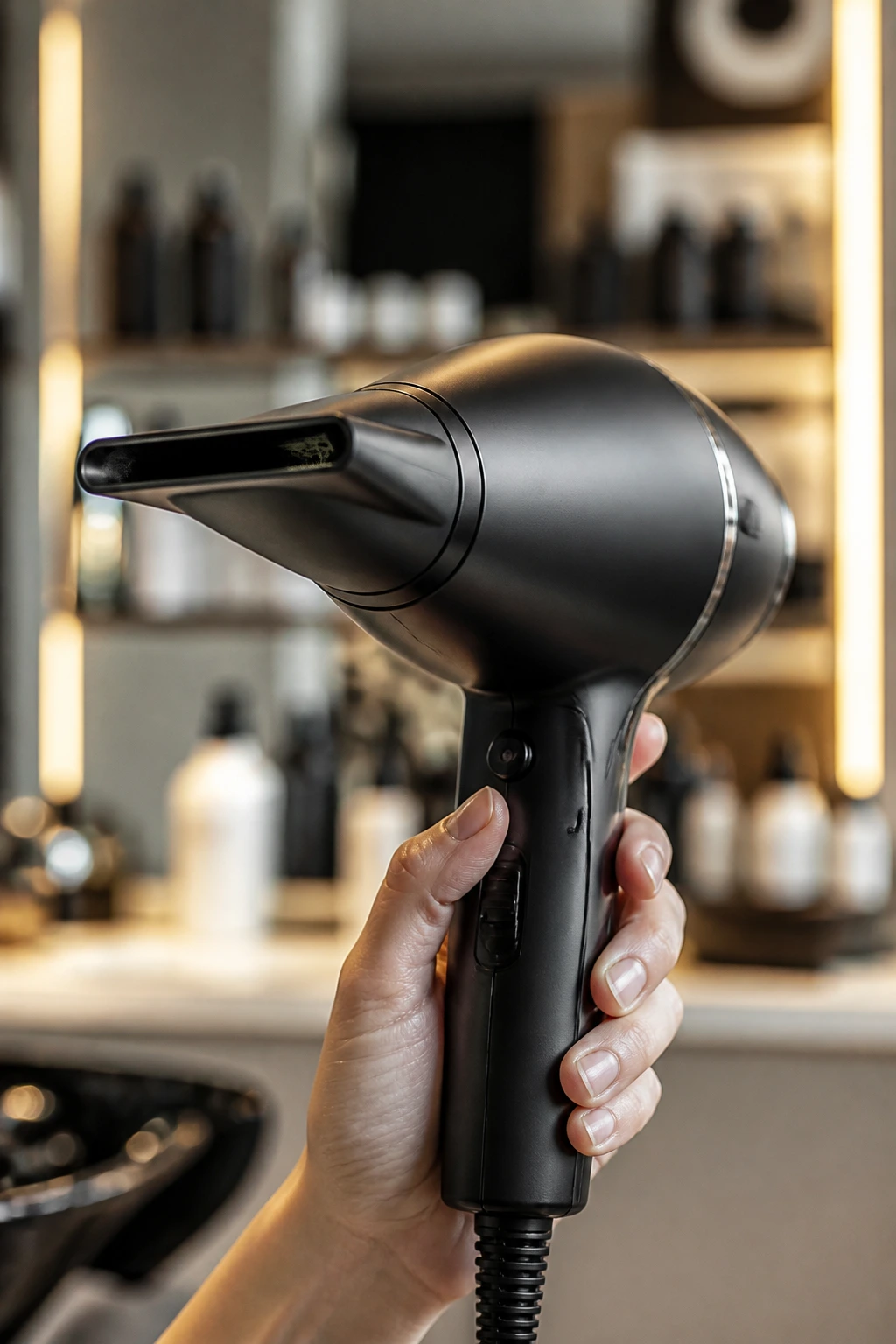
- Blow-dryer with a nozzle: The nozzle matters more than people think; it directs air at the roots instead of blasting the shape apart.
- Small to medium round brush: A 1.5- to 2-inch brush helps round the ends and add lift without creating big curls.
- Lightweight volumizing mousse: Best at the roots on damp hair. Heavy creams can collapse fine strands.
- Dry shampoo: Useful at the crown and hairline on day two, especially if the part starts to widen.
- Wide-tooth comb: Better than a fine comb for detangling without stretching fragile strands.
- Light texturizing spray: Handy for piecey bobs and wavy cuts, but use a small amount.
- Salon cape or towel clip: Small thing, big help if you’re styling at home and trying not to lose half the product to your shirt.
- Good scissors for trim maintenance: Not for full cuts, just for tiny fringe or end cleanups between salon visits.
Trim Schedule, Wash Days, and Grow-Out Care
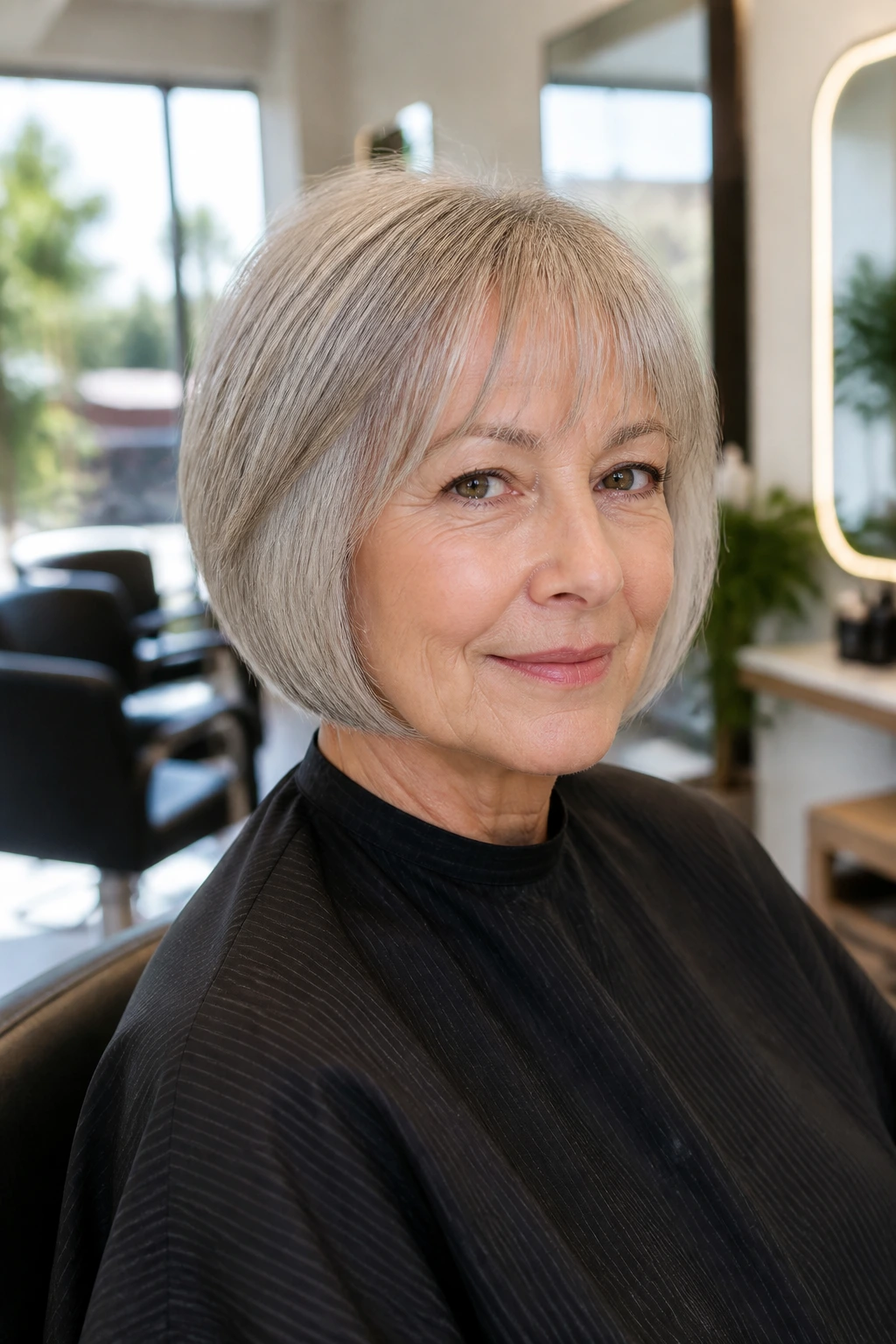
Short bobs lose their shape quietly, then all at once. One day the line looks sharp; two weeks later the crown sags and the ends start flipping in odd directions. That’s why most of these cuts behave best with trims every 6 to 8 weeks. If your hair grows fast or your fringe is doing the most, closer to 6 weeks is kinder.
Wash frequency depends on scalp oil and styling products, but fine thinning hair often feels fresher with regular washing rather than a heavy dry-shampoo cycle. If your roots flatten by day two, washing every other day may actually make styling easier. Let the scalp tell you, not some rigid rule.
For grow-out, keep the perimeter tidy. A blunt bob can survive a longer stretch between full shape changes if the ends are dusted every few weeks. Layered cuts need a little more attention so they don’t wander into shag territory unless that’s the goal. If you color gray or silver hair, root touch-ups or glosses can make the bob’s line read cleaner, which matters more than people realize.
Variations and Adaptations to Try
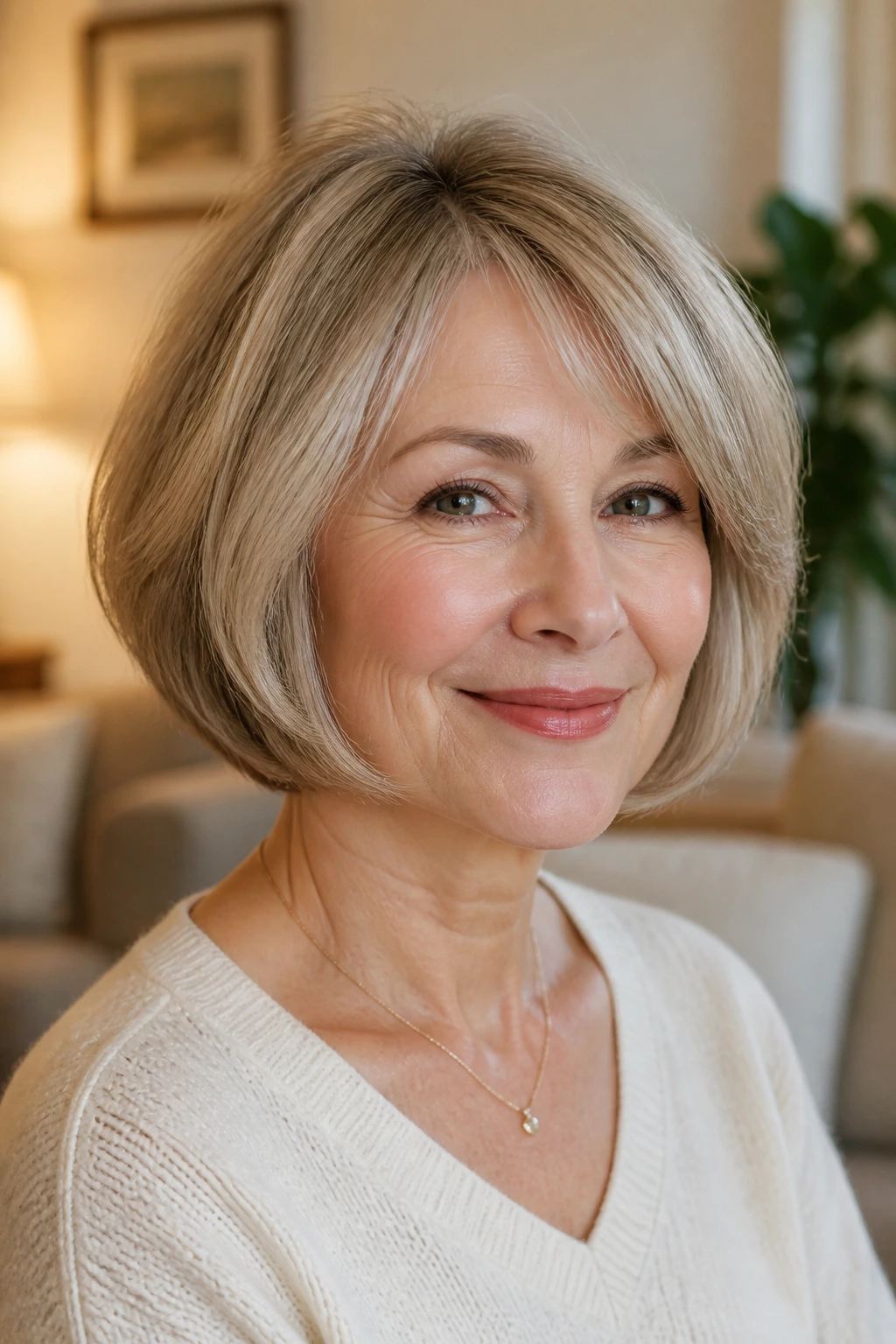
The Softer Salon Bob: Keep the same short length, but ask for softened edges around the cheeks and nape. This works if you want movement without a hard line.
The Glassy Straight Bob: Use a flat brush and a smoothing cream for a sleek finish that shows off the cut line. Best for hair that naturally lies straight and doesn’t puff out in humidity.
The Salt-and-Pepper Boost: Let gray grow in with deliberate dimension instead of flat all-over color. The contrast can make a simple bob look fuller because the eye sees shadow and light, not one solid surface.
The Curly Lift Cut: For curls, keep the bob a touch longer than you think, then shape it dry so shrinkage doesn’t turn the cut into a puffball. This is the version that keeps curls alive without letting them sprawl.
The Low-Fuss Air-Dry Version: Ask for a little internal texture and a clean perimeter, then style with mousse and hands only. It’s the one to choose if you’d rather spend five minutes than fifteen.
The Bold Fringe Swap: If you want a sharper look, change the fringe before you change the whole cut. Side-swept, curtain, or micro-bangs each shift the mood without changing the bob’s basic shape.
Common Mistakes That Make a Bob Look Thinner
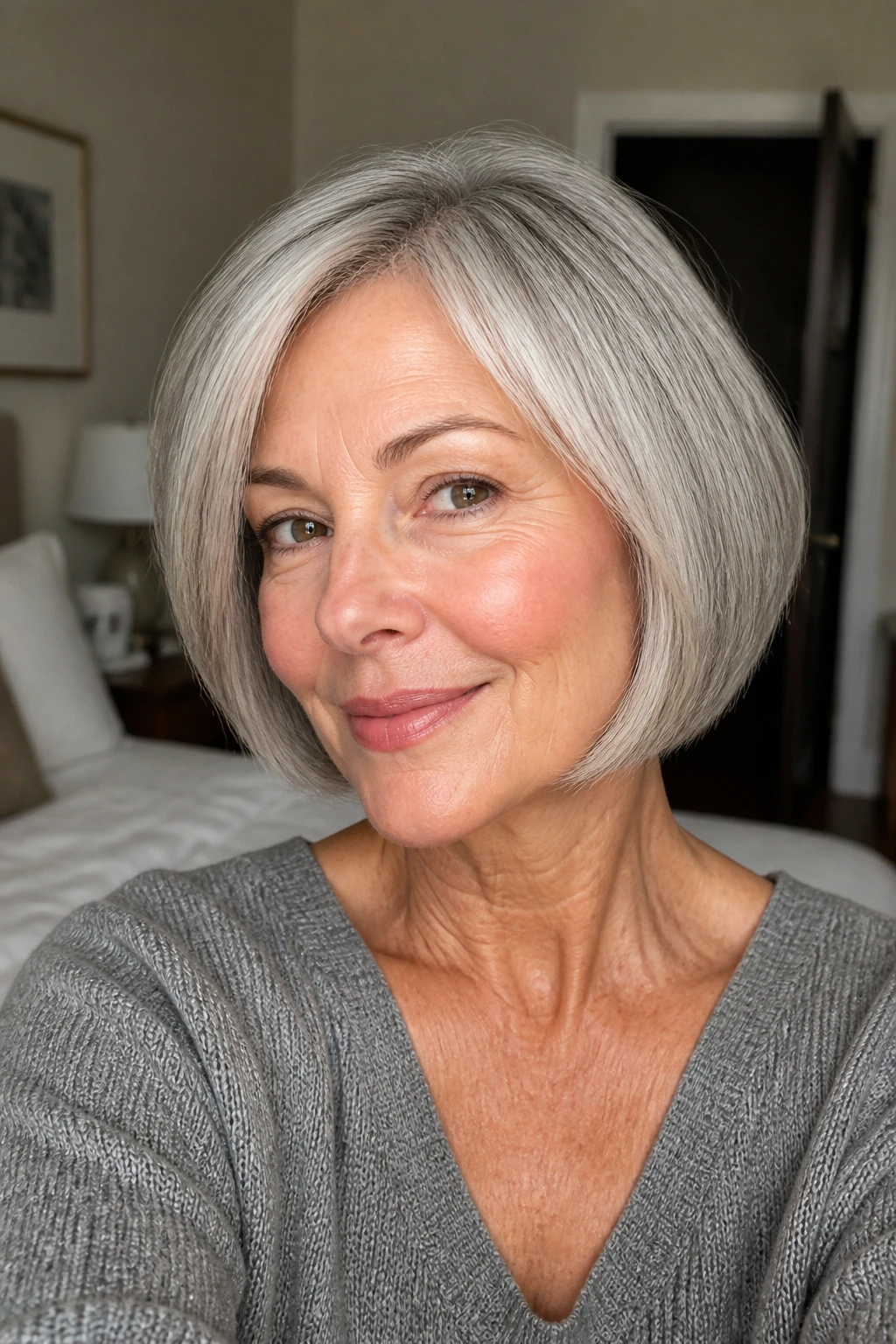
Too many layers: Fine hair does not need a shredding session. If the ends start looking ragged, the perimeter loses strength and the haircut looks lighter than it is. Ask for controlled layering, not endless removal.
Length that sits in the wrong place: A bob that lands at the widest part of the jaw or the heaviest part of the neck can make the face look boxy and the hair look sparse. Move it up or down an inch and the whole thing changes.
Heavy product at the ends: Creams, oils, and thick serums can separate thin strands into little oily clumps. That’s not fullness. That’s collapse. Keep rich products away from the roots and use them sparingly on the ends.
Ignoring the part line: A center part can be flattering, but if the scalp shows too much there, forcing it won’t help. Shift the part and the whole cut often looks denser within seconds.
Skipping regular trims: A short bob needs clean edges. Once the line frays, it starts to look like hair that has given up on itself. Trim before it reaches that point.
Questions People Ask Before Cutting It Short

Will a short bob make thinning hair look thinner?
Not if the cut is built with the right perimeter. Thin hair usually looks worse when it’s long enough for the ends to go wispy, so a short bob often improves the look of density.
Should thinning hair have layers or stay one length?
A little layering can help at the crown, but too much destroys the outline. One-length bobs are strongest when the ends need help; stacked or graduated bobs help when the top lies flat.
Is a fringe a good idea?
Sometimes. Side-swept and curtain fringe can hide sparse temples or soften the forehead. Very heavy fringe can feel too dense at first, then grow awkward fast.
What if my hair is curly and thinning?
Keep the bob slightly longer than a straight-hair cut and shape it to the curl pattern. Curly hair shrinks, and a cut that looks perfect wet can turn tiny once it dries.
Can I wear a bob if I don’t blow-dry much?
Yes, but choose a cut that air-dries with a little structure — wavy, piecey, or softly layered shapes are best. A super-sleek one-length bob usually needs more styling.
How often should I trim it?
Every 6 to 8 weeks is the sweet spot for most short bobs. Fringe or a sharp blunt line may need earlier touch-ups.
Does gray hair change which bob works best?
It can. Gray hair often shows texture changes more clearly, so blunt edges, soft volume, and dimension in color can make a short bob look stronger and cleaner.
The Shape That Saves the Style
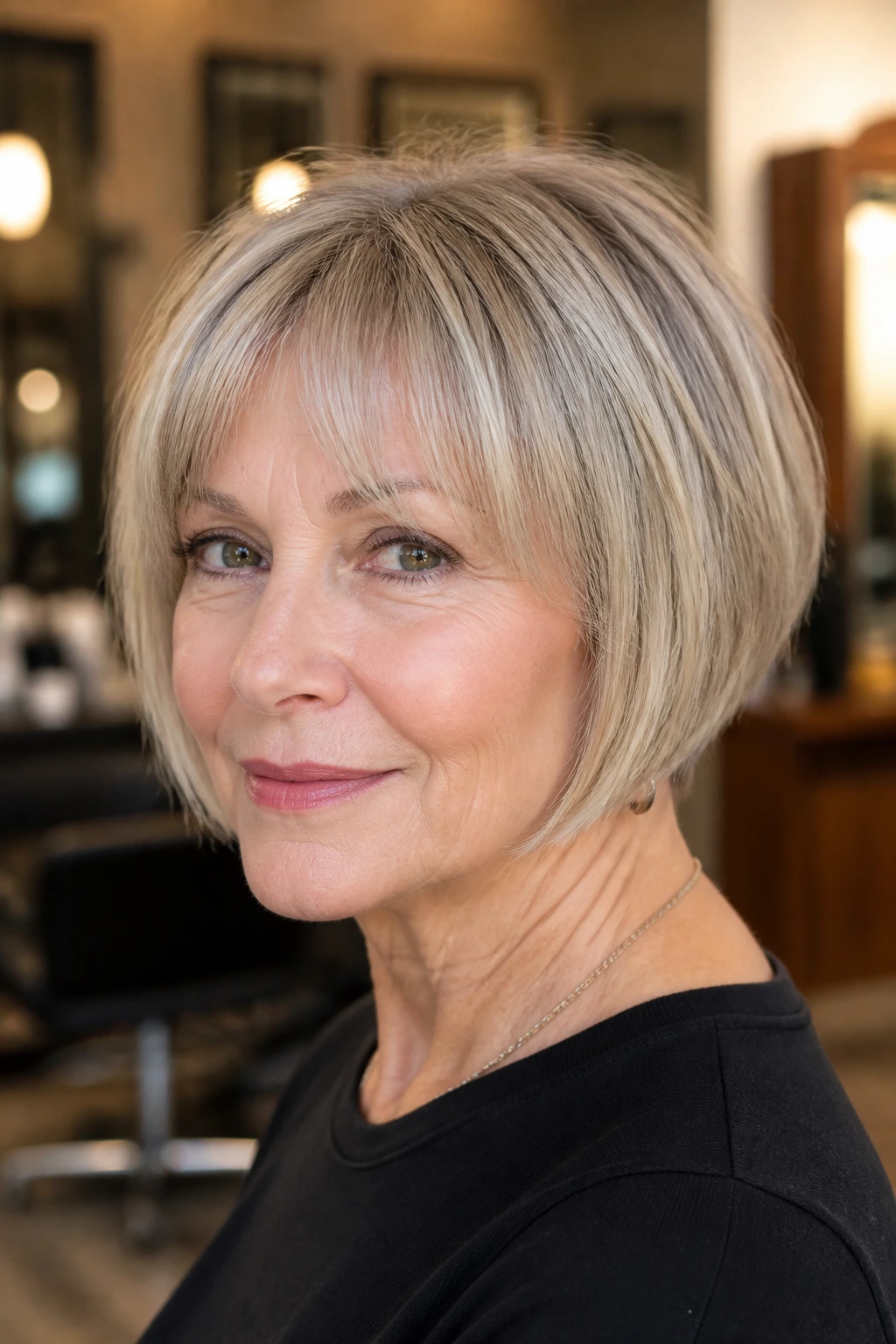
The best short bob for thinning hair is not the most dramatic one on the page. It’s the one that gives you a cleaner edge, a little lift where the crown was slumping, and a shape that survives real life — rain, sleep, errands, and the kind of mornings where a brush feels like too much.
That’s why these cuts work. They don’t fight the hair you have. They use it. A jaw-length blunt line, a soft stack at the back, a face-framing fringe, a rounded finish — each one solves a different problem without pretending thin hair can be coaxed into something it isn’t.
Pick the shape that fixes the part that bothers you most, then keep the line trimmed and the styling light. That’s where the good-looking bob lives, and it stays there longer than people expect.
