



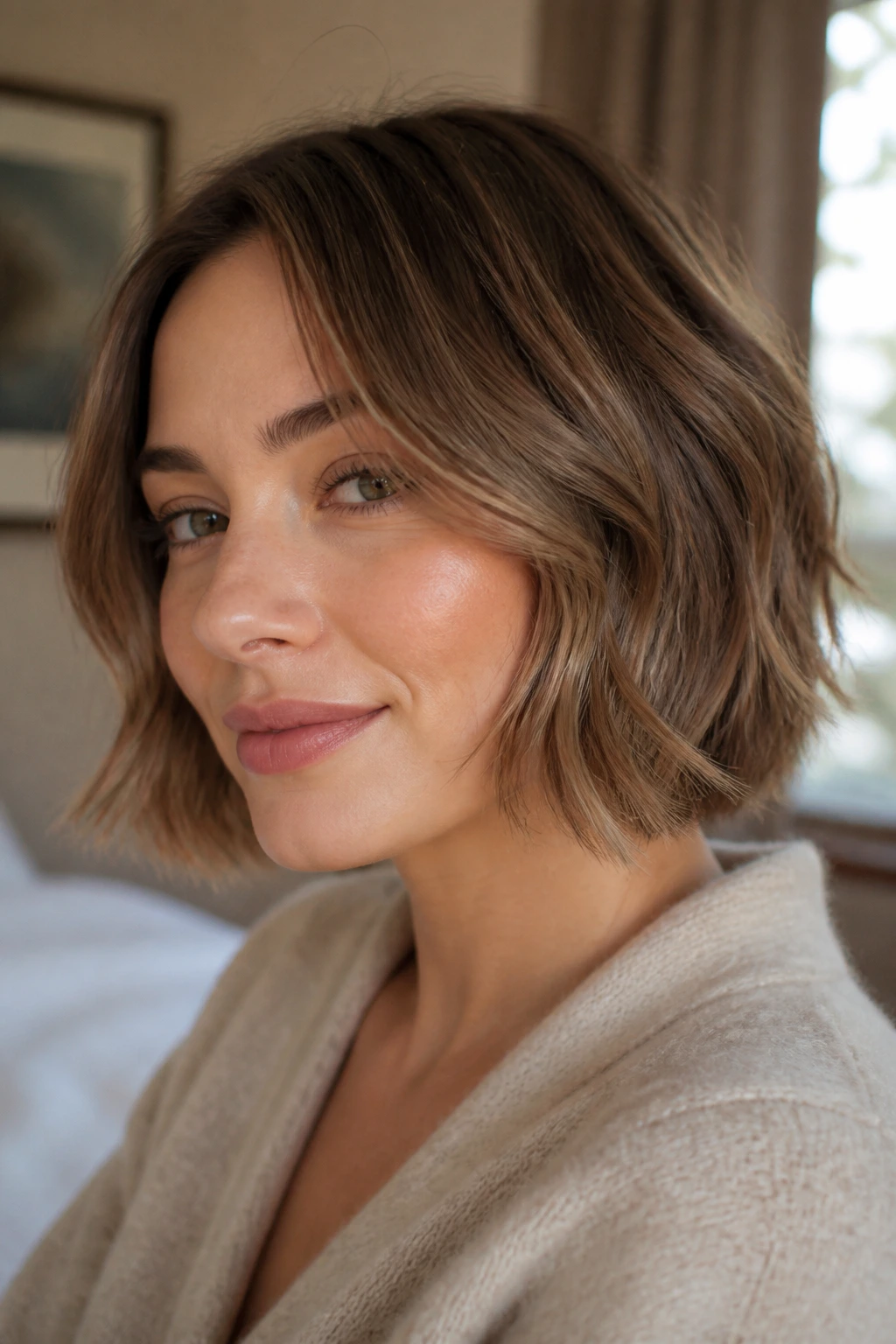
A layered bob haircut should move before it settles. The good ones flick at the ends when you turn your head, skim the jaw instead of clinging to it, and keep enough weight in the outline that the shape still reads as a bob — not a triangle, not a puff, not that awkward in-between phase that makes people reach for a clip by noon.
Soft movement is a very specific thing. It is not random mess. It comes from where the weight is removed, how much length stays at the perimeter, and whether the layers are cut to bend or to fluff. Fine hair needs a different touch than thick hair. Curly hair needs a different plan than straight hair. That’s why one bob can look crisp and effortless while another looks like it lost a fight with humidity.
The 25 layered bob haircuts below cover the full range: chin-length chops, feathered cuts, angled shapes, longer lobs, curly versions, and soft rounded bobs that still look like a plan even when you barely style them. A bob should make your neck look longer and your mornings shorter. That’s the sweet spot.
Why You’ll Love These Layered Bob Haircuts

- They keep the bob shape intact: The layers remove bulk without turning the cut into a shag, so you still get that clean bob outline.
- They work with real hair texture: Straight hair gets swing, wavy hair gets separation, and curls get shape instead of a triangle.
- They grow out better than blunt cuts alone: A smart layered bob stays wearable for weeks because the movement softens the grow-out line.
- They can be tuned for fine or thick hair: Hidden layers, graduation, and perimeter length can all change how full or light the cut feels.
- They style fast: Most of these cuts only need a round brush bend, a diffuser, or a flat iron pass on the front pieces.
- They leave room for bangs and parts: Curtain bangs, side parts, and face-framing pieces can change the mood without changing the length.
1. Chin-Grazing Choppy Layered Bob
A chin-grazing choppy layered bob has enough bite to keep it from feeling precious, but the ends still flick when you turn your head. The perimeter sits near the jaw, while the interior is cut with small, broken-up layers so the shape doesn’t collapse into one heavy shelf. On straight hair, it reads crisp. On wavy hair, it gets that little bit of bounce people are always trying to fake with spray.
Why It Moves
Short internal layers open up the middle of the cut, so the ends are not all fighting for the same space. Ask for a blunt outline with point-cut detailing through the interior if you want movement without a frizzy halo.
- Best for hair that sits flat at the sides.
- Keeps the neck line visible.
- Works with a quick bend from a flat iron or a 1-inch round brush.
Style note: Tuck one side behind the ear and let the other skim the cheekbone. That small asymmetry makes the layers look intentional.
2. Soft Feathered Bob with Tapered Ends
A soft feathered bob is what I reach for when thick hair needs air but the cut still has to read as a bob. The ends are feathered, not shredded, so the outline stays clean while the bottom feels lighter. It’s a calmer shape than a razor cut, and it usually grows out with less drama.
The tapered ends matter. They stop the bottom from kicking out into that boxy shape thick hair loves to build on its own. I’d ask for a little removal through the lower thirds and a smooth finish around the perimeter. If the hair has any wave at all, this cut gives it a nice bend without forcing it.
3. Jaw-Length French Bob with Invisible Layers
Why do French bobs look so good even when they’re barely styled? Because the length sits right at the jaw and the layers are mostly hidden inside the shape. You get a tidy outline with a little swing at the ends, which is the whole point.
Ask for invisible layers instead of obvious step-cut pieces. That keeps the cut sleek enough for air-drying, but it still gives the hair room to move when it falls forward. This version is especially good if you like a polished cheekbone frame and do not want a lot of breakup around the face.
Best for:
- Straight or slightly wavy hair
- People who prefer a sharp silhouette
- Anyone who likes a bob that looks deliberate even when it’s day-three hair
4. Stacked Bob with a Lifted Nape
Picture thick hair at the nape that keeps kicking out and sides that hang like a curtain. A stacked bob fixes that by building shorter lengths underneath and leaving the top layer longer. The back gets lift; the front gets swing.
Use this shape if your hair loses volume by lunchtime or if you want the back of the cut to sit closer to the head. It needs a clean blow-dry or a quick round-brush pass at the crown, because the graduation is what gives it that crisp curve. Too much layering on top, though, and the whole thing starts looking puffy. That’s the line to watch.
5. Collarbone Layered Lob with Loose Waves
A collarbone layered lob gives you the easiest kind of movement: the kind that happens even when the hair is not perfectly styled. The extra length keeps the ends from flipping out too sharply, and the layers sit low enough to create bend instead of short, choppy lift.
This is the bob for people who like the idea of short hair but want enough length to tuck behind the ears or tie back on bad-hair days. Loose waves work best here because the cut can take them. If you wear it straight, ask for soft face-framing layers so the front doesn’t feel heavy.
6. Razor-Cut Bob with Wispy Ends
A razor-cut bob can look airy in a way scissors sometimes can’t. The ends go wispy and light, which is useful if your hair is dense and wants to sit in one solid block. You get movement fast, but you also get a sharper edge on the texture.
That said, this cut is not kind to fragile ends. If your hair is already dry or split at the bottom, the razor can make it look thinner than you wanted. I like it on healthy, medium-to-thick hair that can handle a little edge. A dab of cream at the ends is enough; heavy oil will take the movement out.
7. Curly Layered Bob That Keeps Its Spring
Curly bobs live or die by shrinkage. If the layers are cut wrong, the shape balloons. If they’re cut well, the curls spring up in clean stacks and the whole cut looks alive from every angle.
This version works best when the stylist follows the curl pattern instead of fighting it. A dry cut or a mostly dry cut usually gives the best read on where the curls sit. Diffuse on low heat, then stop before the curls turn frizzy and over-separated. The goal is shape, not fluff.
8. Side-Parted Angled Bob with Longer Front Pieces
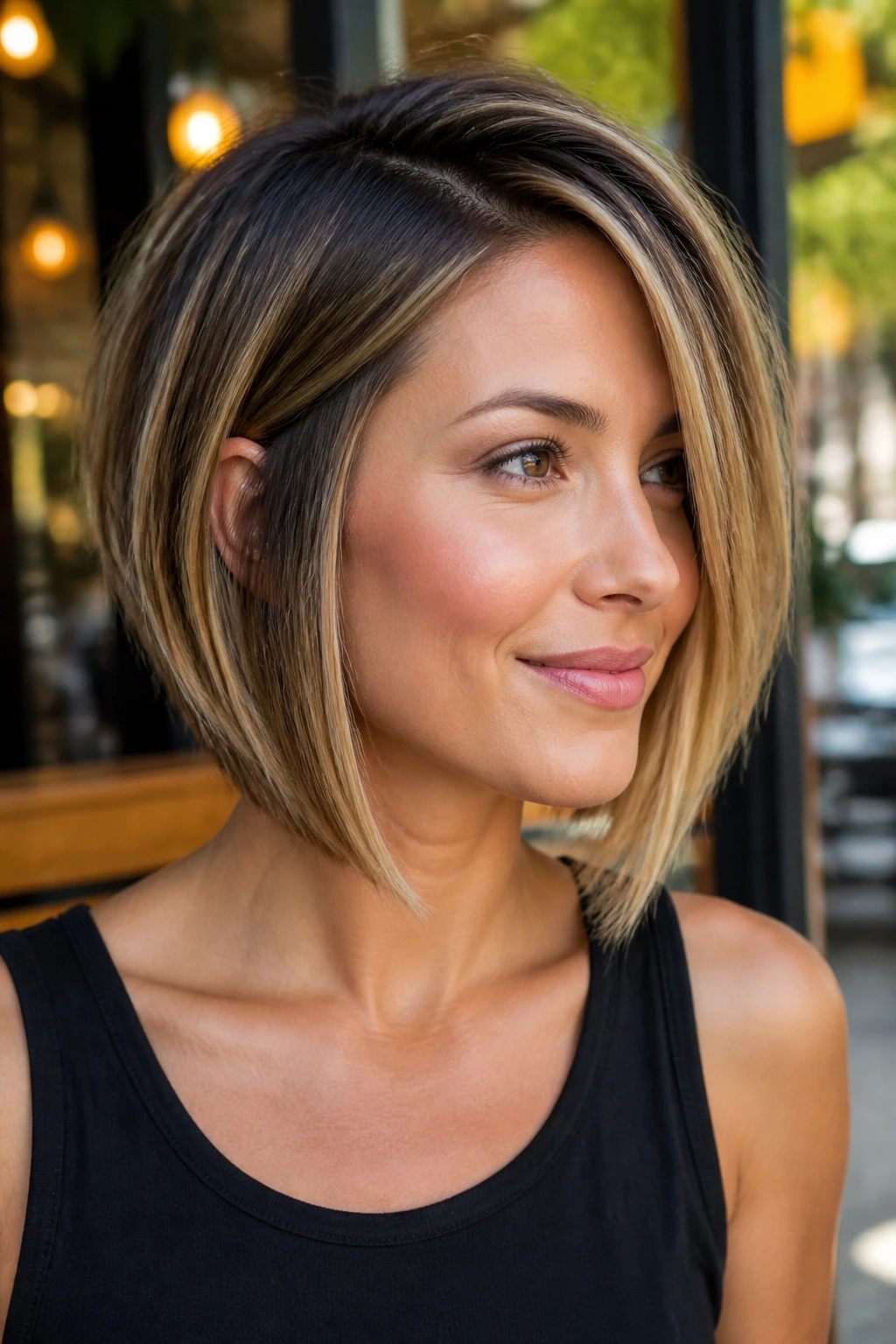
A side-parted angled bob gives you motion without needing a lot of texture spray. The front pieces fall longer than the back, so the whole shape has a built-in sweep. A deep side part makes that angle show up fast.
This cut is good if your face needs a little length at the front or if you want the haircut to look different depending on which side you part it on. The angle also helps hair that grows forward around the cheeks. Keep the back neat and let the front pieces do the talking. That’s the cleanest way to wear it.
9. Face-Framing Bob with Curtain Bangs

A face-framing bob with curtain bangs is the version that makes people say, “Oh, that suits you,” even when the rest of the haircut is simple. The bangs open the face, and the layers around the cheekbones soften the line of the bob. Nothing feels hard-edged.
The trick is keeping the bangs light enough to blend, not sit like a separate helmet fringe. Ask for the curtain pieces to start a little below the brow and taper into the front layers. That gives you a sweep that can be tucked, parted, or air-dried into place without much fuss.
10. Piecey Bob with Textured Ends

A piecey bob is for someone who likes a little separation and does not want every strand to behave. The layers are cut so the ends hold onto a bit of definition, which makes the whole haircut look more playful and less formal.
A matte paste or lightweight texturizing spray does a lot here. Use enough to show the pieces, not so much that the hair turns sticky. The best thing about this cut is the way it changes with movement — one minute it looks tidy, the next it looks windswept. That unpredictability is the appeal.
11. Shaggy Bob with Airy Crown Layers

A shaggy bob sits in that useful middle ground between a bob and a soft shag. The crown layers are lighter, which keeps the top from flattening, and the perimeter still holds enough length to read as a bob.
This is the cut I’d pick if your hair gets dense through the crown and heavy at the sides. The lighter top lets the shape breathe, but the bottom still feels anchored. It likes a little mess. A lot, actually. If you try to smooth every strand into place, you lose the point.
12. Inverted Bob with a Clean Underline
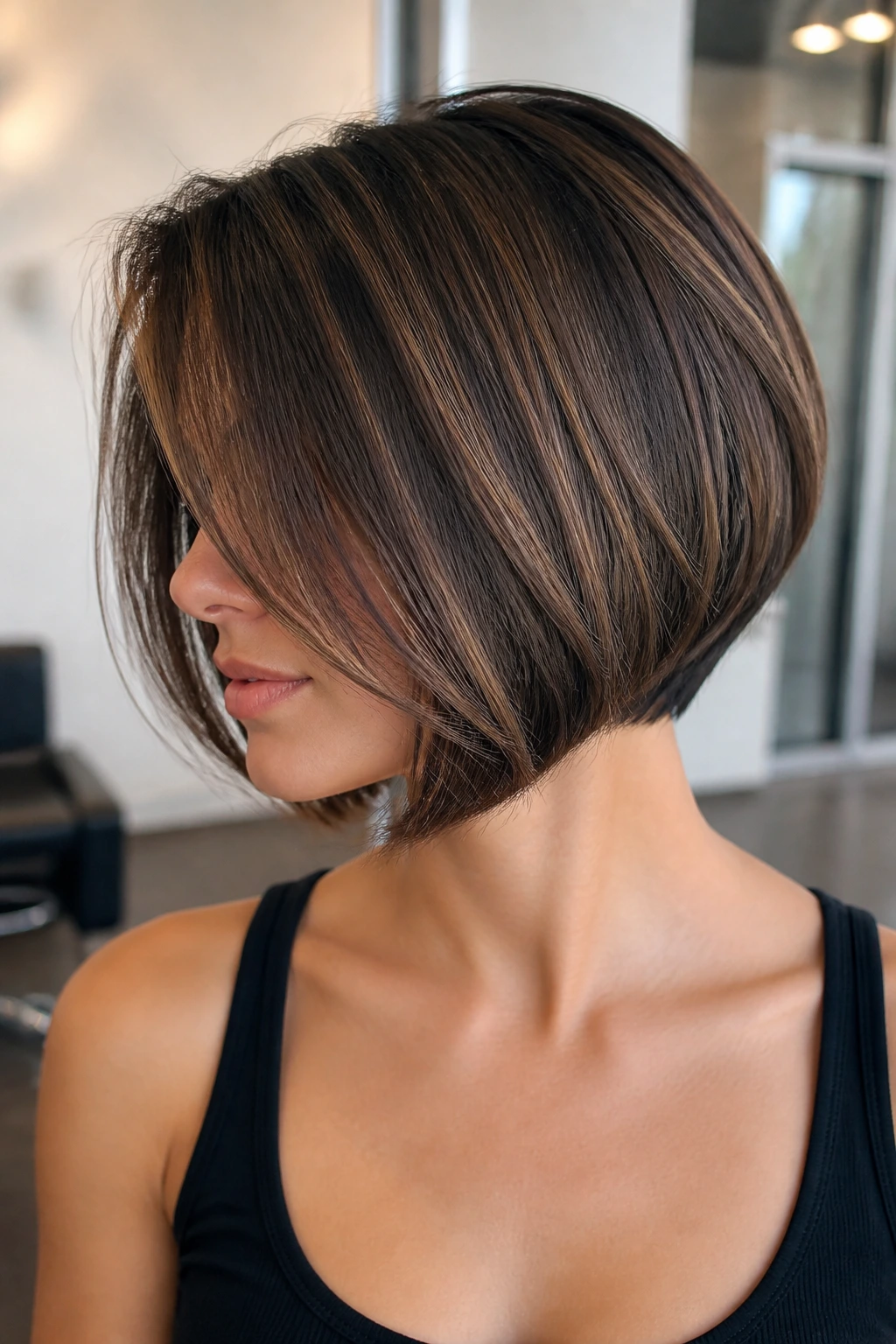
An inverted bob keeps the back shorter and the front longer, but the best versions are not severe. The underline should still look clean, almost tucked under the head, while the front pieces swing enough to keep the shape from feeling stiff.
This cut is useful when you want a little drama without going full angled wedge. It sharpens the jawline and gives the nape some lift, which is especially nice on hair that grows flat at the back. A quick blow-dry under the brush makes a huge difference. So does a tidy neckline. Messy edges ruin the effect fast.
13. Micro Bob with Soft Internal Layers

A micro bob sits high and close, and that makes the layering more important, not less. With this length, even a small change in weight can make the cut puff, tuck, or kick out. Soft internal layers keep it moving without turning it fluffy.
This one works especially well on straight, dense hair that needs structure. It is also a good choice if you like a sharp neckline and a clean ear line. Keep the top smooth and the bottom compact. Too many short layers in a micro bob can turn it into a rounded puffball, and nobody is asking for that.
14. Rounded Bob with a Floating Perimeter
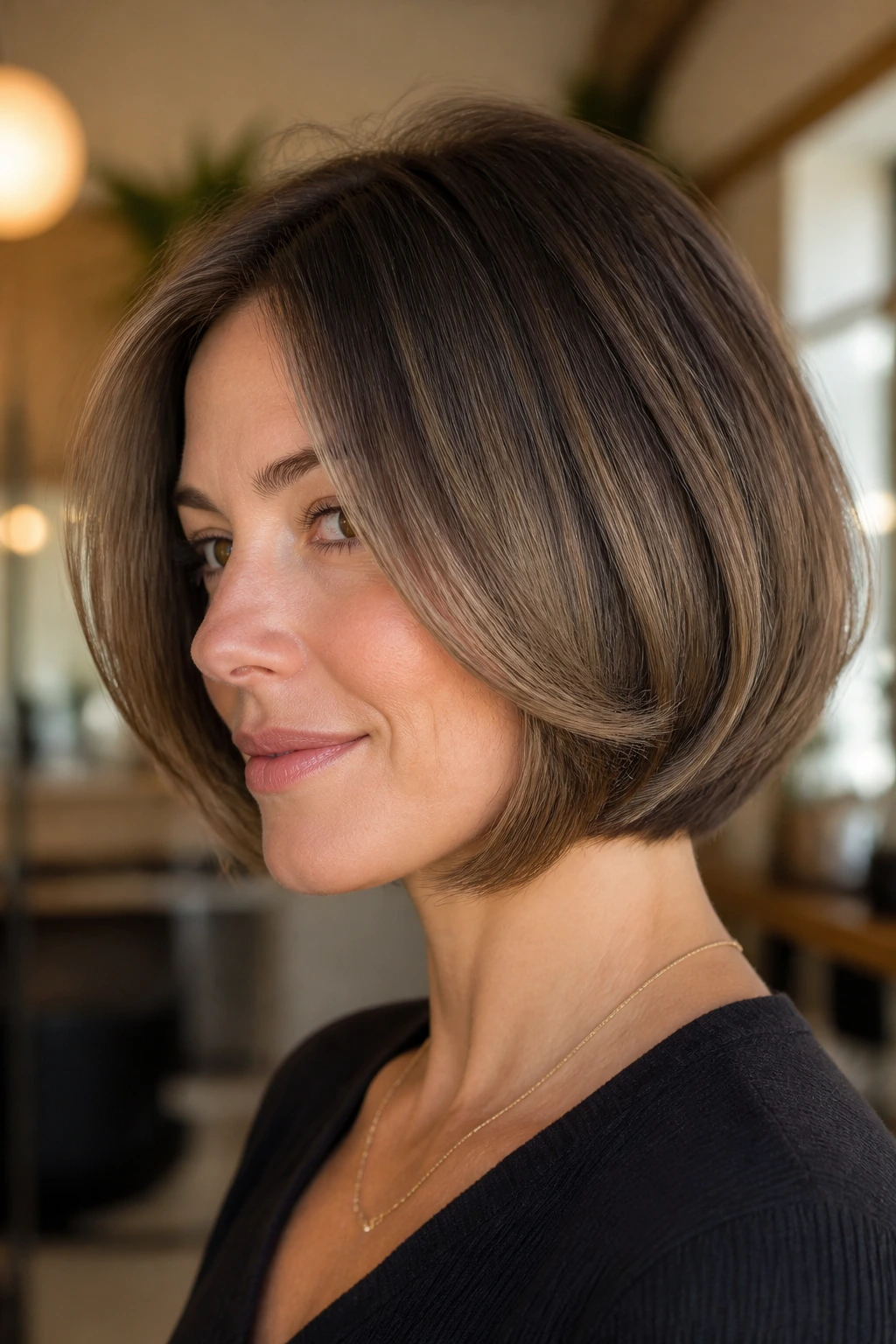
A rounded bob has a softer outline than a straight blunt cut, but it still needs discipline. The perimeter floats a little away from the head, and the layers are tucked just enough to keep the curve from looking heavy.
This is a lovely choice if you want movement but dislike choppy texture. It suits hair that bends naturally at the ends because the round shape follows that flow instead of fighting it. A medium round brush and a controlled blow-dry give you the best finish. Let the curve do the work.
15. Flipped-Out Layered Bob
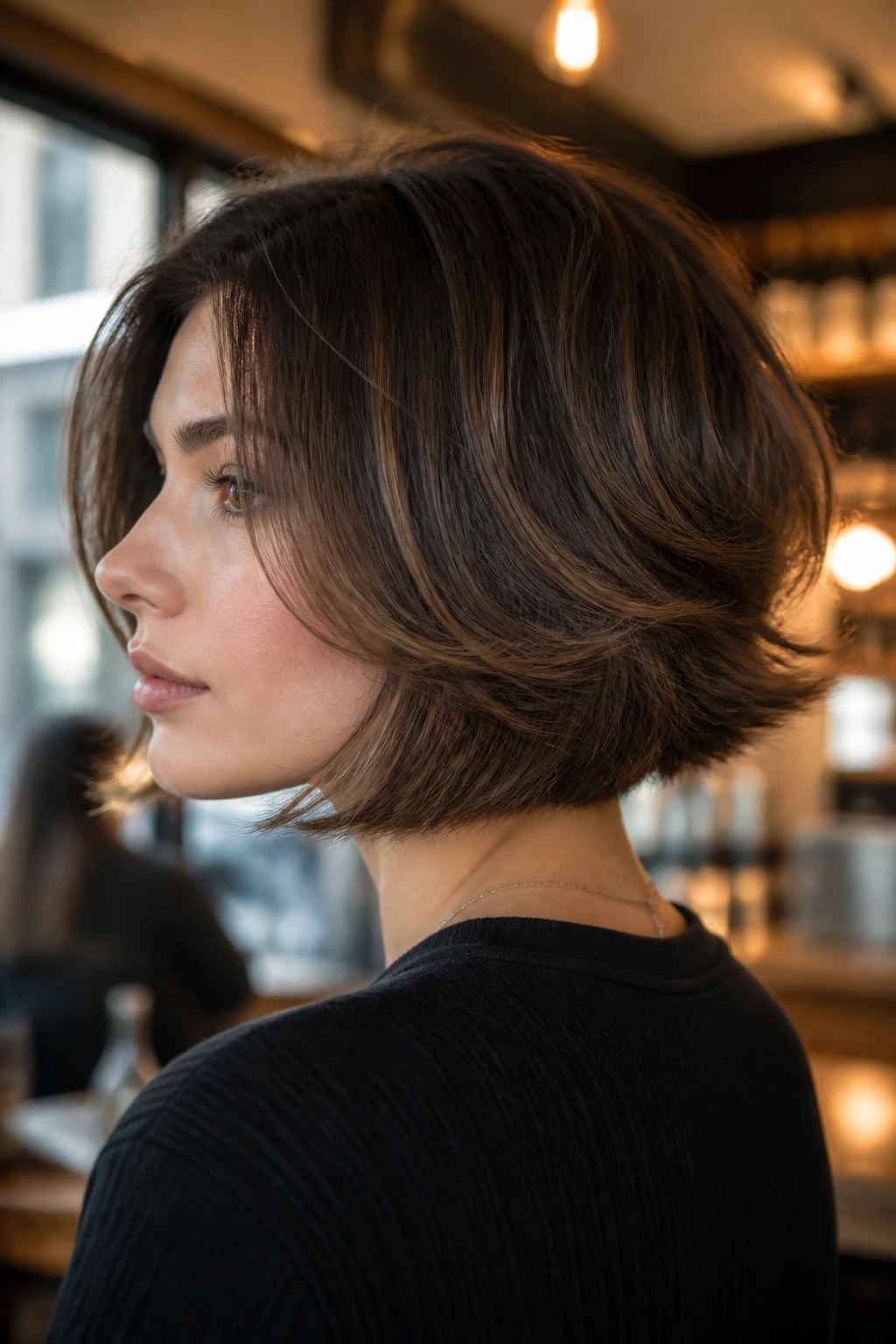
The flipped-out bob has a retro edge, but it works because the layers feed the movement. The ends are cut so they want to turn away from the neck, not cling to it. That little kick changes the whole mood of the haircut.
This style is fun on straight hair, where the flip shows up clearly. It also softens a square jaw because the ends move outward instead of stopping right at the face. If you use a flat iron, bend the last inch away from the neck. Small motion. Big change.
16. Deep Side-Swept Bob with Soft Bend
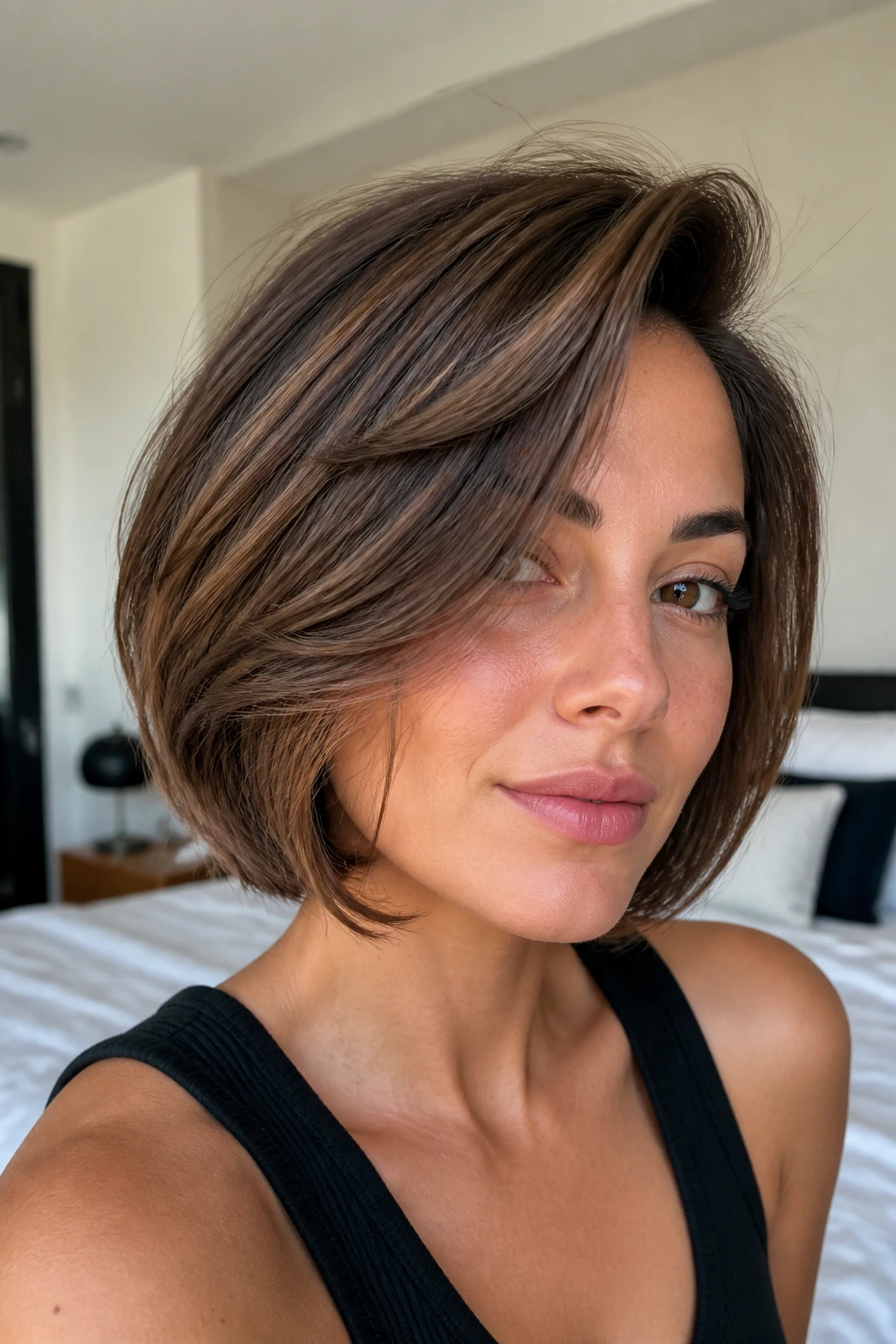
A deep side-swept bob gives you instant softness at the front. The part shifts the weight over, the layers fall into a gentle bend, and the whole cut looks less symmetrical in the best way. It feels modern without trying too hard.
This one is handy if you have a stubborn cowlick near the crown or a spot where hair insists on separating. A side part can tame that and make the layers behave. It also creates a little lift at the roots, which fine hair often needs. Keep the front soft, though. Too much teasing or spray ruins the shape.
17. Thick-Hair Bob with Weight-Removing Layers
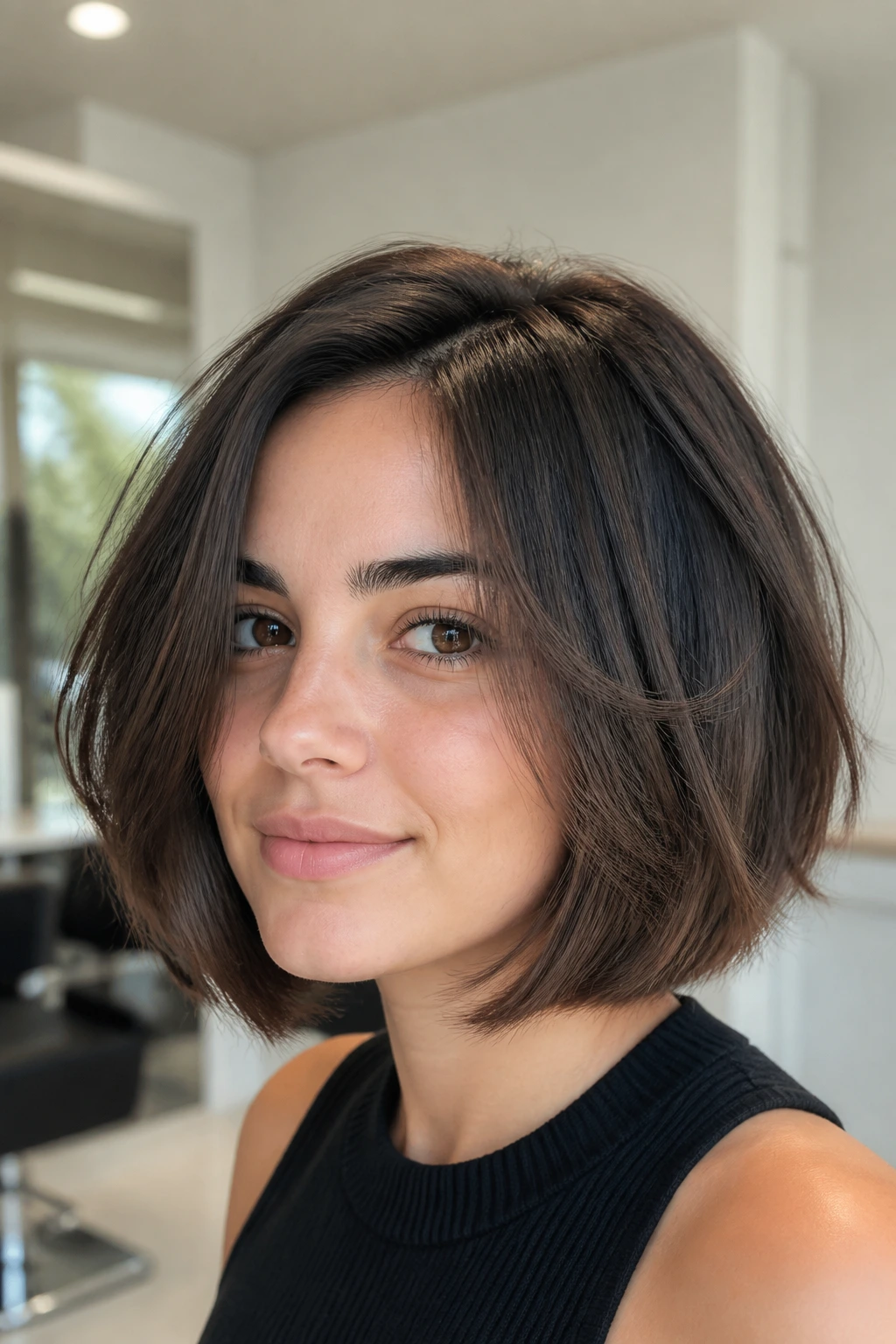
If you have dense hair, you know the problem: the cut looks fine wet, then the bulk returns the second it dries. A thick-hair bob solves that by removing weight in the right places, usually through the mid-lengths and underlayers, not by hacking away at the ends.
The best version keeps a strong perimeter so the hair still looks full, but the inside has room to move. Ask for point cutting or controlled internal layering, not aggressive thinning shears. Those can leave thick hair frayed at the ends and frizzy at the surface. You want lift. Not fuzz.
18. Fine-Hair Bob with Hidden Layers and a Full Edge
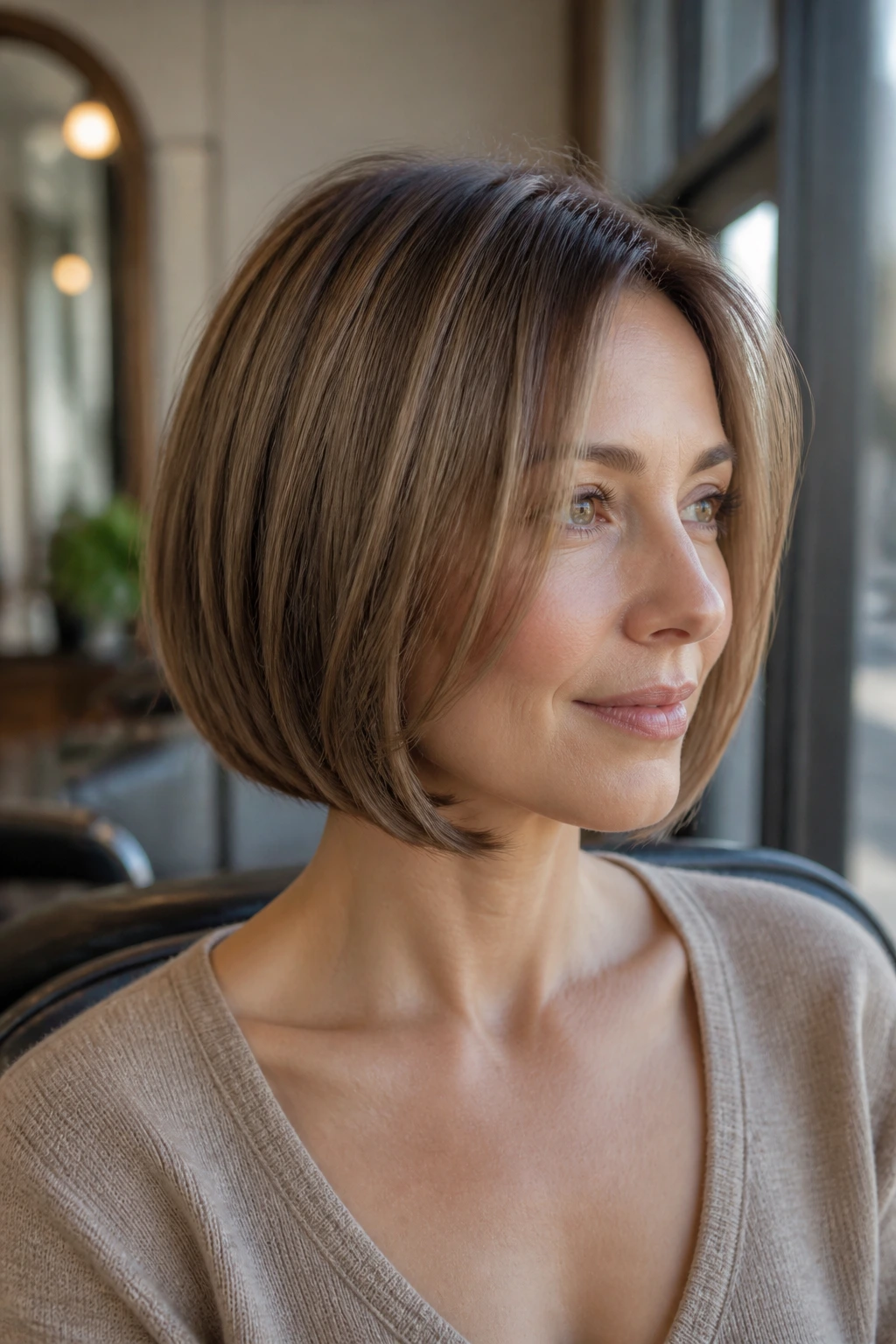
Fine hair needs a different game. Too many visible layers and it starts looking thin at the bottom, which is exactly what you do not want. Hidden layers let the hair move while the perimeter stays full.
This cut is one of my favorites for fine strands because it creates the illusion of density. The edge looks solid, but the inside has enough room to swing. A light mousse at the roots and a quick blow-dry with a round brush keep the shape from collapsing. Skip heavy creams; they weigh down fine hair fast.
19. Wavy Bob with a Broken-Up Outline

A wavy bob should not look overworked. The outline can stay a little broken and irregular, because that is how the movement reads. The layers help the waves fall in pieces instead of one big curl sheet.
This shape works best when you stop chasing symmetry. Scrunch in a little mousse, let the hair dry about 80 percent on its own, then finish the last bit with a diffuser or a few finger bends. The result is casual without being sloppy. That’s harder to get than it sounds.
20. Layered Bob with Bottleneck Bangs

Bottleneck bangs bring a soft frame to a layered bob without swallowing the face. They start narrow near the brows, then widen and taper as they fall, which blends nicely into the front pieces. The whole haircut gets a gentle sweep around the eyes and cheekbones.
This is a strong choice if you want bangs but hate the blunt line of a full fringe. It also helps soften a wider forehead or draw attention to the eyes. Keep the rest of the bob slightly airy so the bangs do not become the only visual feature. Balance matters here.
21. Tousled Salt-and-Pepper Bob

A salt-and-pepper bob with layers has texture built in, even before you touch a styling tool. The color creates its own depth, and the layers let that depth show up in motion. Gray strands catch the light differently from pigmented ones, which makes the cut look more dimensional.
This style benefits from a slightly undone finish. If you smooth it too much, you lose the texture the color gives you. A little wave cream, a rough dry, and a finger-comb are usually enough. It is a sharp-looking cut with almost no pretending.
22. Sleek Bob with Underlayers That Move
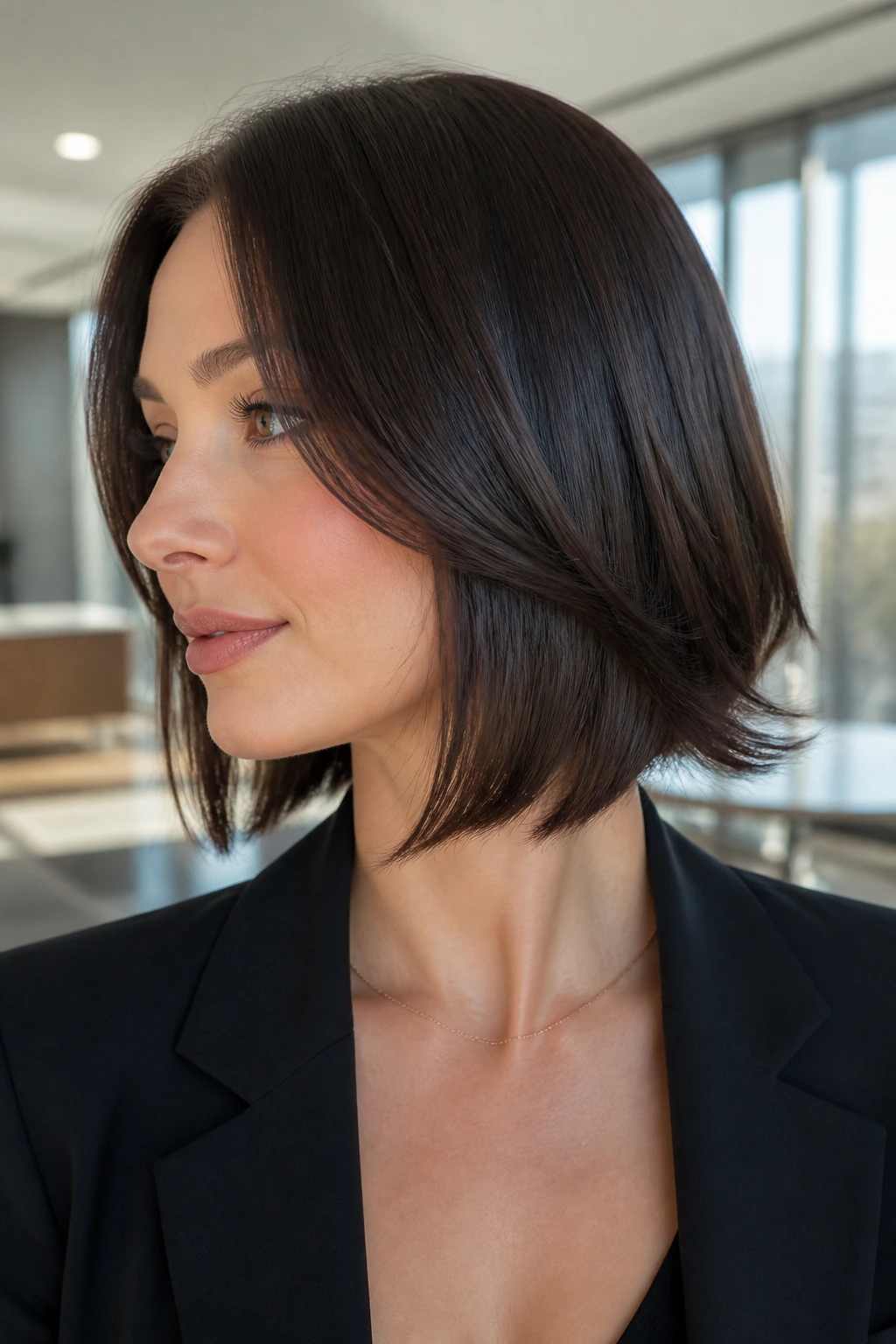
Not every layered bob has to look piecey on the surface. A sleek bob can keep a smooth top layer while the underlayers do the movement underneath. The result is quieter, but I think it looks expensive in the old-fashioned sense — tidy, controlled, and not trying to prove anything.
This version suits people who need a haircut that works in a more polished setting. The key is keeping the outer line neat while the internal layers prevent the shape from feeling stiff. A flat iron bend at the ends is enough. Do not overload it with spray; the shine is part of the look.
23. Air-Dried Layered Bob for Natural Texture

If your hair already has a little wave or curl, an air-dried layered bob can save a ridiculous amount of time. The layers are cut to let the hair fall into its own pattern rather than forcing it into a blowout shape. That makes the haircut easier to live with on ordinary days.
The trick is product placement. Use mousse or a light curl cream on damp hair, scrunch once or twice, and leave it alone until it is dry enough to shake out. Touching it too much while it dries makes the surface fuzzy. A decent layered bob can air-dry and still look intentional. Not perfect. Intentional.
24. Jaw-and-Neck Bob with Minimalist Layers
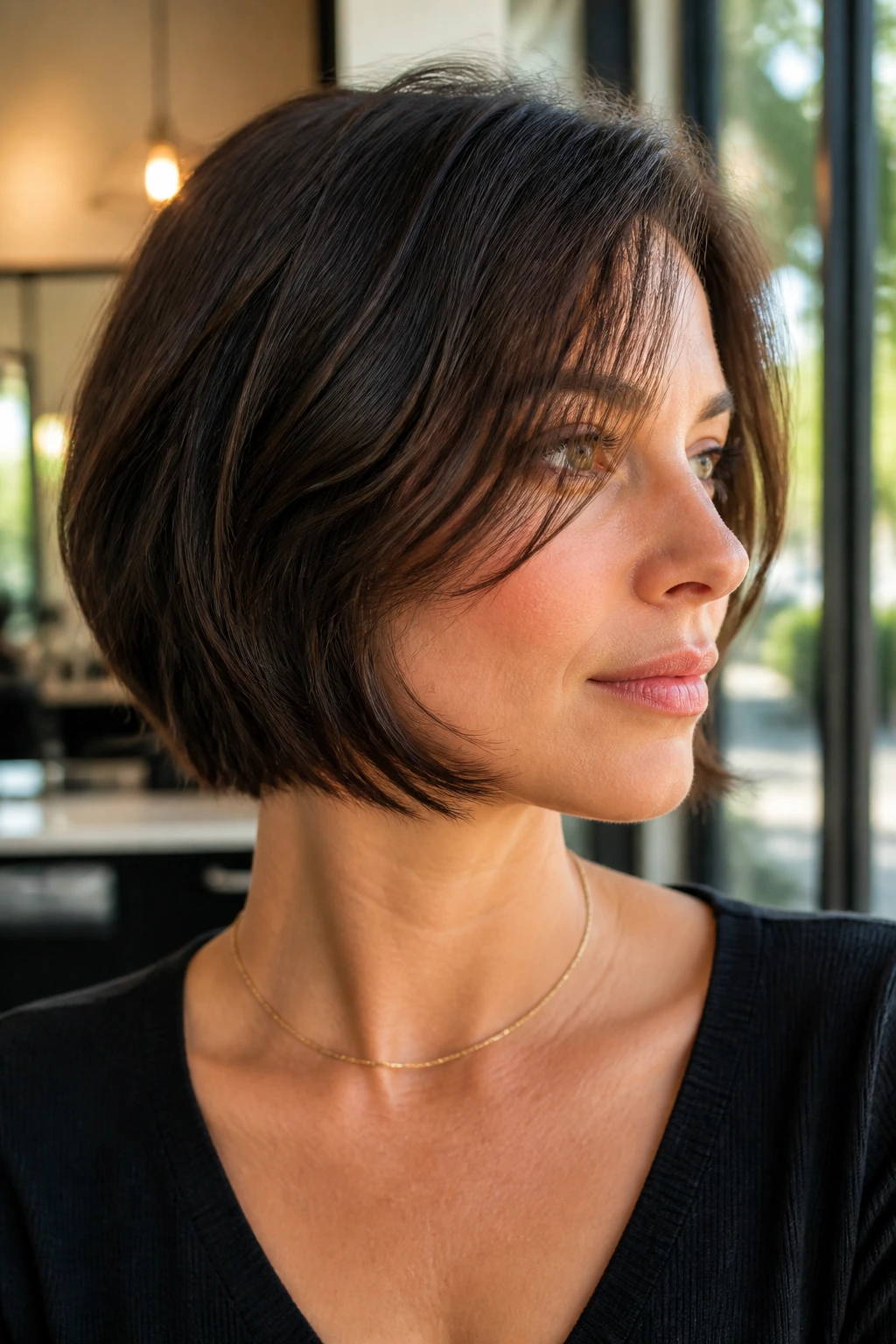
A jaw-and-neck bob with minimal layering is for the person who wants movement but dislikes anything that looks choppy. The layers are there, but they stay subtle — just enough to keep the ends from sitting like a shelf. The shape feels calm, which is useful if you wear a lot of clean necklines or simple clothes.
This cut does best when the perimeter stays crisp. The layers live inside the shape, so the bob keeps its edge even as it swings. It is a good compromise if you want a haircut that feels grown-up without feeling severe. That’s a narrow lane, and this cut sits in it nicely.
25. Soft Graduated Bob for a Polished Bend
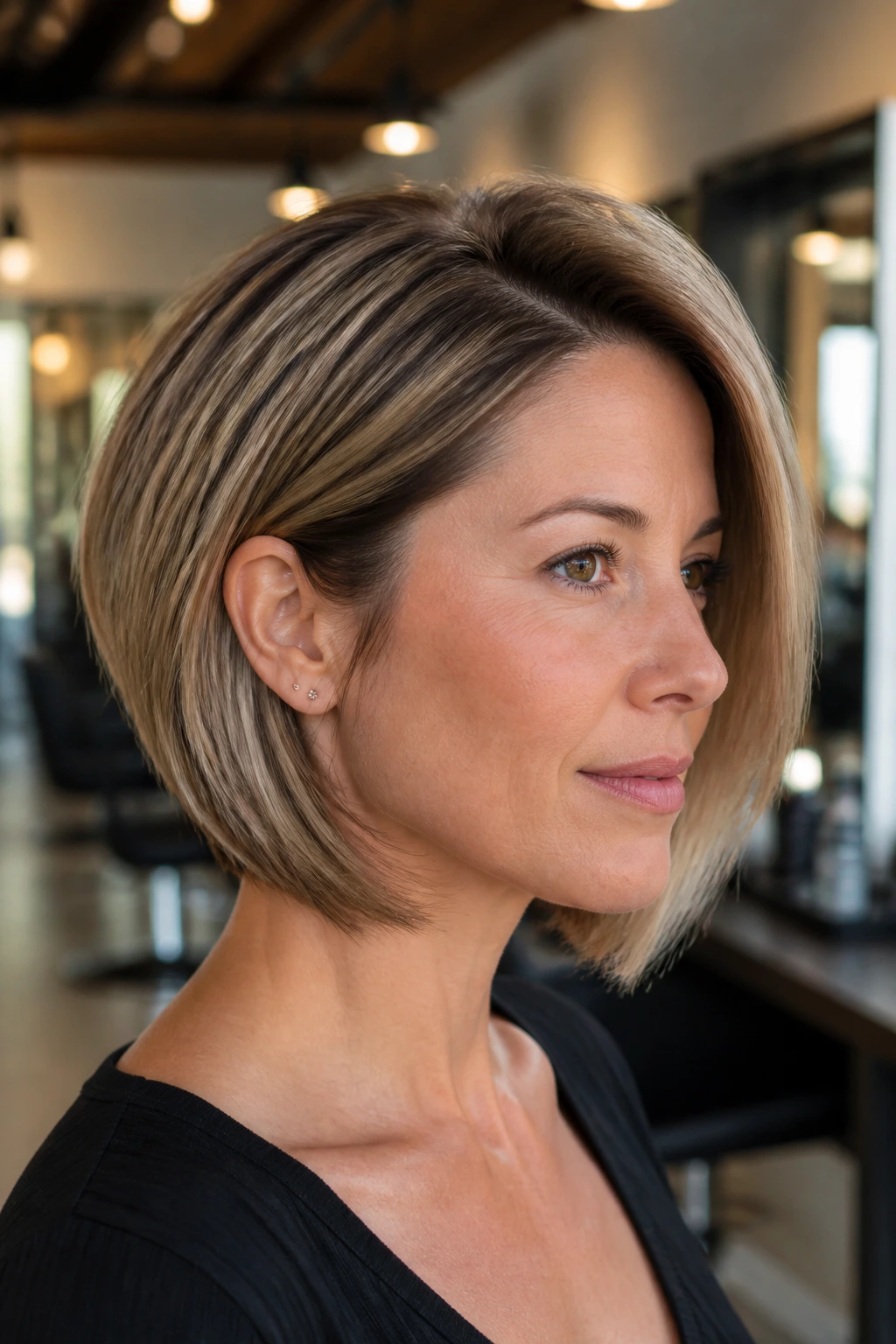
A soft graduated bob is the polished answer to “I want shape, but I do not want it to look hard.” The back is slightly shorter, the front opens out, and the layers guide the hair into a smooth bend instead of a sharp stack. It has structure, but the structure stays hidden unless you look for it.
This is the bob I’d pick for someone who wants their hair to sit neatly around the head and still move when they walk. It flatters the jaw, lifts the nape, and works especially well with a side part or a tucked-behind-the-ear finish. It is not loud. It does its job quietly, which is half the appeal.
Why Layering Gives a Bob Movement Instead of Bulk
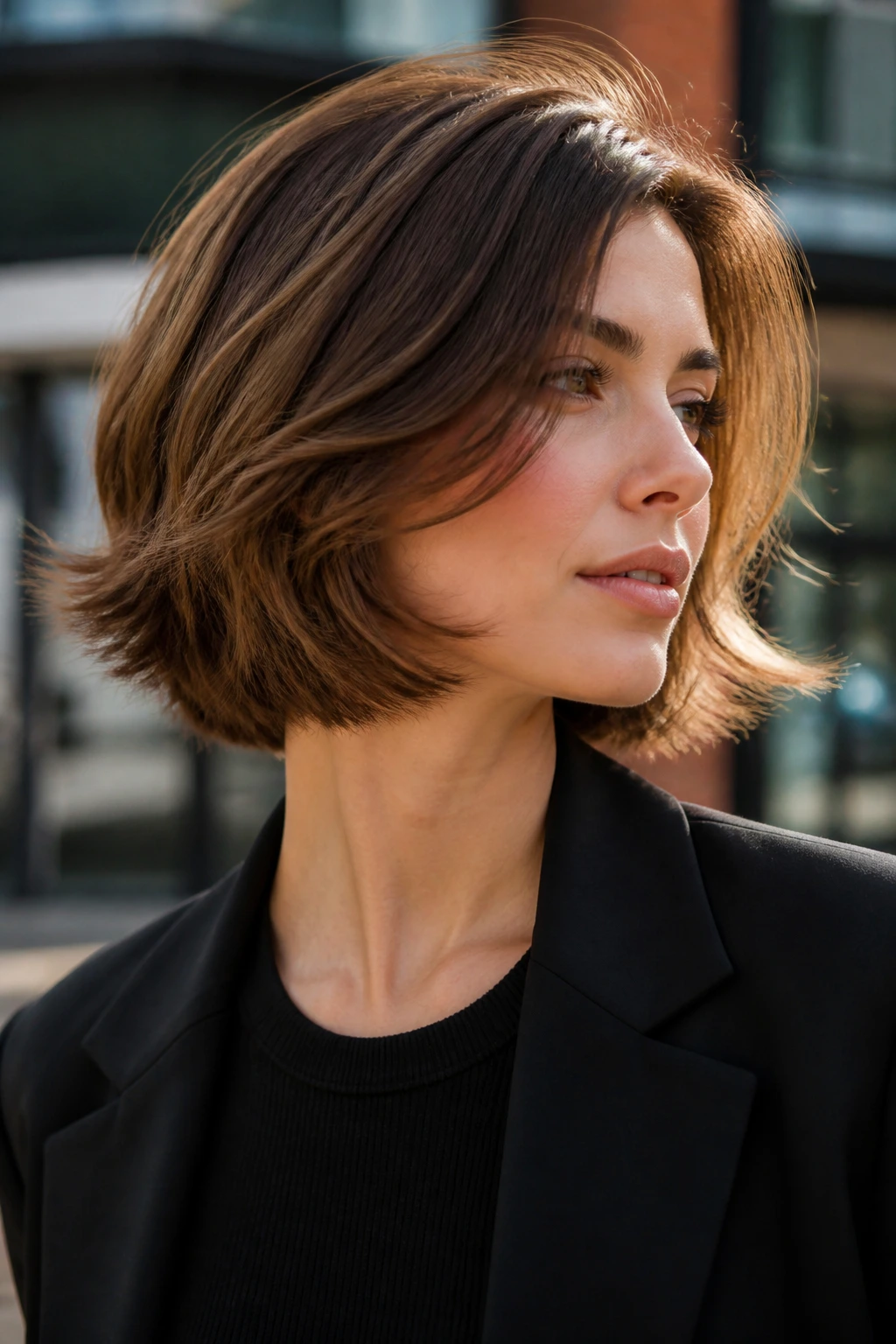
A bob only moves well when the weight is cut with a plan. If every section ends at the same line, the hair sits there like a helmet. If the layers are too short or too aggressive, you get fluff, not motion. The sweet spot lives between those two extremes.
The shape of the cut matters more than people think. A bob can be blunt at the edge and still feel soft if the interior is opened up with controlled layering. That’s why a point-cut end or a hidden layer near the crown can change the whole read of the haircut. The perimeter keeps the bob recognizable. The inside keeps it alive.
Texture changes the math, too. Straight hair shows every layer more clearly, so the cut needs cleaner lines. Wavy hair already has movement, so it needs less help at the ends and more control at the bulk points. Curly hair needs the layers to follow the curl pattern or the whole thing can balloon out at the sides. Same haircut family. Different rules.
How to Choose the Right Layered Bob for Your Hair Texture

Fine hair usually behaves better with hidden layers and a fuller edge. That gives the illusion of density while keeping the ends from looking stringy. If your hair is fine and straight, skip anything that sounds heavily feathered. It can go see-through fast.
Thick hair wants weight removed in the middle, not just the bottom. Otherwise the ends swell out and the top lies flat. A stacked bob, a soft feathered bob, or a thick-hair bob with controlled internal layers usually works better than a simple blunt cut. Curly hair needs respect for shrinkage; ask for the shape to be built around the curl, not against it.
Wavy hair is the easiest to over-style and the easiest to get right. A collarbone lob, a broken-up outline, or a face-framing bob with curtain bangs can look good with almost no heat. If your hair has a stubborn cowlick or splits at one side, bring that up before the cut starts. A good stylist will adjust the part and graduation. A bad one will pretend the hair will “settle.” It won’t.
What to Ask Your Stylist Before the First Snip
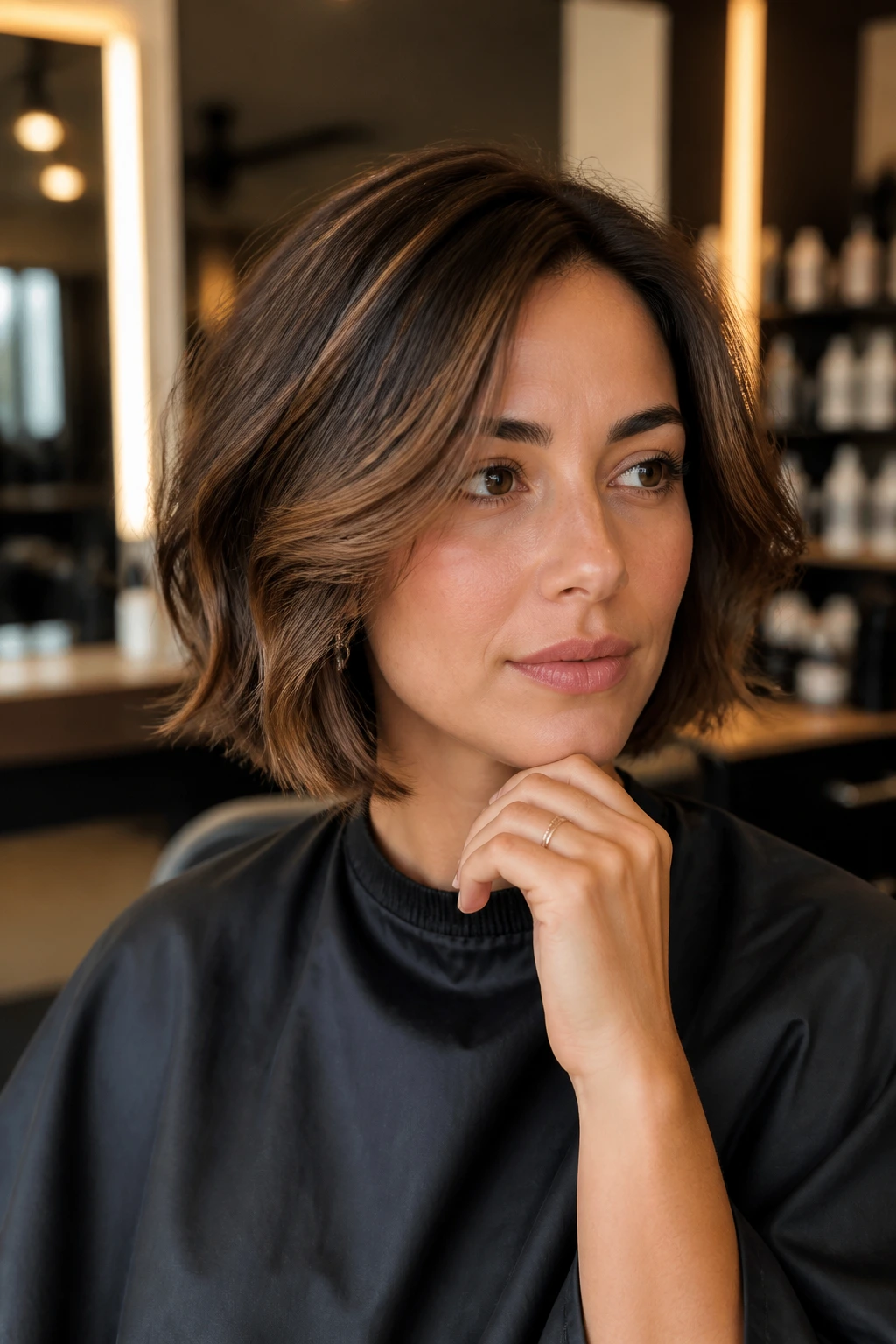
Bring photos, yes, but bring the right kind. Show pictures of people with the same density, curl pattern, and forehead shape if you can. A jaw-length French bob on pin-straight hair tells a different story than the same cut on thick waves, and the difference matters.
Use plain words at the chair. Say where you want the bob to land — chin, jaw, or collarbone — and tell them whether you want the layers to show or hide. If you air-dry most days, say that. If you heat-style every morning, say that too. The cut should match your routine, not the other way around.
A phrase I like is: “Keep the perimeter strong, but remove enough weight for movement.” It gives the stylist a real target. If you want curtain bangs, say how much forehead you want left visible. If you have fine hair, ask them to avoid over-thinning the ends. If you have thick hair, ask where the bulk needs to come out. Specific beats dramatic every time.
Tools That Help the Cut Move at Home
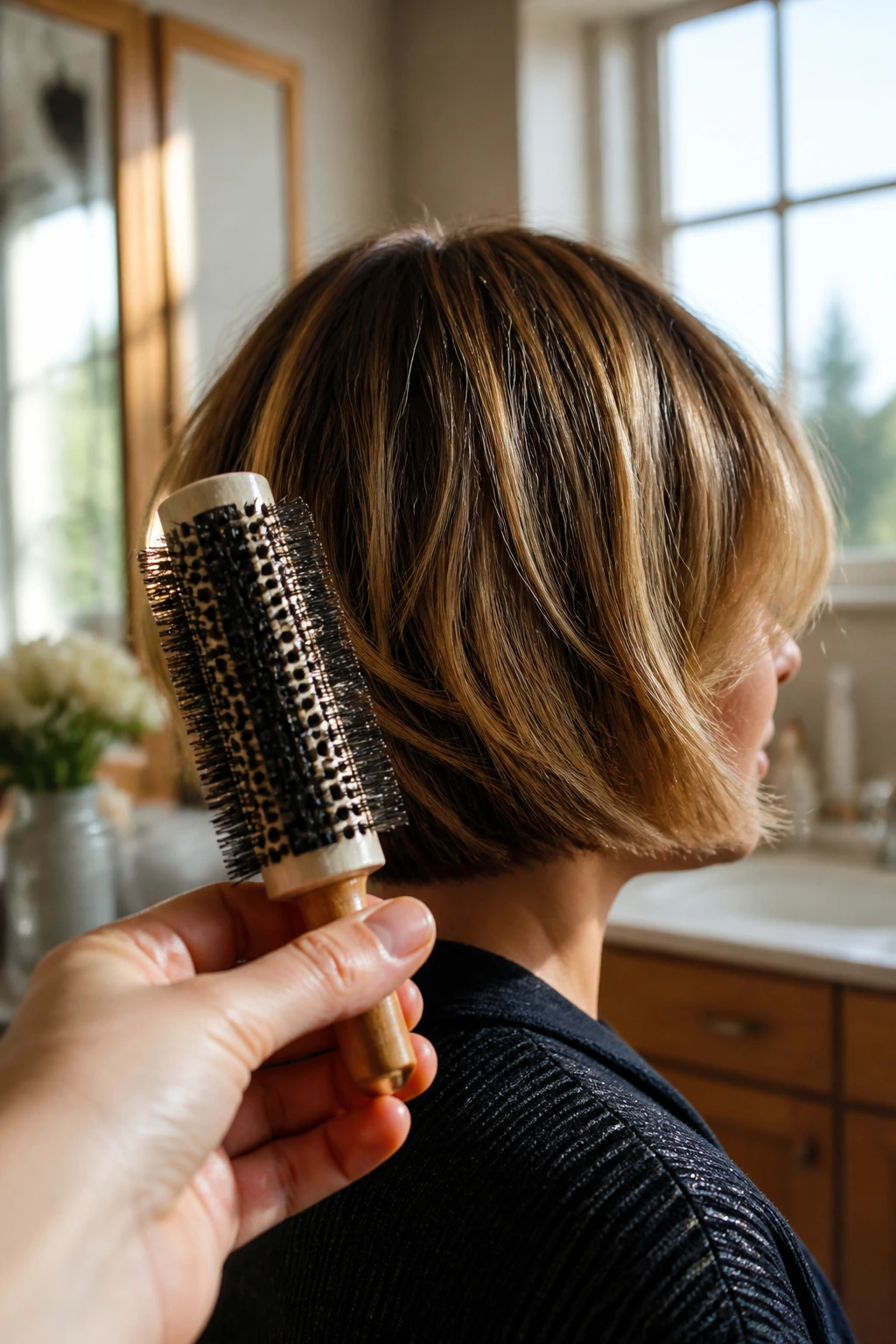
- Blow dryer with a narrow nozzle: Keeps the airflow controlled so the layers don’t puff in every direction.
- 1-inch or 1.25-inch round brush: Useful for bending the ends under or out without making the bob look too set.
- Flat iron with rounded edges: Good for a quick turn at the front pieces and the ends.
- Wide-tooth comb: Helps distribute product through wavy or curly layered bobs without flattening them.
- Diffuser attachment: A must for curly and wavy versions if you want the shape to hold without frizz.
- Texturizing spray or dry texture mist: Adds separation to piecey or shaggy bobs without wetting the hair down.
- Light mousse: Best for root lift on fine hair or for air-dried styles that need a little structure.
- Heat protectant: Non-negotiable if you use hot tools more than once a week.
- Mirror with a second angle: Handy for checking the back and nape so the cut does not start bulking up there.
How to Style These Bobs on Busy Mornings

Polished finish: Rough-dry the roots first, then use a round brush only on the top layer and the front pieces. That gives you lift where it matters and saves time everywhere else. The ends should bend, not curl into perfect rings.
Air-dried texture: Put mousse or a light curl cream into damp hair, scrunch once, and leave it alone. When it is about 90 percent dry, shake the roots with your fingers and stop. The point is to keep the layers visible without turning the surface fuzzy.
Quick fix for flat roots: Flip the part to the opposite side while the hair is still warm from the dryer. That tiny move gives the top a little lift and makes the whole bob look fuller. Works on straight and wavy hair. It is almost annoyingly simple.
Going out version: Bend just the front pieces with a flat iron and leave the rest a little loose. That keeps the movement around the face, where people actually notice it, without spending twenty minutes on the back of your head.
Extra Styling Tips and Texture Boosters
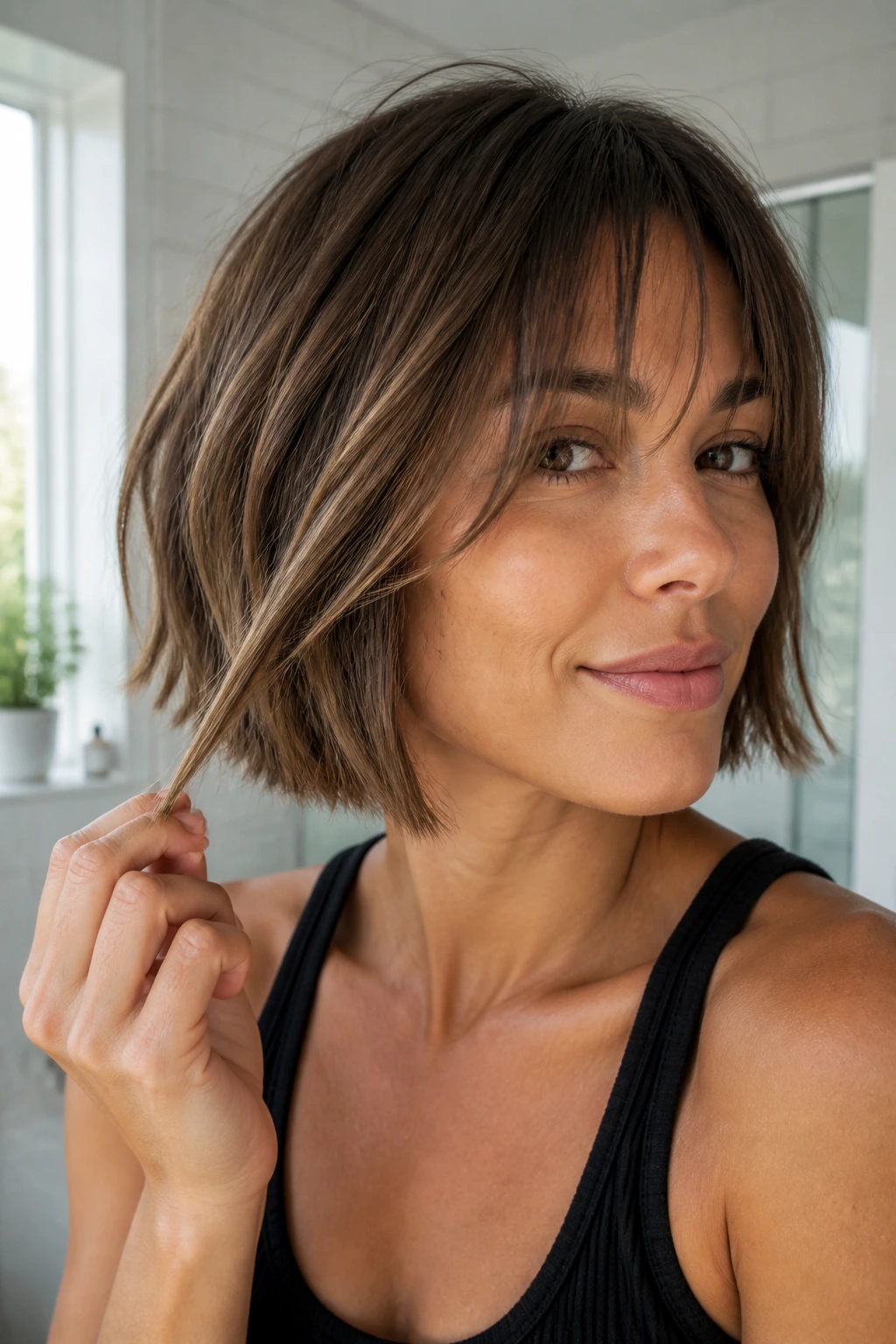
Root lift: If your bob goes flat at the crown, lift a one-inch section at the root with the nozzle of the dryer and aim the air upward for a few seconds. That extra bit of support changes the whole silhouette. You do not need a mountain of spray.
Piece separation: For bobs that should look textured rather than smooth, warm a pea-sized amount of matte paste between your fingers and touch only the ends. Don’t drag it through the roots. That’s how a clean cut turns greasy fast.
Soft bend: The easiest bend comes from wrapping the last inch around a round brush for a few seconds, then releasing it while it’s still warm. Not curled. Bent. That distinction matters.
Tuck and turn: If the cut feels too plain, tuck one side behind the ear, leave the other side loose, and let the layers fall diagonally across the cheek. It changes the balance without changing the haircut. Cheap trick. Good result.
Keeping the Shape Between Trims
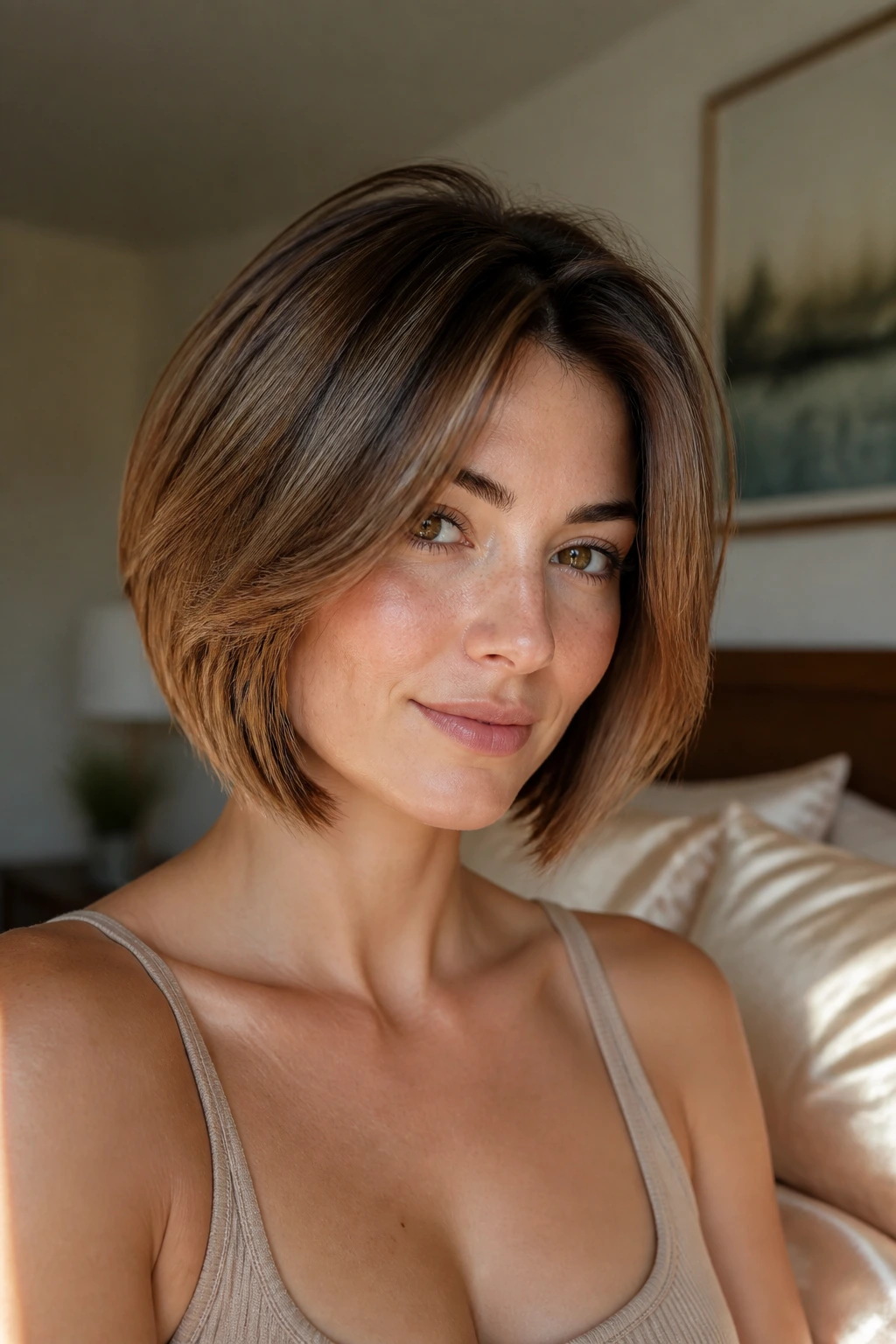
A layered bob usually needs a trim every 6 to 8 weeks if the shape is short and precise. If you wear a longer lob, you can usually stretch that to 8 to 10 weeks before the front loses its line. Bangs, if you have them, often want a tidy-up sooner than the rest of the cut.
Between trims, the goal is to stop the ends from fraying into a triangle. A light leave-in on the mids, not the roots, helps the hair slip into place without swelling. If the nape starts flipping or sticking, that’s the sign the cut is growing out of its clean line. Don’t wait until it looks shapeless. That only makes the salvage job harder.
At home, a silk pillowcase can cut down on the roughness that makes bobs puff overnight. It sounds fussy. It isn’t. Hair rubbing against cotton at the neck gets scruffy faster than people expect, especially on shorter cuts. A quick brush in the morning and a little root mist are usually enough to reset the shape.
Common Mistakes That Flatten a Layered Bob
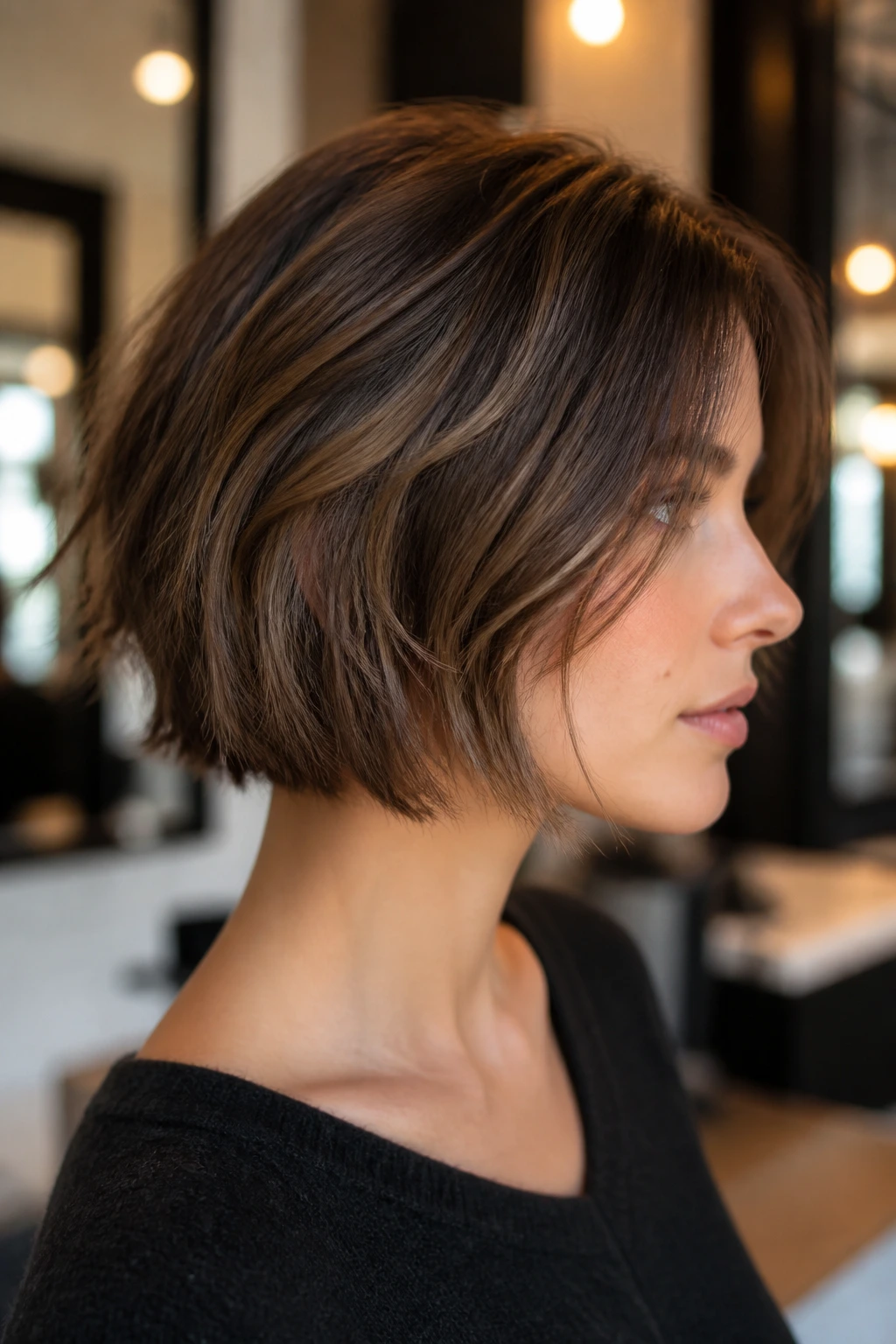
The biggest mistake is asking for “a lot of layers” without saying where the layers should live. That often leads to a cut that is short at the wrong spots and heavy where it should move. The fix is simple: keep the perimeter clean and ask for controlled weight removal, not random chopping.
Another problem is over-thinning thick hair. The ends look airy in the chair, then go fuzzy by day two. If your hair is dense, you want shape removal, not a shredded surface. Point cutting and internal layering usually behave better than aggressive thinning shears.
Fine hair gets hurt by the opposite mistake: too many visible layers. The haircut looks cute the first day, then the bottom starts to look see-through. A fuller edge and hidden layers work better there. And if your stylist cuts curly hair wet without checking the shrinkage pattern, the shape can come out shorter and wider than planned. That’s a common mess. Ask how they handle your texture before they start.
Variations and Adaptations to Try

The Low-Maintenance Bob: Keep the perimeter blunt, leave the layers hidden, and let the hair air-dry into its own shape. This version works well if you do not want to fight your texture every morning.
The Polished Office Bob: Ask for a soft graduated back, a neat side part, and minimal face framing. It keeps the movement subtle and the finish clean enough for a more formal setting.
The Texture-Heavy Bob: Go choppy, piecey, and slightly shaggy through the crown. This is the version for people who like separation and a little edge in the outline.
The Grow-Out Lob: Start with collarbone length and keep the layers long. It gives you movement now and enough room to grow into something even softer later.
The Curly-Specific Bob: Cut it around the curl pattern, keep the top a touch longer, and avoid over-cutting the crown. That keeps the shape rounded instead of triangular.
Frequently Asked Questions
Will layered bob haircuts work on fine hair?
Yes, if the layers are handled carefully. Fine hair usually does better with hidden layers and a fuller perimeter, because too much surface layering makes the ends look thin.
Are layered bobs good for thick hair?
Very, as long as the weight is removed in the right places. Thick hair usually needs internal shaping through the mids and nape so the bottom does not balloon out.
Can I wear a layered bob if my hair is curly?
Absolutely, but the cut should follow the curl pattern. A curly bob cut without shrinkage in mind can come out too wide or too short.
How often should a layered bob be trimmed?
Shorter bobs usually need attention every 6 to 8 weeks. Longer bob lengths can often go 8 to 10 weeks before the shape starts to soften too much.
What if I want movement but hate choppy ends?
Ask for invisible layers, internal layering, or soft graduation. Those techniques create swing without making the edge look broken up.
Can I air-dry a layered bob and still have it look finished?
Yes, especially if your hair has natural wave. Use a light mousse or curl cream on damp hair, then leave it alone until it’s about 90 percent dry before you touch it again.
What should I say if I’m nervous about going too short?
Give a length range instead of one fixed number, like jaw to chin or chin to collarbone. That gives the stylist room to adjust for your texture and face shape without guessing.
Why does my bob puff out at the bottom?
Usually the weight line sits too low or too much bulk was left in the wrong place. A small amount of internal shaping near the mids usually fixes that better than trimming the ends shorter and hoping for the best.
Why Layering Gives a Bob Movement Instead of Bulk
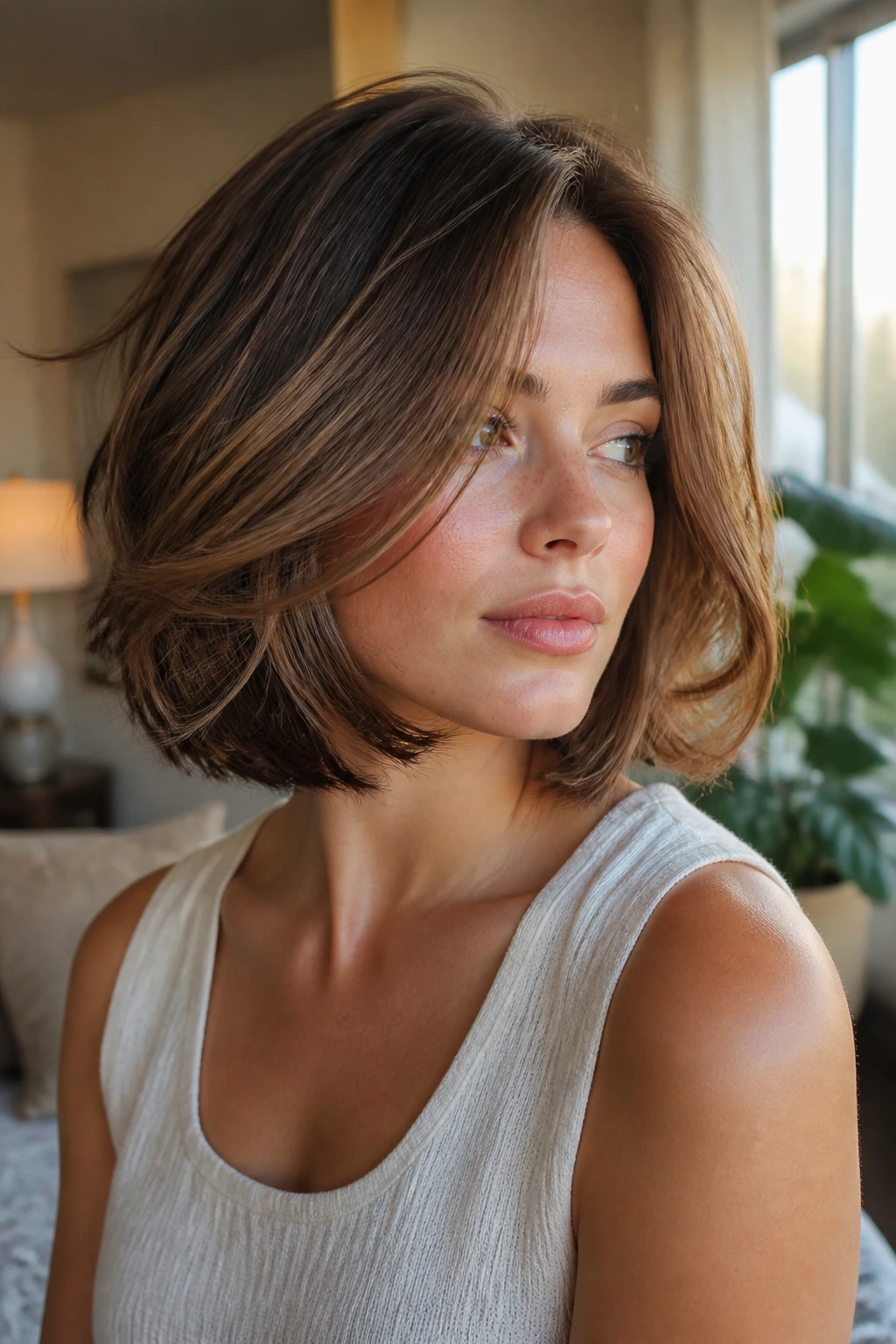
A bob only moves well when the weight is cut with a plan. If every section ends at the same line, the hair sits there like a helmet. If the layers are too short or too aggressive, you get fluff, not motion. The sweet spot lives between those two extremes.
The shape of the cut matters more than people think. A bob can be blunt at the edge and still feel soft if the interior is opened up with controlled layering. That’s why a point-cut end or a hidden layer near the crown can change the whole read of the haircut. The perimeter keeps the bob recognizable. The inside keeps it alive.
Texture changes the math, too. Straight hair shows every layer more clearly, so the cut needs cleaner lines. Wavy hair already has movement, so it needs less help at the ends and more control at the bulk points. Curly hair needs the layers to follow the curl pattern or the whole thing can balloon out at the sides. Same haircut family. Different rules.
Choosing the Right Layered Bob for Your Hair Texture

Fine hair usually behaves better with hidden layers and a fuller edge. That gives the illusion of density while keeping the ends from looking stringy. If your hair is fine and straight, skip anything that sounds heavily feathered. It can go see-through fast.
Thick hair wants weight removed in the middle, not just the bottom. Otherwise the ends swell out and the top lies flat. A stacked bob, a soft feathered bob, or a thick-hair bob with controlled internal layers usually works better than a simple blunt cut. Curly hair needs respect for shrinkage; ask for the shape to be built around the curl, not against it.
Wavy hair is the easiest to over-style and the easiest to get right. A collarbone lob, a broken-up outline, or a face-framing bob with curtain bangs can look good with almost no heat. If your hair has a stubborn cowlick or splits at one side, bring that up before the cut starts. A good stylist will adjust the part and graduation. A bad one will pretend the hair will “settle.” It won’t.
What to Ask Your Stylist Before the First Snip
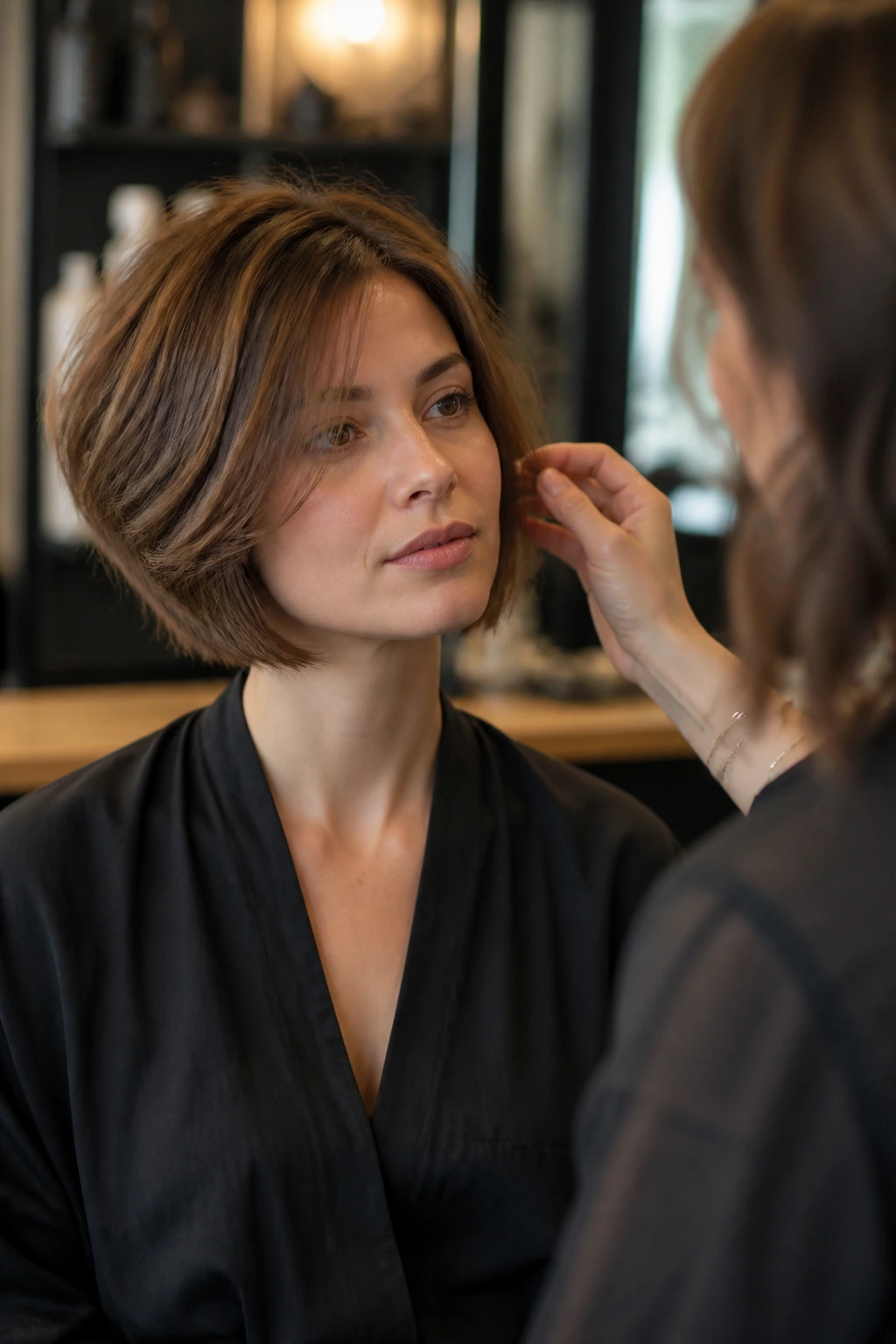
Bring photos, yes, but bring the right kind. Show pictures of people with the same density, curl pattern, and forehead shape if you can. A jaw-length French bob on pin-straight hair tells a different story than the same cut on thick waves, and the difference matters.
Use plain words at the chair. Say where you want the bob to land — chin, jaw, or collarbone — and tell them whether you want the layers to show or hide. If you air-dry most days, say that. If you heat-style every morning, say that too. The cut should match your routine, not the other way around.
A phrase I like is: “Keep the perimeter strong, but remove enough weight for movement.” It gives the stylist a real target. If you want curtain bangs, say how much forehead you want left visible. If you have fine hair, ask them to avoid over-thinning the ends. If you have thick hair, ask where the bulk needs to come out. Specific beats dramatic every time.
Tools That Help the Cut Move at Home
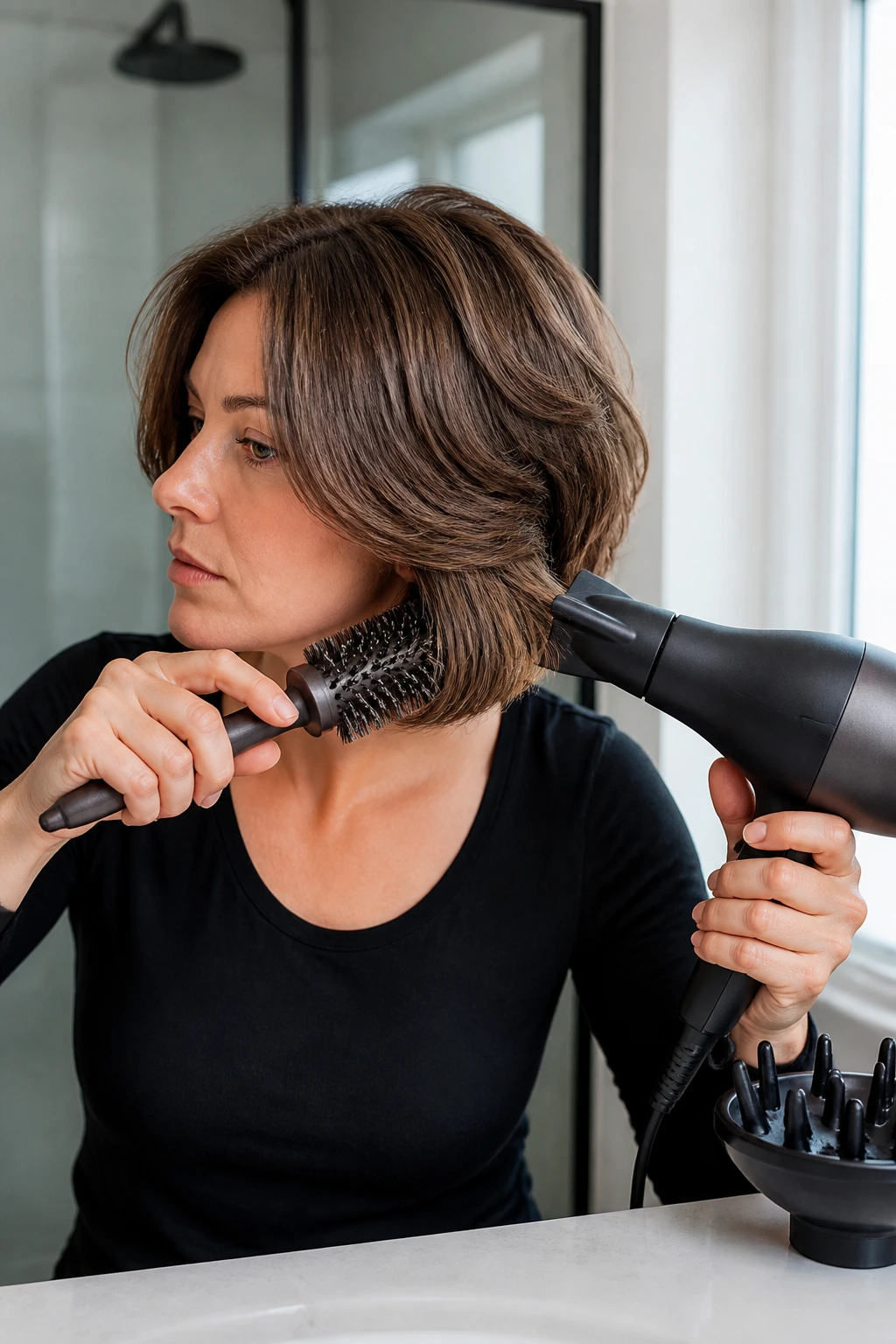
- Blow dryer with a narrow nozzle: Keeps the airflow controlled so the layers don’t puff in every direction.
- 1-inch or 1.25-inch round brush: Useful for bending the ends under or out without making the bob look too set.
- Flat iron with rounded edges: Good for a quick turn at the front pieces and the ends.
- Wide-tooth comb: Helps distribute product through wavy or curly layered bobs without flattening them.
- Diffuser attachment: A must for curly and wavy versions if you want the shape to hold without frizz.
- Texturizing spray or dry texture mist: Adds separation to piecey or shaggy bobs without wetting the hair down.
- Light mousse: Best for root lift on fine hair or for air-dried styles that need a little structure.
- Heat protectant: Non-negotiable if you use hot tools more than once a week.
- Mirror with a second angle: Handy for checking the back and nape so the cut does not start bulking up there.
How to Style These Bobs on Busy Mornings

Polished finish: Rough-dry the roots first, then use a round brush only on the top layer and the front pieces. That gives you lift where it matters and saves time everywhere else. The ends should bend, not curl into perfect rings.
Air-dried texture: Put mousse or a light curl cream into damp hair, scrunch once, and leave it alone. When it is about 90 percent dry, shake the roots with your fingers and stop. The point is to keep the layers visible without turning the surface fuzzy.
Quick fix for flat roots: Flip the part to the opposite side while the hair is still warm from the dryer. That tiny move gives the top a little lift and makes the whole bob look fuller. Works on straight and wavy hair. It is almost annoyingly simple.
Going out version: Bend just the front pieces with a flat iron and leave the rest a little loose. That keeps the movement around the face, where people actually notice it, without spending twenty minutes on the back of your head.
Extra Styling Tips and Texture Boosters

Root lift: If your bob goes flat at the crown, lift a one-inch section at the root with the nozzle of the dryer and aim the air upward for a few seconds. That extra bit of support changes the whole silhouette. You do not need a mountain of spray.
Piece separation: For bobs that should look textured rather than smooth, warm a pea-sized amount of matte paste between your fingers and touch only the ends. Don’t drag it through the roots. That’s how a clean cut turns greasy fast.
Soft bend: The easiest bend comes from wrapping the last inch around a round brush for a few seconds, then releasing it while it’s still warm. Not curled. Bent. That distinction matters.
Tuck and turn: If the cut feels too plain, tuck one side behind the ear, leave the other side loose, and let the layers fall diagonally across the cheek. It changes the balance without changing the haircut. Cheap trick. Good result.
Keeping the Shape Between Trims

A layered bob usually needs a trim every 6 to 8 weeks if the shape is short and precise. If you wear a longer lob, you can usually stretch that to 8 to 10 weeks before the front loses its line. Bangs, if you have them, often want a tidy-up sooner than the rest of the cut.
Between trims, the goal is to stop the ends from fraying into a triangle. A light leave-in on the mids, not the roots, helps the hair slip into place without swelling. If the nape starts flipping or sticking, that’s the sign the cut is growing out of its clean line. Don’t wait until it looks shapeless. That only makes the salvage job harder.
At home, a silk pillowcase can cut down on the roughness that makes bobs puff overnight. It sounds fussy. It isn’t. Hair rubbing against cotton at the neck gets scruffy faster than people expect, especially on shorter cuts. A quick brush in the morning and a little root mist are usually enough to reset the shape.
Common Mistakes That Flatten a Layered Bob
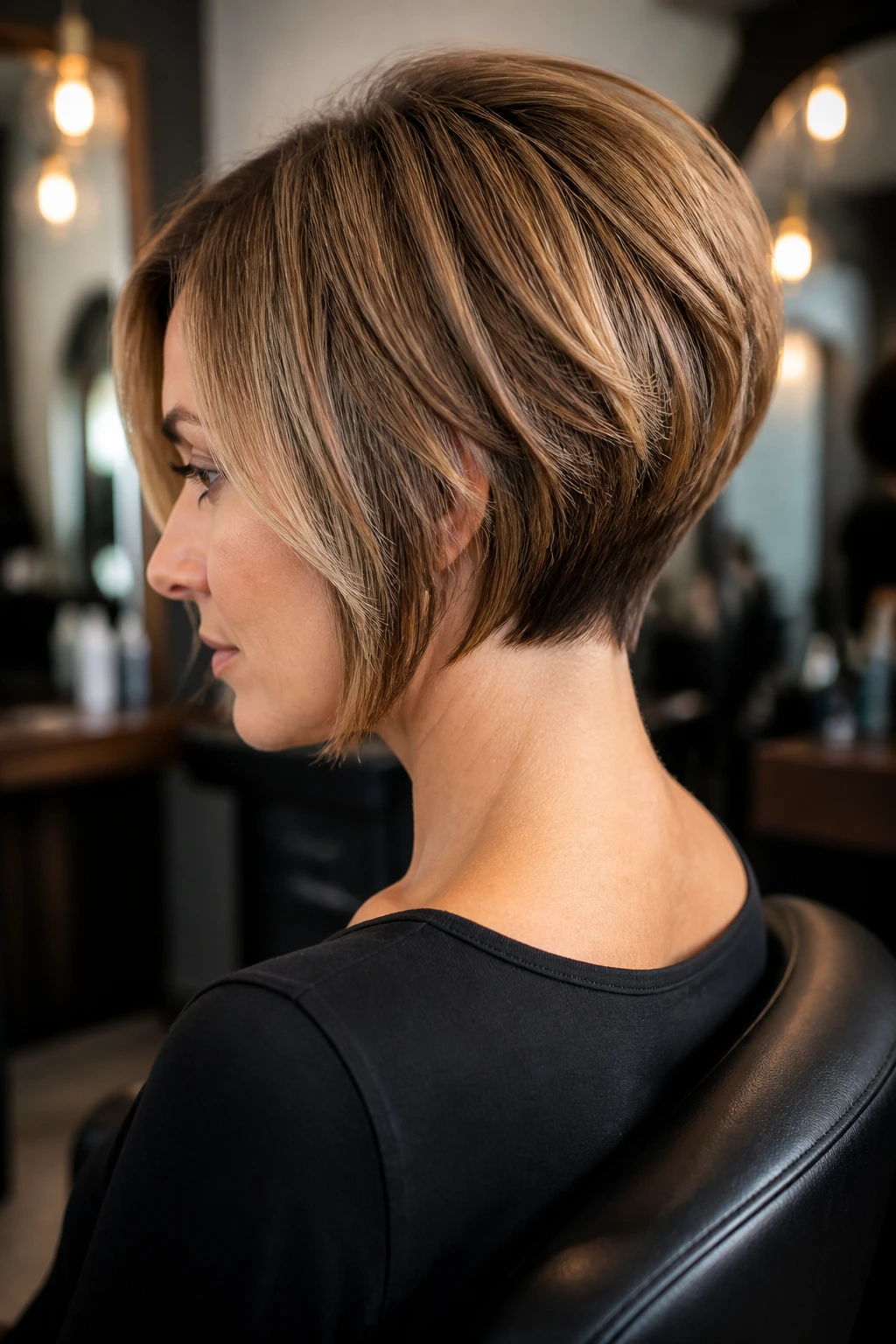
The biggest mistake is asking for “a lot of layers” without saying where the layers should live. That often leads to a cut that is short at the wrong spots and heavy where it should move. The fix is simple: keep the perimeter clean and ask for controlled weight removal, not random chopping.
Another problem is over-thinning thick hair. The ends look airy in the chair, then go fuzzy by day two. If your hair is dense, you want shape removal, not a shredded surface. Point cutting and internal layering usually behave better than aggressive thinning shears.
Fine hair gets hurt by the opposite mistake: too many visible layers. The haircut looks cute the first day, then the bottom starts to look see-through. A fuller edge and hidden layers work better there. And if your stylist cuts curly hair wet without checking the shrinkage pattern, the shape can come out shorter and wider than planned. That’s a common mess. Ask how they handle your texture before they start.
Variations and Adaptations to Try

The Low-Maintenance Bob: Keep the perimeter blunt, leave the layers hidden, and let the hair air-dry into its own shape. This version works well if you do not want to fight your texture every morning.
The Polished Office Bob: Ask for a soft graduated back, a neat side part, and minimal face framing. It keeps the movement subtle and the finish clean enough for a more formal setting.
The Texture-Heavy Bob: Go choppy, piecey, and slightly shaggy through the crown. This is the version for people who like separation and a little edge in the outline.
The Grow-Out Lob: Start with collarbone length and keep the layers long. It gives you movement now and enough room to grow into something even softer later.
The Curly-Specific Bob: Cut it around the curl pattern, keep the top a touch longer, and avoid over-cutting the crown. That keeps the shape rounded instead of triangular.
Frequently Asked Questions

Will layered bob haircuts work on fine hair?
Yes, if the layers are handled carefully. Fine hair usually does better with hidden layers and a fuller perimeter, because too much surface layering makes the ends look thin.
Are layered bobs good for thick hair?
Very, as long as the weight is removed in the right places. Thick hair usually needs internal shaping through the mids and nape so the bottom does not balloon out.
Can I wear a layered bob if my hair is curly?
Absolutely, but the cut should follow the curl pattern. A curly bob cut without shrinkage in mind can come out too wide or too short.
How often should a layered bob be trimmed?
Shorter bobs usually need attention every 6 to 8 weeks. Longer bob lengths can often go 8 to 10 weeks before the shape starts to soften too much.
What if I want movement but hate choppy ends?
Ask for invisible layers, internal layering, or soft graduation. Those techniques create swing without making the edge look broken up.
Can I air-dry a layered bob and still have it look finished?
Yes, especially if your hair has natural wave. Use a light mousse or curl cream on damp hair, then leave it alone until it’s about 90 percent dry before you touch it again.
What should I say if I’m nervous about going too short?
Give a length range instead of one fixed number, like jaw to chin or chin to collarbone. That gives the stylist room to adjust for your texture and face shape without guessing.
Why does my bob puff out at the bottom?
Usually the weight line sits too low or too much bulk was left in the wrong place. A small amount of internal shaping near the mids usually fixes that better than trimming the ends shorter and hoping for the best.
Soft Shape, Clean Lines
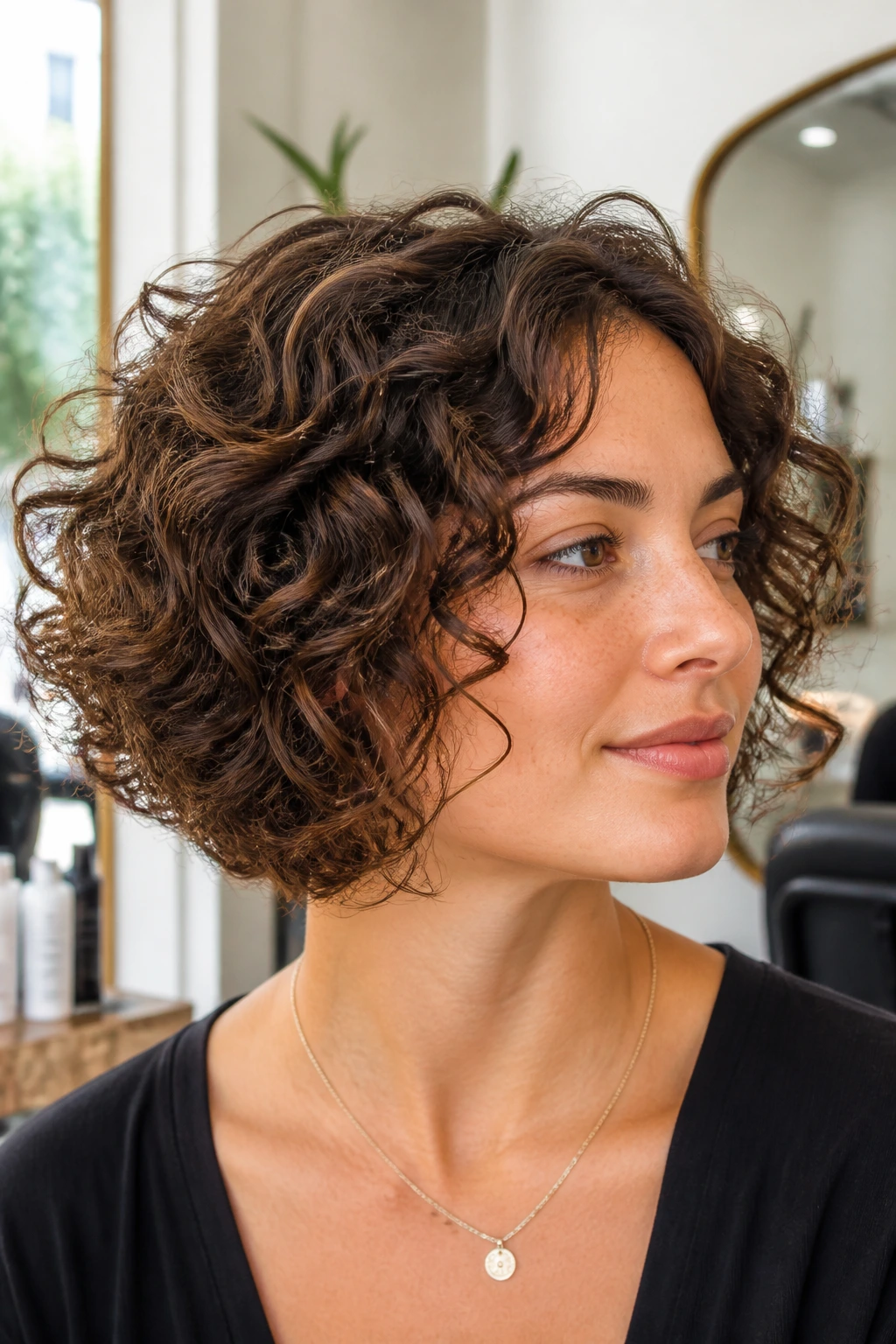
A good layered bob haircut does two things at once: it gives you a shape that feels clean in the mirror and movement that shows up when you walk past a window or turn your head. That is the part people remember. Not the exact number of inches. Not the product label. The swing.
If you choose the version that fits your texture, keep the outline honest, and avoid the temptation to over-layer everything, the cut does a lot of work for you. And that’s the nice part. A bob with soft movement does not need to be dramatic to feel finished. It just needs the right weight in the right places, then a little room to breathe.
