



Fine hair after 50 doesn’t need a miracle, and it doesn’t need to be bullied into looking thicker with half a can of spray. It needs a cut that respects the strand. The best bob haircuts for fine hair over 50 do one simple thing very well: they make the ends look denser, keep the crown from collapsing, and give the whole head a cleaner outline.
The wrong bob is easy to spot. It sits too long, gets overly thinned out at the bottom, and turns into a soft little see-through veil by noon. Fine hair likes a sharper edge. It likes a line you can actually see in a mirror from across the room. And when the shape is right, you don’t have to fight it every morning.
There’s also a sweet spot with age that people miss. A bob can skim the jaw, show the neck, soften the profile, and still feel modern without trying too hard. That matters when hair has changed texture, density, or growth pattern over time. A good cut can make all of that work for you. A bad one makes you reach for a hat.
Why These Bob Haircuts for Fine Hair Over 50 Work So Well

- The edge does the heavy lifting: A blunt or softly rounded perimeter makes fine hair look fuller because the eye sees a clean end line instead of wispy, broken strands.
- Lift comes from shape, not volume spray: A little graduation at the back or a side part can raise the roots without making the hair look teased and stiff.
- You can adjust the length to your density: A chin-length cut, a collarbone bob, or a shorter stacked shape all solve different fine-hair problems without forcing one answer on everyone.
- Bangs change the whole balance: Wispy fringe, curtain bangs, and side-swept pieces pull attention upward, which helps when the crown is a little flat.
- The styles still look good on day two: Fine hair often falls fast. These cuts keep their outline even when the blow-dry gets softer.
- They work with glasses, gray strands, and changing texture: That combination matters more than people admit, and the right bob handles it without looking fussy.
1. Chin-Length Blunt Bob
This is the cleanest answer when the ends of your hair look thin no matter what you do. A chin-length blunt bob creates a hard, visible edge right where the eye wants it, and that makes fine hair look denser than it really is. If your hair is straight or only slightly wavy, this cut has a crispness that feels honest, not severe.
Ask for the perimeter to sit right at the chin or just below it, with very little internal layering. If the stylist wants to shave off bulk, stop them before they go too far. Fine hair usually needs weight, not feathering, and the blunt line is what keeps the shape from evaporating by the second day.
2. Soft A-Line Bob
A slight angle changes everything. A soft A-line bob is a little shorter in the back and a touch longer in front, which gives the face some movement while still keeping the back from dragging the whole cut down. For fine hair, that tiny difference in length can create the sense of lift without turning the style into a dramatic wedge.
This version works well if you want the neck to feel open but not exposed. It’s a good middle ground when chin length feels too short and shoulder length starts looking tired. Keep the front pieces long enough to skim the jaw, not hang below the collarbone. Past that point, fine hair often loses the shape that makes the cut work in the first place.
3. Stacked Bob at the Nape
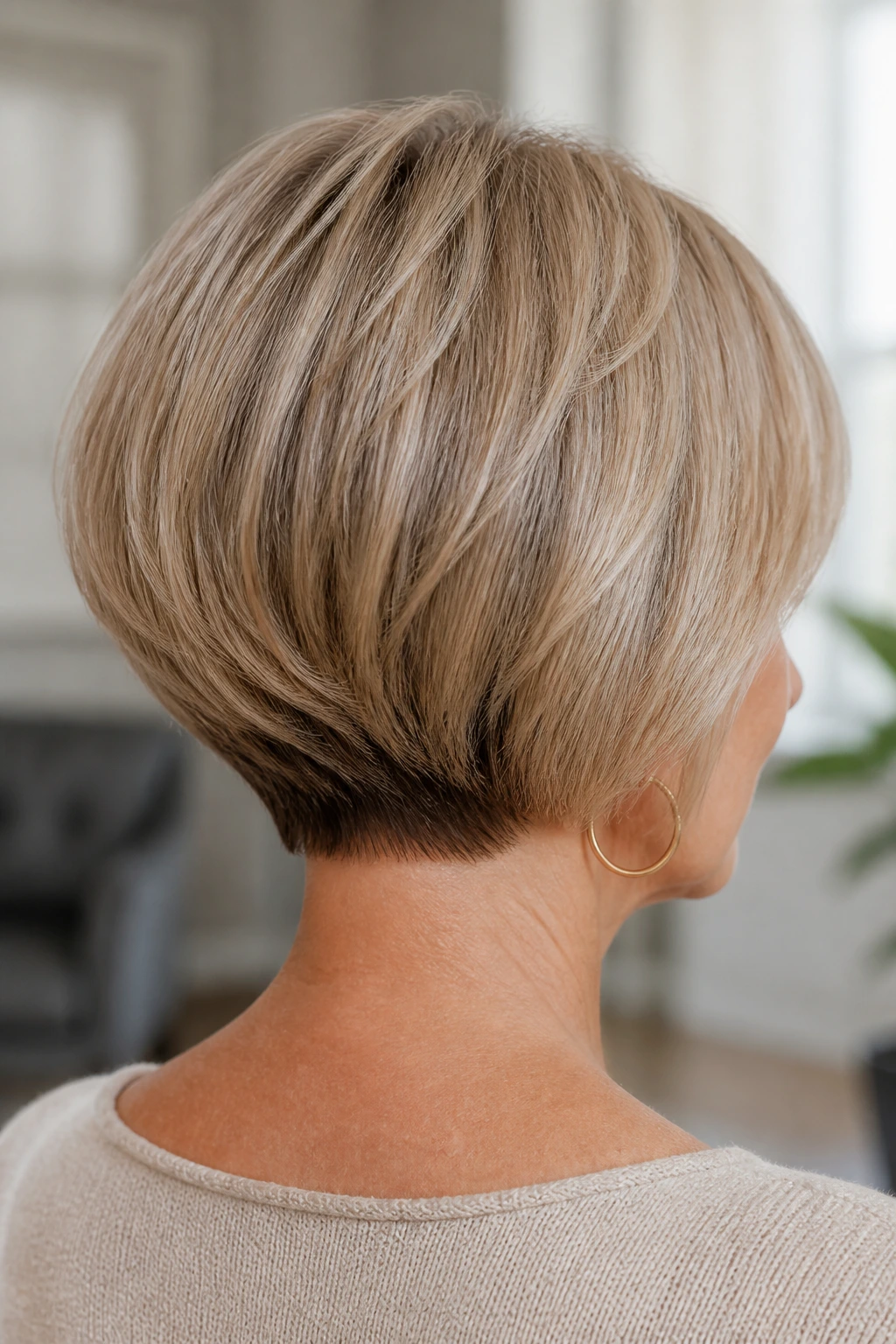
If the crown goes flat the second you step outside, stack the back. A stacked bob builds gentle graduation at the nape, so the hair sits higher at the back of the head and creates a little lift where fine hair usually collapses. Done well, it looks structured; done badly, it looks like a helmet. The difference is in how soft the graduation is.
The trick is to keep the stack controlled. You want shape, not a staircase. Ask for a clean curve through the back and shorter layers only where they support the outline. This cut is especially useful if your hair grows in a flat panel at the back and refuses to keep volume at the root. It makes the head look better balanced from the side, which is where many bobs either shine or fail.
4. French Bob with Micro Bangs
Short, cheekbone-grazing, and a little bit cheeky — this cut has personality. A French bob with micro bangs sits around the mouth or jaw and pairs with a short fringe that opens the face fast. On fine hair, the short length keeps the ends from getting stringy, and the bangs pull the focus up where the hair can still look full.
This is not the cut for someone who wants to hide behind their hair. It’s sharper than that. But if your hair lies flat and you like a style that looks deliberate even when it’s slightly messy, it has real charm. Keep the bangs light and textured, not chopped into a heavy block, or the whole thing can feel too severe for fine strands.
5. Side-Part Bob with Feathered Ends
A side part can cheat the eye in the nicest way. It creates lift on the heavier side and gives the roots a direction, which fine hair often needs more than product. Add feathered ends, and the result is a bob that moves a little without losing its shape.
This is one of the easiest bobs to live with because it doesn’t depend on perfection. You can blow-dry it smooth or wear it with a soft bend. The important part is that the feathering stays light at the tips, not carved into wisps halfway up the head. If the ends get too airy, the cut starts looking thin instead of soft.
6. Layered Bob with a Hidden Underlayer
Not all layers are loud. A layered bob with a hidden underlayer removes weight underneath while leaving the surface smoother and fuller, which is exactly what fine hair often needs. You get movement without exposing the scalp or making the ends look moth-eaten.
This one is smart if your hair is fine but also a little dense in the middle, because the hidden cut can take out puffiness where it counts. The surface should still look polished. Ask for internal layers rather than a choppy outside shape, and make sure the stylist leaves enough length around the perimeter to keep the line visible. That balance is the whole point.
7. Collarbone-Length Bob
A collarbone bob gives you a little more room to work with. That matters if you’re not ready to go chin-short or if your face likes some length around it. For fine hair, the danger with longer bobs is limpness, so the cut has to stay blunt or only slightly textured at the ends.
The collarbone length works best when the hair has some natural bend or when you’re willing to use a round brush for five minutes. It’s a good option for anyone who wants versatility — you can tuck it behind the ears, clip one side back, or wear it with a bendy blowout. If your ends are very sparse, keep the cut a touch shorter. A collarbone bob that’s too long can start looking like hair that’s simply been allowed to grow.
8. Jawline Bob with Long Side Bangs
This is the shape I’d pick for someone who wants the jaw softened but not hidden. A jawline bob with long side bangs frames the face in a way that feels easy, especially if the hair around the temples has thinned a bit. The side bang draws the eye diagonally, which adds movement without taking away fullness from the perimeter.
It’s a useful haircut if you wear glasses or have a strong jaw and don’t want the whole look to sit too boxy. The bang should be long enough to sweep without falling into your eyes. Keep the rest of the bob fairly clean; too many short layers will fight the fringe and make the whole cut look busy. This one works because the front and sides talk to each other instead of competing.
9. Razor-Textured Bob
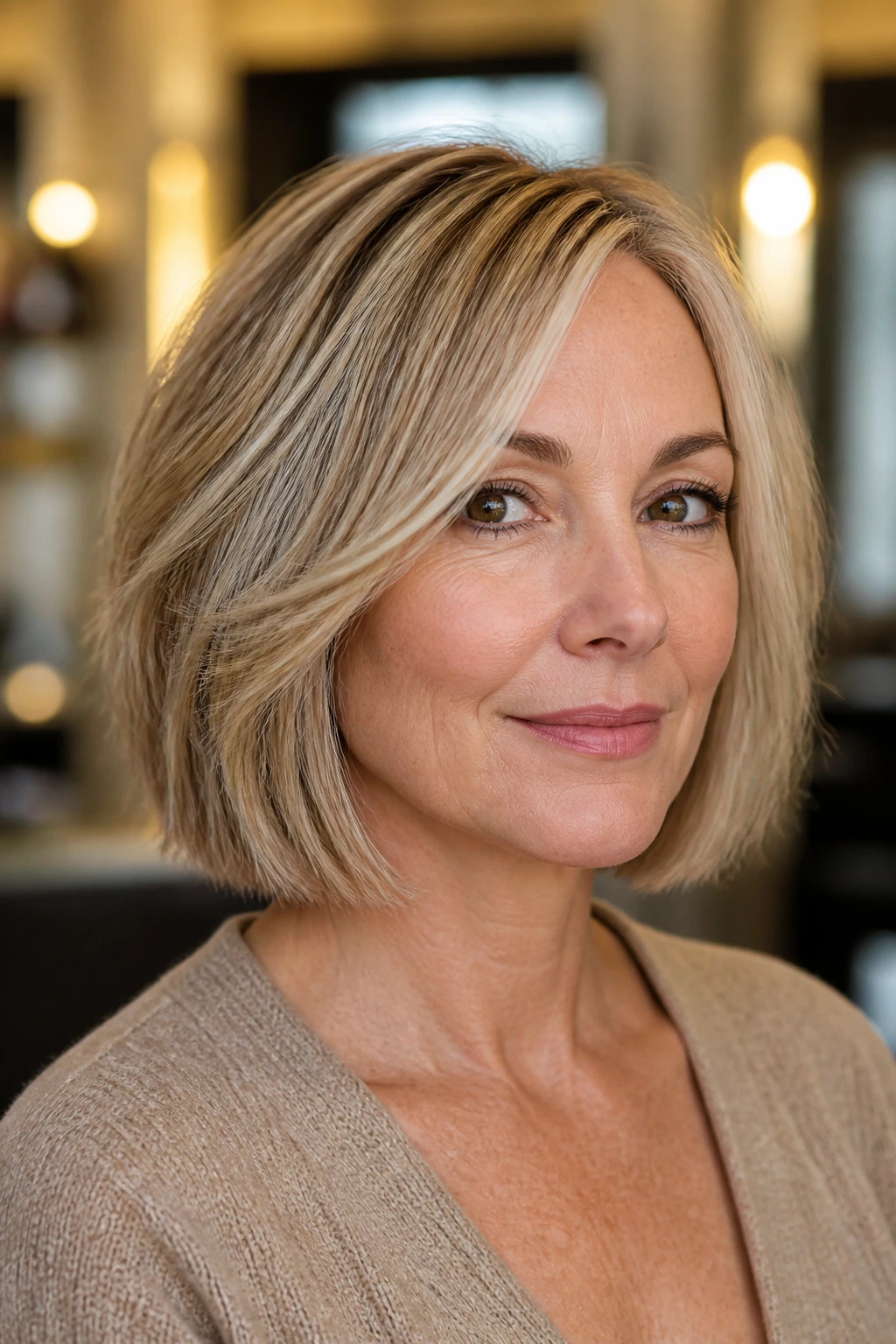
A razor can be a friend or a menace. On the right head of hair, a razor-textured bob gives fine strands a soft, piecey finish that looks modern and light. On the wrong hair, it frays the ends and makes them look thinner than they already are.
That’s why this cut only works with control. Ask for texture in targeted spots, not all over the perimeter. A little razor work around the face or through the mids can keep the bob from feeling blocky, but the ends need enough weight to hold their line. If your hair is extremely fine, I’d be cautious here. A sharp scissor line often looks better than a lot of airy slicing.
10. Inverted Bob
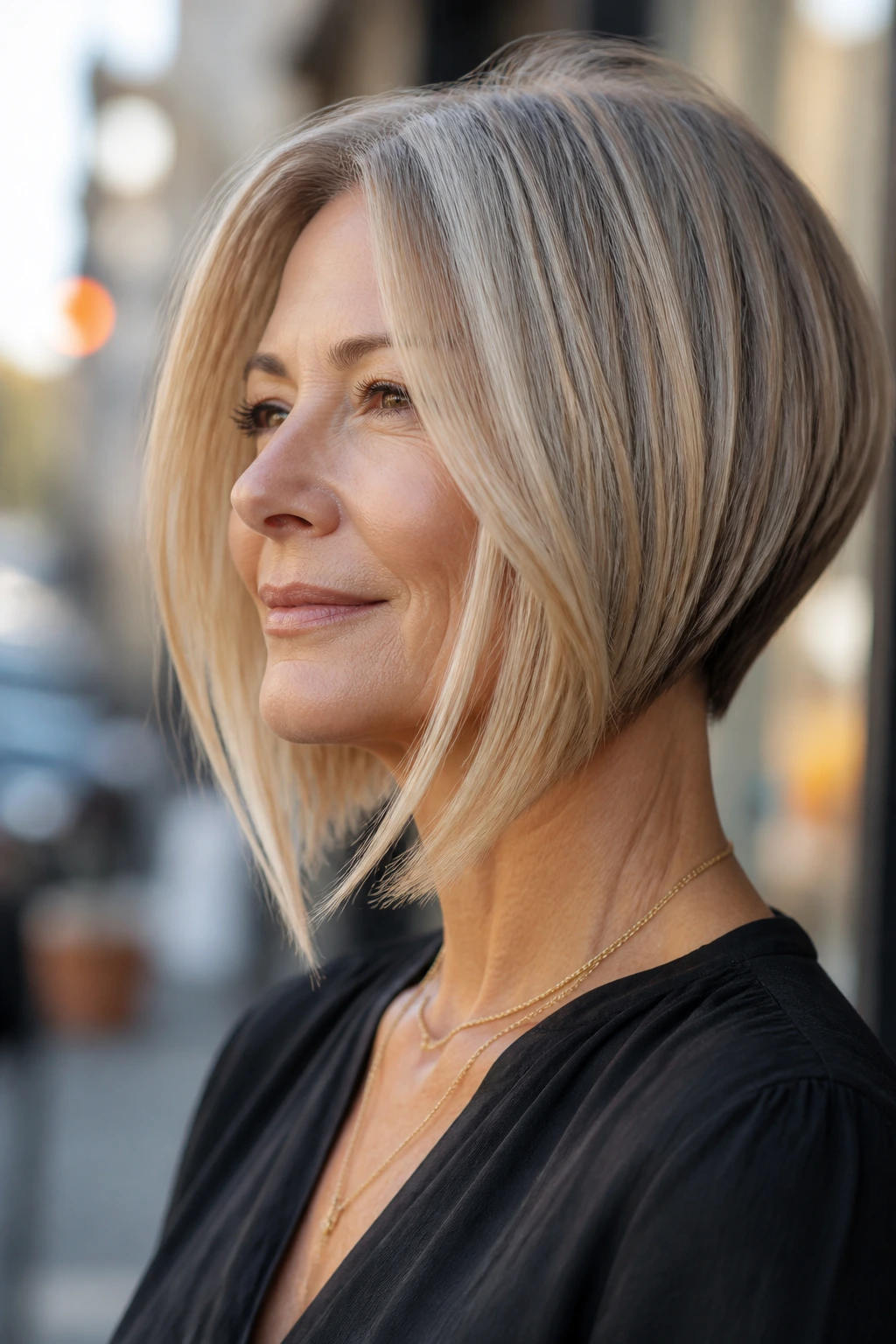
The inverted bob gives you structure from the first glance. It’s shorter in the back and noticeably longer in front, which creates a clean diagonal that fine hair can wear well because the shape is built in. You don’t have to manufacture as much lift with tools; the cut already has movement.
This style flatters a lot of face shapes because it creates length in the front without dragging the whole look downward. It’s especially useful if you want the back to feel light around the neck. Keep the angle controlled. A wild inversion can look dated fast, but a soft one gives you that crisp salon finish people notice from across the room.
11. Curved Bob That Hugs the Jaw
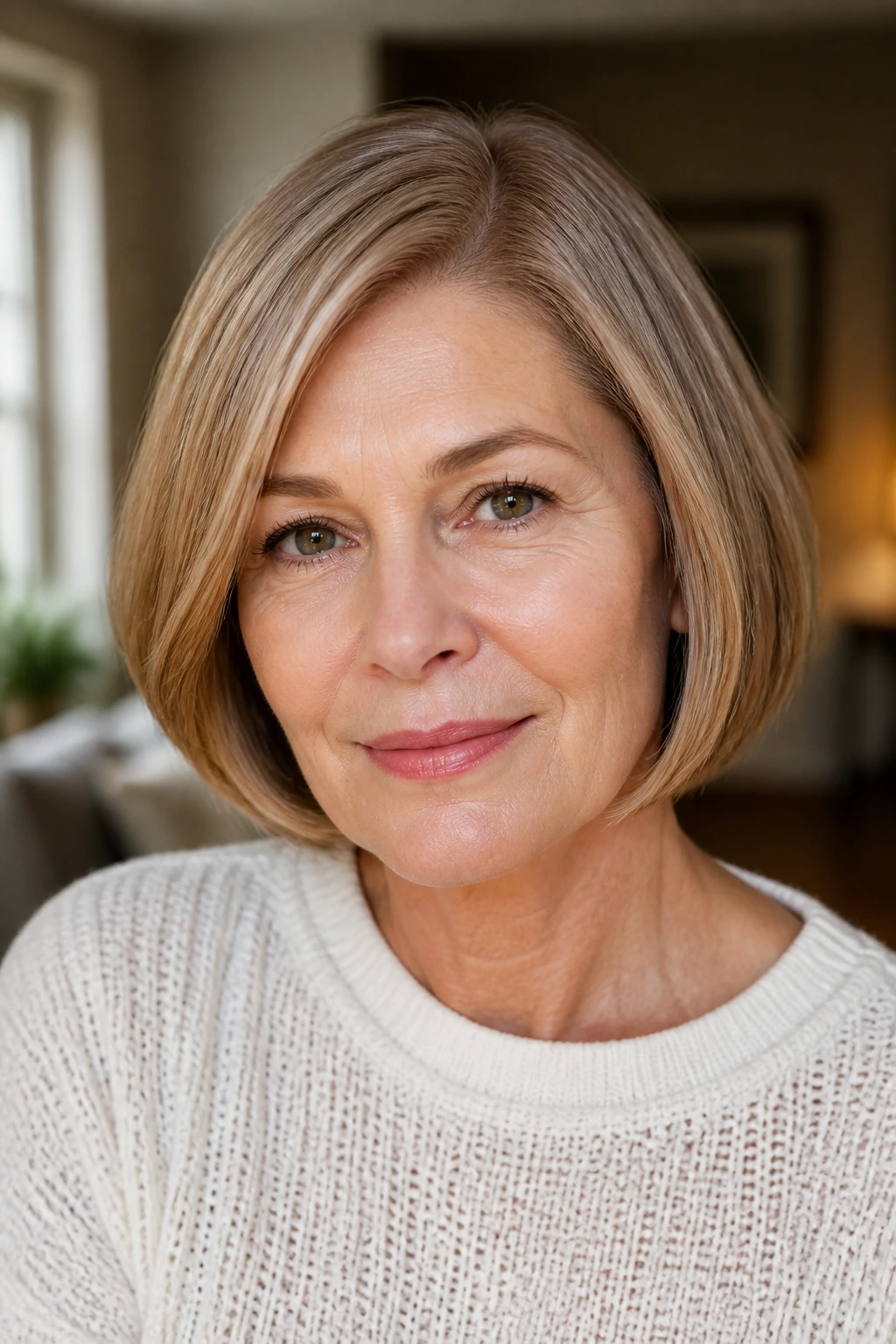
A curved bob is all about the silhouette. Instead of hanging straight, it bends slightly inward so the shape hugs the jaw and cheeks. Fine hair loves that kind of outline because it gives the impression of fullness at the perimeter, where the eye naturally looks first.
This cut is quietly flattering on mature faces because it doesn’t pull too much attention to the ends. The curve softens the profile and keeps the bob from looking flat or square. Blow-drying with a round brush helps, but the real work happens in the cut itself. Ask for a rounded underbevel rather than choppy layers. That keeps the ends together and avoids the see-through look that can ruin a fine-hair bob in one afternoon.
12. Shaggy Bob with Piecey Ends
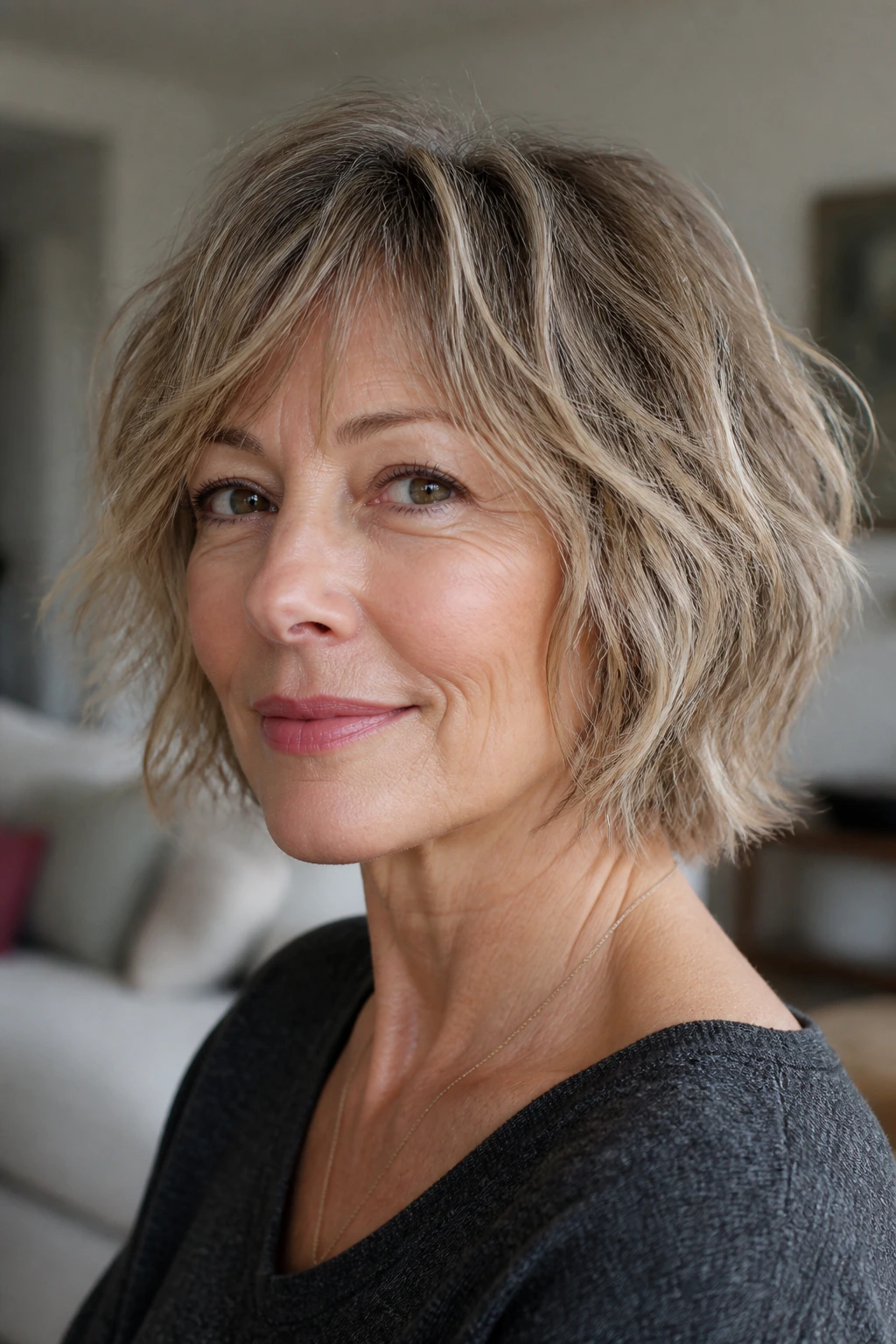
A shaggy bob only works if the hair has enough body to survive the texture. When it does, the result is airy and lived-in, with piecey ends that move instead of lying dead straight. For fine hair, the trick is restraint. Too many layers and the whole thing goes wispy. Too little and it misses the point.
This is best for hair with a touch of natural wave, or for anyone who likes a quicker styling routine. You can scrunch in mousse, rough-dry, and stop before perfection starts to ruin the shape. Ask for texture concentrated in the mids and around the face, not shredded all through the base. That keeps the bob from going hollow.
13. Rounded Bob with Full Crown
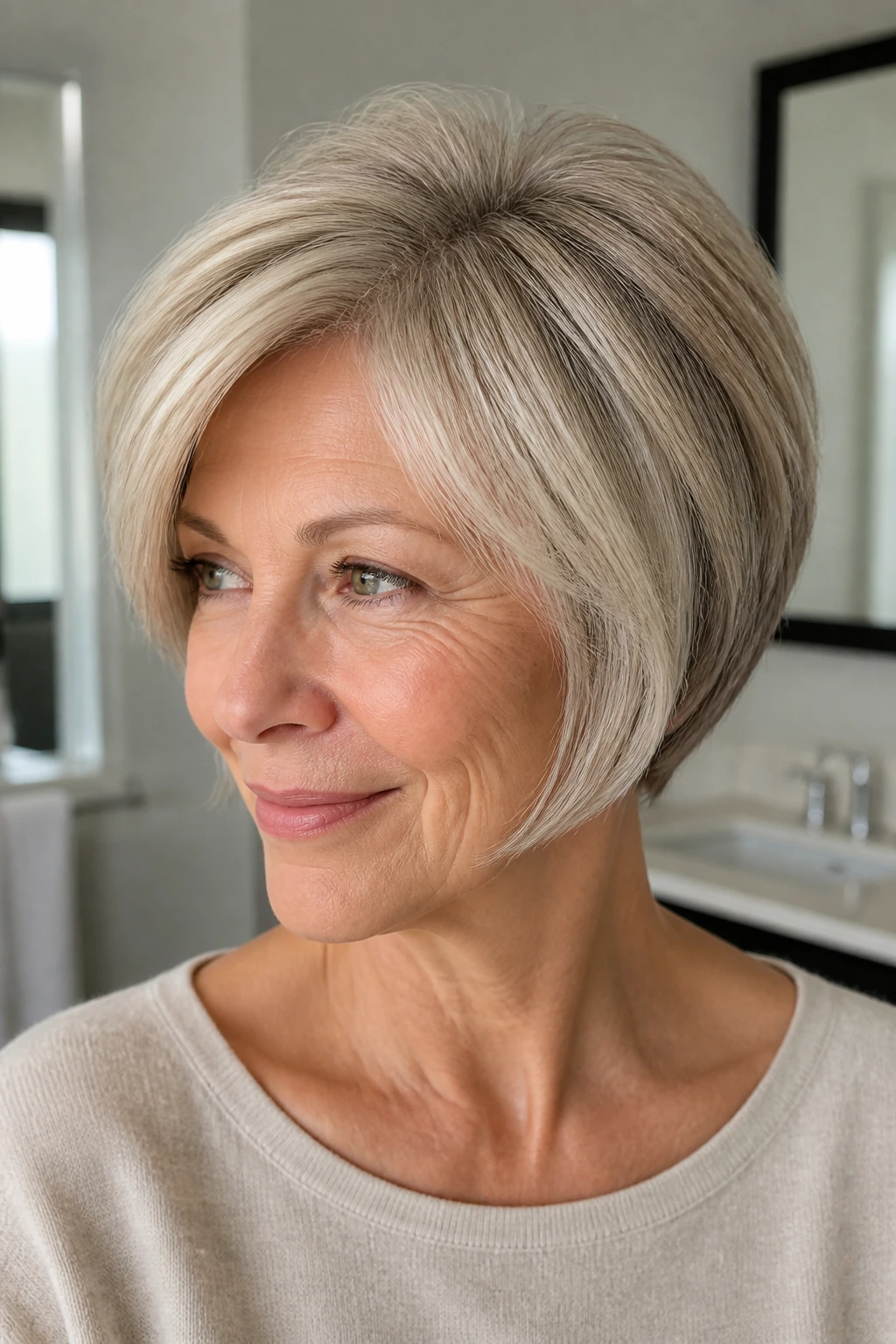
Some fine hair needs help at the top, not the bottom. A rounded bob with a fuller crown builds a little height near the head’s upper curve, which makes the silhouette look more balanced and less top-heavy. It’s a subtle shape, but it matters.
This is a good choice if your hair lies flat at the roots and then puffs out at the ends. The rounded crown gives the head a more complete shape in profile, especially after a blow-dry with a small round brush. Keep the sides controlled and the bottom line tidy. If you go too short in the crown, you can end up with a roundness that feels too puffy. The goal is lift, not a mushroom.
14. Bob with Curtain Bangs
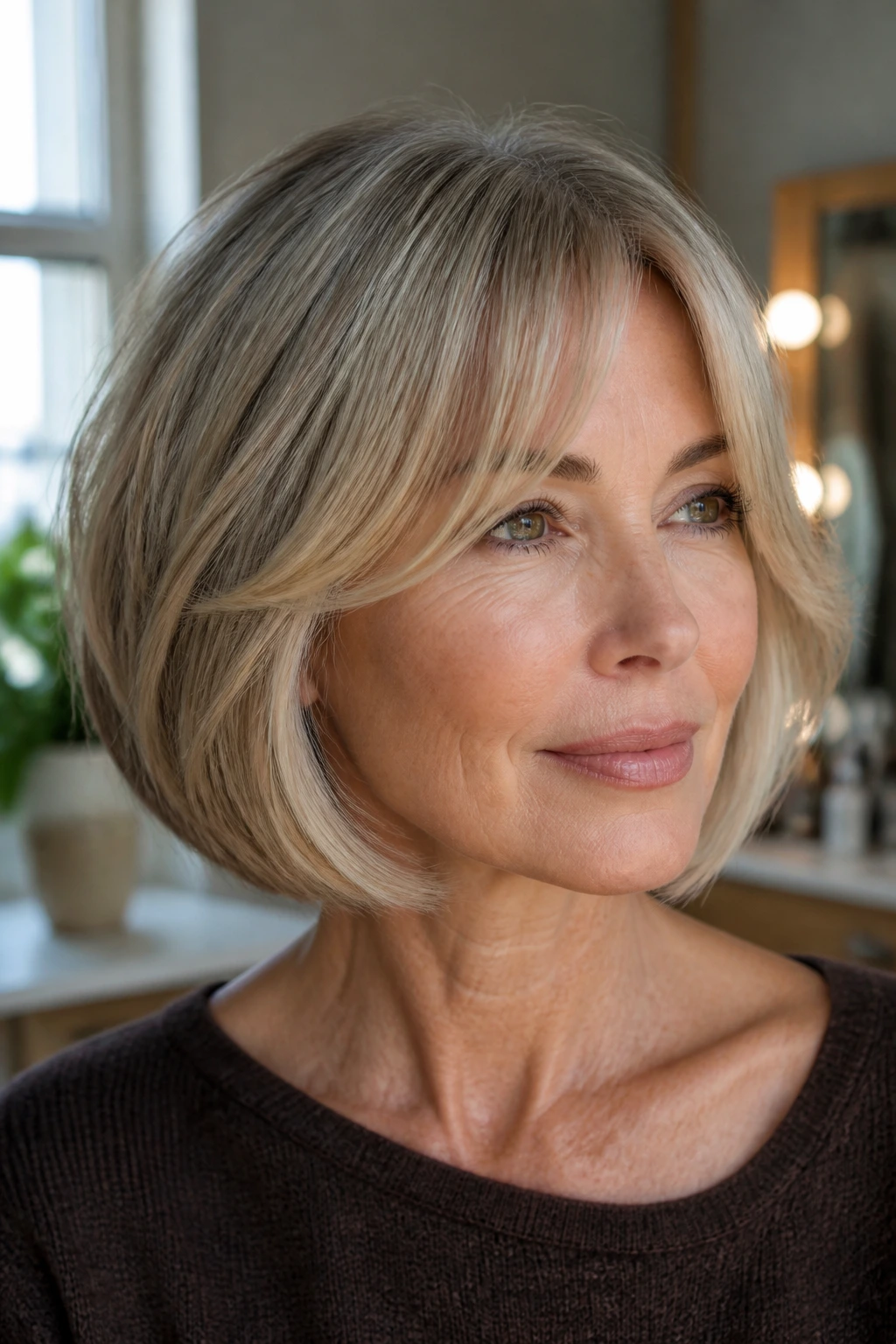
Curtain bangs can do a lot of work without looking like they’re trying. They part in the center and fall softly to either side, which opens the face and keeps the forehead from feeling bare. On a bob, they also help disguise any flatness at the temples.
This cut is especially useful if you want something soft around the eyes but don’t want a full fringe. The bangs should blend into the sides of the bob so they don’t sit there like a separate haircut. That blend is what keeps the style graceful. It’s a good choice for women who want movement around the face and a shape that can grow out without a dramatic line of demarcation every three weeks.
15. Wedge Bob
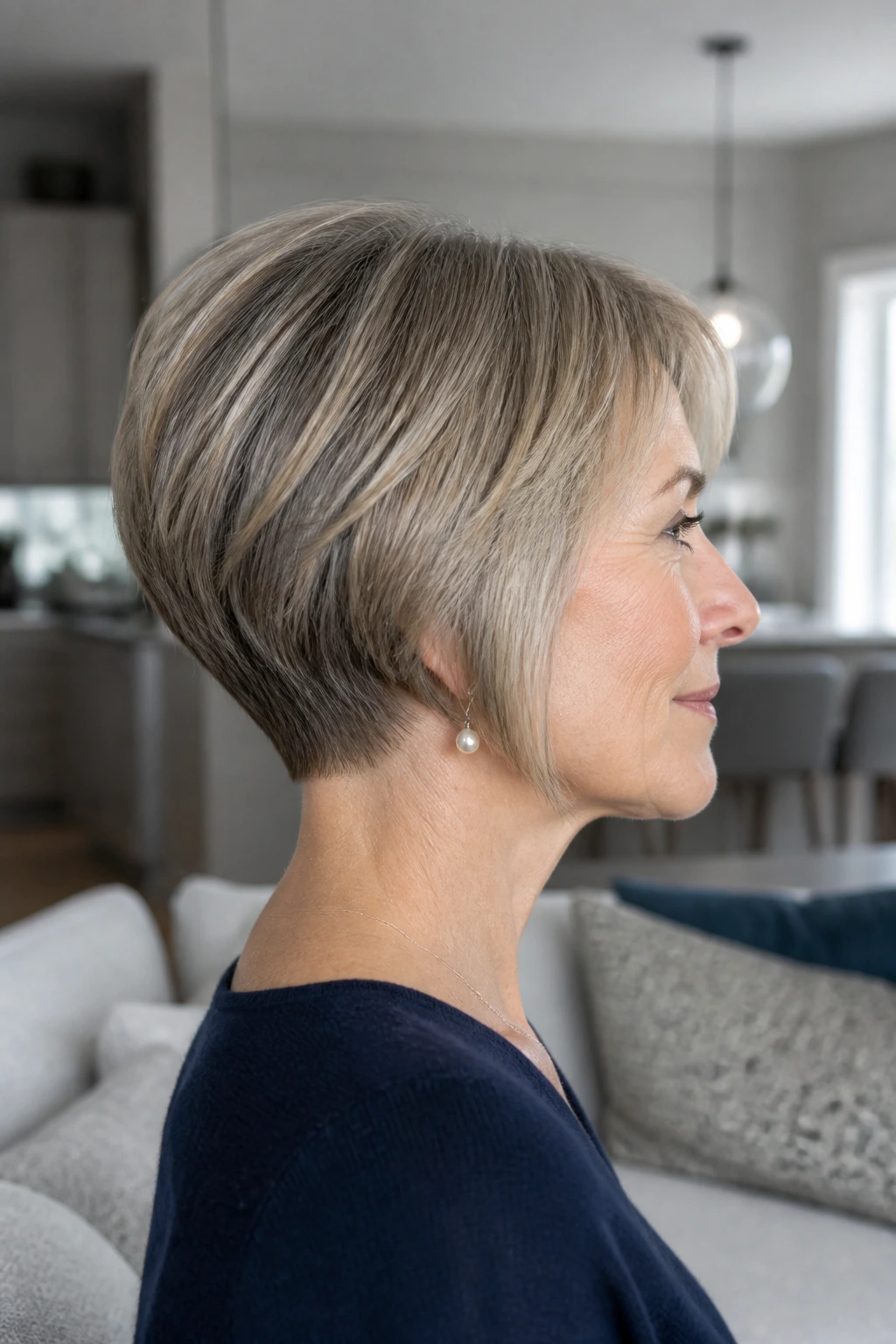
The wedge bob is compact, neat, and a little bit old-school in the best way. It gives the back some height, tapers toward the neck, and keeps the overall shape tidy. Fine hair can look almost plush in this cut because the outline is so controlled.
The modern version should be softer than the classic one. You want the same architectural feeling, but with less stiffness around the edges. It works well if you like a polished look and don’t mind a blow-dry. If your hair is very straight, the wedge can be especially strong because it keeps the back from lying too flat. Ask for gentle graduation, not a hard angle that screams for attention.
16. Sleek Glass Bob
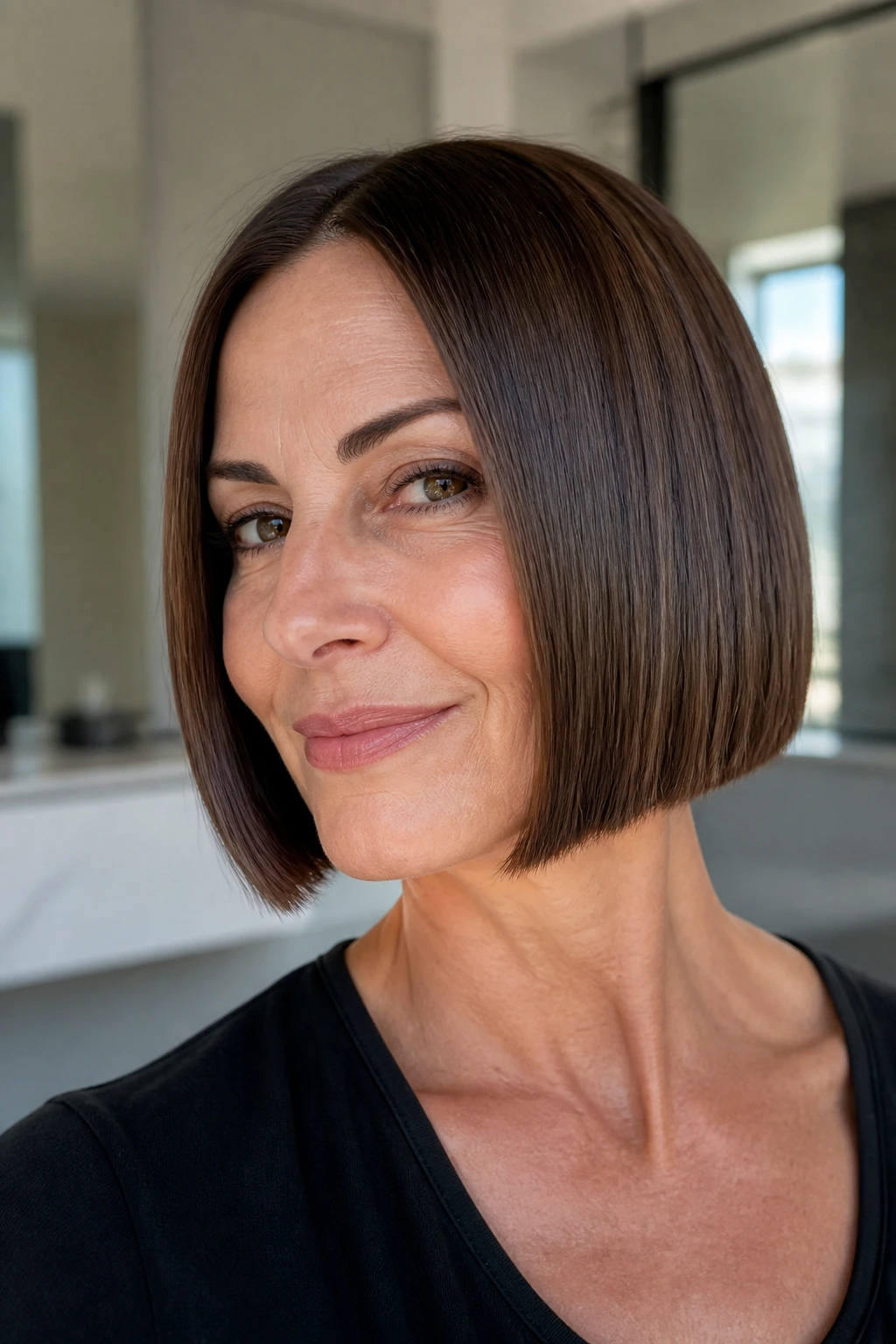
A glass bob is all about shine and precision. On fine hair, that can be a gift, because smooth surfaces make the ends look deliberate and dense. The finish is sleek, reflective, and neat. It’s the opposite of a chaotic, over-layered cut that falls apart when the weather changes.
This is the bob for someone who doesn’t mind a short styling ritual with heat protectant, a paddle brush, and maybe a flat iron to smooth the last inch. The edge should stay blunt enough to show thickness. If your hair has a lot of flyaways, this style still works, but it needs a light hand with product. Heavy serums will flatten the top fast.
17. Tousled Bob with Root Lift
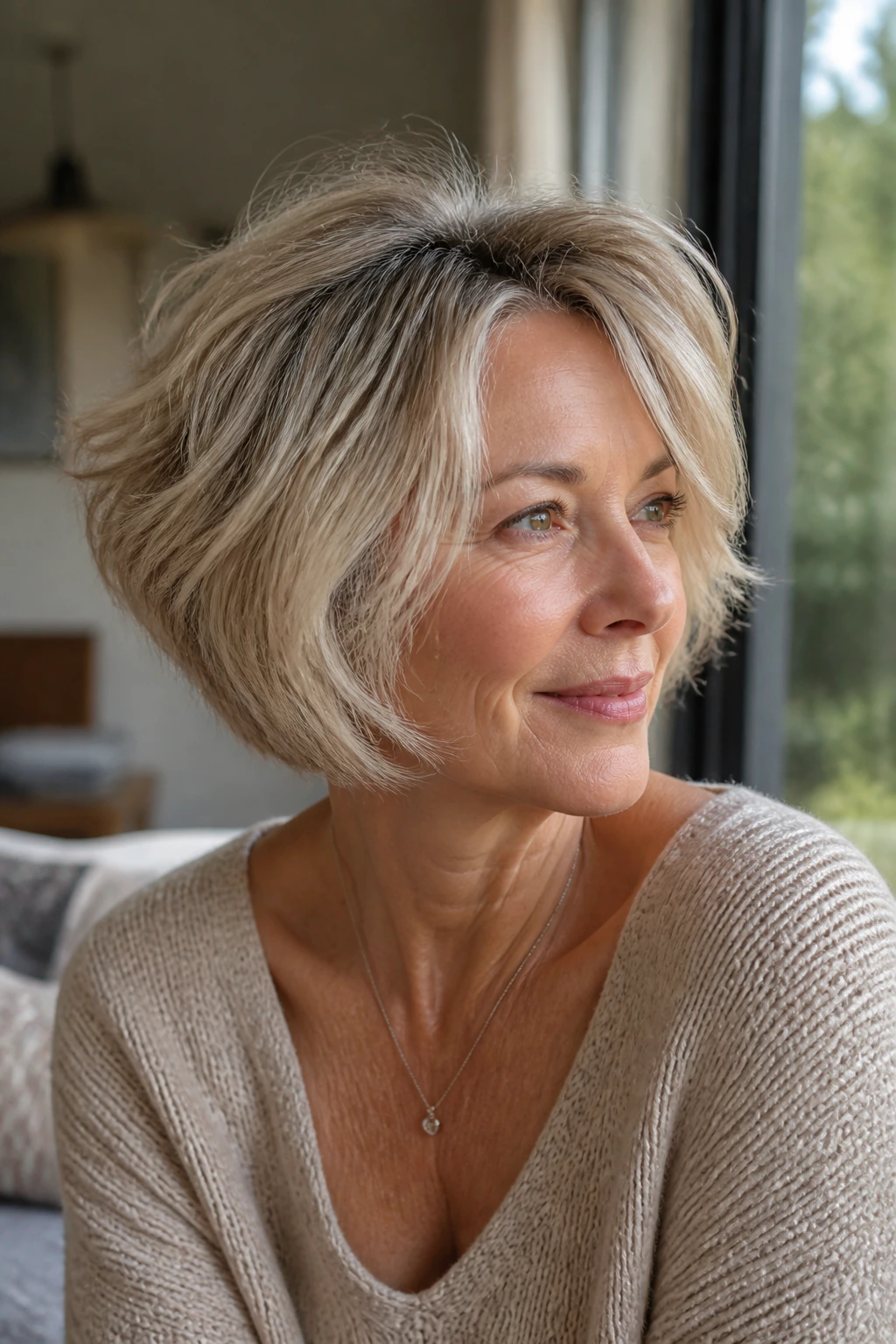
If you like hair that looks a little undone, this one is worth a look. A tousled bob with root lift gives fine hair movement where it needs it most: up top. The roots get a boost, the ends stay loose, and the whole thing looks like it has air in it.
This cut is best with a mousse or root spray and a quick blow-dry using your fingers or a vent brush. You are not trying to make it perfect. You’re trying to keep the crown from sticking to your scalp. That said, the ends still need some shape, so don’t let the cut get too shredded. A touch of roughness is useful; too much becomes frizz dressed up as style.
18. Bob with Wispy Bangs

Wispy bangs give the face a softer landing. They’re lighter than a blunt fringe, which makes them safer for fine hair because they don’t steal too much density from the front. Paired with a bob, they can take years off the feel of the cut without turning it into something cutesy.
This is a good option if you want to soften the forehead or draw attention to the eyes. The bangs should be thin enough to move and easy enough to push aside when you’re not in the mood. Keep them longer at the temples so they blend into the sides. A short, heavy fringe on fine hair can look patchy fast. Wispy works because it stays airy.
19. Angled Bob with Face-Framing Pieces
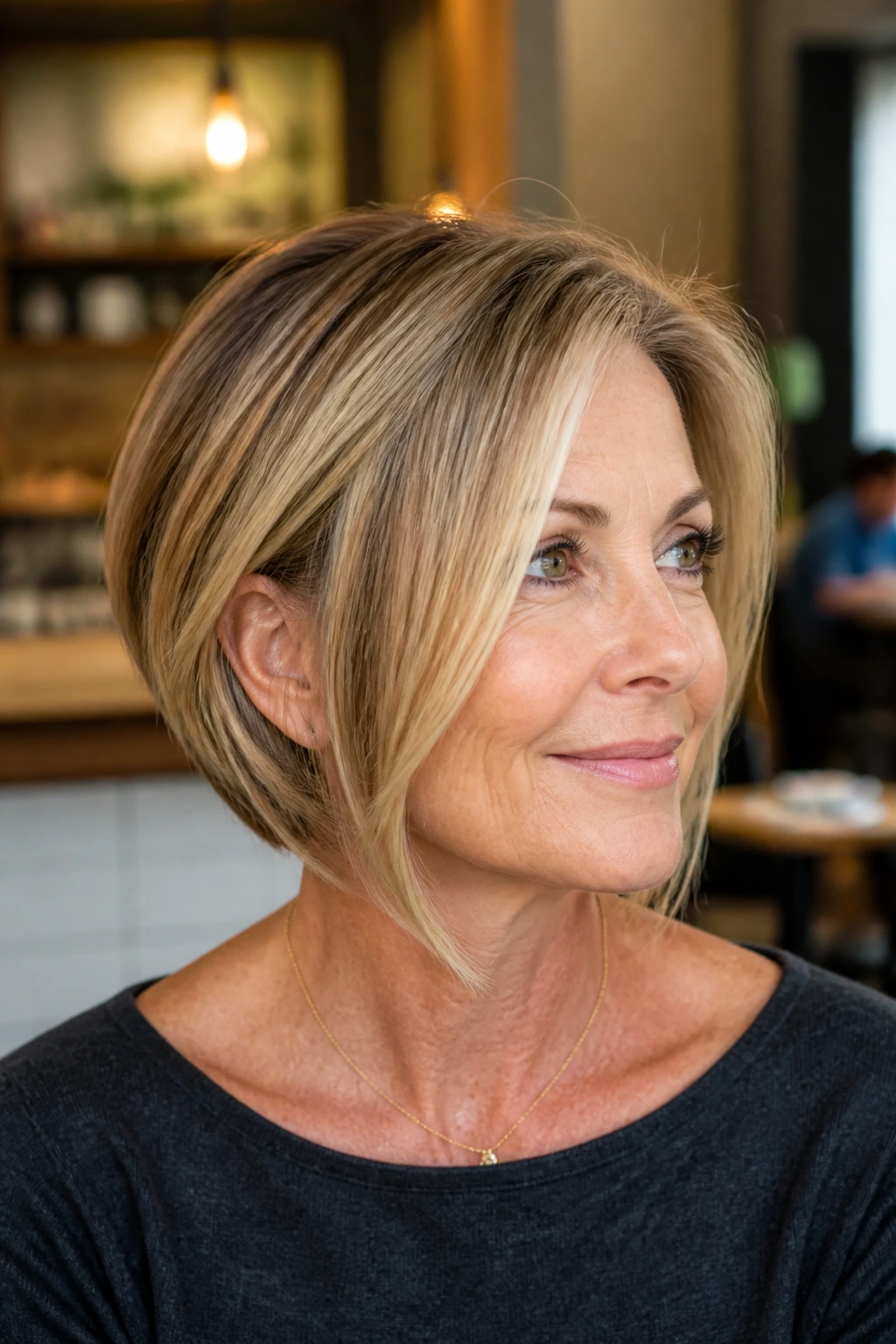
The angled bob is a cleaner, more polished cousin of the A-line. It leans longer in front, which helps elongate the face and gives the hair a clearer direction. For fine hair, the face-framing pieces are doing a lot of the visual work here, so they need to be cut with intention.
This is the style to choose when you want the cut to look dressed up without becoming fussy. The front pieces should skim the cheekbones or jaw, not hang in sad, skinny strips. The back can stay shorter and tidier, which keeps the neck open and the silhouette lifted. If you want a bob that looks good from both the front and side profile, this one earns its place.
20. Graduated Bob
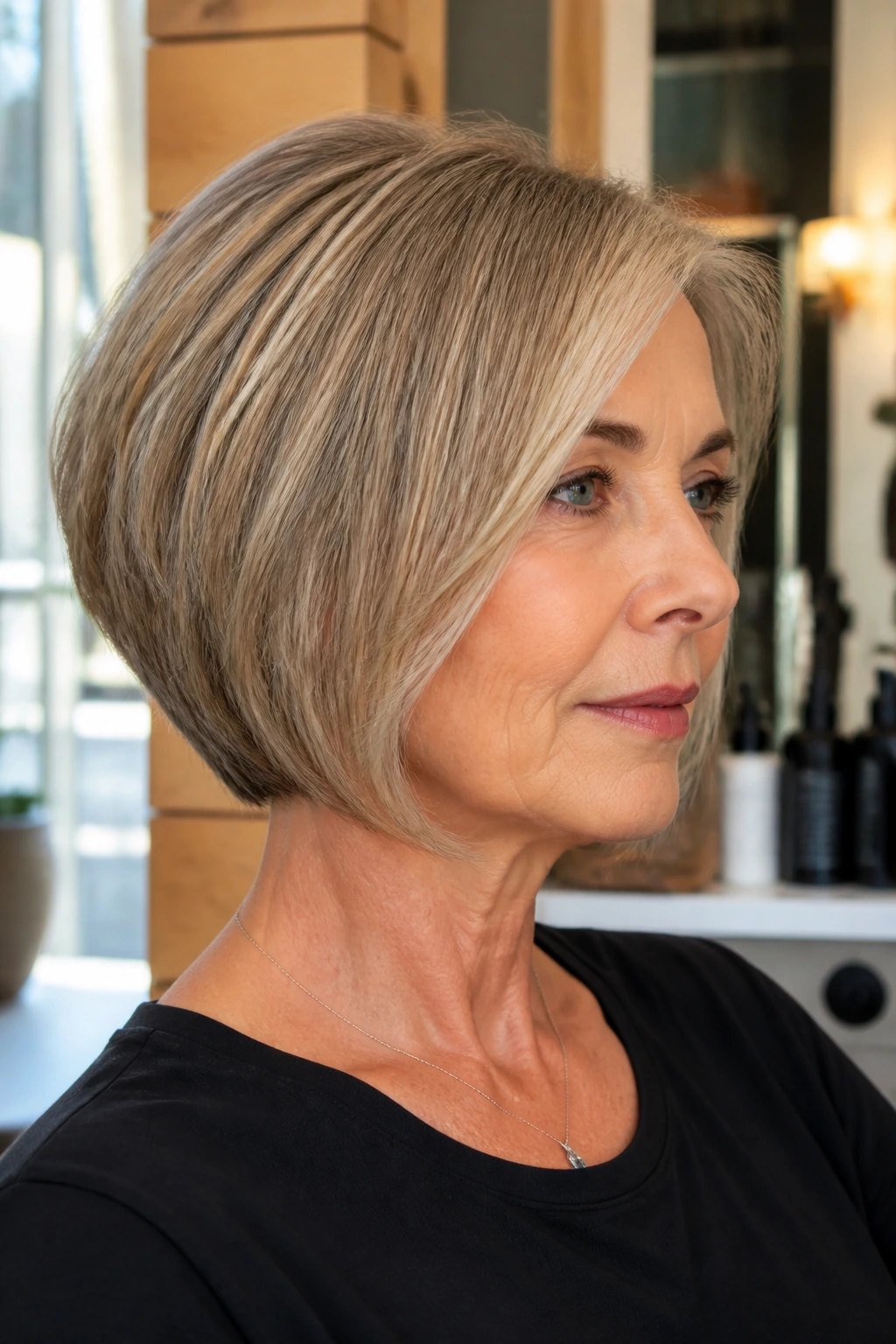
A graduated bob sits somewhere between stacked and blunt, and that middle ground is why it works so well on fine hair. There’s enough shape in the back to create lift, but not so much drama that the cut turns into a sharp wedge. It feels balanced.
This is a solid salon choice for women who want the hair to look fuller without shouting about it. The graduation should be soft enough that the outline stays smooth, especially around the ears and nape. If the stylist over-graduates the back, the cut can look overly “done.” Keep it clean. Keep it controlled. That’s where the strength is.
21. Soft Mushroom Bob
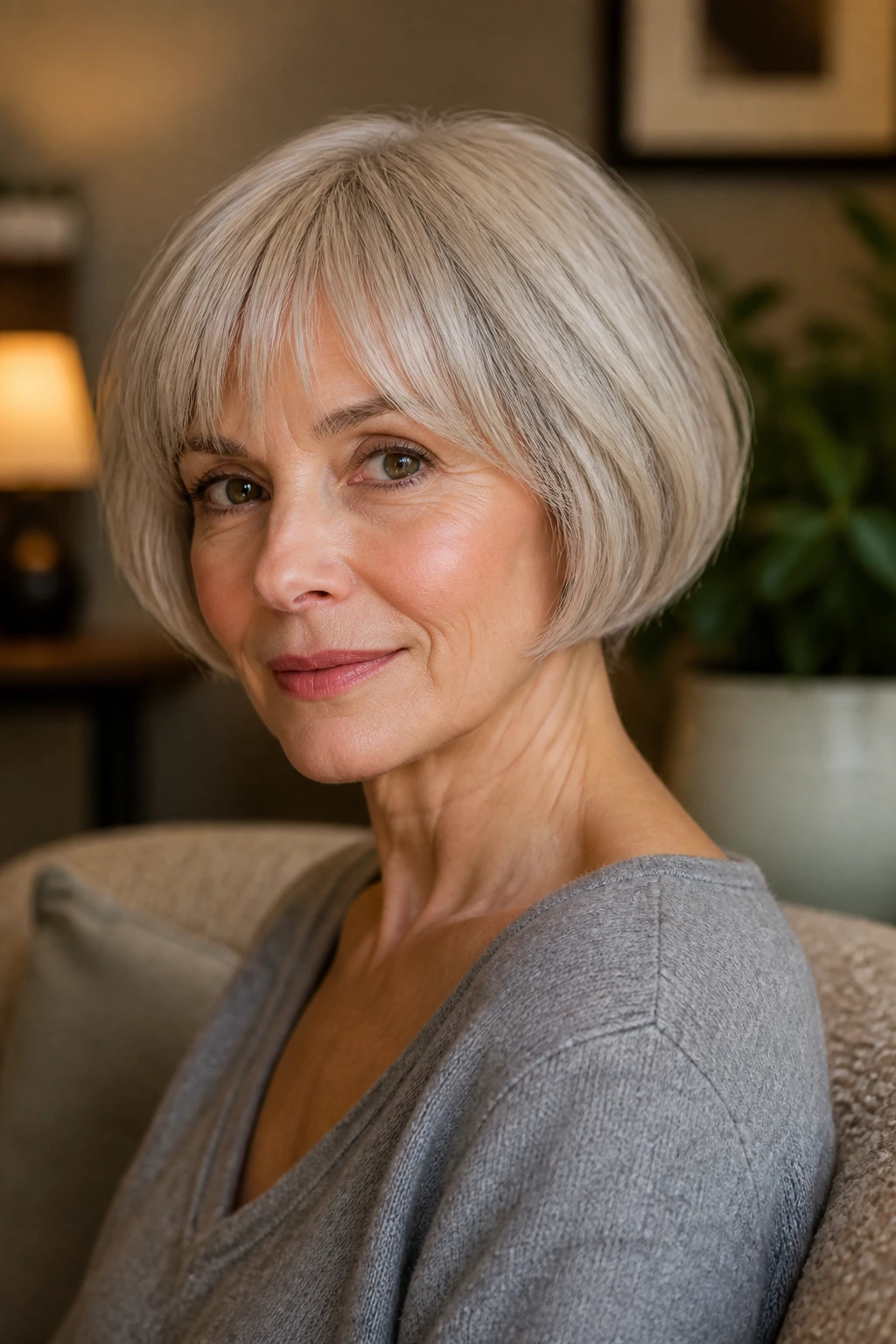
The mushroom bob gets a bad reputation because people remember the old version. They shouldn’t. A soft mushroom bob curves around the head in a rounded shape, which can be very flattering on fine hair if the edges are softened and the top is not puffed up too high. The result is almost sculptural.
This cut is useful if you want the whole head to look more filled in without using a ton of layers. It can be especially nice when the hairline at the back is a little sparse. Ask your stylist for softness at the perimeter and keep the top from becoming overly bulky. The modern version is far prettier than the name suggests.
22. Deep Side-Part Bob
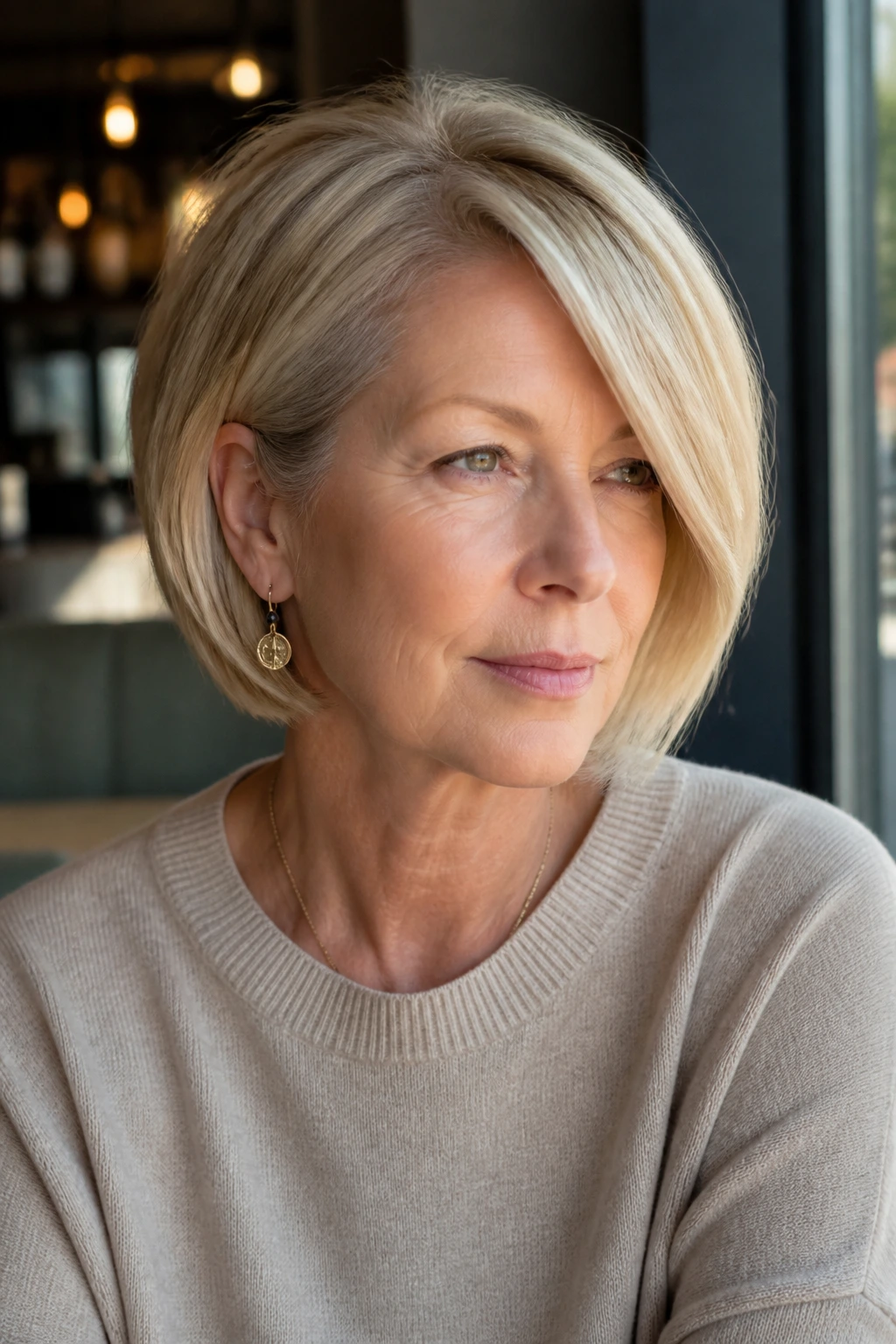
Sometimes the best haircut move is a part, not a cut. A deep side-part bob gives fine hair instant lift because it shifts weight away from the crown and lets the roots stand up a bit. If your hair sits flat on top but the ends still have some density, this is one of the simplest fixes.
You can wear it with nearly any bob length, from chin to collarbone. The side with less hair tucks neatly behind the ear, while the heavier side creates a soft sweep across the face. That sweep is useful when you want volume without teasing. A root-lifting spray at the part line helps, but the part itself does most of the work.
23. Blunt Lob for Fine Hair

A blunt lob is the long version of a clean bob, and it’s a smart compromise if you are not ready to go short. The collarbone length gives you enough movement to tuck, clip, or wave, but the blunt ends keep the hair from fraying into thin strings. For many women with fine hair, that balance is the sweet spot.
This cut is especially good if your hair is straight and you want something lower-maintenance than a chin-length style. You still get the density benefit of a strong line. Keep the layers minimal, or the ends will lose their edge. A one-length lob is often the fastest way to make fine hair look healthier, even when it’s not actually thicker.
24. Salt-and-Pepper Bob with Soft Layers

There’s something especially good about a bob that lets gray and silver tones do their own work. A salt-and-pepper bob with soft layers can look dimensional in a way color alone can’t fake. The contrast between lighter and darker strands creates the illusion of depth, which fine hair needs more than people realize.
This cut works best when the layers are gentle and placed around the face, not scattered all over the head. That keeps the silhouette intact while letting the color catch the eye. If your natural texture is a little uneven, this is the style that can make it feel intentional instead of unruly. It’s proof that “full” doesn’t always mean “big.” Sometimes it means the shape is clean enough to let the color do half the work.
Why the Shape Matters More Than the Product
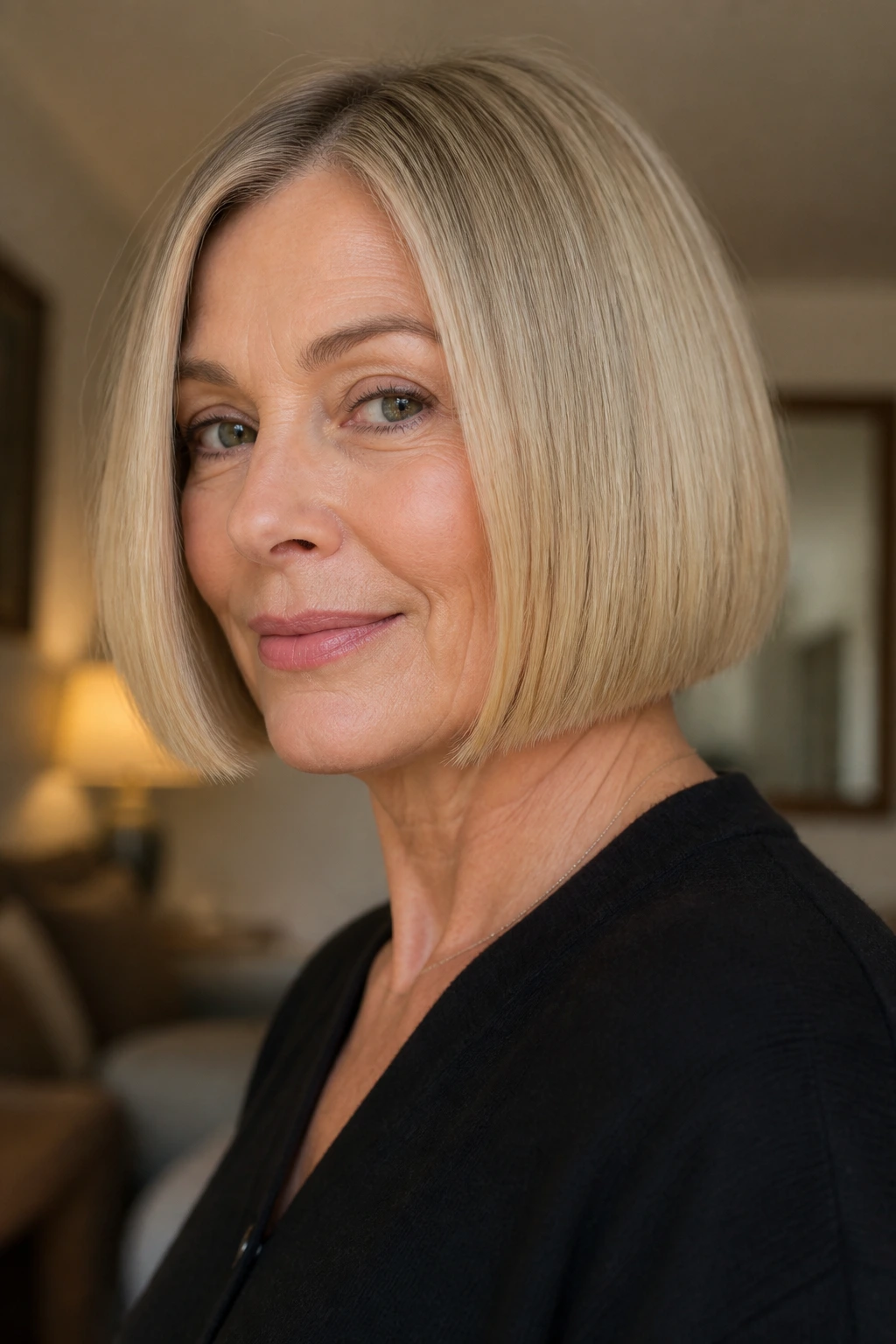
Fine hair can look thicker for a few hours with the right mousse. That’s nice. It is not the whole story.
What actually changes the look is line weight. A blunt perimeter gives the ends a stronger visual edge, while a little graduation at the back can keep the crown from collapsing. If the cut is too layered, the hair starts breaking apart into see-through pieces. If it’s too long, the weight pulls everything downward and the style goes limp. The haircut itself does most of the heavy lifting.
There’s a reason stylists keep circling back to chin length, jaw length, and collarbone length for fine hair over 50. Those zones give the hair enough shape to hold up, but not so much length that gravity wins immediately. And yes, texture matters too. Straight hair, soft wave, and coarser silver strands all behave differently. But the outline still comes first.
What to Ask for at the Salon Chair
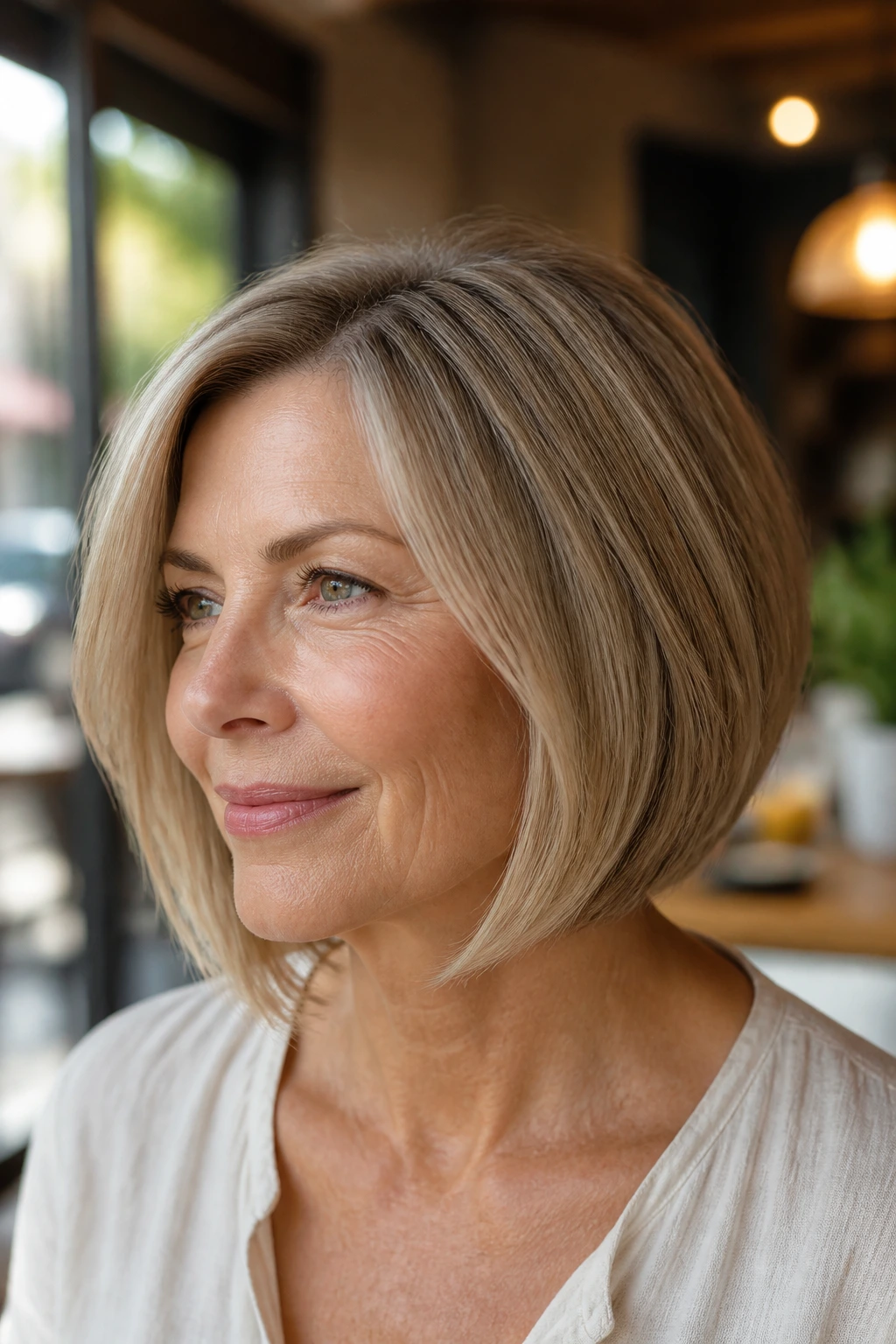
Bring pictures, but don’t stop there. A photo tells the stylist what you like. Your own explanation tells them what your hair actually does.
Show the front and the side
One front view and one side view are worth more than ten saved photos with filters on them. The side tells the truth about the neckline, the nape, and whether the angle is soft or sharp. If you only show the front, you can end up with a cut that looks good on your camera roll and strange in motion.
Say what your hair refuses to do
Maybe it collapses at the crown. Maybe it flips out at the ends. Maybe it sticks to your head unless you blow-dry every morning. Say that plainly. A bob for fine hair over 50 should be designed around your worst habit, not your best hair day.
Be specific about styling time
If you’re willing to spend 10 minutes with a round brush, say so. If you want to air-dry and leave the house, say that too. A bob can be cut for polish or for quick wear, but not both in the same way. The stylist needs to know which version of your life they’re cutting for.
Styling Tools That Earn Their Drawer Space
- A 1 to 1.5-inch round brush: This gives fine hair a bend without creating giant curls that fall out by noon.
- A blow dryer with a narrow nozzle: The nozzle matters more than people think; it directs air at the roots instead of blasting the whole shape apart.
- Root-lifting mousse or spray: Use it at the crown and part line, not all over the ends.
- A lightweight heat protectant: Fine hair burns and flattens fast, so skip heavy creams that leave a greasy film.
- A small flat iron: Useful for smoothing the last inch of a blunt bob or flipping a front piece under.
- Duckbill clips or sectioning clips: These keep the top layers out of the way while you dry the underneath.
- Dry shampoo: Best on day two, when the roots start separating and the crown needs a little grit.
- A wide-tooth comb: Good for distributing product without breaking up the shape.
How to Style Bob Haircuts for Fine Hair Over 50 Without Making Them Fall Flat
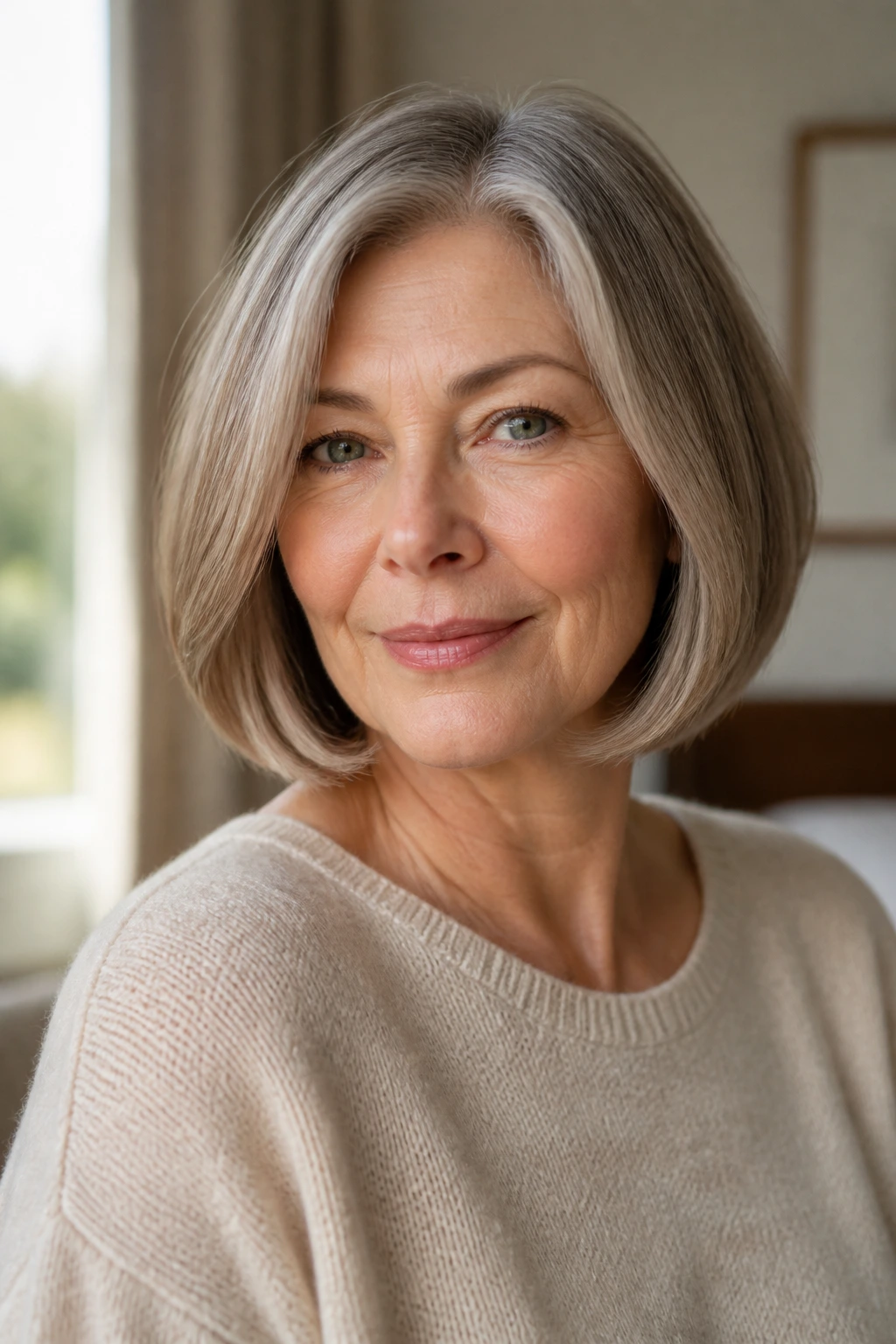
A little heat goes a long way. Fine hair doesn’t need a marathon blow-dry; it needs direction. Start with a root product on damp hair, then lift the roots as you dry the top section first. If you flatten the crown while the hair is still wet, the rest of the routine is just damage control.
For a polished blowout: Use the round brush to turn the ends slightly under or slightly forward, depending on the cut. That tiny bend is what keeps the bob from looking stringy. A cool-shot finish helps lock the shape in place, and a flexible-hold spray at the ends keeps movement without crunch.
For a messier day: Rough-dry to about 80 percent, then twist two-inch sections around your fingers while the hair cools. Don’t overload the mids and ends with product. Fine hair gets greasy fast, and greasy fine hair loses its shape fast. A dab of texture spray at the crown is usually enough.
For second-day revival: Flip the part, mist the roots with a touch of dry shampoo, and warm the front pieces with a flat iron if needed. That’s often enough. You do not need to rewash every day, and you definitely do not need to drown the style in oil to “bring back shine.”
Common Mistakes That Flatten Bob Haircuts for Fine Hair Over 50

- Too many layers at the ends: The hair starts looking see-through instead of full. Fix it by asking for a blunt or softly beveled perimeter.
- A bob that’s too long for the density: Once fine hair slips past the sweet spot, the length pulls the shape downward. If the ends feel stringy, go shorter.
- Heavy products on damp hair: Creams and thick oils weigh down fine hair fast. Use lightweight mousse, root spray, or a small amount of leave-in on the ends only.
- Over-thinning the interior: Thinning shears can make the hair move well for ten minutes and look wispy for the rest of the day. Ask for shape, not shredding.
- Skipping the crown: If the roots at the top are flat, the whole style looks tired. Dry the crown first, not last.
- Ignoring your natural part or cowlick: A bob that fights the way your hair grows will take twice as long to style and still misbehave. Work with the part, then refine it.
Smart Variations and Alternative Approaches
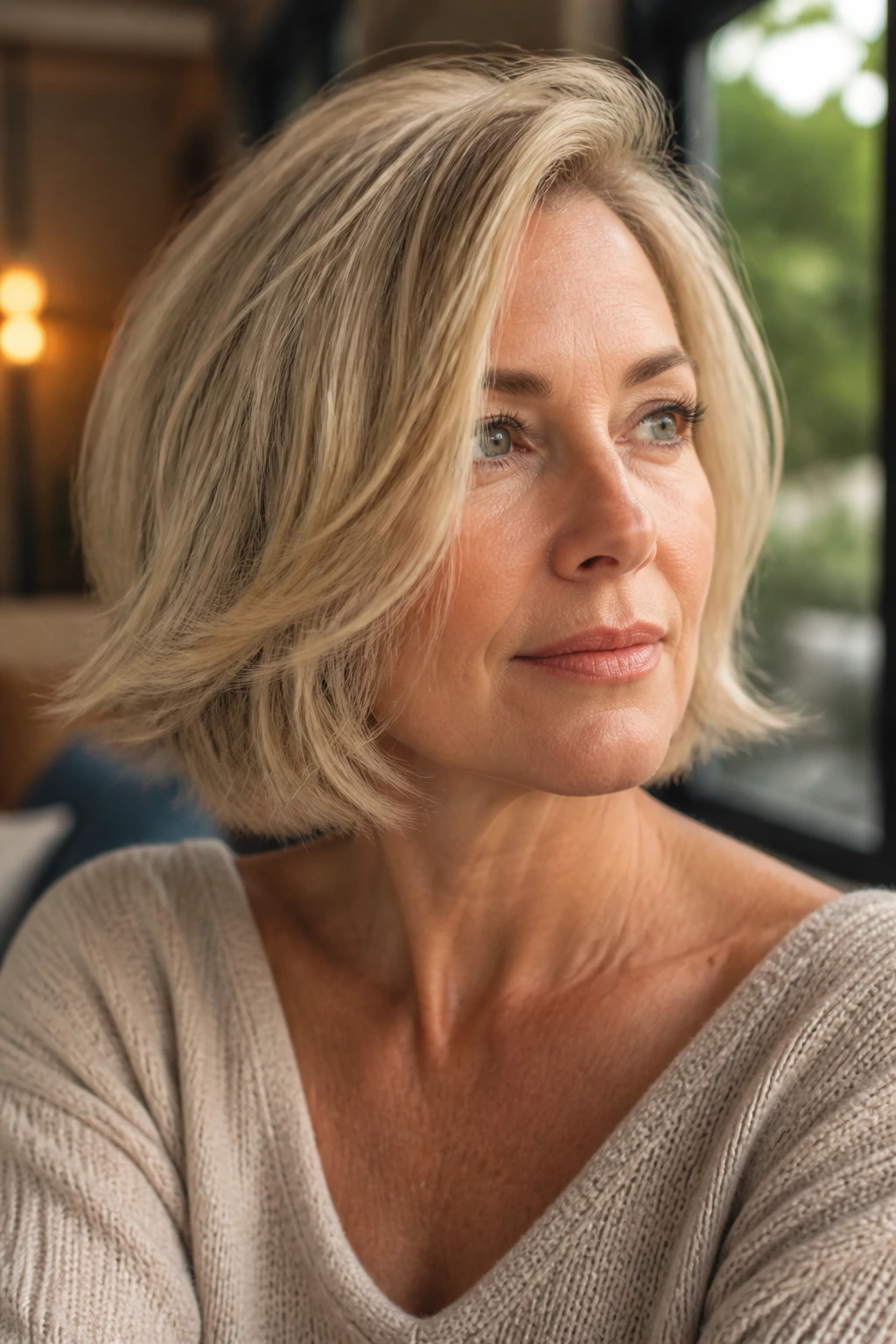
The Blunt-Edge Version: If your fine hair is very soft and collapses easily, keep the cut blunt from chin to collarbone with almost no layering. This version gives the strongest illusion of thickness because the perimeter stays solid.
The Soft-Stack Version: If the back of your head lies flat, ask for a gentle stack at the nape and keep the graduation subtle. You get lift without the sharply tucked look that can feel too stiff.
The Fringe-First Version: If you want to change the feel of the cut without losing much length, add curtain bangs or wispy fringe. That one move shifts the eye upward and makes the bob feel fresh fast.
The Low-Styling Version: If you refuse to spend time with a brush, keep the length around chin or jaw and lean into natural texture. A little mousse and finger-drying can do a lot when the cut is compact and the ends are clean.
The Silver-Glow Version: If you have gray, white, or salt-and-pepper strands, ask for soft face-framing pieces that let the color show through. Dimension in the hair color can make fine hair read fuller even when the density hasn’t changed much.
Keeping the Shape Between Salon Visits
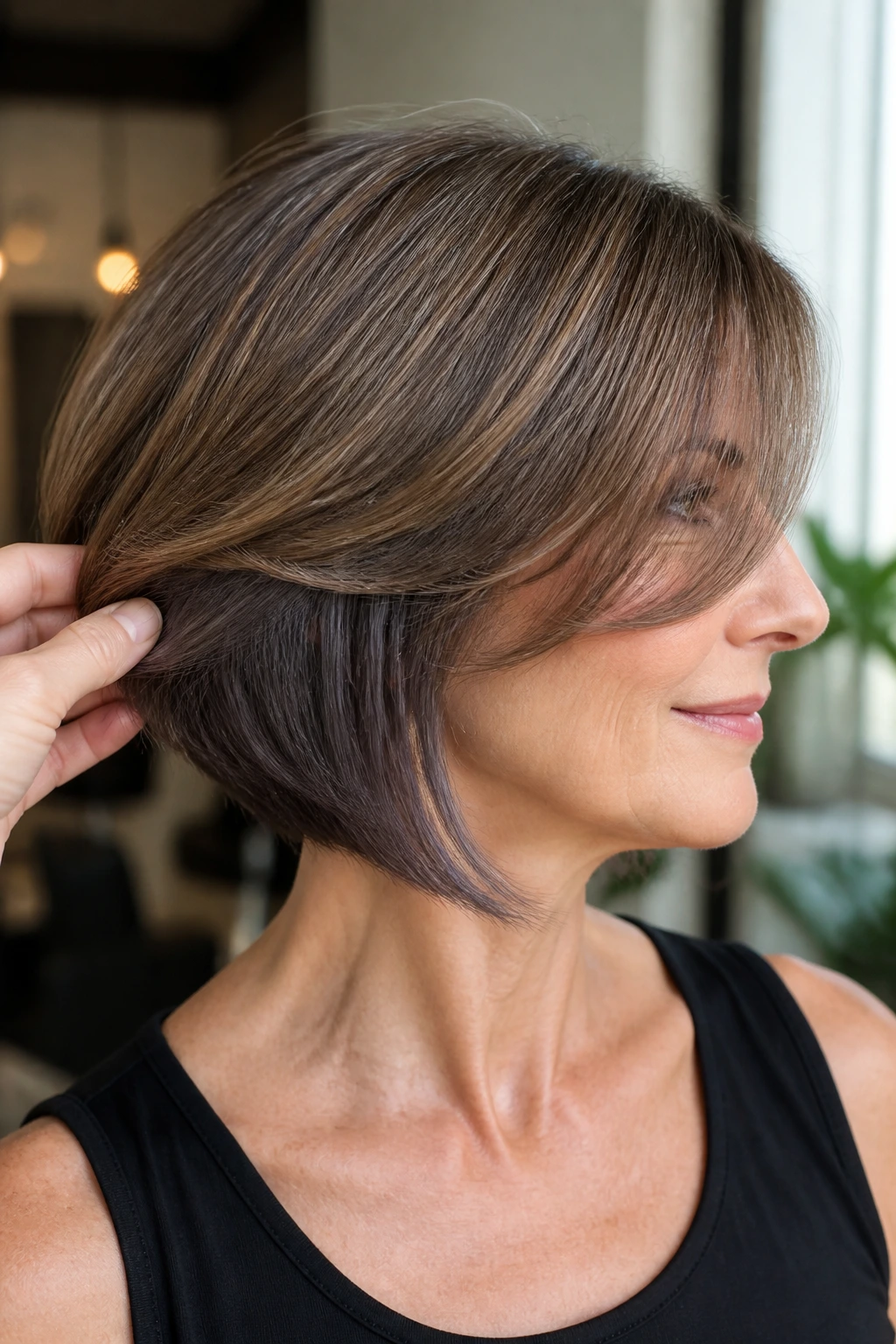
A bob for fine hair usually looks best when the outline stays fresh. For most people, that means a trim every 6 to 8 weeks. If you wear bangs, you may want a quick fringe trim every 3 to 4 weeks, because even a small bit of growth can drag the whole style into your eyes.
At home, rotate between a lightweight volumizing mousse, a root spray, and a flexible-hold hairspray. Heavy products build up fast on fine strands, so wash with a gentle clarifying shampoo about once every 1 to 2 weeks if you use a lot of styling help. If your bob gets stringy by day three, that’s often product buildup, not a bad haircut.
Heat styling should stay modest. A round brush and a blow dryer with a nozzle are enough for many of these shapes. If you need a flat iron, use it only on the outer inch of the hair and keep the pass short. The point is to preserve the line, not iron the life out of it.
Frequently Asked Questions About Bob Haircuts for Fine Hair Over 50

What bob length is most flattering for fine hair over 50?
The safest range is usually between the chin and the collarbone. Chin length gives the strongest edge, while a blunt lob gives a little more softness and versatility. If the ends of your hair are very sparse, shorter often looks fuller.
Should fine hair over 50 have layers?
Yes, but the right kind. Internal layers or light graduation can add movement without exposing the ends. Heavy layering around the bottom usually makes fine hair look thinner, not fuller.
Are bangs a good idea with fine hair?
They can be, as long as they’re light. Curtain bangs, wispy fringe, and long side bangs usually work better than thick blunt bangs because they don’t steal too much density from the front.
Is a stacked bob too “structured” for older women?
Not if it’s cut softly. A gentle stack at the back can give the hair lift and shape without looking stiff. The harsh, wedge-like version is what can feel dated.
How do I keep a bob from going flat on the crown?
Start with root product, dry the crown first, and use a part that gives the hair some lift. A deep side part or a little stack in the back can help more than a pile of mousse ever will.
Can I wear a bob if my hair is naturally wavy?
Absolutely. In fact, a soft bob can be easier with a little wave because the texture helps fill out the shape. Ask your stylist to leave enough length for the wave to bend without shrinking the cut too much.
What if my hair is thinning at the temples?
Choose a bob with face-framing pieces, a side part, or curtain bangs. Those shapes soften the temple area and keep the cut from exposing that spot too much.
How often should I trim a bob on fine hair?
Every 6 to 8 weeks is the sweet spot for most cuts. Fine hair loses its line faster than thick hair, and once the ends soften too much, the whole shape starts looking thinner.
The Shape That Holds
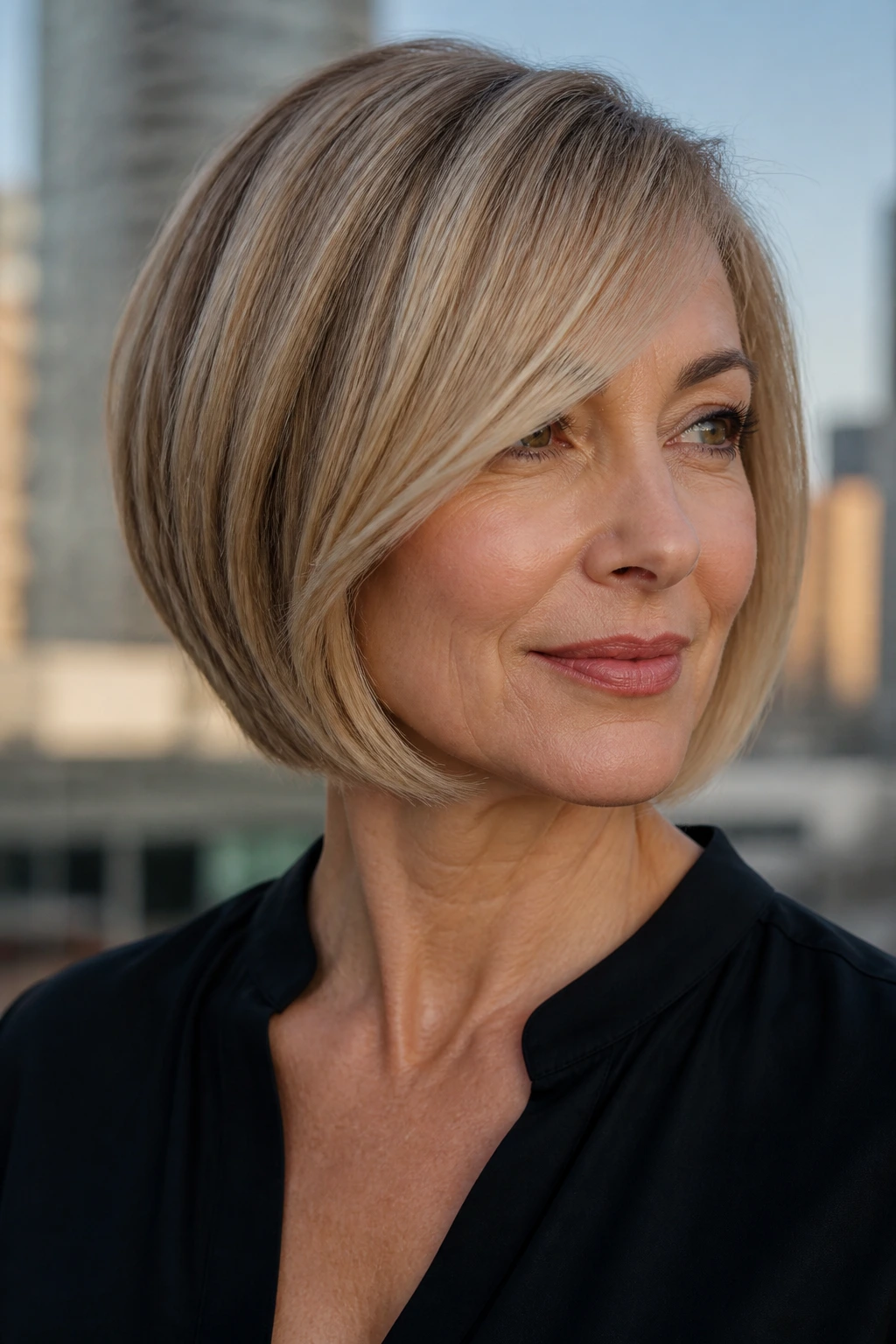
A good bob on fine hair is not about pretending the hair is thicker than it is. It’s about giving the hair a shape that holds up in real life. That can mean a blunt chin-length line, a soft stack, a side part, or a collarbone lob that stays clean at the ends. Different heads need different answers.
The nice part is that the right cut does half the styling for you. When the outline is right, you can spend less time coaxing the roots upright and more time wearing the haircut the way it was meant to sit. That’s the whole trick, really. The next good appointment starts with shape, not with spray.
