



A bob can sharpen a round face or make it look broader. The difference is usually not dramatic. One inch matters. So does the part. So does whether the ends stop at the jaw, slide past it, or curl under like they’ve got somewhere to be.
That’s why 1990s bob hairstyles for round faces still hold up so well. The decade loved clean lines, flipped ends, side parts, feathered texture, and that glossy salon finish that makes hair look cared for even when the cut itself is simple. A lot of those moves do one very useful thing for a round face: they create vertical line, interrupt width, or both. A bob with the right length and shape doesn’t fight your face. It edits it.
I’ve always liked the 1990s versions best when they look a little intentional, not precious. A blunt jaw-length bob with a side part. A beveled bob that bends under just enough. A curtain-bang bob that opens the face instead of boxing it in. Those details are small on paper. On the head, they change everything.
Why These 1990s Bob Hairstyles Flatter Round Faces
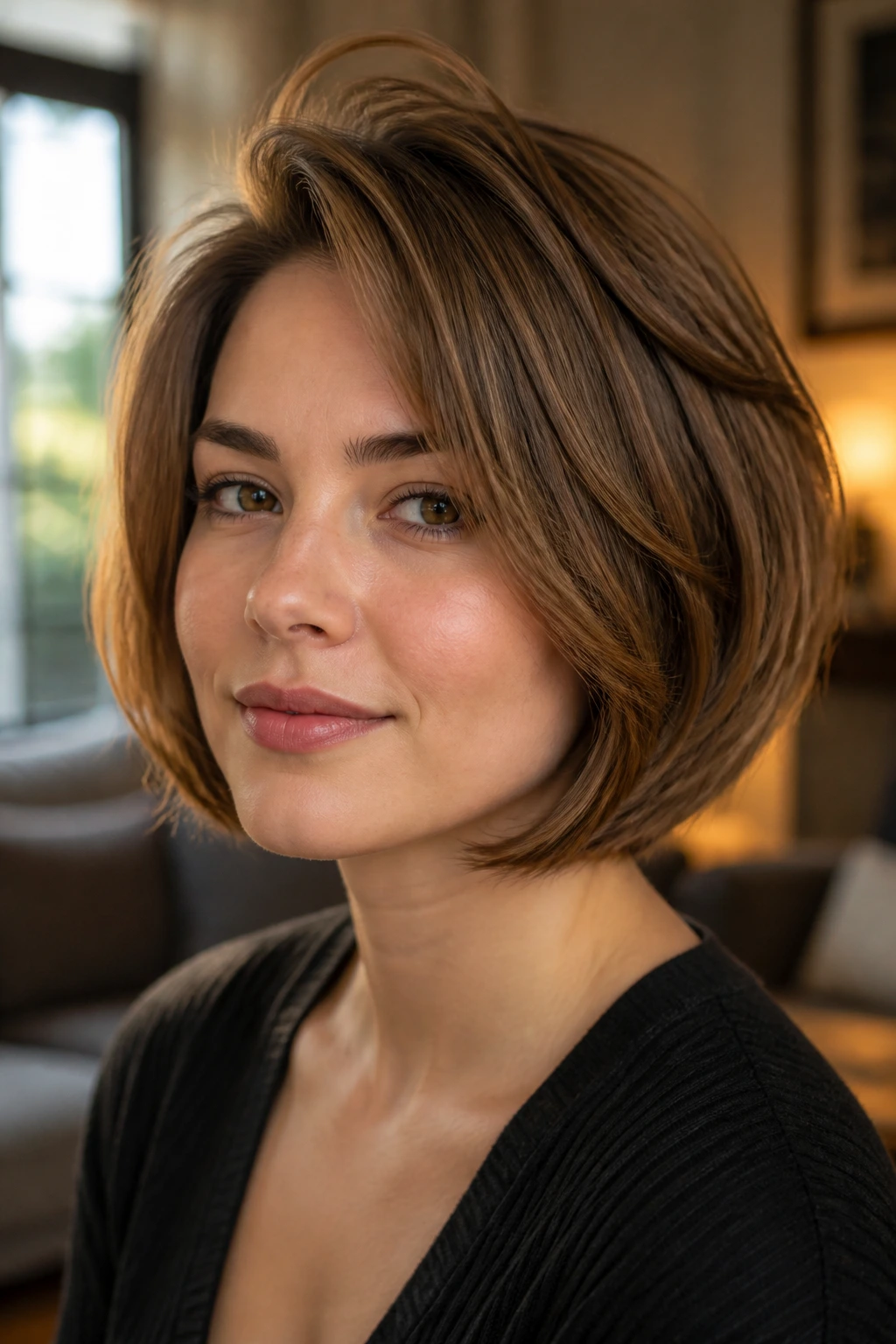
The best bob for a round face keeps the eye moving. A straight line at cheek level can make the face feel wider, while a longer front corner or a side part pulls the eye downward and out of the widest zone.
Crown lift matters more than most people think. A little height at the roots gives the face more length, which is why so many 1990s blowouts and layered bobs feel flattering without looking fussy.
Soft edges beat bulky sides. Feathering, beveling, and face-framing pieces help the haircut skim instead of sit on the cheeks like a shelf.
The 1990s finish does half the work. Smooth roots, flipped ends, and a bit of shine make even a simple bob look deliberate, not accidental.
Grow-out should still look decent. The strongest versions of these cuts keep their shape for weeks, which matters when a bob is only flattering if it still has a clean line on the way out of the salon.
1. Center-Part Chin Bob
A center-part chin bob can be a little ruthless if it’s cut wrong. Done well, though, it’s crisp and tidy in that very 1990s way, with the ends stopping just below the jaw so the line doesn’t hit the widest part of the face. That extra inch is the whole trick.
What I like here is the honesty of it. No extra fluff. No hiding. The middle part creates a vertical seam, and the clean outline keeps the haircut from collapsing into a puff around the cheeks. If your hair is fine, this shape can look especially sharp because the ends have enough density to read as a solid line.
Keep the roots lifted at the crown and the ends softly beveled inward. If the chin bob is too blunt at cheek height, it can feel boxy fast. Below the jaw? Much better.
2. Deep Side-Part Bob
A deep side part is one of the easiest old-school moves for a round face. It shifts the weight off the center of the face and gives the haircut a diagonal line, which is always friendlier than a hard horizontal one.
This version works especially well if your hair has a little natural bend. The longer side can skim the cheekbone while the shorter side tucks in closer to the ear or jaw, and that imbalance does a lot of quiet shaping. It looks like you made a choice, which is the whole point.
Why It Feels So 1990s
The 1990s loved side parts that looked casual but were secretly doing real work. Pair this cut with a blowout brush, a touch of mousse at the roots, and ends that curve under only slightly. Too much curl and you lose the line. Too little and it can fall flat.
3. Blunt Jaw-Length Bob
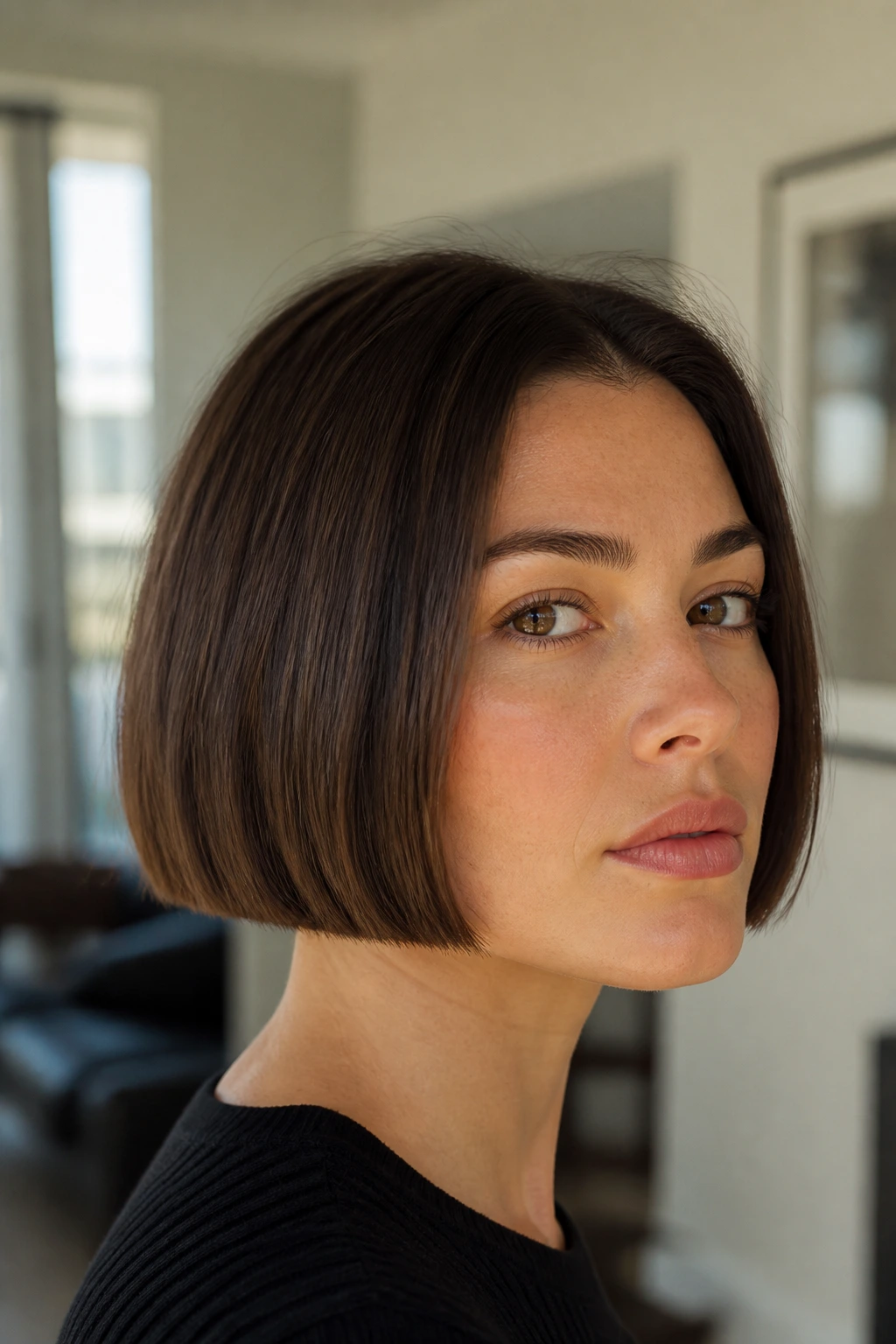
A blunt jaw-length bob sounds like it should be risky on a round face, and sometimes it is. But when the line sits just below the jaw, not right on top of it, the haircut starts to act like a frame instead of a mirror.
The blunt edge is the appeal. It gives the whole style a solid, 1990s minimal feel. On finer hair, that clean edge can make the ends look thicker. On thicker hair, it can look polished if the stylist keeps the bulk under control.
The key is placement. Too short, and the cut makes the cheeks feel wider. A touch longer, and suddenly the face looks a little narrower because the line drops below the broadest point. Straighten it smooth, tuck one side behind the ear, and it gets even cleaner.
4. A-Line Bob with Longer Front Pieces

The A-line bob is one of those cuts that looks obvious only after you’ve seen it. Shorter in the back. Longer in the front. Done. But on a round face, that diagonal is a gift.
The longer front pieces give the face a down-and-forward line, which helps pull attention away from the cheeks. The back stays tighter, so the whole shape feels light and lifted instead of bulky. It’s a very 1990s salon move, especially when the ends are beveled under with a round brush.
This is one of my favorites for hair that falls flat in the back. It gives you shape without needing a lot of layering. If you want the haircut to feel modern while still wearing a 90s jacket, this is the one.
5. Inverted Bob with Crown Volume
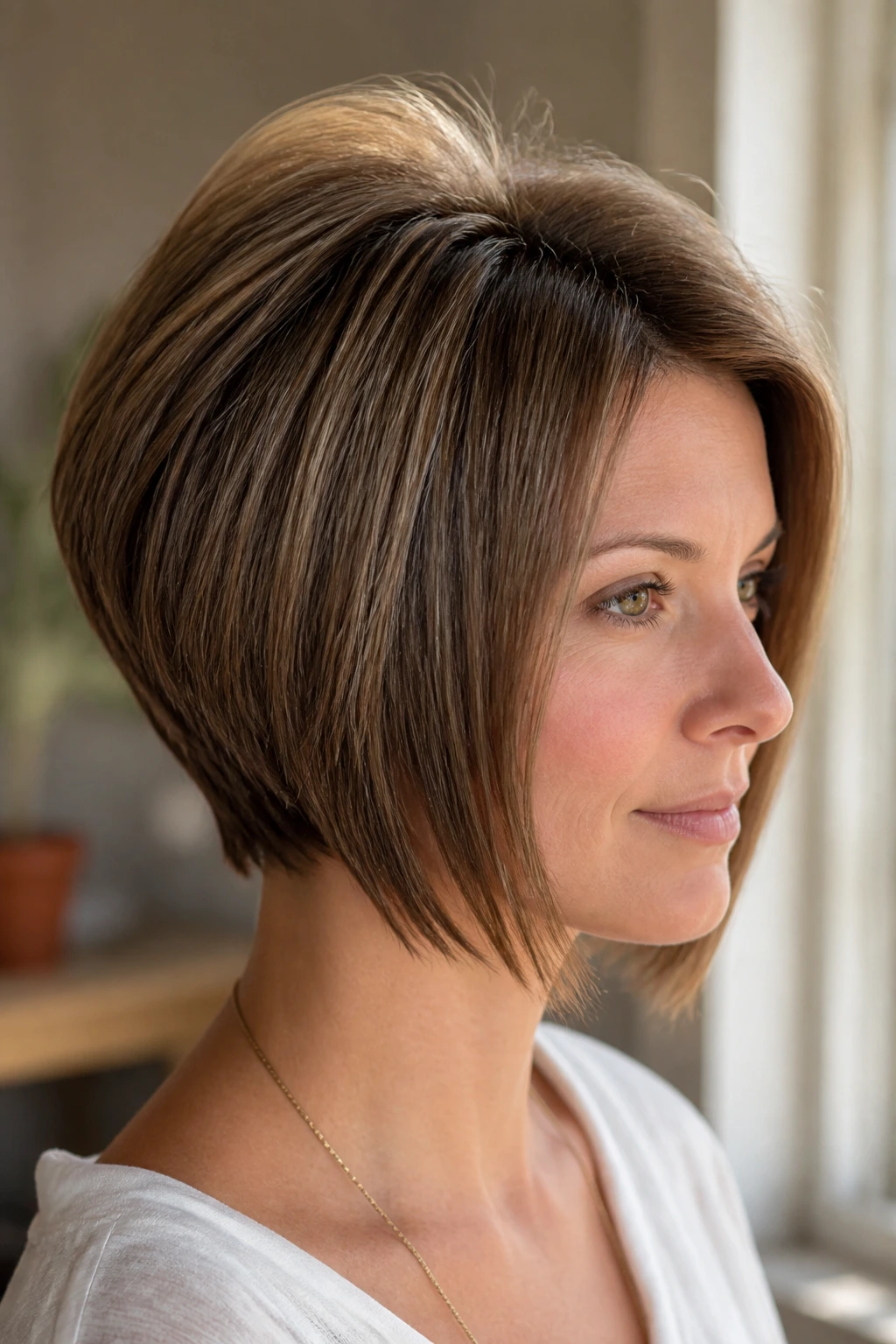
The inverted bob leans harder into structure. The nape is shorter, the back is stacked a bit more, and the front length lands below the jaw. That built-in lift at the crown can be excellent for round faces because it adds height where the face needs it most.
It can go too high if the stack is aggressive. I’d be careful there. A little elevation is enough. The goal is not a helmet. It’s a clean curve that makes the head look taller and the lower face look slimmer by comparison.
This cut really comes alive with a round brush or medium rollers. If the ends flip in too tightly, the shape can feel dated in the wrong way. Keep it soft, keep it smooth, and let the angle do the talking.
6. Rounded Bubble Bob

A rounded bubble bob sounds playful, and it is, but it’s also one of the easiest 1990s shapes to overdo. The curve needs room. If it sits too high on the cheek, the face looks wider. If it lands a bit lower and the crown has lift, it can look polished and plush in a good way.
This cut works best when the ends are curved under just enough to make a rounded silhouette, not puffed out into a full circle. A medium round brush, a quick blast of heat at the roots, and a cool shot at the end will keep the shape controlled.
I like this one on medium to thick hair. Fine hair can do it too, but the curve has to be lighter. The second the bob starts reading as a helmet, the flattering part disappears.
7. Curtain Bang Bob

Curtain bangs were practically built for a round face. They split the forehead in the middle, then sweep out toward the cheekbones, which gives the face a little opening instead of a solid wall of fringe.
That matters with a bob. A straight-across bang can shorten the face fast. Curtain bangs do the opposite. They break up width, especially when the bang lengths are left long enough to brush the cheekbone or the outer corner of the eye.
The One Rule
Keep the bang soft. If the fringe is too dense, the cut starts to feel heavy and the bob loses its air. Ask for movement, not a shelf. Dry them with a round brush, then bend the ends away from the center so they keep that easy 1990s swing.
8. Side-Swept Fringe Bob

A side-swept fringe does for the forehead what a deep side part does for the whole head: it creates a diagonal line. That line matters because it interrupts the roundness instead of echoing it.
This is a useful option if you like bangs but don’t want the face split down the middle. The fringe can sit high enough to keep the forehead open while still giving you some softness around the temples. On a bob, that diagonal fringe often makes the haircut feel lighter than a full bang ever would.
Styling is simple, but the direction has to be right. Blow the fringe across the face, then lift the roots with a small brush so it doesn’t collapse into the cheeks. If it dries too flat, the whole shape loses energy.
9. Flipped-Out Bob

This is pure 1990s joy. Ends flipped outward give the bob a little bounce and keep the silhouette from hugging the face too tightly. On a round face, the trick is making sure the flip happens below the widest point, not right at the cheeks.
The flipped-out finish can be done with a round brush, a flat iron, or even hot rollers if you like a more set look. I prefer a softer bend rather than a big cartoon flip. The point is movement, not drama for its own sake.
This bob is especially good when the rest of the cut is simple. A clean line plus flicked ends gives you that old salon blowout energy without making the hair look overworked. It’s cheerful. It’s a little flashy. And it still works.
10. Feathered Layer Bob
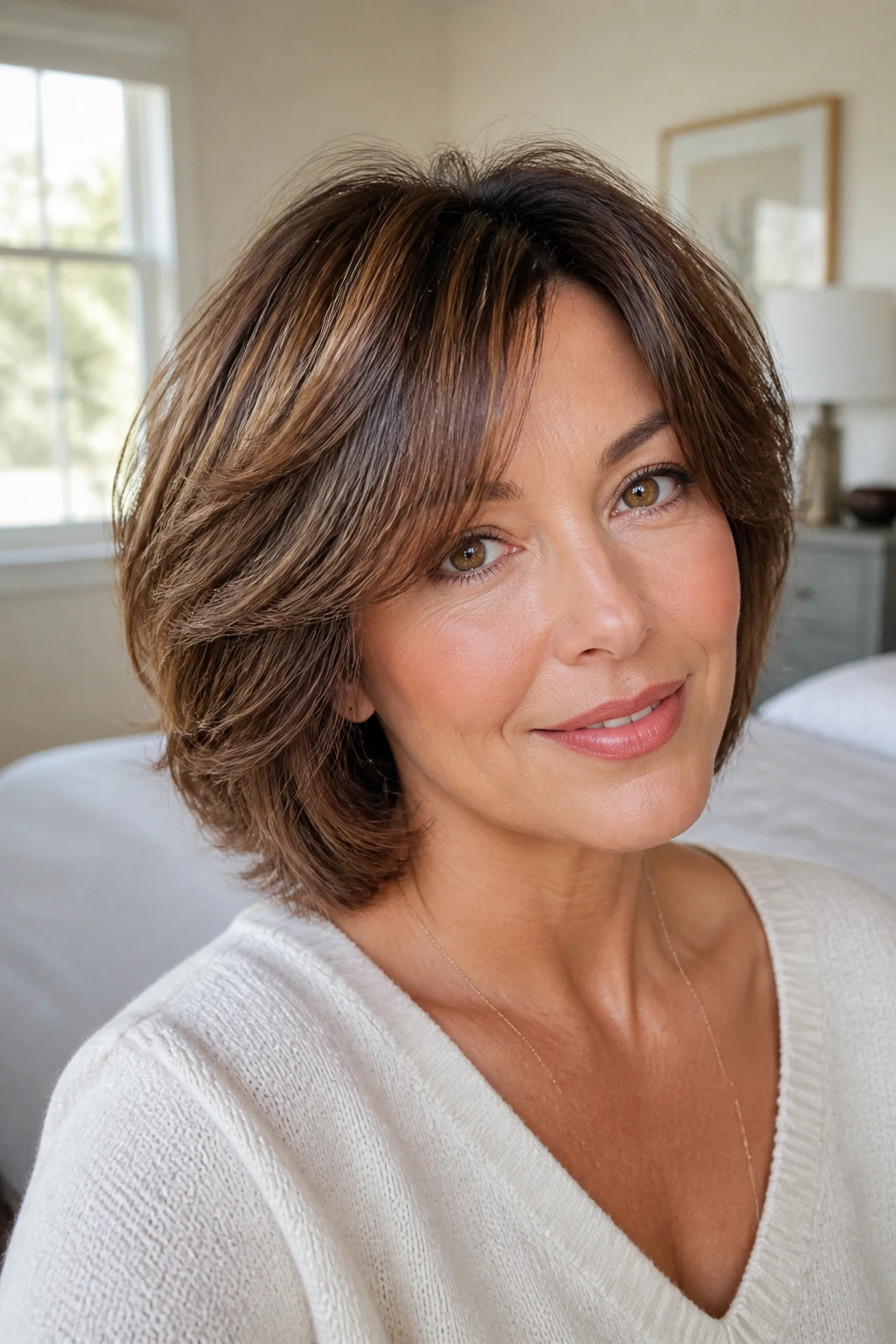
Feathered layers are one of the most useful 1990s tricks for thick hair. They take bulk out of the sides, which helps a round face because the haircut stops ballooning around the cheeks.
The layers should be soft, not choppy. Think light ends that move when you turn your head, not aggressive steps that can look stringy. The best feathered bob has a bit of lift at the crown, a gentle bend through the mid-lengths, and ends that don’t sit as one heavy block.
If your hair tends to feel puffy in humid weather, this shape is worth a look. It gives you air without losing the bob shape. That’s a hard balance, and this is one of the few cuts that nails it without much fuss.
11. Razored Shag Bob
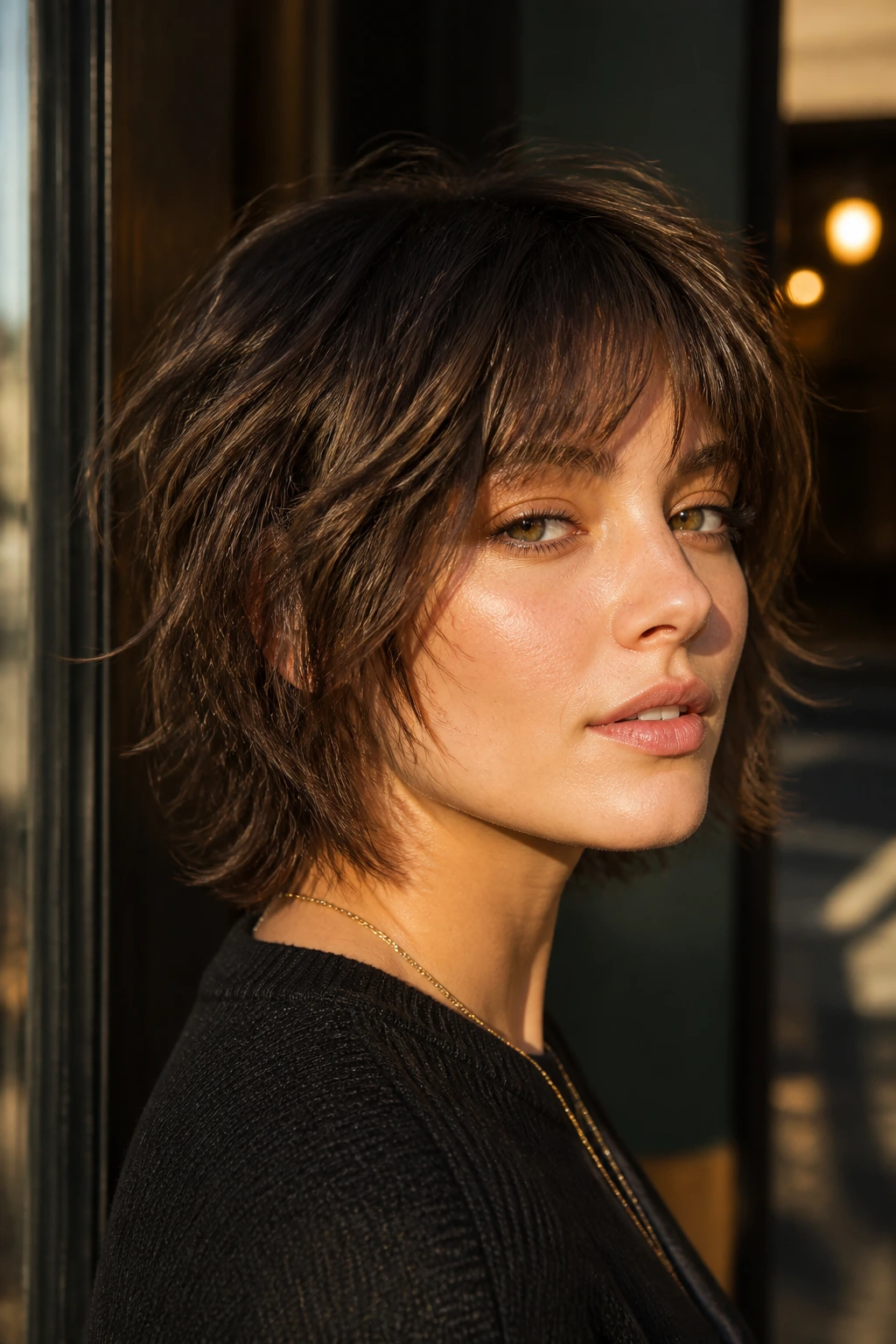
The razored shag bob has a sharper, more lived-in feel. It sits closer to the grunge side of the 1990s, with loose ends, broken-up layers, and texture that keeps the shape from feeling too round.
That broken outline helps a round face. Instead of one solid shape wrapping around the cheeks, you get little gaps and points that pull the eye around the haircut. The result is less boxy, more interesting.
It’s a better choice for wavy hair than for super-fine hair. Fine strands can get wispy if the razor work is too heavy. But on hair with a little texture already, this is one of the easiest bobs to wear because it looks better when it’s not overly polished.
12. Glassy Straight Bob
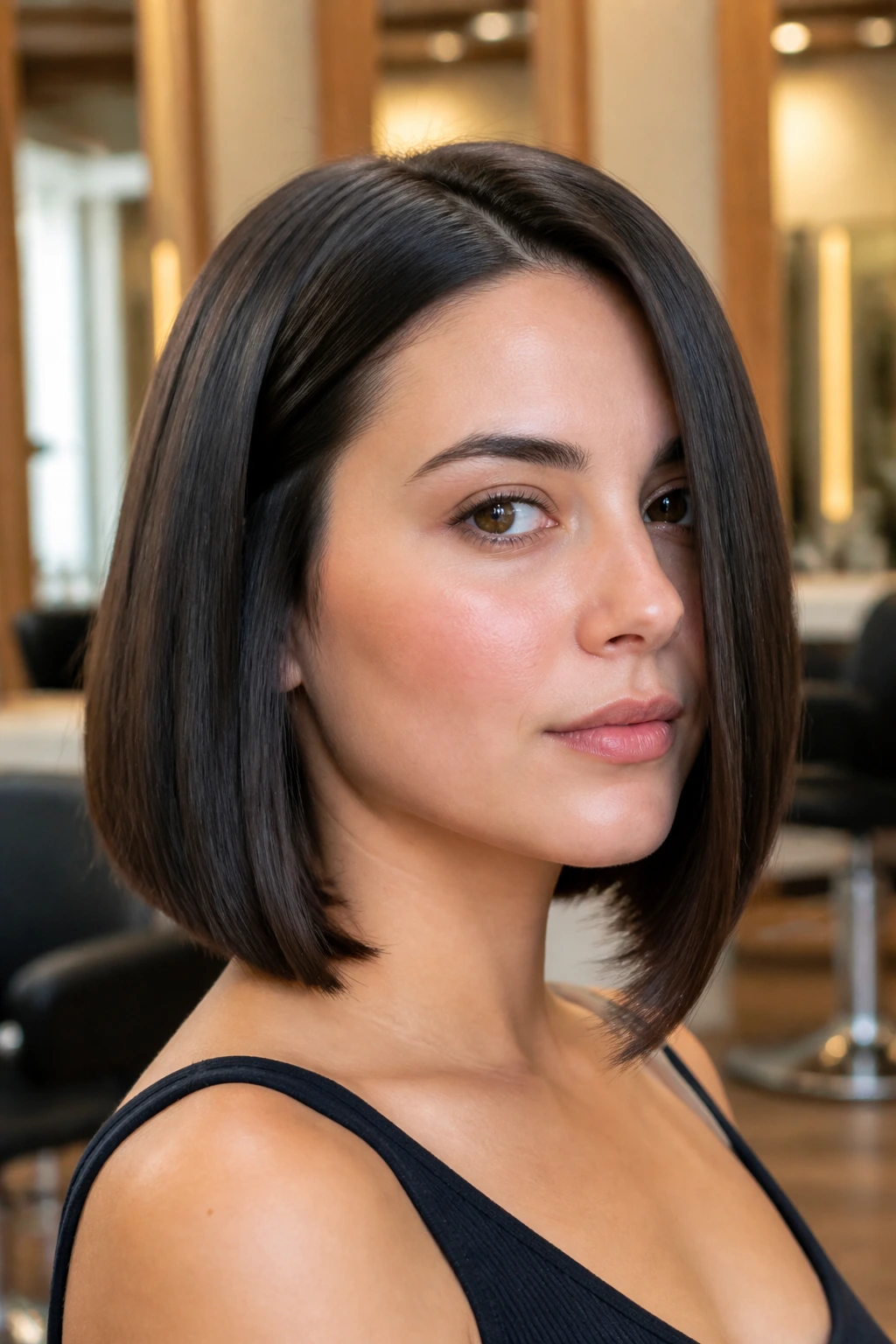
A glassy straight bob is all about shine and line. The hair lies smooth, the surface reflects light, and the cut looks almost architectural. On a round face, that sleekness helps because the eye reads the shape as longer and cleaner.
The length should sit below the jaw, or at least hover right under it. If the line hits too high, the cut can feel too severe. A side part helps a lot here, even if it’s only an inch off center. That tiny shift gives the face a little less symmetry, which is often enough.
This style needs a heat protectant and a careful pass with a flat iron. Don’t overdo the passes. One or two slow, controlled strokes are cleaner than frying the ends into submission.
13. Wavy Bob with Loose Ends

Soft waves can be a round face’s best friend when they’re handled with restraint. The wave should start below the cheekbone if possible. Put too much bend up near the cheeks and the haircut starts to expand sideways.
The 1990s version of this look feels relaxed but still neat. The ends should have a loose, almost sleepy bend, not a beachy spiral. That subtle movement breaks the face shape without shouting about it.
I like this cut for hair that naturally wants some body. It doesn’t need to be flat-ironed into obedience. A little mousse, a diffuser, or a quick bend with a one-inch iron is enough. The best part is that the style doesn’t fall apart the second you move.
14. Asymmetrical Bob

Asymmetry is one of the strongest shape tricks you can use on a round face. One side longer than the other creates a diagonal line that immediately pulls the eye downward.
This cut can be subtle or bold. Even a small difference, maybe half an inch to an inch, changes the feel. A stronger difference looks sharper and a little edgier, which fits the 1990s well if you want that cool, editorial mood.
The one warning: asymmetrical bobs need a good cut. If the line is sloppy, the whole thing looks accidental. Keep the finish smooth, tuck the shorter side behind the ear if you want even more asymmetry, and let the longer side lead.
15. Collarbone Bob

A collarbone bob is the safest of the bunch, and I mean that in the best way. It gives you the 1990s bob spirit without sitting so short that it has to fight your face shape every morning.
Because the length grazes the collarbone, the haircut naturally stretches the face. You can still wear it straight, flipped under, or with a bend through the ends. It also grows out better than a shorter bob, which matters if you don’t live at the salon.
This is the one I’d hand to someone who wants bob energy but isn’t ready for anything severe. Add a deep side part or curtain bangs, and it still feels rooted in the decade. Just with more breathing room.
16. Micro-Bang Bob

This one is a commitment. Micro bangs make a statement, and on a round face they can look very cool if the rest of the bob is long enough to balance them. The fringe itself should be light and deliberate, not thick and heavy.
The bob underneath needs some length and movement. If both the fringe and the bob are short and dense, the haircut can feel chopped up in a bad way. Leave the side lengths a little longer and let the ends fall cleanly.
What I love here is the contrast. Tiny fringe, solid bob, strong line. It feels very 1990s fashion-page without trying too hard. It’s not for everyone, obviously. But if you like a sharper edge, it has personality.
17. Piecey Textured Bob

A piecey bob is the opposite of a solid helmet shape. The ends are separated, the layers are visible, and the style has enough movement to keep the silhouette from widening out across the face.
This works particularly well if your hair has a bit of grit. A light texturizing spray or a touch of styling cream on dry ends can make the separation obvious. The key is to stop before the pieces start looking dry or frayed. That’s not texture. That’s neglect.
For a round face, the piecey finish is useful because it breaks up the visual width of the bob. The line becomes less blocky, more vertical, and the haircut looks more relaxed than a blunt cut can on its own.
18. Stacked Nape Bob
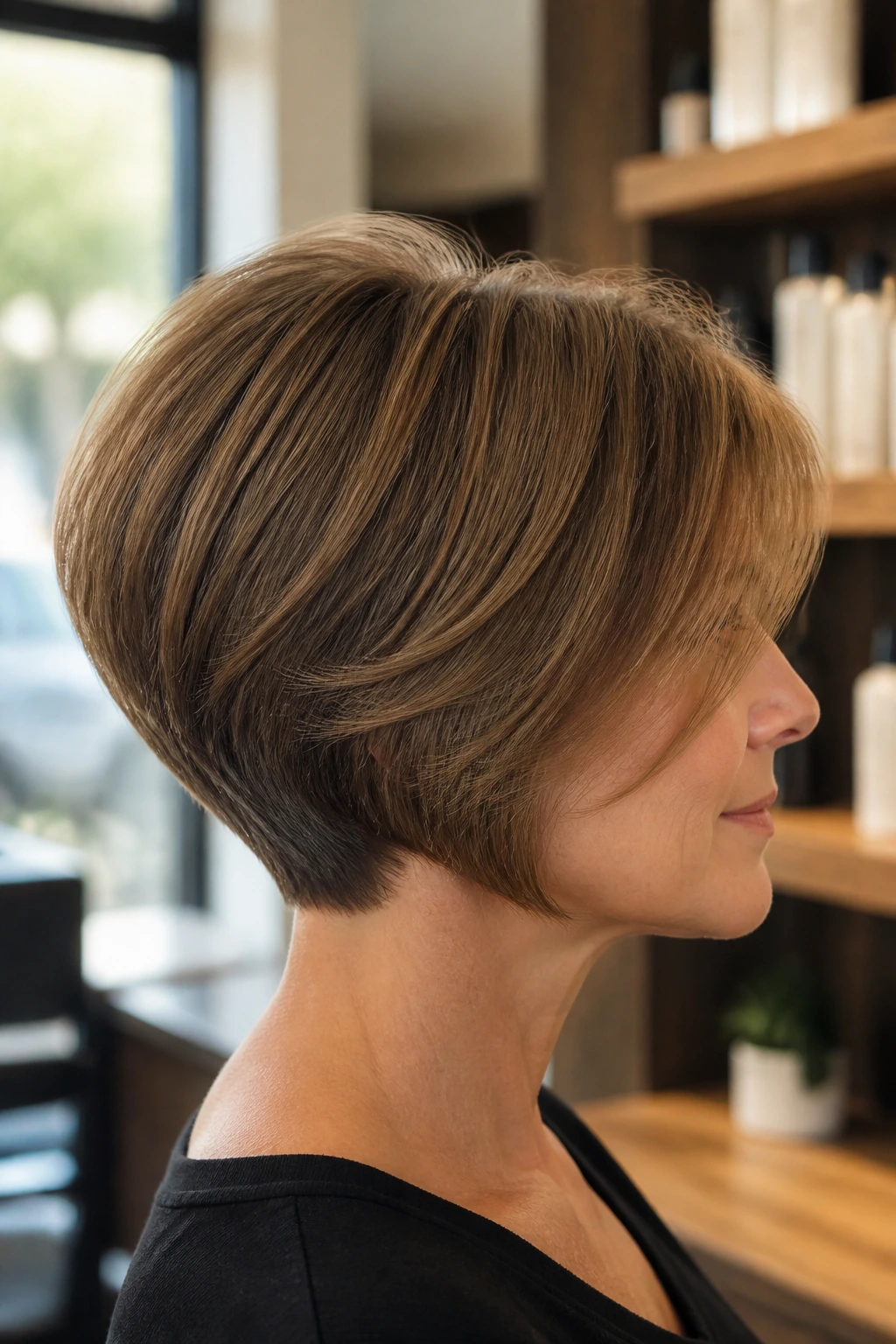
The stacked nape bob builds shape at the back of the head, which can lift the whole haircut and make the face feel longer. It’s a smart choice if your hair lies flat or if you want a more sculpted 1990s silhouette.
The stacking should be controlled. Too much and the crown gets round in a way that fights the face. Too little and the cut just collapses. There’s a sweet spot where the back hugs the neck, the top has a little rise, and the front still falls below the jaw.
This is one of those cuts that looks better with a round brush than with fingers alone. You want to see the shape. Not over-style it. Just enough structure to keep the bob from turning into a lump.
19. Curved-Under Bob
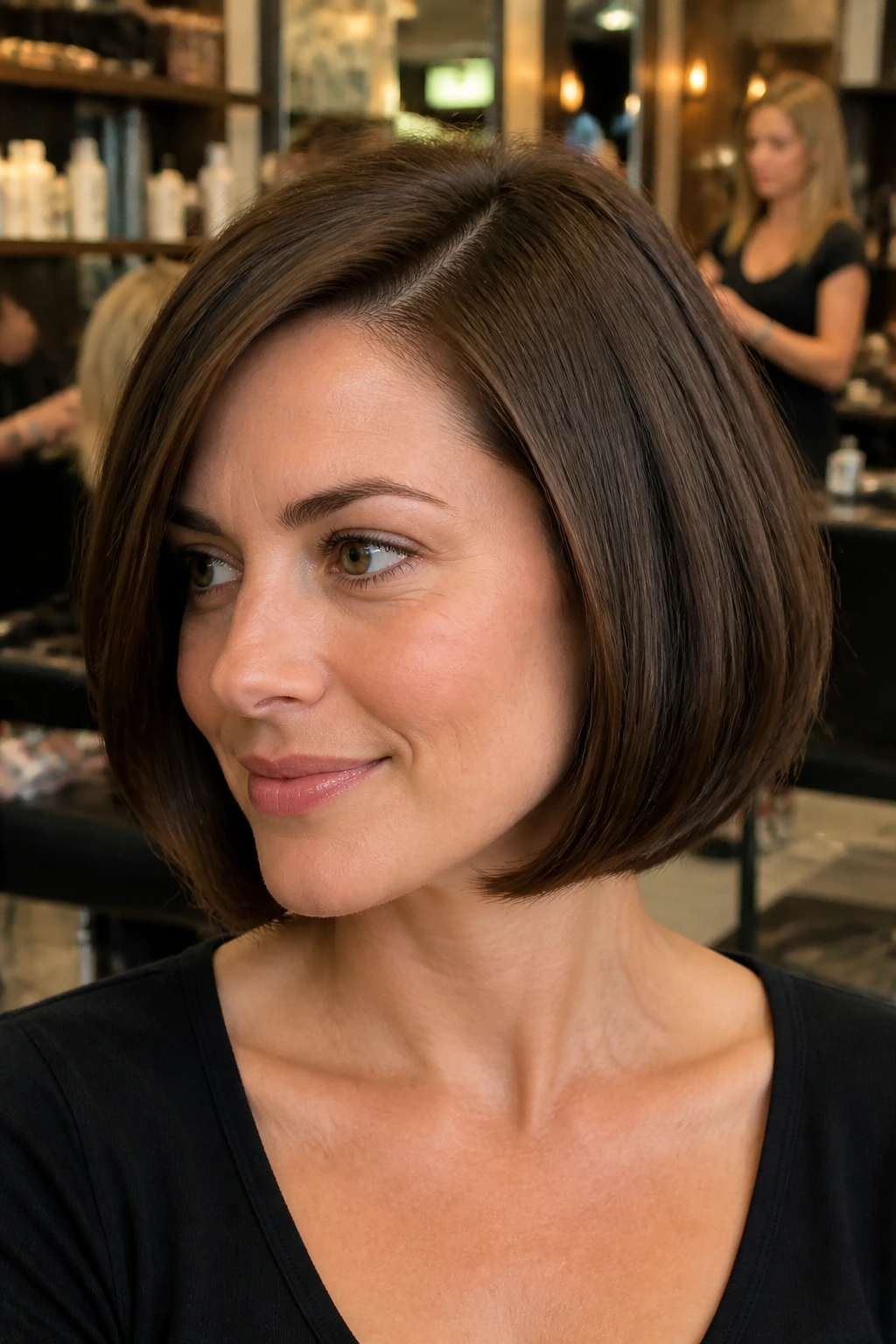
The curved-under bob is classic salon hair. Ends turn inward, the line is smooth, and the shape feels finished even when it’s simple. On a round face, the best version is one that curves under softly rather than cinching tight around the chin.
That little bit of bend is what keeps it from looking severe. A side part helps, and so does a length that lands just below the jaw or at the top of the neck. If the curve is too strong, the haircut starts to feel like a bowl in the wrong way.
This cut is a good match for straight or slightly wavy hair. It’s tidy. It’s easy to dress up. And it still reads as 1990s without needing any extra tricks.
20. Layered Bob with Face-Framing Slices
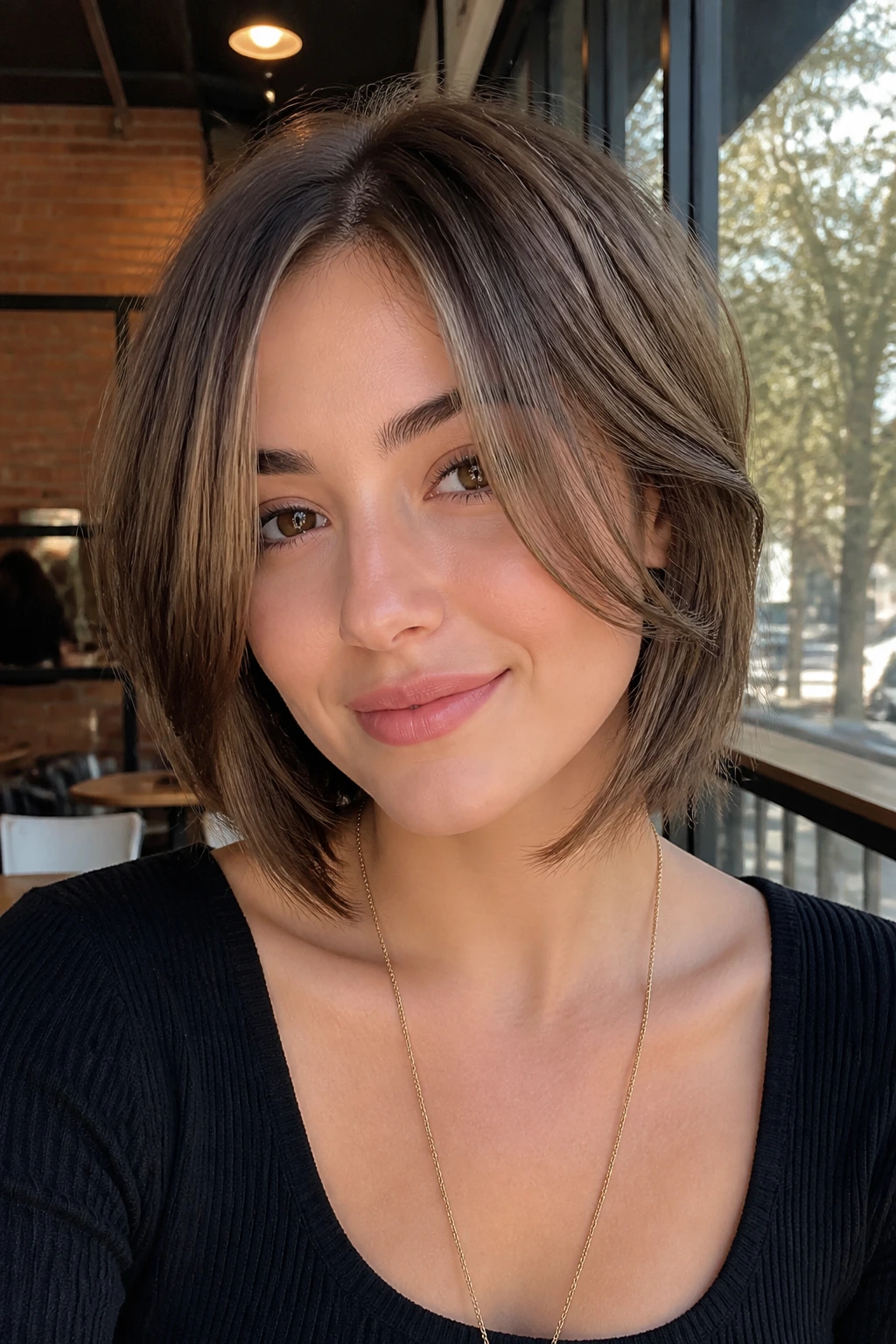
Face-framing slices are one of the most useful tools for round faces because they let the haircut open around the cheeks instead of sitting on them. The layers should start low enough that they don’t create extra width right where the face is fullest.
This bob can be soft or more defined depending on how much movement you want. If you like a blowout, the slices give you swing. If you like a straighter finish, they keep the perimeter from feeling too heavy.
The best part is how forgiving it is. You can wear it tucked, flipped, waved, or smooth, and the framing still works. It’s a good everyday choice if you want a bob with shape but not a high-maintenance mood.
21. Wet-Look Bob
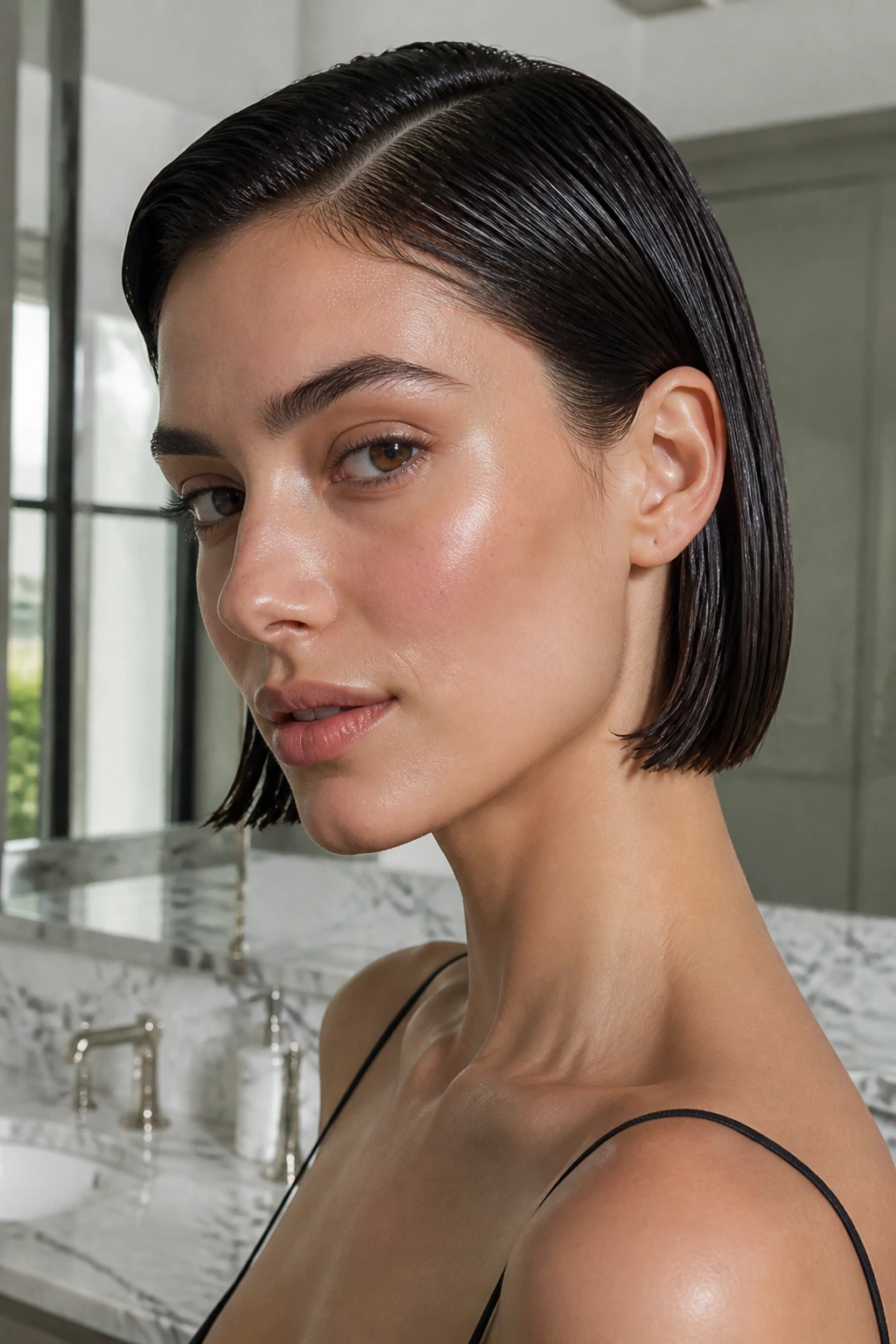
The wet-look bob is sleek, a little severe, and strangely flattering on a round face because it removes puff from the sides and pushes all the attention into the line. The root area stays close to the head, which helps lengthen the face visually.
This is not a casual style, and that’s the point. A gel or styling cream keeps the surface smooth, while a side part or deep tuck behind one ear gives the haircut the asymmetry it needs. The ends can stay a little piecey so the whole thing doesn’t look like a helmet.
Use this look when you want a sharp finish. It photographs well because the line is clean, but it also works in real life if you don’t overload the product. Too much gel and the bob starts to crack or look greasy. Less is better.
22. Supermodel Blowout Bob

This is the 1990s bob at its most glamorous. Think lifted crown, soft ends, and that round-brush bounce that makes the haircut feel expensive without being stiff. On a round face, the crown lift is doing a lot of heavy lifting.
The best versions stop at the chin or just below it. Anything shorter can widen the face, especially if the ends curl inward too hard. Keep the roots airy, the mid-lengths smooth, and the ends gently bent under or outward depending on your hair’s personality.
Velcro rollers can help if your hair tends to fall flat as soon as you step away from the mirror. The shape should have movement, not helmet volume. Big difference. One looks styled; the other looks dated.
23. Half-Up 90s Bob
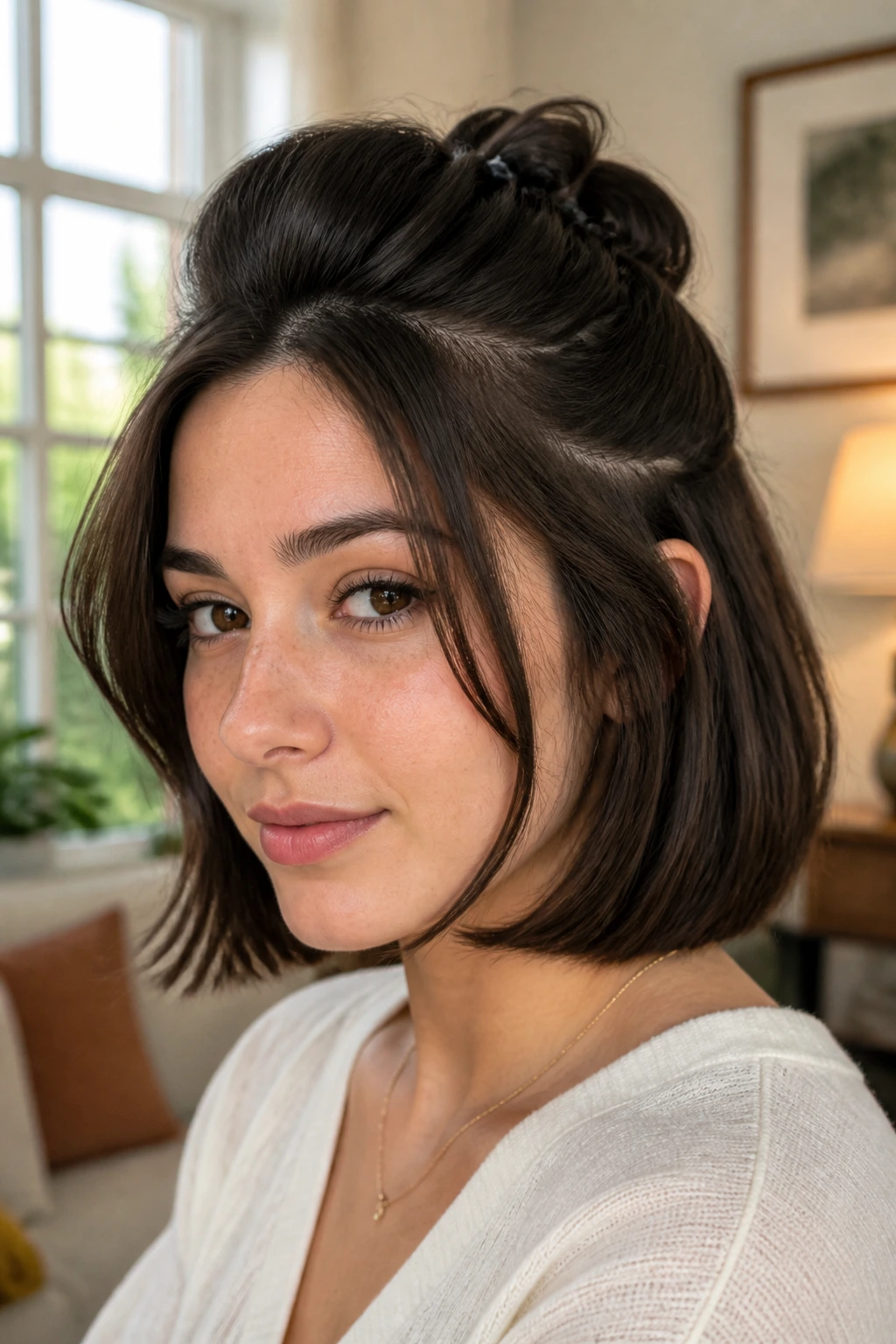
A half-up bob has that easy 1990s energy that’s hard to fake. The top section pulls upward, which gives the face more height, while the rest of the bob keeps its clean outline around the jaw and neck.
This is a sneaky-good option for round faces because the lifted crown changes the balance of the whole head shape. A small clip, a barrette, or even a tiny elastic can hold the top section. Leave a few pieces loose around the face if you want the style to feel softer.
I like this for second-day hair. It hides a little bend, it adds shape fast, and it keeps the bob from looking too neat. That looseness is part of the charm.
How to Ask for the Right Length and Part at the Salon
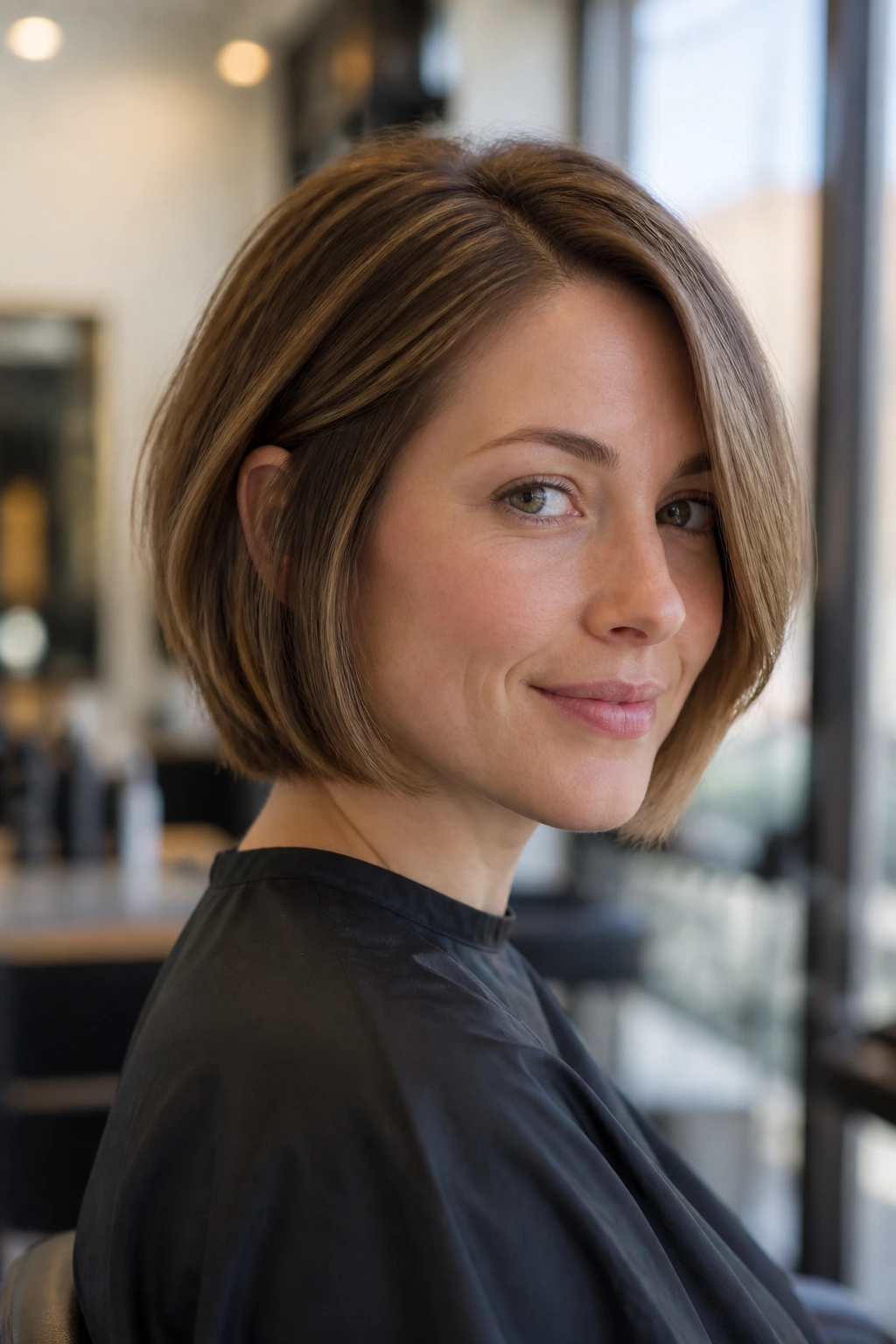
The salon conversation matters. A lot. If you say “bob” and leave it at that, you might walk out with a cut that sits right on the cheekbone, which is exactly where a round face doesn’t need more width.
Be specific. Tell your stylist where you want the front to land, where you want the back to sit, and whether you want the crown to have lift or stay closer to the head. If you like a side part, say so early. A half-inch shift can change the whole shape, and it’s much easier to cut with that plan in mind than to fix it later.
A few phrases help:
- “Keep the front just below my jaw.” That gives the face room.
- “Leave the back a little shorter so the shape stays lifted.” Useful for A-line or stacked bobs.
- “I want softness around the cheeks, not bulk.” That usually prevents over-thick sides.
- “Please don’t cut the fullest point of the hair at my cheekbone.” This one saves people from the widest possible line.
- “I want the shape to still look good if I wear it air-dried.” Smart if you’re low-maintenance.
Bring photos, but bring the right photos. Show the front, side, and back if you can. A cut can look flattering from the front and still be all wrong in profile.
The Tools and Products That Make a Bob Behave
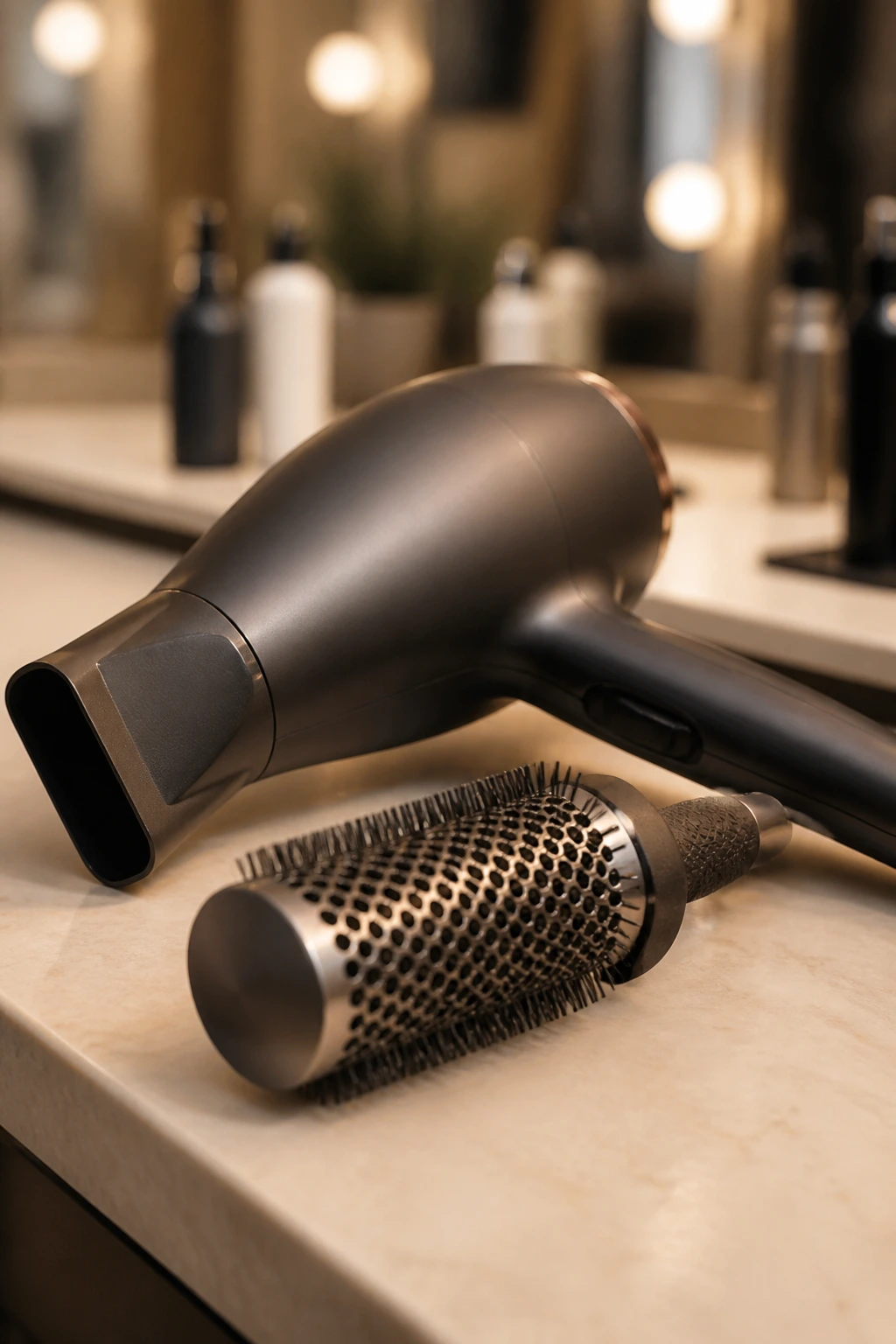
A bob doesn’t need a drawer full of gadgets, but it does need a few things that actually help the shape land where you want it.
- Blow dryer with a nozzle: The nozzle directs air so the cut stays smooth at the roots instead of puffing out around the cheeks.
- Medium round brush: Best for beveling the ends under or out without making the bob look over-curled.
- Tail comb: Useful for getting a clean center or side part and for sectioning the crown.
- Heat protectant spray: A must if you flat-iron or blow-dry often; it keeps the finish smoother and the ends less frayed.
- Volumizing mousse: Good at the roots, especially for finer hair that falls flat at the crown.
- Lightweight smoothing cream: Helps glassy bobs and blunt bobs stay tidy without looking greasy.
- Flexible-hold hairspray: Holds the curve without turning the hair stiff.
- Velcro rollers or large hot rollers: Great for 1990s crown lift and soft bend through the ends.
- Duckbill clips: Handy for sectioning while you dry the hair in pieces.
- Flat iron with rounded edges: Better for a bob than a sharp-edged iron, because it bends the hair instead of leaving harsh lines.
The Styling Moves That Add Height Without Looking Stiff
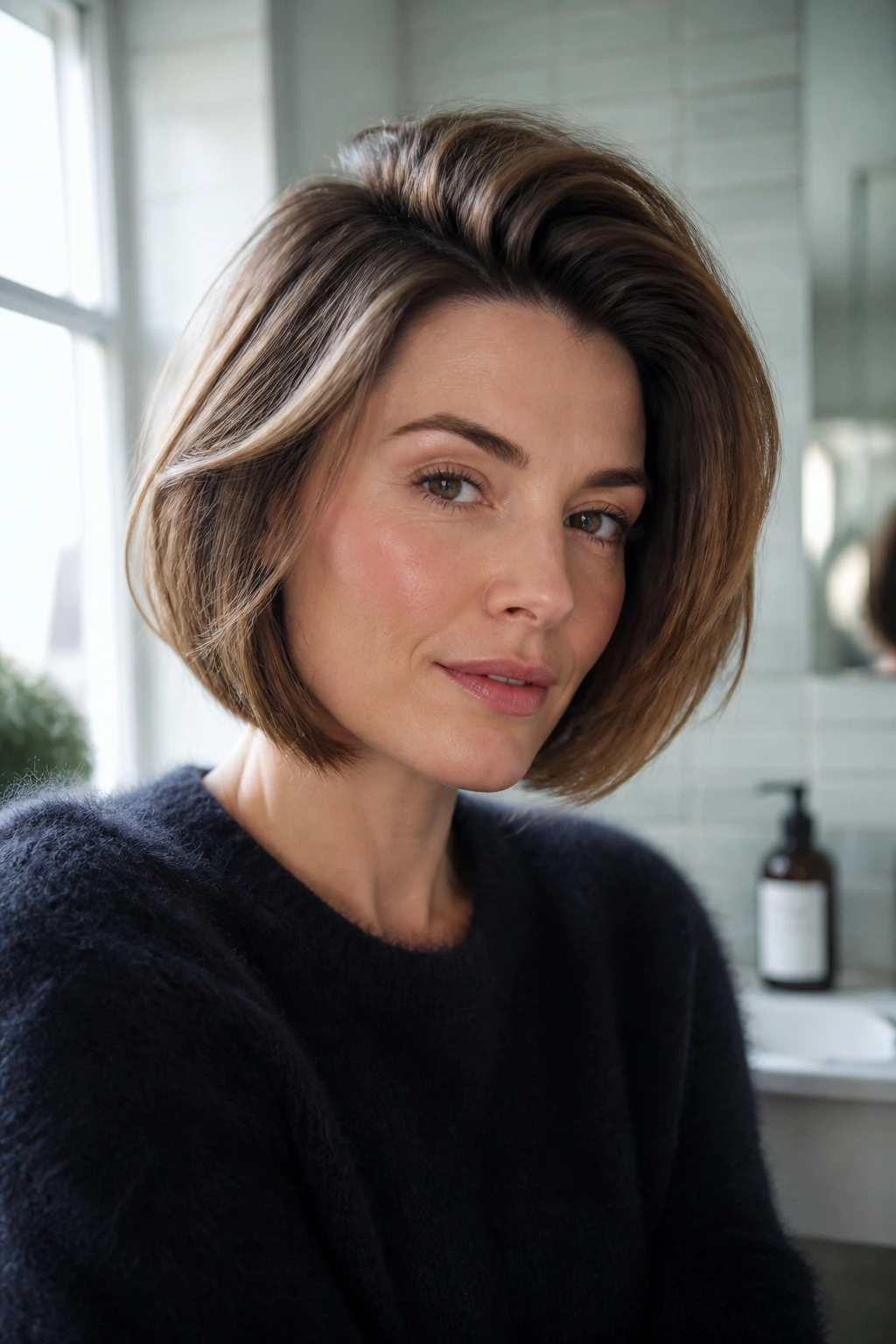
If a round face wants anything from a bob, it’s a little more height at the crown and a little less width at the sides. That’s the game. The trick is getting there without making the hair look sprayed into place.
Start with the roots. Rough-dry them a bit first, then direct the dryer upward at the crown and downward through the sides. That small change keeps the top from collapsing. If you part your hair, make the part before it dries completely. A part set in wet hair tends to stick.
Use the brush where it matters most. The mid-lengths and ends need the bend. The roots need lift. Don’t spend ten minutes curling the cheek area inward. That just makes the face feel rounder. A soft bevel at the tips is enough.
Velcro rollers still make sense here, and I’m not embarrassed to say it. Put two or three at the crown while you do makeup or get dressed. Pull them out, shake the hair once, and mist lightly. That gives you 1990s lift without that crunchy salon-spray shell.
A final note: if the bob starts looking too puffy, stop adding product. The fix is often less cream, less spray, and a cleaner blow-dry, not more.
Common Mistakes That Make a Bob Look Wider
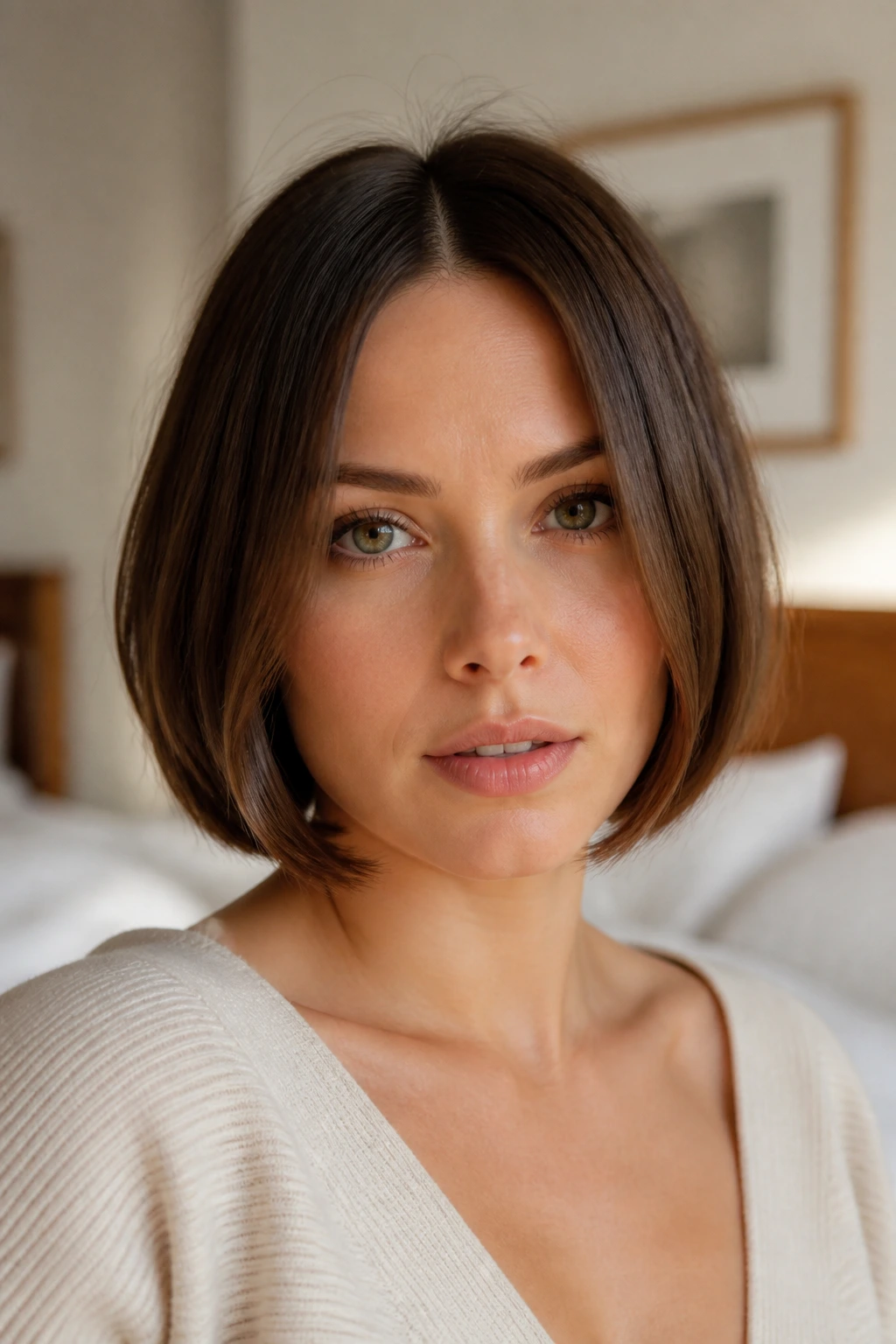
Cutting the bob at the fullest point of the cheeks. This is the easiest way to make the face look broader. Ask for the length to land at the jaw or below it, not right across the widest section.
Curling every end inward. A uniform under-turn can make the haircut feel like a round bowl. Leave some ends straight, flipped out, or lightly bent so the shape has breathing room.
Skipping crown lift. Flat roots make the face seem wider by comparison. A little height at the top changes the balance fast, especially on center-part bobs.
Over-thinning fine hair. Too much texturizing can leave the ends wispy and the shape weak. If your hair is thin, ask for soft internal shaping instead of heavy thinning.
Choosing bangs that are too dense. Thick bangs can shorten the face and close off the forehead. Curtain bangs or side-swept fringe usually give more room.
Letting the back grow too long and the front stay too short. The bob starts to lose its line and can puff outward. A trim every few weeks keeps the silhouette clean.
Variations for Fine, Thick, Wavy, and Curly Hair
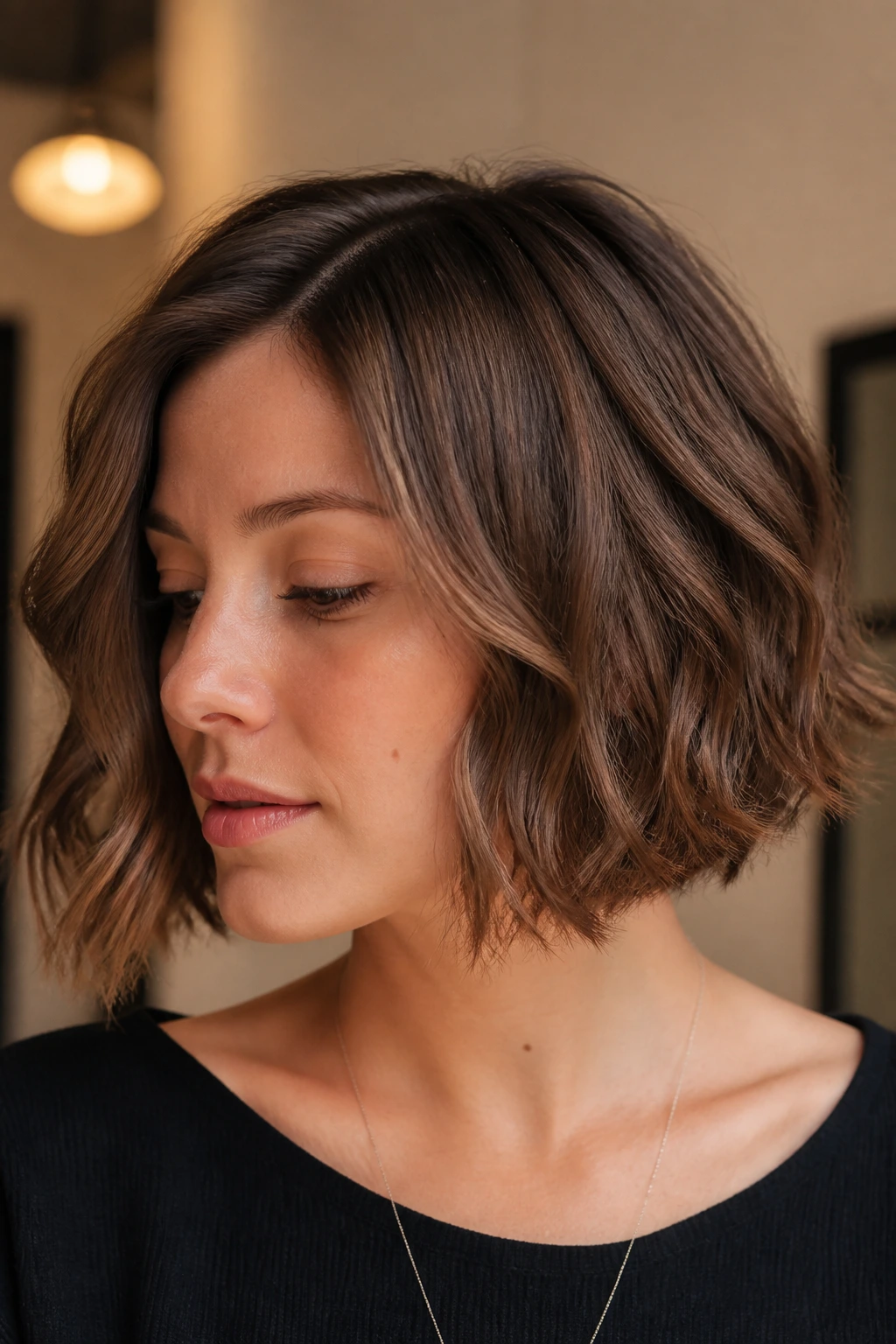
Fine-Hair Airy Bob: Keep the length between chin and collarbone, and ask for light crown layering instead of heavy ends. Fine hair needs shape, not weight, or it goes flat by noon.
Thick-Hair Carved Bob: Ask for interior removal of bulk and a slightly longer front corner. Thick hair can swallow a bob shape if the middle is too heavy, so the haircut has to be carved, not just cut.
Wavy-Hair Piecey Bob: Let the wave do the work. Add a small amount of styling cream, scrunch once, and separate the ends with fingers so the bob doesn’t turn into a triangle.
Curly-Hair Stretch Bob: Leave enough length for shrinkage. A curly bob that looks chin-length wet may spring up to cheek level dry, and that’s where a round face gets too much width.
Low-Maintenance Grow-Out Bob: Choose a collarbone length with soft layers. It keeps the 1990s feel, but you won’t be trapped by a strict line every six weeks.
Trim Timing and Day-to-Day Maintenance
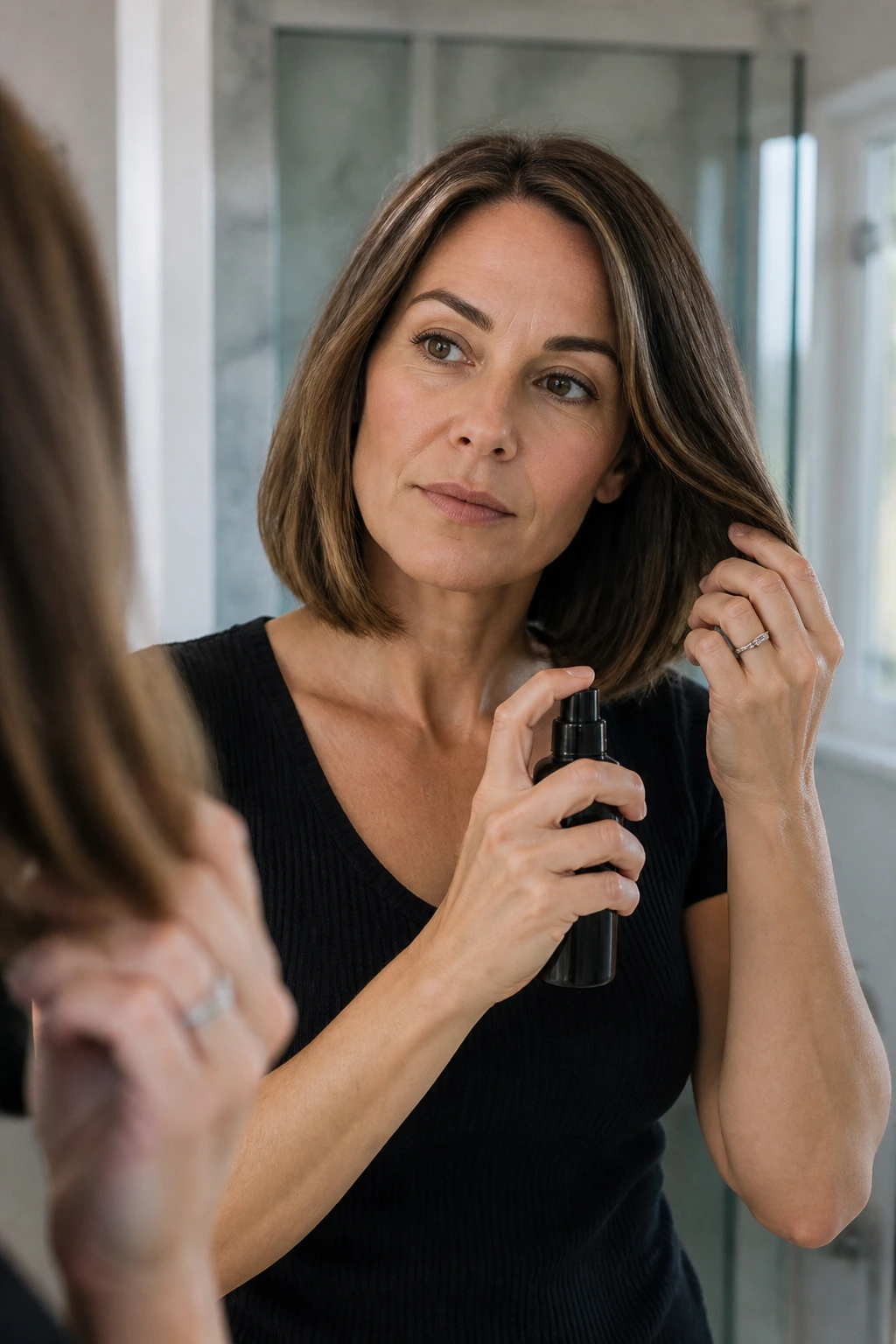
A bob lives or dies by its shape. Once the ends start flipping in odd directions or the line loses its edge, the whole look gets fuzzy. For a blunt bob, trim every 5 to 7 weeks. For a layered or shaggy version, 7 to 9 weeks is usually enough.
Day to day, dry shampoo is useful, but don’t spray it onto already dusty roots and call it clean. Lift sections, spray at the roots, wait a minute, then massage it in. It should absorb oil, not sit like powder.
Sleep matters too. A bob can kink fast if you toss it around on a rough pillowcase. A silk pillowcase helps, but a loose clip at the crown can work if the hair is long enough. If the ends bend badly in the morning, a quick blast with a round brush at the front pieces is usually enough.
If the style needs heat to look alive, keep the passes small and controlled. A bob doesn’t need to be ironed into a plank. It needs a clean outline and a little movement. That’s all.
Questions People Ask Before Going Short

Will a bob make my round face look wider?
Only if the length lands in the wrong place or the roots stay flat. A bob that falls below the jaw, has a side part, or carries some crown lift usually works with a round face instead of against it.
What bob length is most flattering for a round face?
The safest lengths are just below the jaw and around the collarbone. Chin-length can work too, but it needs clean lines, a little height at the top, and no heavy bulk sitting at the cheeks.
Are bangs a bad idea on a round face?
No, but the wrong bang can be annoying fast. Curtain bangs and side-swept fringe tend to be kinder than thick, straight-across bangs because they leave the forehead open and create more vertical movement.
Can curly hair wear a 1990s bob?
Absolutely. The cut just needs to account for shrinkage, and the shape should be a little longer than you think. Curly bobs can look especially good when the curls are layered to keep the sides from ballooning.
How often should I trim a bob?
Most bobs need attention every 5 to 8 weeks. Blunt shapes lose their edge first, while layered or textured versions can usually go a little longer before they start looking fuzzy.
What if my bob looks too puffy at the sides?
That usually means the ends are sitting too high or the crown is too flat. Try a side part, use less side volume, and smooth the mid-lengths while leaving the top a little lifted.
Do I need a round brush to style these cuts?
Not always, but it helps. A round brush gives you that familiar 1990s bend at the ends and a cleaner crown shape, which is half the point of the look.
What should I do if my hair is very thick?
Ask for bulk removal inside the haircut, not just shorter ends. Thick hair needs shape carved into it, or the bob turns into a heavy block that sits right on the face.
Choosing the Bob That Fits Your Face
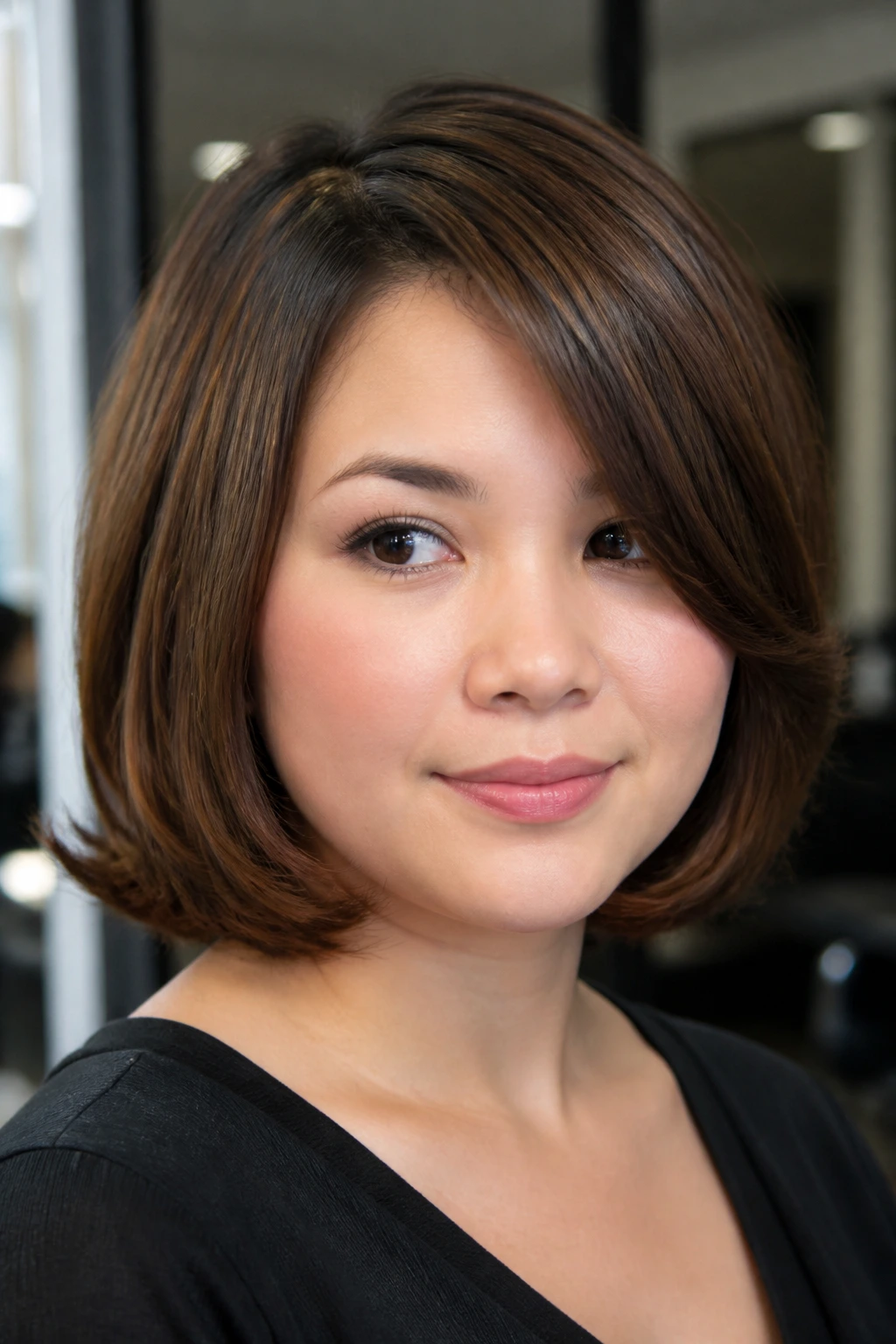
A round face doesn’t rule out short hair. It just asks for better decisions. A bob that respects the jawline, builds a little height at the crown, and avoids a heavy shelf at the cheeks can look sharp, clean, and far more balanced than a cut that follows the face shape too closely.
The 1990s were good at this. That decade knew how to make a bob feel polished without freezing it in place. A side part. A flipped end. A softened fringe. Those small choices still do the work, and they do it without much fuss.
If you’re deciding between styles, start with the one that matches your hair’s behavior, not the photo you found first. Hair that likes to bend will love a curved-under bob or a blowout bob. Hair that wants volume may do better with stacking or feathering. Hair that’s sleek already can wear the blunt, glassy versions and look fantastic with almost no extra effort.
