



Bob haircuts for curly hair over 50 work best when they respect shrinkage, density, and the way curls behave after a long day, not after a salon mirror session. A wet curl can look obedient. Dry it, and the story changes. That’s why the right bob isn’t just about length; it’s about where the shape sits once your curls spring up, settle, and do their own thing.
A good curly bob can take weight off the neck, open the face, and give the crown a little lift without turning the whole head into a pyramid. That last part matters more than people admit. When curls get heavier at the bottom, the silhouette slumps. When the cut is too blunt, the sides can puff. And when the layers are chopped with no regard for curl pattern, the result is usually a triangle with a kind face on top of it.
The best bob haircuts for curly hair over 50 solve those problems in different ways. Some lean short and sharp at the jaw. Some keep a little length at the collarbone. Some bring in bangs, side parts, or a soft stack in the back. The point is not to chase a “young” look. The point is to find a shape that works with your curl pattern, your density, your glasses, your neck, your mornings. That’s the haircut that earns its keep.
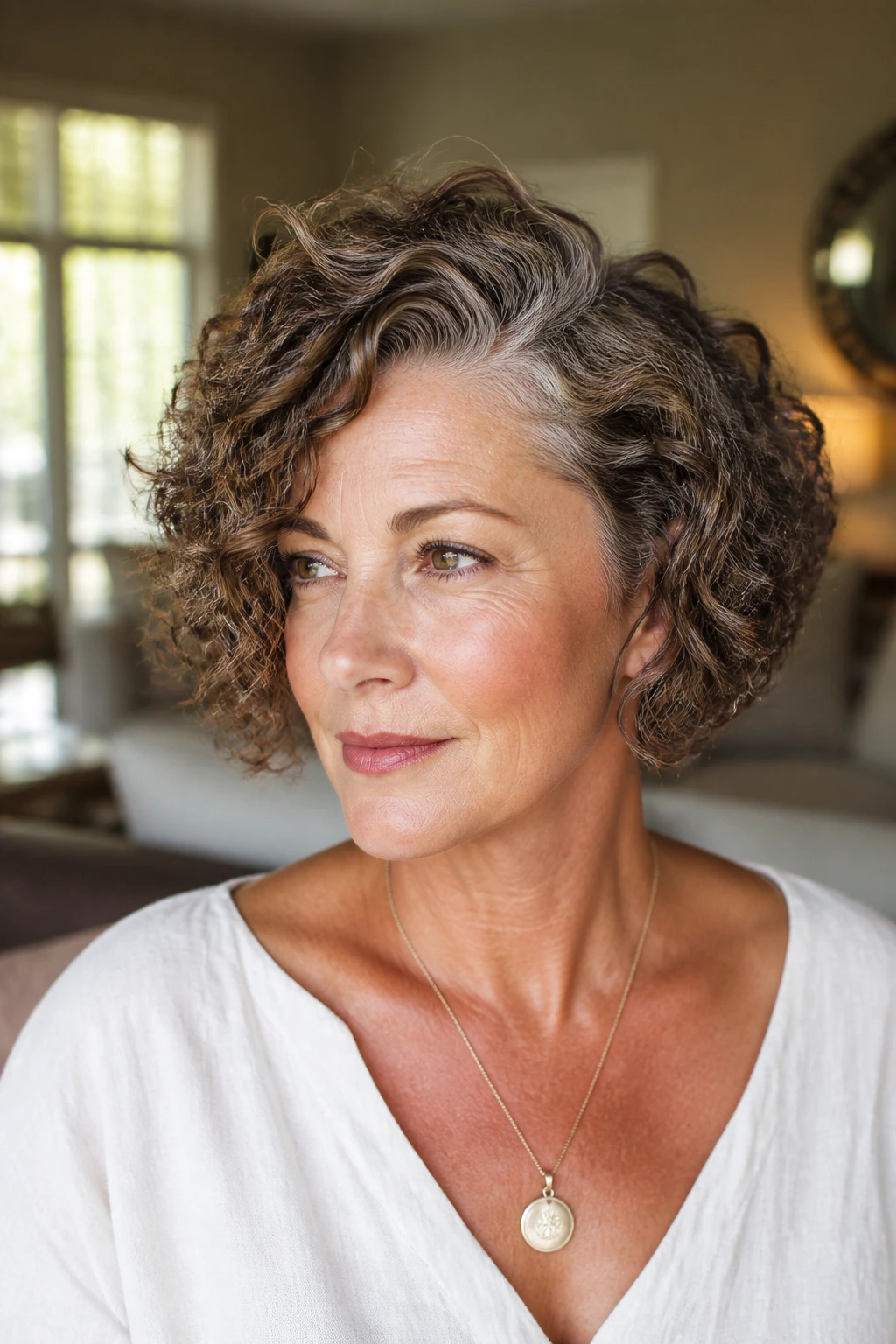
Why These Curly Bob Haircuts Deserve a Spot on Your Radar
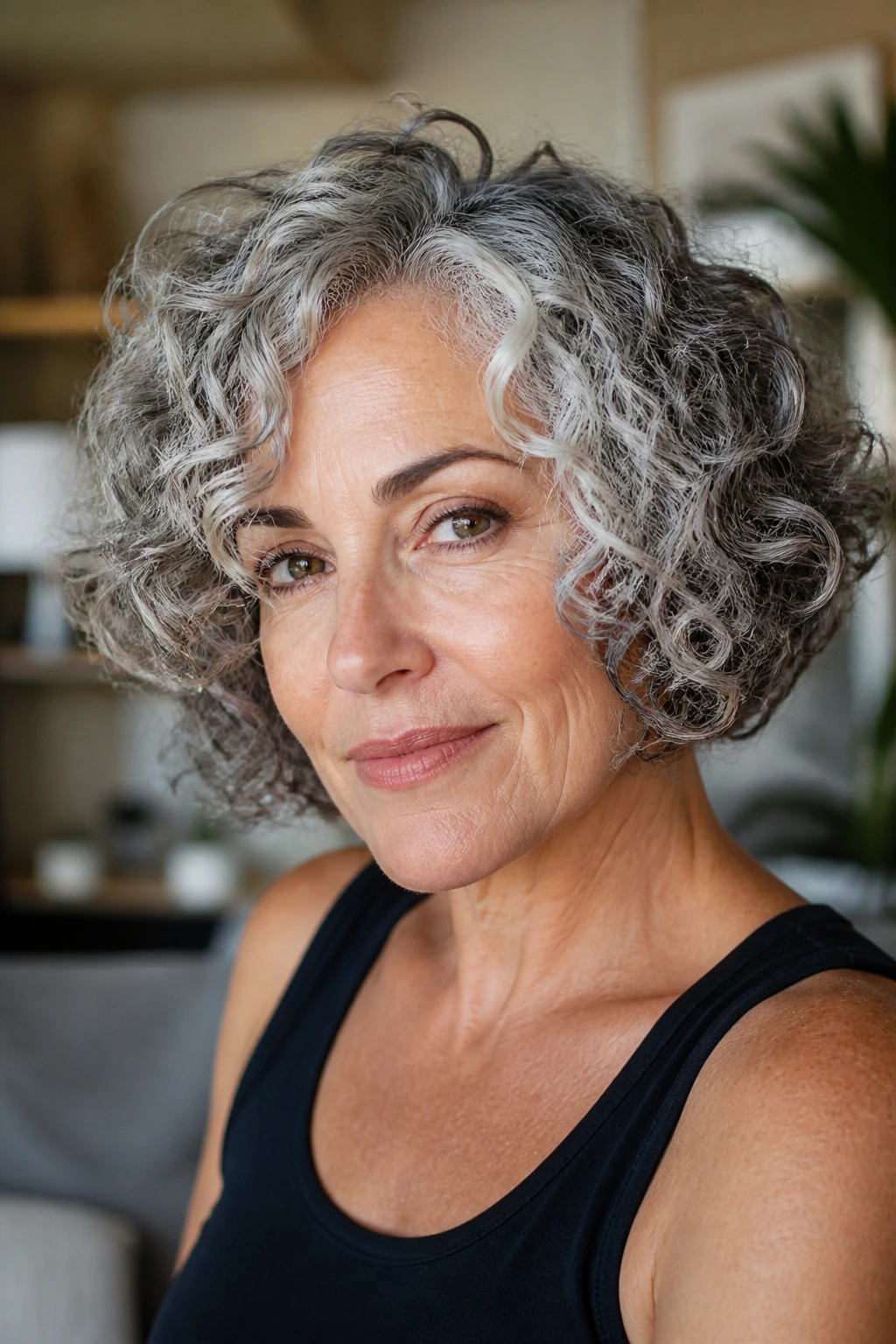
-
Shrinkage is already accounted for: These cuts are chosen with the dry curl in mind, so you’re less likely to leave the salon thinking you’ve got a neat chin-length bob and wake up with something three inches shorter.
-
The neck gets breathing room: Shorter backs and cleaner outlines keep curls from rubbing collars and puffing into a fuzzy shelf at the nape.
-
They handle density without looking bulky: Internal layering and soft graduation can remove weight where it builds, especially if your curls swell at the sides first.
-
Gray and silver strands show better shape here: A bob makes the movement and shine easier to see, which matters a lot when hair has gone more wiry or more porous over time.
-
They’re built for real mornings: A good curly bob should still look like a haircut after a quick mist, a little product, and a diffuser pass.
-
Small tweaks change everything: A half-inch at the jawline or a different part can alter the whole balance of the face frame.
1. Chin-Length Curly Bob With Soft Internal Layers
A chin-length curly bob is the cut that stops trying to be coy. It lands right where the jaw has some shape, which means the curls can frame the face instead of disappearing into the collar. The soft internal layers matter here; they keep the inside from swelling up like a sponge while leaving the outer line clean.
Why the Internal Layers Matter
If you have curls that expand sideways before they drop, this shape keeps them in check. The perimeter stays tidy, but the interior gets enough air that the bob doesn’t turn heavy at the bottom. Ask for layers cut inside the shape, not choppy pieces ripped through the whole head.
- Best for: medium to thick curls that puff at the sides.
- Ask for: a chin-length perimeter with soft, hidden layers starting below the cheekbone.
- Styling note: diffuse until the roots are mostly dry, then stop touching the hair.
- Best face pairing: oval, heart, and square faces, especially when the jaw could use definition.
Tip: If your curls shrink a lot, leave the front a quarter inch longer than you think you need.
2. Jaw-Skimming French Bob With Airy Fringe
A French bob on curly hair is a little cheeky, and I mean that in the best way. It sits close to the jaw, keeps the neck clear, and adds a touch of softness through the fringe. The trick is not to cut it too bluntly. Curly hair needs room to bend.
The fringe should land longer than a straight-across bang would on straight hair. When the curls dry, they spring upward, and if you cut them too short, they can sit in an awkward little shelf above the brows. I prefer a fringe that just kisses the eyebrow line when stretched and falls into a soft curve once it dries.
This shape works especially well if your face has strong lines or if you wear glasses. The fringe breaks up the forehead, and the short length keeps the whole cut crisp. It does ask for a bit more maintenance than a longer bob, though. Fringe needs attention. No way around it.
3. Rounded Curly Bob With a Deep Side Part
Want a bob that lifts the whole face without adding more length? A deep side part does half the work for you. It creates height at the crown and gives one side enough sweep to soften the overall shape. On curls, that little shift can be the difference between “fine” and “that works.”
How the Side Part Changes the Shape
A rounded bob has a gentle curve through the sides and back, and the deep part prevents it from feeling boxy. Instead of widening at the cheeks, the curls fall in a more curved line. If your hair tends to collapse flat on top, this cut gives the crown somewhere to go.
The best part is how forgiving it can be. If one side of your curl pattern is looser than the other, the side part hides the imbalance better than a center part ever will. It also plays nicely with stronger cheekbones and longer faces.
- Good for: hair that loses lift at the crown.
- Style it with: a little root clip on the heavier side while drying.
- Avoid: cutting the side closest to the part too short; it can flip up oddly.
- Nice extra: a satin side clip can hold the shorter side back on busy days.
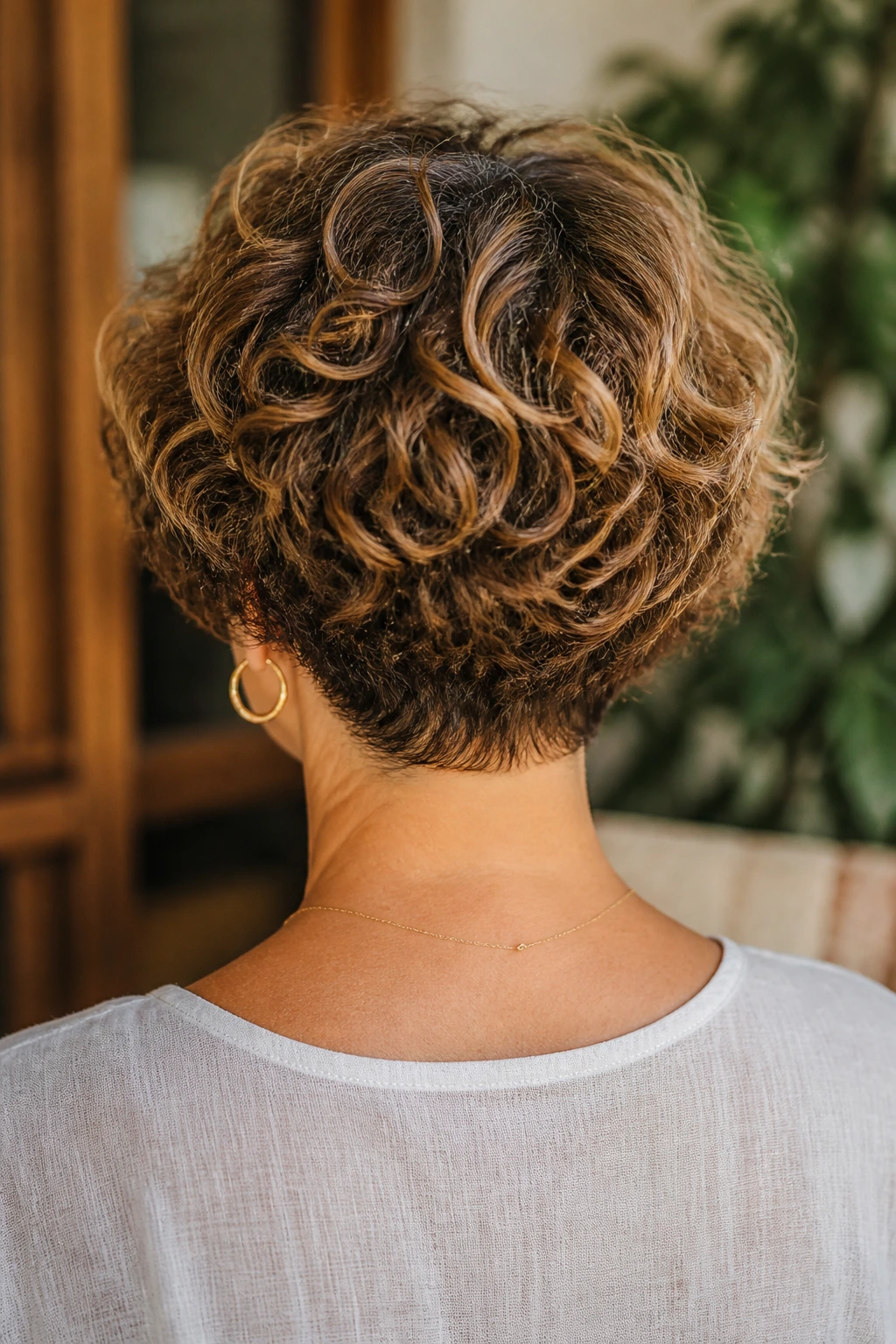
4. Stacked Curly Bob With a Lifted Nape
There’s a reason the stacked bob keeps coming back. It solves a real problem: hair at the nape can get heavy, especially if your curls are dense or your neckline is short. A little stacking removes that bulk and lets the back lift instead of dragging down.
That lift matters more on curly hair than on straight hair. Curls don’t just sit. They bounce. If the back is too weighty, the whole bob can collapse into the neck. A stacked shape gives that area some room.
What the Stack Should Actually Do
The stack should create shape, not a hard wedge. I like a soft graduation from the nape up toward the crown, with the front left long enough to frame the face. If the layers are too steep, the result can look dated fast. Keep it subtle.
- Best for: dense curls that collect at the back of the head.
- Ask for: gentle graduation at the nape, not a severe angle.
- Styling note: scrunch the back upward as it dries to keep the lift.
- Watch out for: over-stacking, which can create a mushroom shape on tight curls.
5. Collarbone-Grazing Curly Lob With a Soft Outline

A curly lob gives you the bob shape without forcing you into short-hair habits. It lands around the collarbone, which is a sweet spot for people who want movement but not a cut that feels fussy every six weeks. The outline stays soft, so the curls can fall in a shape that feels relaxed rather than overworked.
This is one of my favorite choices for curls that have become drier with age. A little more length means a little more weight, and that can help the curl pattern drop in a pleasing way. Too short, and some curls stand away from the head in a way that’s harder to tame.
It also plays well if your hair is fine at the crown but fuller underneath. The longer silhouette lets you preserve a sense of thickness without dragging the ends down. If you like tucking one side behind the ear or clipping the front back, the lob gives you room to do that without losing the haircut.
6. Asymmetrical Curly Bob

A mild asymmetry can wake up curls that feel stuck in the same old shape. One side sits a touch longer, and that tiny difference changes how the eye reads the whole cut. It’s not a stunt haircut. It’s a shape trick.
Why the Difference Should Stay Subtle
Keep the asymmetry small. Half an inch to an inch and a half is usually enough. If one side is much longer, the curls can fight the line and make the whole bob feel uneven rather than intentional. A little difference creates movement; too much just looks like you missed a side in the mirror.
This cut is especially good if your curls behave differently from one side to the other. Most heads do. One side often has more spring, or the part naturally splits unevenly, or one temple grows flatter than the other. An asymmetrical bob turns that into part of the design.
It’s also a solid choice if you like wearing one side tucked. The longer side gives you something to play with, and the shorter side keeps the silhouette from getting heavy.
7. Curly Bob With Layered Bangs

Bangs are the part people fear, and fair enough. Curly bangs can go tiny, puffy, or strangely sparse if the cut doesn’t respect shrinkage. Layered bangs are safer because they let the fringe blend into the sides instead of sitting like a separate piece.
The key is length. Curly bangs should usually be cut longer than you think, then checked dry. I’d rather nudge them shorter later than watch them jump two inches above the brow and never come back down. That happens. Often.
What Bangs Need to Do
They need to soften the forehead, not dominate it. They also need to connect to the rest of the bob. If they look pasted on, the haircut feels disconnected. If they blend into the temples and front layers, the whole shape gets more natural.
- Best for: longer foreheads, strong cheekbones, or anyone who likes a bit of softness around the eyes.
- Ask for: layered fringe with point-cut ends, not a blunt line.
- Styling note: twist fringe pieces with wet fingers so they dry in clumps.
- Avoid: cutting them too short if your curls spring tightly.
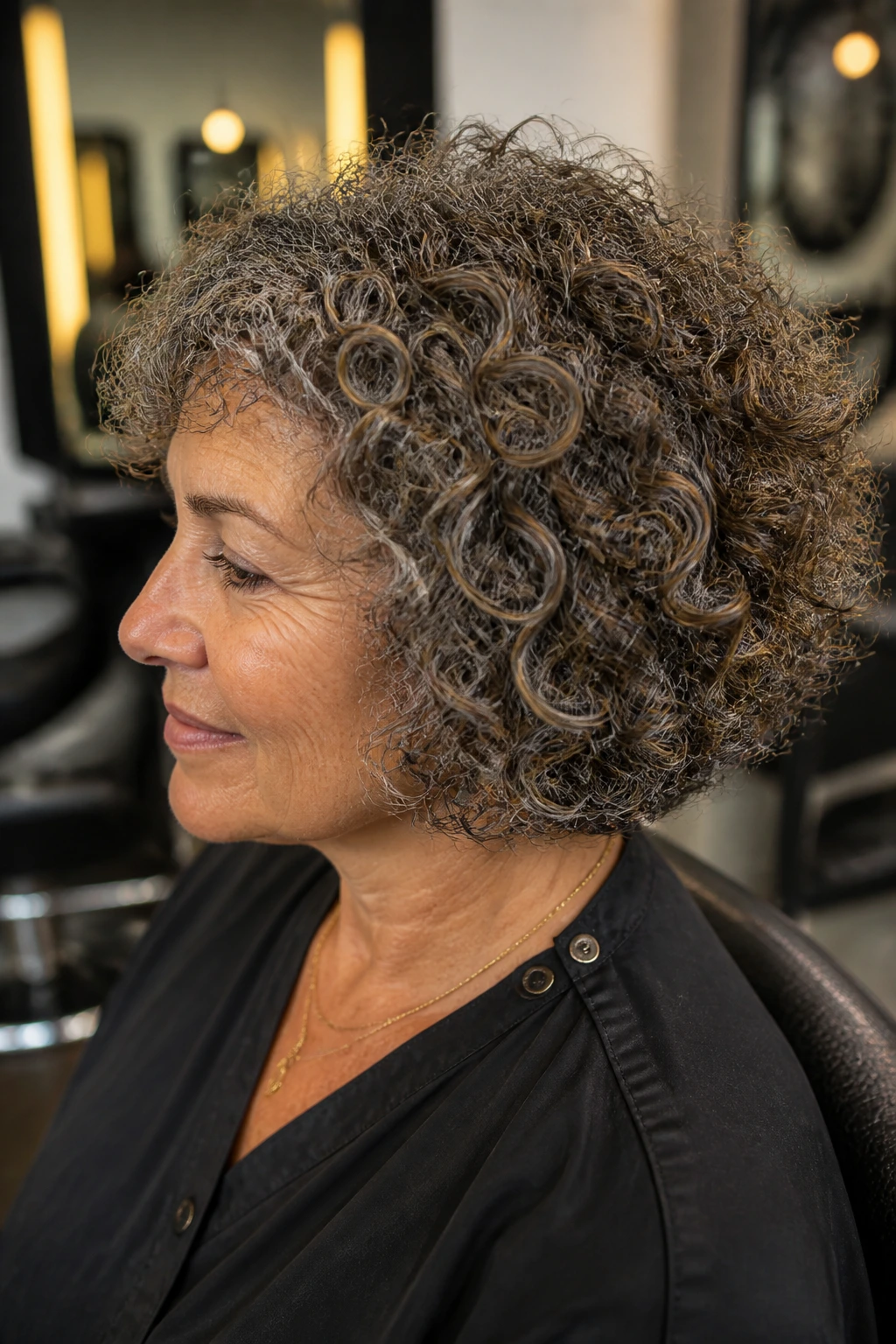
8. Salt-and-Pepper Curly Bob With Tapered Ends
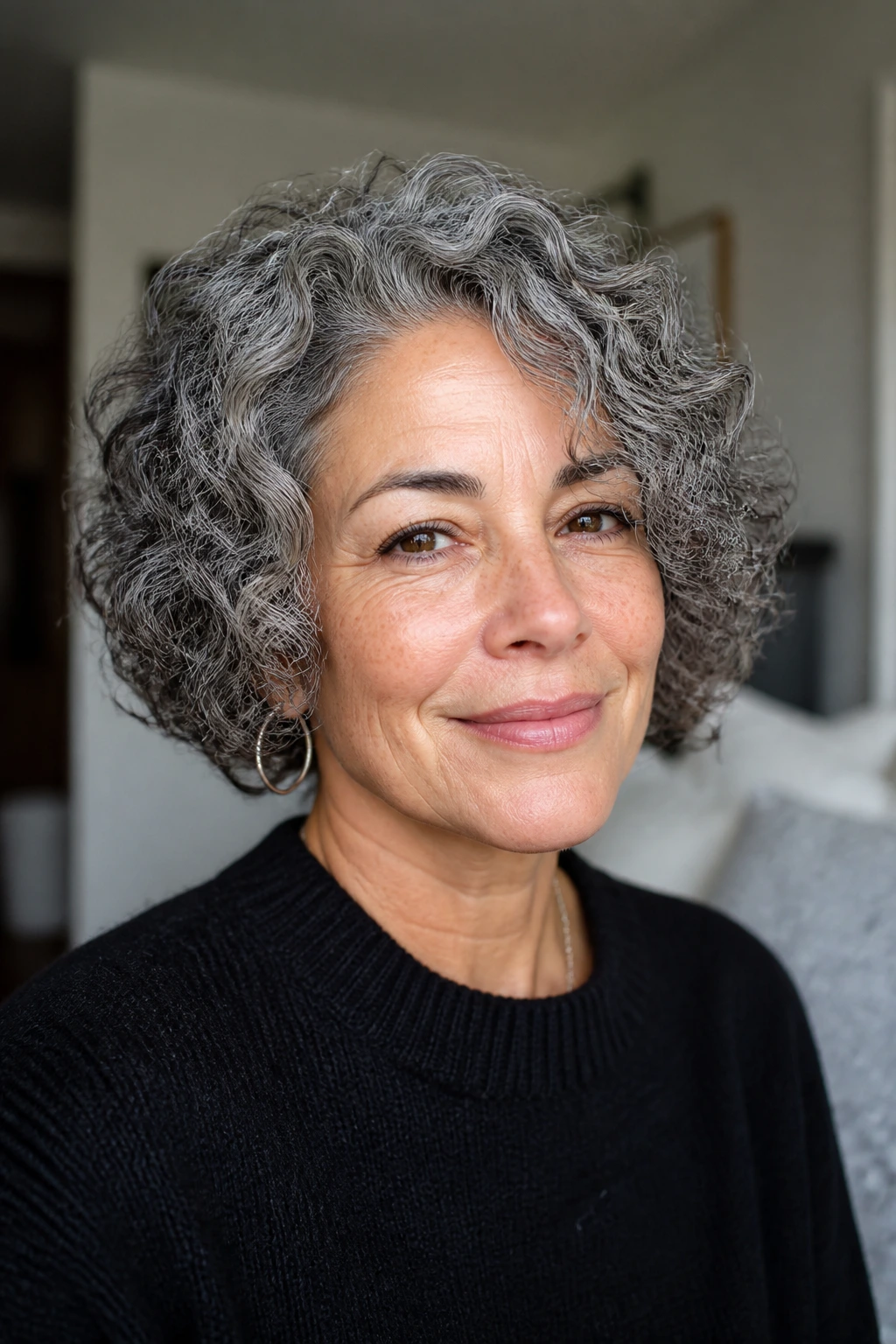
Salt-and-pepper hair can look gloriously sharp in a bob, but only if the ends don’t get ragged. Tapered ends help the whole shape feel lighter, which matters when gray hair has a mind of its own and doesn’t always clump as neatly as pigmented strands.
There’s also a shine issue. Gray and silver hair often reflects light beautifully, but only when the outline is clean enough to show it off. A tapered bob keeps the eye on the curls and the color mix, not on a blunt, boxy bottom edge.
I like this cut for people who want a little movement without losing structure. It keeps the silhouette lively, and it avoids the old mistake of letting gray curls grow long enough to hang instead of spring. That drag is what makes many longer gray curls look tired.
9. Airy Shag-Bob Hybrid
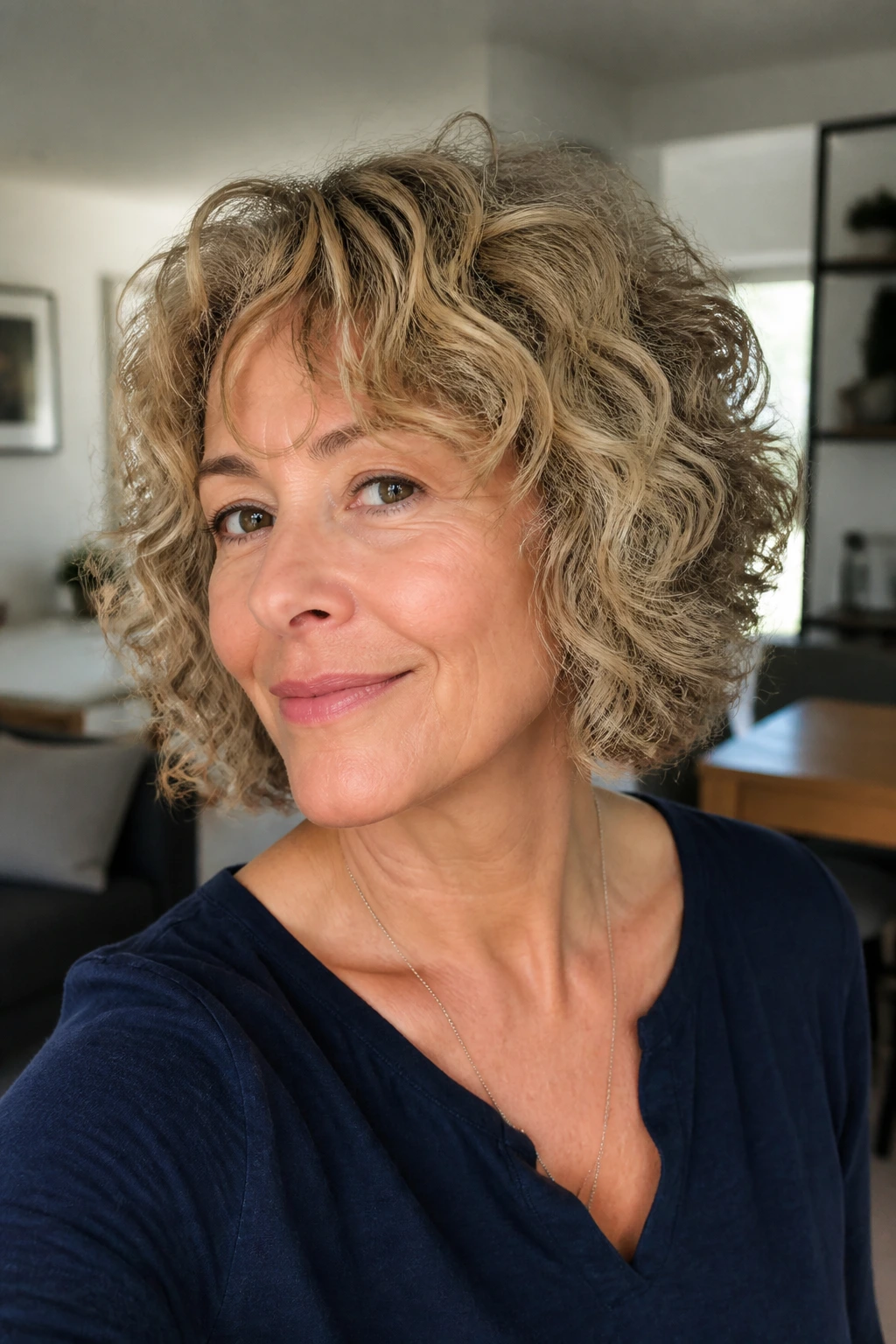
A shag-bob hybrid is what happens when curls need freedom more than polish. The layers are lighter, the ends are softer, and the whole thing moves with a bit more swagger. If your curls are dense or your hair has too much bulk on the sides, this is one of the easiest ways to break that up.
Why a Shag-Bob Avoids Helmet Hair
Helmet hair happens when the perimeter is too solid and the top is too flat. The shag-bob solves both problems by taking weight out of the interior and letting the curls separate a little. You get shape, but not stiffness.
This cut suits people who don’t want to spend time coaxing every curl into place. A little controlled mess looks right here. It also works well if your face is wide at the cheek area and you want some vertical movement near the crown.
The one thing I would not do is over-layer fine curls with this shape. You can end up with a fluffy halo and no real outline. The shag-bob likes substance.
10. Inverted Curly Bob for Dense Hair
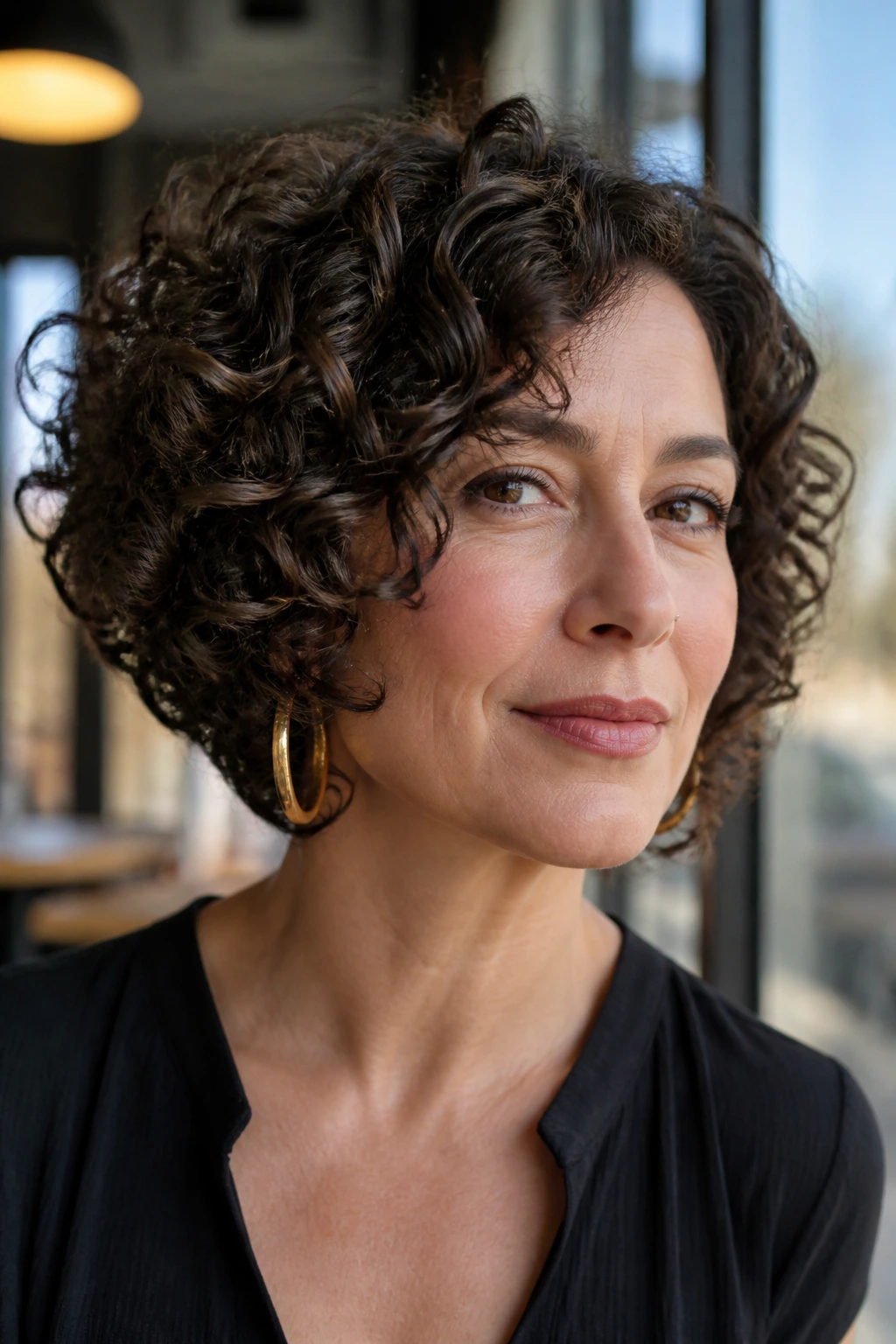
If your hair is thick enough to feel like a small weather system, the inverted bob can be a relief. It’s shorter at the back and longer toward the front, which gives density somewhere to go. Instead of sitting out from the head in a blunt block, the shape angles forward.
That angle matters. Dense curls often collect weight around the nape and under the ears. An inverted shape removes some of that drag while keeping the front pieces long enough to frame the cheeks and jaw. It’s a more dramatic line than a soft stacked bob, but not as sharp as people fear.
I like this cut when the hair at the back refuses to lie flat and the front tends to fall in bigger ringlets. It gives the cut a sense of direction. If you like a strong shape and a little polish, it’s one of the best options on the list.
11. Tucked-Behind-the-Ear Curly Bob
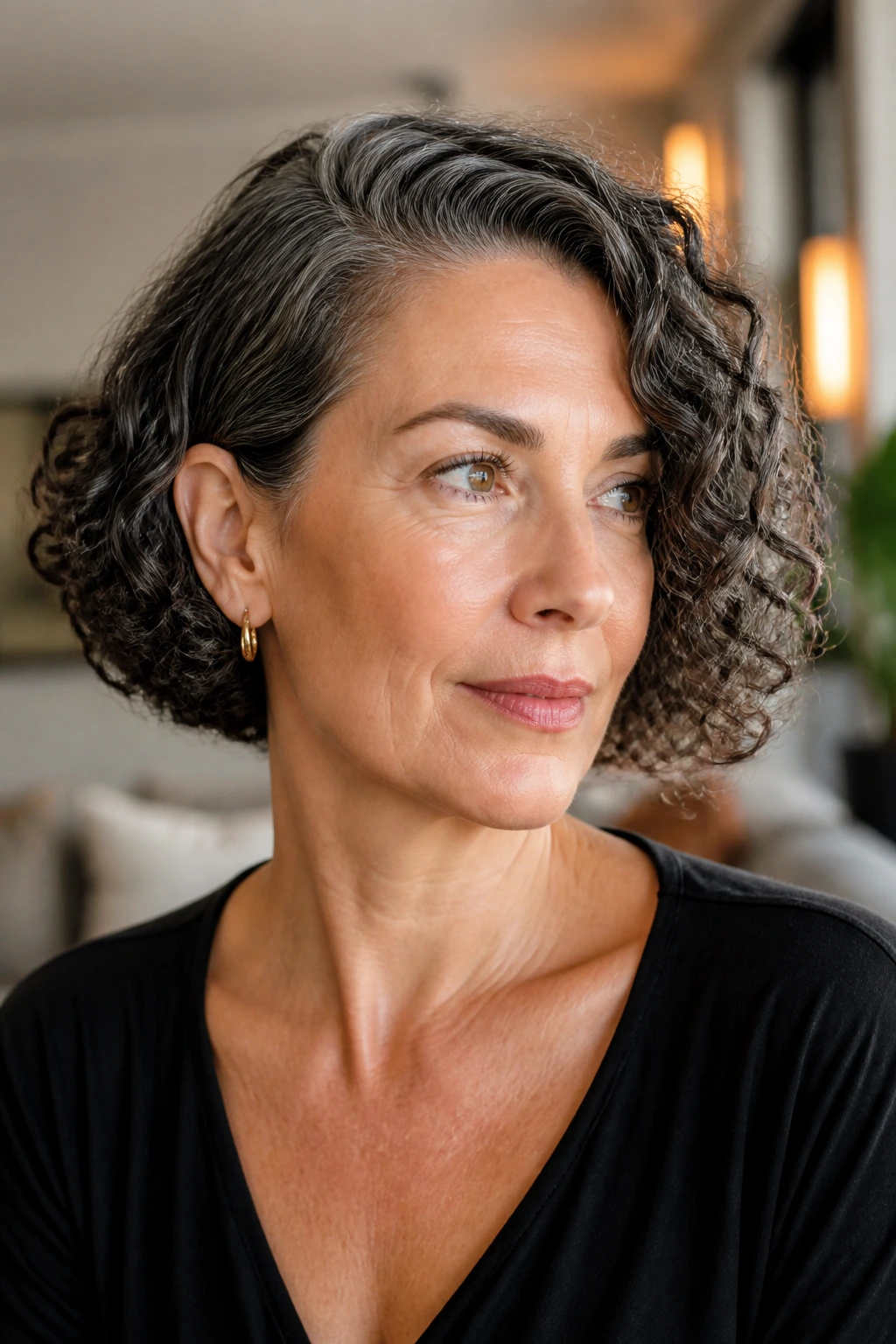
This one sounds simple because it is simple, but simple does not mean boring. A bob that can be tucked behind the ear needs the right side length, the right amount of weight, and enough curve around the cheek to look finished when one side is exposed.
It’s a particularly good choice if you wear earrings or glasses. The ear-tuck creates a clean line around the face, and the other side keeps the curl volume where you want it. The result feels relaxed without looking like you forgot to finish your hair.
The cut works best when the front pieces skim the jaw, not the chin. Too long, and the tuck gets awkward. Too short, and the exposed side can feel too bare. I’d keep the sideburn area soft so the tucked side doesn’t look chopped off.
12. Curly Bob With Long Side Bangs
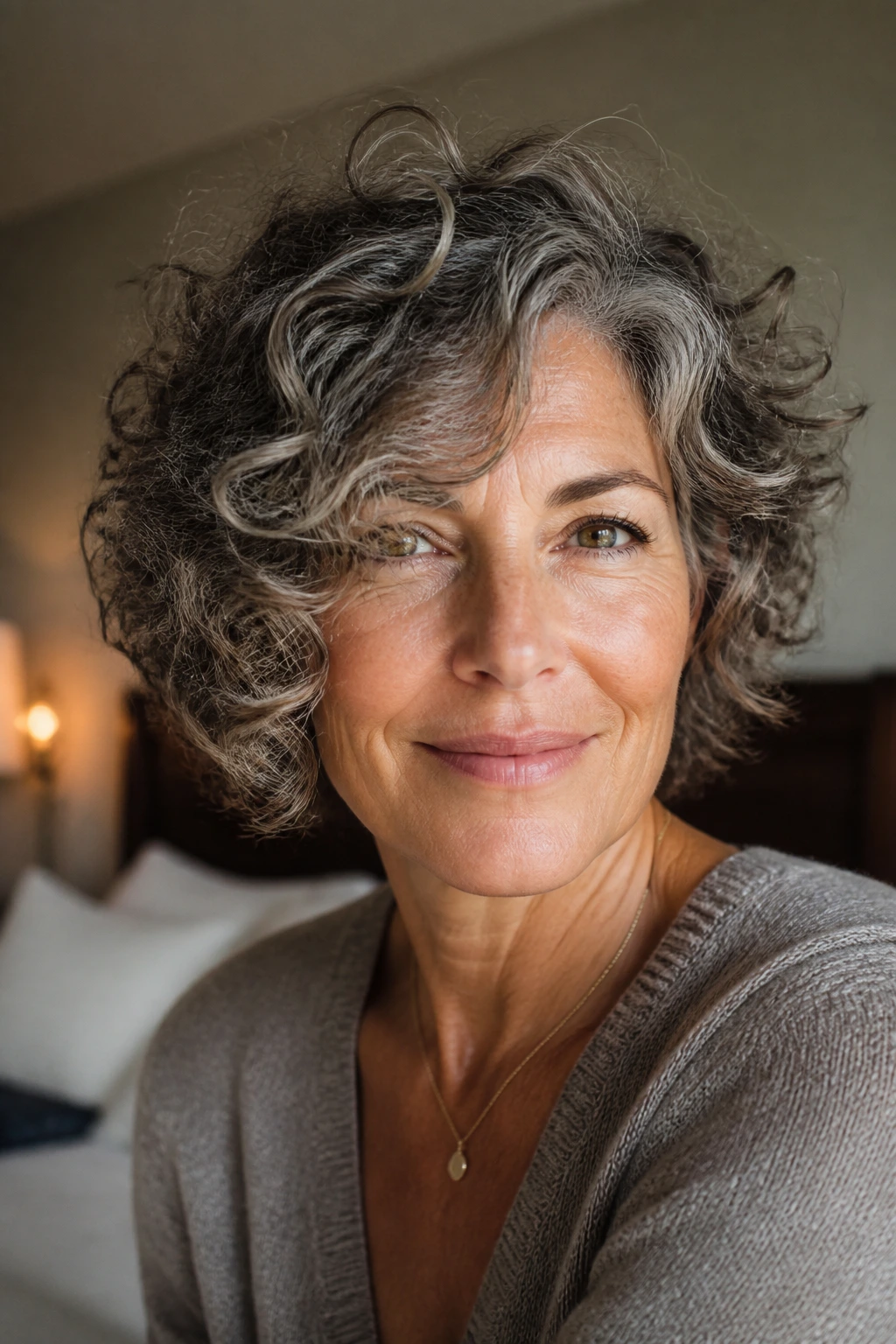
Long side bangs are the safe way to introduce fringe into a curly bob. They soften the forehead and cheek area without demanding the strict upkeep of full bangs. They also let you shift the shape more easily if your part changes from one day to the next.
The bangs should start near the part and fall diagonally toward the cheekbone or jaw. That line gives the cut movement, and it keeps the front from feeling square. If your curl pattern is looser in front than in back, long side bangs are a smart fix because they work with that difference instead of fighting it.
This is one of the best options if you want softness around the eyes but do not want fringe sitting across the forehead all day. That kind of bang needs babysitting. These do not.
13. One-Length Bob for Loose Waves

A one-length bob is a blunt, clean shape, and on loose waves it can look crisp in a way layered cuts sometimes can’t. The ends form the story here. If they’re cut evenly and checked dry, the whole haircut gets a calm, orderly feel.
I prefer this shape for looser curls or strong waves that already have enough movement on their own. Too many layers can rob those patterns of weight and make them frizzy around the edges. A one-length bob lets the wave pattern do the work.
It’s also a good cut if you like low-maintenance styling. The more uniform the perimeter, the easier it is to refresh on day two. You mist, scrunch, and go. There’s something deeply satisfying about a bob that behaves without a long conversation.
14. Deva Cut Curly Bob
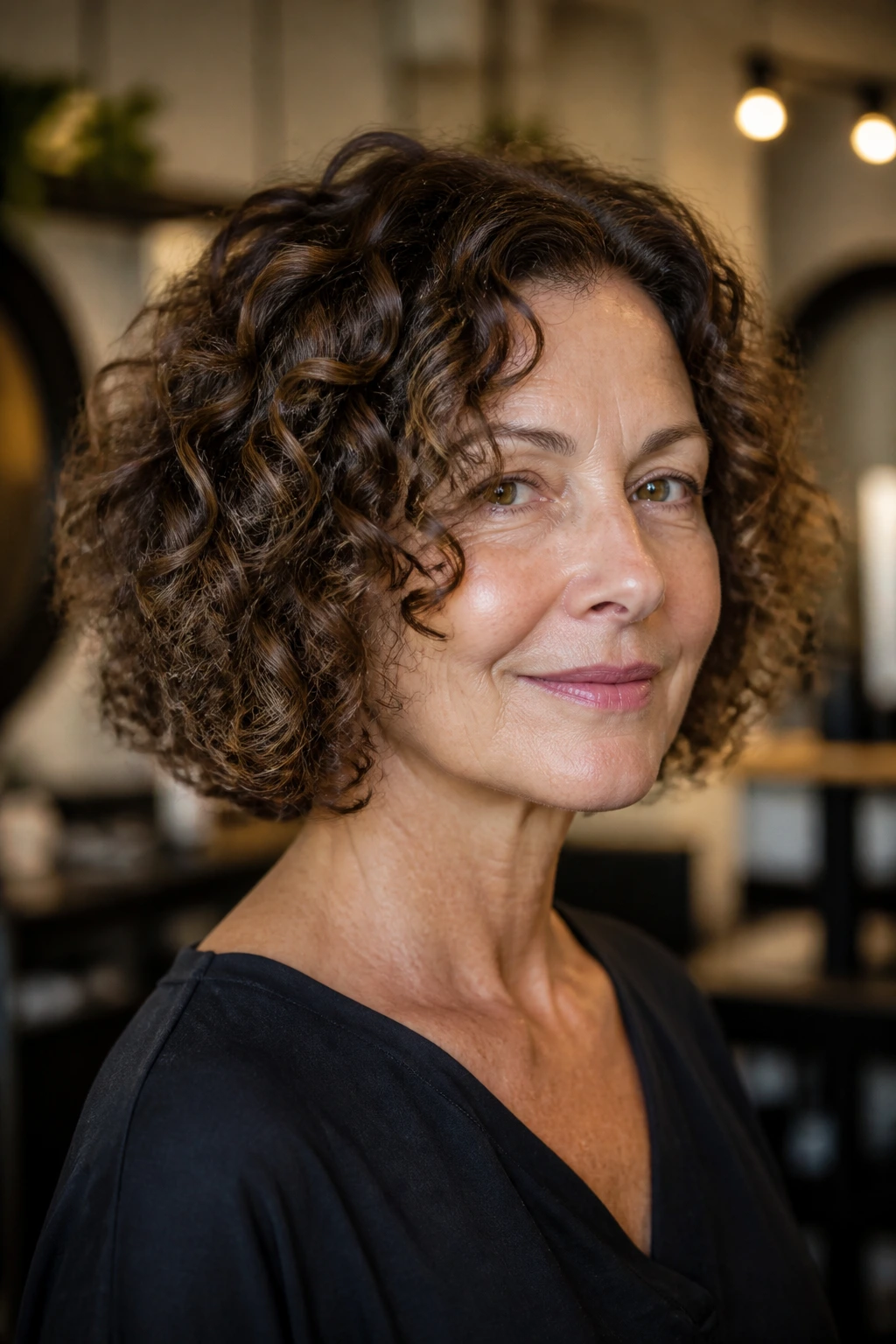
A Deva cut isn’t really a style so much as a method, and that matters. It’s cut curl by curl, usually dry, so the stylist can see where each curl lands instead of guessing from wet length. On bobs, that precision can make a huge difference.
Why a Dry Cut Helps
Curly hair can hide its own shape when it’s wet. Dry, the curl pattern is visible, shrinkage is visible, and the bad assumptions disappear. A Deva-style bob works best when the curls are uneven, which is most heads, honestly. It lets the stylist adjust one section at a time instead of forcing the whole head into a single line.
This cut is worth the extra appointment time if your curls have a mind of their own. Some pieces may spring tight, others may droop, and a dry cut can balance those differences. The result is often more natural, less blunt, and easier to wear straight out of the diffuser.
If you’ve ever left the salon with a bob that looked fine for twelve hours and strange by the next morning, this method is probably why you need to try it.
15. Curly Bob With Micro-Layers for Fine Hair

Fine curls need a careful hand. Too much layering, and the bob turns wispy. Too little, and the whole shape collapses into a thin curtain with no lift. Micro-layers are the middle road. They add just enough movement to stop the cut from looking flat without stealing bulk.
The trick is restraint. A few tiny interior layers near the crown and around the face can make fine curls look fuller because they encourage clumping and lift. What you do not want is a lot of aggressive thinning. That’s how fine curly bobs start looking see-through.
Micro-Layers, Not Thinning Shears
I’m blunt about this: thinning shears are usually the wrong move on fine curls. They can create frizz and leave the ends looking ragged. Micro-layers, cut with scissors, keep the shape intact while giving the crown a little breathing room.
This cut is one of the best choices if your hair has become less dense over time. It keeps the perimeter honest and gives enough texture to avoid that flat, helmet-like effect. Add mousse at the roots and a soft gel through the ends, and the bob usually wakes up fast.
16. Tousled Bob With Piecey Ends

A tousled bob is for people who like hair that looks touched by wind, not lacquered into place. Piecey ends give the curls a little separation, which can make the whole style feel modern without trying too hard. That separation also keeps the bob from becoming one solid cloud.
The shape works best when the curls are encouraged to form small groups rather than one giant mass. A lightweight mousse or soft gel does that well. After drying, you can break the cast a bit with your hands and leave the ends more separated than polished. That’s the point.
This is a good cut if you want motion around the face and a relaxed finish. It pairs well with casual clothes, but it can still look neat if the perimeter is trimmed cleanly. A little polish in the line keeps the “tousled” from sliding into “forgotten.”
17. Sculpted Bob With a Center Part
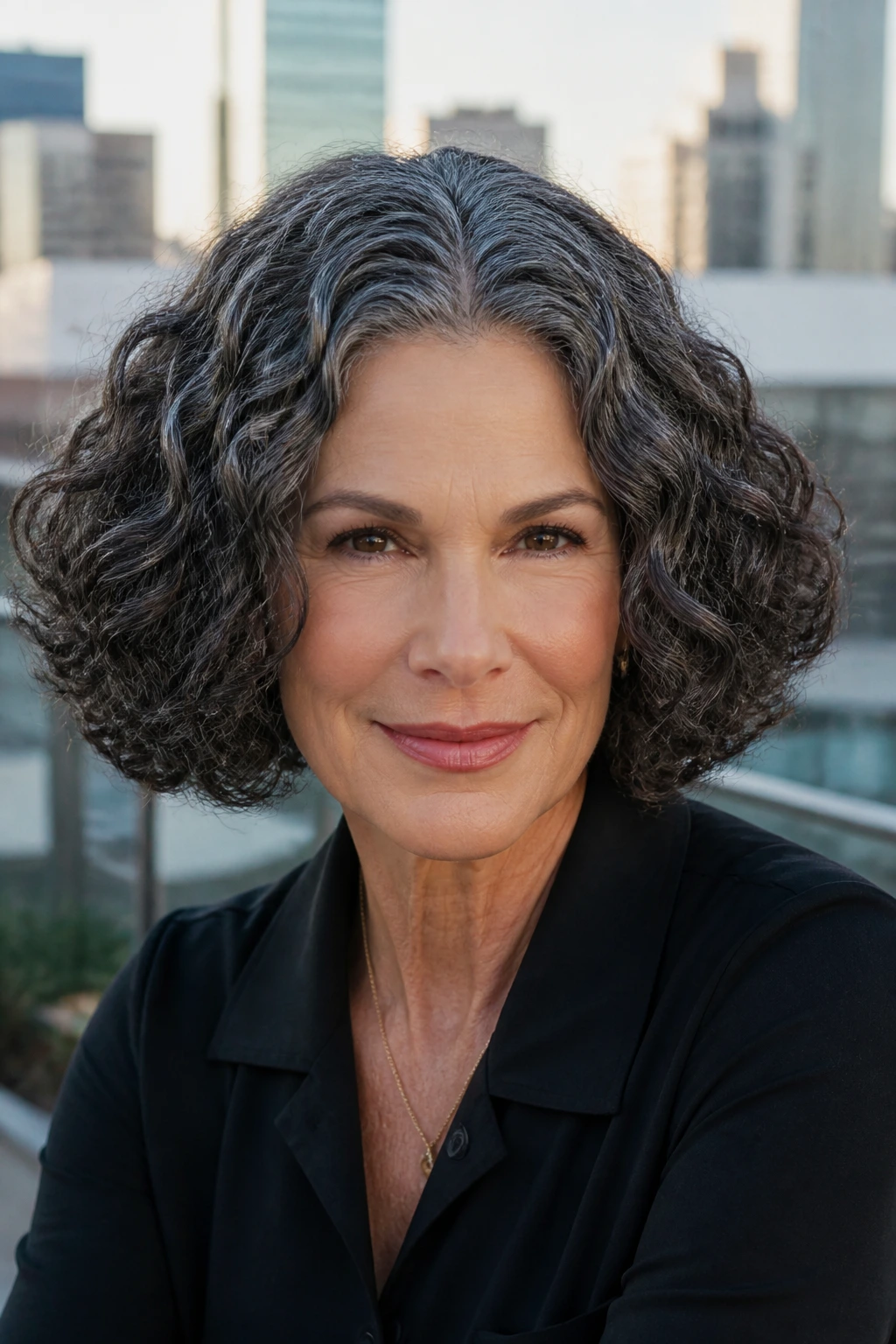
A center part can be unforgiving if the cut underneath is sloppy. When it works, though, it gives the curls a calm, balanced frame. A sculpted bob uses that symmetry on purpose. The crown gets a little lift, the sides fall evenly, and the face sits in the middle of the shape.
This style is especially good if your features are balanced or if you like a cleaner, more structured look. It can make the cheekbones stand out and keep the silhouette from feeling too busy. The part should not be ruler-straight and severe unless your curl pattern really likes that. A slightly soft center part usually looks better.
One detail that matters: the hair at the temples needs enough lift so the part doesn’t make the top look flat. Root clips help here. So does diffusing with the head slightly tipped from side to side, then returning the part to center once the roots are dry.
18. Soft A-Line Curly Bob
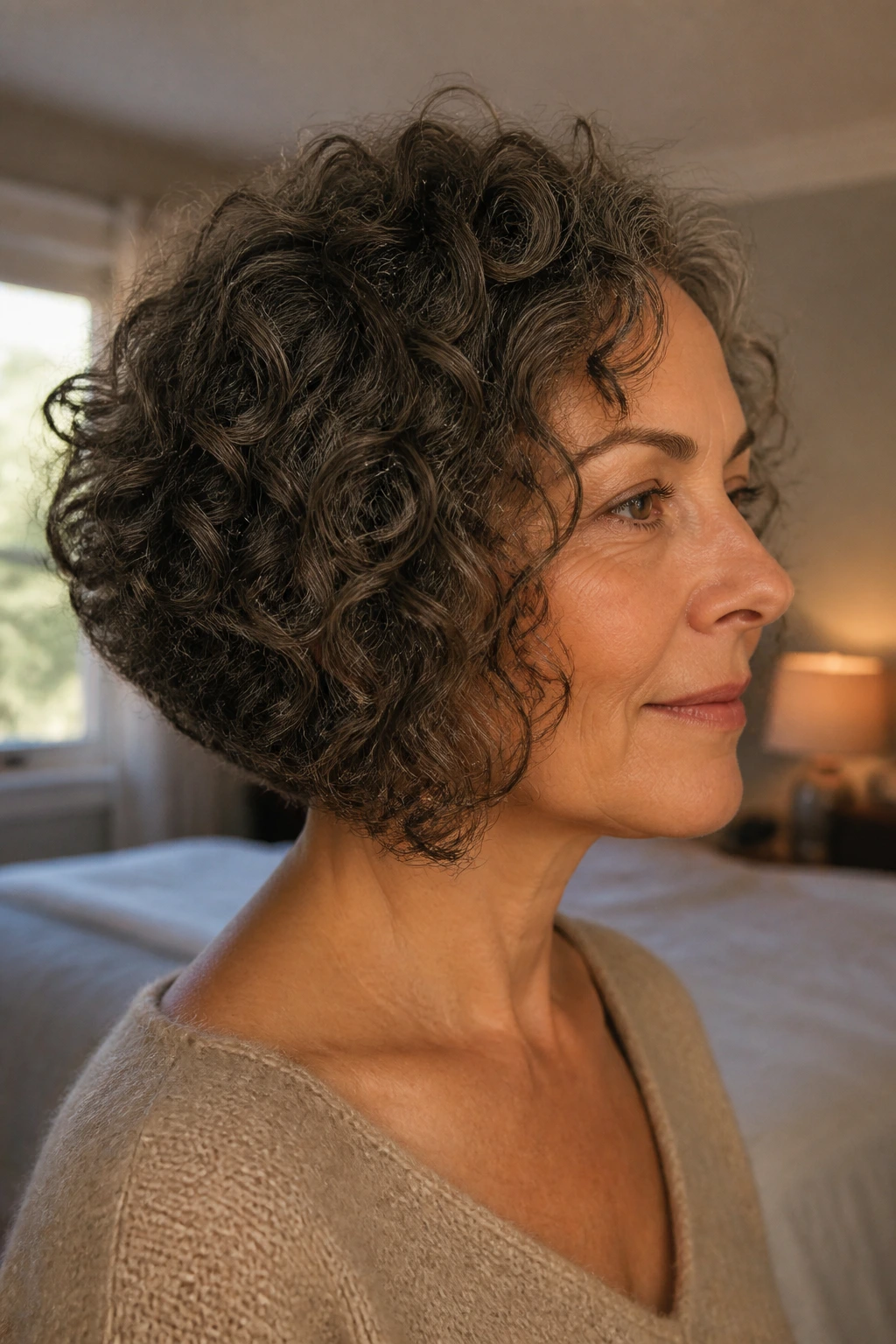
An A-line bob is shorter in back and longer in front, but the soft version keeps the angle gentle. That matters on curls. Too much angle, and the front can look heavy while the back looks unfinished. Too little, and the shape loses its purpose.
The soft A-line is a smart pick if you want the jaw and neck to look a little longer. The front pieces skim forward just enough to frame the face, while the back stays neat and off the collar. It’s a useful shape for rounder faces, fuller cheeks, or anyone who likes a clean profile.
How the A-Line Changes the Jawline
The forward angle draws the eye downward, which can slim the face without making the haircut severe. The back stays compact, so the curls do not balloon at the nape. If your hair grows wide at the sides, this shape reins that in nicely.
I like this cut on curls that clump well and hold their pattern. It can look polished even when it’s not over-styled, which is half the battle with curly hair.
19. Curly Bob With Face-Framing Spirals

Face-framing spirals are one of those little haircut moves that do a lot of work. They bring attention to the eyes and cheekbones while softening the edges of the bob. If you want a cut that feels lifted around the face without full bangs, this is a strong choice.
The front pieces should be cut to fall in a deliberate spiral, not left as random shorter bits. That means they need to be long enough to curl properly and short enough to sit in the frame. Usually, that lands somewhere between the cheekbone and jaw, depending on shrinkage.
This style is useful if your cheeks are fuller, your jaw is strong, or your forehead feels a bit wide. It also works beautifully if you like wearing a side part, since the front spirals can fall across one side and soften the asymmetry. The shape feels alive because the front never sits still for long.
20. Silver Curly Bob With Volume at the Crown
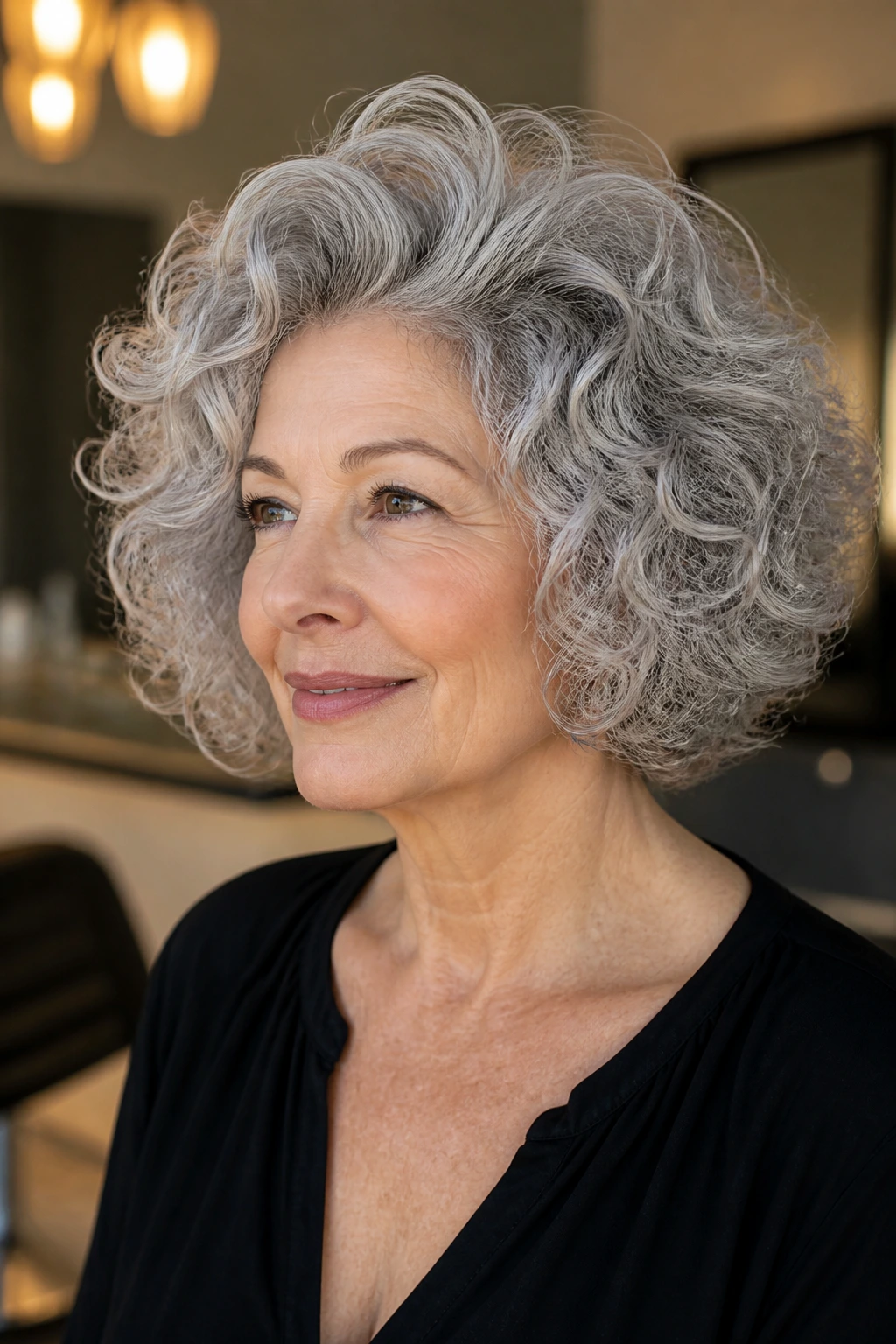
Silver hair has a presence all its own, and a bob gives it a shape that shows that off. Volume at the crown keeps the top from going flat, which can happen when gray strands get a little coarse or dry. The cut doesn’t need to be dramatic. It just needs enough lift to let the color and texture breathe.
Volume Makes Silver Hair Look Sharper
A little crown height changes the whole reading of the haircut. The silver shows more clearly, the face opens up, and the bob looks intentional instead of collapsed. If the top is flat, gray hair can look tired fast. A touch of lift fixes that.
This cut is especially strong if your hair has gone wirier over time. Silver strands often need more moisture but less weight. A bob gives you that balance. Use a light cream through the ends, not a heavy butter near the roots, and the crown usually stays cleaner.
I like this shape with a side part or a soft center part. Either one can keep the top lively without stealing the spotlight from the color.
21. Wash-and-Go Rounded Curly Bob
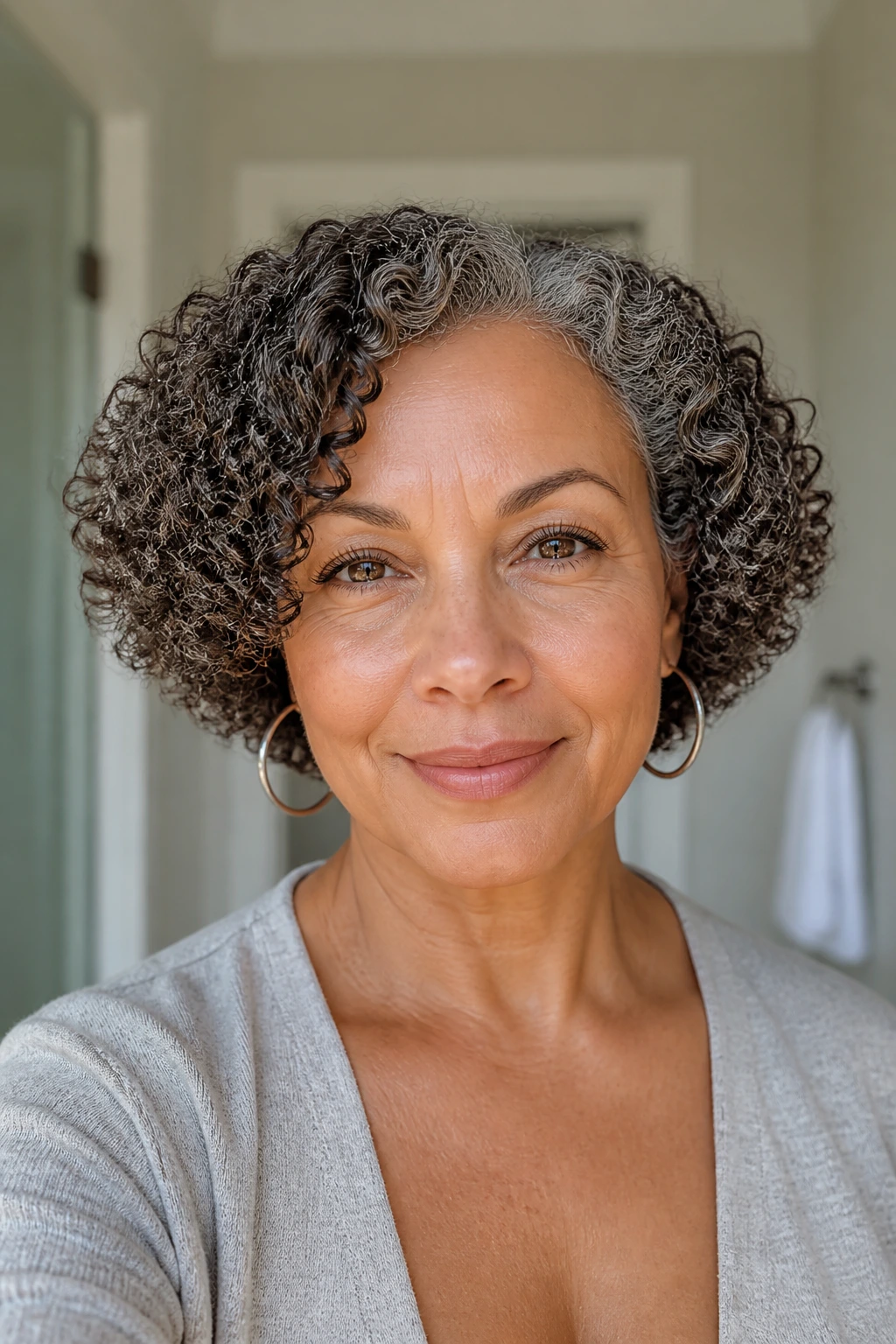
If you want the least complicated option on the list, this is it. A rounded wash-and-go bob keeps the perimeter soft and balanced so the curls can dry into shape with very little intervention. No brush gymnastics. No elaborate sectioning. Just a cut that behaves.
This works best when the stylist has respected your curl pattern from the start. The perimeter should follow the way your curls actually fall, not the way they look pulled straight. A little layering inside the shape can help, but the outline should stay rounded enough to keep the bob from going boxy.
The beauty of this cut is how little you need to do on a regular morning. A spritz bottle, a small amount of product, a quick scrunch, and a diffuser if you want it. That’s enough. If a cut can look good with that little effort, it’s doing real work.
Why Curly Bob Shapes Work So Well on Hair Over 50
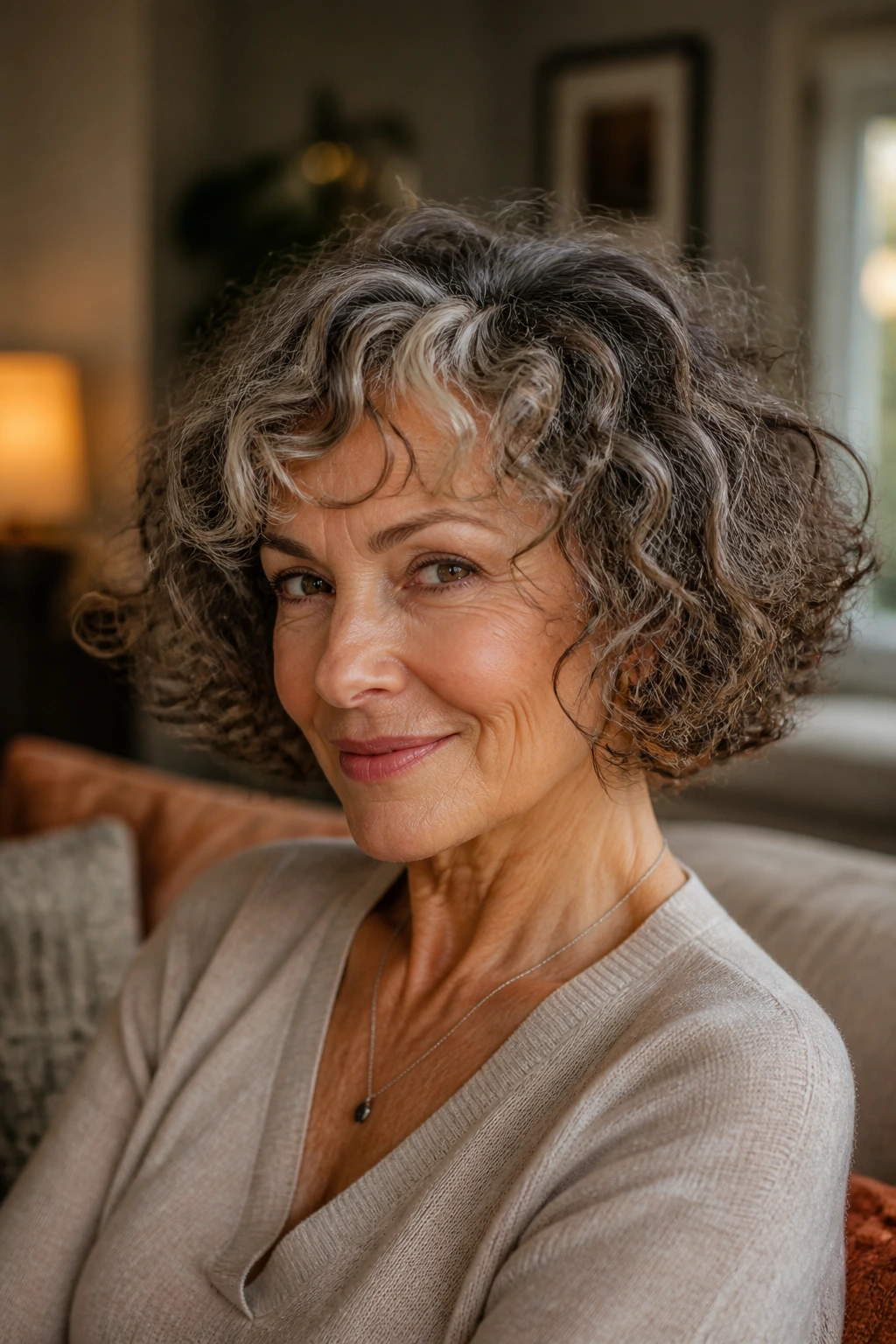
Curly hair can change over time. Sometimes it gets drier. Sometimes the crown loses a little density. Sometimes the curls tighten in some places and loosen in others, which is a fun surprise if you enjoy being lied to by your own hair. A bob works because it doesn’t demand that everything be even from root to tip.
It removes the extra drag that long curls create, especially when the ends get thin or frayed. That alone can make hair look healthier, even when you haven’t changed your routine much. Less hanging weight means more spring. More spring means the silhouette reads cleaner.
There’s another reason I like bob shapes for curls over 50: they make styling more honest. If the cut is right, you do not need to wrestle with it. You just need enough moisture, enough product, and a shape that already understands where the curls want to go.
Tools That Keep the Shape Honest
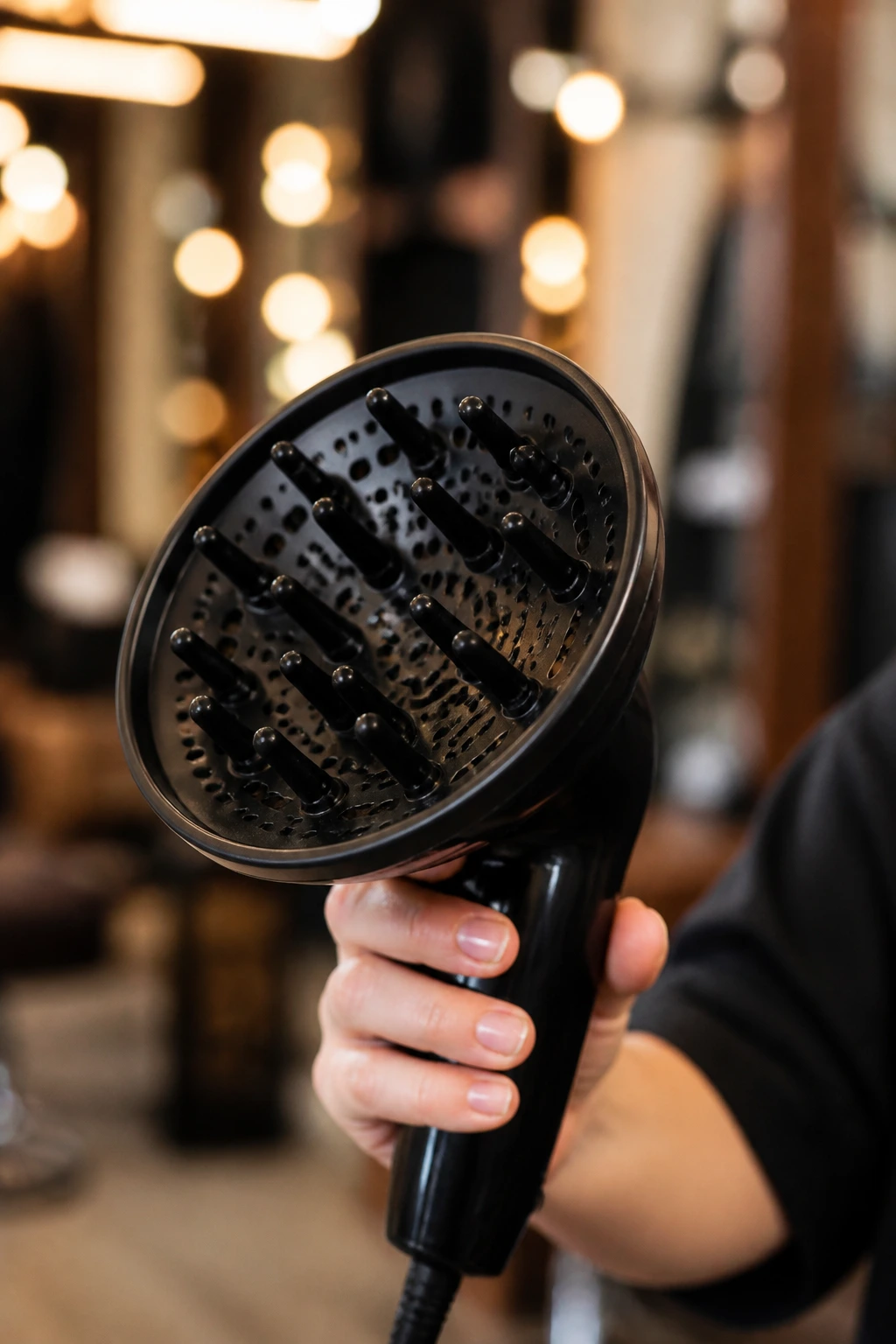
- Diffuser attachment: Dries curls with airflow instead of blasting the shape apart.
- Microfiber towel or cotton T-shirt: Blots water without roughing up the curl surface.
- Wide-tooth comb: Good for detangling in the shower when hair is coated with conditioner.
- Curl cream: Adds slip and helps curls clump in a cleaner bob outline.
- Soft gel or mousse: Gives the cut memory so it doesn’t frizz into a triangle by lunchtime.
- Duckbill or root clips: Useful for lifting the crown while the top dries.
- Spray bottle: Resets day-two curls without soaking the whole head.
- Satin pillowcase or bonnet: Keeps the perimeter from getting crushed overnight.
- Lightweight oil: Best on ends only, especially if your gray curls feel dry.
Picking the Cut and Products That Support It
A curly bob starts in the chair, but it lives or dies at home. If your hair is fine, a heavy cream can flatten the crown before lunch. If your hair is dense, a watery foam may vanish before the curls even dry. The product has to match the hair, not the ad copy on the bottle.
Ask for a stylist who checks the shape dry or knows how your curl pattern shrinks when it dries. That matters more than fancy scissors. If you hear “we’ll see what it does when it’s dry,” that’s a good sign. If someone cuts your curls wet and never looks back, I’d be cautious.
Bring photos, but bring the right ones. Match density, curl pattern, and length, not just the face in the photo. A jaw-length bob on tight spirals tells a different story than the same length on looser waves. Ask for the line you want and the amount of layering you can live with. Those two things do most of the work.
For product shopping, think in categories. Lightweight mousse for lift. Soft gel for hold. Cream for thirsty curls. A clarifying shampoo every couple of weeks if your hair starts feeling coated. That’s usually enough to keep the cut from sliding into softness in all the wrong places.
How to Wear a Curly Bob Without Fighting It
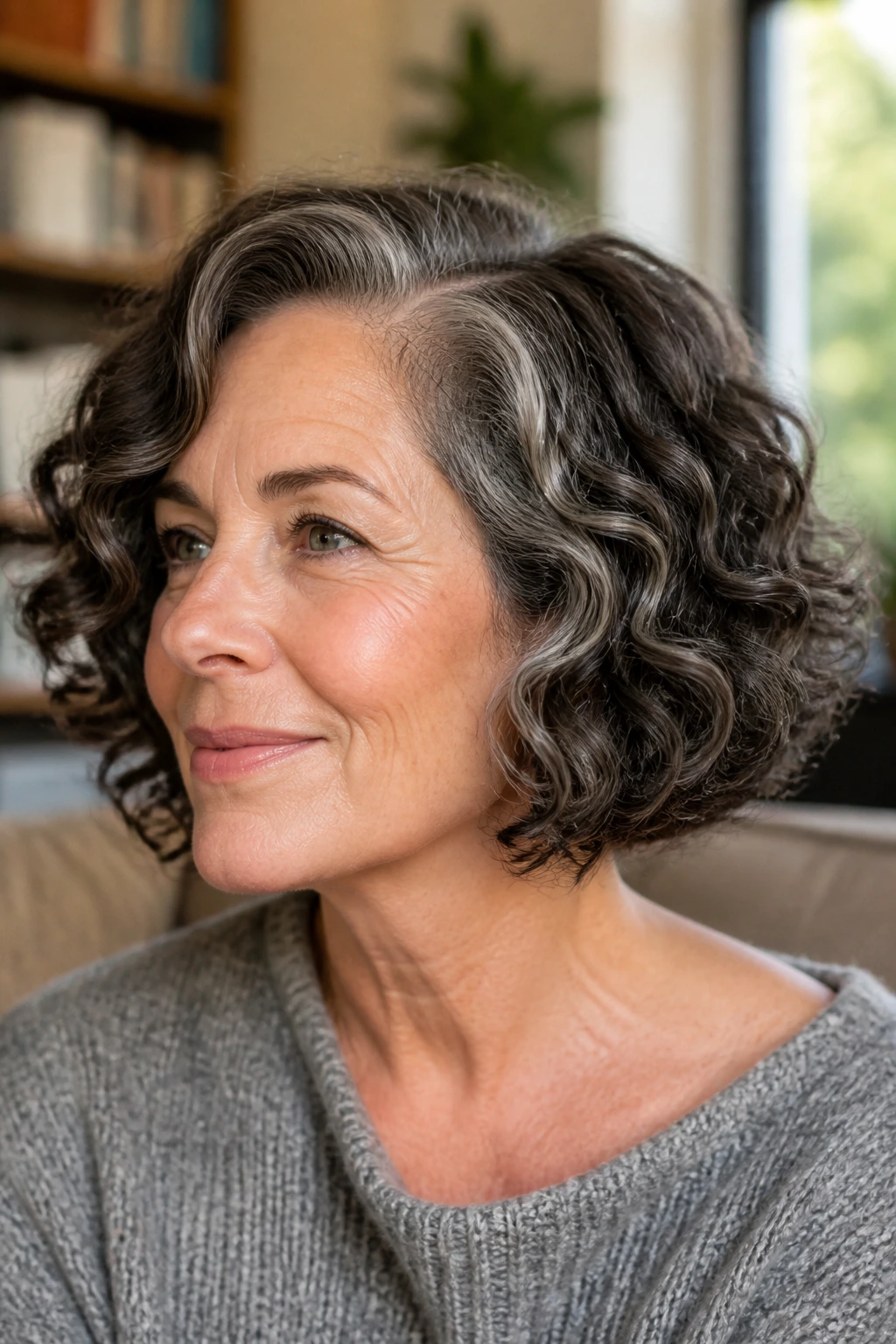
Shape: Let the part and the perimeter do some of the styling for you. A side part gives lift; a center part gives balance; a rounded outline keeps the ends from swinging too wide. Pick the one that matches your face and then stop changing it every five minutes.
Finish: If you want a cleaner look, diffuse until the curls are about 80 to 90 percent dry, then leave them alone. If you want a softer finish, stop earlier and let a few sections air-dry in place. Breaking a gel cast with dry hands or a drop of oil on the fingers can keep the ends from looking crunchy.
Accessories: Small hoops, glasses, scarf ties, and simple clips all change how the bob reads. Tucking one side behind the ear can sharpen the line. Pulling the front pieces away from the face can make the cut feel lighter. Tiny changes, big effect.
Everyday rhythm: On a normal day, a curly bob should need less than ten minutes of actual handling. Mist, scrunch, maybe clip the crown, and go do something else while the curls settle.
Small Tweaks That Change the Whole Silhouette
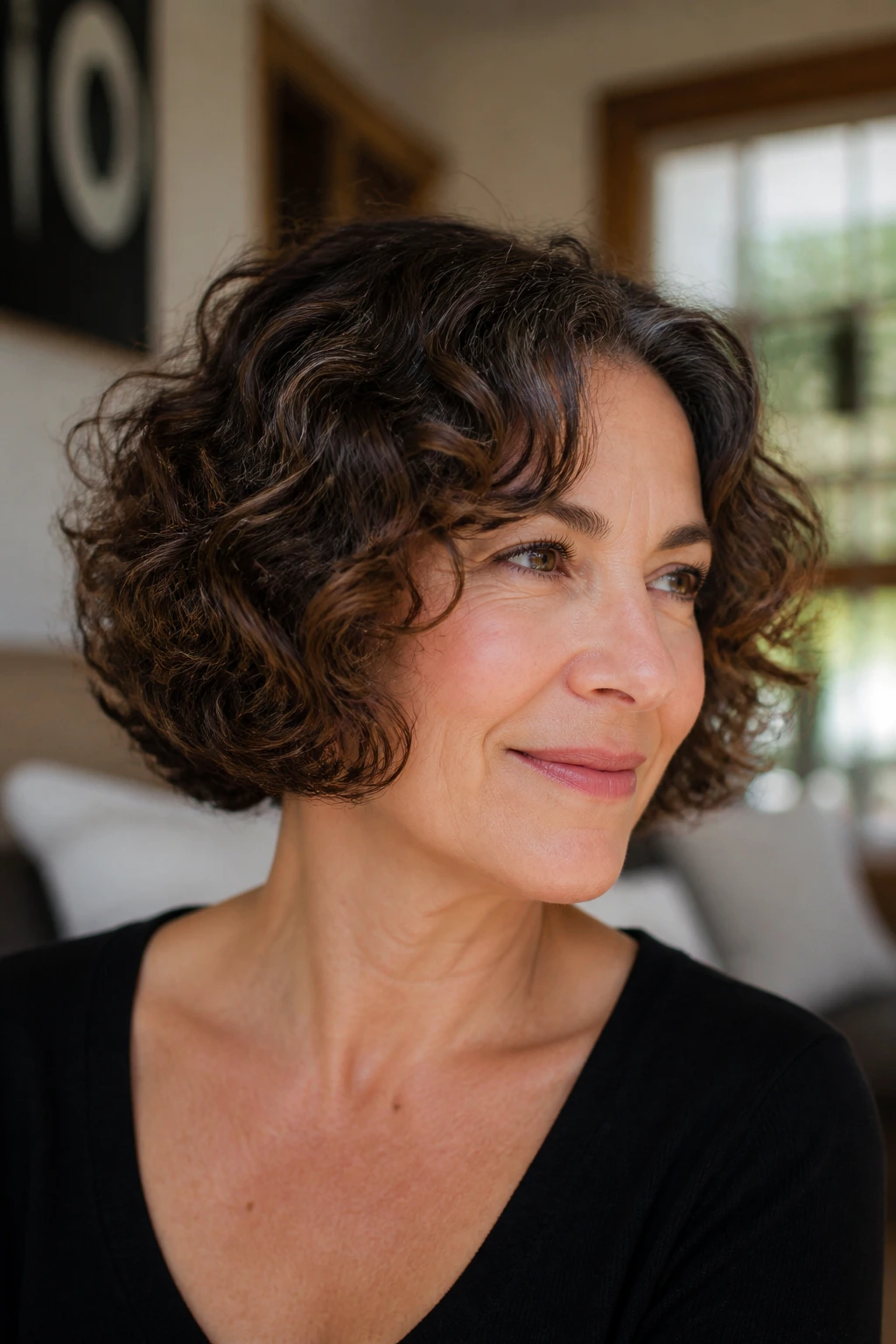
Volume Boost: Clip the roots at the crown while the hair is damp, especially if the top goes flat faster than the sides. Ten to fifteen minutes is enough to make a difference. Remove the clips before the hair dries hard, or you’ll get little dents.
Frizz Control: Apply product to soaking wet hair, not towel-dried hair. That’s where a lot of frizz begins. If you wait until the curls are half dry, the stylers sit on top instead of wrapping the curl.
Shape Correction: If one side grows faster or curls tighter, trim by curl group, not by ruler. Curly hair does not respect rulers. It respects pattern.
Shine Upgrade: On silver or salt-and-pepper curls, use a tiny amount of lightweight oil only on the ends after the hair is dry. The goal is sheen, not grease.
Part Shift: Moving the part a half inch can change how wide the face looks and how much lift you get at the roots. It’s the cheapest styling trick in the drawer.
Keeping the Shape Between Trims

A curly bob grows out more gracefully than people expect, but it still needs maintenance. Chin-length bobs with bangs usually want a trim every 6 to 8 weeks if you want the shape to stay crisp. Longer bobs and lobs can stretch to 8 to 12 weeks. Once the front starts falling into your mouth or the nape begins to bunch, the cut is past its best version.
At home, keep the refresh routine simple. A spray bottle with water, a small dab of leave-in, and a touch of gel on the frizzy sections is usually enough for day two. If you keep layering on product without washing, the hair gets dull and sticky fast. That’s when the bob starts losing its line.
Sleep matters too. A satin pillowcase is easier than a bonnet for some people, and a loose pineapple can help if your curls are long enough to gather without stretching the sides. Don’t flatten the crown under a tight elastic. The whole point is to preserve shape, not wrestle it into submission.
If your hair gets coated from product, clarifying every 2 to 4 weeks brings back bounce. The curls will often look a little brighter the same day. That’s not magic. That’s residue being stripped away.
Ways to Adapt These Cuts to Different Curl Patterns
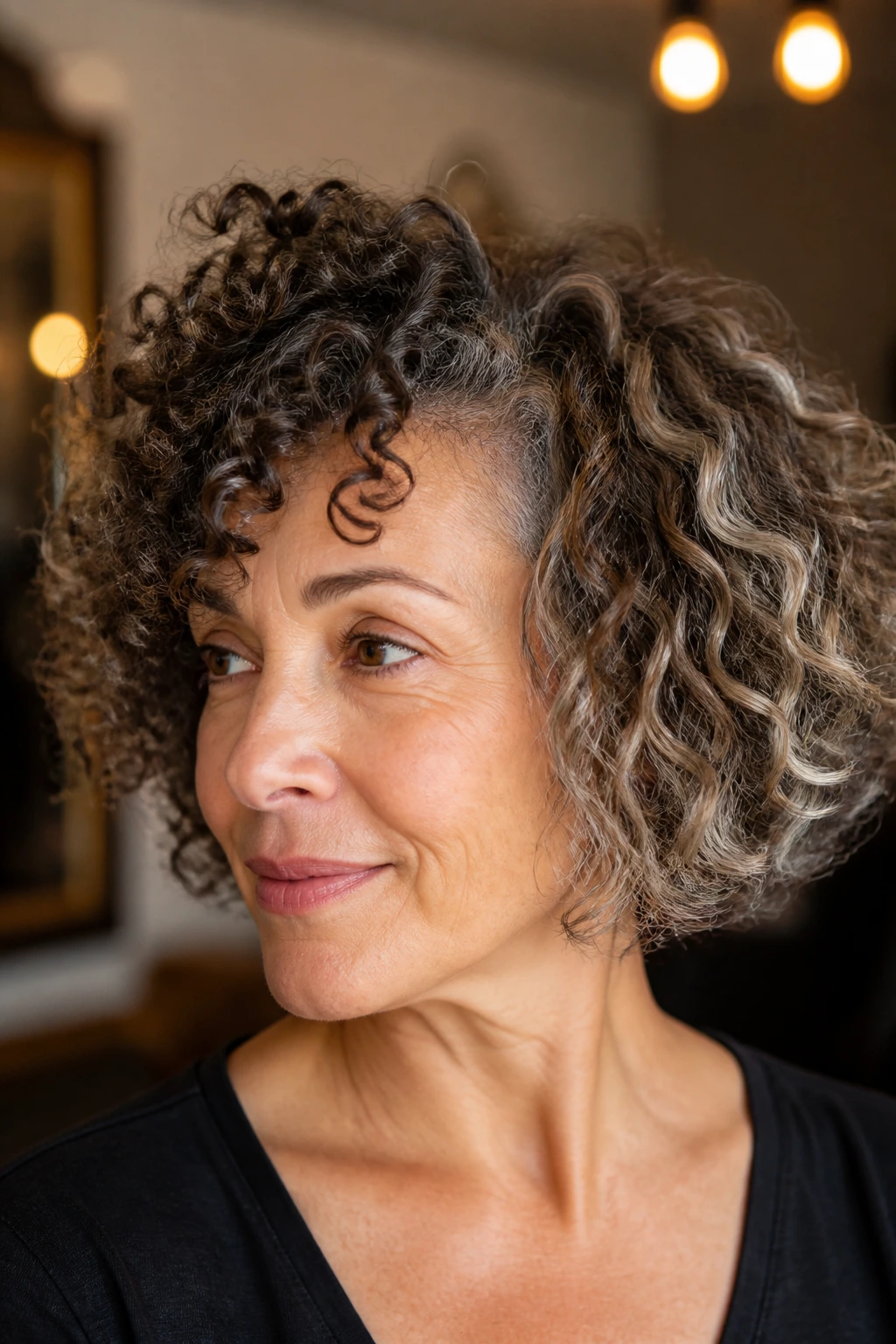
Fine-Curl Balance: Keep the perimeter clean and the layers micro-light. A little root lift, a mousse with hold, and a chin-skimming line can make fine curls look fuller without thinning the ends away.
Dense-Hair Relief: Ask for internal debulking instead of heavy texturizing. Thick curls need room inside the shape, but too much razor work can turn the ends fuzzy. A soft stack or inverted line usually helps more than a dozen short pieces.
Glasses-Friendly Frame: Choose lengths that sit just below the frame line, not right on top of it. Side bangs or soft face-framing pieces work better than full fringe if you wear glasses every day.
Gray-Glow Shape: Keep the outline neat and let the color show. Silver curls usually look best with a little crown lift and a cut that does not bury the texture in too many layers.
Low-Maintenance Morning Bob: Go for a rounded bob with a soft perimeter and no strict fringe. This is the shape that still looks decent when all you had time for was a mist, a scrunch, and a coffee.
Soft Grow-Out Bob: If you hate frequent trims, keep the front slightly longer and the layers gentle. It grows out in a calmer way and buys you more time between salon visits.
Common Mistakes That Flatten the Shape
-
Cutting the bob too short while the hair is wet: Wet curls stretch, and then they spring. If the cut is made with no dry check, the final length can end up far shorter than planned. The fix is simple: ask the stylist to cut cautiously and verify the shape dry.
-
Stacking the back too hard: A steep stack can give you a mushroom effect, especially on tight curls or dense hair. Keep the graduation soft and let the back lift, not flare.
-
Over-thinning the sides: Thinning shears and aggressive razor work can leave curly bobs frizzy and see-through. A cleaner interior layer usually works better.
-
Cutting bangs too short: Curly fringe always bounces up more than people expect. Leave extra length and let the curls settle before trimming more.
-
Using heavy cream at the roots: The bob flops, the crown goes flat, and the shape loses its lift. Put rich products from ear level down and keep the scalp cleaner.
-
Waiting too long between trims: Curly bobs can slide into a triangle or a shaggy grow-out phase faster than straight cuts. Regular dusting keeps the perimeter from wandering.
Frequently Asked Questions About Curly Bobs After 50
How short should a curly bob be if I want to keep some length?
A collarbone-grazing lob or a jaw-skimming bob usually gives you the most flexibility. If you like to tuck one side back or wear glasses, keep the front a little longer so the shape still frames the face after shrinkage.
Should curly hair be cut wet or dry for a bob?
Dry or dry-checked is usually safer. Wet curls hide shrinkage, and that’s how people end up with a bob that lands nowhere near the intended length. A good stylist can do either, but they should always confirm the dry shape.
Is a bob a good choice if my hair is thinning at the crown?
Yes, as long as the layers are handled carefully. A soft side part, root lift, and a bit of internal shaping can make the crown look fuller without removing too much from the sides.
Can I wear bangs with a curly bob and still keep it low-maintenance?
You can, but the fringe should be longer than you think. Curly bangs need room to spring up, and side bangs or layered bangs are easier to live with than blunt fringe cut too high.
What if my curls look triangular in a bob?
That usually means the cut is too heavy at the bottom or too wide at the sides. Ask for interior weight removal, a softer perimeter, and a little crown lift so the silhouette narrows instead of spreading.
How often should I trim a curly bob?
Most chin-length cuts need attention every 6 to 8 weeks if you want a sharp line. Longer curly bobs and lobs can go a bit longer, often around 8 to 12 weeks, before the shape starts to drift.
Does gray hair change which bob is best?
Sometimes, yes. Gray curls can be drier or more wiry, which means they usually look better in shapes that keep the ends from feeling heavy. A silver bob with clean lines and a little crown lift can be a very good fit.
What’s the easiest curly bob to style on busy mornings?
A rounded wash-and-go bob or a collarbone lob is usually the least fussy. Both can recover well with a mist bottle, a bit of product, and a diffuser pass if you want one.
A Bob That Moves With You
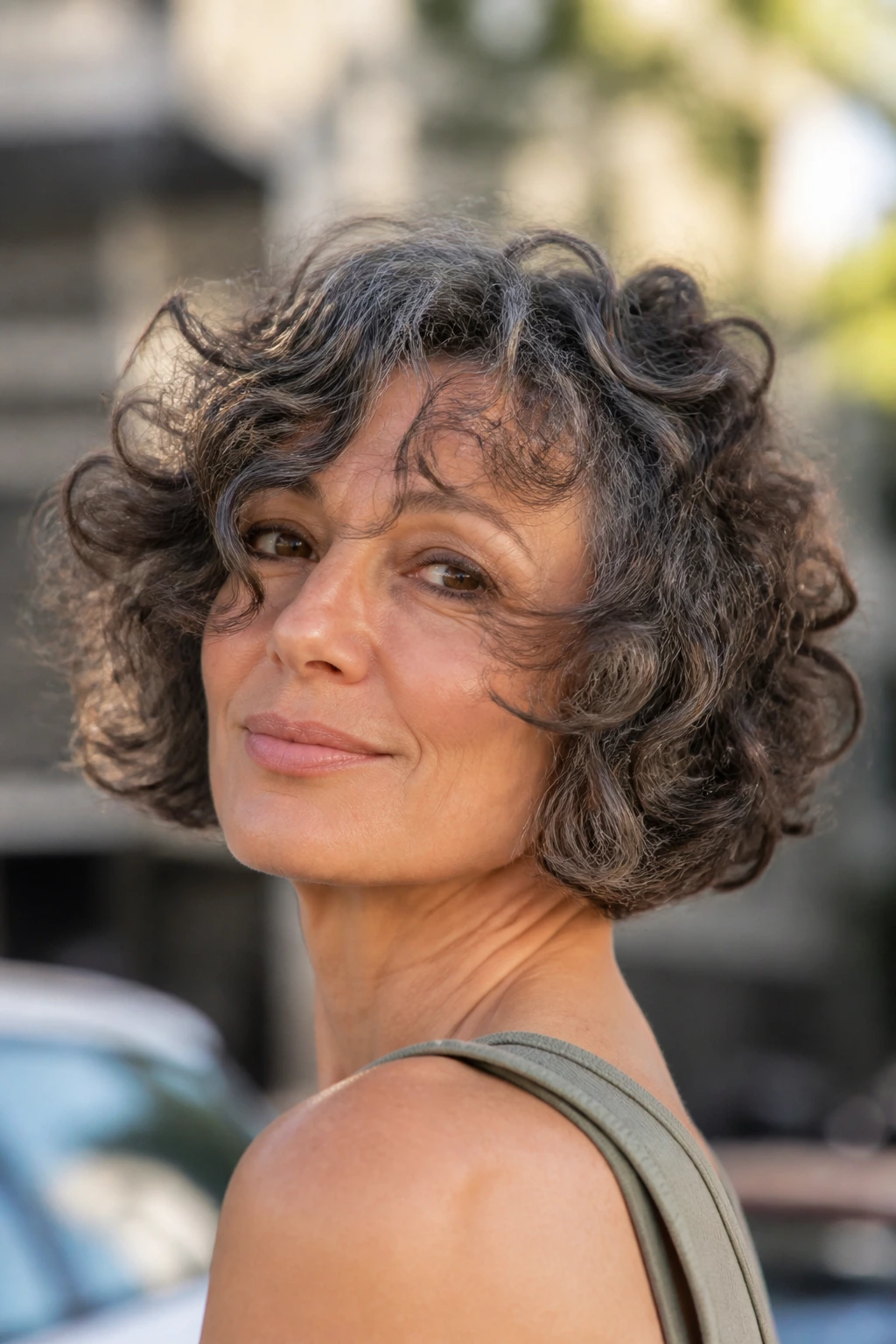
The nicest thing about a curly bob after 50 is that it doesn’t ask you to pretend your hair is somebody else’s. It can be neat, soft, sharp, airy, silver, layered, blunt, or a little shaggy, but it should still feel like your hair when you step away from the mirror.
That’s the real test. If the cut works with your curl pattern, the morning gets shorter and the shape gets stronger. And if you pick the right one, you’ll stop thinking about fighting the hair and start noticing what it does well on its own.
