



Thin hair has a bad reputation it does not deserve. The problem usually isn’t the hair itself; it’s the shape sitting on top of it. Give fine strands too much length, too many choppy layers, or a heavy center part that splits everything down the middle, and the whole style starts looking flatter than it felt in the salon chair. A good cut or style changes the math. The ends sit together. The crown gets lift. The eye sees a fuller shape, even when the actual density hasn’t changed.
That’s why hairstyle ideas for women with thin hair need to be more than cute screenshots. They have to work with the way fine strands behave in real life: they slip, they collapse under heavy product, they get stringy when they’re over-layered, and they can lose a curl in the time it takes to put on earrings. The smartest looks don’t fight that. They use blunt edges, controlled movement, and a little strategic lift where the eye wants to see volume most.
And yes, a one-inch change can matter. So can a side part, a round brush, or the way a bob ends at the chin instead of floating somewhere between lengths. The right choices make thin hair look cleaner, denser, and more deliberate. The wrong ones make it look like you borrowed someone else’s haircut on the way out the door.
Why These 21 Styles Work Better Than Random Thin-Hair Inspiration
-
Blunt edges hold the line: A clean perimeter makes the ends sit together, which is the fastest way to fake density without drowning the hair in product.
-
Crown lift matters more than length: Thin hair usually looks fuller when the roots get height near the top of the head, not when the lengths get heavier.
-
Movement has to be controlled: Soft bends, flipped ends, and airier layers add shape, but only when the outline stays solid.
-
Shorter cuts aren’t the only answer: A lob, shoulder cut, or layered mid-length style can look thicker than a long style that thins out toward the hem.
-
Simple styling wins on busy mornings: These looks rely on repeatable moves—round brushing, side parts, light teasing, pinning, wrapping, clipping—so they’re realistic, not just pretty.
-
Fine hair needs less product than you think: A little mousse, dry shampoo, or texture spray goes a long way; too much makes the whole thing limp and sticky.
1. The Blunt Chin-Length Bob
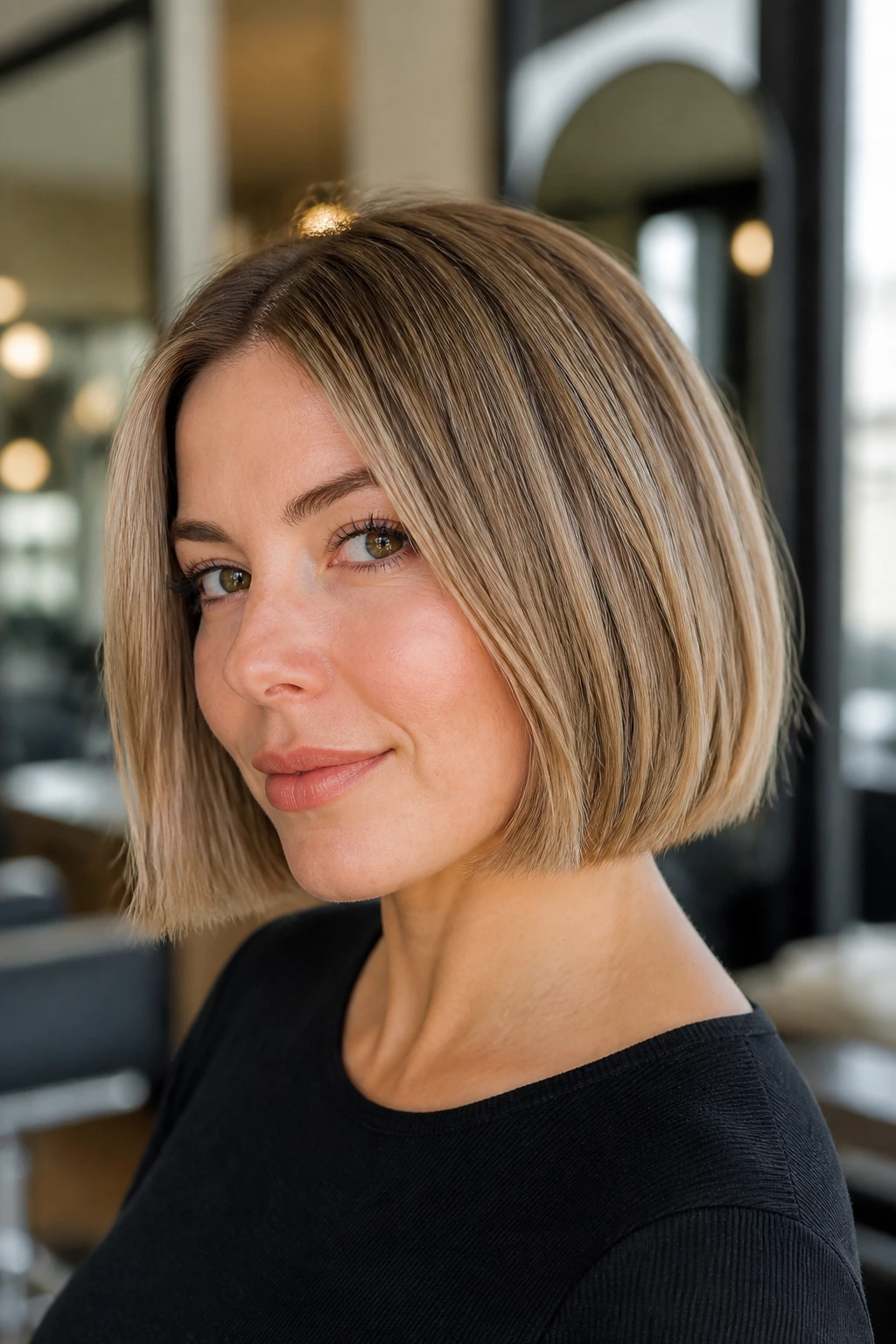
A blunt chin-length bob is the haircut that makes thin hair stop apologizing. The whole trick is the perimeter: the ends sit in one clean line, so the eye reads the shape as denser than it really is. On straight or softly wavy hair, this cut has a crisp, almost graphic look that holds up especially well when the blow-dry is smooth and the ends tuck under just a touch.
Why it works for thin hair
A bob this length keeps weight where thin hair needs it most—at the bottom. You do not want the bottom shattered into wisps. You want it solid. Ask for minimal texturizing through the ends and no aggressive razoring, because that just gives you little see-through points that make the whole cut look sparse.
- Best for: Straight, fine hair or hair with a slight bend.
- Styling note: Blow-dry with a small round brush and direct the ends under for a thicker-looking hem.
- Extra lift: A side part gives the crown a quick visual boost.
The best part? It looks expensive even when the styling is low-effort. Clean, simple, and hard to mess up.
2. The Collarbone Lob With Soft Ends
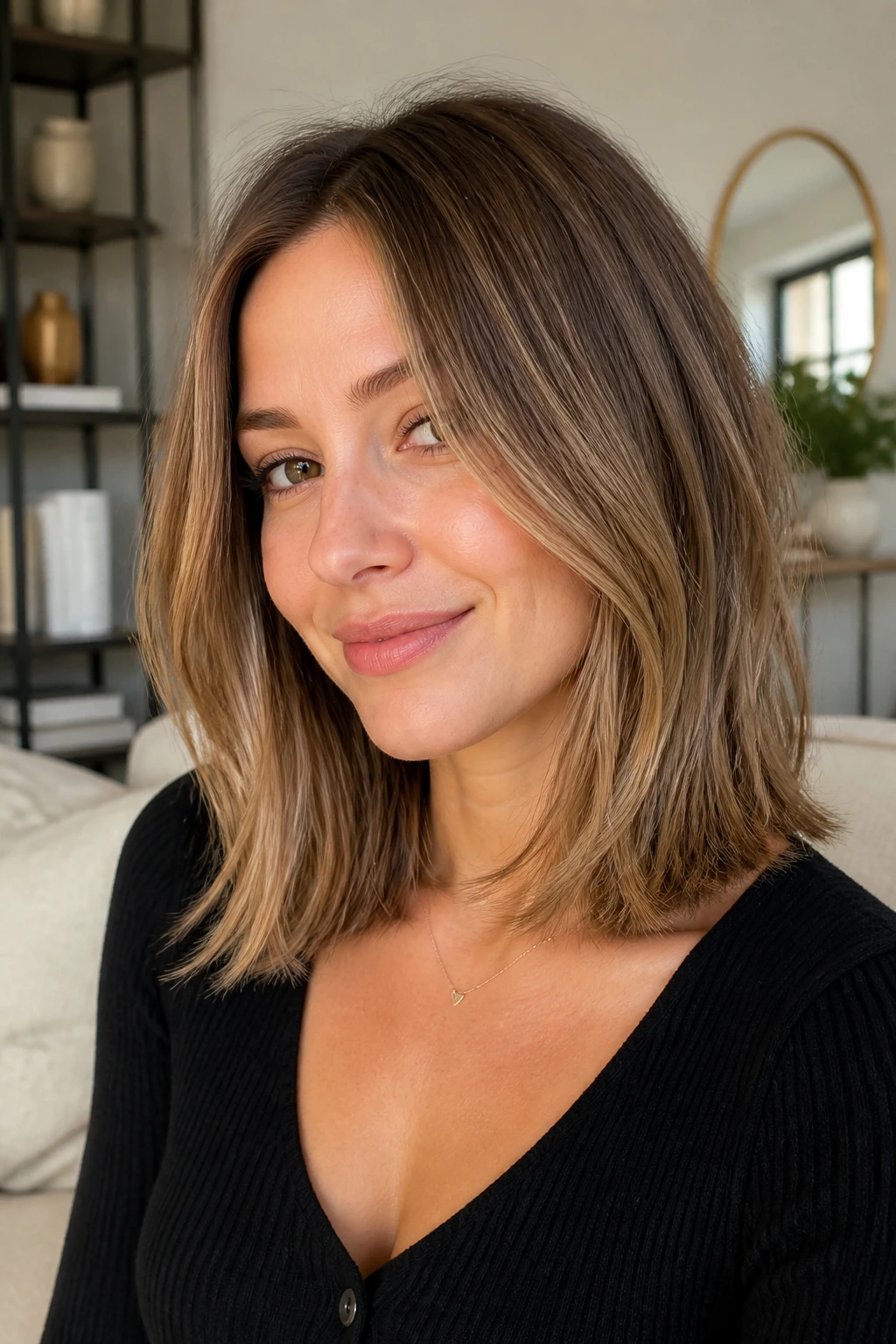
A collarbone lob is one of those lengths that feels safe until you realize how much shape it gives thin hair. It grazes the collarbone instead of dangling past it, which means the hair still has some swing without getting stringy at the ends. The softer ends keep it from looking too severe, but they should stay controlled, not wispy.
This is the length I reach for when someone wants movement without the maintenance of long hair. It catches a bend easily, works with a middle or side part, and still leaves enough room for a ponytail on lazy days. If the hair is very fine, the key is to keep the lower half from getting over-thinned. A tiny bit of internal layering is fine; feathering the entire bottom edge is not.
A quick pass with a flat iron, twisting slightly at the ends, gives the whole cut a fuller fall. Loose, not flat. That’s the target.
3. The Long-Top Pixie
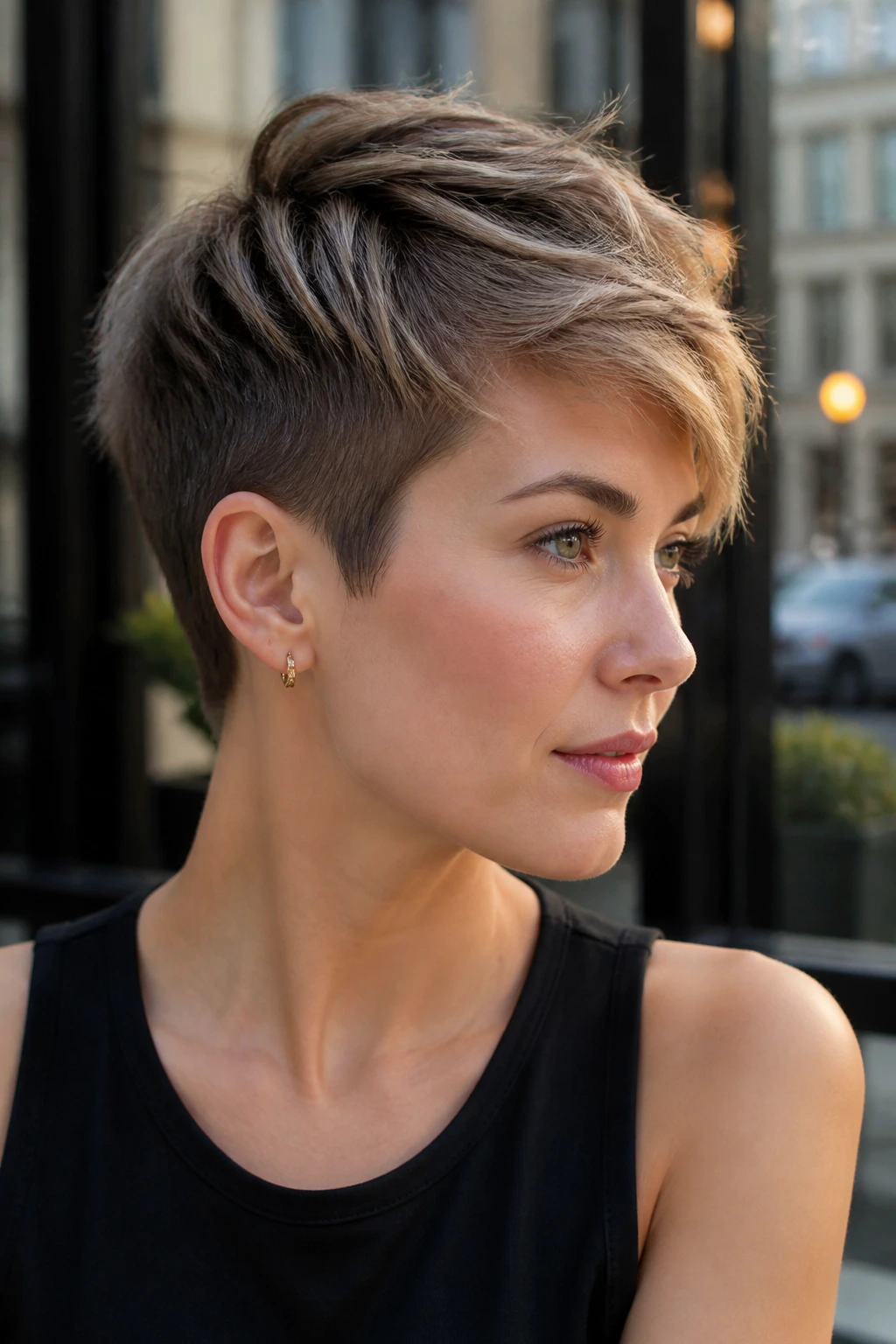
The pixie is the bold move, and on thin hair it can be a brilliant one when the top is left a little longer than people expect. Short sides take away the scraggly halo that thin hair can get around the ears, while the crown length gives you somewhere to build lift. If the top is too short, the style loses its shape. If it’s too long, it starts lying down like wet paper.
What to tell the stylist
Keep the fringe and crown pieces long enough to push forward, sweep up, or tuck to one side. That flexibility is the whole point. Thin hair usually looks better with a little direction, and this cut gives you that in spades.
Use a pea-sized amount of matte paste or lightweight cream on dry hair, not wet hair. Work it through the top only. Heavy products sink the shape fast, and fine strands forgive nothing.
This is a sharp cut. It reads clean at the ears, airy at the crown, and much fuller than people expect from such short hair.
4. The Airy Shag With Controlled Layers
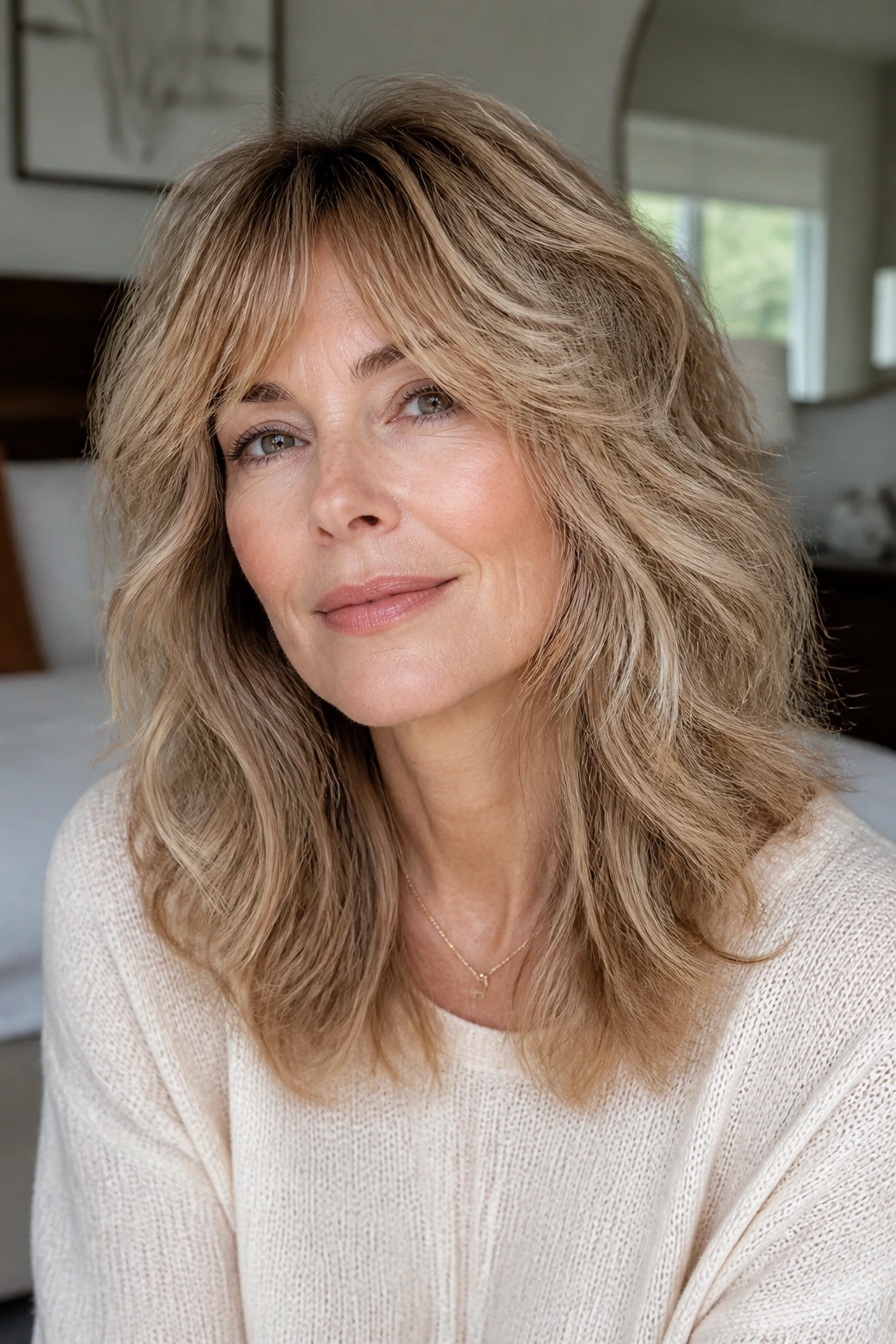
A shag can be good for thin hair, but only if the layers are handled with a careful hand. The fluffy, over-cut shag that looks romantic on Instagram can turn into gaps and flyaway ends in real life. The version that works keeps the perimeter intact, then adds movement around the face and crown without gutting the density at the bottom.
The smartest shag on thin hair has a little lift at the crown, some soft separation around the cheekbones, and enough length at the back to keep the outline from disappearing. Think airy, not shredded. The difference matters. A lot.
What makes it different
A good thin-hair shag uses direction instead of volume for volume’s sake. The layers are long enough to move, but not so short that they spring up and expose the scalp. Add a light mousse before diffusing or blow-drying, then finish with a touch of texture spray at the mid-lengths. Not the roots. The roots need lift, not grit.
If your hair waves on its own, this is one of the best shapes you can wear. The wave gives the cut life, and the cut gives the wave somewhere to land.
5. Curtain Bangs With a Mid-Length Cut

Curtain bangs can be lovely on thin hair when they’re cut with restraint. The sweet spot is a cheekbone-grazing curtain piece that opens away from the face, not a heavy fringe that eats too much density from the front hairline. Pair that with a mid-length cut, and you get softness around the face without sacrificing the illusion of fullness elsewhere.
The styling matters here. Blow the bangs away from the face with a medium round brush, then let them fall on their own for a minute before touching them again. That pause helps them settle instead of sticking to your forehead. On the rest of the hair, a gentle bend through the ends keeps the look from feeling too delicate.
This is a good answer if you want movement near the face but do not want your entire haircut layered into submission. Thin hair is already modest in volume. Don’t ask the bangs to do too much.
6. The French Bob With Brow-Skimming Fringe
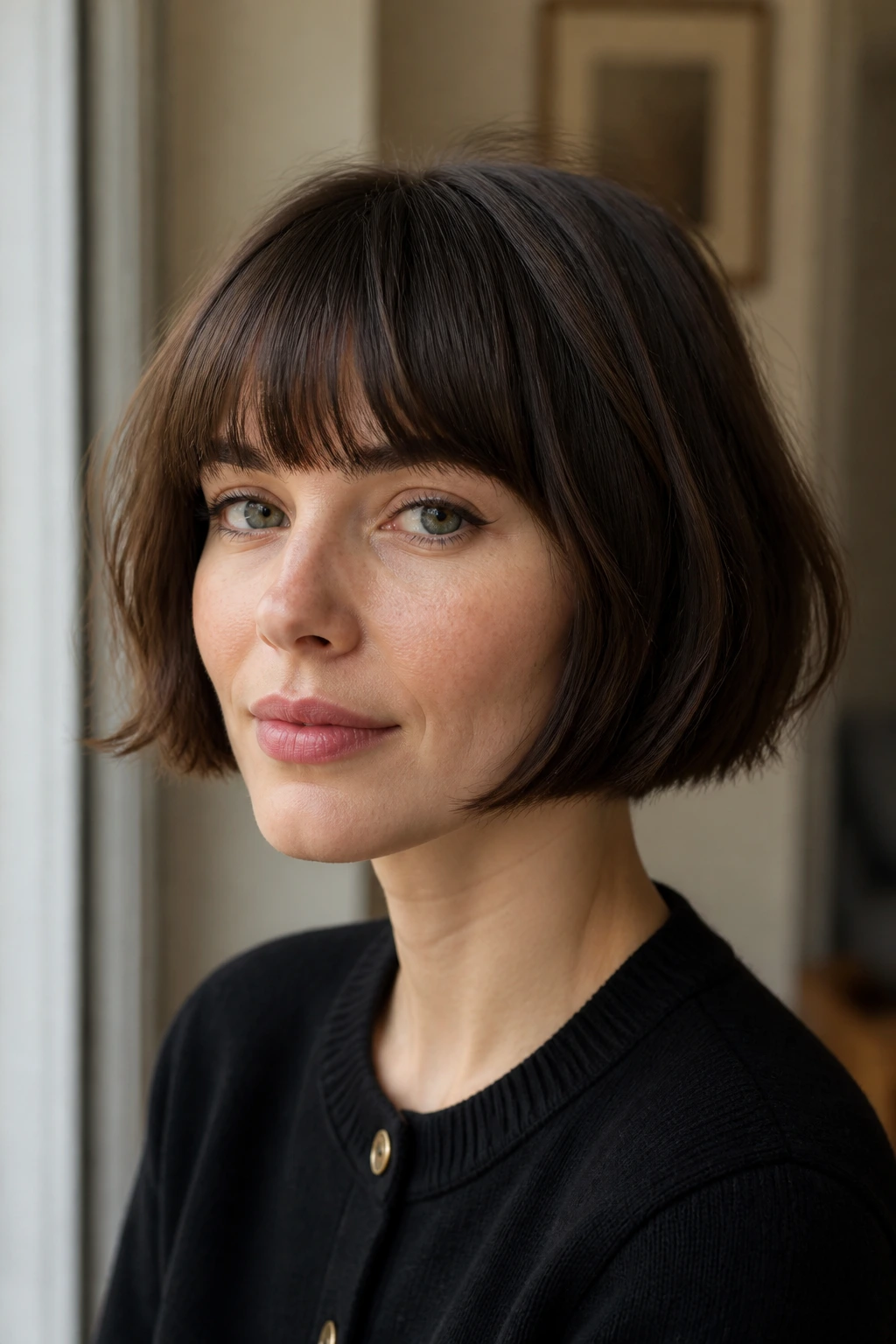
A French bob has attitude, and thin hair can wear that attitude well. The cut sits between the cheekbone and jaw, often with a little rounded shape that follows the face instead of hanging away from it. Add a brow-skimming fringe, and the style gets a compact, dense look that can make hair seem fuller at a glance.
The reason it works is simple: the shape is tight. There’s less length to collapse, fewer ends dragging the eye downward, and more visual weight packed into a small area. On very fine hair, ask for a fringe that’s soft enough to move, not a blunt block that feels too heavy around the forehead.
This style looks best when the blow-dry leaves a little air in it. Not poker-straight, not curled under too neatly. A tiny bend around the jaw keeps it from looking helmet-like. A little mess is part of the charm.
7. The Deep Side Part and Loose Waves
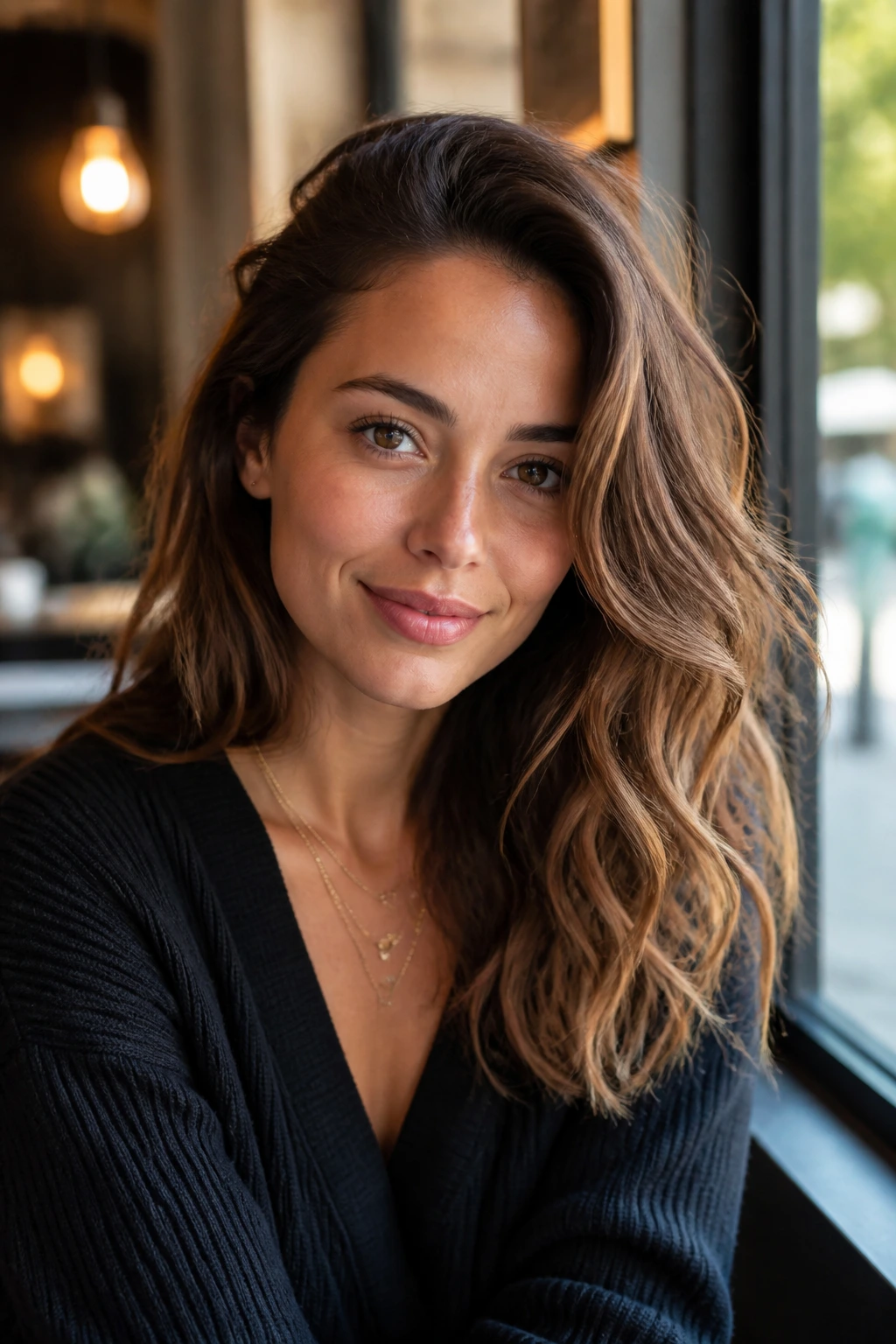
If you need proof that a hairstyle idea can change the way thin hair reads in seconds, try a deep side part with loose waves. One side gets more hair, which gives the crown an immediate visual lift. The waves add width without making the ends look sparse, especially when you keep them loose and brush them out a bit.
How to style it fast
Use a 1-inch or 1¼-inch curling iron and wrap pieces away from the face. Leave the last inch out on each section so the ends don’t curl into thin little hooks. After the curls cool, rake through them gently with your fingers or a wide-tooth comb. You want movement, not ringlets.
This is one of the easiest styles to cheat density. The side part creates height. The waves create body. And because the look stays soft, it works for everything from a coffee run to a dinner out without needing a full salon blowout.
8. The Tucked-Behind-Ear Sleek Bob
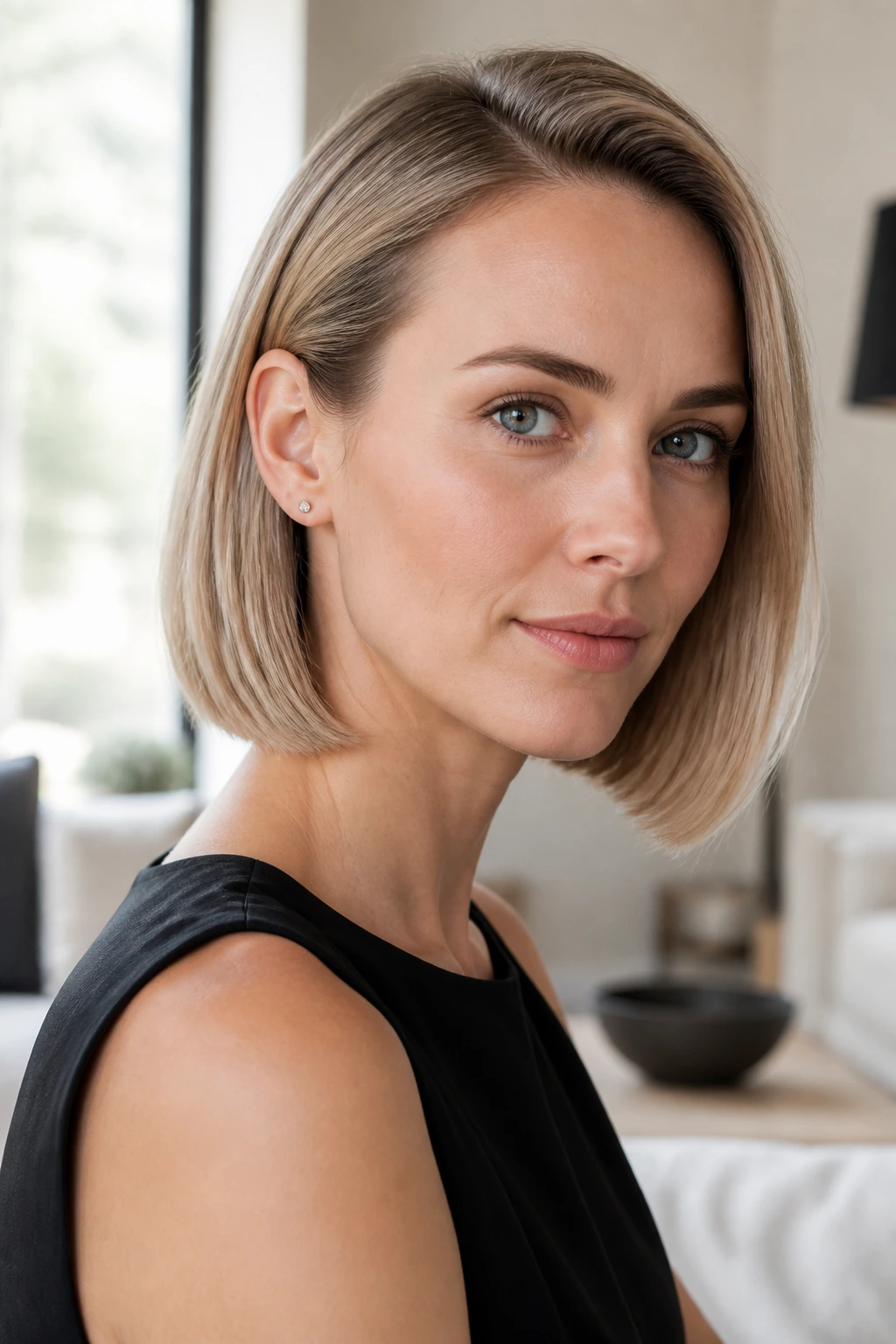
A tucked-behind-ear bob sounds plain until you see what it does to thin hair. By clearing one side away from the face, it draws attention to the clean line of the cut and makes the whole style look polished instead of overworked. It also keeps the hair from fluffing out at the cheeks, which is where many fine-hair styles start to lose shape.
What I like about this one is the honesty of it. There’s no pretending the hair is thicker than it is. Instead, the style leans into sharpness. A light smoothing serum through the lengths, a careful blow-dry, and a tuck behind one ear are enough.
Keep the roots light. Heavy oil at the top will undo the whole thing in half an hour. Thin hair likes a clean scalp and a soft finish on the ends. That combination beats glossy overload every time.
9. The Half-Up Crown Lift
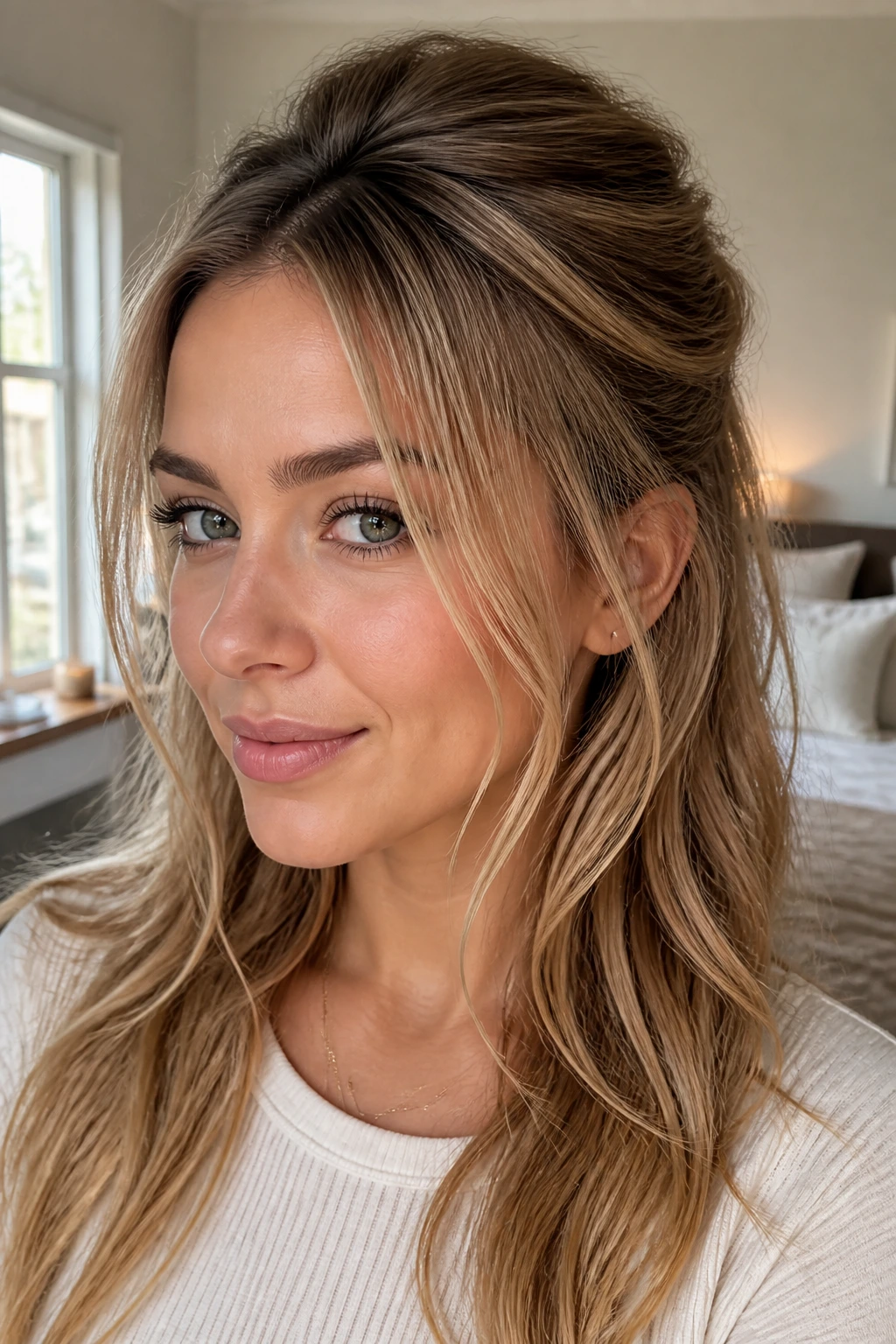
A half-up style is one of the easiest ways to steal height at the crown without pulling the whole head back into a tight ponytail. On thin hair, that matters. A full pony can flatten the sides and expose the scalp at the top; a half-up lift lets you keep softness around the face while sneaking in a little body above the ears.
The easiest version
Take the top section from temple to temple, lift it slightly at the crown, and secure it with a small clip or an elastic hidden under a wrapped strand. If the top looks too flat, pinch a little more height before fastening. Not a giant bump. Just enough to make the profile read fuller.
A half-up style works especially well on second-day hair because there’s a touch of grip already in the roots. A light mist of dry shampoo at the part and crown can help the section stay put without turning chalky. Clean, casual, and useful. That’s the appeal.
10. The Low Ponytail With a Wrapped Base
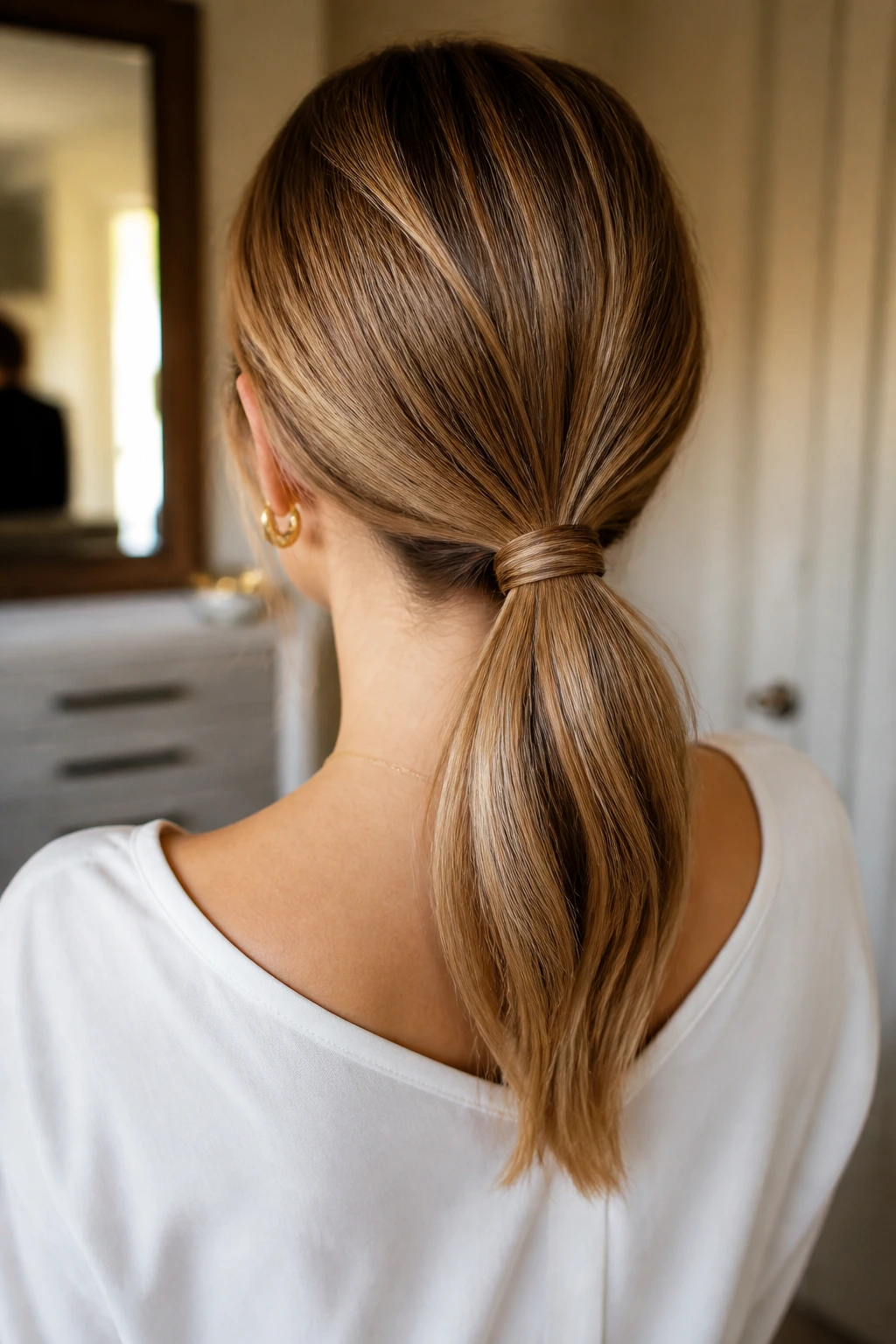
Why does a low ponytail often look better on thin hair than a high one? Because the lower placement keeps the shape grounded. A high pony tends to expose the scalp at the temples and crown, while a low ponytail lets the hair lie flatter in a way that looks deliberate rather than sparse. Add a wrapped base, and the elastic disappears, which gives the style a more finished look.
A tiny amount of backcombing at the crown can help, but keep it gentle. You want a little lift, not a bird’s nest. Smooth the top layer over the teased section, secure the pony low at the nape, then wrap a strand around the elastic and pin it underneath.
This style is especially useful when the hair has been freshly blown out and you want to keep some of that smoothness without wearing it loose all day. It’s calm. Clean. Slightly pulled together. And that suits thin hair better than most people think.
11. The Bubble Ponytail
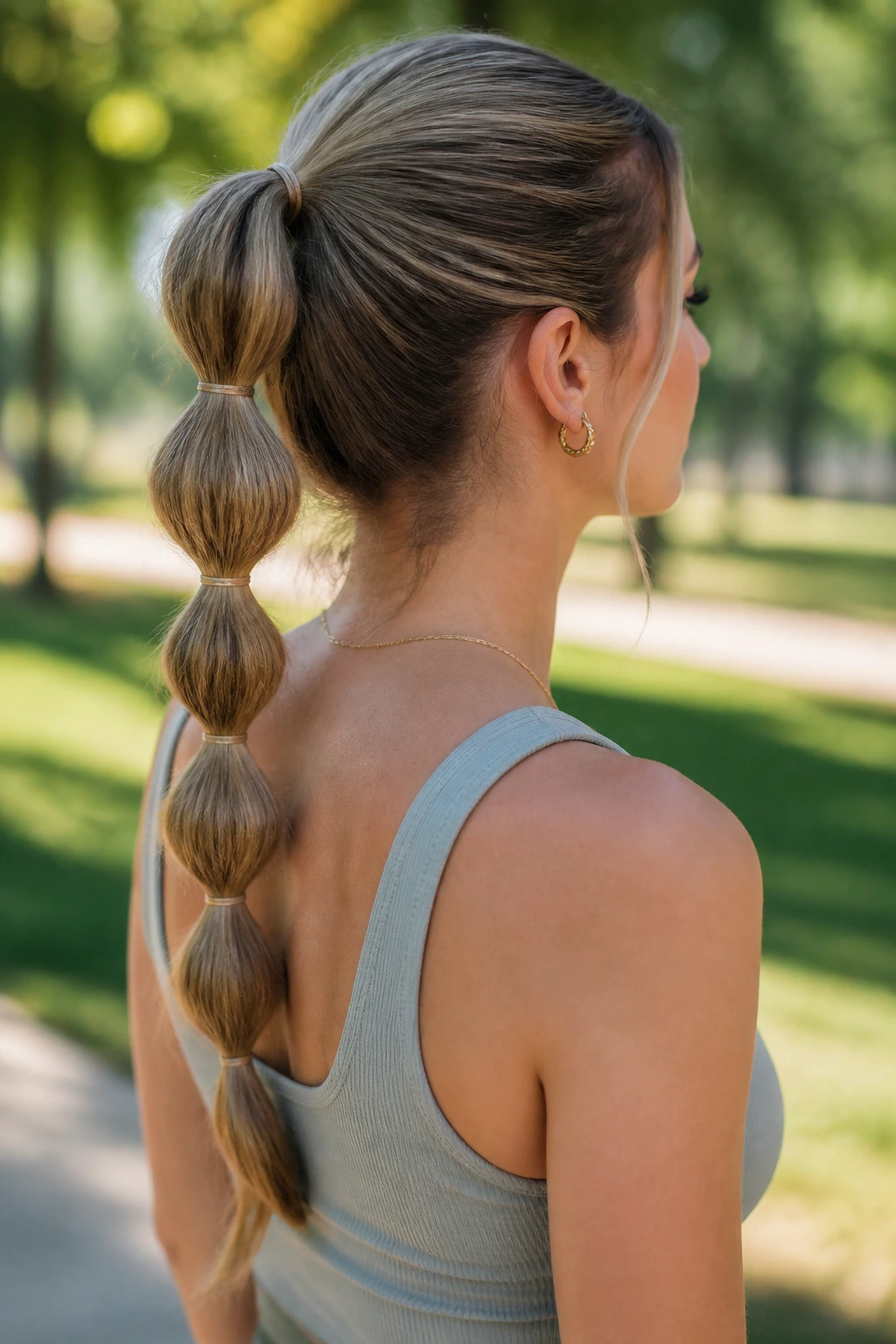
A bubble ponytail is one of the rare styles that makes thin hair look playful and fuller at the same time. The trick is simple: secure the ponytail, then place small elastics every few inches down the length and gently tug each section outward to form soft bubbles. Those rounded sections create the illusion of more hair between the ties.
You do need enough length for this to work well. Mid-back or longer hair gives you the best shape. If the hair is shorter, the bubbles can feel crowded. When it’s done right, though, it adds body without asking the ends to carry the entire style.
Use clear elastics or ones that match your hair color so the focus stays on shape, not hardware. A little texture spray at the base helps the ponytail hold its volume. And yes, this one is fun. Not every style has to act serious.
12. The Claw-Clip French Twist
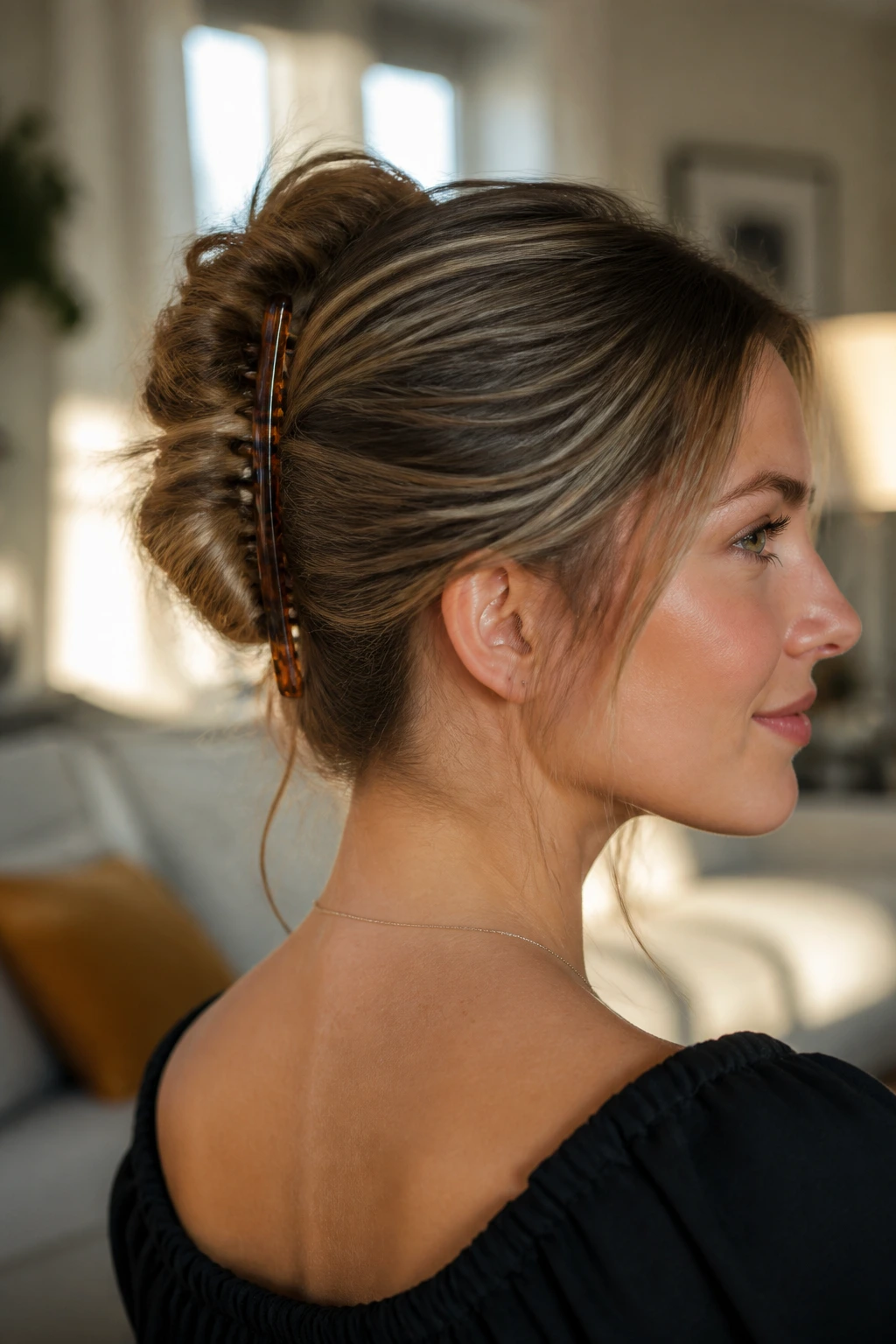
A claw clip is a thin-hair friend if you use it with the right amount of looseness. The French twist version gathers the hair upward, twists it once or twice, and clips it vertically so the style has height instead of flattening at the back of the head. Because the clip itself creates a bit of visible bulk, even modest hair can look more substantial.
The mistake is trying to force too much hair into a clip that’s too small or too large. Too small, and it pops open. Too large, and the whole thing slips. A medium clip usually gives the best hold for fine hair.
Leave a few ends loose if the hair wants to escape. That’s not a failure. It often makes the style look softer and less stiff. Thin hair usually looks better with a little motion around the edges anyway.
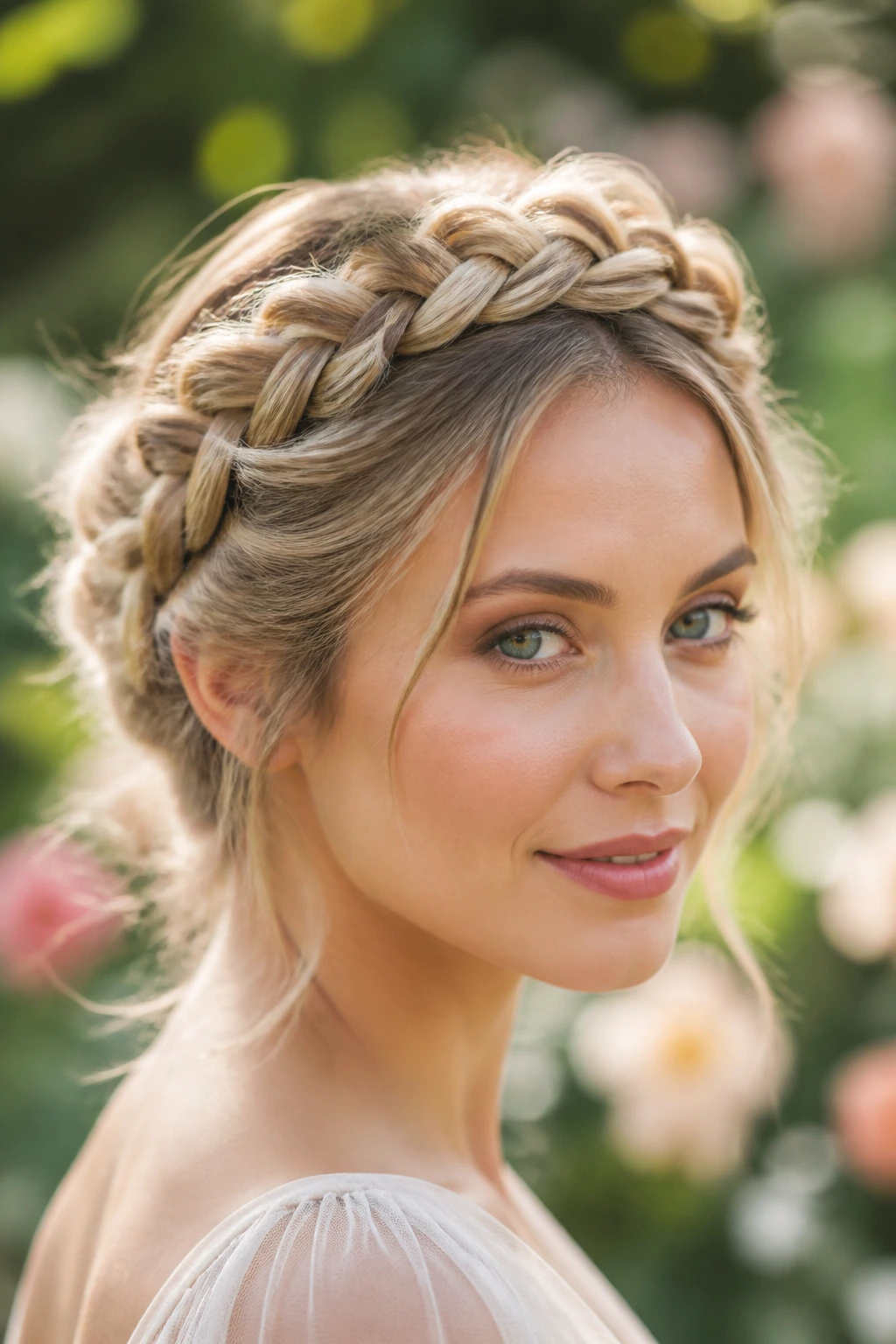
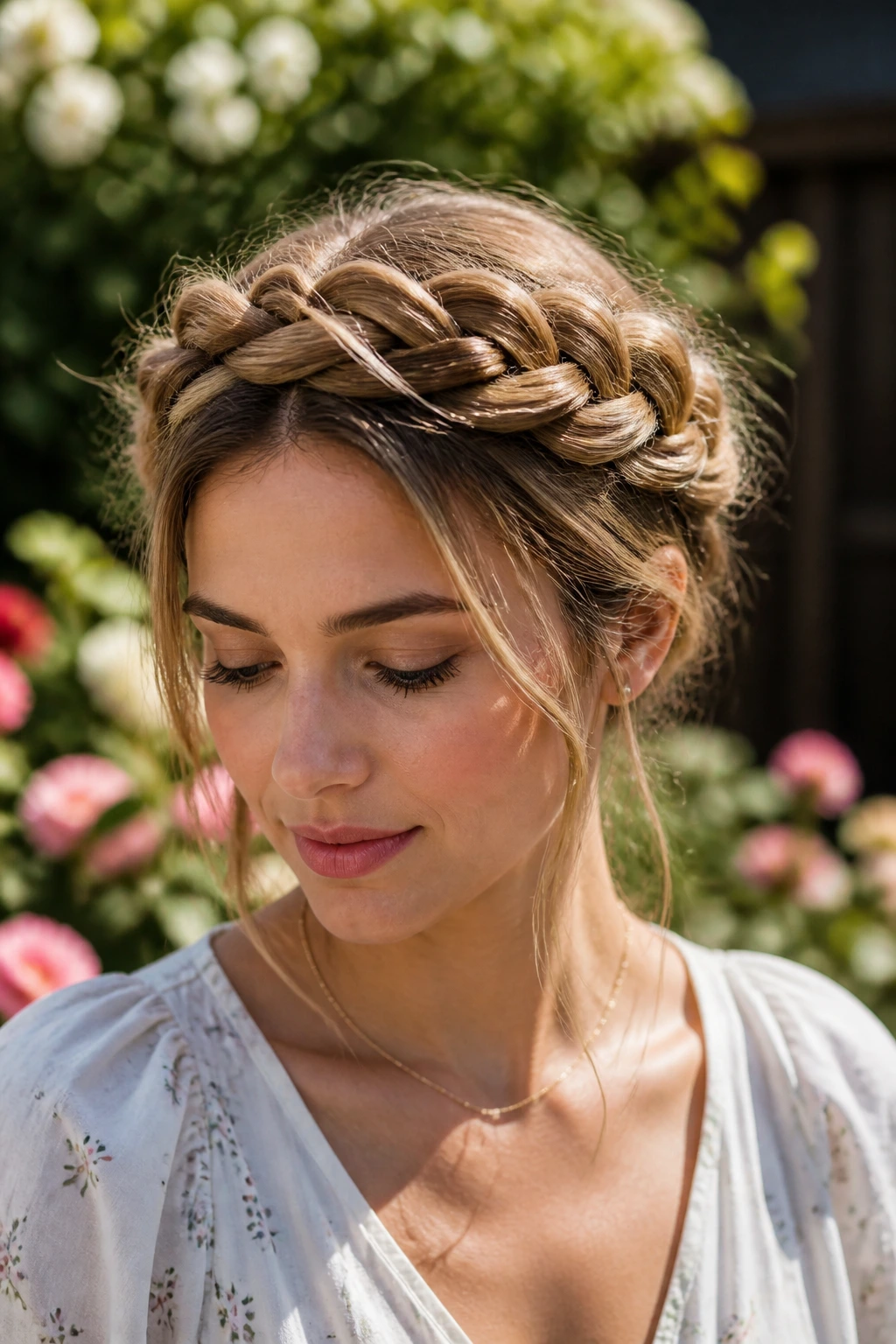
13. The Braided Crown With Soft Pulls
Braids can be tricky on thin hair, but a braided crown works because it concentrates attention near the hairline. The braid circles the head, so the eye reads a fuller shape even if the actual braid is compact. The key is to pancake the braid gently after you secure it—pull the outer edges outward just enough to widen the shape.
What to watch for
Do not braid wet or freshly silky hair unless you’ve added a bit of texture spray first. Thin strands slip like crazy when they’re too clean. A little grit helps the braid hold. You also want the braid to sit a touch loose, not yanked tight against the scalp, or it can reveal the parting too much.
This is one of those styles that looks more elaborate than it is. Two braids pinned across the crown can give you a halo effect that feels polished without looking stiff. It’s a good one for weddings, lunches, or any day you want your hair to stop behaving like fine hair for an hour.
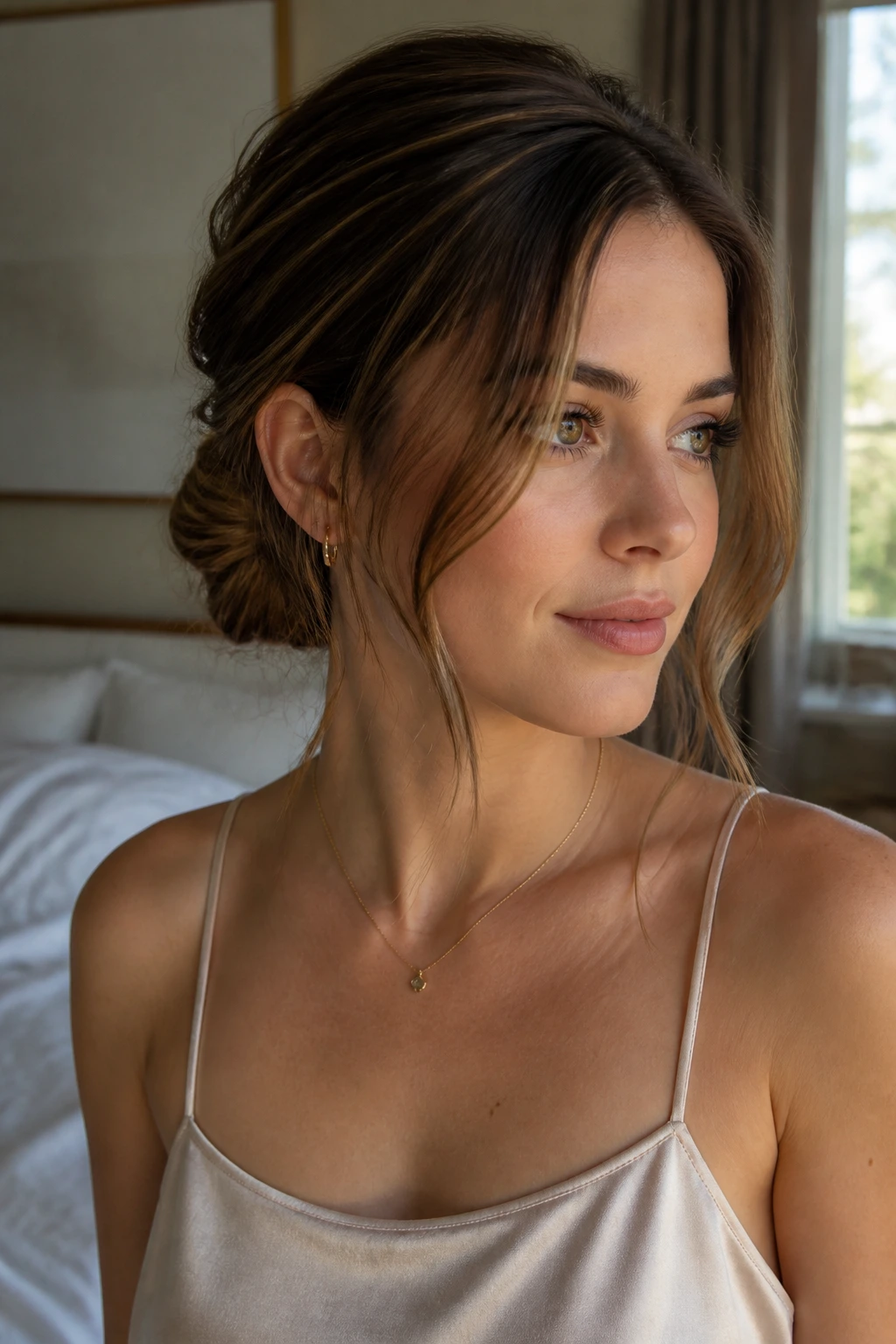
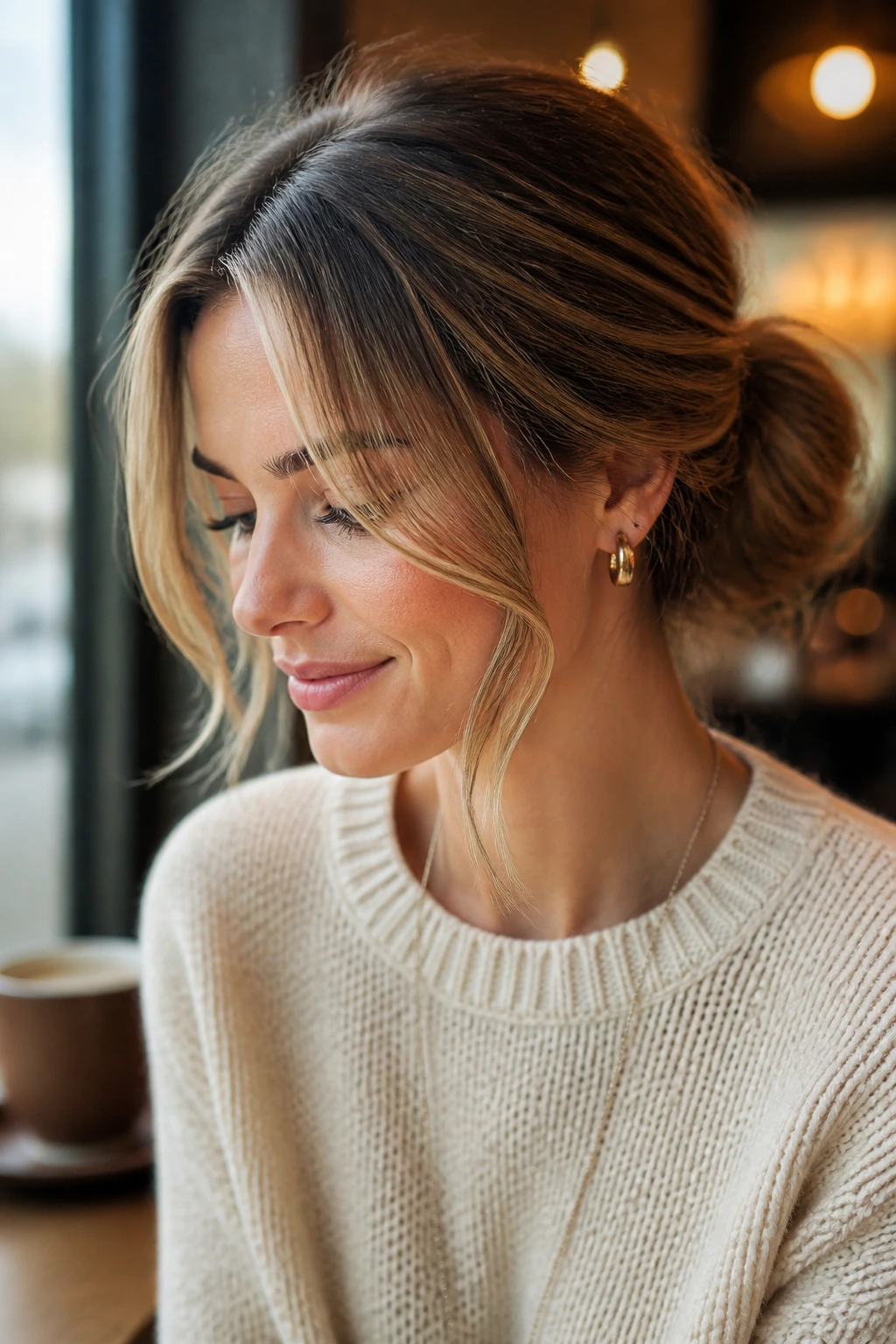
14. The Soft Chignon With Face-Framing Pieces
A low chignon can work beautifully on thin hair when it’s kept soft and slightly undone. The hair is gathered low, twisted into a small knot, and pinned close to the nape. A few face-framing pieces are left out to avoid that severe, scraped-back look that can make fine hair seem even smaller.
The secret here is texture. If the hair is too smooth, the bun collapses into a tiny knot. A wave or bend through the mid-lengths gives the chignon something to grip. A dry texture spray before twisting helps more than another layer of hairspray ever will.
This style is best when you want the neck exposed and the face softened. It works with earrings. It works with a high collar. It works when your hair is behaving and when it isn’t.
15. The Shoulder-Length Cut With Invisible Layers
A shoulder-length cut with invisible layers is one of the smartest options for women with thin hair who want movement without losing the outline. The layers are built inside the shape, not cut all over the surface, so the perimeter stays full while the inside gets a little bend and swing.
Why stylists like this one
Visible, short layers can turn fine hair see-through at the ends. Invisible layers do the opposite. They let the hair move without carving away the weight that keeps the style looking dense. Ask for soft, internal shaping and avoid anything that sounds like “lots of razoring” unless your hair is naturally thick enough to handle it.
This cut is especially useful if you wear your hair down most days but still want a style that turns easily with a brush or iron. It’s not flashy. That’s the point. It makes the hair look lived-in, not over-cut.
16. The Asymmetrical Bob
An asymmetrical bob does something clever: it gives the eye a shape to follow, and that can make thin hair feel more intentional. One side stays slightly longer than the other, so the cut doesn’t read as a single flat line. The imbalance creates movement even when the hair is worn sleek.
This style works best when the difference is subtle, not dramatic. A half-inch to an inch is enough for most women. Too much asymmetry starts looking costume-y unless the whole look is built around it. Keep the ends clean and the silhouette sharp.
It’s a good choice for straight hair that tends to fall flat in the same direction every day. The uneven line breaks that habit. It also plays nicely with a tucked side or a deep part, which gives you a second way to fake density.
17. The Feathered Crop
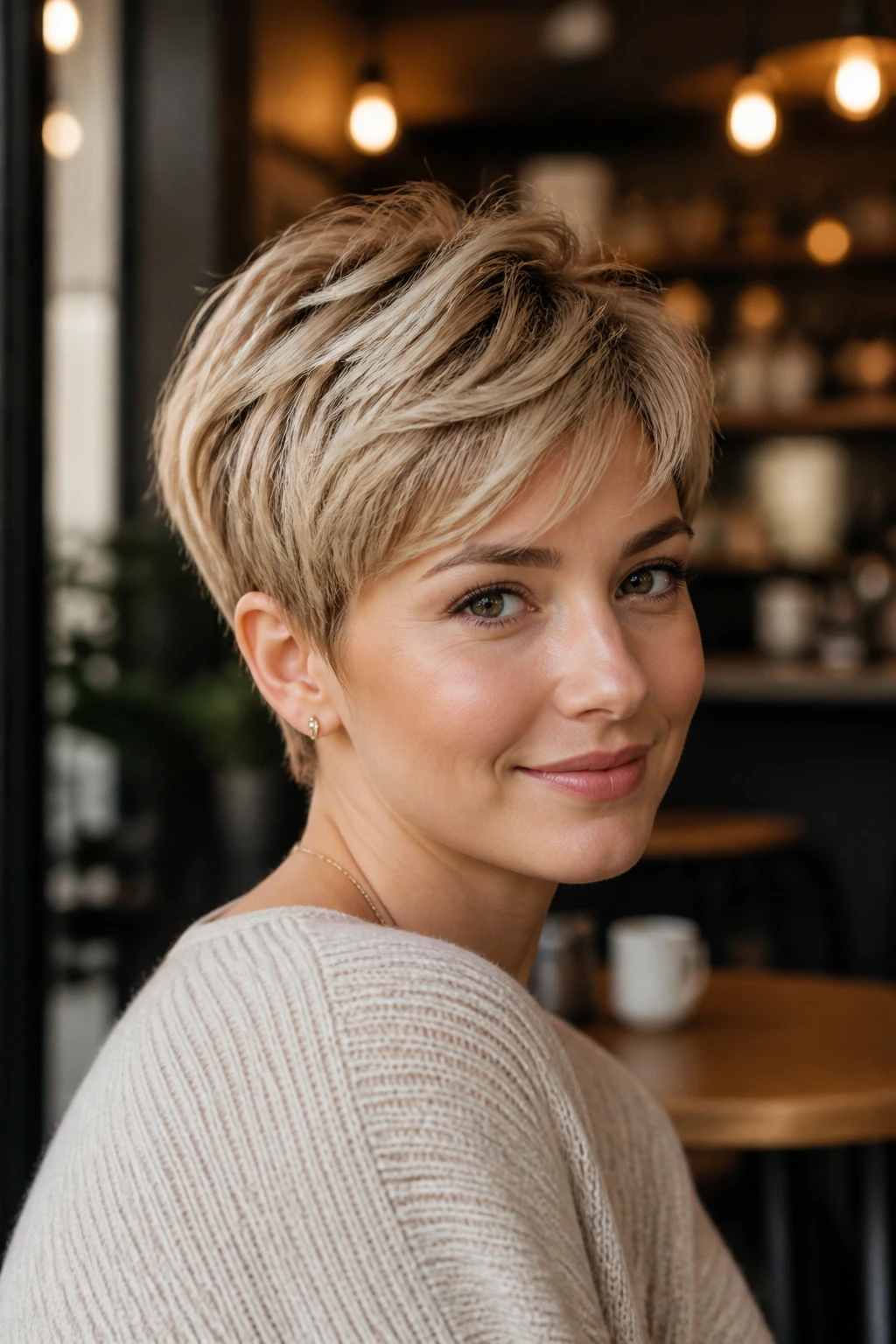
The feathered crop takes the idea of short hair and softens it with brushed-out edges and light directional layers. On thin hair, that can be a relief. You get shape near the face and crown, but the ends do not get chopped into a fragile mess.
What matters most here is restraint. Feathering should create softness, not frizz. The top needs enough length to sweep forward or upward, while the sides stay neat enough to frame the face. A small amount of lightweight cream on the ends can tame flyaways without killing the lift.
This cut has an easy, slightly airy feel that works especially well for women who don’t want to spend ten minutes arguing with a brush every morning. Short. Light. Done. That’s the whole attraction.
18. The Flipped-Out Lob Ends
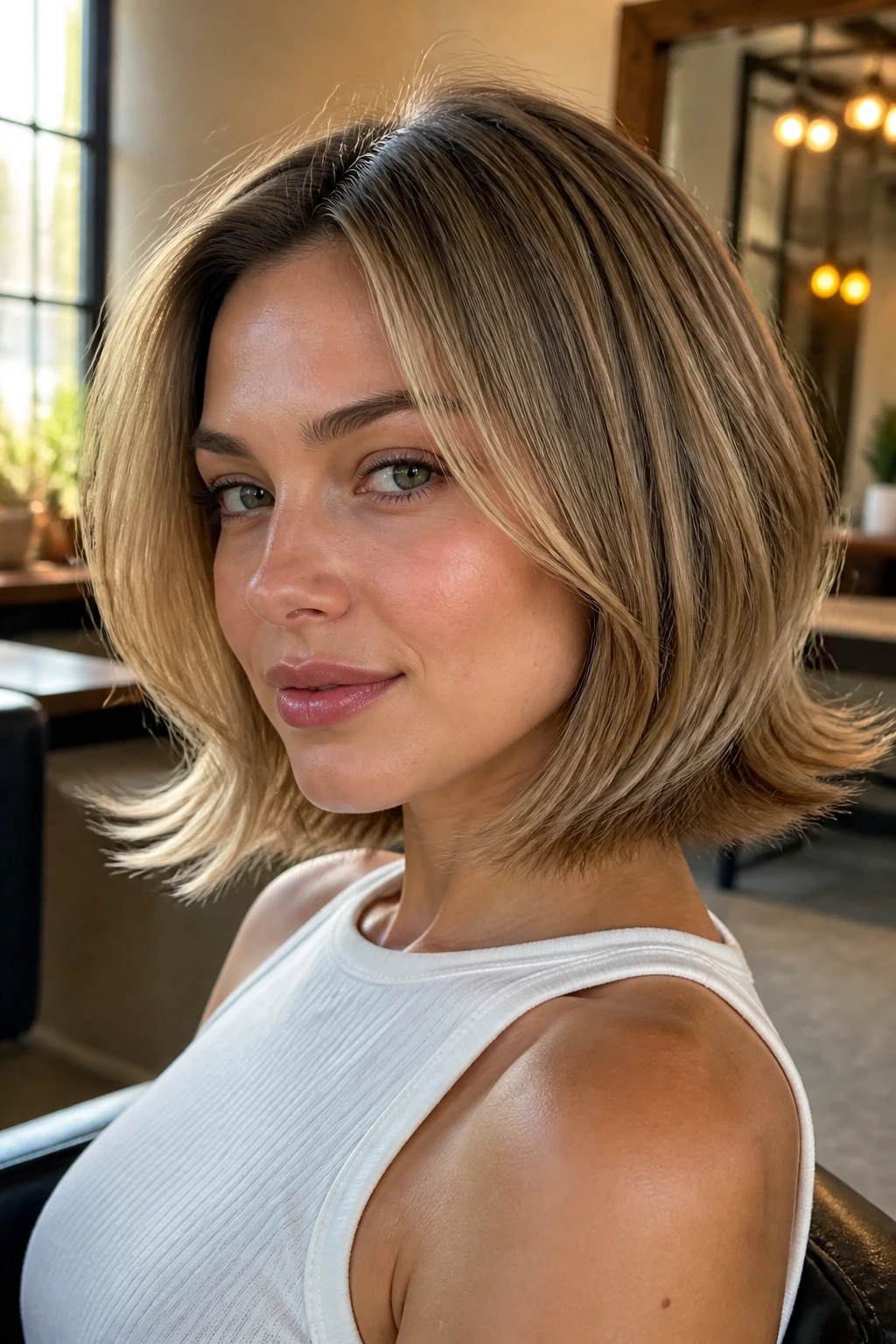
Flipped-out ends make thin hair look more animated because they push the outline outward instead of letting it hang straight down. A lob with the ends turned away from the face creates width at the bottom, which can help the whole style look fuller in motion. The shape feels a little retro, a little casual, and much less flat than a straight blow-dry.
Use a round brush or a flat iron to bend the ends outward just a touch. Do not overdo it. The flip should look like a deliberate finish, not a cosplay moment from a completely different decade. If the rest of the hair stays smooth, the ends carry the detail.
- Best for: Collarbone to shoulder length.
- Tool tip: A 1-inch flat iron gives more control than a wide one.
- Finish: A light mist of flexible hairspray keeps the flip from collapsing.
This is one of those styles that wakes up a dull cut without requiring a full haircut.
19. The Wispy Bangs With Straight Shoulder Cut
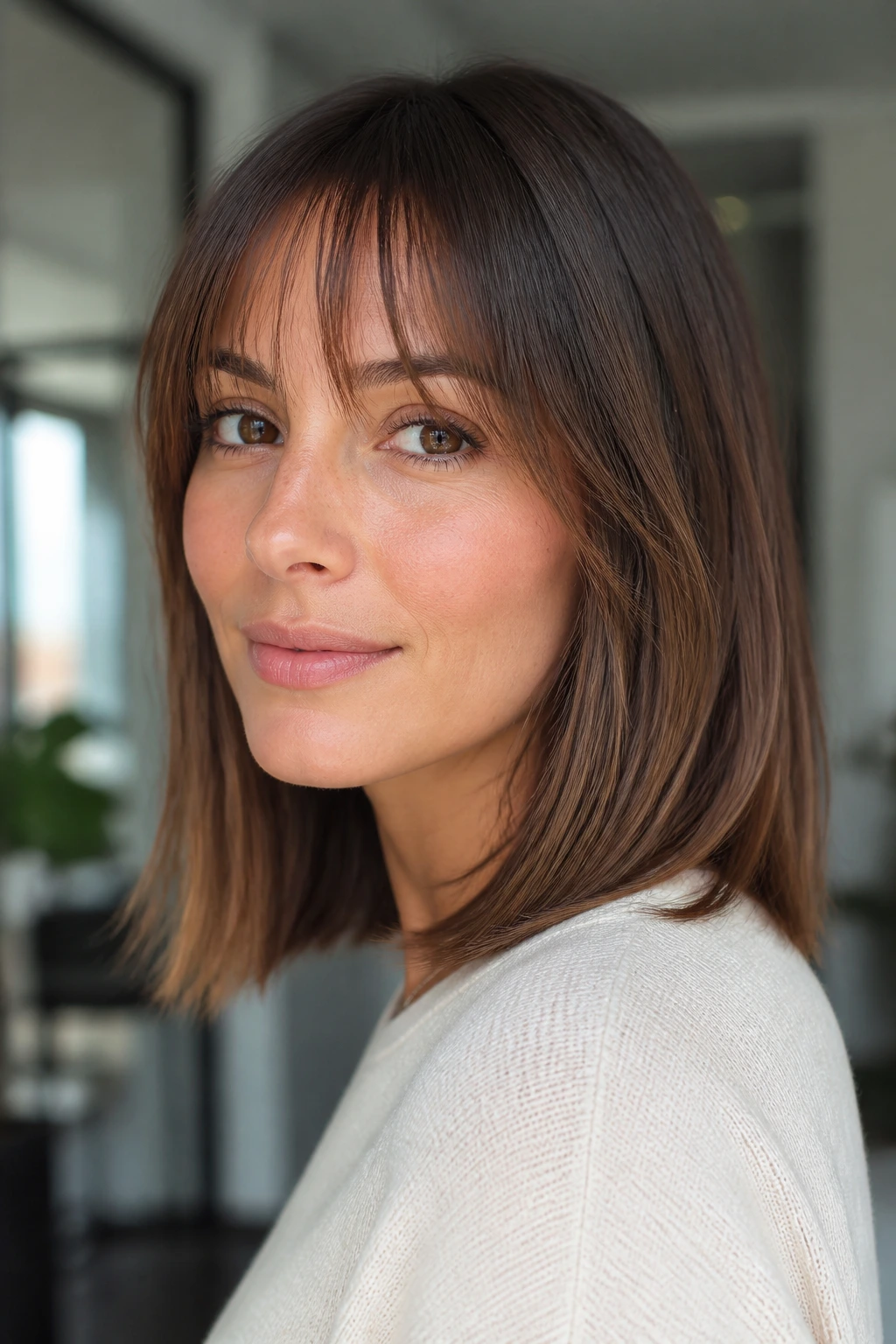
Wispy bangs can be a smart compromise for thin hair because they bring softness to the front without demanding a thick wall of fringe. Pair them with a straight shoulder-length cut and the whole look stays balanced. The bangs frame the face, while the rest of the hair keeps a clean edge that reads fuller than broken-up ends.
The big mistake here is trying to make the bangs too dense. That’s when thin hair starts showing the scalp between pieces, and the fringe loses the airy feel that makes it work. A little separation is better. You want pieces that move, not a heavy curtain that sits like a sheet.
This style suits people who want a little face interest but not the upkeep of fuller bangs. It’s softer on the grow-out. Easier to pinch back on humid days. And less likely to turn into a forehead carpet by lunch.
20. The Top Knot With Loose Tendrils
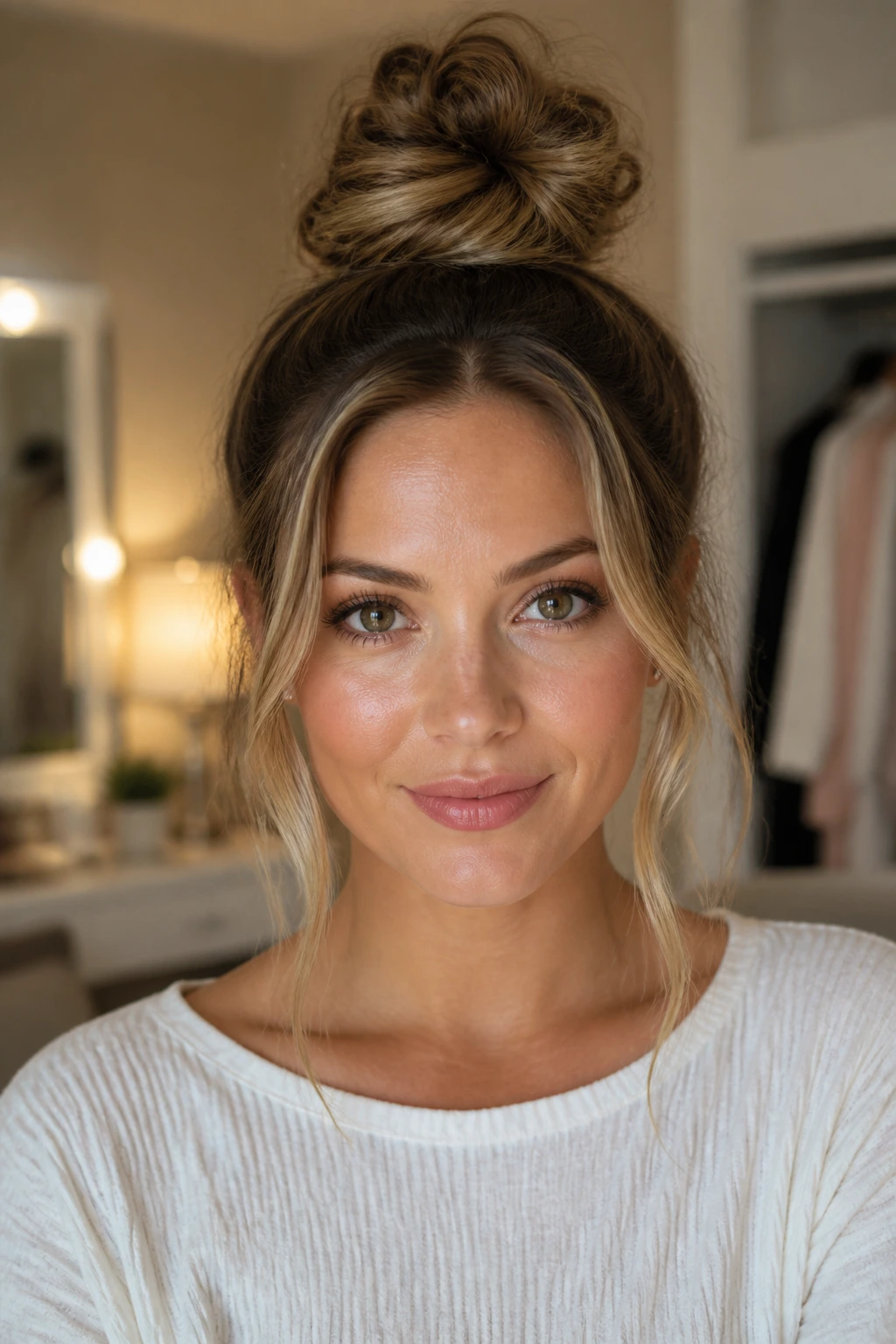
A top knot sounds simple, but on thin hair it needs a little planning or it can turn into a tiny knot that exposes everything. The goal is to place the bun high enough to lift the face, but not so high that the crown gets pulled smooth and flat. A small amount of teasing at the roots helps, and loose tendrils around the temples soften the result.
If the hair is long enough, a hair donut or a wrapped base can make the knot look bigger without needing extra bulk. If it isn’t, keep the bun compact and focus on the shape around it. The tendrils matter more than people think. They keep the style from feeling severe.
This is a strong second-day style because the hair usually has a little grip already. Freshly washed fine hair often slips right out. Yesterday’s hair? Much easier.
21. The Scarf-Tied Ponytail
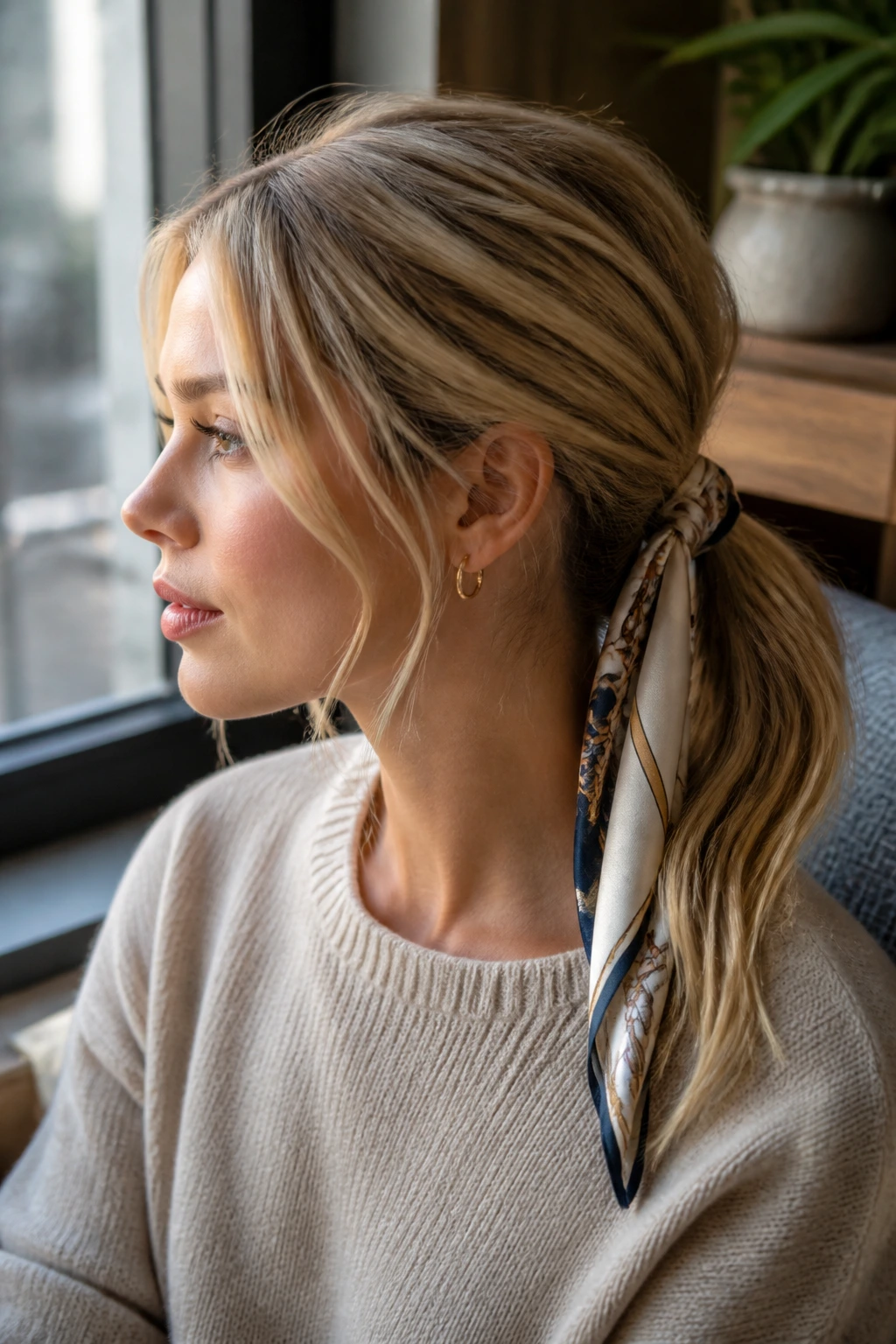
A scarf-tied ponytail is one of the simplest ways to make thin hair feel styled instead of merely tied back. The scarf draws the eye, hides the elastic, and adds a little vertical line that makes the ponytail read fuller. When the base is slightly textured, the whole thing looks intentional rather than rushed.
Start with a low or mid-height ponytail and give the crown a gentle lift before fastening it. Tie a silk or satin scarf around the base, leaving the ends hanging down or knotting them off to one side. If the hair is very fine, a tiny bit of teasing at the ponytail base helps the style keep shape.
This is not a volume illusion built on puffing the hair up until it behaves badly. It’s a neat workaround. Sometimes the fastest fix is also the prettiest one.
Why Blunt Lines, Lifted Crowns, and Smart Layering Matter So Much
Thin hair usually looks best when the cut does some of the heavy lifting for you. That means a strong outline, a crown that isn’t smothered, and layers that are used with precision instead of enthusiasm. The difference between “full” and “see-through” often comes down to where the weight sits. If the ends are too shattered, the eye reads emptiness. If the crown is too flat, the whole head loses shape.
Fine hair and thin hair are not the same thing, and the distinction matters. Fine hair refers to the width of each strand. Thin hair refers to density, or how many strands you have on the scalp. A woman can have fine-but-lot-of-it hair or coarse hair with low density. The haircut changes based on that difference. That’s why one size never fits all.
What works over and over is a shape that keeps the edge honest. The ends should be visible. The top should have lift. And the layers should earn their place.
The Tools That Earn Their Place on a Thin-Hair Vanity
You do not need a crowded bathroom shelf to make thin hair look better. You need a few tools that do one job well and do not bulldoze the strands with too much heat or product. Thin hair has a short fuse; the right tools respect that.
- A medium round brush: Big enough to give a bend, small enough to control the roots around the crown and face.
- A fine-tooth tail comb: Best for clean parts, crown lift, and tiny sectioning jobs when you want the root to sit the right way.
- A blow dryer with a nozzle: The nozzle directs airflow, which matters when you’re trying to smooth the cuticle without blasting everything apart.
- A 1-inch curling iron or flat iron: Useful for soft bends, flipped ends, and loose waves that don’t swallow fine hair.
- Dry shampoo: Not just for oily hair. A light dusting at the roots can add grip and lift on day two.
- Lightweight mousse or root spray: Gives body before blow-drying without leaving the hair greasy.
- Texture spray: Good for braids, updos, and ponytails that need a bit of hold.
- Small elastics, bobby pins, and a medium claw clip: The tiny hardware matters more than people think when the hair is fine and slippery.
What to Ask Your Stylist for, and What to Buy for Home

The salon conversation matters. If you want one of these hairstyles for women with thin hair to hold up past the first shampoo, you need to talk about weight, not just length. Say whether you want a blunt edge, soft movement, or internal layers. Those words send the cut in different directions.
Ask for minimal thinning at the ends unless your hair is actually bulky. Razor work can feel airy in the chair and look stringy at home. If you want bangs, talk about density at the front hairline before the scissors touch it. Thin hair can wear fringe, but the fringe has to be small enough to belong to the rest of the cut.
At home, buy for weightlessness. Pick mousses that vanish when dry, not creams that stay slippery. Use conditioners from mid-length to ends only. If your hair gets oily fast, a dry shampoo with a fine spray pattern will help more than a heavy powder that sits on the scalp.
One more thing: if a product says “volumizing” but leaves a sticky film after one use, toss it. Thin hair remembers.
How to Match the Style to Your Hairline, Face Shape, and Routine

The right hairstyle for thin hair is the one that fits the way you actually live. If you wash every other day, a style that depends on pristine roots will drive you crazy. If your hairline is sparse near the temples, heavy bangs can expose more than they hide. If your face is long, a chin-length bob or a side part can bring the proportions back into line faster than adding length ever will.
Round faces often benefit from a little vertical lift at the crown and some movement past the cheekbones. Square faces can soften nicely with curtain bangs or a lob that bends around the jaw. Oval faces have the most room to play, which is rude but true. Still, even then, density matters more than face shape. Thin hair will always look better when the perimeter is clear and the crown isn’t crushed.
Busy routine? Go for blunt shapes, tucked styles, or one-and-done cuts that work with air drying. If you enjoy styling, the shag, flip-out lob, and bubble ponytail give you more room to play.
Extra Volume Moves That Add Shape Without Crunch

Root Lift: Flip your part to the opposite side while the hair is still warm from drying. That tiny change can wake up the crown better than another scoop of mousse. A couple of root clips at the top for ten minutes while you finish makeup also help the hair set up instead of settling down.
Texture Without Crunch: Thin hair does not need a hard shell of hairspray. A light mist from 10 to 12 inches away gives hold without freezing the ends. If the hair feels stiff, you’ve used too much.
Heat in the Right Place: Curling the mid-lengths and leaving the ends straight often makes fine hair look denser, because the ends keep a thick line while the middle gets body. It’s a small trick, but it works.
Finishing Touch: A tiny bit of powder or texturizing spray at the root—not the whole head—adds grip. Spray, wait a few seconds, then massage it in with your fingertips. Don’t dump it on. That’s how the style goes chalky.
Common Mistakes That Make Thin Hair Look Even Thinner
The first mistake is over-layering. A stylist can cut a lot of movement into thin hair and accidentally remove the very weight that was holding the shape together. The symptom is usually ends that flick out in separate little strings. The fix is a cleaner perimeter with softer internal shaping.
The second mistake is heavy product at the roots. Oils, thick creams, and dense serums flatten the crown and make the scalp show more. Thin hair likes lighter formulas applied from the mid-lengths down.
The third mistake is keeping the part in the same place for months. Hair learns a path. If you always part it in the exact same spot, the roots lie flat there and the scalp shows more. Switch sides, even by an inch, and the hair can lift in a way that feels almost unfair.
The fourth mistake is overheated styling with no heat protection. Fine strands burn faster than people think. A heat protectant is not optional if you’re using a curling iron or flat iron, and a lower temperature—usually around 300°F to 325°F—is often enough.
The fifth mistake is forcing length where the hair doesn’t want it. Long, thin hair can be beautiful, but if the ends are see-through and heavy with oil or conditioner, the style just sinks. Sometimes the answer is a better cut, not more inches.
Variations and Adaptations for Different Hair Textures and Lengths
Soft Wave Version: If your hair has a natural bend, lean into shoulder-length cuts, the lob, or the shag. A bit of mousse and a diffuser can bring out the movement without needing a curling iron every morning.
Straight-and-Sleek Version: For pin-straight hair, blunt bobs, asymmetrical bobs, and tucked styles tend to work best. The clean line gives the eye something solid to hold onto, which matters when the hair itself doesn’t have much texture.
Low-Maintenance Version: If you want something fast, pick the chin bob, the low ponytail, or the scarf-tied ponytail. These styles survive a rushed morning better than anything that depends on perfect curls.
Event-Ready Version: Braided crowns, soft chignons, and claw-clip French twists look more dressed up than they are. Add a little texture spray first, and the style holds much better than it would on freshly washed hair.
Grow-Out Version: If you’re between lengths, a collarbone lob or shoulder-length cut with invisible layers makes the awkward phase feel planned. It gives you enough movement to avoid the helmet effect while still keeping the ends looking full.
Keeping Thin Hair Styles Fresh Between Washes
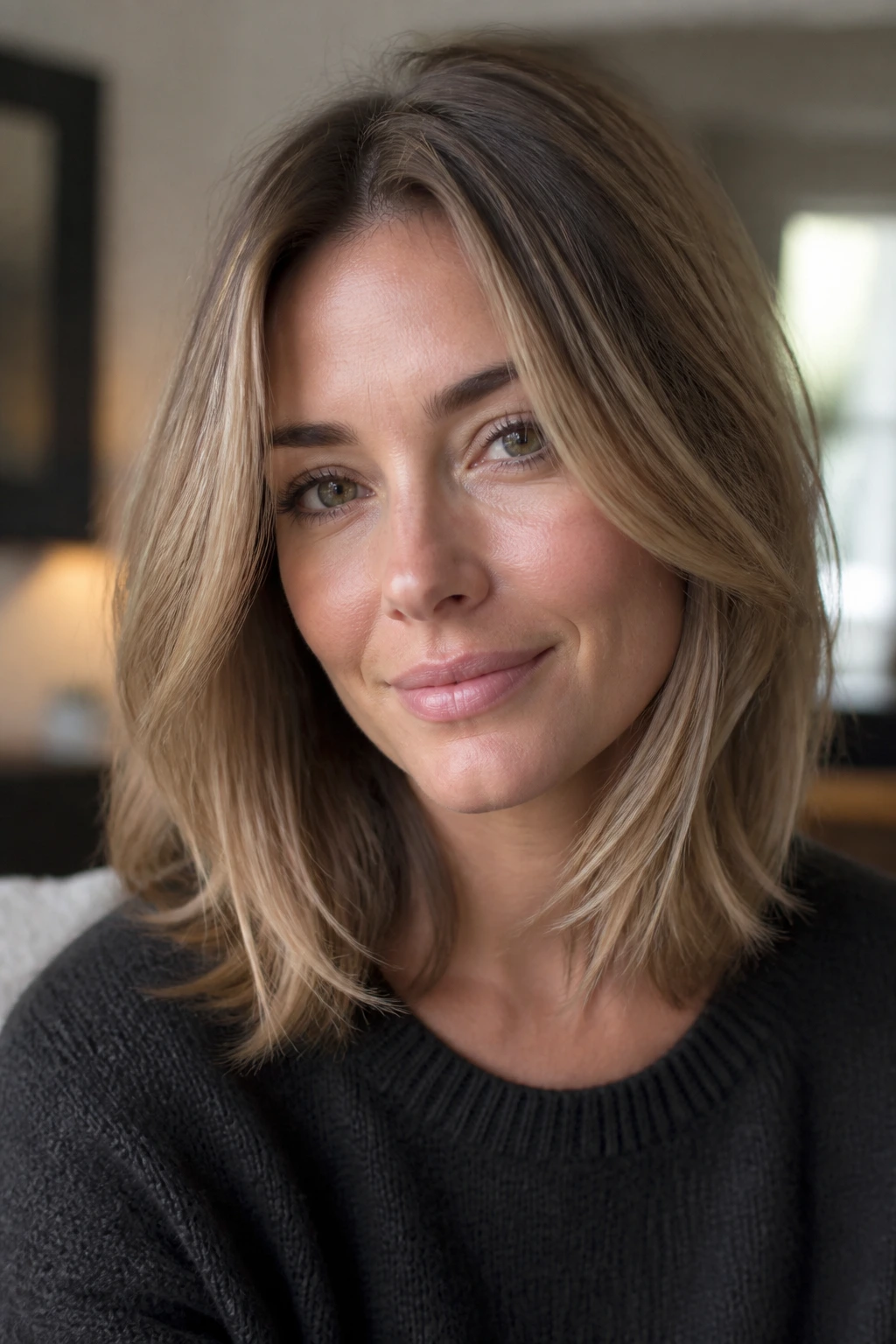
Thin hair often behaves better on day two than on wash day. The roots have a little grip, the lengths have settled, and styles like half-up lifts, low ponytails, and soft buns hold together with less effort. That means maintenance matters as much as the original styling.
If a blowout starts to droop, hit the roots with a quick blast of cool air and a round brush for two minutes. That’s usually enough to revive the crown without starting over. If the ends look dull, add a tiny touch of serum—half a pea-sized amount rubbed between the palms and pressed only onto the lower inch or two.
Dry shampoo works best when it has a minute to sit before you rub it in. Spray lightly, wait, then massage. If you use it at night, it can absorb oil before it spreads, which is a lot cleaner than trying to rescue everything in the morning.
For updos, do not keep re-pinning the same section over and over. That creates breakage fast. Take the style down at night when you can, or at least loosen the pins and clip so the hair doesn’t get a tired bend in the same place for hours.
Frequently Asked Questions About Hairstyles for Thin Hair
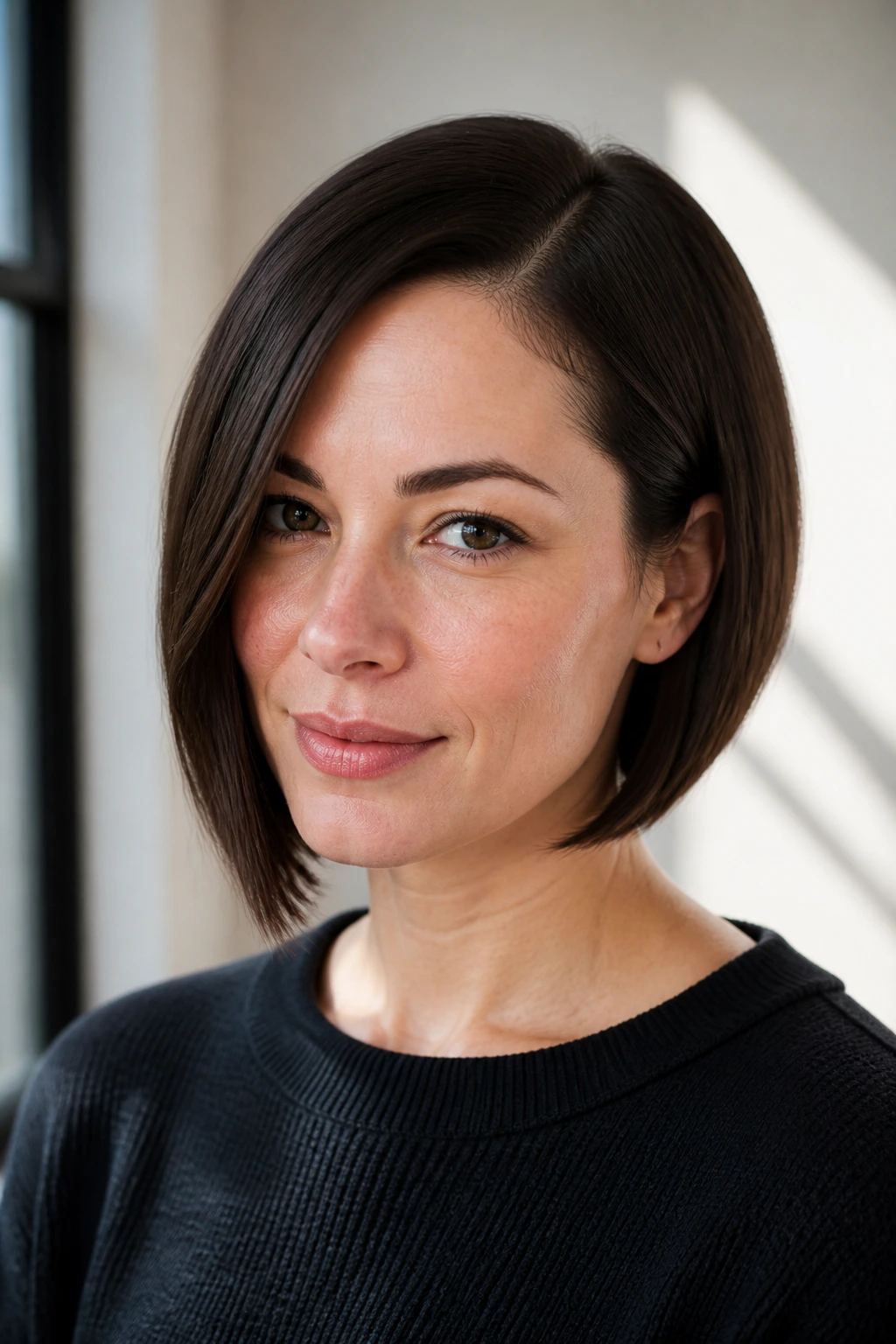
What haircut makes thin hair look thicker?
A blunt bob, French bob, or collarbone lob usually gives the strongest density illusion because the ends sit in a clean line. If you want layers, keep them internal or long enough that they do not chew up the perimeter.
Are layers bad for thin hair?
Not all layers. The problem is aggressive layering that removes too much weight. Soft internal layers can add movement without exposing the ends, which is often the better route for low-density hair.
Can women with thin hair wear bangs?
Yes, but the bangs need to match the density of the rest of the cut. Wispy bangs and curtain bangs are usually safer than a thick blunt fringe, which can split and show scalp if the front section is too sparse.
Is short hair better than long hair for thin hair?
Usually, yes, because short hair tends to hold a fuller shape with less effort. That said, a shoulder-length cut with the right outline can look thicker than a bad bob or a long style that thins out at the ends.
What products help thin hair without making it greasy?
Light mousse, root-lifting spray, and dry shampoo are the usual winners. Heavy oils and creamy masks should stay off the roots; use them only on the last few inches of hair.
How often should thin hair be trimmed?
Every 6 to 8 weeks is a good rhythm for most women. Thin ends show wear fast, and once the perimeter starts fraying, the whole style can look thinner than it really is.
Can thin hair hold curls?
It can, but the prep matters. A little mousse, heat protection, and fully cooled curls help more than high heat alone. Letting the curls set before brushing them out also makes them last longer.
What if my crown goes flat no matter what I do?
Use a side part, root clips, or a quick lift at the crown with a tail comb before drying. Sometimes the answer is less about the product and more about changing where the weight of the hair falls.
A Fuller Shape Starts Here
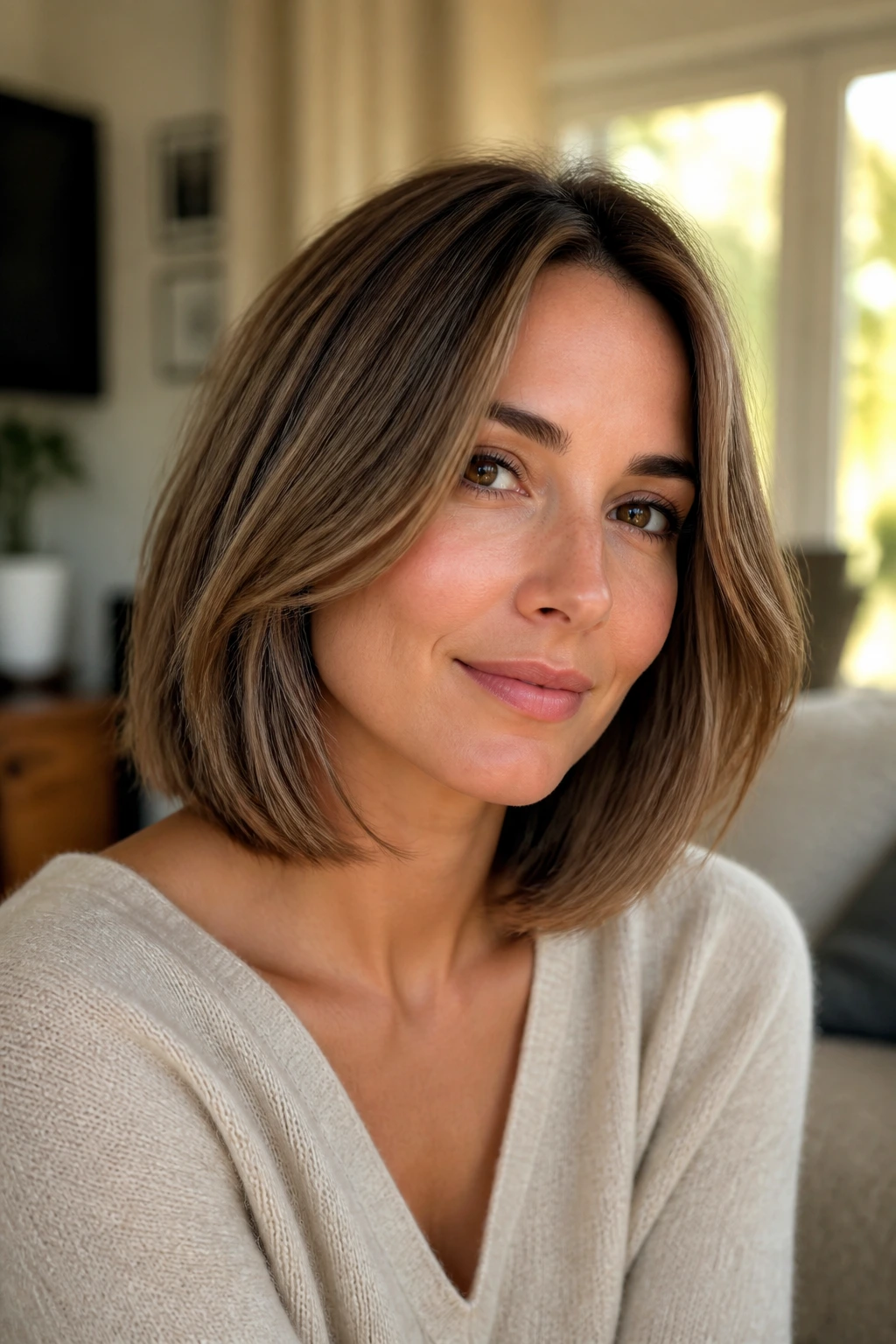
Thin hair does not need to be hidden, fixed, or overcompensated for. It needs a shape that respects what the strands can actually do. A blunt bob, a soft lob, a smart pixie, or even a plain low ponytail with the right finish can change the whole read of the hair without turning it stiff or overstyled.
The best part is how little some of these changes require. A different part. A cleaner edge. A small bend at the ends. Sometimes that is all it takes to make thin hair look intentional instead of accidental.
Pick the shape that matches your routine, keep the product light, and let the cut do its job. The right hairstyle will stop fighting your hair and start working with it, which is a much better deal.
