



A wolf cut on medium length hair can look soft at the front and a little untamed at the back, which is exactly why it keeps hanging around in salons. The cut has room to move, but it still sits close enough to the shoulders and collarbone that the shape reads as intentional, not like you forgot to get a trim.
That middle length is the sweet spot. Too short, and the layers can kick out in odd places. Too long, and the haircut starts acting like a regular shag. Wolf cuts for medium length hair work because the crown can stay lifted while the ends keep enough weight to fall in pieces instead of floating into fluff.
The best versions have a certain push and pull to them. The top feels cropped and lively. The bottom feels lived-in, not blunt. And the fringe — if you want one — can tilt soft, heavy, wispy, or nearly invisible, depending on how much face framing you want to deal with before coffee.
Why This Collection Deserves a Spot in Your Photo Folder
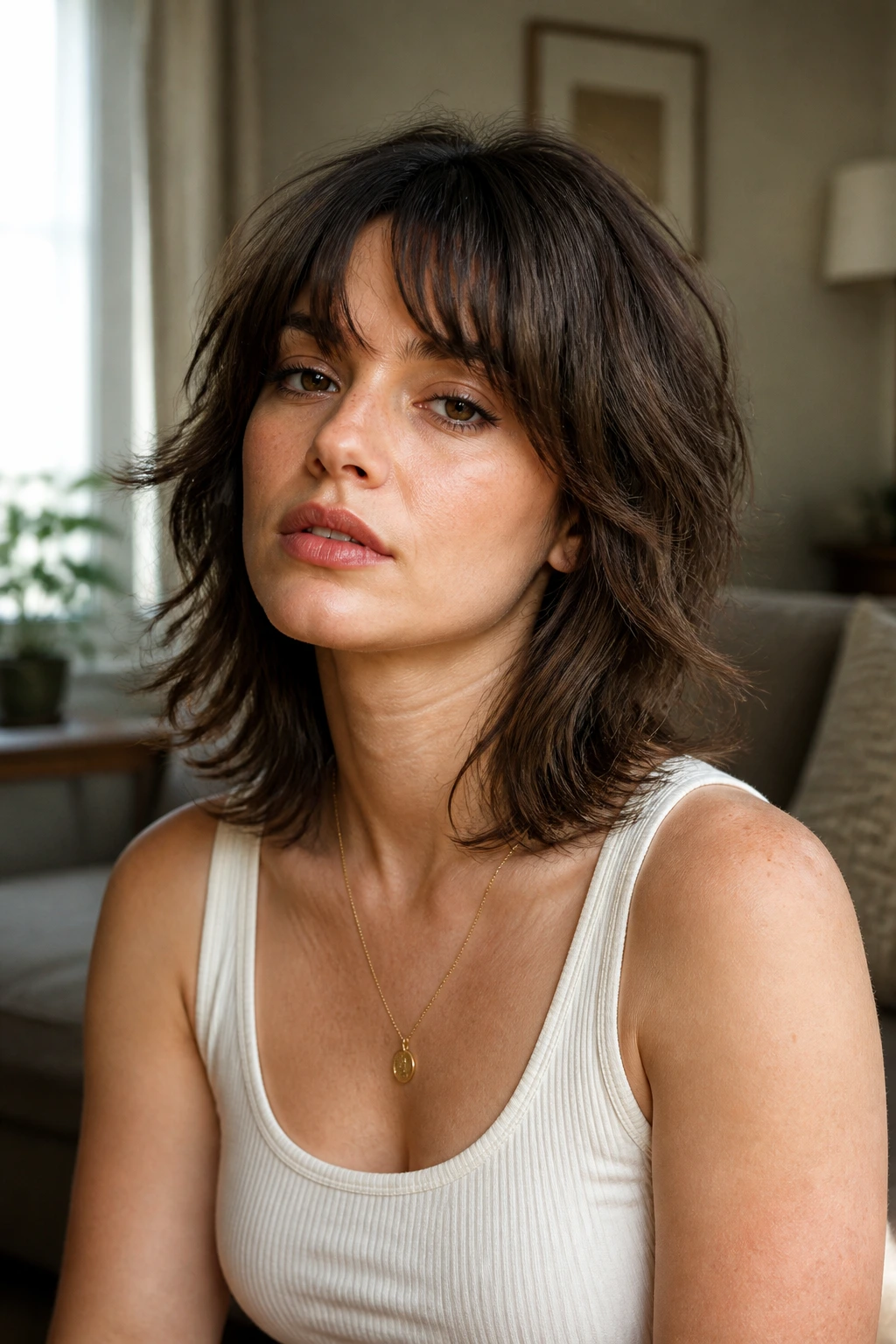
-
Grow-Out That Doesn’t Look Like Neglect: Medium-length wolf cuts tend to blur into a shaggy, expensive-looking mess as they grow, which is a rare win if you hate constant trims.
-
Texture Without Full-On Chaos: The styles here keep the crown lively and the ends broken up, so you get movement without the triangle shape that ruins so many layered cuts.
-
Works With Real Hair, Not Fantasy Hair: Fine, thick, straight, wavy, and curly textures all have versions that behave on this length.
-
Bangs Are Optional, Not Mandatory: You can go full curtain fringe, bottle-neck fringe, micro bangs, or skip bangs entirely and still keep the wolf cut feel.
-
Salon Photos Actually Help: Because medium length hair sits in a clear visual zone, your stylist can place the shortest and longest pieces more precisely than they can on very long hair.
-
Styling Can Stay Simple: A little mousse, a diffuser, or a round brush is often enough. You do not need a 12-step routine to make these layers show up.
1. Soft Classic Wolf Cut
The soft classic version is the one I point people toward when they want the wolf cut shape without the haircut shouting before they’ve had their second sip of coffee. It keeps the crown airy, lets the ends fall with a little broken texture, and lands somewhere around the collarbone where medium length hair has enough weight to sit properly.
Why It Works: The layers remove bulk up top, but the perimeter stays soft instead of chopped into pieces. That gives you lift at the roots and movement through the ends without making the haircut look jagged.
Key Shape Notes:
- Ask for the shortest layers around the crown to hit 2-4 inches below the top section.
- Keep the longest pieces at or just below the collarbone.
- Leave the ends lightly point-cut, not blunt.
- Skip heavy texturizing if your hair is fine.
How to Ask for It: Tell your stylist you want a soft wolf cut with visible crown layering and a gentle face frame. Bring a photo where the hair length is close to yours — that matters more than the model’s cheekbones.
Best Styling Move: A small amount of mousse at the roots, then rough-dry until 80 percent dry. Finish by bending just the last inch or two with a 1-inch curling iron so the ends don’t sit dead-straight.
Pro Tips:
- Root Lift: Clip the crown up while it cools to keep the top from collapsing.
- Shape Control: Use a wide-tooth comb on the bottom layers, not a brush, if you want the pieces to stay separated.
Variations on This Cut: A softer fringe turns this into a more wearable day-to-day version. A deeper face frame makes it feel moodier.
Common Mistakes to Avoid:
- Don’t over-layer the crown if your hair is fine. It can turn see-through fast.
- Don’t let the ends go blunt. The cut loses its swing.
2. Curtain Bang Wolf Cut
What makes this version work is the way the bangs open at the center and sweep into the sides without collapsing the whole haircut. On medium length hair, curtain bangs can make the top half look fuller, which is useful if your hair tends to lie flat around the hairline.
Why It Works: Curtain bangs break up the forehead area and draw the eye down into the cheekbones and jawline. That keeps the wolf cut from feeling too top-heavy, especially when the rest of the layers are doing their usual shaggy thing.
Key Shape Notes:
- Ask for the shortest part of the curtain fringe to land around the bridge of the nose or slightly above.
- Keep the outer corners long enough to blend into the cheekbones.
- Pair the fringe with soft crown layers so the cut doesn’t feel disconnected.
- Medium density hair handles this best when the bangs are point-cut, not sliced bluntly.
How to Ask for It: Say you want a wolf cut with curtain bangs that can be worn parted or pushed off the face. Ask the stylist to show you where the bangs will sit dry, because bangs always shrink a little once styled.
Best Styling Move: Blow-dry the bangs forward first, then split them and roll each side away from the face with a round brush.
Pro Tips:
- Keep the center part loose, not ruler-straight, or the fringe can look stiff.
- If your bangs separate too much, a dab of lightweight cream on the tips helps them reconnect.
Variations on This Cut: A longer curtain fringe gives you more flexibility. A shorter, cheekbone-hitting fringe makes the whole cut louder.
Common Mistakes to Avoid:
- Don’t cut the fringe too short on the first appointment.
- Don’t flatten it with too much product. Curtain bangs need movement, not helmet energy.
3. Curly Wolf Cut
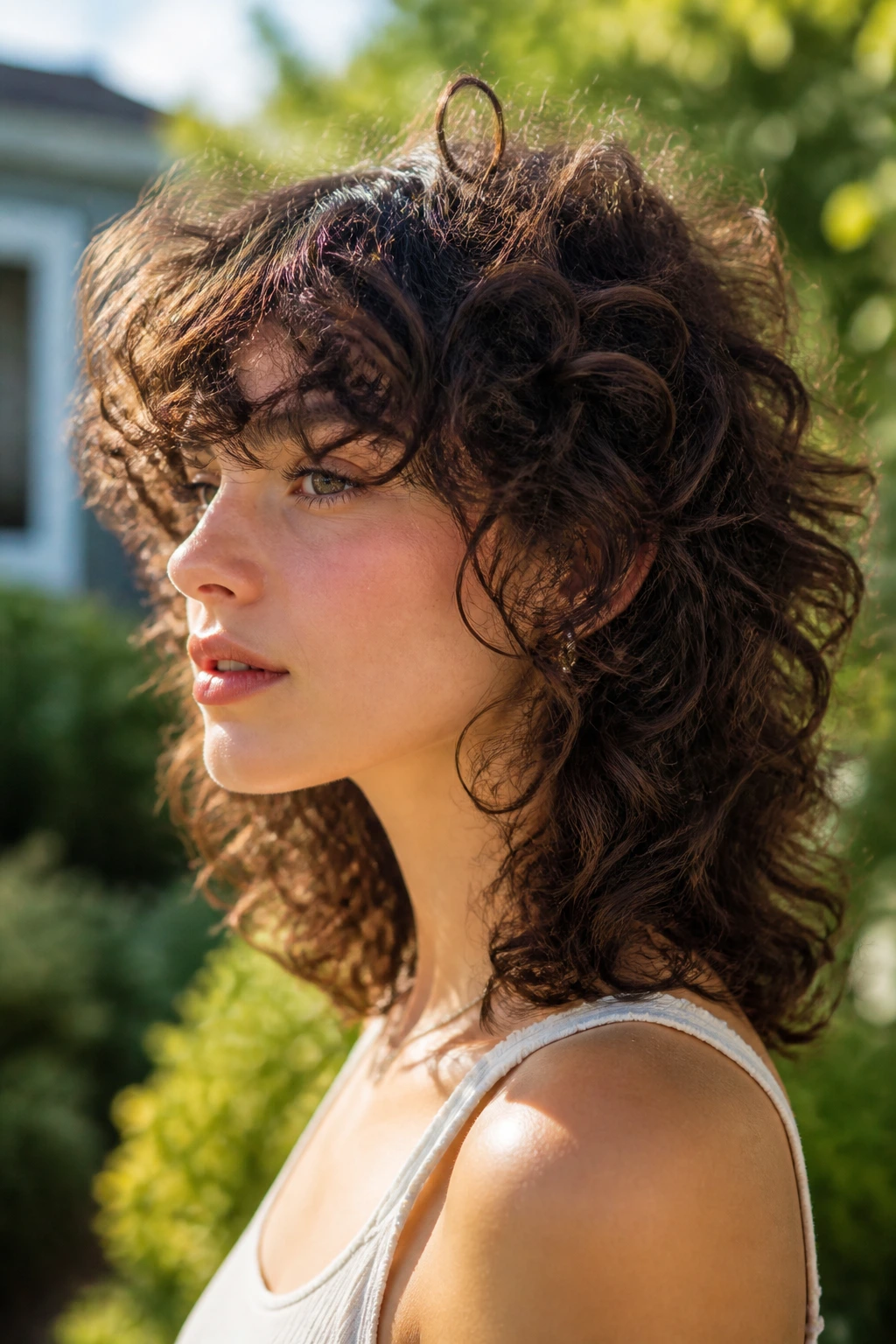
Curly hair and the wolf cut get along because both like shape, not obedience. On medium length hair, the curls can stack at the crown and spread through the ends in a way that gives the haircut a real silhouette, especially when the layers are cut to match the curl pattern.
Why It Works: The layers remove bulk where curls tend to puff out, but they also give the curls room to spring instead of sitting in one heavy block. That balance keeps the cut round and lively instead of boxy.
Key Shape Notes:
- Ask for a dry cut if your curl pattern is strong or uneven.
- Keep the longest curls around the shoulders or just below.
- Layers should be tailored to the curl type, not copied from a straight-hair photo.
- Avoid aggressive thinning shears unless your hair is dense enough to handle it.
How to Ask for It: Tell the stylist how your curls behave on a humid day, a wash day, and day three. That matters more than the word “curly,” which covers a lot of ground.
Best Styling Move: Apply leave-in conditioner to soaking-wet hair, scrunch in gel, and diffuse on low until the curl cast forms. Break the cast only when the hair is fully dry.
Pro Tips:
- Let the curls shrink before you panic about length. Curly wolf cuts always look shorter wet.
- If one side grows wider than the other, the cut needs asymmetry, not more product.
Variations on This Cut: A longer face frame softens the halo effect. A tighter fringe can make the whole shape feel bolder.
Common Mistakes to Avoid:
- Don’t cut it wet and straight if your curls are unpredictable.
- Don’t brush it dry. You’ll stretch the curl pattern and wreck the shape.
4. Wavy Air-Dry Wolf Cut
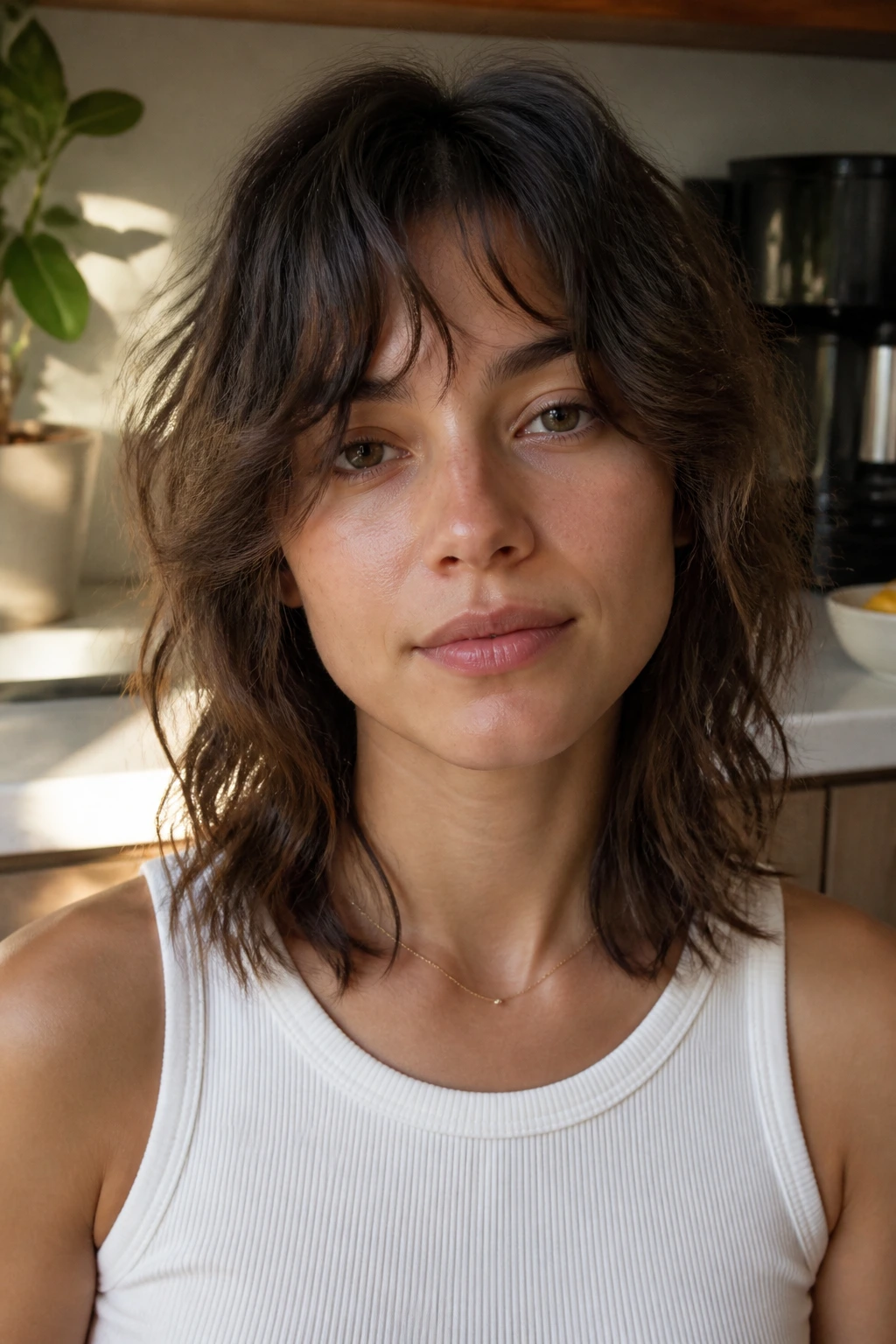
This is the cut for people who would rather wring their hair out in a T-shirt and go make breakfast than spend half an hour with a curling iron. The medium length gives the waves enough weight to bend, while the layers keep the shape from hanging like one long sheet.
Why It Works: Natural waves need gaps. The wolf cut creates them by removing weight from the crown and breaking up the ends, so the hair dries with visible movement instead of one dull curve.
Key Shape Notes:
- Medium-long crown layers help waves rise without creating frizz at the roots.
- Keep the perimeter soft so the waves can clump.
- Face framing should start around the cheekbone or jaw, not the ear.
- This version usually works best with a middle or soft off-center part.
How to Ask for It: Tell the stylist you want a wolf cut that air-dries well and doesn’t need a lot of heat. That usually signals them to keep the layers balanced rather than overly shredded.
Best Styling Move: Work mousse through damp hair, scrunch gently, then twist a few front pieces while they dry so the face frame lands with a little bend.
Pro Tips:
- Use a microfiber towel or T-shirt. Rough towels make wavy ends explode.
- A tiny bit of salt spray at the mid-lengths can help, but too much turns the hair gritty.
Variations on This Cut: A deeper side part gives the waves more lift at the root. A slightly shorter fringe pushes it toward a more playful shape.
Common Mistakes to Avoid:
- Don’t pile on cream and oil together. Wavy hair can go stringy in one unlucky minute.
- Don’t cut the crown too short if your waves already puff up there.
5. Razor-Sharp Wolf Cut

The razor version has more bite. The ends look feathered and airy instead of softly sliced, which gives medium length hair a less polished, more deliberate edge. It’s the one that looks best when the hair has a little natural texture or a habit of refusing to lie flat.
Why It Works: Razor cutting removes weight in a way that makes the pieces separate more easily. On medium length hair, that can create a lighter outline without sacrificing the strong top-versus-bottom contrast that makes a wolf cut recognizable.
Key Shape Notes:
- Ask for razor or slide cutting only if your hair can handle it.
- Keep the perimeter controlled so the cut doesn’t fray.
- Pair the razor ends with a solid crown layer; otherwise the shape can go floppy.
- This works best on medium to thick hair with a bit of natural bend.
How to Ask for It: Use the words “feathered ends” and “softly shredded texture” if you want movement, but not a hacked-up finish. That distinction matters.
Best Styling Move: A light styling cream through damp hair, then rough-dry and pinch the ends with a waxy paste once dry.
Pro Tips:
- Razor cutting can make very fine hair look wispy in a bad way. Say so if that’s your texture.
- If your ends look frayed after styling, use less product, not more.
Variations on This Cut: A deeper fringe makes the razor texture feel edgier. A longer face frame keeps it softer.
Common Mistakes to Avoid:
- Don’t ask for heavy razor work on already fragile ends.
- Don’t confuse texture with damage. They are not the same thing.
6. Bottleneck Bang Wolf Cut
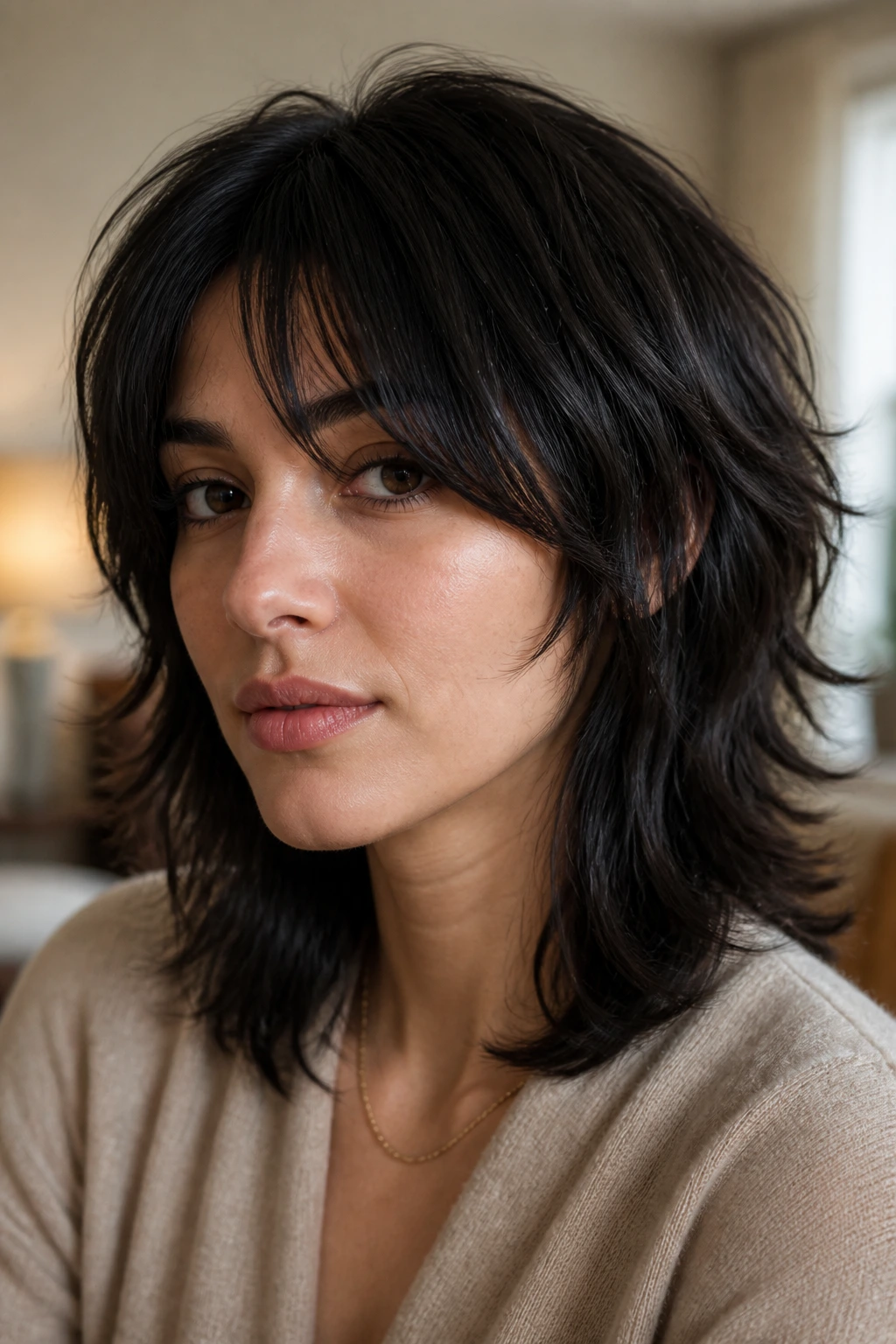
Bottleneck bangs do a neat job here because they start narrow, open out around the eyes, and then blend into the rest of the cut. On medium length hair, that gives the wolf cut a cleaner front shape without turning the whole style into a heavy fringe story.
Why It Works: The narrow center keeps the face from getting buried, while the wider sides create soft framing around the eyes and cheekbones. It’s a smarter choice than blunt bangs when you want movement.
Key Shape Notes:
- The shortest point usually sits near the brows or just below.
- The side pieces should sweep into the cheekbones.
- Keep the crown layers connected to the bang shape.
- This fringe works well when the rest of the haircut stays textured but not over-thinned.
How to Ask for It: Tell your stylist you want a bottleneck fringe that can be worn split or slightly piecey. Ask for the side pieces to blend into the first face-framing layer.
Best Styling Move: Blow-dry the center forward with a small round brush, then bend the sides away from the face so the bang opens naturally.
Pro Tips:
- If your forehead is shorter, start the fringe a touch longer. It buys you flexibility.
- A tiny mist of dry texture spray at the roots keeps the bang from sticking to the skin.
Variations on This Cut: A fuller center fringe makes the look moodier. A longer bottleneck fringe softens the whole face.
Common Mistakes to Avoid:
- Don’t let the stylist cut the bang too wide at the center.
- Don’t let the fringe hang into the eyes wet and assume it will stay there dry. It won’t.
7. Sleek Wolf Cut with Broken Ends
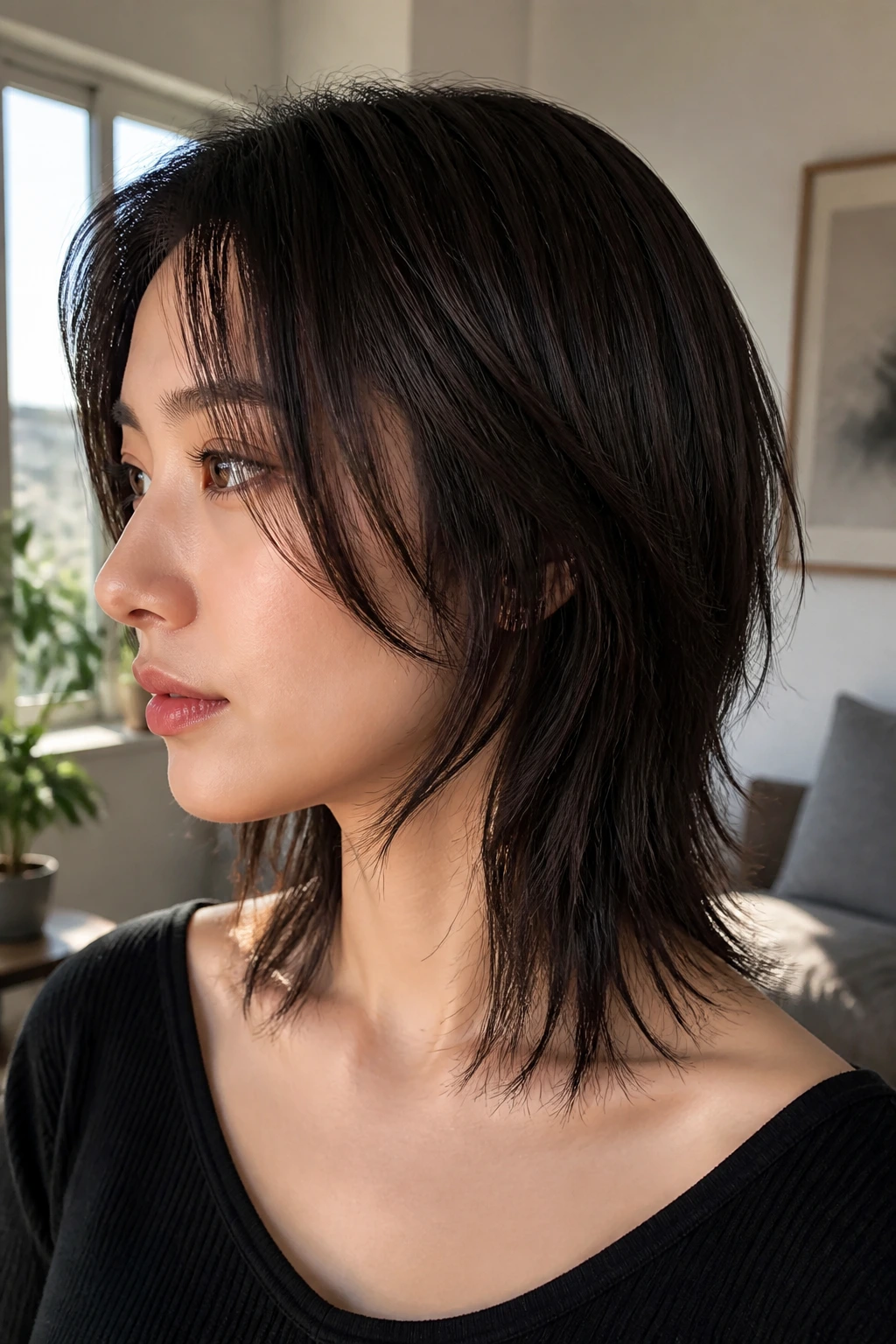
A sleek wolf cut sounds contradictory, and that is why it works. The top stays smooth and polished, then the ends show off just enough separation to keep the haircut from reading like a standard long bob.
Why It Works: Smooth roots make the layers look more intentional. The broken ends add movement, so you get a clean shape without losing the wolf cut’s messy edge.
Key Shape Notes:
- Keep the crown layers subtle so the top can lie flat.
- Ask for soft, shattered ends through the lower half only.
- Face framing should be long and blendy, not chopped.
- This is a strong choice if you style with heat more than air-drying.
How to Ask for It: Say you want a smoother, more refined version of a wolf cut, with texture mainly through the bottom third. That tells the stylist to keep the silhouette neat.
Best Styling Move: Blow-dry with a paddle brush, then flip just the ends with a flat iron or round brush so the haircut keeps a little kick.
Pro Tips:
- Use a heat protectant with some grip, not a slippery serum that makes everything slide out.
- Keep the root area clean. Sleek wolf cuts fall apart when the top gets oily.
Variations on This Cut: A side part gives it a more editorial feel. A curtain fringe turns it less sleek and more lived-in.
Common Mistakes to Avoid:
- Don’t over-texturize the ends or the sleek finish disappears.
- Don’t use too much oil near the crown. It kills the lift.
8. Choppy Wolf Cut for Thick Hair
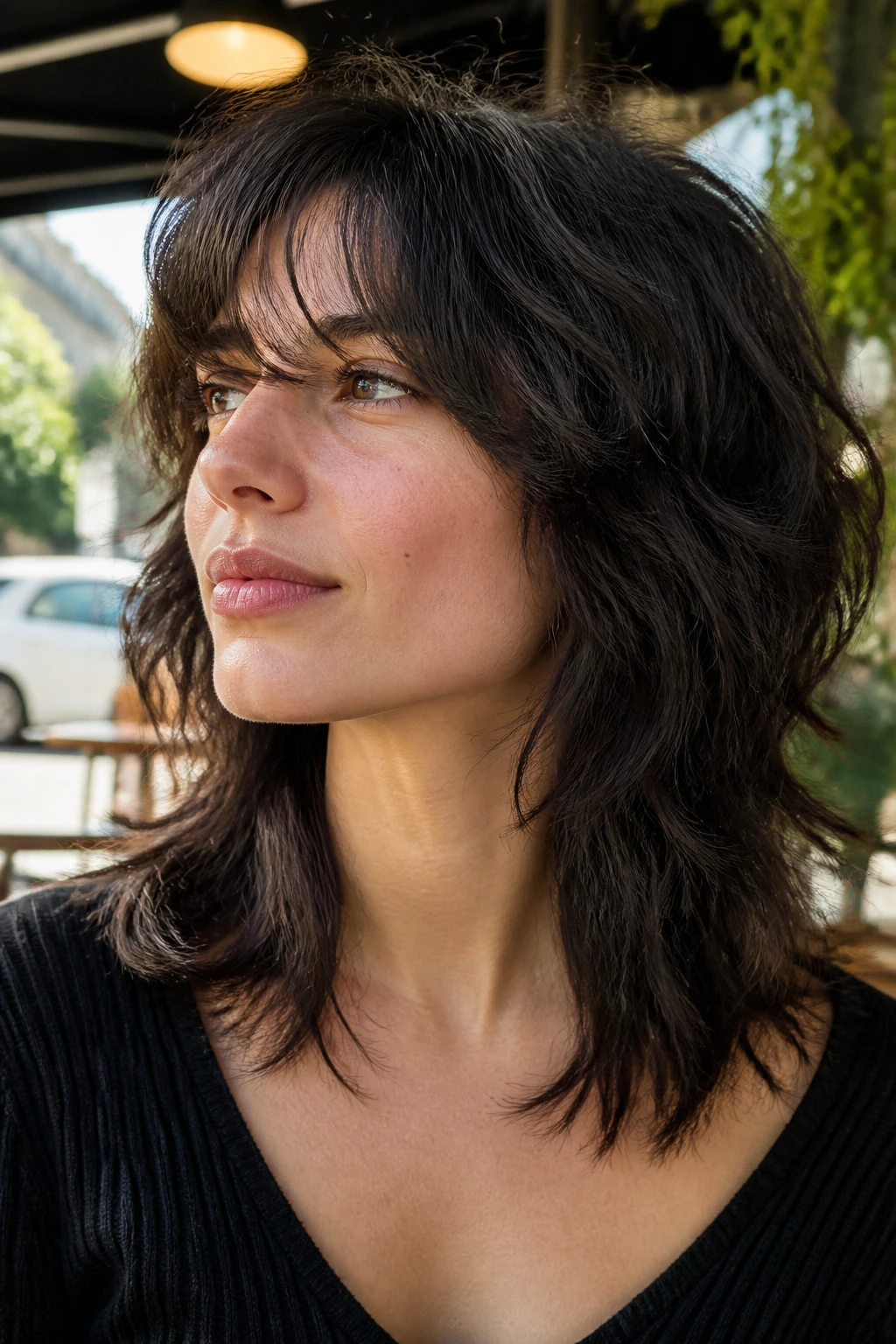
If your hair has enough density to feel heavy by lunchtime, this version earns its keep. The choppy wolf cut for thick hair removes bulk where it matters and keeps the medium-length shape from puffing into a wall.
Why It Works: Thick hair can support stronger layering without going see-through. That means you can create a very visible wolf cut silhouette — lifted crown, lighter ends, clear movement — and the haircut still holds its structure.
Key Shape Notes:
- The crown should be layered enough to release weight.
- Internal removal matters more than shaving down the perimeter.
- The longest pieces should still hit the collarbone or shoulder.
- Ask the stylist to keep the face frame strong enough to stand out from the rest of the hair.
How to Ask for It: Tell them your hair feels heavy, especially at the ends and around the nape. That gives them permission to thin the right places without wrecking the outline.
Best Styling Move: Use mousse at the roots, then blow-dry with a round brush only where you want lift. Let the lower layers dry with a bit of natural bend.
Pro Tips:
- Thick hair usually needs sectioning clips during styling. Skipping that leads to a half-done shape.
- A small underlayer of texturizing spray near the crown can stop the top from collapsing.
Variations on This Cut: A shorter crown makes the cut look more dramatic. A longer perimeter keeps it easier to tuck behind the ears.
Common Mistakes to Avoid:
- Don’t ask for “lots of layers” without specifying where the bulk sits.
- Don’t let the stylist over-thin the ends. Thick hair can go stringy too.
9. Feathered Wolf Cut for Fine Hair

Fine hair and wolf cuts can get along, but only if the layers are handled with some restraint. Feathering gives the hair movement without stripping away the little bit of body it already has.
Why It Works: A feathered finish softens the edges so fine hair looks airy, not chopped. On medium length strands, that helps create the suggestion of volume without exposing gaps.
Key Shape Notes:
- Keep the crown layers longer than you would on thick hair.
- Avoid aggressive thinning shears.
- The face frame should blend smoothly into the rest of the haircut.
- The ends need softness, not a jagged edge.
How to Ask for It: Say you want a wolf cut that keeps density, especially at the ends. Fine hair needs shape, but it also needs enough material to look full.
Best Styling Move: Mousse at the roots, then blow-dry upside down or with a small round brush for lift. Finish with a light texturizing spray only at the mid-lengths.
Pro Tips:
- Dry shampoo at the roots can help the crown hold shape longer than another round of heavy product.
- Fine hair usually looks best when the layers are visible but not too separated.
Variations on This Cut: A fringe-free version keeps the hair feeling fuller. A soft curtain bang adds face framing without draining volume.
Common Mistakes to Avoid:
- Don’t ask for extreme shag layers on fine hair.
- Don’t put conditioner on the roots; the crown will collapse by noon.
10. Collarbone Wolf Cut
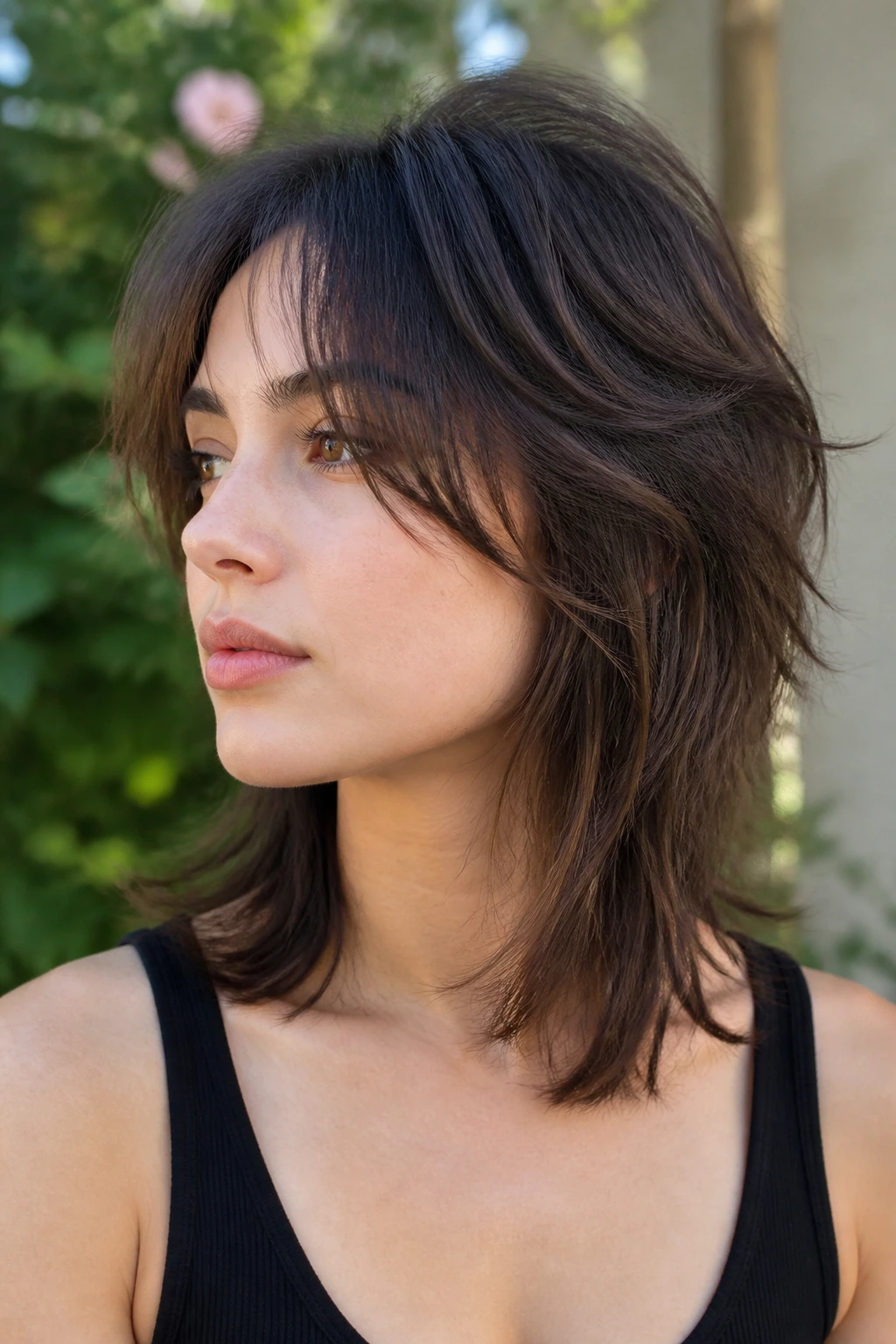
This is the version for people who want the wolf cut shape but are not interested in sacrificing length. The collarbone wolf cut keeps the longest pieces grazing the collarbone, which gives medium hair a clean stopping point and a very good grow-out.
Why It Works: The longer perimeter holds the style together, while the internal layers still create lift and movement. That means the cut looks less punk and more wearable, especially if you wear your hair half-up a lot.
Key Shape Notes:
- The longest layer should land exactly where your collarbone hits in a natural standing position.
- Keep the crown layers modest so the shape doesn’t become too airy.
- Face framing should start below the cheekbone for a softer look.
- This version works especially well if you want to tie your hair back without losing the shape.
How to Ask for It: Say you want a long wolf cut, not a short shag. That one sentence saves a lot of trouble.
Best Styling Move: A gentle bend at the ends with a flat iron or large curling iron keeps the silhouette from going limp.
Pro Tips:
- This is one of the best versions for people who live in claw clips.
- Ask for a dry check before the stylist finishes the fringe. Collarbone length changes the way bangs sit.
Variations on This Cut: Add curtain bangs for more movement up front. Keep it fringe-free if you want the longest grow-out window.
Common Mistakes to Avoid:
- Don’t let the crown get too short or the length below will look disconnected.
- Don’t mistake “long” for “flat.” The top still needs shape.
11. Micro-Bang Wolf Cut

Micro bangs make the wolf cut louder, faster. They pull the eye straight to the face, while the rest of the medium-length hair stays layered and broken up around the shoulders.
Why It Works: The short fringe creates contrast. That contrast makes the layers behind it look longer and more dramatic, which is handy if you want the haircut to read edgy rather than soft.
Key Shape Notes:
- Keep the fringe short but not stiffly even.
- The crown needs some texture so the bang does not sit alone.
- The rest of the hair should stay medium-length and shaggy.
- Best paired with a face shape that can handle a bit of visual weight up top.
How to Ask for It: Tell your stylist you want a micro fringe that still moves a little, not a straight ruler cut. A tiny amount of irregularity keeps it from looking costume-y.
Best Styling Move: Dry the fringe first, using fingers or a small brush, then style the rest of the layers around it.
Pro Tips:
- Micro bangs usually need more upkeep than the rest of the cut.
- If your hairline grows fast, be honest about how often you’ll trim it.
Variations on This Cut: A softer, textured micro bang is easier to wear. A blunt one looks more graphic.
Common Mistakes to Avoid:
- Don’t cut micro bangs too short on the first appointment.
- Don’t pair them with overly wispy layers or the whole cut loses weight.
12. Deep Side-Part Wolf Cut
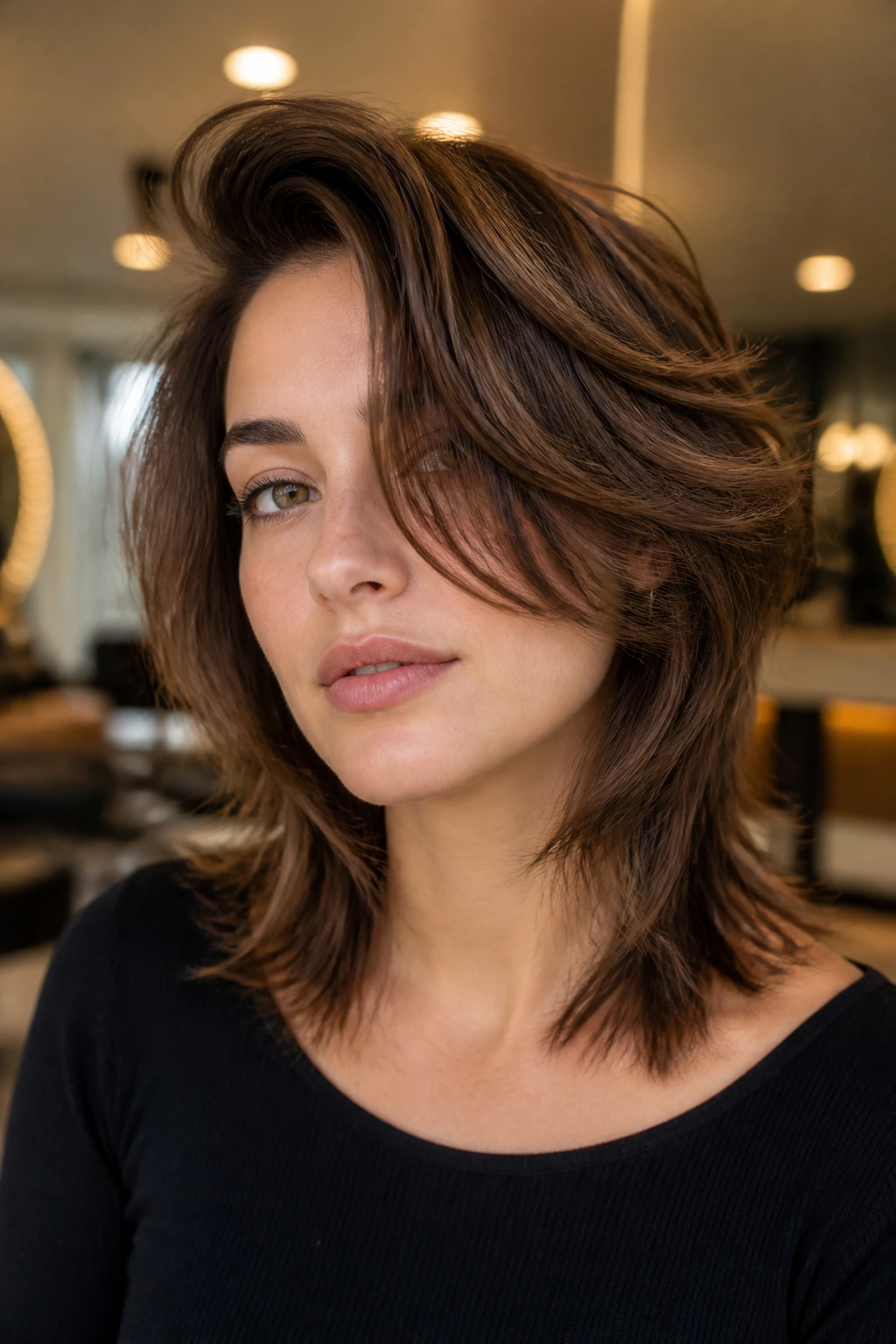
A deep side part changes the personality of the wolf cut in one move. It creates lift on the heavier side, sweeps the front across the forehead, and gives medium length hair a more asymmetrical, slightly dramatic line.
Why It Works: Side parts add volume where the hair is lifted and collapse where it is tucked down, which gives the wolf cut a built-in shape shift. That makes the layers show more clearly around the face.
Key Shape Notes:
- The part should sit far enough over to create visible root lift.
- The heavier side can carry longer face-framing pieces.
- The crown layers need enough texture to stay off the scalp.
- Works best when the bangs are soft or absent.
How to Ask for It: Tell the stylist you style your hair with a deep side part some of the time. That helps them avoid over-centering the cut.
Best Styling Move: Blow-dry the root opposite the part first, then flip the hair over once it cools. That little trick adds real lift.
Pro Tips:
- If one side always falls flat, use a velcro roller at the root for ten minutes.
- Side parts can save a cut that feels too symmetrical.
Variations on This Cut: Add curtain pieces for softness. Keep the front long if you want the part to feel less severe.
Common Mistakes to Avoid:
- Don’t keep the part in the exact same spot every day if your roots go flat easily.
- Don’t over-layer the front. The side part already adds movement.
13. Long Face-Framing Wolf Cut
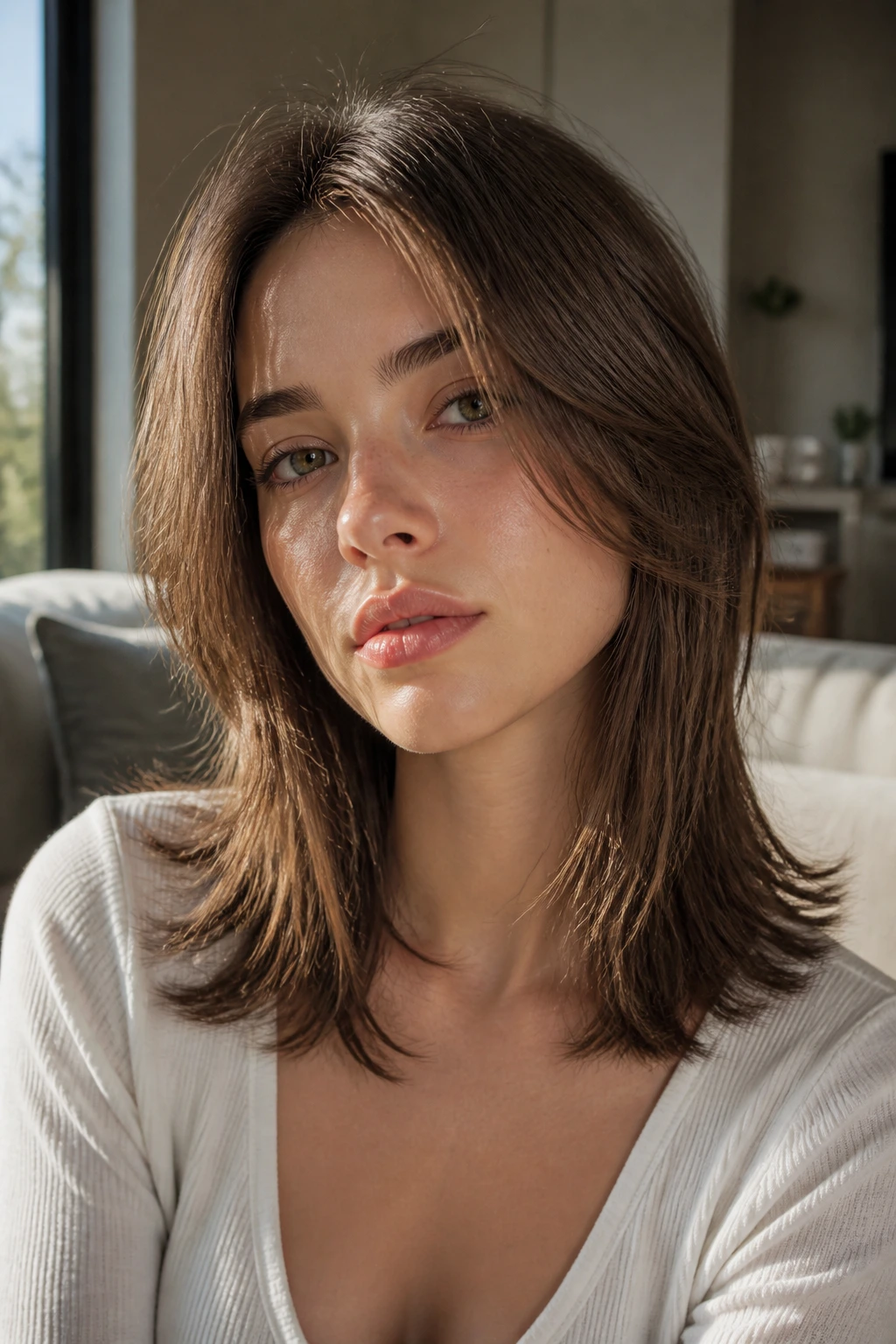
This is the quiet one in the group. No bangs, no sharp fringe line, just long pieces that start around the jaw or cheekbone and blend into the rest of the cut so the face gets shape without much maintenance.
Why It Works: Long framing pieces soften the hair around the face without stealing density from the rest of the style. On medium length hair, that keeps the wolf cut from feeling too busy.
Key Shape Notes:
- Keep the shortest front pieces at the jaw or just above.
- Blend those pieces into layers that run toward the collarbone.
- The crown can still be textured, but not aggressively.
- Great if you want to tuck hair behind the ears and still keep a shape line.
How to Ask for It: Say you want a wolf cut with no true fringe, only long face-framing layers. That helps prevent the stylist from cutting bangs you didn’t ask for.
Best Styling Move: Bend the front pieces away from the face with a curling iron, then leave the rest loose.
Pro Tips:
- This version grows out well, but the face frame still needs a small trim now and then.
- If your cheekbones are a feature you like, start the layers there, not lower.
Variations on This Cut: Push the framing higher for more lift. Keep it lower for a softer, grown-in feel.
Common Mistakes to Avoid:
- Don’t leave the front pieces too short unless you want a bang effect.
- Don’t flatten the face frame with too much oil.
14. Retro 70s Wolf Cut
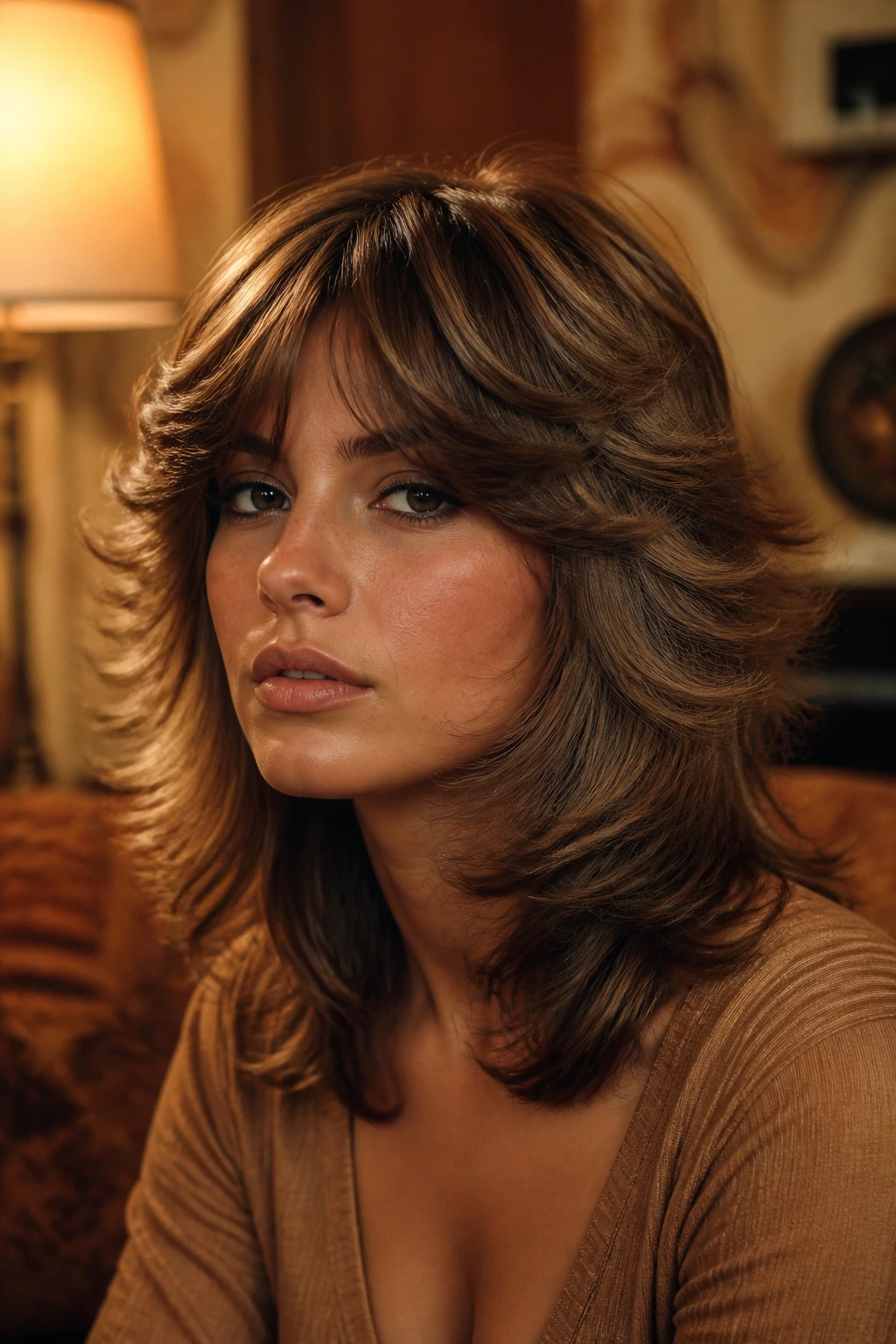
This version leans into the feathered blowout look, which is why it has such good mileage on medium length hair. It feels glossy, soft, and a little nostalgic without turning into a costume.
Why It Works: The 70s-inspired shape uses outward bends and airy layers to make the hair swing. Medium length is ideal because the ends have enough weight to flip, but not so much that they drag the shape down.
Key Shape Notes:
- Ask for feathered layers through the crown and around the face.
- The perimeter should stay soft and wearable.
- This cut usually looks best with a fringe that parts in the center or slightly off-center.
- The ends need enough room to curve out during styling.
How to Ask for It: Mention that you want a blowout-friendly wolf cut with a retro feel. That tells the stylist to keep the layers smooth, not choppy.
Best Styling Move: Use a round brush or a large hot brush to bend the front away from the face and flip the ends out slightly.
Pro Tips:
- A little shine spray on the mid-lengths keeps the feathering from looking dry.
- If the blowout collapses, your roots probably need more lift, not more curl.
Variations on This Cut: Add curtain bangs for a more obvious retro note. Keep the fringe longer if you want a softer result.
Common Mistakes to Avoid:
- Don’t over-texturize the ends; the 70s shape needs softness.
- Don’t skip the smoothing step at the crown.
15. Messy Bedhead Wolf Cut

This is the version that looks best when it looks like you didn’t fight it. The haircut has enough internal layering to break up the shape on its own, so the styling can stay rough, piecey, and a little slept-in.
Why It Works: Bedhead texture hides the exact seams between layers, which helps a wolf cut feel effortless even when it’s been styled with two products and a prayer. Medium length keeps the mess from getting too big.
Key Shape Notes:
- The crown should be layered enough to create lift when roughed up.
- The bottom should be broken into uneven ends.
- Fringe can be minimal or soft and wispy.
- This works especially well on hair with some natural bend.
How to Ask for It: Tell the stylist you want visible texture and a deliberately undone finish. “Polished shag” and “bedhead wolf cut” are not the same request.
Best Styling Move: Scrunch in mousse, blast the roots with a diffuser or rough dryer, and leave the ends a little imperfect.
Pro Tips:
- Use your fingers first, brush second. Too much brushing removes the whole point.
- A pea-sized paste at the tips can make the pieces separate in a nicer way.
Variations on This Cut: A slightly longer fringe makes it softer. A shorter crown pushes it into grunge territory.
Common Mistakes to Avoid:
- Don’t overstyle it smooth. That kills the bedhead effect.
- Don’t confuse messy with greasy.
16. Blown-Out Wolf Cut
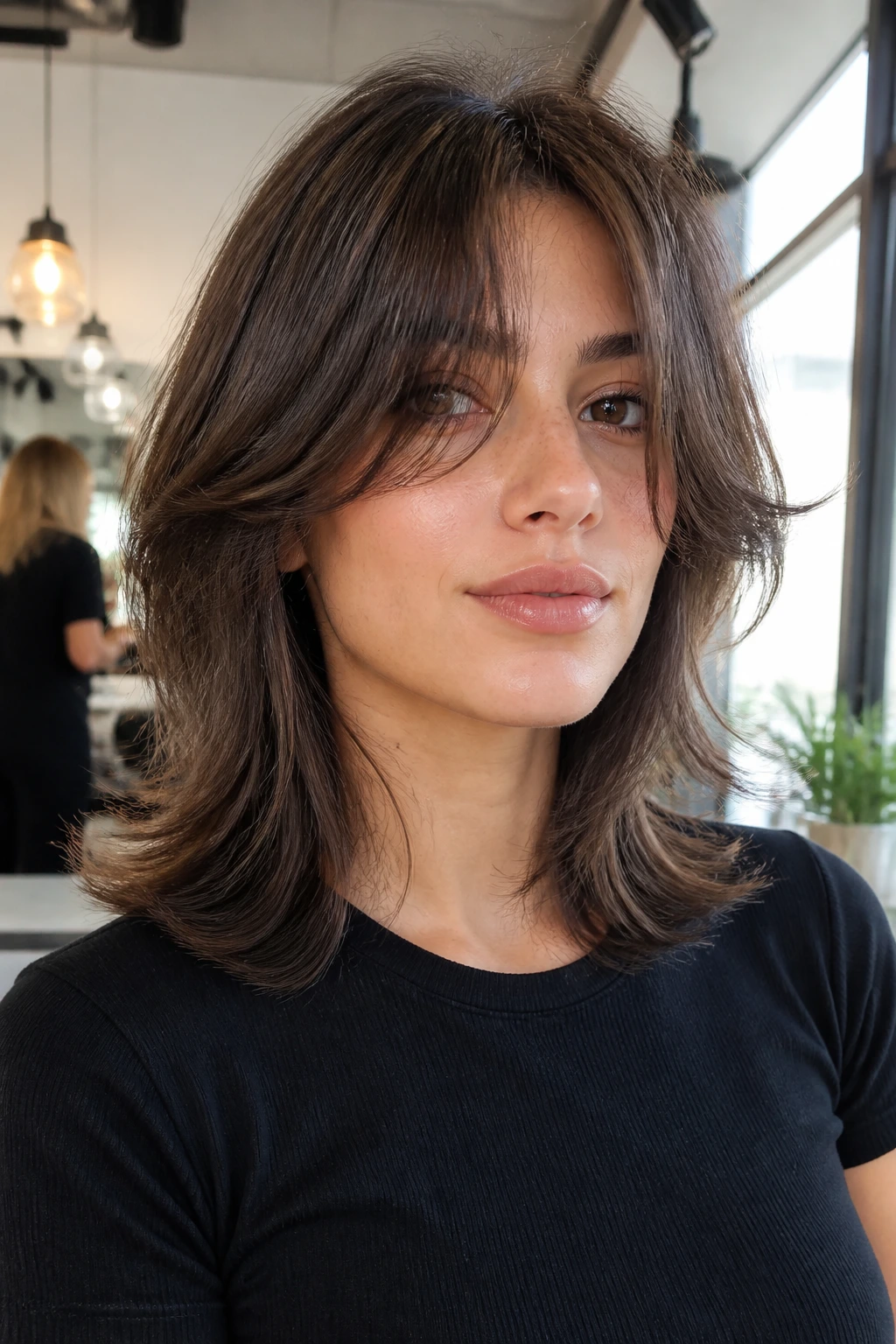
A blown-out wolf cut has cleaner lines than the bedhead version, but it still keeps the hair moving. Think round brush, lifted crown, and soft bends through the ends rather than rigid curls.
Why It Works: Heat styling makes the layers show clearly. On medium length hair, that can turn a heavily layered cut into something that looks almost tailored.
Key Shape Notes:
- The crown should have enough layering to hold volume.
- The front pieces need enough length to curve away from the face.
- The ends should be softly shaped, not blunt.
- This style looks best when the layers are cut with a smooth transition.
How to Ask for It: Let your stylist know you want a wolf cut that can be blown out into a fuller, smoother finish. That usually leads to more controlled layering.
Best Styling Move: Blow-dry with a round brush, lifting the roots and turning the ends under or out depending on your mood.
Pro Tips:
- Clip the crown while it cools if you want the volume to last longer.
- Use a flexible hairspray, not a hard shell, or the movement disappears.
Variations on This Cut: A center part gives it a softer line. A side part makes it bigger.
Common Mistakes to Avoid:
- Don’t use a huge brush if your hair is short at the layers.
- Don’t flatten the root with heavy serum.
17. Rounded Wolf Cut

This version softens the usual wolf cut silhouette. Instead of looking long and pointed, the shape feels more rounded through the sides, which can be kinder if you do not want a big disconnect between the top and bottom.
Why It Works: A rounded outline keeps medium length hair from fanning out too much at the sides. The crown still has lift, but the perimeter curves around the head rather than hanging straight down.
Key Shape Notes:
- Layers should follow the head shape, not fight it.
- The face frame can be slightly shorter than the rest.
- Keep the interior soft so the roundness stays smooth.
- Great for people who want movement without a sharp mullet hint.
How to Ask for It: Say you want the wolf cut shape softened into a rounded silhouette. That signals the stylist to keep the layering less aggressive at the sides.
Best Styling Move: Use a round brush only where you want curve, then let the rest air-dry for a softer finish.
Pro Tips:
- This shape is useful if your hair sticks out at the ears.
- A tiny bit of root lift spray can keep the roundness from flattening at the top.
Variations on This Cut: Add a gentle fringe to keep it sweet. Keep the front longer to make the curve feel more modern.
Common Mistakes to Avoid:
- Don’t ask for a round shape and then over-flip the ends outward.
- Don’t cut the side layers too short or the curve breaks.
18. Shag-Mullet Wolf Cut
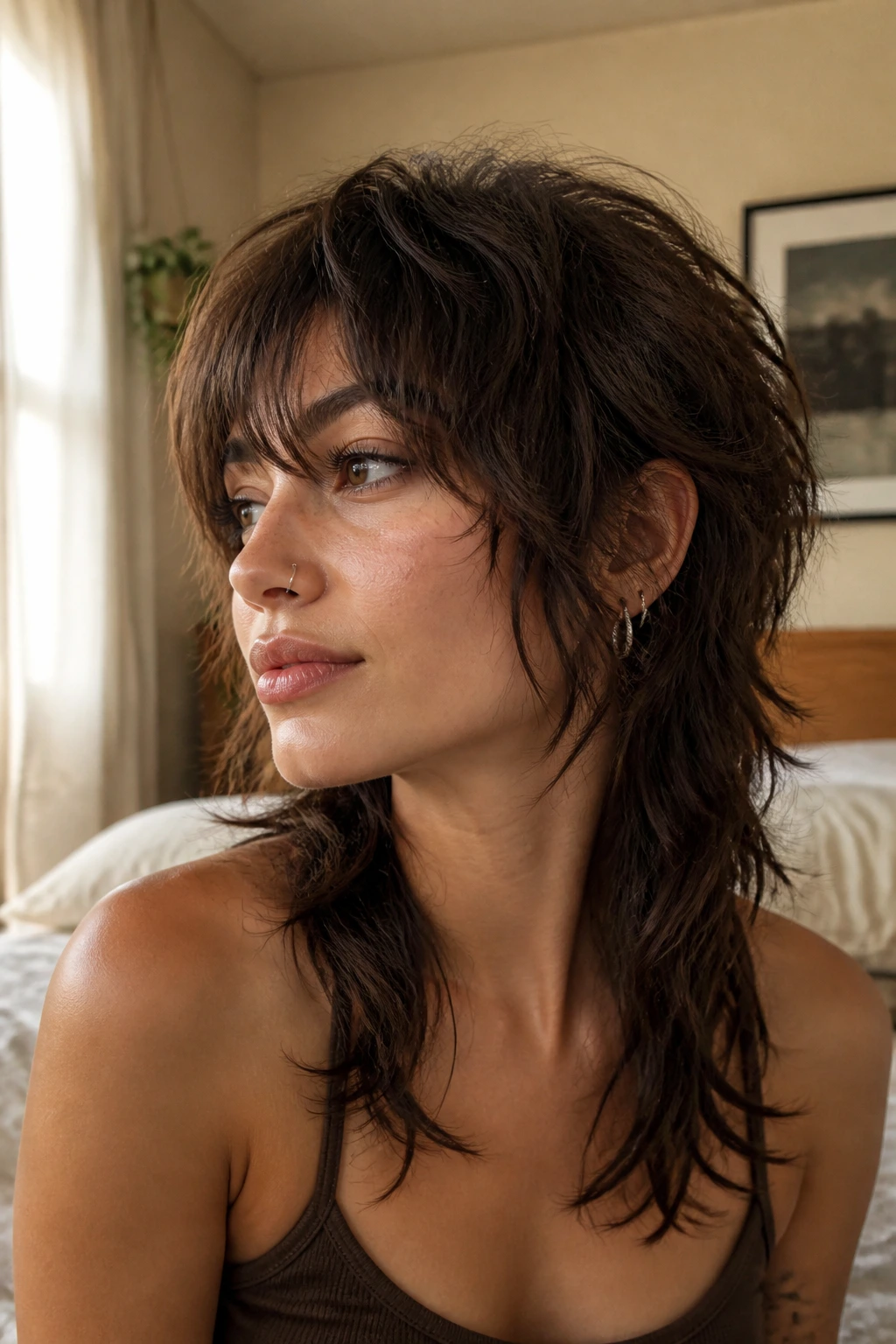
This is where the haircut gets sharper. The crown is shorter, the back carries a little more length, and the whole thing leans into that shag-mullet tension that made the wolf cut famous in the first place.
Why It Works: The contrast between the shorter top and longer bottom gives medium length hair a strong profile. That profile is the whole point here.
Key Shape Notes:
- The crown can sit shorter than in softer versions, but the transition has to stay connected.
- Keep the back long enough to graze the shoulders.
- Bangs or fringe usually help anchor the shape.
- Best on hair that already has some texture or a little bit of natural wave.
How to Ask for It: Tell your stylist you want more mullet energy but still want the haircut to sit in medium length territory. That keeps the cut from becoming too short in the back.
Best Styling Move: Rough-dry the crown for lift, then separate the ends with a light texturizing spray.
Pro Tips:
- A little asymmetry can make this version look more expensive and less costume-like.
- If the back starts to feel heavy, trim only the lower perimeter, not the crown.
Variations on This Cut: Keep the fringe full for a louder shape. Soften the top if you want it less dramatic.
Common Mistakes to Avoid:
- Don’t go too short in the crown unless you want a true mullet lean.
- Don’t skip texture at the ends; the whole cut depends on it.
19. Hidden Undercut Wolf Cut
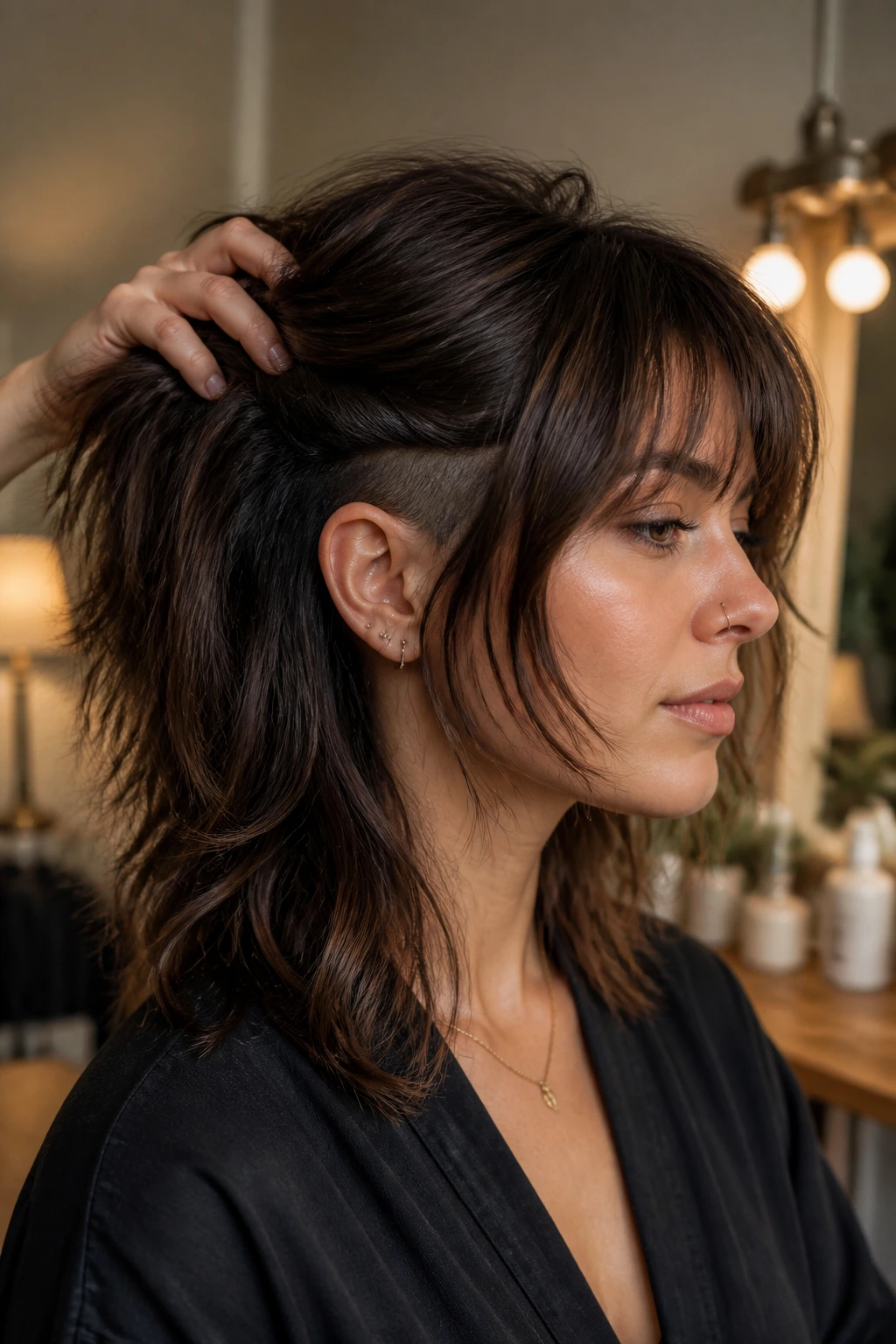
A hidden undercut is a smart move for anyone with dense hair who wants the wolf cut shape without the bulk sitting at the nape. It keeps the exterior looking full while quietly removing weight underneath.
Why It Works: The undercut clears out the thickest part of the hair, so the layers above can fall more naturally. On medium length hair, that can stop the bottom from ballooning out.
Key Shape Notes:
- Keep the undercut subtle and hidden beneath the top layers.
- Pair it with visible crown layers so the top half does not look flat.
- This is especially helpful if your nape area gets hot or bulky.
- The visible perimeter should still look like a wolf cut, not an undercut fade.
How to Ask for It: Be specific that you want bulk removed underneath, not a visible shaved section. That difference matters.
Best Styling Move: Blow-dry the top layers first, then let the underlayer sit naturally. The contrast helps the haircut lie better.
Pro Tips:
- Hidden undercuts grow out faster than people expect, so keep an eye on the nape.
- If you wear hair up often, make sure the undercut won’t peek out in ways you dislike.
Variations on This Cut: Add a longer fringe to soften the edge. Keep the outer layers rounded if you want the undercut to stay invisible.
Common Mistakes to Avoid:
- Don’t ask for this unless you know you can keep up with maintenance.
- Don’t over-remove weight if the rest of your hair is already fine.
20. Tapered-End Wolf Cut
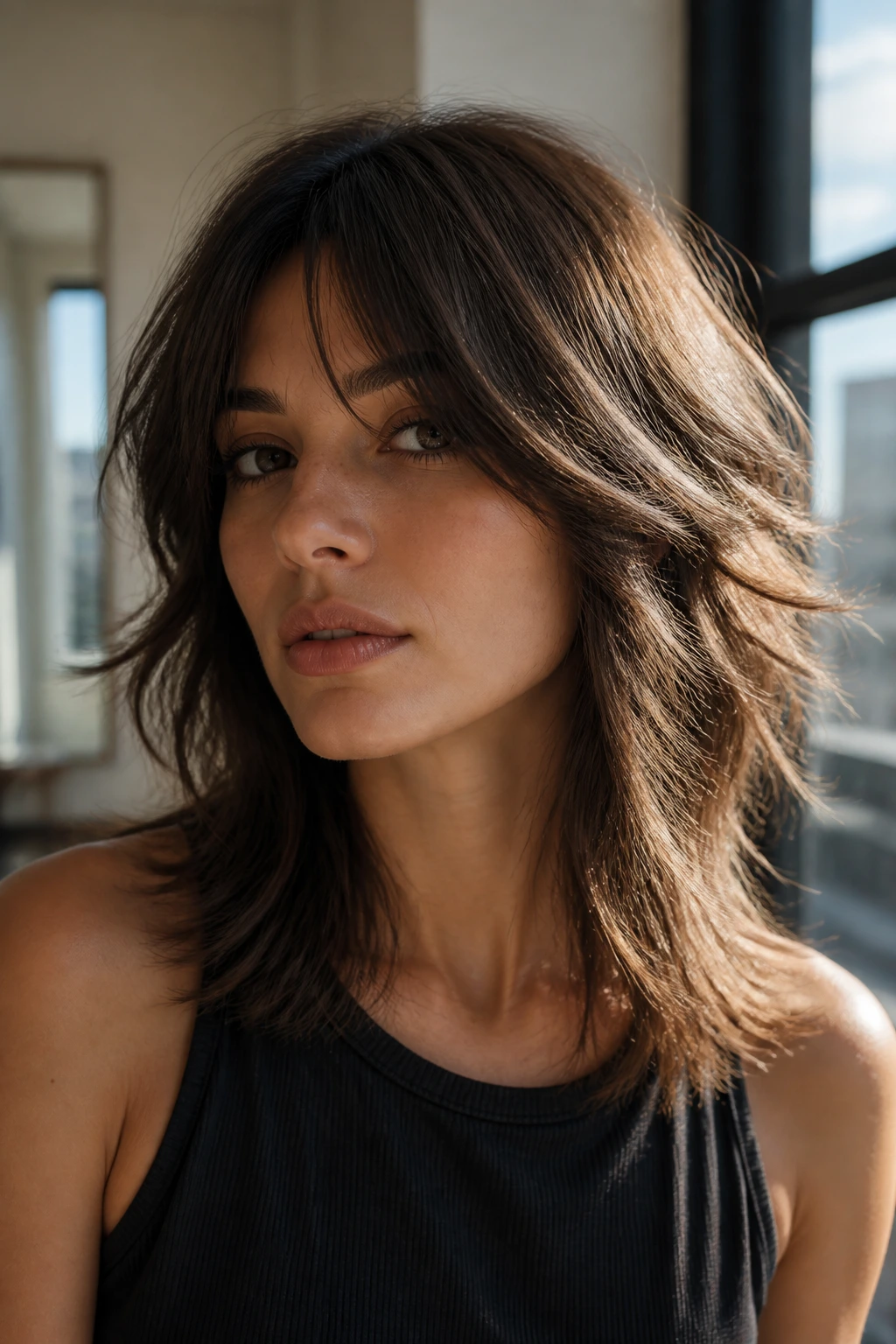
The tapered-end version narrows the bottom without making the shape look thin. It gives medium length hair a softer finish and helps the whole haircut sit with a little more control.
Why It Works: A tapered perimeter keeps the lower half from looking boxy. That matters on medium length hair because the bottom line is close enough to the shoulders that a bad edge shows fast.
Key Shape Notes:
- The longest pieces should narrow gently toward the ends.
- Ask for a U-shaped or soft V-shaped finish, not a straight block.
- The crown can still stay full enough for lift.
- Great if you like the haircut to tuck easily into coats and scarves.
How to Ask for It: Tell the stylist you want the ends to narrow softly so the cut doesn’t sit heavy. That cues them to shape the bottom more carefully.
Best Styling Move: Add a bend at the lower third of the hair to emphasize the taper.
Pro Tips:
- A tapered end looks better when it’s not over-styled.
- If the bottom looks too thin, the taper was pushed too far.
Variations on This Cut: Pair it with curtain bangs for balance. Keep it fringe-free for a calmer outline.
Common Mistakes to Avoid:
- Don’t let the perimeter get over-thinned.
- Don’t ask for a strong taper if your ends are already sparse.
21. No-Bang Wolf Cut
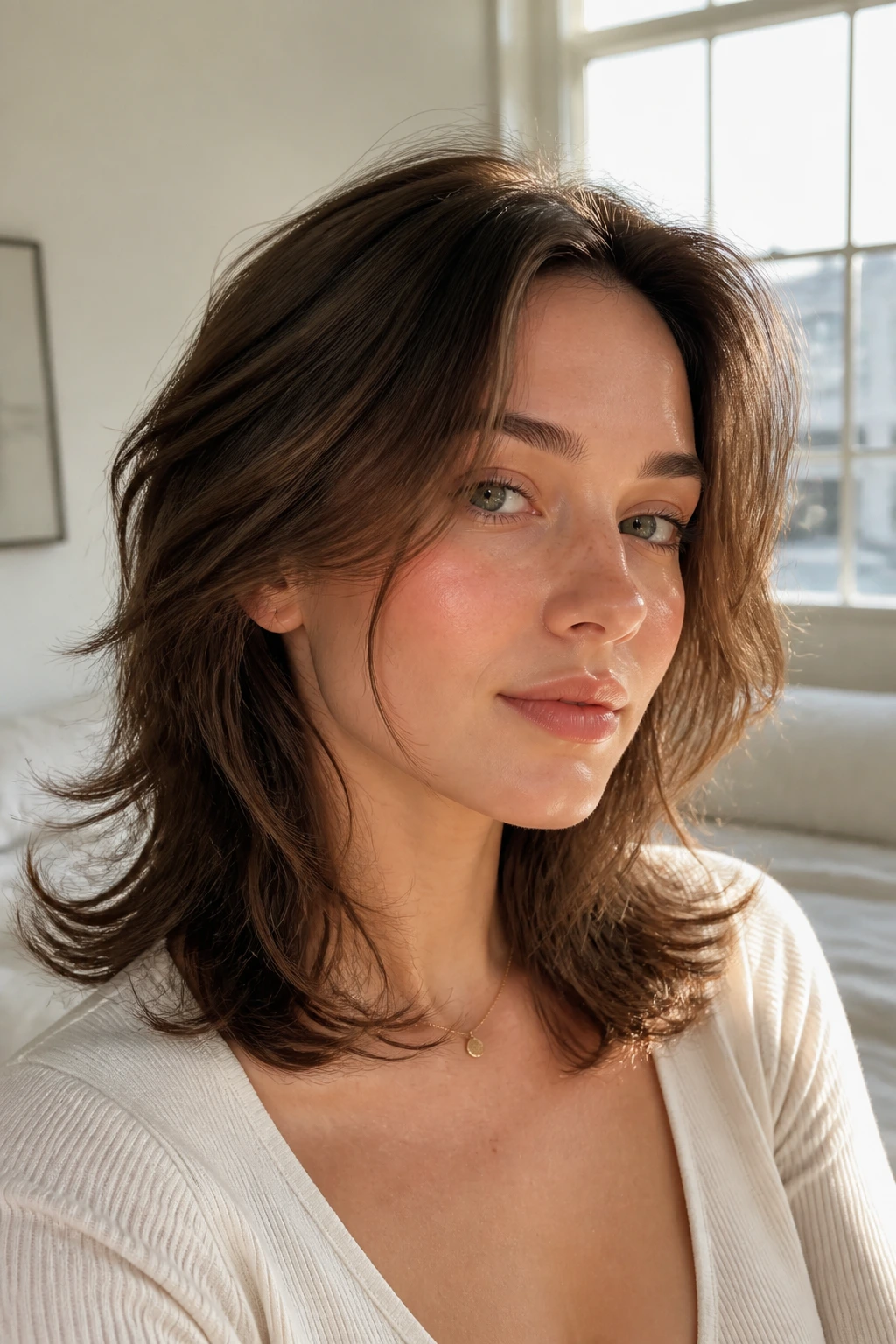
Some people want the wolf cut shape and want nothing to do with fringe. Fair enough. The no-bang version keeps the face open while using crown texture and long face-framing layers to carry the style.
Why It Works: Without bangs, the haircut leans on layering and silhouette. Medium length hair gives those pieces room to fall around the face without blocking it.
Key Shape Notes:
- Keep the front layered starting around the cheekbone or jaw.
- The crown still needs enough lift to avoid a flat top.
- A center or soft side part both work here.
- This version often looks the cleanest when the ends are softly broken up.
How to Ask for It: Say plainly that you want a wolf cut without bangs. Stylists hear “wolf cut” and sometimes assume fringe.
Best Styling Move: Curl or bend only the face frame, then leave the rest slightly undone so the cut does the talking.
Pro Tips:
- No-bang versions grow out gracefully, which is part of the appeal.
- If your face feels too open, just add a loose bend near the cheekbones.
Variations on This Cut: A deeper side part adds interest without fringe. A longer front section makes it even easier to wear.
Common Mistakes to Avoid:
- Don’t leave the front one length with the rest heavily layered.
- Don’t flatten the crown, or the whole haircut loses purpose.
22. Heavy Fringe Wolf Cut
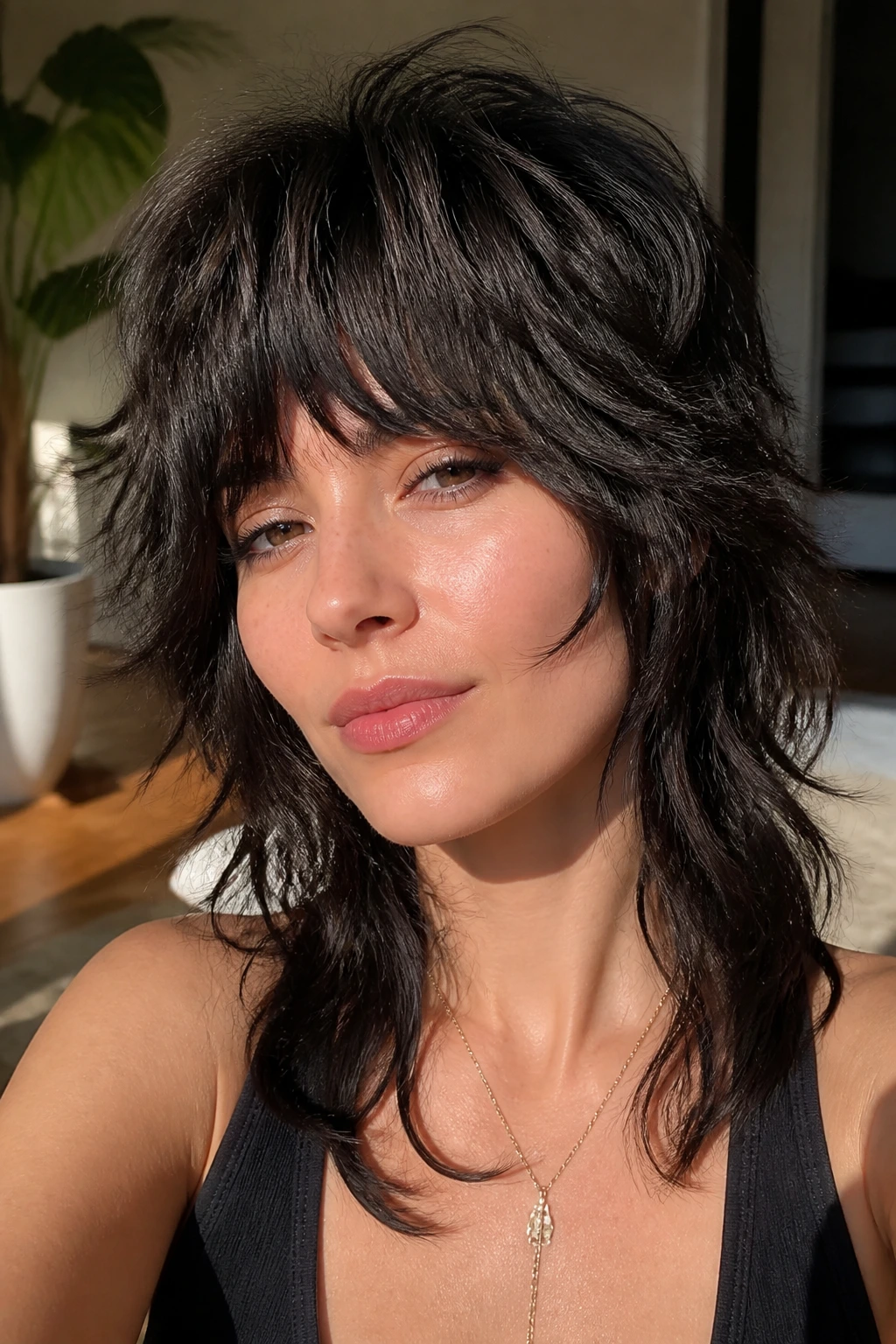
A full fringe changes the mood fast. It puts a solid line across the forehead, then lets the medium-length layers go shaggy and airy beneath it, which creates a nice contrast.
Why It Works: Heavy fringe adds weight at the front, so the crown and sides need texture to balance it. On medium length hair, that can give the haircut a striking shape without making it hard to wear.
Key Shape Notes:
- The fringe should be thick enough to stand on its own.
- Keep the layers around the sides soft so they don’t fight the bangs.
- The crown needs enough lift to prevent a helmet effect.
- Best when the fringe is slightly textured rather than razor blunt.
How to Ask for It: Tell the stylist you want a full fringe, but not a rigid one. A bit of softness keeps it from feeling heavy.
Best Styling Move: Blow-dry the fringe first, then use a round brush to put a tiny bend at the ends.
Pro Tips:
- Full fringes need more frequent trims than the rest of the cut.
- If the bangs separate too much, a very small amount of cream at the tips helps.
Variations on This Cut: A slightly arched fringe gives it a retro vibe. A straight fringe looks bolder.
Common Mistakes to Avoid:
- Don’t pair a heavy fringe with overly fluffy sides.
- Don’t cut the fringe too thin; it loses the point.
23. Straight-Hair Wolf Cut
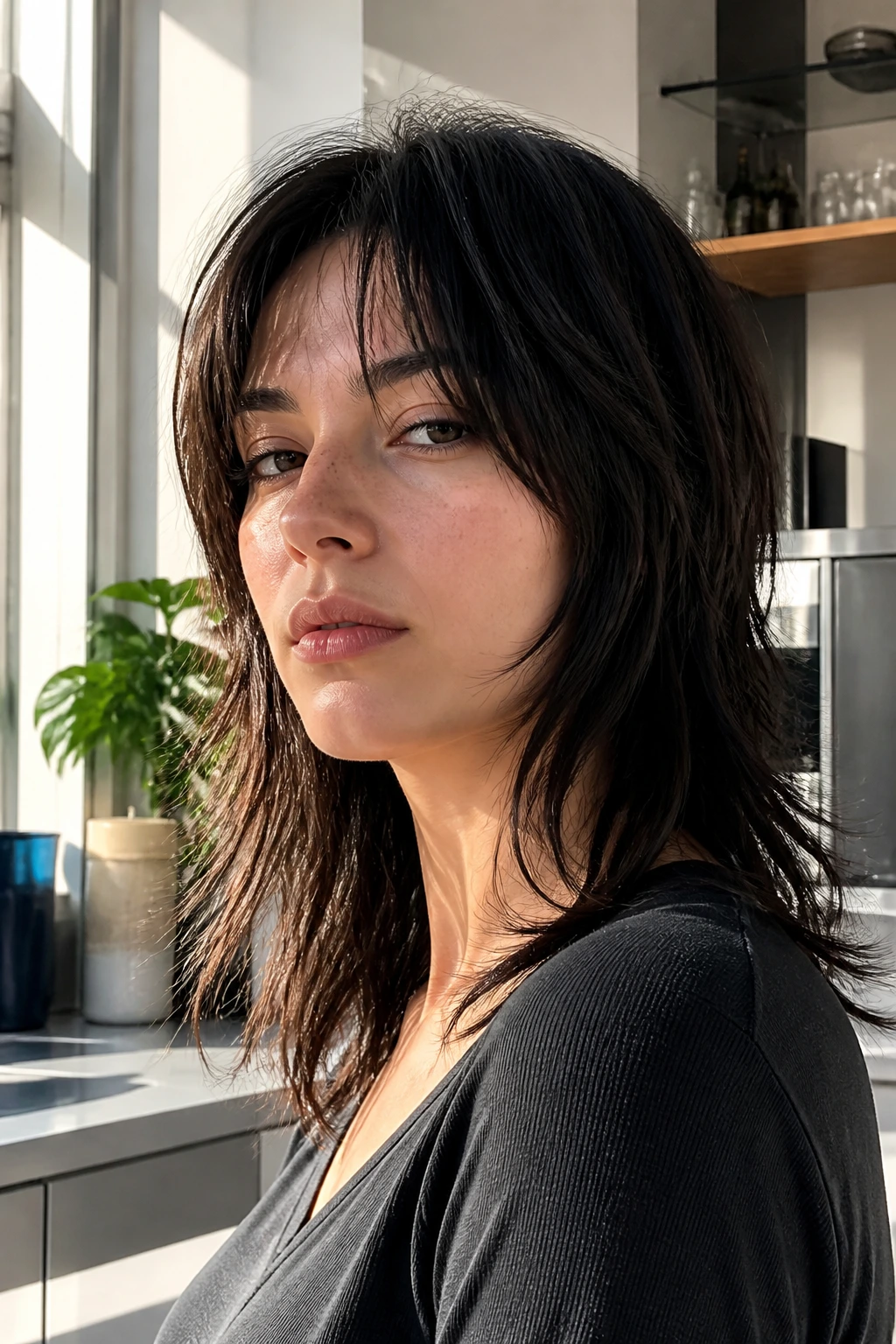
Straight hair can wear a wolf cut, but it needs sharper cutting to keep the shape from falling flat. The goal is movement you can see even before you style it.
Why It Works: On straight strands, point cutting and internal layering are doing more of the work than the texture itself. Medium length gives enough room for those layers to show up without the haircut collapsing into one line.
Key Shape Notes:
- Ask for point cutting or soft slide cutting through the ends.
- Keep the crown light enough to lift but not so short it sticks out.
- Face framing should be obvious enough to break the straight outline.
- A little asymmetry helps a lot here.
How to Ask for It: Tell the stylist your hair lies flat unless it’s styled. That clue helps them build in more movement.
Best Styling Move: Add texture spray at the roots and mid-lengths, then use a flat iron to make slight bends rather than curls.
Pro Tips:
- Straight hair often needs a little more product than wavy hair, but not much.
- A dry shampoo refresh at the roots can stop the shape from slipping.
Variations on This Cut: A side part creates better lift. Curtain bangs stop the front from looking too plain.
Common Mistakes to Avoid:
- Don’t expect straight hair to hold a tousled look without support.
- Don’t let the layers stay too blunt or the haircut reads as unfinished.
24. Loose Curl Wolf Cut
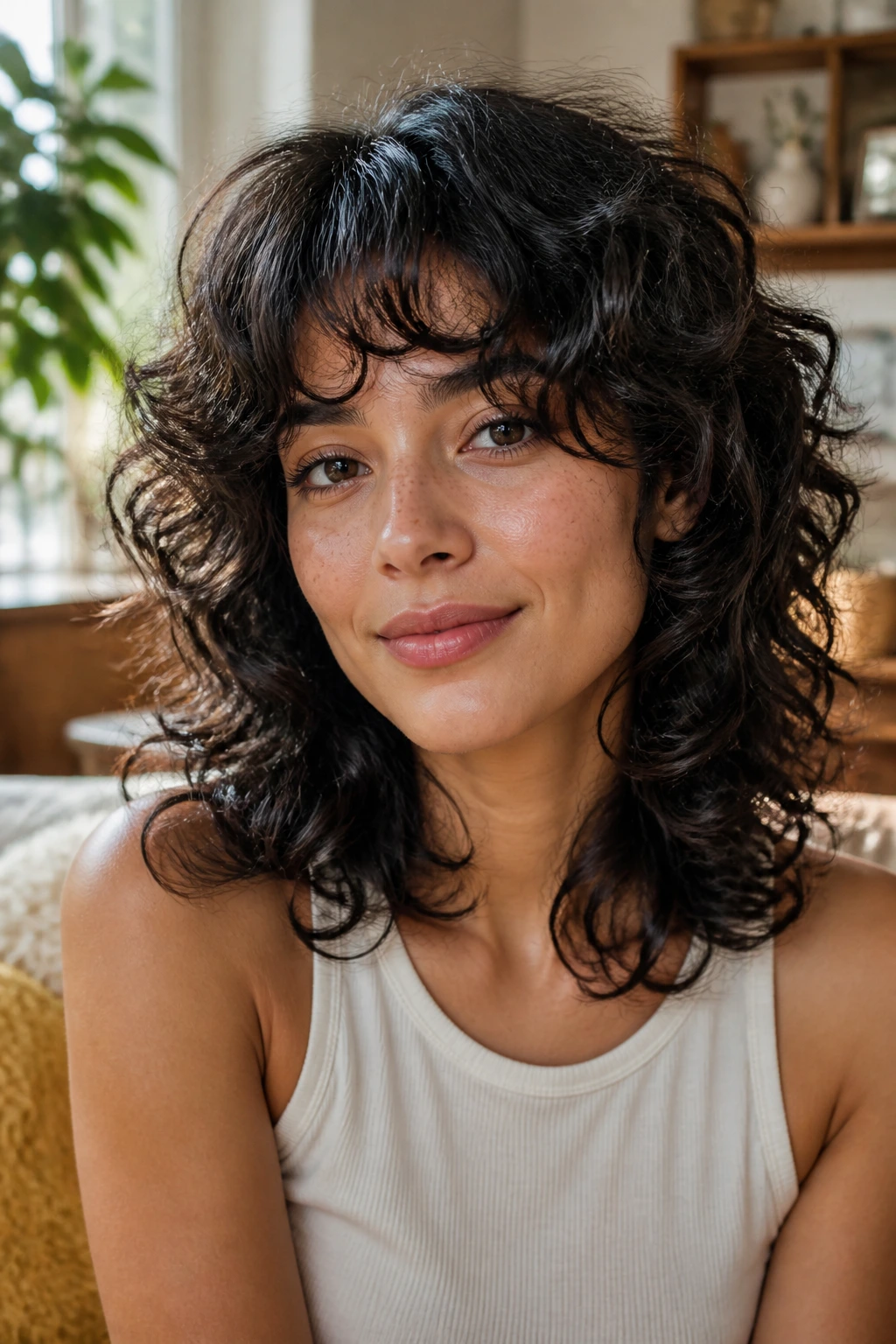
Loose curls and wolf cuts are a good match because both like a little softness around the edges. Medium length hair lets the curl pattern form shape while still showing the layered silhouette.
Why It Works: Loose curls need room to spiral, but they also need enough layering so the volume doesn’t puff into a triangle. The wolf cut gives them both.
Key Shape Notes:
- Keep the layers long enough that the curls can clump.
- Don’t overcut the crown if your curls already spring upward.
- A gentle fringe or soft face frame helps the cut feel finished.
- This is a strong option for 2A, 2B, and some 2C textures.
How to Ask for It: Tell your stylist how your curls behave after air-drying. Loose curls can look much shorter once they set.
Best Styling Move: Curl cream plus a small amount of gel, scrunched into damp hair, then diffuse only until the cast forms.
Pro Tips:
- Keep hands out of the hair until it dries.
- If the crown gets too wide, the top layers may need to be longer, not shorter.
Variations on This Cut: A longer face frame makes it softer. A little fringe gives more bounce at the front.
Common Mistakes to Avoid:
- Don’t cut loose curls too aggressively wet.
- Don’t overload on cream, or the curl pattern clumps in a dull way.
25. Piecey Wolf Cut

This is the version that looks separated in a good way. Each section seems to have its own job, which is exactly what gives the haircut that cool, slightly unfinished feel.
Why It Works: Piecey texture keeps the layers visible, especially on medium length hair where the shape can otherwise blur together. The cut looks sharpest when the strands are defined instead of blended into one soft cloud.
Key Shape Notes:
- Ask for visible separation through the mid-lengths and ends.
- Crown layers should be there, but not over-sliced.
- The front can be slightly longer to give room for styling.
- Best if your hair holds a little grit or bend.
How to Ask for It: Tell the stylist you want pieces to show, not just blended layers. That gets them thinking about texture instead of bulk alone.
Best Styling Move: Work a tiny amount of paste or wax through dry ends, then separate a few front sections with your fingers.
Pro Tips:
- A little dry texture spray goes a long way here.
- Piecey hair looks best when it has uneven detail, not equal curls everywhere.
Variations on This Cut: Add a fringe for more contrast. Keep the front long if you want the pieceiness to stay subtle.
Common Mistakes to Avoid:
- Don’t use too much product or the pieces clump together.
- Don’t overbrush after styling. That destroys the separation.
26. Low-Maintenance Wolf Cut
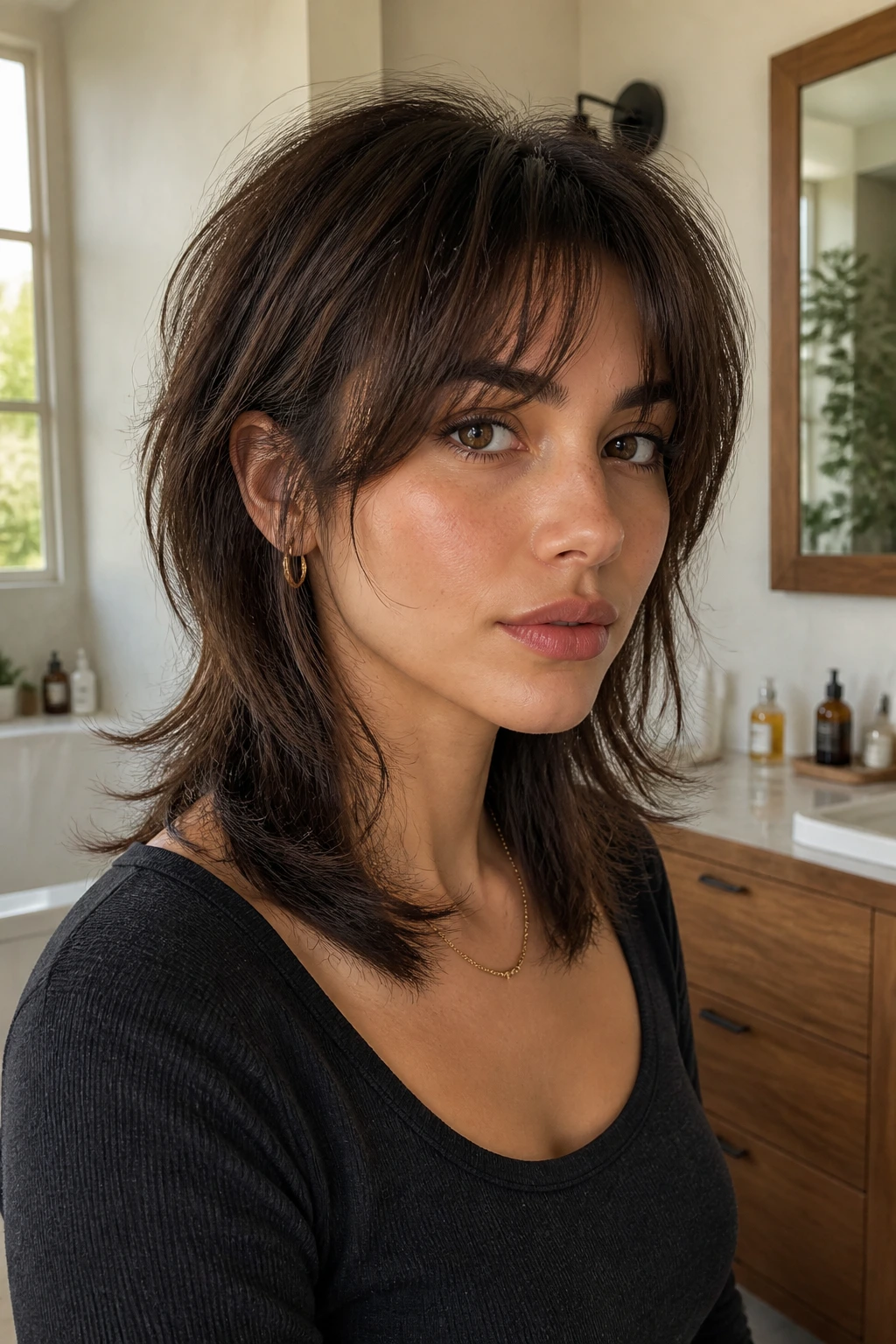
This one is for people who want the look without the weekly maintenance spiral. The cut still has shape, but the layering is kept soft enough to survive a few lazy wash days and a slightly overdue trim.
Why It Works: Low-maintenance versions rely on strong overall structure rather than lots of tiny details. Medium length hair helps because it can hold a visible silhouette even when you’re not styling every piece.
Key Shape Notes:
- Keep the crown moderate, not severe.
- Avoid razor-heavy ends.
- The face frame should be long enough to survive grow-out.
- A soft perimeter usually ages better than a chopped one.
How to Ask for It: Tell the stylist you want the haircut to keep its shape for several weeks without constant styling. That usually leads to a more forgiving cut.
Best Styling Move: Use a leave-in spray and a little mousse, then let the hair do most of the work.
Pro Tips:
- Choose a version that suits your natural part and texture.
- The less you fight your hair, the longer this cut looks good.
Variations on This Cut: A fringe-free version is the easiest to live with. A soft curtain fringe still stays manageable.
Common Mistakes to Avoid:
- Don’t ask for extreme texture if you want easy upkeep.
- Don’t forget that bangs turn any low-maintenance cut into more work.
27. Edgy Textured Wolf Cut
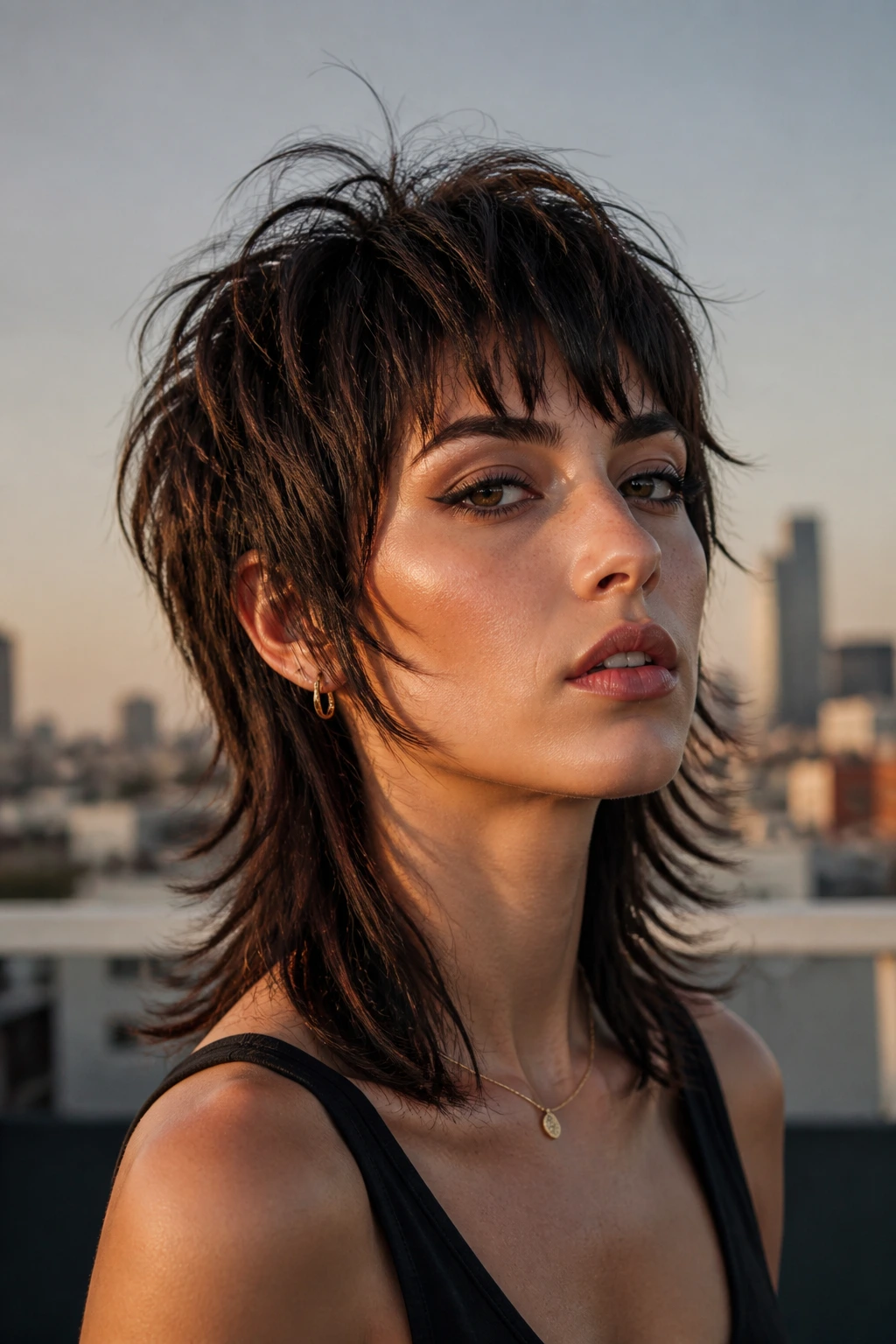
This is the loudest version in the set. It leans hard into choppy layers, visible separation, and a shape that says you want the haircut to be noticed from across the room.
Why It Works: Heavy texture creates contrast, and contrast is what makes the wolf cut interesting on medium length hair. The crown gets lift, the ends get grit, and the whole shape has more attitude than polish.
Key Shape Notes:
- The layers should be intentionally uneven, not randomly hacked.
- Keep the length around the shoulders or collarbone so the texture has something to sit on.
- Face framing can be strong, even angular.
- This version usually needs styling product to look finished.
How to Ask for It: Say you want the most textured version of the wolf cut that still works on medium length hair. That gives the stylist room to lean into edge without shortening it too much.
Best Styling Move: Dry the roots with lift, then work a matte paste through the ends and disturb the surface with your fingers.
Pro Tips:
- A little root shadow or dimension in the color can make the texture pop even more.
- If the layers feel too jagged, you probably need less texture and more blend.
Variations on This Cut: Add micro bangs for a harder finish. Keep the fringe soft if you want the texture to be the main event.
Common Mistakes to Avoid:
- Don’t confuse edgy with broken-looking.
- Don’t over-layer every section at once. The haircut needs some hierarchy.
Why Medium Length Is the Sweet Spot for a Wolf Cut
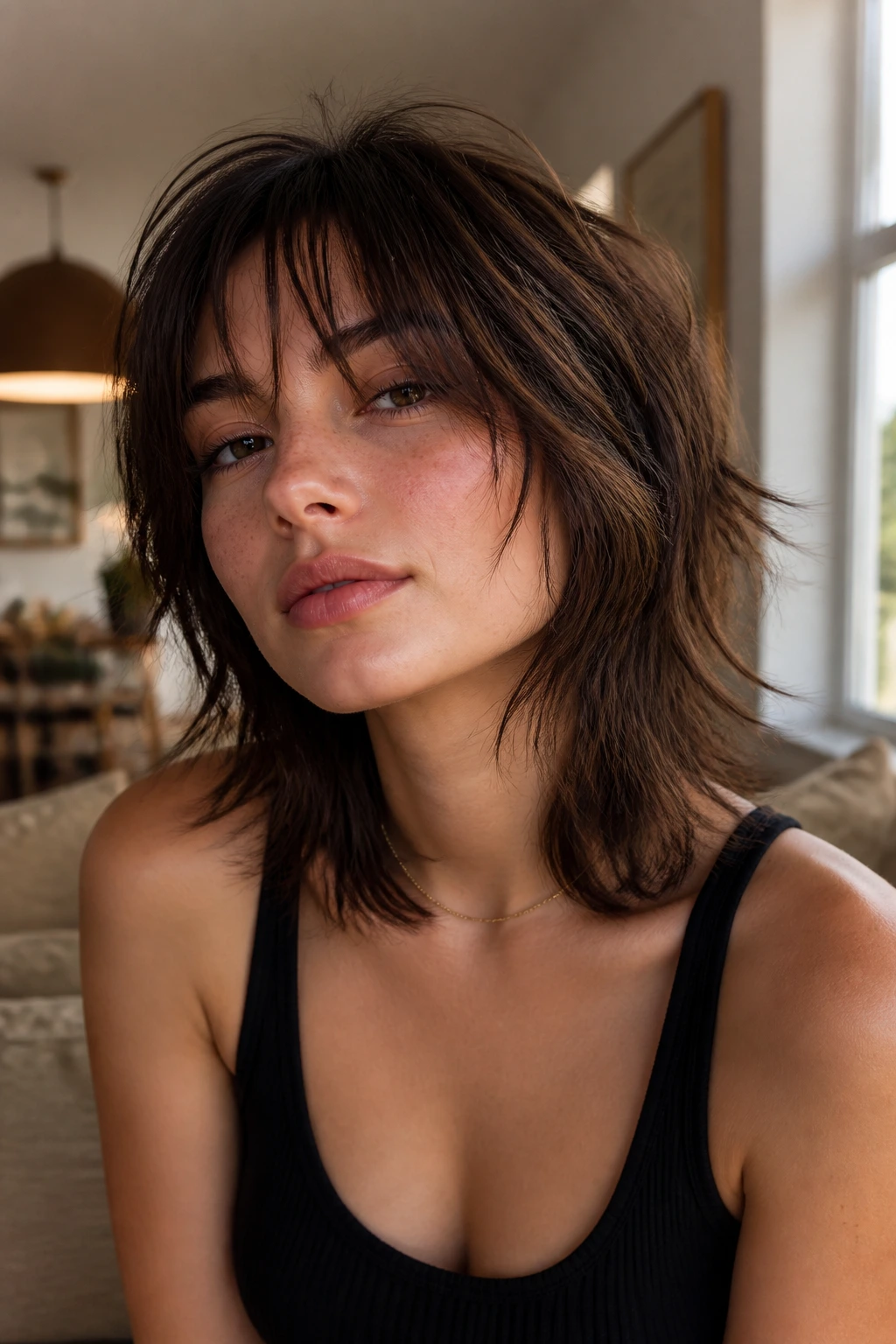
Medium length hair gives a wolf cut enough room to breathe without letting the shape wander off into shapeless shag territory. That matters more than people think. The crown can be cropped and lifted, but the ends still have enough weight to settle near the collarbone or shoulders, which keeps the haircut from puffing out like a pyramid.
The other advantage is control. You can wear the cut air-dried, blown out, curled under, or bent with a flat iron, and the layers still show up. On very short hair, the wolf cut can feel abrupt. On long hair, it can get heavy fast. Medium length sits right in the middle and keeps the silhouette readable.
The Collarbone Zone
That collarbone-to-shoulder range is where the cut usually behaves best. The longest layers have enough length to tuck behind the ears or pull into a low clip, but they still show off movement.
Why the Crown Matters
A wolf cut without crown lift is just a shag with a different name. The shorter top layers are what create the shape contrast, and medium length hair can hold that lift without standing straight up.
Where the Fringe Starts
Curtain bangs, bottleneck bangs, heavy fringe, or no bangs at all — the front of the haircut changes the whole mood. The shape is flexible, and that flexibility is part of why people keep coming back to it.
What to Tell Your Stylist So the Cut Lands Right
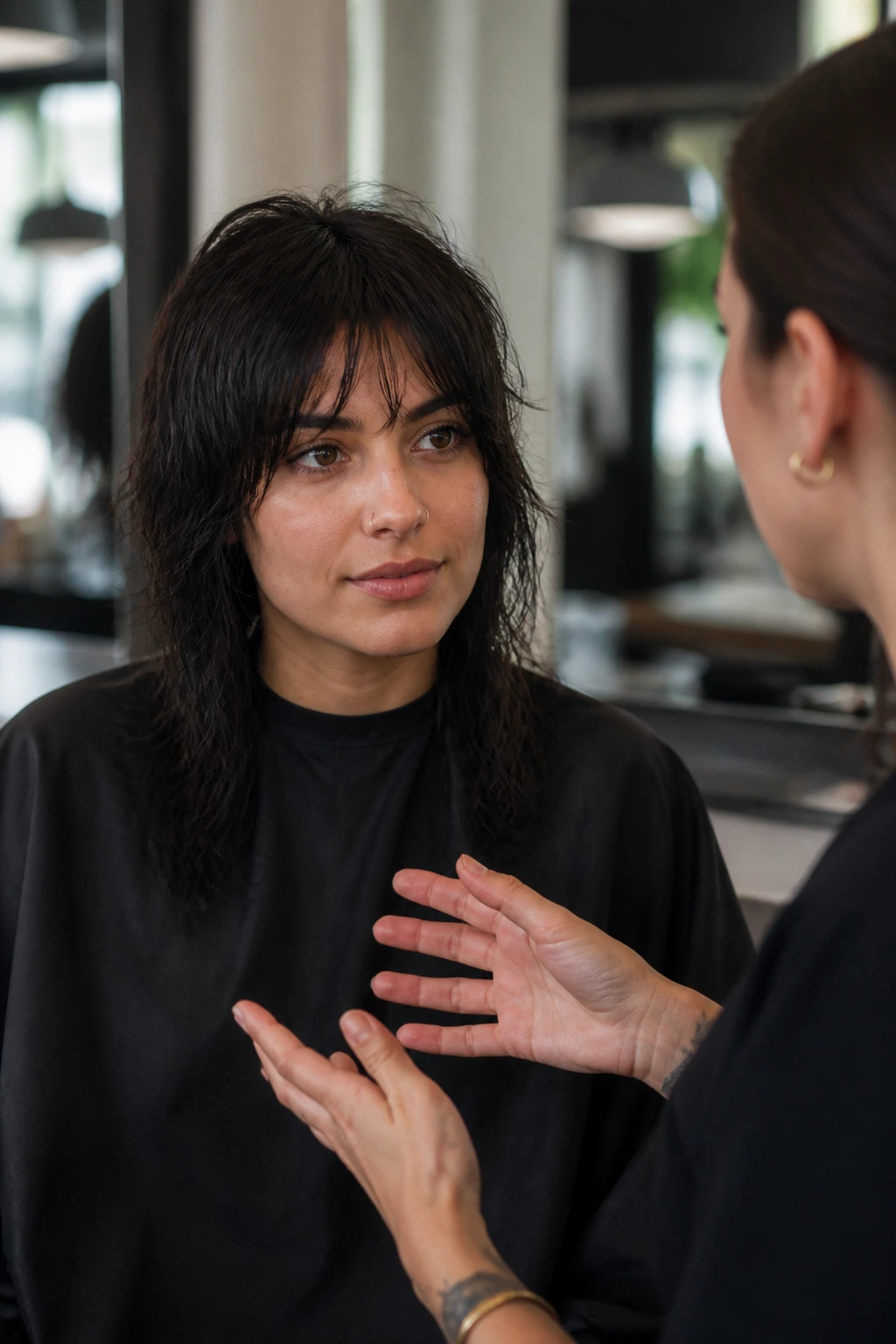
Bring photos, yes, but bring useful photos. A picture of someone with your hair length matters more than a celebrity shot with twice your density and a different curl pattern. That saves a lot of disappointment before the first snip.
Say how you style your hair most days. Air-dry, blow-dry, diffuse, flat iron, twist and go — all of that changes where the layers should sit. A wolf cut that looks brilliant with a round brush can look limp if you never use heat.
Bring the Right Photos
Show 2 or 3 photos with similar length, texture, and fringe. If one photo has huge volume and the other is sleek, point out which pieces you like on each. Stylists can work with that much faster than with one vague reference.
Name the Layer Lengths
Use plain words. Say “collarbone length,” “cheekbone fringe,” or “long face frame.” Those landmarks are more useful than saying you want “movement.”
Talk About Density
Fine hair, thick hair, and curly hair all need different levels of layering. If your stylist knows your hair gets flat at the crown or bulky at the nape, they can shape the cut around that instead of guessing.
The Tools and Products That Keep the Shape Clean
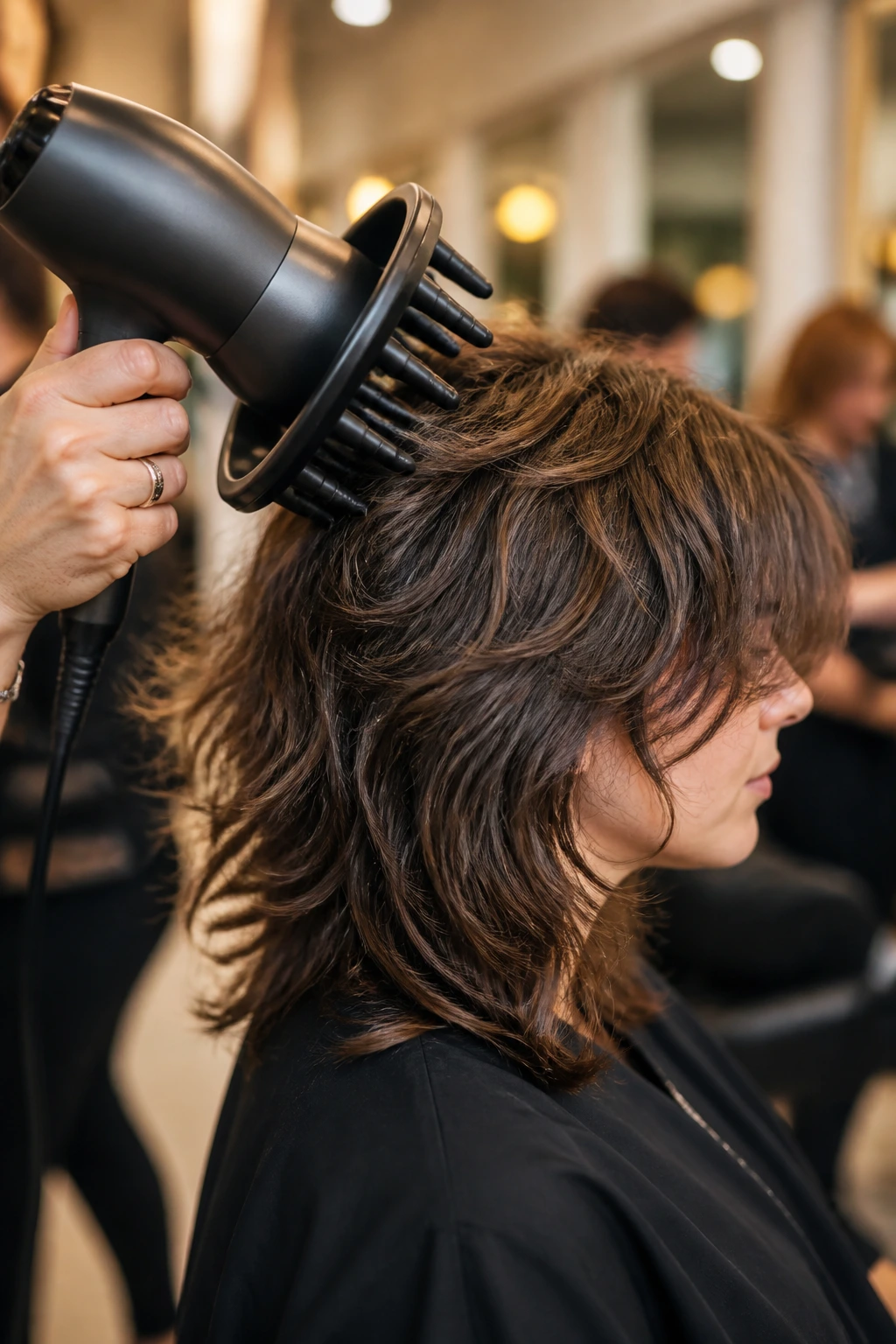
You do not need a suitcase full of gadgets, but a few good tools matter. Wolf cuts depend on texture, and the wrong tool can either flatten that texture or make it look frizzy and neglected.
- Blow dryer with concentrator nozzle: Helps direct the roots when you want lift at the crown.
- Diffuser: Useful for waves and curls that need shape without being blasted apart.
- 1-inch curling iron or wand: Good for adding bends to the front pieces and ends.
- Round brush, 1.5 to 2 inches: Best for curtain bangs, blown-out versions, and soft flip ends.
- Texturizing spray: Adds grip and separation to medium hair that falls too neatly.
- Lightweight mousse: Gives the roots some hold without turning the cut stiff.
- Leave-in spray or light cream: Helps air-dried versions stay smooth through the mid-lengths.
- Dry shampoo: Useful on day two or three when the crown starts to collapse.
- Wide-tooth comb: Better than a brush when you want the pieces to stay loose.
- Microfiber towel or soft T-shirt: Cuts down on frizz before styling even starts.
What to Ask for at the Salon Without Wrecking the Shape
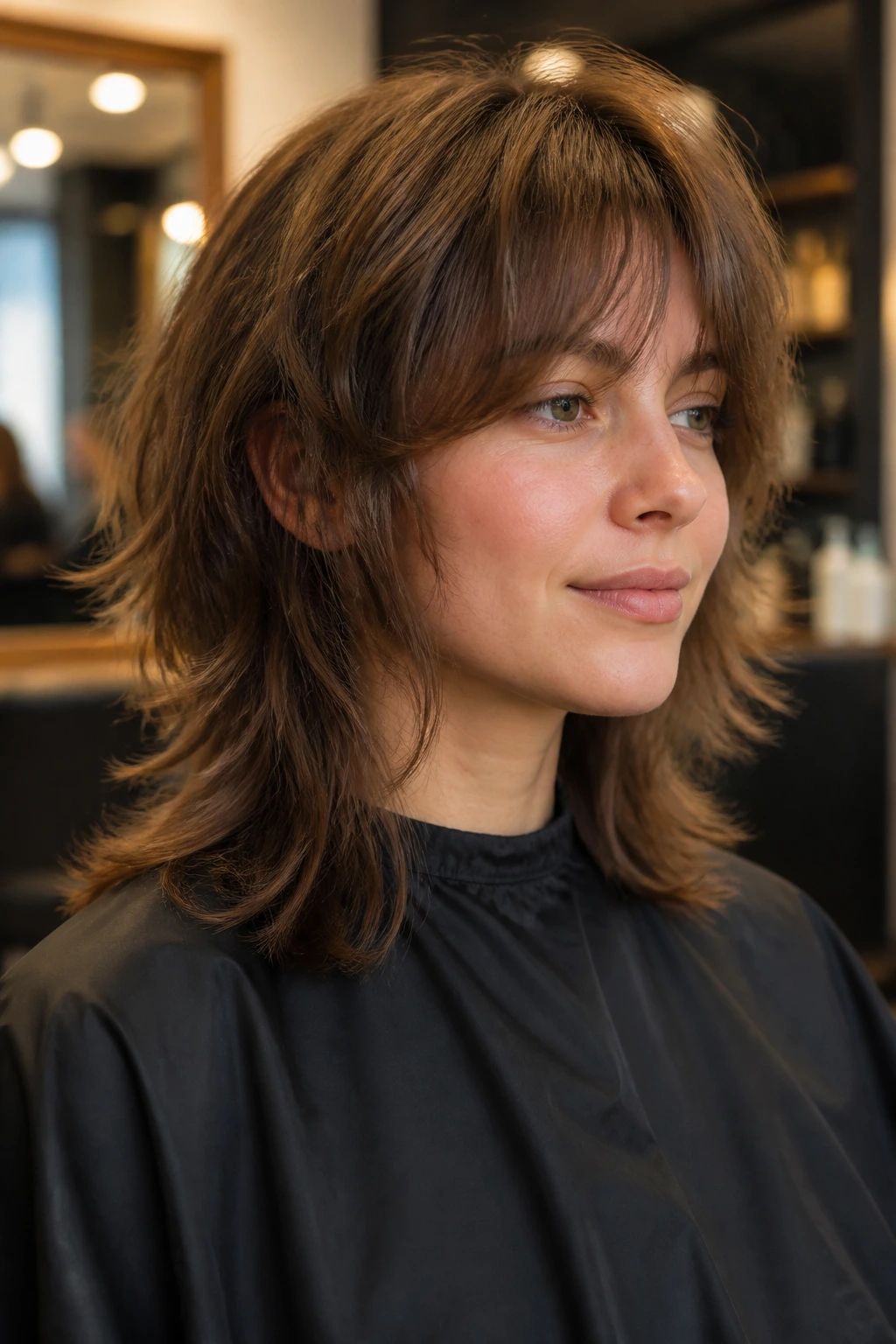
The easiest way to miss on a wolf cut is to ask for too much in one sitting. “Lots of layers” can mean almost anything. So can “messy.” You want landmarks.
Ask for the shortest layers to sit near the crown, with the longest pieces around the collarbone or shoulders. If you want bangs, name the type. If you do not, say that out loud. Stylists are not mind readers, and fringe is one of those things that looks flattering in a salon mirror and annoying three weeks later if you didn’t really want it.
Use Hair-World Words
Say “point cut,” “face frame,” “internal layers,” “textured ends,” or “bulk removal” if those fit your hair. Those terms help the stylist know whether you want softness, movement, or just less weight.
Be Honest About Styling
If you air-dry 90 percent of the time, the cut should be shaped to do that. If you only blow-dry the bangs, say so. If you never want to heat-style the back, the layers need to behave on their own.
How to Style the Shape Without Killing the Movement

The thing people get wrong most often is overworking the cut. Wolf cuts need enough styling to wake up the layers, but not so much that the ends lock into one direction and the whole thing turns stiff.
Air-Dry Routine: Work mousse or leave-in through damp hair, then scrunch or twist small sections. Let the crown dry with a little lift and keep your hands out of it while it sets.
Blowout Routine: Use a round brush or hot brush at the crown and front pieces first. You want the top to rise before the ends are touched. That order matters.
Second-Day Refresh: Mist the hair lightly with water, add a dab of dry shampoo at the roots, and twist the front pieces back into shape. A tiny bit of paste on the ends can rescue the separation.
Heatless Habit: Put damp front pieces behind clips or over small rollers while they dry. That one move can save the whole face frame.
How to Keep It Looking Intentional as It Grows
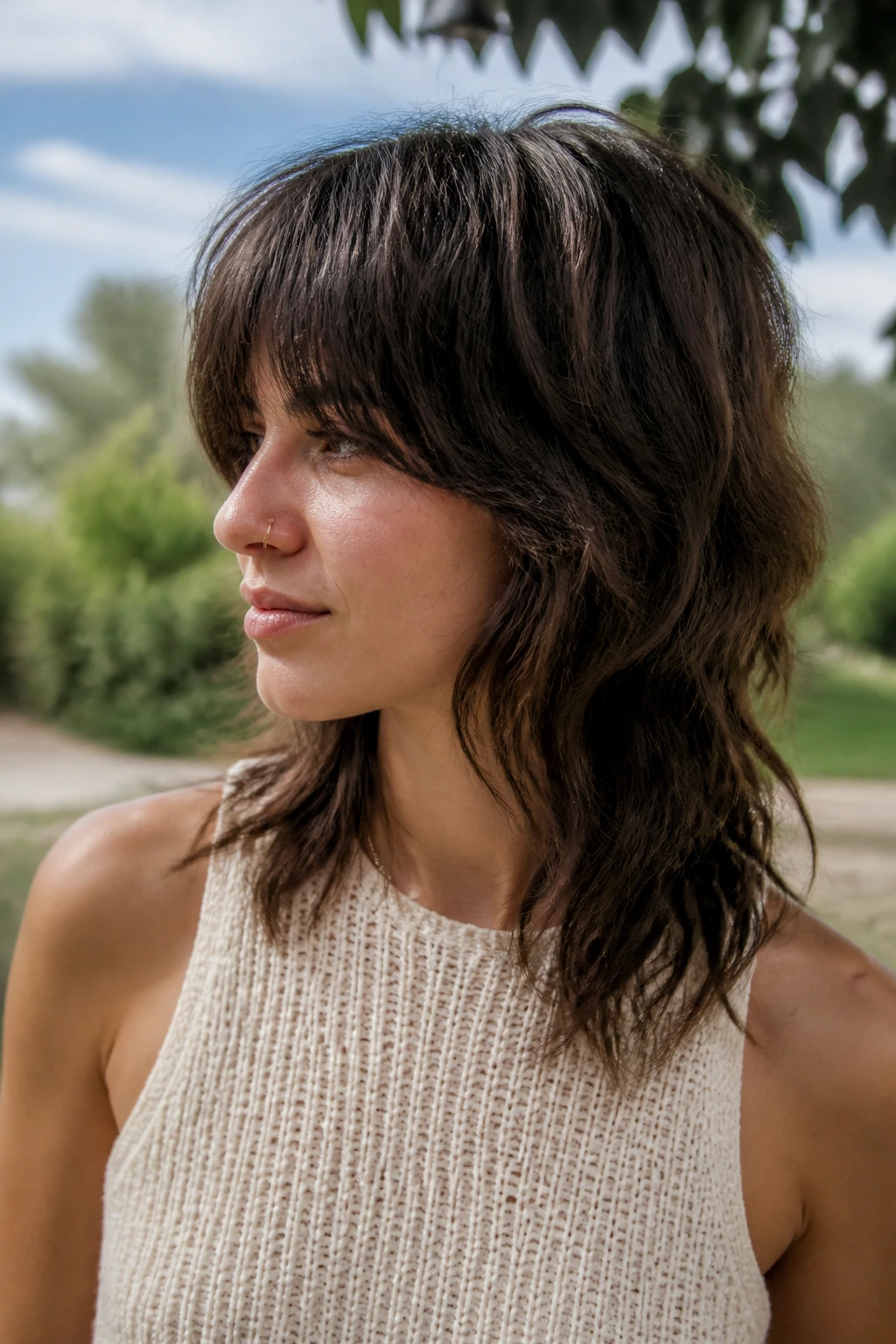
A wolf cut usually looks best when it’s slightly lived in, but there’s a line between lived in and just overdue. Medium length hair can go past that line quickly if the crown loses shape or the fringe starts hanging in your eyes.
Most versions need a cleanup every 6 to 8 weeks if you want the structure to stay clear. Fringe-heavy versions may need small trims sooner, especially if the front sits in your face when dry. The good news is that a wolf cut often grows into a softer shag before it grows out of shape entirely.
If the perimeter starts to feel heavy, ask for a dusting or a small reshape through the ends. If the top goes flat, the crown layers need a touch-up. Those are different problems, and they need different fixes.
Common Mistakes That Flatten the Whole Look

The biggest mistake is treating a wolf cut like a blunt haircut with “some layers.” It is not that. The shape depends on contrast, and contrast disappears fast when the crown is too long or the ends are too evenly cut.
Another common problem is over-thinning fine hair. The haircut may look airy for ten minutes, then the ends start to look see-through. Thick hair has more room for aggressive layering. Fine hair does not.
The third issue is product overload. A wolf cut needs grip and separation, not a slick finish from root to tip. Too much cream or oil turns the layers into one flat sheet.
And yes, bangs can backfire. If the fringe is too short, too wide, or too thick for your forehead and hairline, it fights the whole haircut every morning.
Variations and Adaptations to Try
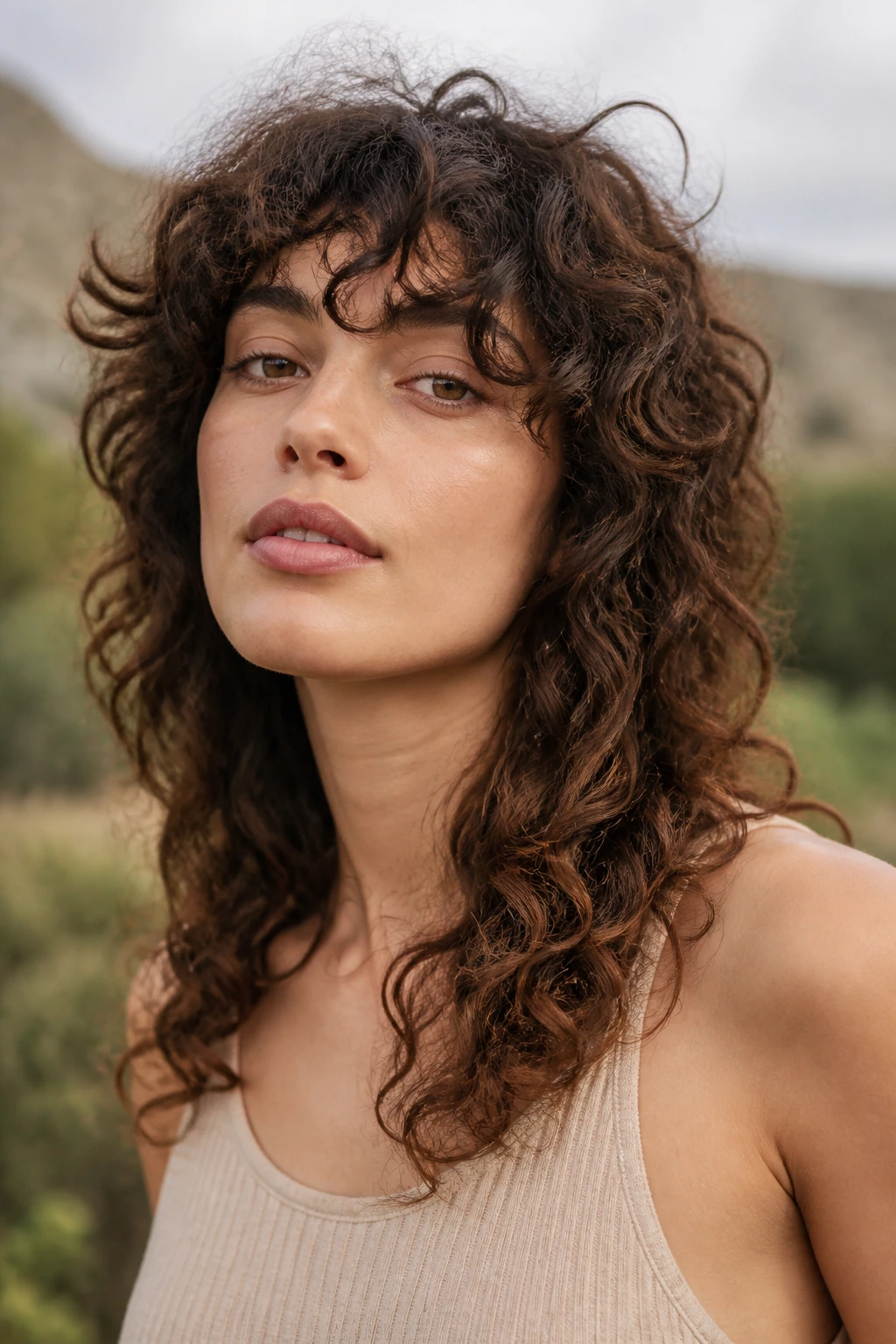
Fringe-Free Version: Best if you want the cut to grow out quietly. Keep the front long and let the layers do the work.
Humidity-Proof Version: Use longer layers, less razor work, and a cream-plus-gel combo on wavy or curly hair. That keeps frizz from swallowing the shape.
Fine-Hair Lift Version: Keep the crown layers modest, the ends soft, and the product light. You want the idea of volume, not three extra pounds of thinning.
Thick-Hair Debulk Version: Ask for weight removal underneath and around the nape. That stops the cut from ballooning under coats and scarves.
Straight-Hair Piecey Version: Use point cutting and a bit of texture spray. Straight strands need deliberate separation to show the shape.
Curly-Friendly Version: Keep the layers longer and cut with the curl pattern in mind. That protects shrinkage and keeps the top from going too short.
Frequently Asked Questions

Can straight hair pull off a wolf cut on medium length hair?
Yes, but the cut has to be built with more texture than a wavy version. Straight hair usually needs point cutting, product, and some bend at the ends or the layers can disappear.
How is a wolf cut different from a shag?
A shag usually feels softer and more evenly layered. A wolf cut leans a little more dramatic at the crown and ends, with a stronger contrast between the top and bottom.
Will this haircut work on thick hair?
Absolutely, and thick hair often gives the best visible shape. The trick is controlling bulk around the nape and keeping the interior layers from getting too heavy.
Can I get a wolf cut without bangs?
Yes. Long face-framing layers can carry the front just fine, and that usually makes the haircut easier to grow out.
How often should I trim it?
A clean-up every 6 to 8 weeks keeps the layers readable. Bangs may need touch-ups sooner if they sit in your eyes.
What if my hair is fine and flat at the roots?
Ask for longer layers and avoid too much thinning. Root lift from mousse or dry shampoo will matter more than extra cutting.
Does this cut work with curly hair?
It can work very well, but the cut should be tailored to the curl pattern. A dry cut is often the safer move because it shows the real length and volume.
How do I style it for a smoother look?
Use a round brush or hot brush through the crown and face frame, then leave the ends softly bent. That keeps the texture but reins in the mess.
The Shape That Keeps Its Edge
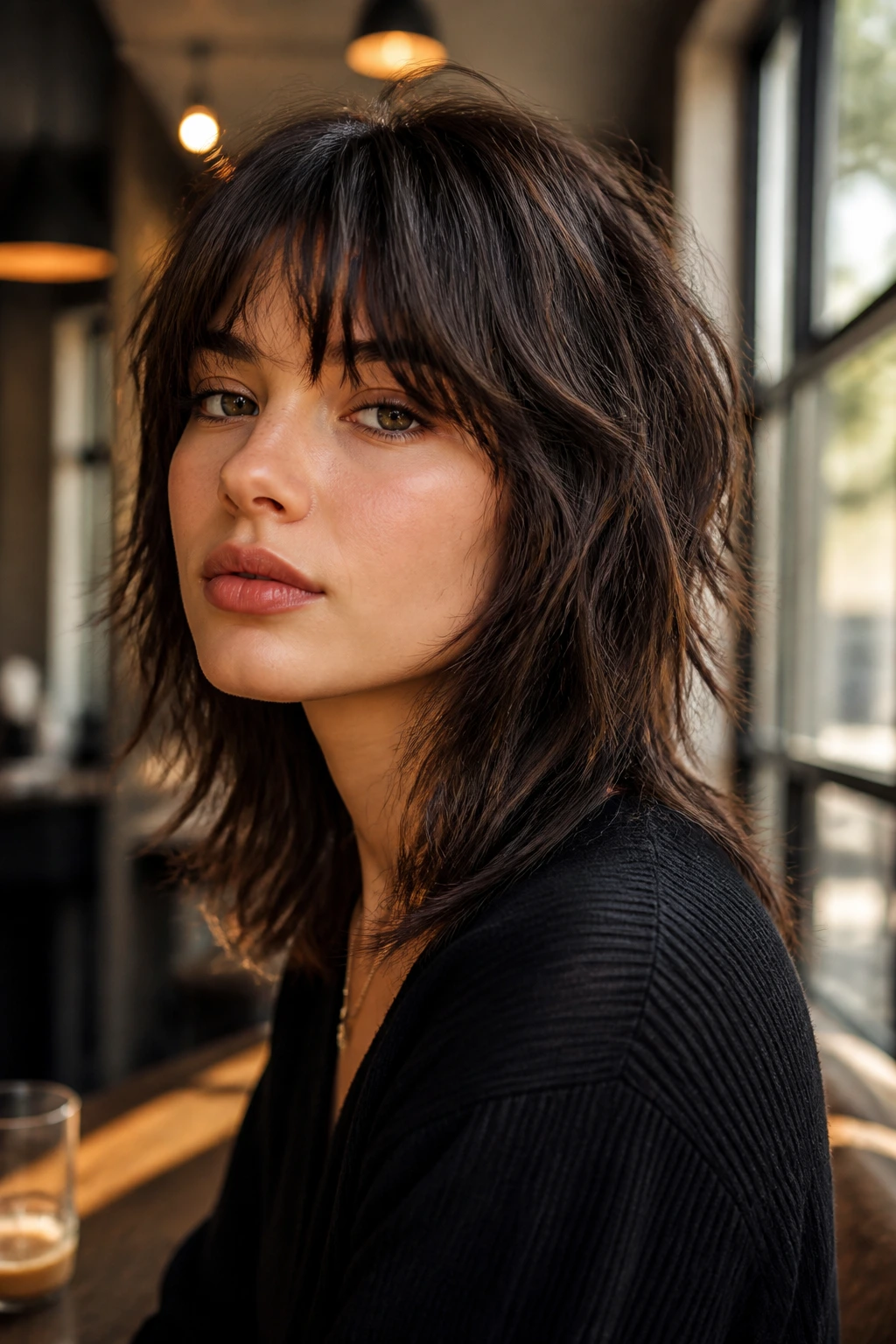
The nicest thing about a wolf cut on medium length hair is how many directions it can take without losing its identity. You can make it soft, shaggy, blunt at the fringe, airy at the crown, or almost polished, and the cut still reads as the same family.
That flexibility is the real draw. It grows well, it styles in a few different ways, and it gives medium length hair a shape that feels awake instead of heavy. If you bring the right photo, name the layer lengths, and stay honest about how much styling you’re willing to do, the haircut has a much better chance of landing the way you pictured it.
