



Fine hair and a wolf cut can be a bad pairing if the layers are too aggressive. The ends go airy in the wrong way. The crown collapses. A style that looked shaggy and cool in the chair can land at home as a soft halo of nothing much.
The mini wolf cut is the smarter version for that hair type. It keeps the outline tighter, usually somewhere between a cropped bob and a small lob, then puts the movement where it actually helps: around the crown, cheekbones, and fringe. That little bit of lift is doing a lot of work. So is the decision to leave the bottom line thicker than you might expect.
I like the mini wolf cut on fine hair because it respects the strand count instead of fighting it. You’re not trying to build a full shag out of wisps. You’re building a shape that can hold air, bend, and still look like it has substance when the wind hits it or the blow-dry falls apart around hour six.
Why These Mini Wolf Cuts Earn a Spot on Fine Hair

- They keep the perimeter honest: A fuller bottom line makes fine hair read denser, even when the top has soft layers.
- They lift where the eye looks first: Crown height, cheekbone framing, and fringe movement make the cut feel bigger without adding bulk everywhere.
- They work with lazy texture: A little bend, a small flip, or a rough blow-dry is enough. You don’t need a salon-level finish to make them look intentional.
- They grow out without turning blunt and boxy: The shape fades into a softer bob or lob instead of dropping into a bad triangle.
- They’re easy to tweak: You can push one version toward edgy, polished, airy, or face-framing without changing the whole cut.
- They suit more than one texture: Straight, slightly wavy, and loosely curly fine hair can all wear a mini wolf cut if the layers are placed with restraint.
1. Feathered Micro Wolf Bob
A feathered micro wolf bob sits close to the jaw and keeps the outline compact, which is exactly why it works on fine hair. The shape feels light around the crown, but the bottom edge still looks thick enough to read as a proper bob instead of a wispy afterthought. When the ends are feathered softly, they move without splitting into sad little strings.
Why it flatters fine hair
This version gives you the wolf-cut feel without pushing the length so far down that the hair loses all body. Keep the shortest internal layers around the cheekbone, then let the perimeter stay blunt enough to hold a line. That little contrast does more for density than a pile of short layers ever will.
- Length: Jaw-skimming keeps the bottom looking fuller.
- Layers: Soft crown layers add lift without exposing scalp.
- Bangs: Works with a light curtain fringe or no fringe at all.
- Style: A 1-inch round brush gives the front a tiny bend fast.
Best tip: ask your stylist to leave the bottom 1.5 to 2 inches heavier than they would on a thick-haired client.
2. Curtain-Bang Mini Wolf Lob
Curtain bangs do a lot more work on fine hair than people give them credit for. A heavy fringe can eat up density fast, but a curtain bang opens the face and lets the rest of the cut keep its body. On a mini wolf lob, that means the bangs frame the eyes while the collarbone length keeps the style from floating away.
The sweet spot is a longer bang that starts near the cheekbone and softens toward the jaw. Blow it back and away from the face with a round brush, and the whole cut starts looking fuller because the front no longer sits flat against the forehead.
You do want the length to stay substantial. If the layers creep too short, the lob starts reading like a half-finished shag. Keep the ends blunt enough to feel deliberate, then let the fringe do the softening.
3. Rounded Crown Wolf Pixie
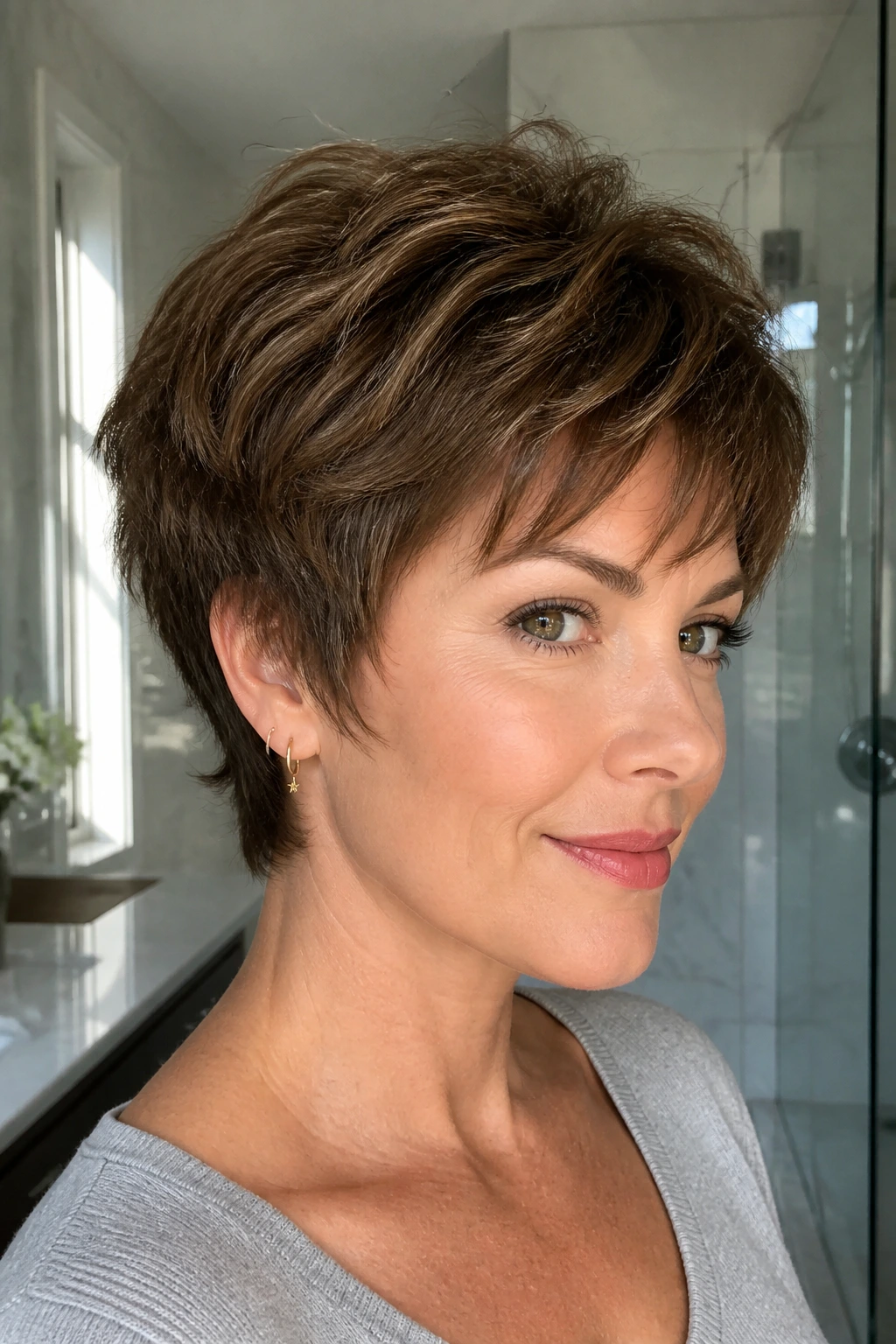
Can a pixie-length wolf cut still feel soft on fine hair? Absolutely, if the crown stays rounded and the sides aren’t carved into a severe crop. The point is to keep enough top length—usually around 3 to 4 inches—to brush upward or forward, then taper the nape just enough that the shape doesn’t swell at the back.
This cut has a little personality without turning spiky. You get lift at the crown, a hint of separation through the top, and enough movement to keep the style from looking helmet-like. Fine hair often falls flat when it’s cut too evenly, and this version avoids that by building height where it counts.
How to style it
Work a pea-sized amount of mousse into damp roots, then rough-dry the top with your fingers. When the hair is about 80 percent dry, switch to a small brush or your fingertips and push the crown upward for a few seconds at a time. Finish with a small dab of paste on the ends if you want the top pieces to separate instead of blur together.
4. Bottleneck Fringe Wolf Crop
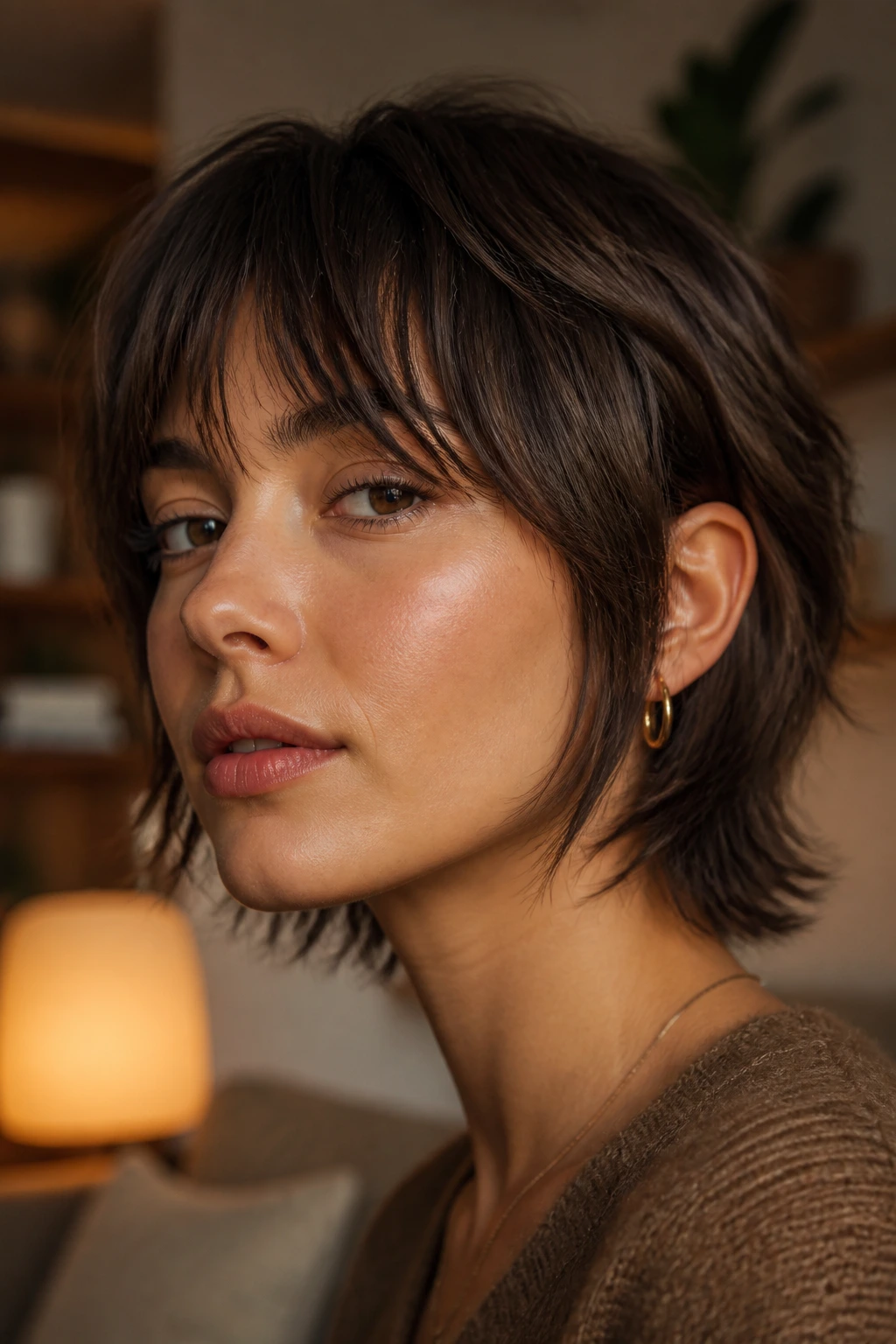
If your hair goes flat at the temples and a full fringe feels too heavy, the bottleneck fringe is the move. It’s shorter in the middle, longer at the sides, and soft enough to blend into a cropped wolf shape without stealing too much density from the front.
This version is especially useful when fine hair needs framing more than it needs length. The fringe draws attention to the eyes, while the crop keeps the overall silhouette tidy. The shape reads modern because the lines are broken up, but not so aggressively that the hair looks choppy.
- Fringe shape: Narrow in the center, longer at the edges.
- Perimeter: Keep the crop around ear to jaw length.
- Texture: Light point cutting only; no heavy thinning shears.
- Styling: Blow the fringe forward first, then split it with your fingers.
The mistake here is making the center too short. On fine hair, that can leave the fringe looking sparse the second it separates.
5. Razor-Edged Chin-Length Wolf
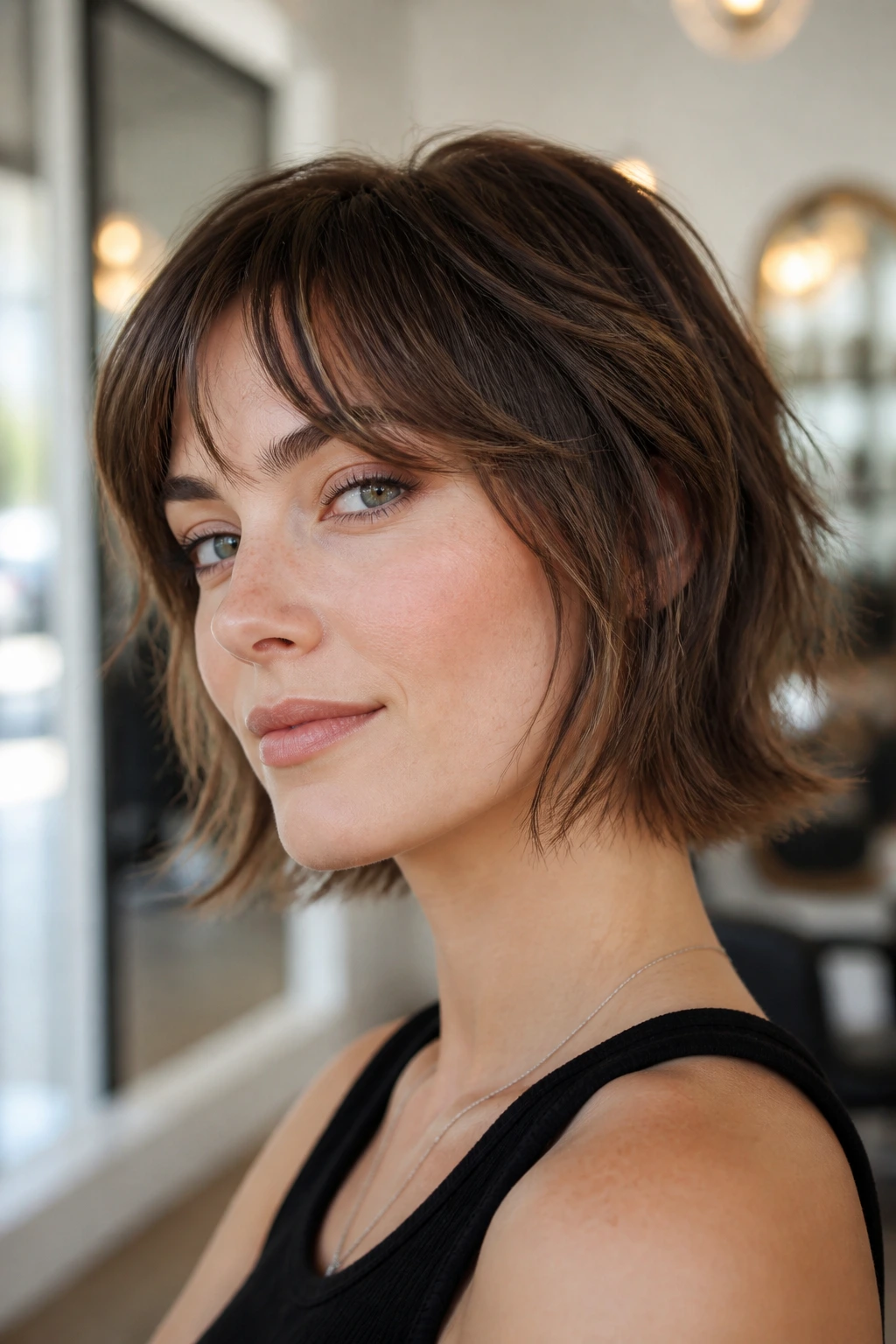
A chin-length wolf cut can be gorgeous on fine hair when the razor work is careful and the bottom line stays intact. Go too hard with the razor, and the ends start to fray. Use it lightly, though, and the cut gets a soft halo of movement that lifts the whole face without killing the density at the perimeter.
This is one of those styles that looks better with a little imperfection. The layers don’t need to be neat. They need to be believable. Chin length gives the hair enough structure to hold its own, and the wolf treatment adds the broken texture that keeps the shape from feeling stiff.
I’d choose this if your hair bends easily and you want something that can be air-dried with a bit of texture cream. Straight, flat hair can wear it too, but it needs a root lift and maybe a tiny bend at the ends so the shape doesn’t collapse into a plain bob.
6. Soft Side-Part Wolf Bob
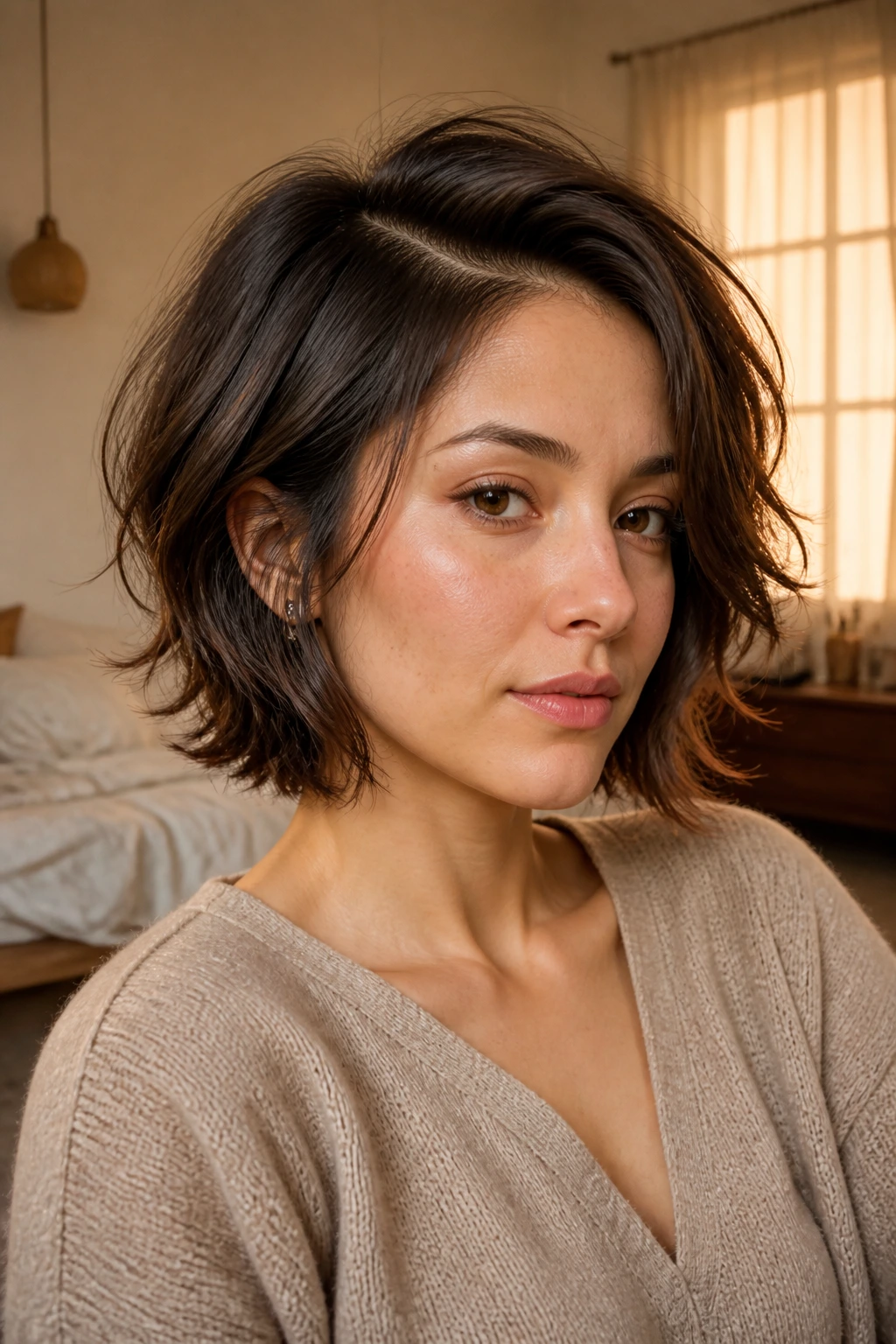
A side part is one of the easiest cheats for fine hair, and this cut leans into that. The off-center part gives the crown a little lift immediately, and the wolf-inspired layers keep the bob from feeling too clean or too polite. If your hair always drops straight down in the middle, this is the version I’d try first.
The longer side frame helps the cheekbone area feel fuller, while the shorter side does just enough to keep the outline interesting. It’s a calm cut. Not boring. Calm. That matters when your hair already wants to lie flat.
This bob also plays nicely with cowlicks. A center part can fight them and lose. A side part can work with them and still look planned, especially if the stylist keeps the top layers soft instead of slicing them into little spikes.
7. Wispy Mullet Wolf for Fine Hair

This is the daring one, but it only looks wild if it’s cut too hard. A wispy mullet wolf for fine hair keeps the back slightly longer than the front, yet the difference stays subtle enough that the whole thing still reads as wearable. The real trick is not making the nape too thin. That’s where fine hair starts looking ghostly.
What makes it work
The top should have lift, not bulk. The front should skim the cheekbones. And the back should lengthen just enough to hint at mullet shape without turning into a theatrical break in length.
- Front pieces: Keep them around cheek to jaw length.
- Top layers: Short enough to move, not short enough to spike.
- Back length: Only a small drop below the front.
- Finish: Airy texture spray, not stiff hairspray.
My take: if you want edge without losing softness, this is one of the best mini wolf cuts in the whole bunch.
8. Flippy Mini Wolf Lob
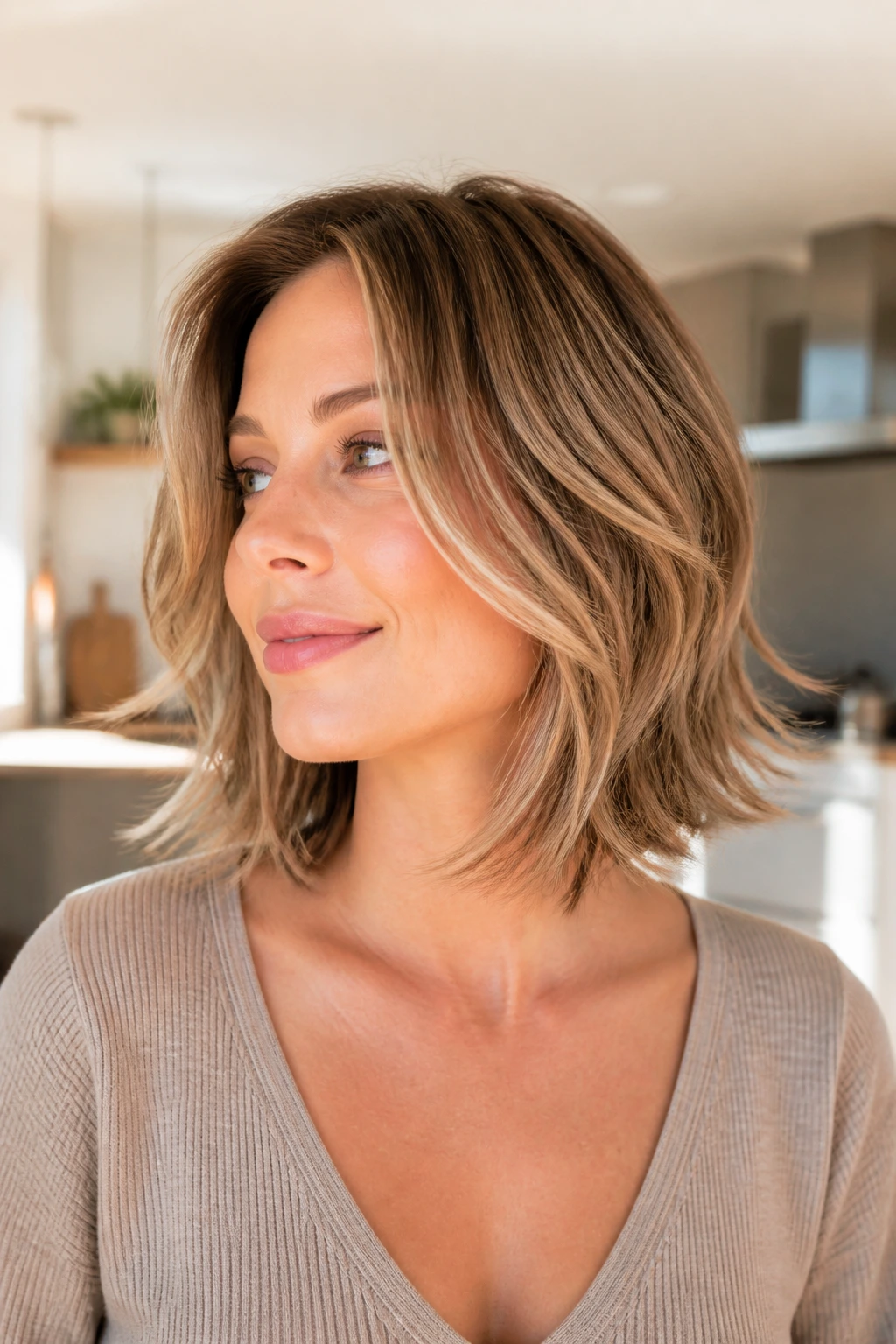
A small flip at the ends can make fine hair look fuller than a lot of heavy layering ever will. That’s why this mini wolf lob is so useful. It keeps the perimeter at collarbone length, then turns the ends outward or under just enough to show that the hair has shape and body.
The wolf piece comes from the internal layers and the slight breakup near the crown. The lob piece comes from keeping enough length that the hair still swings. It’s a good middle ground for anyone who wants movement but doesn’t want to look like they’re wearing a full shag.
This is one of the easiest versions to style with a round brush or a flat iron bend. A quick pass on the mid-lengths, a soft turn at the ends, and you’re done. No fancy sectioning required.
9. Airy French-Girl Wolf Cut

What makes a French-girl version feel softer on fine hair is restraint. The layers stay loose. The fringe stays a little imperfect. The shape looks as if it was cut for movement, not for drama. That matters, because fine hair tends to expose every overworked snip.
The best version of this cut sits around the jaw or collarbone and has a fringe that can part in the middle or be swept aside. It should feel like the hair has a natural bend, not like it’s been forced into a shape it doesn’t want. That’s what keeps the style from going flat by noon.
How to wear it
Use a light mousse at the roots, then dry the hair with your fingers until it’s almost set. Pull the front pieces away from the face for a few seconds with a brush or a large roller. The result should look relaxed, not finished to death.
10. Stacked Nape Wolf Bob
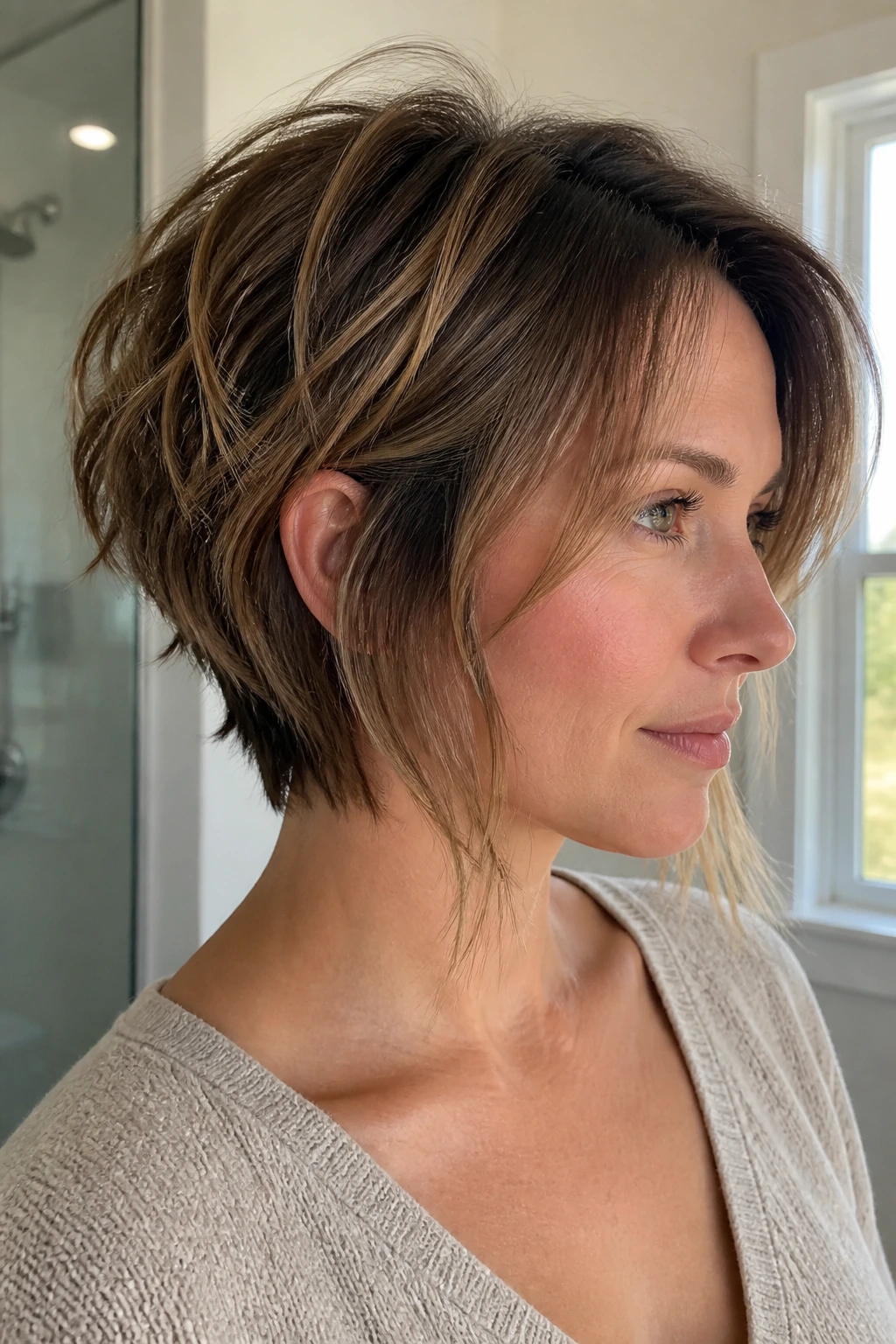
A stacked nape can help fine hair if it’s done with a light hand. Too much stacking, and the back starts puffing out like a triangle. Just enough, though, and the shape lifts the head from behind so the bob doesn’t sit like a flat sheet.
This cut is for people who need a little profile. The back gets a gentle build, the crown gets a bit of air, and the front stays soft so the whole thing doesn’t feel severe. Fine hair often benefits from this kind of quiet architecture.
I’d keep the front pieces longer than the nape by a noticeable but modest amount. The drop in length should be visible from the side, not dramatic from across the room. That balance is what makes the style read polished instead of overcut.
11. Choppy Collarbone Wolf

Collarbone length gives fine hair room to swing without losing all its density, and the choppy wolf layers stop the cut from turning into a plain lob. The result is breezy in motion, but the shape still has enough weight to hold itself together when the air dries unevenly.
What I like here is that the collarbone catches light and movement. Hair at that length has a natural turn as soon as it hits your shoulder, and the broken layers exaggerate that in a good way. If you’ve ever felt your hair was too limp to hold a style, this is the kind of length that forgives a bad blow-dry.
It’s also easy to tuck behind the ears, which matters more than people admit. A cut that can be worn tucked and loose usually gets used more often.
12. Piecey Pixie-Wolf Hybrid
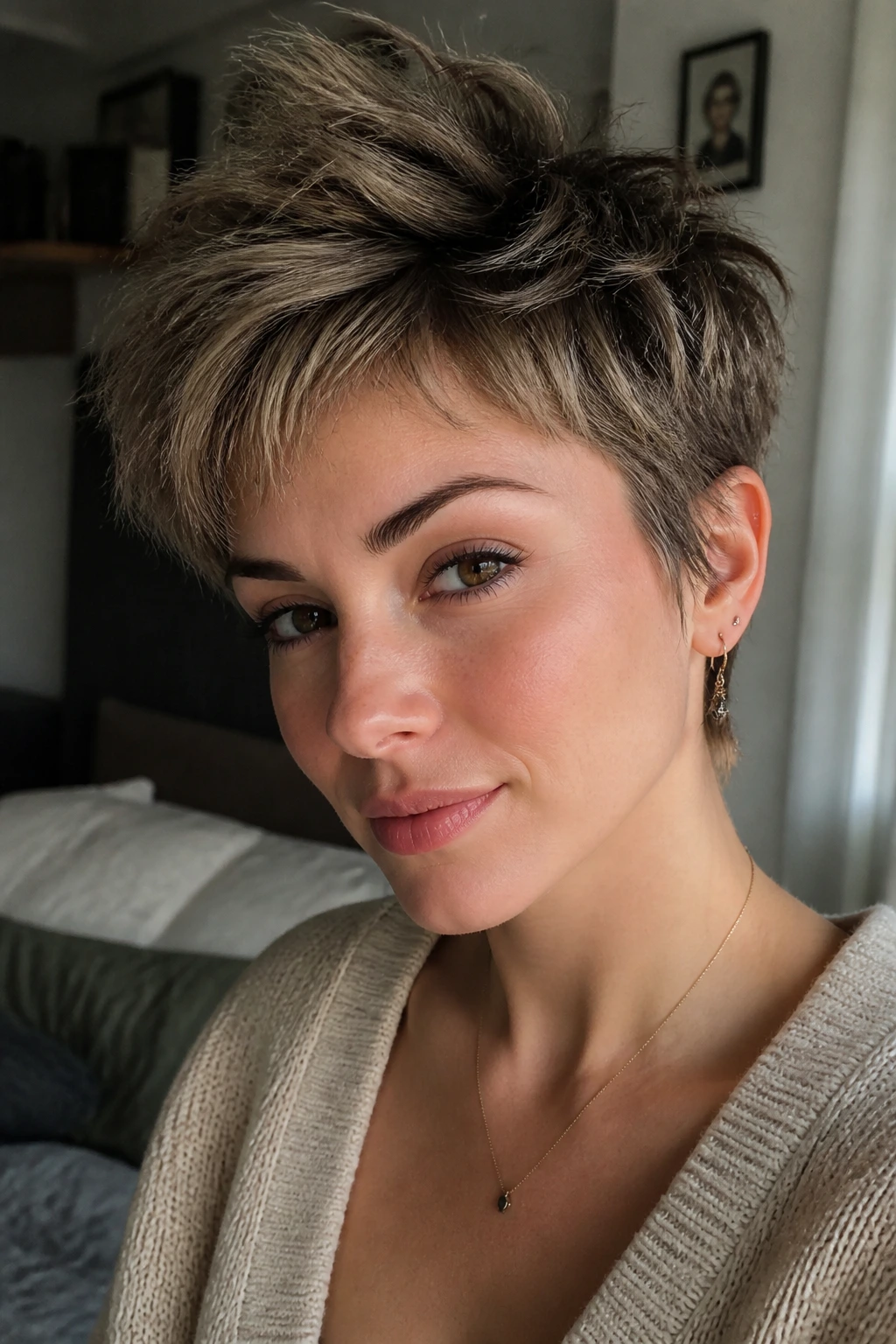
A piecey pixie-wolf hybrid is not for someone who wants hair to behave politely. It’s for someone who wants a short cut with lift, separation, and a little edge around the temples. The big win for fine hair is that the piecey top creates the illusion of density without needing much length.
Unlike a classic pixie, this version leaves enough room on top to shape with fingers or a tiny bit of paste. The sides stay snug, the nape is clean, and the top doesn’t get chopped down so short that the scalp starts showing through. That’s the main danger with fine hair and short cuts. Too much removal. Not enough structure.
This is best if you like a quick morning routine. Shake in some mousse, rough-dry, pinch a few pieces at the crown, and you’re done. It’s a cut that likes confidence more than precision.
13. Face-Frame Heavy Mini Wolf

If your cheeks or jawline are the part of your face you like most, this is the cut that points there. The face-framing pieces do the visual heavy lifting, and the rest of the hair stays controlled so fine strands don’t disappear into a lot of random layering. That’s the difference between flattering shape and haircut chaos.
Why it flatters fine hair
By keeping more of the movement near the front, the cut creates the sense of fullness where people actually look first. The crown still gets a little lift, but the real drama comes from the front pieces sweeping inward and brushing the cheekbones.
- Best length: Jaw to collarbone.
- Face frame: Start around the cheekbone.
- Layers: Keep them soft and connected.
- Part: Center or slight off-center both work.
Tip: if your hair falls flat on one side, ask the stylist to keep that side frame a touch longer so it doesn’t collapse by lunchtime.
14. Minimal Layer Wolf with Long Ends

Sometimes the smartest mini wolf cut is the one that acts like it barely tried. Long ends, minimal layers, a tiny bit of crown lift, and that’s enough. Fine hair usually loses body when too much gets removed, so this version keeps the outer line strong while sneaking movement into the inside.
This is the cut for anyone who likes hair that looks expensive because it still has a clear shape. The line is soft, not chopped. The movement is there, but it doesn’t announce itself from across the room. Understated, sure. But in a practical way, not a vague pretty way.
I’d choose this version if your hair is thin in density but healthy in texture. It lets the strands stay grouped together instead of separating into tiny, see-through sections. That grouping is doing a lot of visual work.
15. Tapered Crown Wolf Crop
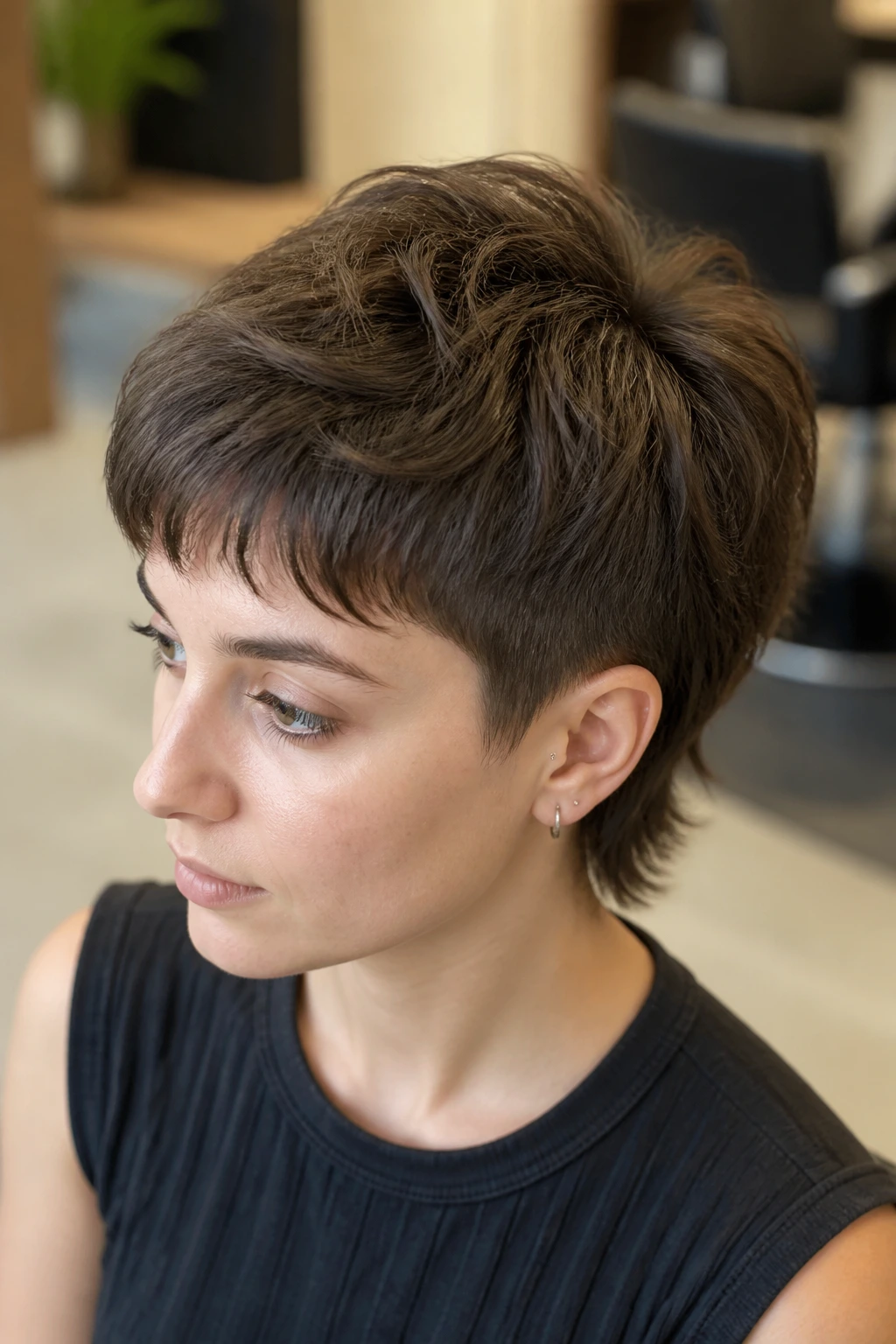
Can you build crown volume without making the sides look too big? Yes, and that’s exactly what this crop is for. The crown is tapered so it rises gently, while the sides stay close enough to the head that the shape doesn’t balloon. Fine hair usually handles that better than a heavy stack of short layers.
This cut lives or dies by the upper shape. If the top is too short, it will stick up. If it’s too long, the lift disappears. The sweet spot gives the crown just enough separation to create shadow and height, which makes the whole haircut read fuller.
How to style it
Work mousse through the roots, then blow-dry the crown in the opposite direction of your part for the first minute or two. Switch directions, finish the dry, and then pinch the top with your fingers. The root memory tends to hold better that way than if you dry it flat from the start.
16. Wavy Razor Wolf Bob
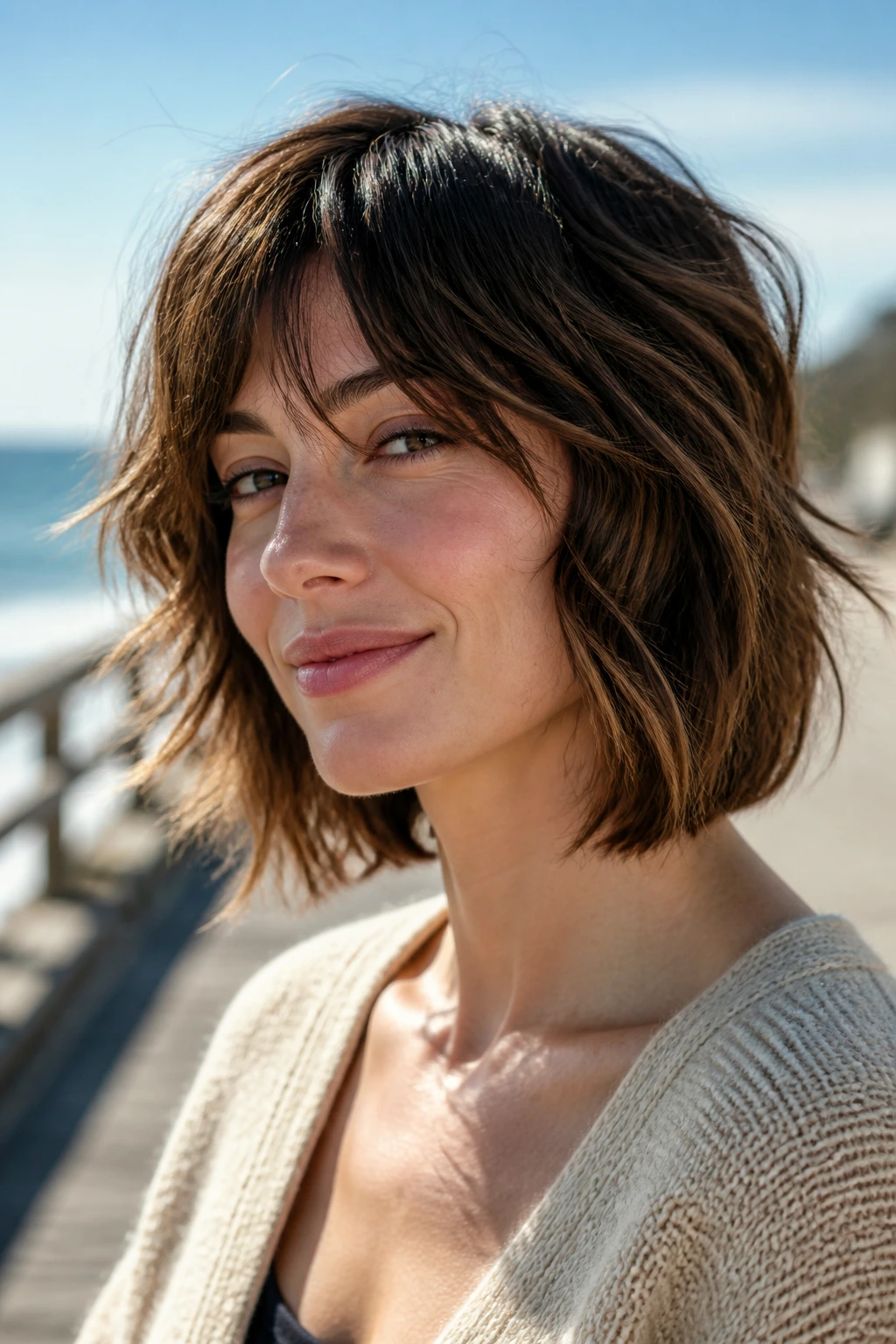
If your fine hair already has a loose wave, a razor wolf bob can make that wave look intentional instead of accidental. The razor should be used sparingly, mostly through the mid-lengths, so the ends keep enough weight to avoid fraying. That balance matters a lot on fine hair. Too much softness and the outline vanishes.
This bob works because the wave and the layers talk to each other. The wave gives movement; the layers keep the movement from turning into a puff. The result feels a little undone in a way that still looks deliberate when you walk into a room or catch your reflection in a dark window.
I’d wear this with a light sea-salt mist only if your hair can handle it. Some fine hair loves texture sprays. Some just turns dry and rough. If yours is the second kind, stick to mousse and a tiny bit of cream on the ends.
17. Soft Shag Wolf with Curved Bangs
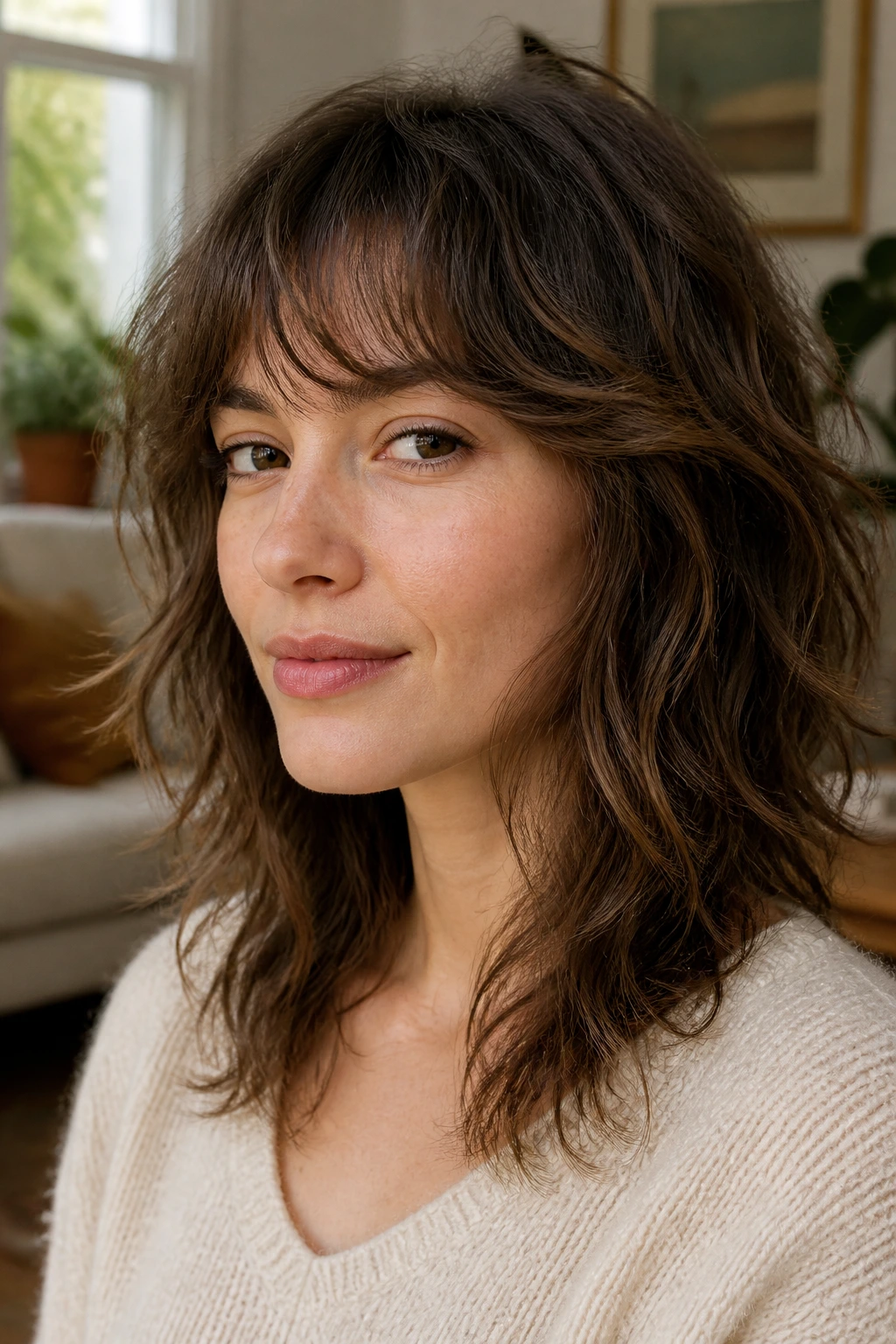
Curved bangs are a nice middle road when blunt bangs feel too heavy and curtain bangs feel too open. On a soft shag wolf, they bridge the face frame and the top layers in a way that makes fine hair look like it has more movement than it really does. The curve matters. It keeps the fringe from hanging like a flat line.
This version works well on longer faces and anyone who wants the front to feel a little more styled. The rest of the cut can stay loose and shaggy, but the curved fringe gives the haircut an anchor. Without that anchor, fine hair can drift into shapelessness.
The key is not making the bang too sparse. Keep enough density in the center so it actually shows on the forehead, then taper the edges gently into the front layers.
18. Tucked-Behind-Ear Wolf Cut

A lot of people forget how much personality appears when one side gets tucked behind the ear. This cut uses that habit on purpose. The wolf shape stays soft and broken up, but the ears become part of the silhouette, which is useful for fine hair because it keeps the style from looking too heavy around the face.
It’s a great option if you like a style that moves between neat and messy during the day. Tucked one way, it looks clean. Flipped back out, it gets softer and more lived-in. The longer side pieces help the hair keep its line, while the shorter interior layers create that little bit of shake.
This is especially good for glasses wearers. The tuck clears the temples and keeps the frame from fighting the haircut. Small thing. Huge difference.
19. Asymmetrical Mini Wolf

A subtle asymmetrical cut can wake fine hair up fast. One side sits a touch longer, the part shifts, and the whole shape feels more alive because the eye doesn’t get one straight line to follow. The difference doesn’t need to be dramatic. A small gap in length is enough.
Why the imbalance helps
Fine hair often needs a visual trick to seem fuller. Asymmetry gives the illusion of more movement and more depth, especially around the cheekbones and jaw. It also helps if one side tends to lie flatter than the other, which is common and annoying.
- Difference in length: Keep it modest, around 1 inch or so.
- Best part: Slight off-center.
- Texture: Soft, piecey ends rather than blunt edges.
- Styling: Tuck the shorter side once it dries.
Pro move: ask for the longer side to graze the jaw or collarbone so the shape still looks balanced from the front.
20. Blowout-Friendly Wolf Lob
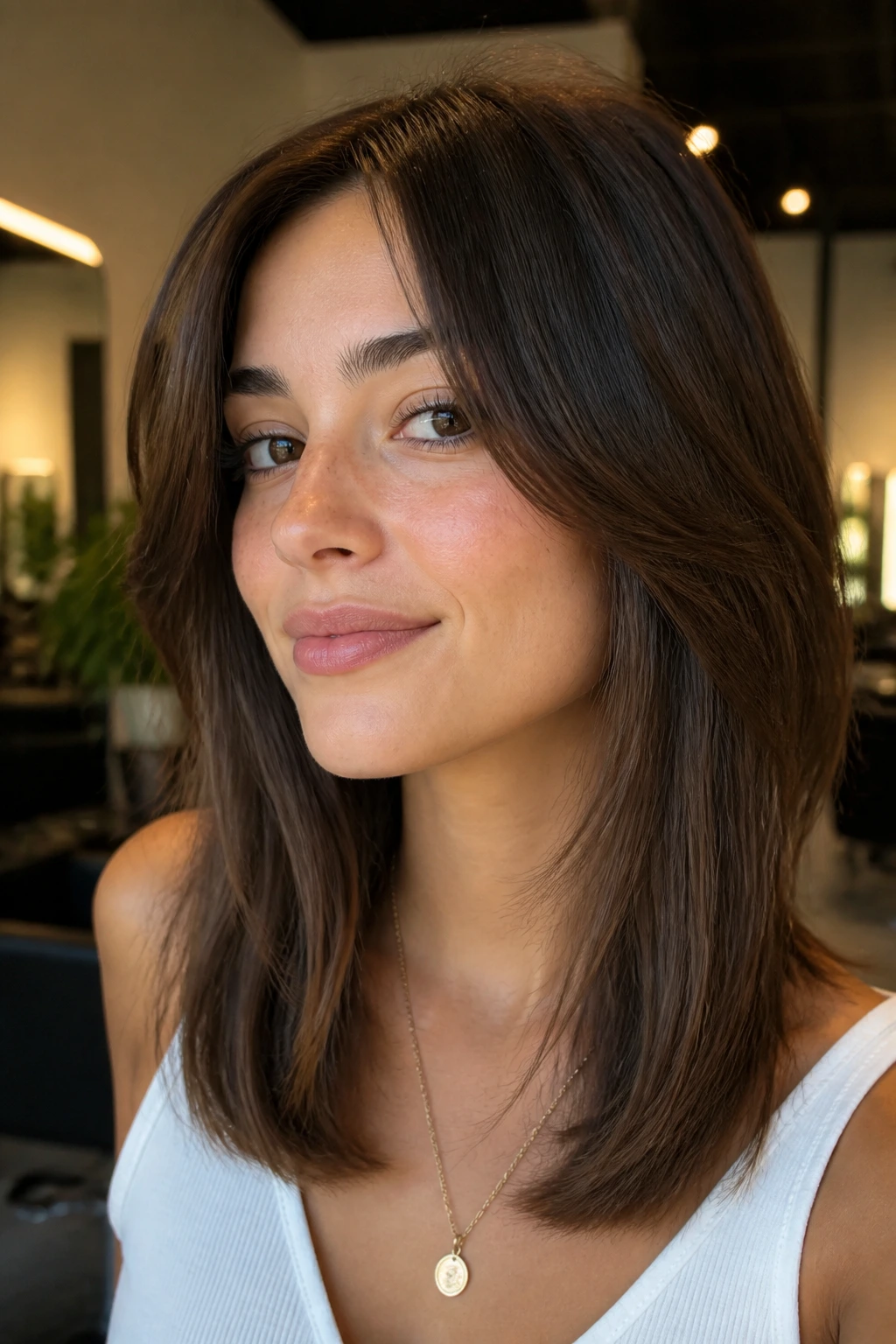
If you love a polished blowout, don’t force yourself into a shaggy texture cut that fights it. This mini wolf lob keeps the layers long enough to round-brush cleanly, which makes it a rare wolf style that can actually look better with a smooth finish than with rough texture.
The main trick is leaving enough perimeter weight. That gives the blowout something to swing off of. Internal layers then create lift under the surface, so the style doesn’t go limp two hours later. Fine hair tends to love this kind of hidden support.
I’d recommend this for anyone who already owns a round brush and uses it without swearing. It’s also a good choice if you want the haircut to work for office days and messier days without needing two different shape languages.
21. Textured Mushroom Wolf
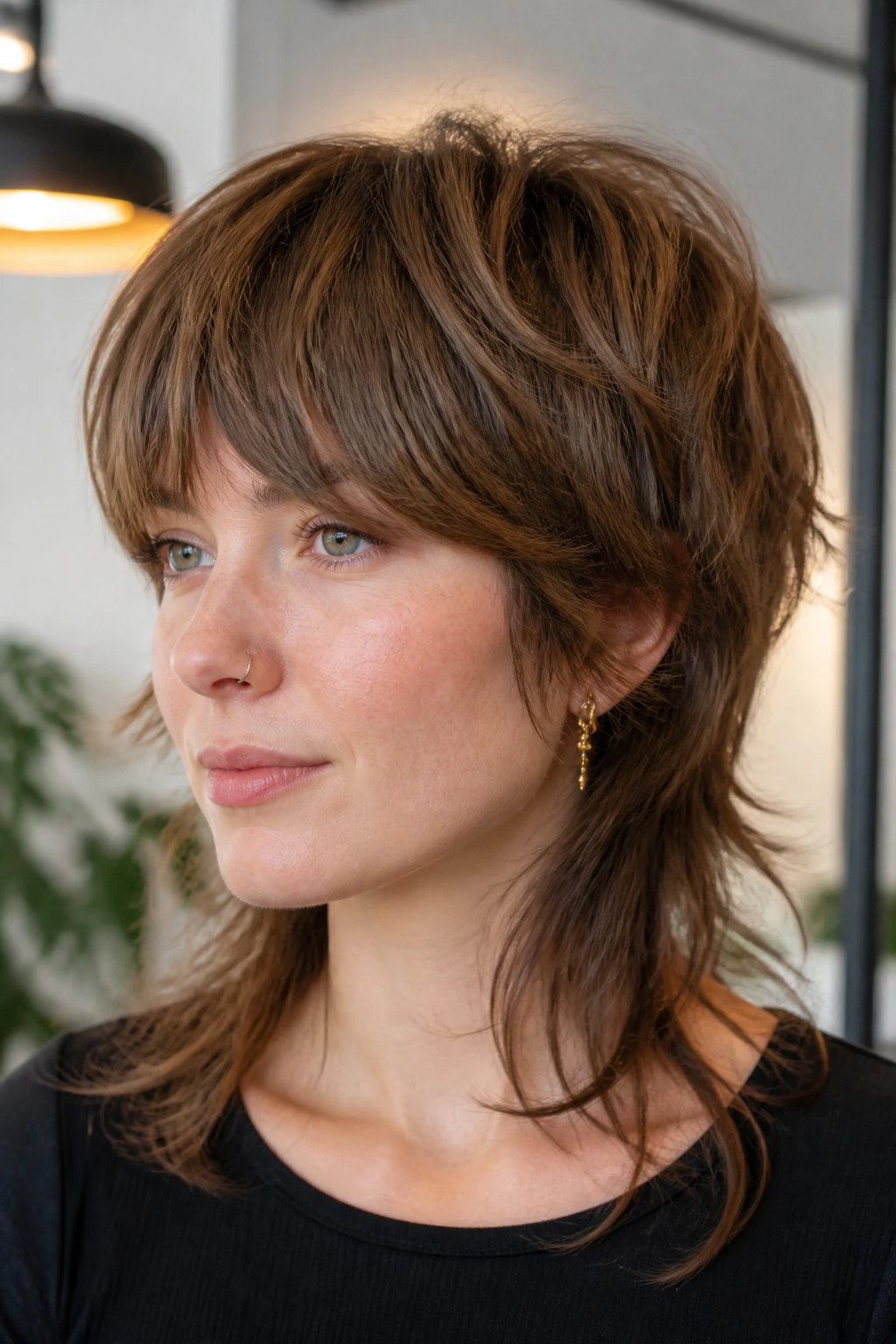
A mushroom cut and a wolf cut sound like odd roommates, but on fine hair, the mix can be clever. The top keeps a rounded cap of softness, while the lower pieces are broken up enough to avoid the old bowl-cut problem. The result feels compact, modern, and a little playful.
The important part is softness. You do not want a hard line around the head. The shape should curve, not shelf. Fine hair can wear this well because the rounded top gives the sense of fullness, and the wolf texture underneath stops it from looking too tidy.
How to keep it modern
Ask for a soft perimeter and light internal layering only. The cut should read rounded when it’s still and airy when it moves. If the lower edge starts getting chunky or blunt, the whole thing turns into a much older haircut than you probably wanted.
22. Half-Femme Half-Fierce Wolf Bob

This is the cut for someone who wants a neat outline with a little bite underneath. The outside looks polished enough for work or a dressier setting, but the interior has enough texture to keep the whole thing from going flat. Fine hair often needs that tension: clean on top, rough in the right places.
The bob length gives you a controlled base, and the wolf elements make it feel less precious. That matters if you dislike cuts that require perfect heat styling every morning. A small bend at the ends is enough here. The haircut does the rest.
I’d pair this with a soft side part if your crown is weak, or a center part if your face frame already does enough lifting. Either way, keep the layers inside the silhouette, not all over the surface.
23. Feather-Edge Wolf with Long Fringe
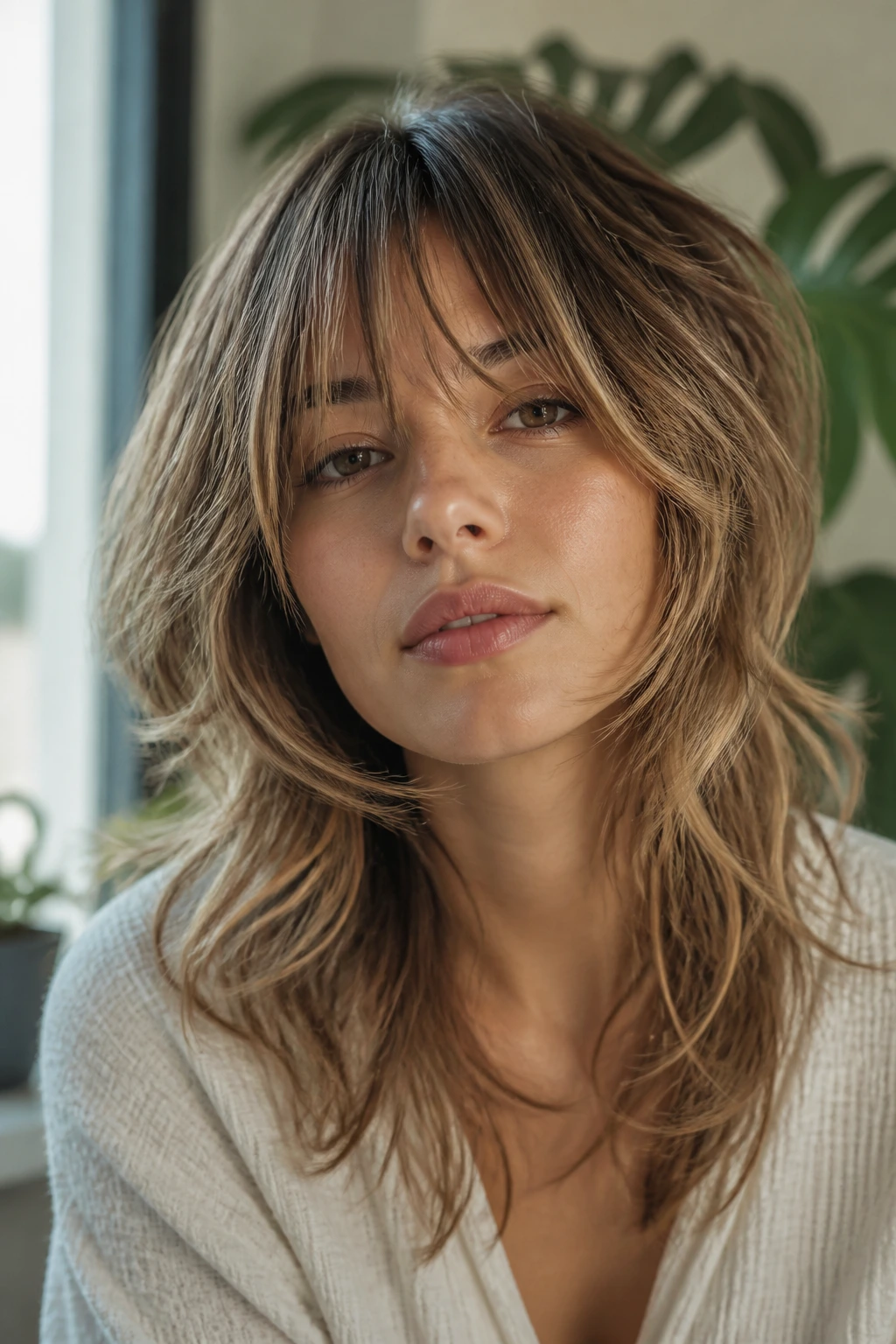
Long fringe gives fine hair a little drama without stealing too much density from the front. The feathered edges around the jaw and neck then soften the cut so it doesn’t feel too line-heavy. That combination makes the style look light, but not sparse.
This cut works well if you want the face to stay framed even when your hair is pulled slightly forward. The fringe can be swept, split, or tucked, and the feathered edges keep the movement alive around the collar. It’s a smart shape for people who like hair that does something even when they haven’t spent 40 minutes on it.
The biggest mistake would be shaving the fringe too thin. Keep enough hair in the bang section that it actually has opacity. Fine hair needs a little more in the front than you might expect.
24. Internal-Layer Wolf for Straight Fine Hair
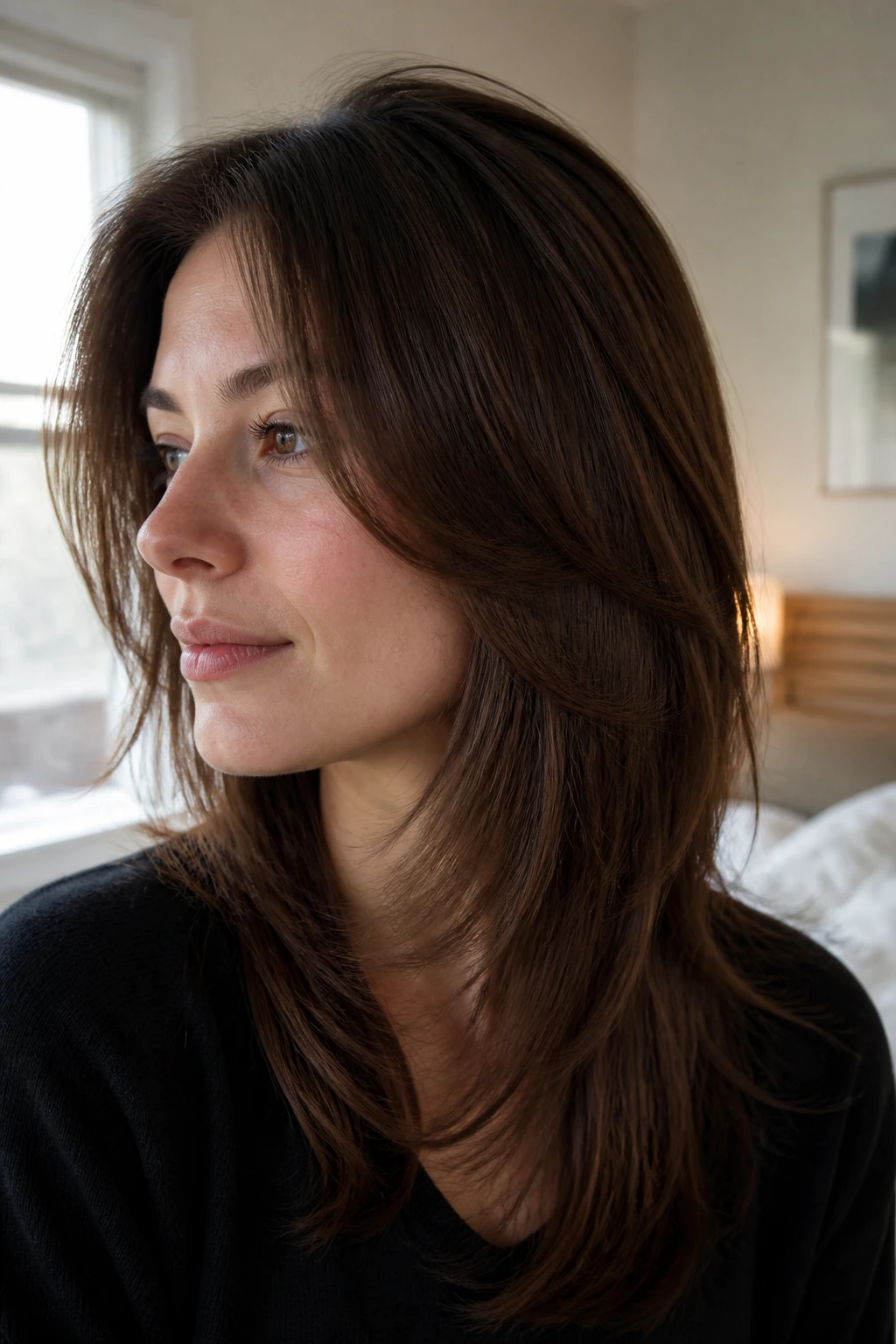
Straight fine hair is where internal layering earns its keep. You don’t want the whole surface hacked up. You want the hidden layers inside the shape doing the lifting while the outer line stays smooth and full. That keeps the cut from looking see-through when the light hits it.
This is a quieter wolf cut. Less jagged, more controlled. It’s a good fit if your hair resists wave and you’re not in the mood to fake texture every day. The top still lifts, the sides still move, but the overall silhouette stays clean enough to tuck behind the ears or pull into a quick half-up.
If you want something that looks expensive in a plain white T-shirt, this is that cut. It doesn’t rely on styling tricks as hard as the more piecey versions do.
25. Low-Maintenance Wash-and-Go Wolf

Not every mini wolf cut needs a blow-dry ritual. This one is built for people who want to wash, scrunch, and walk away. The layers stay soft, the perimeter stays solid, and the crown gets just enough lift to stop the shape from sinking as it dries.
The routine
Use a lightweight mousse on damp roots, then work a tiny bit through the mid-lengths with your hands. Clip the crown for a few minutes if you want a little extra lift, and let the hair dry naturally or with a diffuser on low. That’s enough to give the style a lived-in bend.
- Best length: Bob to short lob.
- Best texture: Fine hair with a mild wave.
- Product: Foam mousse or light gel-mousse.
- Avoid: Heavy oils before drying.
Best part: the cut still looks intentional on day two, which is where a lot of fine-hair styles fall apart.
26. Pin-Curled Mini Wolf

A few pin curls can fake a lot of density. That’s why this mini wolf works so well on fine hair. The cut itself stays compact and lightly layered, then the set creates a soft wave pattern that makes the hair look more abundant than it did straight out of the shower.
The trick is not overdoing the curl. You want bend, not ringlets. Wrap small sections around your finger or a 1-inch iron, pin them while they cool, then release and brush lightly with your fingers. The finished texture should look airy and separated, not lacquered into place.
I’d use this version if you enjoy a little styling but don’t want a blown-out look every day. It also photographs well in that natural, slightly undone way that looks like effort without looking forced. Small rollers help too, if you’re old-school like that.
27. Chin-Grazing Wolf with Nape Taper
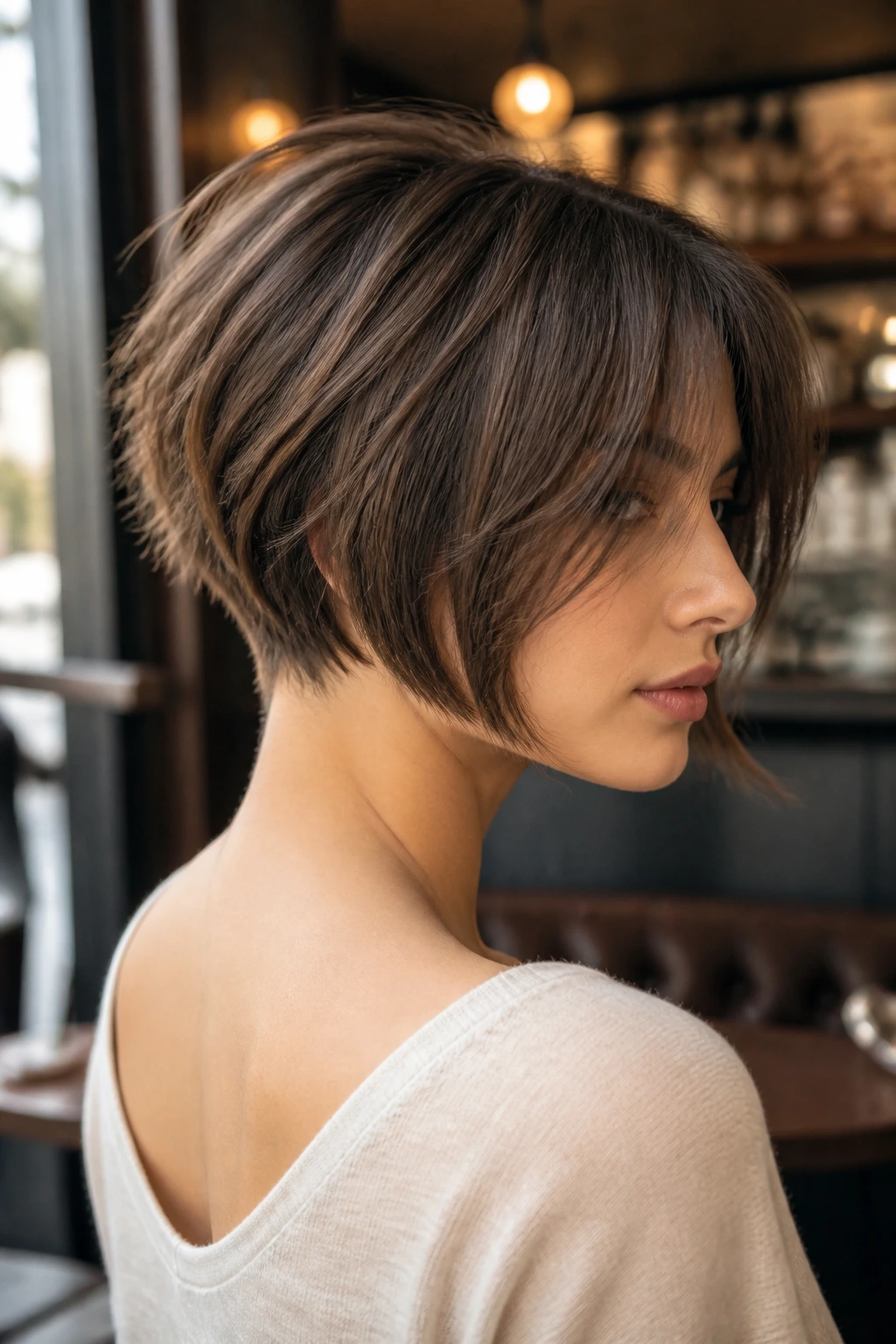
A chin-grazing front and a softly tapered nape create one of the cleanest silhouettes for fine hair. The front pieces give the face structure, while the back stays light enough that the haircut doesn’t swell into an awkward wedge. It’s controlled, but not stiff.
How to wear the line
Keep the chin pieces a touch longer near the front so they can swing. The nape should tuck in gently, not disappear entirely. If the back gets too tight, the style loses its softness and starts looking severe.
This is a good choice if you want the mini wolf effect but prefer a more refined outline. It also handles growing out well because the front keeps its shape as the back gets a little longer. That makes maintenance less annoying.
28. Soft Rebel Wolf with Micro Bangs

Micro bangs are a bold move, and on fine hair they need careful handling. The best version of this cut keeps the bangs airy enough to show the forehead a little, not block it entirely. Pair that with a soft wolf shape and the result feels edgy without becoming costume hair.
This works because the micro fringe gives the haircut a focal point. Fine hair often benefits from a strong focal point; otherwise the style can look a bit too melted together. The rest of the layers should stay soft and connected so the fringe doesn’t stand alone like an odd accessory.
I wouldn’t choose this if you hate regular trims. Micro bangs grow out fast and lose their edge even faster. But if you like face-first styling and a little drama, it’s one of the sharper mini wolf options.
29. Dimensional Highlight Wolf Cut

Color changes the way a cut reads, and on fine hair that can be useful. Dimensional highlights make the layers visible without needing more layers. That’s the nice trick here. A mini wolf cut with soft ribbons of color can look fuller because the eye starts tracking movement and depth.
The best highlights for this shape are subtle and broken up, not chunky blocks. A few lighter pieces around the face and crown can catch the movement of the cut without making the hair look thin at the ends. Keep the color placement soft enough that the perimeter still feels full.
This is especially good if your hair falls a little flat in photos or under indoor lighting. The cut creates the movement; the dimension helps the movement show up.
30. Curly-Wave Mini Wolf

Loose curls and fine hair can wear a mini wolf beautifully if the cut respects shrinkage. That usually means keeping the layers longer than you would on straight hair and letting the curl pattern tell the stylist where the movement actually lives. Cutting dry often helps here because you can see the true shape.
The nape should stay soft. The front should frame without choking the face. And the top layers should remove just enough weight to let the curl or wave bounce, not so much that the shape breaks apart into thin frizz.
This version is for people who don’t want to fight texture with a flat iron every day. Diffuse gently, scrunch, and stop touching it while it dries. Fine curly hair hates fuss.
31. Air-Lifted Crown Wolf with Long Sides
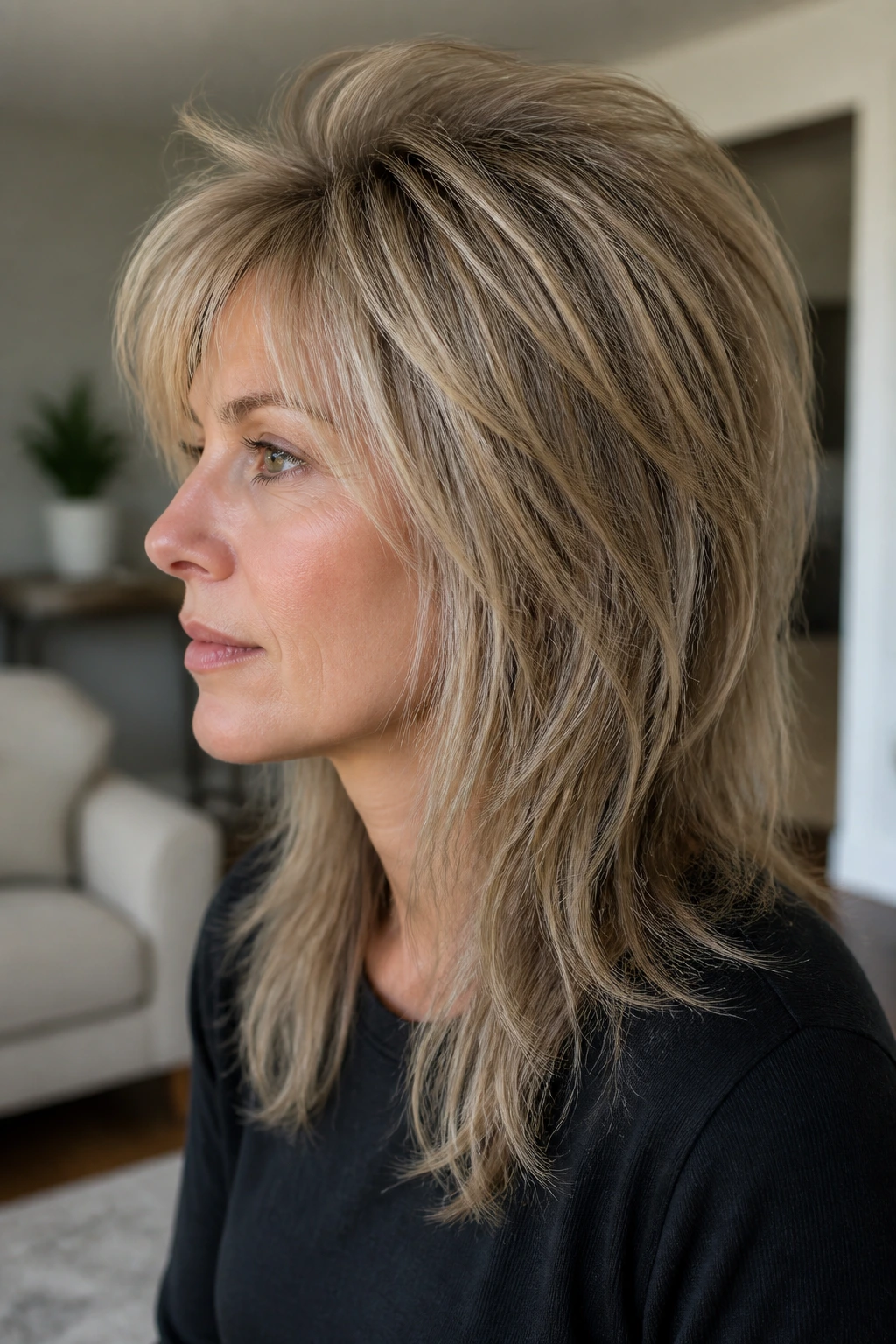
Some mini wolf cuts put the emphasis on the sides; this one puts the whole argument at the crown. The top is kept light and lifted, while the sides stay longer and softer so the haircut doesn’t explode outward. That makes it useful for fine hair that needs height more than width.
Where the volume lives
The root lift should be strongest at the center top and crown. The side pieces then drape a little lower, which keeps the shape from becoming round in the wrong way. It’s a smart choice if your head shape benefits from height and you want the sides to stay sleek.
- Crown: Shorter, lighter layers.
- Sides: Longer and connected.
- Best styling: Root clips or a blow-dryer nozzle.
- Finish: Flexible spray, not crunchy hold.
Tip: dry the crown first. If the roots set flat, the rest of the cut has to work too hard.
32. Rounded Bob-Wolf
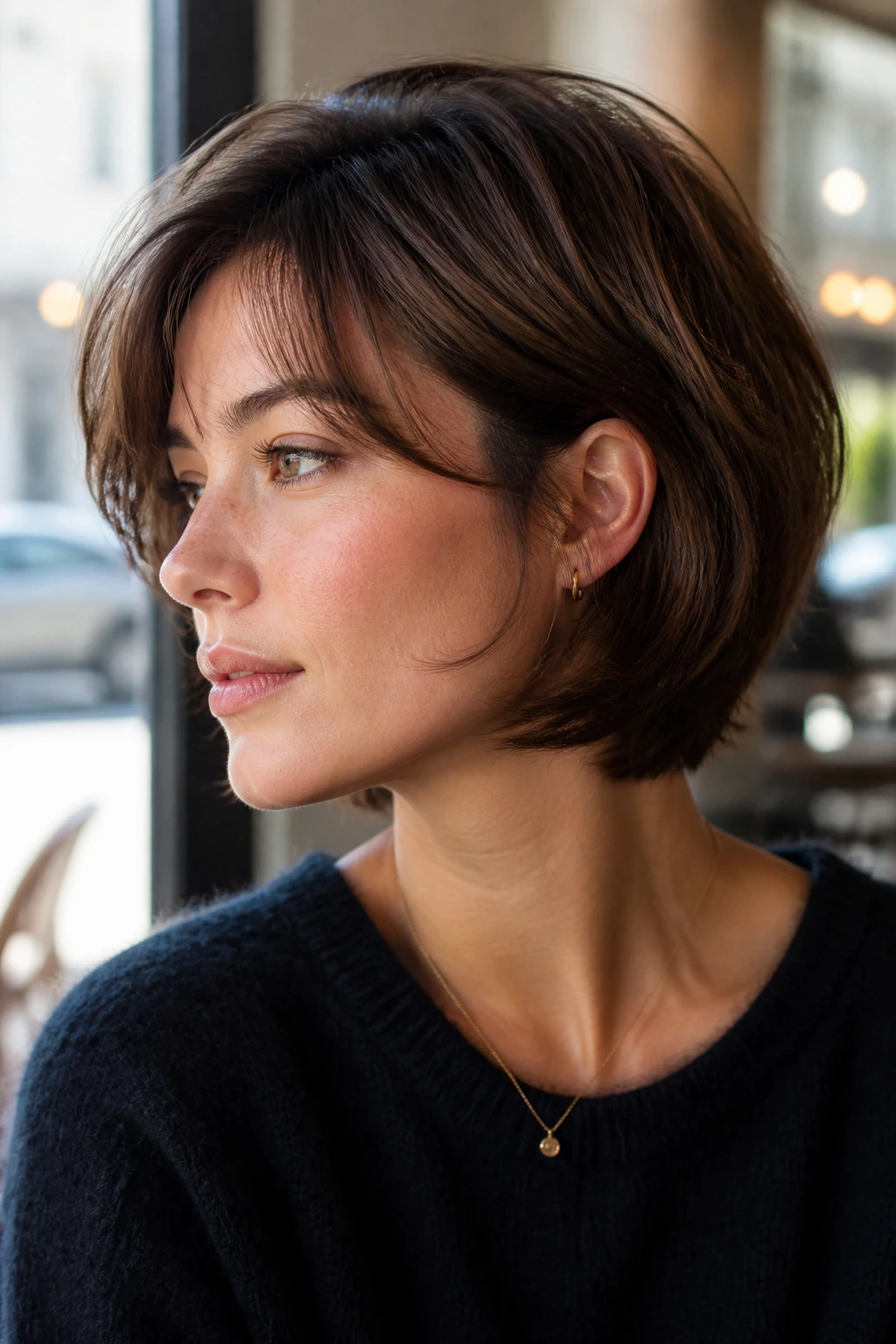
A rounded bob-wolf is one of the cleanest mini wolf cuts for fine hair because the roundness tricks the eye into seeing more fullness. The shape is neat around the edges, but the inner layers stop it from looking like a stiff school-bob. There’s movement, just not a lot of mess.
I like this cut on people who want hair that behaves in public. It sits well under a coat collar. It tucks behind the ear. It can be blown smooth or left slightly tousled, and it won’t fall apart the second humidity shows up.
The important part is keeping the curve soft. Too much rounding and you get a helmet. Not enough and the cut loses the density boost. Right in the middle is where the good version lives.
33. Chunky Face-Framing Wolf

Why does chunkier face framing work when fine hair is usually told to stay delicate? Because a few stronger front pieces can make the whole cut look more substantial. The trick is not scattering that chunkiness all over the head. Keep it where the face frame lives, and let the rest of the hair stay lighter.
This version helps if your features like a bit of definition around the jaw or cheekbones. The face frame can be styled forward or swept back, which gives the cut more than one personality. That’s handy for fine hair, which often needs a simple switch to look different.
How to ask for it
Tell the stylist you want the front pieces to feel fuller than the interior, but not blunt. That usually means longer sections around the face with soft, broken ends. It’s a controlled kind of drama.
34. Short Wolf with Hidden Undercut
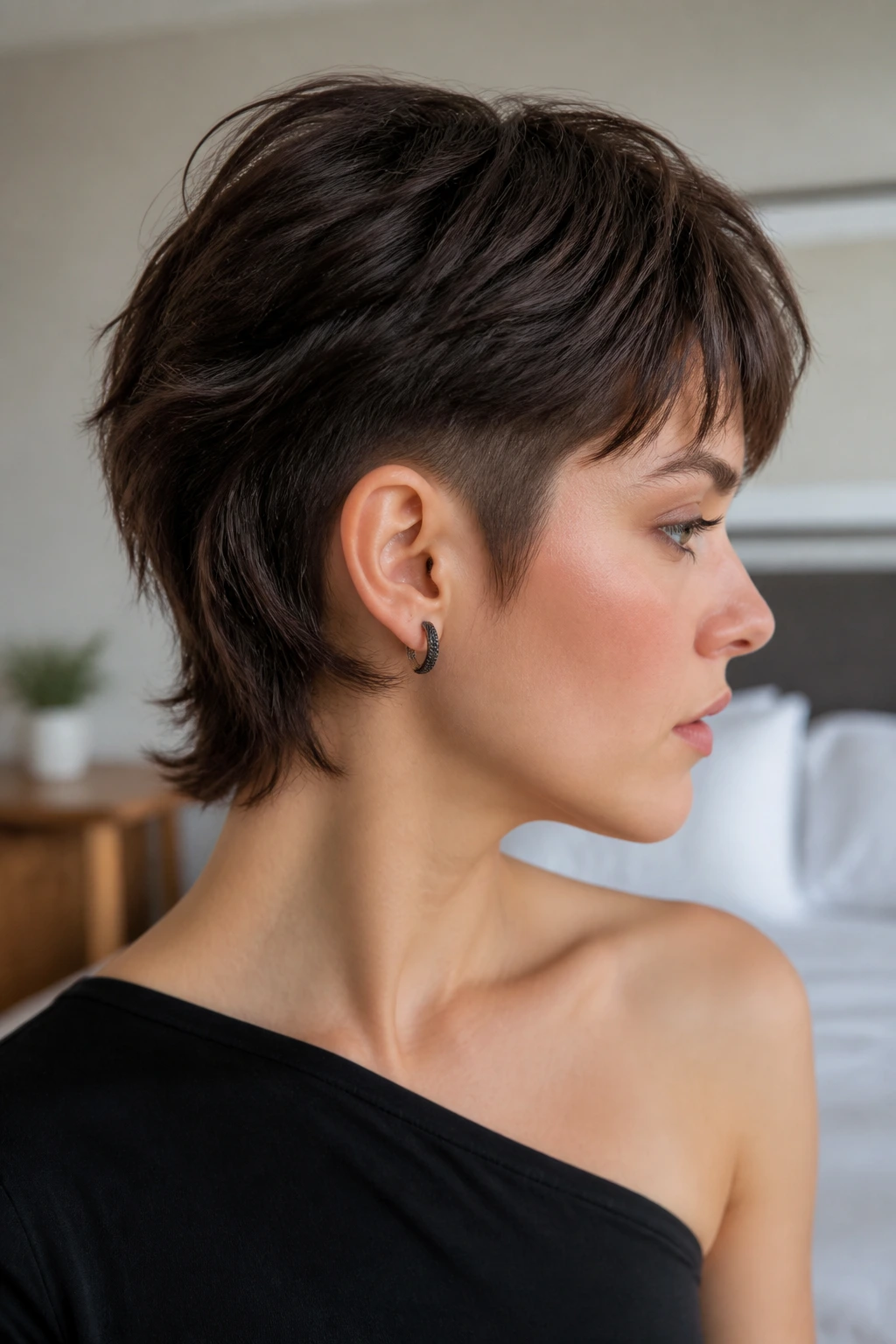
A hidden undercut is not the first thing people think of for fine hair, but it can be useful if the nape is bulky or the back of the head swallows shape. The undercut stays tucked away, so the surface still looks like a soft mini wolf cut, but the base sits cleaner and lighter.
This is not for every fine-haired head. If your hair is sparse at the nape, skip it. If your hair grows thick underneath but appears thin on top, though, a small hidden undercut can help the upper layers lie better and stop the back from puffing in weird ways.
The cut needs a careful hand. You want hidden structure, not visible aggression. If the undercut peeks too much, the whole thing becomes a different haircut.
35. Lived-In Wolf Lob
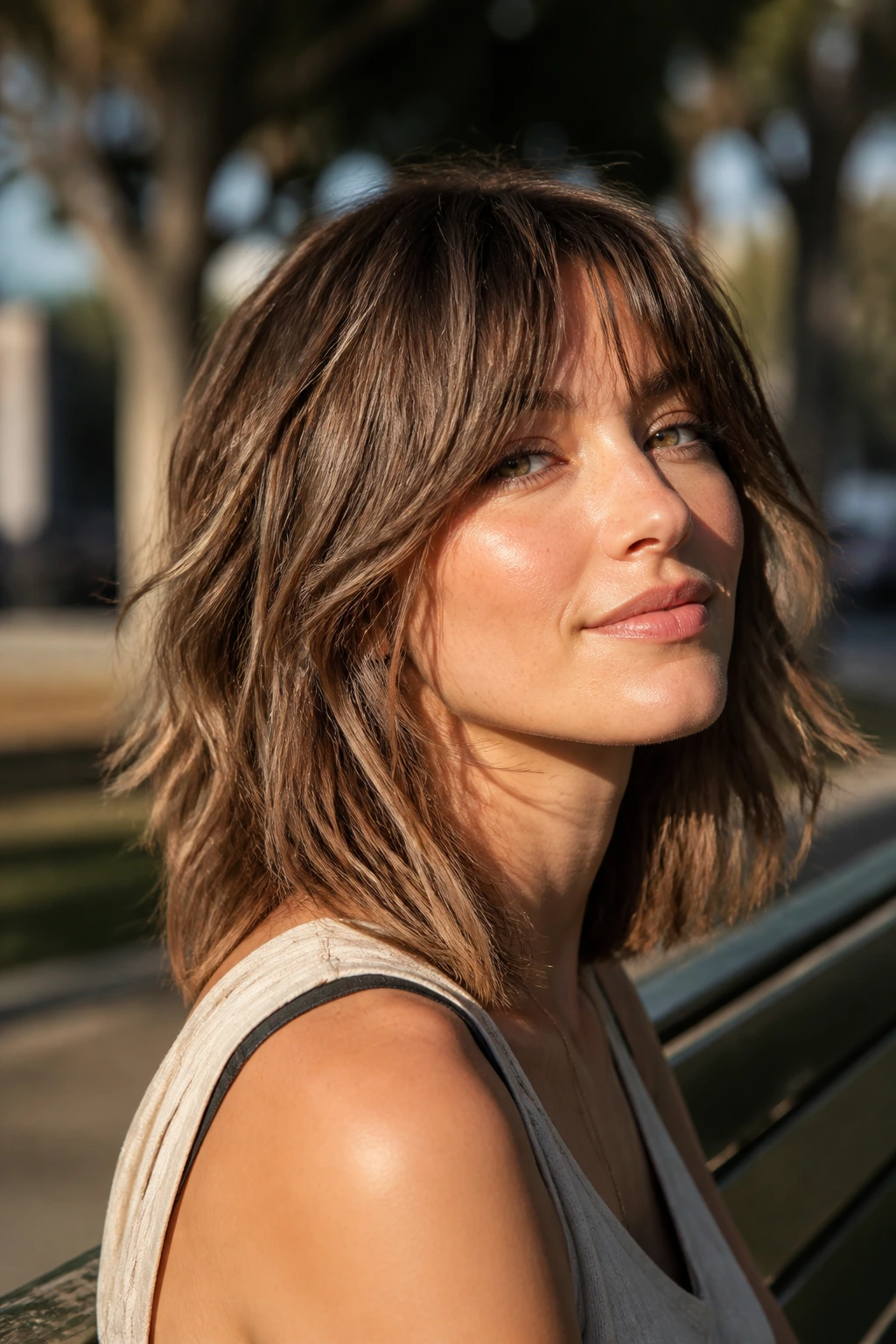
A lived-in wolf lob is for people who prefer hair that looks worn in, not freshly polished every minute. The layers are soft, the perimeter is long enough to swing, and the styling is loose enough that the shape can survive a day of real life. Fine hair often does better when the cut doesn’t demand perfection.
This is one of the easiest mini wolf cuts to maintain because it forgives a slightly messy finish. A little dry shampoo at the roots, a touch of texture at the ends, and the shape still reads clearly. That’s a bigger win than it sounds.
It also grows out gracefully. A lot of short layered cuts lose their point in awkward stages. This one just turns into a better lob.
36. Piecey Wolf with Side Sweep
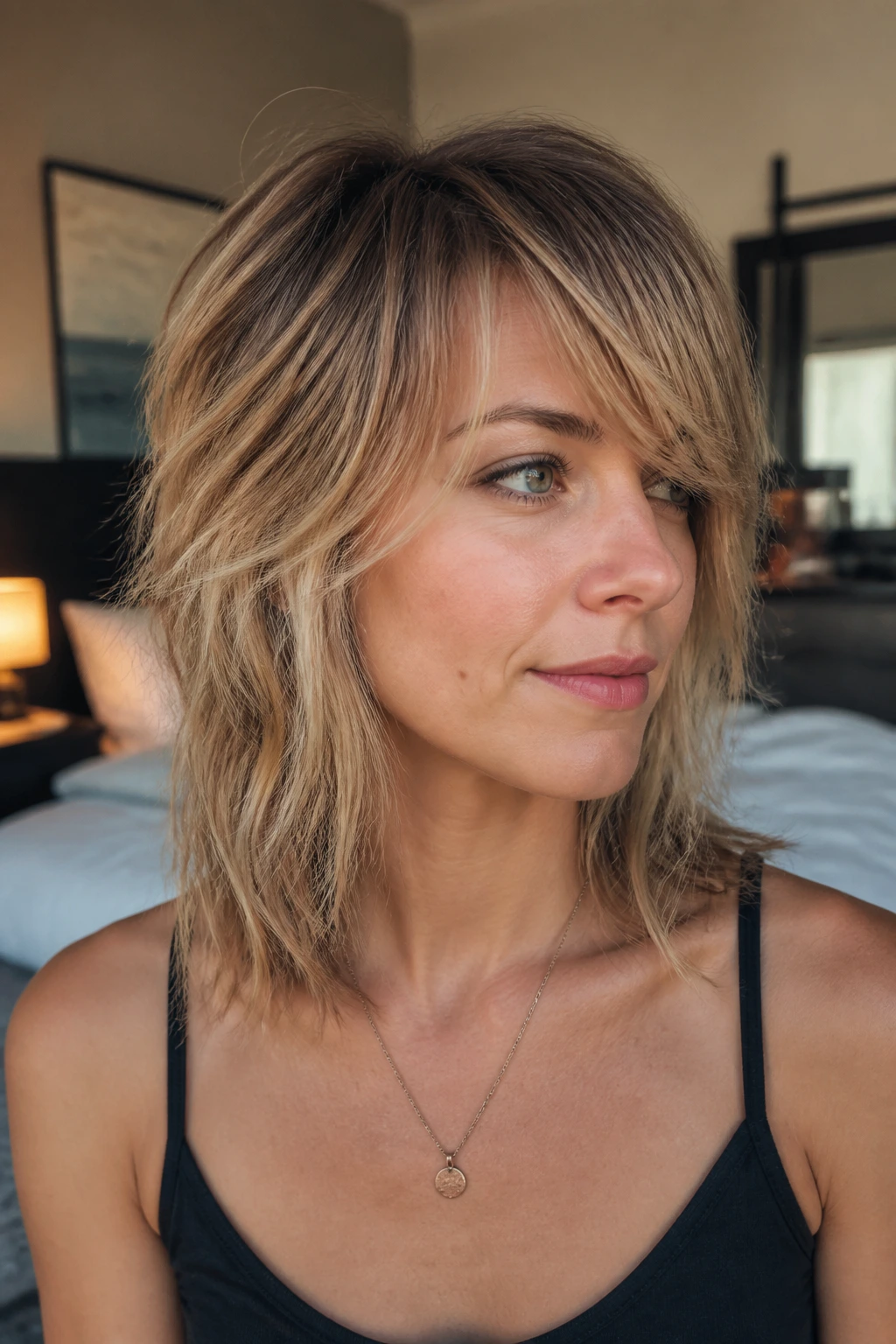
A side sweep gives fine hair movement without the commitment of a full fringe. The front pieces lean across the forehead, the crown gets a bit of lift, and the overall shape keeps a soft edge. It’s a good halfway house between a neat bob and a more obvious shag.
This is useful if you have a cowlick or a part that never behaves. The side sweep can disguise both. The piecey texture keeps the cut from falling into a smooth, flat sheet, which is often the enemy on fine hair.
I’d choose this version if you want the face to stay open but not too exposed. It’s a subtle way to keep the haircut from looking plain without going into heavy bangs.
37. Lightly Shattered Wolf Crop
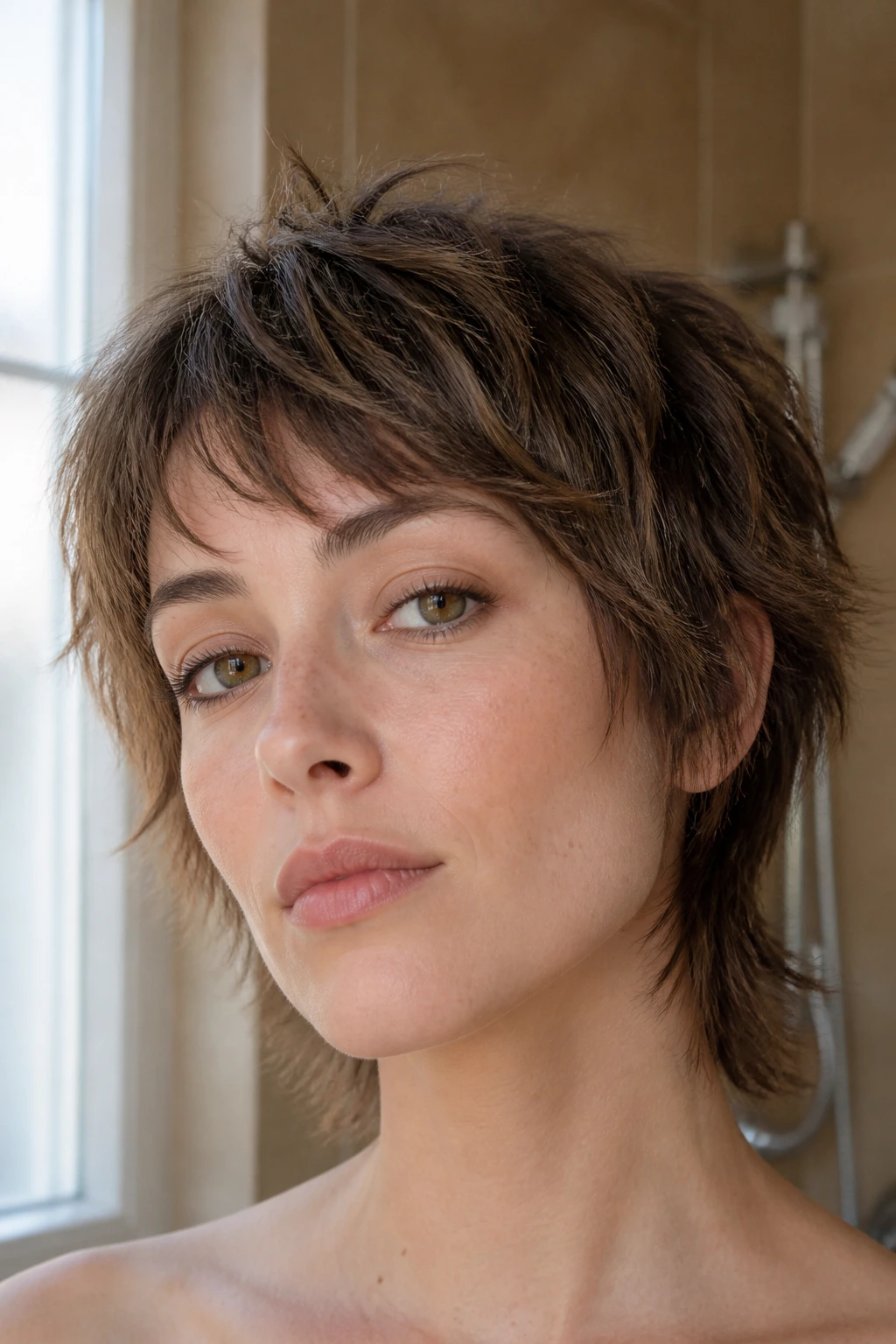
A lightly shattered crop should never look hacked to pieces. The word “shattered” sounds harsher than the effect should be. On fine hair, you want a soft break in the ends, a little movement around the top, and enough perimeter weight that the cut still has substance.
Why the shatter stays soft
The layers are broken up just enough to make the hair move. That’s it. If the stylist over-texturizes, the crop starts looking thin and the ends lose their line. Soft point cutting is usually better than aggressive razoring here.
- Length: Short bob to crop.
- Finish: Matte texture, not crunchy spray.
- Best for: Fine hair that needs edge but not heaviness.
- Styling: Rough-dry and pinch the ends apart.
Best move: keep the front a little longer than the crown so the cut stays wearable on days you don’t style it.
38. Grown-Out Pixie Wolf
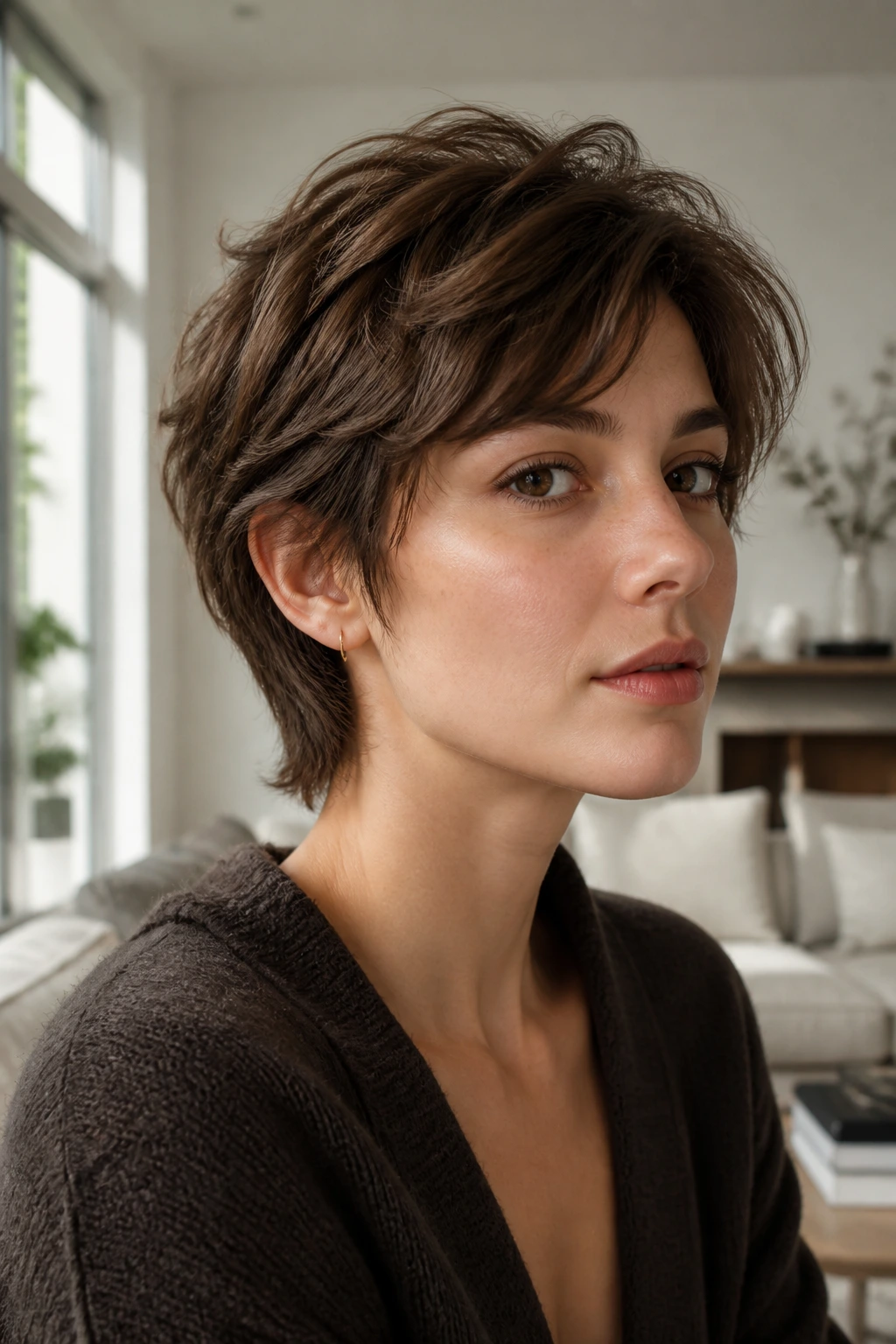
A grown-out pixie wolf is the quiet cousin of the mini wolf family. It’s perfect if you’re moving out of a pixie but don’t want to jump straight to a bob. The top stays long enough to sweep, the sides stay neat enough to frame the ears, and the nape remains soft so the whole cut feels intentional during the grow-out.
Fine hair does well with this shape because it keeps the outline close to the head, which helps the strands look fuller. You also get enough top length to play with parting and texture. That means the haircut doesn’t get boring while it’s growing.
This is one of the easiest cuts to maintain in short 5- to 6-week trims. A tiny clean-up keeps the shape lively. Let it go too long, and the wolf element disappears into a plain grown-out pixie.
Why a Mini Wolf Cut Gives Fine Hair More Shape

The mini wolf cut works on fine hair because it borrows the movement of a shag without emptying out the bottom. That sounds simple, but it’s the whole trick. Fine hair usually looks best when the perimeter stays substantial enough to catch light and create a real edge. If the ends get too thin, the cut starts reading as sparse instead of textured.
The other useful part is where the layers sit. Crown lift gives you height where the eye notices it fastest. Face-framing pieces make the cut feel deliberate. A soft nape keeps the back from puffing or collapsing. You’re basically deciding where the visual weight goes, and that matters much more than adding more layers everywhere.
Mini wolf cuts also have a nice grow-out pattern. A full shag can lose its shape quickly and start feeling choppy in an awkward way. A mini version softens into a bob or lob with some attitude still left in it. That makes the upkeep less fussy, which I appreciate. Hair that looks good on day one and still behaves on day forty is worth keeping.
Essential Tools for Styling the Cut at Home
- Blow dryer with a concentrator nozzle: Direct airflow at the roots so the crown lifts instead of flattening.
- Small round brush, around 1 to 1.5 inches: Best for bending short layers, bangs, and bob-length ends.
- Vent brush or paddle brush: Useful for rough-drying fine hair fast before you shape it.
- Lightweight mousse: Gives the cut grip without the sticky feel that can weigh fine hair down.
- Heat protectant spray: Fine hair burns faster than people think, especially around the fringe and face frame.
- Dry texture spray: Adds grit and separation at the mid-lengths without making the roots dusty.
- Flexible-hold hairspray: Keeps movement in the cut instead of freezing it into a hard shell.
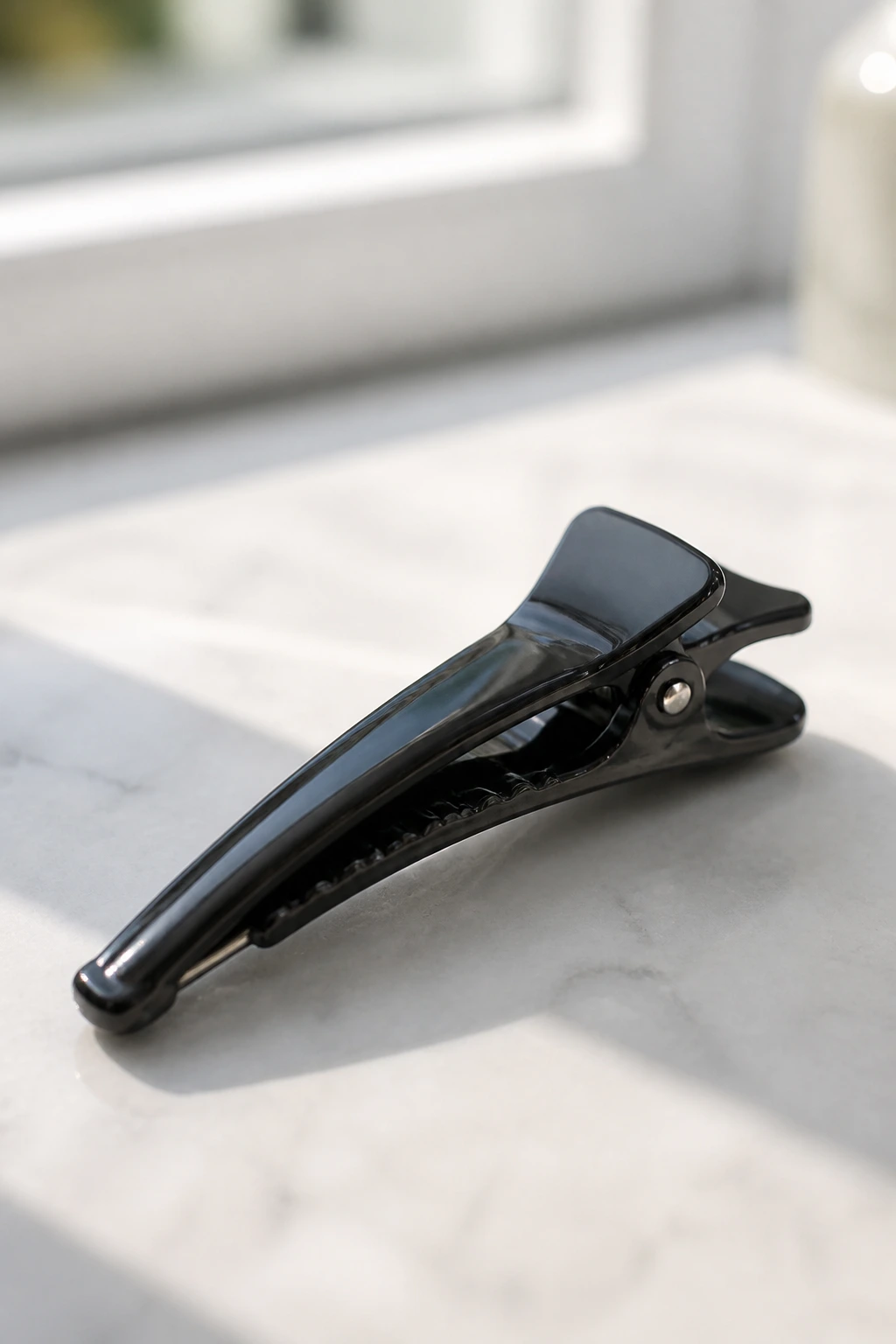
- Duckbill clips or root clips: Handy for setting crown lift while the hair cools.
- 1-inch curling iron or flat iron: Optional, but useful for a tiny bend at the ends or a soft wave through the front.
How to Choose Products That Don’t Collapse the Shape
Fine hair usually needs less product than people think and more of the right product. Heavy creams can flatten the crown before you even finish drying. Oils are tricky too; a drop on the ends can help, but a generous squeeze turns airy layers into flat ribbons. The cut has enough movement baked in. Don’t smother it.
Mousse is the safest starting point for most mini wolf cuts. It gives the roots a bit of memory and keeps the hair from drying too soft. Dry texture spray is useful once the shape is set, especially if you want a piecey finish around the ends. I’d reach for it at the mid-lengths, not the scalp, so the roots stay light.
If your hair gets greasy fast, dry shampoo can be a real ally. Use it before the oil becomes visible, not only after the hair looks dirty. That tiny head start can buy you another day of volume. For shine, keep serum to the final inch or two of the hair, and use less than you think you need. Tiny amount. Tiny difference. Big difference if you overdo it.
How to Explain the Shape You Want to Your Stylist
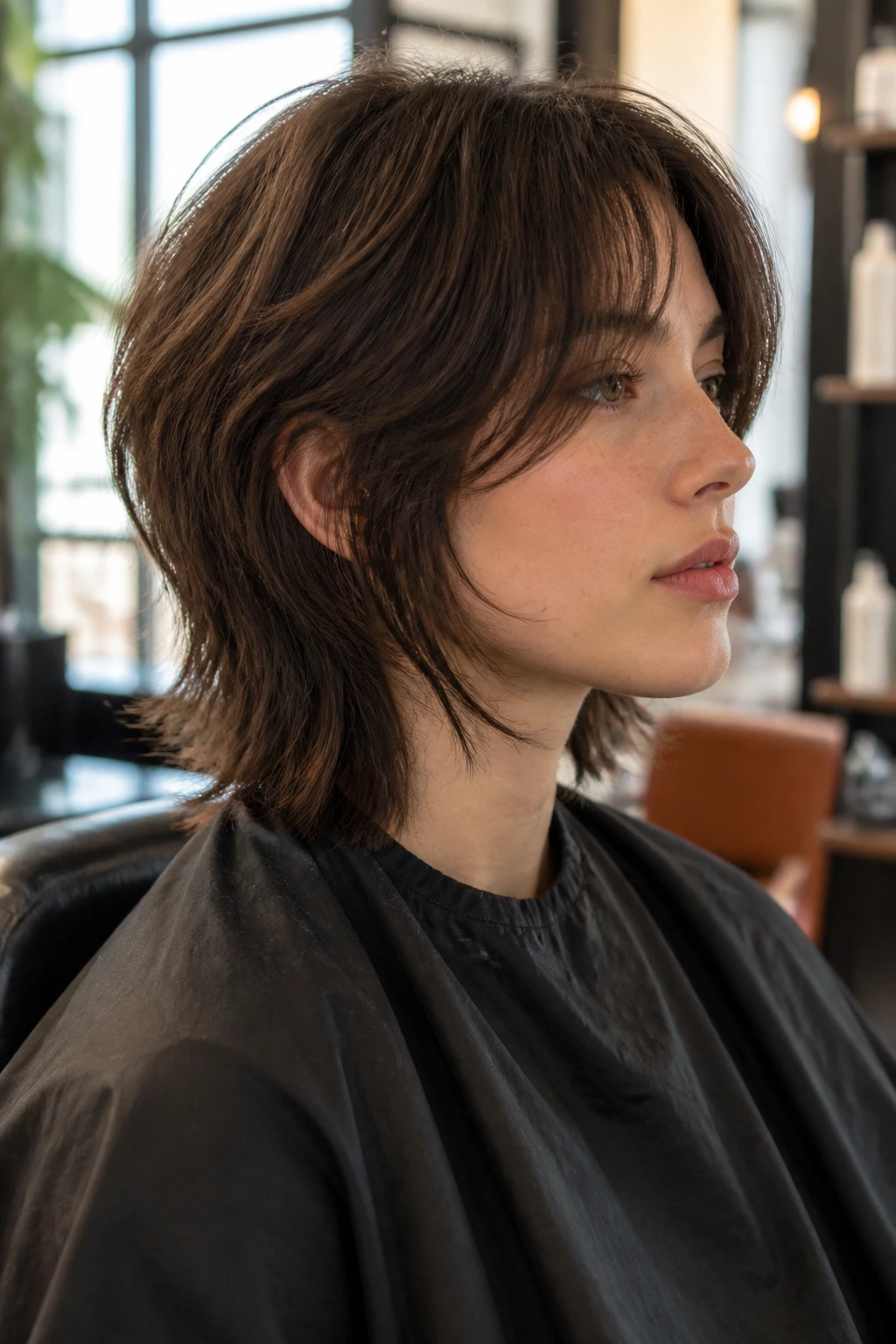
Bring two reference photos if you can: one for the overall silhouette and one for the fringe or face frame. People often show one dramatic wolf-cut picture and then wonder why their fine hair looks hollow. Your stylist needs to see the shape you want, but they also need to know where you want the weight to stay.
Be specific about length. Say jaw, chin, collarbone, or short nape instead of “short but not too short.” That vagueness leads to surprises. Fine hair is unforgiving about surprises. Also mention how you part your hair most days. A cut built around a center part behaves differently from one built around a side part, and that difference shows up fast.
A useful script sounds like this: “I want a mini wolf cut with soft crown layers, a fuller perimeter, and face-framing pieces that don’t get too thin at the ends.” Then add what you do not want. If you hate scalp-visible texture, say so. If you never blow-dry, say that too. A good cut should fit your real routine, not the version of you who owns a curling iron and a free morning.
The Fastest Ways to Style It on Wash Day
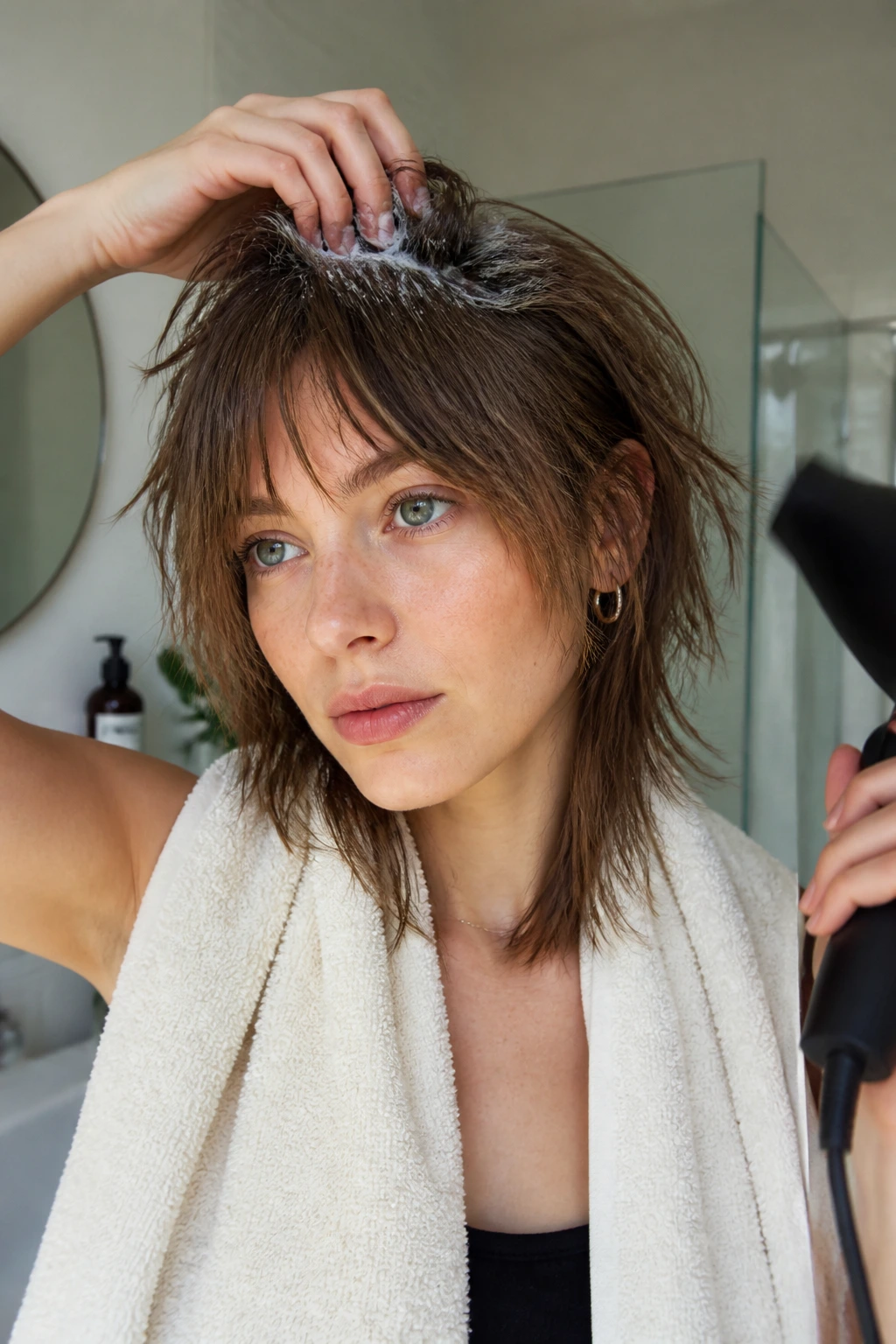
Root Lift: Put mousse on damp roots and rough-dry the top first. If the crown goes flat at the start, the rest of the style has to work too hard.
Shape: Use a round brush, fingers, or a flat iron bend only on the front and ends. You do not need to curl every piece. One clean bend per section is often enough.
Texture: Once the hair is dry, mist a light texture spray through the mid-lengths and pinch the ends apart. That gives the layers some separation without making the whole cut crunchy.
Day-Two Reset: Mist the roots with water or a very light spray, then add a touch of dry shampoo and rough them back up with your fingers. Fine hair usually perks up faster on day two than on wash day if you didn’t overload it.
Extra Lift, Texture, and Finish Tricks
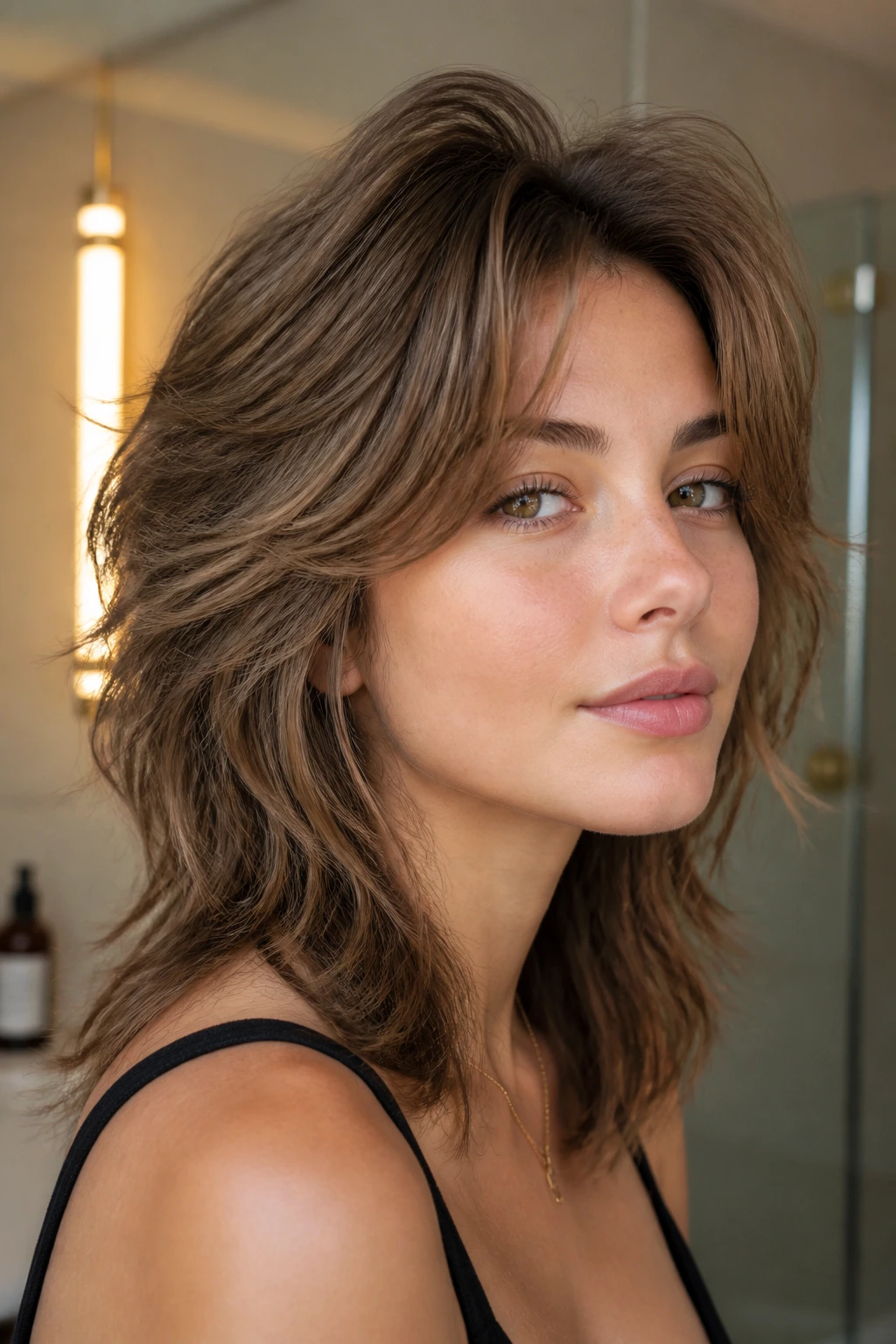
Root Clip Trick: Clip the crown up for 10 to 15 minutes while the hair cools. It sounds almost too simple, but it can change the way fine hair sits for the rest of the day.
Directional Drying: Blow-dry the roots in the opposite direction of your part for the first pass, then flip them back. That little trick builds more memory than drying everything straight down.
Finger-Set Ends: After using a brush or iron, twist the ends slightly with your fingers instead of combing them flat. The haircut keeps more personality that way.
Make-It-Yours: If you love polish, keep the ends smooth and the fringe soft. If you like edge, use a matte paste at the crown and let a few front pieces separate. If you’re in the low-effort camp, stop at mousse and a rough dry. All three are valid.
Trims, Grow-Out, and Day-Two Care
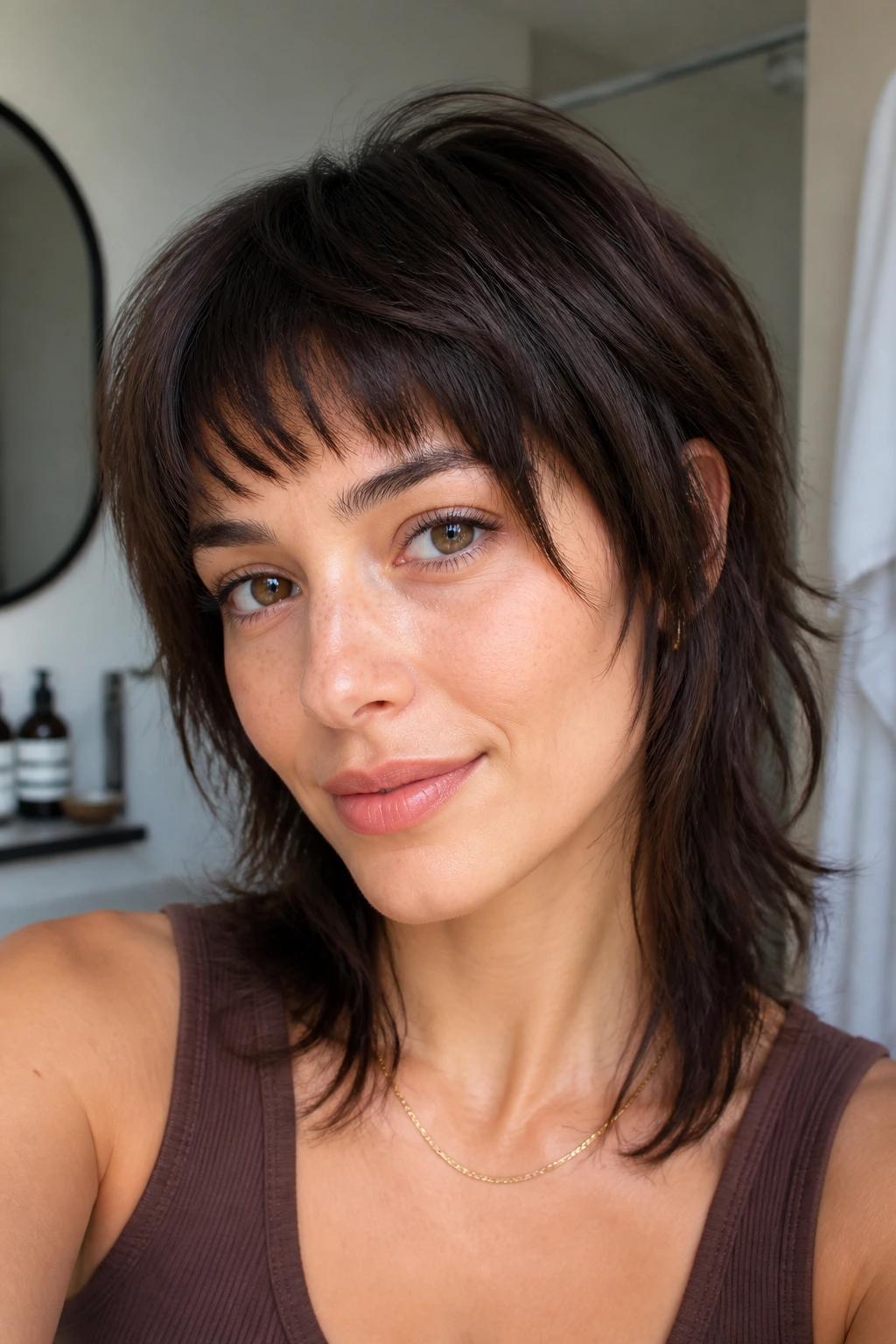
Fine hair shows shape changes faster than denser hair, so mini wolf cuts need fairly regular cleanups if you want them to stay crisp. Bangs often need a dusting every 4 to 6 weeks. The full cut usually holds up well for 6 to 8 weeks before the crown layers stop sitting where they should. If your hair grows fast or your fringe sits high on the forehead, trim sooner.
Day-two care matters too. Fine hair often likes a light reset rather than a full rewash. A little water at the roots, some dry shampoo, and a quick blast with the blow dryer can bring the shape back to life in under 5 minutes. If you pile on more product every day, though, the hair will start to feel dull and sticky. Clear that out with a gentle clarifying wash every 1 to 2 weeks if you use a lot of texture spray.
Sleeping on a silk or satin pillowcase can help the layers stay smoother overnight. Not magical. Just helpful. Less friction means less morning flattening around the crown and fringe.
Variations and Adaptations to Try
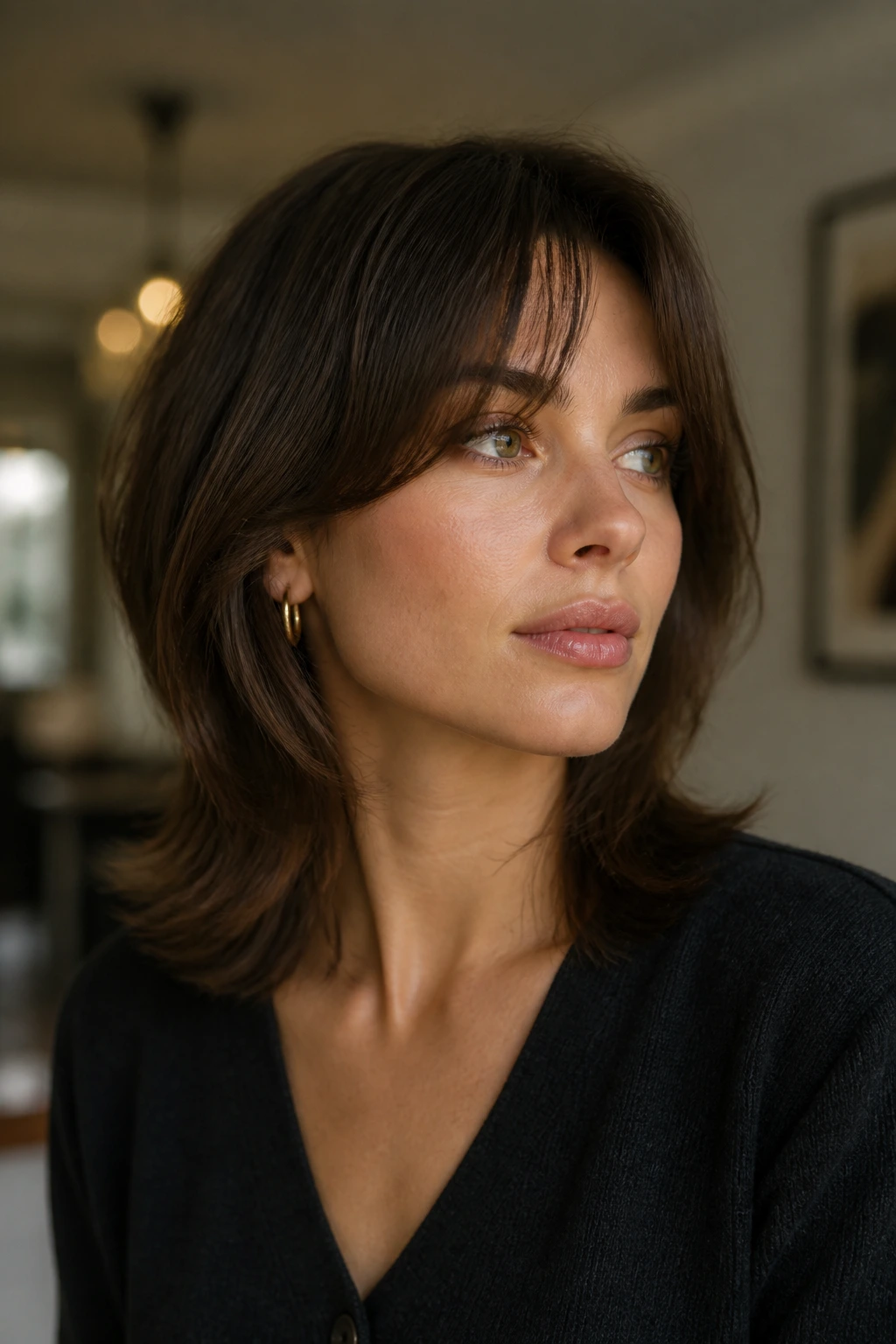
Soft Office Wolf: Keep the perimeter fuller, the fringe longer, and the layers very blended. This version suits fine hair that needs polish during the week and a little bend on the weekend.
Air-Dry Wolf: Leave the ends softer and the crown slightly longer, then style with mousse only. It’s the best option if you rarely use hot tools and want the cut to hold its shape with minimal fuss.
Curly Mini Wolf: Ask for longer layers and a dry cut if your hair has waves or loose curls. This keeps the bounce from turning into frizz and helps the shape sit where your curl pattern naturally wants it.
Edgy Nape Wolf: Add a tiny hidden undercut or a tighter taper at the back. This works when you want the neck area cleaner and the top to feel more dramatic.
Grow-Out Wolf: Keep the top long enough to sweep, the sides soft, and the fringe flexible. The cut will migrate into a bob or shaggy lob later, which is exactly what you want if maintenance has to stay simple.
Common Mistakes That Flatten the Shape
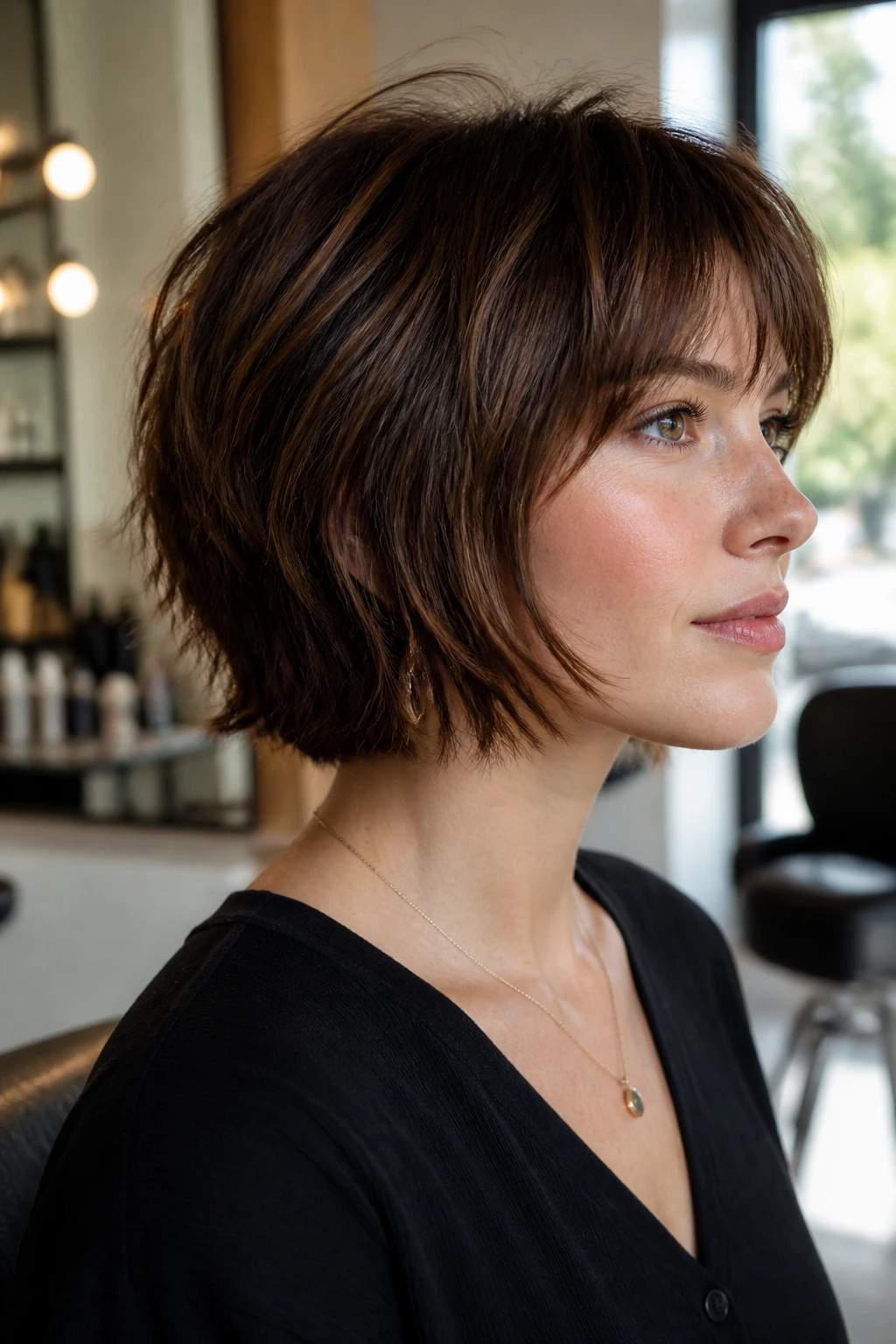
Over-thinning the ends: Fine hair can lose its body in a hurry if too much bulk is removed from the bottom. The fix is a fuller perimeter with soft texturizing only where the hair needs movement.
Making the crown too short: Short crown layers can stick up, separate awkwardly, or show scalp under bright light. Keep the shortest pieces long enough to lay over each other instead of standing apart.
Using heavy creams and oils near the roots: The cut loses lift fast and starts looking tired by lunch. Use the smallest amount possible, and keep richer products on the last inch or two only.
Ignoring the natural part: If your hair always wants to split one way, a rigid center part can make the style look forced. Work with the part that gives you the most lift or the least resistance.
Choosing bangs that are too dense: On fine hair, a heavy fringe can swallow the front of the haircut. Curtain bangs, bottleneck bangs, or a side sweep usually do the job with less risk.
Frequently Asked Questions About Mini Wolf Cuts for Fine Hair
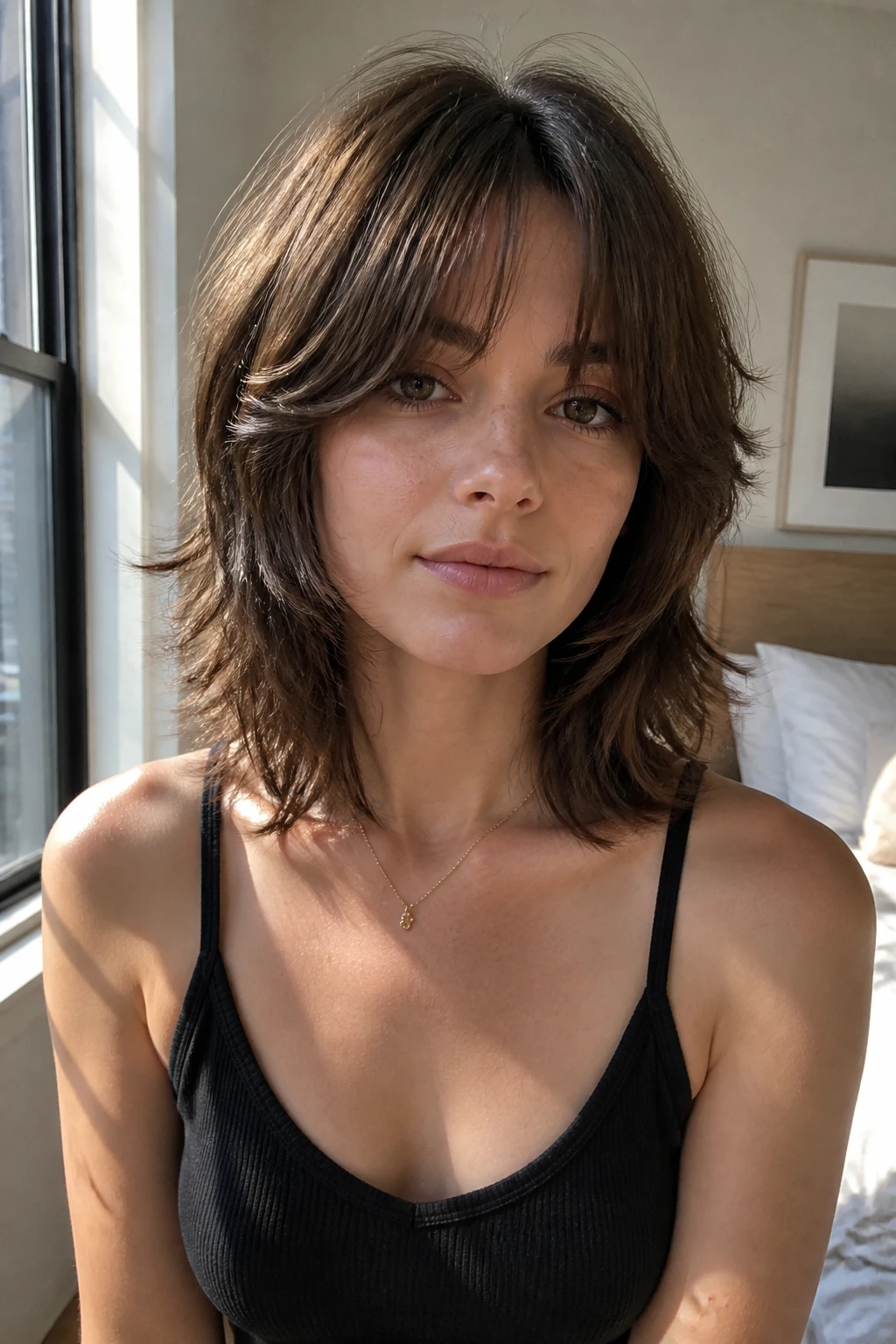
Will a mini wolf cut make fine hair look thinner?
Not if it’s cut with restraint. The danger comes from removing too much weight from the perimeter, which is why the best versions keep the ends fuller and put the layers higher up where they create movement instead of gaps.
Is a mini wolf cut better than a shag for fine hair?
Usually, yes. A full shag can get too airy through the bottom on fine hair, while a mini wolf keeps more density in the length. That extra weight helps the style read as fuller and more intentional.
Can straight hair pull off a mini wolf cut?
Absolutely, but straight hair needs a careful hand. Keep the layers softer, leave the ends thick enough to hold a line, and use a quick bend with a brush or iron so the shape doesn’t fall flat.
What fringe works best with fine hair?
Curtain bangs and bottleneck bangs tend to be the safest bets. They frame the face without taking too much bulk from the front, and they grow out more gracefully than a blunt, heavy fringe.
How often should I trim it?
Bang trims often need attention every 4 to 6 weeks, while the full shape usually benefits from a cleanup every 6 to 8 weeks. If the crown stops lifting or the fringe starts blocking your eyes, it’s time.
What if my crown is very flat?
Ask for a little extra lift at the top and style the roots first every single time. Root clips, mousse, and directional blow-drying usually help more than chasing volume with hot tools on the ends.
Can I wear a mini wolf cut without heat styling?
Yes, as long as the cut is tailored for air-drying. Ask for longer layers, softer fringe pieces, and a perimeter that stays thick enough to hold shape with mousse and finger-styling.
What should I avoid if my hair is very fine and fragile?
Skip aggressive thinning shears, heavy oils at the roots, and fringe sections that are cut too short. Those three choices tend to expose the weakness in fine hair instead of hiding it.
The Shape That Stays Soft

The best mini wolf cuts for fine hair don’t chase drama for its own sake. They keep the outline full, use layers with a purpose, and give the hair a little movement without stripping it of the substance that makes it look healthy. That’s why the smartest versions feel wearable, not precious.
Bring one strong reference photo, then say the sentence most people forget: how much styling you’re actually willing to do. That one detail changes everything. A mini wolf cut can be airy, polished, edgy, or almost invisible in the best way—if the length, fringe, and layering are chosen with a real-life morning in mind.
