



Curly hair does not need more color. It needs better color placement.
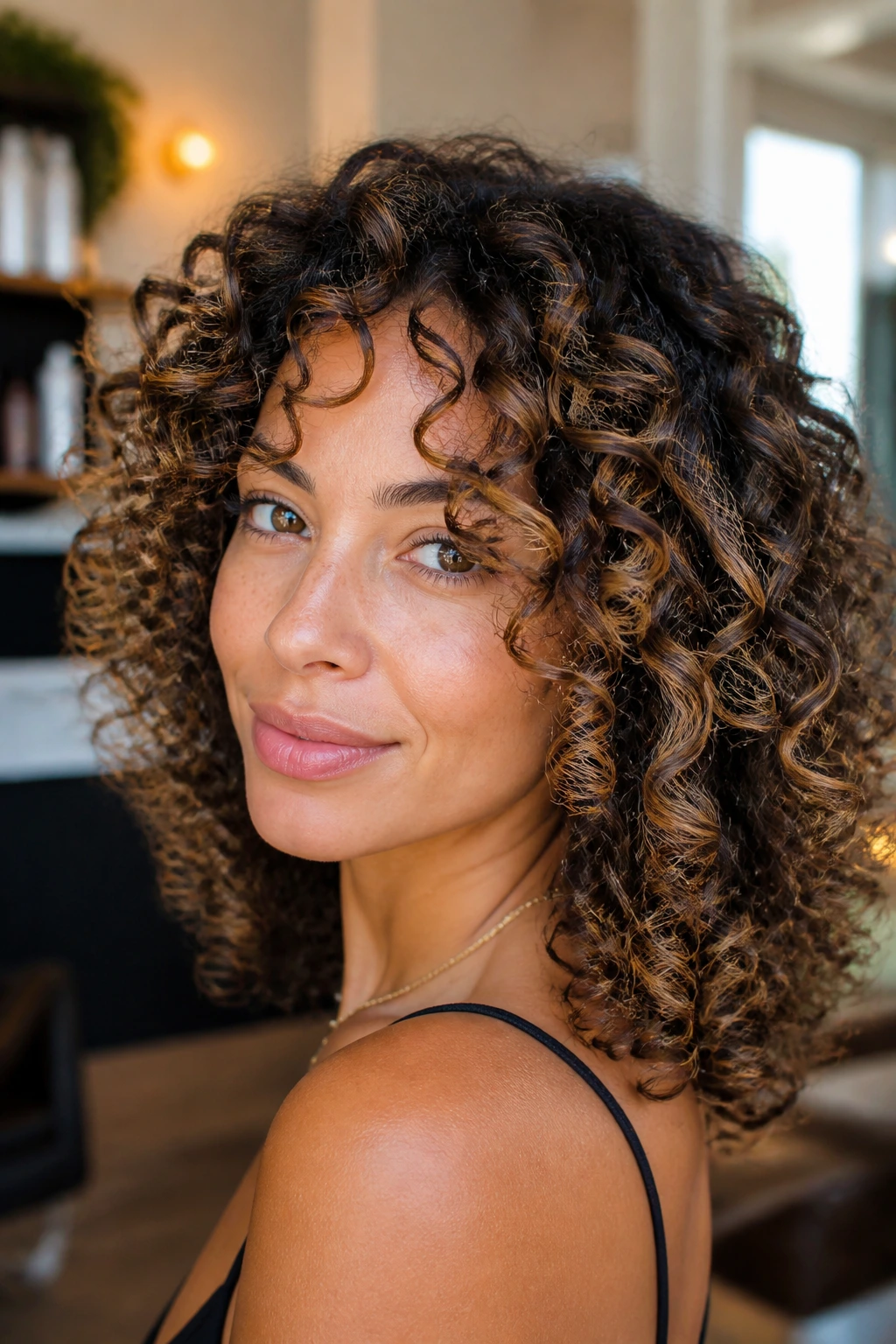
That’s the whole game with balayage looks for curly hair: the painting has to follow the way curls bend, stack, shrink, and spring back. A stripey highlight that looks fine on a blown-out head can turn harsh, broken, or oddly flat once the curls dry. But when the ribbons sit on the outer curve of the curl and the root stays soft, the whole style starts to move in a way that plain color never does.
The best curly balayage also changes personality as the hair dries. A piece that looks quiet when wet can flash honey, copper, or champagne once diffused, which is why curly color needs a little more thought than straight-hair placement. You’re not painting a surface. You’re painting a shape.
Why These Curly Balayage Looks Keep the Shape, Not Just the Color
-
Placement matters more than brightness: A few well-placed ribbons on the top layer and around the face can do more than flooding the whole head with light pieces, because curls create their own built-in highlights and shadows.
-
Grow-out stays softer: Most of these looks keep the lightness a little farther from the root, which means regrowth doesn’t draw a hard line across the crown.
-
Tone does the heavy lifting: Honey, ash, copper, beige, and silver all behave differently on curls, and the right toner can make the same placement read warm, cool, rich, or smoky.
-
Shrinkage changes everything: Curls hide color when they’re wet and reveal it once they dry, so the final finish has to be planned for the curl pattern, not for stretched-out hair.
-
A curl-by-curl approach looks more expensive: Thin ribbons that follow the spiral usually read cleaner than chunky blocks, especially on type 3 and type 4 textures.
-
Low lights are not optional here: Darker pieces between the light ones keep the pattern from turning into a pale blur, and they matter even more on dense curls.
1. Honey Ribbon Balayage
Honey ribbon balayage is the look I reach for when a brunette curl pattern needs warmth without turning orange. The ribbons sit on the outside of the curl, so each coil catches a little golden flash instead of looking painted from above.
Why it works:
A level 6 or 7 base with level 8 honey pieces gives you contrast that still feels soft. On 3A and 3B curls, the light sits in the bend of the curl and flashes when the hair moves. That matters, because curls already create texture; the color should follow it, not fight it.
What to ask for:
- A soft root shadow at the scalp
- Honey ribbons through the mids and ends
- Thinner face-frame pieces if you want brightness around the cheeks
- A beige-gold gloss so the honey doesn’t skew too yellow
Pro tip: Keep the lightest pieces a little farther apart near the crown. If they get packed too closely together, the shape can blur and the curls stop looking separated in a good way.
2. Caramel Contour Highlights
Caramel contour highlights are the sneaky workhorse of curly color. They don’t scream for attention, but they pull the whole shape forward, especially if your curls fall around the jawline or collarbone.
Here’s what makes them smart: the brightest pieces sit around the perimeter of the face, then fade into softer caramel through the outer layers. That creates lift where people actually look first. On dense curls, it can feel like the haircut got more movement without changing the cut at all.
Best on: medium brown curls, shoulder-length shags, and layered lobs.
Ask for:
- Caramel pieces concentrated around the temples and cheekbones
- Softer painting at the ends than at the mids
- A neutral or warm gloss, depending on whether your base runs red or golden
- A few deeper lowlights underneath to keep the underside from looking flat
What I like about it: it grows out gracefully. You can go a long time before the root line bothers you, and that’s rare with brighter face-framing work.
3. Mocha Melt Balayage
Mocha melt balayage is for people who want brunette color that looks polished rather than loud. It starts deep at the root, slides through espresso and cocoa in the mid-lengths, and ends in a soft mocha that never looks chalky.
Why it works on curls:
Curly hair already breaks up the light, so a smooth tonal melt can look richer than a high-contrast blonde piece. The color shift is quiet, but the result is not. Every curl clump reads a little differently, which keeps the brunette from going flat.
Where it shines:
- Type 2 waves that need dimension without a big blonde commitment
- 3A curls that frizz a little at the surface and need a darker anchor
- Long layers where the movement starts lower on the head
What to tell your colorist: keep the lift subtle and let the gloss do some of the work. A mocha finish at level 5 or 6 can look expensive when the base is clean and the ends are healthy. If the hair is porous, this is where a bond builder matters.
4. Cinnamon Spiral Lights
Cinnamon spiral lights bring warmth with a little spice in the background. They’re richer than copper, deeper than caramel, and they look especially good when the curls are tight enough to show off small flashes of color.
That little shift matters. If the ribbons are too wide, cinnamon can read muddy. Thin, curved placements keep the red-brown note alive and stop the color from taking over the whole head. On a dark brunette base, the effect is subtle until the light hits the outer ring of each curl.
Use this if: your curls love warm tones but gold feels too bright.
What to ask for:
- Fine hand-painted ribbons through the mid-lengths
- A glaze in copper-brown or cinnamon brown
- Slightly deeper lowlights underneath the top layer
- The brightest pieces near the face and the top layer, not all over
Tiny detail that helps: cinnamon tones look better when the hair has shine. A lightweight glossing serum on dry ends after diffusing can make the color read smoother instead of fuzzy.
5. Mushroom Brunette Glow
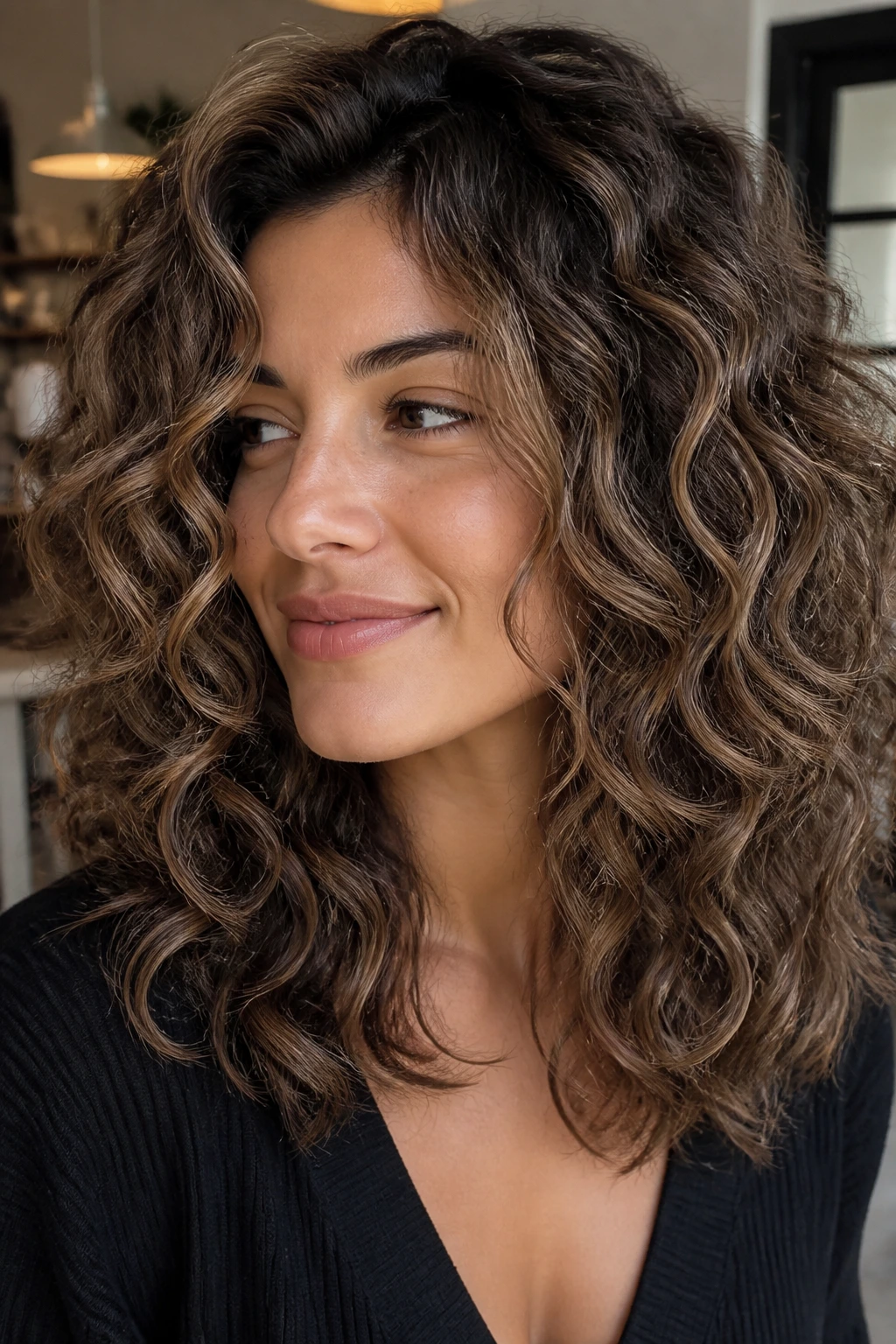
Mushroom brunette is the answer when you want dimension but hate brass. It leans cool, soft, and muted, with taupe-beige pieces that sit inside a deeper brown base instead of sitting on top of it.
Why it works:
Curly hair can pull warmer as it dries, especially if the hair has any natural red in it. Mushroom tones cut through that warmth and keep the whole shape from turning orange. The trick is not to go too ash-heavy; that can make curls look dusty. You want smoky, not gray.
Best on:
Medium brown curls, layered bobs, and anyone who wants a low-key color that still moves in the light.
Colorist note:
A root shadow that stays close to the natural base keeps the look grounded. Then the lighter pieces can live mostly on the outer curves and face frame. If the hair is very porous, the toner may need to be softened so it does not grab too dark.
My take: mushroom brunette is one of the few cool brunette looks that still feels soft on curls. Done right, it looks expensive. Done wrong, it looks flat. There’s not much middle ground.
6. Chestnut Face-Frame Pop
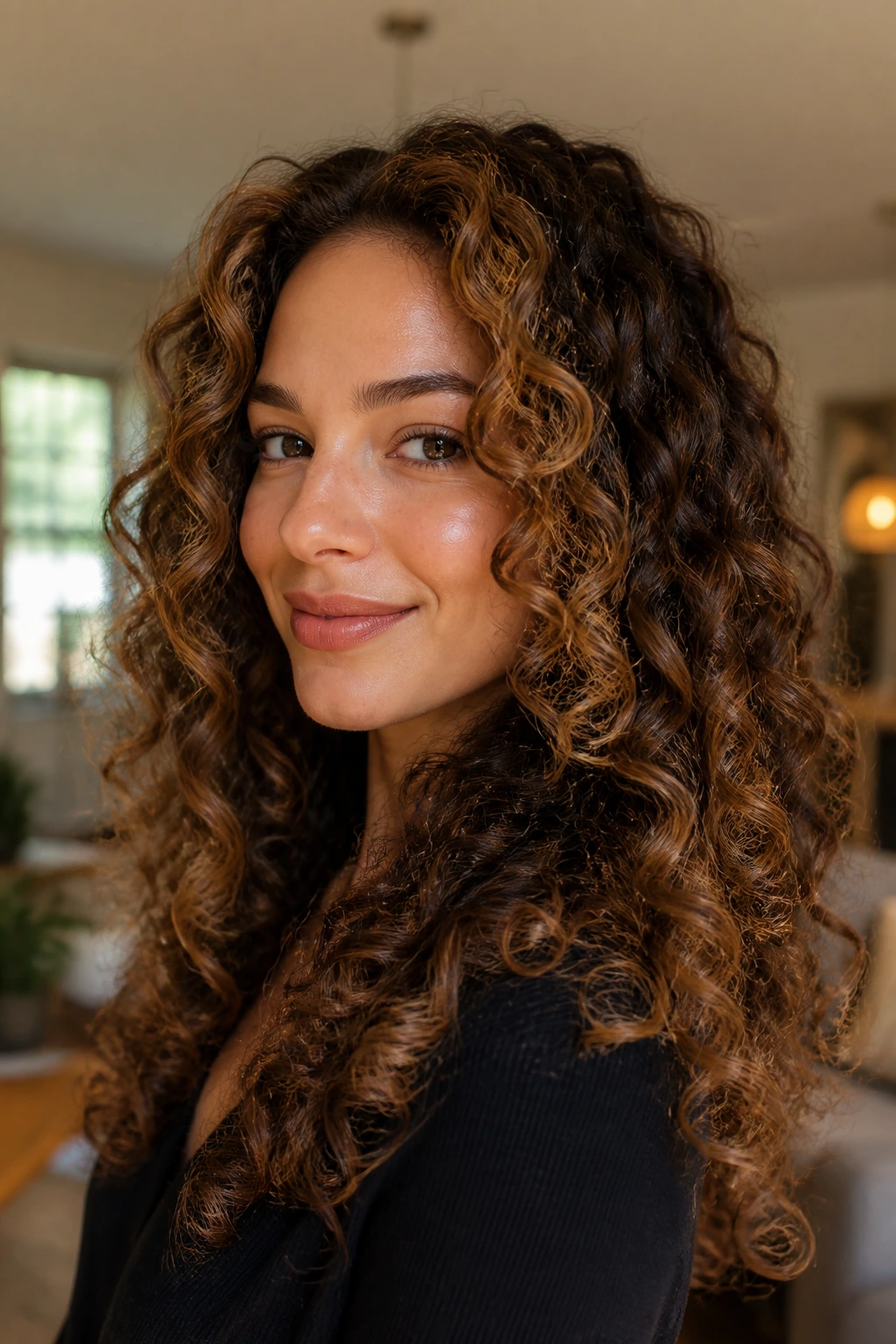
If you only want a small amount of lightness, chestnut face-frame pieces are the move. They brighten the front without forcing you into a full-head lift, and curly hair loves that kind of restraint.
The trick is to keep the back and underneath layers deeper so the front can do the talking. Chestnut is warm enough to soften the face but not so red that it screams from across the room. On curls, that matters. Too much brightness in the front and the rest of the head can disappear.
Best for:
- Long curls that need a little lift around the face
- Side parts and off-center parts
- People who air-dry most of the time and want the front pieces to stand out without heat styling
Ask for: one or two levels of lift around the hairline, then a chestnut gloss that keeps the result soft and glossy. If the hairline is fragile, the colorist should leave the very first half-inch softer than the rest.
7. Bronze Halo Curl Balayage
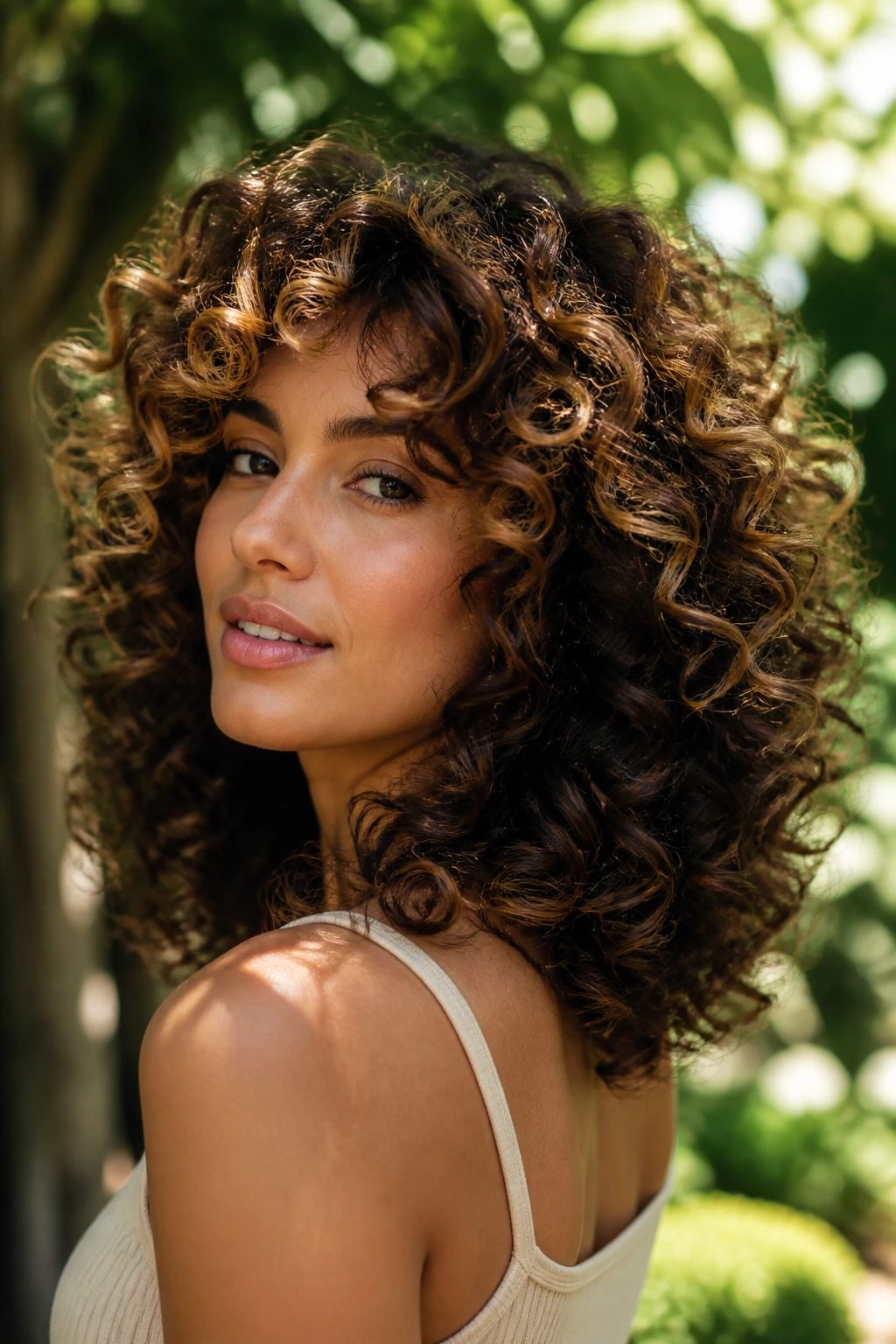
Bronze halo balayage is gorgeous on big curls that already have volume at the crown. Instead of scattering brightness everywhere, the lighter bronze pieces circle the top layer and outer ring, which gives the head shape a kind of lit-from-within frame.
That halo placement is the whole point. It keeps the underside darker, which makes the curls on top pop harder. On dense hair, the contrast stops the style from looking like one giant block of color.
Best on: 3B to 4A curls, especially if the crown tends to flatten.
Ask for:
- Bronze ribbons concentrated on the outer canopy
- A deeper root shadow for lift at the scalp
- Soft lowlights underneath to protect dimension
- A warm gloss, not a gold toner that turns brassy
Pro tip: This look gets better with a diffuser. The bronze shows more clearly when the curls are encouraged upward, not stretched downward by wet air-drying.
8. Butterscotch Curly Lob
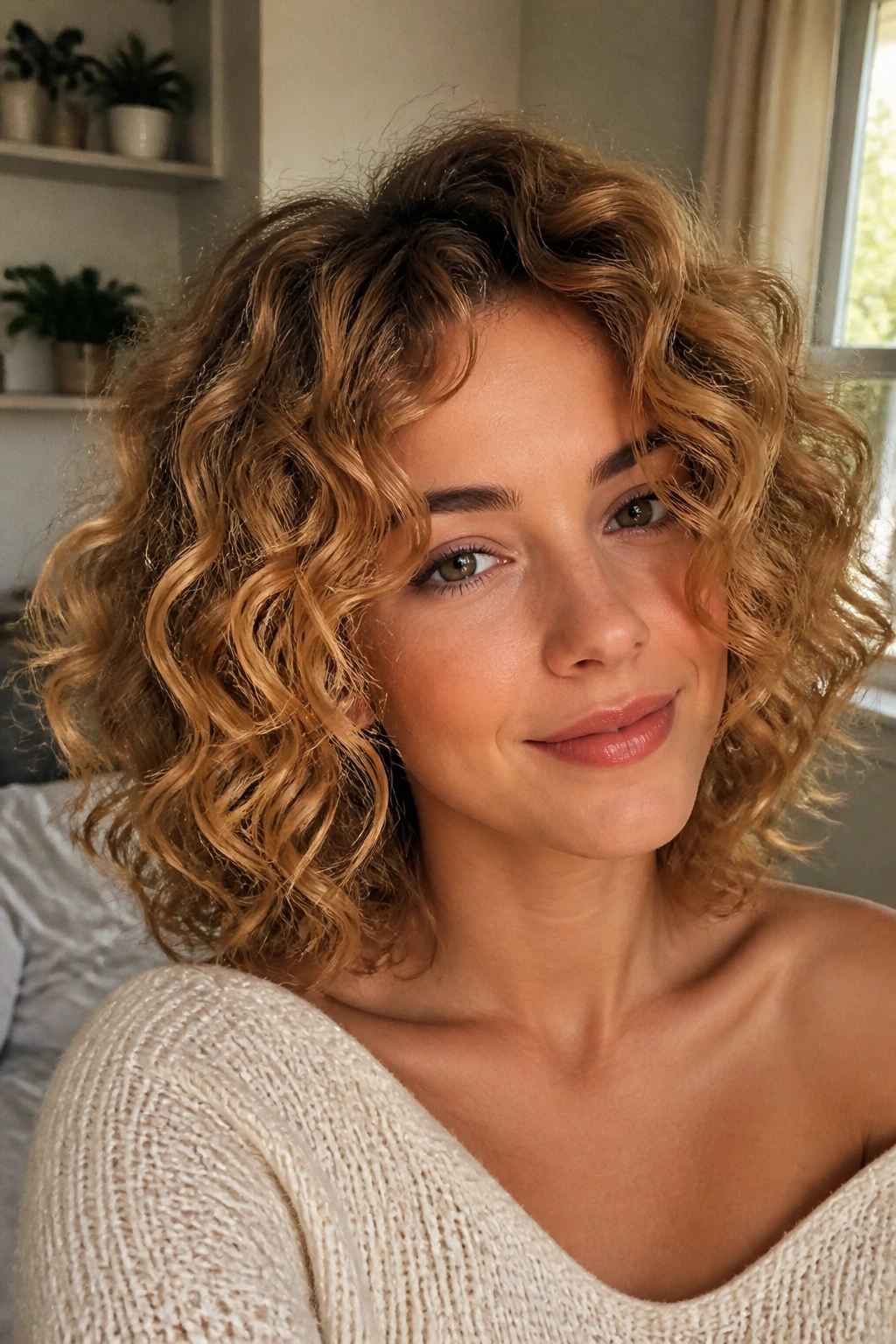
A curly lob in butterscotch is one of those cuts-color combinations that does half the work for you. The collarbone length keeps the color visible, and the warm blonde tone gives the curls a soft, creamy finish.
The risk here is going too light too fast. Butterscotch should feel warm and rounded, not bleachy. On curls, that rounded tone reads better because the ringlets already create a lot of movement. You do not need screaming contrast to see it.
What it suits:
A layered lob, looser ringlets, and hair that’s naturally medium brown to dark blonde.
Color direction: ask for a softer lift in the mids and ends, then a butterscotch gloss that stays a touch beige. If the ends are dry, leave them slightly deeper than the rest. That little bit of shadow makes the shape look healthier.
One inch too light on the ends and the whole thing can start to look crunchy. I’d keep it creamy and stop there.
9. Copper Flame Ribbons
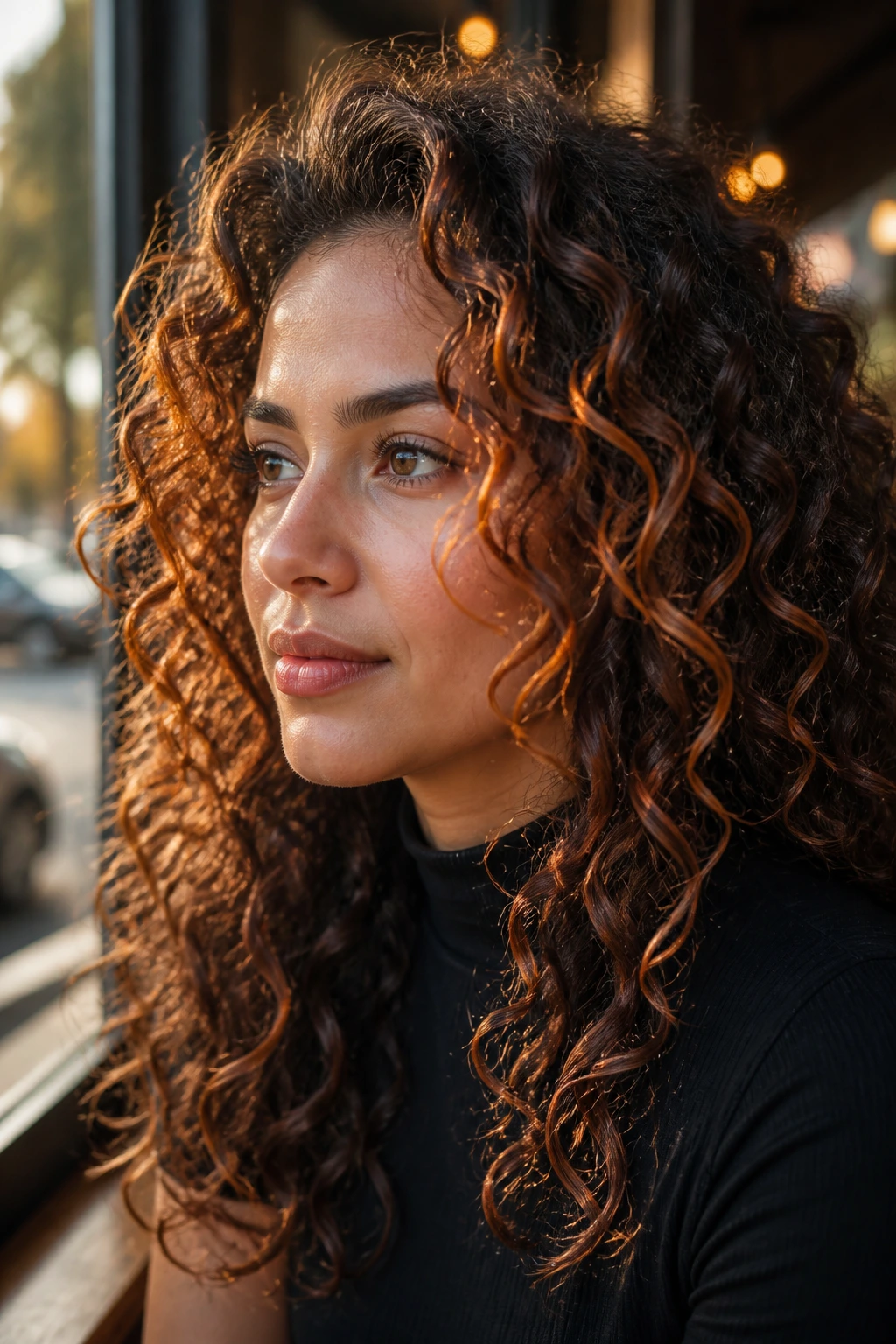
Copper flame ribbons are not shy. They’re warm, bright, and made for curls that can handle a little drama without losing their shape. The copper should live in thin, flickering pieces, not in big painted slabs.
Why thin? Because copper is already a loud tone. On curls, thin placement lets the light catch on the curve of the coil and keeps the whole head from turning into a flat red panel. The effect is far more expensive-looking when the pieces are woven through the surface and the face frame instead of buried under the hair.
Best on: dark brunettes, auburn lovers, and anyone whose skin still looks good beside warmth.
Watch for: copper fades fast if the hair is washed too often with hot water. A color-safe shampoo and a weekly mask help, but the real fix is a gloss refresh before the tone turns dusty.
10. Bronde Spiral Dimension
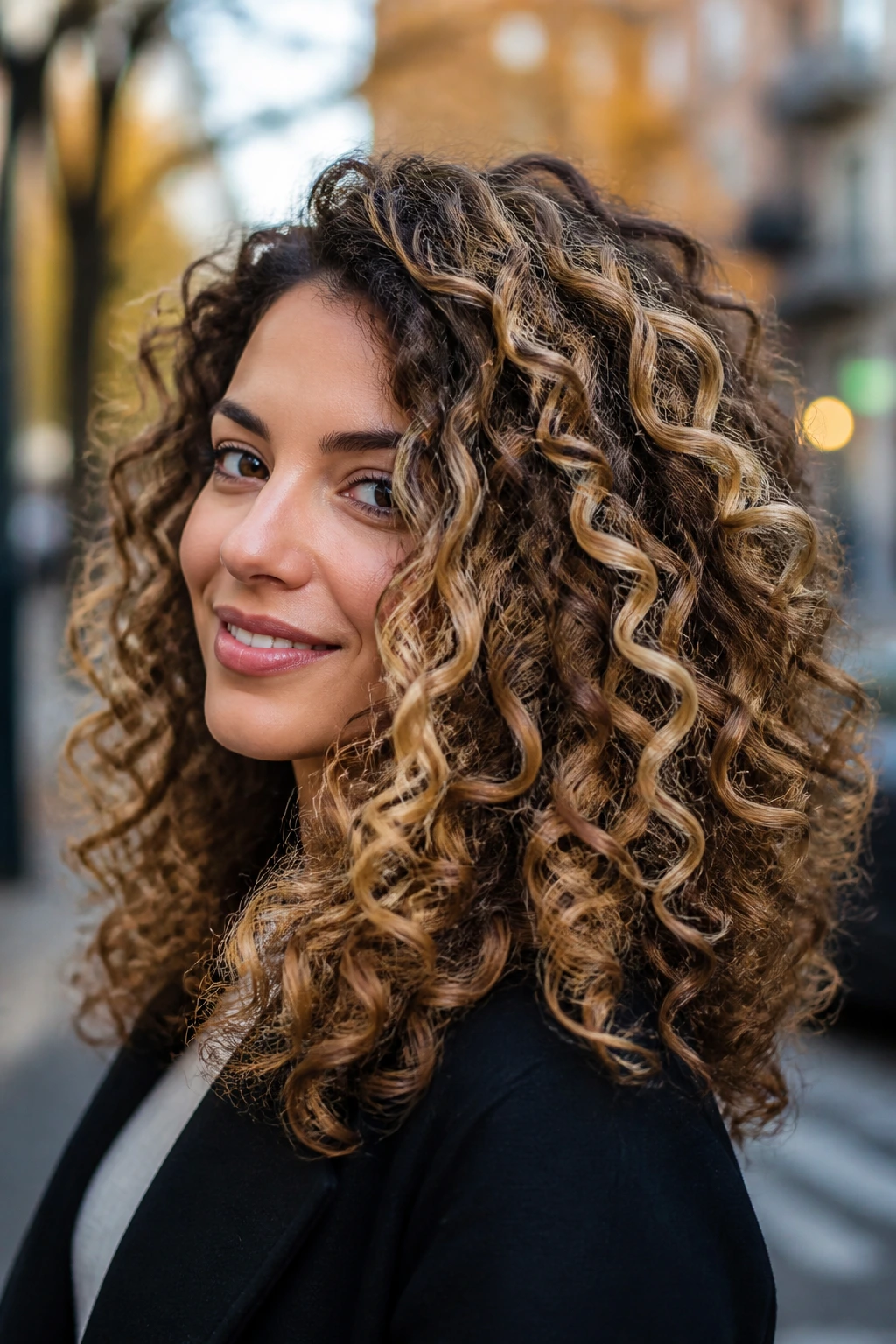
Bronde is a nice word for the middle ground, but on curls it has to be handled with a little precision. Too much blonde and the pattern gets striped. Too much brown and the lightness disappears once the curls dry.
The sweet spot is a mix of brown and beige-blonde pieces that follow the spirals rather than cutting across them. That means different widths in different places. Smaller ribbons near the crown. Slightly wider ones through the ends. And always a soft root shadow so the top does not look patched.
A good bronde curl look usually has:
- One level darker lowlights underneath
- Beige or wheat-toned ribbons on the outer layer
- A gloss that keeps the blonde from reading yellow
- Face-framing pieces that are a touch brighter than the rest
This is one of the easiest looks to wear if you want lightness without a big color personality. It behaves.
11. Espresso and Toffee Ribbons
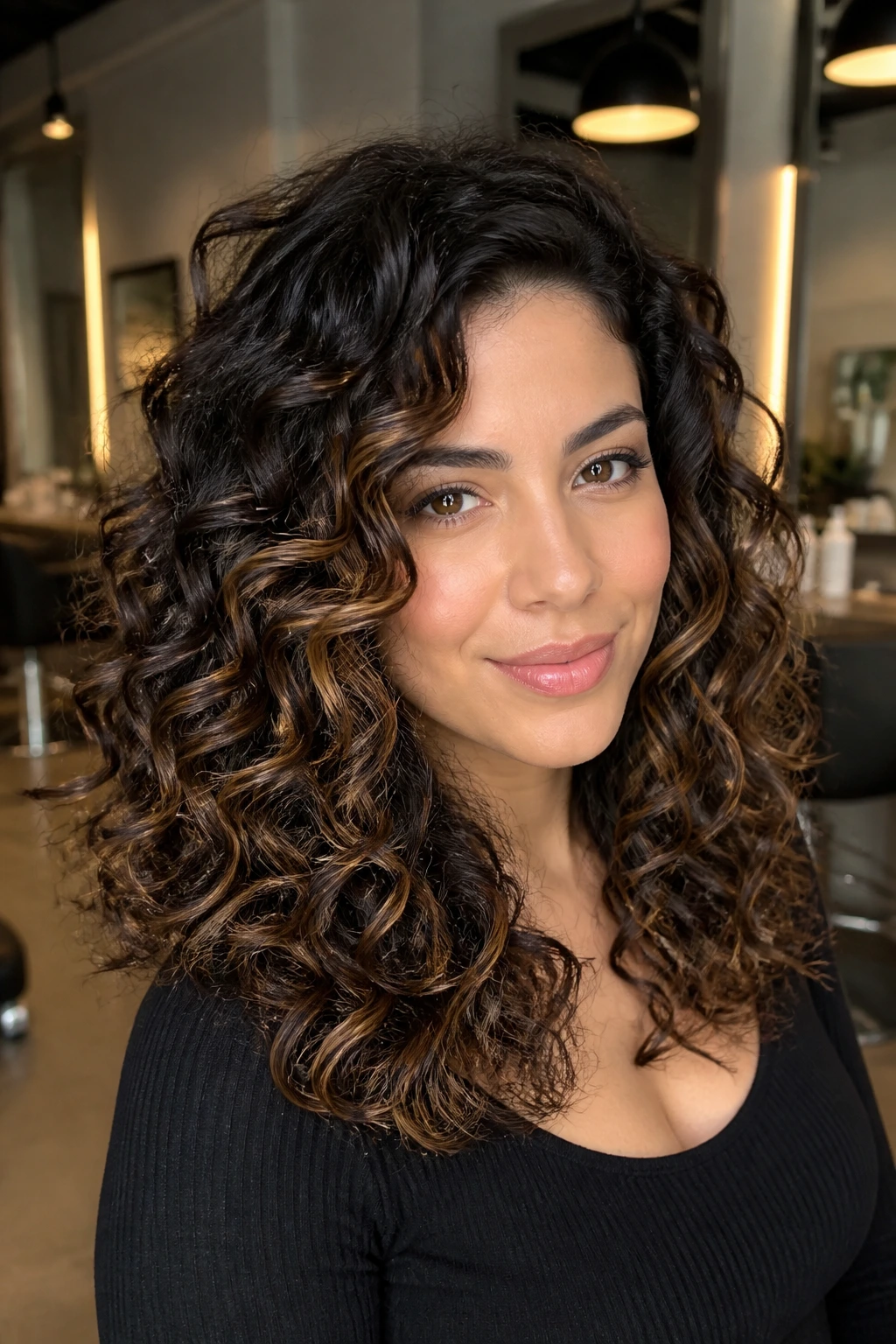
Espresso and toffee is the brunette version of contrast that still feels grown-up. The espresso base keeps the curls grounded, while the toffee pieces break up the surface just enough to show off movement.
Why this works:
Curly hair can swallow soft color if the pattern is dense. Toffee has enough warmth to stay visible, but it’s not so pale that it floats above the base. When the ribbons are painted through the mid-lengths and outer layers, each curl clump looks defined instead of blurry.
What to ask for at the chair
- Keep the root close to espresso brown
- Add toffee ribbons from ear level down
- Leave a few interior pieces deeper for contrast
- Finish with a neutral gloss, not a yellow one
If your curls are fine, this is one of the safest ways to build dimension without making the hair look thinner. The dark base does the heavy lifting.
12. Auburn Glow Balayage
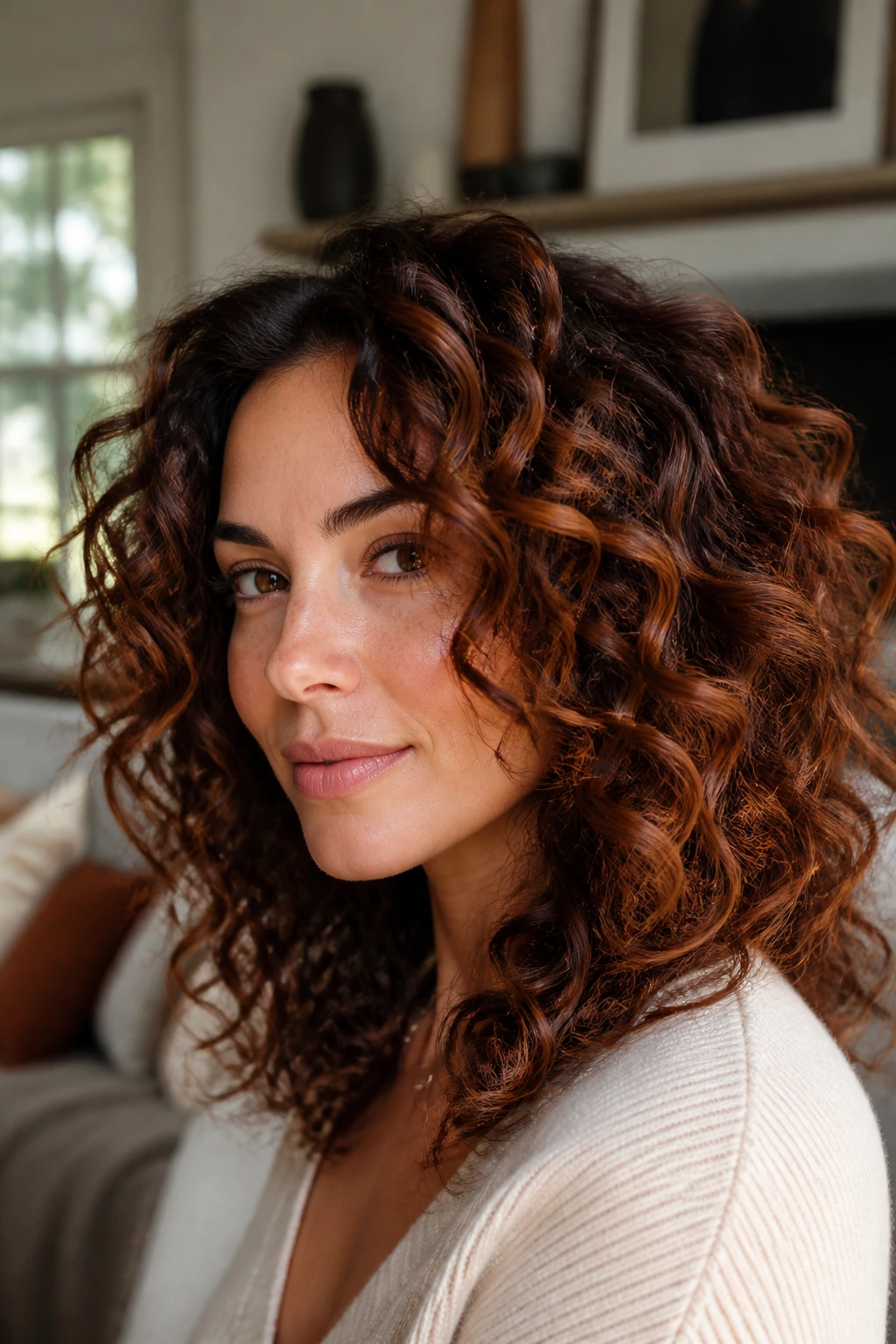
Auburn glow is what I’d call the “warm but not orange” family. It takes a chestnut base and adds a red-brown veil that moves through the curls like a soft filter.
The charm is in the depth. Auburn on curls doesn’t need to be bright to be visible, because the curl pattern catches the color from different angles. A little on the top layer, a little around the face, a little more through the ends. That’s enough.
Best on: medium brown hair, copper-friendly skin tones, and layered curls that need warmth around the face.
A useful caution: auburn tones fade faster than neutral browns. If you want the richness to last, ask for a demi-permanent gloss or toner that can be refreshed without another full lift. That saves the ends, and your ends are the part that usually complains first.
13. Beige Blonde Halo Highlights
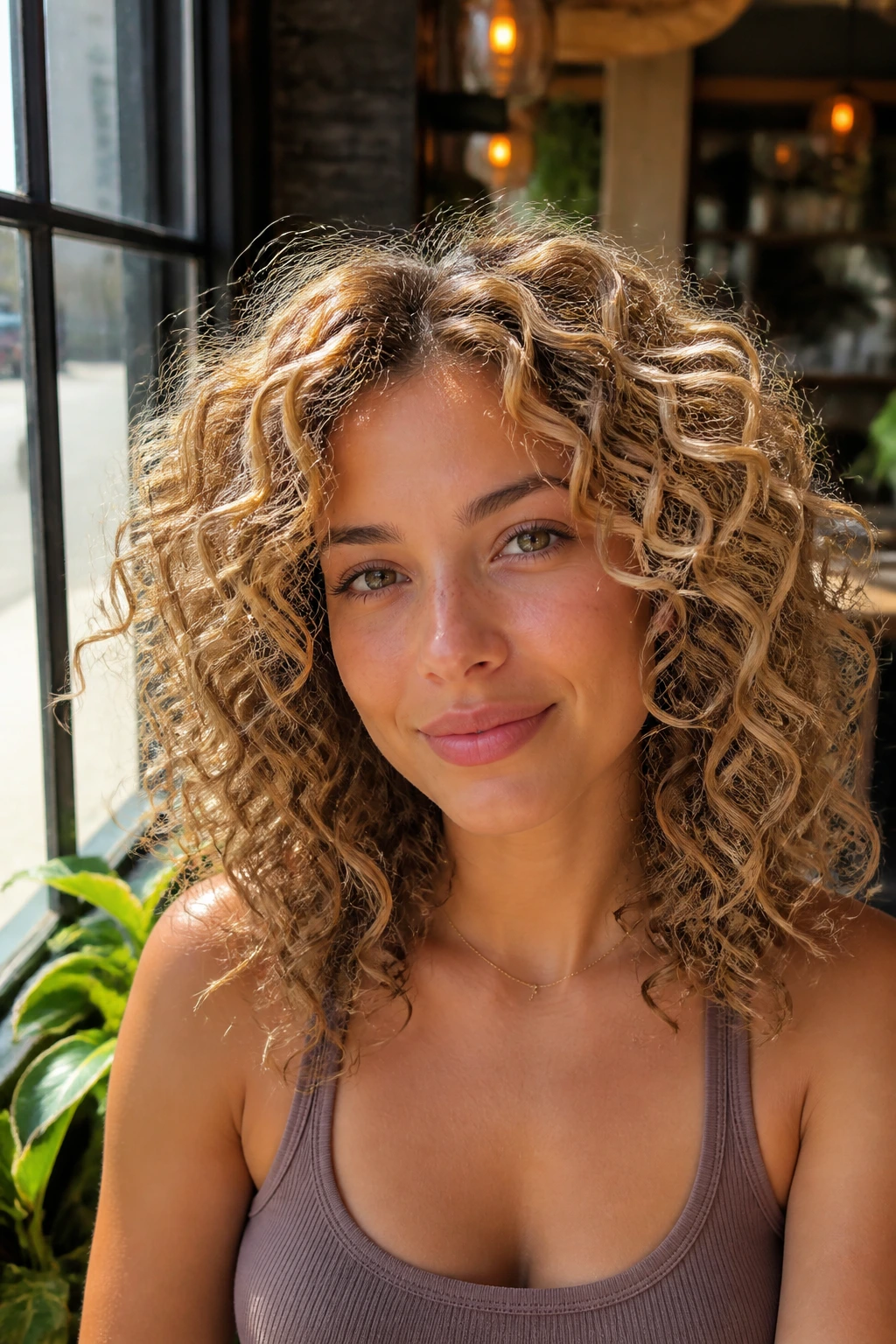
Beige blonde halo highlights are the softer cousin of high-contrast blonde. They sit in a pale neutral range that avoids both yellow and ash overload, which makes them lovely on curls that tend to hold onto warmth.
The halo part matters here. Instead of brightening every inch, the lighter pieces live mostly around the top and outer canopy, where the curl pattern can show them off. On a layered cut, that creates a soft frame without turning the lower layers into a pale mess.
Best on: light brown to dark blonde curls, especially if you like a more airy finish.
Ask for:
- Beige blonde ribbons, not icy white pieces
- A soft root blend so regrowth fades cleanly
- Very fine detailing near the crown
- A gloss that keeps the blonde creamy rather than brassy
This is the kind of blonde that grows out better than people expect. The secret is staying in the beige family instead of chasing the palest possible ends.
14. Ash Brown Shadow Balayage
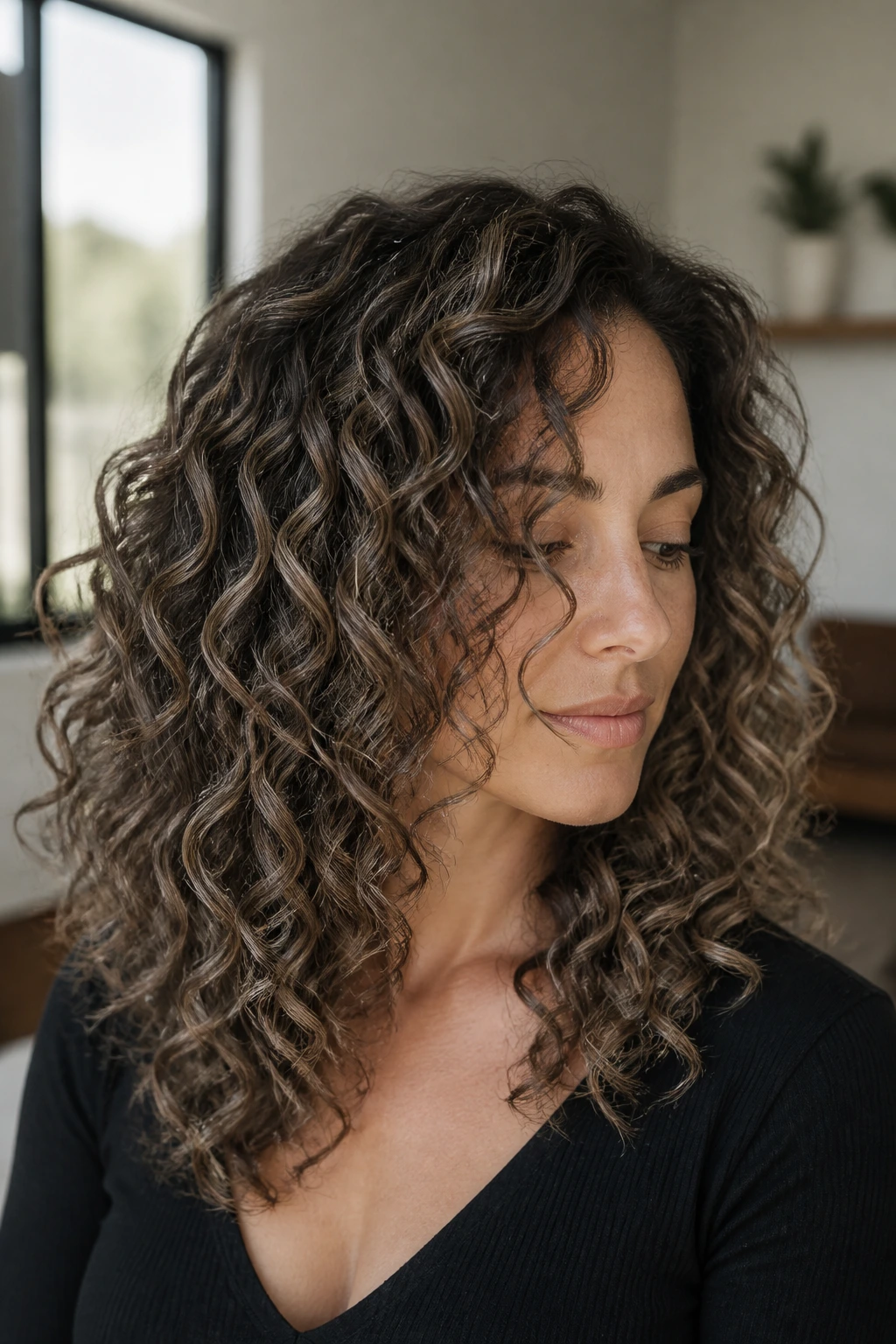
Ash brown shadow balayage is for anybody tired of warm highlights turning orange two weeks later. It keeps the base in a smoky brown range and paints cooler ribbons through the curls so the whole shape looks calm and controlled.
Why it works:
Curly hair reflects light in little pockets, which can make warm tones read louder than they looked in the bowl. Ash brown lowers the heat. The result is less shiny in a sugary way and more shiny in a polished, soft way.
Where it fits best:
- Medium to dark brunettes
- People with naturally cool undertones
- Curls that get frizzy fast and need a more grounded color story
A shadow root helps a lot here. If the crown is too light, the style can lose its shape and the ash starts to look washed out. Keep the coolest pieces mostly through the mids and ends, where the curl pattern is strongest.
15. Champagne Curly Bob
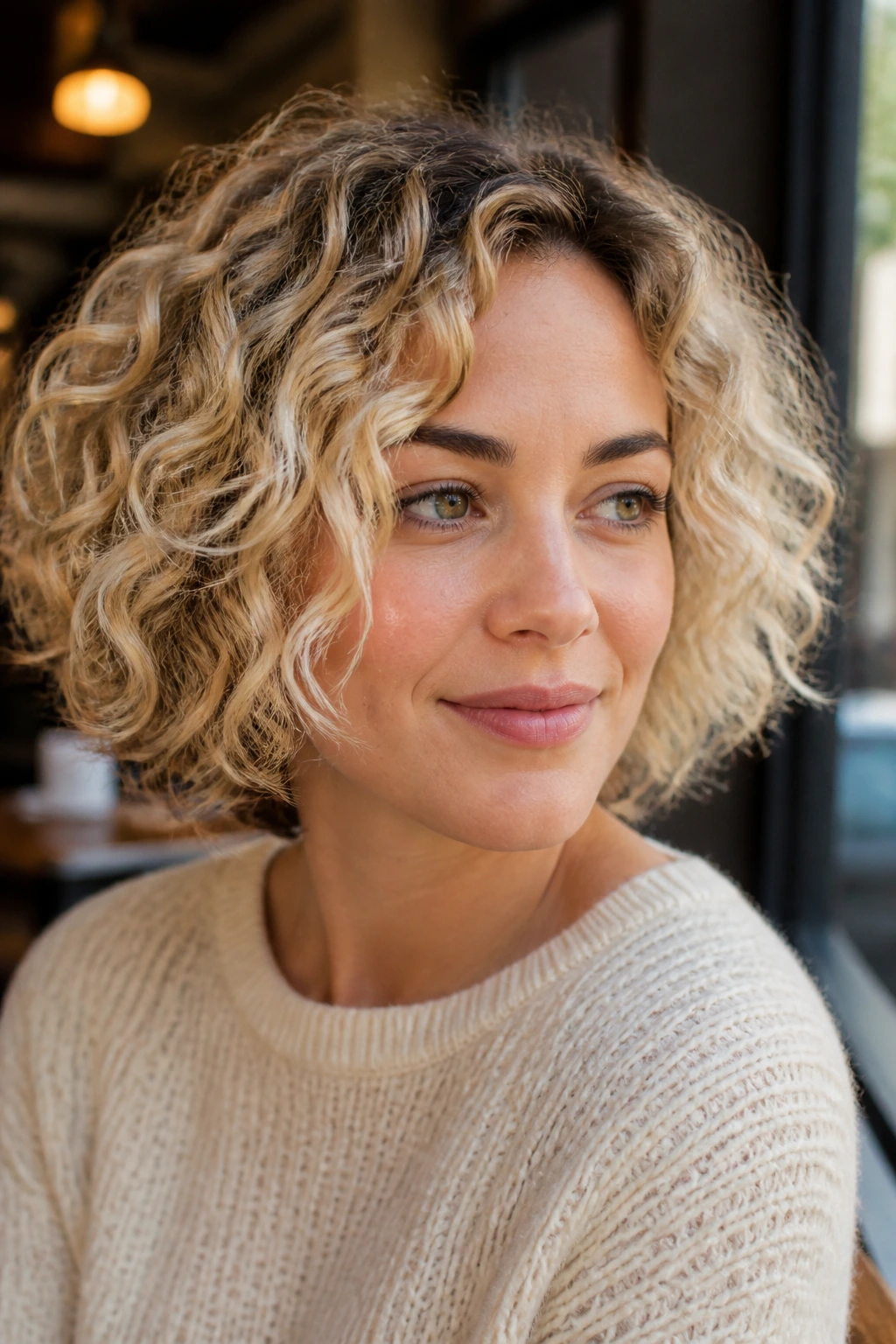
A curly bob in champagne blonde can look crisp and airy, but only if the tone stays soft. Champagne means pale beige with a little warmth, not flat white and not yellow.
The bob cut is what makes this color sing. Because the hair sits closer to the face, the light pieces bounce around the cheeks and jawline instead of disappearing into long layers. That means the balayage can be more concentrated and still read delicate.
Best on:
Shorter curls, 2C to 3B texture, and people who want brightness without a ton of length to maintain.
A little opinion: champagne on a bob is easier to wear than champagne on long curls. Long curls can expose every dark gap between the ribbons; a bob keeps the color compact and intentional. If the hair is frizz-prone, a gloss or glaze is not optional. It is the thing that keeps the finish from turning dry and chalky.
16. Chocolate Cherry Dimension
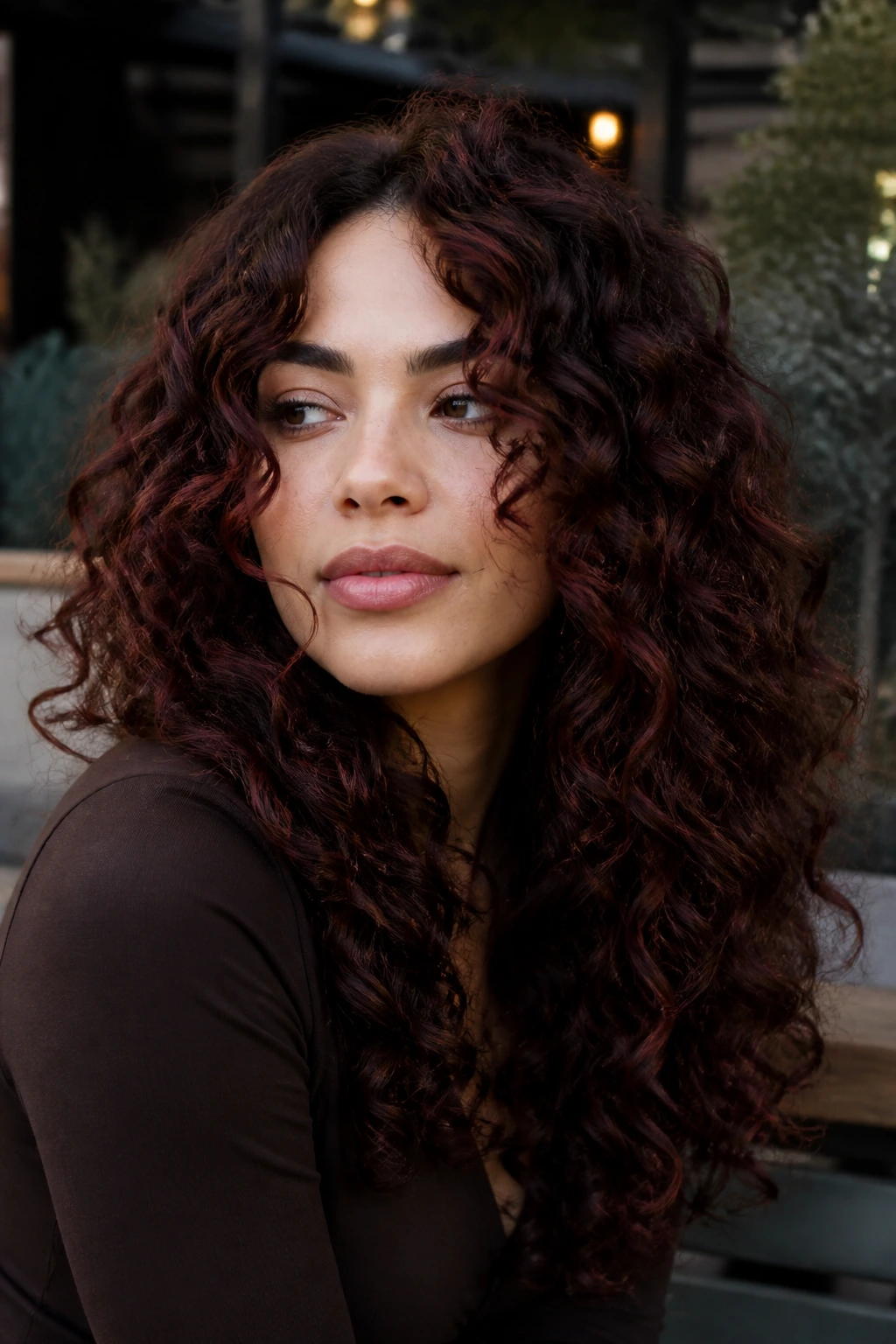
Chocolate cherry dimension is deep, rich, and a little moody in a good way. The base stays dark chocolate, then a cherry glaze or red-brown ribbon peeks through the curl pattern so the color changes in the light instead of sitting still.
That change is subtle on purpose. On curls, red tones can get loud fast, and if they’re too saturated the hair starts to look one-note. Chocolate cherry avoids that by keeping the red buried in the brown. You see it when the curls separate. You lose it when they bunch up. That’s what makes it interesting.
Best on: darker bases, fall-friendly wardrobes, and anyone who likes depth more than brightness.
Colorist note: a glossy red-brown finish needs upkeep. If you wash often, expect the cherry note to fade first. That’s normal. The brown anchor is what keeps the style looking good long after the red softens.
17. Sand Beige Sun-Kissed Curls
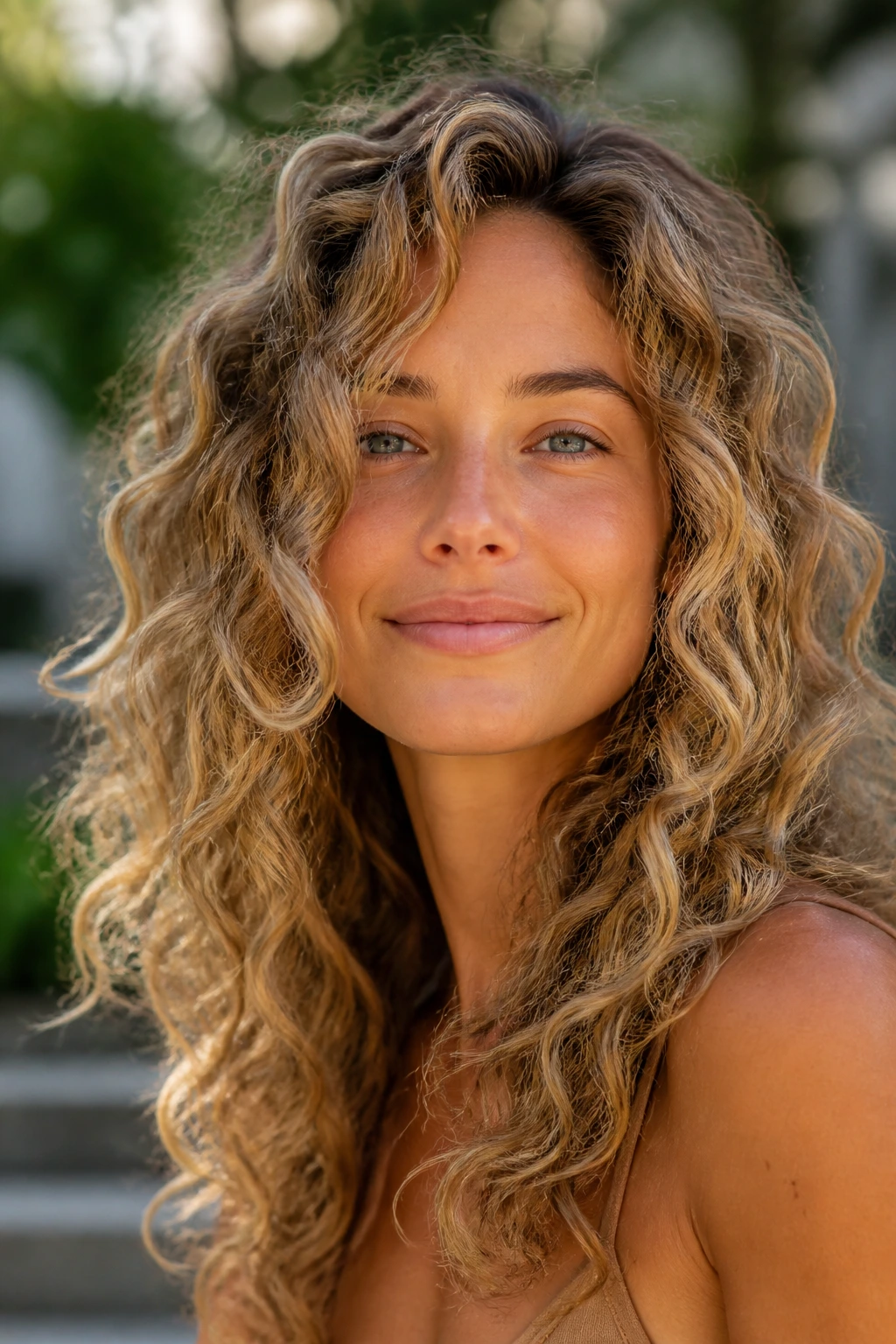
Sand beige is the laid-back blonde family done right. It’s lighter than mushroom, softer than champagne, and far less yellow than a typical beachy blonde. On curls, it looks like light that found its way into the hair rather than bleach that announced itself.
The placement should feel scattered and light. You want pieces that sit where the curls rise and fall, not a thick band of color around the head. That gives the style a sun-faded shape without flattening the texture.
Works best for:
- Natural blondes or light brunettes
- Looser curls and waves
- People who want brightness without obvious maintenance
Tiny caveat: if your hair is naturally dark, sand beige can take more work than it looks like. A gentle lift plus a beige gloss is usually smarter than chasing a very pale blonde in one appointment. Curly hair shows damage fast on the ends, and the ends are what make this look believable.
18. Smoky Silver Balayage
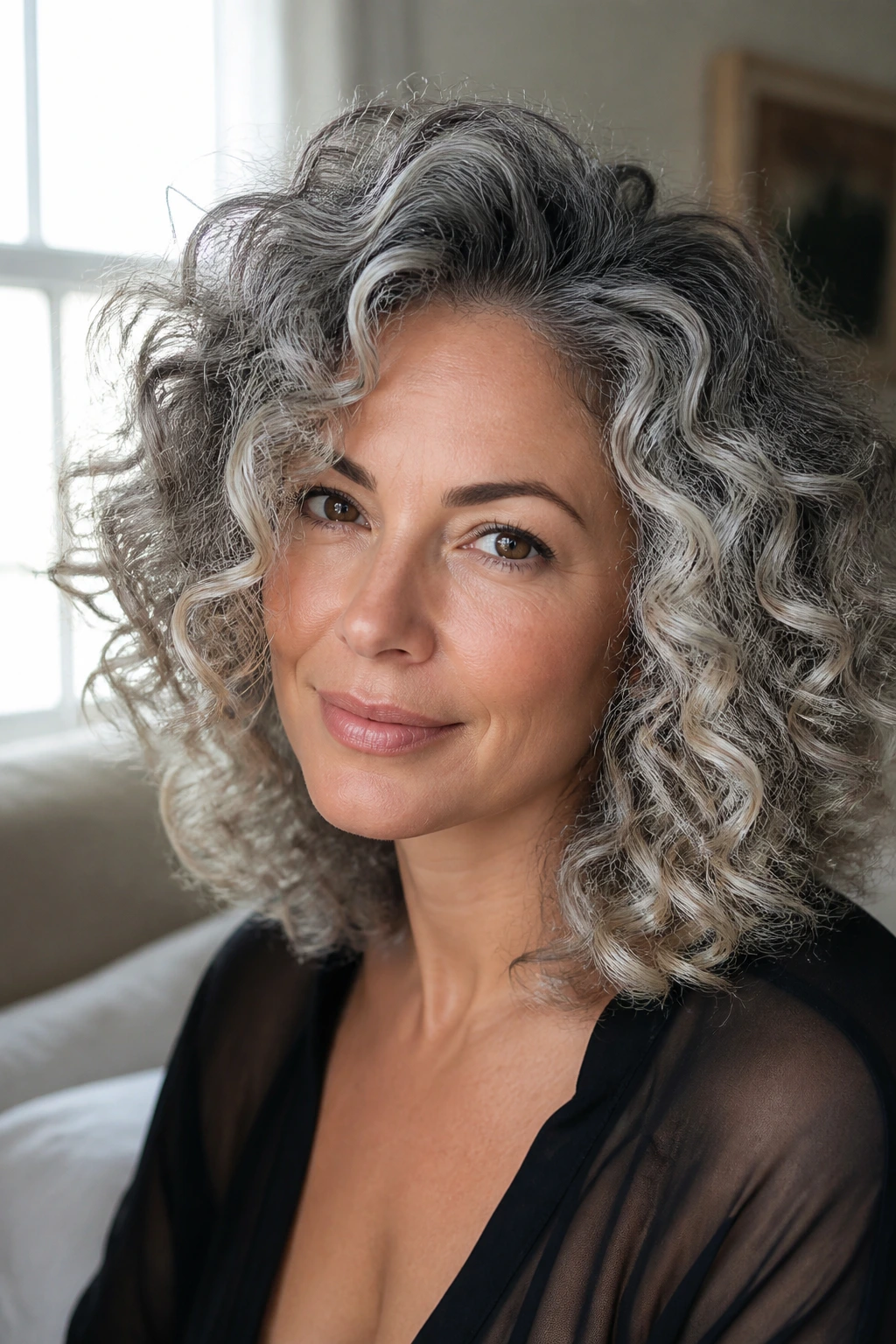
Smoky silver balayage is not the same thing as bright silver streaks. It’s softer, darker, and more lived-in, with peppery cool pieces that blend into gray rather than fighting it.
That makes it especially good for salt-and-pepper curls. Instead of hiding the natural gray, the silver just gives it shape. The result can look deliberate even when the grow-out starts to come in, which is rare for a cool blonde finish.
Best on: naturally gray roots, cool brunettes, and curly hair that holds toner well.
What matters most:
- A controlled lift so the hair doesn’t go hollow or transparent
- A silver-beige toner instead of a harsh icy one
- A bond-building treatment during the lightening process
- Regular gloss refreshes to keep the silver from turning muddy
This is not a casual maintenance look. It’s beautiful, but it asks for discipline.
19. Rooted Platinum Ribbons
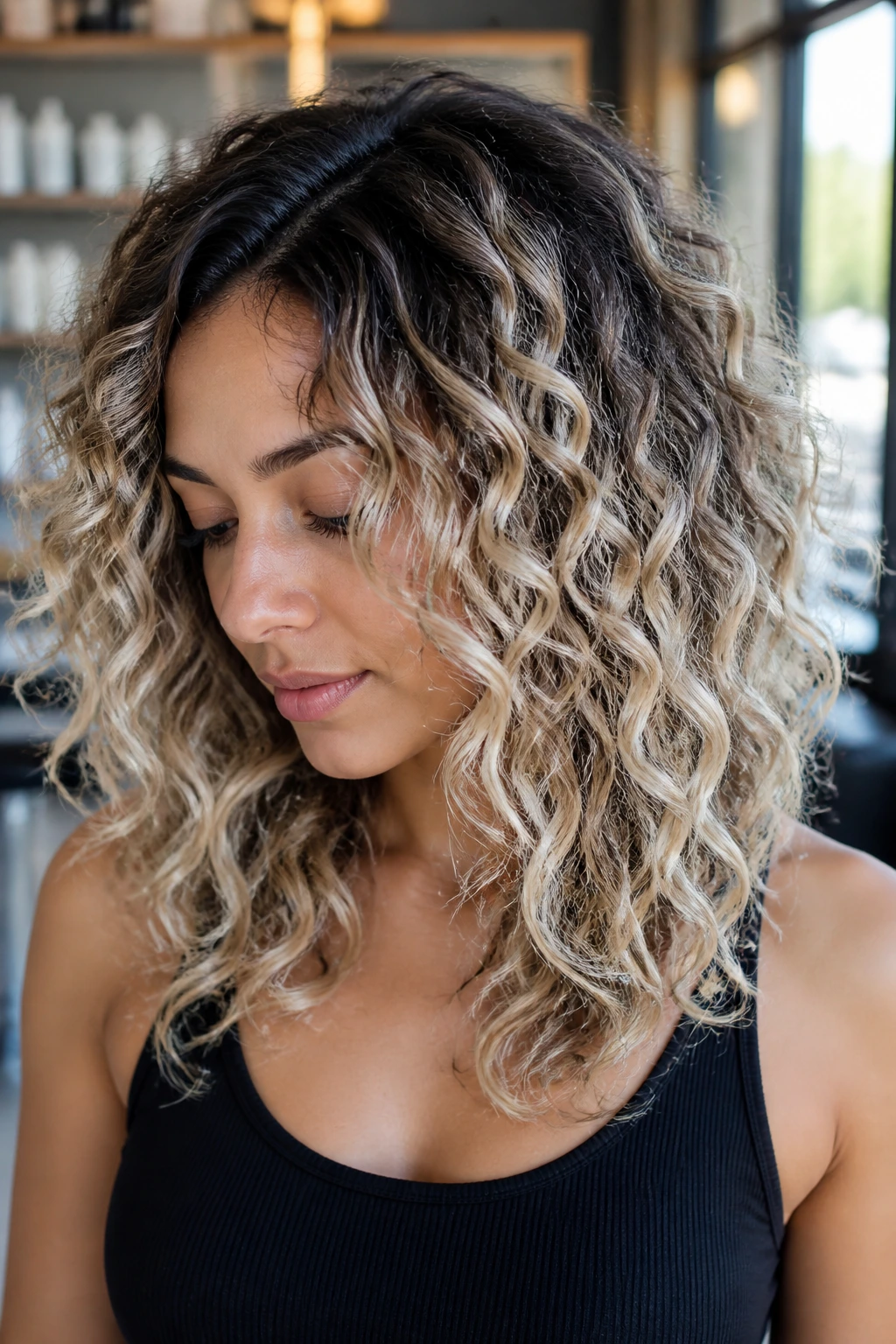
Rooted platinum ribbons are for people who want contrast. Real contrast. Dark roots, pale ends, and enough blend in between that the hair still feels wearable on curls.
The root shadow saves this look. Without it, platinum can sit on curls like a wig effect, especially if the curl pattern is tight. With the shadow, the brightness rises gradually through the mids and lands at a pale platinum that still shows curl definition.
Best on: dark brunettes willing to maintain tone, and curl types that can handle lightening without losing their spring.
The honest part: platinum on curly hair is high-maintenance. Not impossible. Just high-maintenance. If the ends are already dry, stop and rethink the lift level before going any lighter. A healthy level 9 with a clean toner will beat a brittle level 10 every time.
20. Peach Bronze Curly Color
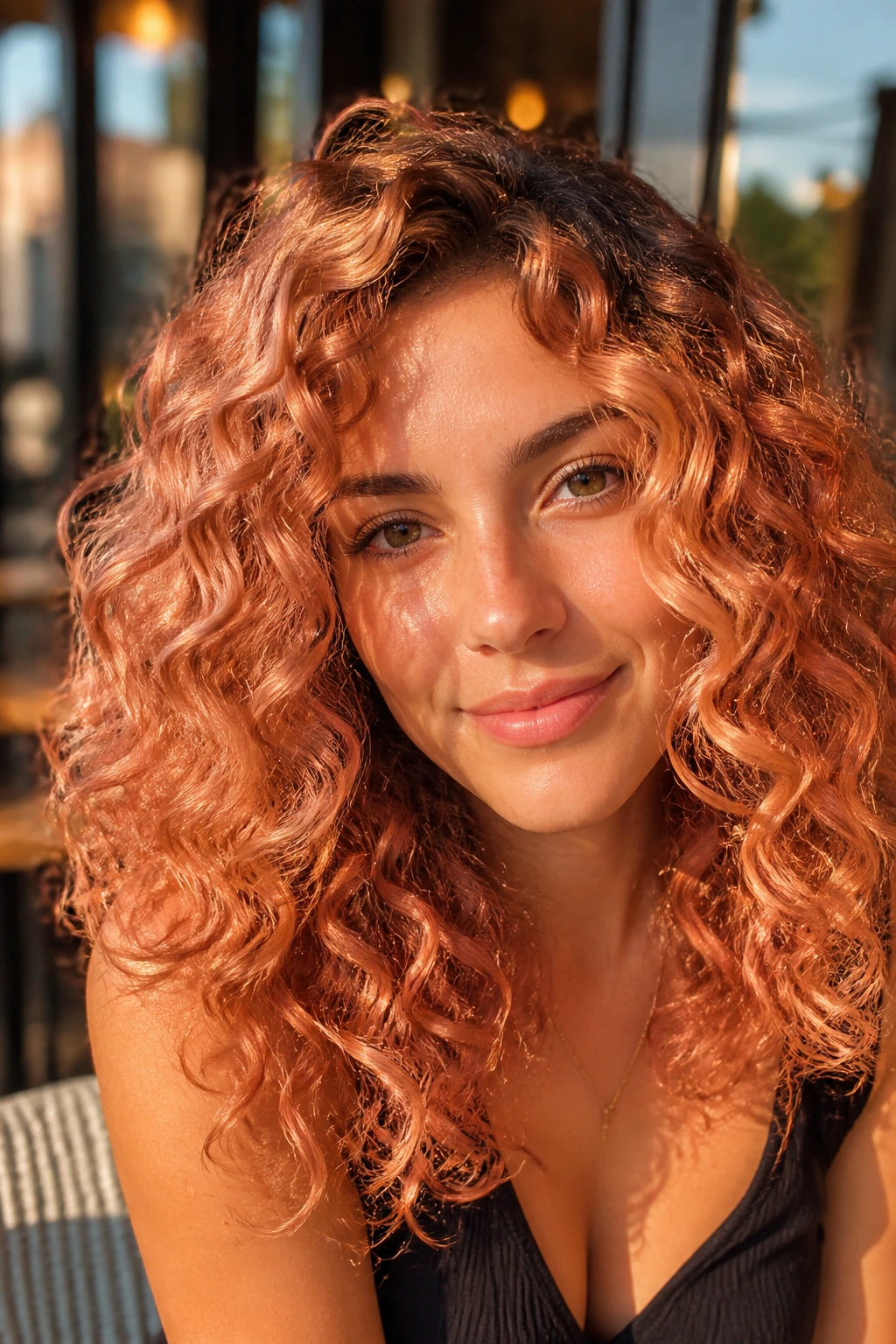
Peach bronze is playful without turning candy-bright. It has a warm bronze base with a peachy glaze layered over the surface, which gives the curls a soft apricot sheen when the light hits.
That glaze is the trick. On curls, peach can look patchy if it’s painted too heavily. A bronze base gives it something to sit on, so the color reads as dimension instead of dye. On looser curls and waves, especially, the finish can look almost sunlit.
Best on: medium brown or light brown hair that can hold warmth well.
What to ask for:
- Bronze ribbons first
- A peach glaze over the top layer only
- A softer front piece so the color stays wearable
- A gloss to keep the peach from turning dull
This is one of the more fun curly balayage looks, but it still needs restraint. A little peach goes a long way.
21. Walnut Dimension Melt
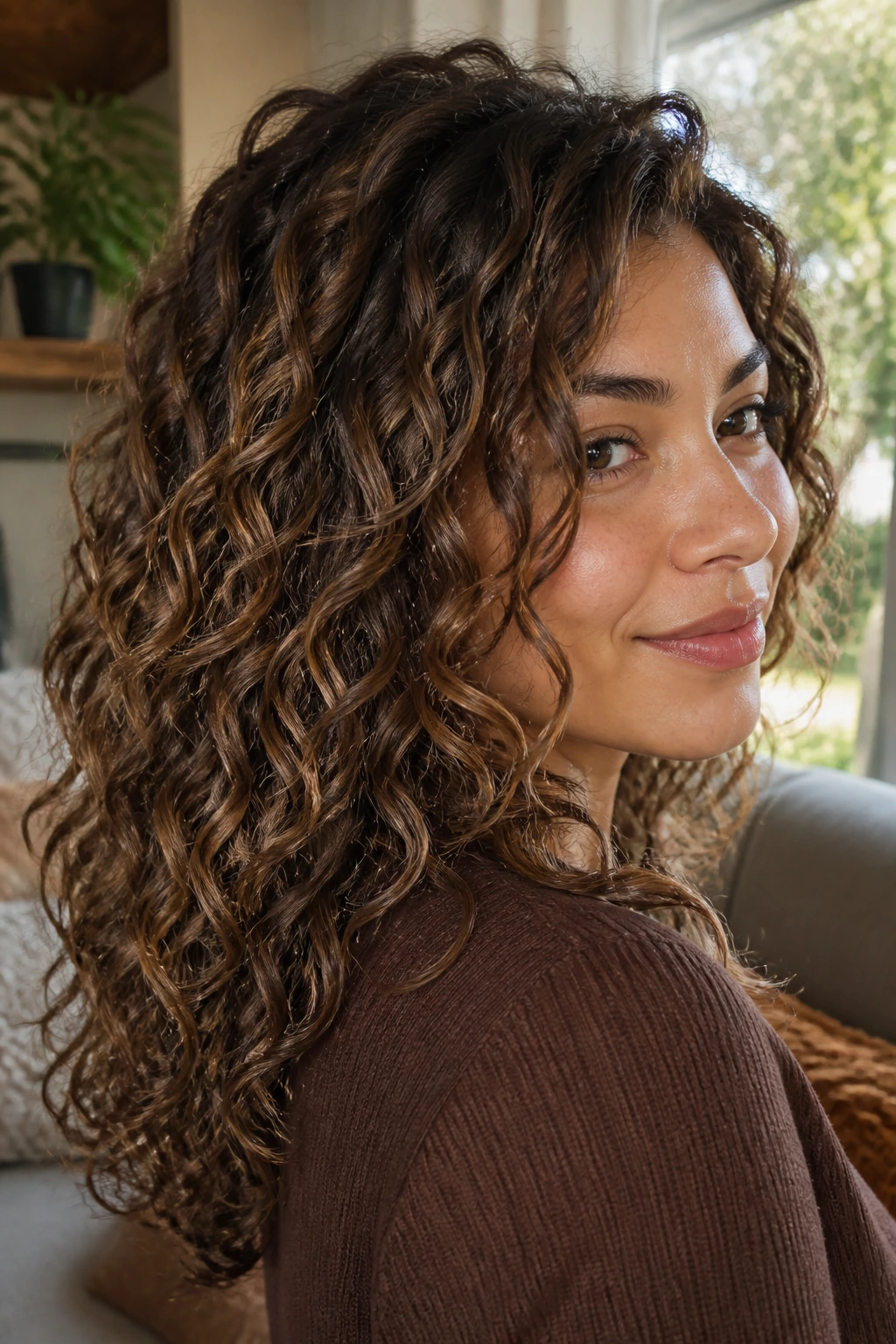
Walnut dimension is one of my favorite looks for people who want subtlety without boredom. The tone sits between neutral brown and soft taupe, so the highlights and lowlights melt into the base instead of sitting on top of it.
Curly hair loves that kind of softness. Dense curls often look better when the color change is layered, not dramatic. Walnut gives you movement without sharp stripes, and the tone works especially well if your natural color is somewhere between chocolate and chestnut.
Best on: thick curls, layered cuts, and anyone who wants dimension that still reads natural from across the room.
How it should feel: not flat, not flashy. Just richer. If the ribbons are too light, the whole look loses that walnut depth and starts to chase a brighter blonde story, which is not what this style needs.
22. Maple Syrup Balayage
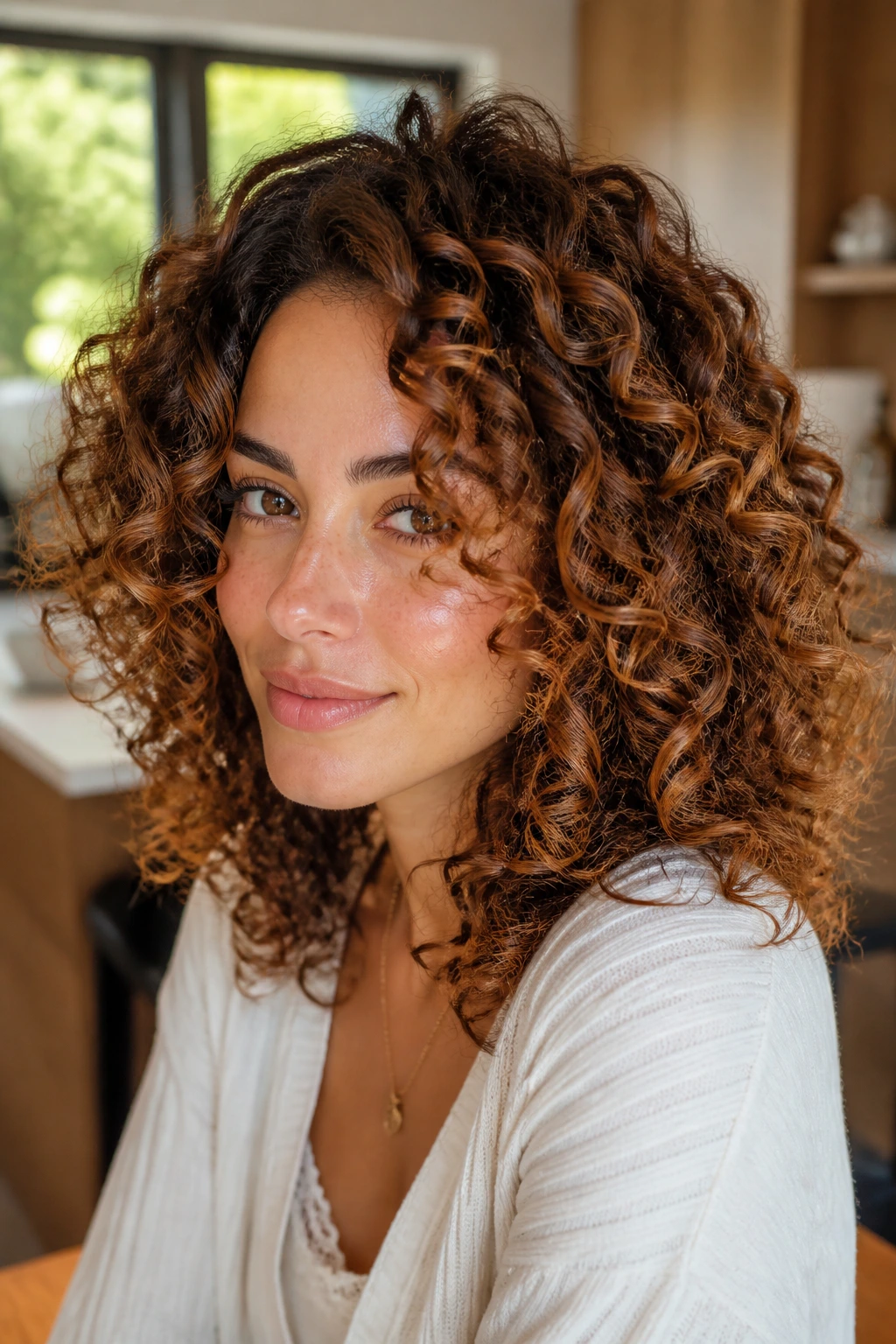
Maple syrup balayage is warm, glossy, and a little deeper than honey. Think amber-brown with a soft golden pull, the kind of tone that looks especially good on curls with a lot of surface shine.
What makes it work is the warmth-to-depth balance. The color needs enough brown to stay grounded and enough amber to show through the pattern. On curly hair, that mix is easier to wear than a pure blonde because the curls themselves create the sparkle.
Best on: brunettes who want warmth without copper, and waves that need a richer finish.
A nice detail here is that maple tones fade gracefully. Even when the gold softens, the look still reads warm. That’s a small thing, but it matters when you don’t want your hair to swing from amber to dull beige in a few washes.
23. Pearl Blonde Money Piece
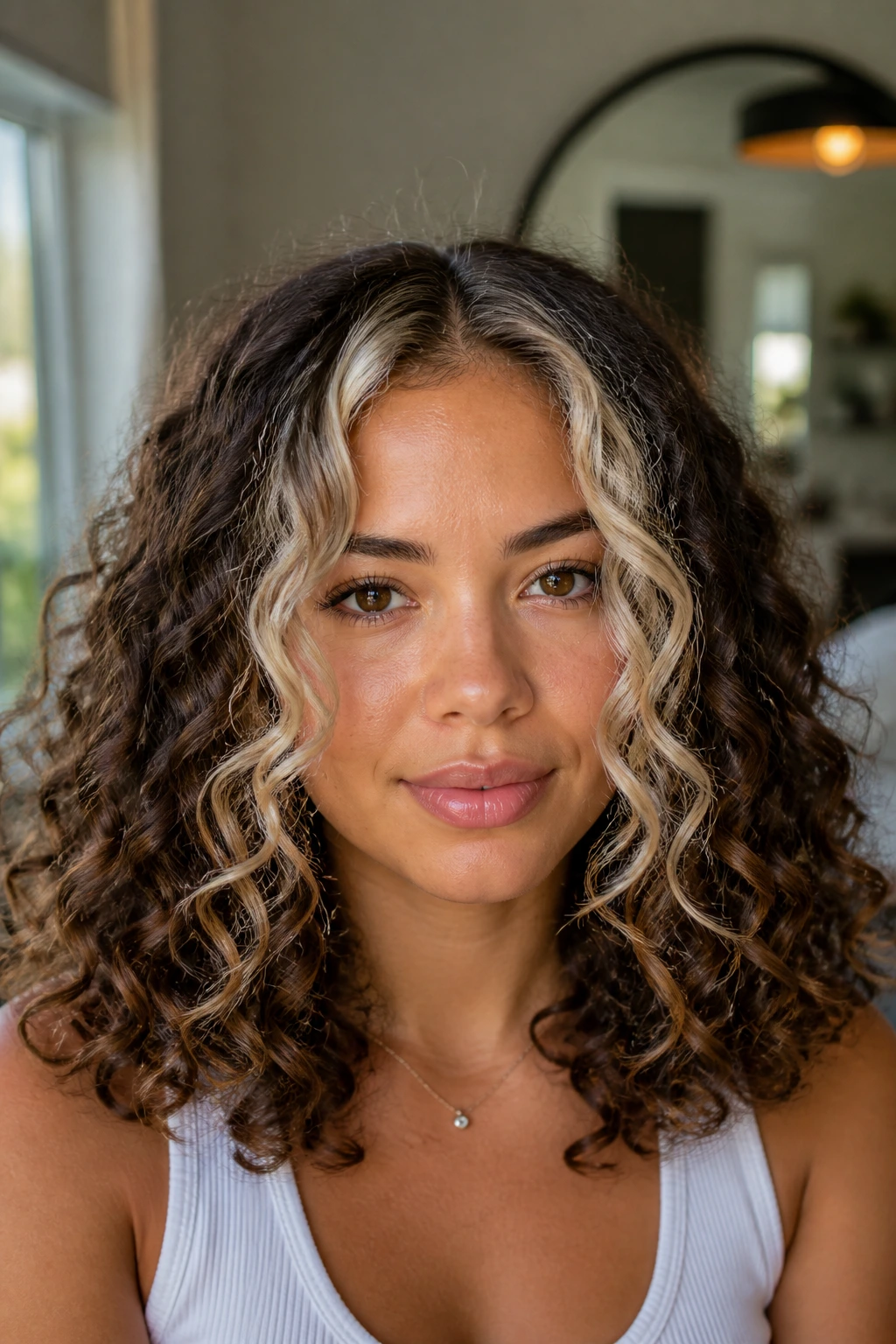
A pearl blonde money piece is a front-only highlight with a cool, soft finish. It gives you brightness right where the face needs it, but leaves the rest of the curls darker and calmer.
That contrast is what makes the money piece so useful. Curly hair can get busy fast, and a full head of bright pieces can start to feel noisy. A pearl blonde front section keeps the look clean. The curl pattern around the face pops, and the rest of the hair can keep its depth.
Best for:
- Side parts and curly shags
- Medium to dark bases
- People who want a lighter look without a full-color overhaul
Ask for: pale beige-blonde with a slightly cool gloss, then a soft root blend so the money piece doesn’t look pasted on. If your curls are tight, keep the highlight a touch thicker than you would on waves. Too thin, and it disappears in the pattern.
24. Toasted Almond Ends
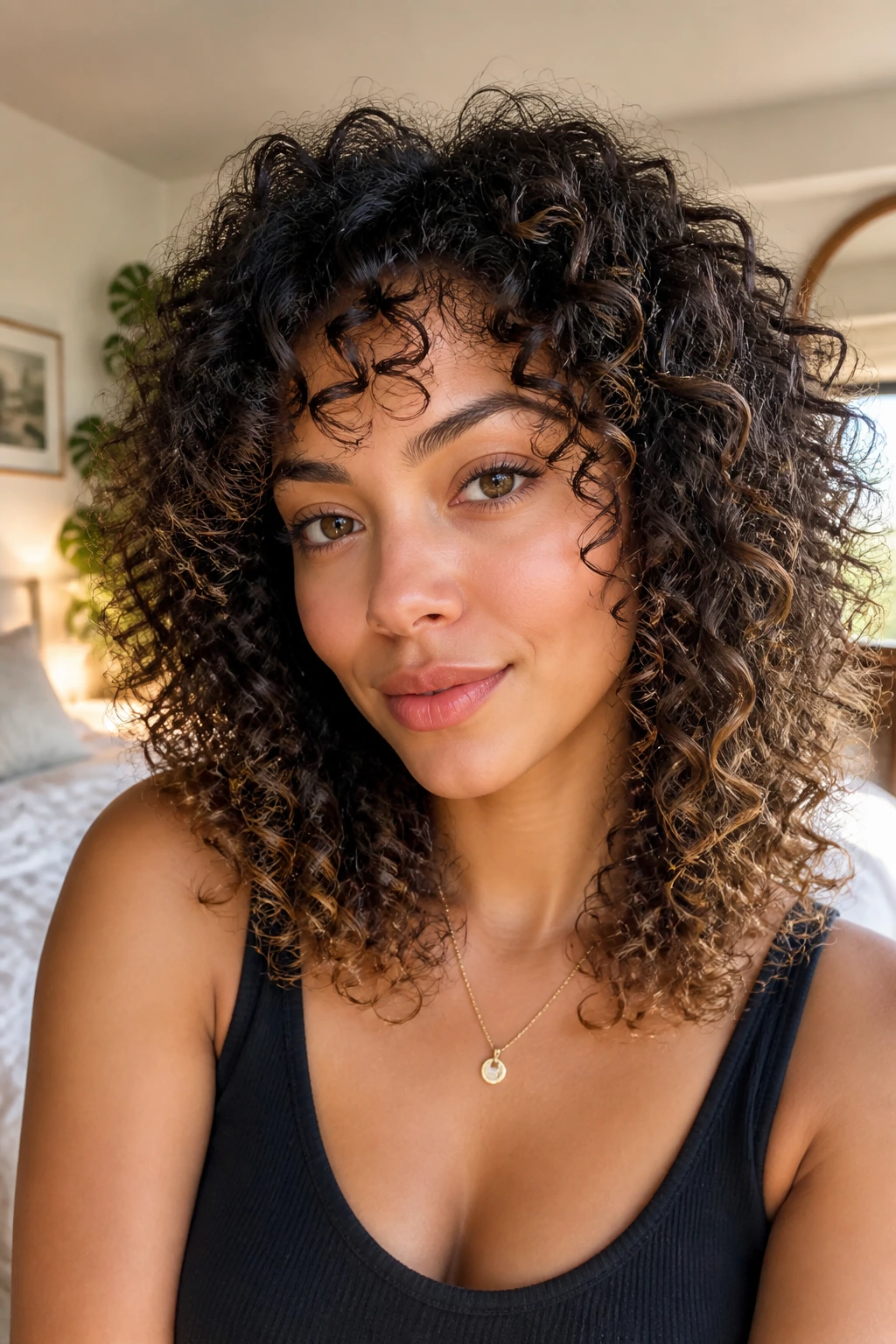
Toasted almond ends are the quietest kind of brightness on this list, and that is exactly why they work. Instead of painting the whole head, the lightest color lives mostly through the ends, where the curls taper and the shape naturally opens up.
The result is soft and restrained. You get a hint of lift without sacrificing the dark crown or the density of the curls. On short curls, this can make the shape look airy. On longer curls, it keeps the ends from looking heavy.
Best on:
- People who want low maintenance
- Darker brunettes who fear brass
- Layered cuts where the ends need a visual lift
This is a good place to stop if you don’t want to cross into blonde territory. A toasted almond finish can be enough. More than enough, actually.
25. Coral-Tinged Curly Balayage
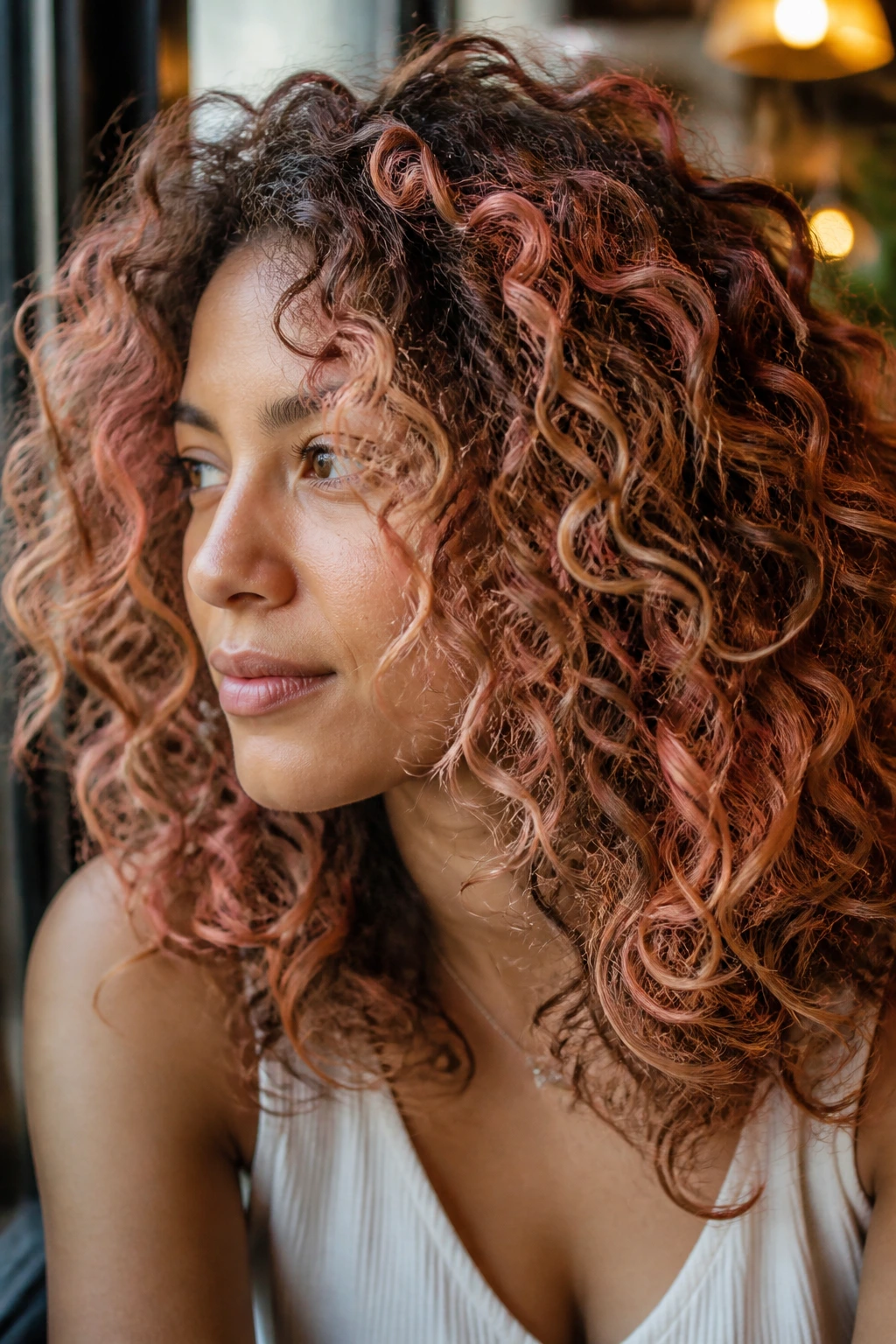
Coral-tinged balayage sits in a fun middle zone between peach, copper, and rose. It’s bright enough to notice, but it still plays well with a curly pattern because the color is scattered rather than solid.
The key is not to overdo the saturation. A sheer coral veil over bronze or light copper looks modern on curls. A thick neon coral panel does not. Curly hair already brings movement, so the color should act like shimmer, not paint.
Best on: lighter brunettes, fashion-forward reds, and anyone who wants a warm tone with a little personality.
Small but useful note: coral tones fade fast if the hair is washed with hot water or harsh shampoo. Keep the water lukewarm and treat the color like a glaze, not a permanent block.
26. Taupe and Cocoa Ribbon Lights
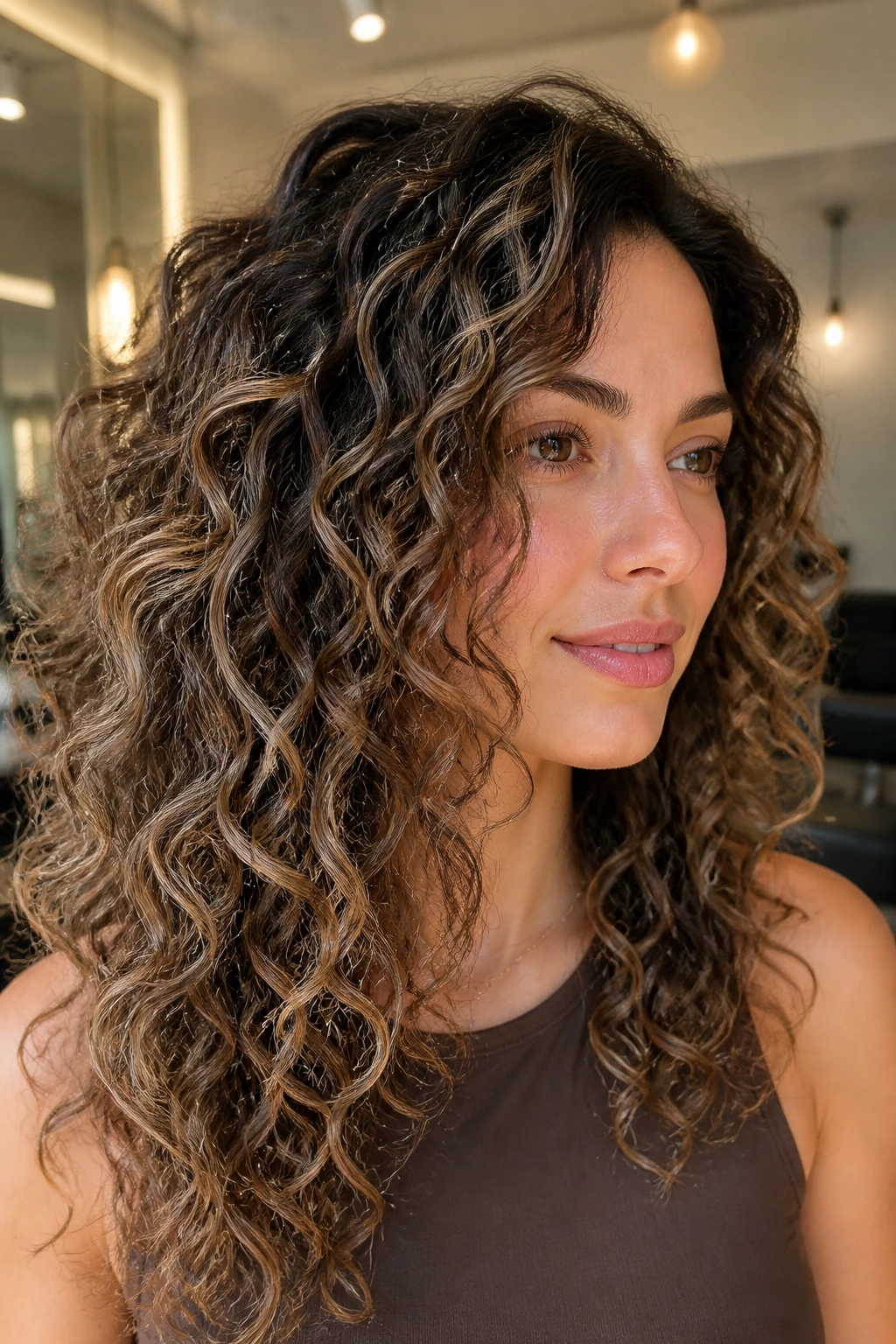
Taupe and cocoa ribbon lights are built for people who want dimension that feels quiet from a distance and detailed up close. Taupe keeps the highlights cool and muted, while cocoa lowlights stop the curls from going flat.
That balance is why this look is so wearable. On dense curls, too much lightness can make the pattern blur. Too much darkness, and the shape disappears. Taupe and cocoa split the difference in a way that stays soft over time.
Best on: medium brunettes, professional settings, and hair that needs dimension without obvious contrast.
I like this look on curls with a lot of volume at the sides. The ribbons catch the outward curve of the curl, which makes the silhouette look fuller without making the head look bigger. There’s a difference, and it’s a useful one.
27. Gunmetal Veil Balayage
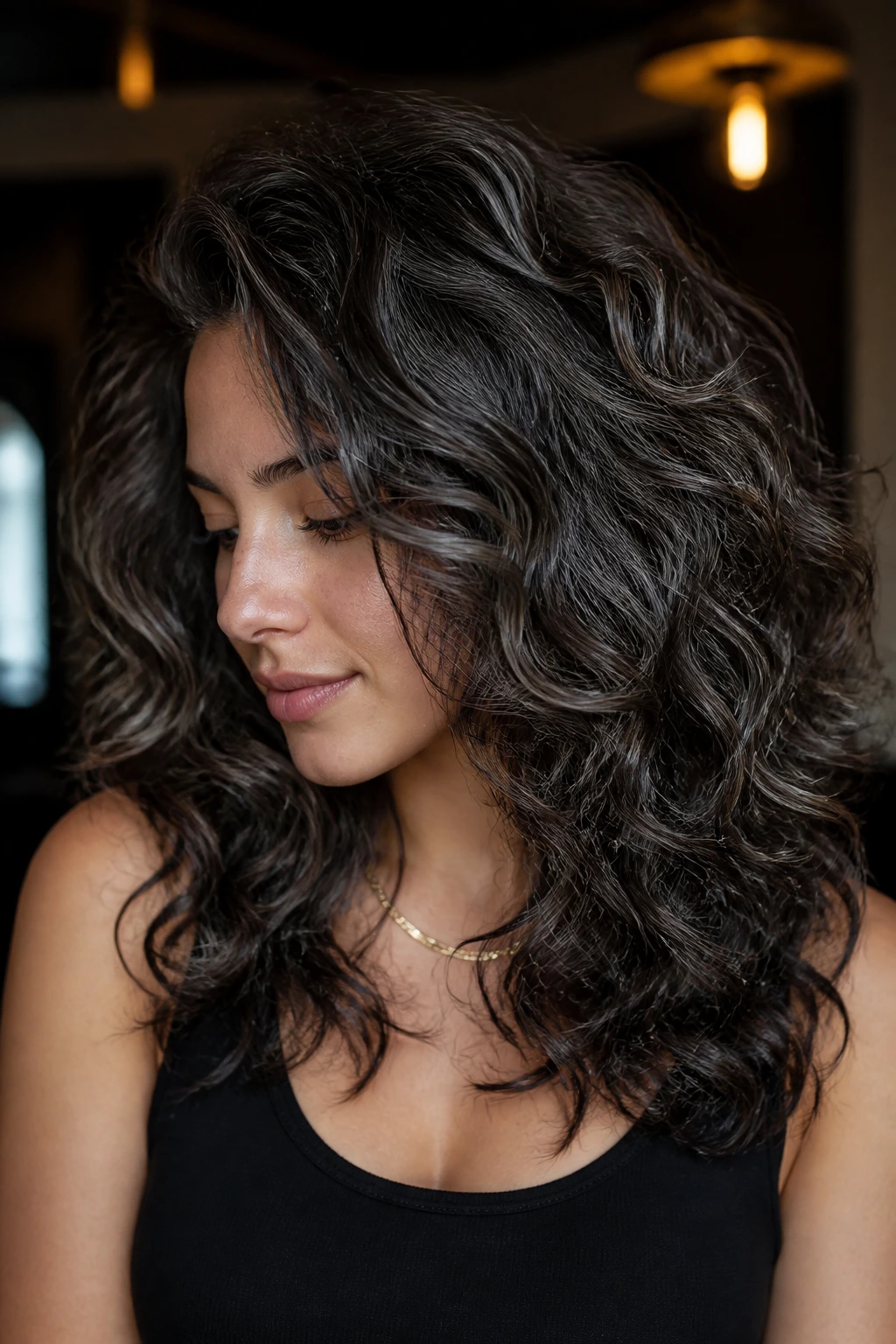
Gunmetal veil balayage is the darker, moodier silver story. Instead of bright metallic pieces, you get smoky steel tones woven through a deep base, which makes the curls look sharp without going icy.
This is a strong look on dark curly hair because it respects the depth. The silver is not trying to replace the brown; it’s sitting on top of it like a veil. That keeps the color from looking chalky, which is a common problem with cooler fantasy tones on textured hair.
Best on:
- Dark brunettes
- Gray blending with attitude
- Curls that can handle multiple toning sessions
Reality check: metallic cool tones need upkeep. They fade into softer ash, then into a muted brown-silver mix. If you like that faded stage, great. If you want the gunmetal finish to stay sharp, book glosses regularly and keep hot tools low.
28. Bronze Glass Finish
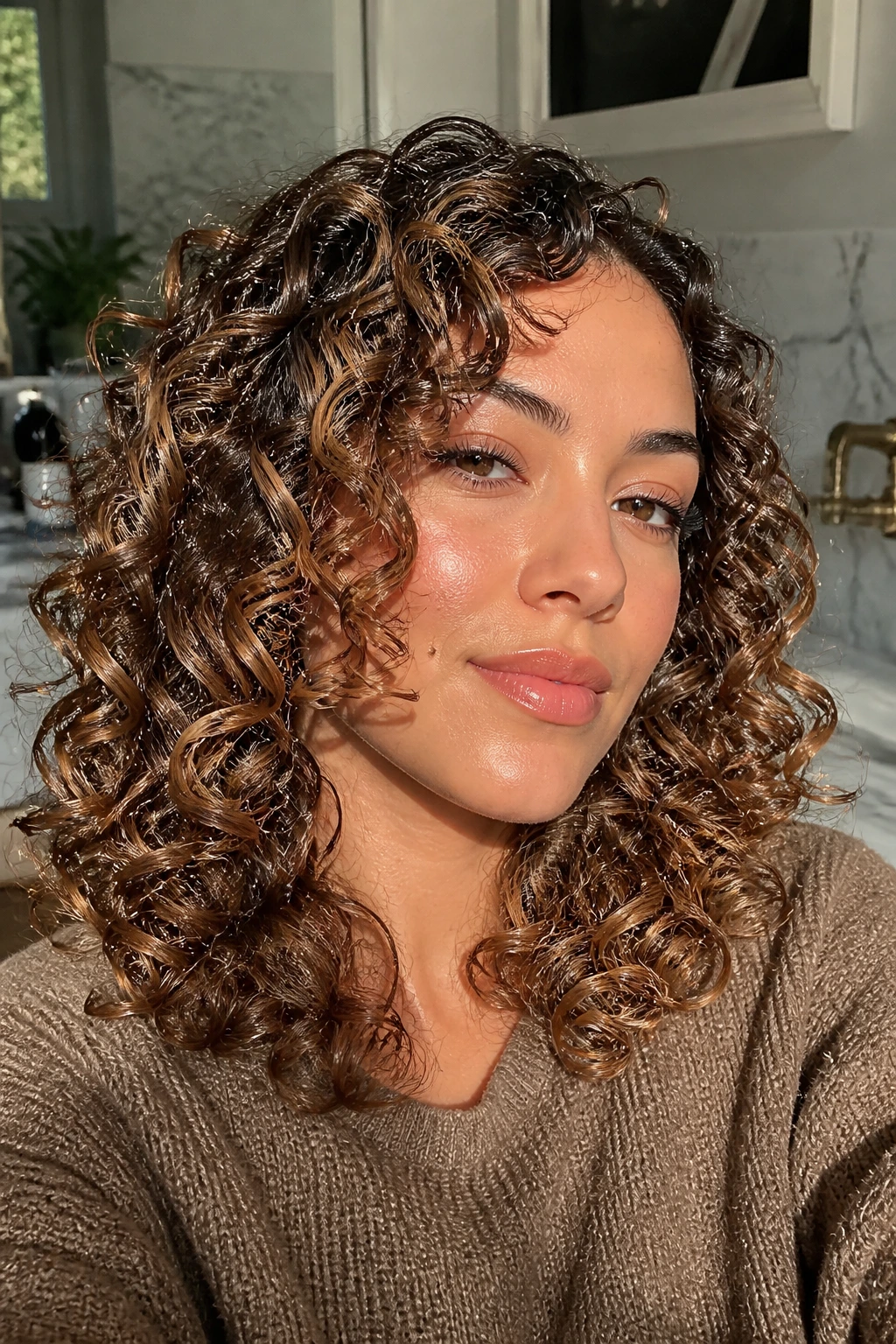
Bronze glass finish is what happens when warmth gets polished instead of pushed louder. The color sits in the bronze family, but the real point is the shine: a glossy, reflective surface that makes every curl bend look crisp.
The shade itself should stay earthy. Too much gold and it turns brassy. Too much red and it starts reading copper. Bronze lives in the middle, and on curls that middle ground is rich. Add a clear or beige gloss over the top, and the hair takes on a smooth, glassy finish that looks especially good on defined wash-day curls.
Best on: medium to dark brunettes, healthy ends, and anyone who wants shine more than contrast.
My favorite detail: this look gets better when the curls are clumped cleanly. Use enough leave-in to define them, but not so much that the surface turns greasy. Bronze only looks like bronze when the light can move across it.
Why Curly Hair Needs a Different Balayage Map
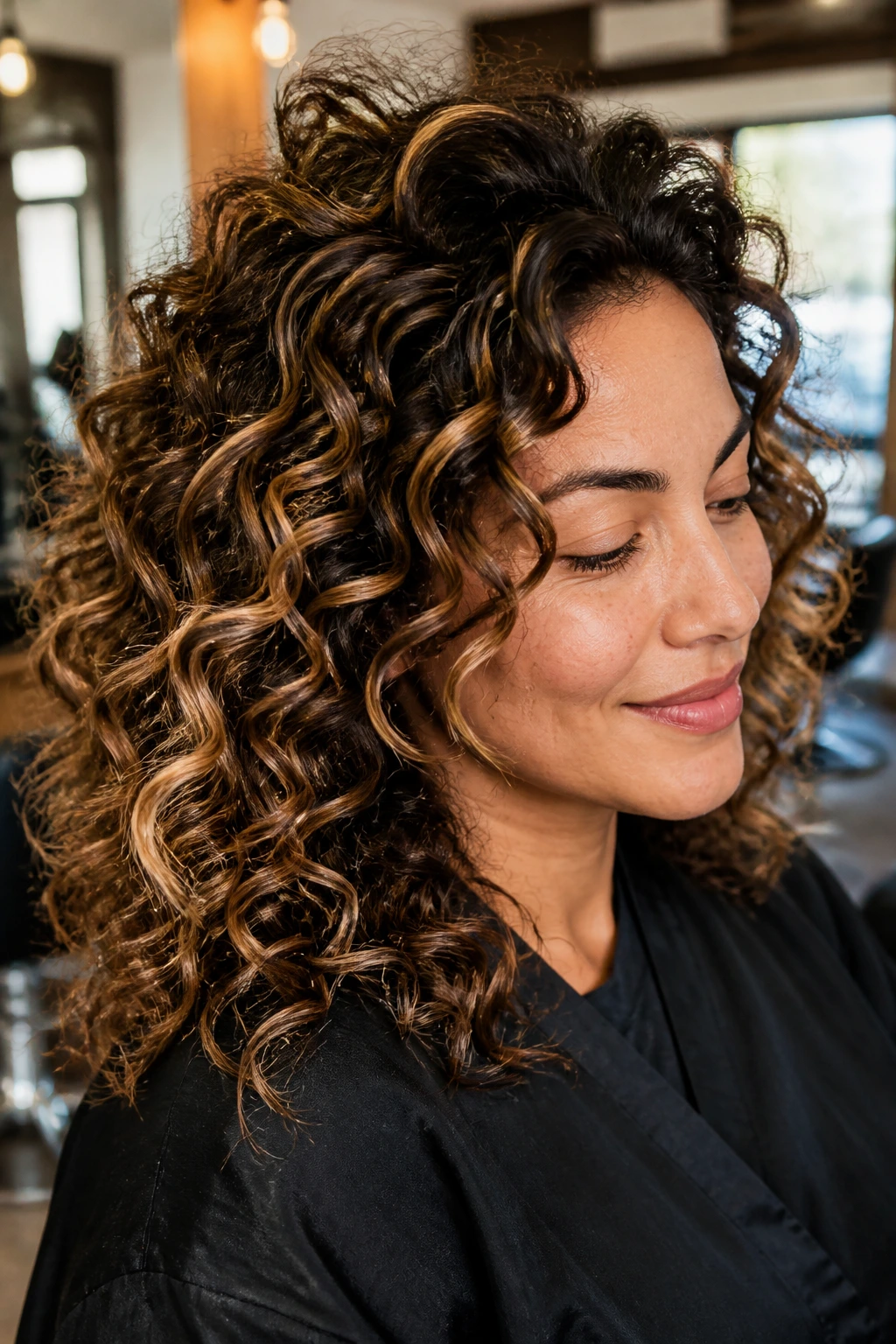
Curly hair is not just “straight hair with extra texture.” That would be too easy, and hair never really is. The curl pattern changes how color sits, how much of it you can actually see, and where the eye lands when the hair moves.
A colorist who understands curly balayage usually thinks in arcs instead of stripes. They look at the shape of the curl clump, the shrinkage factor, and the spots where the hair naturally separates. That is why dry cutting and dry placement can matter so much. You can’t always tell where the color will land if you paint as though the hair hangs straight forever. It does not.
The other thing curly hair does is amplify mistakes. A highlight that’s a little too close to the root can show up as a hard band. A toner that grabs too cool can look dusty once the curls dry. A ribbon that’s too wide can turn into a streak the size of a thumb. Small errors get louder here. So do good choices.
Essential Tools, Clips, and Salon Terms to Know
-
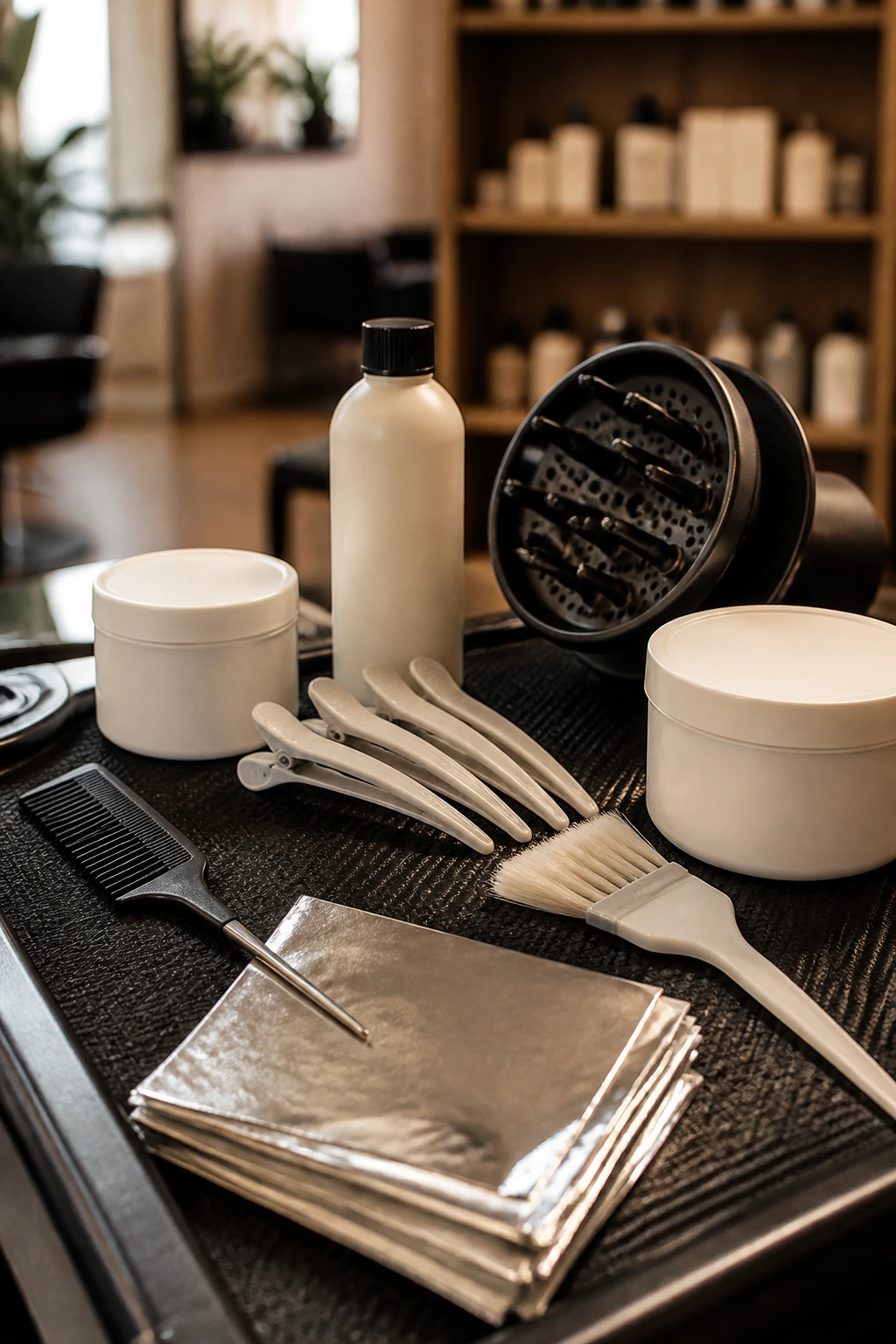
Tail comb: Helps separate curl clumps cleanly so the light pieces don’t bleed into each other.
-
Duckbill or sectioning clips: Keep the curls out of the way without crushing the pattern at the root.
-
Balayage brush or paddle: Lets a colorist paint soft, curved ribbons instead of hard lines.
-
Foils or foilayage sheets: Useful when the hair needs extra lift or the lightener has to stay warmer for a cleaner blonde.
-
Bond builder: Helps protect curls during lightening, especially on porous or previously colored hair.
-
Demi-permanent gloss: The thing that turns “lightened hair” into “finished color.” Without it, the tone often looks raw.
-
Diffuser: Not a color tool, but it changes how the finished ribbons show once the hair dries.
-
Color-safe hydrating mask: Keeps the ends from getting rough, which matters more on curly hair than people admit.
Picking the Right Tone for Your Curl Pattern and Base
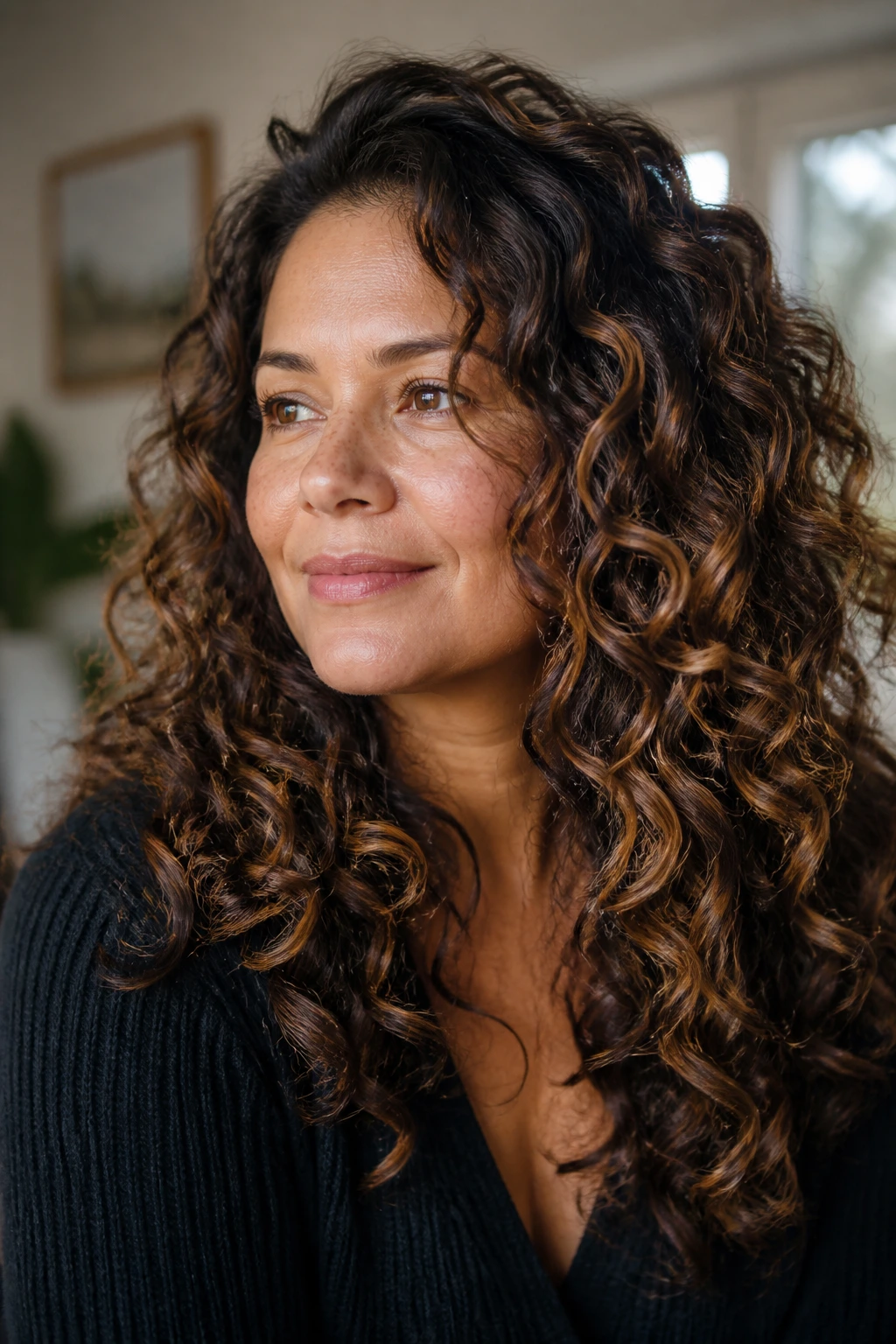
Dark brunettes and black-brown bases usually look best with honey, bronze, copper, chocolate cherry, or rooted platinum if you want strong contrast. If the lift is too pale, the color can sit on top of the hair instead of blending into it. On deeper bases, I like tones that stay rich even when the curls shrink up, because tiny ribbons disappear quickly if the tone is too soft.
Medium brown and chestnut bases have the widest lane. Caramel, mocha, toffee, walnut, and mushroom all work here, but they tell different stories. Warm tones feel sun-kissed. Cool tones feel smoky. Neutral tones are the safest bet if your hair tends to fight both warmth and ash.
Light brown and dark blonde curls can carry beige blonde, champagne, and sand beige without the look going brassy. That said, curls in this range often need a gloss more often than dark hair because the lighter pieces show toner fade fast. If the hair is porous, ask for a softer lift and a stronger tone refresh plan instead of chasing the palest blonde possible.
Gray and salt-and-pepper curls can do something most color types can’t: they can blend into silver instead of hiding it. Smoky silver and gunmetal work because they let the natural gray become part of the design. The result looks cleaner when the natural silver at the root is respected, not covered up.
How to Style These Colors So the Ribbons Actually Show
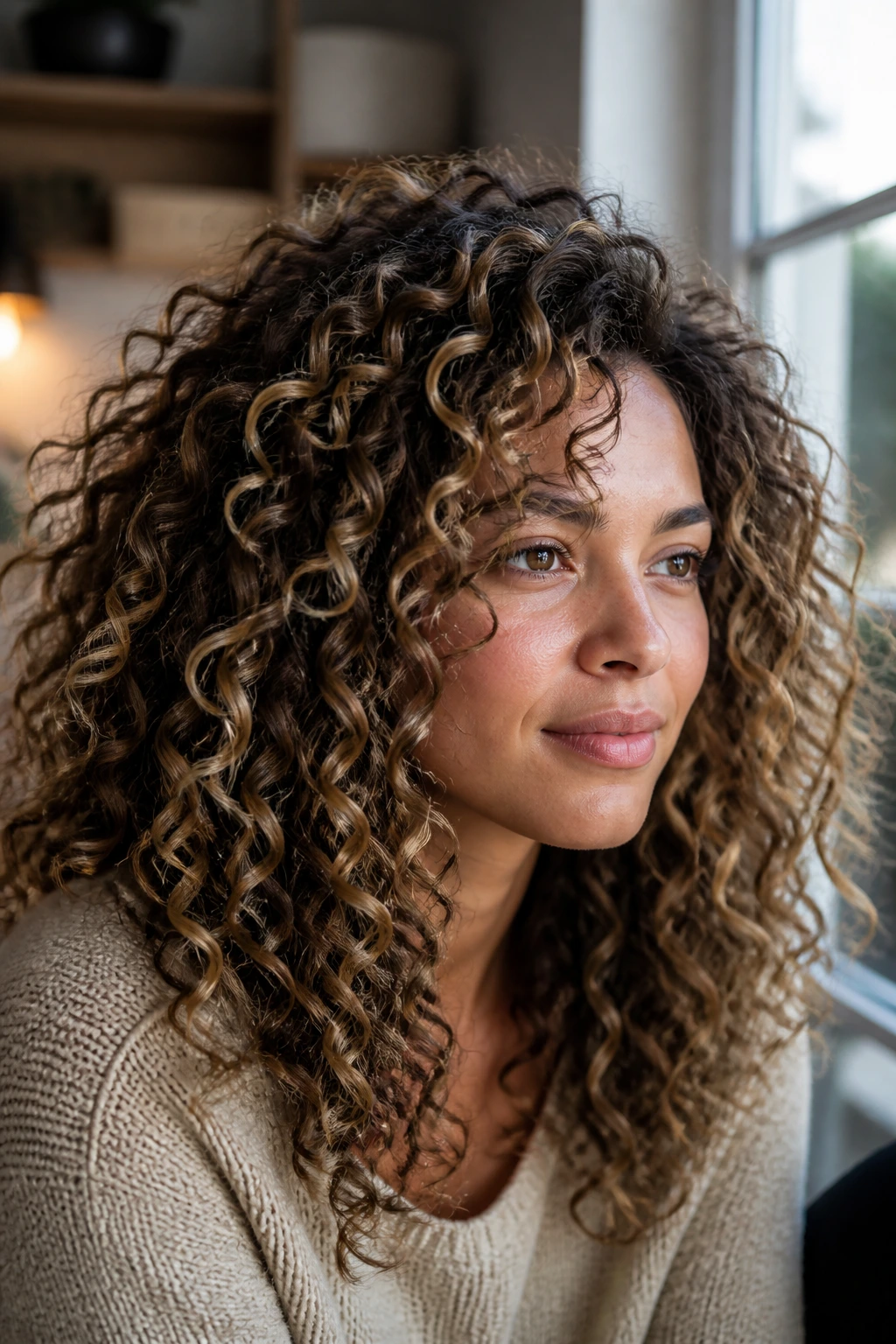
Wash Day: Start with a shampoo that cleans the scalp without stripping the ends. If the roots are heavy with product and the lengths are coated in oil, the color will look dull before you even style it. A lightweight conditioner on the mids and ends is enough for most curly balayage; too much cream can hide the light pieces.
Diffusing: Dry the roots first. Seriously. If the root stays damp too long, the crown collapses and the top ribbons disappear into the pattern. Cup the curls with the diffuser, hold for a few seconds, then release. Don’t keep shaking the dryer around like you’re trying to stir soup.
Parting: Move the part slightly off center if you want the face-framing pieces to show. A center part can be beautiful, but an off-center part often gives the brighter ribbons a better angle on the cheekbones and temples.
Finish: Use a light glossing serum or shine spray on the outer layer only. The ends need enough slip to look smooth, but not so much that the curl clumps flatten. A tiny amount goes a long way on color-treated curls.
Small Tweaks That Make Curly Balayage Look More Finished
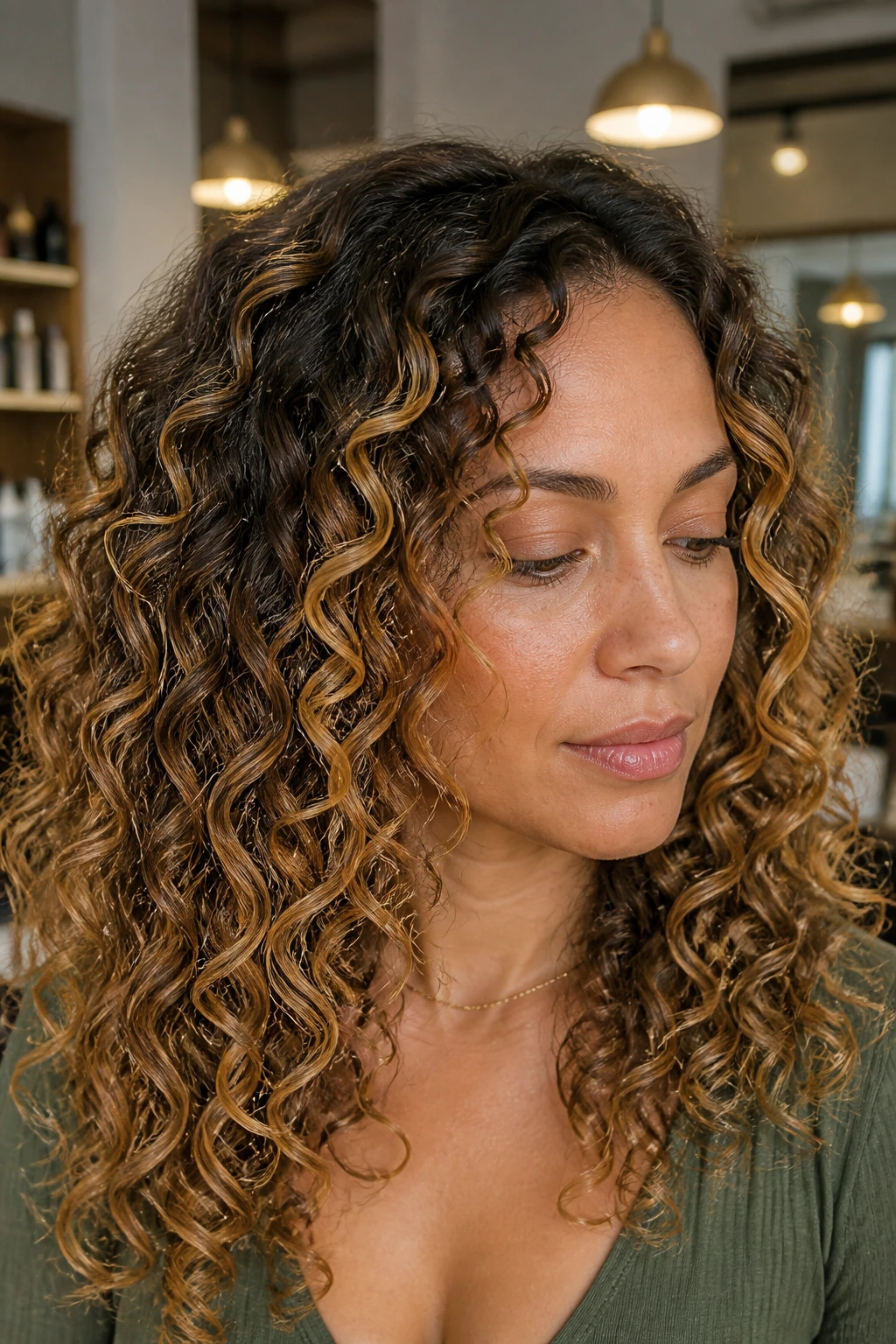
Color Enhancement: A clear or tinted gloss every 6 to 8 weeks keeps the tone from drifting. Honey stays honey. Ash stays ash. Copper stops going muddy. That one appointment can make the whole head look like it was just done.
Customization: Ask for lowlights between the brighter ribbons if your hair is dense or coarse. That keeps the curls from merging into one pale block and gives the highlight pattern more breathing room.
Serving Suggestions: A soft curl cream, a diffuse-dry, and a tiny bit of shine oil on the top layer are enough. If the hair needs five products to show the color, the placement is probably too heavy.
Make-It-Yours: Want less upkeep? Keep the brightness around the face and on the top layer only. Want more drama? Ask for a stronger money piece or a halo of light around the crown. Same haircut. Very different mood.
Common Curly Balayage Mistakes and How to Avoid Them
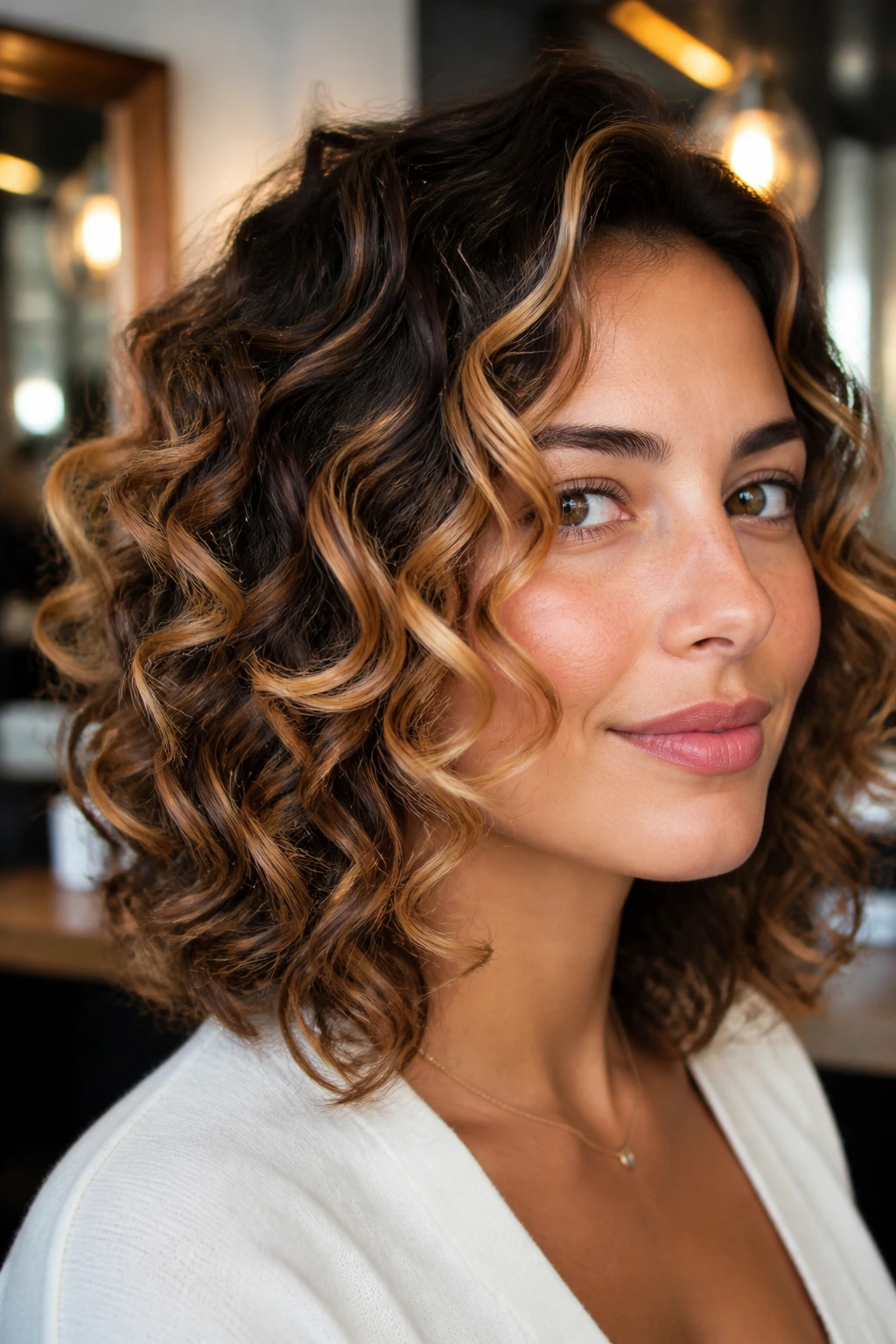
Painting curls as if they were straight is the big one. The color lands wrong once the curl shrinks, and suddenly the brightest piece sits in the oddest place. The fix is simple: paint for the curl pattern you actually wear, not the one you get when the hair is stretched.
Going too light on damaged ends is another trap. Curly ends show damage fast, and pale blonde or silver on rough ends can look dry no matter how good the toner is. Lift in stages if you need to, and stop before the hair starts looking hollow.
Skipping lowlights makes the whole head read stripey. That’s especially common on thick curls, where the eye needs shadow to understand shape. Keep some pieces darker, even if you love brightness.
Using the wrong toner for porous hair can turn the finish muddy or smoky in the wrong way. Porous curls grab pigment fast, so a gloss that works on healthy hair may sit too dark on yours. Softer toner, shorter processing, more frequent refreshes. That’s usually the safer path.
Expecting wet hair to show the final result leads to bad decisions. Wet curls hide a lot. Dry curls reveal everything. Judge the placement only after the hair is fully dry.
Variations and Alternate Approaches to Try
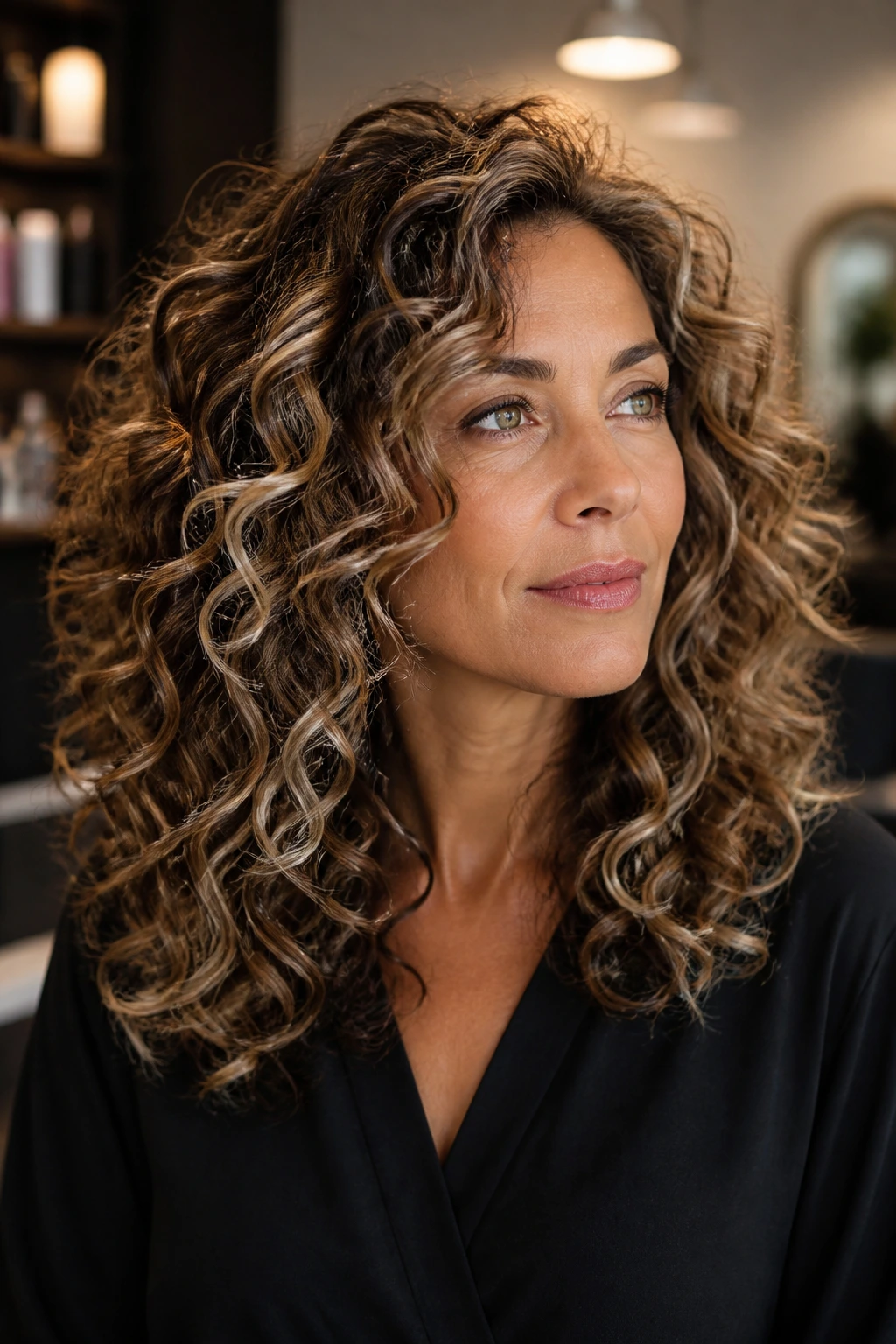
Ribbon-Light Balayage:
This is the fine, delicate version. Thin painted ribbons are spaced farther apart, which works well on dense curls that would turn blotchy with chunkier highlights. It’s a good choice if you want dimension that reads clean from across the room but still looks soft up close.
Foilayage Lift:
When the hair needs more lift than open-air painting can give, foilayage keeps the lightener closer and a little warmer. That usually helps curls reach a cleaner beige or platinum finish without over-processing the mids. It’s the one I’d choose for darker bases aiming for real contrast.
Face-Frame Only:
A few brighter pieces around the hairline can change the whole haircut. This is the least demanding version of balayage for curly hair, and it’s smart if you like to wear your curls naturally most days. The back stays quiet, the front does the work.
Gray-Blend Balayage:
Instead of covering silver, this version works with it. Smoky silver, taupe, and gunmetal tones help natural gray feel intentional. The grow-out is friendlier, too, because there’s no hard line between dyed hair and regrowth.
Gloss-Only Refresh:
If the highlights already exist, sometimes you don’t need more lightness. A fresh gloss can nudge honey warmer, ash cooler, or copper richer without lightening the hair again. That’s a good move when the curls are tired but the placement is still good.
Keeping Curly Balayage Fresh Between Appointments
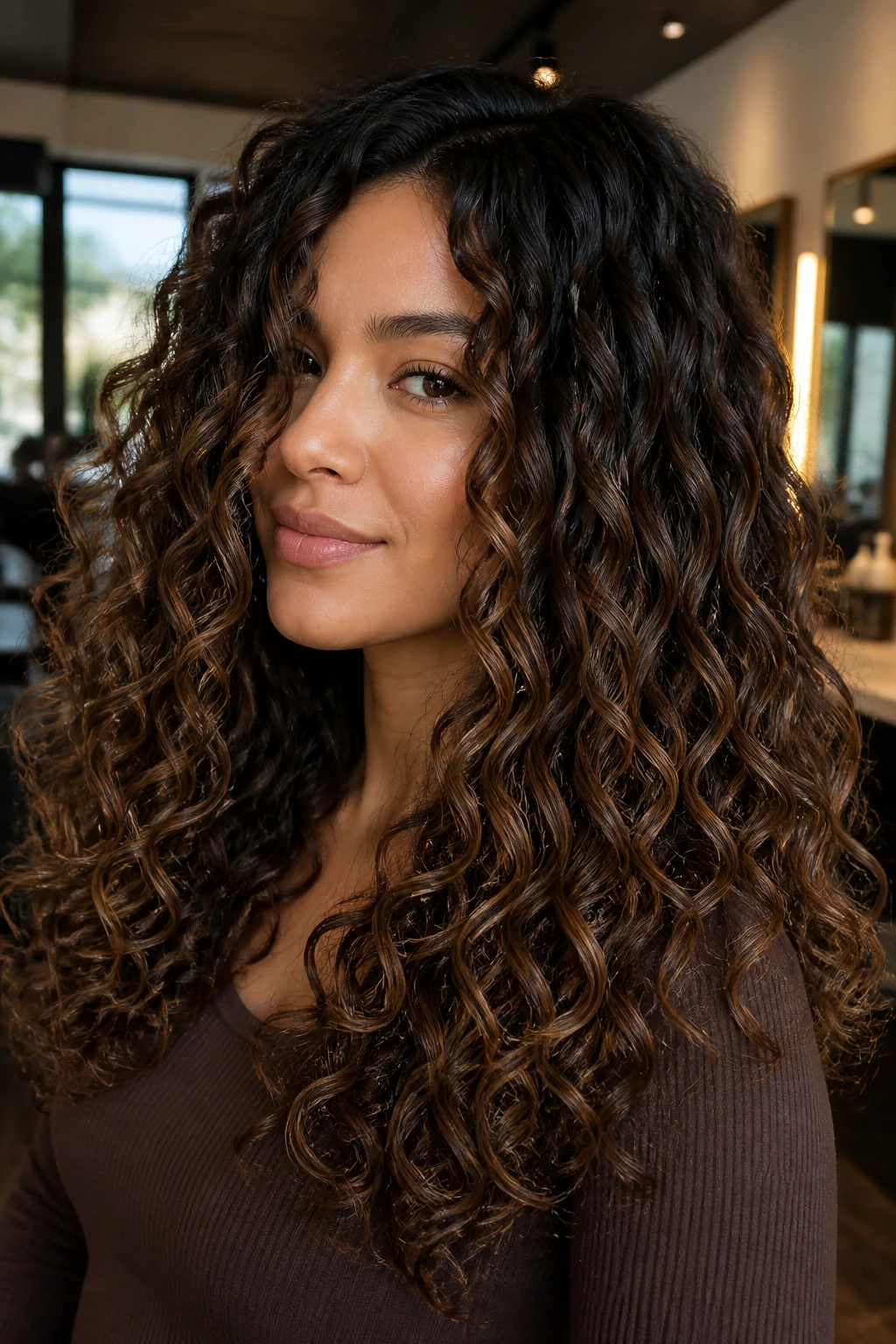
Curly balayage lasts longer when the wash routine is calm. Shampoo 2 or 3 times a week if your scalp allows it, and use lukewarm water instead of hot. Hot water strips tone faster, especially from honey, copper, beige, and champagne finishes.
A color-safe shampoo and a moisturizing conditioner are enough for most people. Add a mask once a week if the hair is lightened, or every 10 days if the ends are dry. If you use heavy stylers, clarify once every 3 or 4 weeks so buildup doesn’t sit over the ribbons and hide the color.
Heat protectant matters more than people like to admit. Every time. If you diffuse, hover dry, or touch the hair with a curling iron, put the protectant on first. And if your color is on the lighter side, plan for a gloss refresh about every 6 to 8 weeks, with full balayage maintenance anywhere from 10 to 14 weeks depending on contrast and grow-out.
Satin or silk pillowcases help too. So does a loose pineapple or bonnet. Friction roughs up the lightened ends faster than almost anything else.
Curly Balayage FAQ
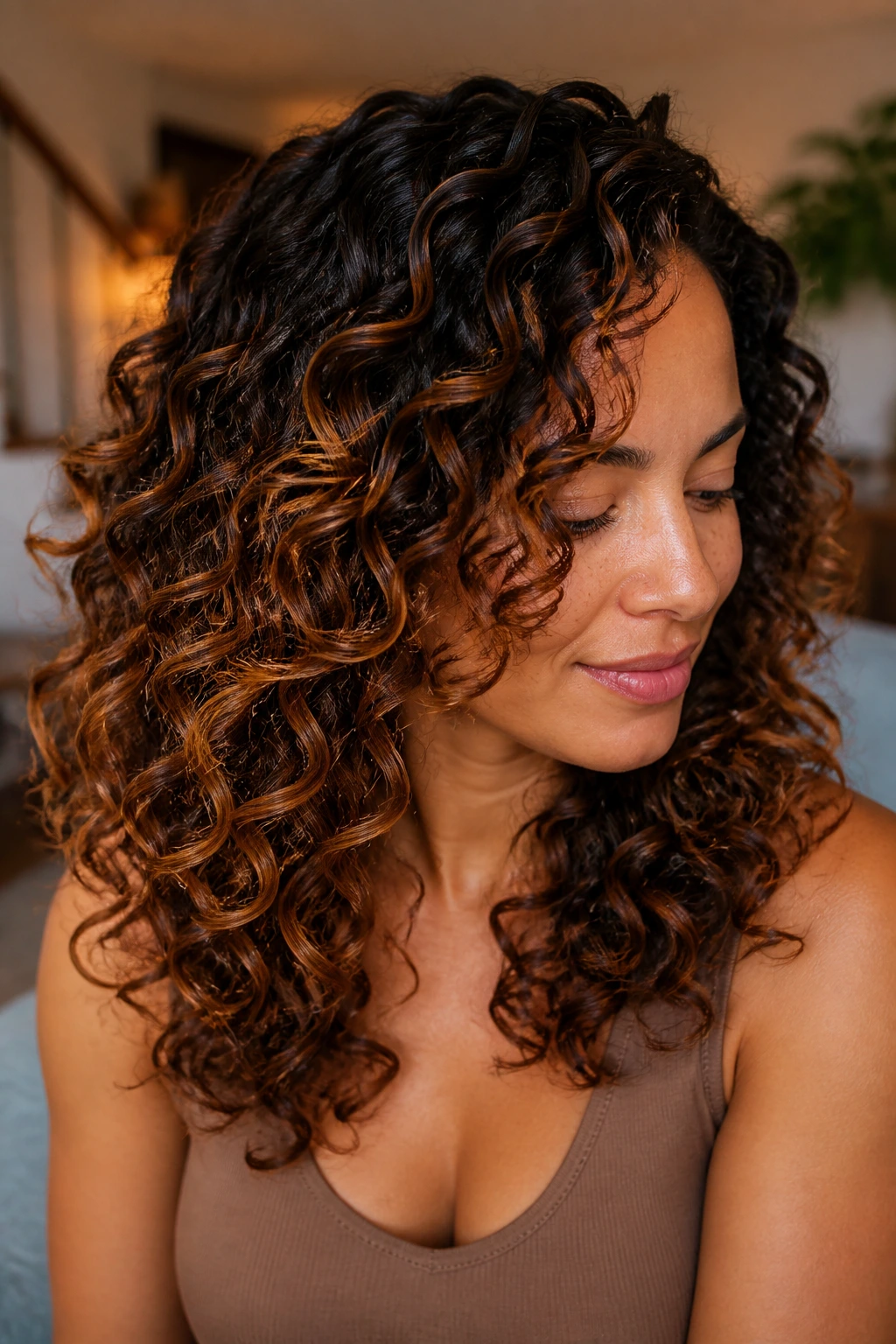
Does balayage work on all curl types?
Yes, but the placement changes. Loose waves can take wider ribbons, while tighter curls usually look better with finer pieces and more shadow between them. The curl pattern should decide the width of the highlight, not the other way around.
Should curly balayage be painted on wet or dry hair?
Dry or mostly dry is usually safer because the stylist can see the curl shape and shrinkage. Wet hair stretches and lies, which makes the final placement harder to judge. Some stylists work on damp sections for control, but the best method depends on the curl pattern and the desired lift.
How often does curly balayage need toning?
Most curly balayage benefits from a gloss every 6 to 8 weeks, especially if the tone is warm, beige, or silver. If the color is darker and more neutral, you can usually go longer. The moment brass or dullness starts changing the look, it’s time.
Can I get balayage on dark curly hair without wrecking the ends?
Yes, if the lift is controlled and the hair is healthy enough to handle it. Dark curls usually do better with a softer progression—caramel, bronze, mocha, copper—before jumping to platinum. If the ends are already fragile, a glossed brunette look may be smarter than a major lightening session.
What if my curls are porous and grab color too fast?
Then the toner choice matters even more than the lightener. Porous hair often needs a softer gloss, shorter processing, and more moisture afterward. If your ends go muddy quickly, ask for a lower-commitment refresh instead of re-lightening everything.
How do I keep balayage from looking stripey?
Use more depth between the brighter pieces. Lowlights, root shadow, and a mix of ribbon widths keep the pattern from turning into a zebra effect. On curls, the shadow is part of the design, not something to cover up.
Is face-framing balayage enough on curly hair?
Sometimes, yes. A bright front section can make a haircut feel fresher without asking the whole head to go lighter. It’s especially useful if you wear your hair down a lot and want the color to show around the eyes and cheeks first.
What if I air-dry most of the time?
Then your color placement should lean on the outer layers and face frame, where the light can still catch it. Air-dried curls don’t separate as dramatically as diffused ones, so overly hidden pieces can disappear. A good stylist will account for that when painting.
A Softer Way to Wear Contrast
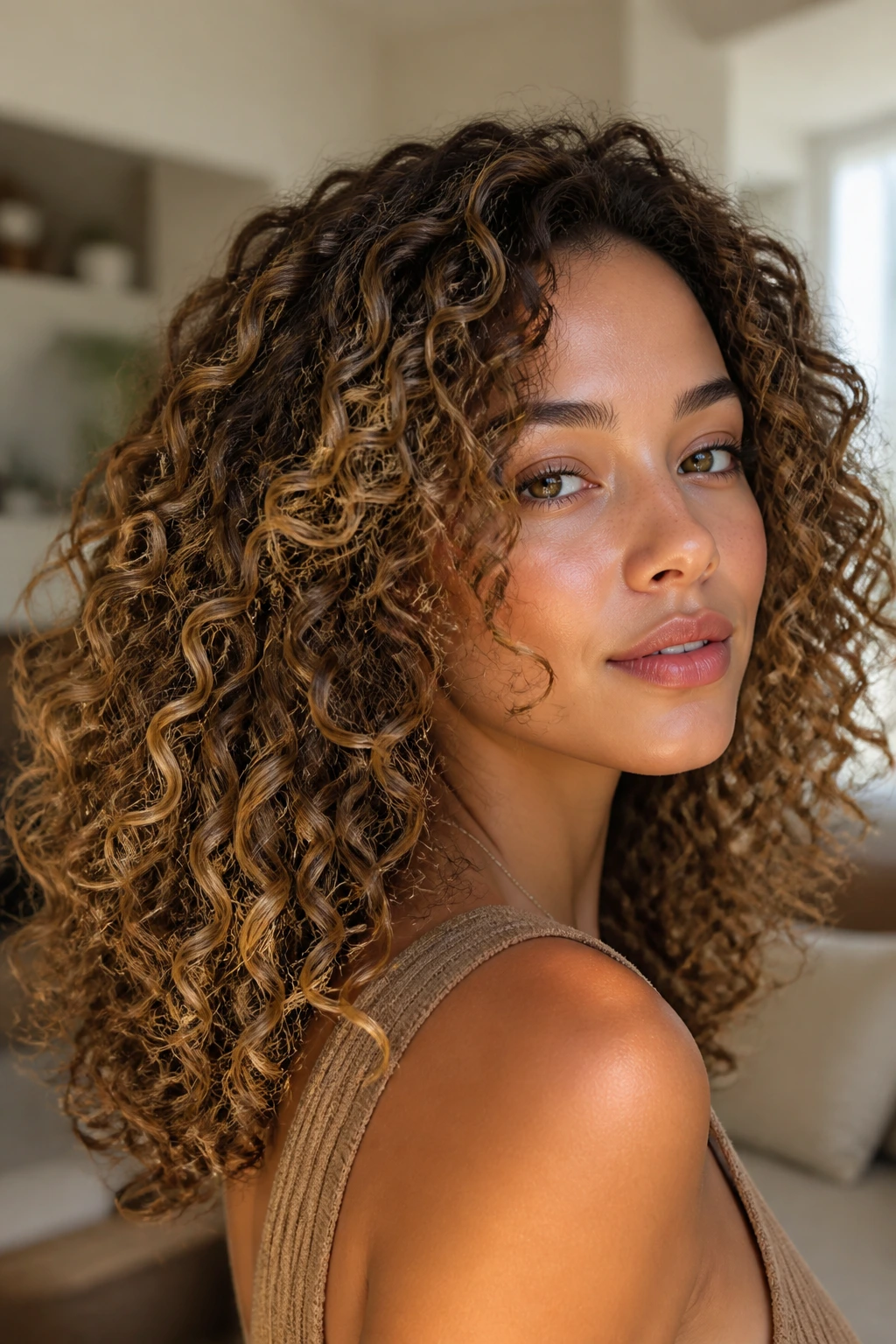
Curly balayage works best when it follows the curl instead of fighting it. That sounds simple, but it changes everything: the width of the ribbons, the amount of root shadow, the tone of the gloss, even the way you part your hair on wash day.
The best looks here aren’t the loudest ones. They’re the ones that still make sense when the hair puffs, shrinks, frizzes a little, and lives in the real world for more than an hour after the appointment. Honey, mocha, bronze, silver, copper, pearl—each one can look beautiful on curls when the placement respects the shape underneath.
Pick the tone family that fits your base, keep the shadow where it belongs, and let the curls do the rest.
