



Fine hair and short cuts can play nicely together, but only when the shape does some of the heavy lifting. A blunt line can make the ends look denser. A few well-placed choppy layers can keep the whole cut from collapsing into that soft, slippery shape that hangs pretty in the chair and falls flat two minutes later.
That’s where short hair with choppy layers for fine hair earns its keep. The trick is not to shred the hair into nothing. It’s to leave enough perimeter for substance, then break up the interior so the cut moves when you do. A good version has a little edge at the ends, a bit of lift at the crown, and enough irregularity to stop the hair from reading as one smooth, thin sheet.
Fine hair has its own rules. It can be dense and still feel wispy, or sparse and even more delicate, and the wrong layering choice makes both versions look thinner than they are. The best cuts below work because they respect that difference. They keep the outline strong, avoid over-thinning, and give you options that look good air-dried, blasted with a dryer, or roughed up with a little mousse and your fingers.
Why These Cuts Work on Fine Hair
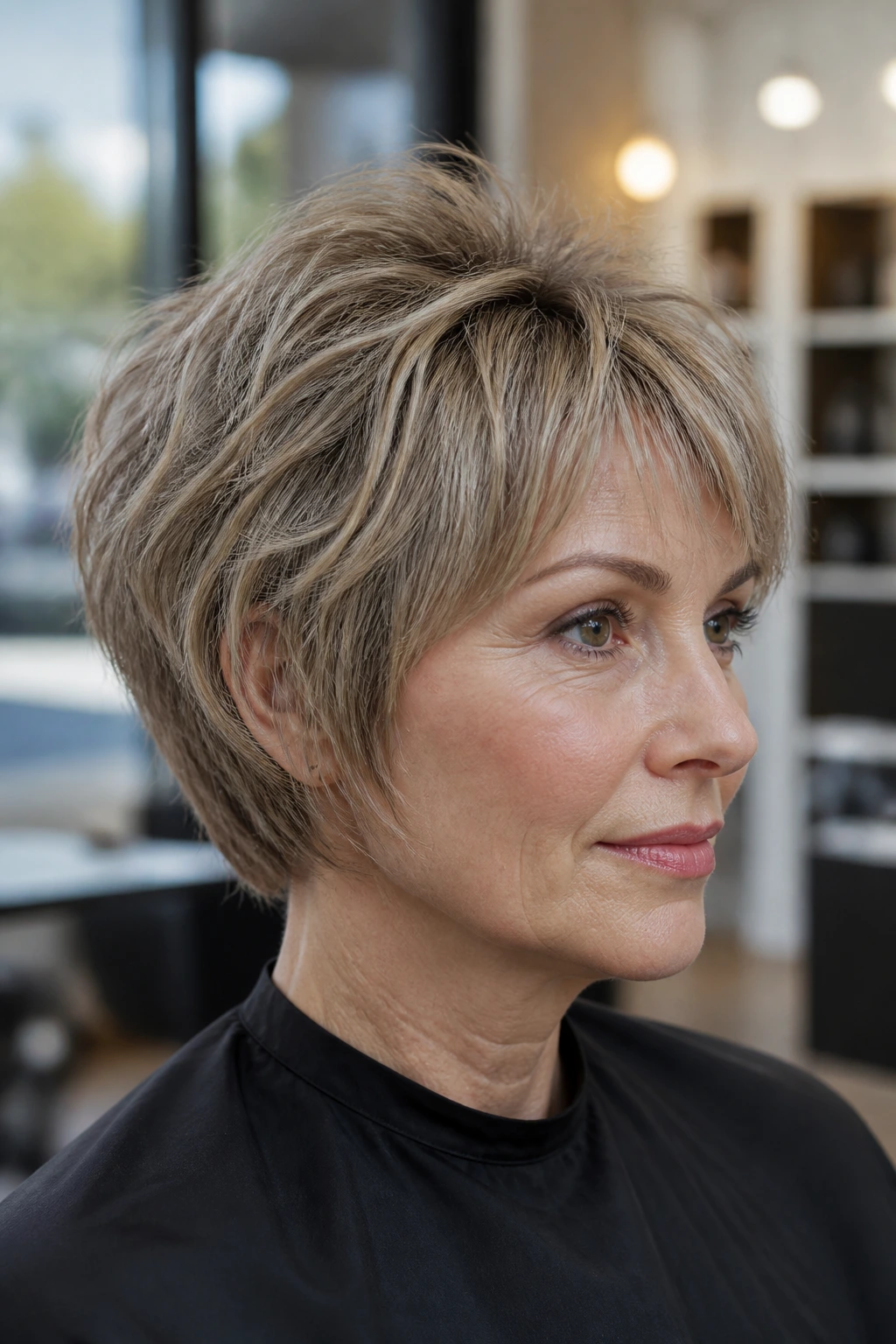
- The perimeter stays honest: A clean edge at the bob line or nape gives fine strands something solid to hang onto, which makes the whole cut read fuller.
- Choppy layers add movement without eating the shape: The best texture is concentrated where hair tends to lie flat — around the crown, cheekbones, or top layers — not all through the ends.
- Shorter lengths remove drag: Long fine hair often pulls itself down and separates at the bottom; shorter hair bounces back faster and needs less product to stay lifted.
- The cuts below rely on texture, not bulk: You will see point-cut ends, feathered crowns, side parts, and internal layering that create a broken-up surface instead of a see-through curtain.
- Grow-out stays softer: A good choppy short cut does not turn into a disaster after three weeks. It loosens, which is different. That matters when you do not want a hard salon-line every month.
- Styling gets simpler: Fine hair usually hates too much product. These shapes work with a small amount of mousse, spray, or paste instead of a heavy cocktail that flattens everything by noon.
1. Piecey French Bob with Soft, Choppy Ends
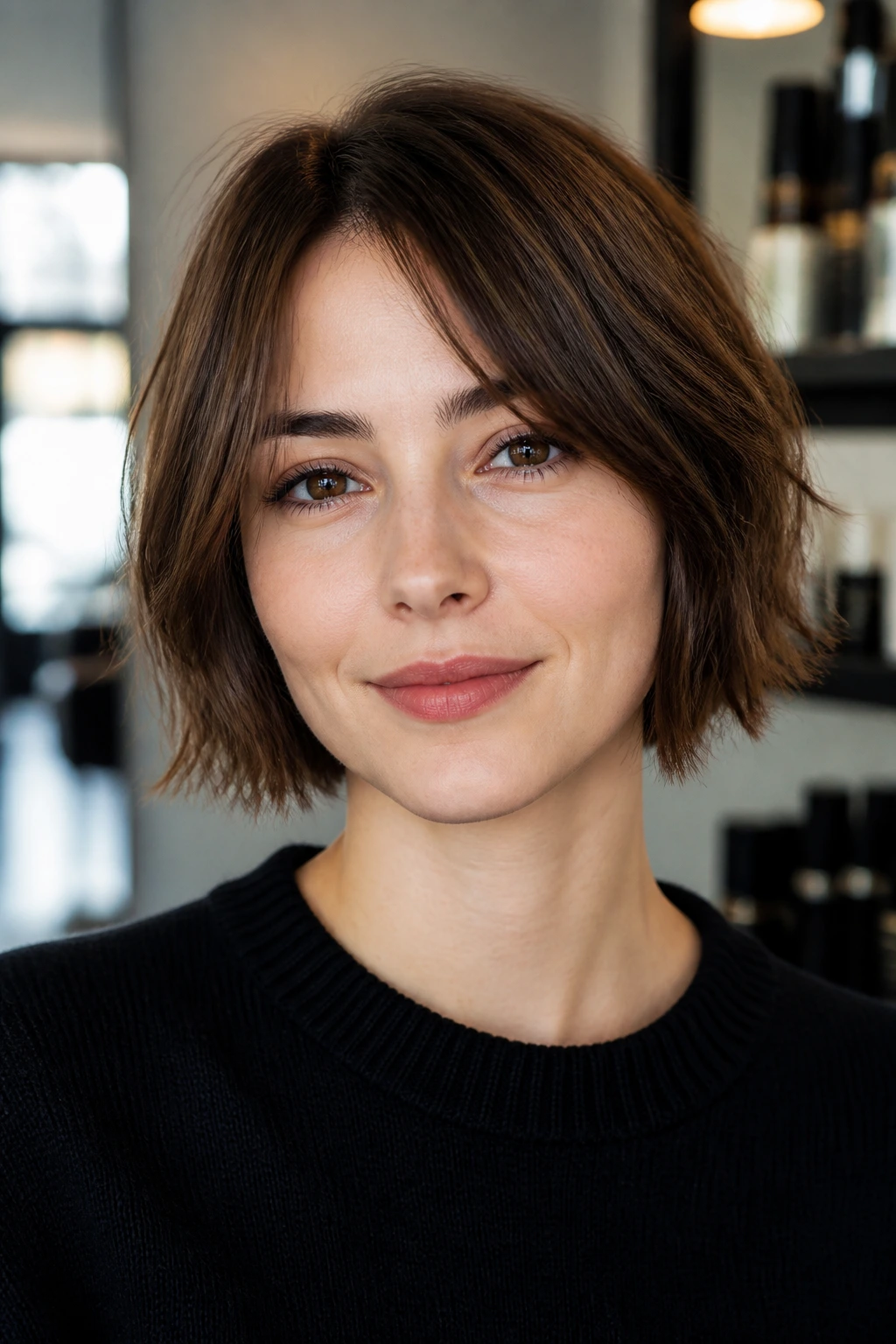
The French bob has a nice little trick up its sleeve: it can look polished and slightly undone at the same time. On fine hair, that balance is gold. The line sits around the jaw, the ends are broken up just enough to avoid a helmet shape, and the whole cut has that crisp, cheekbone-skimming feel that makes a narrow face look more balanced.
What keeps it from going limp is the edge. Ask for a blunt baseline with light point-cutting through the last inch, not a heavily thinned perimeter. You want the bob to keep some visual weight, especially if your hair is very straight. A center part makes it feel modern; a shallow side part gives the crown a little more lift.
What to ask for at the salon
- Keep the length around the jaw or just below it.
- Leave the interior light, but do not over-thin the ends.
- Add soft choppiness only at the bottom edge and around the face.
This style looks best when the finish is a little gritty, not glossy and perfect. A few bends with a flat iron or a round brush at the last 2 inches of the hair will keep the ends from sticking straight down.
2. Feathered Pixie with Long Crown Layers
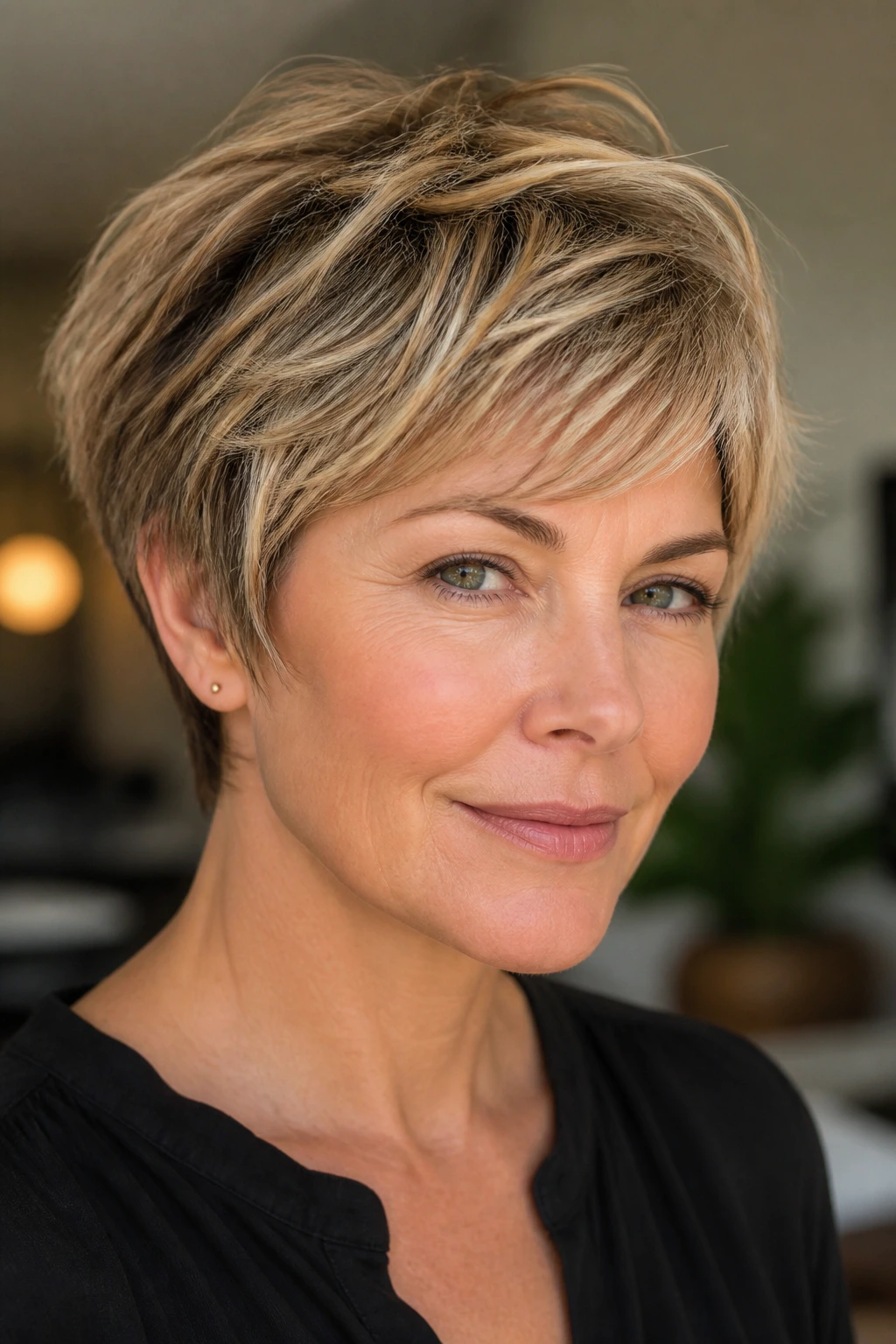
A pixie can be a smart move for fine hair, but only if the crown has enough length to create shape. This version keeps the sides neat and the back clean, then leaves the top longer so it can be swept, pushed, or finger-styled into movement. If your hair tends to lie close to the head, this is one of the few short cuts that can make it look like it has actual lift.
The feathering matters. Not the shredded kind — nobody needs that — but soft, directional layering through the top so the hair can sit up instead of folding into itself. Ask for the back and sides to stay tighter, with a bit of length left around the bangs and crown. That contrast gives the cut its line.
It’s a good choice if you want your morning routine to be short and your styling to be forgiving. A pea-sized amount of matte paste or lightweight cream is usually enough. Too much product will make the top look stringy, and stringy is the last thing fine hair needs.
3. Bixie with Tapered Nape and Side Sweep
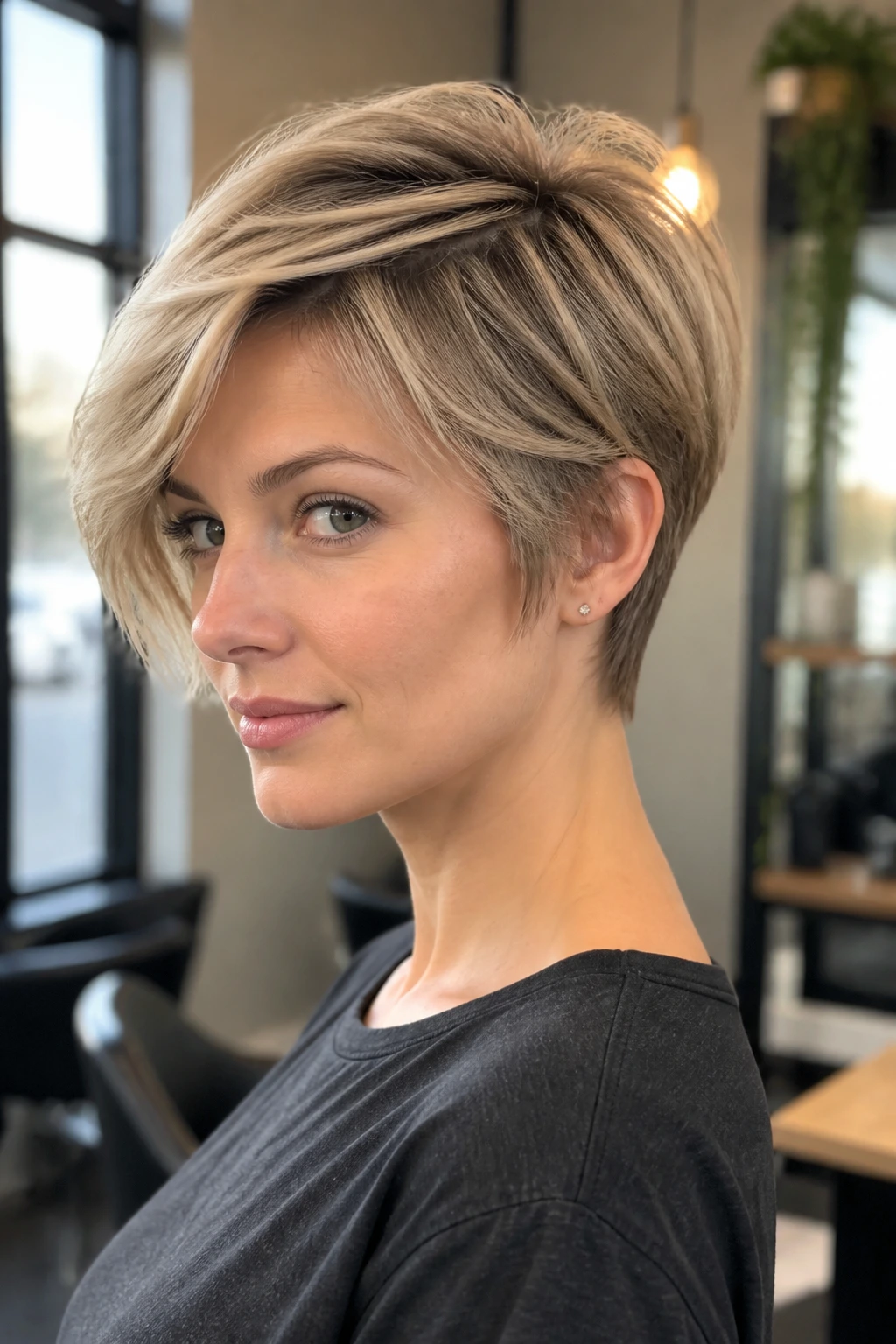
The bixie sits in that useful middle ground between pixie and bob, and fine hair often does well there because the cut can keep some body without demanding too much density. The tapered nape keeps the back neat and light, while the side-swept top gives the front a little drama. It has a softer edge than a pure pixie and more lift than a classic bob.
Ask your stylist for a cut that follows the head shape instead of fighting it. That means a little extra length at the top, a narrow tuck at the nape, and enough softness around the temples so the style can move. If the layers are too short all over, the cut starts to look airy in the wrong way. You want texture, not absence.
A side sweep helps here because it breaks up the line of the hair and pulls the eye diagonally across the face. That is useful for fine strands, which can sometimes disappear when they are parted too neatly down the middle. This cut likes a root spray or light mousse at the base, then a quick blow-dry with your fingers to keep it from drying too flat.
4. Jaw-Length Shag with Broken Fringe
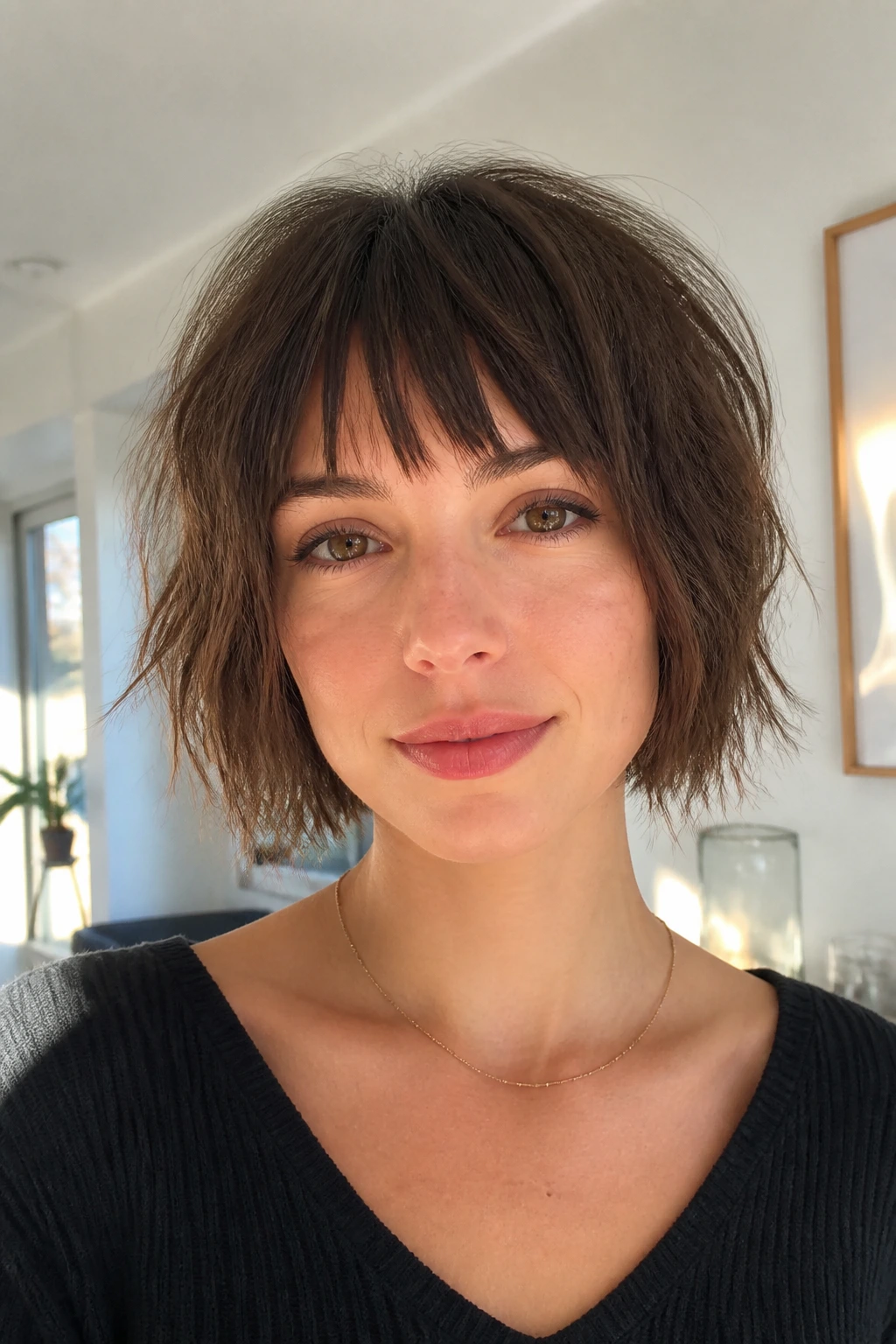
Can a shag work on fine hair? Yes, if it is done with restraint. A jaw-length shag gives you the movement people want from a shag without the heavy, mullet-leaning collapse that can happen when the hair is too thin for too many layers. The broken fringe softens the forehead, and the shorter top layers help the crown lift instead of droop.
The key is keeping the ends jagged, not wispy. Fine hair already has a delicate feel; if you remove too much weight, the whole cut turns airy in a bad way. A good jaw-length shag still has enough perimeter to feel present. It just does not hang in one stiff line.
Best if you want:
- A messy, lived-in shape that air-dries well.
- Some face framing without full curtain bangs.
- A cut that looks a little better after being touched and rearranged.
This one is especially good if your hair has a slight bend or wave. Straight fine hair can wear it too, but it usually needs a bit of scrunching or a quick pass with a diffuser to wake the layers up.
5. Angled Bob with Razor-Soft Underlayer
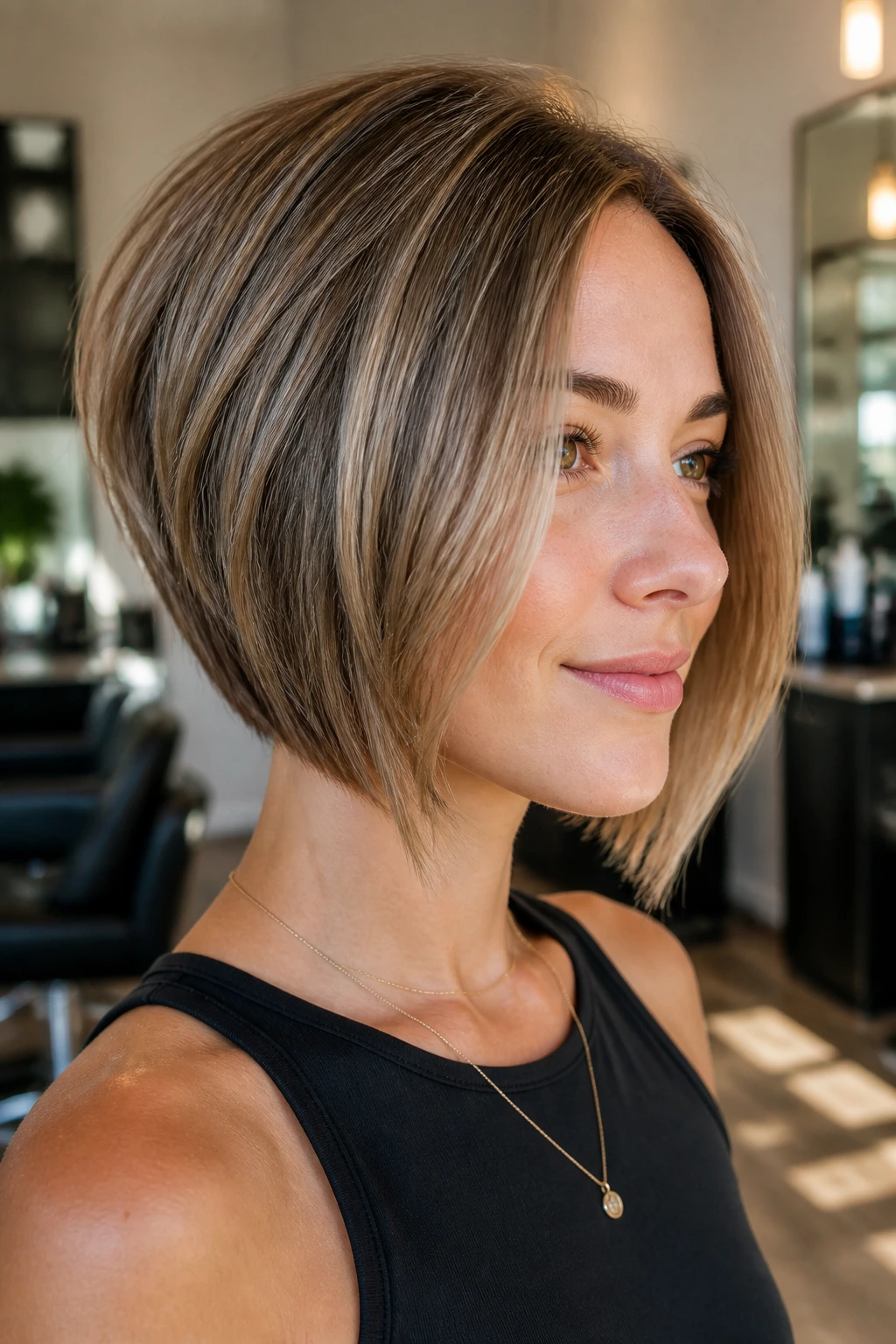
An angled bob gives fine hair a visual boost because the shorter back creates lift and the longer front pieces make the shape look intentional. The angle does some of the work for you. The eye sees movement, even when the hair itself is not especially thick. That is why this cut keeps showing up on short-hair lists for a reason.
The trick is in the underlayer. If your stylist uses a razor too aggressively, the ends can fray and feel see-through. Ask for razor softness only where the hair needs to bend, not through the entire perimeter. A low, subtle angle from nape to chin is usually enough.
This is one of those cuts that looks sharp when it’s freshly done, but it also gets better with a little wear. A soft bend at the front pieces, a tuck behind one ear, and a bit of texture spray at the roots are usually enough. No theatrical styling required.
6. Soft Wolf Crop with Airy Crown Lift
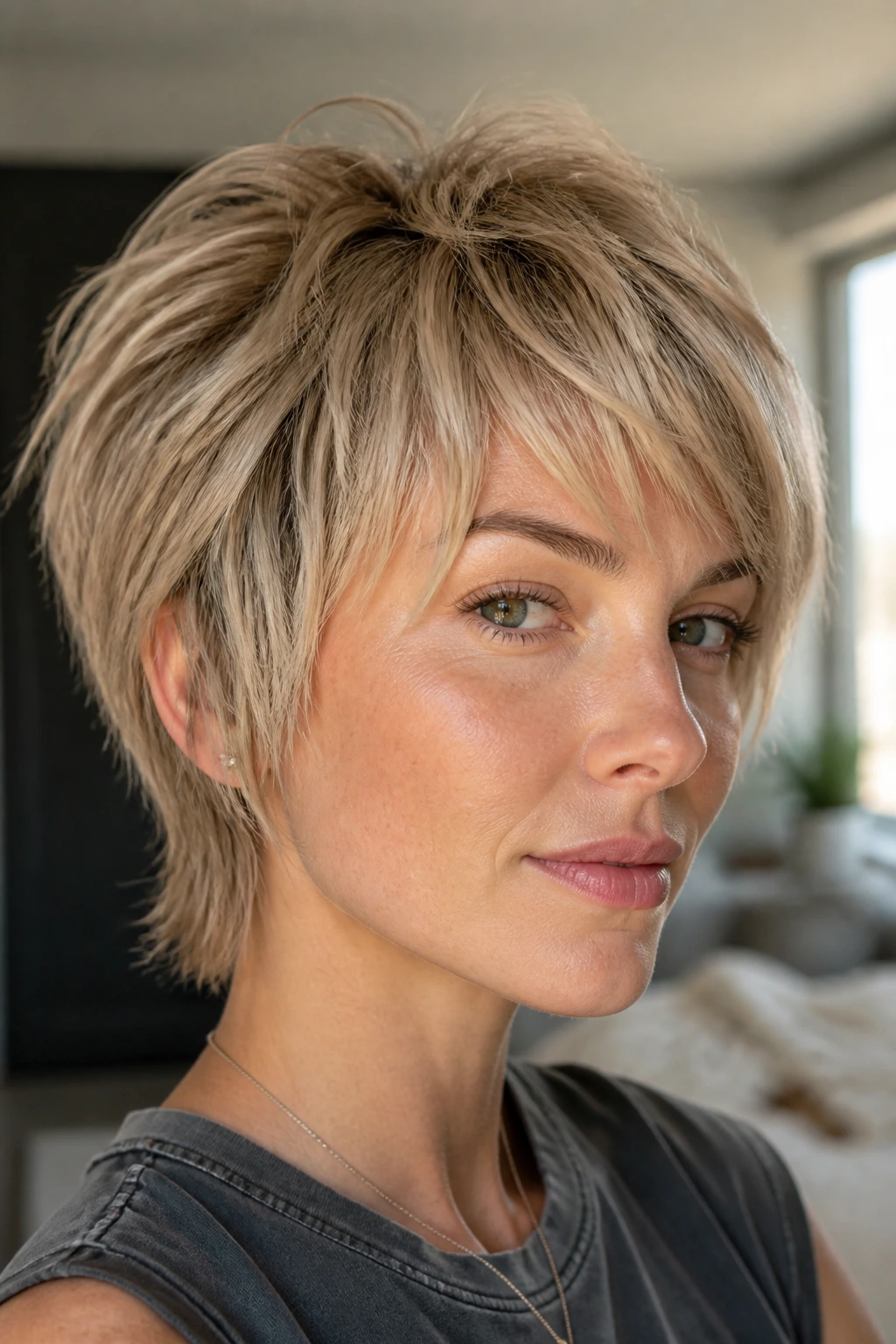
The wolf cut can be a headache on fine hair if it is overbuilt. But a shorter, softer version can work because it gives you the lifted crown and broken outline without asking the hair to carry too much weight in the back. Think of it as a crop with attitude, not a full shag that has been compressed into a smaller size.
The crown lift is the point. If the top is left a little longer and the sides are kept lighter, fine hair can appear fuller right where it usually lies down. The choppy pieces around the face stop the style from looking too round or too neat. And neat is not always the goal. Sometimes it just looks flat and old-fashioned.
This cut shines with a little rough-dry technique. Flip your head over for the first minute of drying, aim the nozzle at the roots, then push the front pieces where you want them. A small amount of dry texture spray at the crown gives the style a little grit, which helps the layers stay separated.
7. Ear-Tucked Crop with Choppy Sideburns
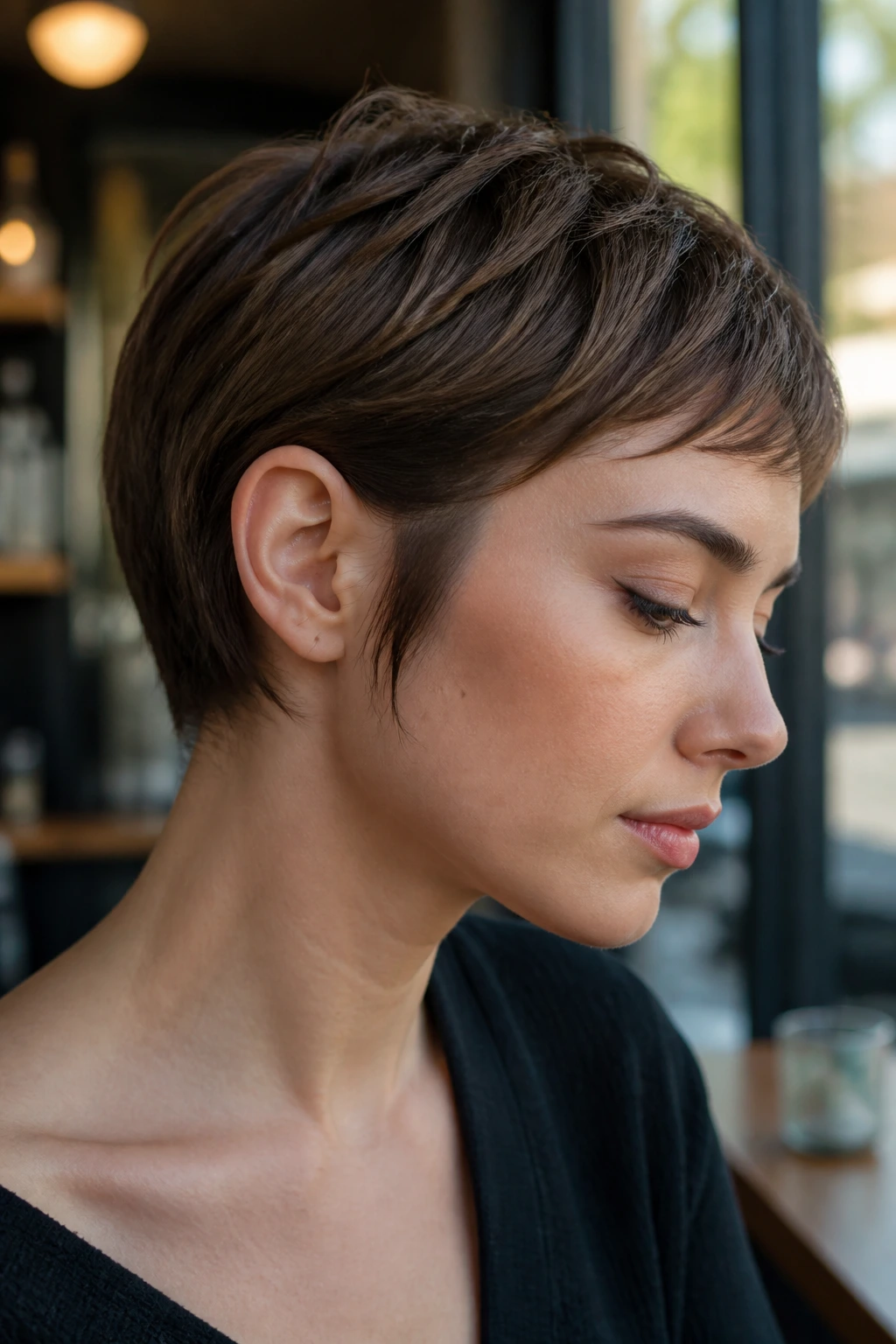
There’s a quiet elegance to a crop that can tuck behind the ear and still keep a bit of edge. On fine hair, that edge comes from the sideburn area and the ends around the jaw. If those pieces are lightly choppy, the cut avoids looking too severe or too precious.
This style works because it leaves the perimeter close enough to the head to feel tidy, but not so tight that the hair loses its own shape. The choppy sideburns soften the transition between cheek, ear, and neck. That sounds small. It isn’t. On a short cut, those tiny details change the whole mood.
It’s also one of the easiest cuts to live with. You can wear it tucked neatly for work, then ruffle the sides with a bit of paste for evening. Fine hair often behaves better when it has a shape that does not ask for much. This is one of those shapes.
8. Rounded Crop with Micro-Layers at the Crown
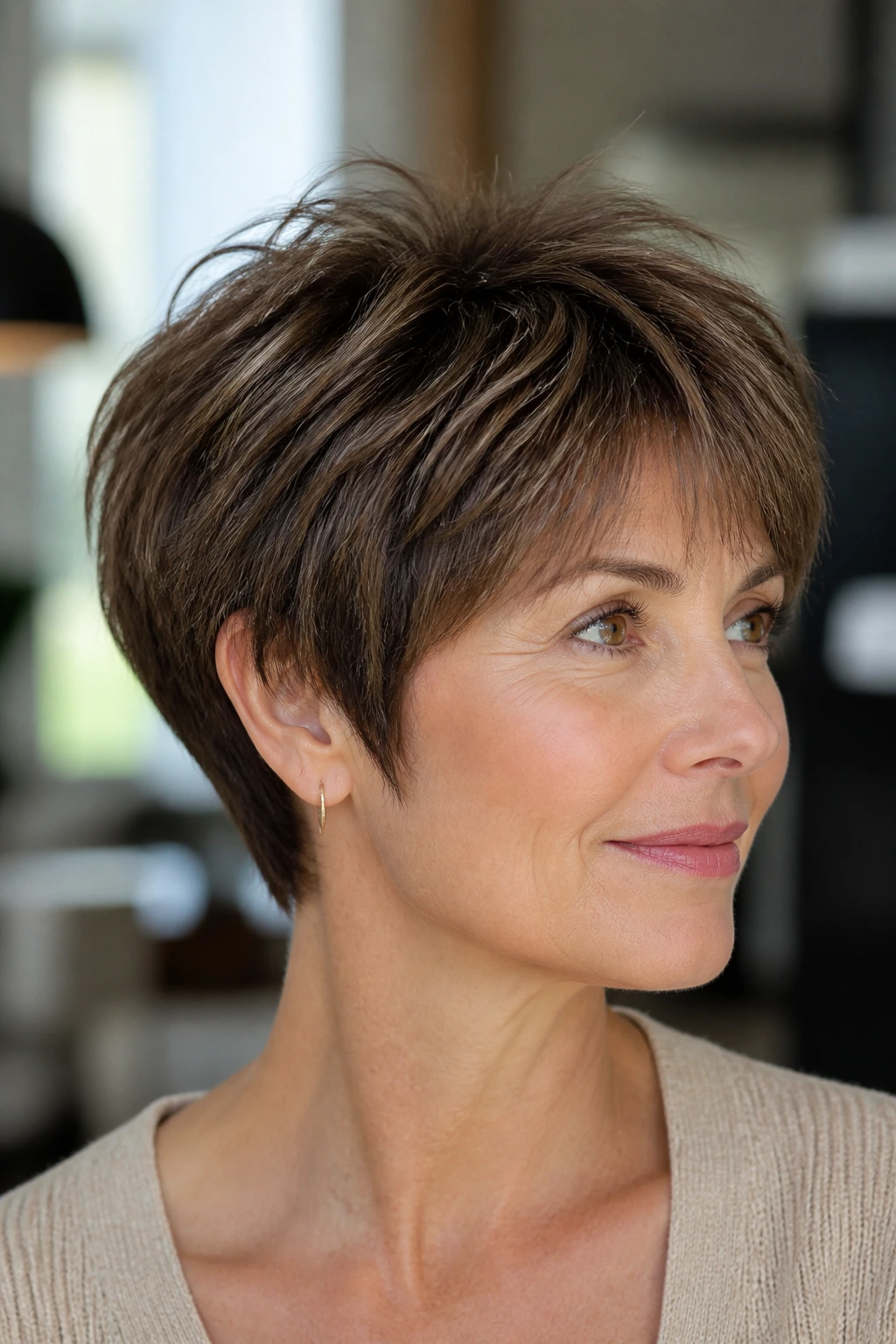
If your face is narrow or your hair falls flat at the top, a rounded crop can be a smart answer. The silhouette curves gently around the head, and the tiny crown layers help the top lift just enough to keep the cut from going bowl-like. That distinction matters. Bowl-like is the danger zone.
A rounded crop should still have texture through the surface. Micro-layers — tiny, carefully placed layers near the crown — can keep the style from sitting like one solid cap. The bottom stays fairly clean, which preserves the feeling of thickness at the perimeter. That’s what makes the cut read fuller than it really is.
This one can look especially good with glasses because the curve of the cut balances the frame shape. It also behaves nicely when you want a cut that air-dries with a natural bend. If your hair is pin-straight, a quick blast with a round brush at the crown gives it enough shape to avoid lying completely flat.
9. Chin-Length Bob with Curtain Fringe and Chopped Ends

A chin-length bob with curtain fringe gives fine hair two useful things: a stronger outline and some movement around the face. The fringe breaks the forehead line, while the chopped ends keep the bottom from feeling blunt in a stiff way. It’s a nice middle path for people who want softness without giving up structure.
The curtain fringe should not be too dense. Fine hair can handle a fringe, but it needs air between the pieces. The best version parts slightly in the center and drapes out toward the cheekbones, which gives the face some softness without hiding it. If you wear glasses, this shape can be a little fiddly at first, but once the lengths are tuned, it works.
The cut looks best when the fringe and the rest of the bob feel connected. That means the stylist should blend the front pieces into the length, not chop them in as a separate section. When the connection is smooth, the whole style moves together instead of splitting into “bangs” and “everything else.”
10. Asymmetrical Short Bob with Deep Side Part
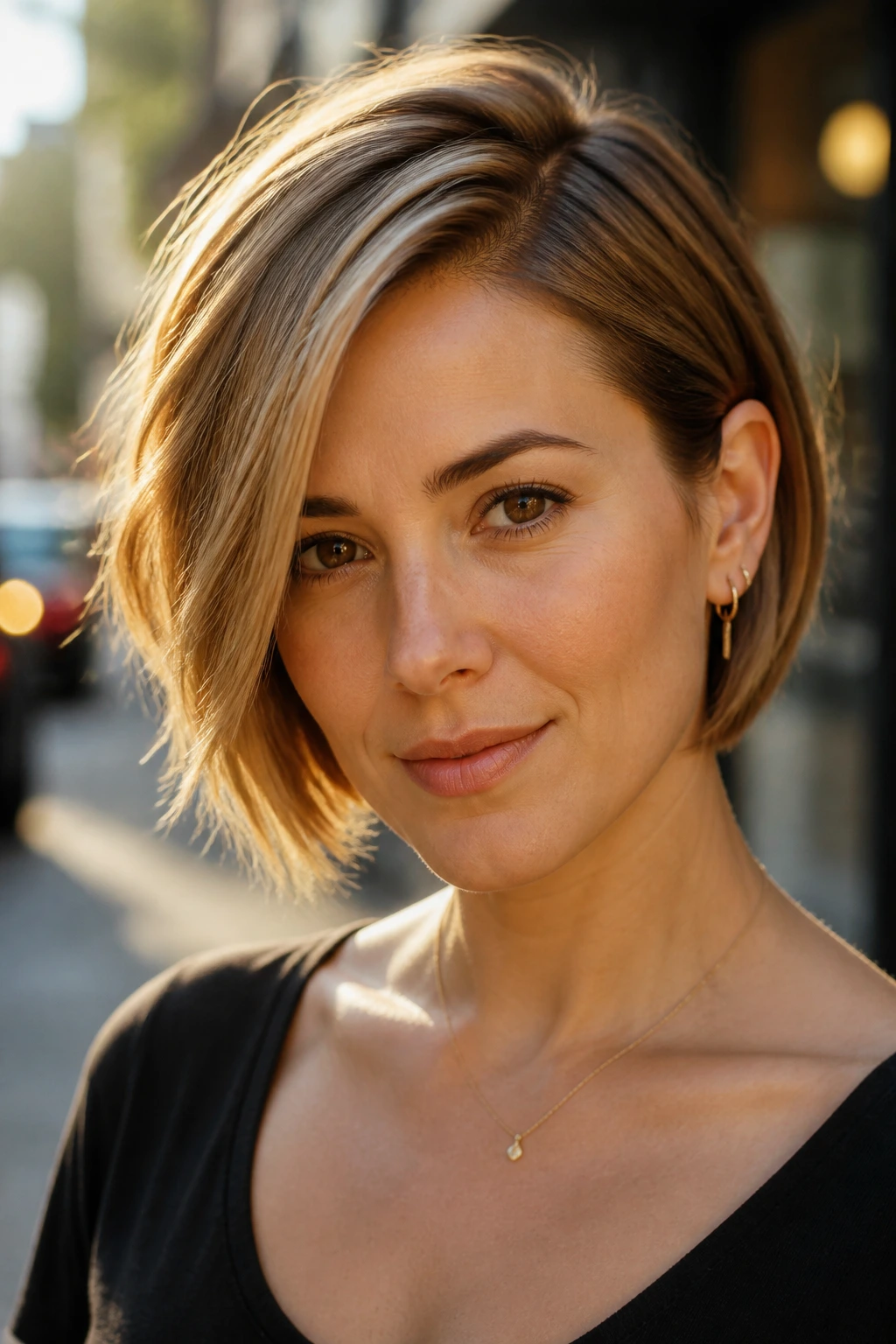
An asymmetrical bob is useful when fine hair needs a little visual surprise. One side sits slightly longer, the part sits deeper, and the heavier side pulls the eye across the face in a way that makes the whole cut feel more dynamic. It can be subtle. It does not need to look extreme to work.
The deep side part does a lot here. It creates lift at the root on one side, which helps fine hair escape that pancaked look at the scalp. The uneven length also keeps the bottom line from reading too uniformly, which is part of why the cut feels fuller. Flat, even hair can look thinner than it is; a slight asymmetry interrupts that.
This is a good option if you like a cut that can be smoothed down one day and roughened up the next. The styling is simple: blow-dry the root area away from the part, then tuck the shorter side behind the ear. Done right, it has a little sharpness without feeling severe.
11. Layered Crop with Flipped-Out Ends
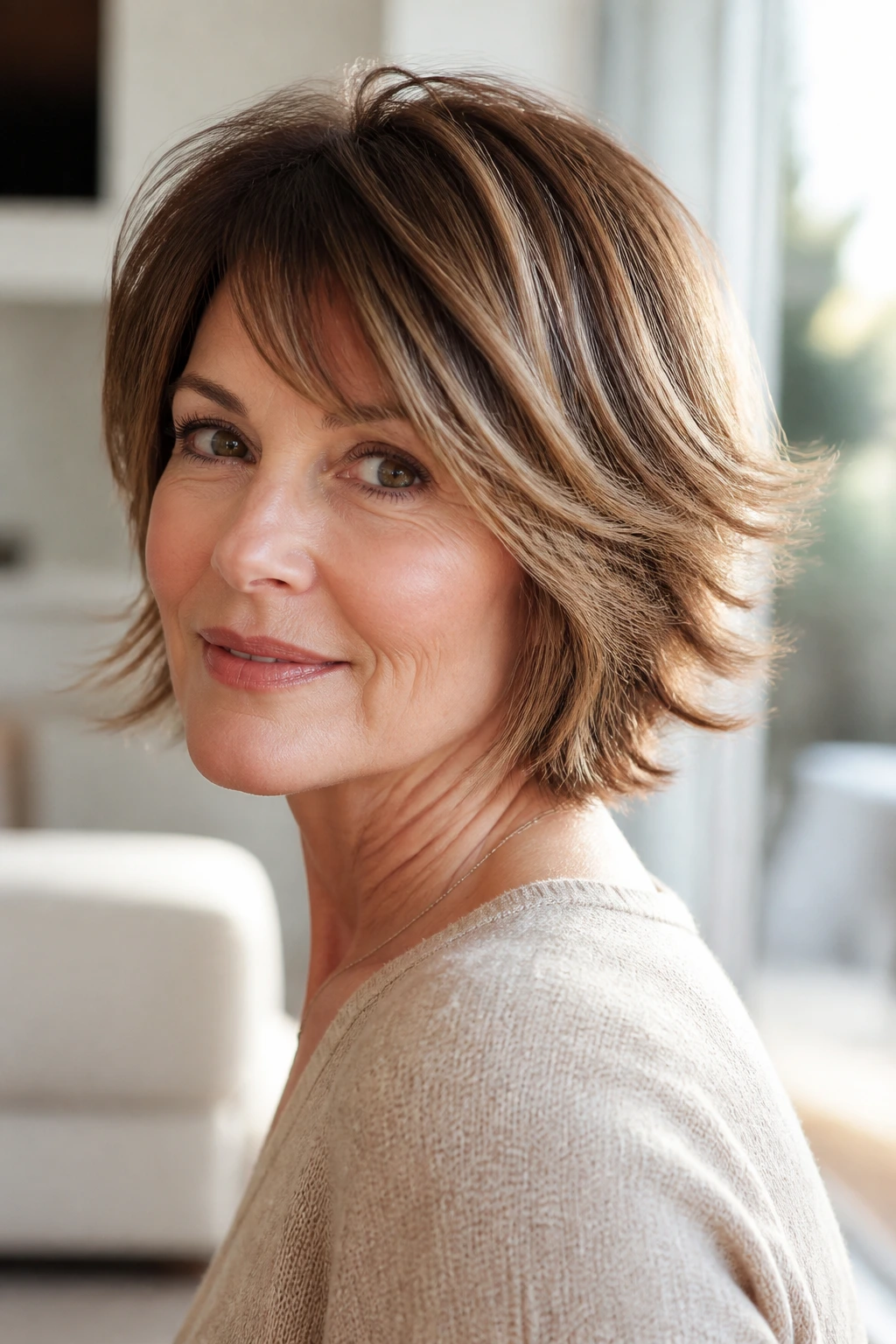
The flipped-out crop has a little old-school charm, but on fine hair it works because the ends stop pointing straight down. That tiny outward bend keeps the silhouette lively and gives the cut a sense of motion even when the hair itself is not very dense. It’s one of those details that looks small in theory and does a lot in practice.
Ask for a crop that sits around the cheekbone or upper jaw, with light layering through the top and a perimeter that can hold a bend. You do not want layers chopped so high that the ends look stripped. The flip needs enough weight at the bottom to hold its shape.
A round brush or a flat iron can create the bend in seconds. Wrap the last inch of each section slightly outward, then let it cool before touching it. That cooling step matters. If you keep fussing with the hair while it’s warm, the bend drops out and you’re back to flat ends.
12. Short Shaggy Mullet with Soft Neck Length
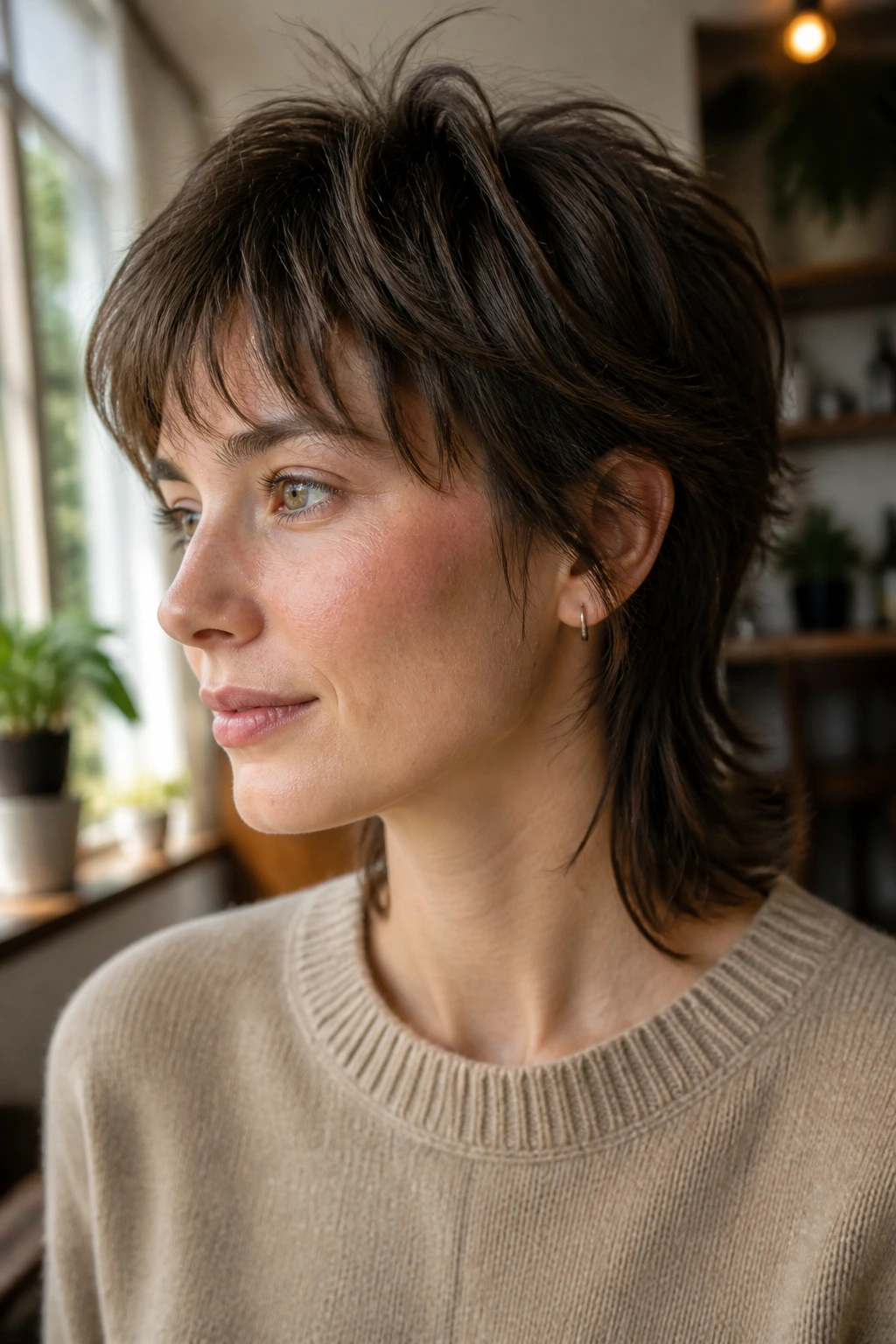
This one is for people who like a little edge and do not want their short cut to play it safe. A shaggy mullet can work on fine hair if the lengths are kept soft and the neck area is not over-pruned. The front stays light, the crown gets lift, and the back keeps enough length to feel intentional.
The word “mullet” can scare people, and fair enough. The bad version is too choppy, too disconnected, and too thin at the ends. The better version is softer through the transitions, with a gentle taper and a little extra movement around the ears. It should look like a modern crop with attitude, not a costume.
Fine hair benefits from the shape because the crown can rise without the back dragging it down. A little mousse, a diffuser, and a quick pinch of styling paste through the ends are often enough. If you want short hair that looks a little rebellious but still wearable at work, this is a solid lane.
13. Blunt Bob with Invisible Internal Layers
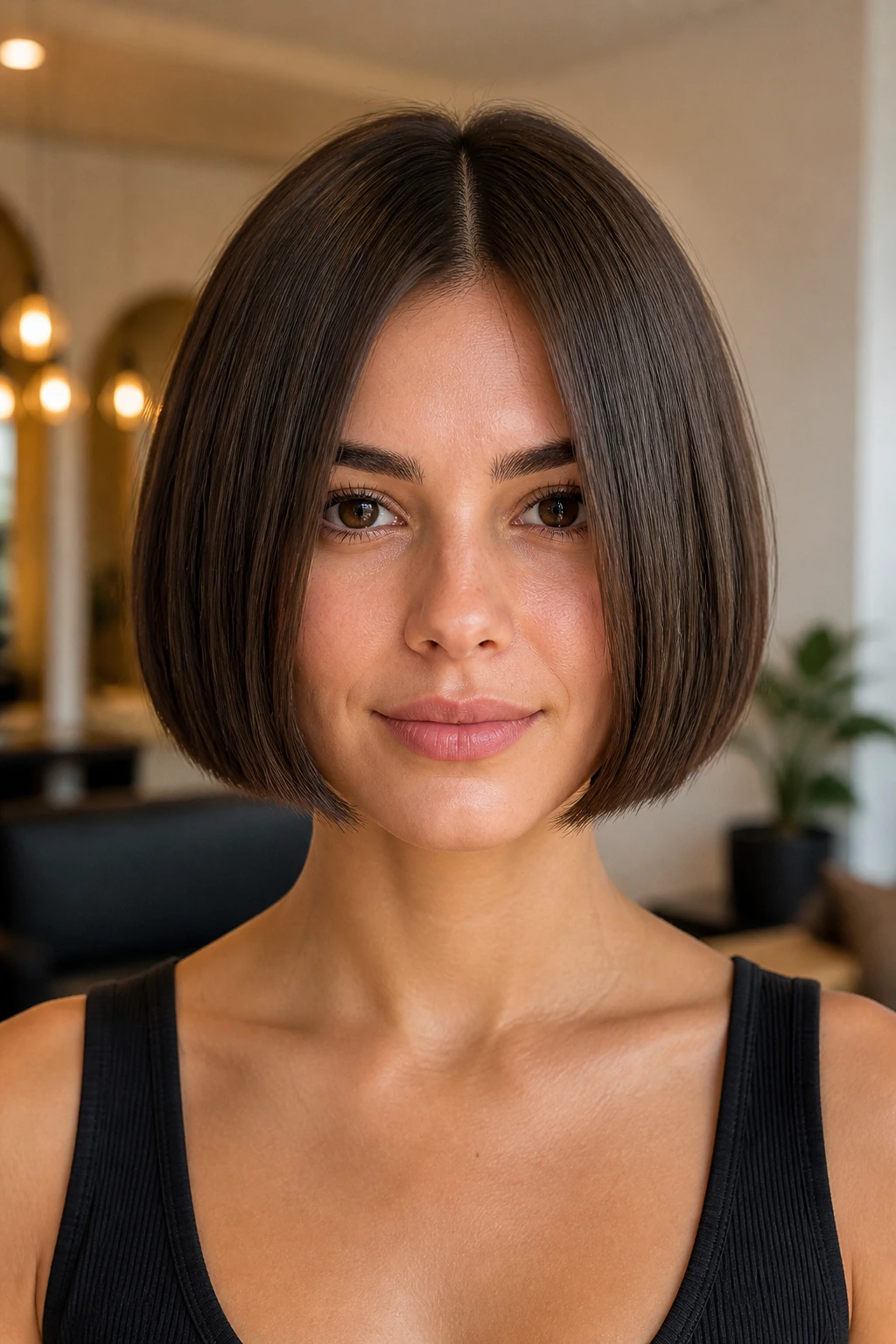
Here’s the counterintuitive one: sometimes fine hair needs a blunt cut more than it needs more layers. A blunt bob with a few invisible internal layers can look thicker because the perimeter remains solid and the inside gets just enough movement to avoid a shelf-like shape. It’s a smarter option than “more layers” when the hair is already thin.
The internal layers should be hidden, not obvious. They are there to stop the cut from sitting too heavy in the middle or too flat at the crown. What you should still see is a clean line at the edge. That line is what gives the bob its density.
This version works especially well if your fine hair is also straight. Straight fine strands can look stringy fast, and the blunt line gives them a stronger visual finish. Keep the styling simple: a smoothing cream through the mids, a blow-dry with a nozzle, and maybe a light mist of texture spray just at the ends.
14. Textured Pixie-Bob with Swept-Over Top
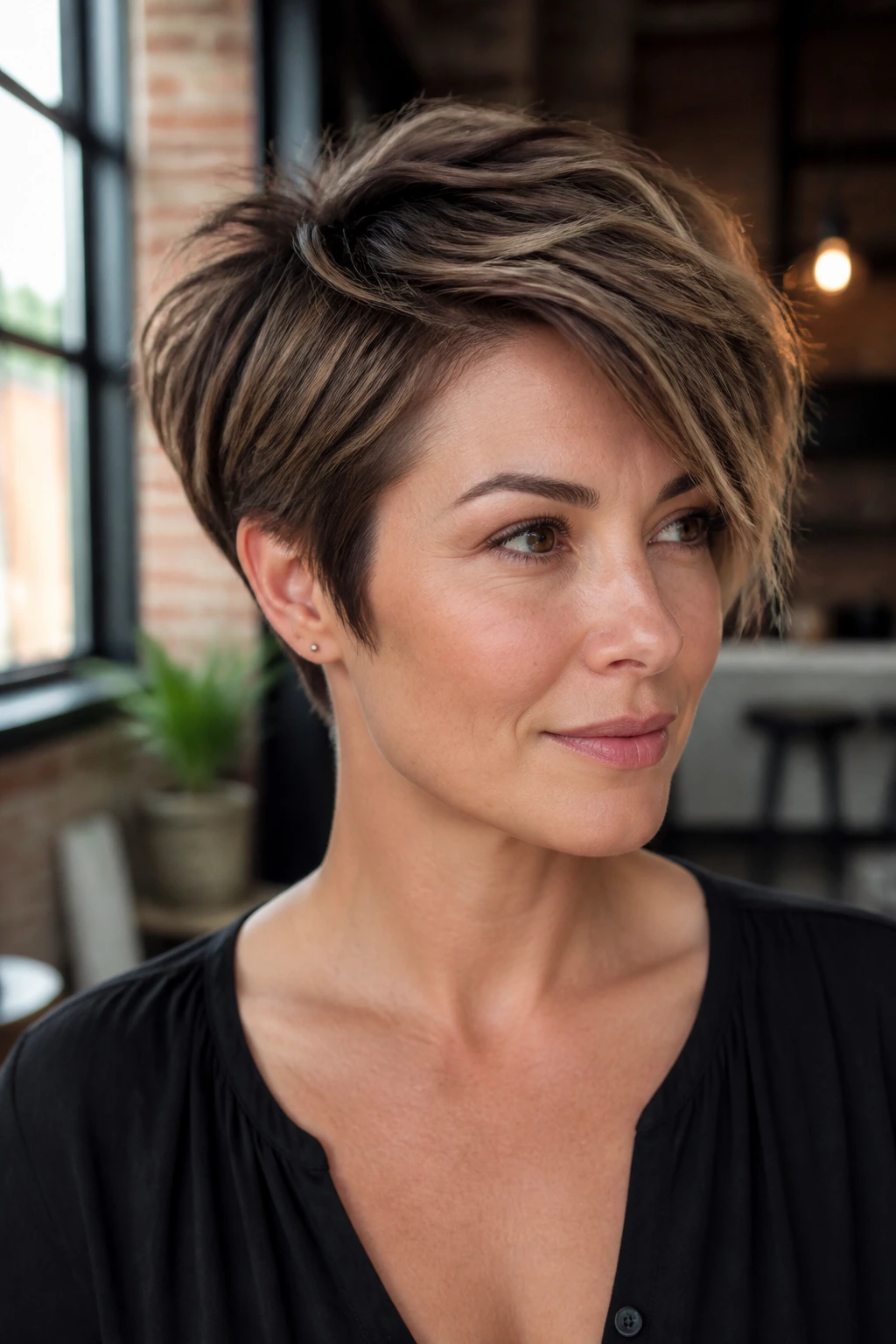
The pixie-bob is one of the easiest short shapes to live with because it gives you enough length to tuck, sweep, or spike lightly, while still staying light around the ears and neck. On fine hair, that extra top length is useful. It gives you something to work with when the roots fall flat, which they will, because fine hair often does.
The swept-over top is the selling point. It can be side-swept for softness or pushed back for lift. Either way, the cut needs a bit of texture at the top and a tighter frame around the face. If the sides are too heavy, the style loses its shape. If the top is too short, it loses its personality.
This one is a nice answer if you want to grow out a pixie without dropping straight into a bob. The transition is gentler than people expect. And that matters, because awkward grow-out phases are where a lot of short cuts start collecting regrets.
15. Wedge Bob with Choppy Crown Layers
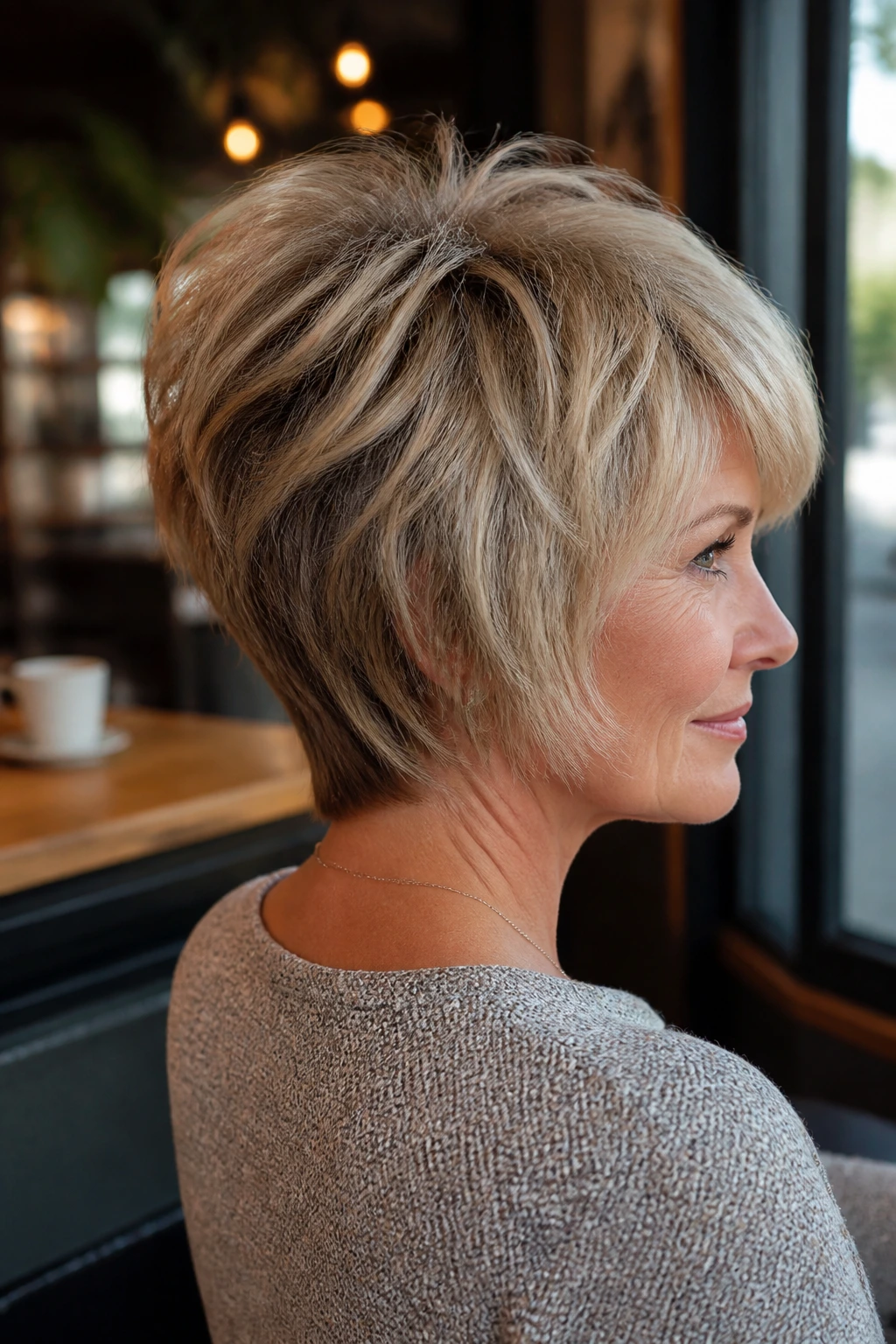
The wedge bob has a built-in architecture that fine hair tends to like. The stacked back gives lift near the nape, the sides stay controlled, and the crown layers keep the top from collapsing. It’s a cut with shape baked in, which is helpful when you do not want to fight your hair every morning.
A modern wedge should not feel stiff. The choppy crown layers break up the smooth dome effect and make the style feel softer at the top. If the nape is cut too high or too sharply, the bob can look dated. Keep the angle subtle, and let the top carry the movement.
This is one of the better choices if your hair lies flat in back but has a little natural bend at the front. The stacked section creates a lift point, and the front pieces can be styled with a small bend away from the face. It feels neat, but not severe. That balance is the whole game.
16. Tousled Crop with Wispy Bangs and Neck Taper
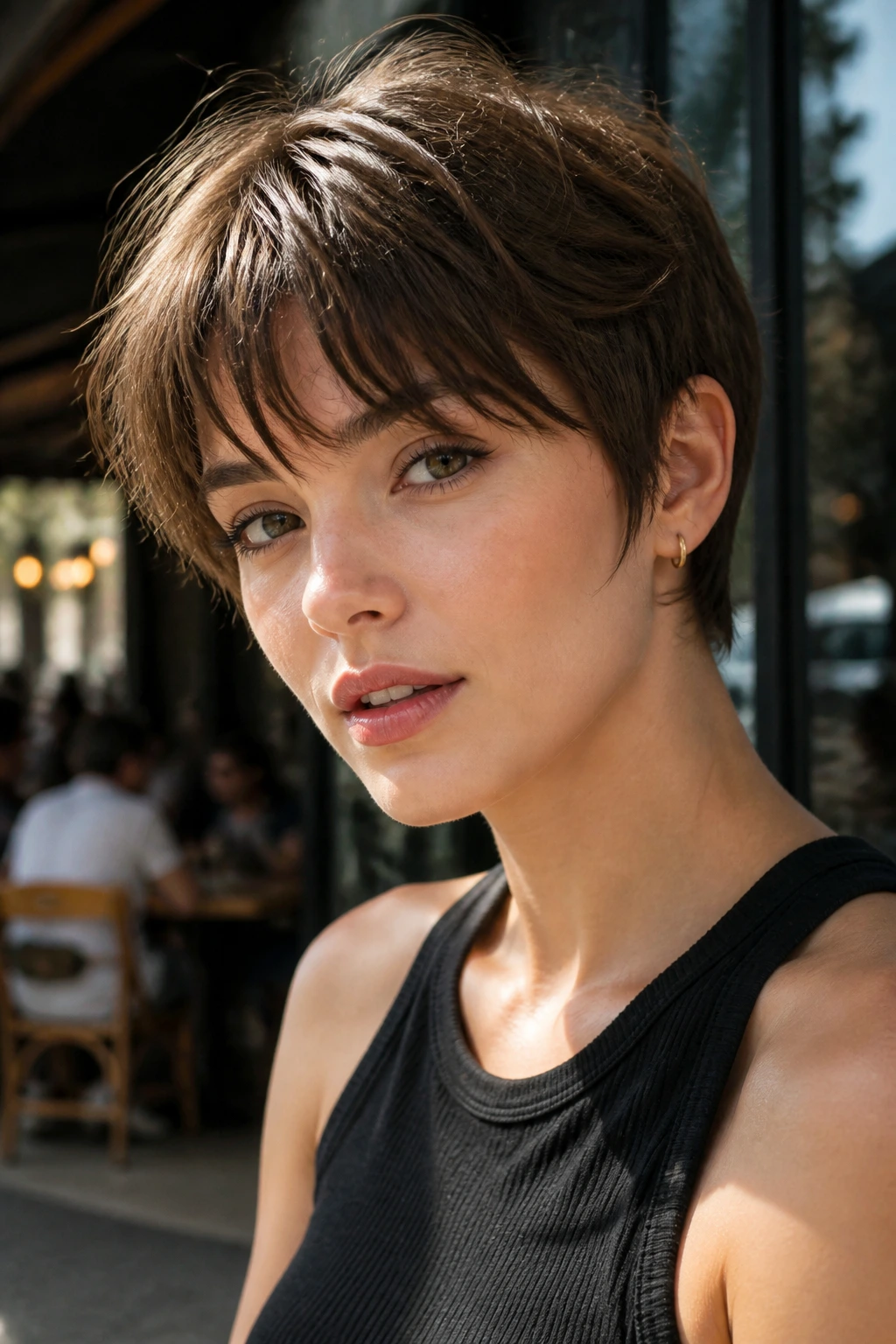
A tousled crop works when you want the hair to look light on purpose, not thin by accident. The wispy bangs soften the forehead, the neck taper keeps the back clean, and the choppy surface gives the cut a lived-in, slightly windblown feel. Fine hair often looks better in this kind of airy shape than in anything too polished.
The bangs should be sparse enough to move. Heavy fringe on fine hair can split in the middle and show too much scalp. Wispy bangs are better because they leave little gaps that feel intentional. The neck taper helps keep the back from puffing out, which is useful if your hair grows downward or sits heavy at the collar.
This cut does best with dry texture spray and fingers, not a lot of brushing. If you over-comb it, the airy pieces clump together and the shape disappears. A little mess is part of the charm here. Too much order makes it less interesting.
17. Neck-Length Shattered Bob with Long Front Pieces
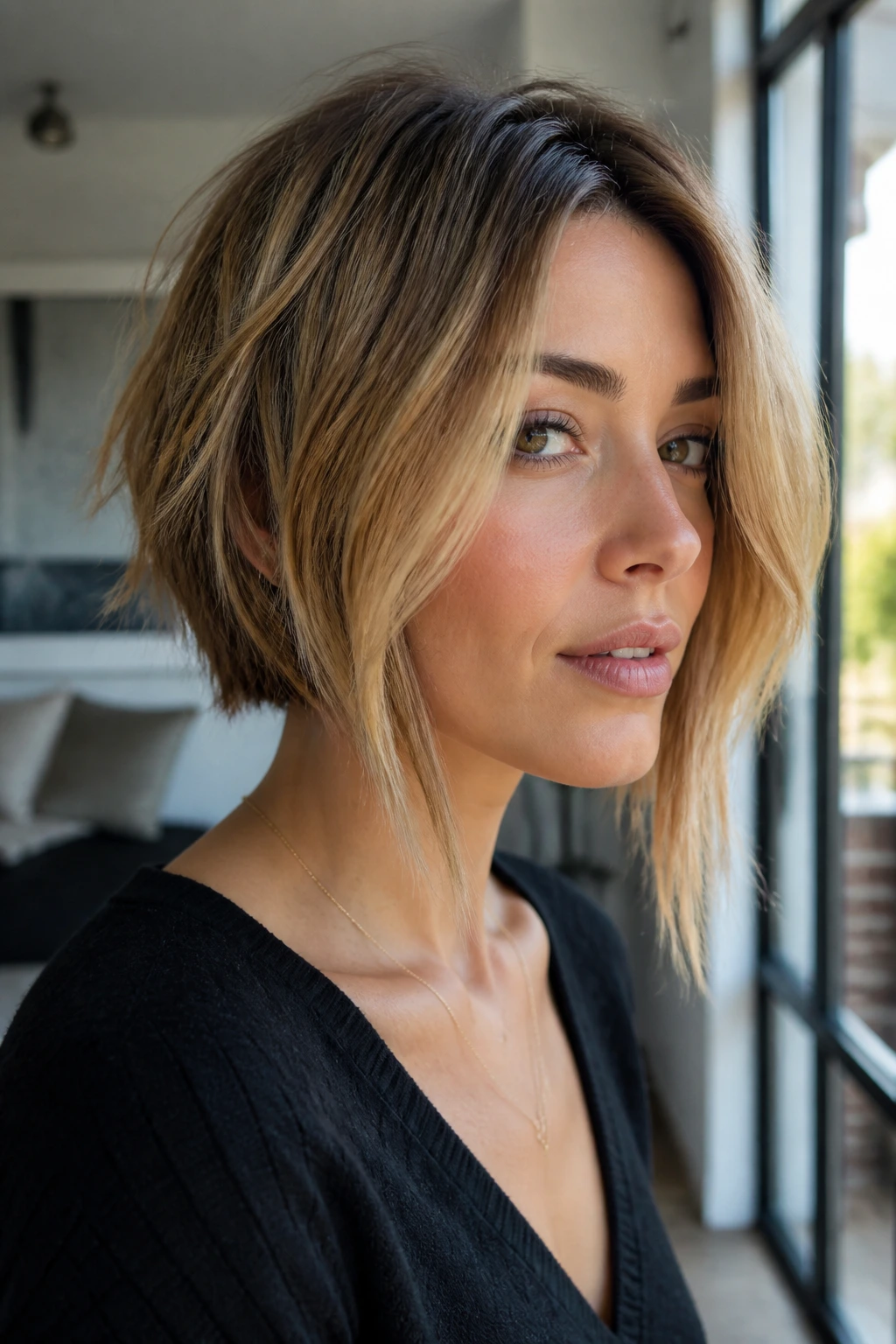
A neck-length shattered bob is a nice bridge cut if you are not ready to go very short. It still counts as short, but the extra length in front gives you styling room and a softer line around the face. The “shattered” part means the ends are broken up enough to move, not sliced into fragile scraps.
This is a useful choice for fine hair that needs body but also wants a bit of swing. The long front pieces slim the face in a gentle way, while the neck-length back keeps the style from feeling heavy. It’s the sort of cut that can look sleek one day and loose the next, depending on whether you smooth it with a brush or rough it up with your hands.
If you like the idea of short hair but do not want to lose the ability to tuck some pieces behind your ears, this is a good compromise. It grows out gracefully, which is not a small thing. A haircut that still looks decent six weeks later saves a lot of frustration.
How These Cuts Create Lift Without Looking Thin
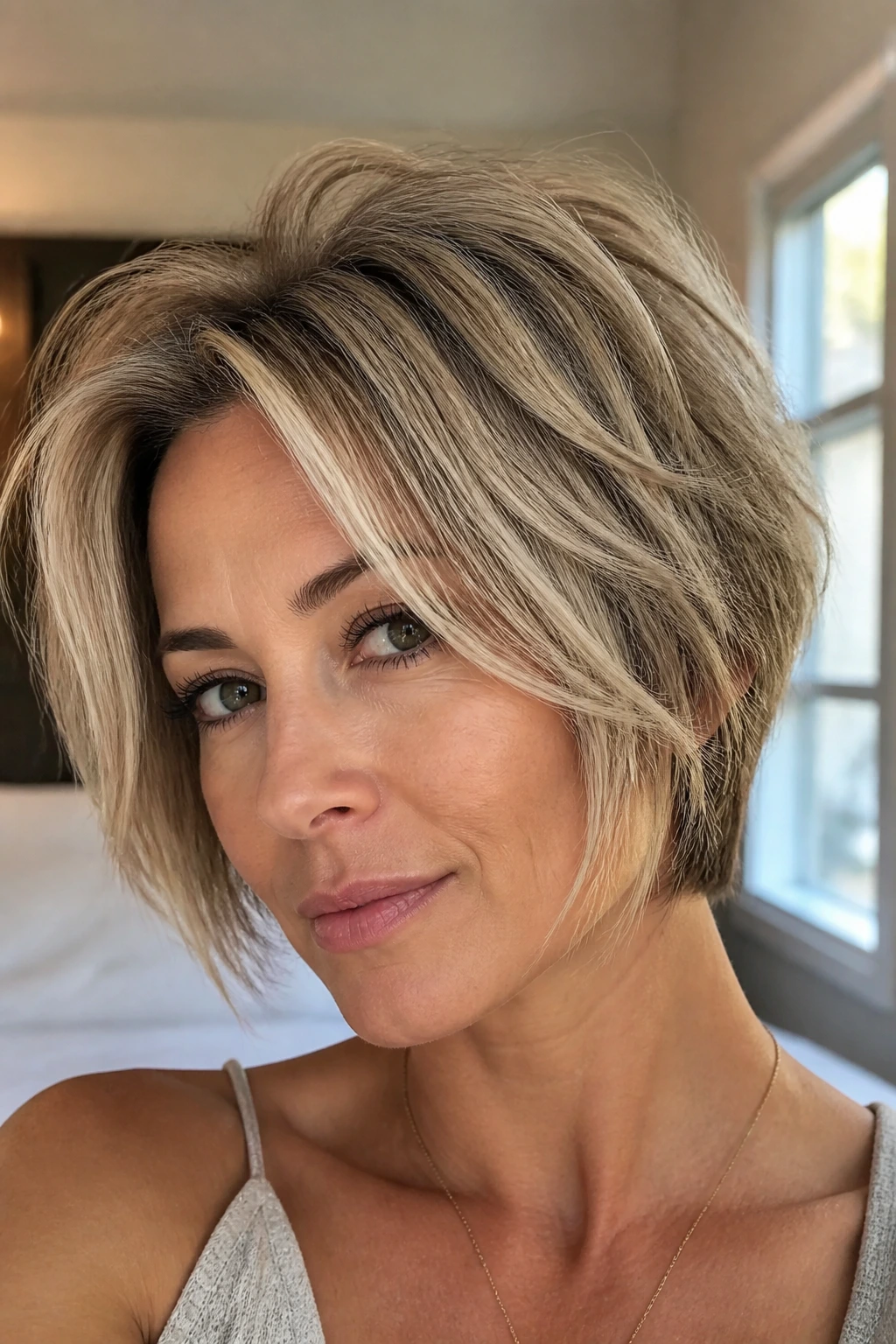
The difference between “textured” and “see-through” is mostly where the layers stop. Fine hair does not need every inch of the head carved up. It needs support points: a solid perimeter, some movement at the crown, and face-framing pieces that make the haircut feel deliberate.
That is why choppy layers work best when they are paired with structure. A bob line. A cropped nape. A deeper side part. A bit of stacked back. Without those anchors, the layers can turn into gaps. With them, they become motion.
Another quiet trick is keeping the ends slightly uneven but not frayed. Point cutting creates softer edges than a straight chop, and that softness helps fine hair move. Razor work can be lovely, but on very delicate strands it can go too far if the stylist is heavy-handed. I’d take a carefully point-cut bob over an over-razored one almost every time.
What to Ask For at the Salon So You Don’t Lose Density
Fine hair needs precise language in the chair. “Add more layers” is too vague, and usually too risky. A better request is something like: keep the perimeter full, add internal texture only where the hair falls flat, and avoid thinning shears on the ends. That one sentence can save you from a cut that looks airy for all the wrong reasons.
You can also ask for the exact effect you want, not just the haircut name. Say you want the crown to sit higher, the ends to flick instead of hanging, or the front pieces to move when you tuck one side behind your ear. That gives the stylist a target. It is much better than hoping the word “choppy” means the same thing to both of you.
Phrases worth using
- “Keep the bottom line strong.”
- “I want texture, not removed density.”
- “Please don’t take too much weight out of the ends.”
- “I want movement at the top, but I still want the outline to look full.”
If your hair is especially fine, bring a photo of a cut that has the same thickness and texture level as yours. Not just the same length. That detail matters. A cut on thick hair can lie to you in a picture.
Styling Short Choppy Layers So They Don’t Collapse by Noon
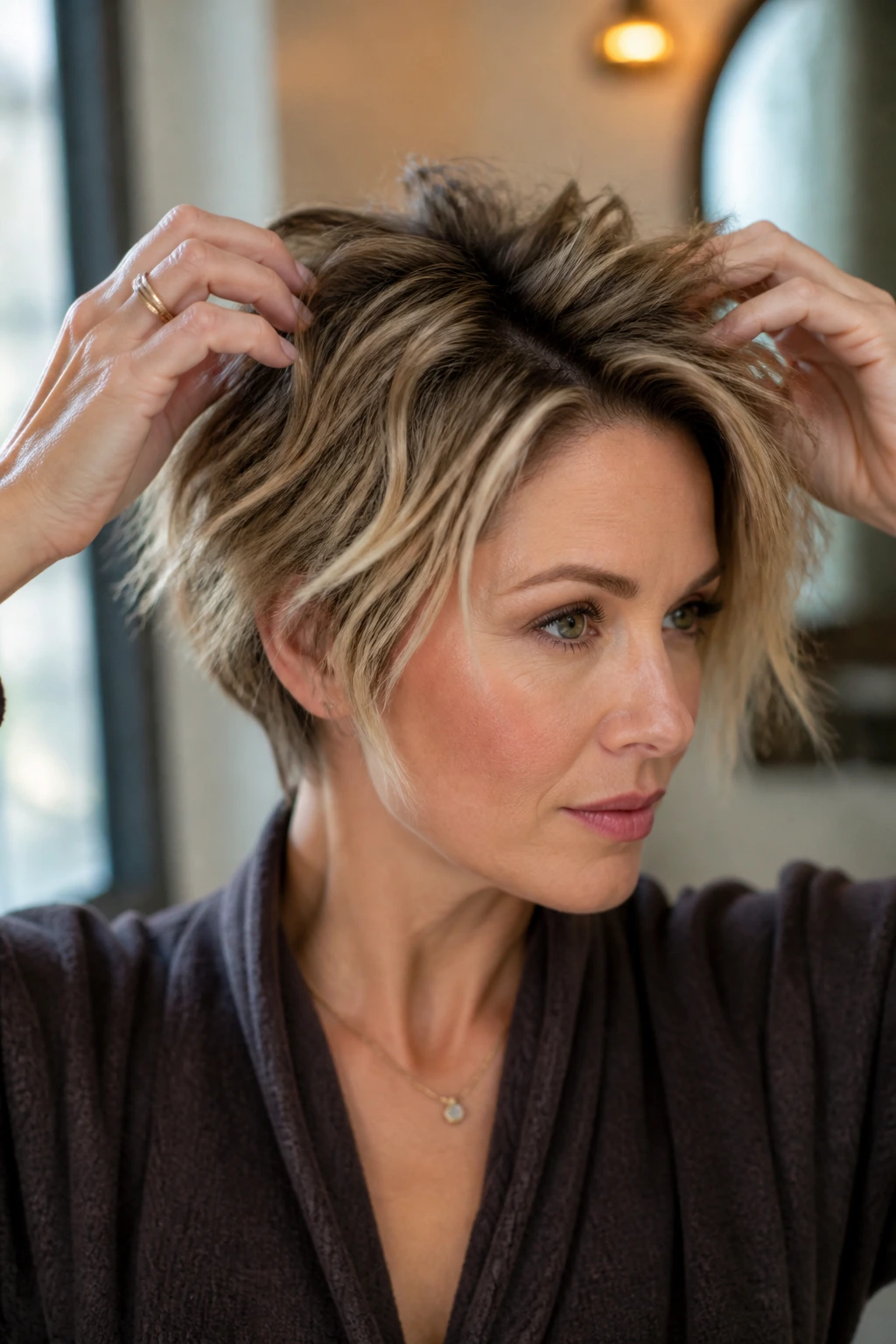
Fine hair usually looks best when you style for root support first and texture second. If you start by loading the mids and ends with product, you’ll get separation without lift, and the whole shape can drop faster than you’d like. Begin at the scalp with a lightweight mousse or root spray, then work the rest with your hands or a small brush.
Blow-drying direction matters more than people think. If the crown wants to flatten, dry the roots in the opposite direction of the part first, then flip them back. That gives the hair a little memory. On short cuts, memory is everything. Once the root section cools in the right position, it holds better through the day.
A little dry shampoo can help even on clean hair. Spray it at the roots, wait a minute, then massage it in. That tiny pause keeps the powder from sitting on top like dust. For the ends, use just enough texture spray or paste to separate the choppy layers. Too much, and the cut starts to clump. Too little, and you lose the point of the layers.
Essential Tools and Products for These Short Cuts
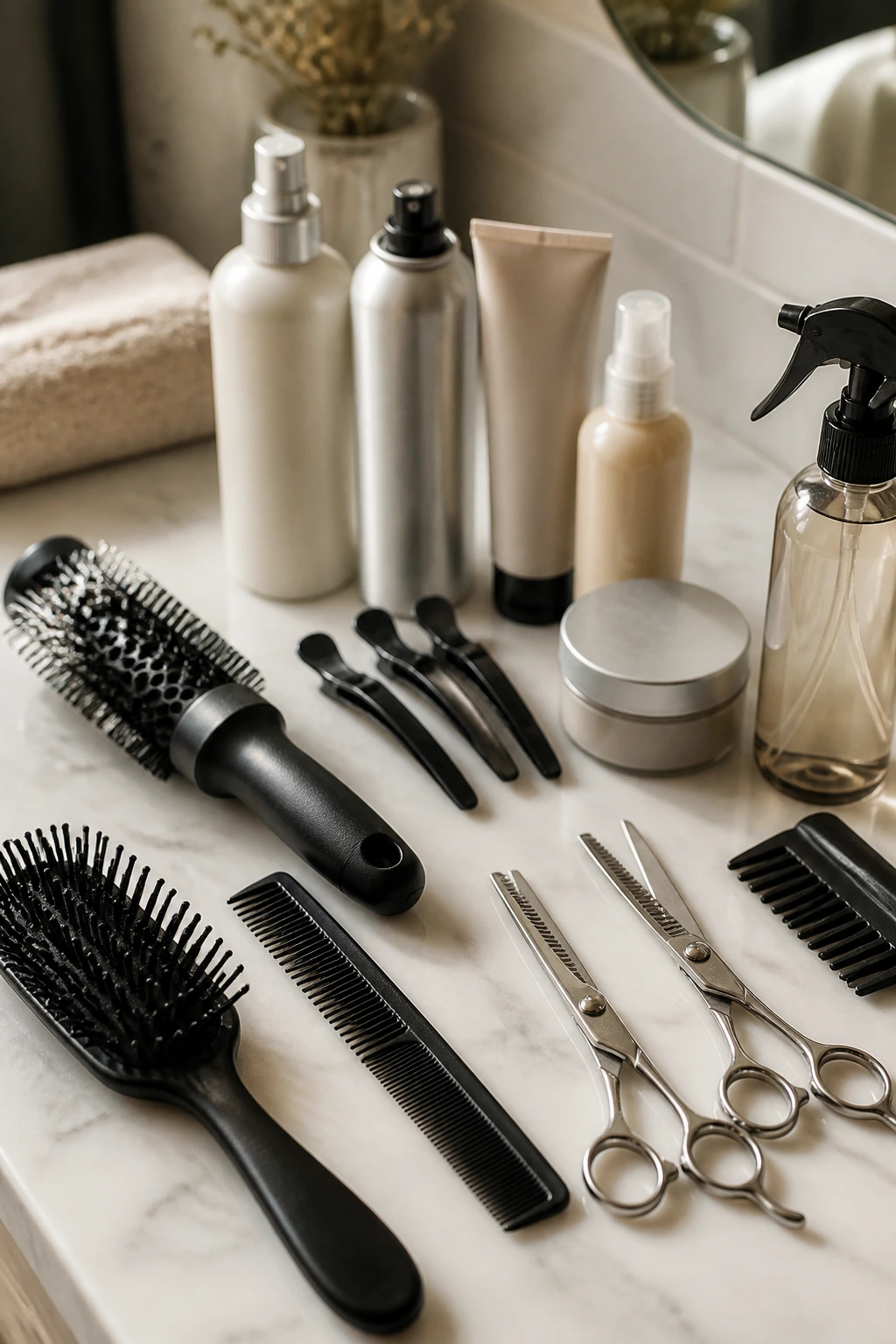
- Blow dryer with a concentrator nozzle — Directs airflow at the roots so fine hair lifts instead of scattering.
- Small round brush — Helps turn under or flip out the ends without creating too much volume in the wrong spot.
- Flat iron with narrow plates — Useful for adding slight bends to bob ends and face-framing pieces.
- Lightweight mousse — Gives root support without the heavy feel that can flatten fine strands.
- Root-lift spray — Best for the crown, especially on pixies, bixies, and short shags.
- Dry texture spray — Adds separation to choppy layers and helps the style stay piecey.
- Matte paste or light styling cream — Good for pixies and crops where you want definition, not shine.
- Wide-tooth comb or fingers — Better than brushing everything smooth after styling; fine hair often needs a gentler touch.
- Clips for sectioning — Handy when you are blow-drying short layers and want the top to stay out of the way.
- A satin pillowcase — Cuts down on rough sleep friction, which matters when your hair is short and every bend shows.
Common Mistakes That Make Fine Hair Look Even Thinner
The biggest mistake is asking for too many layers. Fine hair can handle texture, but if the stylist removes density all the way through, the cut starts to look stringy at the ends and hollow at the crown. The fix is to keep the outline full and place the layering where it lifts the shape, not where it weakens it.
Another common problem is using heavy products. Thick creams, oils, and waxes can make fine hair clump in the first hour and sag by lunchtime. A small amount of lightweight mousse or spray works better. Start with less than you think you need. You can always add more; taking it out is a pain.
A third issue is choosing a fringe that is too dense. Heavy bangs on fine hair often split, stick, and show scalp in a way that feels fiddly every single morning. Wispy or side-swept bangs tend to behave better because they leave room for movement.
Then there’s the flat-part problem. If the hair is always parted in the same place, fine roots can start lying down like they’ve given up. Shift the part a half-inch every few days. Small change. Big payoff.
Different Ways to Wear the Same Cut Without Losing the Shape
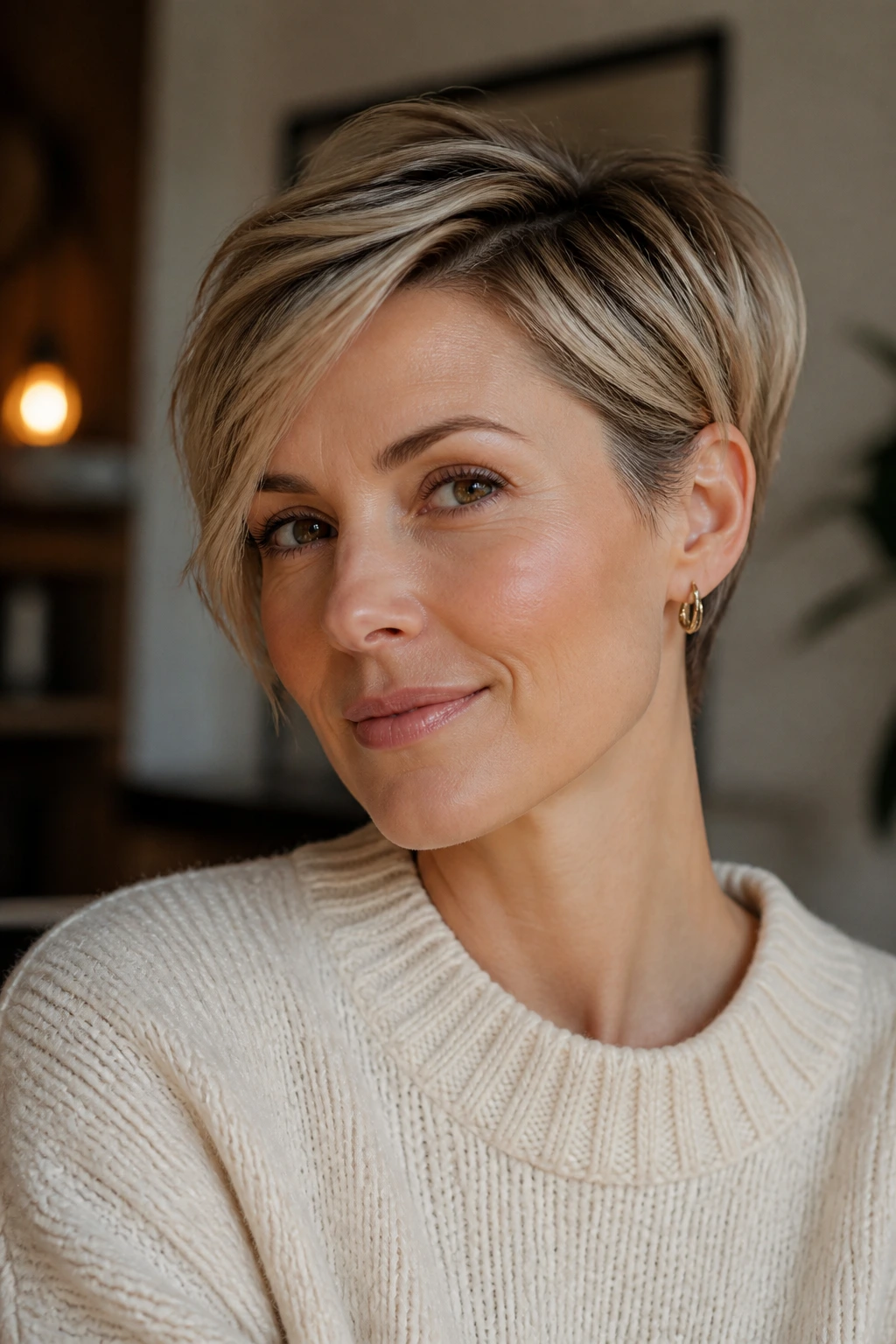
Soft and polished: Blow-dry with a round brush, tuck one side behind the ear, and keep the finish smooth with a tiny amount of cream. This works well on French bobs, angled bobs, and chin-length shapes.
Piecey and undone: Use mousse at the roots, dry the hair with your fingers, and pinch the ends with texture spray once it cools. This suits pixies, bixies, and shaggier crops.
Sleek but not flat: Part the hair deeply to one side, smooth the top with a light styling lotion, and keep the ends slightly bent under. This is a good fit for asymmetrical bobs and blunt cuts with internal layers.
Air-dried with structure: Scrunch in a light product, clip the crown up while it dries, then release and separate the pieces with your hands. Good for wavy fine hair that needs shape but not a full blowout.
A little edgy: Add a flipped-out edge at the ends, a bit more height at the crown, and less symmetry around the face. That keeps the cut from reading too sweet or too safe.
Maintenance That Keeps the Choppiness Looking Intentional
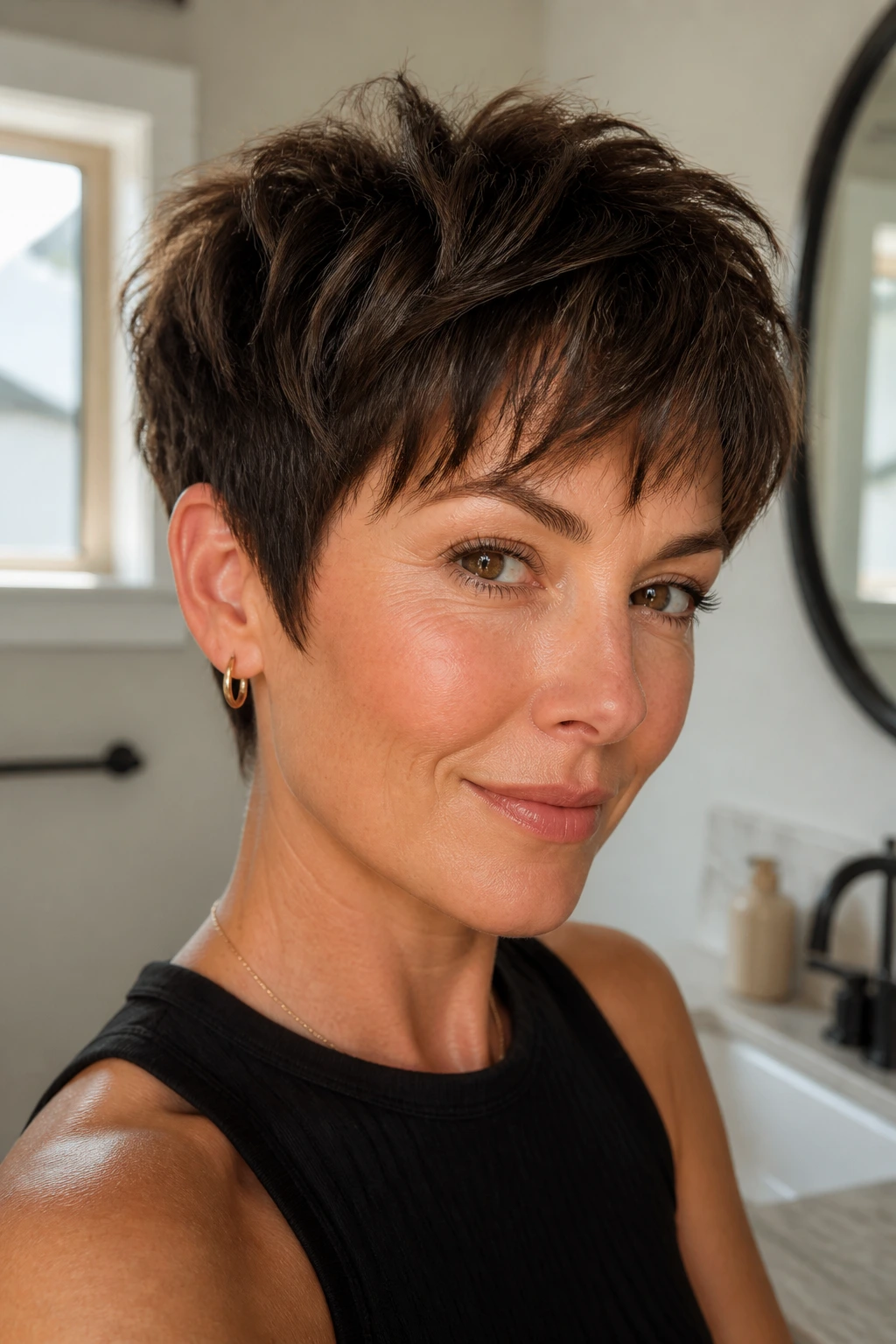
Short cuts on fine hair need regular cleanups if you want the shape to stay crisp. Most of these styles look their best with trims every 4 to 7 weeks, depending on how fast your hair grows and how sharp the outline is. Pixies and bixies need the most frequent maintenance. Bobs can usually stretch a little longer before they lose their line.
Washing frequency depends on how oily your roots get, but fine hair often feels better with a lighter routine. If you wash every day, use a gentle shampoo and keep conditioner away from the scalp. If you wash every two or three days, dry shampoo can bridge the gap without wrecking the shape. Just do not pile it on until the roots feel gritty.
At night, a satin pillowcase helps, but short hair also benefits from a quick reshaping in the morning. A few spritzes of water at the crown, a blast from the dryer for 20 to 30 seconds, and a pinch of product through the ends can bring the cut back to life. That tiny refresh can save the whole day.
Ways to Adapt the Cut for Different Hair Textures and Routines
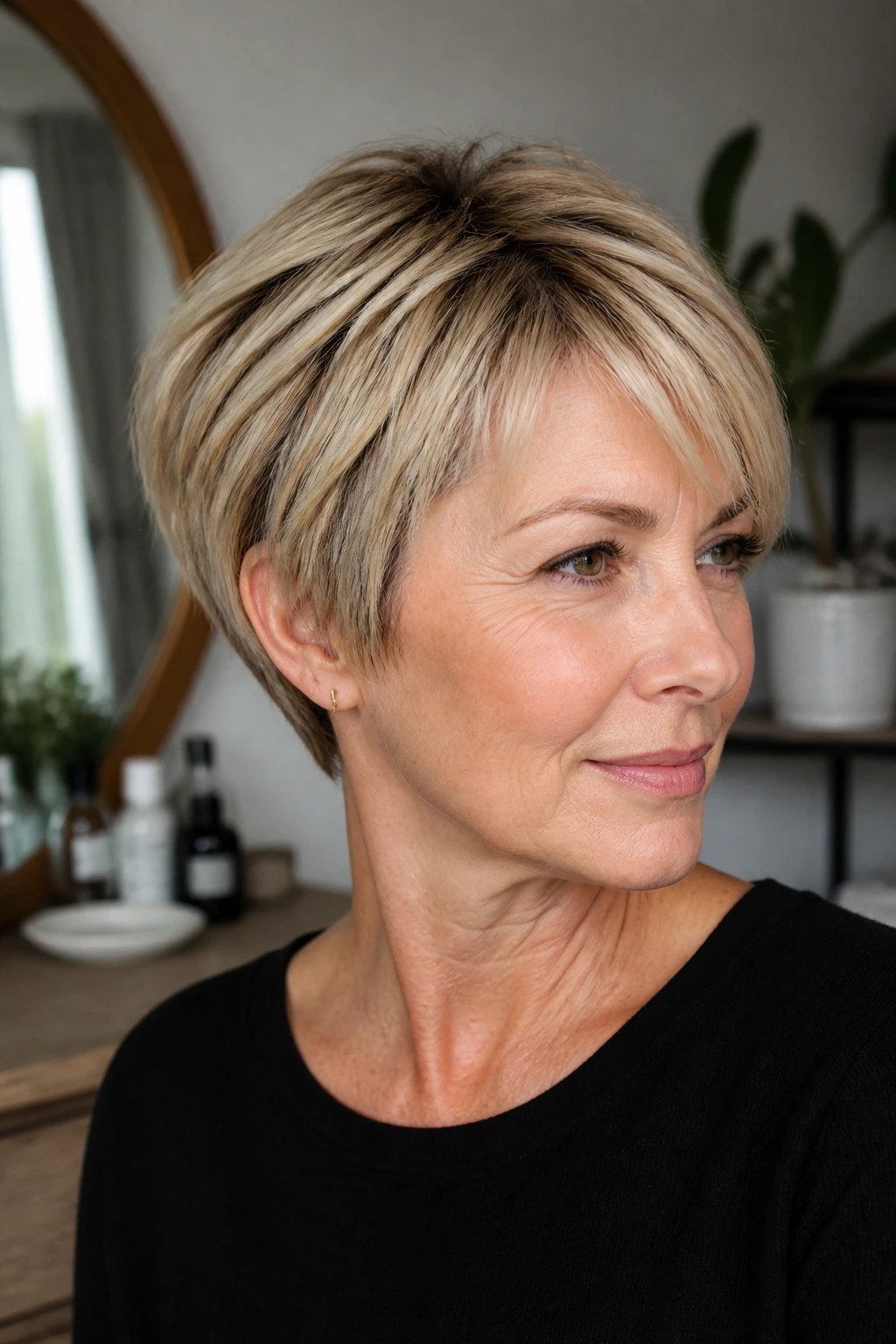
For straight fine hair: Keep the perimeter stronger and the layers lighter. Straight strands show every mistake, so a blunt edge with restrained texture usually looks thicker than a shredded finish.
For fine wavy hair: Lean into choppier layers and softer bangs. The wave adds body that straight hair has to fake with styling, so you can let the cut feel a little looser.
For very sparse hair: Ask for shorter lengths that create a fuller outline, not too many internal cuts. A chin-length bob or pixie-bob often reads denser than a longer short cut with lots of breakup.
For low-maintenance routines: Pick a shape that still looks good if you only rough-dry it. The French bob, bixie, and neck-length shattered bob are forgiving choices.
For a softer grow-out: Choose cuts with longer front pieces or a tapered neck. They slide into the next stage more gracefully and buy you a few extra weeks before the shape feels awkward.
Frequently Asked Questions
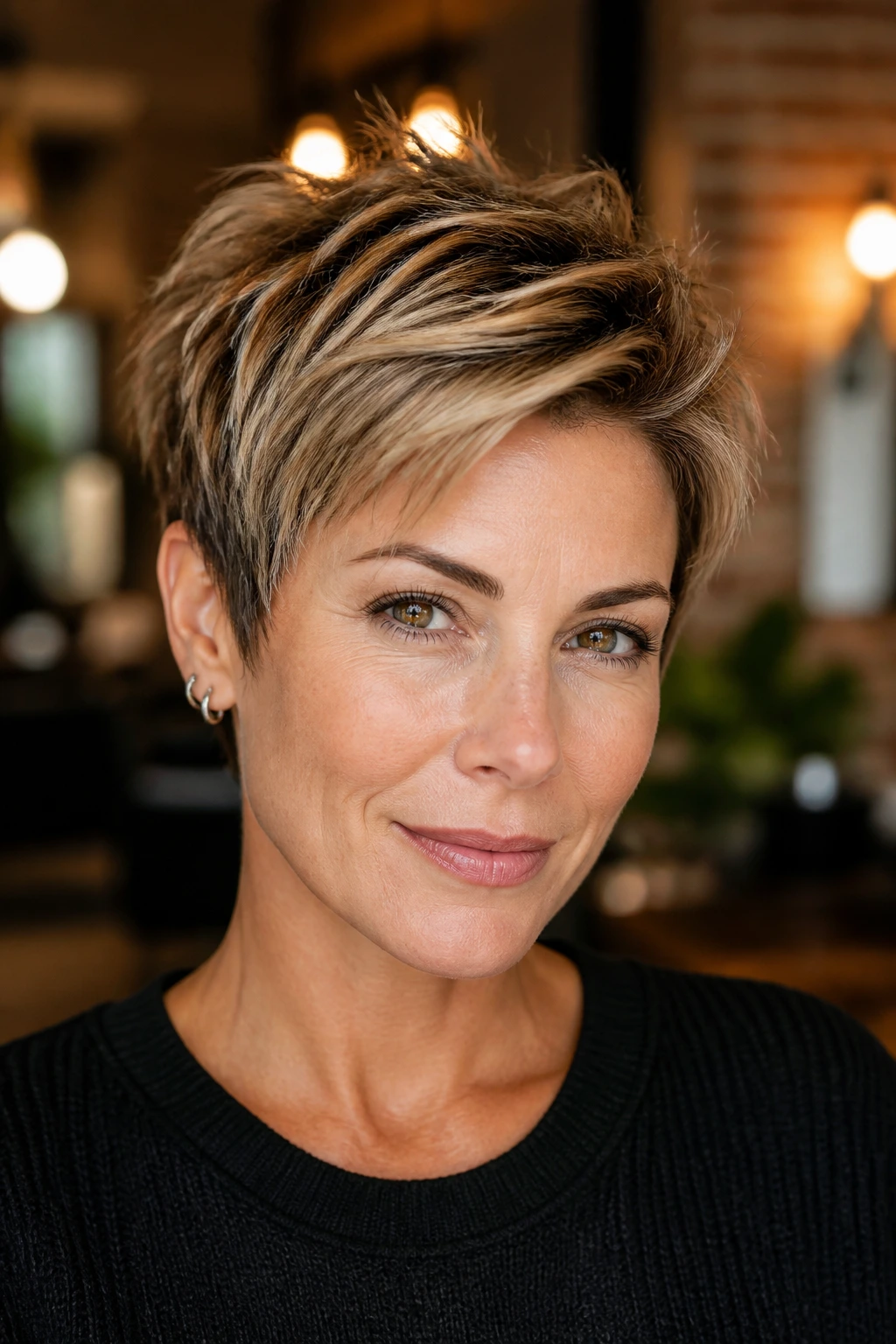
Do choppy layers make fine hair look thinner?
They can, if they’re overdone. The better approach is to keep the perimeter solid and use choppy layers only where they add lift or movement, not all through the ends.
Is a bob better than a pixie for fine hair?
That depends on how much styling you want to do. A bob keeps more visual weight, while a pixie can create more lift at the crown with less length to drag it down.
What’s the best bang style for fine hair?
Soft curtain bangs, wispy bangs, or a side sweep usually behave better than heavy blunt bangs. They leave enough space for movement and don’t create a see-through fringe line.
Will short hair with choppy layers work if my hair is pin-straight?
Yes, but you’ll probably want a stronger baseline and a little styling help at the ends. Straight fine hair looks best when the cut gives it shape first, then texture second.
How often should I get it trimmed?
Most short choppy cuts need attention every 4 to 7 weeks. Pixies and bixies sit on the shorter end of that range, while bob shapes can stretch a bit longer.
Can I air-dry these cuts and still get volume?
Sometimes, but not always without help. A little root product and some clipping at the crown while the hair dries can make a big difference.
What if my hair gets frizzy when I add texture products?
Use less product and switch to a lighter spray instead of a heavy paste. Fine hair can frizz from overworking as much as from dryness, so the fix is often restraint, not more styling.
Are these cuts good for older women with fine hair?
Absolutely, if the shape is tailored to the hairline and face shape. Short cuts with movement around the eyes and cheekbones can look softer and fresher than a long style that keeps slipping flat.
The Shape That Gives Fine Hair Some Backbone
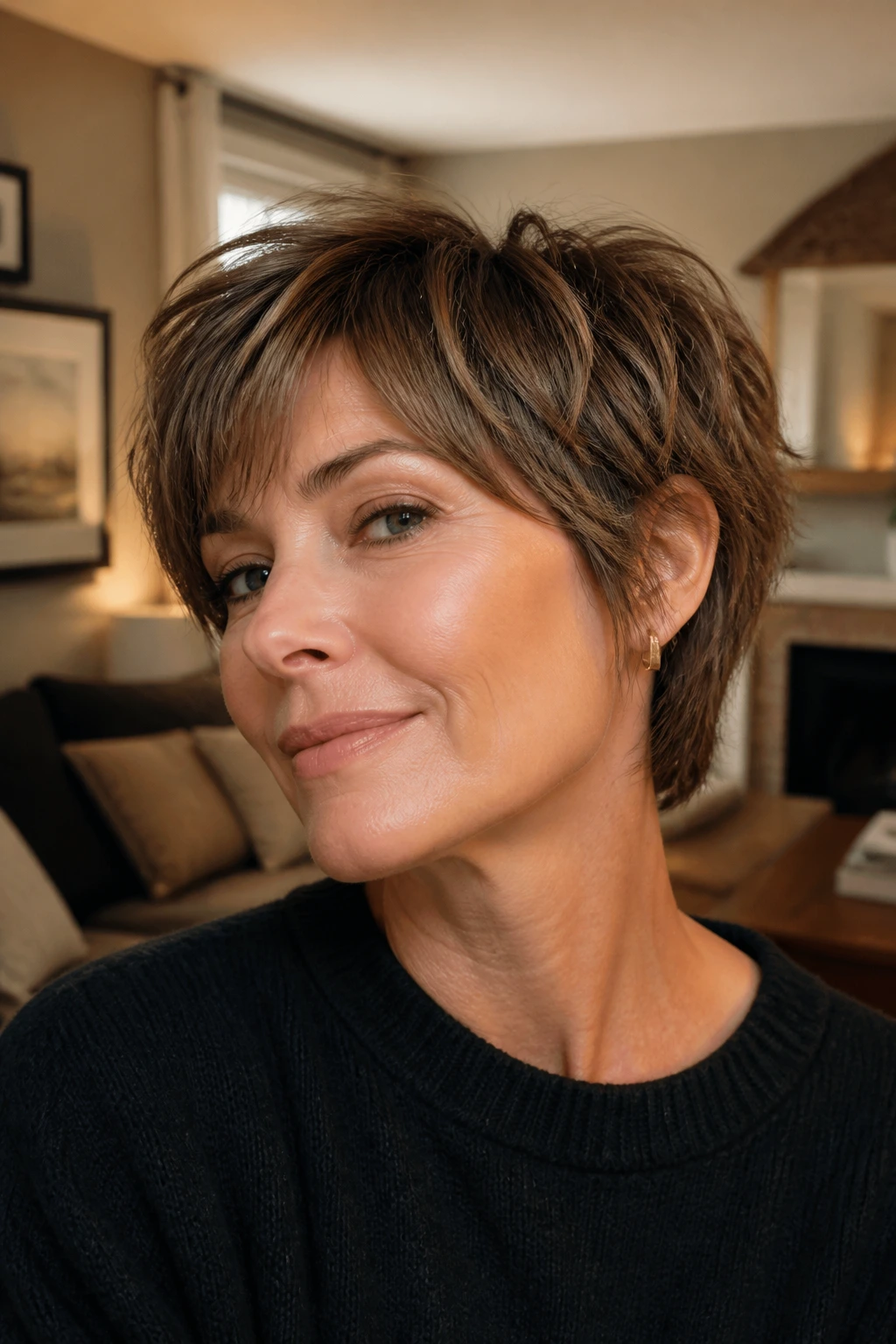
Short hair with choppy layers for fine hair works when the cut has a backbone. That’s really the whole story. The perimeter holds the line, the layers keep the shape from lying down, and the styling stays light enough that the hair can still move like hair, not like helmet filler.
A good cut here should feel easy to touch up and forgiving on day two. If it needs three tools, a 20-minute battle, and a prayer every morning, it’s the wrong shape. The best versions of these styles do less by design and look better because of it.
Pick the silhouette that matches your life, not the one that only looks impressive in a salon mirror. Then let the choppy layers do what they’re supposed to do: keep fine hair from going limp, and give it a little edge while they’re at it.
