



Money piece looks for wavy hair can do two very different things: sharpen the face with a flash of brightness, or look like a chunky stripe that sits there and argues with the wave pattern. The difference usually comes down to placement, width, and tone. On wavy hair, the front pieces don’t lie flat the way they do on pin-straight strands, so the color has to work with bends, not against them.
That’s why the best face-framing highlights on waves never look like a single painted line from hairline to chin. They break up as the hair moves. The light hits one ridge, slips into the dip, then catches again near the cheekbone. Done right, the effect looks expensive in the most practical sense of the word: the color does more with less, and the cut gets a little smarter just by being near it.
A bad money piece can flatten the whole front of the head. A good one makes the waves look deeper, softer, and more alive without needing a full head of lightening. Some of the prettiest versions are barely louder than a sunbeam at the temple. Others are bold enough to change the whole mood of a haircut. The trick is knowing which version belongs to your wave pattern, your base color, and how much time you’re willing to spend keeping it fresh.
Why These Money Piece Looks Stand Out on Wavy Hair
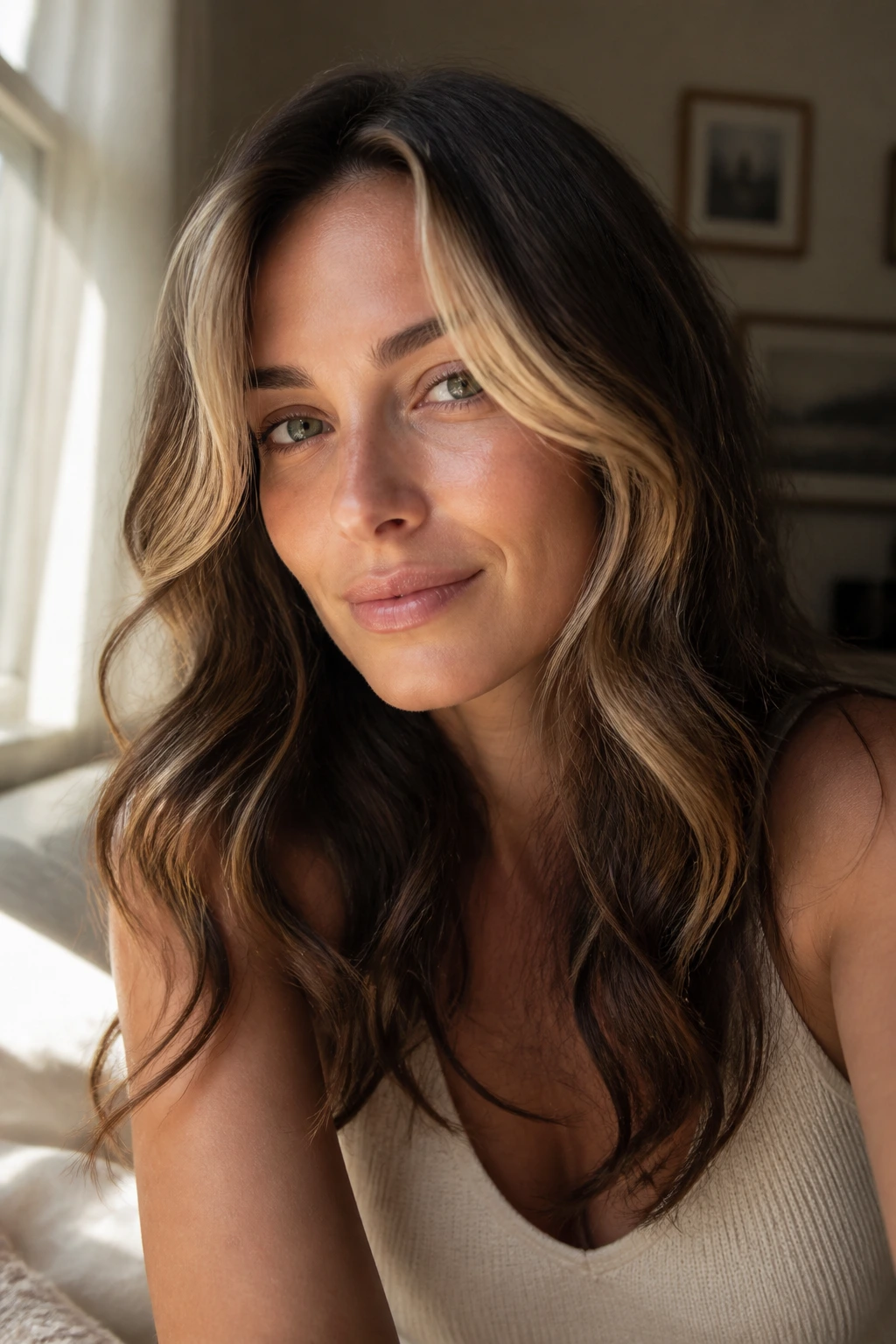
Face-framing highlights behave differently on waves.
The bend in the hair gives the light something to bounce off, so even a narrow money piece can look dimensional instead of thin.
You can go softer than you think.
A lot of wavy hair looks better with a smaller, more blended front section than with a thick stripe. The movement does part of the work.
They work with cuts, not just color.
Layers, curtain bangs, and shaggy ends all change where the bright piece lands. That makes the whole style look more intentional.
There’s a version for every base color.
Brunettes, blondes, copper heads, and red-brown bases all have a money piece that makes sense. Tone is the real decision, not just lightness.
Maintenance can be controlled.
A rooted or softly blended front piece grows out cleaner than a high-contrast foil job. That matters if you don’t love salon upkeep every few weeks.
1. Honey Ribbon Face Frame
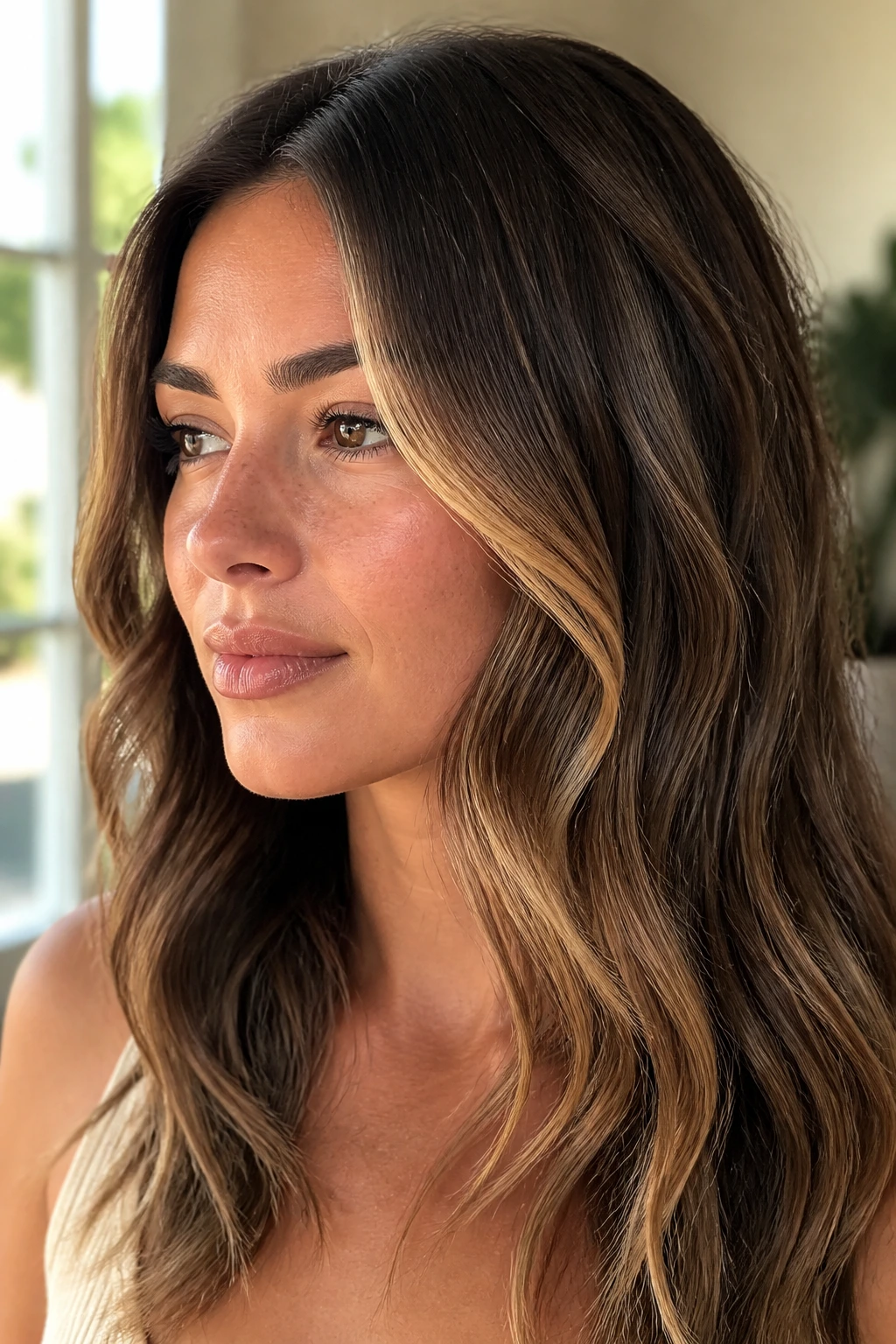
Honey is the safest place to start if you want warmth without the brass. On wavy hair, this look sits especially well when the brightest strands begin around the cheekbone and soften through the first bend of the wave instead of starting at the root.
Ask for a thin ribbon on each side, lifted to a warm beige-gold rather than a pale blonde. A level 7 or 8 glaze keeps the result sweet, not orange. If your base is medium brown, this gives the face a little glow without turning the whole front into a hard stripe.
2. Beige Blonde Cheekbone Pop
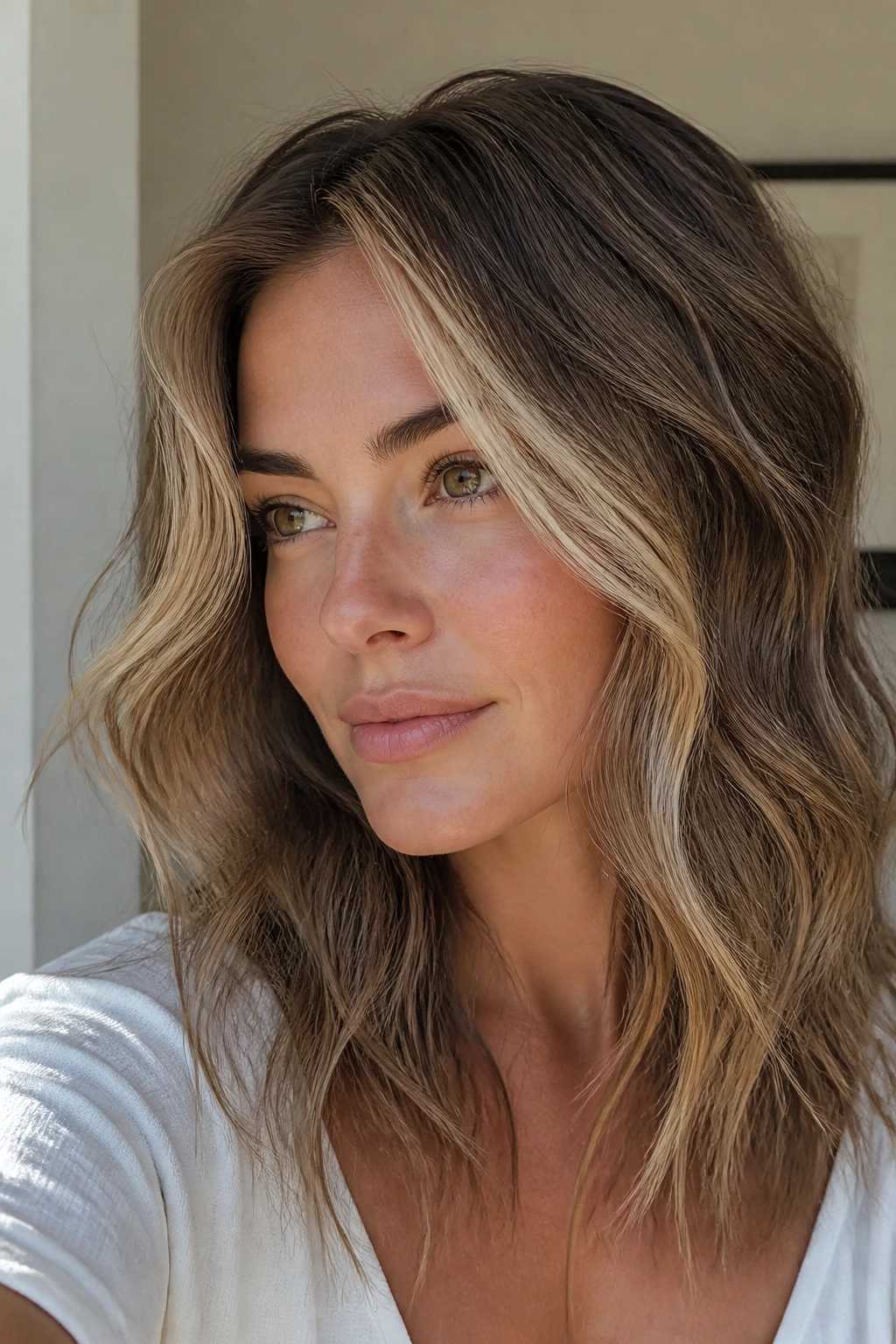
This one has a cleaner, cooler edge. It’s the look I reach for when someone wants brightness near the face but doesn’t want any yellow tone sneaking in.
On wavy hair, beige blonde works best when the foils are feathered just past the temple so the color breaks across the wave instead of sitting as a slab. Keep the placement narrow if the hair is fine, wider if the hair is thick and dense. Too much width makes beige look flat.
3. Copper Penny Front Stripe
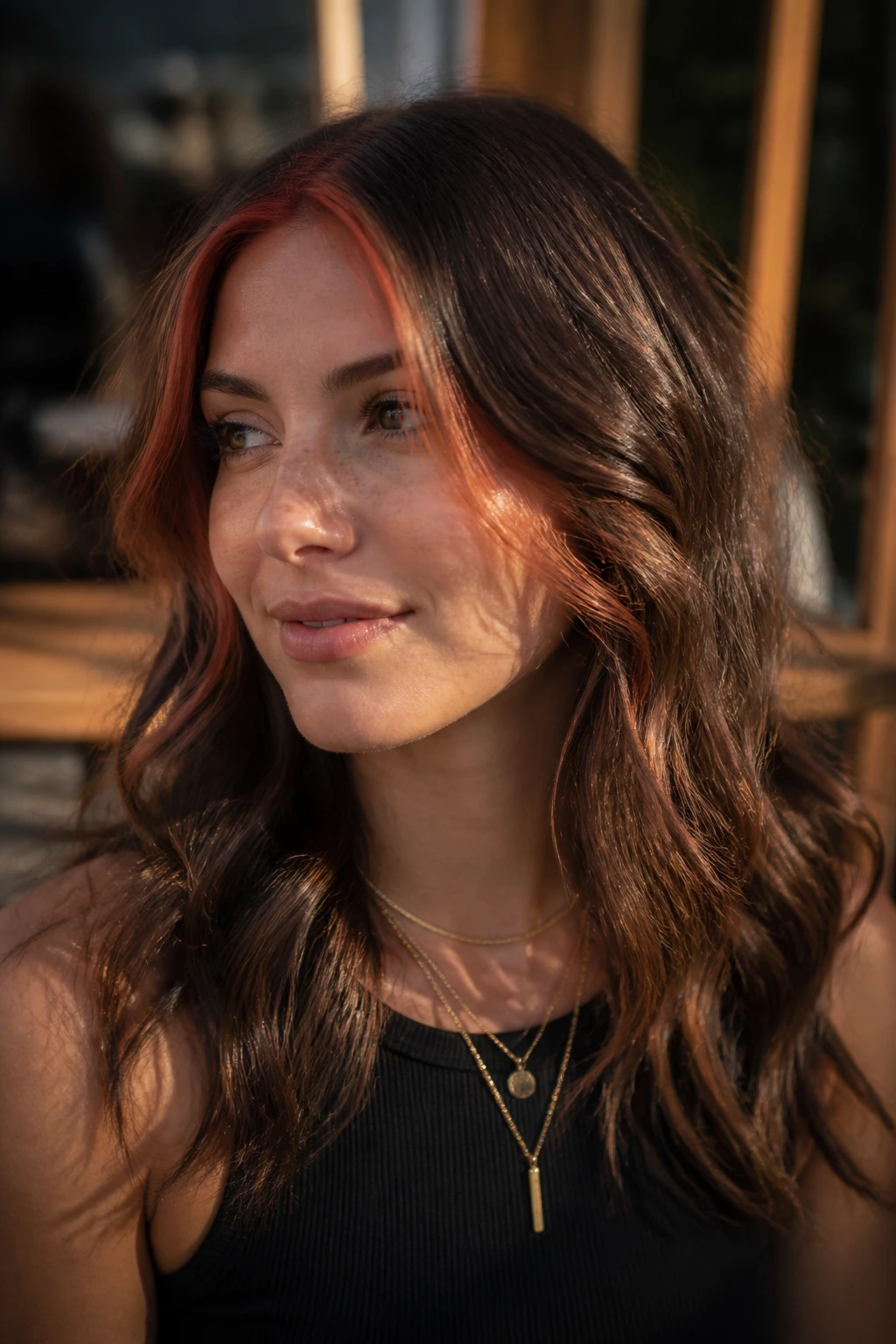
Copper can be electric on waves, but only if it’s placed with some restraint. A thin penny-bright piece at the front gives movement a flicker of heat every time the hair shifts.
This is a good choice for natural brunettes who want something warmer than blonde but bolder than caramel. The shine matters here. Ask for a gloss after the color service so the copper stays reflective, not dusty.
4. Espresso and Cream Contrast
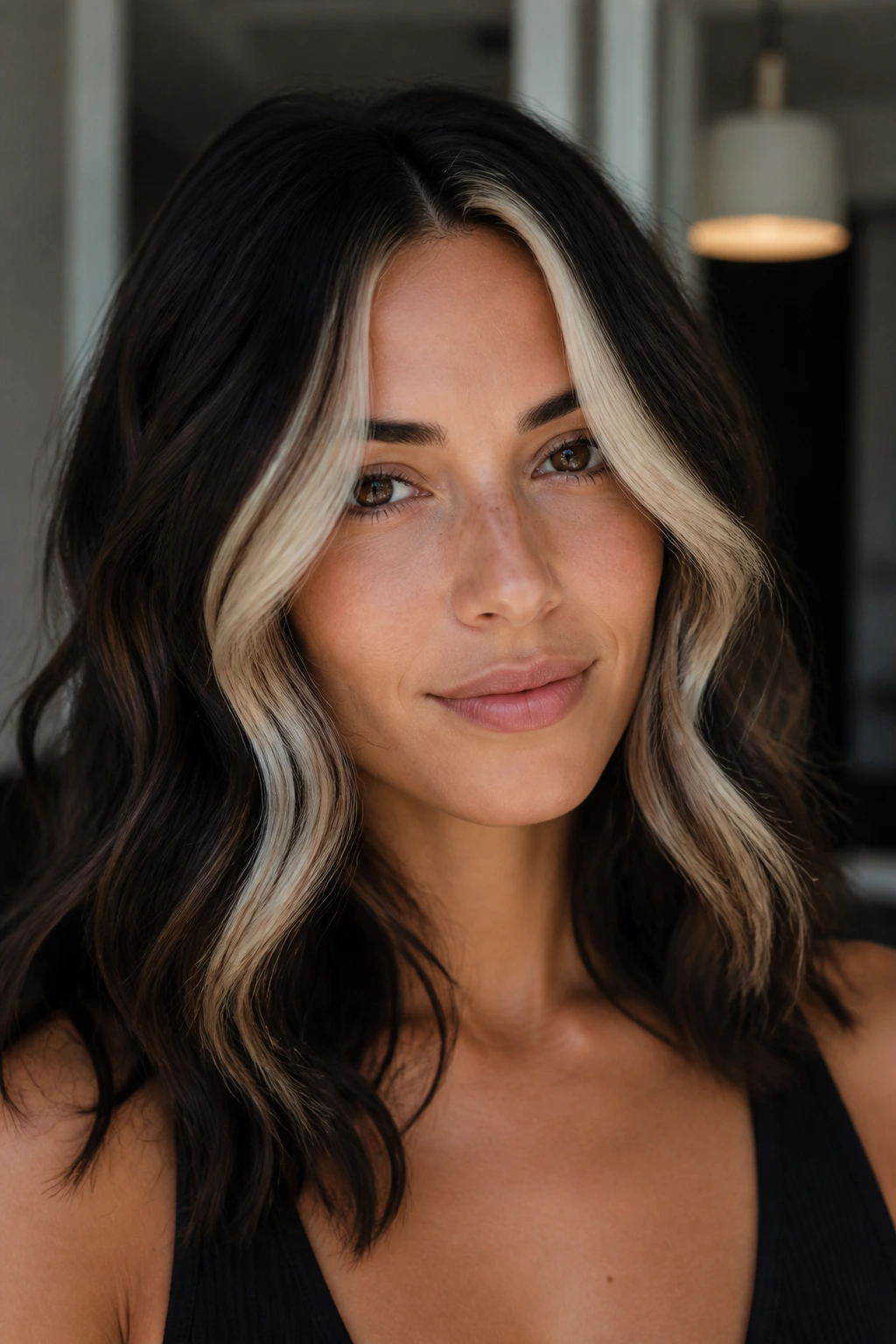
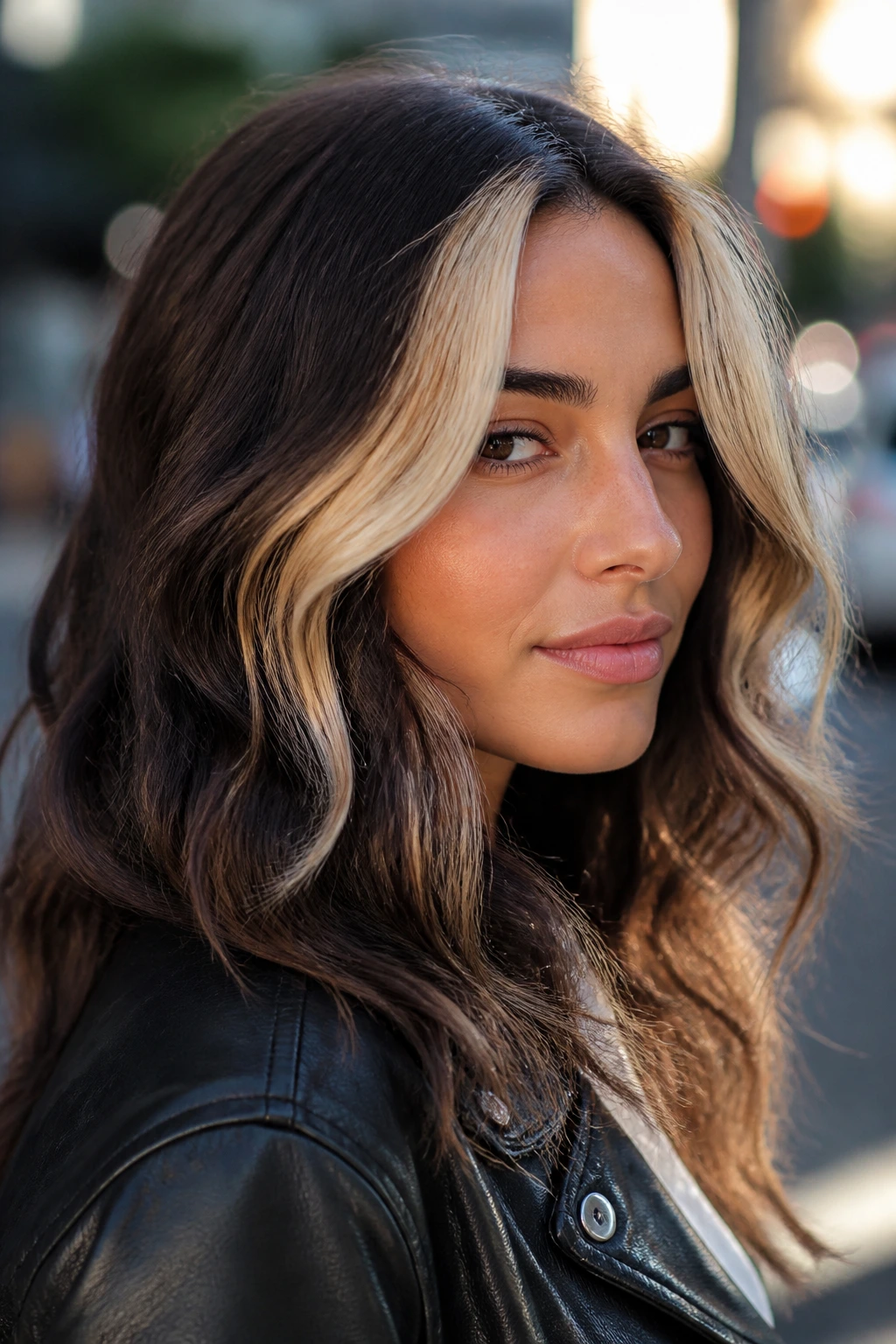
Dark espresso roots with a creamy front piece create one of the strongest face frames in the bunch. It’s sharp, yes, but the waves keep it from looking harsh.
The important part is the transition. The cream should not start as a sudden block right at the hairline. It should feather into the first wave, then soften again near the jaw. That little bit of blur is what keeps the style from looking like a streaky money piece from a salon wall photo.
5. Cinnamon Melt Frame
Cinnamon lands in that middle zone between red and brown, which is exactly why it flatters wavy hair so well. The movement makes the warmer pieces look deeper than they do in a color bowl.
Tell your colorist you want a melted front section, not a chunky panel. The tone should stay close to the base for the first inch or two, then warm up where the hair curves around the face. It’s a good choice if you want dimension more than contrast.
6. Mushroom Brunette Money Piece
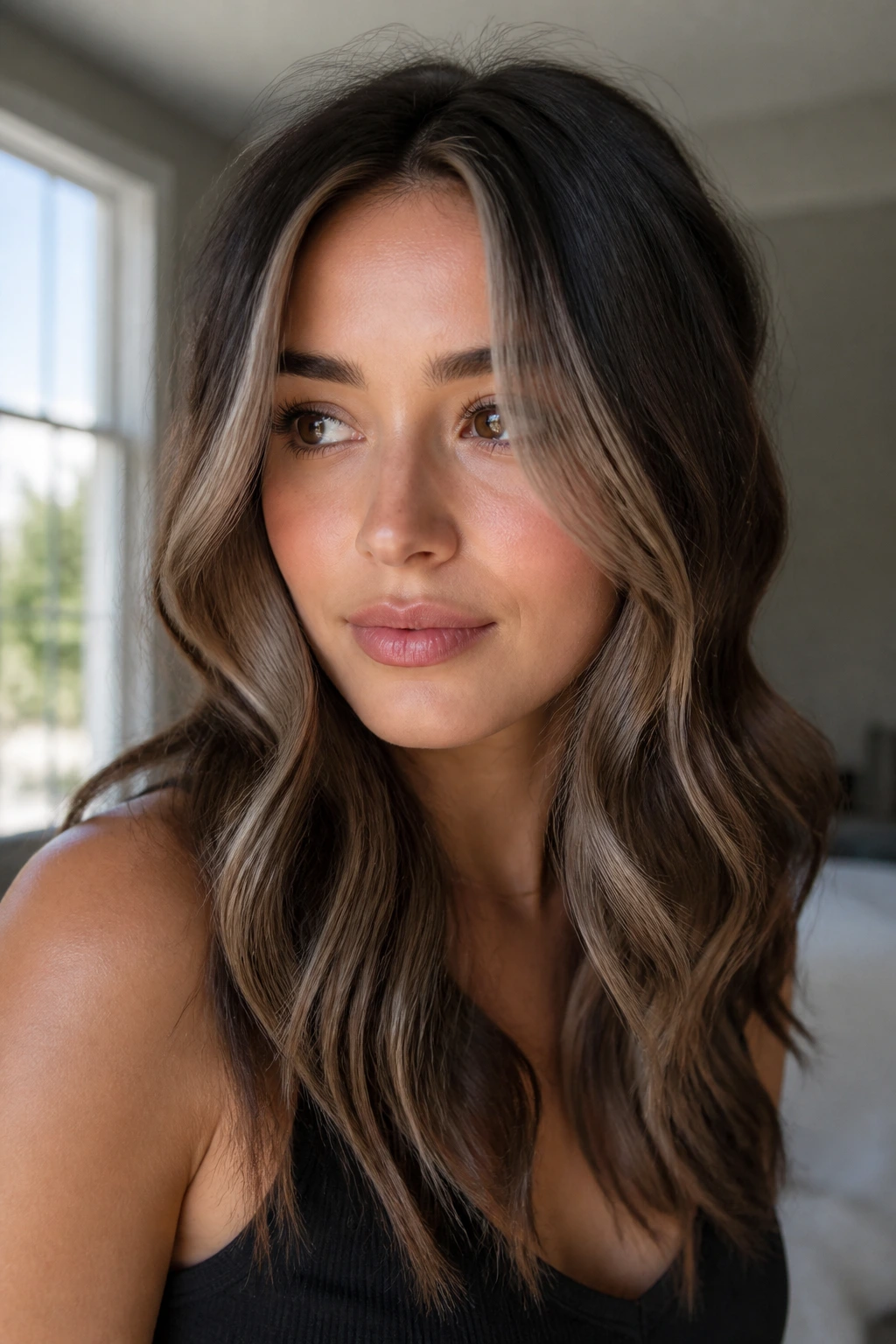
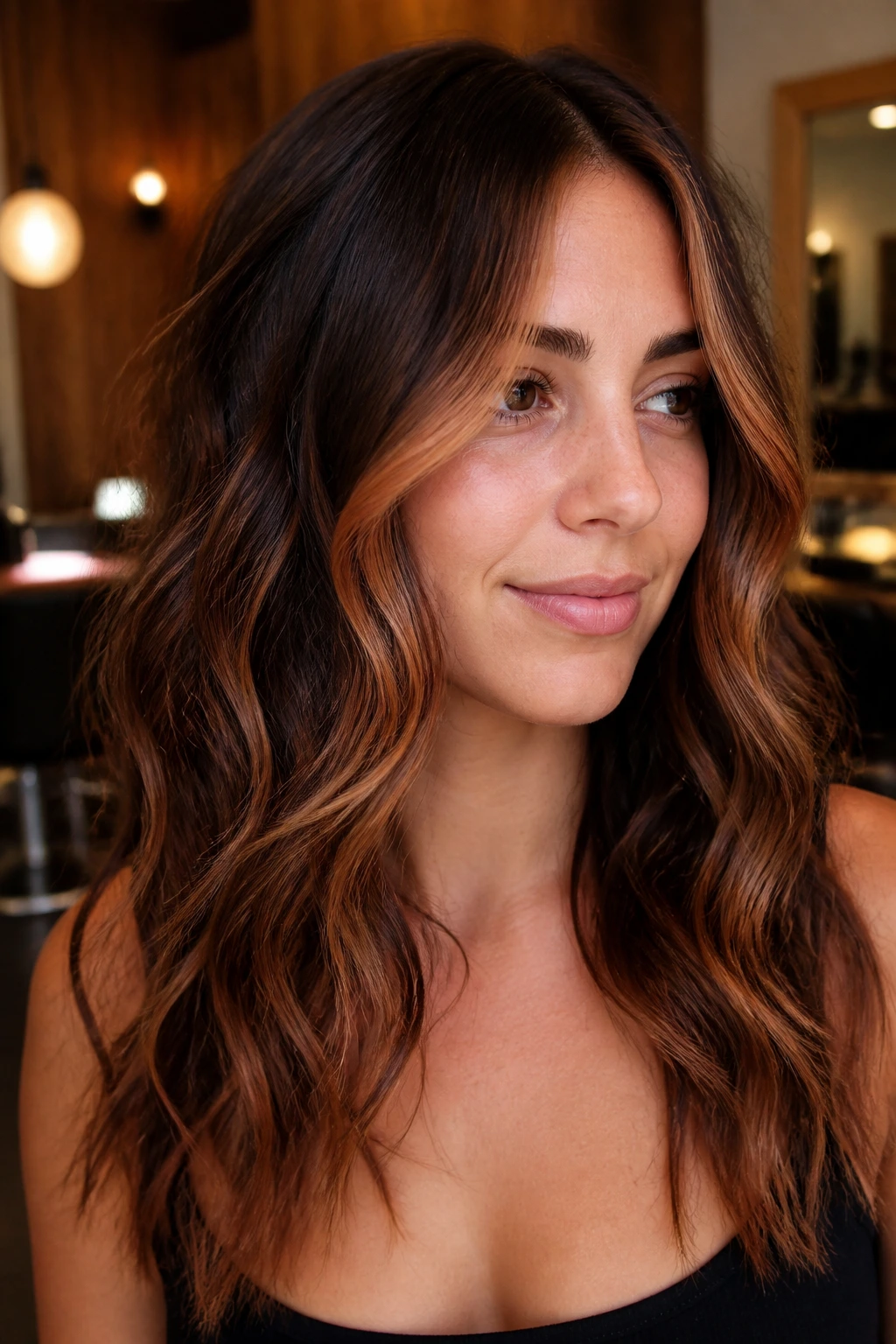
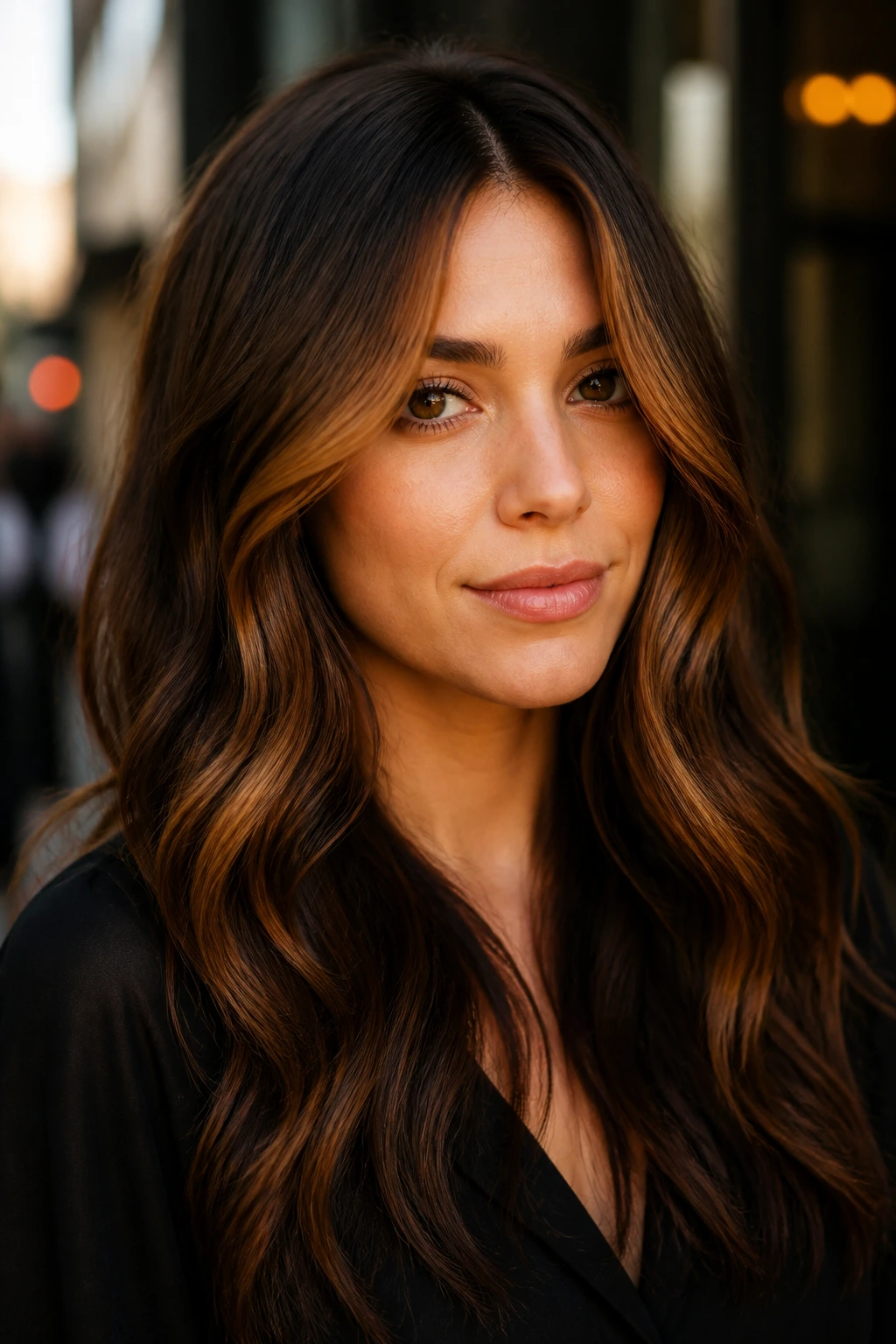
Cool brunette tones can be tricky at the front because they sometimes read flat in daylight. Mushroom solves that by giving you softness without slipping into orange or gold.
This version is best when the money piece is paired with a neutral ash glaze and a blended root. On wavy hair, that muted tone creates a quiet contrast that looks especially good with shaggy layers. If you like polished but not shiny-bright color, this one hits the mark.
7. Champagne Fringe Brightener
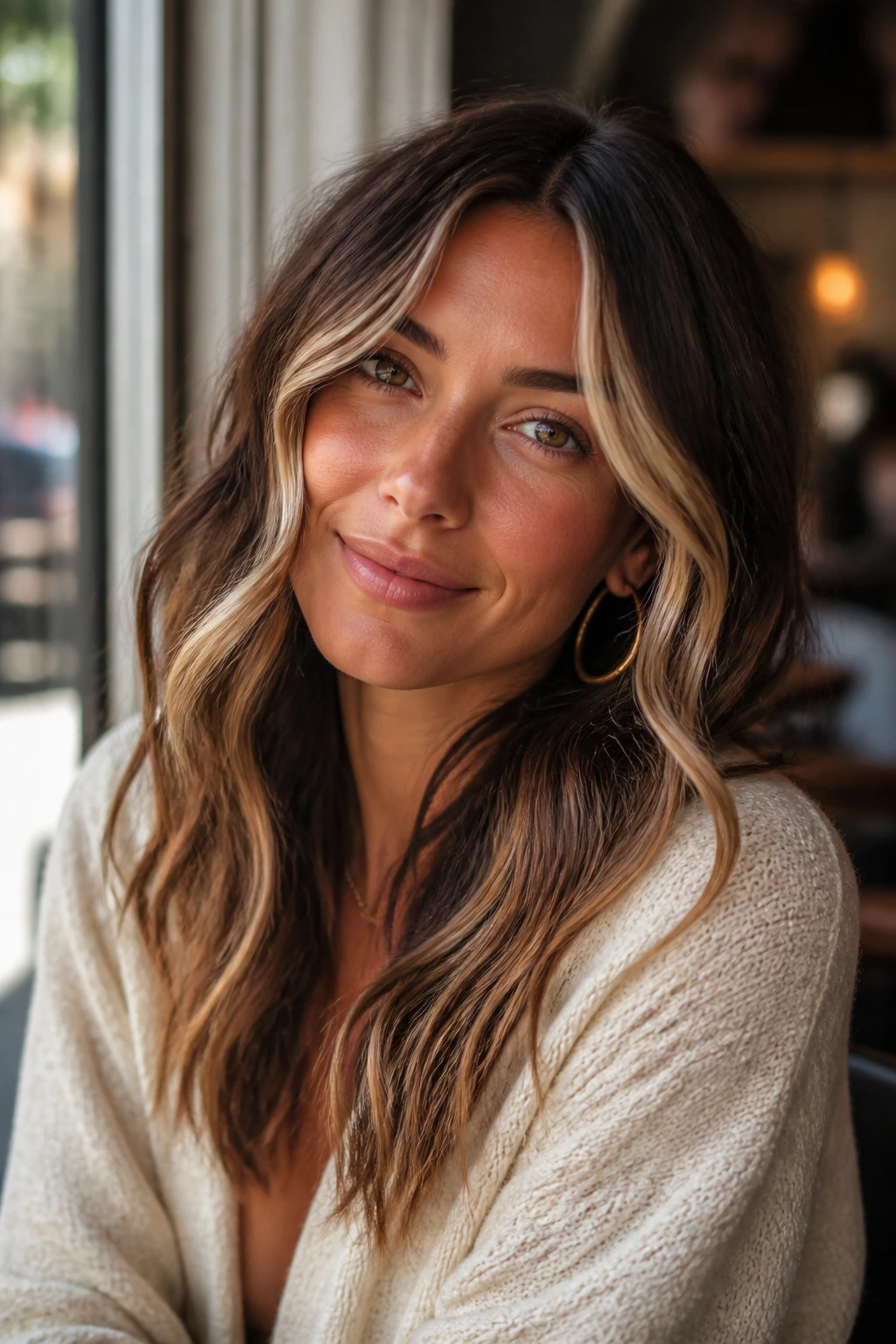
Champagne is one of my favorite tones for waves because it sits right between beige and pale gold. It has enough warmth to keep the hair from looking chalky, but enough lift to brighten the face.
The front pieces should be narrow and slightly staggered. A straight, solid stripe will look too stark on textured waves, while a lightly pieced placement lets the color flicker instead of shout. This one loves movement.
8. Rooted Platinum Slice
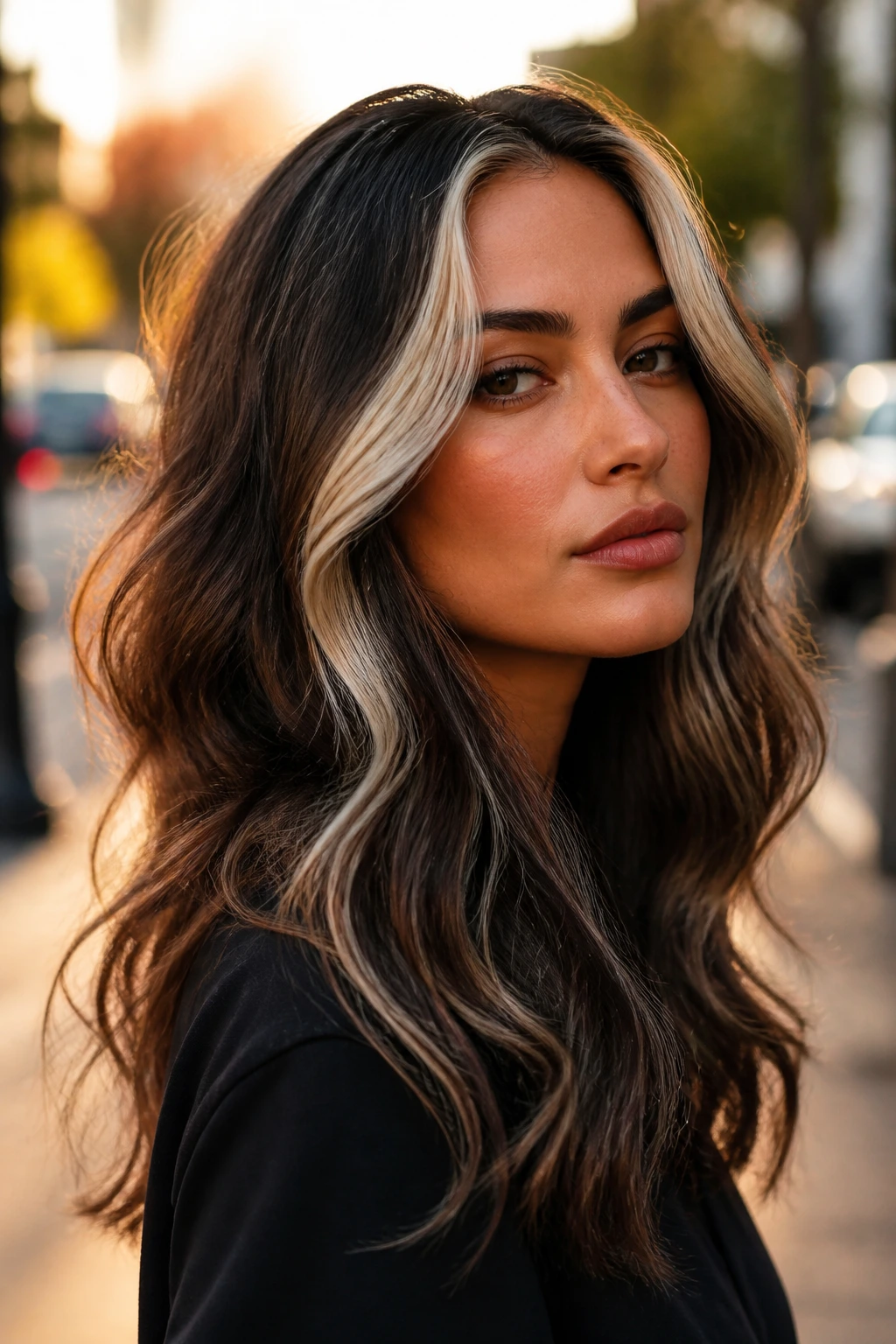
Platinum near the face is bold, but a rooted version keeps it from looking like a costume. The dark root gives the eyes something to rest on, and the waves stop the platinum from feeling flat.
Keep the slice just wide enough to show at the temple and along the first face bend. Anything wider can take over the entire haircut. This works best on naturally dark hair when you want impact without committing to a full bleach-out across the head.
9. Auburn Halo Highlights
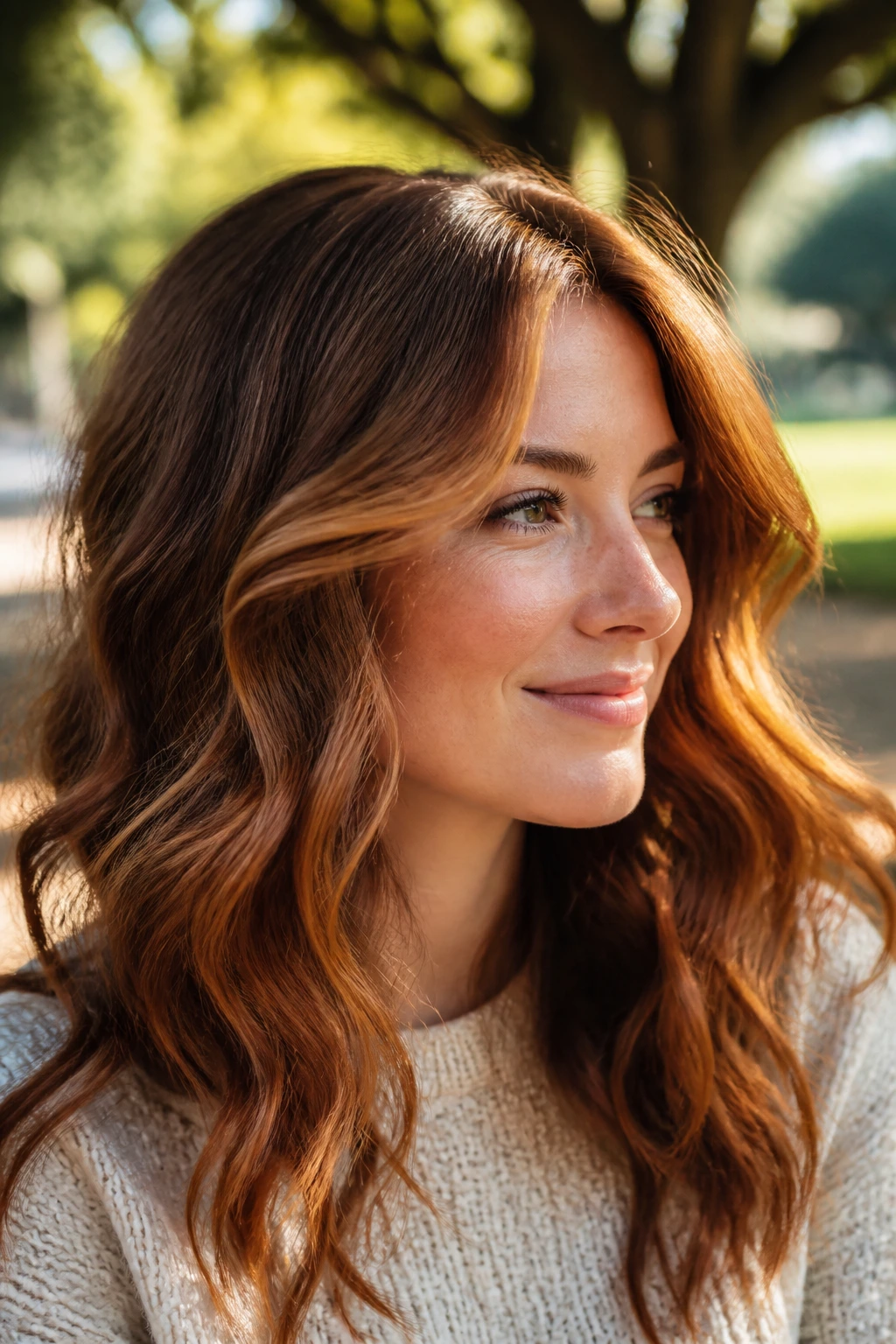
Auburn can look especially rich on wavy hair because the curve of the strand catches the red-brown tone from several angles at once. The result is warm and glossy rather than loud.
Instead of one obvious front stripe, ask for a halo effect around the front hairline and crown. The pieces should sit in the upper layers so they appear and disappear as the waves move. That gives the whole style a softer, more natural depth.
10. Caramel Curtain Bang Frame
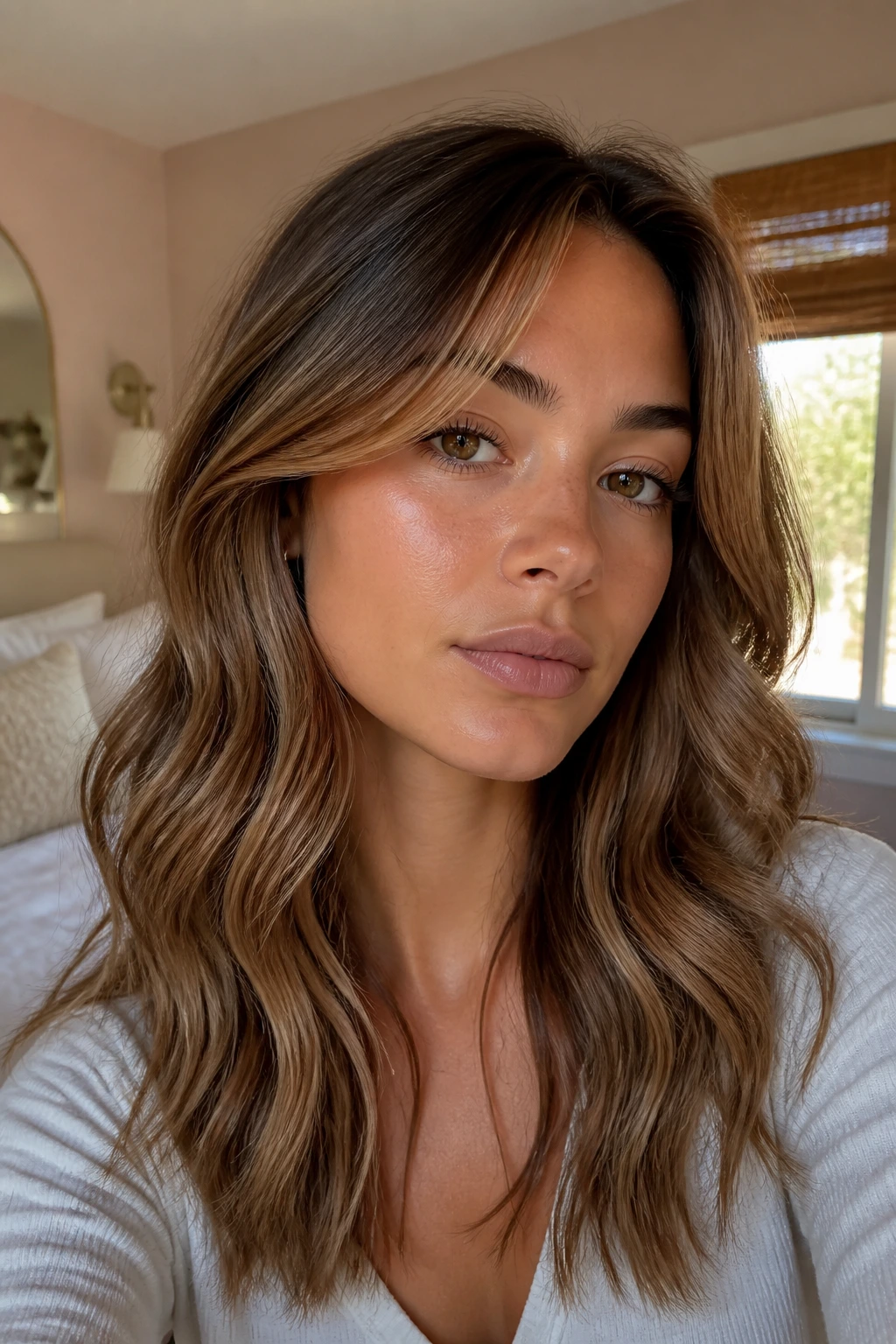
Curtain bangs and a caramel money piece are one of those pairings that make perfect sense the second you see them. The bangs soften the forehead, and the caramel brightens the cheek area without turning harsh.
If your waves are loose and airy, keep the caramel piece thin so it doesn’t fight the fringe. If your waves are fuller, the brighter front color can be a touch wider. Either way, the goal is to make the front area glow, not compete with the cut.
11. Cool Ash Beige Frame
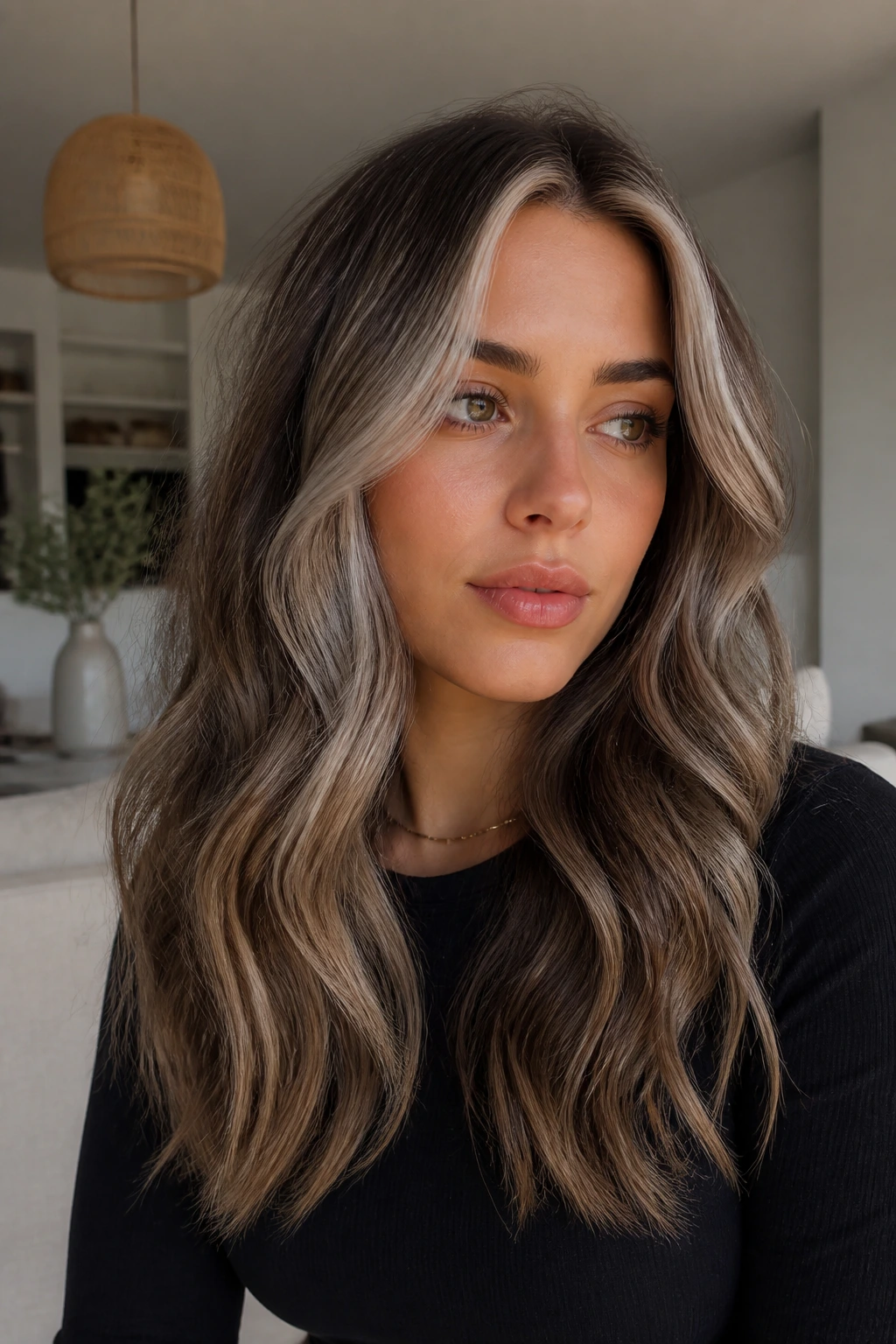
Ash beige is for the person who wants brightness but hates warmth. It has a soft, almost smoky finish that makes wavy hair look clean and controlled.
This version works best when the face-framing sections are lifted evenly and toned down with a neutral-cool glaze. On textured hair, the ash tone helps the waves look deliberate instead of frizzy. The downside? It needs upkeep if your hair pulls yellow fast, so plan for toning shampoo or gloss visits.
12. Rose Gold Front Glow
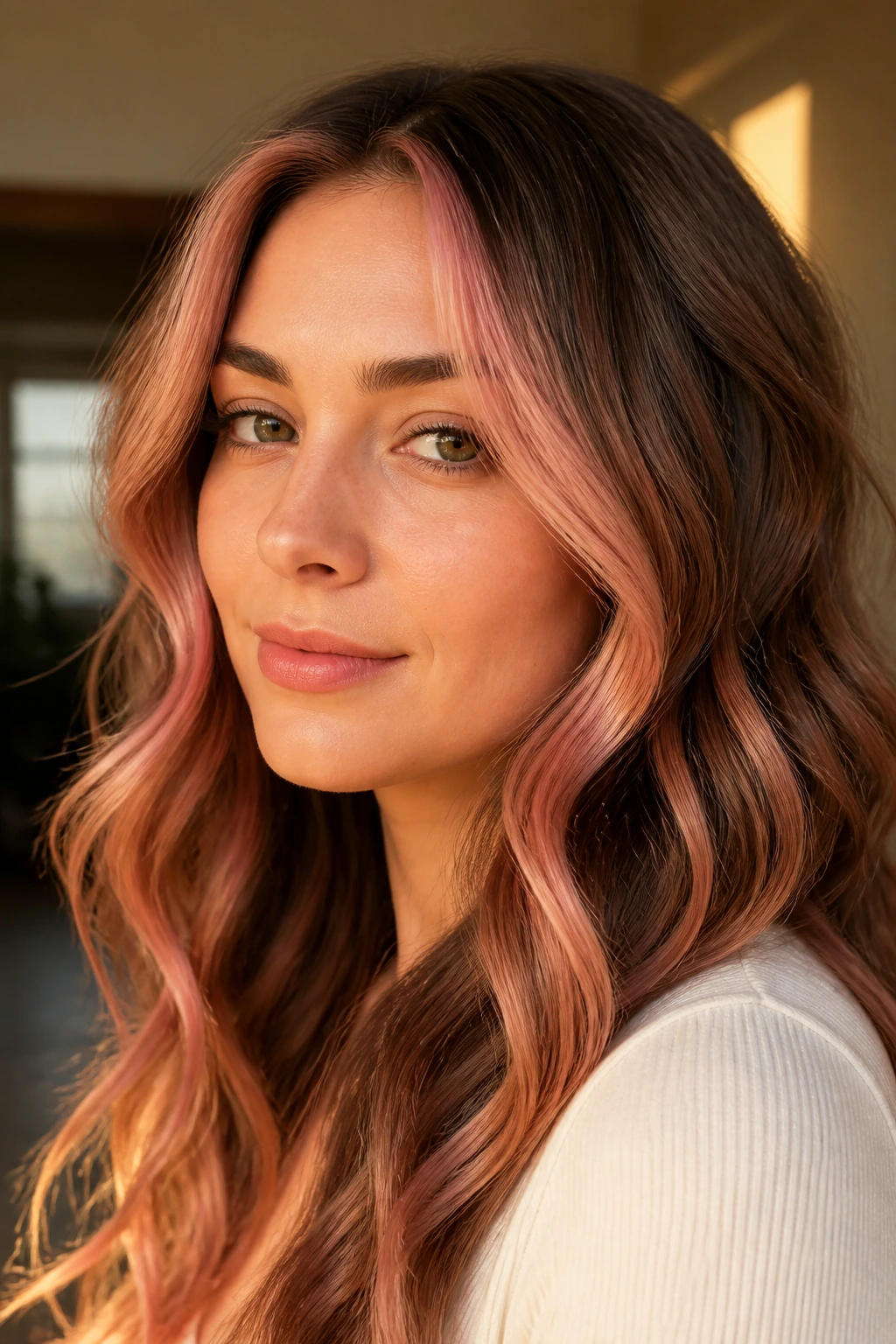
Rose gold gives the front of wavy hair a little blush without going full pink. It looks especially pretty on medium bases that have some natural warmth already.
Keep the rose tone soft and sheer. If it’s too saturated, the wave pattern can make the color look patchy. A washed rose-gold glaze over a lightened money piece gives you that gentle glow that shows up mostly in motion.
13. Bold Chunky 90s Money Piece
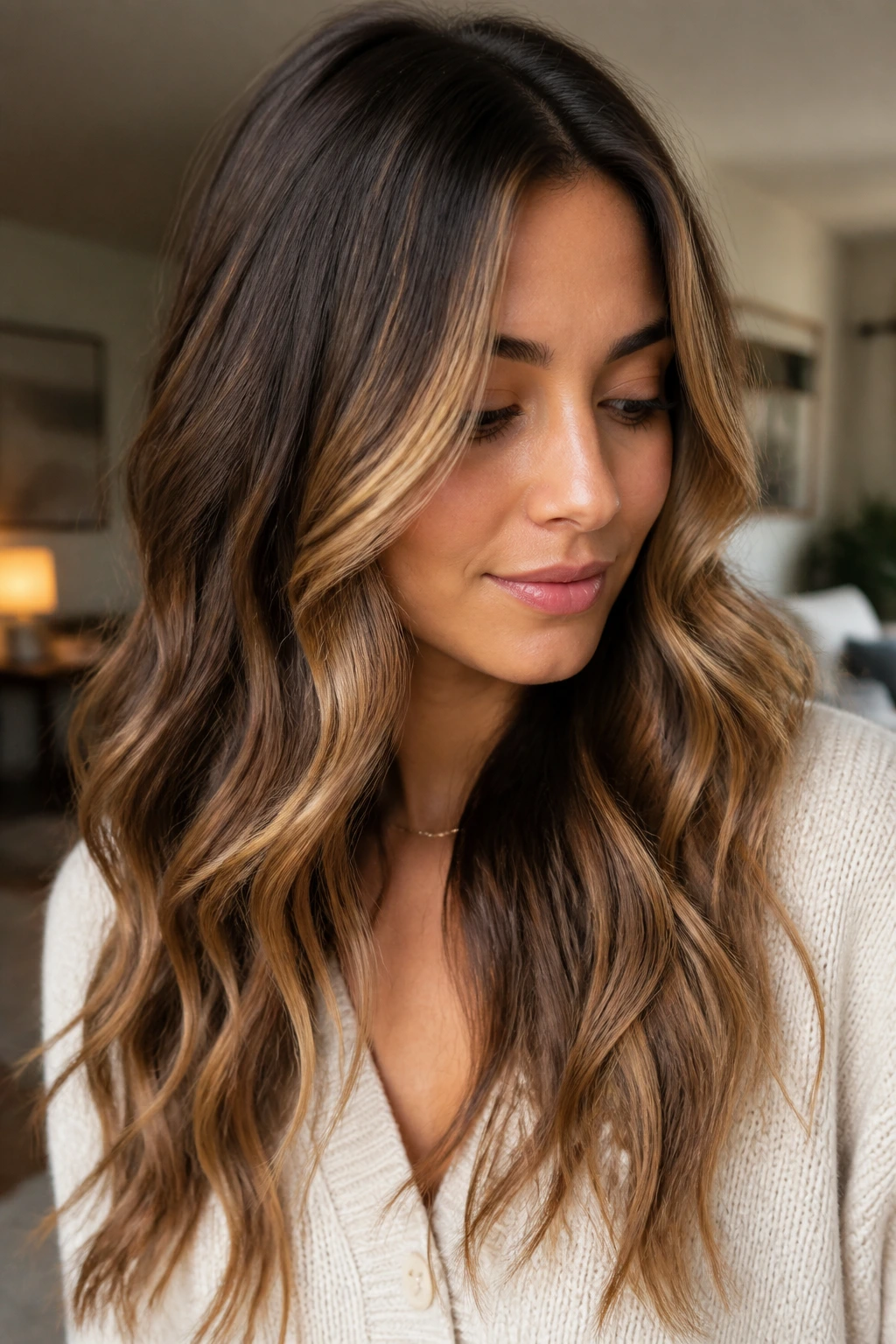
Sometimes the answer is to go bigger. A chunky front piece makes a statement fast, and wavy hair keeps it from looking too rigid.
This is the look for someone who wants visible contrast from across the room. Ask for a wider section at the front, but still let the stylist feather the edges into the surrounding hair. The wave needs room to break up the line. If the piece is too blocky, the style loses the charm and starts to feel heavy.
14. Soft Micro Money Piece
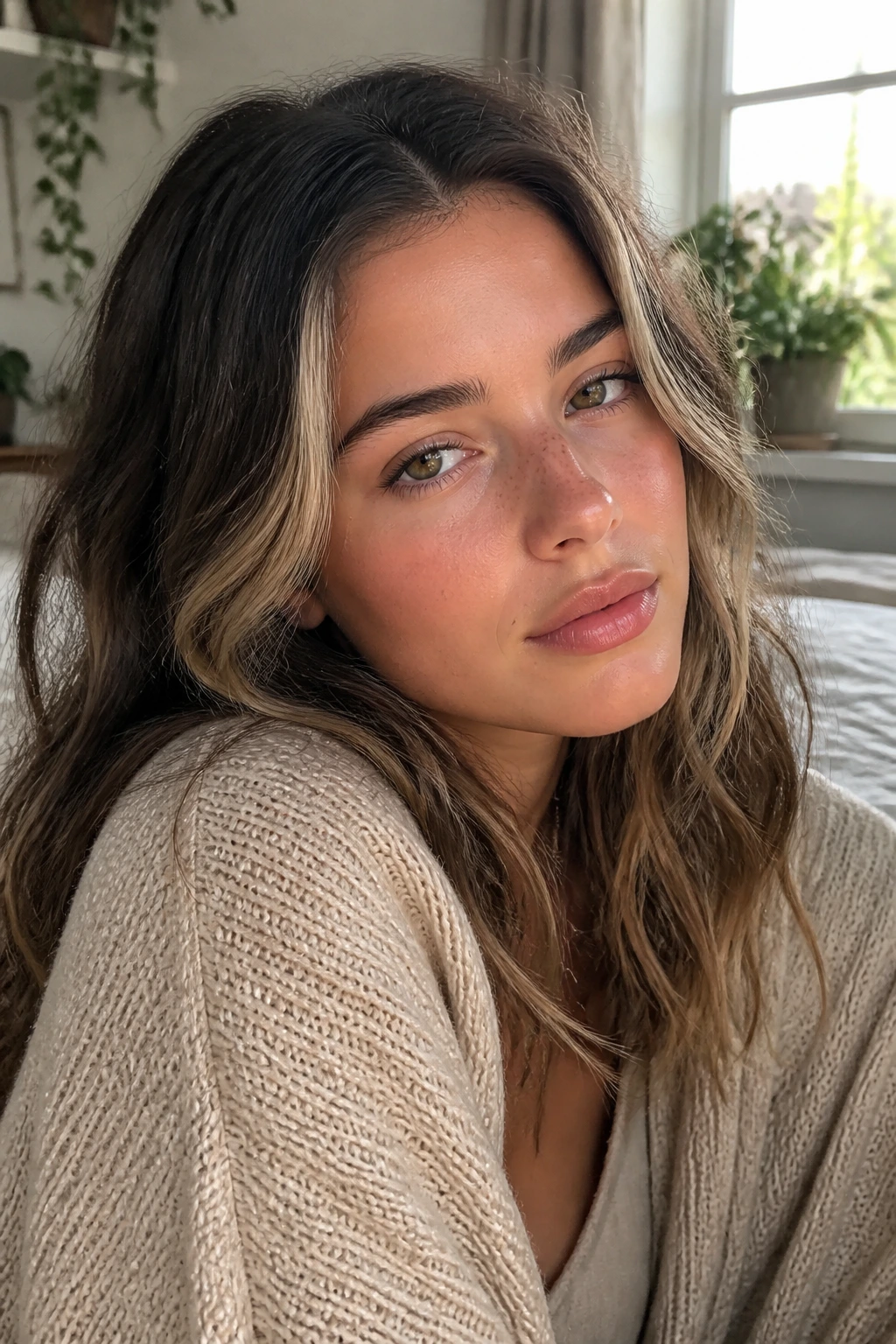
Micro money pieces are tiny, but they’re not boring. On waves, a few narrow bright strands near the temples can be enough to wake up the whole face.
I like this for finer hair or for anyone who wants brightness without obvious maintenance. The color should sit just on the outer contour of the hairline. It’s subtle enough that grow-out doesn’t scream, which is a gift if you hate obvious salon lines.
15. Bronde Sunbeam Frame
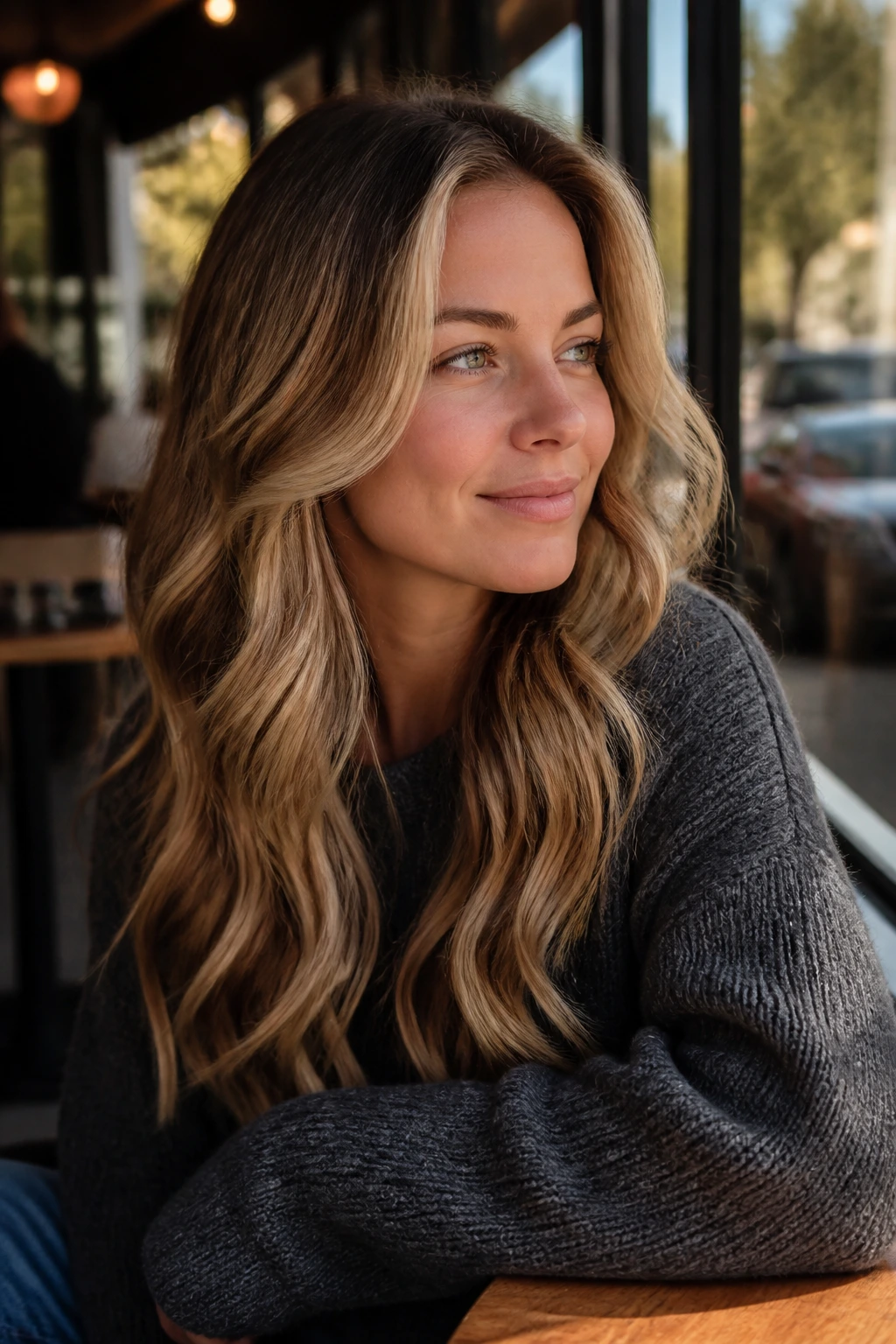
Bronde has a built-in easygoing feel, and the front piece leans into that. It sits between blonde and brown, so it blends naturally with most wavy bases.
What makes this version work is softness. The money piece should look like the brightest part of a sun-kissed ribbon, not a separate attachment. A little root shadow helps, too. Without it, bronde can slide into flat gold.
16. Mocha-to-Toffee Drift
This look is all about a slow shift in tone. Mocha at the roots, toffee at the front, and just enough brightness to make the wave pattern stand out.
It’s one of the easiest ways to add dimension to brunette hair without a hard contrast. Ask for a seamless melt through the first few inches around the face. On waves, that gradual shift looks richer than a precise stripe ever could.
17. Strawberry Bronze Front Light
Strawberry bronze sits in a sweet spot for anyone who wants red tones without committing to a vivid color. The bronze keeps it grounded; the strawberry keeps it lively.
Wavy hair brings out both sides of the shade, which is why this one can look almost different in every kind of light. Keep the placement light at the temples and slightly heavier near the cheekbone if you want the face to read warmer. It’s a good fit for medium to deep bases that already hold warmth well.
18. Silver Smoke Brunette Frame
Silver smoke is not the obvious choice, which is exactly why it works. On dark wavy hair, a cool silver-beige frame can look sleek and modern without needing a full blonding service.
The key is contrast control. Keep the front piece bright enough to show, but smoky enough that it doesn’t turn icy against the waves. If your natural color is very deep, this look needs careful toning or it will read too white at the root and too yellow on the ends.
19. Butterscotch Side Sweep
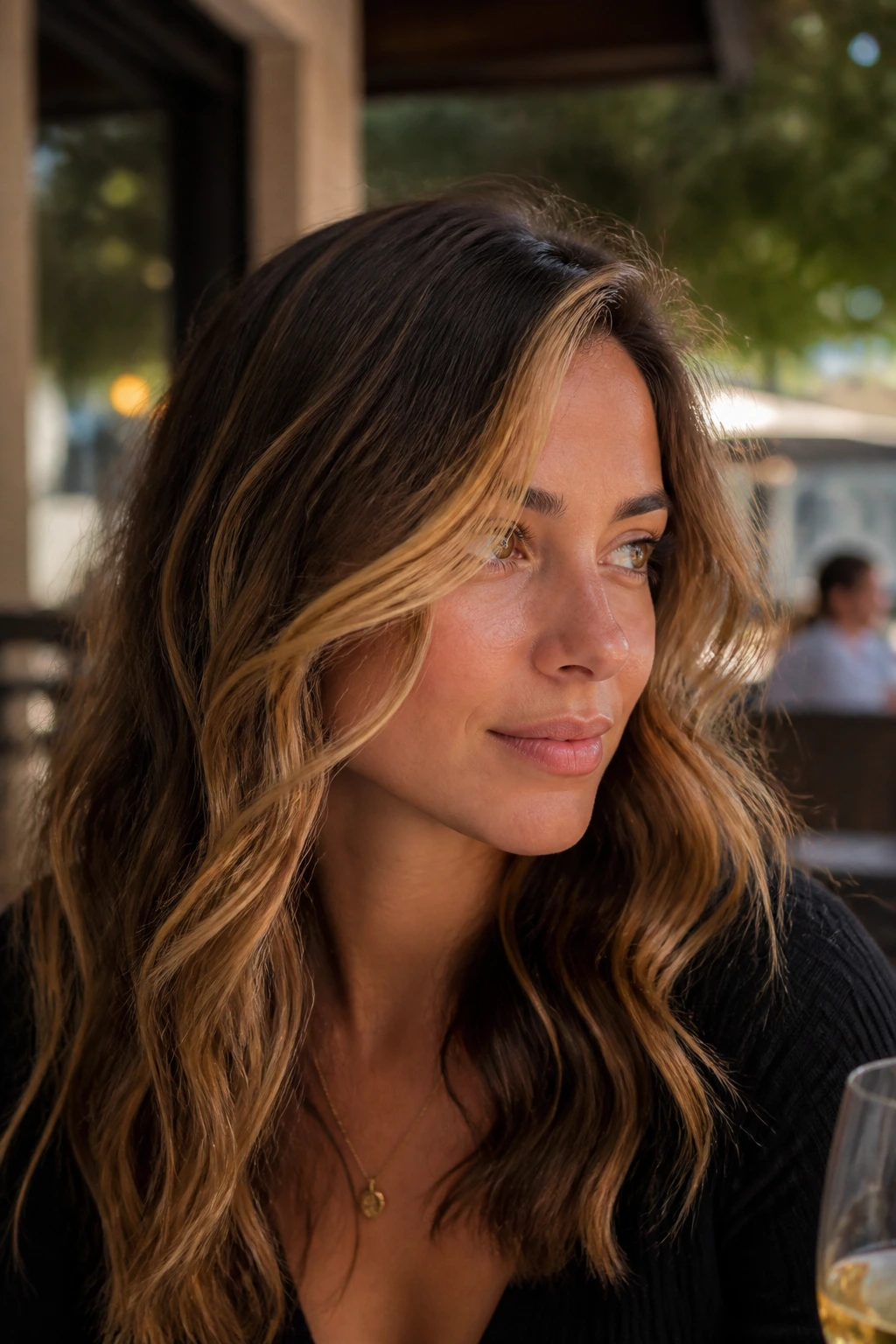
Butterscotch is warmer and softer than caramel, and the side-swept placement gives it a little movement right away. It’s a flattering choice if your waves naturally fall off to one side.
Instead of framing both temples equally, let the brighter section lean heavier on the side where your hair parts. That gives the front a little asymmetry, which makes wavy hair look more relaxed and less styled to death. The color should stay golden, not orange.
20. Midnight Brown with Warm Amber Front
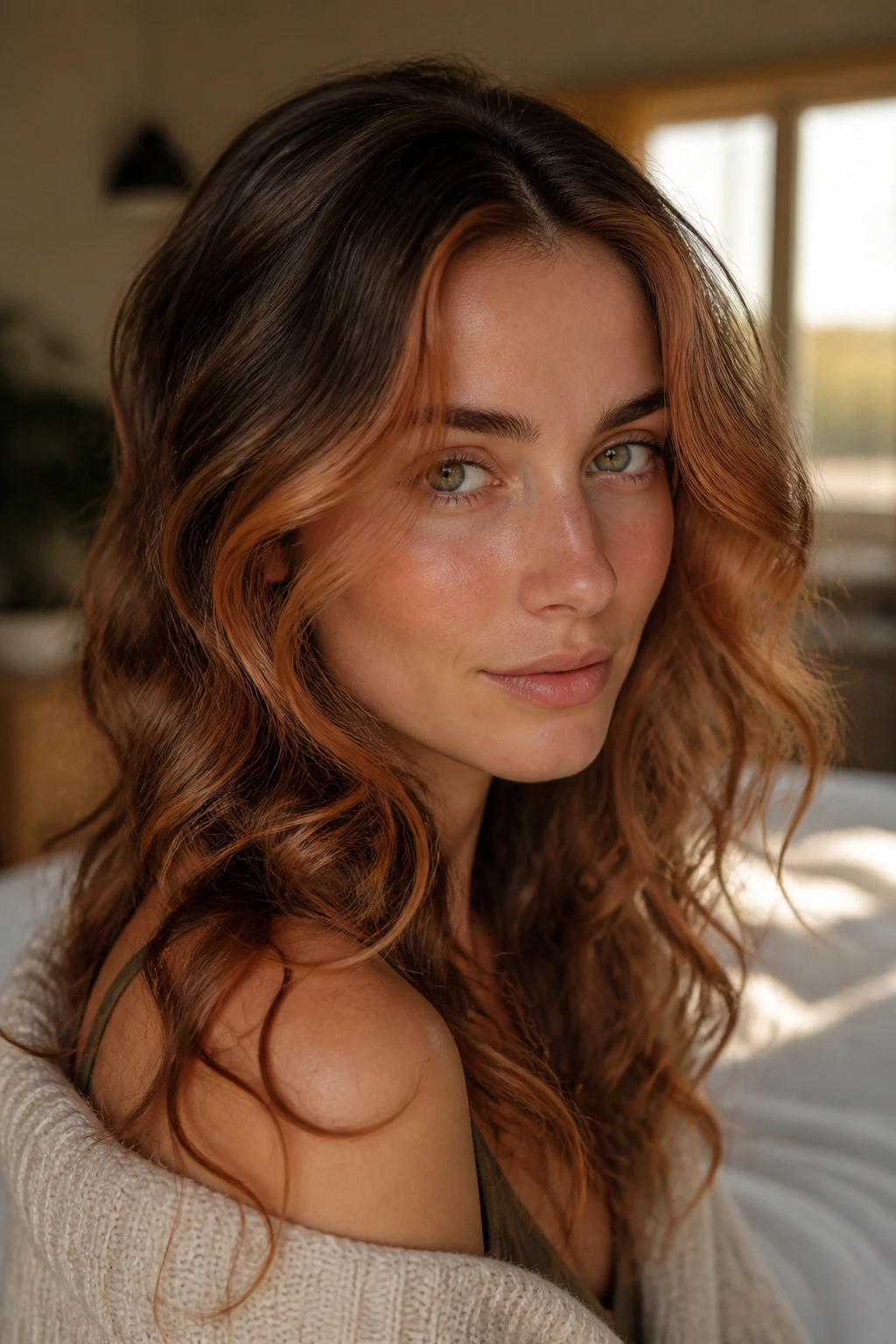
Dark brown hair with an amber front piece has real depth. The contrast feels deliberate, but not loud, because the amber stays warm and the rest of the hair stays inky.
This is a strong option if you want the face to light up while the rest of the style remains rich and dark. Wavy hair helps the amber bend and shimmer, which keeps it from looking like a flat panel. Keep the front piece narrow if the rest of the hair is very dark, or the contrast can start to feel too abrupt.
21. Honeyed Wave Hybrid
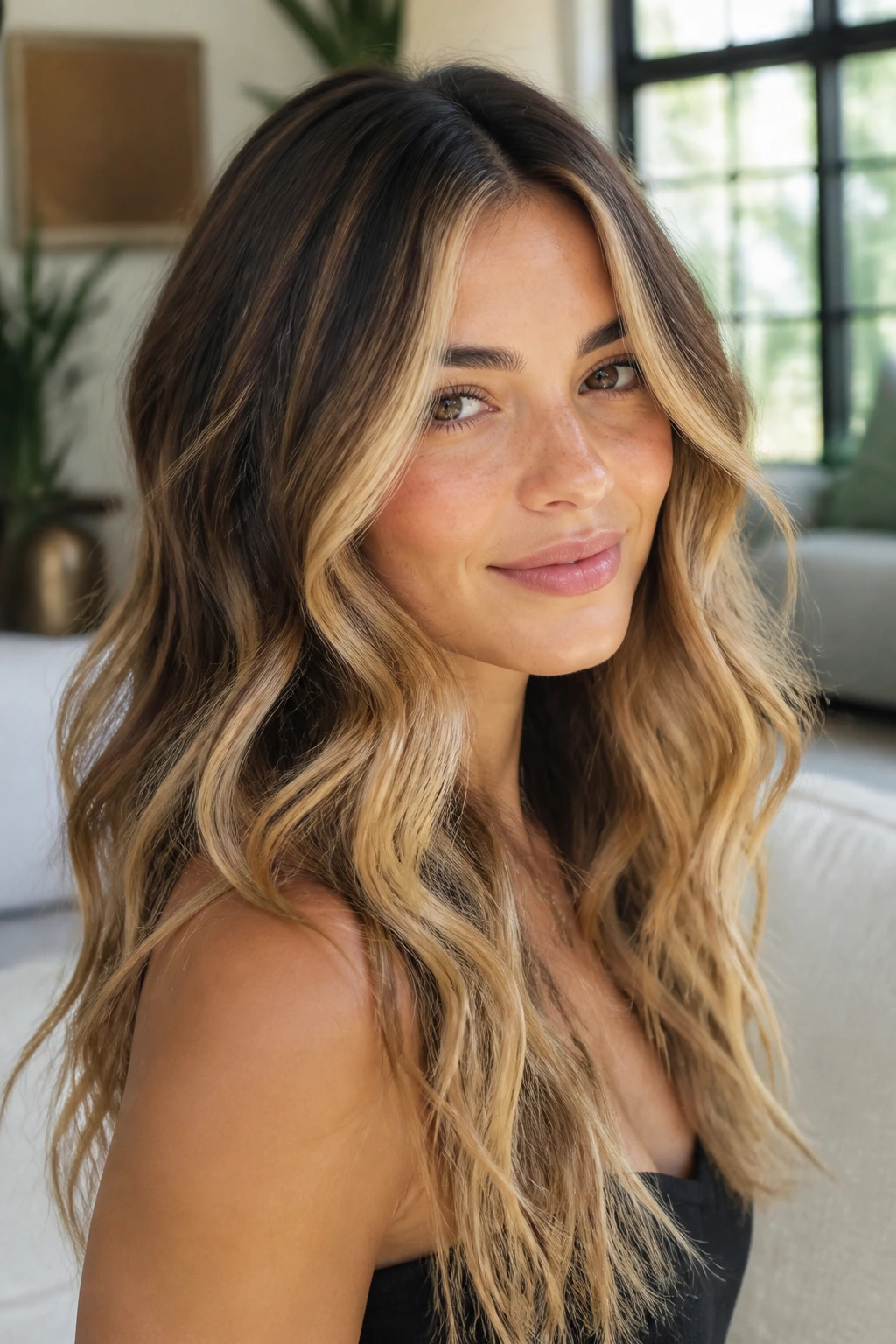
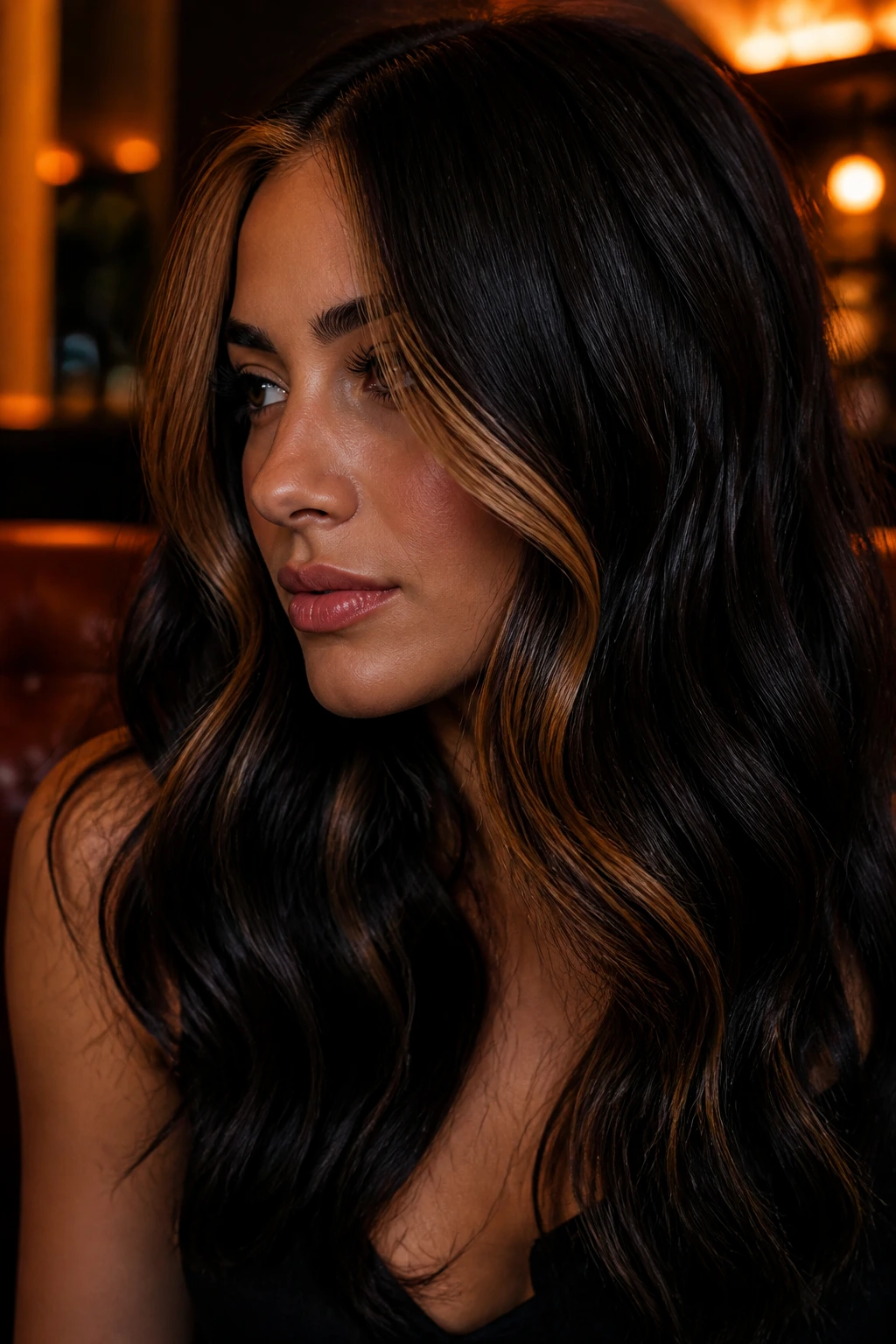
This one is for people who want a money piece but don’t want the front to look separately colored. The highlight merges into the waves and disappears into the rest of the hair, then shows up again when the light hits.
Ask for a hybrid placement: a face-framing foil plus a few hand-painted pieces around it. The color should sit in the honey-to-beige family. It’s especially good on layered cuts because the layers help the light pieces peek through at different lengths.
22. Peach Cream Face Frame
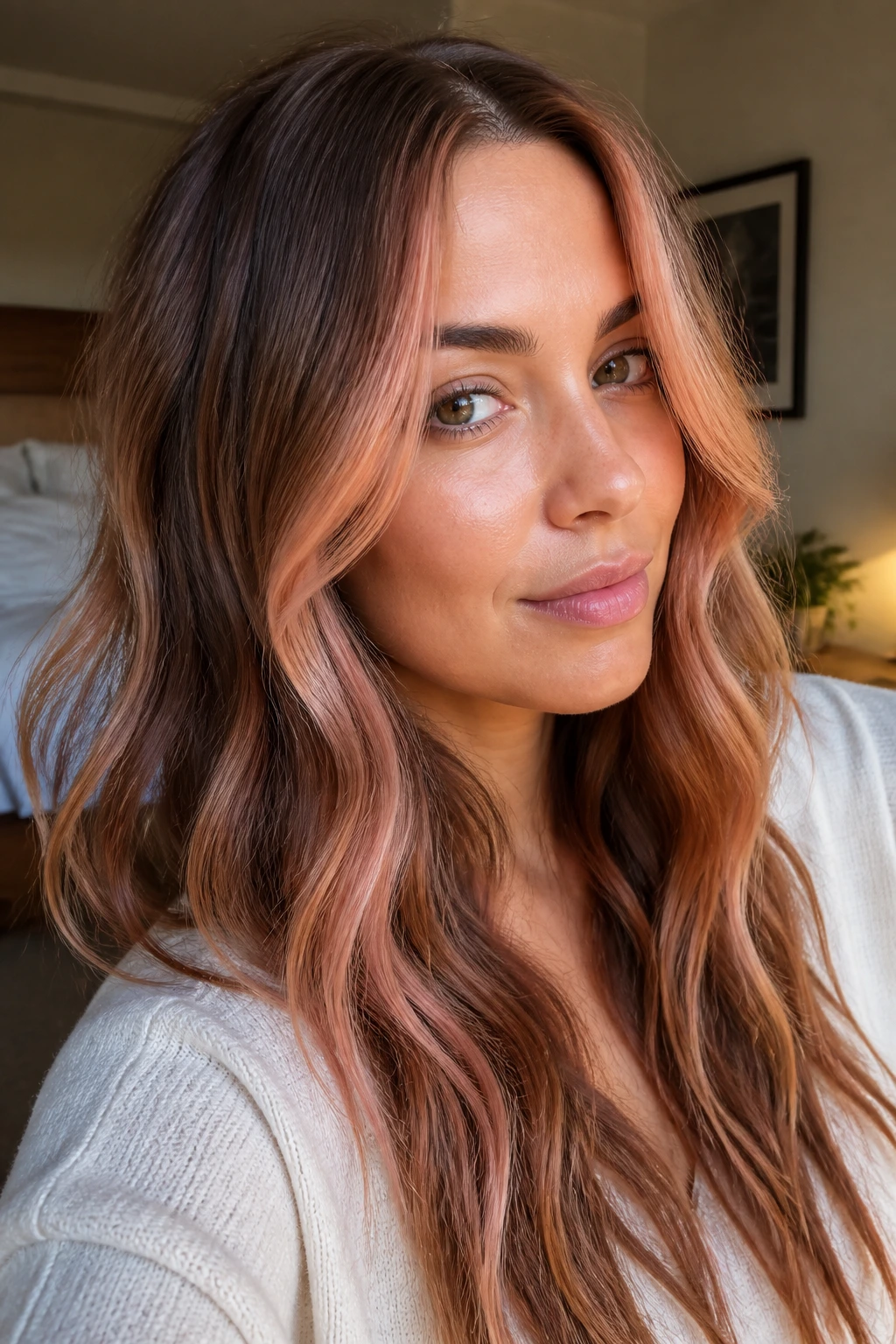
Peach cream sounds playful, but it can be surprisingly wearable when the saturation stays low. On wavy hair, the soft coral-peach tone creates warmth without turning brassy.
This look suits lighter brunettes and dark blondes who want a fresh front piece that isn’t just another beige highlight. Keep the tone pastel and diffuse. If the piece is too pink, it can fight the natural movement of the waves instead of blending into it.
23. Melted Root with Bright Front Ribbons
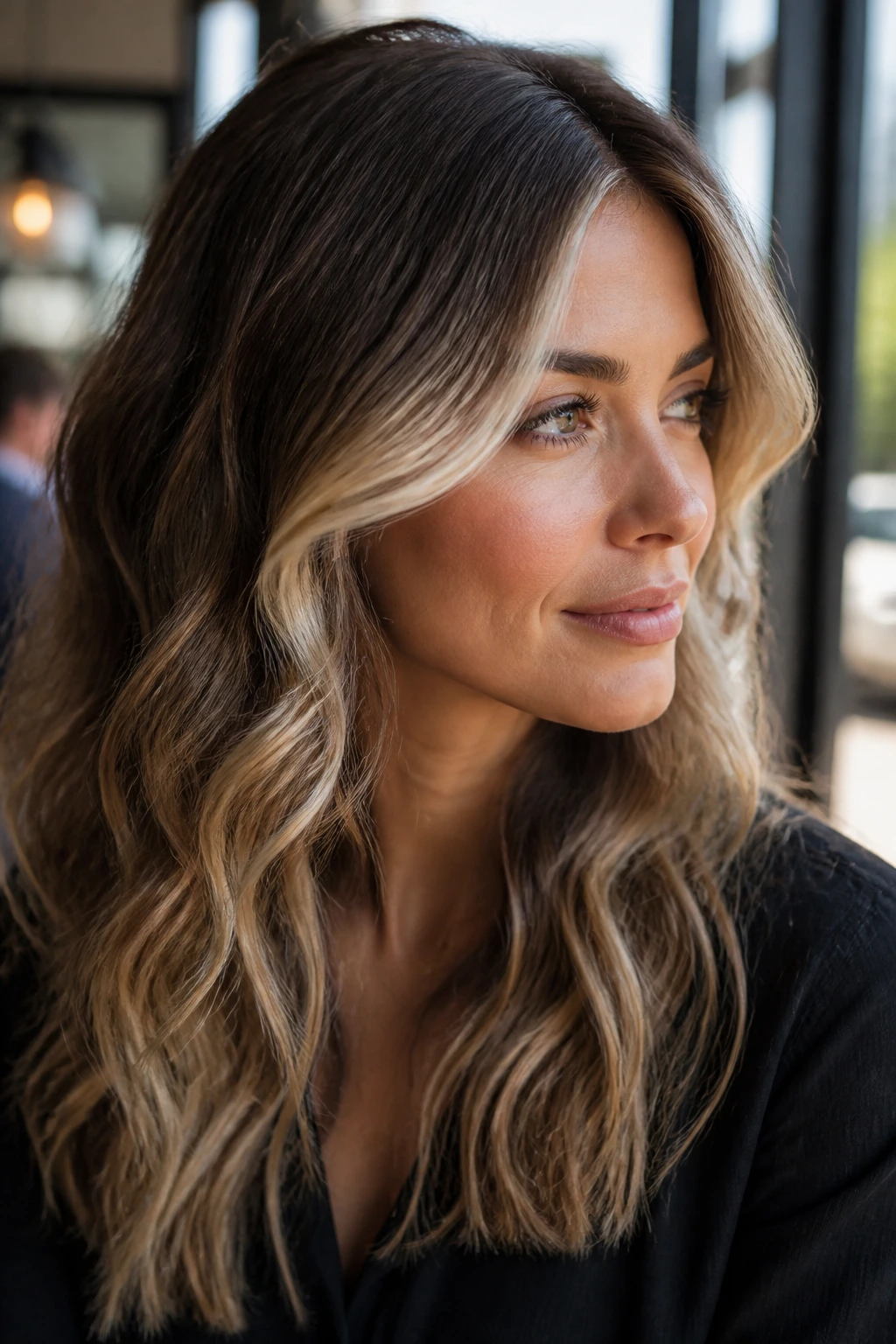
A melted root is the trick that makes a brighter money piece look polished instead of harsh. The color starts near your base, then brightens as it travels through the front.
That gradual change matters a lot on wavy hair because the bends already create visual breaks. Add a few bright ribbons near the temple and cheekbone, and the whole face lifts without the front looking painted on. This is one of the more forgiving options for grow-out.
24. Cinnamon Copper Loop
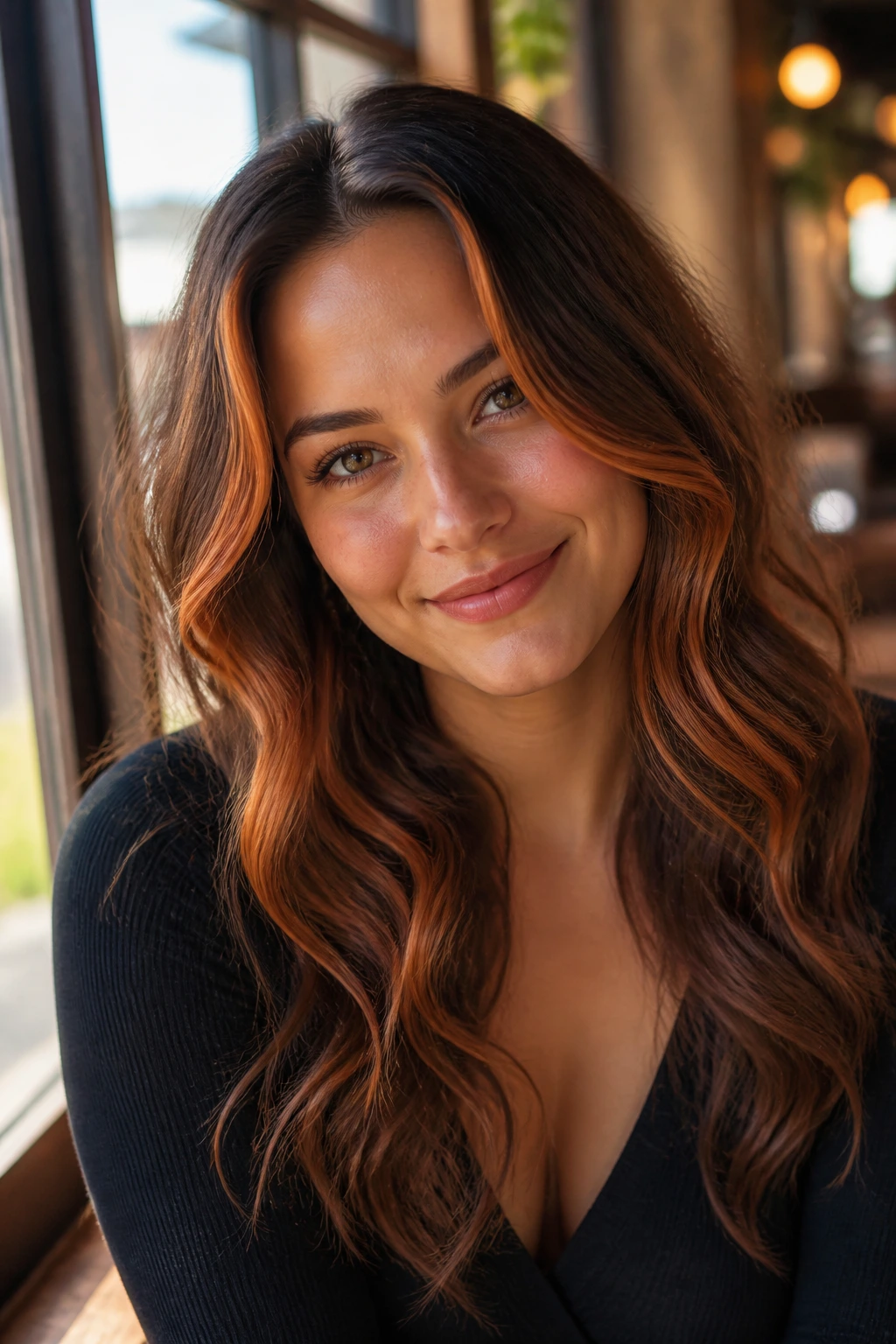
Cinnamon copper reads warm from every angle, but the looped placement around the face is what gives it shape. It traces the wave rather than fighting it.
Tell the stylist you want the color to follow the curve of the front layers. That matters more than exact foil count. A looped placement makes the copper feel like part of the haircut, which is why it looks better on layered waves than on one-length hair.
25. Vanilla Blonde on Deep Brunette
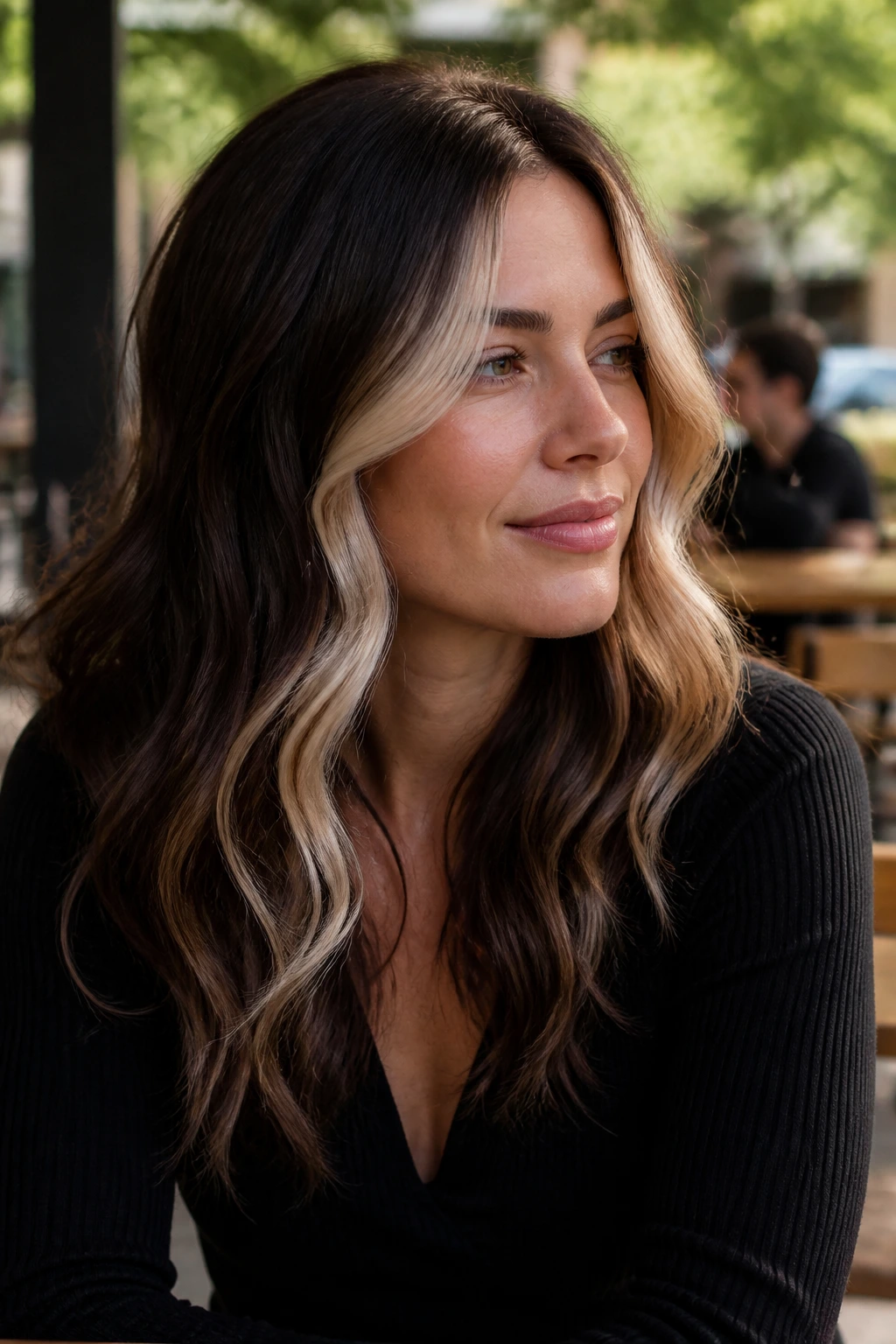
Vanilla blonde is bright and creamy, and on deep brunette hair it creates a big shift right at the front. The contrast is clean, almost graphic, but the waves keep it from going harsh.
If you choose this one, don’t skimp on the blend. The root area should stay just soft enough to avoid a hard line, especially if your waves expand in humidity. This is a high-payoff look, but it asks for a little more maintenance than the softer brunettes in the list.
26. Soft Caramel Peekaboo Frame
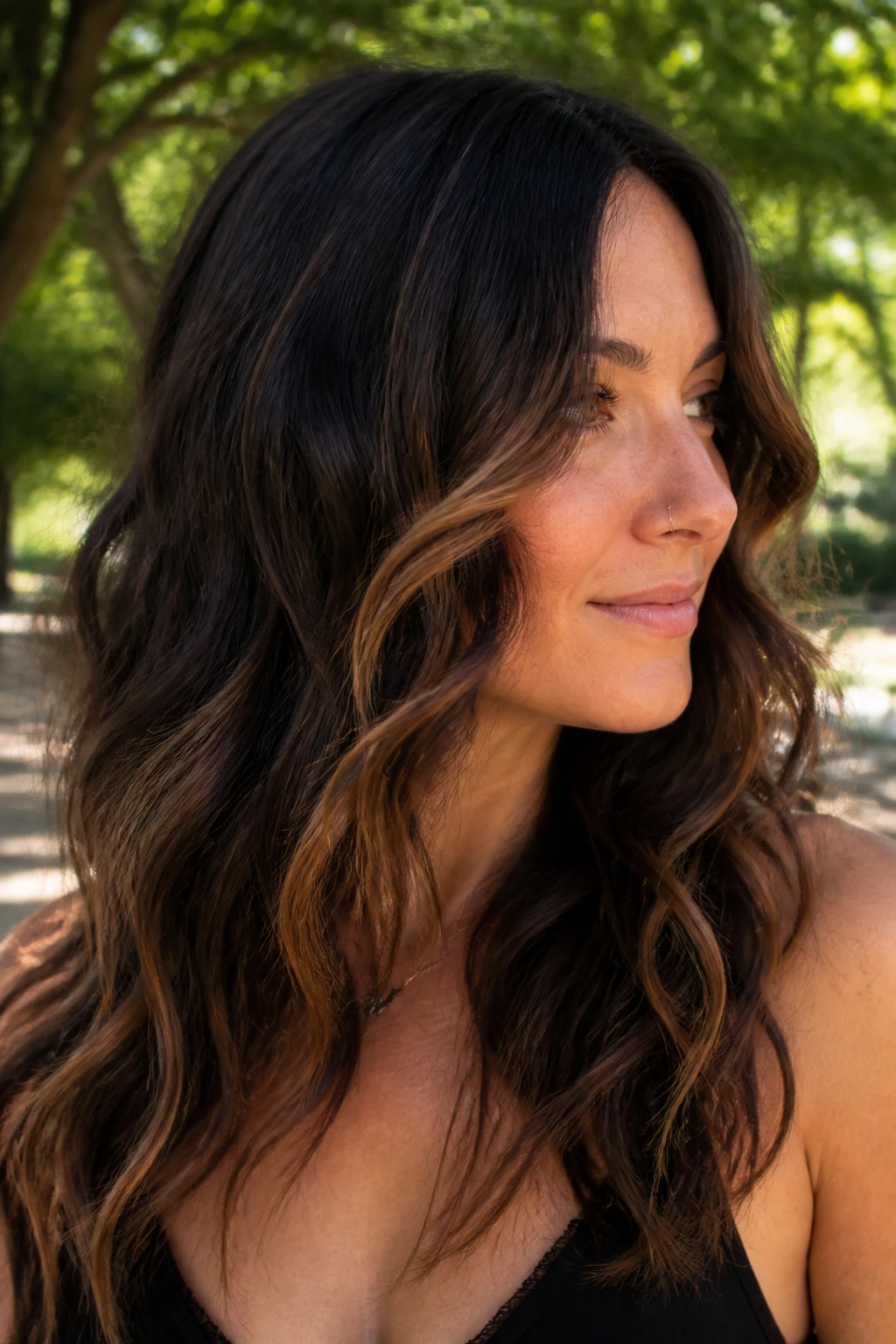
Peekaboo color doesn’t mean hidden here. It means the caramel sits underneath the top layer at the front, then flashes through when the waves separate.
That makes it a smart choice for thicker hair or anyone who wants color that feels a little secretive. The top layer stays natural enough to keep the grow-out calm, while the brighter piece shows when the hair moves. It’s a quieter version of a money piece, and sometimes that’s the better move.
27. Deep Burgundy Front Pop
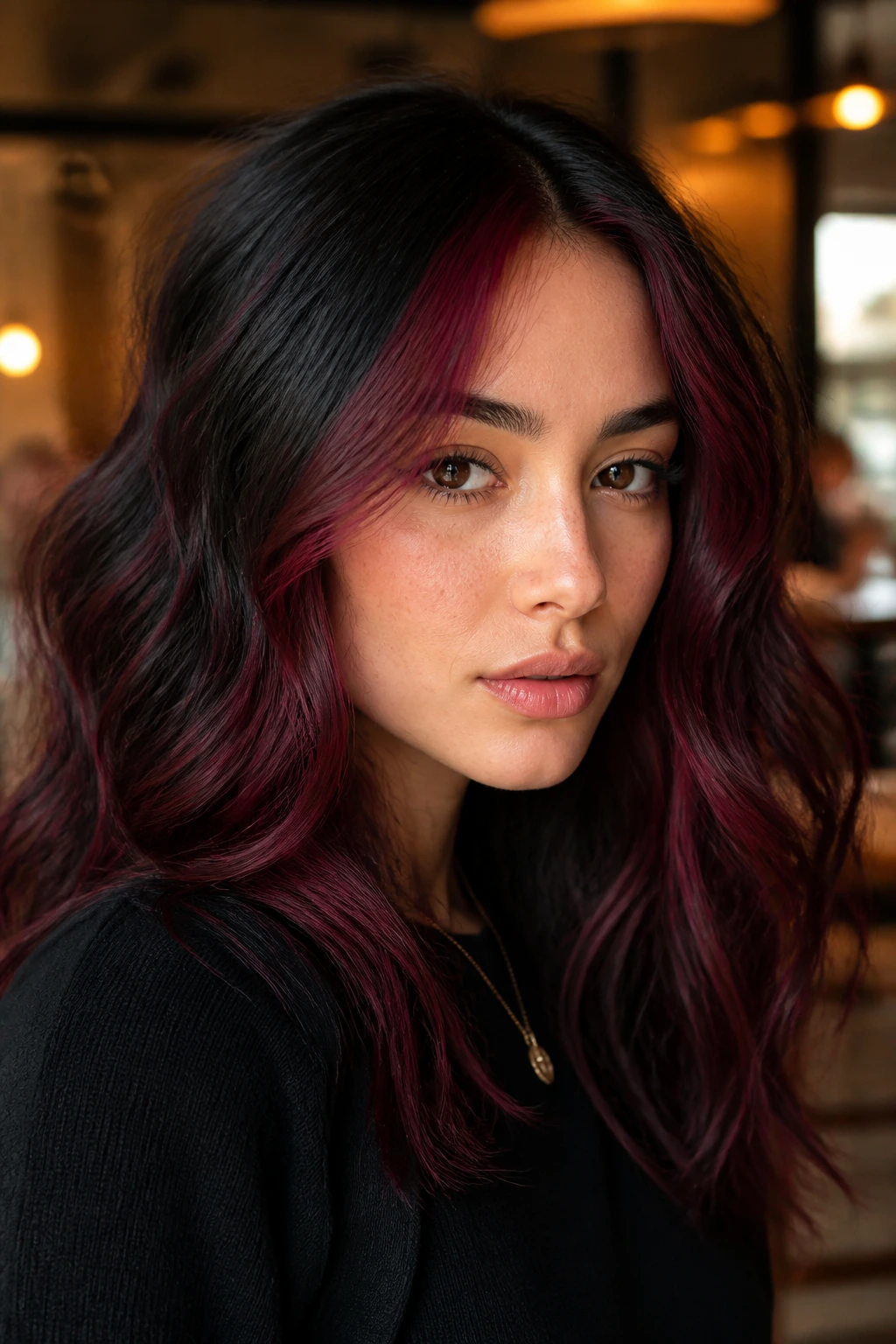
Burgundy near the face gives wavy hair a richer mood than blonde ever could. It reads moody, glossy, and slightly dramatic without needing a lot of lightening.
Keep the section narrow and saturated. Burgundy can look flat if it’s spread too wide, but in a face-framing strip it picks up beautiful depth as the hair bends. This works especially well on deep brunettes and black hair.
28. Sandy Blonde Cheekbone Lift
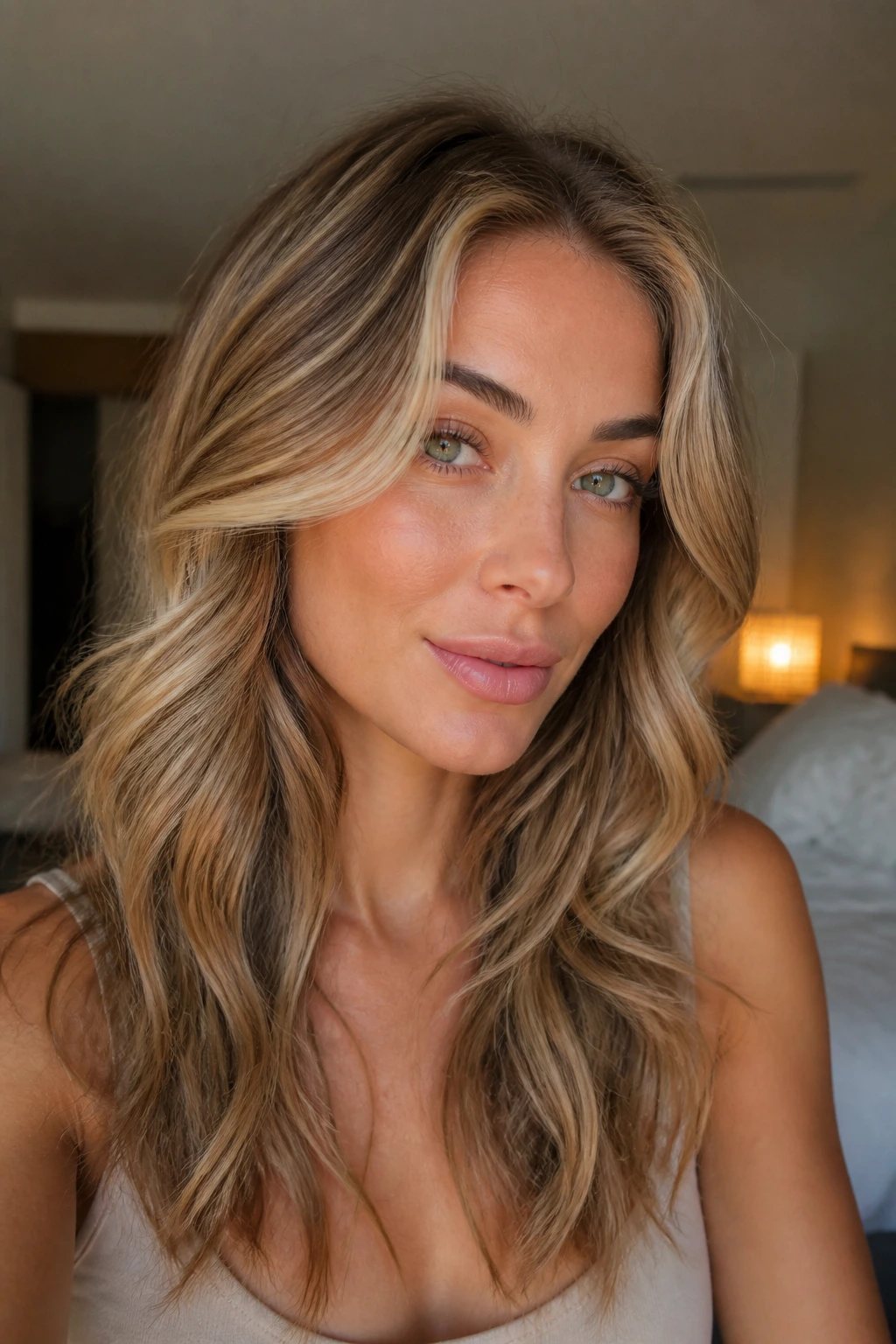
Sandy blonde is one of the easiest tones to live with because it sits in the middle lane. Not too cool, not too warm. Just enough light to soften the face.
The cheekbone placement matters here. Put the brightest point right where the face bends inward, and let the waves carry the rest. That gives the illusion of lift without needing a sharp, heavy stripe.
29. Latte Swirl Frame
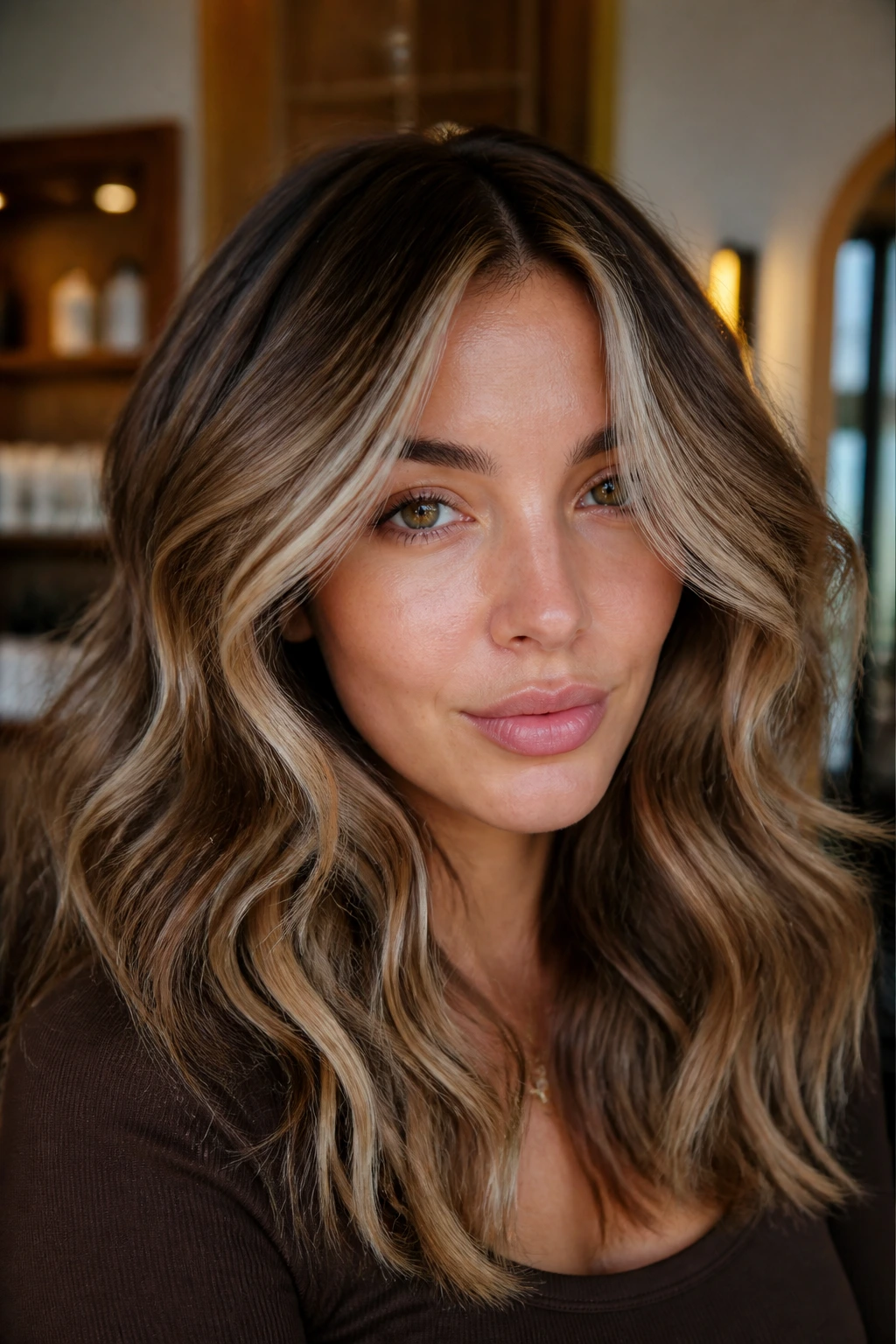
Latte is a lovely color name for a reason. It describes exactly what this looks like: a creamy swirl over a deeper brown base, with enough contrast to be seen but not enough to dominate.
This version is best when the front pieces are blended into a swirl rather than isolated as one strand on each side. Wavy hair is good at making that blend look expensive because the texture naturally softens the line. If your hair is very thick, ask for a few extra hidden pieces so the color doesn’t disappear under the top layer.
30. Bright Ends + Face Slice
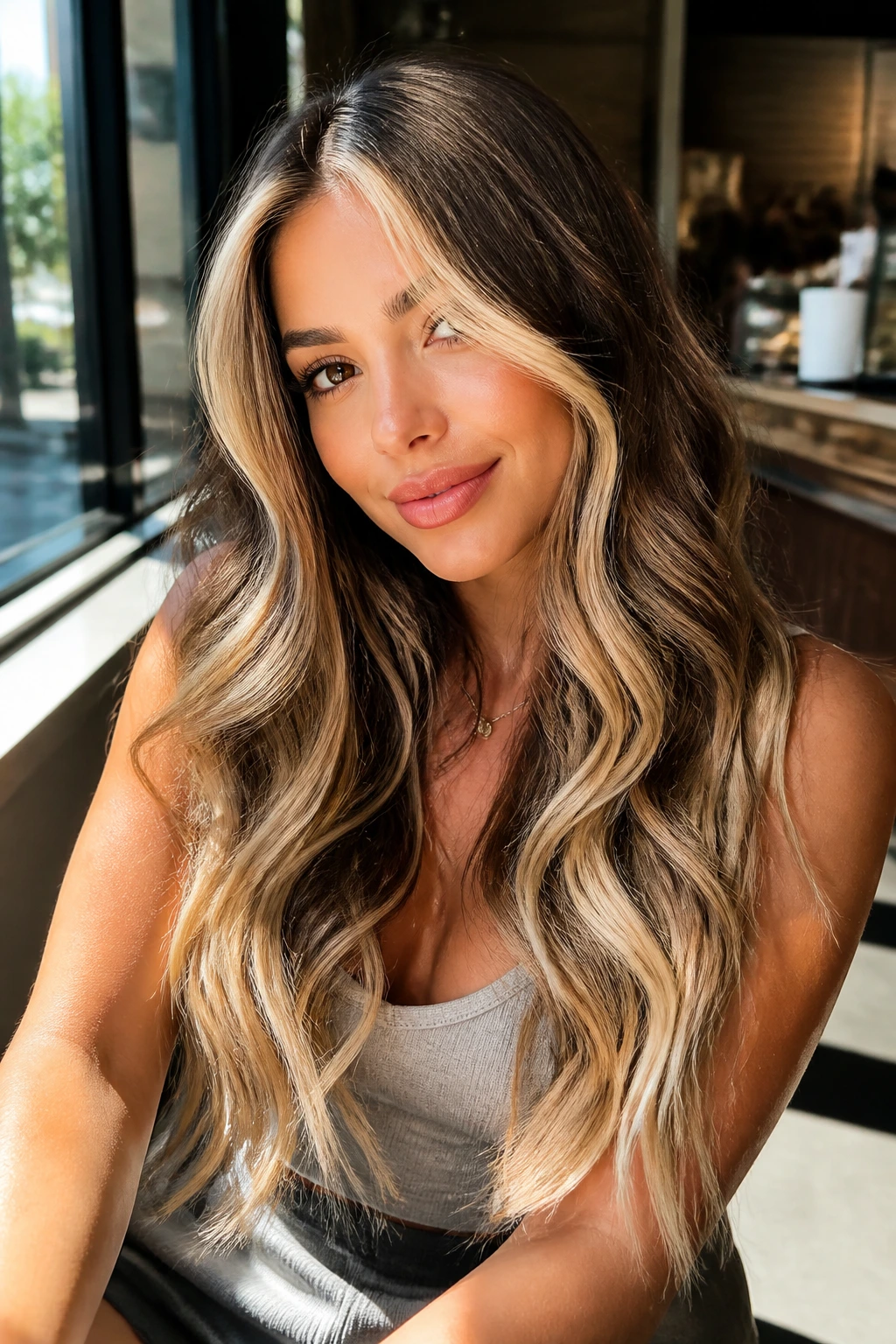
This is a slightly different take on the money piece. Instead of making the front the only bright spot, you let the front slice connect to brighter ends, so the eye travels downward.
It suits longer wavy hair especially well because the movement gives the bright areas somewhere to go. The front slice should be the strongest point, with the ends softened just enough to avoid looking disconnected. It’s a good choice if you want the face frame to feel part of a larger color story.
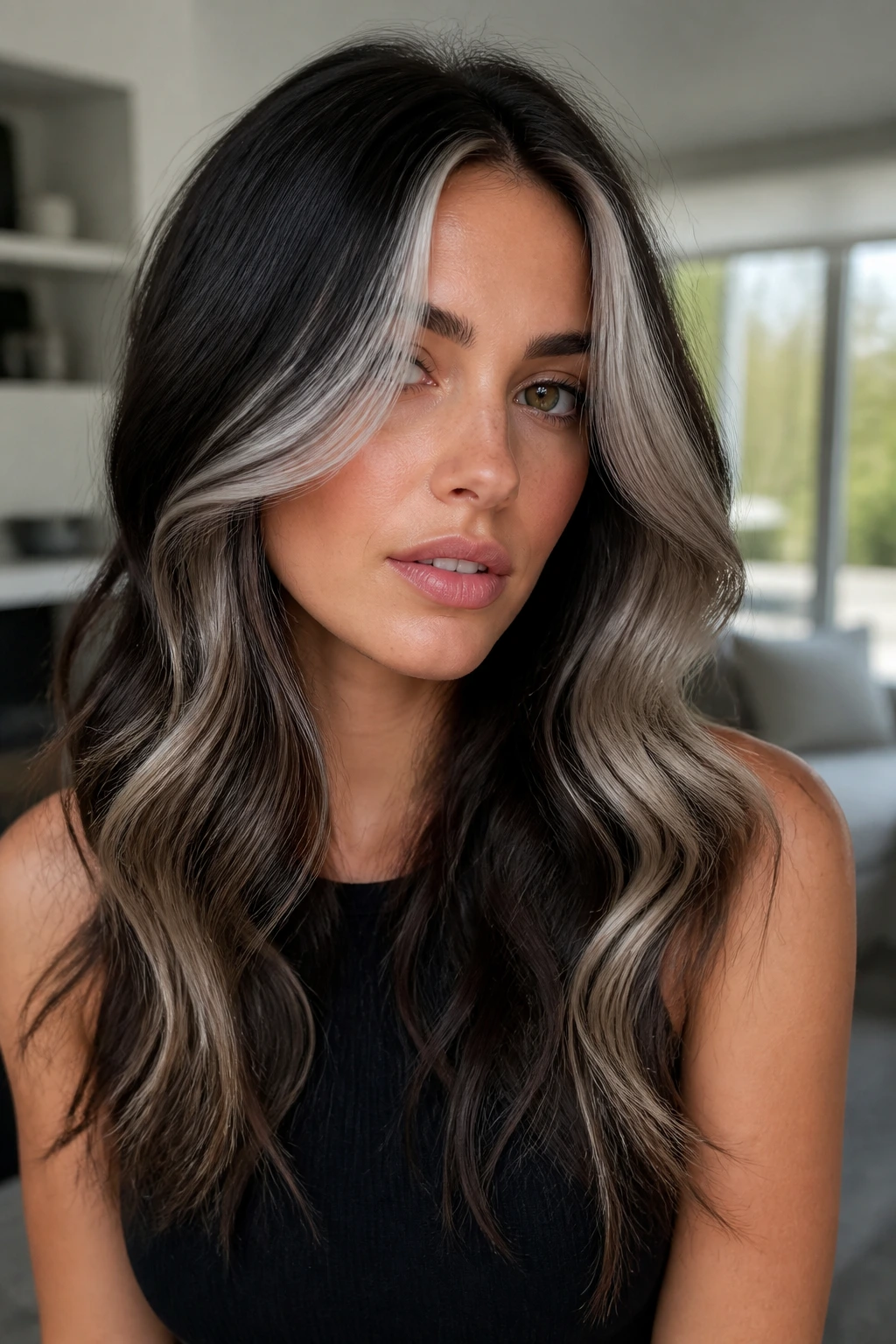
31. Glossy Chestnut with Soft Gold
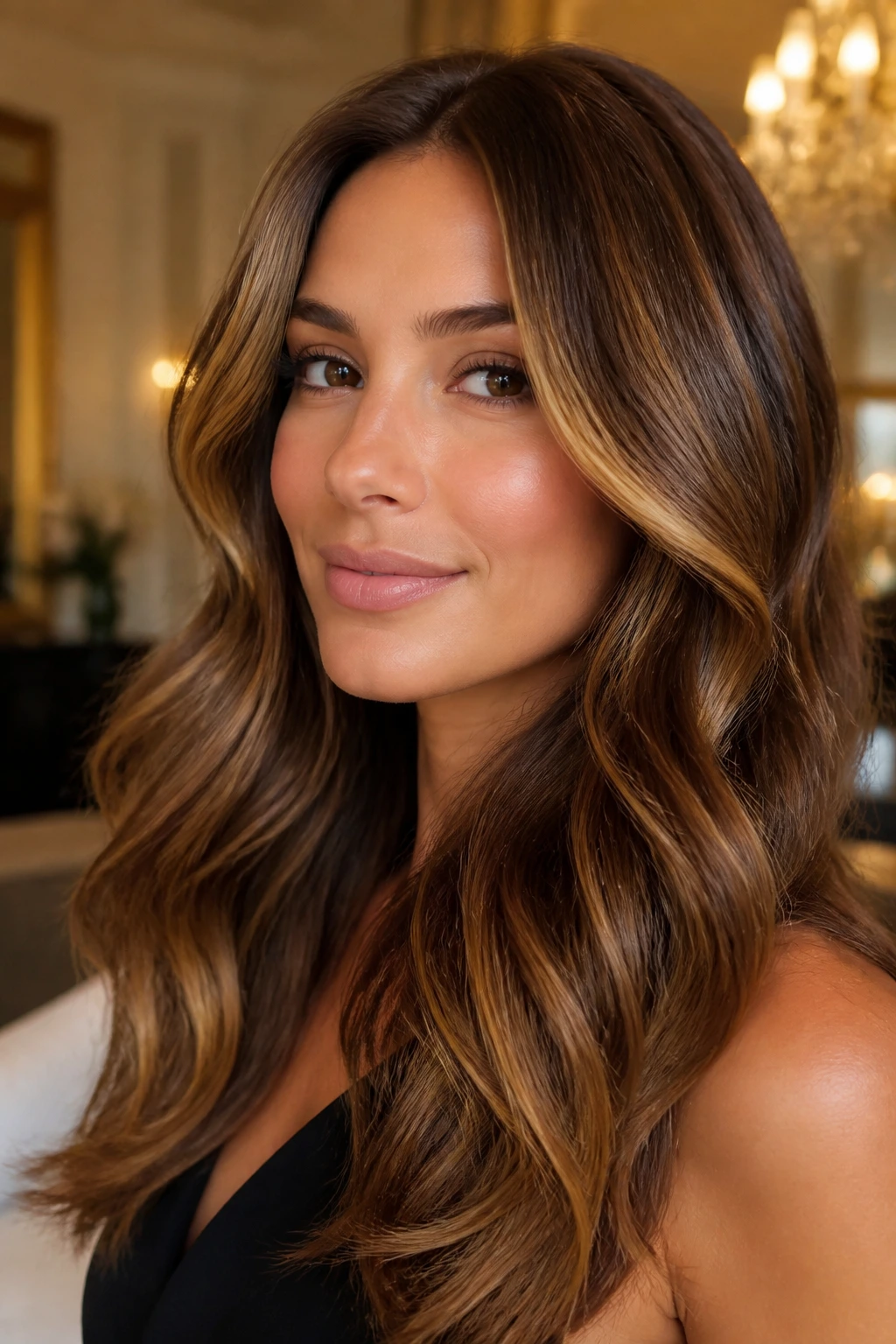
Chestnut has enough warmth to carry a gold piece without looking overdone. The result is rich, shiny, and pretty easy to wear.
The gold should stay soft, almost like a glow rather than a stripe. On waves, that muted brightness looks best when the front layers are lightly textured. A blunt cut can make chestnut and gold feel heavier than it should.
32. Platinum Halo on Dark Base
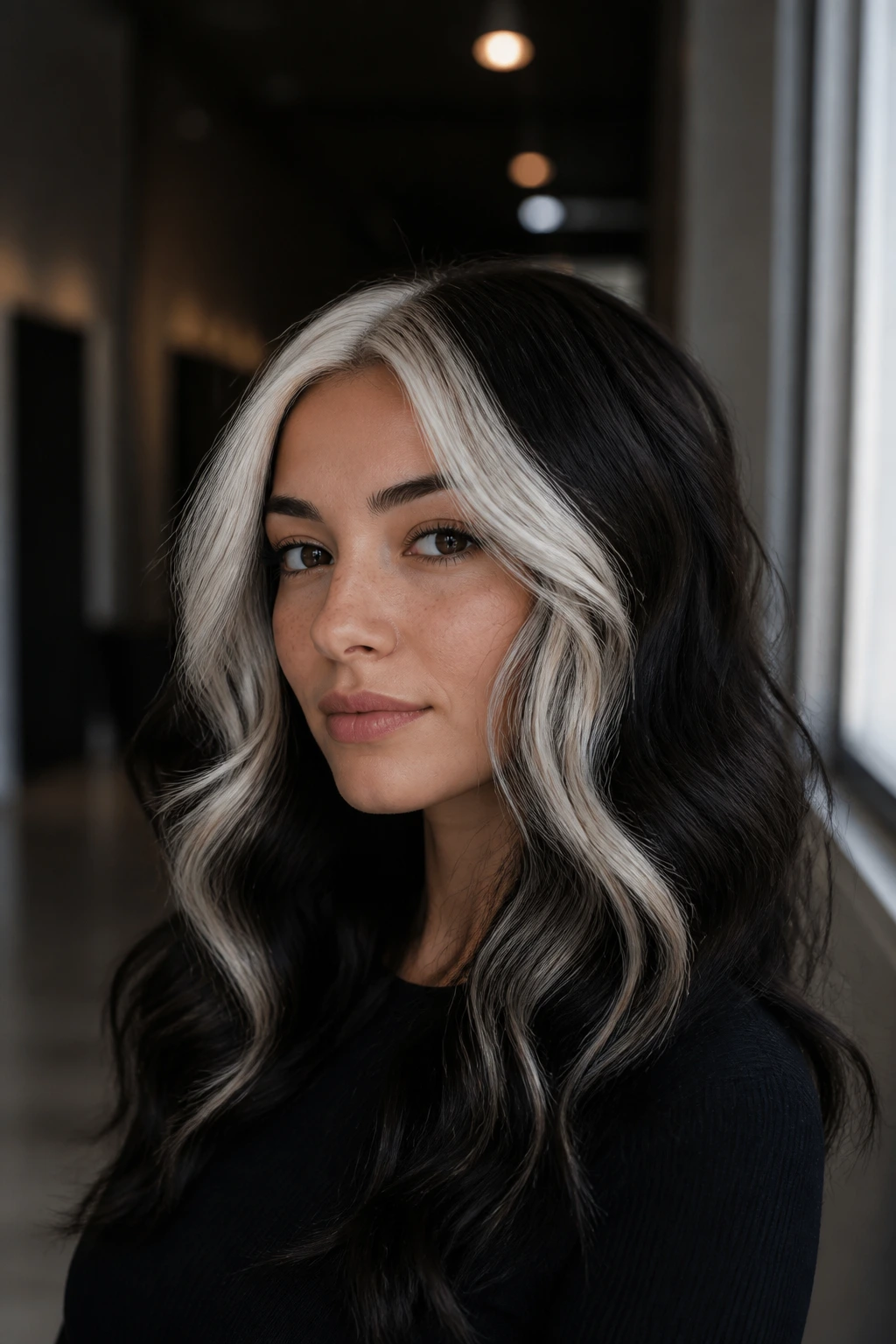
A platinum halo is unapologetic. It’s bright, high contrast, and very visible — which means the placement has to be neat and the toner has to be perfect.
The halo effect works because the waves soften the transition around the face and temple. Instead of one severe piece, you get a bright frame that circles the front section. This look is not low-maintenance, but it is a strong one if you like drama and don’t mind toner appointments.
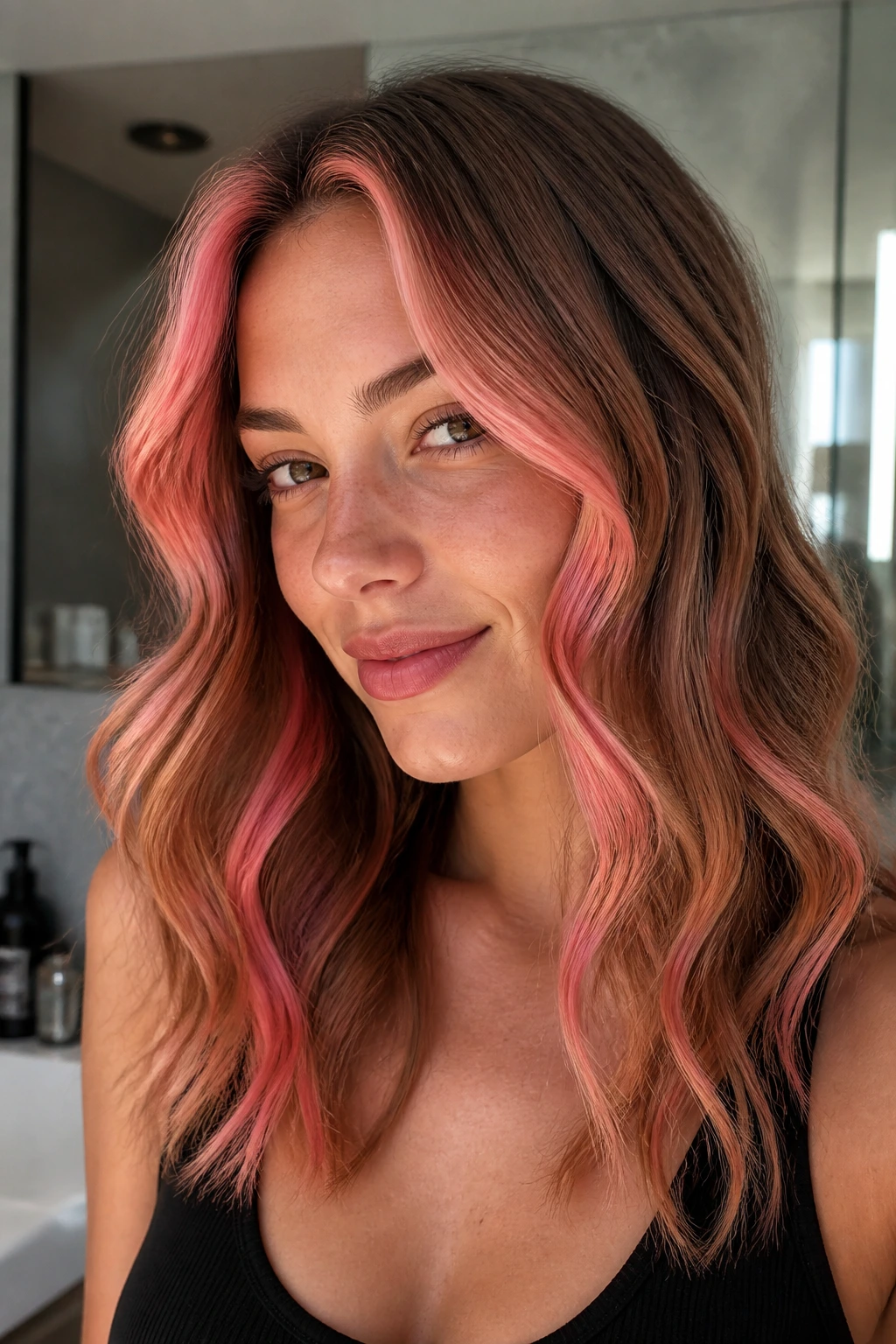
33. Coral-Rose Money Piece
Coral-rose has a softer, livelier feel than straight pink. On wavy hair, it adds a blush of color that sits somewhere between playful and polished.
Keep the saturation light. A pastel coral can look gorgeous in waves because the bends catch the pink on one ridge and let it fade on the next. If you want something less classic than blonde but more wearable than vivid fashion color, this is a good lane.
34. Toned-Down Bronde Blend
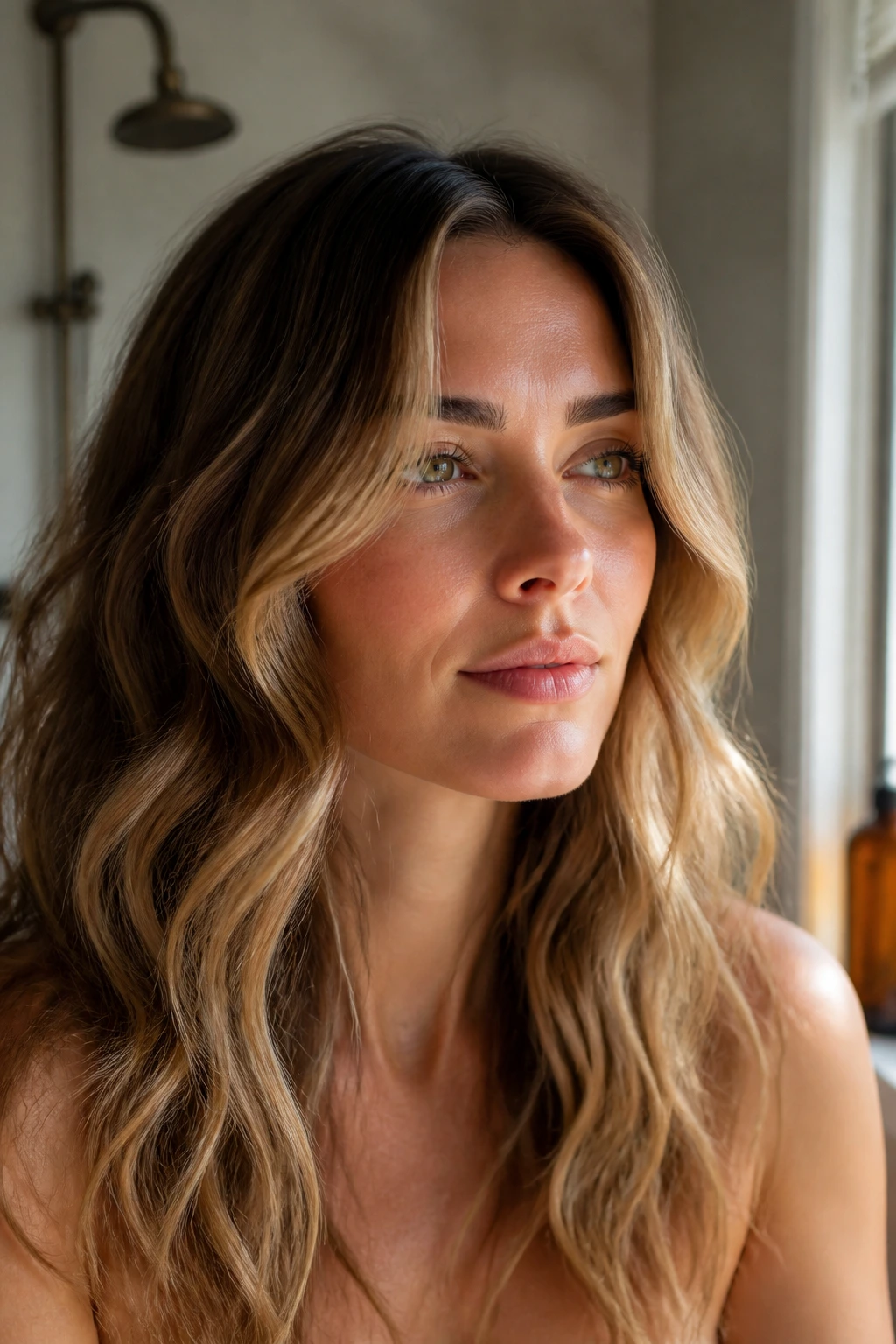
This is the quiet achiever of the group. Bronde blends the front into the base so well that the color reads as texture first and brightness second.
It’s a smart choice if your hair already has dimension and you just want the face to look a little more awake. On wavy hair, the toned-down blend keeps the front from fighting with the rest of the length. It grows out kindly, too, which never hurts.
35. Statement Face Frame with Shadow Root
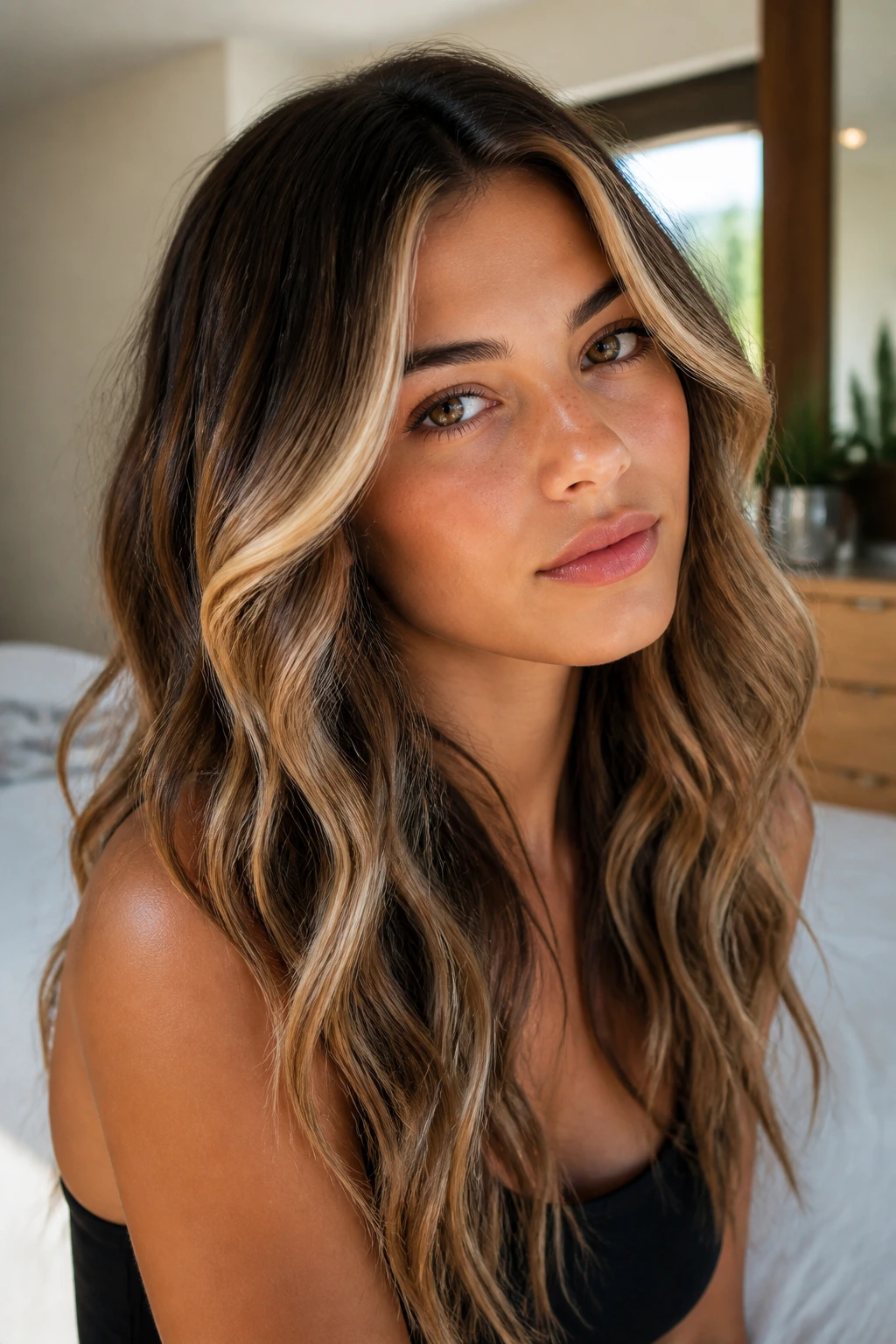
A statement frame doesn’t have to mean a loud color. The shadow root is what keeps the front piece grounded while the lighter section does the talking.
This version works because the dark root gives the bright money piece a place to land. The wave pattern then breaks the light into pieces, so the face gets framed without the color looking pasted on. If you want a noticeable result that still looks thought through, this is the one I’d point you toward first.
Why Money Piece Highlights Look So Good on Wavy Hair
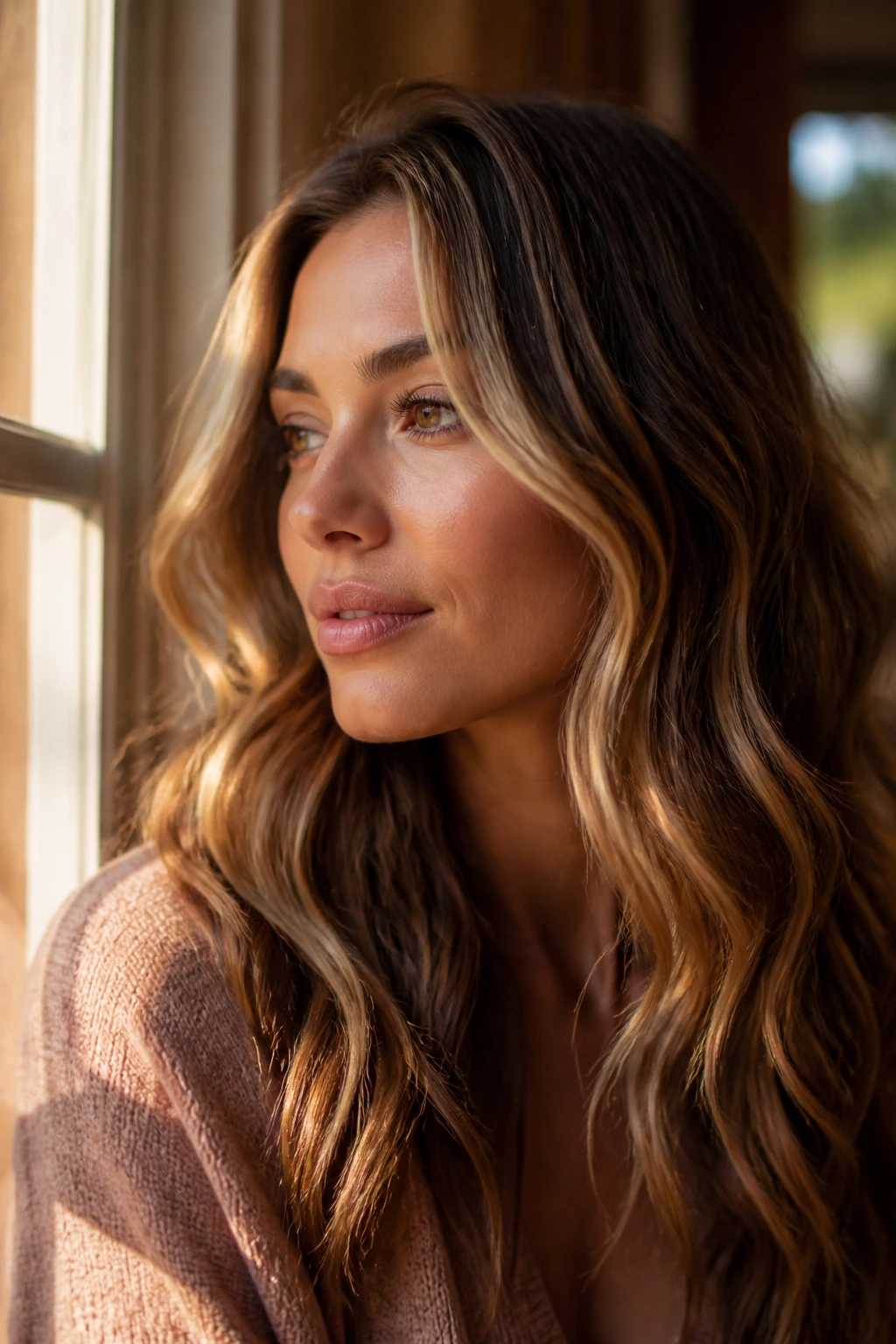
Waves give face-framing color a job to do. Straight hair can make a money piece look like a clean line from root to end, which is fine if that’s the goal. Wavy hair adds bends, shadows, and tiny shifts in angle, so the same highlight can look deeper and softer with no extra work.
That texture matters most at the front. The hair around the face is usually the first place people notice, and it’s also the first place frizz, dryness, and uneven toning show up. A good money piece uses the wave pattern to blur the edges just enough that the color feels integrated, not stamped on.
The other advantage is control. You don’t need to lighten the whole head to get impact. A pair of well-placed face-framing foils can do more for the cut than a full set of highlights if the shape is right. That’s why these looks work so well on lobs, shags, curtain-bang cuts, and long layers. The movement carries the color.
Essential Tools for Choosing and Styling the Look
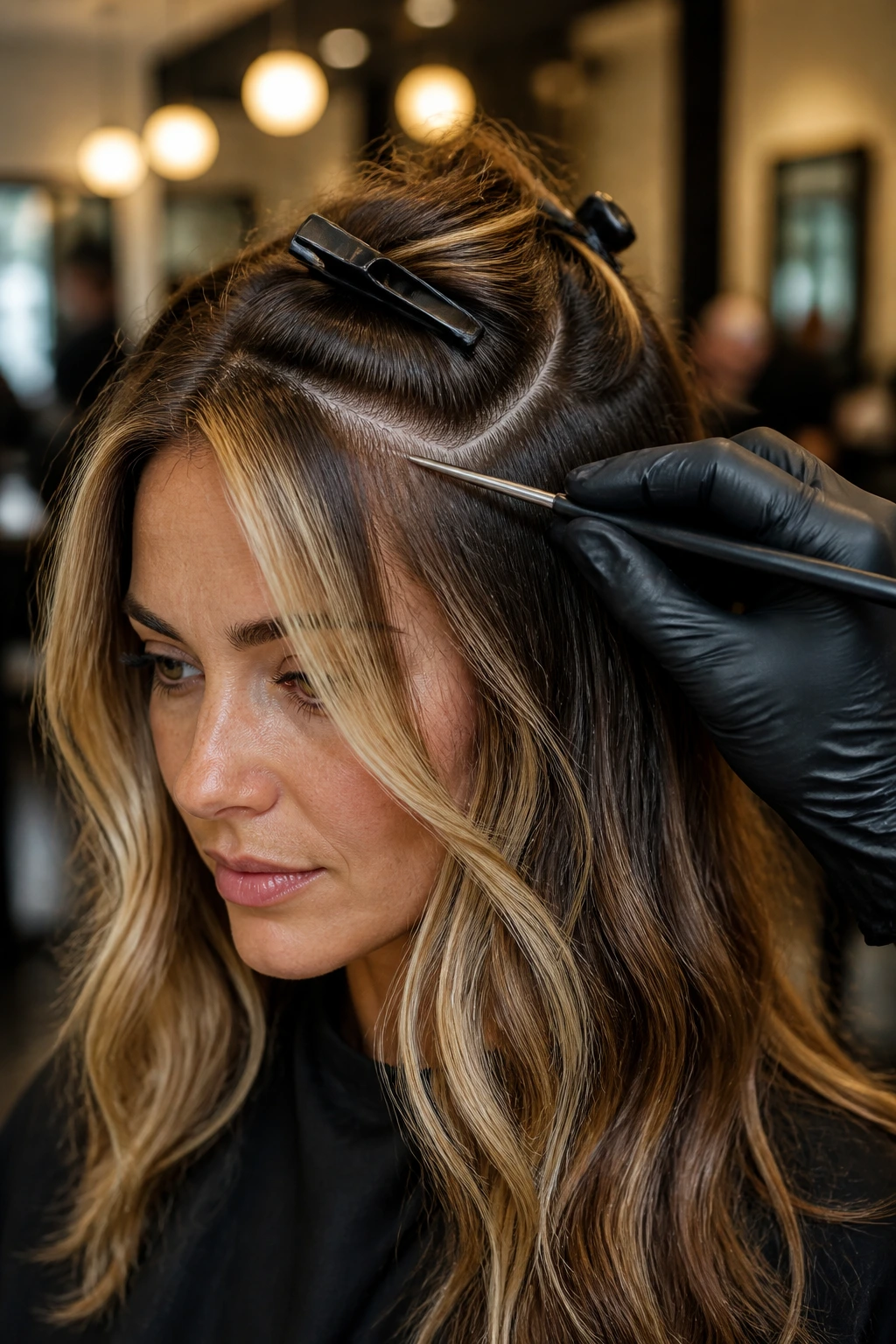
- Tail comb: Needed for clean sectioning at the temples and part line; messy sections make the front pieces look wider than they are.
- Sectioning clips: Keep the front pieces out of the way during styling so the color placement stays visible.
- Color brush and bowl: If you’re getting color done at home or just mixing toner, a brush gives you more control than a bottle.
- Foils or balayage board: Helpful when the front needs precise lift or a softer painted edge.
- Nitrile gloves: Keep your hands clean during toning, glossing, or touch-up work.
- Heat protectant spray: Non-negotiable if you use a blow dryer, diffuser, or curling iron.
- Purple or blue shampoo: Choose based on tone; purple helps blonde and beige, blue helps some brunettes stay from going orange.
- Color-safe conditioner: Useful for preserving tone and keeping the front pieces from feeling rough.
- Wide-tooth comb: Better than a fine comb for wavy hair after washing, since it doesn’t pull the wave pattern apart.
- Diffuser attachment: Optional, but it helps the color show through the wave instead of stretching the hair flat.
Smart Shade Selection and Salon Notes
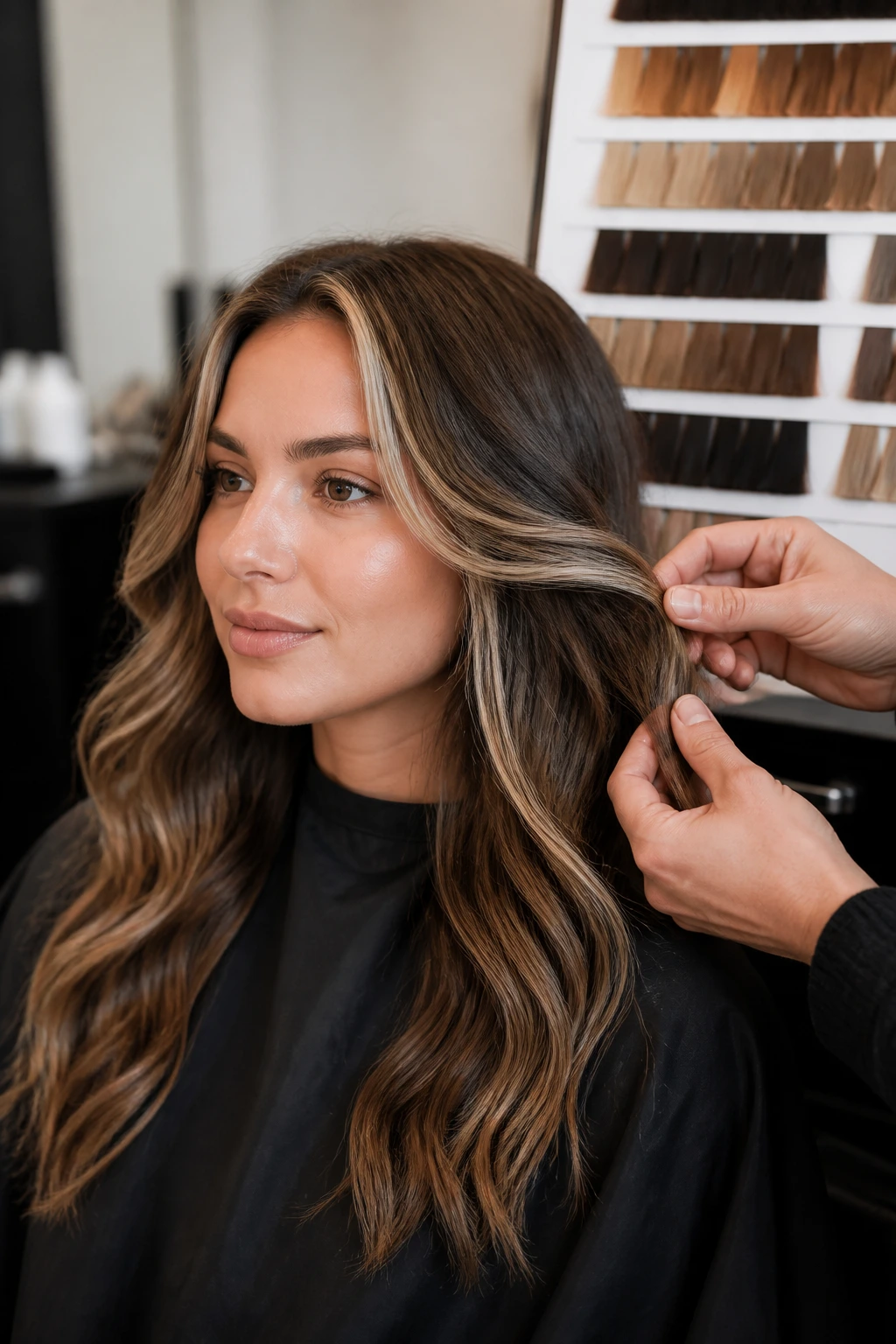
Picking a money piece is not just about liking a swatch. The same blonde that looks creamy on one wavy brunette can look icy or muddy on another, depending on undertone, base level, porosity, and how much warmth the hair throws back after lifting. That’s the part people skip when they bring in a single pretty photo and hope for the best.
Bring references with your natural texture showing. Straight-hair inspiration can be misleading because waves widen the front pieces once they dry. If you want a subtle result, show your stylist narrow face-framing examples. If you want a stronger look, bring a photo where the front pieces are clearly visible from the front and quarter turn, not just in a perfectly lit close-up.
The root color matters more than people think. Dark brunettes usually look best with warm beige, caramel, copper, or muted platinum if they want strong contrast. Medium brunettes can usually wear more of the blond-beige range without looking striped. Cooler bases usually need a gentler tone so the front doesn’t turn too stark against the rest of the hair.
One more thing. Wavy hair often looks brighter once it dries, because the bends reflect light from several angles. That means you can usually ask for slightly less width than you think you need. Width is where a lot of people go wrong. Tone is where the rest of them go wrong.
How to Wear These Looks So They Read as Intentional
Presentation:
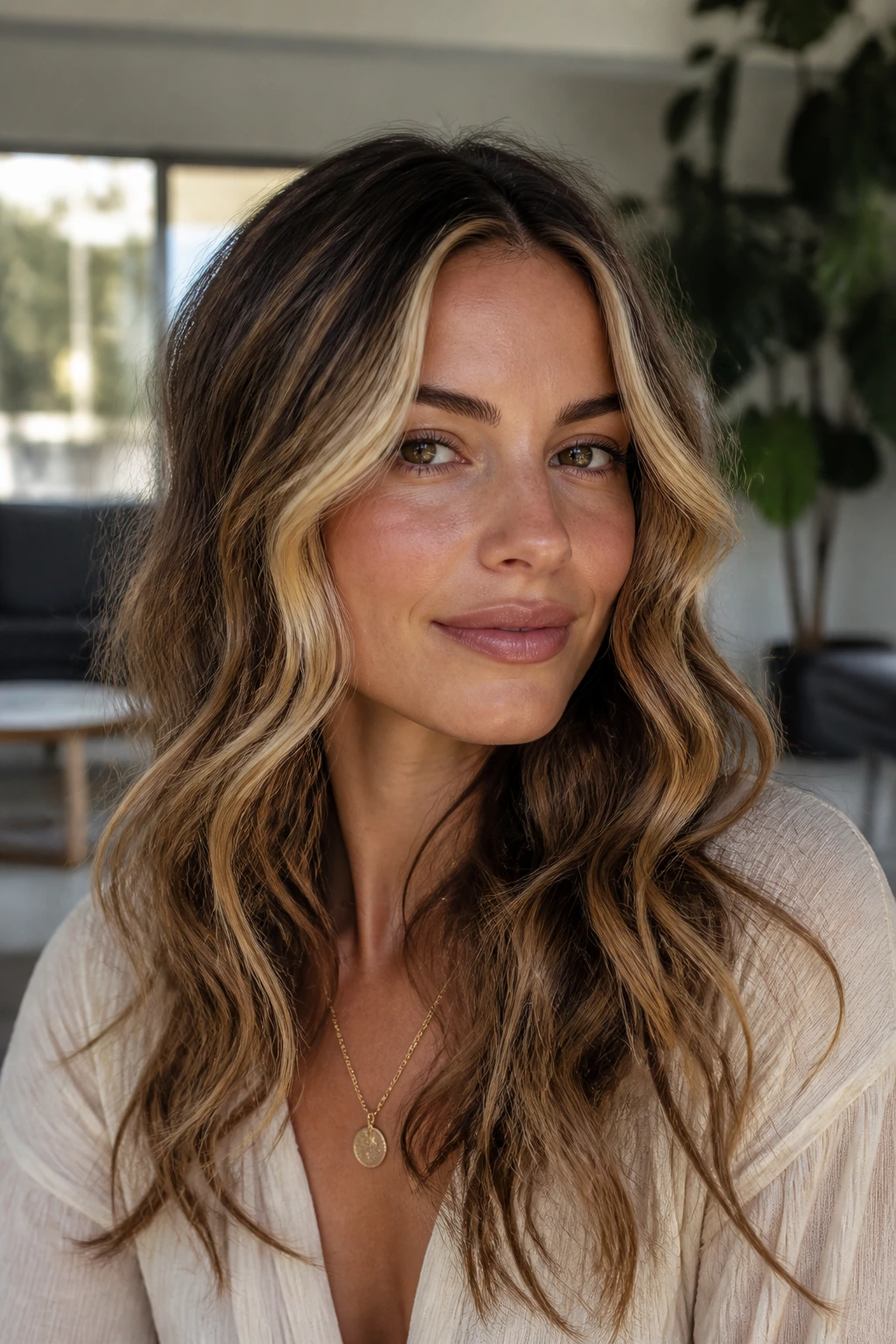
Part the hair where it naturally lives, then style the front pieces so they fall into the first wave instead of sitting stiffly on top of it. A loose bend with a 1-inch iron or a diffuser works better than poker-straight styling when you want the money piece to blend.
Pairings:
Curtain bangs, shag cuts, long layers, and collarbone lobs all play nicely with face-framing color. Heavy one-length cuts can still work, but they need a softer placement or the front starts to feel blocked off.
Maintenance:
Brighter blondes and coppers usually need toner refreshes every 4 to 8 weeks, depending on how fast your hair pulls warmth. Softer caramel and bronde versions can stretch farther, especially if the root is left natural.
Styling Products:
A lightweight mousse at the roots, a heat protectant through the front pieces, and one drop of oil on the ends are enough for most wavy hair. Skip heavy creams if your waves are fine; they can collapse the shape and hide the highlight work.
Extra Ways to Push the Brightness or Soften It
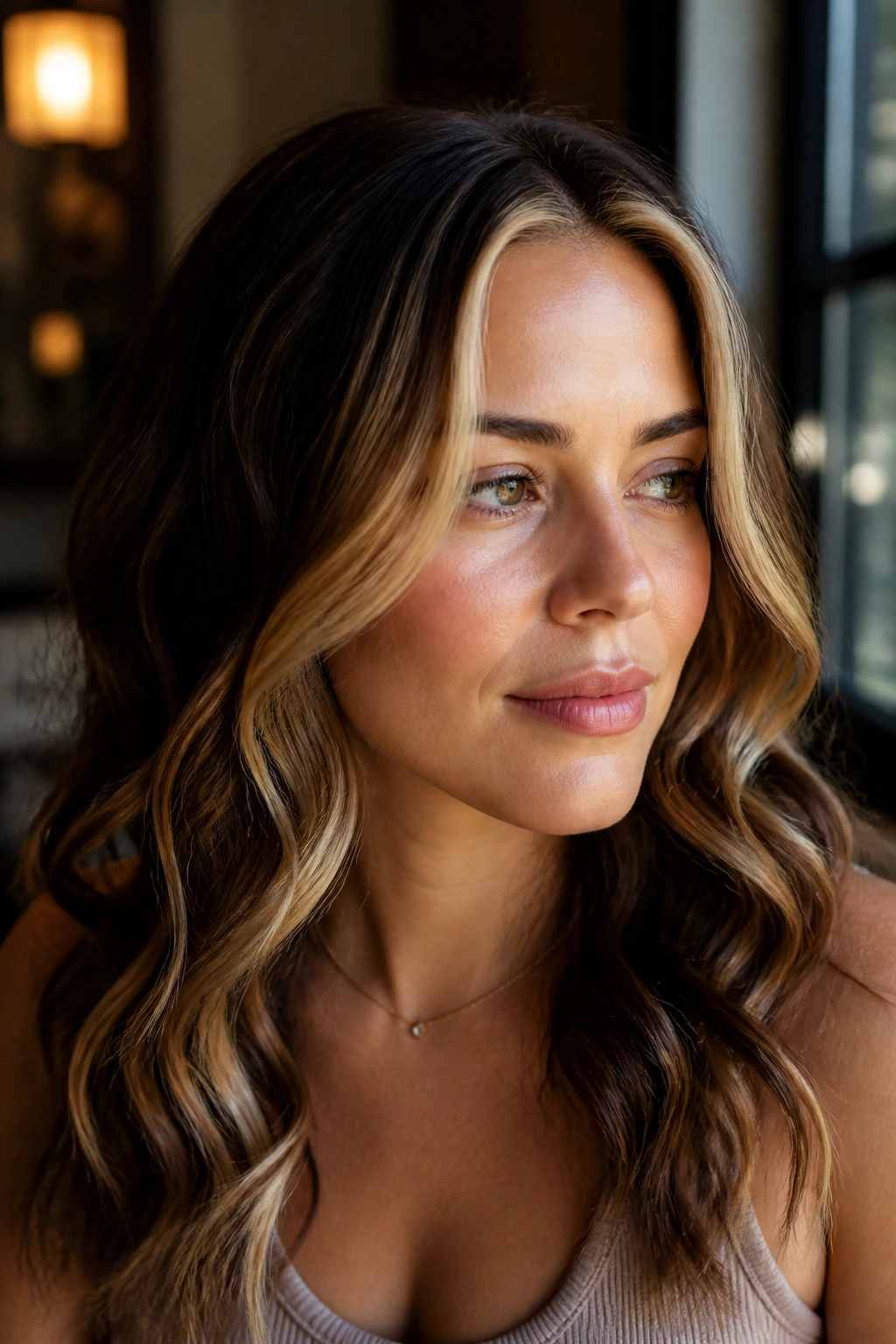
Brightness Boost:
If the front pieces feel too quiet, add one finer foil right at the temple or a few baby lights around the hairline. That tiny extra lift can make the whole frame read brighter without widening the section.
Softening Move:
If the highlight feels too hard, ask for a root shadow or a demi-permanent gloss one level deeper than the lightened pieces. That blur takes the edge off and helps the color live through the grow-out stage.
Wave Definition:
A clean money piece looks better when the waves are separated, not brushed into one fuzzy cloud. Scrunch in a light mousse or curl cream, then diffuse until the front pieces set with shape.
Make It Yours:
Warm undertones usually look richer with honey, caramel, copper, or amber. Cooler undertones often read cleaner with beige, ash beige, mushroom, or champagne. If you’re torn, stay within one family instead of mixing five tones at once. That’s how the front starts to look noisy.
Common Mistakes That Make the Front Pieces Look Off
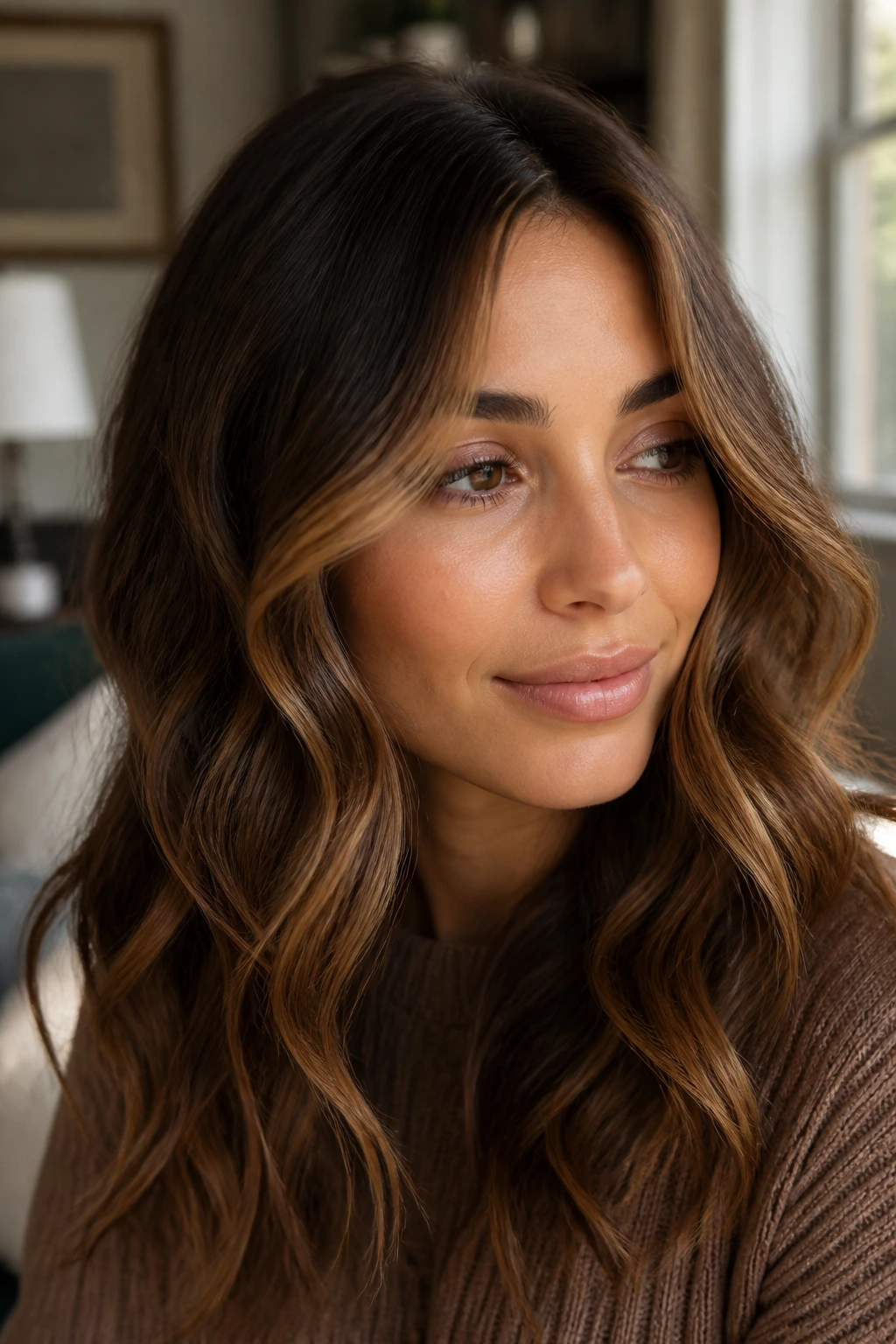
Making the section too wide:
A broad stripe at the hairline can overwhelm wavy hair and look heavy instead of bright. Ask for a narrower placement if you want movement to do the rest.
Ignoring the wave pattern:
A placement that looks neat on straight hair can break in strange places once the waves dry. Always check the front section in its natural texture before deciding it’s right.
Choosing the wrong tone family:
Too-ashy beige on a warm base can go flat. Too-golden blonde on a cool brunette can look orange. The fix is simple: match the tone to the base and the skin undertone, then refine with a gloss.
Skipping the finish work:
The money piece is often ruined by rough styling. Frizz, dry ends, and a flat root can make even a good color look patchy. A little smoothing cream and heat protection go a long way.
Trying to make every front piece equally bright:
Uniform brightness looks rigid on wavy hair. A slightly varied placement, with the strongest point near the cheekbone, usually looks more natural and more flattering.
Variations and Alternatives to Try
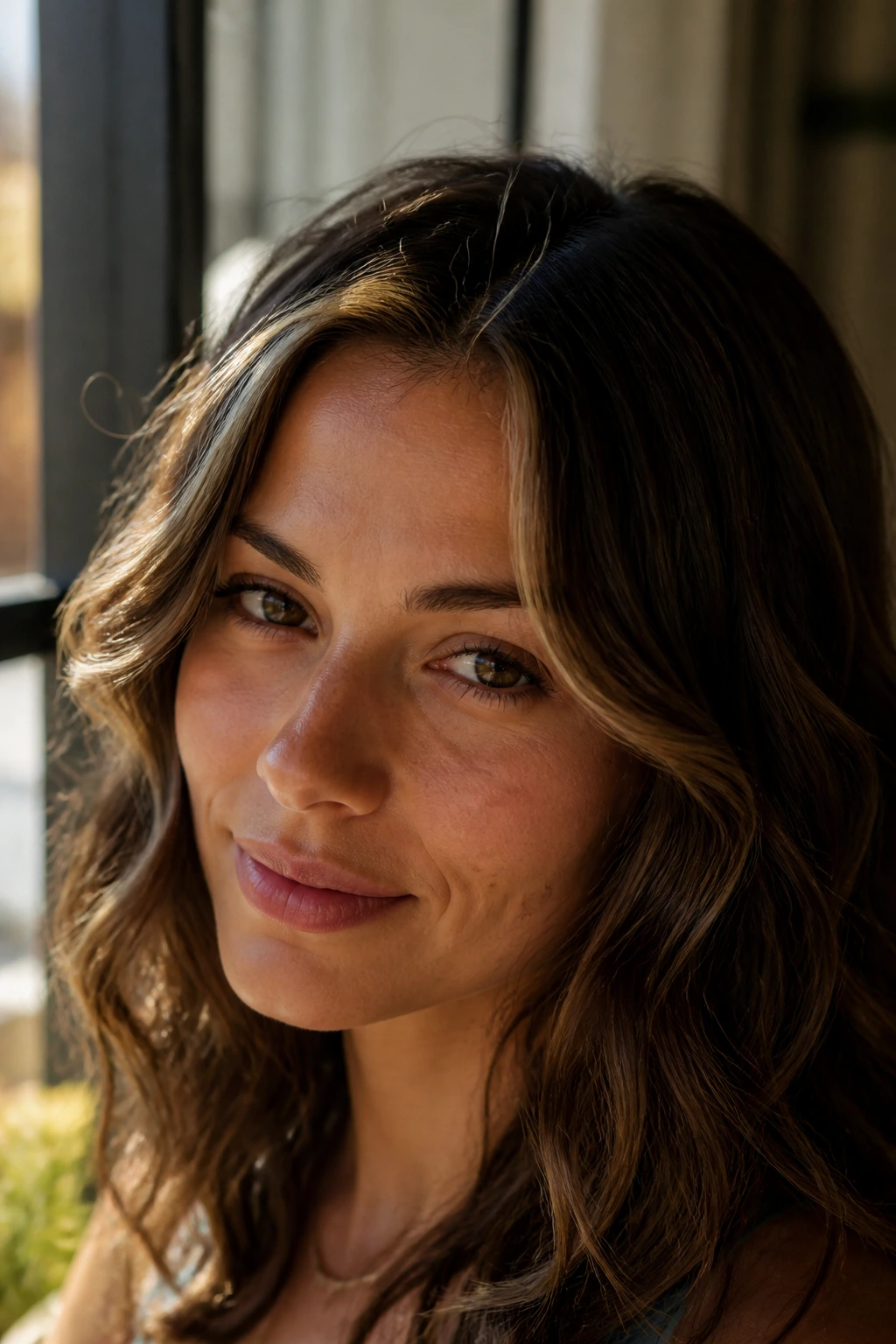
The Micro Brightener:
A tiny money piece with just enough lift to wake up the face. Best if you want low commitment and don’t want to see obvious grow-out lines every few weeks.
The Chunky Retro Frame:
Thicker, bolder front pieces with a very visible contrast. This is the one to pick if you like a sharper, throwback feel and want the color to announce itself.
The Rooted Melt:
A softer version that starts close to the base and gets lighter through the front. It’s the easiest route if you want brightness but also want the hair to grow out politely.
The Copper Glow:
A warm, red-brown front piece that gives depth instead of blonde brightness. Good for brunettes who want warmth and shine more than contrast.
The Beige Blur:
A cool-neutral frame that disappears into the rest of the hair until light hits it. Works well for wavy hair that already has some highlight history or a naturally soft brown base.
Maintenance, Toning, and Between-Appointment Care
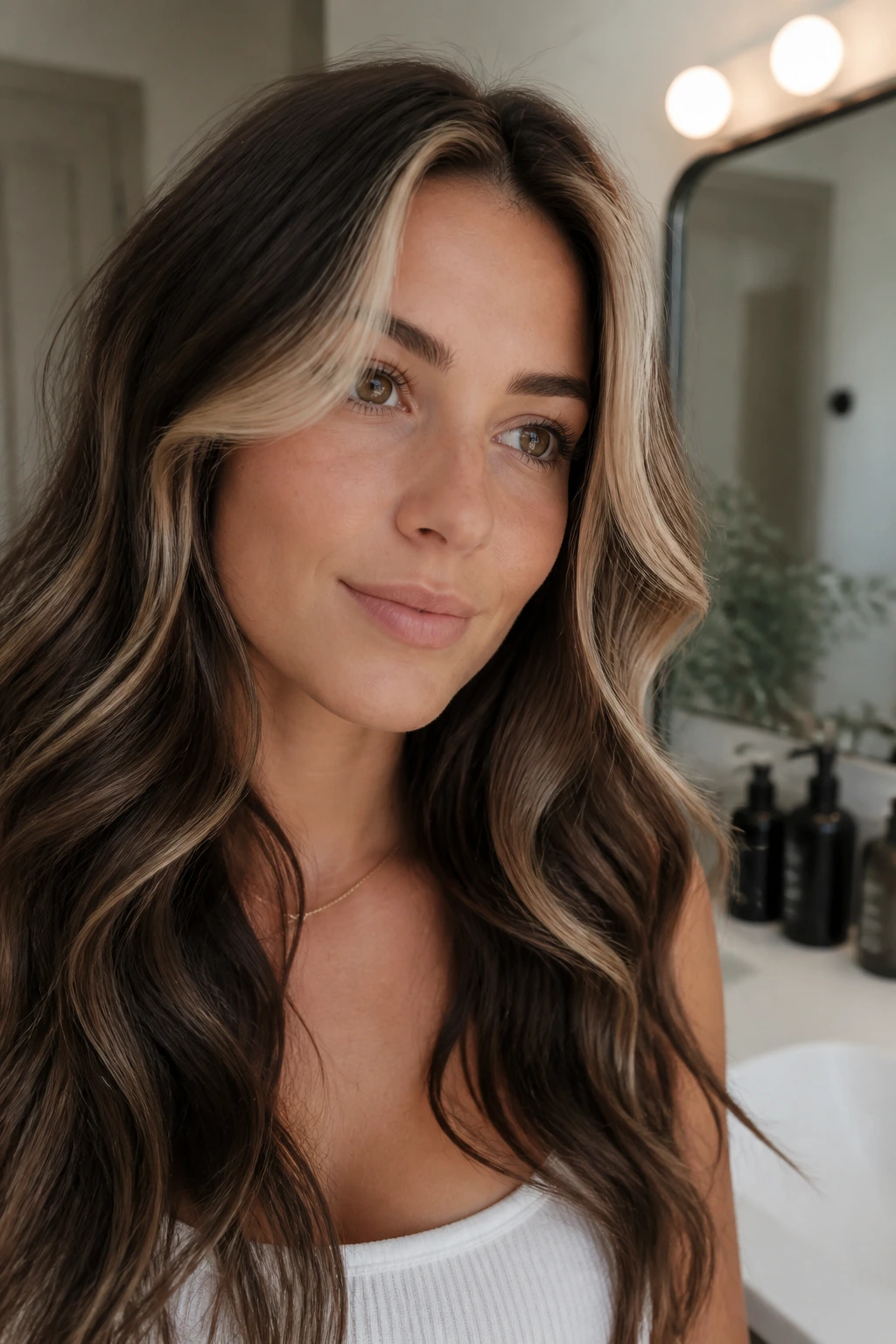
Money piece highlights on wavy hair can stay pretty for a while, but the front pieces need a little more attention than the back. That’s where sunlight, face products, heat tools, and wash frequency all hit first. If the color starts to look yellow, orange, or dull, the issue is usually tone fade before it’s actual grow-out.
Use a color-safe shampoo and keep the water lukewarm. Hot water roughs up the cuticle and pulls tone faster, especially on porous front sections that have been lightened more than the rest. For blonde, beige, or ash money pieces, use purple shampoo once every 1 to 2 weeks if brass starts showing. For copper or caramel, choose a color-depositing conditioner or a gloss made for warm tones instead.
Trim the ends on schedule. Sounds boring. Matters a lot. Wavy hair with dry front layers can make even the prettiest face frame look fuzzy, and when the ends go fuzzy, the color reads less crisp. Most people get better mileage out of a small gloss or toner refresh every 4 to 8 weeks than they do from letting the color drift and then trying to rescue it with stronger shampoo.
Heat protection is not optional here. The front pieces are usually the lightest, which means they’re also the most fragile. If you style with a curling iron or blow dryer more than once a week, spray the money piece first, not last.
Frequently Asked Questions
How wide should a money piece be on wavy hair?
Usually narrower than people expect. A wave expands the visible width once it dries, so a slim placement at the temple often reads fuller than it looks when wet.
Can dark brown waves pull off a blonde money piece?
Yes, but the blonde has to be planned. A rooted beige, honey, or creamy vanilla piece usually looks cleaner than an ultra-icy stripe against deep brown hair.
Does a money piece work with curtain bangs?
Very well, if the front color is blended into the fringe instead of fighting it. Curtain bangs already frame the face, so the highlight should feel like part of the cut.
How often will I need toner?
That depends on tone and wash habits, but most light blonde or ash front pieces need some kind of refresh every 4 to 8 weeks. Copper and caramel can stretch longer if you use color-safe products.
Will a money piece damage my hair more than regular highlights?
Not necessarily. The front sections are often lighter, so they may feel drier, but the overall amount of hair processed can be much smaller than a full highlight service.
What if my waves frizz after coloring?
Use a lighter styling cream, not a heavier one. Porous front pieces often need moisture plus a little hold, and too much product can flatten the wave without fixing the frizz.
Can I ask for this without going very blonde?
Absolutely. Caramel, amber, bronde, mushroom, and soft beige all count as money piece looks. Brightness is only one version of the idea.
Is it better to make the front piece warmer or cooler than the rest?
Usually it should be one step warmer or cooler, not five. The front piece should stand out, but if the tone jumps too far, it starts to look disconnected from the rest of the hair.
A Front Frame That Follows the Wave
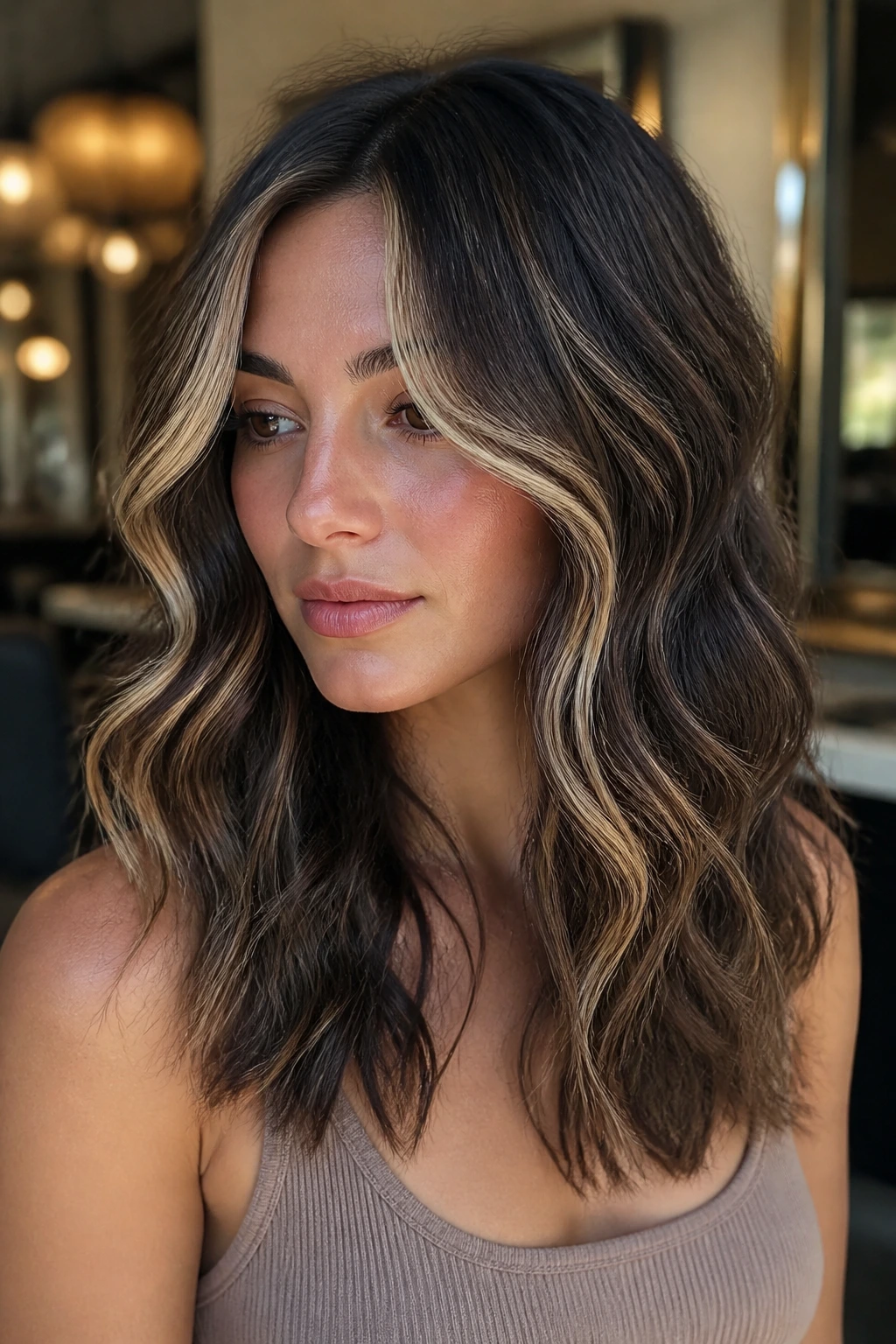
The best money piece on wavy hair doesn’t just sit there looking light. It bends, breaks, and shifts with the wave pattern so the color feels woven into the haircut. That’s the part worth chasing: not just brightness, but shape.
Pick the version that fits your base, your maintenance tolerance, and how bold you want the front of your hair to feel. A honey ribbon and a platinum halo both count as money pieces, but they live in very different neighborhoods. Once you get the placement right, the rest is tone and upkeep.
Bring the wave into the decision, not just the color swatch. That one move saves a lot of regret, and it usually leads to a front frame that looks better from every angle, not just the salon chair.
