



Spiky hairstyles for men look simple from the chair and stubborn in real life. A clean spike can fall flat at the crown, flare at the hairline, or turn into helmet hair if the product is too heavy. The difference usually isn’t the word spiky on the receipt. It’s the length left on top, the way the sides are cut, and whether the hair is blown up from the roots before you ever touch paste.
That’s why some guys swear spikes “don’t work” for them. Usually, that isn’t true. The cut was wrong for their hair texture, or the finish was too shiny, or the front was pushed straight up when it needed to lean forward a little. Thick hair behaves one way. Fine hair behaves another. Curly hair wants a different shape entirely. Even a stubborn cowlick can be worked with if the top is left long enough and the barber respects the growth pattern instead of fighting it.
The best versions of this look don’t try to be identical. A sharp fade with upright spikes reads one way; a loose textured crop reads another. One looks crisp and athletic. Another looks relaxed enough to wear with a hoodie and still look intentional. The point of the collection below is range, not repetition. You can keep the edges clean, go messy, stay subtle, or make the whole thing loud enough to notice from across the room.
Why These 28 Spiky Looks Work
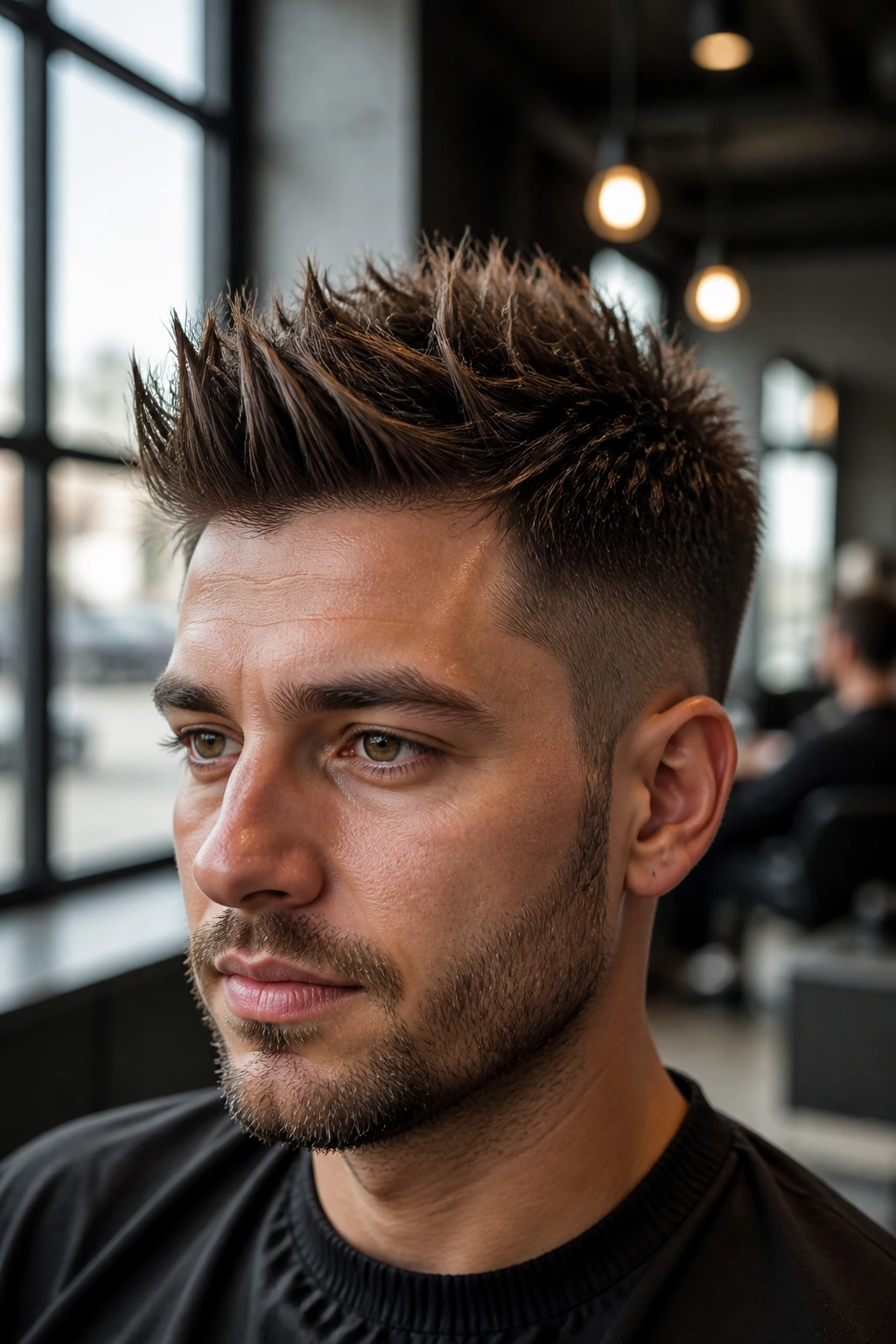
- The top length changes everything: One inch of hair gives you neat texture; three inches gives you a taller, more visible spike that needs stronger control.
- The sides set the mood: Tight sides make spikes look sharper, while a taper keeps them softer and easier to wear day to day.
- Texture matters more than height: Choppy ends catch product and light better than blunt ends, which is why point cutting at the barber matters so much.
- Product choice controls the finish: Matte clay looks rougher and more modern, while gel gives a harder shell and a wetter shine.
- Your hair type decides the shape: Fine hair needs lift and grip; thick hair needs weight removal; curly or wavy hair needs separation, not flattening.
- The best spike fits the rest of your face: A taller front can balance a round face, while a lower, forward style can calm a long face or a strong hairline.
How to Ask Your Barber for a Spike That Fits Your Hair
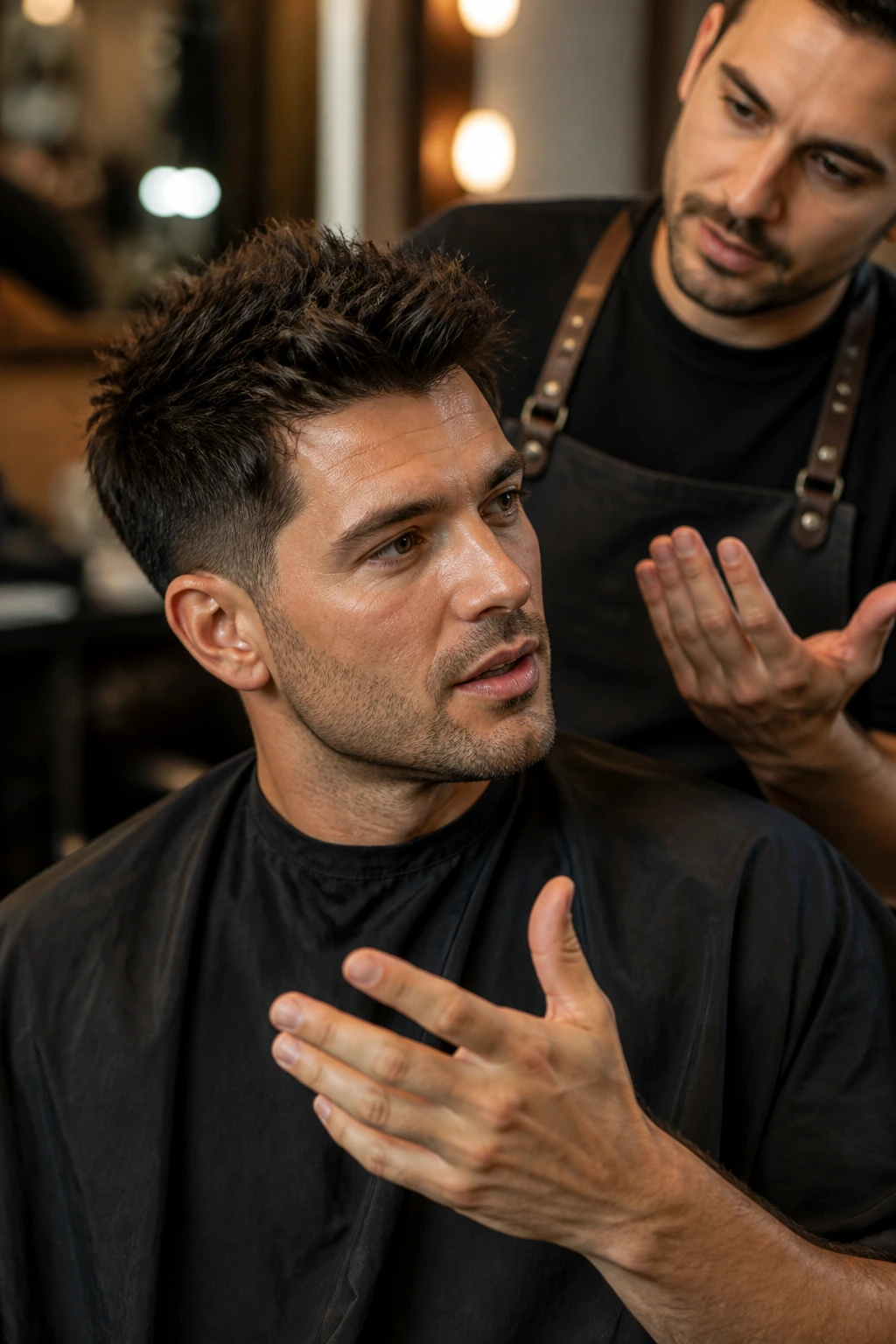
Bring a photo, but bring the right photo. A picture of a guy with straight, thick hair won’t help much if your hair bends or swirls in two directions at the crown. Show something close to your texture and hairline, then point out the part you want to keep: the front height, the tight sides, the messy finish, or the clean edge around the temples.
Say the numbers out loud if you can. “Leave about 2 inches on top,” or “Take the sides down to a 1.5 on the fade and keep the front long enough to push up.” Those details matter more than saying “make it spiky.” A barber can build a spike from scissors, clippers, and point cutting. A vague request usually gets a generic cut.
Mention your daily routine too. If you don’t want to blow-dry, say so. If you hate shiny products, say that too. A good spike cut is part haircut, part styling plan. If the top is too heavy, no paste in the world will save it. If the crown is too short, the hair will stand in random directions and you’ll spend every morning fighting it.
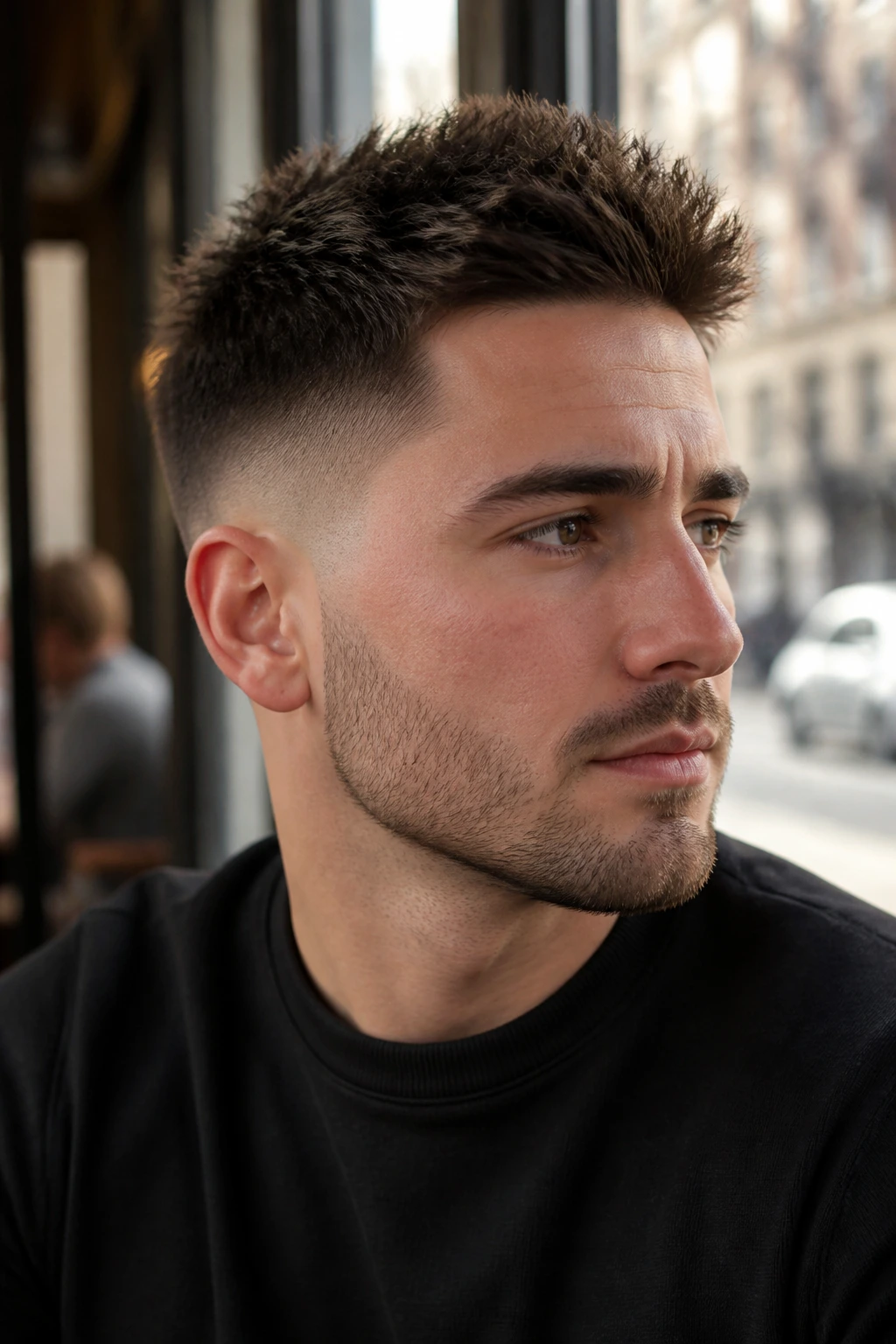
1. Classic Short Spikes
Short spikes are the cleanest version of the look. The top stays around 1 to 2 inches, which is enough length to separate the hair into pieces without making the shape floppy. I like this cut when someone wants a style that looks deliberate even after a long day and a few bad weather runs.
The trick is the balance: leave enough length for texture, then taper the sides so the top stays in charge. A matte paste or light fiber works better than wet gel here. Work the product into damp hair, not soaking wet hair, then use your fingertips to pinch small sections upward.
Best for: men who want a low-drama daily cut.
Watch for: leaving the top too blunt. That’s what makes short spikes look boxy instead of sharp.
2. Textured Crop with Spiky Fringe
The textured crop is the best answer for men who hate helmet hair. Instead of forcing all the hair to stand straight up, this version keeps the fringe forward and choppy, with little spikes breaking through the front. It feels modern because the line at the hairline stays irregular.
This works especially well if your hair grows straight and tends to lie flat. Ask for point cutting on the top and a soft, low fade or taper on the sides. Then style it by blowing the front forward first, not up. Once the hair is almost dry, pinch the ends with clay so the fringe breaks into pieces instead of forming one smooth shelf.
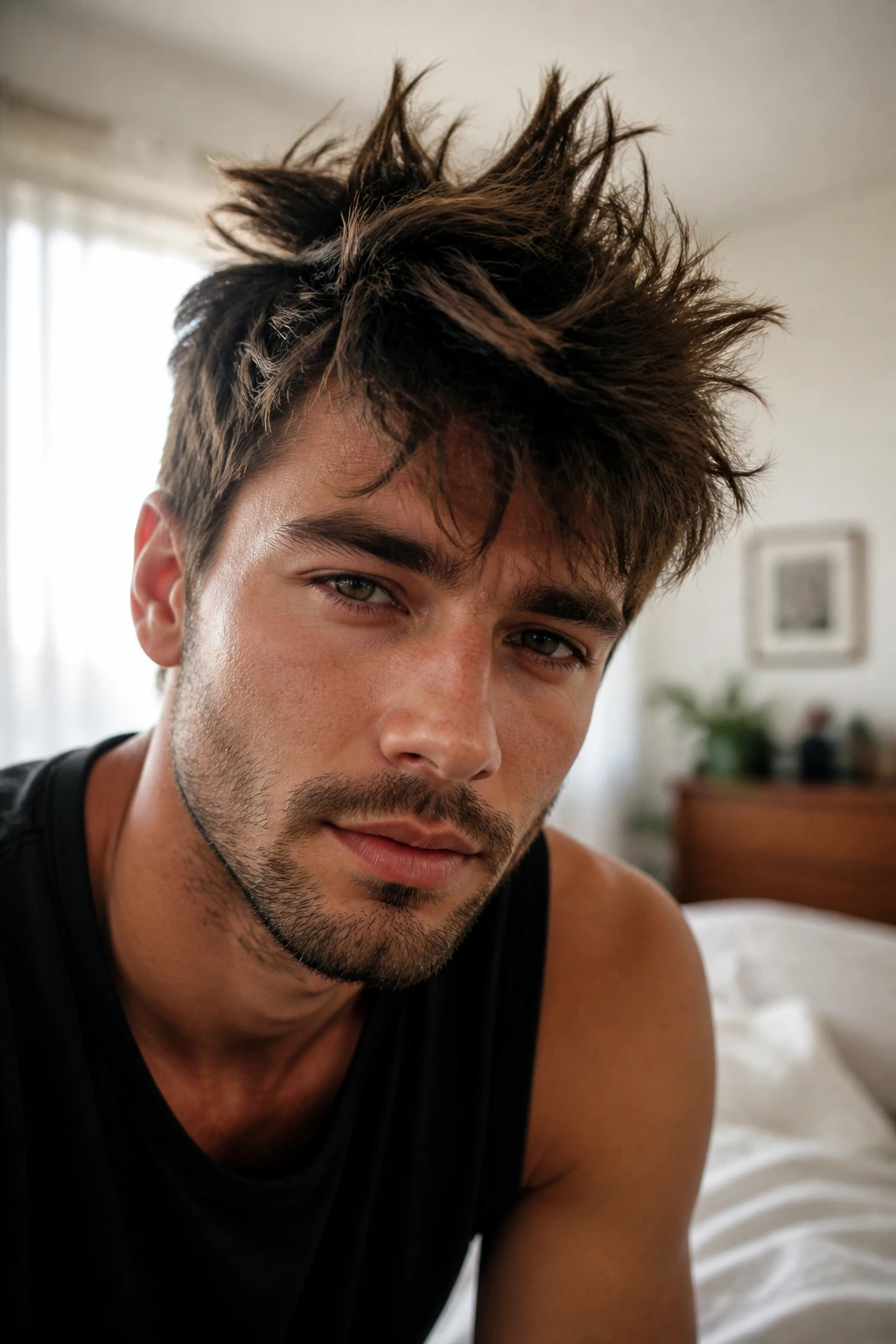
3. Messy Bedhead Spikes
Can spikes look relaxed? Yes, if the front breaks unevenly and nobody tries to make every strand behave. This version looks like you slept well, argued with a comb, and somehow still ended up with a decent haircut. That’s the charm.
It’s a smart choice for thick or wavy hair because those textures naturally create separation. The barber should remove bulk from the top, not just shorten it. At home, a sea salt spray gives the hair a rougher surface, then a small amount of cream or paste keeps the spikes from collapsing. Keep the direction loose. A little forward. A little up. Never perfectly even.
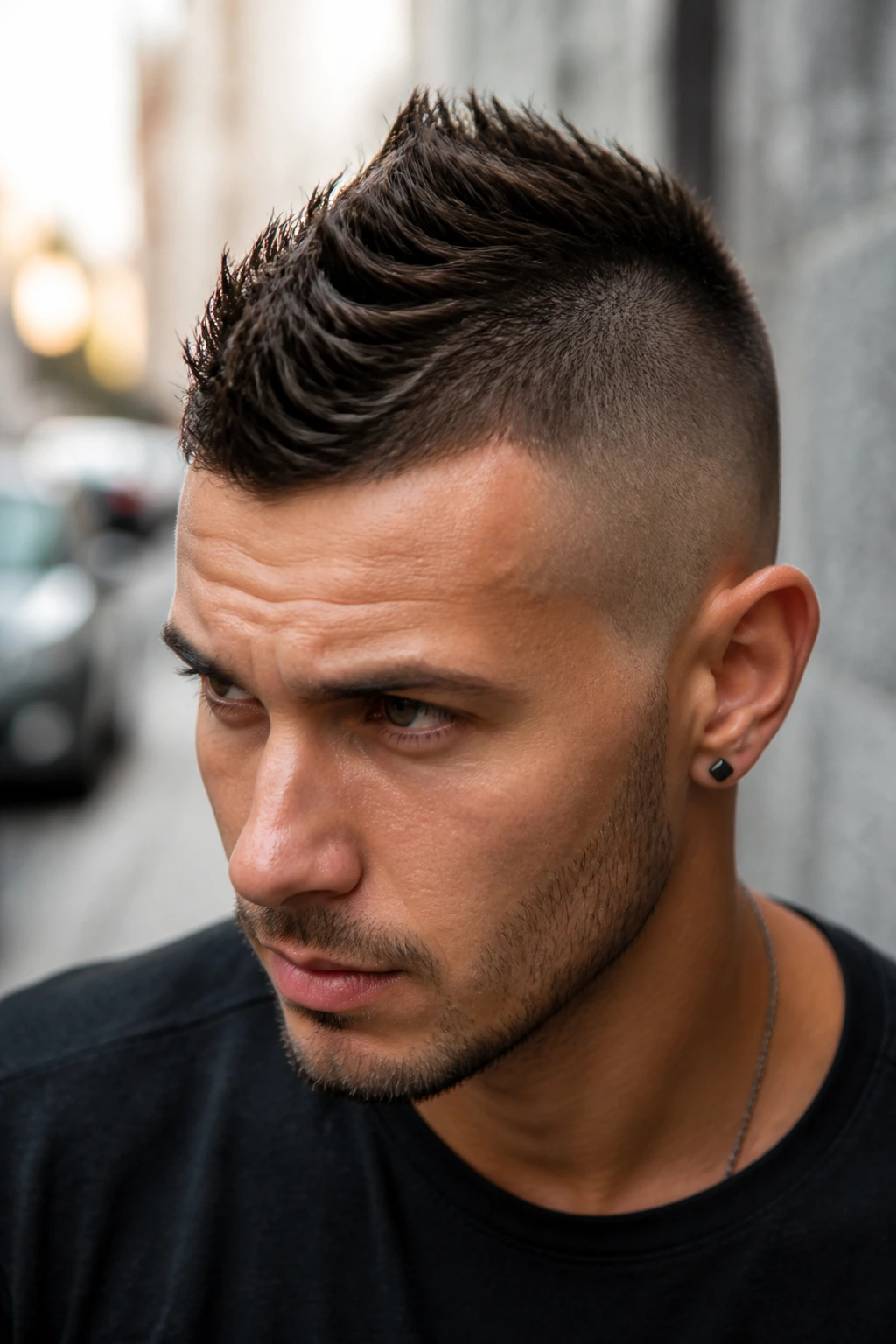
4. Faux Hawk Spikes
Picture a narrow ridge of hair running from the forehead to the crown. That’s the faux hawk idea, and spikes give it the extra bite. The center strip stays taller than the sides, which makes the whole haircut look faster and more aggressive than a standard short spike.
This cut makes the most sense with a fade on the sides—high, mid, or skin, depending on how bold you want to go. The top should be longest right through the middle, then slightly shorter as it blends outward. Blow-dry the ridge straight up first. Then use a firm paste or styling cream to define the shape. If the sides are too long, the faux hawk loses its line and starts looking like an accident.
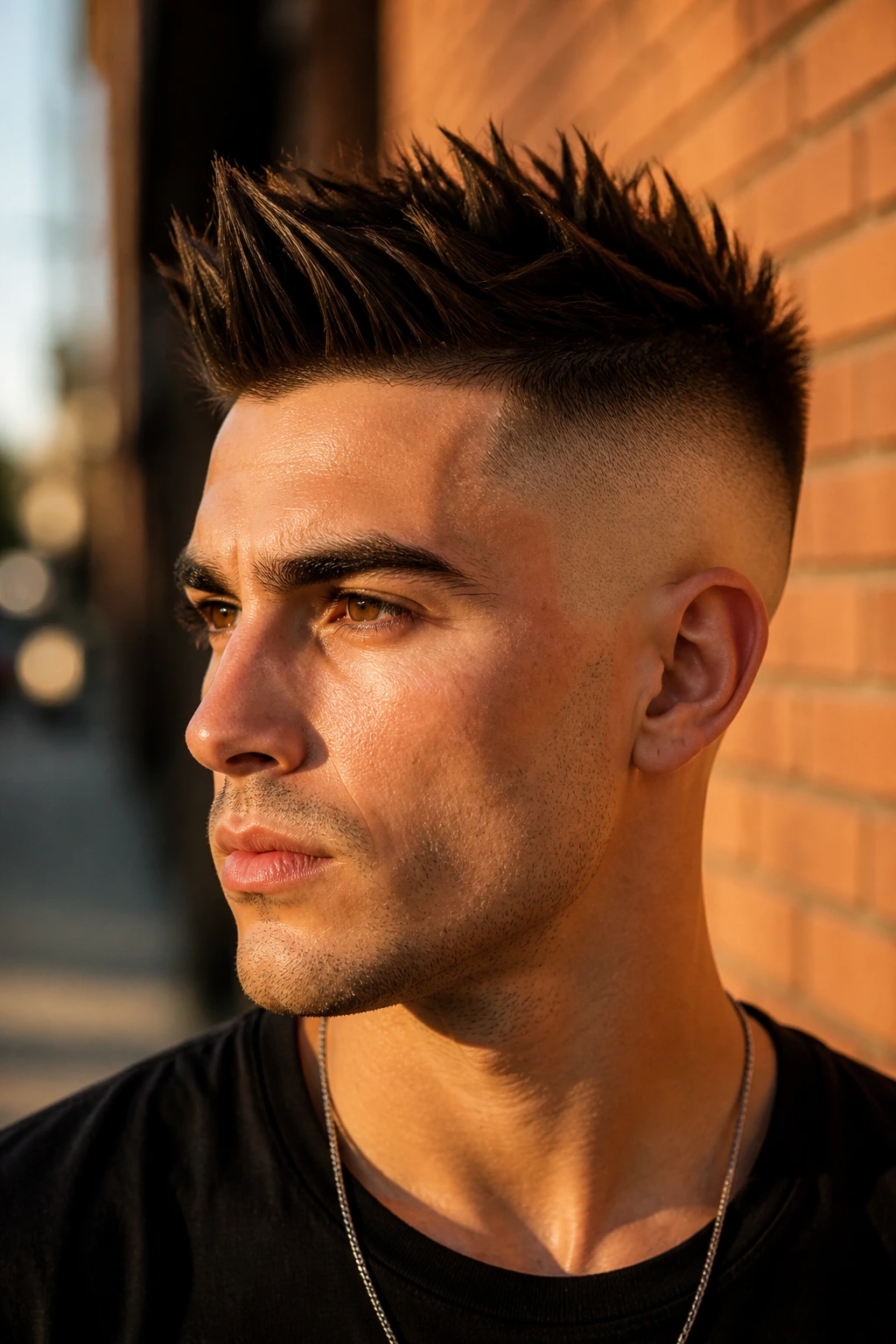
5. High Fade with Sharp Spikes
A high fade makes spikes look sharper because the sides disappear fast. That contrast gives the top a clean frame, almost like the haircut has been outlined in ink. It’s a blunt look, in a good way.
The one catch: this style exposes everything. If the front is uneven, you’ll see it. If the top is too flat, you’ll see that too. So keep the spikes tidy, and ask the barber for texture on the top rather than a blunt scissor cut. Strong-hold matte product is your friend. Use less than you think, because the fade already gives the haircut enough visual force.
6. Low Fade with Soft Spikes
A low fade is where spikes start looking grown-up. The change from short sides to longer top happens more gradually, which softens the contrast and makes the style easier to wear in offices, meetings, or anywhere a skin fade feels too loud.
I prefer this version on guys who want structure without the hard edge. It works well with a bit of natural movement on top, especially if the hair is brushed slightly forward and up rather than forced vertical. Use a light paste or fiber cream and keep the finish matte. The goal is texture, not armor.
7. Taper Fade Spikes
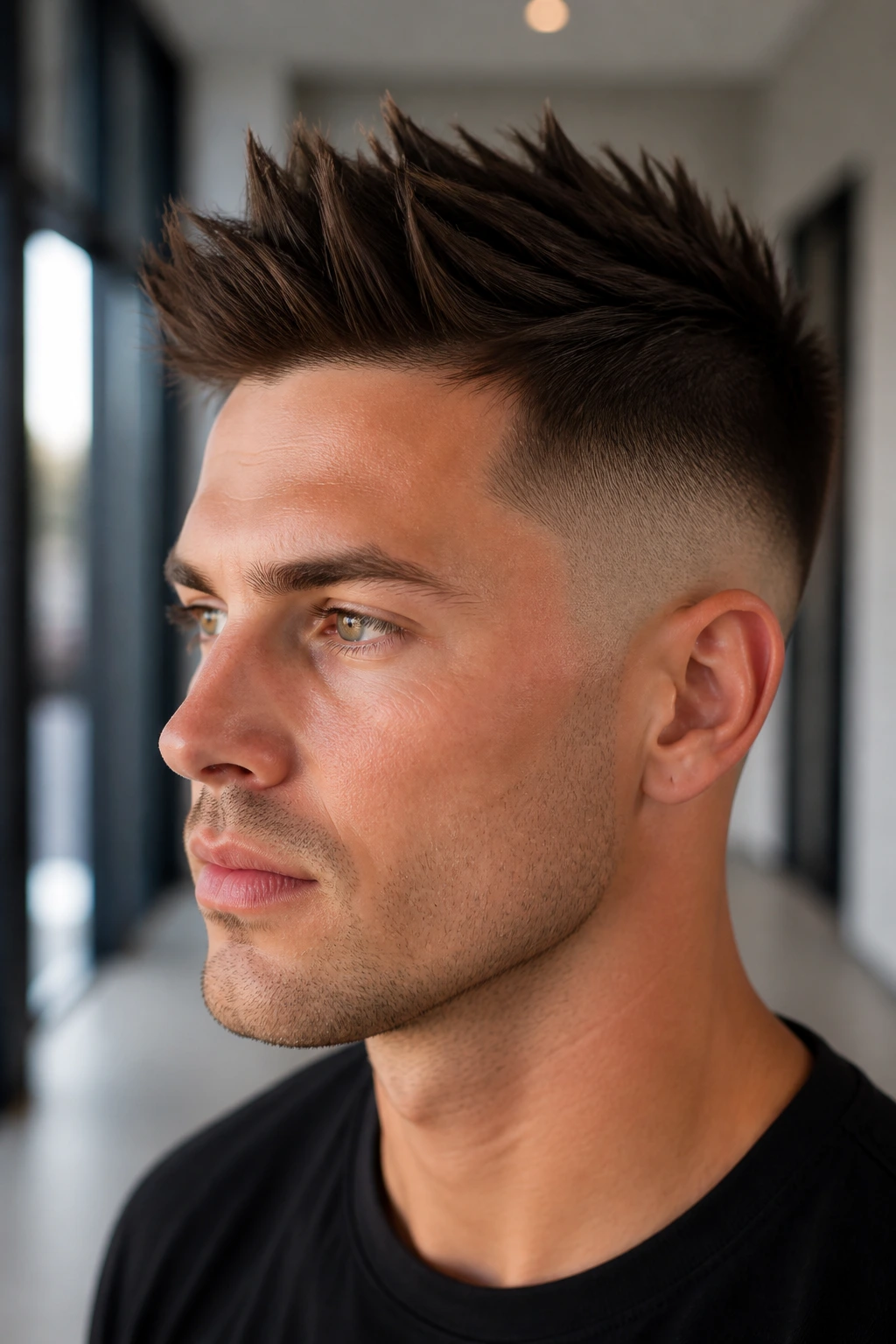
A taper fade is the quietest way to wear spikes, and that’s the point. The sides are trimmed short around the ears and neckline, but they don’t drop off as suddenly as a high fade. The result feels neat, not severe.
This version is hard to beat if you want something you can grow out without looking messy. It also helps if your head shape is a little narrow, because the taper keeps the silhouette balanced. Ask for a scissor or clipper cut on top with enough length to lift, then keep the styling loose. A pea-sized amount of paste is enough. More than that and the finish starts to look sticky.
8. Disconnected Undercut Spikes
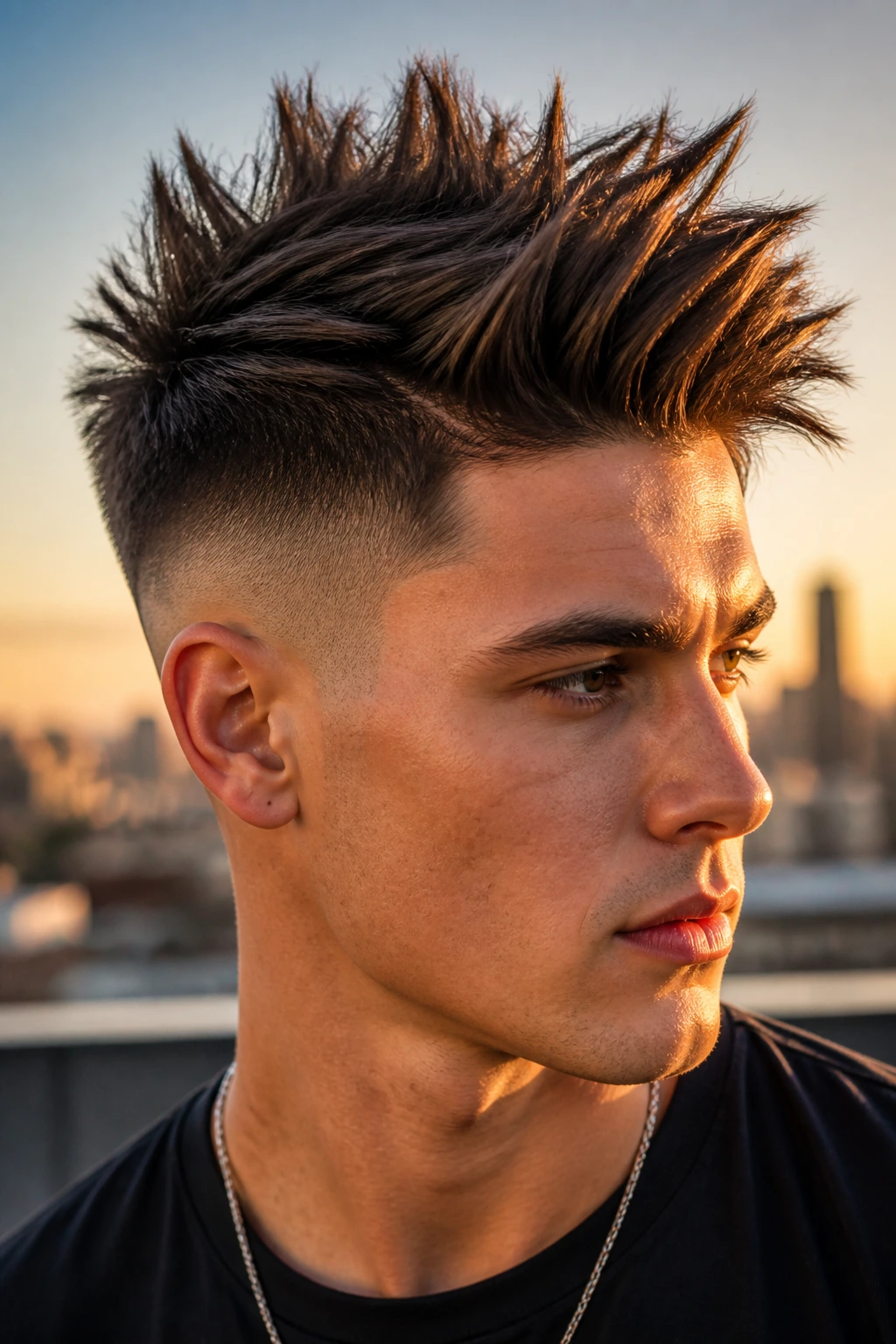
Disconnected spikes are for guys who like a visible line between the top and the sides. No blending. No soft fade. The top sits on top of a much shorter undercut, and that strong break makes the spikes stand out even before you touch product.
This cut needs confidence and maintenance. If the undercut grows out too far, the contrast disappears and the whole thing gets muddy. Keep the top long enough to spike upward or diagonally, then use a firmer product to preserve the gap. It’s not subtle. That’s the attraction. On the right face shape, especially with strong brows or a defined jaw, it looks deliberate and a little dangerous.
9. Crew Cut Spikes

The crew cut version is what happens when spikes get trimmed down and cleaned up. The top is short enough to stay controlled, but long enough to catch a little lift at the front. It’s sporty, neat, and easy to reset after a hat or a workout.
This style is excellent for men who don’t want to fuss with a full styling routine. A small amount of lightweight paste on towel-dried hair is enough. Keep the top textured with scissors and the sides tight. If the top gets too long, it stops reading as a crew cut and starts looking half-grown. That’s the only real danger. Trim it before it gets floppy.
10. Buzz Cut Micro Spikes
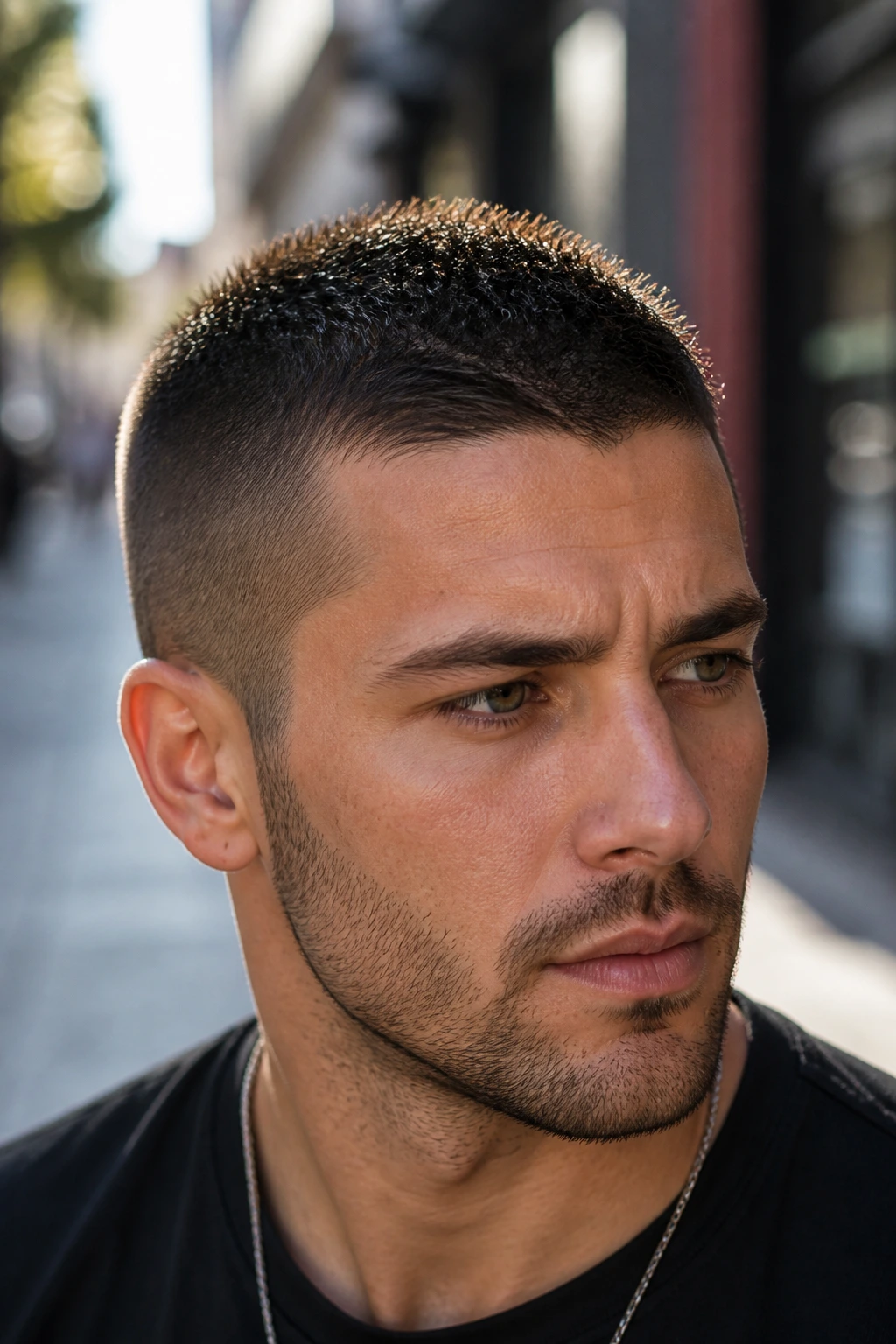
Micro spikes are the smallest possible version of the look. They sit on the border between a buzz cut and a textured crop, and the effect is subtle until light hits the top and those tiny peaks show up.
This is one of the smartest choices for very short hair, especially if you want a little movement without daily styling drama. The cut should be short everywhere, with just enough length on top to lift with a fingertip. A tiny amount of matte product or even a touch of dry texture spray can help. Don’t try to make these spikes tall. Their strength is in the faint roughness, not height.
11. Brush-Up Spikes
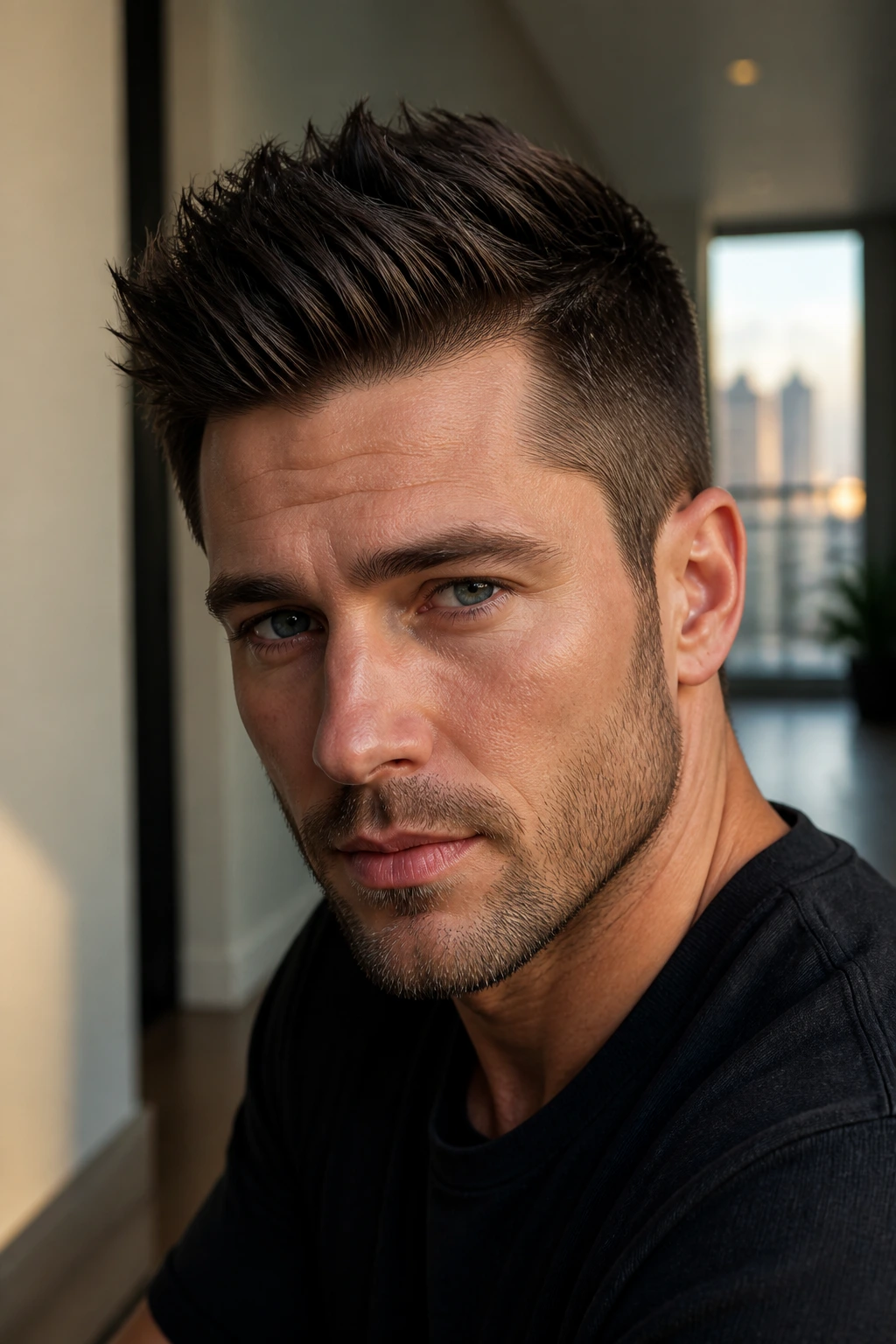
A brush-up spike starts at the forehead and climbs back. Instead of scattered points all over the top, the front section gets lifted in a clean sweep that makes the face look a little longer and more open. It’s one of the best shapes for rounder faces.
The key is pre-drying. Blow the front up and back with the dryer nozzle aimed at the roots, then lock it in with paste or clay. If you skip the dryer, the hair usually settles where it wants to go, which is rarely where you want it. Keep the sides tight enough to let the front do the work. That upward motion needs a frame.
12. Long Front Spikes
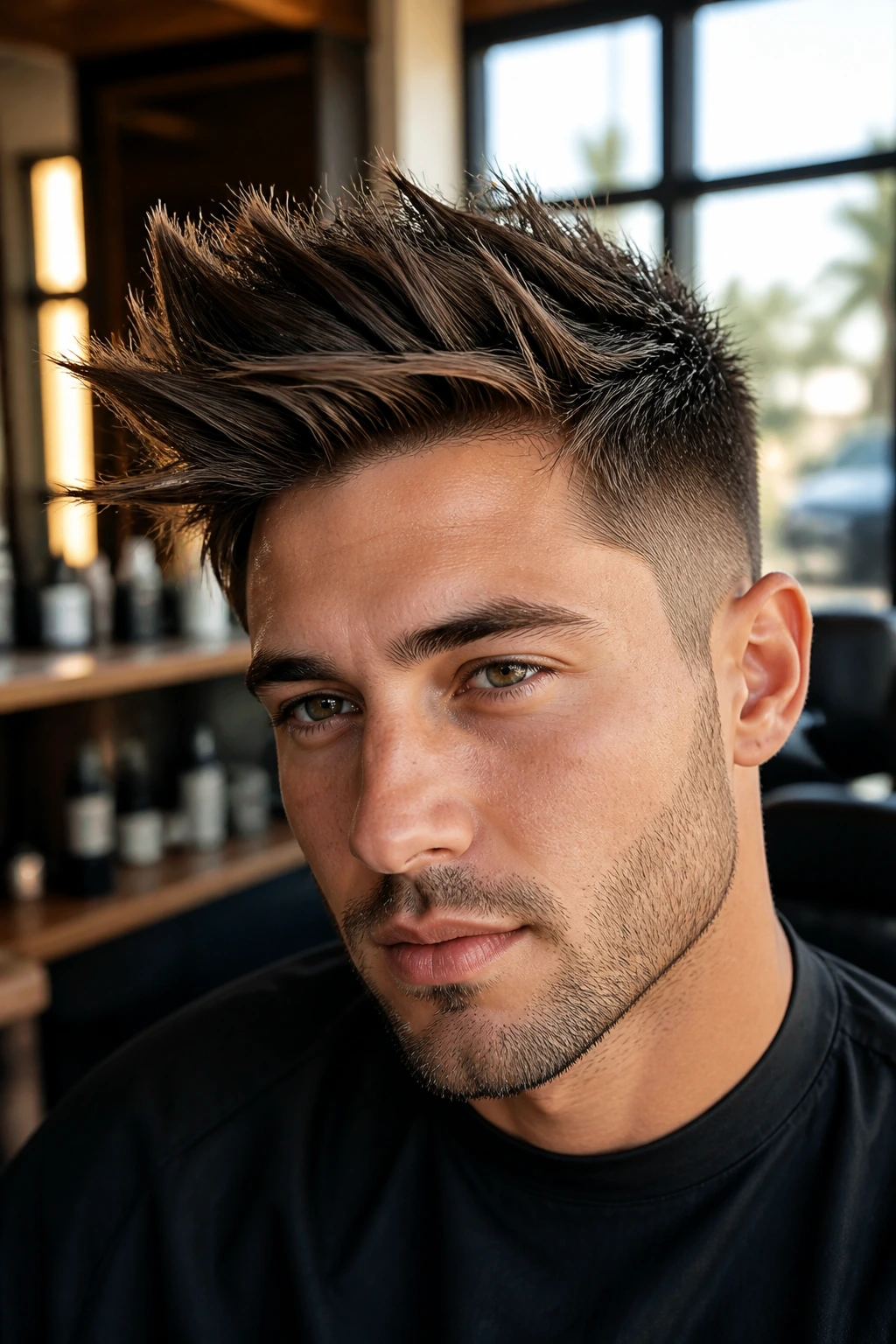
Longer spikes in the front give you more room to push, twist, or redirect stubborn growth patterns. If you have a cowlick near the hairline, this is often the easiest way to work with it instead of against it.
The top should be shorter toward the crown and a little longer at the front, so the style has a natural slope. That shape helps the spikes stand without looking random. Use a blow dryer first, then apply product to the front pieces only. A lot of guys overwork the crown and flatten the very section that should stay clean. Leave it alone. The front gets the drama; the back does the support.
13. Curly Spikes
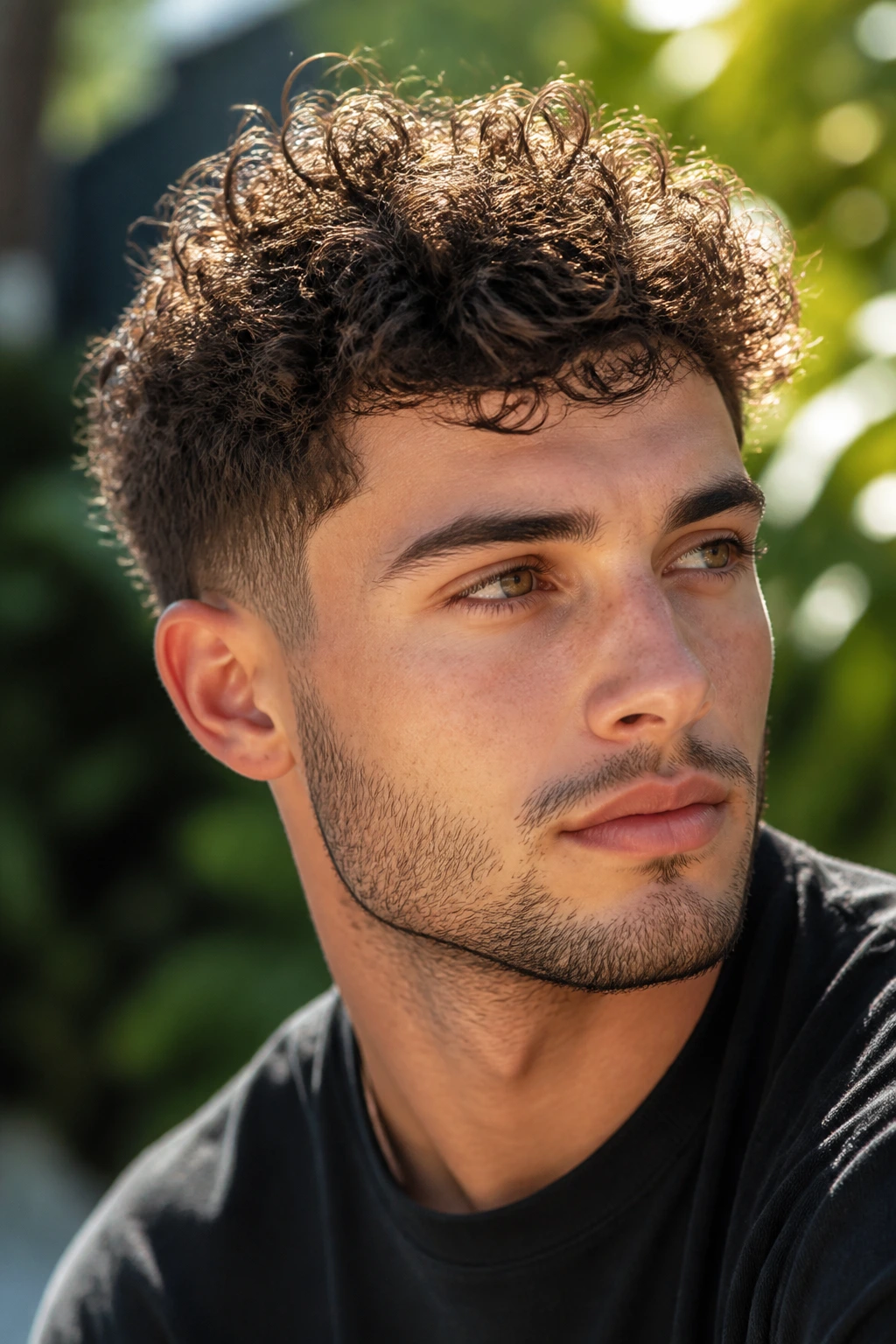
Curly hair doesn’t need to be bullied into straight lines. The better move is to let the curl ends form the spikes for you. The result looks softer and more expensive than a stiff gel job ever will.
Ask for enough length on top to preserve the curl pattern, then trim the sides tighter so the top stands apart. Use curl cream or a light mousse on damp hair, scrunch upward, and diffuse on low heat if you have the time. The finish should look piecey, not plastered. Curly spikes have a built-in advantage: movement. Don’t waste it by over-control.
14. Wavy Spikes
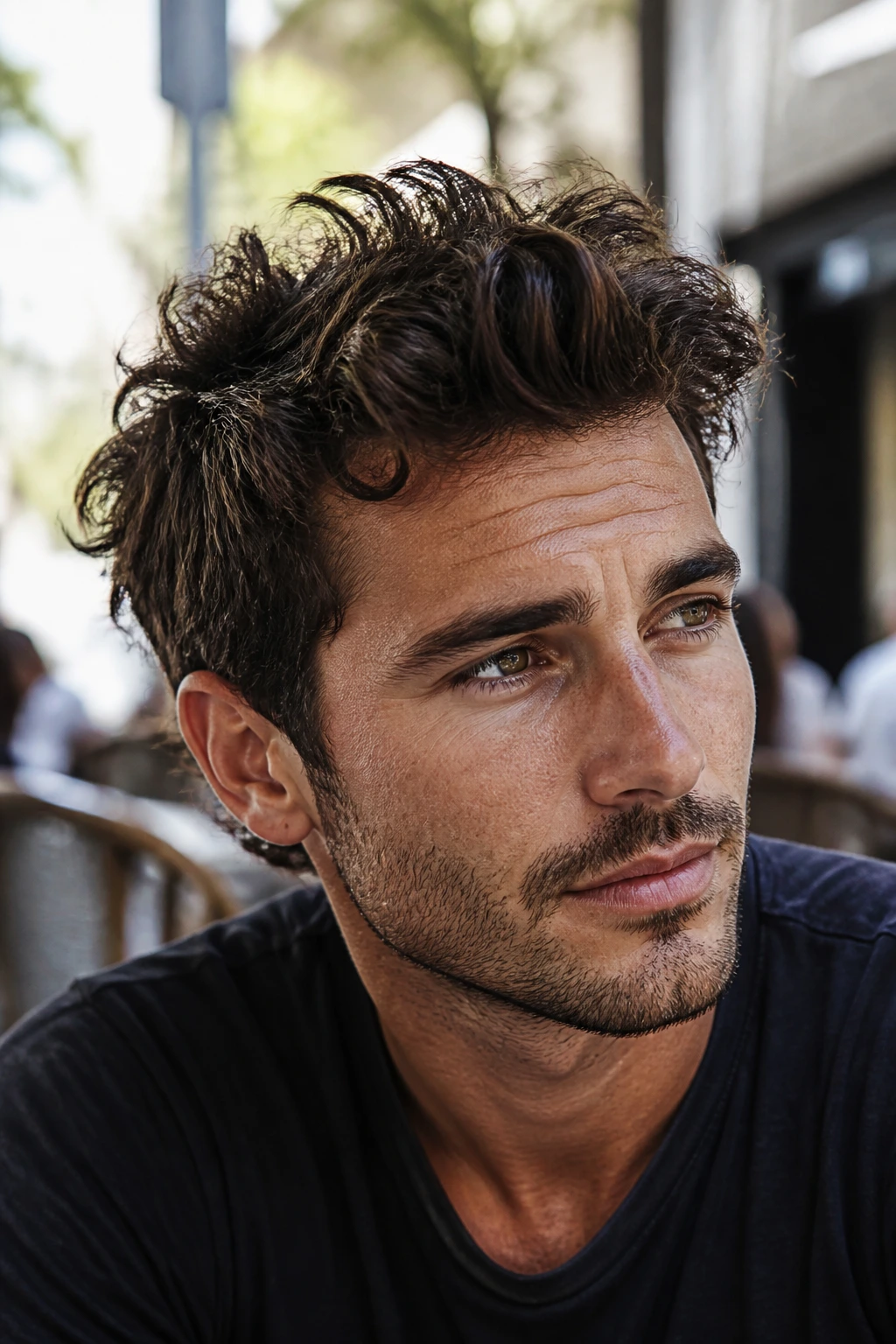
Wavy hair gives you broken, uneven peaks that already look textured without much help. That’s why this version feels easy. The shape comes from the wave, and your job is mostly to stop it from collapsing into one flat sheet.
A sea salt spray or light mousse works well here because it builds grip without coating the hair too heavily. Dry it with your fingers instead of a brush, and let some sections stay a little irregular. Straightening every wave out would be a mistake. The tiny bends are what make the spikes look alive. If the top gets too polished, the whole thing loses its edge.
15. Thick Hair Spikes
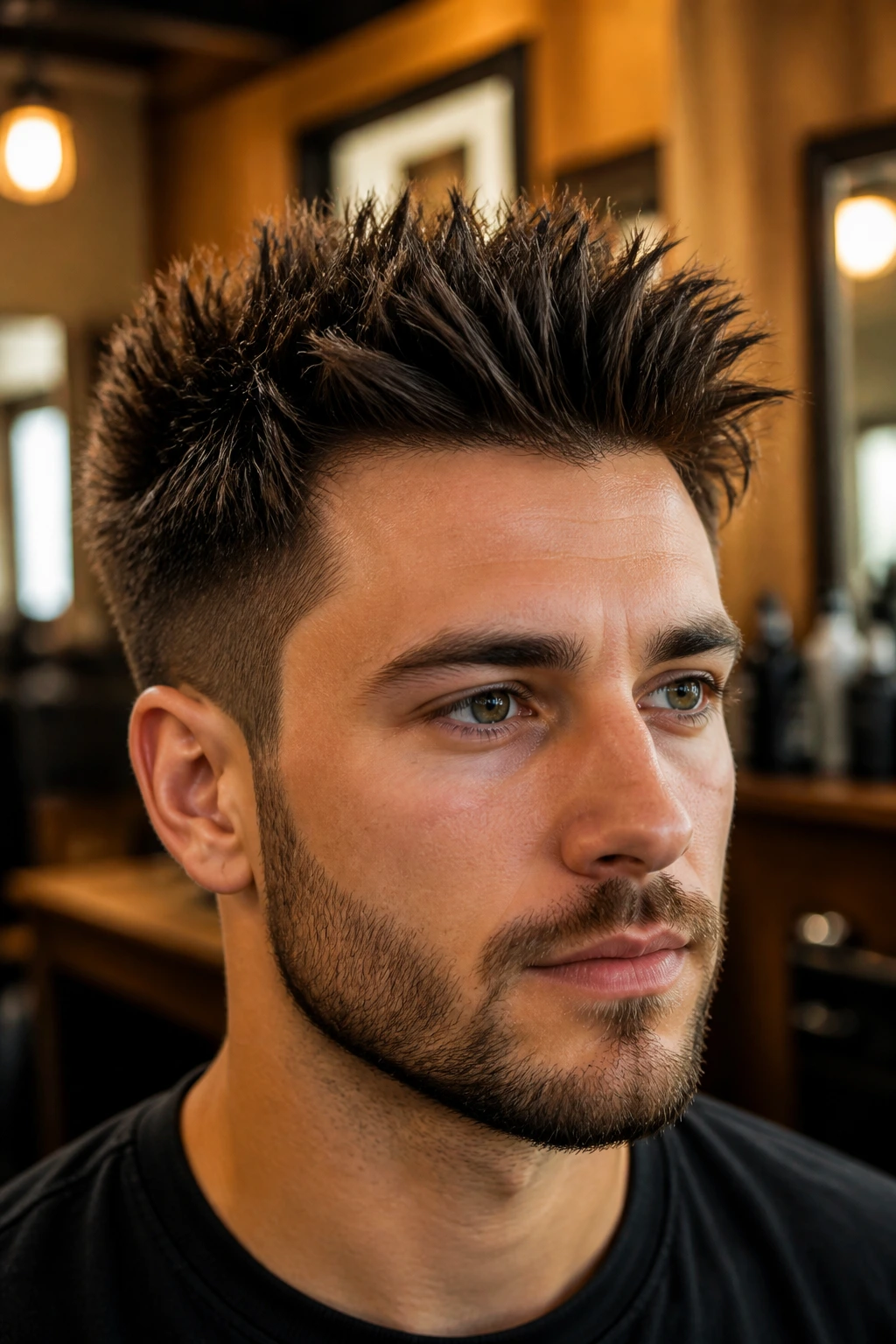
Thick hair can make a spike look huge fast, which sounds great until the top turns into a heavy ridge that sits instead of lifting. The barber needs to remove bulk with texture, not just take length off. Point cutting and internal thinning, done properly, make the difference.
At home, I’d reach for a medium-hold clay or fiber paste. Thick hair can handle a little more product, but not the shiny kind that weighs it down. Work in sections, starting near the roots. Then direct the hair upward with your fingers, not a comb. If the spikes feel too heavy, the cut probably needs more debulking before the styling product becomes the problem.
16. Fine Hair Spikes
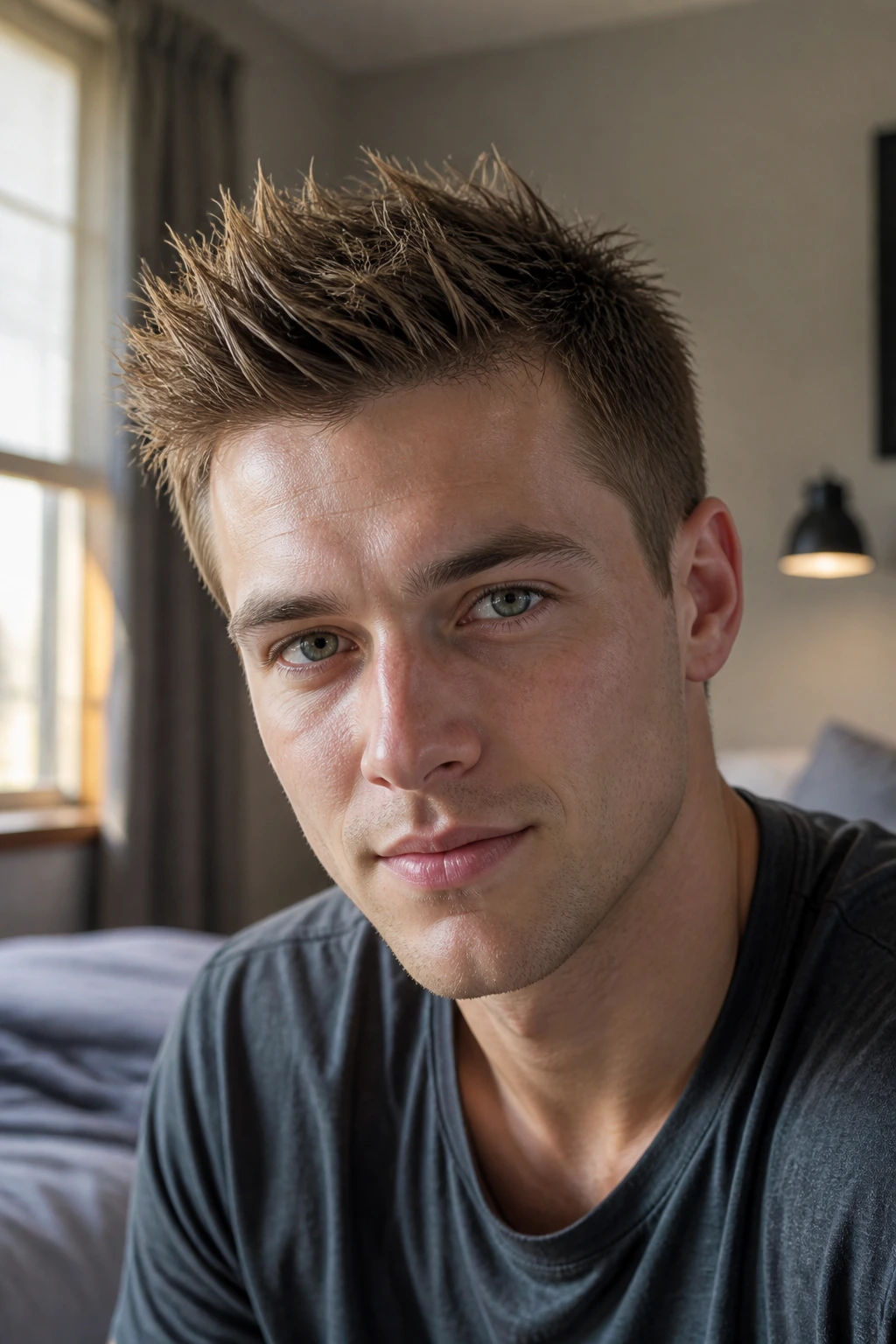
Fine hair needs a lighter hand and a smarter product choice. Too much cream or gel will separate the strands and make the top look thinner than it is. The best approach is lift first, product second.
A root-lift spray or light volumizing mousse helps fine hair get some body before you shape it. Blow-dry upward, then use a small amount of fiber or matte paste. Keep the spike points short and slightly messy so the scalp doesn’t show through between them. This is one of those styles where less shine is your friend. Shine exposes sparse spots. Texture hides them.
17. Pin-Straight Vertical Spikes
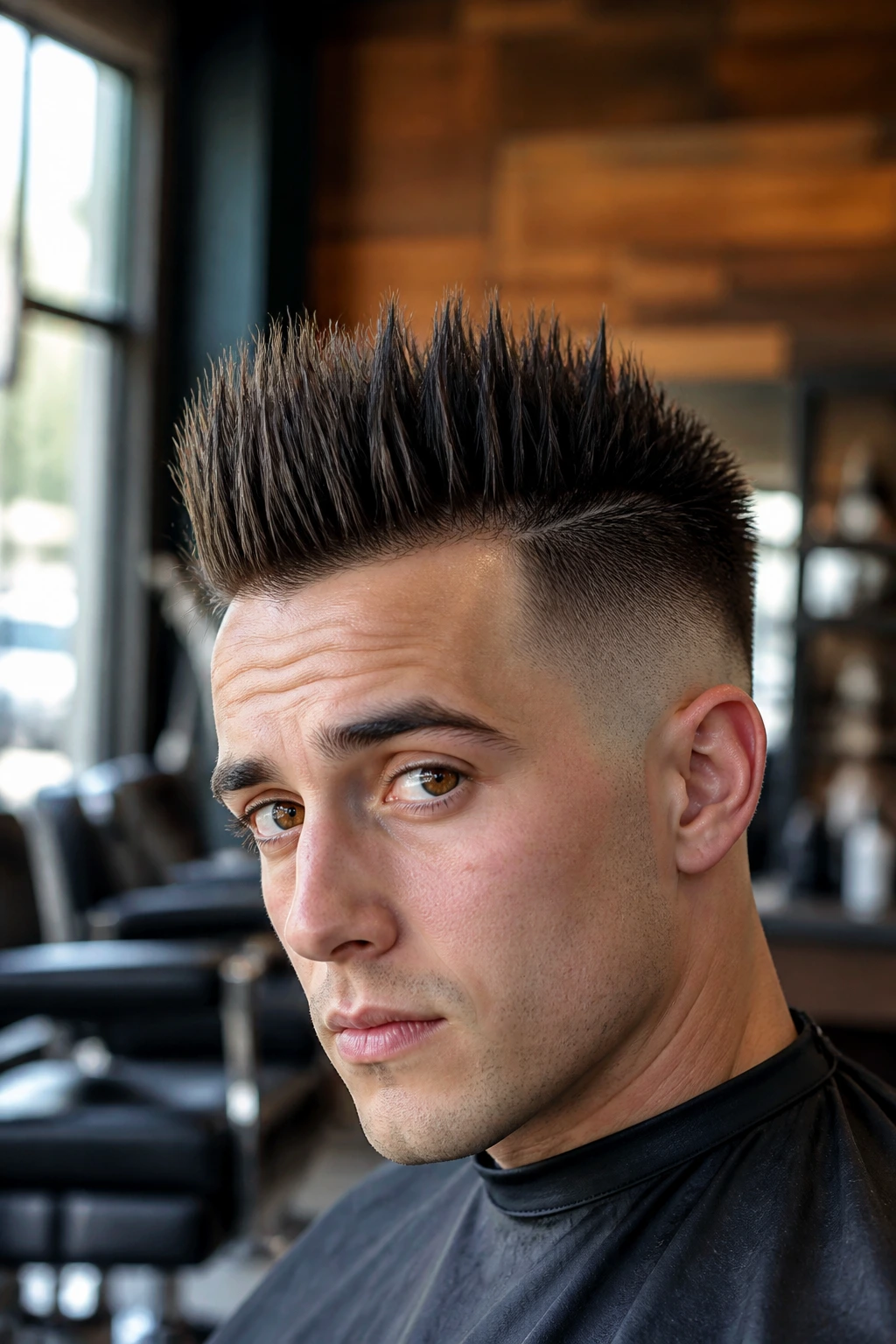
Straight hair can stand tall when the cut gives it enough structure. In some cases, it’s actually easier to build a vertical spike on straight hair because the strands don’t bend and fold the way wavy hair does.
The danger is stiffness. If the top is too long or the gel too heavy, the style goes from sharp to plastic fast. Ask for a clean fade on the sides and a top that’s textured enough to separate. A strong-hold gel or hybrid paste works best when warmed in the palms and applied from root to tip. Use a blow dryer if your hair is stubborn. Straight hair will obey, but it wants clear instructions.
18. Wet-Look Spikes
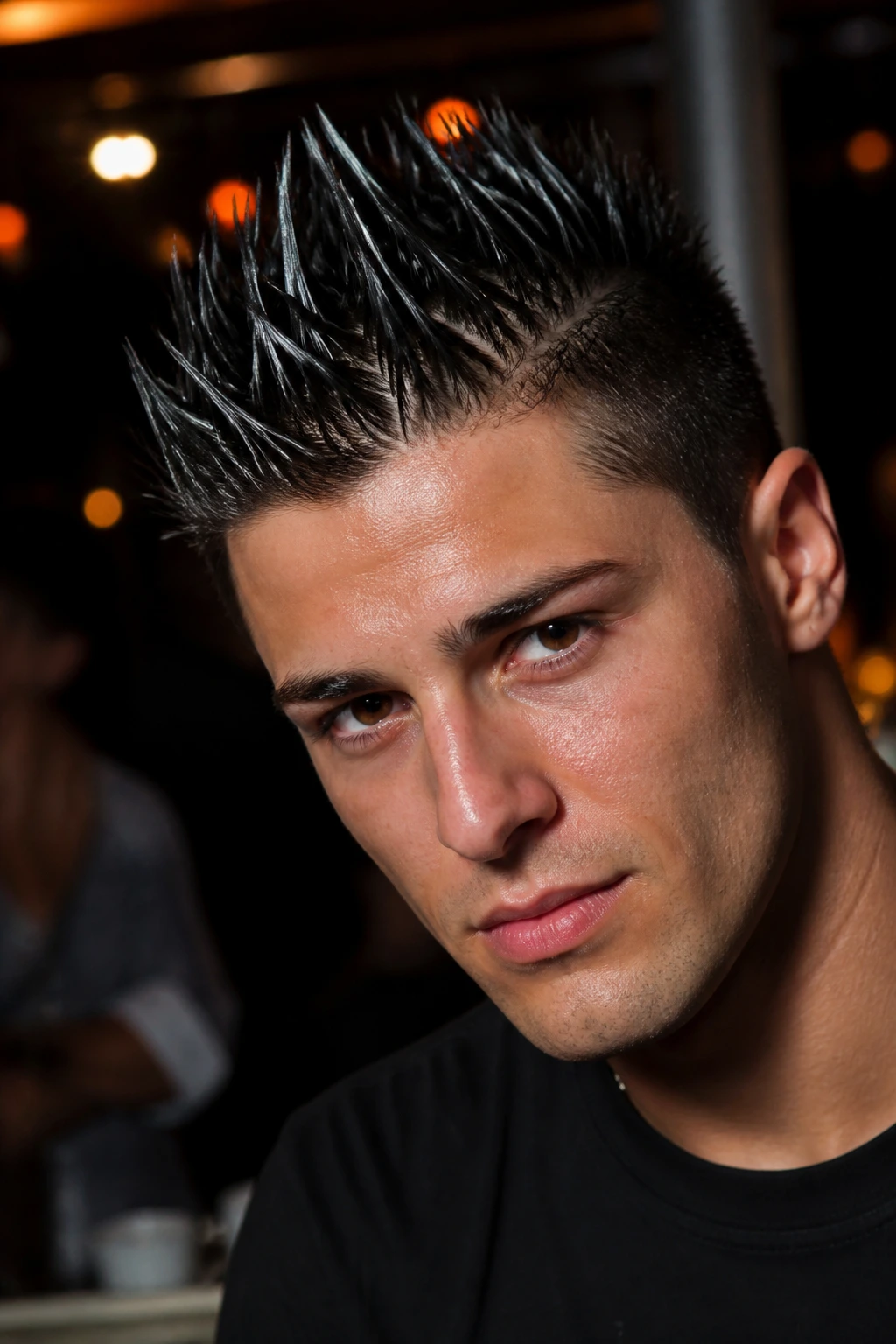
Wet spikes belong to the bolder end of the scale. They’re glossy, piecey, and a little more dramatic than the matte styles most guys wear every day. I like this look when the haircut has a clean silhouette and the outfit doesn’t already compete with it.
The product matters here. A gel or shine-heavy cream gives the finish, but the top still needs texture underneath or it turns into a shiny block. Shape the spikes while the hair is damp, then leave the front slightly separated so the shine hits the individual pieces. This style looks especially good under direct light, which is why it often feels stronger at night than in daylight.
19. Matte Clay Spikes
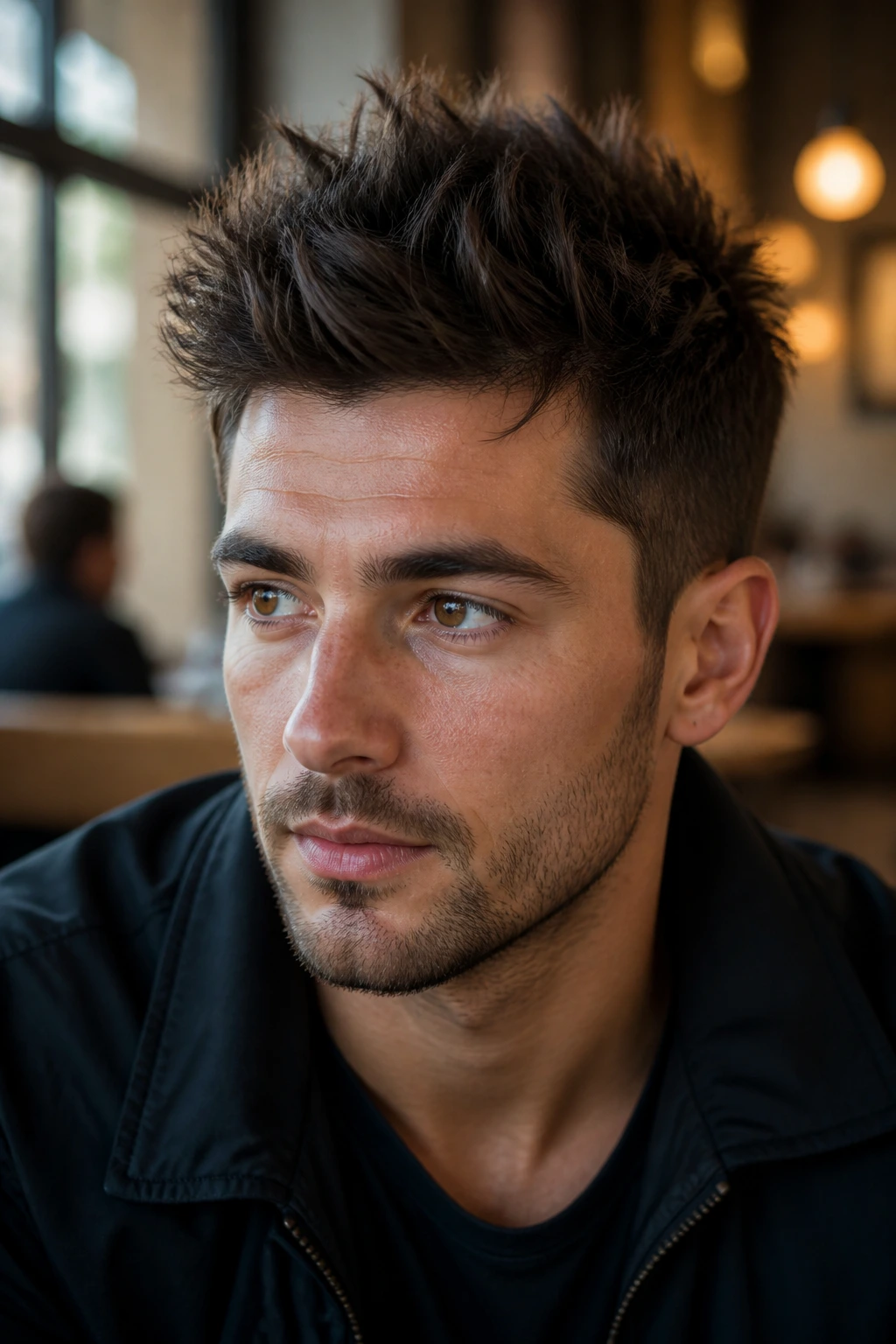
Matte clay is the sweet spot for men who want spikes without the obvious product look. The finish stays dry, rough, and touchable, which makes the haircut feel modern even when the shape itself is classic.
This version is easier to live with than glossy styles because it doesn’t shout from across the room. Use it on almost any texture, but it shines on short to medium top lengths where the hair can separate cleanly. Warm the clay in your hands, work it through dry or almost-dry hair, and pinch the ends into place. If the spikes look too neat, rake your fingers through once more and break them up. Better messy than molded.
20. Side-Spiked Sweep
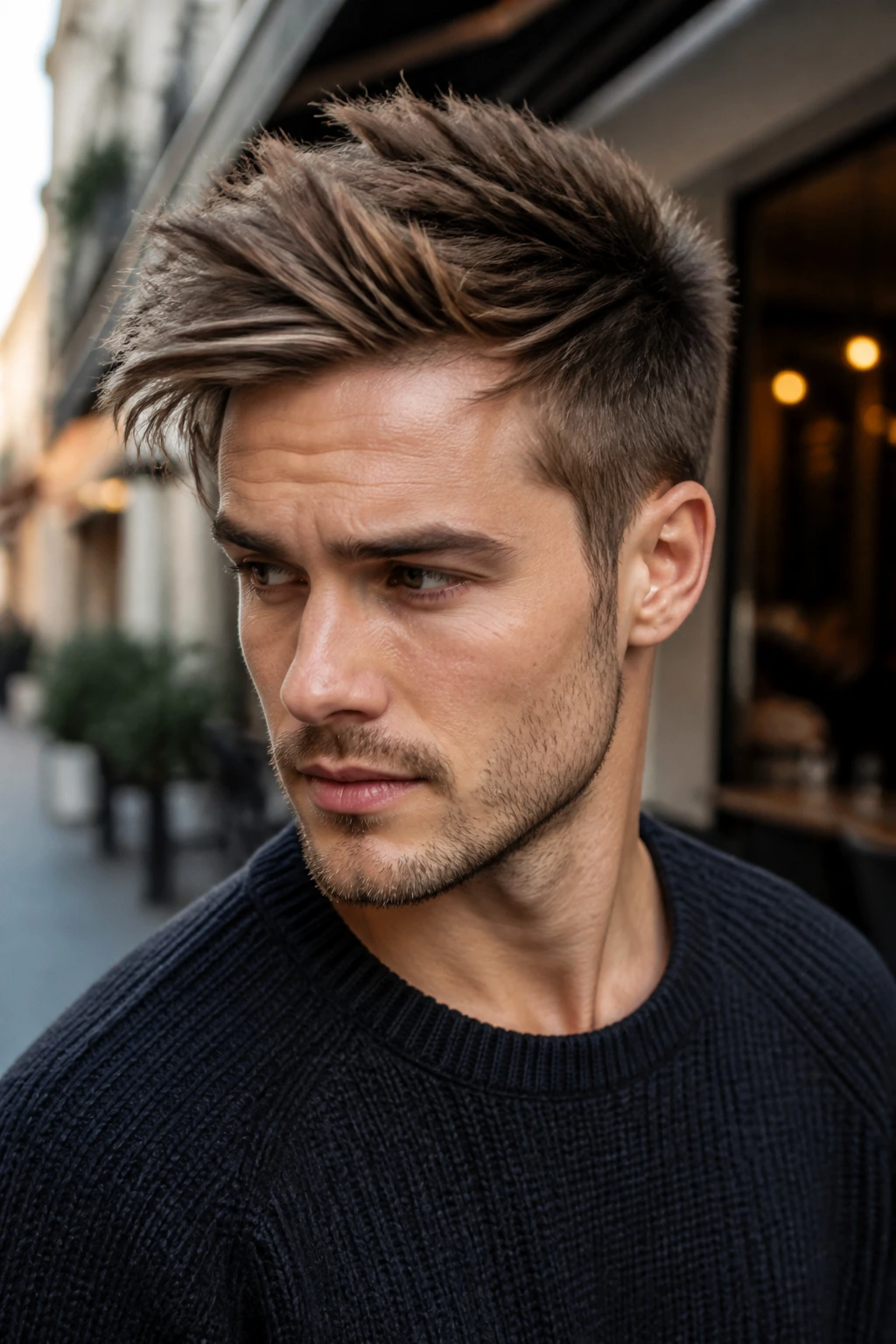
Not every spike needs to stand straight up. A side-spiked sweep pushes the hair diagonally, which softens the look and makes it a better fit for guys who want texture without the full upright effect.
This is a smart option if your hairline is high or uneven, because the diagonal motion takes attention off the center line. It also pairs well with a taper or low fade. Blow-dry the top toward the side you naturally part from, then twist small sections up at an angle with paste or fiber. The whole point is movement that feels intentional, not symmetrical. Symmetry can look stiff. Angled spikes don’t have that problem.
21. Hard-Part Spikes
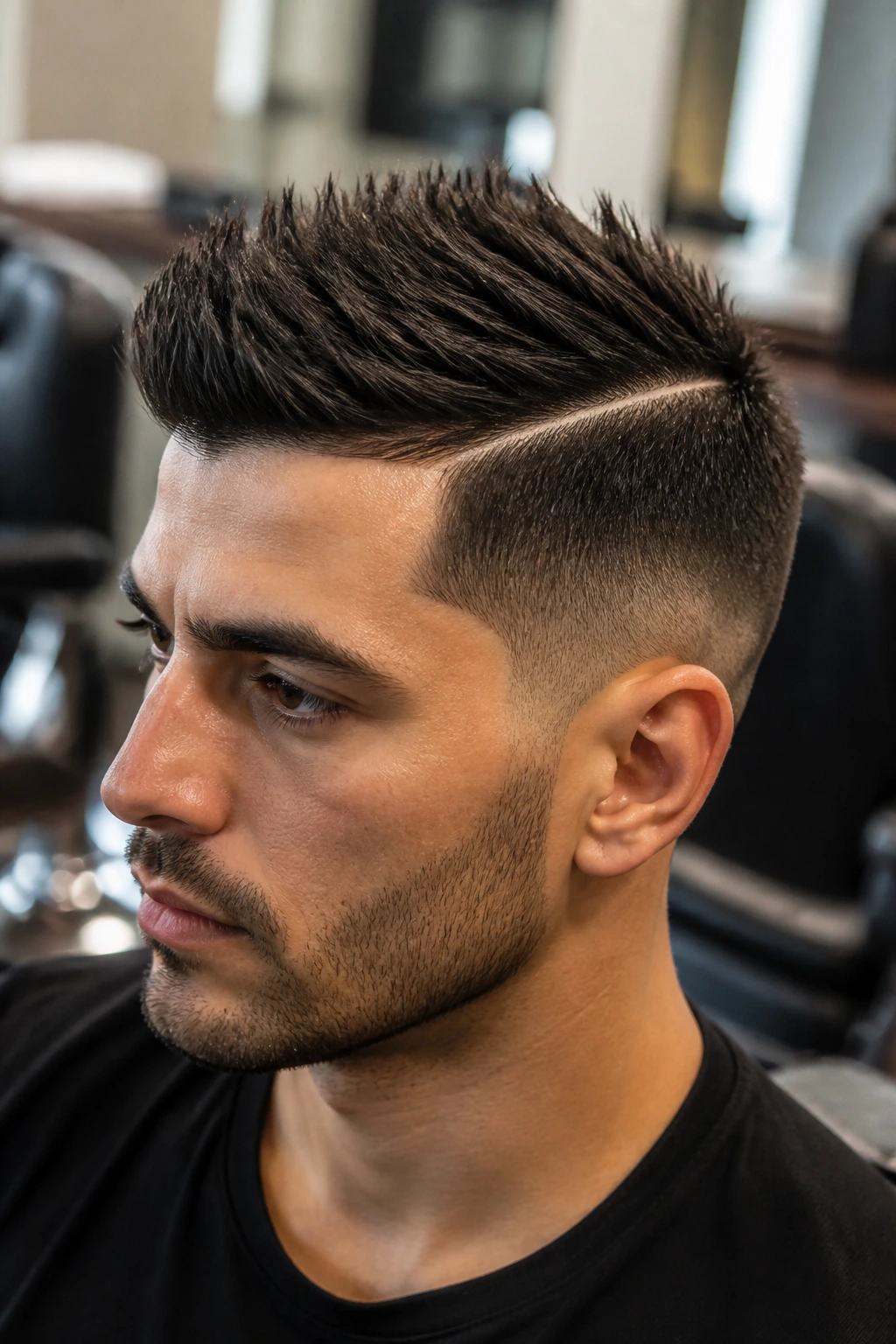
A hard part gives spikes a clean boundary. The shaved line says exactly where the top begins, which is handy if you like structure and don’t want the haircut to blur into the sides.
This style leans more formal than a messy spike, even when the top itself has rough texture. Ask for the part to be cut in sharply and kept visible as the hair grows out. The spikes on top can be short or medium, but they should never spill over the line. A matte styling product keeps the contrast crisp. If the part starts to disappear, the whole cut loses that precise, barbershop finish.
22. Burst Fade Spikes
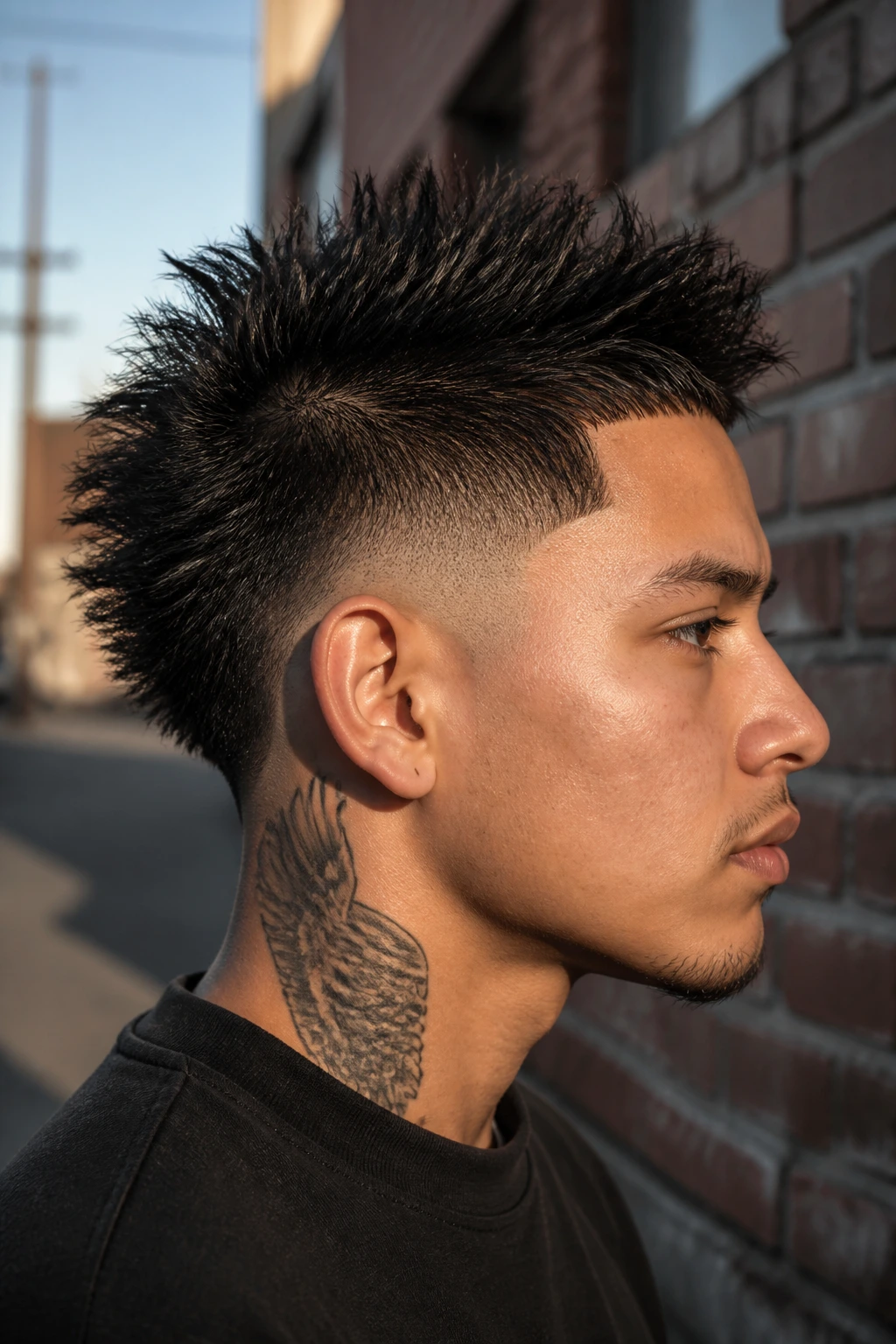
A burst fade curves around the ear and leaves the top and back connected in a rounded shape. With spikes on top, that curve makes the haircut feel more sculpted than a standard fade. It’s a strong look from the side profile, which is where burst fades usually win.
This cut works nicely with a textured top that is a little longer through the center. The fade should hug the ear cleanly, then expand the spike shape upward. A strong matte paste or clay keeps the profile from collapsing. The only thing to watch is balance; if the top gets too wide, the burst fade loses its clean arc. Keep the sides tight and the top narrow enough to read clearly.
23. Temple Fade Spikes
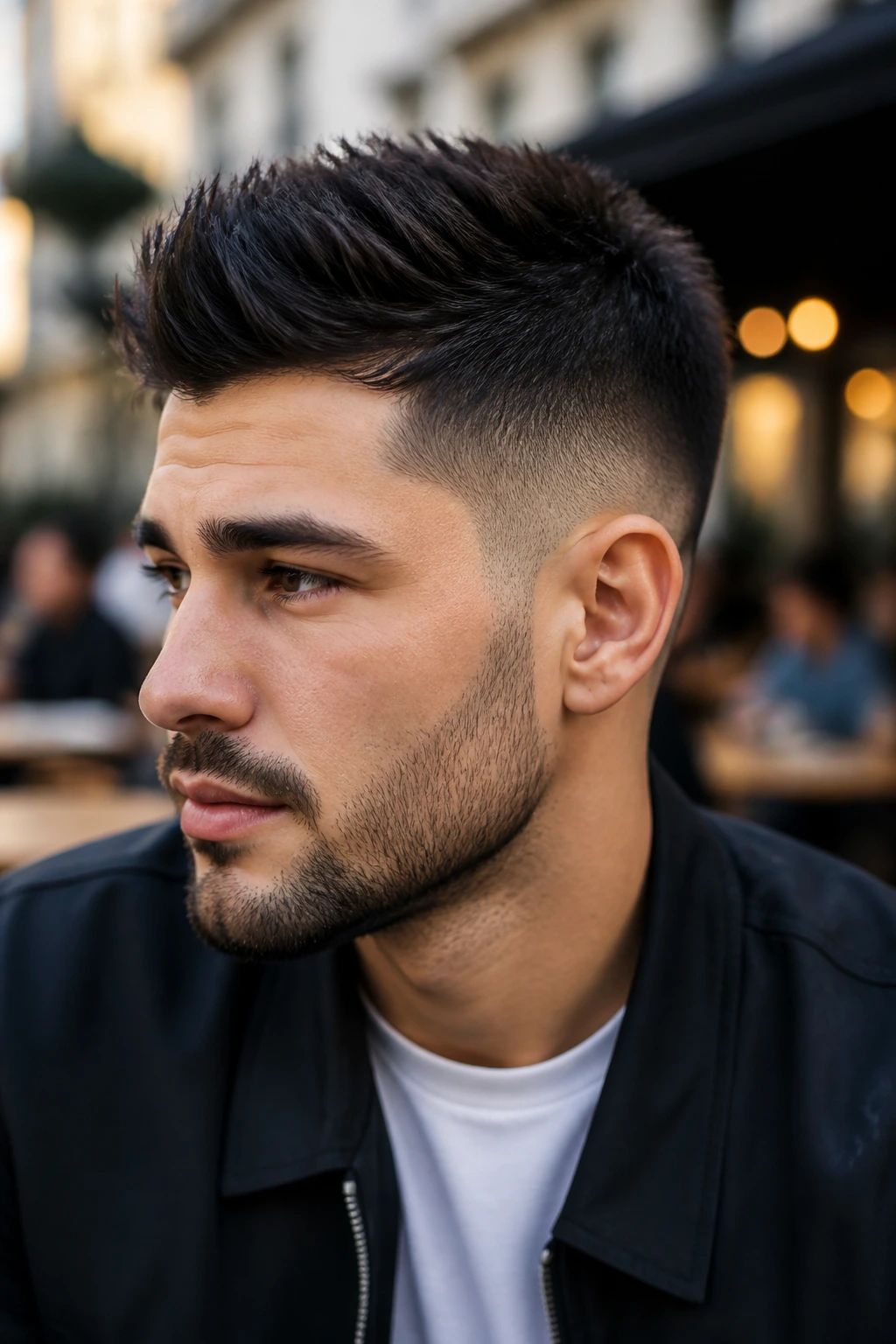
Temple fades clean up the corners around the temples and sideburns, which gives spikes a sharp frame without taking the entire side down too far. It’s a neat middle ground for guys who want precision but not a full skin fade.
This version is especially good with glasses or a beard because the temple area stays tidy instead of busy. Ask the barber to keep the top textured and the temple fade tight enough to define the face. The spikes themselves can be modest. They don’t need to be tall to look fresh. Sometimes a controlled front and crisp temples are all you need.
24. Spiky Fringe Cut
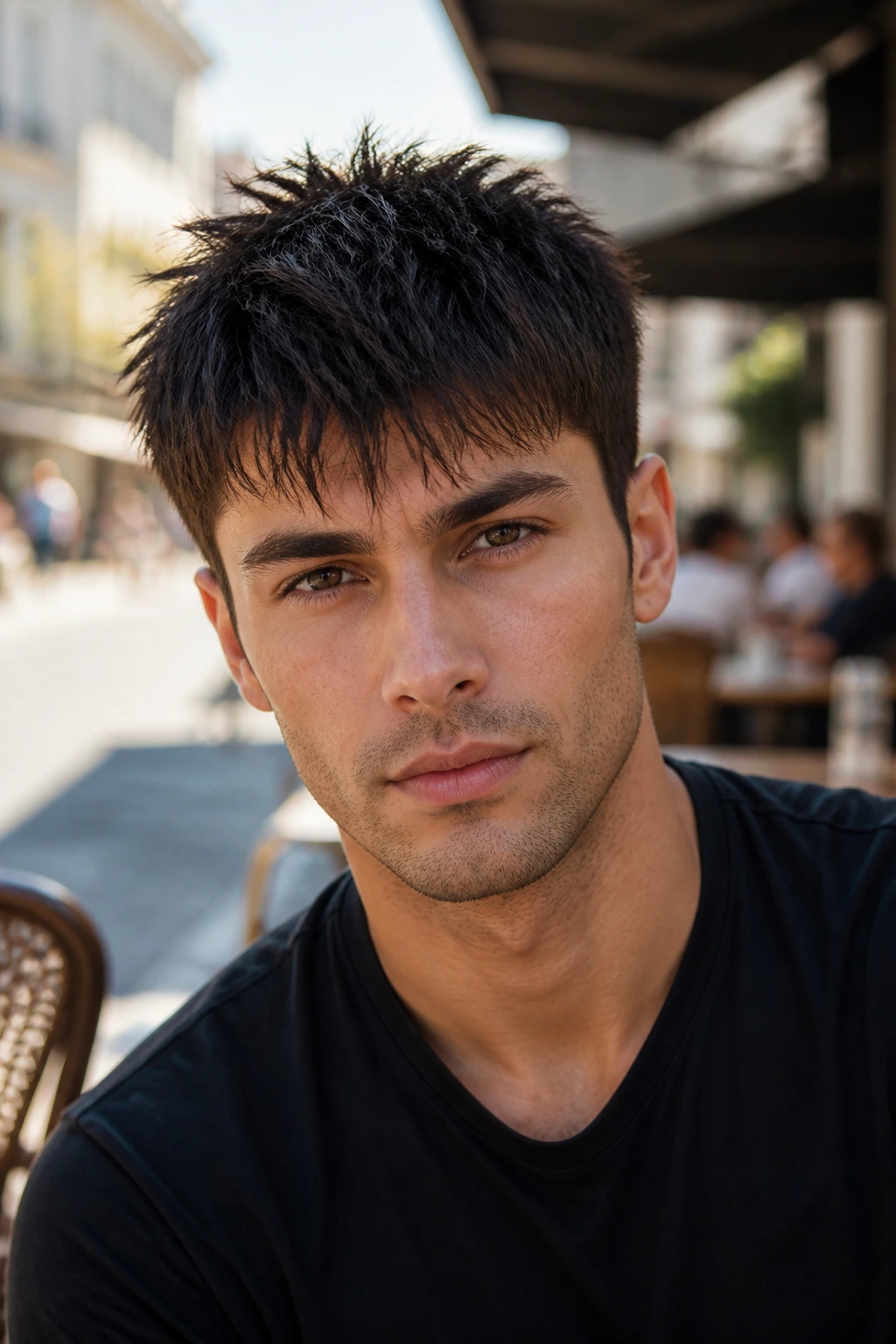
A spiky fringe cut puts the energy in the front rather than the whole top. The fringe is cut with texture, then styled into separated points that sit just above the forehead or slightly forward over it.
This one reads younger and more casual, but it’s not childish if the sides are shaped well. It works on straighter hair especially well, because the front can hold those little points without curling back down. Use a light paste or wax and keep the finish soft. The fringe should move when you do. If it looks glued to the forehead, the product is too heavy or the front is too short.
25. Beard-Blend Spikes
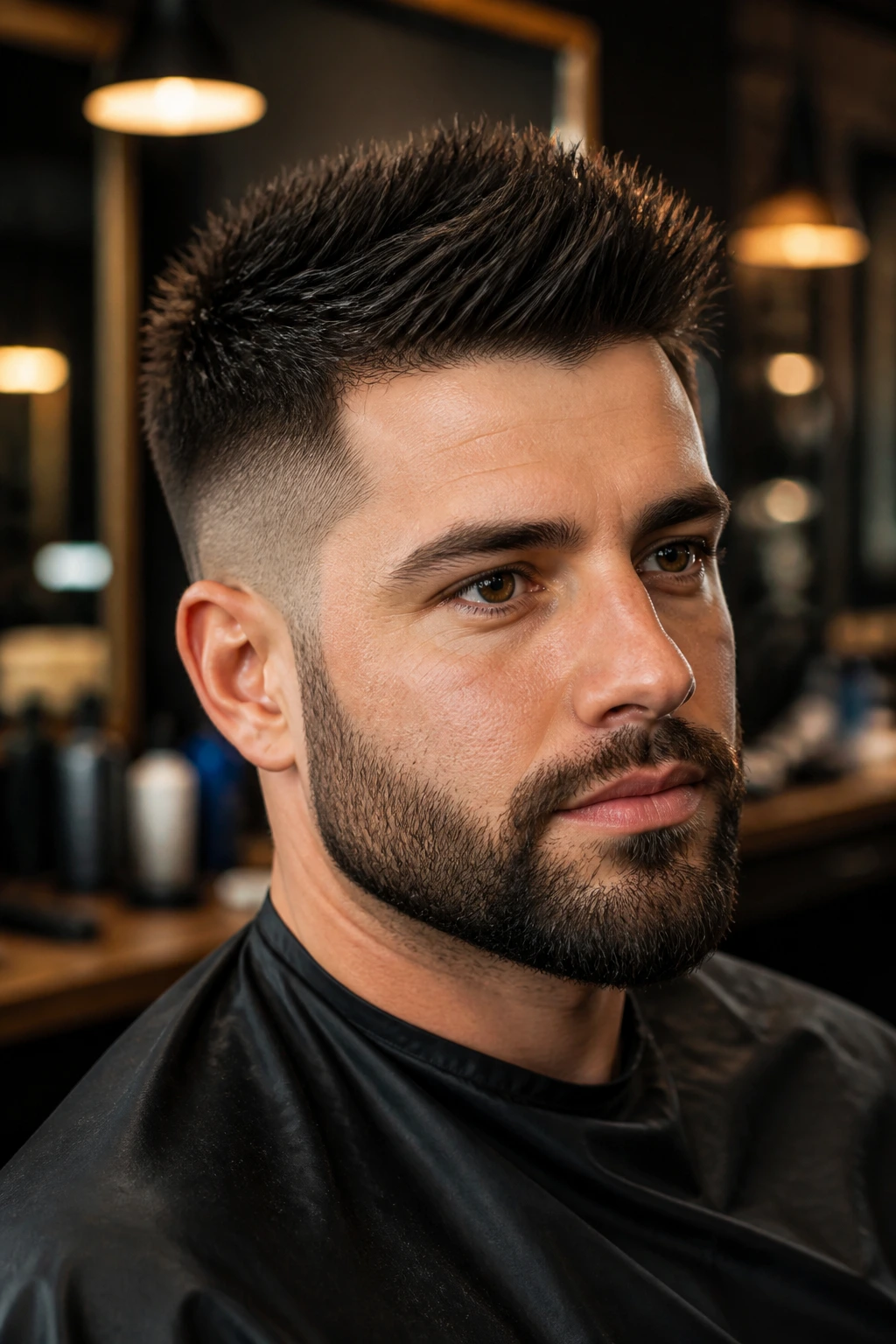
If you wear a beard, the haircut should talk to the beard, not fight it. Beard-blend spikes keep the top shorter and cleaner through the sides so the transition into facial hair feels smooth and balanced.
This is where the fade or taper earns its keep. The spikes on top don’t need huge height; they just need enough lift to keep the face from feeling bottom-heavy. A little extra length through the front helps, especially if the beard is full at the jaw. Keep the neckline sharp and the top textured. Otherwise the whole style starts to look like two separate grooming jobs that never met.
26. Salt-and-Pepper Spikes
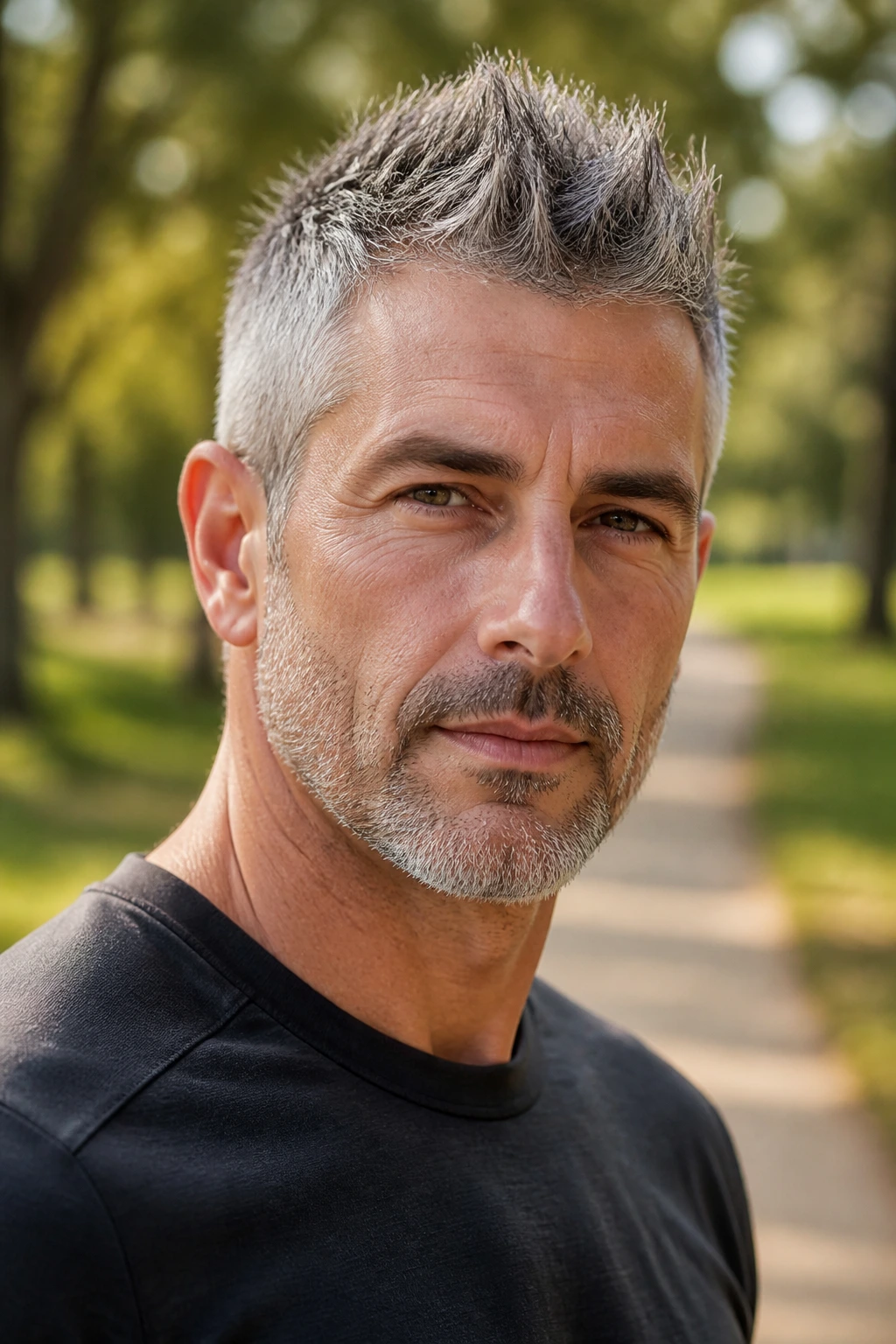
Gray hair changes the whole conversation. Salt-and-pepper spikes have a built-in contrast that can look excellent when the cut stays tight and the finish stays clean. The silver strands catch light differently, so the texture shows up fast.
This is not the place for heavy gloss. Too much shine can make the gray look wiry. A matte paste or light cream keeps the shape controlled without dulling the color pattern. Short to medium top lengths work well because they let the salt-and-pepper mix read clearly. If the hair is coarse, a little warmth from the blow dryer helps the spikes stay where you put them.
27. Colored-Tip Spikes
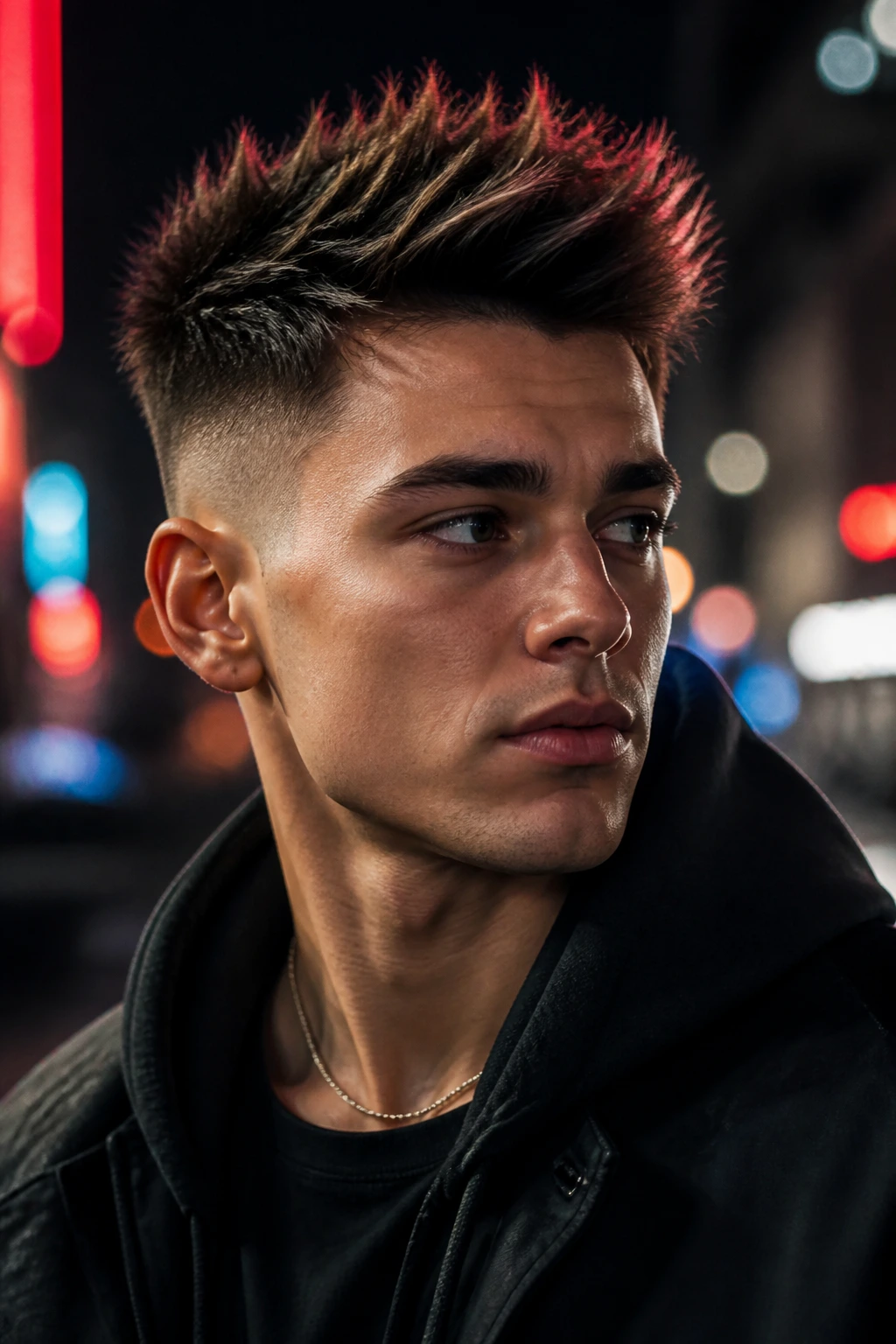
Colored tips are for men who want the texture to show first and the color to show second. A little bleach, silver toner, or a soft dyed end can make the spike points stand out without turning the whole head into a statement piece.
The trick is restraint. Keep the color on the ends or on the upper third of the hair, not the whole top, unless you want a much louder result. This style works best on a sharp cut with a clear fade, because the contrast between dark sides and lighter tips gives the spikes shape. Use a color-safe product afterward. Dry, brittle ends ruin the line fast.
28. Modern Spiky Mullet
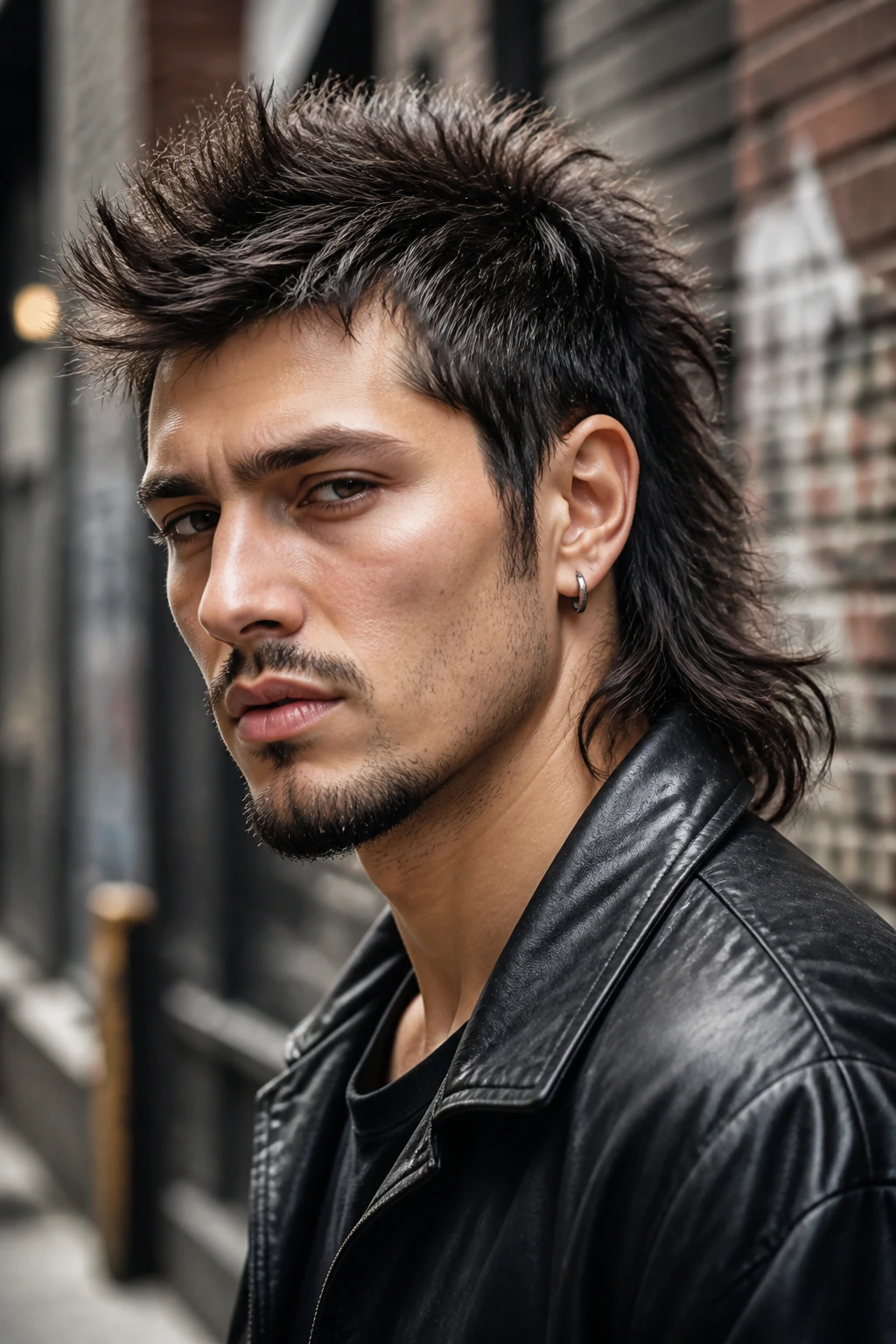
The spiky mullet sounds like a joke until you see a good one. Short, lifted spikes live at the front and crown, while the back keeps some length and movement. Done badly, it looks messy. Done right, it has real character.
This cut needs a barber who understands shape, not just short sides and long back. The front should stay textured and spiky, the crown should not puff up too much, and the back should sit long enough to read as intentional. It’s a bolder choice, sure, but not a random one. If you want a haircut with edge and a little swagger, this is the one that refuses to disappear into the crowd.
What Makes a Spike Hold Its Shape Instead of Falling Flat
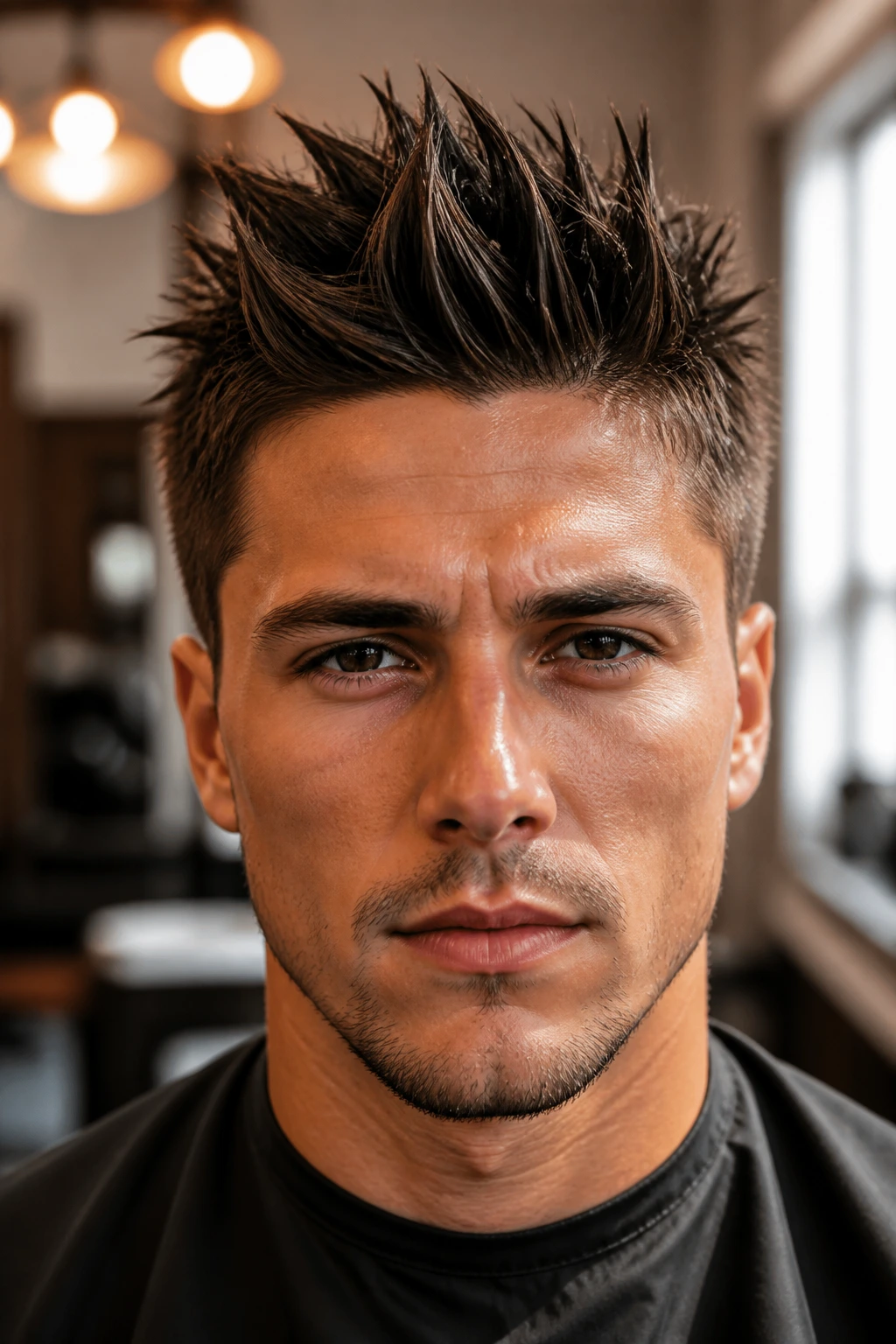
The cut is doing more work than the product. That’s the part people miss. A spike that collapses in twenty minutes usually has too much weight left at the top, too little texture in the ends, or a cowlick that was ignored at the barbershop. You can fight those problems at home for a while, but the haircut will keep winning.
Length matters in a very practical way. One to two inches on top is easy to control. Three inches gives you more height, but it also asks for better blow-drying and a product with enough grip to support the extra weight. If the sides are too bulky, the spikes look smaller. If the sides are tight, the top looks taller even when it isn’t.
Hair direction matters too. Some men can push straight up. Others need a slight forward angle or diagonal sweep to keep the top from splitting at the crown. That’s where a good barber earns their money: not by making every hair obey, but by cutting the hair so the natural fall works with the style instead of against it.
How to Ask Your Barber for Spiky Hairstyles for Men
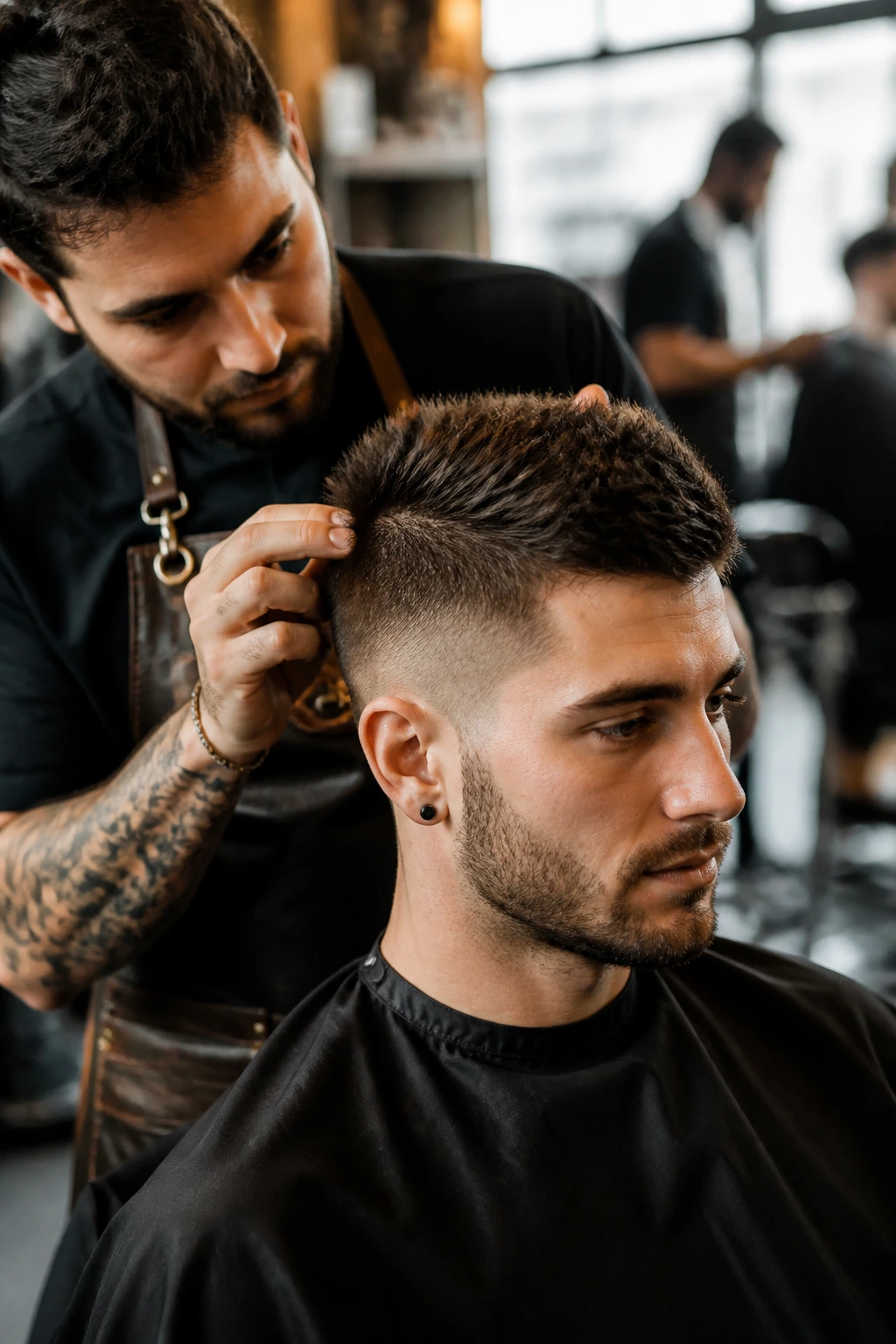
Say the shape first, not the product. “I want short spikes with a fade,” or “I want a textured top that I can push up and forward.” That tells the barber what the haircut needs to do before anybody starts talking about pomade or gel.
Then get specific about the top length. Two inches can look very different from three inches, especially if your hair is thick. Tell them whether you want the front longer than the crown, whether you want the sides tight, and whether the back should taper cleanly into the neckline. If you have a swirl at the crown, mention it. If you have a high hairline, mention that too. Those little details affect where the spike should start and where it should stop.
Bring one photo for shape and another for finish if you need to. One can show the fade. Another can show the texture. That helps the barber separate the haircut from the styling. The best spiky hairstyles for men usually start with a cut that already has a plan.
The Styling Products That Actually Matter
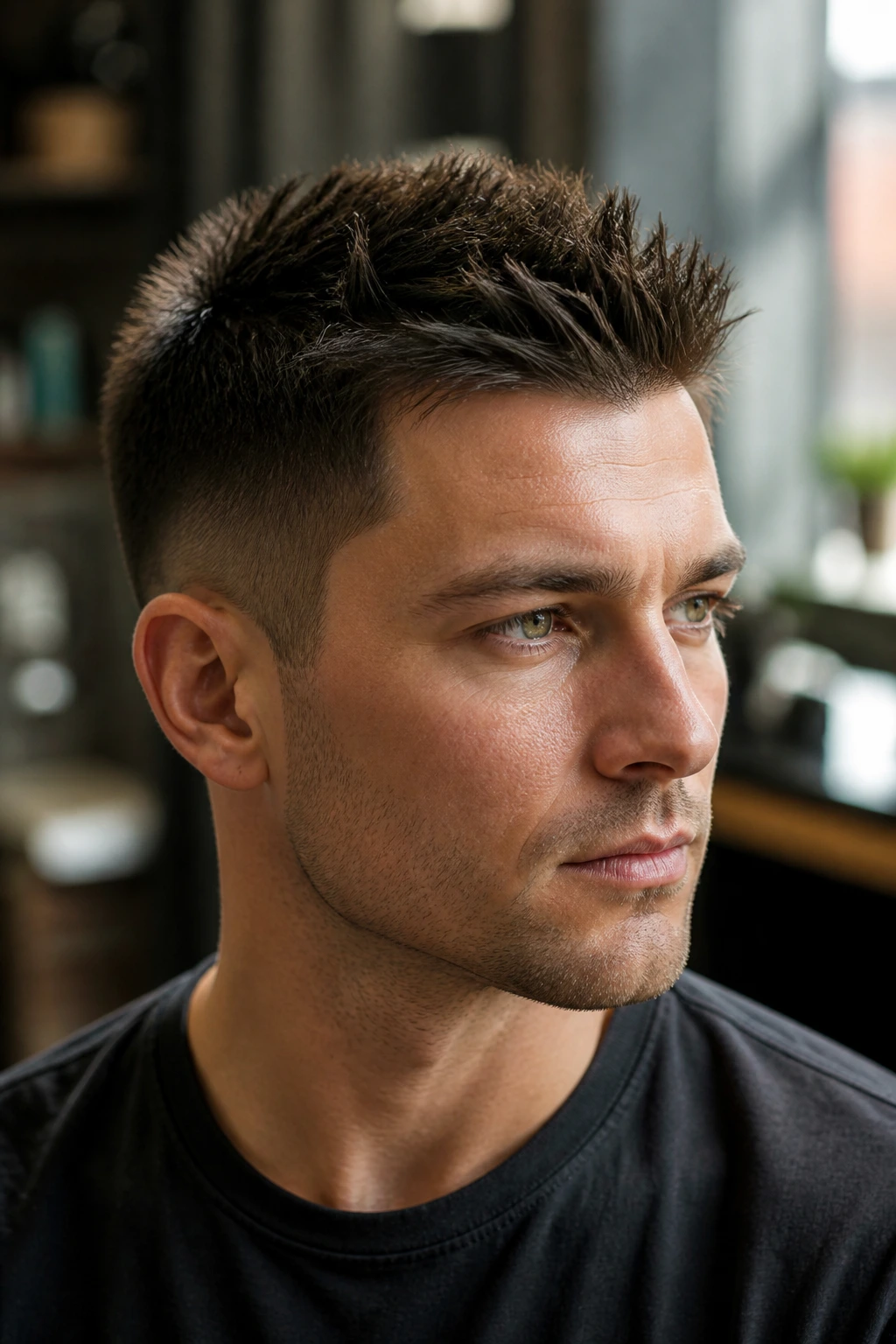
A spike doesn’t need five products. It needs the right one. Matte clay gives grip and a dry finish, which is why it works so well for short to medium spikes. Fiber adds thickness and is especially useful when fine hair needs a little more bite. Paste sits in the middle: pliable, easy to rework, and good for softer spikes that shouldn’t look crunchy.
Gel still has a place, but mostly when you want wet-look spikes or a very locked-in front. It’s the least forgiving option. If the hair is too dry or the gel too heavy, the spikes can flake or harden into tiny ridges. Sea salt spray isn’t a styler by itself, but it gives the hair roughness so the real product can hang on better. And hairspray is the final lock, not the main event. A light mist is enough. Soaking the top is how you get helmet hair.
Fine hair usually wants fiber or light paste. Thick hair usually likes clay or a stronger paste. Curly and wavy hair often do best with creamier products that define shape without flattening the natural movement. The product should match the hair, not the mood of the bottle.
Essential Tools for Spiky Hair
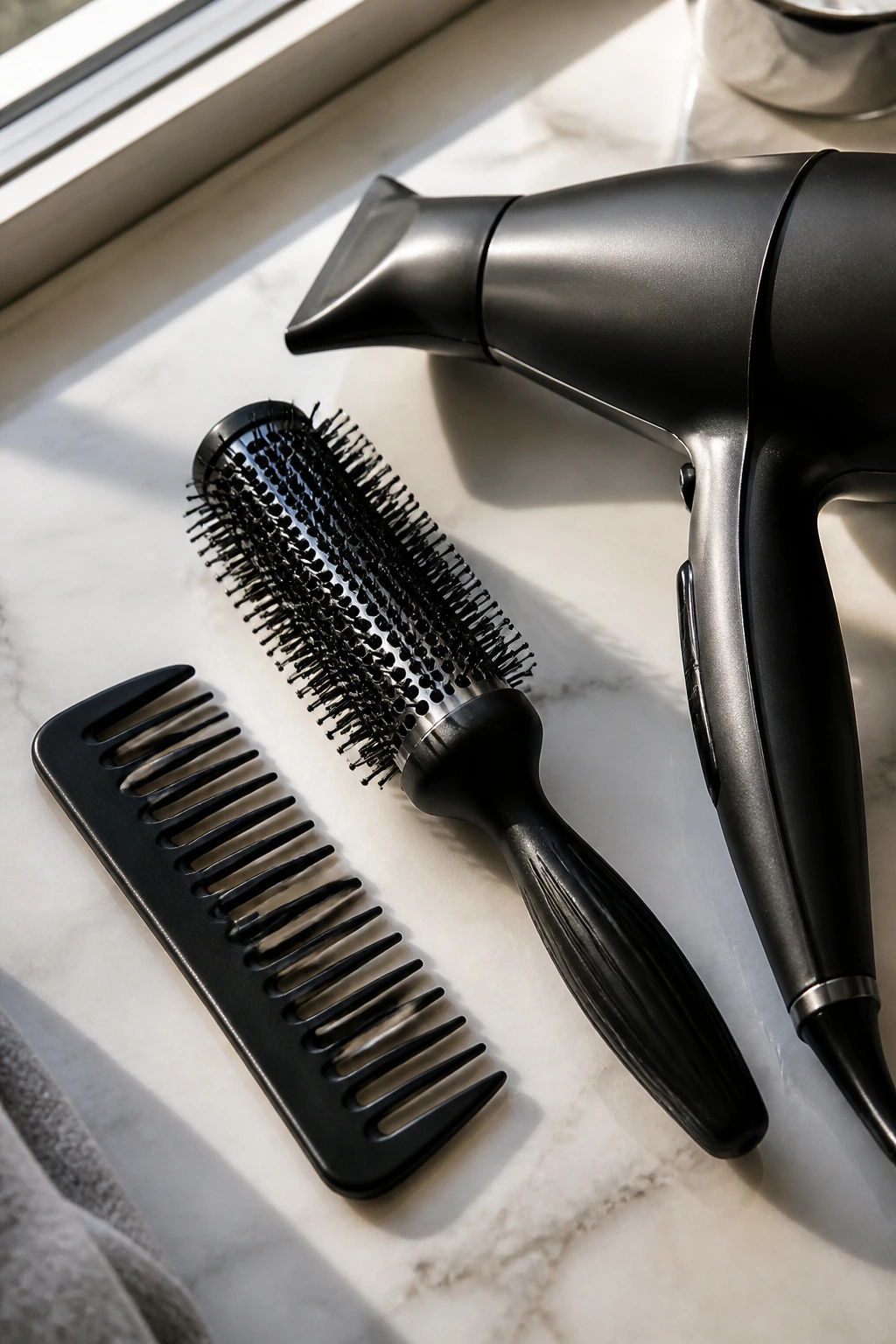
- Blow dryer with a nozzle attachment: Directs air at the roots so the hair lifts instead of drying in place.
- Vent brush or small round brush: Helps shape the front and give the top direction before product goes in.
- Wide-tooth comb: Useful for separating product through thick hair without ripping the texture apart.
- Fingertips: Not a joke. Fingers are the best tool for building piecey, irregular spikes.
- Matte clay, paste, fiber, or gel: Pick one finish, not all four.
- Sea salt spray or root-lift spray: Adds roughness and body before styling.
- Handheld mirror: Handy for checking the crown and back so the top doesn’t spike perfectly in front and collapse behind it.
- Towel or microfiber cloth: Rough-dry the hair without stripping away all the moisture before styling.
Smart Barber and Product Tips
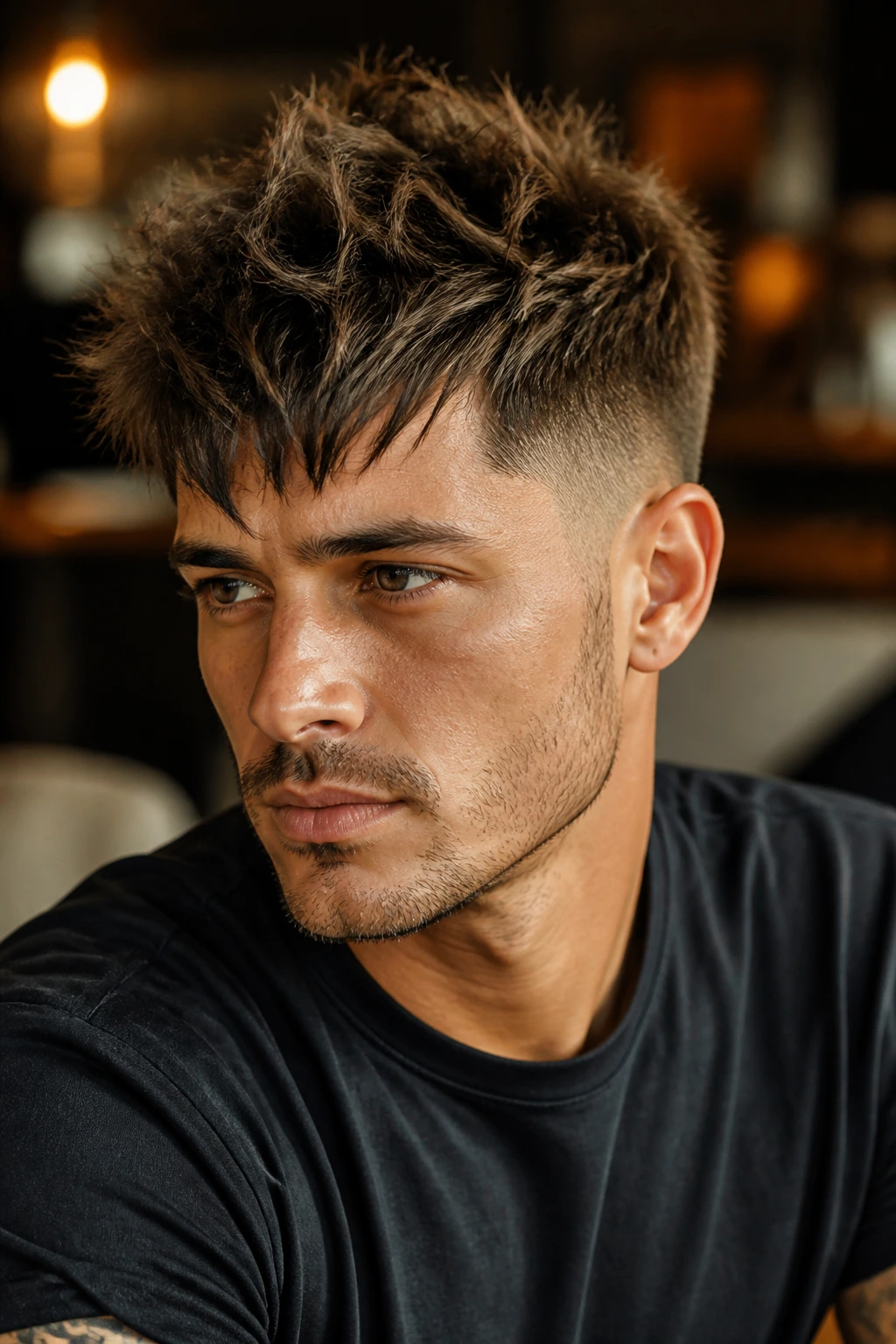
Pre-dry before you shape: Hair that is too wet won’t hold a spike, and hair that is bone dry can be harder to train. Aim for damp, not dripping. Blow-dry the roots first, then move to the ends.
Use less product than you think: A dime-sized amount can be enough for short spikes. If the top starts looking dark and slick, you’ve probably gone past the sweet spot. Add more only after the first pass is finished.
Work from back to front: That keeps the front from getting overloaded before you’ve even shaped it. The crown usually needs the least visible product and the most structural attention.
Finish by pinching, not smoothing: The whole point is to separate the ends. If your hands keep flattening the top, stop, shake them out, and go back in with dry fingertips.
Keep the sides in shape: Tight sides make spikes easier to read. Once the fade or taper grows out too much, the top loses contrast and the style turns vague fast.
How to Wear Spiky Hair Without Looking Overstyled
Office Setting: Keep the top shorter, the finish matte, and the spikes slightly forward instead of straight up. That gives structure without making it look like you spent half the morning in the mirror.
Off-Duty Texture: Let the ends stay uneven. A bit of bend and separation reads better with a casual shirt or hoodie than a fully polished shape ever will.
Beard Balance: A heavier beard usually wants a cleaner top. If the beard is full, don’t force giant spikes above it. Shorter, tighter spikes keep the face from getting crowded.
Face Shape: Round faces tend to benefit from extra height at the front. Longer faces usually look better with lower, forward spikes or a textured crop that doesn’t keep climbing upward.
Common Mistakes That Flatten Spiky Hair
- Using too much gel or pomade: The hair sticks together in one shiny sheet instead of breaking into separate spikes. Fix it by switching to a matte paste or cutting the amount in half.
- Skipping the blow dryer: Air-dried hair usually falls where it wants, not where you want. Lift the roots first or the style will collapse by lunch.
- Leaving the top too long: Heavy spikes fall over. If your hair bends more than it stands, ask for a shorter top or more texture through the ends.
- Ignoring the crown swirl: The crown can push hair in two directions and split the style. Work with the swirl, or direct the spike forward and slightly off-center.
- Trying to make every spike identical: That’s how the hair starts looking stiff. A few irregular pieces look better than a perfect row of little needles.
- Letting the sides grow too wide: Once the sides blur into the top, the whole shape loses contrast. Clean sides are not optional.
Variations and Adaptations to Try

Office-Ready Spike: Keep the top under 2 inches, taper the sides, and use a matte paste. It still looks sharp, but it won’t draw attention every time you turn your head.
Weekend Rough Texture: Start with sea salt spray, then add a little clay after the hair is mostly dry. This gives you that broken-up, casual finish that looks better the more it gets handled.
Curly Spike Hybrid: Leave the top long enough for curl definition and let the ends do the work. Use curl cream first, then a small touch of paste only on the tips.
Gray-Hair Clean Spike: If your hair has silver in it, keep the finish dry and the shape controlled. Gray shows texture fast, so a clean cut is enough; you don’t need heavy shine.
Beard-Connected Fade: Tighten the sideburn area and fade the top into the beard line. That one move makes the whole haircut feel more balanced, especially if your jaw is already strong.
Colored-Tip Accent: Add a light blond or silver lift to the ends only. It draws attention to the spike shape itself, which is a nice trick if the cut is simple and you want the texture to do more talking.
Keeping Spiky Hair in Shape Between Cuts
The haircut stays neat longer if you stop treating it like a one-day style. Spiky hair usually needs a trim every 2 to 4 weeks if the fade is tight, or a little longer if the sides are tapered. Once the top starts losing its shape at the ends, the spikes become harder to rebuild.
Shampooing every day isn’t mandatory. In fact, some hair behaves better with fewer washes because a little natural oil helps the product grip. Rinse or clean the scalp as needed, then dry the roots before restyling. If you wake up with the front bent wrong, a damp hand and a quick blast from the dryer usually fix it faster than starting from scratch.
A silk or satin pillowcase can help if your hair gets crushed overnight. So can sleeping with the top dry and loosely set, not wet and flattened under a pillow. Wet hair plus sleep is a recipe for odd bends and a flat crown. Nobody needs that.
Frequently Asked Questions
What hair length works best for spikes?
Most men do well with 1 to 3 inches on top, depending on thickness and the style you want. Shorter lengths give cleaner, tighter spikes; longer lengths allow more lift but need better control and product.
Can thin hair pull off spiky styles?
Yes, but keep the product light and the spike points short. Fine hair usually looks better with a matte fiber or texture spray than with heavy gel, which exposes the scalp and clumps the strands.
Do curly or wavy hair types work for spikes?
They do, and sometimes they look better than straight hair because the ends have built-in movement. The trick is to shape the curls or waves rather than flatten them into a fake straight spike.
How do I stop the crown from splitting?
Leave enough length at the crown, then direct the hair slightly forward or off-center when you blow-dry. If the split keeps coming back, the cut likely needs better blending through the swirl.
Is gel or clay better for spiky hair?
Clay is better for a dry, modern finish. Gel is better when you want a wet, hard set. Most everyday spikes look more natural with clay, paste, or fiber.
How often should I get the cut cleaned up?
If you wear a tight fade, every 2 to 4 weeks keeps the shape crisp. Tapers can stretch a little longer, but once the sides widen out, the top loses its clean read.
Can I style spikes without a blow dryer?
You can, but the result is usually softer and less controlled. If your hair is already cooperative, fingers and product may be enough. If not, the dryer gives you the root lift that product can’t fake.
What if my spikes look crunchy?
That usually means too much gel or too much product spread unevenly. Start over with less product, warm it in your palms, and work it through hair that’s damp instead of soaking wet.
Sharp Last Impression
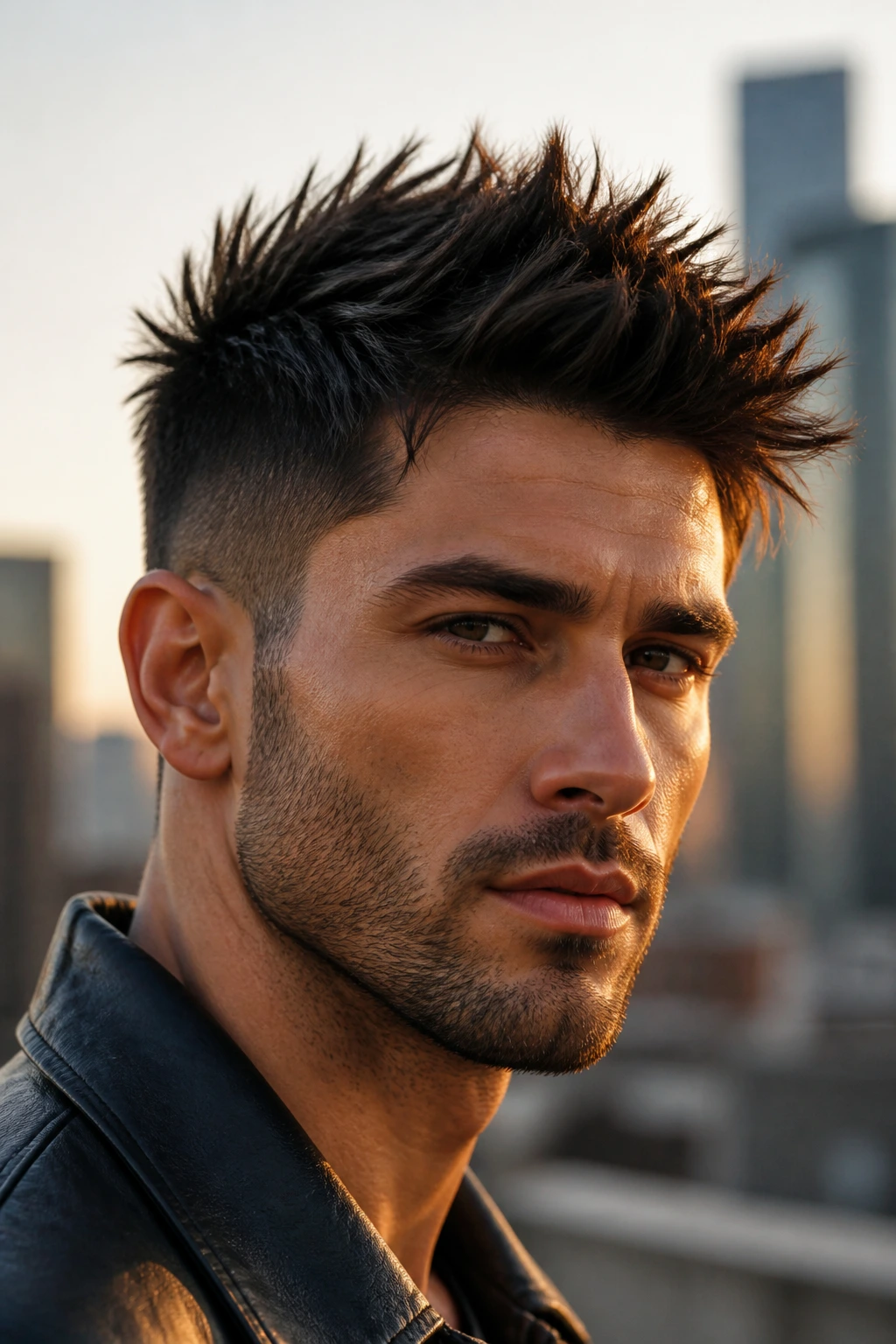
Spiky hair works because it gives men a fast, readable shape. Clean sides, textured top, and a finish that matches the haircut’s personality—that’s the formula, whether the style is short and subtle or sharp enough to turn heads. The details are small, but they matter more than most people think.
The best part is how flexible the look is. You can wear it polished, rough, glossy, matte, cropped, faded, or paired with a beard that changes the whole silhouette. Get the cut right, choose the product for your hair type, and the style stops being a daily battle. It starts behaving like a haircut that knows exactly what it’s doing.
