



Spiky hairstyles for short hair work because they turn a modest amount of length into shape in seconds. At around 1 to 2 inches on top, you can build lift with a blow dryer, a pea-size scoop of matte clay, and your fingers; much longer than that and the same cut starts to bend, clump, or flop unless everything is handled with a lot more care. That tiny difference matters. It’s the difference between clean texture and hair that stands there like it lost an argument.
What usually goes wrong isn’t the spike itself. It’s the structure underneath — sides left too wide, the top cut too blunt, or a wet, glossy finish that glues everything into one shiny ridge. Good spikes feel separated, touchable, and a little alive. The cut does half the work before product even shows up.
And that’s why the best short spiky styles aren’t one-note. Some are crisp and barber-sharp. Some are messy enough to look effortless. Some lean forward, some stand up, and some barely spike at all — they just have enough texture to keep the haircut from going flat by noon. The styles below cover the whole range, and each one tells you something useful about length, shape, and styling.
Why These Spiky Cuts Work So Well on Short Hair
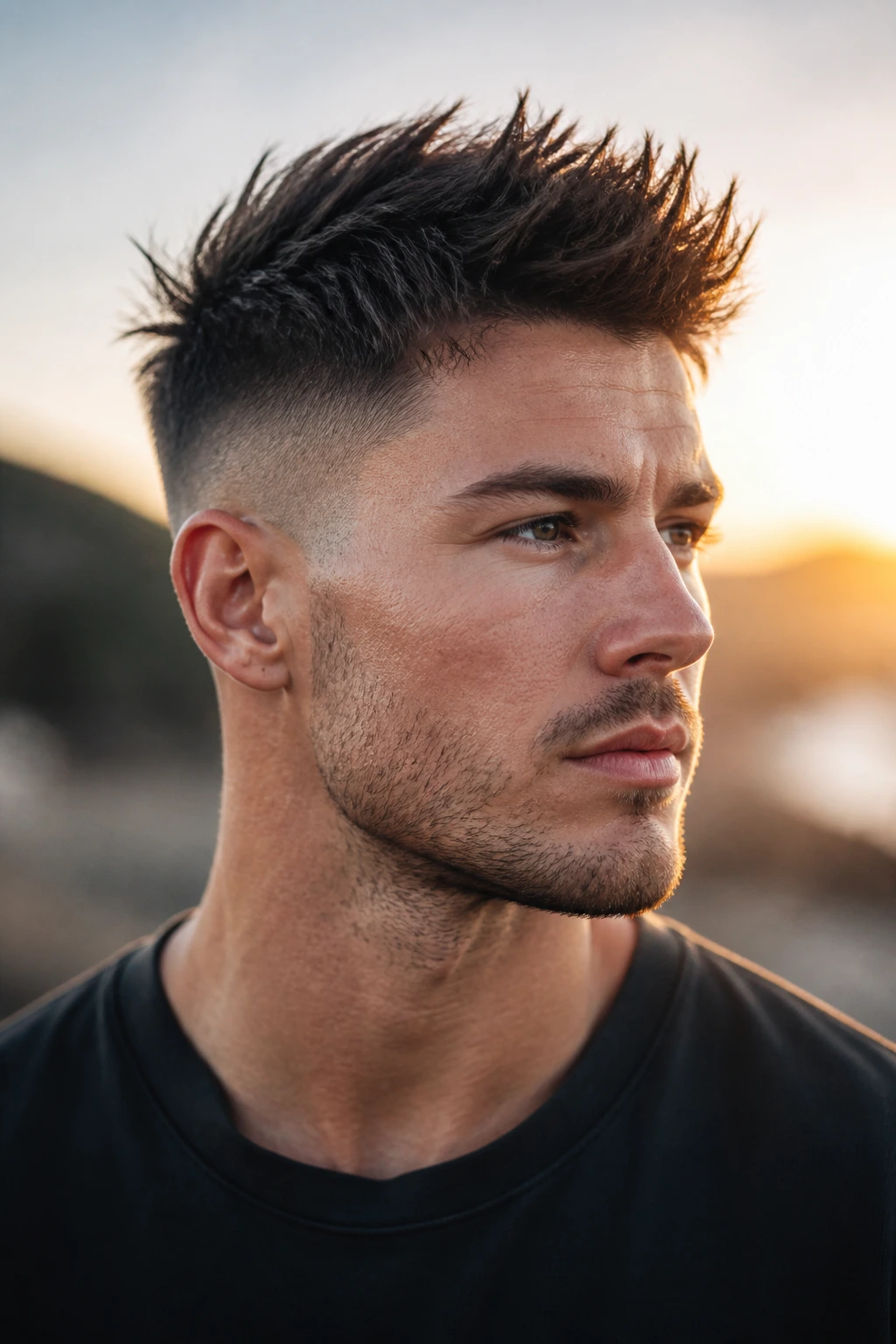
- Short length keeps the shape honest: Once the top sits around 1 to 1.5 inches, spikes stand up without dragging the whole haircut down with them.
- Matte products make the texture visible: Clay, paste, and fiber separate the ends instead of sealing them together, which is why the spikes actually read as spikes.
- The sides frame the top: A taper, fade, or tight scissor cut makes the crown look fuller and the front look sharper.
- They reset fast: A little water and 30 seconds with a blow dryer can bring most of these back to life after sleep or a windy commute.
- You can wear them three ways: Neat, messy, or somewhere in between. That flexibility is the whole point.
1. Feathered Forward Spikes
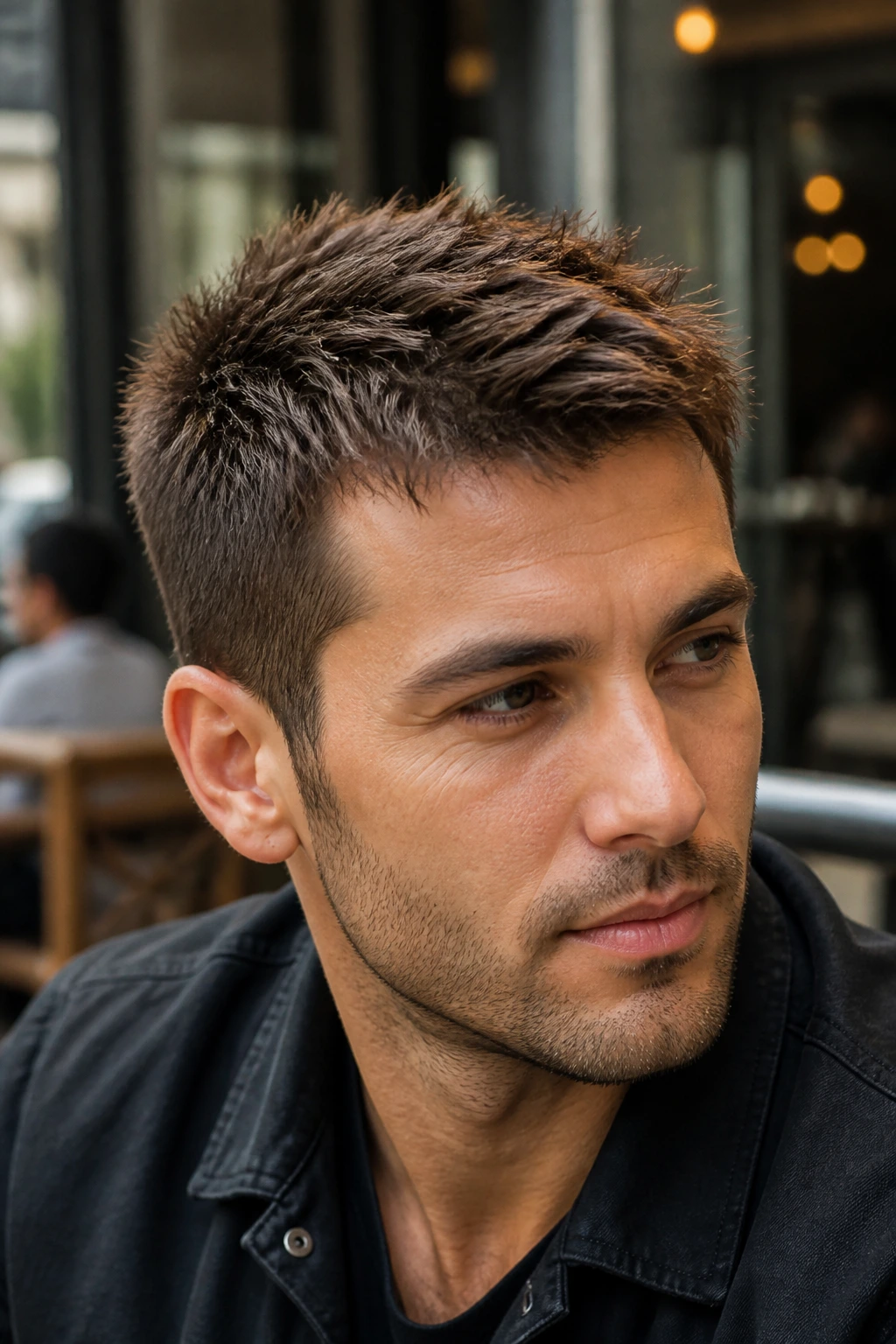
This is the version I reach for when a guy wants texture without the “I attacked my hair with a fork” look. The top stays around 1.25 to 1.5 inches, then gets point-cut so the ends can split into little feathered peaks as you push everything slightly forward.
Why It Works
The forward direction softens the forehead and keeps the style from looking too aggressive. It also works well on straight or fine hair, where a straight-up spike can feel too fragile and collapse by lunch.
Quick facts
- Ask for point-cut ends on top, not a blunt line.
- Keep the sides at a low taper or a #1 guard.
- Use a matte clay on dry hair.
- Push the front forward, then pinch the tips with two fingers.
Best tip: dry the hair forward first, then change direction with product. That tiny reset gives the spikes more grip.
2. Skin Fade Spike-Up
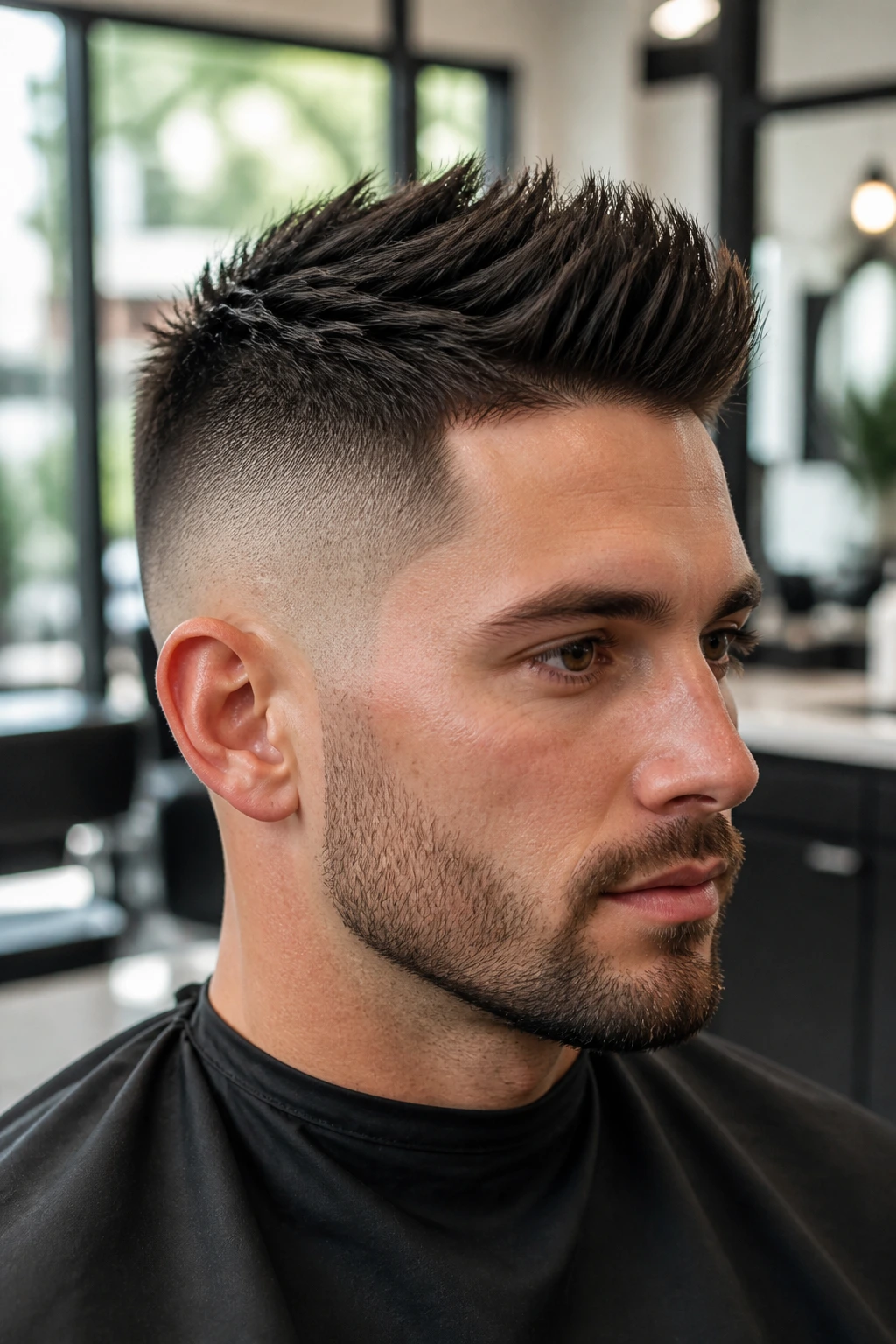
Want the cleanest version? Start here. A skin fade gives the top more lift by stripping visual weight from the sides, so even a modest 1-inch top can look taller and sharper than it really is.
The key is contrast. If the fade is tight at the temples and clean around the ears, the spikes on top read like they’re floating a little higher. It’s a simple trick, and it works every time.
Use a fiber paste or strong matte paste on fully dry hair. Then stand the top up in small sections instead of trying to build one big ridge. The result is crisp, and a little ruthless in the best way.
3. Messy Brush-Up Spikes
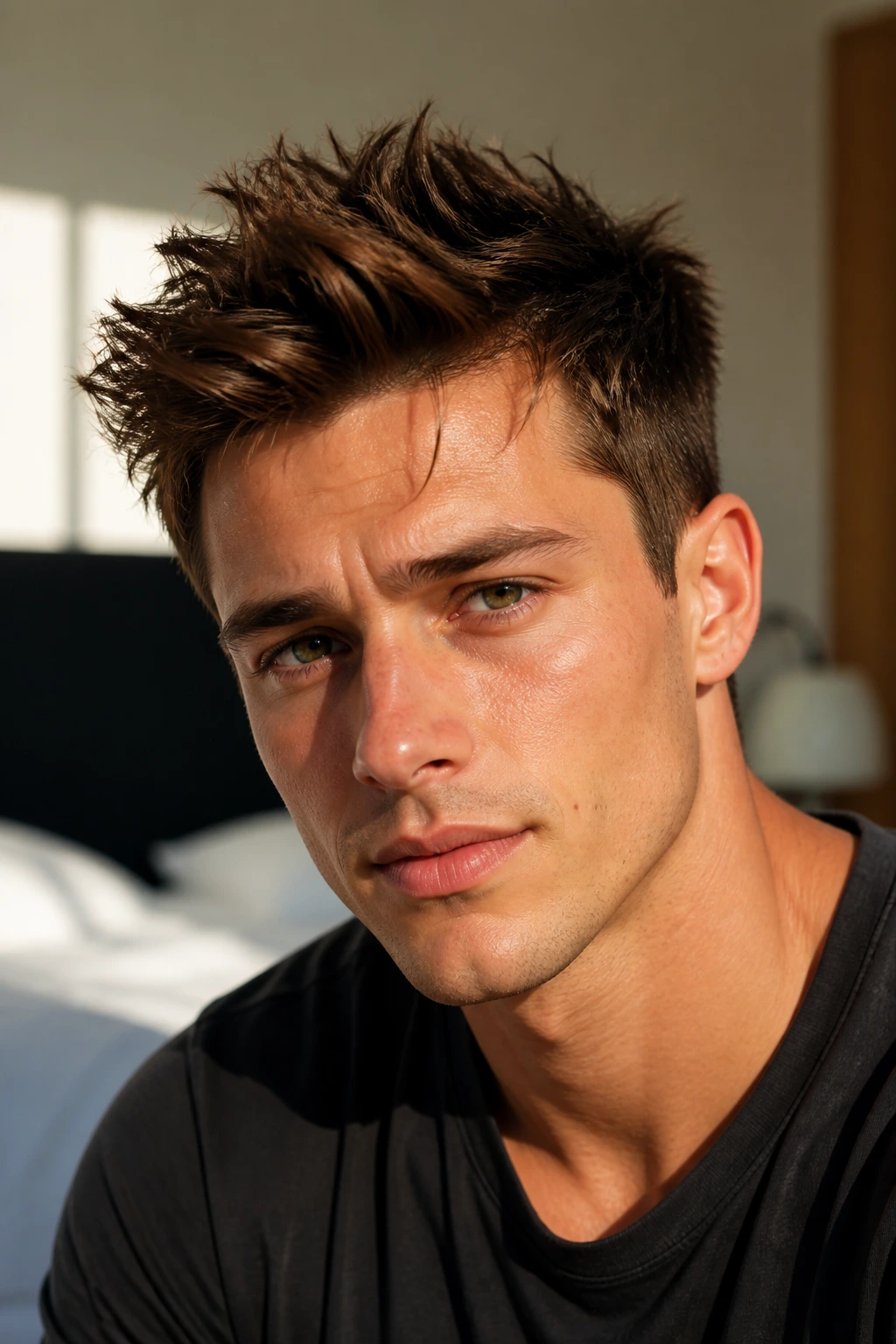
Picture hair that looks like you ran your hands through it twice, missed a comb on purpose, and still ended up with shape. That’s the sweet spot here.
This style likes a bit more length — around 1.5 to 2 inches on top — because the brush-up needs room to bend instead of snapping into a stiff point. A quick blast of heat from the blow dryer, aimed upward at the roots for 20 to 30 seconds, makes a bigger difference than piling on more product.
How to wear it
Keep the front loose. Let a few spikes break apart instead of forcing every strand to stand at attention. It reads younger, less polished, and a lot less try-hard.
4. Mini Faux Hawk Spikes
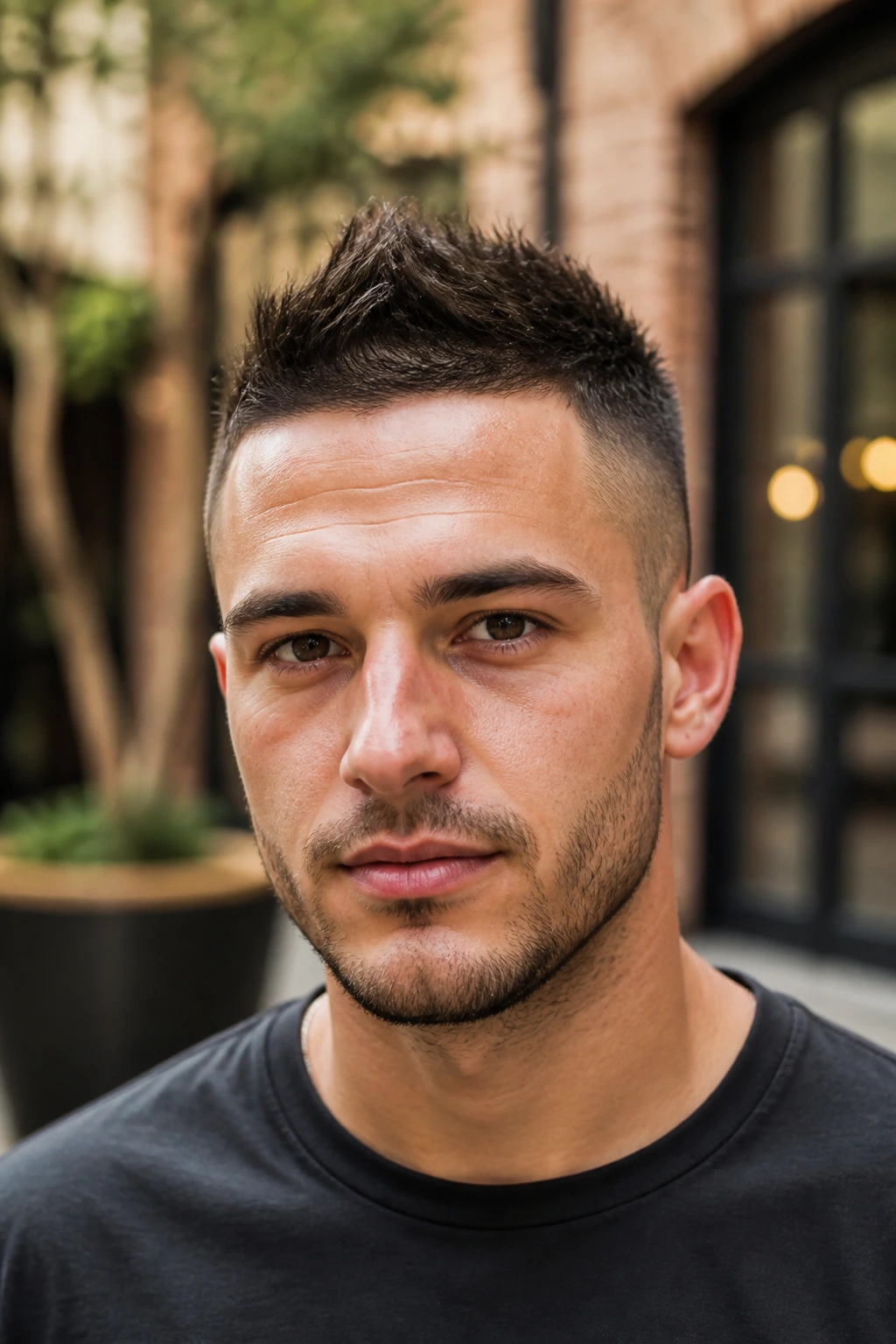
You do not need a dramatic mohawk to get the effect. A narrow center strip, with the sides faded close and the top pushed toward the middle, gives you the energy without the commitment.
The center should be the tallest part, but not by much — think 1.5 to 2 inches in the middle with the edges tapering down as they move toward the temples. That taper in the top shape matters as much as the fade on the sides.
Best on thick hair. If your hair has some weight to it, the faux-hawk line holds without turning into a helmet.
5. Short Quiff with Spiked Tips
The front lifts first. Then the tips break apart.
That’s what makes this one feel a little smarter than a plain spike. Keep the front around 1.5 to 2 inches, blow-dry it up and back with a small vent brush or round brush, and stop before it gets too smooth. The ends should still look piecey, not sculpted into one wave.
A light paste works better than a heavy clay here. The quiff shape gives you height, and the spiked tips keep the cut from drifting into classic office hair. It’s a good middle ground if you want something clean but not stiff.
6. Crew Cut Texture Spikes
A crew cut can spike. People forget that because they picture it as flat and military-clean, but once the top gets a little point cutting and enough length to grab — usually around 0.75 to 1 inch — the whole cut picks up texture fast.
Unlike longer spike styles, this one doesn’t need much product. A tiny amount of matte cream or even texture powder at the roots is usually enough. The haircut itself does the heavy lifting.
It suits men who want a low-maintenance shape that still has some personality. No fuss. No drama. Just enough lift to keep the top from looking shaved to the scalp.
7. Caesar Crop with Spiked Fringe
Can a Caesar crop spike? Yes — if the fringe is cut with texture instead of bluntness.
Keep the front line short, around 0.5 to 1 inch, then push the fringe upward in broken little points rather than straight up. That softens the crop and gives the hairline a less severe look, especially if your forehead is on the higher side. It also works well when the top is kept slightly longer than the fringe, so the front can separate without turning into one block.
A matte paste is the right move. Gel makes this style too rigid, and rigid is the enemy here.
8. Diagonal Spikes
If straight-up spikes make your face look boxy, tilt them. A diagonal spike pattern softens the outline and can pull the eye across the face instead of straight up the middle.
Ask for enough length on top — around 1.25 to 1.75 inches — and keep the sides tighter so the angle shows. Then direct the front and crown slightly to one side at about a 30-degree angle, not all the way over like a side part.
This one is quietly useful for round faces and fuller cheeks. The diagonal line gives shape without shouting about it.
9. Temple Fade Spikes
A temple fade does more than clean the edge. It makes the top look denser.
That’s the trick. The fade narrows the visual width at the temples, which pulls the eye upward toward the spikes on top. Keep the top at around 1.25 to 1.75 inches and use a matte product with enough grip to hold little peaks in place, especially near the front hairline.
This style plays nicely with a beard, too. The clean temple area stops the haircut from looking heavy at the sides, while the spikes keep the top from feeling too serious.
10. Coily Twist Spikes
Can coily hair spike? Absolutely — it just spikes in a different language.
Instead of forcing it into rigid points, use a curl sponge or your fingertips with a small amount of twist cream to form little raised coils and peaks. The goal is definition, not height for its own sake. On this texture, the most natural spikes are usually 0.5 to 1 inch tall and slightly rounded at the tip.
A lot of men make the mistake of using too much gel on coils. That kills the texture fast. Cream gives you shape; the coil pattern gives you the rest.
11. Bedhead Matte Spikes
The trick is to look like you did less, not more.
This version works best when the hair is almost dry, not dripping. Rough-dry it with your hands, then work a small amount of matte clay through the top and stop before it gets too neat. Leave a few spikes unfinished on purpose. The roughness is the point.
It’s a good choice for thick hair that naturally wants to push in different directions. Instead of fighting that, the style borrows it. And yes, if you can see product from across the room, you used too much.
12. Wet-Look Gel Spikes
Glossy spikes have a hard edge. They look sharper, they hold shape differently, and they carry a bit of old-school attitude that matte styles never fully match.
Use strong gel on damp hair, then comb or finger-shape small peaks before it dries. The peaks should be narrow, not wide, or the whole thing turns into a slicked ridge. Once the gel starts setting, stop touching it. That’s where most people ruin it.
This style suits nights out and sharper outfits. It’s not the most forgiving finish, and that’s part of the appeal. Controlled shine has a habit of looking deliberate in a way matte texture doesn’t always do.
13. French Crop Spikes
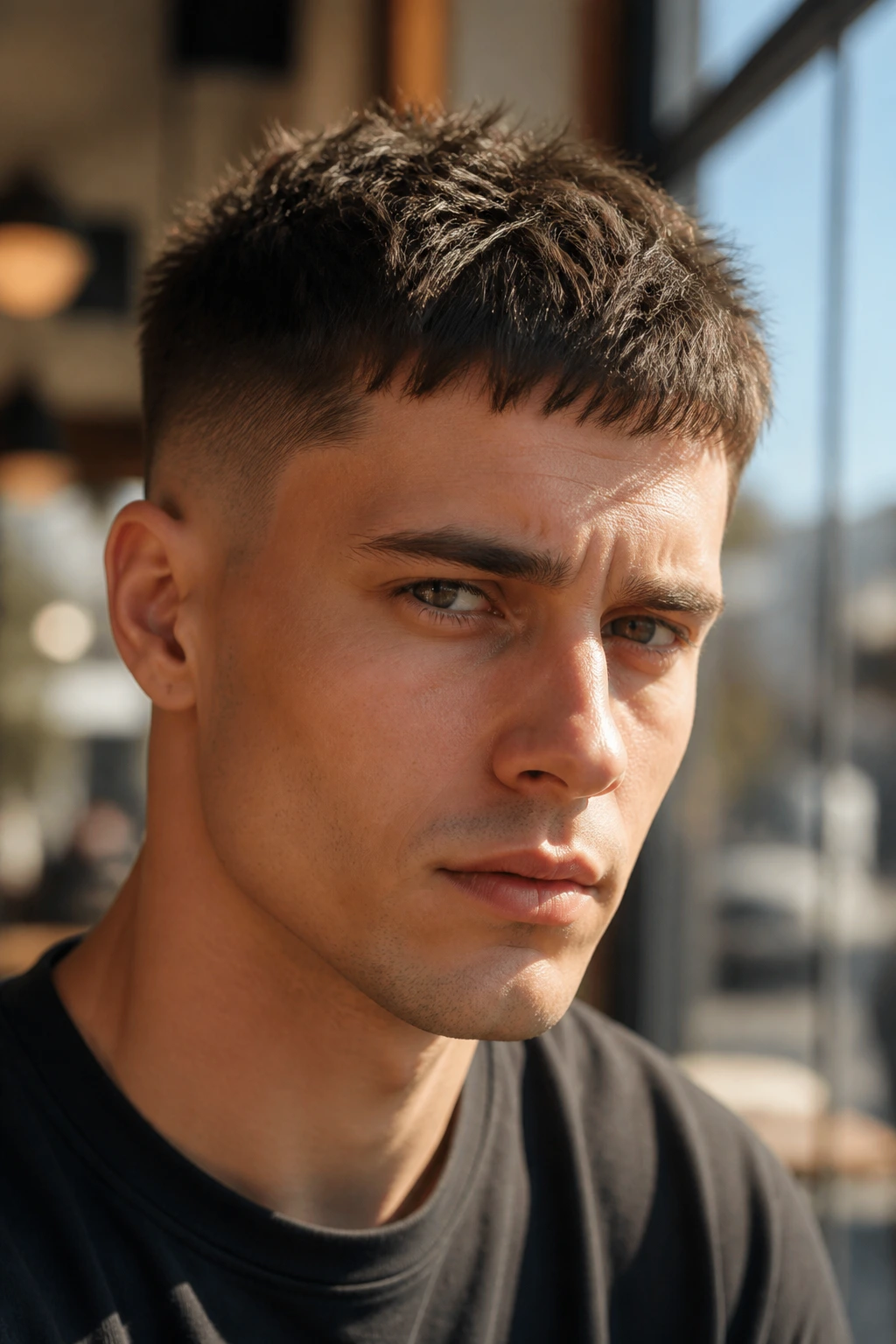
The blunt fringe is what makes a French crop feel flat. Add texture there, and the whole haircut wakes up.
Keep the fringe short — around 0.5 to 1 inch — and point-cut the top so you can pinch tiny spikes out of the front instead of leaving it like a shelf. The sides should stay tight, but not so tight that the crop starts looking severe. A low taper or subtle fade keeps the shape grounded.
This works especially well on straight hair and on guys who want a short cut that still has some movement. It’s tidy, but not dull. That matters.
14. Disconnected Undercut Spikes
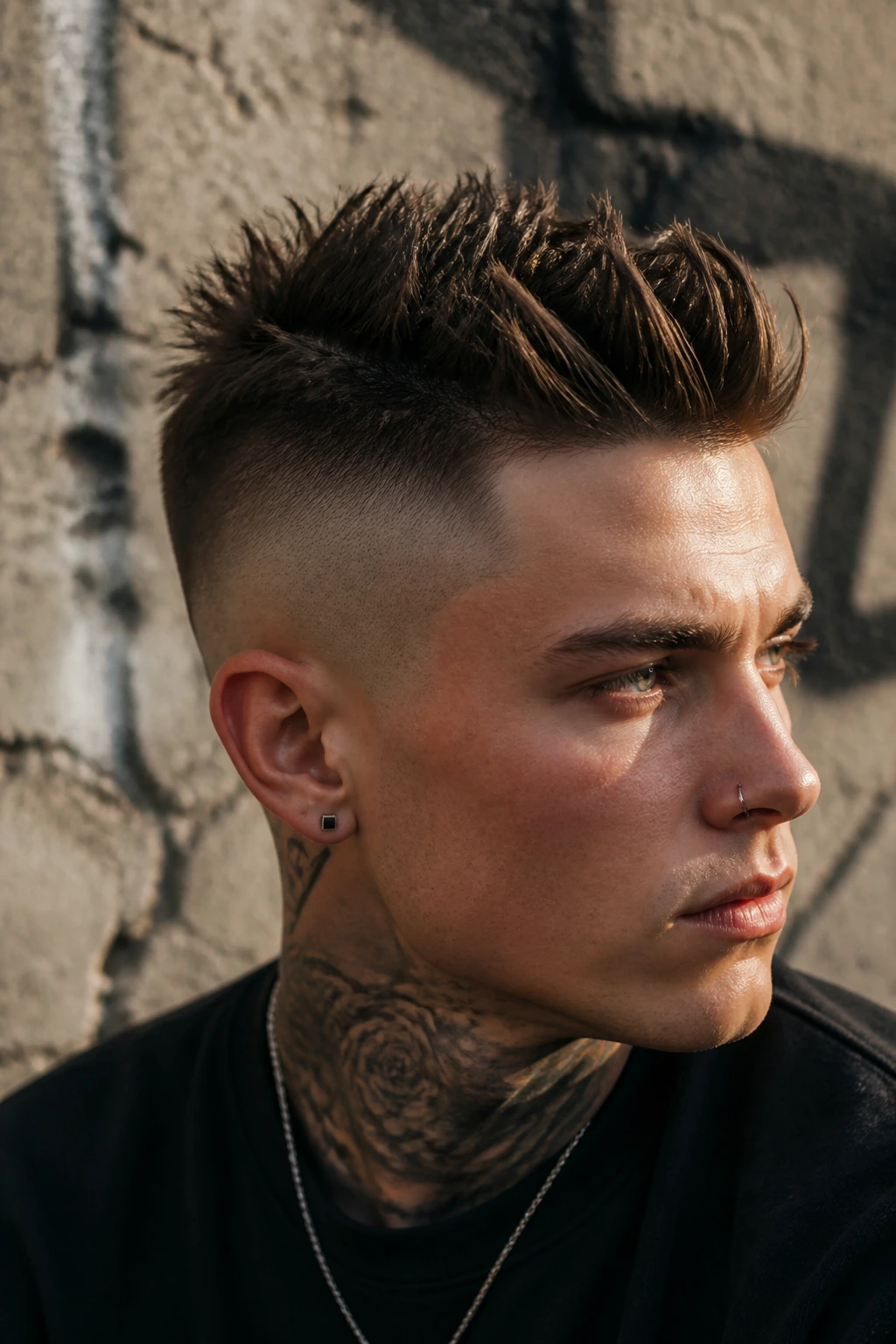
Unlike a fade, an undercut gives you a hard break between top and sides. That hard break makes the spikes read louder.
Keep the top around 1.5 to 2 inches and clip the sides to a uniform short length — often a #1 or even lower, depending on how stark you want the contrast. The top should be textured enough to stand in separate peaks, but not so layered that it starts looking shaggy.
This is the loudest style in the list. Good if you want edge. Less good if you need your haircut to disappear into the background.
15. Buzz Cut Shadow Texture
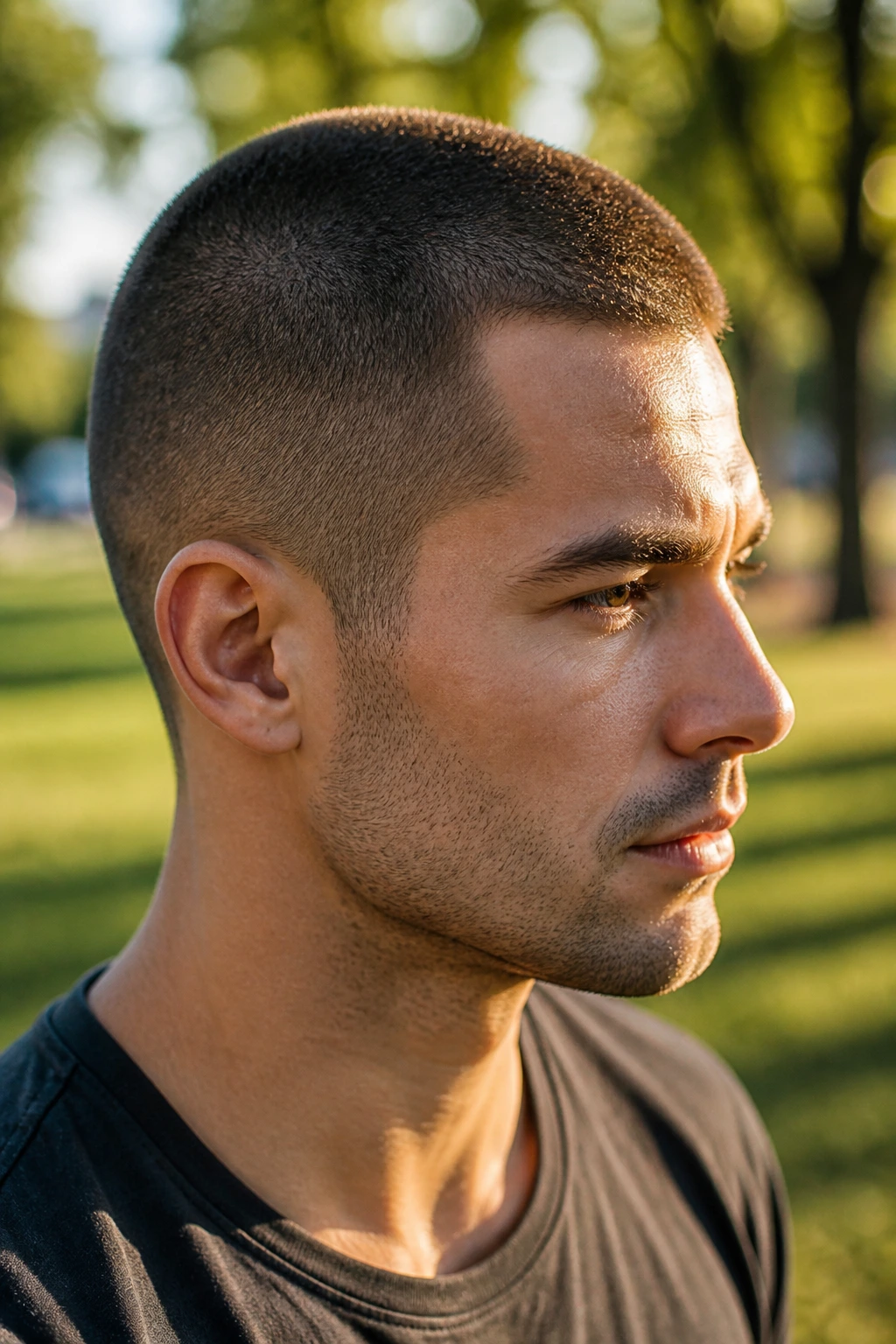
When the haircut is barely longer than a buzz, spikes become shadows.
That’s the game here. The top sits at roughly 1/4 to 1/2 inch, just enough to show grain and direction. A tiny amount of matte product rubbed between the fingertips can coax micro-peaks out of the top, but the real shape comes from the cut, not the styling.
This is for men who want almost no maintenance and still want the haircut to look intentional. It’s not flashy. It doesn’t need to be. The texture shows up when the light moves across it, and that’s enough.
16. Hard Part Spike Style
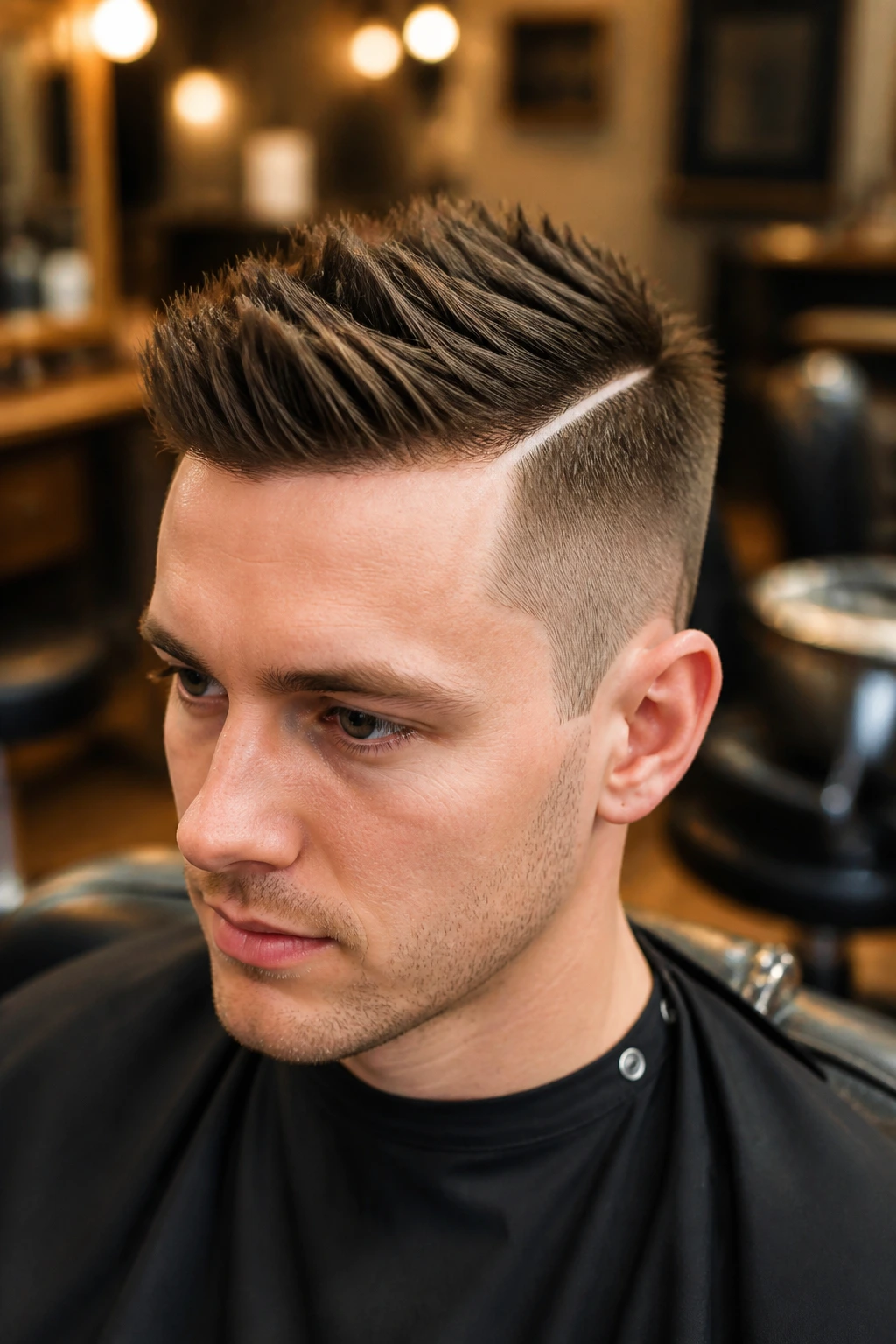
Need a little order with your chaos? Add a hard part.
The line gives the spikes a lane to lean away from, which means the haircut feels structured even when the top is textured. Keep the top around 1.5 to 2 inches and the part clean enough that it stays visible for at least a couple of weeks. A light fade on the part side helps the spike direction look clearer.
This one suits men whose hair naturally falls to one side. Instead of battling the growth pattern, you turn it into a feature.
17. Choppy Low Taper Spikes
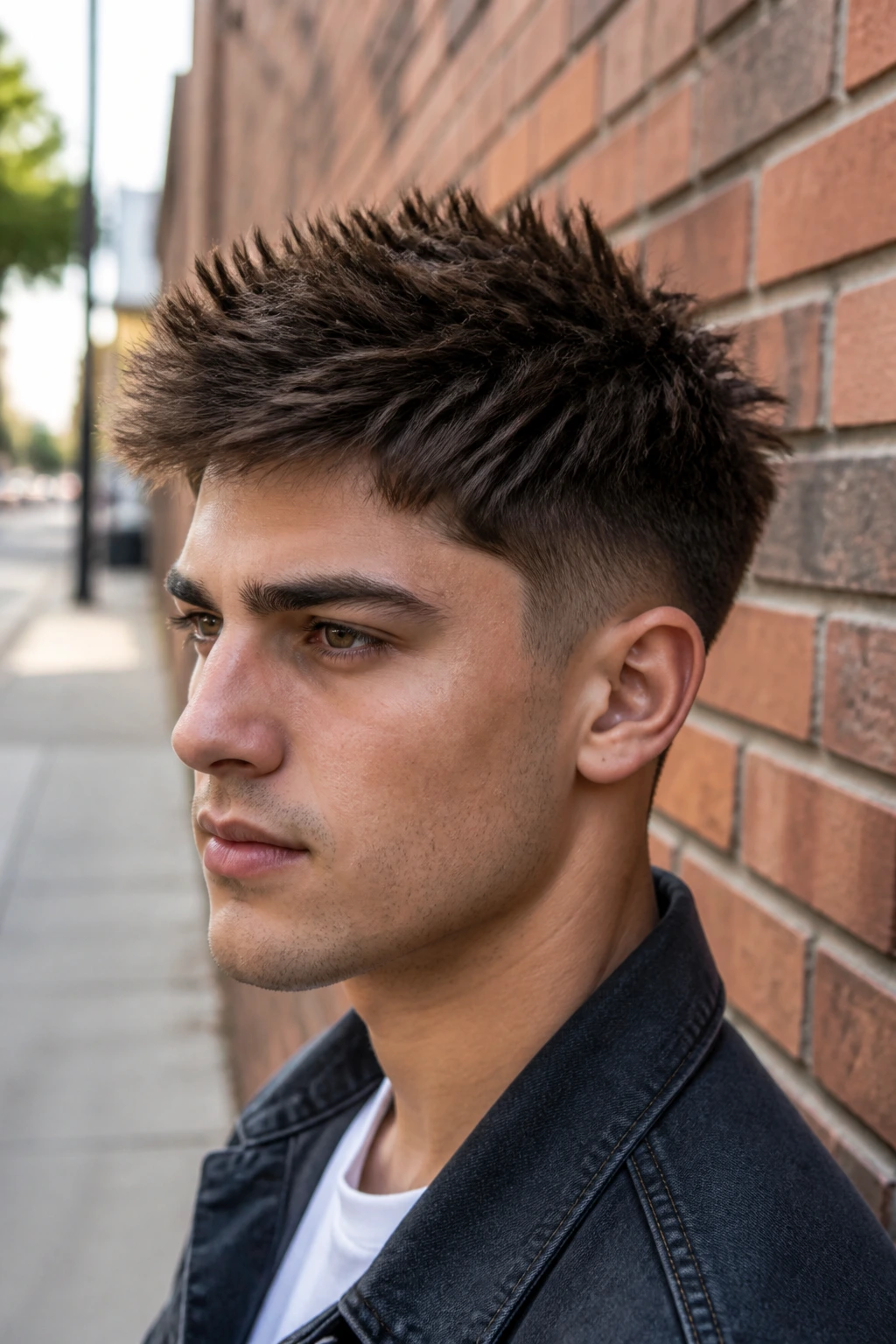
A low taper is the quiet version of a spiky cut, and that’s why it works so well.
The taper keeps the neckline and sideburns neat without going bald at the edges. The top gets chopped up to around 1 to 1.5 inches, with enough irregularity that the spikes separate instead of forming one block. It’s a forgiving cut, too. When it grows out, it still looks clean.
This is one of my favorite everyday options because it doesn’t look over-designed. It just looks maintained.
18. Beard-Blend Spikes
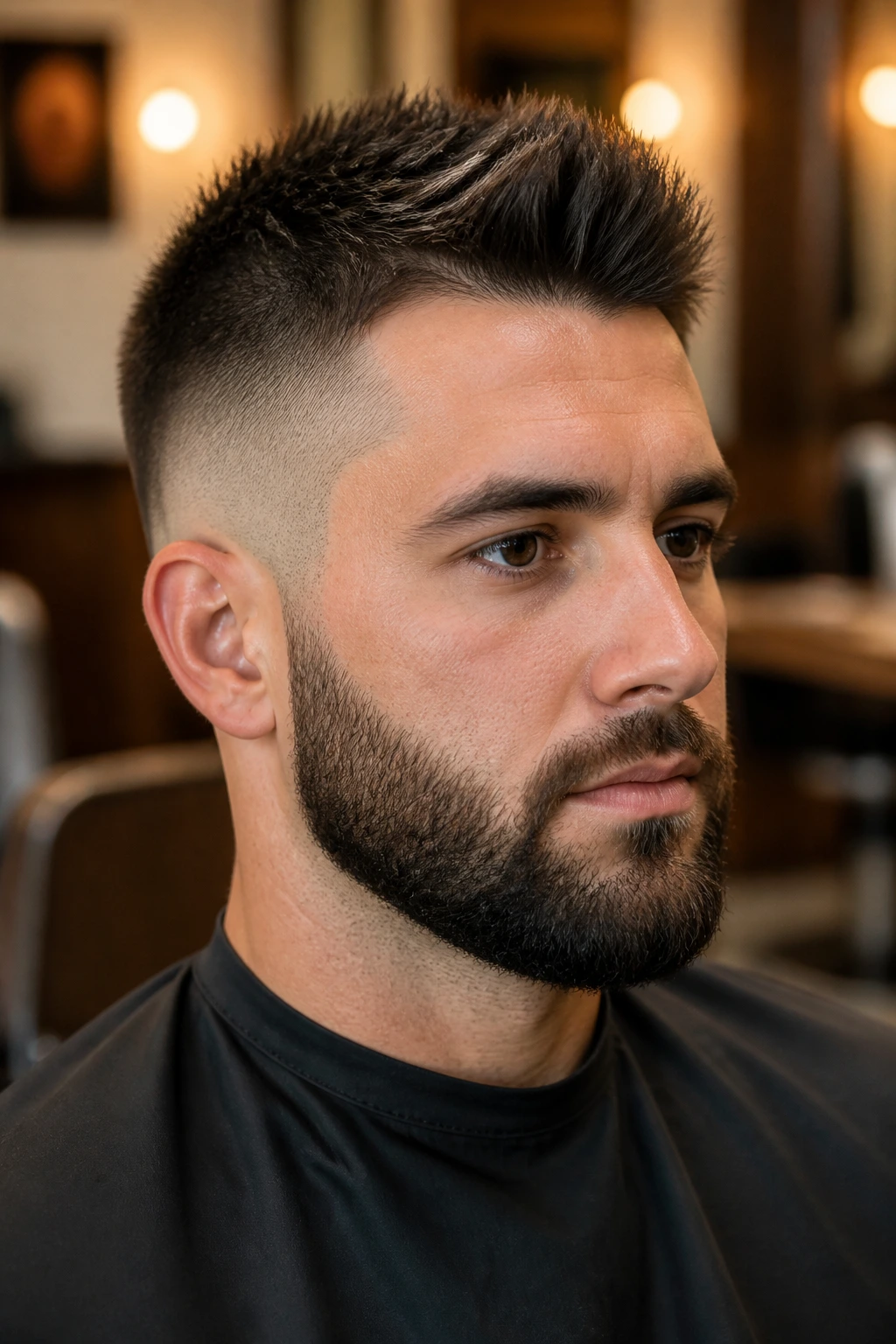
If the beard is doing the heavy lifting below, the hair on top should stay tidy.
A beard blend keeps the sideburns and lower fade connected to the beard line, which gives the whole face a more unified shape. The top stays short — about 1 to 1.25 inches — and the spikes should be controlled, not tall. That balance keeps the haircut from fighting with the jawline.
This works especially well if your beard is fuller than your hair. The blend makes the top and bottom feel like they belong together instead of competing for attention.
19. Ivy League Spike Lift
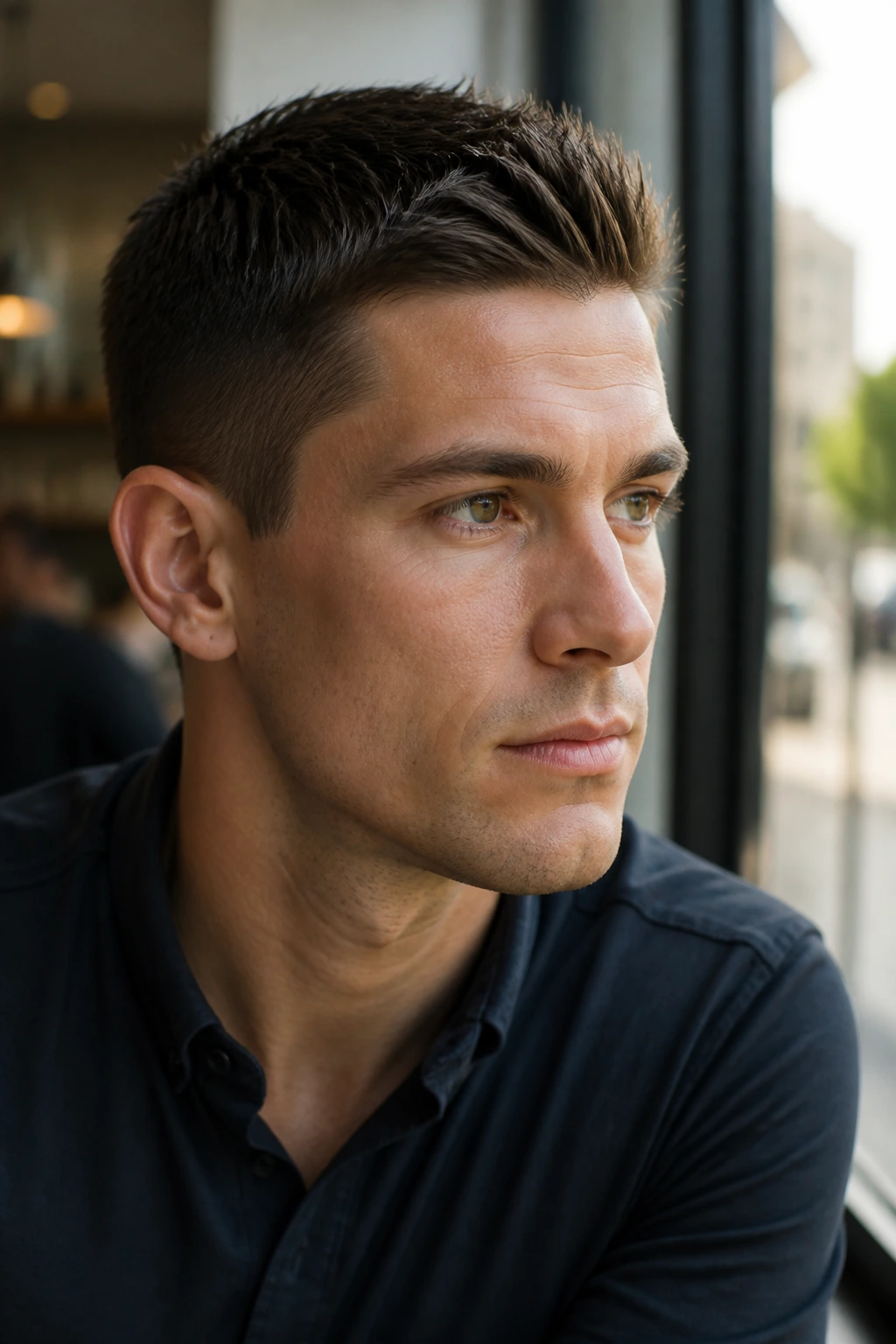
Unlike the usual Ivy League, this version doesn’t lie flat and polite all day.
The top is kept short enough to stay neat — around 1.25 to 1.75 inches — but the front gets a little lift so the style carries a hint of spike instead of sitting like a side-parted cap. Keep the part soft, not razor-sharp, and use a cream or light paste with enough hold to keep the front from folding over.
It’s a good pick when you want short hair that can pass in a work setting without looking boring. That’s a small category, and it matters.
20. Mini Mullet Spikes
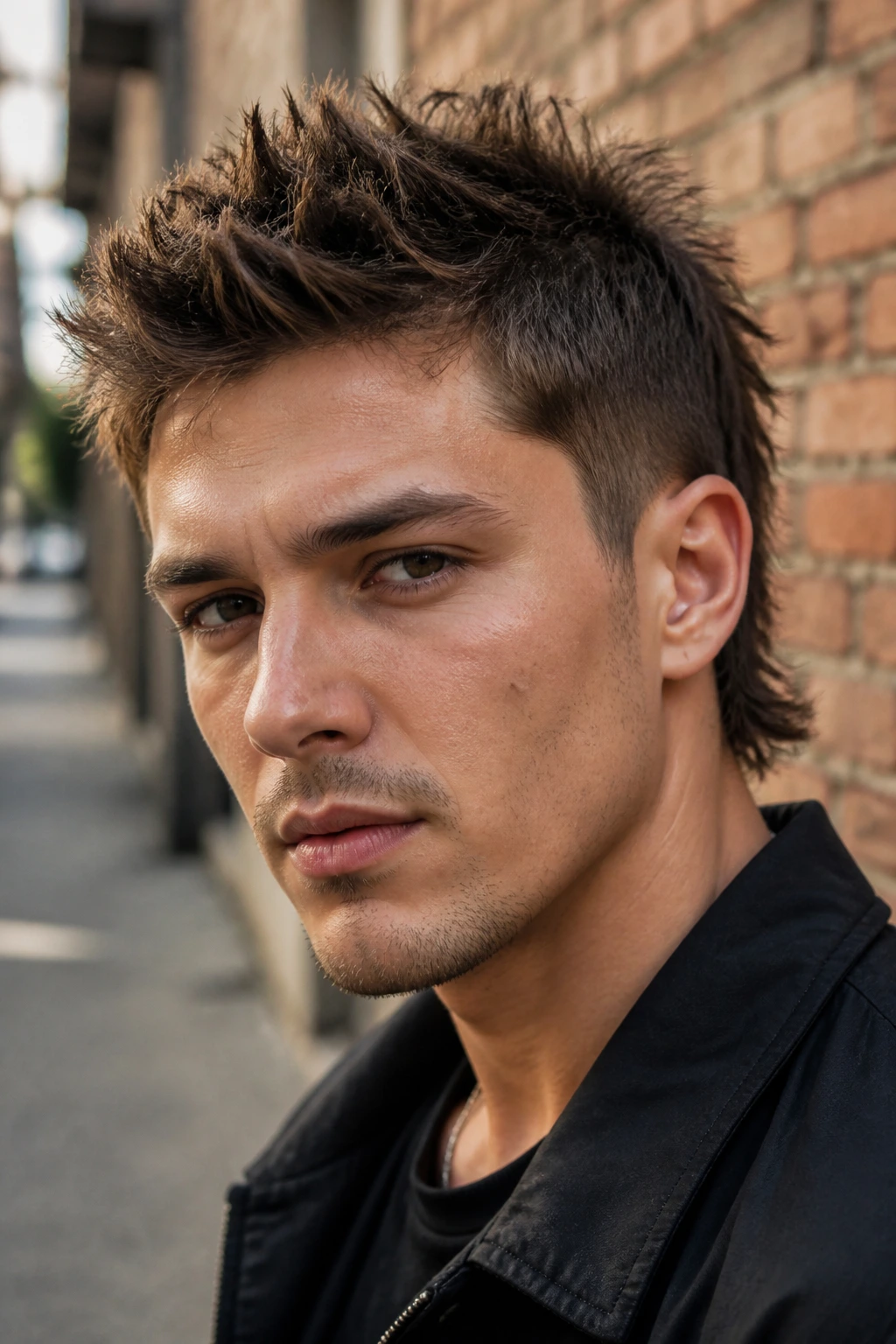
No, a mullet does not have to be theatrical.
The short version keeps the front spiky and the back just a touch longer — maybe 1.5 to 2 inches at the nape instead of the same length everywhere. That tiny bit of extra length in back gives the cut motion when you turn your head, while the front keeps the attitude up top.
It works best when the sides stay tapered instead of bulky. If the sides puff out, the shape loses its edge fast. Keep it lean, and it gets interesting instead of awkward.
21. Crown-Lift Layered Spikes
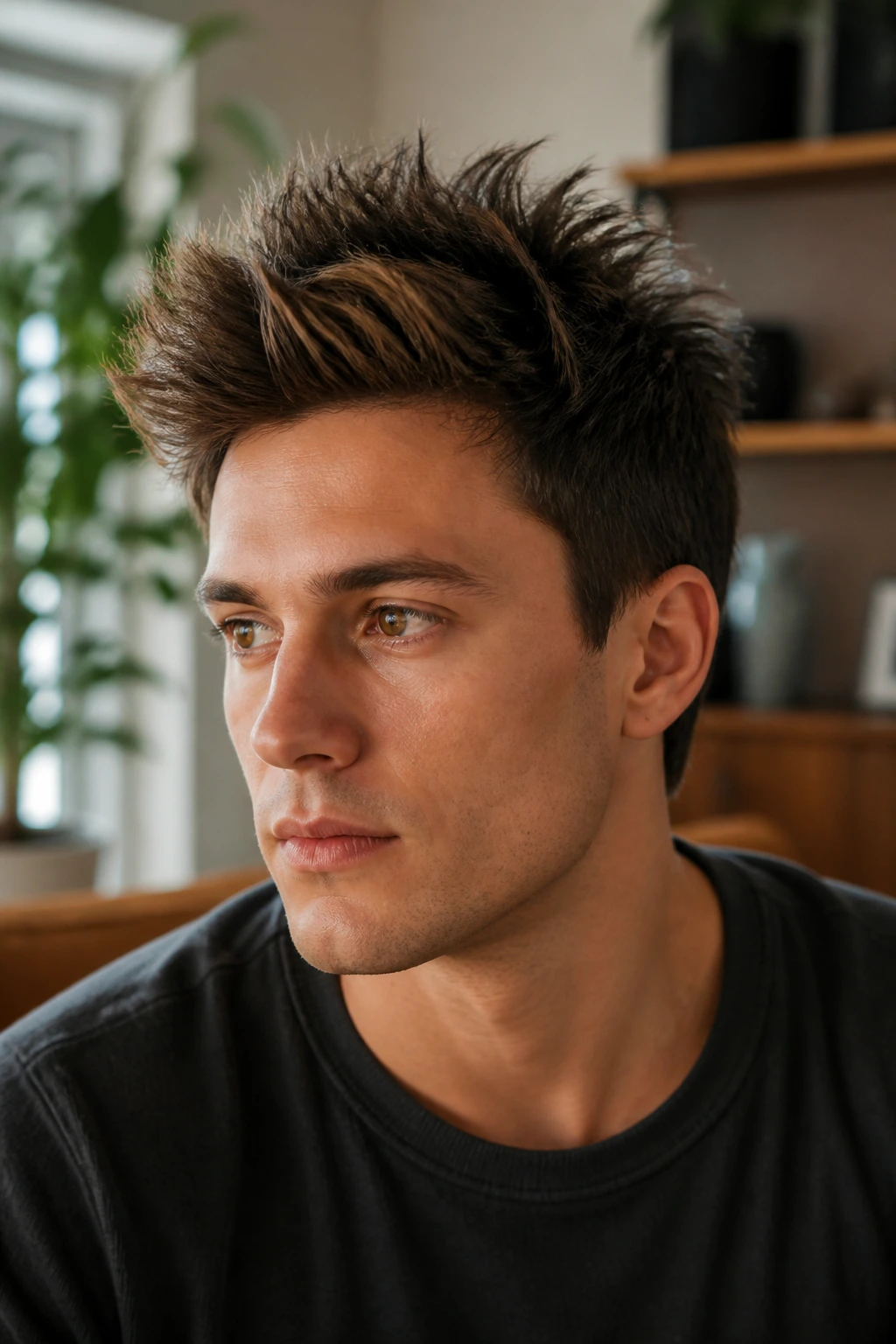
When the crown lies flat, layers fix the problem better than more product.
Keep the top layered so the crown has a little room to rise, with the front slightly shorter and the back of the top just a touch longer. That gives the hair a natural ramp from front to crown. Blow-dry from the crown forward first, then pinch the top into broken spikes once the roots are set.
This is a smart choice for rounder head shapes or for hair that collapses at the vertex. The shape starts at the cut, not the styling cream, and that’s why it lasts.
22. Fine-Hair Spikes

Fine hair needs less goo and more lift.
Start with a root-lift spray or a tiny bit of texture spray on damp hair, then dry the roots upward with a nozzle attachment for 20 to 30 seconds. Once the hair is dry, use a small dab of fiber paste — pea-size, not more — and pinch only the top half of each spike. If you try to drown fine hair in product, it collapses and turns stringy.
This style gives fine hair a fuller read without pretending the hair is thicker than it is. Honest hair always looks better than overworked hair.
23. Thick-Hair Heavy Texture Spikes
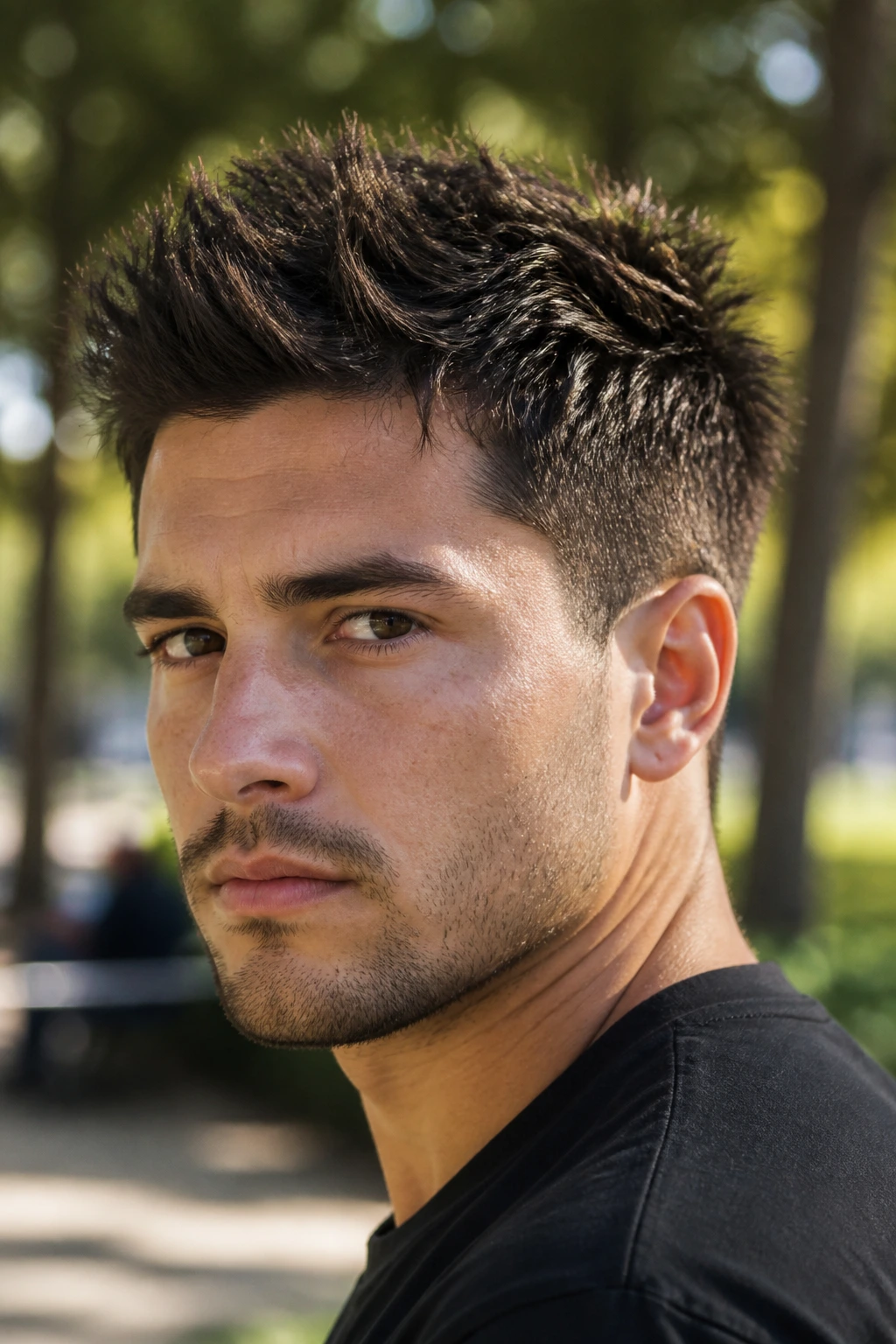
Thick hair fights back if you leave it blunt.
Before styling even starts, the haircut needs debulking and point cutting so the top doesn’t act like a dense block. Ask for roughly 1.5 to 2 inches on top with internal texture, then use a stronger matte paste or fiber. Work the product in two passes: one to shape, one to finish. That keeps the spikes separated without building a crust.
This is the haircut that benefits most from sectioning. If you try to style all of it at once, the top gets too heavy and starts pushing itself sideways.
24. Straight-Hair Needle Spikes
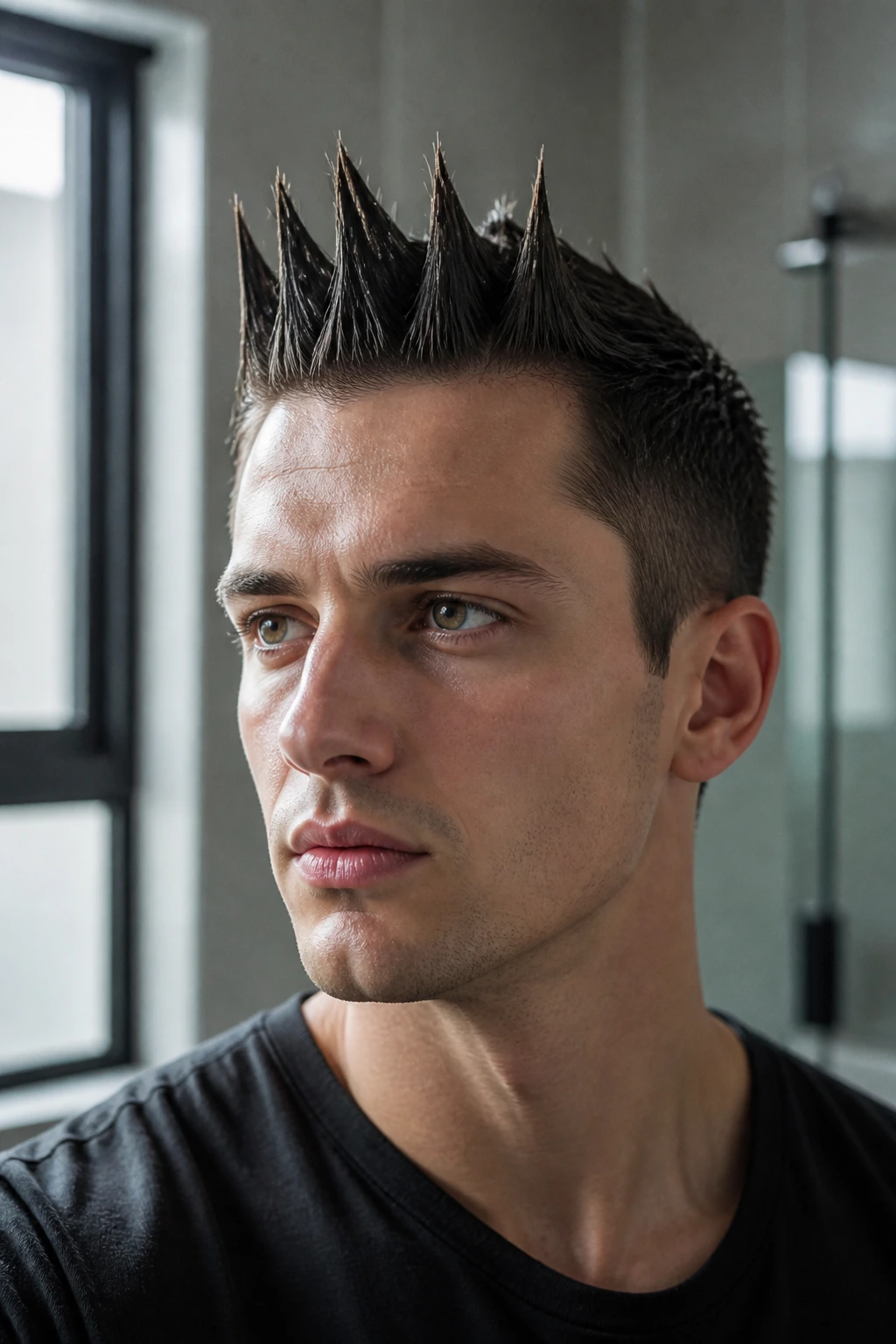
Straight hair can go glass-smooth and stubborn fast; that same smoothness is why the tips can look so sharp.
Use a very small amount of strong paste and warm it in your hands first. Then create 5 to 7 narrow spikes instead of one broad ridge. Straight hair usually likes a little root lift from the dryer before product, and once the ends are separated, they hold a cleaner point than wavy or coarse hair ever will.
This look has a neat, precise feel. If you want a sharper silhouette without a fade that screams, it’s a good lane.
25. Wavy-Hair S-Curve Spikes
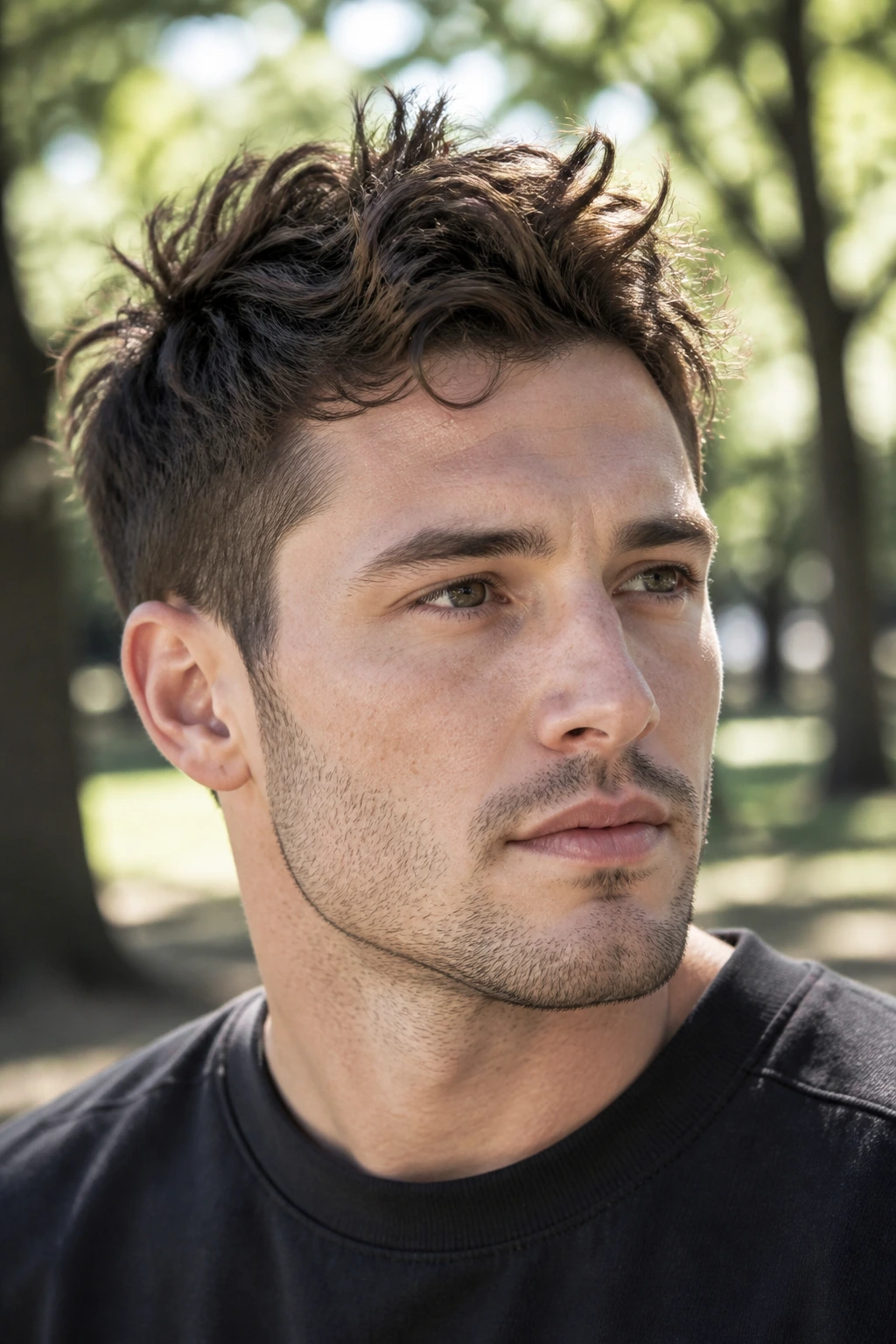
What if your hair bends instead of standing still? Don’t fight the bend.
Wavy hair looks better when the spikes keep a little irregularity, so the ends form soft S-shapes instead of rigid points. A light cream or flexible paste works better than gel, because you want the wave to stay visible. Keep the top around 1.5 inches and dry it with your fingers, not a comb, or the wave gets stretched out and weird.
This version is underrated. It has movement built in, which means it rarely looks fake.
26. Soft Matte Spikes
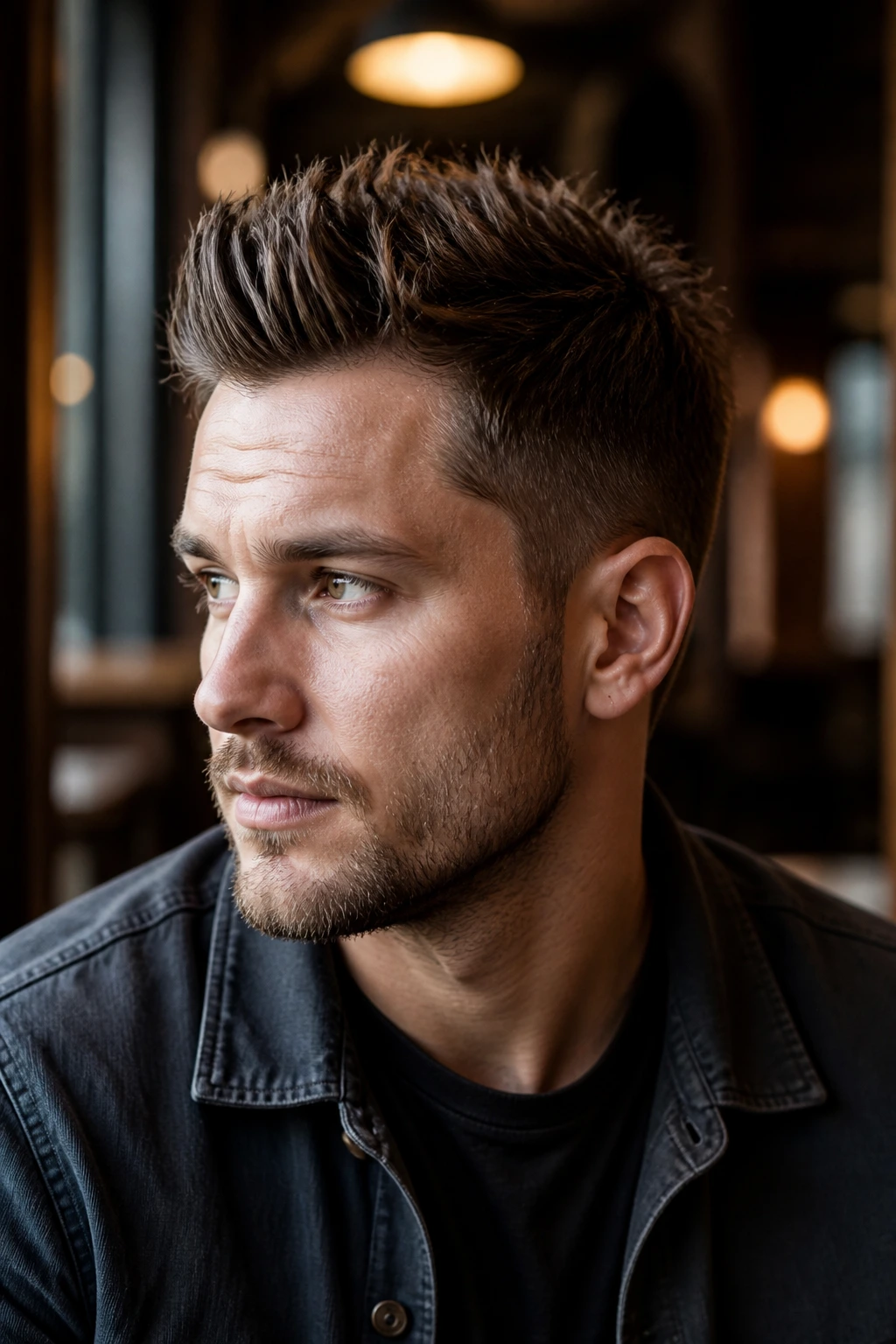
This is the version for men who want texture but don’t want anyone to notice the product.
Keep the shine low and the spikes low, too. A matte clay worked through dry hair gives enough hold to separate the top into small peaks, but not so much that the hair looks frozen. Pinch the ends, loosen the crown a touch, and stop before everything gets too symmetrical.
It’s one of the easiest styles to wear every day. The shape stays there, and the finish doesn’t call attention to itself.
27. Color-Tipped Spikes
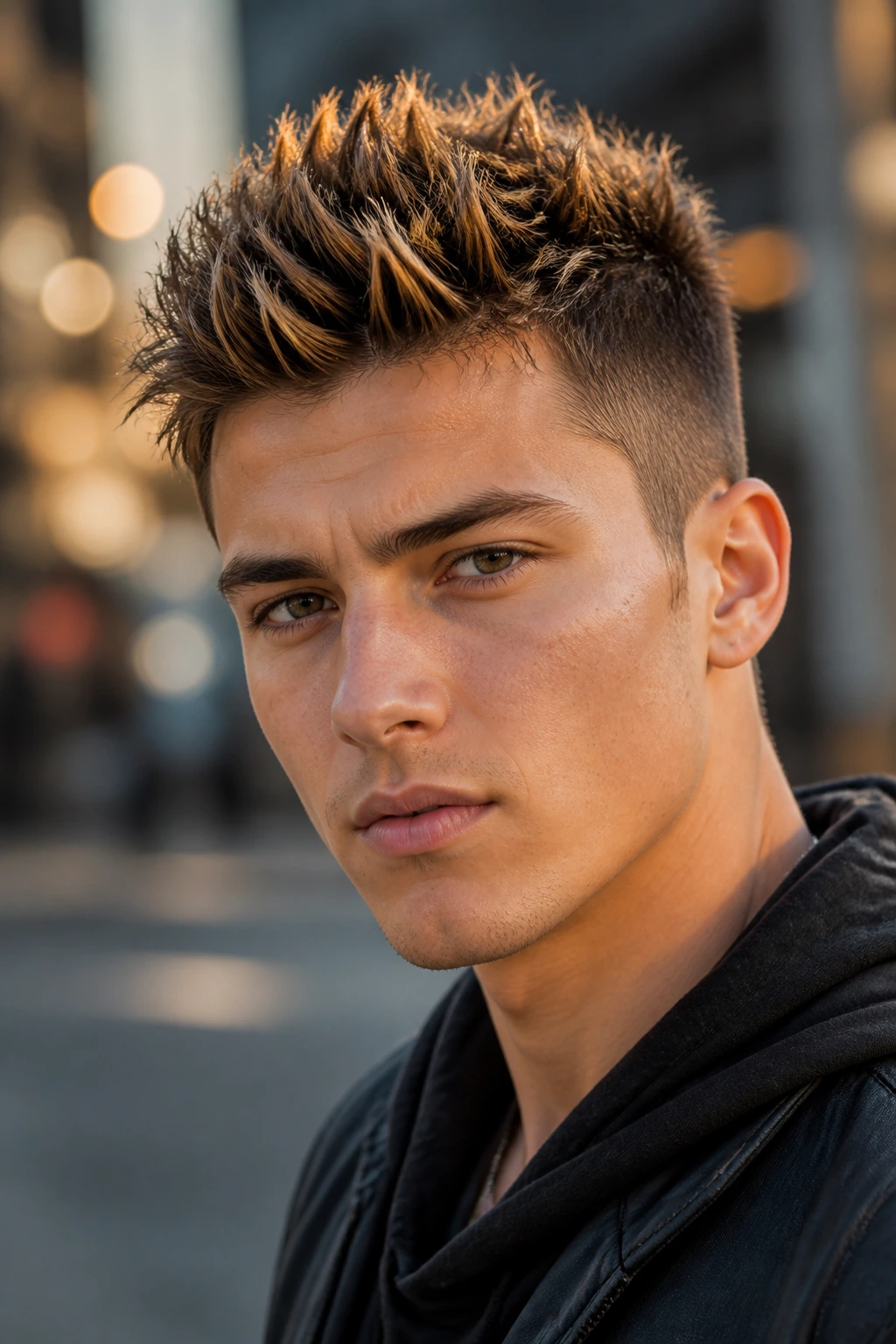
A little light at the ends changes the whole read of a short spike.
You don’t need a full dye job. Even subtle highlights on the top 1/2 inch can make each spike stand out more clearly, especially on darker hair. The cut itself should stay short and textured, with the color concentrated where the spikes break apart. That keeps the look crisp instead of overprocessed.
This style works best when the fade or taper below stays clean. The contrast between the darker sides and lighter tips does half the visual work.
28. Office-Ready Controlled Spikes

Unlike full-height spikes, this version stays low and neat.
Keep the top around 1 to 1.25 inches and use a light cream or medium-hold paste so the spikes only rise a little. You want a few controlled peaks at the front and crown, not a row of pointed ridges. A soft side part can help the style behave in meetings, while a low taper keeps the edges tidy.
This is the calmest option in the group, and that’s why it works so well for daily wear. It says texture without making a scene.
Why Short Hair and Spikes Work Together
Short spikes make sense because the cut is doing half the styling before you ever touch product. When the top stays around 1 to 2 inches, the ends can stand, split, and bend without collapsing under their own weight. Once the hair gets much longer, the same product has to work harder, and the look starts drifting into quiff territory whether you want it or not.
The sweet spot is shorter than people think
For most men, the easiest range is roughly 1 to 1.5 inches on top. That’s long enough to create a point, short enough to keep the peak from sagging. If the sides sit at a #0.5 to #2 guard or a clean taper, the shape reads even sharper because the top has somewhere to stand out against.
Product matters, but cut matters first
Matte clay, fiber, and paste grip the hair in different ways, but none of them can rescue a blunt, heavy top. Point cutting and some internal texture give the product little edges to hold. Without that, you end up pushing one solid block of hair around the head, and that’s not a spike style. That’s a small wall.
Direction does most of the styling work
Blow-dry the hair against its natural lay for a few seconds, then direct it where you want it to finish. That root lift is what keeps the style from lying down the second you leave the bathroom. If your cowlick pushes one section sideways, work with it by changing the spike angle instead of trying to bulldoze it straight up.
Essential Tools for Spiky Short Hair
- Blow dryer with a concentrator nozzle — Focuses airflow at the roots so the top lifts instead of puffing out.
- Matte clay, fiber, or paste — The main styling product for short spikes; pick the hold based on hair thickness.
- Sea salt spray or root-lift spray — Optional, but helpful if your hair is fine or freshly washed and too slippery.
- Vent brush or small round brush — Gives the front and crown a bit of guided lift while drying.
- Fine-tooth comb — Useful for cleaner, sharper looks like a hard part or wet finish.
- Hand mirror — The crown and back corners are where short spikes collapse first, and you won’t see that from the sink.
- Clipper or trimmer — Keeps the neckline, sideburns, and fade line neat between barber visits.
- Light hairspray — Good for stubborn hair that falls by midday; use it lightly so the style stays touchable.
- Microfiber towel — Blots water without roughing up the top into frizz or static.
- Curl sponge — A smart extra for coily textures that need shape more than straight-up height.
Smart Product and Barber Tips
Hold first, shine second. That’s the rule I’d keep on the mirror. If your hair is fine, a fiber paste or light clay usually beats a heavy wax because it adds grip without dragging the hair down. Thick or coarse hair can take a stronger clay, and if you want a wet finish, gel makes sense — but only if you really want shine.
Tell the barber exactly where the texture should live. Ask for point cutting on top, not a blunt top line, and mention whether you want the spikes to stand up, angle forward, or lean diagonally. That changes the cut more than people realize. A barber can leave the fringe slightly longer for a forward spike, or shorter and tighter for a cleaner vertical look.
Watch the crown. A lot of short spiky hair fails back there, where the growth pattern starts pushing in circles and the top flattens out. If your crown lies flat or kicks sideways, ask for extra texture in that area rather than relying on more product. Product is there to finish the shape. It shouldn’t have to invent it.
Water-based product usually saves time later. Hair that needs daily restyling is easier to deal with when the product rinses clean at night. Oil-heavy stuff can be fine, but it tends to hang around in the hair and make the next day feel heavier than it should.
How to Wear These Styles Without Fighting Your Face
Face shape changes the read more than people admit. Round faces usually like a little height at the center or a diagonal spike pattern that pulls the eye upward. Longer faces often look better with forward spikes or softer, messier lifts that don’t add too much vertical length. Square jaws can handle sharp, upright spikes just fine, because the strong hair shape matches the jawline instead of competing with it.
Outfit changes the haircut’s mood. A crisp fade with vertical spikes works with clean tees, bomber jackets, denim, and sharp collars because the haircut has enough edge to match. Softer matte spikes fit better with work shirts, overshirts, and casual layers. Same cut, different message.
Occasion matters more than style blogs like to admit. Wet-look spikes, hard-part spikes, and disconnected undercuts lean louder. Soft matte spikes, crew cut textures, and low taper versions disappear into daily life more easily. If you want a haircut that can move from morning to evening without a full reset, keep the height moderate and the shine low.
Beard balance is real. A full beard and a huge spike can fight each other. If the beard is strong, keep the top tighter and more controlled. If you’re clean-shaven, you can get away with a little more height or a more broken texture because the face has room to breathe.
Additional Styling Tips and Finish Options
Texture Boost: A dry shampoo or texture spray at the roots gives short hair more grip on day two than another scoop of product ever will. Spritz lightly, wait 15 seconds, then work it in with your fingertips.
Customization: If you want the style to feel less stiff, leave one side slightly lower than the other. That tiny asymmetry makes the haircut look lived-in instead of arranged like a display piece.
Serving Suggestions: Clean temples, a neat neckline, and a trimmed beard line make short spikes look sharper without changing the hair on top. If you wear glasses, keep a little less height at the temples so the frames and the haircut don’t fight for the same space.
Make-It-Yours: Fine hair likes lightweight fiber and root lift. Thick hair likes stronger clay and more debulking in the cut. Curly or coily hair does better with cream or sponge shaping. If your scalp gets irritated easily, stay away from heavy alcohol-based sprays and keep product close to the ends, not the skin.
Common Mistakes to Avoid
Using too much product. The spikes turn into clumps, the hair looks greasy, and the top loses all separation. Start with a pea-sized amount, then add a little more only if the hair truly needs it.
Skipping the blow dryer. Air-dried product tends to sit flat, especially on fine hair or hair with a stubborn crown. Even 20 to 30 seconds of root lift changes the whole shape.
Leaving the top too blunt. A square cut on top creates one heavy ridge instead of multiple points. Ask for point cutting or texturizing so the ends can break apart cleanly.
Ignoring the growth pattern. Cowlicks and swirls will win if you try to force every strand straight up. Work with a forward, diagonal, or slightly off-center direction when the crown or fringe fights back.
Chasing identical spikes. Real short spikes look better when they vary a little in height and angle. If every point matches, the style starts looking stiff and artificial.
Picking the wrong finish for the hair type. Heavy gel can flatten fine hair fast. Light cream on coarse hair may not hold long enough. Match the product to the density of the hair, not just the photo you liked online.
Variations and Adaptations to Try
Soft Matte Everyday: Keep the top around 1 inch and use a low-shine clay or paste. This version is the easiest to wear daily because it keeps the texture visible without looking styled to death.
High-Contrast Fade: Take the sides down to skin or a #0.5 and leave the top slightly longer. The contrast makes the spikes read sharper and taller, especially from the front.
Curly Coil Lift: On coily hair, use sponge shaping or finger twisting instead of trying to create sharp points. The result is more rounded and natural, but it still gives the haircut lift and direction.
Wet Finish Night-Out: Swap matte clay for strong gel and shape the spikes while the hair is damp. This version shines more and looks tighter under low light, though it needs less touching once it sets.
Low-Maintenance Grow-Out: Keep a low taper and slightly longer top so the haircut still looks good after 3 or 4 weeks. It’s the version for guys who don’t want to chase the barber chair every time the edges soften.
Maintenance, Washout, and Trim Schedule
Short spiky hair holds up well for a day, sometimes two, if the product is light and the haircut is textured properly. Matte clay and paste are easy to refresh with a bit of water on day two. Wet-look gel is the least forgiving; once it stiffens and gets crushed, you’ll usually want to wash and reset.
For most men, a trim every 2 to 4 weeks keeps the sides from ballooning and the top from losing its shape. Skin fades and hard parts need touch-ups sooner, often around the 10 to 14 day mark if you want them crisp. Low tapers and crew-cut versions can stretch longer before they start looking shaggy.
At night, don’t mash the front straight down if you can avoid it. Sleep on a satin pillowcase, or at least give the hair a quick finger reset in the morning with a splash of water. If you use heavier products, wash them out before they build up at the scalp. Short hair feels lighter when the roots can breathe.
Frequently Asked Questions
How long should the top be for spiky hairstyles for short hair?
Most of the better versions sit between 1 and 2 inches on top. Less than that can be too stiff to shape, and much more than that starts drifting into quiff or crop territory instead of spikes.
What product works best for short spiky hair?
Matte clay, fiber, and paste are the safest bets for most hair types because they separate the ends without making the hair look greasy. If you want a glossy finish, strong gel can work, but it changes the whole feel of the haircut.
Can thin hair really pull off spikes?
Yes, but it needs a light hand. Use a root-lift spray, dry the hair upward, and stick with a small amount of fiber or paste. Heavy product will collapse thin hair fast.
Do spiky styles work with curly or coily hair?
They do, but the look changes. Curly and coily hair usually works better as lifted texture, twist definition, or rounded peaks rather than sharp points. A curl sponge or shaping cream helps more than a hard-hold gel most of the time.
How do I keep the spikes up all day?
Start with the cut, not the product. A textured top, shorter sides, and a quick blow-dry at the roots matter more than piling on extra paste. If the hair still falls, a light hairspray after shaping can lock the peaks without making them crunchy.
Can I style short spikes without heat?
You can, but the style usually looks softer and doesn’t last as long. If you skip the blow dryer, work the product into towel-dried hair and expect a looser finish. Heat just gives the shape a head start.
What if my hair has a stubborn cowlick?
Don’t fight it head-on unless you enjoy losing. Let the spike direction bend slightly with the swirl, or build the style diagonally so the cowlick becomes part of the shape. A good barber can texture around it instead of against it.
How often should I get the haircut cleaned up?
Most short spiky styles look best when the sides are tightened every 2 to 4 weeks. If the cut uses a skin fade or hard line, keep the appointments closer together so the contrast stays sharp.
Do short spikes damage hair?
The style itself doesn’t damage hair. Damage usually comes from over-drying, aggressive brushing, or loading the hair with heavy product every day and never washing it out. Use moderate heat, keep the product reasonable, and the hair will be fine.
Final Cut
Short spikes work because they’re direct. No pretending, no fussy shaping, no waiting for long hair to cooperate. The haircut either has the texture to stand up, or it doesn’t, and that honesty is part of the appeal.
The best versions still move when you touch them. They have enough structure to last, but not so much stiffness that they look frozen in place. Start with less product than you think, keep the sides tighter than the top, and let the cut do more of the talking.
