



The best curly cuts do not fight the bend. They work with it, which sounds obvious until you sit in a barber’s chair and watch someone cut curly hair like it’s straight. That’s when the trouble starts: the sides puff out, the top shrinks shorter than expected, and the whole head ends up looking wider or boxier than the photo you brought in.
Curly hair has its own sense of proportion. A half-inch taken off in the wrong place can change the whole silhouette, and the difference shows up more when the hair dries. That shrinkage is not a problem to fix. It’s the thing the haircut has to respect.
The men’s curly hairstyles that actually work in real life usually do three things well: they keep the sides clean, they leave enough length on top for the curl to show, and they don’t ask for a styling routine that takes ten products and a prayer. Some are sharp and tidy. Some are loose and messy. A few lean bold. All of them depend on the same idea — shape beats length.
Why These 19 Curly Styles Earn Their Spot
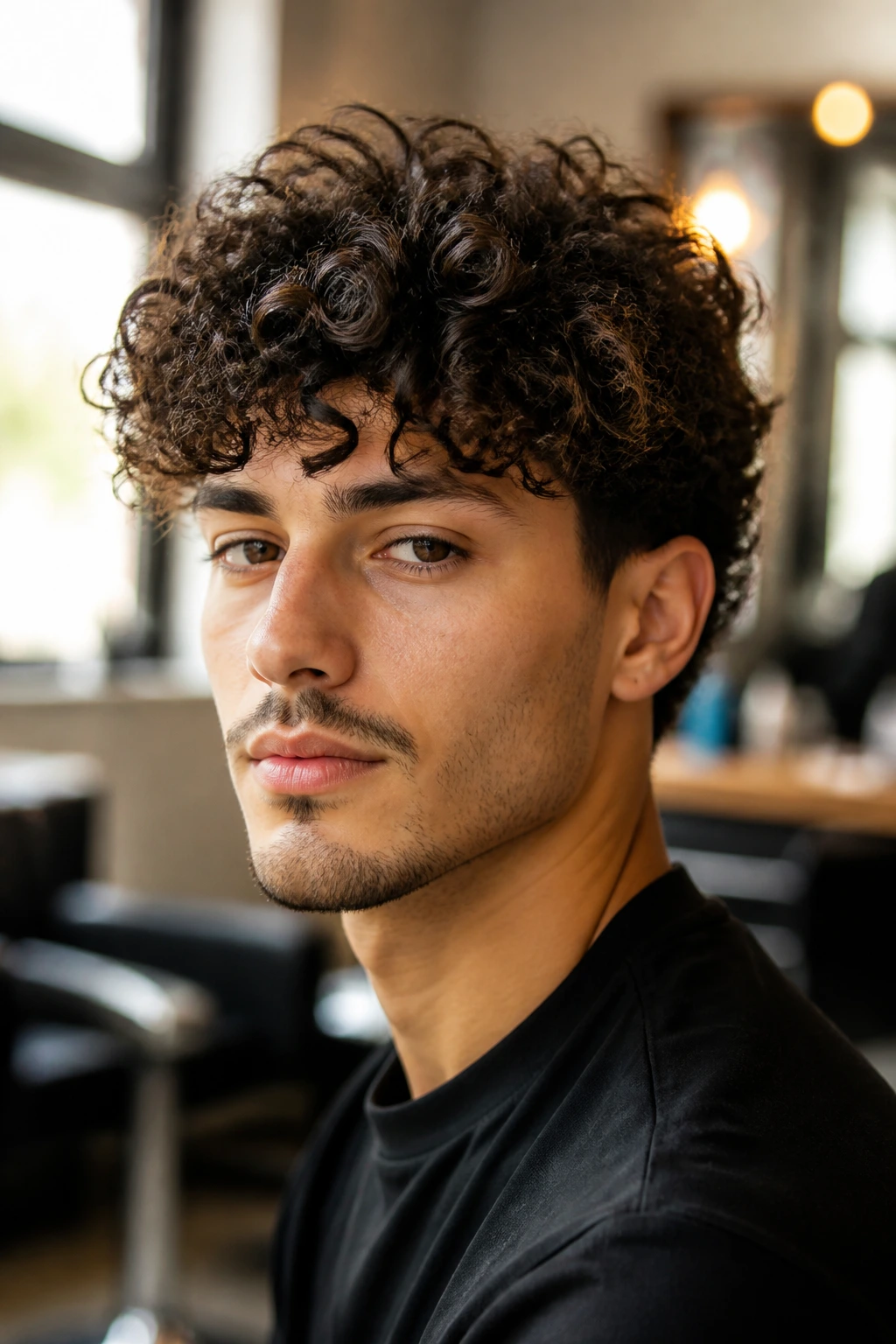
- Shrinkage is built in: Each cut here leaves enough room on top for curls to spring up without turning into a surprise buzz cut after the first wash.
- The outline stays readable: Clean sides, taper points, and layered tops keep the haircut from becoming one big puffball at the temple line.
- Styling can stay simple: Most of these looks work with a leave-in, a curl cream, or a light mousse — not a shelf full of jars.
- They grow out in a useful way: A good curly cut still looks decent two or three weeks later, when the edges soften and the top starts to move.
- There’s room for different curl types: Loose waves, springy ringlets, and tight coils each have a place here, which matters more than people think.
- The vibe shifts without changing the haircut’s logic: You can look clean, casual, sharp, or a little rebellious without changing the basic structure.
1. Curly Crop with a Low Fade
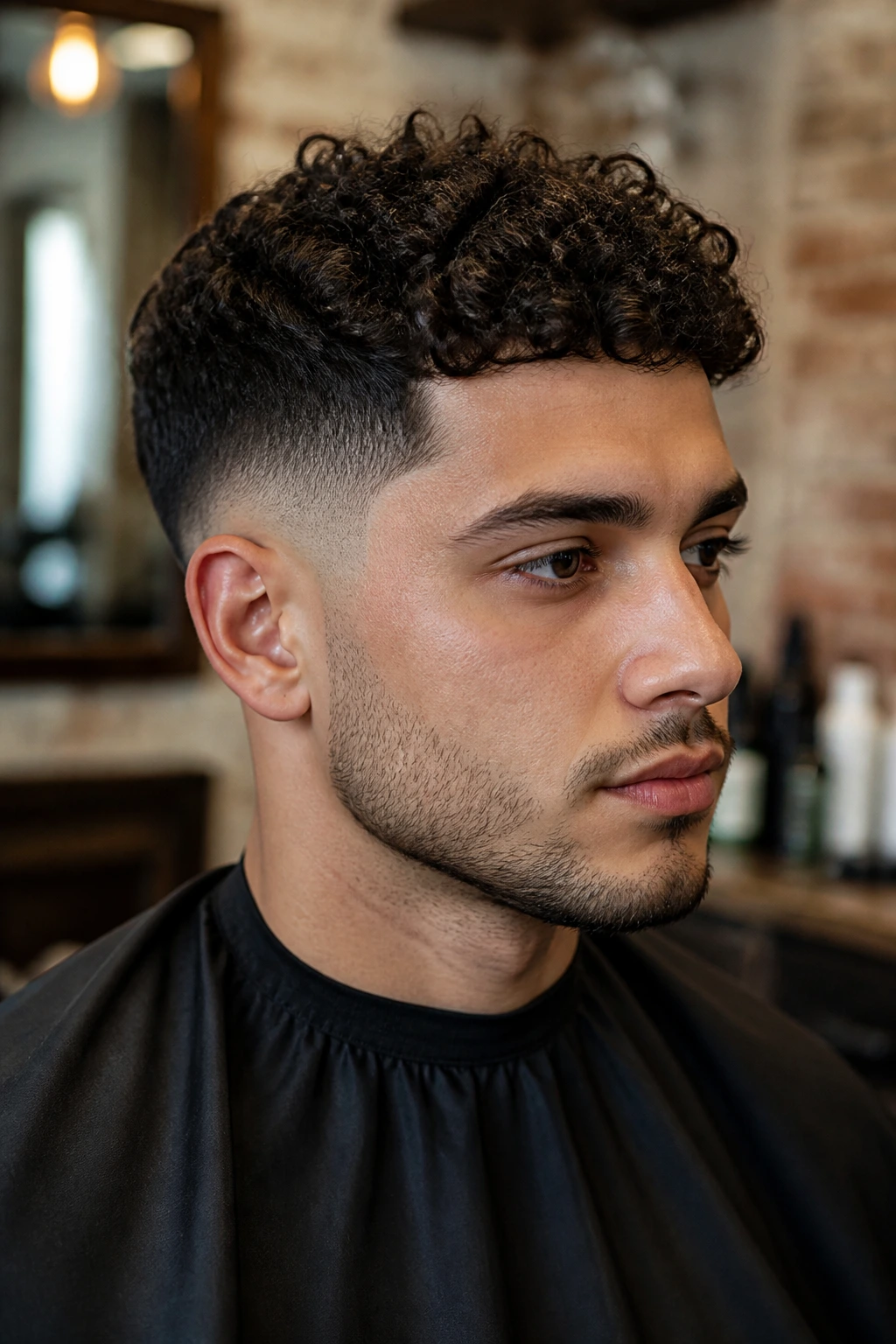
Short, tidy, and a little rough around the edges, the curly crop is what I recommend when someone wants curls to look intentional fast. The top usually sits around 2.5 to 4 inches, which is enough length for the bend to show without letting the style balloon into a helmet shape.
The low fade matters here. Keep the fade tight around the ears and neck, but don’t chase it too high up the sides. If the fade climbs too fast, the top starts looking disconnected in a bad way, especially on dense curls. A little weight near the temple keeps the cut looking grounded.
Best for: oval, round, and square faces.
Styling move: work in a pea-sized amount of curl cream on damp hair, then scrunch and let it air-dry or diffuse on low heat.
Barber note: ask for the top to be cut with the curl pattern in mind, not blasted short while wet.
This one is low-maintenance without looking lazy. That’s the whole appeal.
2. Low Taper Curly Fade
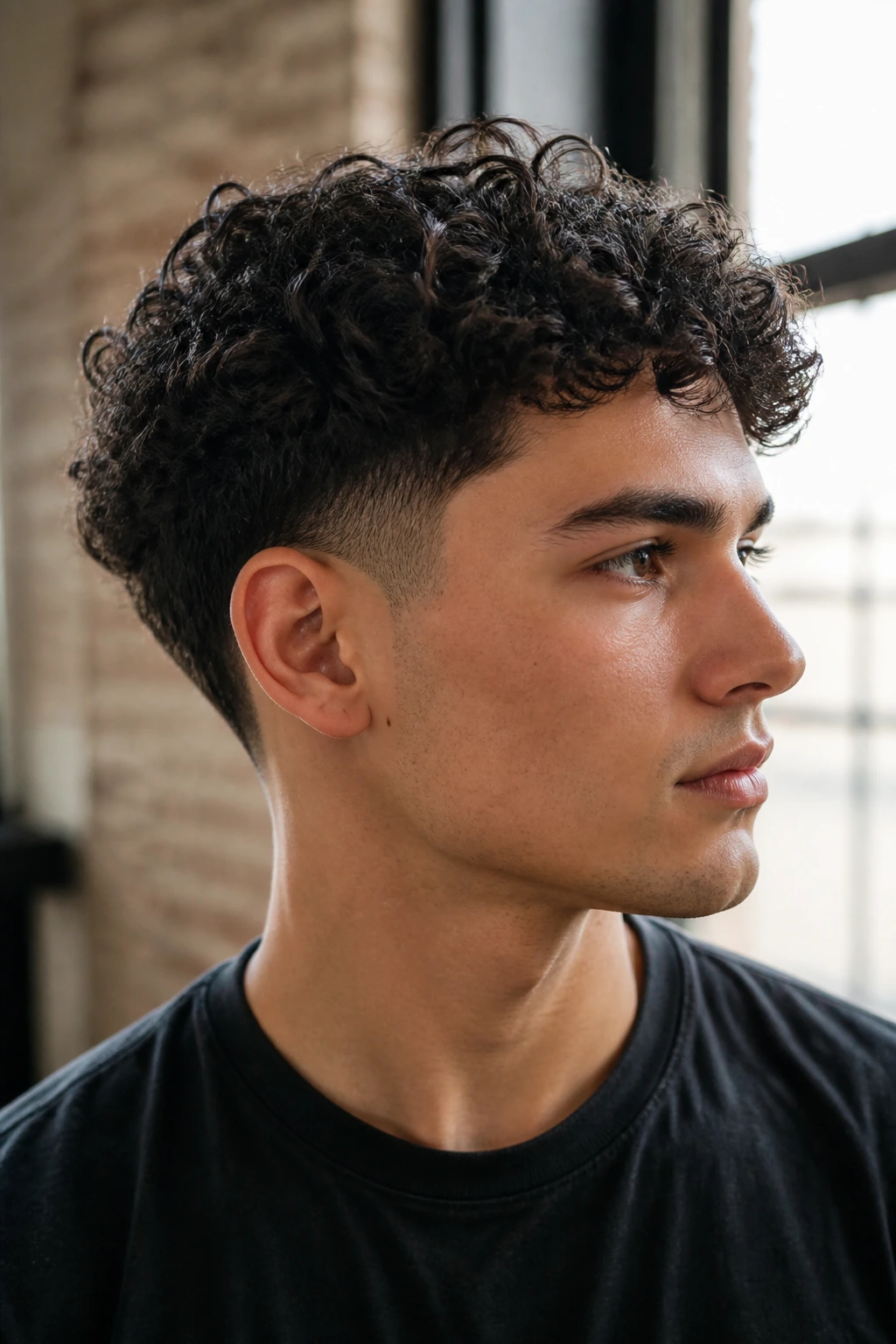
A low taper curly fade gives you a cleaner edge than the crop, but it keeps more softness through the sides than a skin fade does. The taper starts around the sideburns and nape, then melts into the hair instead of chopping it off. That little shift makes the cut more forgiving as it grows out.
I like this one for men who wear curls at work and still want them to look like curls, not a compliance issue. The top can sit anywhere from 3 to 5 inches, depending on curl tightness. Tight coils need a touch more height; looser curls can stay shorter and still show texture.
The style does well when the crown isn’t over-thinned. Too much removal up top makes the head look flat from the side. Leave the crown with some mass, and the shape holds better after a wash.
A light mousse or foam gives this cut movement without the crunch. If your hair dries puffy, a dab of leave-in before the mousse helps the curl settle instead of scattering.
3. Curly Fringe with Short Sides
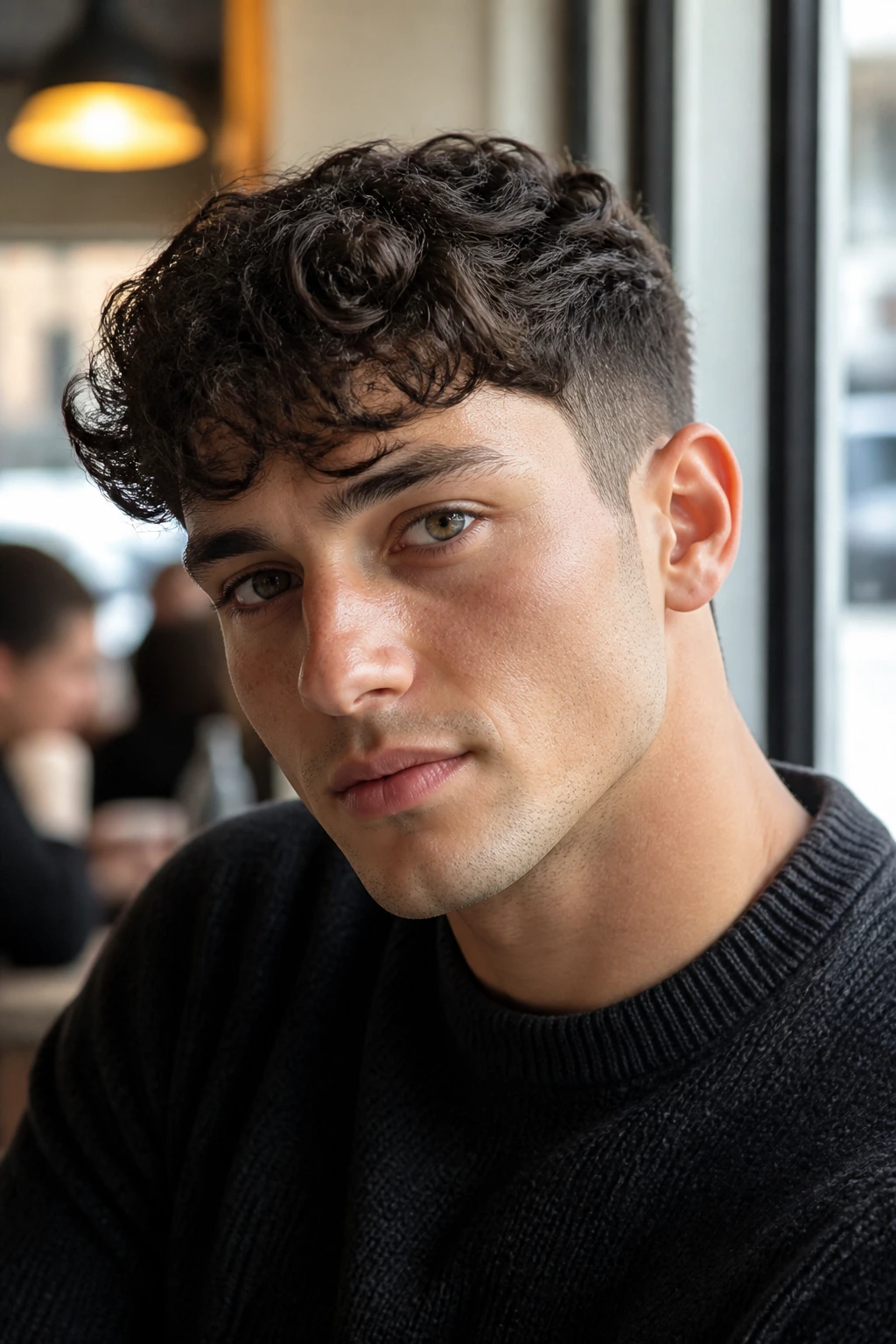
A curly fringe changes the whole face shape. It puts the action in front, right above the eyebrows, which is useful if you have a higher forehead or just want a haircut that looks a little less standard than the usual fade-and-top setup.
The key is keeping the fringe soft, not blocky. The front should fall forward with some irregular pieces, and the sides need to stay short enough that the fringe doesn’t look heavy by comparison. On the right head, this cut gives a lived-in, slightly French look that never feels overworked.
If your curls are loose, the fringe can sit closer to the brow. Tighter curls usually need the front left a bit longer so the curl actually collapses forward instead of springing up and back. Cutting it dry helps a lot here, because wet curls lie to everybody.
Use a light curl cream or a cream-gel mix. Heavy paste drags the fringe down in dull clumps, which ruins the point. You want movement in the front, not a stiff curtain.
4. Curly Quiff with Lifted Front
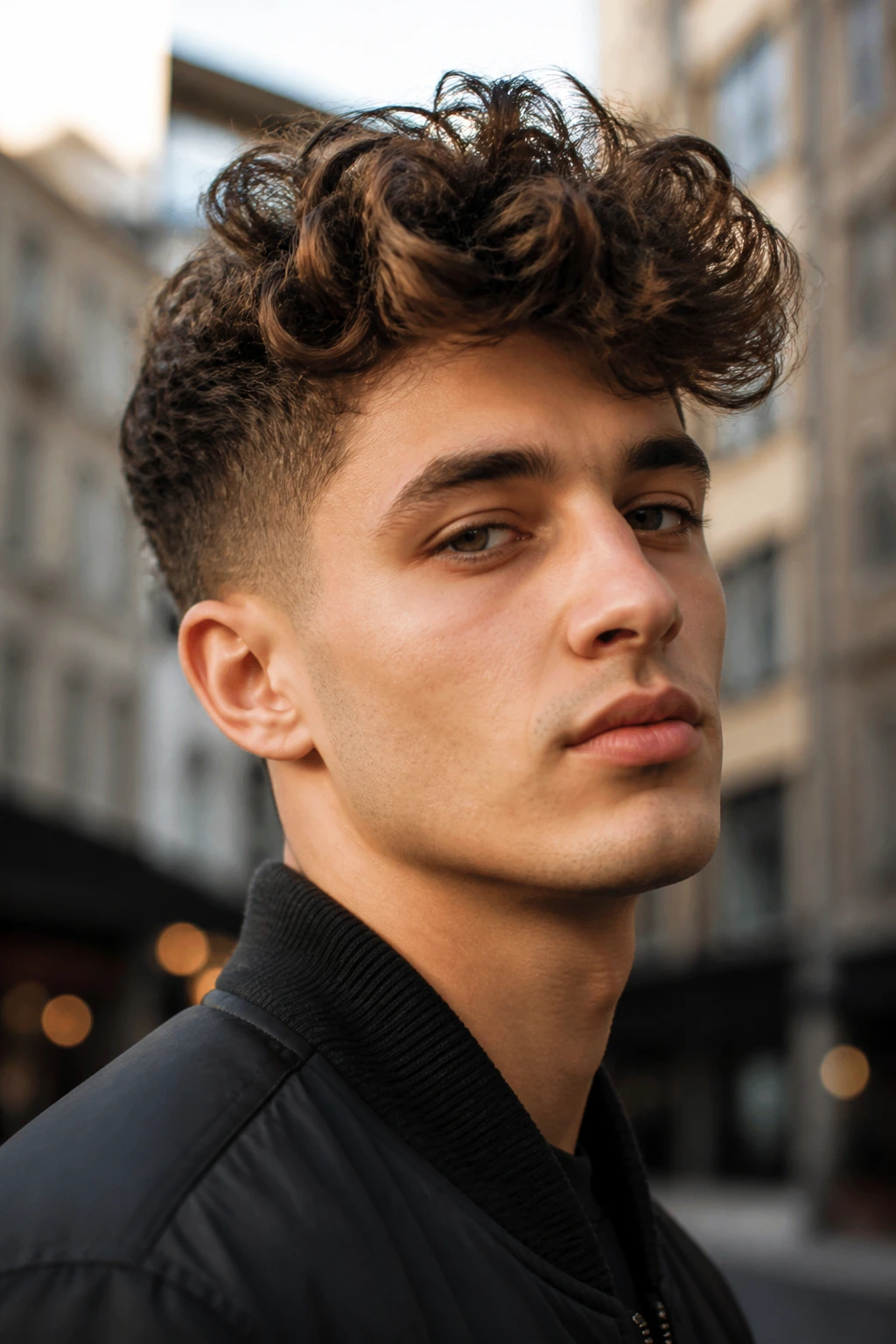
The curly quiff is for guys who want height. Real height. Not the flat, tired kind that collapses after one humid walk outside. It works best when the front is left longer than the rest of the top — think 4 to 6 inches in the front, tapering slightly toward the crown.
What makes this cut different from a plain curly top is direction. The curls are pushed up and slightly back, so the front gets the spotlight. On wavier hair, it can look polished. On tighter curls, it reads more textured and bold.
You’ll need a blow-dryer for this one, and a diffuser is the safer bet if your curls frizz easily. Dry the roots first, lift the front with your fingers, then set it with a mousse or a light hold cream. A little heat goes a long way. Too much, and you flatten the curl pattern into a dry puff.
It suits longer faces because the height adds balance. Round faces can wear it too, but the sides need to stay clean and the front should lean back, not straight up.
5. Curly Side Part with Tapered Temples
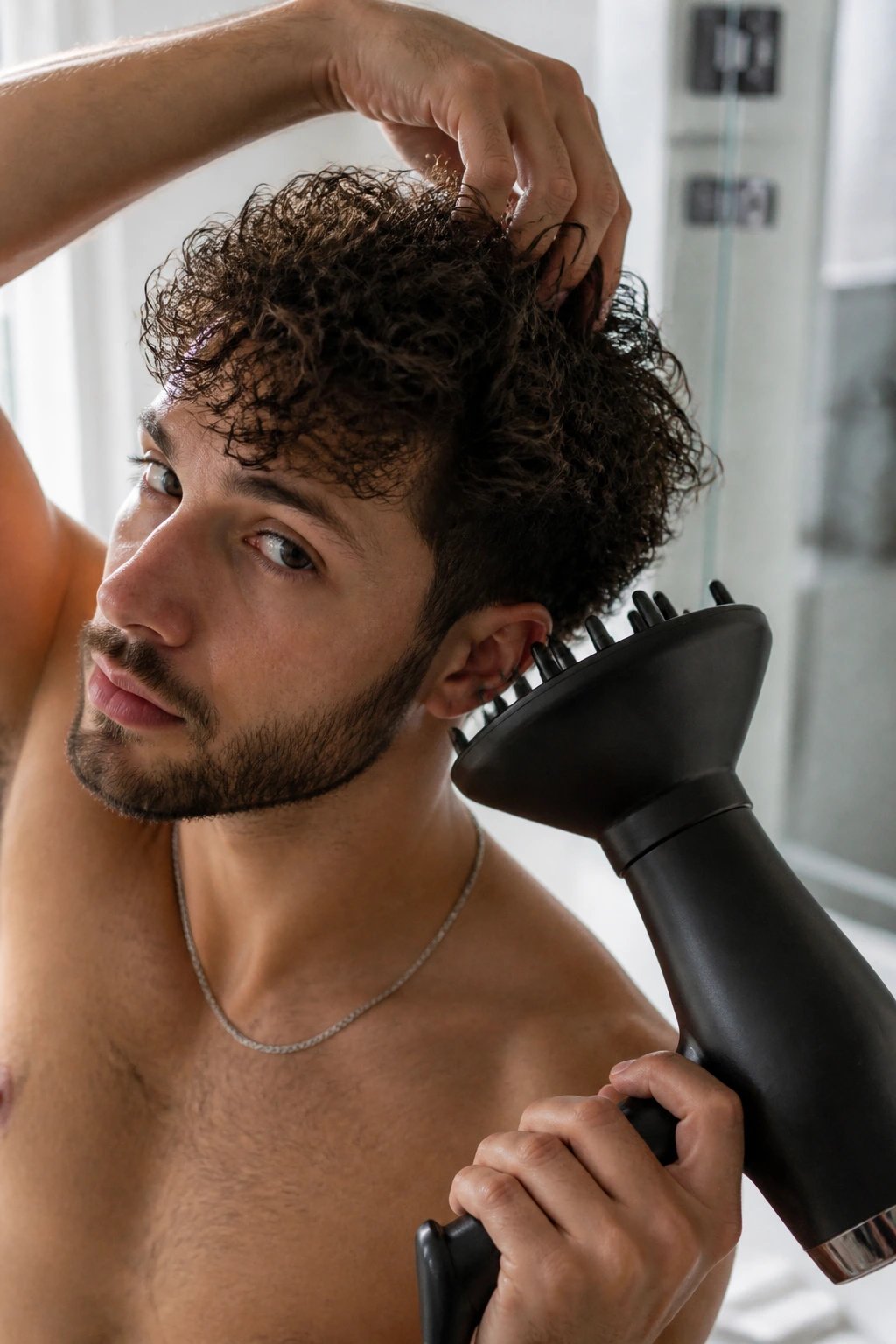
A side part on curly hair sounds conservative until you actually see it done well. Then it looks sharp in a way that straight hair often can’t match, because the curl gives the part some softness instead of making it feel severe.
The important detail is the tapered temple. Keep the temples and sideburns tight, then leave enough length on top for the curls to sit across the part without turning into a single heavy slab. A hard shaved line can work, but I prefer a softer part unless the rest of the cut is very crisp.
This one fits office settings, weddings, and any situation where you want your hair to look deliberate without screaming for attention. It also does a decent job of calming a strong cowlick near the front, which is a gift if your hair likes to argue with gravity.
Use a lightweight pomade or styling cream. Brush or finger-comb the part while the hair is damp, then let the curls set in place. If you want more shine, add a tiny bit of product after drying — tiny, not “half the jar.”
6. Rounded Curly Afro
A rounded curly afro is one of those shapes that looks simple from a distance and very specific up close. The trick is the outline. You want a soft sphere or oval, not a box, and you do not want the sides to overhang past the line of the cheek.
This cut loves dense curls and coils because the hair naturally fills the shape. It also makes the head look balanced when the top and sides are trimmed with the same sense of proportion. A sharp shape-up around the hairline can sharpen the look, but if the front line is drawn too hard, the haircut starts feeling more geometric than natural.
Moisture matters more here than product hold. Leave-in conditioner, a little curl butter, and occasional finger detangling keep the texture soft enough to expand without frizzing into a halo. If you like a lot of sheen, use a small amount of glossing oil on the surface, not the roots.
This style needs regular reshaping every 3 to 5 weeks if you want the circle to stay clean. Wait longer, and the sides widen first. That’s the part people notice.
7. High-Top Fade with Tight Curls
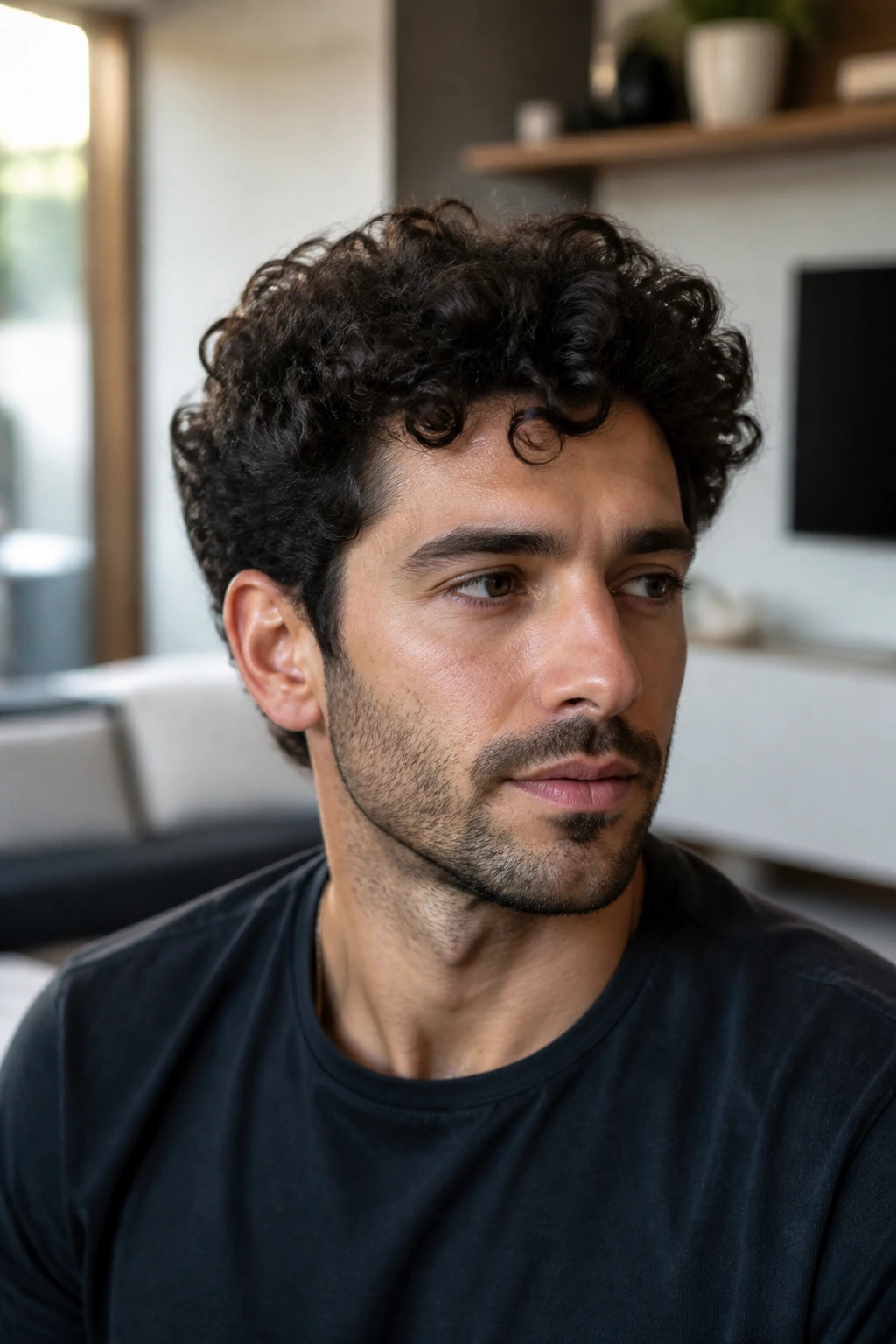
A high-top fade is a shape haircut, which means the outline does most of the work. The sides are cut tight, usually down to the skin or very close, while the top stays tall and structured. On tight curls and coils, that contrast looks crisp and controlled.
The high top can be rounded or slightly squared, and I’d pick the shape based on your face. Rounded tops soften strong jawlines. A more square top gives a sharper, old-school edge. Either way, the top needs enough length to stand up — usually 2.5 to 4 inches, depending on curl shrinkage.
This cut benefits from a sponge, twist cream, or a curl-defining lotion if your texture responds to that kind of shaping. The goal is height and definition, not a hard shell. If the curls sit too flat, the fade takes over. If they’re over-styled, the cut gets stiff.
Keep the edges clean at the temple and nape, or the shape loses its punch fast. The top can be a little wild. The outline can’t.
8. Curly Bro Flow
The curly bro flow is what happens when length stops being a problem and starts becoming the point. It usually sits around medium length — long enough to brush back, short enough that it still has lift at the front and movement at the sides.
This one works because it doesn’t force the curls into one static position. A good bro flow falls back and away from the face, but not in a slicked-down way. The hair should look like it moved there on its own after a little help. That means layered ends, some weight removed from the crown, and enough length around the ears to keep the silhouette loose.
It suits men growing their hair out without wanting to look shaggy in the awkward middle stage. If your curls are thick, ask for internal layering so the bulk doesn’t sit in one heavy line at the bottom. That triangle shape can ruin an otherwise clean cut.
Use leave-in conditioner first, then a small amount of cream or spray. Air-dry if you can. If you blow-dry, use a diffuser and keep your hands out of the curl pattern until it sets.
9. Layered Curly Shag
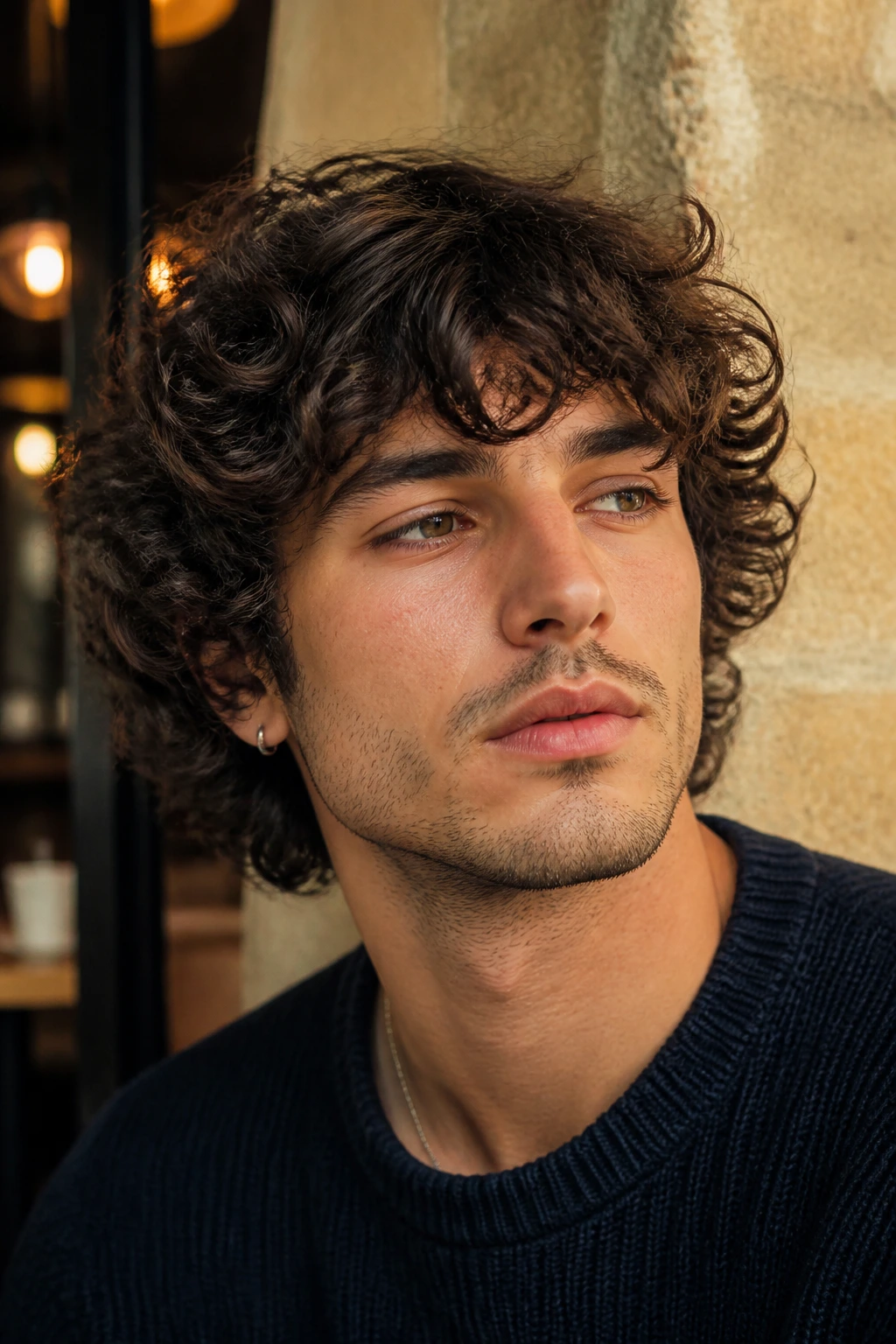
The curly shag has attitude without trying too hard, which is exactly why it keeps coming back. It’s built on layers, not one blunt shape, so the hair moves around the face and neck instead of sitting in a hard block.
This style looks best when the curl pattern has some bounce. The top and crown are kept a little longer, the sides are feathered, and the fringe usually breaks into uneven pieces. That broken line is the whole charm. It makes the cut feel lived-in rather than staged.
A shag needs a barber who knows where the weight should stay. Too much thinning turns it wispy. Too little and it looks like a box with bangs. The right version has movement through the ends and enough structure around the temples to avoid the mushroom effect.
Style it with a lightweight cream or spray. If you want more separation, scrunch in a small amount of texture product while the hair is damp. Don’t flatten it with a brush unless you want the whole personality of the cut to disappear.
10. Curly Mullet with a Clean Taper
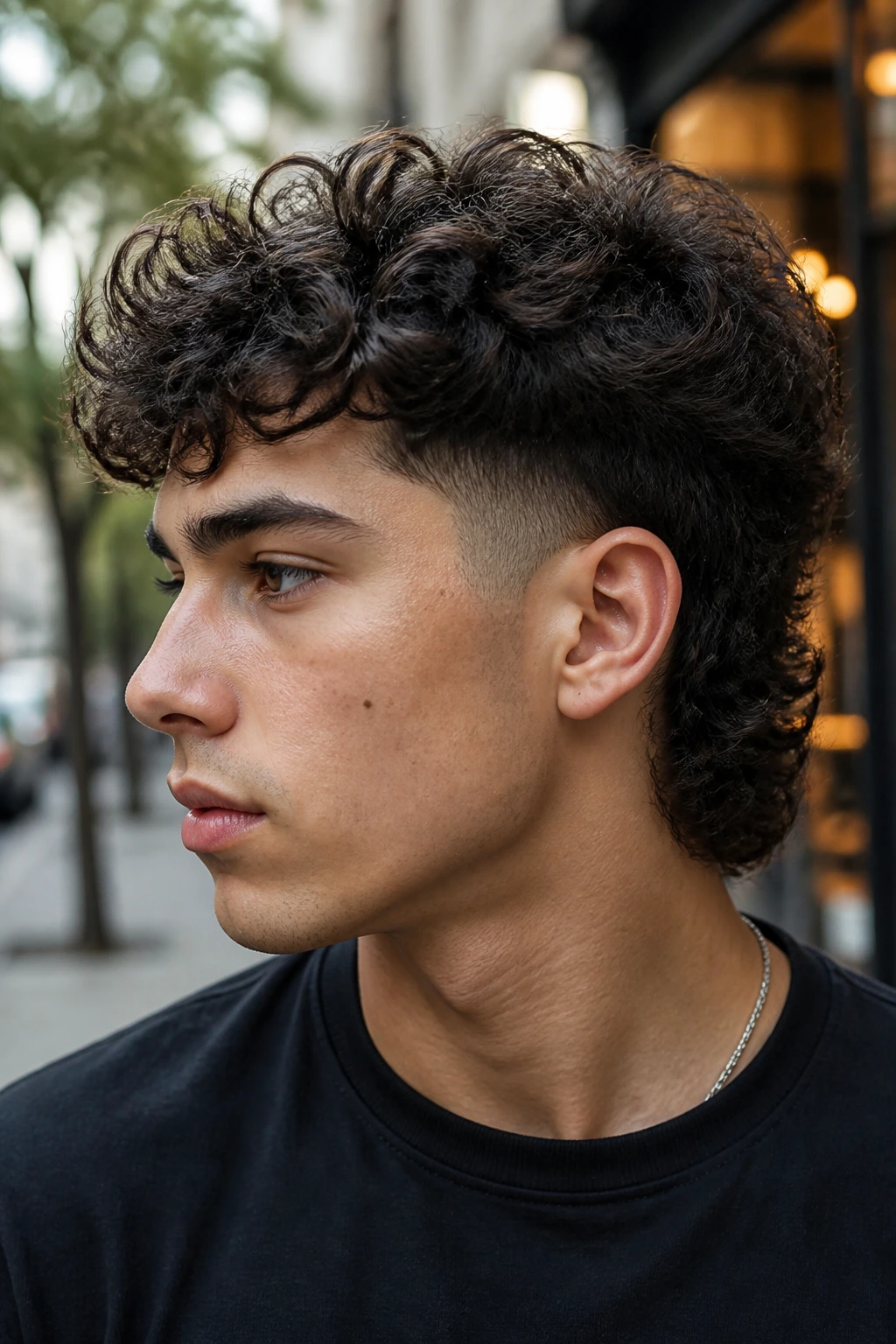
The curly mullet is not subtle, and that is the point. Shorter in front and on the sides, longer at the back, it uses contrast to make curly texture look sharper and a little more rebellious.
The modern version is cleaner than the old one. A taper around the ears and neckline keeps the cut from feeling sloppy, while the back stays long enough to show curl movement. The top can be messy, but the perimeter should still look deliberate. That’s what separates a proper curly mullet from “I forgot to get a haircut.”
I like this one on guys who don’t want their curls flattened into something safe. The shape gives you room for volume up top and drag in the back, which can be flattering on longer faces and stronger jawlines. If your hair is very dense, ask for internal debulking so the back doesn’t puff out into a shelf.
A matte cream or texture spray works well. You want the ends to move, not freeze. The charm is in the contrast between the neat sides and the looser length behind the ears.
11. Curly Undercut with Heavy Top
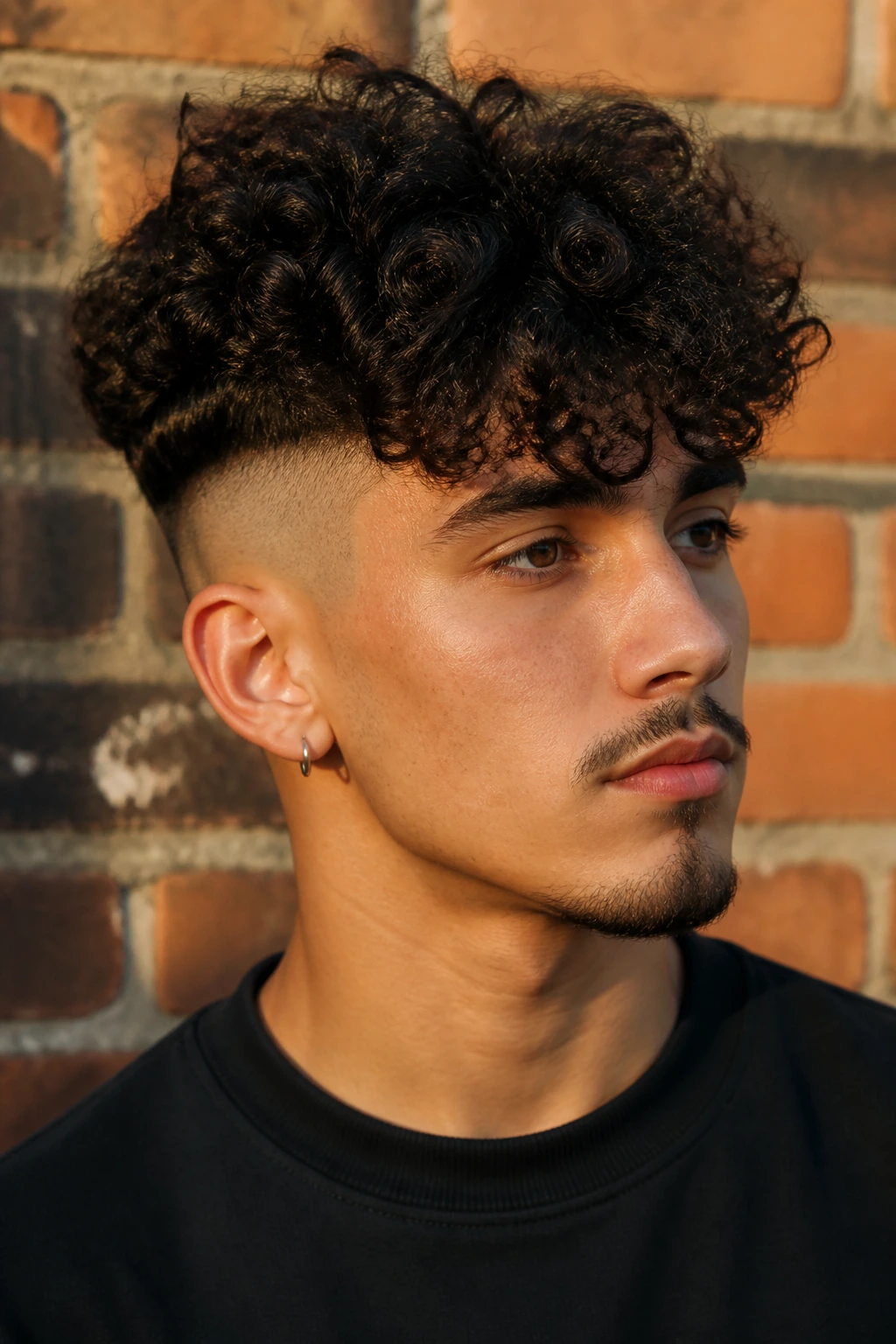
An undercut makes the top look louder by cutting the sides away completely. That’s the whole game. On curly hair, the effect can be striking because the texture becomes the headline instead of a supporting detail.
This cut needs a clear break between top and sides. If the transition is too soft, it stops being an undercut and starts looking like a bad fade that missed the mark. Keep the top at least 4 inches long if you want the curls to read as a shape, not a fuzzy cap.
The undercut works well for men who like styling their hair forward, back, or to one side depending on the day. That flexibility is the selling point. You can wear it with volume one day and more compressed the next, which is handy if you change clothes a lot between work and evenings out.
It does need product discipline. Cream for soft texture, pomade or paste for more control. If the top is too dry, the contrast between the sides and top gets harsh in a messy way.
12. Curly Slick Back
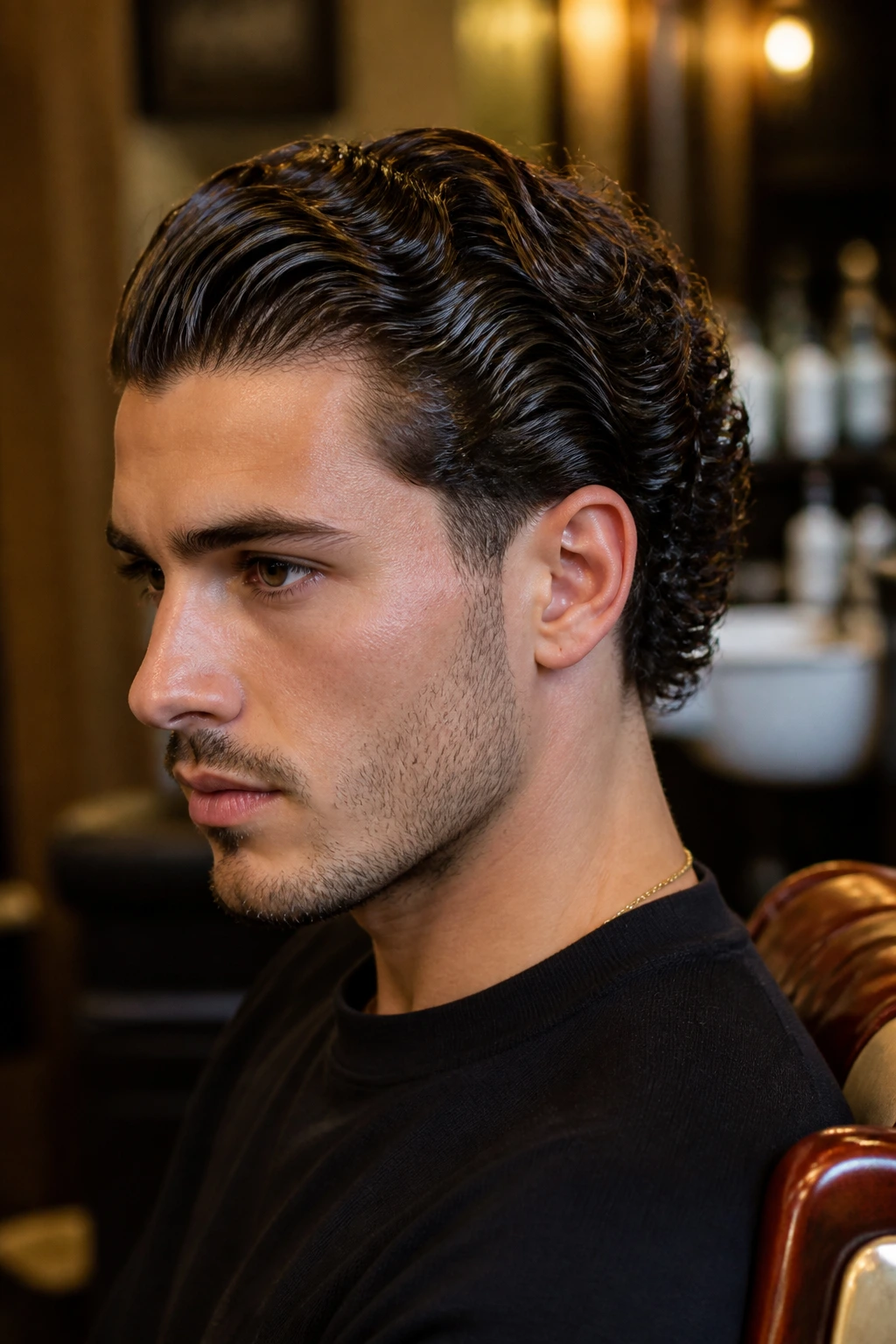
A curly slick back asks for commitment. The curls are pushed away from the face and guided toward the back, which gives the whole haircut a polished, slightly wet look when done right.
This works best on medium-length curls that have enough weight to lie back without exploding upward. Short curls usually fight the style. Medium curls cooperate if you use the right product and don’t try to force them into straight-hair logic. Brush the hair back while damp, then set it with a medium-hold gel or pomade. A little shine fits this style. A lot of shine can tip it into greasy territory.
The sides should stay neat, but not so tight that the top looks pasted onto the head. A low taper or tidy side fade keeps the silhouette clean. If your hairline recedes a bit, the slick back can actually help, because the front gets pulled away from the forehead instead of sitting on it.
The downside? Wind. This is not a carefree haircut. It looks sharp when the shape holds, and less charming when it doesn’t.
13. Curly Man Bun
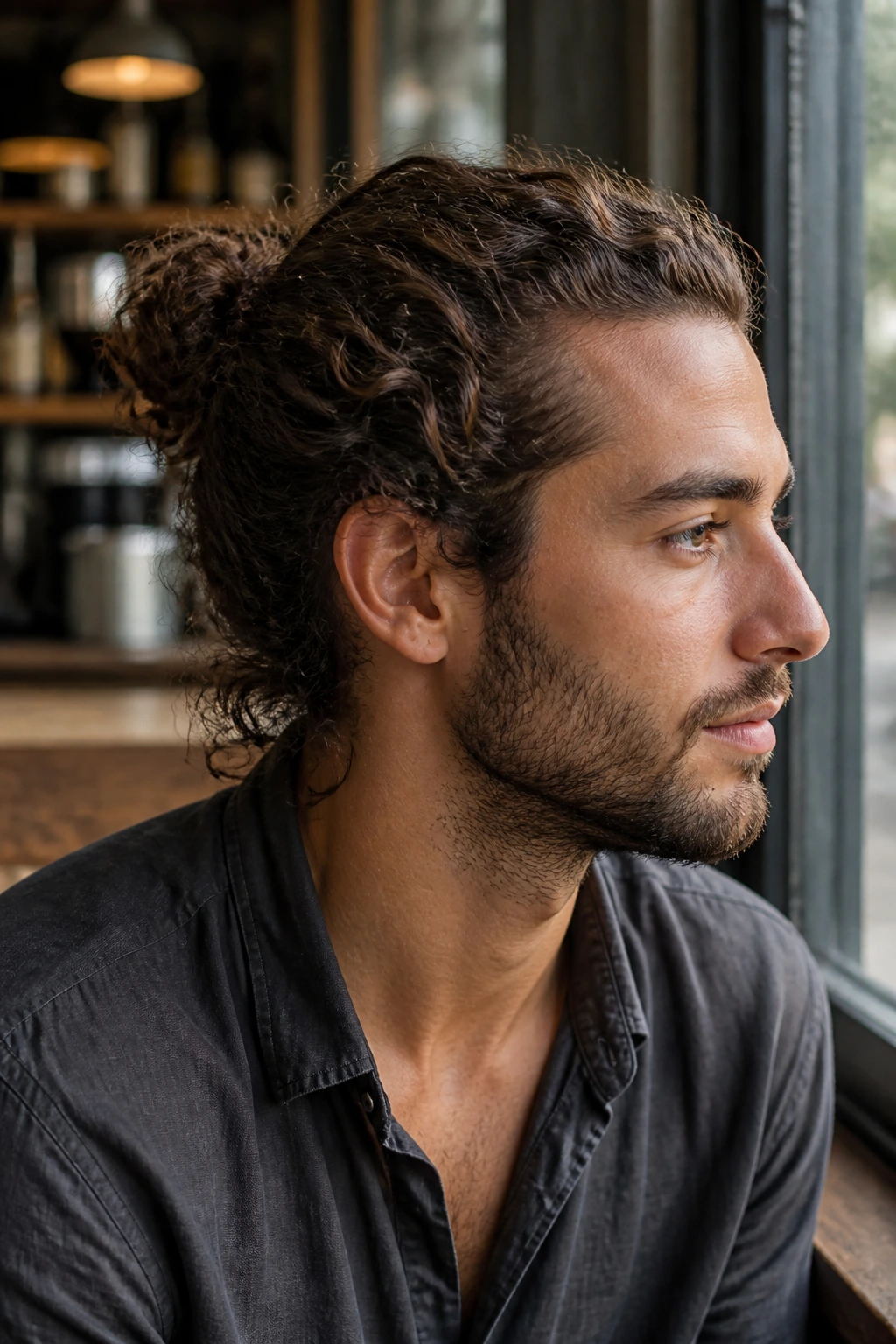
The curly man bun is partly a hairstyle and partly a truce with length. Once the curls get long enough to gather, the bun gives you a clean way to control them without chopping everything off.
The key is not to pull it too tight. Curly hair already has tension in the strand, and a tight elastic can leave that ugly ridge at the back of the head. A loose bun sits better and looks less severe. If you have very thick curls, a low bun often works better than a high one because it spreads the bulk out.
This cut looks best when the sides and edges stay trimmed enough to avoid that unwashed grow-out shape. A light taper around the neckline can keep it tidy without ruining the length. If you wear it down sometimes, ask your barber to layer the ends so the hair falls with less heaviness.
Use leave-in conditioner and a touch of oil on the ends. The bun itself should be a solution, not a punishment. If it hurts to tie it up, it’s too tight.
14. Burst Fade Curly Mohawk
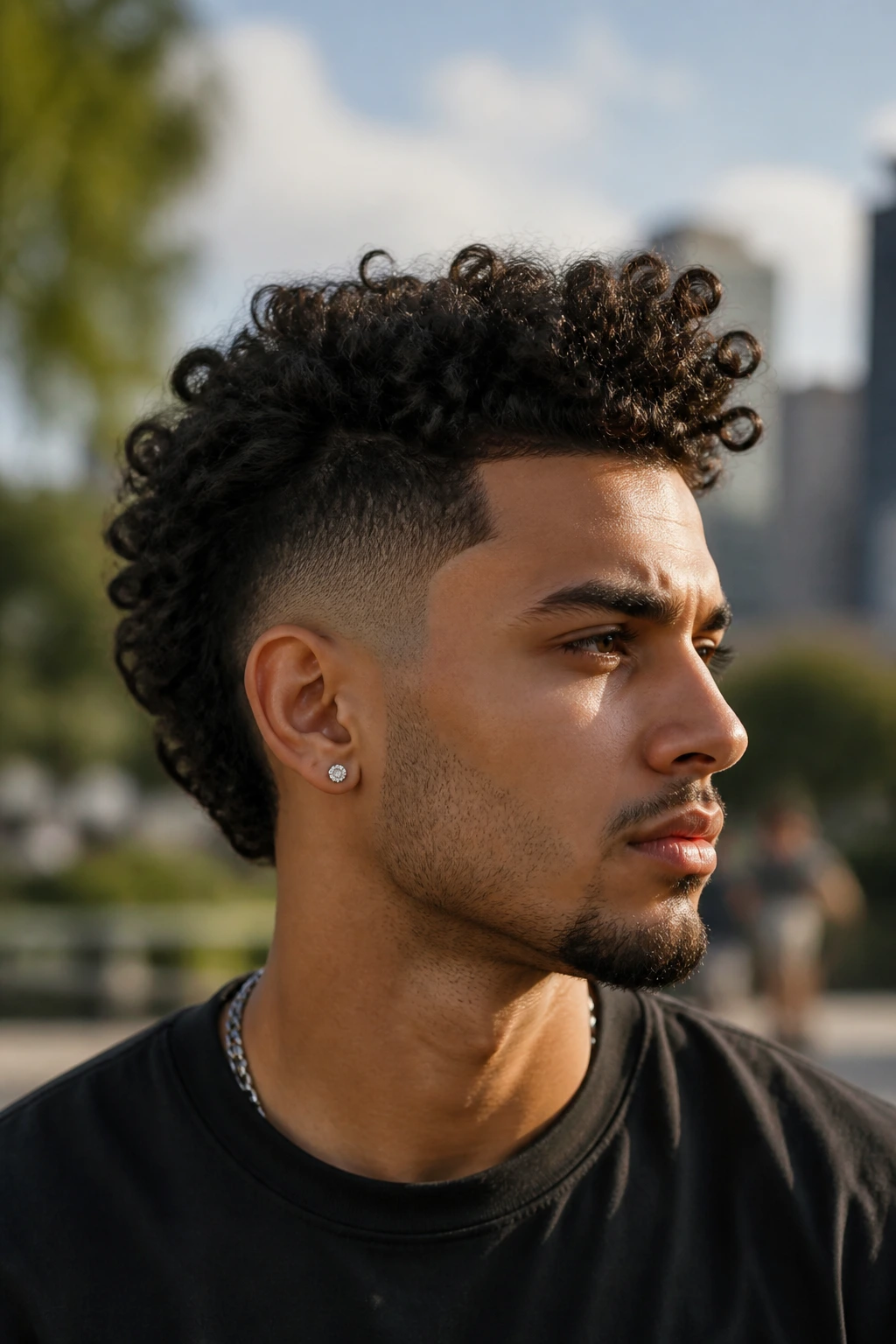
The burst fade curly mohawk is all movement and no hesitation. The fade curves around the ear and drops behind it, while the curls stay longer through the center strip from front to crown.
This shape works because it frames the curls instead of trying to bury them. The fade keeps the sides clean and the strip on top gives the hair direction. On tighter curls, it can look bold and athletic. On looser curls, it reads a little more playful.
A burst fade needs a barber who can keep the arc even on both sides. If one side climbs higher than the other, the whole cut looks tilted. The top should keep enough length for curl definition, usually 3 to 5 inches, depending on how much volume you want.
Styling is pretty straightforward. Use a curl cream or mousse, then twist a few front sections with your fingers so the mohawk line has a little structure. A diffuser helps the top rise without flattening the sides.
15. Short Curly Caesar
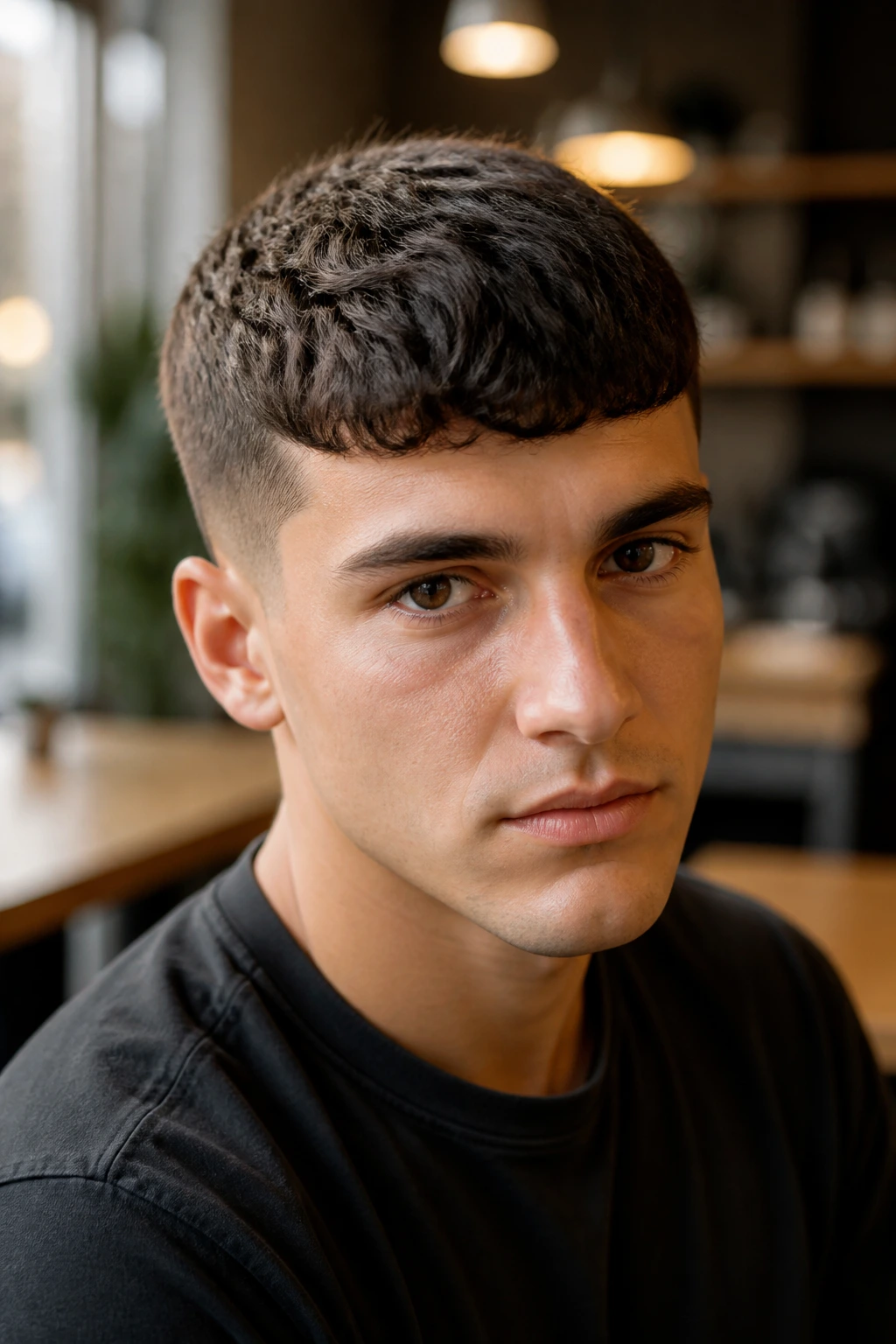
The curly Caesar is proof that short does not have to mean boring. The top stays cropped and forward, with a short fringe that sits close to the forehead. On curly hair, that fringe adds texture where straight hair would just look plain.
This cut is a smart choice if you want something easy to wash, quick to style, and tidy enough for almost any setting. The sides stay short, but the top needs enough length to show a pattern — around 1 to 2.5 inches is usually enough depending on curl type. Go much shorter and the texture stops reading as a style.
It works especially well for men with receding hairlines or strong hairlines that they want to soften. The fringe breaks up the front edge without trying to hide it. That’s the key. It should look intentional, not defensive.
Use a matte paste or light curl cream. Skip heavy gel unless you want the front to lock down in a stiff little wall. The Caesar is at its best when the texture still moves.
16. Long Layered Curls
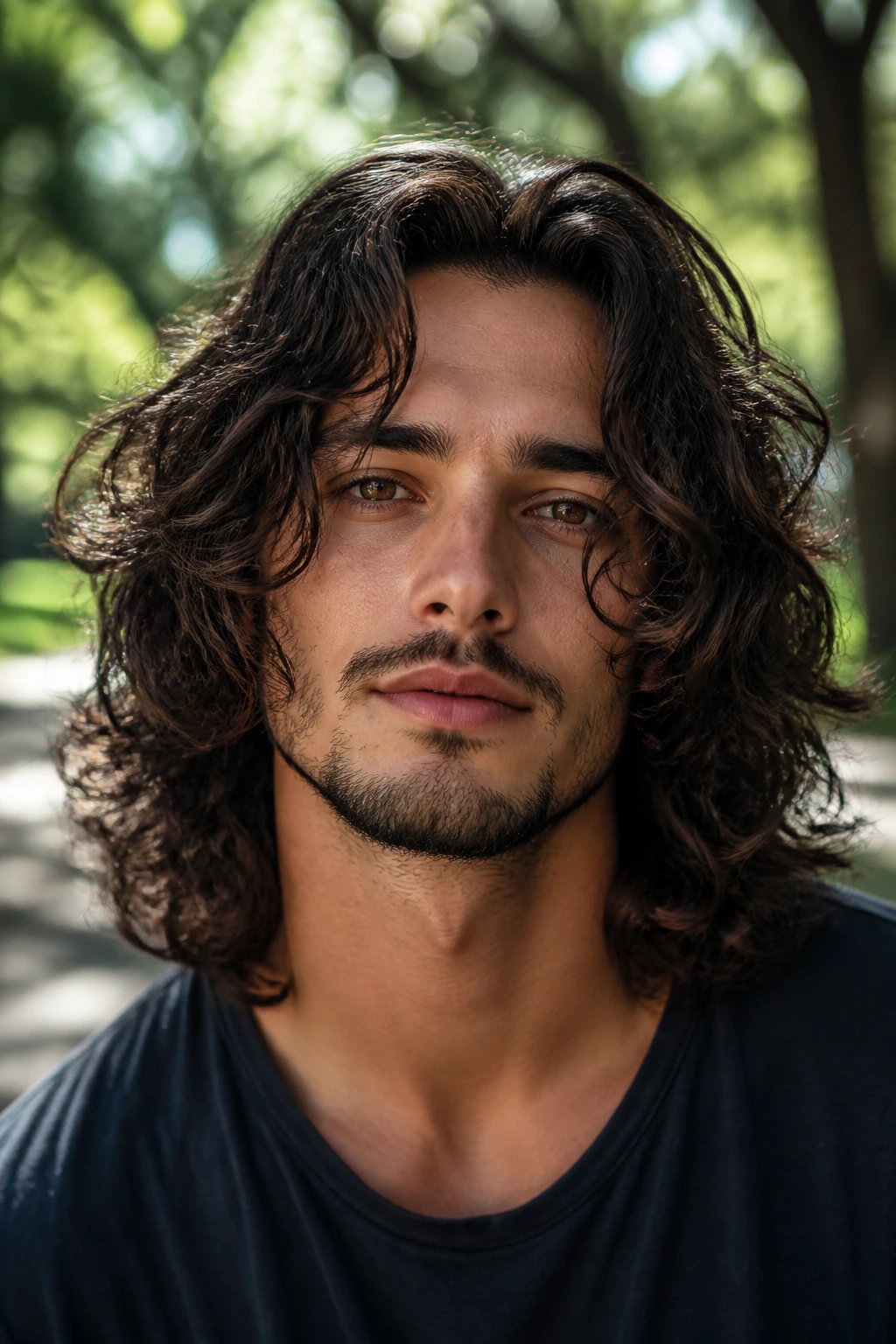
Long layered curls can look lazy if the cut is flat, and excellent if the layering is done with a bit of restraint. That’s the whole difference. You want movement from root to end, not one long sheet of hair hanging from the scalp like a curtain.
Layers stop the triangle shape that long curly hair gets when the bottom swells out wider than the top. They also help the curls stack more evenly through the back and sides. If your hair reaches the shoulders or brushes them, those layers matter even more. Without them, the cut can feel heavy in a way that drags the face down.
This is a higher-maintenance look, but not because it’s fussy. It needs moisture, shaping, and patience. Wash too often with harsh shampoo, and the ends get thirsty. Let it go too long without a trim, and the outline loses shape fast.
A leave-in plus a cream or foam is usually enough. Dry with a diffuser if you want more lift, or let it air-dry if you prefer a softer finish. The haircut should look like hair, not a project.
17. Curtain Curls with a Middle Part
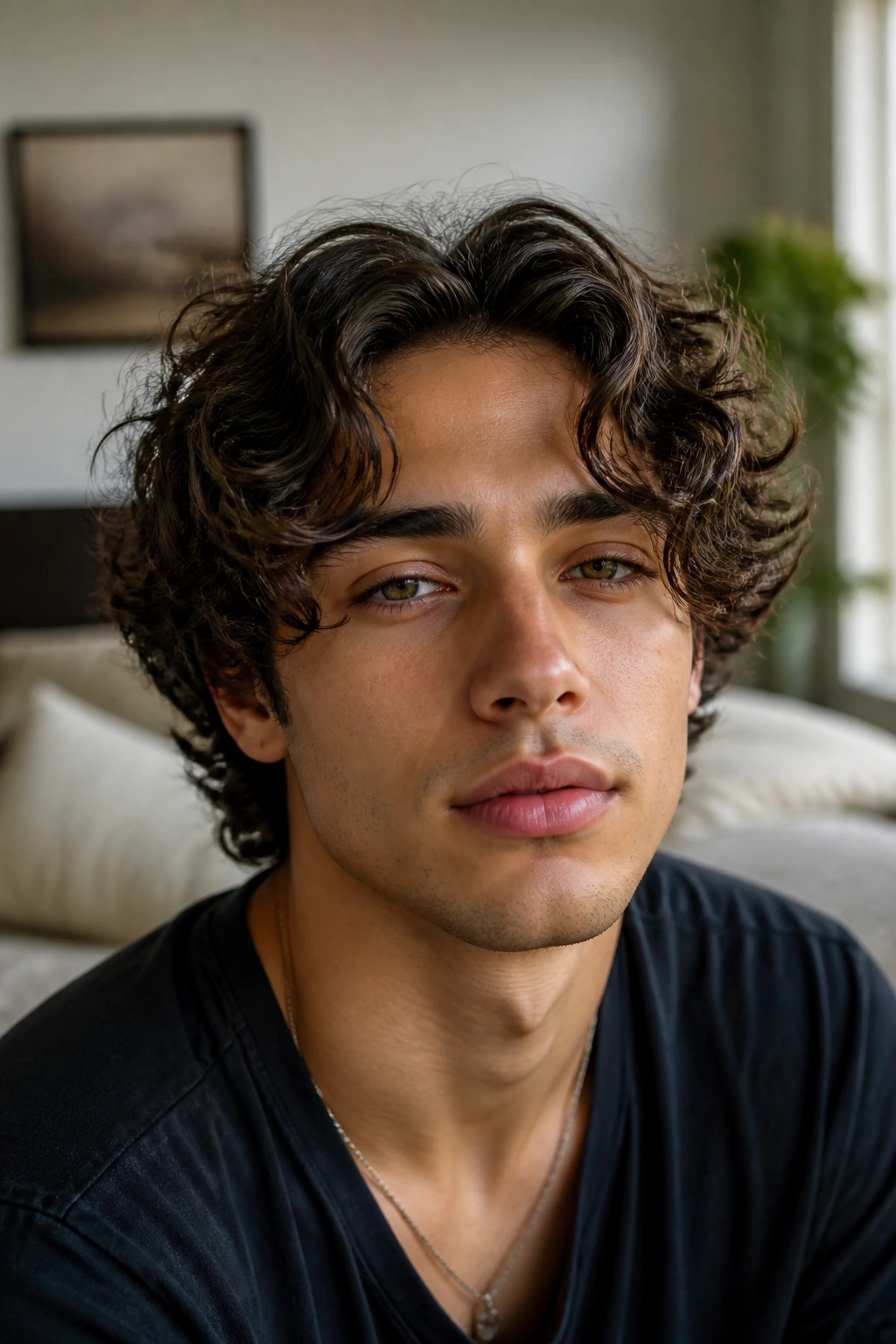
Curtain curls have a softer mood than most curly cuts. The center part or near-center part lets the curls fall to each side of the face, which can make the whole style feel relaxed and slightly retro.
This works best with looser curls or strong waves, though medium curls can pull it off if the length is there. The front needs enough stretch to frame the cheekbones. If the curls are too short, the part will keep collapsing and the cut loses its shape.
The middle part should not be forced like a ruler line. A slightly uneven part looks better because curly hair naturally resists exact symmetry. Keep some length near the eyes and cut the sides in a way that lets the front pieces fall forward instead of sticking straight out.
A light cream and a bit of water are usually enough. Push the hair into the part while damp, then let it dry with minimal touching. The style gets its charm from movement, not from control.
18. Temple Fade with Defined Curls
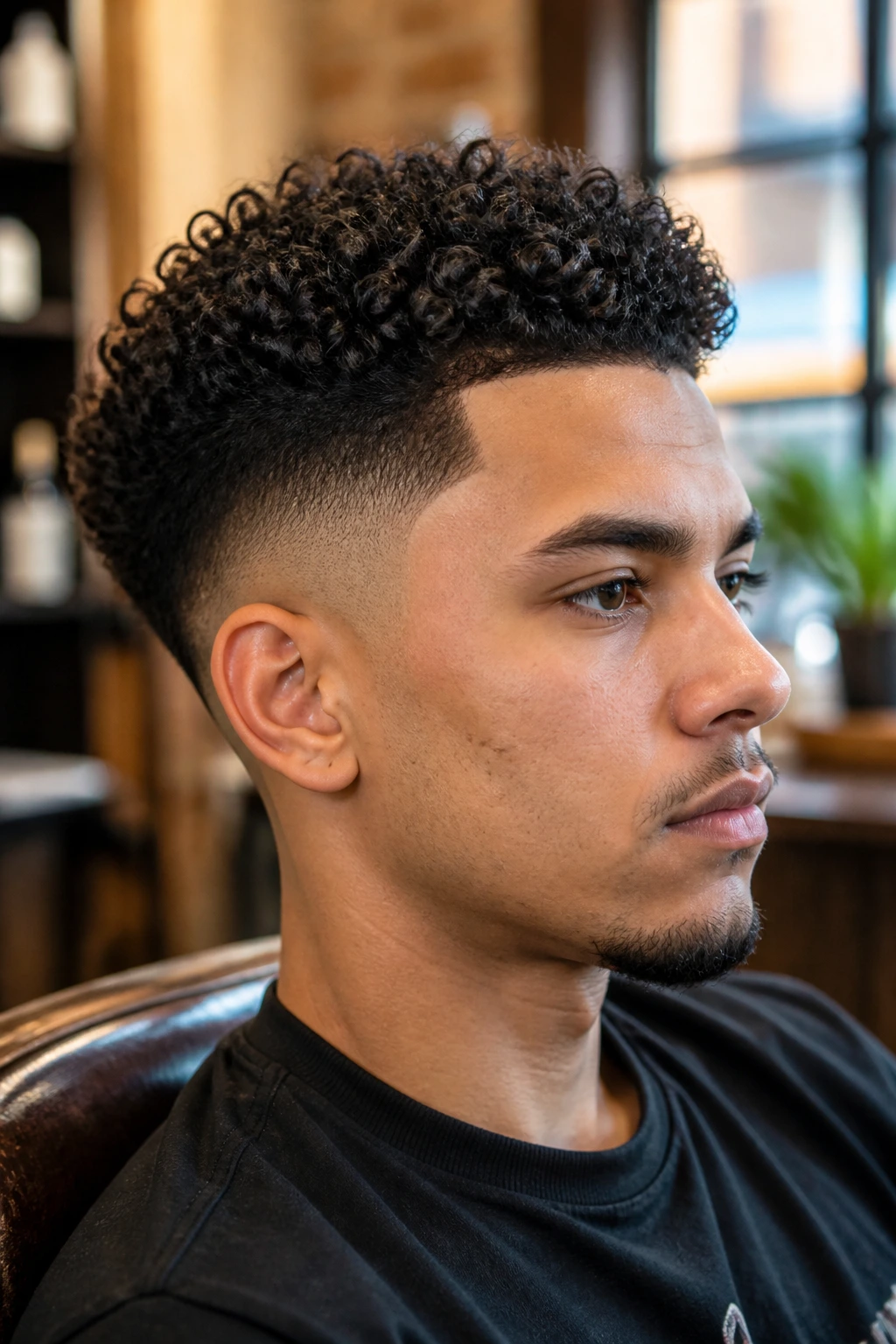
A temple fade gives the haircut a clean edge right where the face starts. The sides around the temples and sideburns are tapered tight, while the curls on top stay defined and visible.
I like this cut because it sits between polished and natural. It does not demand a huge top, but it still gives the curls room to breathe. That makes it useful for men who want a tidy haircut without shaving the sides down to nothing.
The top can stay medium-short or medium-long depending on the curl pattern. The important part is definition. Use a curl cream or leave-in, then separate a few pieces with your fingers instead of combing everything into one shape. A barber who leaves the hairline clean but not over-shaped will make this cut look better for longer.
This one also grows out well. When the fade softens, the haircut still has a clean frame. That matters more than people expect.
19. Textured Curly Pompadour
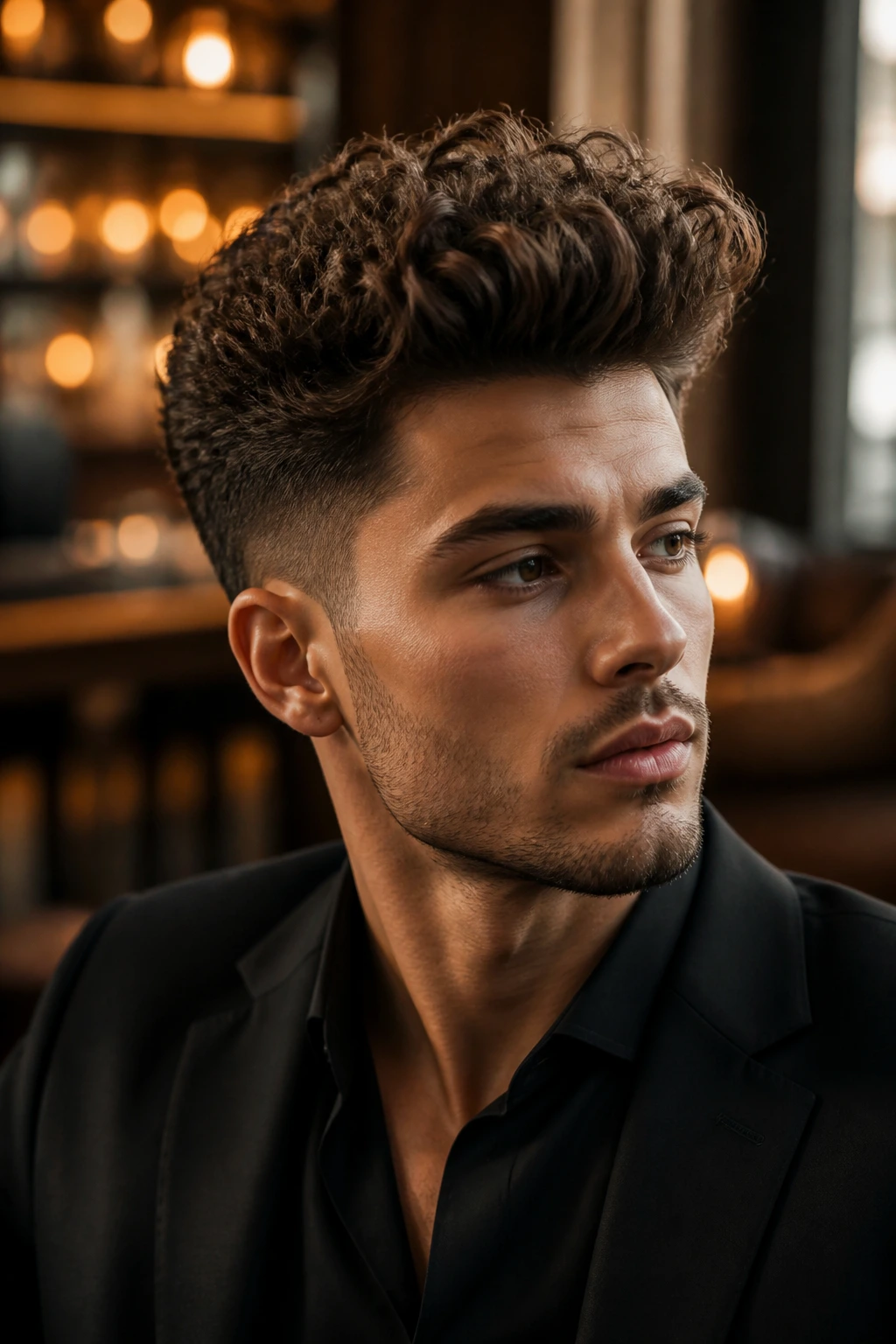
The textured curly pompadour is the showiest cut in the group, and it earns the drama. The front is lifted high and pushed back, but unlike a classic pompadour, the curl texture stays visible instead of being ironed into a smooth wave.
This style needs length in the front and some discipline with drying. Think 4 to 6 inches at the front and enough control through the crown to keep the height from folding over. If your curls are too tight and too short, the shape can fight you. Looser curls and medium coils do better here.
A blow-dryer with a diffuser or a round brush can help lift the roots. Mousse at the base, then a small amount of paste or cream on the ends, keeps the shape from falling flat. The trick is to build the height without turning the front into a crunchy shell.
It works well for nights out, dressier settings, or any time you want your hair to look like it has been thought about. A lot of curly cuts are easygoing. This one is deliberate.
What Makes Curly Hair Change the Whole Shape of a Cut
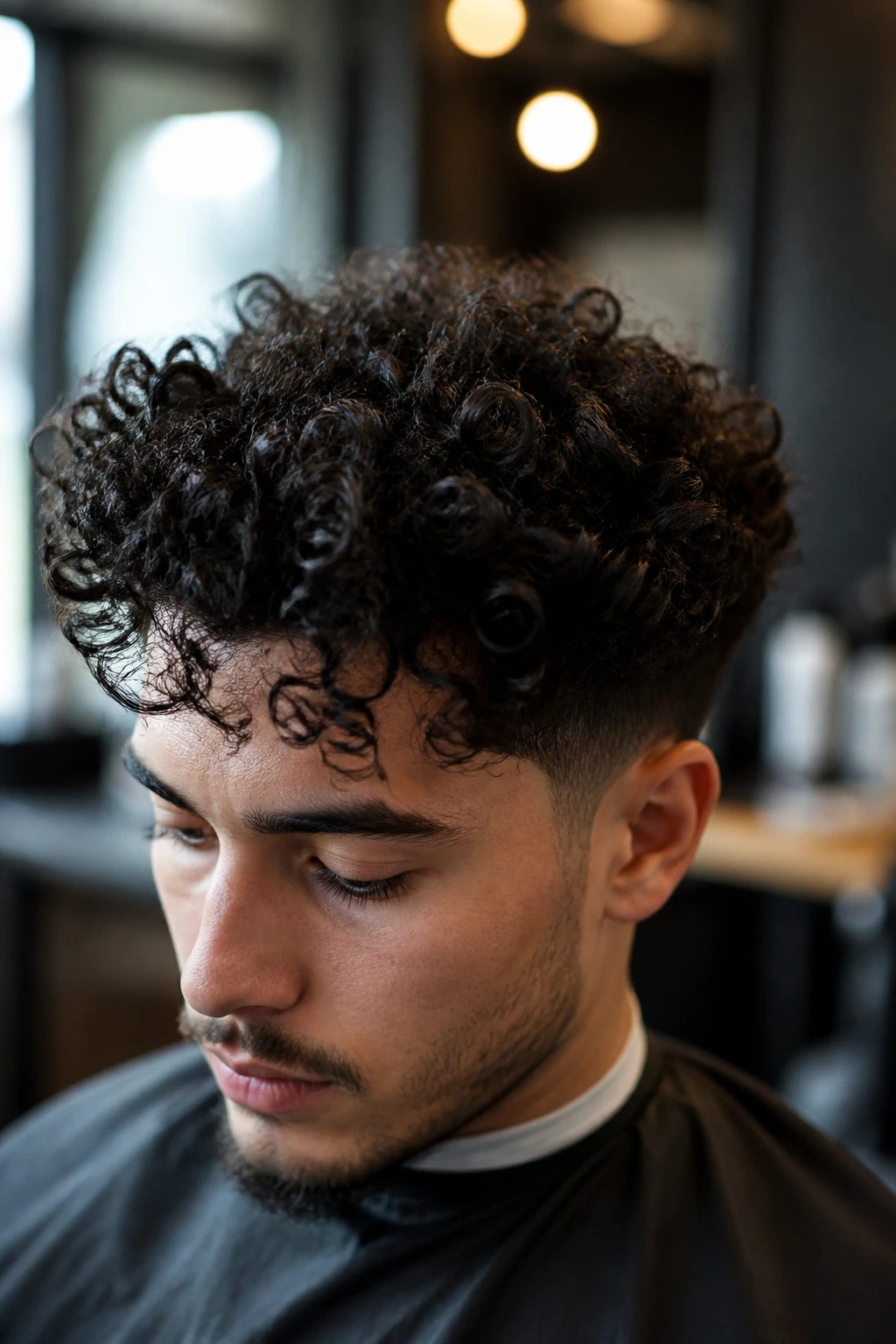
Curly hair does not sit on the head the way straight hair does. It bends, springs, and shrinks, which means the haircut keeps changing as it dries and as the day goes on. That’s why a cut that looks clean right after the barber chair can look wide, short, or puffy an hour later if the shape was built without the curl pattern in mind.
Shrinkage is the biggest thing people underestimate. Tight curls can lose a surprising amount of visible length when dry, and loose curls still shorten enough to change the balance around the temples and nape. If you cut curly hair wet and too aggressively, you are guessing. Sometimes that guess is generous. Sometimes it is a disaster.
Density matters too. Two men can have the same curl pattern and wildly different results because one has thick, packed hair and the other has airy, lower-density curls. Thick hair needs weight removed in the right places so the shape doesn’t balloon. Lower-density hair often needs more line and less thinning so the scalp doesn’t peek through and flatten the style.
Then there’s the scalp and growth pattern itself. Cowlicks near the crown, a front whorl, or one side that grows faster than the other can change the whole cut. Good barbers work with that. Bad ones fight it and lose.
How to Choose Curly Hairstyles for Men by Curl Pattern and Face Shape
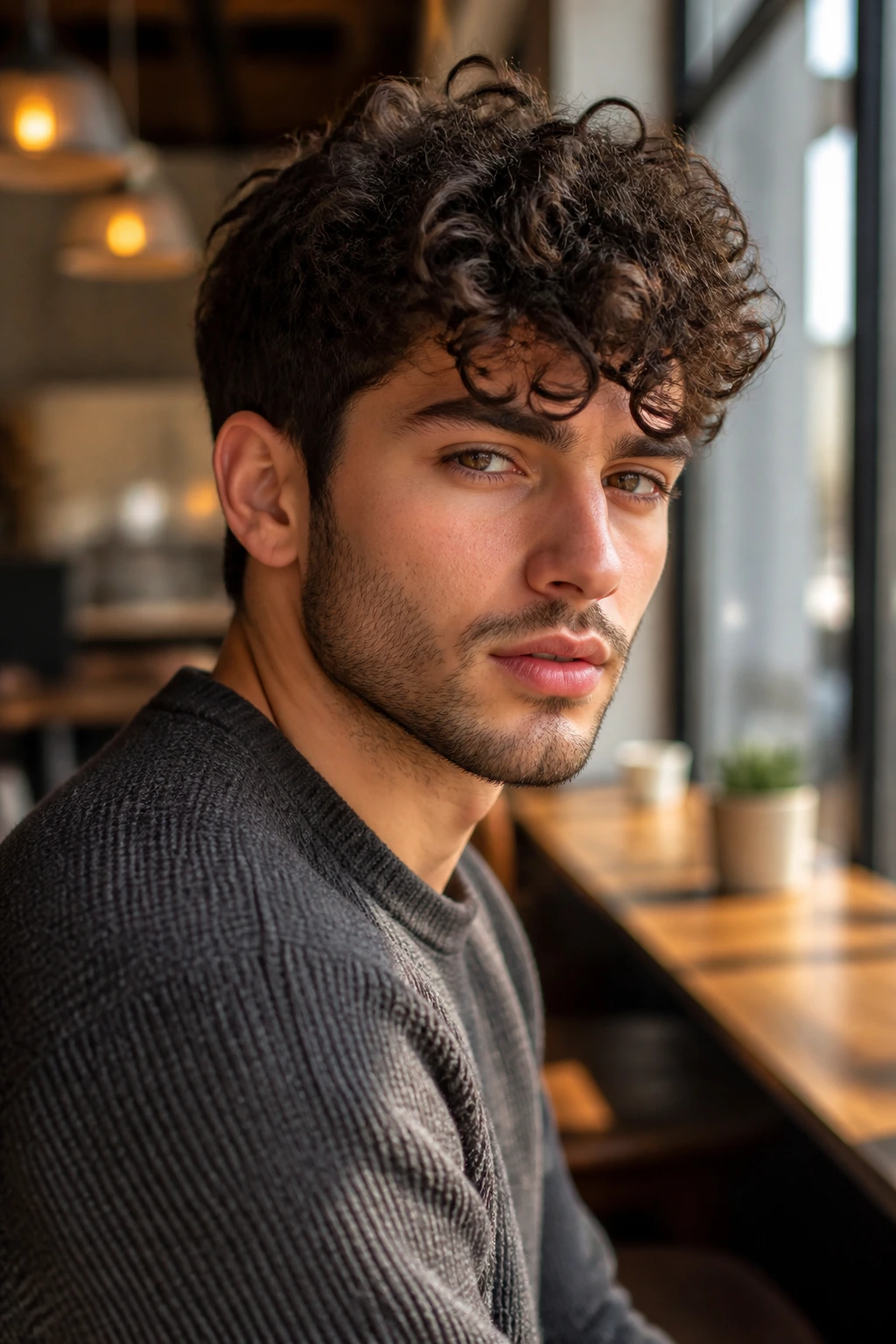
Picking the right shape is half haircut, half honesty. You need to know what your curls actually do, not what you wish they did after three sprays and a diffuser.
Loose curls and waves
Loose curls and strong waves can wear the most variety. A curly quiff, side part, curtain curls, or bro flow usually work because the pattern has enough length to move without collapsing. These textures also respond well to lighter products, so you do not need to pile on heavy cream to make them stay put.
Medium curls
Medium curls are probably the most flexible. They can handle crops, fringes, tapers, shags, and even a pompadour if the length is there. The only real trap is over-thinning. Medium curls often look best when the barber leaves some weight through the sides so the shape doesn’t get airy and weak.
Tight curls and coils
Tight curls and coils need clean outlines. High-tops, afros, burst fades, short Caesars, and temple fades make the most sense because the haircut respects the way the curl compresses. Layers still matter on longer looks, but the shape should stay readable even on a humid day.
Face shape matters too
- Round faces: go for height or vertical movement, like a quiff, high-top, or textured pompadour.
- Square faces: a fringe, bro flow, or layered shag softens strong angles without making the haircut dull.
- Long faces: avoid too much height on top. Go for fringe, side part, or curtain curls to add width.
- Oval faces: almost anything works, which is annoyingly convenient.
If you want one rule, use this: the more your face needs length, the more your hair should move sideways or forward. The more your face needs lift, the more the top should build upward.
What to Tell Your Barber Before the Clippers Start
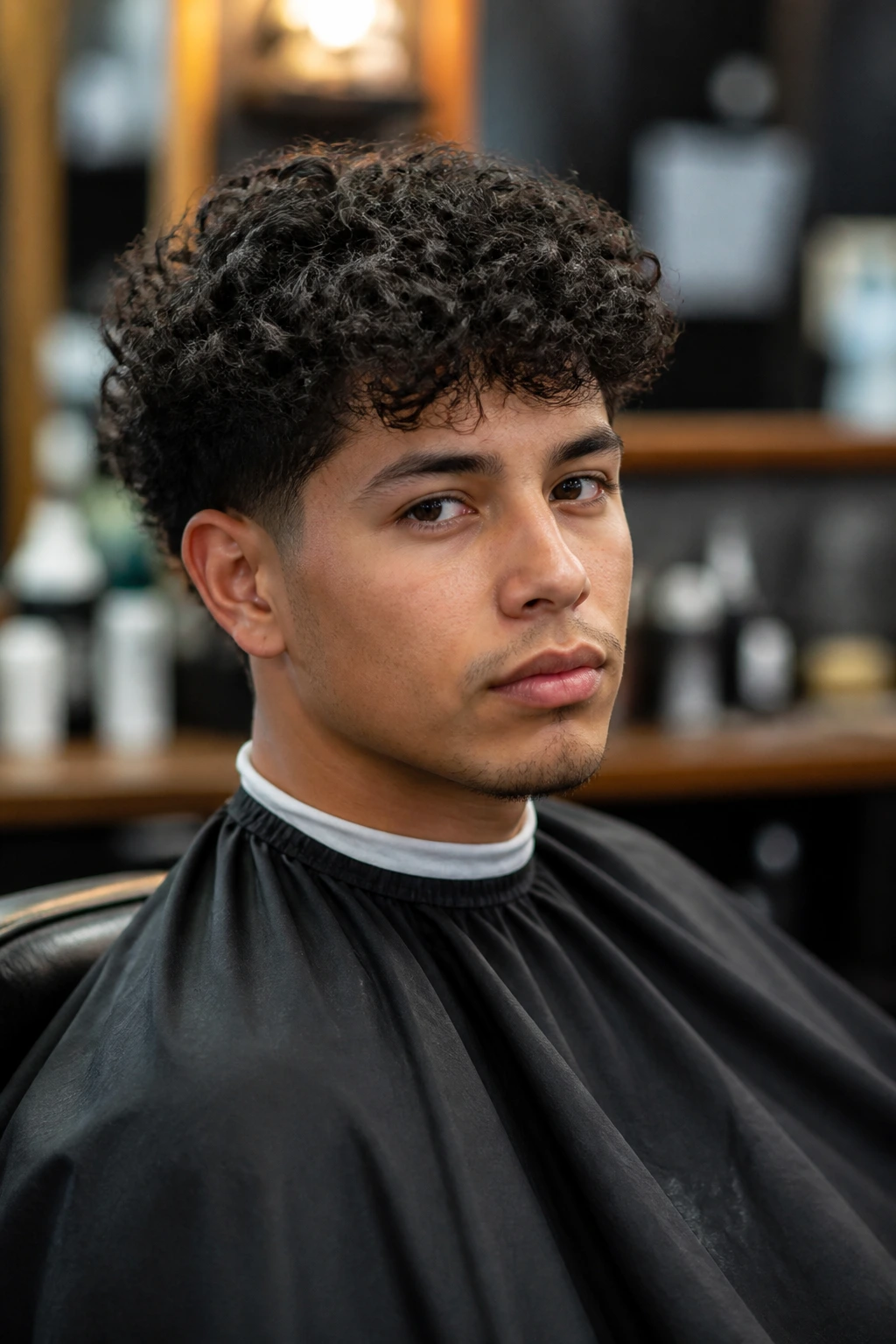
Bring words, not just photos. Photos help, but they never show the part where your curl pattern does something different under real light.
Start with the top length in inches. Say “leave about 4 inches on top” or “keep the front longer than the crown” instead of asking for “some length.” Curly hair shrinks, and vague language turns into regret fast. If you want a fade, say whether you want a low taper, mid fade, or skin fade and where the fade should begin around the ears.
A few phrases that help:
- Cut it dry or finish it dry if you want the barber to respect shrinkage.
- Leave some weight at the temples if you don’t want a boxy head shape.
- No hard part if you want a softer, more natural look.
- Scissor the top instead of clipper-ing it short if you want the curls to hold their shape.
- Clean up the neckline, don’t square it too hard if you want the grow-out to stay tidy.
Also say what you do with your hair each morning. If you air-dry and leave the house in ten minutes, don’t ask for a cut that only looks right after twenty minutes of brushing and heat. That’s not a haircut problem. That’s a mismatch.
Tools and Products That Make Curly Hair Easier to Wear
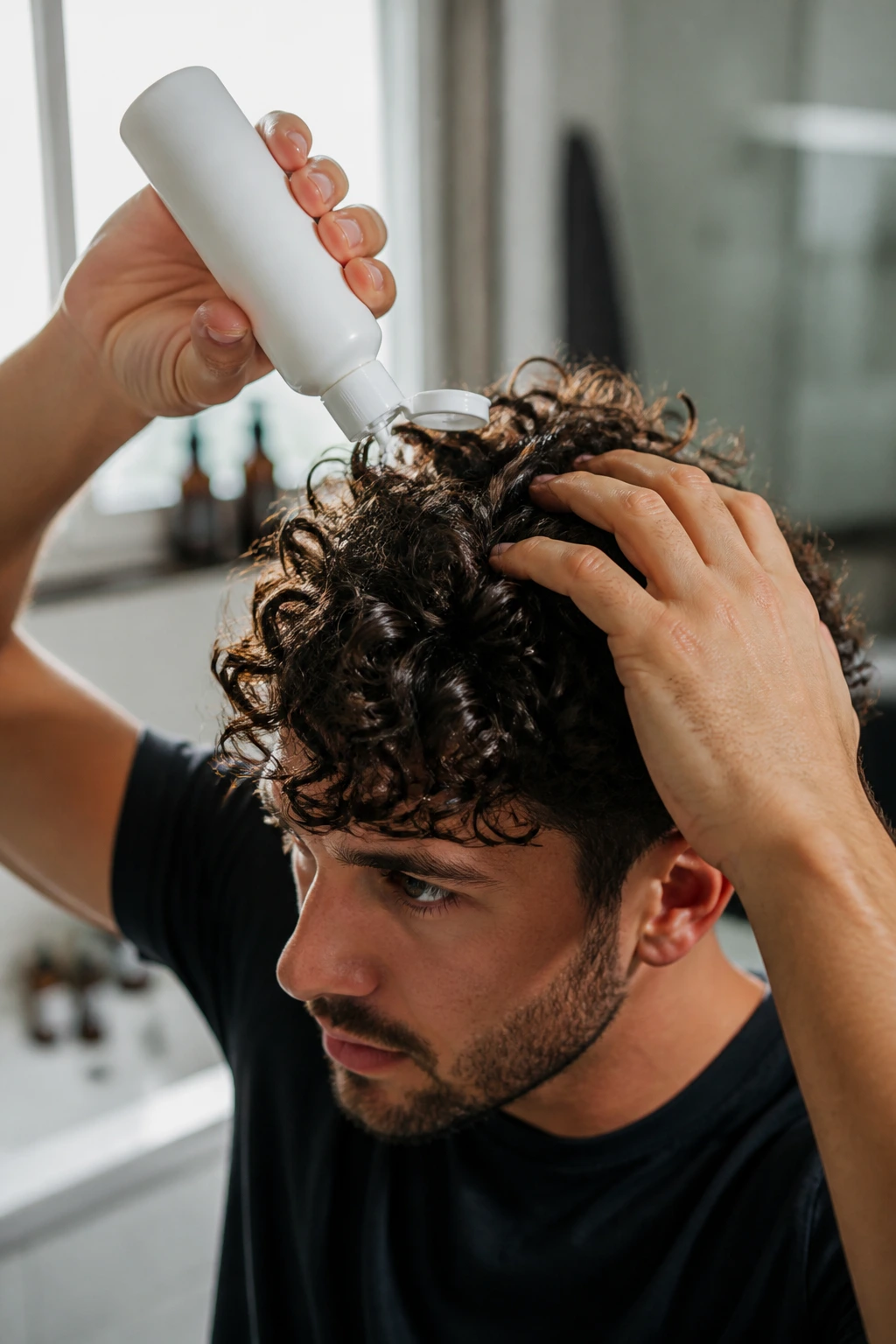
A curly haircut gets easier to live with when the tool kit is simple and good.
- Wide-tooth comb: gentle detangling when the hair is wet and conditioned.
- Diffuser attachment: keeps curls from blowing apart when you dry them.
- Leave-in conditioner: keeps the curl soft and helps cut frizz before styling starts.
- Curl cream: adds shape and control without making the hair feel lacquered.
- Mousse or foam: useful when you want lift and movement with less weight.
- Matte paste: better for shorter curly cuts that need a little grip.
- Light gel: good for slick backs, defined fringes, and sharper outlines.
- Microfiber towel or T-shirt: dries the hair without roughing up the cuticle.
- Spray bottle: handy for reshaping curls the next morning without a full wash.
You do not need all of them. Most men need two styling products and one drying method. That’s enough.
Styling, Drying, and Refreshing Curls Without the Crunch
Curly hair looks best when it dries with some freedom. Smushing it with heavy product or blasting it with high heat usually gives you one of two outcomes: frizz or stiffness. Neither is flattering.
Start with less water than you think. Hair should be damp, not dripping. If it’s too wet, product slides off and the curls separate in odd little ropes. A leave-in conditioner first, then a cream or mousse, is usually the cleanest layering order.
Dry from the roots up. Lift the hair at the scalp with the diffuser and keep the airflow moving. The roots set the shape, and if they dry flat, the rest of the haircut follows them down. Low heat and low speed are the sane settings here. High heat makes curl patterns frizz out before they’ve had a chance to settle.
Do not touch the hair too early. That’s the part people hate hearing, because it feels boring. Still true. The more you rake your fingers through soft curls while they’re drying, the more you break the curl clumps into fuzz.
Refresh on day two with water first. A few spritzes, a little leave-in on the ends, and a palmful of cream can bring the shape back without washing everything out. If the haircut is shorter, you may only need a tiny bit of product and a quick shape-up with your hands.
Common Mistakes That Make Curly Hair Look Bigger Than It Is
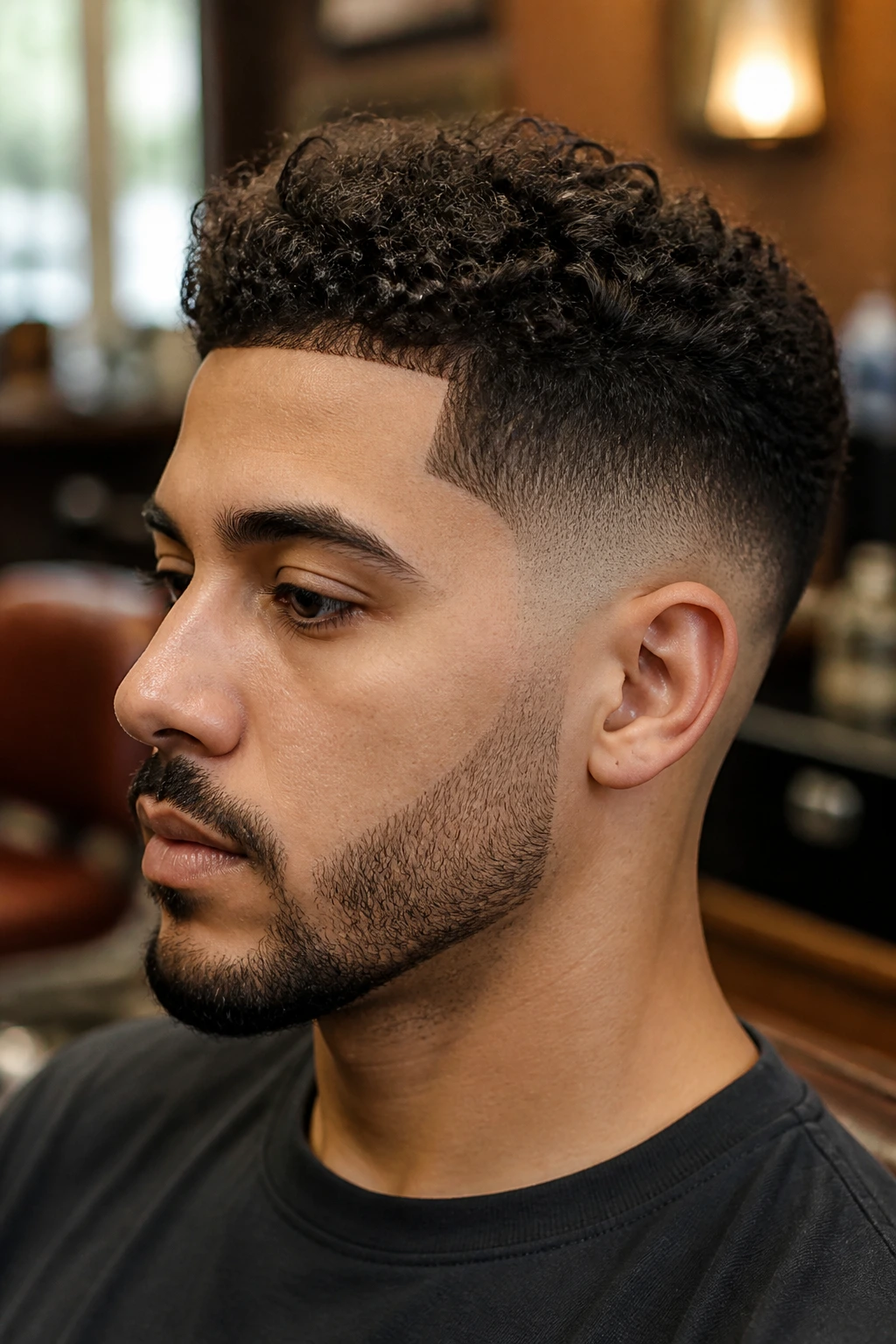
The first mistake is cutting curly hair too short while it’s wet. That’s how you end up with a style that shrinks up higher than expected and feels off by the time you get home. The fix is simple: leave more length than you think you need, and if possible, have the barber check the shape after drying.
Brushing curls dry is another classic problem. It breaks the curl pattern and creates puff where there should have been separation. If you need to detangle, do it wet with conditioner and a wide-tooth comb. Dry brushing is for straight hair or people who enjoy visual chaos.
Overloading product can wreck a clean cut fast. Heavy cream, thick pomade, and oily butter all at once turns curly hair into a coated, limp mess. Start small. You can always add a little more. Taking it off your hair is harder.
The fade can also be pushed too high. A high fade on curly hair sounds crisp in theory, but if the top is already full of volume, too much removal on the sides makes the head look wider at the top than it needs to. Keep the fade lower if your hair is dense.
Last one: ignoring the crown. If the crown grows in a different direction or sits flat, the whole cut can tilt backward or swell up unevenly. A good barber trims the crown with the rest of the shape in mind.
Variations and Easy Tweaks for Different Hair Goals
Office-Ready Taper: Take the low taper curly fade or the side part and keep the top a little shorter, around 3 to 4 inches. The result is cleaner around the ears and easier to comb into place before work.
High-Volume Statement Cut: Push the curly quiff or textured pompadour a little taller by leaving extra length in the front and crown. Use mousse at the roots and dry upward, not forward, so the shape keeps its lift.
Grow-Out Friendly Shape: Start with a bro flow, shag, or layered long curls if you’re trying to get through the awkward middle stage. The layers keep the ends from turning into a blunt shelf while you gain length.
Tight-Coil Shape-Up: If your curls are dense or coily, the rounded afro, high-top fade, and temple fade are the most reliable options. They respect shrinkage and keep the outline sharp without needing a lot of daily styling.
Loose-Wave Edit: Curtain curls, side parts, and the curly slick back work well if your texture leans more wave than spring. Keep the product light and leave the front a bit longer so the hair falls naturally instead of sitting up stiff.
Trims, Edges, and Between-Cut Maintenance
Curly hair stays neat longer when you protect the shape instead of chasing perfection every morning. A trim every 3 to 6 weeks is usually the sweet spot, depending on how fast your sides grow and how tight the curl pattern is. Dense curls show growth fast. Looser waves hide it a little longer.
If you wear a fade or taper, the neckline and sideburns are the first places that start to blur. You can clean those up at home with a small trimmer if you’re careful, but don’t carve the fade higher yourself unless you enjoy fixing mistakes with a hat. Keep the neckline soft if you want the haircut to grow out naturally.
Wash frequency matters too. Curly hair usually does better with fewer harsh washes and more conditioning. A mild cleanser every few days is enough for many men, and coarser curls often need a richer conditioner or leave-in to keep the cut from drying out and puffing.
Sleeping on a satin pillowcase helps the style survive the night. So does wearing a loose bonnet or wrapping longer curls if that fits your routine. The point is not luxury. It’s friction control. Less friction means fewer broken curls and less morning reshaping.
Frequently Asked Questions
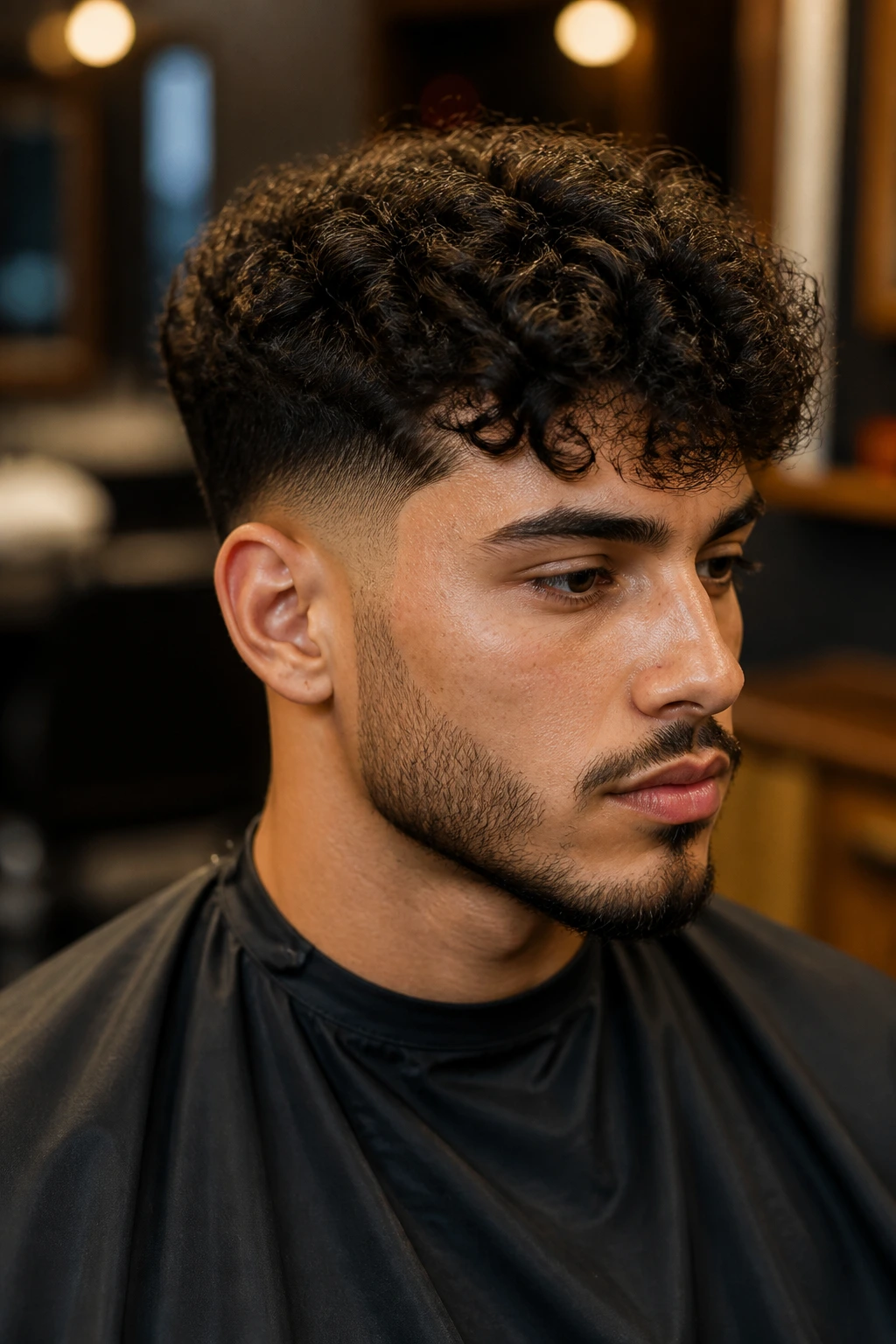
Which curly hairstyle is easiest to maintain?
The curly crop with a low fade and the short curly Caesar are the easiest to live with. Both keep the top manageable, let the sides stay tidy, and work with quick styling — usually just a little cream or matte paste.
Should curly hair be cut wet or dry?
Dry cutting, or at least finishing dry, is safer for curls because it shows shrinkage and shape. Wet cutting can still work if the barber knows curly hair well, but the shape should always be checked once the hair settles.
Can I get a fade if my curls are very tight?
Yes, and it often looks better than trying to force the curls into a long, loose shape. A low taper, temple fade, burst fade, or high-top fade usually gives tighter curls the cleanest outline.
What product should I use if my curls get frizzy fast?
Start with leave-in conditioner and a curl cream, then add a little mousse if you need more hold. If the hair still frizzes, the problem is often drying too aggressively or touching it too much before it sets.
How do I stop my haircut from looking boxy?
Ask for layering or soft debulking through the sides and crown. The boxy look usually happens when the barber leaves the outline too even and too wide at the temples, which curls love to do if nobody corrects it.
What if my haircut looks too short after I wash it?
That’s shrinkage, and it usually means the top was cut too close to the curl’s resting length. Give it a few days to settle, then note the difference for the next trim so the barber leaves more room on top.
Can I wear curly hair back for formal events?
Yes. A curly slick back, man bun, or textured pompadour works well when you want a sharper finish. The trick is using enough control at the roots so the style stays smooth without crushing the curl pattern.
What if one side of my curls grows faster than the other?
That’s normal enough. Bring it up at the trim and ask the barber to balance the outline by working with the heavier side first. Curly hair rarely grows like a perfect mirror, so the cut has to fix the shape, not the biology.
A Cut That Fits the Curl
Curly hair looks its best when the haircut makes room for what it naturally does. Some men want the neat edge of a taper, some want the lift of a quiff, and some just want the curls to sit where they can be seen without turning into a halo of frizz. The right shape is the one that keeps working after the barber cape comes off.
That is why these styles hold up. They respect shrinkage, keep the outline clean, and leave enough personality in the top for the texture to matter. Pick the one that fits your curl pattern, your face, and your patience level, then ask for it with enough detail that nobody has to guess.
