



Heat exposes every lazy cut. A neckline that sits too low, a fringe that droops onto the forehead, a paste-heavy style that turns greasy by lunchtime — summer hair tells on itself fast.
That’s why the smartest men’s summer hairstyles are not only about going shorter. They’re about giving your hair less work to do when the air gets thick, the sweat starts, and your shirt collar begins rubbing at the back of your neck. Some cuts need almost nothing. Others need a light cream, a quick blast of the dryer, or a tidy taper that keeps the whole shape from swelling out like a bad camping pillow.
A lot of guys ask for “something shorter” and leave with a haircut that looks fine in the chair but falls apart the minute they step into heat. The better move is to think in terms of movement, texture, and how fast the style dries. A good summer haircut for men can be a buzz cut, sure, but it can also be a French crop, a crew cut, braids, twists, a bro flow, or even a man bun — as long as the shape is doing real work.
Why This Collection Works in Hot Weather
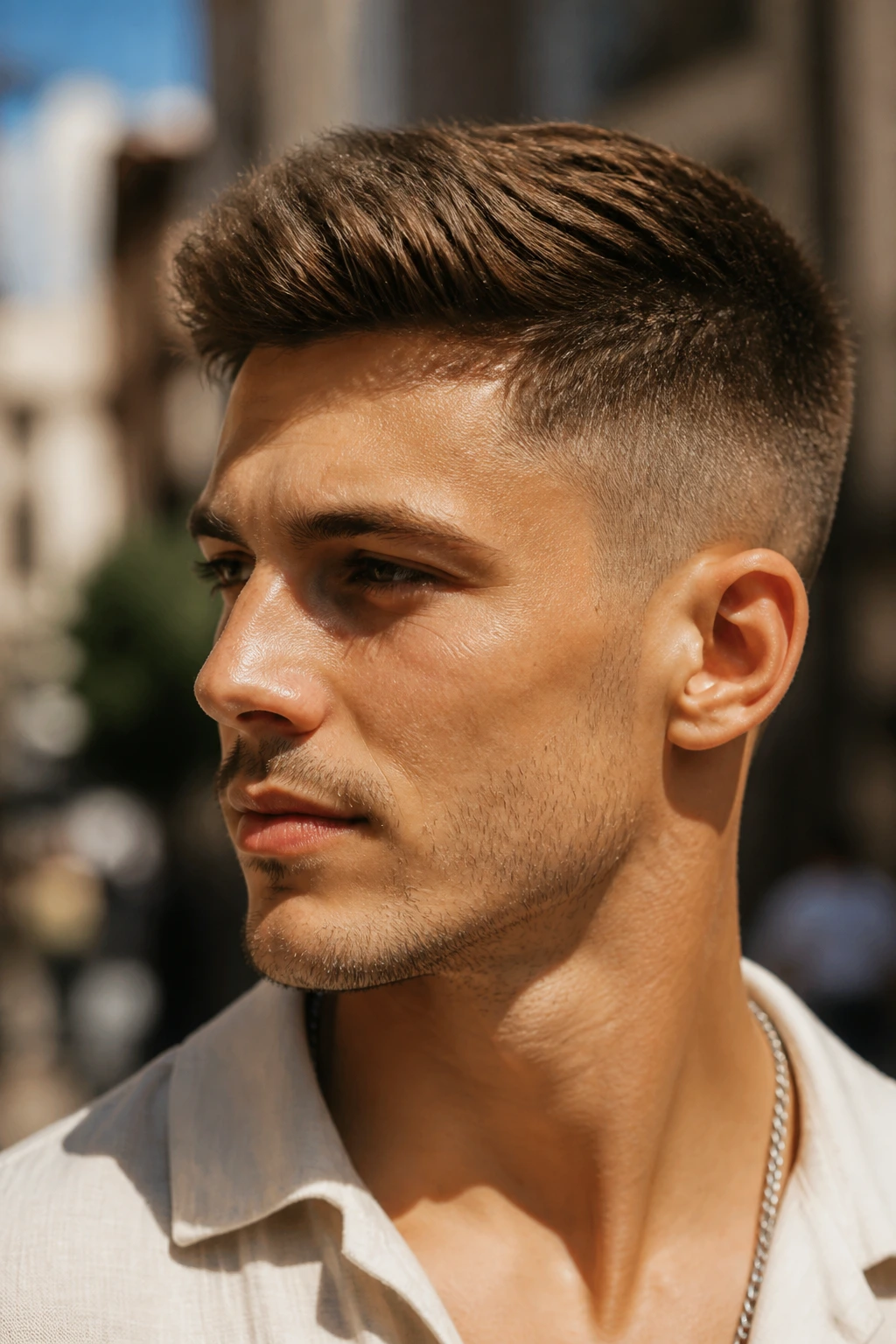
Short isn’t the only answer: Some of the best hot-weather cuts here are cropped tight, but plenty of longer styles stay manageable when the sides are clean and the weight is placed on purpose.
Texture beats shine: Matte clay, sea-salt spray, curl cream, and soft cream usually behave better than glossy pomade once humidity and sweat get involved.
The neckline matters more than people think: A clean taper at the nape can make a medium-length cut feel cooler than shaving the top down another half inch.
Shape grows better than guesswork: Cuts with a clear outline — crops, tapers, fades, braids, twists, buns — still look intentional when they grow out a little.
Hair type changes everything: Straight hair, curls, coils, waves, and long hair all need different handling, and the right summer cut respects that instead of fighting it.
1. Induction Cut
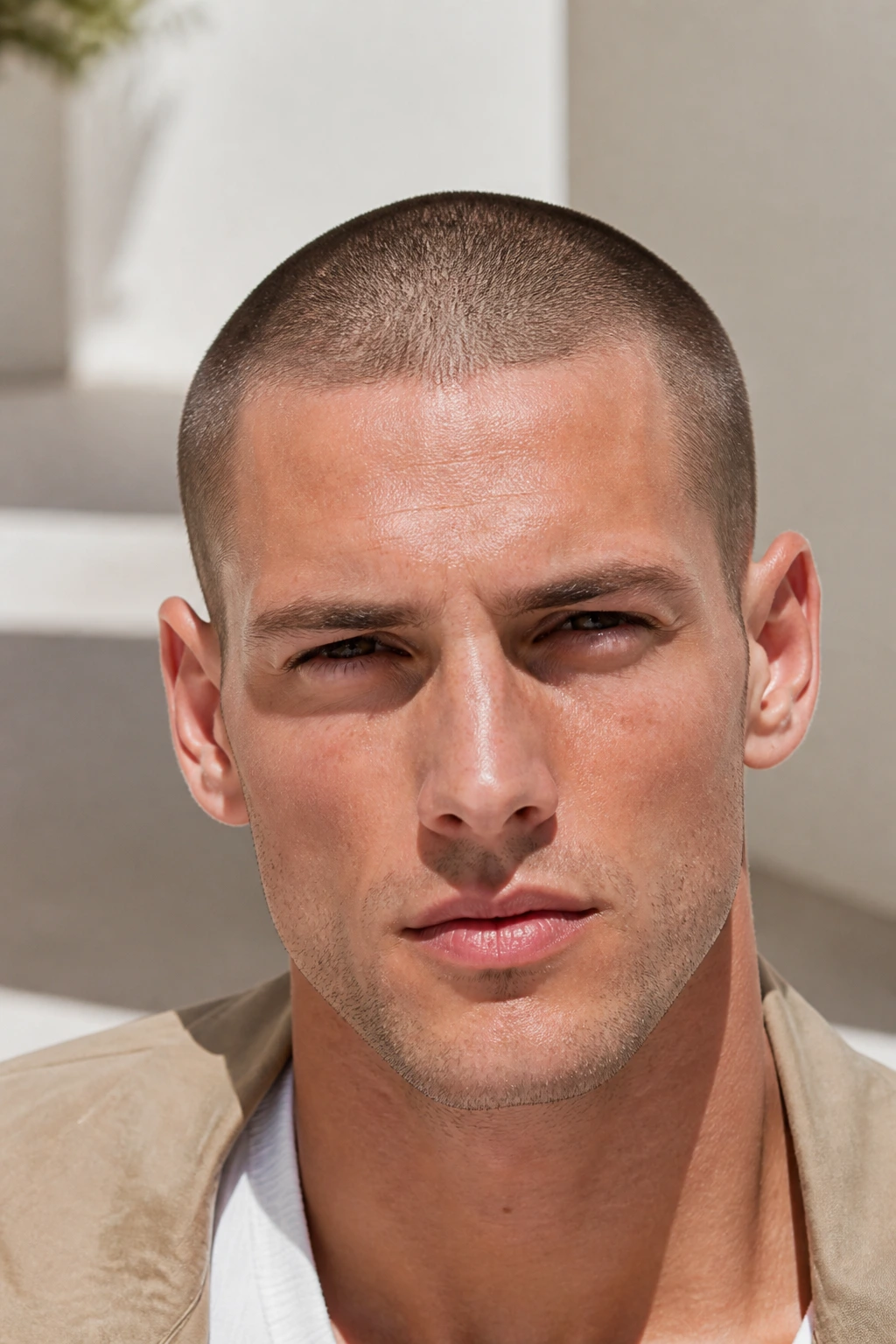
The induction cut is the haircut equivalent of clearing the table and starting over. It’s the ultra-short version — often a #0.5 or #1 all over — and it barely asks anything from you in the morning. On a hot day, that matters more than style points do.
I like this cut when a guy wants zero product, zero front-fringe drama, and zero sweat trapped at the crown. It works best when the scalp shape is even and the hairline is already clean, because there’s nowhere to hide. If you go this short, keep sunscreen on the scalp. That part is not optional.
2. Buzz Cut With a Line-Up
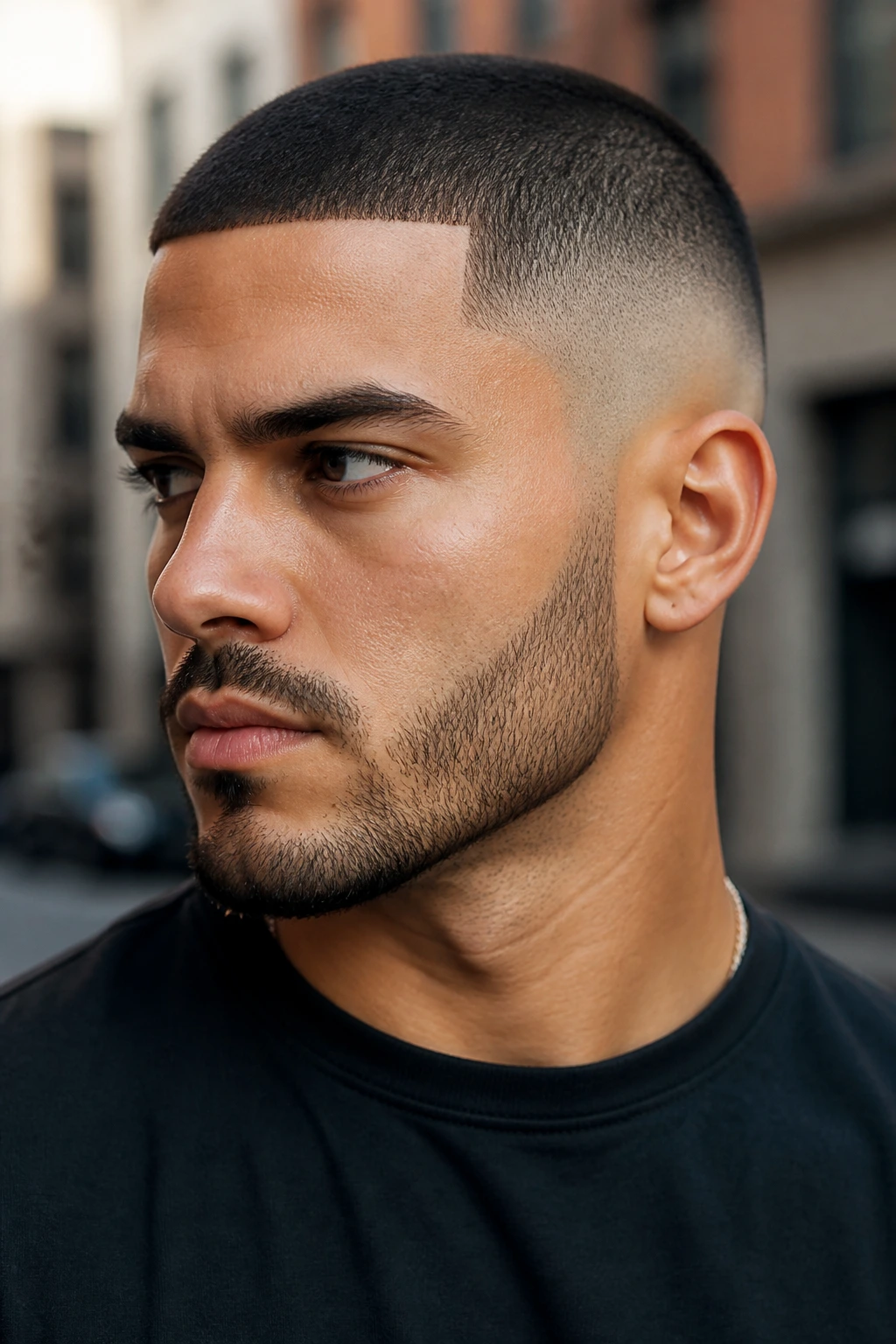
A buzz cut gets sharper the second you clean up the edges. Keep the top around a #1 or #2, sharpen the temples, and taper the neckline so it doesn’t end in a blunt shelf. That small bit of detail keeps the cut from looking like an afterthought.
This is one of the easiest summer haircuts for men who wear a beard, because the face already has some structure. I prefer it with a matte, natural finish — no shine, no heavy product, maybe a quick brush before you walk out. It looks deliberate in a way plain buzz cuts often don’t.
3. Crew Cut With a Mid Taper
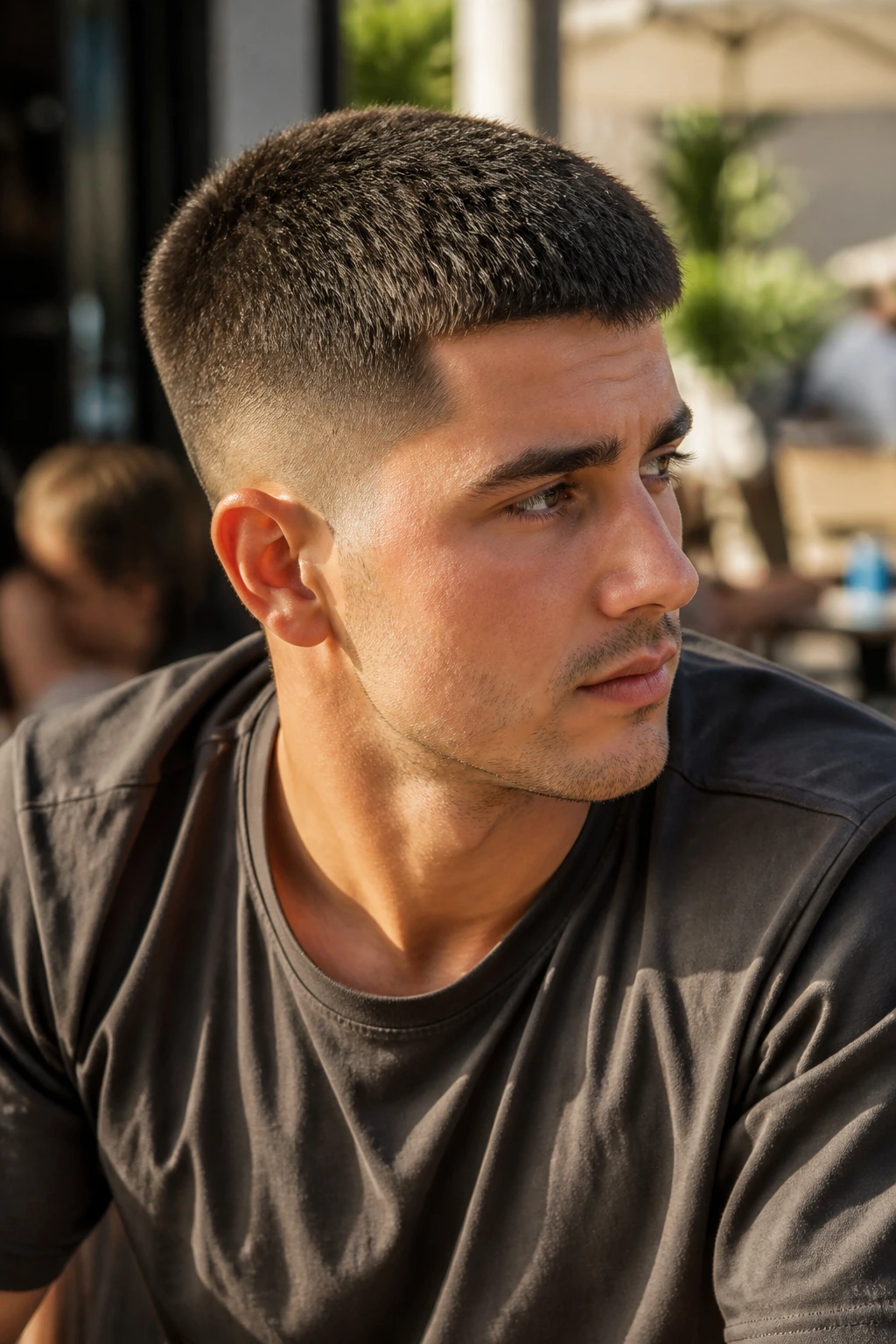
The crew cut survives hot weather because it keeps just enough length on top to hold shape without turning into a helmet. Ask for about 1.5 to 2 inches on top, then keep the sides mid-tapered around the ears and nape. That gives the cut some air and keeps it from puffing out when humidity rises.
It’s a strong choice if your hair is straight, thick, or prone to standing up in the front. The top has enough length to move a little, but not enough to flop into your eyes. If your crown sticks up, tell the barber before the clippers start. A good crew cut can work with the grain; a rushed one fights it.
4. High and Tight
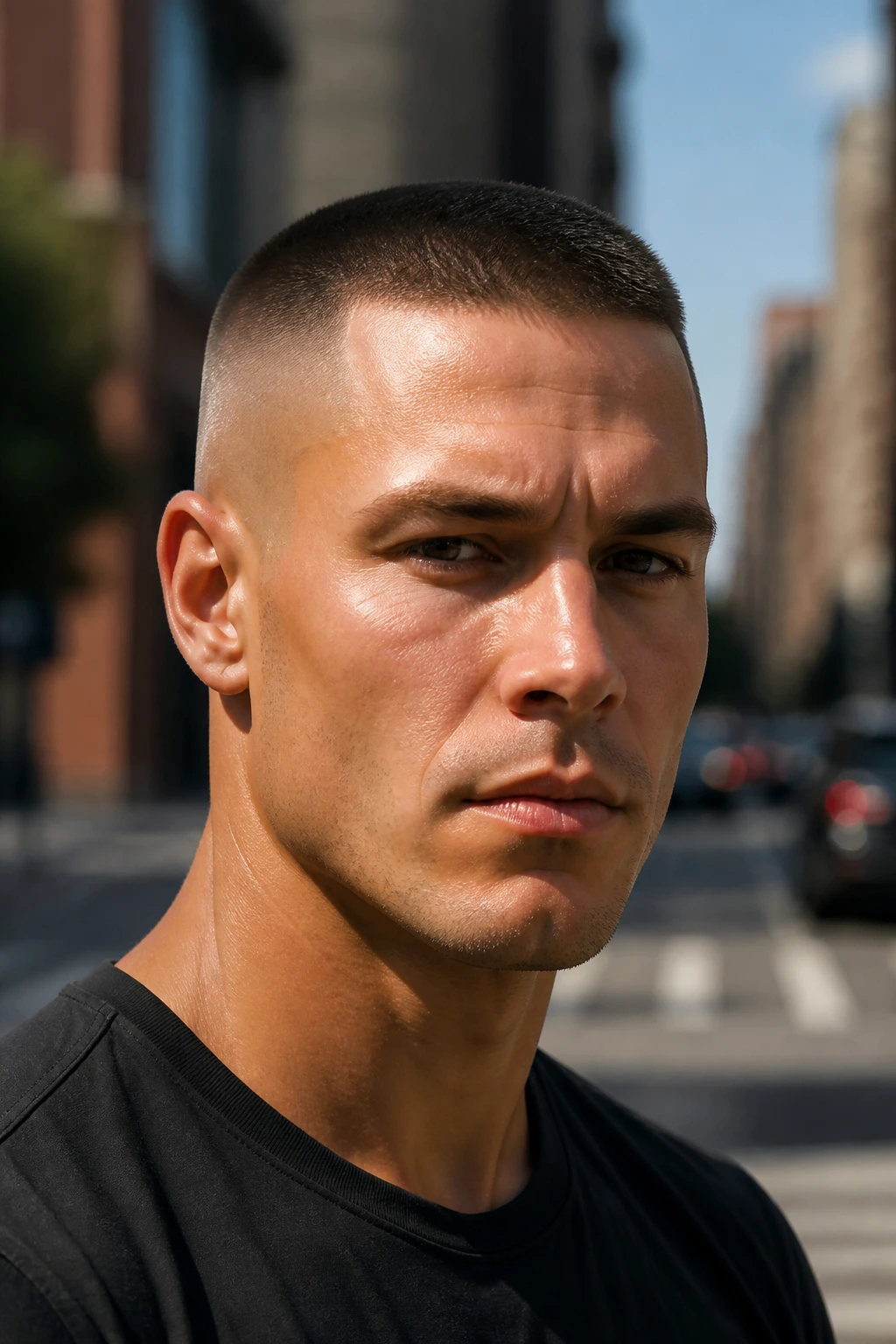
The high and tight is blunt about what it is: a narrow strip of length on top, very short sides, and almost no wasted bulk. That’s why it feels cool even when the day doesn’t. There’s less hair sitting on the sides of the head, less rubbing near the ears, and less weight at the back of the neck.
I like it on coarse hair because the shape stays crisp even as it grows out a bit. It also plays well with a strong jawline or a beard that carries the lower half of the face. If you want the cut to look sharp instead of severe, ask for a soft taper behind the ears rather than a harsh skin line.
5. Textured French Crop
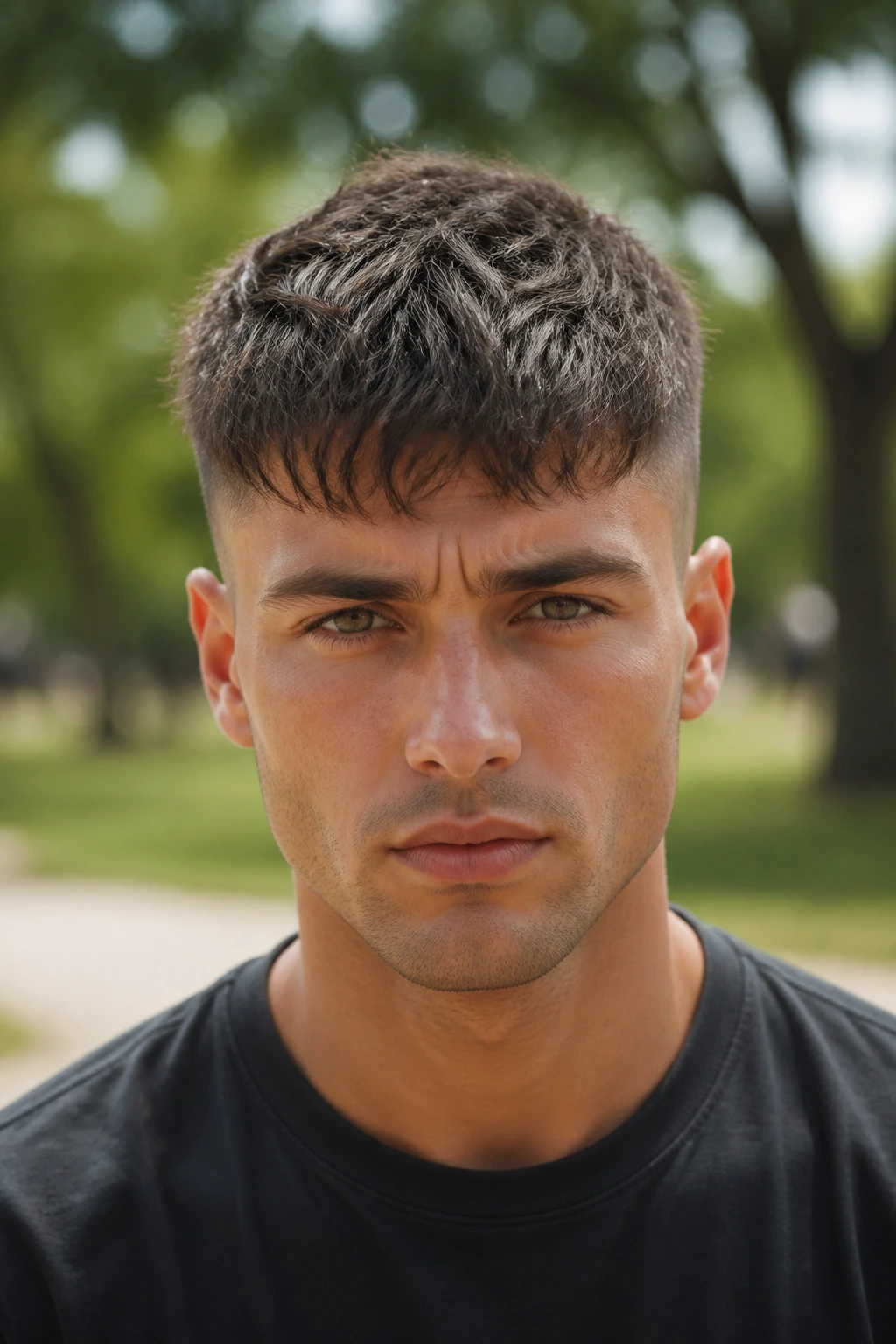
The textured French crop is one of my favorite answers to sticky weather because the fringe stays forward and the sides stay clean. That means hair isn’t hanging over your forehead, and the top has choppy movement instead of one flat block. It looks casual, but it’s controlled.
Ask your barber for a short, blunt fringe with texture cut into the top, then keep the sides faded or tightly tapered. A matte clay or fiber paste is enough here — a pea-sized amount rubbed through damp hair and pushed forward with the fingers. If you’ve got a forehead that gets sweaty fast, this cut earns its keep.
6. Caesar Cut
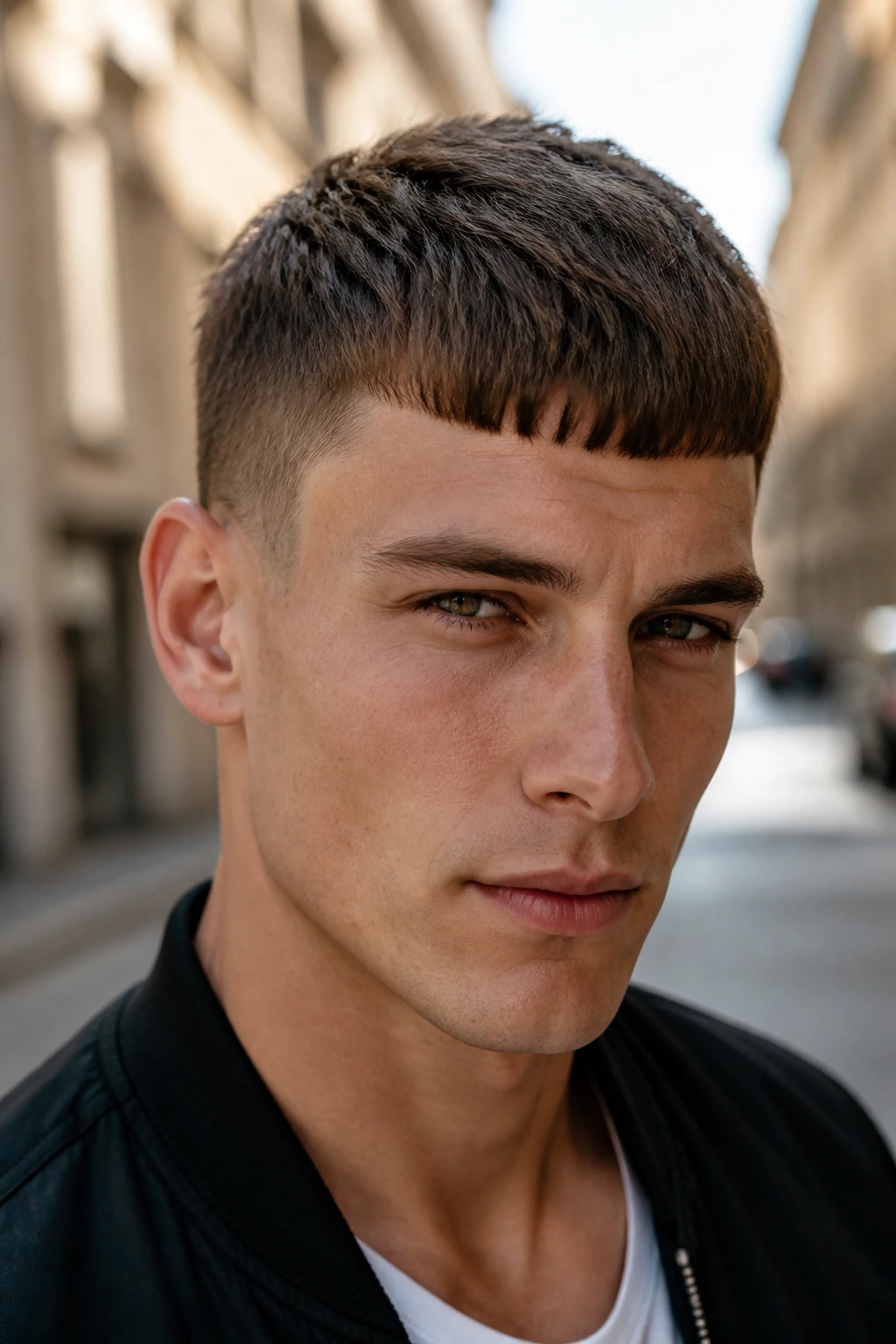
The Caesar cut is old, blunt, and still useful. The fringe sits short and straight across the front, usually around an inch or so, and the rest of the top stays close enough that it doesn’t swell when the air gets heavy. It’s one of the easiest ways to wear a short style that still has a clear shape.
I reach for this one when the hairline is a little uneven or the forehead sits higher than you’d like. The short fringe softens that line without pretending it isn’t there. Keep the sides neat and the top slightly textured, not slicked flat. Flat is where the Caesar starts to look dated.
7. Ivy League Taper
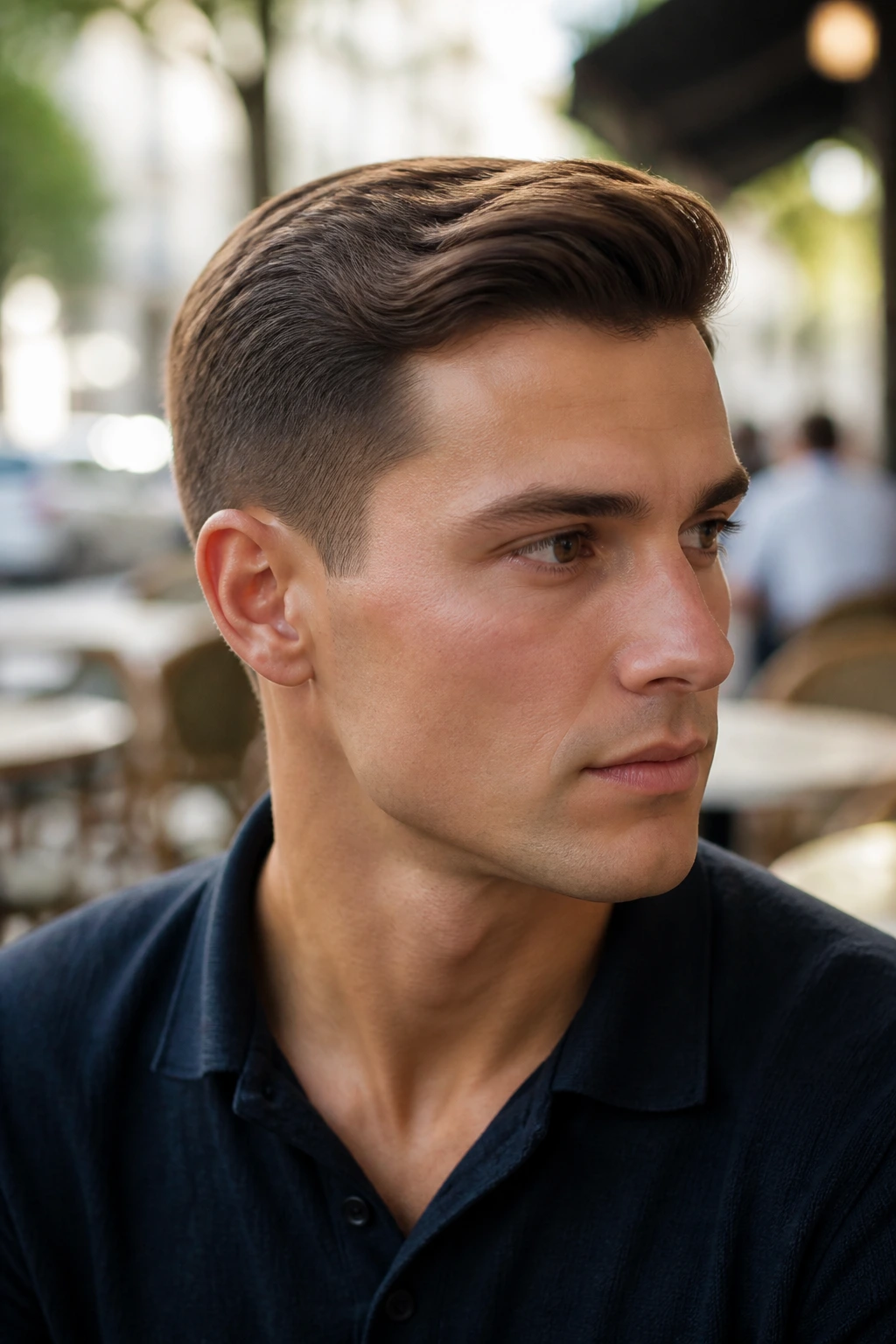
The Ivy League is what happens when a crew cut decides to clean up for dinner. You keep more length on top — usually around 2 to 3 inches — and part it to one side with a tidy taper on the back and sides. It stays cooler than a full scissor cut because the outline is still open around the ears.
This is a smart summer style if you want something that still reads polished. It wears well with a button-down, a blazer, or a plain tee. Ask for the top to be scissor-cut, not chopped too short with clippers, or you’ll lose the clean side-swept shape that makes the cut worth having.
8. Classic Side Part Taper
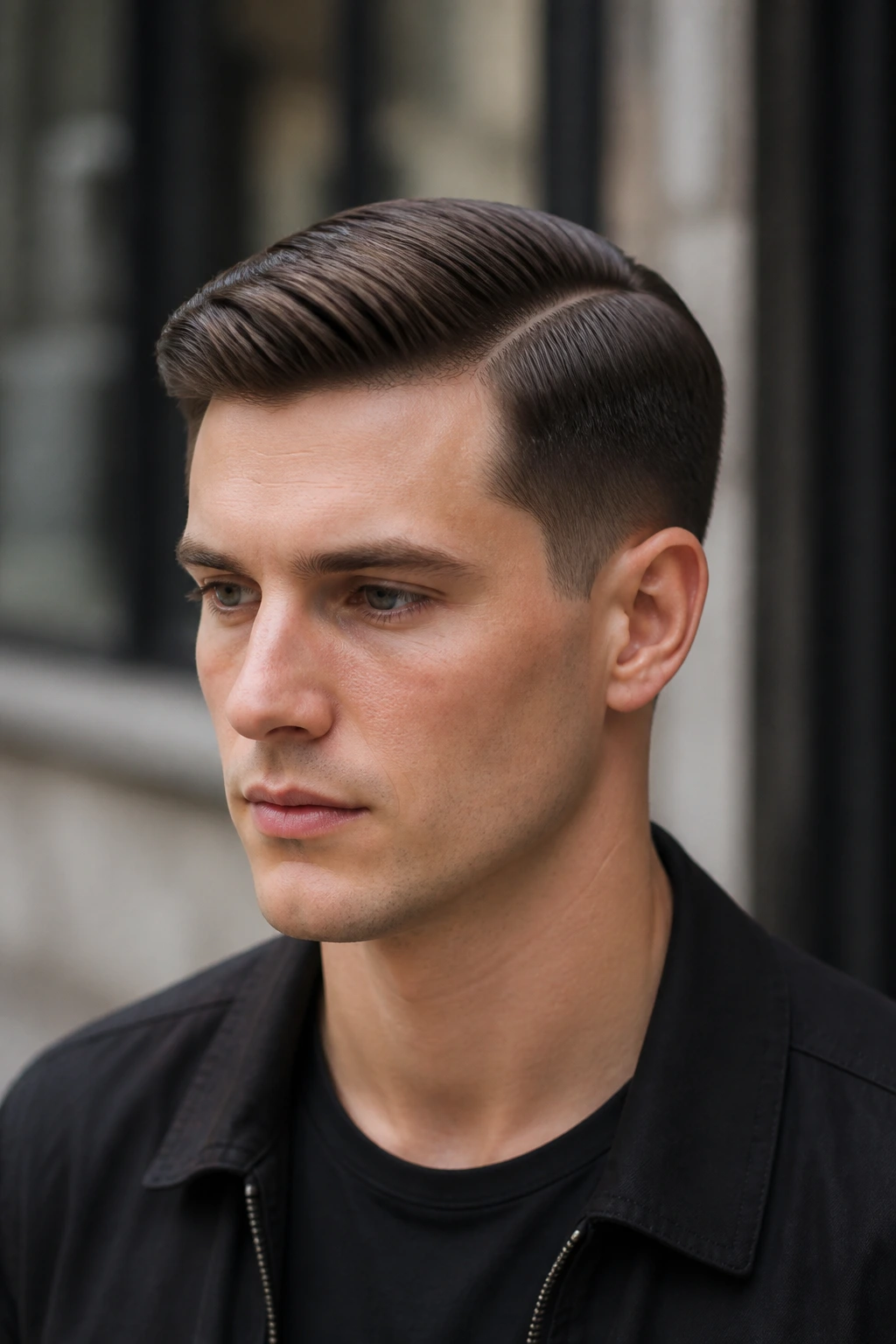
A side part with a taper is one of those cuts that looks calm even when the weather isn’t. The part gives the hair direction, and the taper keeps the sides from ballooning. It’s not flashy. That’s the appeal.
I like this on straight or slightly wavy hair because the part holds without too much product. Use a light cream, not a heavy pomade, if you want movement instead of a helmet sheen. If your hair naturally splits at a spot already, work with that. Fighting the natural part is how you end up with that weird half-flipped front piece that never settles.
9. Short Quiff
The short quiff gives you some height without dumping a ton of hair onto your forehead. Keep the front slightly longer than the rest — enough to lift, not enough to flop — and blow-dry it up and back for a minute or two. That tiny bit of lift helps the face stay open in hot weather.
This cut works best if your hair has medium density and a little bend. Straight hair can do it, too, but it needs a touch of product and a dryer. I’d use a matte paste or texturizing spray rather than anything shiny. The quiff should look light, not lacquered. A sticky front in summer is miserable.
10. Slick Back Taper
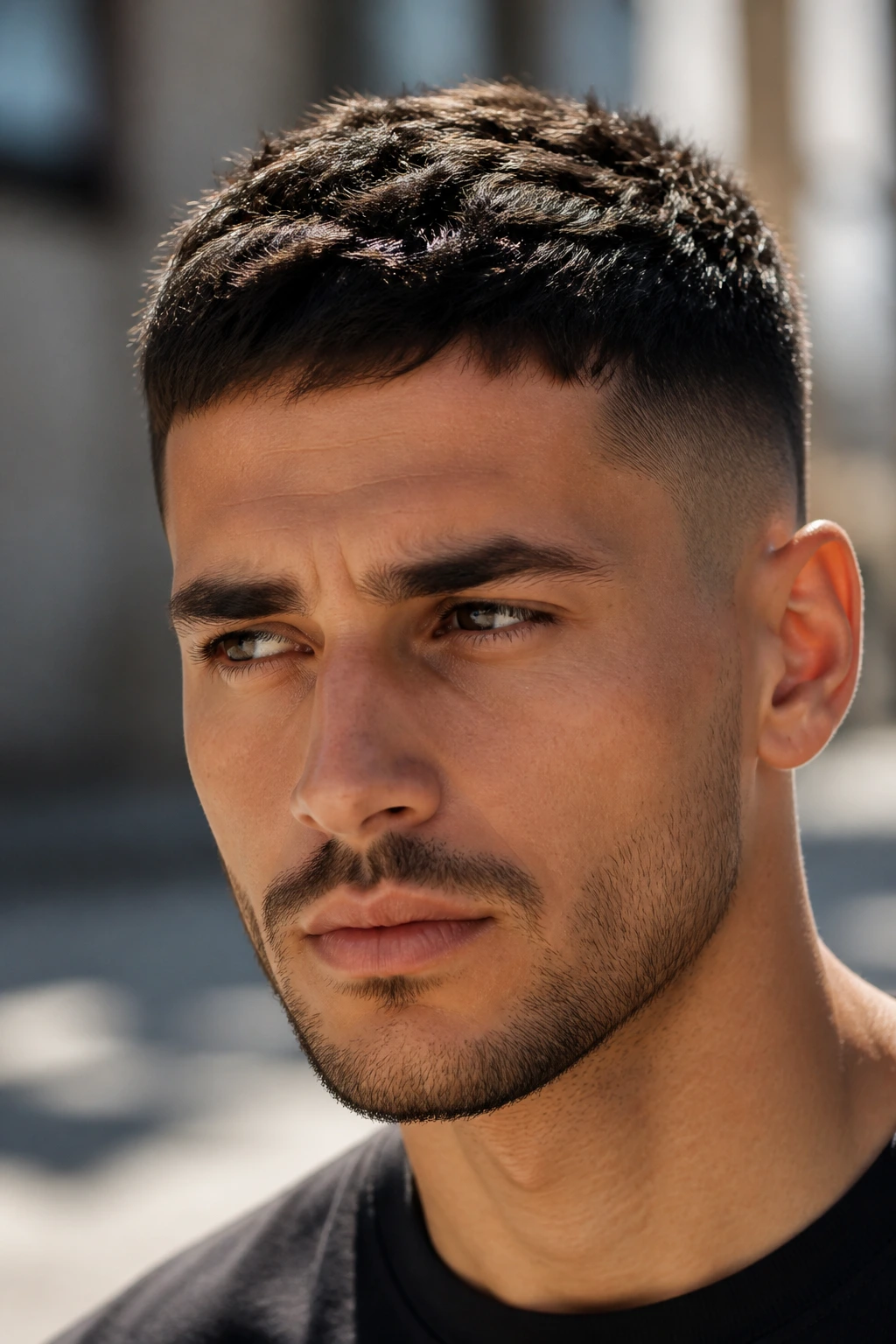
A slick back can absolutely work in summer, but only if it’s kept loose. The sides need a taper, the top needs enough length to move backward without pulling, and the product needs to stay light. Otherwise you get that heavy, sweaty slab look that belongs nowhere near warm weather.
This is a good option for straight or medium-thick hair that naturally lies back anyway. Use a small amount of cream or light pomade and comb it through damp hair, then let the air finish the job. I prefer this cut when the wearer wants something neat but not stiff. A slick back should glide. It should not look painted on.
11. Curly Crop
Curly hair usually does better in summer when it’s shorter and shaped, not when it’s muscled into submission. The curly crop keeps the sides tight and the top short enough that the curls can spring without turning into a triangle. That balance matters.
Ask for the curls to be cut with shrinkage in mind — shorter than you think, but not so short that the pattern collapses. A curl cream or leave-in conditioner is enough on most days. I like this cut because it lets the texture do the talking while keeping the forehead and ears from getting buried.
12. Curly Top With Temple Fade
This is the curly cut for men who want shape on top and almost no bulk at the sides. Keep the curls longer through the crown — enough to show the pattern — and fade the temples and nape so the head stays light. The contrast is strong, and it looks clean fast.
The trap here is cutting the top too short. Curly hair springs up after it dries, so what looks moderate in the chair can shrink by a full inch later. Tell the barber how your curl pattern behaves after a wash. That little detail changes the whole result.
13. Skin Fade With Waves
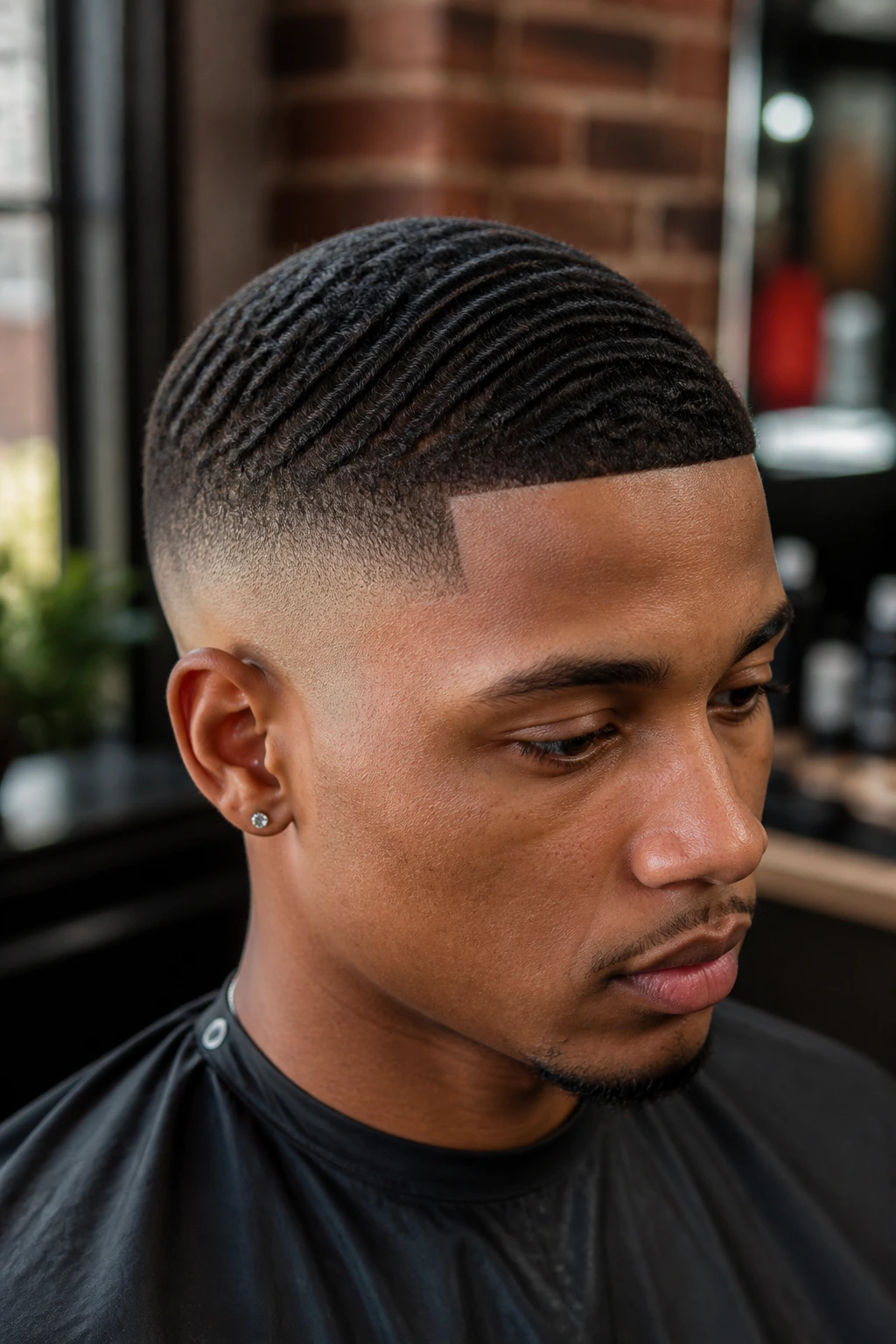
A skin fade with waves is a high-detail summer style. The fade takes weight off the sides, and the wave pattern gives the top a controlled ripple that looks neat even when the weather turns humid. It’s not a lazy cut. It asks for brushing and a bit of routine.
If you wear waves, the basics matter: a wave brush, a durag, and enough time to keep the pattern laid down. Keep the top short enough to train but long enough to hold the pattern. The payoff is a cut that stays close to the head and doesn’t fight the heat. Sharp, low-profile, and clean.
14. Brush Cut
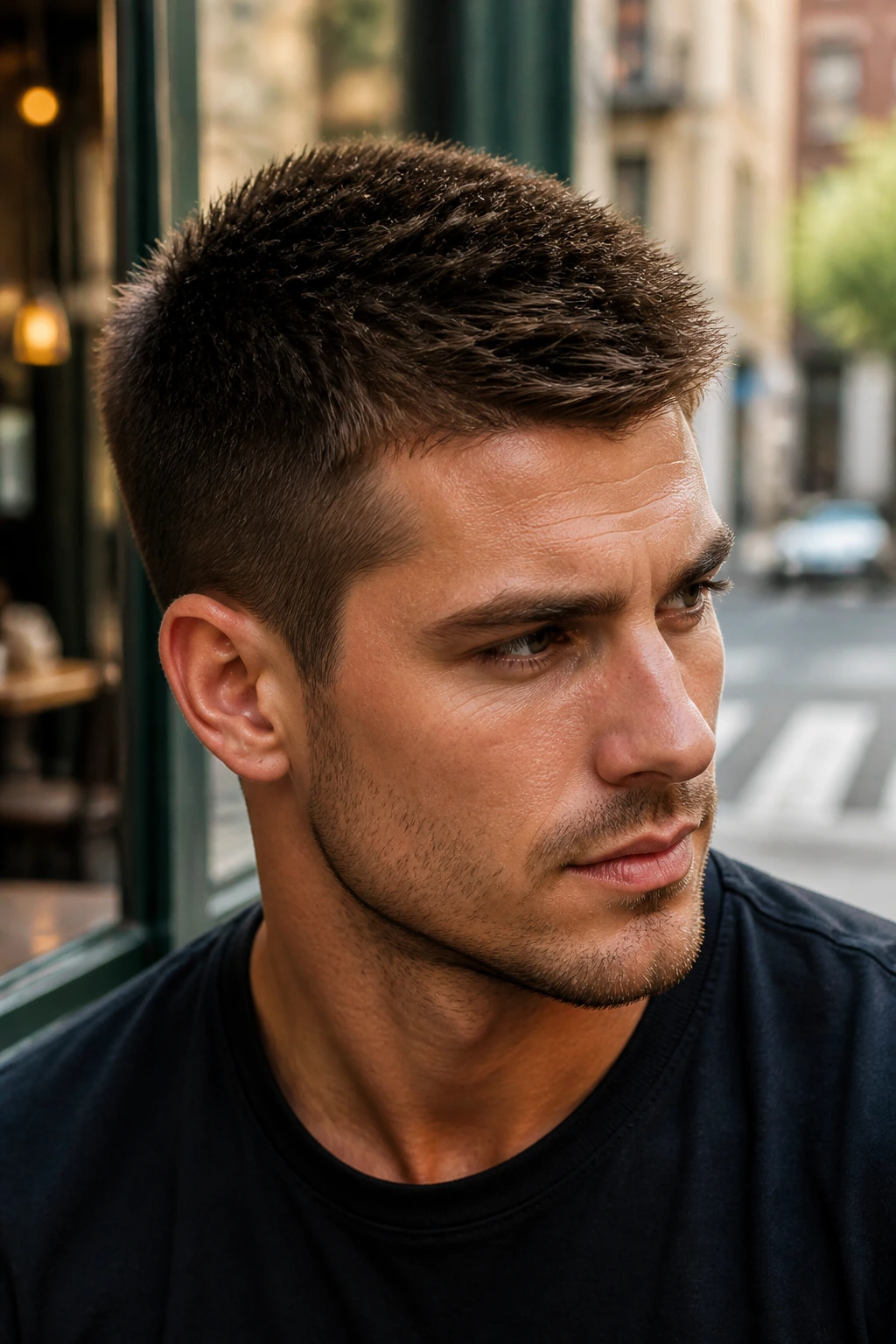
The brush cut sits somewhere between a buzz and a crew, but the texture is a little rougher and more casual. The hair is kept short all over, then brushed up just enough that it doesn’t sit flat like a floor mop. It’s a useful cut for coarse hair that wants to stand up on its own.
I like it when someone wants the shortest practical version without going full induction. There’s enough length to show the grain of the hair, but not enough to trap much heat. A dry matte product can help, though plenty of brush cuts don’t need one at all. This is one of those cuts that looks better as the day goes on.
15. Flat Top
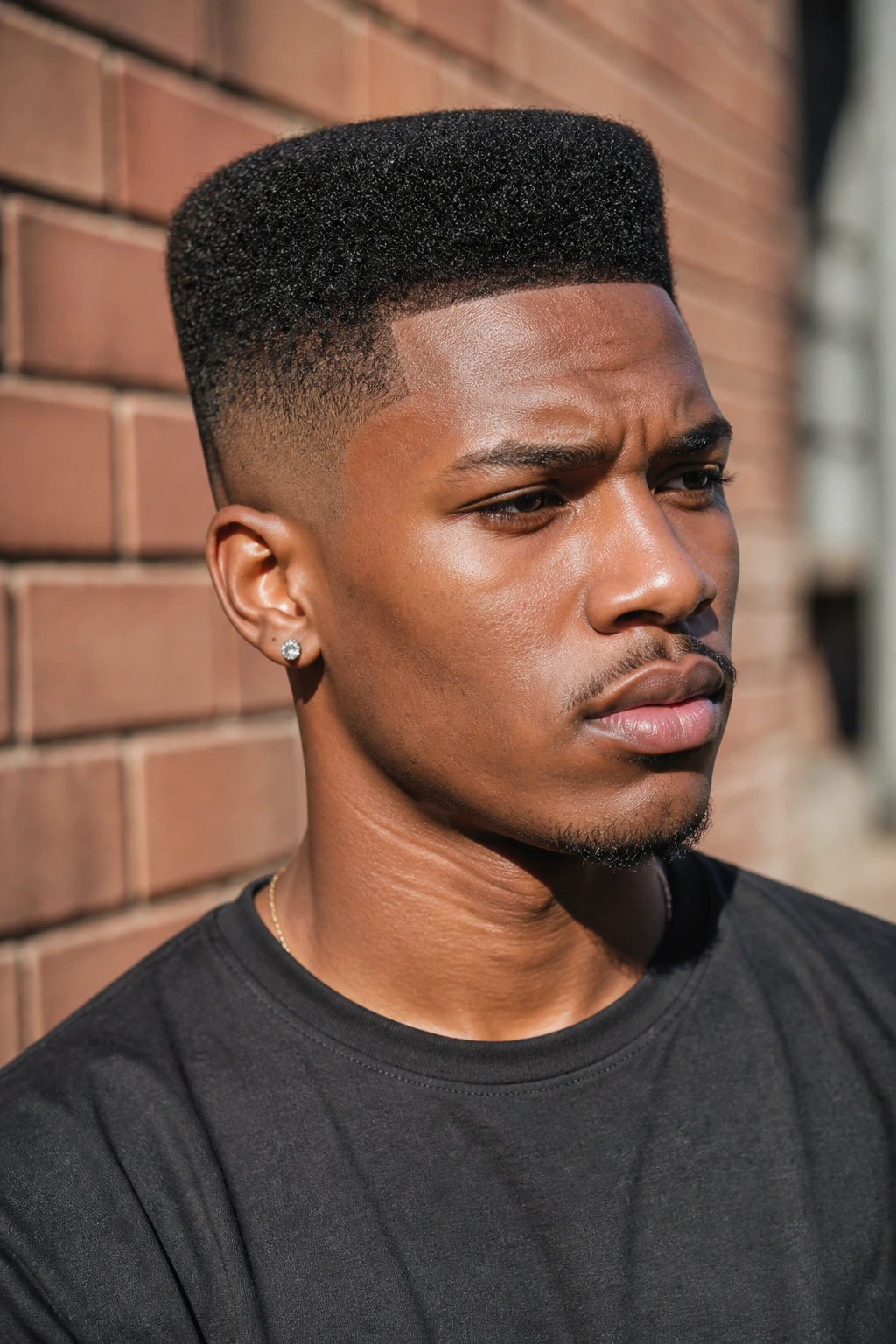
The flat top has a strong silhouette, and that’s why it still gets attention. The top is cut level, the sides are kept tight, and the shape sits high enough to stay cool around the ears. It needs dense hair, though. Thin hair won’t carry the boxy line well.
If you want this look, ask for a shape that matches your head instead of forcing a cartoon block on top. A good flat top has clean corners, but it still follows the natural architecture of the skull. It looks best when the top edge is sharp and the sides are short enough to keep the whole profile airy.
16. Afro Taper
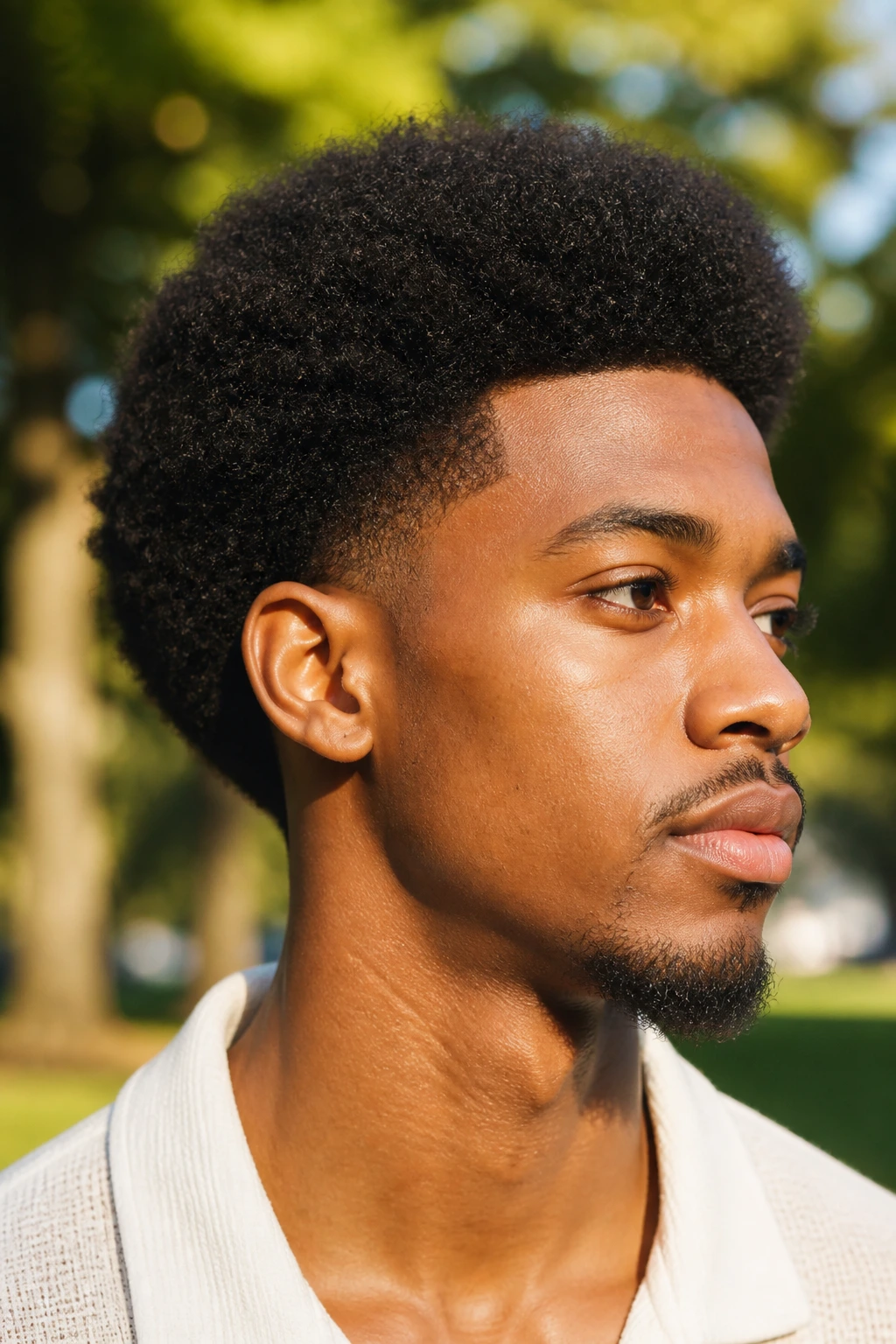
A tapered afro is one of the cleanest warm-weather shapes for coily hair. You keep the rounded top, taper the sides and neckline, and let the natural texture do what it does best. The result is balanced, breathable, and a lot easier to maintain than an overgrown shape that spreads at the edges.
This cut works because it respects volume without letting it take over the ears or neck. Keep the moisture light and regular — not greasy, not dry enough to frizz into dust. A small amount of leave-in on damp hair goes a long way. The afro taper is proof that summer hair does not have to mean short hair.
17. High-Top Fade
The high-top fade is a statement cut, but it also makes sense in hot weather because all the weight sits up and away from the sides. That leaves the ears and jawline open, which helps the cut feel lighter than it looks. It takes confidence. It also takes shape maintenance.
Keep the edges crisp and the top structured, or it loses the whole point. This is the kind of cut that benefits from regular shape-ups, because a fuzzy high-top looks tired quickly. If your hair is dense and grows upward naturally, the style is a strong fit. If not, you’ll spend too much time fighting it.
18. Frohawk
The frohawk is the middle path between a full afro and a shaved-sides statement cut. Keep the volume running through the center of the head, trim the sides down tight, and let the silhouette taper toward the nape. It gives you height without the bulk spreading outward.
I like it on men who want something bold but still breathable. The center strip can be shaped from tight coils, twists, or a picked-out texture, depending on hair type. The key is balance: the sides need to stay low enough that the top reads as the feature. Too much side width and the style loses its edge.
19. Two-Strand Twists
Two-strand twists are one of the better low-manipulation summer options because they keep the hair controlled without sticking heat to the scalp all day. They also dry faster than a lot of heavier styles, which matters when you’re washing more often in warm weather. Done neatly, they look clean without asking for much daily styling.
Keep the parts tidy, moisturize the scalp sparingly, and don’t twist them so tight that the roots pull. If you like a style that can last a few weeks and still look intentional, this one is hard to beat. It also grows out better than a lot of men expect.
20. Box Braids
Box braids are a strong summer answer when you want length, shape, and very little daily fuss. They keep the hair controlled and off the face, and they can stay neat for weeks if the scalp is cared for. The mistake is going too heavy. Very long braids can tug at the neck and feel warmer than they should.
If you want a cooler result, ask for medium-size braids with clean parts and a manageable length. Knotless versions can feel lighter at the scalp, which matters if you wear them often. A satin durag or pillowcase helps at night, and a light scalp spray is better than soaking the hair in product.
21. Cornrows
Cornrows sit close to the scalp, which is why they work so well in heat, sports, and under helmets. There’s almost no loose hair around the face, and the pattern stays put when the day gets long. The clean parting is part of the look, not a side detail.
The big thing here is tension. Too tight, and the scalp will tell you about it within a day. Too loose, and the style doesn’t last. If you’re getting cornrows for summer, think about the part size and the direction of the braid pattern before the first braid starts. That shape changes the whole vibe.
22. Locs With a Taper
Locs with a taper give you the length you want without letting the edges turn wild. The taper around the temples, ears, and nape keeps the cut fresh, while the locs carry the main shape. That balance is what makes the style feel crisp in warm weather.
Wash and dry them properly. I can’t stress that enough. Damp locs smell wrong fast, and summer heat makes that mistake louder. Keep the roots neat, the taper clean, and the scalp moisturized without drowning it. A good taper can turn locs from relaxed to sharp in one chair session.
23. Bro Flow
The bro flow is for men who want movement without turning every hot day into a wrestling match with their hair. It usually sits in that medium-length zone where the hair can be pushed back, tucked behind the ears, or left to fall naturally around the face. Layers matter here. Flat ends make the whole thing feel heavy.
A light sea-salt spray or a soft cream is enough to keep the flow from frizzing out. The cut works best when the length is taken off the shoulders and the ends are not all one blunt line. If you want hair that looks easy but still has shape, this is one of the better long-ish summer options.
24. Curtains
Curtains are back for a reason: they let hair sit off the face without forcing it into a stiff side part or a tight slick-back. The middle part keeps the front open, and the sides can stay soft around the cheeks. It’s a good choice if your hair is straight or wavy and you want a lighter-feeling shape.
The trick is to keep the front long enough to split, but not so long that it drags into the eyes when you sweat. A little cream or mousse is usually enough. Blow-dry the front away from the center for a minute, then let it fall. That gives the part some memory without turning it into a rigid line.
25. Middle Part Shag
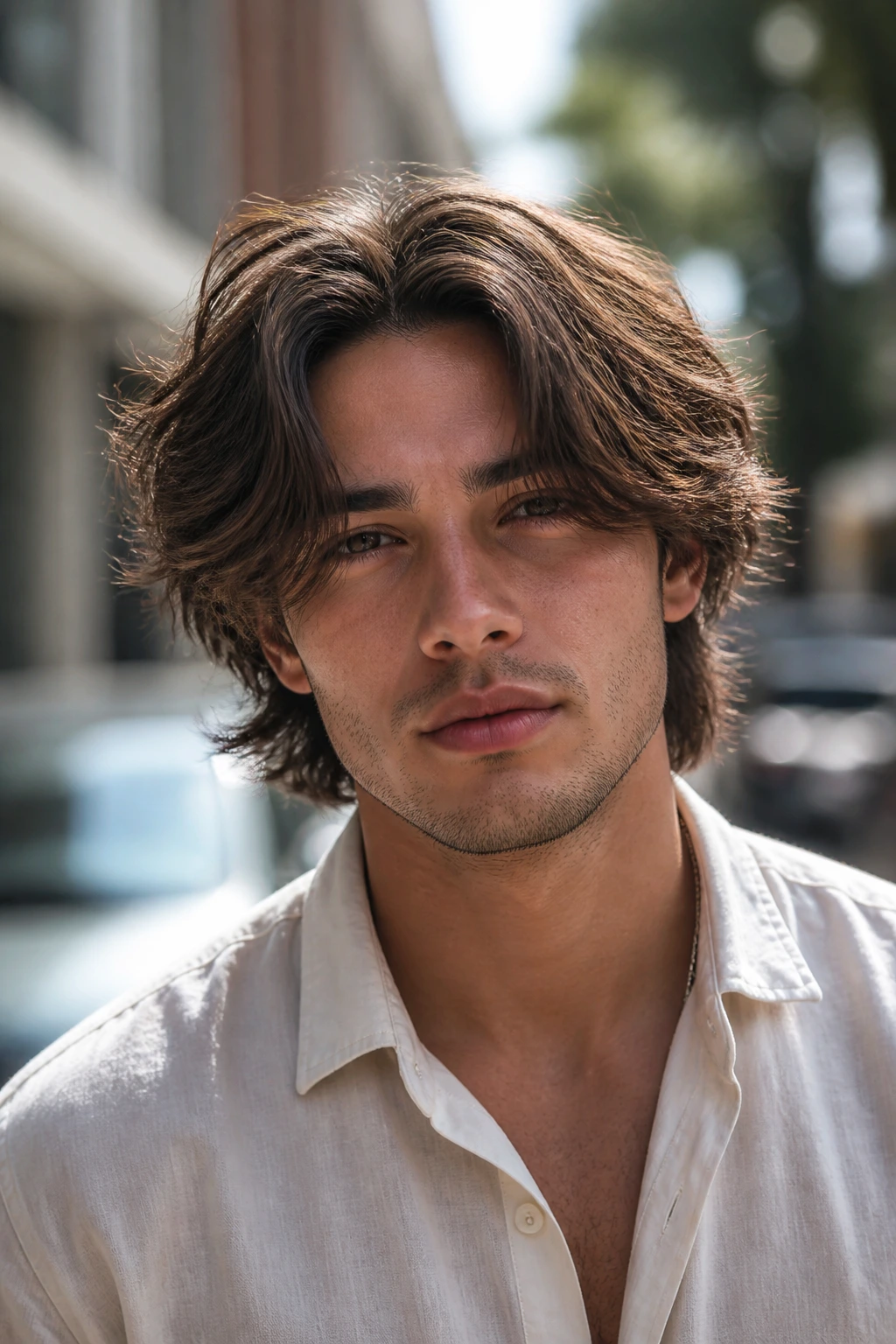
The middle part shag has a looser, messier edge than curtains, and that’s exactly why it works in warm weather. The layers create movement, the top stays soft, and the sides don’t sit like a helmet. It looks better when it’s a little imperfect.
This cut loves natural wave. If your hair is straight, it needs texture spray or a light cream and a bit of finger-drying. If it’s wavy, you can get away with almost nothing. The main thing is keeping the layers from getting too thick at the ends. Once it turns bottom-heavy, the whole shape loses its lift.
26. Modern Mullet
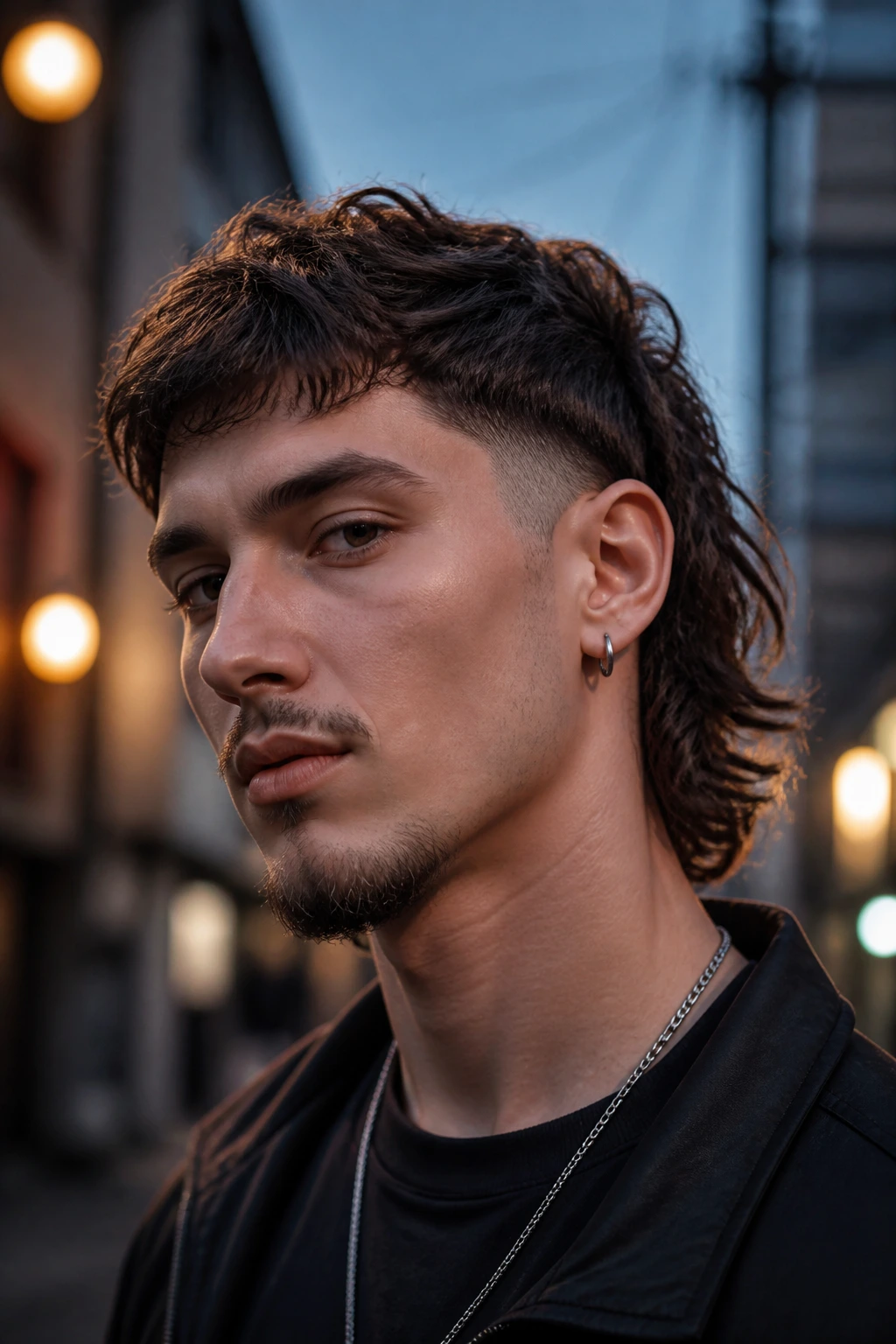
A modern mullet sounds like a joke until you actually see one cut properly. The front and crown stay shorter and textured, while the back keeps enough length to show some attitude. The sides are trimmed down so the whole thing doesn’t turn into a mop. It’s cooler than older mullets because the weight is placed with more care.
This cut works when the wearer wants something outside the usual fade-and-crop rhythm. It can be subtle or sharp depending on how much length you leave in back. Keep the back clean and the top choppy, not shiny. That’s the difference between a fresh mullet and a costume.
27. Shaggy Layers
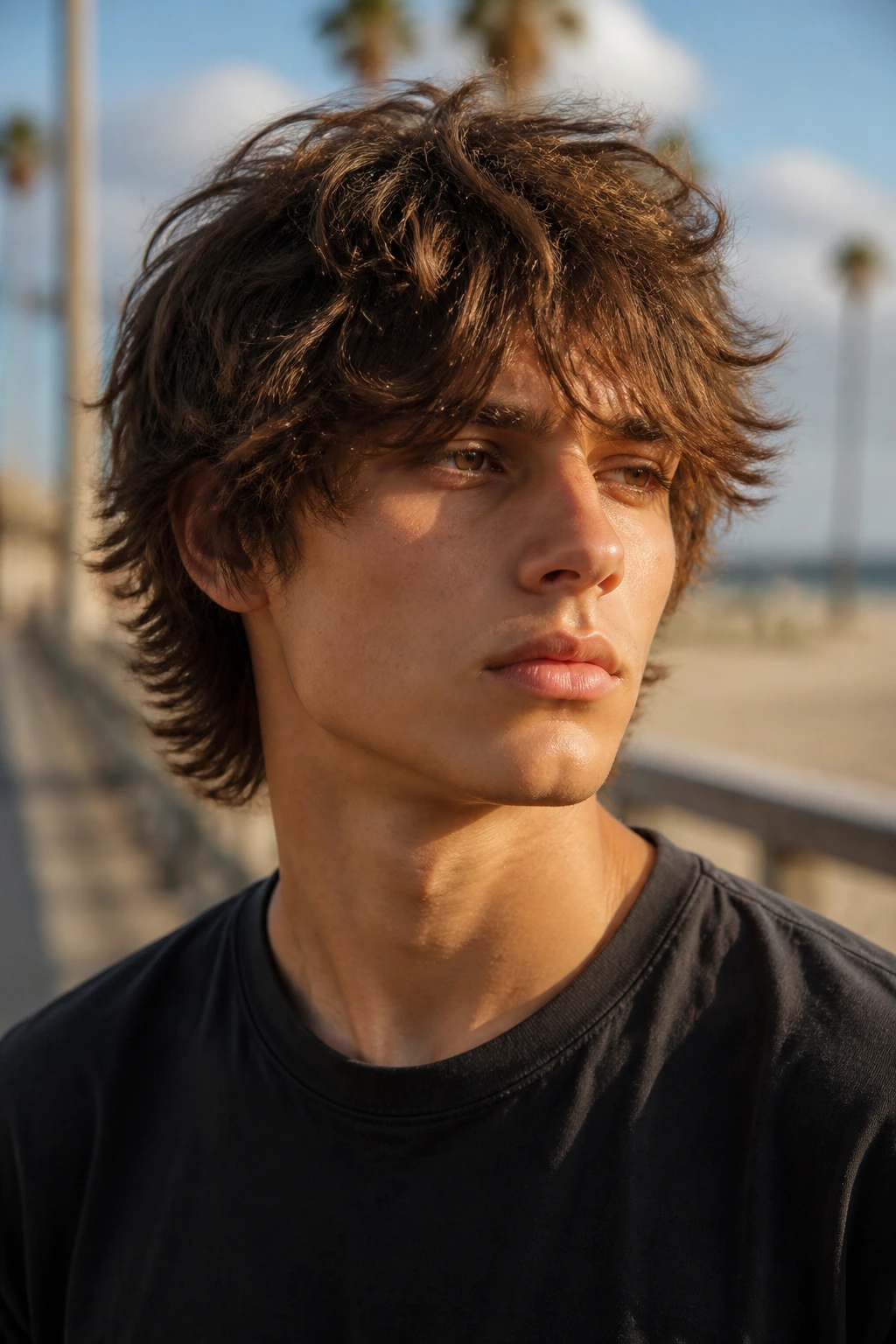
Shaggy layers are the easiest way to make medium hair feel lighter without cutting it all off. The layers remove bulk where hair stacks up, and the ends move instead of sitting in one block. In summer, that movement matters. It lets air move through the cut instead of trapping it under one heavy sheet.
I like this on wavy hair most, but straight hair can work if the layers are cut with enough texture. A little sea-salt spray and some finger-tousling is usually enough. The shape should look lived-in, not neglected. There’s a line there, and it matters.
28. Surfer Cut
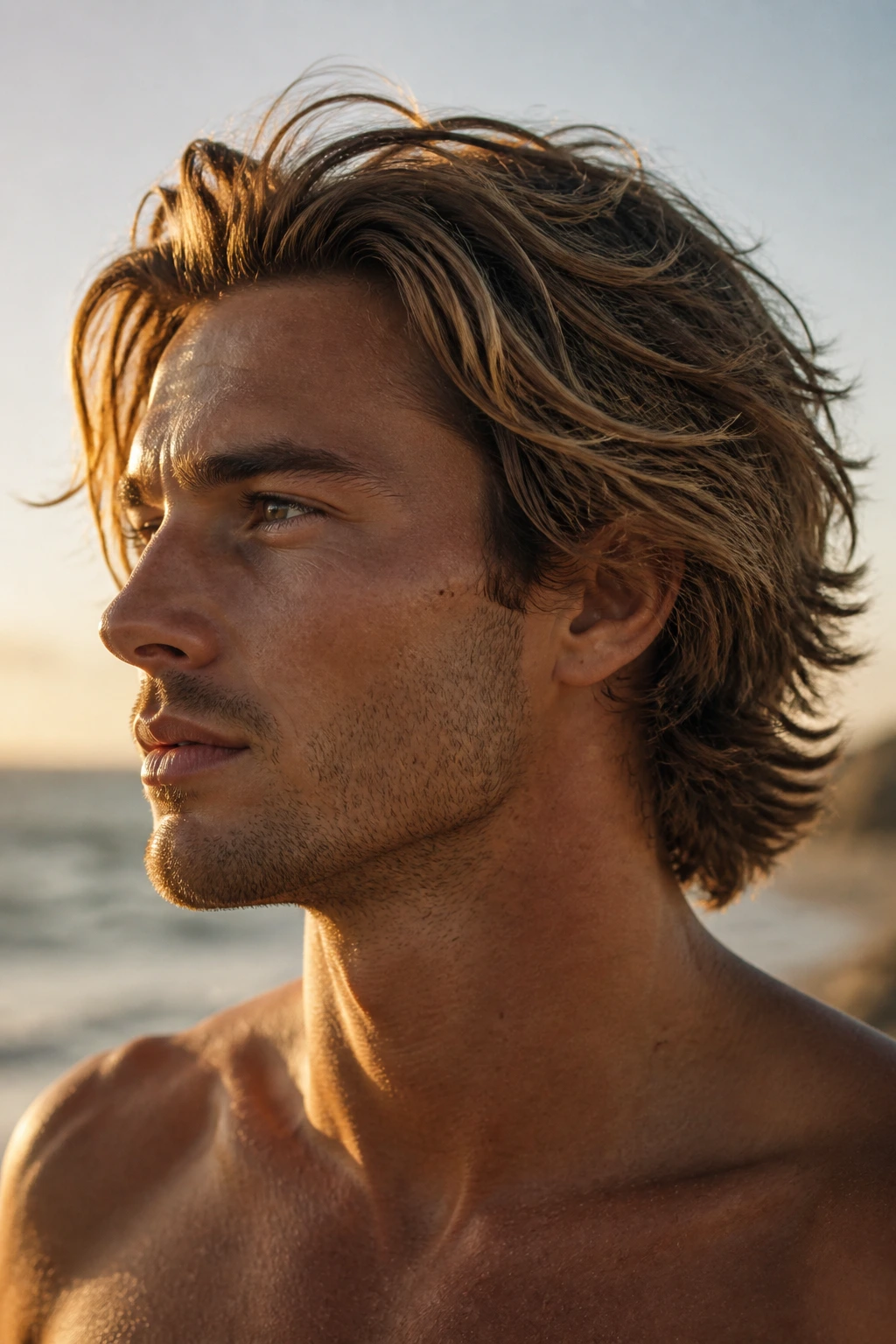
The surfer cut is the version of longer hair that looks better when you stop trying to make it perfect. It sits in that wind-tossed zone with enough length to push back, tuck behind the ear, or leave loose at the front. Sea-salt spray, air-drying, and a trim that removes dead ends keep it from getting stringy.
This style works because it treats texture as a feature, not a problem. If your hair has some wave, lean into it. If it’s straight, keep the layers loose and the ends light. The goal is movement that still feels clean, not a wet-looking mess that never dries.
29. Man Bun
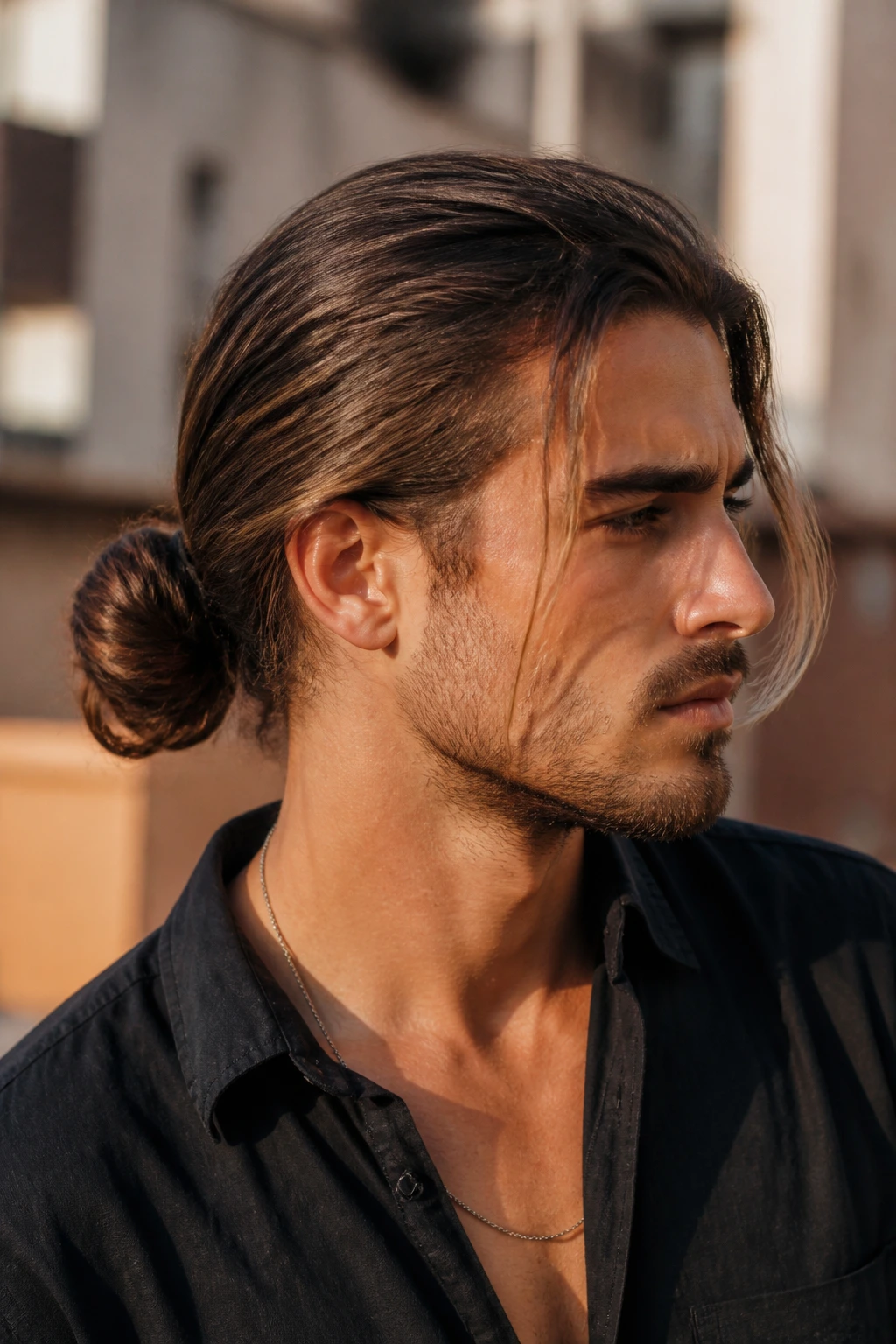
The man bun solves one summer problem fast: hair on the neck. Pull the length back, keep the tie low and loose, and the whole head feels cooler in a hurry. The catch is tension. Too tight, and the hairline starts paying for it.
I prefer a bun when the hair is past the collar and the wearer wants a way to get through work, travel, or exercise without cutting it all off. Leave a few front pieces loose if the bun sits severe on your face, and do not yank the elastic so hard that the bun looks like a rope knot. Soft and secure wins here.
30. Top Knot
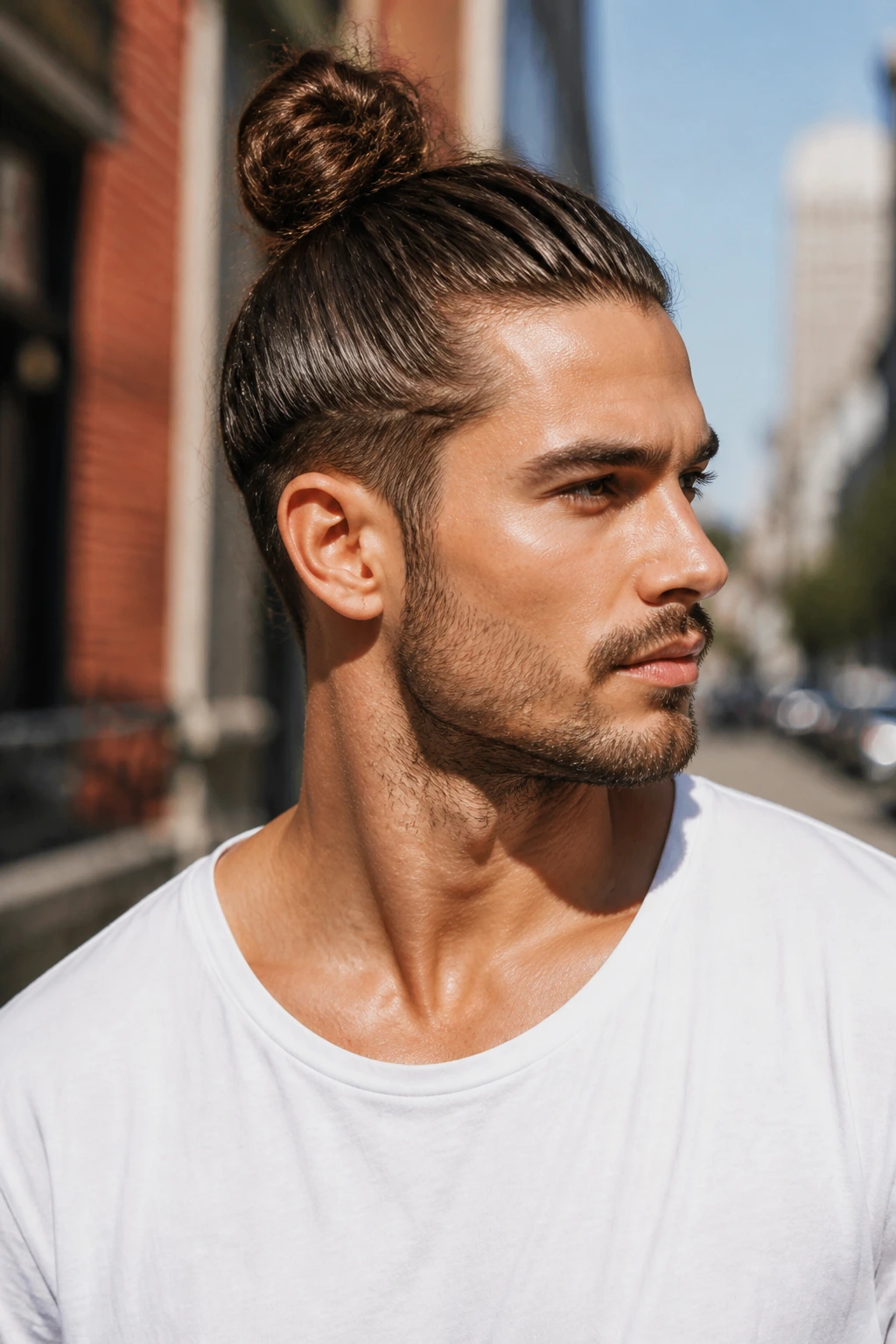
The top knot is a man bun with more lift and less neck contact, which is why it works so well on hot days. Put the knot higher, keep the sides slicked back or tucked, and the back of the neck gets some breathing room. It looks sharper than a loose bun, but it also asks for a lighter hand at the temples.
A tight top knot can start pulling on the hairline fast, so keep the tension honest. If your hair is thick, this style is easy to wear. If it’s fine, the knot can get small and wiry unless you’ve got enough length. I like it when you want your long hair off your skin without fully hiding it.
Why These Cuts Hold Up When the Air Gets Heavy
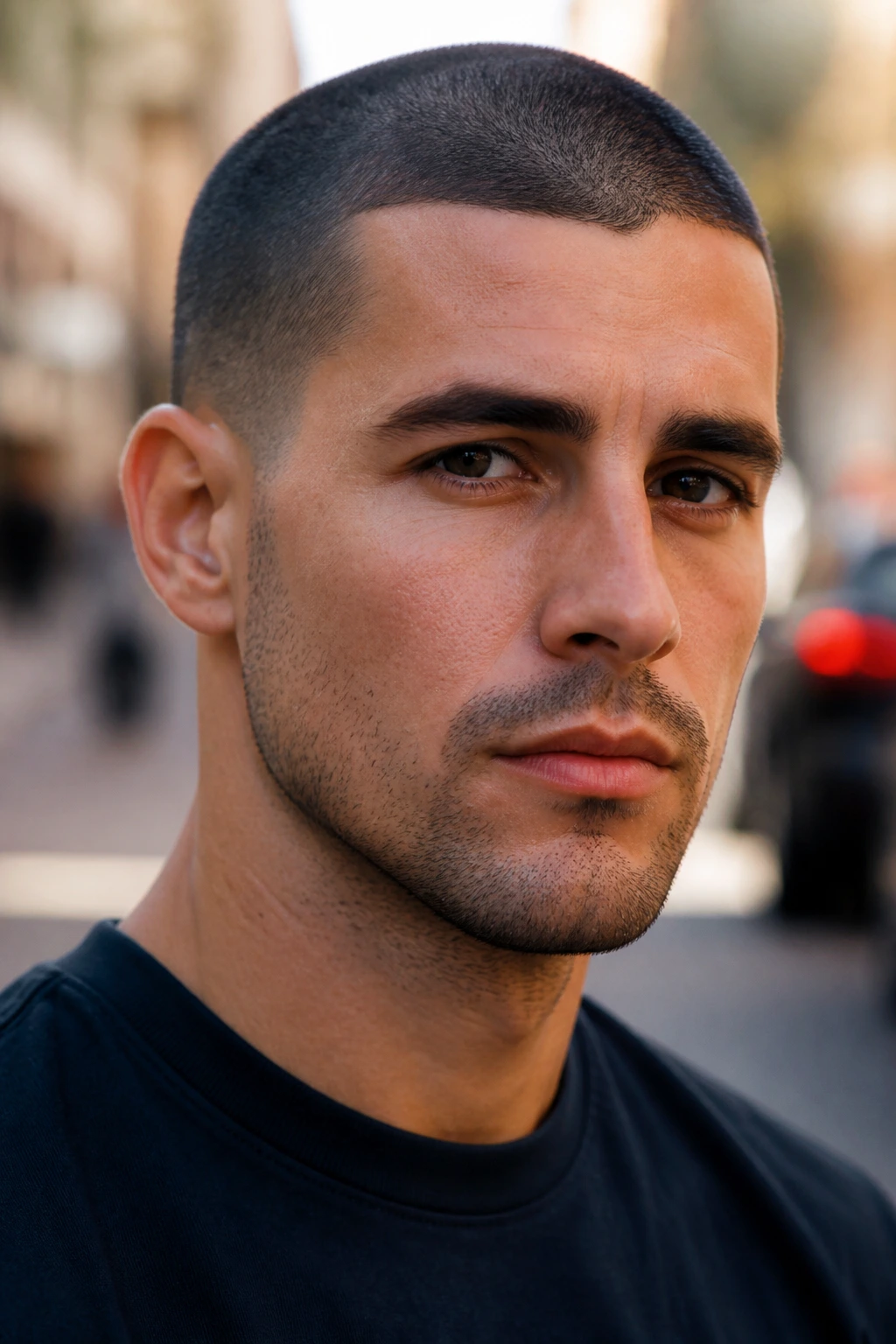
Summer hair behaves badly for a few plain reasons. Sweat softens product. Humidity makes strands swell. Sun dries out the outer layer of the hair, while the scalp under a tight cut can get hotter than you expect. That’s why a style that looks perfect in a cool room can fall apart after a walk to the car.
The cuts that hold up share a few traits: they either keep the sides tight, remove weight from the crown, or give the hair a texture that still looks good when it’s slightly pushed around. A buzz cut, crew cut, French crop, braid style, or taper fade isn’t “better” in the abstract. It’s better when it solves the exact problem you have — neck sweat, forehead steam, hat hair, or too much bulk under a helmet.
I trust a cut more when it still looks intentional at the end of a long day. That’s the real test. If it only looks good under barber-shop lights, it wasn’t built for summer.
Essential Gear for These Looks
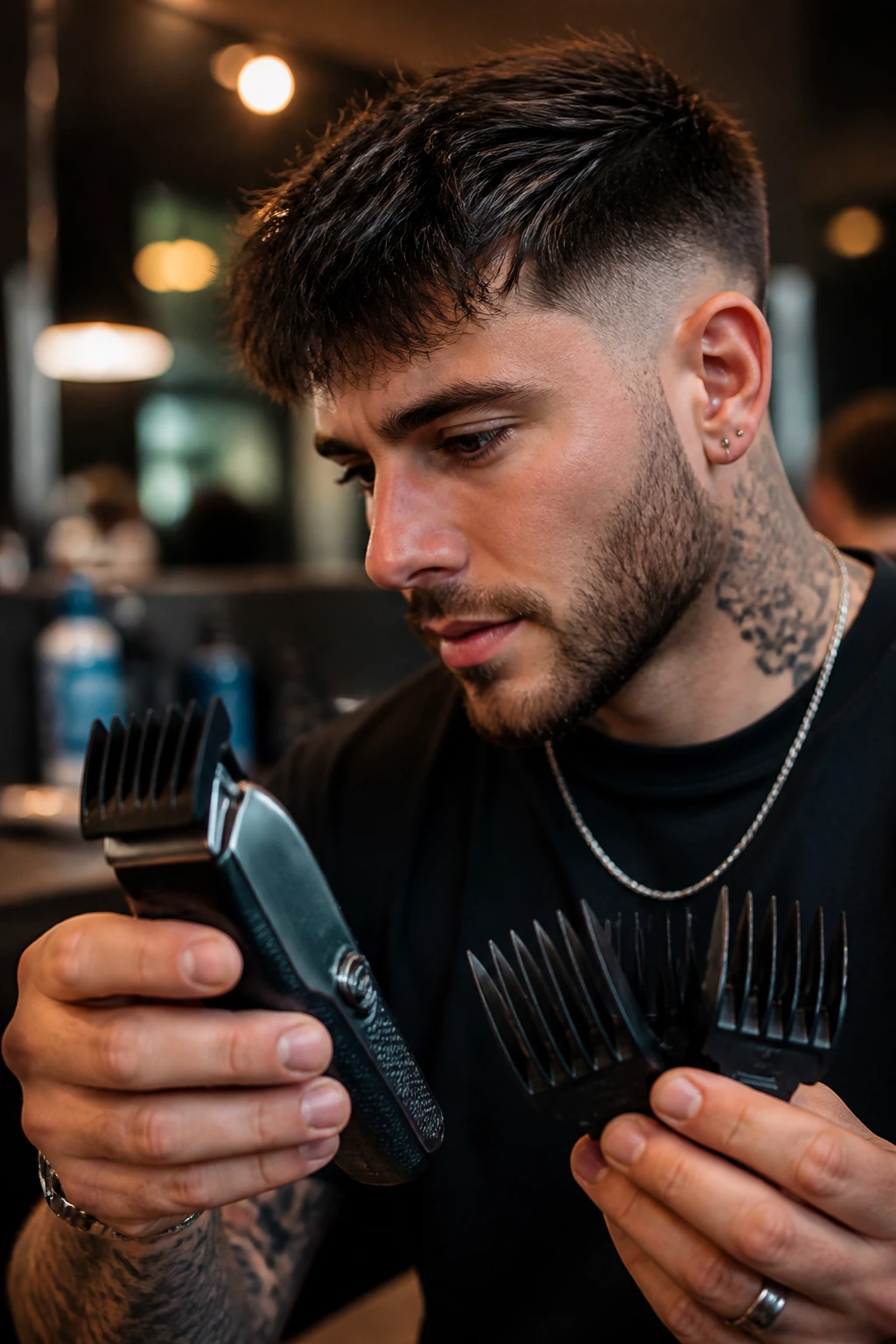
- Clippers with guards #0.5 to #4: Handy if you do your own cleanup between barber visits or keep your sides tight at home.
- Detail trimmer: This sharpens necklines, sideburns, and temple corners without taking too much length off.
- Wide-tooth comb: Better than a fine comb for wavy, curly, and longer hair that tangles in humidity.
- Round brush or vent brush: Useful for short quiffs, slick backs, and bro flow styles that need a bit of lift.
- Wave brush or curl sponge: A good pick if you wear waves or want a tighter curl pattern on short textured hair.
- Blow dryer with nozzle: Keeps the airflow controlled, which matters when you want volume without frizz.
- Matte clay or fiber paste: Best for crops, crew cuts, quiffs, and side parts that need hold without shine.
- Light cream or leave-in conditioner: Good for curls, twists, bro flow cuts, and longer hair that needs softness.
- Sea-salt spray: Adds grip and a little roughness to straight or wavy hair without making it feel greasy.
- Satin durag, bonnet, or pillowcase: Especially useful for waves, braids, twists, and locs because it cuts friction at night.
- Hand mirror: Sounds boring, but it’s the easiest way to check the neckline and the back of a taper at home.
How to Choose the Right Cut for Your Hair Type
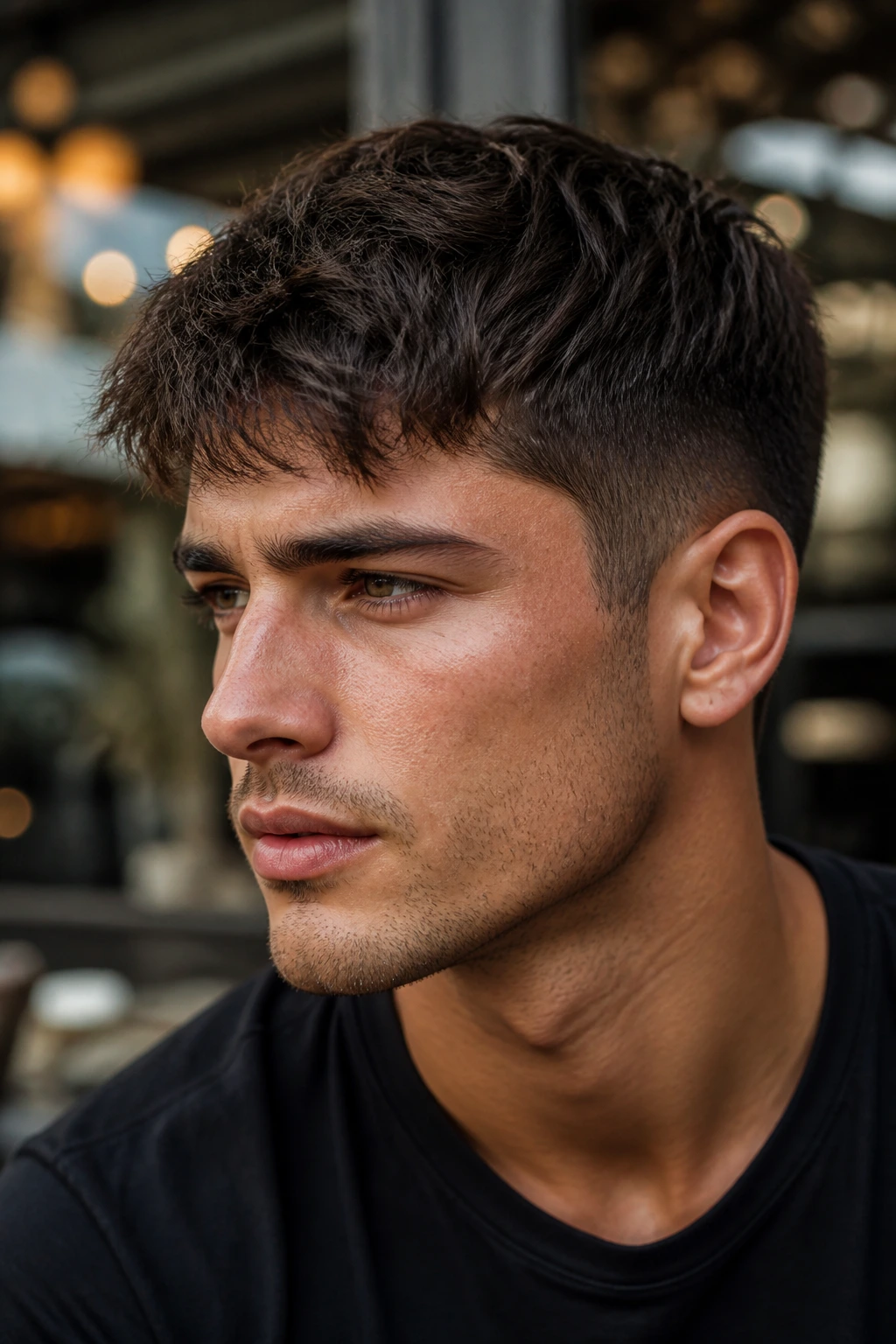
Straight hair usually shows every line, which is a gift and a trap. It makes side parts, quiffs, crops, and slick backs look sharp, but it also exposes flat product and limp roots fast. If your hair lies straight, lean toward cuts with texture on top and a clean taper on the sides. Avoid asking for too much length unless you’re ready to style it every morning.
Wavy hair gets the easiest summer wins. Curtains, shaggy layers, bro flow cuts, and textured crops all take on natural movement without much effort. The main job is removing bulk so the wave doesn’t puff out at the sides. A lightweight cream or salt spray is usually enough.
Curly and coily hair need shape, not punishment. Curly crops, temple fades, afro tapers, twists, locs, and braid styles keep the head cooler without erasing the pattern. The trick is shrinkage. Tell your barber how much your hair tightens after it dries, because that changes the final length by more than a lot of people expect.
Thick hair needs weight removed in the right places. If the sides are too full, the cut feels hot and heavy even when the top is short. If the top is too thin, you lose shape. Dense hair usually does best with tapers, textured crops, crew cuts, and layered medium styles.
How to Explain the Cut to Your Barber
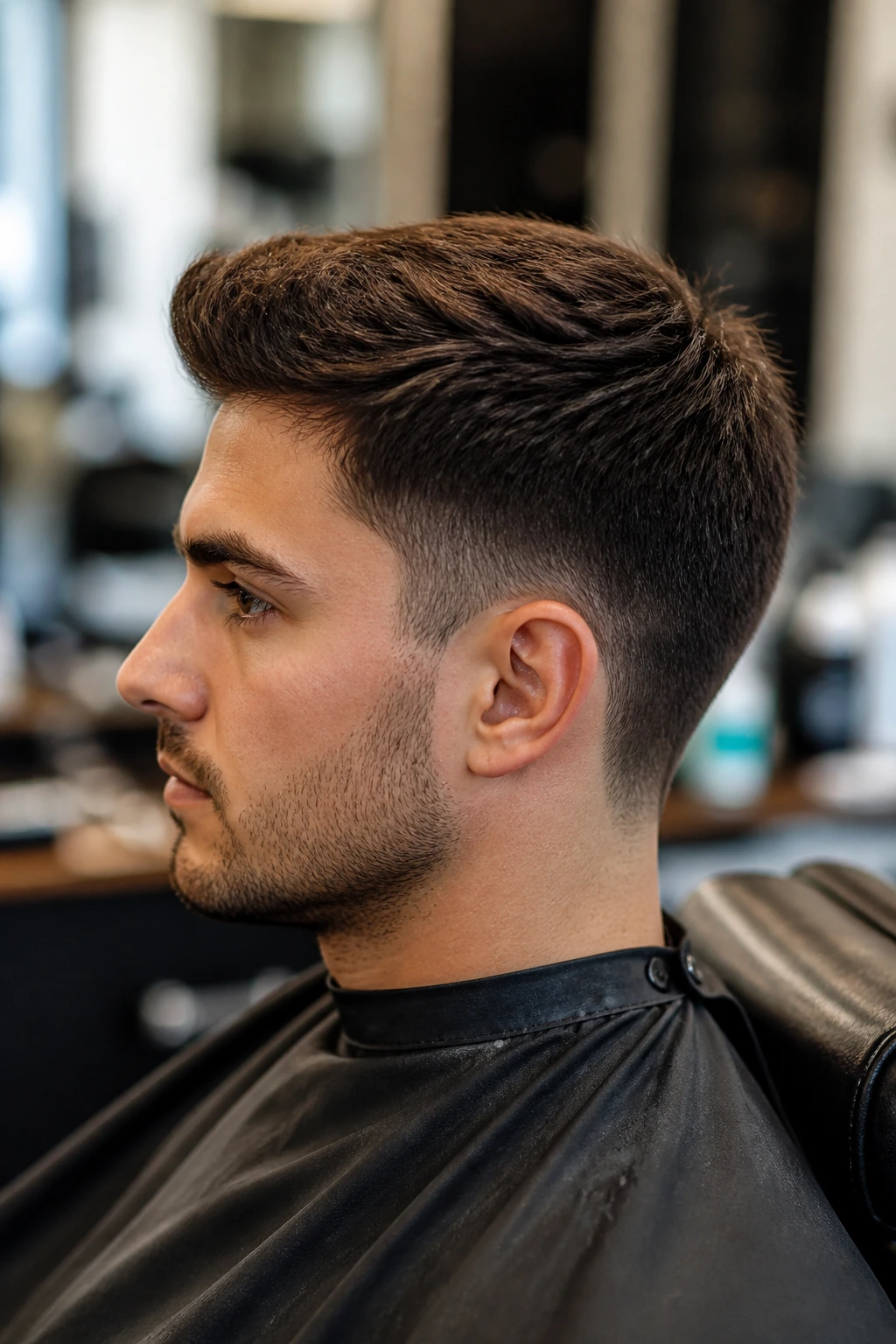
Bring a photo, but do not stop there. A picture shows the shape; your words should explain the parts you care about. Say the top length in inches or guards, name the side length, and tell the barber whether you want a skin fade, taper, low fade, or a softer clean-up around the ears. That one sentence saves a lot of bad guesses.
The useful details are always the same. Tell them if your hair parts naturally, if your crown sticks up, if your curls shrink after washing, and whether you wear a beard. If you want a French crop, say how blunt you want the fringe. If you want an Ivy League, say you still need enough length to side-part it without a ton of product.
Here’s the line I wish more men used: “Keep the top at about two inches, taper the sides, and don’t make the neckline too square.” That tells the barber a lot. It sounds simple because it is.
How to Wear These Cuts With Beards, Glasses, and Caps
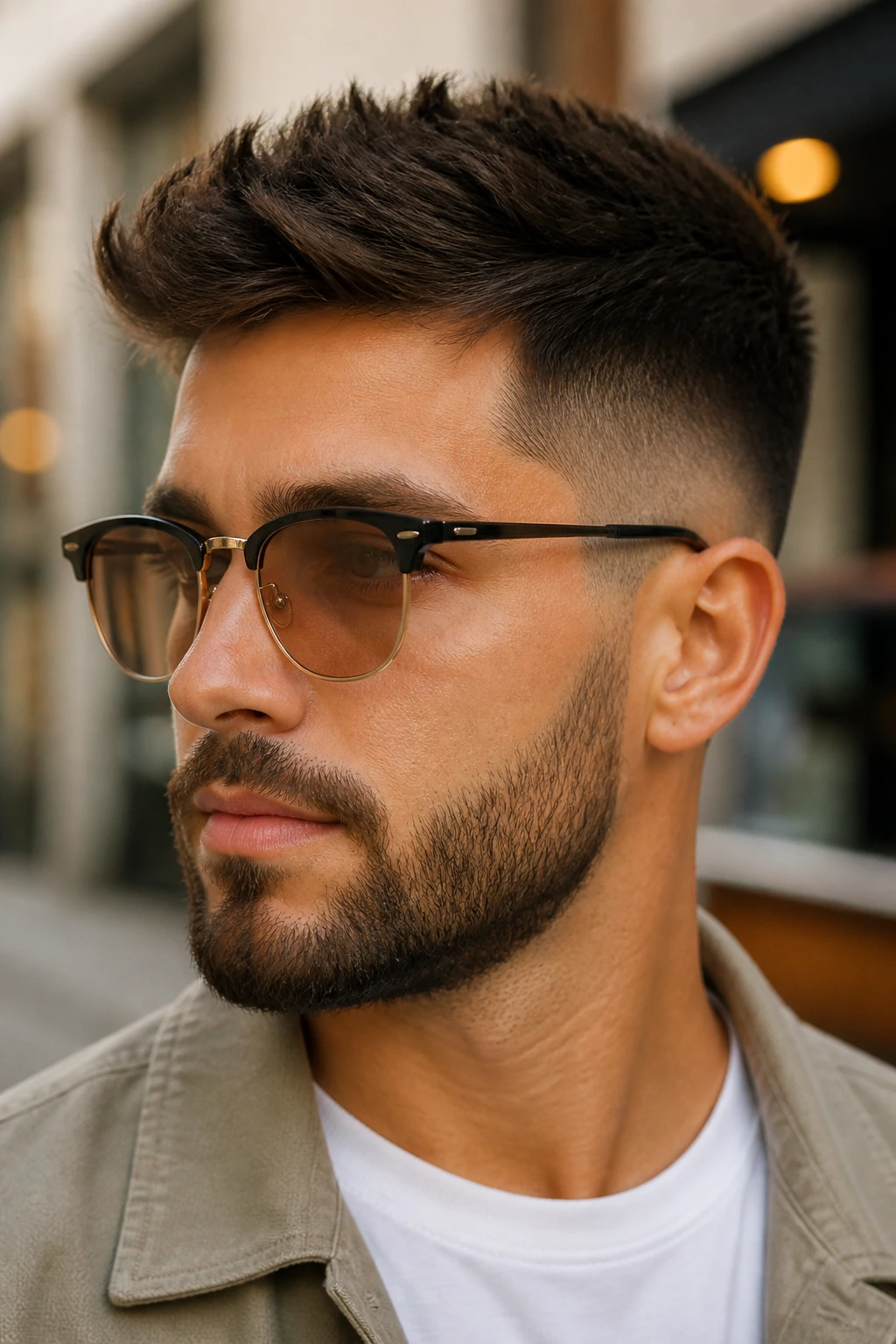
Presentation: Keep the outline honest. A clean neckline, tidy sideburns, and a beard that matches the haircut’s scale make the whole face look more balanced. A crop with a thick beard can look top-heavy if the sides are left too wide.
Accompaniments: Glasses and caps change the read of a haircut more than most guys think. Thick frames pair well with buzz cuts, crew cuts, and side parts because the hair isn’t competing for space around the temples. Caps sit best with shorter sides, a taper, or braids and twists that don’t bunch at the crown.
Portions: If your face is long, a little width at the sides can help. If your face is round, keep the sides tighter and let the top add some vertical line. Long hair, buns, and bro flow styles need enough length to stay off the shoulders, or the whole silhouette gets sloppy.
Climate Pairing: For humid days, wear the cuts that dry fast — crops, fades, buzzes, twists, and cornrows. For drier heat or AC-heavy workdays, you can carry a bit more length and shape without the style collapsing by noon.
Fast Styling Routines for Hot Mornings
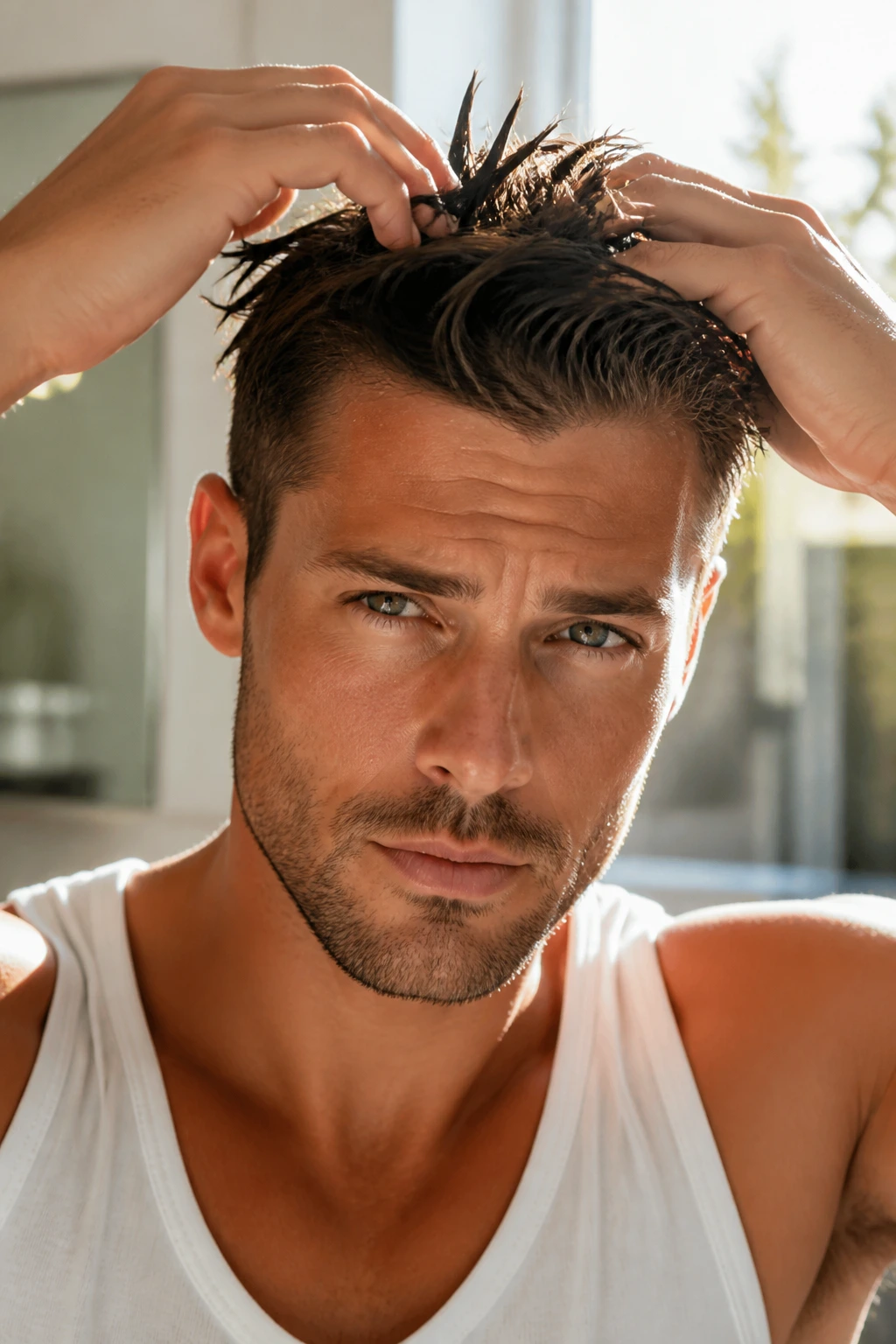
Short hair: Start with damp hair, not soaking wet. Rub a pea-sized amount of matte clay or fiber paste between your palms, push it through the top, and use your fingers to break up the front. Thirty seconds of rough drying is often enough. Short cuts should look touched, not sculpted.
Curly and coily hair: Work in a light leave-in or curl cream while the hair is still damp, then stop messing with it. If you keep touching curls while they dry, they puff. A diffuser helps, but air-drying works fine if you set the shape with your hands and walk away.
Medium to long hair: Use a light cream on the mid-lengths and ends, not the roots. Blow-dry with the airflow moving back or outward, depending on the style, and keep the product light enough that the hair still moves. Bro flow, curtains, and shags all look better when they have some lift and don’t sit glued to the scalp.
A quick reset after lunch helps too. Wet your hands, smooth the sides, push the top back into shape, and stop there. You do not need a full second styling session to look presentable.
Ways to Sharpen the Look Without Adding Bulk
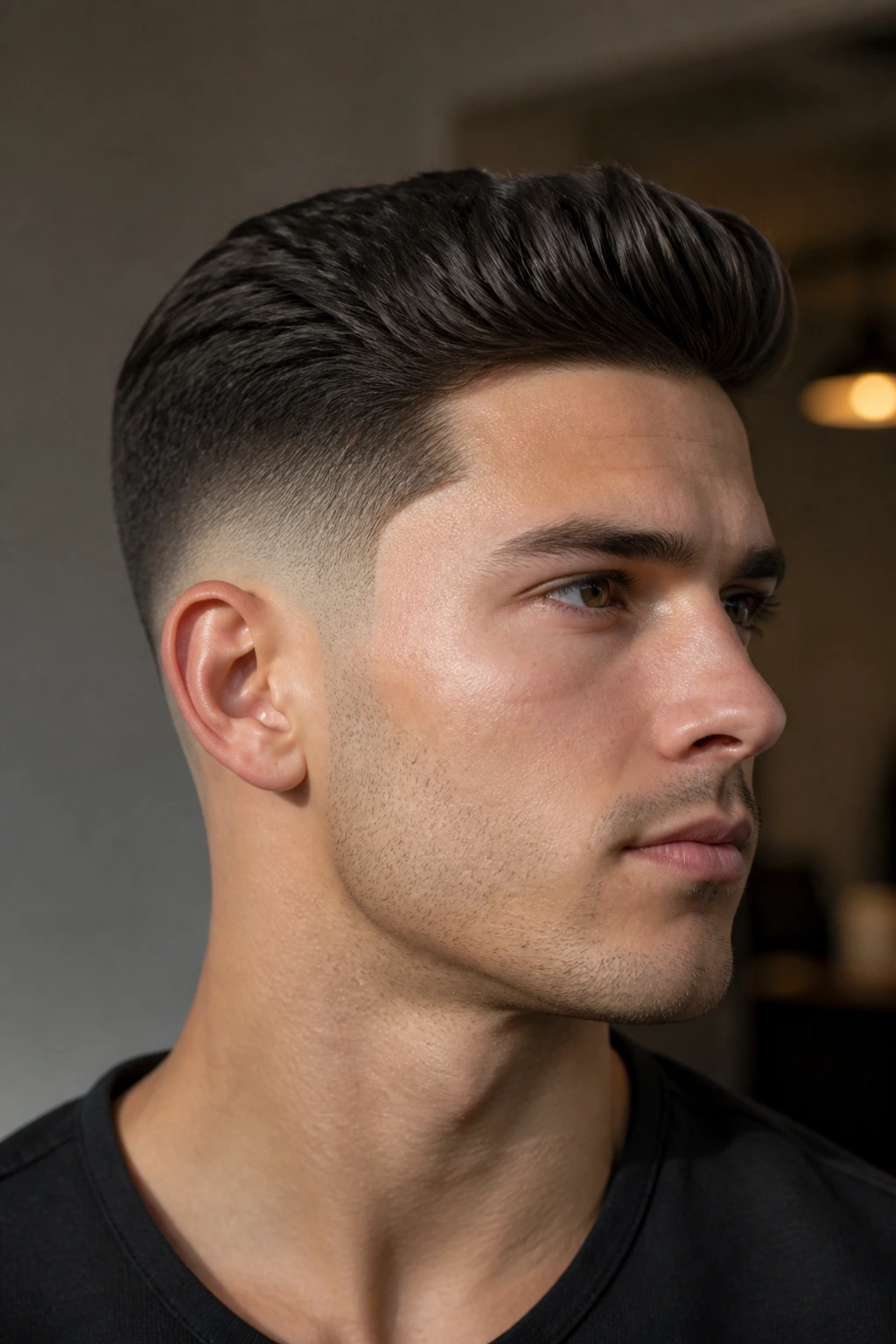
Texture Boost: Ask for point-cut ends, chopped fringe, or a little internal debulking if your hair is thick. That removes weight without sacrificing length, and it’s why some cuts move better than others.
Edge Control: A clean line-up at the temples and neckline can make a basic cut look far more finished. Even a small cleanup around the ears changes the whole mood of a buzz, crop, or taper.
Finish: Matte finishes read cooler in summer. Shine can work on a slick back, but too much of it turns heavy fast when sweat shows up. If you want the hair to look alive, not greasy, stay on the low-shine side.
Make It Yours: Add a beard balance, a harder side part, a little fringe, or a cleaner taper. Tiny changes do the heavy lifting. Most good summer cuts are not about reinventing your face. They’re about removing the one or two things that make it feel hot and fussy.
Common Mistakes That Make Summer Hair Harder to Wear
- Using too much product: The hair starts looking wet, heavy, or sticky by noon. Fix it by cutting the amount in half and using matte product on damp hair instead of dry hair.
- Cutting the top too short on curly hair: Curls spring up after they dry, so a crop can turn into a puff if the barber ignores shrinkage. Fix it by asking for a dry cut or leaving a little extra length on top.
- Ignoring the neckline: A messy nape makes even a short cut look grown out fast. Fix it with a taper or a quick cleanup every couple of weeks.
- Forcing a style that fights the growth pattern: Cowlicks, natural parts, and swirl patterns don’t disappear because you wish they would. Fix it by choosing a cut that works with the grain instead of against it.
- Letting long hair sit on the neck all day: That’s where the heat builds first. Fix it with layers, a bun, braids, or a style that moves the weight off the collar.
Variations and Adaptations to Try
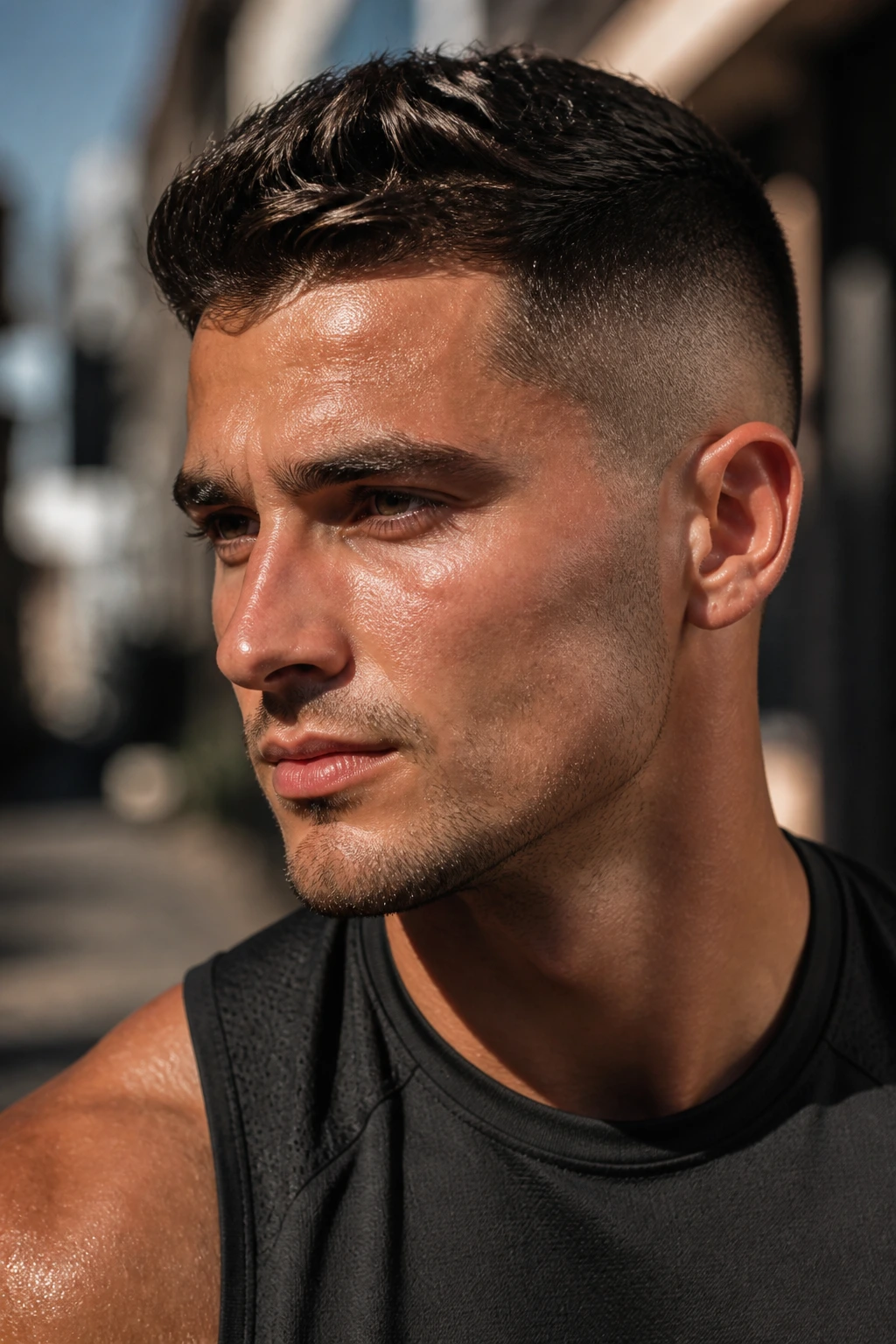
Gym-Day Fade: Keep the sides tight, shorten the top a touch, and skip shine. This version is built for workouts, travel, and days when you want your hair to dry fast after a shower.
Office-Clean Version: Keep a little more length on top and use a taper instead of a skin fade. It reads neater under fluorescent office light and still stays cooler than a heavy scissor cut.
Curly-First Version: Let the curl pattern stay visible and cut the sides short enough that the shape doesn’t spread. Curl cream and a leave-in do the work here, not strong hold.
Beard-Balanced Version: Match the haircut’s weight to the beard’s width. If the beard is full, keep the temples clean. If the beard is short, let the haircut carry a little more shape on the sides.
Low-Manipulation Version: Twists, braids, locs, buzzes, and crew cuts all fall into this bucket. The point is fewer daily decisions and less sweat stuck to your hands before breakfast.
How to Keep Each Cut Fresh Between Trims
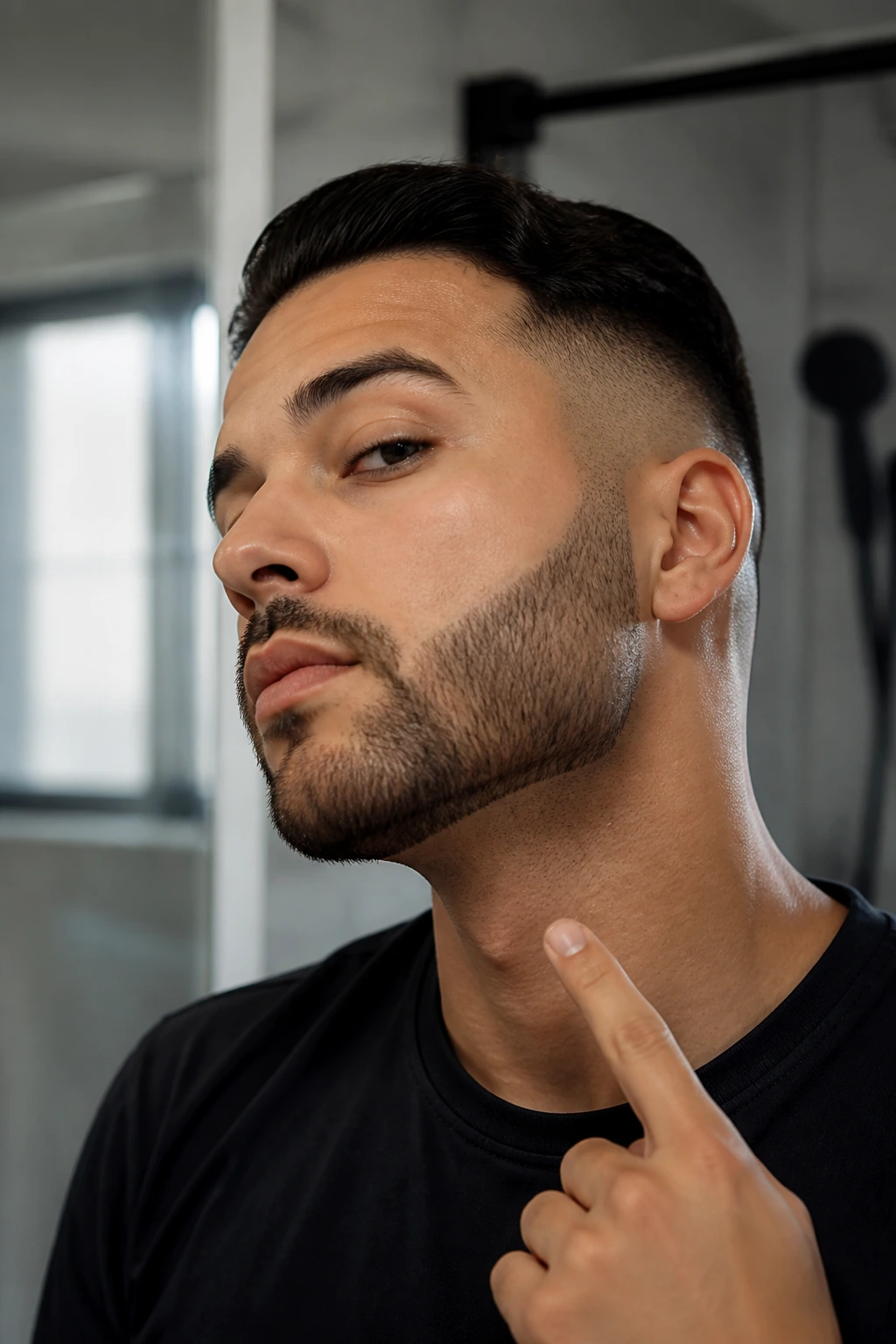
Short styles need the most frequent cleanup. A buzz cut or high and tight usually looks sharp for two to three weeks before the neckline and temples start softening. Crew cuts, crops, and Ivy League styles can often stretch to three or four weeks if the edges stay tidy. Fades and line-ups lose their crispness faster than people expect, so if you care about the outline, don’t wait too long.
Longer cuts live on a different schedule. Bro flow, curtains, shags, and surfer hair usually need a trim every six to eight weeks just to keep the ends from getting stringy. Braids, twists, and locs need scalp care between appointments, plus proper drying after wash days. The haircut still matters, but so does the routine around it.
Wash frequency depends on product and sweat. If you’re using heavy paste, you’ll want more regular shampooing. If you wear braids, twists, or locs, keep the scalp clean without soaking the style every day. And if your cut is very short, a quick neck cleanup or temple touch-up at home can keep it looking fresh long after the barber visit.
Frequently Asked Questions About Summer Haircuts for Men
What is the easiest summer haircut for men?
A buzz cut or induction cut wins on pure simplicity, but a crew cut is close behind if you want a little more shape. Both dry fast, need almost no product, and stay out of the face when the temperature climbs.
Can I keep long hair and still stay cooler?
Yes, if the length is handled with intention. Layers, buns, top knots, braids, twists, and locs can all keep hair off the neck and face. The problem is not length by itself — it’s loose bulk that sits on skin all day.
Which styles work best for curly hair in hot weather?
Curly crops, temple fades, afro tapers, twists, and locs are all strong choices. They respect the curl pattern and reduce the sides, which keeps the shape from turning wide and hot.
How often should I get a fade touched up?
If you like a fade looking sharp, every two to three weeks is the sweet spot. If you’re fine with a softer grow-out, you can stretch it a little longer. The neckline and temples tell the story first.
What product should I avoid when it’s humid?
Heavy shiny pomades and thick waxes tend to go heavy fast. They can pull hair flat and make it look greasy once sweat hits. Matte clay, light cream, curl cream, and sea-salt spray usually behave better.
Is a buzz cut a bad choice if my head shape is uneven?
Not at all, but you may want a little more length than the shortest possible version. A #1 or #2 often looks better than a skin-close shave if the scalp shape is something you’d rather not spotlight. A line-up or taper can help frame the cut.
What’s the best style if I wear a beard?
Crew cuts, buzz cuts, high and tights, side parts, and tapers all pair well with beards because they keep the face balanced. If the beard is thick, avoid leaving too much width at the temples or the whole look can get boxy.
How do I stop my hair from frizzing in heat?
Use less product, not more, and keep the finish light. Frizz usually gets worse when hair is overhandled or overloaded. For curls and waves, a leave-in or curl cream on damp hair works better than trying to smooth everything once it’s already dry.
The Cut That Fits the Heat
The right summer haircut doesn’t need to be the shortest thing on the list. It needs to do the least amount of fighting. A good crop, taper, braid, twist, bun, or buzz cut keeps hair where you want it, dries without drama, and doesn’t turn your morning into a styling project.
If you’re torn between two options, start with the one that grows out cleanly. That’s the quiet advantage most guys miss. A cut that still looks good after three weeks saves you time, keeps your neck cooler, and makes the whole season easier to wear.
