



A good top knot can change the whole shape of a face in about ten seconds. Pull the hair up too high, and the look turns sharp and lean. Let it sit low and loose, and the same head of hair suddenly feels calmer, heavier, more relaxed. That little shift is why top knot styles for men have stayed useful instead of turning into a passing novelty.
The best versions are not just about tying hair up. They’re about where the knot lands, how much texture you leave in it, how tight the sides are, and whether the rest of your haircut gives the knot room to breathe. A knot on thick curly hair tells a different story than the same knot on straight hair with a skin fade. Same basic move. Completely different result.
And that is the fun part. Once you start looking at top knot styles as design choices instead of one single haircut, the options open up fast — from clean office-friendly knots to rugged, loose, beard-heavy versions that look like they belong on a cold walk home after a long day. The details matter. A lot.
Why These Top Knot Styles Work So Well
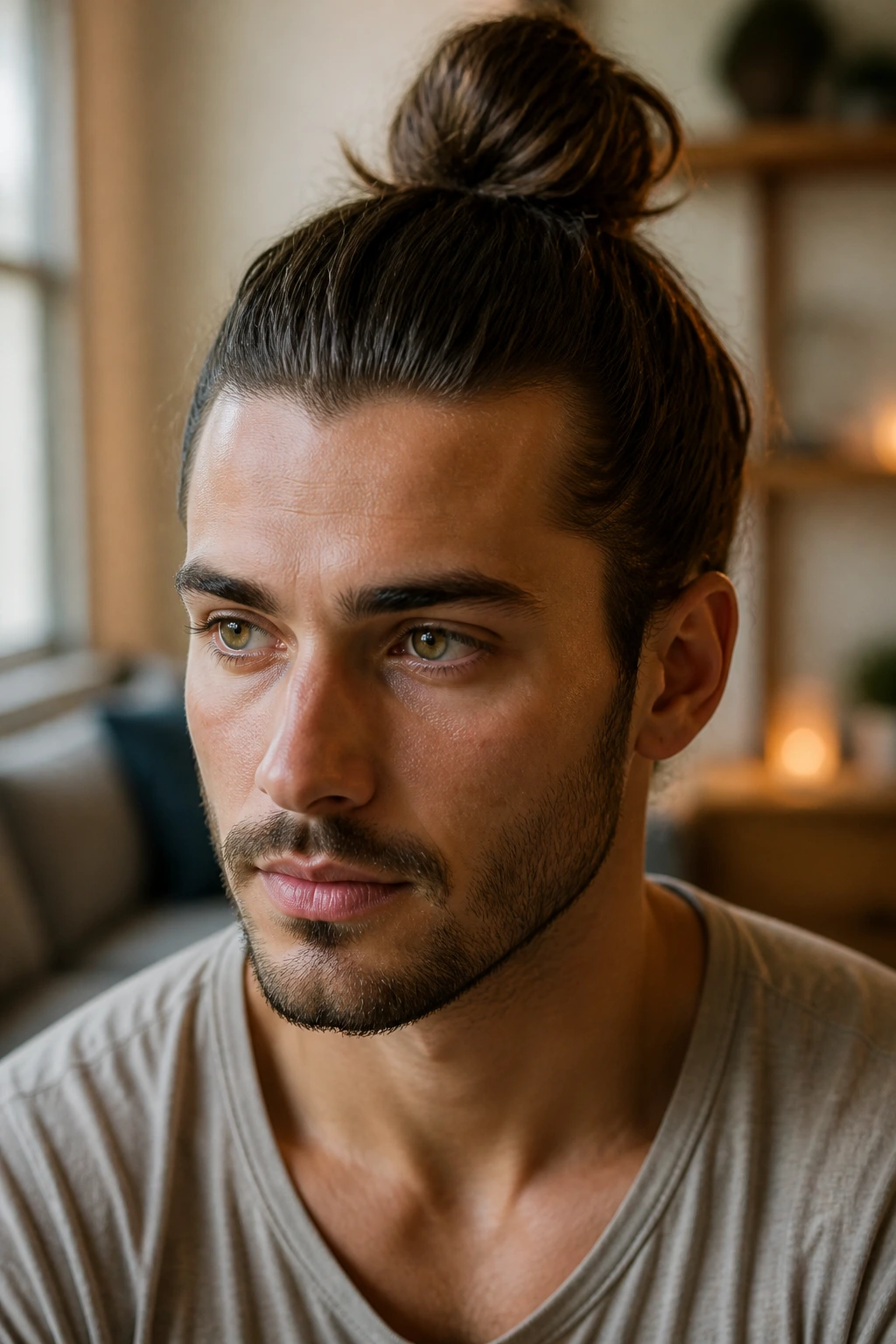
- Face-shape control: A knot placed high opens up the jaw and makes rounder faces look longer, while a lower knot softens a sharp chin or a narrow forehead.
- Texture does half the work: Wavy, curly, and coily hair gives the knot grip, so it holds shape with less product and fewer flyaways.
- Barber-friendly options: Most of these looks can be built on a fade, taper, undercut, or longer scissor cut, which means you can keep the knot and still change the sides later.
- Easy to dress up or down: The same knot can look gym-ready with a matte finish or sharp enough for a blazer if you smooth the sides and clean the neckline.
- Good grow-out insurance: If your hair is in that awkward stage between short and long, a knot keeps the length useful instead of letting it sit in your eyes and ears.
1. Classic High Top Knot
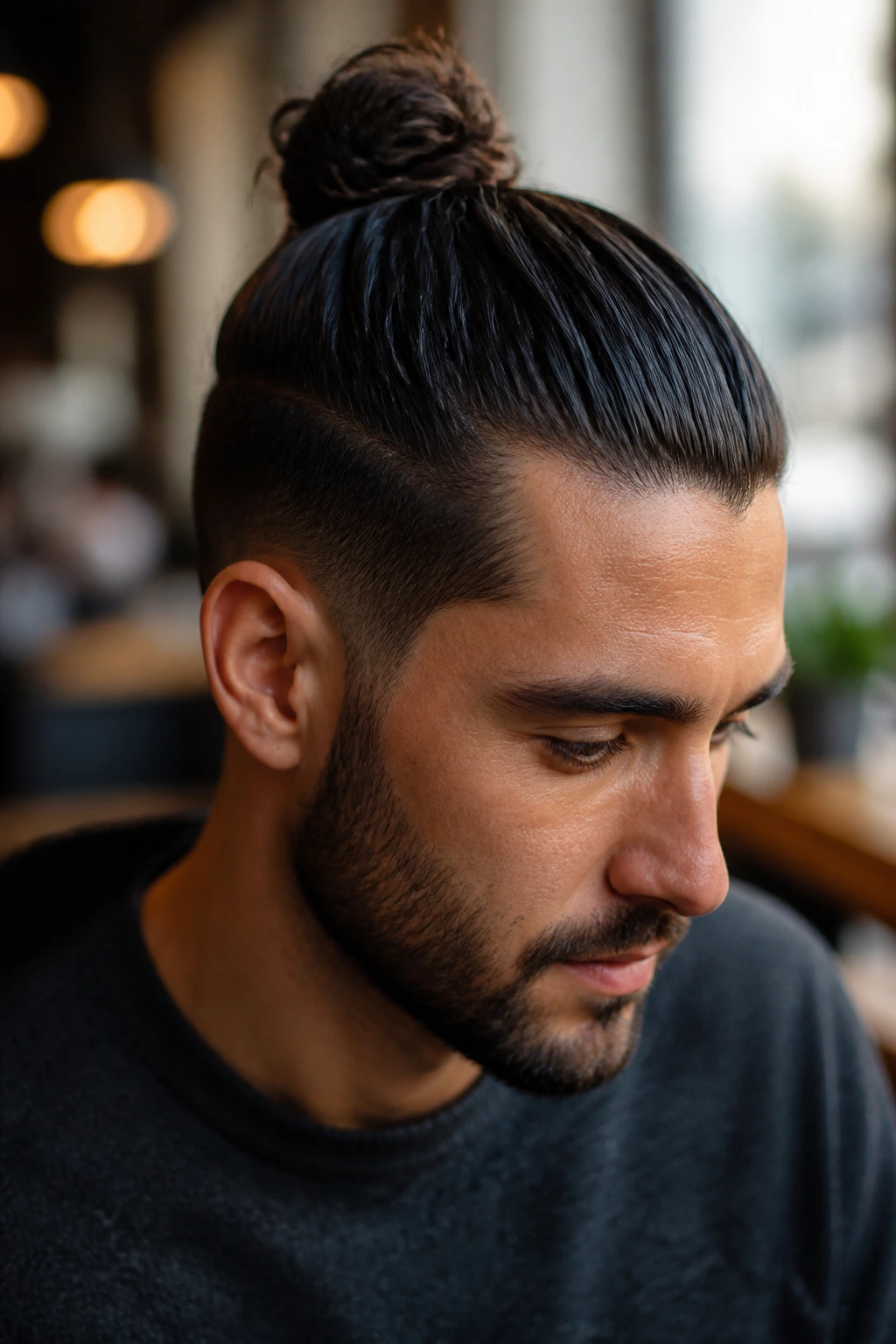
The classic high top knot sits near the crown and keeps the weight off the neck. It’s the version most guys picture first, and for good reason: the lines are clean, the silhouette is direct, and it works whether your hair is dead straight or has a little bend to it. If you like a look that feels tidy without looking stiff, this is the easy starting point.
Keep the knot compact. A big, loose ball at the top can throw the proportions off, especially if your sides are still fairly full. Ask your barber to keep the bulk controlled around the sides and back, but don’t chase an ultra-short cut unless you want the contrast to read hard and modern. A medium knot with some texture on top looks more natural than one cranked tight like a handle.
Best for: oval, square, and round faces that need a bit of vertical lift.
Style note: use a snag-free elastic and wrap it twice if your hair is thick, three times if it’s finer and needs more grip.
Small detail that matters: leave a few millimeters of slack at the crown so the knot doesn’t pull and split the hairline by the end of the day.
2. Low Top Knot
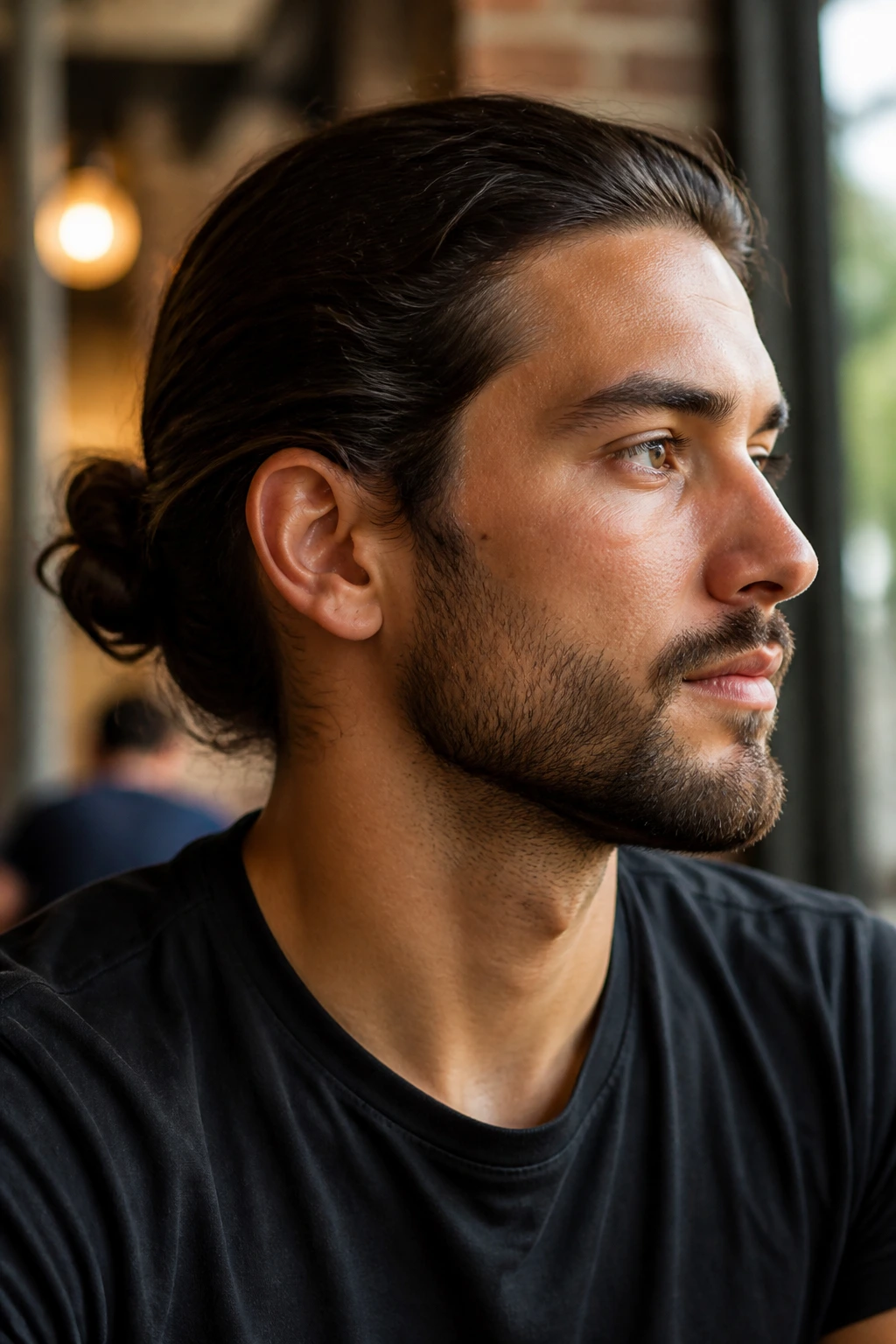
A low top knot sits closer to the upper nape than the crown, and that one change makes the whole look feel softer. It’s less aggressive, less “look at my haircut,” and more “I tied my hair back because I know what I’m doing.” On longer hair, it also keeps the knot from ballooning into something awkwardly large.
This version is good if your face is already long or narrow. A high knot can make those features look even longer; a low knot keeps the balance steadier. It also suits hair that’s thick enough to create bulk but not so heavy that it wants to spring upward. Think of it as the grown-up version of a knot — not boring, just calmer.
If you wear hats a lot, this is the knot that survives them best. It leaves less pressure at the crown and usually flattens out more gracefully once the hat comes off. Clean, practical, and honestly underrated.
3. Messy Top Knot
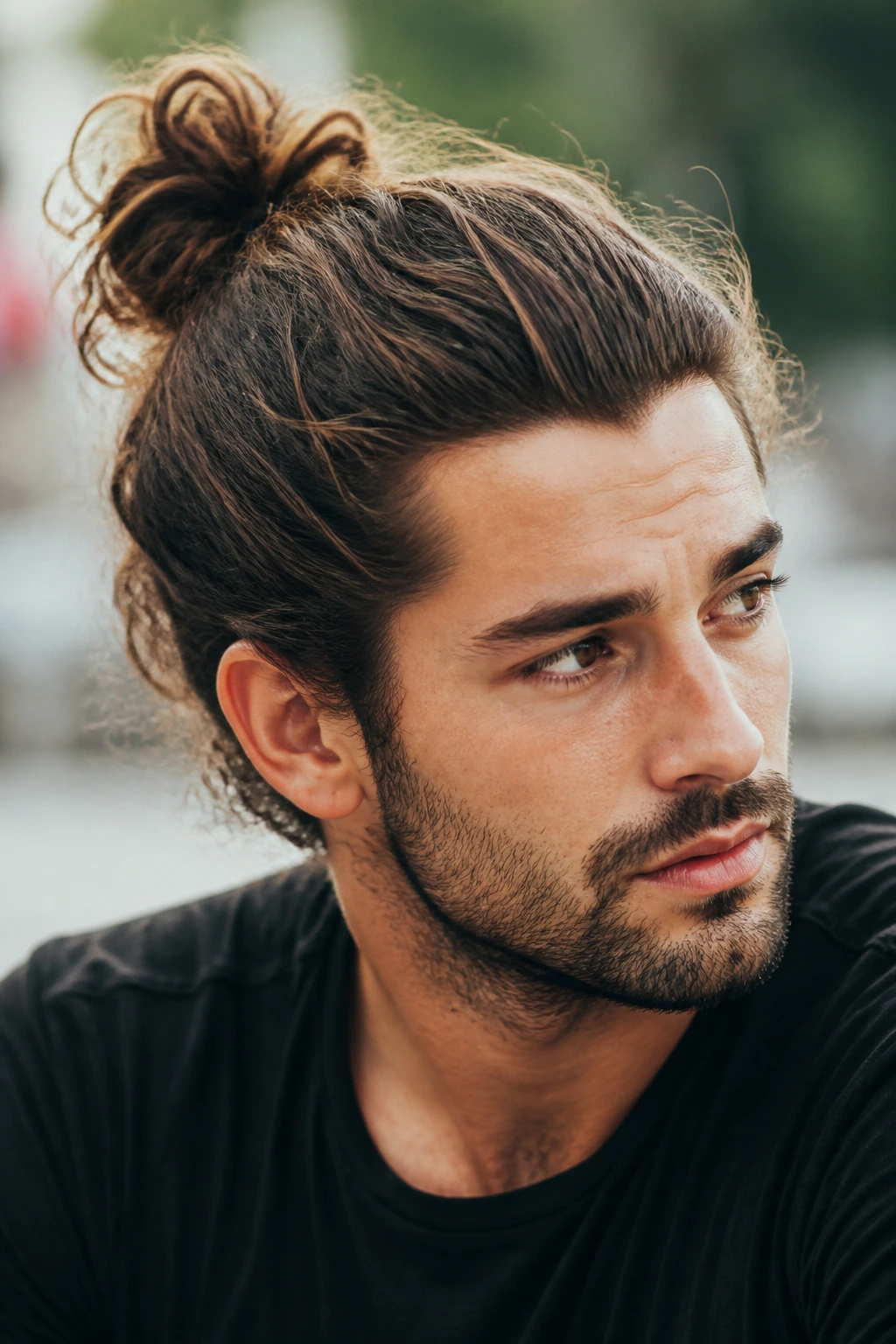
A messy top knot works because it looks like you didn’t spend twenty minutes trying to make it look casual. That sounds obvious, but most messy knots fail because the mess is too arranged. The trick is to keep some texture at the front and sides, then twist the gathered hair loosely instead of winding it into a perfect loop.
Use a matte cream, light paste, or a few sprays of sea salt spray on damp hair. Then rough-dry it with your fingers before tying it up. If the knot is too polished, the whole style loses the point. You want a little unevenness — a few loose ends, a bit of lift near the front, maybe one side sitting lower than the other.
This style is strongest on wavy hair, but straight hair can fake it if you add enough texture first. Avoid heavy gel. It turns the knot into a helmet.
4. Undercut Top Knot
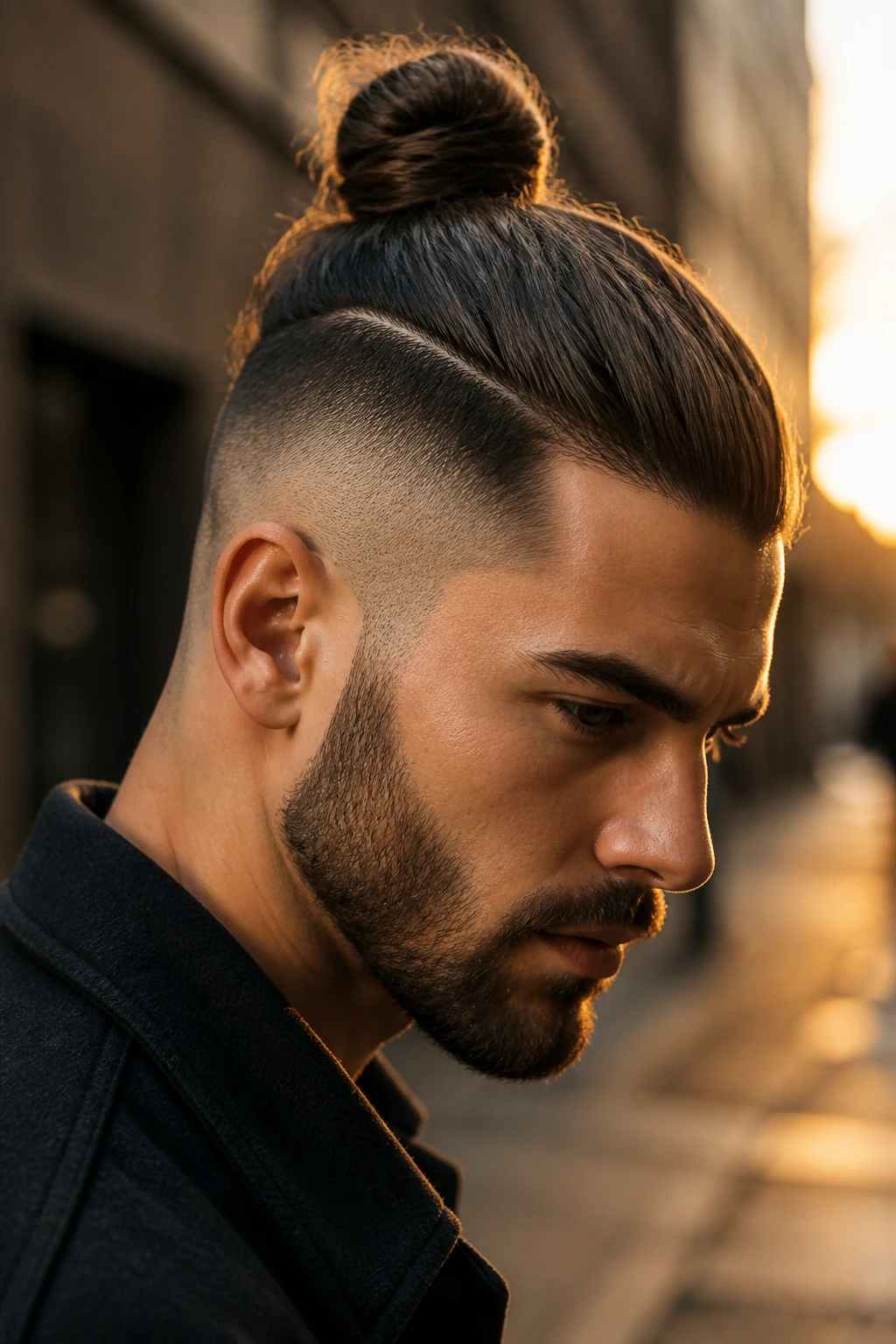
The undercut top knot is blunt about what it wants: contrast. Long hair on top, clipped-down sides, and a knot that sits cleanly above the break between the two lengths. The result is sharp, almost graphic, and it gives the knot a lot more presence than a softer cut would.
If you like a style that reads quickly from across the room, this is one of the strongest options in the whole lineup. It also makes thick hair easier to manage because the bulk has somewhere to go instead of puffing out around the ears. That said, the undercut can look harsh if the knot itself is tiny. You need enough length up top to justify the sides.
Ask your barber for a clear disconnect, then keep the neckline trimmed every couple of weeks so the shape doesn’t blur. The undercut is all about lines. Let them drift, and the whole thing starts to look accidental.
5. Fade Top Knot
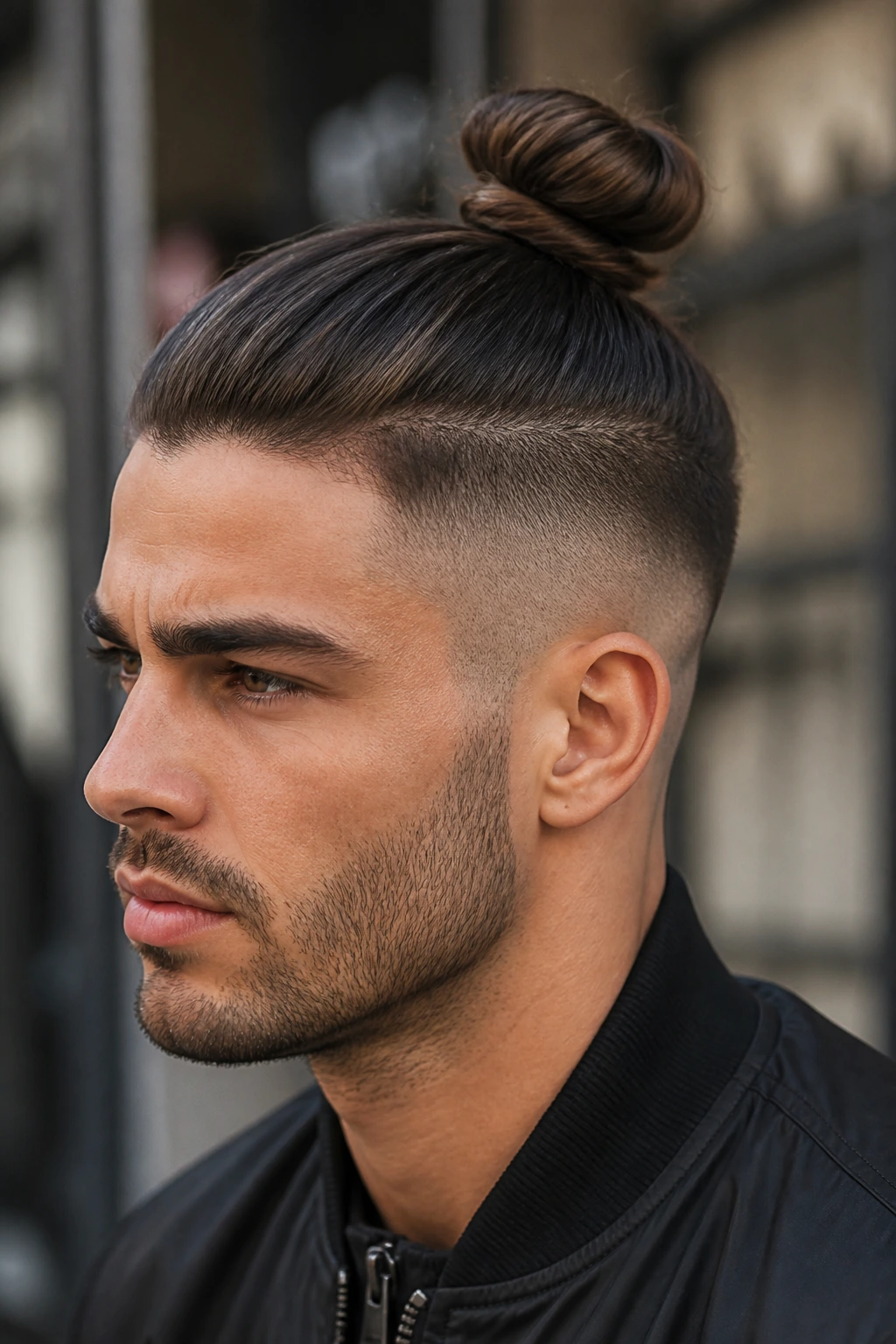
A fade top knot keeps the sides clean without making them look severed from the top. Skin fades, low fades, and mid fades all change the vibe a little, but the core idea stays the same: the knot gets a crisp frame and the haircut keeps some movement around the edges. It’s a safer choice than a hard undercut if you want more flexibility.
The fade also plays nicely with thicker hair because it removes visual weight around the temples and above the ears. That makes the knot itself feel lighter. On a busy day, that matters. The style stays neat even when the top loosens a little.
I like this version for guys who want structure without a brutal contrast. It pairs well with a clean shave or a short beard, and it can lean sporty or polished depending on whether you finish it with matte paste or a bit of shine.
6. Half-Up Top Knot
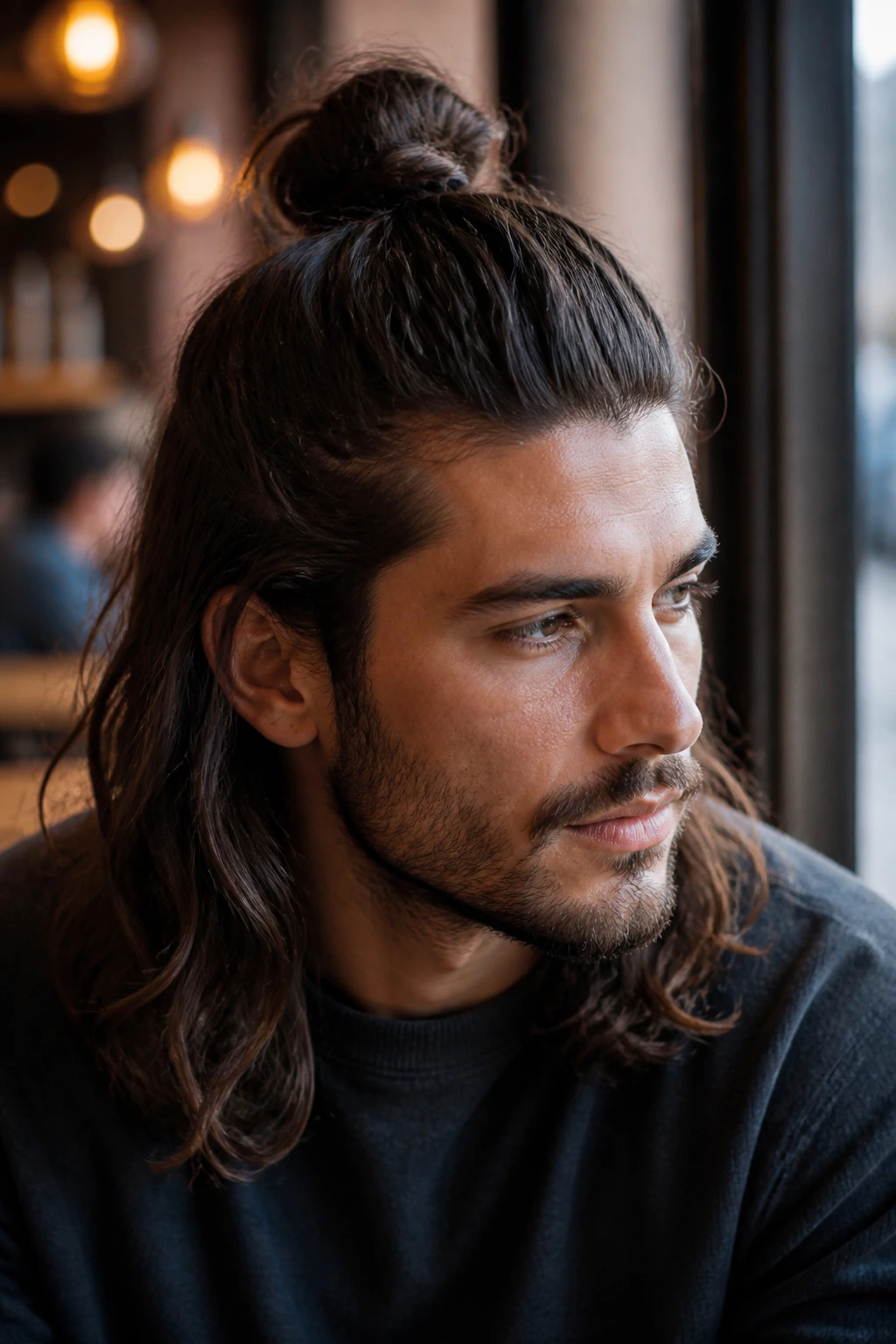
The half-up top knot is the answer when your hair is long enough to gather but not long enough to live fully tied back. Only the top section goes into the knot; the rest hangs down and does a lot of the visual work. That’s what makes this look feel lighter than a full bun or full knot.
It’s especially good for layered cuts, because the loose lengths around the shoulders keep the style from looking too severe. If your hair has a natural wave, even better. The movement below the knot breaks up the shape and stops it from feeling too neat.
What I like here is the flexibility. You can wear it for a casual day, then tighten it a bit and smooth the sides if you need it to read sharper. If your hair is shoulder length and you’re still deciding whether to commit to a full knot, start here.
7. Braided Top Knot
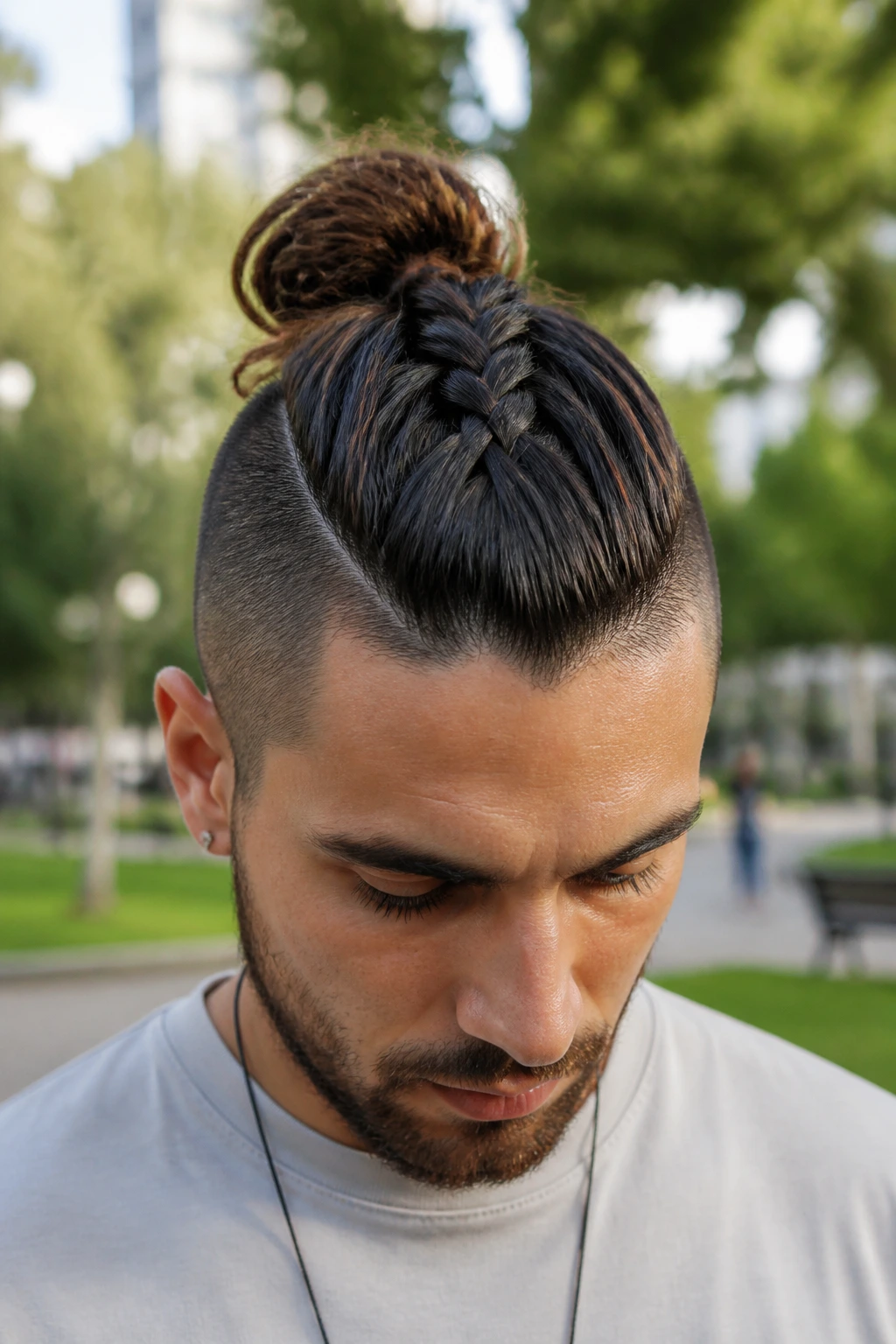
A braided top knot gives you built-in control before the hair even reaches the elastic. Braid the top section first, then coil or wrap it into a knot. The braid keeps short layers from slipping out, and it adds a detail that looks deliberate instead of decorative for the sake of it.
Why it holds so well
Braids compress the hair before the knot forms, so the whole style stays tighter through the day. That’s useful on layered or slippery hair that tends to unravel when it’s pulled straight back. It also helps if your hair is thick and wants to spread outward instead of staying compact.
For best results, keep the braid centered and don’t over-tighten the knot at the end. You want a clean ridge through the middle, not a rope that looks like it’s bracing against the elastic. Works well with a fade, works even better with a bit of beard length below it.
8. Curly Top Knot
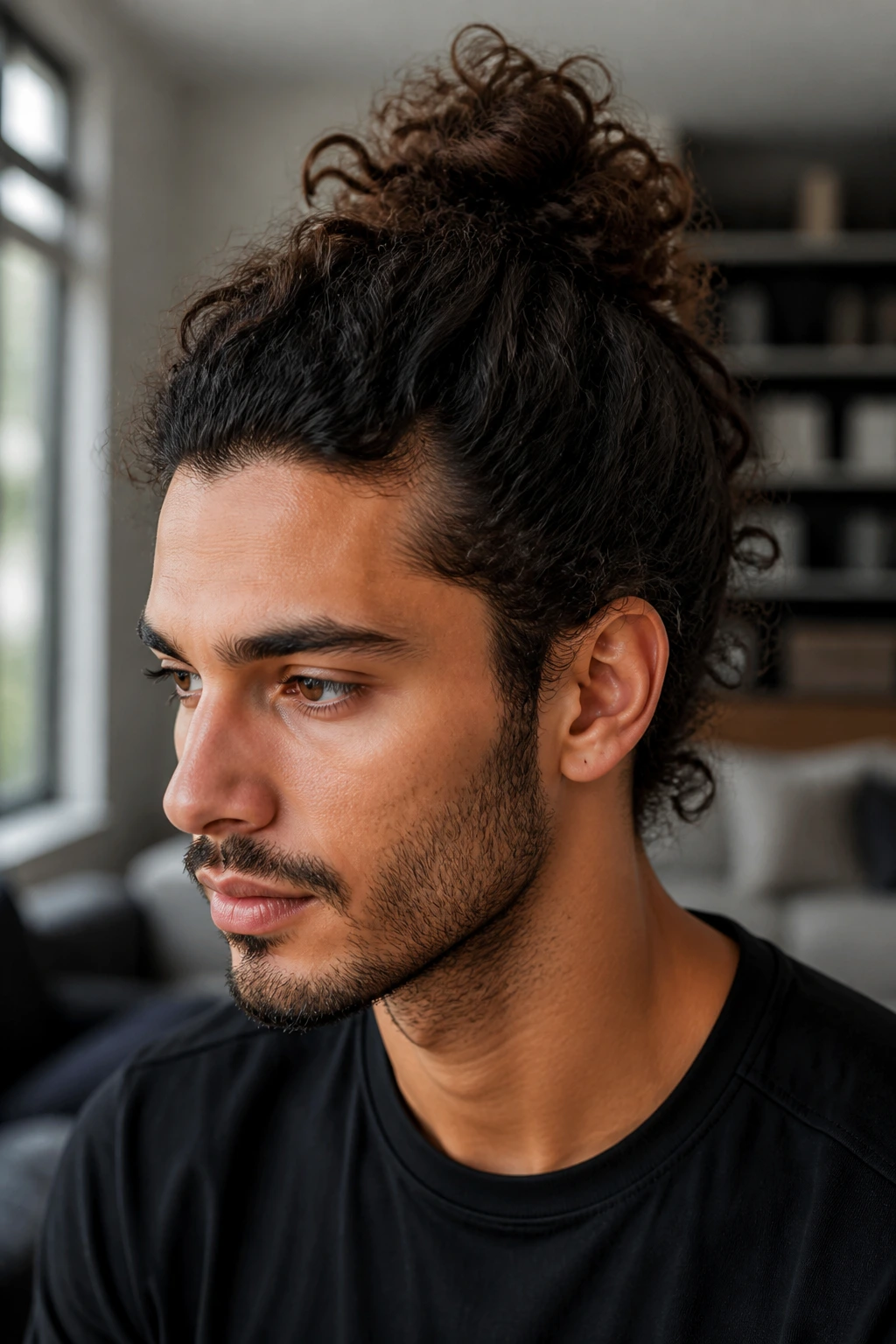
Curly hair changes the game. A curly top knot has built-in volume, so the knot itself looks fuller and more interesting without much effort. The challenge is not making the curls behave too much. If you smooth every bend out of them, you lose the thing that makes the style worth wearing.
Let the curls do their job. Use a moisturizing cream or light curl lotion on damp hair, gather the top section with your fingers, and avoid brushing the curls into submission. A wide-tooth comb is fine if you need a cleaner gather, but stop before the texture disappears. The ends can stick out a little. That’s part of the appeal.
This style works beautifully when the sides are trimmed tight enough to give the knot some space. Too much side volume and the whole shape gets fuzzy fast. A clean neckline helps too. Curly knots can look unruly in a good way, but they still need a border.
9. Dreadlock Top Knot
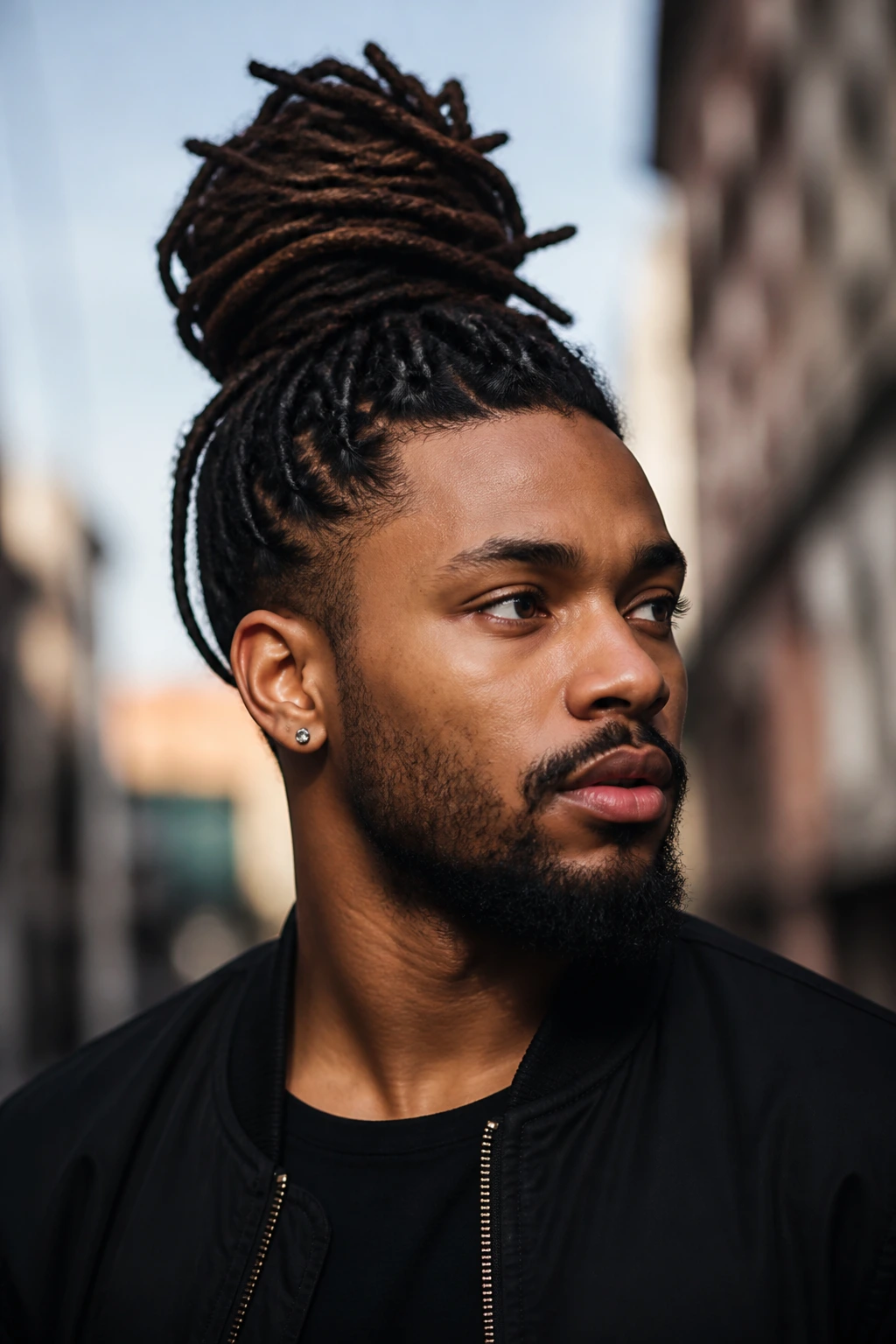
A dreadlock top knot is one of the boldest versions here, mostly because the knot has weight and shape before you even start wrapping it. Locs bundled at the crown or slightly behind it create a strong silhouette, and the style holds in a way loose hair never quite can. It’s practical, but it also has a lot of visual character.
The main thing is balance. A big stack of locs tied too high can pull hard on the scalp and look top-heavy. A slightly lower placement usually feels better and distributes the weight more evenly. If your locs are long, wrapping them around the base once before securing the tie can help keep the knot compact.
Keep the edges neat, keep the scalp cared for, and don’t overdo product on the roots. Locs already have presence. They don’t need extra shine to make the point.
10. Samurai Knot
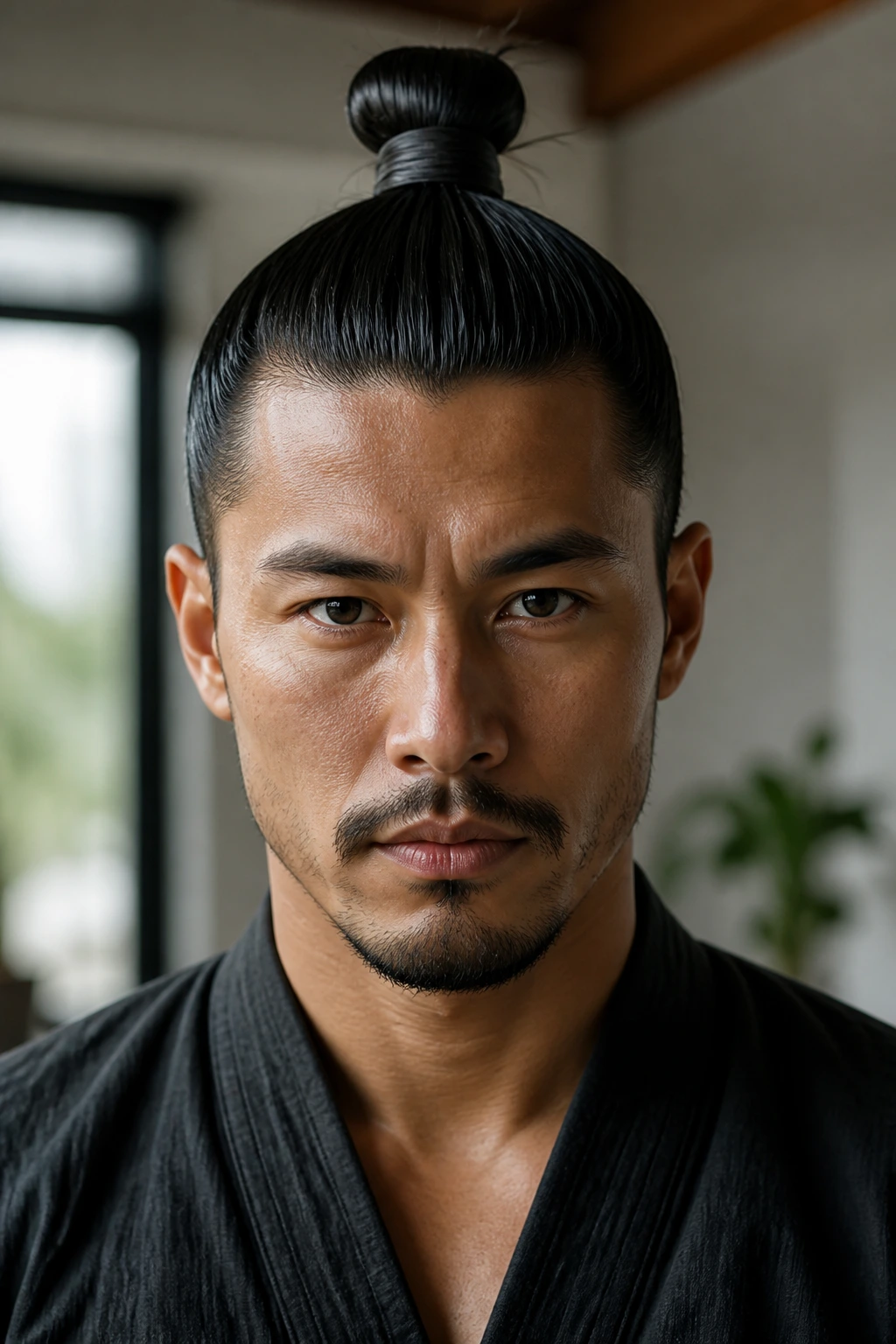
The samurai knot sits up high and feels a bit more disciplined than a standard top knot. It tends to be tighter, cleaner, and slightly more forward on the head, which gives it a sharp profile. The look borrows from the same upward pull but trims away the loose, casual edge.
This is the version I’d pick if I wanted the knot to read as intentional from the front and side. It looks especially strong when the hair is straight or only lightly wavy, because the cleaner strands make the shape easier to see. On very thick hair, you may need to split the top section first so the knot doesn’t balloon.
Keep the sides controlled. If they’re too fluffy, the samurai shape gets lost. The style wants a firm outline and a fairly clean finish — not shiny, necessarily, but neat enough that the knot looks placed rather than piled.
11. Slicked-Back Top Knot
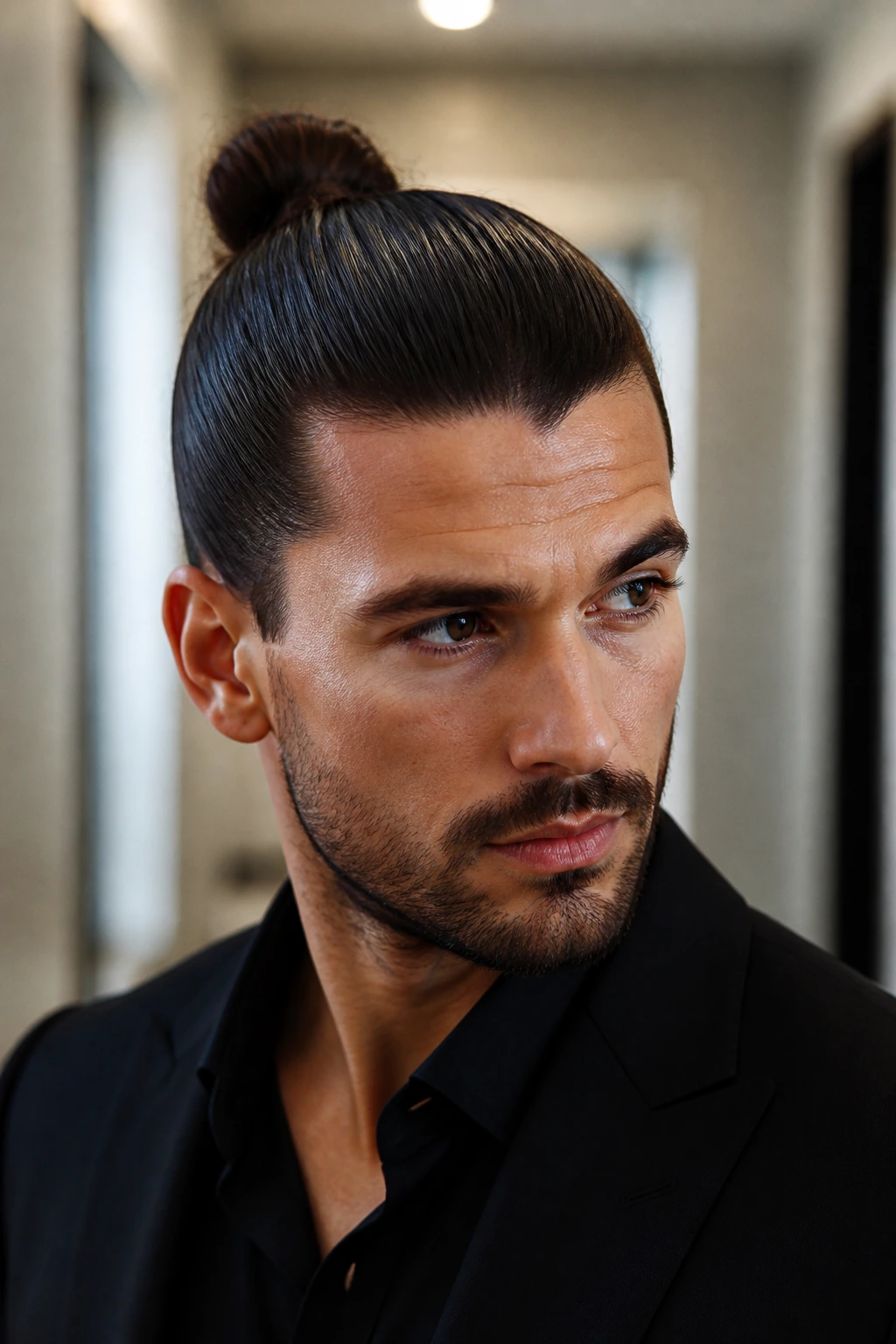
A slicked-back top knot starts before the elastic even comes into play. You push the hair back with a comb and a little product, then gather it into the knot so the front stays smooth and the hairline stays visible. The look is polished, but not in a fussy way.
It works best when you want the knot to sit within a cleaner outfit or a more formal setting. A little shine is fine. Too much, and the style turns greasy instead of controlled. Pomade or a light gel usually does the job; I’d avoid anything that dries crunchy, because the knot needs to bend a little when you move.
This version is strongest on straight hair or hair that dries with a naturally flat front. If your hair springs up hard at the front, dampen it first and comb it back while it’s still cooperative. That little bit of discipline up front saves a lot of awkward flyaways later.
12. Textured Top Knot
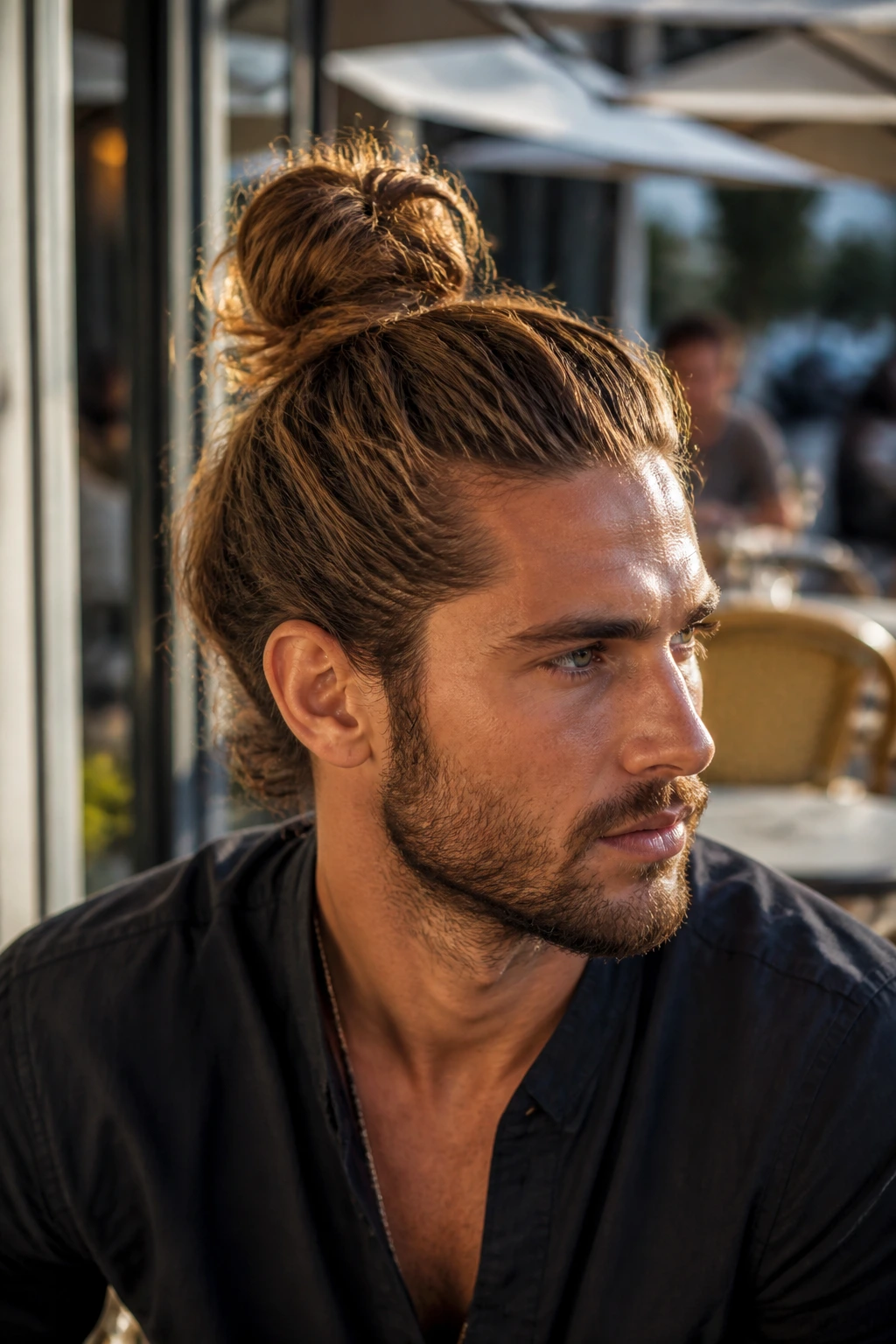
A textured top knot is the one I reach for when I want the knot to look like hair, not a shape from a styling chart. The top gets a little grit from sea salt spray, matte cream, or a dry paste, and the pieces stay visible instead of blending into one smooth lump. It feels relaxed, but there’s a method behind it.
The main advantage is movement. You can turn your head and the style doesn’t sit there like a frozen object. It shifts a little, which is what makes it look natural. Straight hair often needs the most help here, because it can go flat fast. Wavy hair usually takes to it with less effort.
Keep the knot loose enough that the texture still shows. Pulling it too tightly wipes out the piece-y look and turns the style back into something stiff. That’s the opposite of what you want.
13. Twisted Top Knot
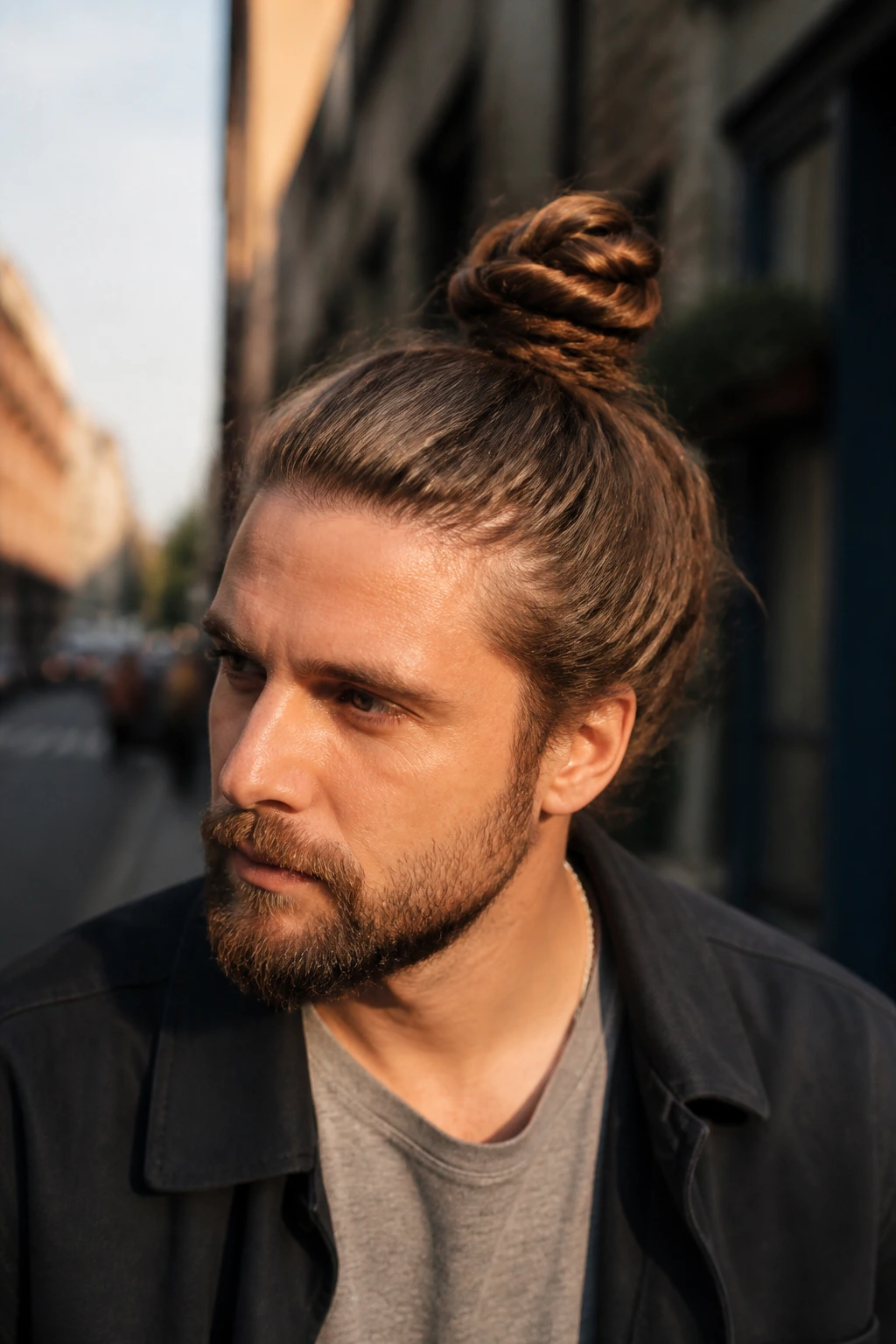
Why twist the hair before knotting it? Because twists tame slip. If your hair is layered, coarse, or just plain hard to keep in one place, a twisted top knot gives the strands a kind of built-in grip. The twist also creates a subtle rope effect that reads cleaner than a loose bunch of hair.
How to wear it
Split the gathered top section into two or three strands, twist them in the same direction, then wrap them around each other before securing the knot. The shape should feel controlled, not braided-flat. If the twist is too tight, the knot can look thin and strained. If it’s too loose, the whole thing gets bulky.
This style is great for guys who want something different without going full braid. It also holds up nicely during a long day because the twist locks the hair in place before the elastic ever gets involved. A small detail, but it matters.
14. Side-Part Top Knot
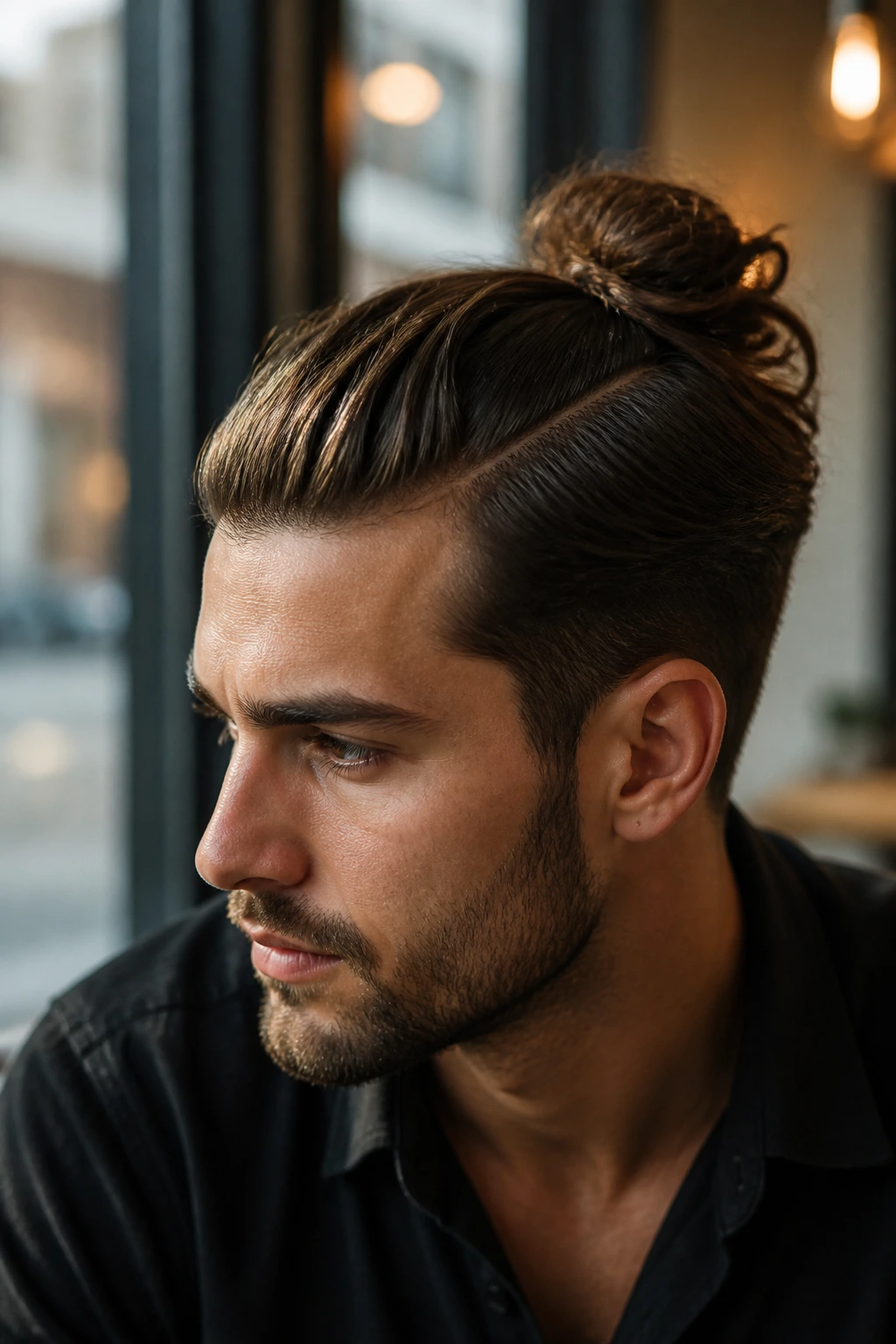
A side-part top knot gives the style a directional lean, and that single part line changes the mood fast. Instead of everything being pulled straight back, the hair is separated first, then gathered in a way that leaves one side slightly more defined. The result feels cleaner and a bit more styled.
This one is a good fit if you want the knot to work with the rest of a haircut instead of just sitting on top of it. The part can be soft or hard, shallow or deep. A hard part adds structure. A soft part keeps it more casual. Either way, the side line helps the knot look intentional, especially on medium-density hair.
It also flatters faces that need a little asymmetry. If your features are very even and balanced, a side part keeps the look from feeling too centered and flat. Small move. Big difference.
15. Asymmetrical Top Knot
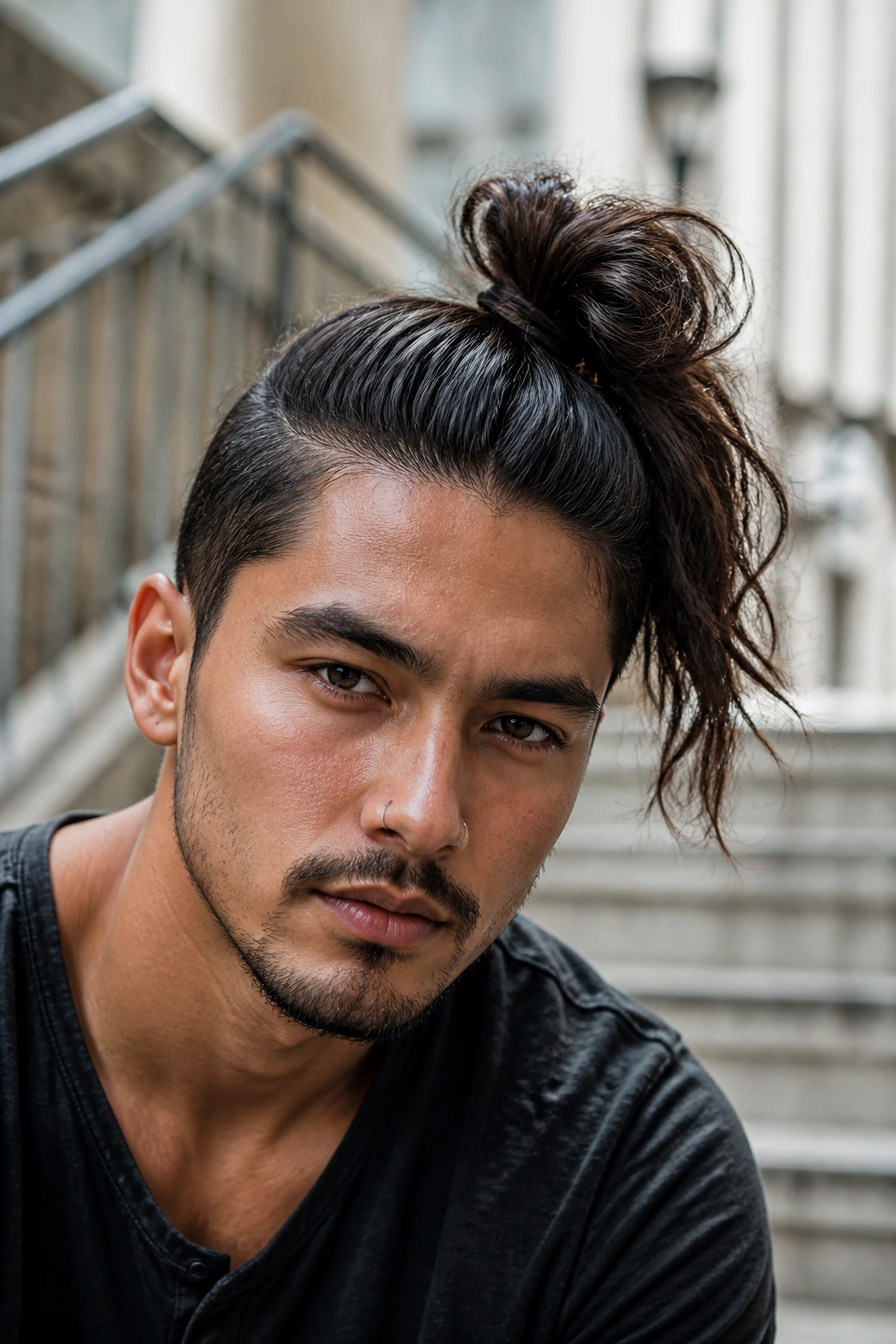
An asymmetrical top knot is the choice when you don’t want perfect symmetry, and that’s the whole point. The knot sits a little off-center or gathers more hair from one side, which gives the style movement before you even add texture. It’s not sloppy. It’s angled.
This version works best when the haircut around it supports the imbalance. A slightly uneven fade, a softer fringe, or layered hair all help. If everything else is rigid and the knot is the only loose element, the style can look like it went wrong instead of going artful. Keep one side tidier than the other and let the difference read on purpose.
I like this on wavy hair because the natural bend makes the offset feel less forced. It’s the kind of knot that looks better in motion than in a straight-on photo, which is saying something. Hair rarely behaves like a still life anyway.
16. Shaved-Sides Top Knot
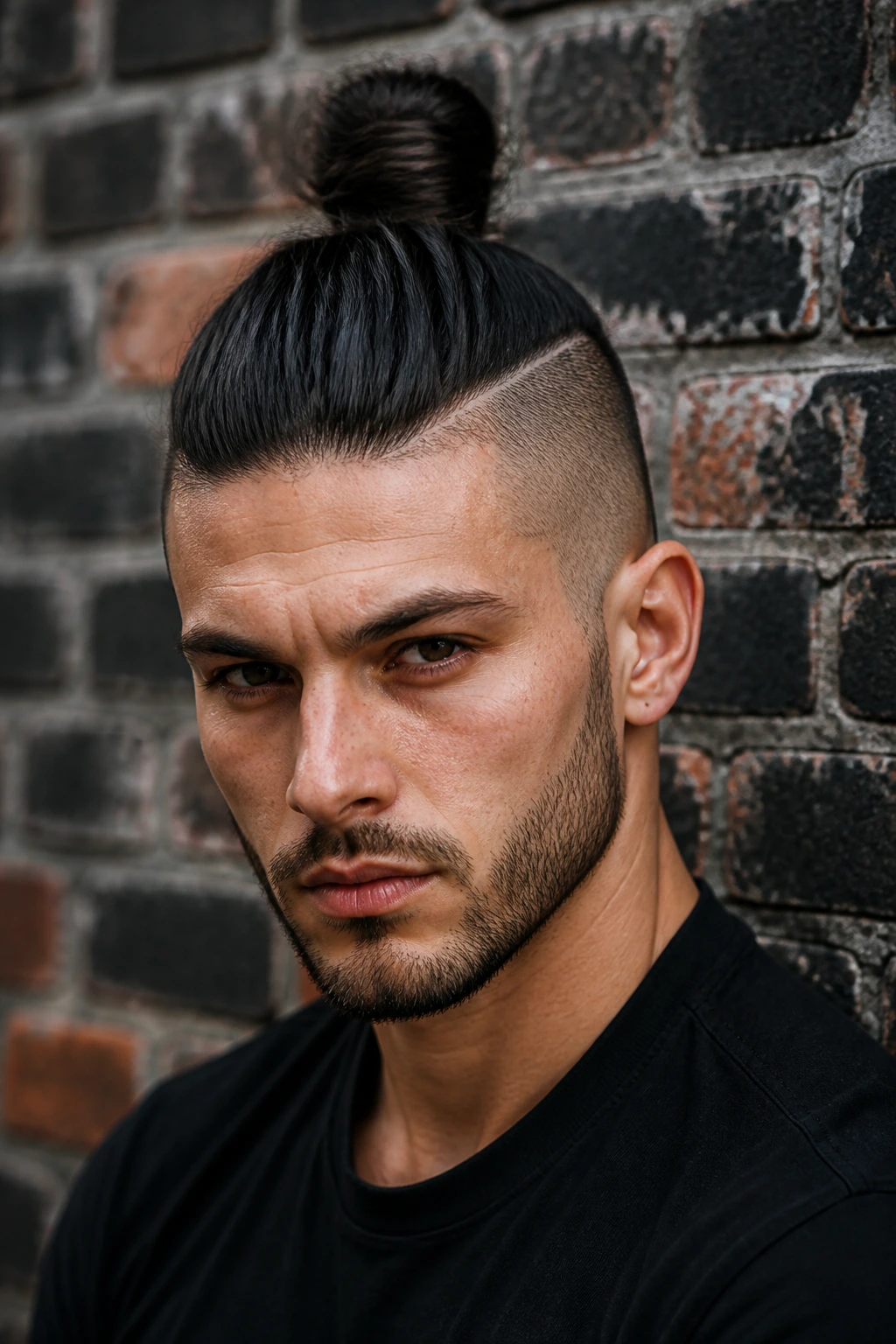
Shaved sides make the knot the entire story. There’s no visual buffer, no soft transition, no place for the eye to wander. It’s a high-contrast style, and if you like sharp outlines, this one lands hard in the best way. The knot itself can be small or large, but the sides stay ruthlessly clean.
Because the sides are bare or nearly bare, the top needs to be neat. A messy knot can work, but it has to be controlled messiness, not random flyaways everywhere. The look benefits from a regular cleanup around the ears and neckline. Miss that for too long and the style starts to lose its edge.
This cut also pairs well with strong facial hair. The beard and the knot can carry the weight together, which keeps the shaved sides from feeling too exposed. No half-measures here. The haircut wants conviction.
17. Beard-Balanced Knot
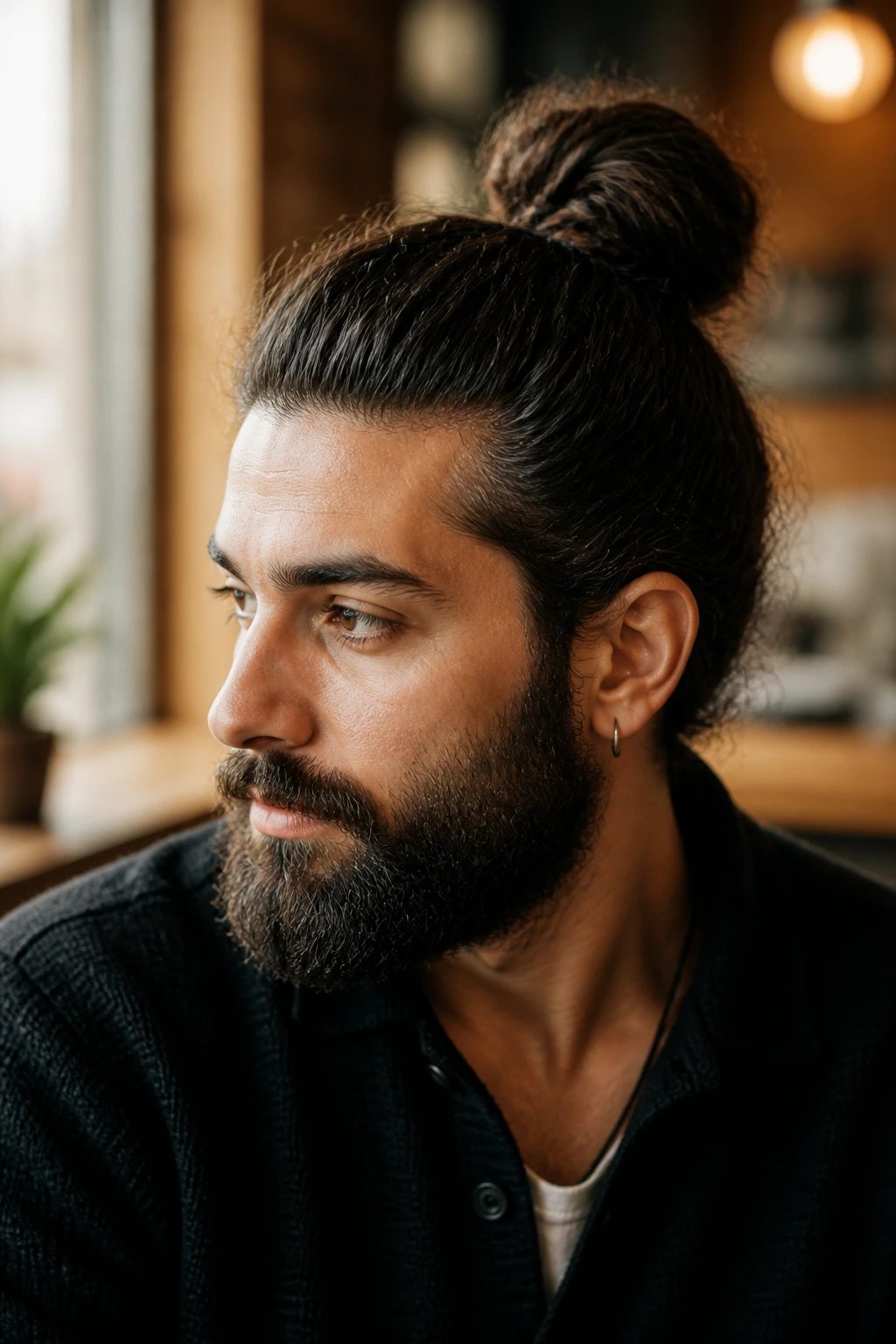
A beard-balanced knot is less about the knot alone and more about the whole silhouette from forehead to chin. The trick is making sure the knot and beard support each other instead of fighting for attention. If the knot is huge and the beard is huge, the middle can disappear. If both are too small, the style loses presence.
Keep the knot cleaner when the beard is fuller, and keep the beard shaped if the knot leans messy. That balance helps the face read well in profile. A low fade near the temples often helps too, because it makes the beard and knot feel connected without turning the whole thing into one block of hair.
This is one of those styles that gets better when the neckline and cheek lines stay maintained. The knot can be casual. The beard should not be wild. That’s the difference between rugged and unkempt.
18. Mini Top Knot
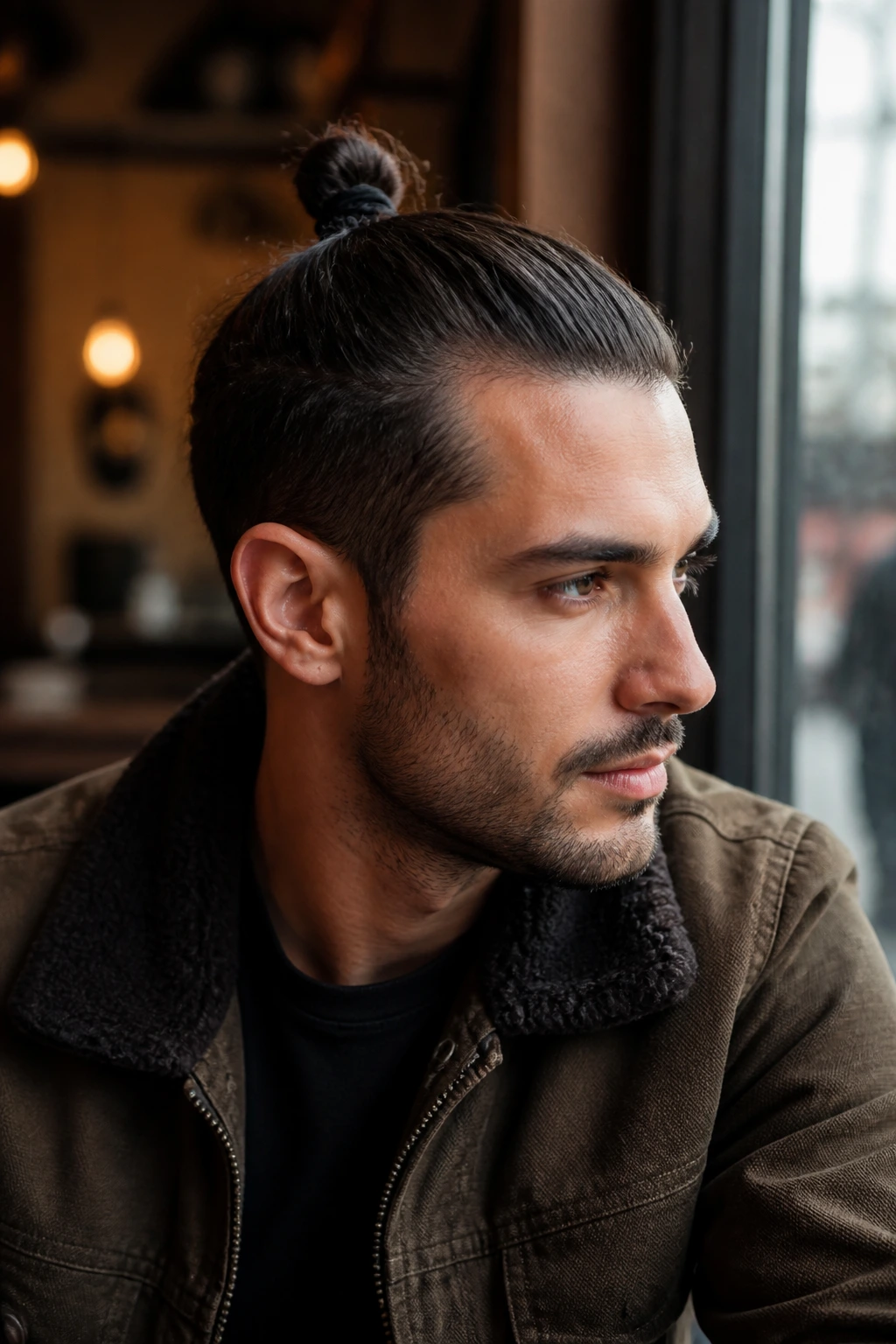
The mini top knot is for hair that’s long enough to gather, but only just. It’s a small knot, usually tighter and more compact, and it lets you keep some hair out of your eyes without pretending you’ve got shoulder-length locks. There’s a good honesty to it.
This style is especially useful during the awkward stage when your hair has passed the short-cut phase but hasn’t reached full knot territory. You gather the top section, tie only what you can, and leave the rest to do its thing. It doesn’t need to be dramatic. In fact, it works best when it stays modest.
Use a small elastic and don’t fight the hair if it refuses to hold a huge shape. Forcing too much length into too small a knot creates tension at the hairline. Better to keep it small and neat than to pretend it’s something it isn’t.
19. Wrapped Top Knot
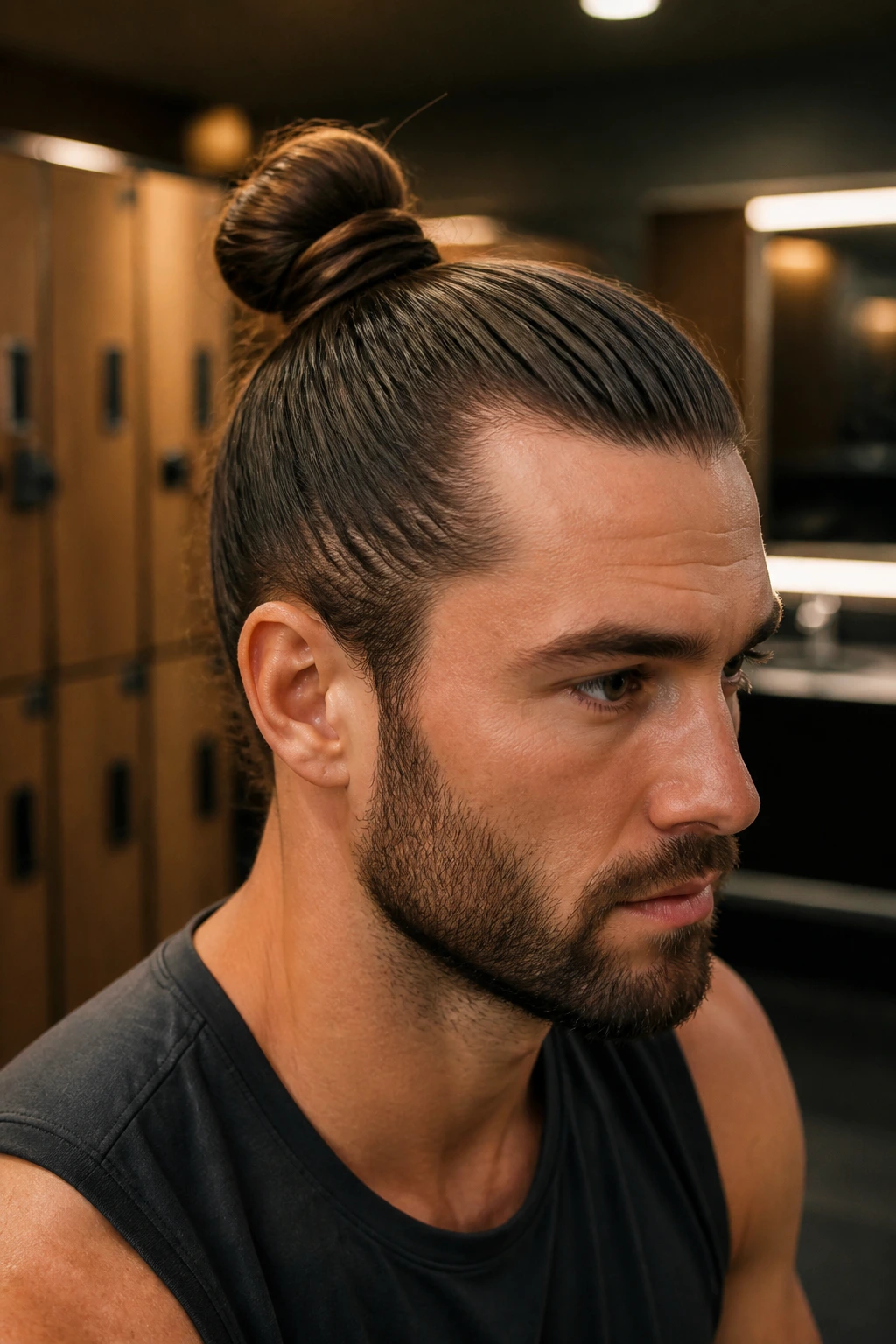
A wrapped top knot hides the elastic by taking a thin strand of hair and circling it around the base. That one move makes the style look much cleaner, and it’s useful when you want a more finished result without adding any extra product. The wrap can be neat and tucked or slightly loose, depending on how polished you want the style to feel.
It’s a small detail, but a good one. Visible hair ties are fine in a gym setting. For everything else, wrapping the base gives the knot a cleaner line and keeps the eye on the hair rather than the band. The key is securing the wrapped strand underneath or pinning it with a small bobby pin if the hair is too slippery.
Works especially well on medium to long hair with some density. Fine hair can do it too, but the wrap needs to be thin or it steals too much volume from the knot itself.
20. Wet-Look Top Knot
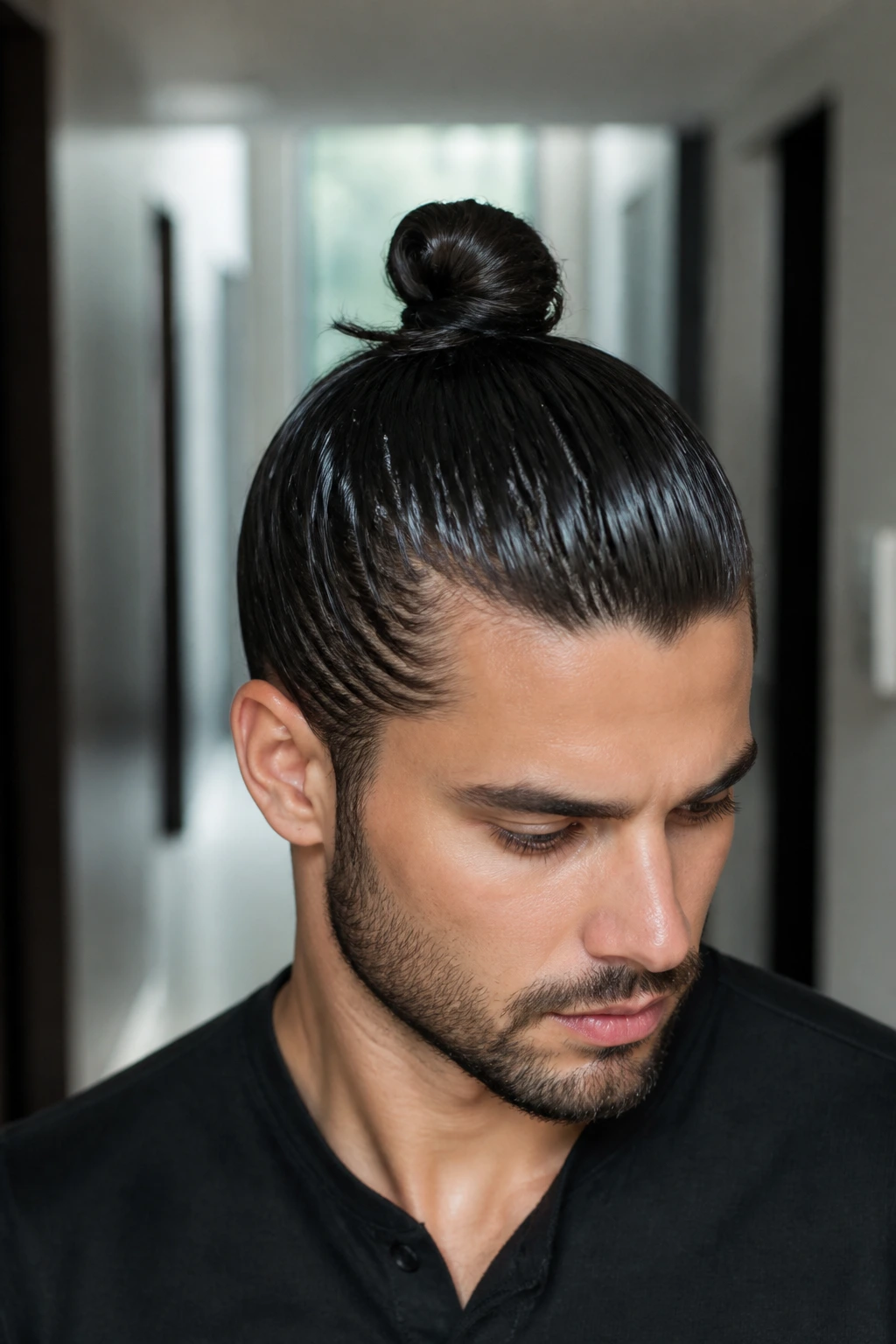
The wet-look top knot lives somewhere between styled and slick. You use a stronger product — usually gel or a glossing cream — to keep the front and sides looking damp and deliberate, then tie the top knot tight enough that the shine reads as part of the shape. It’s dramatic without being loud.
This one works best when the rest of the outfit is simple. A clean shirt, a sharp jacket, or even a plain T-shirt lets the hair do the visual work. If everything else is busy, the wet look can feel overworked. The shine should look controlled, not dripping.
I’d keep the product away from the knot itself if you want movement at the crown. Put most of the sheen on the front and sides, then let the knot have a little texture so it doesn’t become a slick lump. That contrast is what keeps the style from flattening out.
21. Fringe-Fall Top Knot
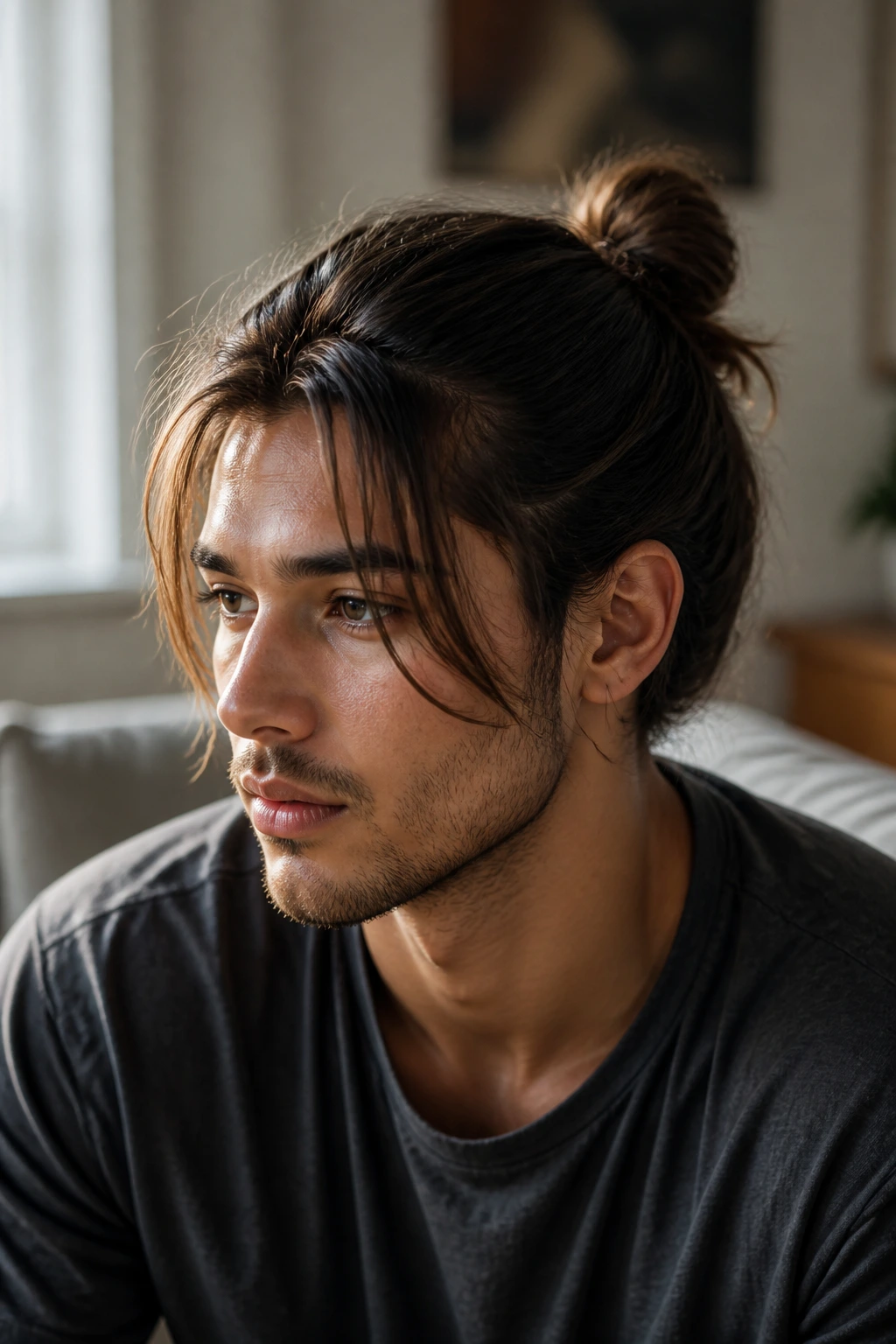
A fringe-fall top knot leaves a bit of hair loose at the front, which softens the forehead and keeps the style from looking too severe. It’s a useful trick if your hairline is high, your face is long, or you just prefer a less pulled-back feel. The fringe breaks the line in a good way.
The loose front pieces can be short and face-framing or longer and more obviously draped. Either way, they make the knot feel less rigid. This is one of the easiest ways to make a knot look less barbered and more lived-in without losing shape at the back.
Don’t drag the fringe too far into the knot. Leave enough slack that the front can fall naturally. If you force the front back too tightly, the style loses the point and the face gets opened up in a way that may not suit you.
22. Matte Top Knot
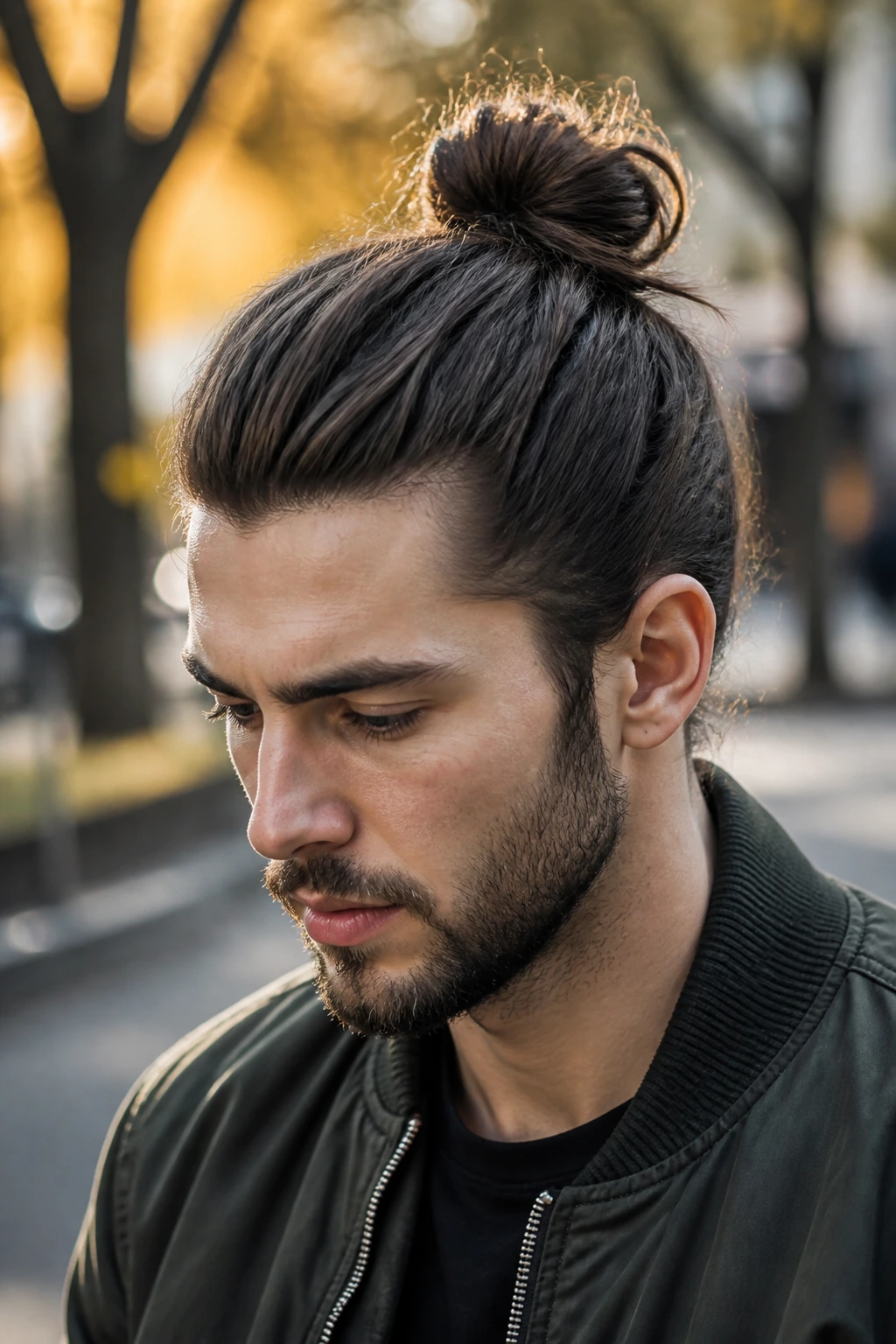
A matte top knot depends on texture and shape rather than shine. It’s the opposite of a glossy, slicked-back finish, and that’s why it works so well with casual clothes and everyday wear. Matte products show the movement in the hair, which is useful if you want the knot to feel less polished.
Use a small amount of matte paste or clay through dry or nearly dry hair before tying it up. The trick is to keep the strands separated just enough that the knot still has definition. If you overload the product, the knot turns dull in a bad way — heavy, dusty, and flat.
This is one of the best choices for thick hair, because matte product helps tame the bulk without making everything shiny. It also holds up well on second-day hair, which is where a lot of good knots actually happen.
23. Gym-Ready Top Knot
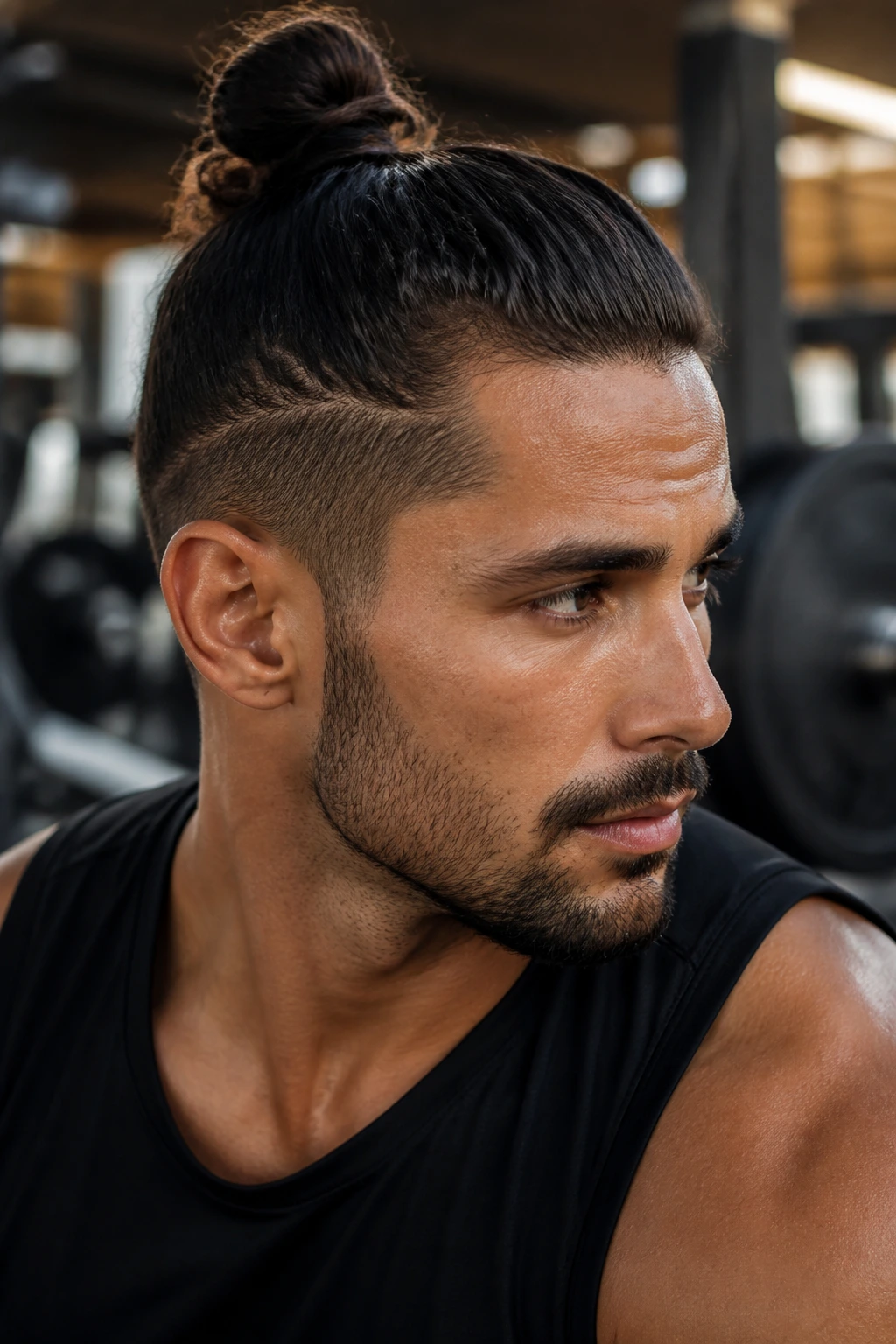
A gym-ready top knot is built for function first. It should stay put, keep sweat off your neck, and not fall apart when you’re moving fast or lying on a bench. The shape is usually compact and slightly higher than a relaxed everyday knot so it stays away from the collar and doesn’t bounce.
A no-slip elastic matters here. So does a tie that isn’t too tight. If you crank it down, your scalp will complain halfway through the workout. If you tie it too loose, you’ll spend more time adjusting it than lifting. Find the middle ground and keep a spare tie in your bag because the cheap ones snap at the worst possible moment.
Skip heavy product if you know you’re going to sweat. A little control spray is enough. Anything more and the knot can get sticky once the heat kicks in.
24. Office-Ready Knot
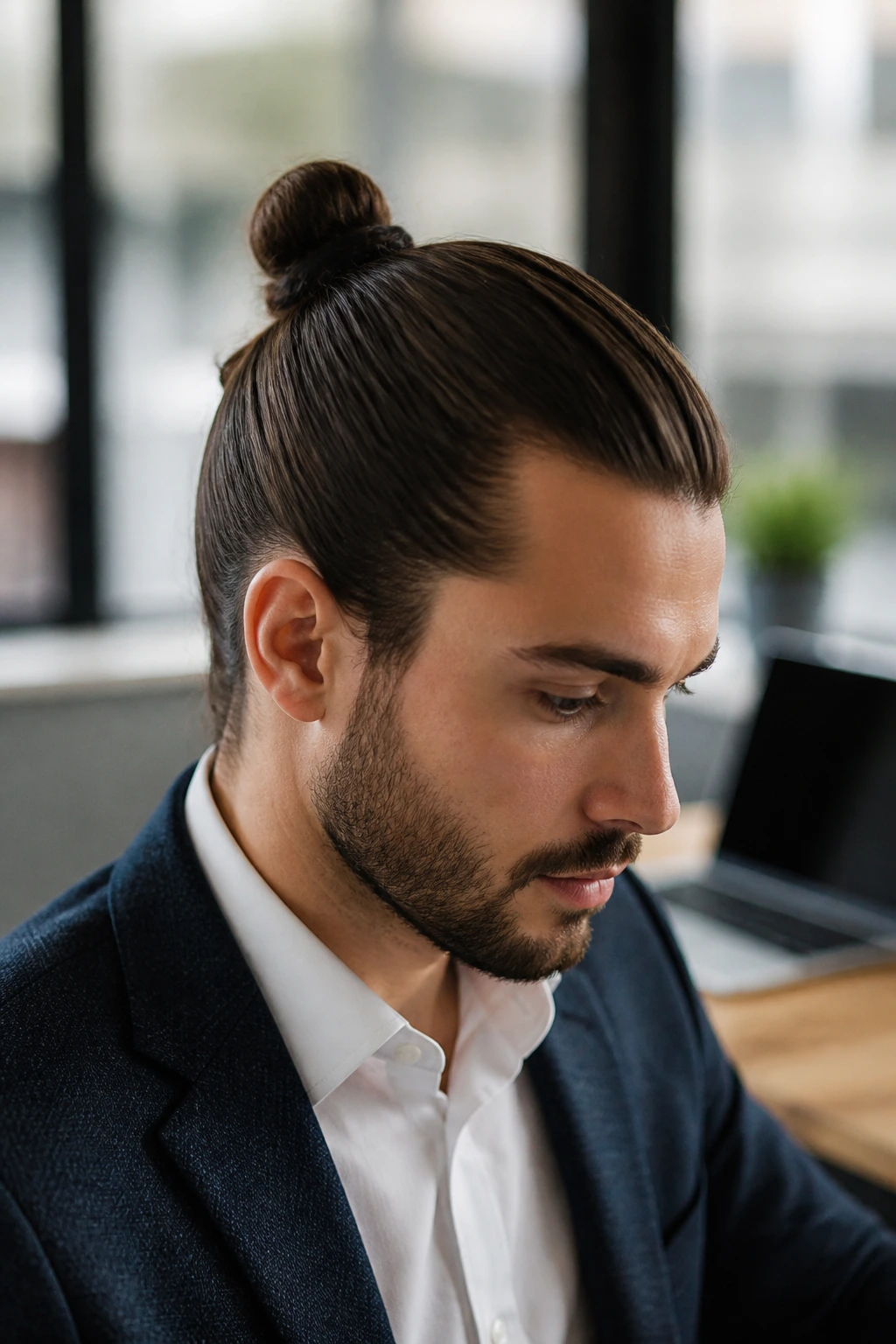
An office-ready knot is neat enough to look intentional but not so styled that it feels like a statement piece. Clean sides, a compact knot, and a controlled hairline do most of the work. If you’re wearing it with a collared shirt or blazer, the style should sit quietly and hold its shape.
What makes this version work is restraint. You do not need a glossy finish or a dramatic fade. In fact, too much contrast can make the style feel louder than you want in a work setting. A taper, low fade, or simply tidy length around the ears often does enough.
A little bit of smoothing cream on the front can help if your hair frizzes in dry air. Then stop. The knot should look maintained, not engineered.
25. Boho Loose Knot
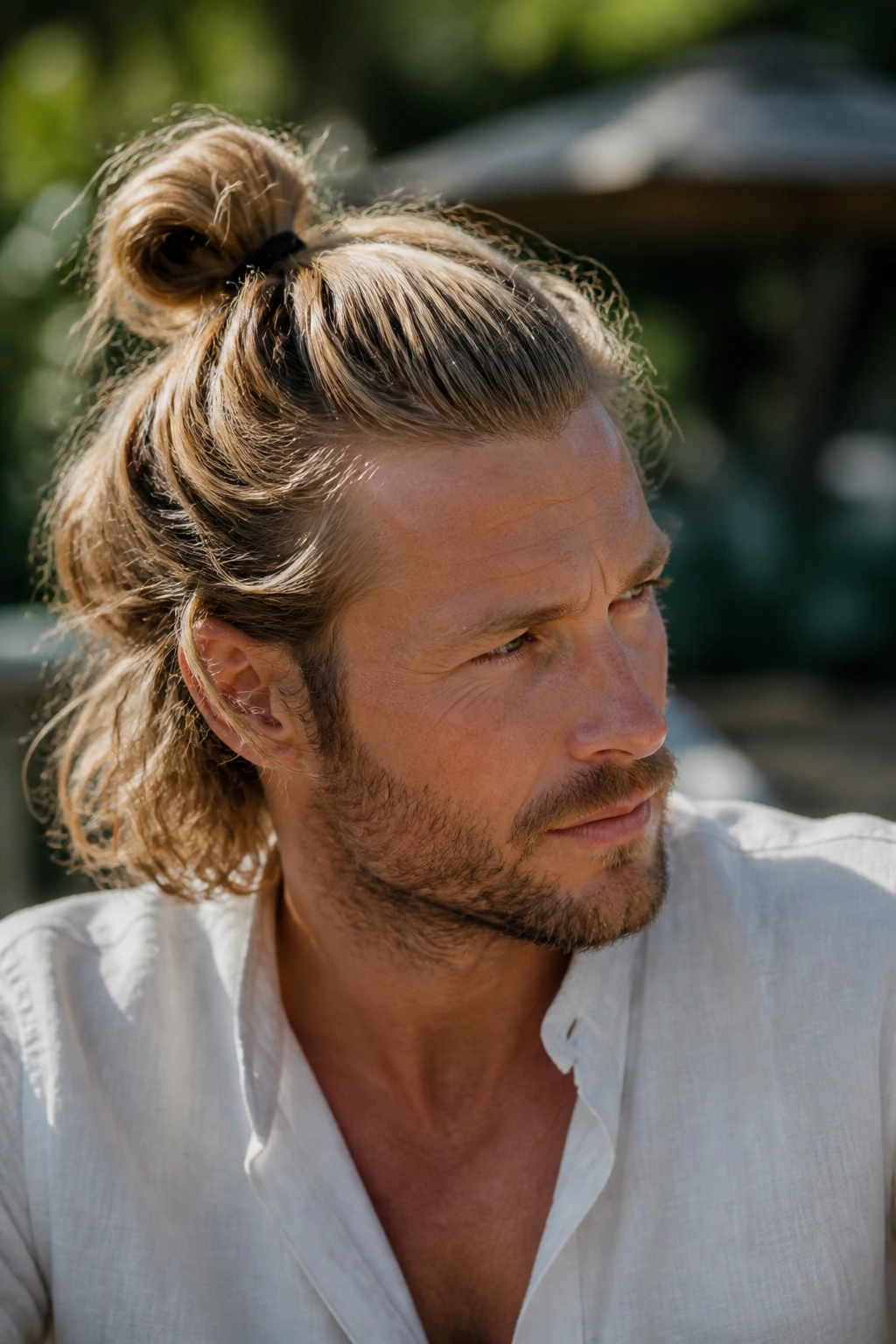
The boho loose knot is the version that leans into movement, flyaways, and softer lines. It suits shoulder-length hair that isn’t quite ready for a tight, structured knot, and it can look especially good when the hair has natural bend or a bit of wave. There’s a laid-back confidence to it.
This is not the knot for guys who want precision. It’s for guys who like a little room in the shape. The base can be loose, the ends can stick out, and the knot can sit a little off-center without ruining the look. If anything, that looseness is the point.
Use a touch of cream or leave-in conditioner so the hair stays pliable. Overstyling kills it fast. The style should look like it settled into place, not like it was forced there.
26. Double-Twist Knot
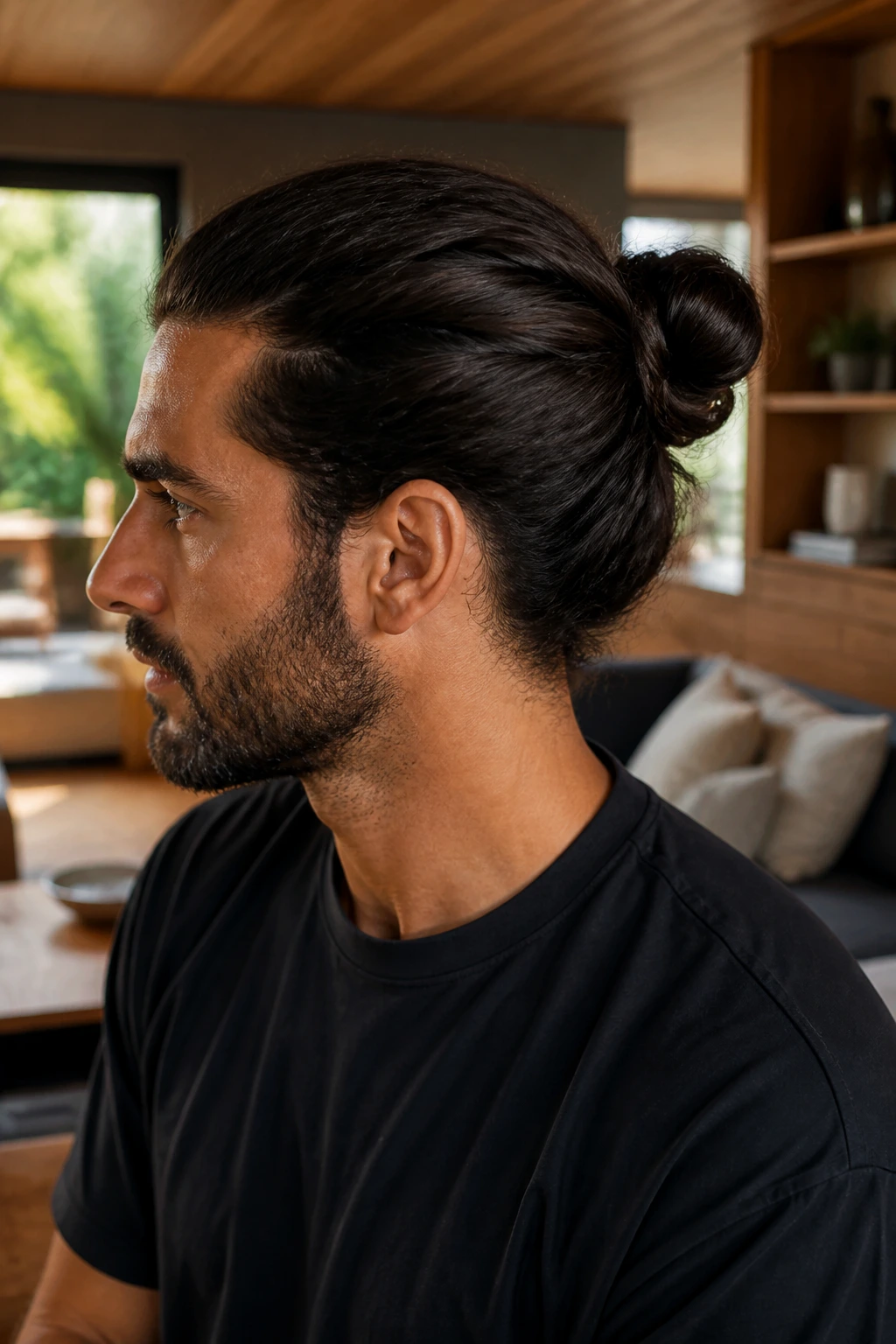
A double-twist knot splits the gathered hair into two sections, twists each one, then wraps them together into a knot. It sounds fussy, but the result is tidy and secure, especially on thick or slippery hair that won’t stay where you put it. The twists give the knot body without making it too puffy.
Why bother? Because the two-twist method holds shape better than a single loose wrap on a lot of hair types. It also creates subtle ridges that catch the eye in a better way than a smooth lump. That texture matters if you want the knot to feel dimensional rather than flat.
This style works nicely when you want a knot that looks a little more engineered without being slick. It’s a strong middle ground between casual and polished. Good for medium-long hair. Better for thick hair.
27. Line-Up Knot
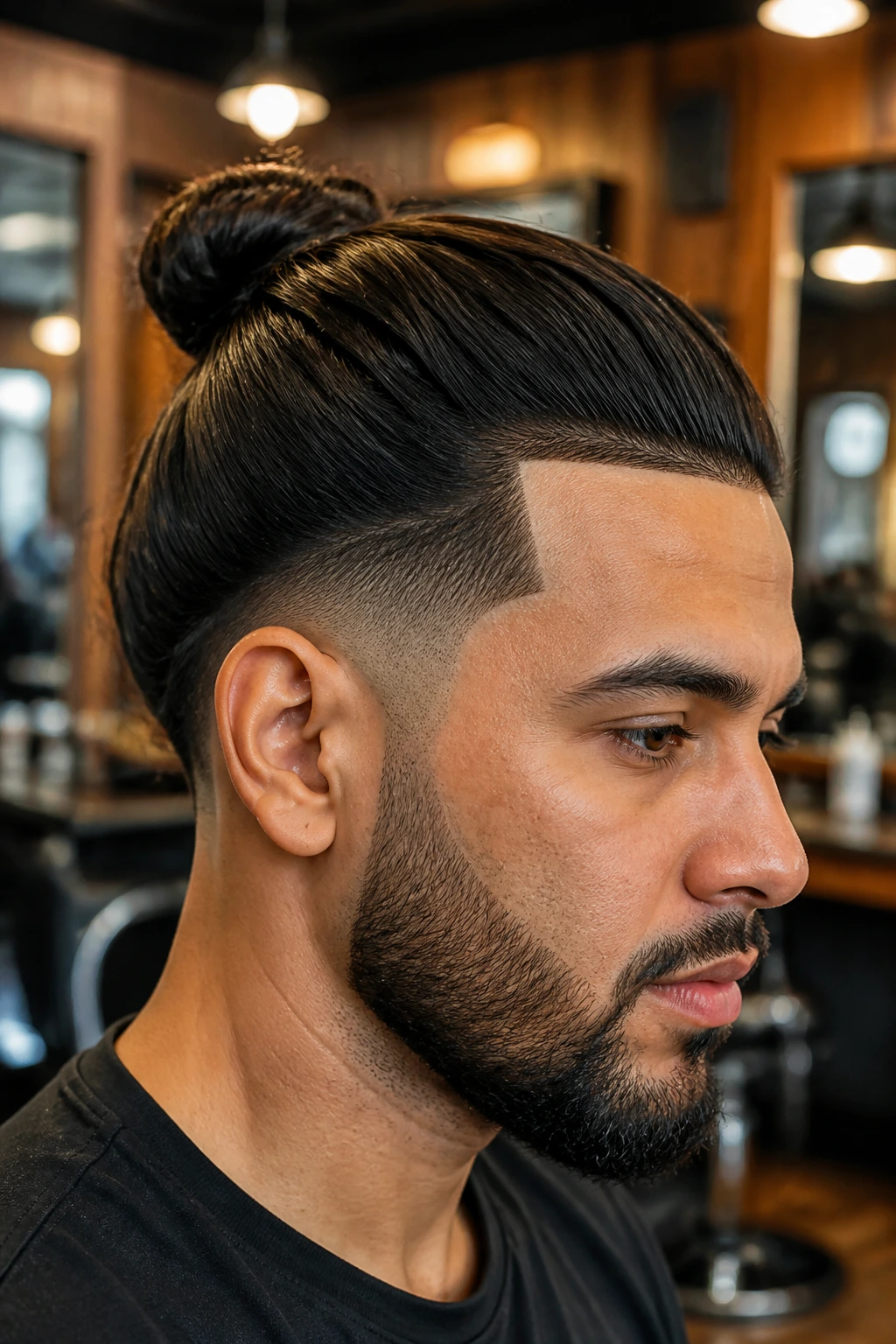
A line-up knot combines the knot itself with sharp edges at the temples, forehead, and sometimes the sideburns. The haircut does a lot of the visual framing here, which is why the knot can stay relatively simple. The edges give the whole style a crisp outline.
This look is strong when you want the knot to sit inside a sharper haircut rather than float above it. The line-up should be clean, but not cartoonish. A skilled barber will soften the harshness just enough so it looks sharp in person and in photos. If the edges are too square, the style can start to feel heavy.
Keep the knot neat so it doesn’t compete with the haircut’s geometry. The line-up is the frame. The knot is the subject.
28. Editorial Top Knot
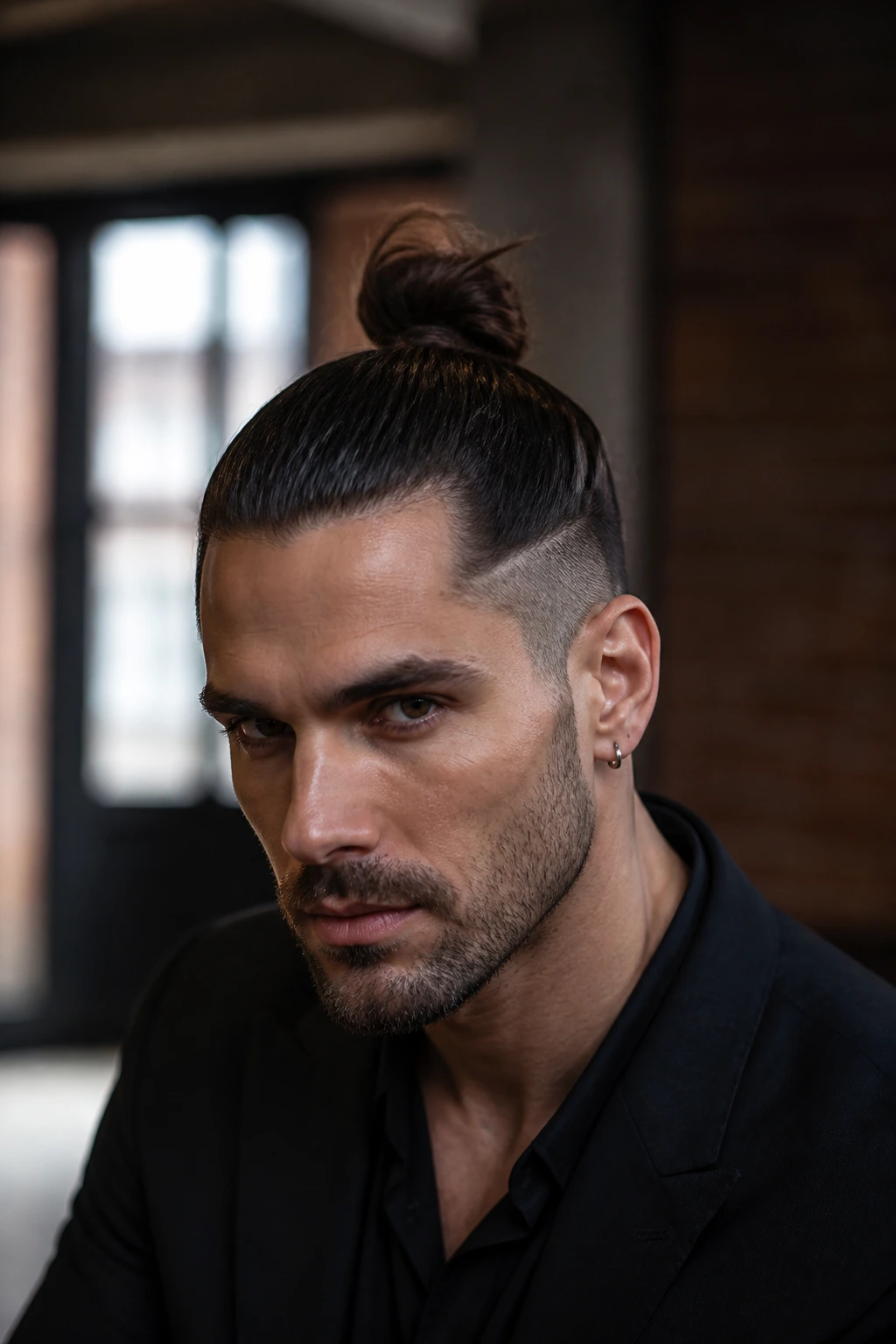
An editorial top knot is the version that feels like it belongs on a mood board: controlled, slightly dramatic, and very aware of its own shape. It’s usually tighter, cleaner, and more geometric than a casual knot, with the hair arranged in a way that shows the head shape on purpose.
This style asks for confidence and decent length on top. You want enough hair to build a shape, but not so much that it slumps into a bun. Keep the sides tidy, the front smooth, and the knot placed with intention. The angle matters more than in most other versions.
I like this when the rest of the cut is minimal. Sharp clothes, clean lines, not much extra fluff. Let the knot carry the style instead of loading on accessories or heavy product.
29. Viking Knot
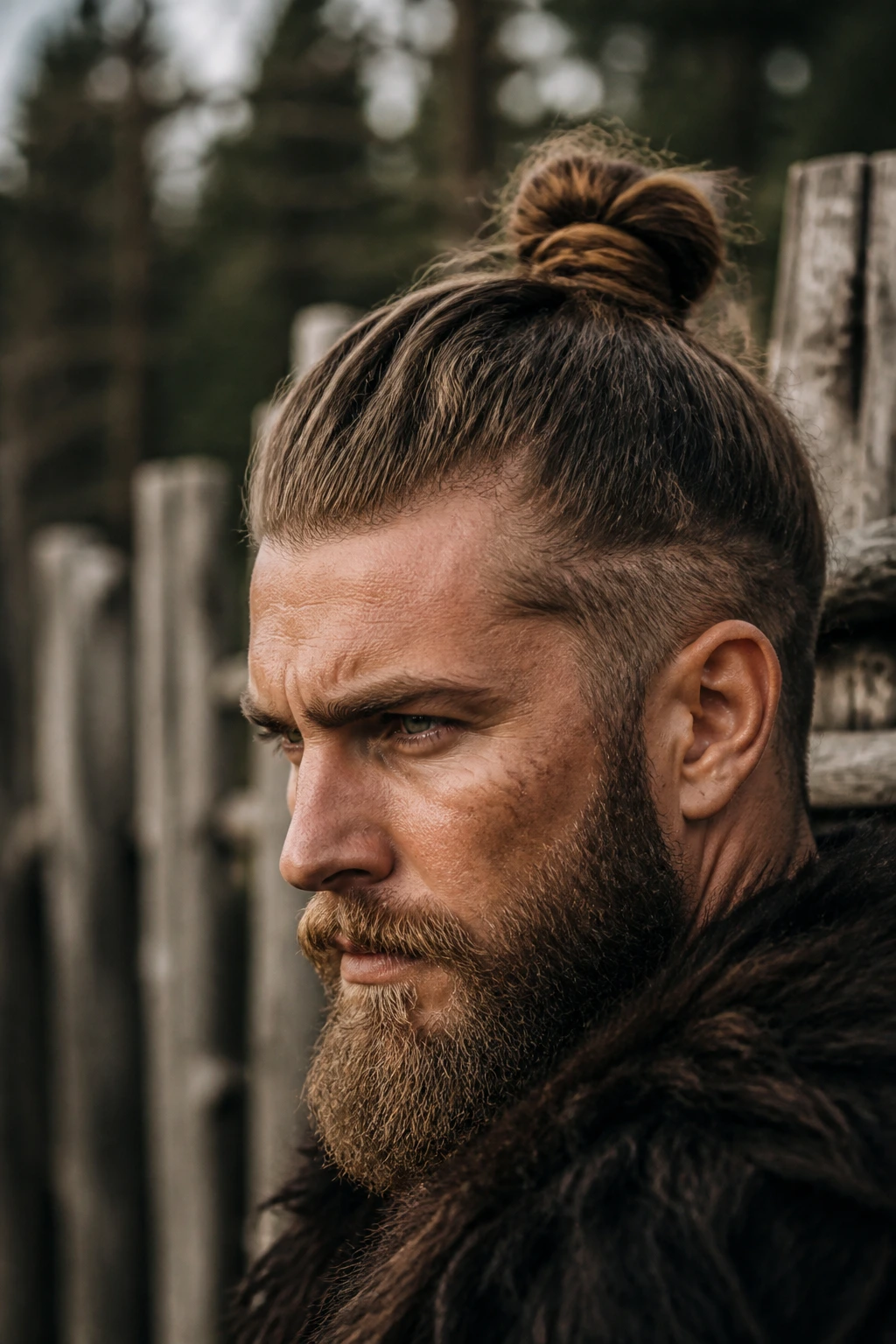
The Viking knot is rougher, heavier, and usually paired with a beard. It doesn’t try to look neat. It tries to look alive. That means texture, bulk, and a slightly rugged finish that suits thick hair and longer growth.
There’s a fine line here. Rugged is good. Neglected is not. Keep the sides shaped enough that the knot still has room, and keep the beard trimmed so the whole look doesn’t collapse into a blur. A little unevenness at the knot is fine; actually, it helps. But the rest of the haircut should still have boundaries.
This one often looks best when the hair has a little grime-free texture from a day or two after washing. Freshly washed hair can be too soft and slippery for the shape. Slightly lived-in hair gives it better hold and more character.
30. Taper-Fade Knot
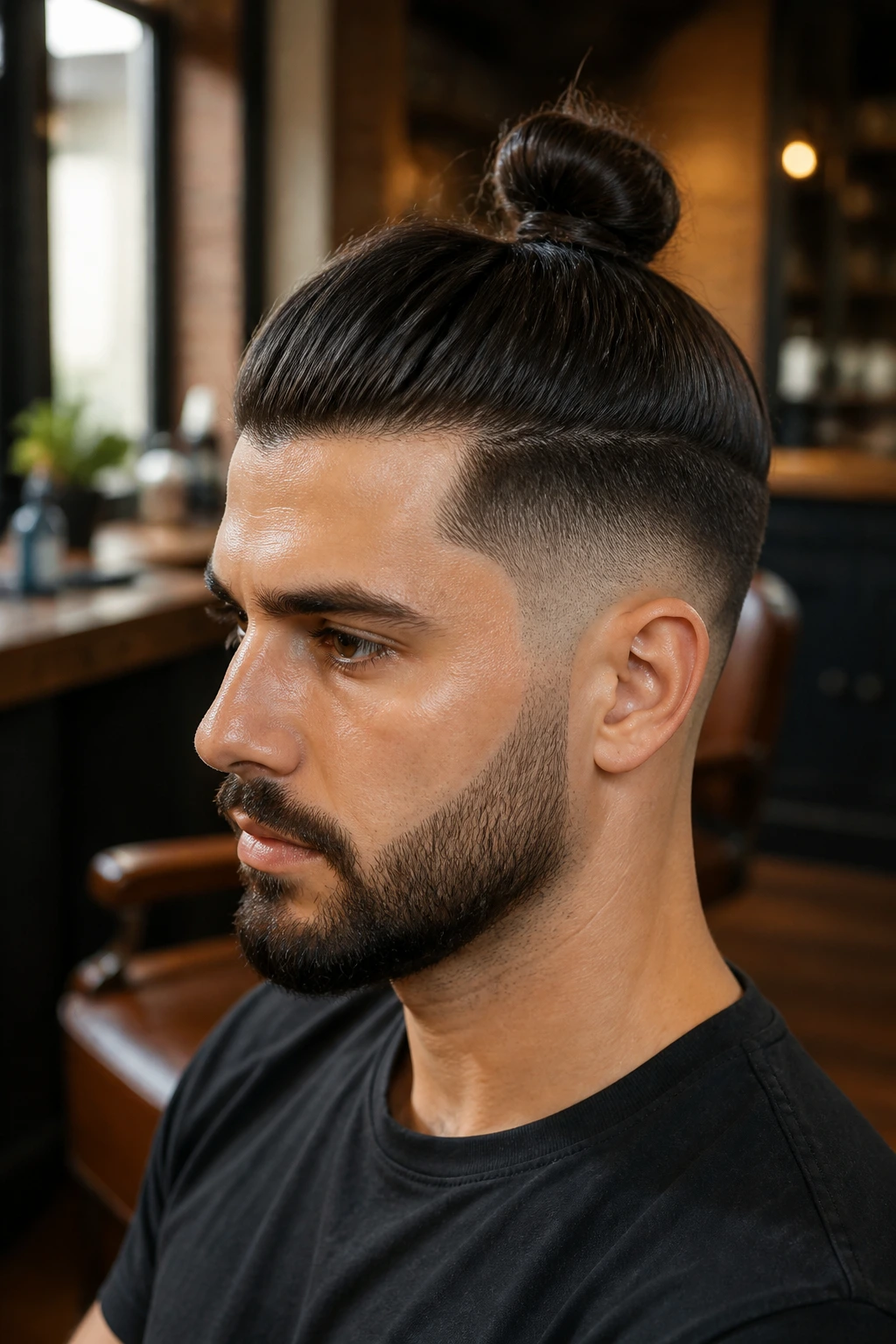
A taper-fade knot is the most forgiving clean-cut version in this group. The fade is softer than a skin fade, which means the transition from the knot to the sides feels more gradual. If you don’t want the sides to disappear, this is the version to look at first.
The taper keeps the haircut looking tidy as it grows out. That’s a real advantage. Skin fades can start looking blurry once they grow; tapers usually age more gracefully between appointments. The knot itself can be casual, polished, or a little textured, which gives you room to adjust the vibe without changing the cut.
Ask for the taper to stay low around the ears if you want the knot to look balanced. A higher taper can make the top feel too dominant unless your hair is quite thick.
31. Temple-Fade Knot
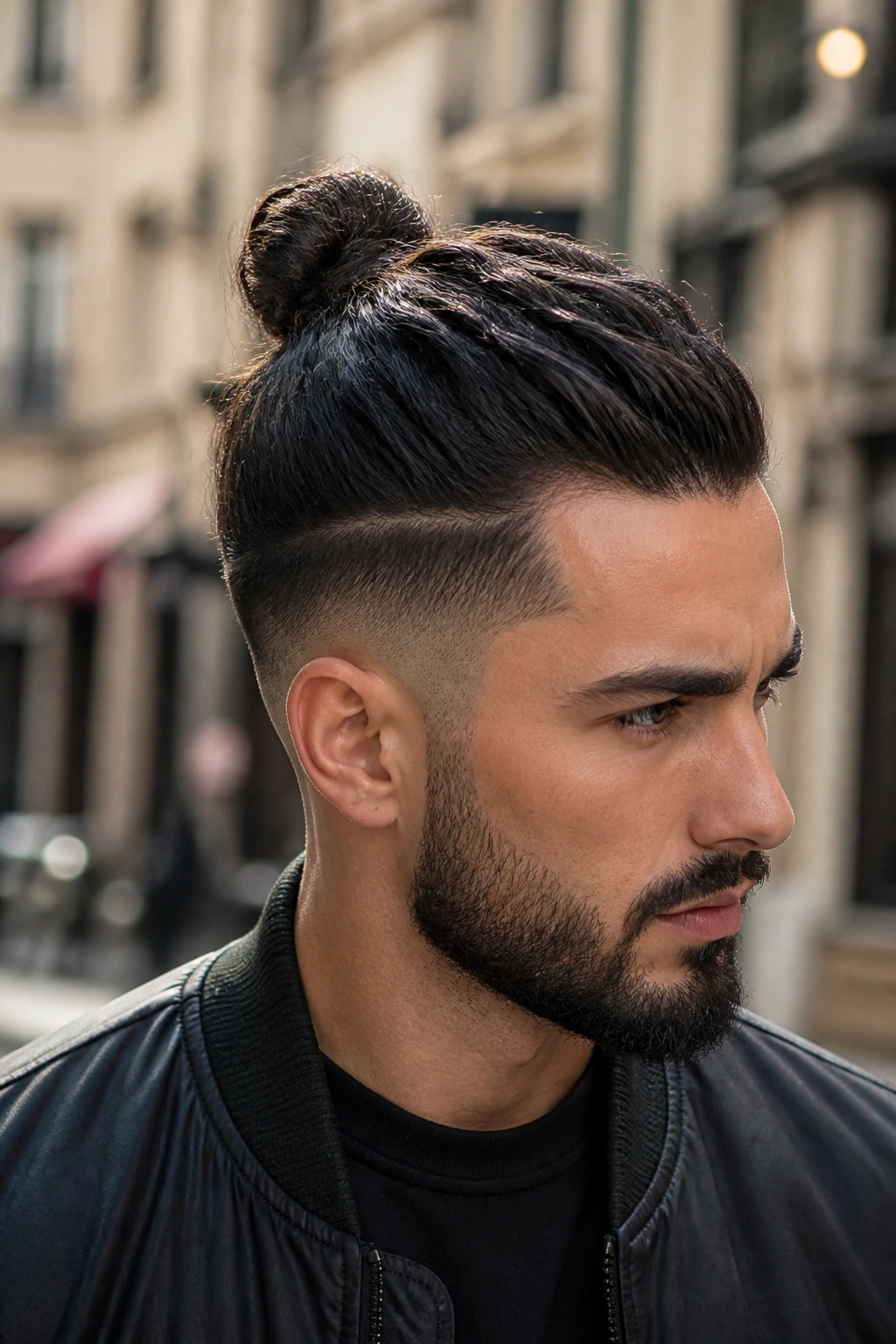
A temple-fade knot tightens the area around the temples while leaving more weight at the back and crown. It’s a smart move if you want a clean outline without shaving the sides down completely. The style keeps some structure near the face and lets the knot stay the center of attention.
What makes it different
The temple fade sharpens the front half of the haircut, which helps if your hairline tends to blur or if the sides puff up quickly. It’s a more specific kind of clean-up than a full fade, and that makes it useful for guys who want detail without going extreme. The back can stay slightly fuller, which keeps the knot from feeling isolated.
This version is especially good with wavy or curly hair because it controls the temples while leaving enough texture elsewhere to soften the look. Small cut. Big payoff.
32. Long-Hair Top Knot
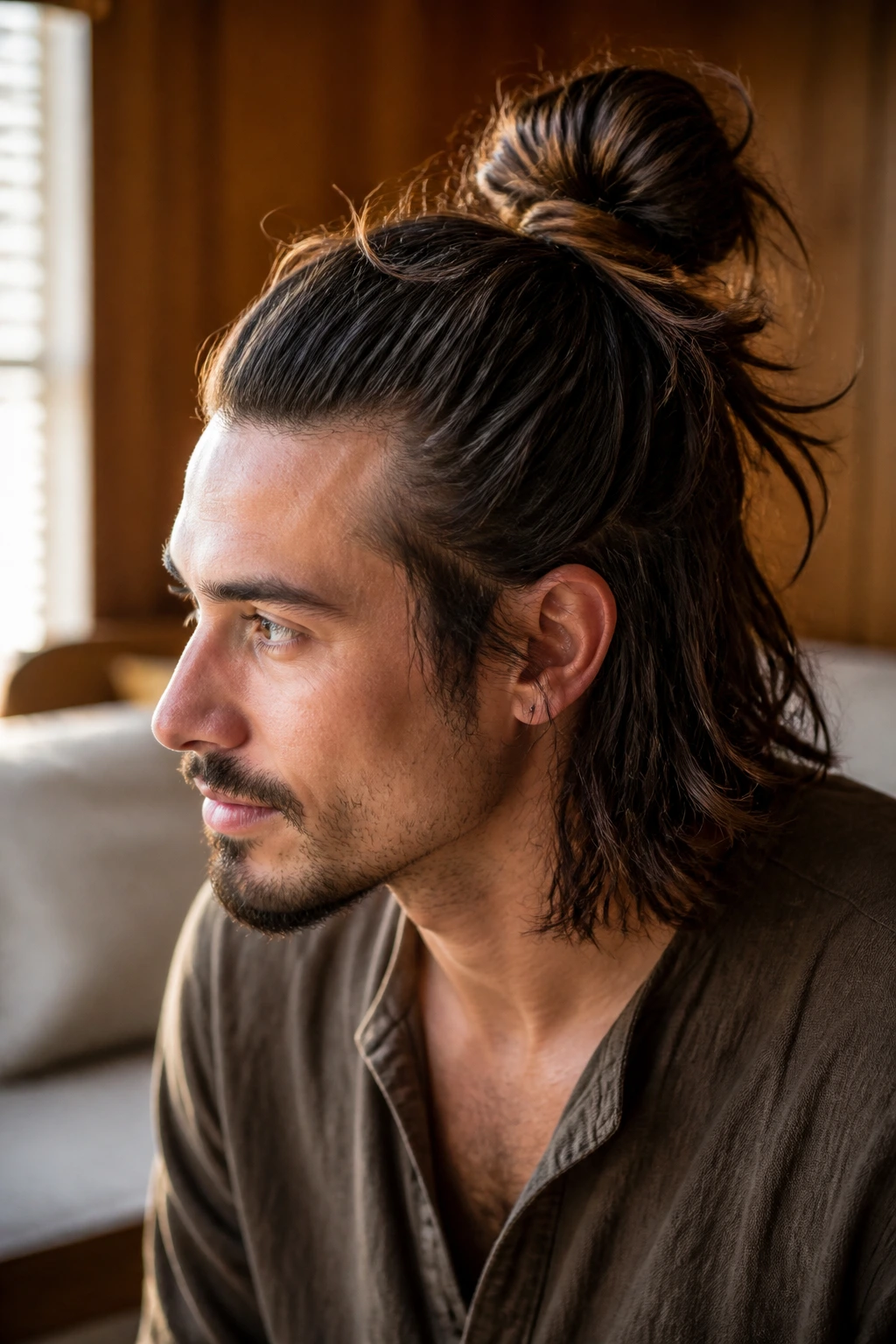
A long-hair top knot needs a different kind of handling because the weight changes everything. Once the hair reaches shoulder length or longer, the knot can become bulky if you try to gather all of it into the same compact shape you’d use on shorter hair. That’s where wrapping, sectioning, and placement matter.
If the knot keeps collapsing, don’t fight the length. Let the base stay a little looser and wrap the hair once around itself before securing it. You can also leave a few ends exposed so the knot doesn’t look overpacked. The style should feel like it belongs to long hair, not like long hair pretending to be shorter.
This is one of those styles that gets better the more you understand your own density and weight. Fine long hair needs a gentler tie. Thick long hair needs a bit more control. Same style. Different handling.
How Top Knot Styles for Men Change the Shape of the Face
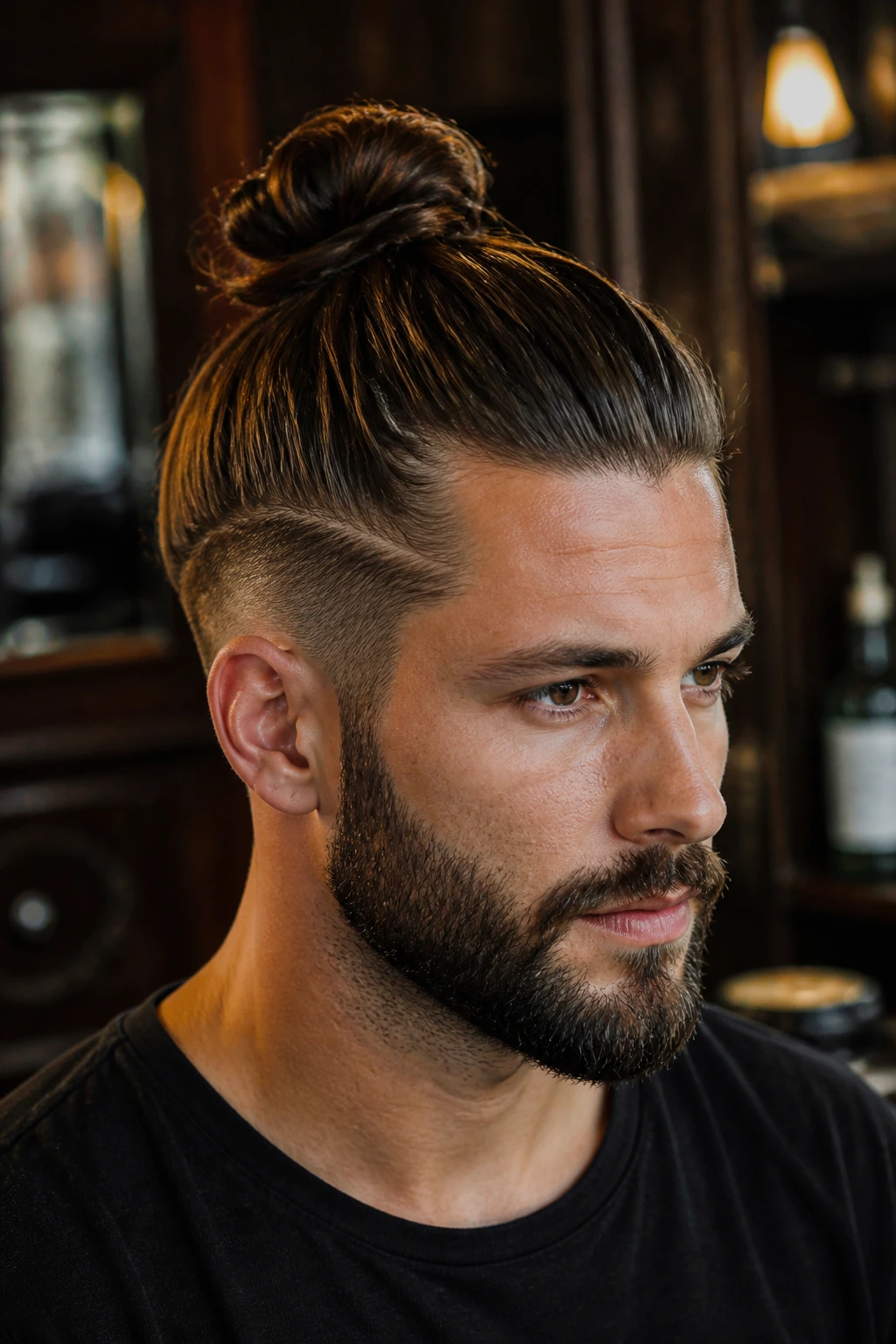
A knot is never just a knot. Placement changes the face.
High placement adds height and makes the profile feel longer. Low placement settles the look and gives the jaw and beard more visual room. If your face is already long, you usually don’t want the knot too high unless you’re deliberately chasing a sharper silhouette. If your face is round, a higher knot can open it up fast.
The sides matter just as much as the knot itself. Tight sides sharpen the outline; fuller sides soften it. That’s why a fade, taper, or undercut changes the result so much even when the top hair is gathered the same way.
Crown, nape, and everything in between
A knot at the crown says clean and lifted. A knot at the upper nape says calm and relaxed. Somewhere in the middle often looks the most natural, especially if your hair has a bit of wave or if you want the style to survive a long day without constant adjustment.
Essential Tools for These Looks
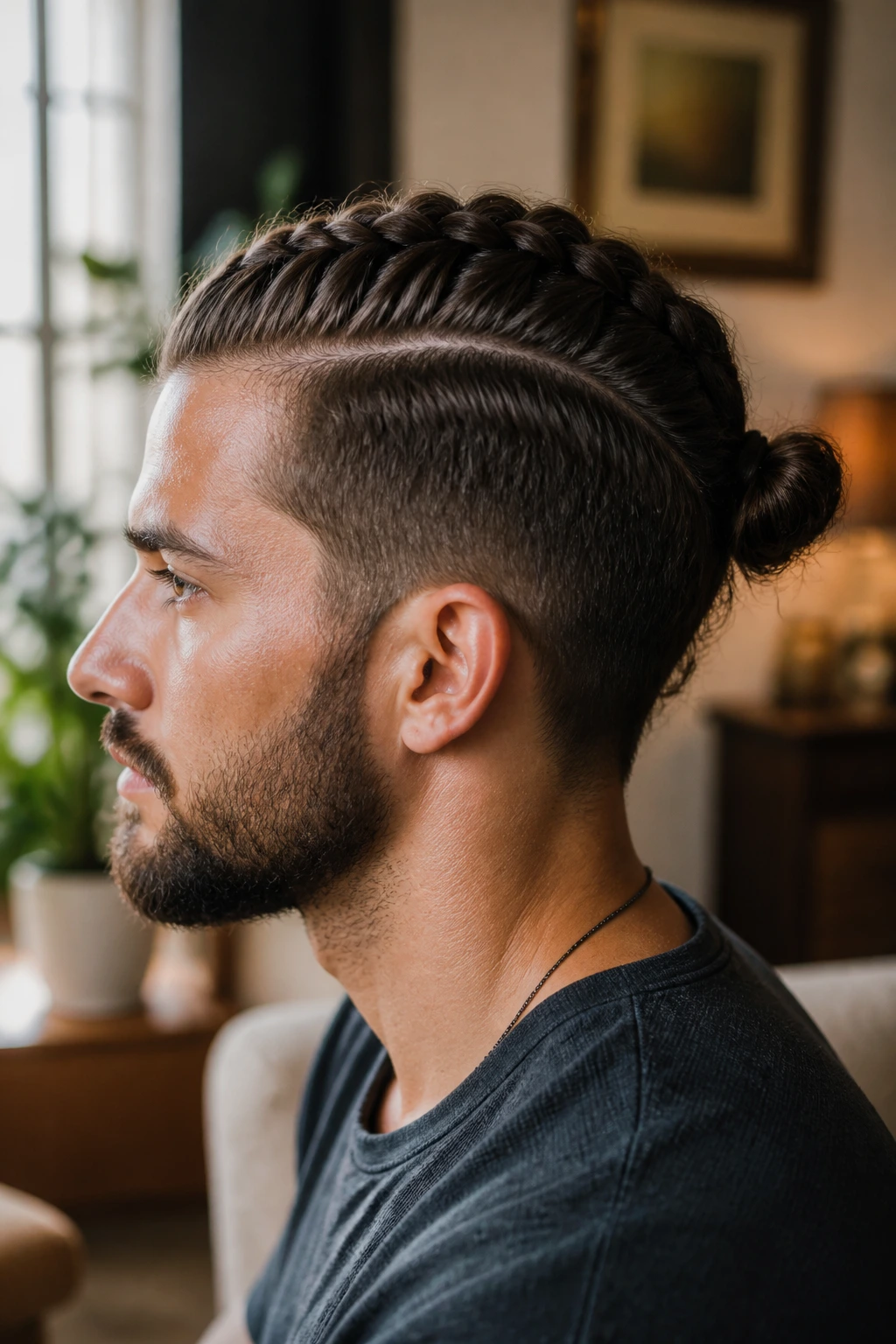
- Snag-free hair ties: Regular elastics can tug hard and snap fine strands, so a smooth tie is worth the small extra cost.
- Wide-tooth comb: Good for detangling longer hair before you gather it, especially on curly or wavy textures.
- Boar bristle brush or vent brush: Use it when you want cleaner sides or a smoother front.
- Texturizing spray or sea salt spray: Helpful for messy, textured, or boho knots that need grip.
- Matte paste, cream, or clay: Best when you want control without shine.
- Light pomade or gel: Better for slicked, wet-look, or office-ready versions.
- Hand mirror: Useful if you’re cleaning up the back at home and don’t want surprises.
- Small scissors or trimmer: Handy for loose neck fuzz and stray ends, though a barber should handle most shape-up work.
Matching Top Knot Styles for Men to Hair Length and Texture
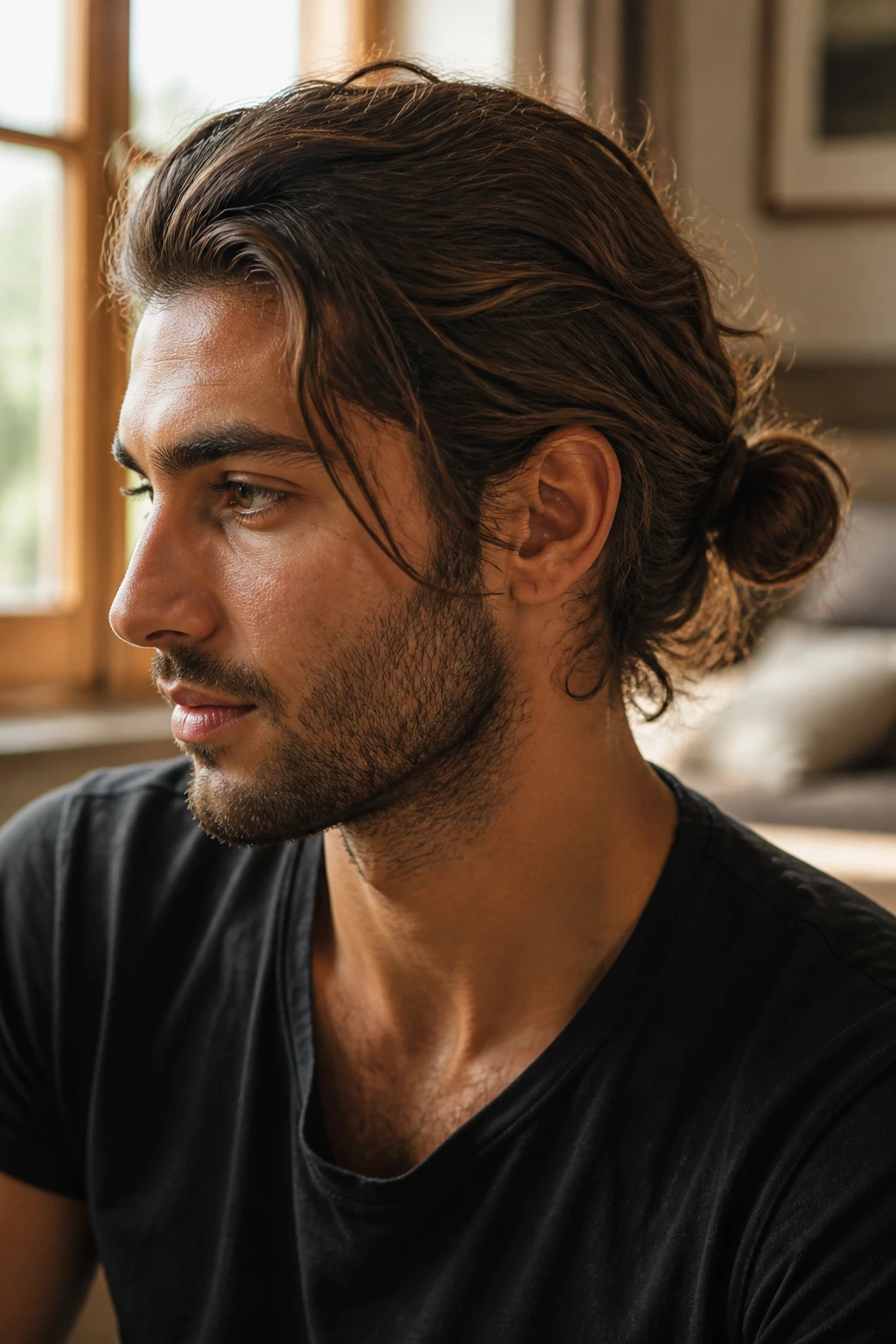
Hair length decides which knot is realistic, and texture decides how much work it takes. Those two things matter more than the outfit, the beard, or the product shelf.
If your hair is still short on the sides but long enough on top to gather, start with the mini knot, slicked-back knot, or half-up knot. If the hair reaches your shoulders, the low knot, boho knot, and wrapped knot start making more sense. Once the hair gets heavier, the balance shifts again — the long-hair knot and the beard-balanced knot handle weight better than a tiny knot jammed too tight at the crown.
Straight hair often needs product or a wrapped base to stop slipping. Wavy hair usually behaves with less effort. Curly hair wants moisture and a gentler touch. Coily hair and locs need weight awareness, because a knot that feels fine for ten minutes can get annoying after a full day if it sits too high.
How to Style a Knot Without Making It Stiff
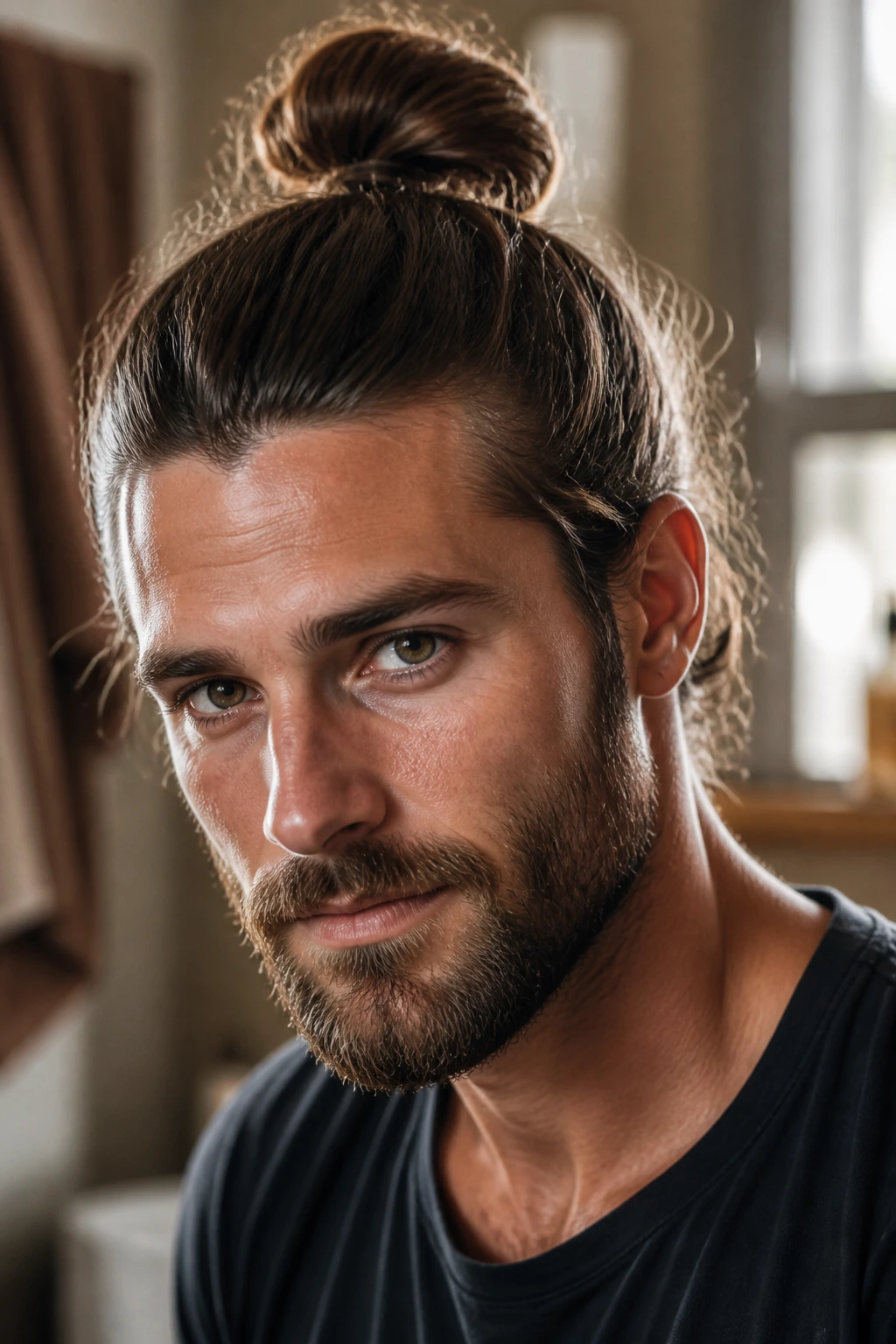
Start with hair that’s clean enough to behave, not so clean that it feels slippery. Second-day hair is often better than freshly washed hair for most knot styles because it has a little grip. A tiny bit of dry shampoo can help if the roots are too soft.
Use product in the right place. Put texture spray or paste through the lengths, not the scalp. If the front needs smoothing, work a pea-sized amount through the top and stop there. Overloading the knot itself usually makes it collapse instead of hold.
A good tie should feel secure within a minute or two, not like your scalp is being dragged backward. If the crown aches, it’s too tight. If the knot loosens before lunch, it’s too loose or your elastic is wrong. That sounds basic. It isn’t. Half the bad knots I see are just bad tension.
Common Mistakes That Make a Knot Look Forced
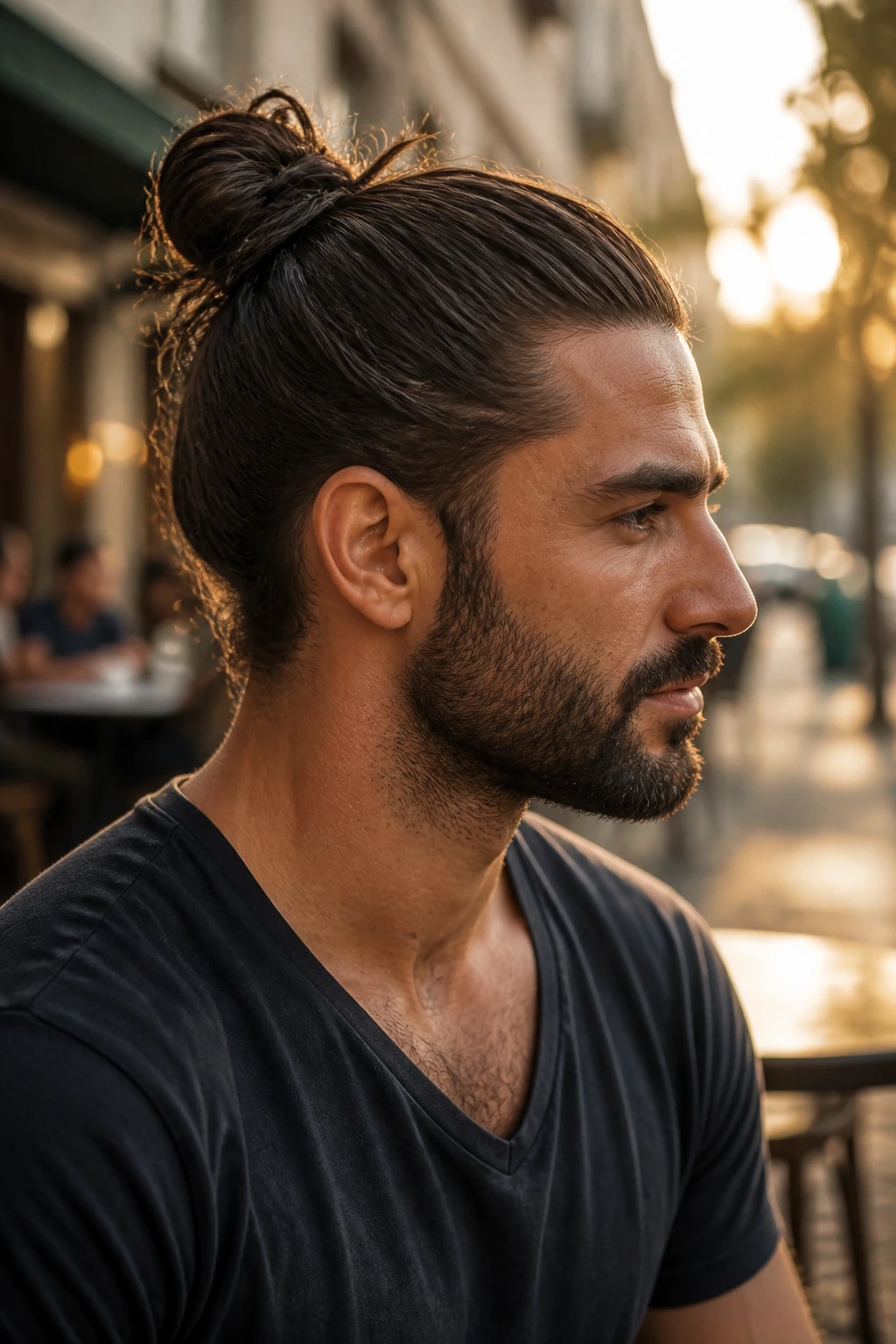
The first mistake is tying the knot too high and too tight. It pulls the hairline back, makes the scalp work harder than it should, and gives the style a strained look. The fix is boring but real: loosen the base by a fraction and place the knot where your head shape naturally wants it.
The second mistake is using the wrong product finish. Shiny gel on dry hair can turn the style into a helmet. Matte clay on a sleek style can make the top look dusty. Match the finish to the look you want, not to whatever’s nearest on the shelf.
The third mistake is letting the sides grow out without cleanup. A knot depends on contrast. Once the neckline, temples, and sideburns start blurring together, the style loses shape fast. A trim every few weeks keeps the outline readable.
Variations and Alternatives to Try
The Clean Taper Version: Use a taper instead of a hard fade if you want the knot to look softer and grow out more gracefully. It’s the version I’d pick for someone who wears the style most days and doesn’t want harsh edges every visit.
The Loose Weekend Knot: Pull the hair back more casually, leave a bit more height at the front, and don’t hide every flyaway. This works when you want the knot to feel relaxed, not styled to death.
The Braided Base Knot: If your hair slips too much or you want extra detail, braid the gathered section first. It adds grip and gives the knot a tighter, more structured body.
The Short-Hair Mini Knot: If you’re in the awkward middle stage, stop forcing a full knot and work with what you have. A smaller knot with cleaner sides often looks better than pretending the hair is longer than it is.
Keeping Top Knot Styles for Men Neat Between Washes
A top knot stays in better shape when the scalp stays clean enough and the hair doesn’t get overloaded with product. Most guys do well with washing every 2 to 4 days, depending on scalp oil, product use, and how much they sweat. If you use heavy paste or gel, a gentler wash schedule with a clarifying shampoo every couple of weeks can keep buildup from making the knot dull.
Sleep matters too. A satin pillowcase reduces friction, which helps the knot hold its shape and keeps the ends from looking fried. If your hair is long, a loose tie or soft wrap at night can stop the knot from exploding into a nest by morning.
The elastic itself needs replacing more often than people think. When it starts stretching out, the knot becomes sloppy even if your hair is fine. Swap it before it snaps.
Frequently Asked Questions
How long does my hair need to be for a top knot?
Most guys need at least 6 to 8 inches on top to make a small knot work, and longer than that if the hair is thick or very curly. If you can gather the hair without yanking hard at the scalp, you’re in range.
Is a top knot the same as a man bun?
Not quite. A top knot usually sits higher on the head and uses a smaller gathered section, while a man bun tends to sit lower and use more hair. The difference is partly placement and partly shape.
Will a top knot work with a receding hairline?
It can, if you avoid pulling the hair too tight. A softer, lower knot with some front texture or a fringe-fall version usually looks better than a tight high knot that exposes every edge of the hairline.
What’s the best style for curly hair?
Curly hair does well with the messy knot, textured knot, and curly top knot because those styles let the curl pattern stay visible. A slicked-back version can work, but it usually takes more product and more effort.
How do I keep the knot from slipping?
Use second-day hair, add a little texture spray or dry shampoo, and choose a snag-free elastic with enough tension. If the knot is still sliding, the gathered section is probably too soft or too smooth.
Can I wear a top knot to work?
Yes, if you keep the sides tidy and the knot compact. The office-ready version is usually cleaner at the temples and neckline, with less shine and fewer loose ends.
What if my knot looks too big?
You’re probably gathering too much hair into one bundle or placing it too low. Try a higher placement, a tighter wrap, or a smaller top section. Thick hair often needs a more compact tie than it first seems.
How often should I get the sides cleaned up?
Every 2 to 4 weeks is a good range, depending on how sharp you want the shape to stay. Fades and line-ups usually need more frequent touch-ups than tapers or scissor cuts.
The Right Knot
The best top knot is not the one that looks biggest or shiniest in a photo. It’s the one that fits your hair, your face, and the way you actually live. Some guys need a high knot with a fade. Some need a loose low version with texture. Some need the beard to do half the work. The haircut only looks good when the knot and the rest of the shape agree with each other.
That’s the part worth paying attention to. Placement, tension, texture, and cleanup around the edges — those four things decide whether the style looks deliberate or like it happened by accident.
Pick the knot that suits the hair you’ve got, then keep the rest of the cut honest.
