



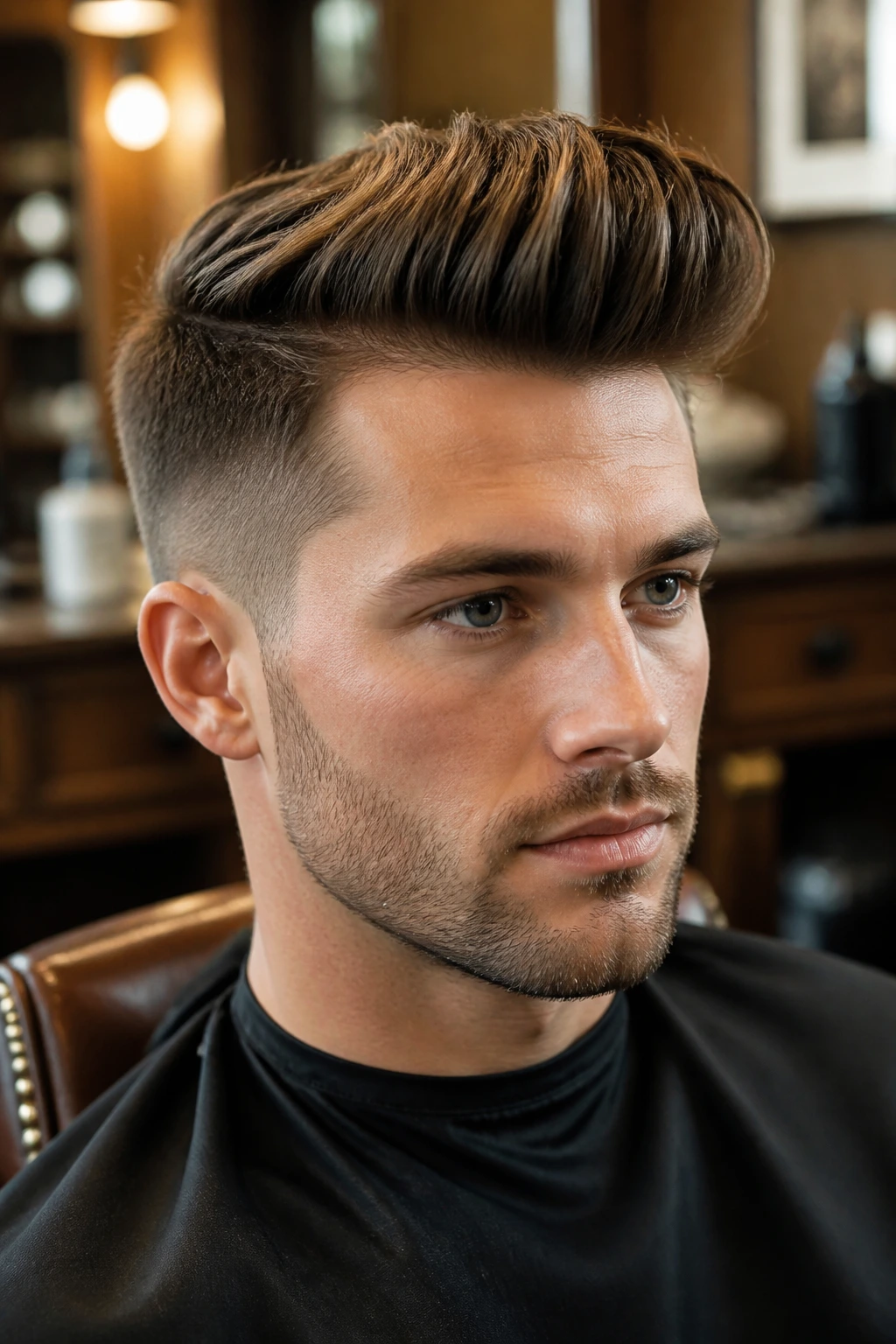
A quiff can look sharp before breakfast and limp by lunch if the cut and styling are fighting each other. That’s the whole game. The front needs enough length to stand up, the sides need enough contrast to make that front matter, and the crown needs to be treated like it has a vote.
The best quiff styles for men are not one haircut. They’re a family of haircuts built around the same idea: lift in front, structure at the sides, and some kind of movement through the top. Change the fade, change the finish, change the amount of shine, and the same shape can go from boardroom-clean to messy, high-contrast, or a little rock-and-roll without losing its identity.
What trips people up is usually not the quiff itself. It’s the details. A barber leaves too little length in front. The blow-dryer points the wrong way. The product is too heavy, so the front collapses into a shiny shell. Once you know what makes the shape work, the haircut becomes one of the most useful things you can wear on your head.
Why These Quiff Styles Earn Their Keep
-
The same basic cut can read five different ways: a low taper, mid fade, or skin fade changes the mood more than people expect, even when the top length stays close to 4 inches.
-
Product choice changes the whole personality: matte clay gives you a dry, broken-up front, while pomade turns the quiff into a smoother, more sculpted shape with a little shine.
-
Most of these styles are barber-friendly: you can explain them with simple instructions about front length, side taper, and crown bulk instead of talking in circles.
-
They work with different hair types: straight, wavy, curly, thick, and fine hair all have a quiff version that behaves, if the cut matches the texture.
-
They’re easy to adjust between settings: the same haircut can look looser on a weekend and tighter for work with a change of product and a 2-minute blow-dry.
-
The upkeep stays predictable: a trim every 3 to 5 weeks keeps the sides from puffing out and keeps the front from losing its shape.
1. Classic Taper Quiff
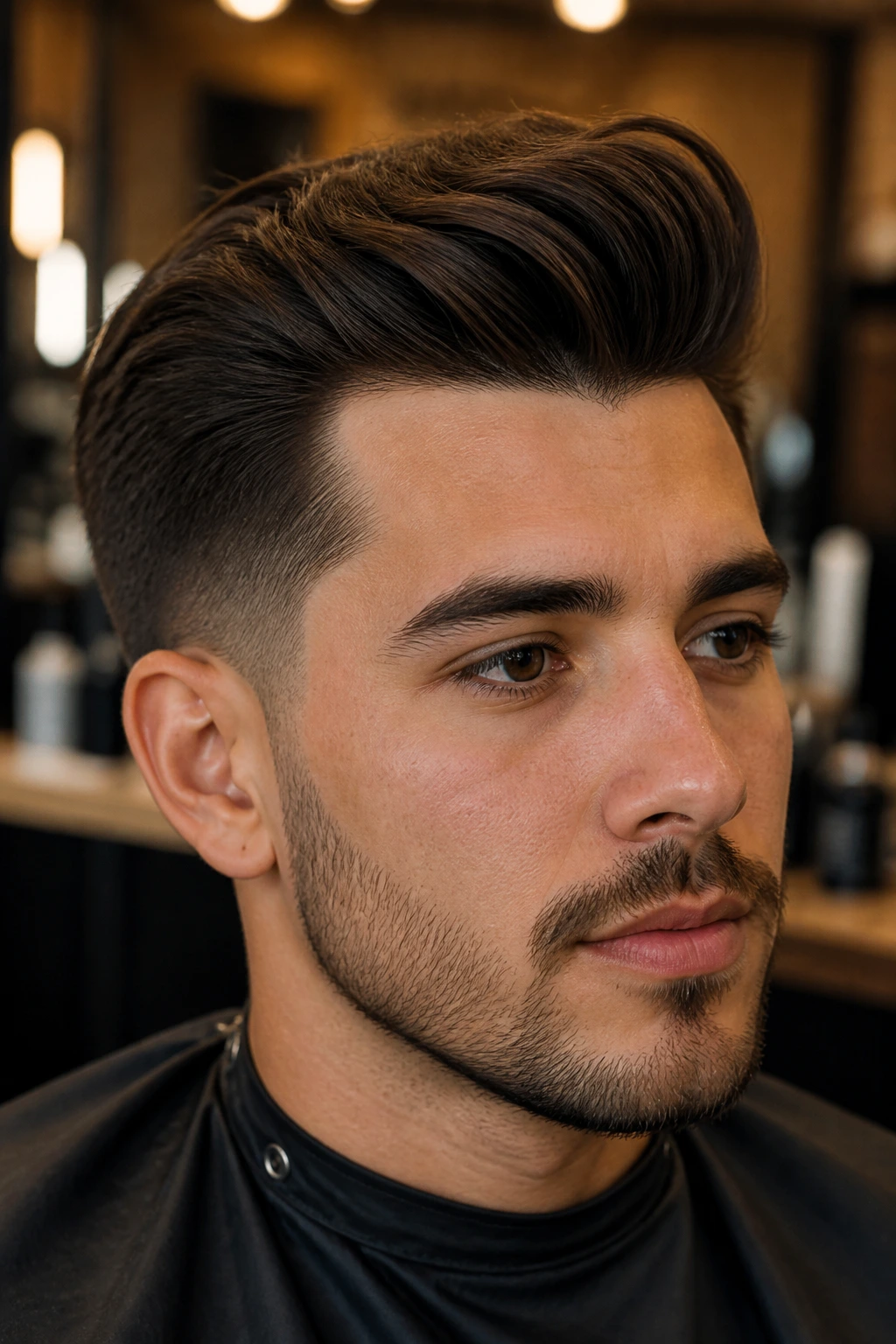
The classic taper quiff is the version that sits in the middle of everything, and that’s a compliment. It keeps enough height to look styled, but the taper on the sides stops it from turning into a throwback helmet. Ask for about 3 to 4 inches on top, with the front slightly longer than the crown, then keep the sides clean with a soft taper around the temples and neckline.
What Makes It Work
The shape depends on balance. Too much length on top and the front starts to droop; too little and there’s nothing to lift. A blow-dryer and a small round brush do most of the work here, and a dime-sized amount of light pomade or paste keeps the front from splitting.
Barber Note
- Leave the front a touch longer than the back.
- Ask for a natural taper, not a hard disconnect.
- Keep the texture soft enough to move.
Best for: men who want one quiff that doesn’t fight their office shirt, their weekend tee, or the guy in the mirror at 7 a.m.
2. Textured Mid-Fade Quiff
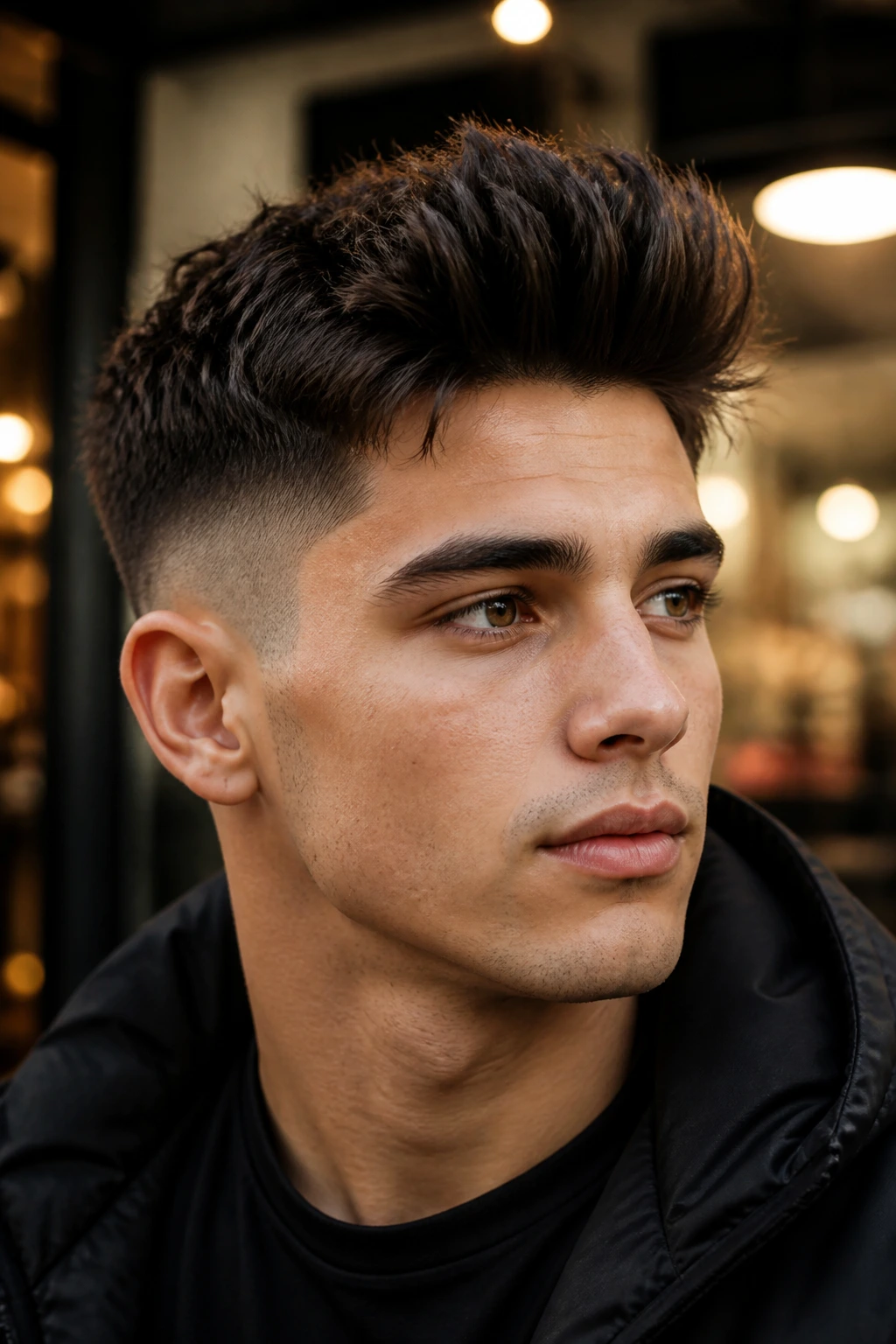
This is the quiff that looks better when it’s a little imperfect. The mid fade gives you a clean break around the middle of the head, and the top gets choppy texture so it doesn’t sit like a flat sheet. If your hair is medium to thick, this cut gives the front some attitude without needing a mountain of product.
A barber should point-cut the top so the ends look broken up rather than blunt. Then you work a sea salt spray into damp hair, blow-dry the roots upward, and finish with a matte clay. Use your fingers first, comb second. Or not at all.
The mid fade is the part that keeps this style modern. It removes bulk where the head needs shape, not where the hair needs length. That detail matters more than people think.
3. Short Quiff with Natural Lift
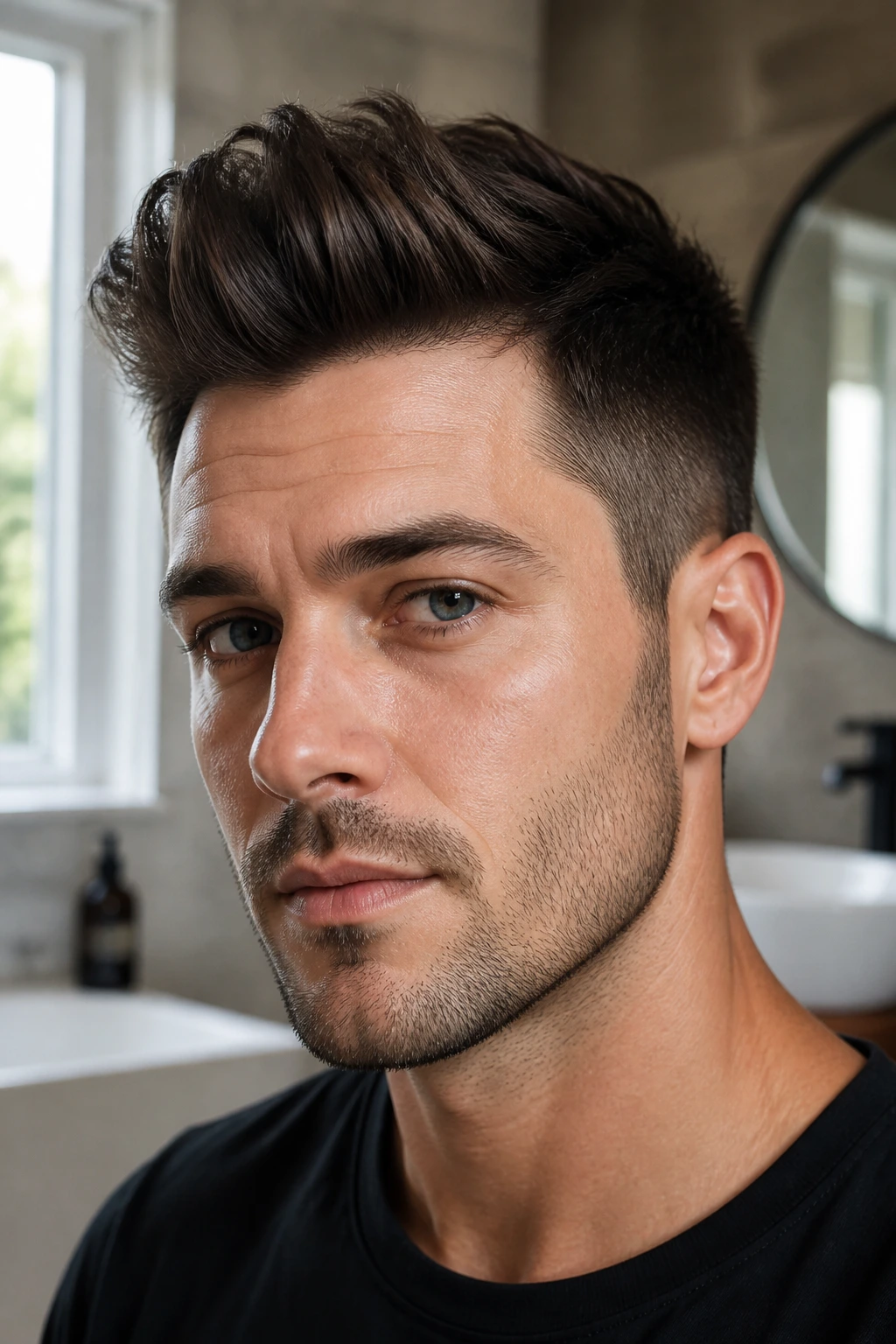
Can a quiff work when the top is short? Absolutely. This is the cut for men who want a front ridge, not a full tower. Keep the top around 2 to 3 inches, leave enough weight in the front to push up, and taper the sides so the haircut still feels deliberate.
The trick is restraint. Short quiffs fall apart when people try to force too much height into hair that won’t stand on its own. A light cream or low-hold paste is usually enough, especially if you rough-dry the roots first and then shape the front with your fingertips.
Good To Know
- Shorter tops need less product than you think.
- A vent brush helps lift the roots without making the shape too stiff.
- This style works well on fine hair because it doesn’t rely on bulk.
That last point saves a lot of bad mornings. Less length, less drama.
4. Long Quiff with Swept Height
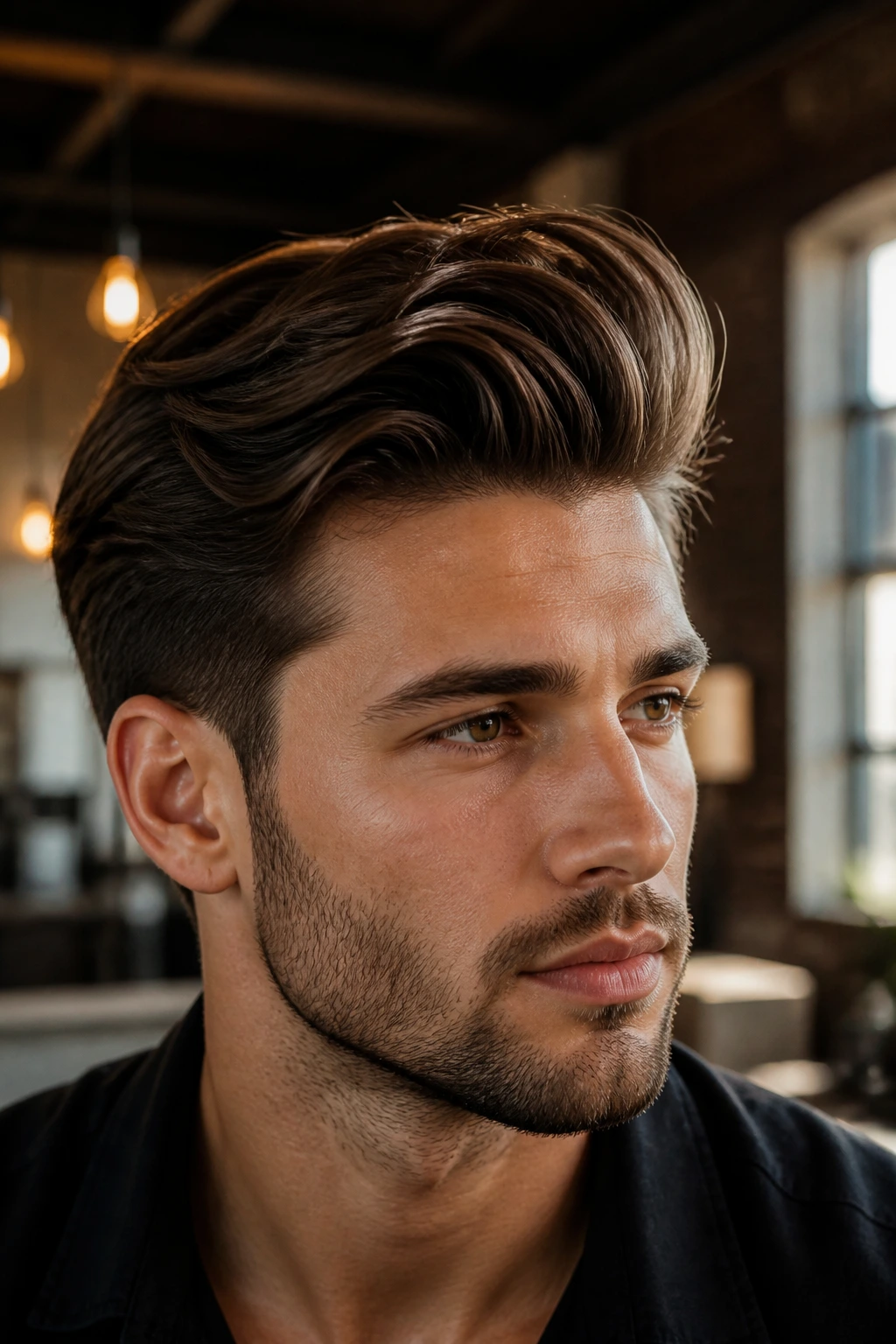
The long quiff is louder. It needs more patience, more blow-drying, and a barber who knows how to remove bulk without hacking the top into bits. You want 4 to 6 inches on top, with enough length in front to sweep back and up in one clean line.
This style looks best when the front has some movement. If the hair is too stiff, the height turns into a block. If it’s too soft, the whole thing drops. I like using a round brush for the first pass, then cooling the front with the dryer on a lower setting so the lift holds its shape.
It’s a good choice for thicker straight hair and anyone who likes that slightly dramatic front edge. Just don’t starve it of structure. Long quiffs need a real shape, not wishful thinking.
5. Messy Bedhead Quiff

The messy bedhead quiff looks casual only if the cut underneath is disciplined. That’s the part people miss. The top still needs 3 to 4 inches, but the ends should be broken up so the front can separate in little peaks instead of folding into one smooth wave.
Use sea salt spray on damp hair, squeeze the front upward with your hands, then hit the roots with warm air for 30 to 45 seconds. Finish with a matte paste, but use less than you think. A pea-sized amount is often enough if the cut already has texture.
The Feel
It should look like you ran your hand through it and stopped before the hair got precious. Not sloppy. Not polished. Just a little wild in a controlled way.
6. Side-Part Quiff
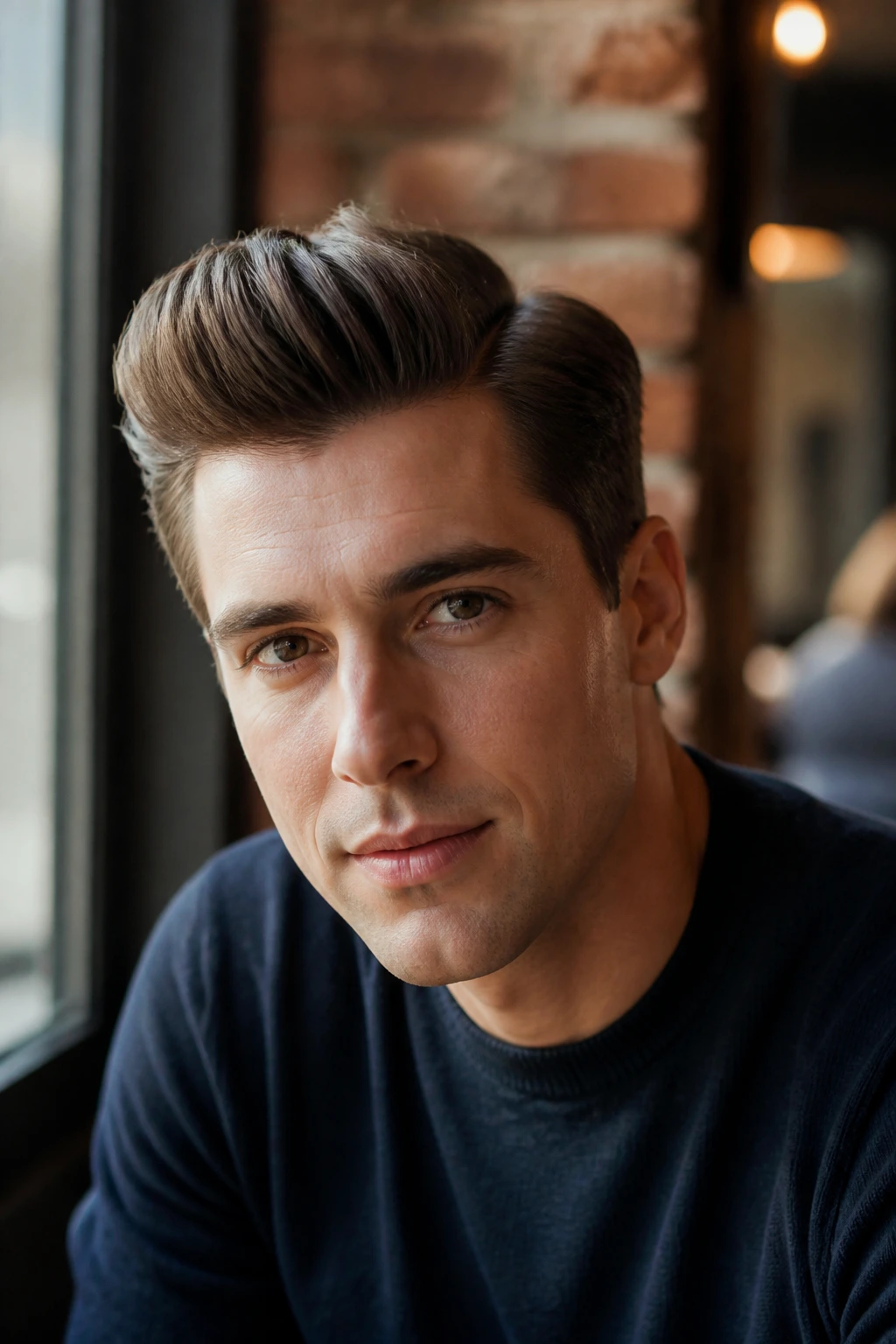
The side-part quiff is for men who want the front lifted but don’t want the whole haircut pointing straight back like a crest. A soft part gives the top a directional cue, and the quiff sits slightly to one side rather than dead center. That makes the shape easier to wear with a suit, a blazer, or any haircut that needs a calmer profile.
Ask the barber to leave enough length on top for a part to be visible without shaving a hard line. Then comb the top while it’s damp, blow-dry the front up and over, and keep the sides tight but blended. A light pomade or cream helps the part stay readable without turning glossy.
This one is quietly useful. It doesn’t shout. It just keeps looking put together.
7. Low Fade Quiff
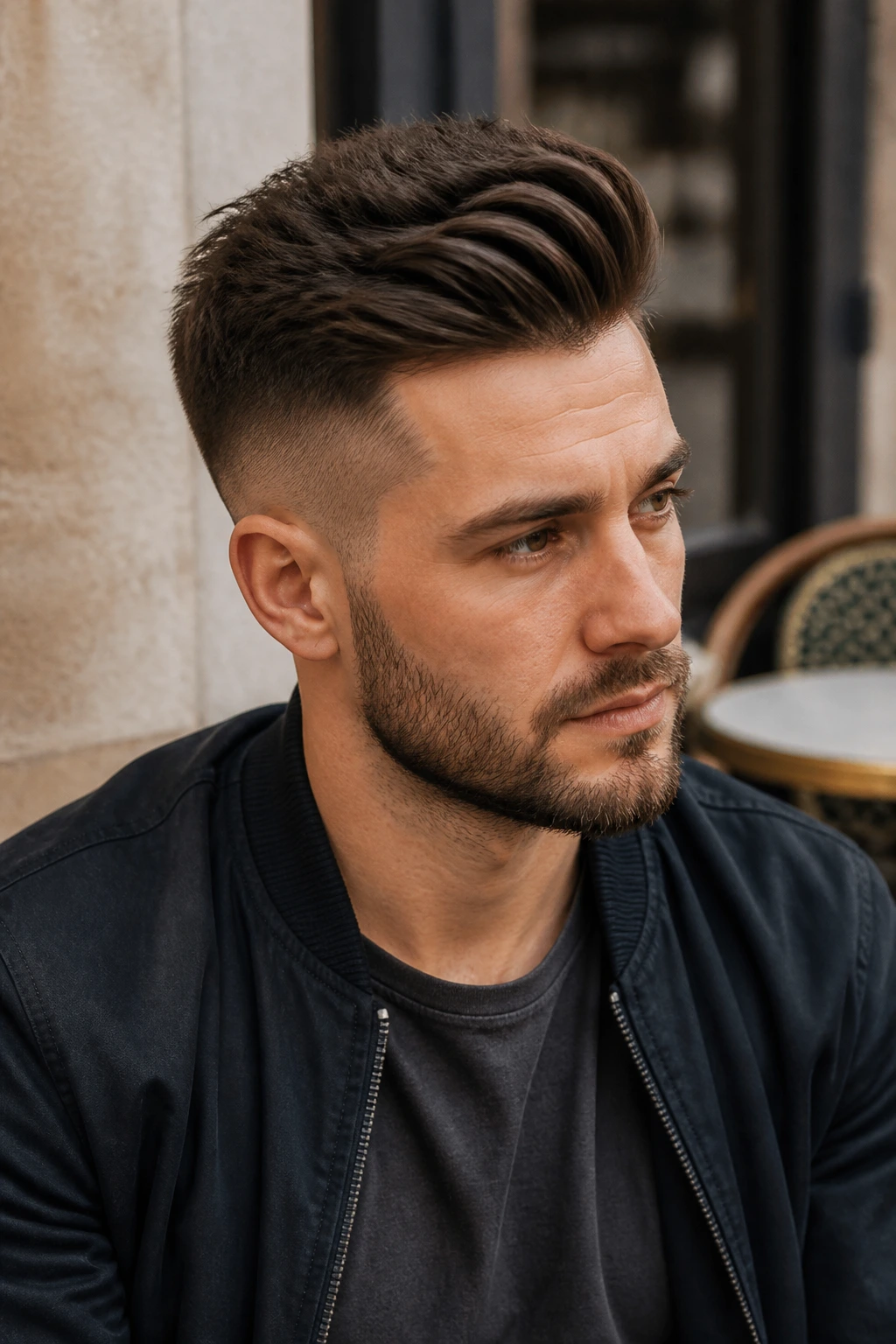
A low fade quiff keeps the drama near the top and lets the sides fade more gently around the ear. That makes it a strong option if you want contrast, but not the kind that looks like a spotlight. The fade should start low enough that the haircut still feels soft at the temple.
The top can sit around 3 to 4 inches, with the front lifted just enough to clear the forehead line. Matte product works best here because the low fade already does some of the visual work. You do not need shine trying to compete with it.
This style is a good middle ground for men who like a sharp cut but still want something that feels wearable in daylight. Harsh fades can dominate the face. A low fade leaves room for the features.
8. High Fade Quiff
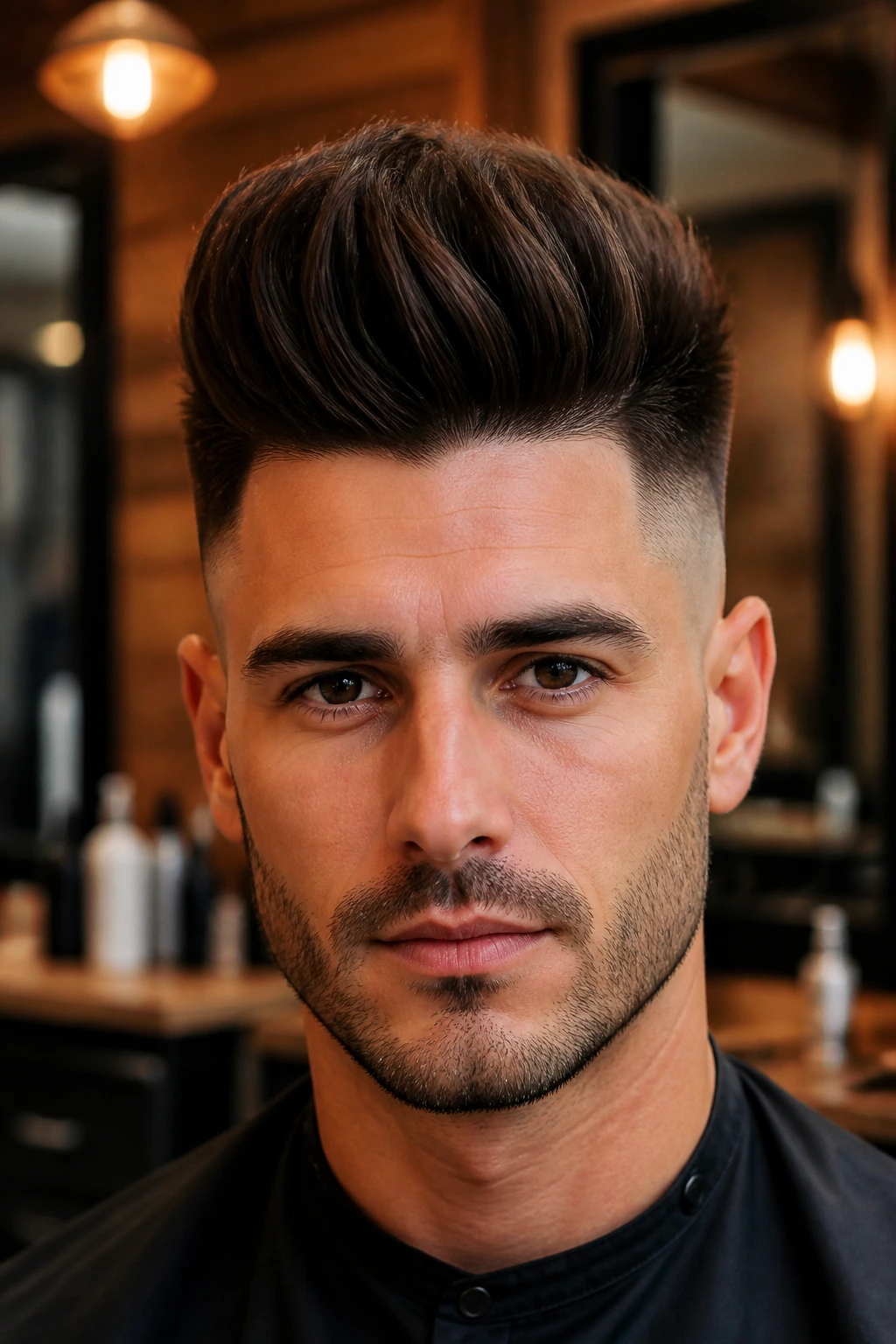
The high fade quiff is built on contrast. The sides drop fast, the top stays full, and the eye goes straight to the front. It looks clean when the top has actual density, because the tighter sides make thin or weak hair obvious.
That’s why the cut matters so much. If the barber leaves too little length on top, the whole style goes thin. If they leave too much bulk, it can turn puffy. Ask for textured layers on top and a high fade that starts above the parietal ridge, then style with a strong matte clay.
Best for
- Thick hair that needs shape.
- Oval or square faces that can handle more vertical height.
- Men who want the haircut to read from across the room.
The result is blunt in the best way. Direct. Clean. No guessing.
9. Skin Fade Quiff
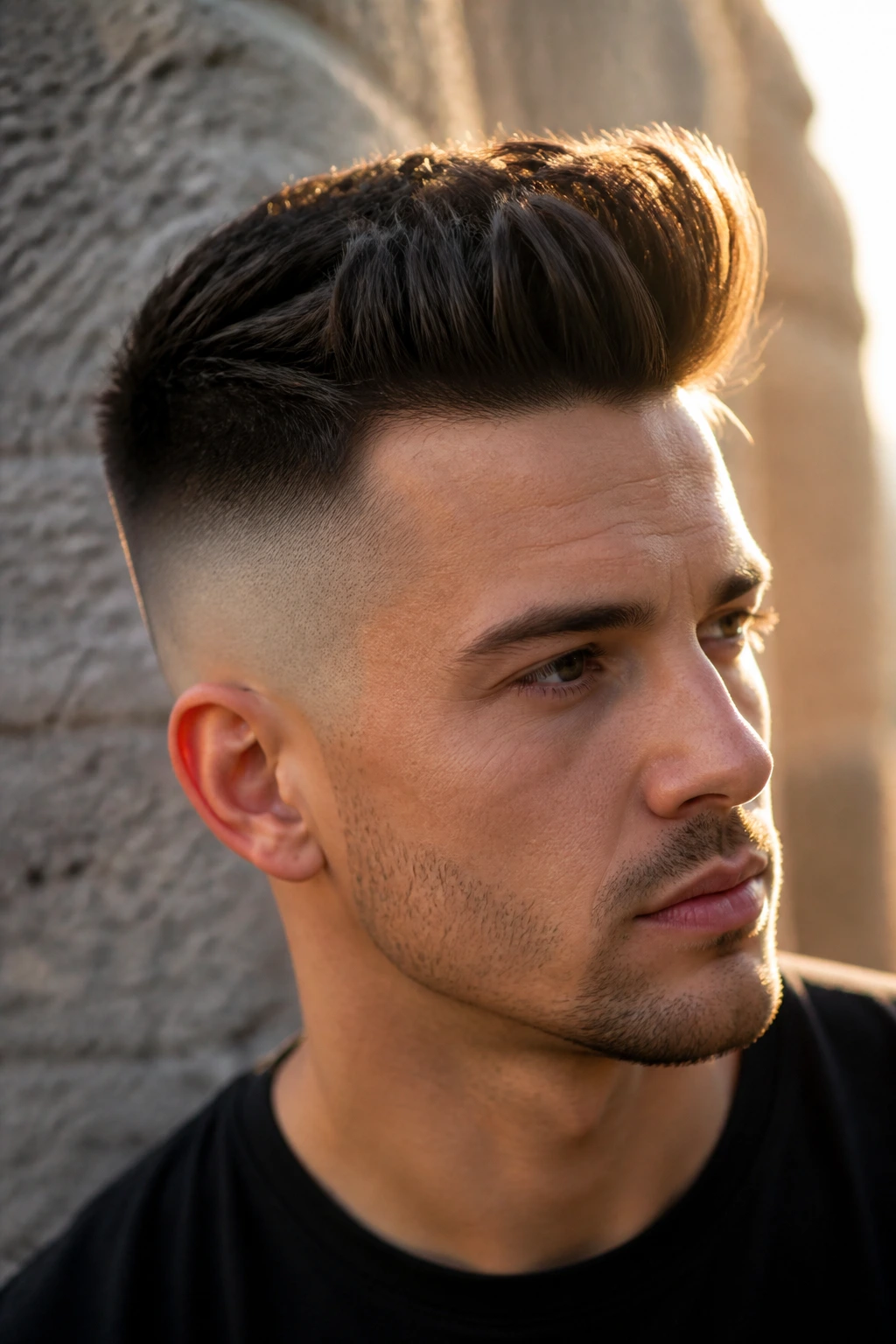
A skin fade quiff gives you the strongest contrast on this list. The sides go down to skin, which means the top has to carry the whole design. If the front is weak, the haircut collapses fast. If the top has length and texture, the shape looks crisp and sharp.
Keep the top around 3 to 5 inches, and make sure the barber blends the fade smoothly into the top so the transition doesn’t look patched in. Strong-hold matte paste or clay is usually the right call. You want the front to stand up, not freeze.
A skin fade also exposes the hairline more than softer fades do. If your temples are uneven, ask for a slightly softer finish near the corners so the haircut frames the face instead of exposing every edge.
10. Undercut Quiff
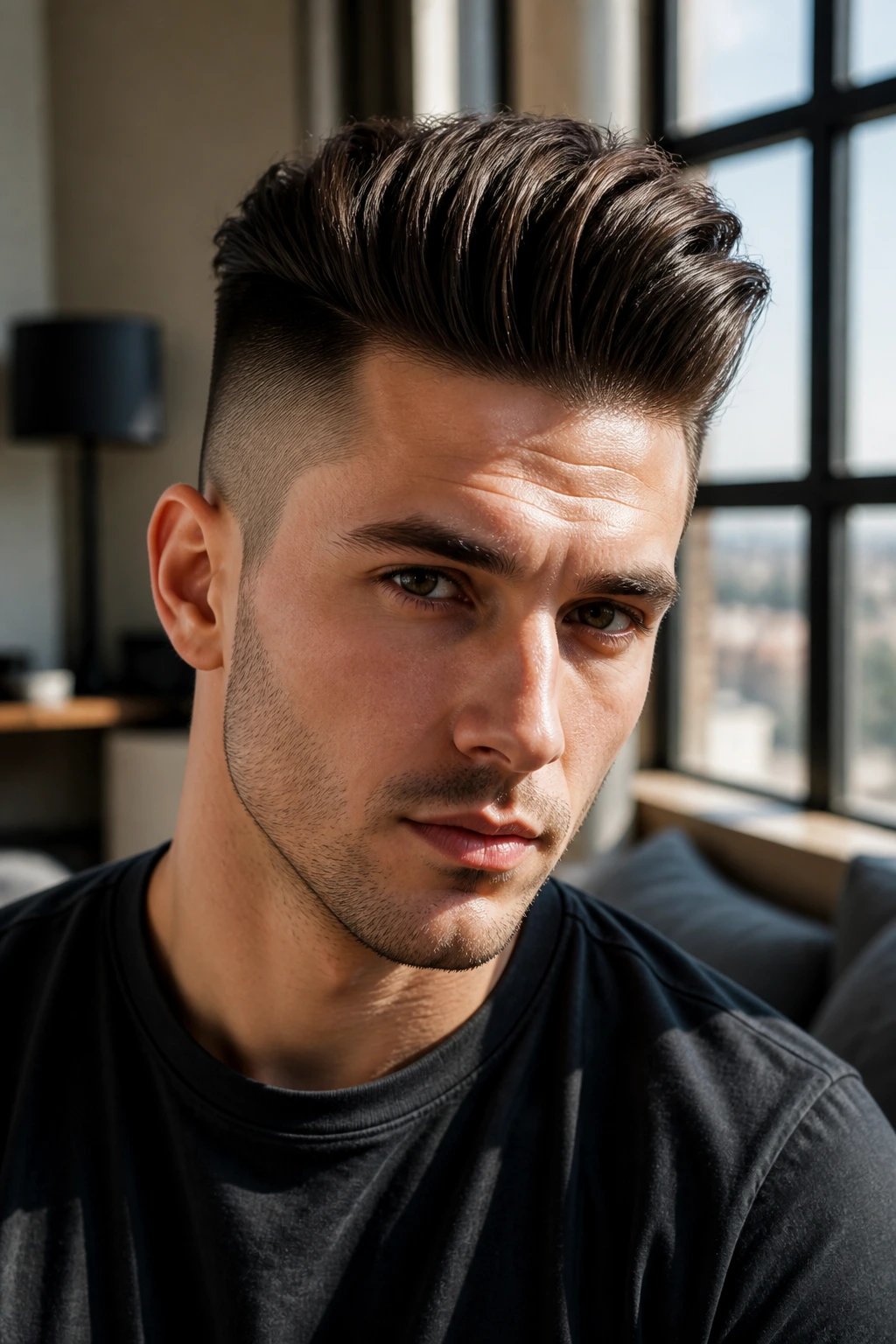
The undercut quiff is blunt in a way that still feels current. The sides are clipped short with almost no blend, while the top stays long enough to be pushed up and back. It’s a strong shape, and it works best when the top has enough density to look intentional rather than puffed up.
Use a blow-dryer first. Always. The undercut creates such a hard contrast that the top needs real lift from the roots, not just product. A matte paste or clay gives the haircut some separation, while a comb lets you define the front ridge if you want it cleaner.
This style suits men who like clear lines. It is not shy. That’s the whole point.
11. Disconnected Quiff
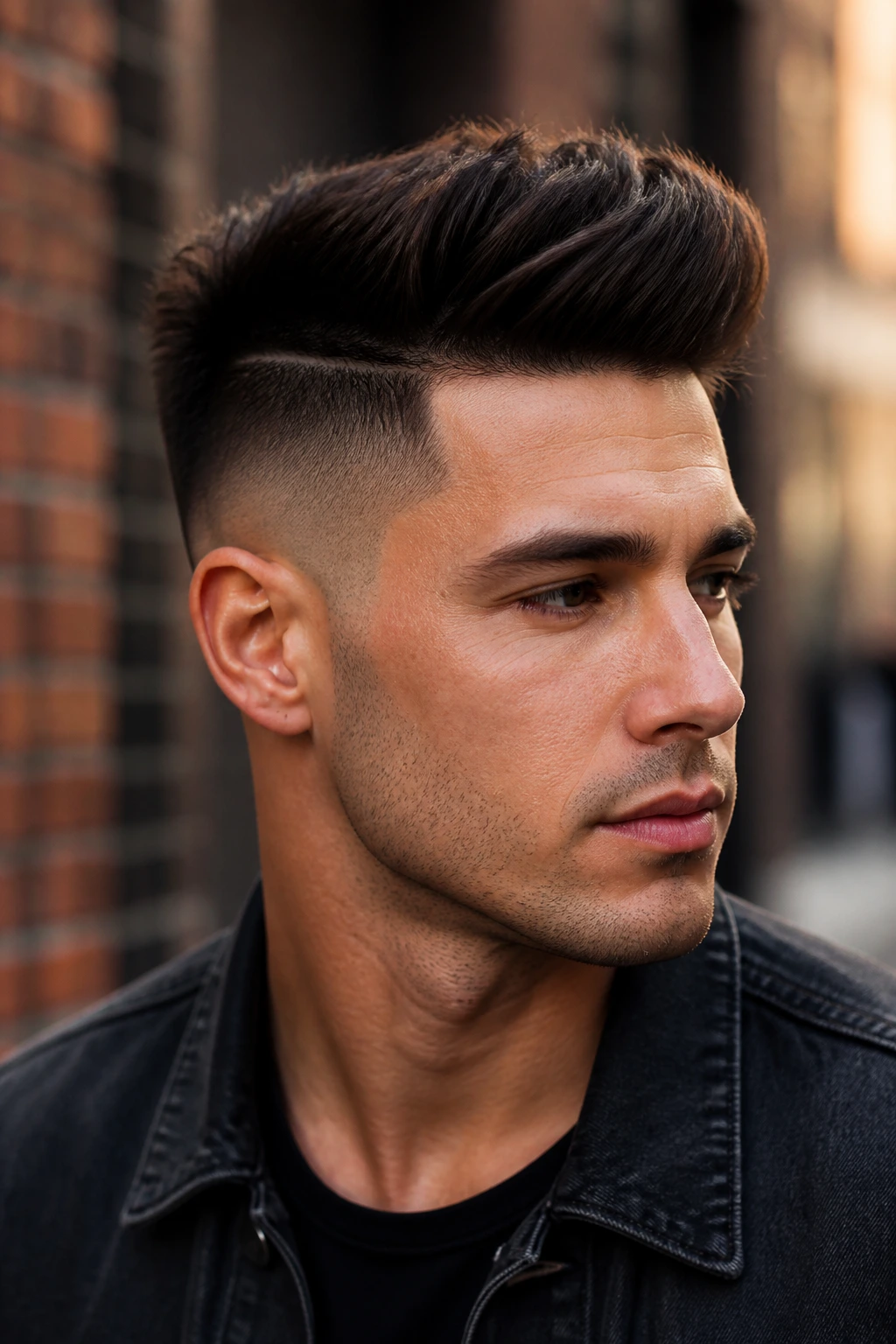
A disconnected quiff takes the undercut idea and makes the gap more obvious. There’s a visible break between the top and the sides, which gives the haircut a sharper profile and a little more edge. The top can be left uneven and textured, or it can be brushed smoother if you want the contrast to do the talking.
The key is the separation. If the sides are blended too much, the style loses its point. If the top is too short, the disconnect looks accidental. Aim for at least 3 inches on top, and keep the side length tight enough that the line between top and sides is easy to see.
This one works well for men who want a style that reads as deliberate from every angle. It is a haircut with an opinion.
12. Curly Quiff

Curly hair can make a quiff look richer than straight hair ever will, but only if you stop trying to flatten the curl out of it. Leave enough length on top for the curls to rise in front, then taper the sides so the volume stays focused where you want it. A barber should shape the top dry or nearly dry if the curl pattern changes a lot when wet.
Use curl cream or a light mousse on damp hair, then diffuse or air-dry with the front lifted slightly upward. Once the curls set, you can separate the front with a touch of paste on your fingertips. Don’t rake through it hard. That just makes the curl frizz.
The best curly quiff keeps the bend and the bounce. It should look like the hair wants to do this on its own.
13. Wavy Quiff
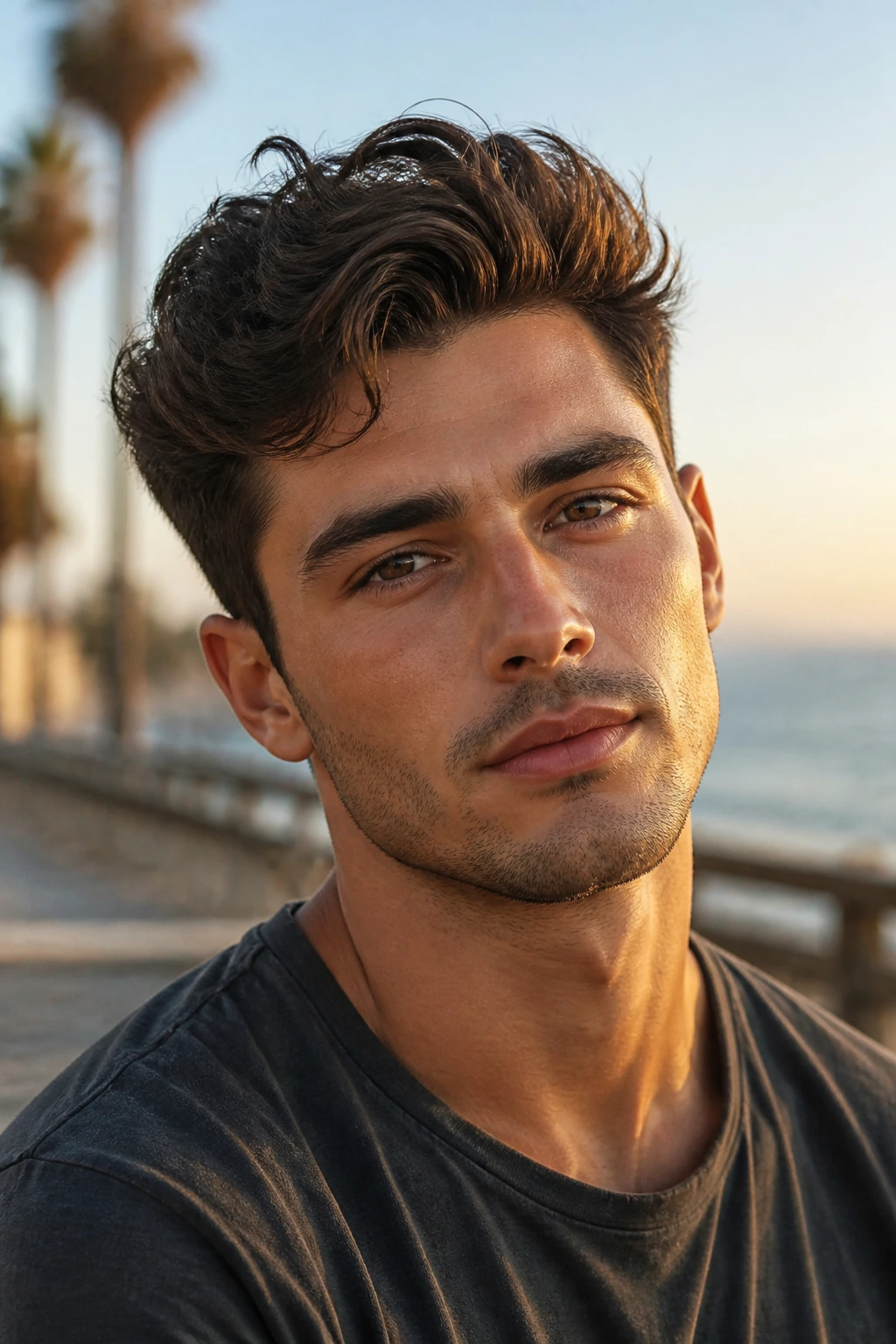
Wavy hair gives a quiff a bit of motion without much help, which is why this version often looks more relaxed than the straight-hair cut. The wave pattern does part of the styling for you. Your job is to keep the shape from going sideways.
Ask for medium length on top, with texture through the front so the waves don’t lie too neatly. A sea salt spray or light cream on damp hair helps the wave pattern stay visible, then a quick blow-dry at the roots gives the lift. Finish by pinching the front into place instead of combing it flat.
What to Watch For
- Heavy pomade can drown the wave.
- Too much heat can make the front frizz.
- A little unevenness often looks better than perfect symmetry.
That last one is the whole reason this cut works.
14. Fine-Hair Volume Quiff
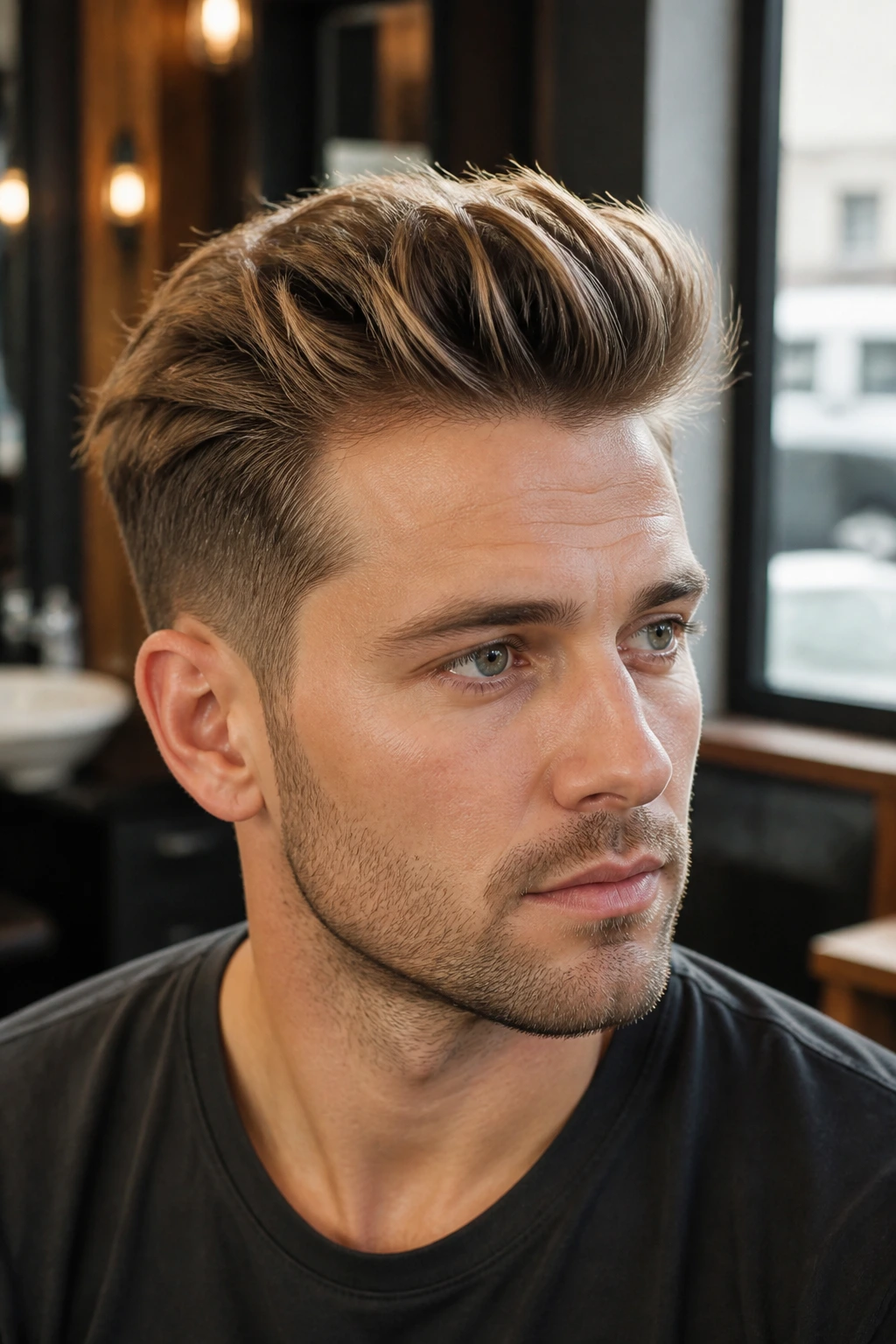
Fine hair needs a different plan. If you load it with product, it collapses. If you leave it naked, it slips down. The answer is a quiff built on root lift and light texture, not weight.
Keep the top around 3 inches and ask the barber for soft layering so the hair doesn’t look see-through at the front. Use a root-lift spray or mousse on damp hair, then blow-dry the front straight up and slightly back with a vent brush. Finish with a dry matte product, and use less of it than you would on thick hair.
The trick is making the hair look fuller without making it feel packed. Fine hair likes air. Give it that.
15. Thick-Hair Control Quiff
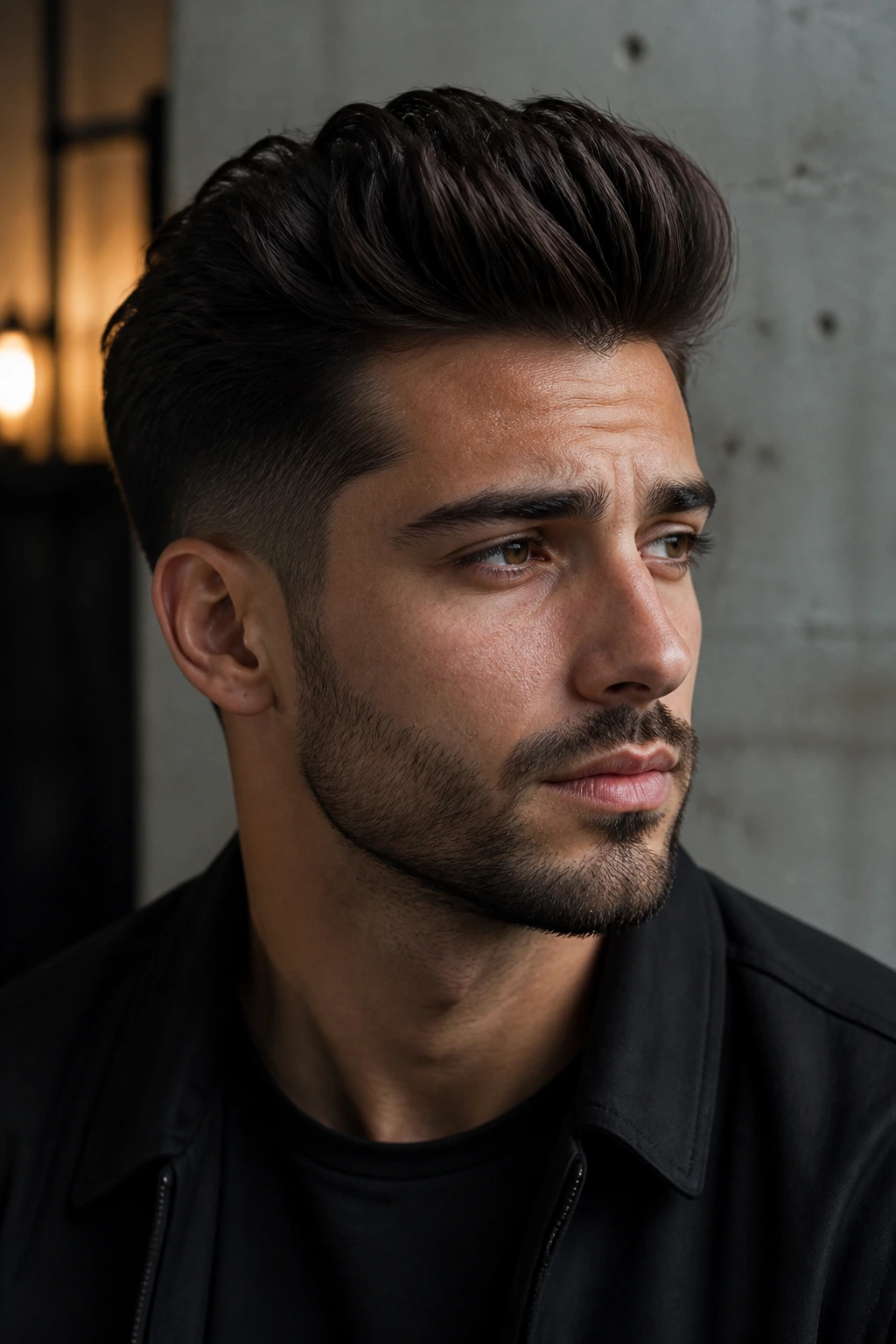
Thick hair gives you options, but it can also turn into a shelf if nobody removes bulk from the right places. A good thick-hair quiff starts with the haircut: scissor work on top, weight taken out through the front quarter, and a fade or taper that prevents the sides from ballooning.
Styling is about control. Dry the roots first, then work the front up in sections so the hair doesn’t all push in one direction. Matte clay or firm paste usually works better than shiny product here because thick hair can get greasy-looking fast.
If your hair grows outward instead of upward, this style needs a stronger blow-dry than the others. No shortcuts. Thick hair is generous, but it does not negotiate.
16. Receding-Hairline Quiff
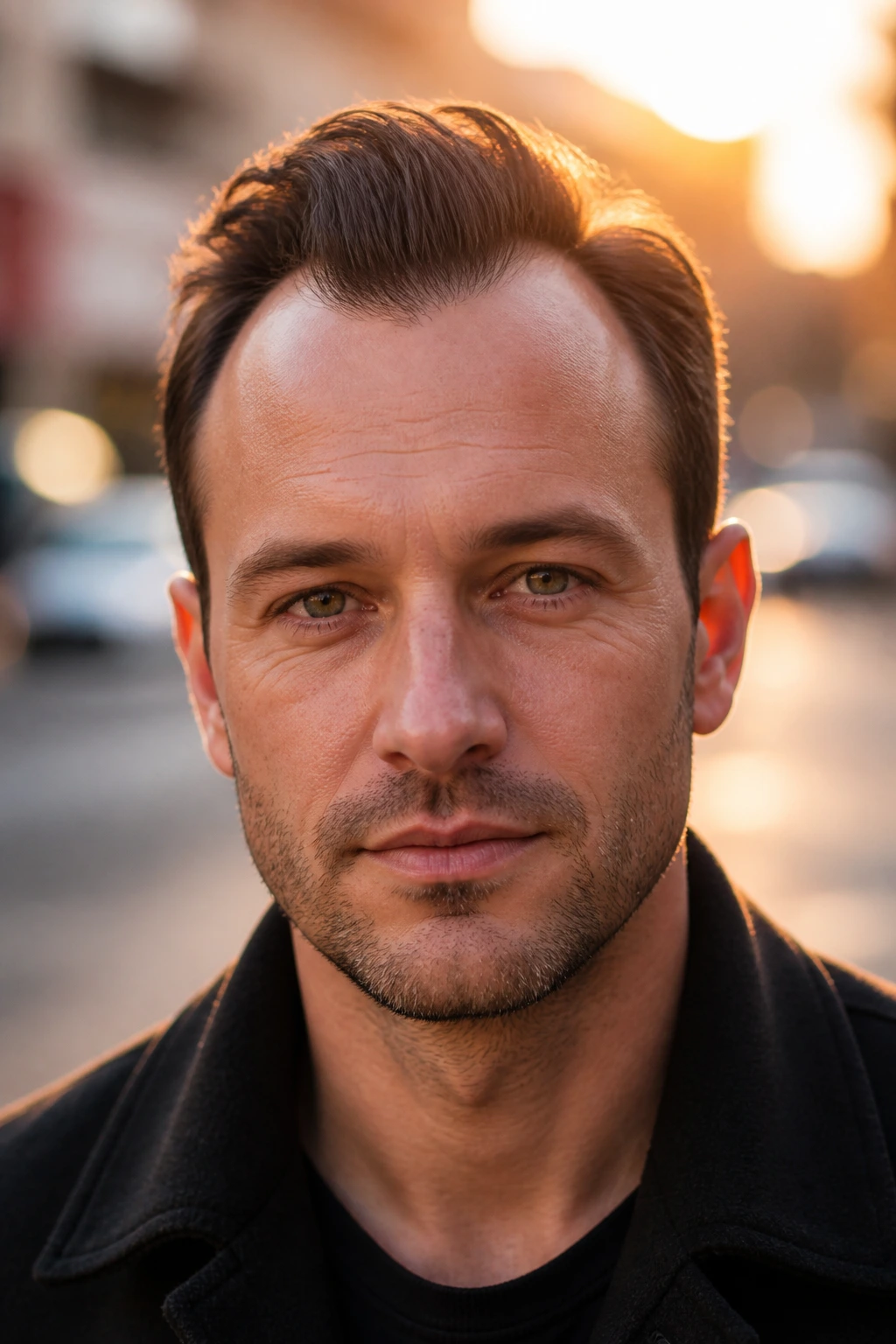
A receding hairline does not kill the quiff. It just changes the shape of it. The goal is to avoid forcing height right at the corners, because that draws attention to the exact place you want to soften. Keep a little more length through the center front and let the sides taper cleanly so the eye moves forward instead of sideways.
This version often looks better with a lower, looser lift than a tall front ridge. Brush the center upward and slightly back, then leave the corners soft. A matte cream or light paste usually looks more natural than a heavy, shiny product that hardens the hairline into a line.
It’s a better move than pretending the hairline is something else. Work with it. The haircut usually looks more confident that way.
17. Blowout Quiff
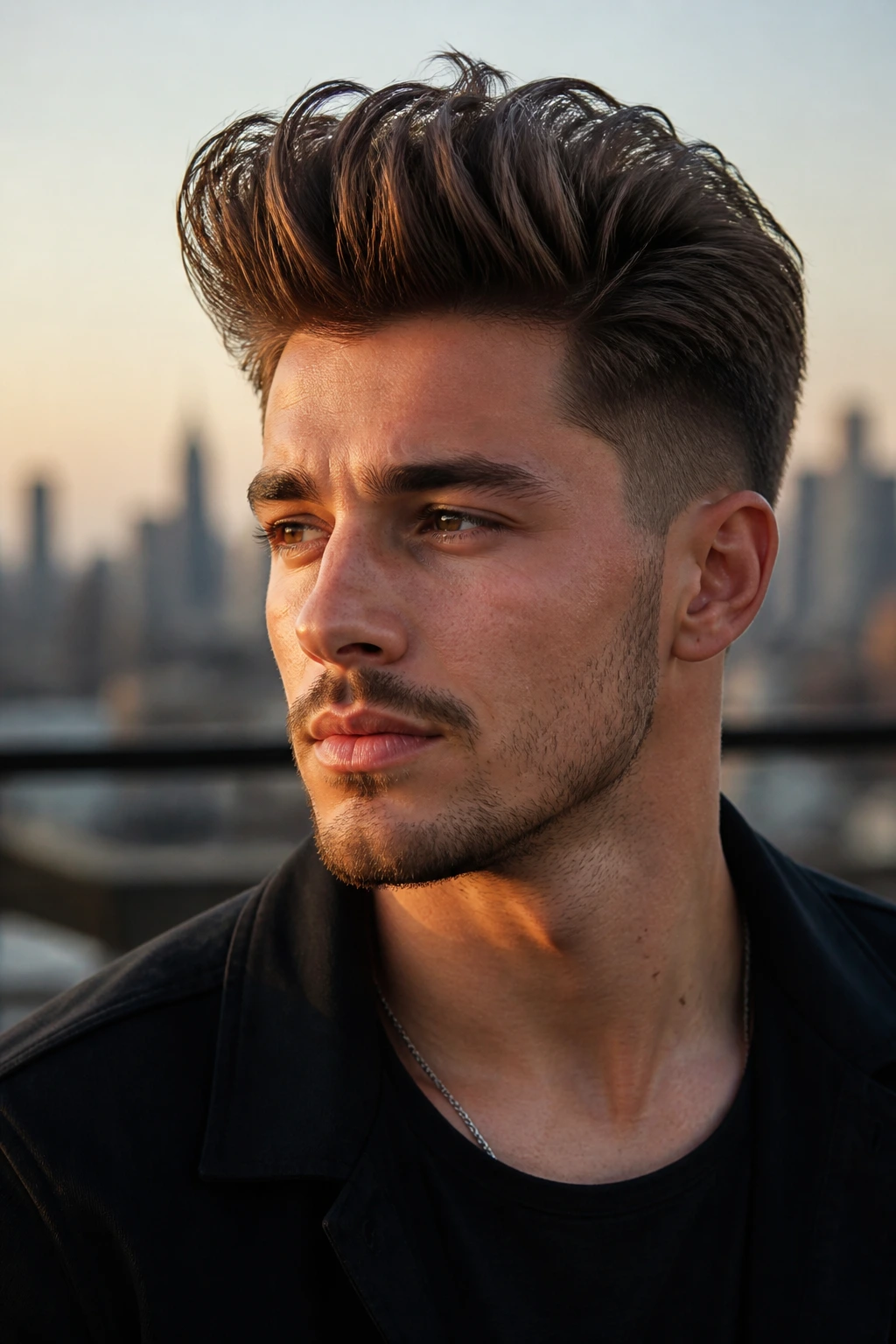
The blowout quiff has more air in it than the classic version. It looks like the front was lifted by heat and held in place just long enough to keep the shape. That makes it feel looser and more street-ready, especially when the sides are faded tight and the top has some texture.
Use a round brush or vent brush, direct heat at the roots, and then hit the front with a cool shot to set the shape. A light-to-medium clay keeps the lift from falling, but the finish should still move when you touch it. If it feels frozen, you’ve gone too far.
This is one of those styles that looks better when it isn’t overworked. A bit of air. A bit of mess. That’s the point.
18. Slick-Back Quiff
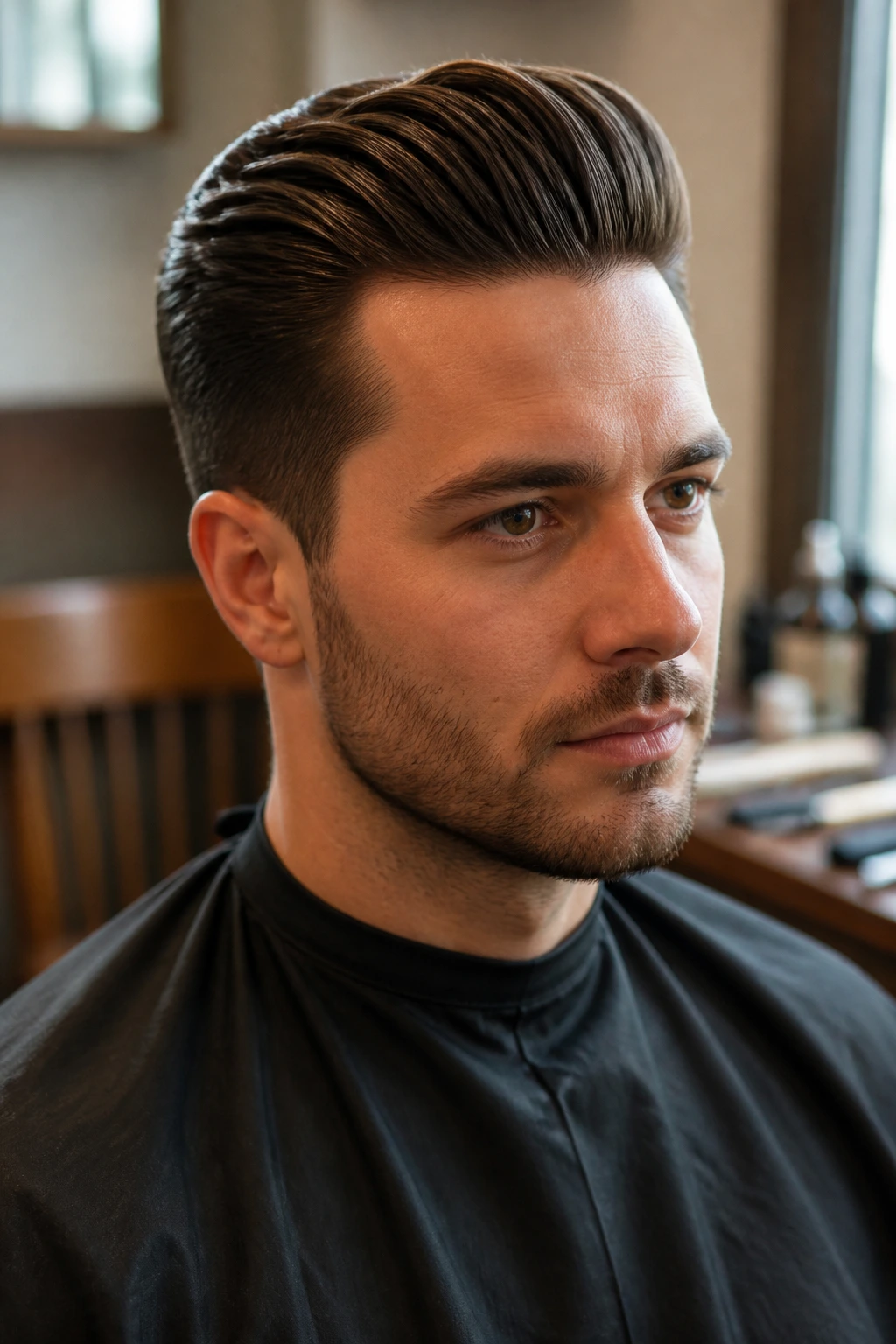
The slick-back quiff lives somewhere between a quiff and a polished comb-back. The front still rises, but the finish is smoother and more deliberate. It works especially well with straight or slightly wavy hair that can take a comb without breaking into pieces.
Ask for enough length on top to sweep backward cleanly, then keep the sides tapered so the style doesn’t become a full pompadour. Use pomade on damp hair, comb from the front toward the crown, and smooth the front ridge just once or twice. More combing usually means more shine and less shape.
If you want a sharper version, keep the fade tighter. If you want a calmer version, let the sides breathe a little. Either way, the front should look controlled, not slick for the sake of it.
19. Matte Clay Quiff
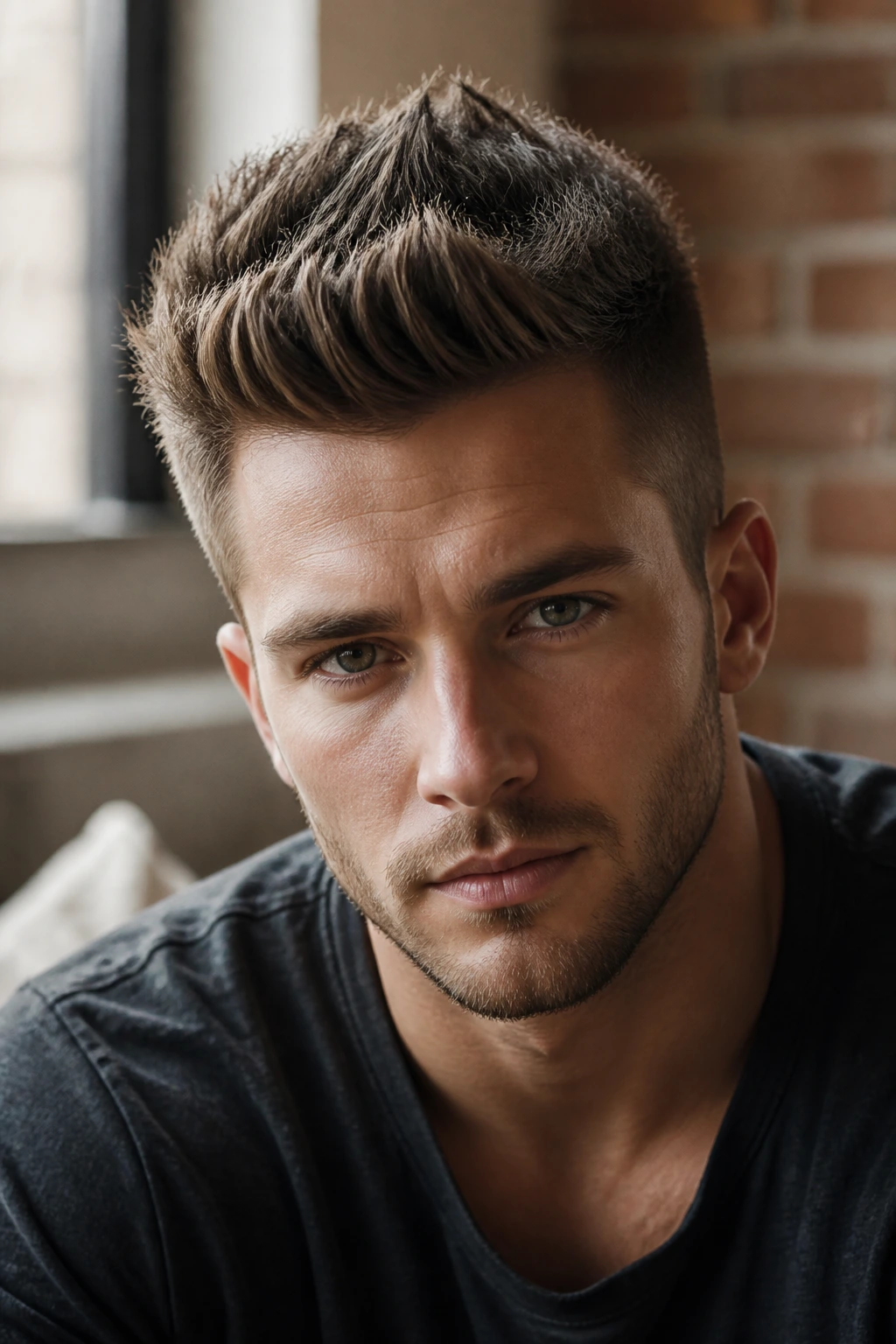
Matte clay is not a haircut, strictly speaking, but it changes the quiff enough to deserve its own place. It gives the front a dry, broken-up finish that works when you don’t want shine showing every strand. The best version starts with a clean cut and some texture on top so the clay has something to grip.
Work a small amount into dry or nearly dry hair, not soaking wet hair. Start at the roots and lift the front with your fingers, then pinch pieces of hair near the forehead to keep the shape from looking too smooth. If you use too much, it turns chalky. If you use too little, it slips.
This finish suits men who want their hair to look styled but not lacquered. It’s honest. A little rough around the edges, which is often the point.
20. Wet-Look Quiff
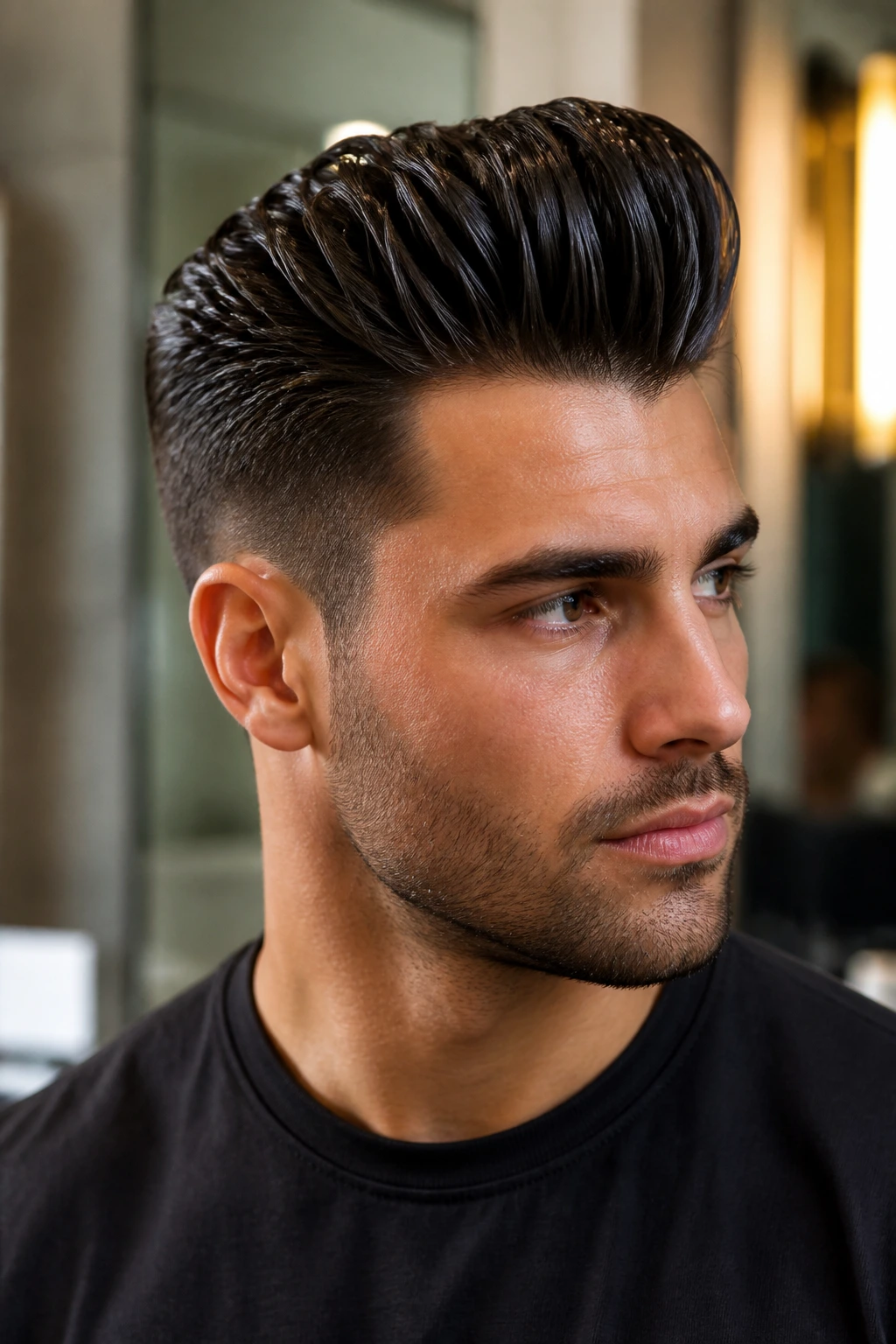
The wet-look quiff is for men who want shine and structure in the same haircut. It leans on pomade or gel, which gives the front a more reflective finish and a sharper edge. The cut underneath should be neat, because glossy product makes every line more visible.
Use product on damp hair and comb the front up and back in one clean pass. Don’t keep combing once it’s set; that breaks the surface and can make the hair look patchy. A wet-look quiff works best when the shape is defined early and then left alone.
This style can look expensive when it’s done cleanly. It can also look greasy if you overdo it. The difference is usually one extra teaspoon of product you did not need.
21. High-Volume Quiff
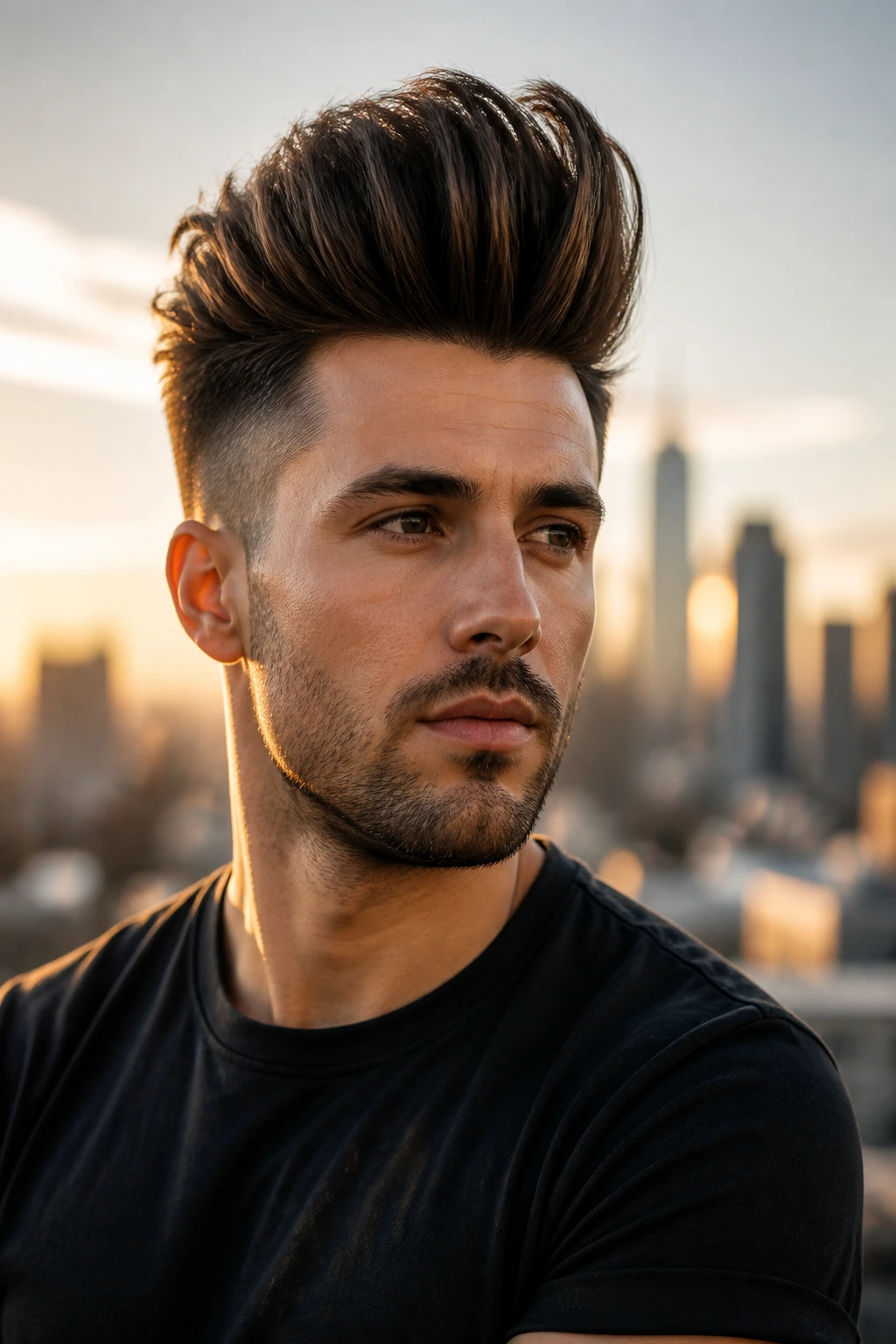
A high-volume quiff pushes the front upward more aggressively than the classic cut. It’s the version that adds the most vertical line, which can help balance a wider jaw or soften a rounder face. The haircut needs real length in front, usually 4 inches or more, and enough density that the top doesn’t go wispy once it’s lifted.
Blow-drying matters here more than product. Use a round brush, lift the roots in sections, and set the front with cool air before adding a matte paste or spray. If the top is heavy, the height falls; if the sides are too soft, the whole shape spreads instead of rising.
Quick Fit Notes
- Best on medium to thick hair.
- Strongest on oval and square face shapes.
- Needs a trim before the front grows too long and starts bending forward.
The haircut should feel bold, not bulky.
22. Low-Profile Quiff
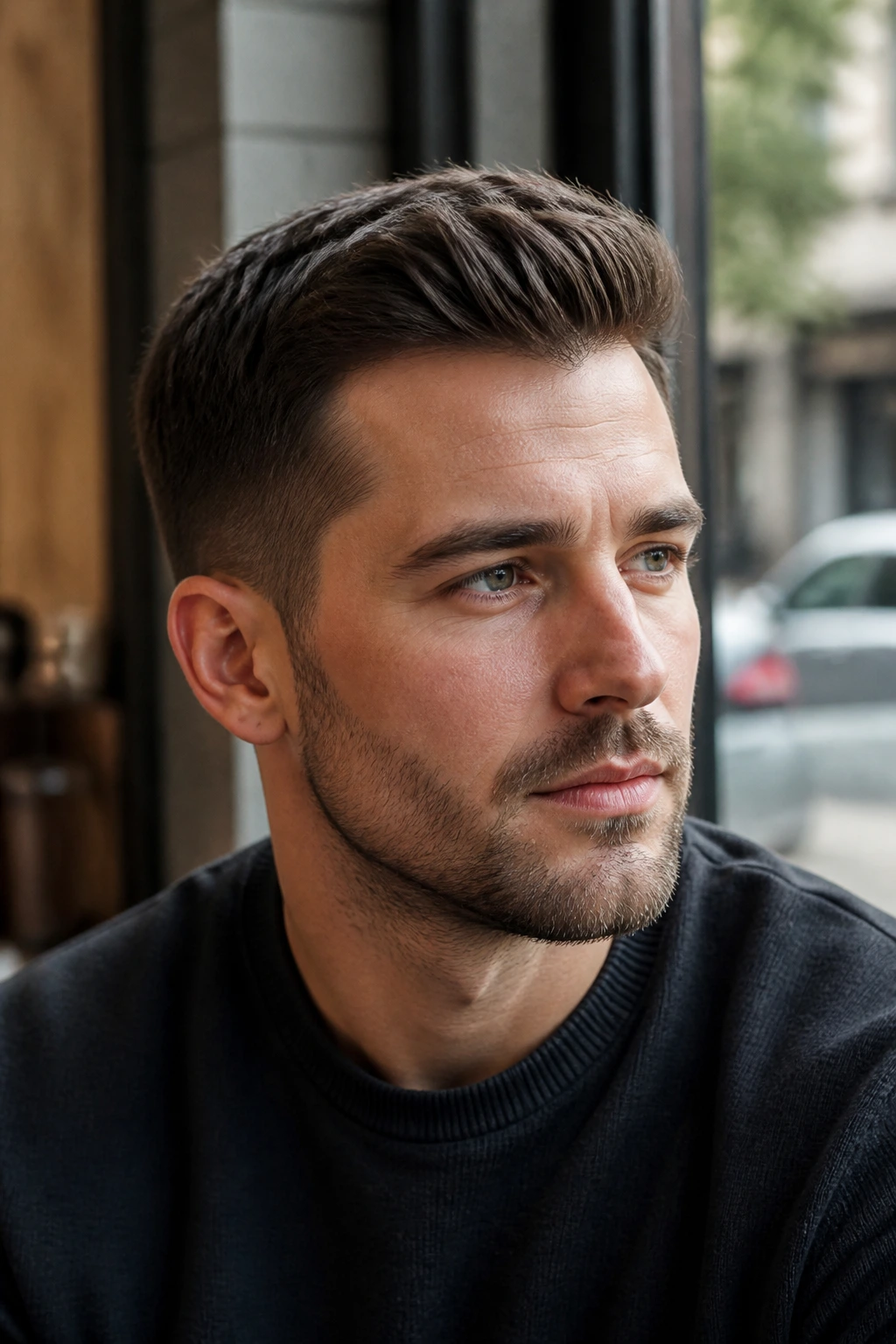
A low-profile quiff keeps the front lifted, but only a little. It is the quiet version. Useful when you want hair that looks shaped without drawing a lot of attention. The top stays close to 2.5 to 3.5 inches, and the front rises just enough to clear the forehead line.
Use a cream or light paste and blow-dry the roots with a flat brush. You’re not trying to create a wall. You’re giving the front some direction. That makes the style easier to wear with a jacket, a hoodie, or anything that would swallow a bigger quiff.
It’s one of the best options for men who want to keep things clean without looking stiff. Small lift. Big payoff.
23. Textured Crop Quiff
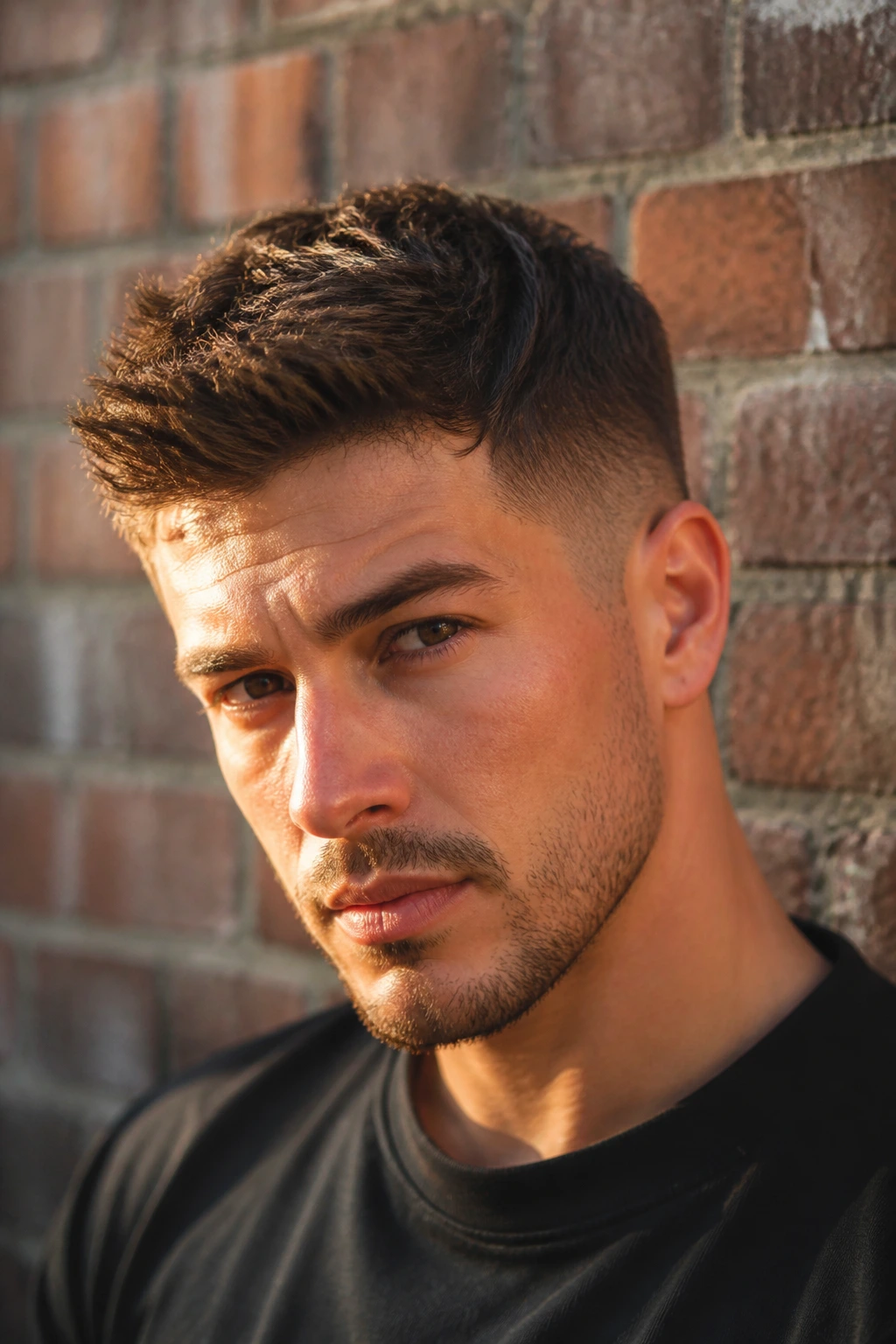
The textured crop quiff is a shorter, sharper hybrid. It borrows the chopped fringe and close sides of a crop, then pushes the front just enough to make the silhouette read as a quiff. The result is neat but not fussy, which is why it works so well for men who don’t want a high-maintenance front.
Ask the barber to keep the top short and jagged, with enough length at the front to lift. Then use a matte product and direct the hair forward before nudging the front upward. That forward-first motion keeps the texture visible and stops the style from floating too high.
This version is good when you want a quiff that doesn’t demand too much length or too much time. Practical. Clean. Still has shape.
24. Hard-Part Quiff
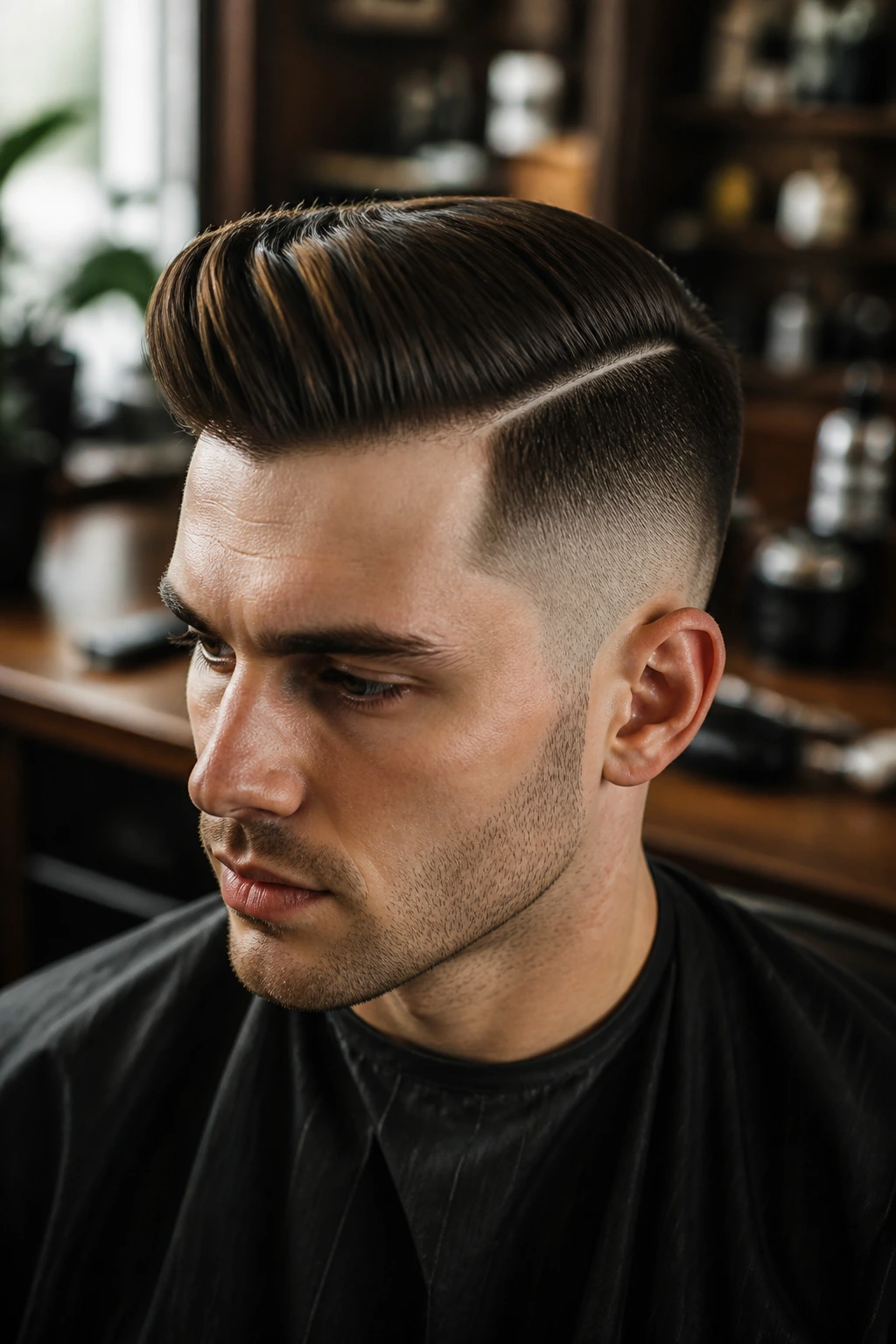
A hard-part quiff builds its shape around a visible razor line, which gives the haircut a more structured, barbered look. The part creates a visual wall, and the quiff rises on the heavier side of the split. It’s sharper than a soft side-part version and usually reads as more formal or more deliberate.
Keep the top long enough to move, but not so long that the part disappears under the hair. A comb and a medium-hold pomade usually work best. You want the line to stay visible without the whole top looking glued down.
This cut is not for men who hate upkeep. The part grows out, and once it does, the whole thing softens fast. Clean line, regular trims.
25. Temple Fade Quiff
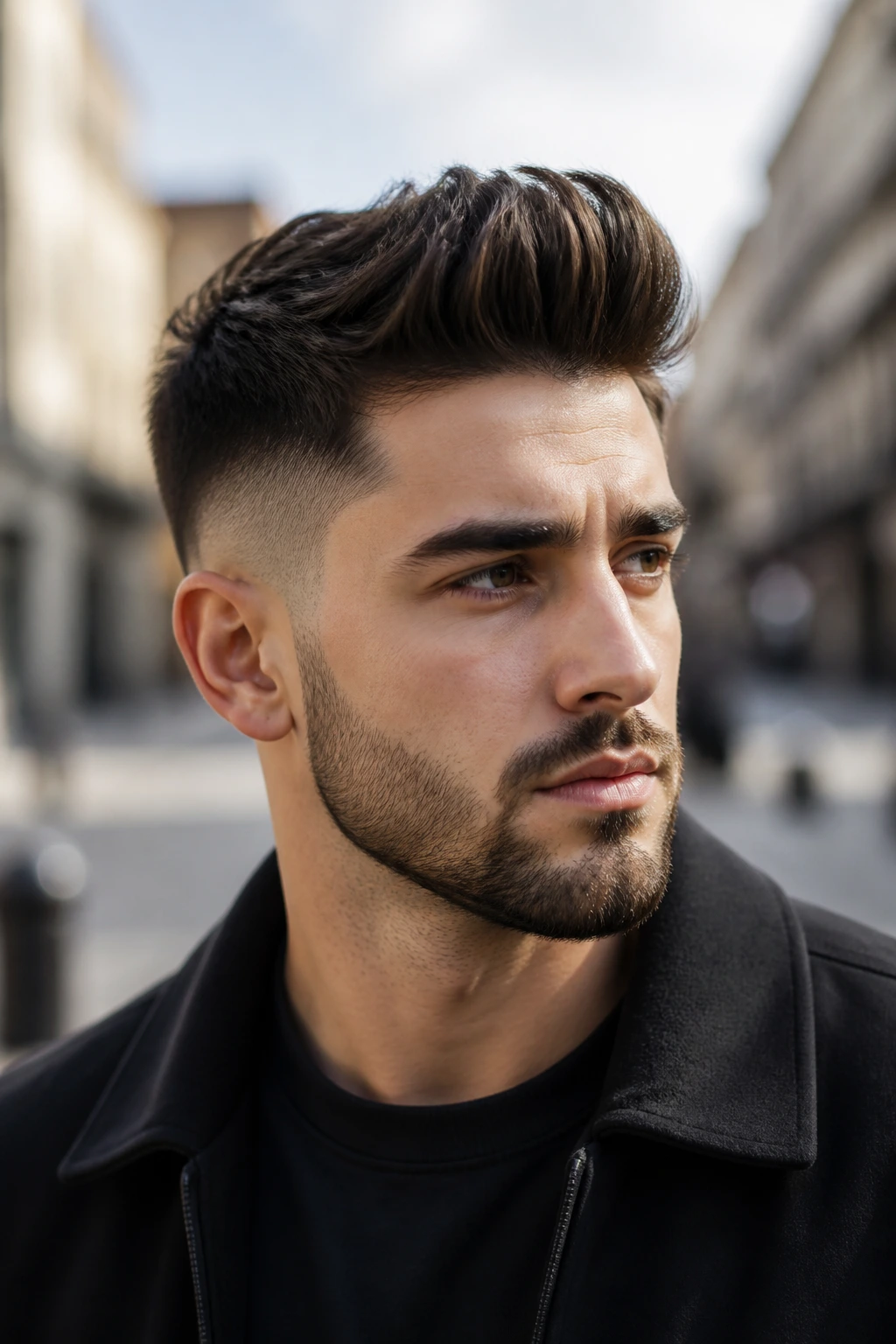
The temple fade quiff is subtle from a distance and sharp up close. The fade concentrates around the temples instead of dropping aggressively through the whole side, which leaves the top looking fuller and the face looking cleaner around the edges. It’s a smart choice when you want detail without a loud contrast.
Keep the top textured and medium length, then blow-dry the front upward with a narrow brush so the lift stays centered. The temple fade makes the shape feel tailored, which is useful if your hair grows wide at the corners or if you want the quiff to look a little more refined.
Why It Stands Out
It’s one of those cuts people notice without being able to explain why. The edges are tidy. The front still moves. Good stuff.
26. Business Quiff
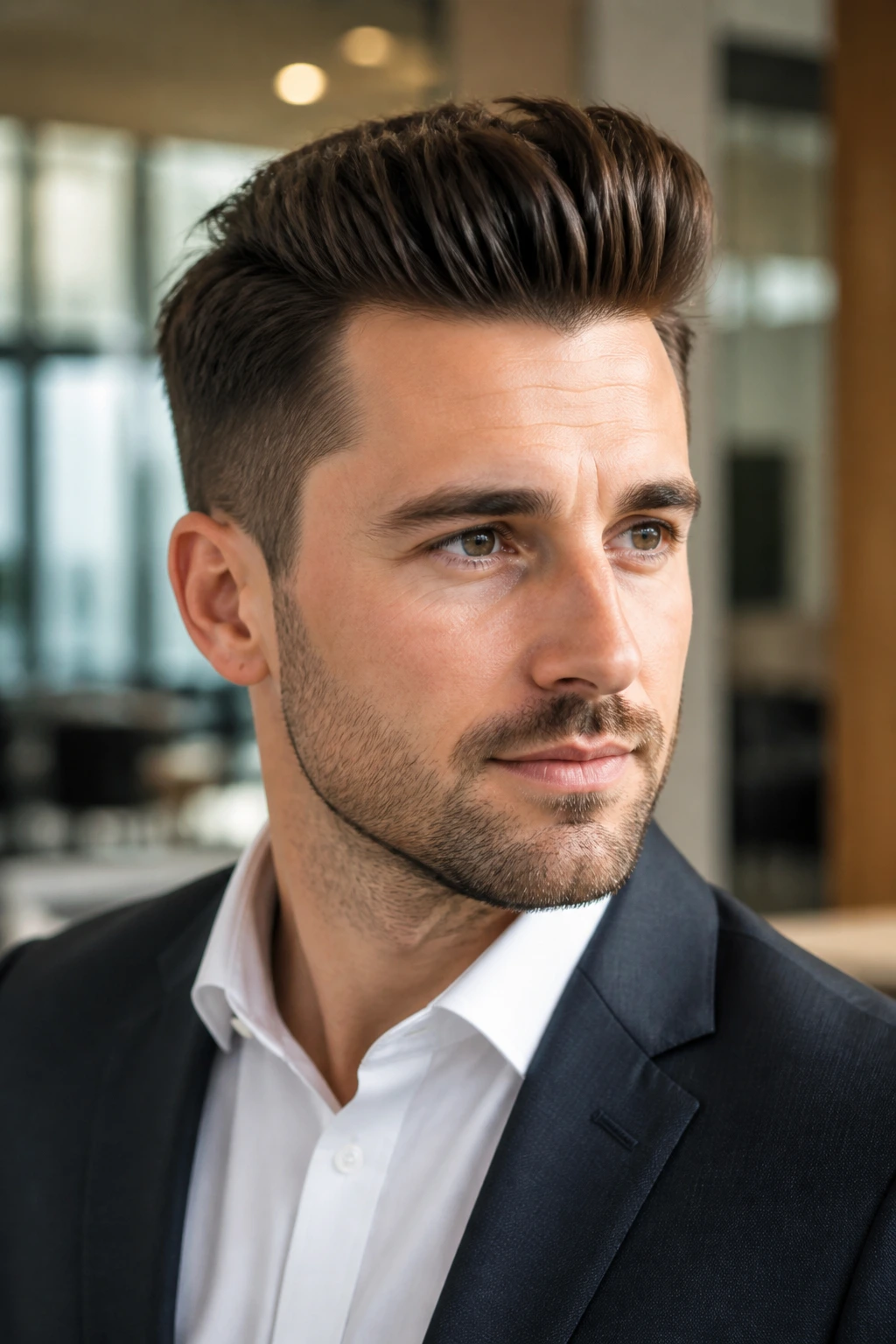
The business quiff keeps the lift controlled and the finish restrained. No giant front ridge. No obvious product. Just enough height to give the haircut structure and enough taper on the sides to keep it neat around a collar.
Ask for 2.5 to 3.5 inches on top, with a soft taper or scissor-cut sides if you want the cleanest version. Style with a light cream or low-shine paste, then comb the front up and slightly back so it sits in a tidy line. The shape should still move when you touch it.
This is the version that works best when you want the quiff to behave at work and not look like it’s trying to steal attention from the rest of the room. It’s a haircut with manners.
27. Rockabilly Quiff
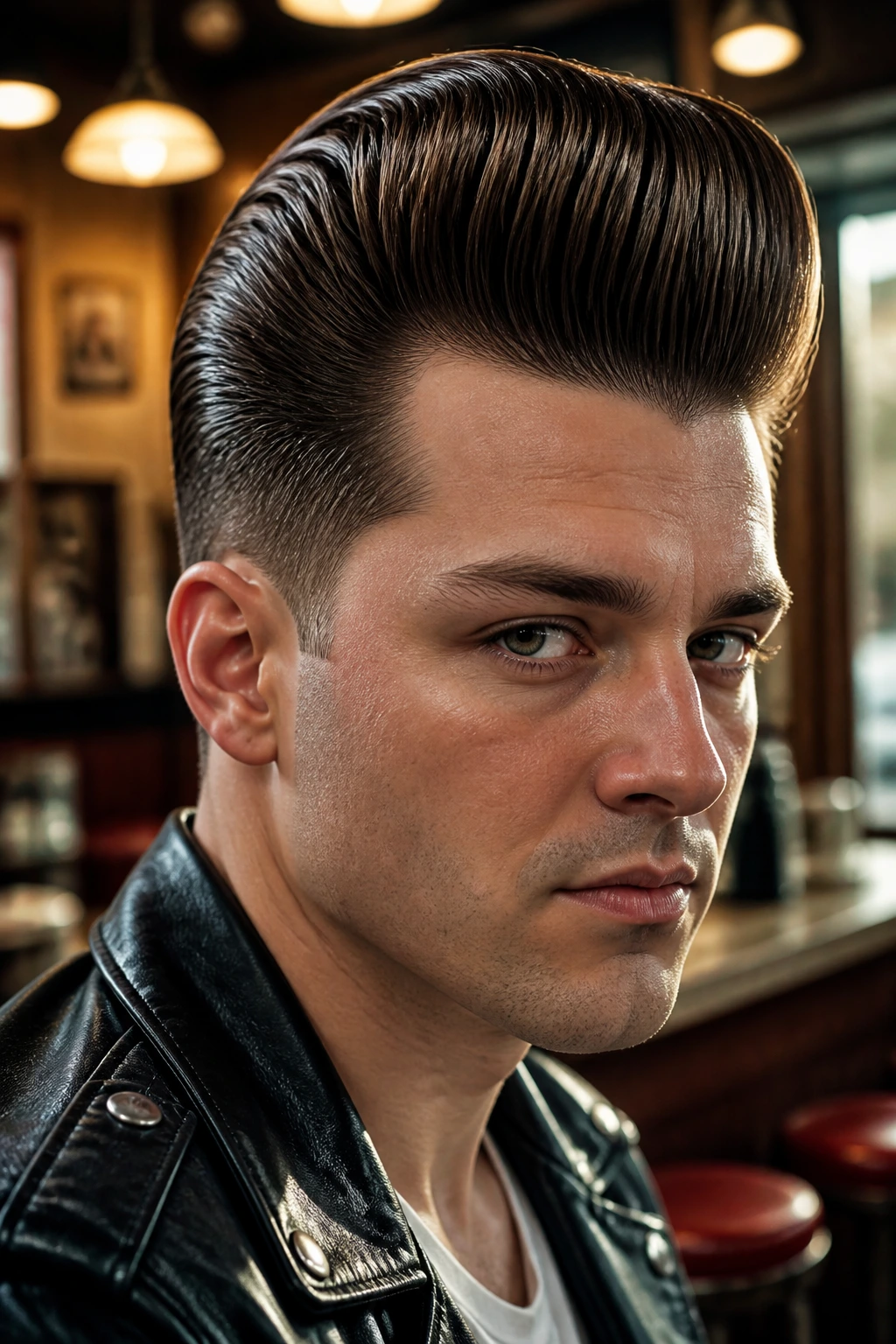
The rockabilly quiff is the most dramatic one here, and it leans into that with no apology. The front goes higher, the sides stay tighter, and the finish often has more shine than the matte versions. It borrows from vintage styling, but when it’s cut cleanly, it doesn’t look like costume hair.
You need length. Usually 4 to 6 inches in front, sometimes more. Blow-dry the roots upward, shape the front with a comb, then use a stronger pomade or styling cream to lock it in place. If your hair is thick, that hold gives you control. If it’s fine, the product and blow-dry are doing most of the lifting.
This one likes confidence, but it also likes a good barber. The silhouette has to be clean or the whole thing tips into exaggeration.
28. Brushed-Forward Quiff
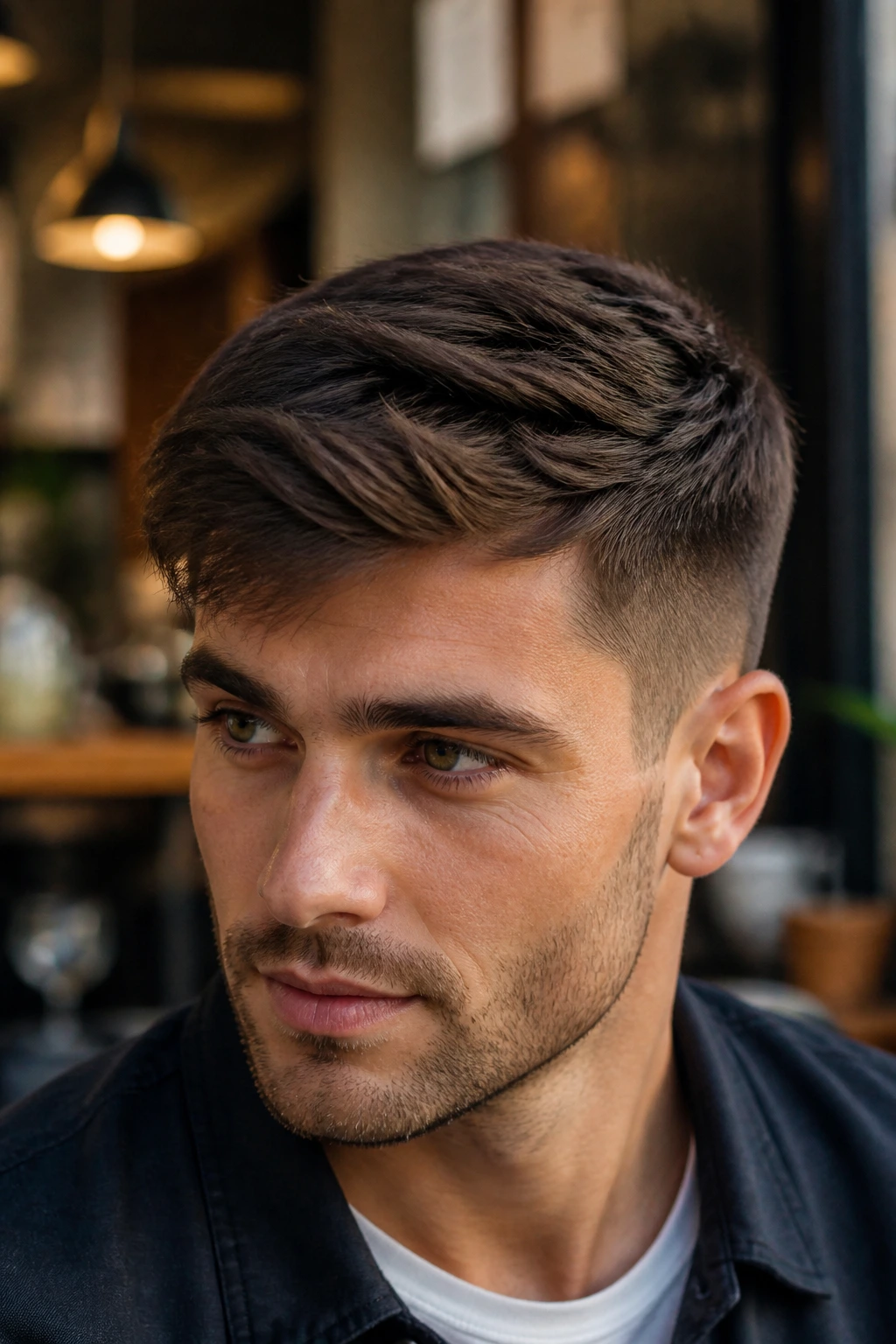
Brushed-forward quiffs are underrated. Instead of pulling everything straight back, you guide the hair forward first and then push the front up from there. That can help if your hair has a stubborn cowlick or if the front naturally wants to stand in different directions.
Keep the top medium length and ask for texture so the front can break apart a little. Work product through damp hair, brush it forward, then lift the front with the dryer. That sequence sounds backward until you try it. Then it makes sense.
It gives the quiff a looser shape, more movement, and less of that over-controlled front ridge that some men hate. Good for hair that refuses to behave in a straight line.
29. Fringe-Blend Quiff
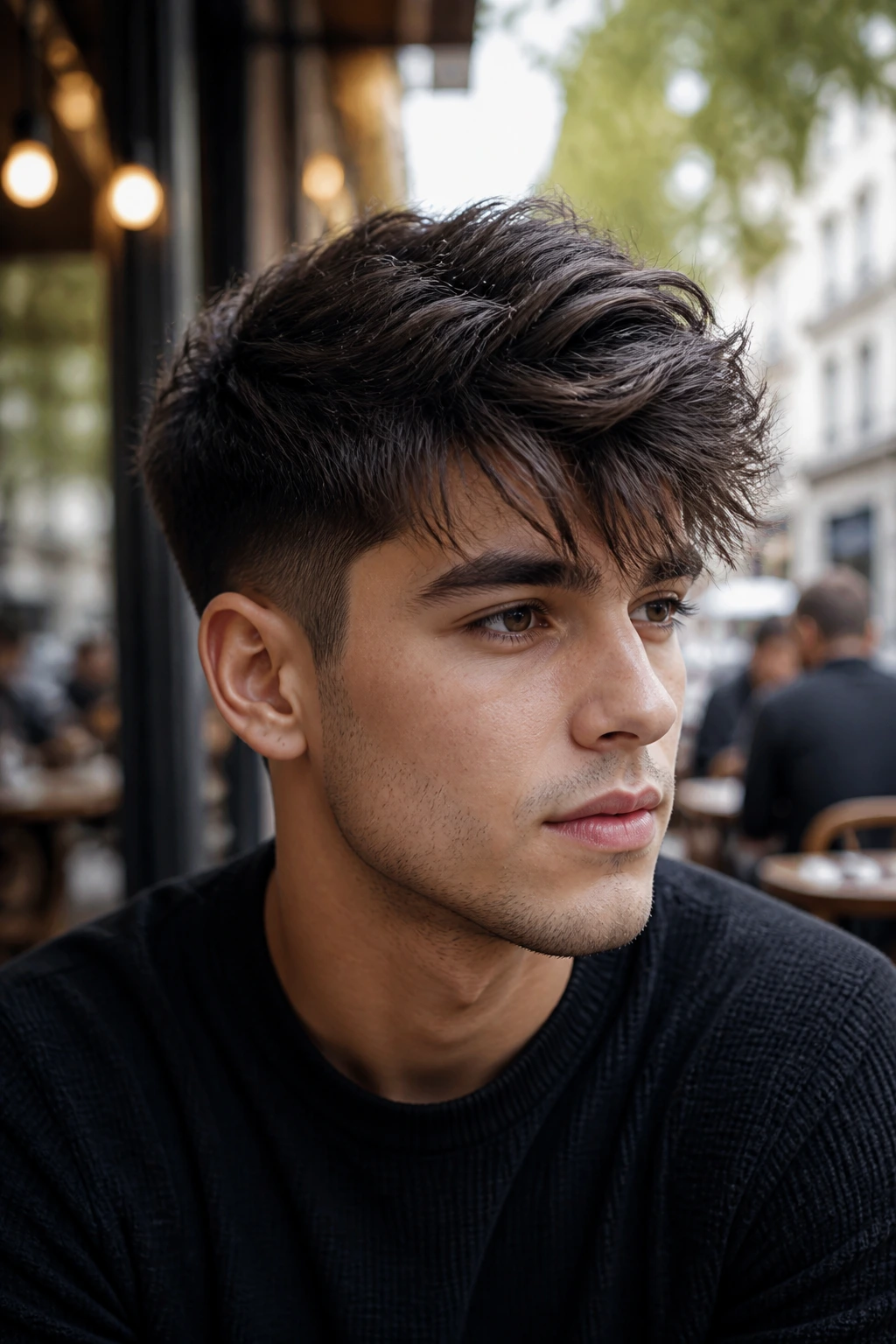
The fringe-blend quiff sits between a forward fringe and a lifted front. It keeps a little length over the forehead, then raises the center so the haircut still reads as a quiff instead of a heavy bang. That makes it useful for men who want some coverage without losing the upward shape.
The barber should keep the front soft and slightly irregular, not blunt. Style it by blow-drying the roots at the center upward, leaving the outer sections a little lower. A matte cream or paste keeps the fringe from splitting too sharply.
This is a good option if you like texture near the forehead and don’t want the front to feel too exposed. It has a bit of movement. A bit of shield. Not too much of either.
30. Straight-Hair Quiff
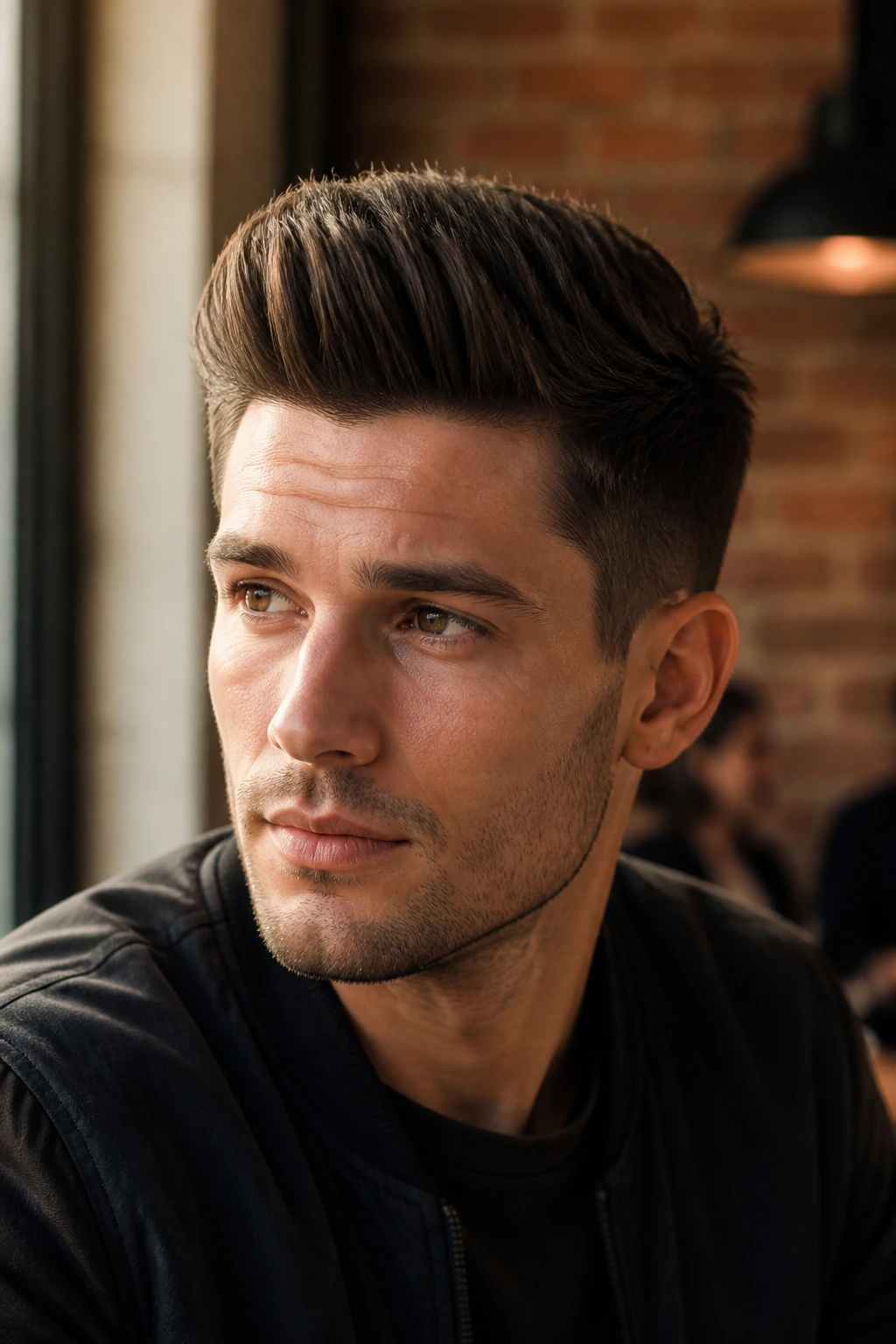
Straight hair needs grit. Without it, the quiff can slip flat fast, especially if the hair is fine or the front is too smooth. The fix is usually a combination of root lift, texture in the cut, and a product with enough grip to hold the front where you put it.
Use a volumizing spray or mousse on damp hair, then blow-dry against the grain for a minute or two before shaping the front upward. Finish with a matte paste and a tiny amount of hairspray if needed. Too much product makes straight hair look wet and weak. Too little makes it fall.
This style can look very clean when it’s done right. Crisp. Neat. A little stubborn, which suits straight hair better than people expect.
31. Medium-Length Quiff
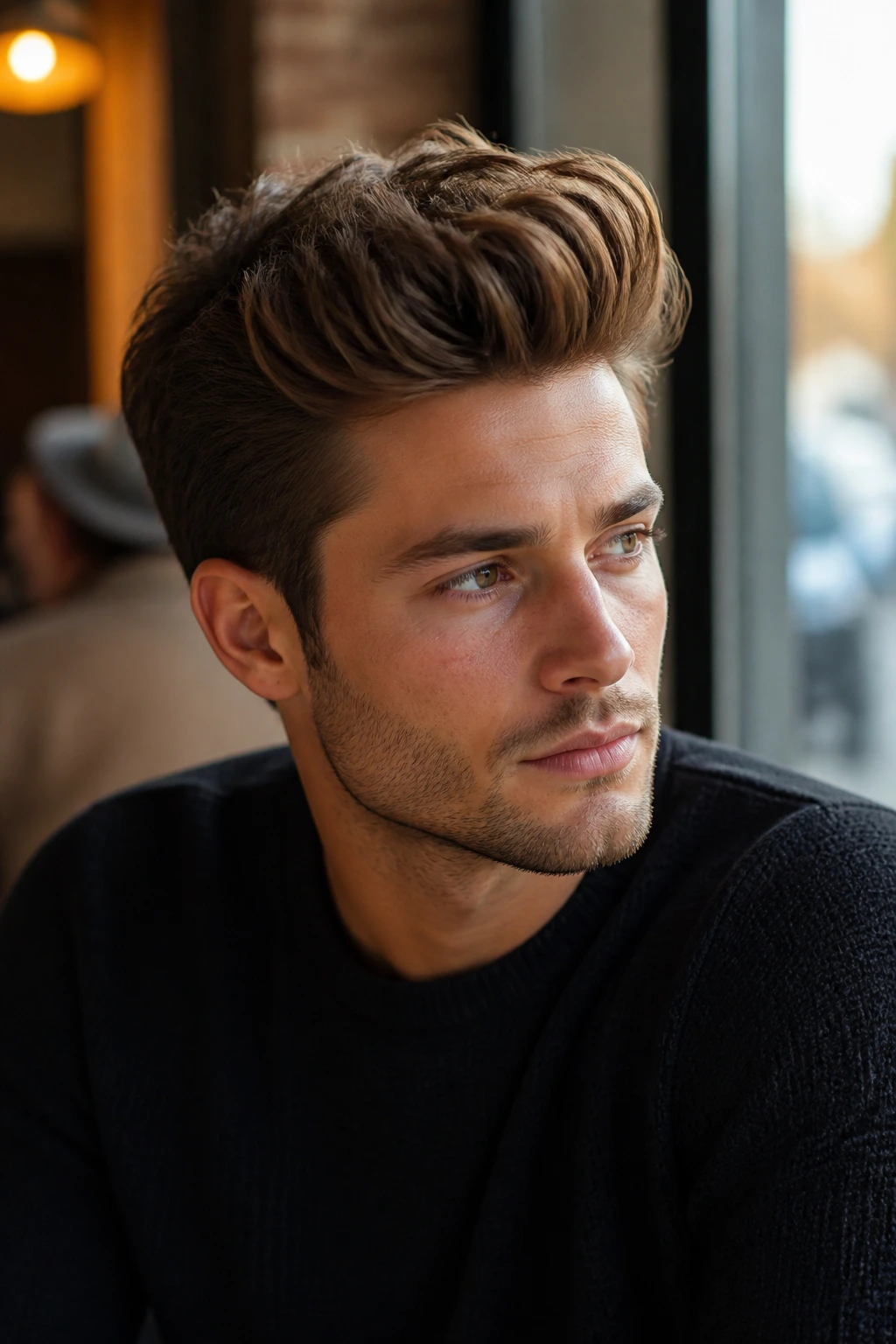
Medium-length hair gives you the most room to shape the front without forcing it into one lane. You can lift it higher, sweep it looser, or let it sit a little soft around the sides. That flexibility is why this version is such a workhorse.
Keep the top around 3.5 to 5 inches and make sure the barber doesn’t leave too much weight in the crown. A round brush and a blow-dryer are still the main tools here, but the styling doesn’t have to be rigid. You can add a little cream for softness or a matte paste for a rougher finish.
This is the quiff for men who like having options. One cut, multiple moods.
32. Gentleman’s Taper Quiff
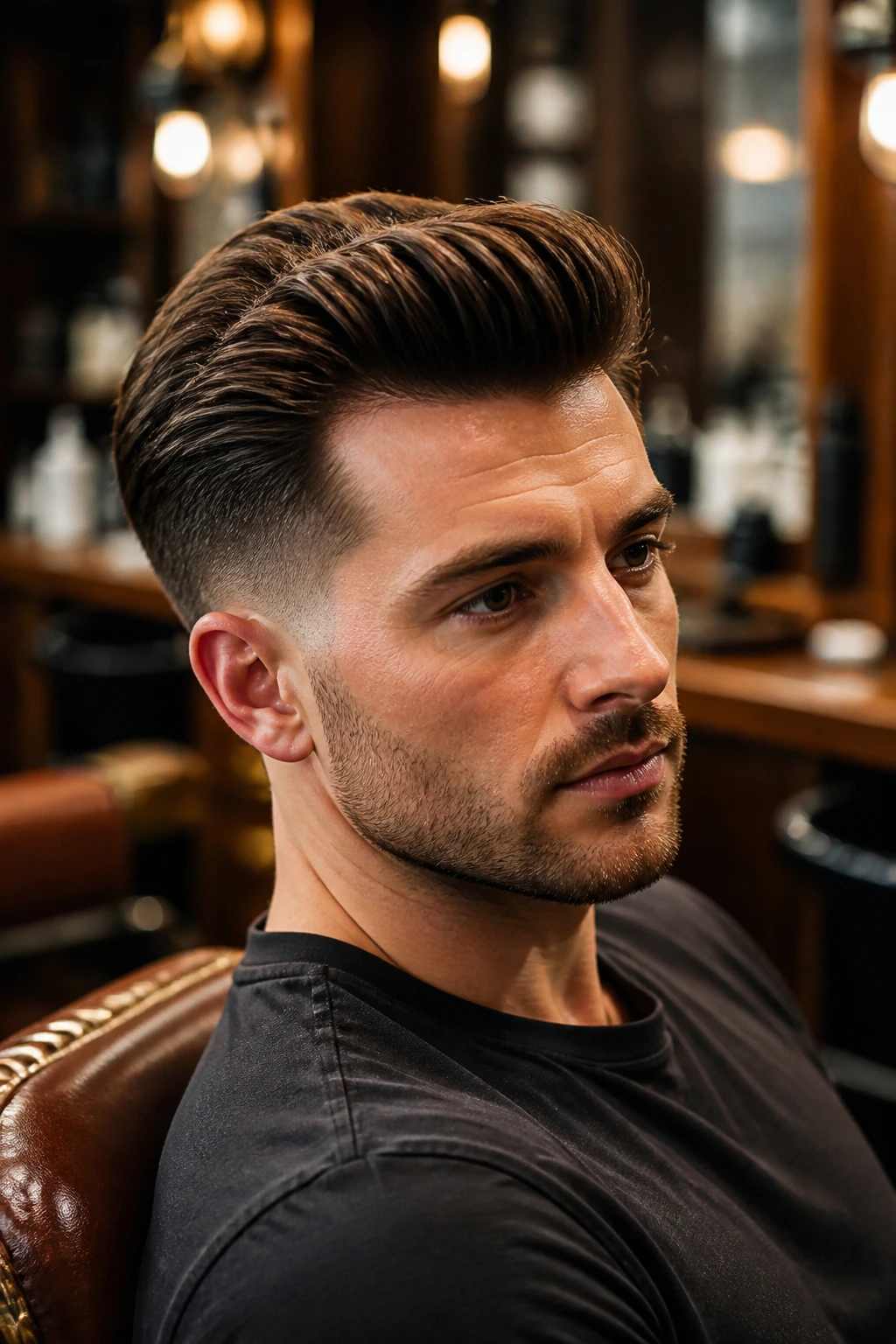
The gentleman’s taper quiff is the most restrained finish in the group, and I mean that in the best way. It keeps the front neat, the sides softly tapered, and the overall silhouette clean enough to wear anywhere without feeling overstyled. There’s enough lift to show the quiff shape, but not enough to turn heads for the wrong reason.
Ask for a low or medium taper, a softly layered top, and a front that can be brushed upward without standing straight off the forehead. A light cream or low-shine paste is usually enough. The hair should move. It should not sit there like varnish.
If one haircut needs to work with a tie, a tee, and a slightly messy day after, this is it. Calm. Sharp. Hard to mess up.
What Makes a Quiff Hold Its Shape
A quiff is not held together by product alone. The haircut does most of the work before you even touch the bottle. If the top is too short, the front can’t rise. If the crown is too heavy, the hair falls back and fights the lift. If the sides are too bulky, the whole silhouette looks wide instead of tall.
The best quiff haircuts build shape into the cut itself. That usually means more length in front than at the crown, some texture through the top, and a fade or taper that keeps the sides from puffing out. A barber who scissor-cuts the top and removes weight near the front quarter can save you a lot of frustration later.
The Three Numbers That Matter
- Top length: usually 3 to 5 inches for most versions.
- Front lift: enough to rise cleanly without becoming a tower.
- Side contrast: enough to show the shape, not so much that the head looks narrow and severe.
If one of those three is off, the style starts arguing with itself. That’s when people blame the product, when the cut was the issue all along.
Essential Tools for Styling a Quiff
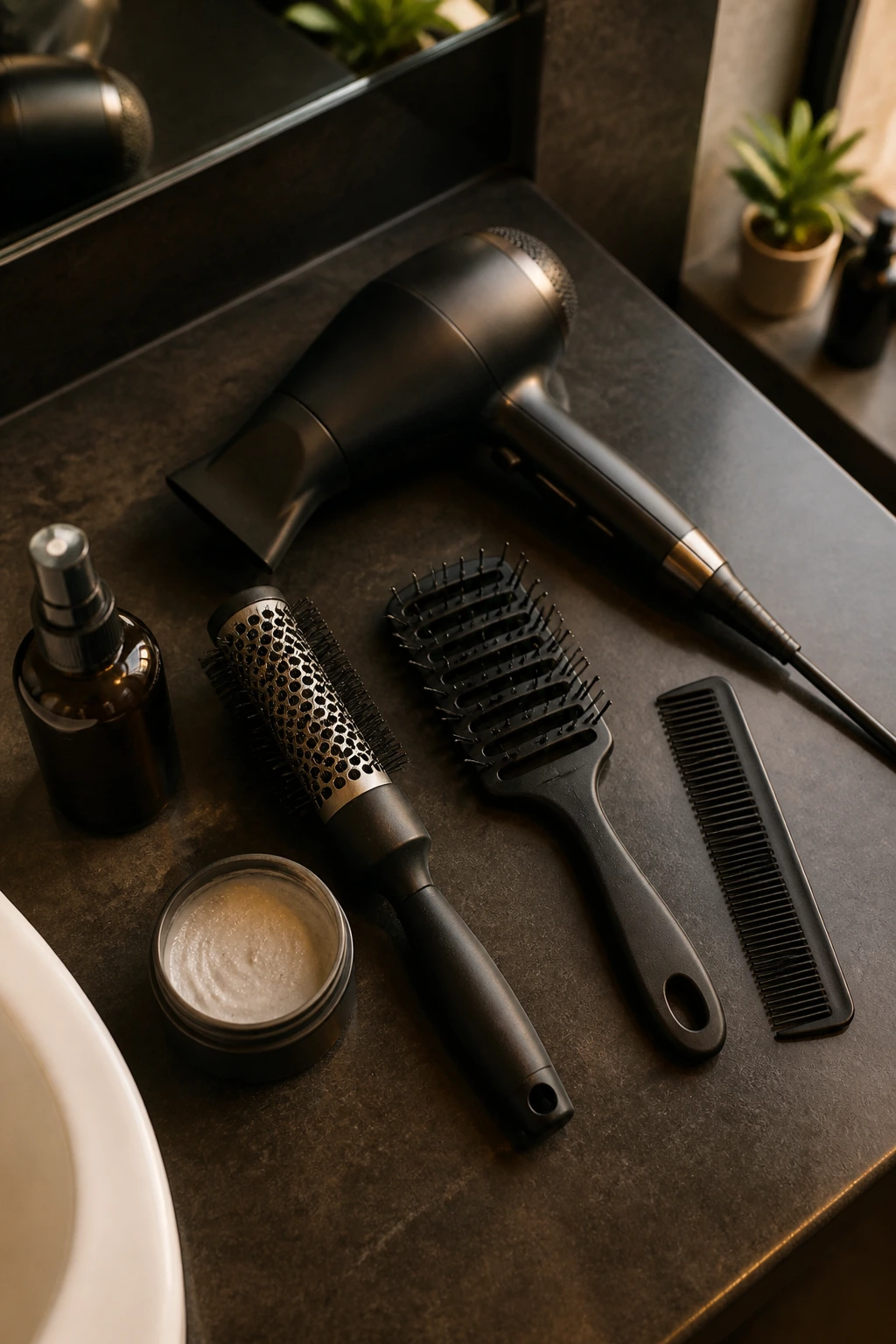
- Hair dryer with a nozzle attachment: directs heat at the roots so the front lifts instead of frizzing outward.
- Round brush, 1 to 1.5 inches: helps shape the front ridge and gives the top a bend.
- Vent brush: works faster on thicker hair and adds lift without pulling too hard.
- Fine-tooth comb: useful for slicker quiffs, hard parts, and cleaner front lines.
- Sea salt spray or root-lift spray: adds grip before the main product goes in.
- Matte clay, paste, or pomade: the finish changes everything, so keep at least two textures on hand.
- Heat protectant: especially useful if you blow-dry every morning.
- Hand mirror: helps you check the crown and back of the quiff without guessing.
- A spray bottle with water: perfect for day-two restyling when the front needs a quick reset.
How to Choose the Right Length, Fade, and Front Height
The best quiff starts with an honest read on your hair. Thick hair can carry more height and a sharper fade. Fine hair usually looks better with a shorter, lighter version that doesn’t need a wall of product. Curly and wavy hair often look better when the cut leaves movement alone instead of fighting it.
Bring the barber a photo of the front, side, and back if you can. One angled picture is not enough. Tell them how much height you want in the front in plain language: “I want the front to lift about an inch and a half above the forehead,” or “I want it low and controlled, not tall.” Those details are more useful than saying you want a modern quiff and hoping for magic.
Match the Cut to the Face
- Round face: a little more height can help stretch the shape.
- Long face: keep the quiff lower so the head doesn’t look taller.
- Square face: sharper fades and stronger texture usually look right.
- Receding hairline: softer lift and less corner height keep the front honest.
That’s the part most people skip. They ask for a style, not a shape.
Product Choices That Change the Finish
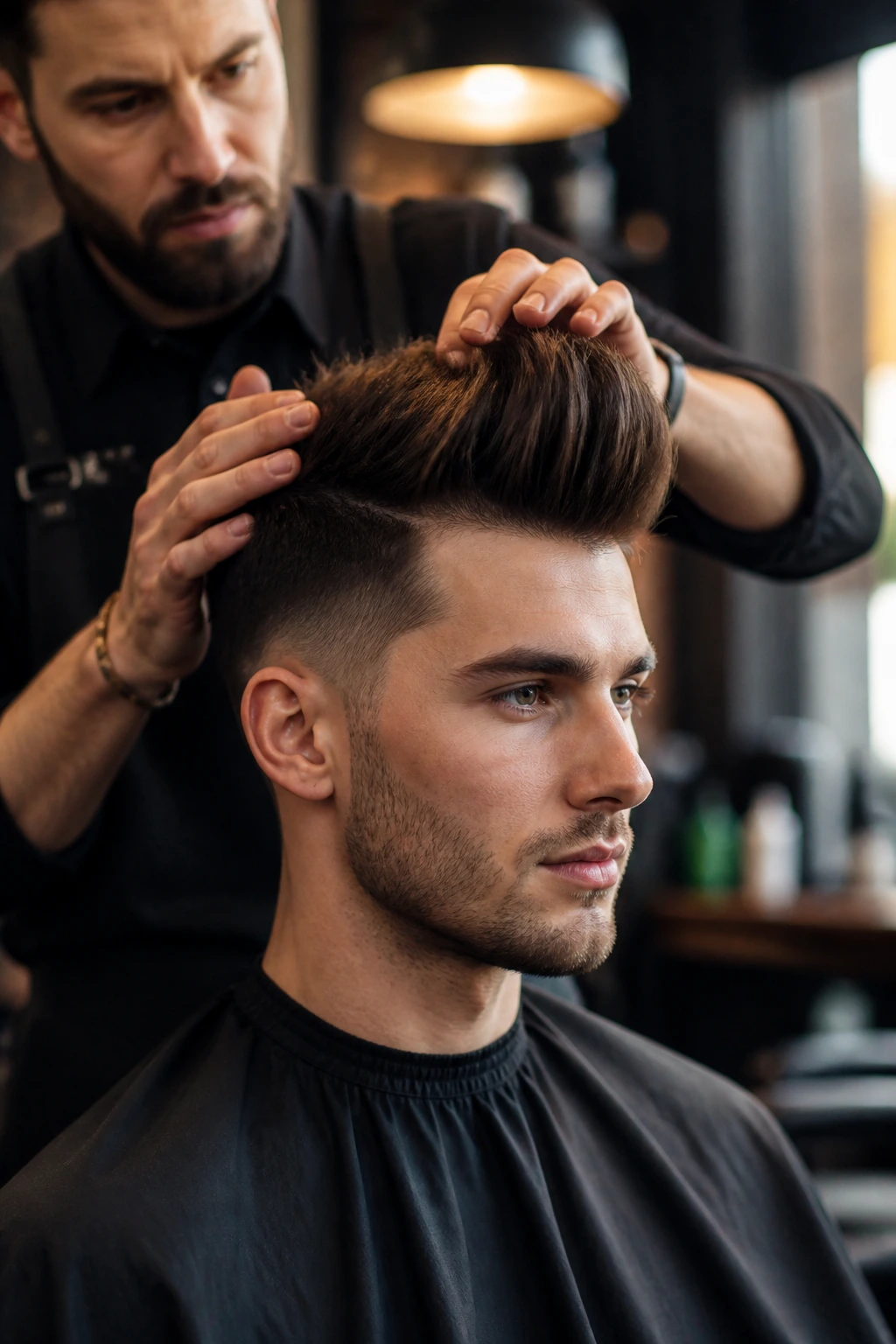
A quiff’s finish can change in one step. Matte clay makes the front look broken up and dry. Pomade gives it sheen and more comb definition. Paste sits somewhere in the middle and usually gives you the easiest everyday control. If you want the hair to feel touchable, avoid using one heavy product that tries to do everything.
For fine hair, a root-lift spray or mousse under a lighter paste is usually smarter than a dense clay. Thick hair often needs stronger hold to stop the front from sinking back down. Curly and wavy hair tend to like creamier products that keep the texture soft instead of stiff. If you use blow-dryer heat, add heat protectant first. Not a lot. Just enough to stop the front from drying out and getting frizzy.
Quick Product Pairings
- Matte texture: sea salt spray + clay.
- Clean shine: light pomade + comb.
- Soft control: styling cream + light paste.
- Maximum hold: mousse or root spray + firm clay + light hairspray.
Use less product than your first instinct tells you. Hair forgives underuse faster than overuse.
How to Wear a Quiff for Work, Weekends, and Nights Out
A quiff does not have to look the same every day. A work version can sit lower and smoother, with a soft taper and a low-shine cream. A weekend version can be messier, drier, and more broken up through the front. For a night out, push the front higher, tighten the sides with product, and clean up the part or ridge so the haircut feels more intentional.
The nice part is that the cut does most of the translating. You are not switching styles; you’re changing the finish. That means the same haircut can move from a meeting to dinner to a late-night bar without needing a different length on top.
Easy Setting Switches
Work: low lift, light shine, clean sides.
Weekend: rough texture, matte finish, fingers only.
Night out: higher front, sharper edge, stronger hold.
That flexibility is the reason the quiff still hangs around. It can dress up or down without losing its shape.
Daily Maintenance, Wash Days, and Trim Timing

Most quiffs look best on clean or lightly worn hair, not hair that’s been overloaded with product for four straight days. If you use pomade or gel, wash it out before buildup starts flattening the roots. Matte clay can last a little longer, but it still needs a reset. A clarifying shampoo once a week helps if the front starts feeling coated.
Day-two styling is usually easier than starting from scratch. Wet the front lightly with a spray bottle, reactivate the product with your hands, and blow-dry for 20 to 30 seconds just at the roots. That’s often enough to wake the shape back up. Sleep on a satin pillowcase if your hair gets crushed easily. It sounds fussy. It is also effective.
Trims every 3 to 5 weeks keep the sides from puffing and the top from losing proportion. Let it go much longer and the quiff starts turning into a grown-out compromise.
Common Quiff Mistakes Men Make With Quiffs
- Using too much product: the front gets shiny, stiff, and heavy instead of lifted. Start with a pea-sized amount and add only if the roots still move.
- Blowing hair straight back: this flattens the front instead of creating height. Aim the dryer up through the roots from the front and crown, not just from behind.
- Ignoring the crown: a heavy crown pushes the quiff backward all day. Ask the barber to remove weight there if the hair swirls hard.
- Keeping the sides too bulky: the top looks smaller when the sides puff out. A taper or fade keeps the shape narrow enough to read as a quiff.
- Choosing the wrong finish for the hair type: fine hair hates heavy pomade, and thick hair often needs more hold than a cream can offer.
- Trying to force height on hair that isn’t long enough: if the front is too short, the quiff collapses and looks like a bad attempt instead of a cut.
Most bad quiffs are not styling failures. They’re haircut and product mismatches.
Variations and Alternatives to Try
The Tapered Ivy Quiff: Keep the front lifted but let the top sit flatter through the crown, almost like an Ivy League cut that got a little taller in the front. It works well if you want the quiff shape without a dramatic silhouette.
The Curly Drop Quiff: Let the front rise at the center while the sides fall a little softer around the temple. This version fits curly hair that wants to move instead of stack upward.
The Buzzed-Sides Quiff: Pair a longer top with a tight buzz or skin fade on the sides. It gives the haircut a louder contrast and makes the front feel more graphic.
The Fringe Quiff: Keep more hair forward at the front and lift only the center strip. That gives you some forehead coverage while still reading as a quiff.
The Natural Cream Quiff: Skip the stronger hold products and use a styling cream with a gentle blow-dry. Good when you want the shape to stay loose and touchable.
Frequently Asked Questions
How much hair do I need for a quiff?
Most quiffs need about 3 to 4 inches on top, though shorter versions can work with a little less. The front needs more length than the crown, or the lift won’t hold.
What’s the difference between a quiff and a pompadour?
A quiff usually looks looser and less tall, with more texture at the front. A pompadour tends to be fuller, smoother, and more uniform across the top.
Can fine hair really hold a quiff?
Yes, but the cut needs to be shorter and lighter, and the product has to be used sparingly. Root-lift spray, blow-drying, and a matte paste usually work better than heavy pomade.
Does curly hair work with a quiff?
It works well if you keep the curl pattern intact and shape the front upward instead of ironing it flat. Curl cream and a diffuser help the front rise without frizzing out.
How often should I trim a quiff?
Every 3 to 5 weeks is a good range for most men. Letting the sides grow too much changes the whole balance of the cut.
What do I tell my barber?
Say how much length you want on top, where you want the fade or taper to start, and whether you want the front textured, smooth, or soft. A photo helps, but your words should name the height and side contrast.
Why does my quiff fall flat halfway through the day?
Usually the roots were not dried enough, the product was too heavy, or the crown has too much bulk. Fix the cut first, then use less product and direct the dryer at the roots.
Can I style a quiff without a blow dryer?
You can, but the shape will usually be lower and softer. A blow dryer gives the lift its backbone, especially on thick, straight, or stubborn hair.
The Shape That Keeps Coming Back
The quiff keeps surviving because it solves a simple problem: how to make ordinary hair look like it has structure. It can be clean, rough, glossy, soft, sharp, tall, or almost quiet. That range is the reason barbers keep returning to it and why so many men end up wearing some version of it without naming it.
What matters most is not chasing the tallest front or the shiniest finish. It’s getting the proportions right. Enough length up front. Enough support through the roots. Enough shape on the sides to make the top look like it belongs there.
Get those pieces lined up and the rest becomes easy. The front stops collapsing, the cut starts working with your face instead of against it, and the quiff turns into one of those haircuts you can wear for months without getting bored of it.
