



Coral can be gorgeous on pale skin, but it’s a shade that doesn’t forgive laziness. Get the undertone right and it looks like the healthiest blush you’ve ever seen sitting in hair form — peachy, bright, and a little soft around the edges. Get it wrong and it slides straight into traffic-cone territory, or worse, that faded orange stain that makes your complexion look even paler than it is.
That’s why coral hair color ideas for pale skin need more thought than a random pink picture saved from a mood board. Fair skin shows color fast. It also shows mistakes fast. A coral that leans too red can make pink undertones look flushed. One that leans too orange can fight with the face instead of framing it. The sweet spot is usually somewhere between peach, apricot, rose gold, and a controlled splash of warmth.
The good news? Coral is far more flexible than people give it credit for. It can be glossy and subtle on a blonde base, punchy on a platinum bob, smoky on beige hair, or tucked into underlights and money pieces if you want the color to show only when your hair moves. Some of the prettiest versions are barely loud at all. Others are unapologetic and bright. Both can work on pale skin, if the tone does its job.
Why Coral Hair Feels So Right on Fair Complexions
-
Peach softens redness: A peach-heavy coral adds warmth without sitting too close to flushed skin, so your face looks fresher instead of pinker.
-
Rose tones calm the brightness: If orange makes your complexion look tired, a rose-coral mix pulls the shade back into softer territory.
-
Light skin shows dimension fast: Even a thin coral ribbon can read clearly on fair hair and fair skin, which means you do not need a full-head color to make an impact.
-
Root shadow keeps it wearable: A shadowed root gives coral a base, and that little bit of depth stops the color from floating on top of the head like a sticker.
-
The shade range is wider than people think: Coral can be peach, apricot, salmon, rose gold, papaya, or a red-leaning pink — and pale skin can wear all of them if the undertone matches.
1. Soft Peach Coral Gloss
A soft peach coral gloss is the easiest way to test the water without jumping into something loud. On pale skin, this version gives the hair a ripe-apricot sheen that sits somewhere between blonde and pastel copper. It looks especially good when the light hits it and the ends glow first.
Why it works
This shade keeps the pigment sheer, so the face stays the focus. If your skin has pink undertones, the peach side of the formula warms things up without turning the whole look orange. On a level 9 or 10 blonde base, a gloss like this can feel almost translucent — the kind of color that looks expensive because it’s not trying too hard.
What to ask for
Ask for a peach-coral gloss or demi-permanent glaze over a pale blonde base. If your hair sits at a darker blonde, the gloss will still read, but it won’t look as airy.
A one-sentence warning: skip this if you want drama; it’s built for softness, not shock value.
2. Apricot Balayage with Root Shadow
Apricot balayage with a root shadow has a little more backbone. The apricot pieces bring the coral family into the mids and ends, while the root shadow keeps the style from looking flat the second it grows out. On pale skin, that shadow makes the color feel deliberate rather than scattered.
The trick is in the placement. The brightest apricot should sit where the hair naturally catches light — around the face, the top layer, and the curved part of the wave. If the apricot is pushed too low or too dense, it can feel heavy. Keep the pieces airy. Let some blonde breathe through.
This is a smart pick if you hate constant maintenance but still want coral to show up every time you turn your head. The grow-out is softer than an all-over copper, and the shadow root gives your stylist room to stretch appointments without the style losing its shape.
3. Rose Coral Money Piece
A rose coral money piece is one of those styles that does a lot with a very small amount of color. Two bright face-framing panels, placed around the hairline, can wake up pale skin in a way a full head of color sometimes cannot. It’s especially good if your complexion is fair but not warm, because the rose side keeps the coral from going too orange.
The best version starts a little deeper at the root and brightens as it drops toward the cheekbone. That gradient matters. A flat strip of color can look harsh on a pale face; a soft fade looks like light, not paint.
Pair it with curtain bangs or a middle part if you want the color to feel built into the cut. If you tuck your hair behind your ears a lot, this is one of those rare styles that still looks intentional when the face-framing pieces get pulled back.
4. Shell Pink Coral Bob
A shell pink coral bob is clean, airy, and a touch cheeky. The short length keeps the color from overwhelming the face, which is why this cut works so well on very pale skin. The coral reads almost like a polished blush tone rather than a loud fashion shade.
This one shines on a blunt bob or a softly textured chin-length cut. The edges make the color look sharper. If your hair is naturally straight, the result feels sleek. If it has a slight wave, the coral takes on a pearly look that’s a little softer and more forgiving.
Ask for a shell-pink coral glaze or semi-permanent color with low orange content. If the formula drifts too warm, the whole bob can start to look neon in daylight. Keep the tone creamy, not fiery.
5. Tangerine Coral Highlights
Tangerine coral highlights are for the pale-skinned person who wants some bite in the color. These are brighter, warmer, and more obviously orange than peach or rose coral, which means they work best when the skin has freckles, golden undertones, or just enough warmth to keep the shade from looking disconnected.
The smartest way to wear them is as thin highlights rather than chunky streaks. A few sharp tangerine ribbons through a blonde base can look playful. Too many, and the hair starts to dominate the face. The color should feel like punctuation.
If you like statement eyeliner, bold glasses, or vivid lipstick, this shade can hold its own. If your style is softer, keep the highlights sparse and let the contrast do the talking.
6. Dusty Coral Melt
Dusty coral melt is my favorite answer for people who want coral but panic at anything loud. It’s muted, beige-leaning, and a little smoky around the edges, which makes it excellent for pale skin that turns pink in cold weather or under harsh light. The color adds warmth without shouting.
A melt works because there isn’t one hard line of color. The roots stay softer, the mids get more coral-beige, and the ends carry the brightest piece of pigment. That blur matters. It keeps the look from turning into a block of warm color that can flatten fair skin.
Wear this if you like soft sweaters, cream knits, and makeup that stays in the peach family. It has a quiet elegance to it, though I’d use a more honest phrase: it looks expensive because it’s well blended.
7. Strawberry Coral Blonde
Strawberry coral blonde sits in that sweet middle ground between classic strawberry blonde and a fresher coral wash. On pale skin, it can be lovely when the red side stays gentle and the peach side stays visible. You get color, but you still see blonde.
This version is especially nice if your natural hair is already light and warm. The formula does not need to fight the base. A strawberry-coral blend can also flatter freckles in a way that heavy copper sometimes cannot, because it echoes the warmth without exaggerating it.
Keep the roots a touch deeper if your natural hair is more neutral. That little anchor keeps the ends from looking washed out after the first few shampoos.
8. Coral Ombré Ends
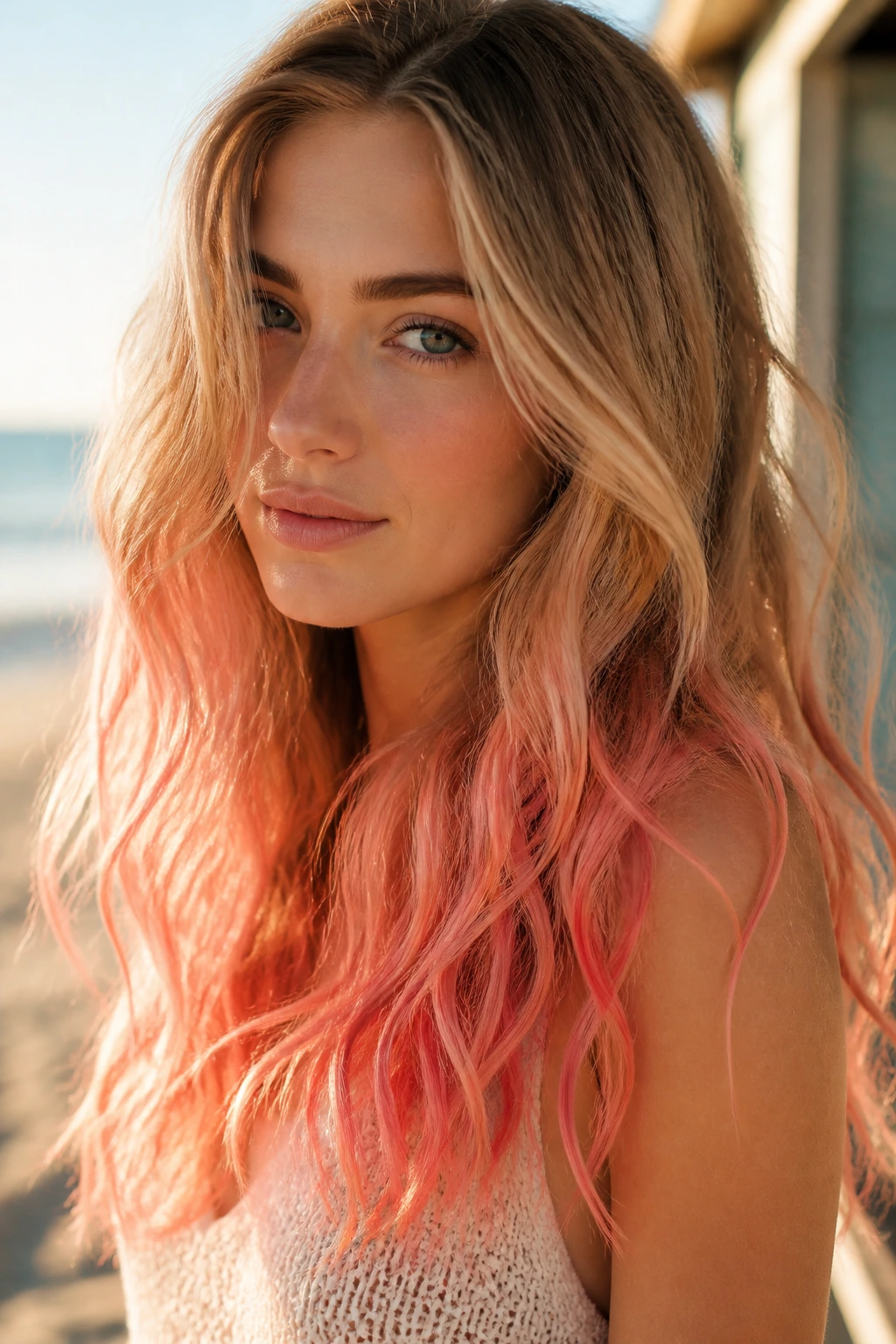
Coral ombré ends are a practical choice if you want color without committing to the entire head. The roots and mids stay blonde or beige blonde, and the coral concentrates toward the bottom. On pale skin, that lower placement keeps the face bright while still giving the hair a clear point of interest.
This works best on longer hair, where the gradient has room to breathe. A collarbone-length lob can still handle it, but the transition will look sharper. If your stylist softens the line with a few blended pieces in the mids, the fade becomes much prettier.
One thing I like here: the grow-out looks natural. Once the coral fades, the ombré still reads like a deliberate style, not a missed appointment.
9. Neon Coral Peekaboo Panels
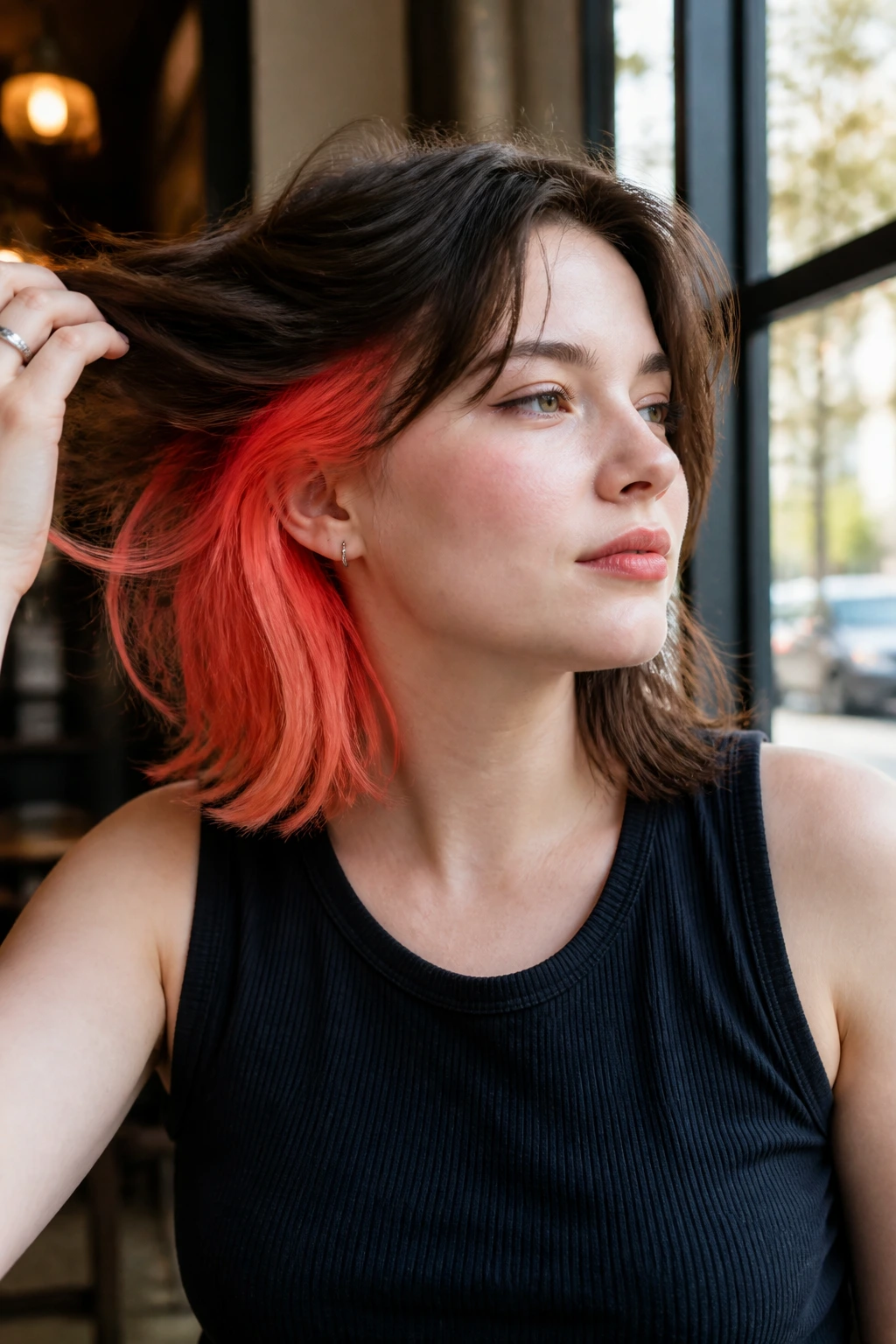
Neon coral peekaboo panels are for the person who wants impact without making the whole head work overtime. The coral hides under the top layer and flashes out when the hair moves or gets tucked behind the ear. On pale skin, that hidden hit of brightness can be more striking than an all-over color, because the contrast feels sharp.
This is one of the best options if you work in a conservative setting or you’re not ready to commit to visible coral every day. Put the panels underneath, near the temples or at the nape, and you can control how much gets seen.
The color itself can go brighter here. Since it sits in the hair, not all over the surface, neon coral doesn’t have to carry the whole look. It gets to be a surprise instead.
10. Pastel Coral Pixie
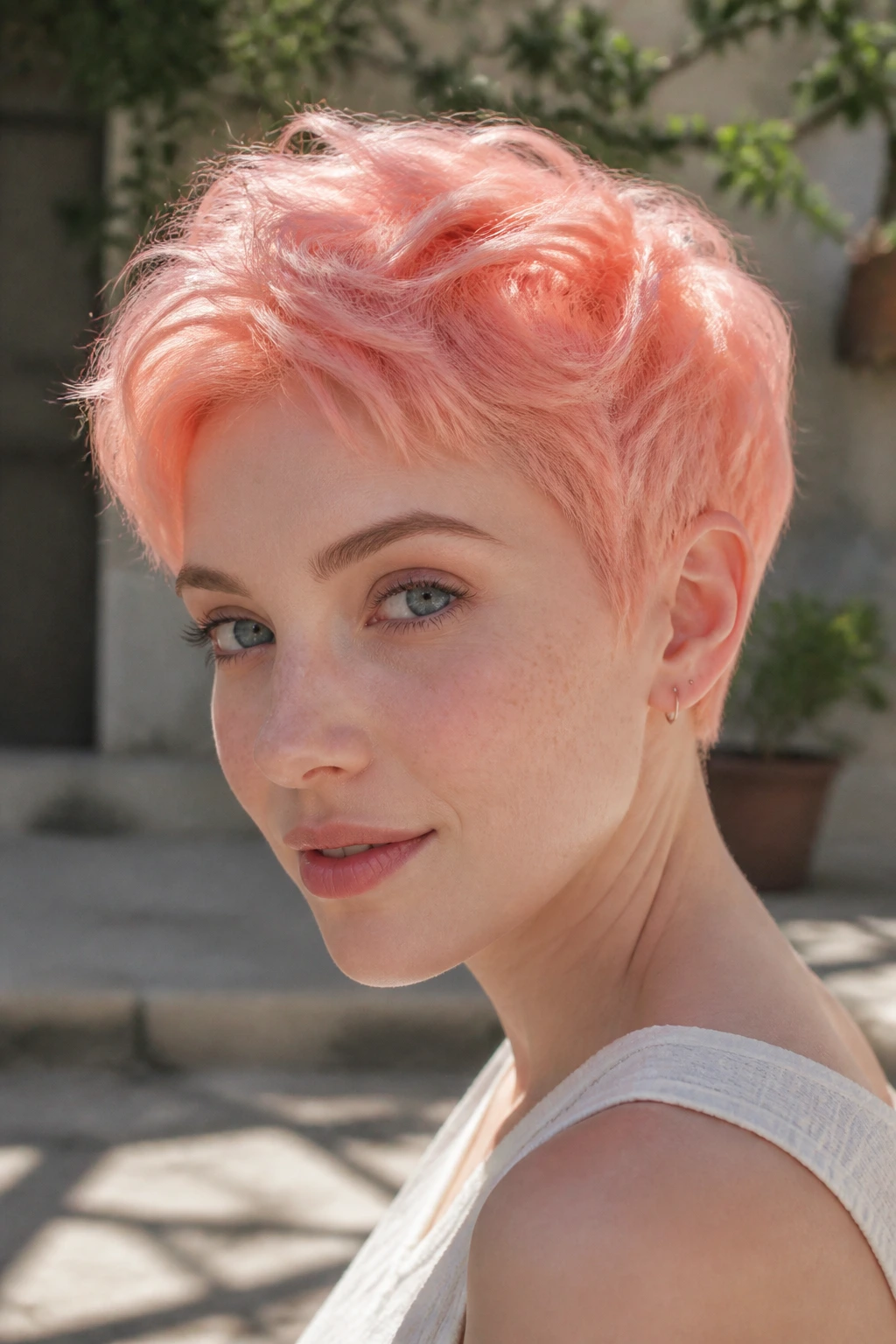
A pastel coral pixie is short, cheeky, and far less fussy than people expect. Because the cut is cropped, the color doesn’t need to be bright to register. Even a whisper of coral shows up on the edges, the fringe, and the crown.
This shade flatters pale skin by keeping the tone soft and airy. A pixie cut already exposes the face, so a pale blush-coral tint can frame the features without creating a heavy halo effect. That matters more than people think. The wrong saturated color on a pixie can make the haircut look harsh.
Use a texturizing paste or a little matte cream to separate the pieces. The coral looks best when the cut has movement. If it’s too flat, the color loses some of its charm.
11. Coral Rose Gold Lob
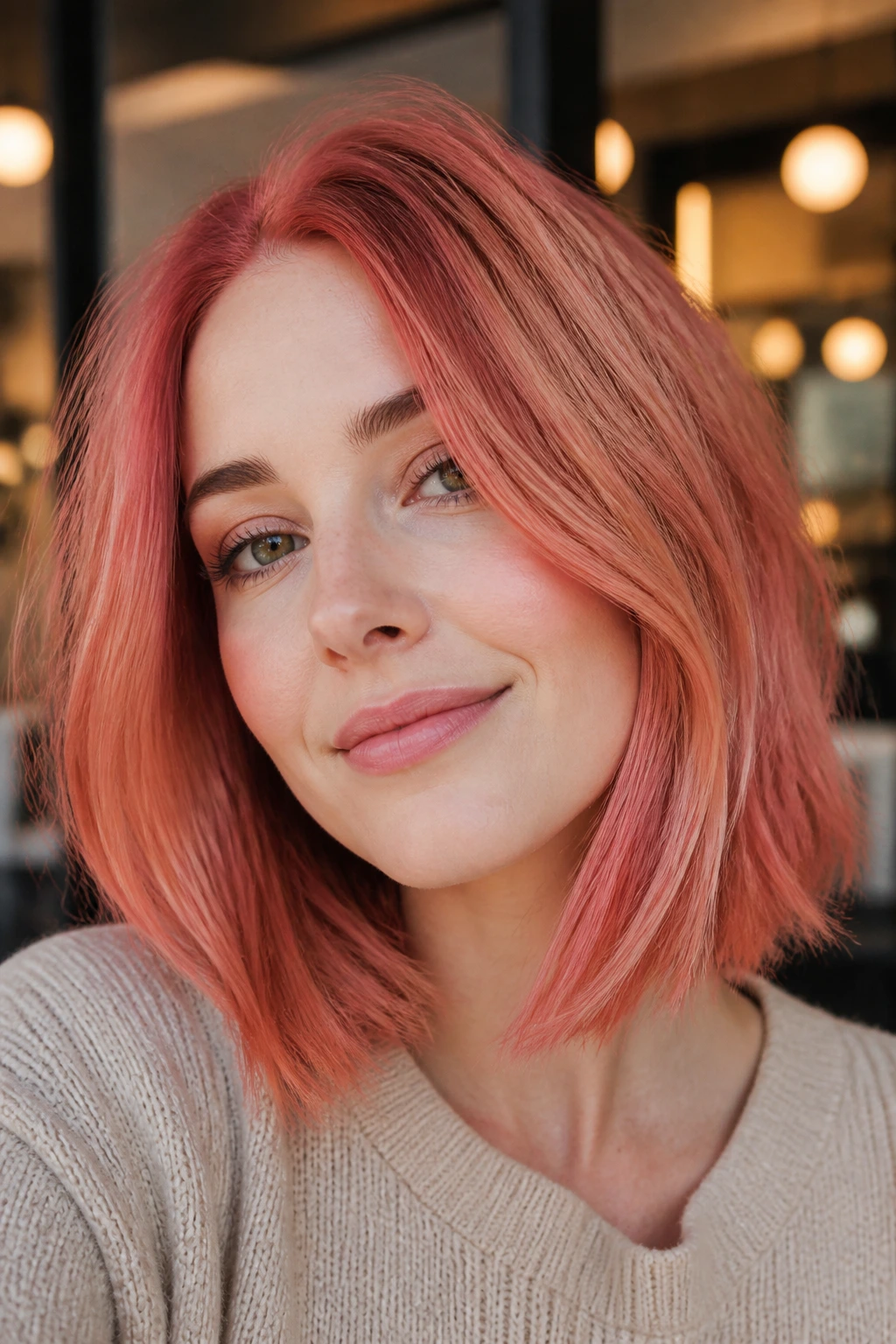
A coral rose gold lob is polished without being stiff. The rose gold pulls the coral toward pink, and that’s usually a good move for pale skin because it softens the contrast around the face. On a lob, the color catches around the shoulders and jawline in a way that feels balanced.
This is one of the most wearable coral ideas if you want the shade to work with office clothes, denim, and evening makeup without changing your whole life. The color sits in that polished zone where it’s noticeable but not exhausting.
Ask your colorist for a rose-gold coral glaze layered over a blonde or beige base. The result should read like warm light, not orange dye. That distinction is the whole game.
12. Warm Coral Copper Balayage
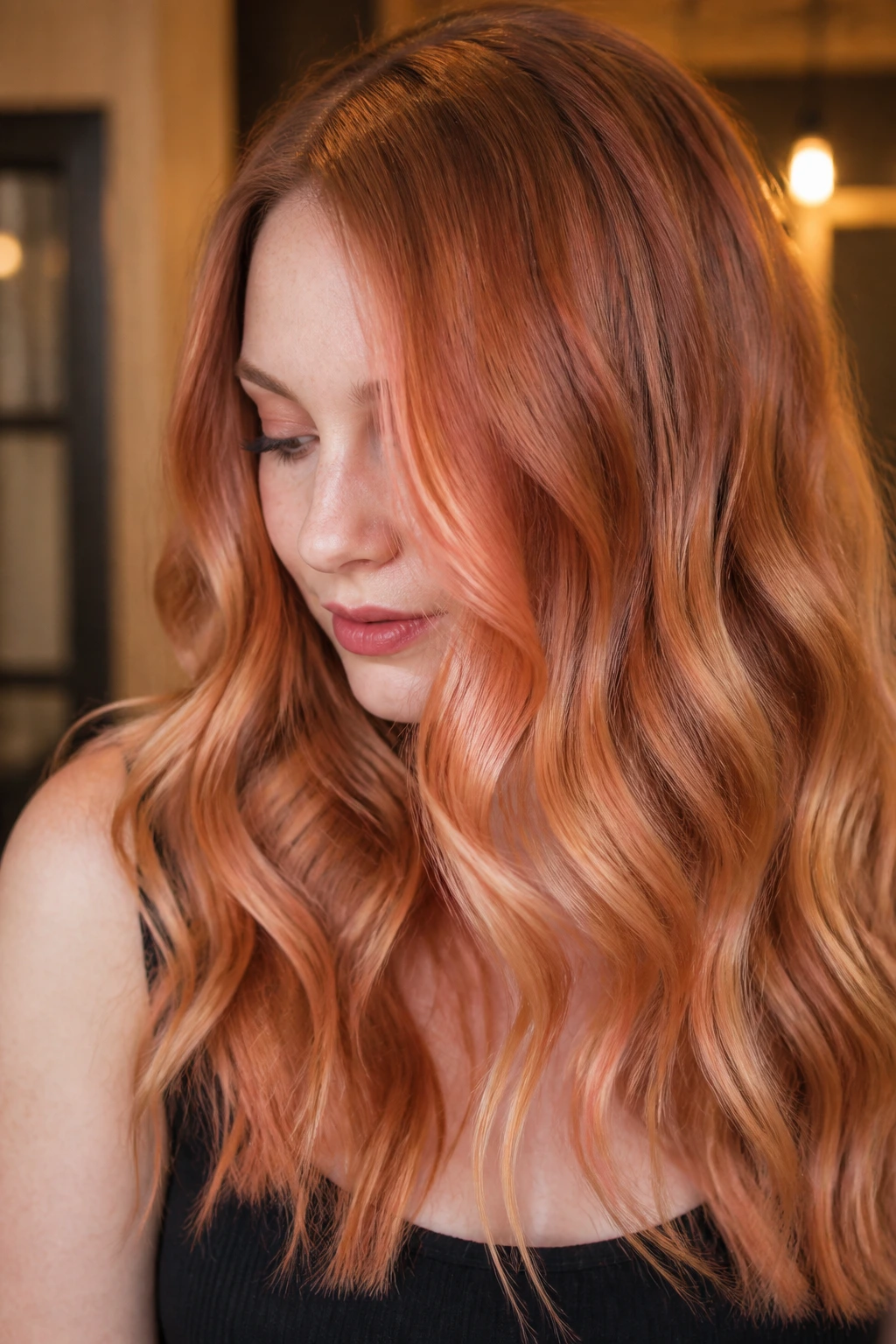
Warm coral copper balayage leans richer and deeper than peach coral, which makes it a strong option for pale skin with warmer undertones or natural freckles. The copper gives the coral more body, and the balayage placement keeps it from feeling like a helmet.
The best thing about this look is the movement. Sweeping copper-coral pieces through the lengths creates depth that shows up best in waves or loose curls. On straight hair, it’s sharper; on wavy hair, it feels more lived-in.
If your skin flushes easily, keep some beige blonde through the mids so the whole head doesn’t turn too hot. A little breathing room makes the warm pieces look better, not weaker.
13. Coral and Champagne Blonde
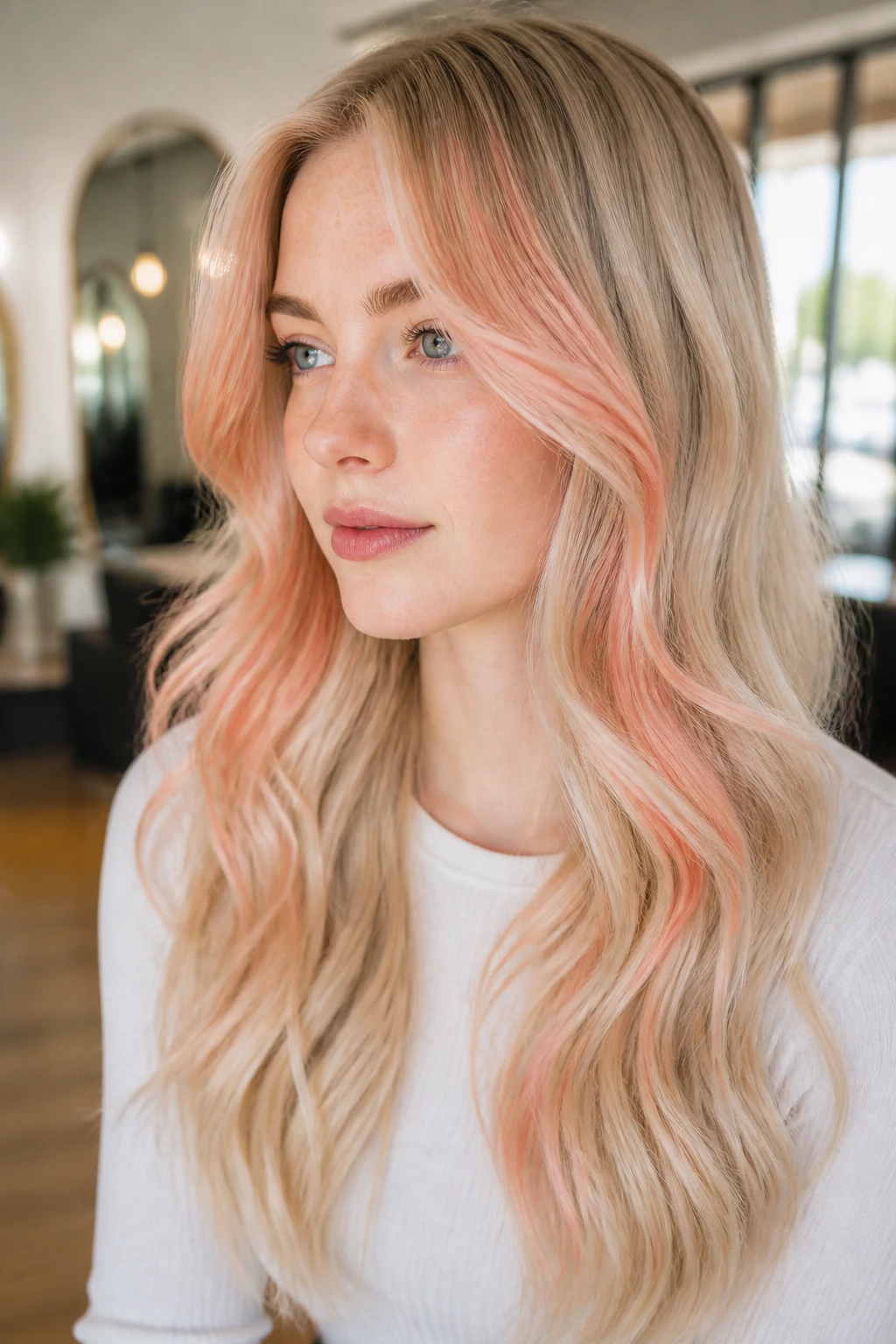
Coral and champagne blonde is one of the easiest ways to wear color without losing that pale, luminous finish. The champagne base stays cool enough to keep the skin from looking muddy, while the coral adds a soft flush around the face and through the ends.
This combo is especially pretty when the coral is broken into thin ribbons rather than big panels. The champagne blonde gives you that airy pale backdrop, and the coral acts like a blush layer on top. It’s not a loud look. It’s a detailed one.
If your hair is fine, this pairing can make the whole head look fuller because the different tones create the illusion of density. On thick hair, it keeps the color from feeling heavy.
14. Smoky Mushroom Coral
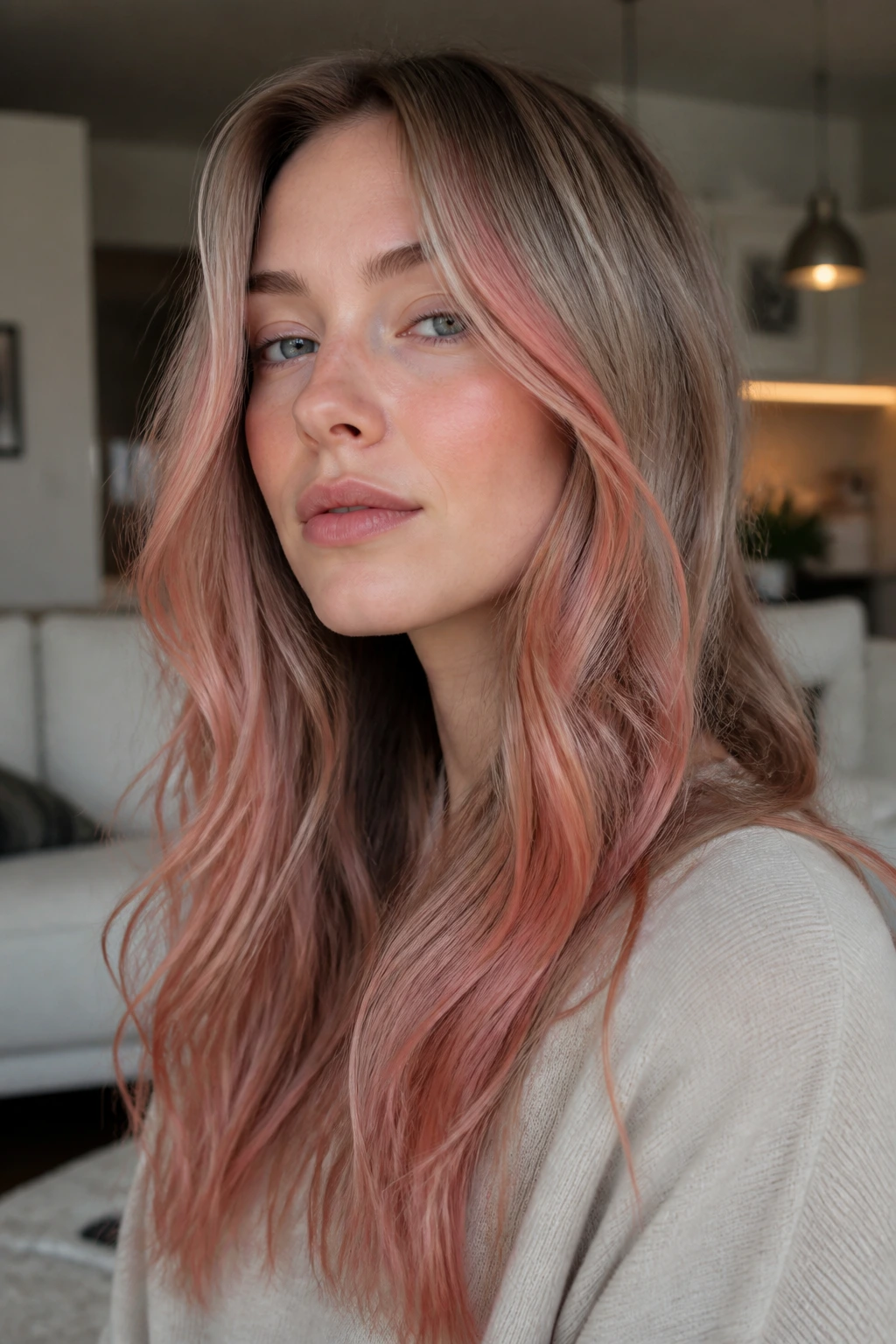
Smoky mushroom coral is the answer for pale skin that looks strange with overly warm copper. The base is beige, taupe, or mushroom blonde, and the coral is softened enough to feel dusty instead of candy-bright. That cooler frame lets the coral show without making the complexion look flushed.
I like this look on medium-length hair and long bobs, especially when the styling is loose and a little undone. The color has enough blur that it never reads as flat brown with a tint on top. There’s depth in it. A little hush, too.
If you want coral but hate warmth that looks too orange in daylight, this is the safer lane. It keeps the whole palette grounded.
15. Coral Face-Framing Fringe
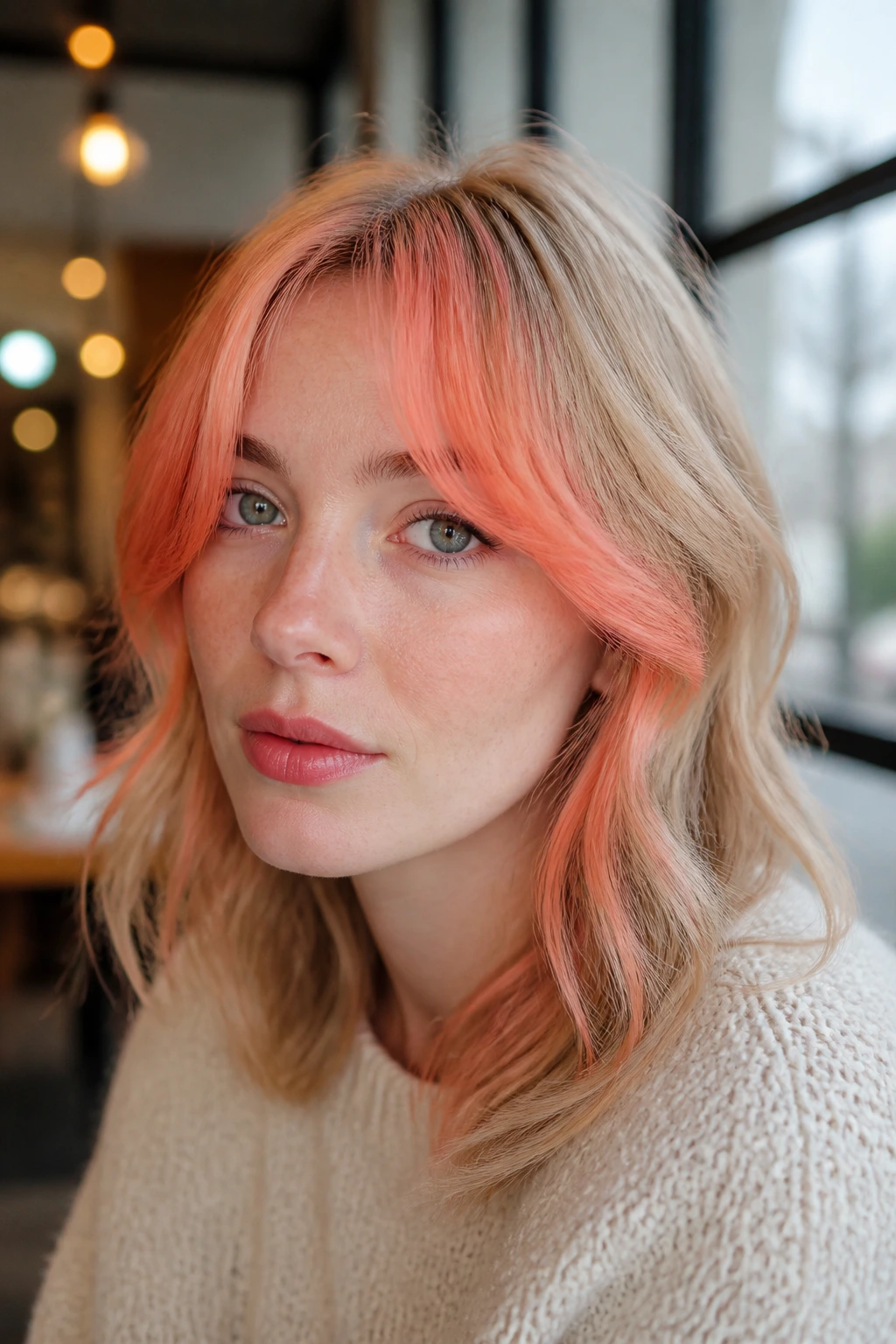
A coral face-framing fringe is one of the smartest small-color options on this list. You get the brightening effect right where it matters most — around the forehead, eyes, and cheekbones — without changing the whole head. Pale skin tends to benefit from this kind of controlled placement because the color looks intentional, not scattered.
This works beautifully with curtain bangs, side-swept bangs, or even a grown-out fringe that blends into face-framing layers. The coral pieces can start soft near the root and get stronger toward the ends. That keeps the color from hardening the features.
If you’re nervous about coral, this is probably the least scary place to start. Small area, big payoff.
16. Coral Sunset Waves
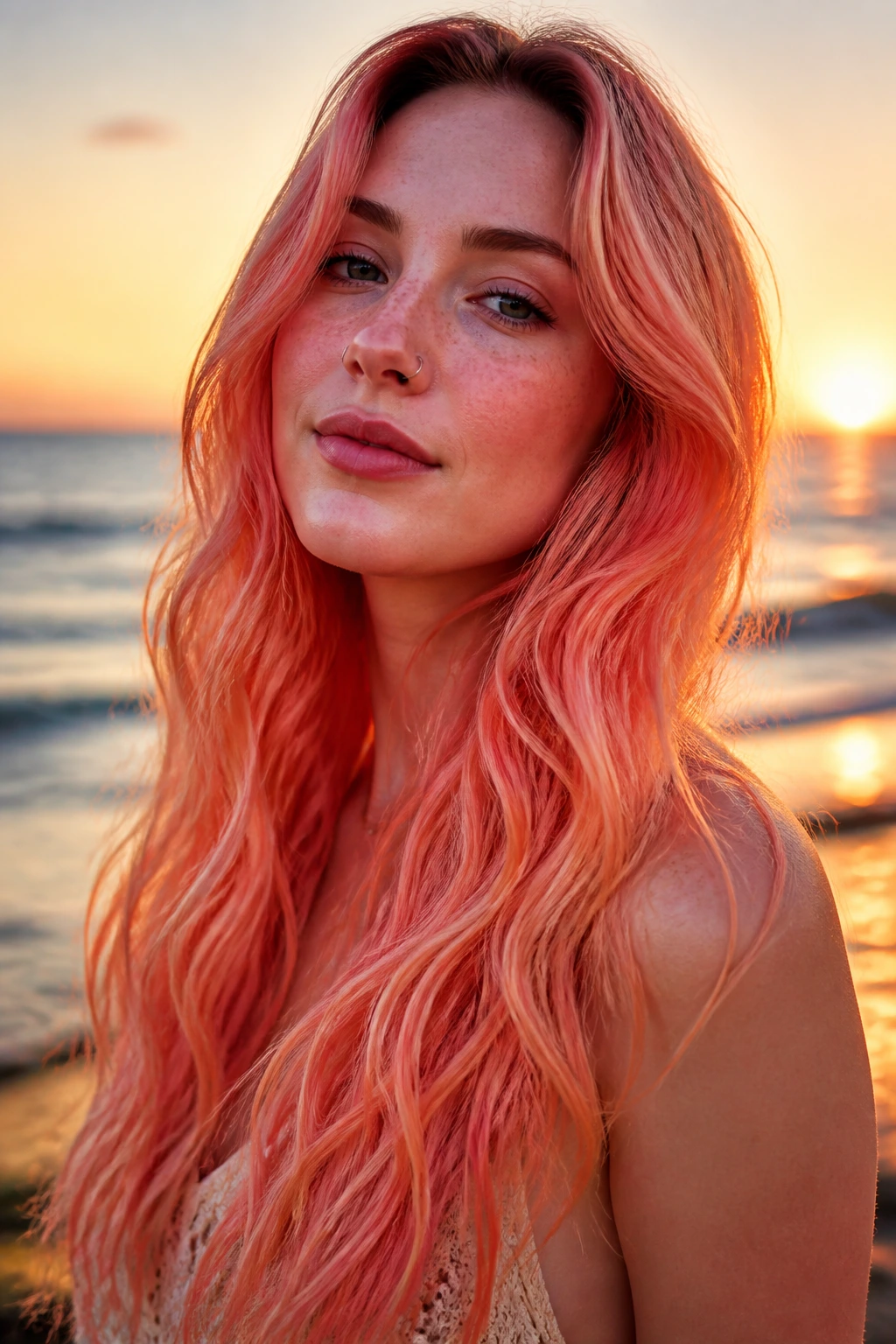
Coral sunset waves mix peach, apricot, soft pink, and a little deeper coral in one blended look. On pale skin, the variation matters. One solid shade can look thin; several close shades create the kind of depth that keeps the hair from disappearing against a fair complexion.
The best version lives in waves. Loose bends show the color shifts more clearly, and the result looks like heat moving through the hair rather than one flat tone. It’s a richer look than a simple gloss, but it still feels soft.
This is one of the stronger choices if you wear your hair long and like dimension. Short hair can do it too, but the long shape gives the shades room to move around each other.
17. Coral Ribbon Highlights
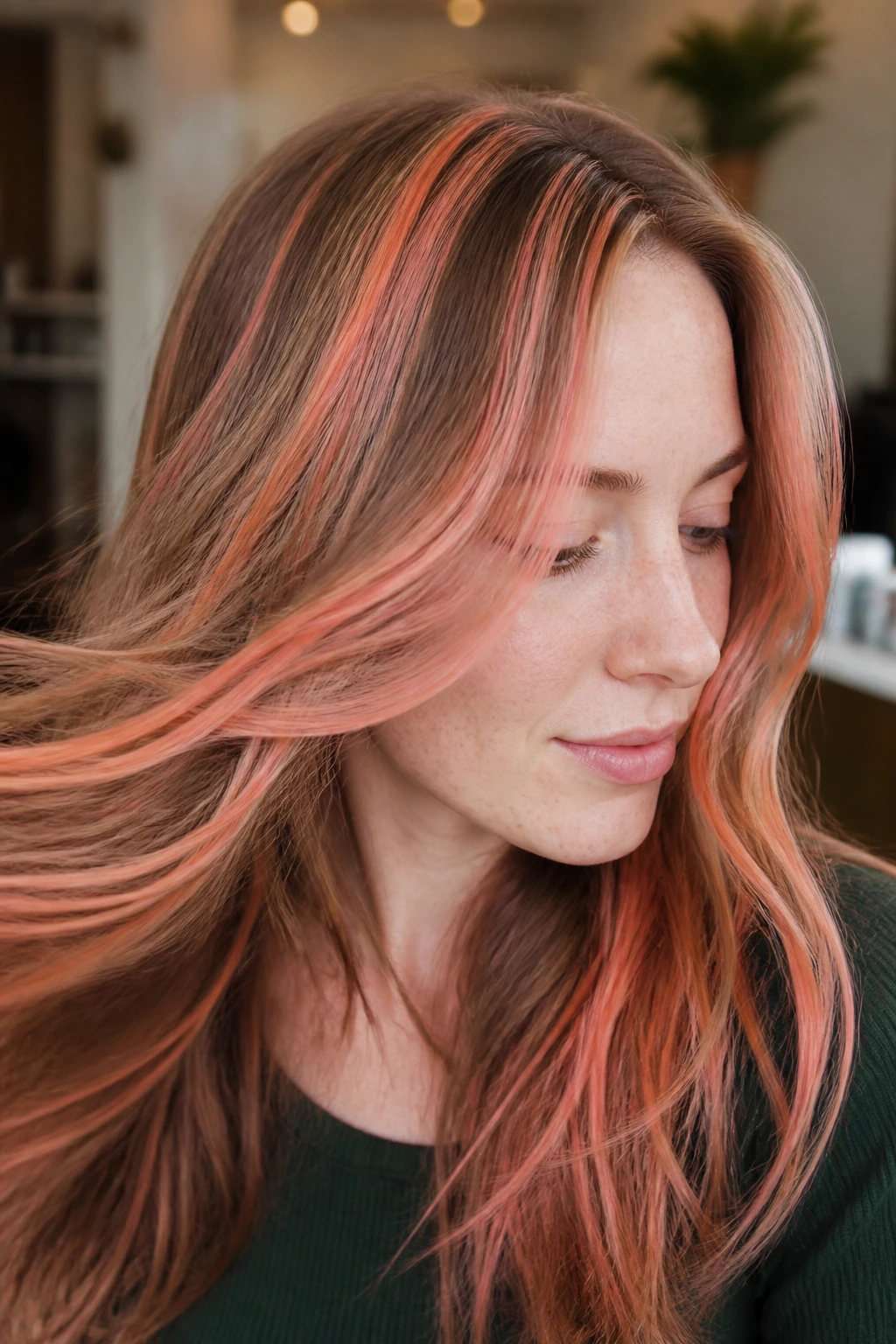
Coral ribbon highlights are narrow, painted pieces that wind through the hair like thin strips of silk. They’re much subtler than chunky highlights, and on pale skin that subtlety is a gift. The color reads as dimension first and fashion shade second.
This style is excellent for someone who wants coral in motion, not coral as a solid block. A few ribbons near the part line and through the mids can brighten the face without taking over the whole style. The effect is especially nice on wavy hair, where the ribbons bend and break apart as the hair moves.
If you’ve ever looked at a coral color and thought it was too much, ribbon highlights are probably the correction. Same family. Less commitment.
18. Coral on a Platinum Base
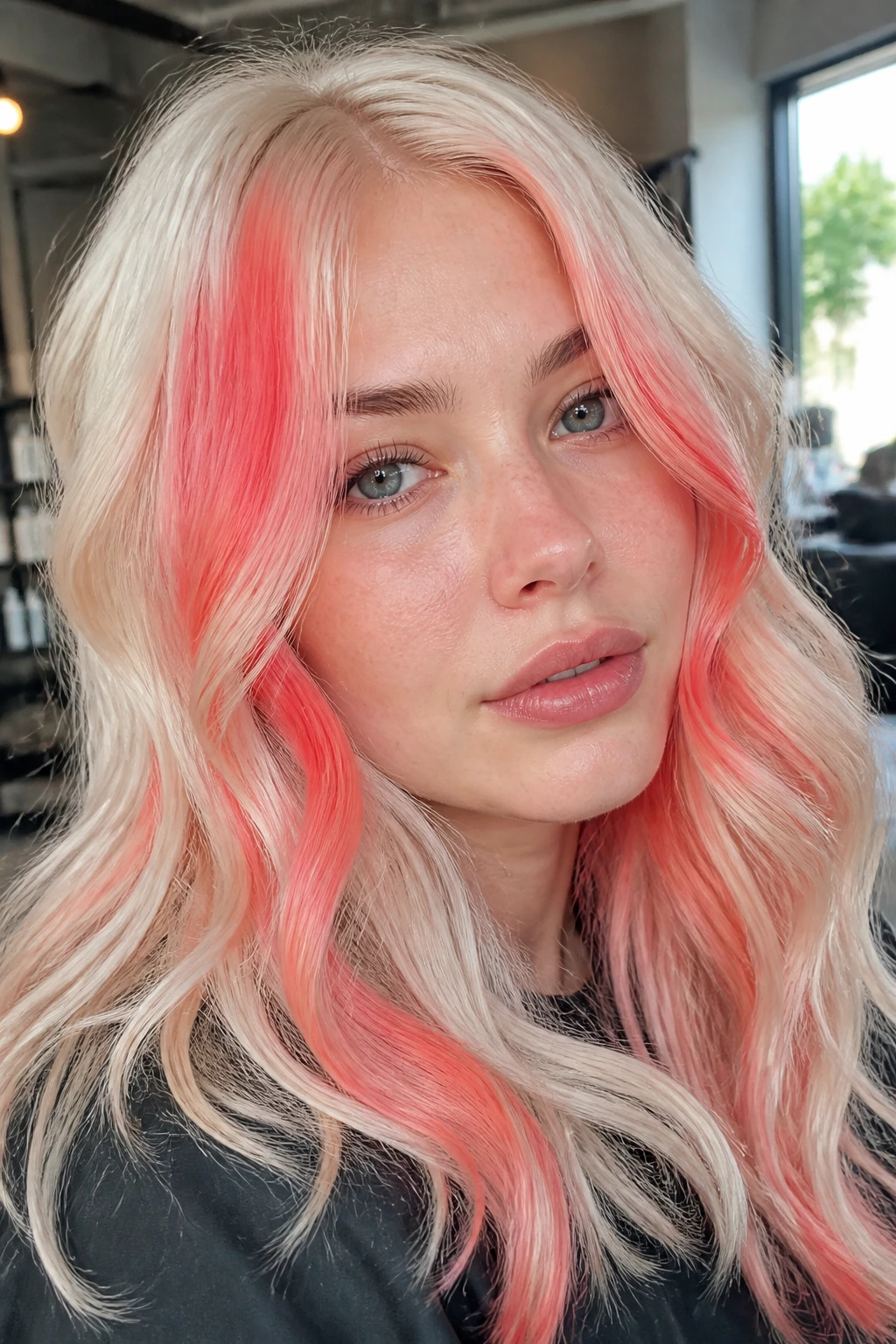
Coral on a platinum base is the loud one. It’s high-contrast, sharp, and fantastic if you want the coral to read from across the room. On pale skin, platinum gives the face a clean frame, and the coral pops even harder because the base is icy.
This look needs maintenance. No way around that. Platinum shows roots fast, and vivid coral fades into a softer pastel if you do not refresh it. But if you like crisp color and don’t mind caring for it, the payoff is huge.
Keep the coral in panels, waves, or split sections so the platinum still has room to breathe. If the whole head goes coral, the platinum loses its edge.
19. Peach Coral Shag
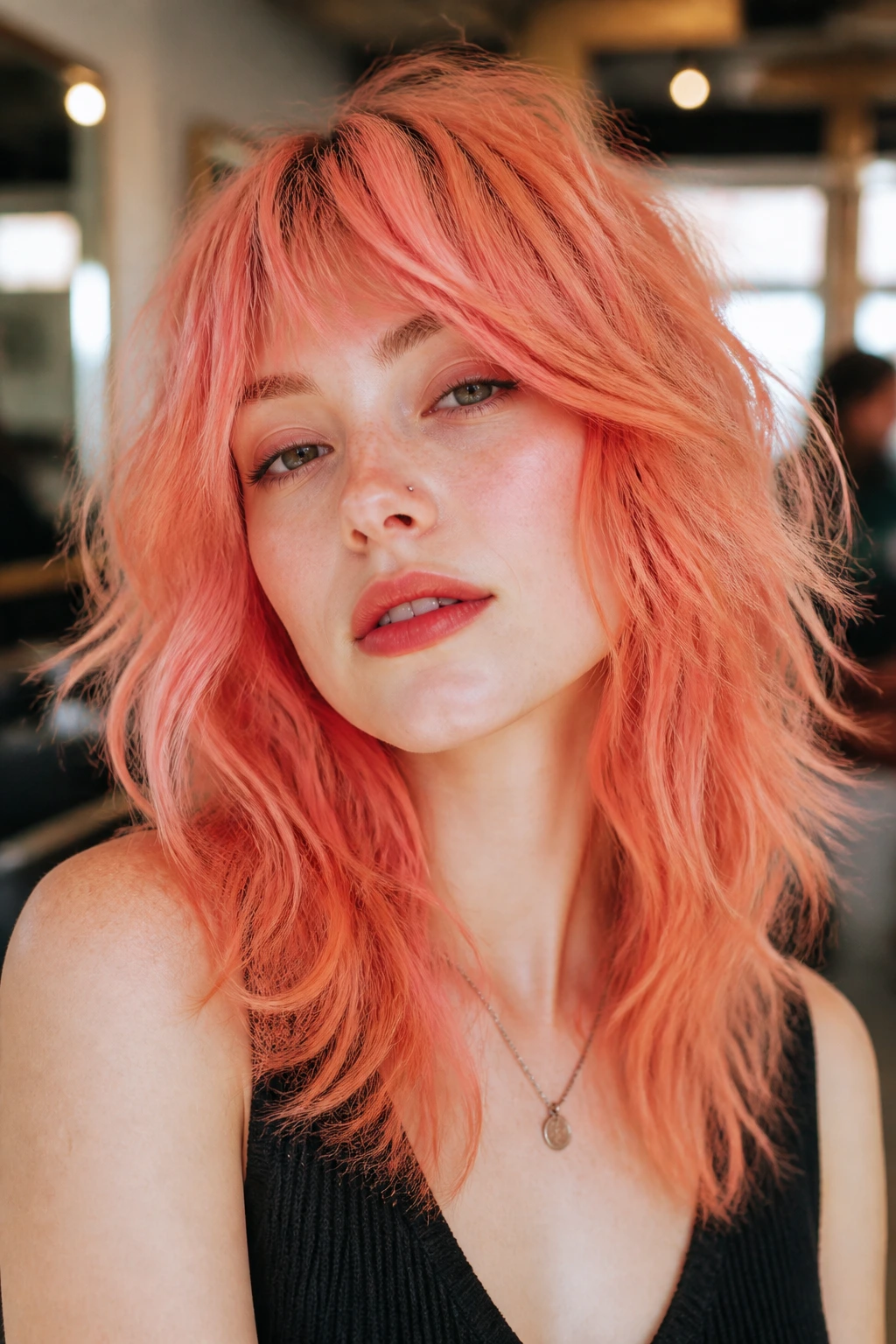
A peach coral shag has that slightly rumpled, lived-in feel that works surprisingly well on pale skin. The shag cut gives you movement at the crown and around the face, which lets peach coral look soft instead of flat. It’s a good match for people who want a little edge without going full vivid.
The beauty of the shag is that the color can be less perfect. A tiny bit of tonal variation reads as texture, not inconsistency. That matters with coral, because a blunt, even application can sometimes make fair skin look drained if the color is too one-note.
If your hair has a natural wave, this is an easy win. If it’s straight, add a few bends with a 1-inch iron and let the layers do the rest.
20. Coral Dip-Dye Mid-Length
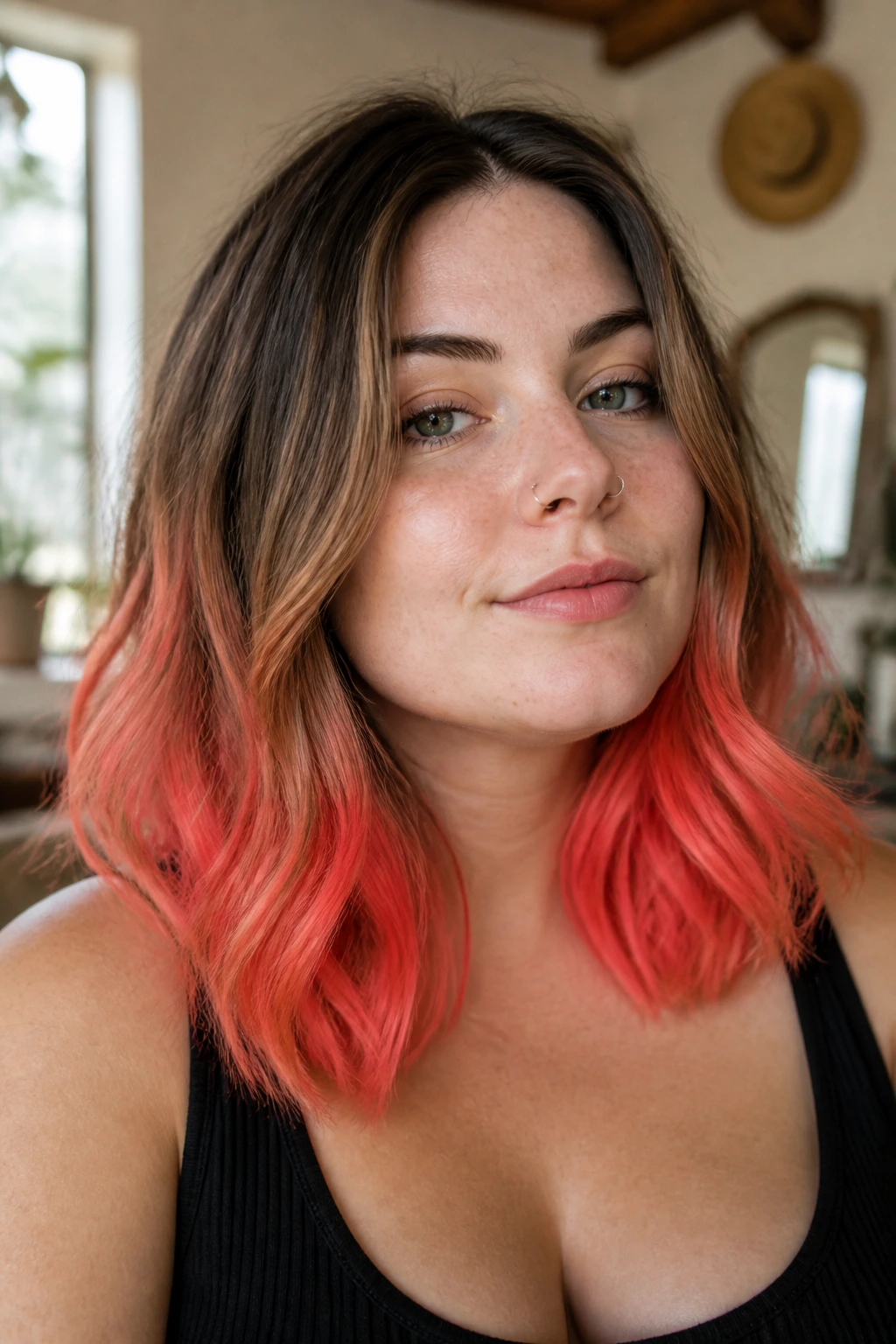
Coral dip-dye on mid-length hair is a clean way to keep your roots natural and still get a strong color story. The coral sits mostly on the bottom half, where it can swing and move. On pale skin, that lower placement keeps the top of the face open and bright.
This works especially well when the transition is soft rather than abrupt. A harsh line can feel costume-like. A blurred one looks intentional. Ask for a blended fade with a little peach through the transition zone so the color has a gradient instead of a shelf.
It’s a good option if you like to wear your hair up. A ponytail or half-up style reveals the coral ends in a neat, graphic way.
21. Coral-to-Salmon Fade
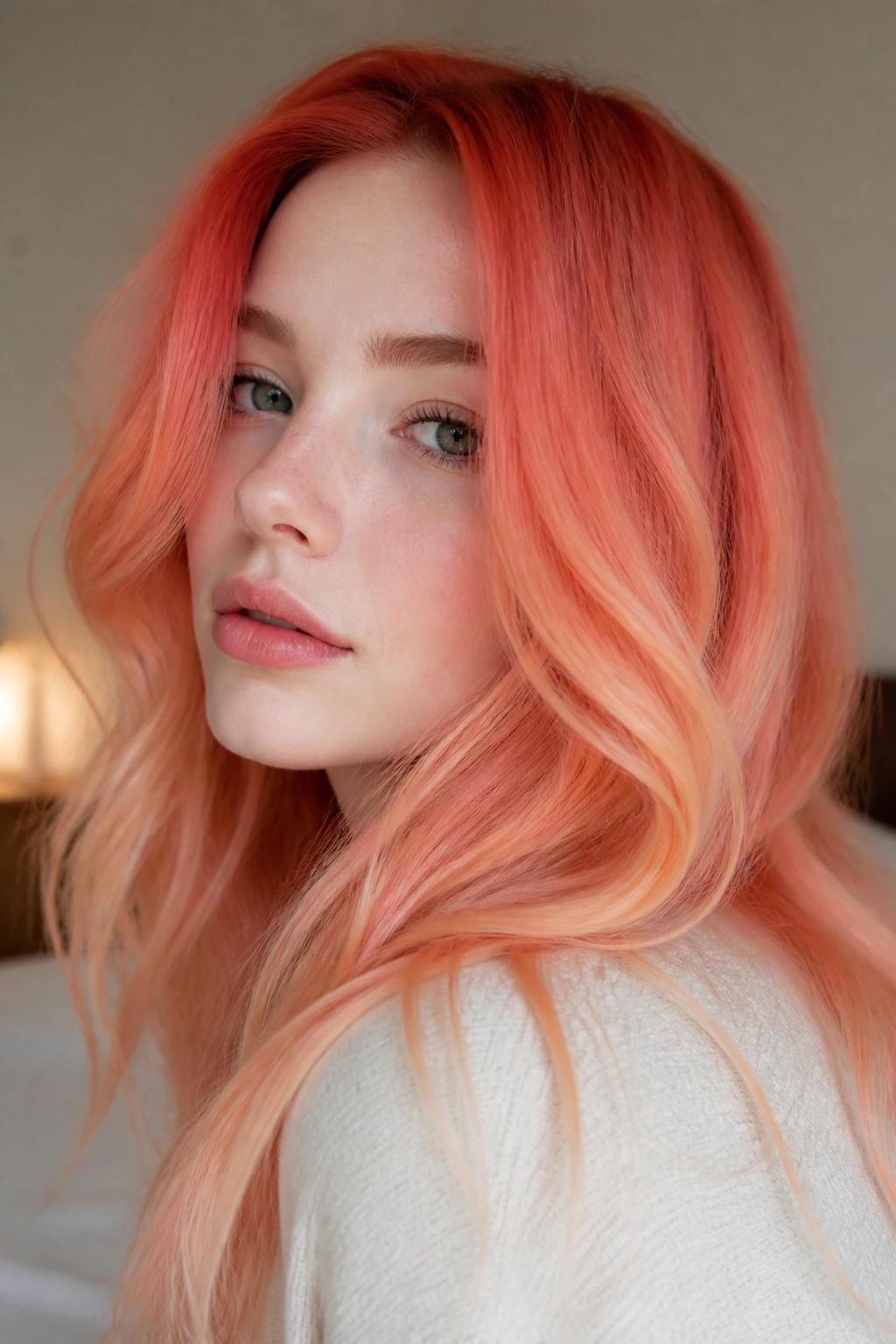
A coral-to-salmon fade is softer than neon and less peachy than a gloss. The fade starts with a brighter coral and slowly melts into salmon, which gives pale skin a warm gradient without overwhelming the face. It’s one of those colors that looks better the more you move.
The salmon ends matter. They keep the style from ending in a hard, saturated block, and they help the whole look feel airy. If the coral stays too dense all the way down, the fade loses its grace.
This is a strong choice for straight, wavy, or curled hair, but it really shines when the styling is soft and fluid. The fade needs motion to show its shape.
22. Coral Balayage on Fine Hair
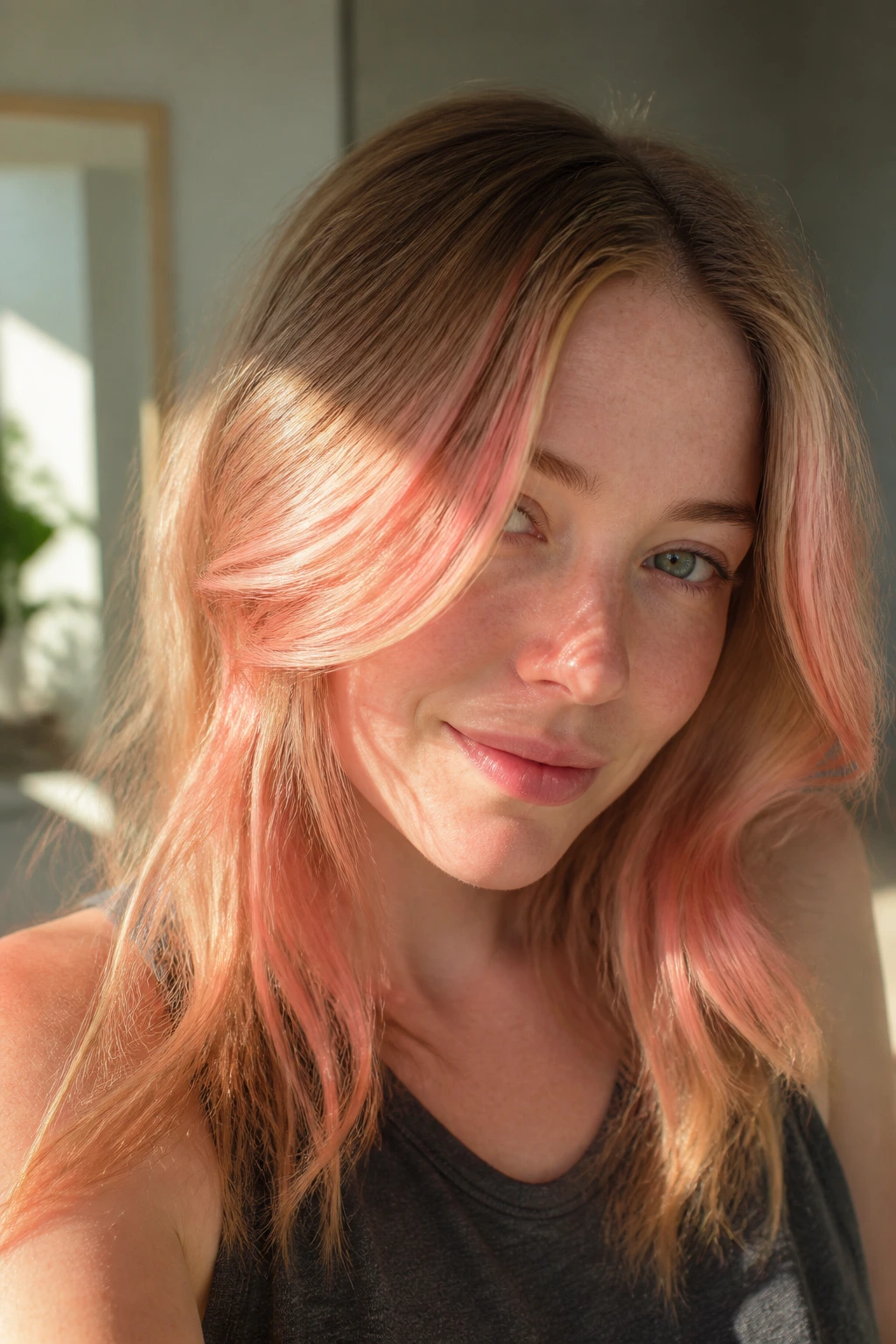
Coral balayage on fine hair has to be handled with a light hand. Too much color can swamp the strand pattern, and too much lift can leave the hair feeling fragile. The answer is thin, strategic pieces placed where the hair would naturally catch sun. That gives you the coral without making the head look heavy.
On pale skin, fine hair plus coral can look delicate in a good way. The trick is to keep the pieces airy and avoid a solid block of pigment. A few soft apricot or peach-coral strokes around the face can make fine hair look fuller because the color creates visual movement.
If your hair is both fine and pale, this might be the most flattering coral approach on the list. It gives warmth, shape, and a little life without asking the hair to do too much.
23. Coral Curly Halo
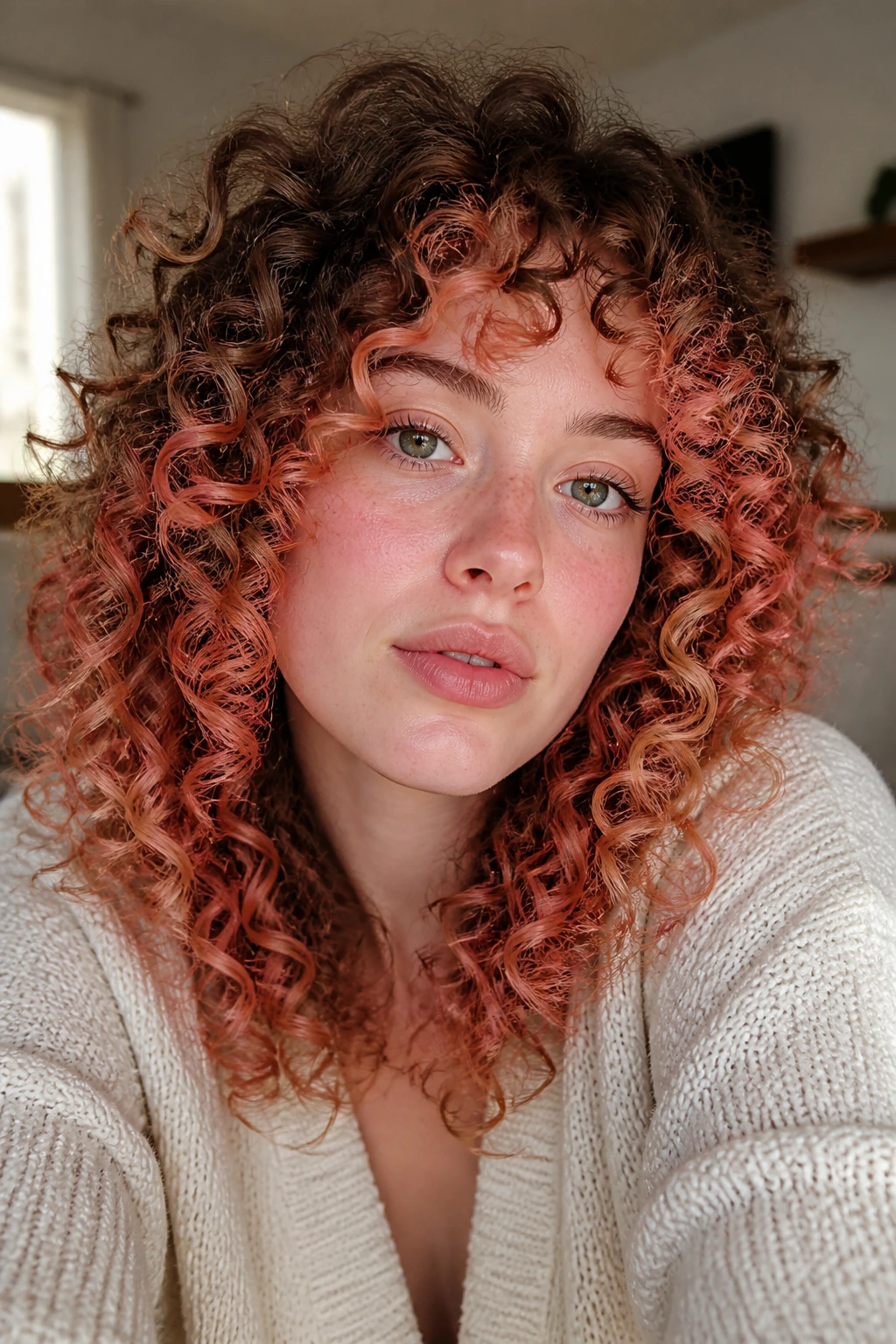
A coral curly halo uses the outer layer of curls as the color canvas. That placement is smart because curls already create shadow and highlight, and coral can either bloom on top of that texture or disappear into it. On pale skin, a halo effect puts the brightness where it shows up first — around the face and on the top curls.
This style works best when the color follows the curl pattern rather than fighting it. Paint the coral where the curls naturally spring up, and leave some depth underneath so the curls do not collapse into one color mass. That contrast is what gives the halo its shape.
If you wear your curls big, this look can be downright pretty. If you wear them tighter, ask for smaller, more controlled placement so the coral doesn’t jump too hard.
24. Coral Underlights for Brunettes
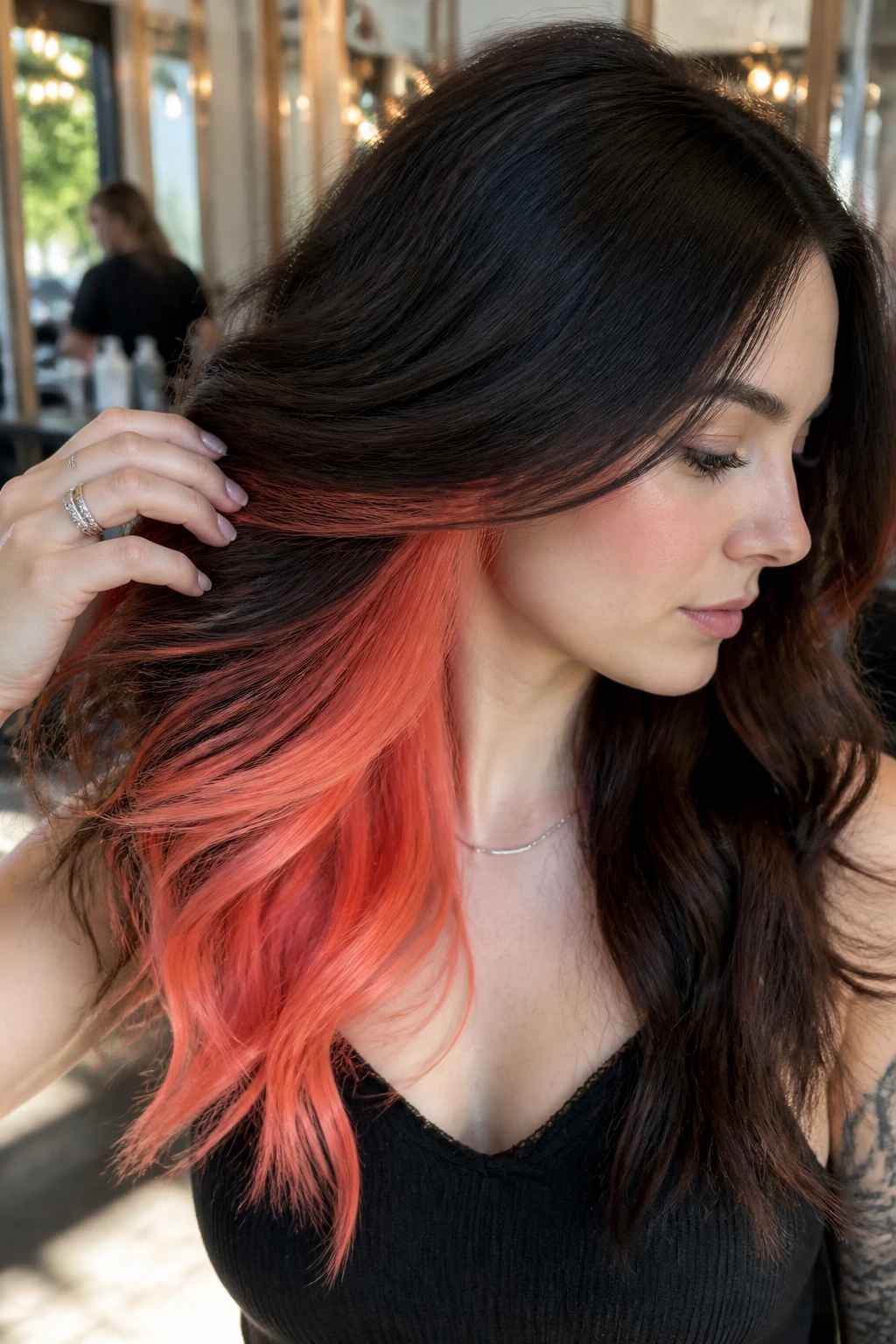
Coral underlights for brunettes are a clever compromise if you have darker hair and don’t want to bleach the whole head. The coral sits underneath the surface layer, so it flashes through only when the hair moves. On pale skin, that hidden warmth can be surprisingly flattering because it lights the face from beneath without creating a heavy top layer.
This is one of my favorite entry points for dark-haired readers. It gives you coral without demanding a full blonding session, and the grow-out is much kinder. You still need enough lift for the color to show, but the entire head does not have to be lightened.
Wear it with loose waves or a half-up style to reveal more of the underlayer. Straight hair keeps it subtle; movement makes it visible.
25. Papaya Coral Ends
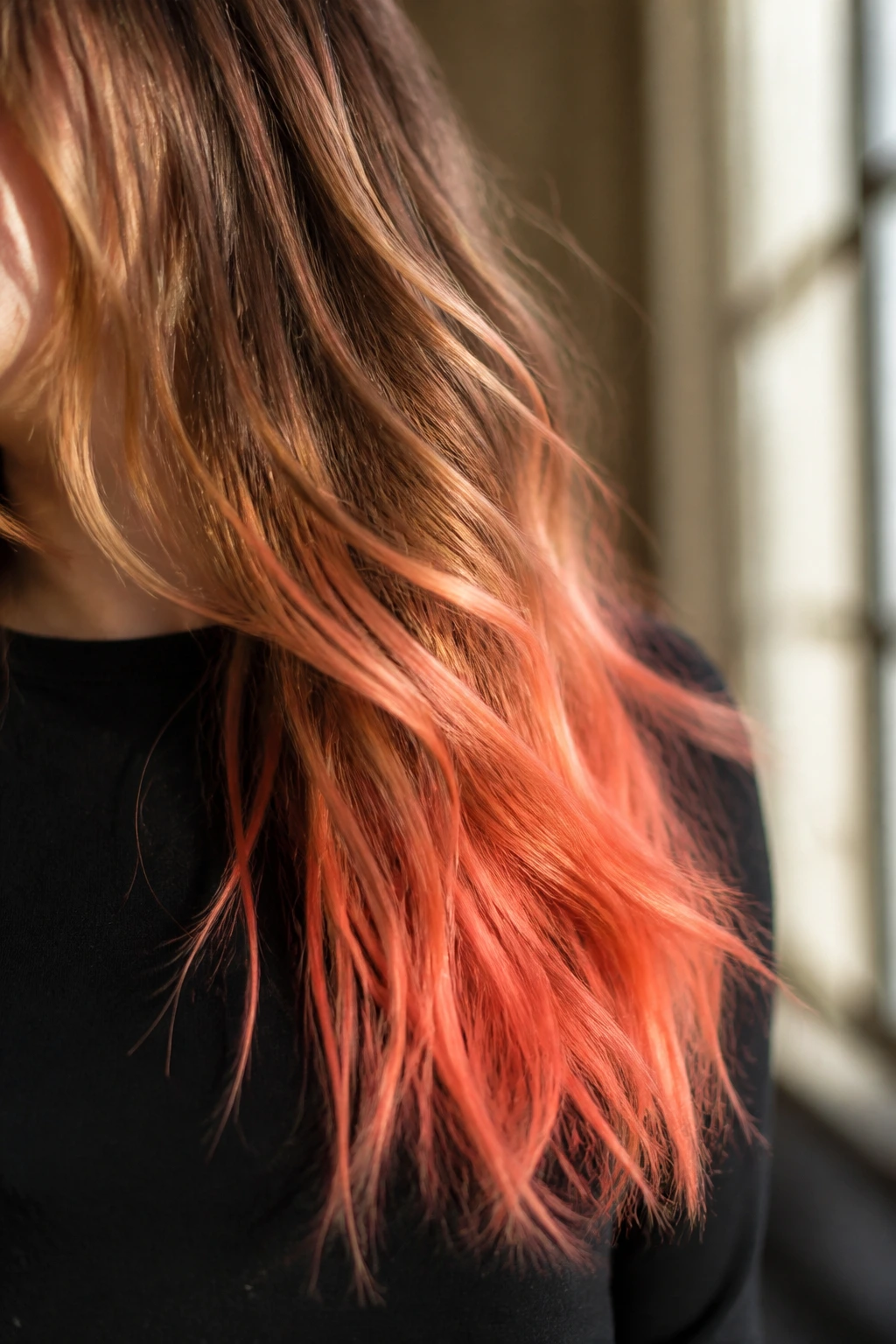
Papaya coral ends lean warmer and juicier than peach coral. The tone has a little more orange in it, but because it stays on the softer side, it can still flatter pale skin — especially if you have freckles or warm eyes that can carry the hue. It’s brighter than dusty coral and sunnier than rose coral.
The best place for papaya coral is the lower half of the hair, where the warmth can play against a neutral or blonde base. If you put too much papaya around the hairline on cool-toned skin, it can dominate the face. Keep it a little farther down and let the ends do the talking.
This shade has a cheerful feel without needing to be neon. That balance is harder to get than people think.
26. Watermelon Coral Tones
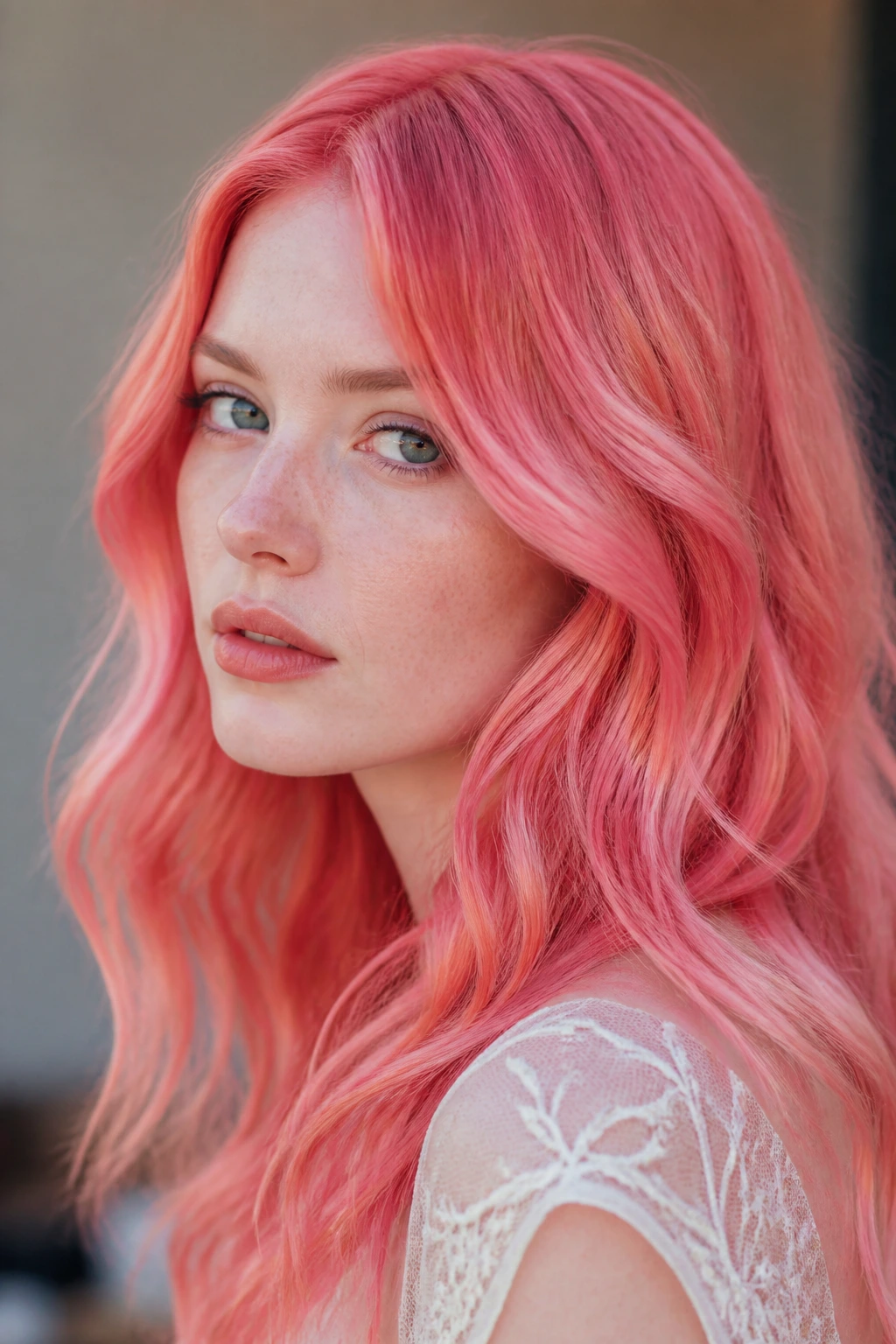
Watermelon coral tones are pinker, cooler, and more playful than peach coral. They suit pale skin with cool undertones because the pink-red balance mirrors the complexion instead of fighting it. If orange makes you look sallow, watermelon coral can be the correction.
This color is especially pretty when it’s mixed through blonde or beige hair in soft pieces. The result feels juicy, not childish. The trick is to keep the saturation controlled so the color reads as watermelon rather than bubblegum. That means a little depth at the root or inside the wave.
If your wardrobe runs black, white, gray, and denim, this shade can be a sharp contrast in the best way. It’s a cool-girl version of coral.
27. Coral and Peach Split-Tone
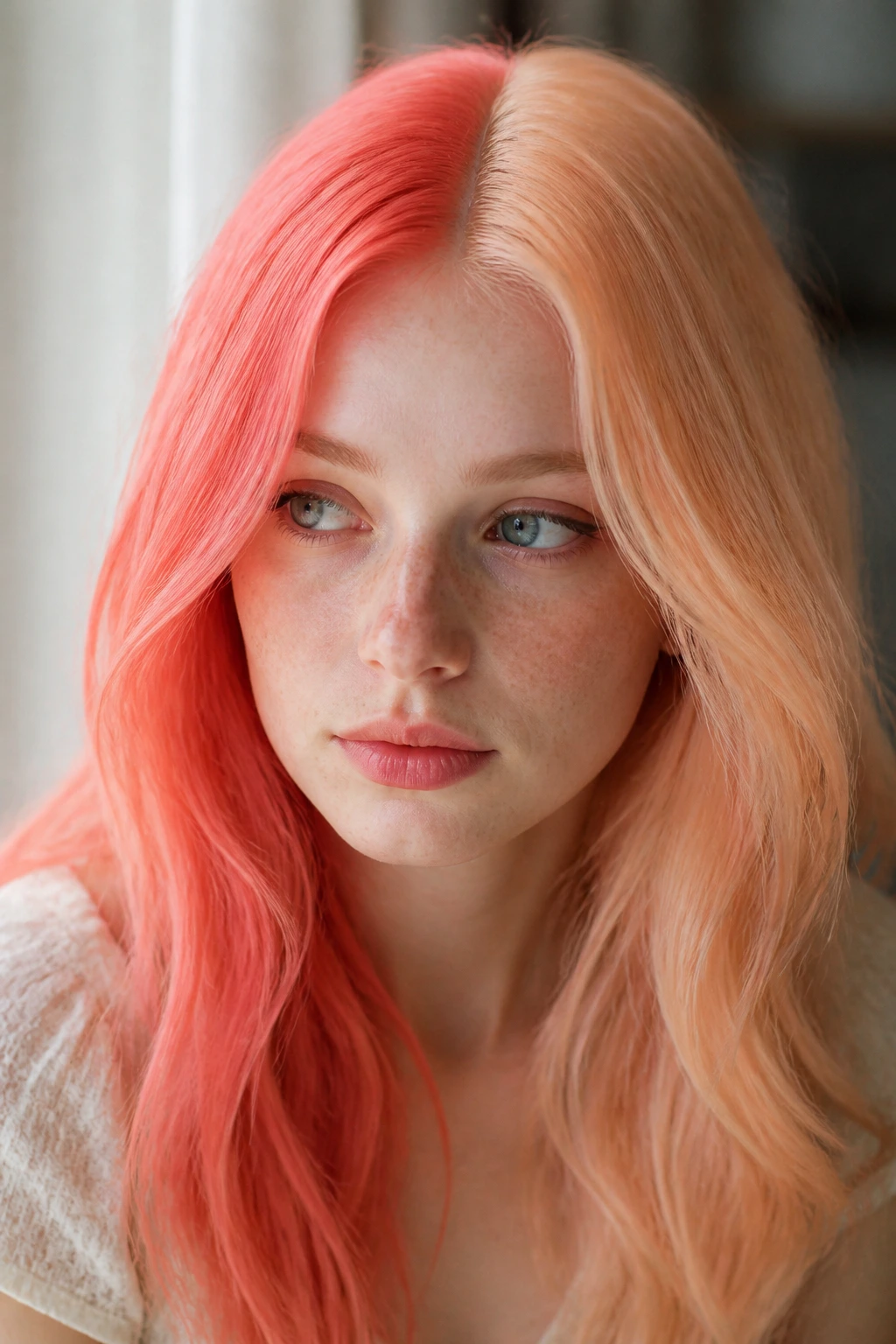
A coral and peach split-tone is a bolder, more editorial choice. One section leans more coral, the other more peach, and the contrast creates a clean visual break. On pale skin, the split-tone works because both shades stay within the same warm family while still giving the eye something to follow.
This style looks best on straight or softly bent hair, where the line between the tones can stay visible. In curls, the split gets more blended and less graphic. Neither is wrong. They just tell different stories.
If you want people to notice your hair first, this is one of the strongest options here. It has personality without needing an extra bright neon formula.
28. Cinnamon Coral Pixie
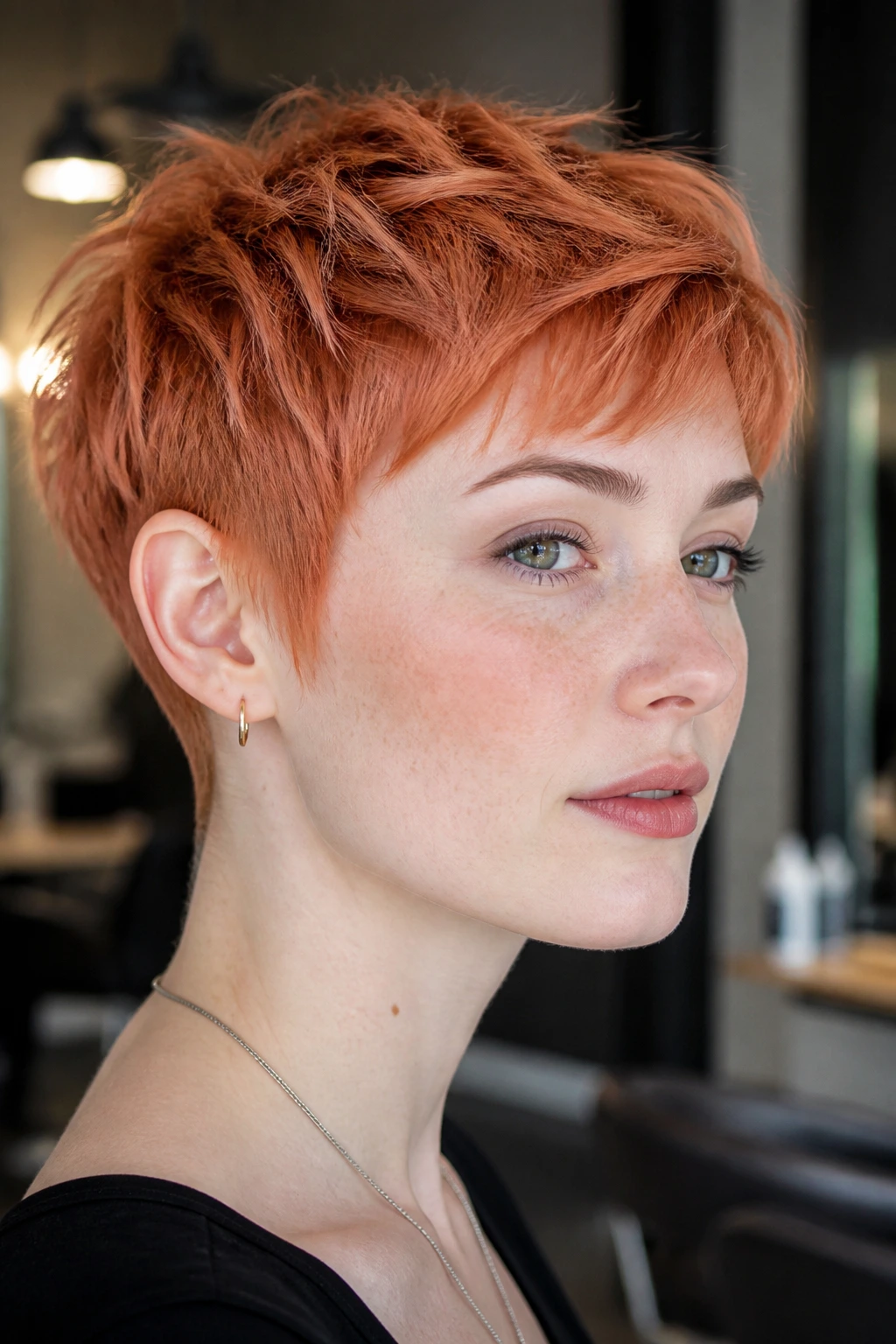
A cinnamon coral pixie brings coral down into a deeper, spicier register. The cinnamon base keeps the shade grounded, which is helpful on pale skin because it stops the color from floating too brightly against the face. The result is warmer than strawberry blonde and softer than copper.
Short hair makes this tone easy to wear. The cut shows off the texture, and the color adds depth to the edges and crown. If you’ve got pale skin and darker brows, this can be a flattering bridge between your natural features and a color that still feels fun.
I like this one for people who want coral but do not want pastel anything. It has more backbone. Less cotton candy, more spice.
Why Coral Flatters Fair Skin When the Undertone Is Right
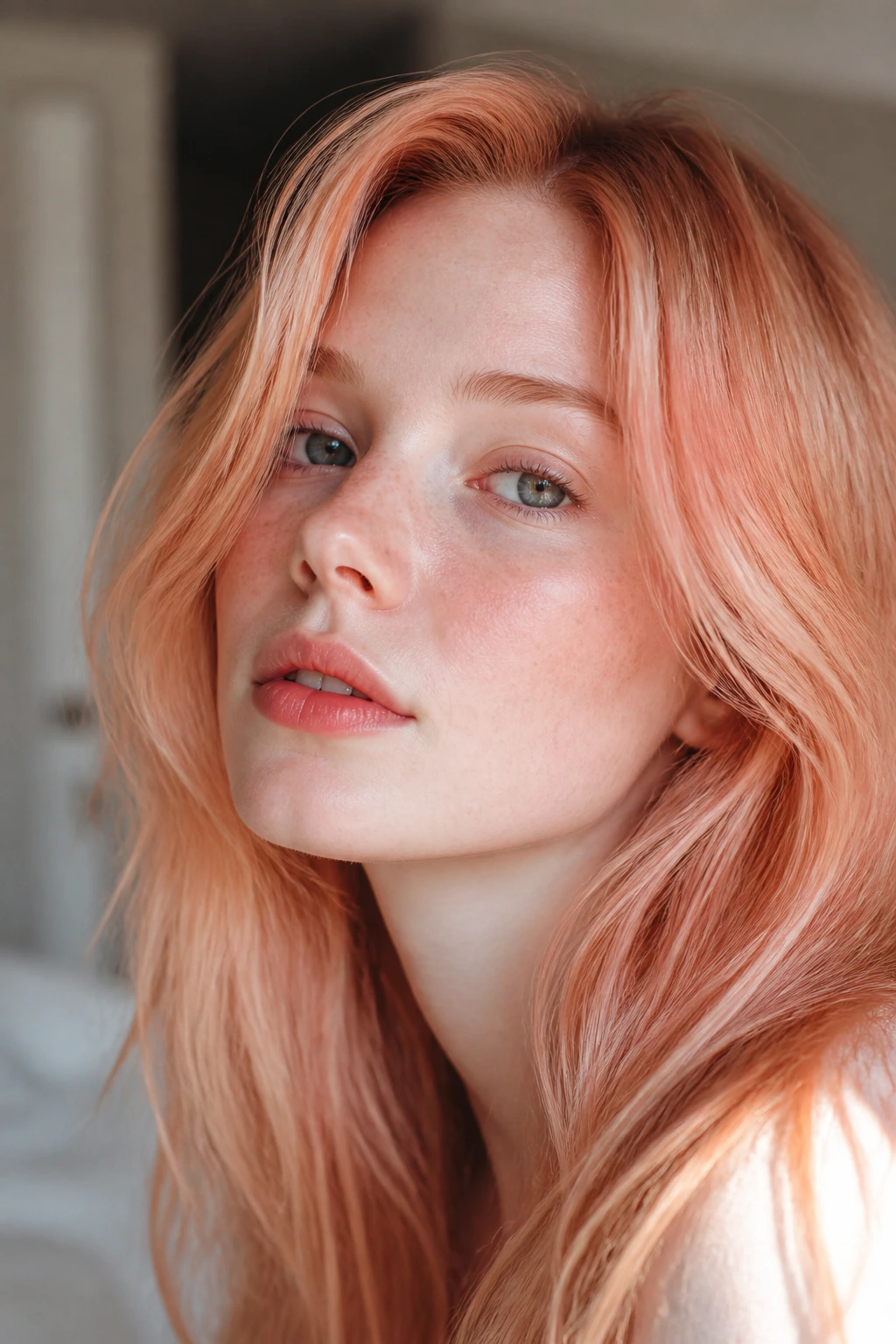
Coral does its best work on pale skin when it behaves like color and light at the same time. The peach side brings warmth. The pink side brings freshness. Put those together and you get a shade that can make fair skin look awake without drowning it in pigment.
The catch is undertone. A coral that leans too orange can exaggerate redness around the nose and cheeks. A coral that leans too red can make cool skin look flushed. The best formulas sit in the middle and are adjusted with base level, gloss, or root shadow so the color looks intentional from root to end.
That’s why stylists often talk about level, tone, and placement in the same breath. A pastel coral on a level 10 blonde looks airy. The same shade on a darker yellow base can turn muddy. A coral money piece can feel modern and sharp. The same pigment spread too thick across the entire head can flatten the face. Tiny choices. Big difference.
Essential Tools for Coral Color Sessions
-
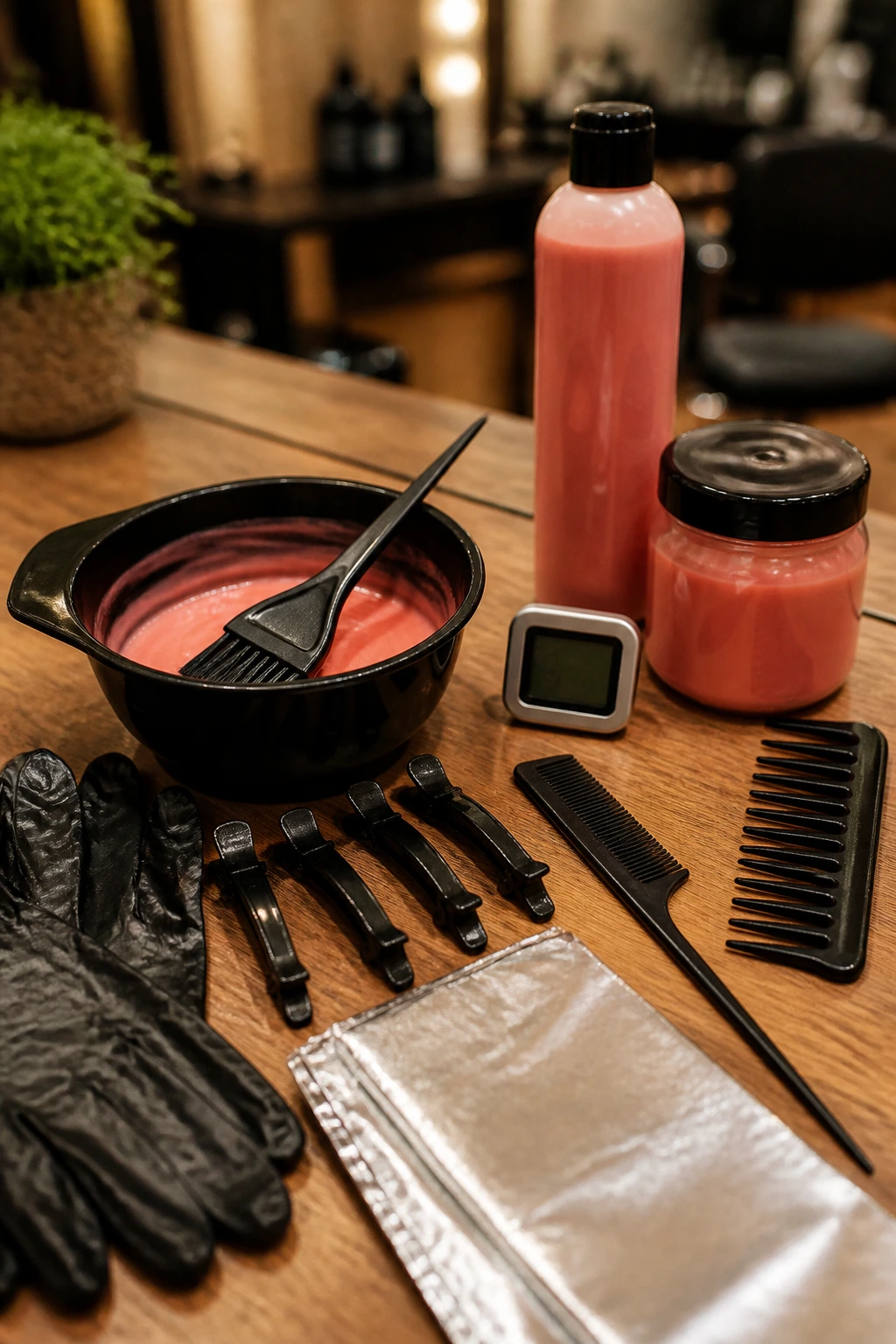
Tint bowl and color brush: Needed for mixing glosses, demi-permanent color, or direct dye cleanly without overloading the brush.
-
Sectioning clips: Four to six strong clips make balayage, foiling, or money-piece placement much easier to control.
-
Gloves: Coral pigments stain fast, and pale hands make it obvious when you’ve skipped them.
-
Foils or balayage paddle: Use foils for stronger lift and crisp placement, or a paddle for softer painted pieces.
-
Tail comb: Good for clean partings and for picking up thin ribbons when you want dimension instead of a block of color.
-
Timer: Coral can shift faster than people expect, especially on pre-lightened hair. Guessing is how you end up with too much orange.
-
Color-safe shampoo and conditioner: Sulfate-free products help coral hang on longer and keep the finish smoother.
-
Color-depositing mask or conditioner: A peach, rose, or copper-tinted conditioner can keep the tone from fading into flat blonde.
-
Wide-tooth comb: Best for distributing conditioner without pulling the hair apart.
-
Old towel or salon cape: Coral dye travels. A lot. Save your good towels.
Smart Shade Shopping and Formula Notes
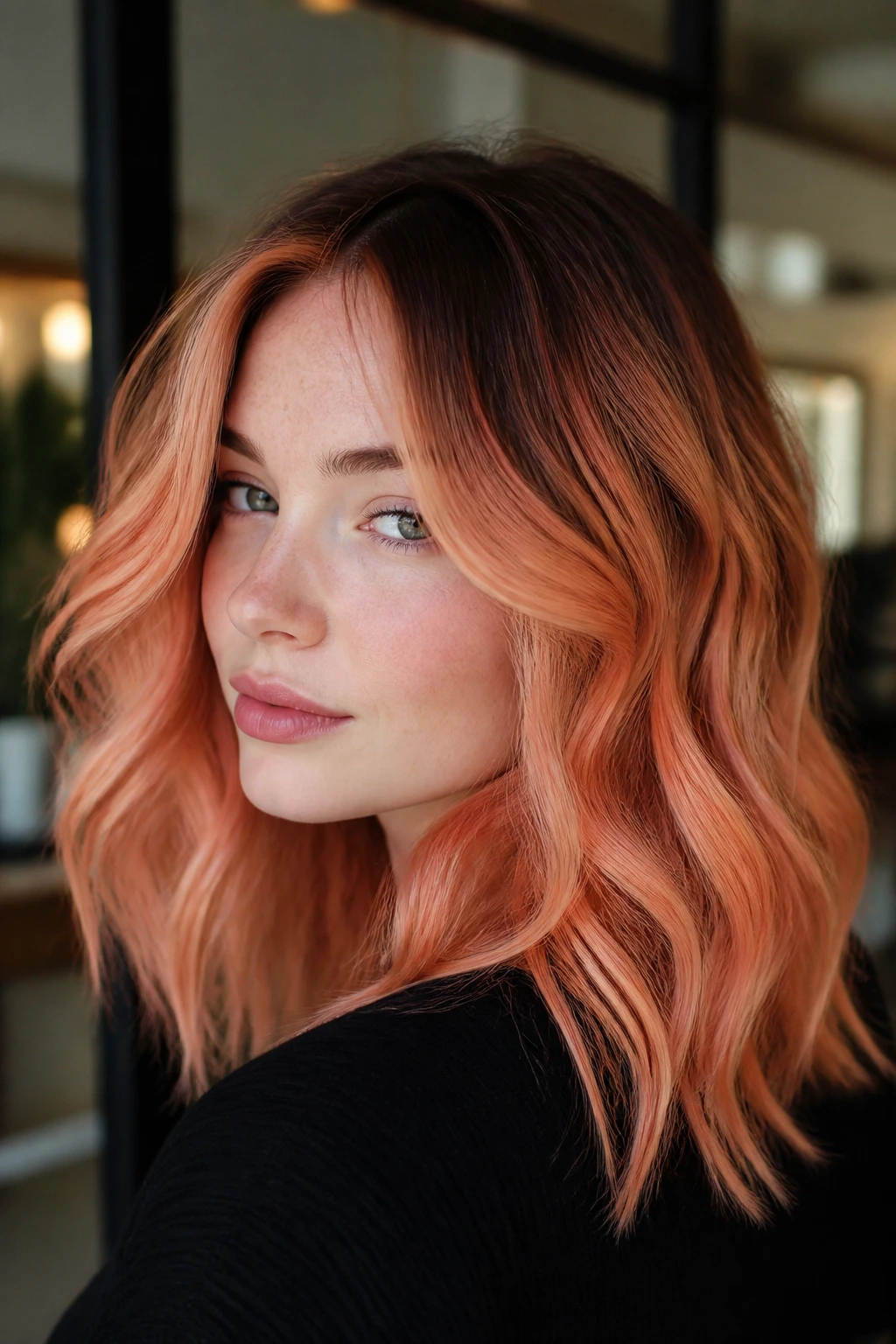
The easiest coral choice is not always the prettiest one, and the prettiest one is not always the most wearable. If your skin is very fair with pink undertones, start with peach coral, rose coral, or apricot rather than a true orange-coral. Those shades add warmth without echoing the redness already in the face. If your skin is fair but warmer, you can push the color more toward papaya or copper-coral.
Base level matters just as much as tone. Pastel coral usually needs a pale yellow blonde base, often around level 9 or 10. If the hair is too yellow, the coral can go muddy. If it’s too dark, the coral may just disappear. A gloss or demi-permanent formula is often better for soft coral looks because it deposits tone without the heavy commitment of permanent color. Vivid coral or neon coral may need pre-lightening and a more direct pigment approach.
If you’re shopping for at-home products, look for terms like peach, apricot, rose gold, salmon, blush copper, and coral glaze. Read the swatches carefully. A product that looks coral in the tube can dry much warmer than you expect. Strand tests are boring. They also save a lot of regret.
How to Wear Coral Hair Without Letting It Wear You
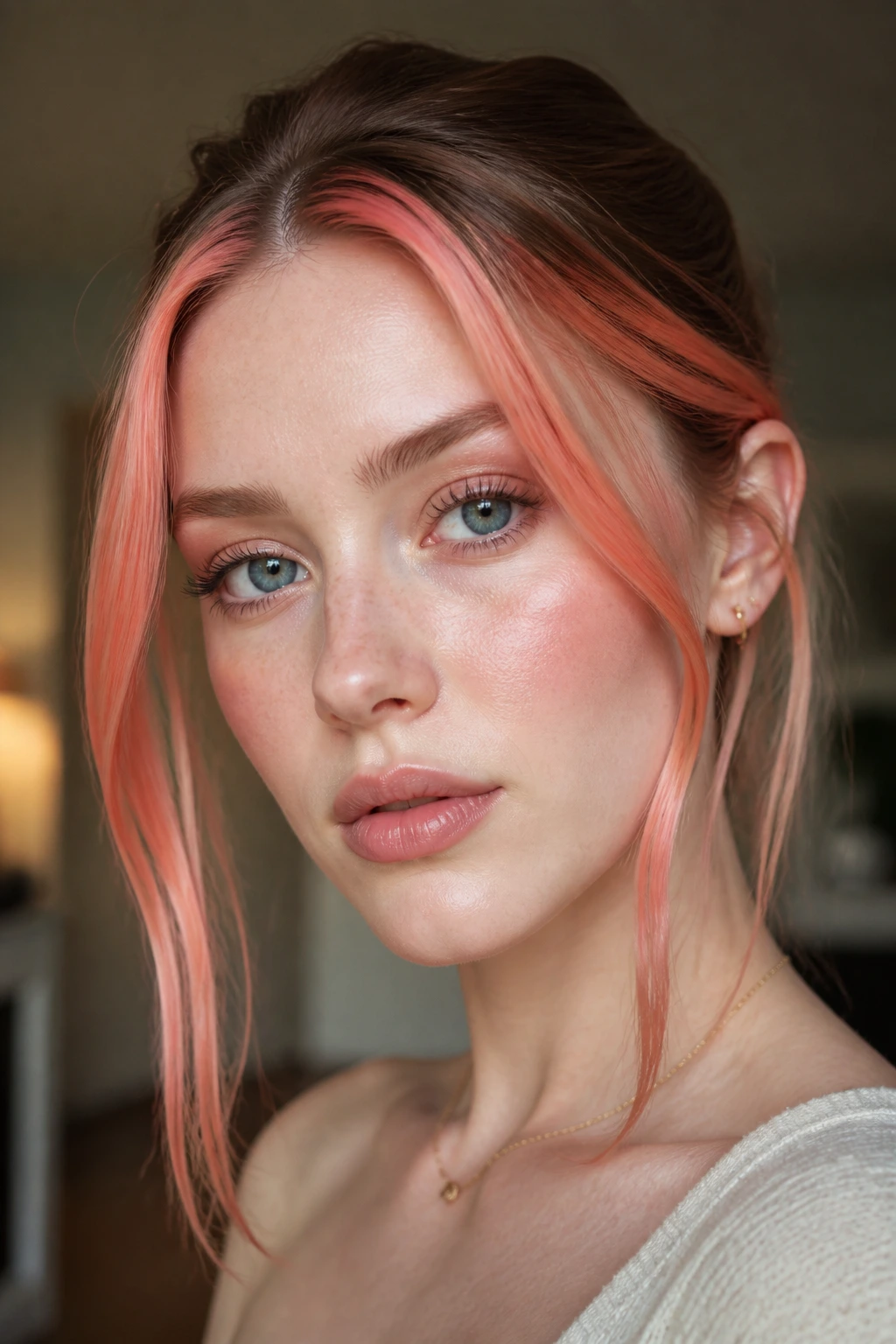
Makeup Pairing: Coral hair usually looks best with makeup that stays in the same warm neighborhood. Peach blush, cream bronzer, neutral-rose lip color, and soft brown liner tend to keep the face balanced. If the hair is vivid coral, a cool mauve lip can fight it.
Wardrobe Pairing: Cream, denim, soft gray, olive, washed black, and dusty blue all give coral room to breathe. Very bright red near the face can clash if the hair is already saturated. A plain white tee can look sharp with coral. So can a black turtleneck, if you like contrast.
Cut Pairing: Blunt bobs, curtain bangs, shags, and layered lobs make coral look designed. A one-length cut can work too, but it needs shine and movement or the color can feel a little stuck on. Shorter cuts usually make coral feel fresher on pale skin because there’s less surface area for the warmth to compete with.
Lighting: Coral behaves differently in daylight, bathroom light, and under office bulbs. Check it near a window before deciding the tone is too orange. A shade that looks risky indoors can look soft and alive outside. Hair color is rude like that.
Additional Tips and Color Boosters
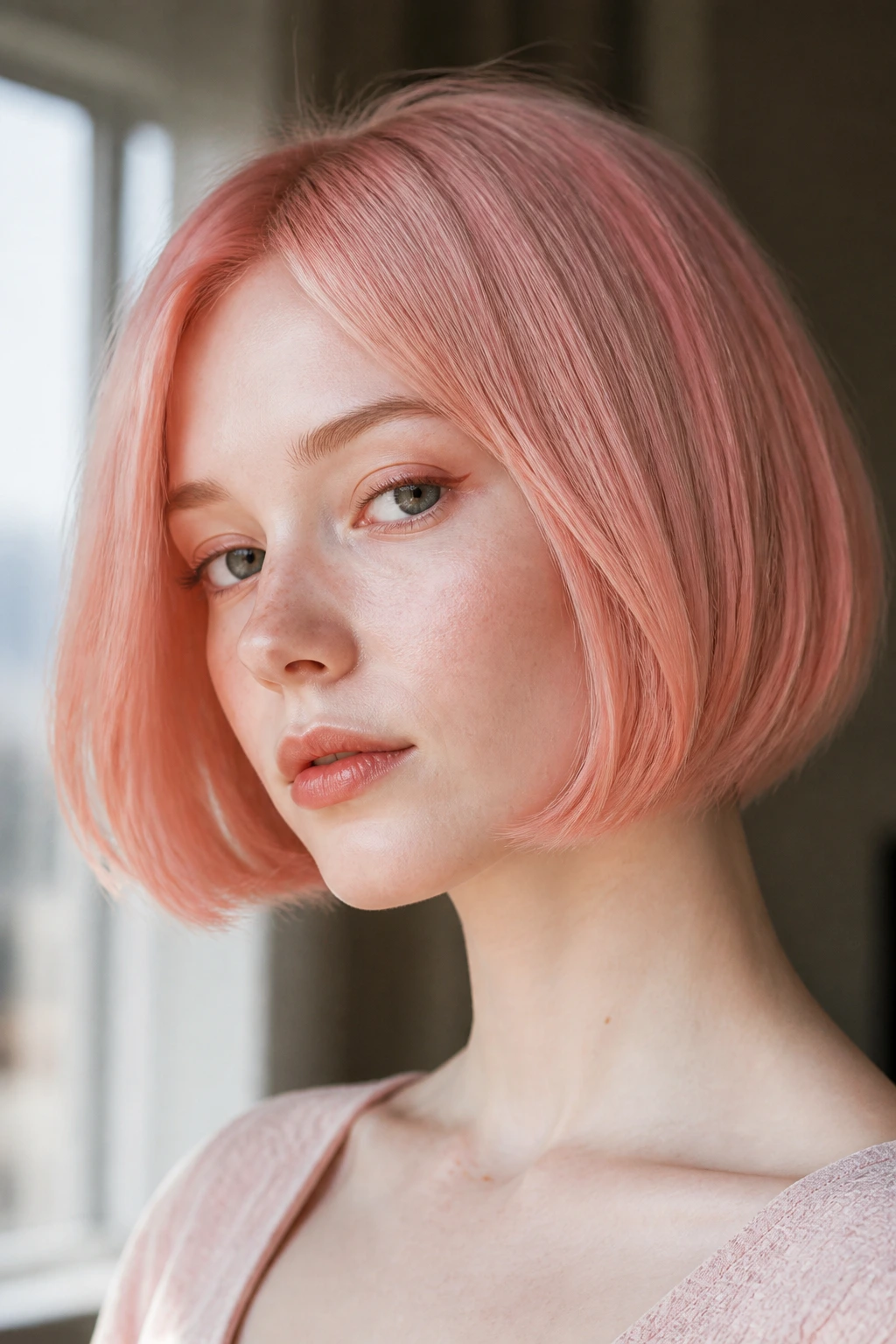
Color Boost: A clear gloss mixed with a coral or peach mask can revive faded ends between appointments without repainting the whole head. Use it every two to four weeks if the shade starts to look dry or washed out.
Customization: If you like coral but want less heat, ask for a root shadow and a beige base under the coral. If you want more edge, add a brighter money piece or a few vivid underlights at the nape. Small placement changes shift the whole mood.
Styling Trick: Loose waves make coral look richer because they break up the tone and show the different reflect levels. Straight hair can be beautiful too, but it needs extra shine or the color can sit there looking a little flat.
Make-It-Yours: Pale skin with pink undertones usually likes peach and rose coral best. Pale skin with golden or freckled undertones can take apricot, papaya, or copper-coral more easily. That’s the part people skip, and it’s the part that saves the haircut from looking confused.
Common Mistakes That Turn Coral Muddy or Orange
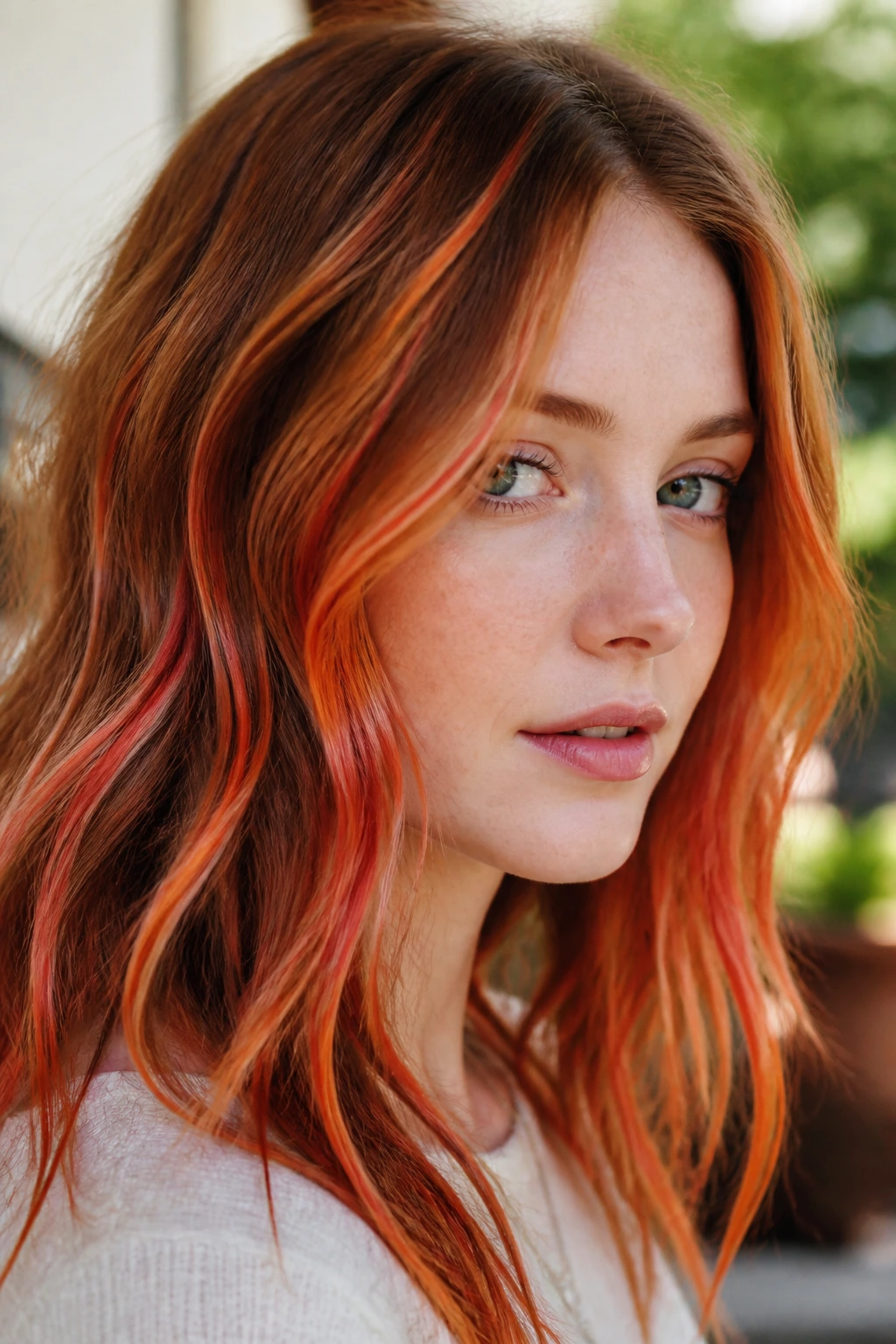
One common mistake is choosing coral that’s too orange for your skin. The hair may look bold in the bowl, then turn brassy next to a fair face. The fix is to ask for peach, rose, or apricot balance — not pure orange pigment.
Another one is skipping enough lift. Coral needs a light base if you want it to stay clean. Put coral over dark yellow or brown hair and the color can go muddy fast. If your stylist says the base needs another round of lightening, that’s not them being fussy. That’s the formula talking.
A third mistake is ignoring upkeep. Coral fades faster than brown or blonde because the pigment molecules are smaller and more fragile. If you wash with hot water, use strong shampoo, and heat-style without protection, the tone can drop out in a week or two and leave behind a tired peach ghost.
People also overdo purple shampoo. It’s useful for blonde correction, but it can dull coral into a weird gray-orange if you use it too often. Use color-safe shampoo most of the time, and only reach for toning products when the base actually needs correction.
Ways to Adapt Coral Hair for Different Bases and Budgets
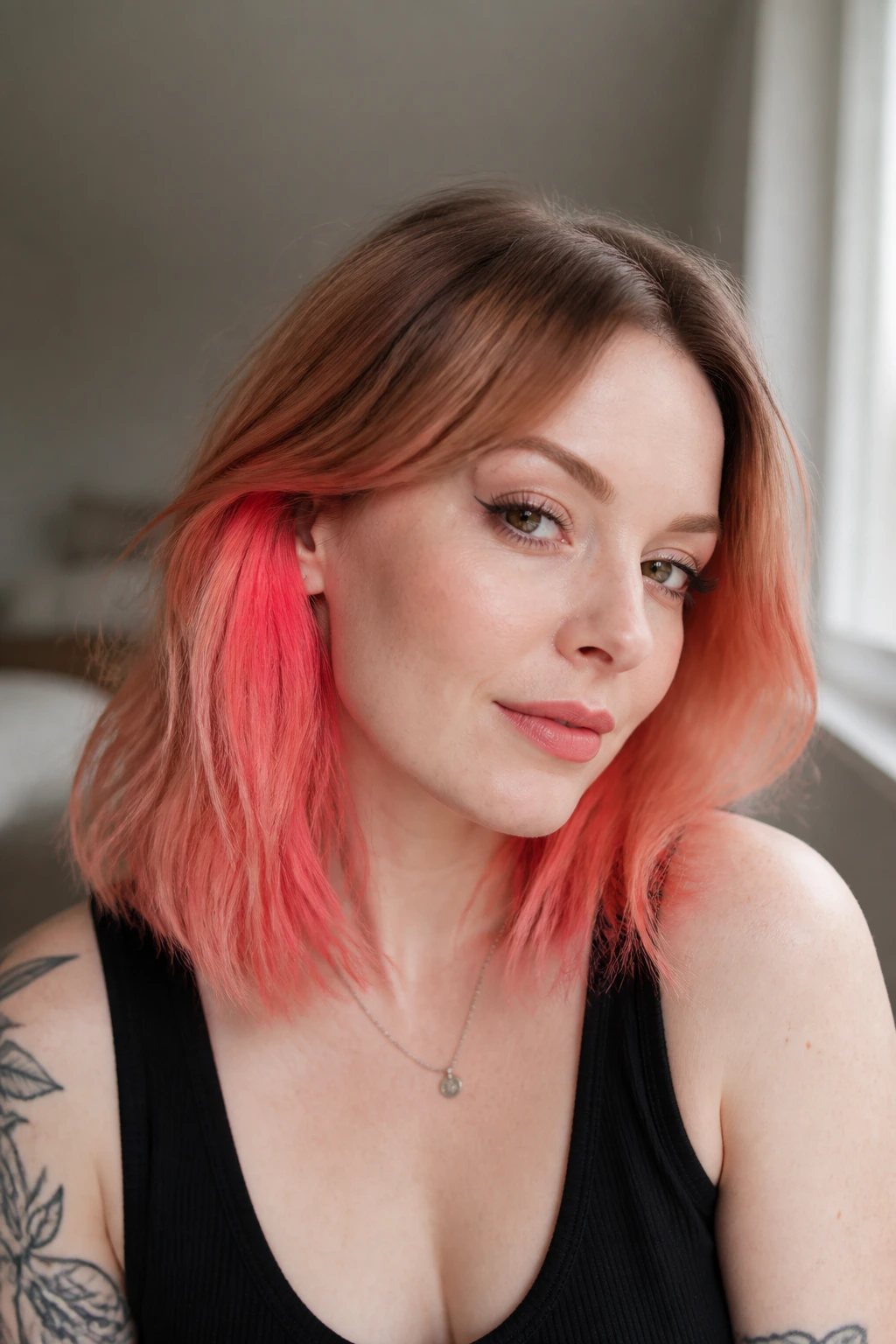
Soft-Start Gloss: If you want coral with almost no risk, start with a peach or rose glaze on blonde hair. It fades gently and can be refreshed without a big salon bill.
Brunette-Friendly Underlights: Dark-haired readers can keep most of their natural color and add coral underlights or hidden panels. You still get the coral flash, but you do not have to commit to a full lightening session.
High-Contrast Platinum Pop: If you want the shade to look sharp and graphic, pair coral with platinum or icy blonde. This needs more maintenance, but it gives the cleanest color contrast.
Curly Halo Placement: Curly hair does not need the same coral placement as straight hair. Put the color where the curls sit on top, and let the shape carry the effect.
Low-Maintenance Root Shadow: A shadow root helps coral grow out in a softer way. It also saves you from chasing the exact same tone every few weeks.
How to Keep Coral Hair Bright Between Touch-Ups
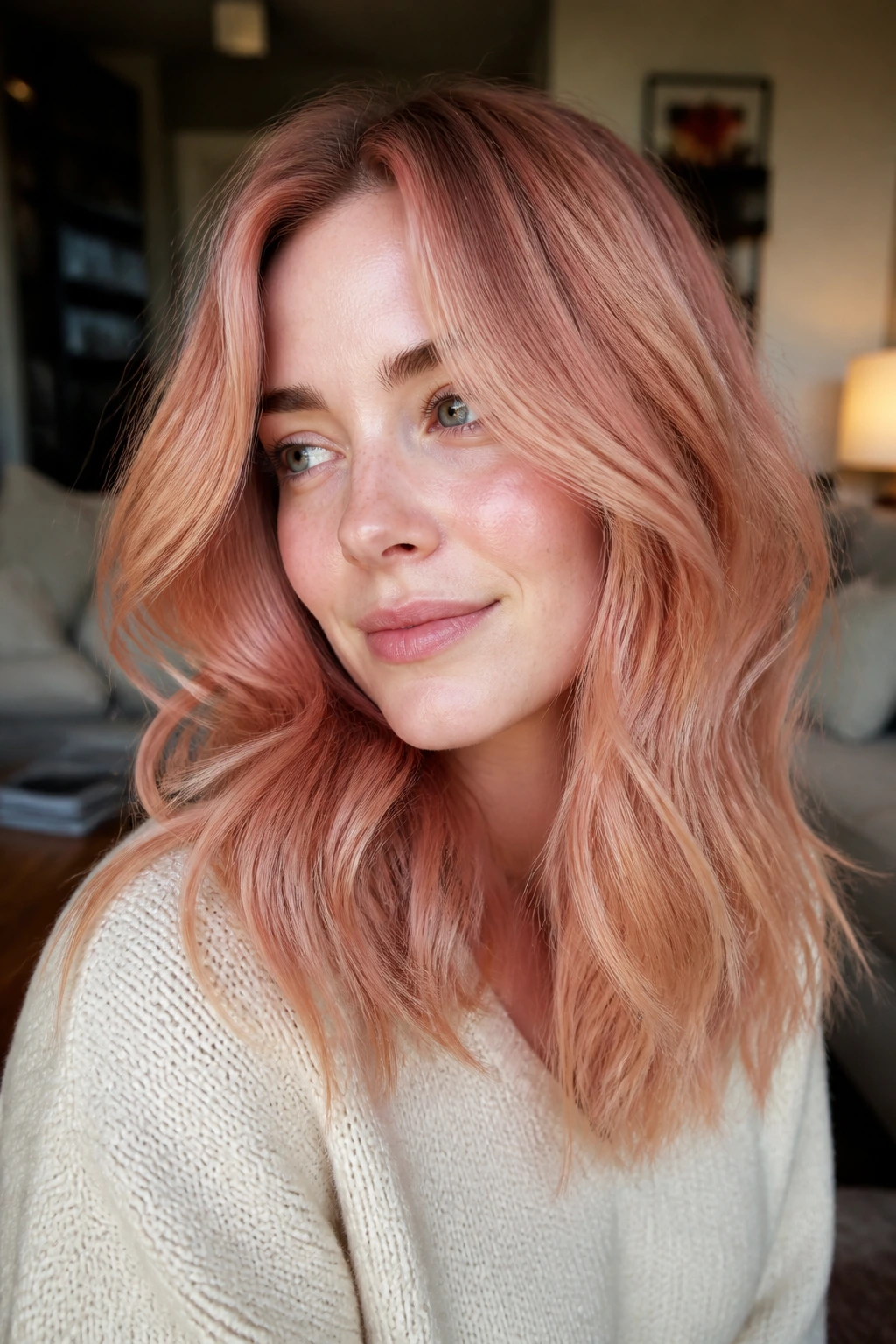
Coral fades. That’s part of the deal. The good news is that you can slow the fade without babying your hair like it’s made of spun sugar. Wash in cool or lukewarm water. Hot water lifts pigment faster, and coral does not have the strength to fight it. Use a sulfate-free shampoo, and keep the lather focused on the scalp instead of roughing up the lengths.
Most coral shades stay strongest when they’re refreshed every 4 to 6 weeks with a gloss, glaze, or color-depositing mask. Vivid coral may need more frequent top-ups. Pastel coral can fade into a soft peach wash, which is not always bad, but it can lose the whole point if you let it go too long.
Heat styling also matters. A protectant spray before blow-drying or ironing helps, and lower heat settings do less damage to the pigment. If your hair is already porous from bleaching, it will drink up color at first and then give it back too fast. That’s normal. It just means you need a gentler wash routine and a conditioning mask once a week.
Frequently Asked Questions About Coral Hair on Pale Skin
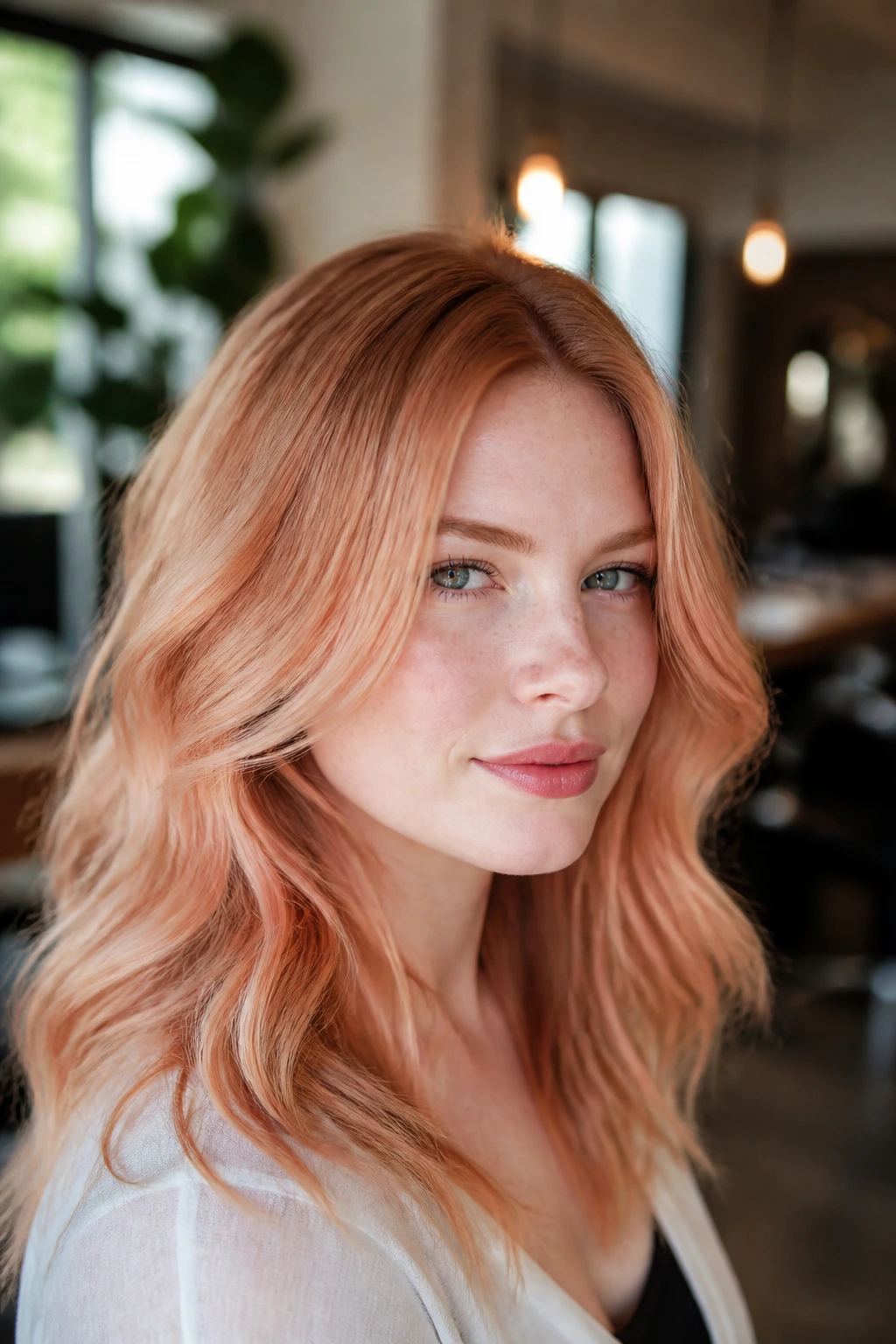
What coral shade is best for pale skin with pink undertones?
Peach coral, rose coral, and apricot coral usually work best because they warm the face without intensifying redness. If the shade leans too orange, it can make the skin look flushed in the wrong way.
Does coral hair need bleach?
Usually, yes, if you want a soft pastel or bright coral. The lighter the coral, the lighter the base has to be. On darker blondes or light brunettes, you can sometimes get a muted coral with glossing or deposit-only color, but the result will be softer.
Can brunettes wear coral without going fully blonde?
Yes. Coral underlights, peekaboo panels, and face-framing pieces can show beautifully on brunette bases, especially if you lift just those sections. The rest of the hair can stay darker, which makes the coral pop more.
How often should coral be refreshed?
Most coral shades need a gloss or mask every 4 to 6 weeks. Vivid shades may need sooner, while dusty or muted coral can stretch a bit longer. Wash frequency, water temperature, and porosity all change the timeline.
Will coral hair make pale skin look washed out?
It can, if the tone is too light and too cool, or too orange and too saturated. The fix is matching the undertone to the skin and keeping some depth with a root shadow, beige base, or richer lowlights.
What haircut looks best with coral on fair skin?
Bobs, lobs, shags, pixies, and layered cuts all show coral well because the shape gives the color movement. Long, one-length hair can work too, but it often needs more dimension to keep the coral from flattening out.
Can I do coral at home?
You can try a gloss, mask, or semi-permanent coral on pre-lightened hair if you’re comfortable following directions carefully. Anything that needs bleach, toning, or precision placement is safer in a salon chair.
What makeup pairs best with coral hair?
Peach blush, soft brown mascara, neutral lips, and a little warmth on the cheeks usually work well. Very cool makeup can clash if the hair is peachy or apricot-heavy.
The Coral Sweet Spot
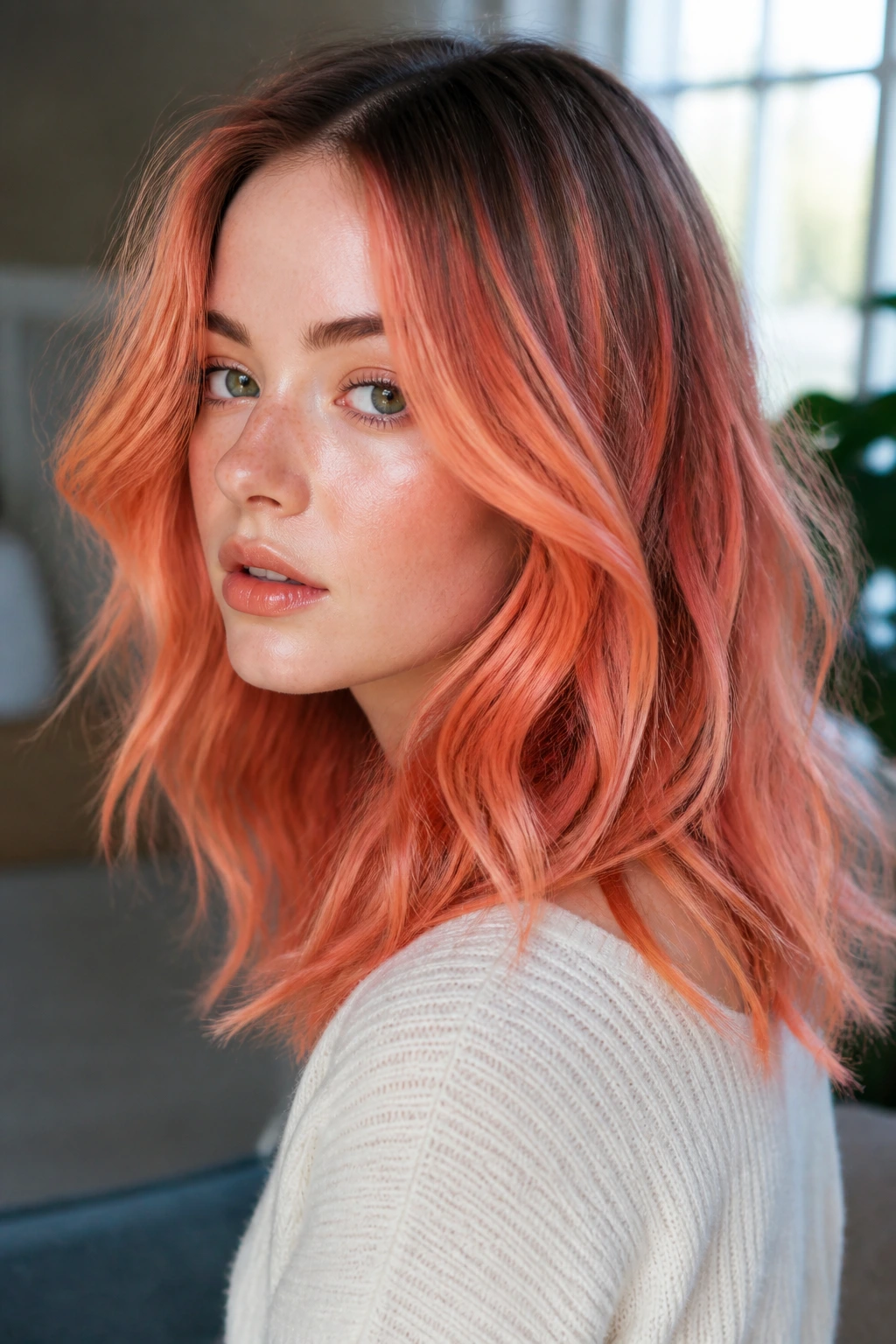
Coral hair works on pale skin when it looks chosen, not random. That usually means the tone is doing more than one job at once: warming the face, adding movement to the hair, and keeping the finish soft enough that the complexion still gets to breathe.
The styles that age best are the ones with some depth — a shadow root, a soft melt, a few ribbons, a smarter placement around the face. Coral can be playful, but it looks most convincing when it has structure underneath it.
Start with the version that matches how much color you actually want to live with. A gloss is a good first move. A money piece gives a sharper hit. Full coral balayage is for the days when you want the hair to walk into the room before you do.
