



A pixie cut for women with short hair lives or dies in the details — the crown, the fringe, the nape, and the way the hairline sits against the ears. One extra inch on top can soften the whole thing; one extra inch off the front can make it look stern. Short hair is honest like that. It does not hide sloppy planning.
That honesty is the reason pixie cuts keep earning space in real life, not just in glossy mood boards. A good pixie can read polished, edgy, airy, soft, or almost boyish in the best possible way, and the difference usually comes down to how the cut handles movement. Some versions want a round brush and a dab of paste. Others look better roughed up with your fingers and left alone. The shape decides the mood faster than the color ever will.
What most people miss is that a pixie is not one haircut. It’s a family of small decisions: where the part sits, how much weight stays at the crown, whether the sides are tucked or feathered, and whether the back hugs the neck or kicks out a little. Get those details right and the cut looks deliberate. Miss them, and it can turn into a helmet by lunch.
Why These 28 Pixie Cuts Keep Working
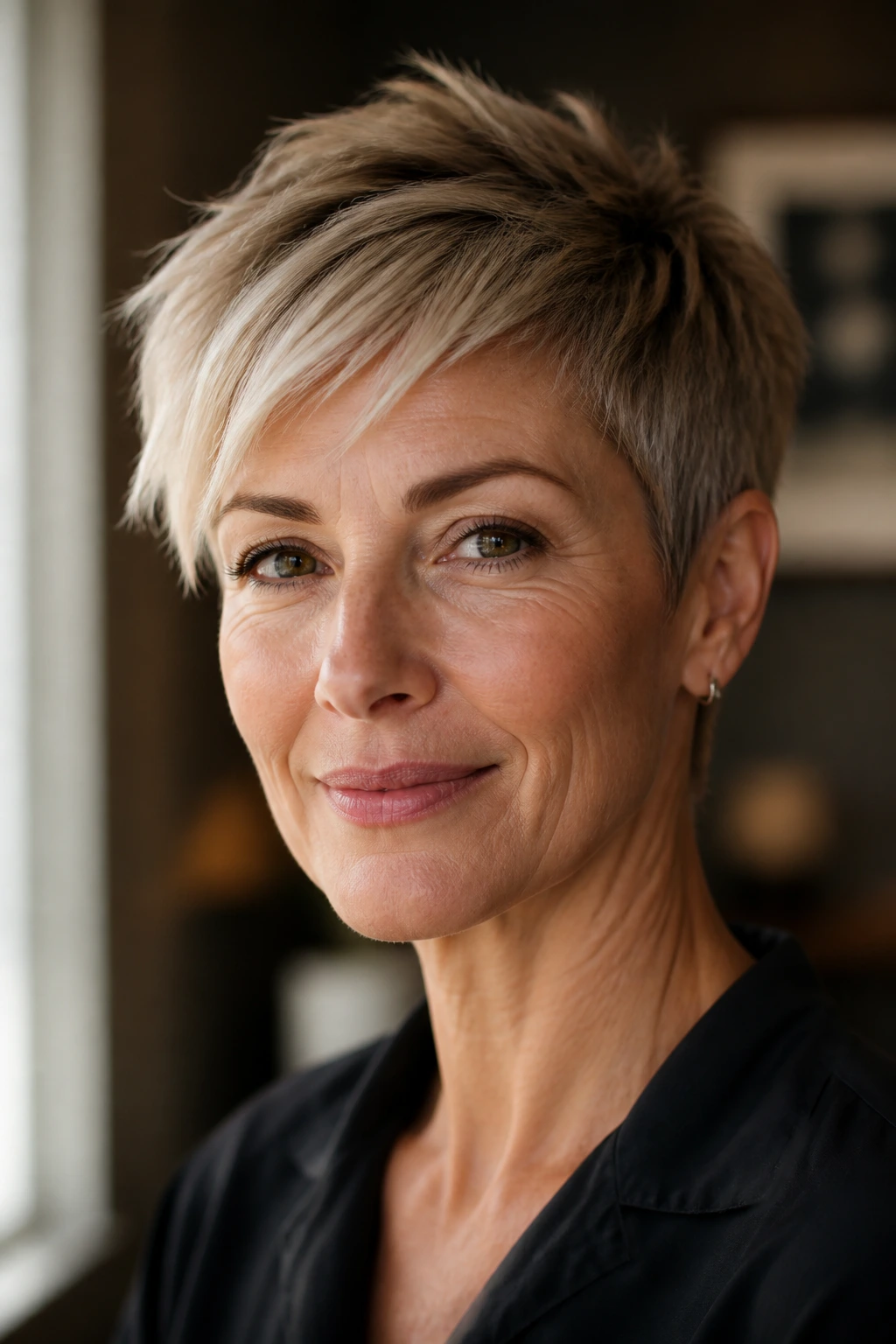
-
They match different hair textures: Fine hair, thick hair, straight hair, and curls all need a different kind of short cut, and the pixie gives you room to tailor the shape instead of forcing one blunt outline.
-
They control the face without drowning it: A long fringe can soften a forehead, a tapered side can sharpen a jaw, and a little crown height can stretch a round face without making the haircut feel fussy.
-
They are fast, not careless: Most of these styles take 3 to 8 minutes to style once the cut is right, which is a real difference from “wash and hope” hair.
-
They grow out in layers of usefulness: A pixie does not go from perfect to terrible overnight. It usually passes through a few wearable stages if the perimeter was cut with that in mind.
-
They show the shape of the head in a good way: That sounds technical because it is. The nape, temples, and crown all matter more with short hair, and that’s exactly why a strong pixie looks so clean.
1. Soft Side-Swept Pixie
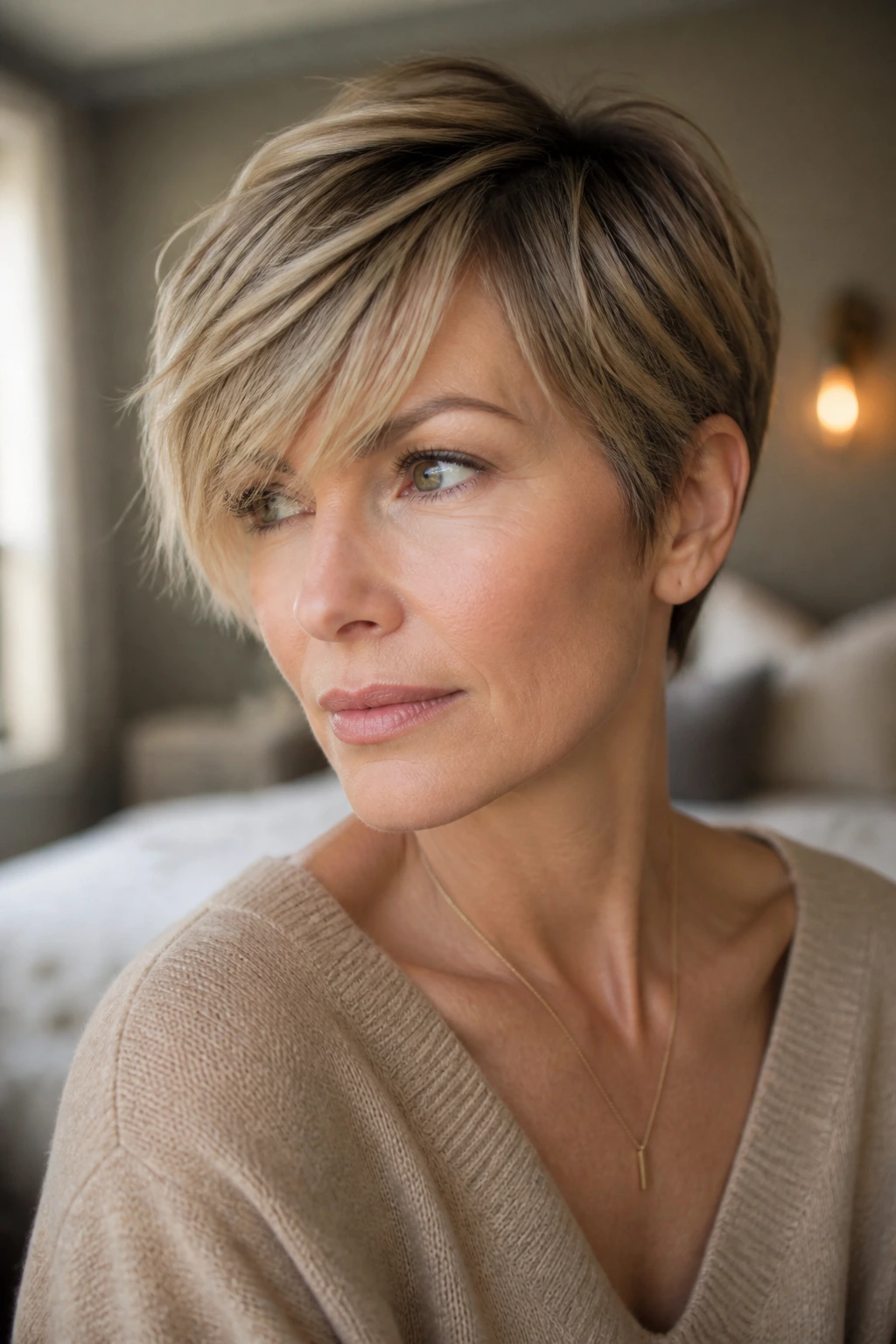
A soft side-swept pixie is the version I reach for when someone wants short hair but not a hard edge. The fringe stays long enough to skim the eyebrow or cheekbone, and the temple area stays wispy instead of clipped tight, so the whole cut moves a little when you turn your head. It has a gentler line than a blunt crop.
The trick is keeping the top flexible. Ask for a tapered nape, soft layering through the crown, and enough length in front to push to one side without fighting it. A pea-size bit of smoothing cream on damp hair is usually enough. Blow-dry the fringe first if it likes to split.
This shape is especially kind to women who are nervous about going very short because it leaves you something to play with. Tuck it behind one ear, let it fall forward, or bend it with a small round brush. Tiny moves. Big payoff.
2. Classic Tapered Pixie
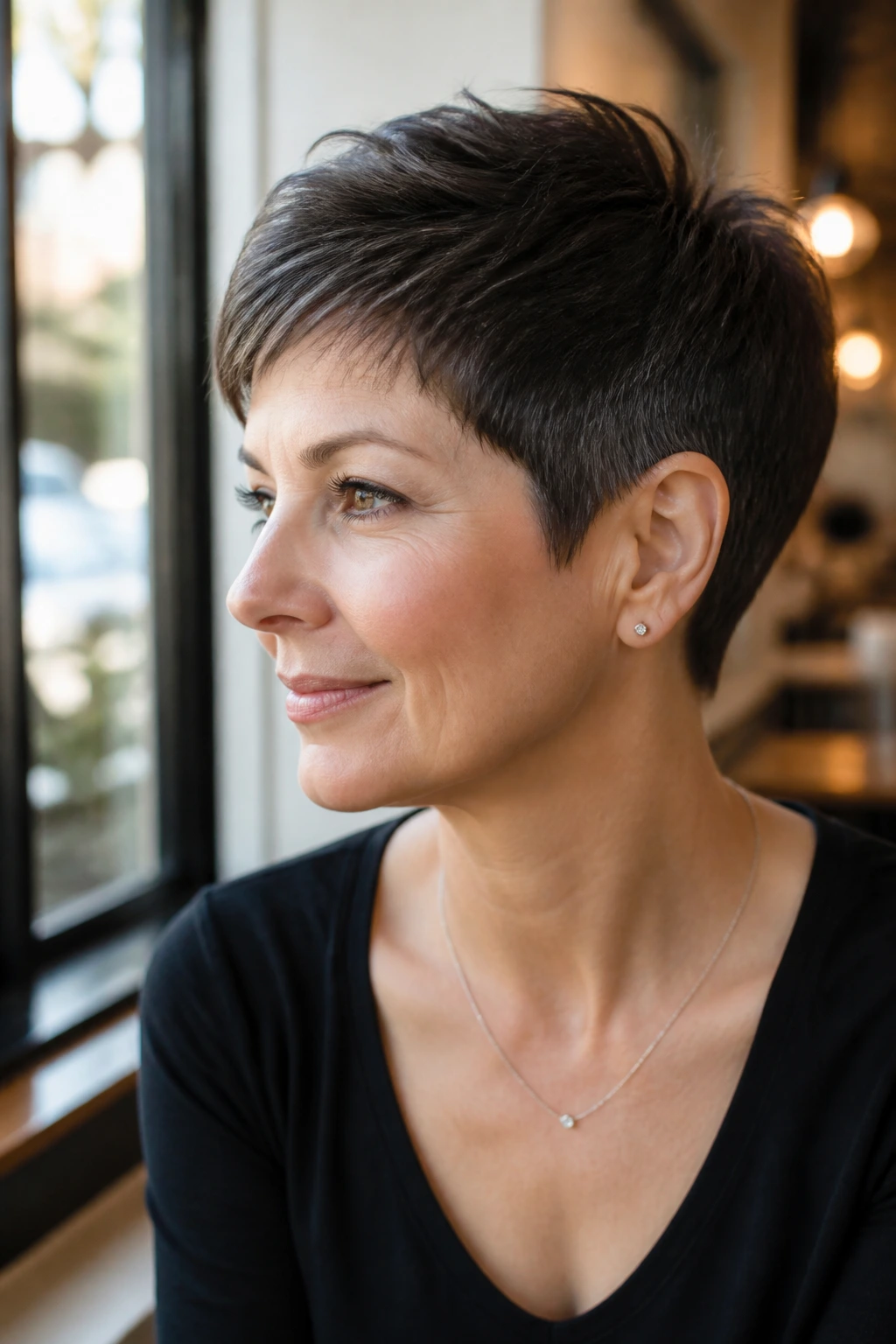
The classic tapered pixie is clean, calm, and a little smug in the best way. The sides get shorter as they move into the nape, the top stays slightly longer, and the whole cut sits close enough to the head that it looks neat even when you have not done much to it.
What makes this version work is restraint. Too much layering and it starts to fray. Too much product and it turns shiny in a way that shows every strand. Keep a light styling cream or a soft wax nearby, use less than you think you need, and comb the sides flat while the hair is still warm from the dryer.
It is one of the easiest pixies to keep tidy between salon visits because the silhouette is simple. You can go straight, side-parted, or with a little lift at the crown and still keep the same clean outline.
3. Choppy Textured Pixie
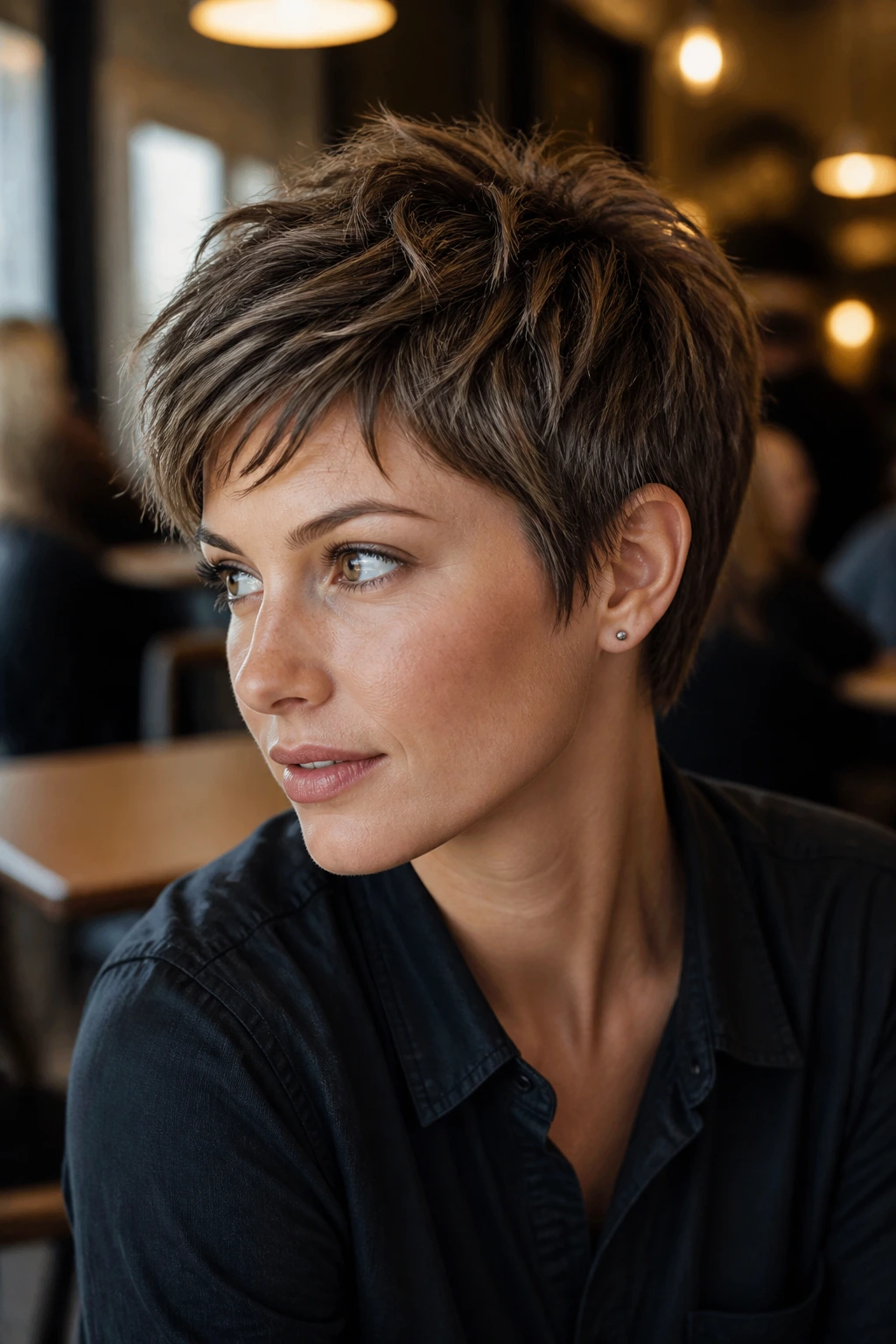
This is the cut for people who want movement, not perfection. A choppy textured pixie uses point-cut ends and uneven layers to keep the hair from sitting like one solid block, which matters a lot if your strands are fine and collapse the second they dry. It should look intentionally piecey, not accidentally hacked.
Ask for texture through the top and crown, but not so much that the ends look thin and sad. That’s the trap. A matte paste works better than a glossy cream here because it separates the pieces without weighing them down. Rub a little between your palms, then pinch the ends instead of smoothing from root to tip.
This style is forgiving on busy mornings. It likes a little mess. If you overwork it, it starts to look busy in a bad way, so stop when the shape looks broken up and lively rather than perfectly arranged.
4. Long Fringe Pixie
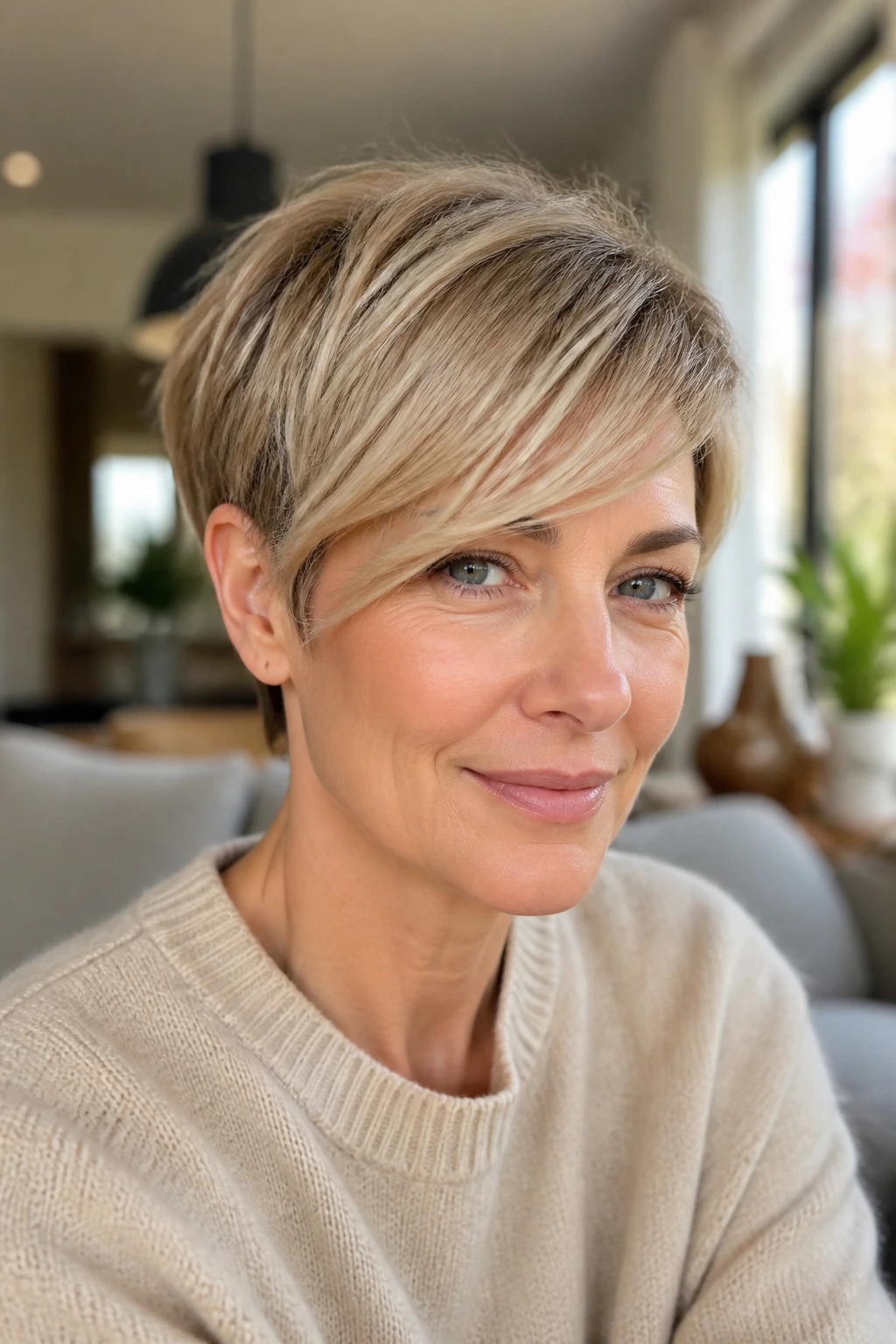
A long fringe pixie changes the whole mood of short hair because the front becomes the focus. The fringe can sweep across the forehead, skim one eyebrow, or land right above the cheekbone, and that length gives the cut a softer line than a super-short crop. It also gives you options, which is the whole point.
If your forehead feels like the part you want to soften, this is one of the best short-hair shapes to ask for. Keep the sides narrower than the front so the fringe stays the star, and style it with a flat brush or a small iron bend if it likes to flip. A slight side part keeps the front from hanging like a curtain.
It can be sleek or tousled. That flexibility is why I like it. The same haircut can look polished with a cream finish or slightly undone with dry texture spray, and you do not have to change the cut to get both moods.
5. Asymmetrical Pixie
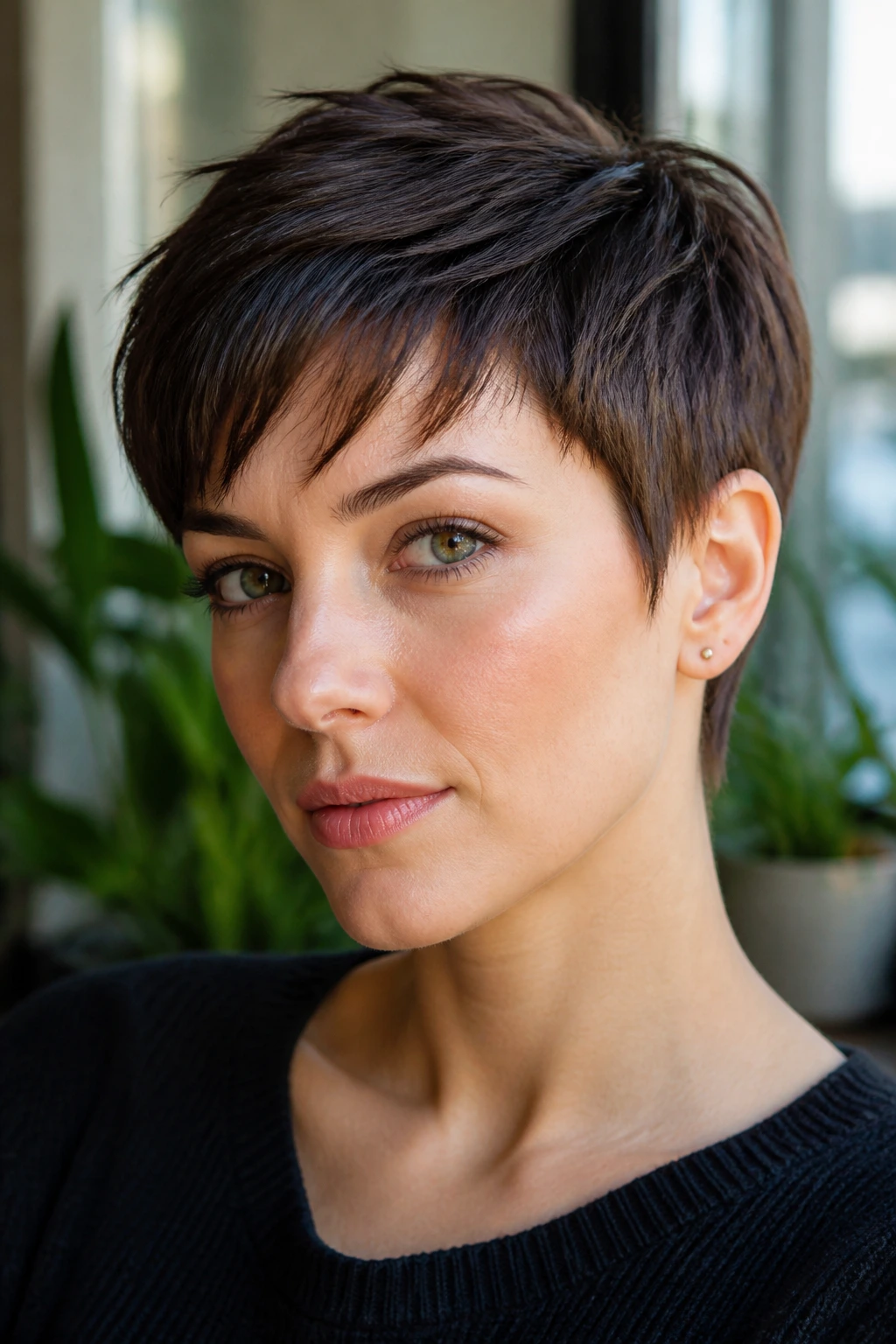
An asymmetrical pixie is what happens when you want one side to carry a little more visual weight than the other. Maybe one temple stays longer. Maybe the fringe drapes diagonally across the face. The shape always feels intentional because the imbalance is the design.
This cut is useful when a face needs a softer diagonal line — square jaw, strong cheekbones, broad forehead, all of it. The longer side pulls the eye across the face rather than stopping it head-on. Keep the shorter side crisp at the nape and ear so the contrast stays clear.
It does ask for some upkeep. The longer side grows out fast and starts to fall out of line if you ignore it. But when it’s fresh, it has a sharp, modern look that can make even a plain white T-shirt feel edited.
6. Curly Pixie
A curly pixie is one of the smartest short cuts you can wear if your curl pattern has opinions. It needs to be cut with the curl, not against it, because curls shrink and spring differently all over the head. A dry cut or a curl-by-curl approach usually gives a better result than chopping it wet and hoping.
Keep the top a touch longer than you think, especially if your curls are springy. Too short and you get a little mushroom shape. A foam or curl cream, scrunched into damp hair, helps define the shape without turning it crunchy. Then diffuse on low heat or air-dry if the pattern holds well on its own.
This is not a fussy cut if the base shape is right. It is a shape cut, not a control cut. Once the curl pattern is respected, it can look playful, soft, and oddly graceful all at once.
7. Platinum Micro Pixie
A platinum micro pixie is the boldest thing in the room without trying very hard. The hair sits extremely close to the head, usually with the fringe kept short and the nape tight, and the icy color makes every line more obvious. That is the charm. There is nowhere for the cut to hide.
Because the length is so short, the shape has to be clean. If the crown is uneven or the hairline is sloppy, you see it immediately. A short, sharp pixie like this also means the color has to be kept bright; brass shows fast against that pale finish. A purple shampoo once a week is usually enough if your hair can handle it.
It is a strong choice for women who like a real style statement and do not mind regular maintenance. The bleach, the trim, the toner — all of it matters. Skip the upkeep and the whole thing starts to look tired.
8. Undercut Pixie
An undercut pixie keeps the top longer while the sides or back are clipped much shorter underneath. It is a clever cut for thick hair because it removes bulk where the head gets widest, which stops the shape from puffing out like a helmet. Done well, it feels cool and practical at the same time.
The visible top section can be swept, spiked, or lightly waved. That means you can change the mood without changing the cut. Ask your stylist to leave enough length on top to cover or reveal the undercut depending on how you part it. That little bit of flexibility matters more than people think.
If your hair grows fast around the ears or nape, this cut needs regular touch-ups. Still, there is something satisfying about the clean contrast. The hidden short layer keeps the bulk down, and the top gets to stay expressive.
9. Feathered Layered Pixie
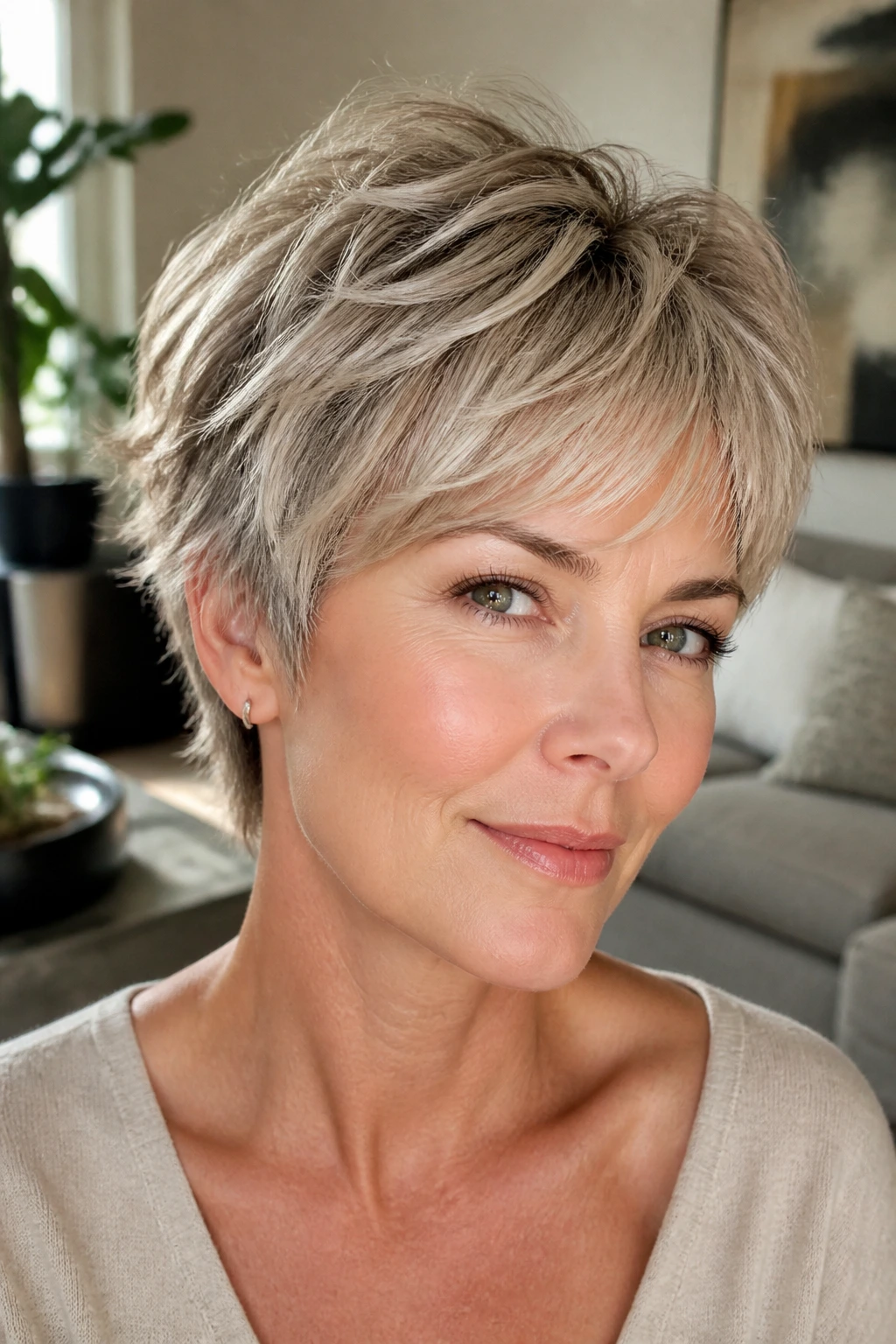
A feathered pixie is soft around the edges in a way that flatters a lot of faces without looking precious. The layers are cut to flick away from the head instead of sitting in one flat line, so the haircut moves when you do. It has air in it. That’s the point.
This version is especially useful if your hair is dense and you want the shape to feel lighter without removing too much length. Feathering around the crown and temples breaks up the blocky look that thick hair can create. A light mousse on damp hair and a quick rough-dry are often enough to bring the layers to life.
It is one of those cuts that looks better when it is not overcontrolled. If you brush it too hard, the feathering collapses. If you use too much wax, it turns sticky. Light hand. That’s the rule here.
10. Slicked-Back Pixie
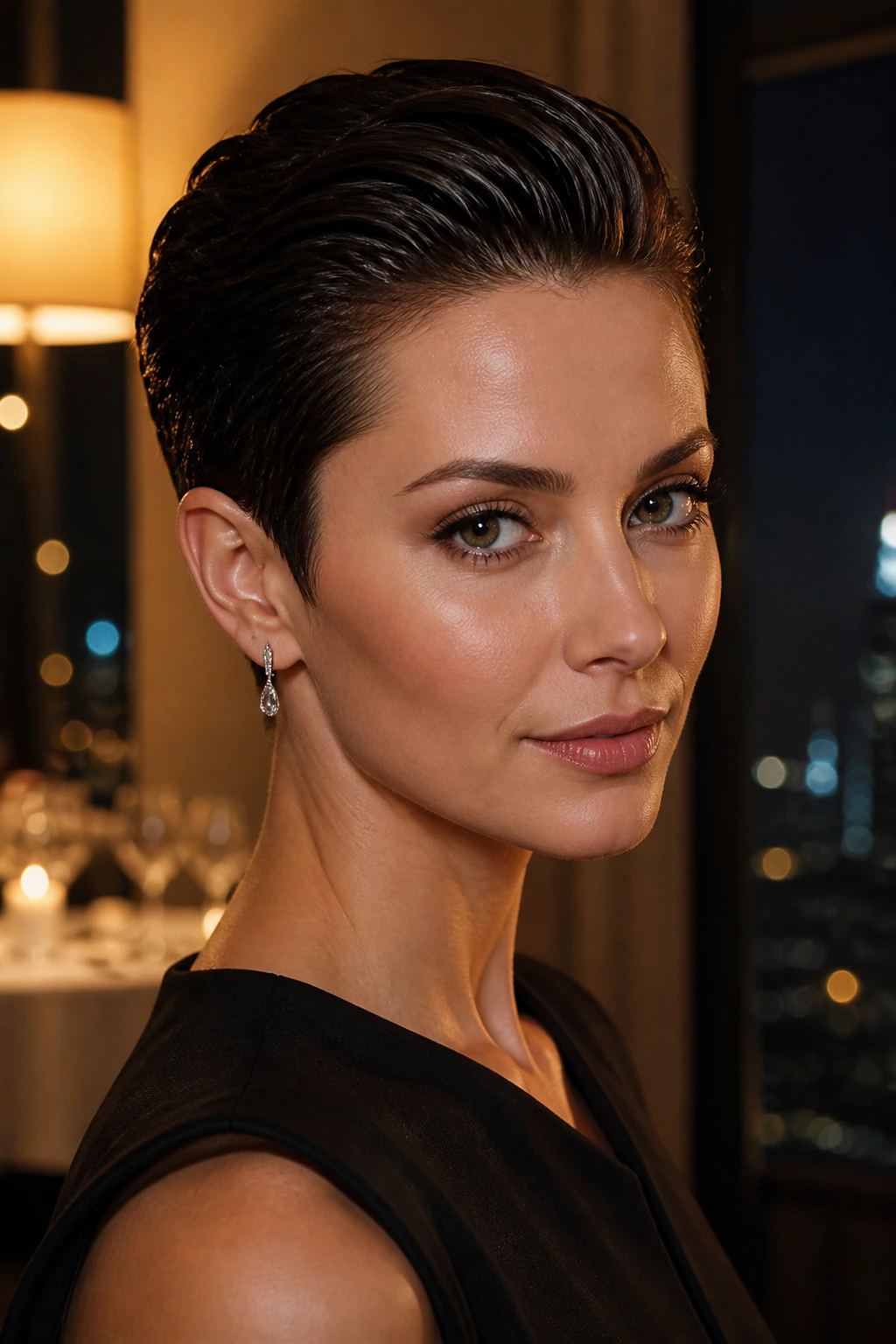
A slicked-back pixie takes all the softness out of the equation and leans into shape. The hair gets combed away from the face with gel or a wet-look cream, which exposes the brow, the cheekbones, and the line of the jaw in a very direct way. It can be elegant. It can also look slightly severe, which is why I like it.
The cut underneath matters because the slicked-back finish does not forgive bad structure. You need a neat nape, balanced sides, and enough length on top to comb back without standing up in random spikes. A fine-tooth comb and a small amount of high-hold product are enough. More than that gets crunchy fast.
This is the pixie you wear when you want short hair to feel intentional at night or for a dressed-up event. It does not need decoration. The clean line is the whole point.
11. French-Girl Tousled Pixie
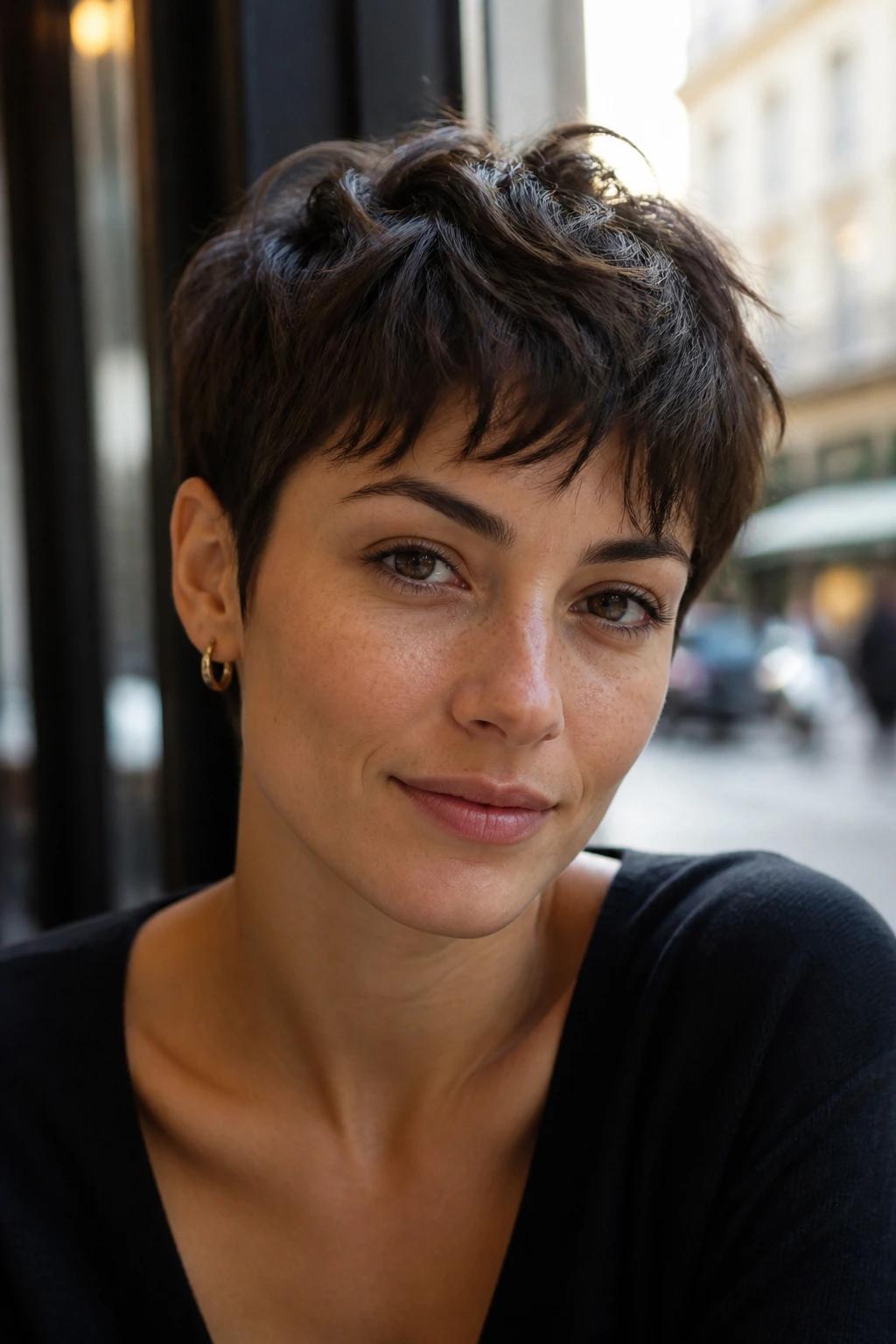
A French-girl tousled pixie is basically controlled mess, and that’s why people keep asking for it even when they describe it badly. The top stays soft and a little undone, the fringe falls irregularly, and the sides are never so tight that the cut loses its easy feel. It should look like you touched it once and stopped.
The best versions usually have a little bend rather than a lot of volume. A small dab of styling cream or texture balm, worked through the ends, keeps the shape from floating away. If your hair is straight, a quick twist with fingers while blow-drying adds just enough irregularity.
It suits women who like a short cut that doesn’t look engineered. There is a difference between messy and careless. This one lives in the first camp if the perimeter stays clean and the top remains soft.
12. Baby Bang Pixie
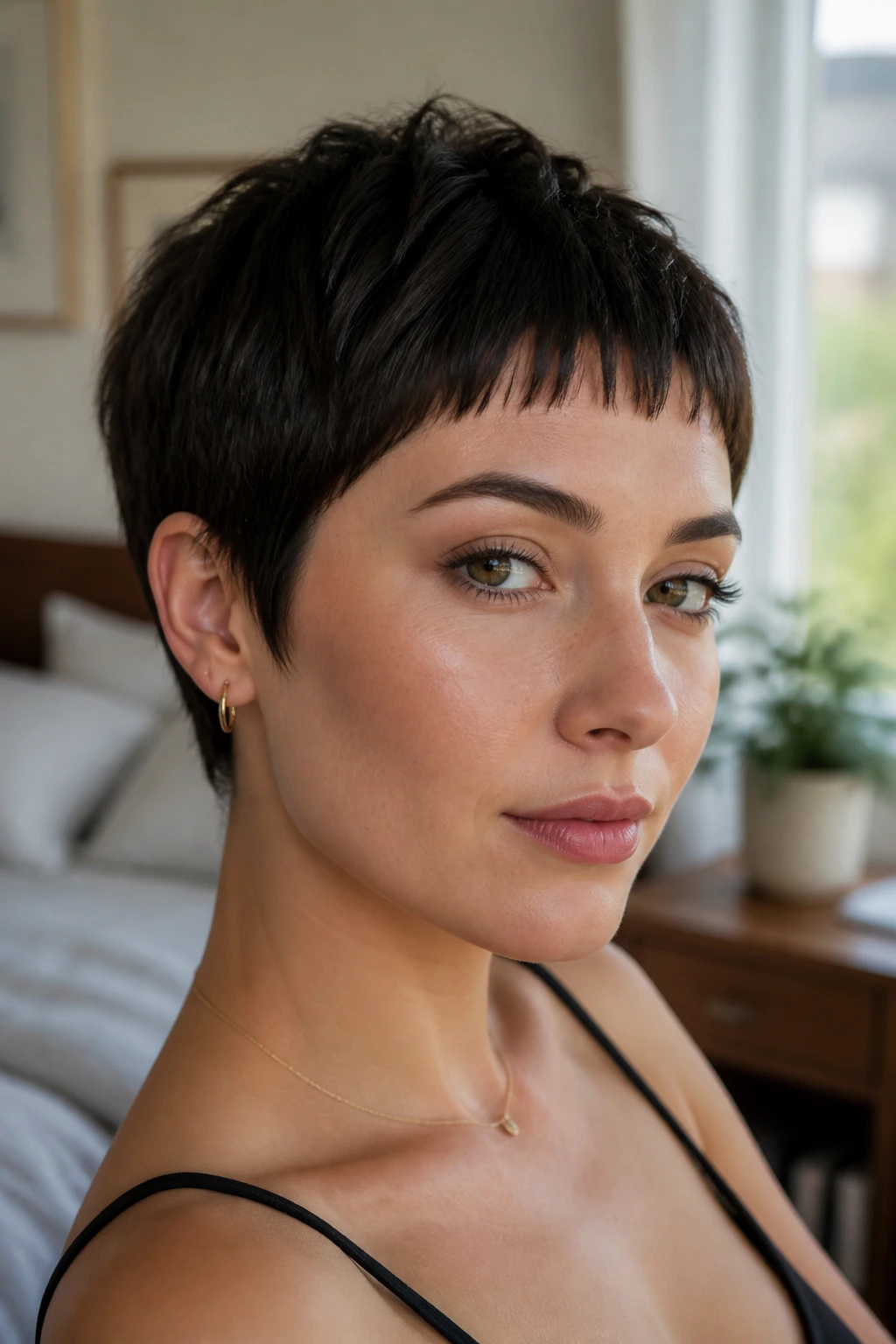
Baby bangs change the whole expression of a pixie because they pull the focus straight to the eyes. The fringe sits much shorter than an eyebrow-skimming bang, usually with a blunt or slightly broken edge, and the rest of the cut stays compact so the front reads like a choice, not an accident.
This is a good cut if you like sharp style and do not mind people noticing your forehead. It tends to work best when the sides stay soft enough to balance the short fringe. Too much hardness everywhere and the face can look boxy. A little separation at the top helps.
It’s not a low-maintenance look in the styling sense, but it can be quick. Baby bangs either sit right or they don’t. A mini flat iron, a tiny round brush, and a bit of paste are usually enough to keep the fringe behaving.
13. Crown-Volume Pixie
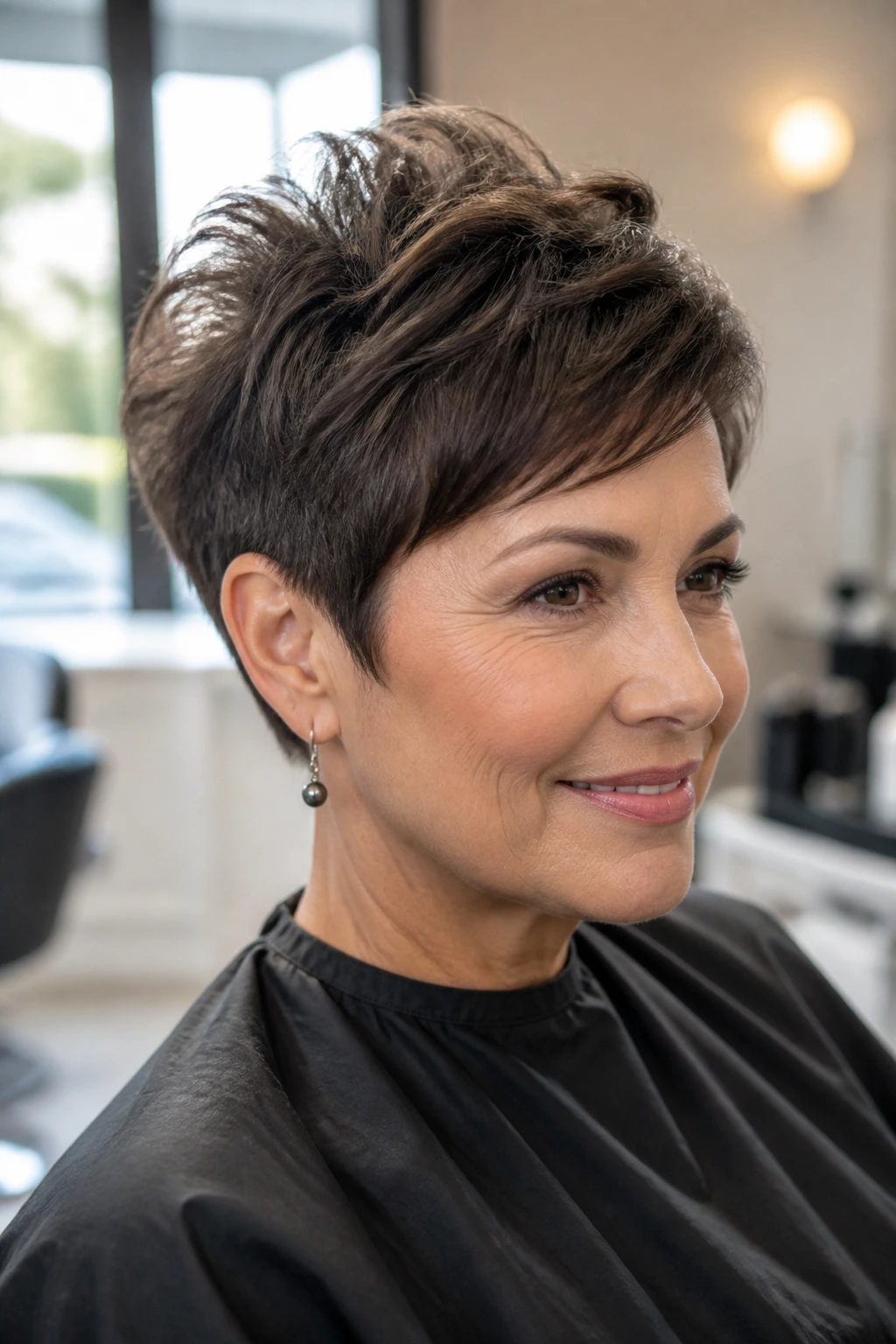
A crown-volume pixie gives the top a little height so the whole head looks longer and more balanced. That lift can be subtle — an inch, maybe less — but on short hair it changes the silhouette fast. The sides stay narrower while the crown carries the shape.
This is one of the best short cuts for hair that lies flat on top or grows in a direction that makes the head look wider than you want. Root-lifting mousse at the crown, then blow-drying upward with a small brush, does most of the work. You do not need a giant pouf. Just enough lift to make the shape breathe.
It’s also a nice option if your face feels rounder and you want a little vertical line. The important part is not to over-stack the crown, or the cut starts to look old-fashioned in a way most people don’t mean.
14. Razor-Cut Shag Pixie
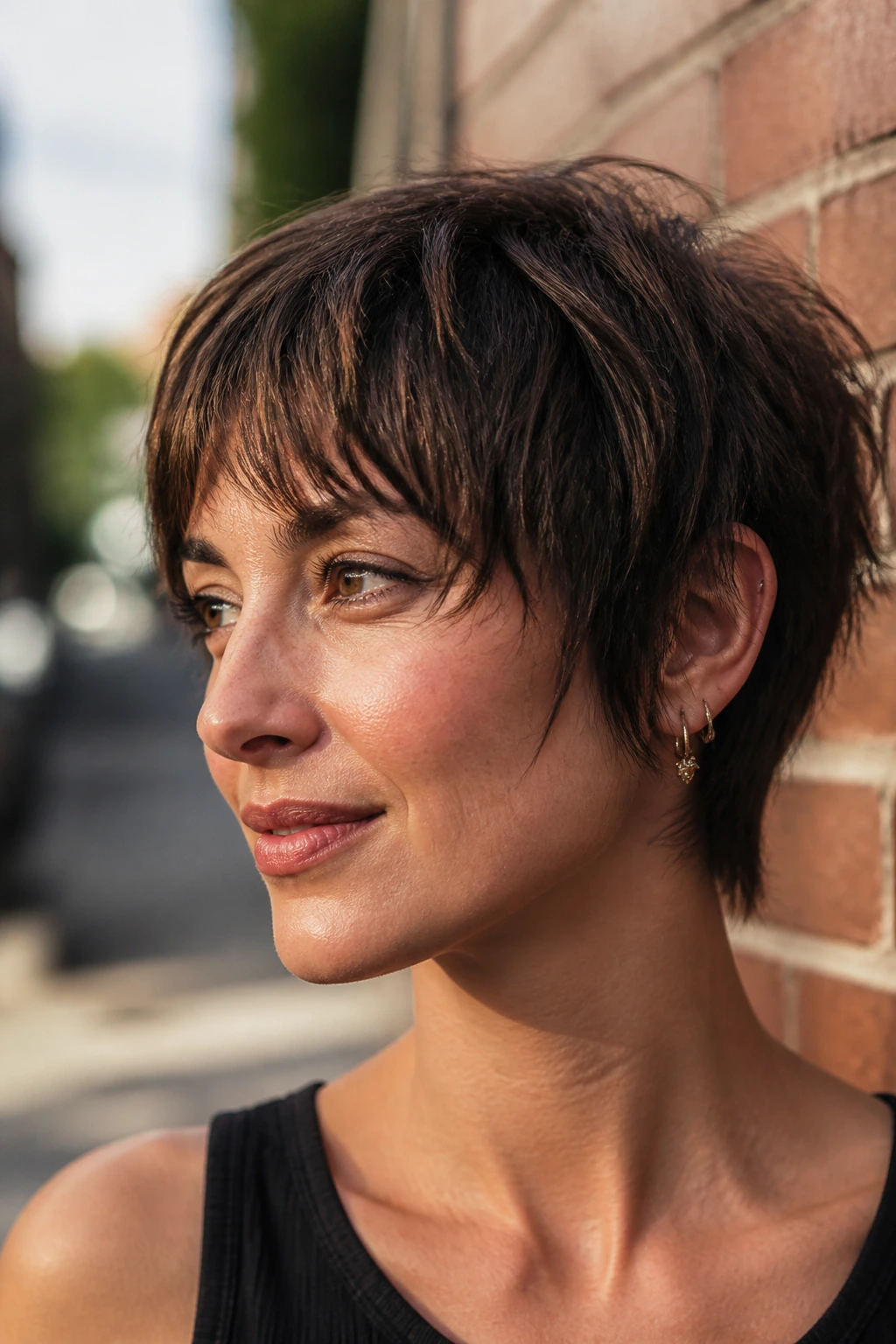
A razor-cut shag pixie lives somewhere between a pixie and a miniature shag, which is a fun place to be if you like movement. The ends are wispy, the layering is loose, and the shape feels a little rebellious without becoming a full-on mullet situation. That line matters.
The razor is the reason it behaves the way it does. On straight or slightly wavy hair, it can create soft, feathery edges that fall around the face instead of sitting in blunt chunks. On very frizzy hair, though, a razor can make the ends look frayed, so this one needs a careful hand.
It is a cut that likes texture spray and a bit of scrunching. If you try to smooth it into submission, you lose the shape. Let it be uneven. That’s the charm.
15. Grown-Out Bixie

A grown-out bixie is for anyone who wants the feel of a pixie without committing to the shortest version of the cut. It sits between a bob and a pixie, usually with more length around the ears and nape and a little extra sweep through the front. If you are nervous about short hair, this is the safe landing strip.
The best thing about this shape is that it grows out gracefully. You can tuck it, part it, or push it back, and it still looks like a real haircut instead of an in-between phase. Ask for soft layering rather than one hard line, and keep the perimeter loose enough that it does not balloon.
It is also one of the easier options if you are transitioning from longer hair. You still get the lightness and movement of a short cut, but there is enough length to keep your styling habits from going into shock.
16. Spiky Piecey Pixie
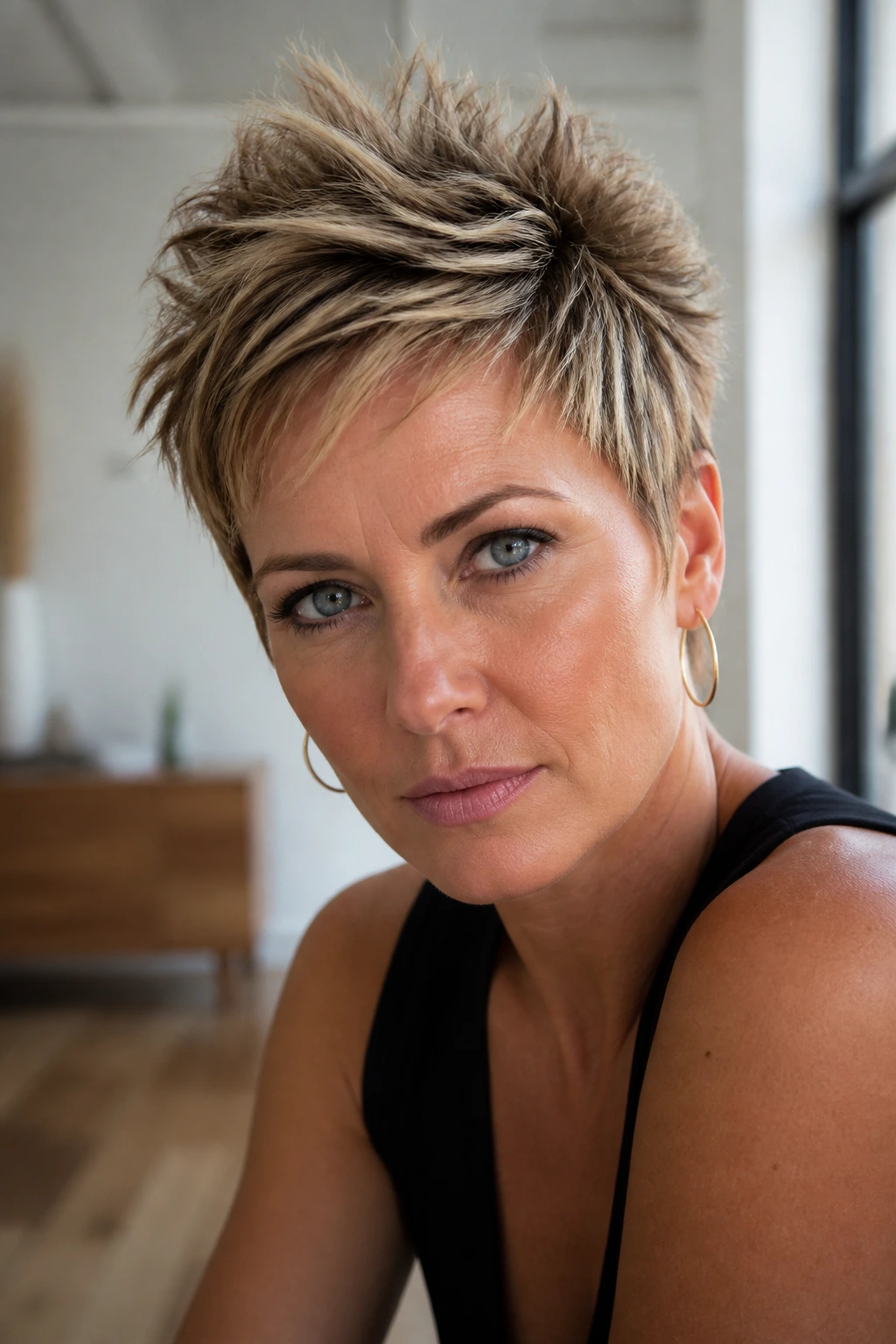
A spiky piecey pixie is not trying to be subtle. The layers are short enough to stand up a little when you push them with matte paste, and the ends separate into distinct bits instead of one smooth sheet. That separation is the whole look.
This version works best when the haircut itself is strong. If the layers are too soft, the spikes fall flat. If the sides are too bulky, the shape turns sloppy. The ideal version has a clean nape, tighter sides, and enough top length to pinch and direct into little points.
A tiny amount of product goes a long way here. Warm it in your hands first, then tap it into the ends rather than dragging it from roots to tips. You want definition, not grease. Big difference.
17. Salt-and-Pepper Pixie
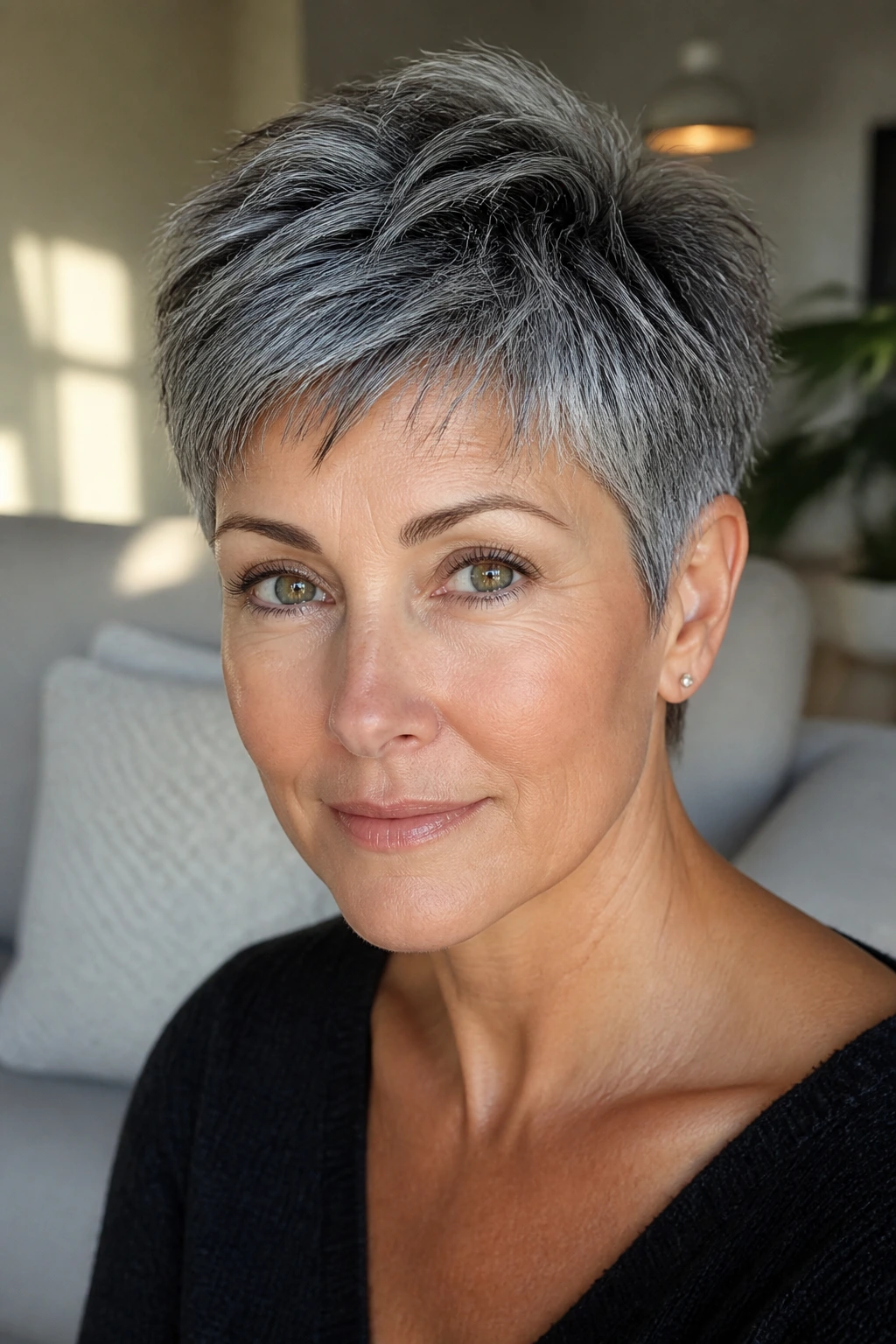
A salt-and-pepper pixie does something most long cuts can’t: it makes natural gray blending look deliberate. The short length shows off the contrast between silver, white, and darker strands, and the clean edges make the color feel graphic instead of scattered. It’s a strong shape for a strong color story.
The cut usually looks best with some softness around the top and a clean nape. If the hair is coarse or wiry, a lightweight smoothing cream helps keep the texture from puffing out. If the gray strands are especially shiny, a little gloss spray can make the whole cut read brighter.
This is a haircut that benefits from honesty. Don’t try to cover every strand or flatten every flyaway. The variation in tone is the point, and short hair gives it room to show.
18. Copper Pixie
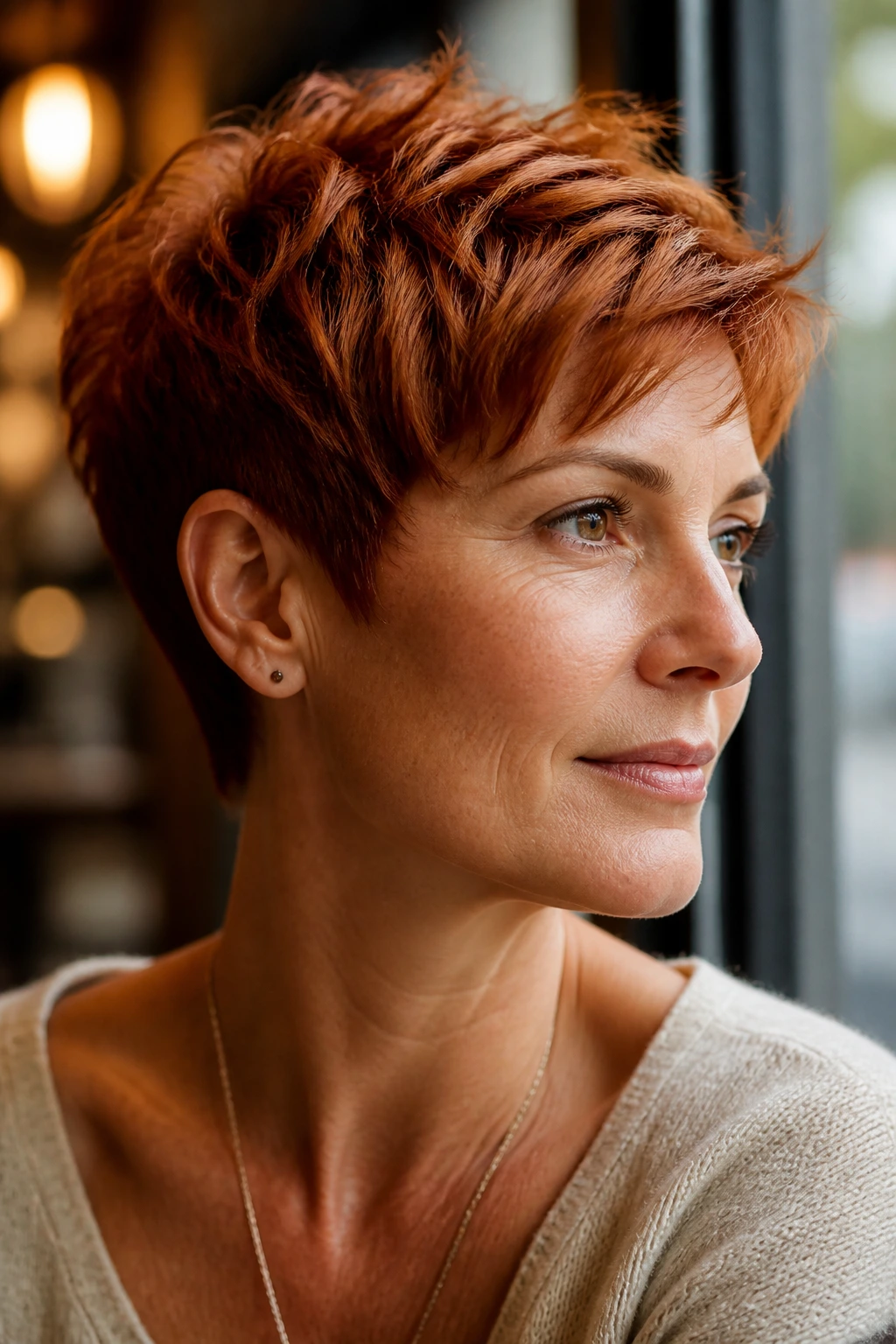
Copper brings warmth to a pixie in a way that can make the cut look richer and more dimensional. On a short shape, the color sits close to the face, so even a simple side part can look deliberate. A copper pixie can feel soft, fiery, or almost vintage depending on the tone you choose.
The cut itself usually looks strongest with some texture at the crown and a neat outline at the neck. That keeps the color from overwhelming the face. If you go for a vivid copper, a gloss or color-safe cleanser helps it stay bright longer, because short hair can lose tone unevenly when the ends fade.
This is one of my favorite options for women who want short hair that still feels warm. The color does a lot of the visual work, so the shape can stay fairly simple.
19. Wavy Side-Part Pixie
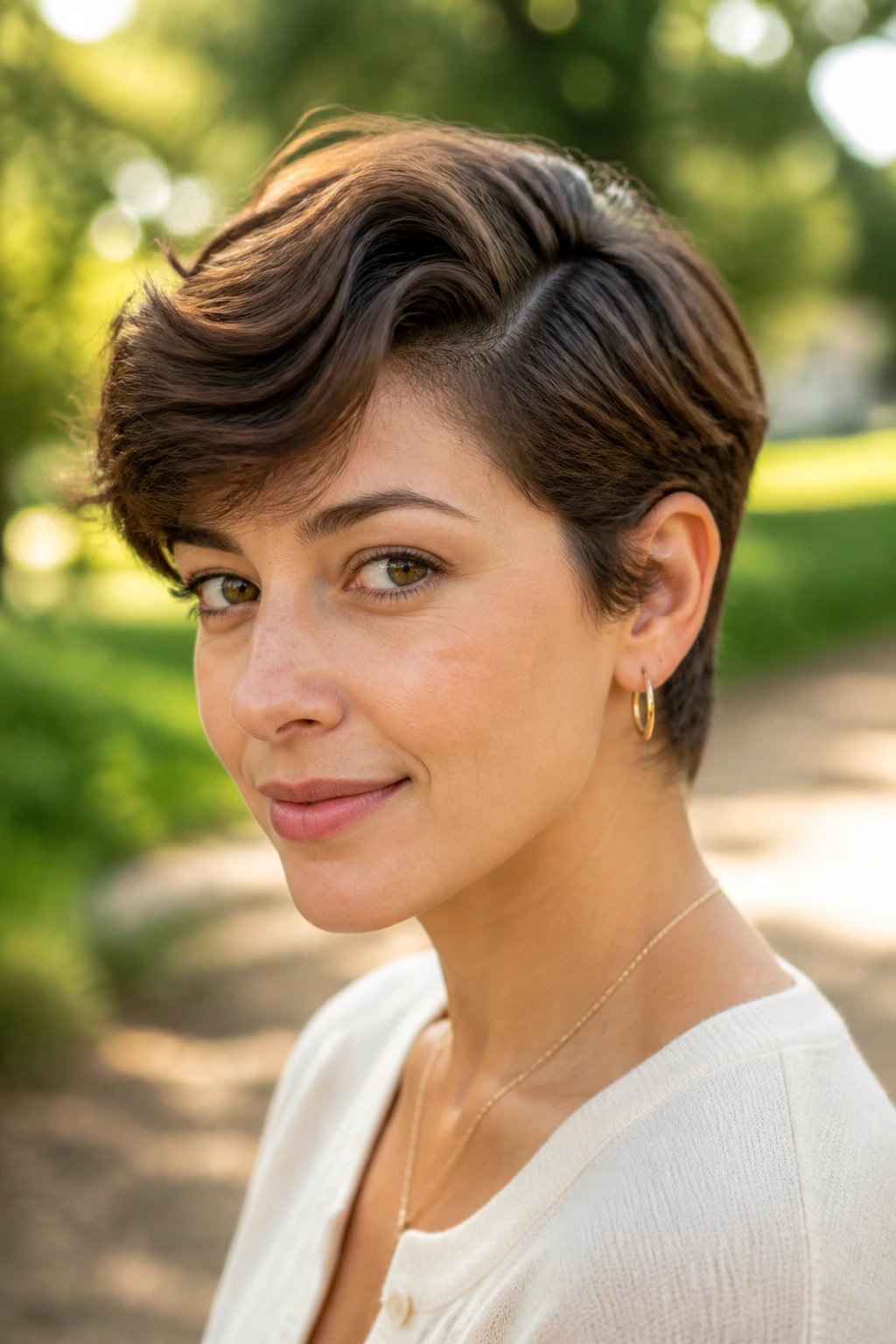
A wavy side-part pixie is one of the easiest ways to make short hair feel soft without piling on products. The side part gives the cut direction, and the wave gives it body. Together they keep the haircut from sitting flat against the head like a cap.
This style shines when the hair has a natural bend or a little leftover wave after drying. A diffuser helps if your wave pattern needs encouragement, but you can also use a flat iron to add one or two loose bends through the top. The trick is not to curl every piece. That looks overdone fast.
It suits women who want a pixie that feels wearable on ordinary days. Tuck one side behind the ear, leave the other side loose, and the whole cut suddenly looks finished without being stiff.
20. Tapered Crop
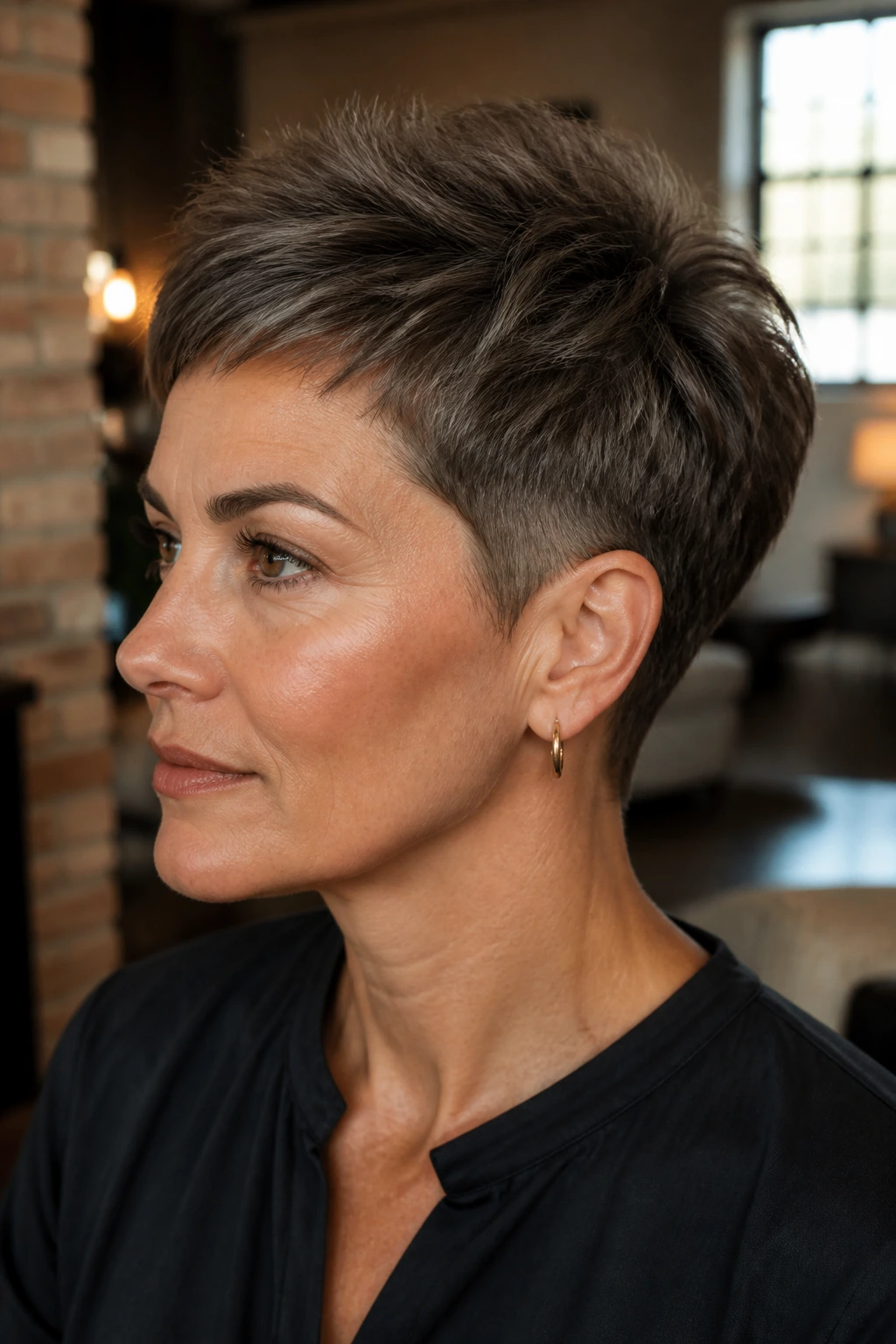
A tapered crop is the sharper cousin of the classic pixie. The sides and back sit close, the neck line is clean, and the top keeps enough length to lift or sweep. It feels architectural. There’s a reason people with strong facial features often look so good in this cut.
What makes it different from a softer pixie is the discipline around the edges. The taper creates a narrow lower profile, which makes the crown look fuller by comparison. That contrast is the magic. A little styling paste or cream is enough to keep the top in place without softening the outline.
If you like a haircut that looks neat even when you are wearing very little makeup or no makeup at all, this is a smart one. It has shape baked into it.
21. Mohawk Pixie
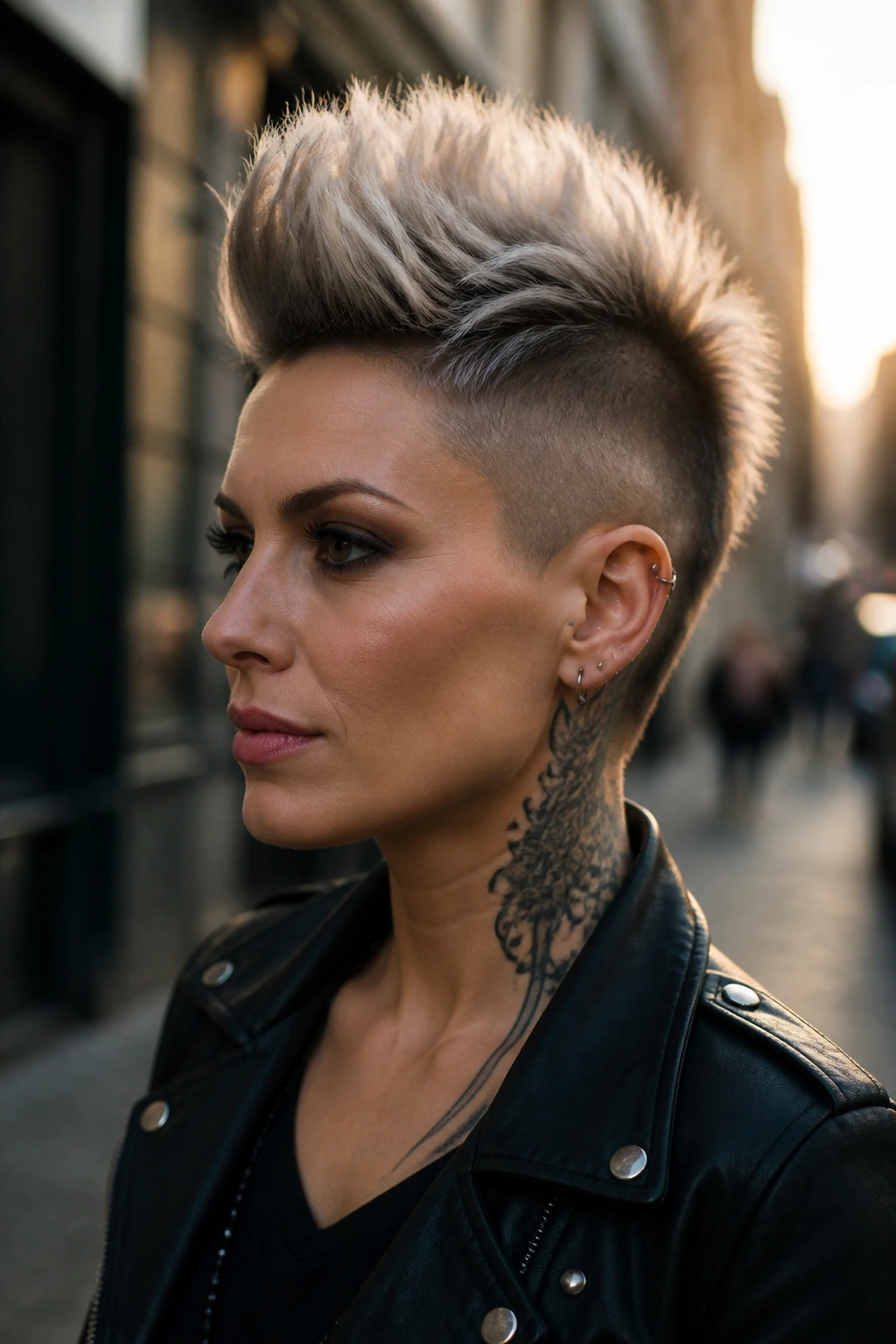
A mohawk pixie is for the days when you want your short hair to have some spine. The center section stays longer and higher, while the sides are cut tight enough to make the ridge stand out. It’s bold, yes, but it also has a very clean silhouette.
This cut is especially helpful for thick hair because it removes bulk from the sides and lets the top do the talking. You can keep the ridge spiky, feathered, or brushed back depending on the mood. A strong-hold paste will make the center stand up more, while a softer cream keeps it from feeling punky.
The whole look depends on contrast. Without the shorter sides, it’s just a tall crop. With them, it reads as a proper mohawk pixie — sharp, lean, and direct.
22. Ear-Tucked Pixie
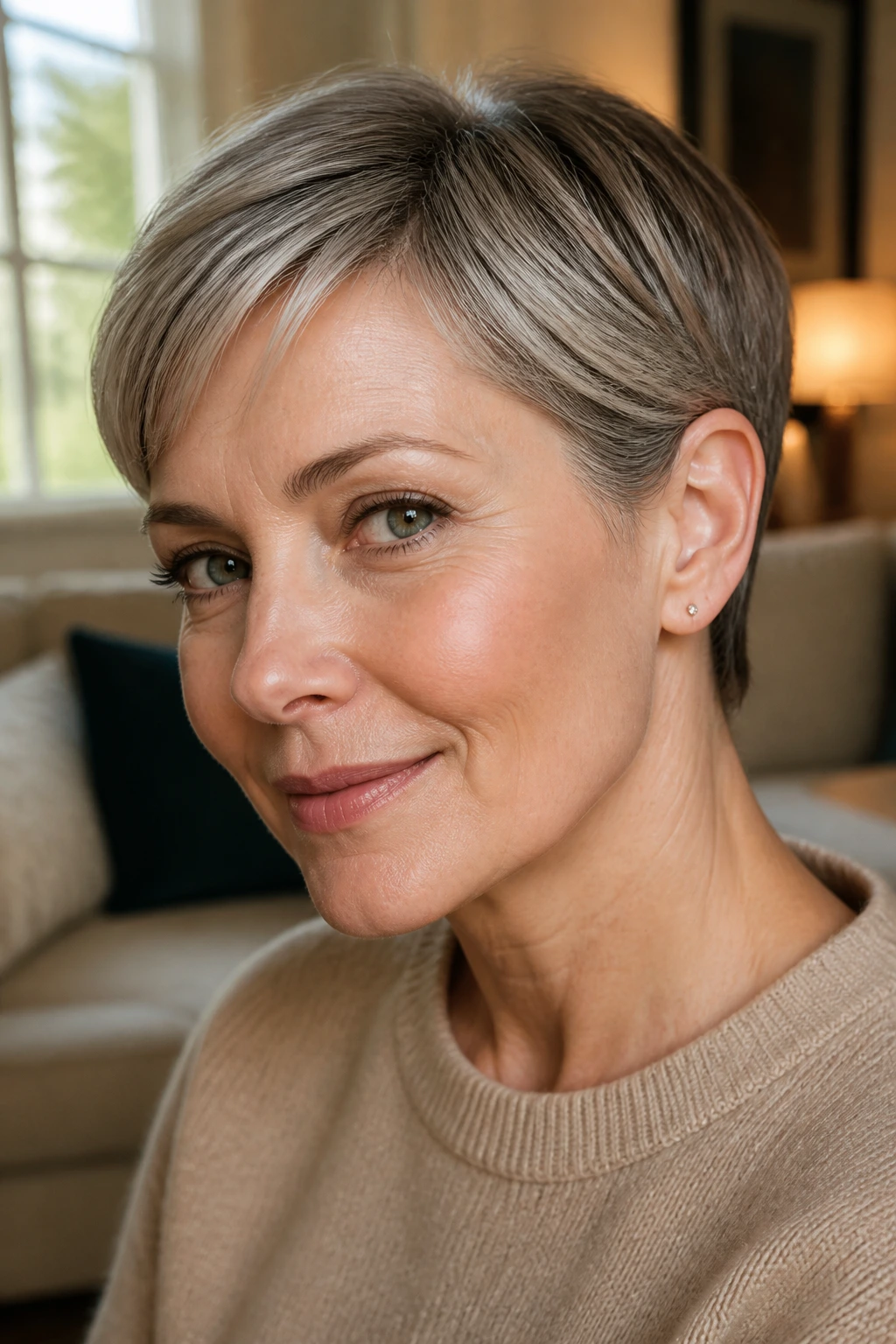
An ear-tucked pixie is one of the quieter cuts in this group, but it has a lot of charm. The sides stay long enough to tuck behind the ear without fighting back, which makes the shape feel graceful and easy to wear. It also works well if you like earrings, glasses, or both.
The length around the temples is the important part. Too short and you lose the tuck. Too long and the cut starts to sag. Ask for a perimeter that brushes the ear cleanly and a slightly longer front so the tuck feels intentional instead of accidental. A light cream or a touch of leave-in helps the sides lie where you want them.
This is a lovely option if you want short hair that still feels approachable. It is not loud. It is tidy, and that matters more than people admit.
23. Micro Fringe Pixie
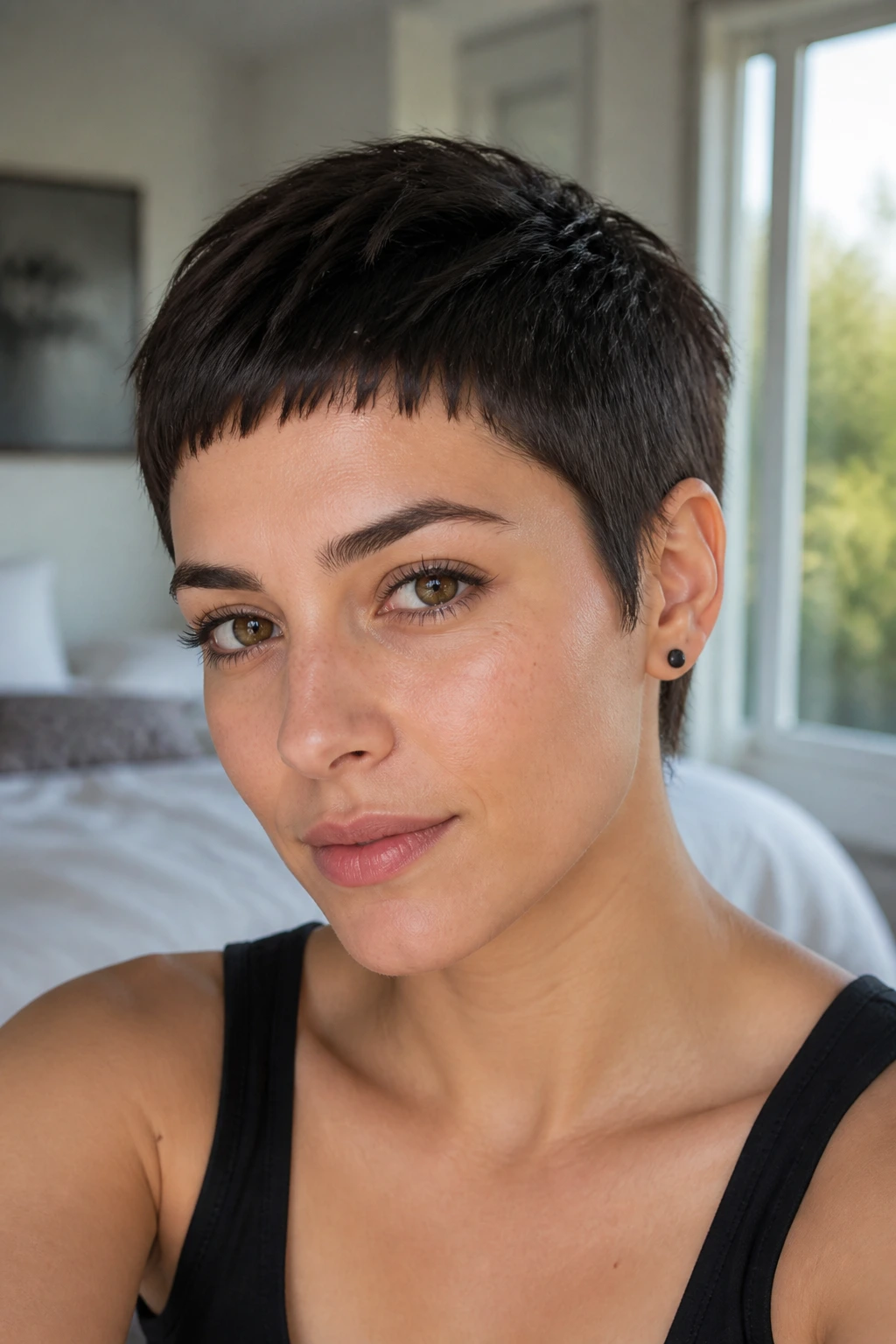
A micro fringe pixie goes shorter and straighter in the front than a baby-bang cut, which makes it feel a little more fashion-forward. The fringe sits very high on the forehead, and the rest of the cut usually stays compact so the front line has room to stand out. It is sharp. Very sharp.
This cut asks for confidence and a little upkeep because the fringe line shows growth fast. It also tends to work best when the sides are soft enough to balance the bluntness up front. If the whole haircut is too severe, the face can feel boxed in. A little wispy texture at the temples helps.
I like this cut on women who want a short style that doesn’t disappear in a crowd. It makes a clear shape, and clear shapes are easier to read from across a room.
24. Sculpted Volume Pixie
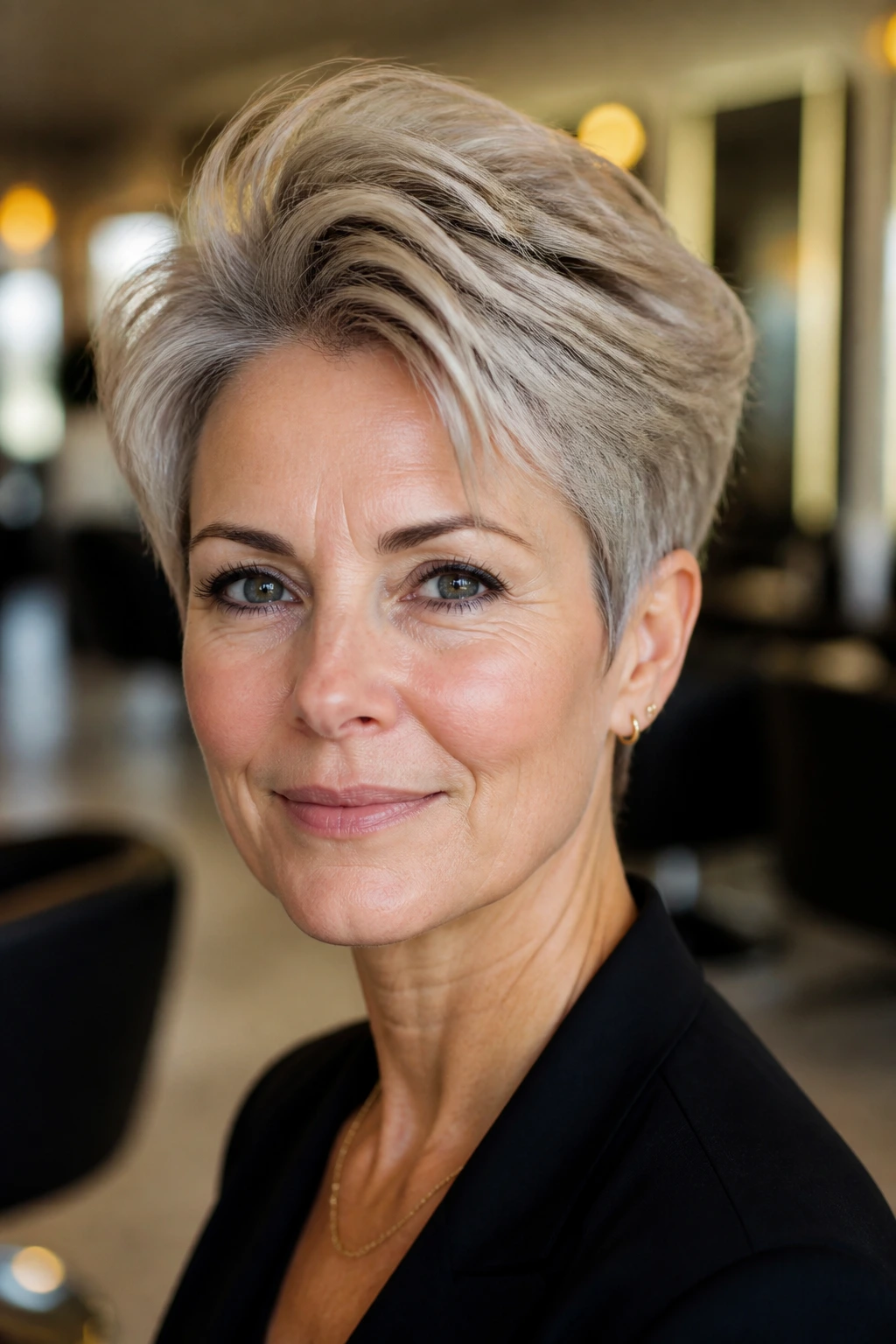
A sculpted volume pixie is the polished cousin in the lineup. The top is blown into shape with a round brush, the crown carries a little lift, and the sides curve inward just enough to keep the outline neat. It feels finished, but not stiff.
This is the kind of pixie that benefits from a real blow-dry, not just a quick fluff with your fingers. A heat protectant, a small round brush, and a bit of root-lifting spray make a noticeable difference. The goal is controlled height — not a helmet, not a puff, just a clean curve.
It’s a good choice for work, dinner, or any day when you want short hair to look especially intentional. The shape does the heavy lifting. Your styling job is mostly not to ruin it.
25. Air-Dry Curly Pixie
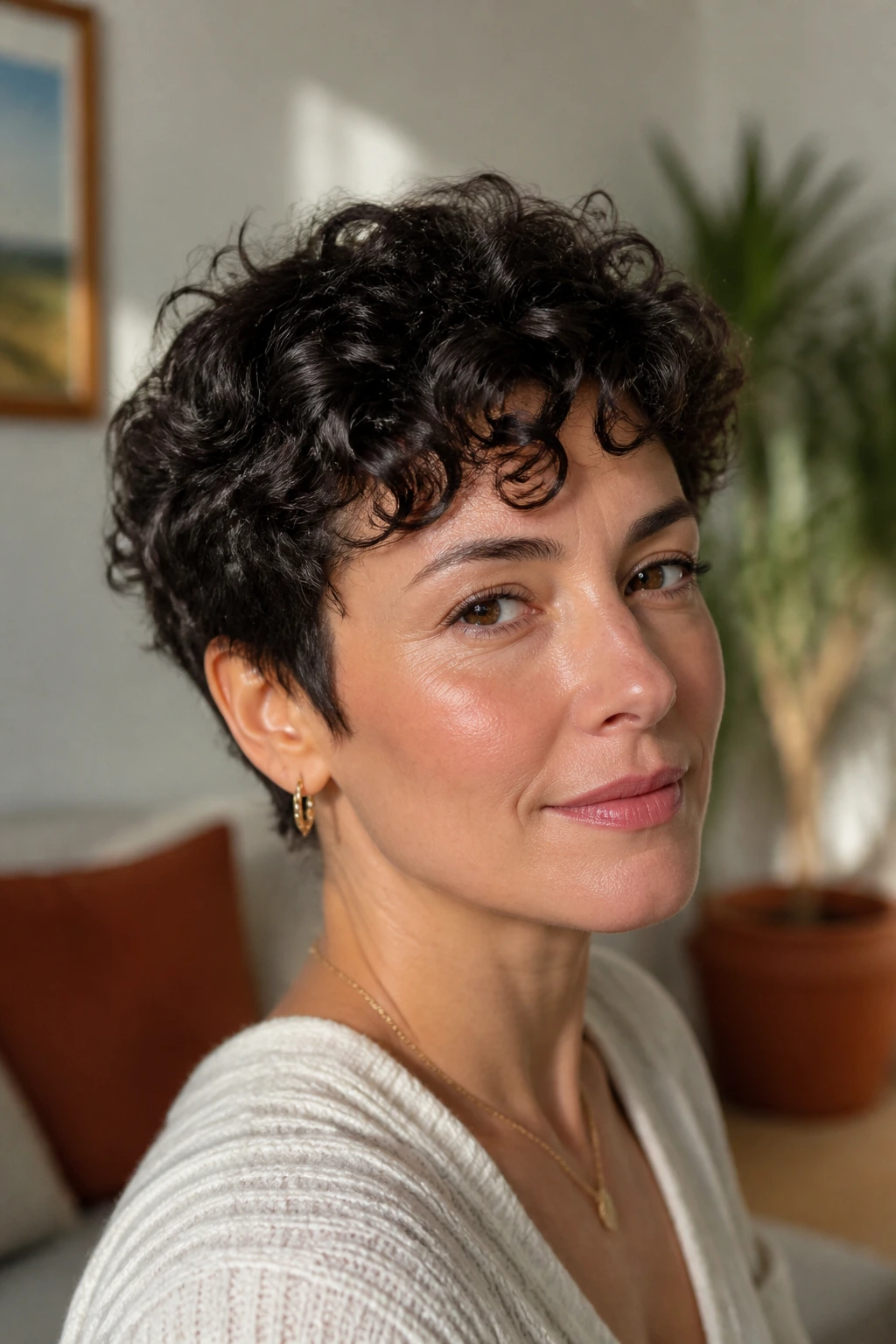
An air-dry curly pixie is for people who want to let the curl pattern do the work. The cut keeps enough length to let waves and curls collapse into a soft shape as they dry, instead of shrinking into a tight puff. It is a calmer version of the curly pixie, and usually a little more forgiving.
The products matter here. A leave-in conditioner or light curl cream adds slip, and a foam gives the roots a bit of lift without making the hair sticky. After that, hands off. Touching it too much while it dries makes the curls frizz up and split apart.
I like this one because it respects the texture rather than trying to flatten it into obedience. If your hair has a mind of its own, this cut lets that mind do something useful.
26. Fine-Hair Soft Pixie
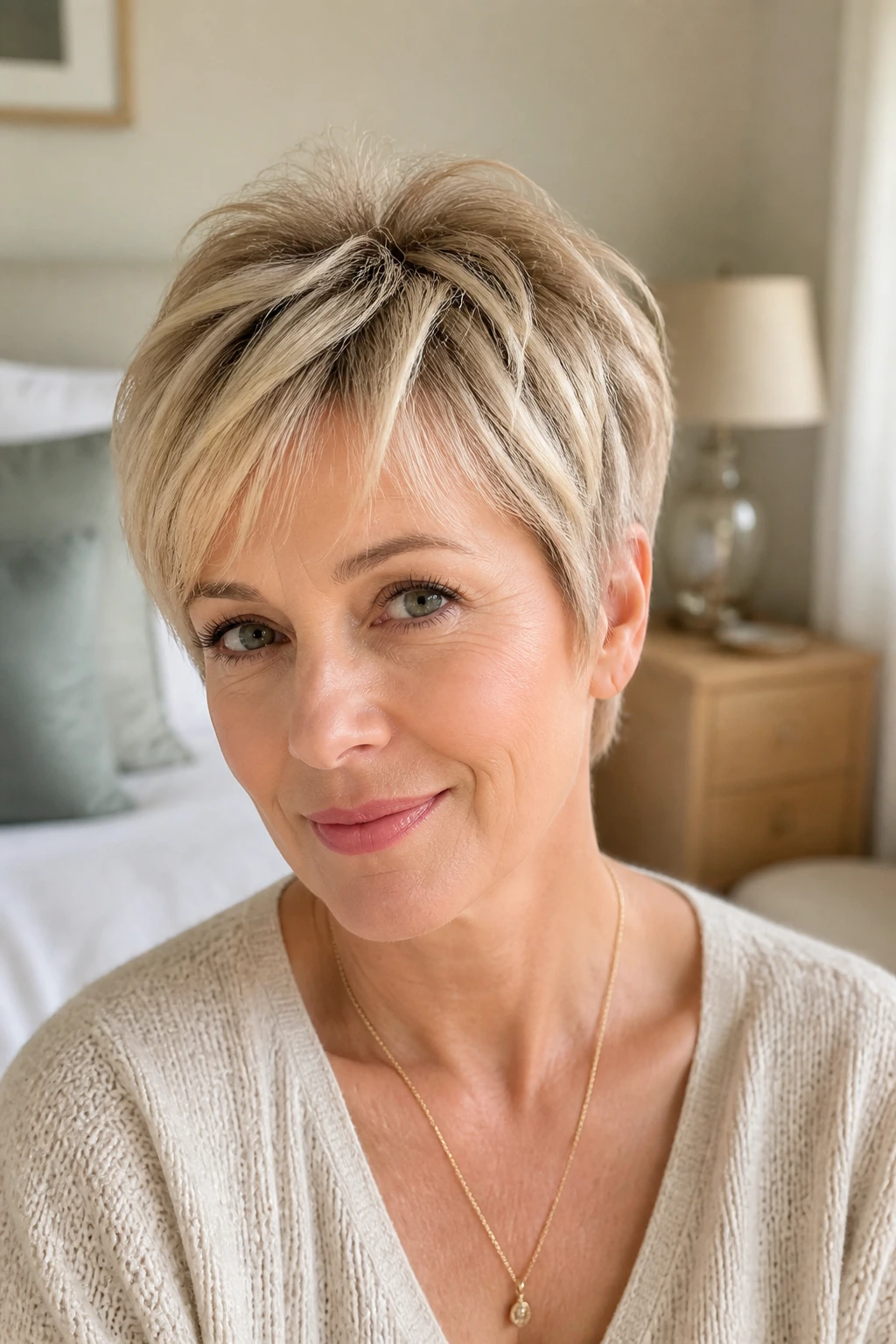
A fine-hair soft pixie keeps the ends light but not wispy to the point of disappearing. That balance is important. Too many layers on fine hair and the cut starts to look see-through. Too little layering and it lies flat against the scalp.
Ask for softness around the perimeter and a little lift at the crown, but avoid over-thinning the ends. A small amount of volumizing mousse at the roots can help the shape stay up through the day, especially if your hair tends to collapse after the first hour. Blow-drying upside down works, but only if your scalp can tolerate that much drama.
This is one of those short cuts that can look fuller than it is if the shape is kept clean. The haircut is doing less than it appears, which is exactly what you want.
27. Shaved-Side Pixie
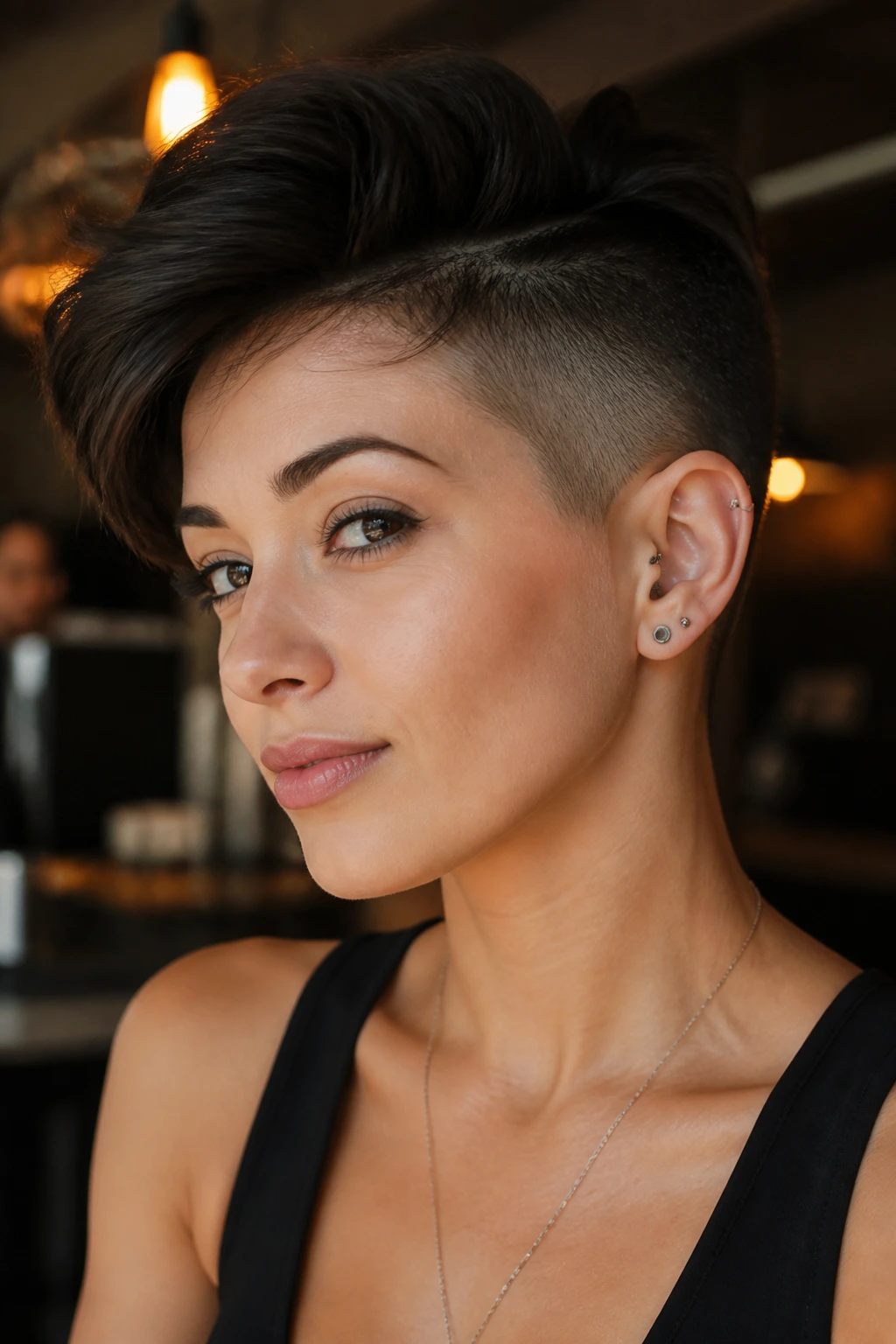
A shaved-side pixie commits to the contrast. One side, or both, is clipped down close to the scalp while the top remains longer and more movable. The result is sharp and slightly rebellious without needing a lot of extra styling.
This cut works best when the longer top section has enough weight to contrast the shaved area. If the top is too short, you lose the whole point. If it’s too long and the sides are too bare, the haircut can feel unbalanced. The sweet spot is usually a longer sweep over the shaved section or a hard part that lets the asymmetry speak for itself.
It does need upkeep, especially if the shave is visible. But if you like a strong silhouette and do not mind a little maintenance around the ears and nape, it is one of the most decisive pixie shapes you can wear.
28. Glossy Pageboy-Pixie
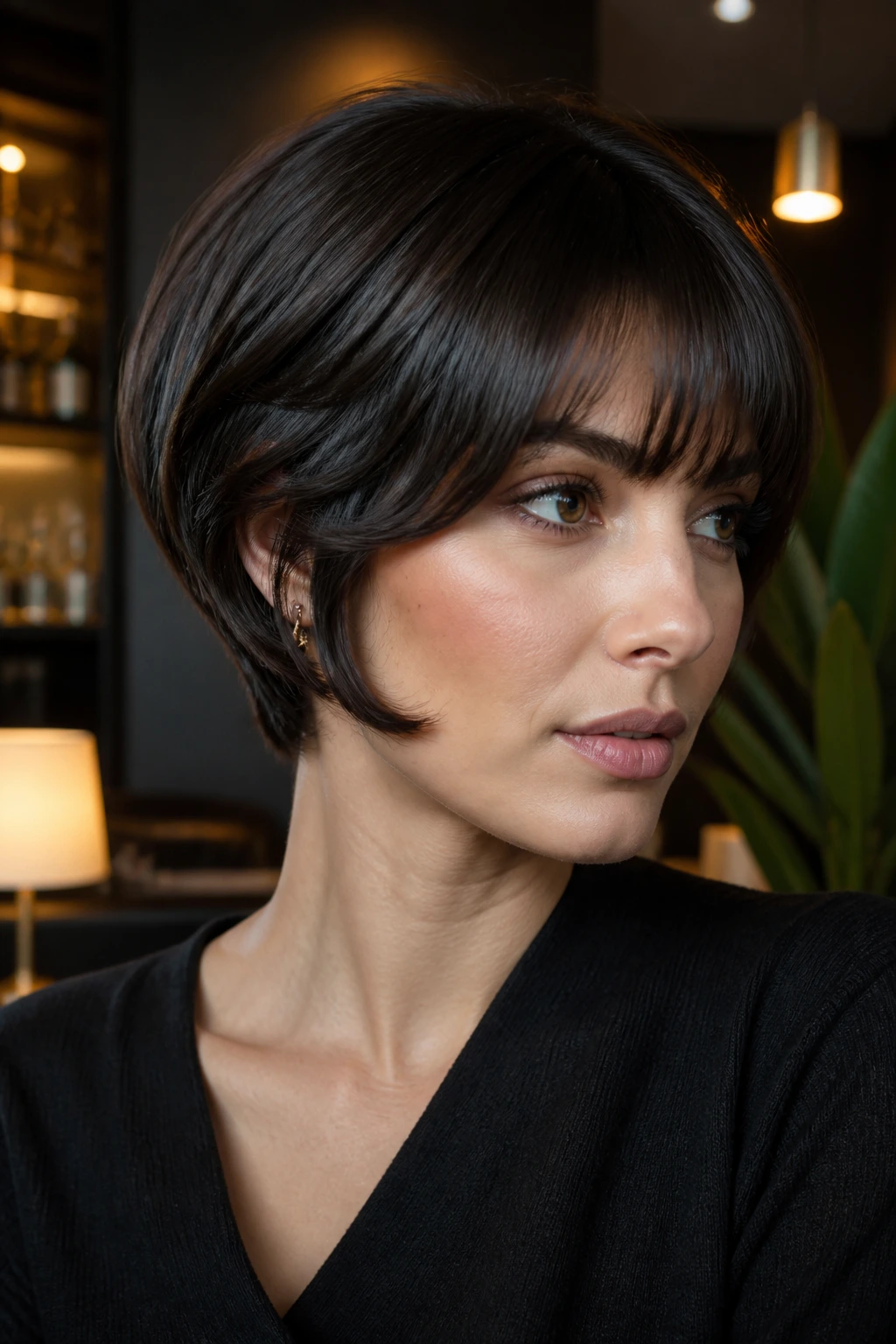
A glossy pageboy-pixie sits right at the edge of retro and modern. The ends curve under a little, the back may stay slightly longer than a classic pixie, and the top is polished enough to hint at a pageboy without losing the short shape. It has movement, but in a more controlled way.
This cut is especially nice if you want something softer than a shaved or spiky crop. A smoothing cream, a round brush, and a few careful passes with the dryer create that curved line around the head. The finish should look sleek, not lacquered. Too much shine and it starts to feel dated in the wrong direction.
It is one of the more elegant pixies on this list because the shape does not shout. It holds its line, curves where it should, and makes short hair look intentional from every angle.
Why a Pixie Cut Needs a Real Shape Plan
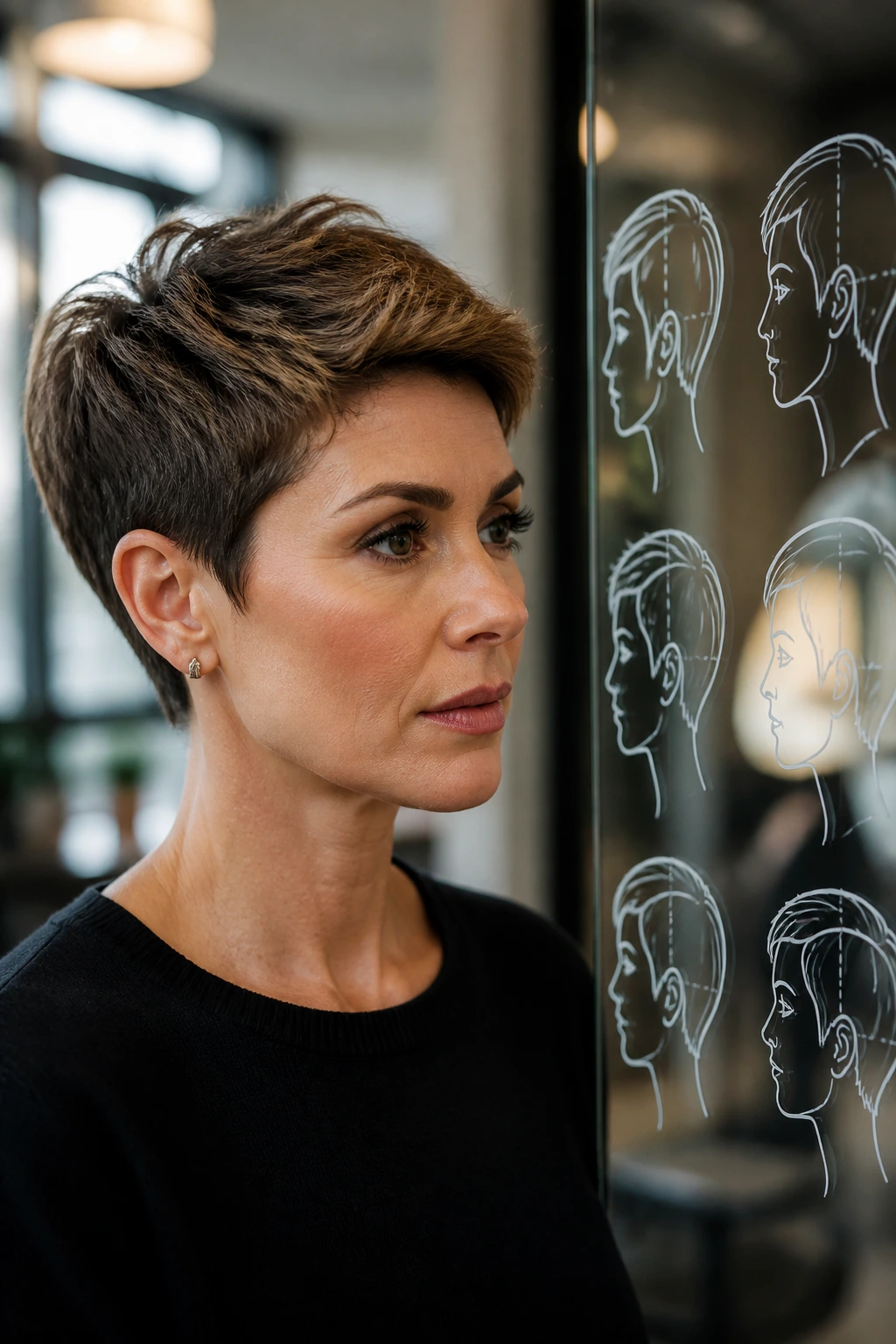
Short hair is unforgiving in the best way. The crown shows whether your hair wants to grow forward or flat. The nape shows whether the neckline was cleaned up properly. The temple area shows whether the cut was tailored to your face or just clipped into place.
That is why the strongest pixie cuts are built around shape first and styling second. You can hide a rough layer in shoulder-length hair with curls or waves. You cannot hide it here. A good pixie respects the head underneath it — the cowlicks, the density, the way your hair bends around the ears, and the places where it likes to split. Those things are not problems. They are the map.
If you are thinking about a pixie for women with short hair, ask yourself one plain question before anything else: do I want a cut that fights my texture, or one that works with it? The answer saves a lot of bad salon conversations.
Essential Tools for These Pixie Cuts
-
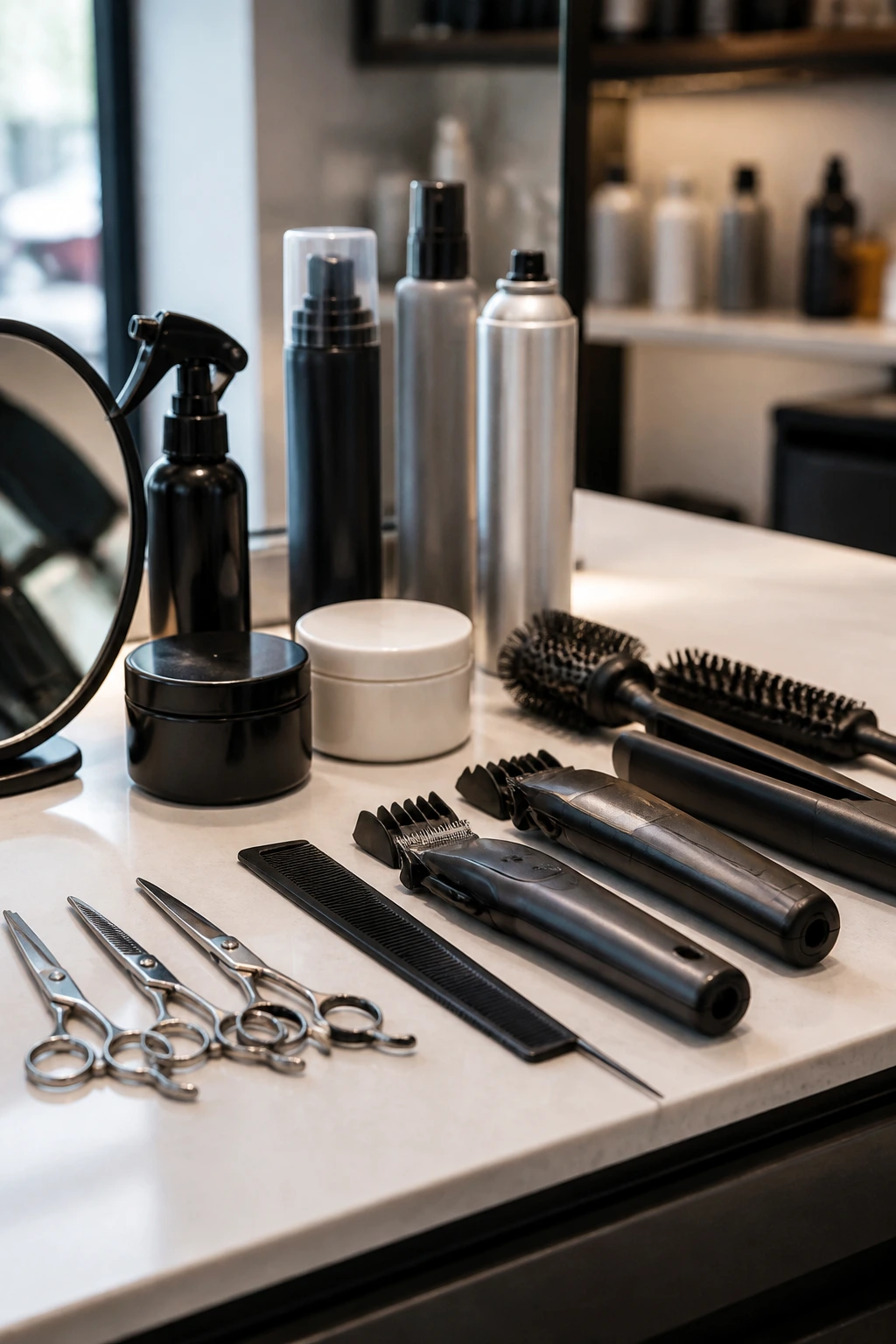
Sharp salon shears: Dull scissors chew the ends and leave short hair looking fuzzy at the outline.
-
Clippers with guard sizes: Useful for nape and side cleanups, especially on tapered or shaved versions.
-
Rat-tail comb: Good for parting, sectioning, and lifting small pieces at the crown.
-
Small round brush: The easiest way to add bend, lift, and direction without making the hair bulky.
-
Vent brush: Fast drying, good for rough volume on classic and tapered pixies.
-
Mini flat iron or 1-inch iron: Best for fringe control, soft curves, and taming one stubborn side.
-
Texturizing spray: Helps choppy, feathered, and tousled cuts separate without getting greasy.
-
Matte paste or light pomade: Gives short hair grip and piecey shape; use a pea-sized amount, not a walnut.
-
Root-lifting mousse: Especially useful on fine hair or flat crowns that need a little height.
-
Flexible-hold hairspray: Keeps the shape in place without freezing every strand.
-
Hand mirror: Worth having if you touch up the neckline or want to check the back without guessing.
How to Choose Pixie Cuts for Women With Short Hair
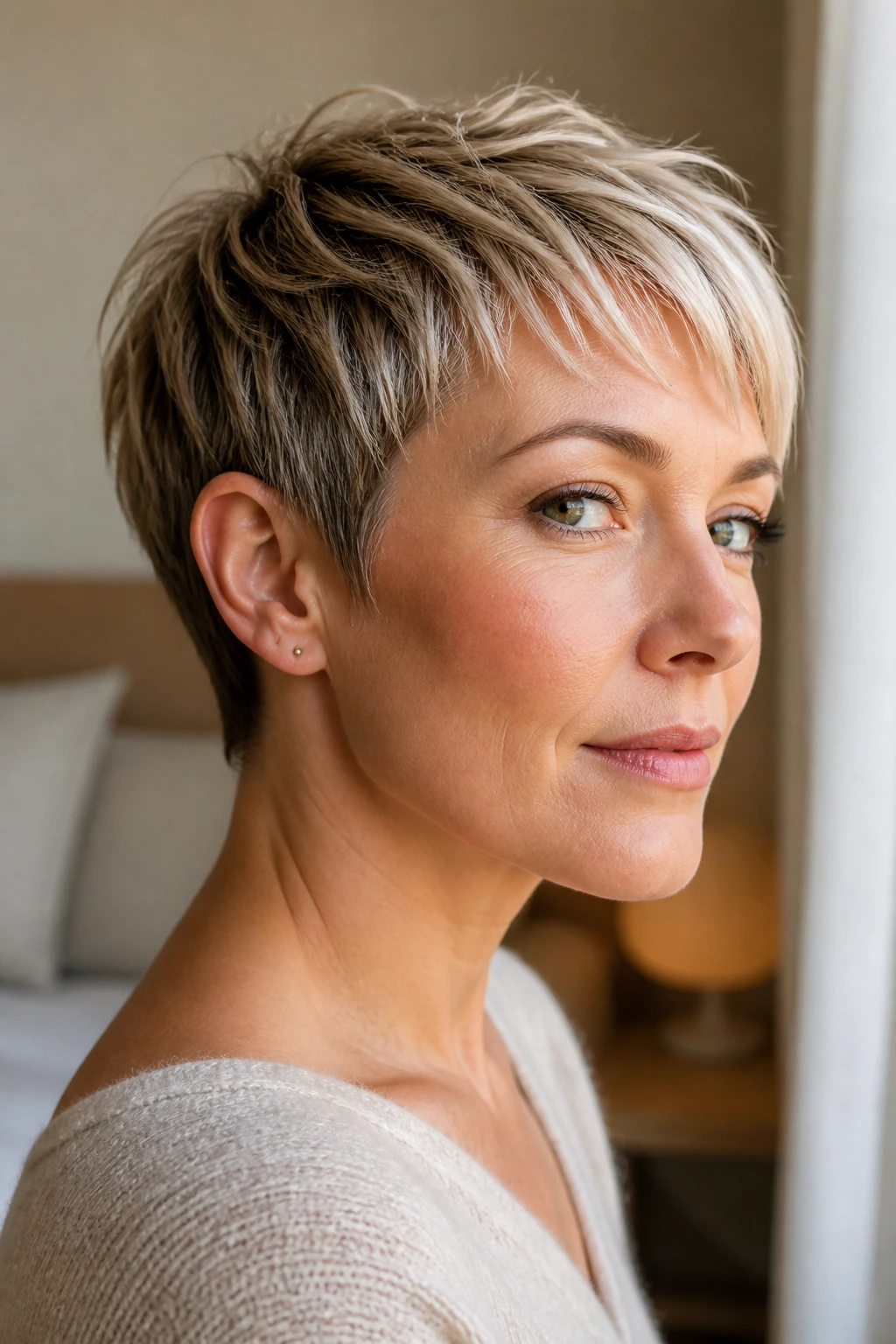
Start with the part of your hair that makes life difficult. That sounds blunt, but it saves time. If the crown lies flat, choose a pixie with some height up top. If your hair grows heavy around the ears, ask for tapering there. If your forehead feels prominent, keep the fringe longer or side-swept instead of going blunt and ultra-short.
Texture matters just as much as face shape. Fine hair usually does better with softer layering and less thinning. Thick hair often needs internal removal around the nape or underside so the cut does not balloon. Curly hair needs room for shrinkage, which means a longer top than a straight-haired person might expect. The curl pattern will do what it does. Work with it.
Your daily routine matters too. A pixie that needs a round brush and three products every morning may be a lovely haircut, but not a practical one if you like to be out the door in five minutes. Be honest about the effort you’ll actually give it. Short hair looks best when the maintenance matches the life around it.
How to Style These Pixie Cuts on Real Mornings
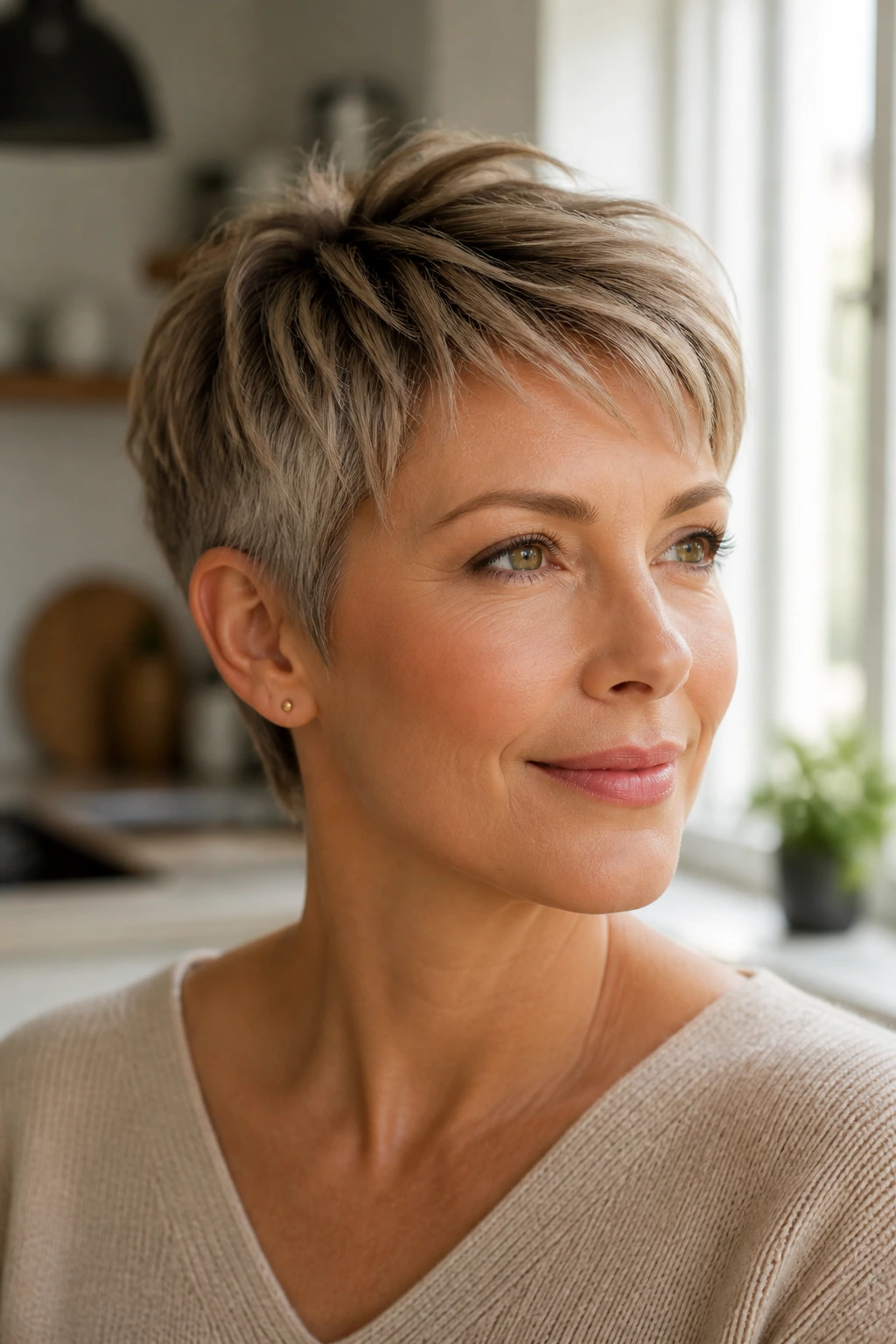
Sleek Finish: Use a small amount of smoothing cream on damp hair, comb the part in place, and blow-dry the fringe first so it does not split into two directions. This finish works well on tapered, pageboy-inspired, and classic pixies.
Piecey Finish: Warm a pea-sized dab of matte paste between your palms and tap it into the ends, not the roots. Then pinch 4 to 6 small sections where you want separation. That gives choppy, textured, and spiky cuts their shape.
Curly Finish: Apply leave-in and curl cream to damp hair, scrunch gently, and diffuse on low heat until about 70 percent dry. Stop touching it. The less you poke it, the better the curl pattern usually behaves.
Polished Finish: Blow-dry with a round brush, lifting at the crown and curving the front away from the face. This is the move for sculpted volume, slicked-back shapes, and anything that needs a little editorial clean-up.
Quick Reset: On day two, a mist of water plus a drop of cream can wake the cut up faster than starting over. Short hair does not need a full wash every time it gets a little flat.
Additional Tips and Texture Boosters
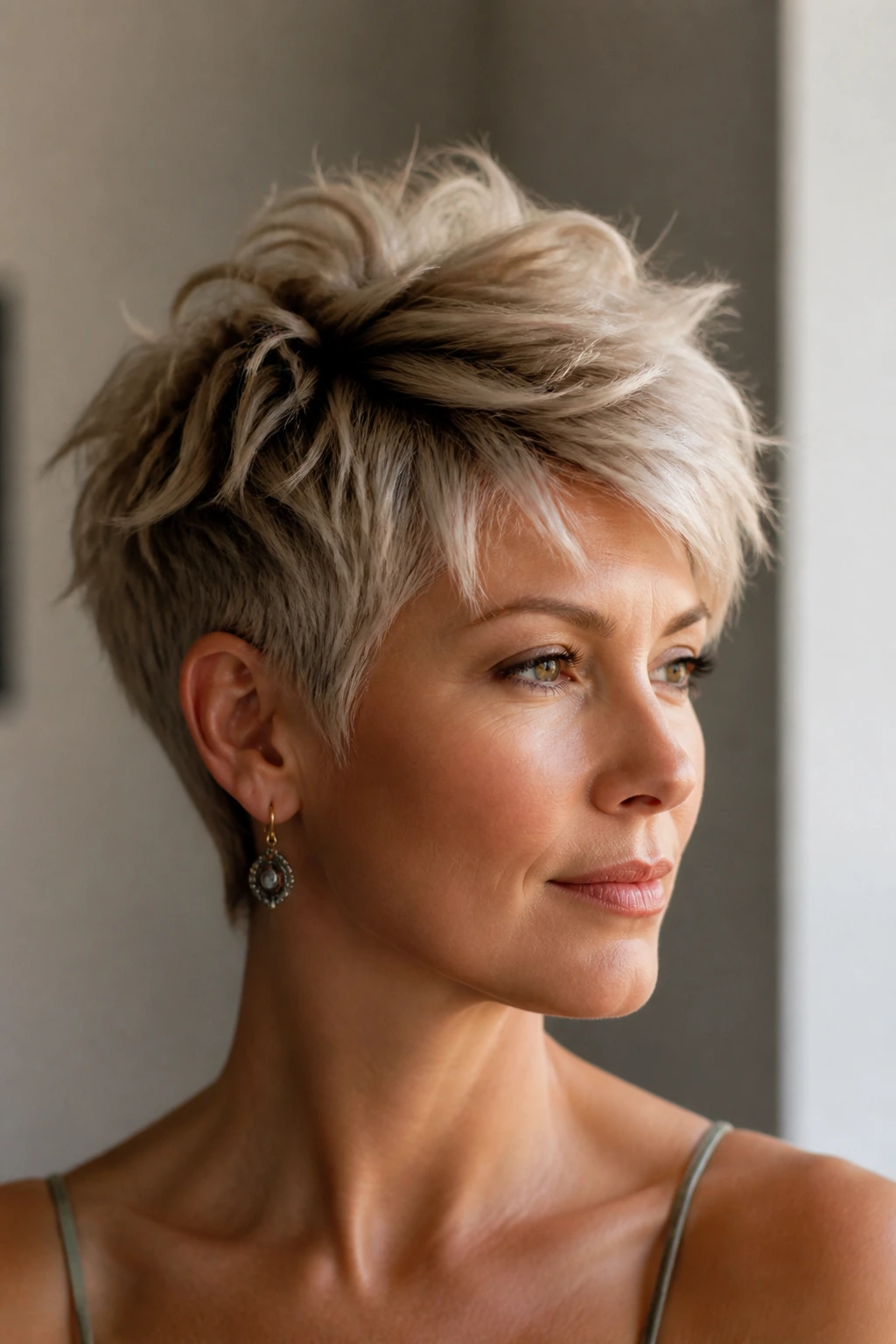
Lift: A little root-lifting mousse at the crown goes a long way on short hair. Put it where the hair falls flat — not all over the head — and dry that section first so the shape has memory.
Texture: If a pixie starts looking too neat, a dry texture spray can break it up without making it oily. I prefer this on feathered, tousled, and choppy cuts because it gives the pieces a slight grip.
Shine: Gloss spray or a tiny bit of serum can make gray, copper, or platinum pixies look cleaner, especially around the part line and fringe. Use almost nothing. Short hair magnifies product fast.
Color: Highlights or a single gloss can change how the layers read. On short hair, color acts like contour. A little lighter tone on top makes the crown look fuller; darker lowlights around the sides make the face look narrower.
Make-It-Yours: Add an ear tuck, a deep side part, a barrette, or a narrow headband when you want the same haircut to feel different. Short hair changes mood with tiny moves, which is one of its nicest tricks.
Common Mistakes to Avoid
The first mistake is taking the sides too short before the top has enough shape. The result is a haircut that sits wide or boxy, especially on thick hair. Leave enough length at the crown and temples to keep the silhouette balanced.
The second mistake is ignoring the growth pattern around the hairline. Cowlicks at the crown and stubborn hair around the ears can split the style apart if they are cut too short or combed the wrong way. Dry the problem areas first and cut them with the pattern in mind.
Another common one: too much product. Short hair shows residue fast. If the hair looks greasy, the cut stops reading as texture and starts reading as overworked. Start with less than you think, then add a touch more only where the shape needs grip.
Skipping trims is the fourth big problem. A pixie can go from sharp to floppy in a matter of weeks because the outline loses its edges so quickly. Once the nape blunts out or the fringe drops into the lashes, the whole haircut feels heavier.
And finally, do not choose a fringe that fights your face or your glasses. A bang that sits right where your frames land is annoying every single day. Leave a little clearance.
Variations and Adaptations to Try
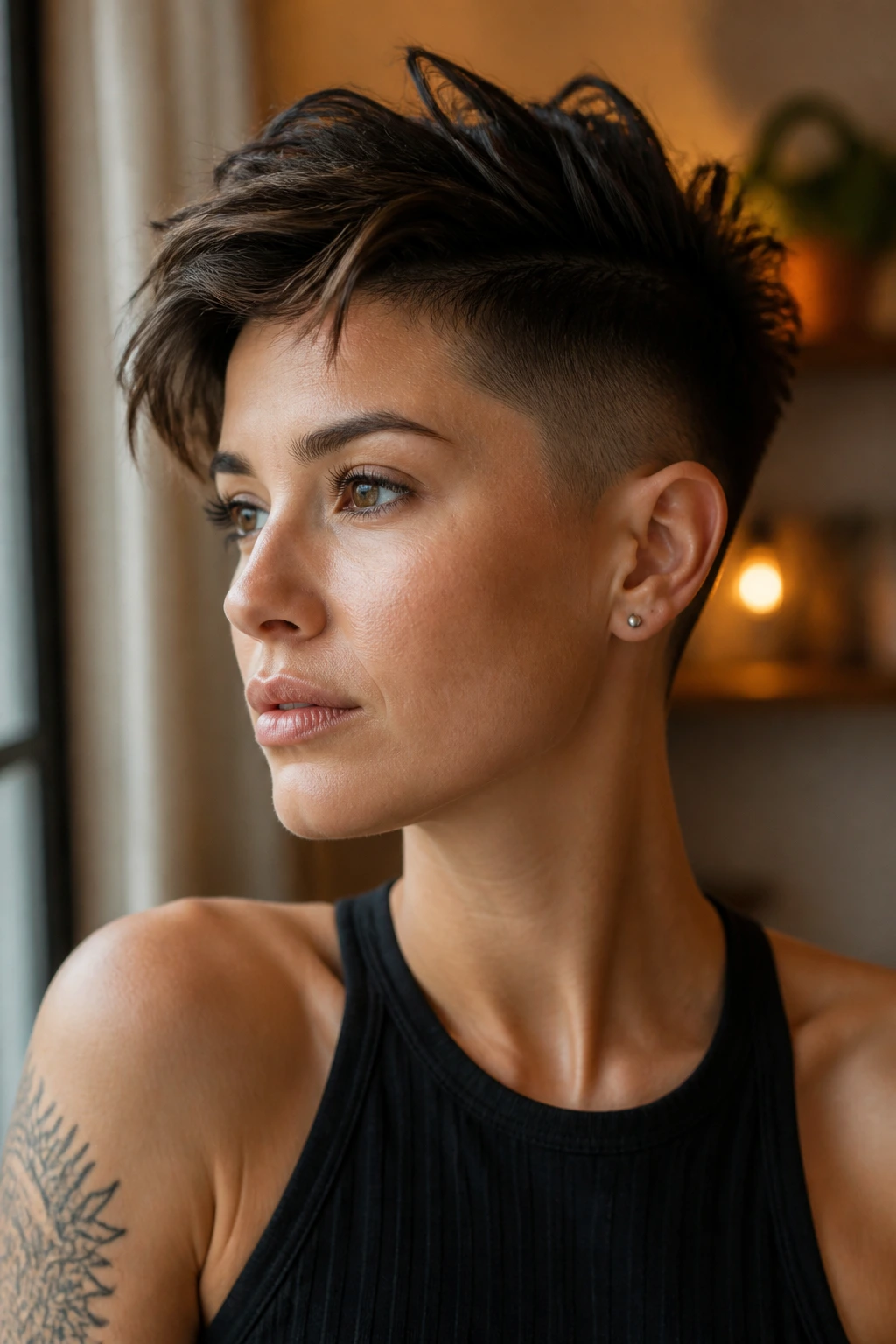
The Office-Ready Pixie: Keep the fringe side-swept, the nape neatly tapered, and the top just long enough to comb into a clean shape. It reads polished without feeling formal.
The Curl-Friendly Crop: Leave extra length through the crown and temple so curls have room to spring. This version keeps the shape soft and avoids the triangle effect that can happen when curly hair is cut too short all over.
The Fine-Hair Float Pixie: Use minimal layering, a lifted crown, and a soft perimeter. The aim is to make fine hair look fuller, not more fragmented.
The Bold Undercut Pixie: Shave or clip the sides close and keep the top noticeably longer. The contrast gives thick hair relief and turns a simple crop into something sharper.
The Grow-Out Pixie: Leave the front and sides long enough to tuck or sweep behind the ears. This is the version to ask for if you want the short-hair feeling without getting trapped in a harsh grow-out stage.
Maintenance, Trims, and Overnight Care
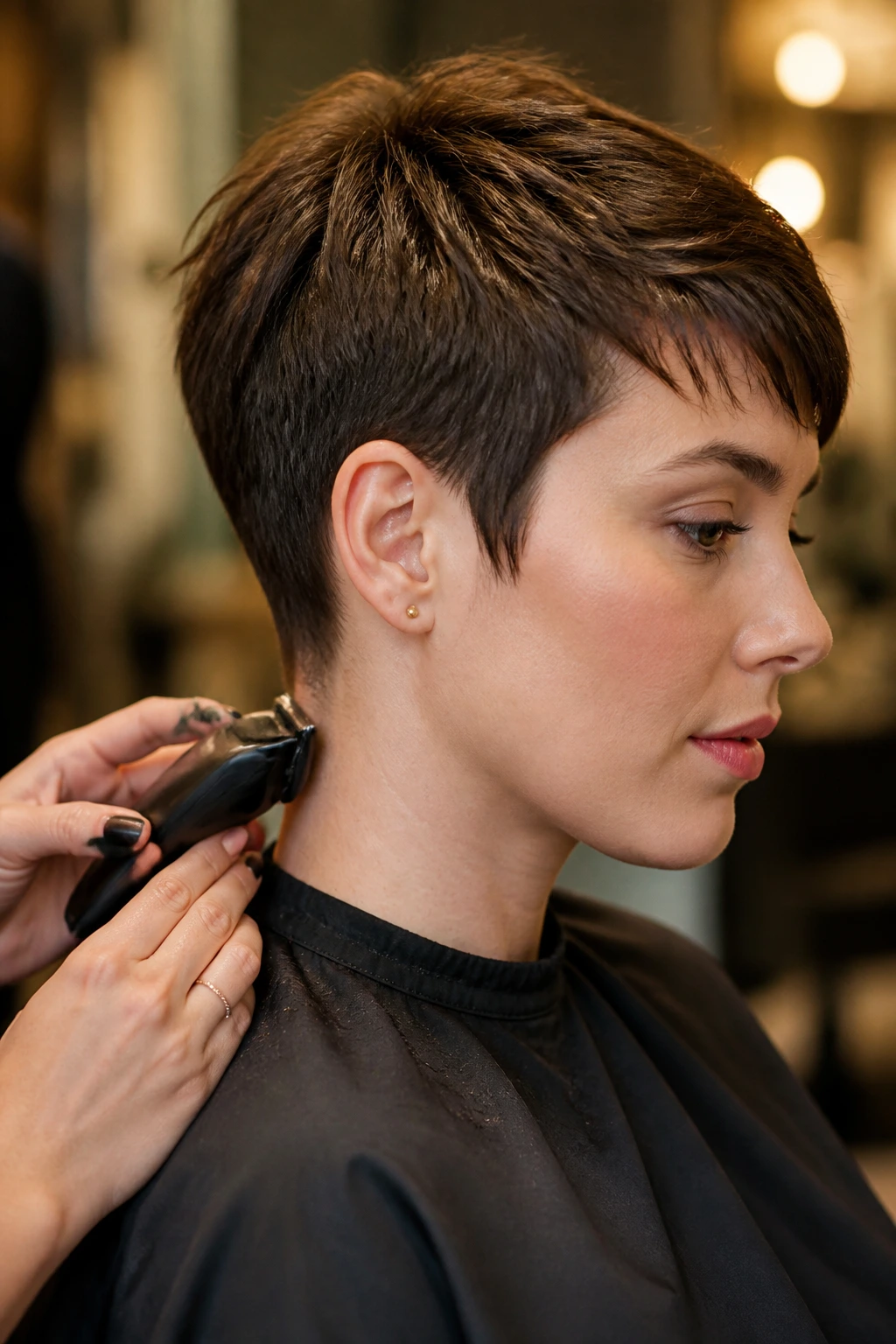
Pixies need attention sooner than shoulder-length hair, and pretending otherwise is how the shape gets mushy. Most versions need a trim every 4 to 6 weeks to keep the nape clean and the fringe from slipping into your eyes. If you wear an undercut, shaved side, or micro fringe, a closer 3 to 4 week rhythm keeps the lines crisp.
Washing is less about a strict schedule and more about your scalp and product load. Fine hair may want a wash every 1 to 2 days because short strands show oil fast. Thicker or curlier hair can often go 2 to 4 days, especially if you refresh the front and crown with a water mist and a little leave-in. Dry shampoo helps, but it should not become the entire plan.
Sleep care matters more than people expect. A satin or silk pillowcase keeps the fringe from bending into odd shapes and cuts down on static. If your pixie has a tricky side part, pinning that section lightly before bed can save you ten minutes in the morning. For curls, a soft bonnet or a very loose pineapple on top of the head can keep the pattern from getting crushed.
At home, keep any edge cleanup simple. A tiny trimmer can tidy the neck and around the ears, but if your cut has a hard line or shaved section, it is better to let a stylist refine it every few weeks. Short hair shows shaky hands.
Frequently Asked Questions
How short is too short for a pixie cut?
Too short is when the shape no longer flatters the head’s natural lines or gives you any room to style. If the fringe, crown, and sides all land at the same length, the cut can start to look flat and helmet-like. Keeping one area slightly longer usually preserves shape.
Will a pixie cut work on thick hair?
Yes, but thick hair usually needs more internal removal or a tighter nape so the shape does not puff outward. Undercuts, tapered crops, and feathered layers are all smart choices because they reduce bulk where short hair tends to widen.
Can curly hair wear a pixie cut without looking triangular?
Absolutely, if the cut leaves enough room for shrinkage and keeps the top a touch longer than the sides. A curl-specific or dry cut usually works better than a wet chop because the finished shape follows the pattern the curls actually make.
How often should I trim a pixie?
Most pixies look best with a trim every 4 to 6 weeks. Shaved sides, baby bangs, and very precise shapes often need attention closer to 3 to 4 weeks because growth shows fast.
What should I ask for at the salon?
Ask for the shape you want in plain language: side-swept fringe, tapered nape, longer crown, soft temples, or undercut sides. Bring photos, but also tell the stylist which part of your hair gives you trouble — crown, fringe, ears, or neckline.
Can I grow out a pixie without hating the in-between stage?
You can make it much easier by keeping the perimeter soft and leaving enough length around the ears and front to tuck or part. A bixie or grow-out pixie gives you more options than a super-short crop.
What if my pixie looks flat by noon?
That usually means the crown was cut too heavy or the styling product is too dense. A little root mousse, less conditioner near the scalp, and a quick blast of heat at the crown usually help more than adding more wax.
Do pixie cuts suit round faces?
Yes, but the best ones usually add a little height at the crown or length in the fringe to stretch the face visually. A very blunt, round shape can echo the face too much; a side sweep or asymmetry tends to work better.
The Small Cut That Changes the Whole Frame
A good pixie cut does not behave like a compromise. It behaves like a decision. The right one gives you cleaner lines at the neck, more attention at the eyes, and a haircut that can feel soft one day and sharp the next without growing into a different identity.
The real win is not the shortness. It’s the control. A pixie lets you decide where the eye lands — on the fringe, the cheekbone, the crown, the jaw — and that is why the cut can feel so fresh even when the styling takes less than ten minutes.
Bring the shape you like, the texture you actually have, and the honest amount of maintenance you’re willing to do. Those three things matter more than any trend label, and they make the next salon conversation a lot easier.
