



Thick curls are generous and stubborn in the same breath. They can turn a plain ponytail into a shape with presence, then eat a flimsy pin for breakfast if the styling plan is lazy. That’s why curly hairstyles for thick hair need their own logic. Not more decoration. More structure.
I’ve always thought dense curls look best when the style respects their size instead of trying to squeeze them flat. The good looks on this hair type are rarely the ones that force every strand into obedience. They’re the ones that give the curls a job: a lift at the crown, a clean part, a braid that holds tension where it matters, or an updo that leaves room for the hair to expand instead of collapse.
And that expansion matters. Thick curls shrink, stack, and shift during the day, which means a style that looks neat at 8 a.m. can look like a completely different creature by lunch if the anchor points are weak. The right look doesn’t fight that. It works with it. You’ll see a mix here: quick shapes, polished updos, low-effort day-two fixes, and a few styles that look like they took forever but really only needed the right sectioning and the right clip.
Why Thick Curls Deserve a Different Playbook
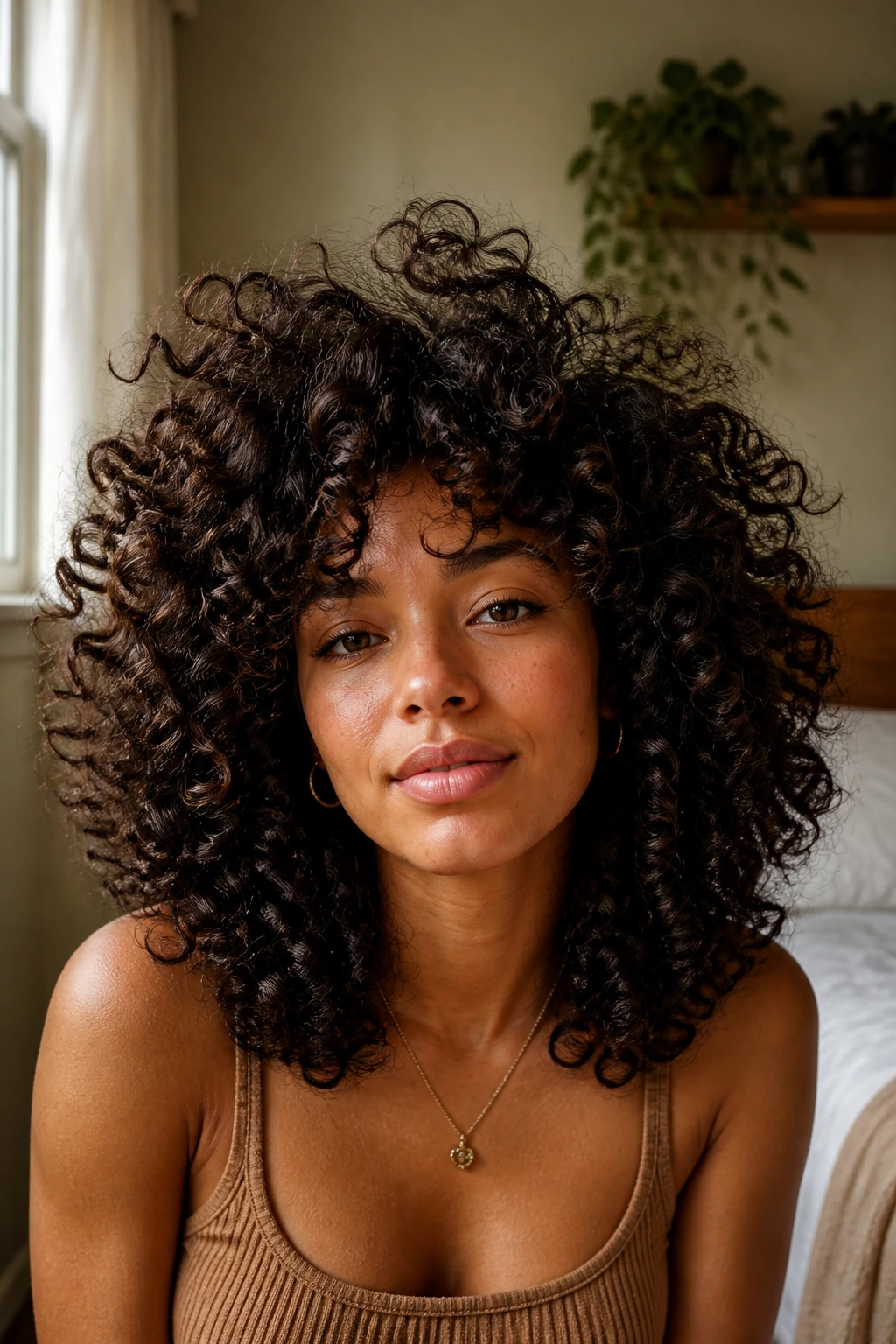
-
Density changes the silhouette: Thick curls build width fast, so the part, the anchor, and the shape around the crown matter more than they do on finer hair.
-
Shrinkage is not a flaw: A style that looks a little bigger than you expect when wet is usually the one that settles into the right shape once dry.
-
Your accessories need to earn their keep: Tiny elastics and weak clips give up early on dense hair; wide scrunchies, strong claws, and coated pins last longer.
-
Low tension beats tight pulling: If a style leaves your scalp sore by noon, it’s doing too much. Thick curls hold shape without needing a scalp clamp.
-
Weight can work for you: A lot of styles that look flat on fine hair look intentional on thick curls because there’s enough hair to fill the space.
1. Shoulder-Length Wash-and-Go with a Side Part
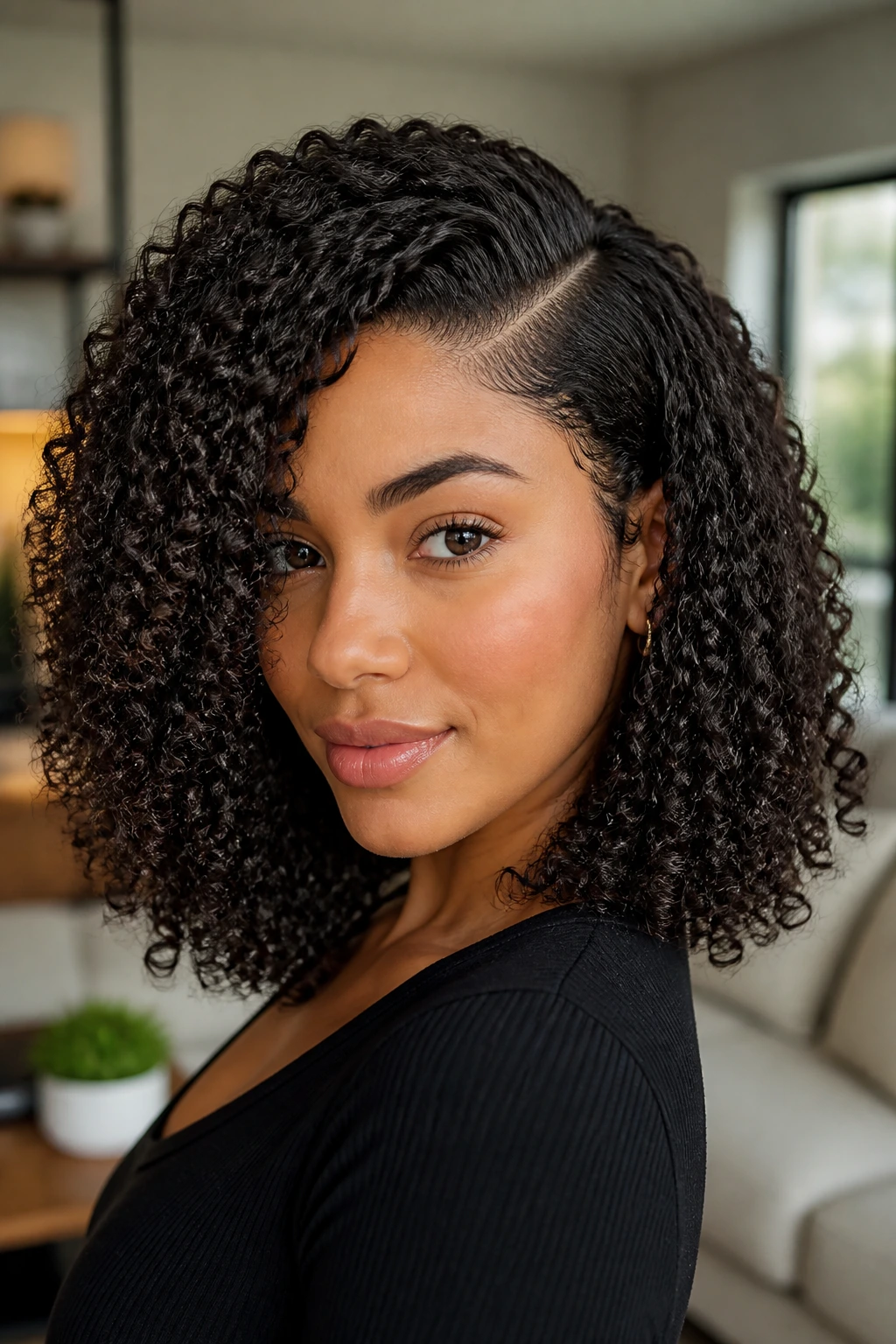
A shoulder-length wash-and-go is one of the cleanest ways to show off thick curls without stuffing them into a clip or a bun. The side part breaks up the heaviness at the crown, which matters because dense curls love to sit in one wide mass if you let them. With the right gel cast, the ends stay defined instead of puffing outward like they’re trying to leave the room.
Why It Works
On thick hair, a wash-and-go is less about “just letting it air-dry” and more about controlling where the curl clumps land. Start on soaking hair, smooth in leave-in, then add a small amount of curl cream before glazing gel over the outer layer. That outer gel layer is what keeps the shape from fraying while the inside still feels soft.
- Best on shoulder-length or slightly longer curls.
- Diffuse the roots first if your crown tends to flatten.
- Scrunch out the cast only when the hair is fully dry.
Best move: Clip the heavier side at the root while it dries. It keeps the part from slipping back into a center blob.
2. High Puff with a Sharp Hairline
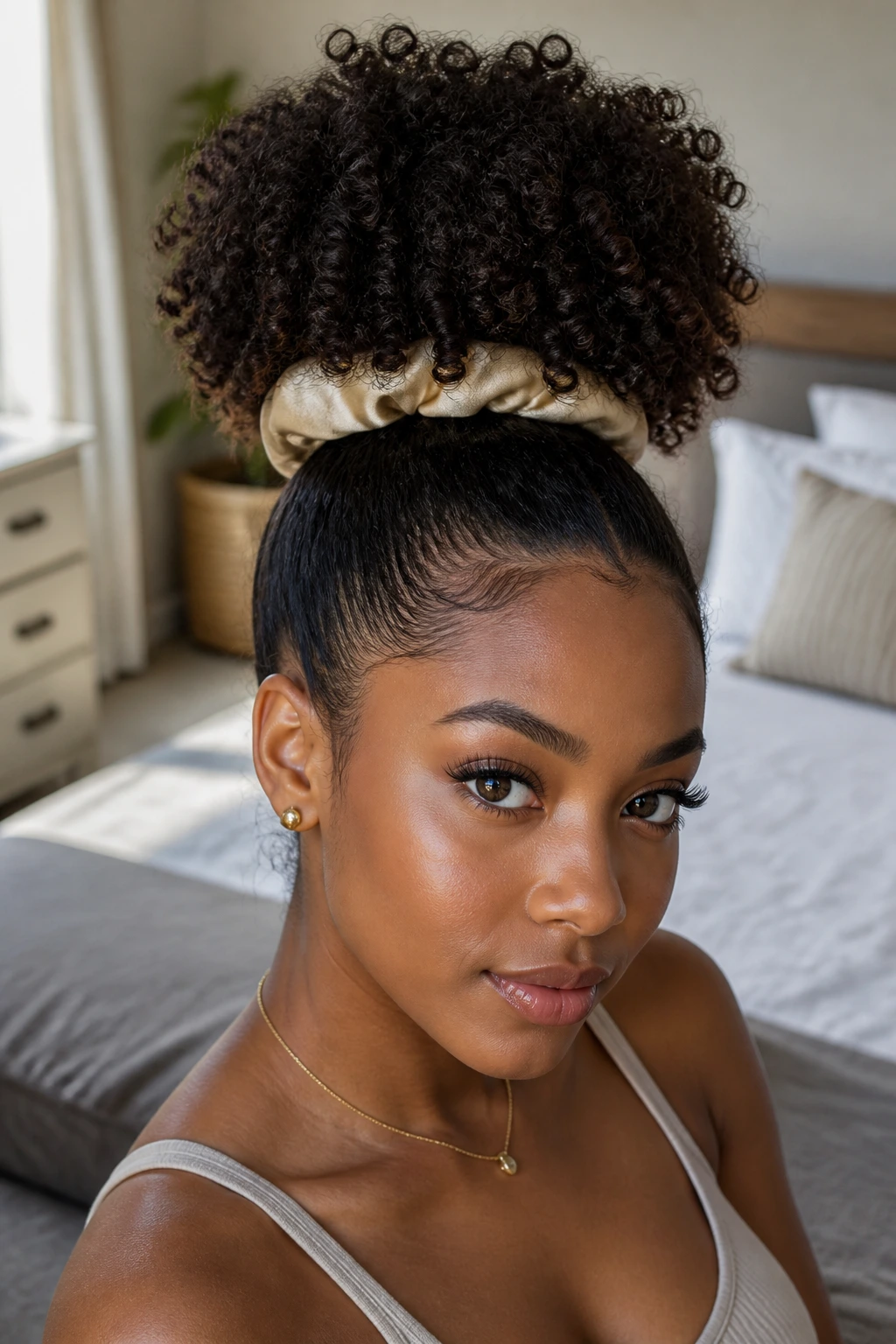
Why does a high puff look so good on thick curls? Because it stops pretending the hair needs to be hidden. Dense curls naturally build volume at the crown, and a high puff turns that into the whole point. The shape feels deliberate, especially if you smooth the hairline with a little gel and use a satin scrunchie that can actually hold weight.
This is the style I reach for when the roots are cooperating but the lengths need freedom. Flip the head forward, gather the hair at the highest comfortable point, and don’t drag the elastic too tight. If the puff is forced downward, it loses lift fast. If it sits high and loose, it looks sculpted instead of squeezed.
3. Pineapple Ponytail for Second-Day Curls
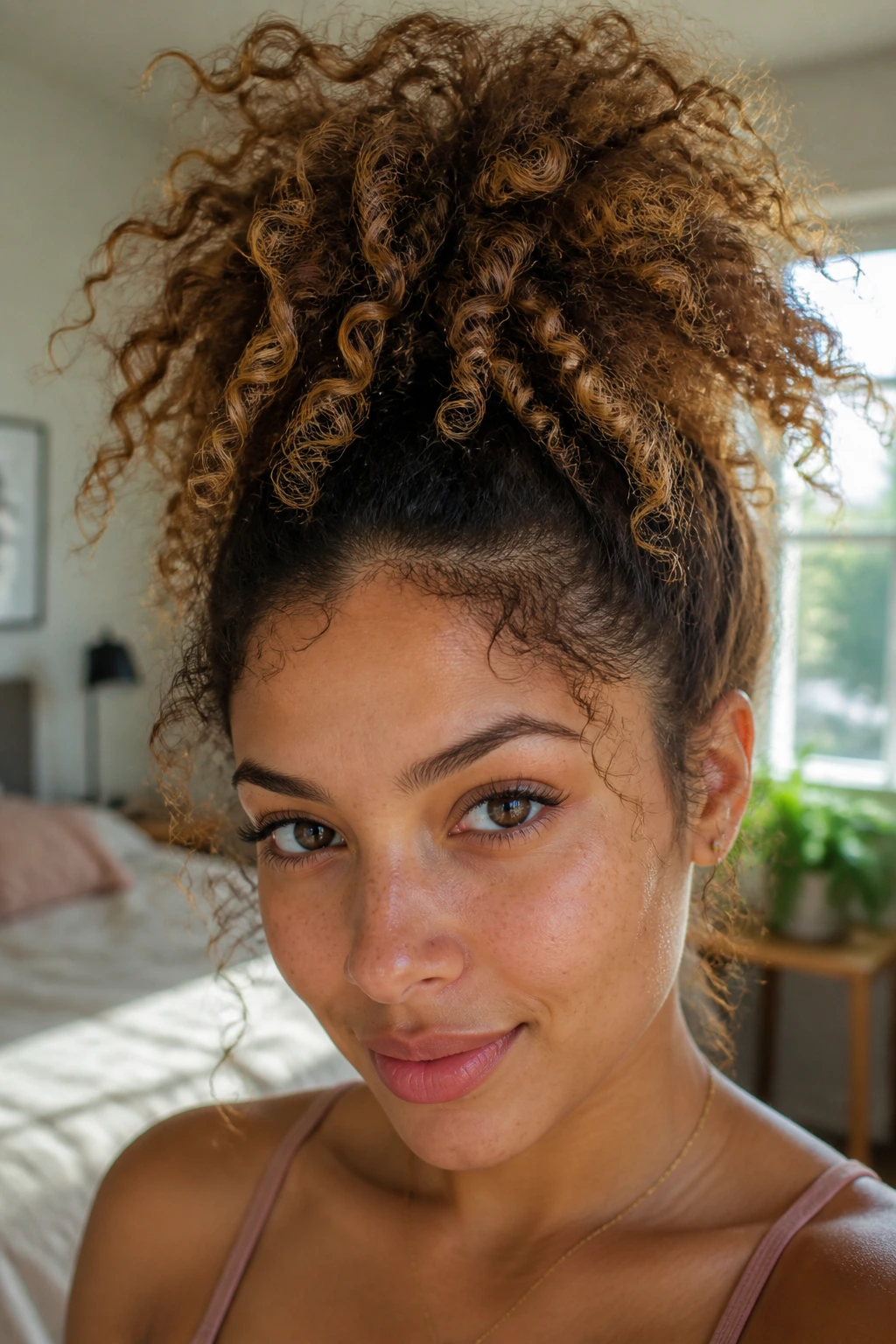
Morning-after curls can be messy in the best way. The pineapple ponytail keeps that loose bend and bounce up off your shoulders instead of flattening it under a low tie. Thick curls have enough body to make this style look full even when the ends are a little frayed.
How to Wear It
Use a soft scrunchie and place the ponytail at the crown, not the middle of the head. Let the lengths fan out on top. If you want it to look intentional during the day, pull a few curls forward around the temples and leave the rest loose. If you’re sleeping in it, wrap a satin scarf around the hairline so the crown doesn’t frizz overnight.
- Good for day-two or day-three curls.
- Best on shoulder-length and longer hair.
- Keep the tie loose enough that the front doesn’t dent.
Small detail, big payoff: A pineapple works better when the curls are already dry. Wet curls folded up high tend to dry in odd bends.
4. Half-Up Claw Clip Twist
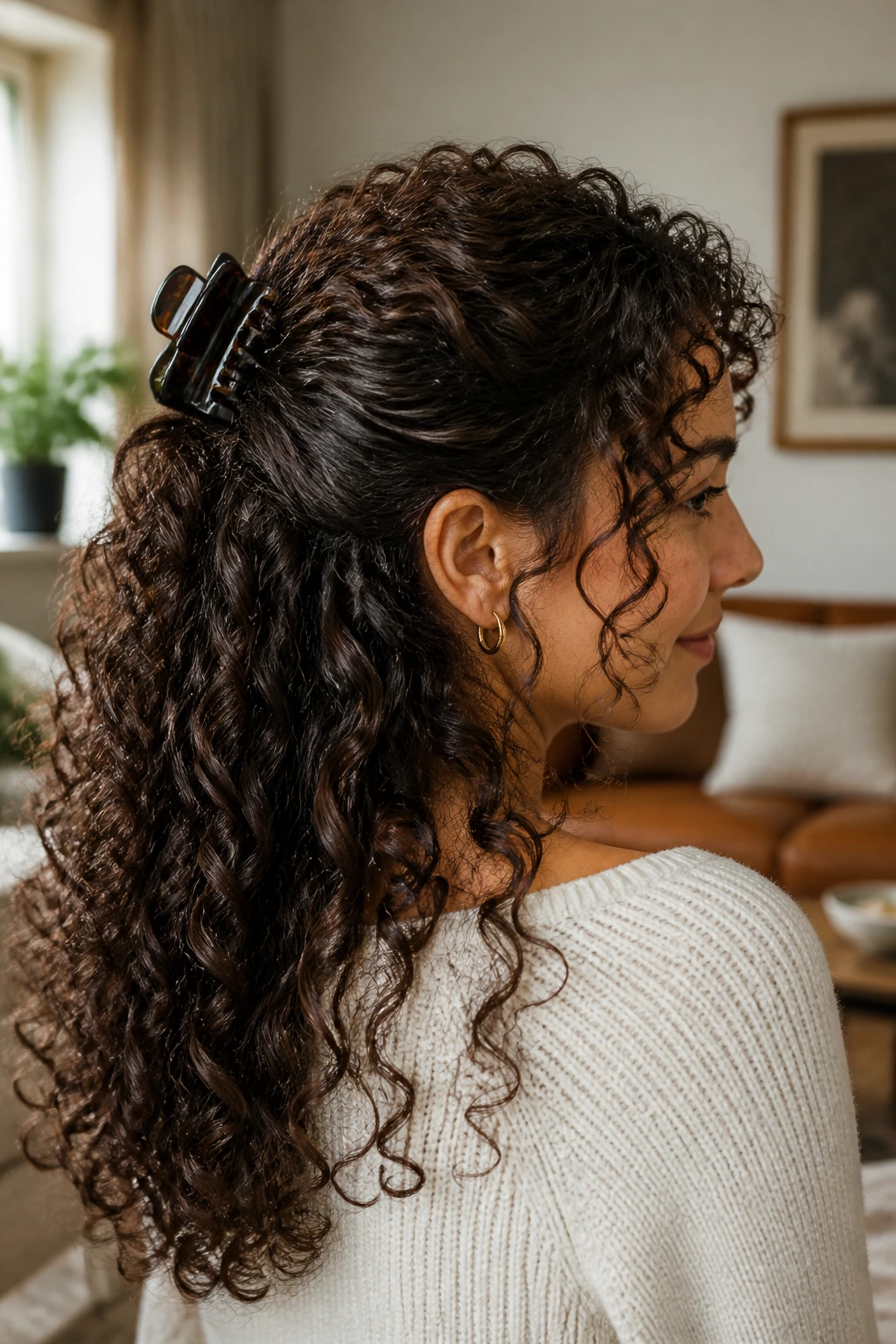
The big claw clip finally earns its drawer space here. Thick curls need a clip with teeth that actually hold, not a decorative one that slides off the first time you turn your head. A half-up twist keeps the top under control while the bottom layers keep moving, which is the whole appeal.
Twist the hair from the temples back to the crown, lift it once, and lock the clip vertically or slightly angled. Leave the curl ends spilling out instead of trying to tuck everything in. That loose finish keeps the style from looking too stiff. I like this one when the crown needs structure but the lengths still look good enough to show off.
5. Curly Shag with Face-Framing Layers
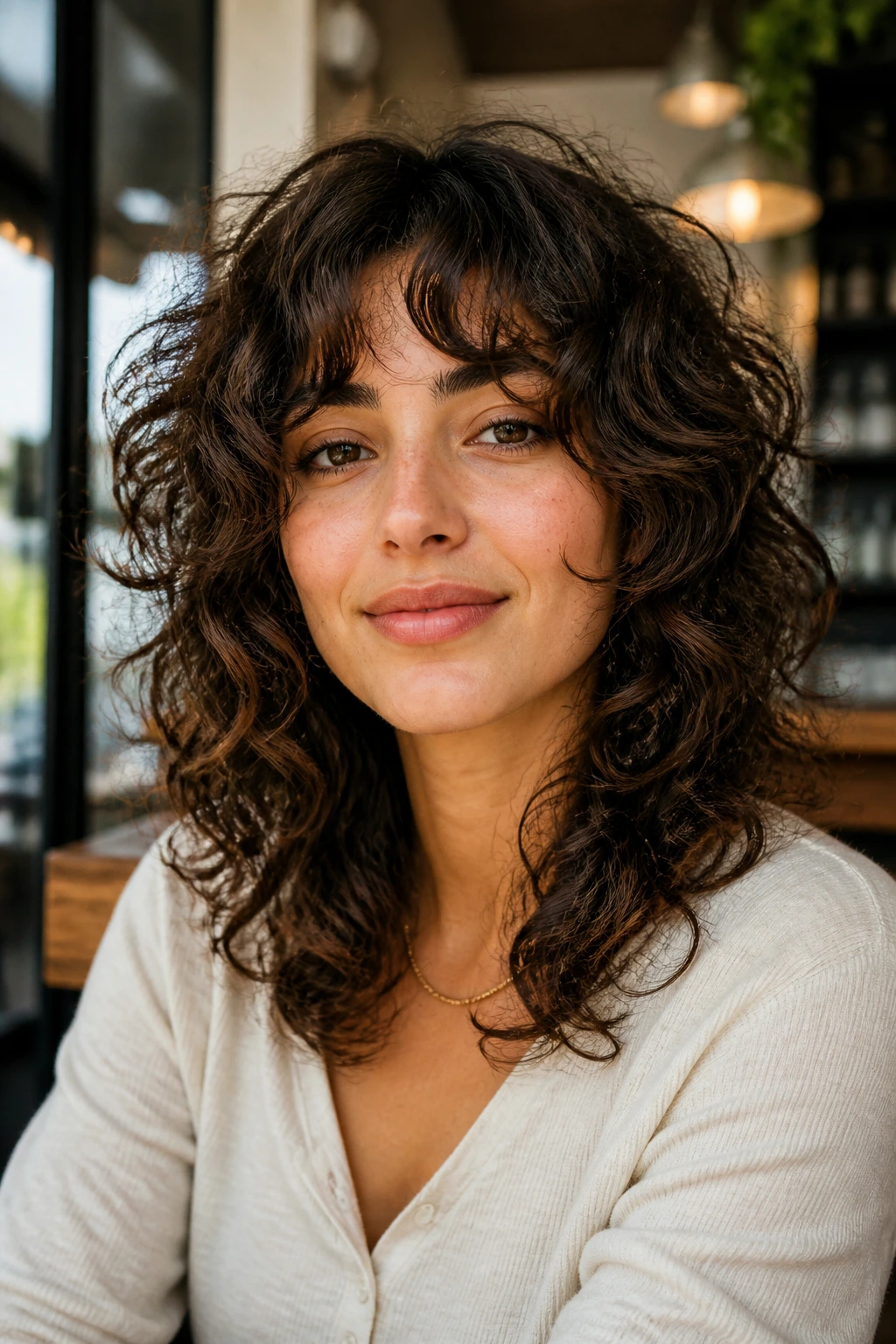
A curly shag is the haircut-version of a good lighting change. It removes bulk where thick curls tend to balloon and gives the shape room to move around the face. Without those layers, dense curls can swing into a triangle. With them, the whole head looks lighter without losing fullness.
Layer Logic
The trick is not to cut the layers too short at the top if your curls spring up a lot. Face-framing pieces should hit where you want the eye to land—often cheekbone or lip level when dry, since curl shrinkage will pull them up. Style with a diffuser and a light hand. Too much product on a shag can make the layers stick together in heavy chunks.
This is one of the few styles that looks better when the hair has a little lived-in texture. Clean, perfect, over-smoothed curls can make the layers disappear. A shag wants movement.
6. Crown Braid Over Loose Curls
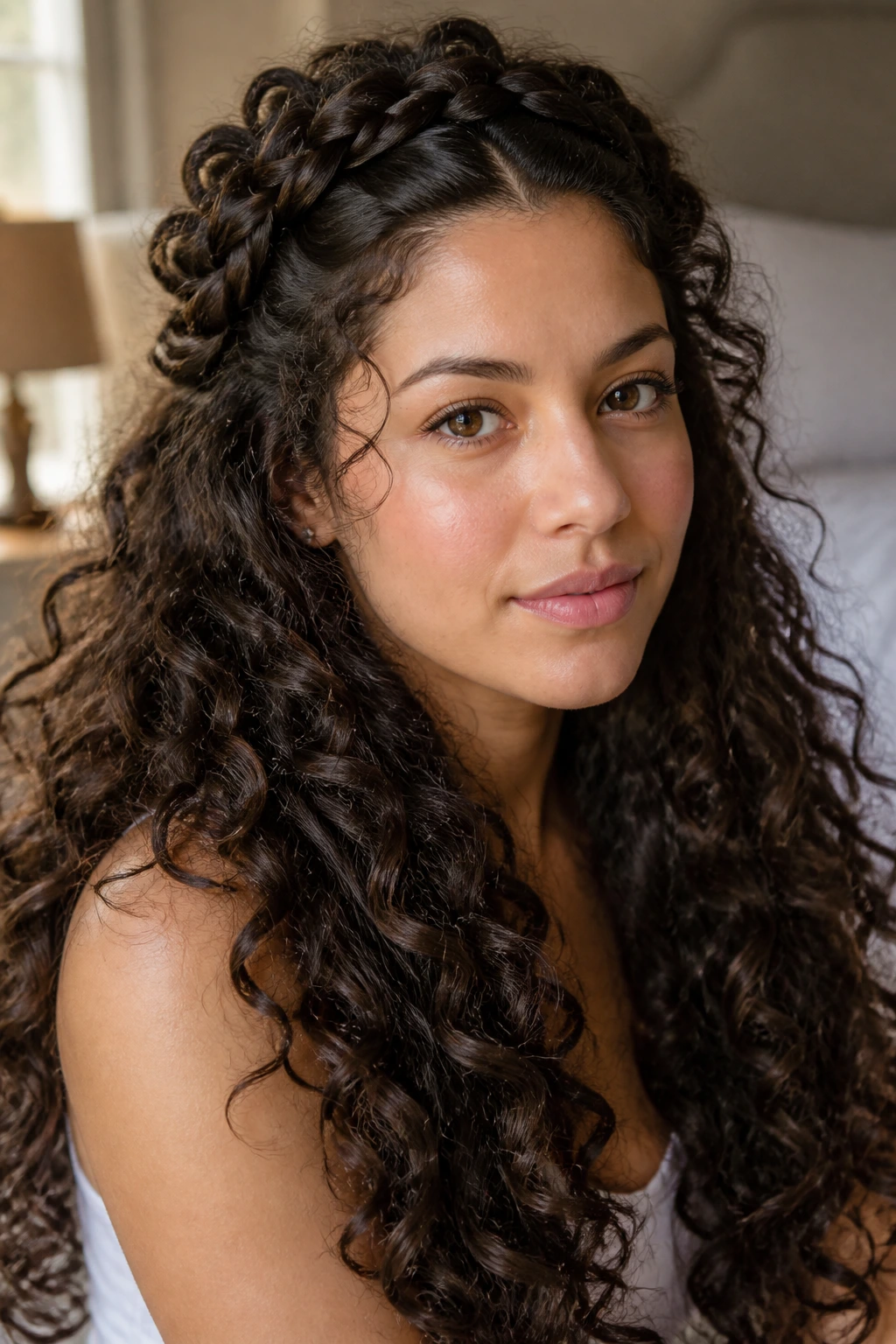
A crown braid is the move when you want control around the hairline but refuse to give up the body of the curls. Thick hair makes this style easier than people expect because there’s enough density for the braid to feel full instead of stringy. The braid sits like a frame, and the loose curls below do the softening.
Keep the braid loose. Tight braids on thick curls tend to look bulky in the wrong spots and can leave a hard ridge that fights the rest of the style. If you’re wearing it for a long day, pin the braid in a few hidden places rather than relying on one big anchor at the back.
7. Chunky Two-Strand Twist-Out
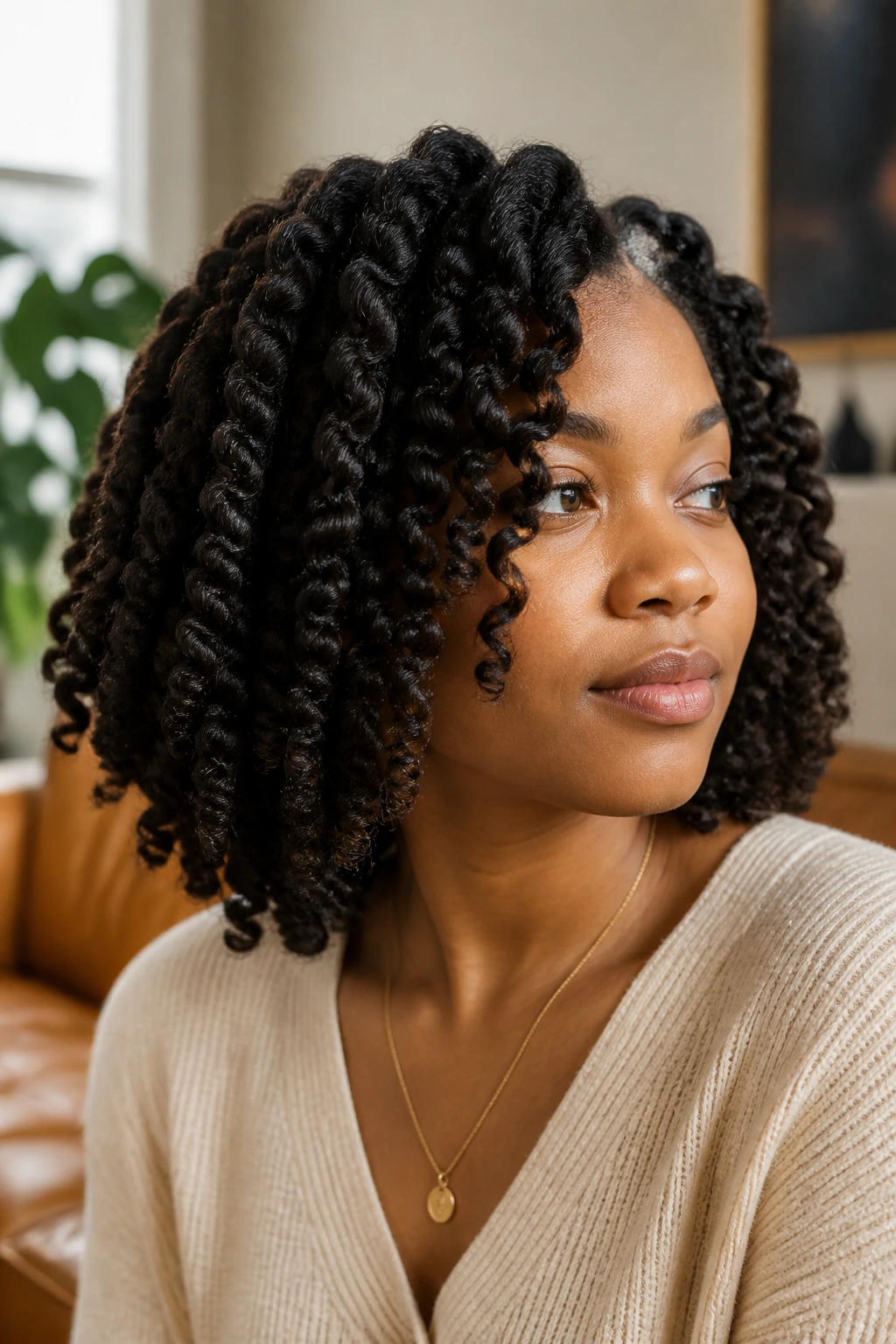
A chunky twist-out gives thick curls a defined pattern without forcing them into tiny, time-consuming sections. Bigger twists keep the shape plush and reduce the chance of ending up with a frizzy cloud from over-manipulation. The hair ends up looking soft but still shaped, which is exactly the sweet spot.
How to Set It
Work in sections about 1 to 1½ inches wide, depending on density. Add leave-in and a cream with enough slip to keep the strands smooth, then twist from root to end with even tension. Let the twists dry all the way—overnight if needed—before unraveling. Separate only once or twice with a drop of oil on your fingers.
Do not rush the dry time. Half-dry twist-outs on thick hair usually lose the pattern by midday and turn fuzzy at the roots.
8. Space Buns with Free Curls
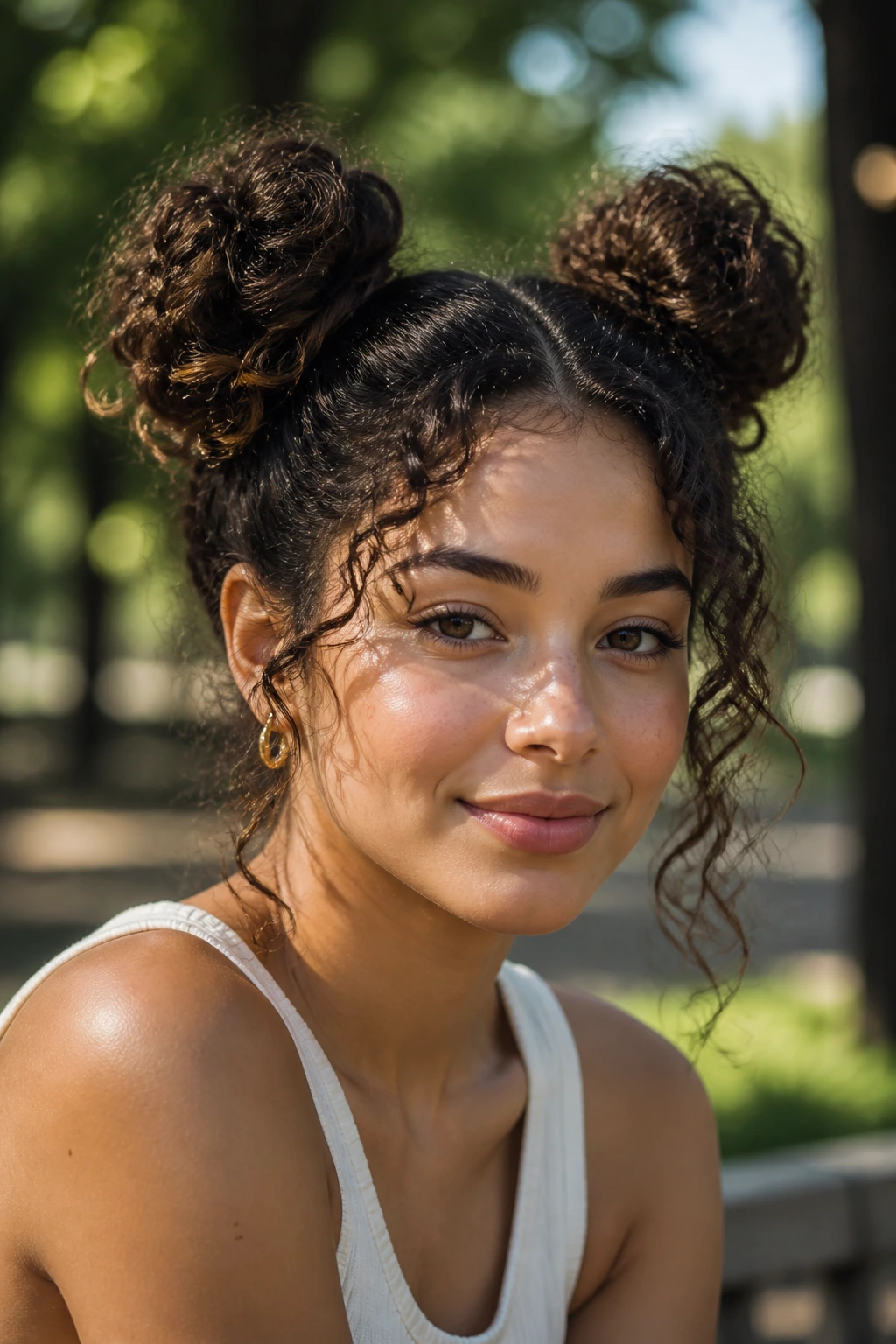
Space buns stop thick curls from looking like they’re trying to escape one single ponytail. Splitting the hair into two sections gives the density a place to go, and leaving the ends free keeps the style from feeling too stiff or too young. The result is playful, yes, but also surprisingly useful on heavy hair.
Keep the buns high and compact, then let a few curls fall around the ears or the nape. If your hair is longer, the buns can sit smaller and the ends can spill out a little more. That bit of slack makes the style look less engineered. I like this one on thick hair because the volume reads as part of the style rather than a problem to solve.
9. Low Curly Ponytail with a Wrapped Base
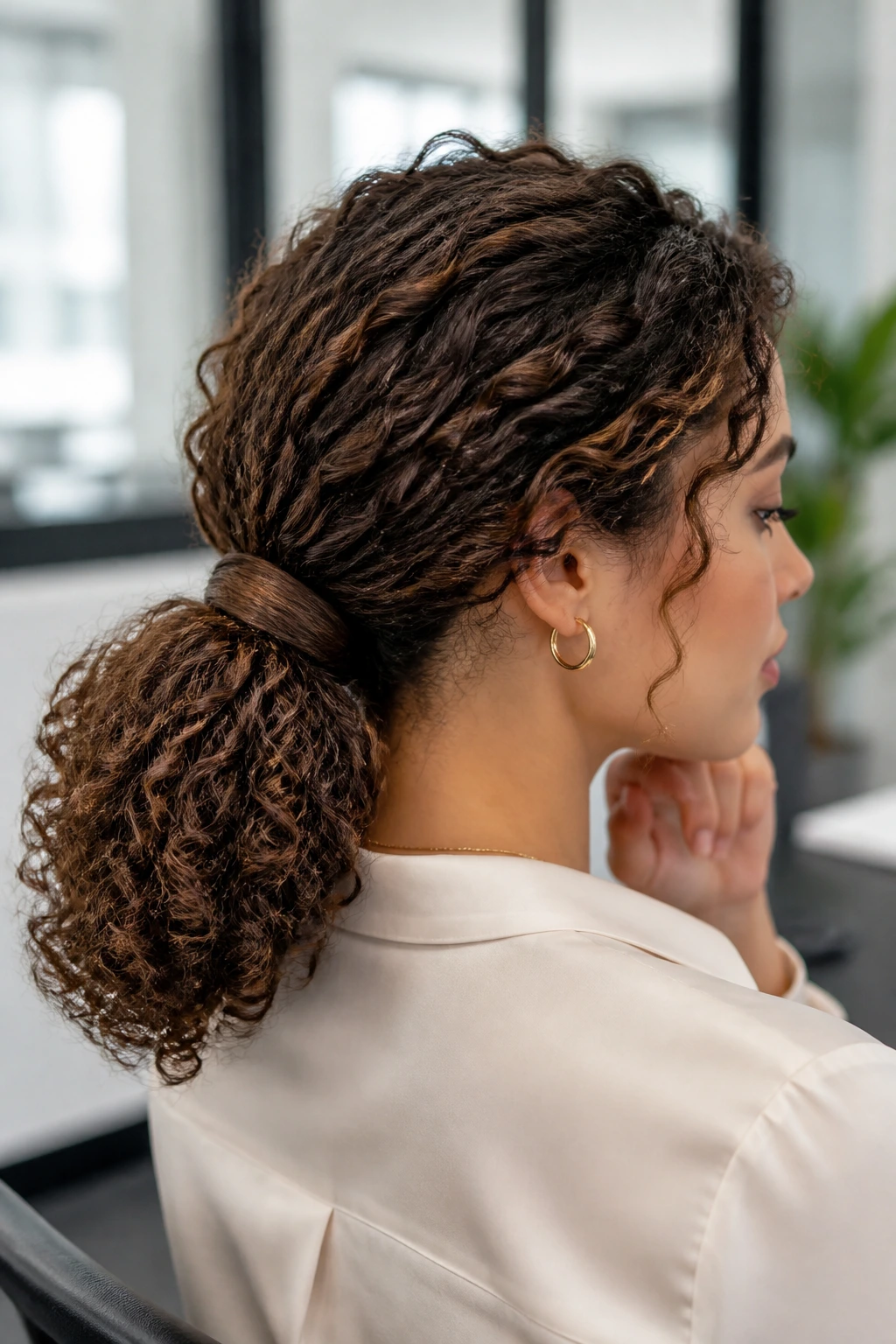
A low ponytail on thick curls works best when it doesn’t try to become sleek straight hair. Smooth the top with your hands or a soft brush, gather the curls low at the back, and leave the ponytail full. Wrap a small curl or a strip of hair around the elastic so the base looks finished instead of thrown together.
This is a strong option for office days, dinners, and any moment when you want less height but still want the texture visible. Unlike a straightened ponytail, this one doesn’t need to hide the curl pattern. It wants the bend, the texture, the weight. That’s the point.
10. Voluminous Lob with a Center Part
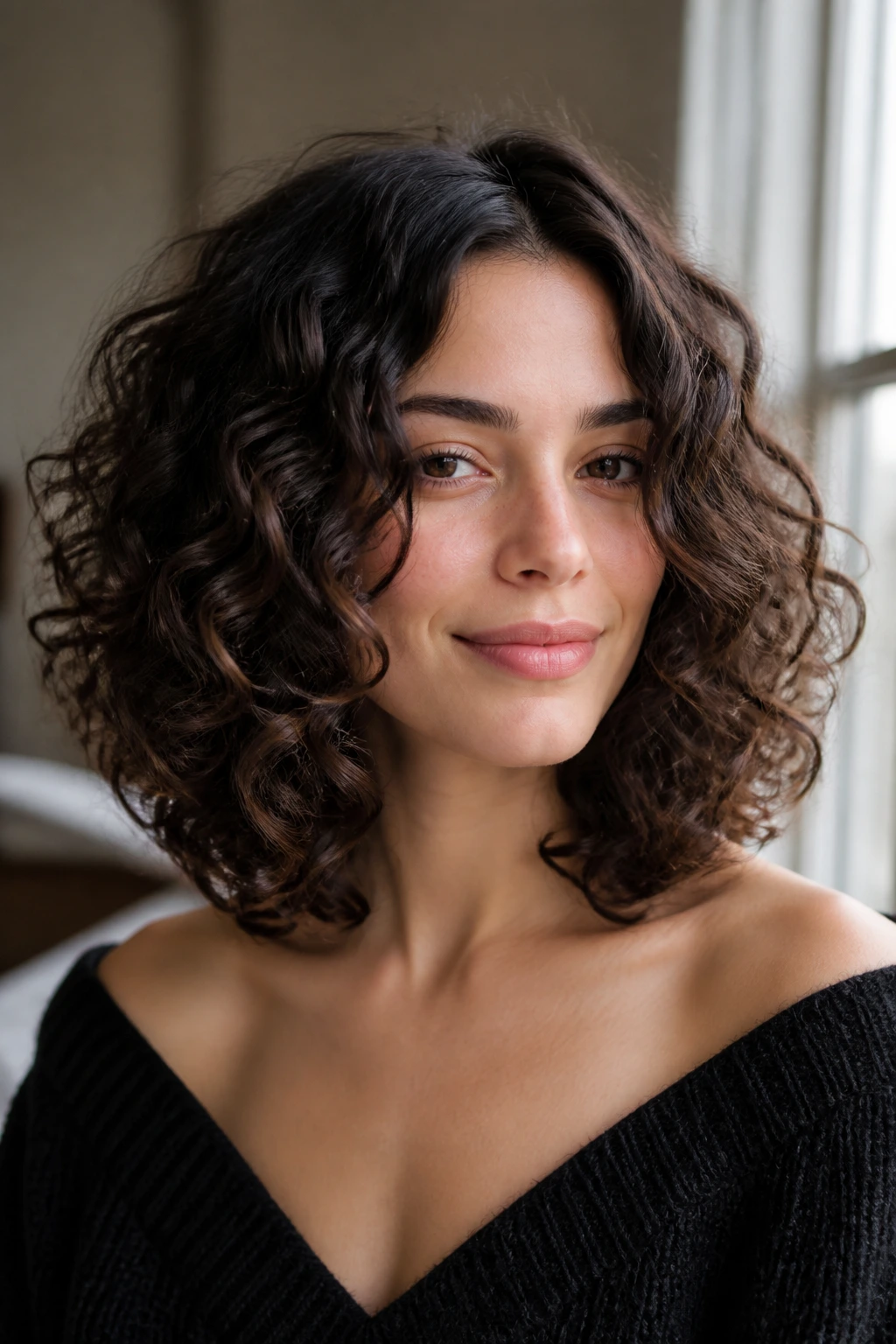
A lob sits right in the range where thick curls can swing without dragging into a heavy rectangle. The center part keeps the volume balanced on both sides, which is useful if one side of your hair grows denser or springs tighter than the other. It’s one of the simplest curly hairstyles for thick hair that still looks intentional with very little fuss.
Keep the ends shaped, not blunt. If the bottom line is too heavy, the lob turns into a block. A diffuser helps here, but only if you use it to lift the roots and not crush the curls together. Let the hair dry enough that the weight settles before you decide whether to touch it again.
11. Slicked-Back Half-Up with Full Curls Down
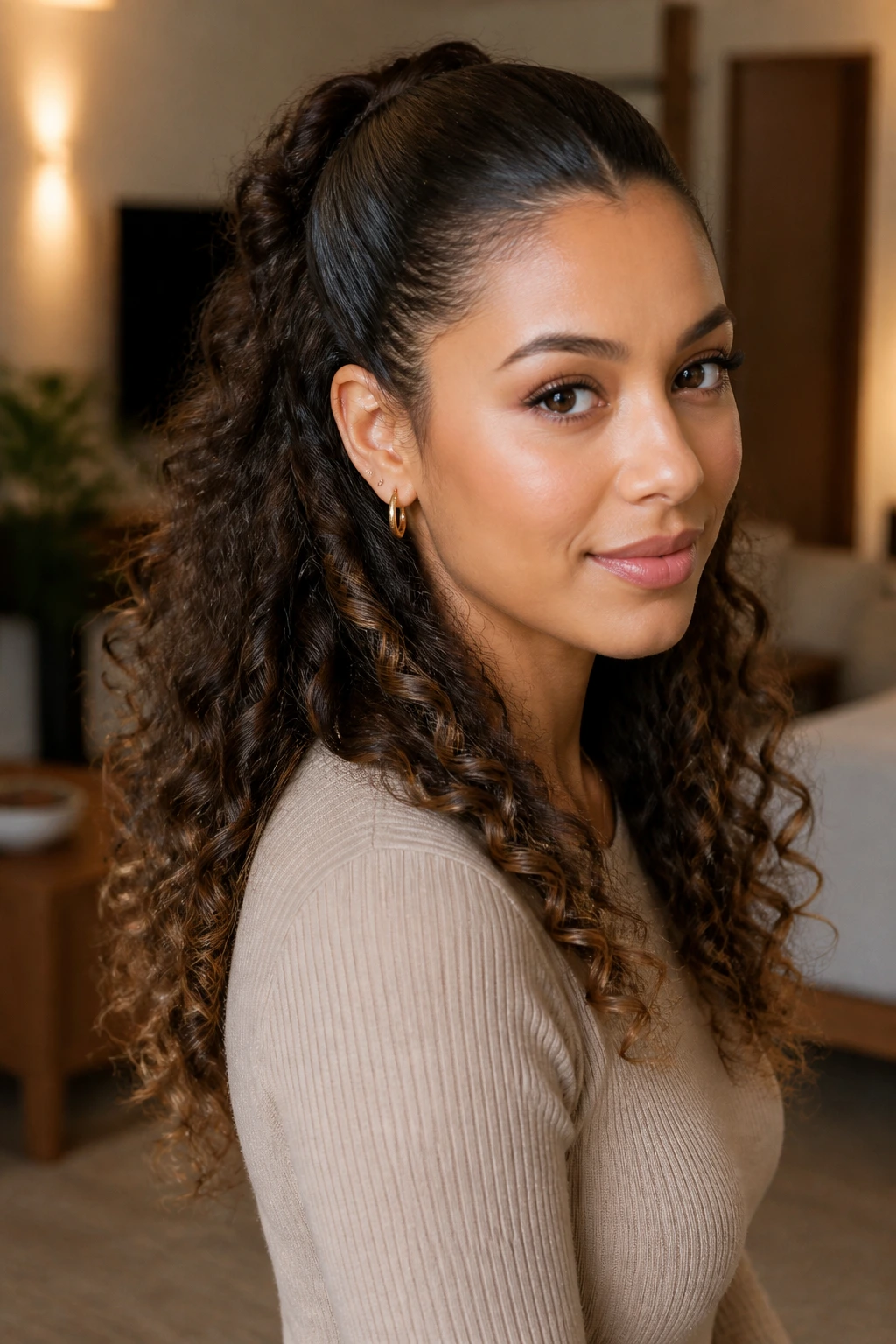
The slicked-back half-up style is what I reach for when the top looks chaotic but the lengths still have life. It gives the crown a neat, controlled surface while letting the back of the hair keep all its volume. Thick hair is ideal for this because there’s enough density to make the contrast look deliberate.
Where It Helps Most
Use gel or a strong mousse at the front and along the part, then gather the top section from temple to temple. Smooth it back with your hands, not a brush that can rough up the curl pattern underneath. The bottom half stays loose, full, and visible.
This one is especially useful on wash day plus one, when the roots need help but the curls aren’t ready to be tucked away completely.
12. Bantu Knot-Out Halo
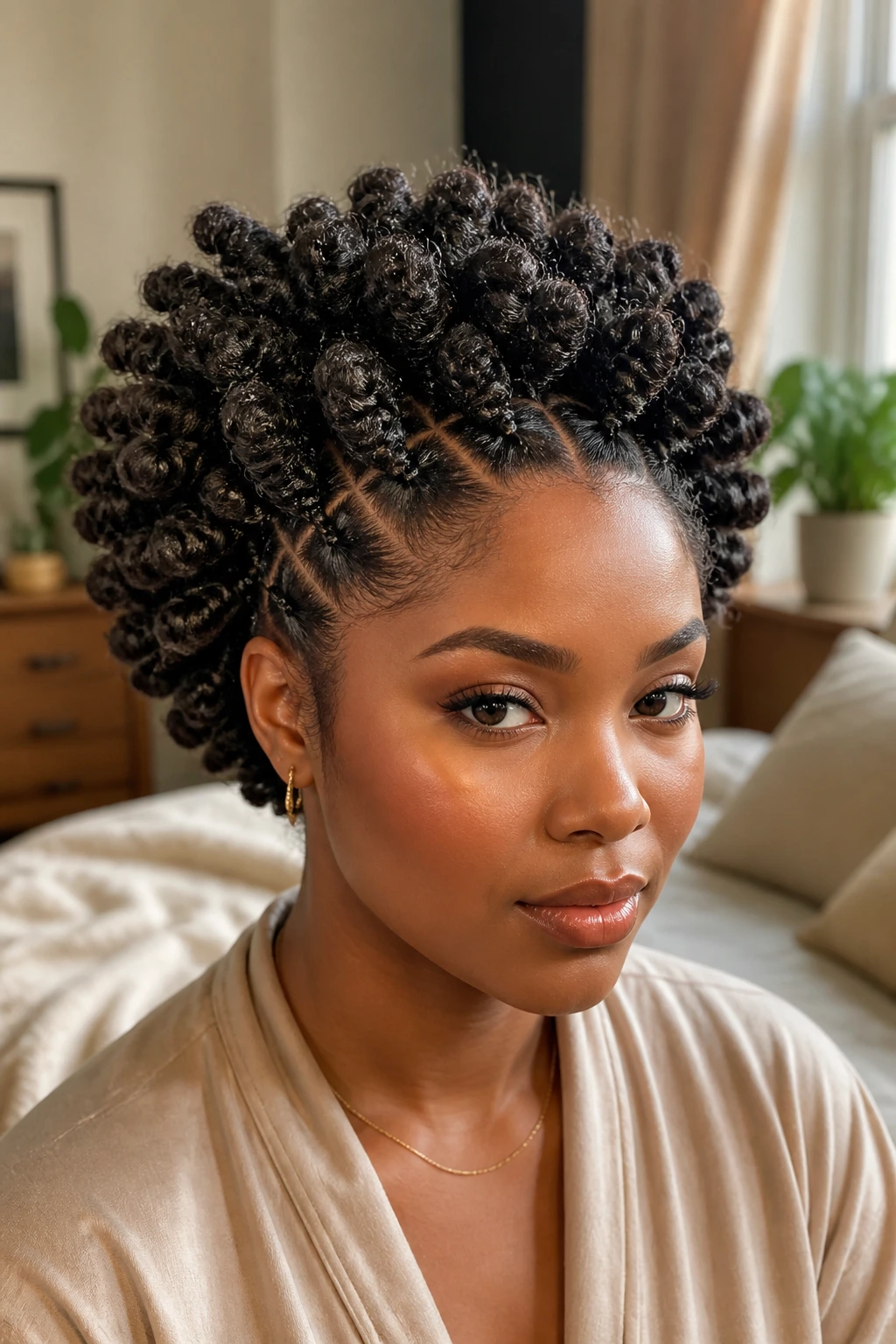
Bantu knots are one of those styles that does double duty. Set them tight enough and they create a neat overnight style. Release them and you get a halo of defined, crinkled curls that feel bouncy and lifted. Thick hair makes the halo look full instead of sparse, which is why this style works so well on dense curls.
Use more, smaller knots if you want tighter definition. Use fewer, larger ones if you want a softer pattern and less prep time. Either way, the hair needs to be fully dry before you take the knots down. If even the middle is damp, the shape won’t hold. That’s the boring truth.
13. Loose Side Braid into Curls
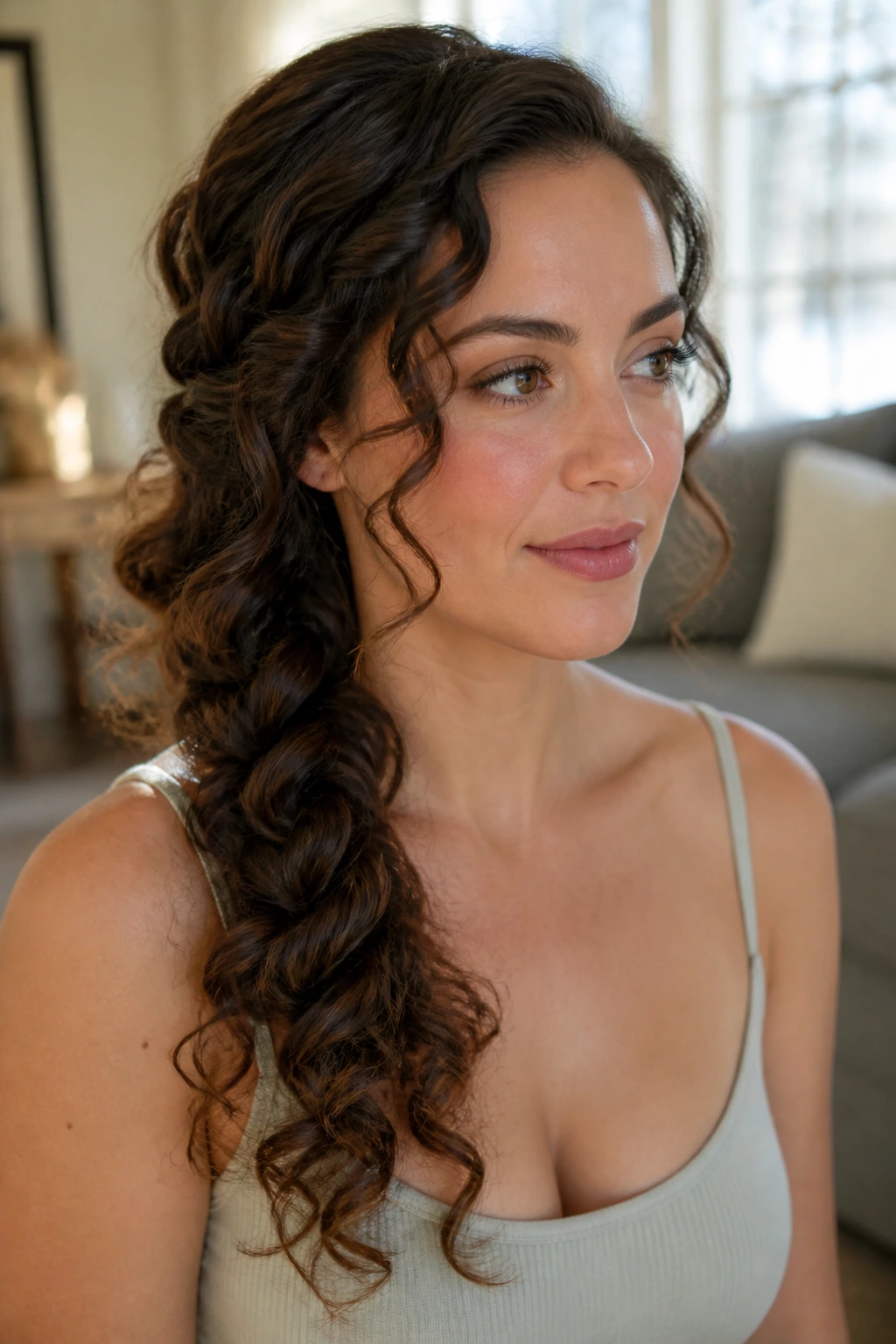
A loose side braid into curls is one of the easiest ways to keep hair off the face without flattening the whole head. Start the braid on one side, keep the tension soft, and let the rest of the curls fall naturally over the shoulder. Thick curls make the braid look full even when it’s not pulled tight, which is why it feels richer than the same style on fine hair.
This is the style for mornings when one side keeps falling forward and you’re not in the mood to wrestle with it. It controls the bulk without killing the movement. If the braid feels too neat, tug it apart a little with your fingertips once it’s in place.
14. Tapered Curly Shape with Full Top Volume
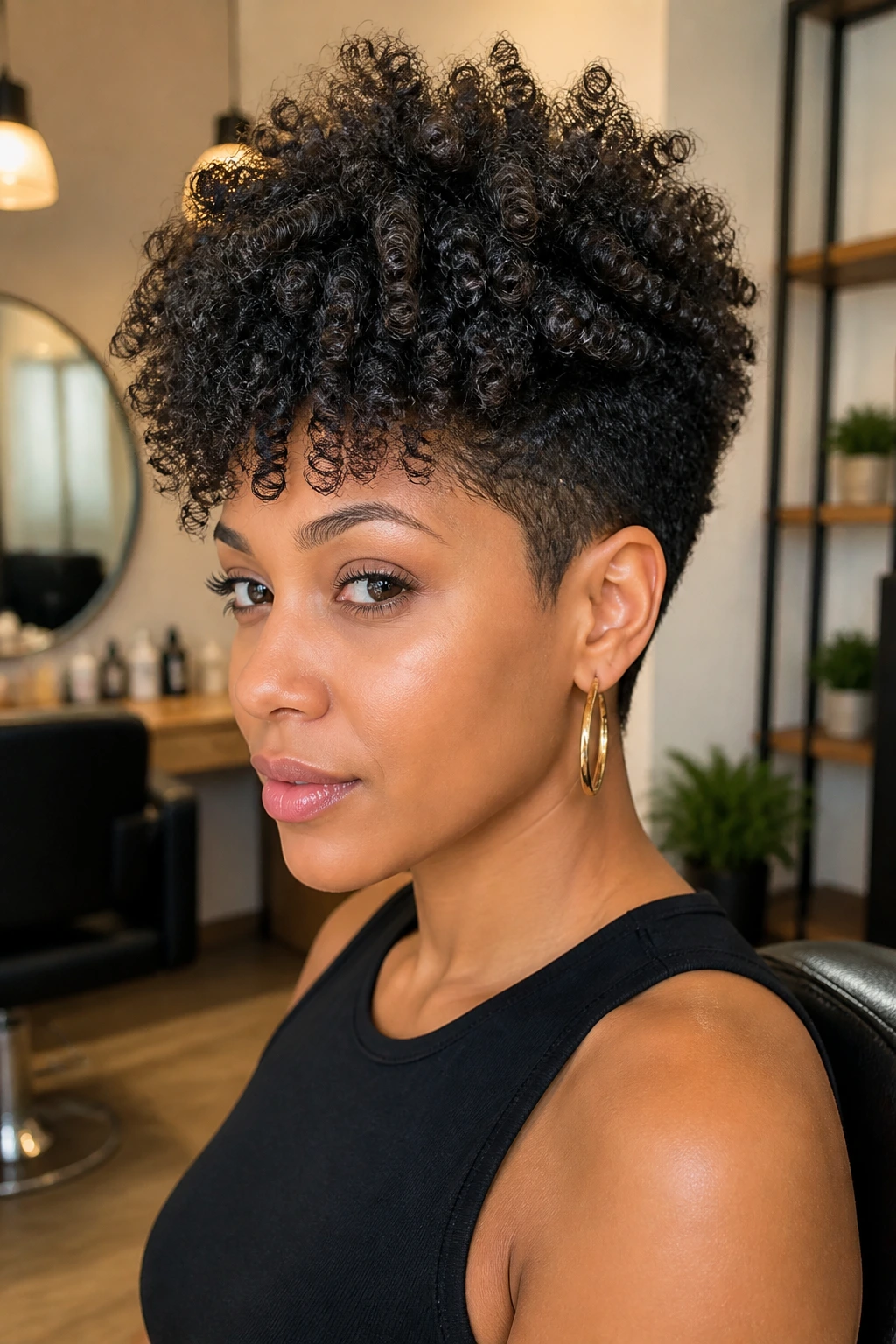
A tapered shape takes the bulk off the sides and nape so the top can actually breathe. On thick curly hair, that makes the curl pattern read as shape instead of mass. The top becomes the focus, and the hair around the ears and neck stops fighting the silhouette.
If you already wear a tapered cut, keep the top moisturized but not overloaded. Too much cream at the roots can flatten the lift you worked for. A pick at the crown helps after drying, but use it lightly. You want height, not a brushed-out puff that’s gone sideways.
15. Side Chignon with Texture
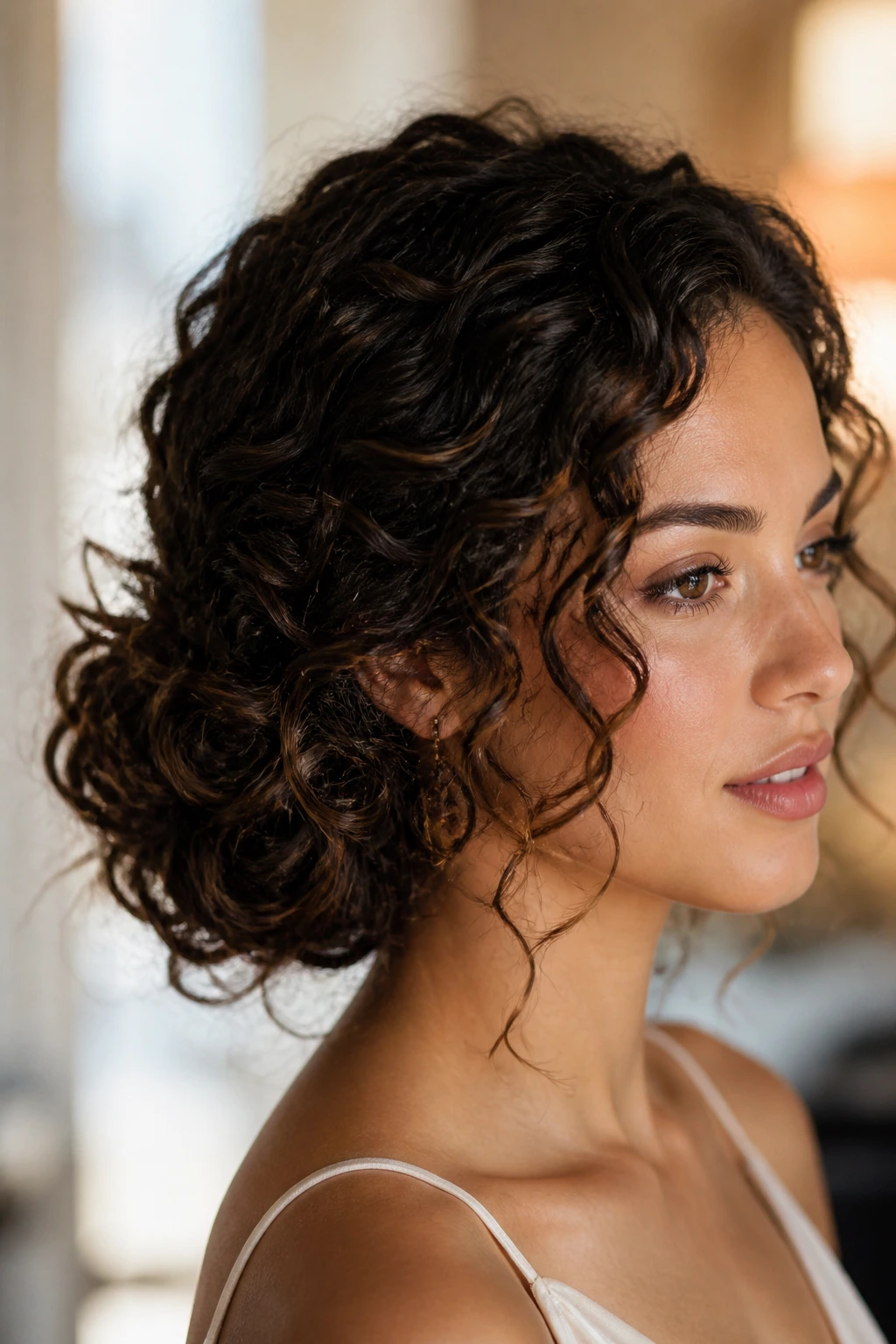
A side chignon looks best on thick curls when it keeps some texture visible. Don’t slick it into a hard ball. Instead, gather the hair low and off to one side, twist it into a soft bun, and pin it under the ear with U-pins or sturdy bobby pins. Leave a few curls around the face so it doesn’t read as too formal.
This style has a nice contrast: neat enough to wear to something dressed up, loose enough that the curl pattern still shows. If the bun starts to feel oversized, split it into two smaller coils and pin them together. Thick hair can carry that shape better than one giant knot.
16. Curly Bangs with Long Layers
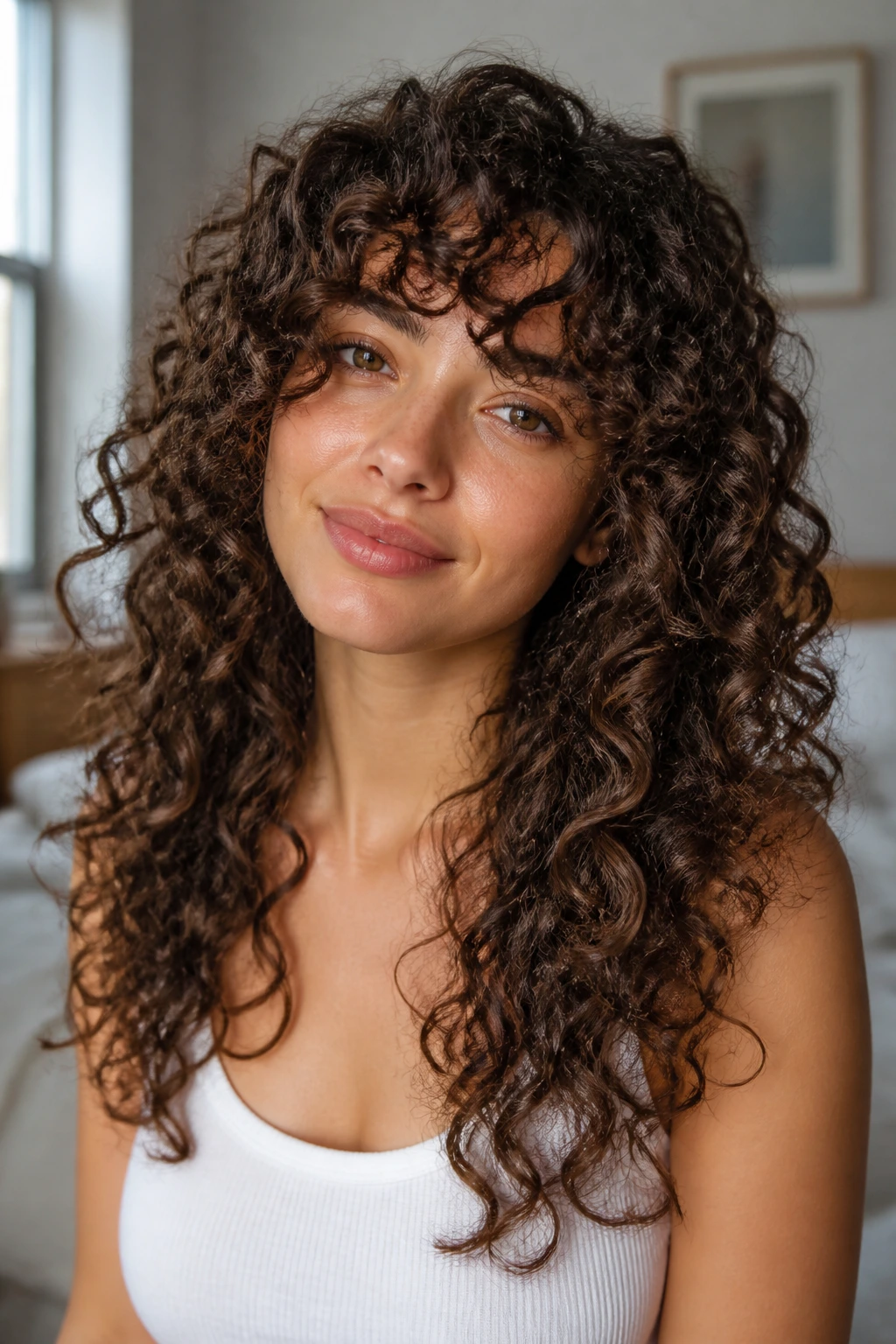
Curly bangs can change the whole face of thick hair. They pull the eye forward and break up the weight around the forehead, which is useful if your curls tend to sit as one large mass from front to back. Long layers behind the bangs keep the rest of the hair from looking chopped off or too heavy.
A Few Things That Matter
Dry the bangs forward first. That little detail saves you from bangs that spring straight up and disappear. If the front section is especially dense, use a diffuser on low heat and hold the curls in place with your hand for the first minute or two. That helps them settle where you want them.
- Best when the face-framing pieces are cut to allow for shrinkage.
- Works well with side parts and center parts alike.
- Needs a trim more often than the rest of the shape.
My opinion: Bangs are worth it only if you’re willing to style them. Half-hearted curly bangs look accidental fast.
17. Pinned-Back Face-Framing Twist
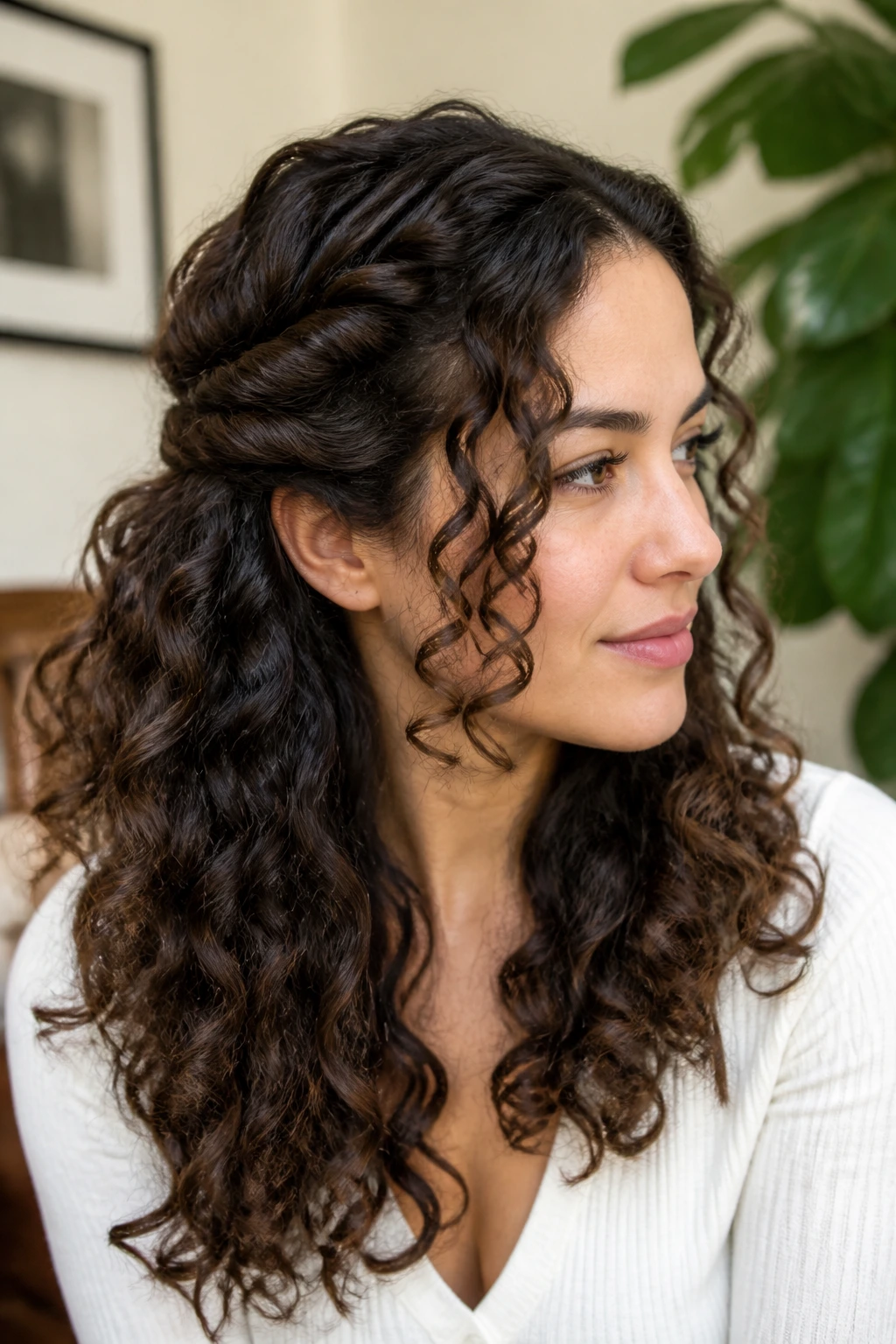
Need something that takes less than five minutes? Twist the front sections back and pin them behind the ears. That’s the whole move. On thick curls, even this tiny gesture changes the whole shape because it removes a little volume from the face without stealing it from the rest of the hair.
Use two to four bobby pins depending on density. Cross them in an X if the section keeps slipping. This style is a lifesaver for video calls, errands, or the kind of day when the front of your hair keeps landing in your mouth. Not glamorous. Very useful.
18. Bubble Ponytail for Thick Curls
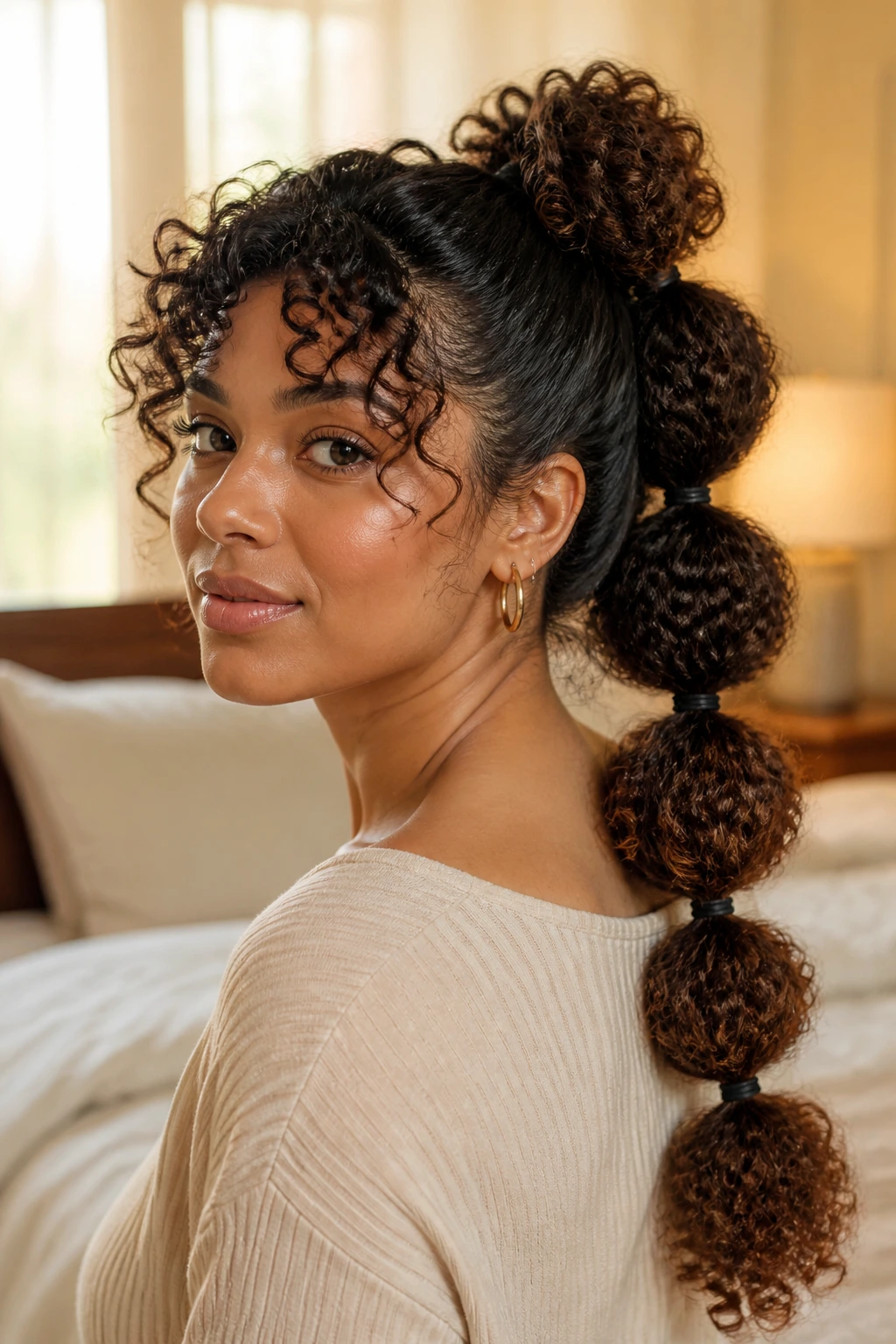
Bubble ponytails love dense hair because every section has enough body to fill the spaces between elastics. The style works best when you start with a mid or high ponytail and then place small elastic bands every few inches down the length. Gently puff each section with your fingers so the bubbles round out.
Why the Sections Matter
If the sections are too long, the shape sags. If they’re too short, the ponytail starts to look overdone. For thick curly hair, about 3 to 4 inches between ties is a good starting point. Let a few curls wrap around the elastics for a softer finish.
This one reads playful without being messy, which is harder to pull off than people think. The density does the heavy lifting.
19. Wet-Look Defined Curls
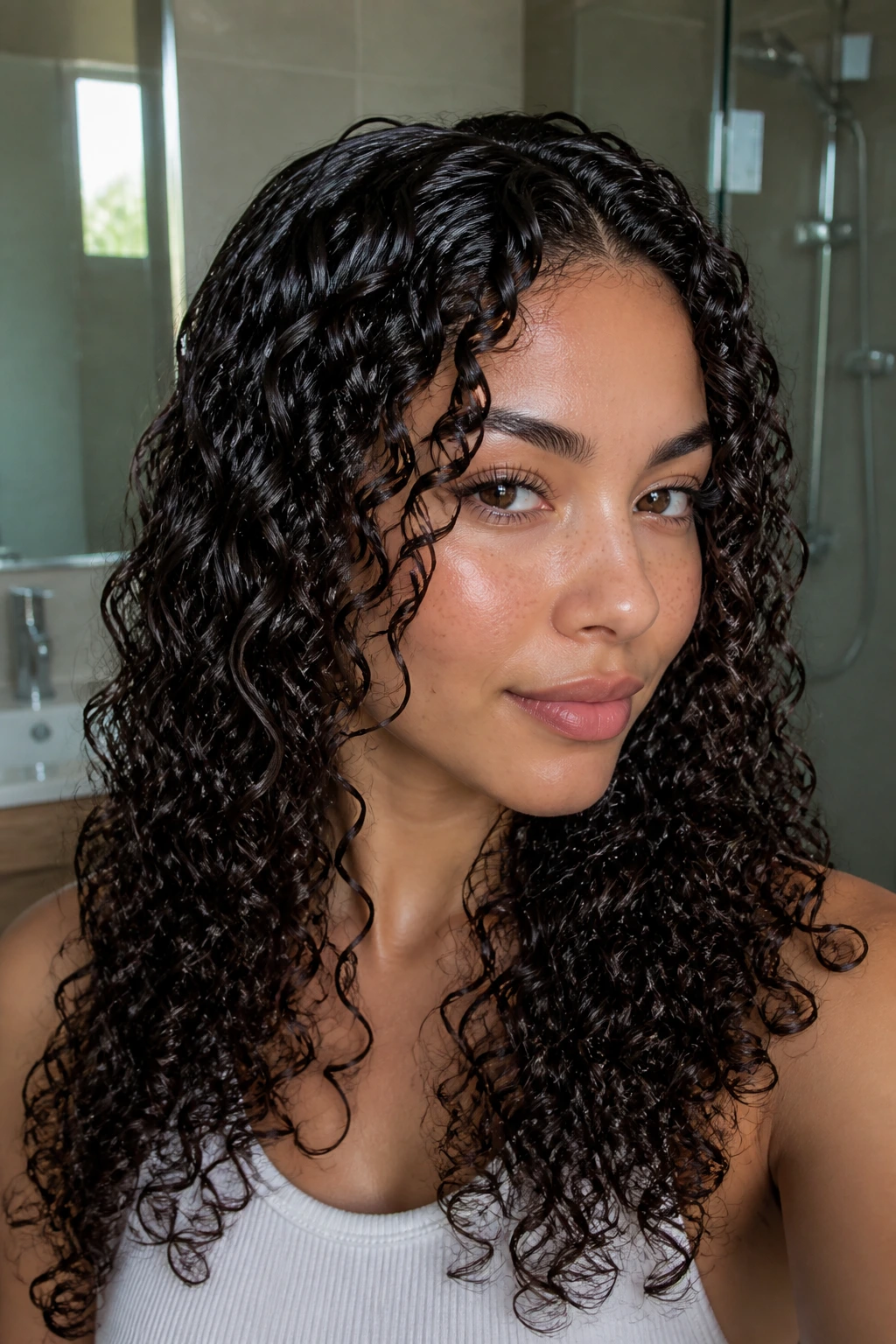
The wet-look curly style is all shine, hold, and a little attitude. It uses enough gel to keep the curl clumps glossy and separated, which means thick curls can look sculpted instead of fluffy. If you like strong shape and don’t mind a cast that feels firm before it’s scrunched, this is one of the cleaner ways to wear dense texture.
Apply the gel to soaking wet hair, not damp hair. That matters. When the hair is wetter at the start, the product spreads more evenly and the curl clumps stay cleaner as they dry. Don’t touch it while it’s setting. Thick curls need the patience you’d give a braid-out, not a quick fluff and hope.
20. Headband Tuck with Soft Volume
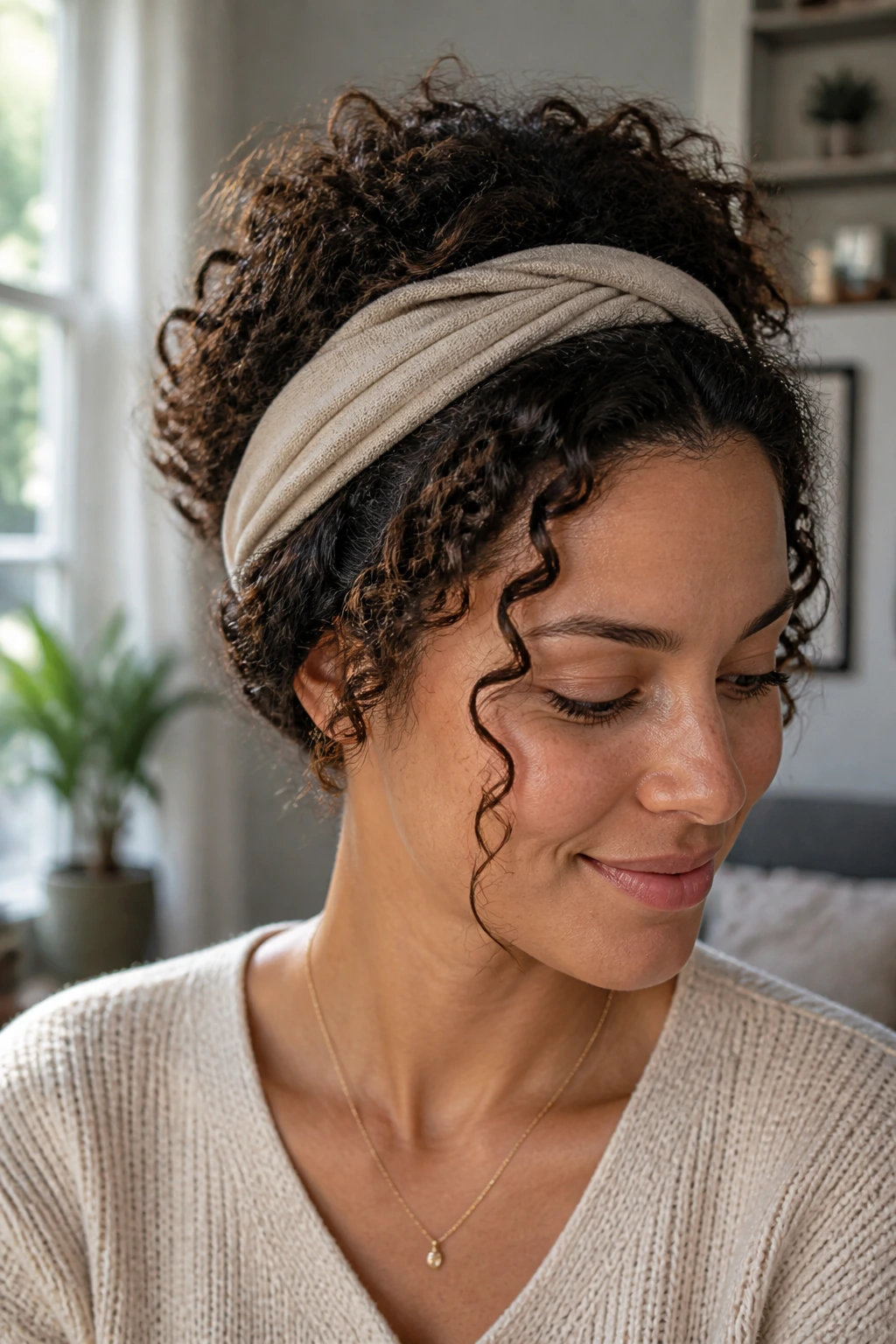
A stretchy headband can rescue a rough crown in under a minute. Push it over the hairline, tuck the ends under the band at the back, and let the top keep its volume. Thick curls make this style look fuller than it would on finer hair, which is one reason it’s such a good low-effort option.
Use a fabric band with a bit of grip. Plastic headbands can tug in ugly ways and leave you with a headache by midafternoon. If the nape feels bulky, tuck the bottom layer in first and leave the upper curls looser. The goal is a soft roll, not a hard fold.
21. Short Curly Crop with a Nape Fade
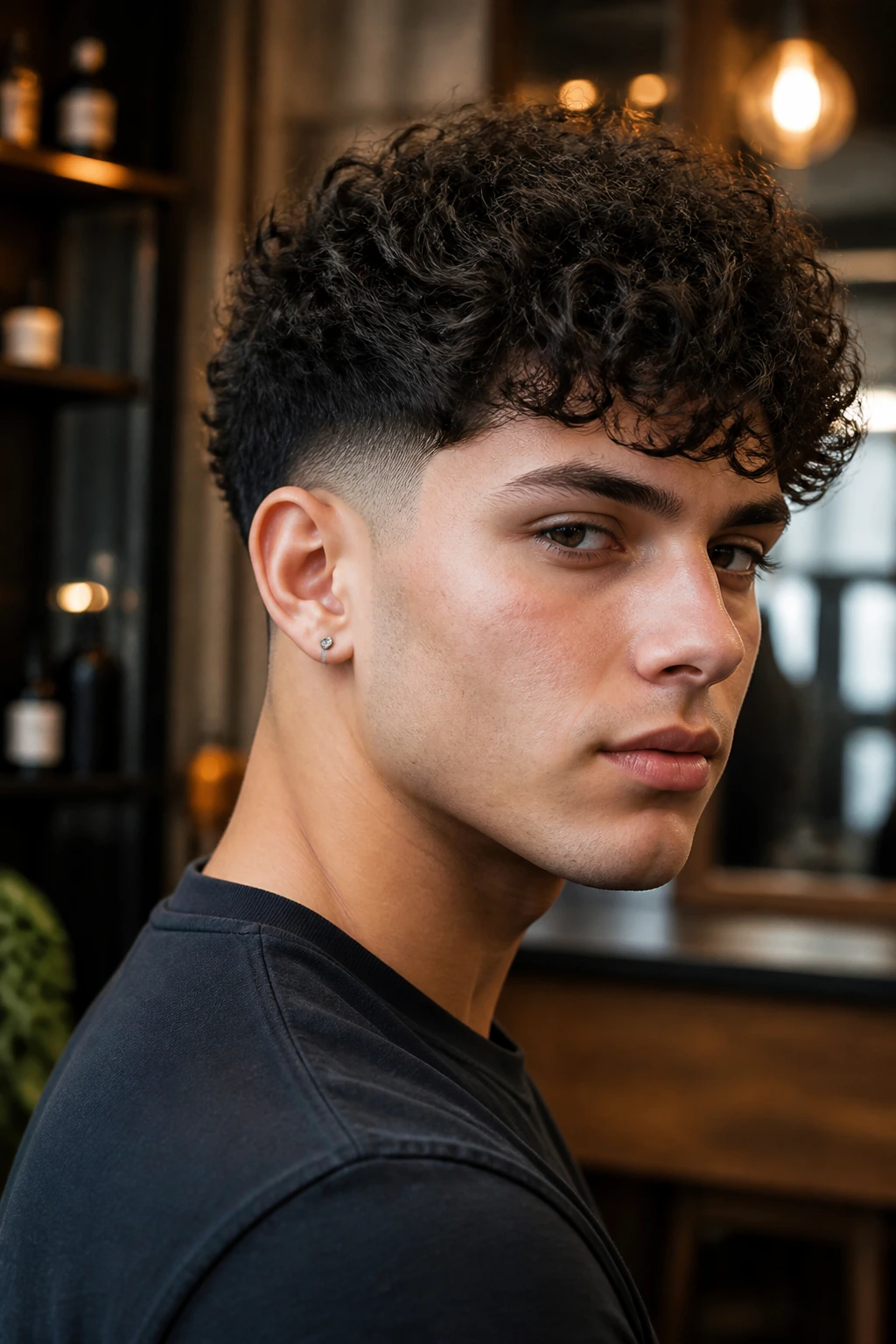
A short curly crop with a nape fade takes weight off the back and sides so the top curls can stand up properly. On thick hair, that reduction matters. Without it, short curls can puff out like a mushroom cloud. With the fade, the shape gets cleaner and the top has room to show its pattern.
Keep the top hydrated with a light cream or curl custard, then lift the roots with a pick once dry. A little separation at the crown can make the whole cut look more intentional. This is a low-maintenance choice if you want less daily styling and more shape built into the haircut itself.
22. Braided Crown with Loose Ends
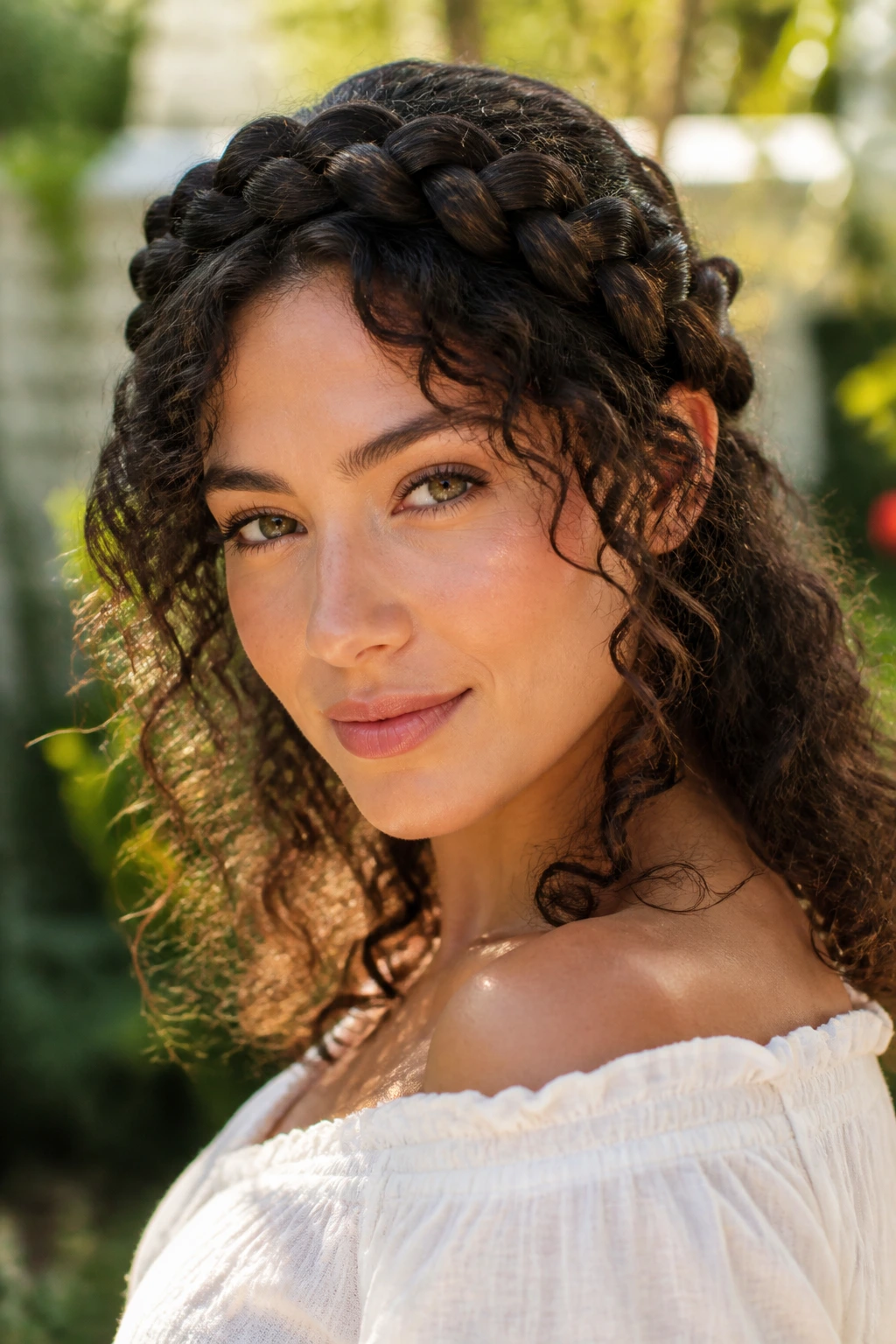
A braided crown looks softer than a full wrap-around braid because the ends are left out to keep the curl pattern visible. That little detail matters on thick hair. It stops the whole style from looking too severe. Two braids can meet at the back and leave the tail curly, or one long braid can sweep around the head and finish in loose ends.
Best For
This style is useful when you want the front pinned back but still want a visible texture at the ends. It sits lower and looser than a classic crown braid, which gives it a more romantic shape. If the braids are too tight, the whole thing can feel stiff. Keep the tension soft.
23. Deep Side Part with Pin-Swept Volume
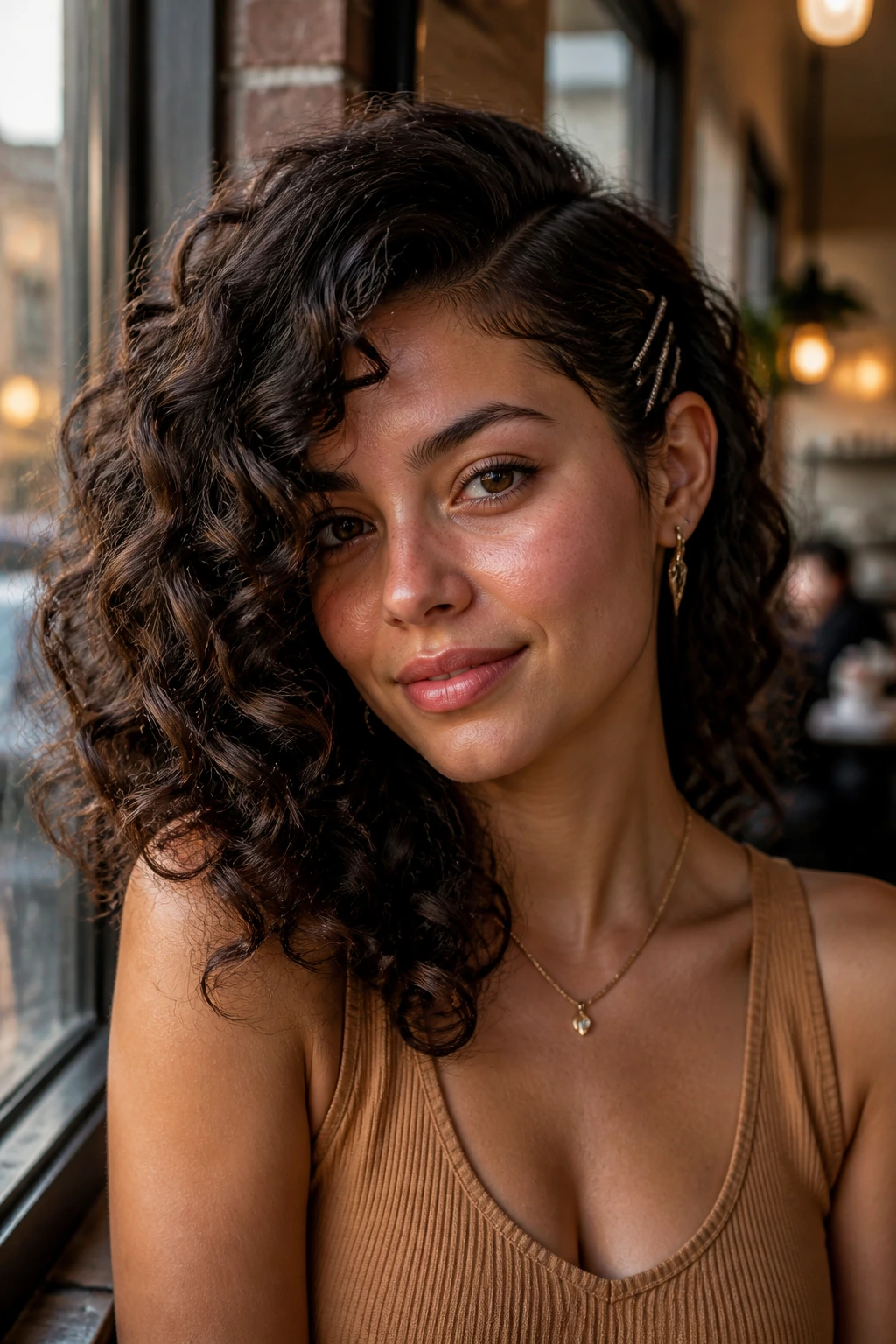
Sometimes the style is just a part change. A deep side part gives thick curls a new direction and keeps the bulk from sitting evenly across the head. Pin one side back with a few bobby pins and let the other side drop over the cheekbone. That asymmetry does more than people expect.
This works because thick curls already have enough presence. You do not need to pile on more structure. You just need to stop the shape from fighting itself. If the side that’s swept back keeps puffing, mist the roots lightly and smooth them with your hands before pinning.
24. Rolled Faux Hawk
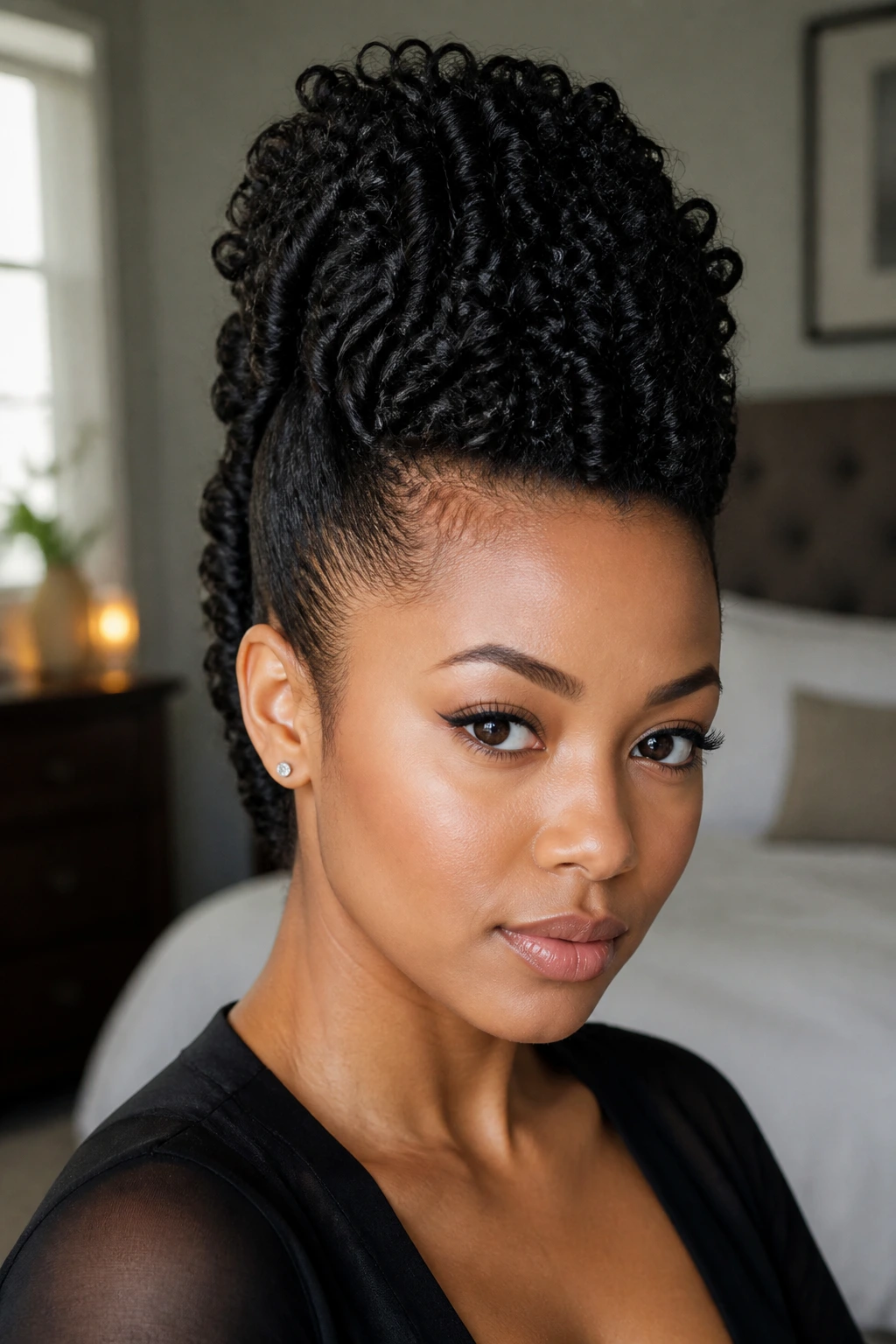
The rolled faux hawk is for anyone who wants height down the center without cutting the sides short. Roll or pin the sides inward along the temples and ears, then leave a ridge of curls running from forehead to nape. On thick hair, the center ridge has enough mass to look dramatic instead of flimsy.
Use duckbill clips while setting the sides if they resist. Once the shape is pinned, lightly separate the center curls so the ridge has texture. This is one of those styles that makes heavy hair work for the drama instead of against it. Good. Let it do that job.
25. Scarf-Wrapped Puff
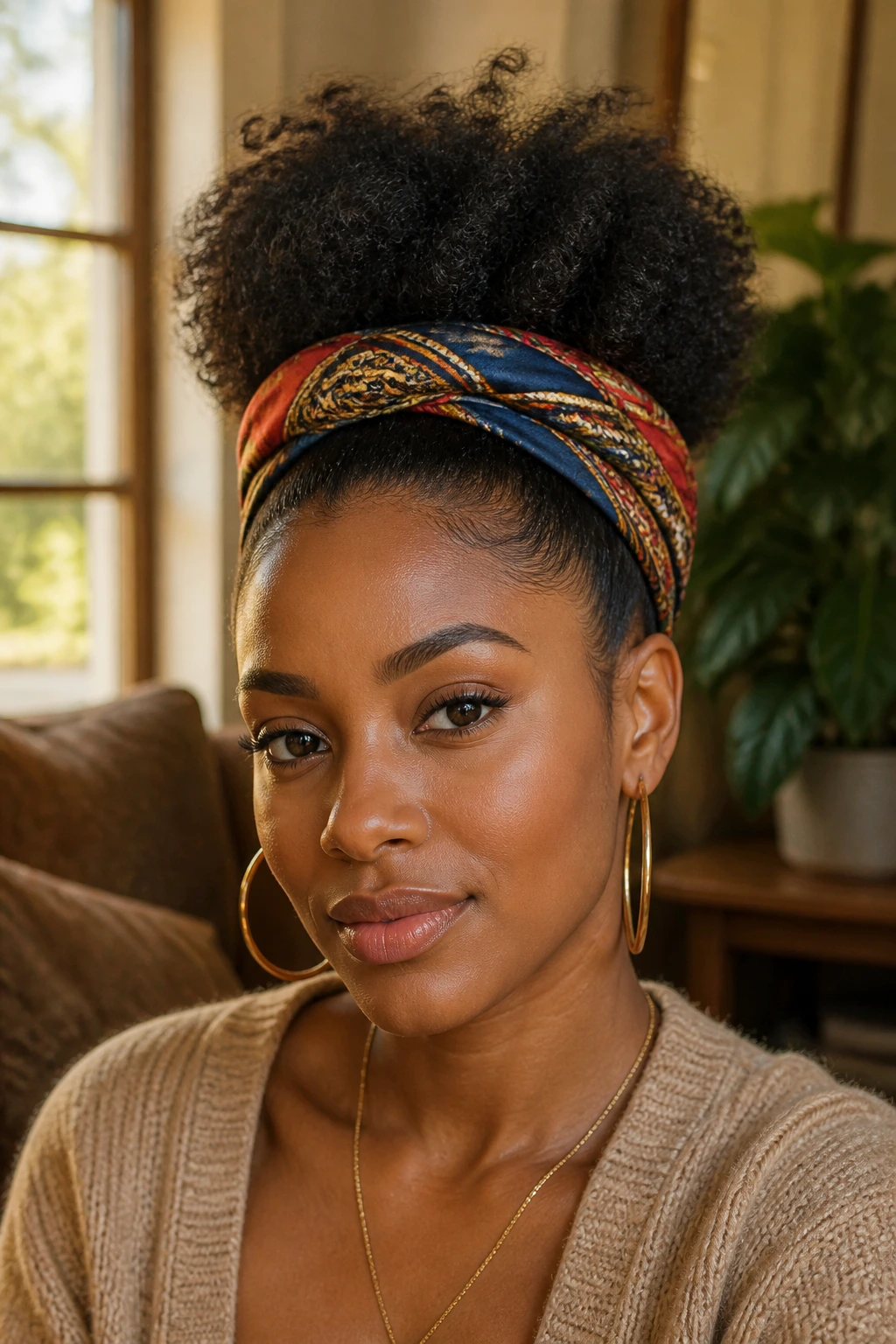
A scarf changes the mood of a puff in seconds. Wrap one around the base and you get a shape that feels finished, not just gathered. Thick curls help the puff stay large, and the scarf gives you a clean line at the hairline while adding a bit of color or contrast.
Silk or satin scarves slide less and protect the hair better than rough cotton. If you want the puff to stay high, tie the scarf snugly but not so tight that it flattens the crown. You can also shift the scarf knot to one side for a more casual look. Tiny detail. Big effect.
26. Heatless Rod-Set Length Style
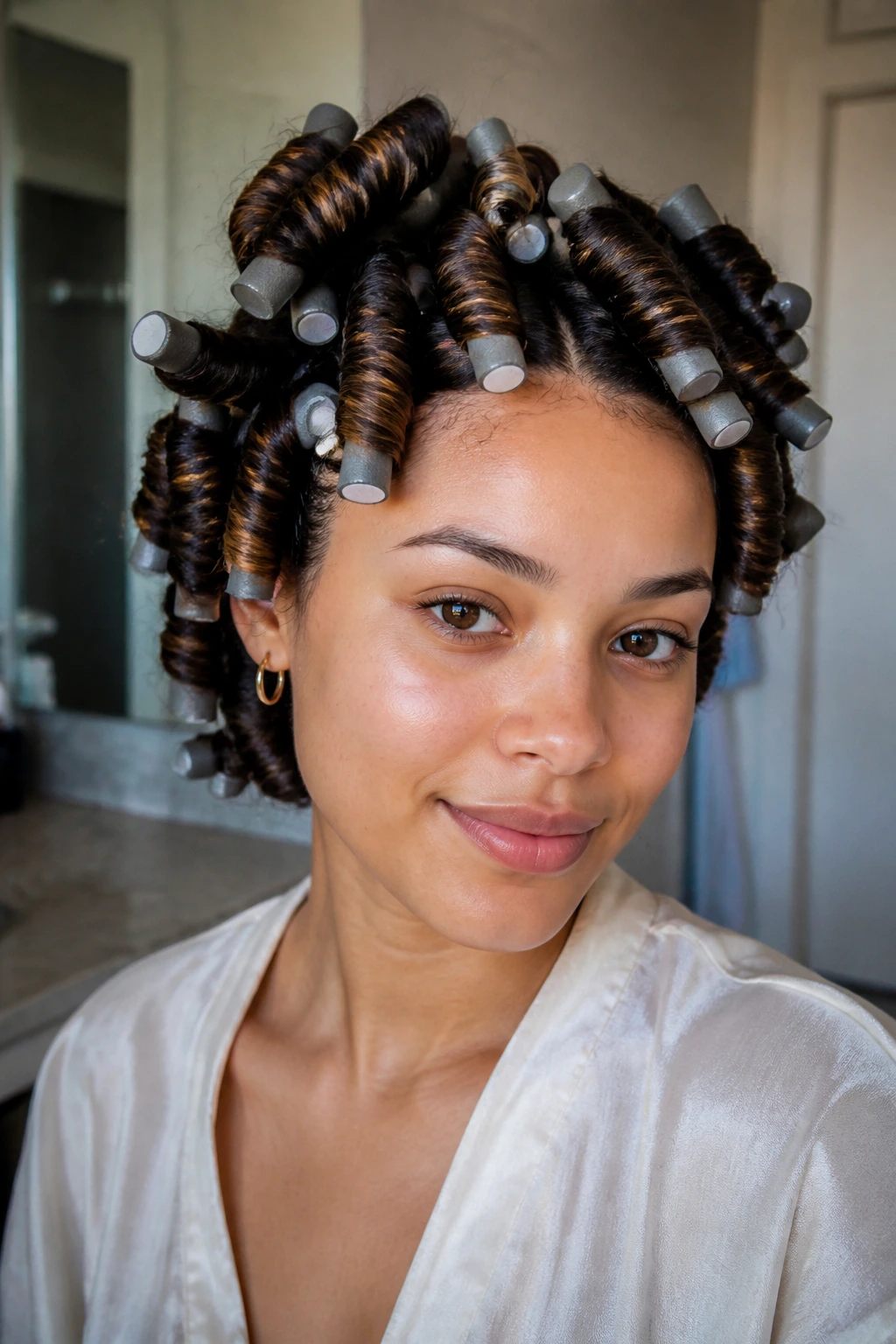
If you want thick curls to look longer and more uniform, rods do the heavy lifting. Flexi rods, perm rods, or similar set tools pull the curl into a neat shape and reduce the unevenness that can show up in dense hair. The trick is section size. Thick hair needs smaller sections than people want to give it.
Set It Right
Start on damp, detangled hair with a setting lotion or foam that has enough hold. Roll each section smoothly from ends to roots, keeping the tension even so the curl doesn’t bulge in the middle. Let the hair dry completely. Overnight if needed. If you take rods out too soon, the style goes flat and patchy.
- Best for shoulder-length to long hair.
- Works well when you want stretched length, not just volume.
- Takes patience, but the shape lasts.
27. Loose Updo with Tendrils
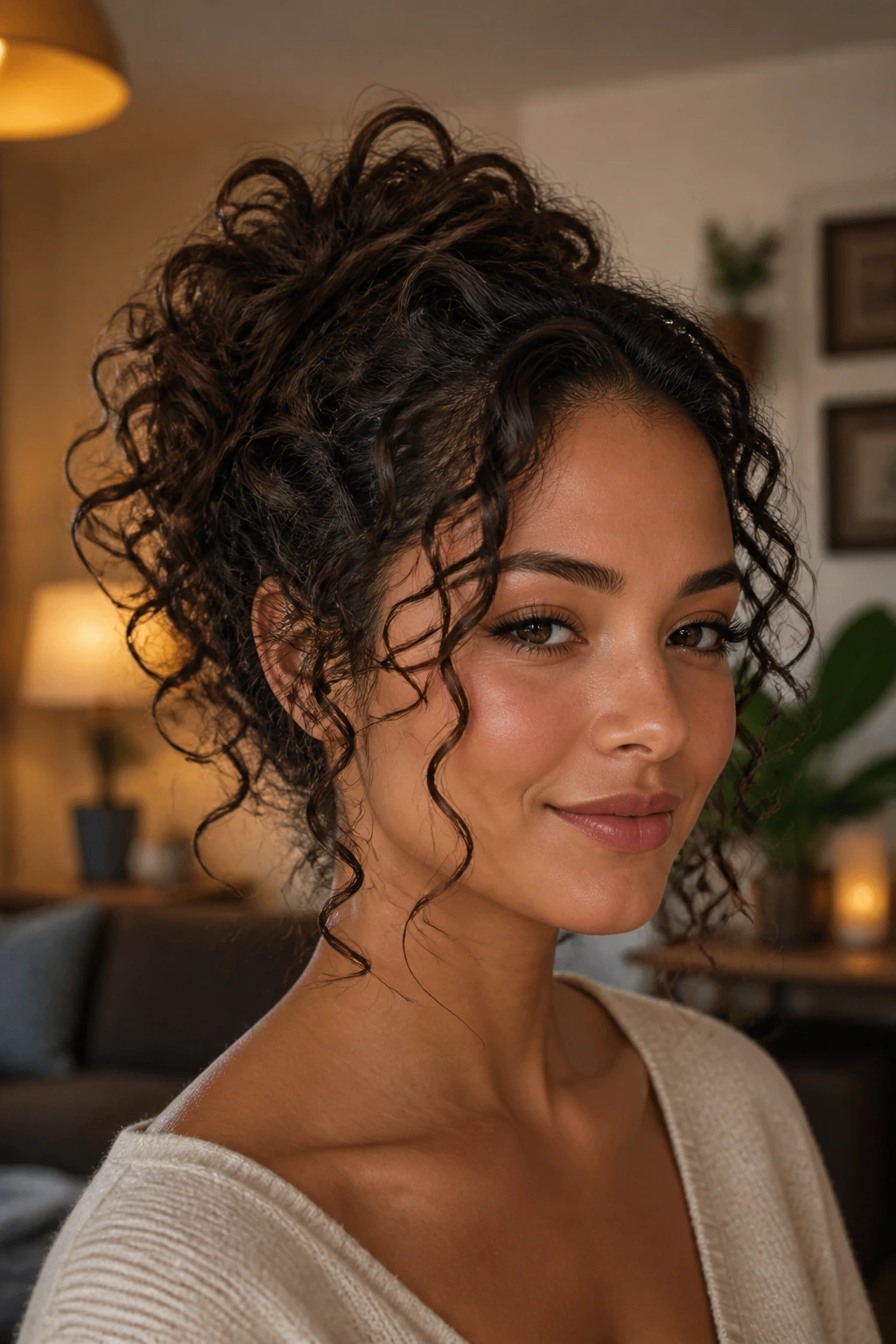
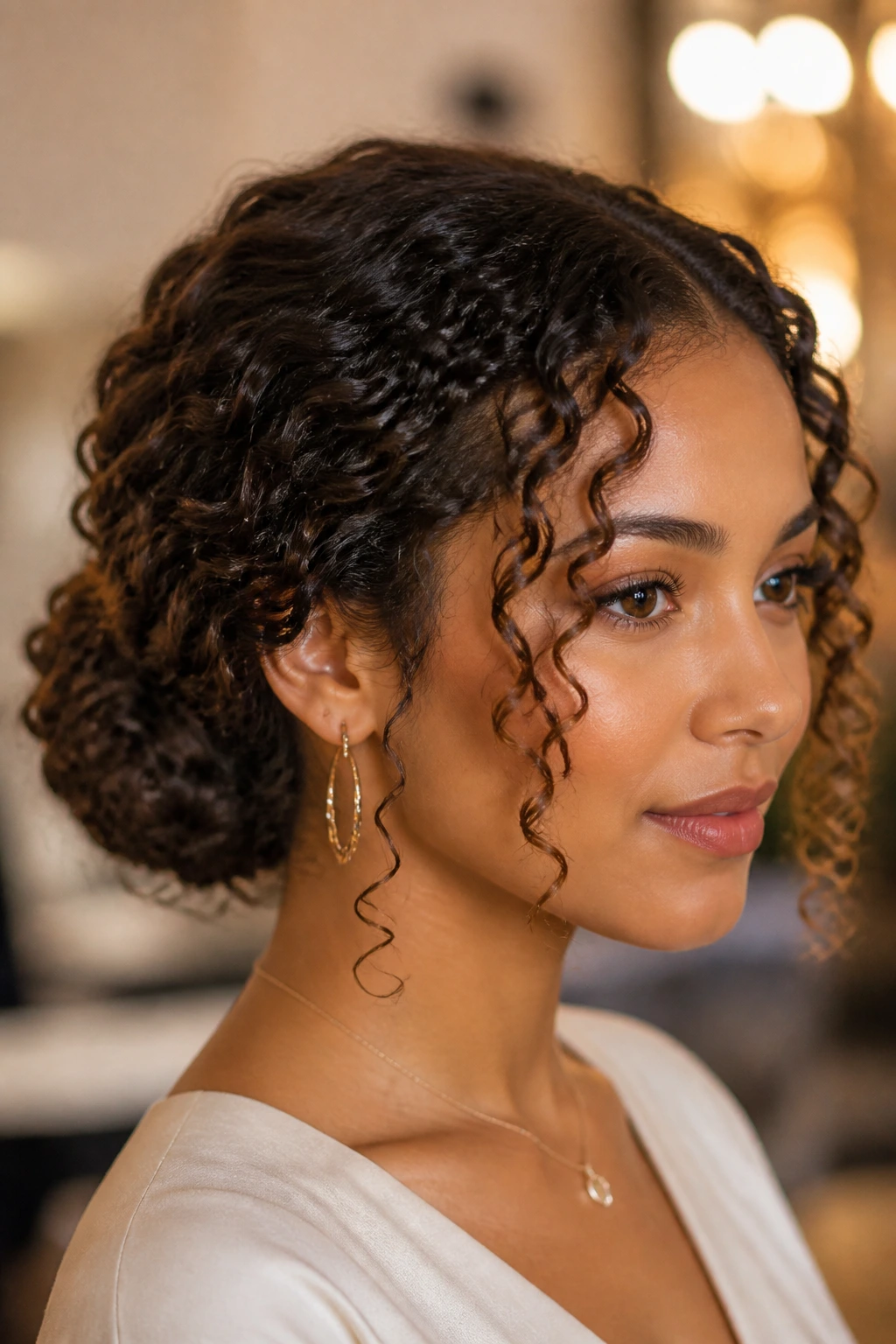
The loose updo is what I reach for when I want hair off my neck but still want the curl pattern visible. Gather the hair low or mid-height, twist it into a soft coil, and pin it in place without ironing out every bump. Leave a few tendrils at the temples and nape so the style keeps its curl and doesn’t harden into a shell.
This one works well for thick hair because the density makes the updo look full even when it’s loosely pinned. If the bun starts to feel too large, tuck the ends under rather than tightening everything. Thick curls handle softness better than fuss.
28. Twisted Low Bun with a Curly Crown
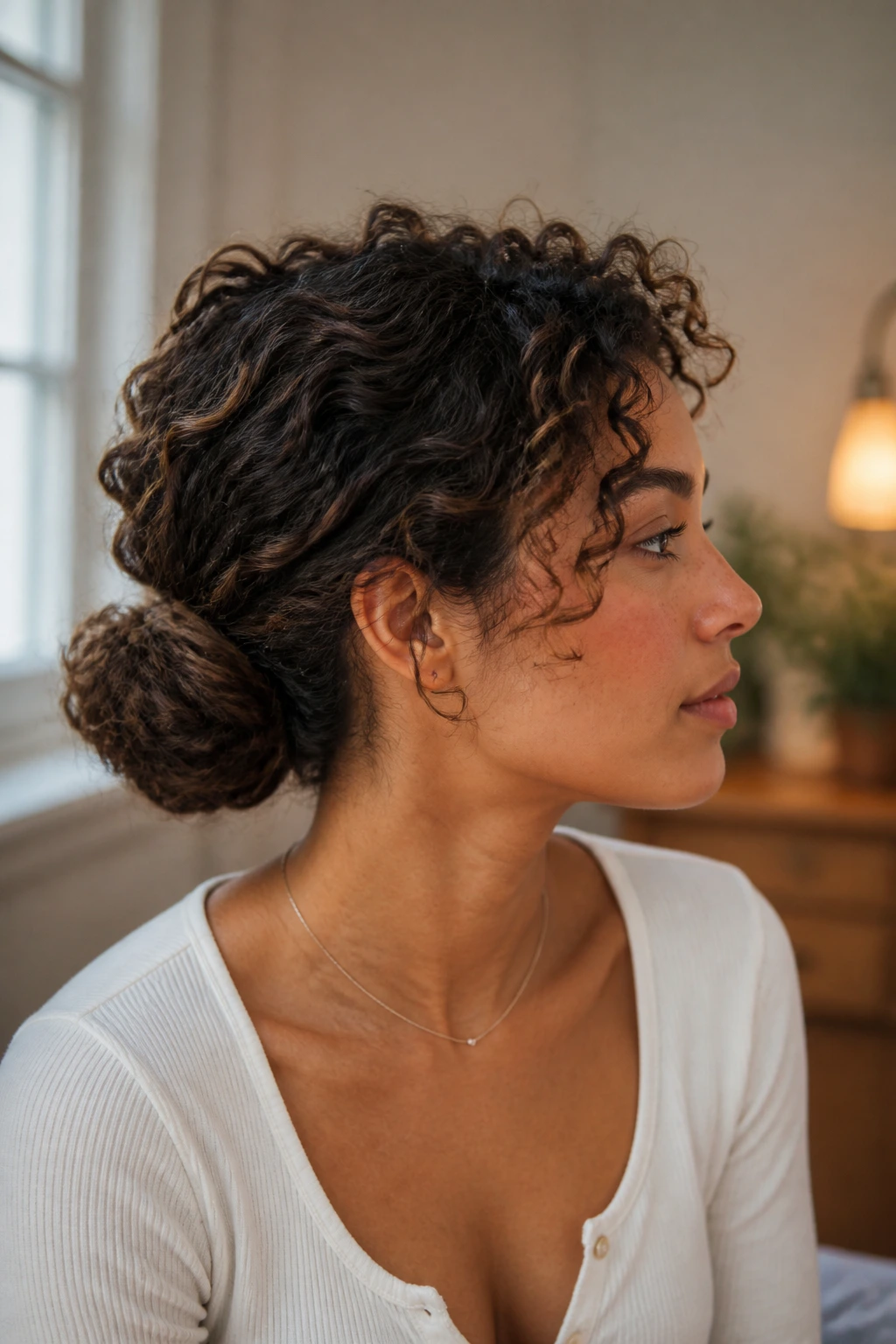
A twisted low bun looks polished from the front and easy from the back. Split the hair into two low sections, twist each one toward the nape, then wrap them into a bun and pin them securely. Leave the crown with a bit of lift so the style doesn’t flatten your head into one shape.
This style works because thick curls give the bun enough texture to look rich instead of thin. If you have extra length, let a few curls escape near the ears or at the neckline. That makes the bun feel softer and keeps the silhouette from getting too severe.
Why Thick Curls Need More Structure Than Fine Hair
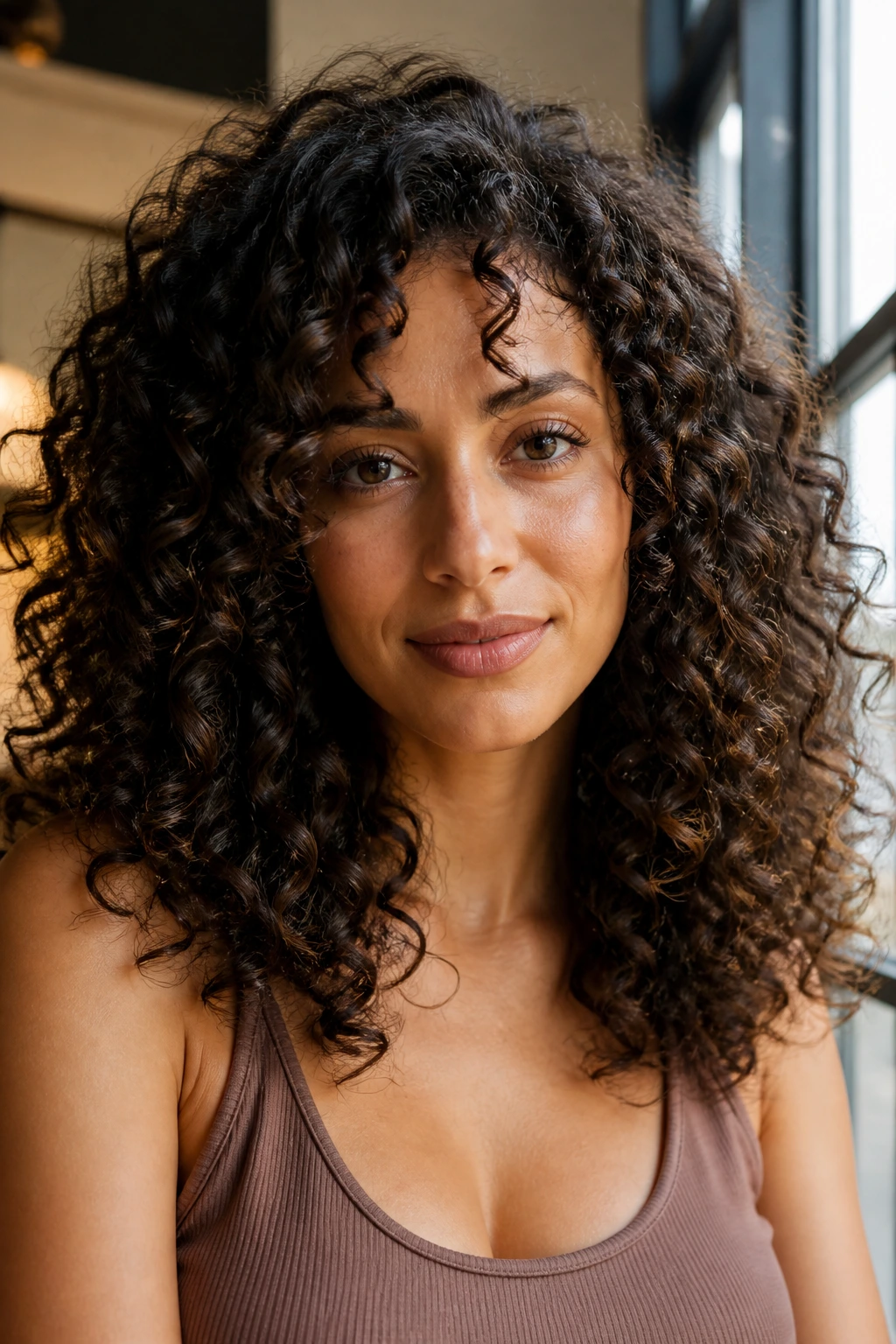
Thick curly hair has a different set of rules because gravity, shrinkage, and density all show up at once. A style can look fine while you’re still in the bathroom and then swell, shift, or sag once the hair is fully dry. That’s not a flaw in the style. It’s a styling problem.
I always pay attention to three things first: where the weight sits, where the curls are allowed to expand, and what’s holding the style in place. If those three don’t line up, thick hair will tell on you. A single clip in the wrong spot won’t hold a heavy section. A thin elastic will cut in. A blunt shape without layers can turn into a triangle before the day is over.
The upside is that dense curls give you range. They can hold a puff without padding, fill a braid without extensions, and carry a bun that would look too small on finer hair. The key is to stop asking them to behave like different hair.
The Comb, Clips, and Satin Pieces That Earn Their Drawer Space
-
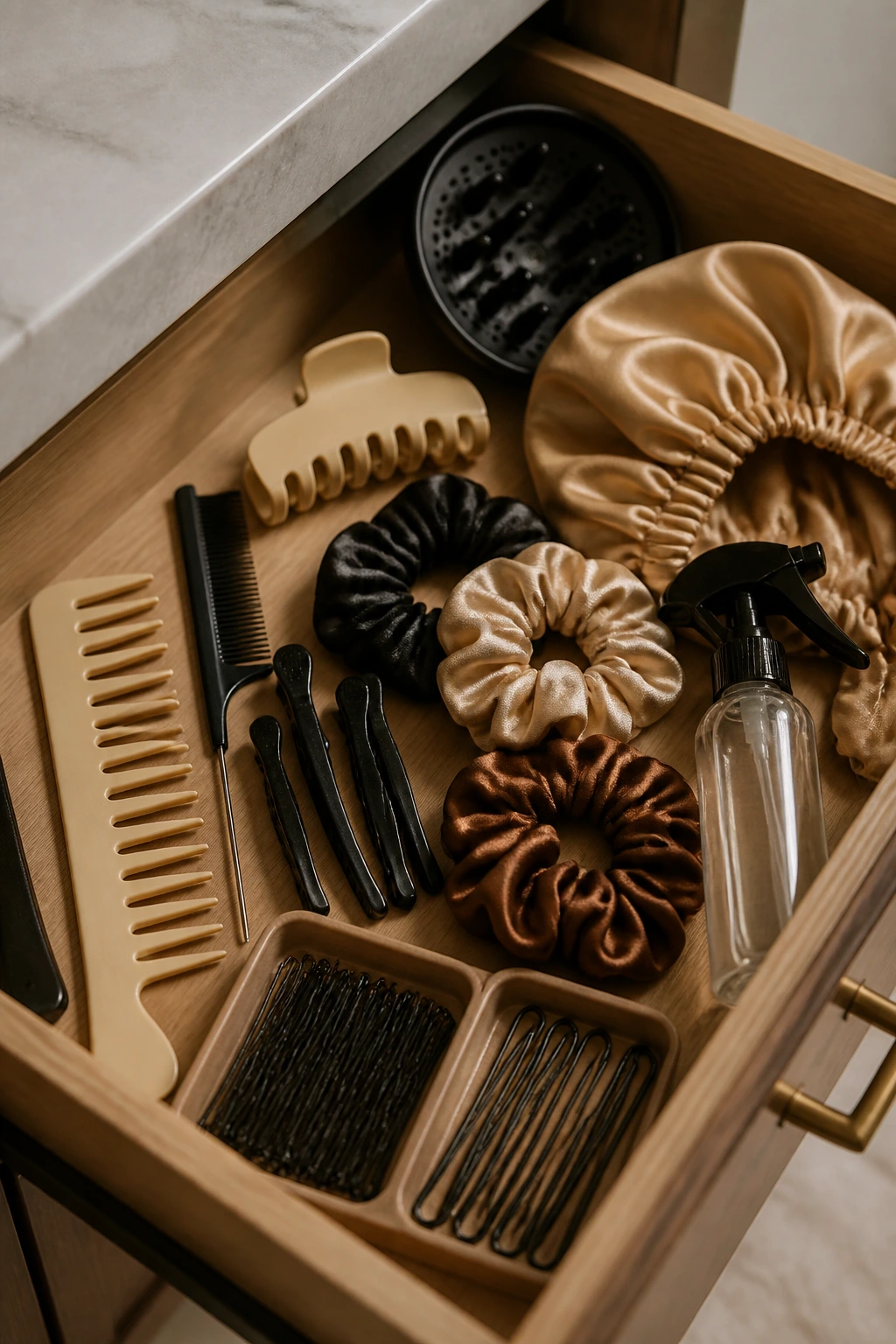
Wide-tooth comb: Best for detangling thick curls with conditioner in the shower; use it gently, or you’ll pull apart clumps you want to keep.
-
Rat-tail comb: Useful for clean side parts, sectioning, and neat braid starts; the pointed end helps when you need precision.
-
Sectioning clips: Keep dense hair out of the way while you work one quadrant at a time; a small clip usually won’t hold much.
-
Satin scrunchies: They grip without leaving the hard crease that thin elastics make, and they’re kinder to curl pattern at the base.
-
Large claw clips: Choose one with real spring and teeth that lock; thick curls need a bigger clip than the one that works on finer hair.
-
Coated bobby pins and U-pins: These hold buns, crown braids, and side sweeps better than bare metal pins that slide around.
-
Diffuser attachment: Helps dry the roots without blasting the curl pattern apart; low heat and low speed are the safest settings.
-
Spray bottle: Good for refreshing one section at a time instead of soaking the whole head and starting from scratch.
-
Satin bonnet or scarf: Keeps shapes from rubbing rough overnight and helps preserve the curl clump you spent time building.
-
Microfiber towel or T-shirt: Blots water without roughing up the cuticle the way a terry towel can.
How to Make a Style Hold Without a Helmet of Product
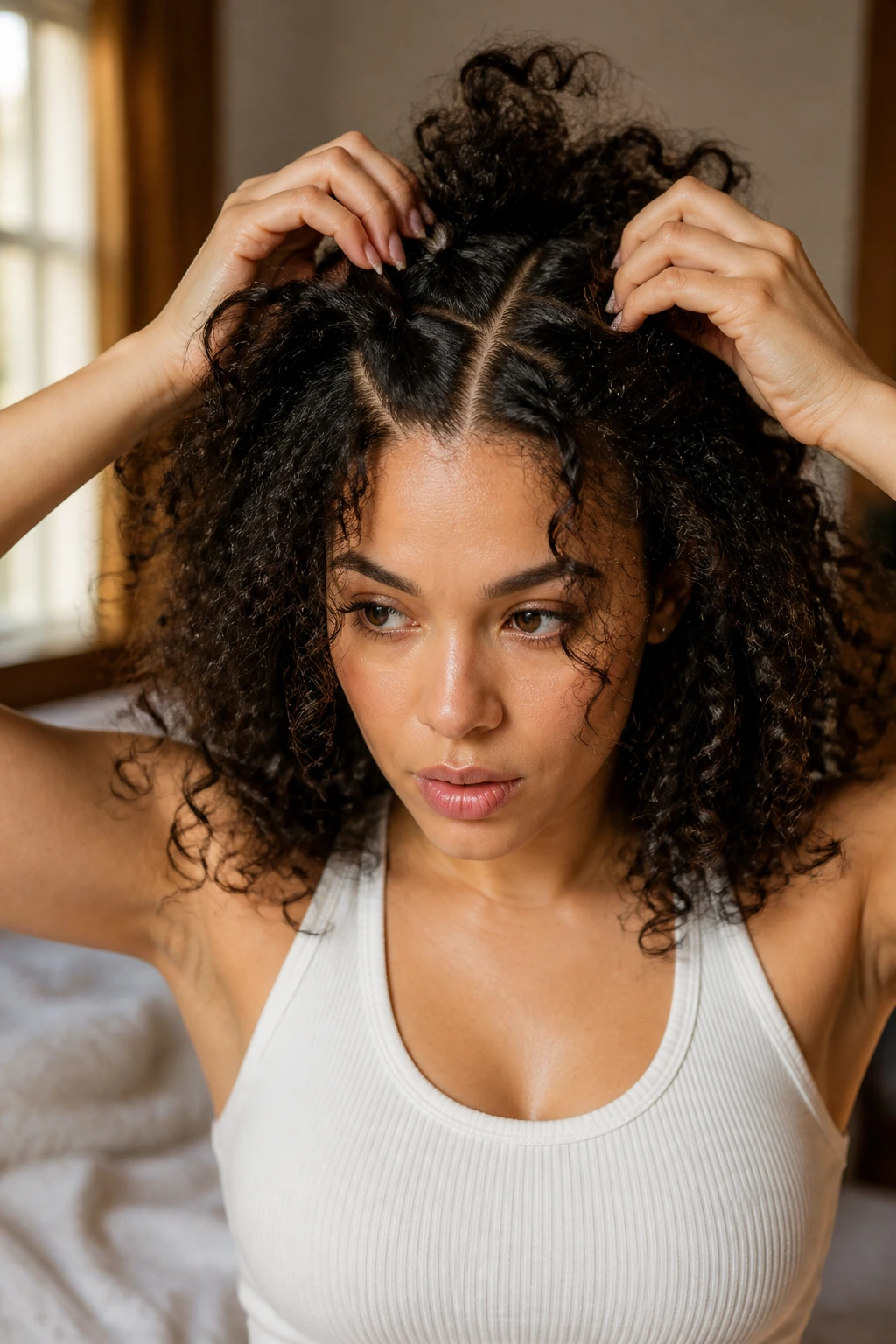
Thick curls do not need a gallon of cream. They need the right product in the right place. Start with a moisturizing base if the hair feels dry, then choose your hold based on the style: mousse for airy definition, gel for shape that needs to last, cream only when the curls actually need it. Too much cream on dense curls can make the roots droop and the ends stick together in heavy ropes.
Sectioning matters more than people want to admit. If the hair is shoulder length or longer, split it into four to eight sections before you start. You’ll get cleaner parts, cleaner pinning, and much less tangling while you work. Dry the roots before you celebrate. Thick curls trap water near the scalp longer than the outside of the style suggests, and that hidden dampness is what makes things collapse later.
A style also needs an exit plan. If you’re planning to wear it more than a day, decide how you’ll sleep in it before you start. Pineapple, bonnet, loose scarf, or low satin tie. Pick one.
The Moves That Make Thick Curls Puff, Sag, or Snag
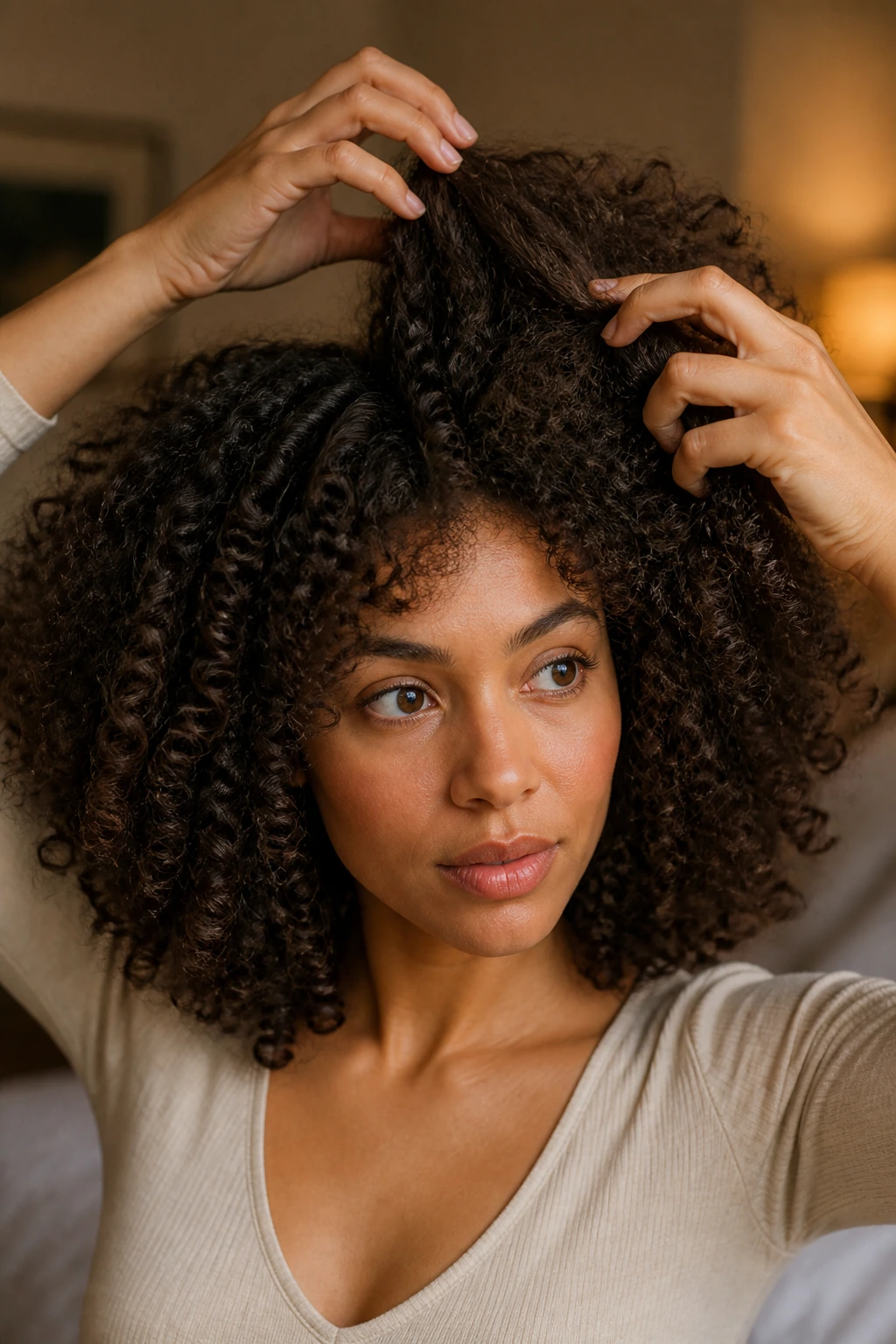
-
Using a tiny elastic on a lot of hair: The band cuts in, leaves a dent, and can snap once the hair expands. Use a satin scrunchie, a bungee, or a larger coil tie.
-
Loading on heavy cream and oil: The curls may look rich at first, then turn limp and stringy as the weight pulls them down. Start lighter and add more only where the hair actually needs it.
-
Styling before the inside is dry: The surface can fool you. If the hidden layers are still damp, the style breaks down and sometimes smells musty by the next day. Dry the roots and tucked sections fully.
-
Smoothing the crown too hard: Repeated brushing can turn curl clumps into frizz, especially around the hairline. Use hands, a soft brush, or a scarf to smooth instead.
-
Ignoring the cut: A blunt, one-length shape can fight many of these styles by making the hair bottom-heavy. Layers or shape support usually help.
-
Choosing accessories that are too small: Tiny clips look neat until the hair starts to slip out. Dense curls need hardware with a little muscle.
Variations and Adaptations Worth Trying
-
Humidity Shield Version: Add a stronger gel cast, braid or twist the front sections first, and let the style set under a satin scarf for ten minutes. This keeps thick curls from blooming too fast in damp air.
-
Short-Length Swap: For shoulder-grazing or shorter curls, use half-up styles, small buns, or pinned twists instead of trying to force a full updo. The same shape ideas work; the anchors just need to sit higher and closer together.
-
Office-Quiet Version: Choose lower buns, cleaner parts, and fewer tendrils around the face. Keep the texture visible, but tighten the silhouette so it reads polished rather than playful.
-
Glam Night Version: Add a shine serum to the ends after the cast is fully dry, then use a decorative pin, scarf, or clip. Thick curls hold accessories well, so this is one place where a small extra detail earns its spot.
-
Protective Low-Tension Version: Use braids, flat twists, or looser pinned sections that keep pulling off the scalp. This is the version to choose when your roots need a break but you still want shape.
Keeping the Style Alive After Sleep

The first night matters more than the second day looks. If thick curls are still damp at bedtime, stop and finish drying them. Sleeping on a wet style is the fastest way to wake up with a flat crown and a sour smell near the roots. Once the hair is dry, use a satin bonnet, scarf, or pillowcase to cut down on friction.
Wash-and-gos usually look their best on day one and day two. By day three, the edges may need a refresh with a light mist of water and a small amount of gel or mousse worked between the hands. Twist-outs, rod sets, and Bantu knot-outs often last longer—three to five days if they’re preserved loosely and not handled too much. Puffs and ponytails can go two or three days if you move the base a little and reset the hairline.
Braids and pinned styles can last several days, but the scalp will start asking for attention if the pins are packed too tight or the product piles up. That’s the sign to wash, not to layer more spray on top of old product. If a style needs daily rescue, it wasn’t set well in the first place.
Questions Thick Curls Keep Asking Back
Which curly hairstyle lasts longest on thick hair?
Braids, twist-outs, rod sets, and low buns usually hold up longer than wash-and-gos because they start with a more controlled shape. The longer wear comes from structure, not extra product.
How do I keep thick curls from looking triangular?
Layers help, but so does changing the part and keeping the crown from expanding too wide. A side part, a pinned half-up, or a style that removes some volume from the top can keep the sides from taking over.
Do I need a diffuser for these styles?
No, but it helps. Thick curls dry faster at the surface than near the roots, and a diffuser gets heat to the inside of the shape without blasting the curls apart.
What if my claw clip keeps slipping out?
The clip is usually too small or the hair is too smooth from too much conditioner or oil. Try a larger clip, gather less hair into each twist, and anchor the base with one bobby pin before clipping.
Can these styles work on short thick curly hair?
Yes, though the shapes shift a bit. Short hair tends to do better with puffs, pinned-back twists, mini buns, headbands, and tapered shapes than with long braids or low ponytails.
How do I stop bobby pins from sliding?
Place them with the wavy side down and open side against the scalp. Cross two pins in an X if a section is heavy; one pin alone is often not enough for dense curls.
What’s the fastest style on this list for a rushed morning?
Pinned-back face-framing twists, a headband tuck, or a high puff take the least time. They all work because they control the front and crown first, which is where thick hair usually needs the most help.
Can I wear these styles in humidity without starting over?
Yes, but you need more hold at the root and less touching once the hair is set. A gel base, a scarf while drying, and a satin wrap at night make a bigger difference than adding more cream.
Last Look
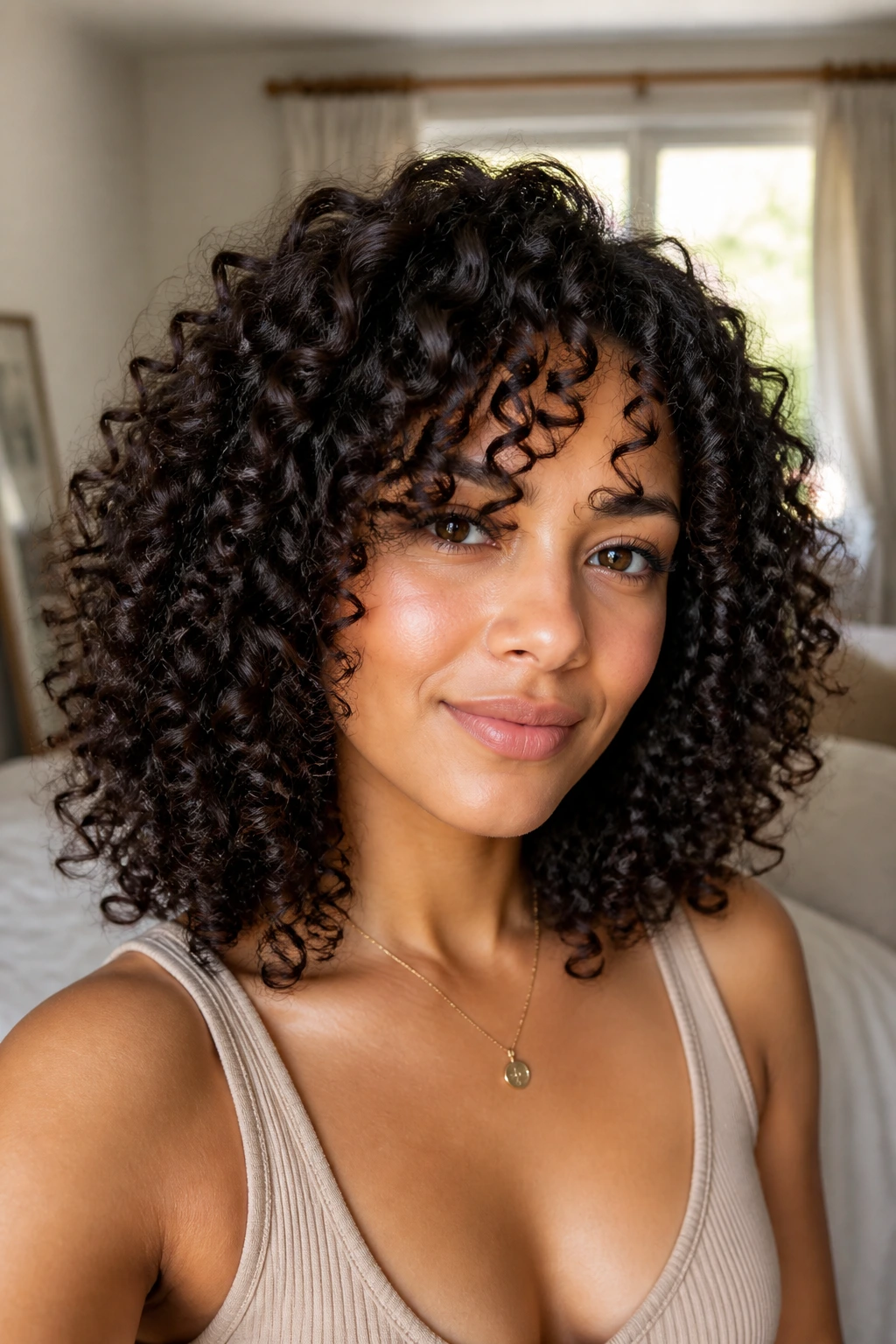
Thick curls are not the kind of hair that benefits from half-measures. They need a shape with a plan, a tie that can hold, and a style that understands weight instead of pretending it isn’t there. Once you stop fighting the volume, the whole thing gets easier.
Pick two or three looks from this list and keep them in rotation. That’s usually the sweet spot: one quick style, one polished option, and one shape that works when the weather or the mood turns stubborn.
