



Short thin hair has a nasty habit of going limp right when you need it to behave. The wrong cut leaves the ends see-through and the crown glued to the scalp; the right shag haircut changes the whole silhouette with a few smart layers, a sturdier perimeter, and just enough bend around the face. That is why shag haircuts for short thin hair keep showing up in salon chairs. The shape does the heavy lifting before you even touch a blow-dryer.
Not every shag deserves your time, though. Some versions shred the ends so aggressively that the hair looks tired by week two. The better ones keep a little weight at the bottom, place the shortest layers high enough to lift the roots, and leave enough length around the cheekbones or jaw to make the cut read as full instead of wispy. That balancing act matters more than any product on the shelf.
The trick is not “more layers.” It’s smarter layers. Fine hair and low-density hair are not the same thing, and a cut that helps one can flatten the other if it’s handled carelessly. When the shape is right, though, short hair stops looking like it’s trying to survive a bad day and starts looking intentional, relaxed, and a little bit cool without asking permission.
Why These Cuts Earn Their Keep
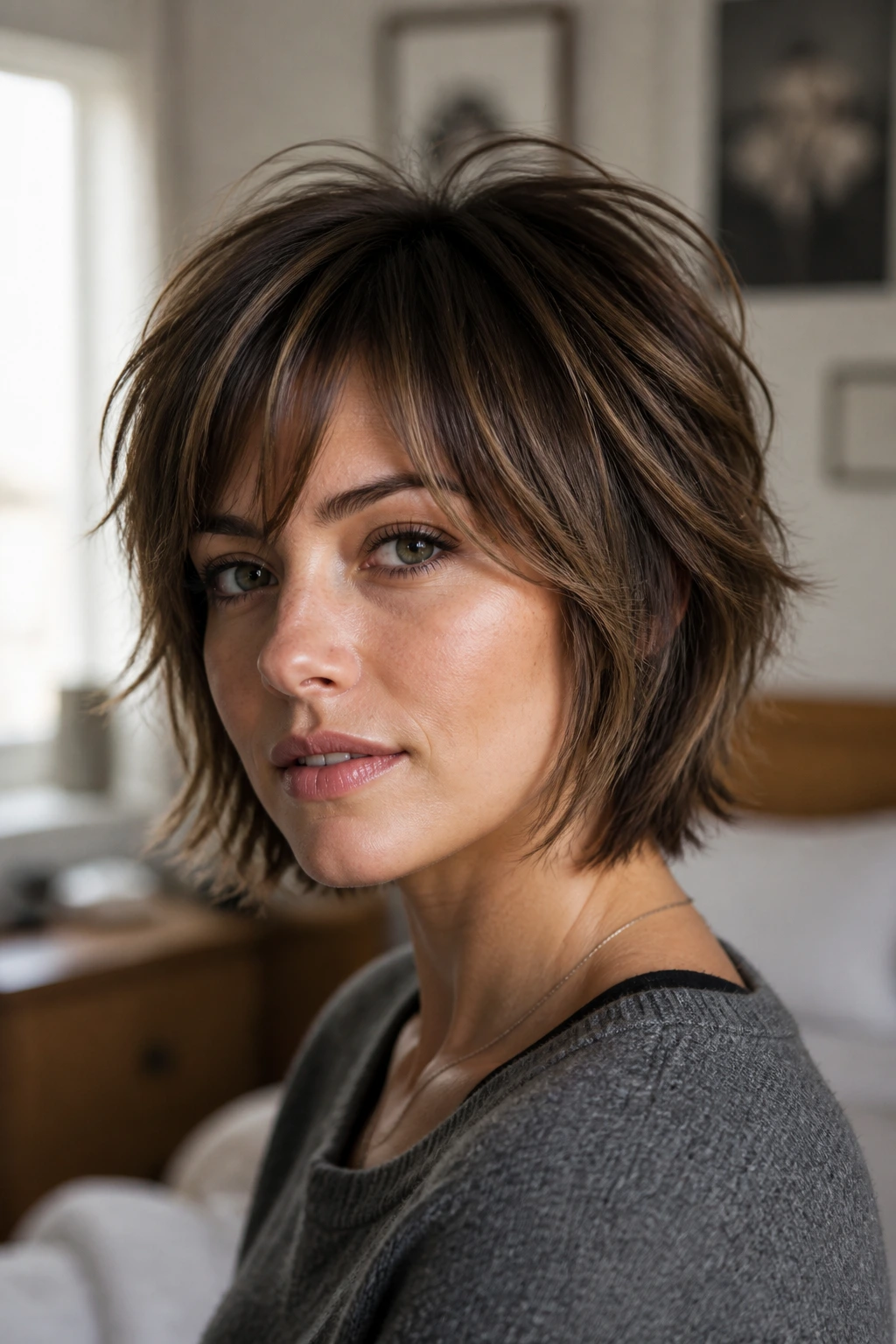
- Crown lift: Short layers at the top create room at the root, so fine strands stop lying flat against the scalp.
- Blunt ends: A kept-together bottom line makes the hair look denser than a shredded outline that shows every gap.
- Face framing: Cheekbone or jaw-skimming pieces add shape where short thin hair often disappears fastest.
- Low-heat styling: A good shag still looks like a haircut when you air-dry it, which saves you from chasing volume every morning.
- Easy grow-out: The better versions keep their shape for weeks because the cut already has movement built in.
- Flexible feel: A pixie shag, a bob shag, and a mini-mullet shag all solve the same problem in different ways, which matters when your cowlicks, hairline, and density do not cooperate.
1. Soft Pixie Shag
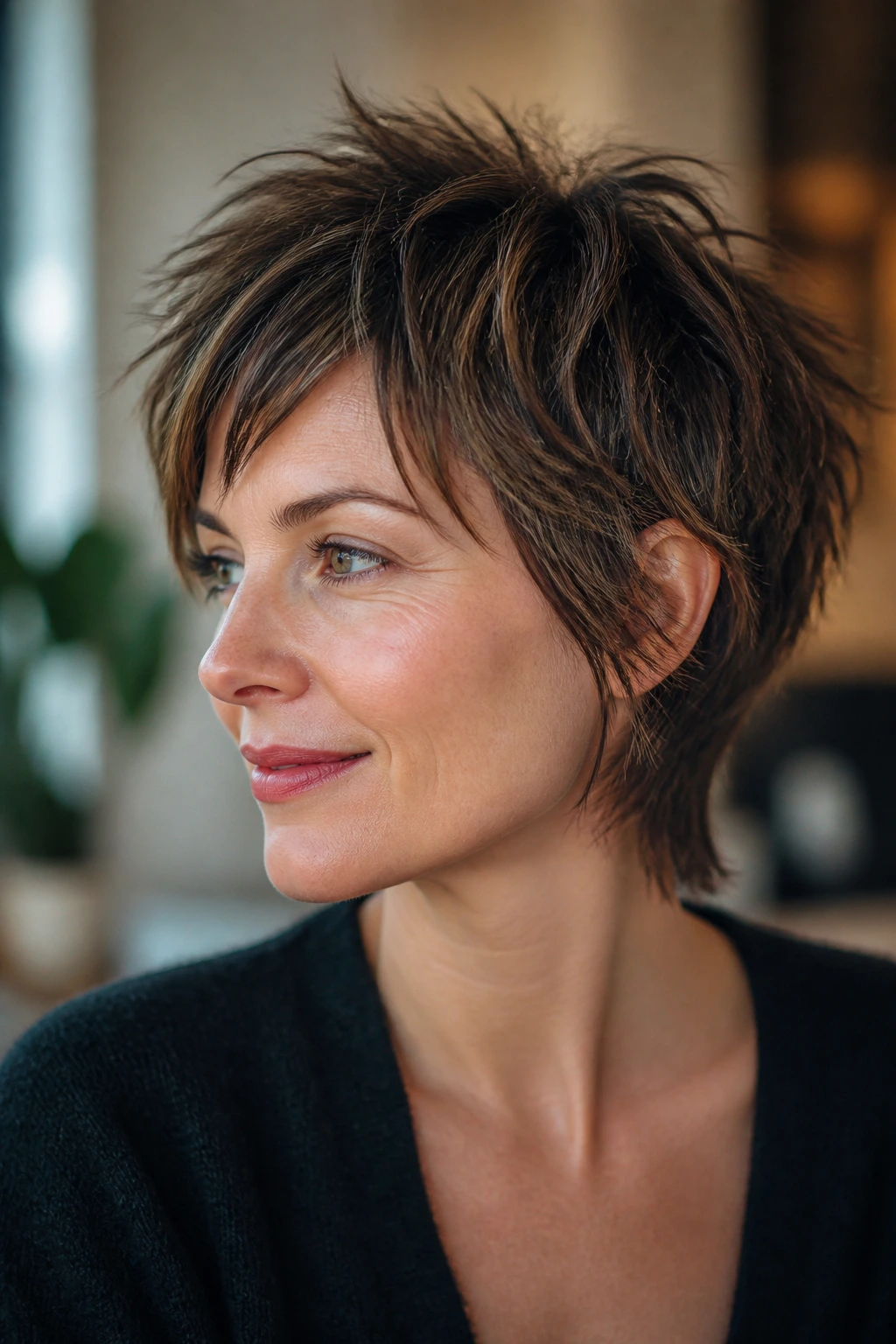
A soft pixie shag is the cut I reach for when the hair is so fine that a longer bob just hangs there. It keeps the nape neat, leaves the crown a little longer, and feathers the sides so the whole shape feels lighter without turning fuzzy. The point is lift, not spikiness.
The smartest version keeps the perimeter slightly blunted around the ears and neck. That little bit of structure matters. If the ends are chewed away too hard, the cut starts to look tired the second the air gets damp.
Ask for:
- A close nape with soft, piecey layers on top
- A crown length around 1.5 to 2 inches longer than the nape
- Point cutting at the sides instead of aggressive thinning
Style it with a dime-size dab of paste or a pea-size mousse on damp hair, then push the top upward with your fingers. It works especially well on oval and heart-shaped faces.
2. Bixie Shag
Where does a bob end and a pixie begin? Somewhere in the middle, and that is exactly why the bixie shag works so well on short thin hair. You get enough length to tuck behind the ears, but not so much that the hair collapses into one flat sheet.
This cut is helpful if you want a shag effect without committing to something ultra short. The back stays tidy, the sides keep a little swing, and the top carries the movement. It looks fuller than a pixie because the outline is still there. That frame matters.
On fine hair, I like the bixie shag with a soft fringe that stops near the brows or cheekbones. Too much slicing through the perimeter can make the ends look airy in a bad way. A few clean edges keep the haircut from disappearing.
3. Micro Shag with Curtain Bangs
A micro shag with curtain bangs is a sharp answer for anyone whose forehead feels like the widest part of the face. The fringe opens in the middle, falls softly toward the cheekbones, and breaks up the front without swallowing the whole haircut. It feels light, but it still reads as deliberate.
The crown stays short and textured, while the face-framing pieces do the visual work. That combination helps thin hair because the eye sees movement right where the cut starts. If the front is too bare, the whole style can look sparse; curtain bangs fix that fast.
What to ask for
- Curtain bangs that land around the cheekbone or just below the brow
- Short, airy crown layers that do not drag into the fringe
- Soft texture through the sides, not a choppy ladder of ends
A round brush or small flat iron bend at the bang ends keeps this one from looking sleepy. It suits people who want softness up front without losing the shaggy feel.
4. Chin-Length Choppy Shag Bob
Thin hair does not need shorter and shorter layers everywhere. Sometimes it needs a clean chin-length frame with a few sharp breaks inside the shape. That is the whole advantage of a choppy shag bob: the bottom still has weight, so the eye reads density first.
The best version lands right at the chin or a hair below it. That line gives the jaw some structure, then the interior layers keep the crown from flattening into a helmet. If you cut too high above the jaw, the style can feel overexposed. Let the perimeter do a little work.
This is the one I would suggest for straight, fine hair that tends to go limp after a blow-dry. A slight bend at the ends and a side part can make the haircut look like it has twice the hair it actually does.
5. Feathered French Shag
A feathered French shag has that brushed-out, airy finish that makes short hair feel soft instead of chopped. The fringe skims the brow, the sides fan toward the cheekbones, and the ends keep enough softness to move when you turn your head. It is less jagged than a punky crop and less severe than a classic bob.
This cut shines when you want the hair to look light but not sparse. The feathering should happen mostly around the face and crown; the bottom line needs some presence. That contrast is what keeps the style from dissolving into fluff.
It looks especially good with a quick round-brush blow-dry. Nothing fussy. Just enough bend to keep the layers from lying dead straight against the head.
6. Wolf Shag Lite
A full wolf cut can swallow thin hair. A lighter version keeps the shorter crown and longer nape, but dials back the drama so the shape still feels wearable on short lengths. Think of it as a wolf shag that learned some manners.
The important part is restraint. You want visible texture at the top and a touch more length in back, not a huge difference that leaves the ends hanging thin. On short thin hair, too much contrast can make the haircut look like it ran out of material halfway through.
Wavy hair handles this shape best. Straight hair can wear it too, but it needs a little bend from a dryer or curling iron so the layers do not sit flat and sharp. If you want edge without looking overdone, this is a good stop.
7. Razored Crop Shag
A razor can be useful here, but only if the stylist knows how thin your hair really is. One light pass can create movement on straight hair that refuses to layer any other way. Too much razor work, though, and the ends get fuzzy fast.
This cut works best when the perimeter stays controlled. The crop should feel crisp enough to hold shape, while the top gets the feathered, chipped-up texture. That balance is what keeps the haircut from turning into a halo of frizz.
If your hair frizzes at the first hint of humidity, ask for point cutting instead of heavy razor work. A razor is a tool, not a personality.
8. Layered Mushroom Shag
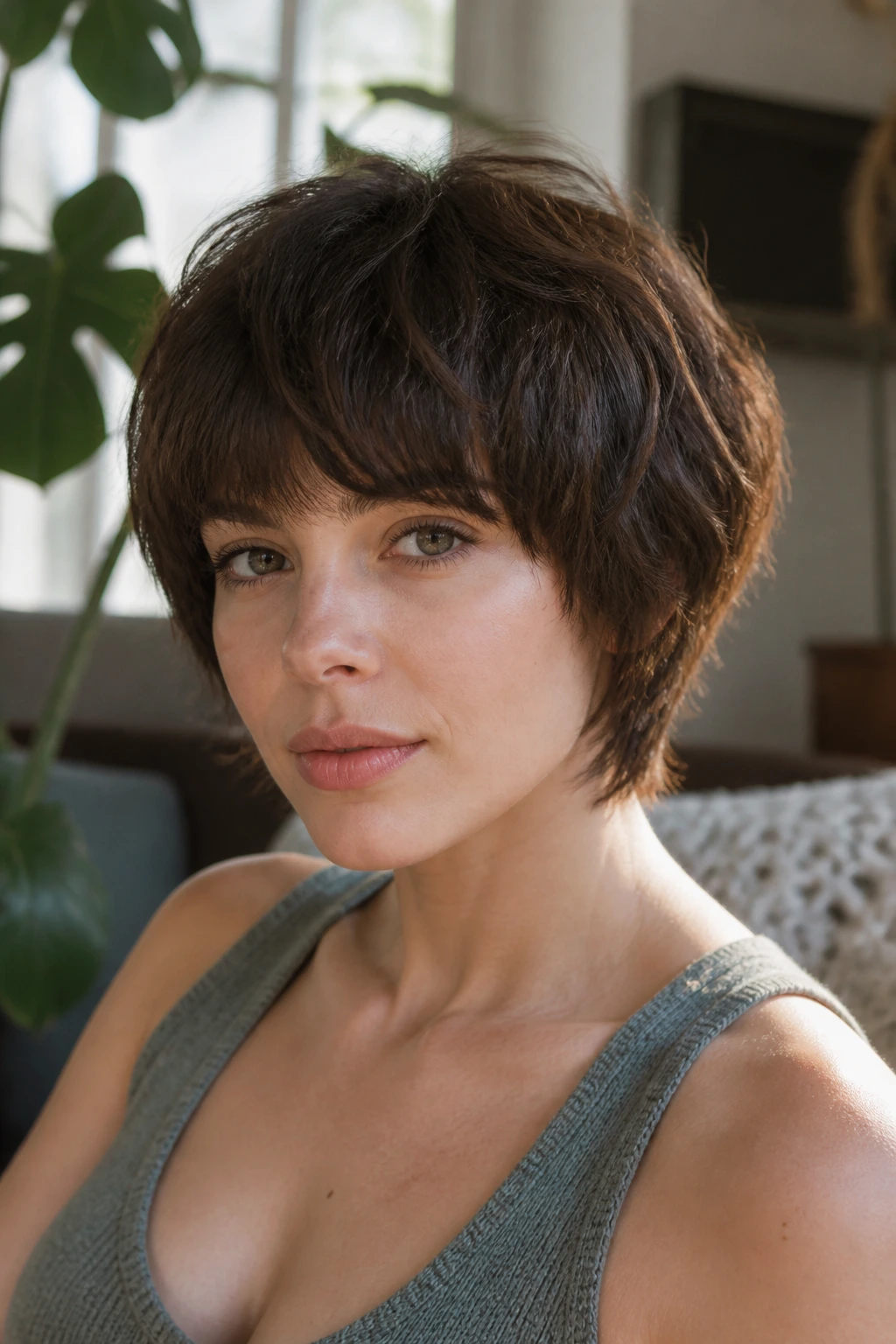
A layered mushroom shag sounds odd until you see what it does to flat hair. The rounded outline gives the illusion of thickness because the shape hugs close to the head and then lifts outward at the ends. It is soft, a little retro, and far less severe than people expect.
The crown should carry the most movement, with gentle layering that supports the round shape. The sides should stay full enough to create that mushroom curve. If the layers get too sparse, the shape loses its charm and starts looking patchy.
This is a smart choice if your hair lies flat on top but has enough body through the mids to hold a rounder silhouette. It also plays well with glasses because the curved sides keep the whole face from feeling overexposed.
9. Piecey Baby Bang Shag

Baby bangs are not tiny just for style. On short thin hair, they can pull the eye upward and make the rest of the cut look fuller because the fringe creates a strong front edge. The trick is to keep them wispy and separated, not heavy like a block.
The rest of the shag should stay pretty light. You want enough texture to echo the fringe, but not so much that the haircut starts competing with itself. This one is a bit more attitude-forward, and that is the point.
Use a small amount of paste or texture cream on the fringe and pinch it into narrow sections. If the bangs are dense, the haircut can feel weighed down. Keep them soft, and they do their job without stealing the show.
10. Tapered Neck Shag
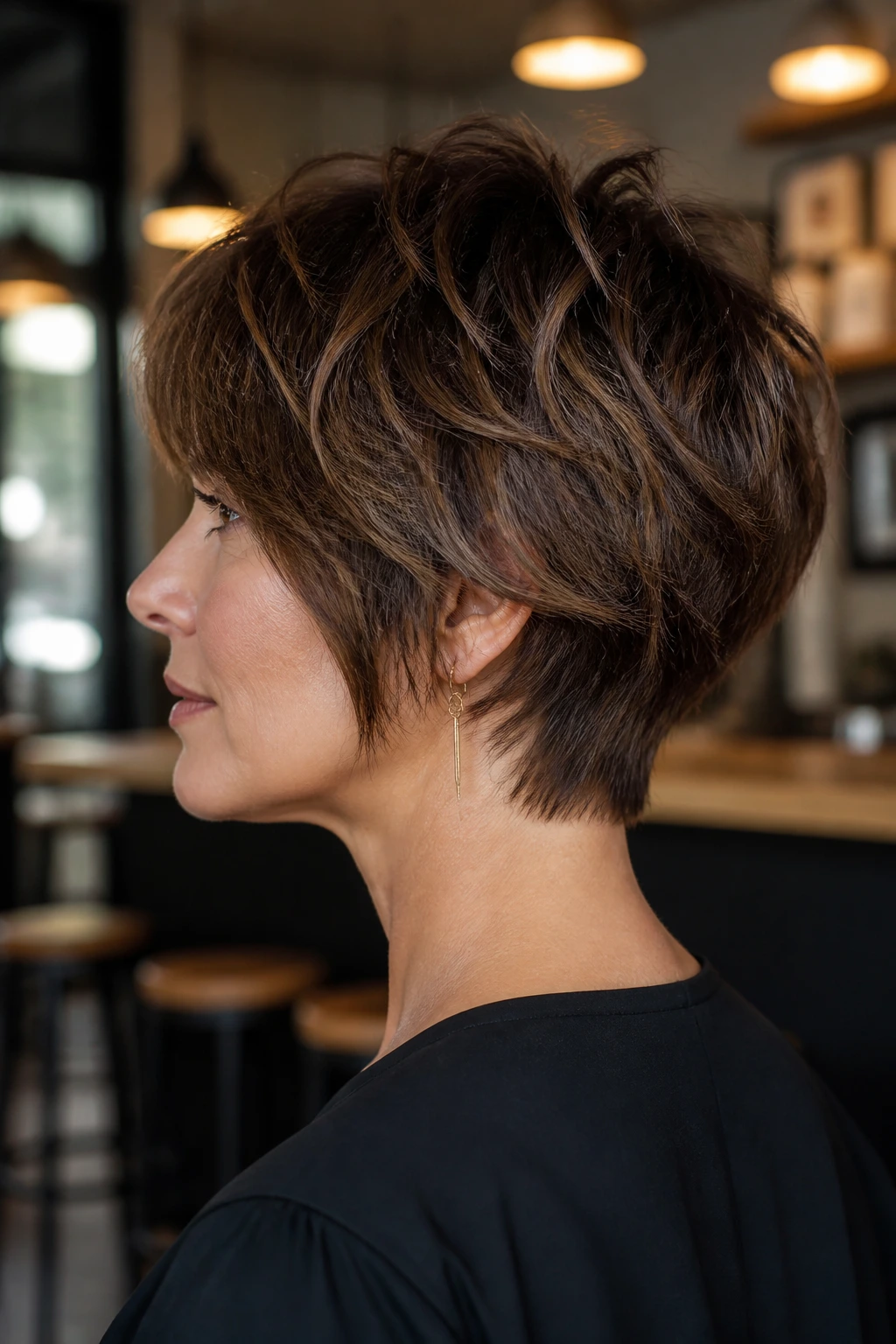
A tapered neck shag is for anyone who hates hair brushing the collar. The back tightens neatly into the nape, while the top keeps enough length and movement to avoid looking severe. It feels tidy without turning stiff.
This shape is useful on short thin hair because the clean neckline makes the hair look intentional from the back, where limp cuts usually fail. The crown can still carry texture, but the taper keeps the lower half from looking stringy.
It is also one of the easiest shags to maintain between trims. Even when it grows out a little, the taper keeps the outline from getting shaggy in the wrong way. There is a difference.
11. Tousled Side-Part Shag

Sometimes the fastest volume comes from moving the part an inch off center. That one shift sends more hair over one side, gives the crown somewhere to breathe, and stops the top from falling straight down the middle of the head. The haircut gets credit, but the part does a fair bit of work.
A tousled side-part shag is especially kind to cowlicks and flat roots. You can let the shorter layers around the top and temple area bend in different directions, which makes the haircut feel softer and less engineered. The whole point is movement with a little asymmetry.
I like this version for people who want a low-effort morning routine. A quick blow-dry at the roots and a twist of the fingers through the ends is usually enough.
12. Airy Layered Bob Shag
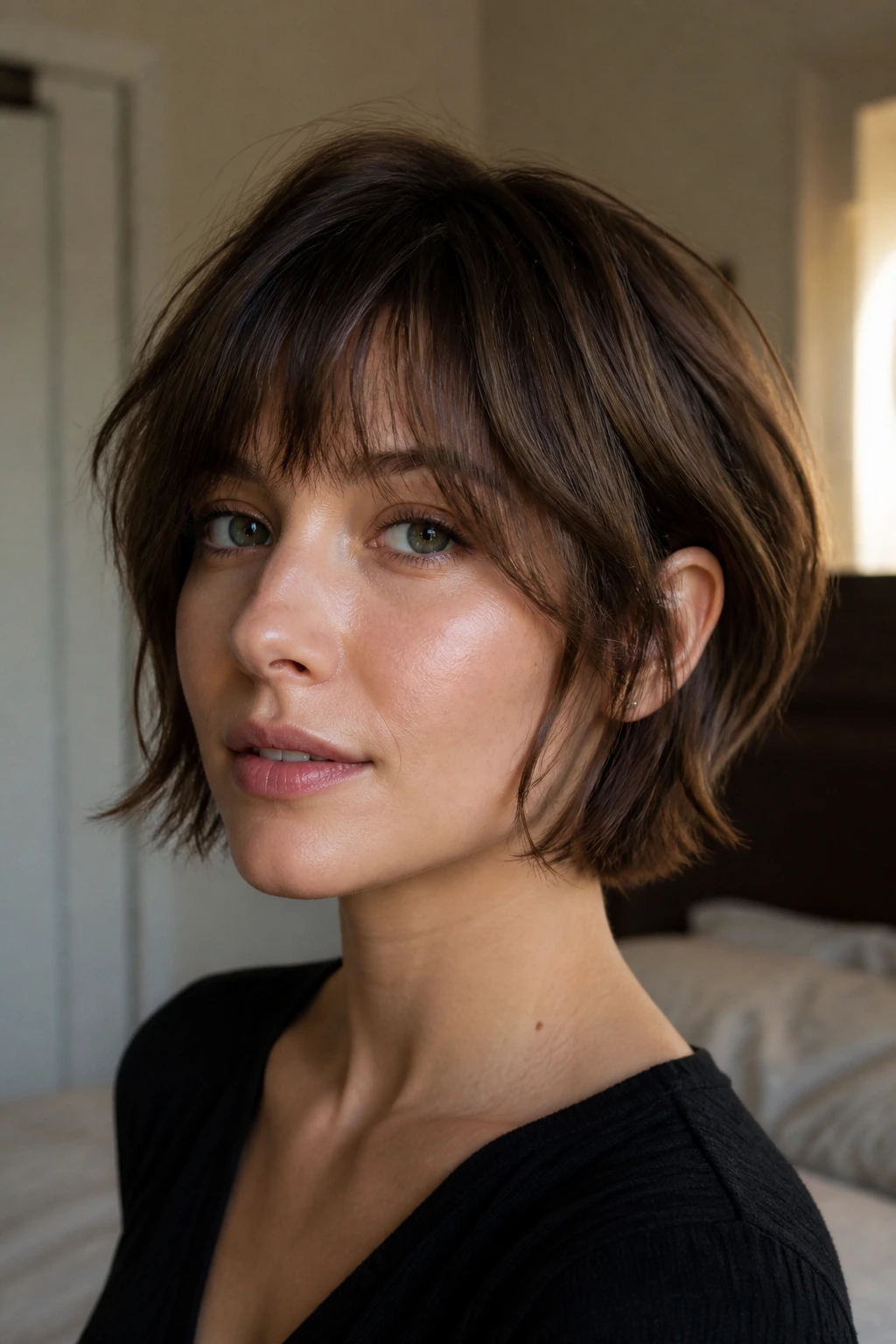
If you want the shag idea without looking chopped up, this is the safest entry point. The outline stays bob-like, but the interior layers stop the ends from hanging in one heavy curtain. That keeps the cut light without destroying the shape.
It works well on short thin hair because the bob base gives the illusion of thickness. The layers live inside the haircut, not all over the outside where they can make the perimeter look patchy. It is a smart choice if you want movement but still need a tidy line around the jaw.
This one tucks behind the ears easily, grows out cleanly, and looks decent even when you skip a full styling session. That is more useful than people admit.
13. Curly Short Shag
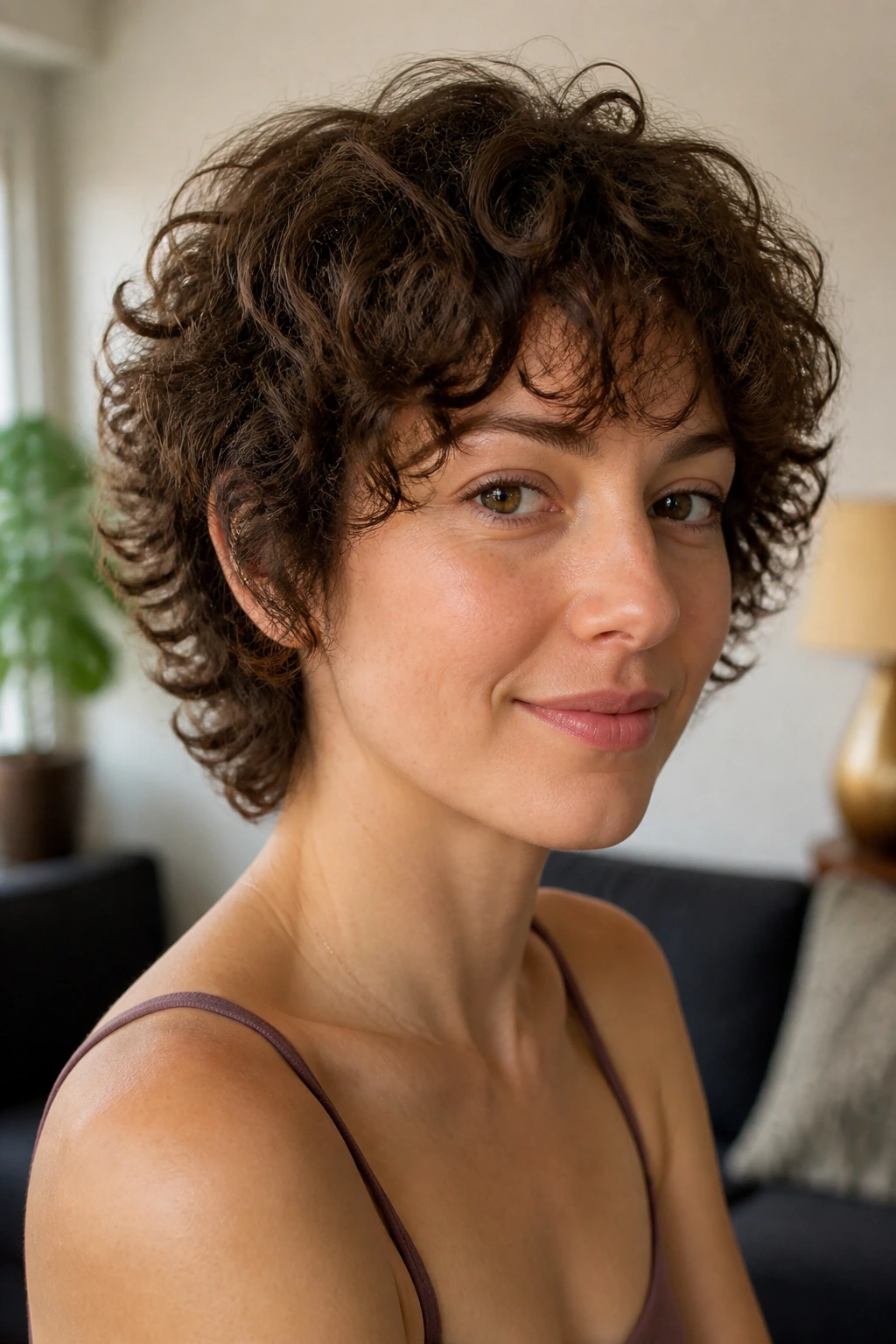
Thin hair can still be curly, and curly thin hair needs a different kind of respect. Keep the layers long enough to follow the curl pattern; too much slicing can break the curl into stringy pieces that collapse instead of bounce. The best curly shag gives the curls room, not a lecture.
A short curly shag should be cut dry or nearly dry so the stylist can see where the curl really lands. Wet curls lie. Dry curls tell the truth. That matters when the difference between a neat crop and a puffy triangle is only half an inch.
Diffuse on low heat, scrunch once, and leave it alone. Curly short shag hair usually looks better with less touching, not more.
14. Sleek Shag with Long Bangs
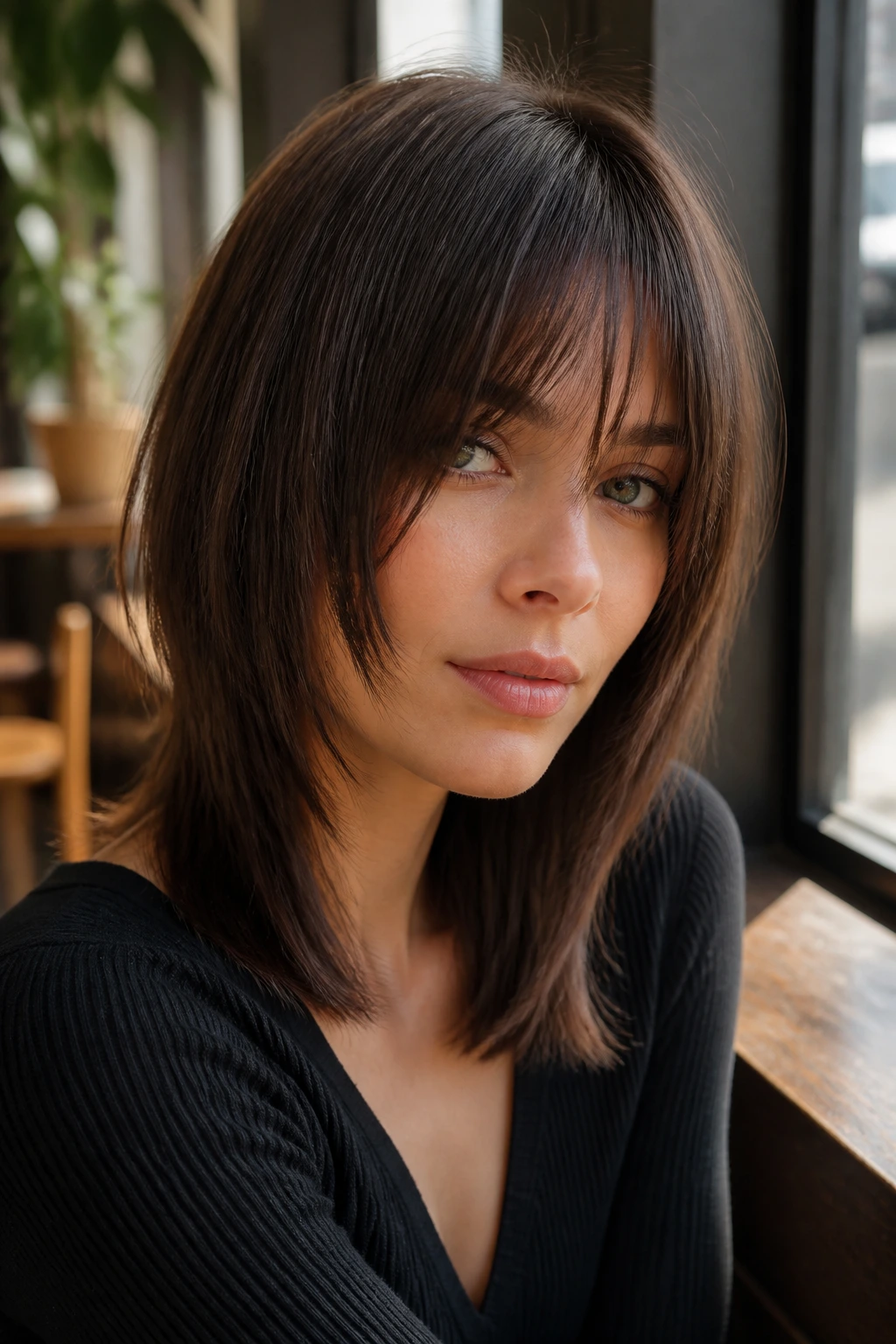
Not every shag has to look rough. A sleek shag with long bangs keeps the edges smoother and the texture more controlled, which is useful if your hair is straight and fine but not especially cooperative. The bangs graze the cheekbones and give the face some shape while the rest of the cut stays lightly layered.
This is one of the better choices if you like a cleaner finish. The style still has movement, but it does not announce itself with choppy ends. That can matter if you wear glasses or work in a setting where a harsher crop feels out of place.
A flat iron bend at the front and a bit of root lift at the crown can make the whole thing look expensive without trying too hard. Cheap-looking hair often comes from overdoing texture; this avoids that trap.
15. Shaggy Crop with Tapered Sides
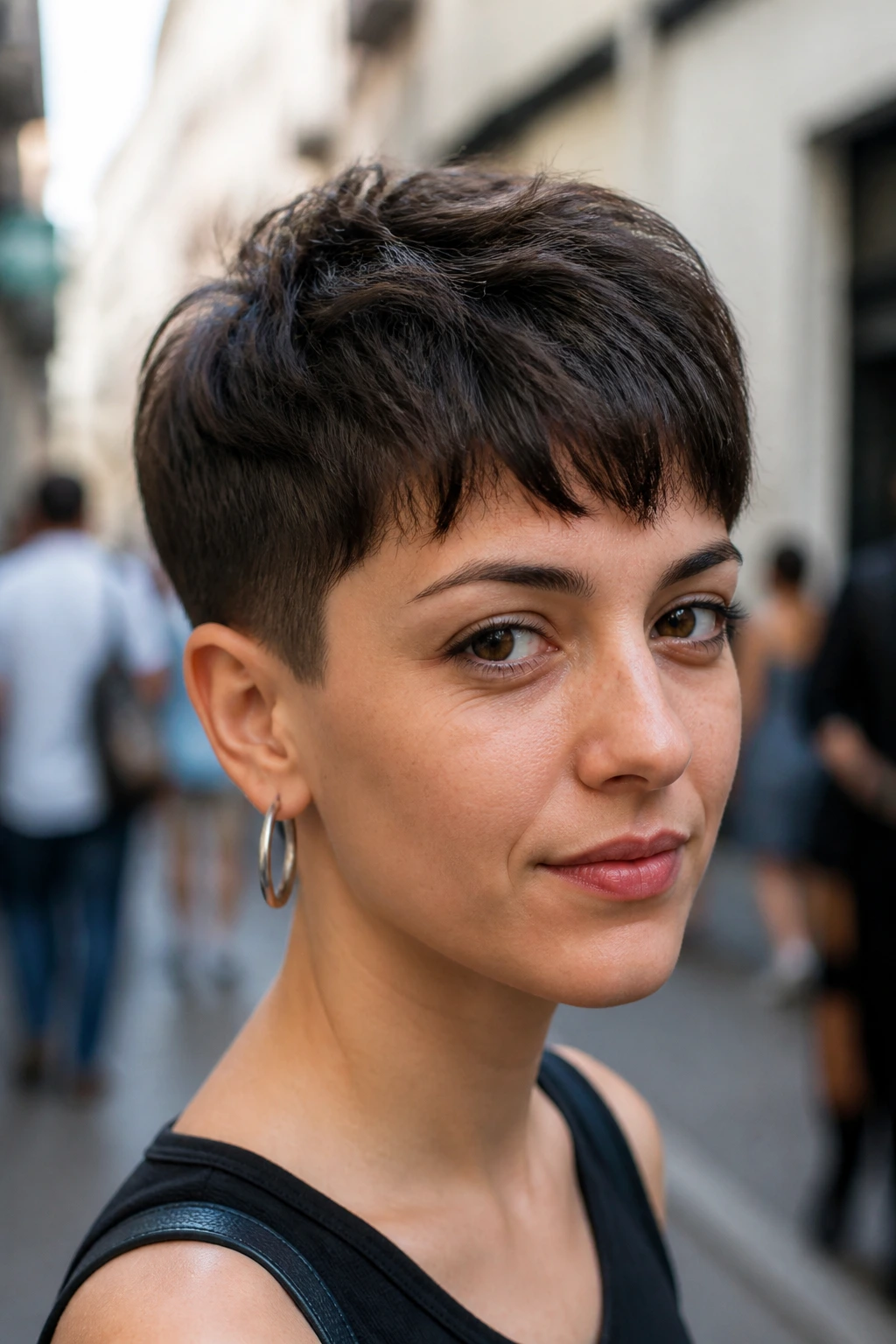
This is the cut for someone who wants the ears to feel lighter and the top to look busier. The sides sit closer to the head, while the crown and fringe carry most of the visual texture. Short thin hair benefits from that redistribution.
The tapered sides keep the silhouette neat, which helps if your hair tends to fluff out around the temples. The top can stay piecey and soft, and the contrast gives the haircut a sharper outline. It also plays well with glasses because the frames and hair do not fight for the same space.
If you want a cut that feels practical but not boring, this one earns a look. It has enough shape to read as styled even when you do very little to it.
16. Jaw-Length Retro Shag

A jaw-length retro shag has a little 70s flip in it, but on short thin hair it needs restraint. The length lands right around the jaw and the ends bend inward or outward just enough to show shape without looking overworked. It is one of the better ways to keep movement while protecting density.
The cut flatters square jaws and softens longer faces when the fringe stays light. If the bangs get too heavy, the style starts to feel costume-like instead of easy. Keep the front airy and the rest of the layers loose.
A medium round brush or a quick pass with a curling iron at the ends is enough. You do not need big, glossy curls. A little bend is the whole point.
17. Textured A-Line Shag
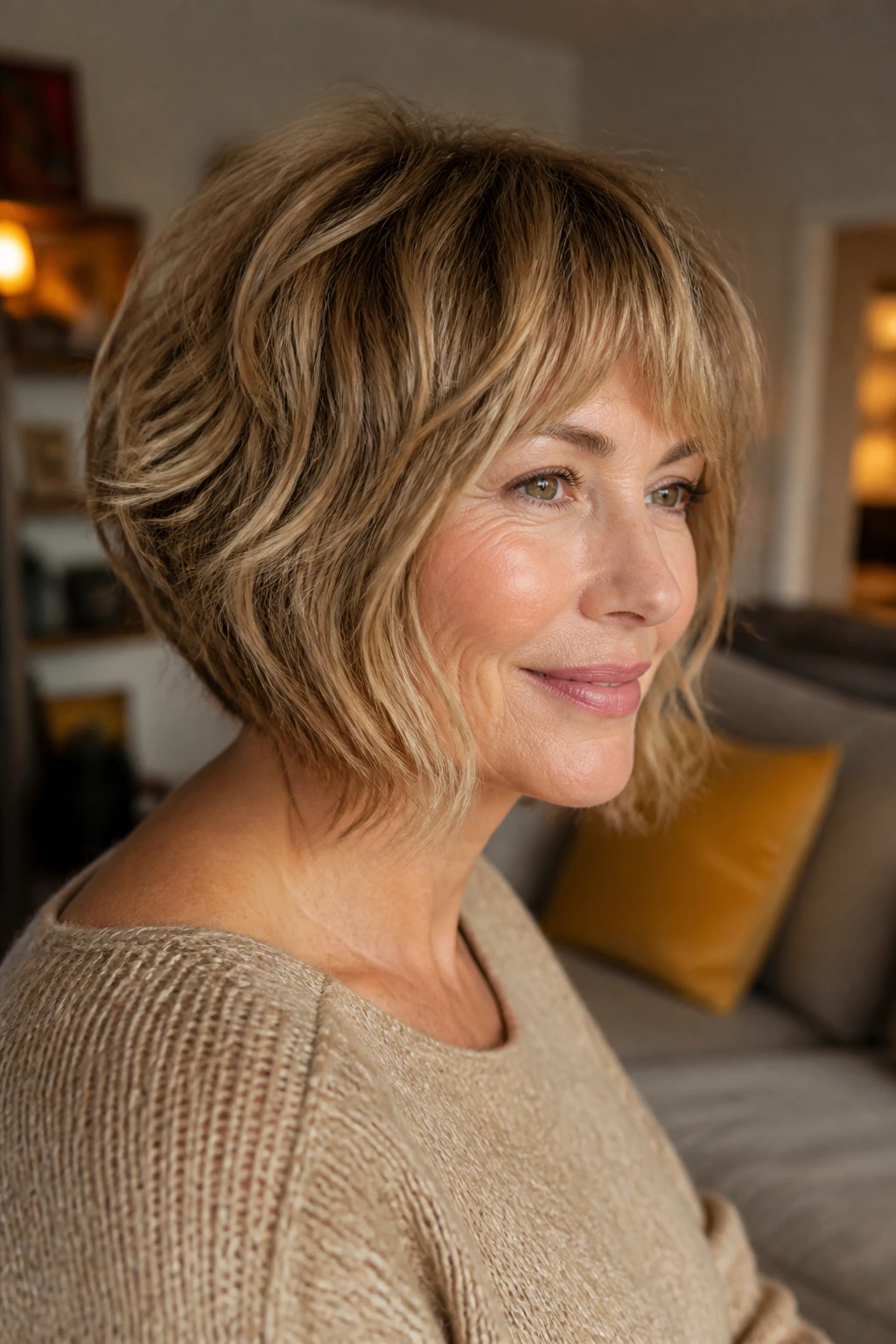
Longer in front, shorter in back. Simple idea, useful result. The front angle creates a little curtain around the jaw and neck, while the back stays easy to handle and does not drag the hair down.
A textured A-line shag is a good compromise if you want a bob that doesn’t sit dead straight. The angle gives the haircut some motion, and the texture keeps it from feeling too formal. On thin hair, that front length helps the cut read fuller because the eye sees more hair where it matters.
This is one of the better choices if you like tucking one side behind the ear. The shape still holds, even with a pin or clip on one side.
18. Short Shag with Feathered Fringe
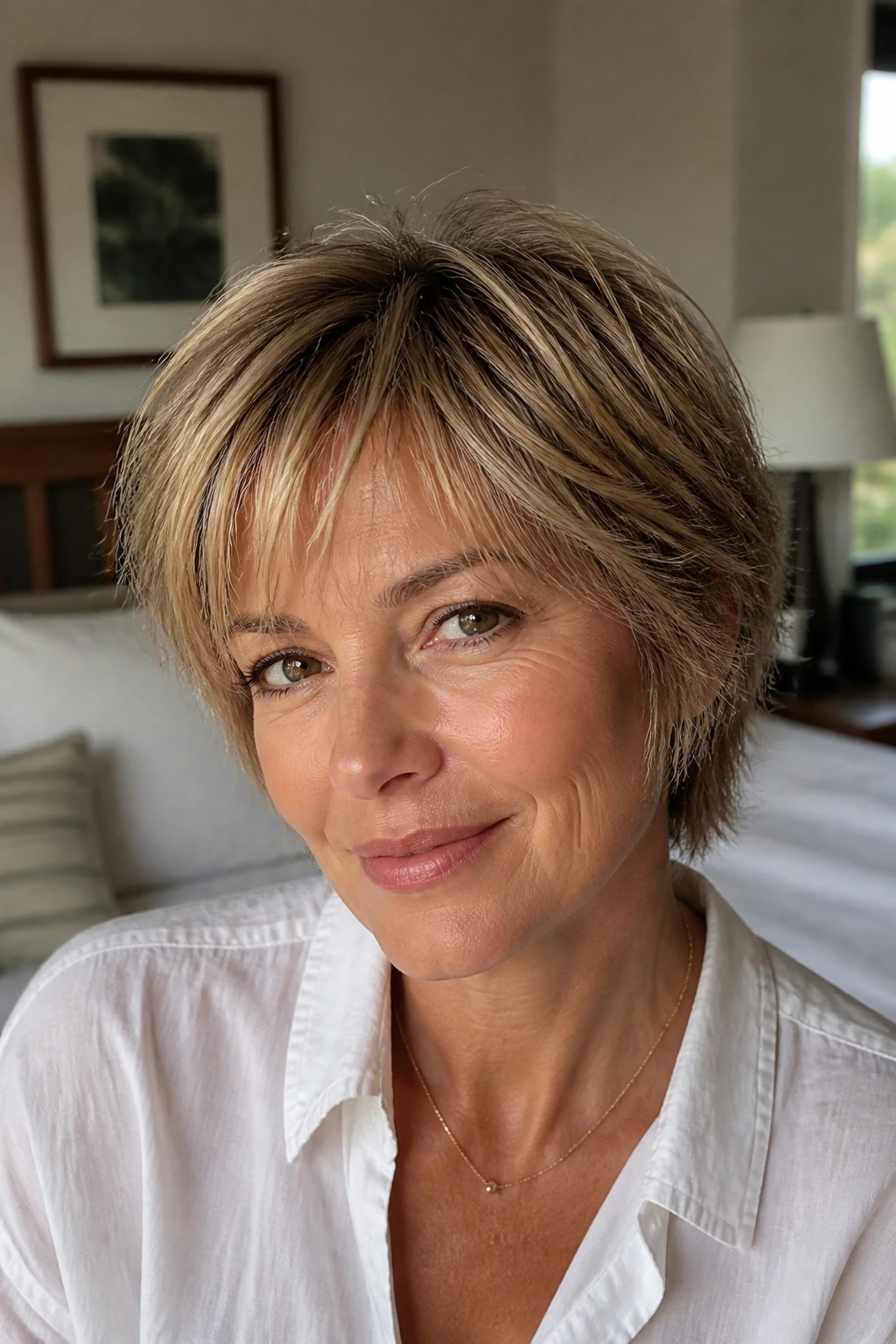
When the hairline looks sparse, the fringe can do more work than the back ever will. A feathered fringe breaks up the forehead without creating a thick wall of bangs, and that makes short thin hair feel softer right away. The rest of the cut can stay calmer.
I like this version for people who want to disguise a thin front line or a little recession at the temples. The feathering should be light and airy, not shredded into nothing. Too much thinning at the fringe makes the front look see-through, which defeats the whole point.
Keep the fringe movable. A bit of blow-dry bend or finger styling lets it part naturally and avoids that stuck-to-the-forehead look.
19. Stacked Crown Shag
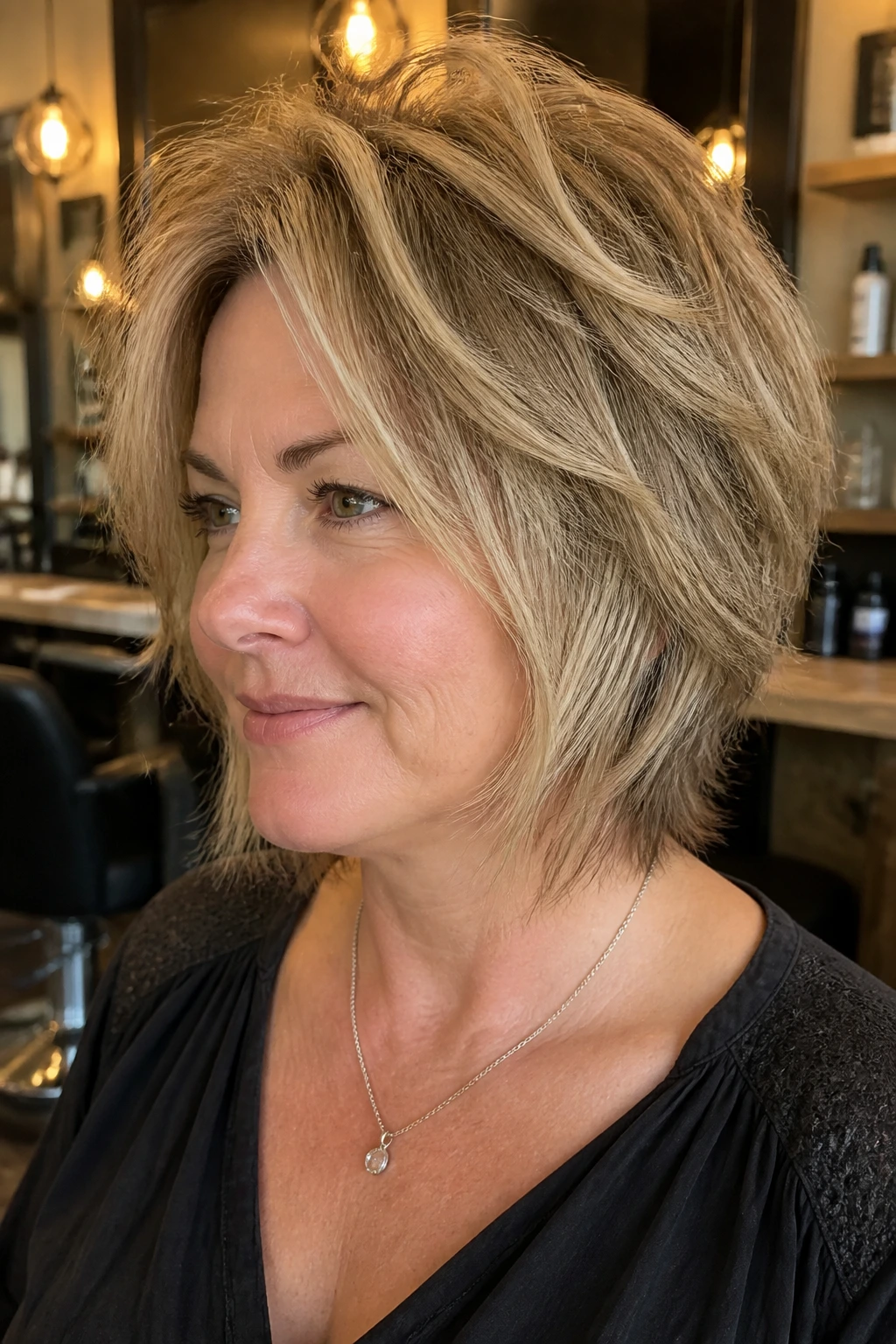
Stacking at the crown is one of the few ways to fake thickness where thin hair needs it most. The back rises into the head, and the top layers sit over it with a little lift, so the silhouette gets more shape from above. That lift is what keeps the style from collapsing in profile.
Ask for soft stacking, not a hard wedge, unless you want the shape to feel sharper. On very fine hair, a harsh stack can expose the scalp more than you’d like. Soft stacking gives the crown some height while keeping the back believable.
This cut is a strong option if the crown is your weak point. It can change the whole head shape in a way product never will.
20. Rounded Shag with Interior Layers

A rounded shag is for someone who wants softness instead of sharpness. The outline hugs the head, but hidden layers keep the shape from turning into a helmet. That balance is the whole reason it works on short thin hair.
The round shape is useful if your hair goes flat on top but puffs out at the sides. The interior layers let the silhouette breathe without breaking the perimeter apart. The haircut feels fuller because the shape is continuous, not chopped into pieces.
This version usually looks best with a side part or a soft center part. You want the curve to stay visible, not get split into two competing halves.
21. Center-Part Curtain Shag Bob
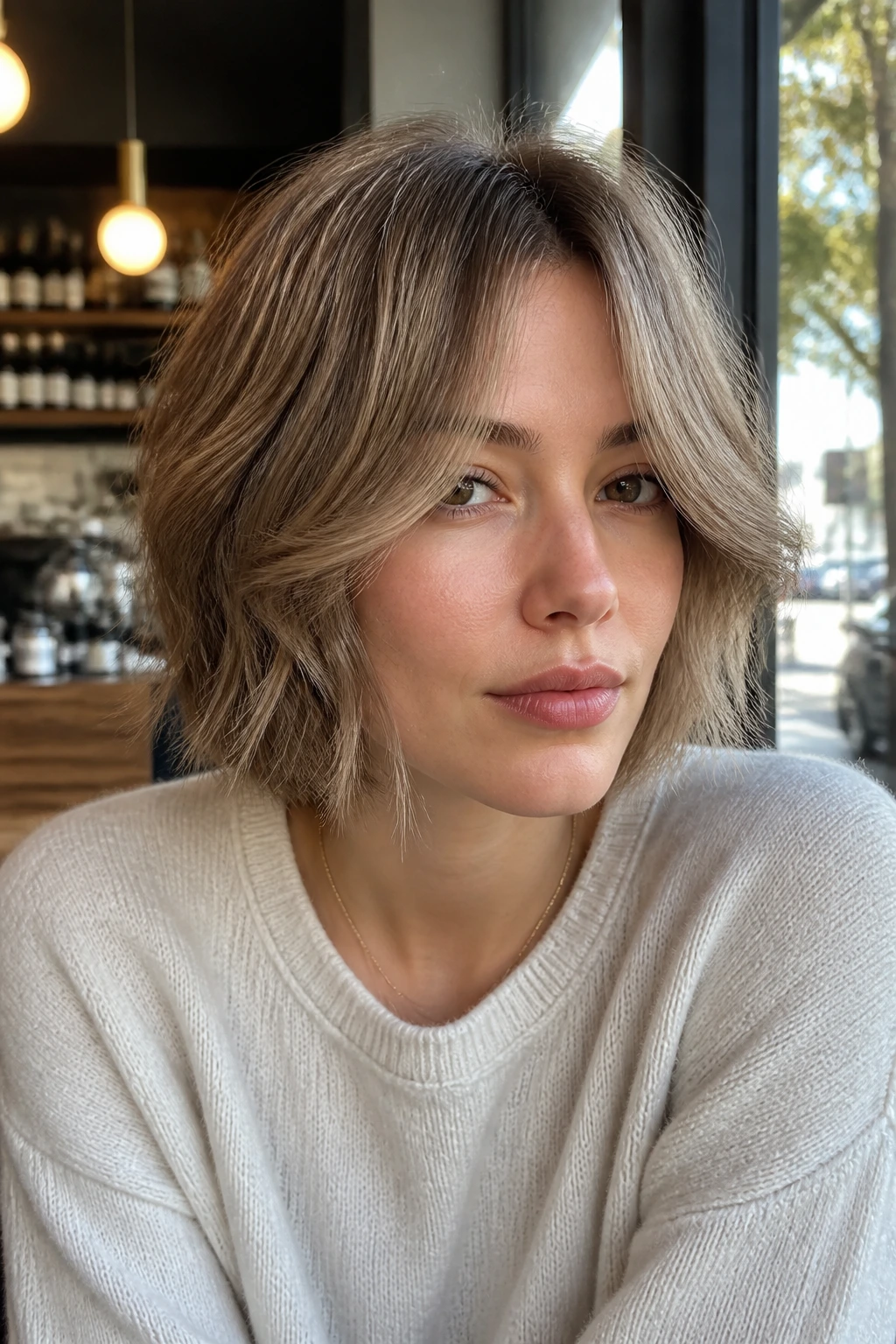
The center part makes the whole cut feel balanced, and the curtain panels make the front less severe. That combination is good for short thin hair because the face-framing pieces create the sense of density right where people look first. The bob base keeps the outline from disappearing.
This version works best when the bangs land around the mouth or cheekbones, not far above them. If the front pieces stop too high, the effect turns airy in the wrong way. A little extra length gives the curtains something to do.
If you like symmetry but do not want a flat middle part, this is a clean compromise. It looks tidy and soft at the same time, which is harder to pull off than it sounds.
22. Choppy Graduated Shag
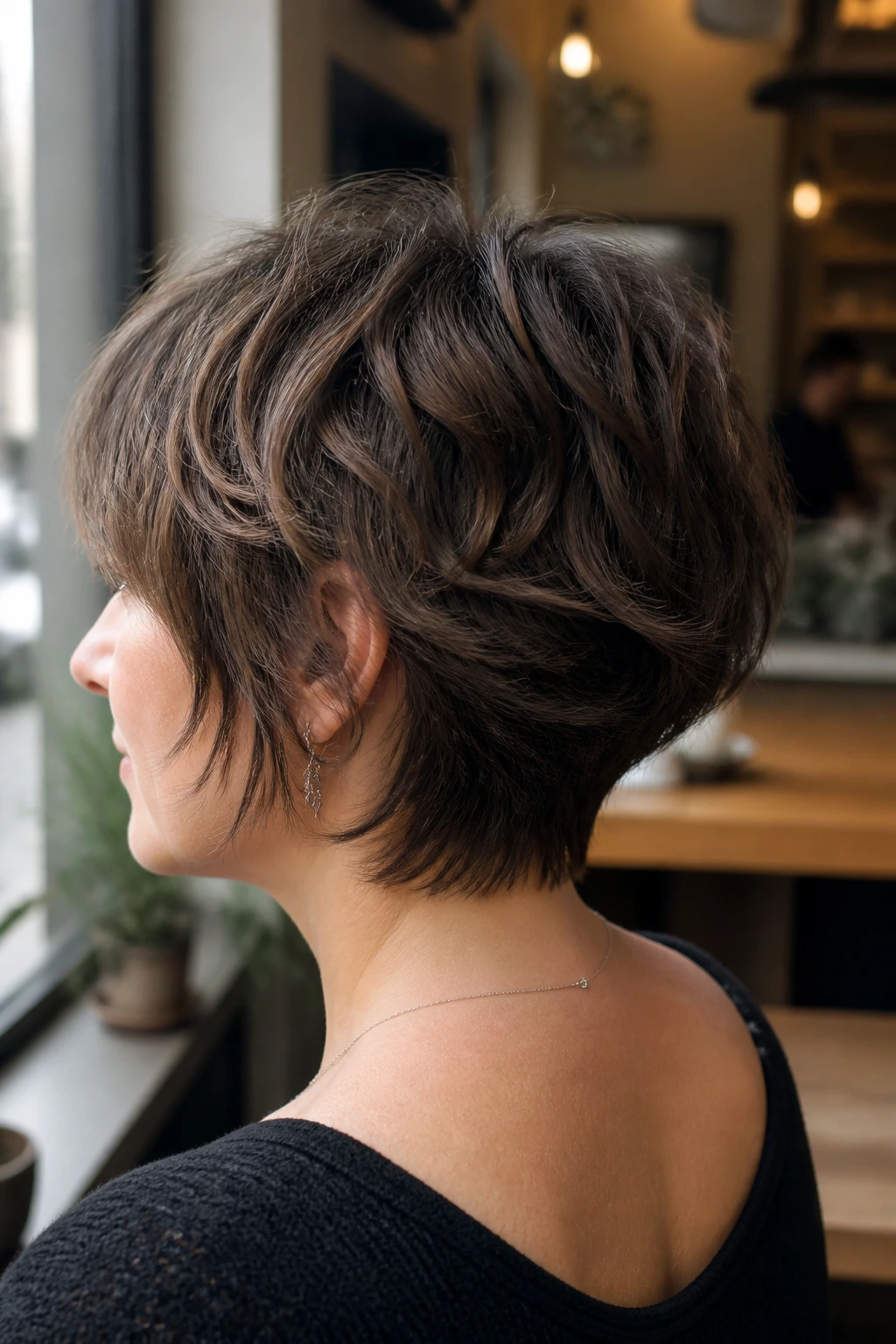
Graduation in the back gives the cut a little backbone, and the choppier top keeps it from feeling stiff. That structure matters on short thin hair because it creates shape from the side and the back, not just the front. The result feels active without looking overworked.
A graduated shag can be useful if your hair grows oddly at the nape or flares out at the crown. The gradual buildup in the back helps guide the silhouette, while the top layers add motion. It is a practical cut dressed up with texture.
Use a small brush or your fingers to push the top where you want it, then leave the outline alone. Over-styling the bottom steals the shape.
23. Glossy Wet-Look Shag
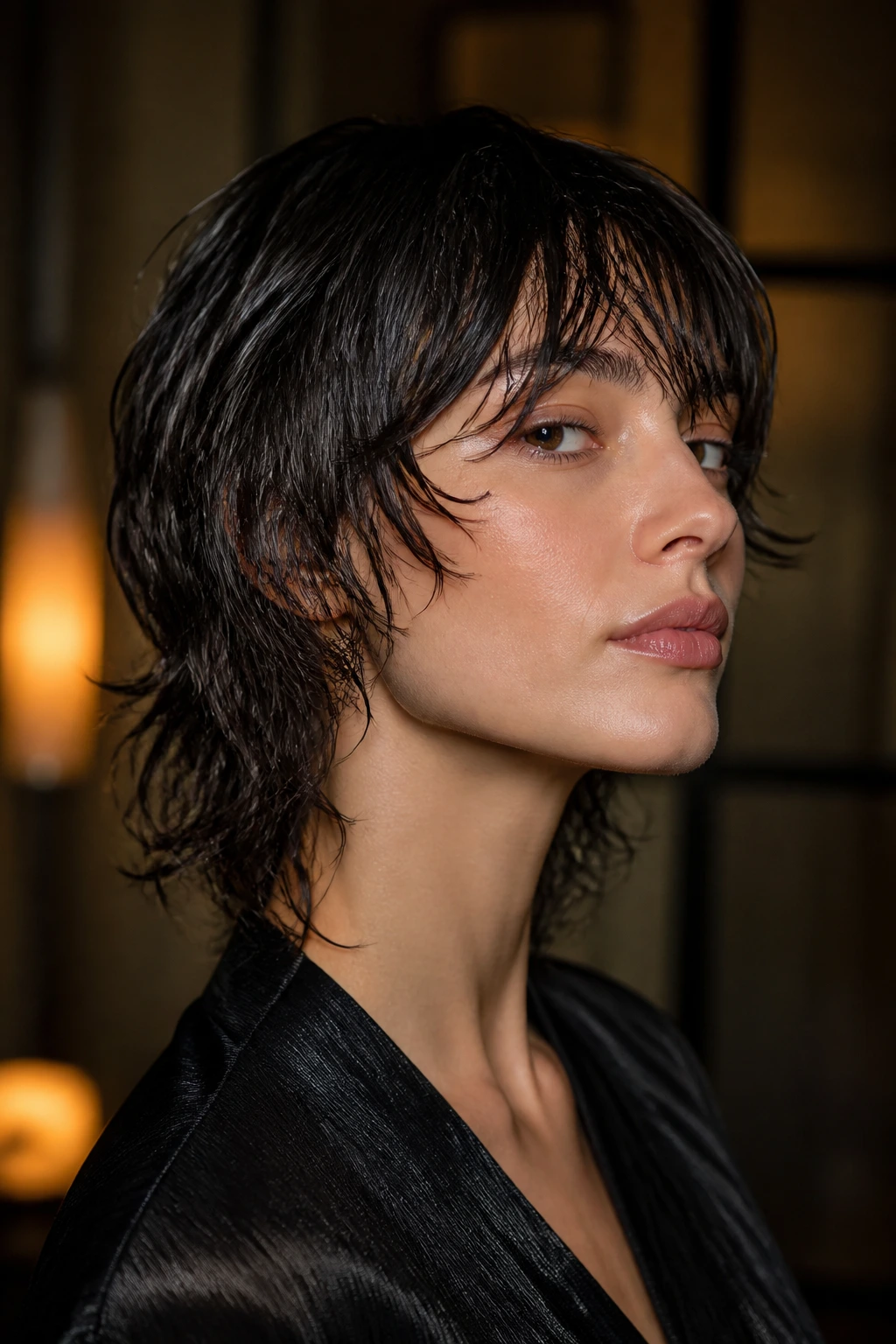
A wet-look shag sounds bold, but on short thin hair it can be oddly flattering. The gloss makes every piece look deliberate, and the tighter styling keeps flyaways from making the hair look sparse. It also turns a simple cut into a finished look with very little fuss.
The key is restraint. Use a small amount of gel or cream on damp hair and comb it through evenly. Once it dries, the shape should feel sculpted, not crunchy. Heavy product at the roots will drag the whole thing flat, which is exactly what you do not want.
This style is a good option for evenings, sharp outfits, or anyone who wants thin hair to read as sleek instead of fluffy. It is proof that not every shag needs a fluffy finish.
24. Soft Modern Mullet Shag
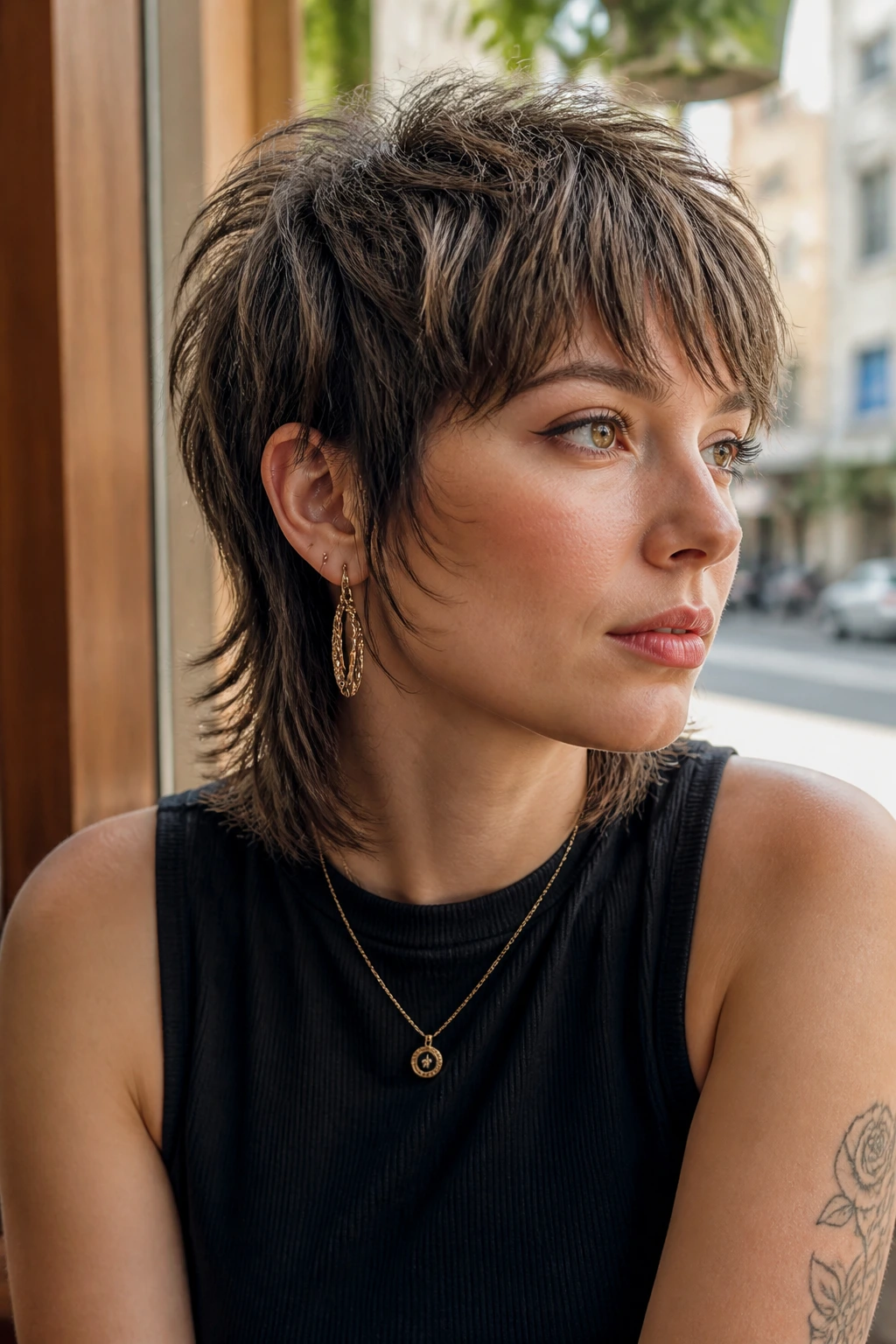
If you like a little attitude but not the full drama of a mullet, soften it. Keep the front and crown short enough to lift, let the back hang just a touch longer, and round the edges so the shape stays wearable. The result carries the same energy without looking like a costume.
Short thin hair can actually benefit from this kind of directional shape because the eye follows the line instead of hunting for density. The cut feels purposeful. The front gets the attention, the back gives a whisper of length, and the whole thing moves when you turn.
This is the one I’d pick for someone who wants edge but still needs the haircut to behave at work, at dinner, and on the bus ride home.
25. Clip-Friendly Shag Bob

This one is built for real life. Clips, barrettes, tucked ears, sunglasses stems — all of it. The sides stay long enough to secure, while the crown stays choppy enough to avoid a flat sheet.
That matters more than people think. A lot of short thin haircuts look good only when they’re freshly styled. A clip-friendly shag bob still has shape when you pin one side back, and it does not fall apart the moment you move.
If your routine includes one side tucked and one side loose, or you like to throw a clip in by noon, this is a strong candidate. It works because the haircut already anticipates being handled.
26. Barely-There Layer Shag
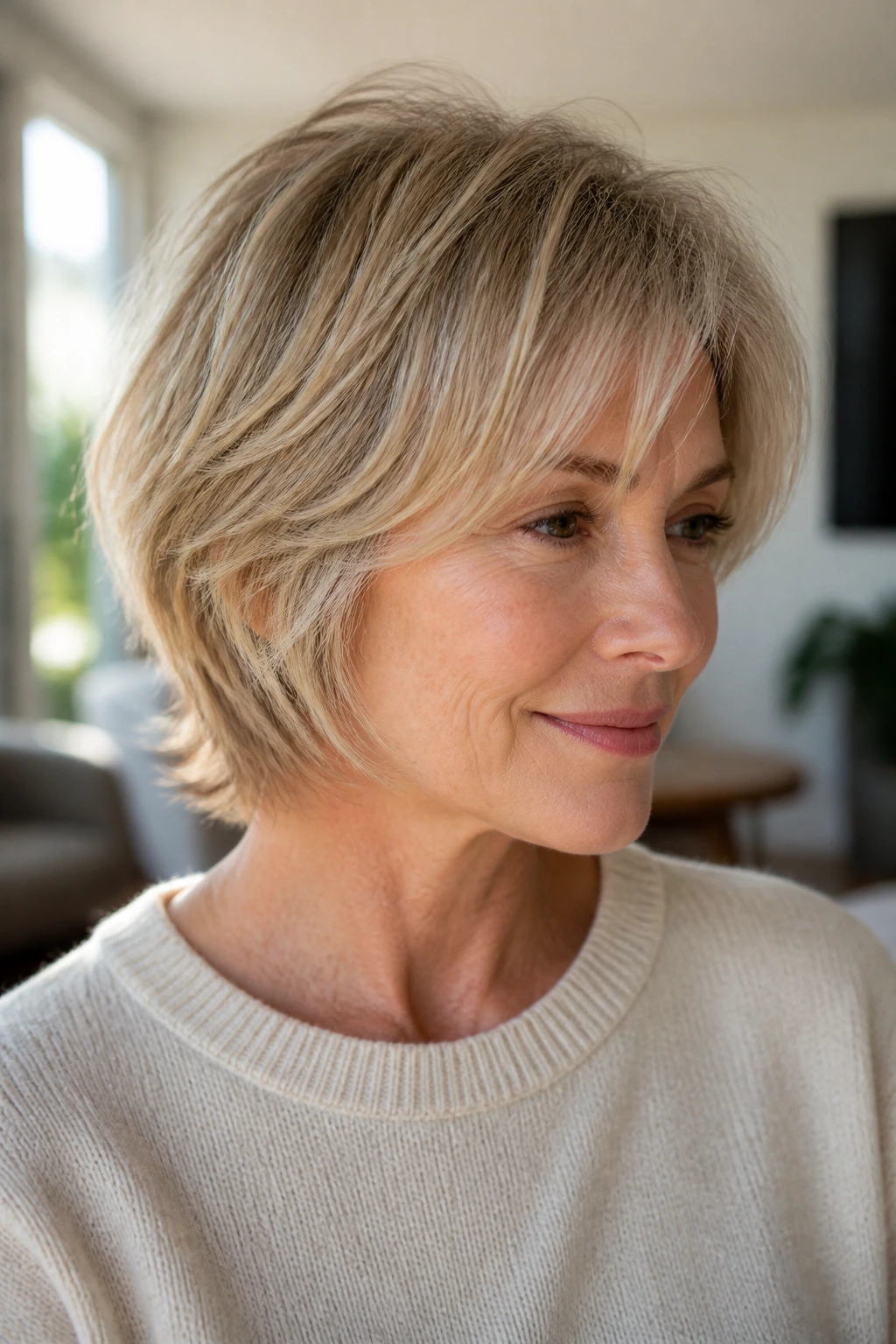
Sometimes the best move is a light hand. A barely-there layer shag keeps the perimeter mostly intact and sneaks in movement only where the hair can carry it. That approach is smart if your strands are fine enough that every lost millimeter shows.
This is not the cut for someone who wants obvious choppiness. It is the cut for someone who wants a whisper of texture and a shape that still looks clean when air-dried. The best versions keep the ends together and use the layers mainly at the crown and front.
If your hair tends to split into see-through strands when it gets over-cut, this is the safer road. It has enough shag energy to matter, but not enough slicing to make the hair look exhausted.
27. Side-Swept Fringe Shag Crop
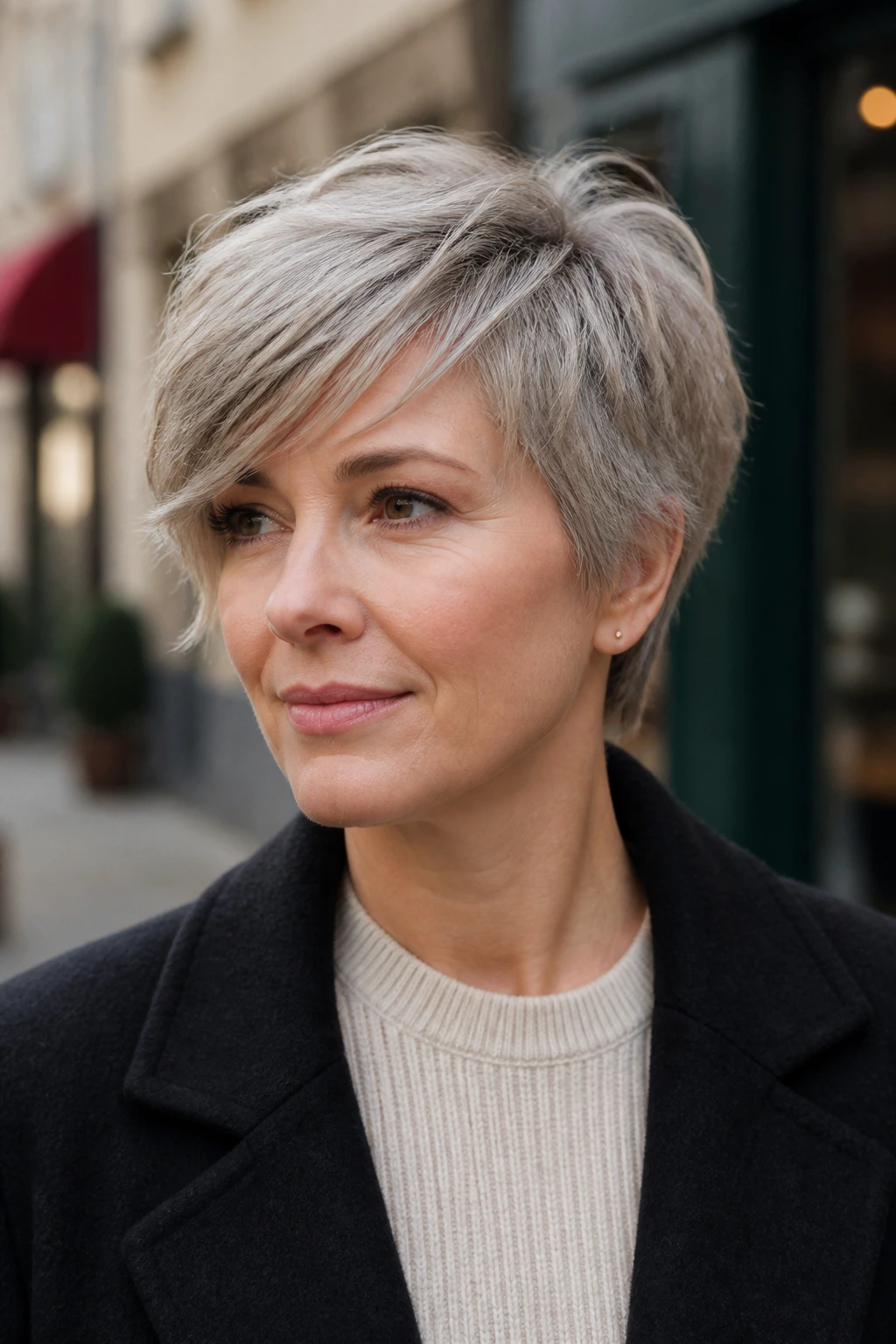
A side-swept fringe can do what heavy bangs cannot: shape the face without swallowing the forehead. It gives thin hair a stronger front line and lets the rest of the crop stay light. That alone can change the way the whole haircut reads.
The sweep also helps if your hairline is uneven or your part fights you. Instead of forcing a center split, the fringe folds naturally to one side and adds softness across the top. The rest of the haircut can be pretty simple.
This is the kind of cut that looks better after a day of wear, not worse. The fringe loosens, the layers fall a little, and the shape gets even easier to live in.
28. Long-Front Shag Bob
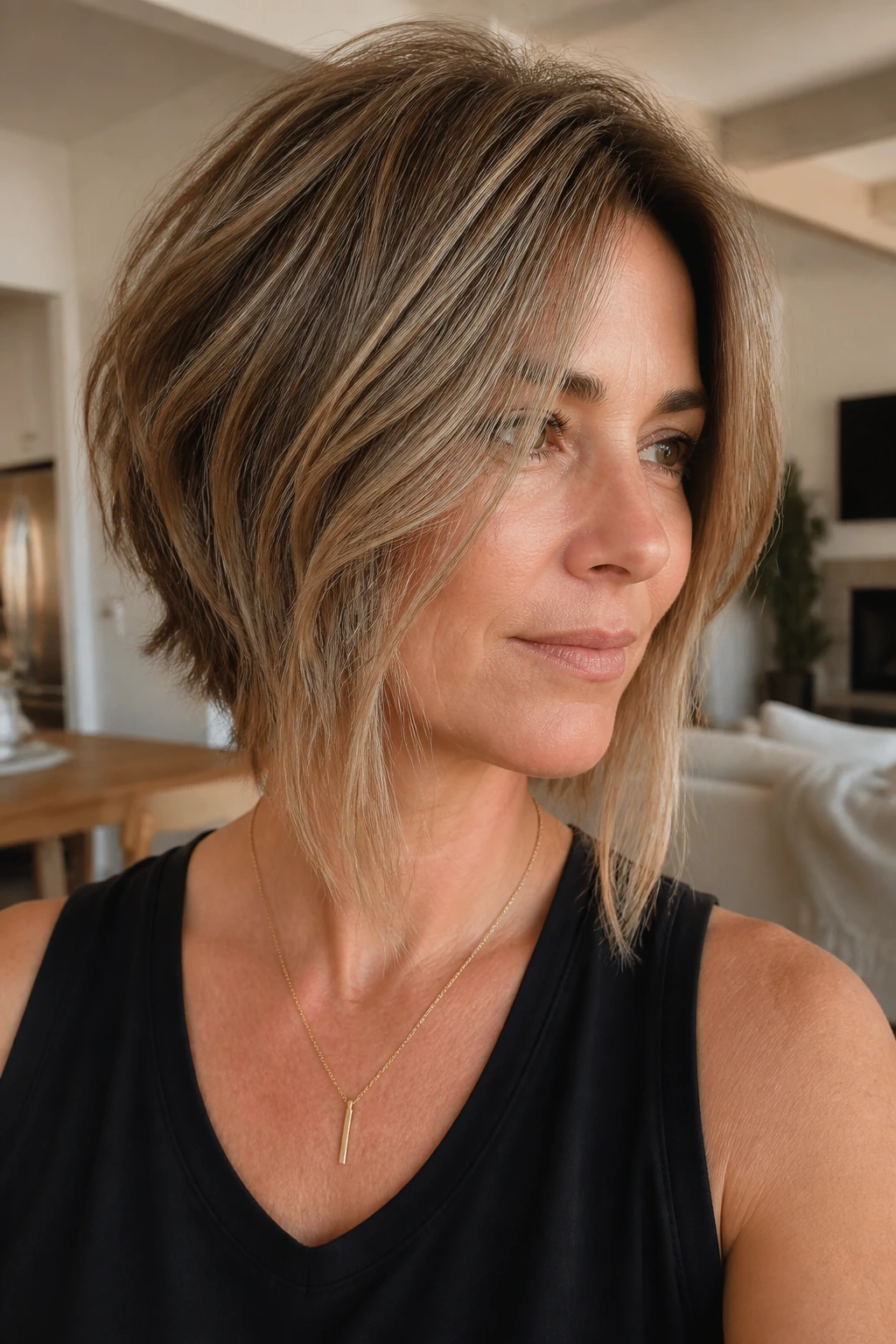
Longer pieces in front pull the eye downward and outward, which gives the whole cut a little more presence. The back stays short enough to keep movement, and the front keeps enough length to tuck, bend, or sweep across the face. It feels polished without looking stiff.
For short thin hair, that front length matters. It creates the sense of fullness around the jaw, where the eye naturally lands, and it keeps the haircut from looking over-trimmed. A few subtle face-framing pieces can do more than a pile of texture spray ever will.
If you want the last option in the list to be the one with the most polish, this is it. It is clean, soft, and easy to live with.
Why Shag Haircuts for Short Thin Hair Work So Well
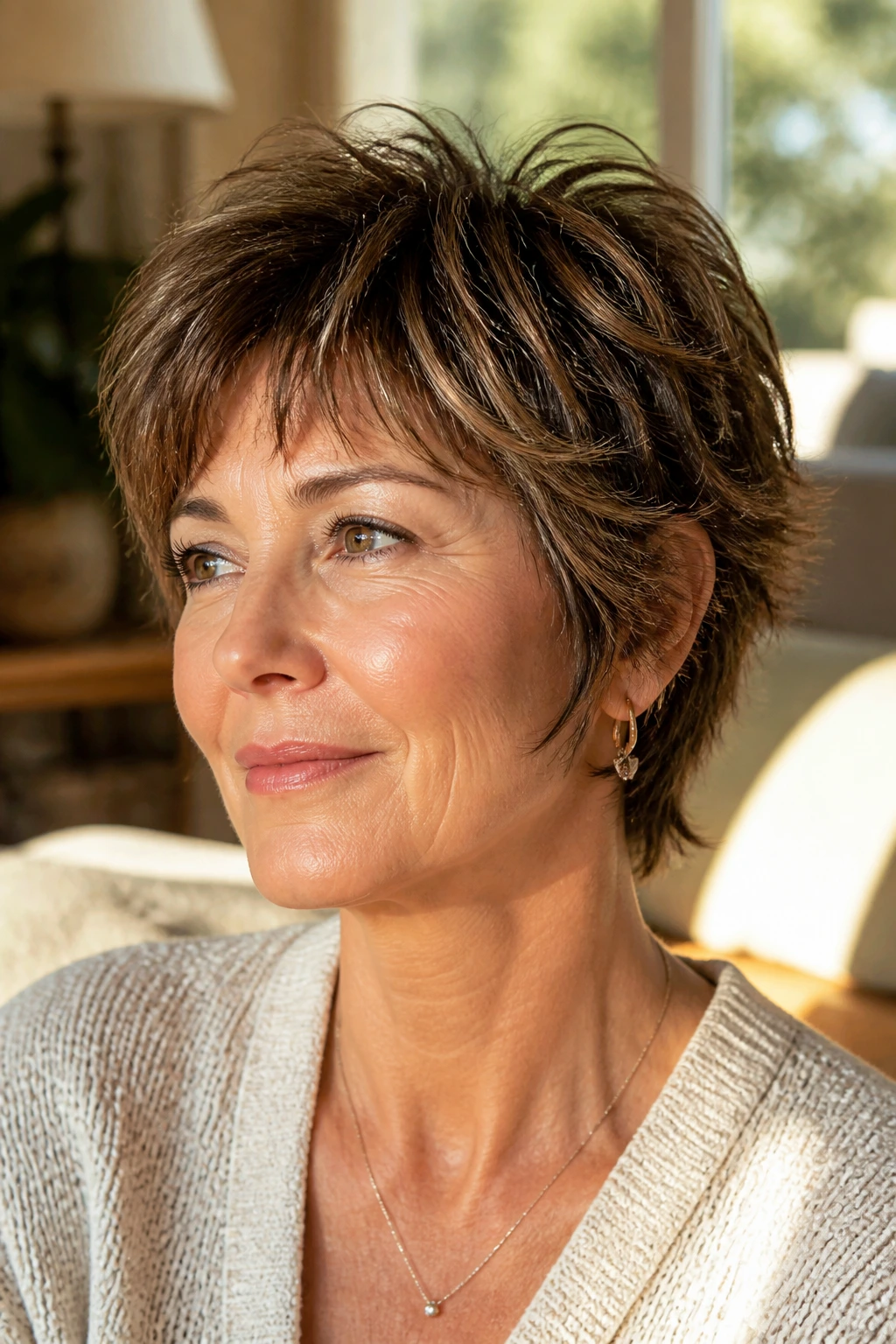
The real magic here is weight placement. Short thin hair often looks flat because all the weight sits at the bottom, which drags the shape down, or because too much weight gets removed and the ends start to look see-through. A good shag shifts that balance: some lift moves up to the crown, some softness lands around the face, and enough perimeter stays in place to keep the outline honest.
Fine hair and low-density hair get mixed up all the time, and the cut changes depending on which one you have. Fine hair means each strand is smaller in diameter. Low density means there are fewer strands on the head. A shag can help both, but the amount of layering should not be the same. Fine strands need a lighter hand. Low-density hair needs even more caution at the ends.
Short length helps because it removes drag. Hair that stops around the jaw or cheekbone does not have as much distance to pull itself flat. The crown can stand up more easily, and the layers have a better chance of showing movement before gravity takes over. That is why a well-cut short shag often looks fuller than a longer cut with more total hair on the head.
What to Ask for at the Salon
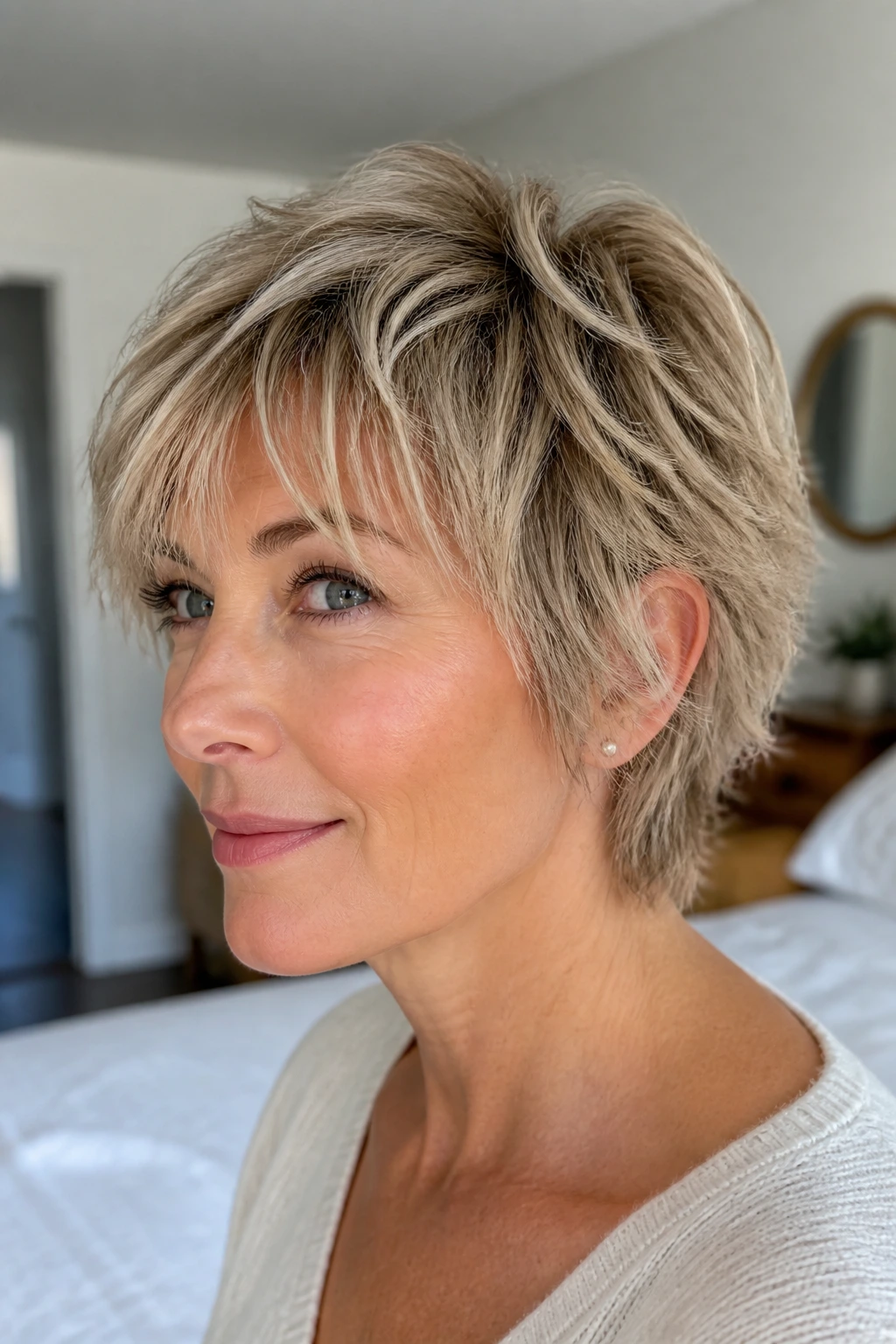
The best shag starts with a precise conversation, not a shrug and a reference photo from three angles away. Tell the stylist whether your hair is fine, thin, or both. That sounds picky, but it changes the cut. A fine strand can handle different layering than low-density hair, and a good stylist will care about that difference.
Ask them to keep a slightly blunt perimeter somewhere in the shape. That blunt line gives the haircut its frame. Then ask for internal layers or face-framing layers placed high enough to lift the crown, but not so short that they expose the scalp or leave the ends wispy. If the stylist starts talking about removing weight everywhere, pause and be specific.
A few useful phrases:
- “I want movement, not a shredded outline.”
- “Keep some weight at the bottom.”
- “Please don’t over-thin the ends.”
- “The crown needs lift, but the sides need to stay full.”
- “I’d like the fringe to skim, not sit like a block.”
Bring one photo from the front and one from the side. Haircuts live in profile. That is where a lot of bad shags go wrong.
Tools That Make the Shape Hold
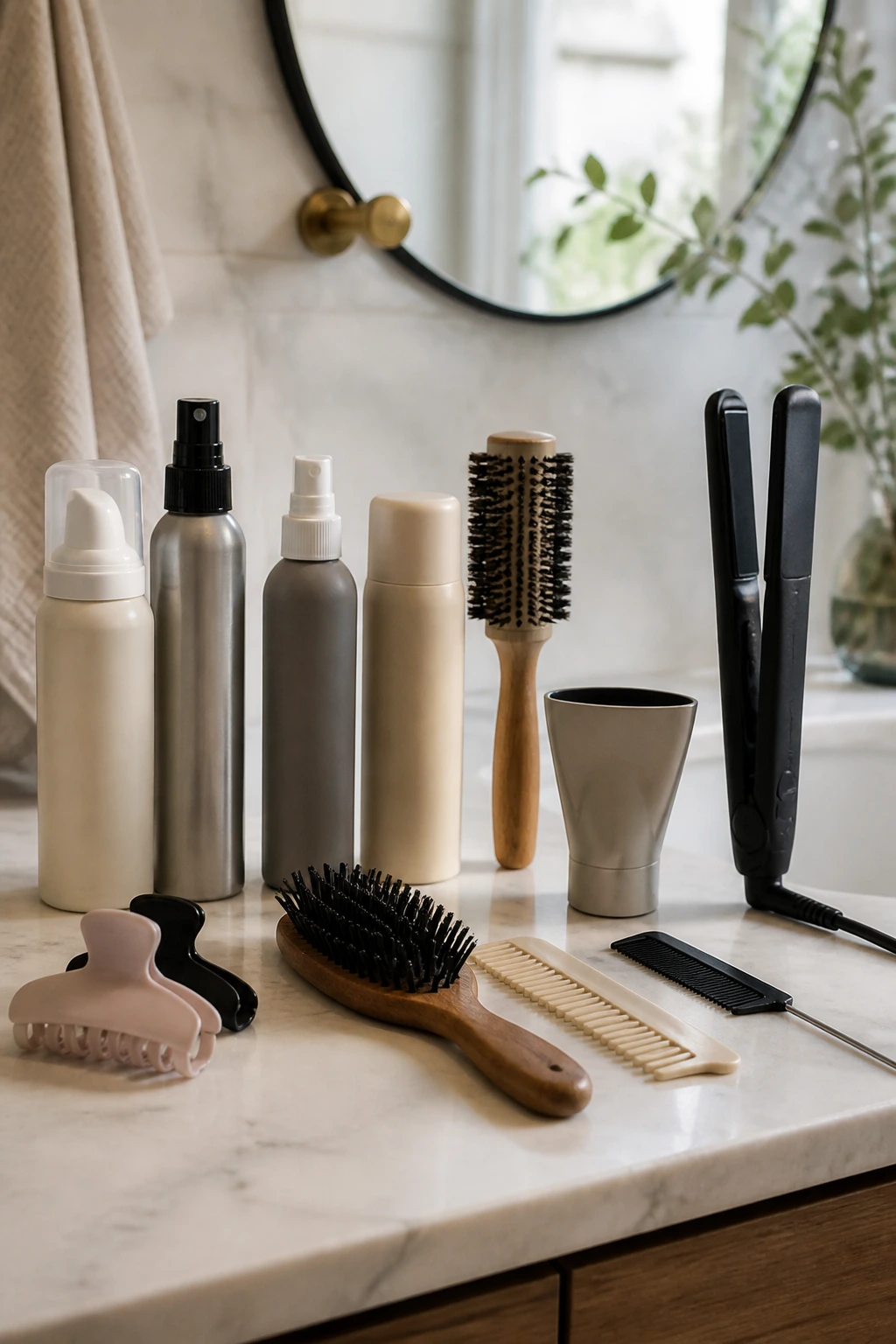
- Lightweight mousse: Gives damp roots a bit of support without coating fine hair in grease.
- Root-lift spray: Best aimed at the crown and part line before blow-drying.
- Texturizing spray: Adds separation through the mids and ends, but keep it off the scalp.
- Dry shampoo: Works as both oil control and a volume booster on day two.
- Small round brush, 1 to 1.5 inches: Useful for bending the fringe and lifting the crown.
- Blow-dryer with a nozzle: Focuses airflow so the roots do not get blasted flat.
- Flat iron with rounded edges: Handy for giving the front pieces a soft bend instead of a sharp crease.
- Duckbill clips: Great for setting root lift while the hair cools.
- Tail comb: Helps place parts and lift small sections at the crown.
- Wide-tooth comb: Good for detangling damp hair without yanking out shape.
How to Style Shag Haircuts for Short Thin Hair Without Flattening the Crown
Air-Dry With Direction
Start with a mousse or foam on damp roots, then rake a tiny bit through the mids. Part the hair where it wants to fall, or just off center if the roots lie too flat. Clip the crown up for ten minutes while it dries a little, then release it and let the rest finish on its own.
Blow-Dry the Roots First
If you use heat, dry the roots before you worry about the ends. Point the nozzle at the scalp and lift the hair in the direction you want it to sit. A round brush is useful for the fringe and cheek pieces, but the crown needs root direction more than a fancy curl.
Refresh Day-Two Hair
Mist the front and crown lightly with water, add a pinch of dry shampoo at the roots, and pinch the ends with your fingers. Do not soak the whole head again. That usually turns second-day volume into a tired mess.
Additional Tips and Texture Boosters

Root Lift: Flip the front sections in the opposite direction while drying, then set them back into place once they cool. That tiny bit of crossing helps the roots stand up instead of lying flat.
Color Contrast: A few lighter pieces around the temples or crown can make the layers easier to see. You do not need a full head of highlights. A little dimension around the face is enough to make short thin hair look less one-note.
Product Load: Put mousse or foam at the roots, texture spray through the mids, and a touch of paste only on the last inch of the ends. If product touches every inch of the head, the hair loses air and starts to collapse.
Make-It-Yours: If you hate messy hair, keep the fringe longer and the perimeter cleaner. If you like more edge, shorten the crown layers slightly and let the texture show. The cut should fit your daily routine, not the other way around.
Common Mistakes with Shag Haircuts for Short Thin Hair
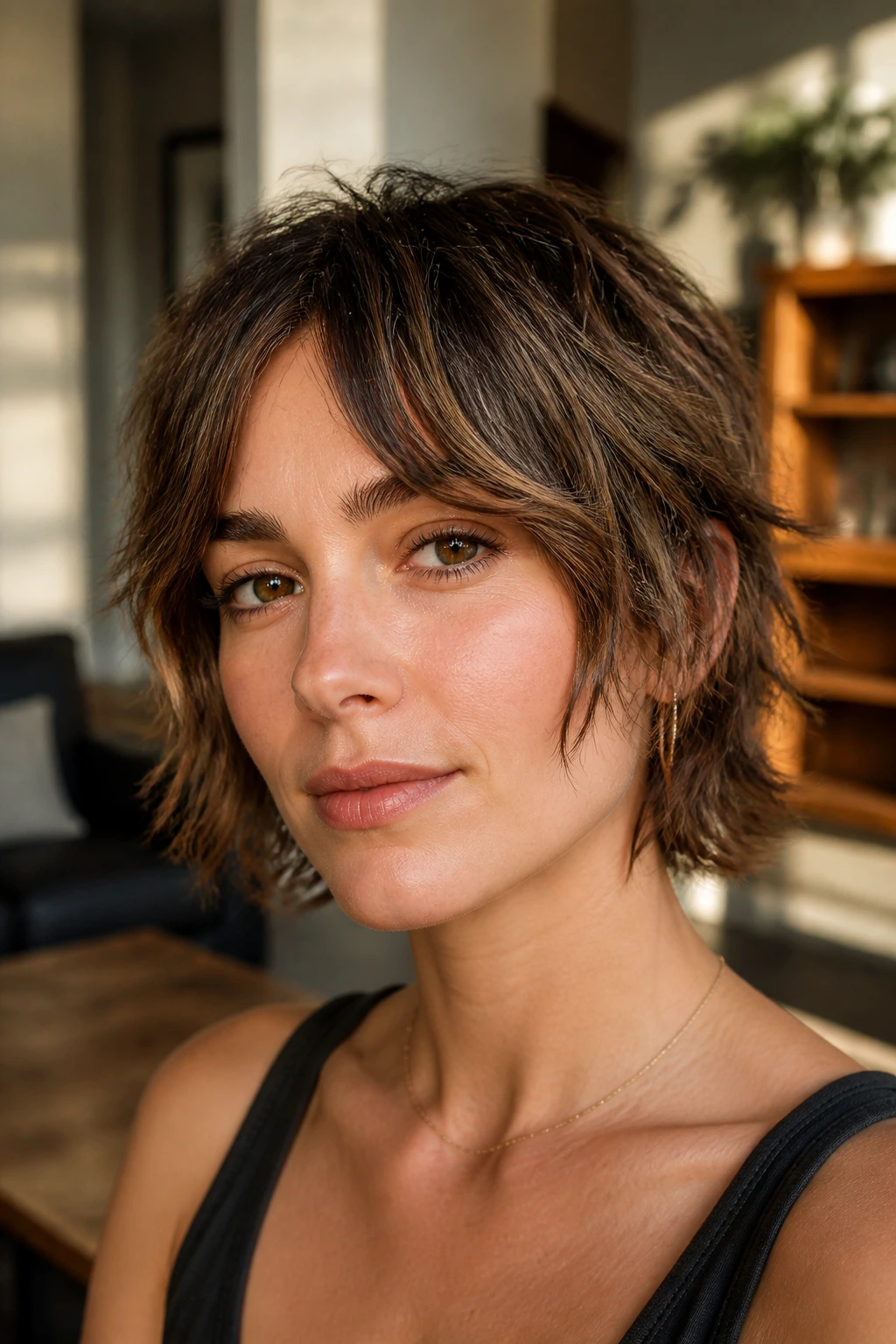
- Over-thinning the ends: The haircut starts to look airy in a bad way, almost transparent at the bottom. The fix is a stronger perimeter and softer internal layering.
- Starting the layers too low: If all the shortest pieces live near the ears, the crown still falls flat. Ask for lift higher up, around the top and crown area.
- Using heavy creams at the roots: The hair looks greasy and collapses before lunch. Keep richer products away from the scalp and use lighter mousse instead.
- Forcing a part that fights your cowlick: The front splits awkwardly and the top sits crooked. Let the hair settle where it naturally wants to go, then adjust slightly.
- Flat-ironing every bend out: Short thin hair can turn dull fast when every wave gets pressed away. Leave a little movement in the ends so the cut still reads as a shag.
Variations and Adaptations to Try
The Air-Dry Version: Keep the layers softer and the perimeter a little fuller. This version is for people who want to wash, scrunch, and go without a brush fight.
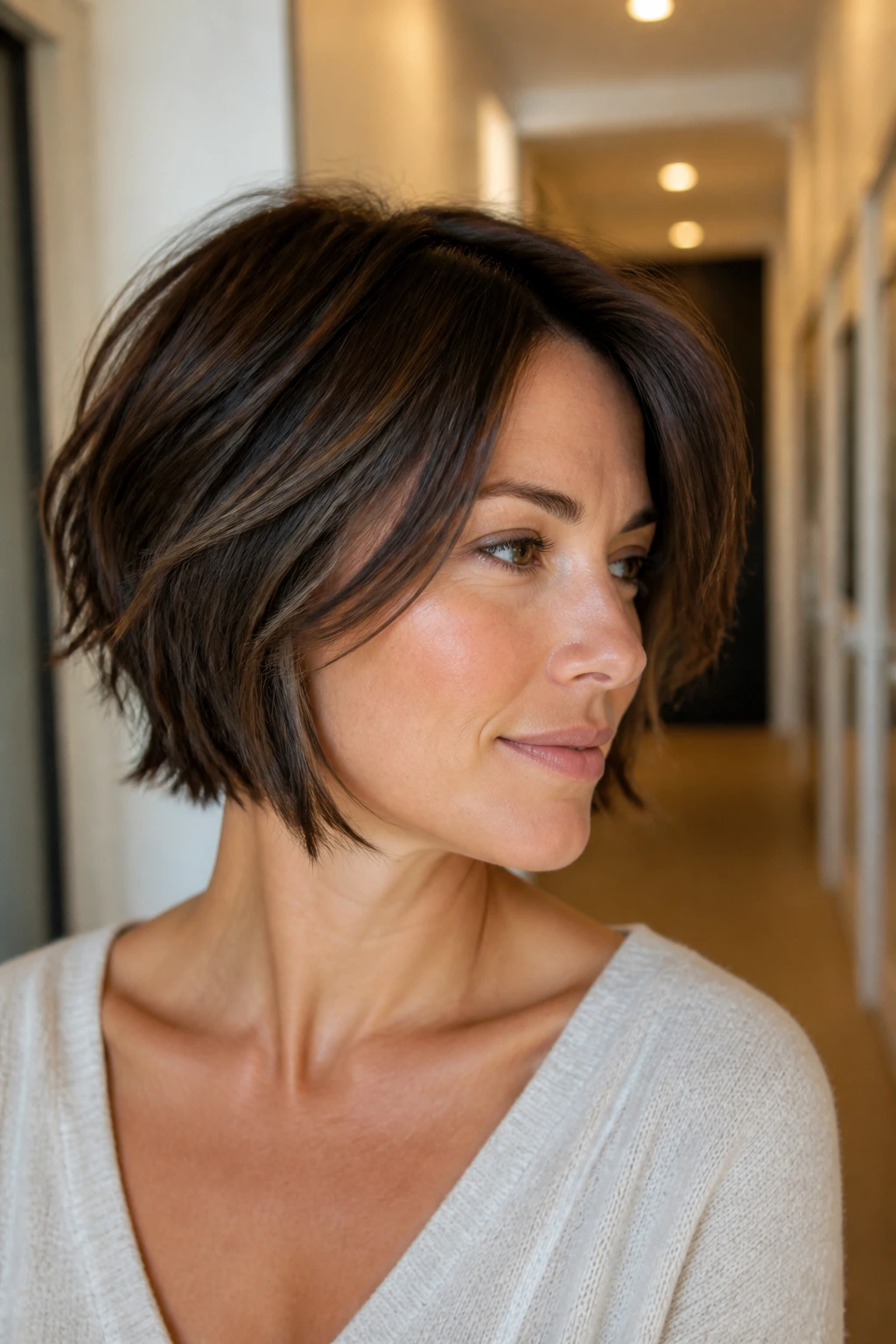
The Polished Office Version: Ask for longer bangs, a clean chin-length line, and less piecey texture. It still feels like a shag, but it looks smoother and calmer under bright office lights.
The High-Volume Crown Version: This one uses stacked layers at the back of the crown and a side part to build height. It works best when the top goes flat faster than the sides.
The Edgier Mini-Mullet Version: Leave a touch more length in back and shorten the crown just enough to create contrast. Keep the edges rounded so the result feels wearable, not theatrical.
The Grow-Out-Friendly Version: Use fewer short layers and keep the fringe around cheekbone level. This version grows out with less fuss and does not need a trim the second it starts losing shape.
Keeping the Shape Between Trims
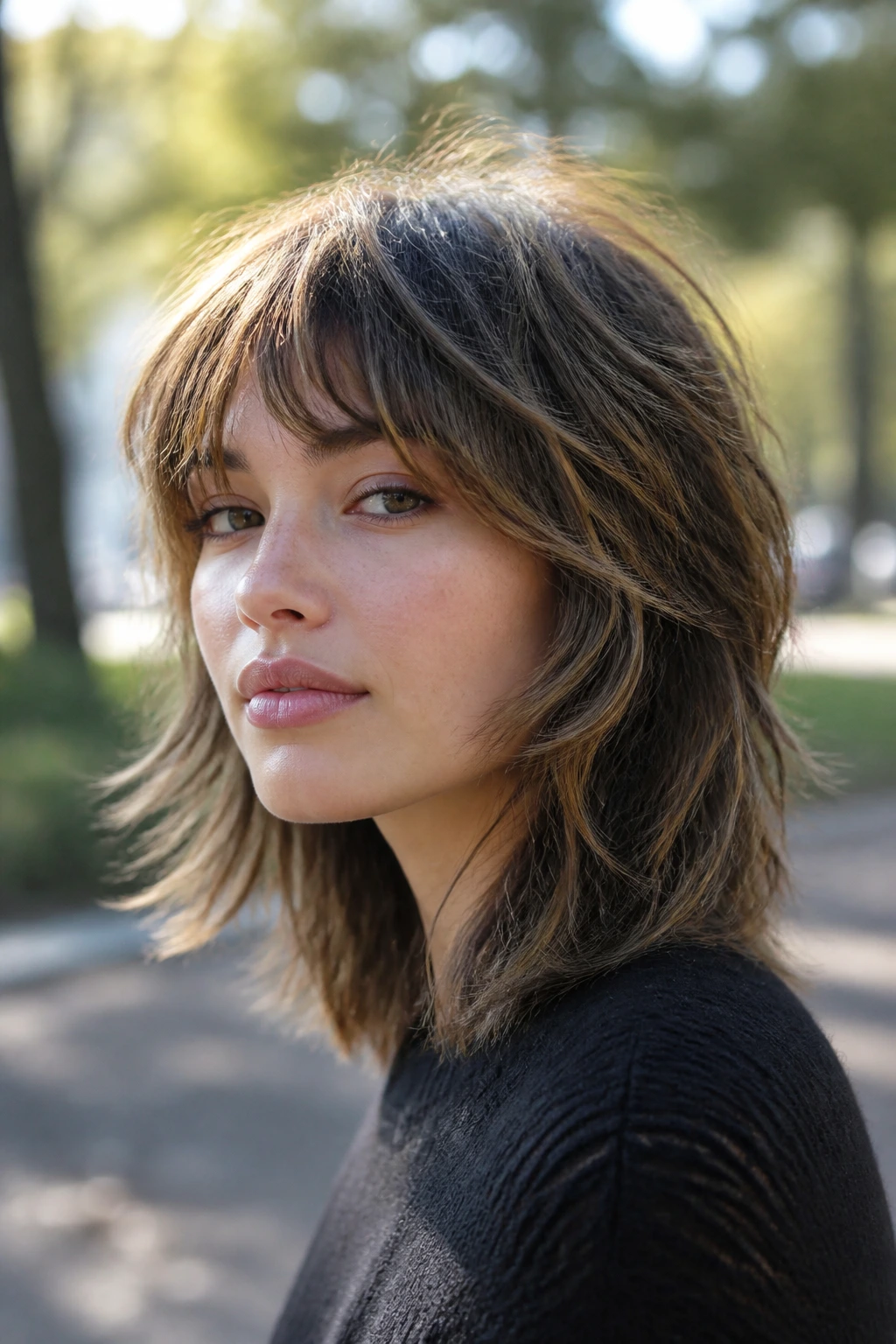
Short shags do not need constant salon attention, but they do need a rhythm. Most versions hold up best with trims every 6 to 8 weeks. If you wear baby bangs or a very short fringe, that front section may need a quick cleanup every 3 to 4 weeks, because bangs always show growth first.
The neckline matters too. If the back starts touching collars and flipping out in the wrong direction, the whole cut can start looking messy. A small nape trim can keep it tidy without touching the rest of the shape. That is often enough to buy another few weeks.
At home, sleep on a satin or silk pillowcase if your hair bends badly overnight. It cuts down on the flattened crown problem. A loose clip at the top can also help preserve lift. In the morning, refresh the roots with dry shampoo, then reshape only the front pieces.
Frequently Asked Questions
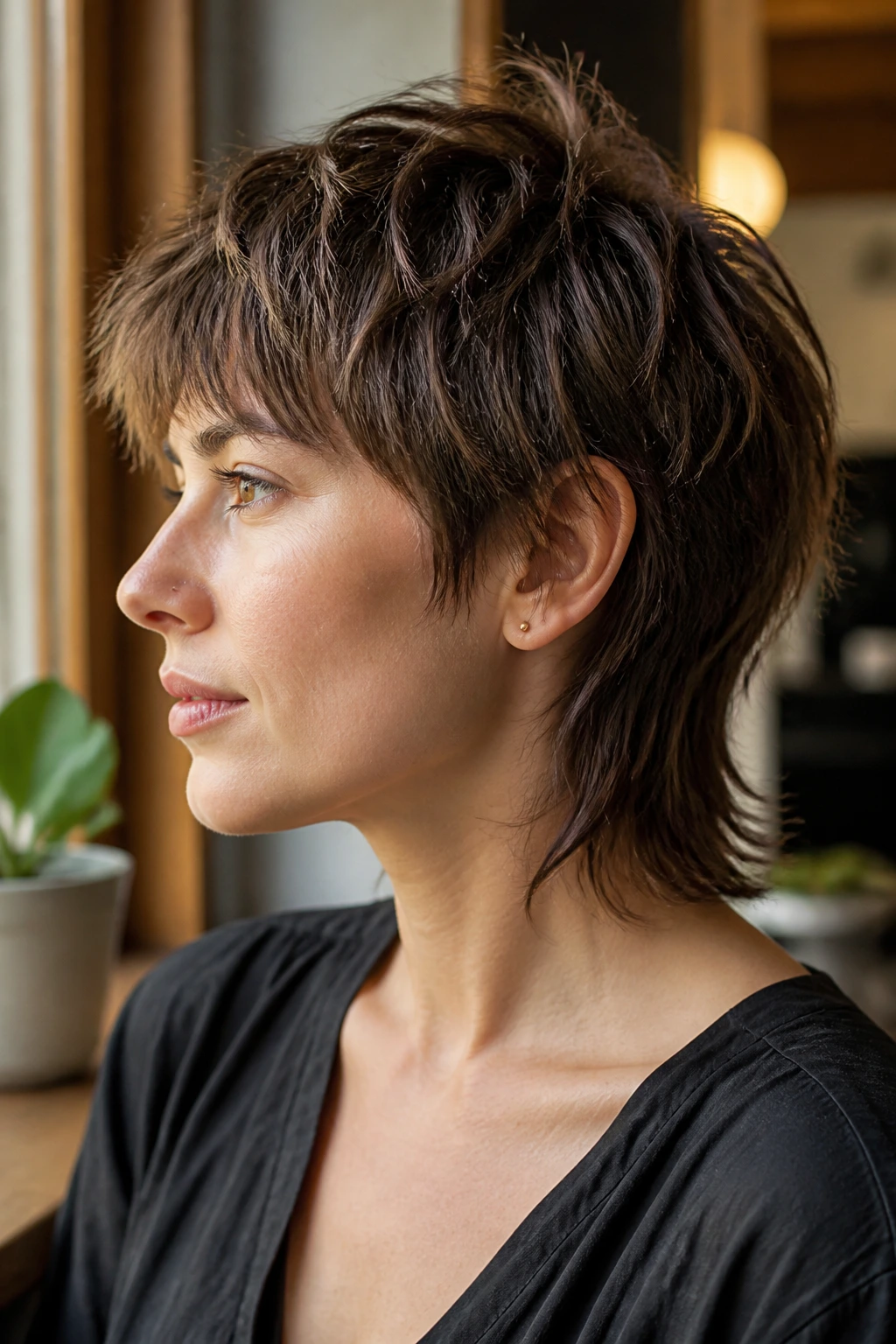
Does a shag haircut make thin hair look thinner?
It can, if the cut is too shredded. The better versions keep a frame at the bottom and put the texture where it supports the shape instead of exposing gaps.
Is a bob or shag better for short fine hair?
A bob gives more visible weight; a shag gives more movement. If your hair collapses fast, a bob shag hybrid usually wins because it keeps the outline while still building lift.
Can I get a shag if my hair is straight?
Yes. Straight hair often needs the shag shape even more, because it refuses to fake texture on its own. The key is not to over-thin the ends and leave the cut without a frame.
How often should I trim a short shag?
Plan on 6 to 8 weeks for most versions. Micro bangs or very short fringe need more frequent attention because they grow in front of your face first.
What should I tell my stylist if my hair is low-density?
Say you want movement without losing the outline. Ask for a perimeter that stays full and layers that focus on the crown and face rather than every inch of the length.
Do bangs help thin hair or make it worse?
Light bangs usually help because they create a front shape. Dense bangs can overwhelm short thin hair, so keep the fringe airy, side-swept, or curtain-style.
Can I air-dry a shag and still have it look good?
Yes, if the cut is built for it. Use a little mousse, clip the crown briefly while it dries, and leave the ends alone so they keep a soft bend.
What if my hair is so thin that layers show scalp?
That usually means the layers are too short or too high. Go back toward a bob-based shag with a cleaner perimeter and fewer aggressive cuts through the top.
Will a shag work with glasses?
Often, yes. Cheekbone-length fringe, side-swept bangs, and tapered sides tend to play nicely with frames because they keep the hair from crowding the temples.
The Cut That Keeps Its Shape
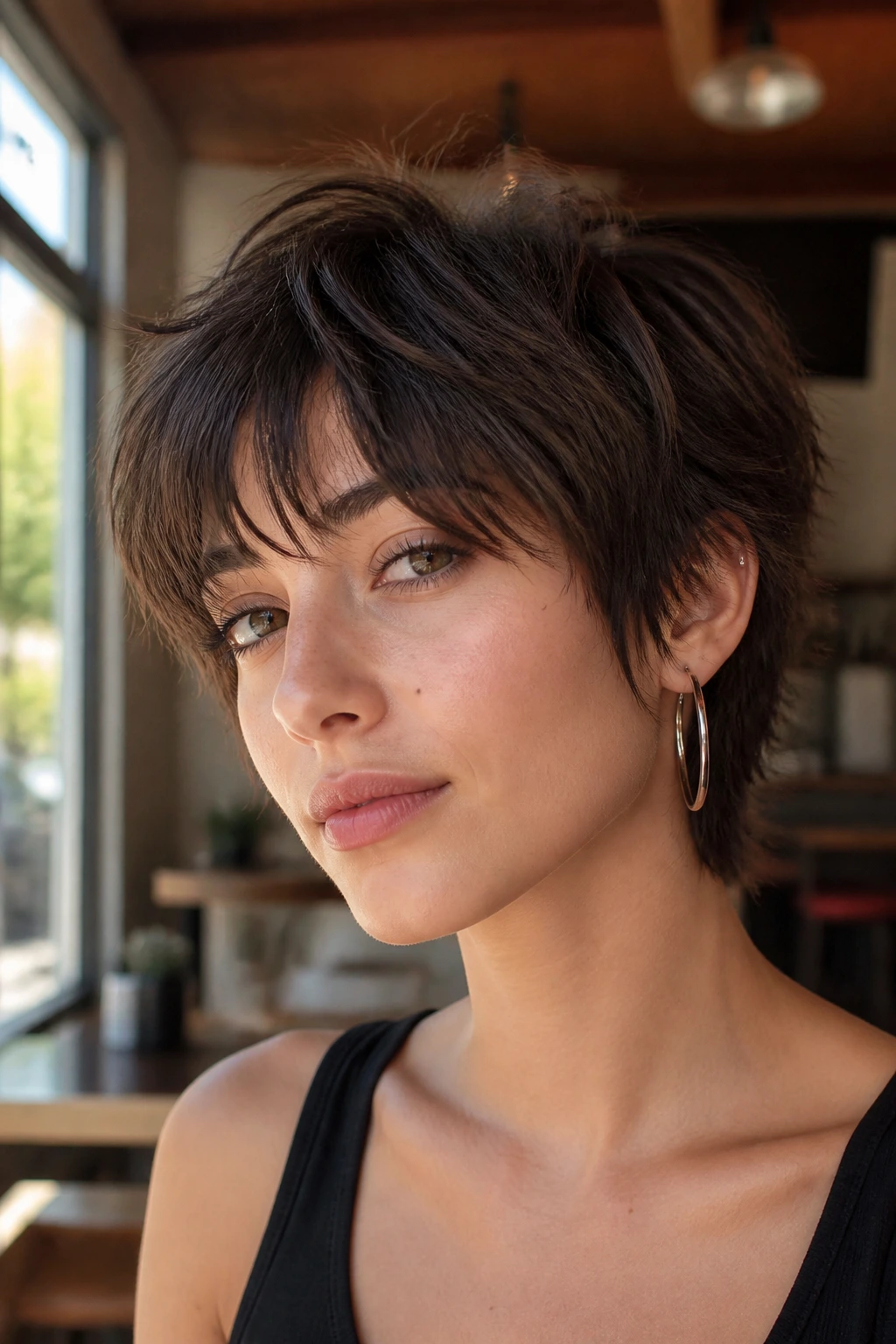
Short thin hair does not need to be rescued by endless styling. It needs a shape that keeps a little structure, a little lift, and enough edge that the ends do not disappear. That is what the better shag haircuts do. They give the crown room, protect the perimeter, and make movement look intentional instead of accidental.
If you are choosing between several versions, start with your real habits. If you air-dry, lean softer. If your roots collapse, ask for more crown lift. If your hairline feels sparse, choose a fringe that works with the front instead of fighting it. The right shag is not the loudest one. It is the one that still looks good when you are five minutes out the door and the mirror is not being generous.
