



The best highlight ideas for Asian women rarely shout. They work by slipping light into the right places — the hairline, the part, the ends that move when you turn your head — so dark hair starts to look richer, softer, and more dimensional without losing its depth. Done badly, highlights on Asian hair can turn stripey in a hurry. Done well, they look like the color was always supposed to be there.
That difference matters because Asian hair is not one thing. It can be pin-straight or coily, fine or thick, dense or airy, jet black or deep brown or warm chestnut, and the undertone underneath all that darkness can swing warm, cool, or somewhere in between. A good highlight formula respects that reality. It doesn’t fight the base color. It uses it.
The shades that work best tend to do one of three things: warm up the face, add movement through the mids and ends, or create contrast so subtle that people notice the shine before they notice the color. That’s the sweet spot. Not chunky stripes. Not flat, one-note brown. Real dimension, the kind that looks better on day eight than it did in the salon mirror.
Why These Highlight Ideas Work on Dark Asian Hair
Dark bases give you room to play. A level 2 or 3 base — the black or near-black that many Asian hair types naturally carry — can hold caramel, bronze, beige, copper, ash, or even muted fashion colors without losing depth. The trick is not to blast the whole head lighter. It’s to place the brightness where it changes the shape of the hair.
Fine placement beats chunky stripes nine times out of ten. Babylights, money pieces, ribbons, and soft balayage all read cleaner on dark hair than thick, obvious sections. Chunky highlights can work, but they need a clear reason to exist. Otherwise the result looks like someone drew on the hair with a marker.
Tone matters more than the label on the box. Beige, mushroom, ash, honey, bronze, and copper all behave differently on black and deep brown hair. The same “light brown” formula can land warm and glossy on one head and muddy on another. That’s why the undertone underneath the highlight matters as much as the highlight itself.
Maintenance changes with contrast. The lighter you go, the more the grow-out and toner schedule matter. A subtle mushroom balayage can sit quietly for months. A champagne money piece needs more attention, especially around the face where every millimeter shows.
Movement makes the color read better. Waves, bends, layers, and curtain bangs all help highlights catch the light. On very straight, very sleek hair, tiny details like babylights or micro-ribbons often look better than broad streaks because the line stays clean.
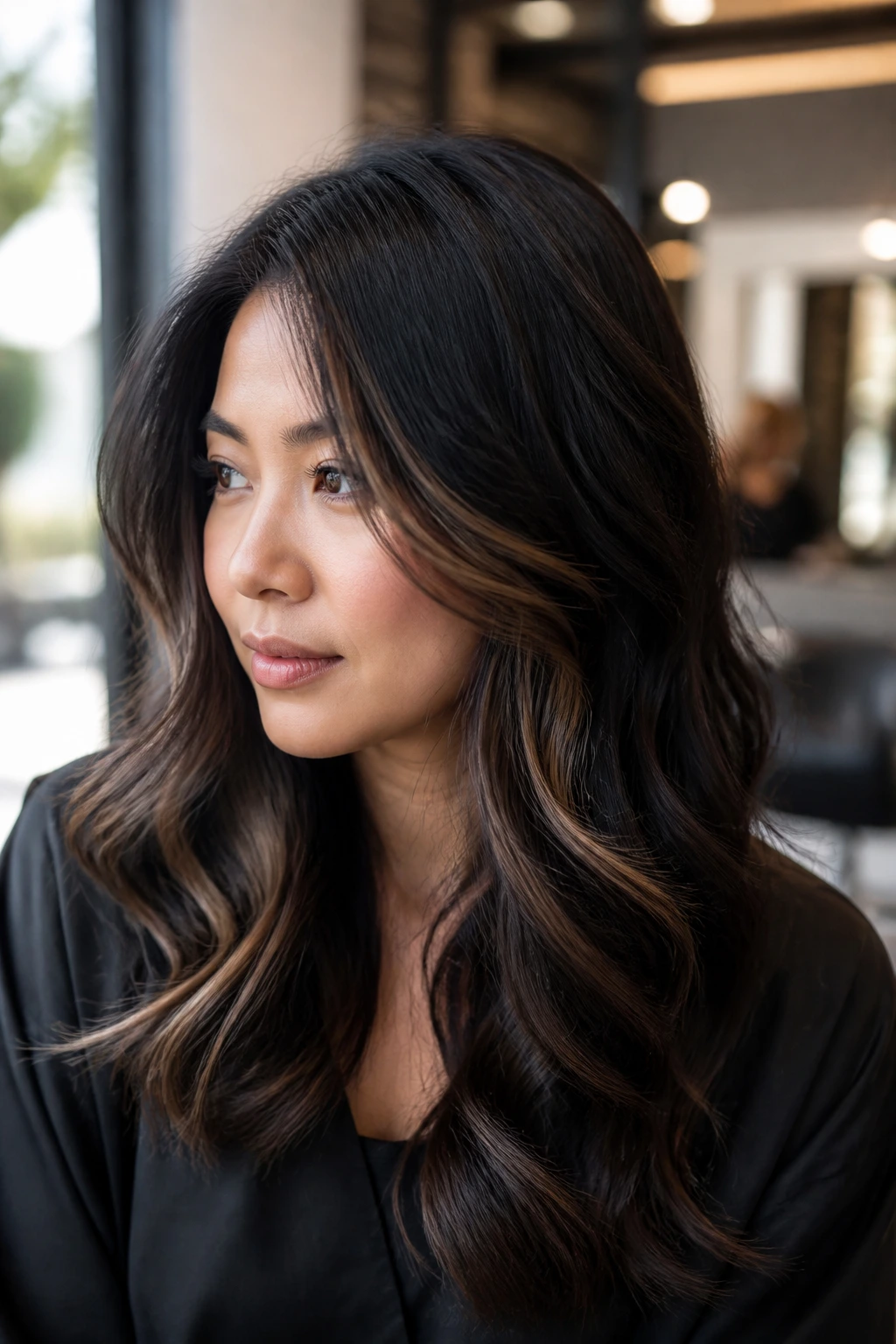
1. Soft Caramel Face-Framing Ribbons
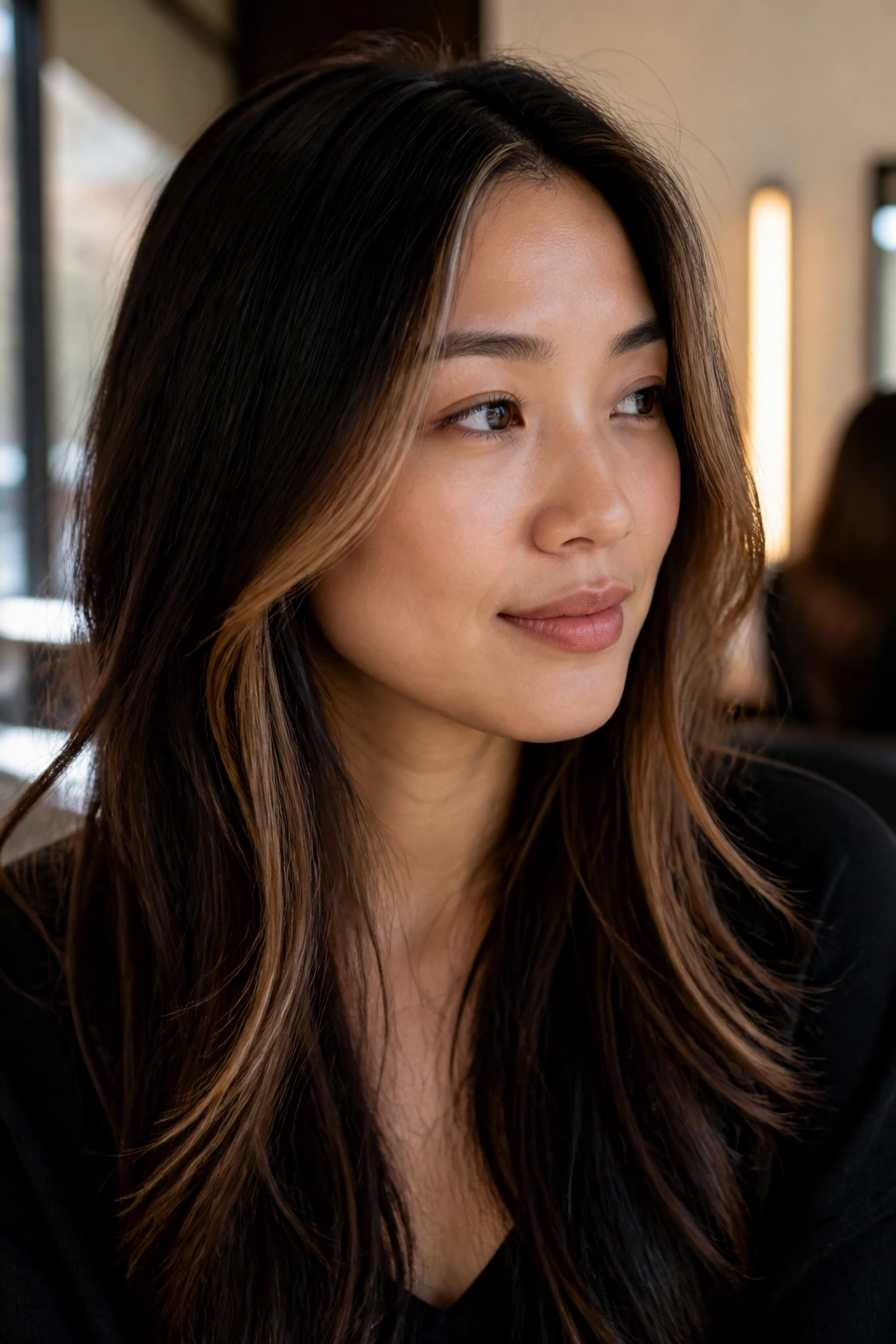
A few thin caramel ribbons around the face can change the whole mood of dark hair. They brighten the cheekbones, soften a strong hairline, and make black or deep brown hair feel less heavy without turning the whole head lighter. I like this idea on long layers and curtain bangs because the pieces move when you do, which keeps the color from looking stiff.
What to ask for
Ask for two to four face-framing pieces lifted to a warm caramel level, then blended back into a darker root. Keep the brightest pieces about 1 to 2 inches from the hairline so they frame the face without becoming a solid stripe. On black hair, a level 6 or 7 caramel usually gives enough contrast to show up cleanly.
This one is a favorite if you want a visible change that still grows out politely. The dark base does most of the work; the highlight just points the eye where you want it.
2. Mushroom Brown Balayage
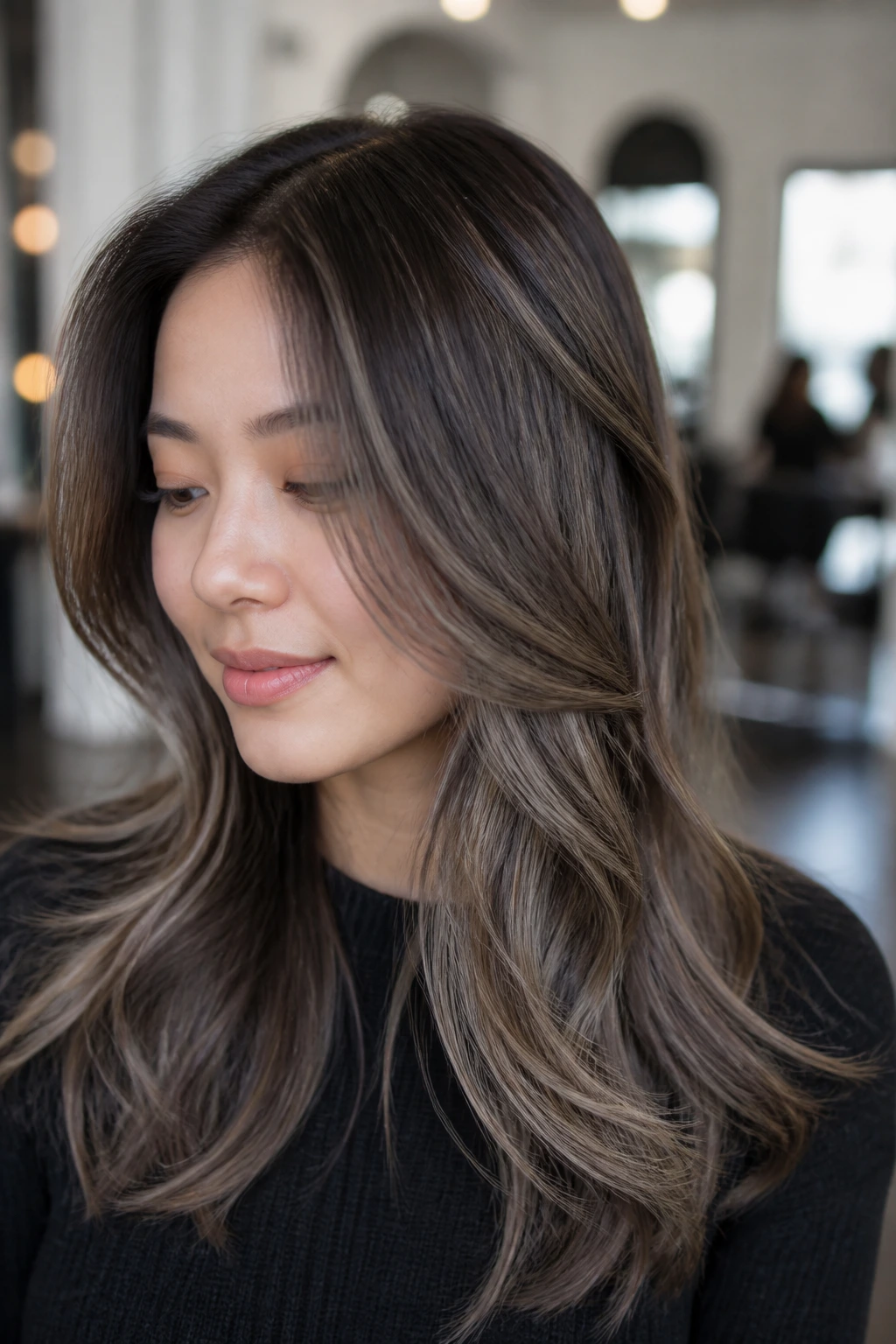
Mushroom brown is the quiet one in the room, and that’s why it works. It sits between brown and beige with a cool, slightly smoky finish, so it never turns into that flat reddish brown that can happen when dark hair is lifted and left on its own. On Asian hair with naturally warm undertones, mushroom brown cools the temperature down without making the whole head look gray.
Quick facts
- Best on medium to long hair where the blend has space to show.
- Ask for a root shadow and cool beige toner.
- Works especially well on neutral or cool undertones.
- Grows out cleanly because the root stays darker.
If you want hair that looks polished in daylight and even better indoors, this is a smart place to land. The color reads expensive because it doesn’t try to be loud.
3. Honey Beige Babylights
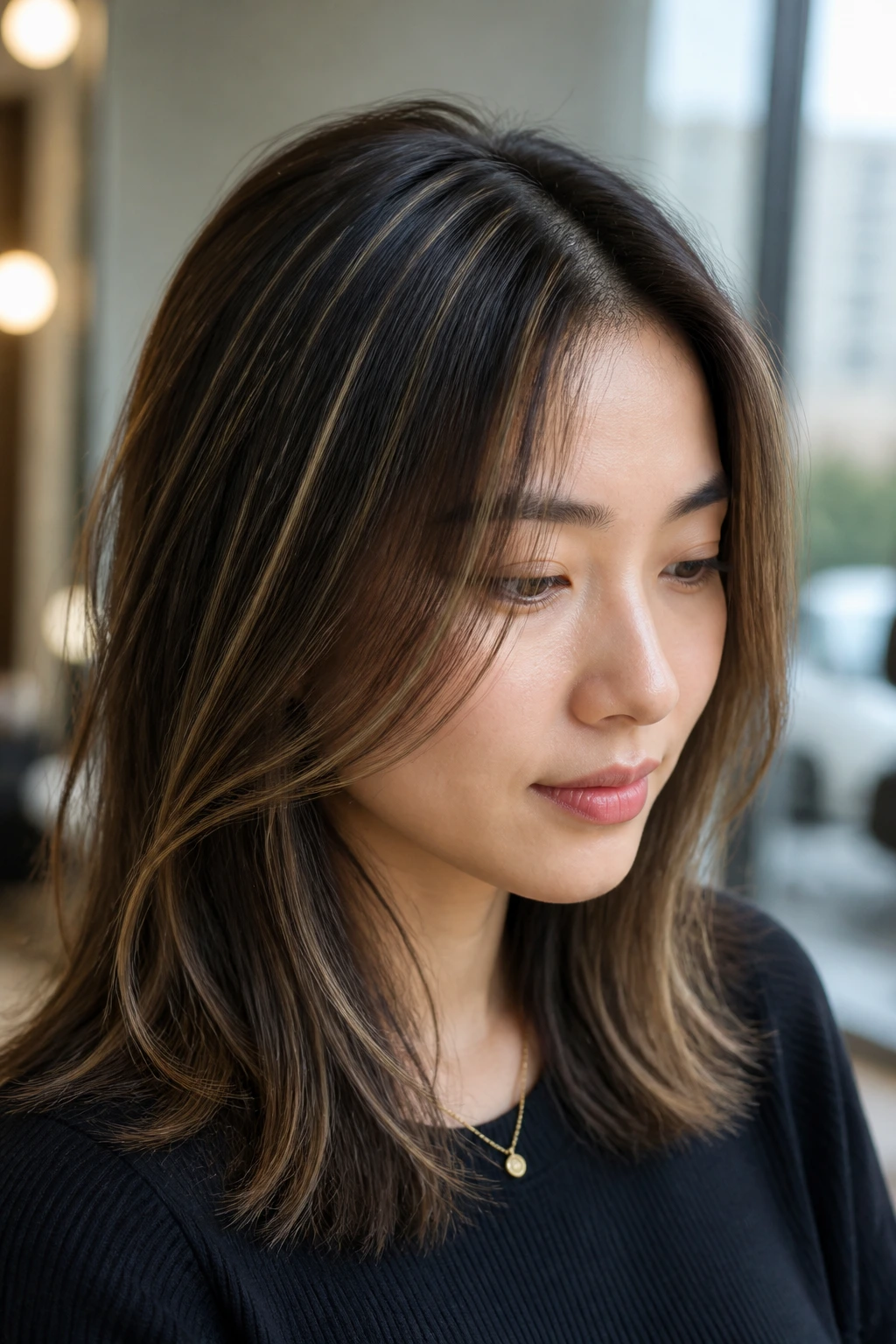
Want brightness without chunky stripes? Babylights are the answer. They’re those ultra-fine woven highlights that look like the hair has been kissed by sun and filtered through a clean gloss. On dark Asian hair, honey beige babylights create a soft shimmer across the top layer, which is a lot prettier than broad blocks of blonde trying to fight a black base.
Why the fine weave matters
The smaller the highlight, the softer the grow-out. That matters a lot on dark hair, because contrast shows fast when roots come in. Honey beige sits between gold and neutral beige, so it brightens without going yellow. Ask your colorist for tiny foils through the crown and part line, then keep the pieces a touch lighter around the front.
This look is especially good on sleek bobs, silk presses, and straight layers. Tiny strands catch light better than big sections when the hair lies flat.
4. Espresso Lowlights with Glossy Shine
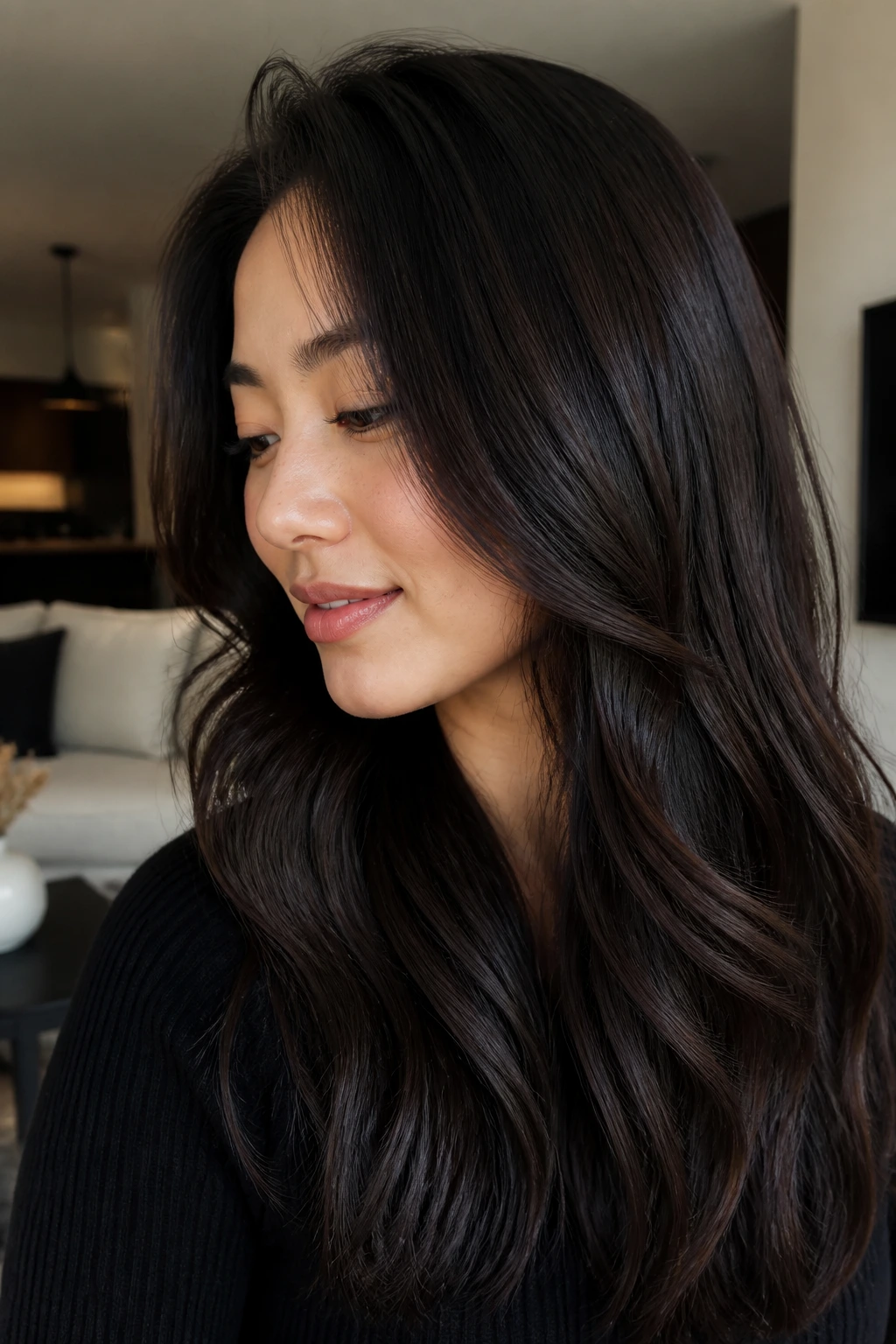
Sometimes the smartest move is not lightening at all. Espresso lowlights add shadow back into hair that’s been highlighted too much, or into naturally dark hair that looks a little flat and one-note. Think of them as depth lines. They make the hair look thicker, fuller, and calmer.
A good lowlight job is subtle. You should notice movement before you notice individual strands. On Asian hair, where density can be high and the surface can read glossy but uniform, a few espresso ribbons through the mids and underneath the top layer create that shadow that makes the brighter pieces stand up.
5. Chestnut Money Piece
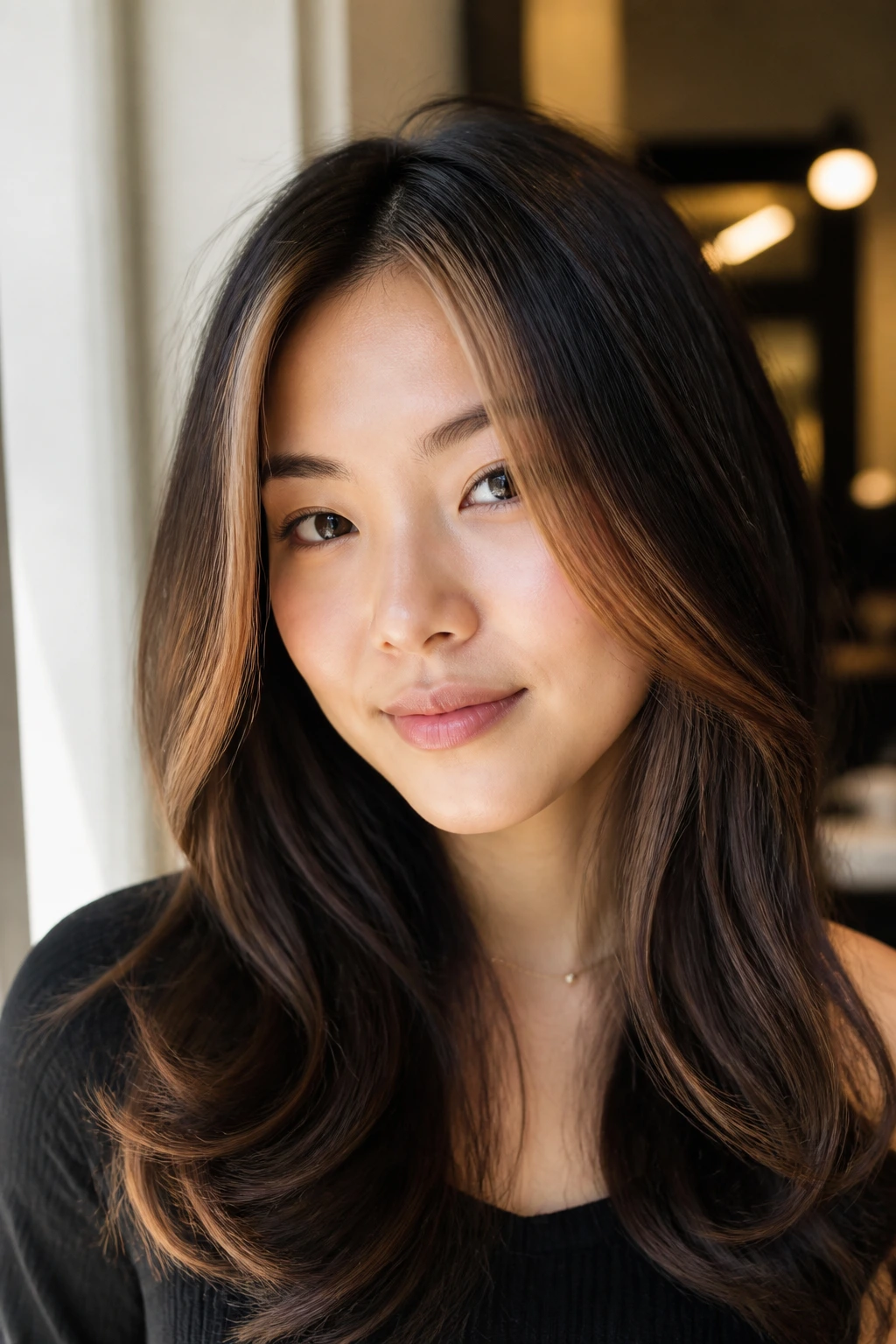
A chestnut money piece gives you the bright front section people love, but in a softer tone that doesn’t scream for attention. Instead of platinum or high-contrast blonde, you get a rich brown-gold front panel that warms the face and still feels believable against dark hair. It’s a good fit if you want to see the color every time you look in the mirror, but you don’t want the rest of your hair to be the main event.
Best on
- Round and heart-shaped faces that want a little lift around the cheeks.
- Curtain bangs or long face-framing layers.
- Hair that’s dark brown or black but can handle a small lift to level 6 or 7.
The chestnut version is gentler than blonde, but it still reads intentional. That matters. A face frame should look like a design choice, not a rescue operation.
6. Smoky Ash Brown Melt
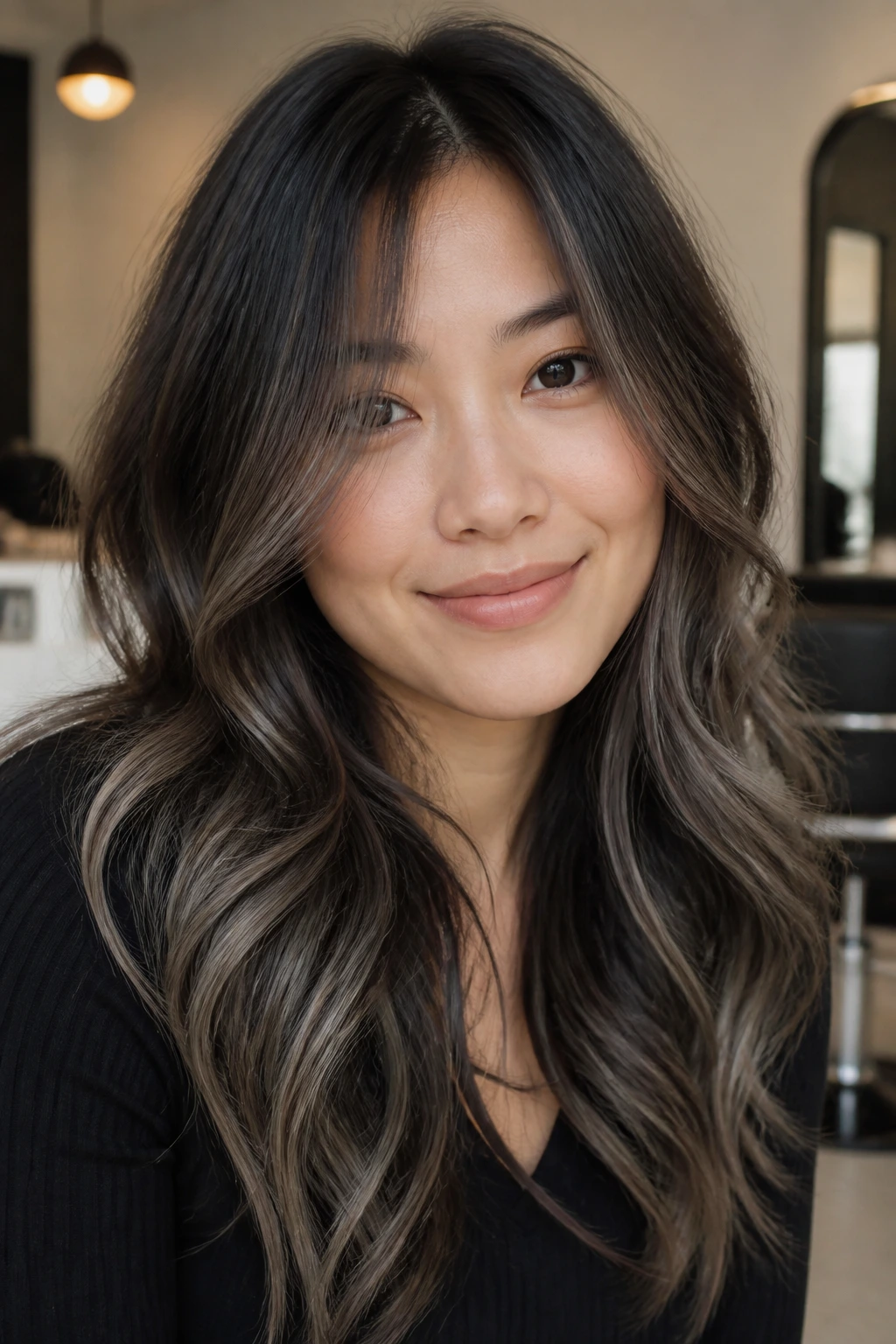
A smoky ash brown melt is for the person who likes cool tones, clean lines, and zero brass. The color shifts from darker roots into soft ash-brown mids, then blurs again at the ends so nothing looks chopped up. On dark Asian hair, this works best when the colorist controls the lift carefully and tones away the red-orange stage instead of pretending it isn’t there.
There’s a nice restraint to this look. It’s not trying to become blonde. It’s just giving the hair a cooler, more dimensional edge. On straight, blunt cuts, that smoky gradient looks especially sharp because every small shift in tone is visible.
7. Buttery Blonde Ends
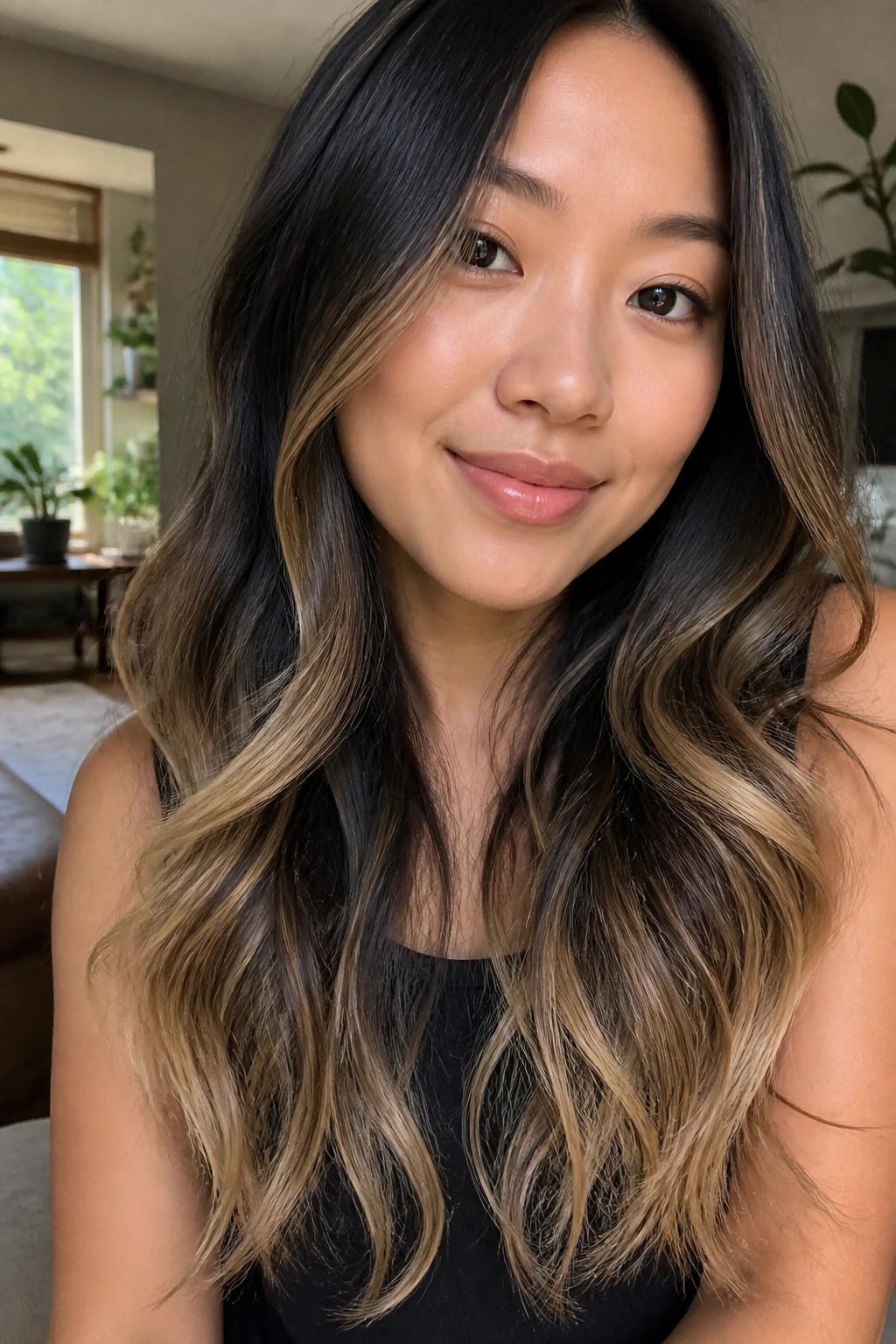
The blonde doesn’t need to start at the roots. In fact, on dark hair, that’s often the wrong move. Buttery blonde ends keep the lightness where it has room to breathe — at the bottom, where waves and layers can show it off. The contrast against a dark top section gives the whole style a cleaner shape.
A blunt truth: this idea needs healthy hair. If the ends are already fragile, dry, or overprocessed, the bright blonde will expose every rough patch. If the hair can take it, though, the effect is gorgeous on long layers and soft curls, especially when the ends hit a warm buttery beige rather than a pale, icy tone.
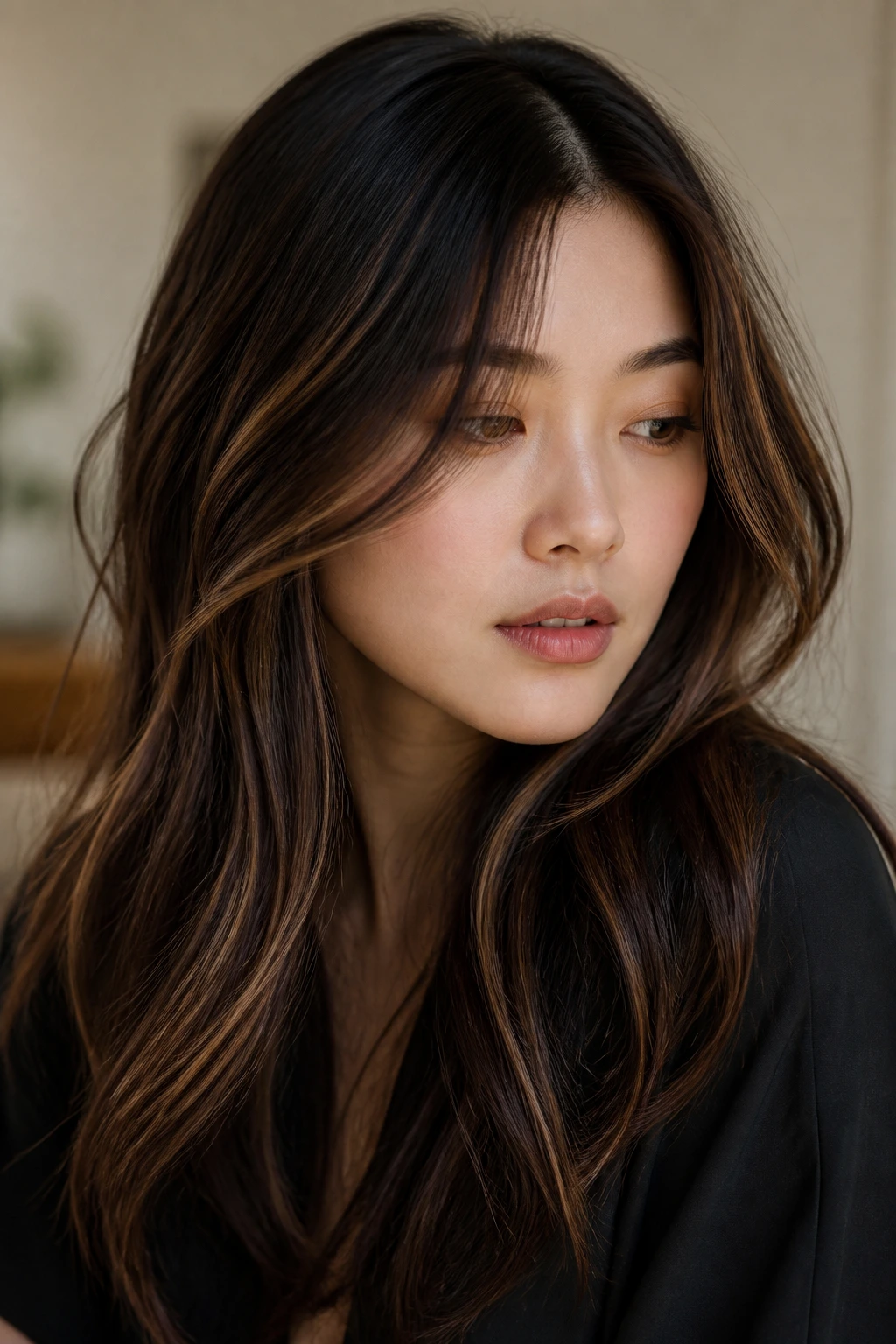
8. Cinnamon Ribbon Highlights
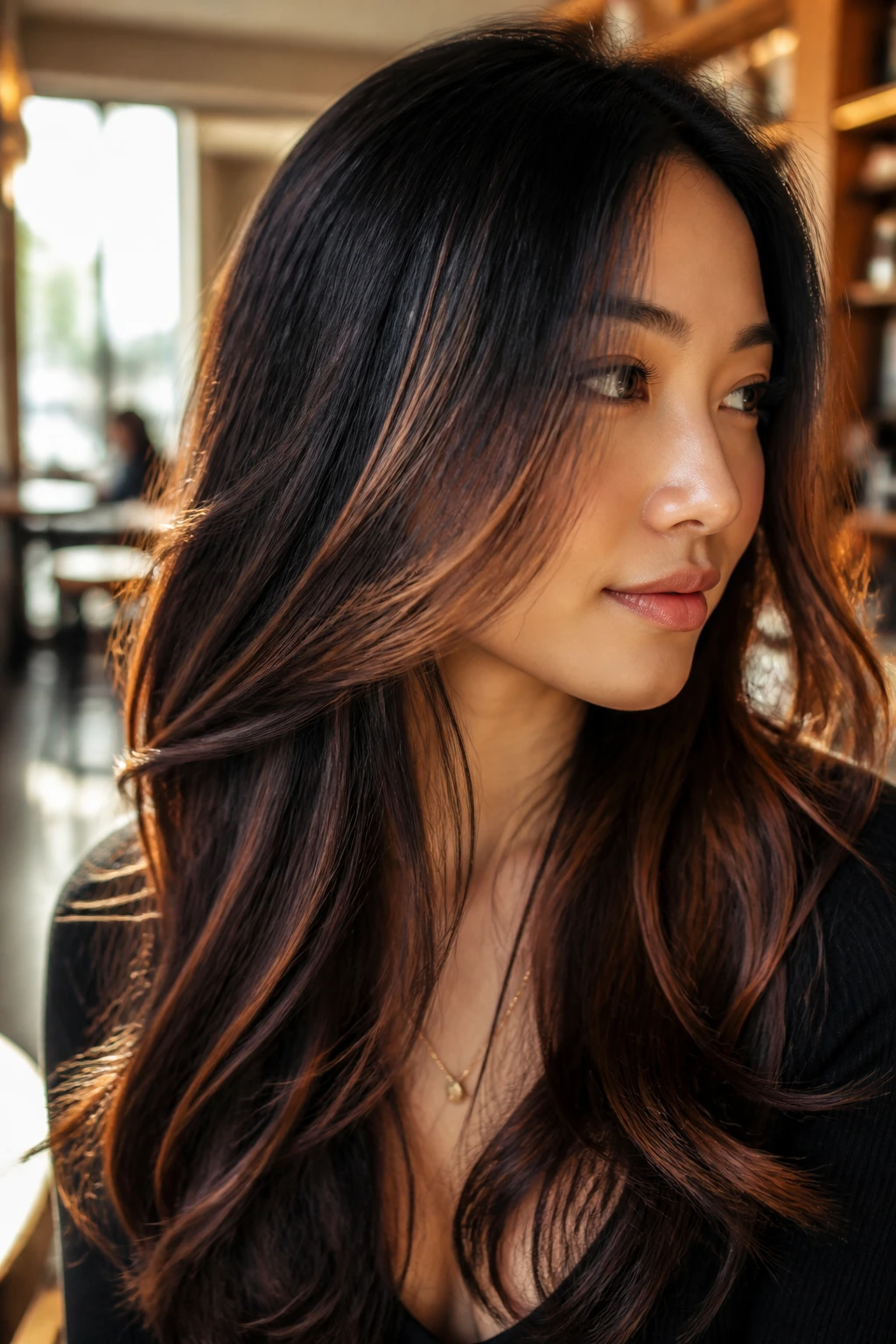
Why do cinnamon ribbons look so good on dark hair? Because they echo the natural warmth that many Asian hair types already carry, but they turn it into something richer and more deliberate. Cinnamon lives between brown and red. It gives movement without going neon, and it avoids the orange problem that ruins a lot of warm highlight jobs.
The best version is hand-painted through the mids and ends so the ribbons peek in when the hair moves. On waves and curls, the color looks even better because each bend catches a different part of the tone. It’s one of those shades that looks subtle in a still photo and much better in motion.
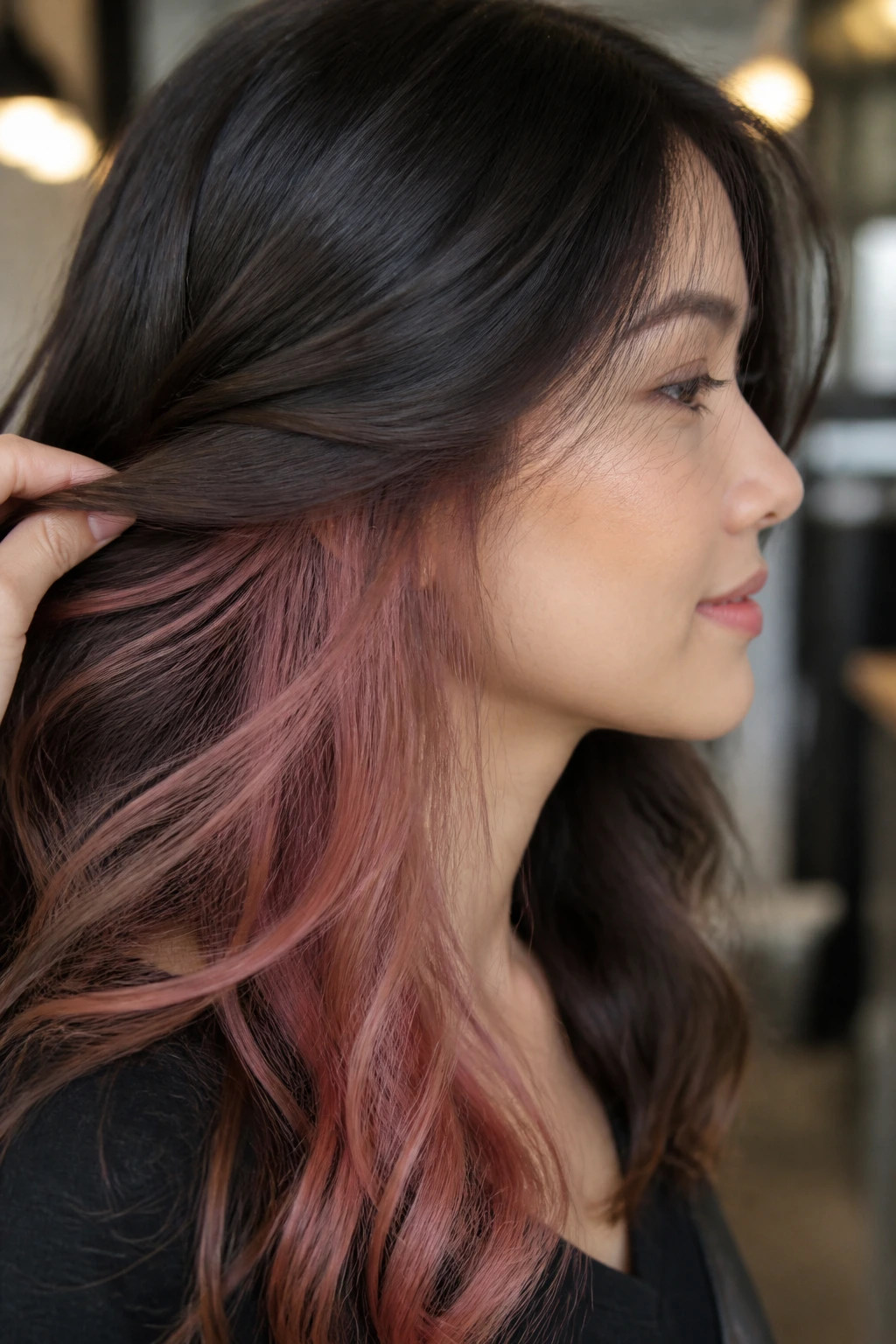
9. Rose Gold Peekaboo Panels
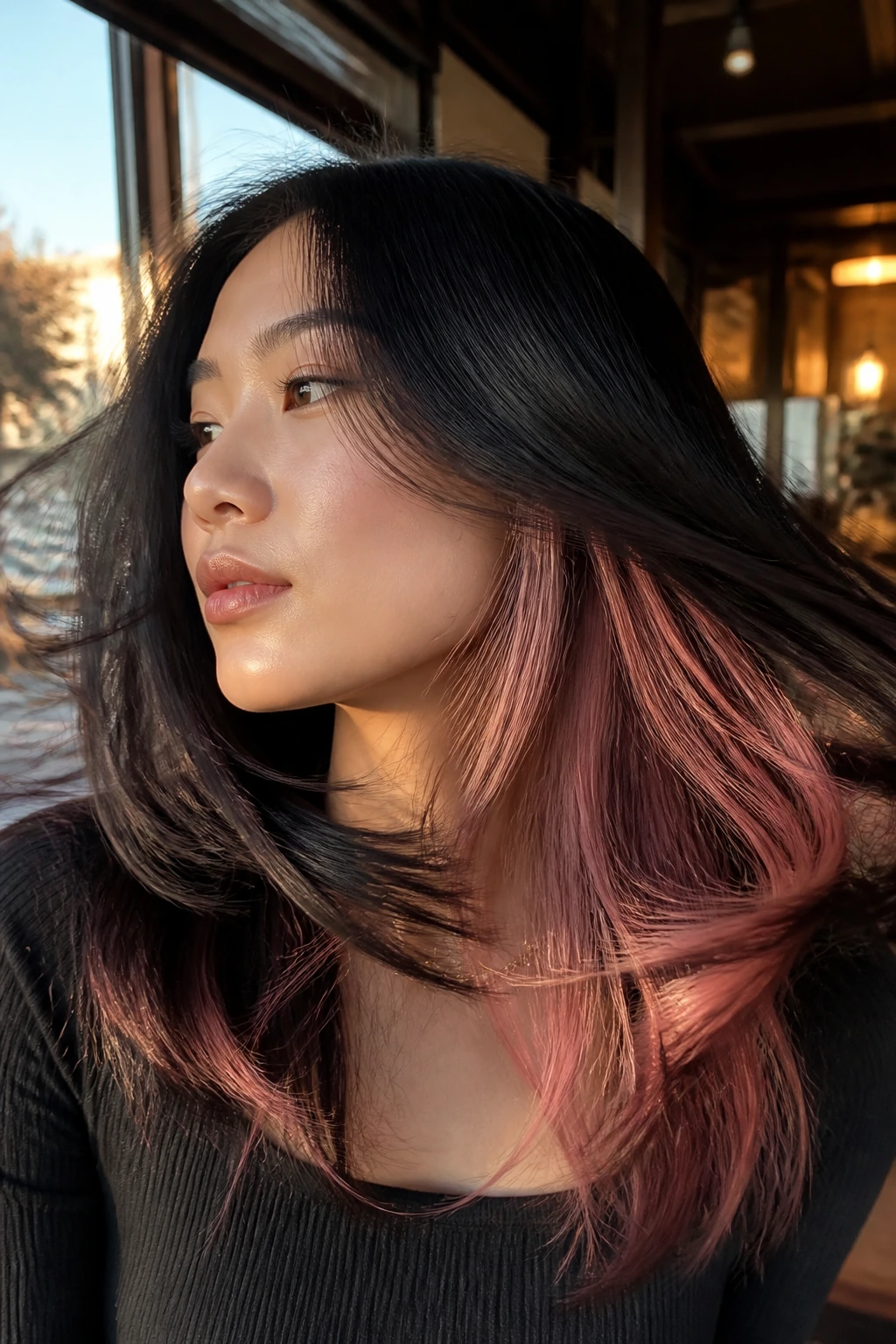
Rose gold peekaboo panels are the sneaky one in this list. They sit under the top layer, so you only see them when the hair flips, lifts, or gets pinned back. That makes them a strong choice if you want a fashion color without living in full-on vivid maintenance.
The trick is keeping the rose soft. Too pink, and it starts looking loud against dark hair. Too gold, and it disappears. The sweet spot is a muted metallic rose with a beige base. It works especially well on lob lengths, half-up styles, and loose braids where the underlayer gets a chance to flash.
10. Vanilla Chai Balayage
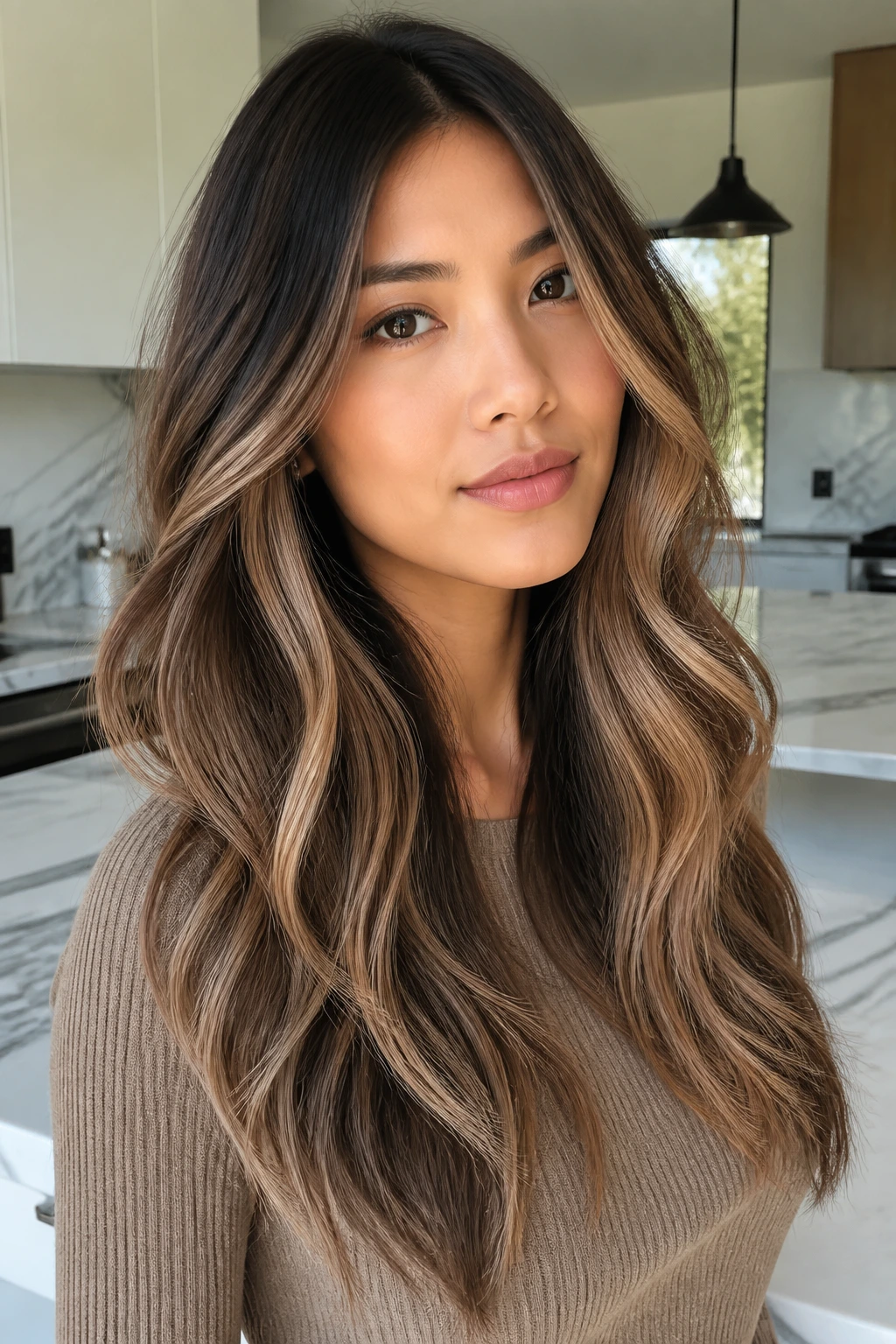
Vanilla chai balayage is what happens when beige, cream, and a touch of warm spice meet in the middle. It reads lighter than mushroom brown but softer than blonde, which is why it flatters dark hair so nicely. You get dimension without the sharp edge that can come from high-contrast pieces.
This look is good for people who want a polished, wearable lift that doesn’t fight warm skin. The key is keeping the tone creamy, not yellow. Ask for a beige toner over lifted pieces and a darker root melt so the color softens as it grows out.
11. Cool Mocha Balayage
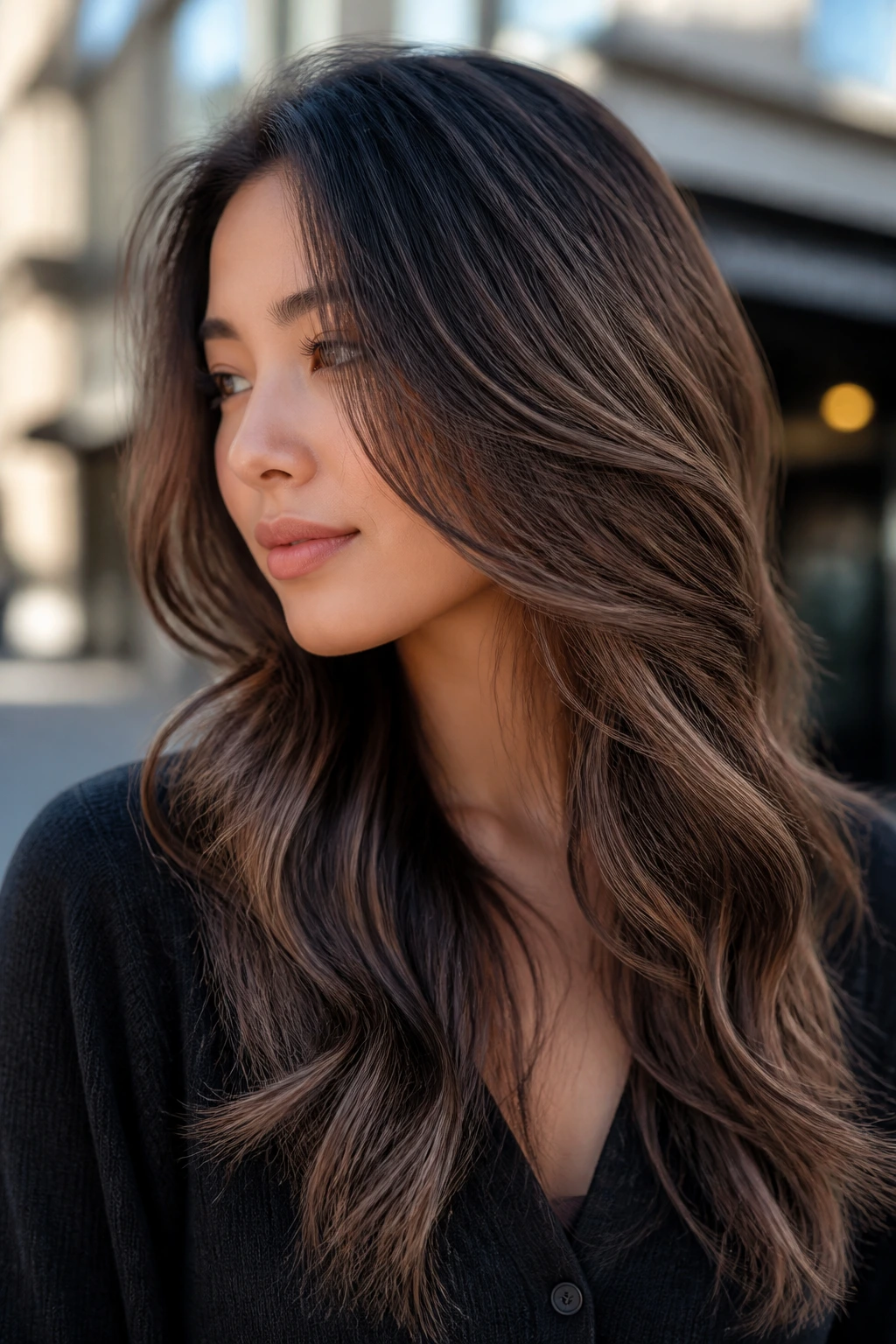
Cool mocha balayage has less caramel and more shadow. It’s a brown-on-brown idea with cool undertones that keep the whole look from going red. On Asian hair, that matters. Natural warmth underneath dark hair can push color in a direction you didn’t ask for, and mocha’s cooler base reins that in.
I like this on long hair with loose layers because the tone shift is subtle enough to look natural but still distinct in sunlight. It’s not trying to become a blonde moment. It’s giving the hair a clean, rich finish that still has movement.
12. Copper-Kissed Layers
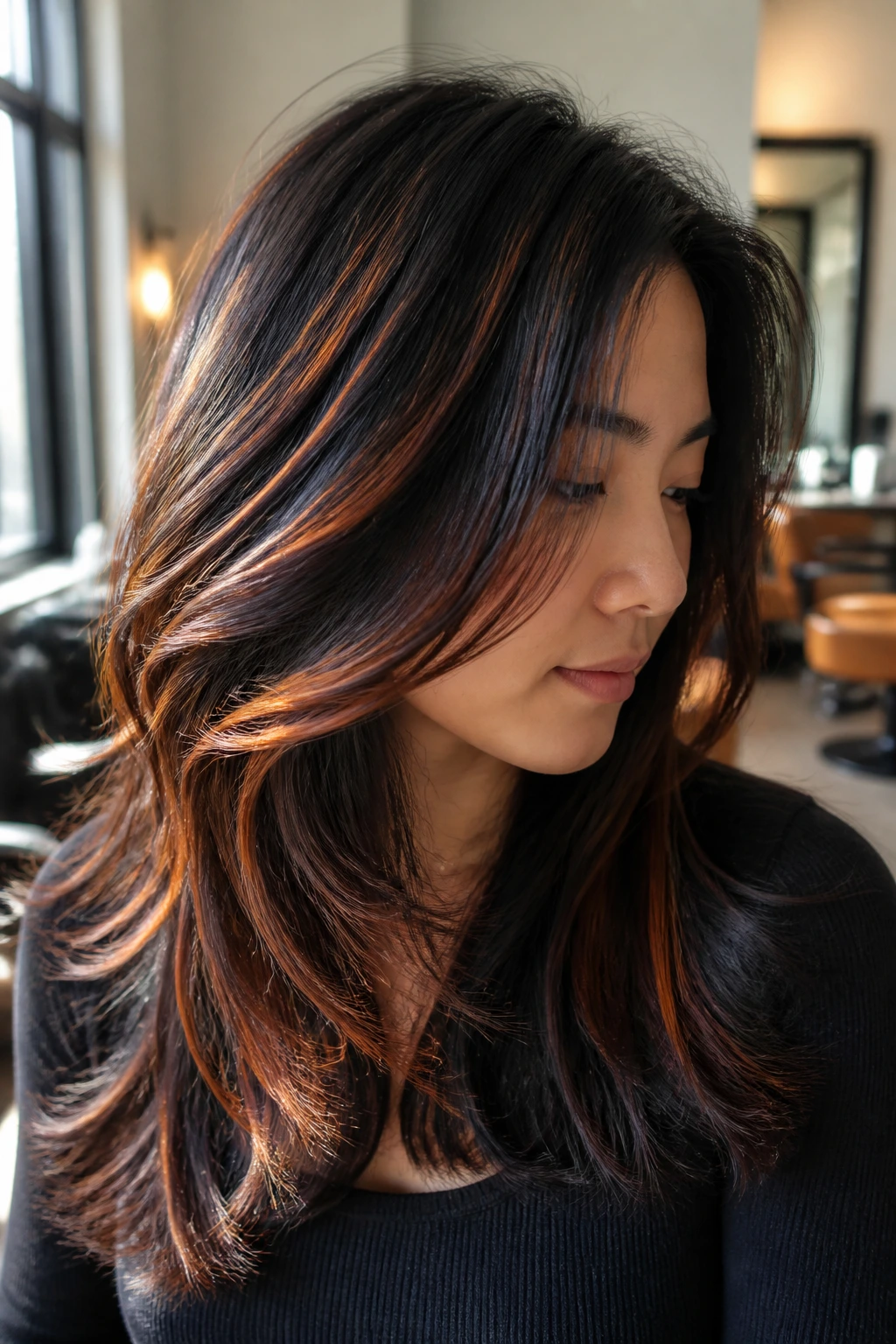
Copper on dark Asian hair should never look like a single block of orange. The better version is a series of copper-kissed layers — thin, warm ribbons that move through the cut and glow when light hits them. On layered hair, those ribbons make the shape look lighter and more alive.
What makes copper work
Copper needs controlled lift. On very dark hair, that usually means pre-lightening enough to expose the warm gold underneath, then toning into copper rather than throwing a bright red-orange dye on top. That’s how you get shine instead of loudness. It’s a flattering direction for anyone who likes warmth but wants something more vivid than caramel.
This shade does ask for upkeep. A gloss every few weeks keeps it from fading into a flat brown.
13. Champagne Face Frame
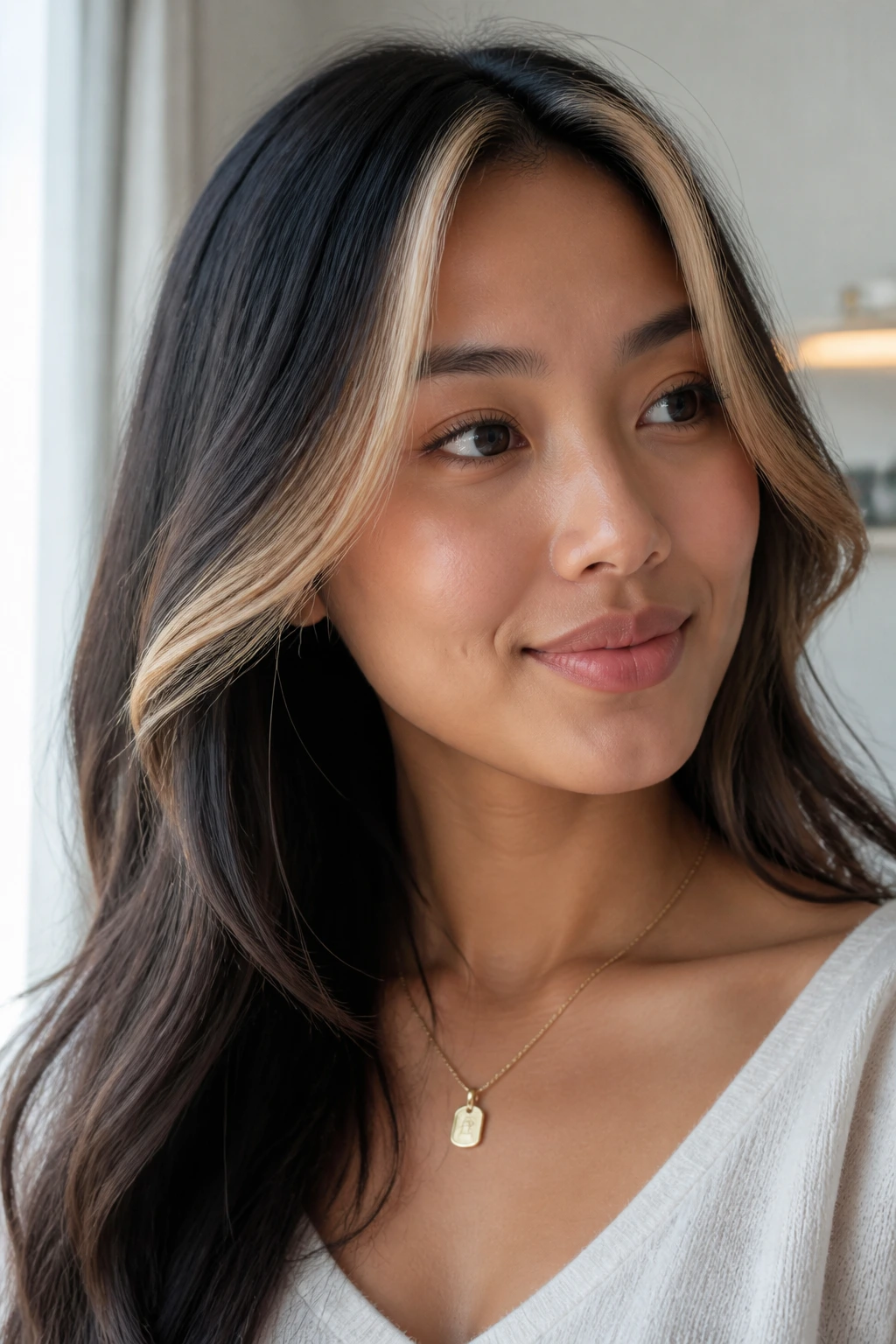
Champagne is the lighter, more polished cousin of beige blonde. Around the face, it can make dark hair look instantly more open and bright without forcing the rest of the head to follow. It’s a good move if you want brightness that reads crisp and clean rather than golden.
Best if you want:
- A face frame that shows up in photos.
- Brightness that looks good in straight styles.
- Less commitment than full-head blonde.
- A shade that sits between beige and soft gold.
Champagne works best when it stays luminous, not yellow. Keep the rest of the hair muted and the whole look feels balanced.
14. Tiger Eye Highlight Blend
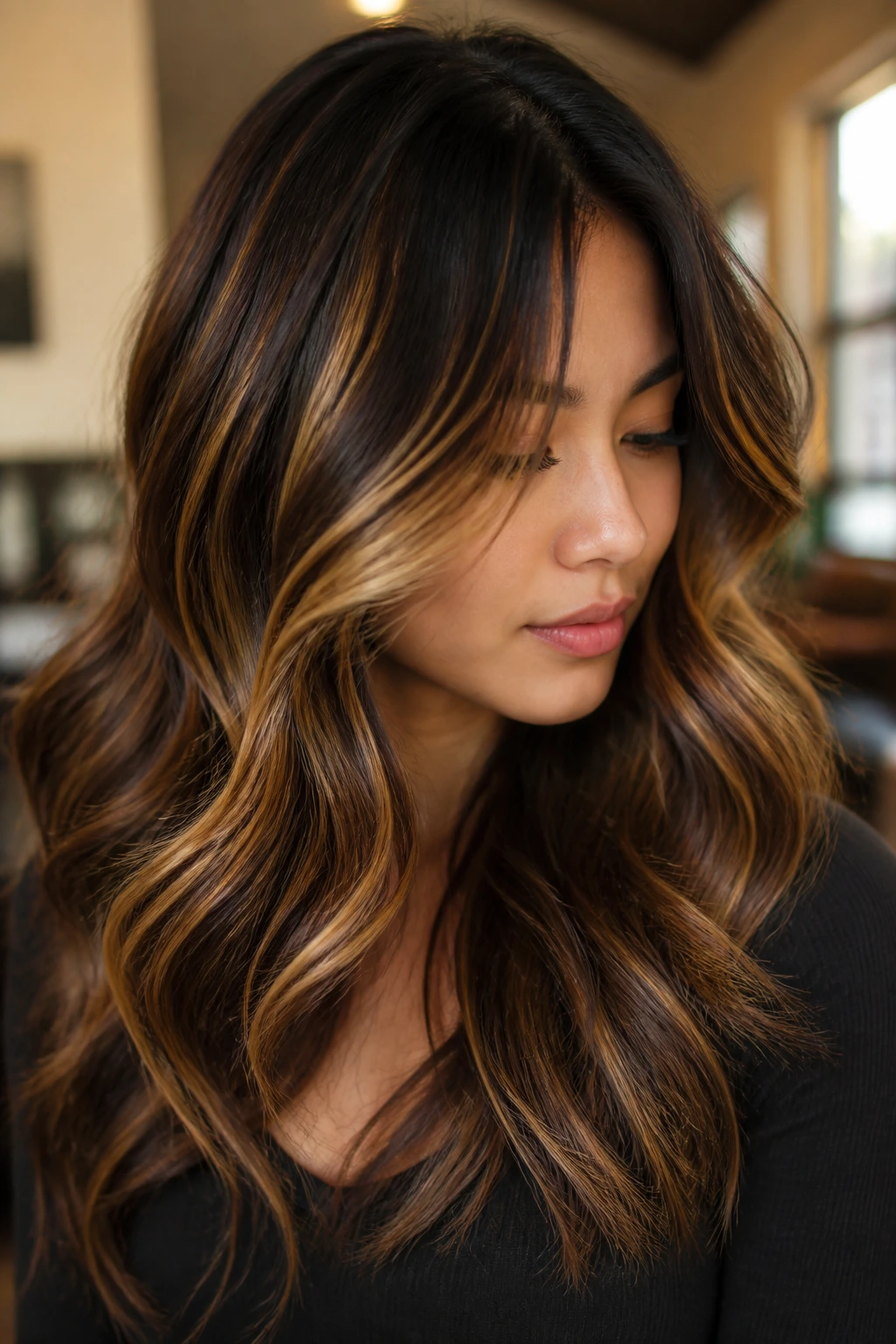
Tiger eye is one of my favorite brown-to-bronze formulas because it has so much movement without becoming busy. It mixes caramel, bronze, and gold in a way that mirrors the layered bands inside the gemstone itself. On dark Asian hair, that kind of multi-tone placement gives you dimension you can see from across the room.
The shade is especially good on wavy or layered hair because each bend shows a different piece of the blend. You want the tones to melt together, not sit in separate stripes. If the salon finish is done right, the color looks like it belongs to the haircut, not on top of it.
15. Plum Brown Highlights
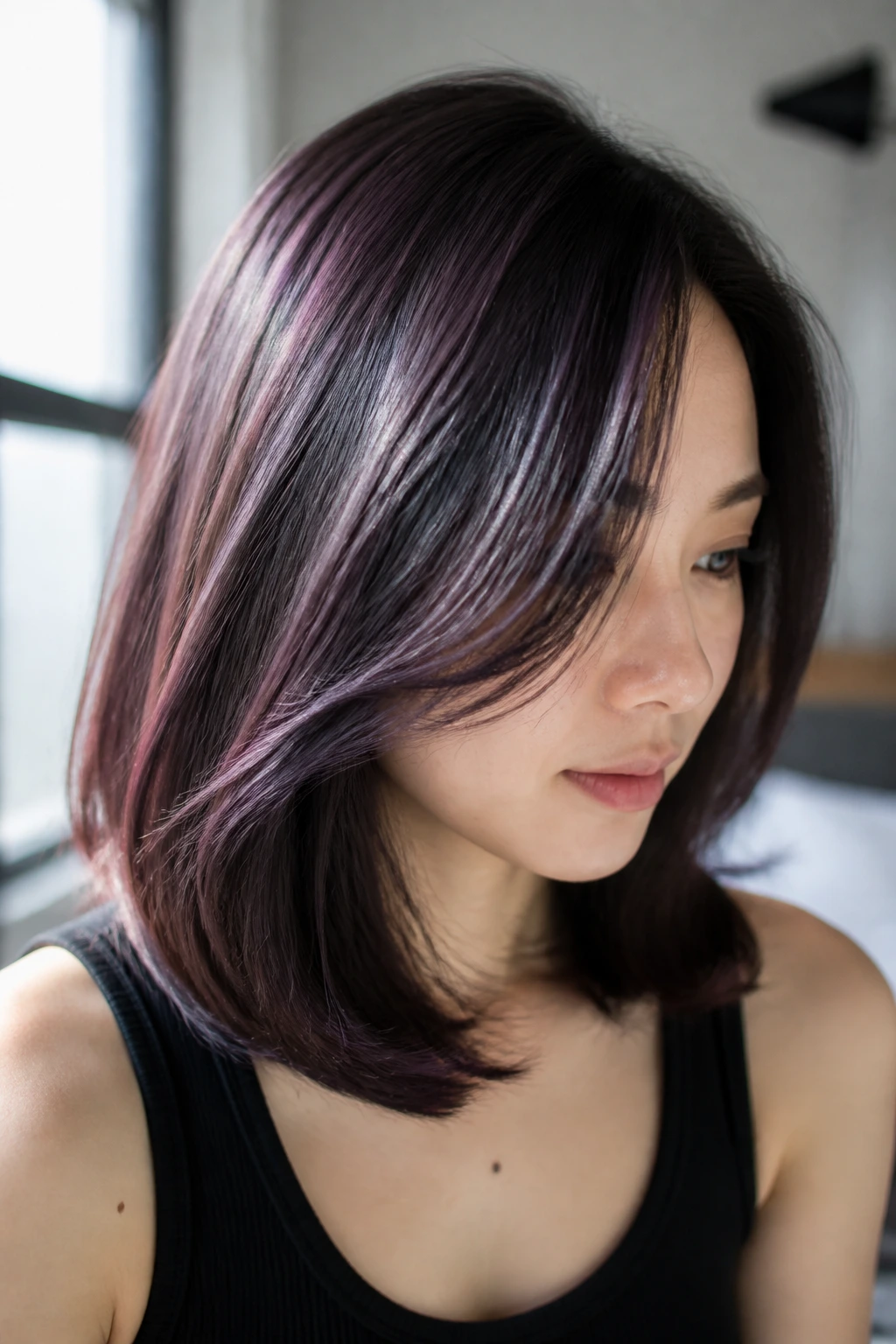
Plum brown is for the person who wants something cooler, richer, and a little unexpected. It keeps the depth of brown hair but slips in a wine-purple cast that shows most clearly in sunlight and indoor warm light. On dark Asian hair, plum can be a smart way to add contrast without going blonde at all.
It also pairs well with straight bobs and sleek styles because the cooler tone looks clean against a glossy base. Ask for a brown-plum gloss rather than a loud violet dye if you want the result to feel wearable. The beauty here is in the restraint.
16. Icy Beige Tips
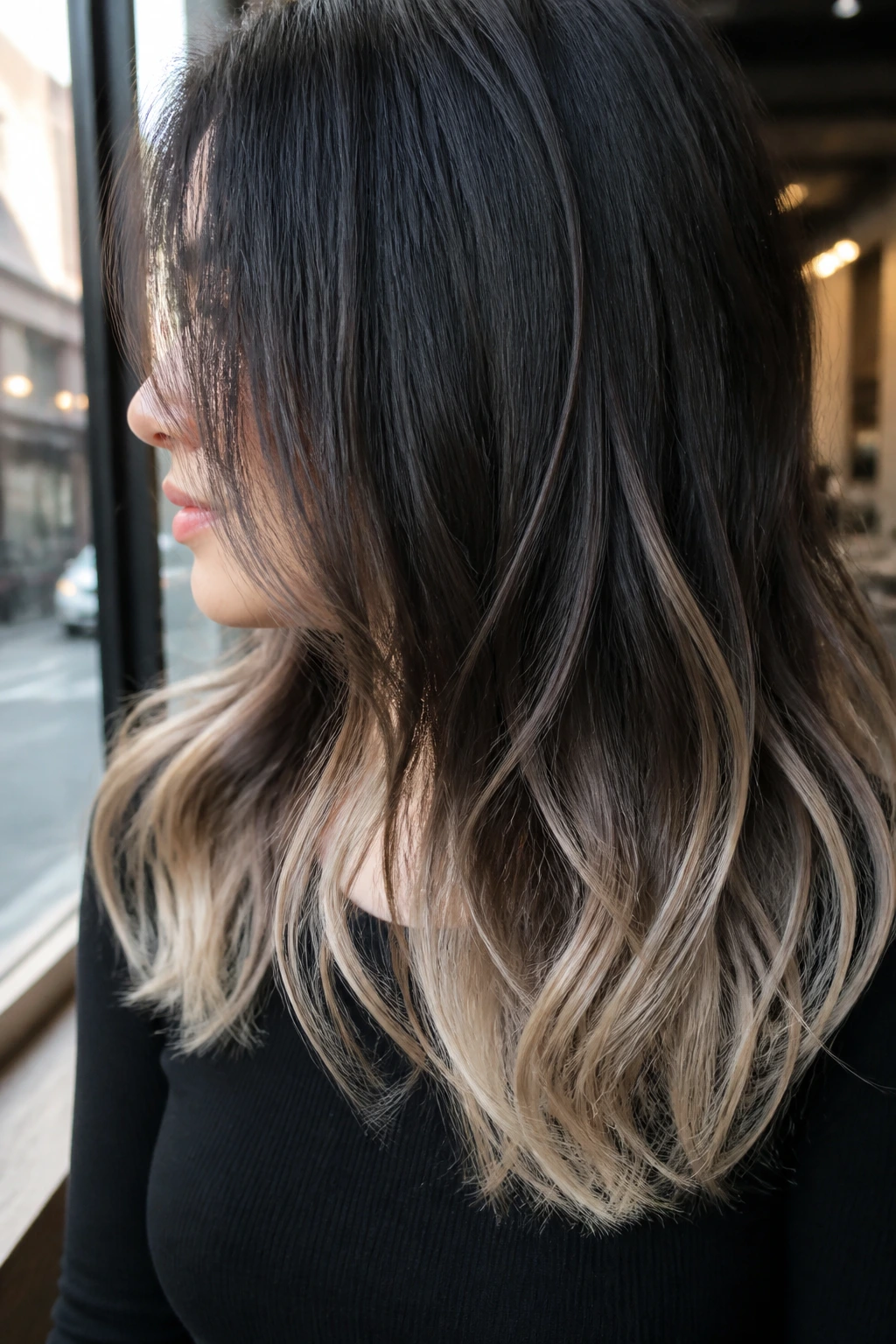
Icy beige tips are more fashion-forward, and I won’t pretend they’re low-maintenance. They work because the ends are isolated, so the brighter color has a clear boundary and doesn’t have to compete with the dark roots. On Asian hair, that can look crisp and editorial when the tone is kept beige instead of stark white.
This idea fits best on healthy mid-length to long hair, especially if you wear it in waves or a polished blowout. It’s not the first highlight I’d suggest for someone who wants the easiest grow-out. It is the one I’d point to if you want a light, cool finish with a sharper edge.
17. Soft Auburn Veils
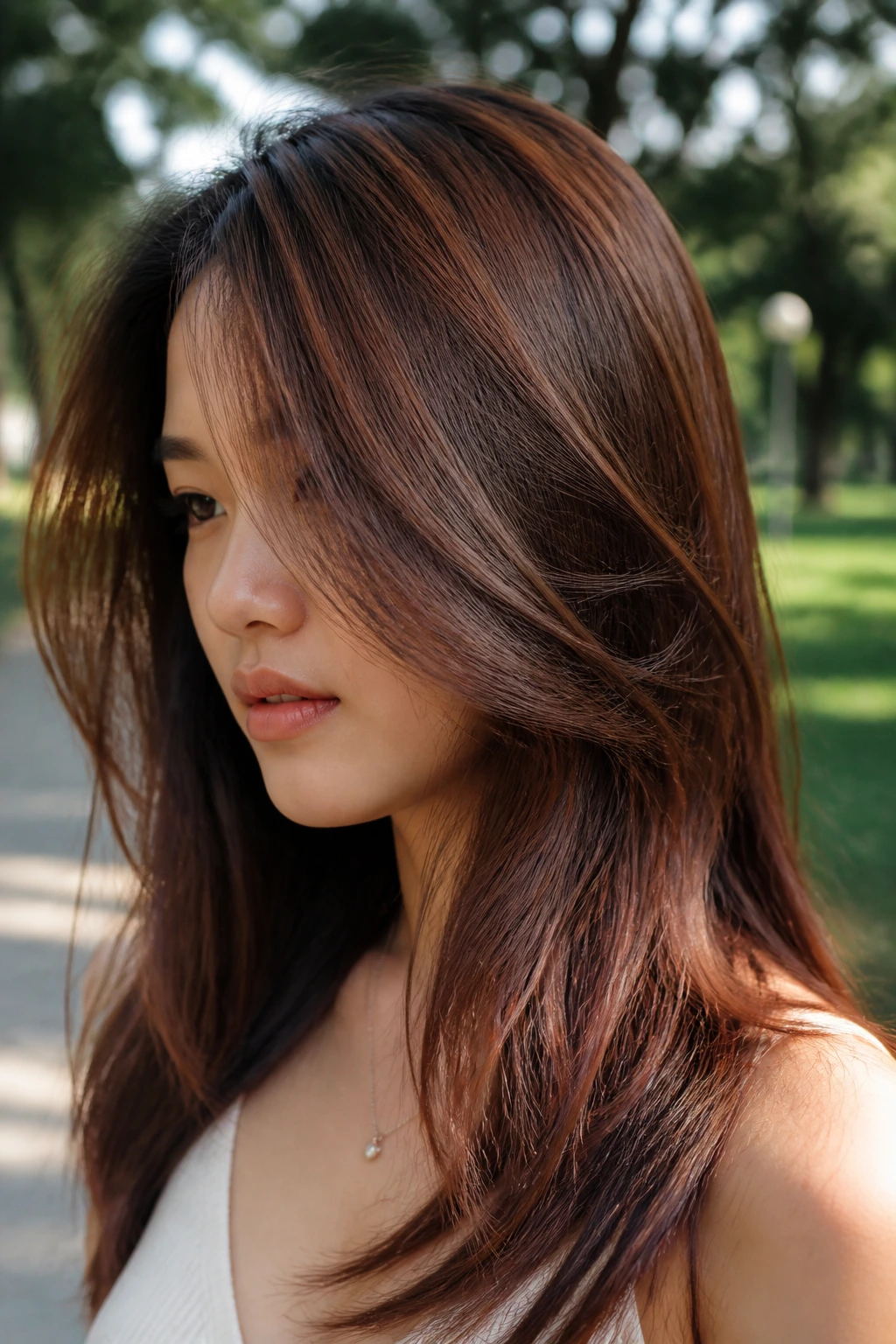
Soft auburn veils add warmth in a way that feels richer than red and softer than copper. The color sits in the hair like a sheer layer, not a block of pigment. On dark Asian hair, that makes it flattering without turning costume-y.
Why I like it
- It warms the face fast.
- It works well on textured hair because the color breaks up with movement.
- It fades into a pretty brown-red rather than a harsh orange.
- It can be placed in thin veils instead of full streaks.
If you’re nervous about red tones, auburn is the smarter place to begin. It gives mood and depth without asking you to commit to full brightness.
18. Toasted Almond Balayage
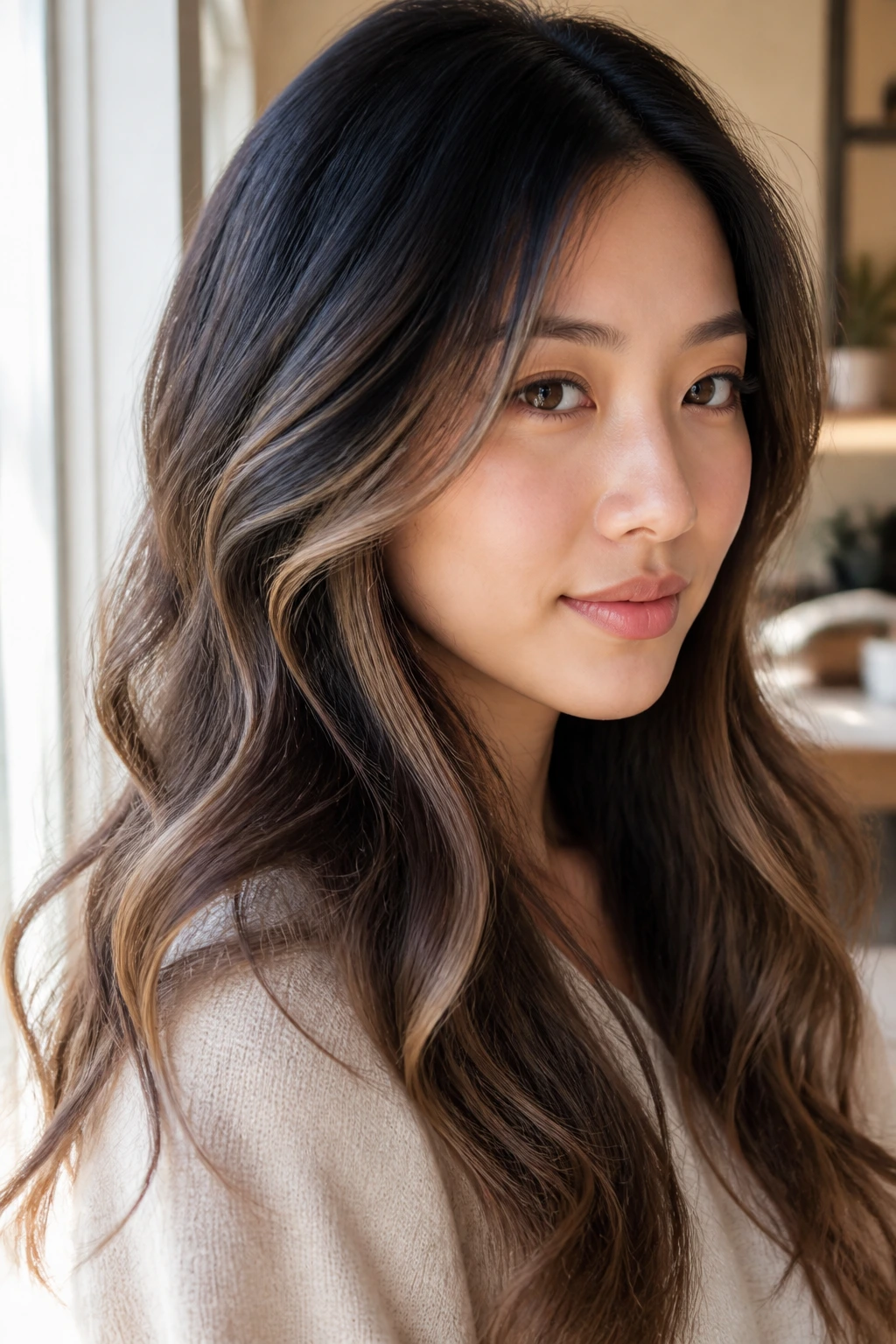
Need something that barely nudges the hair lighter? Toasted almond balayage is the answer. It stays in the brown family, but the almond tone keeps it from reading flat. On dark hair, this is the kind of highlight that looks like better genetics rather than a chemical process.
Why it works on darker bases
The lift is gentle, so the grow-out stays soft. The almond tone adds a little creaminess without crossing into blonde territory. That makes it a good fit for first-time color clients, people with conservative dress codes, or anyone who wants shine more than drama.
This is one of those shades that looks especially nice in daylight. Indoors, it whispers. Outside, it glows.
19. Caramel Drizzle on Long Layers
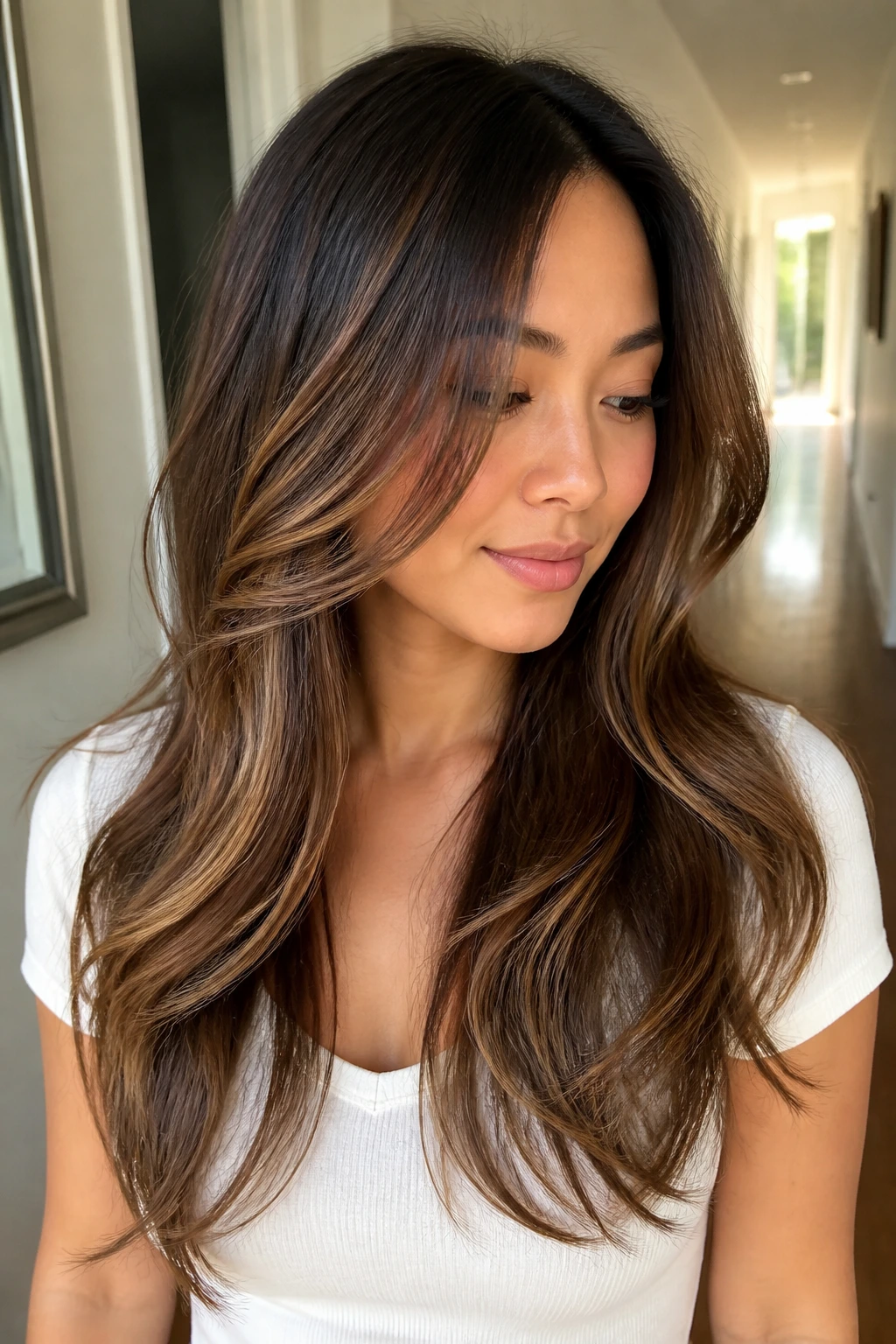
Long hair can carry wider ribbons than short hair, and caramel drizzle uses that advantage. Instead of fine babylights, you get sweeping caramel strands through the mid-lengths and ends, enough to show movement when the hair falls over the shoulders. It’s the kind of highlight that makes long layers look even longer.
The important part is keeping the root darker and the ribbons blended. If the caramel starts too close to the scalp, the whole look can turn busy. When it’s placed lower, the result feels smoother, especially in waves or a rounded blowout.
20. Burgundy Underlights
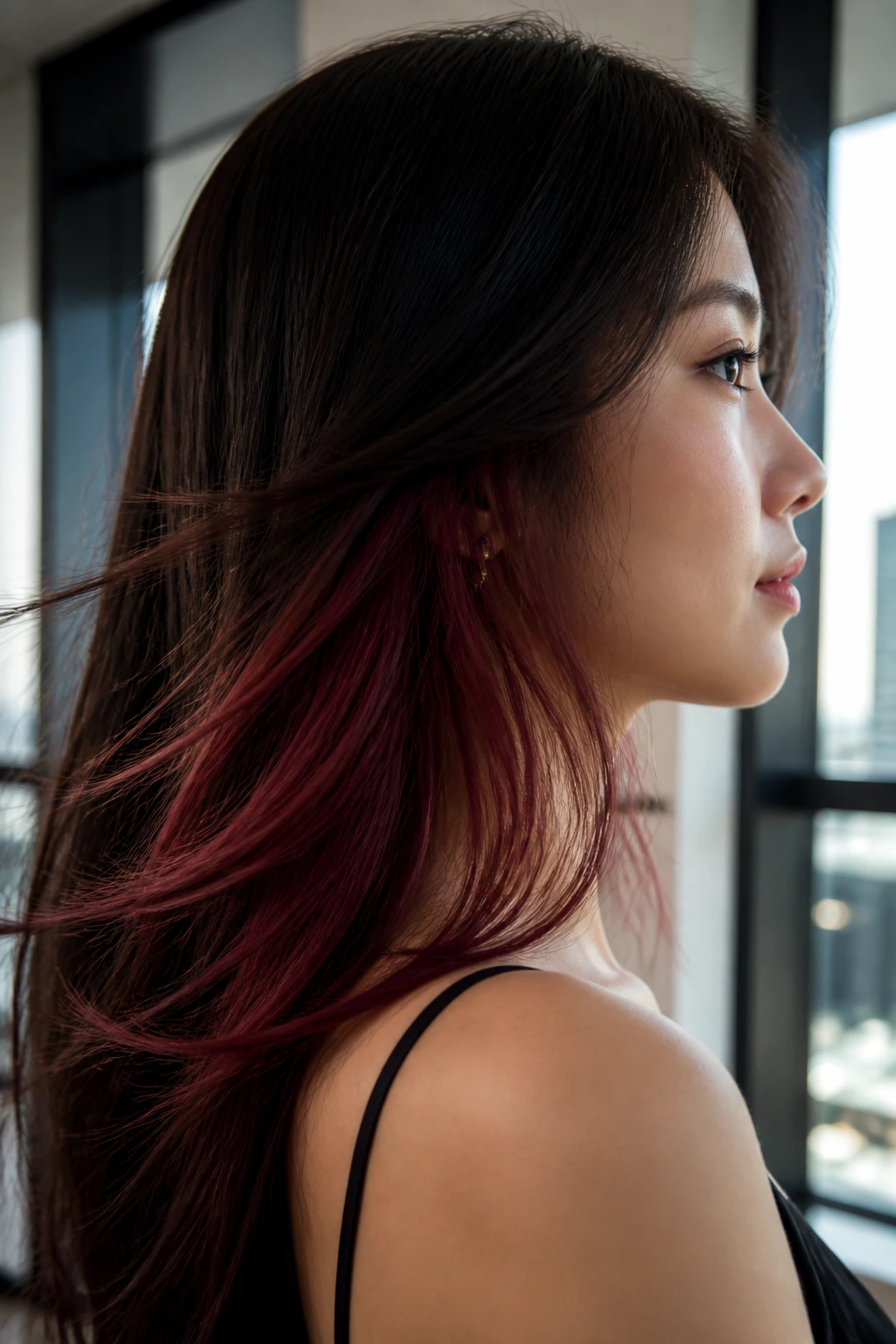
Burgundy underlights are for the person who wants color that behaves itself in public and misbehaves only when the hair moves. The top layer stays dark and polished. The underlayer carries the wine-red depth, which flashes through in updos, half-up styles, or when the hair is tucked behind the ear.
That hidden placement gives you more freedom than an all-over color. It’s a good choice if you want something richer than brown but don’t want every strand to announce itself. Burgundy also plays nicely with dark eyes and black hair because the contrast feels deliberate, not random.
21. Smoky Bronze Ribbons
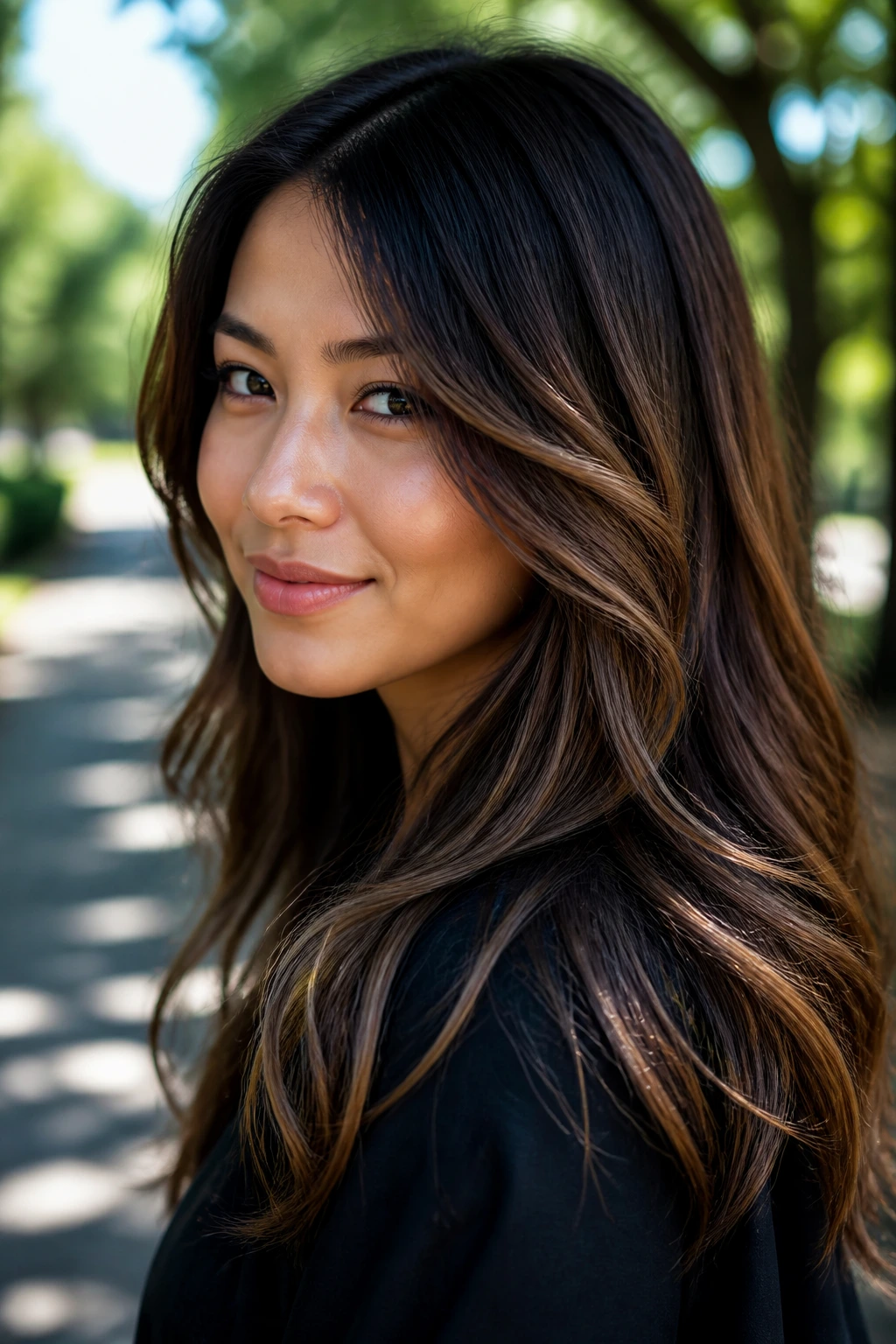
Smoky bronze ribbons look especially good on dark brown hair because they sit right between metallic and earthy. The bronze gives shine. The smoky shadow keeps it from becoming brassy. That balance is what makes this idea so useful on Asian hair, where warmth can go sideways fast if the toner isn’t controlled.
I’d reach for this on layered hair that moves, because bronze loves motion. It catches light in a way that flat colors don’t. If you like jewelry tones — gold, bronze, warm pewter — this hair color lands in the same visual family.
22. Sandy Beige Balayage
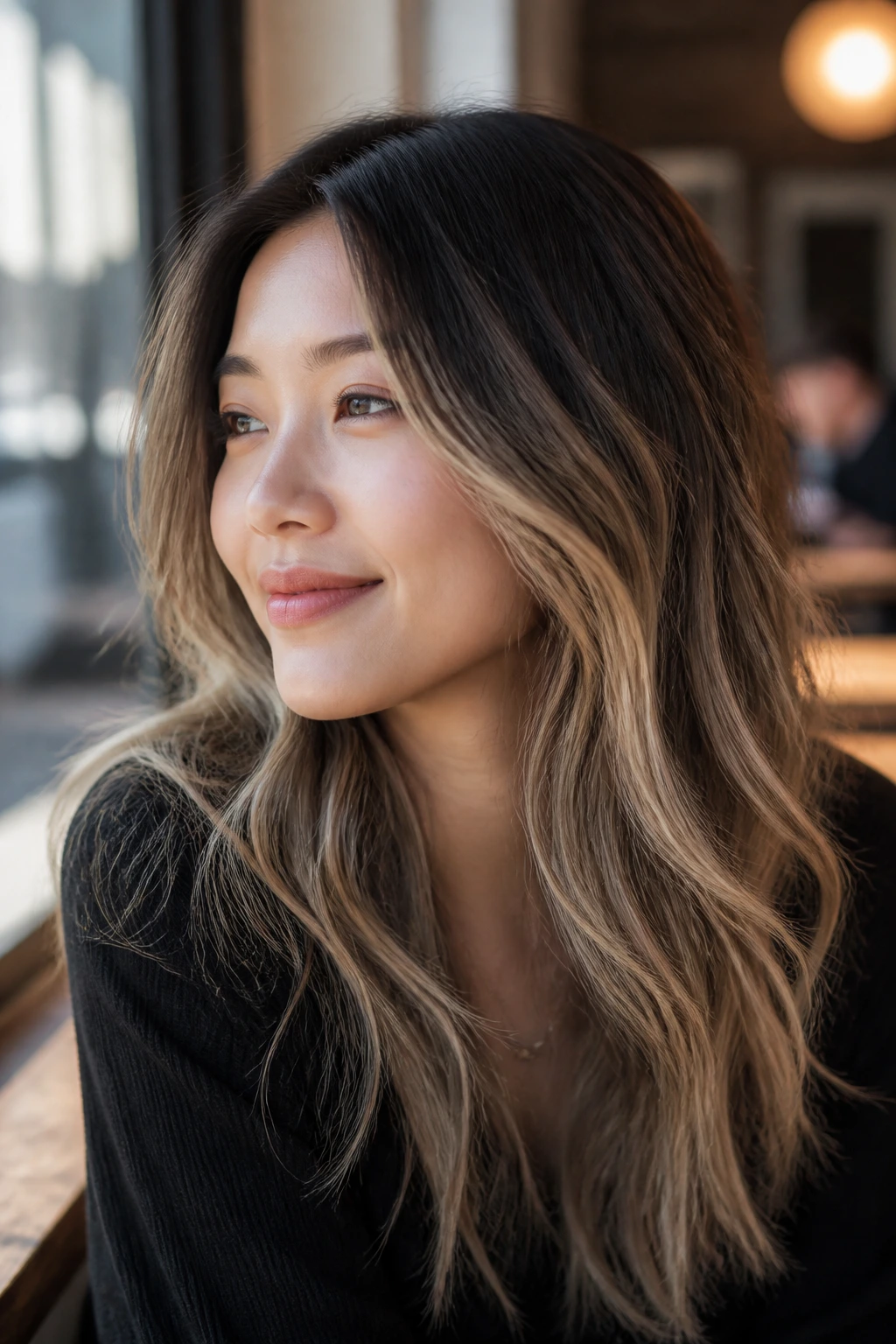
Sandy beige is softer than blonde and cooler than caramel, which is why it’s such a useful middle ground. It gives dark hair a sun-washed lift without crossing into bright gold. On Asian hair, that balance matters. Too warm and the hair can read orange. Too cool and it can look muddy. Sandy beige stays in the safe, chic lane.
Best on naturally warm brunettes
This shade works especially well if your base already leans a little warm or golden. The beige tone smooths out the warmth instead of fighting it. Keep the color concentrated through the mids and ends, and let the roots stay dark. That contrast gives the hair shape.
23. Cherry Cola Shine
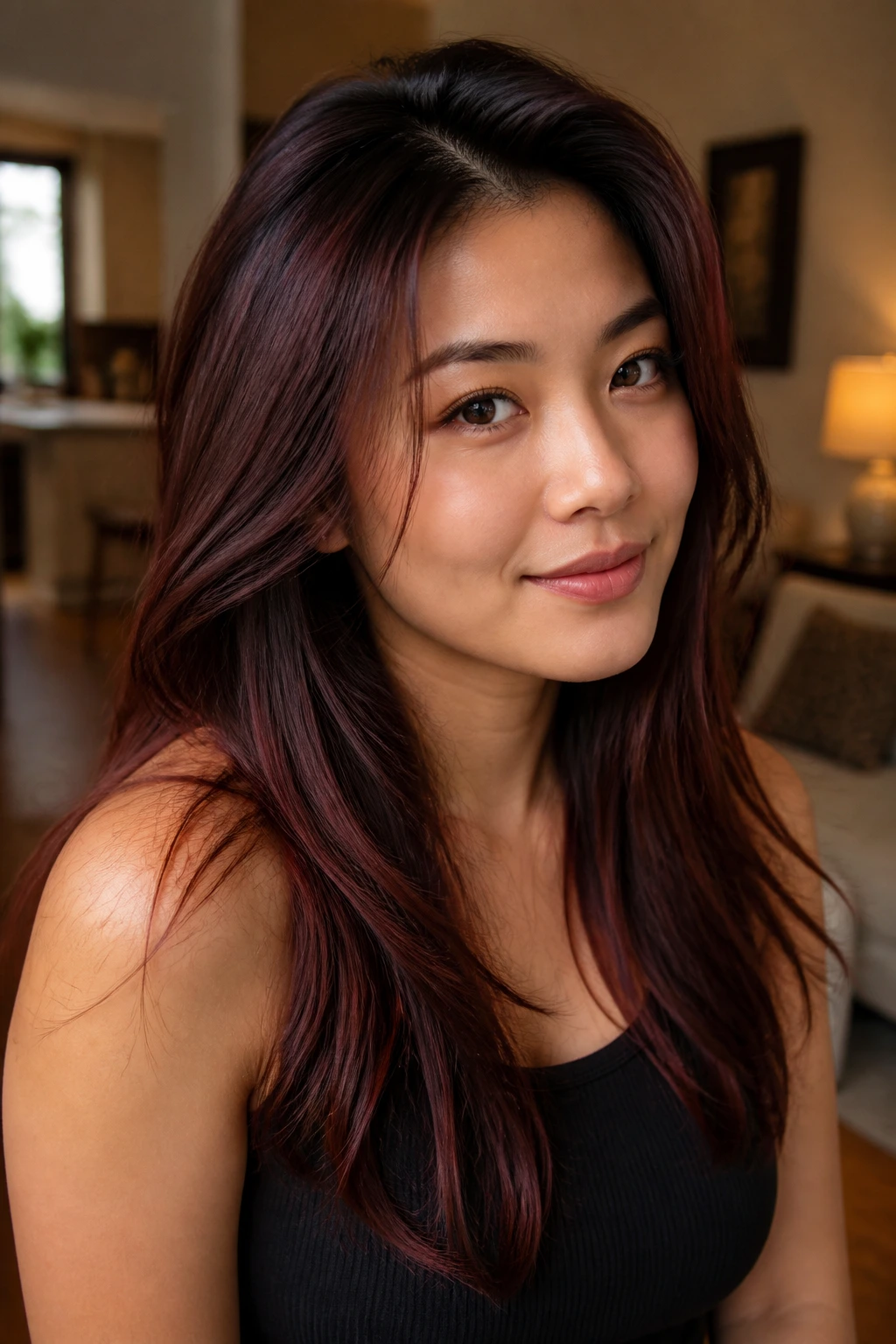
Cherry cola is one of the easiest ways to add red depth without jumping straight into bright fashion color. In dim light, it reads like dark brown. In sun or warm indoor light, the cherry note wakes up and gives the hair a glossy, almost syrupy finish.
What it gives you
- Red depth without neon brightness.
- A color that works well on dark hair bases.
- A shine effect that looks rich rather than flat.
- Easier grow-out than a full copper or red.
If you’ve wanted red but never wanted the maintenance drama, this is a good compromise. It has attitude, but it doesn’t yell.
24. Warm Honey Streaks
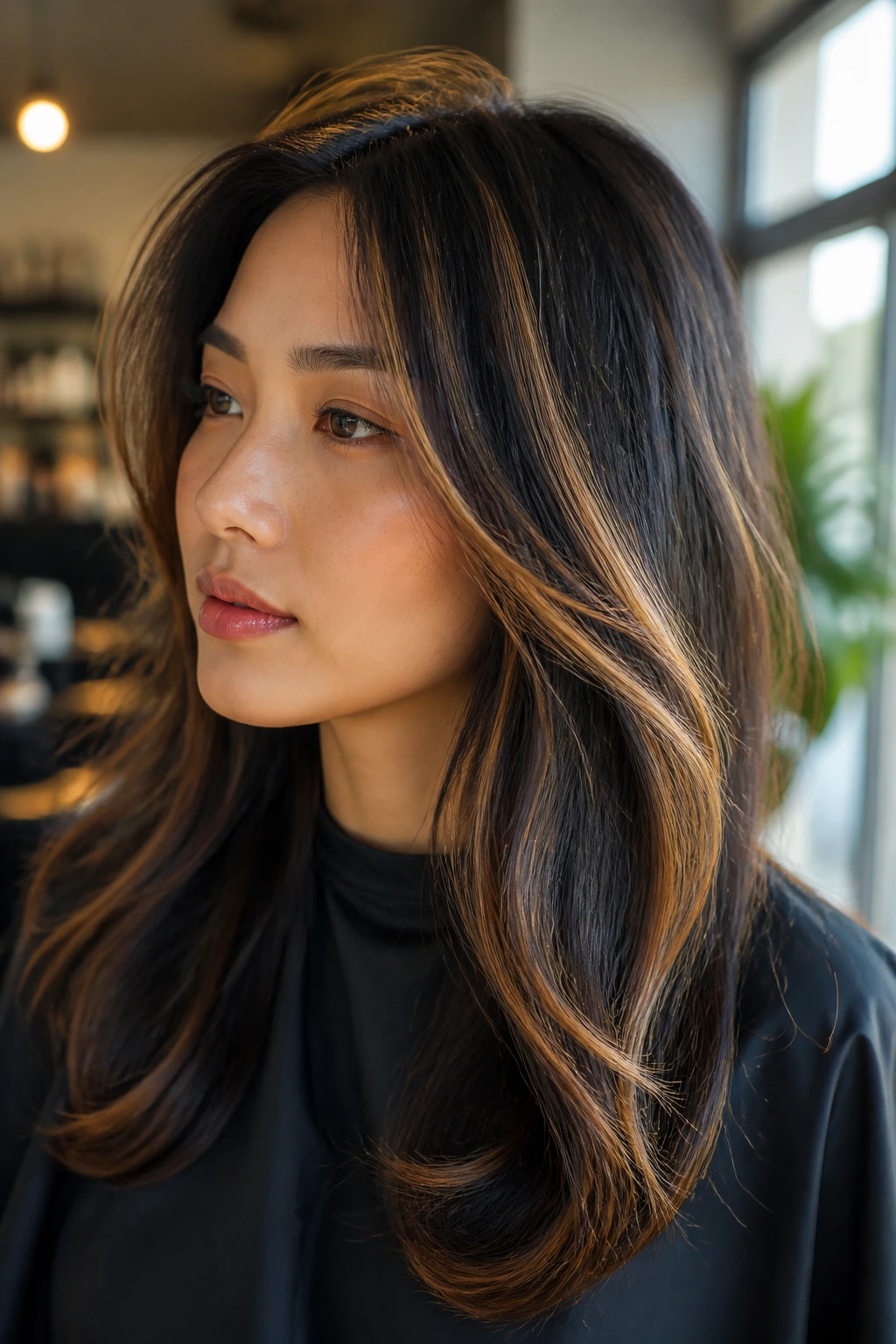
Warm honey streaks are the brighter cousin of caramel. They sit a little higher on the lightness scale and carry more gold, so the effect is sunnier and more visible. On dark Asian hair, the trick is to keep the streaks thin enough that they read as sparkle, not stripes.
This color is strongest on layered cuts where the pieces can move. Straight, one-length hair can make honey streaks look more obvious than intended. If you want warmth around the face and a little glow through the rest of the head, honey does the job quickly.
25. Hidden Rainbow Panels
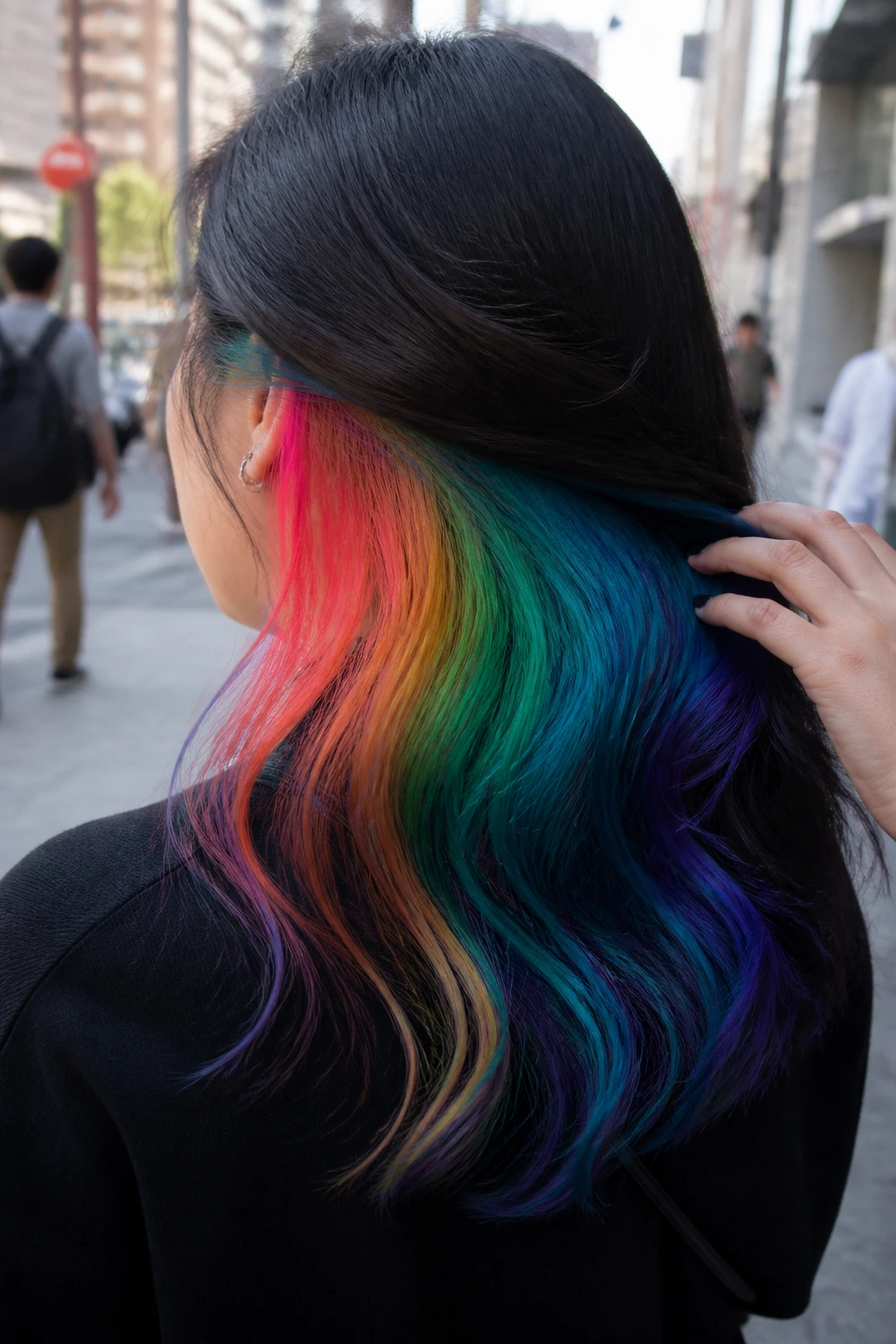
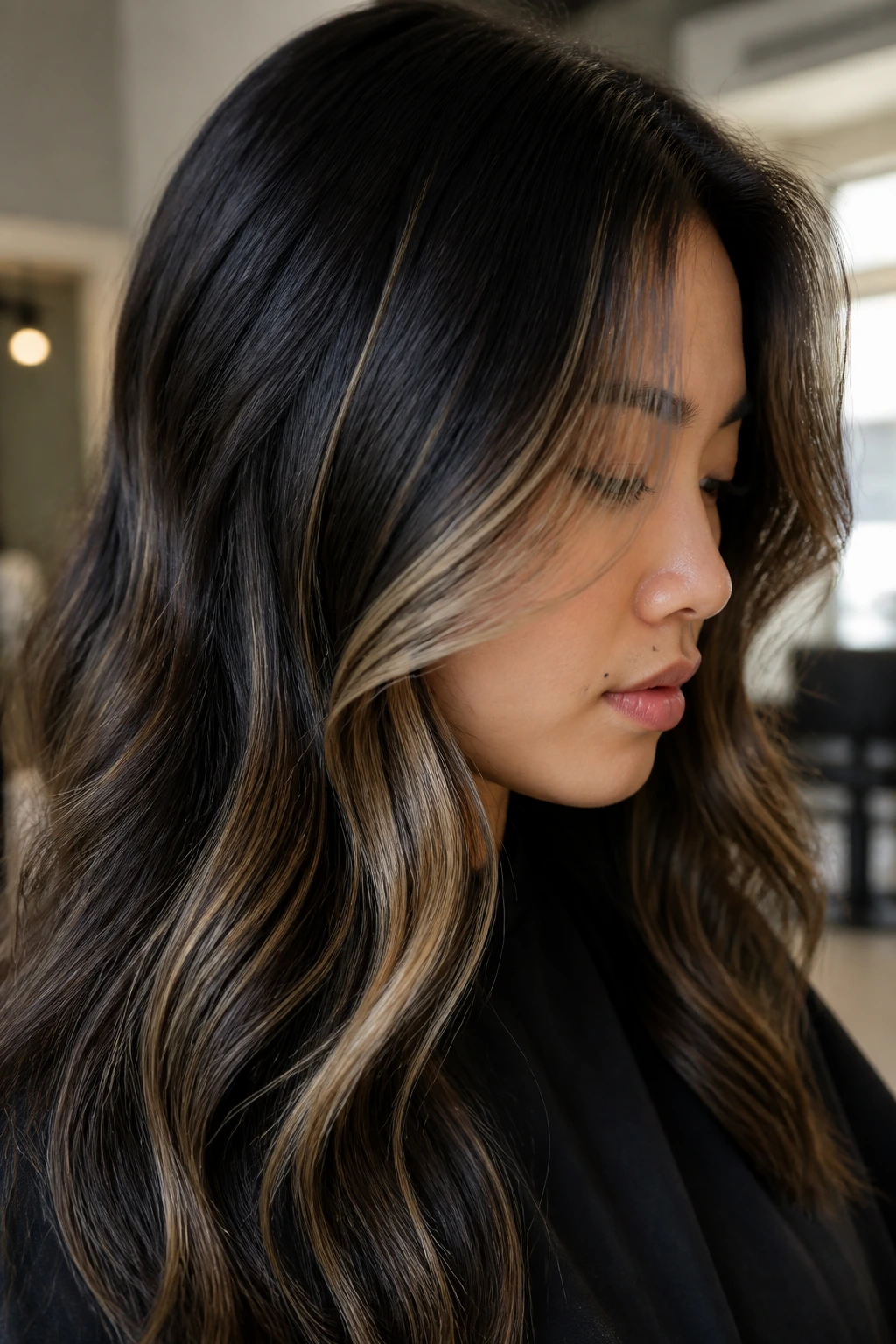
Hidden rainbow panels are for the person who wants fun without having to announce it in the boardroom. The top layer stays dark, while the underlayer carries vivid color — teal, violet, coral, sapphire, whatever suits your mood. On Asian hair, this works because the contrast between the black top and the bright underlayer is dramatic in motion but easy to hide when needed.
The best versions keep the top layer intact and place the vivid panels where they peek through when hair swings or gets pinned back. It’s a smart way to try fashion color without committing the whole head to it.
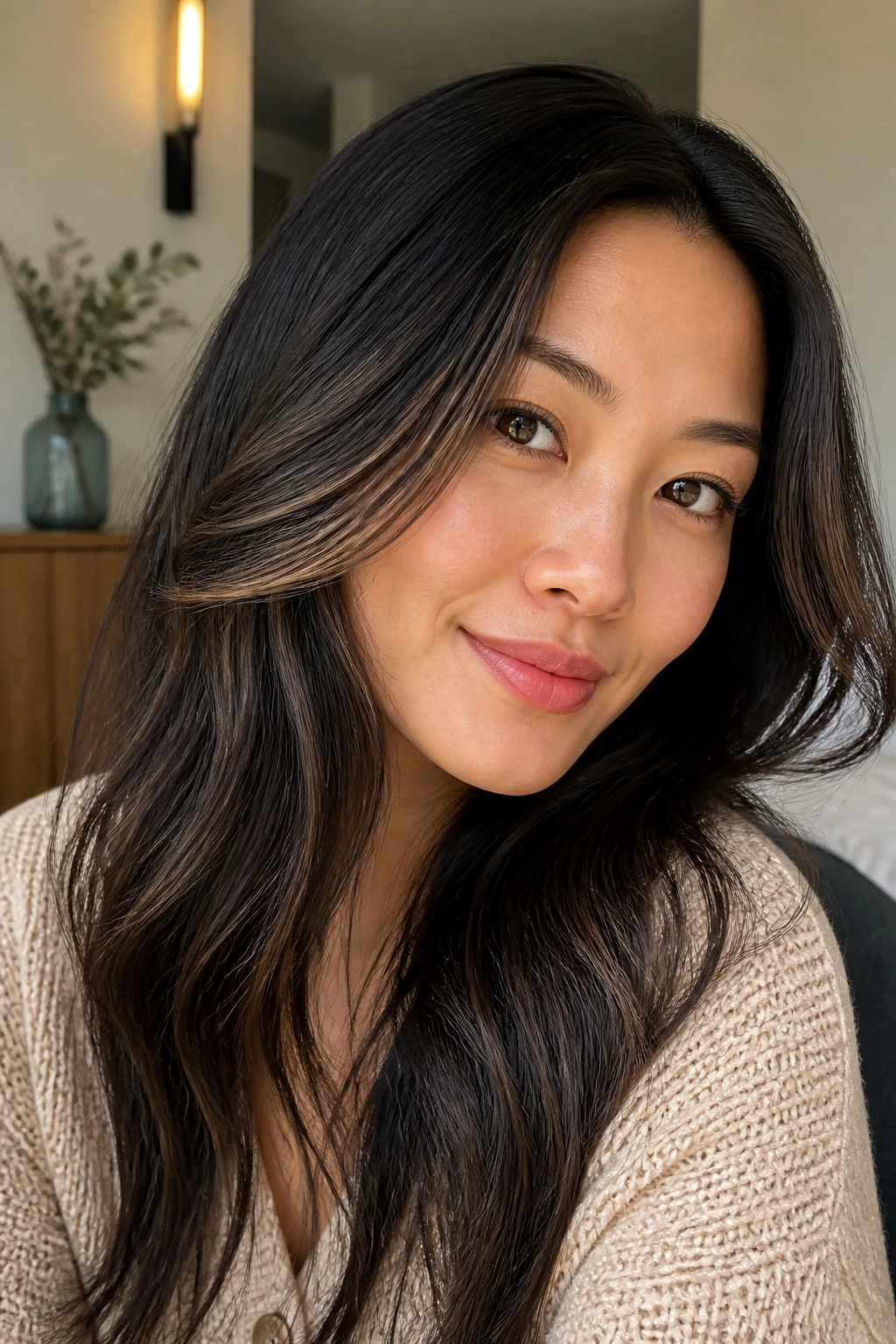
26. Soft Black Gloss with Micro Highlights
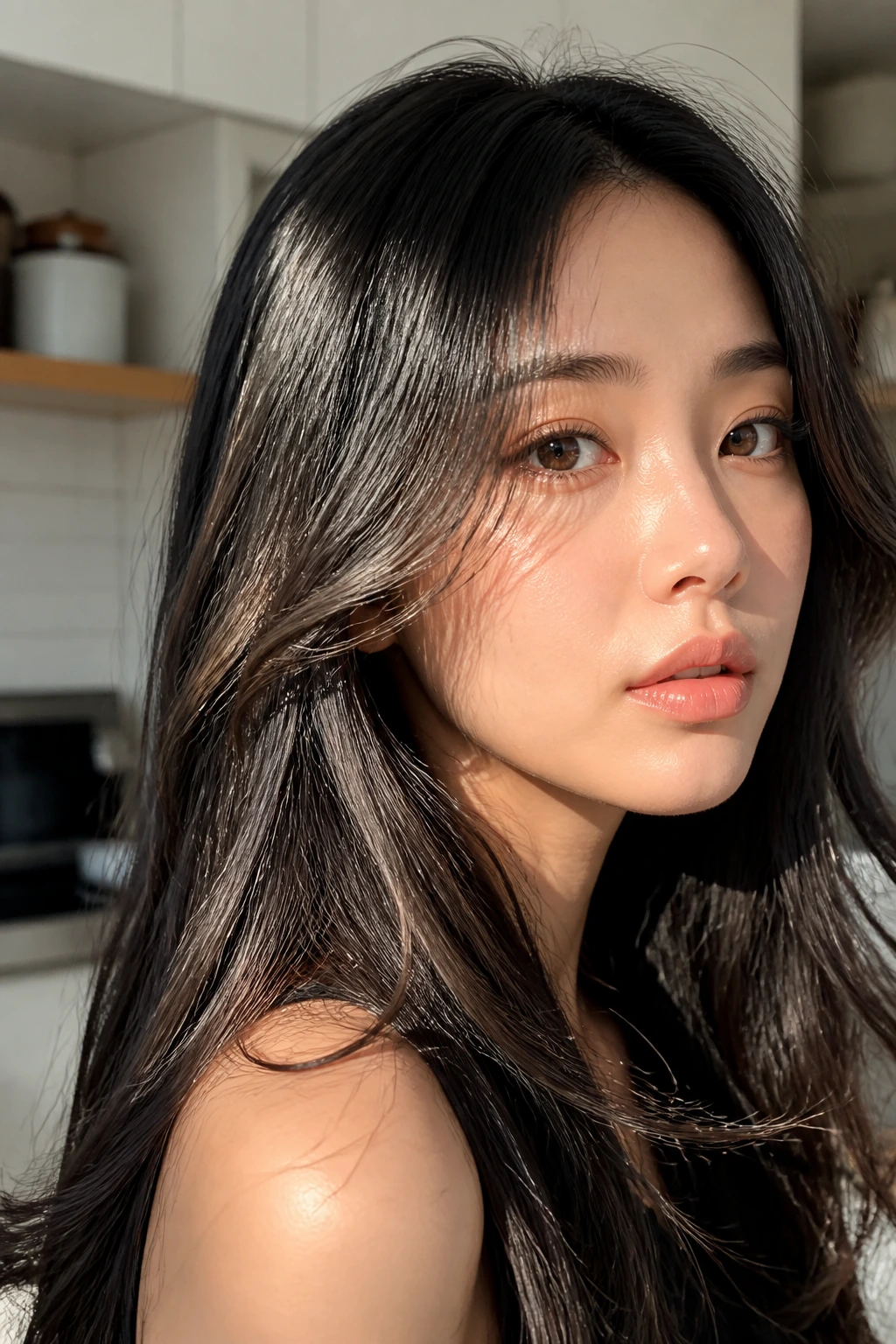
Soft black gloss with micro highlights is the low-key answer for people who don’t want obvious highlights at all. The base stays nearly black, but a few whisper-thin lighter strands are woven through the top layer so the hair doesn’t look like one solid sheet. On glossy Asian hair, that tiny difference can matter a lot.
This is the kind of color that looks better up close. From a distance, it reads as rich black hair. In sunlight, the micro-highlights break the surface just enough to show movement. It’s perfect if you like polished hair but don’t want maintenance hovering over your life.
27. Walnut Brown Dimension
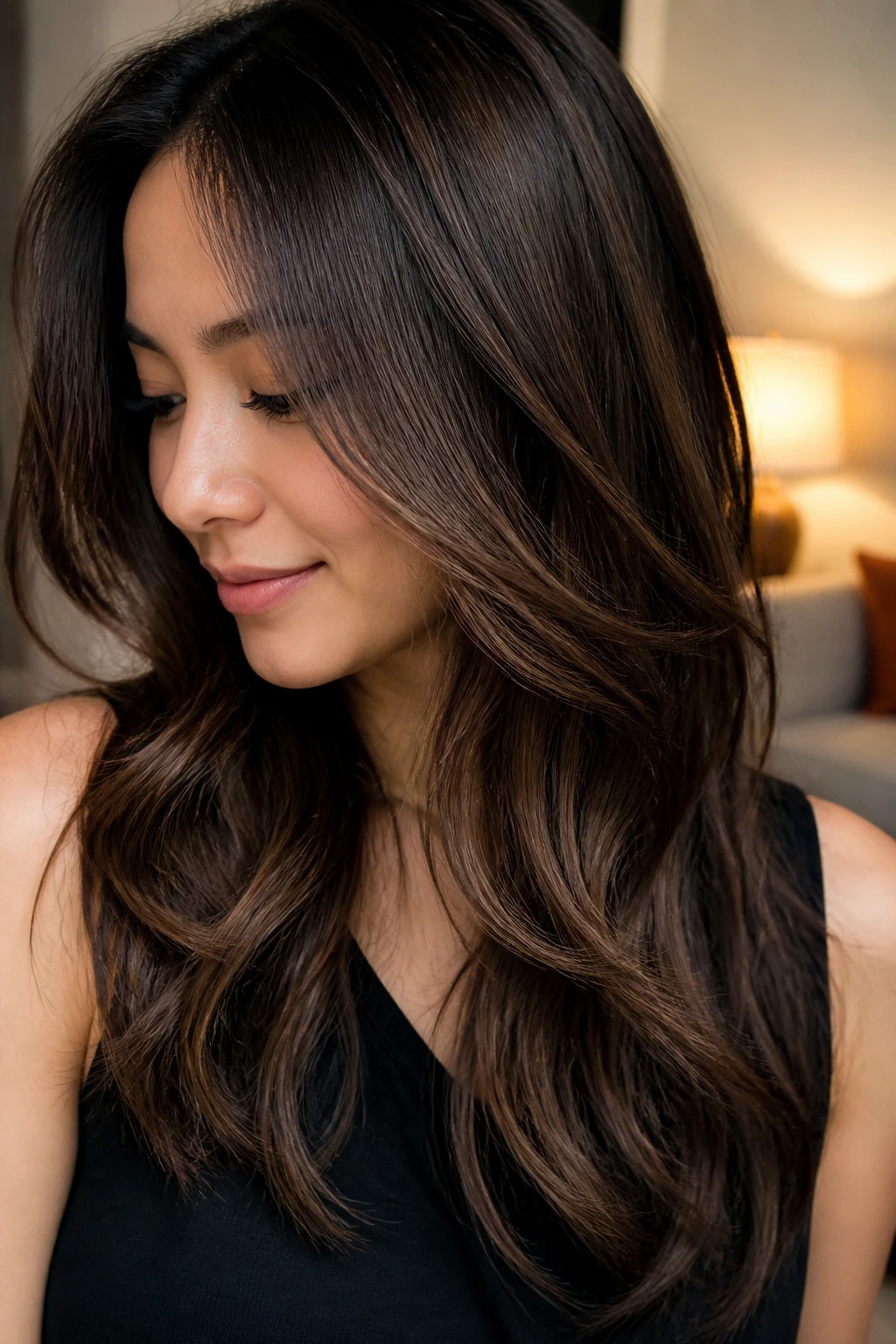
Walnut brown dimension is my pick for thick hair that needs depth without brightness. The palette mixes espresso, walnut, and a touch of taupe so the hair keeps its richness while gaining texture. On darker Asian hair, that kind of low-contrast dimension can make the whole cut look fuller.
Why this is a strong everyday option
The contrast is subtle, which means grow-out stays easy. The color also plays well with straight styles, waves, and layered blowouts because it never relies on one bright stripe to do the heavy lifting. Ask for a rooty base with softly woven pieces through the mids and a gloss to finish.
This is a shade that doesn’t beg for attention. It earns it.
28. Golden Copper Money Piece
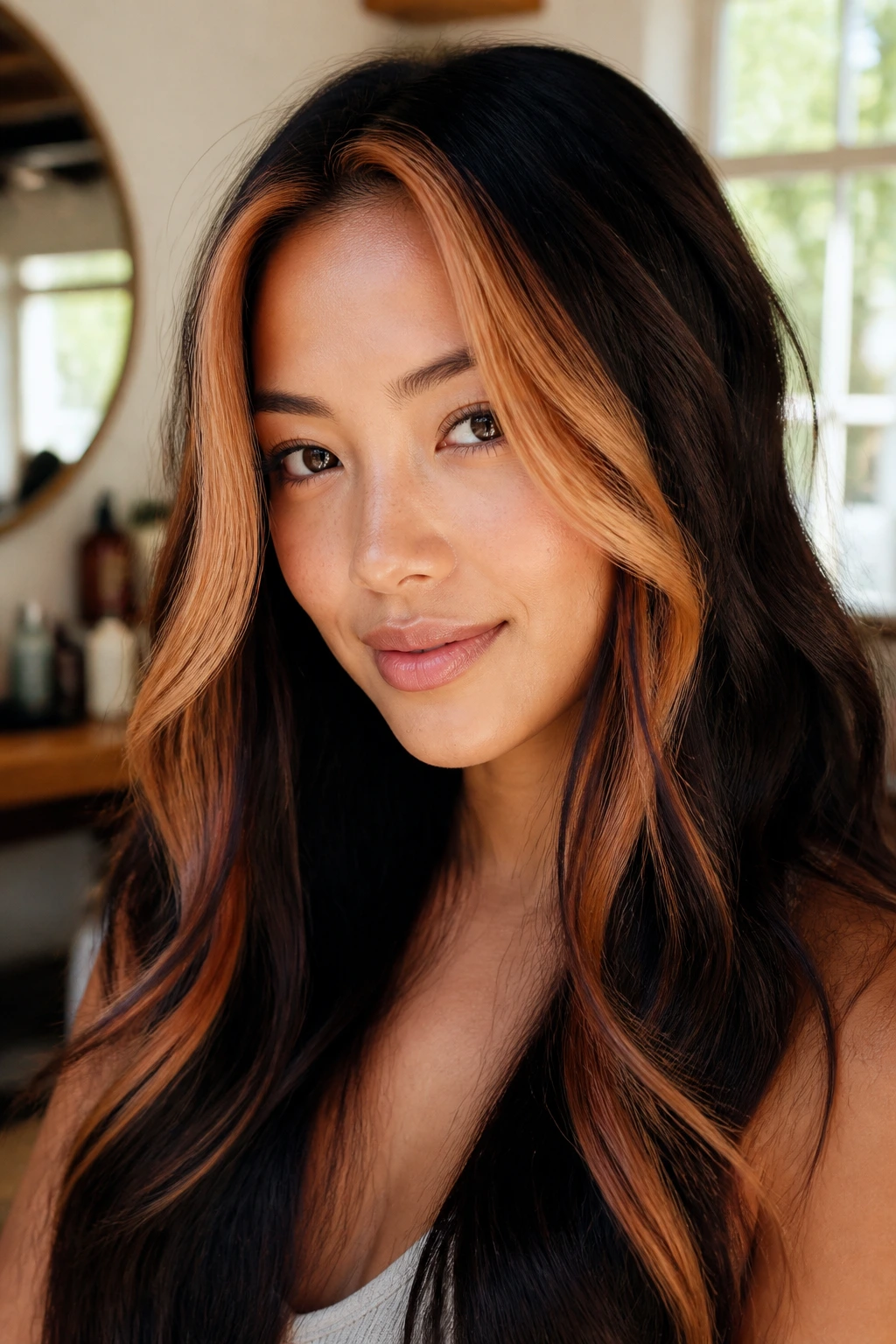
Golden copper is the loudest face-framing idea here, and I mean that in the best way. It gives the front section a bright, warm hit of color that lifts the eyes and cheekbones immediately, while the rest of the hair can stay darker and quieter. On Asian hair, that contrast makes the face piece feel intentional instead of random.
If you want one bright zone and nothing else, this is the place to spend it. Keep the golden copper rich, not pale, and let the rest of the hair stay deep brown or black. That contrast looks clean on straight hair, dramatic in curls, and sharp in a polished blowout.
Why Dark Hair Needs a Different Color Map
Dark Asian hair has a lot of visual weight. That’s a strength, not a problem, but it changes the way highlights behave. A tiny change in lightness can read as a big shift, and warm undertones can show up fast when the hair is lifted. That’s why the same shade formula that looks soft on light brown hair can look orange or stripey on a black base.
The most reliable approach is placement first, color second. Face-framing pieces, babylights, and hand-painted ribbons work because they let the dark base stay in charge. You’re not blanketing the head. You’re guiding the eye.
One more thing that gets ignored too often: shine. Glossing after lightening is not optional in my book. It is the difference between “highlighted” and “finished.” A good gloss smooths the tone and makes the hair reflect light instead of swallowing it.
Essential Tools and Salon Must-Haves
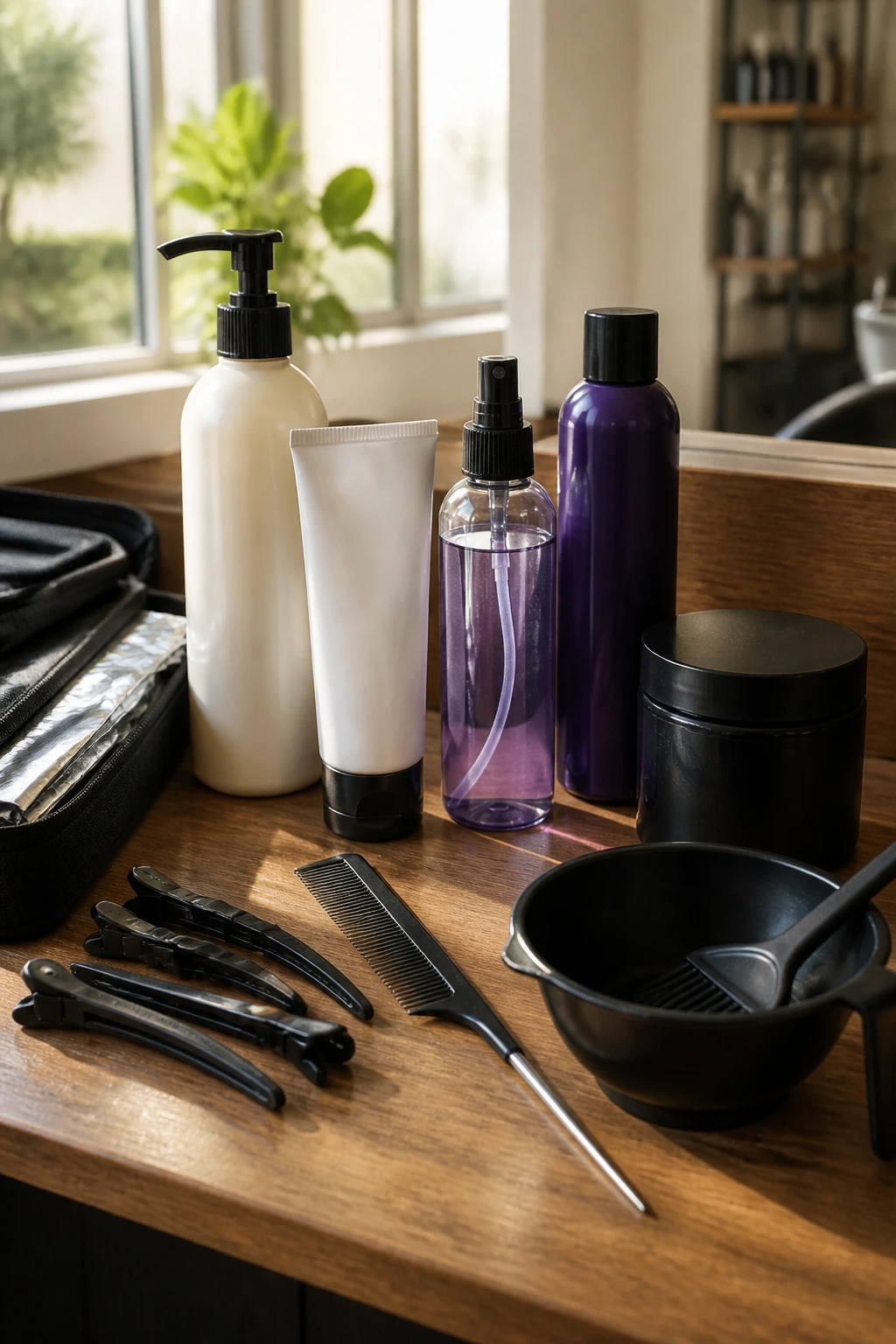
- Reference photos in natural light — Bring 2 or 3 pictures that show the tone and placement from different angles, not just one overfiltered selfie.
- Sectioning clips — These help your stylist isolate the exact face frame, part line, or underlayer you want emphasized.
- Fine-tooth tail comb — Useful for babylights, micro-weaves, and clean parting around the face.
- Color-safe shampoo and conditioner — Pick formulas made for colored hair; harsh cleansing fades toner too fast.
- Bond-building treatment — Helpful if you’re lifting dark hair to caramel, beige, or blonde territory.
- Heat protectant — Highlights look better when the cuticle stays smooth; this matters even if you only blow-dry.
- Purple or blue toning shampoo — Keep it on hand if you go beige, ash, or blonde, but use it lightly.
- Deep-conditioning mask — Lightened hair needs moisture, especially through the ends.
How to Choose the Right Tone and Placement
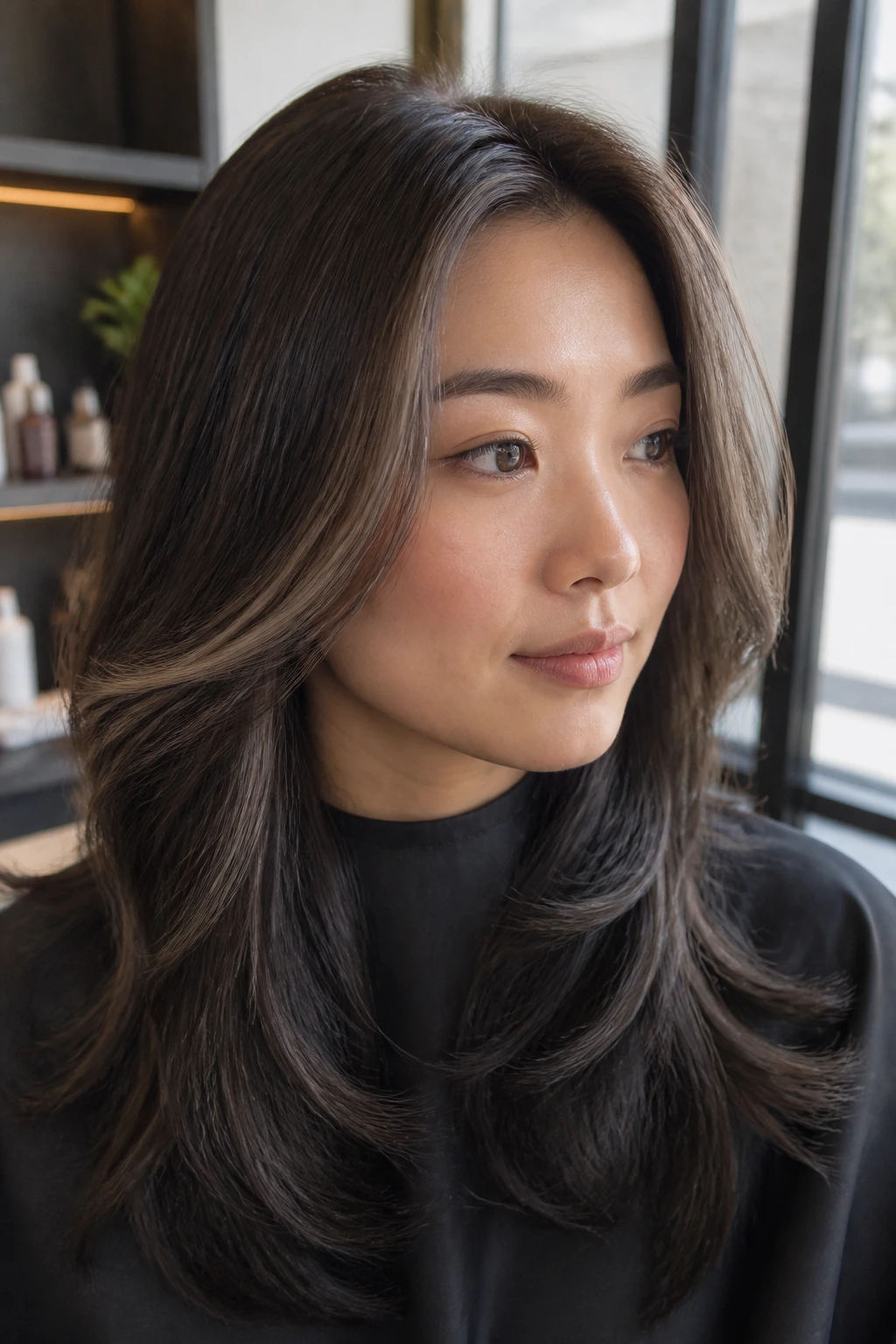
The fastest way to get a bad result is to choose a shade you like on someone else’s hair and ignore the base underneath. A cool mushroom brown on a warm medium-brown base can look elegant. The same formula on very dark hair can turn flat if it isn’t lifted enough first. Shade names are only half the story.
Bring photos that match your own starting point. If your hair is black, look for examples on black or deep brown hair, not on light brunettes. A good colorist can adjust the formula, but the picture should still be in the same family as your starting hair. That saves everyone time and a lot of disappointment.
Placement matters just as much. If you wear your hair straight, ask for finer pieces closer to the part and face. If you live in waves or curls, broader ribbons can work because the texture breaks them up. Haircut matters too — blunt bobs like clean, narrow highlights, while long layers can carry bigger sweeps of color without looking busy.
How to Wear These Highlights With Different Cuts
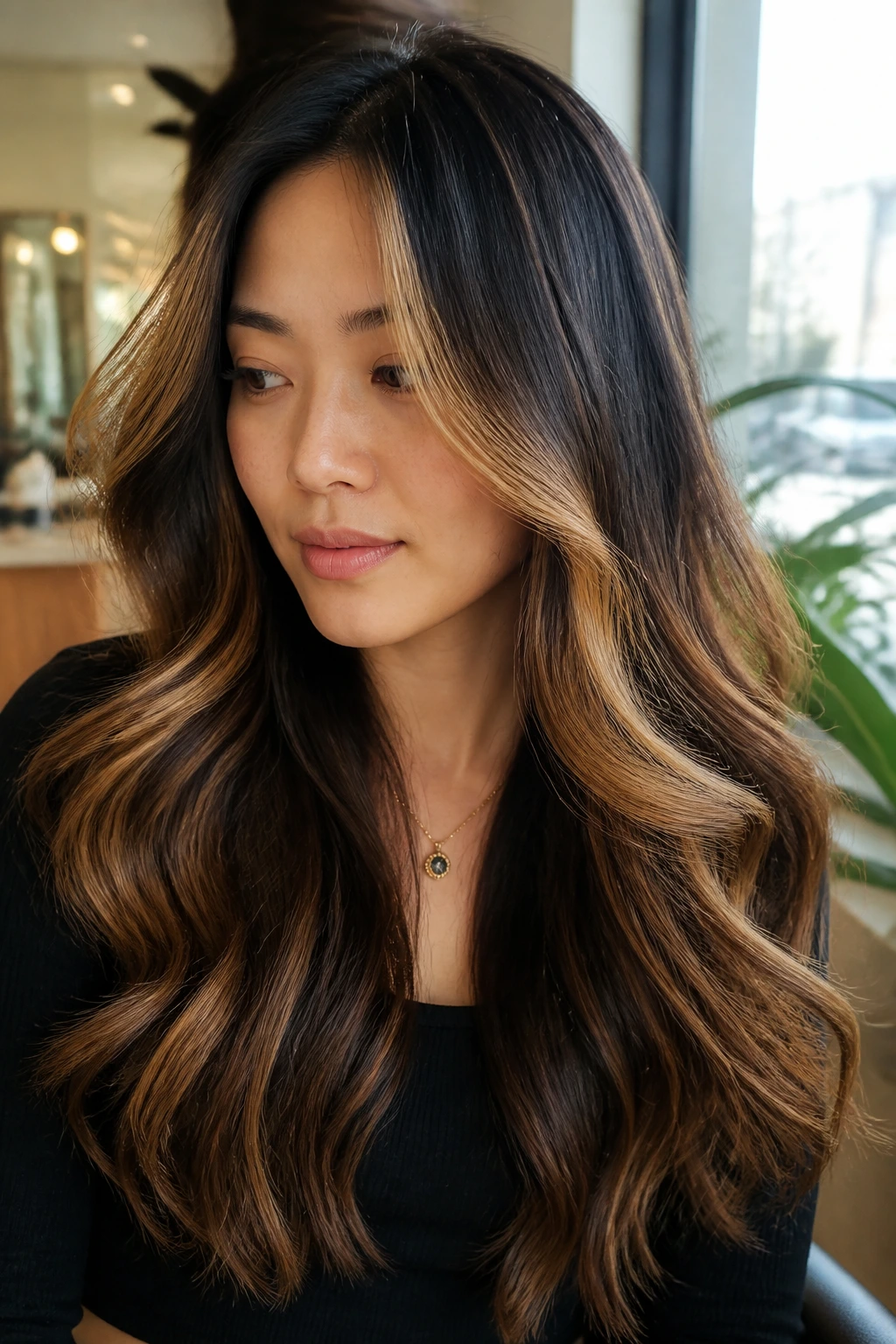
Long layers and waves
Long layers give caramel, bronze, tiger eye, and honey room to move. The color shows in motion, which is where these shades look their best. Soft bends from a curling iron or heatless wave make the ribbons feel more expensive than a perfectly straight finish ever will.
Blunt bobs and lobs
Shorter cuts do better with cleaner placement. Champagne face frames, babylights, and mushroom tones keep the edges sharp while still adding light. Too many chunky streaks can make a bob look dated fast.
Curtain bangs and face frames
Money pieces and front ribbons belong here. The whole point is to brighten the eyes and cheekbones, so keep the front pieces polished and a shade lighter than the rest. A slight bend at the ends helps them blend into the cut instead of sitting on top of it.
Updos and half-up styles
Peekaboo panels, burgundy underlights, and hidden rainbow sections show their best side when the hair is pinned or twisted. If you wear your hair up a lot, that hidden color pays off every time you move.
Practical Tips for Getting a Better Result
Bring less inspiration, not more. Three strong photos beat a phone full of mixed tones. When the pictures all point to the same level and finish, the conversation gets easier.
Ask for a root shadow. On dark Asian hair, a root shadow or smudge keeps highlights from looking like they started in the wrong place. It also softens grow-out, which is a real gift six weeks later.
Think in levels. If your hair is black, moving one or two levels lighter around the face often makes a bigger difference than trying to reach blonde everywhere. That’s cheaper on your hair and easier to maintain.
Use shine as part of the color. A clear or lightly tinted gloss can make caramel, mocha, and copper look smoother. Dull highlights always look harsher than they should.
Match the highlight to your styling habit. If you wear your hair sleek and straight, fine babylights and face frames read cleanly. If you wear waves, ribbon highlights and balayage show up better because the texture breaks the color up.
Common Mistakes That Make Highlights Look Harsh
Going too light too fast. Dark hair can absolutely be lifted, but rushing from black to pale blonde in one sitting often leaves the hair dry and the tone brassy. The fix is slower lifting, selective placement, or a second appointment.
Choosing chunky highlights because they’re easier to see. They are easier to see. That’s the problem. On dark hair, big sections can look striped unless the haircut and tone are doing a lot of work.
Ignoring undertone. A warm skin tone can handle honey, caramel, bronze, and copper more easily than a smoky ash that drags the face down. Cool undertones often need mushroom, beige, mocha, or plum to keep the hair balanced.
Skipping toner and gloss. Lift alone is not the finished result. Without toner, lightened sections often land too yellow, too orange, or too rough at the edges.
Using purple shampoo like it’s a cure-all. It can help blonde or beige pieces stay clean, but too much of it can make warm highlights look flat and dusty. Use it sparingly and follow with moisture.
Named Variations for Different Vibes
The Barely-There Office Edit
Keep the base dark and ask for micro-babylights only through the part line and front two inches. This works when you want movement but don’t want anyone at work noticing a dramatic change. It grows out in a very polite way.
The Soft Money-Piece Version
Pick one bright face frame and let the rest of the hair stay rich and quiet. This is the easiest path if you like high impact without paying for a full head of lightener. Chestnut, caramel, or champagne all fit here.
The Cool Smoky Version
Lean into mushroom brown, ash mocha, plum brown, or smoky beige. This gives dark hair a more editorial feel and keeps brass from taking over. It’s especially good on sleek bobs and straight styles.
The Warm Sun Version
Choose caramel, honey, tiger eye, bronze, or copper. The result feels brighter and more open, especially on layered cuts. Warm versions usually show up faster in sunlight and are easier to keep looking rich.
The Hidden Color Version
Use peekaboo panels or underlights in rose gold, burgundy, or a vivid fashion shade. The top layer stays conservative, and the hidden color gives you a little rebellion when your hair moves. That balance is hard to beat.
Maintenance, Touch-Ups, and At-Home Care
Subtle highlights can sit quietly for 8 to 12 weeks before they need serious attention, especially if they’re balayage or lowlights. Face-framing pieces and brighter money pieces usually need a gloss or toner refresh every 4 to 8 weeks because they sit close to the face and show fading first. Full blonde ends or vivid panels often want a stricter schedule.
Wash less if you can. Two or three washes a week is kinder to toner than daily shampooing, especially if the hair is lightened. Use lukewarm water, not hot water, because hot water opens the cuticle and strips tone faster. A weekly mask helps a lot on lifted ends.
If your hair has been lightened at all, keep heat protectant in the routine before blow-drying, flat ironing, or curling. And if you sleep on a cotton pillowcase, the friction can rough up the lightened pieces faster than you’d think. Silk or satin is a small change that makes a real difference.
Frequently Asked Questions
Can Asian hair be highlighted without turning orange?
Yes, but the colorist has to respect the underlying pigment. Dark hair usually passes through red and orange as it lightens, so the toner and final shade matter just as much as the lift. Beige, ash, mushroom, and mocha tones are safer than leaving the hair untoned.
What highlight colors look best on black hair?
Caramel, honey beige, chestnut, smoky bronze, cherry cola, and copper all work well because they keep enough depth to contrast with the base. If you want a softer result, stay in the brown family. If you want more drama, add a bright money piece or lighter ends.
Are babylights better than chunky highlights for dark hair?
Usually, yes. Babylights blend better into dense dark hair and avoid that striped effect that chunky highlights can create. Chunkier sections can work on purpose, but they need stronger contrast control and a haircut that supports them.
How much can dark Asian hair lift in one session?
That depends on the starting color, previous dye, and hair health, but moving one to three levels in a single appointment is a safer target than chasing platinum immediately. If you want a pale blonde result, expect a staged process, not one miracle sitting.
What if my highlights look too streaky?
Usually the issue is placement, not just tone. A gloss can soften the color, but if the sections are too wide or too close together, the real fix is often adding a root shadow or weaving in finer pieces on top.
Do these highlight ideas work on short hair?
Yes, and sometimes they work even better because the placement is more visible. Bobs and lobs look especially good with champagne face frames, babylights, mushroom tones, and narrow money pieces.
How often should I tone highlighted hair?
Most highlighted dark hair benefits from toner or gloss every 4 to 8 weeks, depending on how light the pieces are and how often you wash. Warm shades like caramel and copper may need gloss more often if you want them to stay rich.
Should I choose highlights or lowlights first?
If your hair already feels flat but healthy, lowlights can bring depth before you lighten anything. If the hair has enough strength and you want visible brightness, add highlights around the face or through the top layer first. Sometimes the smartest answer is a mix of both.
The Shade Map That Lasts
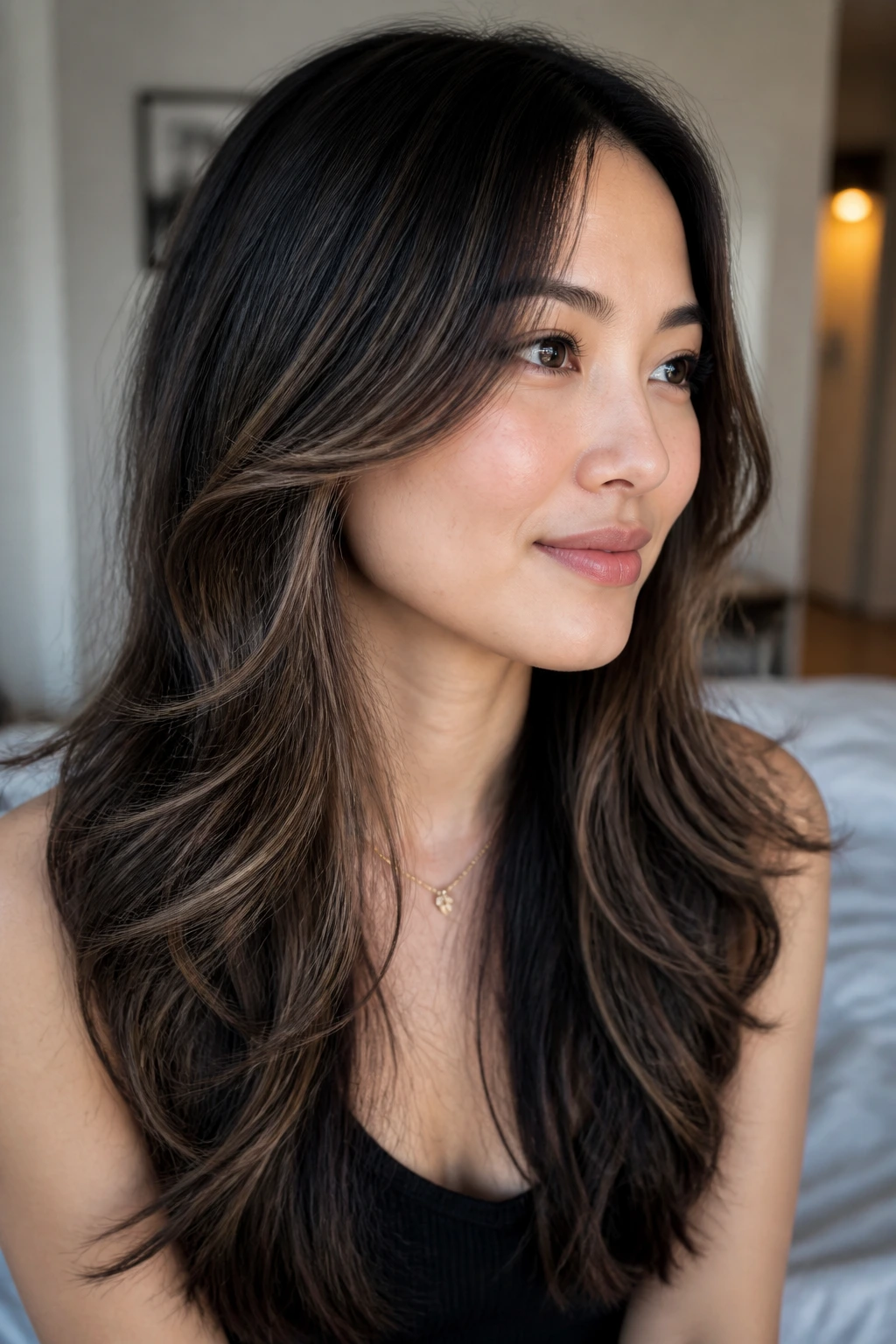
The prettiest highlight on dark hair is usually the one that knows when to stop. A soft caramel frame, a mushroom melt, a few babylights through the crown — those ideas hold up because they respect the base instead of bulldozing it. That’s the whole game with Asian hair color. Keep the depth. Borrow the light.
If you’re deciding between two shades, choose the one that still looks good after a few washes and a little grow-out. That’s where the real difference shows up. A highlight should move with your hair, not sit on top of it like a costume.
