



Sandy blonde on short hair has a particular kind of honesty. There isn’t enough length to hide a weak toner job, and there isn’t enough extra hair for the color to sit there and do nothing. The shade has to work with the cut: soften a blunt line, keep a pixie from reading too harsh, and leave enough movement that the ends don’t look chalky under indoor light.
That’s why this color family keeps showing up on bobs, bixies, shags, and cropped cuts. Sandy blonde sits between beige and gold, with just enough depth to avoid the flat, over-bleached look that can happen when a short style is pushed too pale. On the right haircut, it feels calm and easy to wear; on the wrong one, it can turn stripey fast.
A good sandy blonde for short hair is rarely one note. The best versions have a deeper root, a beige middle, and lighter pieces around the face or crown — not because that sounds fancy, but because short hair needs dimension in a small space. Once you see how placement changes the shape, the differences between a soft pixie and a rooted bob start to make sense very quickly.
Why Sandy Blonde Feels Different on Short Hair
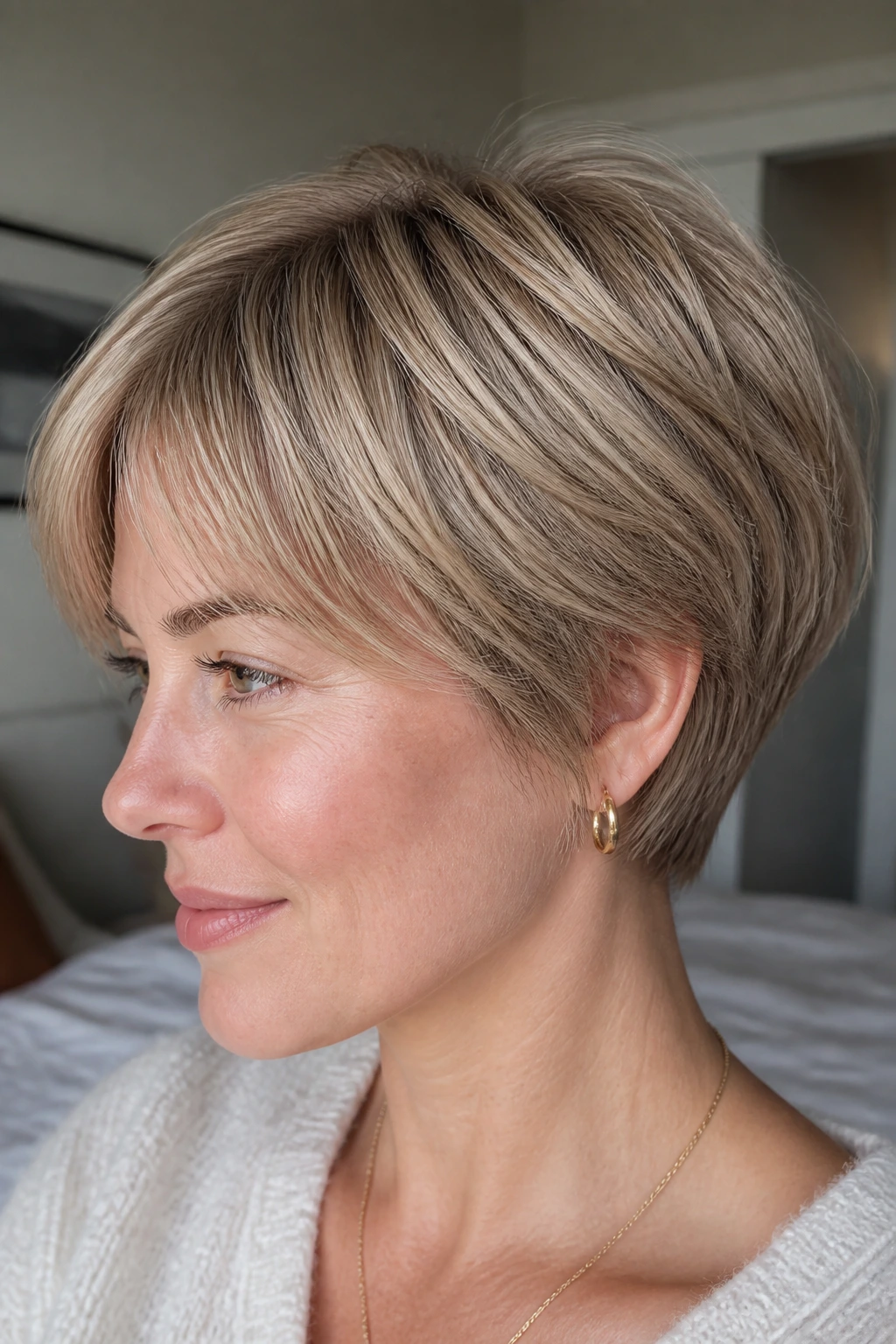
Short hair shows the color job faster. There’s less length to blur a harsh toner or a patchy foil placement, so sandy blonde has to be balanced from root to end. That’s the upside too: when it’s done right, you see the haircut and the color at the same time, without one swallowing the other.
A little depth keeps the style from looking thin. On a cropped cut, pure lightness can expose every bit of scalp and make the shape feel wispy in a bad way. A beige root shadow or a few lowlights behind the ear keeps the silhouette fuller.
It softens blunt edges. A chin-length bob in icy blonde can look severe fast. Sandy blonde, especially the versions that lean beige or gold, rounds off the line and makes the haircut look lived-in instead of helmet-like.
It works with texture instead of fighting it. Waves, bends, and curls break the blonde into smaller pieces, which is exactly what you want on short hair. The tone lands in ribbons, not one big block.
It buys you a saner grow-out. A rooted sand blonde with some micro-lowlights can stretch between appointments more gracefully than a single-process pale blonde. That matters when the shortest layer at your nape starts showing new growth after what feels like five minutes.
1. Soft Beige Pixie
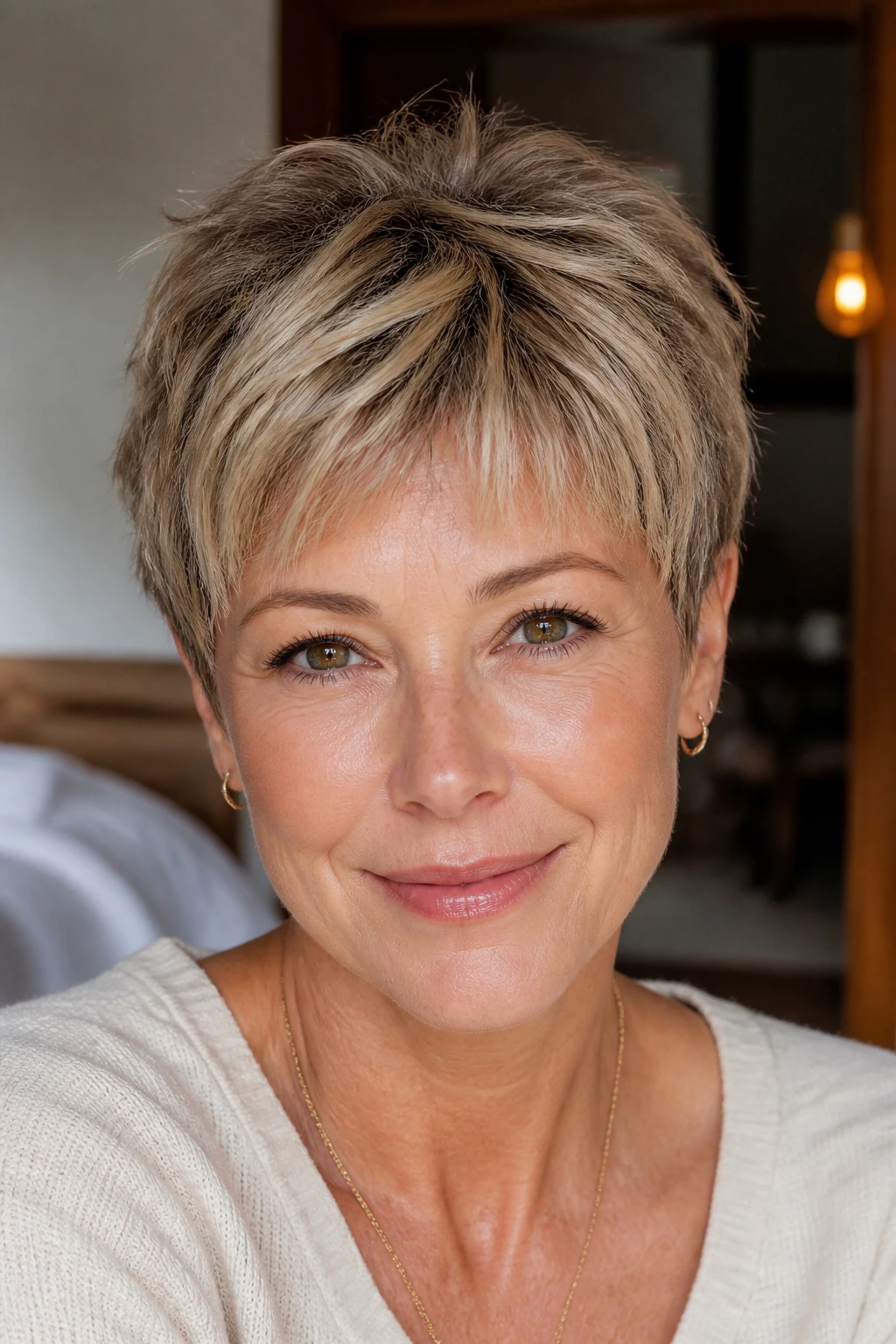
A sandy blonde pixie looks best when the shade leans beige instead of yellow. Soft beige keeps the top airy and stops the cut from getting muddy at the nape, which is where many blond pixies fall apart. Fine hair especially benefits here; the lighter crown pieces give lift without turning the whole head into one bright cap.
Why it works on short hair
Short pixies show every shift in tone. That is the advantage. A few fine foils through the fringe and crown, plus a gloss that lands one step warmer than ash, create texture without needing lots of length.
- Best for: straight or lightly wavy pixies that need softness around the hairline.
- Ask for: micro-foils at the crown, a beige toner, and a slightly deeper nape.
- Style with: a pea-size matte cream worked through dry hair, then pinch the ends with your fingers.
- Avoid: pushing the whole pixie too pale, because it can make the shape look brittle.
My rule with this look: keep the back half a shade deeper than the top. That tiny difference is what keeps the cut crisp instead of fuzzy.
2. Rooted Sandy Bob
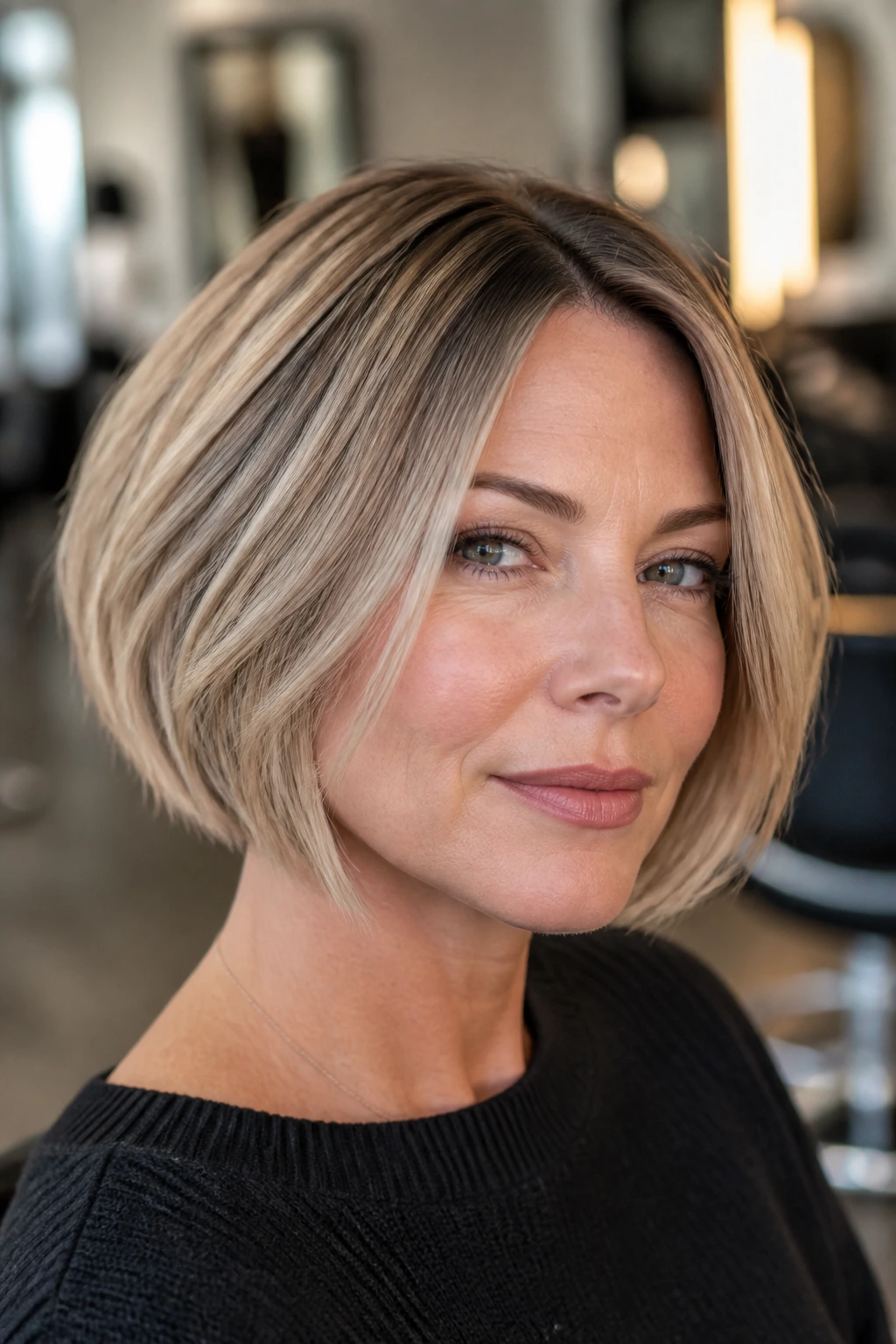
A rooted sandy bob grows out better than almost any other short blonde. The shadow at the roots keeps the top soft, and the sandy mids and ends keep the cut from sinking into brown. I like a root that sits about half an inch to an inch deeper than the brightest pieces, especially when the bob is chin-length or just below the jaw.
The cut matters here. A blunt bob with a rooted blonde can go boxy if the color is placed too evenly, so ask for lighter pieces through the front and a gentler blend in the interior. That way the eye lands on the curve of the haircut instead of on a hard band of color. Air-dried with a little wave, it feels easy; blown straight, it reads cleaner and more polished.
This is the one I recommend when someone wants sandy blonde but doesn’t want a salon appointment every six weeks. The grow-out is kinder. So is the regrowth line.
3. Creamy French Bob
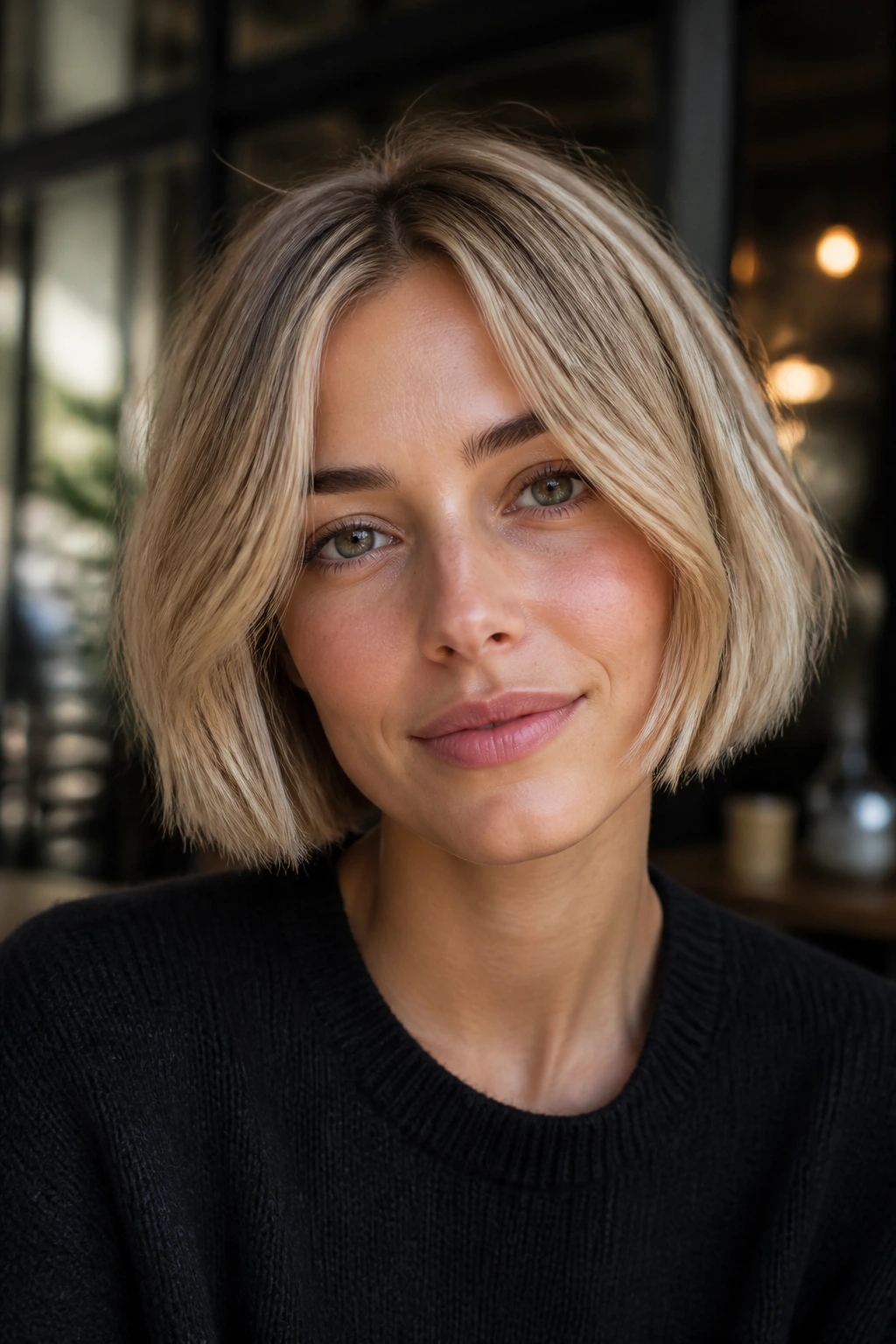
Can a French bob look too polished for sandy blonde? Only if the color turns chalky. The nice version keeps the line blunt and the tone creamy, with just enough beige to keep the fringe soft at the edges.
A French bob sits at the jaw, so every strand in the front matters. I like this look with a center part or a low side part, plus small babylights that brighten the cheekbones and crown without stealing all the attention. The blonde should feel like a wash of light, not strips of foil. That is the difference between chic and overworked.
How to ask for it
- Length: jaw to just below the jaw.
- Tone: creamy beige with a soft neutral gloss.
- Placement: brighter around the face, quieter through the back.
- Finish: smooth and tucked, or with a slight bend under the ends.
If you want a short blonde that looks neat even on a rushed morning, this one sits near the top of the list.
4. Dune-Shag Crop
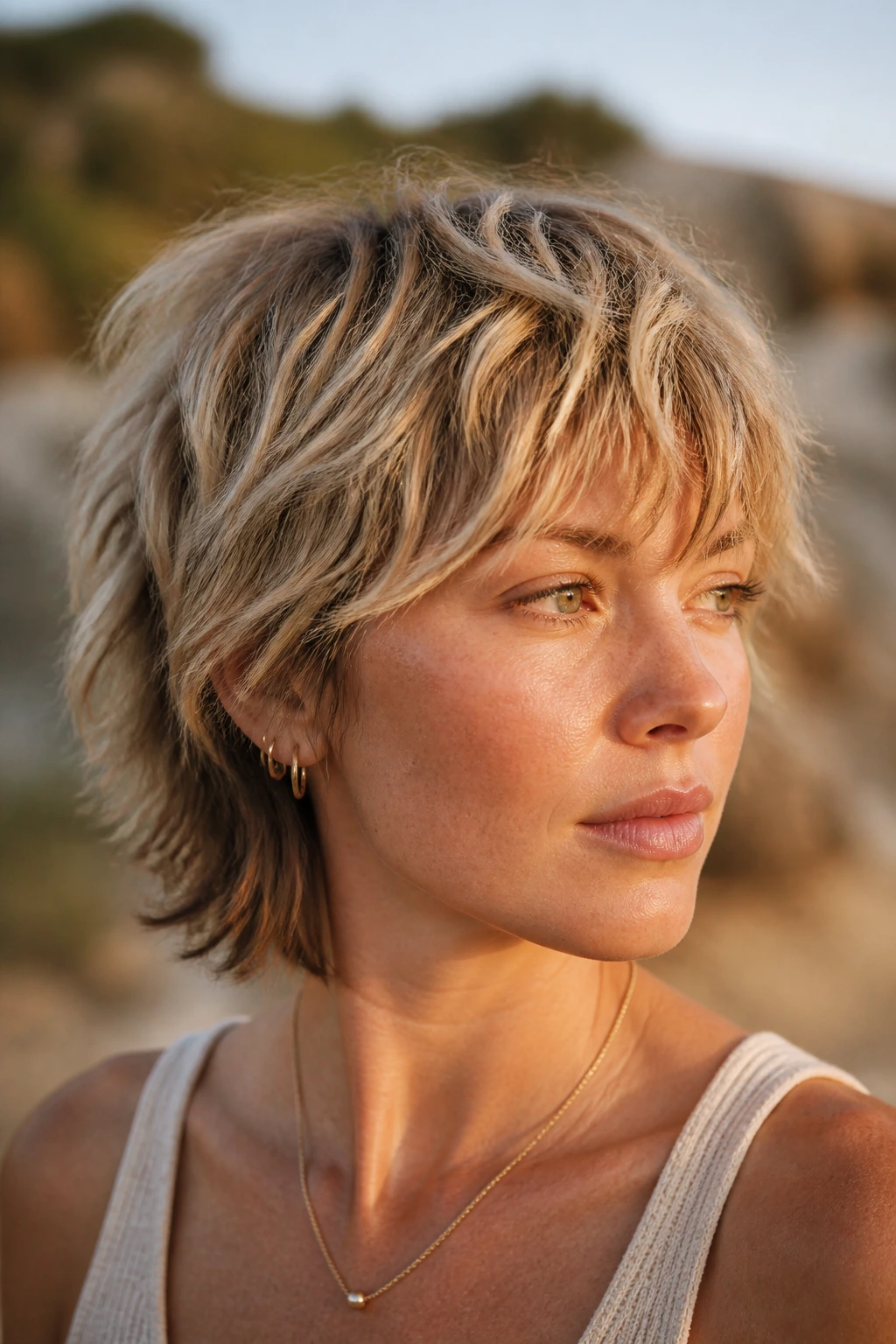
If you air-dry a shag and want the color to do some of the work, dune blonde is the right lane. The layers catch the light on their own, so you do not need an aggressively bright blonde to make the cut move. A beige-gold balayage with a few deeper ribbons underneath gives the shag a more grounded look.
The trick is placement. Keep the lightest pieces around the crown, fringe, and outermost layers, then leave the underlayers a touch deeper so the texture doesn’t get washed out. That small bit of shadow makes the feathers and flicks in the haircut read better. It also helps if your hair has a natural bend. A shag with sandy blonde and zero movement can feel flat, which is a waste of a good cut.
If you like texture sprays, this is your cut. If you hate heat styling, even better.
5. Buttered Bixie
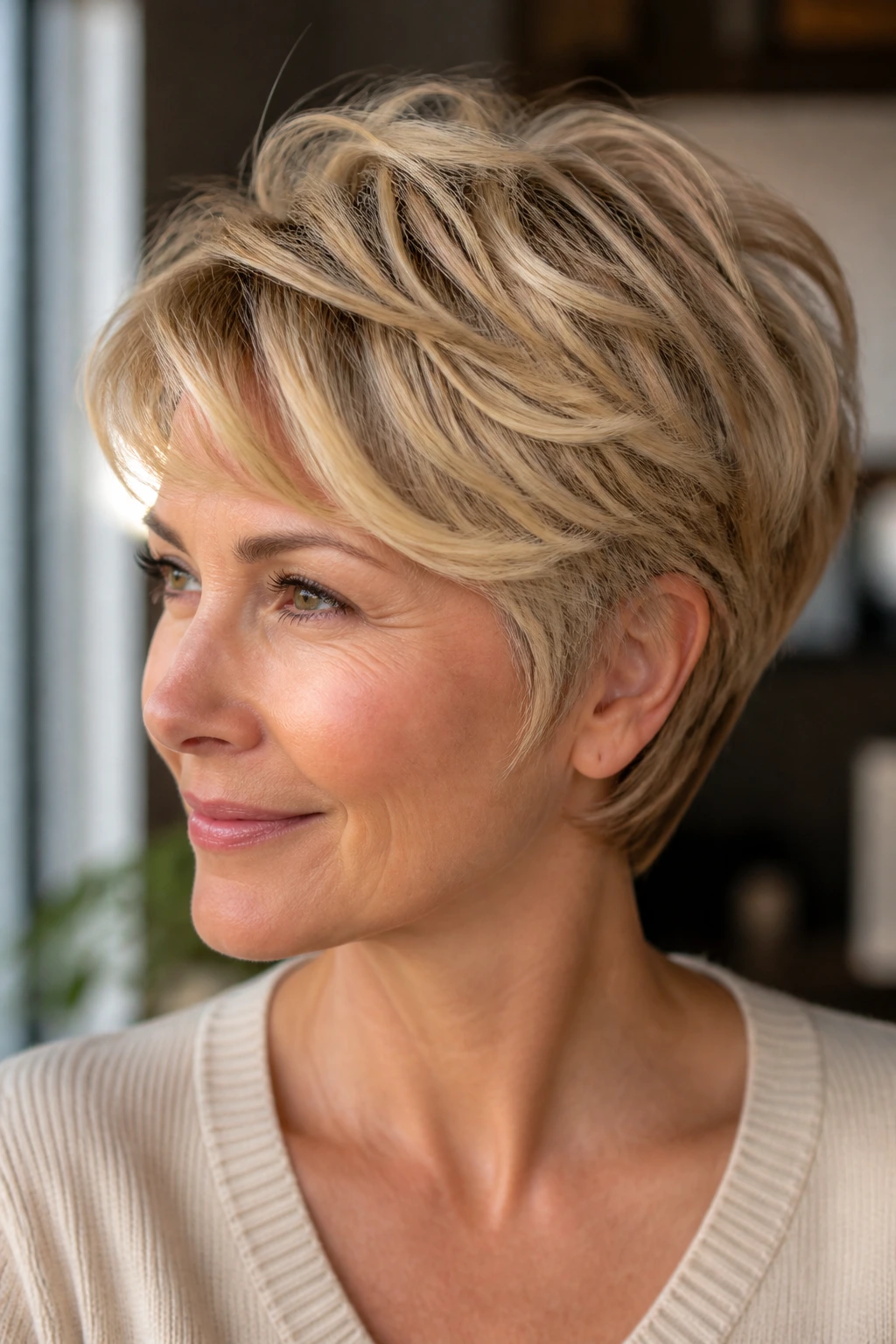
The bixie is one of the nicest places for sandy blonde because the cut has enough length for ribbons of color, but not so much that you need heavy highlighting. A buttery sandy tone gives it a soft sheen, especially through the top and face frame, while the shorter sides stay a half-step deeper for shape.
What makes this one work is the mix of pixie energy and bob softness. You can brush it forward, sweep it back, or finger-style it into little bends, and the blonde still reads. I like a few brighter pieces around the temples and a warmer gloss on the ends. Too much ash here can make the cut look dry, which is a shame because the bixie already has enough edge on its own.
It’s a forgiving look if you want short hair that doesn’t feel severe. The color keeps the cut friendly.
6. Sunlit Micro Bob
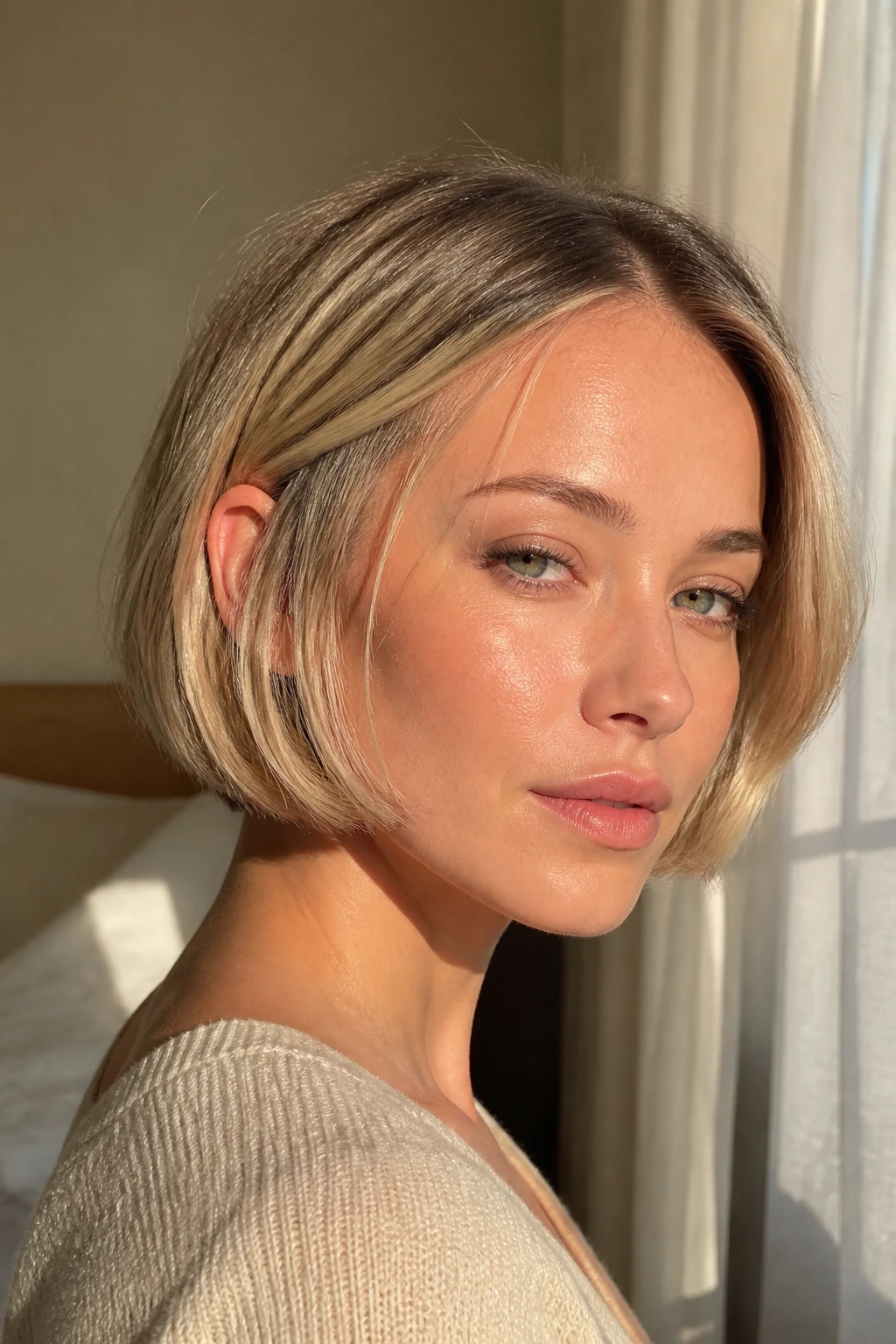
Tiny bob, tiny foils. That is the whole idea here. A micro bob sits close to the jaw or just under it, so precision matters more than brightness. Fine babylights spaced close together — think about one-eighth to one-quarter inch apart around the hairline — give the blonde a soft scatter instead of visible stripes.
I like this cut on straight hair or a loose bend because the line is clean and the sandy tone can show off the shape. Keep the nape slightly cooler and the front a little warmer; that tiny contrast keeps the bob from reading like one block of color. If the hair is very dense, a few micro-lowlights under the top layer help the ends stay airy.
This is a good option when you want a polished look that still feels relaxed. It’s neat. Not stiff.
7. Smoky Sandy Lob
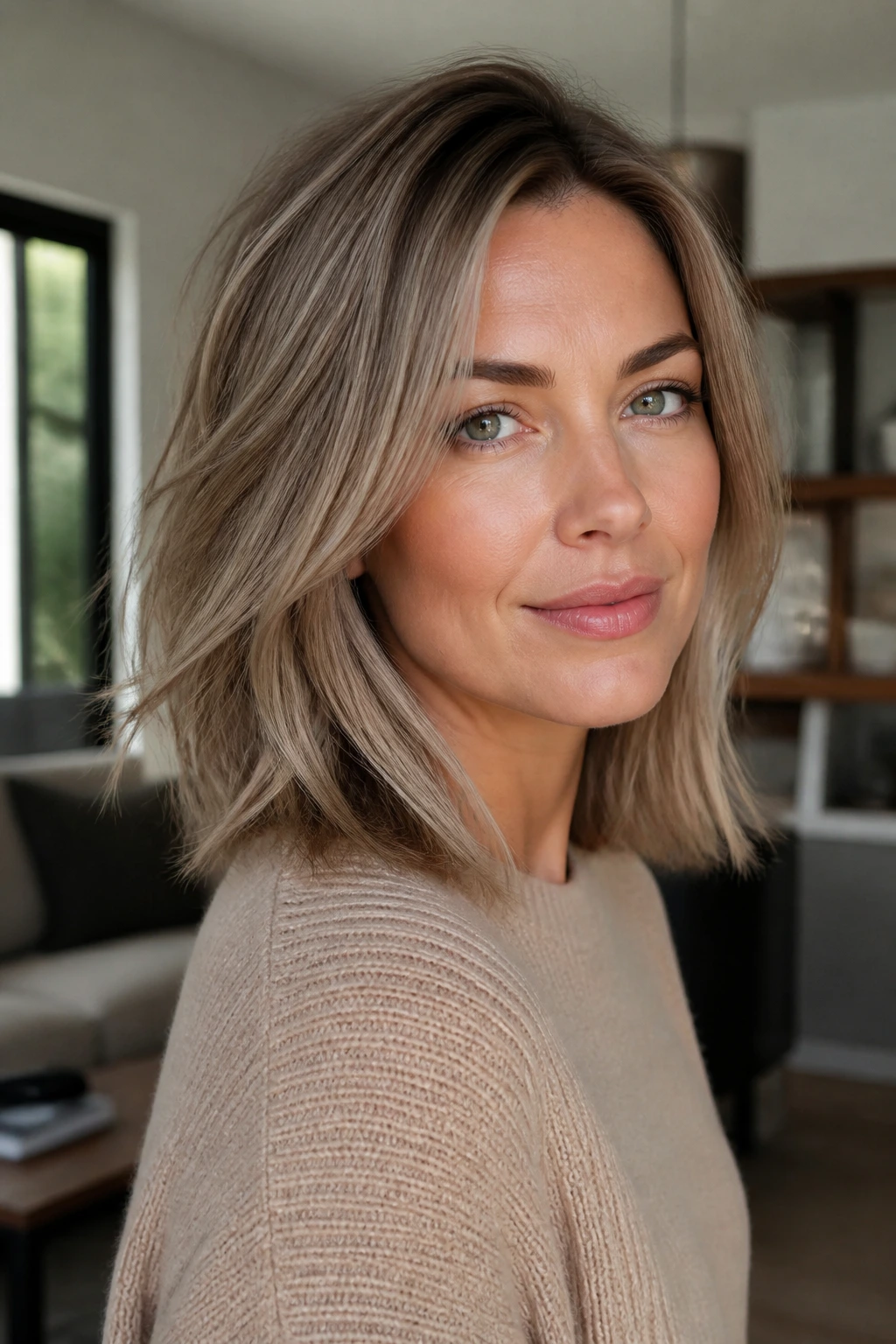
This is the sandy blonde for people who want less warmth without going full ash. A smoky sand lob sits at the collarbone or just above it, so the color has room to fade from a deeper root into beige-mushroom mids and slightly brighter ends. It reads cooler, but not gray.
I like this on hair that naturally pulls orange when lightened. The smoky toner helps mute that without killing all the softness. On short-to-medium hair, the lob length gives you more room to show off the tonal shift, especially if you curl just the ends or tuck one side behind the ear. The result is smoother than a short bob and easier to grow out than a true long cut.
If your wardrobe leans black, cream, navy, or olive, this shade fits in fast. It does not shout. That’s the point.
8. Piecey Pixie with Cool Ends
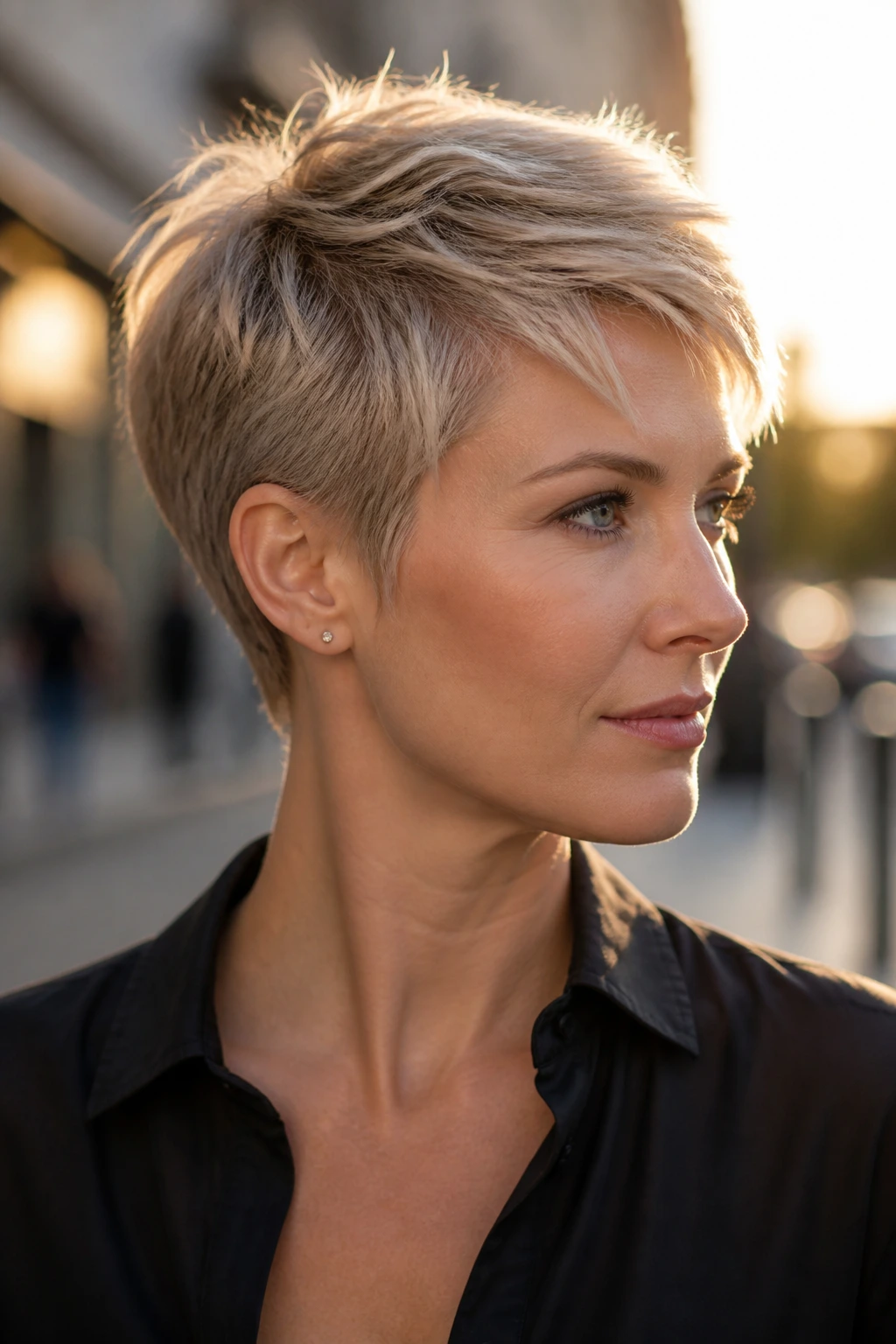
A slightly edgy pixie gets better when the ends are cooler than the roots. Piecey cool ends give the cut a sharper finish and stop it from melting into one soft blur. I’d reach for this when the client wants short hair with a little attitude — not punk, just sharper.
The best version keeps the top in sandy beige territory and lets the tips go a touch ashier. That contrast is small, but on short hair it matters. It gives the spikes, bends, and little flipped pieces more definition, especially under matte paste or clay. If everything is warm, the style can look round and sleepy. If the ends are just a little cooler, the whole cut wakes up.
This one looks best with a side-swept fringe or a little lift through the crown. The shape carries the color. The color carries the shape back.
9. Toasted Sand Curly Crop
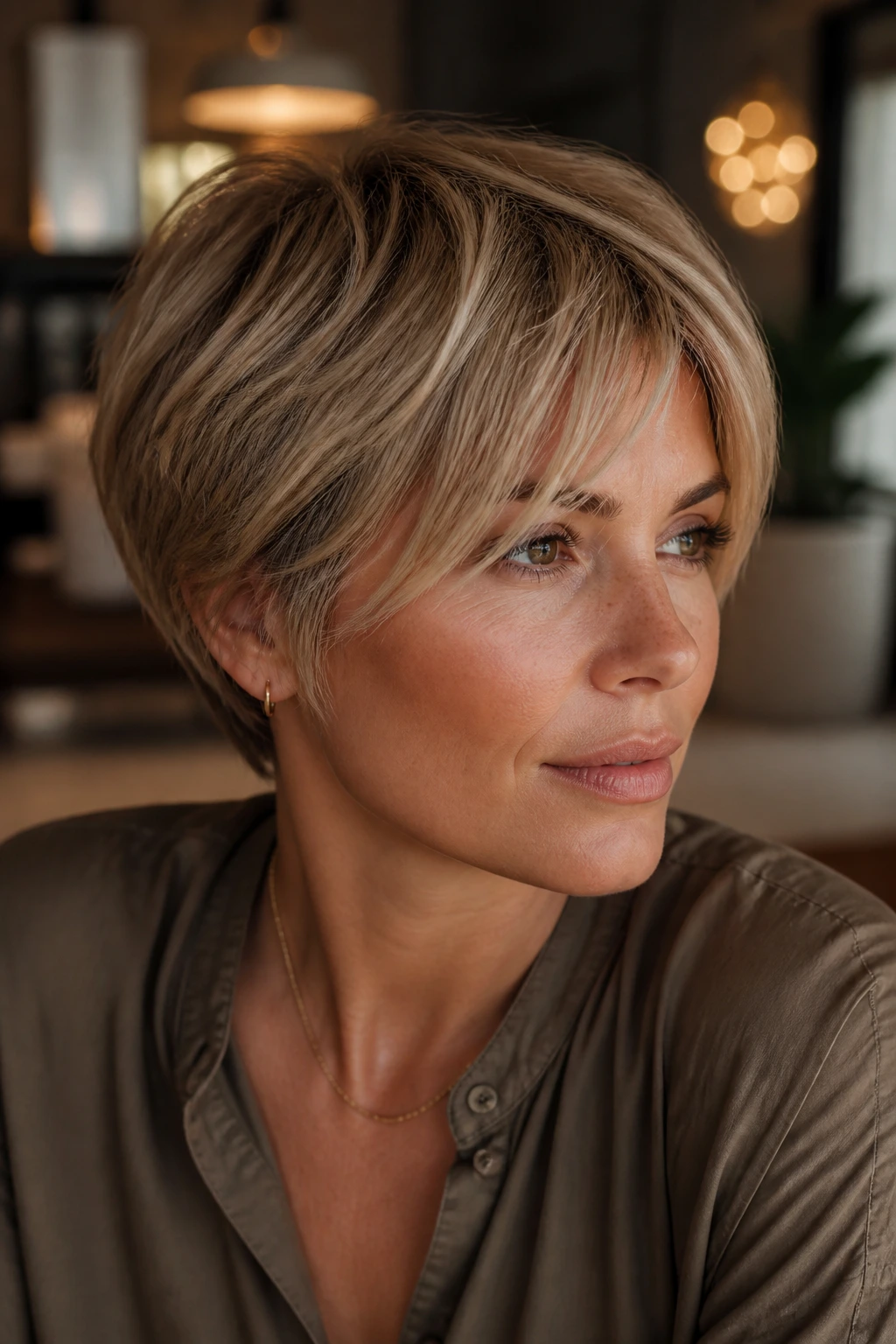
Curls change the game because the color is seen in arcs rather than stripes. A toasted sand crop uses warmer sandy pieces between the curls so the pattern reads soft and full, not busy. On curls, I prefer fewer foils placed with purpose instead of lighting up every strand.
The goal is to brighten the outer curl pattern and leave enough depth underneath that the shape doesn’t puff out. A light hand with caramel or beige lowlights can help here, especially if the curls are fine. Too much lightness and the crop loses its outline fast. Too little and the curls disappear in a brown blur.
Best for: curl types that shrink up once dry. Ask for: painted lightness on the top and outer ring of curls, with deeper tone under the crown. Style with: a leave-in cream and a diffuser on low heat. Skip: heavy brushing once dry. It wrecks both curl pattern and color placement.
This one is cozy without looking soft-focus. Curls need a little edge.
10. Buttery Blunt Bob
The cut carries the geometry; the color supplies the warmth. That’s why a buttery blunt bob works so well. A clean line at the ends makes the blonde look more intentional, while the sandy tone keeps the bob from feeling severe. I prefer this version just a touch warmer than ash, with creamy mids and ends that still show some depth.
This is the short blonde I recommend for straight hair that wants a little luxury without fuss. The beauty lives in the line. If the color gets too scattered, the whole bob starts to lose its neatness. So keep the dimension controlled: brighter toward the front, quieter through the nape, and creamy all through the last inch of the ends.
Blow it smooth and tuck the sides behind the ears for a day or two. You’ll see how much the color placement matters. On this cut, it is not background. It is architecture.
11. Ribbon-Light Lob
Ribbon highlights are the answer when you want blonde movement without flooding the whole head with light. A sandy lob built on ribbons of color keeps dark and light strands running through the hair in a way that looks expensive in the plainest sense of the word: not flashy, just finished.
This style works because the eye reads contrast more easily on a shorter length. A few brighter ribbons near the face, some mid-tone beige through the crown, and a little depth underneath keep the lob from flattening. I like this one on fine to medium hair because the contrast makes the hair look like it has more body than it does.
If you heat-style with a one-inch iron, leave the ends a little straighter. It keeps the ribbons visible. Full curls can swallow the placement.
12. Shadow-Root Undercut Pixie
This is the tough-looking sandy blonde that still reads soft. The undercut gives the shape edge, and the shadow root keeps the lightness from looking pasted on top. If you like short hair that feels sharp around the ears but lighter through the crown, this one has a lot going for it.
The best version uses a deeper root — not dark, just a shade or two lower — and brighter beige pieces on top. The contrast is what shows off the undercut and stops the hair from puffing out. On straight hair, it looks sleek. On wavy hair, the top pieces flip and separate in a way that gives the cut more personality.
I’d call this a good choice for anyone who likes low-maintenance shape but still wants a blonde that feels deliberate. The grow-out is kinder than an all-over light blonding service, and the shadow keeps the scalp area calm.
13. Honey-Sand Layered Bob
A warmer sandy blonde can be a relief if you’ve spent too long looking at cool beige tones that feel a little flat. Honey-sand sits in the middle — warm enough to look soft, but not so golden that it turns brass on the wrong base. On a layered bob, that warmth brings the movement forward.
I like this cut when the hair has a natural bend or when the layers are a little feathered around the face. The lighter pieces sit on the surface, the honey tone fills the middle, and the lower layers stay deeper so the bob keeps its shape. If the layers are too heavy, the color loses its rhythm. If the layers are too short, the blonde can look busy. So the cut has to be done with some restraint.
This one flatters a lot of skin tones because the warmth sits close to beige rather than orange. That matters. Beige is the part that keeps it wearable.
14. Frosted Sand Crop
Cool sand can look sharp on the right base — and muddy on the wrong one. Frosted sand lives in that cooler beige lane, with just enough ash to take the edge off warmth without turning silver. On a crop, the result can look clean and intentional, especially if your skin leans cool or neutral.
I would not push this shade too far on porous hair. Porous ends grab ash fast and can go dull in a single toner appointment. Better to keep the root soft, brighten the crown with controlled foils, and leave the ends a half-step warmer than you think. That keeps the crop from losing all its life.
This is a strong choice if your short haircut is neat, close, and slightly architectural. The coolness sharpens the shape.
15. Money-Piece Sandy Bob
If you want brightness near the face without full-head lightening, this is the easy win. A sandy bob with a clear money piece gives you a bright fringe of color at the front while the rest of the head stays more relaxed. It’s a smart move on short hair because the front does most of the visual work anyway.
I like this with a bob that sits from jaw to shoulder, though the front pieces can be a little longer for movement. Keep the money piece beige-gold rather than icy white; otherwise it can look disconnected from the rest of the hair. The color should frame the face, not wear a spotlight.
This is one of the quickest ways to freshen up a short cut without redoing the whole head. It’s also useful if you like wearing your hair tucked behind one ear. The contrast shows right away.
16. Beige-Butter Crop
A beige-butter crop sits right between warm and neutral, which is why it works on so many people. The tone is soft enough to feel blonde, but not so pale that it wipes out the haircut. On a cropped shape, that balance matters more than brightness.
I like this look when the base is naturally a level 6 or 7 and you don’t want a long lightening process. A few foils around the front, a gloss through the mid-lengths, and a slightly deeper interior layer can give you all the dimension you need. The crop stays clean, the color stays soft, and you don’t have to chase every little warm spot.
If you’re not sure whether you want warm or cool sandy blonde, this is the safest middle road. Not dull. Not brassy. Just calm.
17. Sunkissed Shag
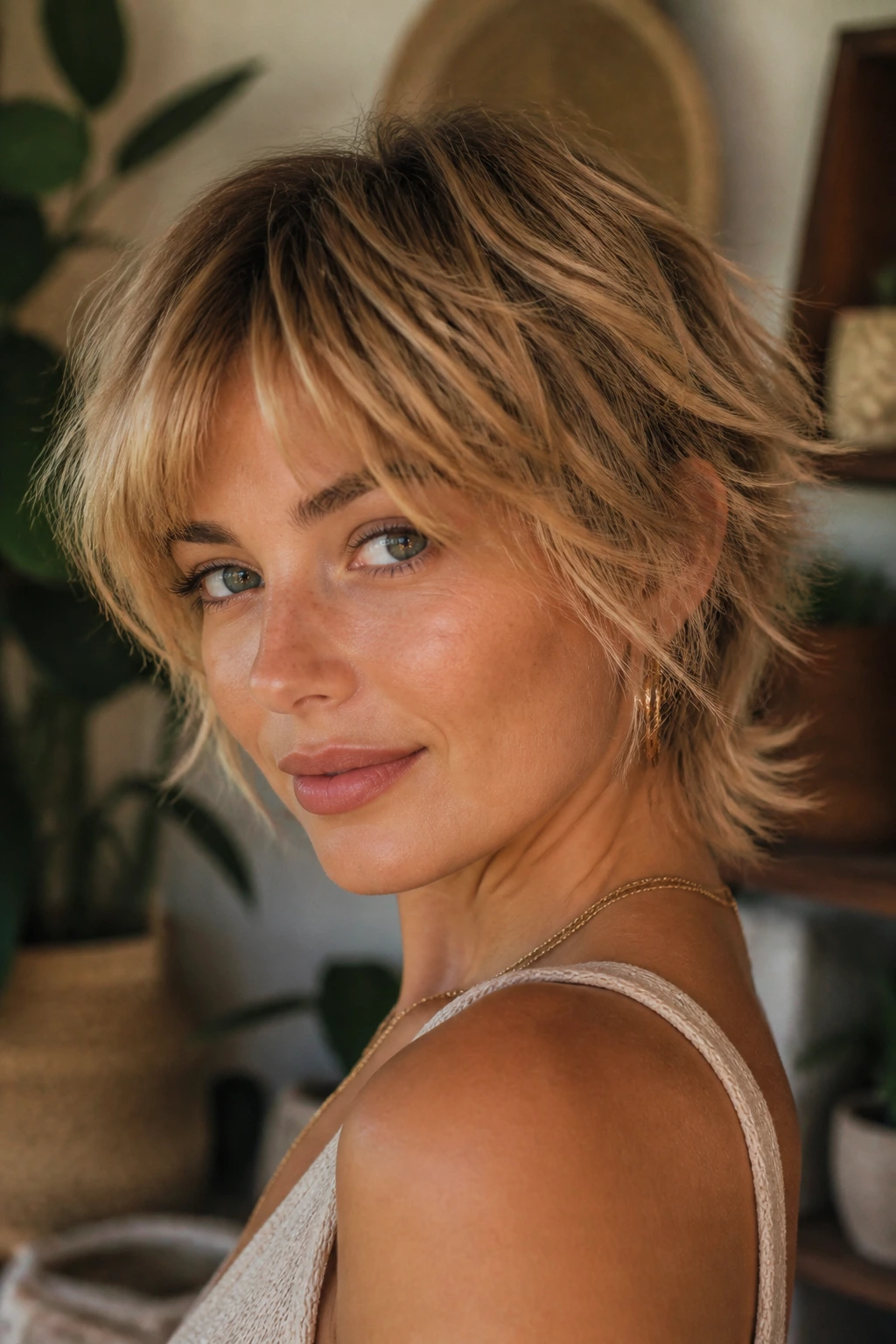
The color is barely there in some spots, and that’s the point. A sunkissed shag uses diffused balayage instead of obvious highlight lines, which keeps the layers from looking carved out. On short shaggy cuts, that softness helps a lot.
I like brighter ends on the top layer and subtle beige in the interior, almost like the hair has been lightened by long stretches outdoors — minus the damage, hopefully. The result is casual but not careless. If the layers are cut well, the color seems to move when you turn your head. That’s the charm of it.
This is one of the best short sandy blonde ideas for people who wear texture spray and don’t want to fight their natural wave. The less structured the finish, the more convincing the color looks.
18. Mushroom-Sand Bob
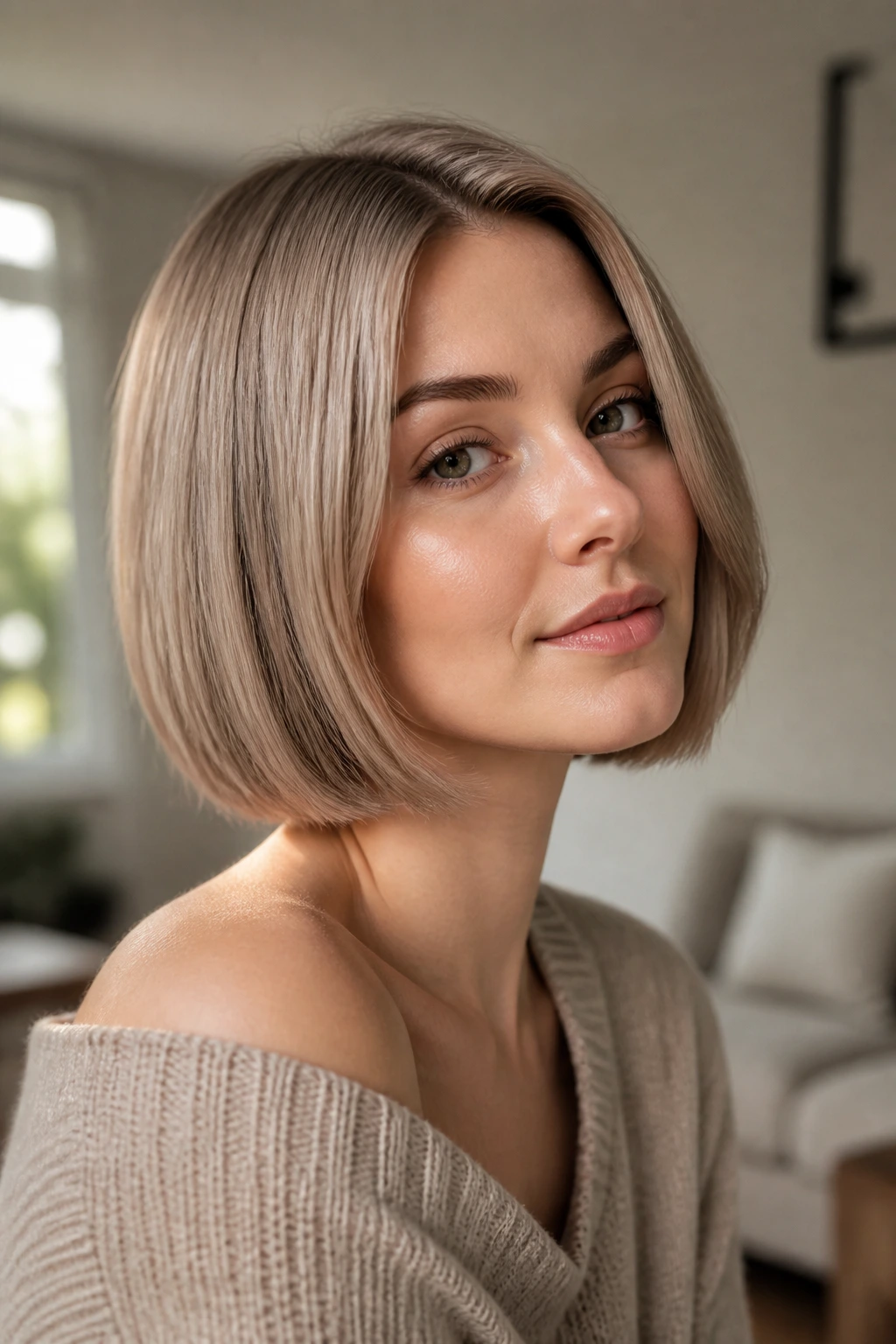
Mushroom-sand is the cooler, taupe-leaning side of sandy blonde, and it has a nice seriousness to it. On a bob with a clean line, it looks modern without tipping into hard ash. The tone is especially good if your natural color is dark blonde, light brown, or something in that middle zone that never looks fully golden anyway.
I prefer this with straight styling or a soft bend at the ends. The bob shape gives the color a neat frame, and the cooler beige tone keeps it from going yellow under warm indoor lights. If your hair tends to throw orange in the lightening process, this shade needs a careful gloss, not a heavy hand with toner. Too much ash can make it look dusty.
This is one of the more understated options on the list. That’s not a drawback. It makes the haircut look expensive in the plainest, most useful way.
19. Golden Fringe Crop
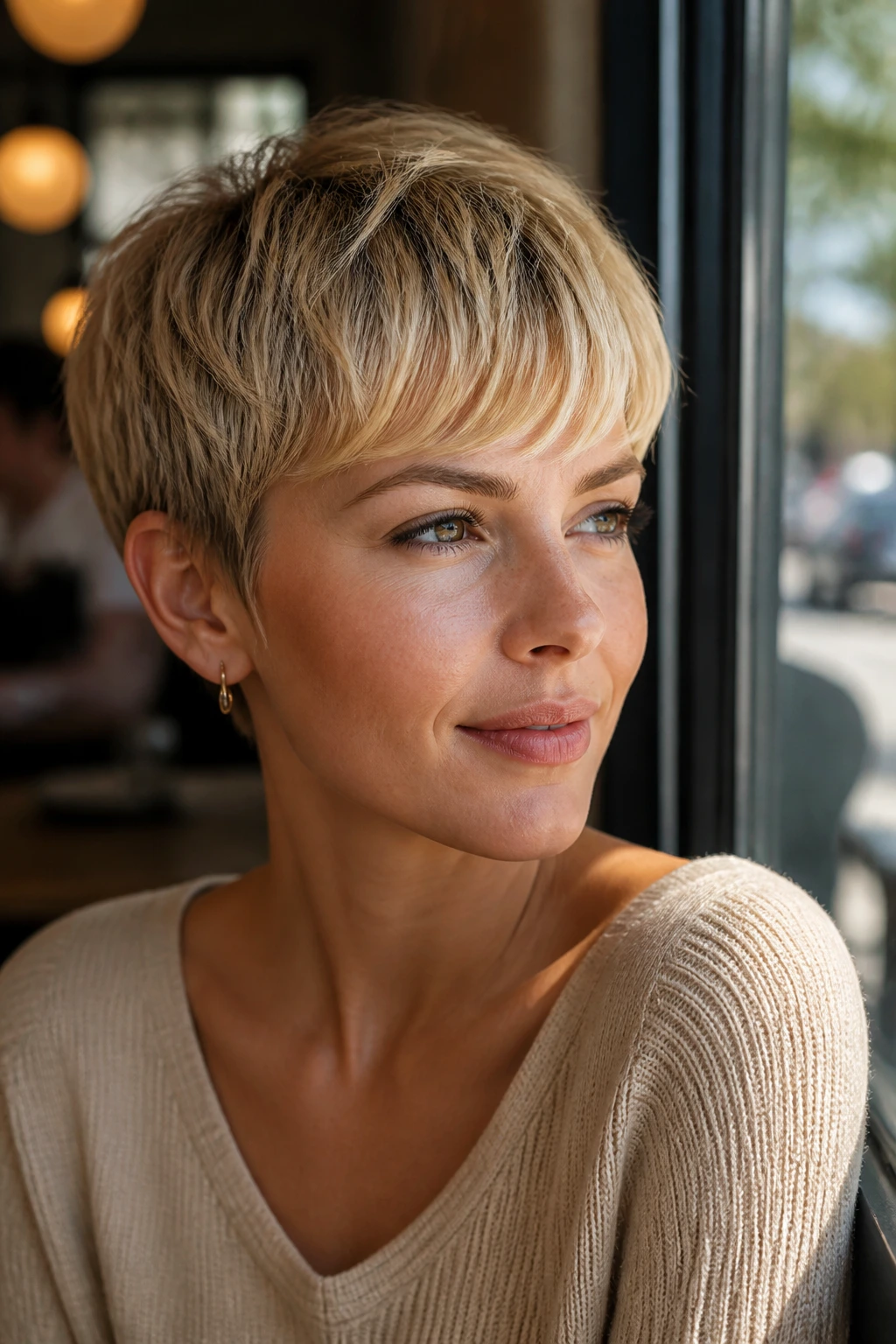
Bangs take color fast, so they can carry warmth the way longer lengths can’t. A golden fringe crop uses that to its advantage: a sandy base through the crop, then a little extra gold around the fringe and front corners so the eyes stay lifted. On short hair, that small dose of brightness can change the whole expression.
I like this look with soft bangs, not blunt heavy ones. Heavy fringe plus too much gold can turn the front dense. Soft fringe plus a warm sandy tone gives you movement and a touch of brightness without stealing the whole show. Keep the sides a little more beige so the fringe has a job to do.
This is a good option if you want your short haircut to feel friendly and a little sun-touched, especially around the face. The bangs do the talking.
20. Dimensional Wedge
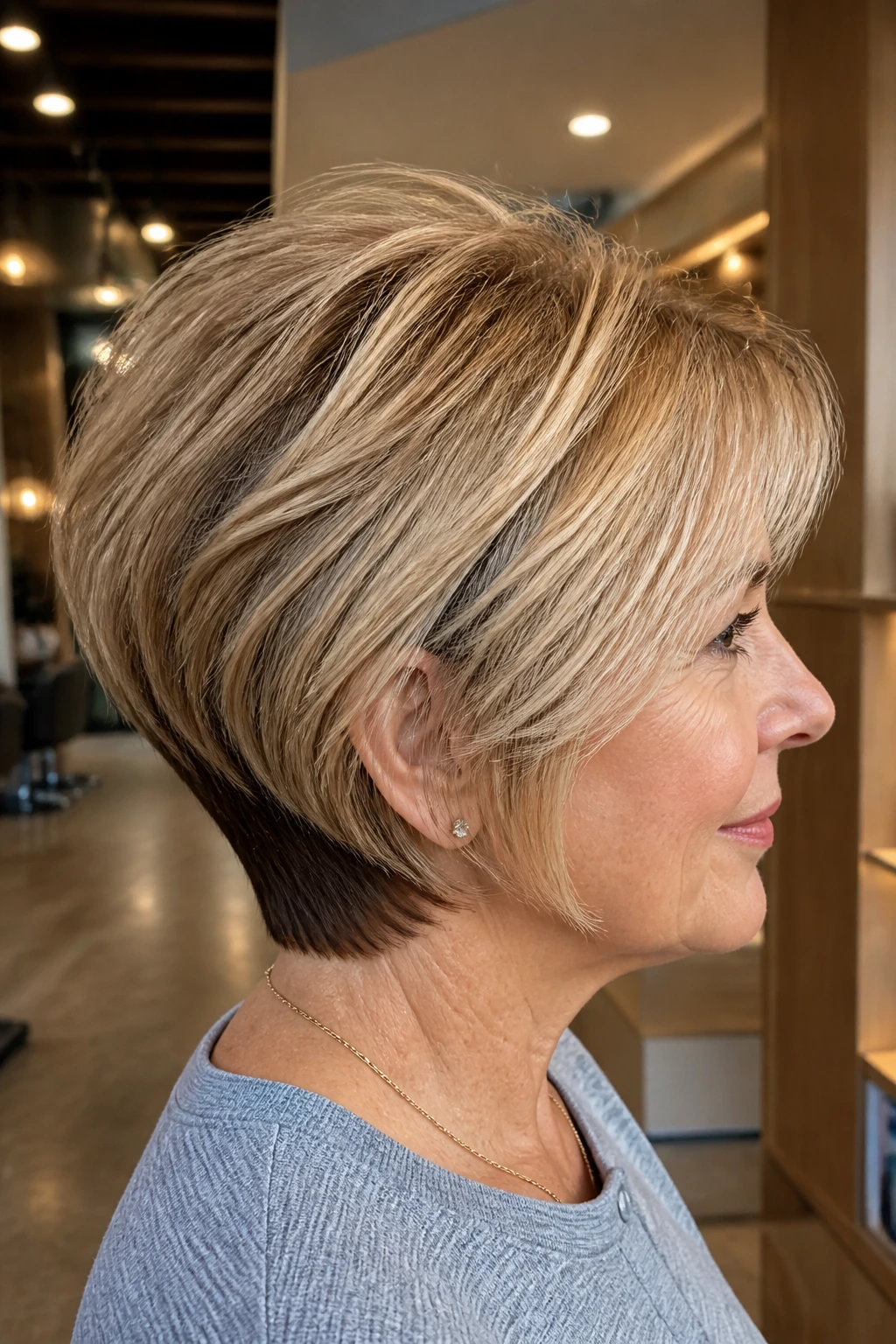
A wedge cut can eat up light if the color is too flat, so lowlights do real work here. Dimensional sandy blonde gives the stacked back and fuller crown somewhere to go. Without contrast, the wedge can look like one solid helmet. With a few deeper ribbons underneath, it looks shaped.
I like the lighter pieces through the upper crown and front with a softer, darker layer near the nape and internal stacking. That gives the silhouette more depth from every angle. If the hair is thick, the dimension matters even more because the cut can go heavy fast. If the hair is fine, the lowlights create the illusion of more density.
This is not the flashiest blonde on the list, but it’s one of the smartest. The haircut is the star. The color helps it stand up.
21. Flip-Out Sand Bob
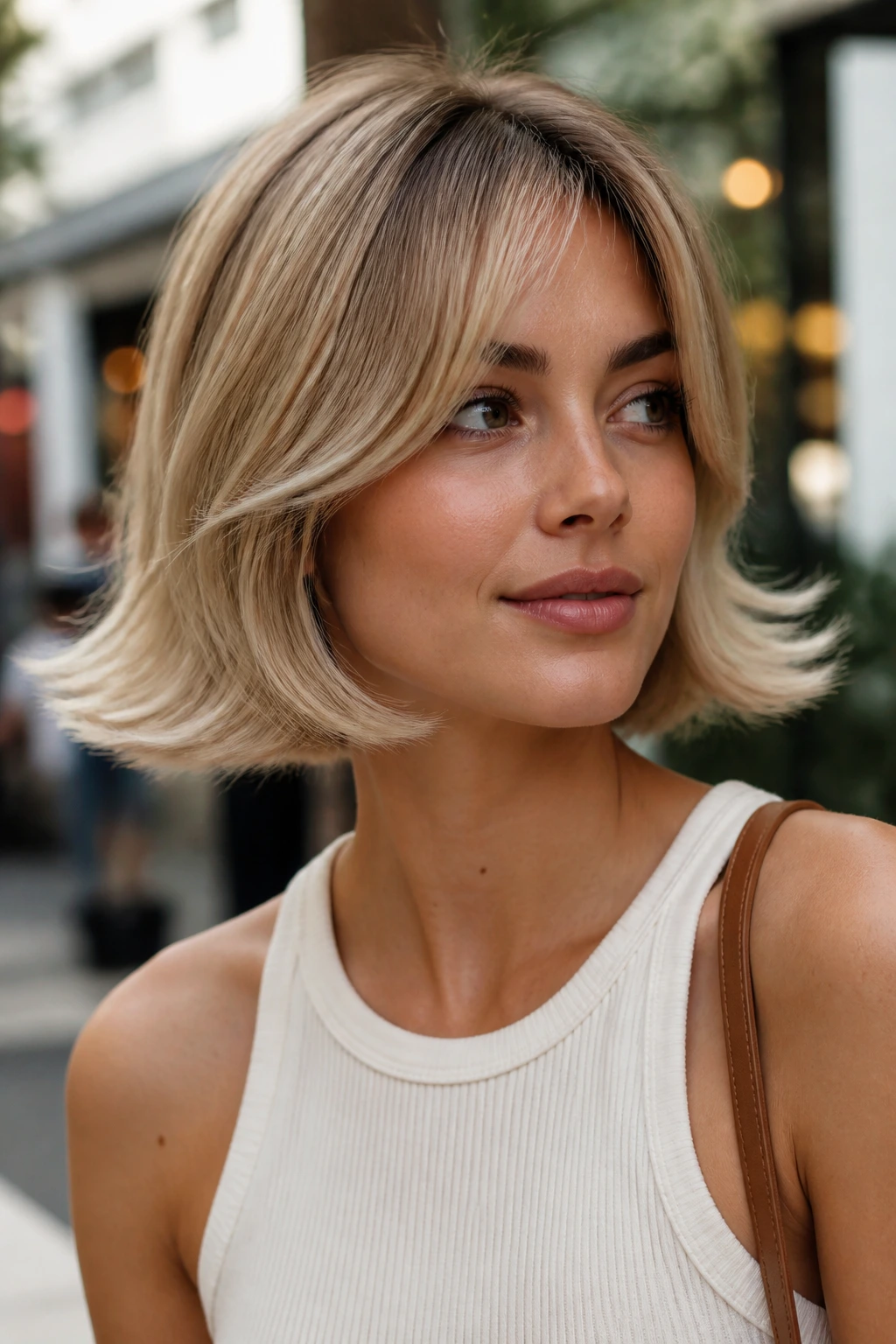
Retro shape, modern tone. A flip-out bob with sandy blonde ends feels playful without drifting into costume, mostly because the color softens the edges of the style. The ends can sit a touch lighter than the roots, which makes the flipped movement look natural instead of staged.
I like this with a round brush or a flat iron bend at the ends. Keep the middle of the bob in neutral beige and let the tips go a little brighter. That way the flip has somewhere to land visually. If the whole head is too light, the retro shape can look a bit loud. If there’s depth at the root and warmth through the middle, it feels much better.
This is the one for people who like a little personality in their haircut. It’s neat, but not stiff.
22. Micro-Lowlight Sandy Bob
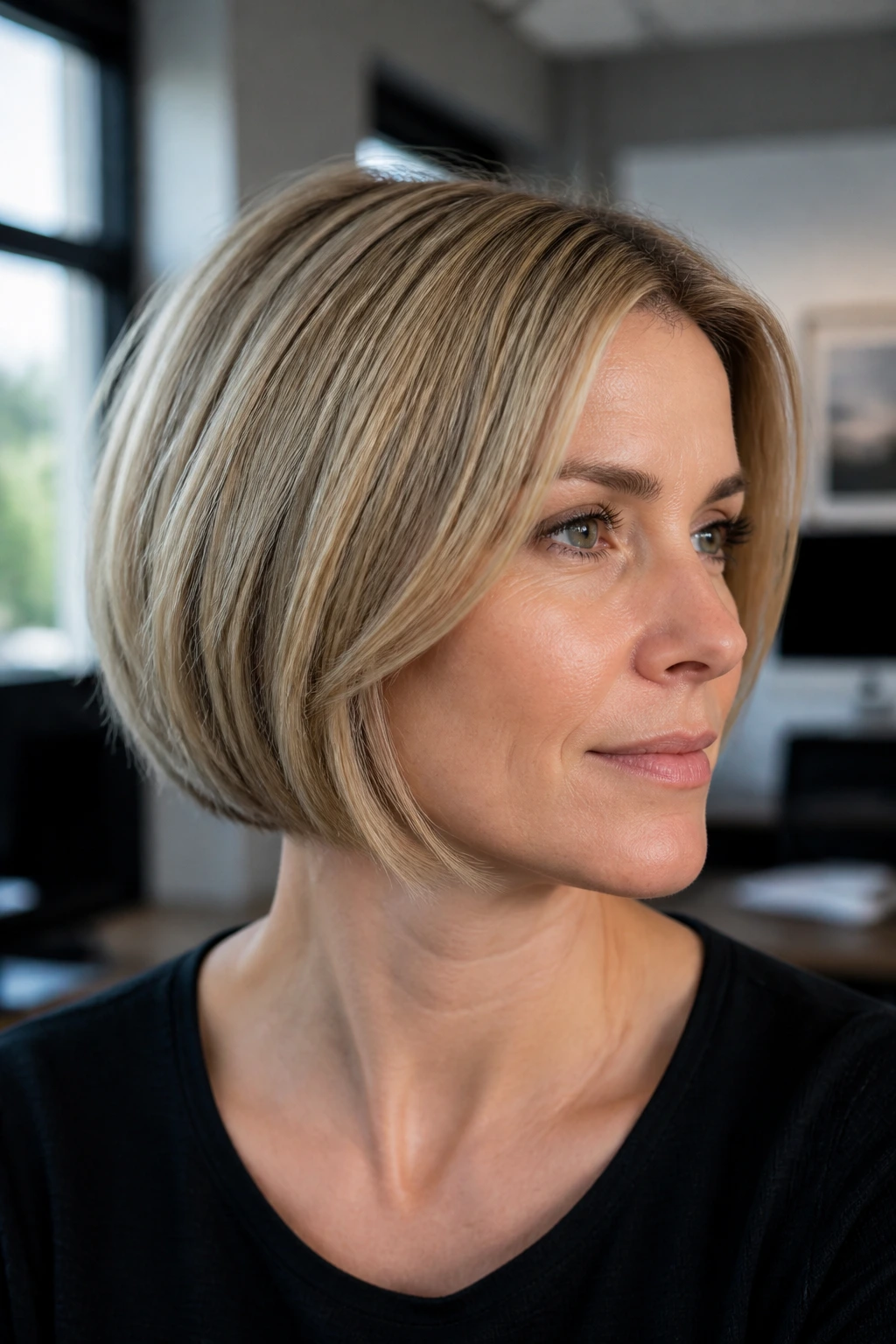
Fine hair needs some darker threads or the blonde goes chalky. A micro-lowlit sandy bob keeps the base from disappearing by threading in tiny lowlights one shade deeper than the lightest pieces. The result is a bob that still looks blonde, just with more body.
I especially like this on bob haircuts that are one length or lightly stacked. The lowlights give the ends a shadow that makes them look fuller, while the sandy blonde pieces on top keep the style bright. It is easy to over-lighten a short bob and lose all the shape. The lowlights are what save it.
If your hair is thin, this is one of the most useful ideas in the whole group. Not because it’s dramatic. Because it works in real life, in plain indoor light, on a Monday morning when you have no patience for flat hair.
Why Sandy Blonde Works So Well on Short Hair
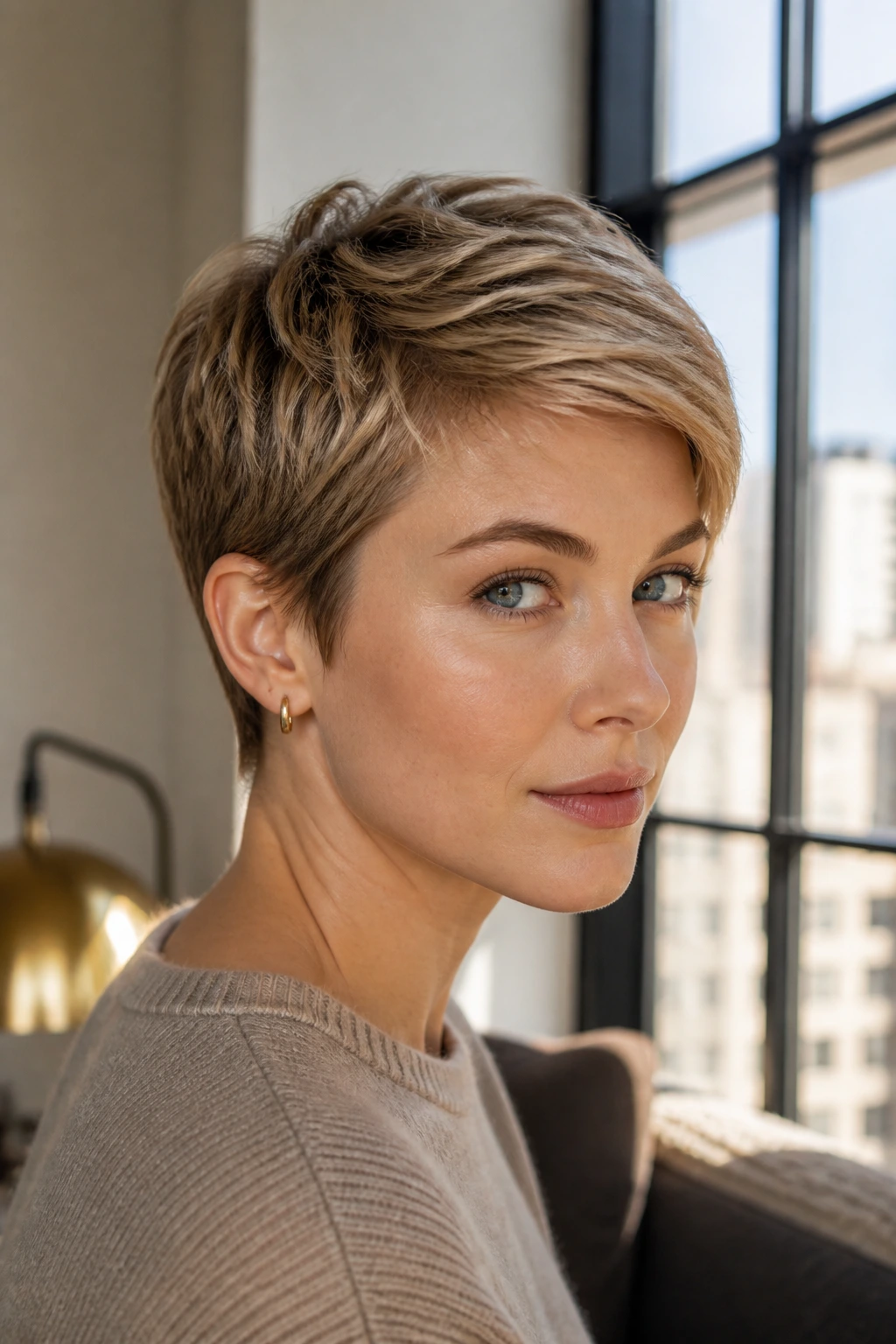
Short hair needs color with structure. A longer cut can absorb a few bad foils and still look fine. A pixie or bob can’t. Sandy blonde works because it gives you structure without making the haircut feel hard. Beige keeps the tone soft, gold keeps it alive, and a little root shadow keeps the shape grounded.
The tone sits between extremes. Too ash-heavy, and short blond hair can look dusty. Too golden, and it can go brassy fast. Sandy blonde lands in the middle, which is why it flatters so many short cuts — bobs, bixies, crops, shags, and undercuts all benefit from a shade that moves instead of sitting still.
Dimension matters more on cropped hair. There’s less length, so every light piece has more visual weight. That means placement matters as much as the formula. Lighter around the face. Slightly deeper at the nape. A cleaner crown. Those little choices change the whole read of the haircut.
It lets the cut stay the main event. That’s what I like most. A good sandy blonde doesn’t shout over the haircut. It frames it. A blunt bob looks sharper, a shag looks looser, a pixie looks softer, and a curly crop holds its shape better because the color is breaking up the surface.
Essential Equipment for These Looks
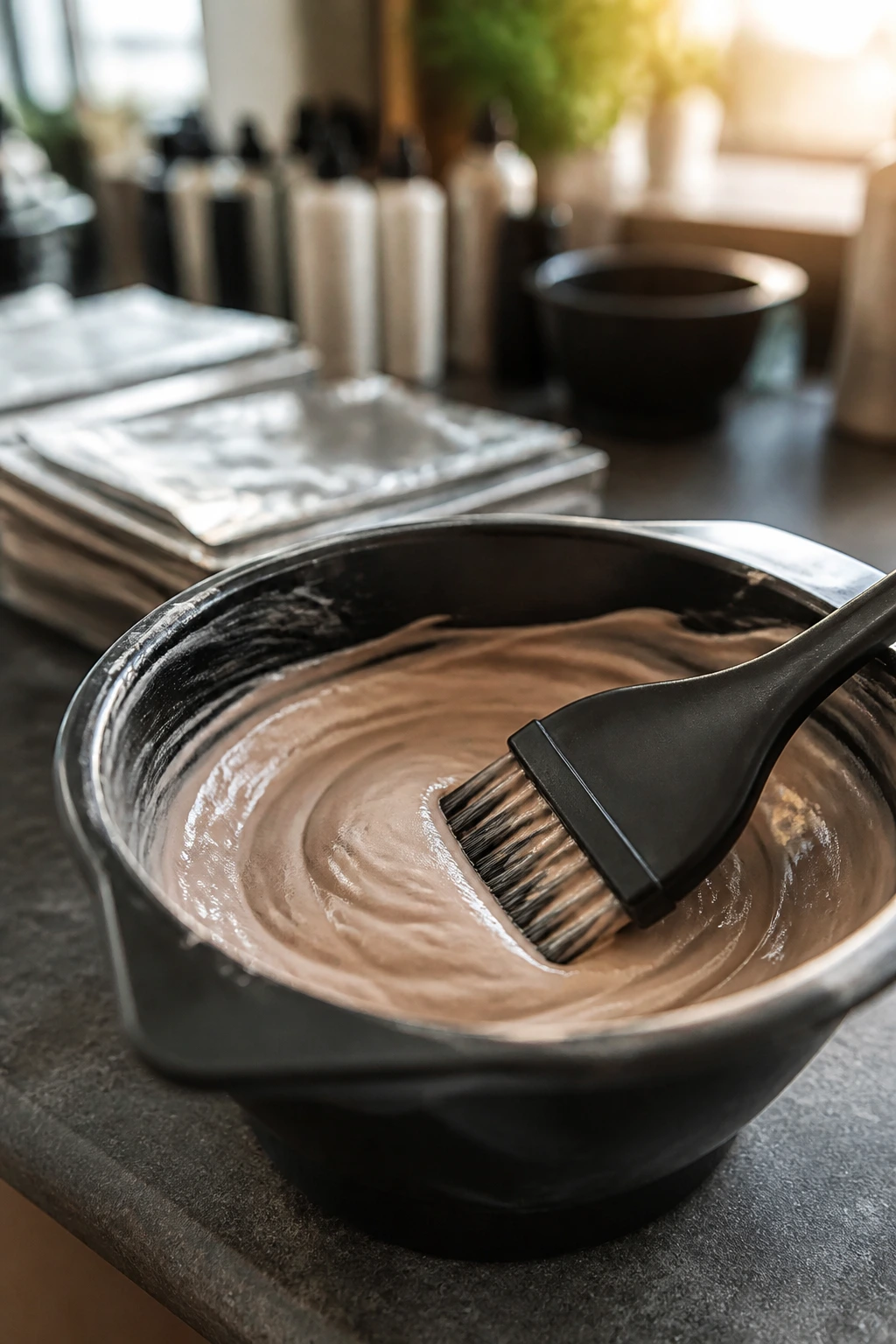
- Tint bowl and color brush: Useful for glosses, toners, and touch-up mixes, especially on short hair where precision matters.
- Tail comb: Helps section bobs, pixies, and fringes cleanly so the color placement doesn’t drift.
- Duckbill clips: Short hair slips around; clips keep the crown, sides, and nape separated while you work.
- Foil sheets or balayage board: Foils give sharper brightness, while a board helps with painted ribbons and soft sandy balayage.
- Processing cap or plastic wrap: Keeps toner from drying out on porous ends if you’re working with a gloss.
- Color-safe shampoo and conditioner: Choose gentle formulas that don’t strip the beige-gold balance out in two washes.
- Purple or blue shampoo: Use sparingly on cooler sandy shades when brass starts showing through.
- Heat protectant spray: Short hair gets blasted with hot tools more often than people think.
- Round brush or diffuser: A brush smooths bobs and French cuts; a diffuser keeps curls from puffing out.
- Texture spray or lightweight paste: Gives pixies and shags the separation that makes sandy blonde read clearly.
Choosing the Right Sandy Tone for Your Base and Skin
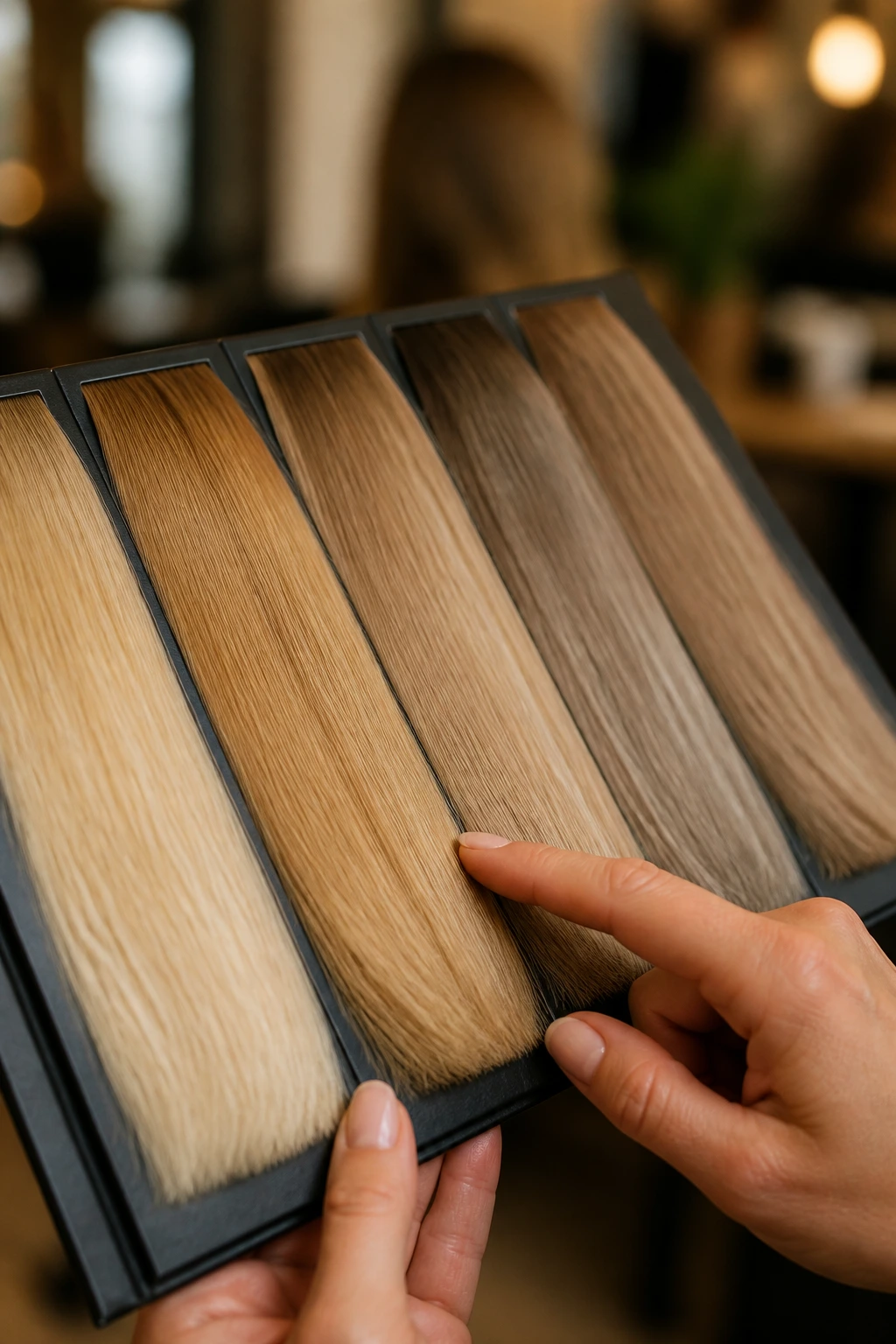
Start with your natural level. If your hair sits around dark blonde to light brown, sandy blonde usually behaves better than a stark platinum shift because the lift doesn’t have to do all the work in one appointment. On a level 6 or 7 base, beige-gold glosses and softly placed highlights often give a cleaner result than chasing the palest end of blonde.
Warm, cool, and neutral skin tones all need a different sand. Warm or olive skin usually likes honey-sand, beige-butter, and soft golden ribbons. Cool skin tends to look better with smoky sand, frosted beige, or mushroom-leaning tones. Neutral skin can sit in the middle, which is where rooted sandy bobs and beige-cool blends become easy to wear.
Hair texture changes the read, too. Fine hair often benefits from a little depth because too much pale blonde can make it look see-through. Thick hair can take brighter ribbons, but it still needs some lowlight or root shadow to keep the shape from swelling up visually.
Porosity matters more than people admit. If your ends are porous, they grab ash and toner fast. That’s how sandy blonde turns dull. In that case, a softer beige gloss with a touch of warmth will usually look better than a strong cool toner that eats the shine.
How to Style Sandy Blonde Short Hair So the Color Shows Up
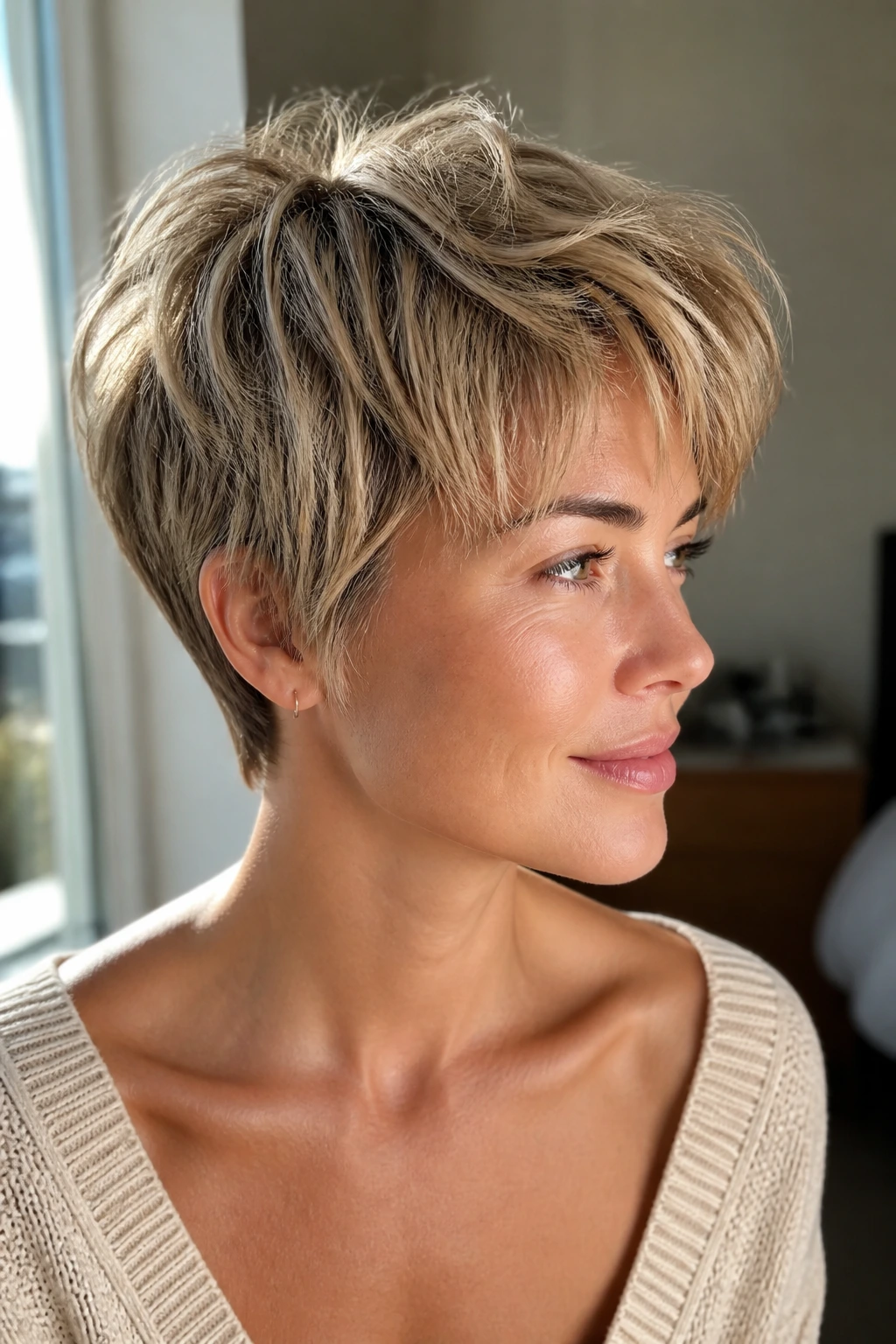
Airy texture: On pixies, shags, and textured crops, a little root lift makes the light pieces visible. Use a volume spray at the crown, rough-dry until the hair is about 80 percent dry, then pinch in a matte paste or cream at the ends. The goal is separation, not crunch.
Smooth finish: On blunt bobs, French bobs, and micro bobs, a smooth blowout lets the beige and gold tones show. Use a nozzle, a round brush, and a small bend under the ends. If the hair is too fluffy, the color can disappear into the shape. If it’s polished, the tone reads clean.
Bend, don’t curl everything: A one-inch iron or flat iron wave works better than tight curls on short sandy blonde hair. Tight curls can hide the ribbons and make the color look busy. Soft bends leave the placement visible, especially around the face and crown.
Make the front do the work: A side part, a tucked ear, or a brighter money piece can change the whole mood of the cut. Short hair lives near the face. Put the best blonde there.
Extra Tips for Shine, Tone, and Better Grow-Out
Color glosses matter more than most people think. A demi-permanent gloss every 4 to 8 weeks can refresh sandy blonde without reopening the hair the way full lightening does. That’s one of the cleanest ways to keep beige tones from drifting yellow or dull.
Keep a little depth underneath. The nape, behind the ears, and the lower interior layers can stay half a shade deeper. On short hair, that depth is not a mistake. It keeps the blonde from spreading into one flat sheet.
Use the right finish product for the cut. A pixie wants paste or cream. A bob often wants a smoothing serum on the ends. A shag usually needs spray or foam, not heavy oil. The wrong product can make a beautiful sandy tone look oily by lunch.
Think in small touch-ups, not total overhauls. Around-the-face foils, a partial gloss, or a quick root soften can keep the look fresh far longer than waiting until the whole cut feels tired. Short hair tends to show change fast. That can work in your favor if you use it.
How to Keep Sandy Blonde Fresh Between Visits
Wash less, not more. Sandy blonde short hair usually looks best when it’s washed every 2 to 4 days, depending on scalp type and product use. Daily shampoo can strip the gloss from the ends and speed up brass at the root.
Use purple shampoo sparingly. Once a week is enough for most cooler sandy shades. Too often, and the beige starts to look flat or gray. If your blonde is warmer, blue shampoo can help with orange tones, but only if you need it — overcorrecting creates its own dullness.
Book a gloss before the color feels dead. A toner refresh every 4 to 8 weeks keeps the beige-gold balance intact. If your hair is porous or lifted very light, the refresh may need to happen sooner. If the shade is rooted and dimensional, it can stretch longer.
Watch hot tools. Flat irons and curling irons above 375°F can rough up the cuticle fast on lightened hair. Keep the heat lower when you can, and always use protectant. Short hair gets touched by the tool more often, so each pass counts.
Hard water can mess with sand tones. If your shower runs mineral-heavy, a filter or a chelating wash every couple of weeks can keep the blonde from turning muddy.
Common Mistakes That Make Sandy Blonde Go Flat
- Pushing the whole head too light: The symptom is hair that looks chalky at the ends and see-through around the nape. The fix is simple: leave some depth underneath and keep the root softer.
- Using too much ash toner: If the blonde starts looking dull, gray, or dusty, the toner has gone too cool. Ask for a beige or beige-gold gloss next time instead of a stronger ash formula.
- Ignoring haircut shape: A bob with random foils can look bulky, and a pixie can look fuzzy if the lightness is scattered everywhere. Placement has to follow the haircut.
- Overusing purple shampoo: If the tone starts losing warmth and turning flat, you’re stripping out the sand. Cut back and switch to a moisturizing shampoo most washes.
- Forgetting the nape and sides: Short hair shows everything, including neglected sections. If the back is darker and the front is bright, the whole look feels unfinished.
- Skipping lowlights on fine hair: Blonde without depth can look thinner than it is. A few micro-lowlights give the cut body and stop the surface from reading like one pale sheet.
Variations and Adjustments to Try
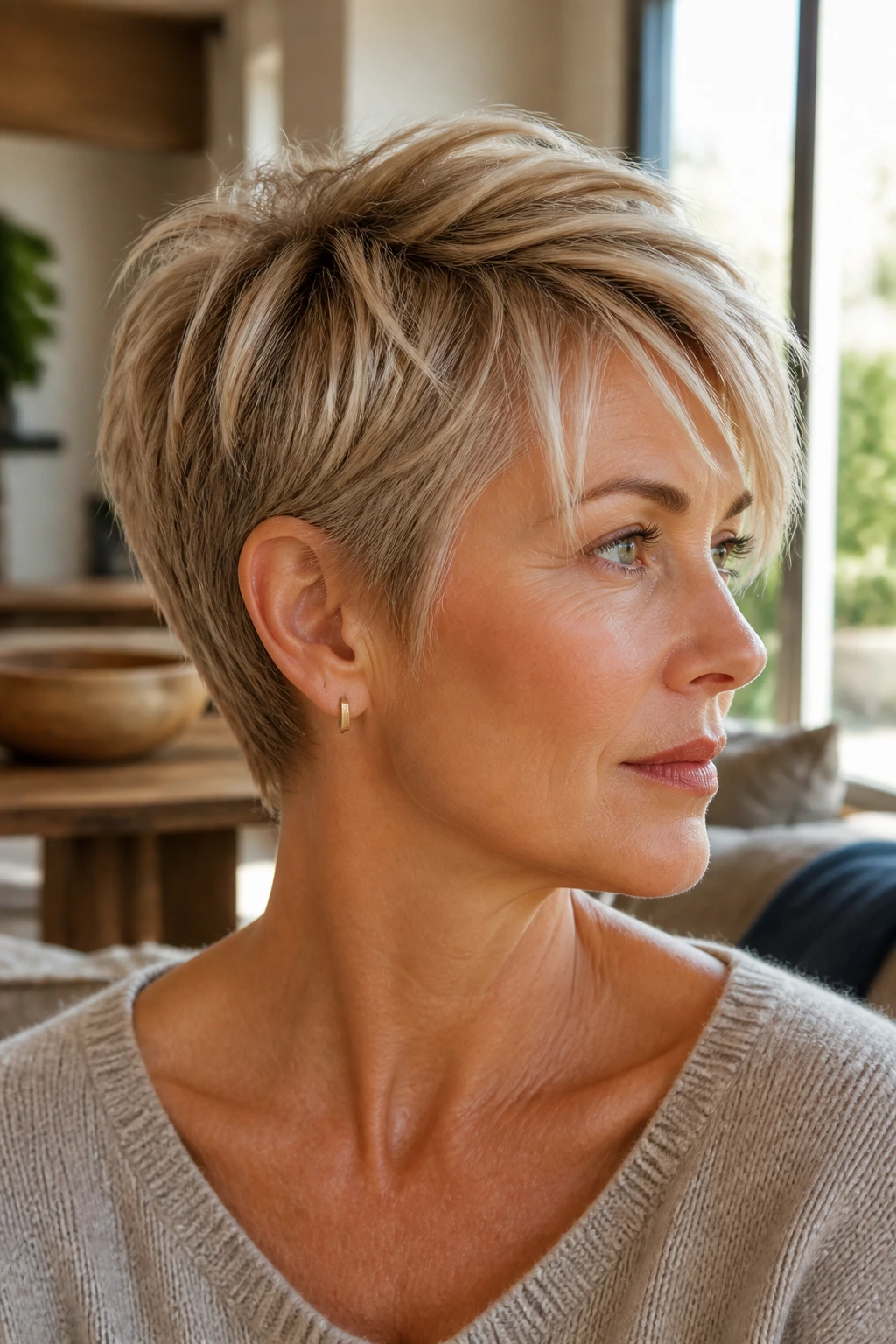
Brighter Beach Sand: Ask for more lightness around the face and crown, with softer beige through the back. This version works when you want the blonde to read brighter in daylight but still keep some shape at the nape.
Cool Stone Sand: Lean the gloss cooler and keep the warmth low. This suits straight bobs, mushroom-toned crops, and anyone whose skin tone is more pink or blue-red than golden.
Low-Maintenance Rooted Sand: Keep a shadow root and focus the brightness through the surface layers and face frame. It’s the easiest version to grow out and one of the best if you hate frequent appointments.
Curly Sand Glow: Use fewer foils, wider painted ribbons, and a little depth under the crown. Curls need space between light pieces so the shape stays readable instead of busy.
Brunette-to-Sandy Transition: If your base is dark, move in stages. Start with caramel-beige ribbons, then brighten the front and top in later appointments. That protects the hair and keeps the blonde from looking patchy.
Frequently Asked Questions
Is sandy blonde the same as beige blonde?
Not exactly. Beige blonde leans more neutral, while sandy blonde usually includes a little more gold or soft warmth mixed in. On short hair, that mix often looks better because it keeps the cut from going flat.
What short haircut works best with sandy blonde?
Bobs, bixies, pixies, and shags all handle sandy blonde well, but the placement has to match the cut. A blunt bob likes controlled ribbons, while a shag can take softer balayage and more lived-in contrast.
Can sandy blonde work on dark brown hair?
Yes, but it usually needs a slower lightening plan. Darker bases often look best with a rooted sand effect or a staged transition that starts with caramel-beige ribbons before going lighter.
How often should sandy blonde short hair be toned?
Most people need a gloss or toner refresh every 4 to 8 weeks. Porous hair and cooler sandy tones may need it a little sooner because they lose warmth and shine faster.
Will sandy blonde make fine short hair look thinner?
It can, if the color is too pale and one-dimensional. Fine hair usually looks better with a little depth at the root, some micro-lowlights, and lighter pieces only where the eye needs them.
What if my sandy blonde turns brassy?
First, check how often you’re washing, how hot your water is, and whether your shampoo is too strong. Then use a toner or purple-blue shampoo sparingly. If the brass is strong, a salon gloss usually fixes it faster than another round of home shampoo.
Can I get this look at home?
Subtle refreshes, glosses, and some toning can be done at home if you already know your hair’s level and porosity. Full lightening on short hair is trickier than it looks, because a mistake shows up fast at the hairline and nape.
Does sandy blonde work on curly short hair?
Absolutely, but the placement should follow the curl pattern. Painted ribbons and soft surface lightening usually look better than dense foiling, which can make curls look striped and frizzy.
The Shade That Keeps Its Shape
Sandy blonde works on short hair because it respects the cut instead of fighting it. The shade gives you softness, depth, and a little movement without demanding that the hair be long enough to hide mistakes. That is a rare combination.
If you’re choosing between a brighter blonde and something more wearable, I’d start with the sandier version almost every time. Short hair can take a lot, but it looks best when the color has structure and a bit of breathing room. The next time your bob, pixie, or crop needs a reset, ask for tone before brightness — that small shift usually gives you the cleaner result.
